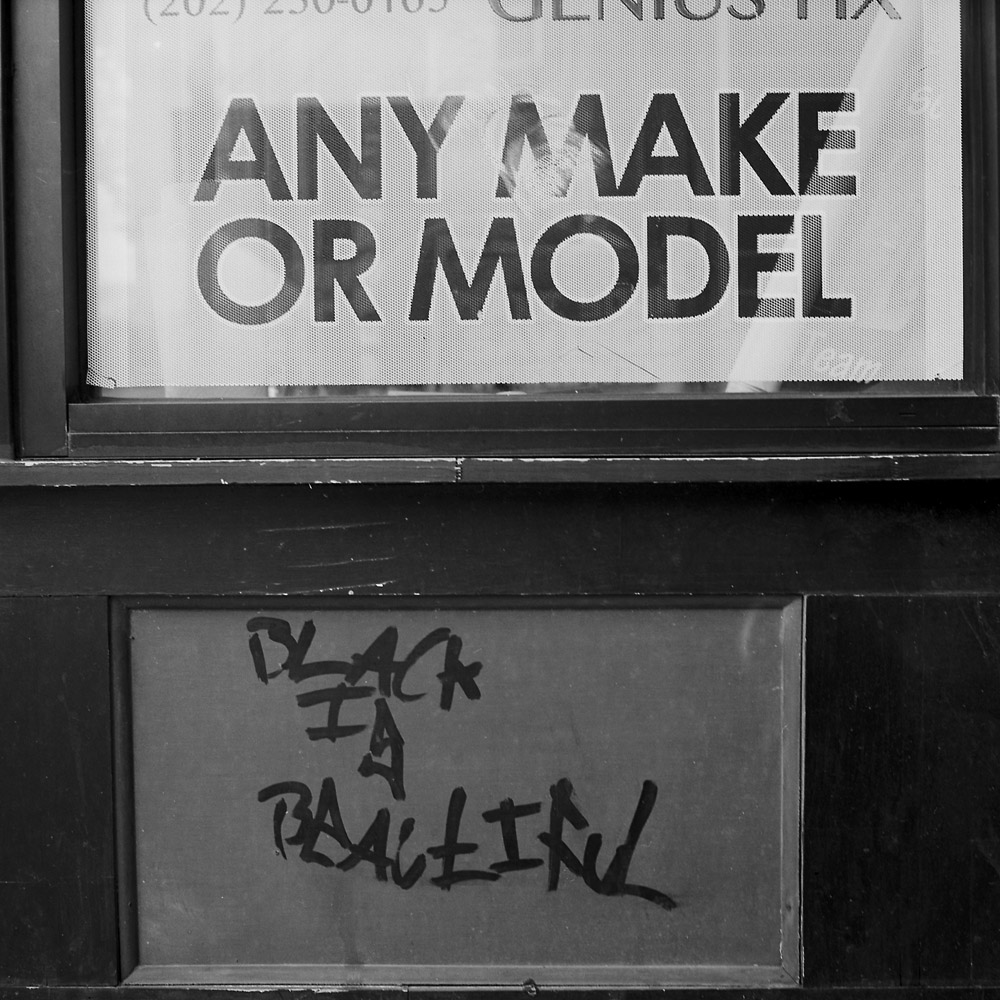
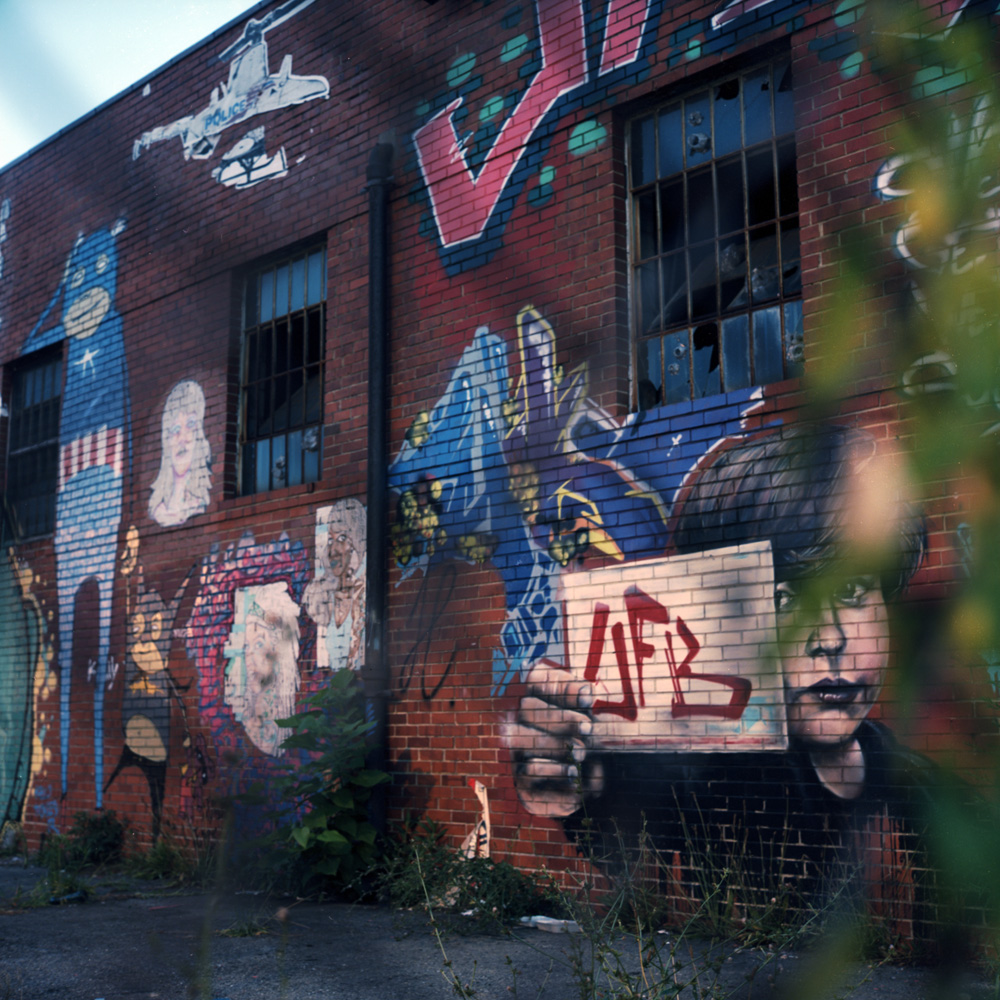
Another sign of change and transformation is the ebb and flow of graffiti. My latest find was this:
Any Make or Model (Black is Beautiful)
I loved the serendipitous juxtaposition of the advertisement wording for the cellphone repair shop and the graffiti – “Any Make, Any Model… Black is Beautiful”. There’s truth in accidents. Or maybe it wasn’t an accident.
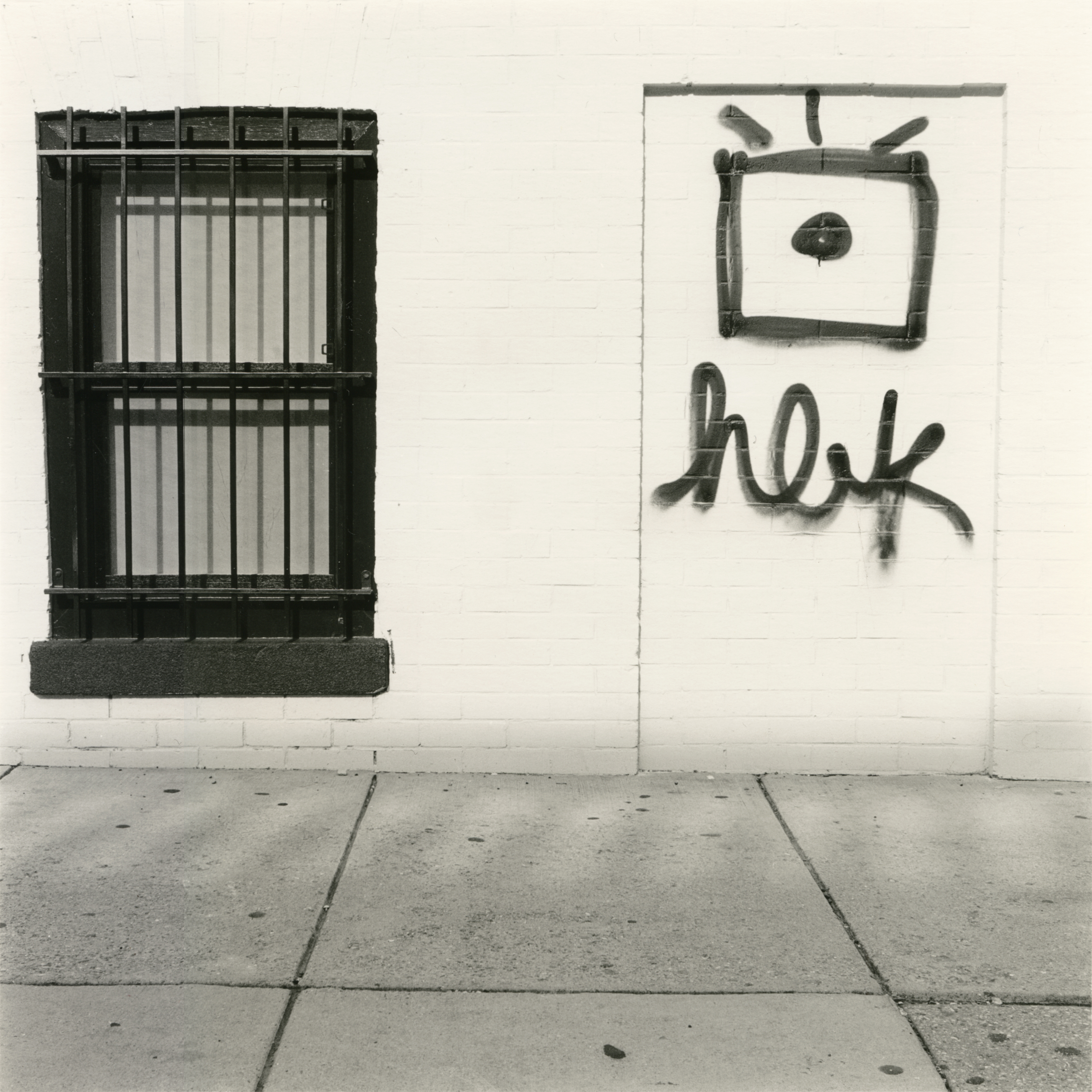
A generic graffiti tag on a bricked-up window of a house. This is casual art, that has its own accidental grace and beauty despite not having any great aspiration beyond marking territory or gang initiation.
Window, Graffiti, 15thStreet
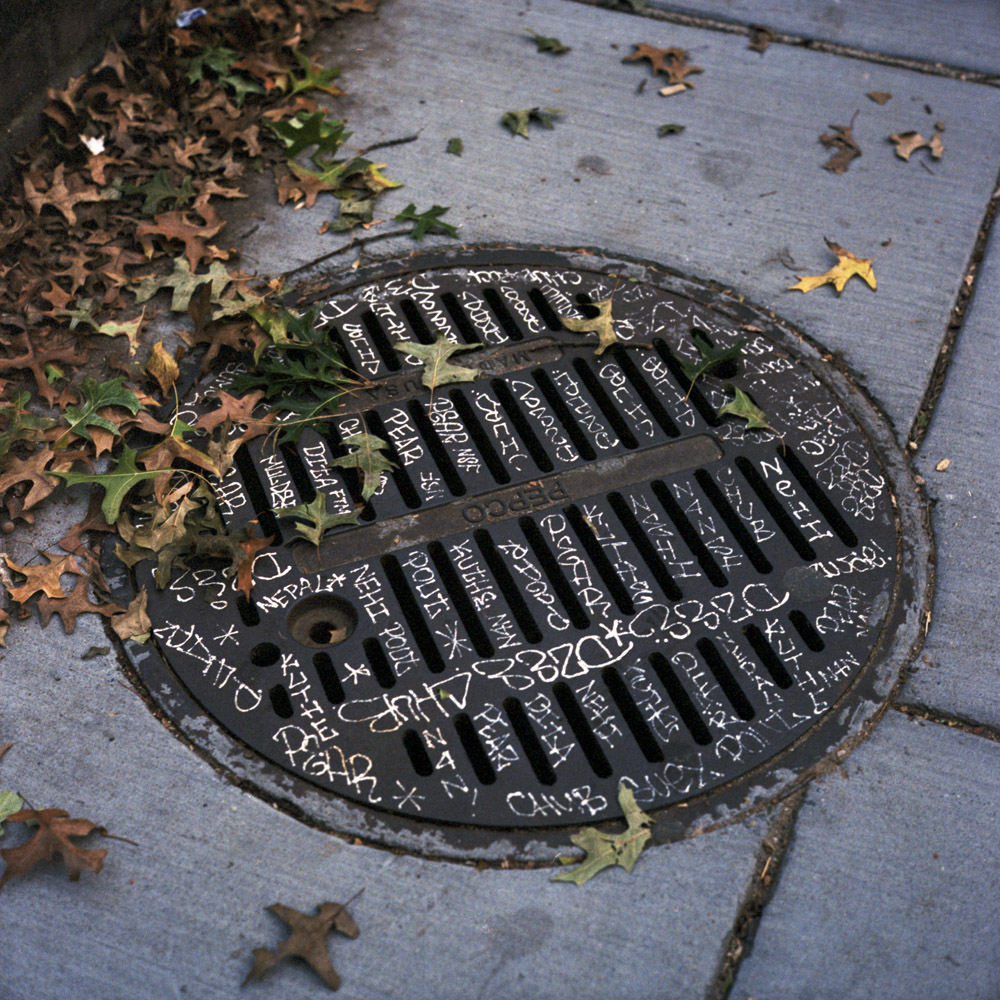
Then there’s graffiti that is transformed from simple defacement by virtue of adopting the form and structure of the object upon which it is inscribed, like this manhole cover.
Graffiti-inscribed Manhole Cover
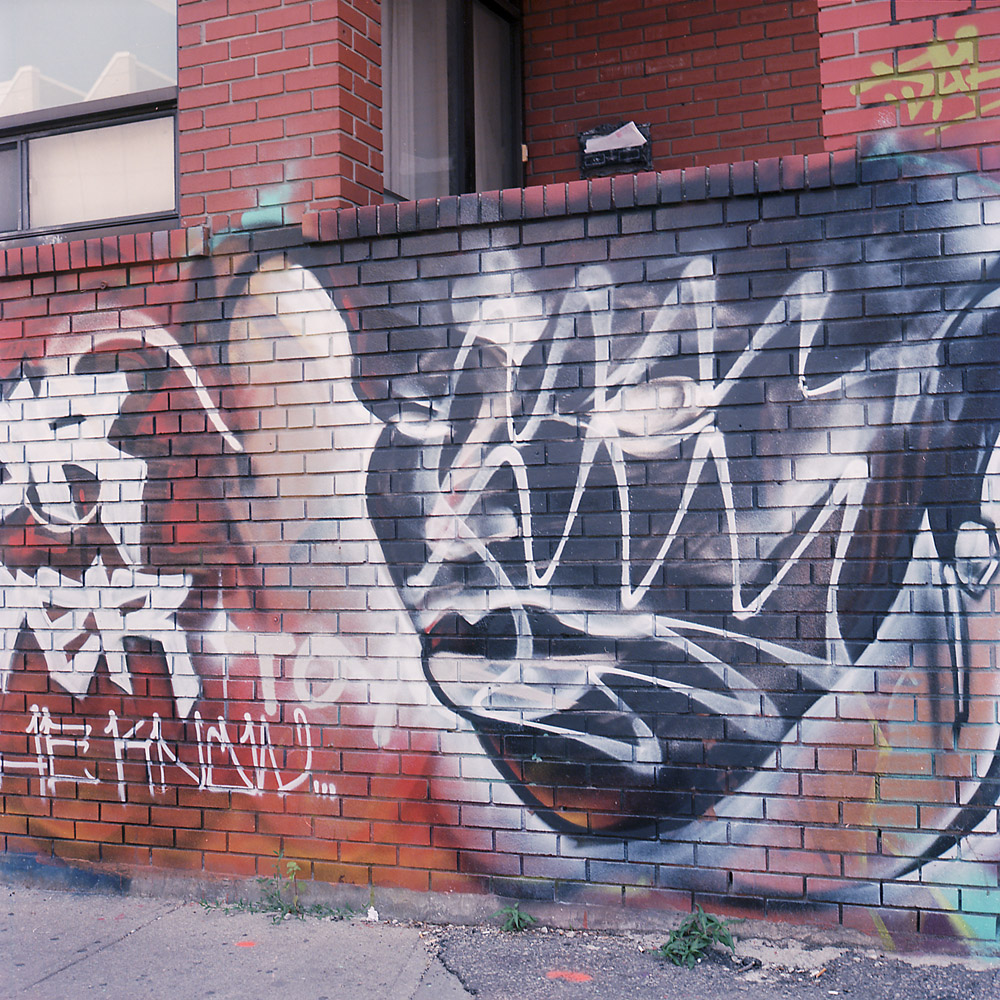
Some street art I found in Toronto. There’s a point where graffiti transcends defacement of property and really does become art in itself. Graffiti
More graffiti as street art. There is part of this wall that I intentionally cropped out as it makes a statement that I don’t know I’d want to make or pass on (decapitated nude female torso).
Graffiti, Chain Link Fence, Twilight
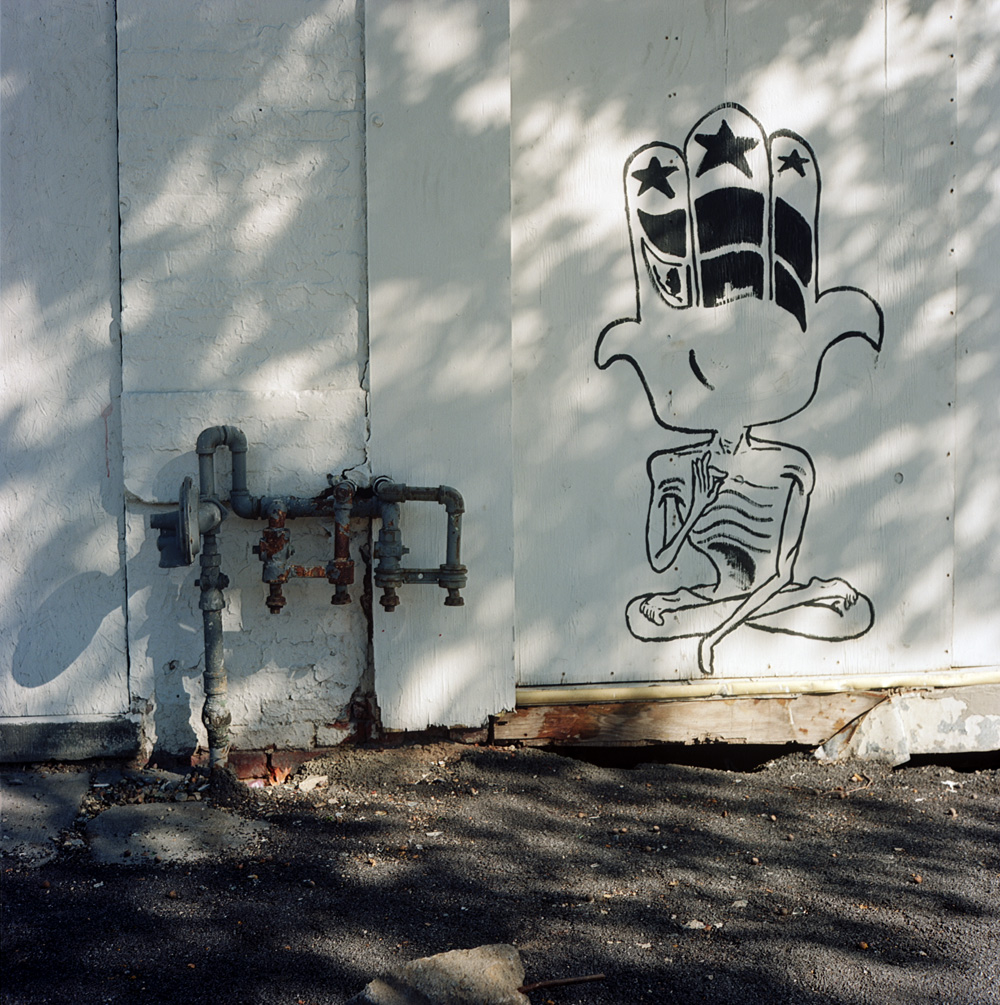
Back to simplicity, this bit speaks to collective identity questions – the figure transforms the Washington DC city flag of three stars over two bars into a humanoid with a hand for a head. Politics, ethnicity, religion, all rolled into a piece of temporary public art (the wall upon which this figure was painted has been gentrified into several very expensive restaurants).
Graffiti, DC Flag Design, 14th Street
The camera of record is a Rolleiflex 2.8E, and the films used are FP4+ for b/w and Kodak Ektar 100 and Portra 160 for color.
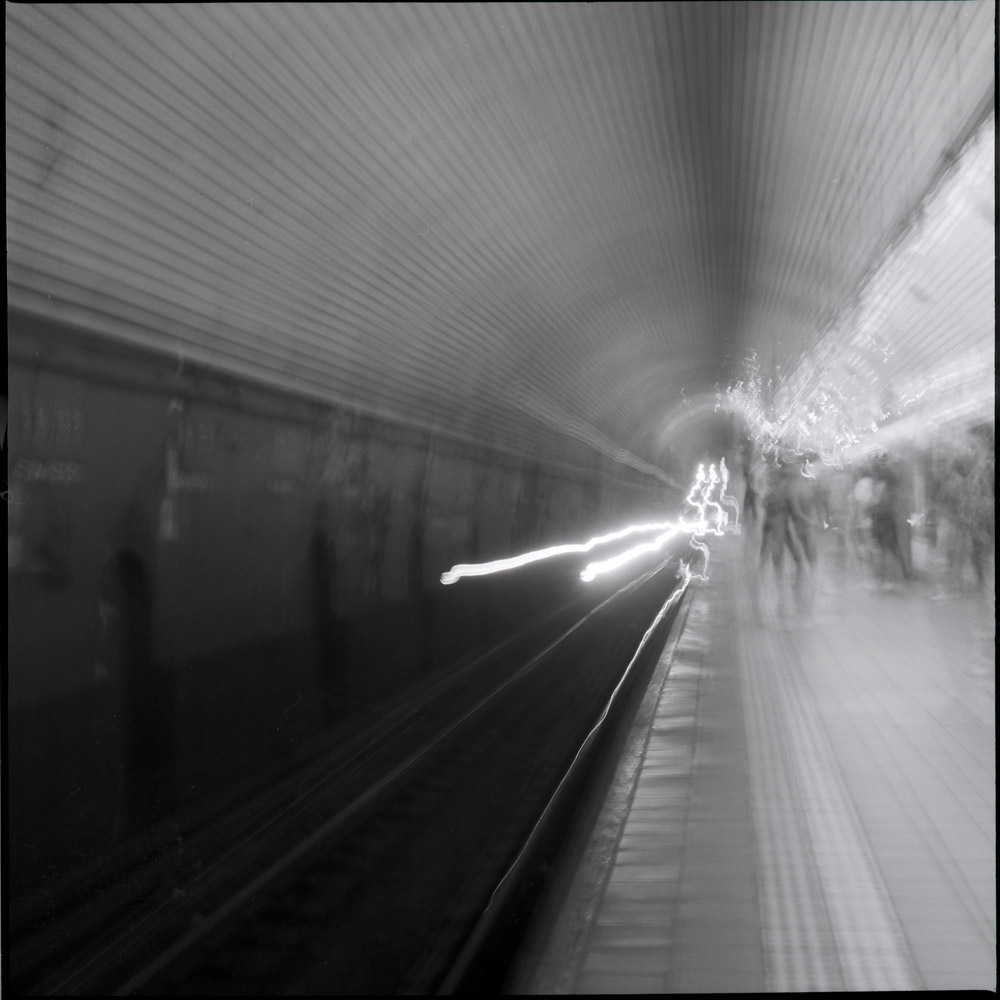
I found the shot I had taken of the NYC subway train oncoming. Again a bit impressionistic, but you can still feel the difference between it and the other city’s subways that I’ve photographed, even though the car isn’t at all visible in the exposure. I THINK this is the N/Q/R platform at 5th avenue and 59th street- it’s been a while since I took the shot.
NYC Subway Oncoming, 59th St
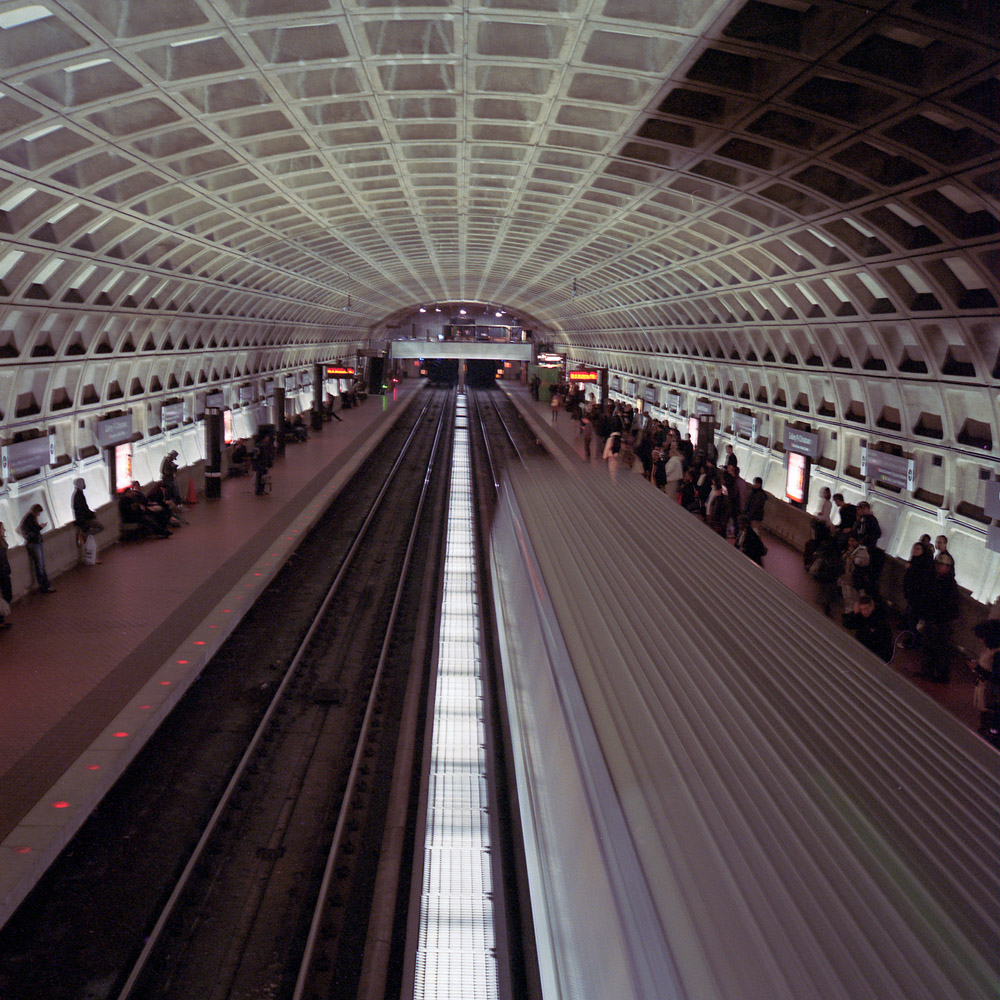
Here are a couple more of my subway shots as a comparison. Please pardon the repetition of the recent post:
Gallery Place Metro #2Oncoming MetroToronto SubwayMetro Train Arriving, Archives StationSpeeding Metro
All shots taken with my Rolleiflex 2.8E. Film used was either Ilford FP4+ for the b/w shots or either Kodak Portra 160 or Ektar 100 for the color.
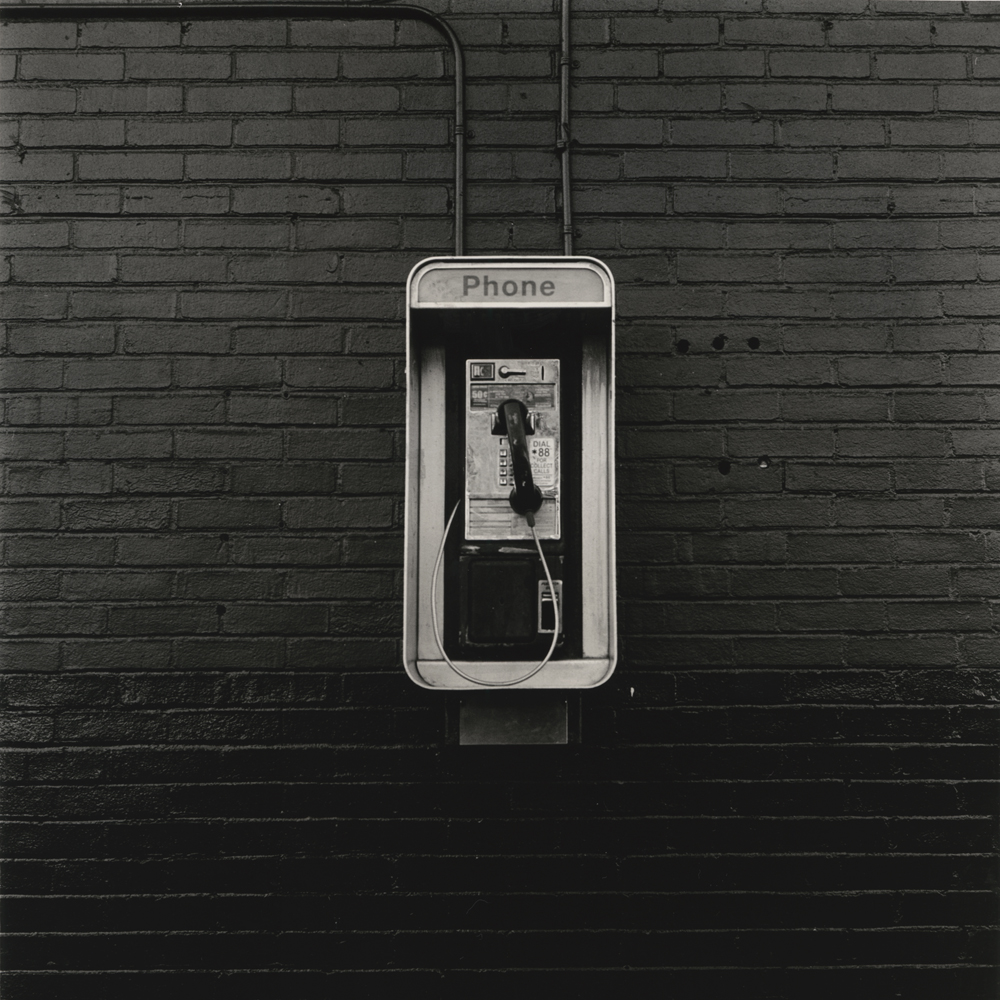
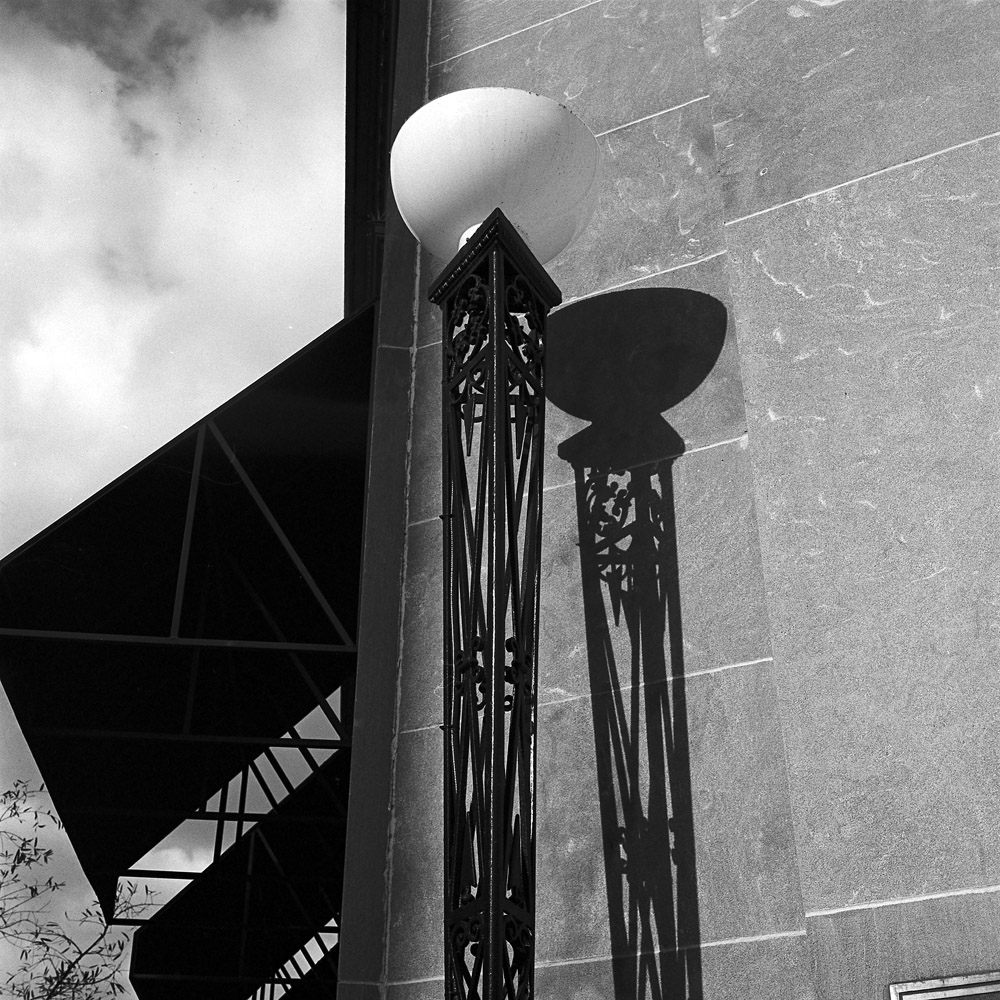
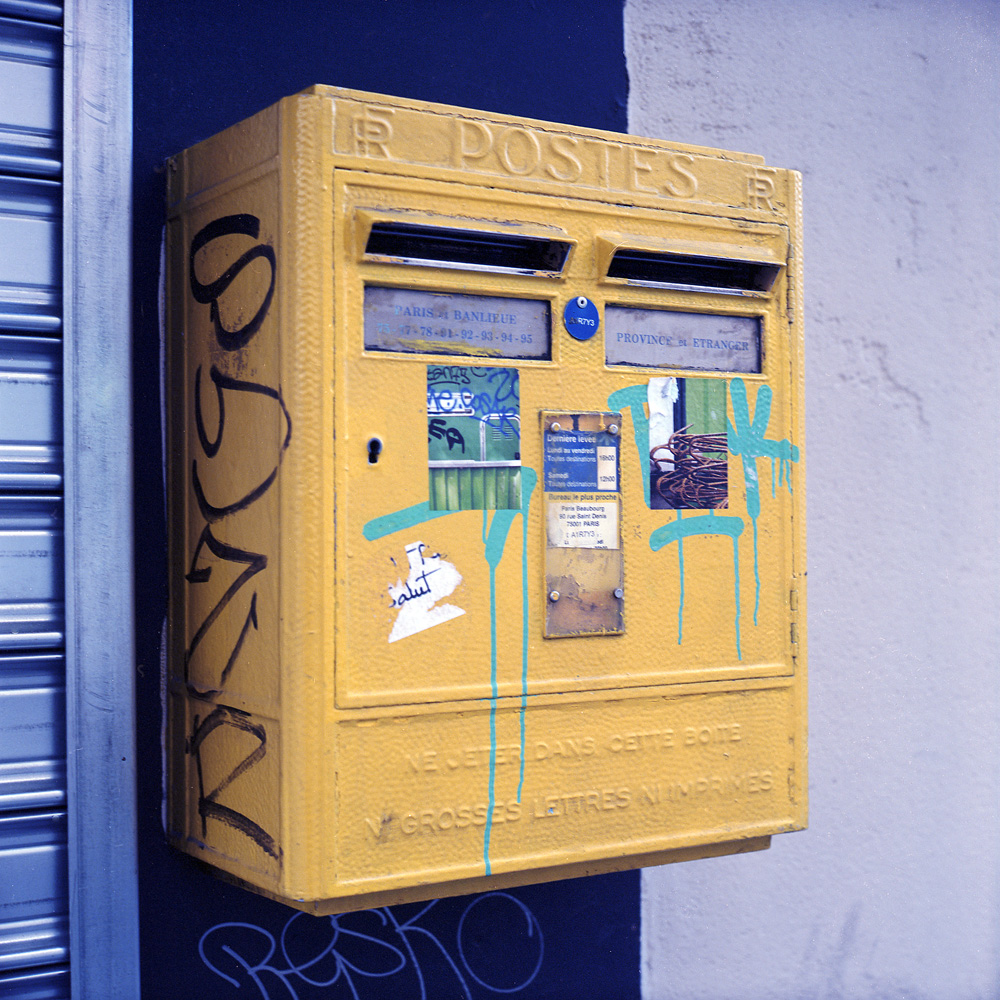
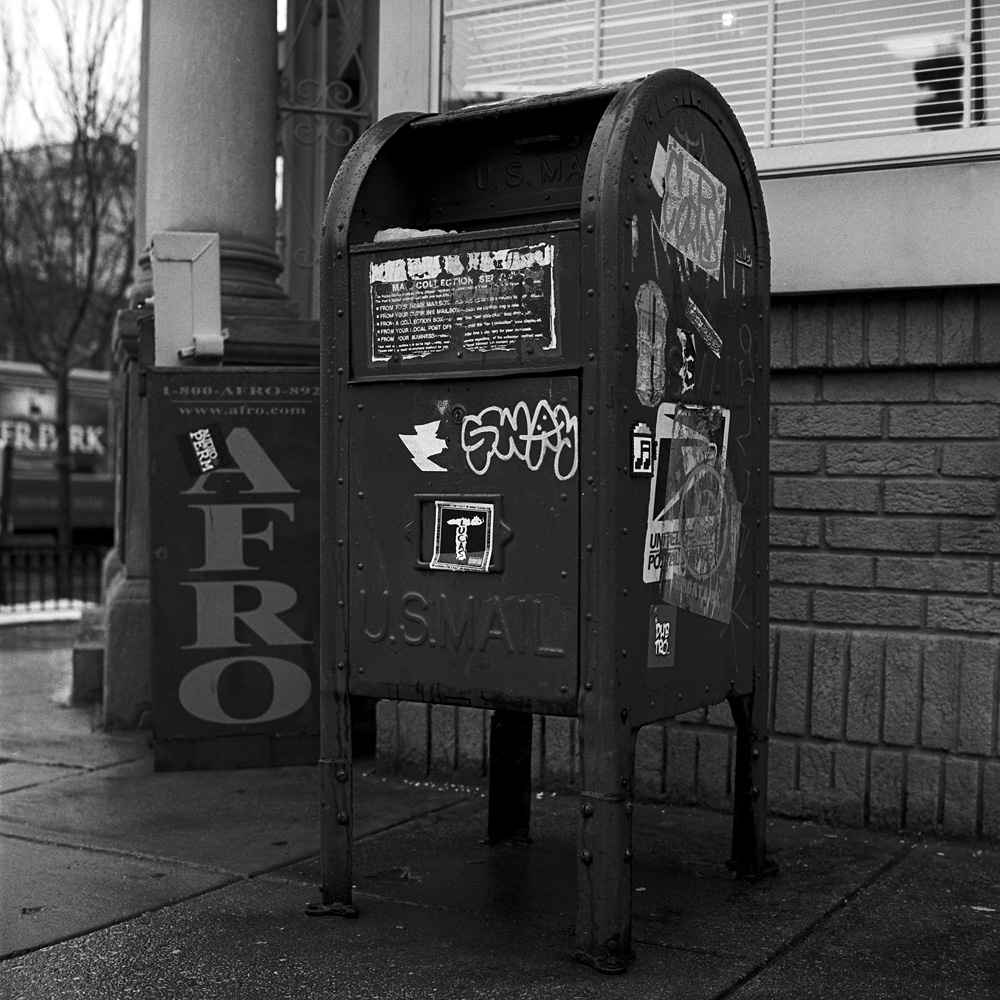
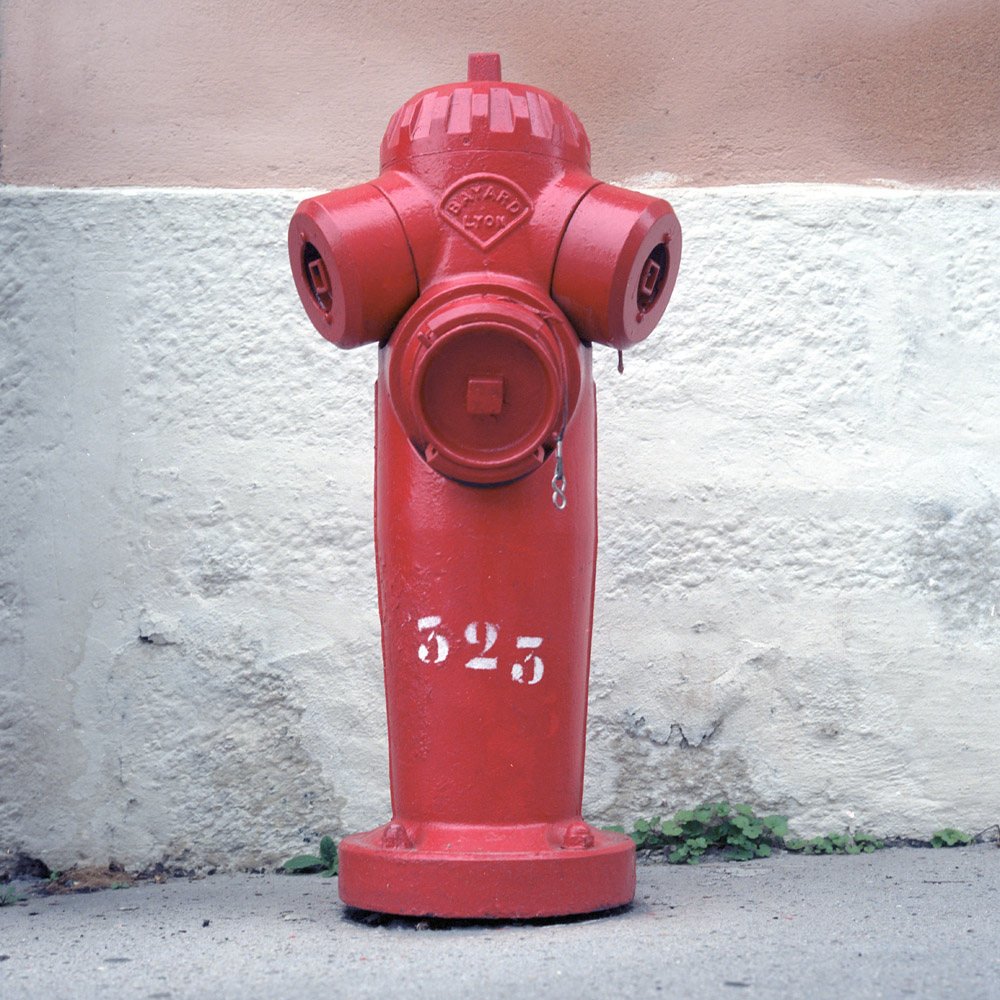
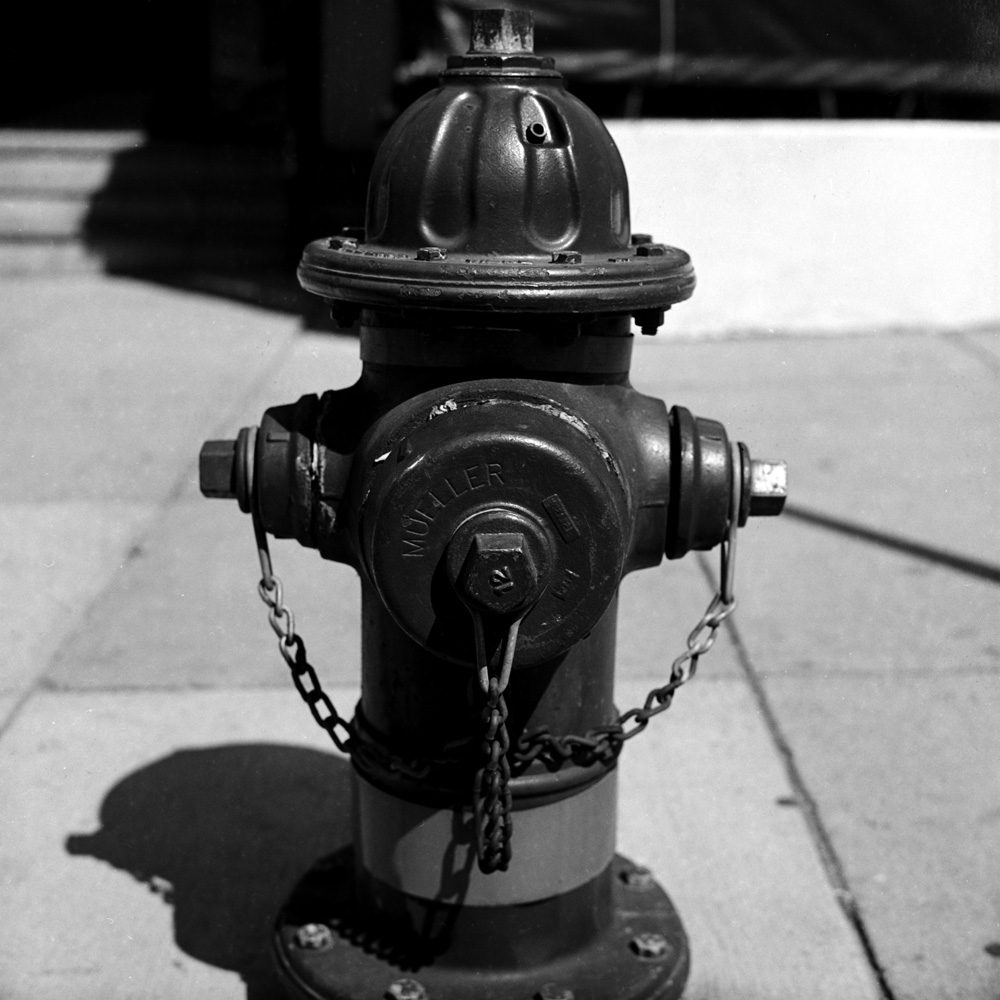
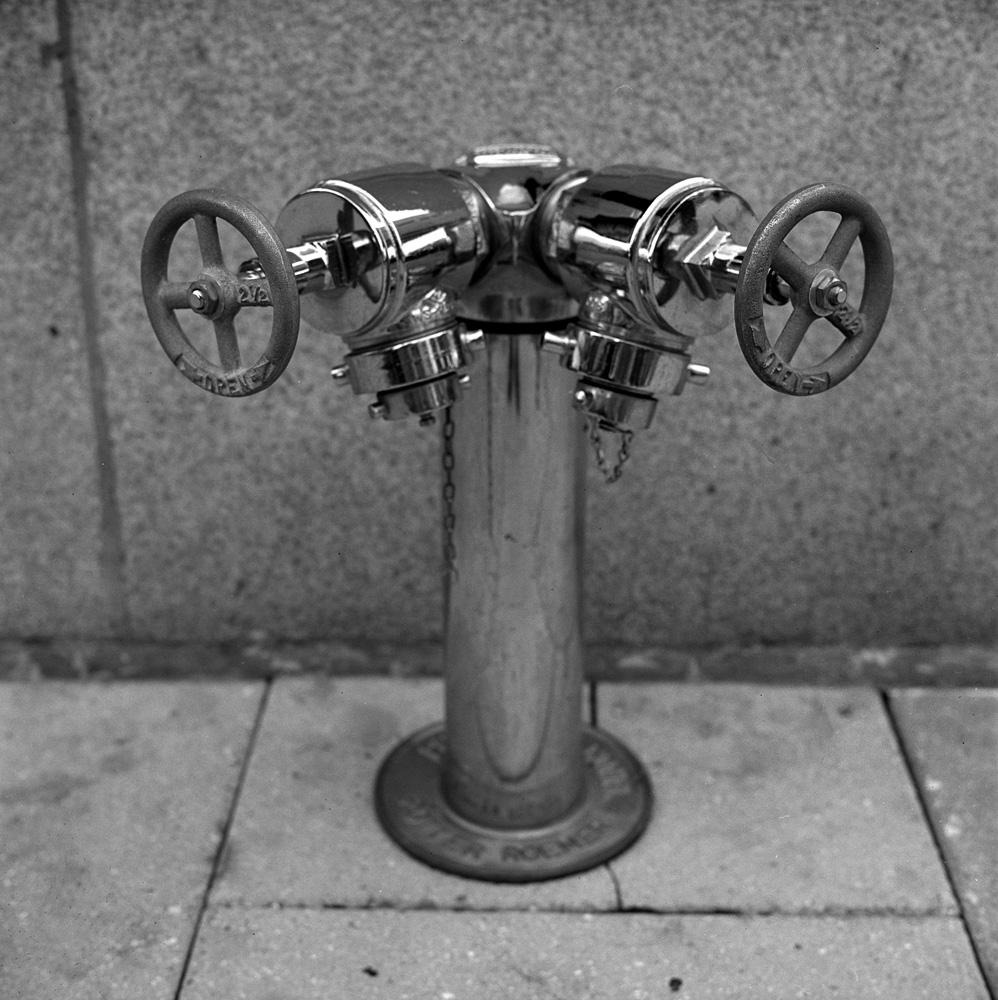
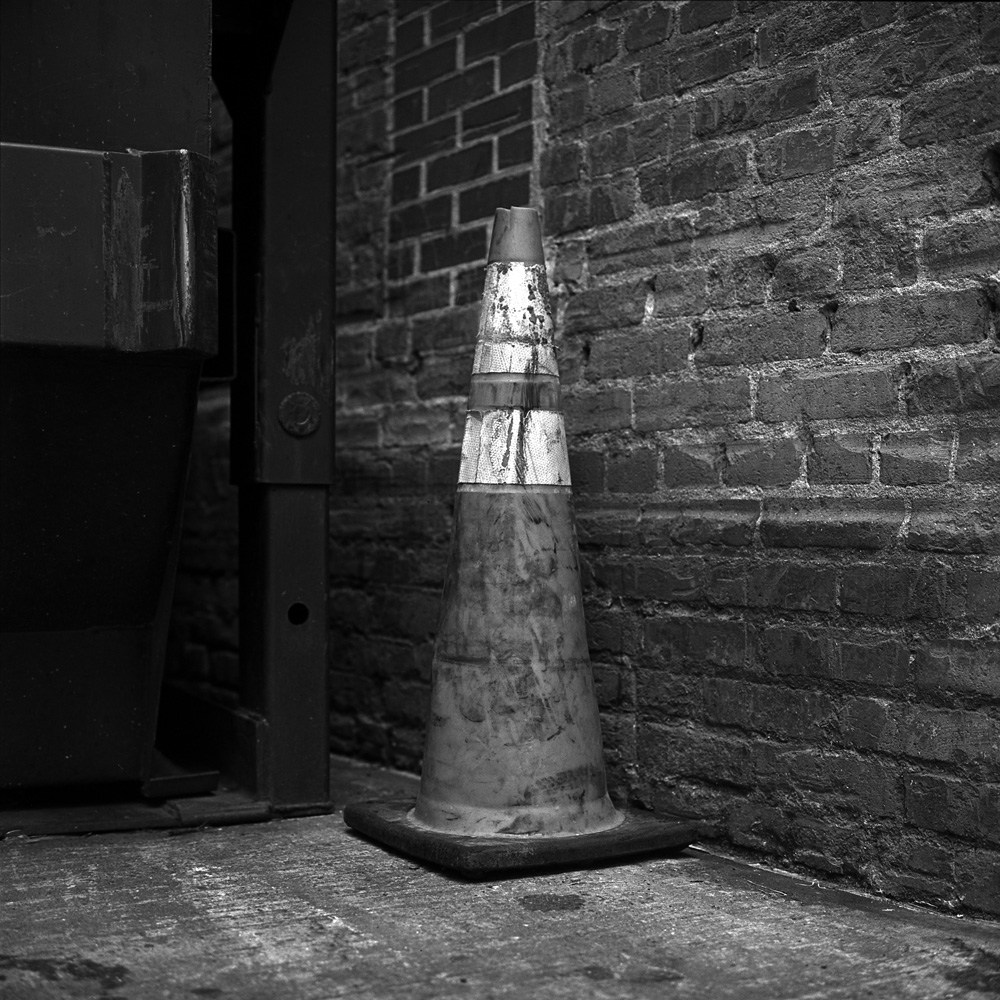
This is part of a series I’ve been working on – photographing ordinary objects we pass by on the street every day but take for granted. They are things we see but don’t see, and they may well vanish, like pay phones, mailboxes, and newspaper vending machines, before we realize they’re gone. Pay phones are all but replaced by the cellphone. Newspapers as a physical object may cease to exist thanks to the internet, and along with them the newspaper box. Email has just about killed the personal letter – the only thing keeping the postal services alive these days are mass marketers with their junk mail, Ebay and Amazon with package deliveries. Not everything in the series is vanishing in a literal sense like pay phones, but some of them do vanish from our perception like the fire hydrant, the lamp post, and the traffic cone. We know they’re there because we don’t trip over them when walking on the streets, but they exist at the periphery. They each have their own beauty and form, however, and within their function there are a remarkable variety of forms – the hydrant in Chalon-sur-Saone, while as recognizable as a fire hydrant as the hydrant from Washington DC, has a very different form, as does the Siamese spigot.
PayphonesEveryday Objects – PayphoneLamppost, Riggs Bank, 14th StreetYellow Postbox, ParisMailboxHydrant, ChalonMueller Hydrant, K Street, DCSiamese SpigotTraffic Cone
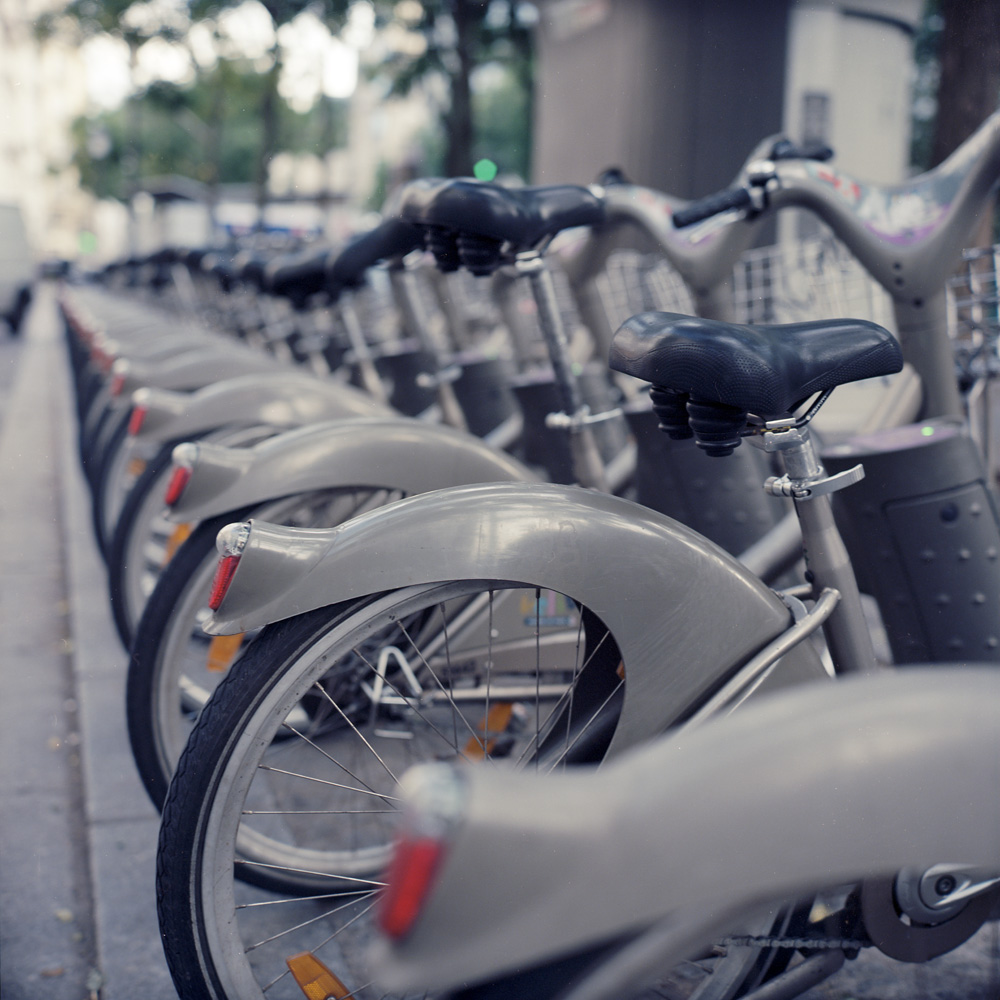
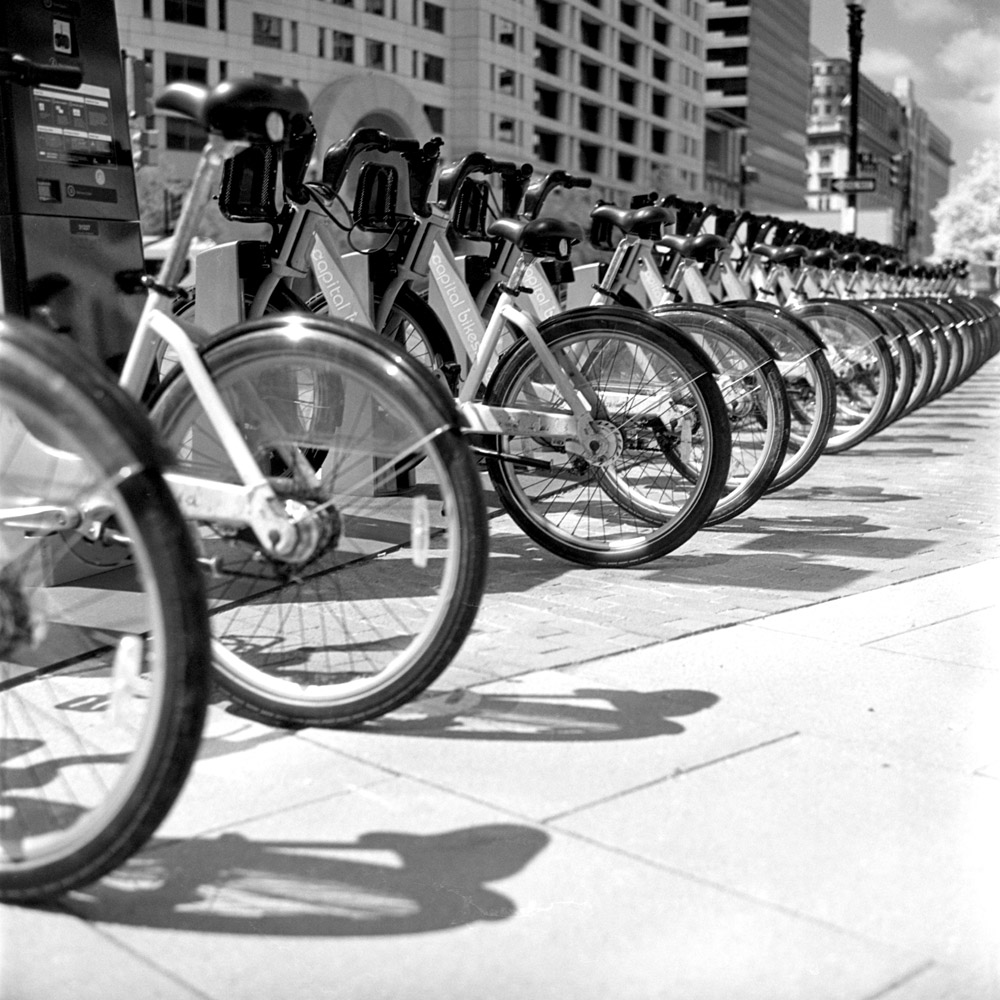
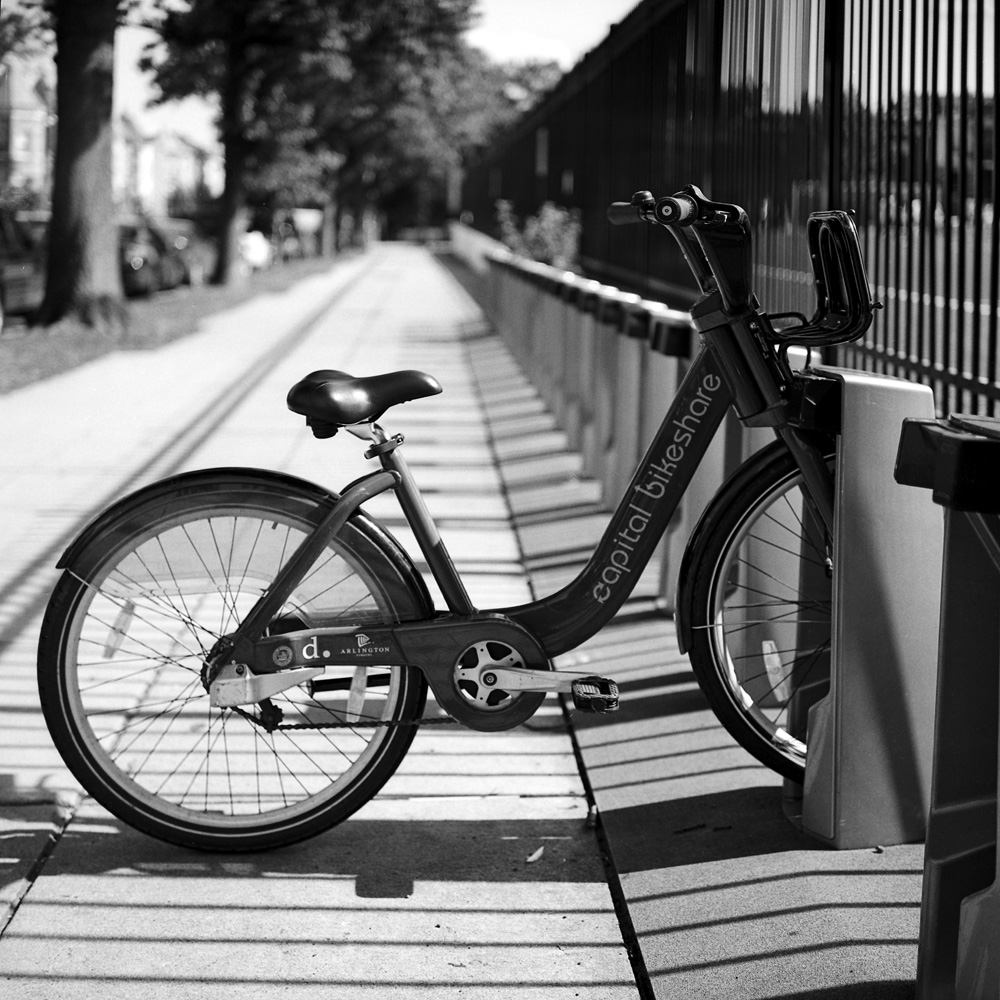
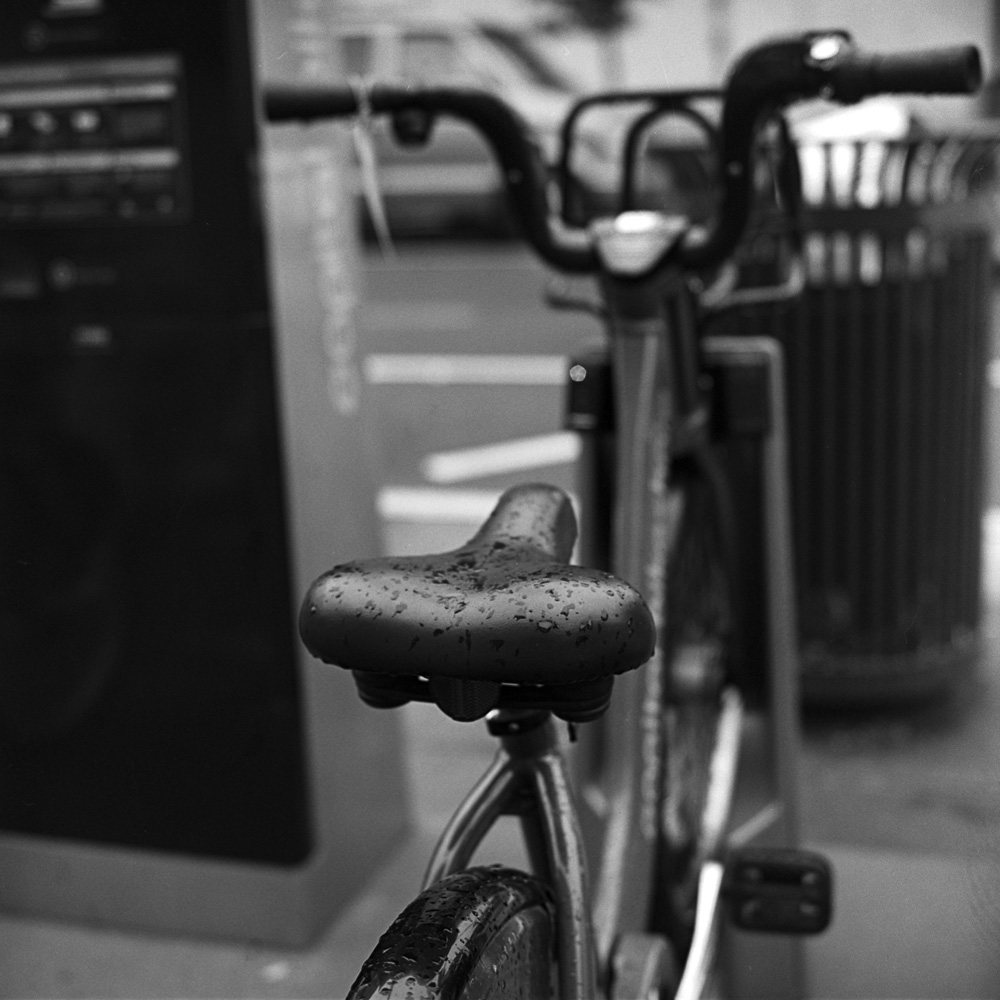
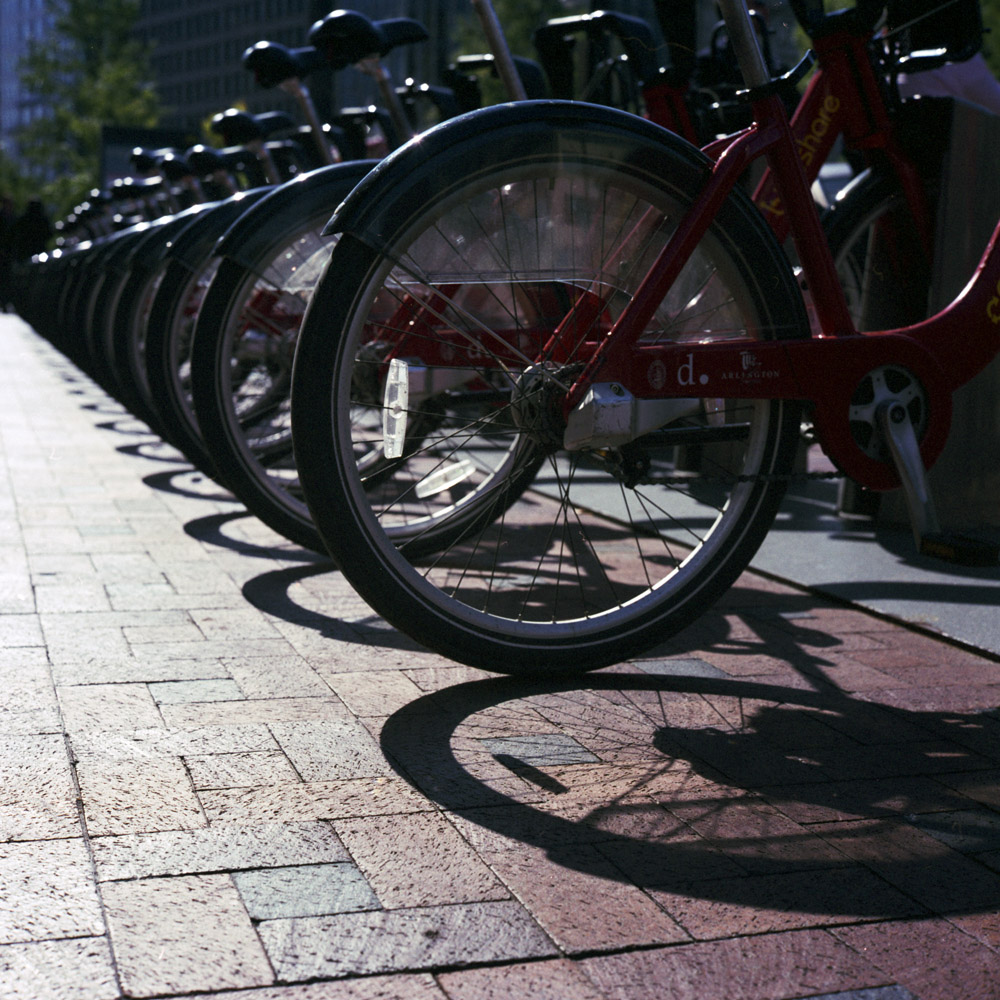
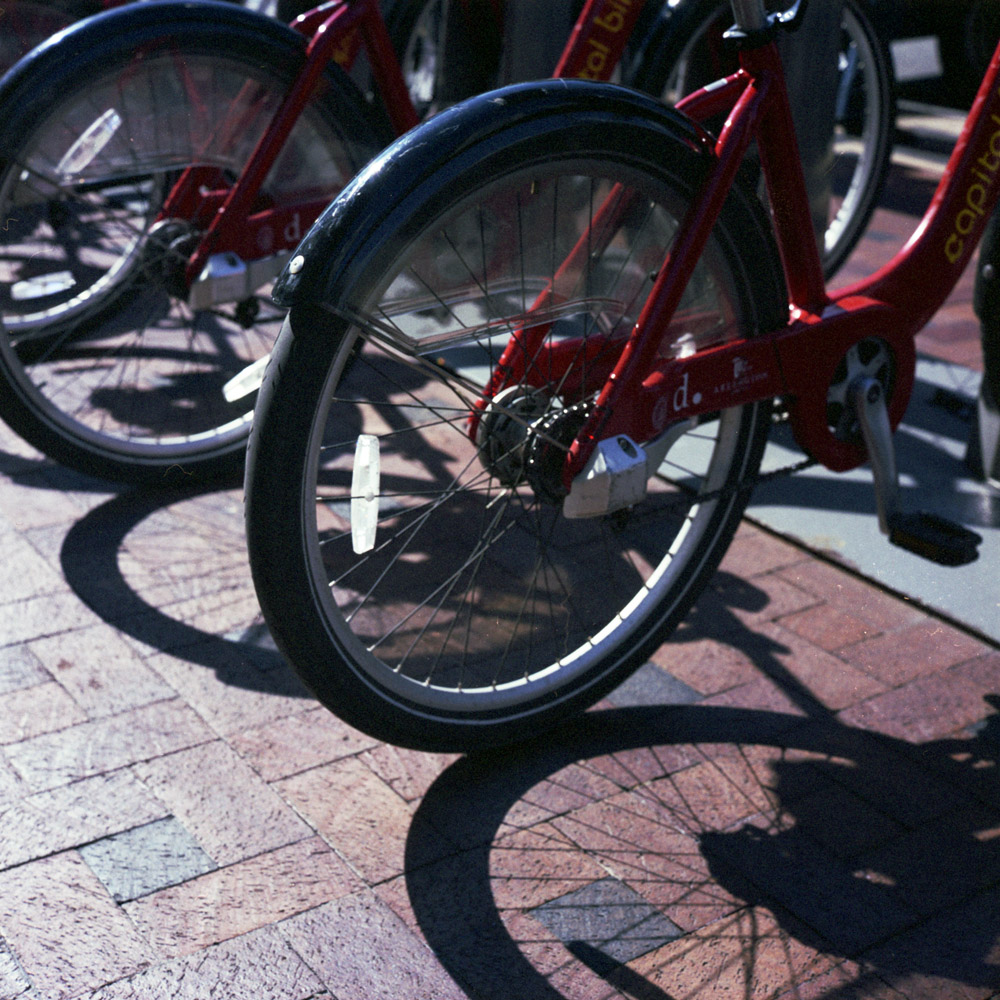
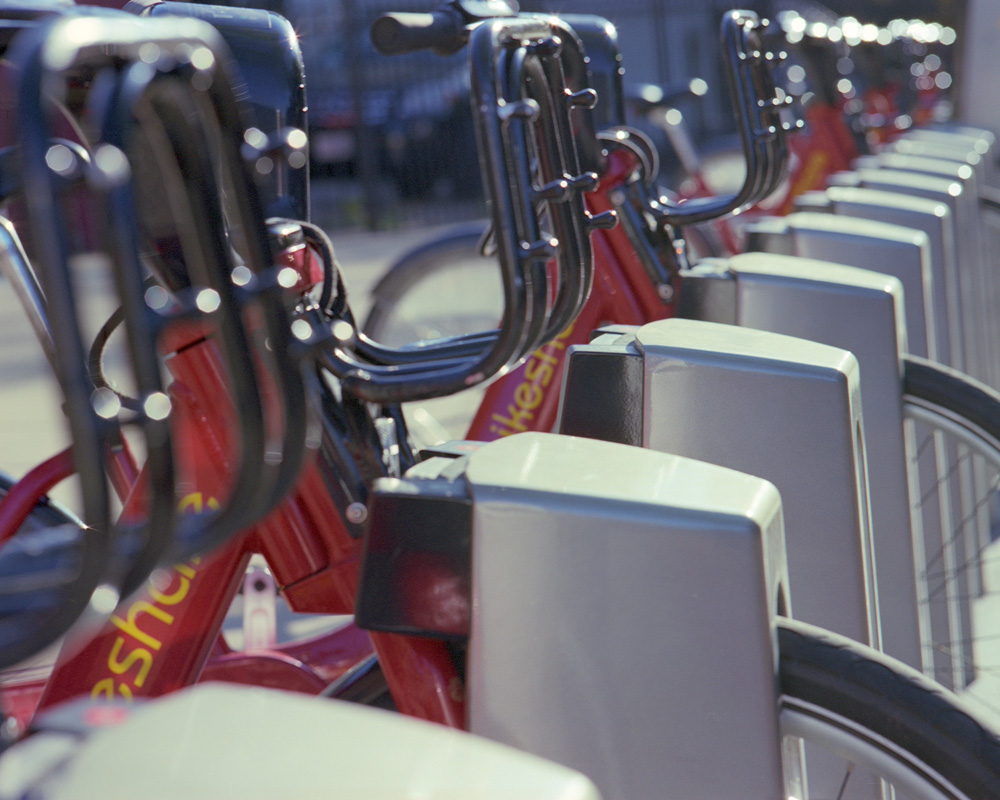
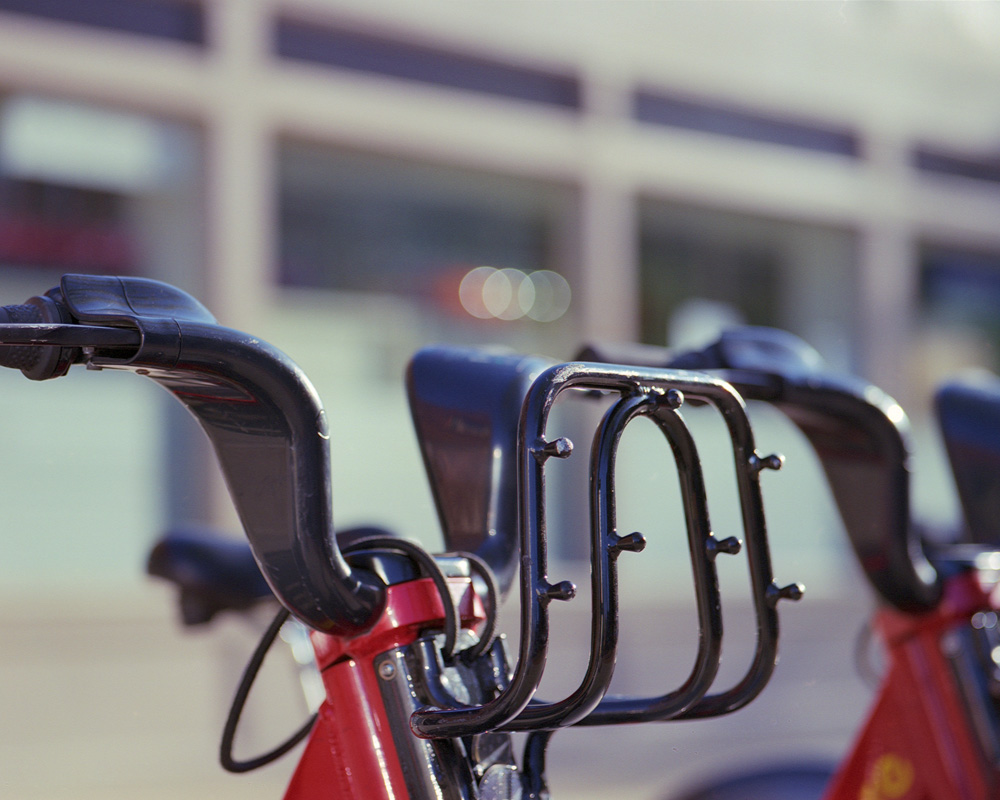
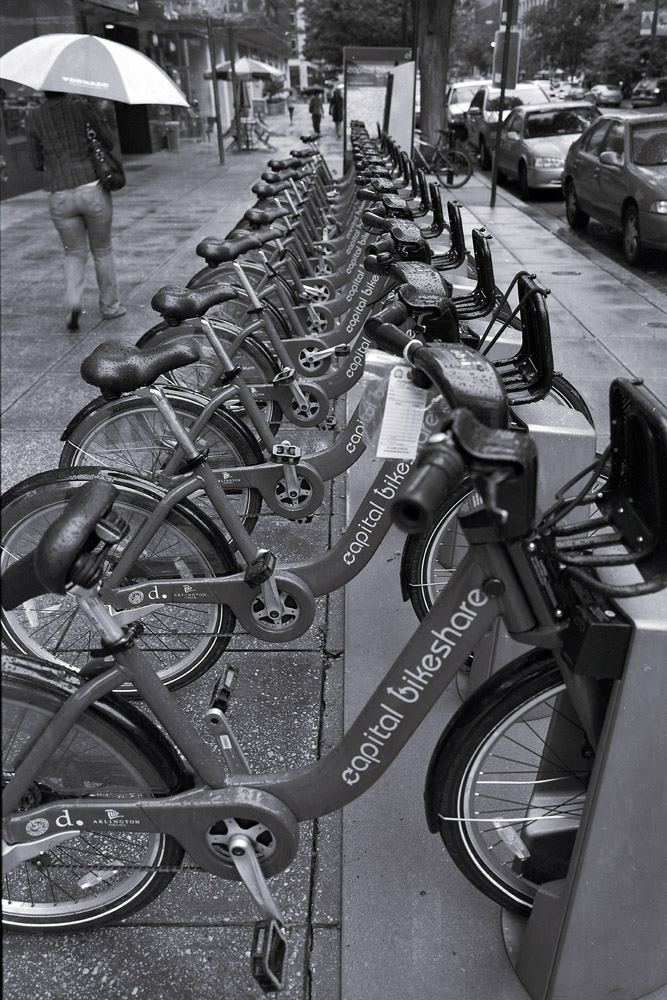
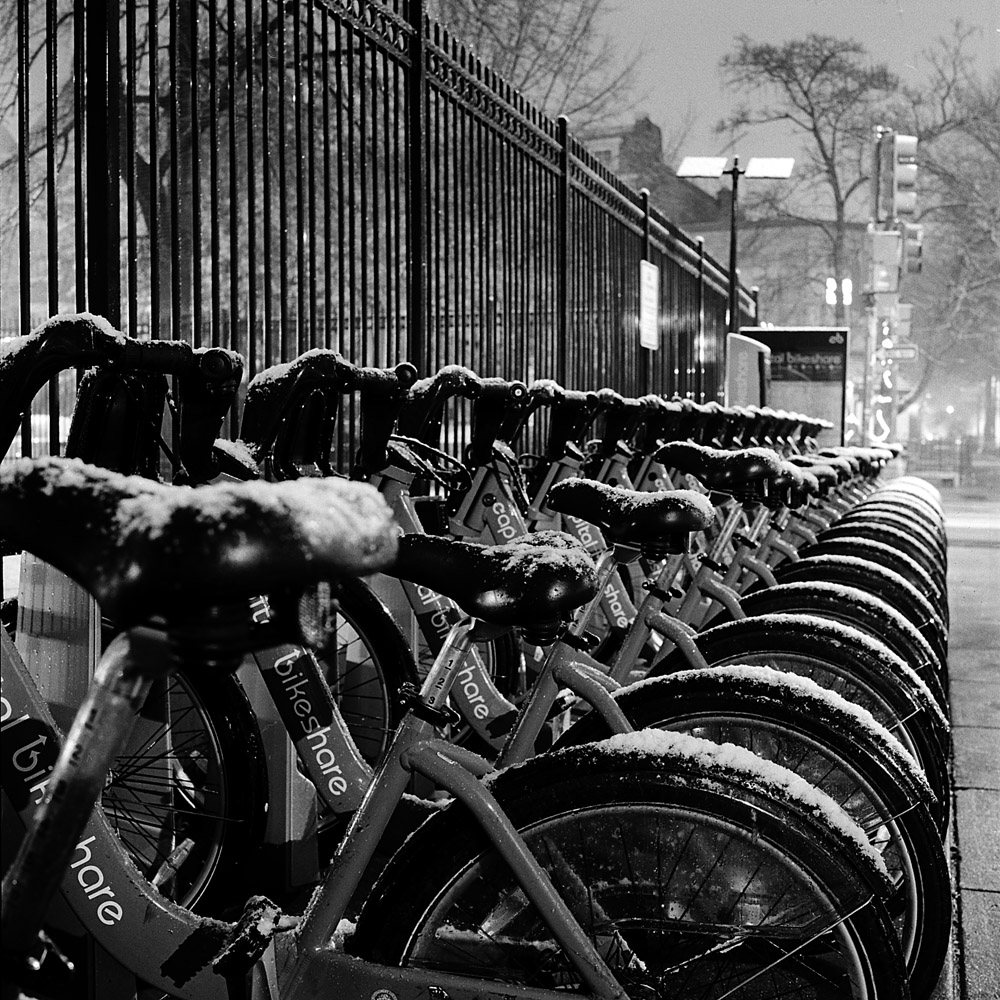
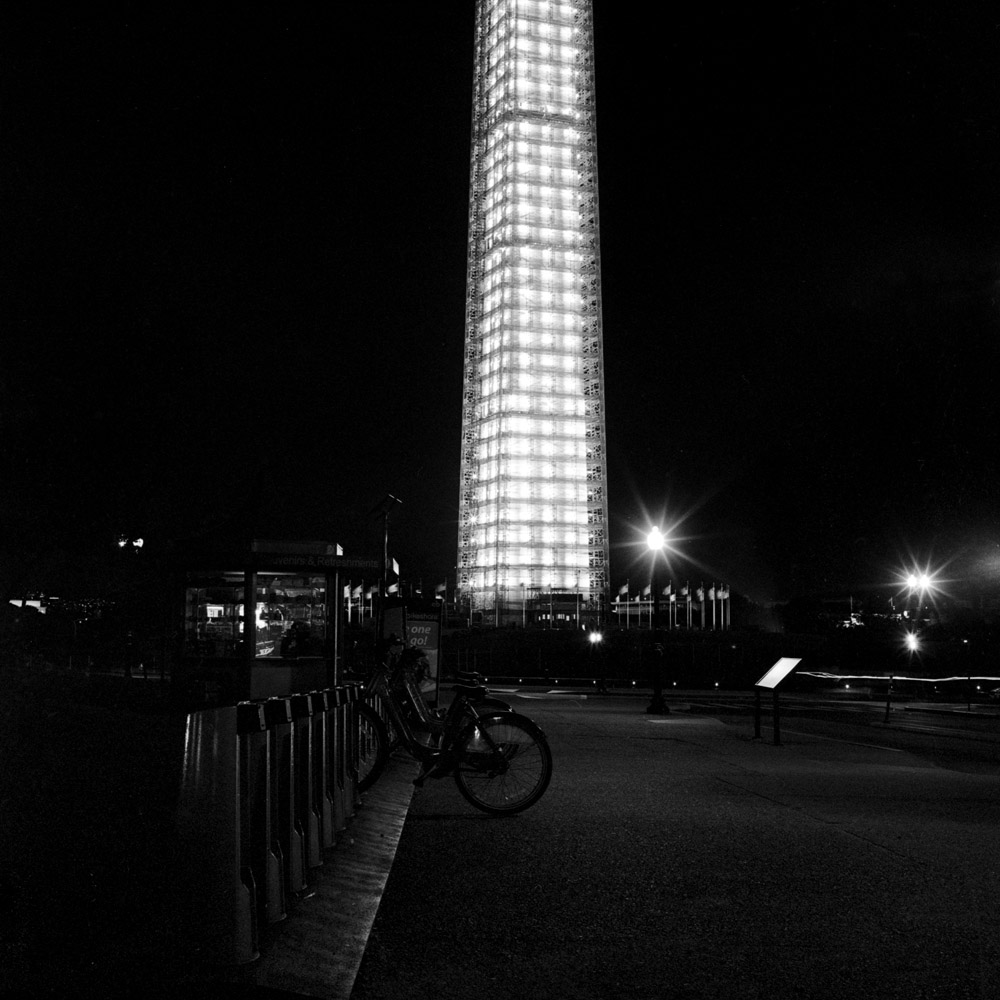
For rather obvious reasons, most of these are of the bikeshare here in Washington DC. I will be shooting more in other cities where I find them – I’m going to try New York the next time I’m up there, as the CitiBikes are everywhere in Manhattan. I do have token representation from Paris, though. I shot these with a range of cameras, from my Rollei to a loaner Fuji GSW 690 II, to my RB-67. Each has their merits and the different formats I think actually work together to convey the varied moods and perspectives of the bikeshare experience.
Ve’Lib BikeshareCapital Bikeshare – Konica InfraredBike Share Rack, 11th StreetWet Bike SeatBikeShare #2BikeShare #1Capitol Bikeshare, Rhode Island AvenueCapitol Bikeshare, 7-Eleven WindowsBikeshare Downtown, in the RainCapital Bikeshare, SnowstormBikeshare Kiosk, Washington Monument, NIght
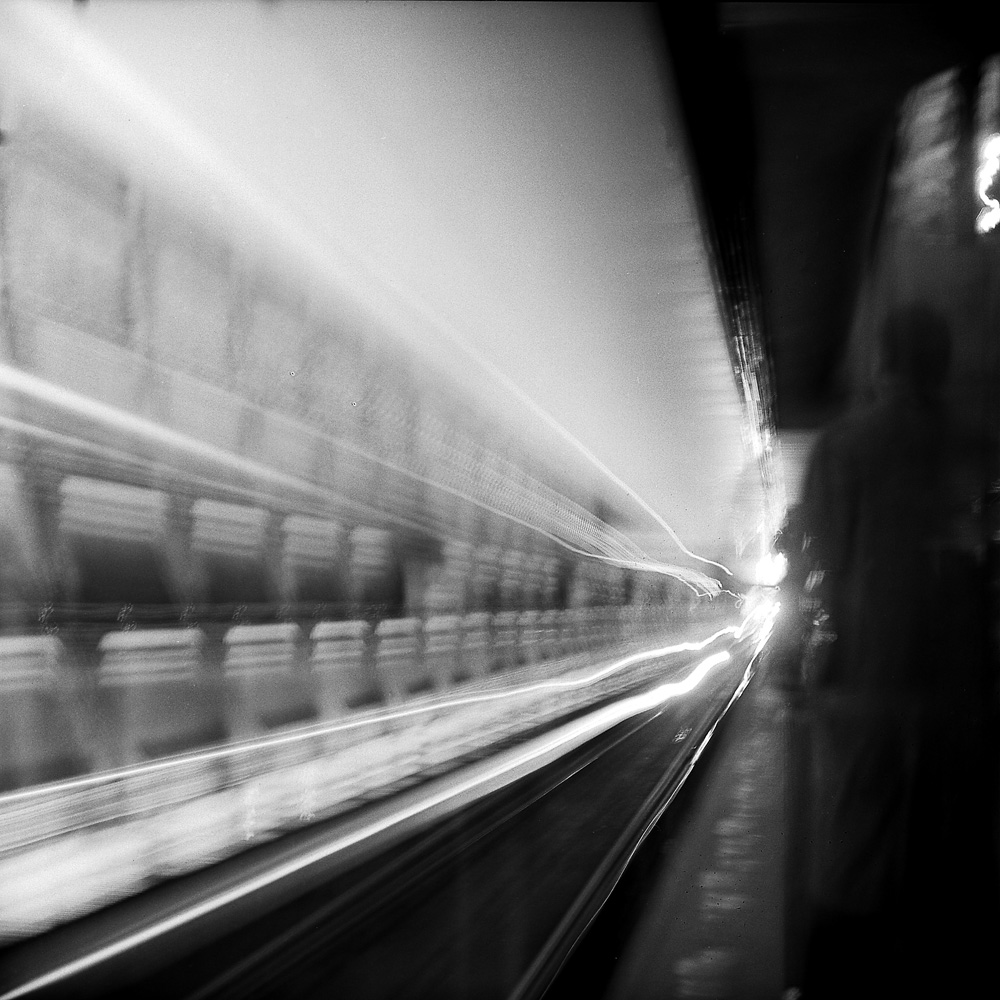
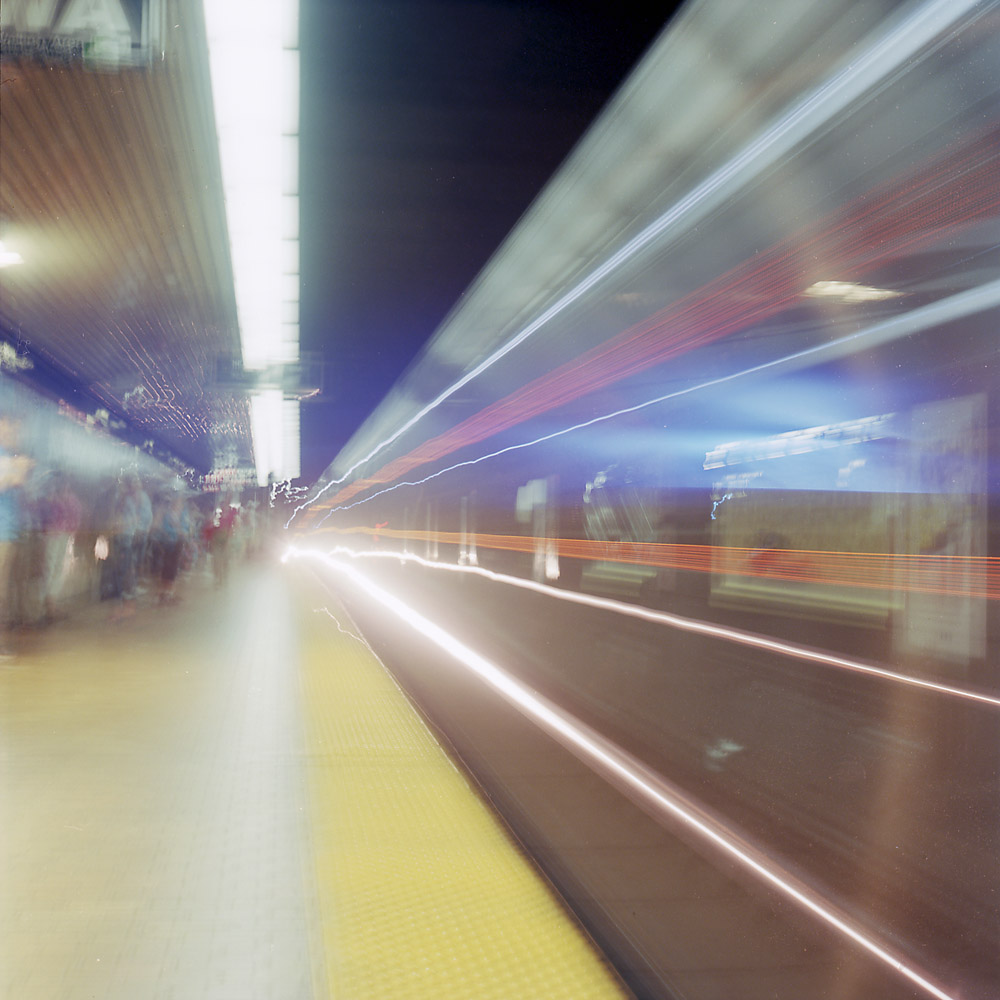
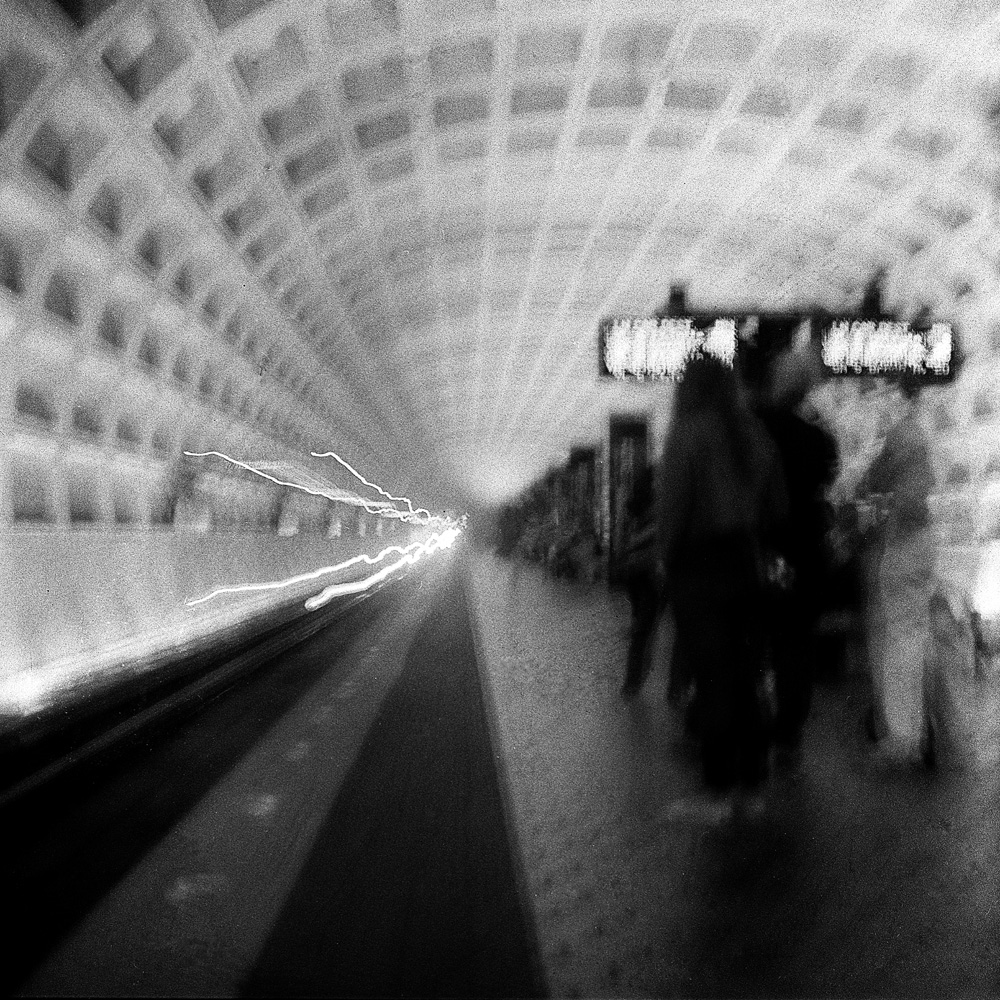
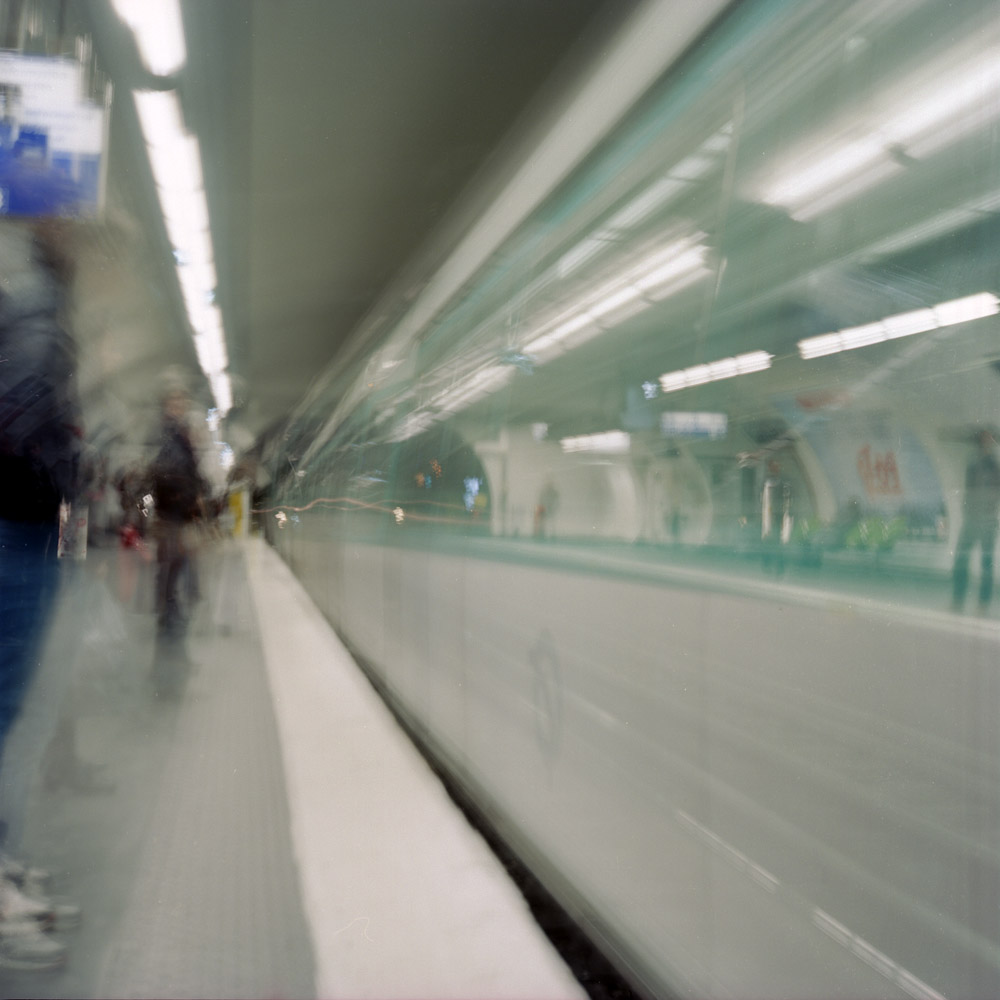
I mentioned in my post about Toronto how the different transit systems look and feel, even when capturing them in a similar way. Here are four shots of the Toronto, Paris and Washington DC subways. All four are behaving similarly – long handheld exposures as the trains pull in to the station, yet all four look and feel quite different.
Toronto SubwaySpeeding Metro, ParisMetro Train Arriving, Archives StationOncoming Metro
Every year at the end of June/beginning of July the Smithsonian Institute puts on the Folklife Festival down on the National Mall. They bring in craftspeople from various cultures around the globe to demonstrate ways of life in those cultures, from farming and fishing to music and dance. This year China and Kenya were the countries represented. I went down on the 4th of July this year to take a look and see what was on display.
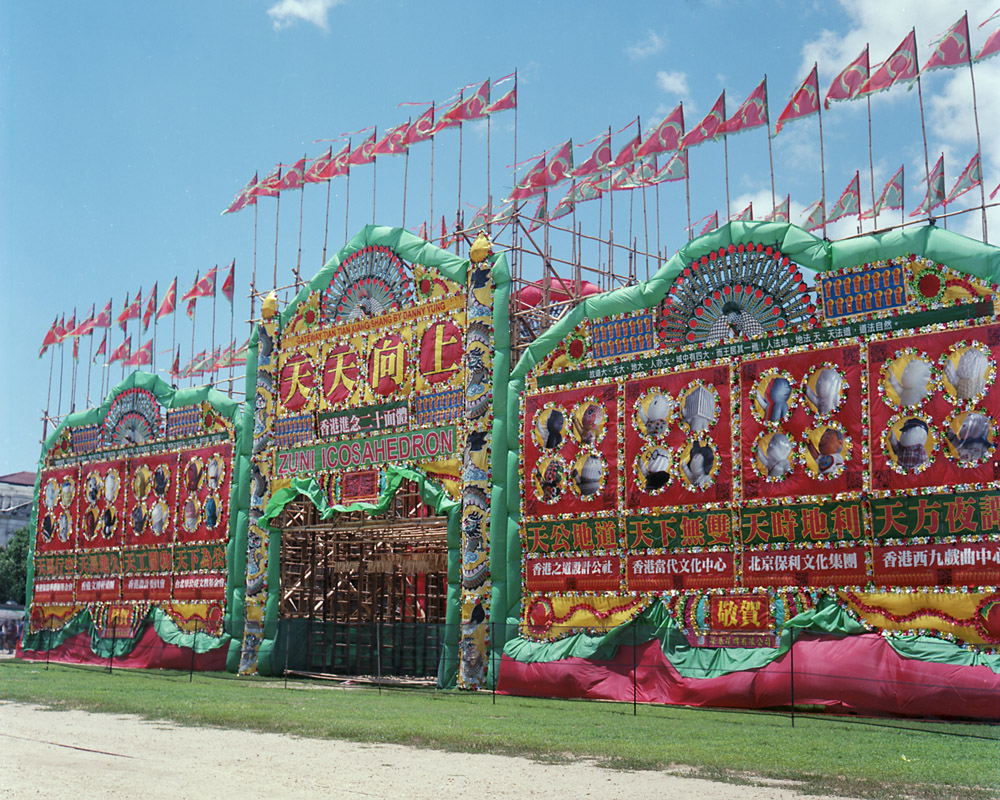
You could see this pavilion on the mall from 14th Street every day driving by. I wondered what it was all about and had to stop and see it close up. The building is built like a traditional Chinese city gate, but made of a bamboo frame and covered in paper. I never did see what the Zuni Icosahedron thing on the front of the gate meant.
Zuni Icosahedron Chinese Pavilion
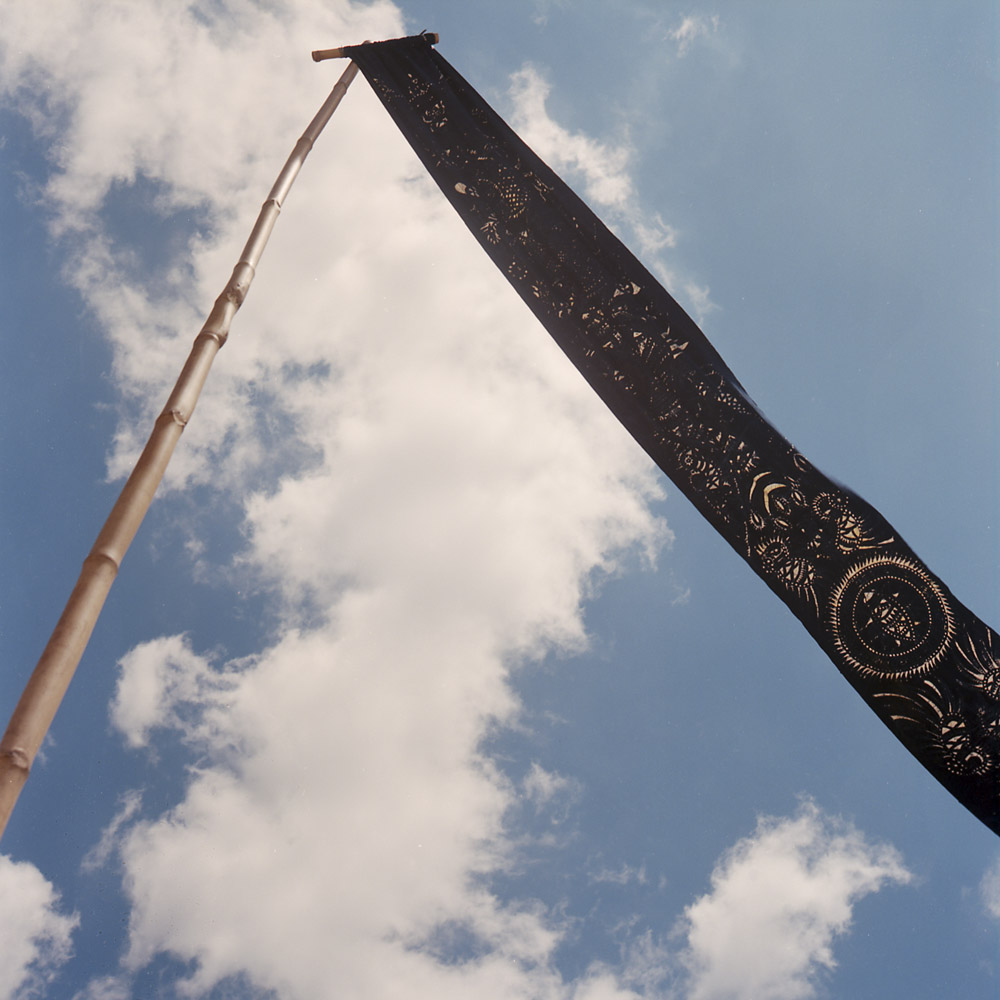
Sometimes it’s just the simple things that attract your attention. This banner flapping in the wind made such a bold graphic statement with its geometry contrasting with the organic cloud forms.
Chinese Banner, Folklife Festival
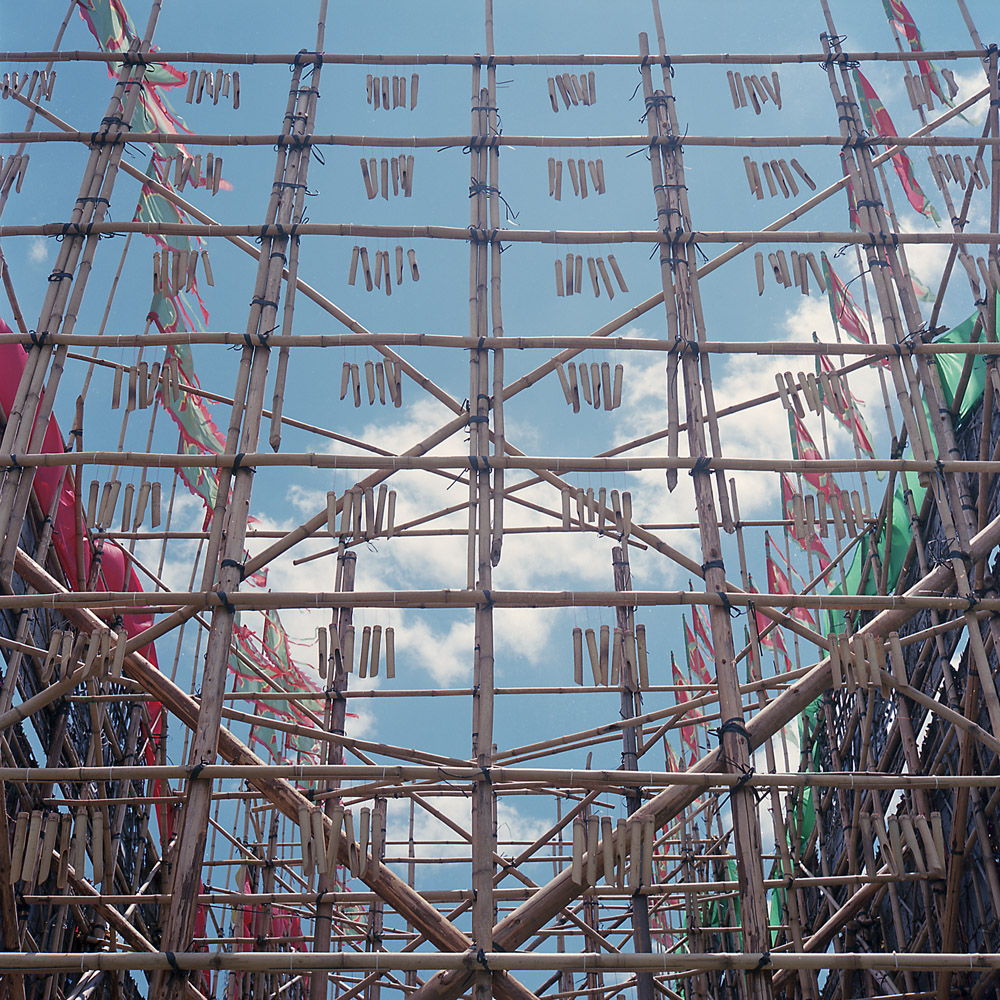
Here are the bamboo wind chimes that filled the structure of the paper gate. One thing that amazed me was how fast they were able to disassemble the gate structure – it was literally up one day, gone the next. You can take that as a commentary on the ephemeral nature of existence if you like.
Bamboo Wind Chimes, China Pavilion
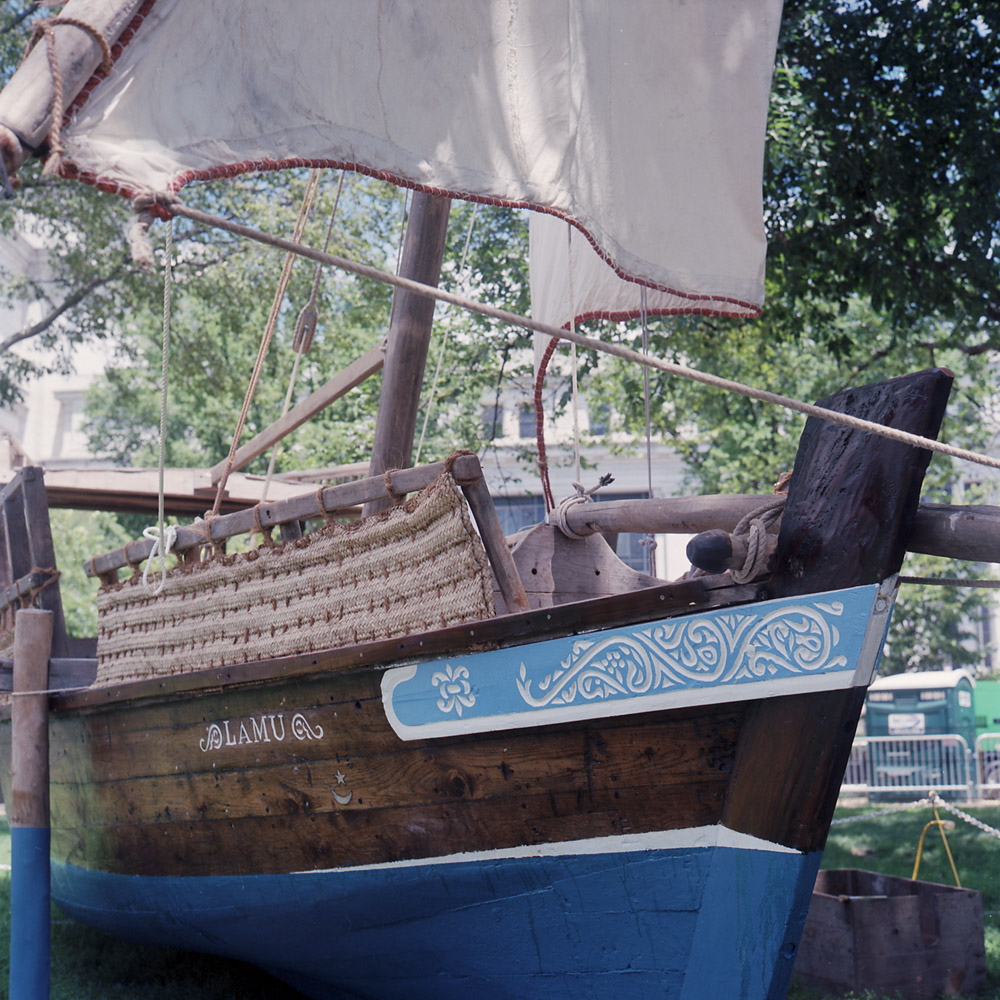
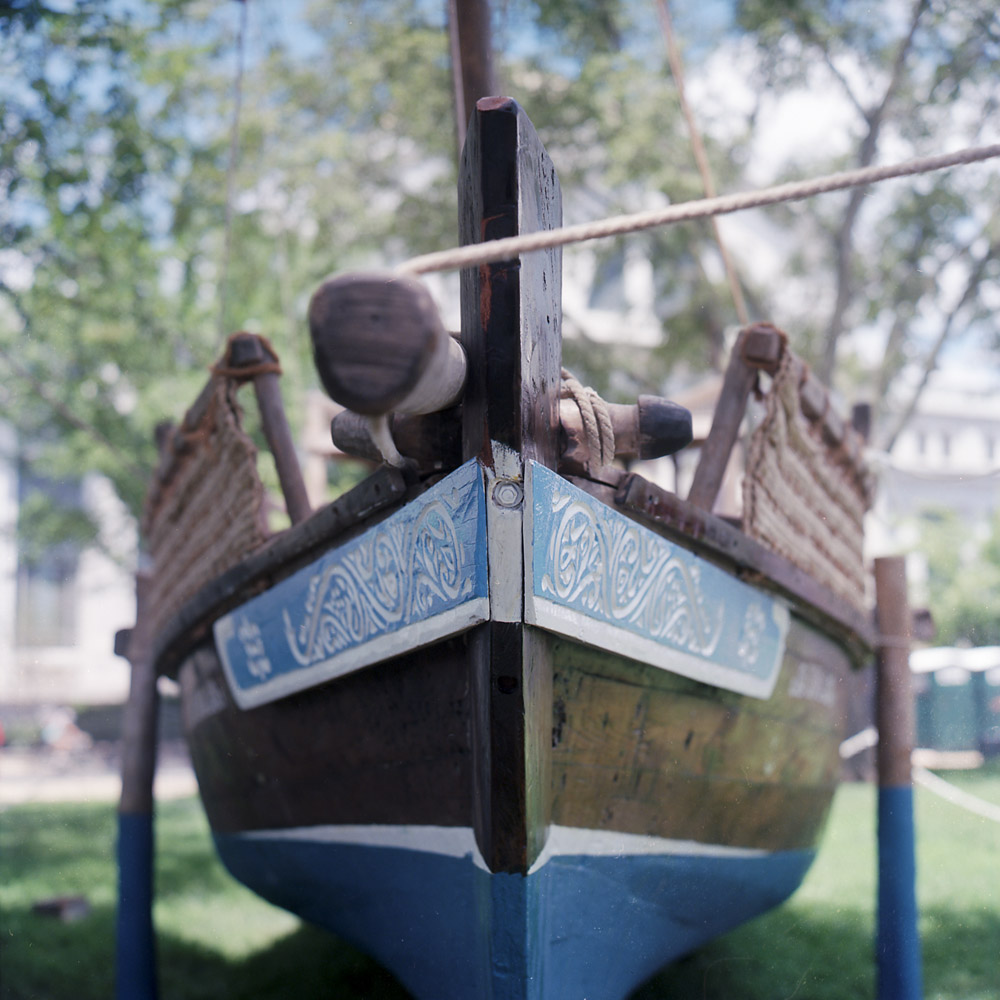
In the Kenyan area of the festival, they had this traditional fishing boat on display, and Kenyan craftsmen were working on rebuilding it. Not visible here but in the stern were areas that had obviously seen significant wear and tear.
Kenyan Boat, Folklife Festival, Side ViewKenyan Boat, Folklife Festival
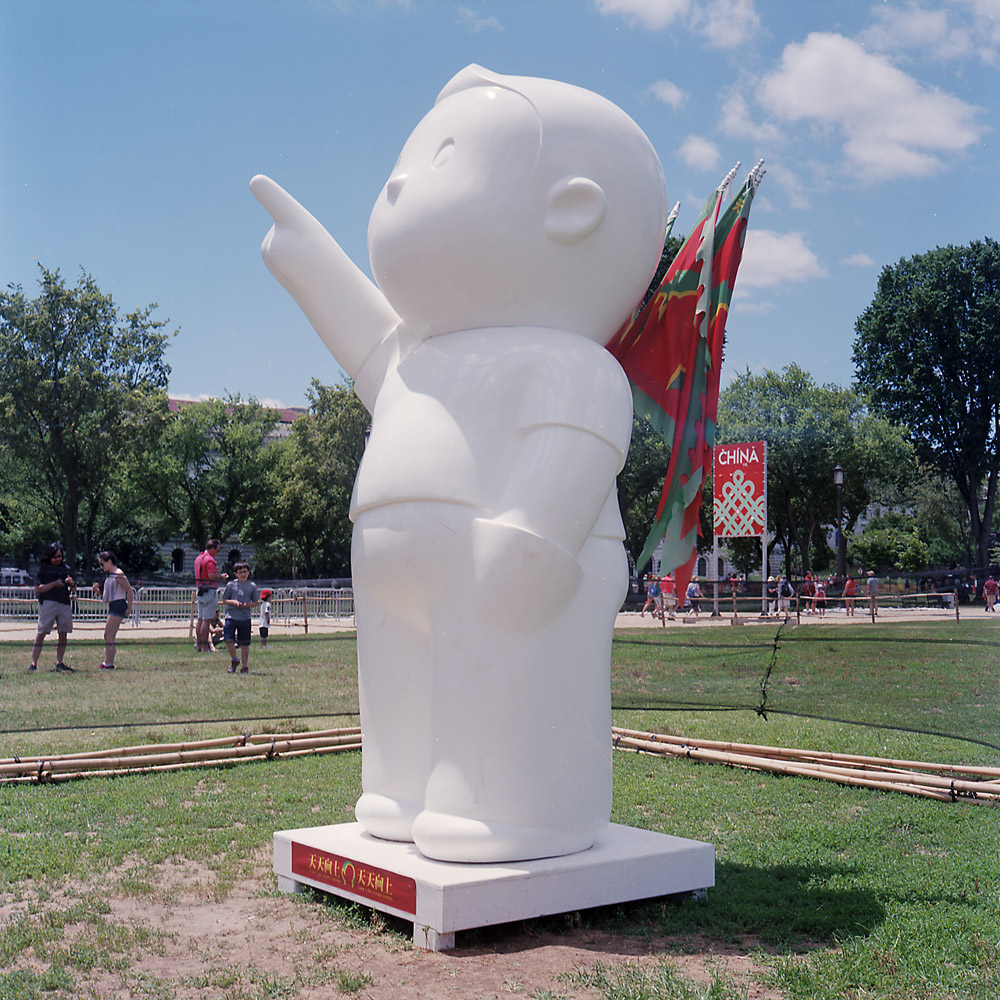
And finally, as part of the Chinese installation, was this figure. I’m calling him Bao’s Big Boy as he looks like a Chinese Bob’s, or perhaps the love child of Bob’s Big Boy and Astroboy if they were to have a relationship. Toss in a dose of Young Pioneer and you’ve nailed it.
I went to Toronto with some friends for the last weekend in June to attend World Pride. Unfortunately due to some awkward circumstances we had to leave early and never made it to the parade, which to hear tell was just as well because Toronto was a veritable oven that weekend and we would have suffered more than enjoying the festivities. I did take pictures, though (what, me go somewhere and NOT take pictures?). It whet my appetite for going back – there’s a lot going on there and I want to explore it more.
I’ve developed a “thing” for photographs of public transit. I started doing it here in DC, shooting Metro trains in motion at various stations. I’ve done it in New York and in Paris, and now Toronto as well. I think this was at the Spadina station, but I could be off. It’s funny how after doing this same shot in various places how different they look, despite the trains doing the exact same thing.
Toronto Subway
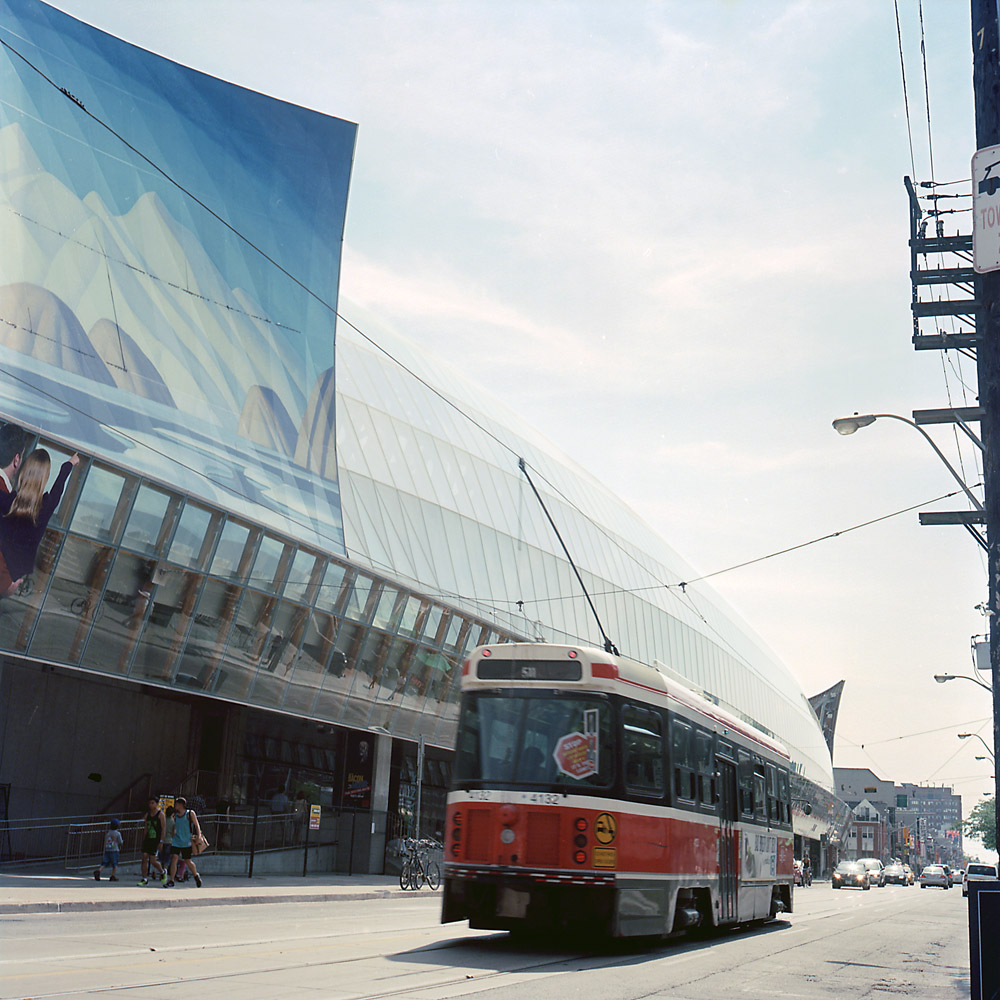
To stick with the public transit theme, here’s a streetcar in Toronto. They have LOTS of streetcars and unlike other cities, they seem to have kept them going instead of ripping them out/paving them over in favor of buses, only to have to put them back at obscene expense (ahem, Washington DC and Baltimore). This one is passing in front of the Art Gallery of Ontario, which looks like some kind of glass zeppelin.
Streetcar, Art Gallery of Ontario
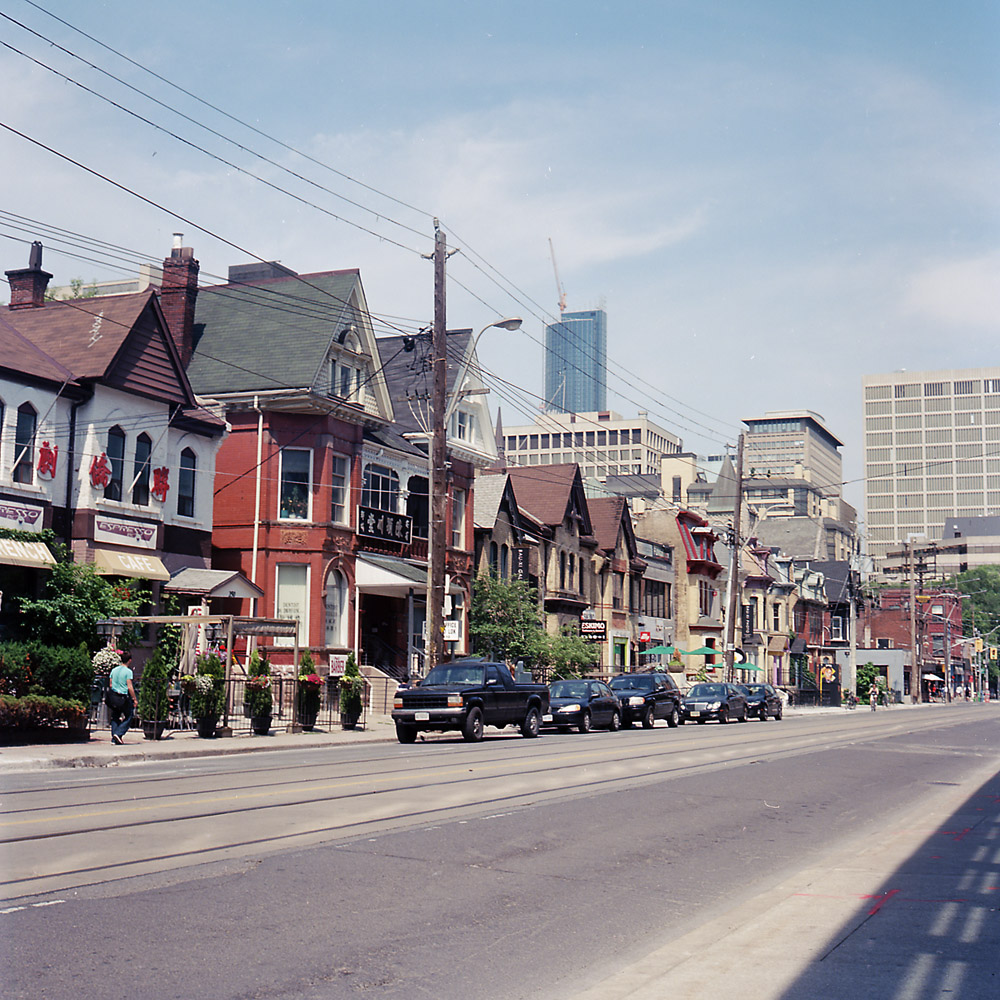
The streetscape across from the art museum is quite the contrast. A row of 19th century rowhouses has been turned into galleries and restaurants. It’s a highlight of the contrasts of Toronto, as you can see the business district skyscrapers in the background.
Toronto Art Gallery Row
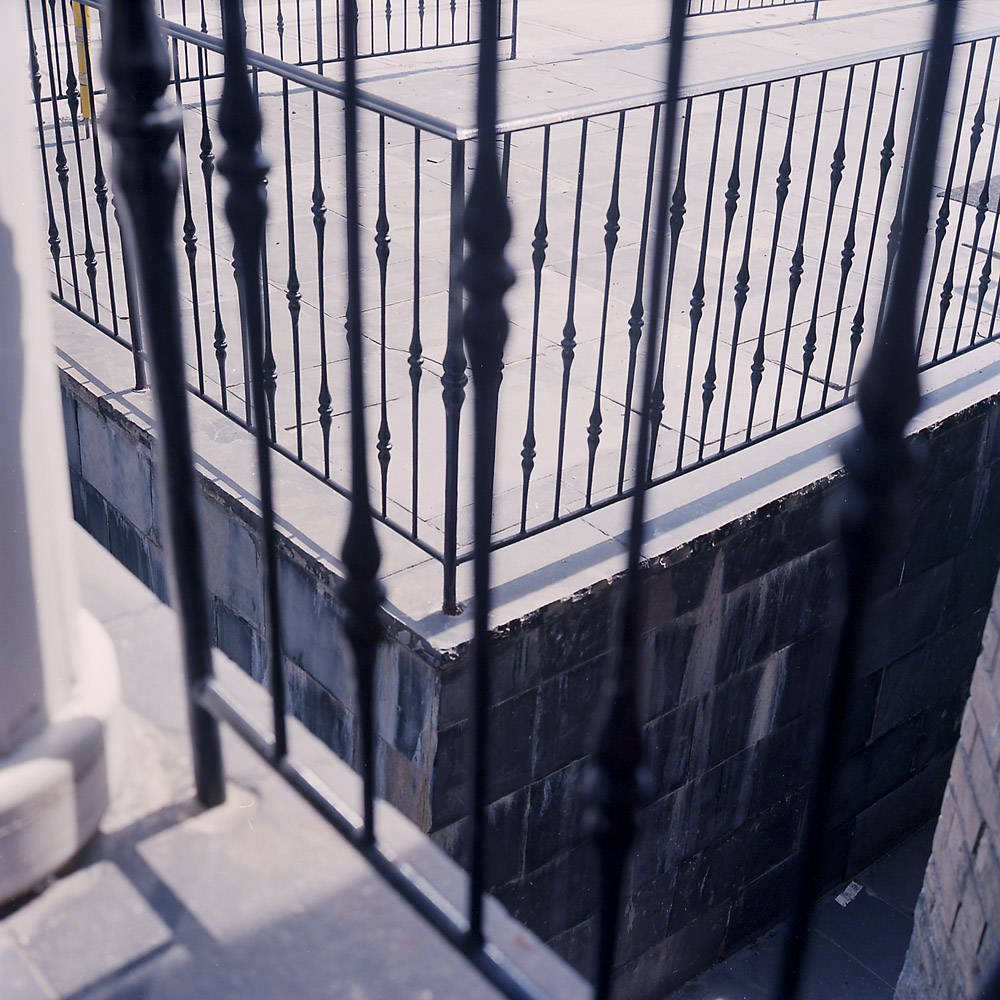
This railing fronted one of the galleries on Queen Street (the street that runs in front of the art museum). I just liked the layering of geometry happening here.
Railings, Queen Street
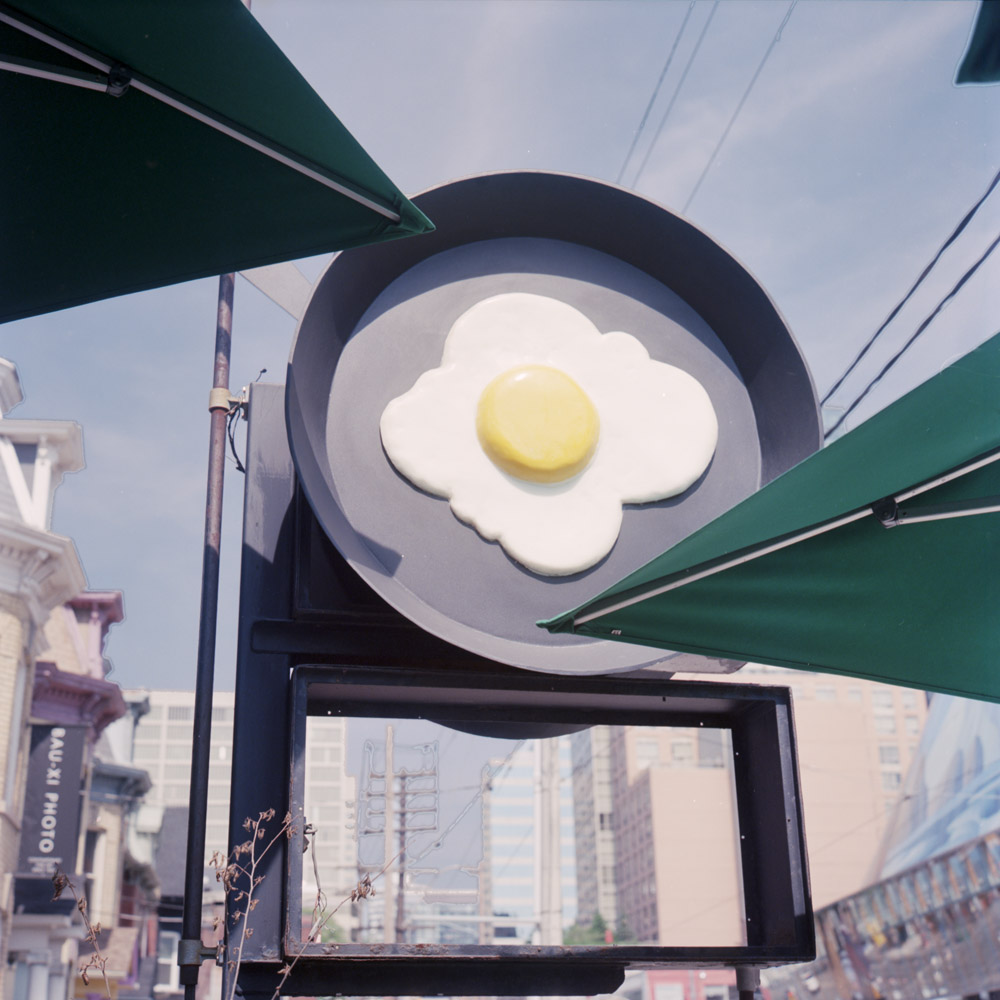
For lack of a better memory of the restaurant’s name, and in honor of Canada’s multilingual heritage, I’m titling this one “Oeufs Torontonnaise”. In reality it’s just a clever sign for a restaurant across from the art gallery. The pan must be really NOT non-stick for the egg to stay up there like that!
Oeufs Torontonnaise
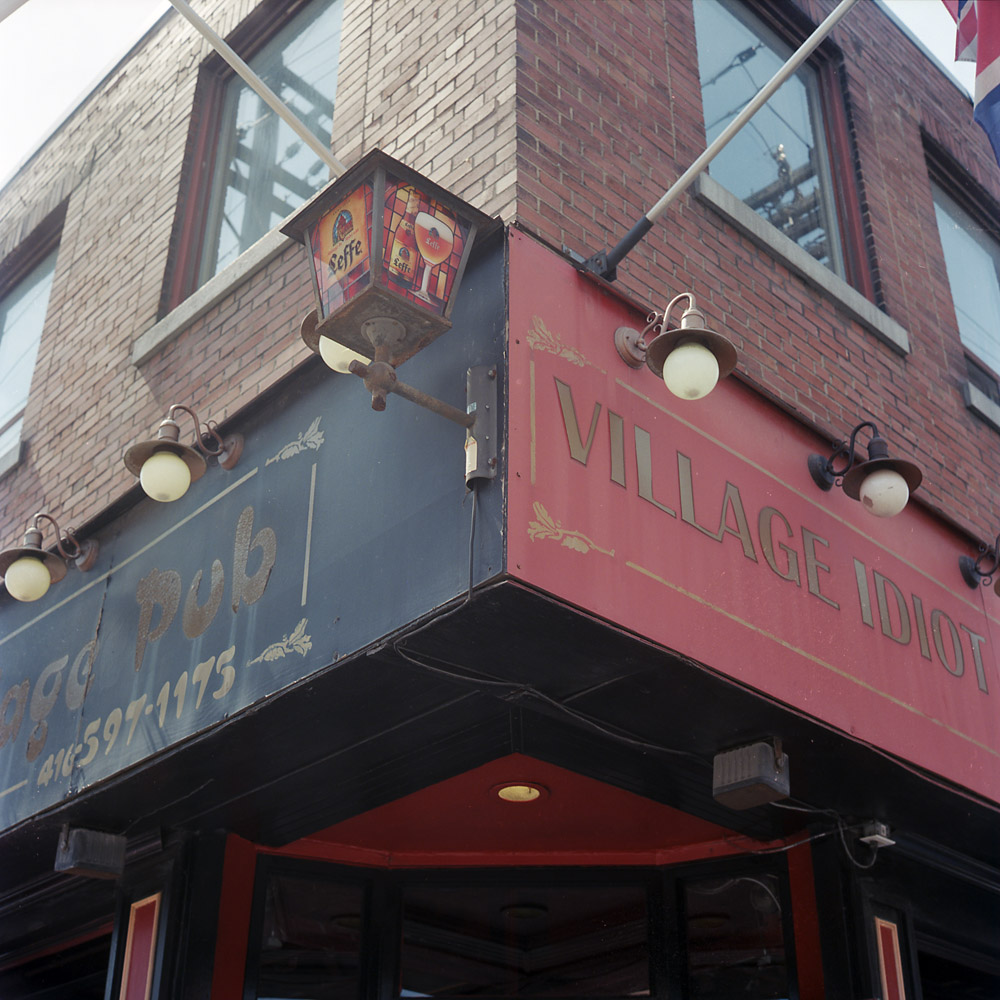
You’ve gotta love a pub called “The Village Idiot”. I’ve been told that down the street from it there is another bar with the best beer selection in Toronto.
Village Idiot Pub
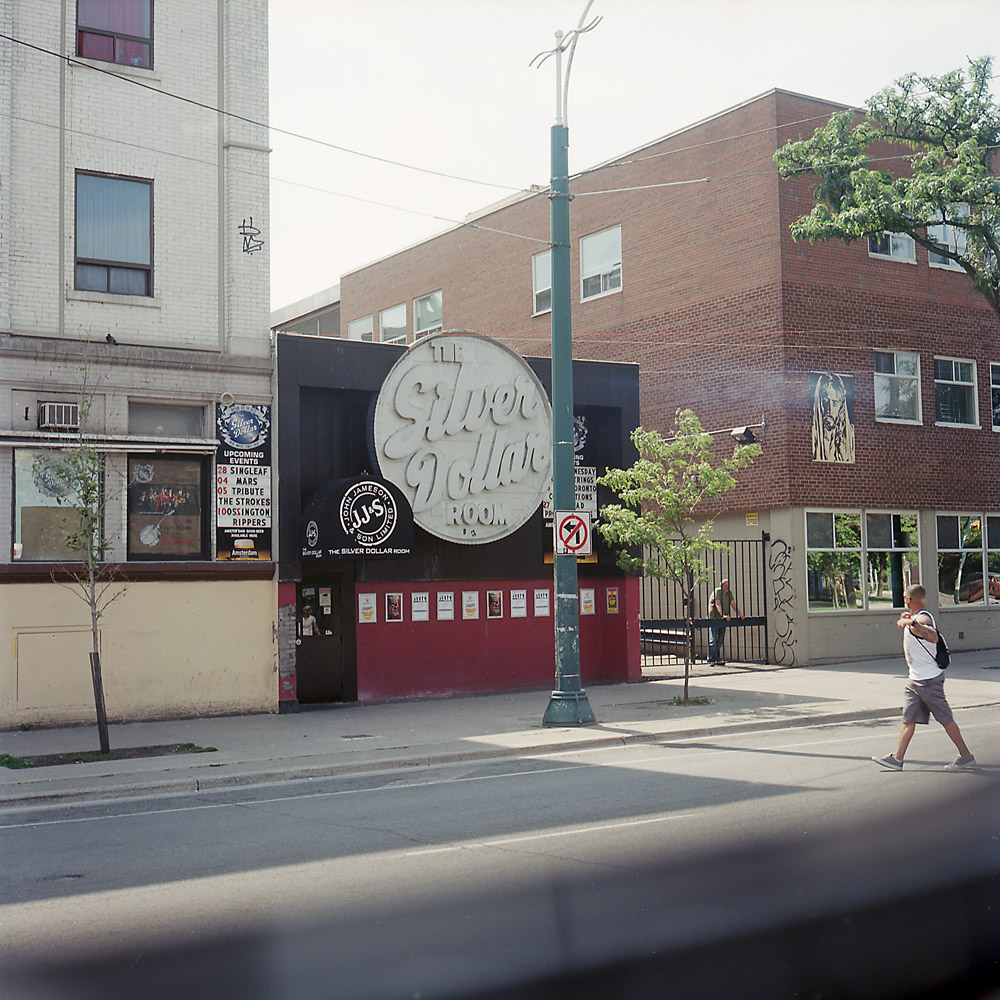
I spotted this place on my way back from Chinatown, through the streetcar window.
Silver Dollar Room
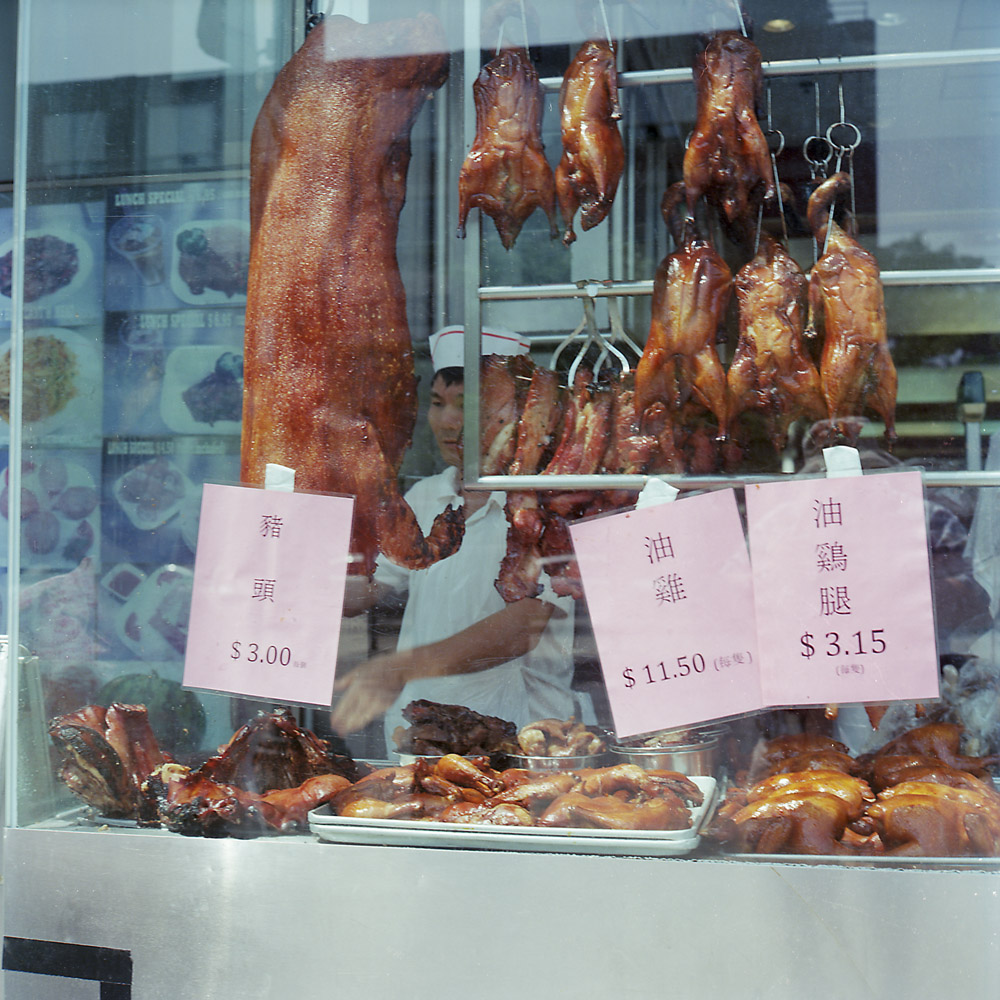
The art museum is just a couple blocks outside Toronto’s Chinatown, which is very busy and vibrant. I spotted this scene shortly after stepping off the streetcar. Passing by an hour later, half the pig was gone.
Chinese Restaurant Window, Toronto
Some very cool graffiti art on a wall near the art museum, at the edge of Chinatown.
Graffiti
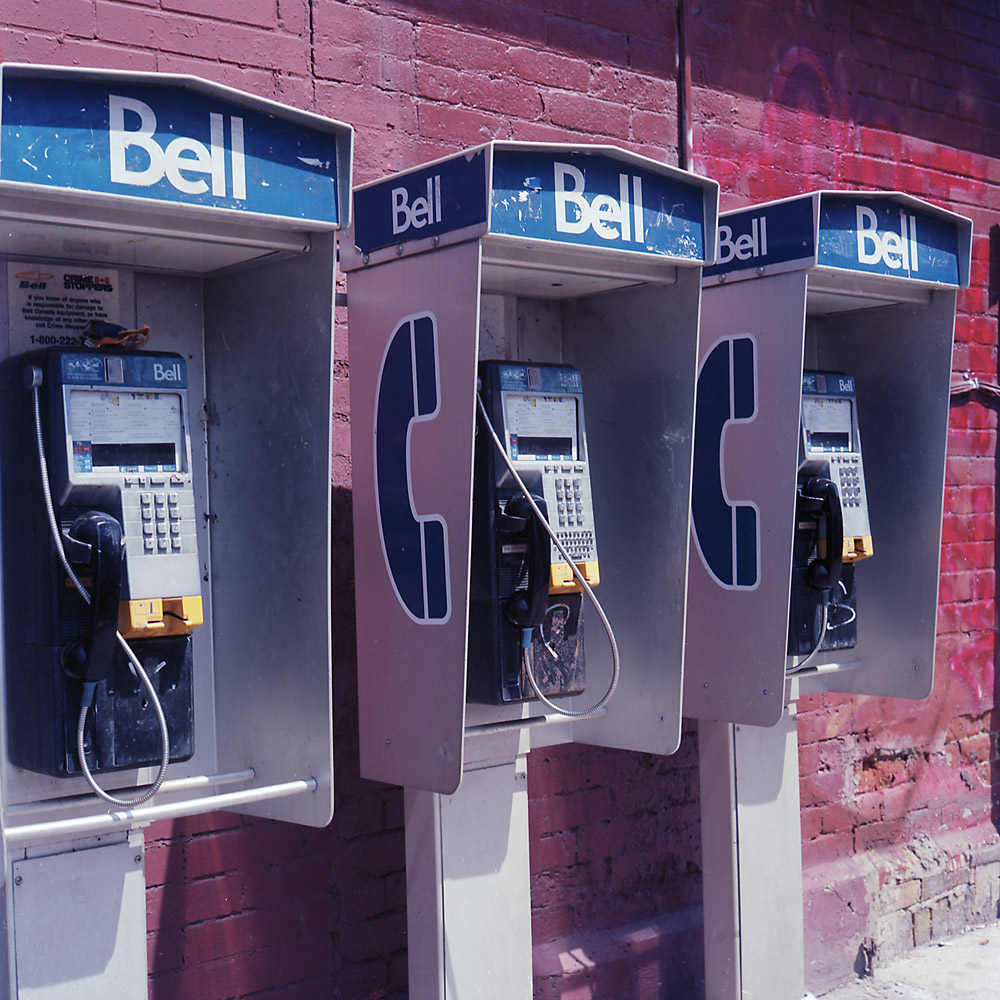
In closing, another one of my ‘things’ – pay phones. I was shocked to see how many were still in service in Toronto.
Payphones
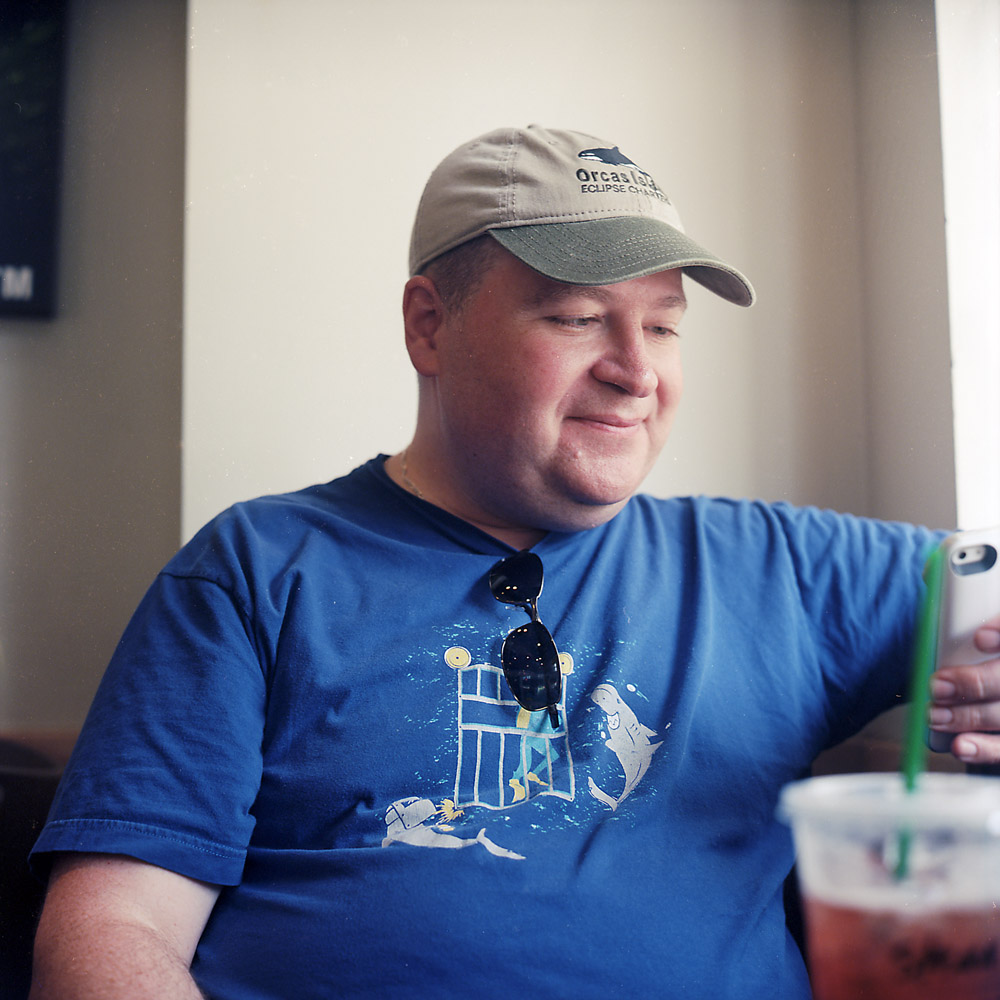
I was hanging out with my best friend since my college days, Steve. I snapped this one of him while we were staying cool in the Starbucks waiting for another friend of mine, Mirza, to join us.
A long time ago, I saw this interesting little gadget sitting in the used equipment case at my local camera store. It was a panorama adapter for Rolleiflex cameras that enabled you to shoot up to a 360-degree panorama on a single roll. It has a built-in bubble level (which is absolutely critical). You put the camera on top, then focus and compose as normal. Once you have the focus and exposure set, you don’t change them (this is also critical). Take the first exposure, then push in the little locking lever, rotate the camera to the next increment on the dial, and take the next picture, and so on until you have shot as many frames as you want to shoot. It is critical to maintain focus and exposure as set on the original frame because changing focus will mean that things in one frame will not be in exactly the same proportion as they were in the previous frame,therefore they will not blend seamlessly. Ditto for exposure – if you change the exposure from frame to frame, ESPECIALLY if you are shooting color film, you’ll never be able to match the frames.
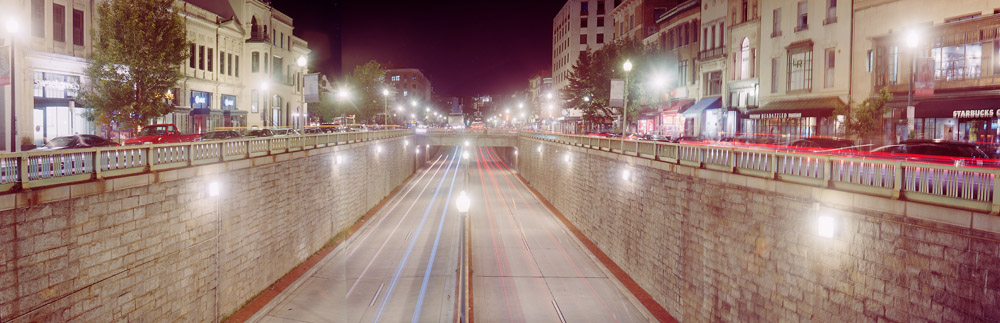
Done right, you get this:
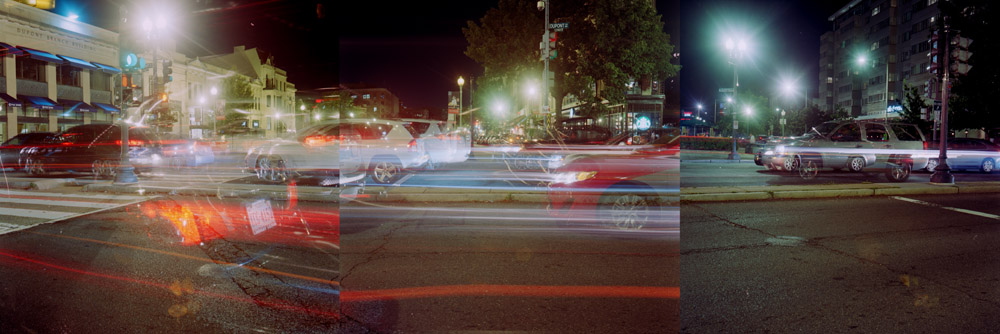
Dupont Circle Underpass
It isn’t perfect because with the long exposures (45-90 seconds each – I forget which I used, but as you can see they’re all exactly the same) traffic patterns don’t flow through the underpass during all three exposures, and the lens flare from the street light in the middle picture doesn’t carry over to the same degree in the left picture, thanks to the lens hood. But you have to look at it to see the three frames separately.
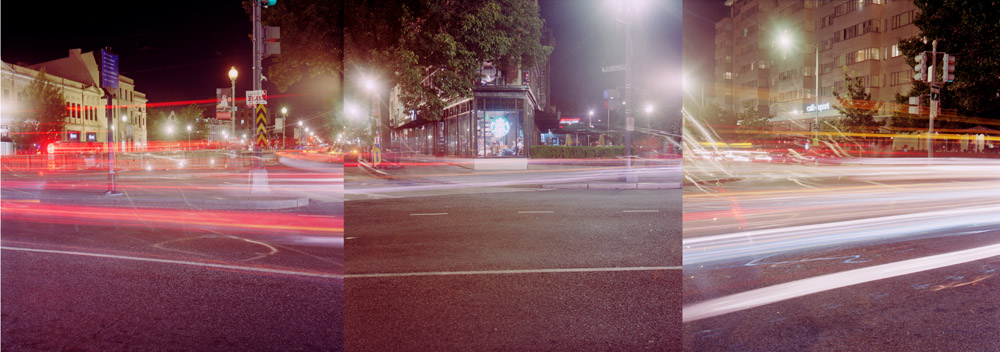
If things aren’t perfect, then you end up with:
Starbucks, Dupont Circle Triptych
While the alignment is pretty close, the color is off a bit on each frame. This took quite a bit of Photoshoppery to get it to match as well as it does. I kind of expected this outcome when trying this shot because I knew the traffic patterns wouldn’t line up from frame to frame, and wanted to see how it would turn out. I think it worked well enough as an effect, but I’m on the fence as to whether I’d try it again.
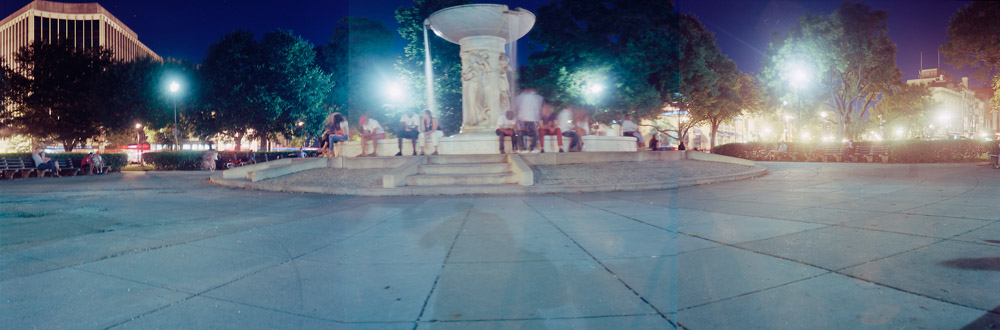
If you don’t have everything perfectly level, you get:
Dupont Circle Fountain
Also lots of Photoshoppery went into getting the colors and density to match from frame to frame. This one has been rotated and cropped to get it MORE level, but you can see between the oval of the fountain and the overall tilt, it wasn’t level and square enough.
And last but not least, another experiment with disjointed traffic flow around Dupont Circle.
Traffic, Dupont Circle
Another part of this experiment was to see how Kodak Ektar 100 does with long night exposures. My previous (and still) favorite for night photos is Portra 160. While Ektar hasn’t dethroned Portra for this purpose, it proves it can stand on its own and I don’t need to carry multiple emulsions with me when I travel to cover every scenario. I can bring a few rolls of Portra 800 for when I need to shoot hand-held in low light, and the Ektar 100 for everything else.
I have eight of my color night photos up on the wall as part of a group show of large format photographs at the River Road Unitarian Church. The show will be hanging through Sunday May 4, when we (the four of us artists in the show) will have a take-down party from 3-5pm. If you can’t make it to the take-down party, feel free to drop by the church and ask to see the show any time during their operating hours:
In addition to the usual Sunday fellowship hours, the exhibit can be viewed Monday-Friday 10 am-4 pm in the Fellowship Hall, River Road Unitarian Universalist Congregation, 6301 River Road, Bethesda, MD. Please call the RRUUC office (301-229-0400) before going there to check that no conflicting activity is scheduled when you want to view the exhibit.
Amazingly enough, the RRUUC’s exhibition schedule is so popular we (the large format camera club I belong to) had to book this show almost a year in advance.
Some of you may be aware of the recent calamity that was the Chapter 7 bankruptcy filing of Calumet Photo. This hit particularly hard as they were the primary photo retailer in the Washington DC area, and my go-to shop for everything from film to lighting equipment to low-volume c41 film processing for 35mm and 120. Well, with the utterly unplanned, un-announced overnight shuttering of their stores, I was left without a convenient, quick source for processing my 120 film (there’s an excellent pro-lab here in town but between their schedule and mine, it takes about a week to turn around a roll of 120!).
As a result of that calamity, I decided it was time and invested in a film processing drum and a set of reels for my Jobo CPP2. Now I’ll not have to worry – I can run a batch whenever I feel like it, from as little as one roll up to six at a time, and it will cost me less per roll than outsourcing it. The reels are the 2502 series reels, and the tank is a 2563 tank. Jobo has a rather involved numbering scheme for their components, so I sometimes get confused trying to match everything up, especially on Ebay where you have to source your components separately. But no matter – I got all the pieces put together last night and everything matches, so I’m a happy camper. Next stop, YouTube, for some videos on how to load those 2502 reels!
 dcphotoartist