Category Archives: Medium Format Cameras

Nemours estate, Wilmington, Delaware

From the A.I. Dupont estate, Nemours, outside Wilmington, Delaware. A.I. Dupont, director of the Dupont chemical company, built the house as a gift to his second wife in an attempt to grow her affections for him. The 40,000 square foot house was built in 18 months. The interior features an elevator that runs from the basement to the third floor, a billiard room, bowling alley, an ice factory (the house was built before electric refrigeration, so they needed to be able to produce their own ice to keep the ice boxes cold), and a central vacuum system. The laundry was put in a separate building perhaps 30 yards from the main house so they could say they sent their laundry out.

This is a view down the lawn from the mansion front, looking to the colonnade (which crowns a massive fountain on the other side). The garden urns have been prepared for winter with their canvas covers and their fountains drained. Even today, the estate totals some 300 acres, down from the original 3000.
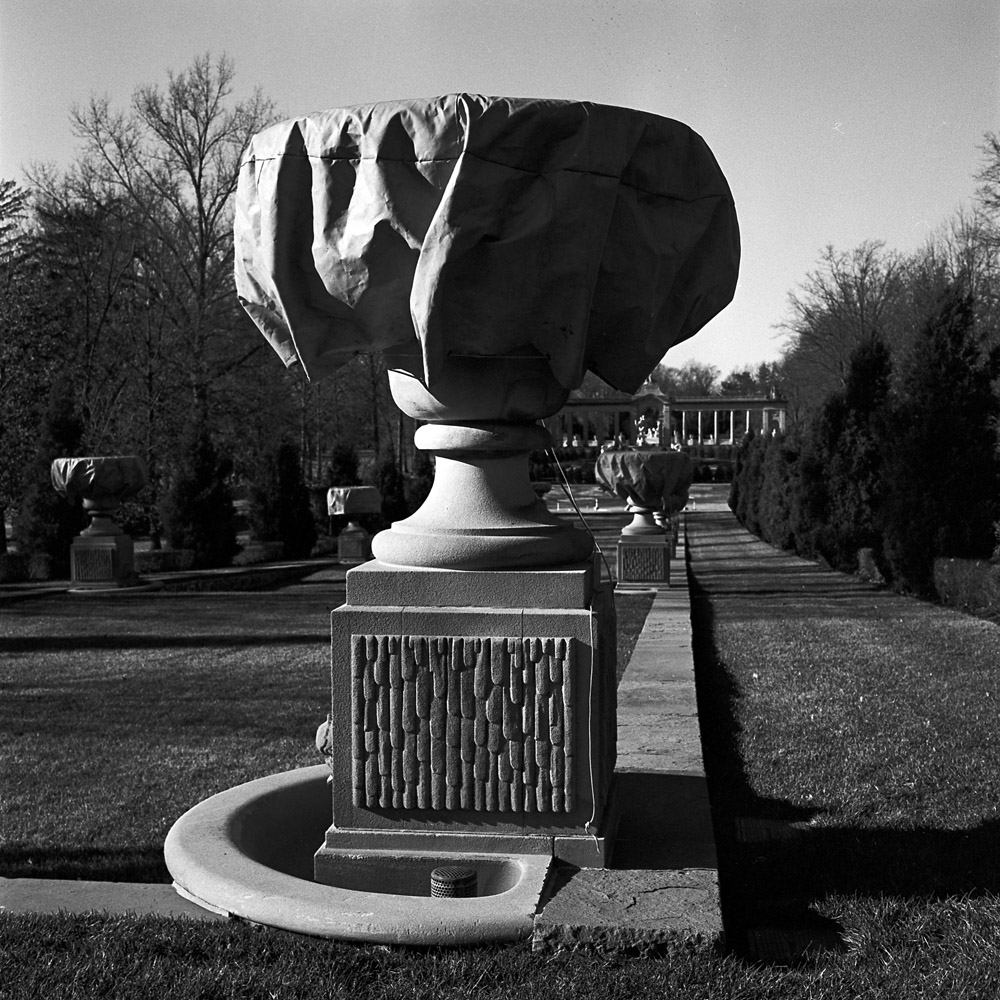
Urn, Prepared for Winter, Nemours

I was at Nemours between Christmas and New Years to see it for the last open weekend of the year (it closes at New Years and re-opens in May). The house interior is decorated as the Duponts would have decorated for the holidays. No photos of the interior are allowed, so I do not have any pictures from inside the house. Photography on the grounds is acceptable, however, so I took these pictures of some of the details outside. In the spring, when garden tours are offered, I’ll have to go back and shoot the gardens in greater detail.

Here is a sphinx, one of a matched pair, guarding the front porch of the house. I loved the way her white marble glowed in the late afternoon winter sun.
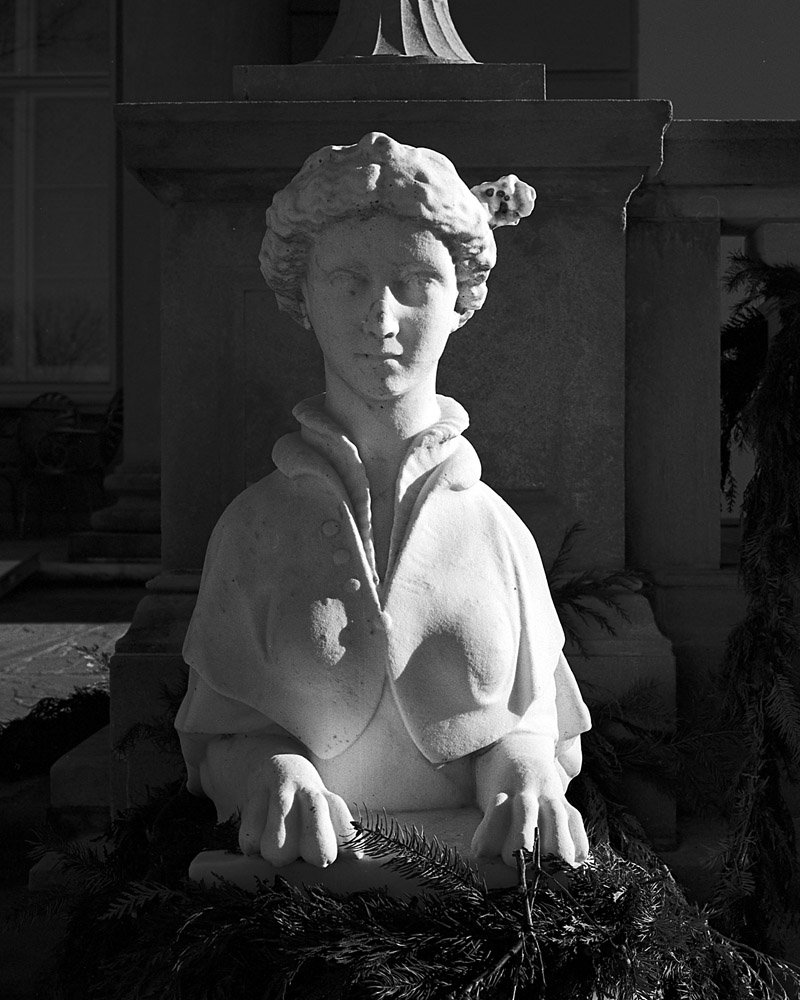
Sphinx, Entrance to Nemours

Washington DC in the Snow

We had a snowstorm a couple weeks ago. I know, bad me for taking so long to getting around to developing the pictures. And I have another roll from the snowstorm to go, as part of a batch. In any case, I decided I wanted to take pictures during the snowfall, so I bundled myself up and got out and about with the Rollei. This, and rain, are perhaps the two things the Rollei is less than ideal for, because the waist-level finder does nothing to prevent snow (or rain) from falling on the focusing screen. Unless of course it’s blowing sideways, at which point you have bigger problems.
I took the camera and my Induro carbon-fiber tripod out for a short walk up the street on my way to get dinner. It’s proof of the adage about finding interesting things to photograph in your own backyard. You just have to be willing to see them.

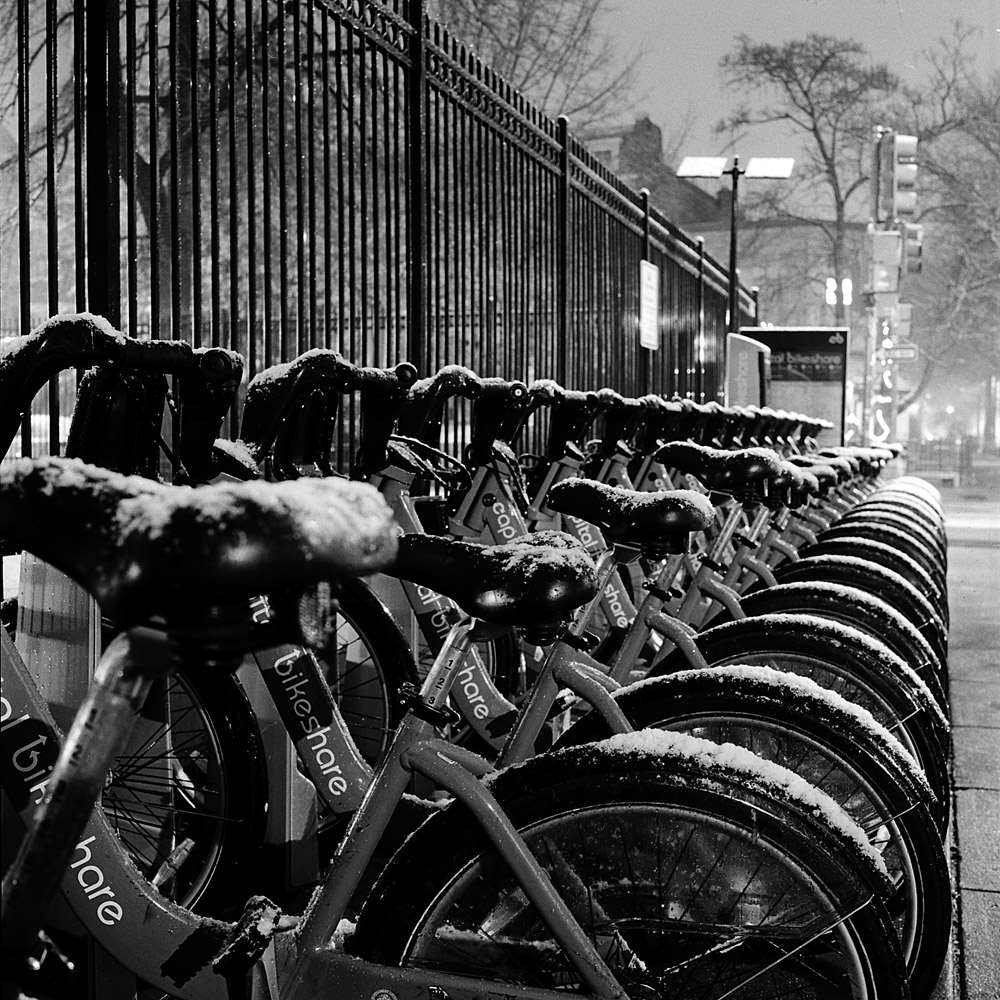
The bikeshare is a great source of material, especially if you like repeating shapes and patterns. The bike seats both break and reinforce the pattern as they are all set to slightly different heights.

Capital Bikeshare 11th Street

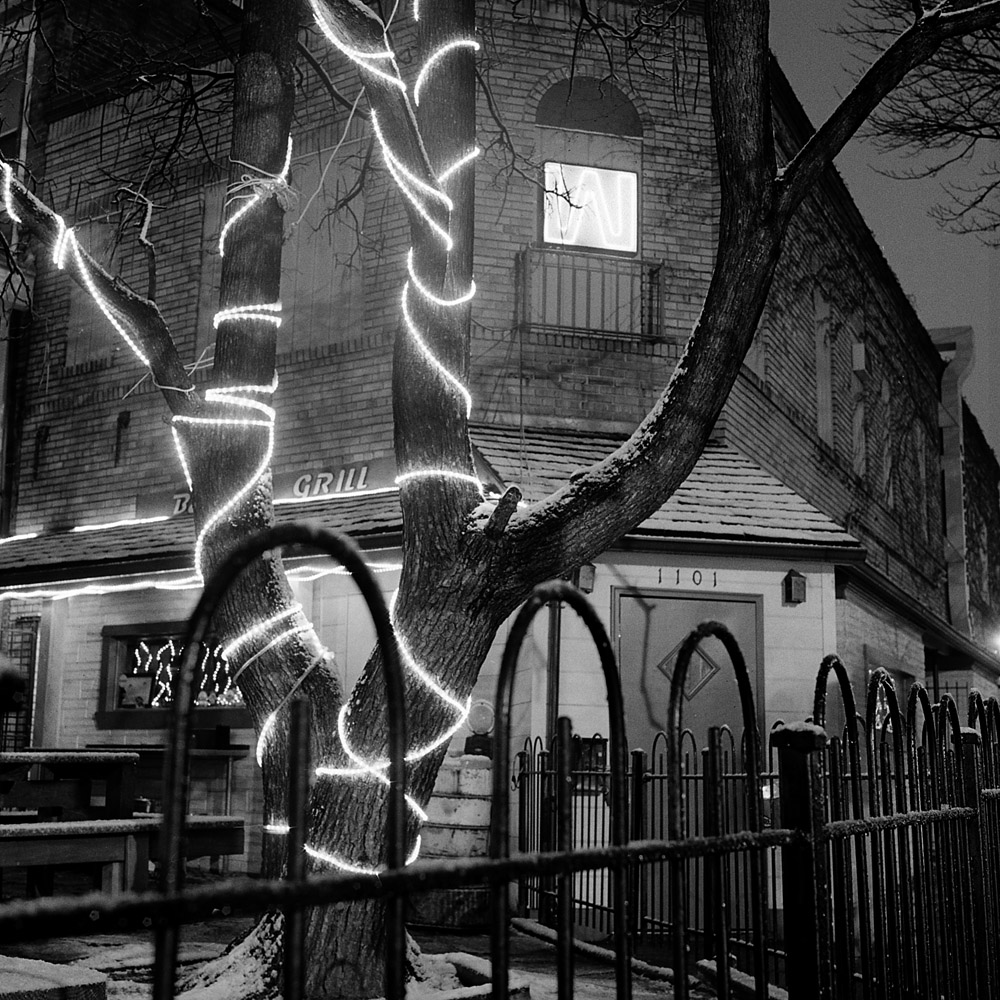
The Wonderland Ballroom is a neighborhood bar and grill. Until 2004, it was the Nob Hill, DC’s oldest continuously operating gay bar (opened in 1954), catering to a primarily African-American (and in the end, elderly) clientele. Now it serves a young, ethnically and sexually diverse crowd of urban hipsters. Plus ca change, as the French say – a side-effect of gentrification.

Wonderland Ballroom
Wonderland Ballroom

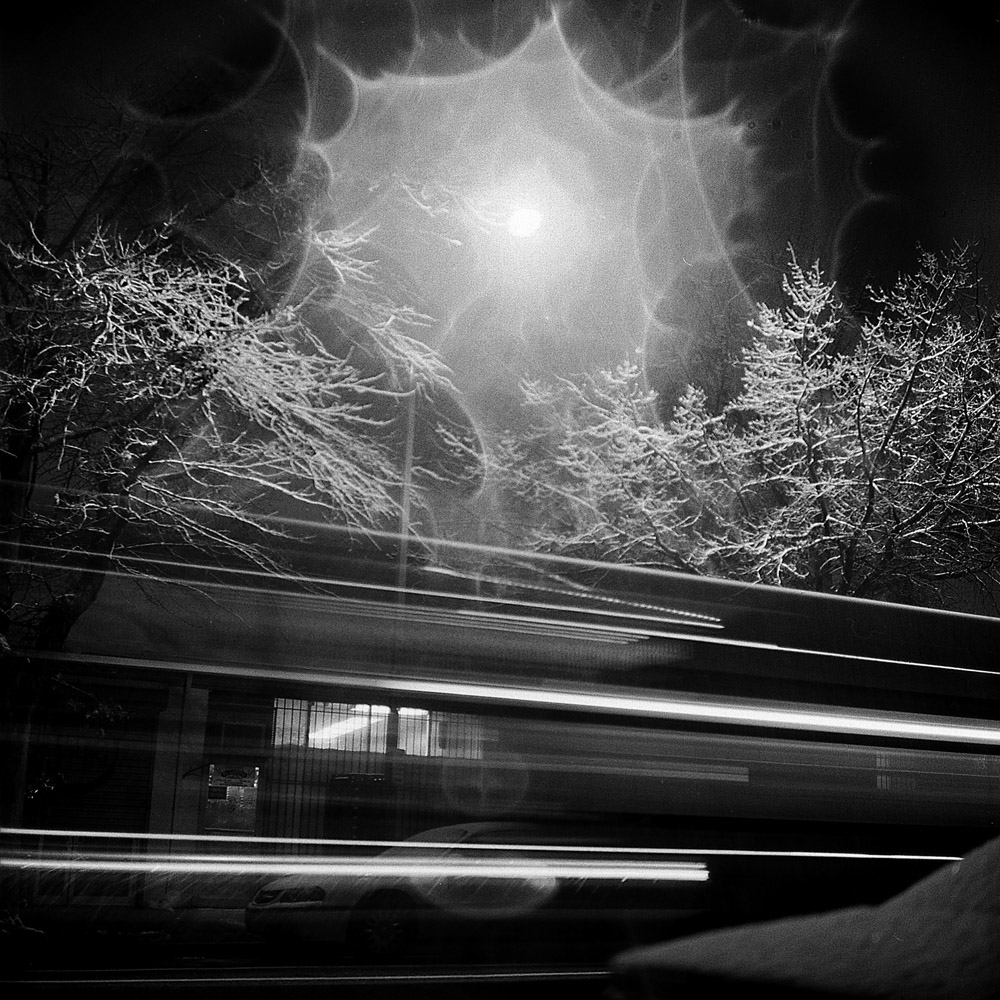
In a long time exposure (somewhere in the region of 30 seconds) I caught the lights of a passing city bus, under the flare of a street lamp. The awesome and dramatic flare from the street lamp is a combination of the lens on my particular camera, which is prone to strange flare artifacts when you put a light source directly in the scene pointed at the lens (due in part to some loss of coating on the front element of the lens) and the specular reflections from the falling snow. In some cases I’d find lens flare like this to be highly objectionable and would consider the shot ruined. In this case, though, I think it makes the image.

Passing Bus 11th Street

Glen Echo Carousel, Twilight, Fall

Here are a few loose odds-n-ends I shot back at the end of September, but kept on the shelf until I was all done with the Paris photos. I like playing around as light levels fall – it’s a challenge to balance foreground and sky, but when it works, it’s beautiful. I also like the colors you get when you mix different kinds of lighting.

I was walking around Glen Echo Park in the evening after visiting for (I think) an exhibit opening. I had the Rollei with me, and a roll of Kodak Portra 800 loaded. Portra 800 is another one of those “miracle” emulsions, in my estimation. It is expensive (almost $10/roll), but when you need it, it’s there and it works so well at what it does. Yes, it does have more grain and less contrast than Portra 400, not to mention Portra 160, but the difference compared to what you would have seen in older 800 speed films is almost not worth mentioning. It’s a specialty film, and because of the price, not something I’d shoot every day in lieu of a slower film. But using it is not a sacrifice, like other films used to be.

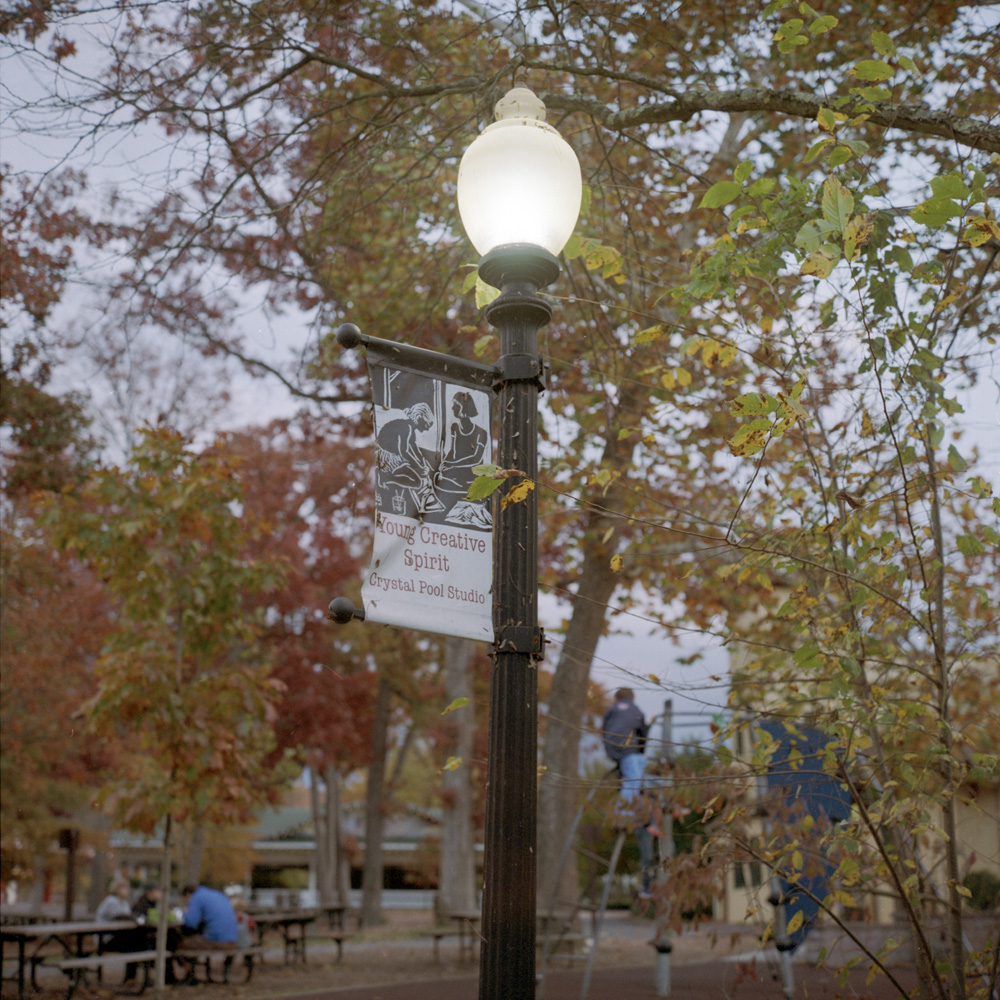
Here is one of the street lights in the park, glowing in the pre-dusk.

Lantern, Crystal Pool, Twilight

The Dentzel carousel is endlessly fascinating. The bright colors, the lights, the music, the motion – it’s a nostalgic combination that provokes a range of emotions from childish joy to melancholy. Here the lights of the carousel are glowing inside the carousel house, and the neon of the old Midway perks up the background through the trees.

Carousel Lights, Fall

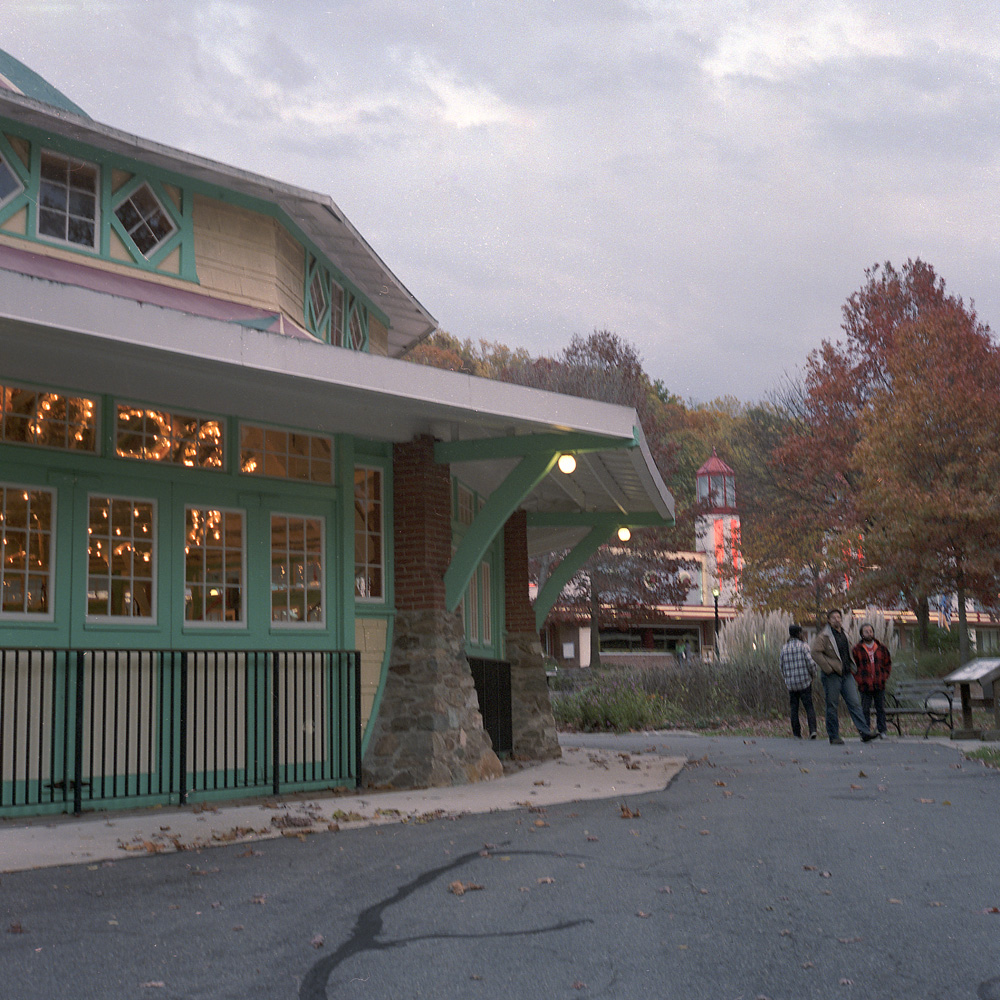
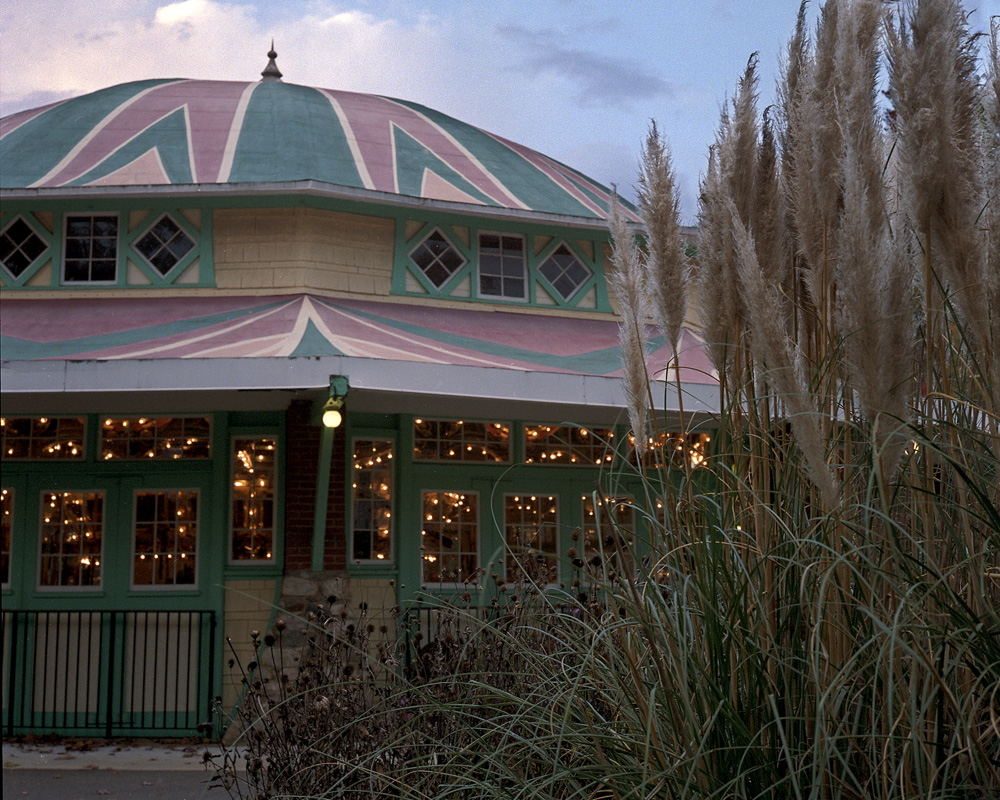
Another view of the carousel house, framed with ornamental grasses. The glow of the lights is particularly inviting – I’d love to go for a ride.

Carousel, Grasses, Twilight

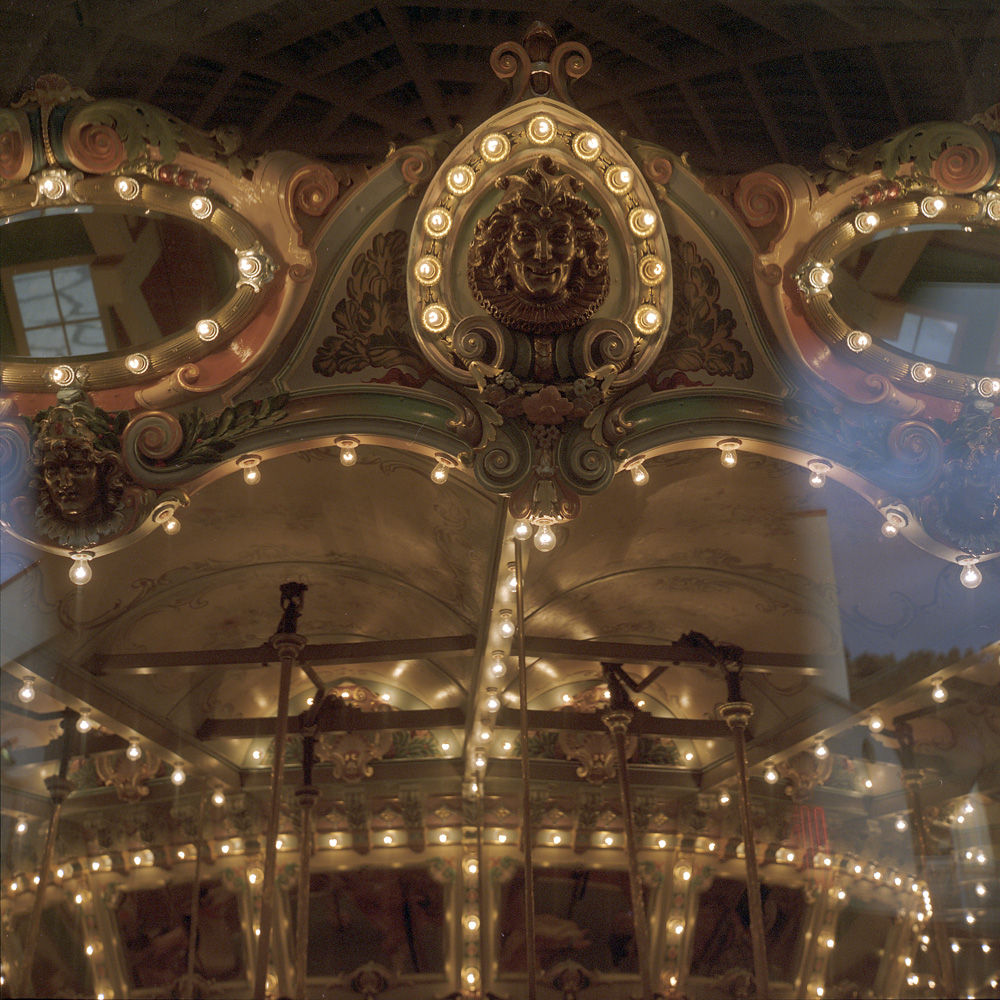
One of the circus masks on the crown of the carousel peers out at you through the reflections on the carousel house window. The lighting and the stillness gives it a slightly sinister air.

Carousel Lights
Carousel Lights

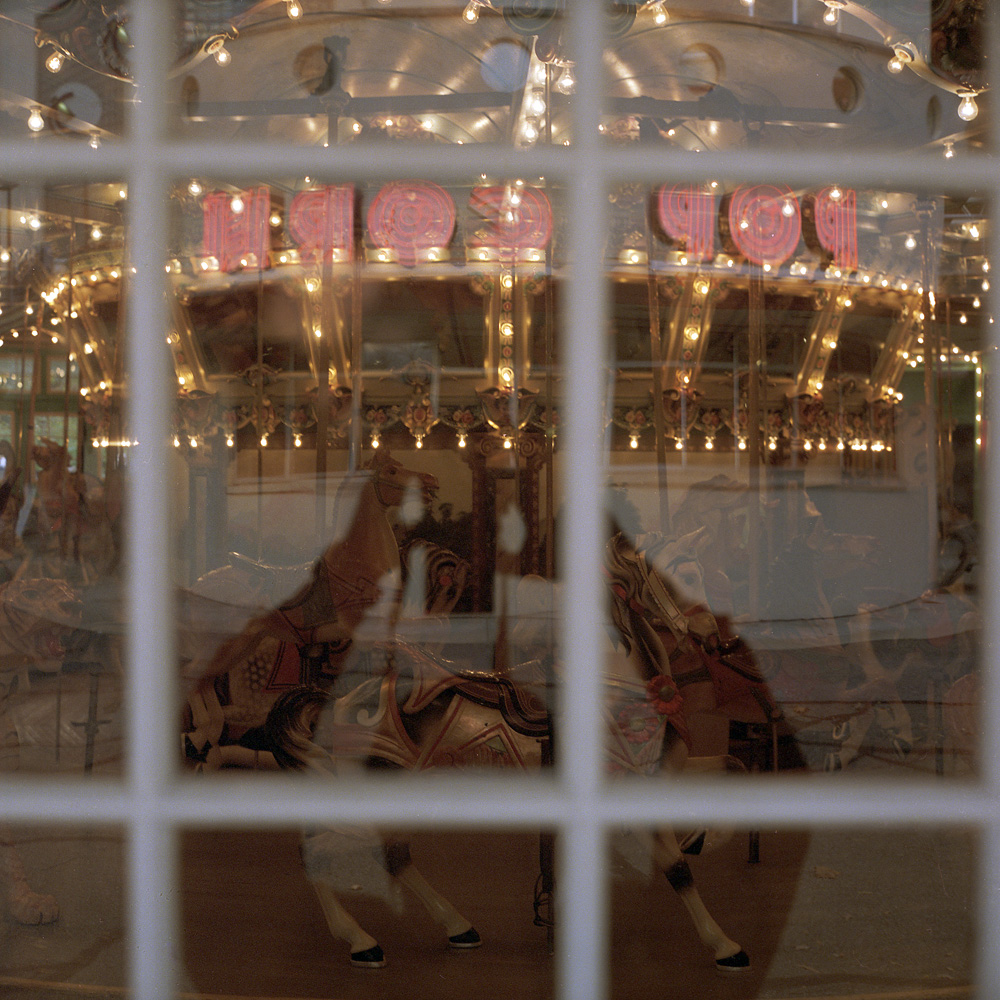
The neon of the arcade reflects in the windows of the carousel house, and I’ve caught myself taking the photo in the reflection as well. The reflected neon gives it a true carnival atmosphere – it almost feels like a real live amusement park, instead of the culture and arts center it has become. Which is not to say that the park lacks vibrancy and vitality, but it has a new character now, a lovable low-key quality that reflects and honors its past while preserving the facility for the future.

Glen Echo Carousel, Neon, Reflections

Paris in October – part 39 – Staircases at Versailles

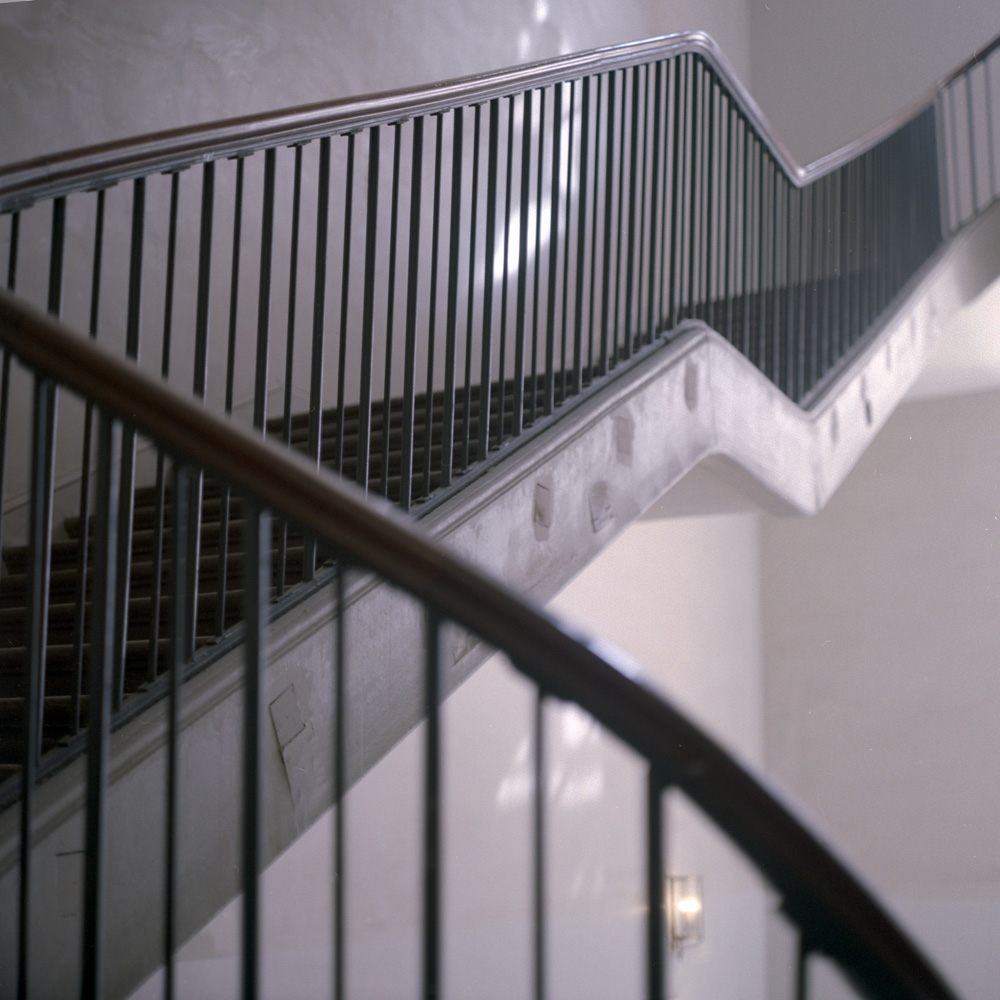
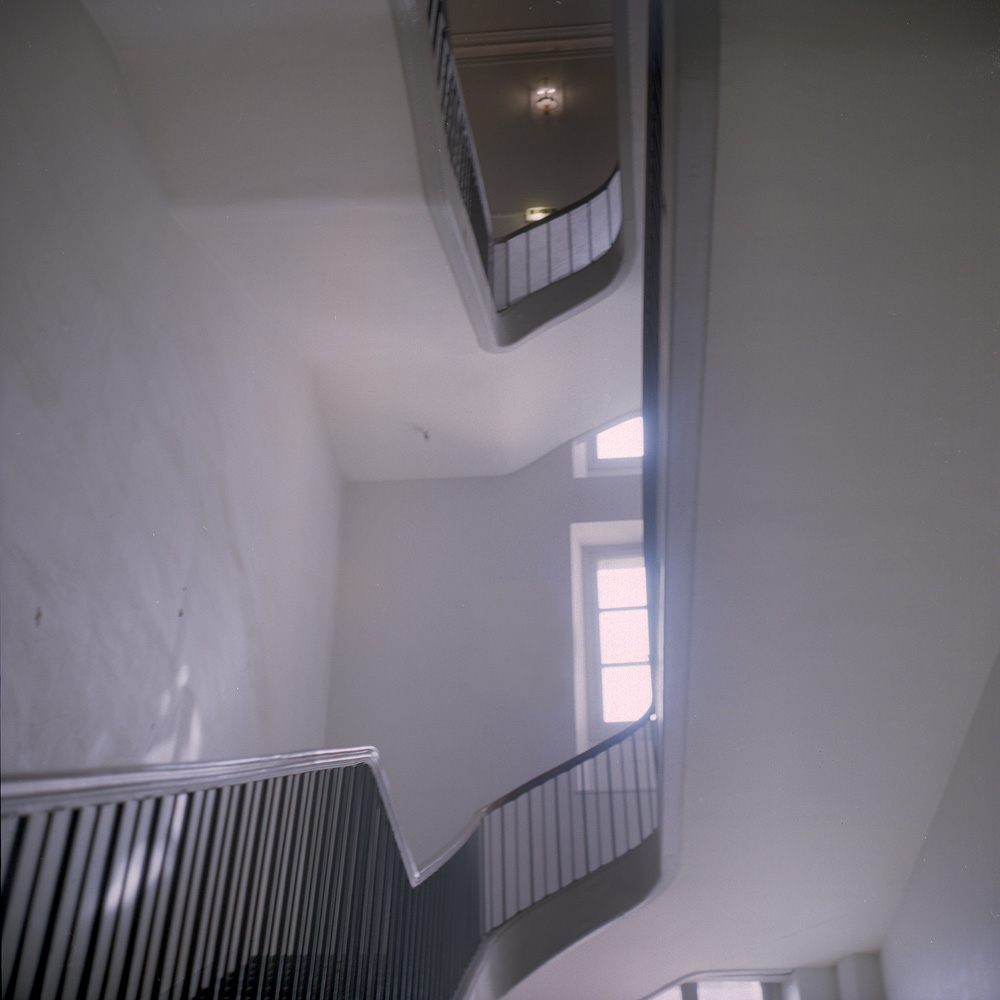
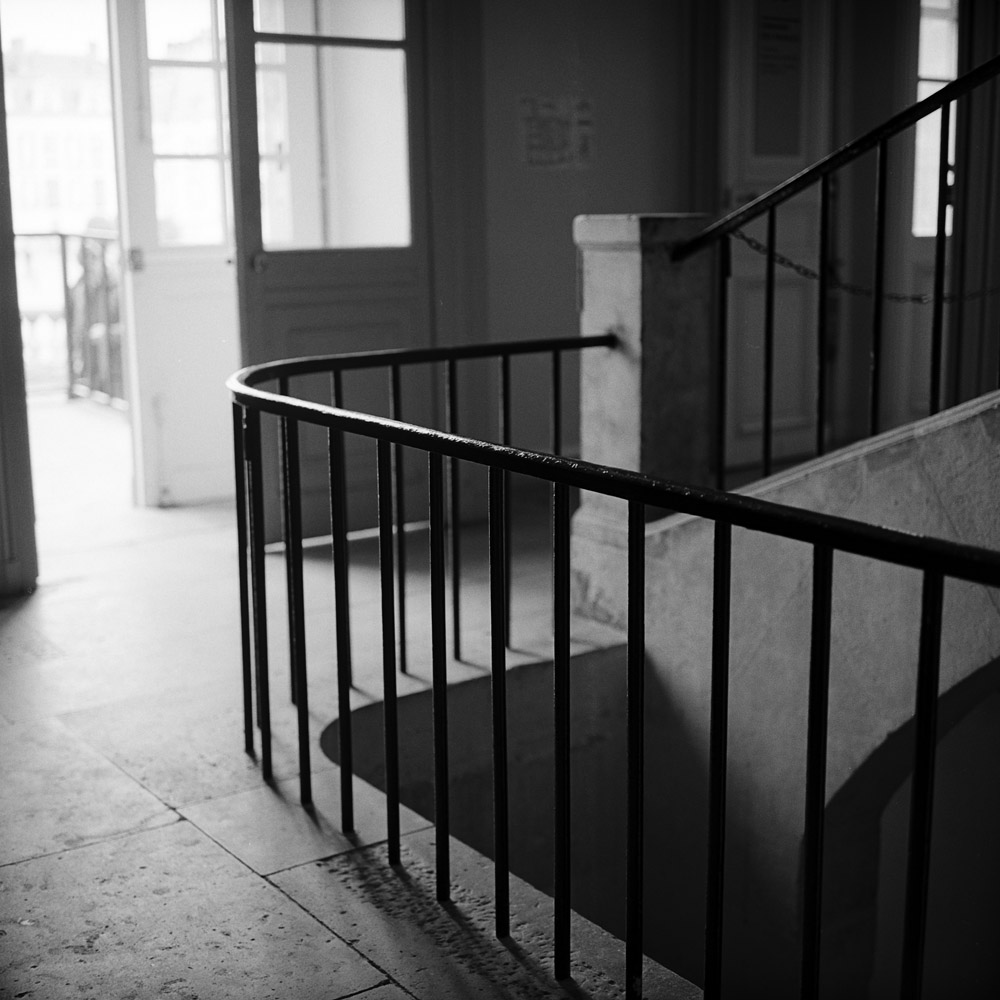
These first two are of the service stairs that lead from today’s restaurant and snack bar to the ground floor and the exit to the gardens. By the time I got to the dining room, my feet were screaming at me from all the continuous marching through the palace and across the cobbled courtyards. I did not eat in the main dining room but instead got a sandwich from the cafe. There was no place to sit (the only available tables were the stand-up kind, every chair was taken). Leaving the cafe to be faced with this staircase, then, was suddenly a daunting task. What to do, then, but photograph it?

Balustrade, Service Stairs, Versailles

To proof the images I wanted to scan and print bigger, I had a set of 5×5 inch proof prints made at the time of developing the film. Sometimes, the minilab prints looked better than my final scan results, but more often, they look worse. Based on the minilab prints, I excluded these two from my rough edit. Going back over the film while scanning everything else, I looked at the negatives and they looked good, so I took a whirl and scanned the first one. As it turned out, they were much better than I thought they would be based on the proof prints.

Service Stairs, Versailles

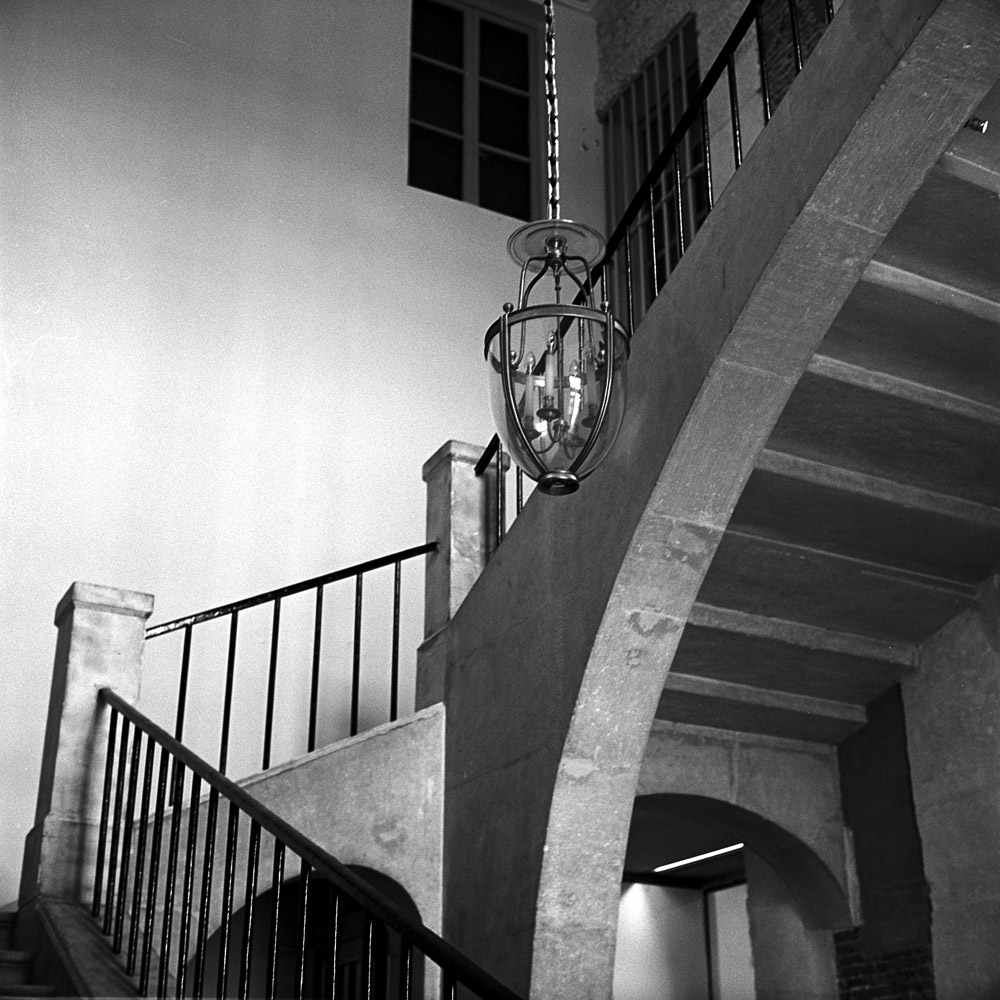
These next two are a memory refresher from an earlier post. With the exception of the last photo in this post, the only staircases I photographed at Versailles, it seems, were service stairs. I guess everyone is content to ignore them and only pay attention to (and mob) the Queen’s Stairs. Their loss, my gain.

Staircase, Outbuilding, Versailles
Stairs, Chandelier, Versailles

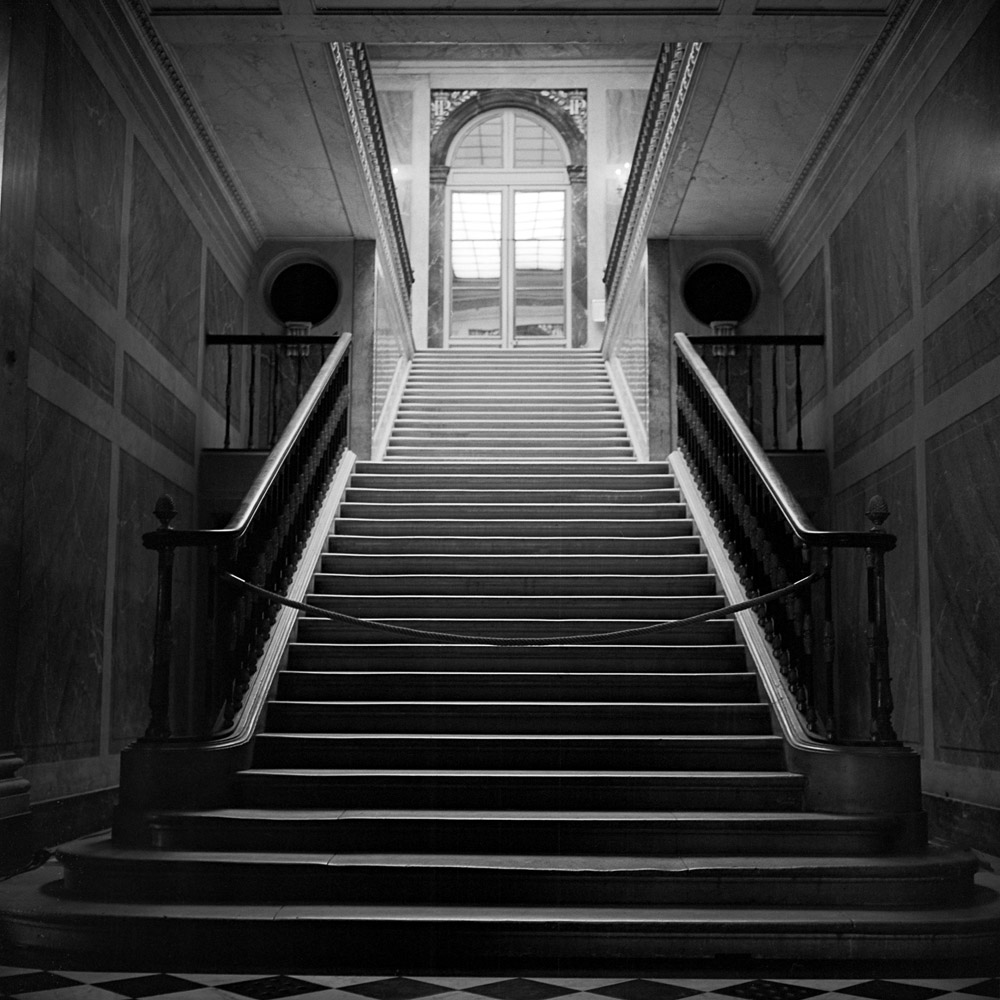
When I originally posted this staircase, I mistakenly labeled it “The Queen’s Staircase”. It is not. The Queen’s staircase is far more opulent and magnificent than this, although I wouldn’t complain about having this be the main stairs in my house…

Side Stairs, Versailles

Paris in October – part 38 – Versailles Interiors in color

I’m sure you’ve read my rant about how crowded Versailles was. It seriously cramped my style trying to photograph any of the spaces on the main circuit of the house, even with my cellphone. That said, the whining ends here. I’m happy with the pictures I did take; I just wish I could have taken more. When I go back, and I WILL go back, sometime, I’ll do things differently – I’ll do the gardens first, then the house, and I’ll go in the dead of winter, on a weekday. Preferably during a snowstorm.

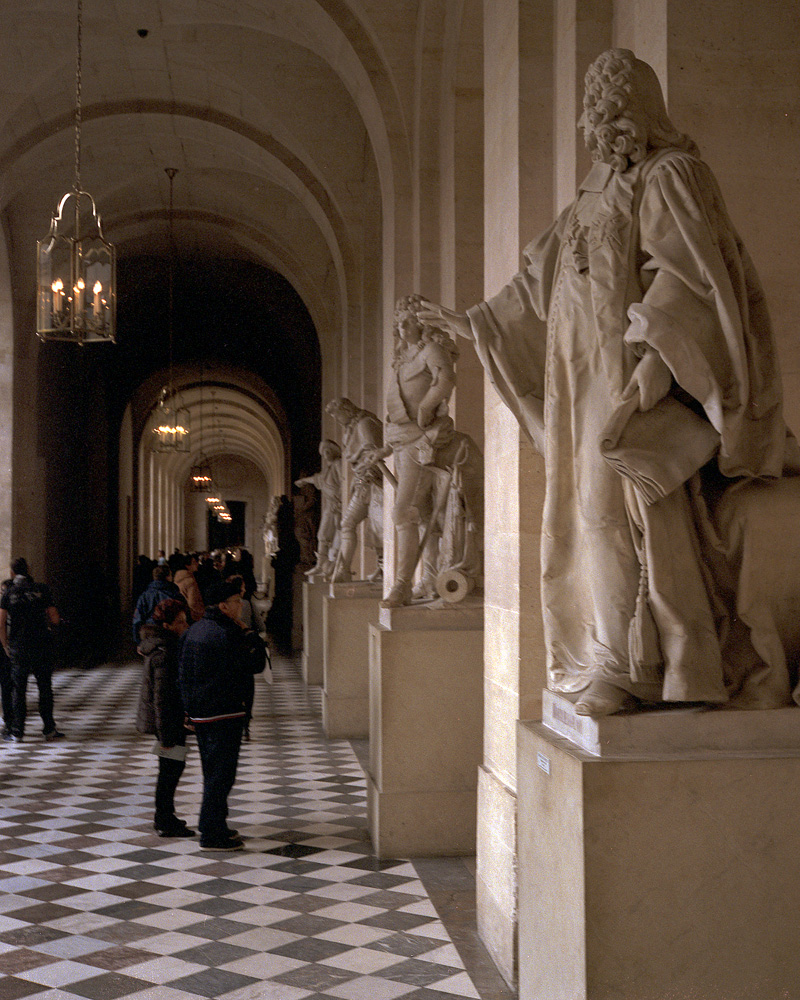
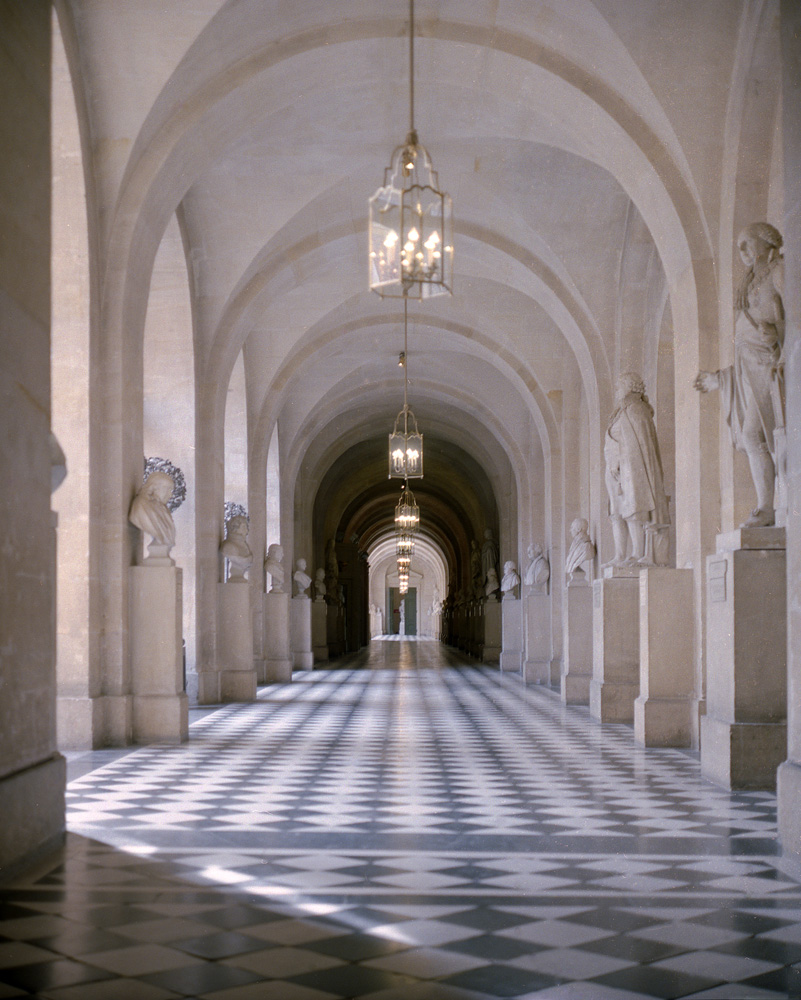
There are multiple halls filled with statues of great Frenchmen. Here are two such passageways, one with and one without tourists. The shot with tourists provides a human scale and a modern reference point for the house. The one without gives an architectural scale.

Tourists, Statuary
Tourists, Statuary
Statuary Hall, Versailles

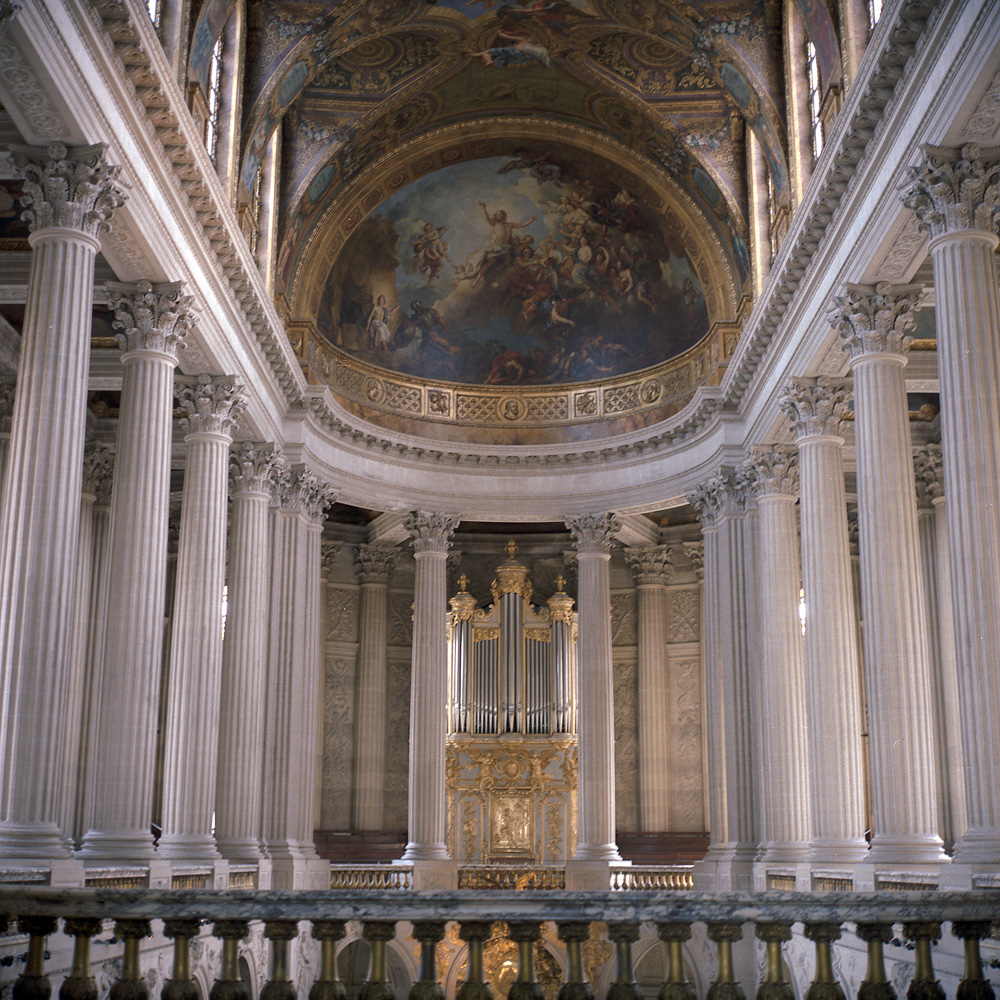
The royal chapel is one space in the palace that truly gives you a sense of not only the grandeur of the palace but also the extreme disparity of wealth between the aristocracy and the peasants.

Royal Chapel, Versailles

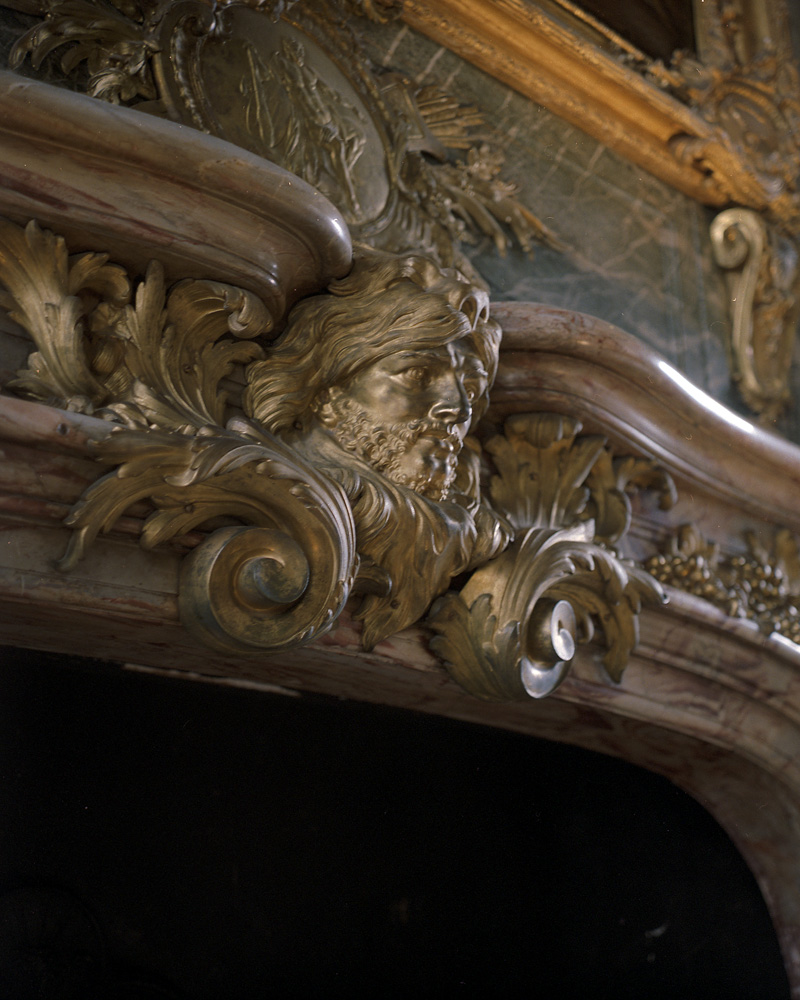
A huge part of the purpose of Versailles was to show off the wealth and power of the state. To that purpose, it lived up to it in spades. This mantlepiece is about level with my shoulders, and the head in the center is about the size of my head. You could actually walk into this fireplace.

Mantlepiece, Head
Mantlepiece, Head

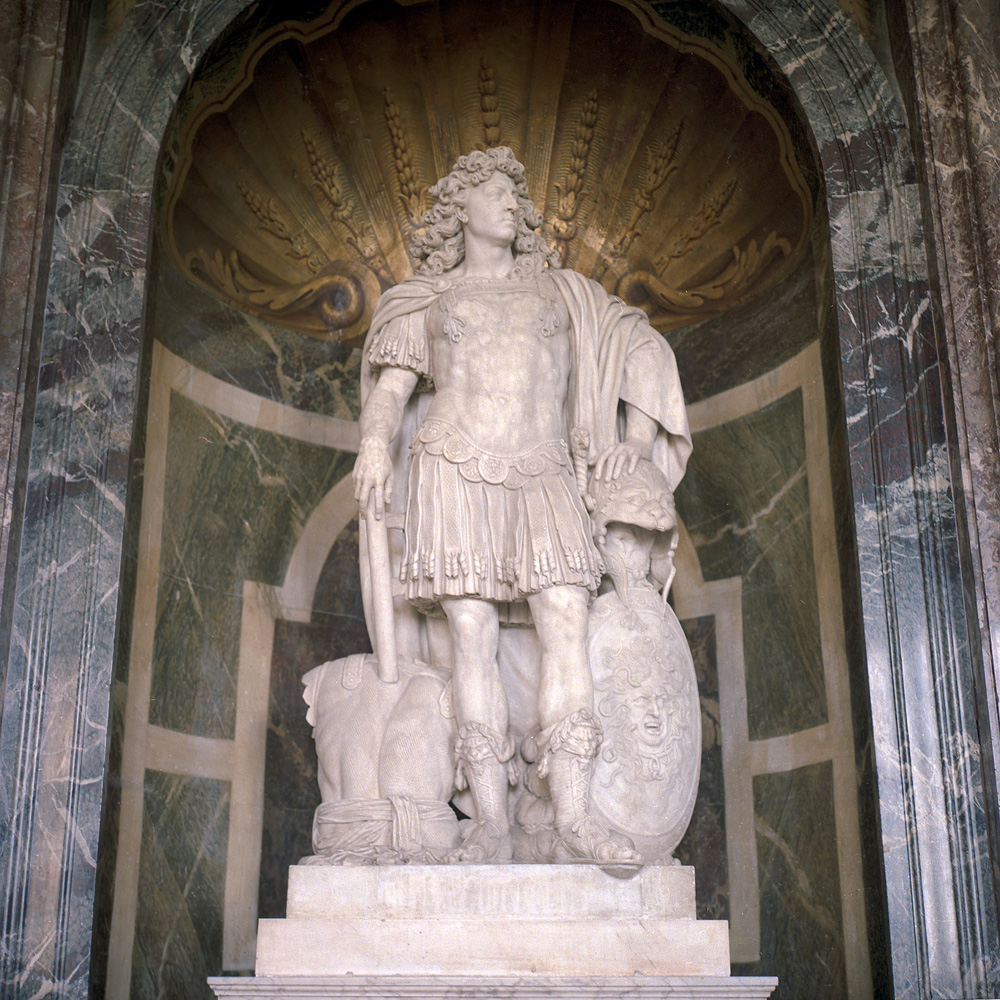
Here is Louis XIV as Mars, the God of War.

Louis XIV as Mars, God of War

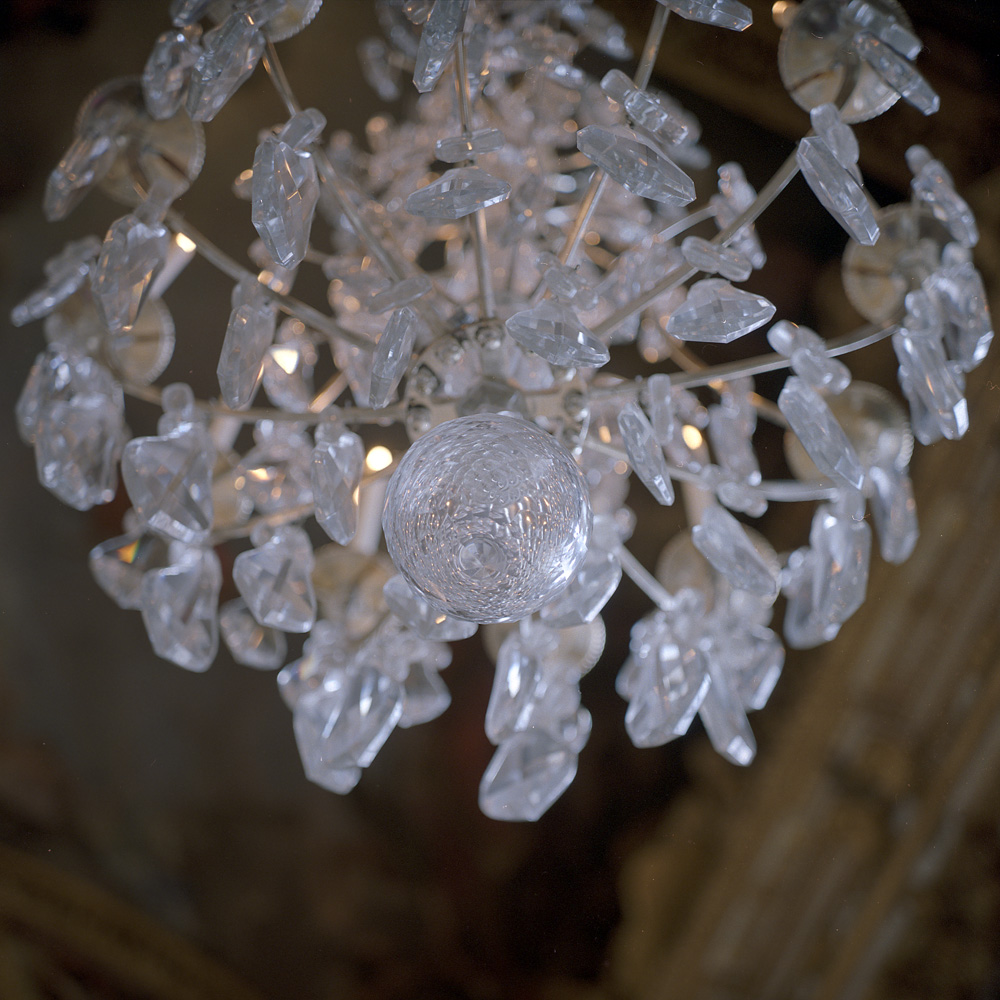
This is the one view of the Hall of Mirrors I was able to take. It’s an atypical view of the room, and as a result I’m particularly proud of it because it is representative without being cliche. Most people when viewing the room are paying attention to the mirrors and never look up, but half the brilliance of the room comes from the crystal chandeliers reflecting and amplifying the light.

Chandelier, Hall of Mirrors

Paris in October – part 37 – Chalon Odds and Ends

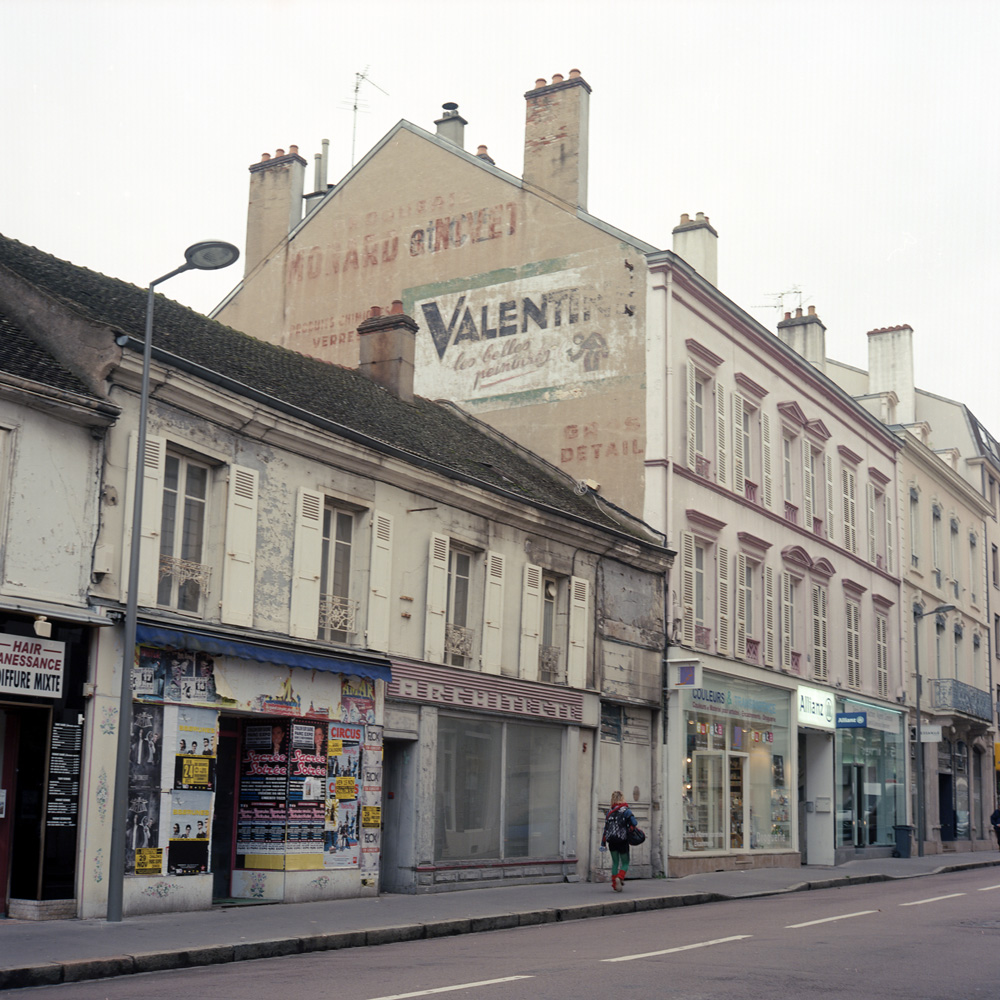
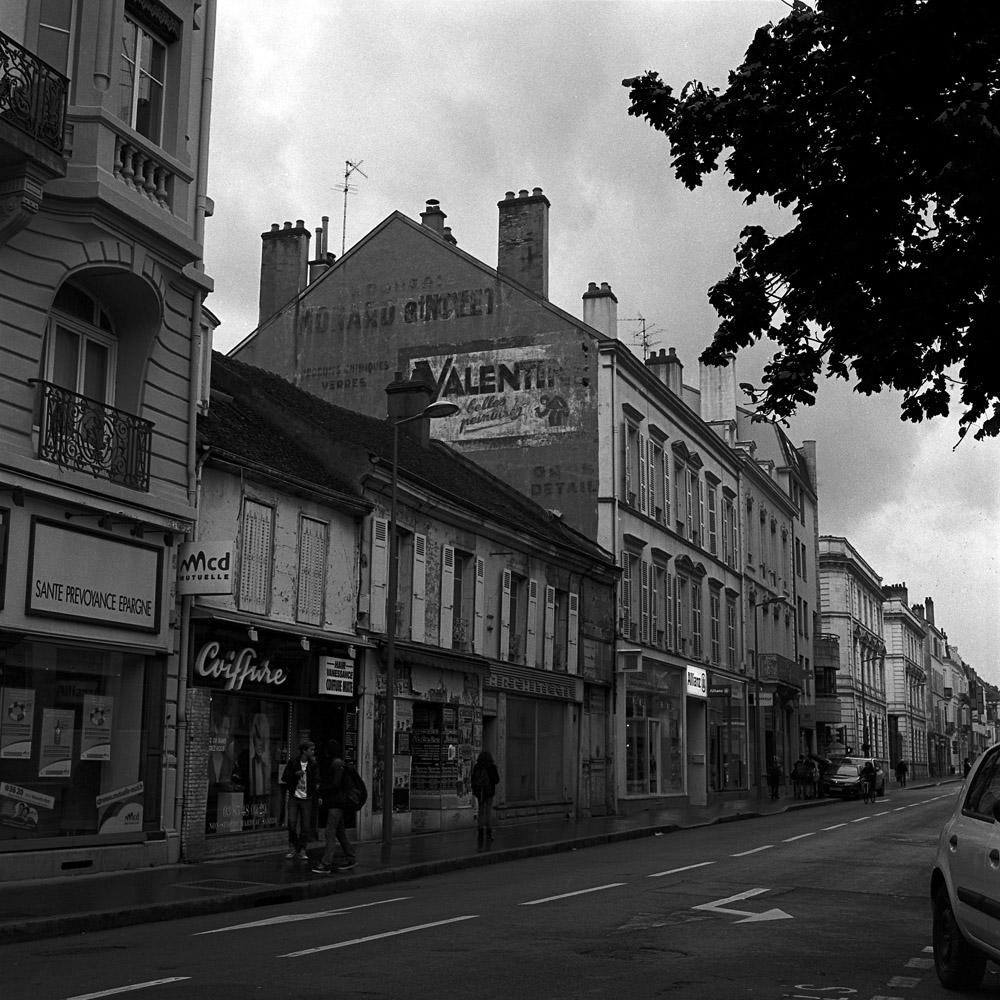
Here are some loose ends from my sojourn in Chalon-sur-Saone. You may remember the Valentin Paint ad in black-and-white – here it is in color.

Valentin Paint Ad, Chalon

The black-and-white version, as a refresher:

Old Advertisements, Chalon

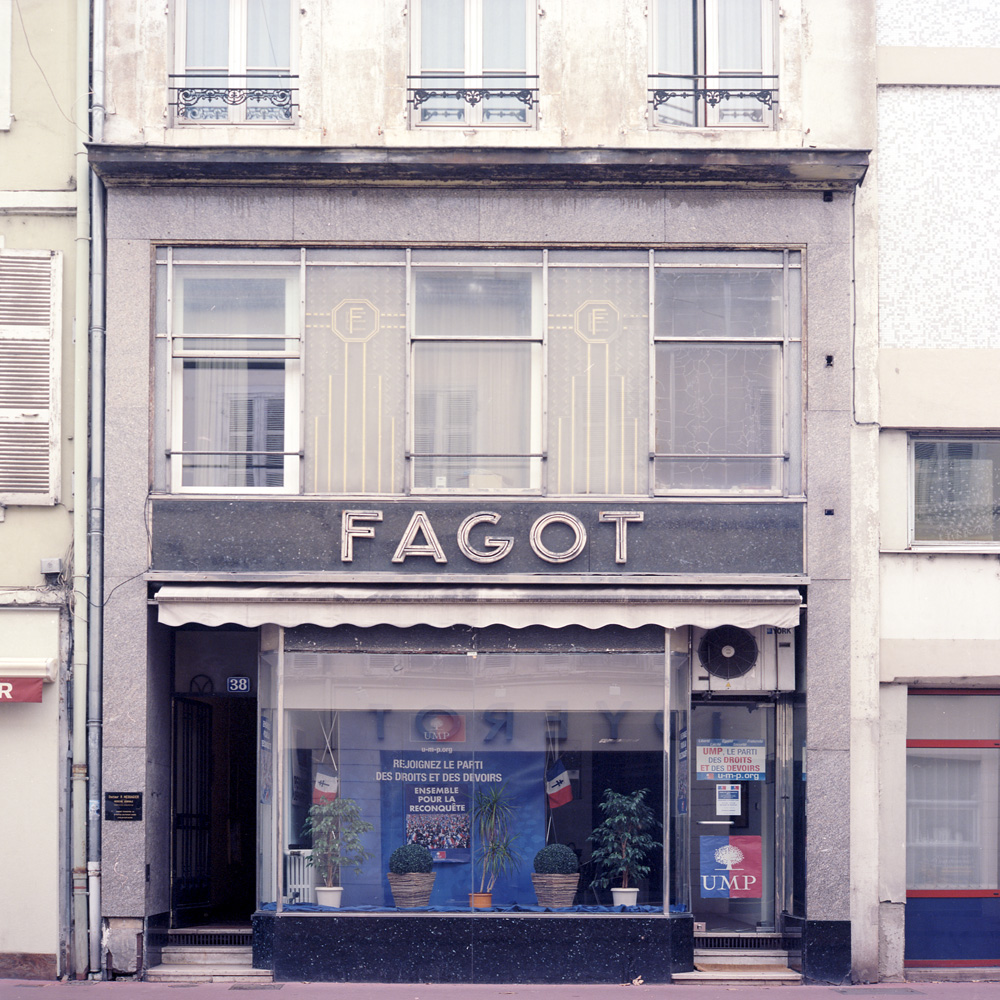
I couldn’t help but photograph this storefront for the combination of the beautiful if faded 1940s Art Deco facade and the psychologically jarring name. Fagot (pronounced Fah-GO) is a family name, not a slur aimed at someones sexual orientation. Today, instead of the original business that built the building, it is occupied by the offices of a political party.

Fagot Storefront, Chalon

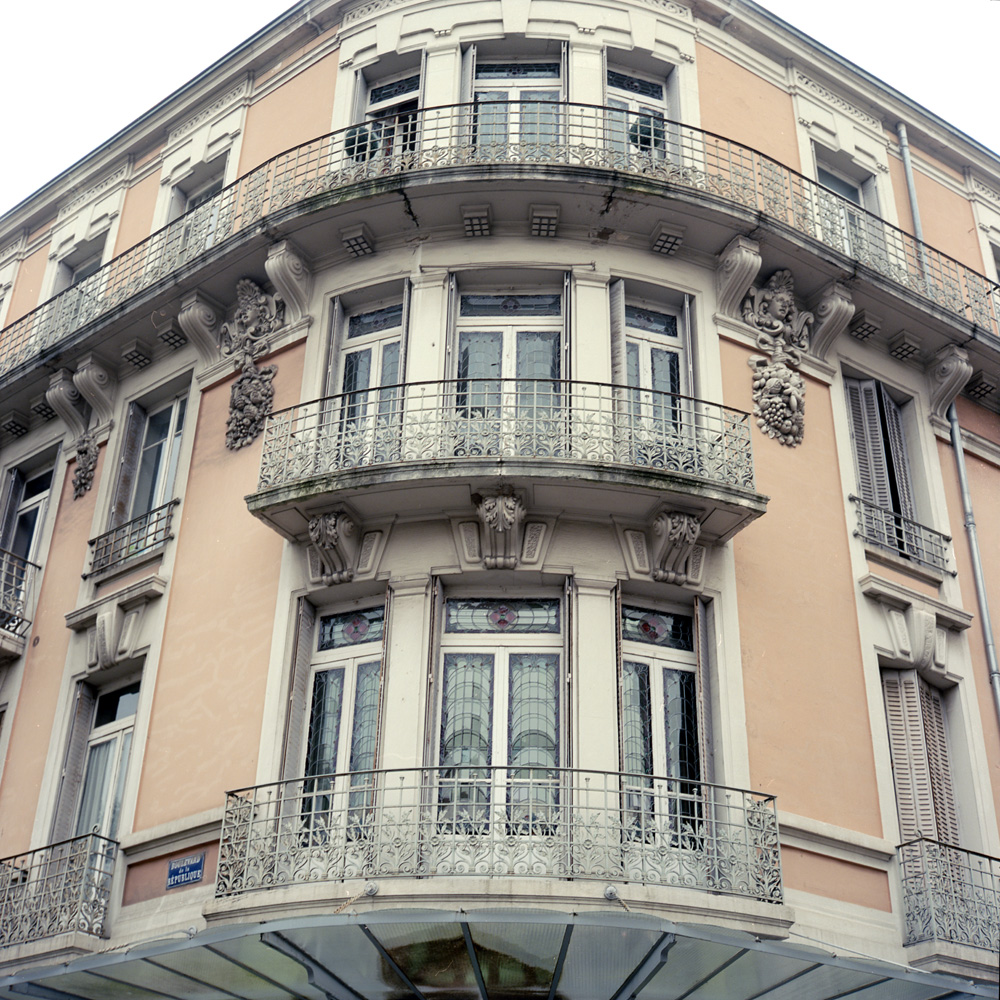
I’m a sucker for Art Nouveau and Art Deco architecture. So when I see a building like this, I have to photograph it.

Apartment Building, Boulevard de la Republique, Chalon

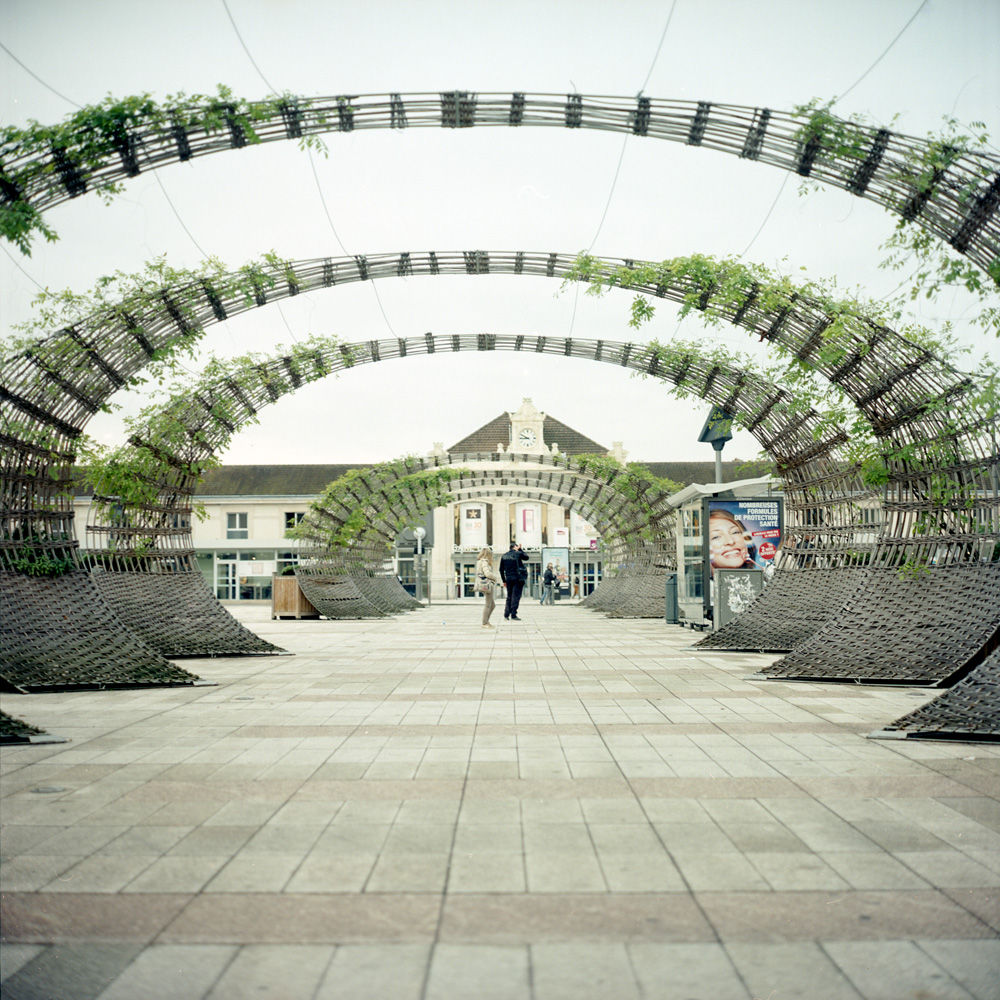
The first and last view you have of Chalon when traveling by rail is of this plaza with the modern arbors forming a tunnel to point you toward the center of town. To camera right is the St. Georges hotel, where I stayed, and to the left across the plaza is the english pub-style restaurant where I had the delicious breaded veal with the pasta the French don’t know quite what to do with. Behind is the Maitre Pierre restaurant you saw in my night photos from the hotel balcony.

Arbors, Chalon Railway Station

Paris in October – part 36 – a Courtyard in Chalon

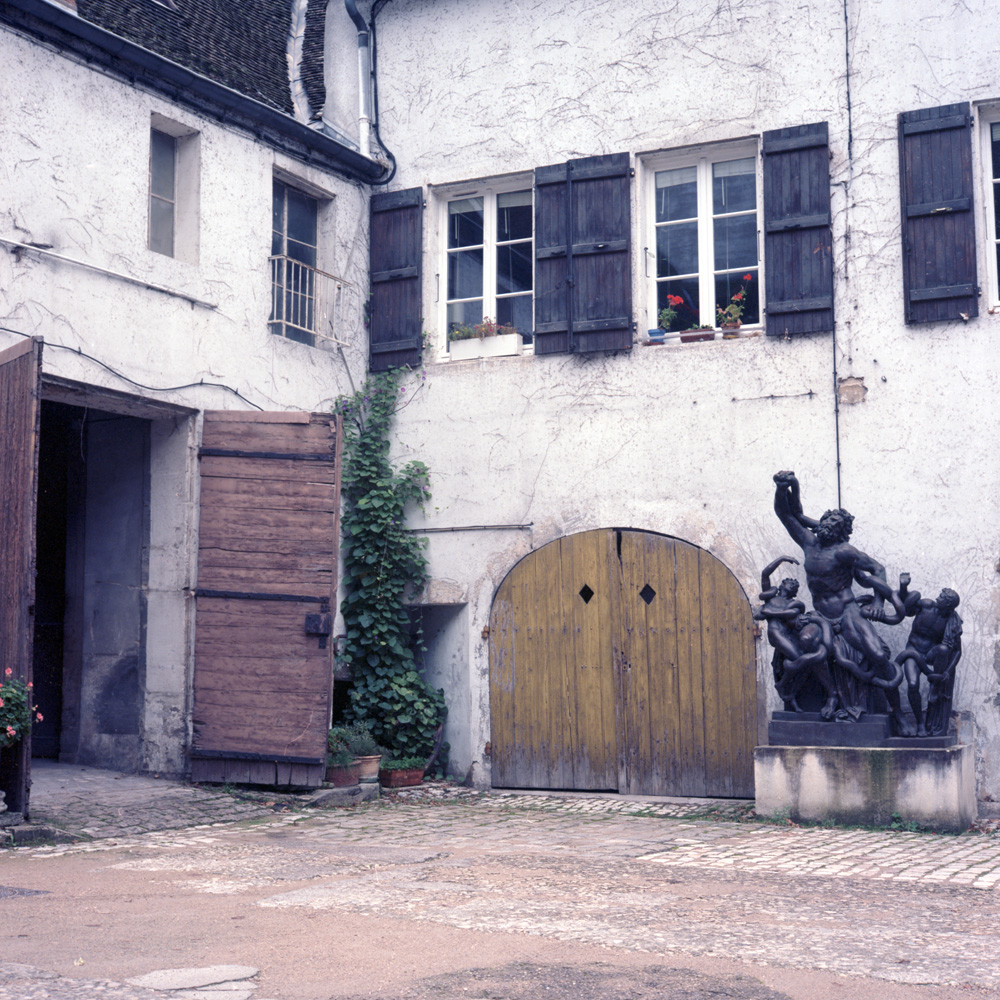
Around the corner from the Musee Niepce and the Chalon tourism office, I encountered this fascinating courtyard. Perhaps the single most surprising element was the massive bronze Laocoon statue in an otherwise ordinary if picturesque courtyard. Why and how the statue ended up there is a mystery.

Laocoon Courtyard, Chalon

If you remember your mythology, Laocoon was a Trojan priest who predicted the Greek gift of the Trojan horse but was not believed. There are multiple versions of why the gods sent serpents to strangle him and his sons, ranging from dishonesty to defiling temple virgins. Regardless of the why, his story became famous, and has been commemorated in art from ancient times. There is a Roman marble of this scene, probably modeled after a Greek one, which was then emulated multiple times in stone and metal during the Renaissance.

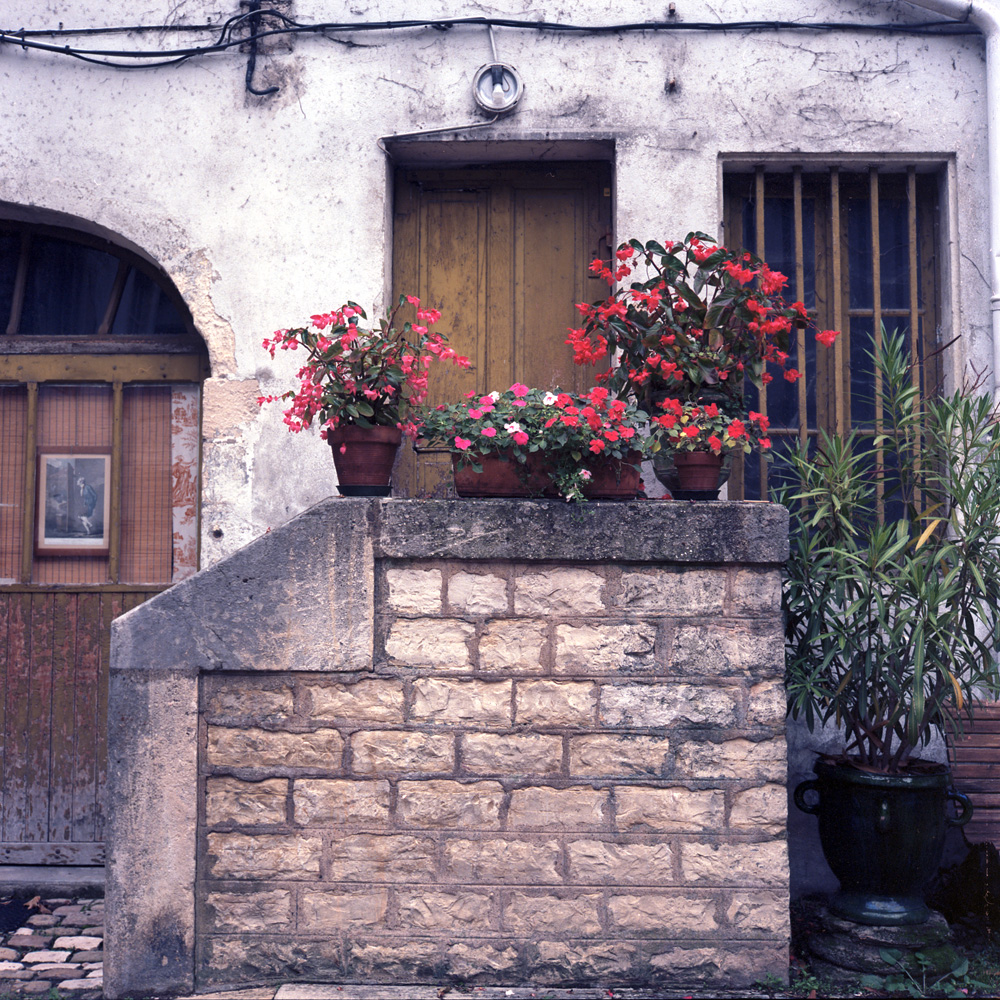
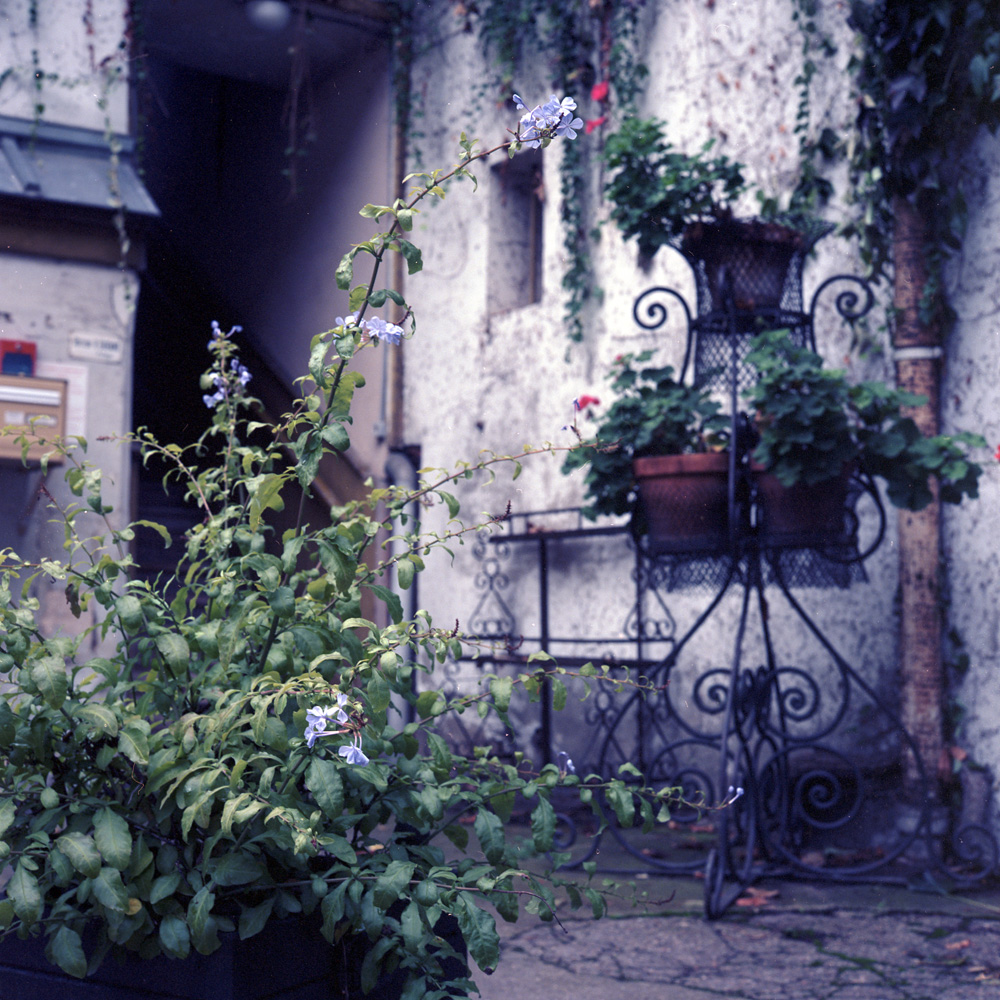
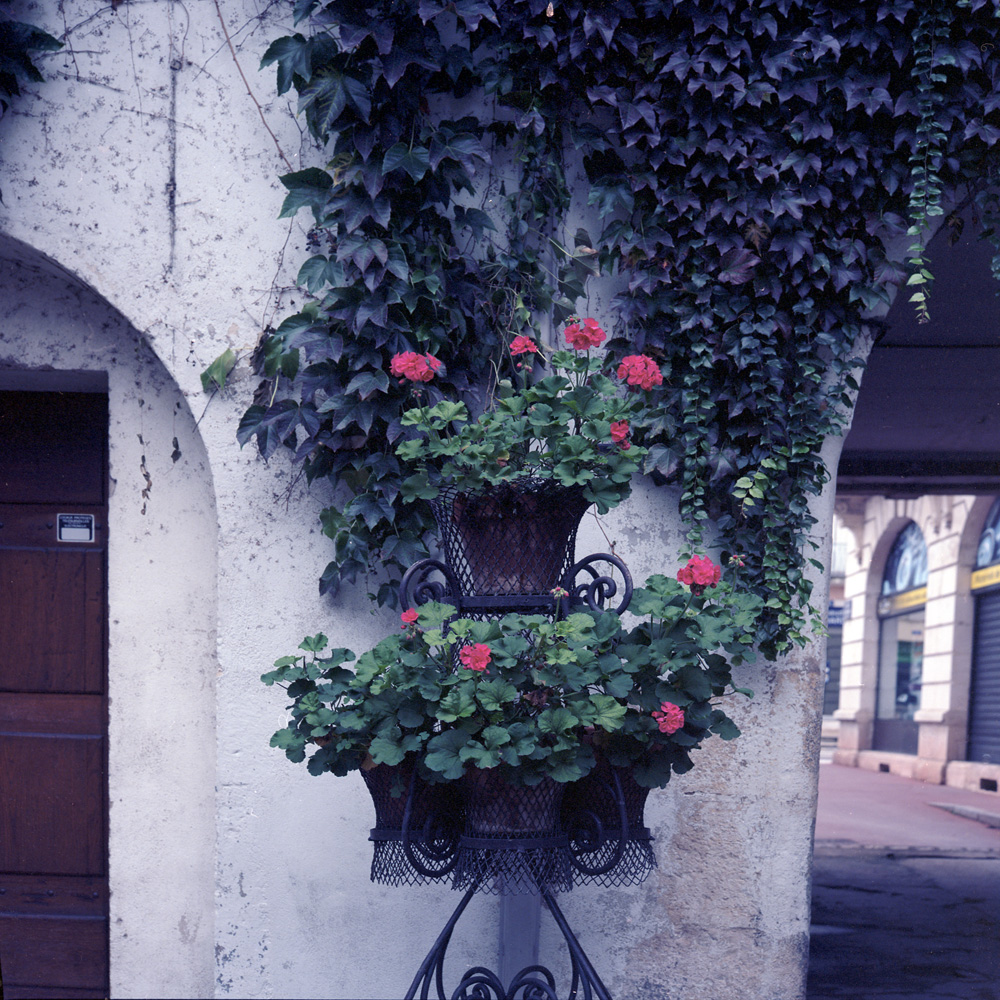
Someone who lives in this courtyard favors geraniums.

Geraniums, Stairs, Courtyard, Chalon
Planters, Courtyard, Chalon
Geraniums, Doors, Courtyard, Chalon

Courtyard residences seem to be extremely popular in France. I suppose it’s for the relative privacy you have compared to facing the street, especially in older urban areas where stepping out your front door puts you literally a sidewalks’ breadth away from traffic. And it provides opportunities for parking that you wouldn’t get elsewhere. I think I’d like to live on a courtyard if I lived in Paris, or even in a town like Chalon. Who wouldn’t enjoy walking down the stairs every morning to be greeted by your own classical Greek statue?

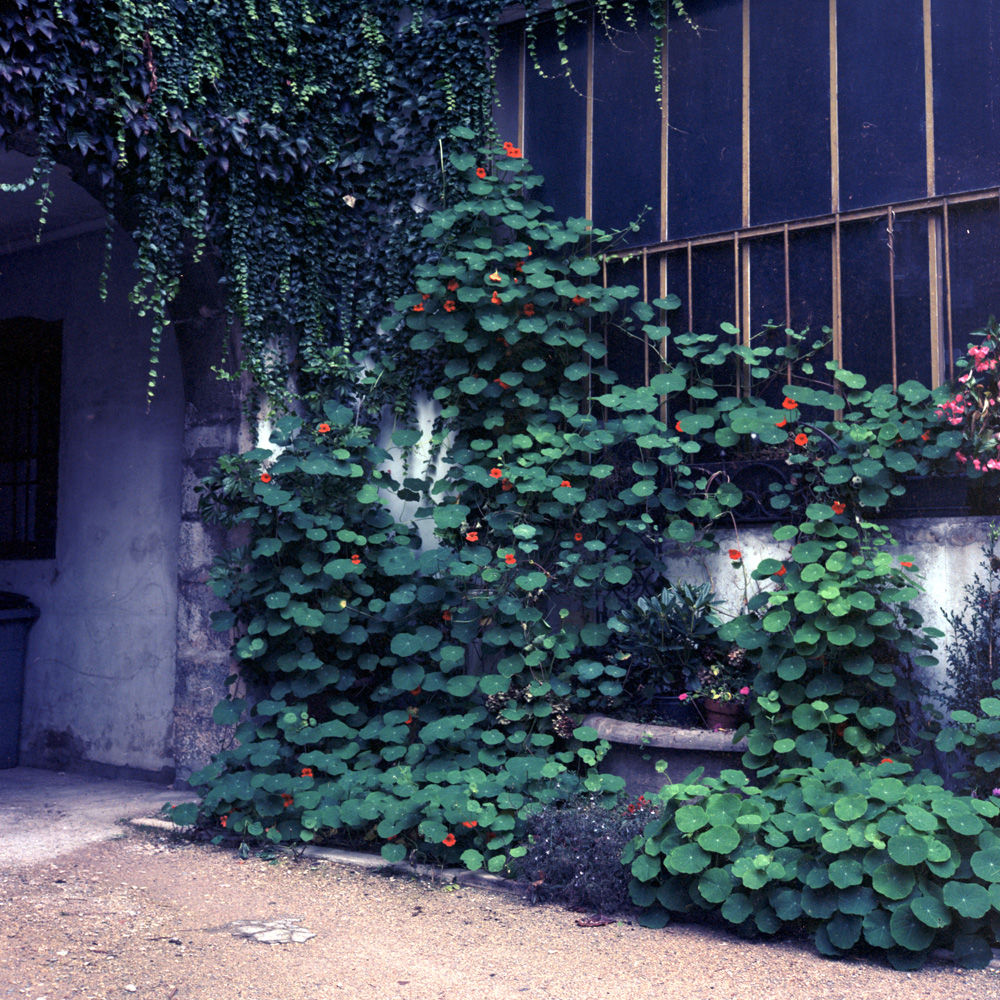
Greenery of all kinds, in fact, is a hallmark of the space. These flowering vines had taken over the wall and partially obscured the window into the workshop. If my understanding of French is any good, the workshop behind these windows was a specialist in antiques and restoration. I couldn’t tell if they were open at the time so I didn’t try to venture in.

Vines, Windows, Courtyard, Chalon

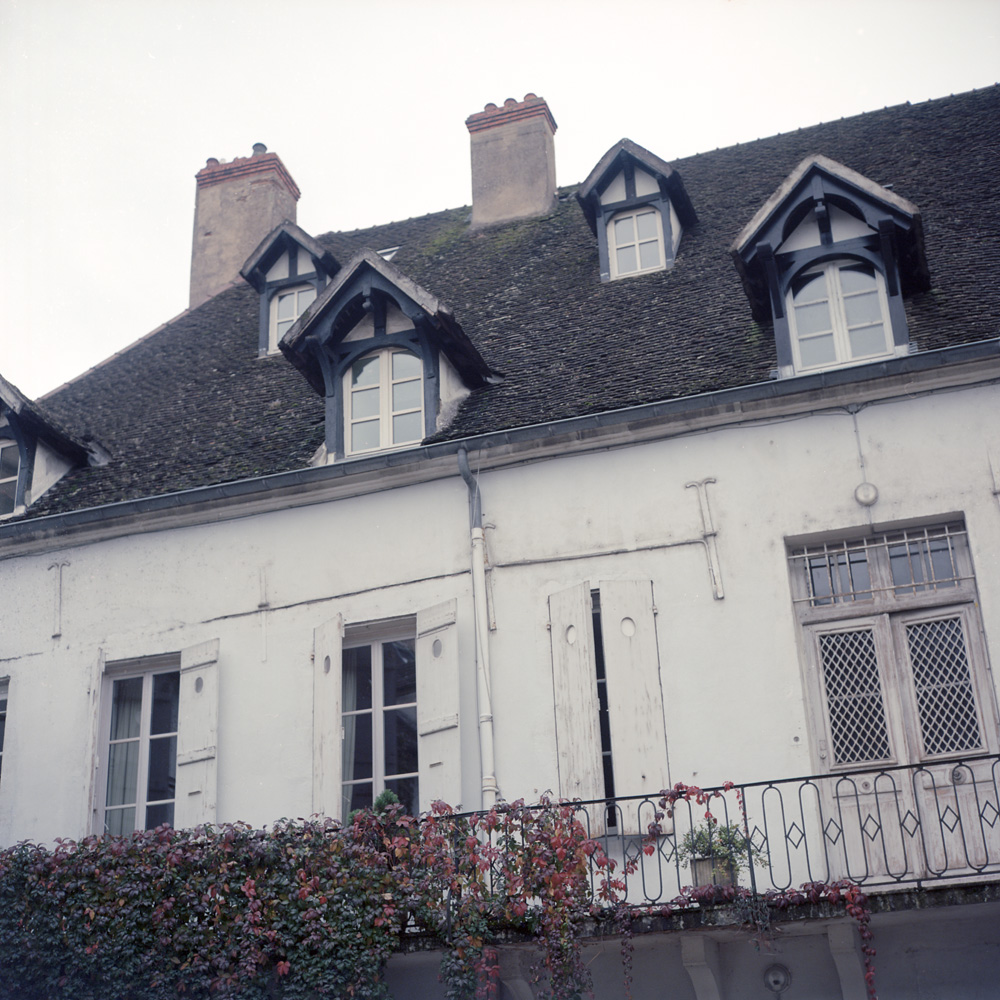
Another somewhat Swiss-looking architectural element, the peaked gabled windows in the roof:

Peaked Windows, Chalon

Paris in October – part 35 – Chalon-sur-Saone, Rue De L’Oratoire

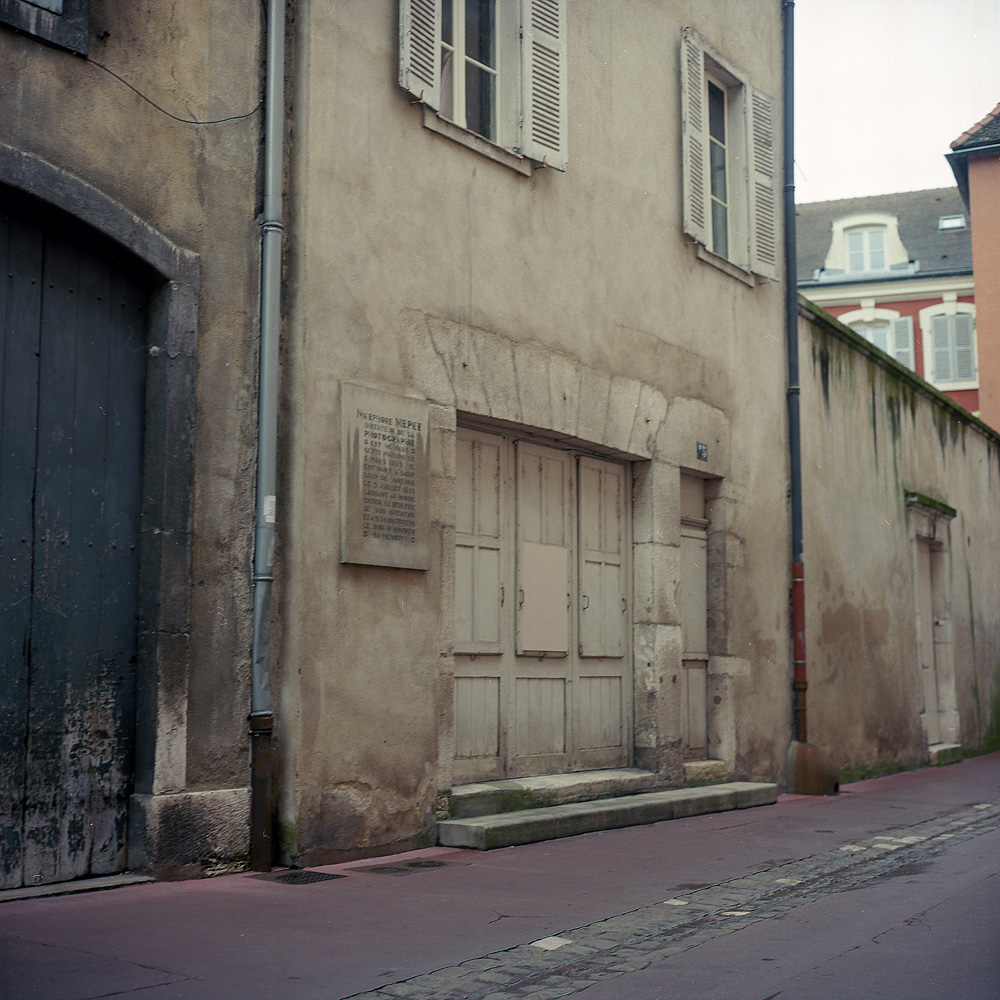
Joseph Nicephore Niepce was born in Chalon-sur-Saone on March 7, 1765 in a house at 9 (now 15 in the new address scheme) Rue De L’Oratoire. The house as it stands today is rather nondescript and gives no clue as to the inspiration behind the man who would invent photography. Rue De L’Oratoire is really more of an alley, closed in on one end, and the other opens to a pedestrian-only street.

In this view of number 15, Rue De L’Oratoire, you can see the plaque on the wall indicating the house where Niepce was born.

Niepce's Birthplace, 15 Rue de L'Oratoire
Niepce’s Birthplace, 15 Rue de L’Oratoire

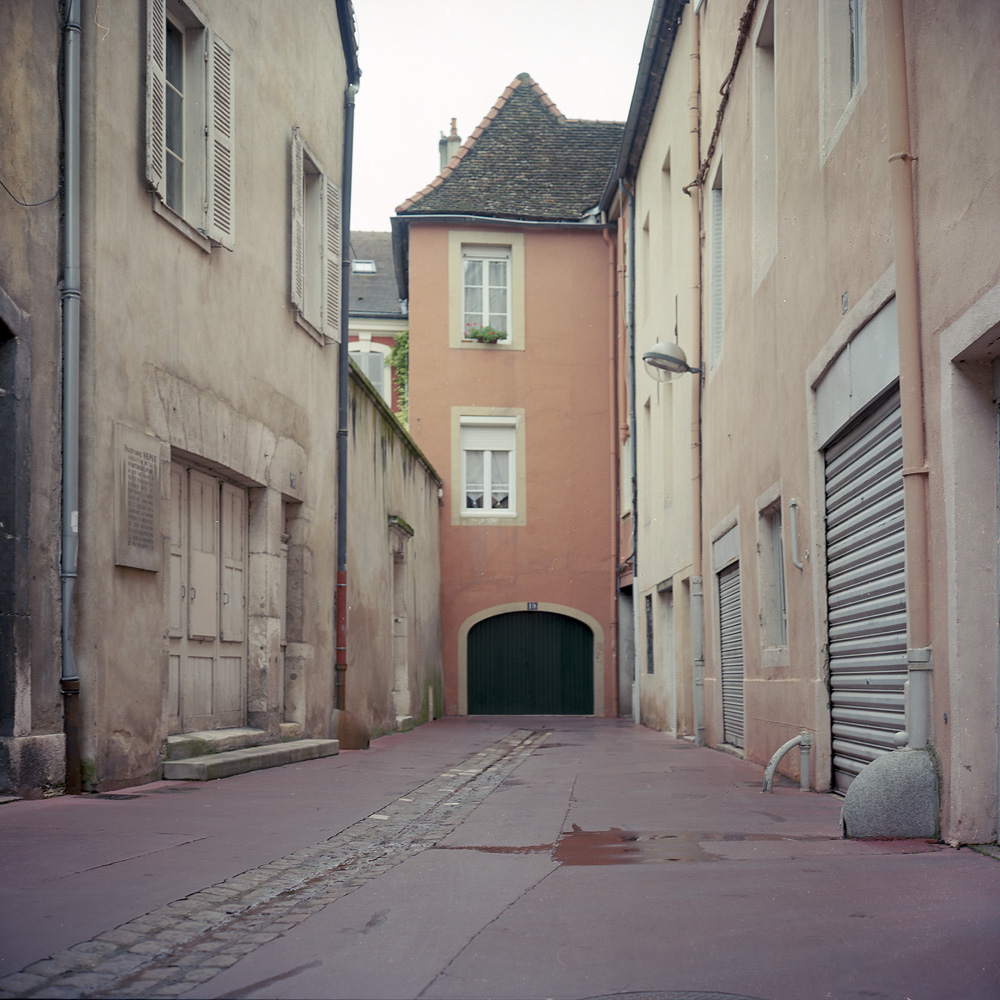
A view of the street, including the house:

Niepce's Birthplace, Rue De L'Oratoire
Niepce’s Birthplace, Rue De L’Oratoire

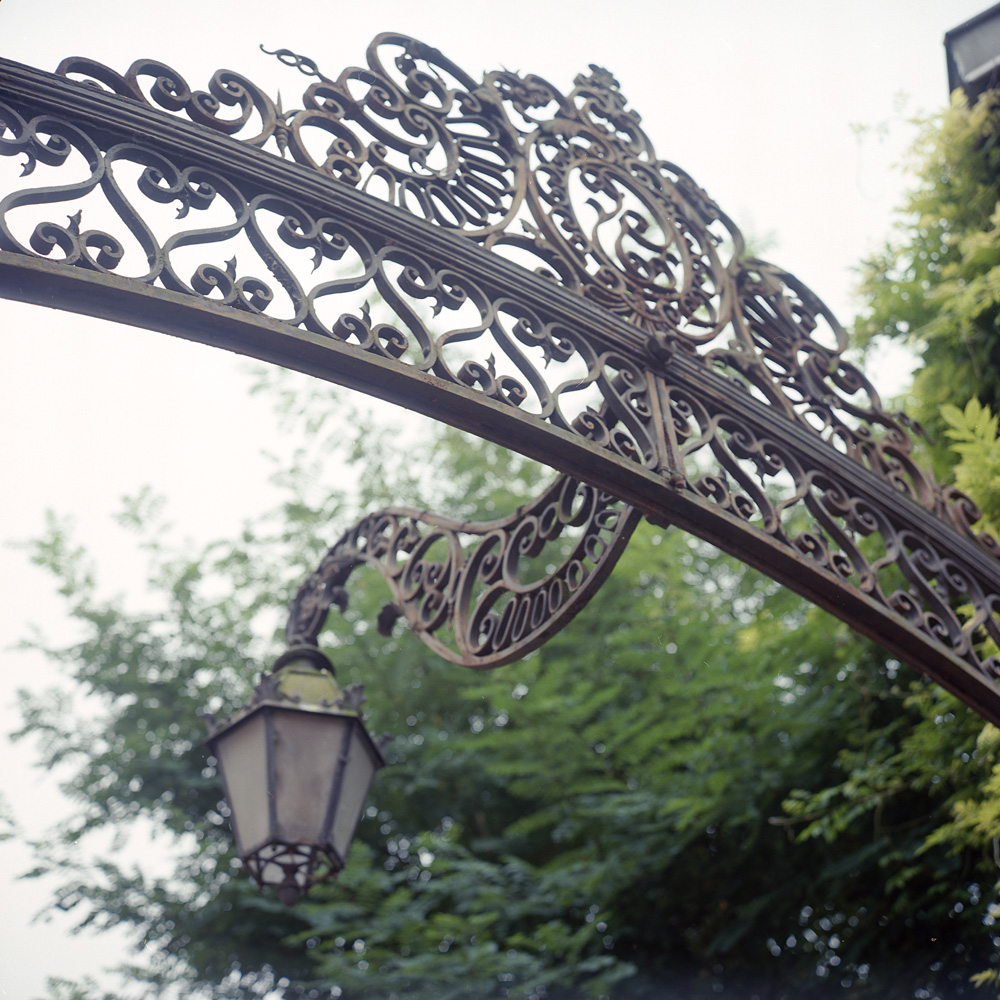
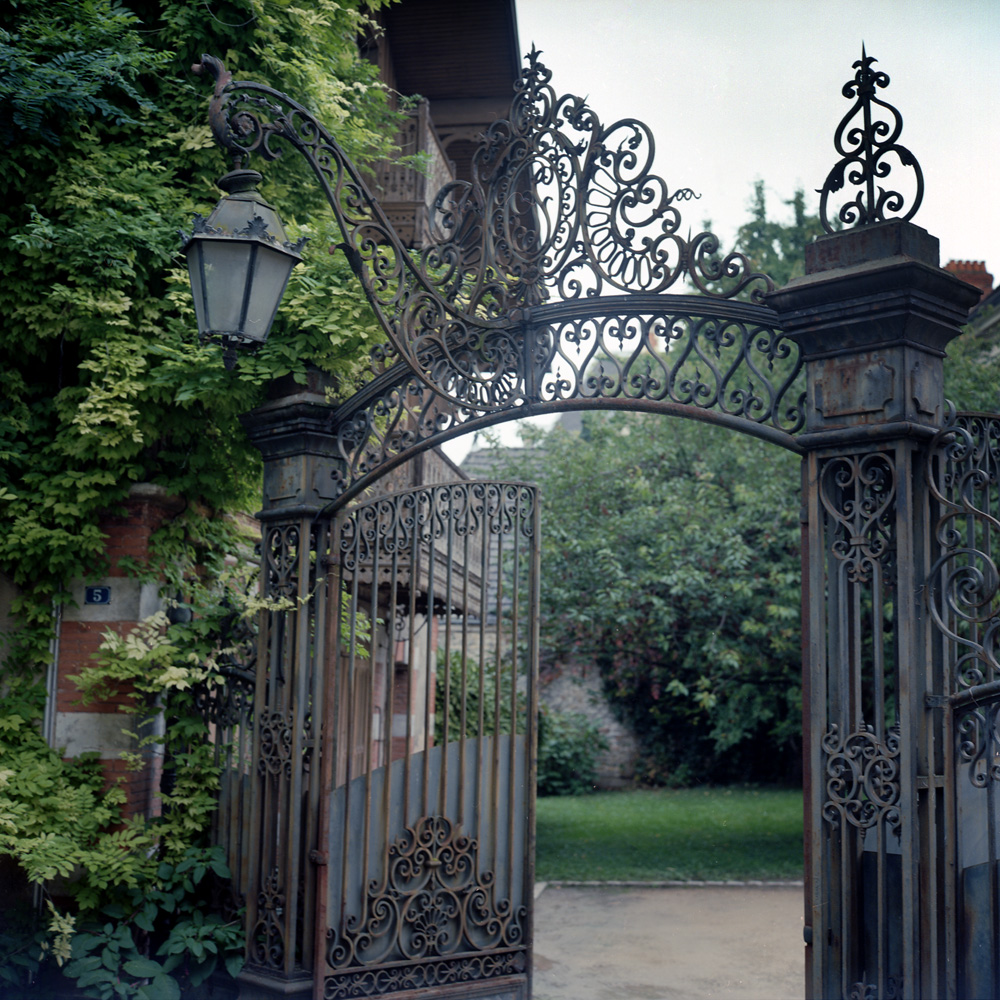
If you are approaching Rue de L’Oratoire on foot from Rue General Leclerc, there is a driveway into which you can turn, at the end of which is this very ornate iron gate and lamp, guarding a private courtyard. I could not confirm but I believe the front of Niepce’s house faces this courtyard, which is infinitely more appealing than the Rue de L’Oratoire side. I did not photograph the house itself as it is currently lived in by private citizens.

Lamp, Iron Gate, Chalon
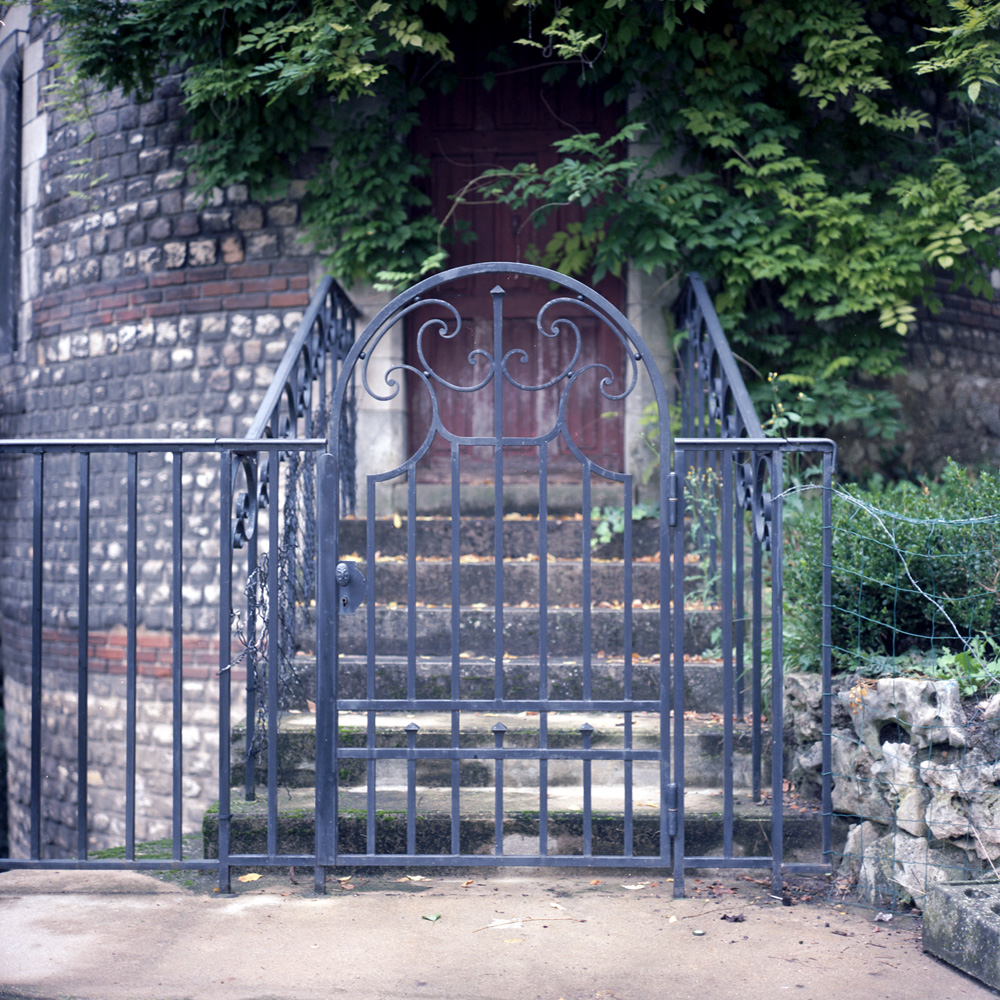
Iron Gate, Chalon
Iron Gate, Chalon

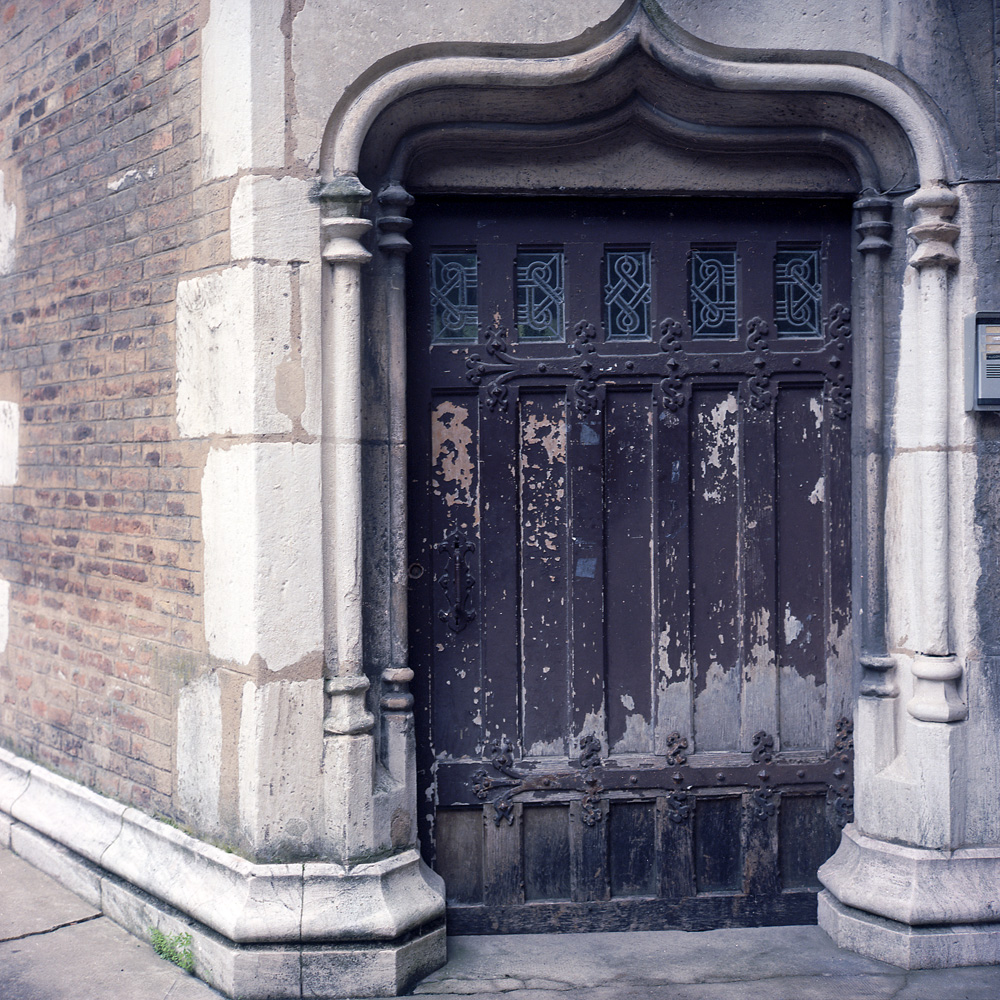
The approach to the Rue de L’Oratoire from Rue General Leclerc is through what is now a car park, at the back of which can be found the Tour Saudon, a medieval tower. I assume the car park was once gardens for the tower. This is a close-up of the iron gate and door to the tower, which again, to the best of my ability to determine, is not open to the public.

Gate, Door, Tour Saudon

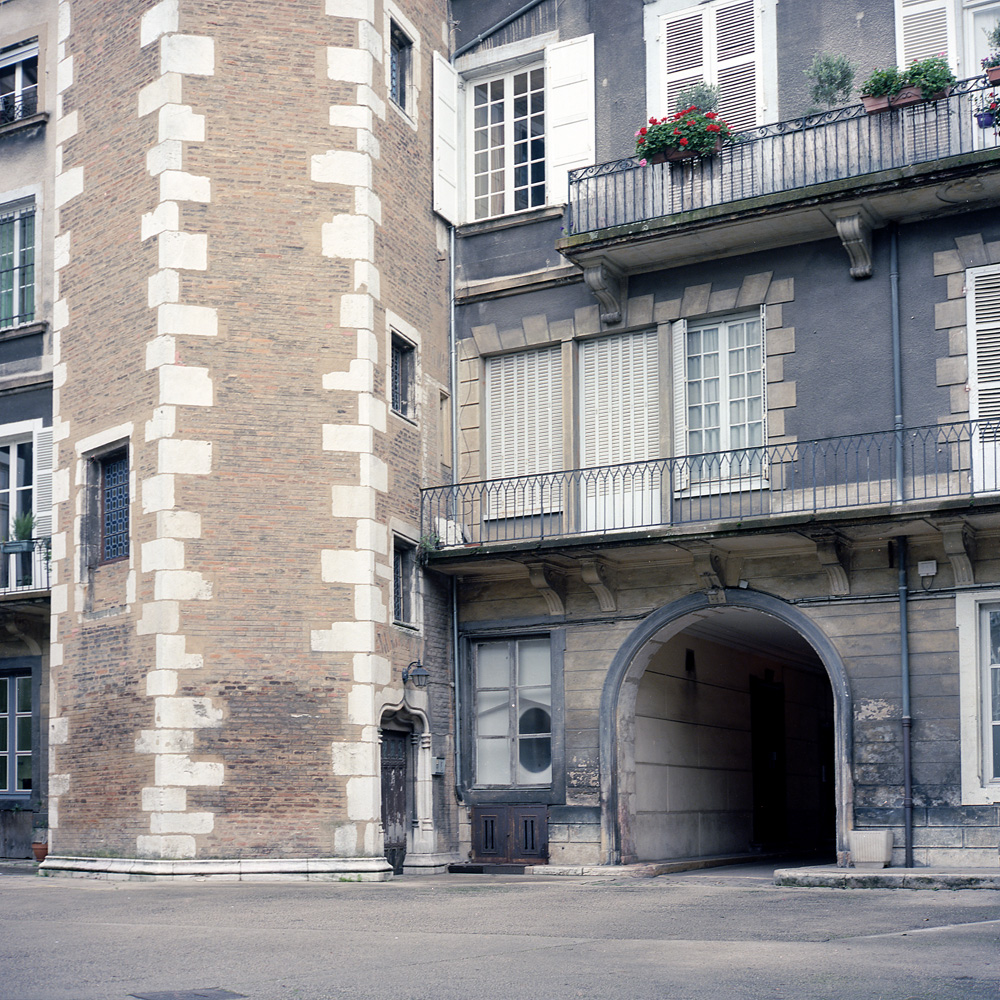
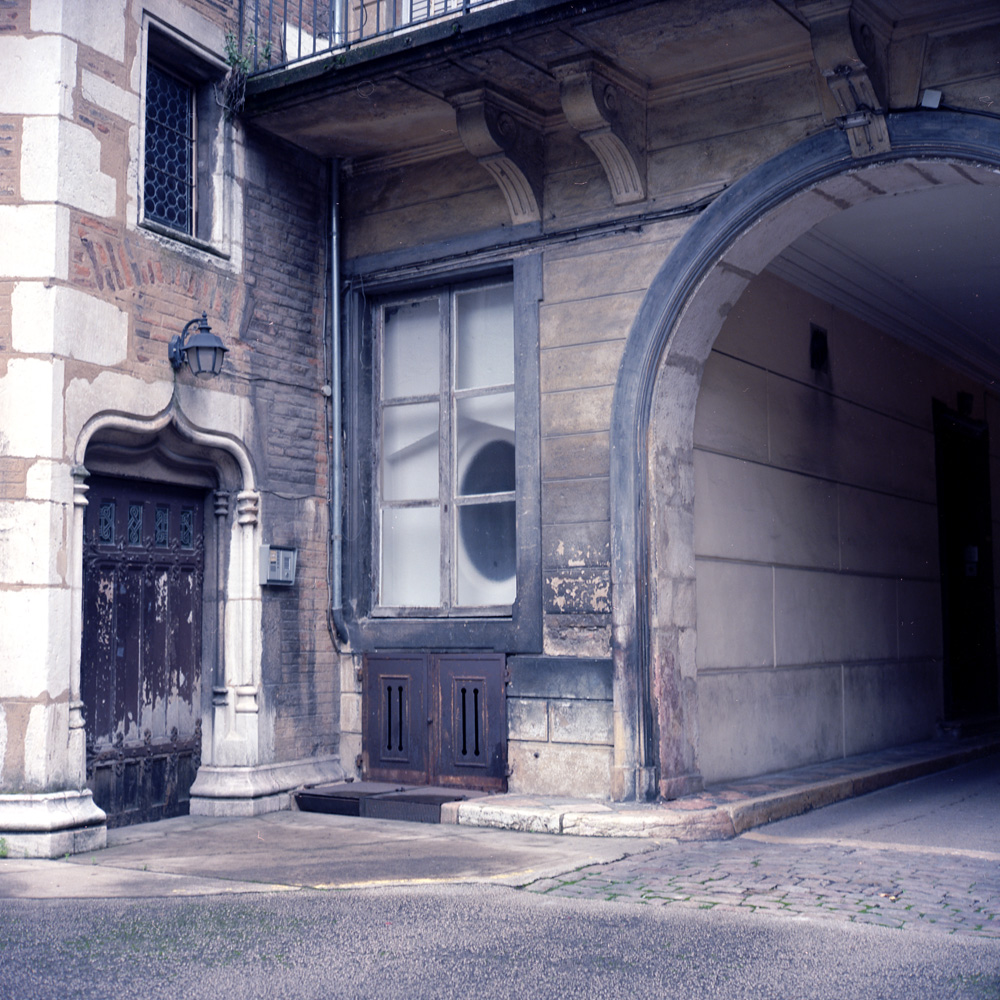
Across Rue de L’Oratoire from the Tour Saudon, there is a 17th century courtyard apartment building. I could have spent an entire day just doing a photo essay on this courtyard. I would have loved to have seen inside some of the apartments – what would they look like now, and how would the layers of history be exposed/concealed in such a space?

17th Century Courtyard

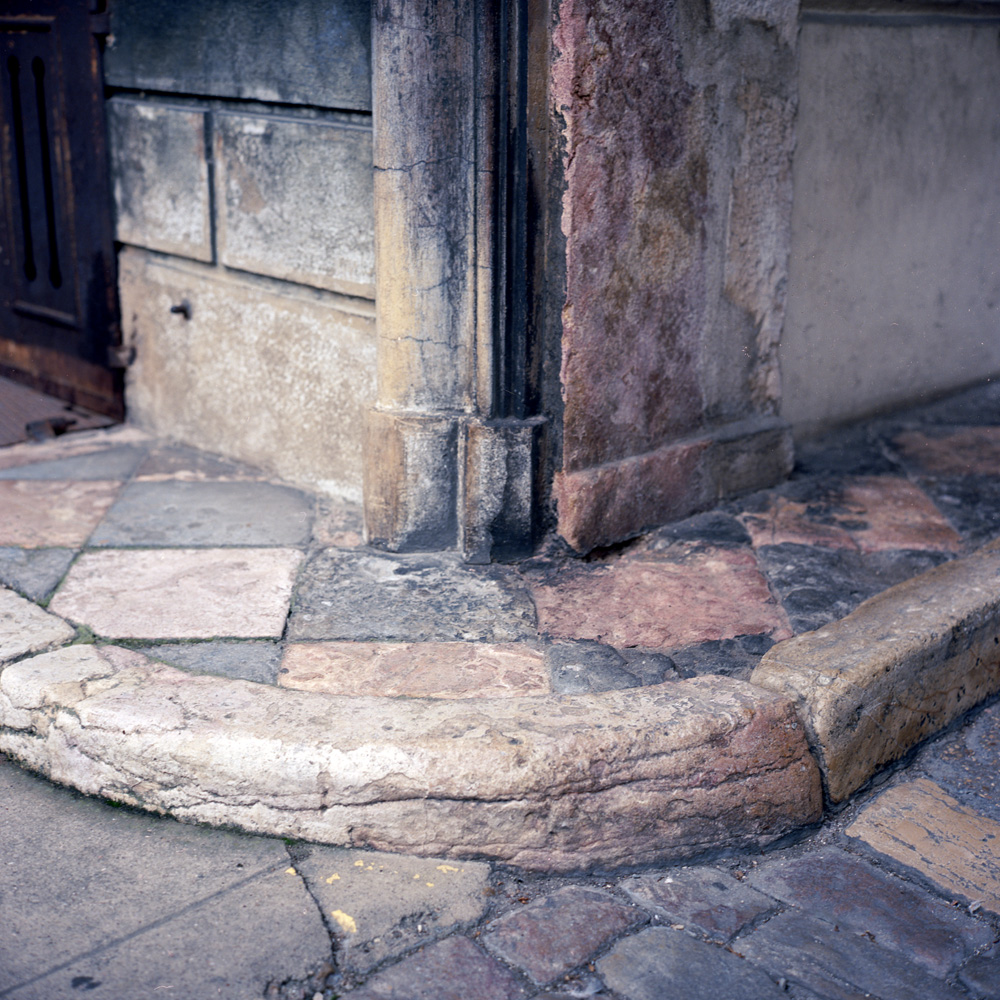
The red-and-black marble tile paving on the sidewalk inside the carriageway is an enchanting detail to the space, and a very clear sign of its age. It almost feels like you’re looking at a painting, and not the actual stone.

Red and Black Marble Sidewalk, 17th Century Courtyard

The carriageway into the courtyard is, I suspect, the primary means of vehicular ingress and egress to the Rue de L’Oratoire, as the intersecting street at the bottom of the Rue is a pedestrian-only thoroughfare.

Door, Window, Carriageway, 17th Century Courtyard
Staircase Tower Door, 17th Century Courtyard

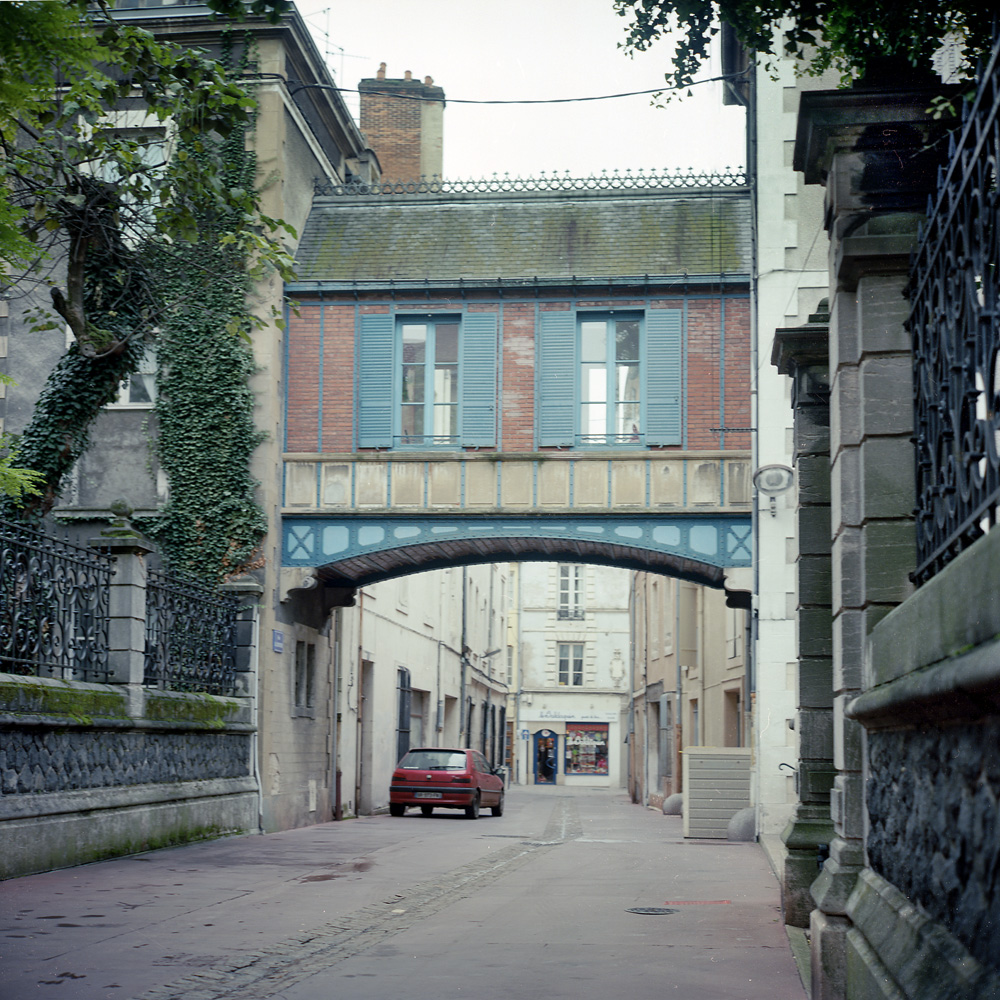
If you look through the archway over the Rue de L’Oratoire, you can see the pedestrian street, the Rue au Change. If the overpass connecting the apartment building with the building across the street looks Swiss, it should not be surprising in Chalon- it is about 70 miles (120km) to Geneva from Chalon. The building in the courtyard to which the iron gate and lamp at the top of this post is attached on the left looks just like a traditional Swiss chalet that you’d expect to see on an alpine meadow, not in the middle of a French town.

Overpass, Rue de l'Oratoire
Overpass, Rue de l’Oratoire

Paris in October – part 34 – Art Nouveau in Chalon-sur-Saone

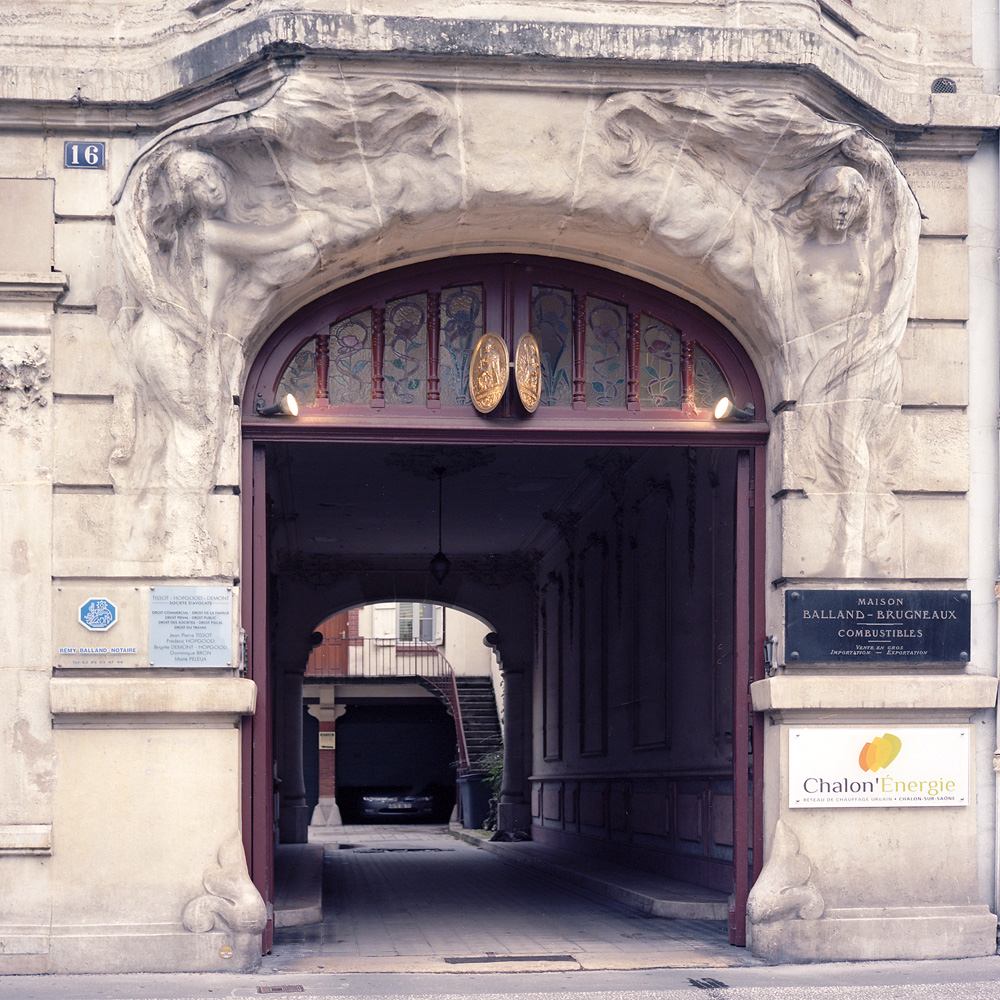
On the Boulevard de la Republique there is this fascinating Art Nouveau building that stands out amidst its neighbors. Having spent 10 days in Barcelona, perhaps the global epicenter of Art Nouveau, it’s hard not to be sensitive to it. A Gaudi building this isn’t, but the sculptures over the doors that support the first floor balconies are particularly notable – they look like they’re organically emerging from the stone, or perhaps swirling in and out of a magical smoke from some genie’s lamp.

Entrance, 16 Boulevard de la République

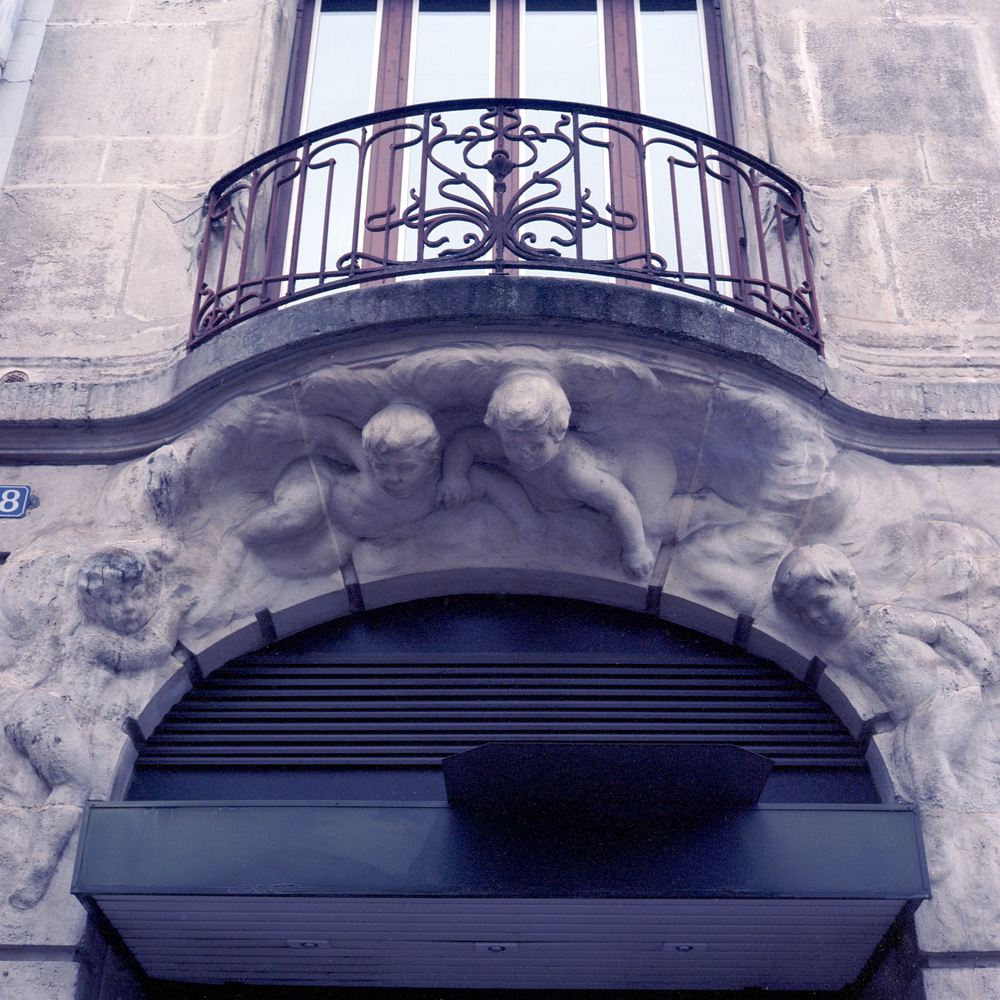
The archway over the building entrance (#18) is obviously stylistically linked to the entrance archway to the courtyard behind the building (#16 Blvd de la Republique), but in no way a mirror.

Entrance, 18 Boulevard de la Republique, Chalon-sur-Saone

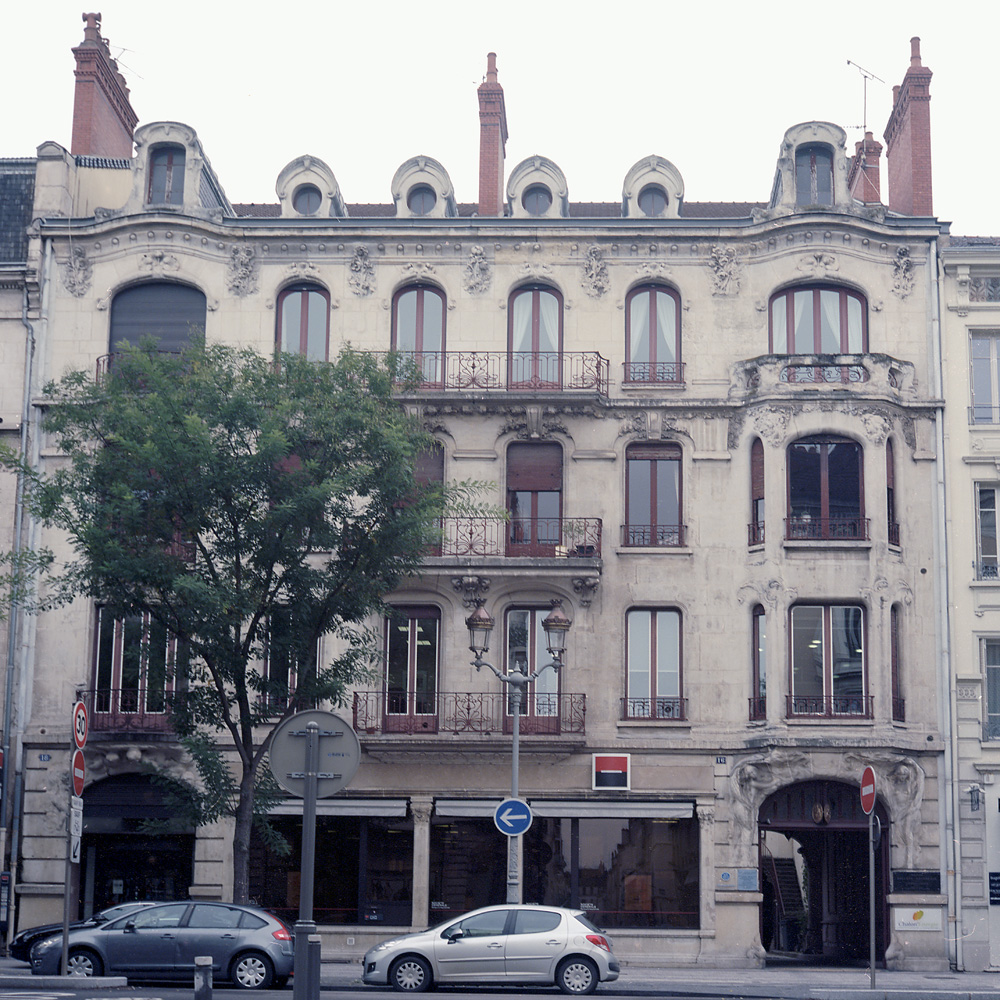
Here is the full facade, so you can appreciate the context of the doorways. I wonder what it housed in the past, and for what purpose it was built. Today there appear to be offices in the building on the lower levels, and possibly apartments on the upper floor.

Facade, Number 16-18 Boulevard de la Republique, Chalon-sur-Saone

I did not see anything else like it in town, in my admittedly extremely brief survey of Chalon, which makes me wonder all the more about the motivation for building it. How did this come to be? It’s obviously prior to the (now gone) Kodak presence in Chalon. It also doesn’t have the feel of being the residence of a single wealthy family, like the Gaudi commissions in Barcelona.

Paris in October – part 33 – Chalon-sur-Saone, at night

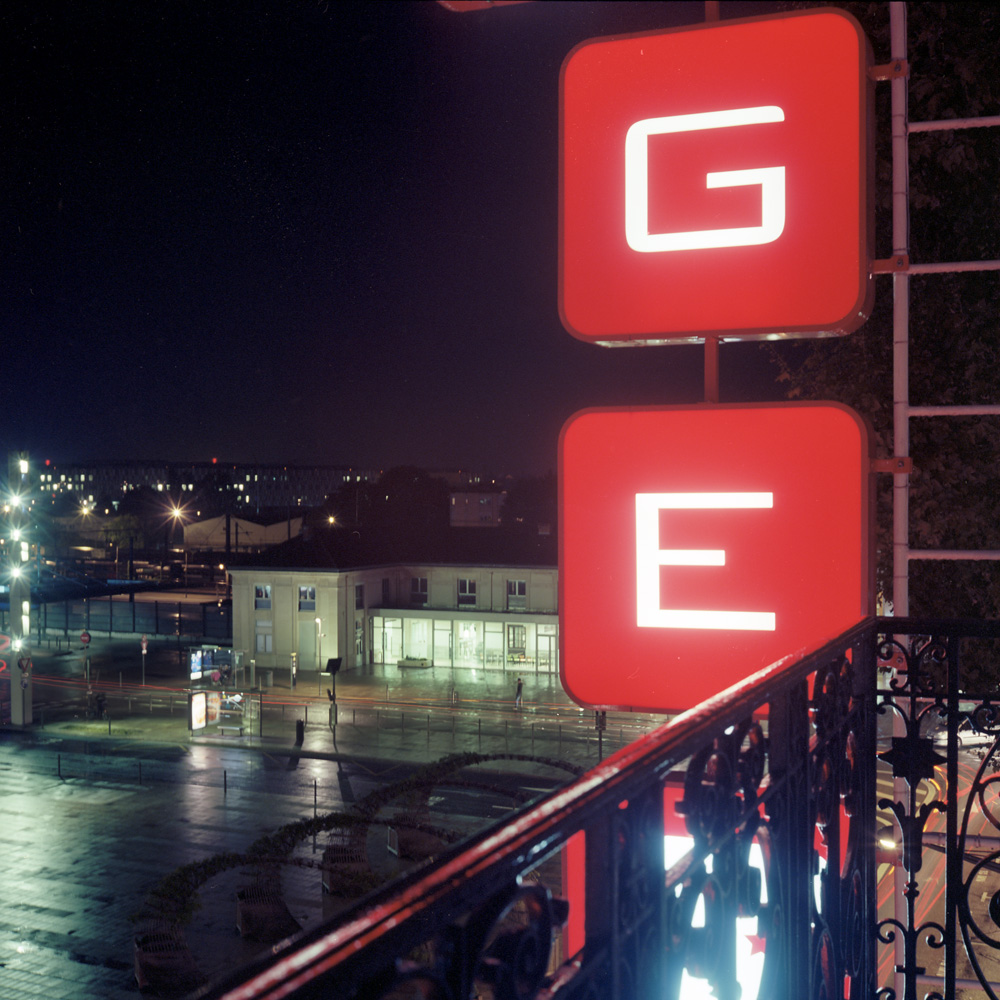
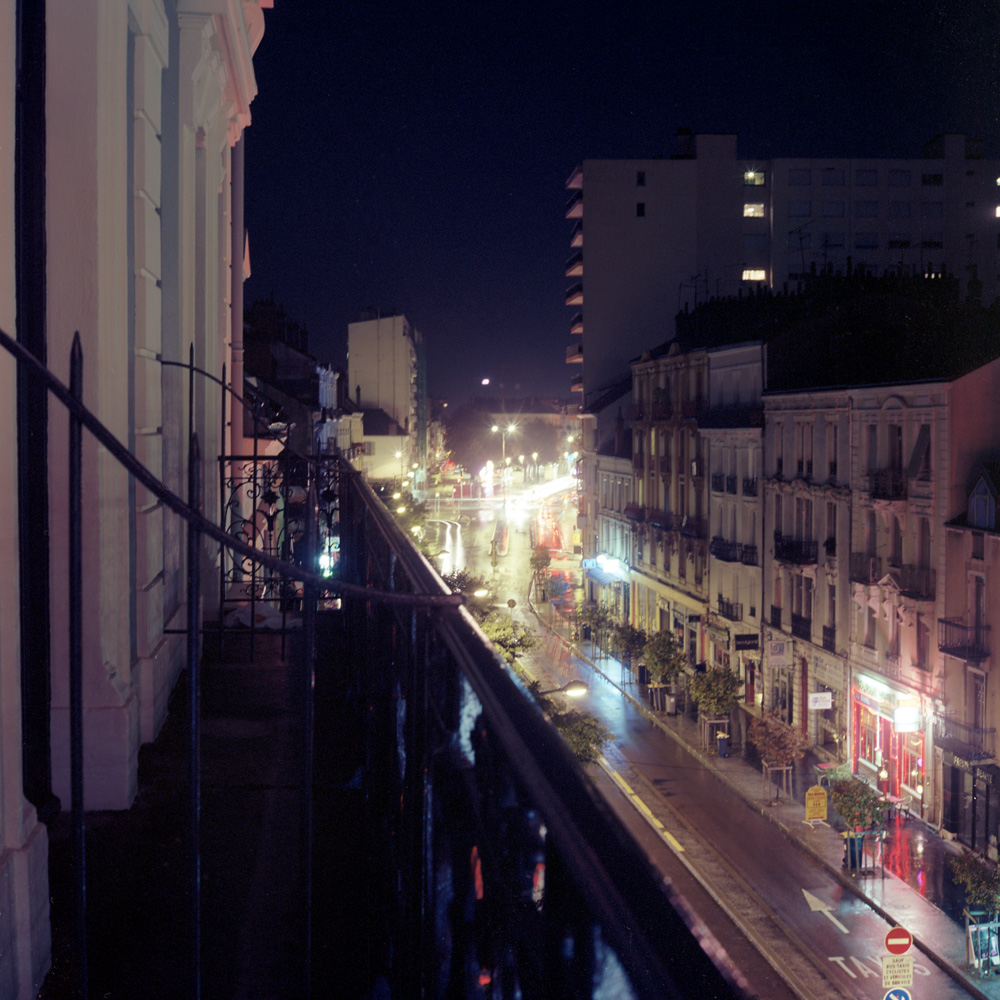
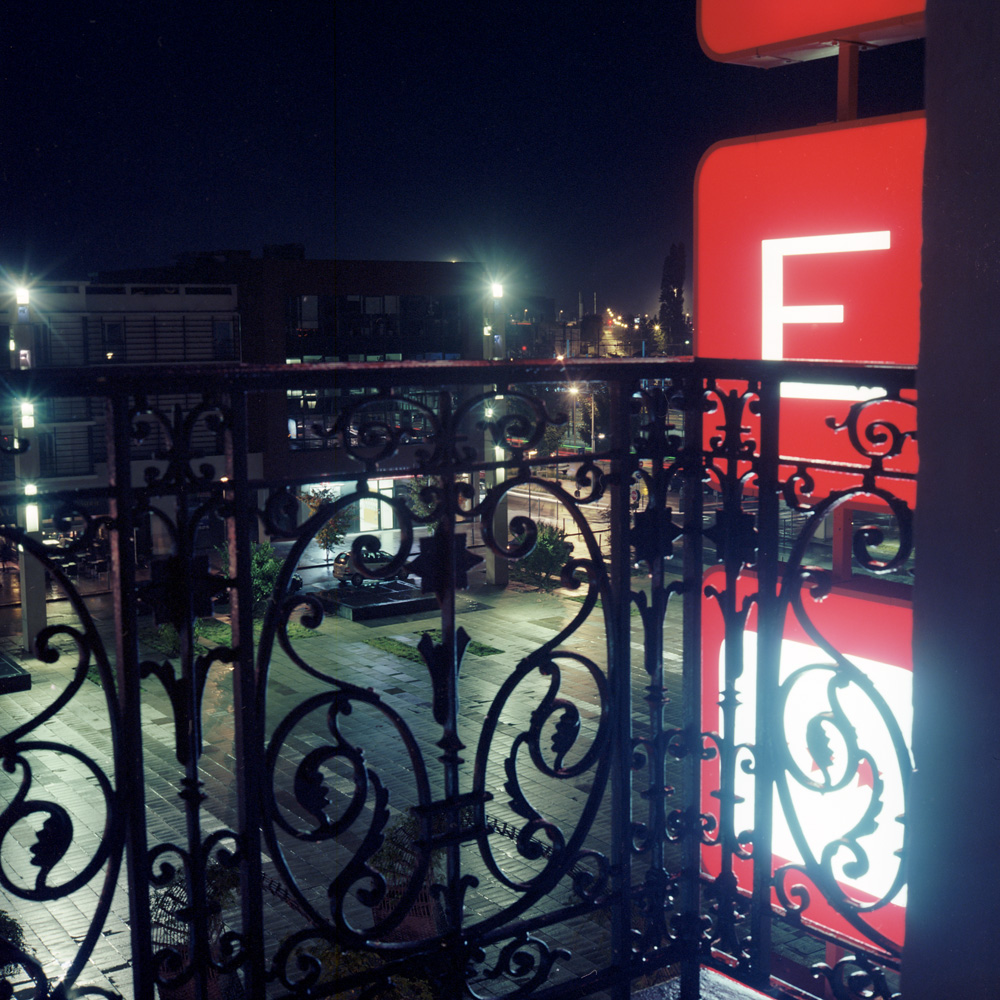
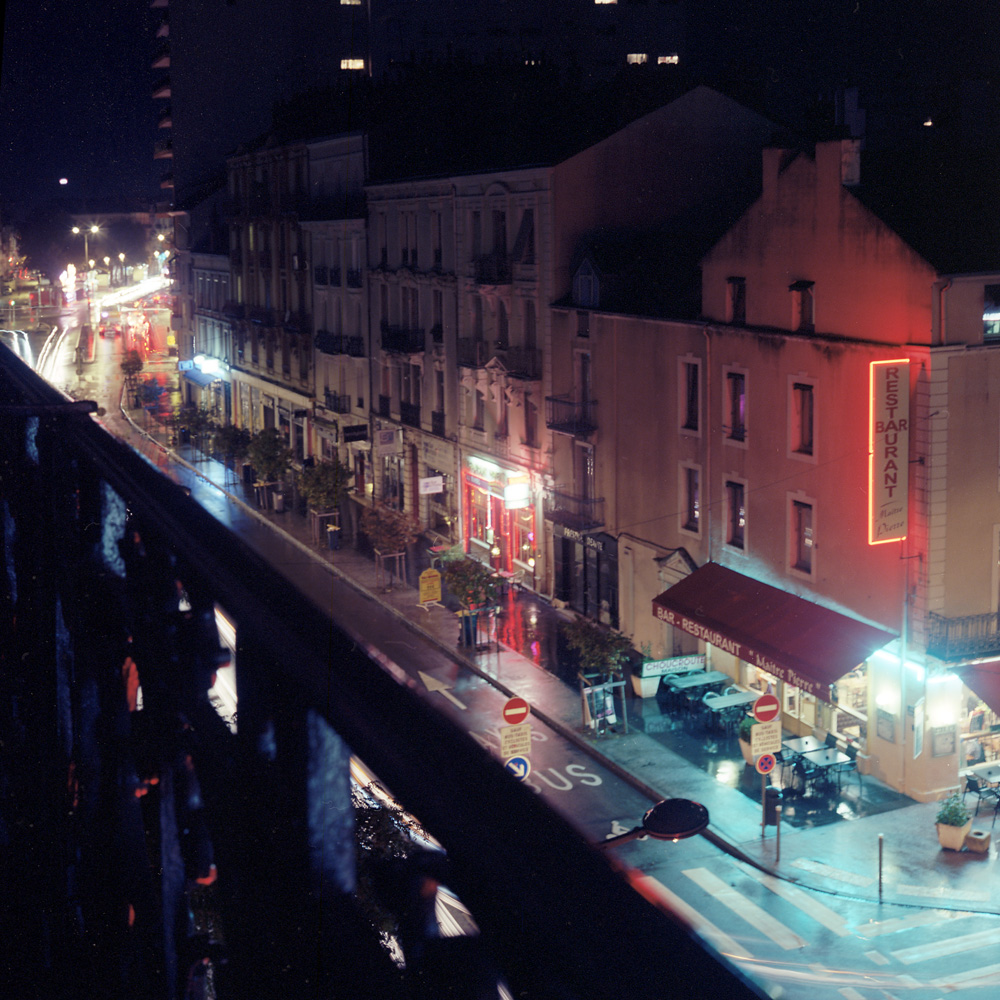
I know, Chalon-sur-Saone is NOT in Paris. It is in fact several hundred kilometers from Paris, and about 120 kilometers from the Swiss border, on the river Saone, which feeds the Rhone. I stayed at the Hotel St.Georges, which is immediately adjacent to the train station. It was the perfect location in town for me because of my travel schedule. It had been rainy off and on the duration of my visit to Chalon. I got lucky when it stopped raining after dinner long enough for me to step out on my balcony and take some night photos. If you’ve been following my blog for any length of time you know I like taking night photos- I think they’re particularly poetic with their distorted colors and blurred motion.

Here is the view of the hotel marquee from the balcony of my room. The train station is in the background.

St Georges Hotel Marquee, Railway Station

A view up the Avenue Jean Jaures from my balcony. In the far background on the avenue you can start to see the lights of a traveling carnival that was set up in town.

Avenue Jean Jaures, St. Georges Hotel, Night

A different view of the plaza in front of the hotel. Across the plaza is the British Pub-style restaurant where I had lunch right after my arrival. The food was excellent and cheap (10 euros for a 3-course lunch!), but it cemented in my mind that the French don’t quite know what to do with pasta – the veal cutlet was delicious, but the pasta that accompanied it was bare, and the marinara sauce came in a dipping cup more appropriate for salad dressing on the side rather than an integral part of a pasta dish.

Balcony Rail, Plaza, Hotel St. Georges

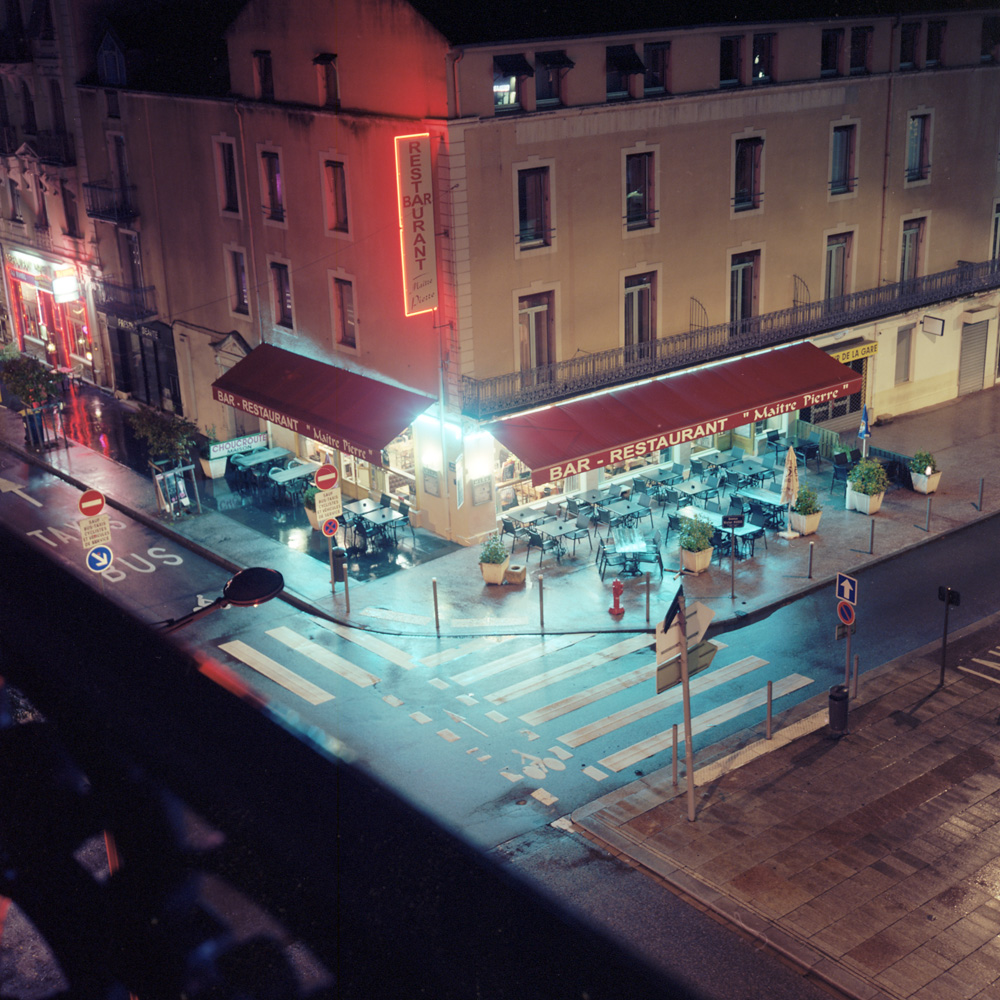
The corner across the street is the Maitre Pierre restaurant, which never seemed busy, and two doors up the Avenue Jean Jaures is an Indian restaurant.

Avenue Jean Jaures, Night

A close-up view of the Maitre Pierre restaurant.

Maitre Pierre Restaurant, Night

Photo-geek techie note, for those who care: shot with my Rolleiflex 2.8E, using Kodak Ektar 100. I may have said this before, but my favorite film for night photography is Portra 160. I love the way it handles mixed lighting and the extreme contrast you get at night. When I came to Chalon, I wasn’t expecting to do any night photography, so I left all the Portra in Paris, and all I had for color was Ektar 100. You can see from these photos that if that suddenly became my only option for color night photography, I wouldn’t be mad. It’s not a case of not liking Ektar for night photography, just liking Portra more.