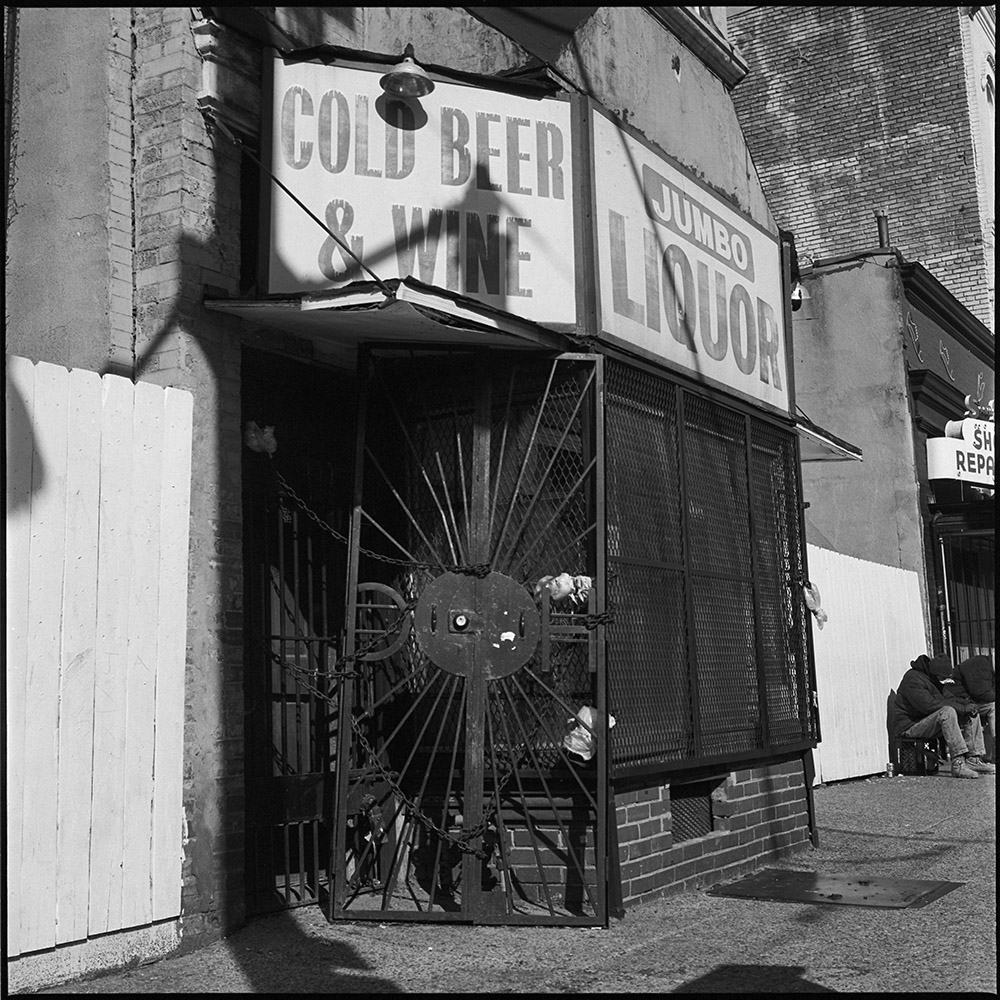
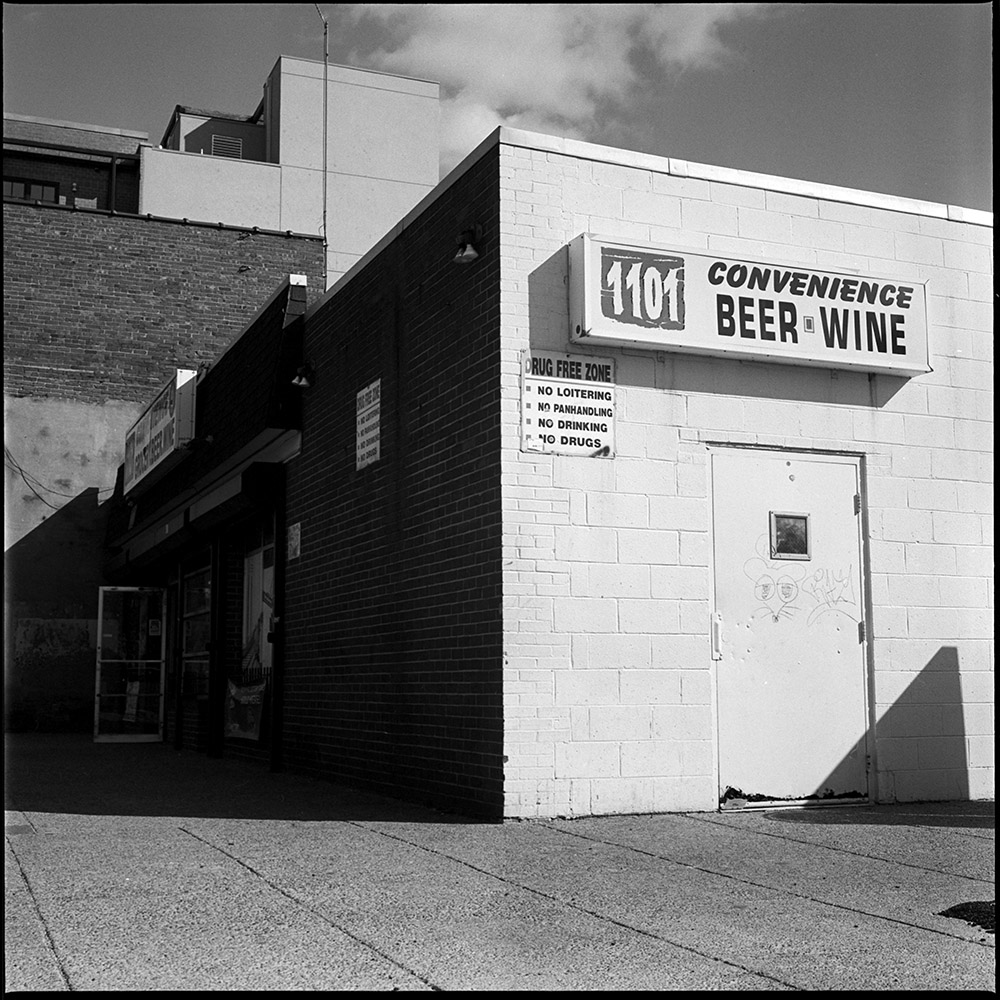
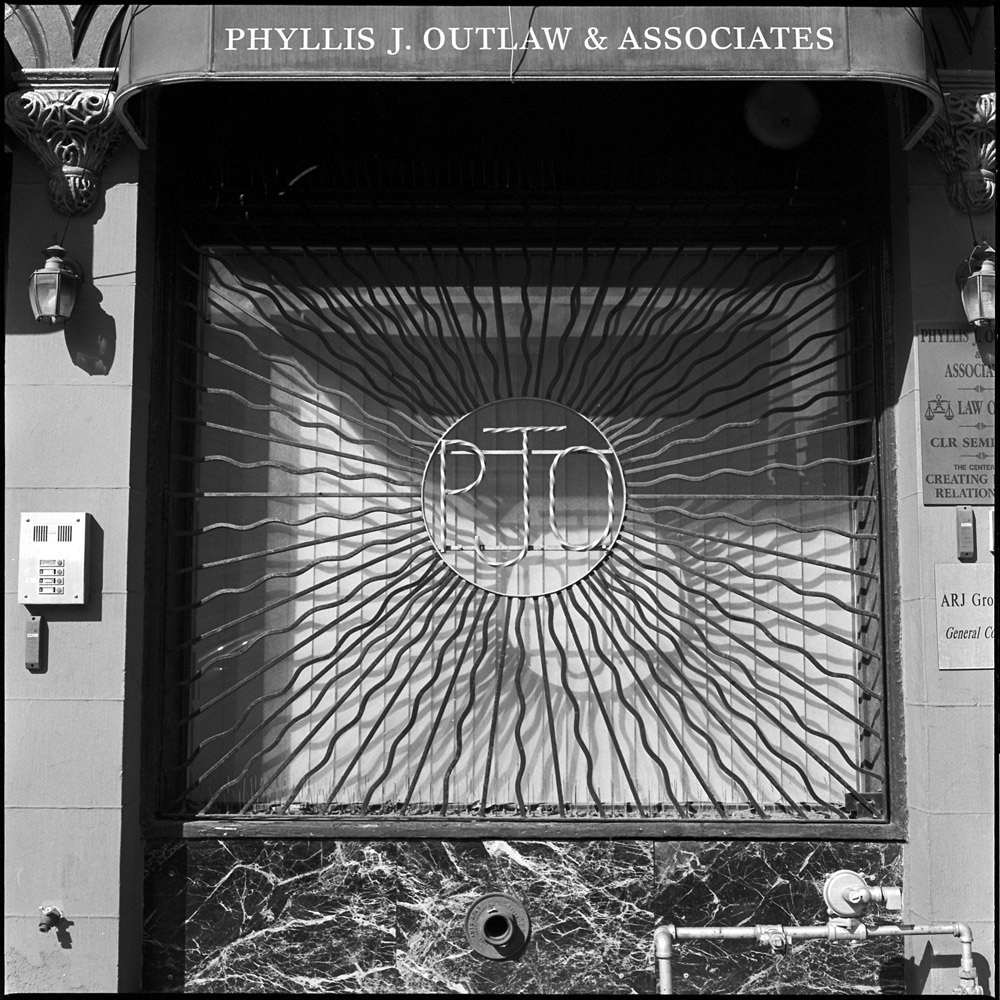
H Street Northeast is a neighborhood in major transition. It was in the 1950s and 60s an important retail and entertainment corridor for the African-American community in DC, along with the U Street corridor in Northwest. Along came the 1968 Martin Luther King riots, and then in the 1970s and 80s the rise of the drug epidemics, and H Street turned into pawn shops, liquor stores, and abandoned buildings. In the early 2000s, property developers turned their eyes toward the area for the relative abundance of cheap real estate as the next new place they could revitalize and get rich in the process.
These first four shots here represent the old side of the neighborhood – liquor stores, barred windows and businesses that clung to life through the lean years.
Cold Beer & Wine1101 ConveniencePhyllis J OutlawS and S Shoe Repair
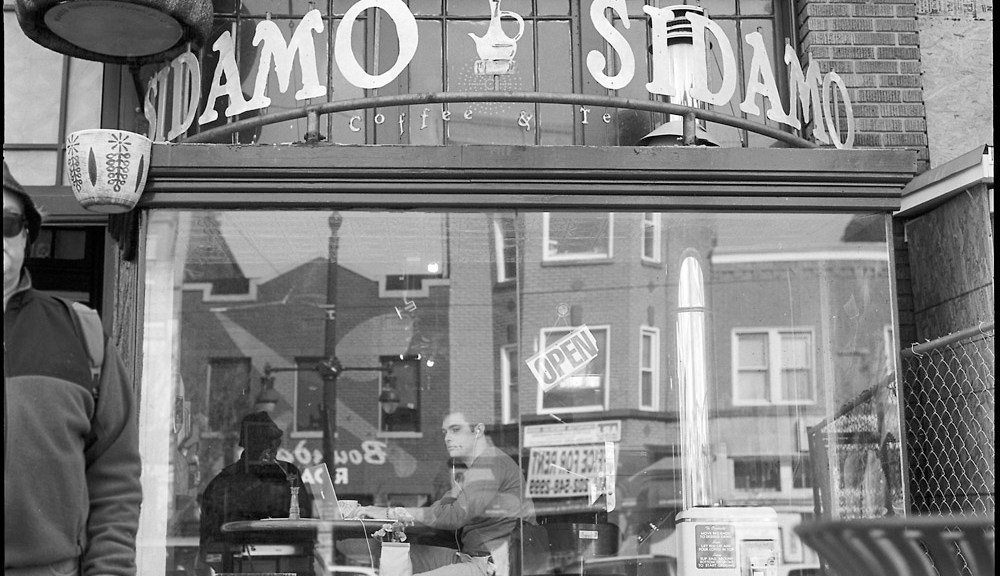
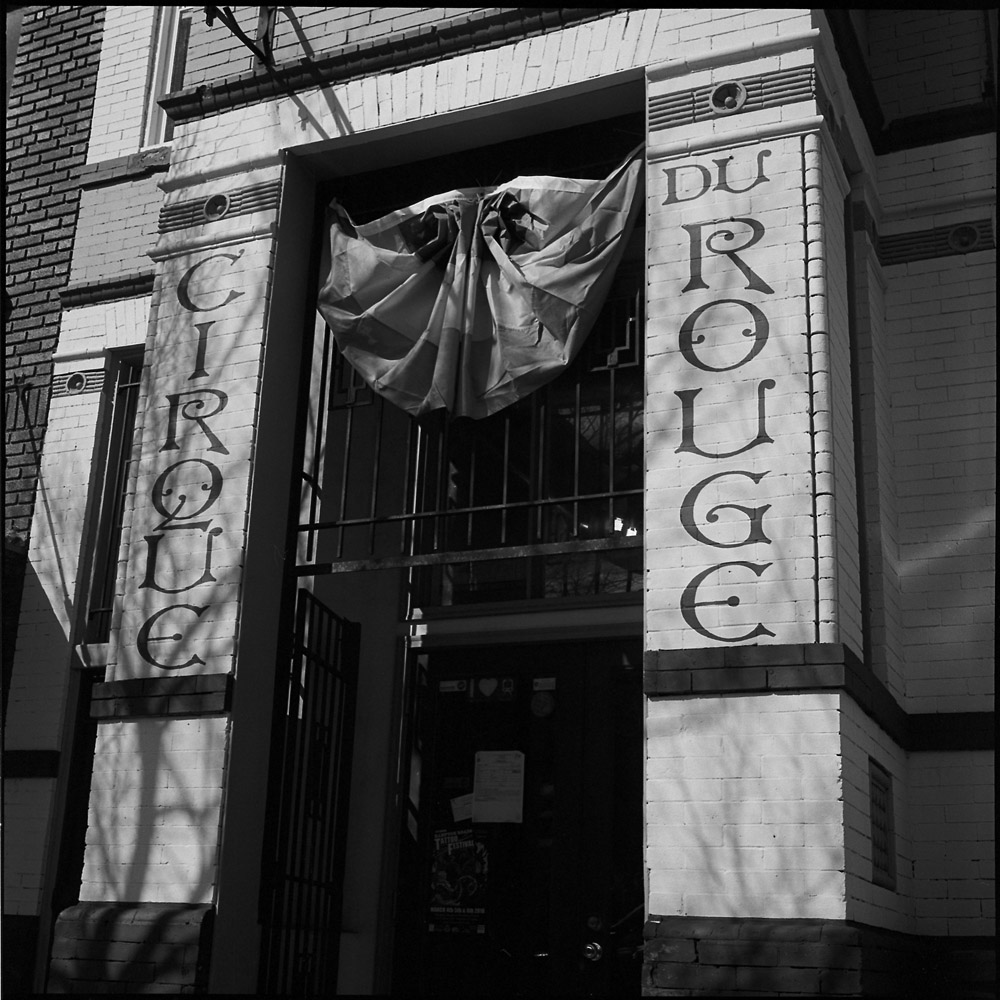
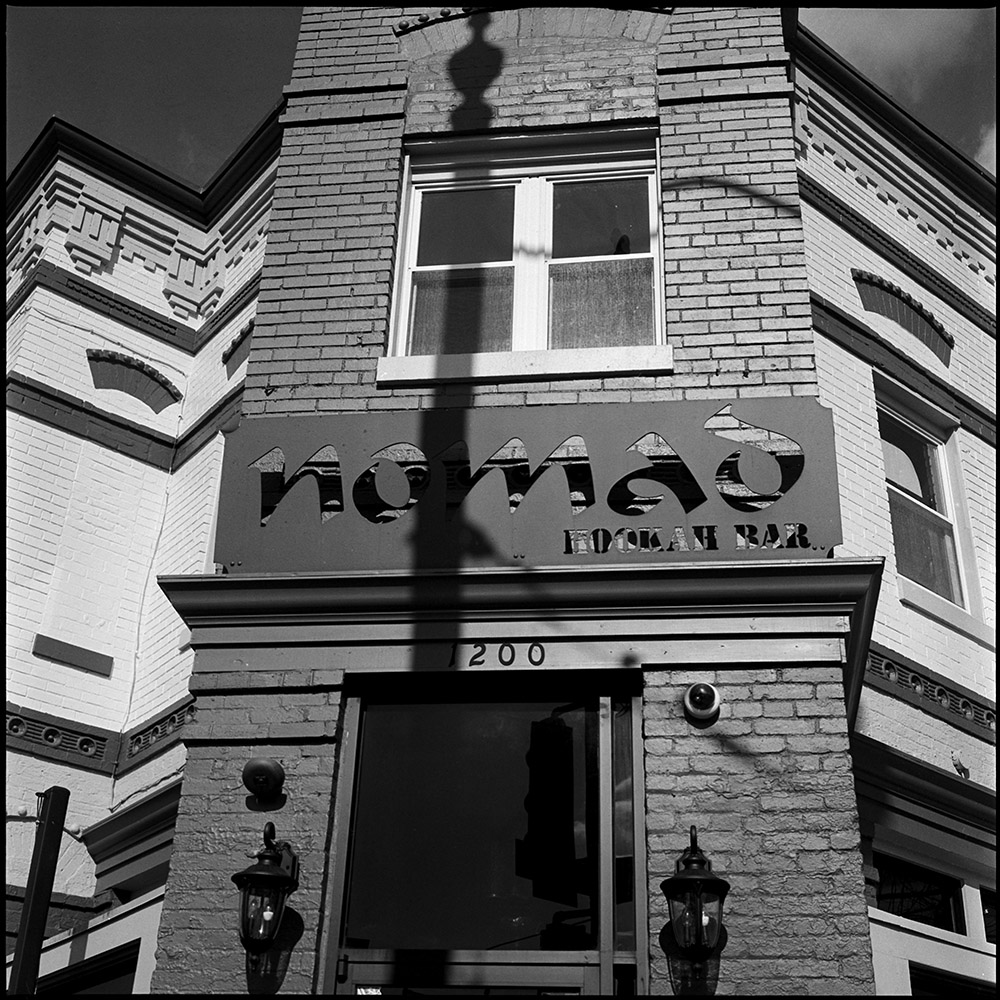
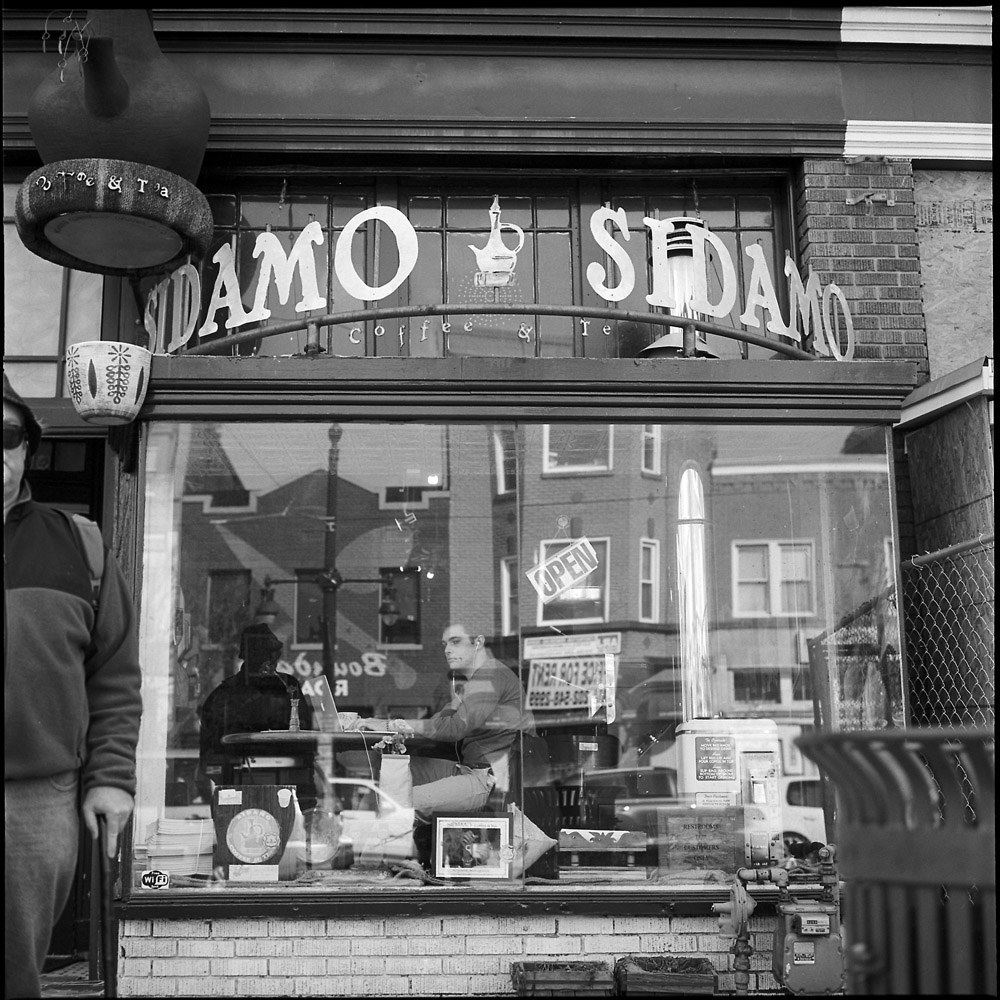
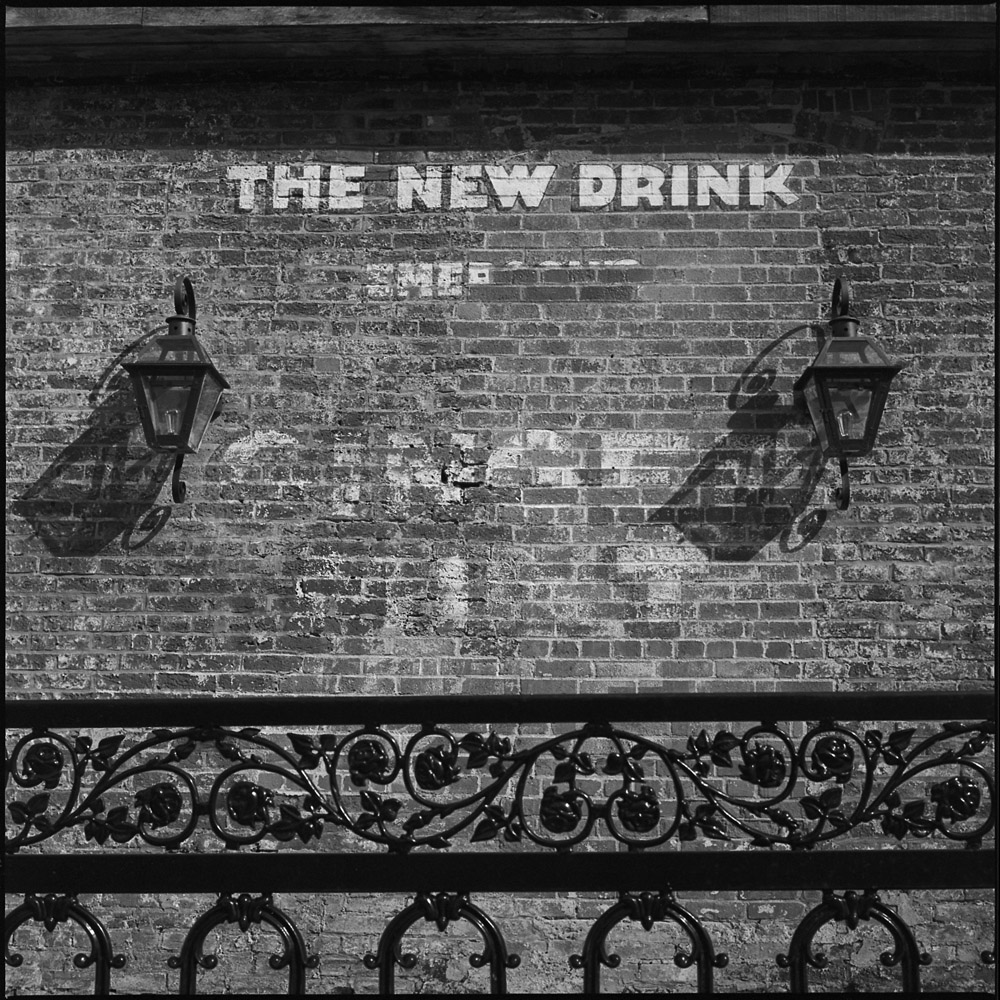
This set are the changing face of H Street – fresh paint, new entertainment venues, coffee shops and chic pubs.
Cirque Du RougeNomad Hookah BarSidamo Coffee & TeaThe New Drink
The not-so-visible dark underside to this is that the past residents (lower and middle income African-Americans) and the businesses they used to operate are being pushed out not only by the housing redevelopment that is driving real estate prices up by several hundred percent over the span of a decade or less, but by the changing retail landscape – when enough businesses on your street have gone from selling fifty-cent cups of coffee and five dollar lunch deals to six dollar cappuccinos and thirty dollar tasting menus, your old clientele aren’t coming around anymore. If you were already operating on a shoestring, it can be cost-prohibitive to reinvent yourself.
On the same day I went to Fort Foote, I kept on driving south into Maryland until I got to Fort Washington, proper. Fort Washington the fort is located in Fort Washington, the town, and to arrive there you drive through some rambling suburban tracts. Like Fort Foote, Fort Washington sits on the banks of the Potomac River atop a peninsula formed by Piscataway Creek’s entrance into the Potomac River. It, however, was not intended to be a temporary site but rather has been occupied and fortified since before the War of 1812. Its use as an active military base ended after World War II, but most of the structures you see were built between 1800 and 1918.
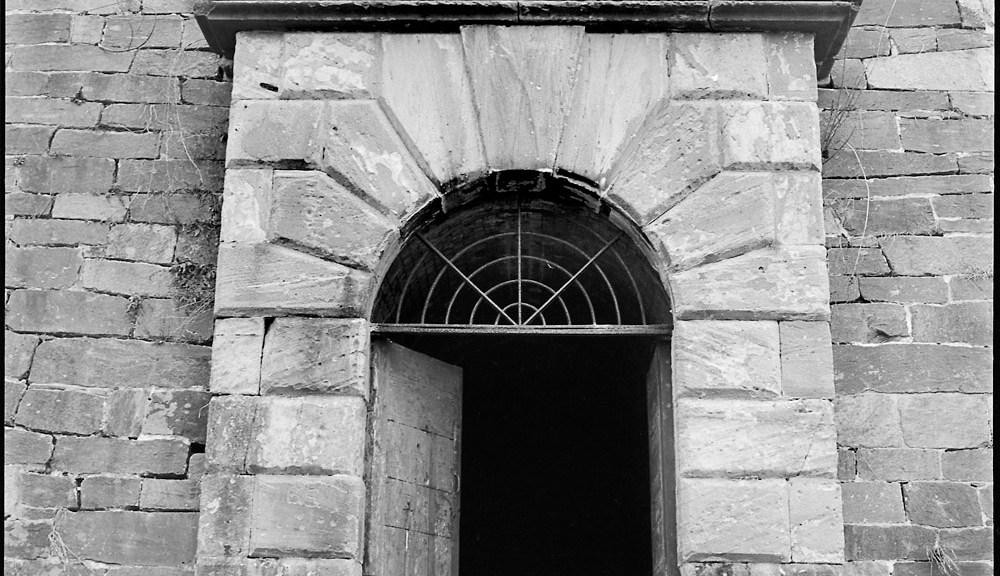
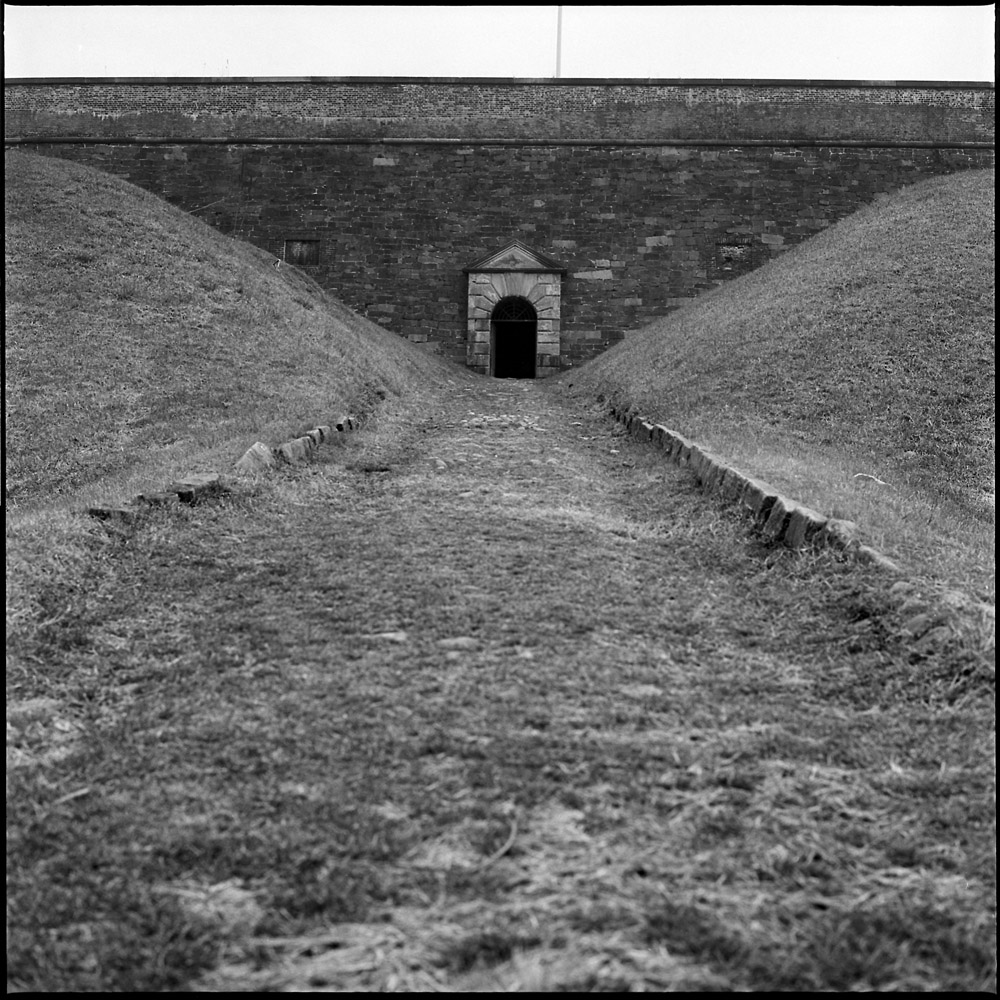
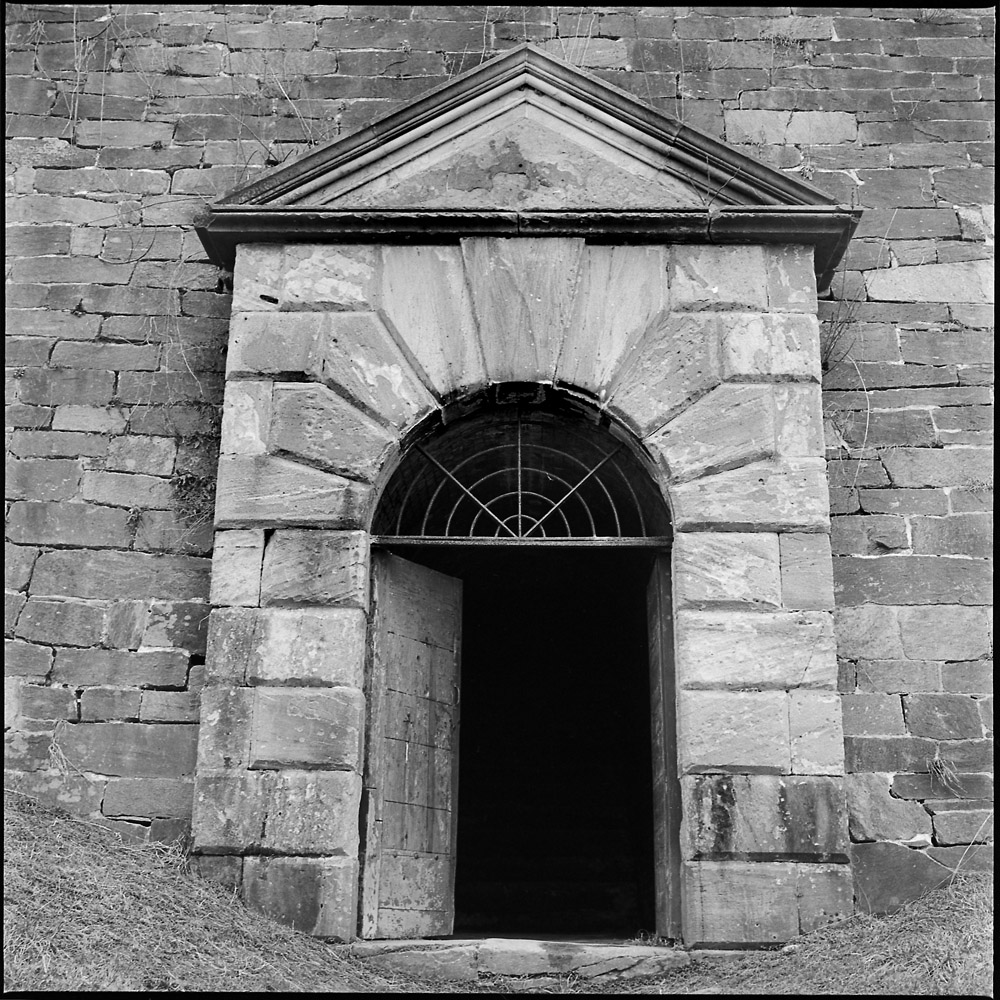
These first two images are of the gate in the early 19th century fortifications. This was the entrance that connects the hilltop fortifications to the water battery at river level.
EarthworksWater Gate
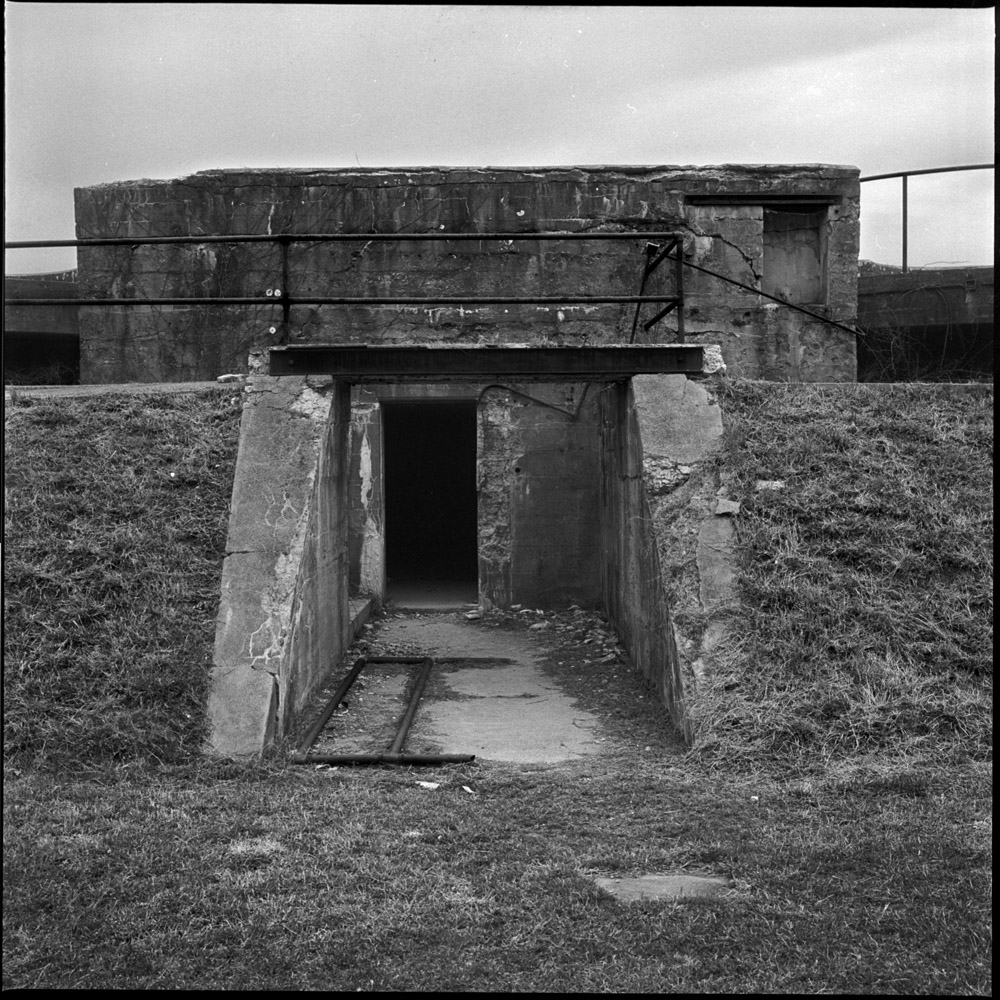
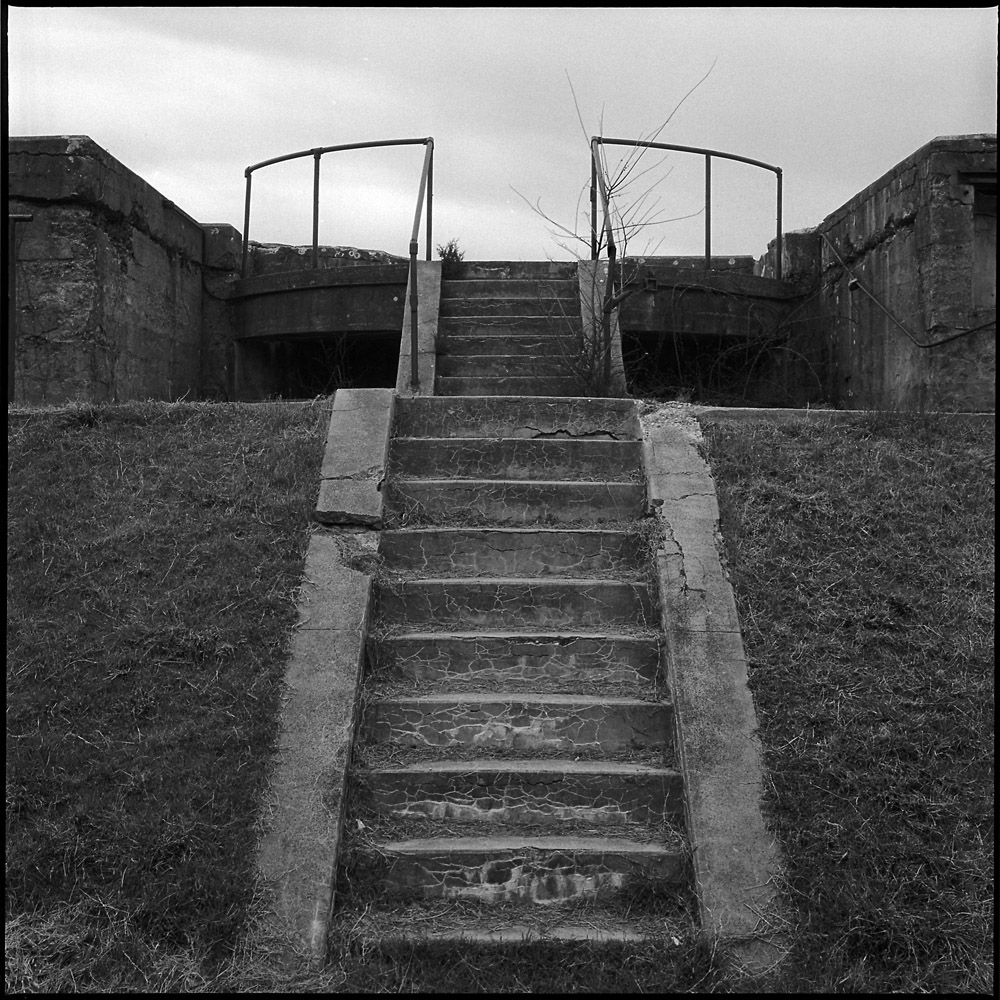
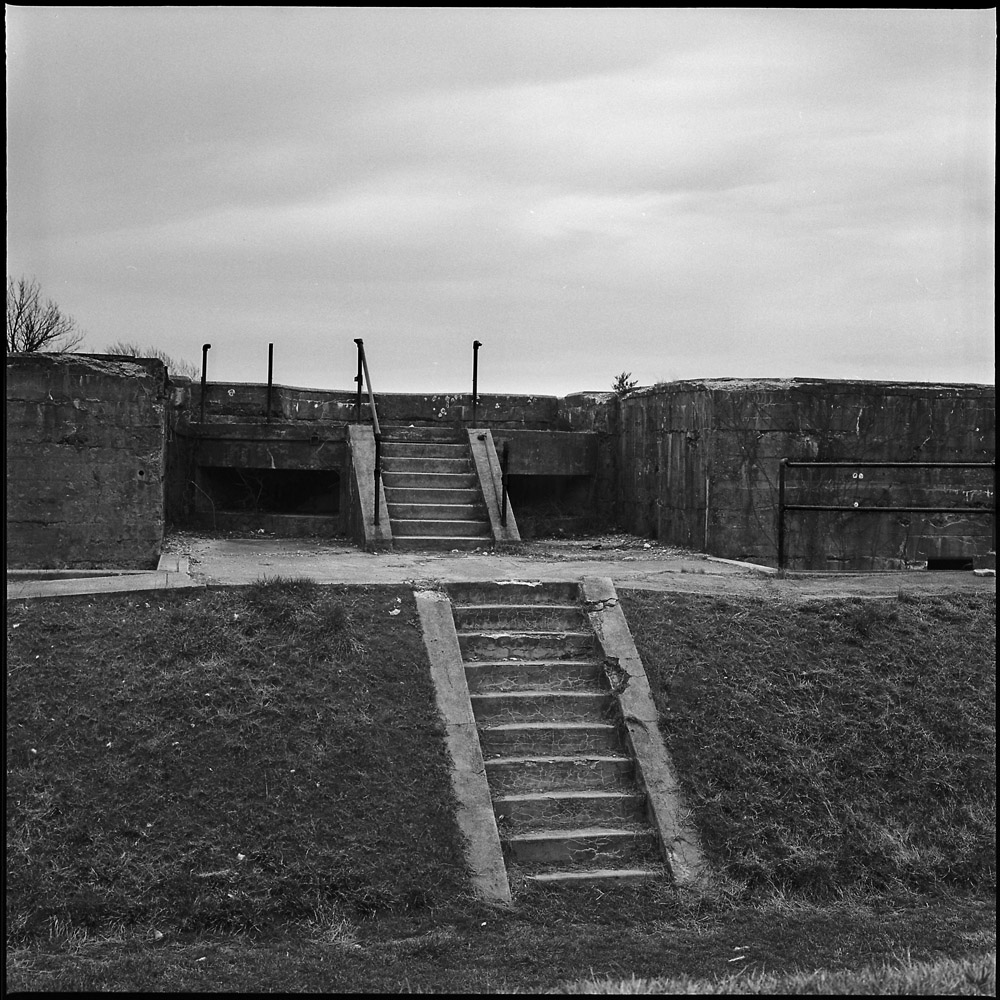
The water battery structures date to the first decades of the 20th century. You can see they are much lower, made of steel and concrete. The front side is protected by an earthen berm. The bunkers would have held the troops manning the now-dismounted cannon and communications equipment to control the batteries from within the fort.
There is something both ominous and at the same time hopeful about these structures, viewed from the land side. The bunker doorway looks like an entrance to the underworld.
Water Battery Entrance
The stairs, however, now stripped of their weaponry, point to an upward journey, facing the unknown. They’re the prow of a ship, a pathway to adventure, or perhaps a Mayan temple at whose top great mysteries will be revealed.
Water Battery Stairs
The clouds above tease the possibility of rain, but it will be a gentle rain, not a thundering downpour. They’re the gateway to the horizon.
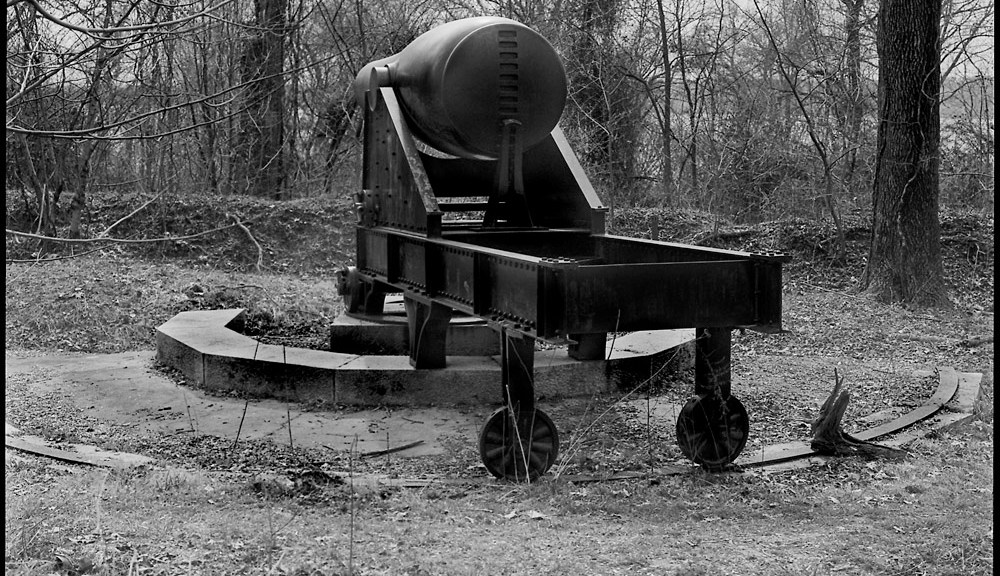
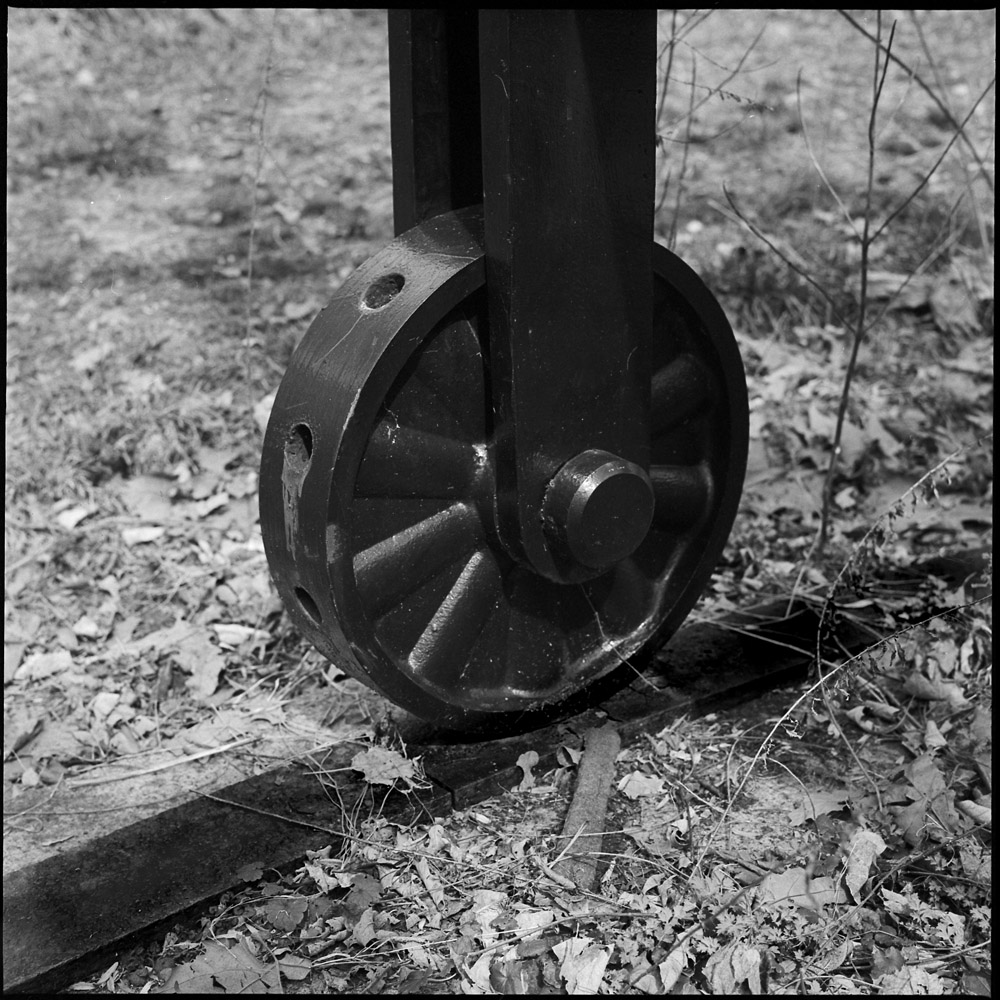
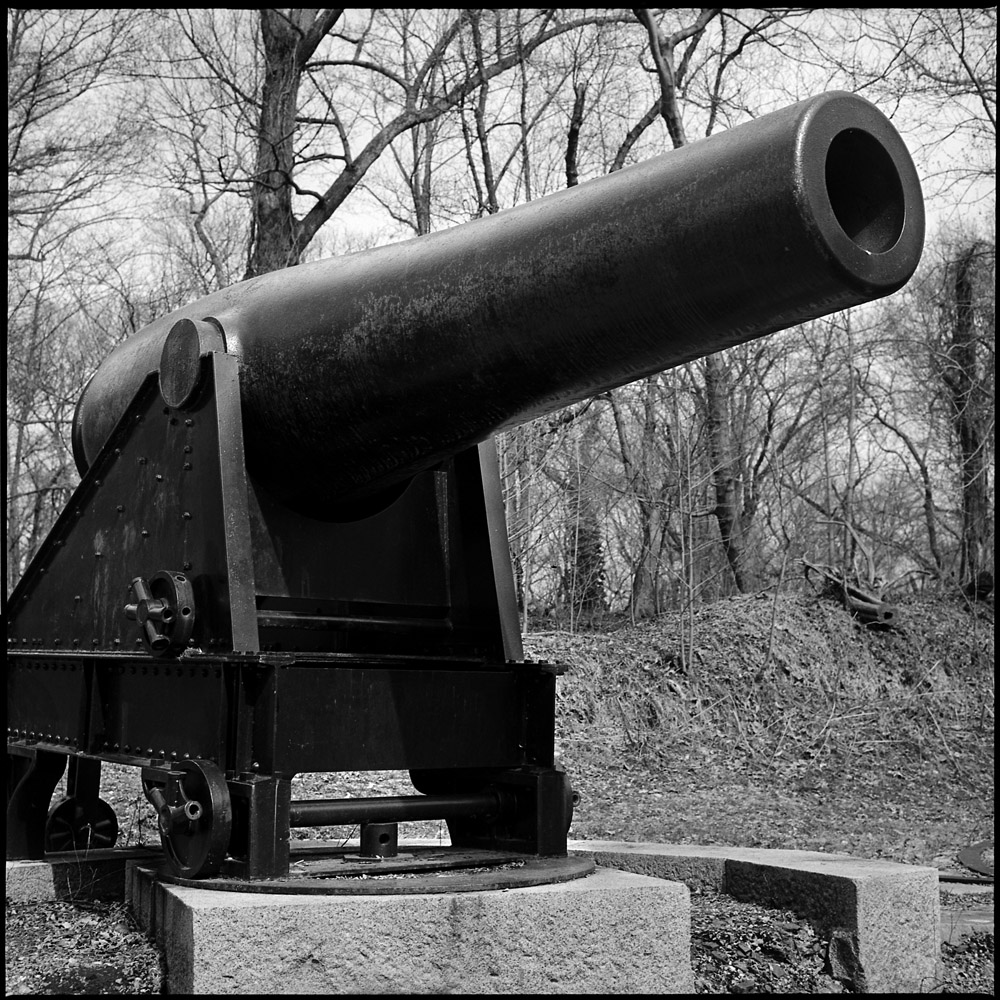
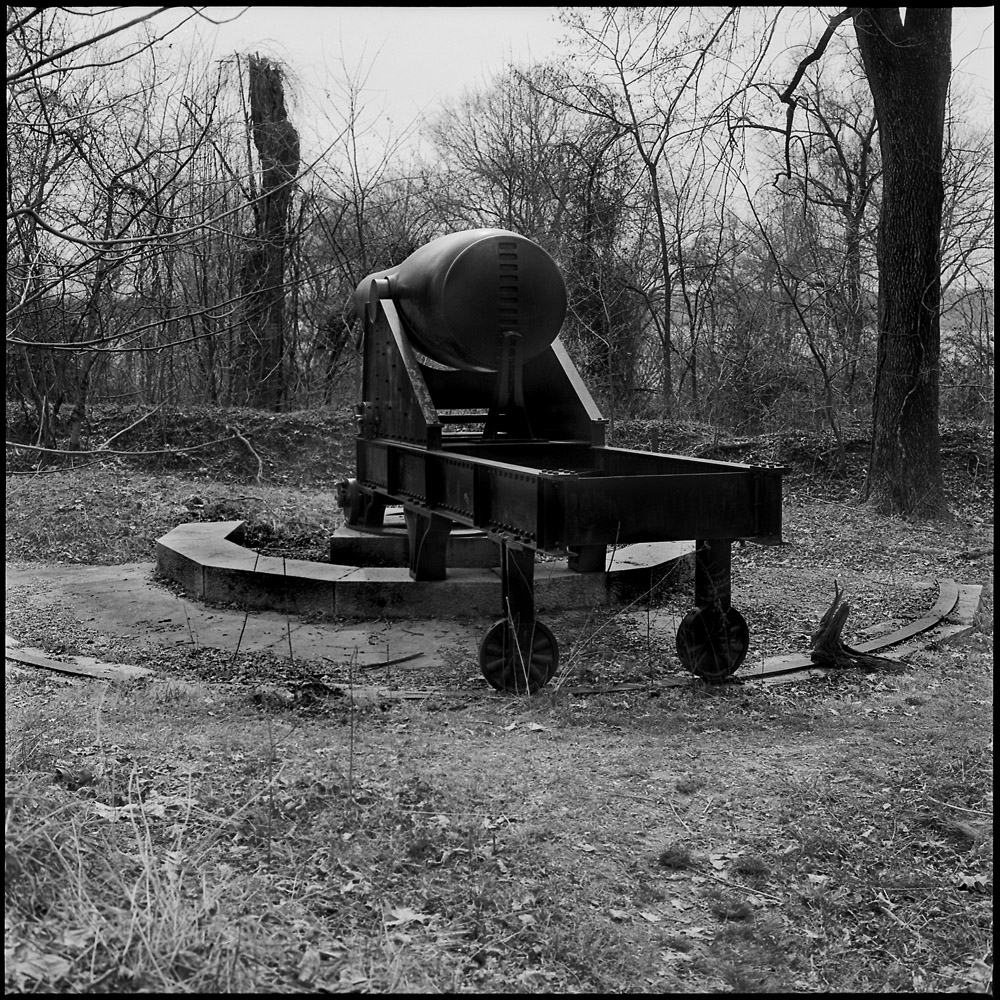
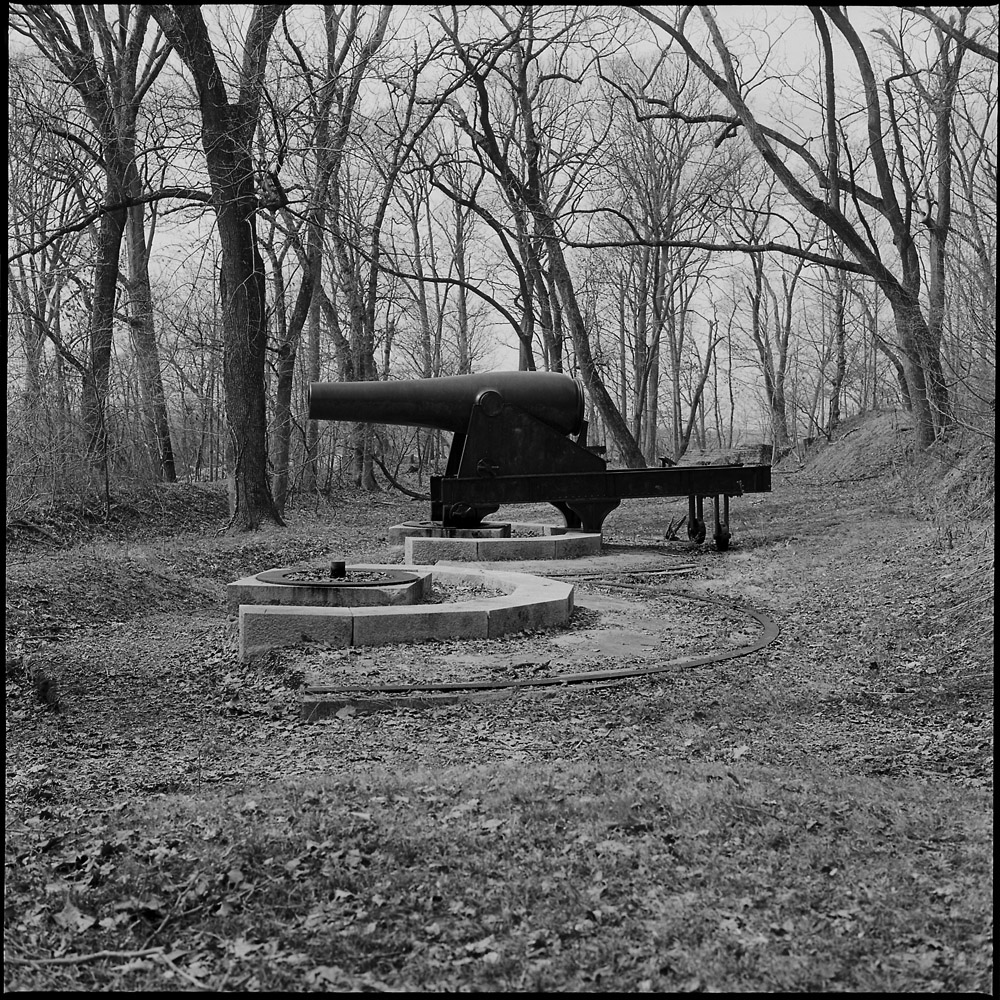
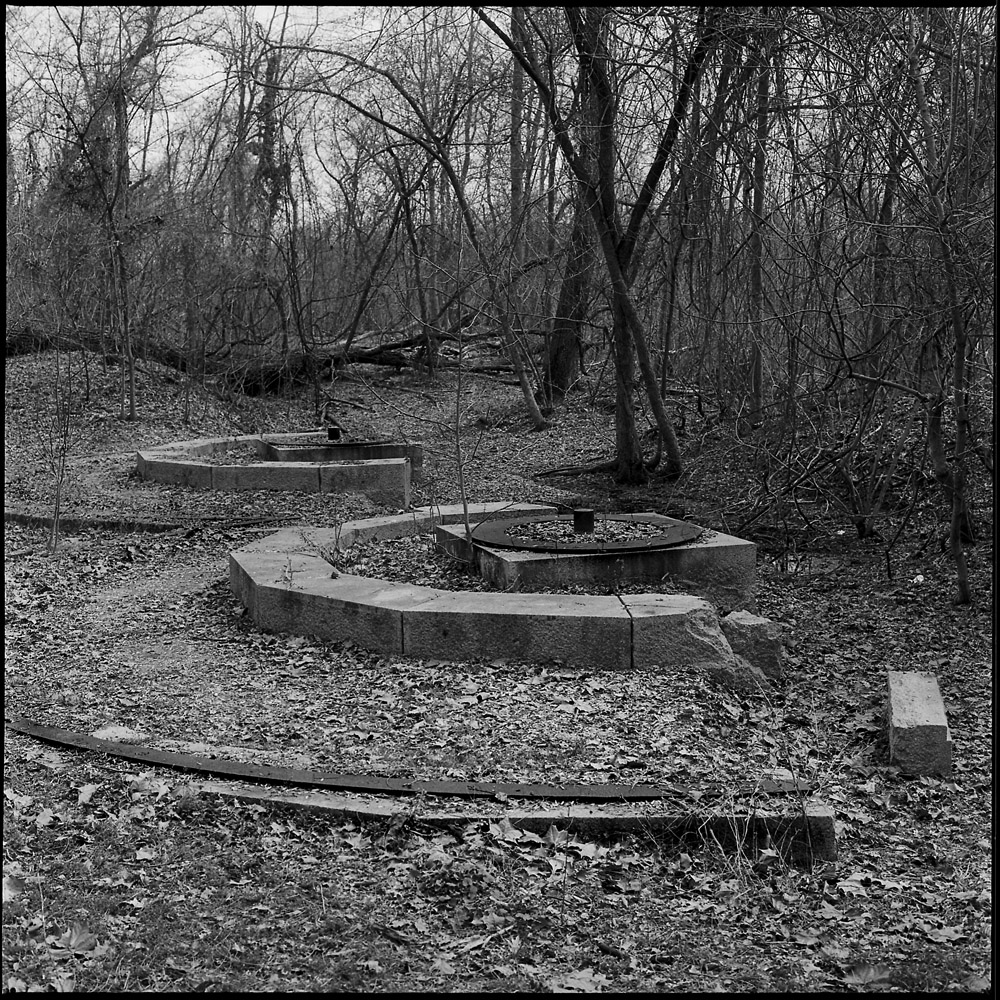
These are details of the fifteen inch Rodman guns and their emplacements at Fort Foote. I apologize for the delay in posting this second round. In this set of images I was focusing on the textures of the ironwork and the geometric patterns and repetition in the gun emplacements. There are endless circles and semi-circles repeating throughout, from the barrel of the gun itself to the wheels to the tracks to guide the traverse. They take on a bit of a crop-circle kind of feel: looking at the remnants makes you wonder if they’re the leftovers of an alien civilization.
Gun Carriage WheelRodman Gun, Fort FooteStanding SentryLone Rodman, Fort FooteGun Placements, Fort Foote
Because these are in the (encroaching) natural environment, I’ll grudgingly classify them as landscapes, but I think of them more as documentary work given the subject matter.
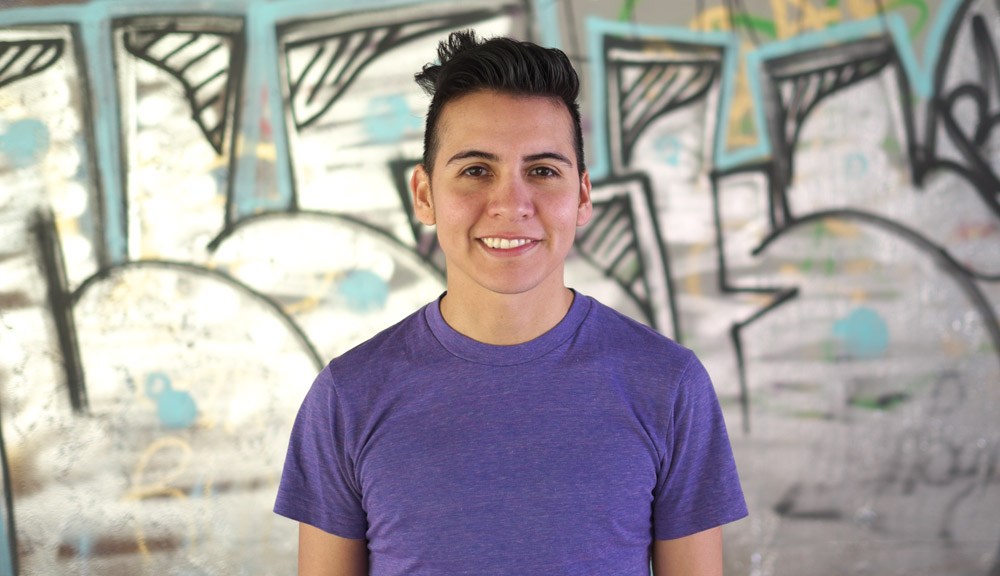
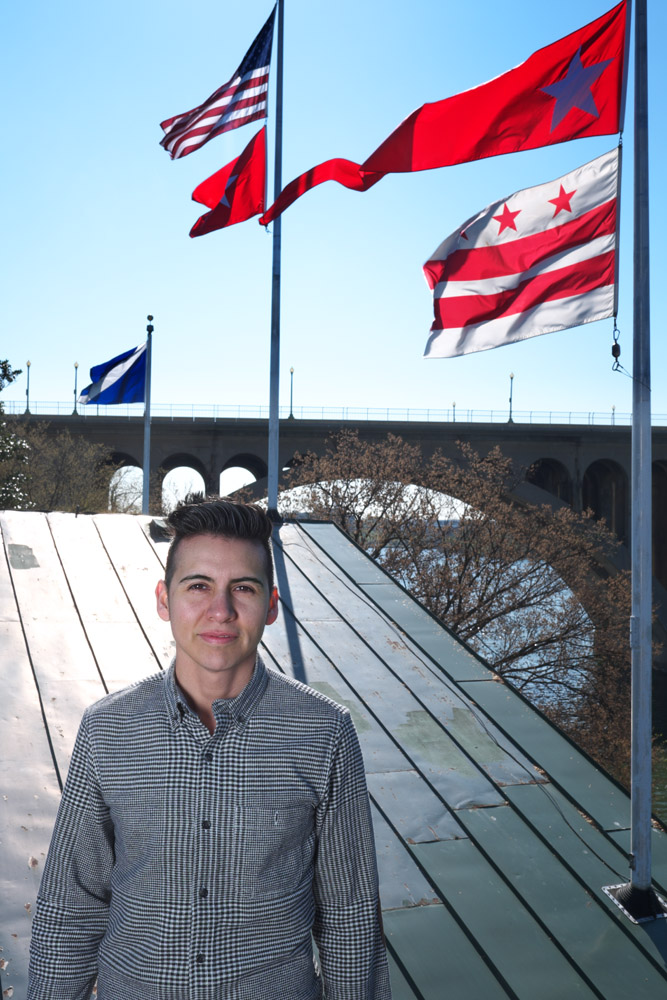
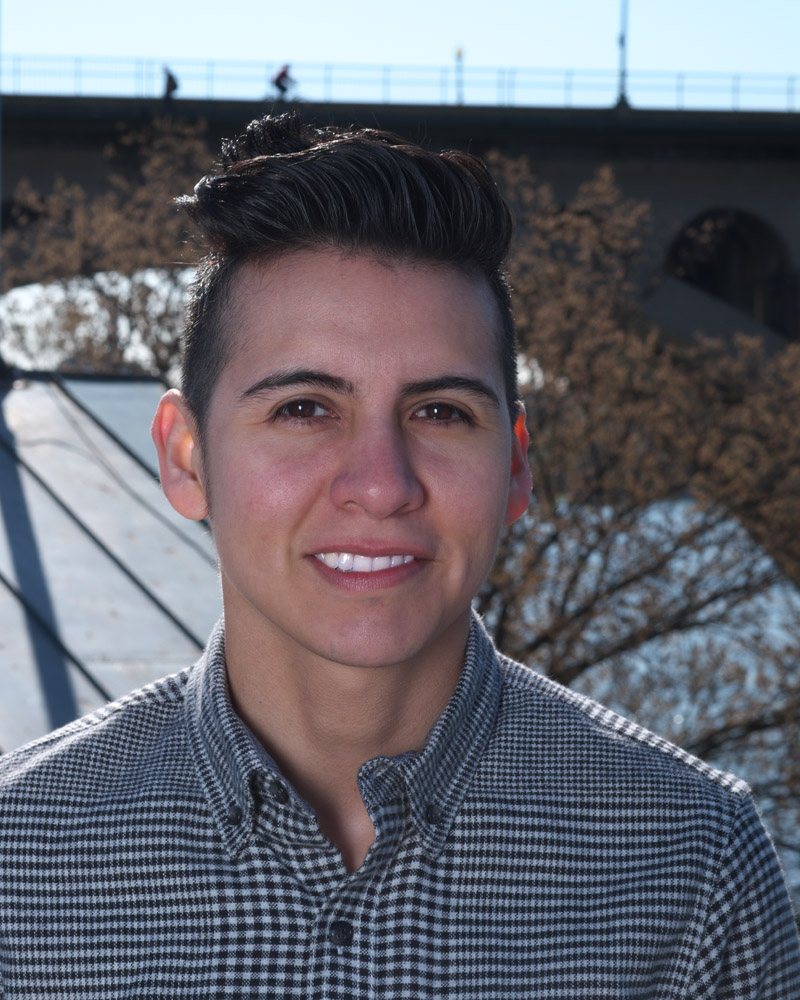
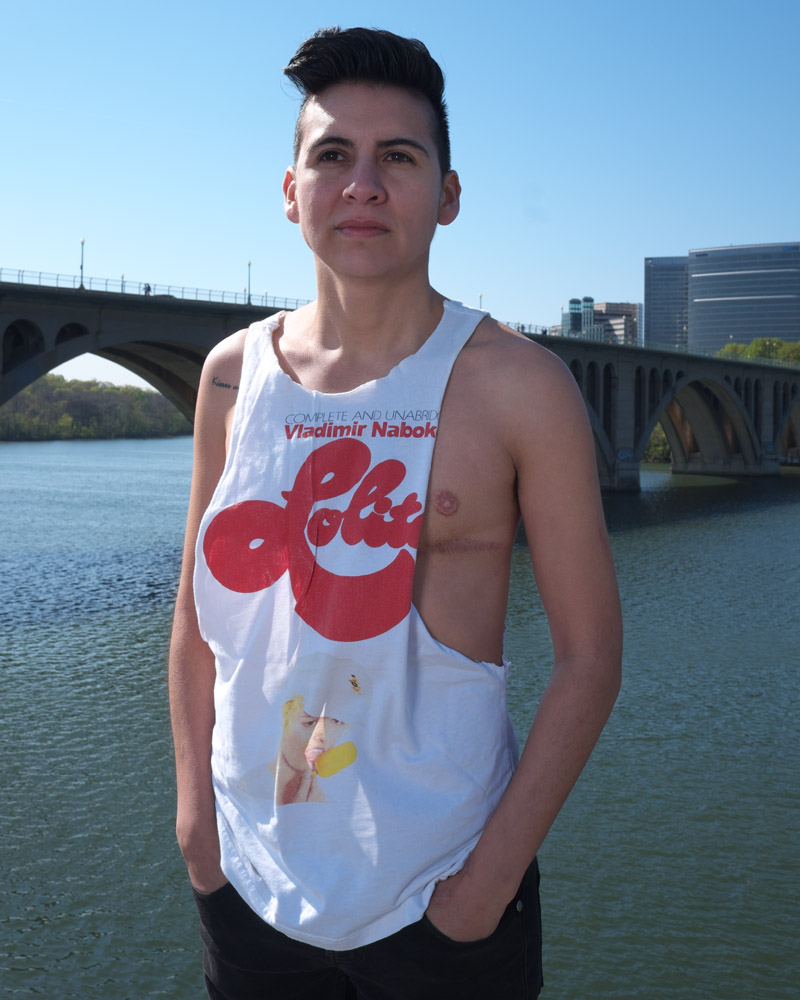
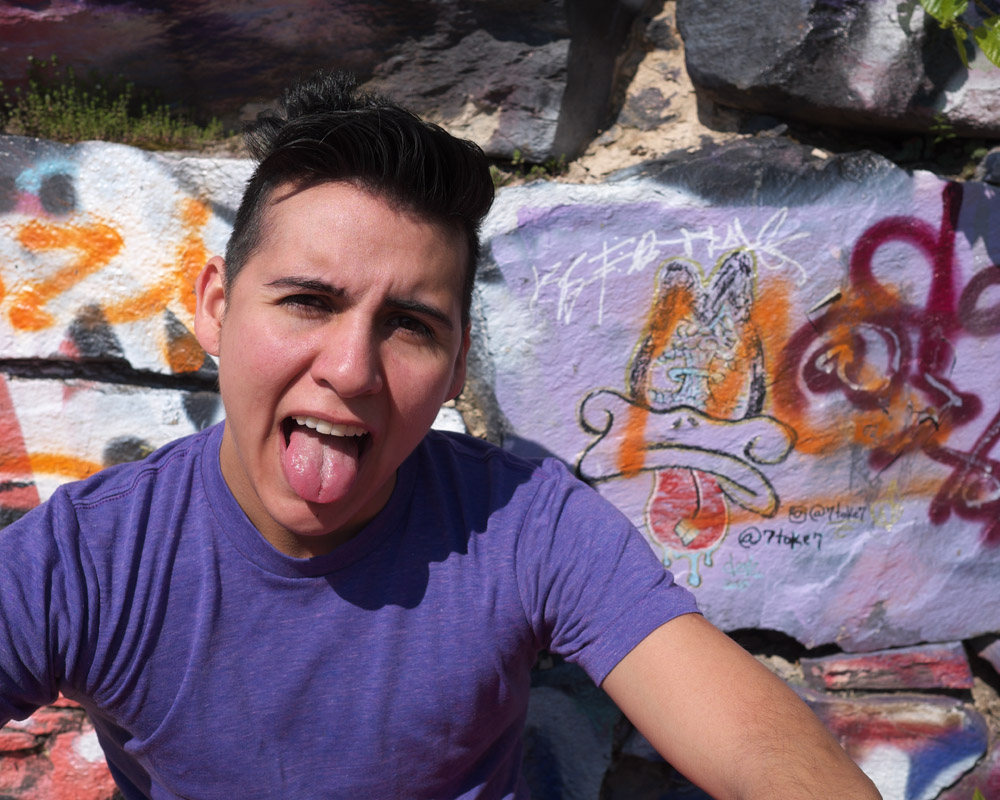
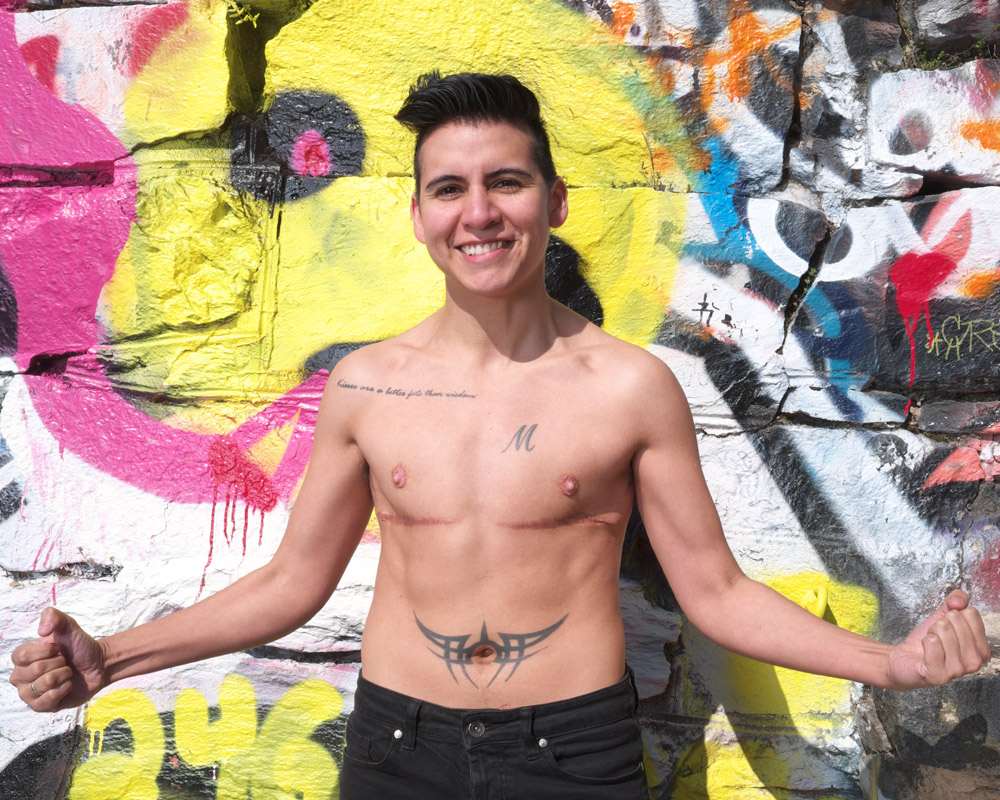
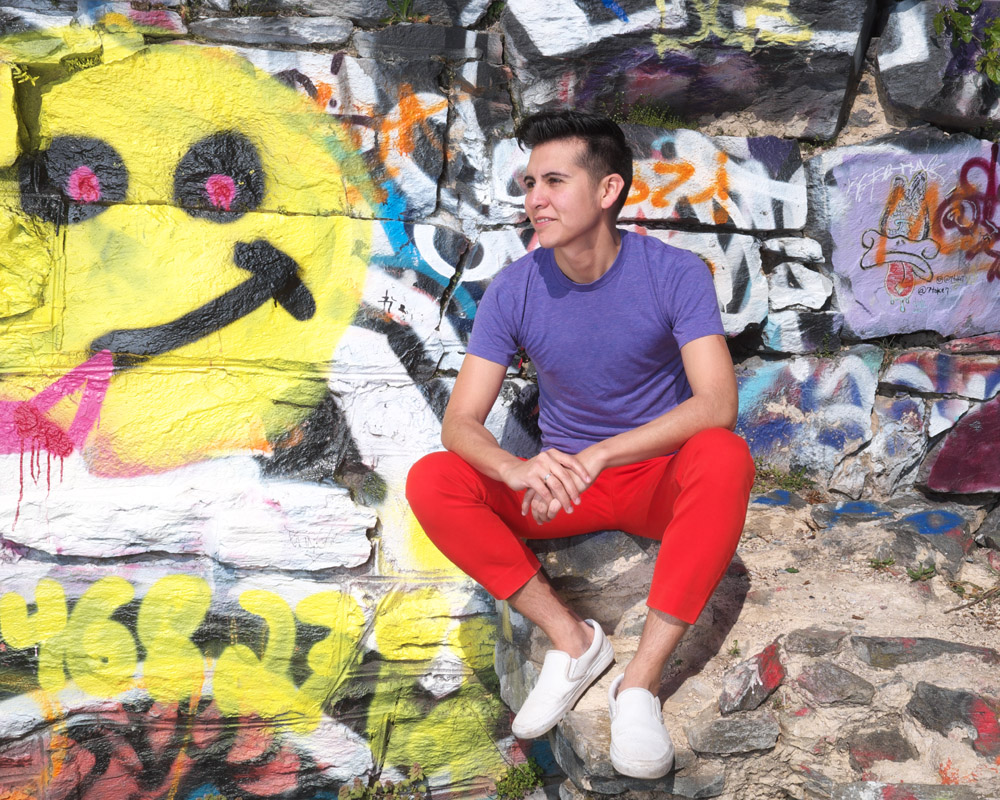
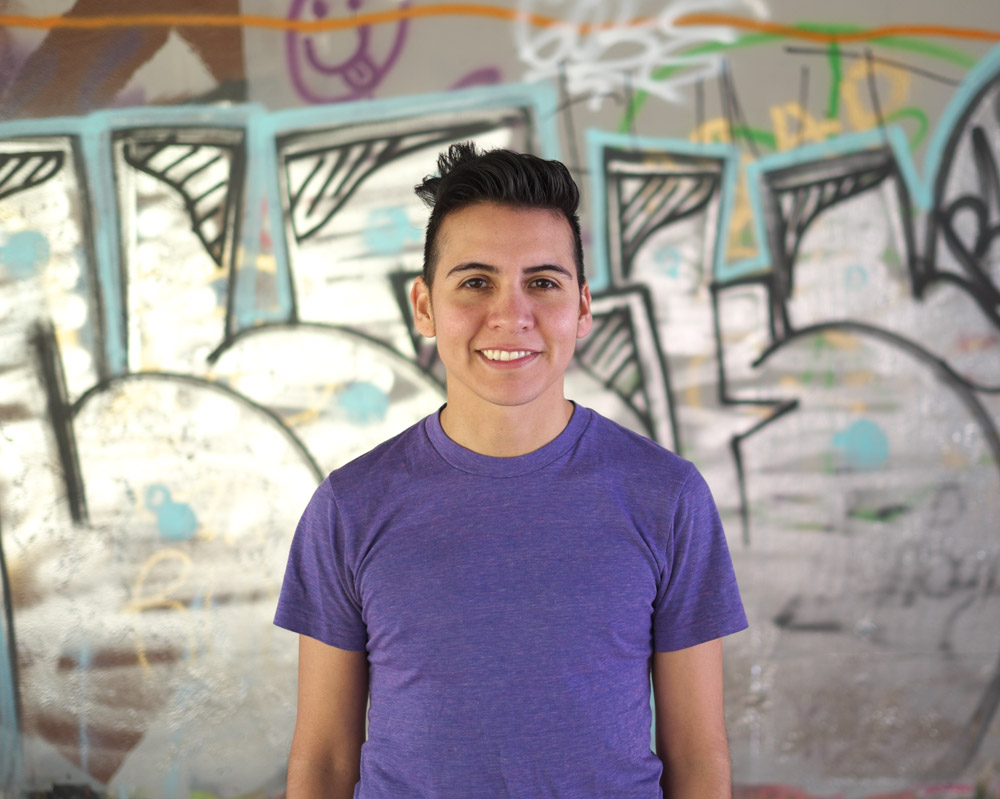
These are some portraits I took of my friend Alexander last weekend out in Georgetown. We went out to create some work for a fundraiser benefit in Toronto for Sprott House, a youth shelter run by the YMCA specifically aimed at providing housing for gay, lesbian, bisexual, transgender and two-spirit (the native American term for LGBTQ) teens and young adults. Alexander is a Latino trans man and open and proud, and I thought some portraits of someone living an out, proud life as transgender would be inspiring for kids struggling to deal with their own identities and the impact of being “other” on their futures.
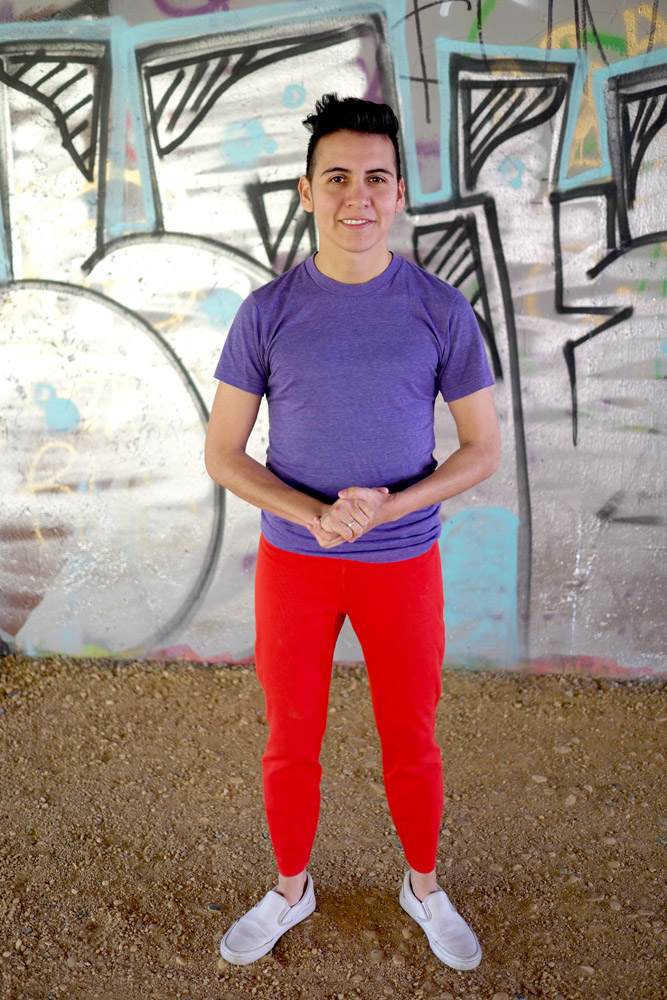
The first couple images are pretty serious and straight images (pardon the pun).
A little bit of humor – this is Alexander’s club-hopping t-shirt. I teased him about the mixed message of serious literature on a clubbing shirt. But it is Lolita, so I guess it qualifies 🙂
Just because a photo has a serious purpose and carries with it a political statement doesn’t mean it has to be serious. While I was posing Alexander in front of the wall of graffiti, he spotted the duck with its tongue sticking out and imitated it. It was a great spontaneous moment and shows his personality.
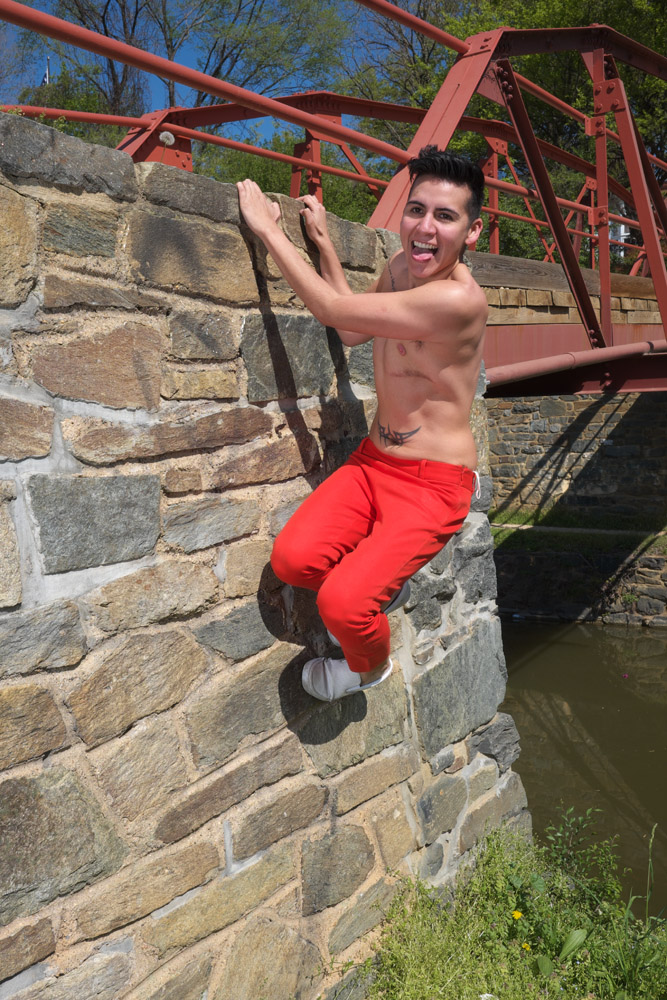
Alexander wanted to do some shots to show off his growing muscle definition, so he went and climbed the stone pier for the ramp over the canal…
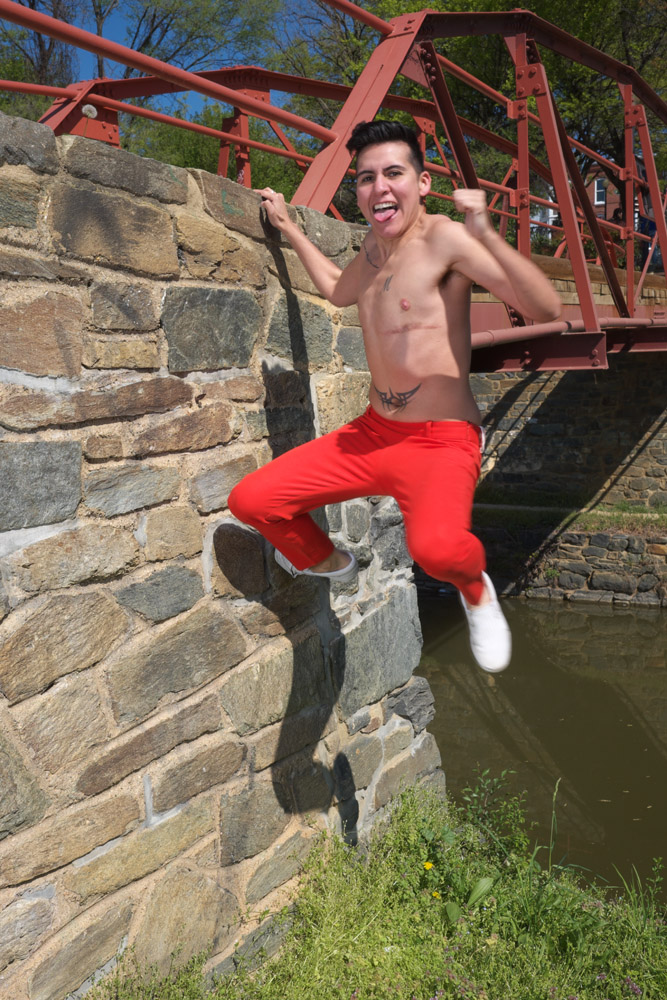
And then jumped off of it…
His script tattoo says “it is better to have kisses than wisdom”. I haven’t made up my mind about whether I agree with the sentiment, but it definitely suits his personality.
Under the ramp to the freeway that passes over the C&O Canal there’s always some interesting graffiti, and right now it’s tagged with this beautiful silver metallic paint that really complemented Alexander’s red and purple outfit.
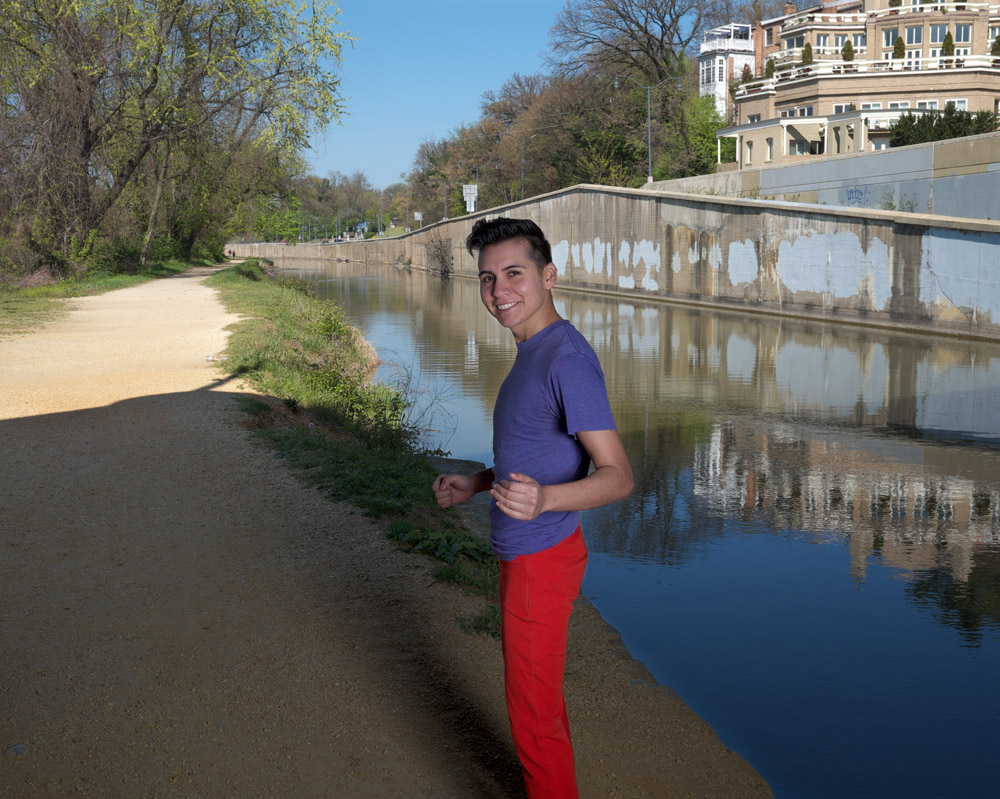
The last image I feel makes for a great closer for the series – Alexander’s gesture seems to be saying “come with me and we’ll have a fun time!”.
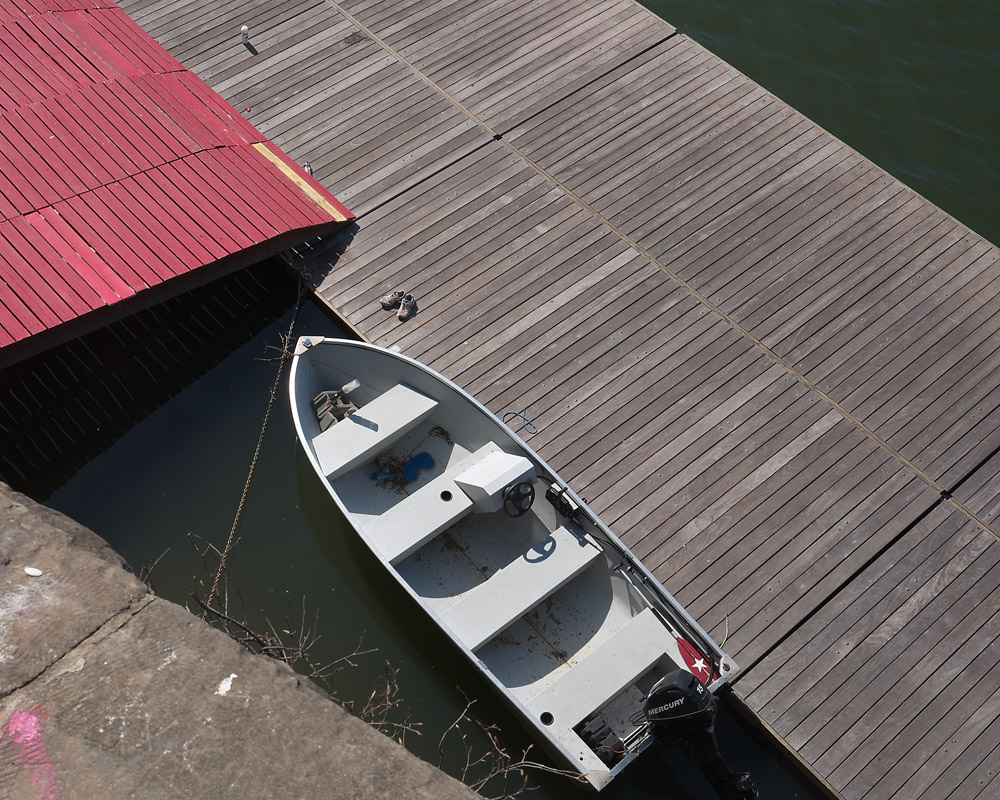
This is a view I’ve seen a number of times but wasn’t ever sure how to capture it until yesterday. I’ve always had the wrong camera with me, either from the focal length, the aspect ratio, or both, perspective. This is an outtake in the sense that I was doing a model shoot with a friend of mine on the pier of the old C&O Canal bridge that used to cross the Potomac River in Georgetown, so taking this photo was not the purpose of the shoot. This is the view looking straight down at the dock for the boathouse.
Boathouse Dock, Georgetown
I was particularly drawn to the geometry and angles formed by the decking on the boat dock, with the red decking running perpendicular to the unpainted deck, and all the triangles formed by the perspective you have to take to see the scene in the first place. Even the boat, which has a totally different shape and texture to the decking, creates more triangles with its prow, and provides visual tension running the opposite direction so you move your eye around the image.
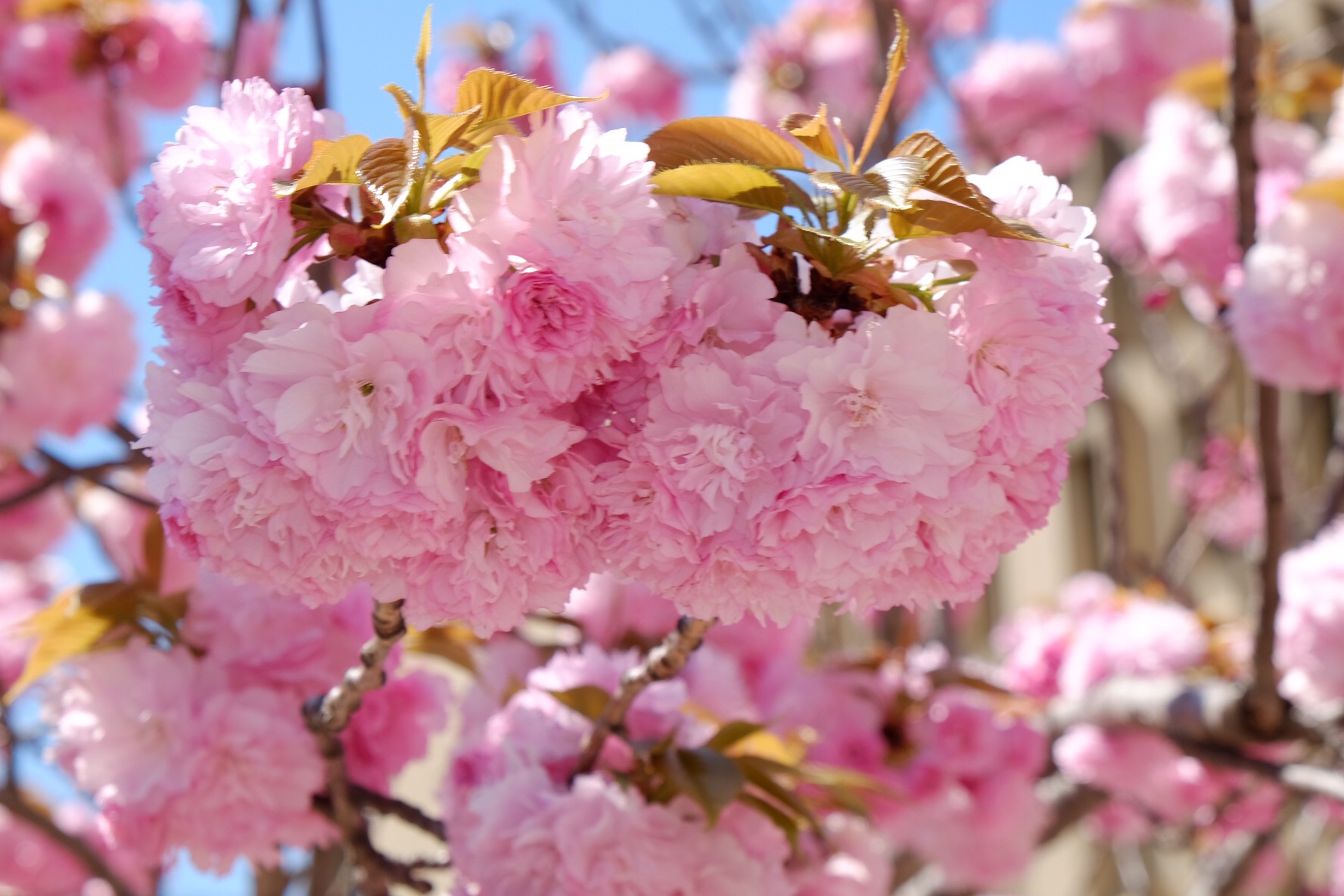
There are times when you want to capture something delicate in backlit lighting – a translucent flower for example. Going strictly with the natural light you end up with either the translucent parts blown out to get detail into the front, or you have a dark blob in the middle to keep the delicate highlights under control. This is where fill flash comes in handy.
Normally I loathe little pop-up or shoe-mounted flashes because they’re about useless when trying to light anything more than a couple feet away, and they’re so close to the lens that they give people red eye and make pets look like demons. But as a fill flash, they really shine (shine, get it? pun!). They put out just enough light to take the edge off backlit shadows and add a little catchlight into people’s eyes. When used this way redeye isn’t a problem because in daylight people’s pupils are closed down enough that their retinas don’t reflect (the cause of red eye in photos).
Fortunately, flowers don’t have retinas, so we can dismiss the concern altogether.
Pink Blossoms
I was using my Fuji X-T1 and had the tiny little toy-like pop-up flash that comes with the camera as an accessory. I took one shot of the blossoms without the flash. I knew right away that the blossoms would be too dark and not have detail; the little flash was exactly what I needed. I popped it up and let it put in a little kick. Voila!
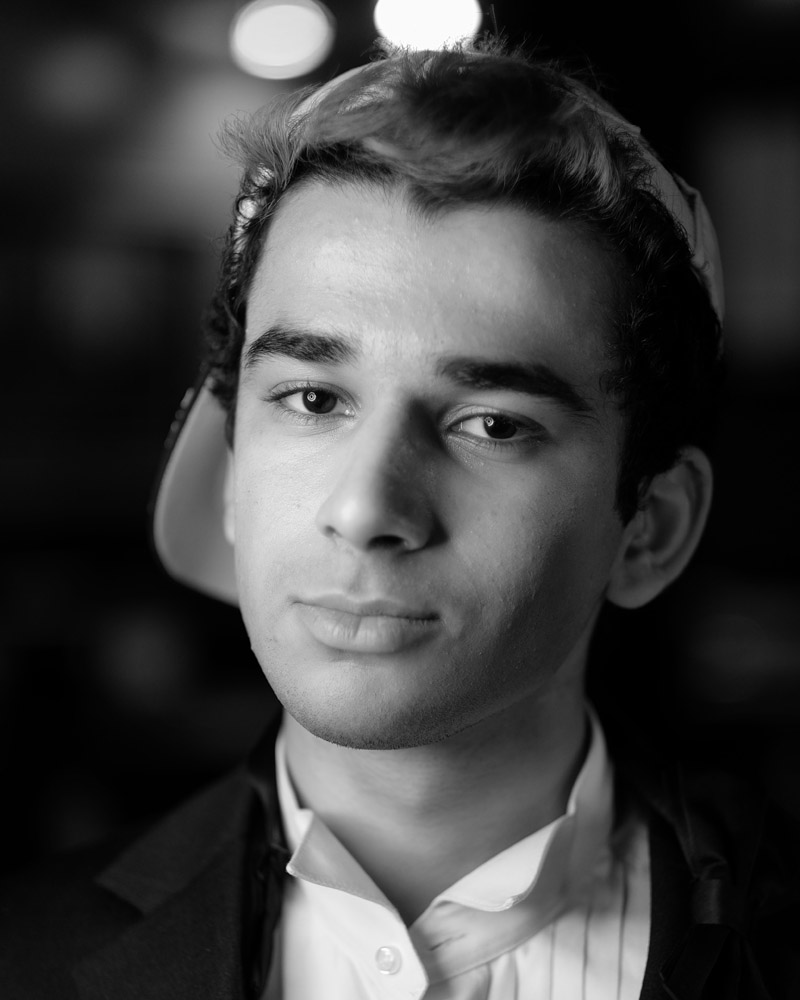
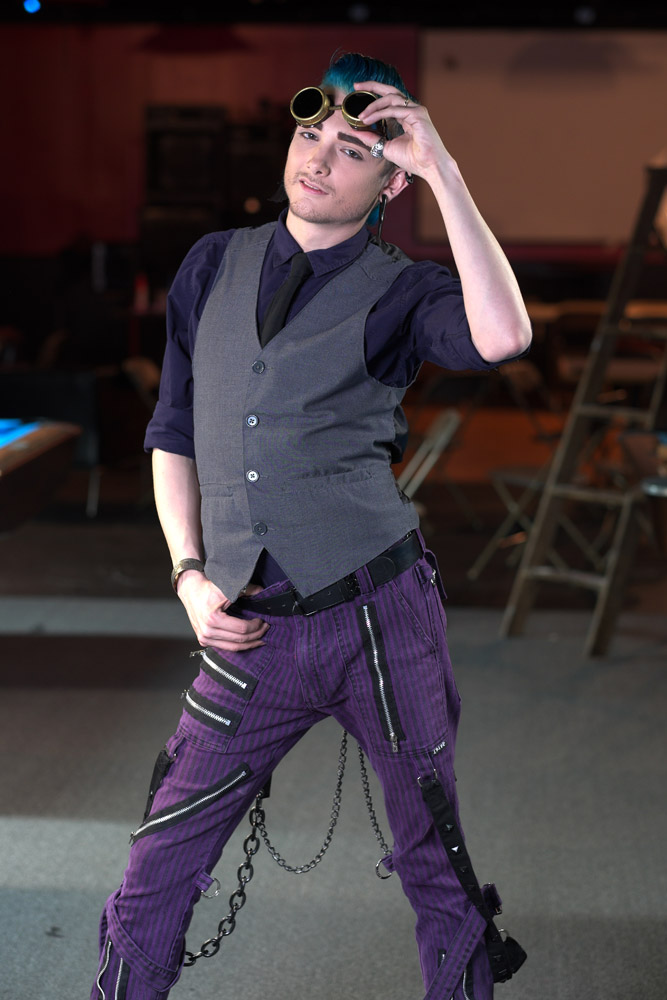
In this set I’m including some black-and-white shots along with the color ones to show what the Fuji can do. I used the b/w+R setting (the equivalent of using a red filter when shooting black and white film). I don’t know that this is as extreme as actually shooting black-and-white film with a red filter in terms of the contrast and look, but I like it.
MustafaMustafa
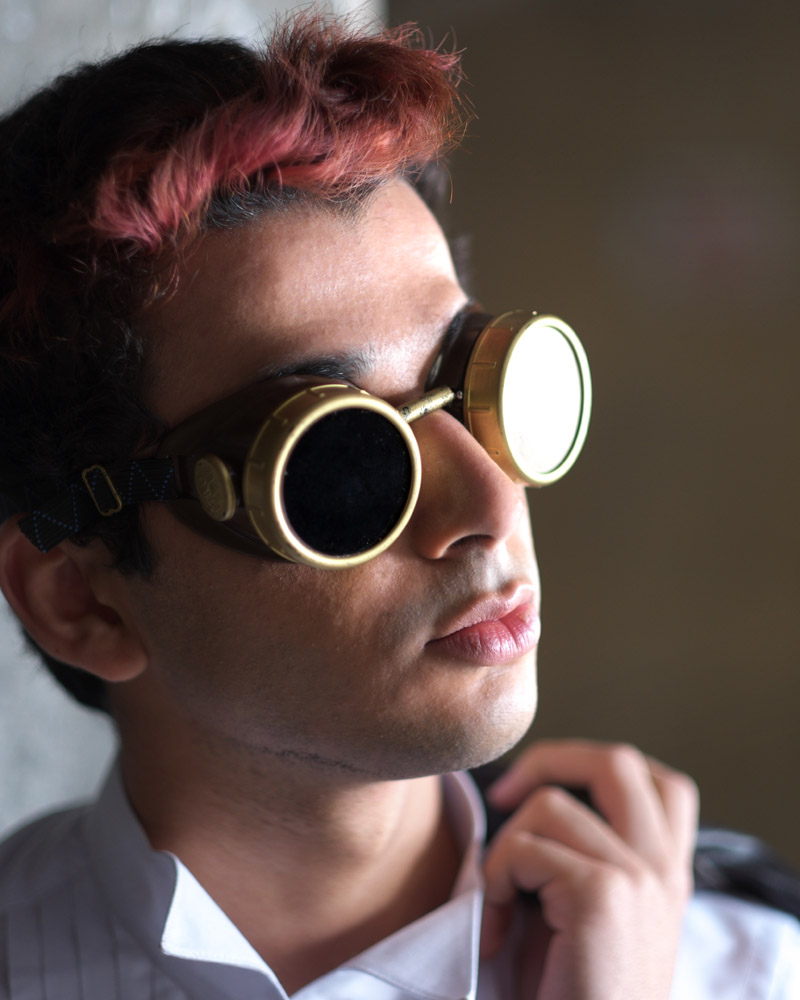
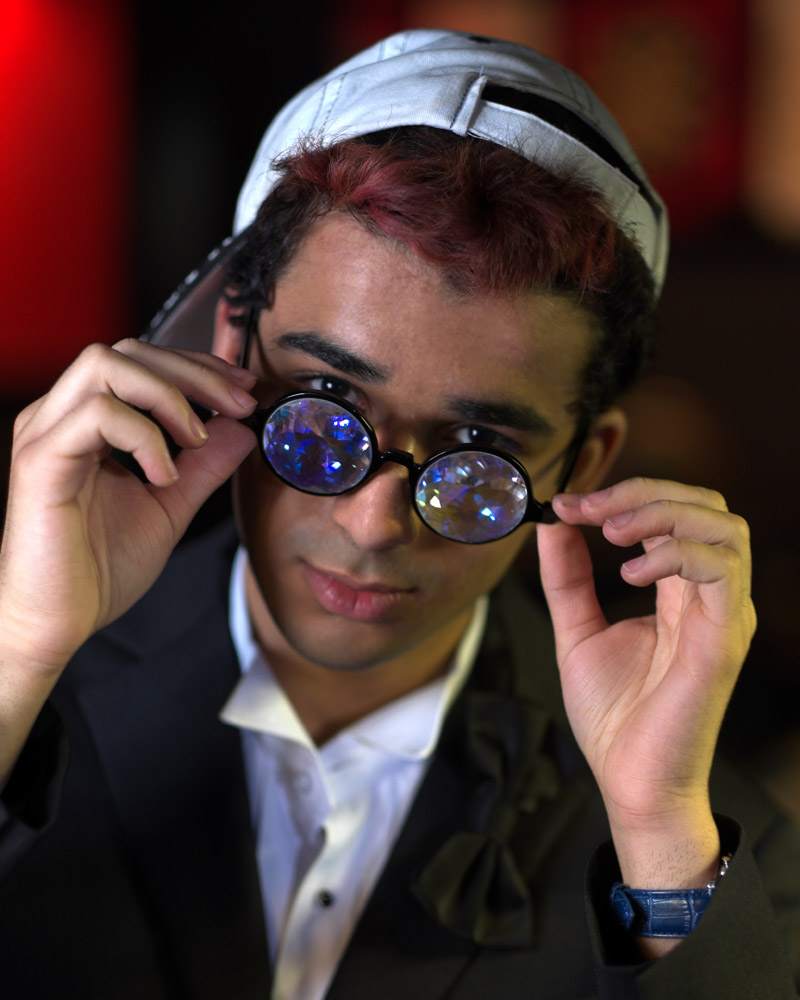
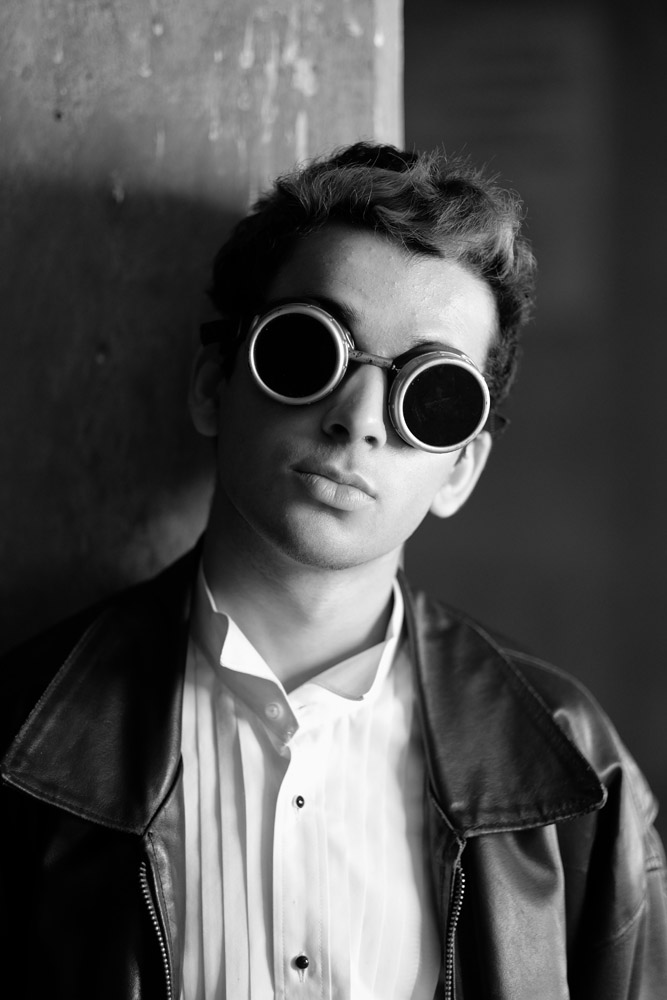
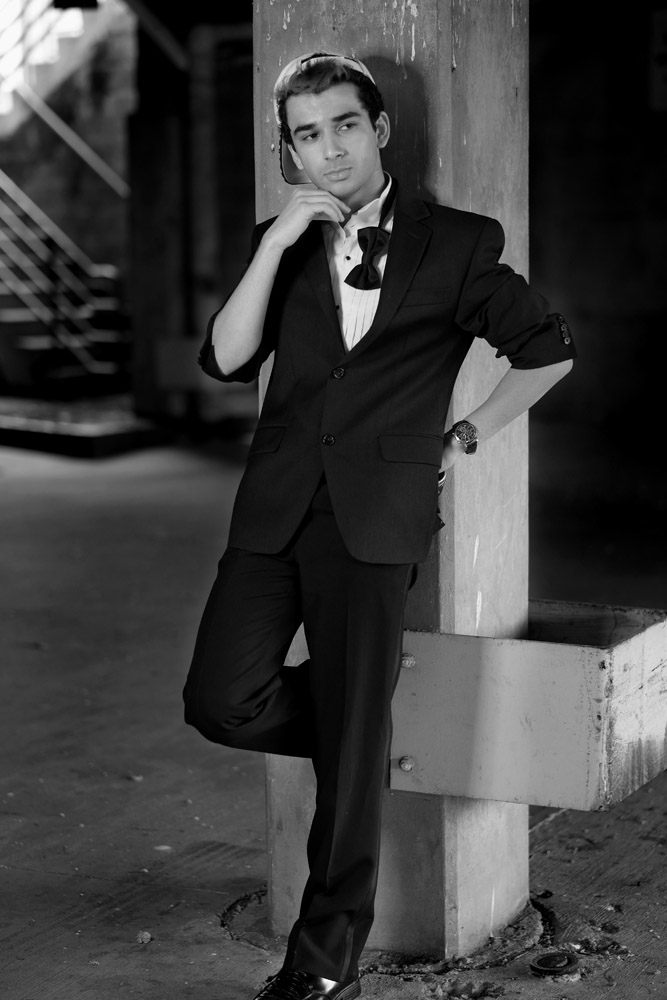
Mustafa showed up to the shoot in a tux, which is hard to work around if that’s not what you’re aiming for. It’s a good look, and a very elegant one, but not necessarily fitting a pool hall. I tried to shake things up a bit with the kaleidoscope glasses, the steampunk welder’s goggles and my own vintage leather jacket. Tip to models – unless you are told wardrobe will be provided, always bring at least two different looks to a test shoot with you so you don’t get stuck looking out-of-place on the shoot.
MustafaMustafa
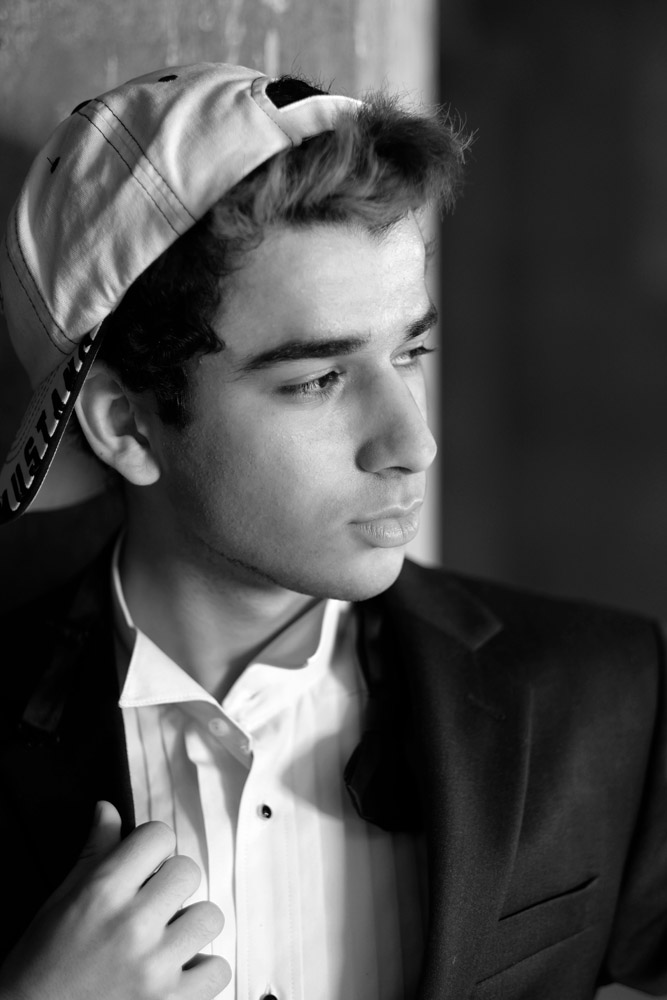
Mustafa has a great face – he looks good from lots of angles. When posing a model or a portrait subject, you want to make sure that you’re not doing anything un-flattering. If you’re turning the head away from front-on, you want the nose to either obviously stand back from or break the contour of the cheek so you don’t inadvertently flatten it by having it by having the tip of the nose meet the outline of the cheek. At the same time, pay attention to the eyes – you want to see whites on both sides of the iris. If you turn someone’s head in part profile and then have them look back at the camera with their eyes, the irises in the corner of the eye make them look like a psycho-killer. In these shots it works because he’s looking the same direction with his eyes as his face is pointing.
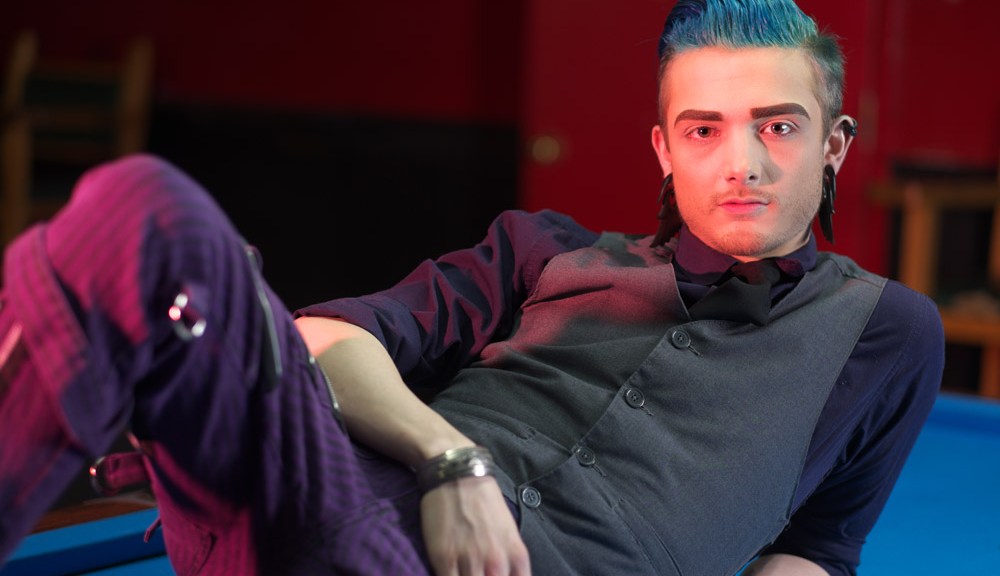
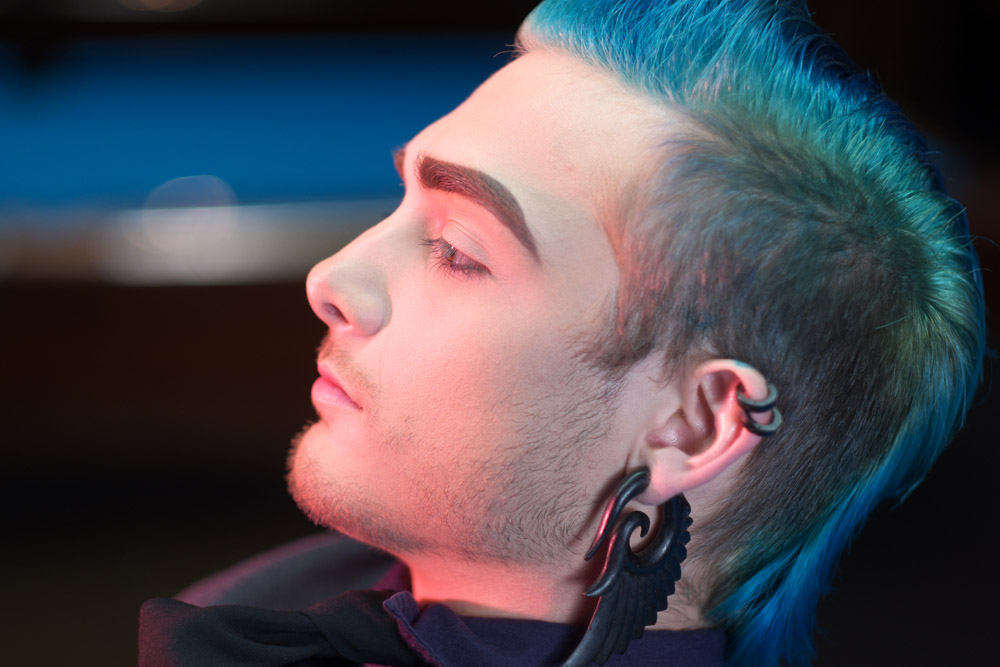
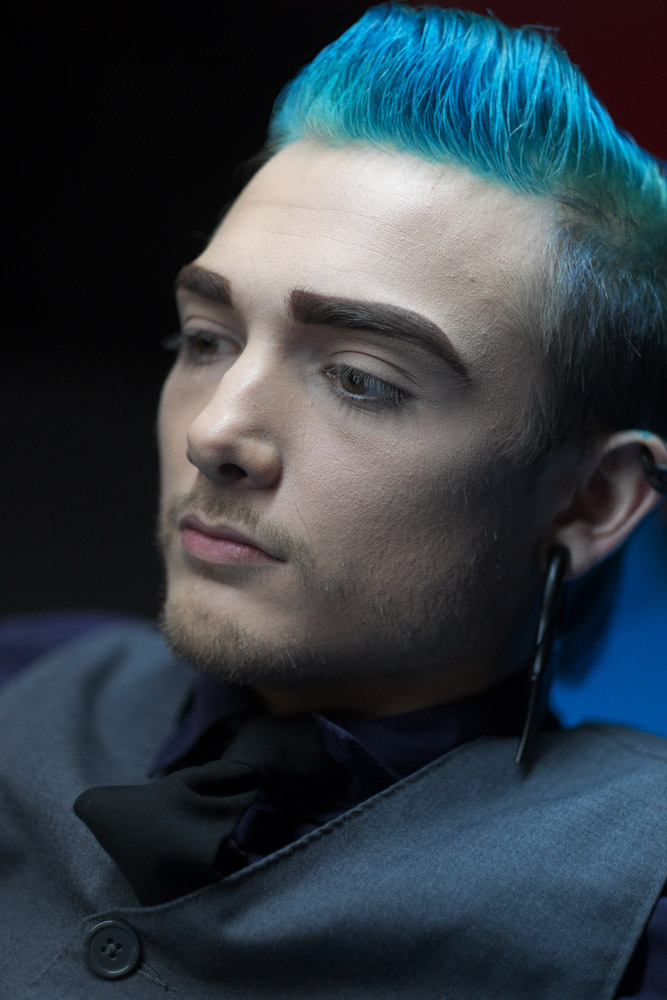
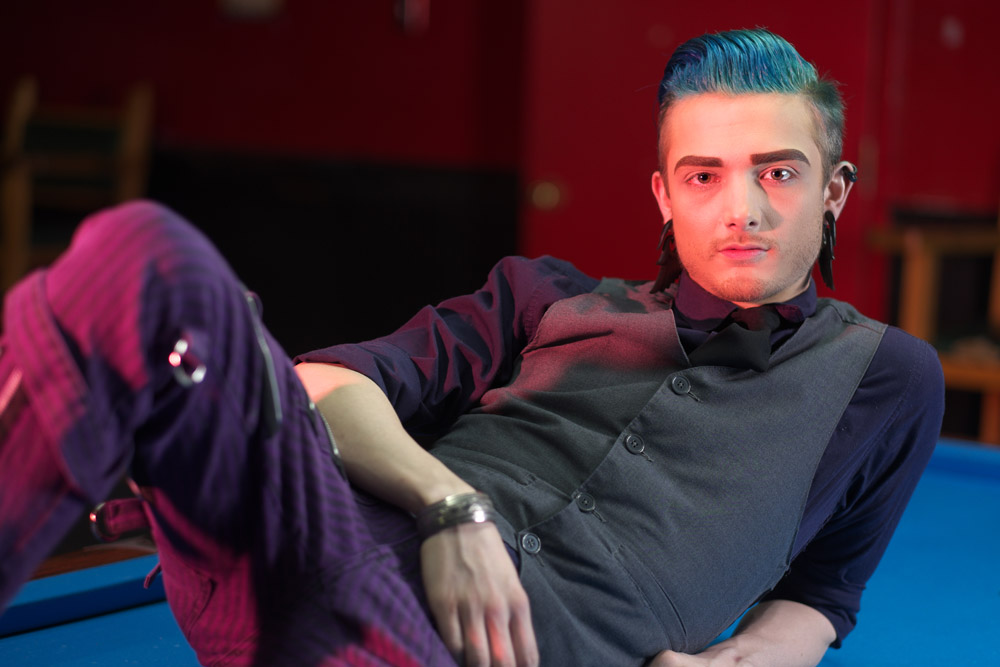
Here’s the set I did with Jayy Ruger (his professional name). While it definitely pays to add the colored gel to the fill light to add a touch of drama and character to a scene, it also pays to give it a light touch. In this first profile shot, if his face had gone totally red, it would have looked freakish or just poorly exposed/lit. Instead, the red on his cheek gives the image depth, and makes his otherwise flat makeup look more alive. Compare to the second image which was lit entirely with the overhead fluorescent light above the pool table where he looks almost corpse-like (entirely appropriate if you’re going Goth but maybe not the best look if you’re doing a family portrait).
Jayy RugerJayy Ruger
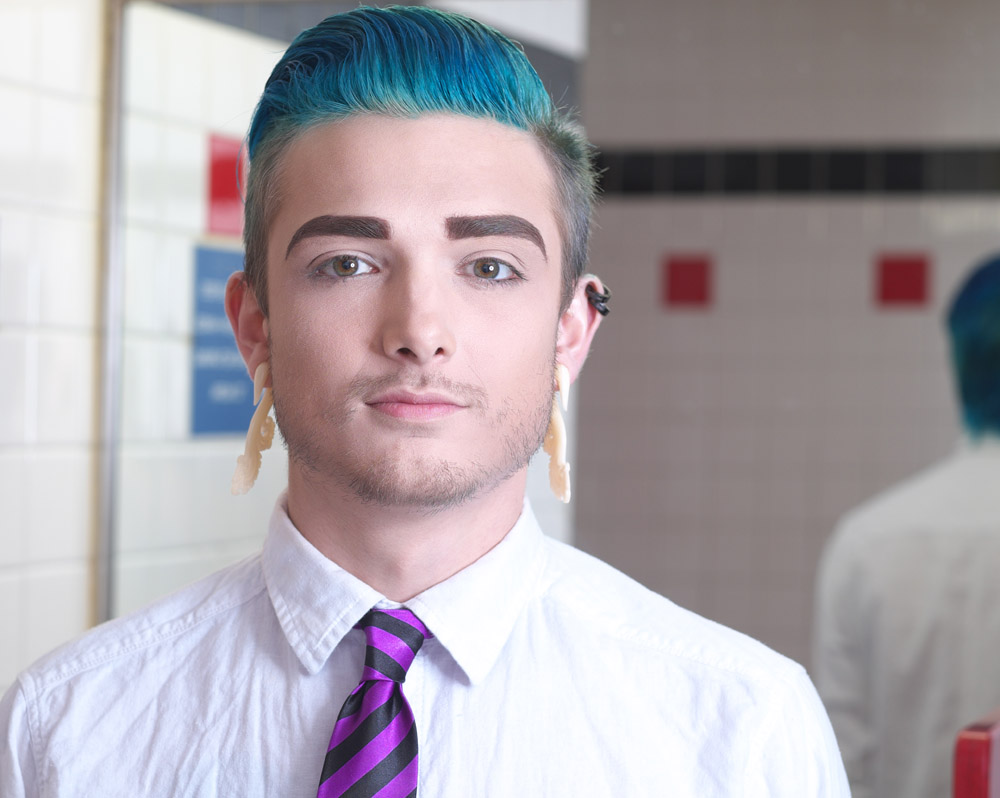
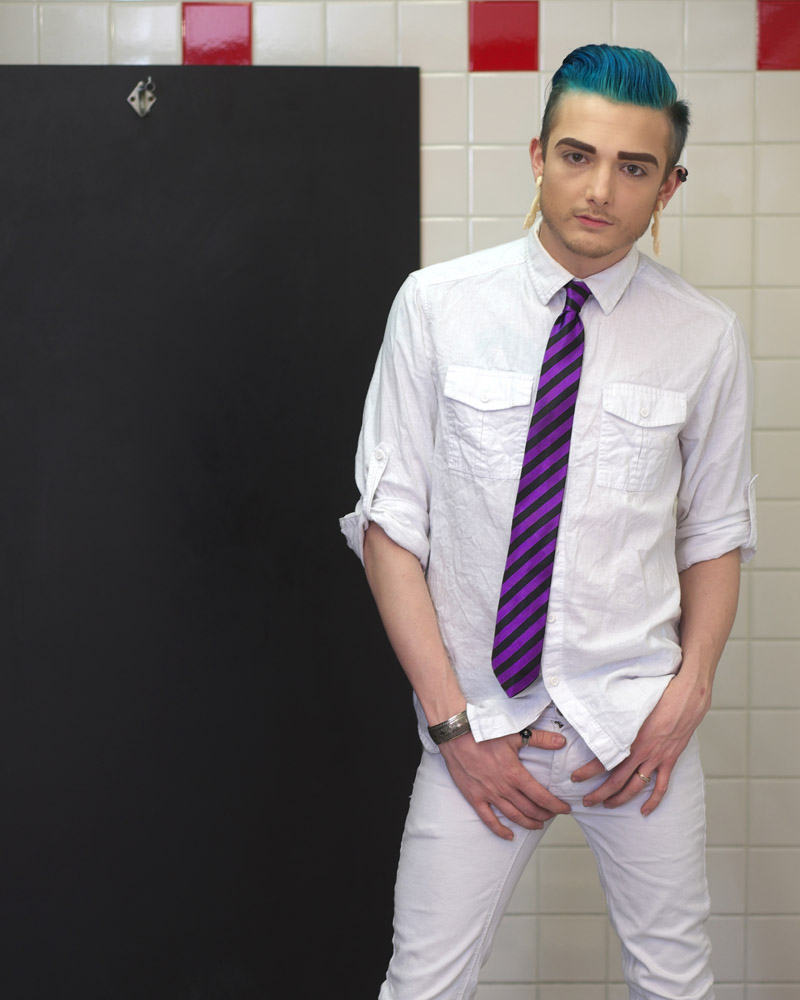
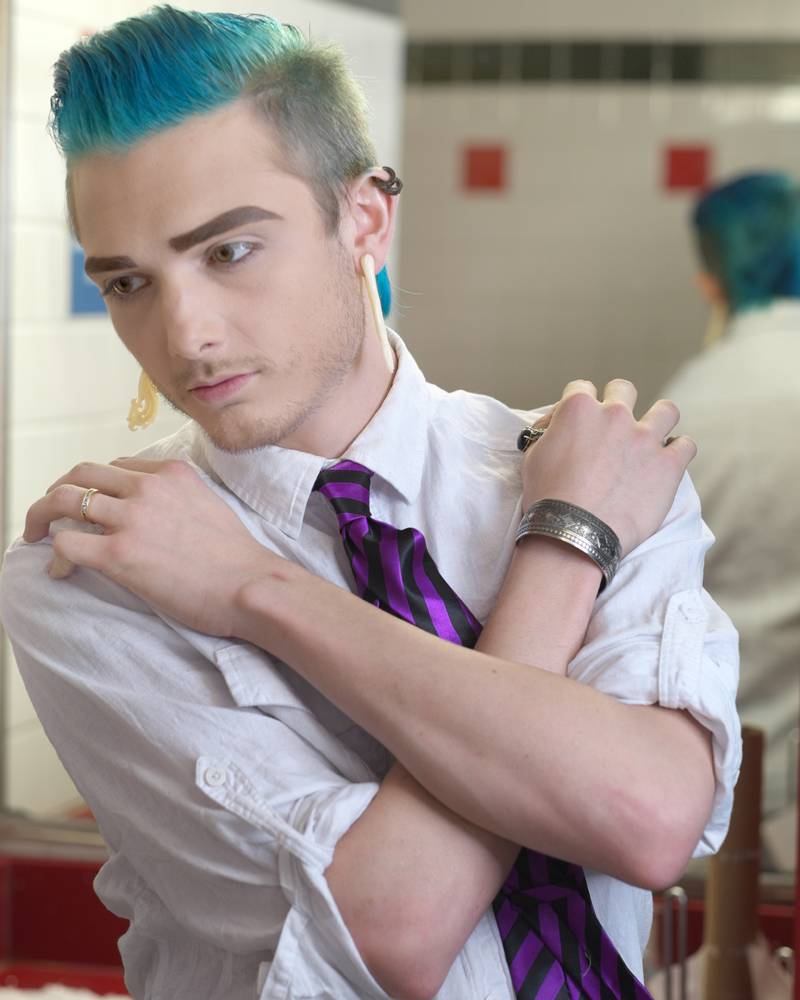
Late last year I went on a lighting binge, and one of the light modifiers I bought was a beauty dish. I had this specialized one from Bowens I really wanted to try out because the dish has a hybrid diffuser with a center grid. In the bathroom interior shots, it was the only light source I brought to the scene. The rest of the light is from the existing bathroom lights and the fill created by the white walls acting as reflectors.
Jayy RugerJayy Ruger
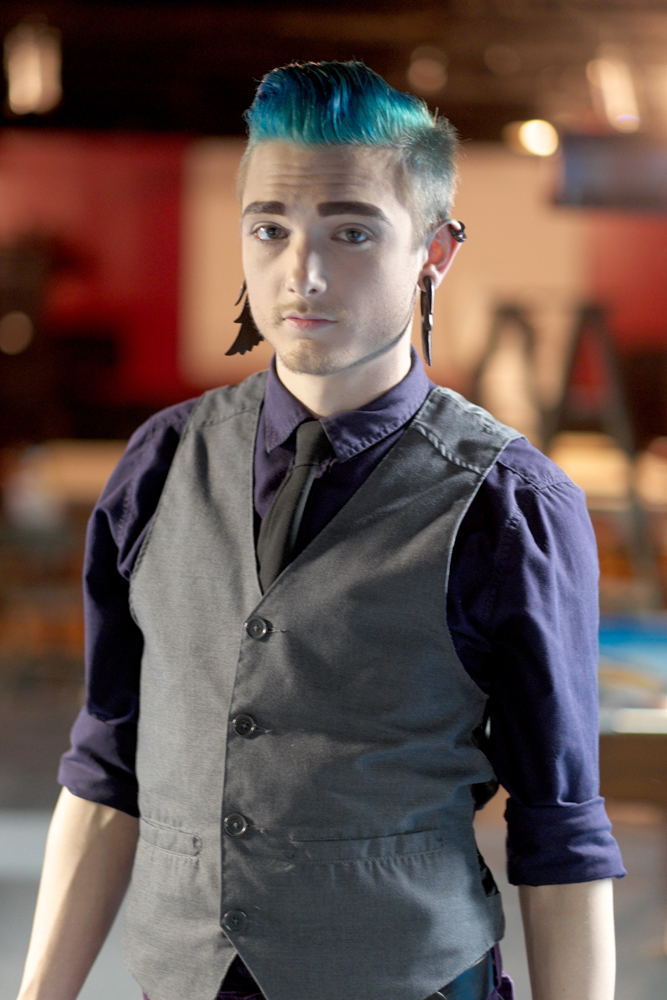
One of the great strengths of the Fuji (and one of the reasons I bought it) is its incredibly good handling of mixed color temperature lighting. You can see the color of light in the next several shots does vary, but regardless of what I threw at it, the Fuji did a terrific job of keeping skin tones natural and not shifting fabrics off in some wild direction in response to a mix of light sources.
Jayy RugerJayy Ruger
Back to using a red gel again – it adds a bit of a sinister note to the shot, which creates an interesting tension between that look and the suggestive pose.
Jayy Ruger
And we’ll close on a fun note – Jayy was being a great model and got into the whole steampunk thing with the goggles (he was already halfway there with his outfit!)
Jayy Ruger
These are the same kaleidoscope glasses you saw in the previous model set with Alex. This shot was lit solely with an umbrella softbox. It’s like an umbrella, but more of a tight parabolic shape instead of the broad surface umbrella you normally think of. There’s a slit in the side of the fabric that allows the flash unit to sit inside the umbrella’s body, and then you can close it inside entirely with the diffuser (if you remember to bring it!). I wanted to focus your attention on Jayy in this shot so I moved in super tight and used a relatively fast shutter speed to let the background go completely dark. In the full length shot immediately previous to this one, I dragged the shutter to give a lot of background light, allowing you to sense the quality of the space behind him.
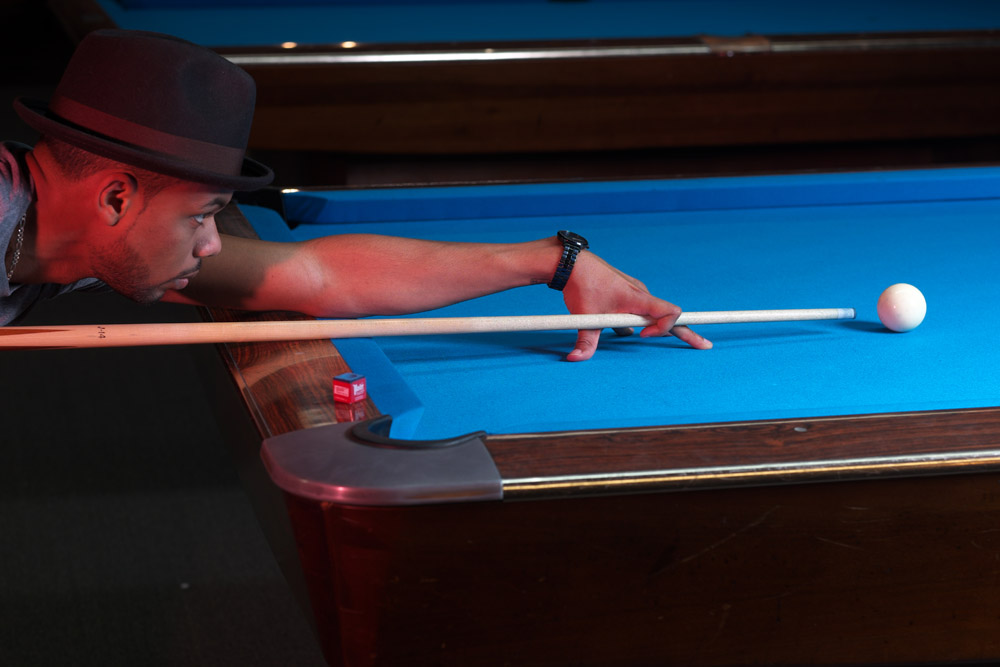
Yesterday I had a model shoot with three aspiring models who needed to build their portfolios. We went to a billiards parlor for the afternoon and I put them and the Fuji through its paces. It was also the first test in the field for my new 400 w/s bare-bulb strobes. The new strobes are battery-powered via external rechargeable batteries. They can be configured to sit on-camera and be triggered via hot shoe, take a wireless remote trigger like a PocketWizard, be triggered via sync cord, or be triggered by a proprietary wireless trigger system that also allows you to remotely adjust the power level from the camera position. The first one I bought was a Calumet-labeled version. When Calumet was still in business in the US, these were quite expensive – a single head unit plus the required but not included battery pack would have set you back a cool $1000. Nowadays, they’re on clearance on Amazon for $300 or so. They are also now being sold with the NEEWER, Flashpoint and Godox labels, at a much more reasonable price – I got a NEEWER version with the external rechargeable battery pack for $400 as a second unit for doing fill flash or background lighting.
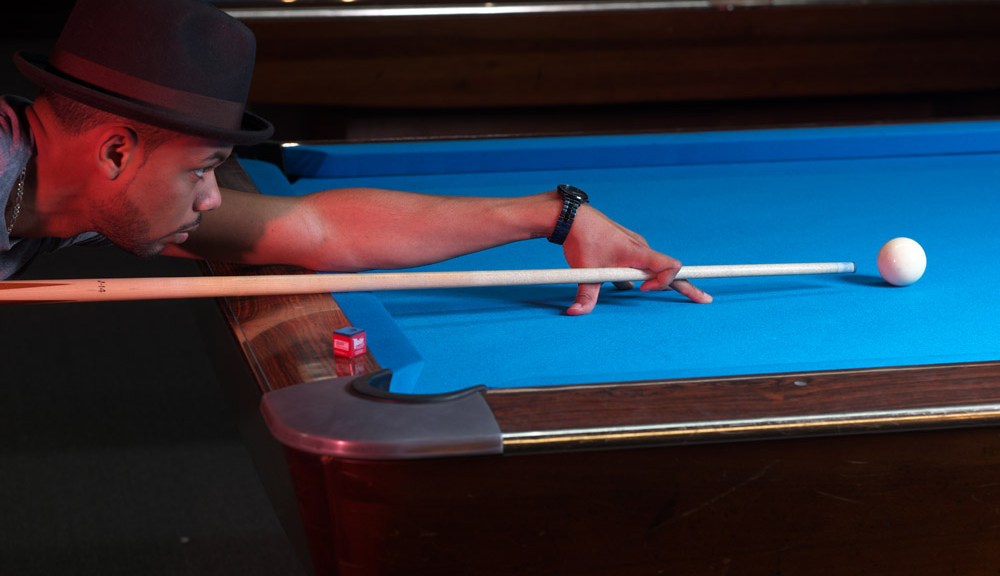
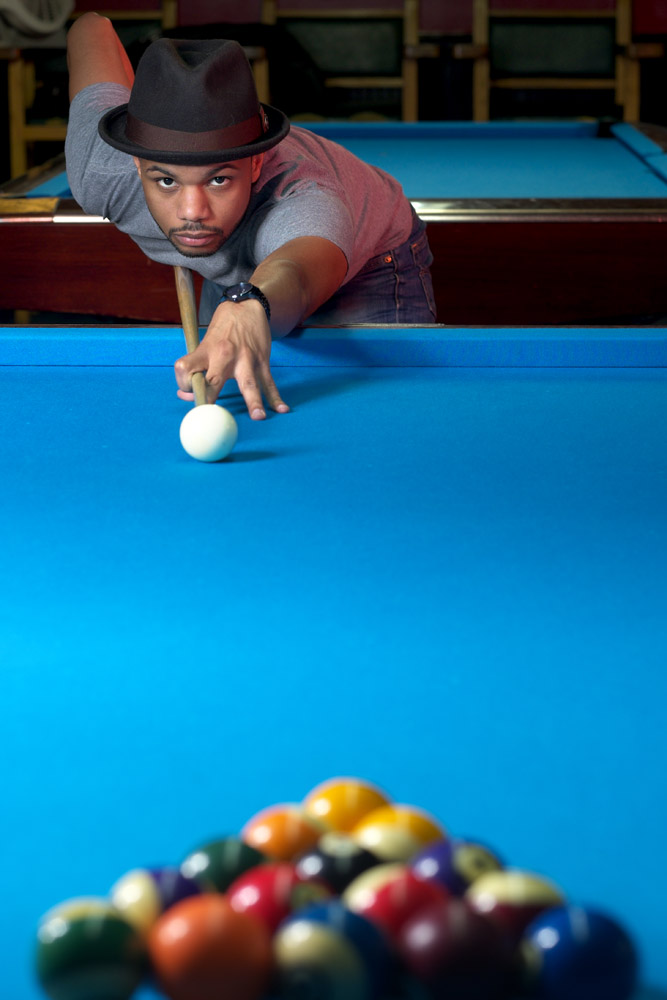
These first two shots were taken with Alex shooting pool. In the first shot, I set him up taking the break shot. Don’t let the fact that he’s a model fool you- he’s also a pool shark – right after this shot, his break dropped three balls. I wouldn’t bet against him. This was taken with the Fuji 56 f1.2. My main light was the Calumet Genesis in an umbrella softbox, and the fill was the NEEWER with a gridded reflector and a red gel in it. Having the ability to both color gel and grid the fill is really handy, as the color adds a touch of drama to the scene, and the grid keeps it from spraying all over the place and coloring things you don’t want it to, like the table felt.
Alex
For this shot, I kept the lights the same but switched to the 23mm f1.4 so I could get in close and still get the extension of his shoulder, arm, cue, and the ball on the table, as this table was in the middle of the room with other tables behind me, and I only had about four or five feet to work in. The red gel adds a touch of drama and energy to the shot without overwhelming, and is a good way to deal with the very mixed light in a pool hall where you can have fluorescent (the over-the-table lights), halogen/tungsten (lights in the bar area and on the walls) and LED (accent lights like rope lights around partition walls and the like, or under the bar) all in the same area.
Alex
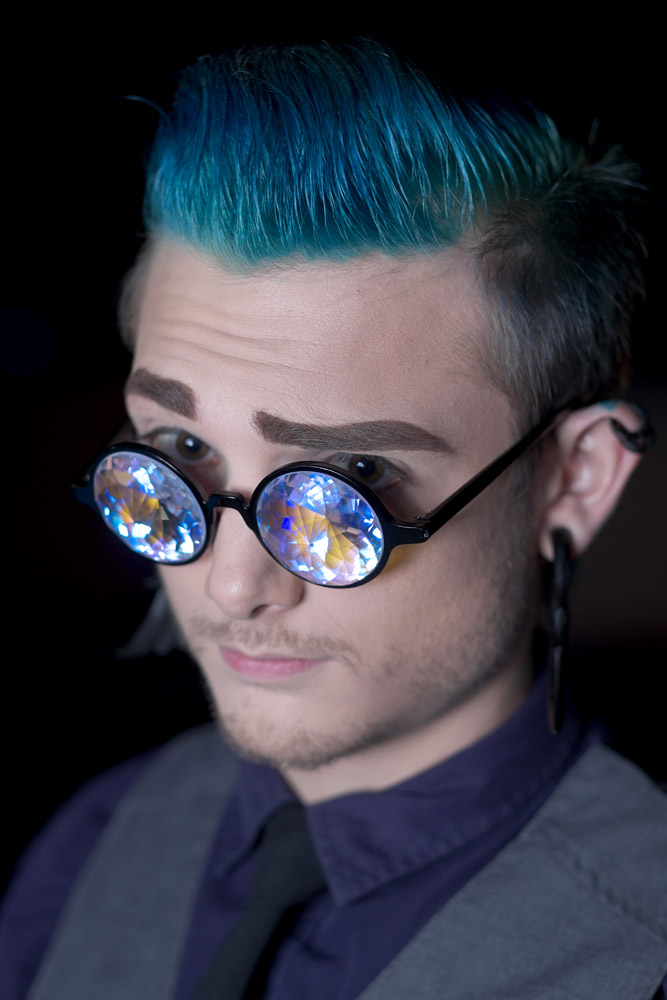
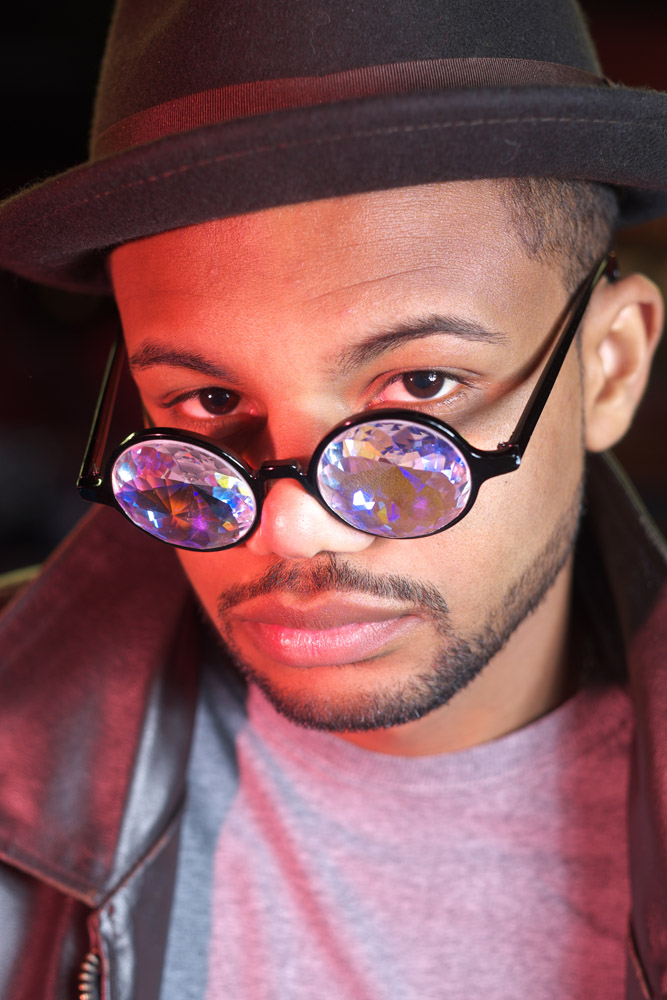
I also did some head shots with Alex (who is an easy, professional model to work with). I backed this indie film called Hallucinaut on Kickstarter last year and as my reward, I got these kaleidoscope-lensed glasses that appear in the film as a prop. I chose them specifically as my reward as something that would make a really cool prop for photo shoots. This was their first appearance in one of my shoots. They really pick up and reflect colors well, and make for a dramatic statement.
Alex, with Hallucinaut glasses
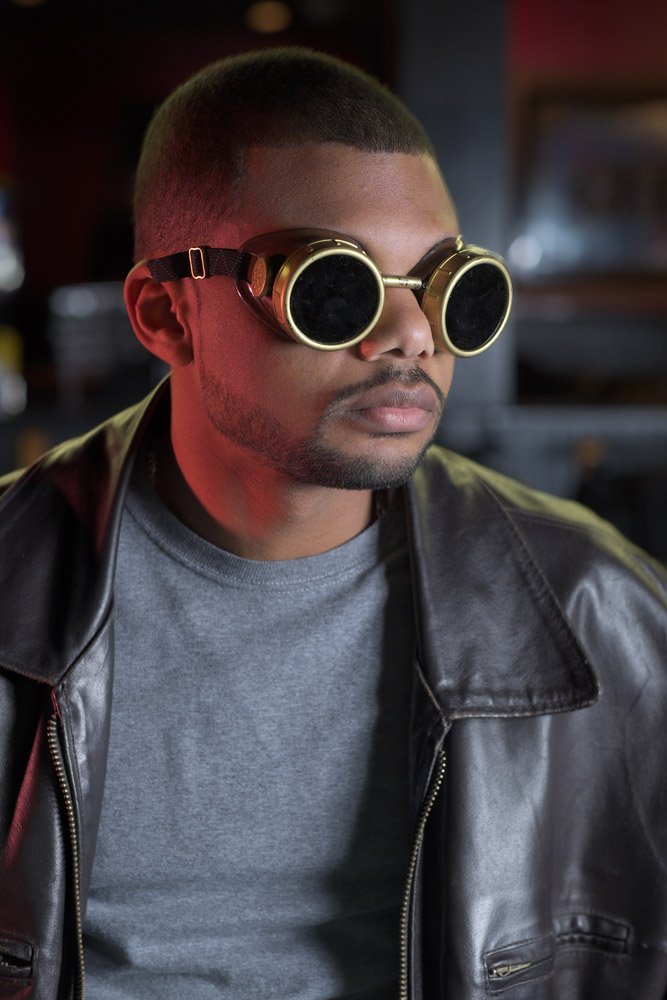
A variation on the theme, I broke out my welder’s goggles and matched them up with a vintage leather jacket for a steampunk look. Alex’s short-cropped hair adds to the look by letting the goggles really stand out against the shape of his head.
Alex, going Steampunk
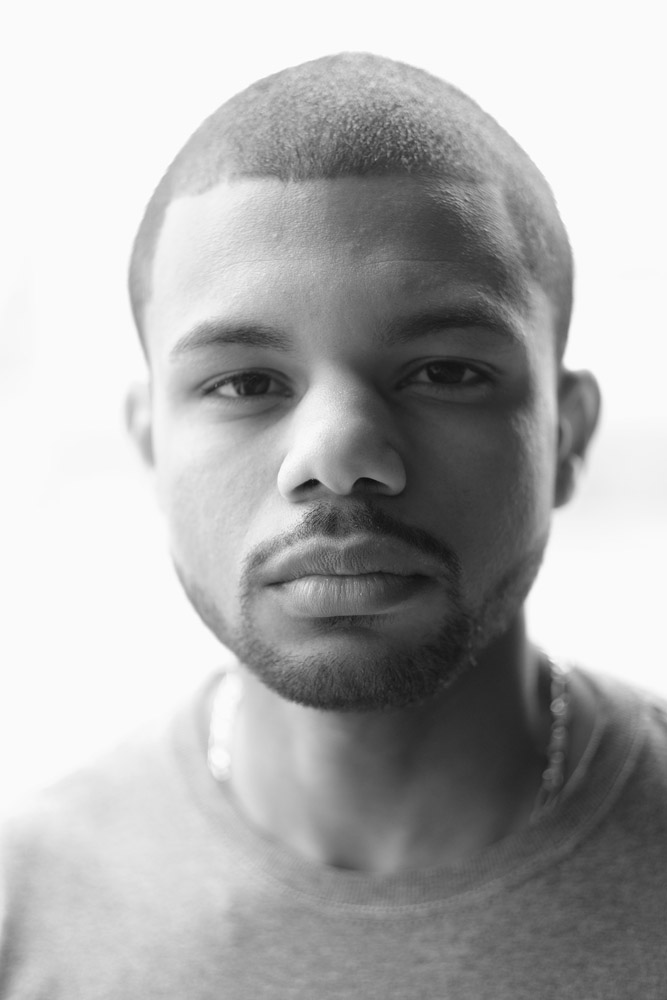
In the last look for Alex, I did two versions of this really clean, minimal portrait. When I showed it to him on screen he commented “I have a really long neck!” as if that was a bad thing. I reminded him of what you’ll hear on every season of the now-ended America’s Next Top Model – it’s a really good thing to have a long neck. Tyra Banks and her photographers were always reminding the contestants to elongate their bodies and gestures, to create drama and elegance. If you have a short neck, stretch it out, otherwise the camera can make it look like you’re neckless and just have a head glued directly to your torso.
Alex
These were both shot outdoors under the eave of a parking garage, and combining the flash in a beauty dish as a fill with the backlight of the street behind made it easy to completely blow out the background into a nice even white. Handy trick when you’re going studio-less and need an even background.
Alex
I shot all these images in RAW, then converted afterward to JPEG. I like working this way because it feels more like traditional darkroom photography, where I’m working from the in-camera negative. Working from in-camera JPEGs, while still very good, to me is not as good because it’s like making a copy of a print – changes have been made and nuances have been degraded.
Not that there should be any doubt, but the Fuji 56mm is a knockout lens (Fuji has always made some top-grade glass, especially for their medium-format cameras). The falloff in sharpness at wide-open or near wide-open is creamy-smooth, and the rendering of out-of-focus highlights is never harsh or jagged.
Takeaways from this shoot:
-Work with good models. Not everyone is a good model, and not all good models start out that way, but if you’re new to the process of working with models, hire folks (and I do mean hire, as in pay for with cash, not just trade-for-prints/CD) who have experience working with photographers.
-know your equipment. If I were not as experienced with studio lighting, figuring out what was going on with my Calumet/NEEWER flashes could have been a pain, as they don’t have modeling lights (to save on battery life) and are not TTL because they’re made to be universal and are not dedicated to any one system.
-have fun. Be loose, work with your environment, take advantage of the opportunities it presents, and challenge yourself to overcome its obstacles. You’ll make much better pictures that way.

 dcphotoartist