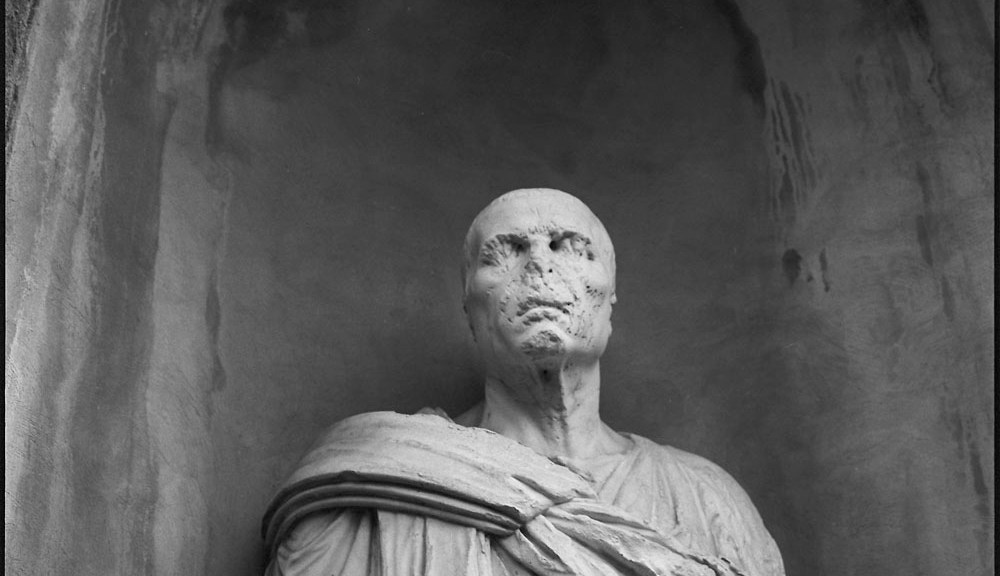
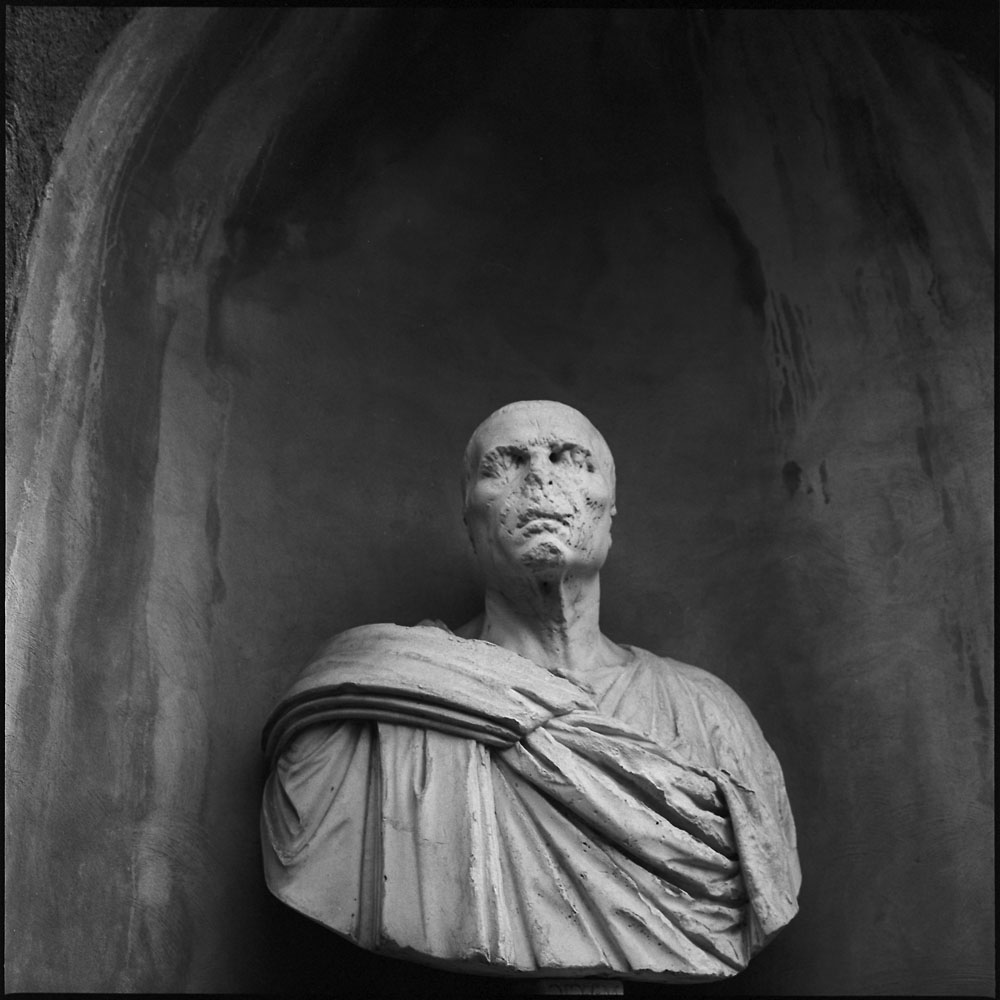
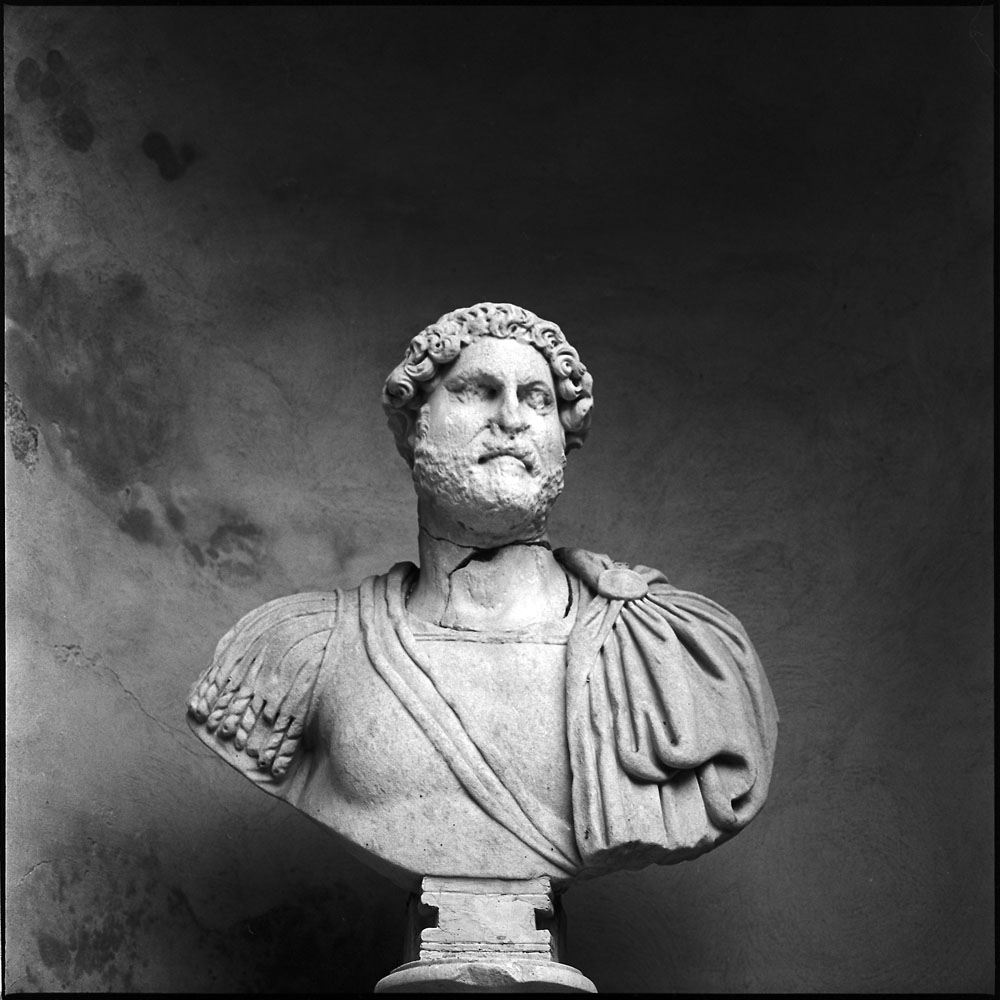
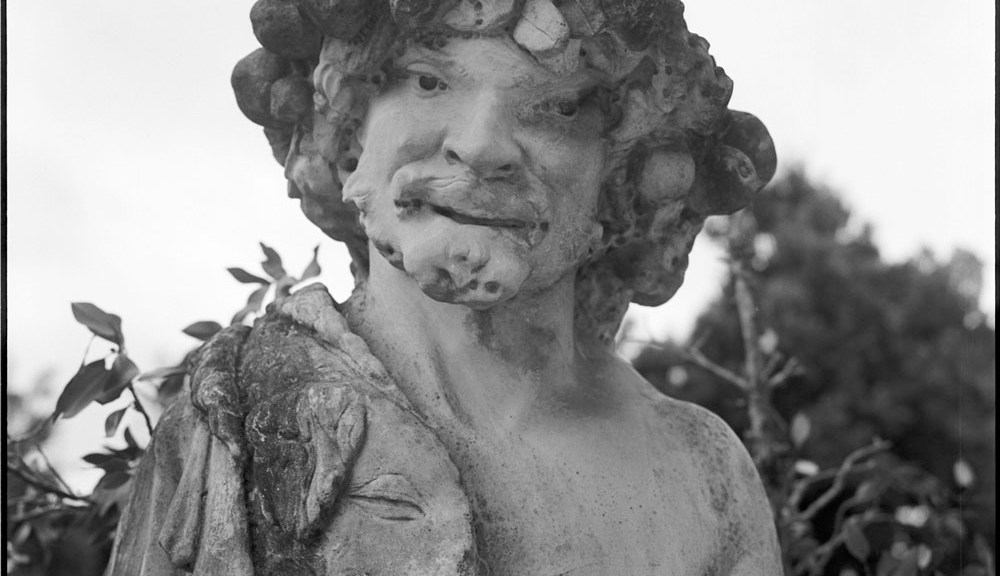
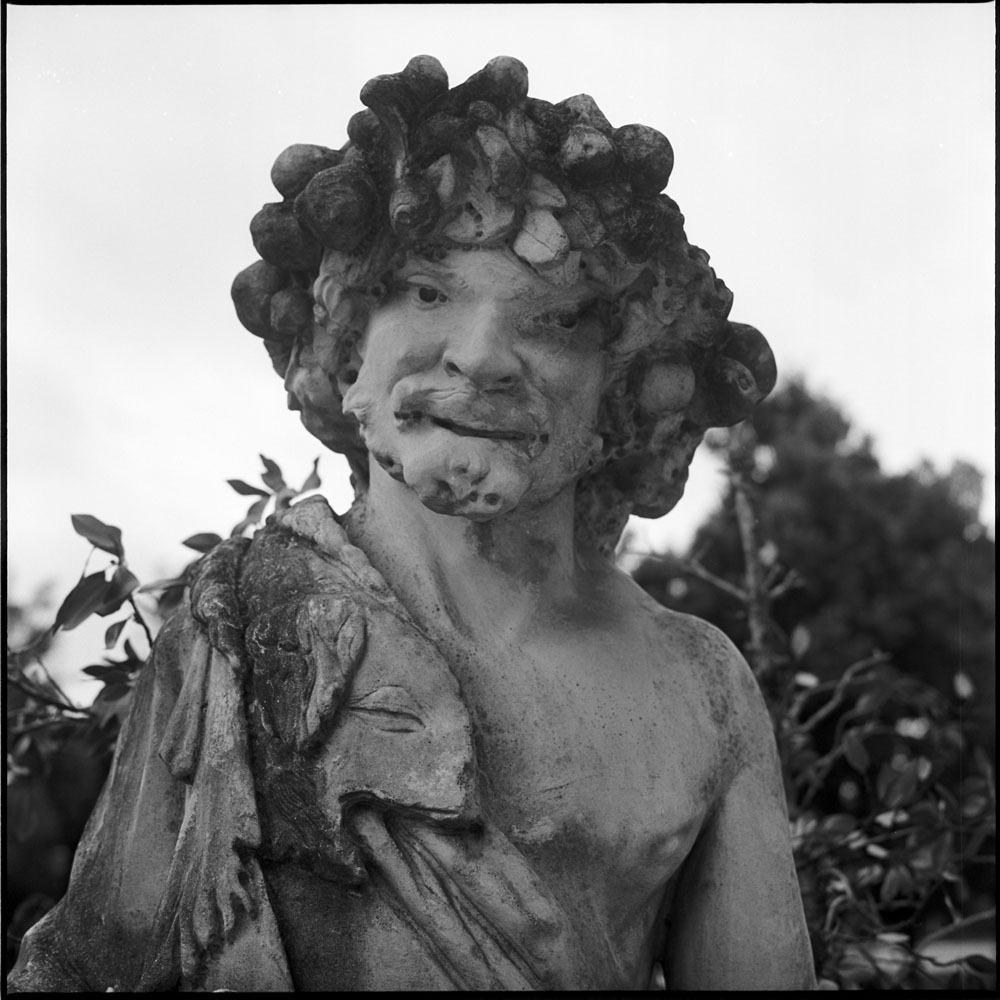
These two pieces are quite moody, and that somber undertone of them inspired me. From their weathered appearance to the various forms of damage they’ve taken over the centuries, they act as a kind of memento mori to remind us that even art in marble will eventually die.
I’ve joked to friends that this one is proof that there were zombies in ancient Rome – but in fact the damage to the face is probably caused by relatively contemporary rivals seeking to damage the visage of a now-dead adversary, or inadvertent blows from overzealous Renaissance-era treasure hunters or clumsy builders trying to clear debris in preparation for fortifying the former Imperial tomb.
Roman Bust
This one has suffered different indignities – while his visage remains relatively intact, at some point his head was separated from his shoulders, and later re-attached.
Bearded Bust
Just for the record, to the best of my knowledge there were no zombies running around ancient Rome.
The title of this post is in reference to the statuary of animals both fantastic and natural found on the grounds of the Villa Borghese and its garden park in Rome.
Scipione Borghese was the Cardinal Nephew of Pope Paul V. The Cardinal Nephew (Cardinal Nepotente in Italian, from which the term nepotism is derived) was an official position and title in the church until 1692. In addition to the familial tie it implies, the position brought with it immense opportunities for wealth and power. Scipione Borghese took full advantage of these opportunities, at one point being one of the largest landowners in central Italy. He was a lover of art, and had a passion for gardening, creating famous gardens at both the Palazzo Borghese and the much larger private park of the Villa Borghese. The gardens consist of 148 acres of naturalistic parkland landscaped in the English fashion.
The Villa Borghese itself sits on the edge of the park, and houses the Galleria Borghese, an art museum focused around the collection amassed by Scipione Borghese. The art includes paintings by Caravaggio, Titian, and Raphael, ancient Roman sculpture, and contemporary work by Bernini. The museum operates by timed, limited entry tickets, so unlike some of the larger, more popular museums (think Vatican Museum or the Louvre in Paris), the experience is never crushing as only a fixed number of people are in the museum at any time. You can always see the art without jostling or rushing. The park, on the other hand, is open to the public free of charge. It provides an oasis of greenery and openness amidst the chaos and compactness bordering on claustrophobia that is the city of Rome.
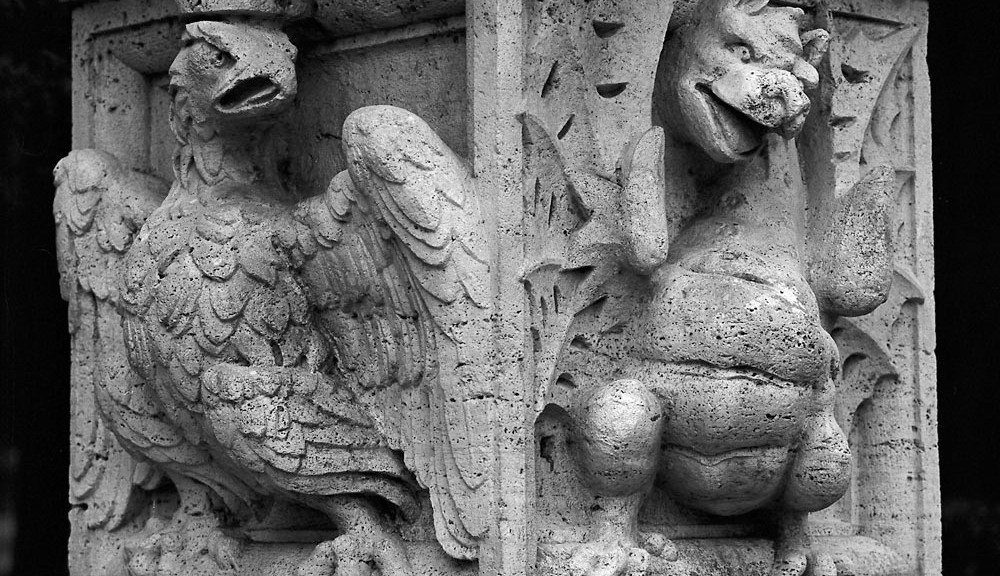
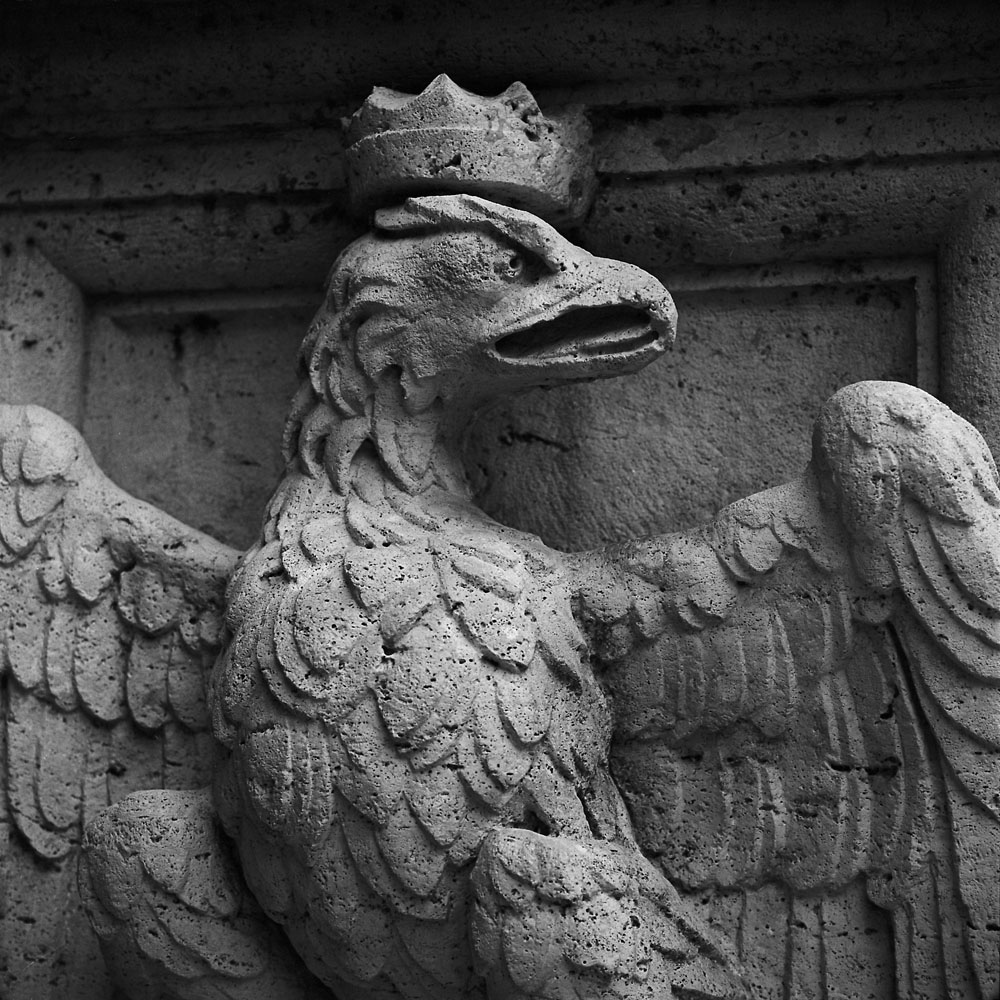
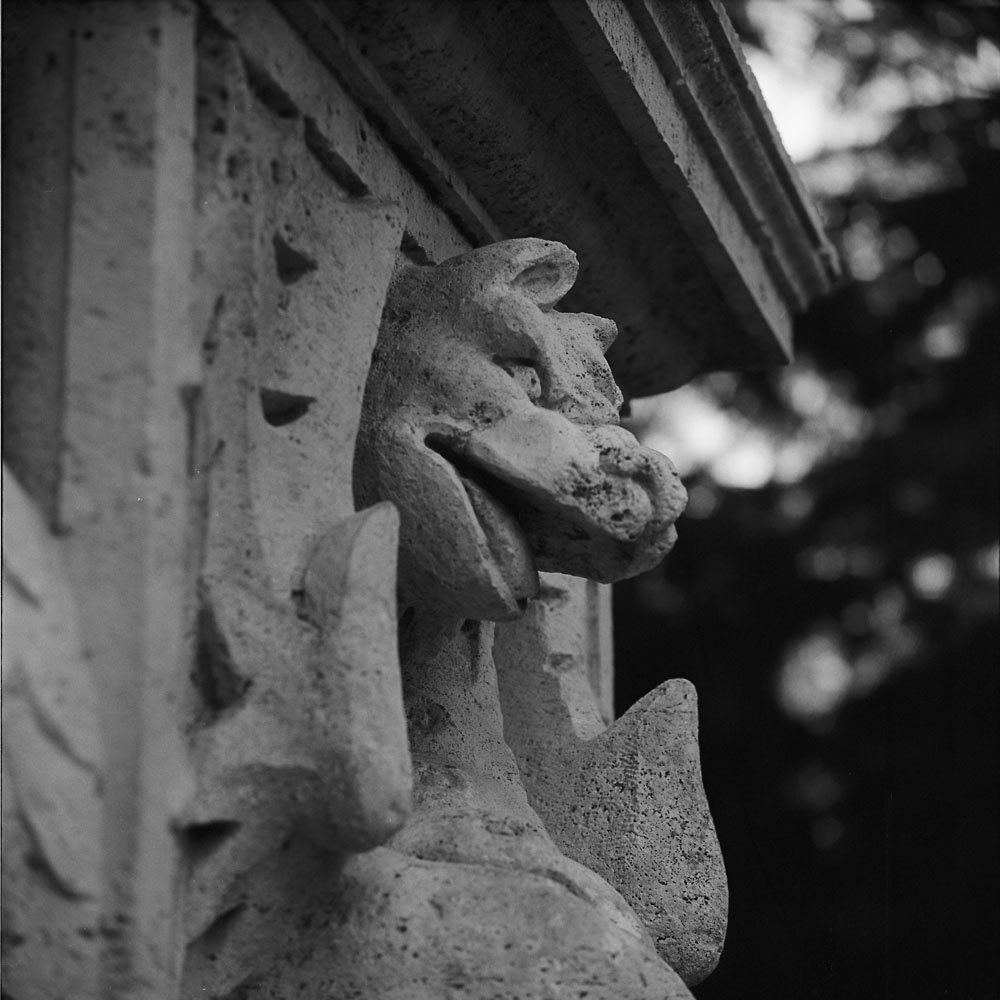
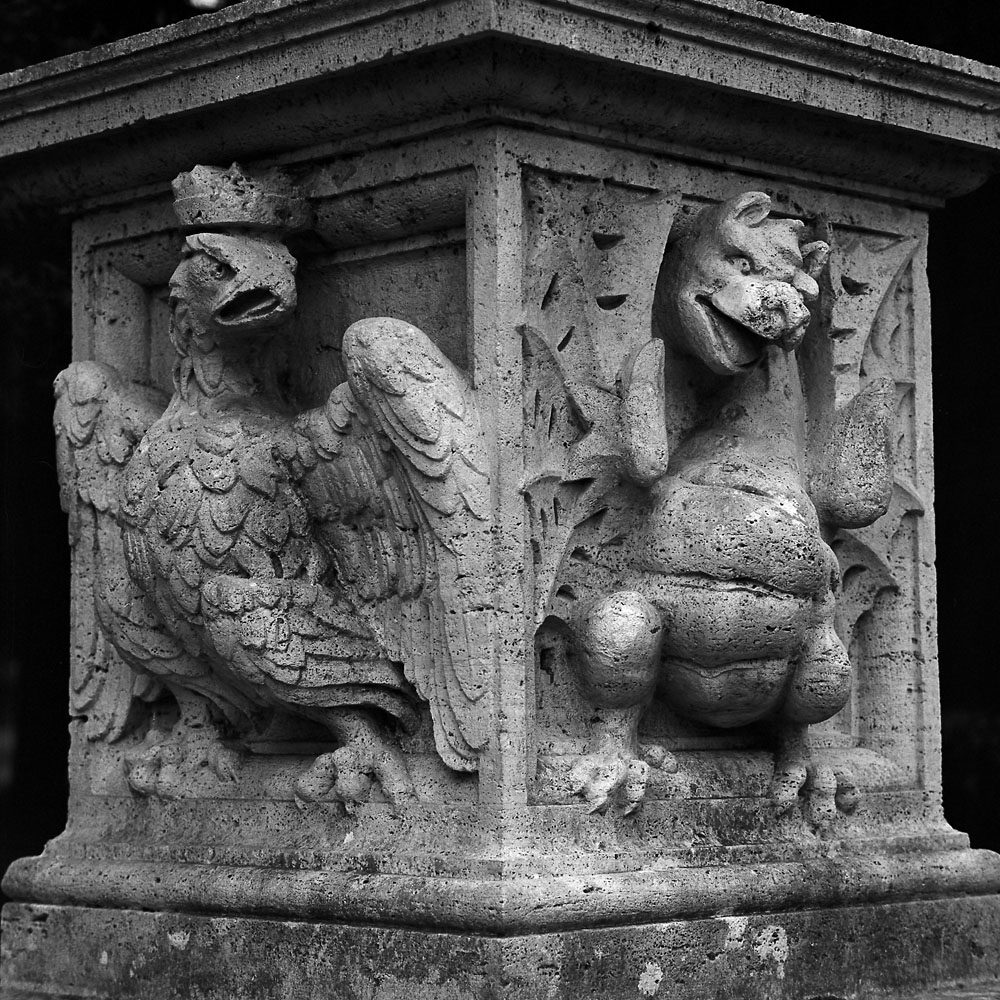
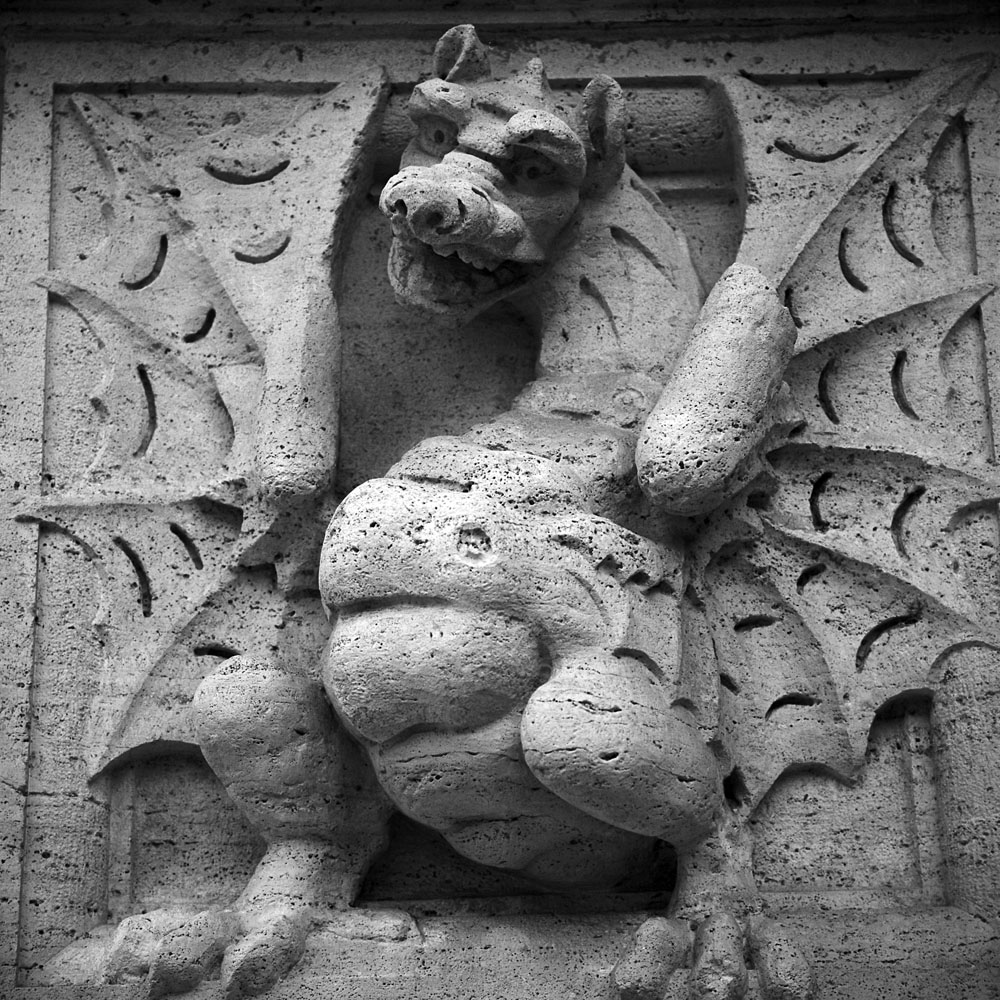
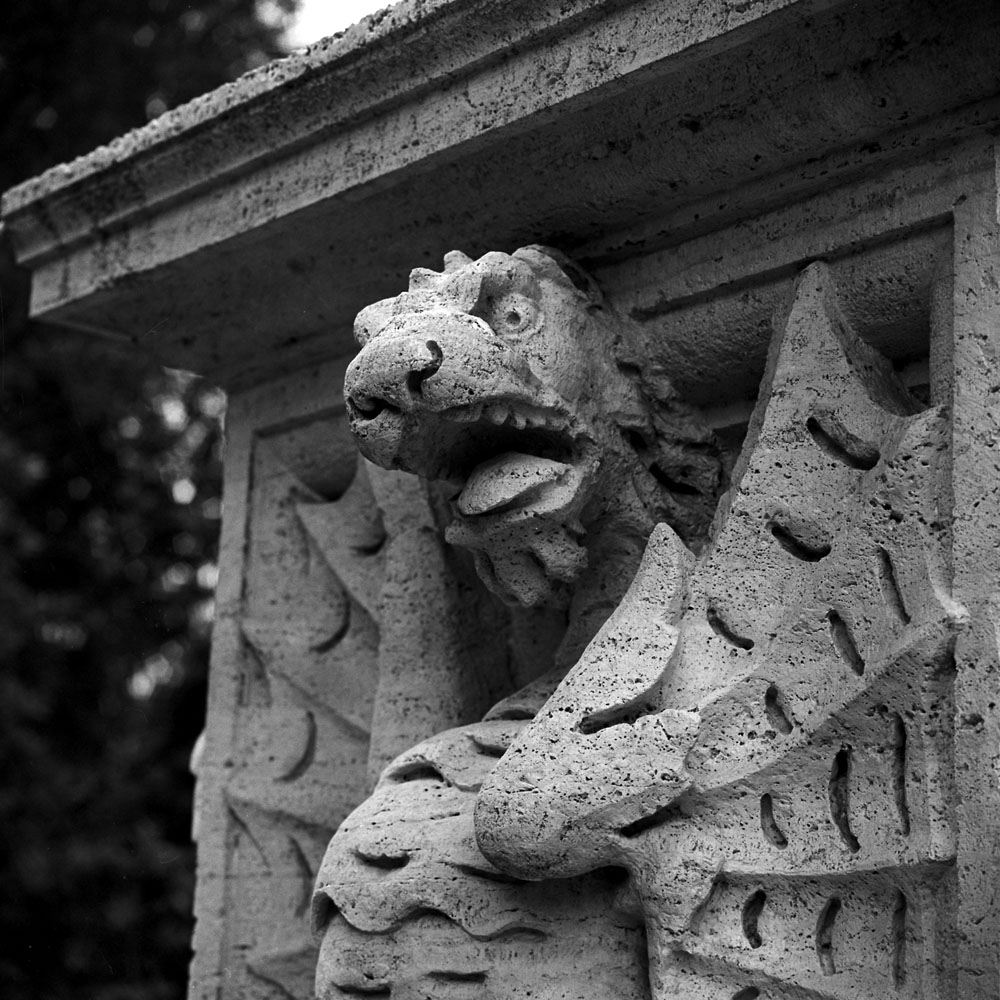
The plaza in front of the Villa is decorated by statuary, fountains, and an Egyptian obelisk or two. On the wall that demarcates the boundary between the plaza and the park, pedestals to support decorative urns are carved with dragons and eagles, elements from the Borghese family coat of arms. The eagles and dragons here are from the pedestals.
Eagle, Villa BorgheseDragon, Profile, Villa BorgheseDragon and Eagle, Villa BorgheseDragon, Villa BorgheseSnarling Dragon, Villa Borghese
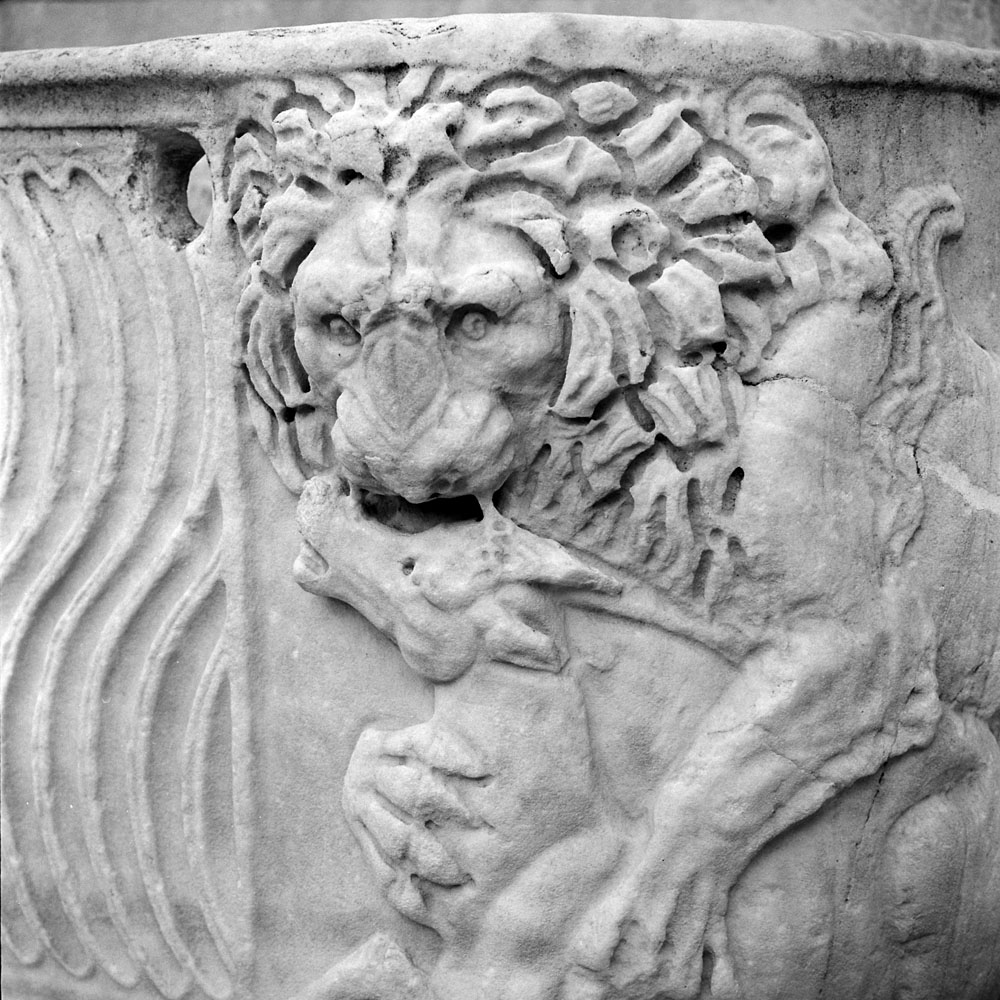
The lion devouring the stag is from an ancient Roman marble vessel on the side terrace of the Villa Borghese.
Lion and Stag, Villa Borghese
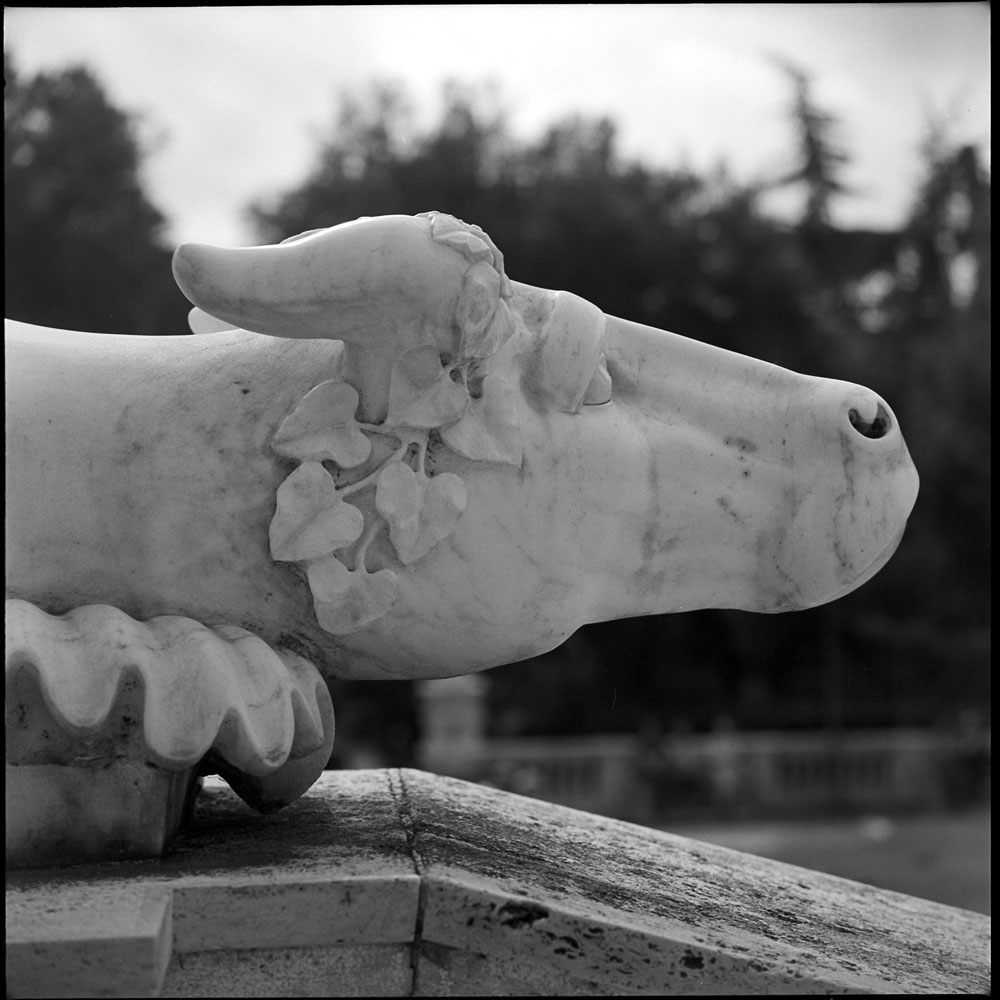
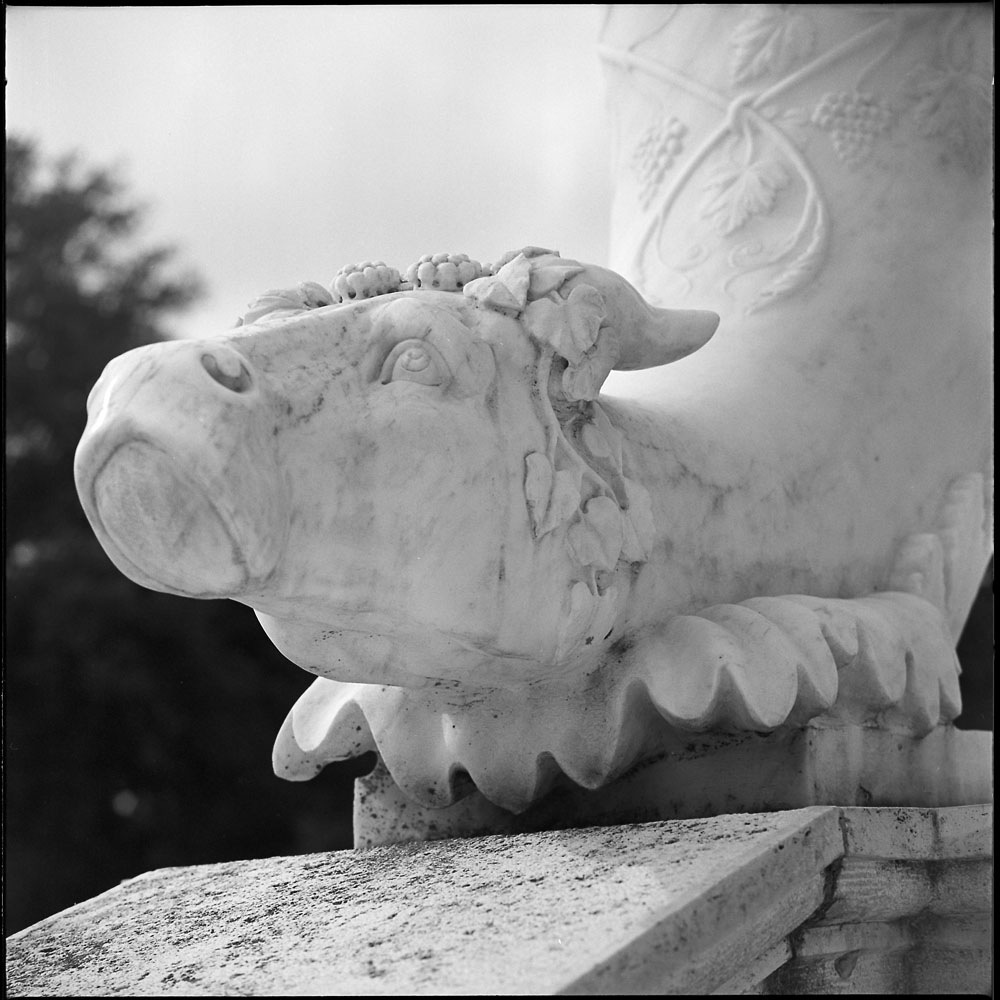
The bull’s head is from one of a pair of cornucopia/planters adorning the front steps to the Villa Borghese.
Bulls Head, Profile, Villa BorgheseMarble Bulls Head, Villa Borghese
For the photo geeks in the house, these were all shot with my Tele-Rolleiflex, many using the 0.35 Rolleinar close-up filter. The 0.35 Rolleinar helps bring the minimum focus down from 8 feet to a much more manageable 4-ish.
Here are a few more individual photos of the Palazzo Pitti.
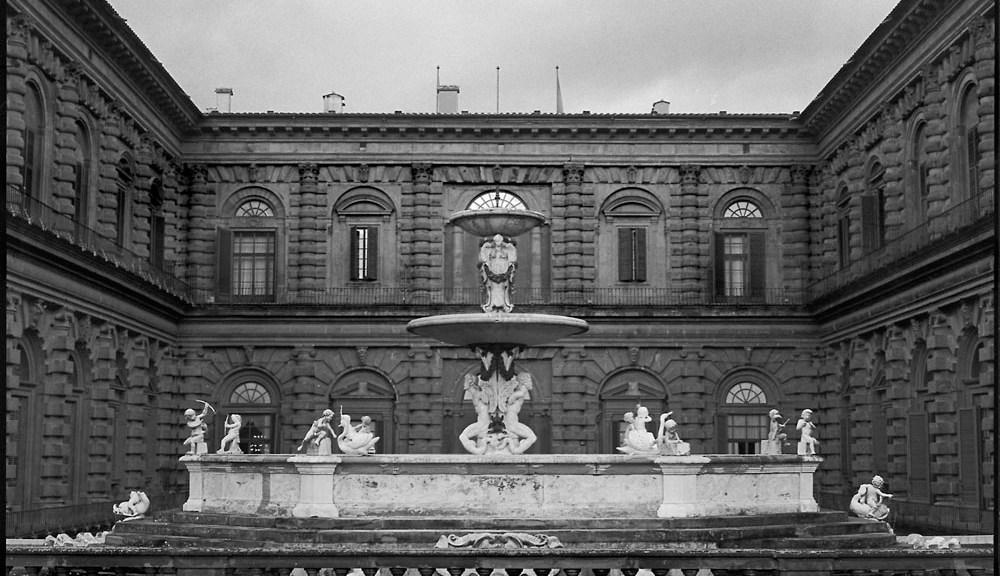
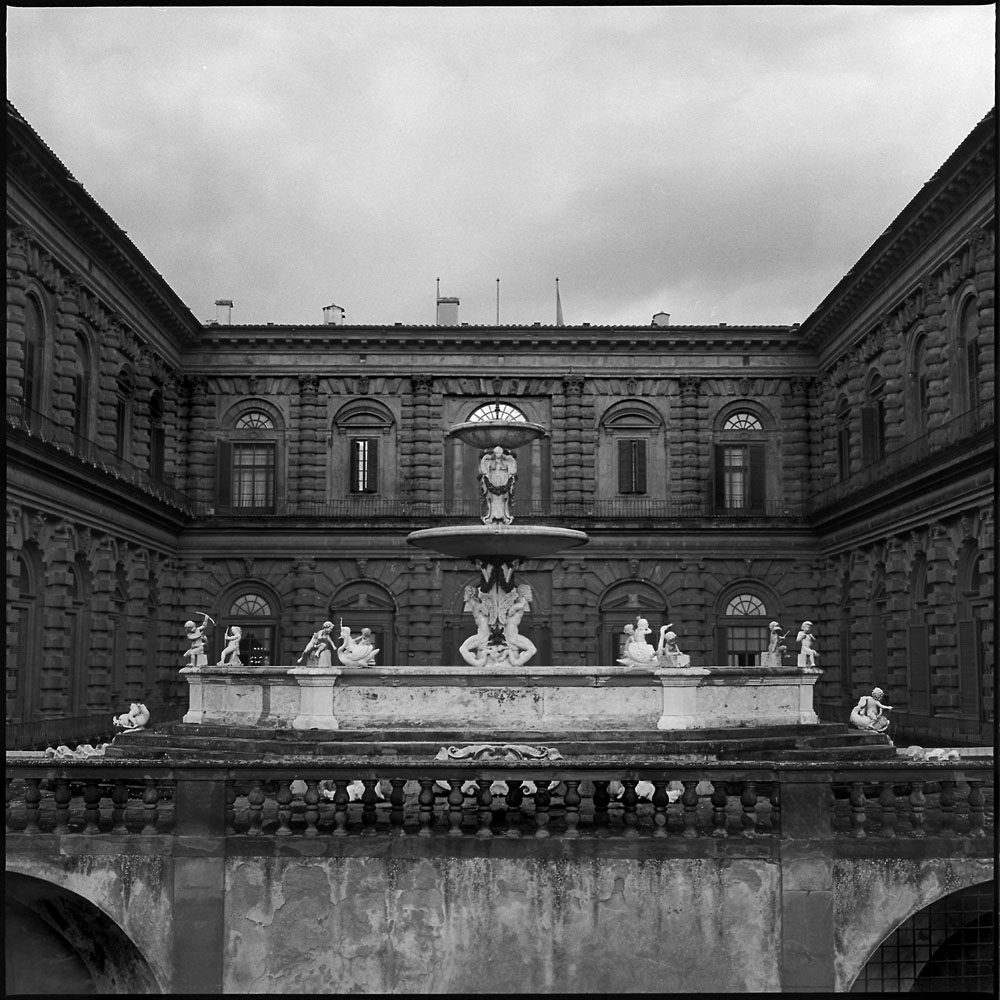
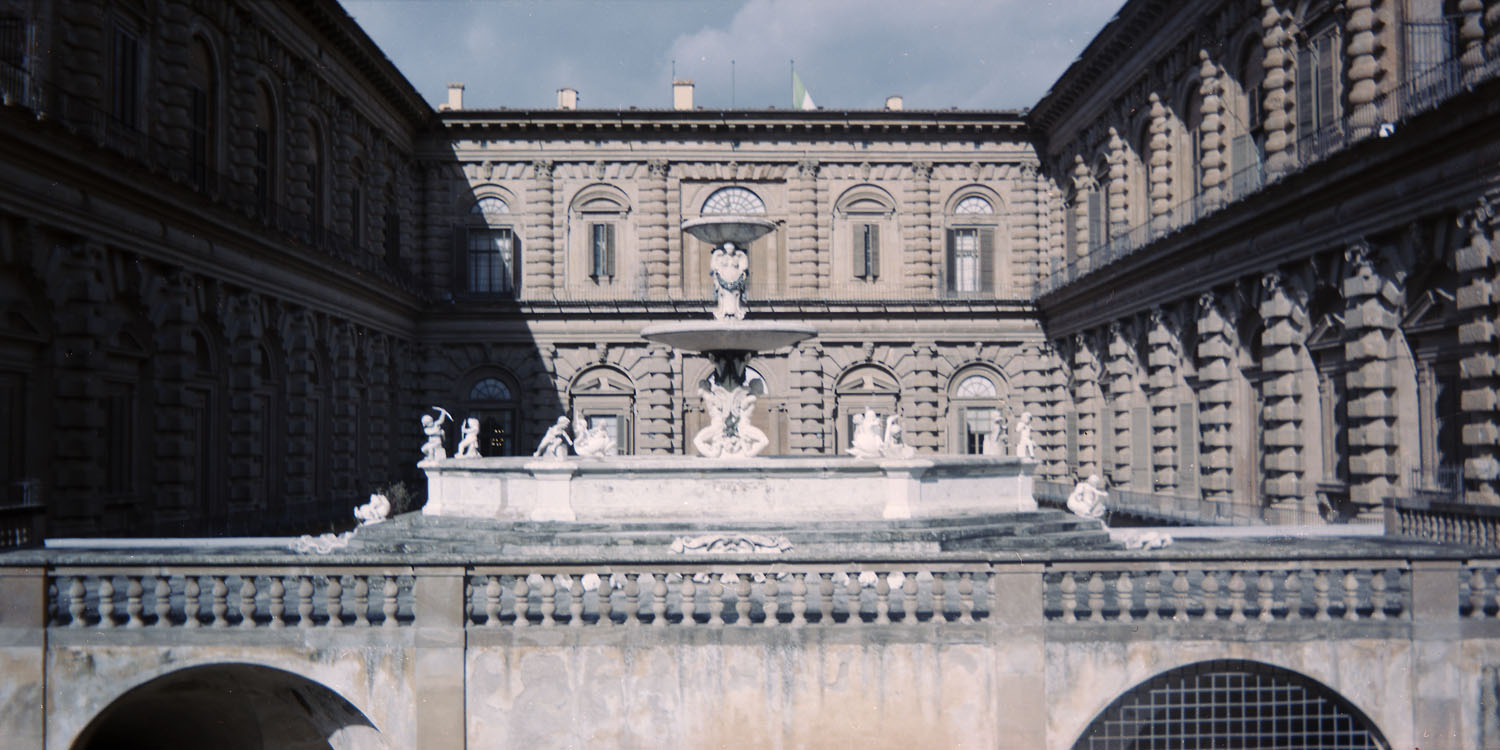
The first one is another version of the rear view of the Palazzo, from the Boboli Gardens. There’s a vast difference in quality between this one and the one I took with the Belair X6-12. The Belair has its charms, but I still prefer the sharpness and contrast of the Rollei version.
Fountain, Palazzo Pitti
Here is the panoramic version from the Belair for direct comparison.
Pitti Palace, from the Boboli Gardens
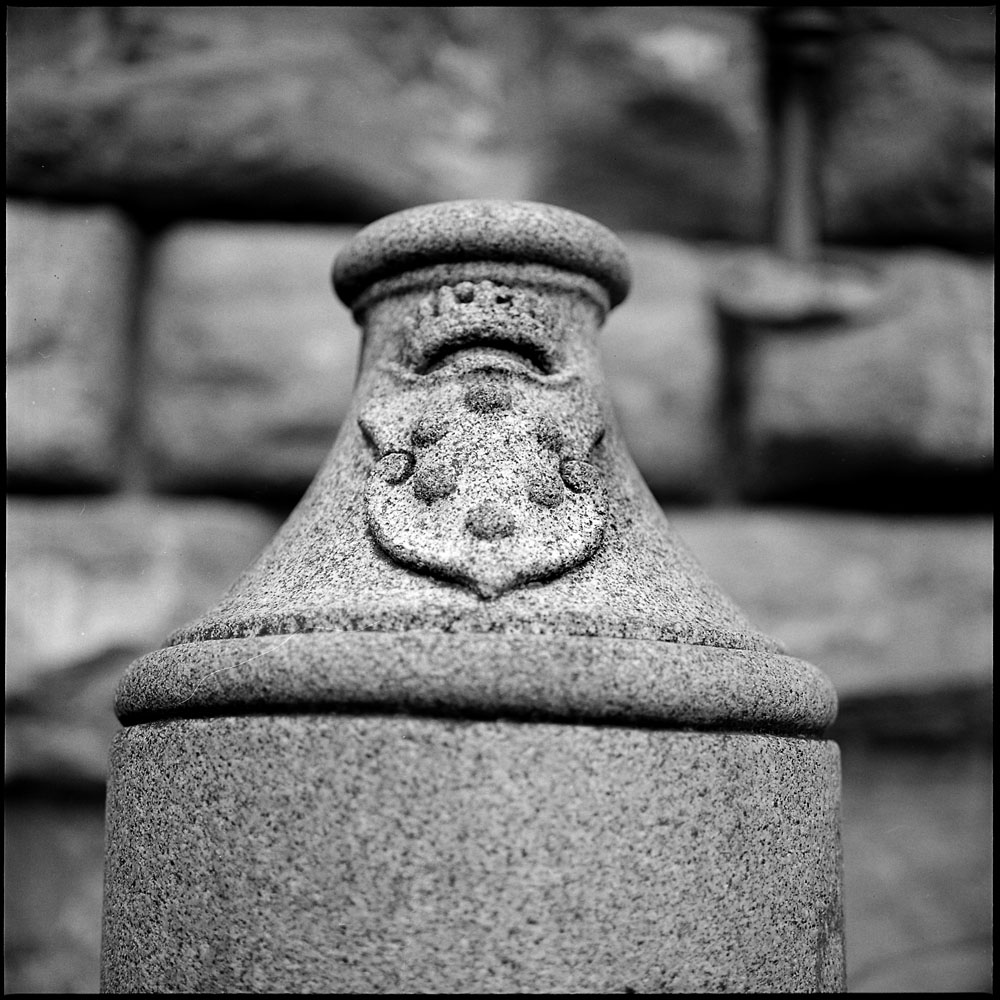
Out front of the palace there are these massive granite bollards, carved with the Medici coat of arms. While they’re kinda-sorta the equivalent of a traffic cone, they don’t really qualify for my “portraits of ordinary objects” series, do you think?
Granite Bollard, Medici Coat of Arms, Palazzo Pitti
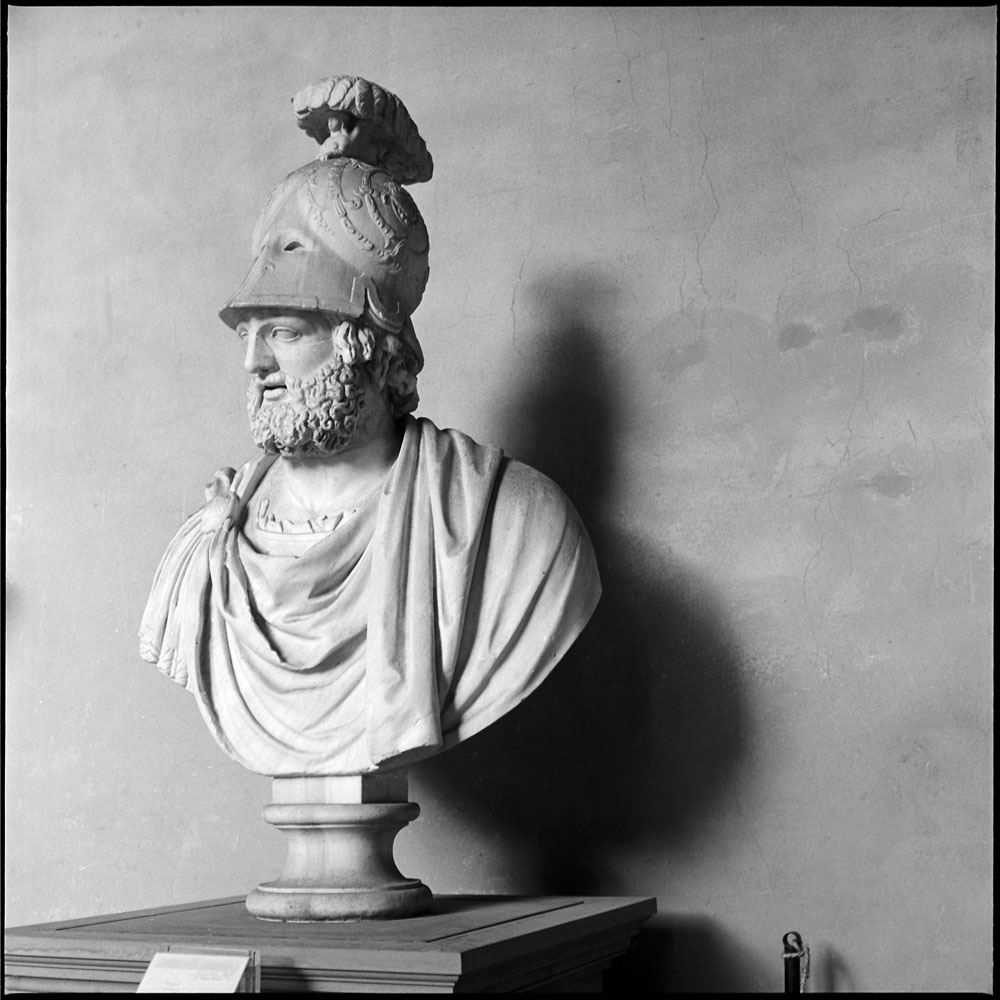
A marble bust of a man in a stylized Greek helmet. This would be a 16th or 17th century piece, so the ancient Greek style helmet would have been done to make him appear heroic and classical, an idealized noble warrior type.
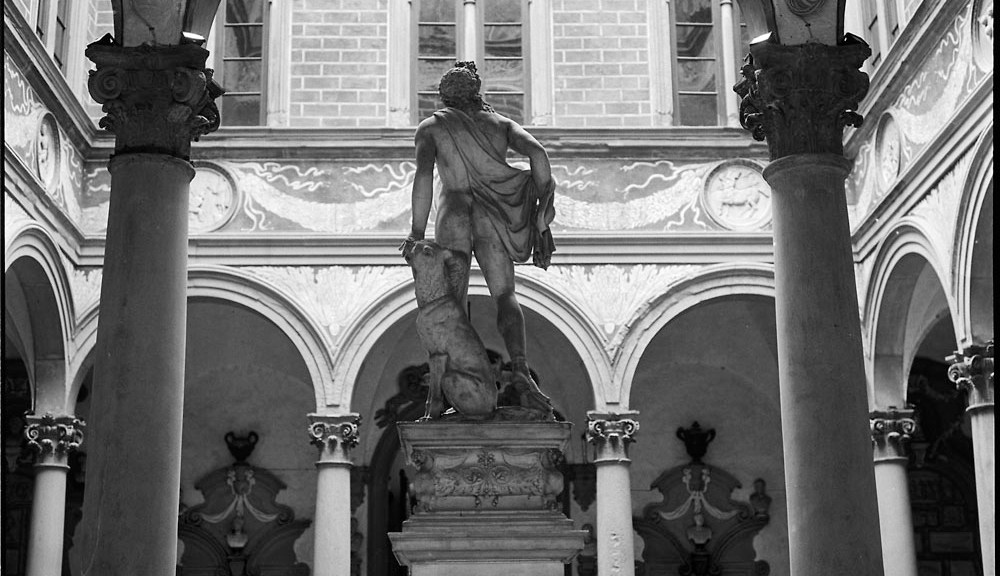
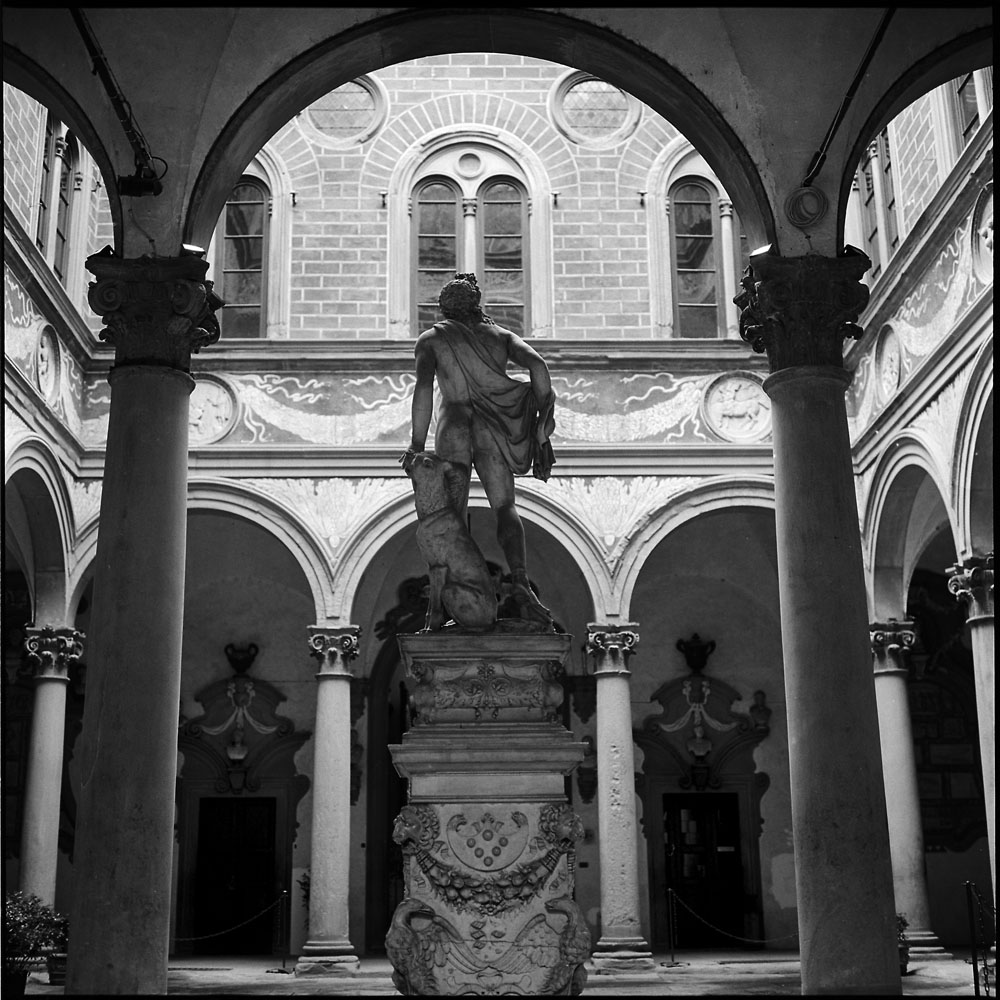
A view of the courtyard in the Medici-Riccardi Palace in Florence. The courtyard was designed by Michelozzo the 15th century artist and architect for Cosimo the Elder, and is the first Renaissance building in Florence. Originally there was a street-side loggia that was later filled in, and two “kneeling” windows were added according to designs by Michelangelo.
Courtyard, Medici-Riccardi Palace
The statue in the courtyard is Orpheus, by the sculptor Baccio Bandinelli. This palace was the primary residence not only of Cosimo the Elder but Lorenzo Il Magnifico. When you tour the palace you can even visit one of the bedrooms although it is furnished in 17th century style.
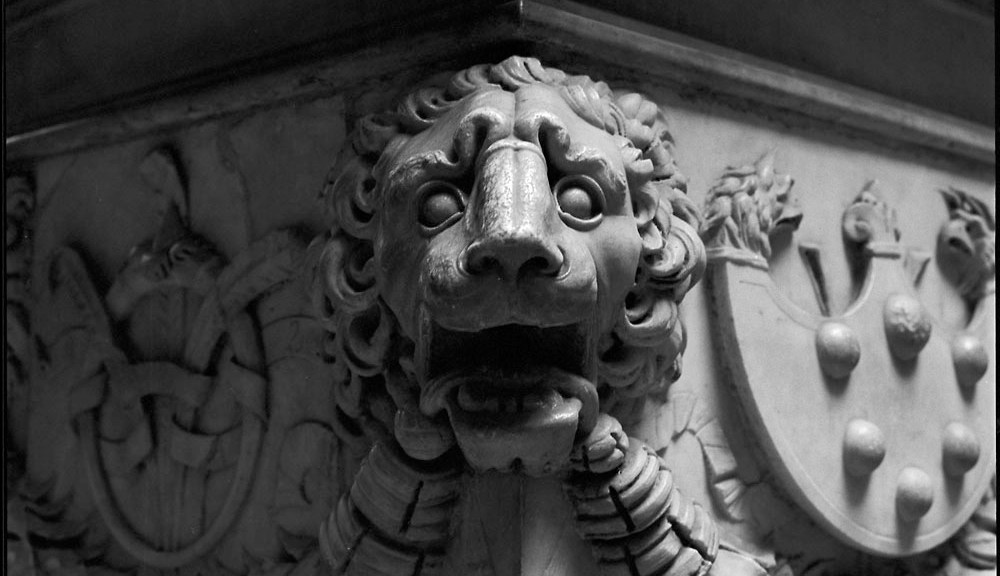
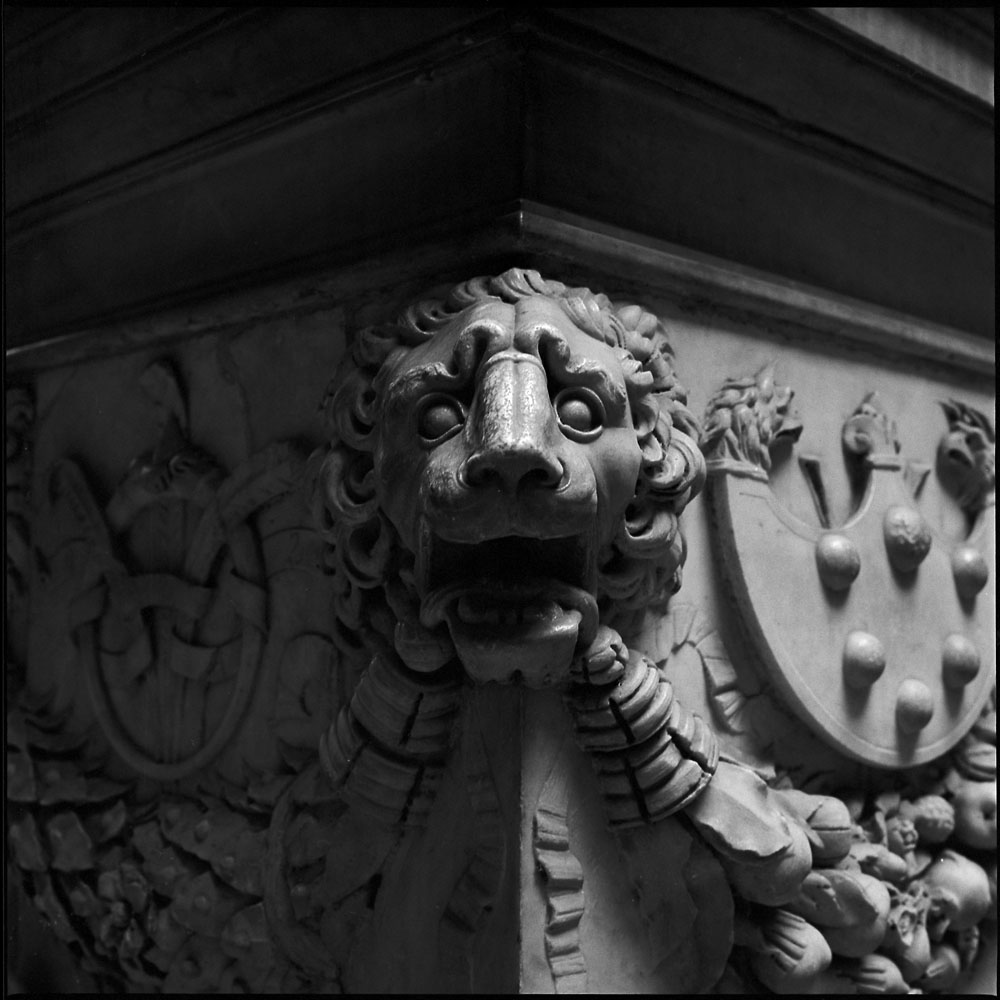
This lion’s head and the Medici coat of arms (six gold balls) adorn the pedestal to a statue in the courtyard of the Medici-Riccardi palace in Florence. I’m very glad that day was gray and overcast or this would have been too contrasty to photograph- the left half of the pedestal would have been deep inky black and utterly devoid of detail.
Sometimes I think photographers are allergic to rain – as soon as two drops come out of the sky they hide their cameras and run for cover. But there are many beautiful images to be made in foul weather.
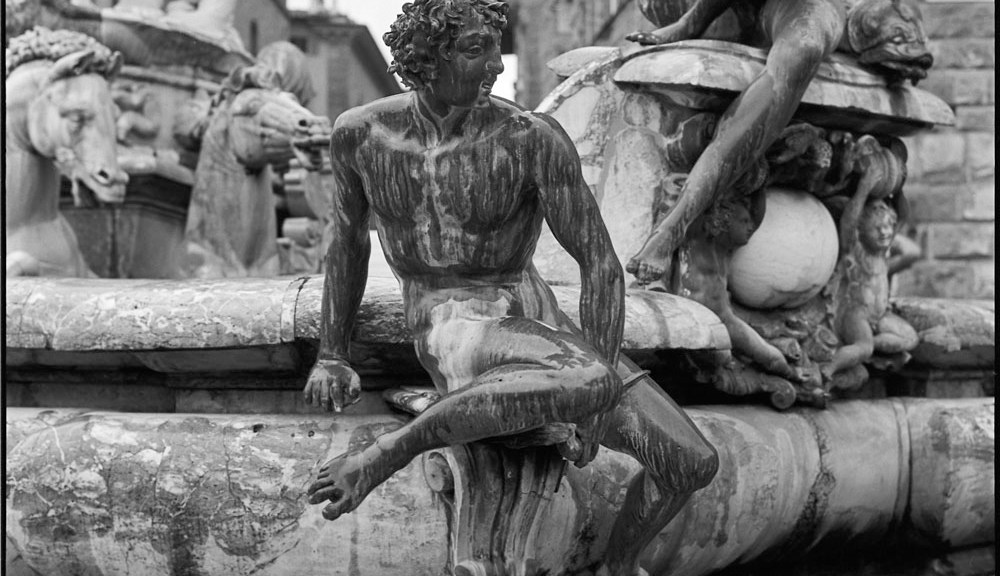
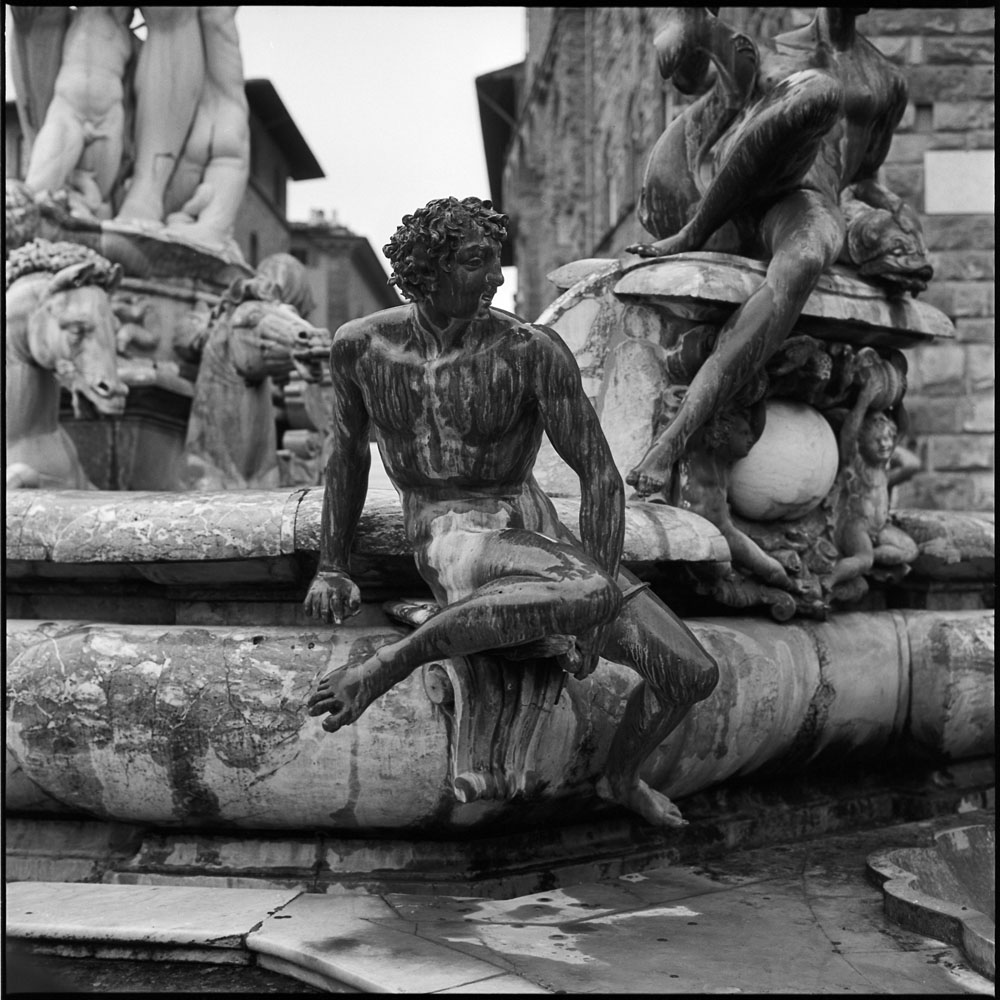
Figure, Neptune Fountain, Piazza della Signoria
There’s something special and different, and even a tad ironic, about photographing a fountain in the rain. The statues are wet but in a very different way than they look from the normal spray of the fountain. And I think that doing it in black and white adds something more to it- this wouldn’t be as successful an image if it were in color.
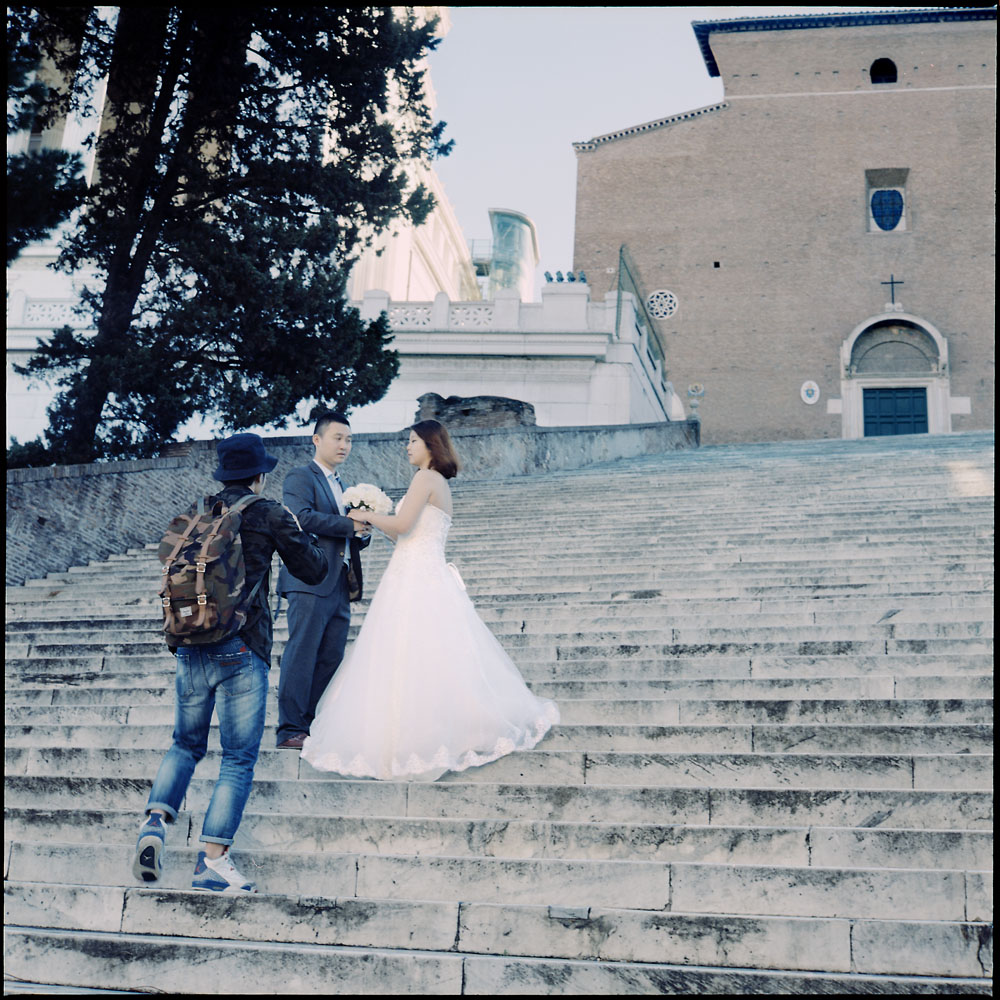
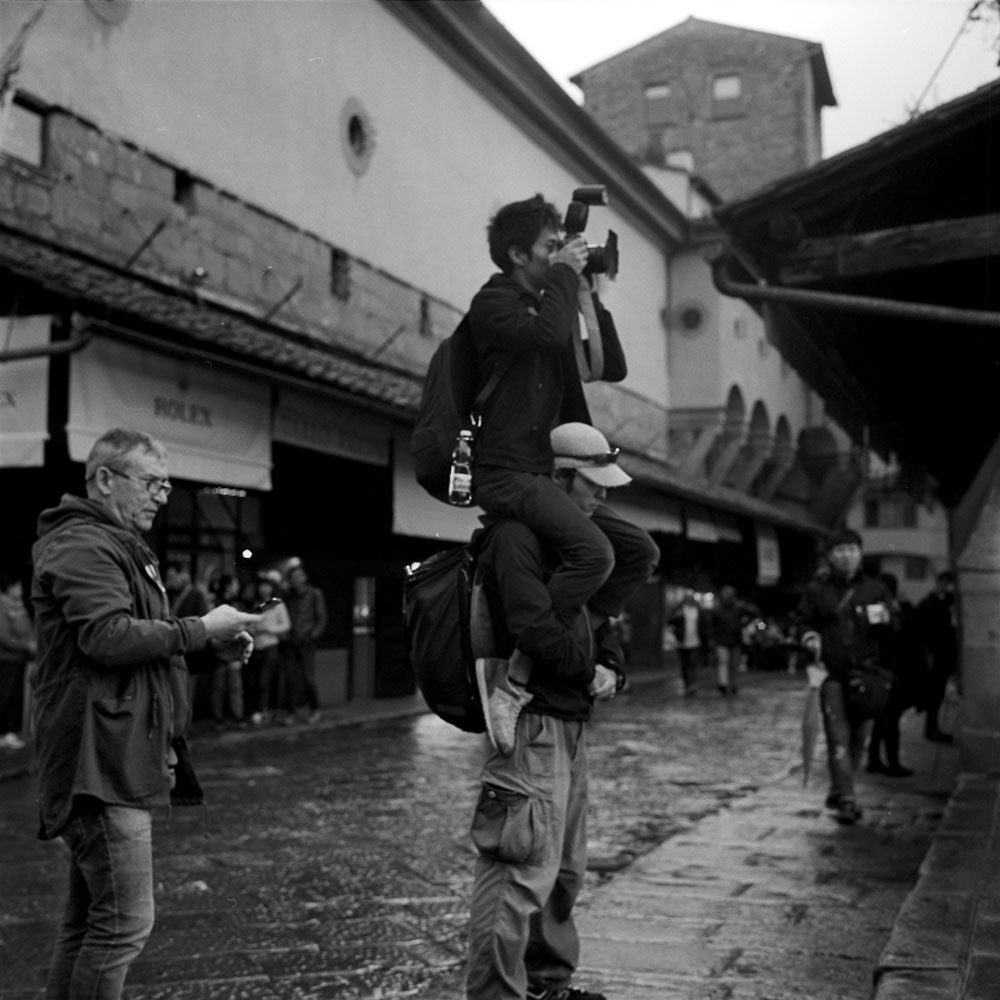
These are two of the wedding photographers I saw in action on my trip – I saw at least two more that I didn’t capture. All were Chinese – I guess it’s a thing now for Chinese couples to come to famous landmarks ( I saw this in Paris as well when I was there ) to get their wedding photos done. I don’t know if they were actually having their weddings in Rome and Florence, or just getting their pictures taken. I’d have loved to have asked, but the photographers were busy working and I’m not going to interrupt them.
I’m not at all surprised by the first location- the steps of Santa Maria in Aracoeli are a very popular destination spot for wedding couples. They were lucky that it was a quiet day – in peak season the steps are very popular with tourists, including pilgrims climbing them on their knees hoping for divine intercession to heal illness or get pregnant, although not so much these days. There are 124 steps (122 if you start on the right-hand side).
Wedding, Steps of Santa Maria in Aracoeli
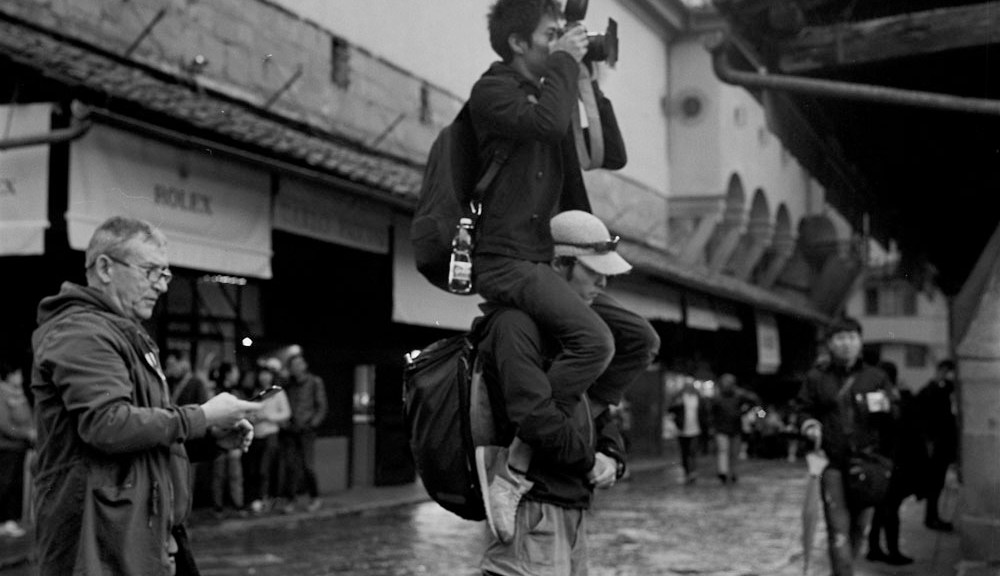
In Florence, this was the scene on the Ponte Vecchio, next to the Cellini monument. I know photographers will go to some lengths to get the shot, but this is really taking it to another level. I also observed a much more conventional photo-taking outside the Duomo early in the morning on another day.
Here is the Temple of Hercules Victor. When built, this would have been on the banks of the Tiber, or at least had a clear view of the river. The level of the city has risen some 17 feet since Roman days, so this now sits downhill from the Lungotevere (the street that runs along the riverbank). The tile roof is a much later reconstruction. This temple is the oldest surviving marble building in Rome, dating to approximately the 2nd century BC.
Temple Of Hercules
In the plaza in front of it there sits the Fountain of the Tritons, completed in 1715 as part of a renovation project for the plaza in front of Santa Maria in Cosmedin, the medieval basilica that houses the famous “Bocca della Verita” and the skull of St. Valentine.
Fountain, Temple of Hercules
The Temple of Hercules Victor and the neighboring Temple of Portunus (not visible in this view) were converted into Christian churches in the early post-Pagan era, thus their relative high degree of preservation. Neither are active churches now. While the Temple of Hercules Victor today is solid and stable, work is ongoing on the Temple of Portunus and both remain closed to visitors. The closures may also represent a side effect of the budget woes currently besetting Italy.


 dcphotoartist