Category Archives: Collecting

Six Men by Turner of Toronto

The last acquisition from yesterday’s outing to Gettysburg – another possible occupational cdv of six men by Turner of Toronto. I’m guessing it’s an occupational although it doesn’t show tools of the trade, because all six men are wearing nearly identical outfits – three are definitely wearing the exact same shirts, and perhaps a fourth. Even with different shirts, the others’ attire is similar enough that they appear to be uniforms. The other possibility is that this is a family portrait of brothers and/or cousins – there is definite facial similarity amongst several pairs of the men.
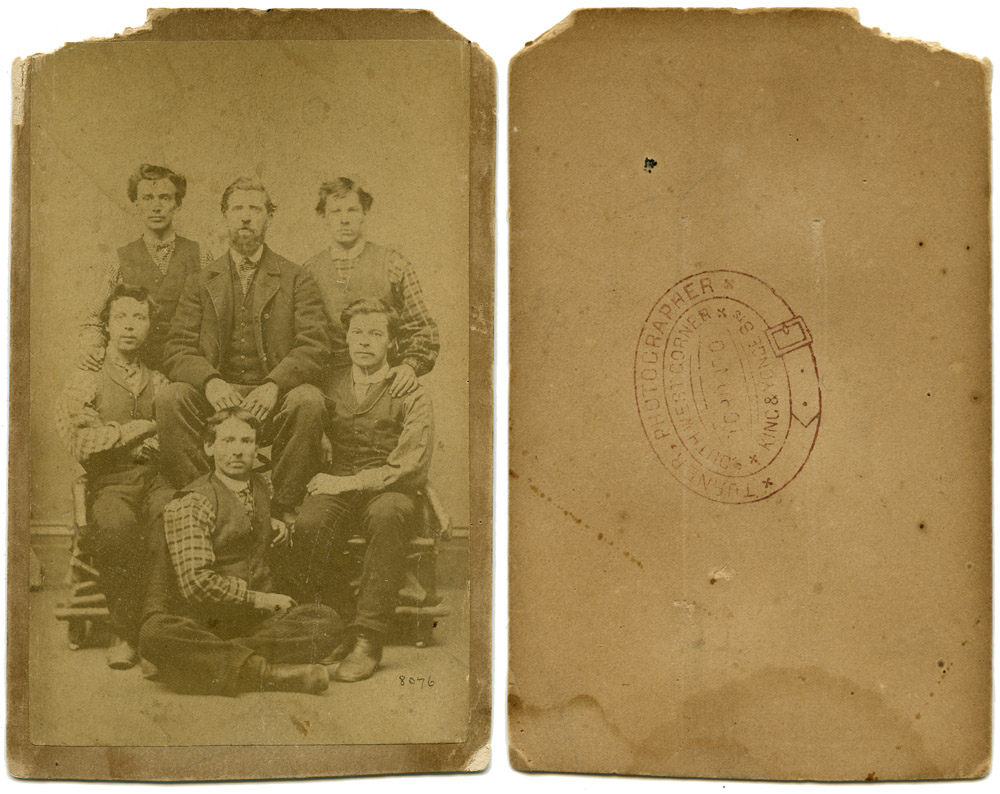
Six Men, by Turner of Toronto

Note the rusticated furniture they’re sitting on – I can’t tell if it is a single bench seat or a grouping of chairs. Also, for the curious, since it’s hard to read in a vertical orientation, the photographer’s imprint on the verso reads: “Turner, Photographer, Southwest Corner, King & Yonge Sts, Toronto”. This is my first Canadian (that I’m aware of) CDV.

I’ve done some mild enhancement and cleanup in Photoshop on this one, as the original is definitely more faded than this. I generally don’t do much if any photomanipulative digital restoration to the images I post because I want them to be representative of the actual image in my possession, but sometimes, as in this case, I do a bit of tweaking in order to make the image more readable. I promise no albumen was harmed in the making of this digitization.
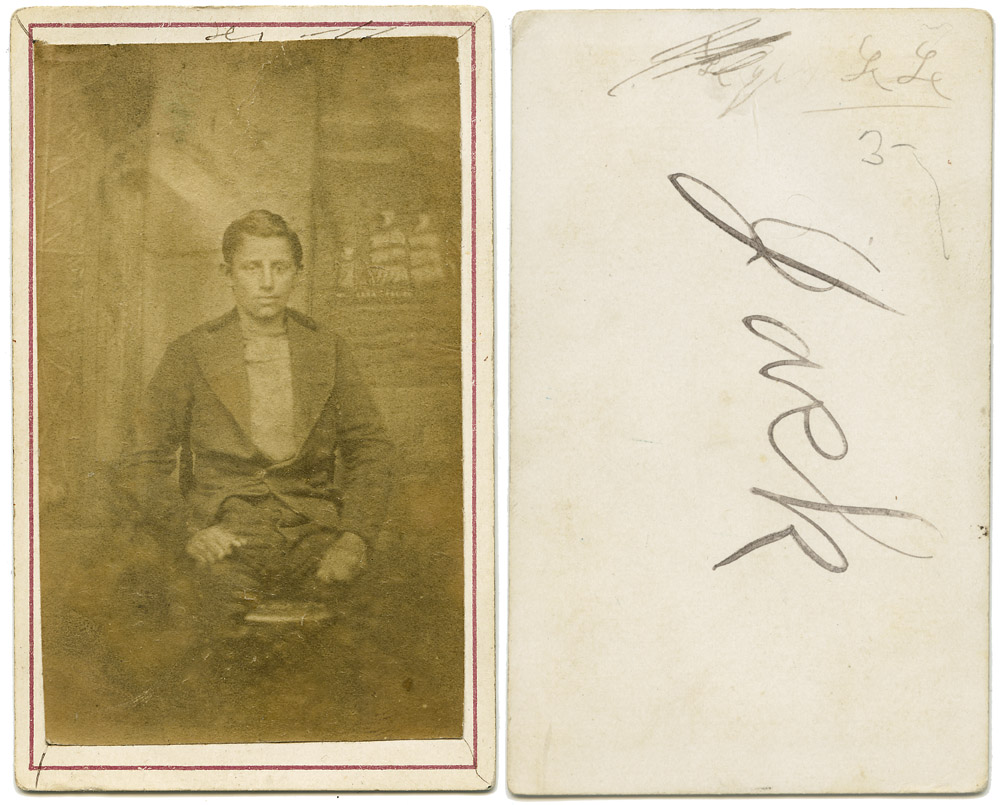
Sailor Jack

Another CDV from today’s excursion: I’m assuming the young man is a sailor, based on his attire and the view of the ship through the painted window on the backdrop. The only identifying mark of any kind is the oversized signature on the verso, “Jack”, although the “c” in Jack is oddly formed – could it be Jaek? Jark? Jack seems most likely.

Jack the Sailor
Jack the Sailor

Although it has as much to do with condition as it does the image itself, I love the atmospheric feel of the photo and the Mona Lisa-esque expression on his face. I don’t know if he is in fact a sailor, but without other evidence to the contrary, that’s what I’m calling him.

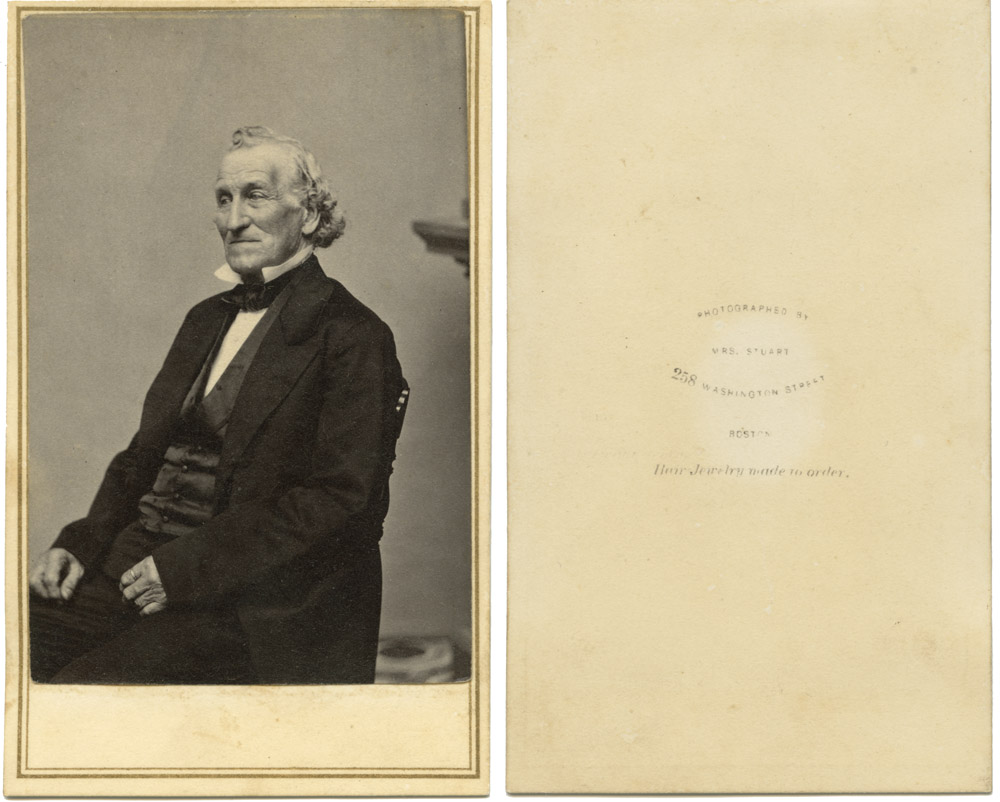
Portrait of an unknown gentleman by Mrs. Stuart, Boston

Here is a portrait of an unidentified sitter by Mrs. (yes, I said that right, MRS) Stuart. She is famous for not only being a very early American female photographer, but also an early pioneer of “spirit photography” and shared a studio space with William Mumler. She also produced and sold hair jewelry, which was often made for the purpose of remembering the deceased out of some of the deceased’s hair. This image is NOT a “spirit photo” but rather a simple legitimate portrait. It is beautifully executed, and the scan does not do justice to the original condition of the print – there is still a natural gloss to the albumen on the print as if it were new.

Anonymous Gentleman, photo by Mrs. Stuart

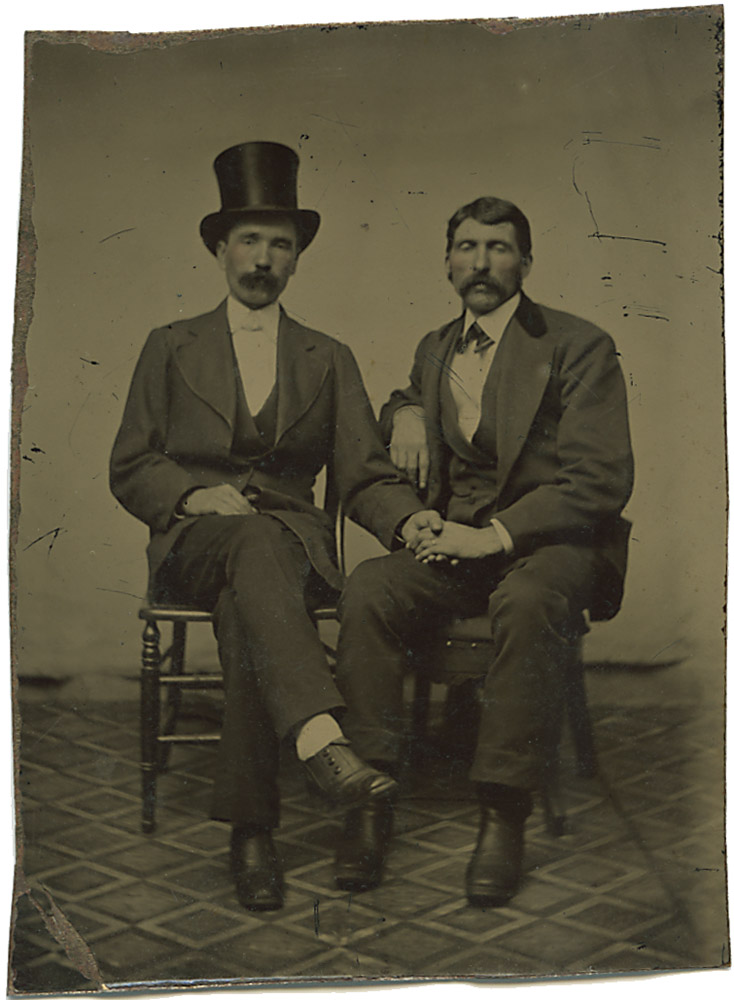
Affectionate Gentlemen Tintype

Here’s another tintype, also acquired today, that fits into that “gay interest” category because it shows two men being physically affectionate. Once more, I will stress that there is NO WAY to know the meaning of the gesture: it was much more acceptable in that day and age for two male friends to hold hands as a sign of friendship. These two look like they could very well be brothers. That aside, it’s an excellent example of a hand-tinted tintype showing a slice of Victorian culture in America. I wonder what’s going on with the one white sock, or is it a single white spat, on the gentleman with crossed legs. This is where the intrigue builds – it could be just that he lost one on the way to the studio, or he got one dirty and decided that only having one looked better than having one clean and one dirty. Or he was absentminded and put on one white sock and one dark one, kind of like Albert Einstein. Or, it could be an 1860’s/1870’s code to indicate something about the relationship between the two men. Without knowing historical referents, it’s an exercise in making interpretive leaps from fragmentary, inconclusive evidence.

Two Affectionate Gentlemen, Tintype

Awesome Occupational Cased Tintype

I went to Gettysburg, Pennsylvania today, as much to get out of the house while we still had nice weather (I think it was nearly 70F for the high today, even if a bit overcast!) as anything else. My parents had been up there a couple weeks ago, and told me about this one antiques shop that they thought was worth visiting. The shop not only had a much better than usual bin of “instant ancestors” (more on that in a minute), but they also had an amazing display of (surprisingly reasonably priced) other Civil War -era photos (dags, cased tins, and cased ambrotypes) and a veritable museum worth of vintage rifles, muskets, pistols, swords, cannonballs, uniforms and paraphernalia (canteens, insignia, and so on). I picked up a quartet of “instant ancestors”, and had my eye on three others that were in the box but not bargain priced. Over in the big glass display case with all the high-ticket cased images of identified soldiers both Union and Confederate, there was this occupational tintype, complete with embossed leather case:

Occupational Trio, Cased Tintype ca. 1865

I’m showing it here out of its case because I scanned the tintype on my flatbed scanner while I had the packet apart to clean the cover glass (some idiot decided to stick the price tag to the cover glass with cellophane tape that was not a “magic” residue-free tape). This one was a minor splurge as I’m trying to keep myself to a budget, but given the overall quality I felt it was well worth it.

As to the subject matter – does anyone have any idea what profession these gentlemen might have? My first thought was butcher, but they don’t seem to be wielding any butcher’s knives or have any of their product with them. My second thought went to baker, but again, no bread in the photo, and I’ve seen bakers before holding bread. Perhaps greengrocers? Shop clerks? The aprons are rather long for general store clerks, I think, but I’m not an expert on 19th century tradesmens uniforms.

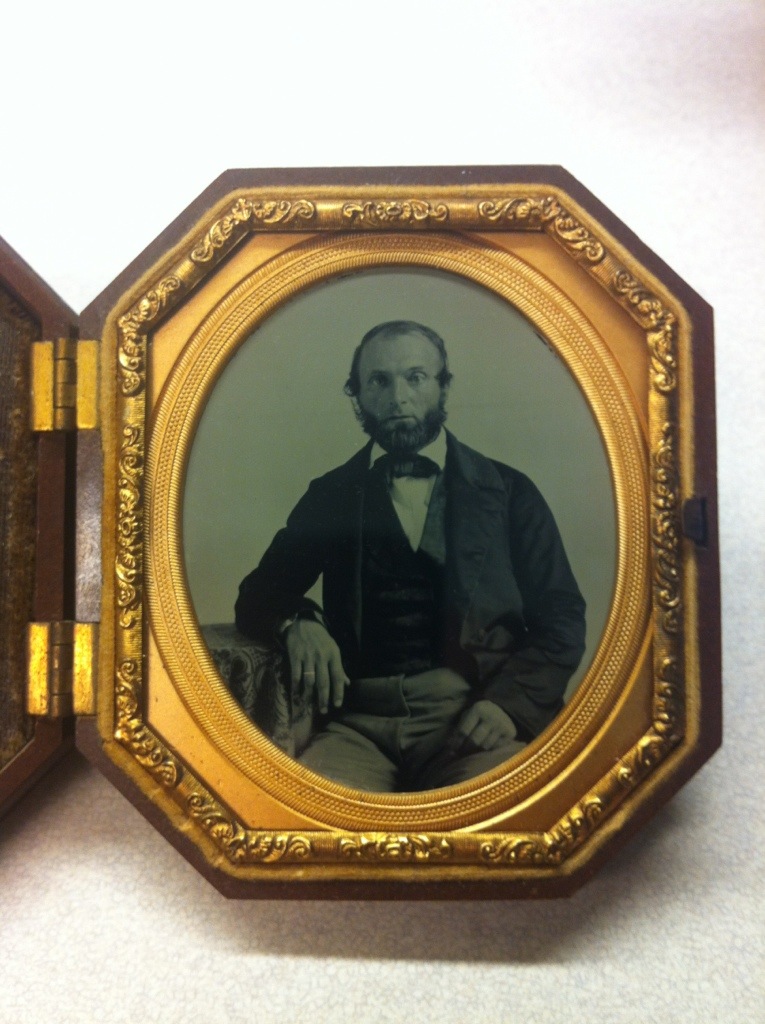
Ruby Glass Ambrotype in Union Case

20121106-091350.jpg

20121106-091427.jpg

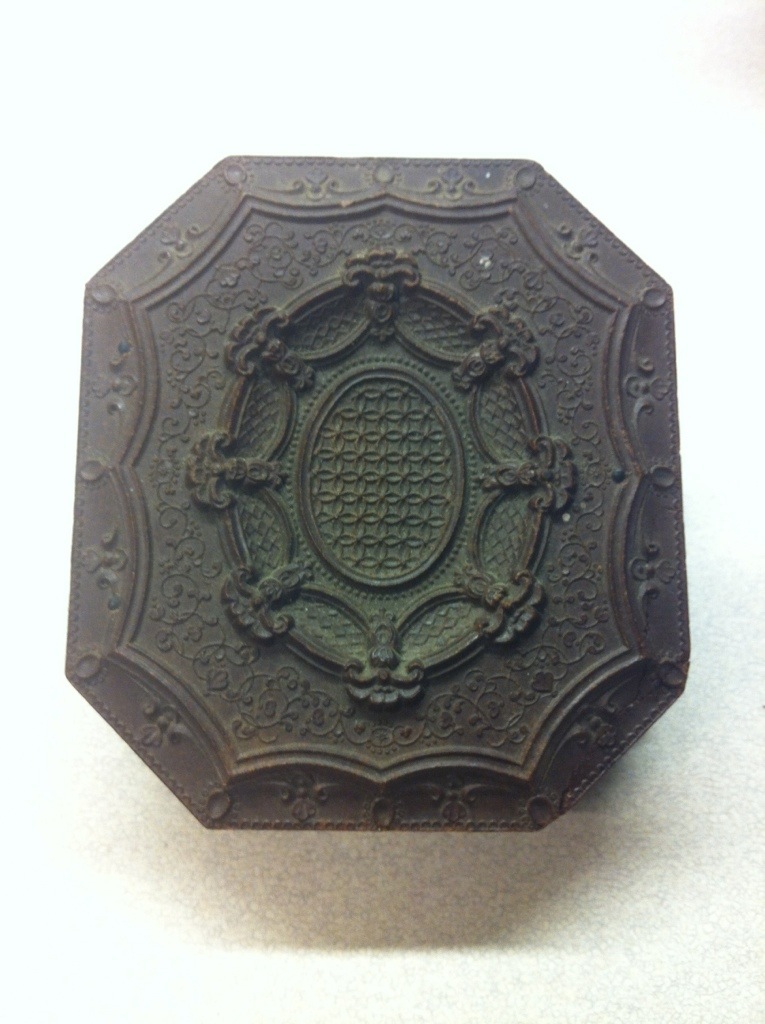
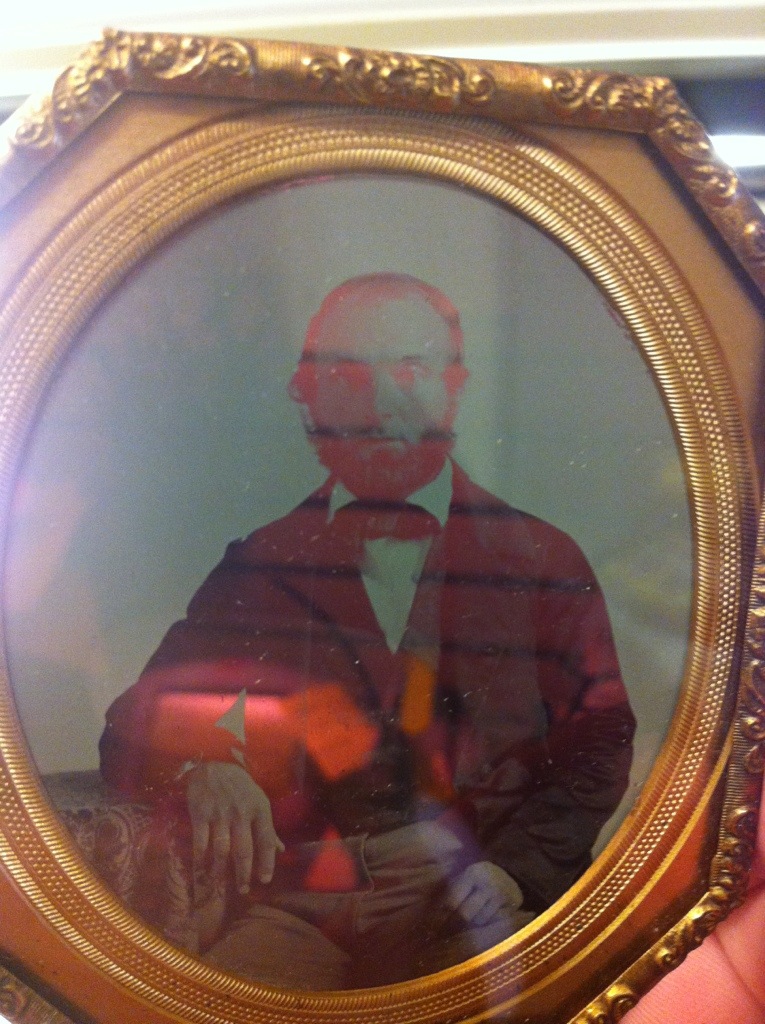
Here is my latest acquisition, a ruby glass Ambrotype in an octagonal Union case. The funny thing about the Union cases is that the name has nothing to do with the Civil War – in fact they were losing popularity by the time the war started, as were cased images in general. They got the name Union cases in the 1850s, well before the question of Union vs. Confederacy existed. It helps to confuse the issue that many were made before and during the Civil War with patriotic themes, lending credence to the notion that the name had to do with the war. I’m not going to say that no Confederate-themed Union cases were ever made, but in my limited experience of collecting, I’ve not seen one. I have seen leather/papier-mâché cases with Confederate themes embossed, so I suppose it’s possible, although I believe most Union case makers were located in New England.

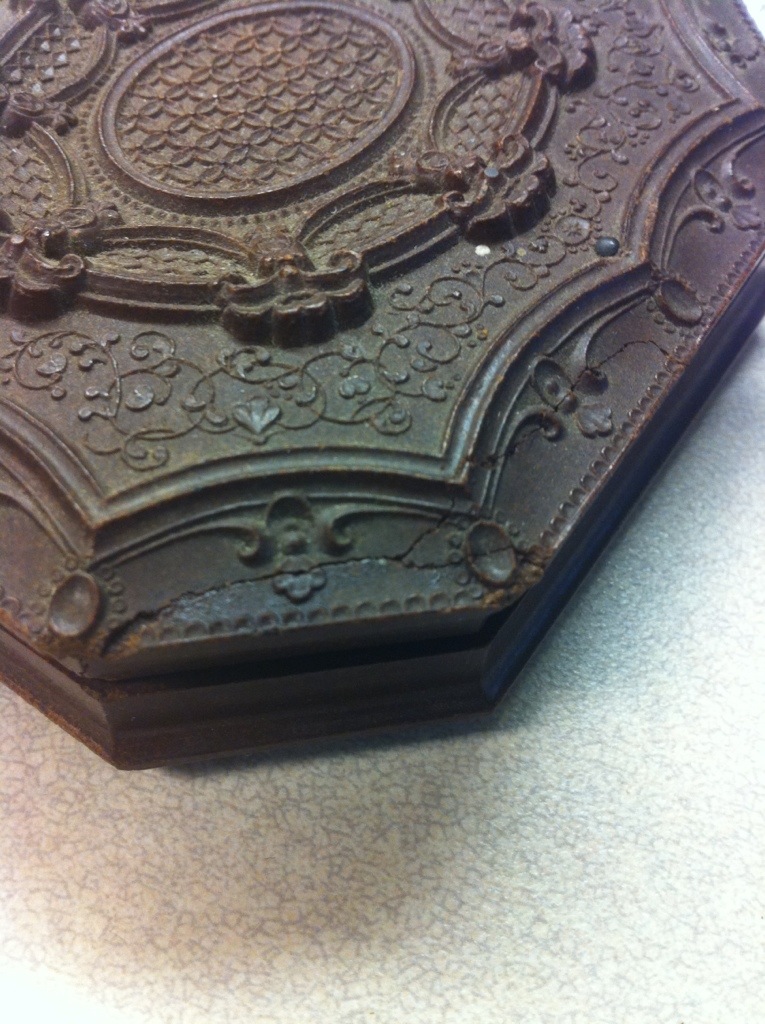
I bought this image over the weekend at the Photorama show in Tysons Corner, Virginia. The Photorama shows used to be big deal swap meets and sales, with dozens of dealers filling multiple ballrooms at the Best Western. Now, they’re relegated to a single room in the basement, with maybe ten dealers, mostly peddling castoffs and junk. Bargains can be had, if you’re looking for random odds and ends – I got a Stroboframe flash bracket that retails new for around $60 for $5. And I found this image in a box of stuff. It was dusty and dirty, and didn’t look like much. There was no price tag on it, so I had to find the dealer who had it to get the price. As I was walking up to him, I dropped it, it hit the floor, and one corner of the case cracked off. I told him I was buying it, as I had just broken it. Perhaps out of sympathy or as an acknowledgment of my honesty, he sold it to me for $40. I brought it home, saved the broken pieces, repaired and cleaned it.

20121106-094046.jpg

20121106-094230.jpg

You can see the repaired crack in the case in the first picture, and the second one illustrates the ruby glass. I’m not sure the reason for using red glass instead of black glass, unless red glass was cheaper, or perhaps it was believed the red imparted a warmer, more lifelike color to flesh tones.

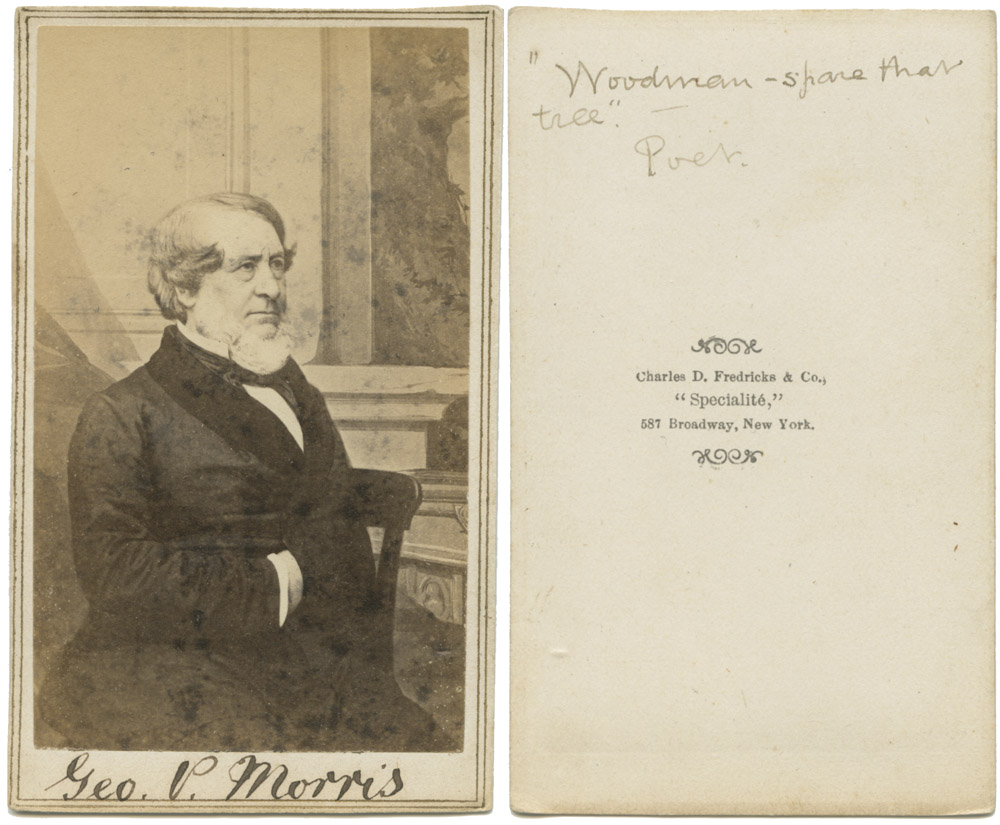
Surpise CDV – George Pope Morris, by CD Fredricks

This was a surprise because my mom bought it for me when she and my dad were at Gettysburg for a little getaway vacation (their home is maybe an hour and a half from Gettysburg). The subject of the card is George Pope Morris, a 19th century American poet, and co-founder of the New York Evening Mirror which you may know of if you’re an Edgar Allan Poe fan, because it was where “The Raven” was first published in 1845, marking the first time the name Edgar Allan Poe was seen in print.

The quotation on the back of the CDV is the title of one of George P. Morris’ most famous poems, “Woodman, Spare That Tree”, which was also made into a popular song. The image must be from the last years of his life, as he died in 1864.

George Pope Morris, Poet and Publisher, by C.D. Fredricks

For more information about George Pope Morris, Wikipedia entry, George Pope Morris. From the accolades he received from his peers, it sounds like he’s yet another 19th century American (not to mention English) verist whose oeuvre is better off forgotten. If you really want to torture yourself, click here to hear a contemporary performance of the song. Trust me, you’ll need to cleanse your auditory palate afterward with a good dose of heavy metal or Justin Bieber or even cats having sex. But it’s informative as to the mindset and taste of the early Victorians when it came to popular entertainment.

Victorian Cross-Dressing and Circus Dogs

To take a break from the High Heel Race photos, here’s two new CDVs in the antique image collection.

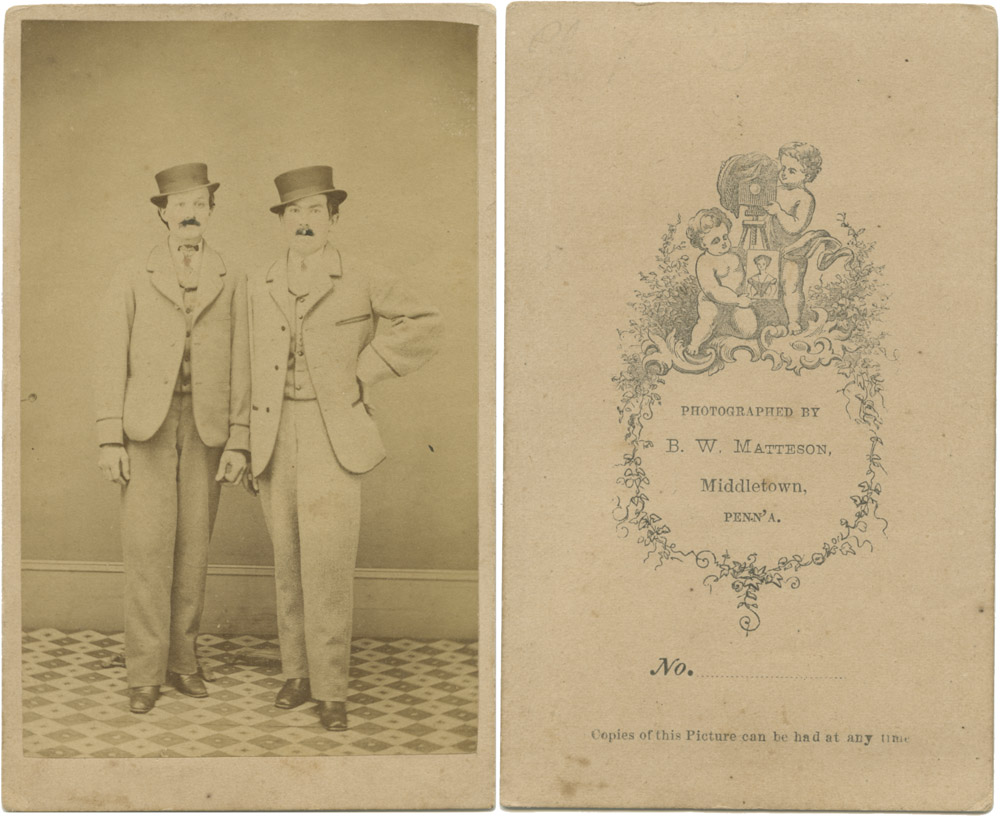
Cross-dressed Women by Mattheson

This pair of women in men’s clothes are rather unusual for the time period (1860s-early 1870s). Without knowing any back-story behind the photo, it’s hard to tell if this was just a couple of friends on a lark dressing up like lads (the mustaches were added by the photographer, much as hand-coloring or gilding of jewelry would have been done, for an additional fee) or if this was a comic way of expressing a deeper relationship between these two women. Without knowing, I’m filing this in my collection under the category of “Performers”, because it certainly is a performance of gender and gender identity, and it COULD be a theatrical, like the Ike Partington photo I posted earlier. I don’t know if there was a comedic play of the time period that called for women to play men’s parts.

Jack Russell Dog in Circus Ruff, Uruguay

This is a CDV I bought from a vendor in Uruguay (on Ebay). These two photos kind-of go together in that the dog is wearing a ruff, so in some way he’s probably a circus performer. This is a heavily restored version of the CDV – the idiot seller shipped it basically in a plain envelope, with no protection, so it arrived with a MAJOR crack running across the CDV just above the dog’s head. I thought I’d at least preserve the image content and post it.

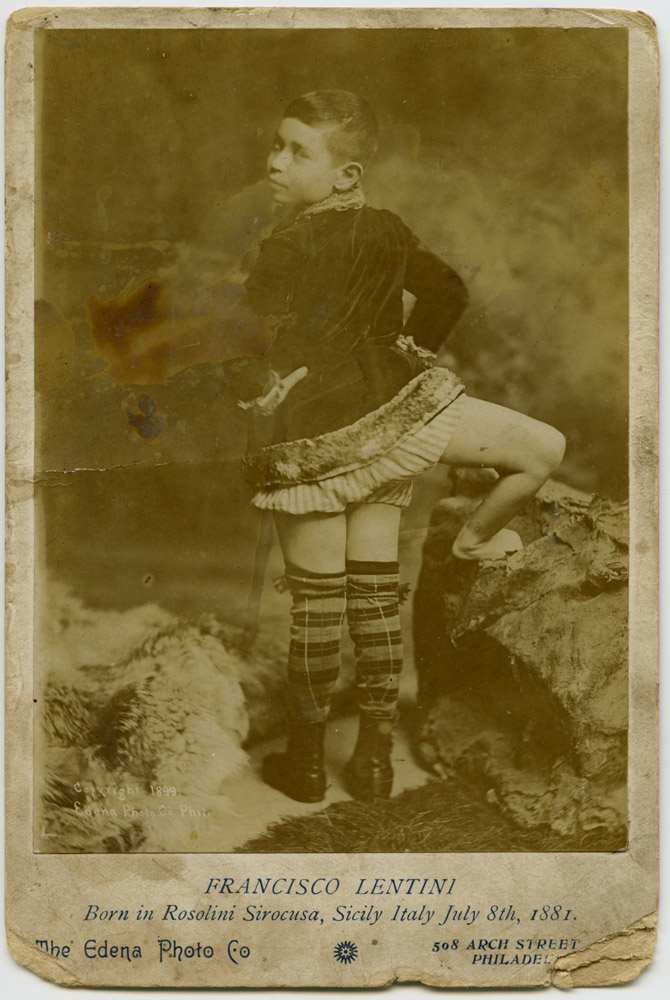
Francesco Lentini, the Three-Legged Boy

Francesco Lentini, The Three-Legged Boy

From Wikipedia:

Frank (Francesco, Francisco) Lentini (May 18, 1881 – September 22, 1966) was born at Rosolini, near Syracuse, Sicily into a family of twelve children, seven sisters and five brothers.

He was born with three legs, two sets of genitals and one rudimentary foot growing from the knee of his third leg. So, in total, he had three legs, four feet, sixteen toes, and two sets of functioning male genitals, which were all that existed of a conjoined twin and jutted from the right side of his body. The doctors determined that since his twin was connected to his spine, removal could have resulted in paralysis. When his parents refused to acknowledge him, his aunt raised him but eventually handed him over to a home for disabled children. As a child Lentini had hated his extra body parts until he spent time at the home. There, he met children who were deaf, blind, and mute. He also learned to walk, ice skate, and jump rope.
At the age of eight, Lentini moved to the U.S. and entered the sideshow business as The Great Lentini, joining the Ringling Brothers Circus act. He gained US citizenship at the age of 30. His career spanned over forty years and he worked with every major circus and sideshow including Barnum and Bailey and Buffalo Bill’s Wild West Show. Lentini was so respected among his peers that he was often simply called “The King”.

In his youth, Lentini used his extraordinary third leg to kick a soccer ball across the stage, hence his show name, the Three-Legged Football Player. By the time he was six, Lentini’s normal legs were slightly different in length–one was 39 inches, the other 38 inches–but the third leg was only 36 inches, and the foot on it was clubbed.[1] Even more as an adult, while his extra leg was several inches shorter than the others, his primary legs were also two different lengths. He was heard to complain that even with three legs, he still didn’t have a pair. He married Theresa Murray, three years younger than him, and they had four children: Josephine, Natale, Frank and James. Frank Lentini died in Jacksonville, Florida on 22 September 1966.

Over on The Human Marvels, there’s a wonderful discussion thread below a photo of Frank in which a number of his descendants/probable descendants have chimed in with questions and reminiscences. It’s well worth a read.

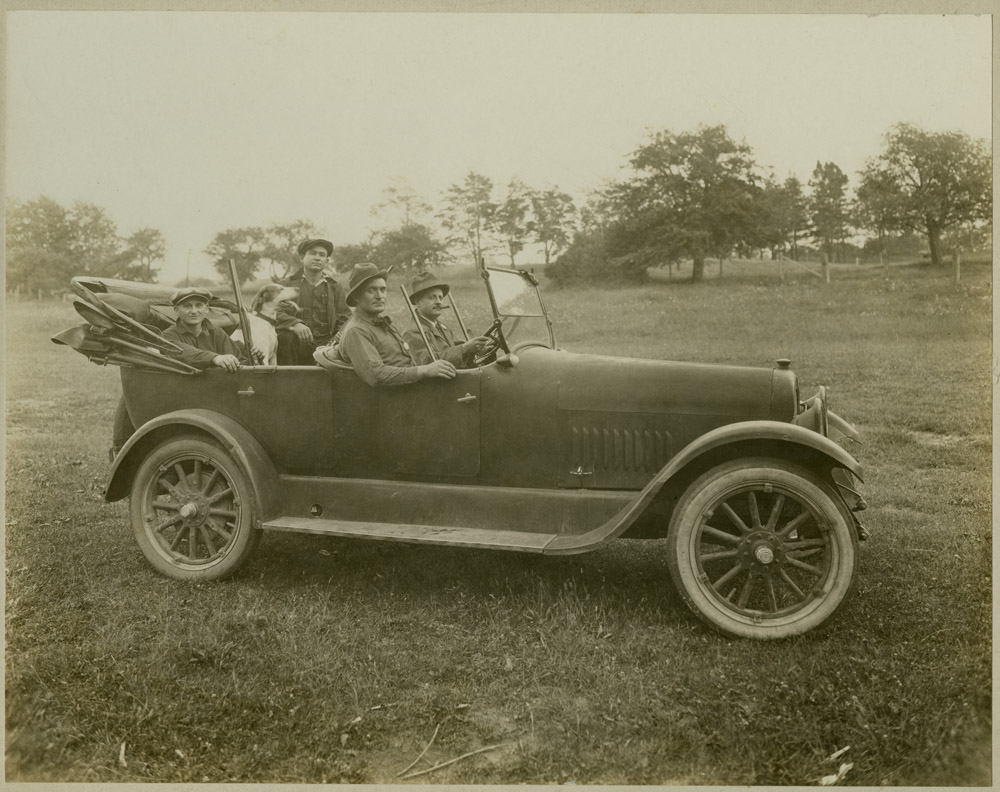
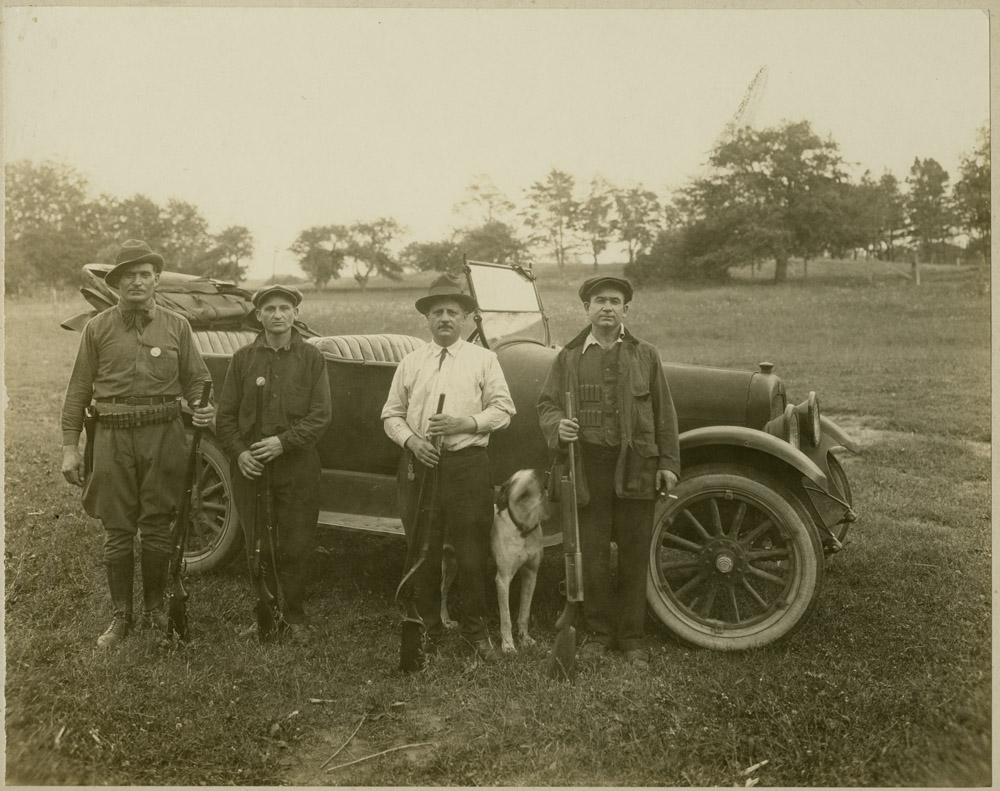
Ca. 1916 Hunting Party

1916 Hunting Party in car, by John D. Isaac, Batavia, NY
1916 Hunting Party, by John D. Isaac, Batavia, NY

These are 8×10″ prints mounted to 11×14 inch boards. The reverse of each is stamped “John D. Isaac, Batavia, New York”. These gentlemen all appear to be a family – there’s way too much resemblance between three of the four to be anything other than brothers/father and sons. And I love the dog being included in the photo, and hopping up in the back seat like just another passenger. Just goes to show dogs have always loved cars.

The big mystery is the car – what make is it. I initially thought it was a Dodge, from the shape of the fender and the headlamps, but the grille is not quite right, and neither is the maker’s enamel plaque on the grille, or the hood vents, the door opening pattern (suicide door on the front, standard in the rear) or the contour of the cowl where the hood fairs into the body. This is a larger, more luxurious car than a Dodge, but the common (and not-so-common) marques I can think of to look up don’t seem to match either. It’s not an Essex, Hudson, Hupmobile, Locomobile, Plymouth, Haynes, Mercer, Peerless, Pierce Arrow, Buick, Cadillac, or Overland, that I can tell. It could be as late as the early 1920s, but it’s definitely not past 1930.

EDIT: Doing some more digging, I think I found what it is. It’s a ca. 1916-1918 Studebaker, most likely a Light Six touring car.