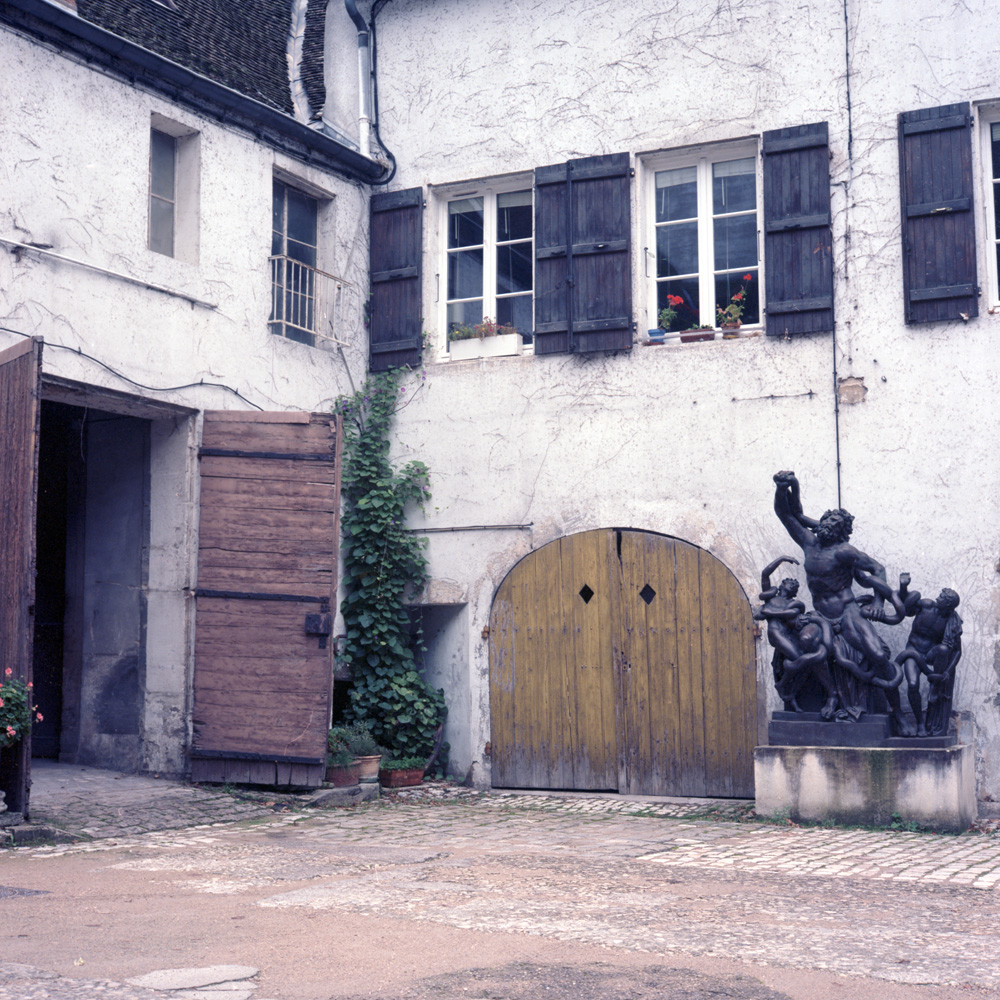
Around the corner from the Musee Niepce and the Chalon tourism office, I encountered this fascinating courtyard. Perhaps the single most surprising element was the massive bronze Laocoon statue in an otherwise ordinary if picturesque courtyard. Why and how the statue ended up there is a mystery.
Laocoon Courtyard, Chalon
If you remember your mythology, Laocoon was a Trojan priest who predicted the Greek gift of the Trojan horse but was not believed. There are multiple versions of why the gods sent serpents to strangle him and his sons, ranging from dishonesty to defiling temple virgins. Regardless of the why, his story became famous, and has been commemorated in art from ancient times. There is a Roman marble of this scene, probably modeled after a Greek one, which was then emulated multiple times in stone and metal during the Renaissance.
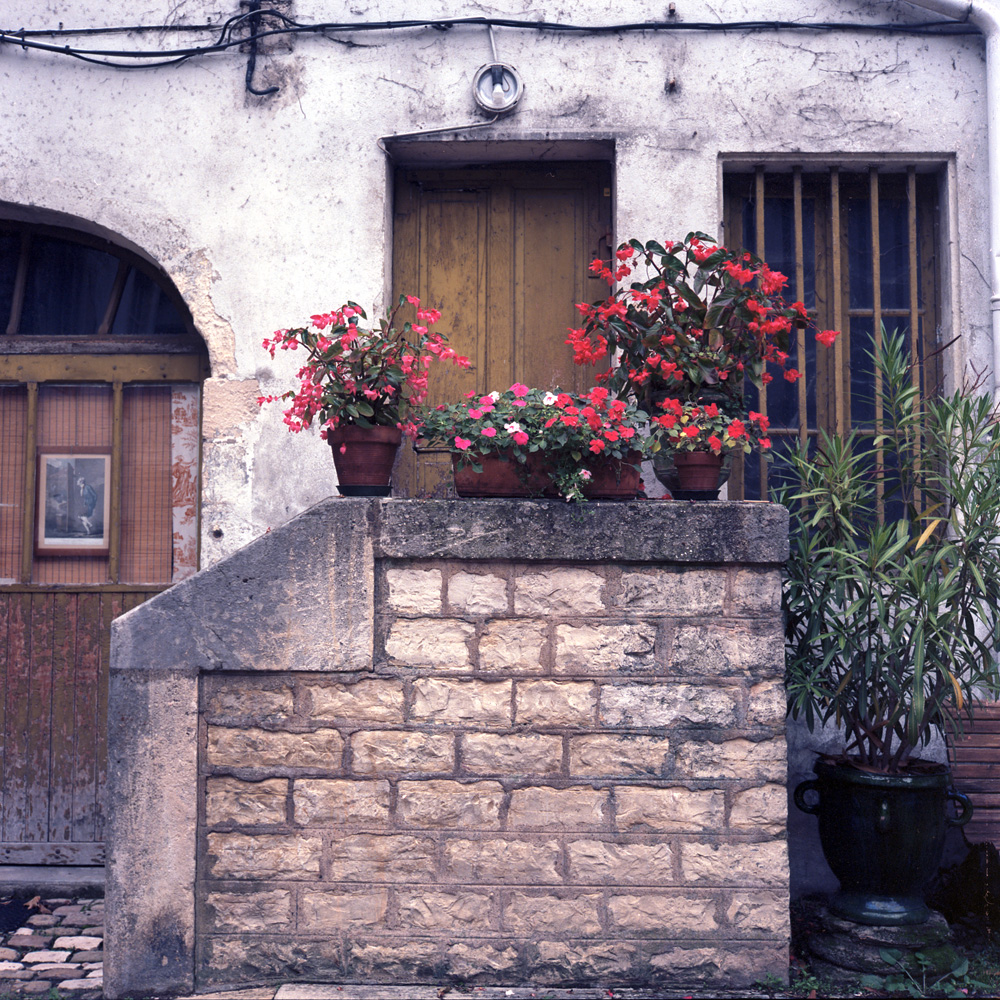
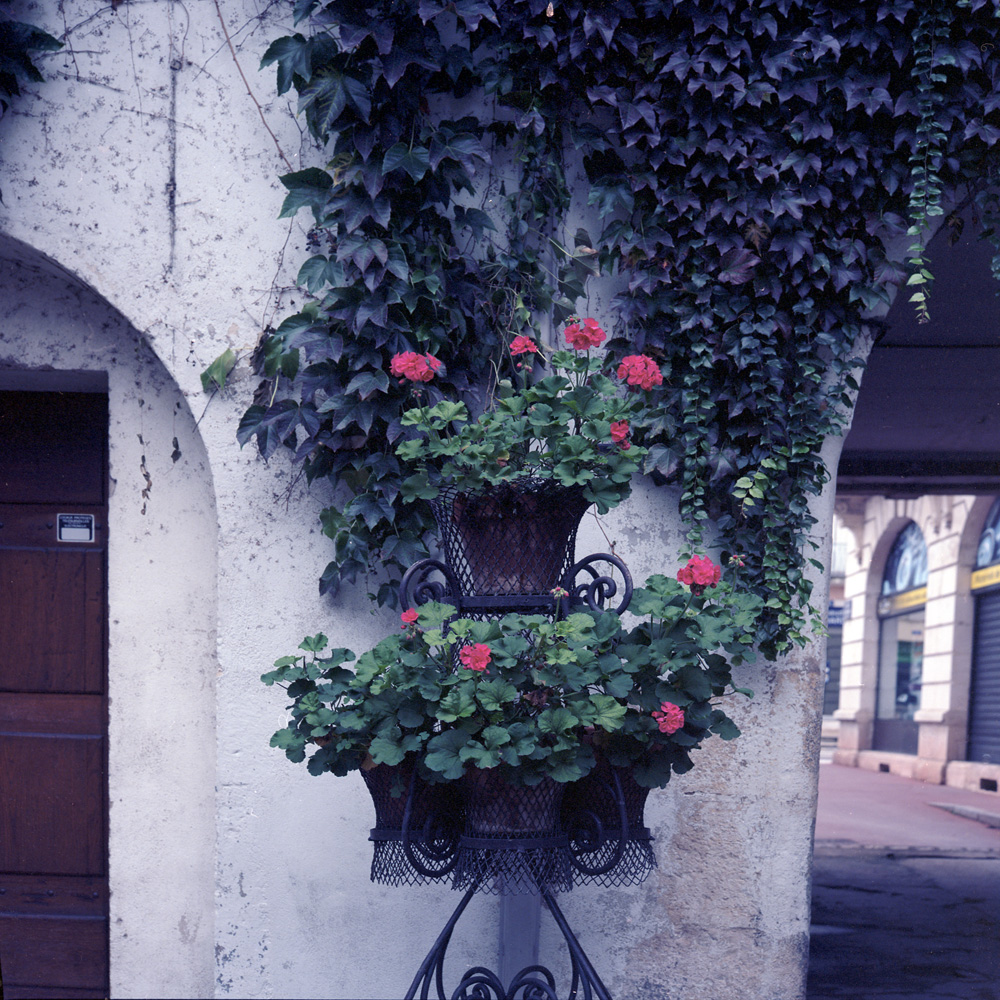
Someone who lives in this courtyard favors geraniums.
Courtyard residences seem to be extremely popular in France. I suppose it’s for the relative privacy you have compared to facing the street, especially in older urban areas where stepping out your front door puts you literally a sidewalks’ breadth away from traffic. And it provides opportunities for parking that you wouldn’t get elsewhere. I think I’d like to live on a courtyard if I lived in Paris, or even in a town like Chalon. Who wouldn’t enjoy walking down the stairs every morning to be greeted by your own classical Greek statue?
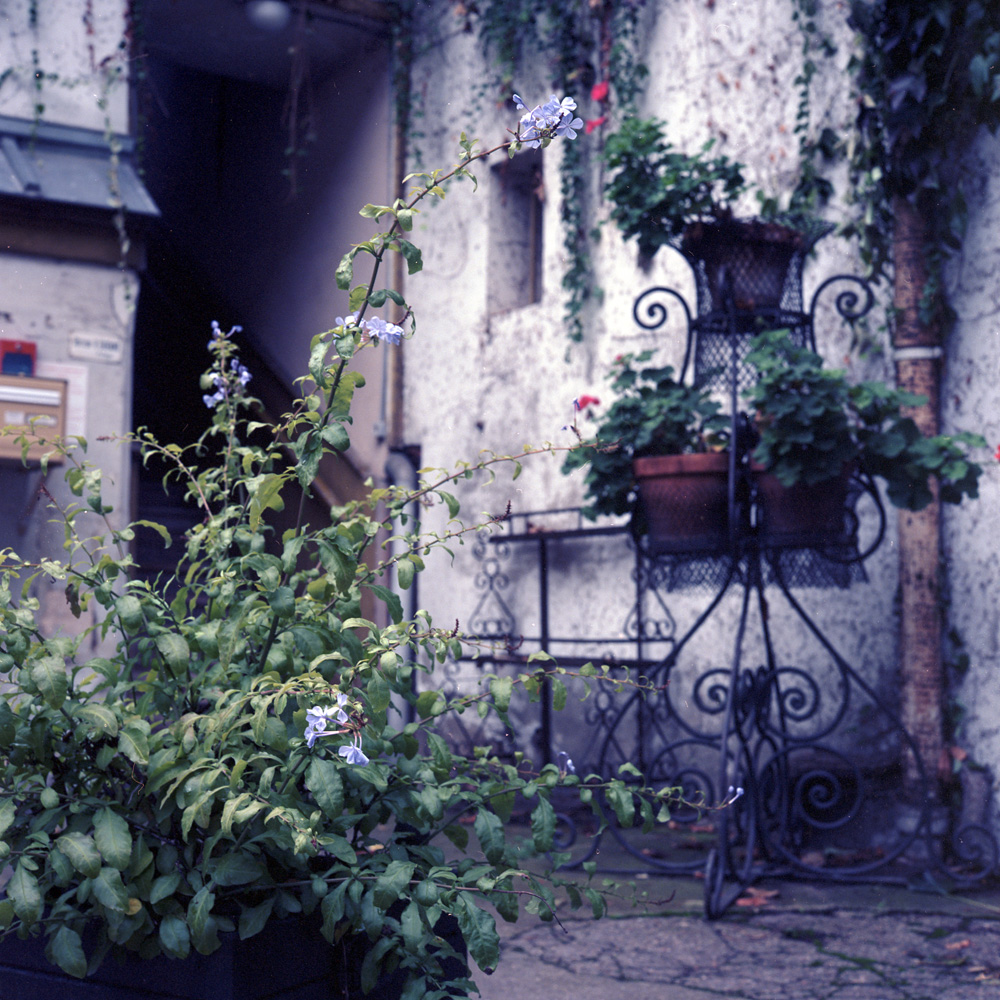
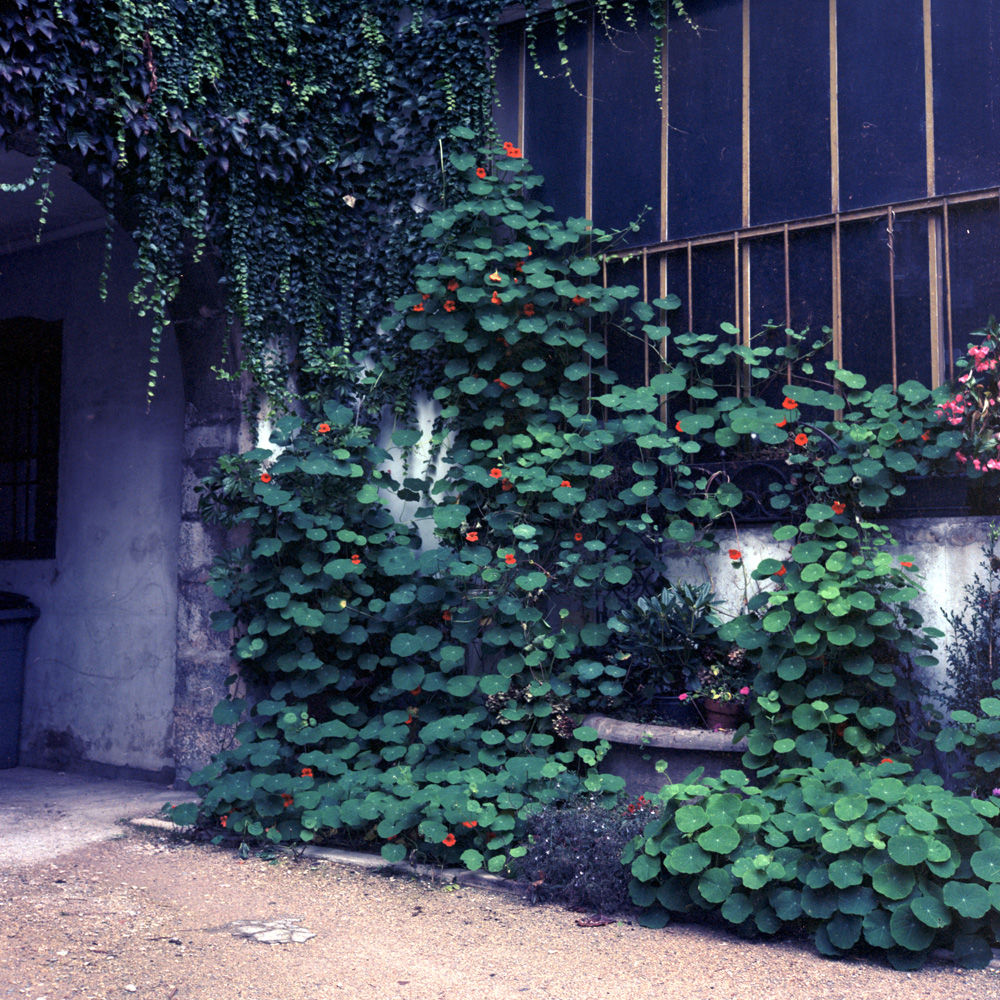
Greenery of all kinds, in fact, is a hallmark of the space. These flowering vines had taken over the wall and partially obscured the window into the workshop. If my understanding of French is any good, the workshop behind these windows was a specialist in antiques and restoration. I couldn’t tell if they were open at the time so I didn’t try to venture in.
Vines, Windows, Courtyard, Chalon
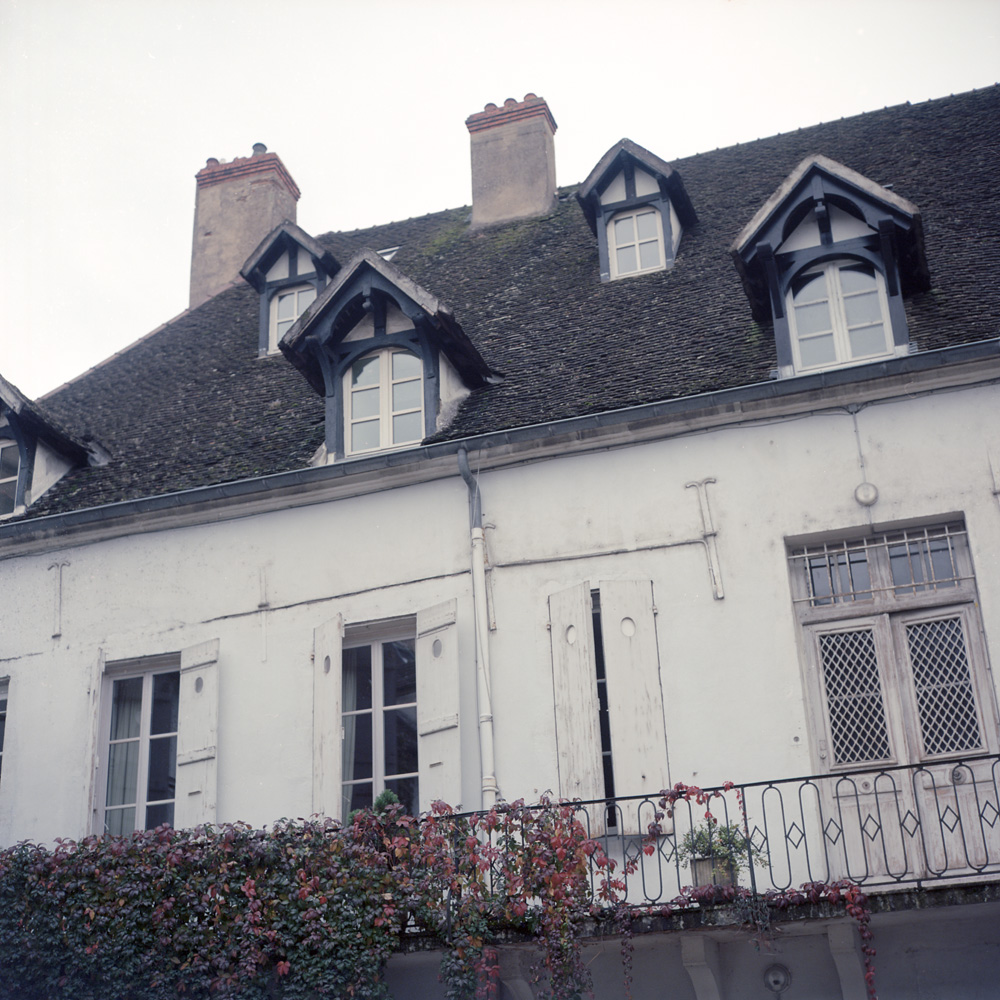
Another somewhat Swiss-looking architectural element, the peaked gabled windows in the roof:
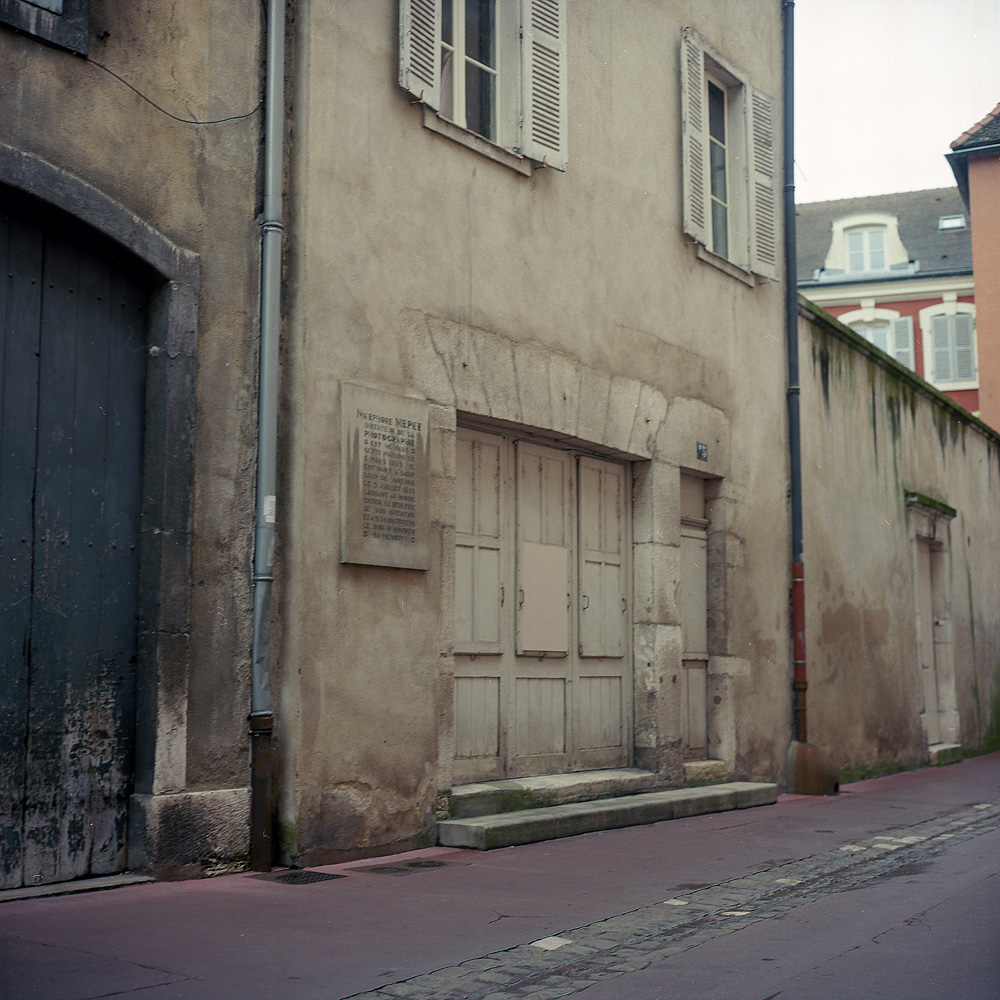
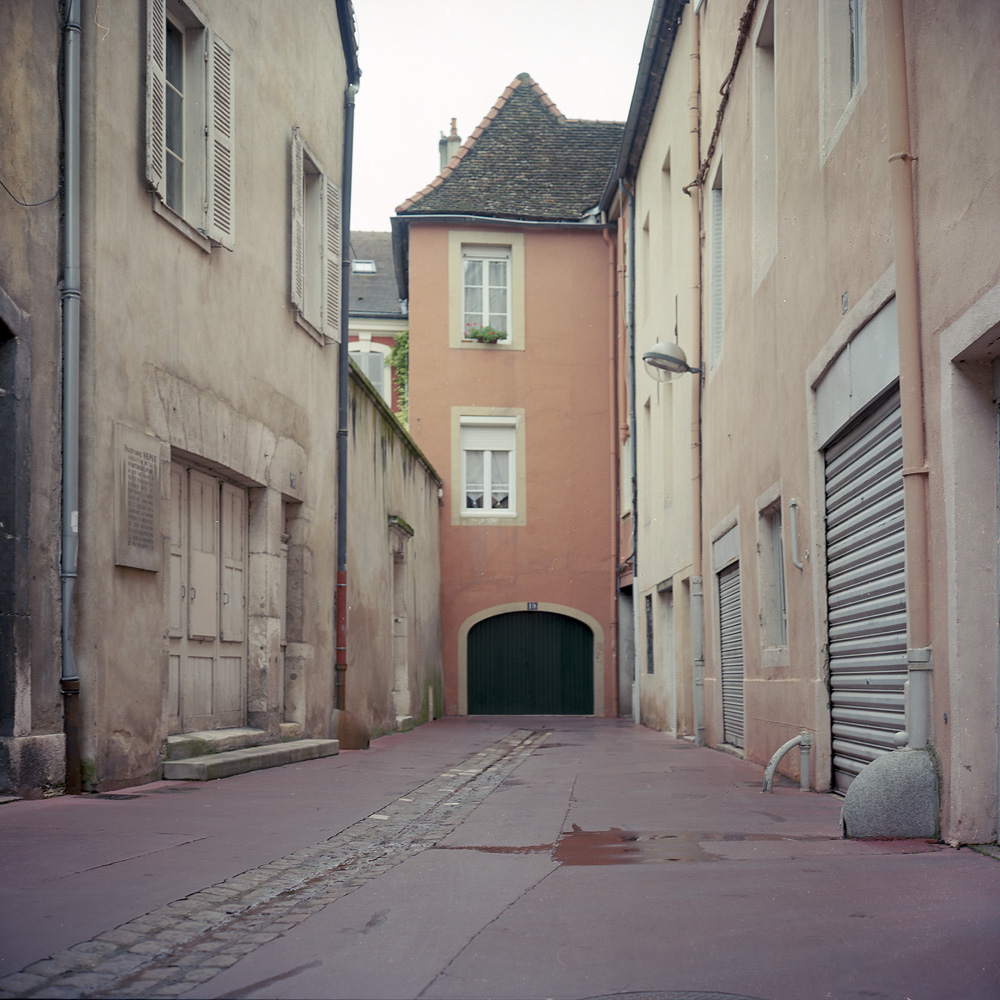
Joseph Nicephore Niepce was born in Chalon-sur-Saone on March 7, 1765 in a house at 9 (now 15 in the new address scheme) Rue De L’Oratoire. The house as it stands today is rather nondescript and gives no clue as to the inspiration behind the man who would invent photography. Rue De L’Oratoire is really more of an alley, closed in on one end, and the other opens to a pedestrian-only street.
In this view of number 15, Rue De L’Oratoire, you can see the plaque on the wall indicating the house where Niepce was born.
Niepce’s Birthplace, 15 Rue de L’Oratoire
A view of the street, including the house:
Niepce’s Birthplace, Rue De L’Oratoire
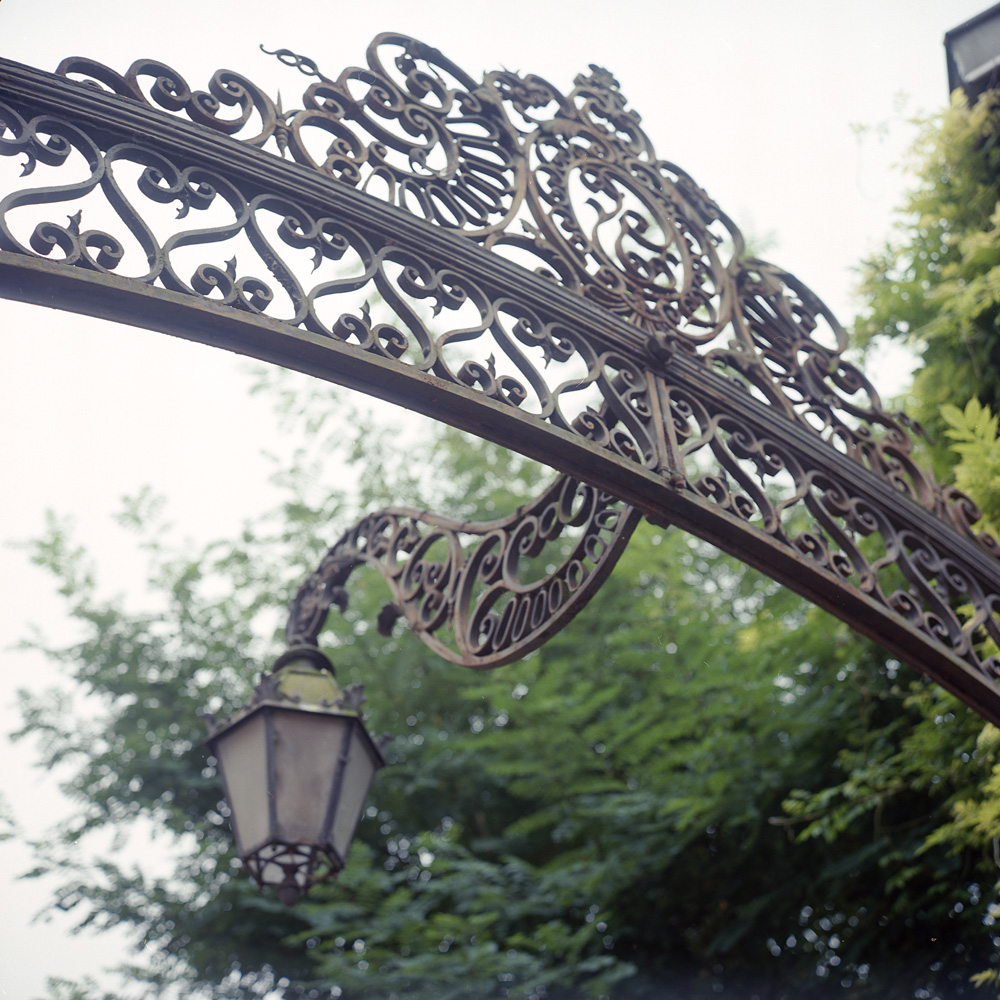
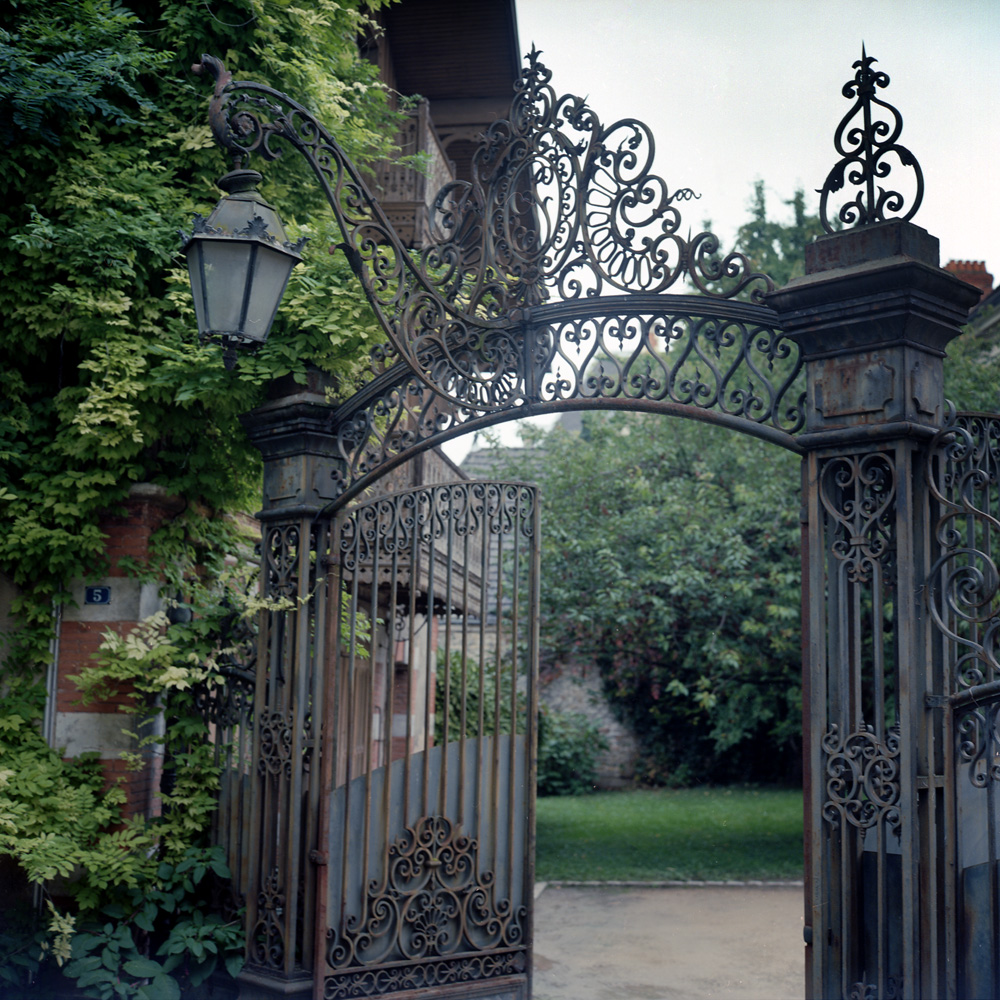
If you are approaching Rue de L’Oratoire on foot from Rue General Leclerc, there is a driveway into which you can turn, at the end of which is this very ornate iron gate and lamp, guarding a private courtyard. I could not confirm but I believe the front of Niepce’s house faces this courtyard, which is infinitely more appealing than the Rue de L’Oratoire side. I did not photograph the house itself as it is currently lived in by private citizens.
Lamp, Iron Gate, ChalonIron Gate, Chalon
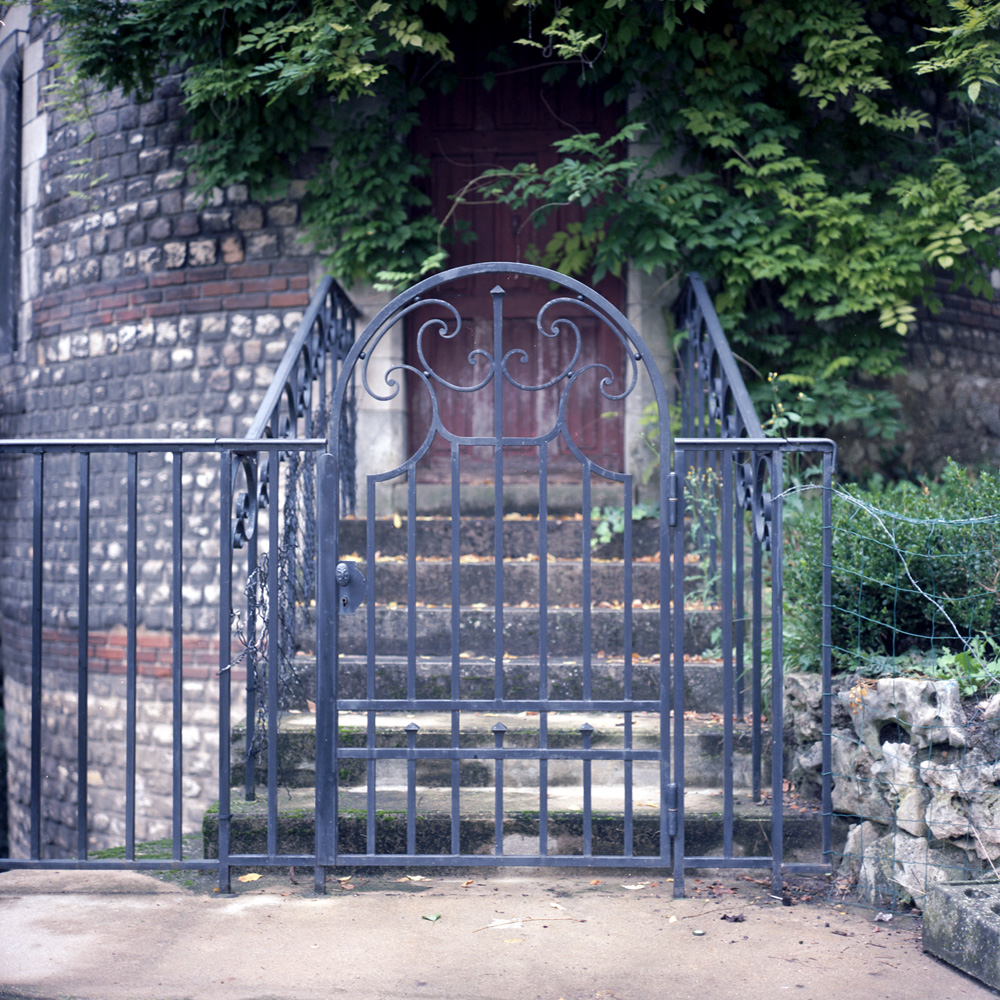
The approach to the Rue de L’Oratoire from Rue General Leclerc is through what is now a car park, at the back of which can be found the Tour Saudon, a medieval tower. I assume the car park was once gardens for the tower. This is a close-up of the iron gate and door to the tower, which again, to the best of my ability to determine, is not open to the public.
Gate, Door, Tour Saudon
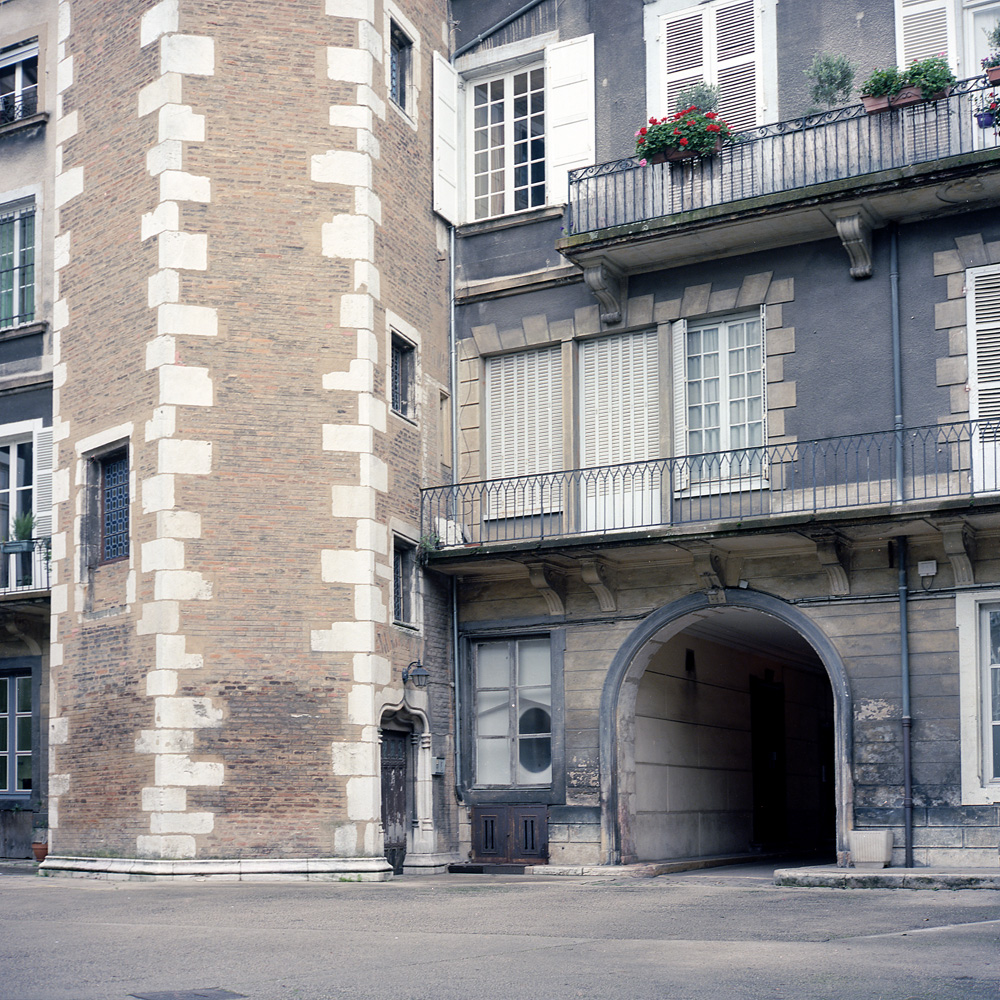
Across Rue de L’Oratoire from the Tour Saudon, there is a 17th century courtyard apartment building. I could have spent an entire day just doing a photo essay on this courtyard. I would have loved to have seen inside some of the apartments – what would they look like now, and how would the layers of history be exposed/concealed in such a space?
17th Century Courtyard
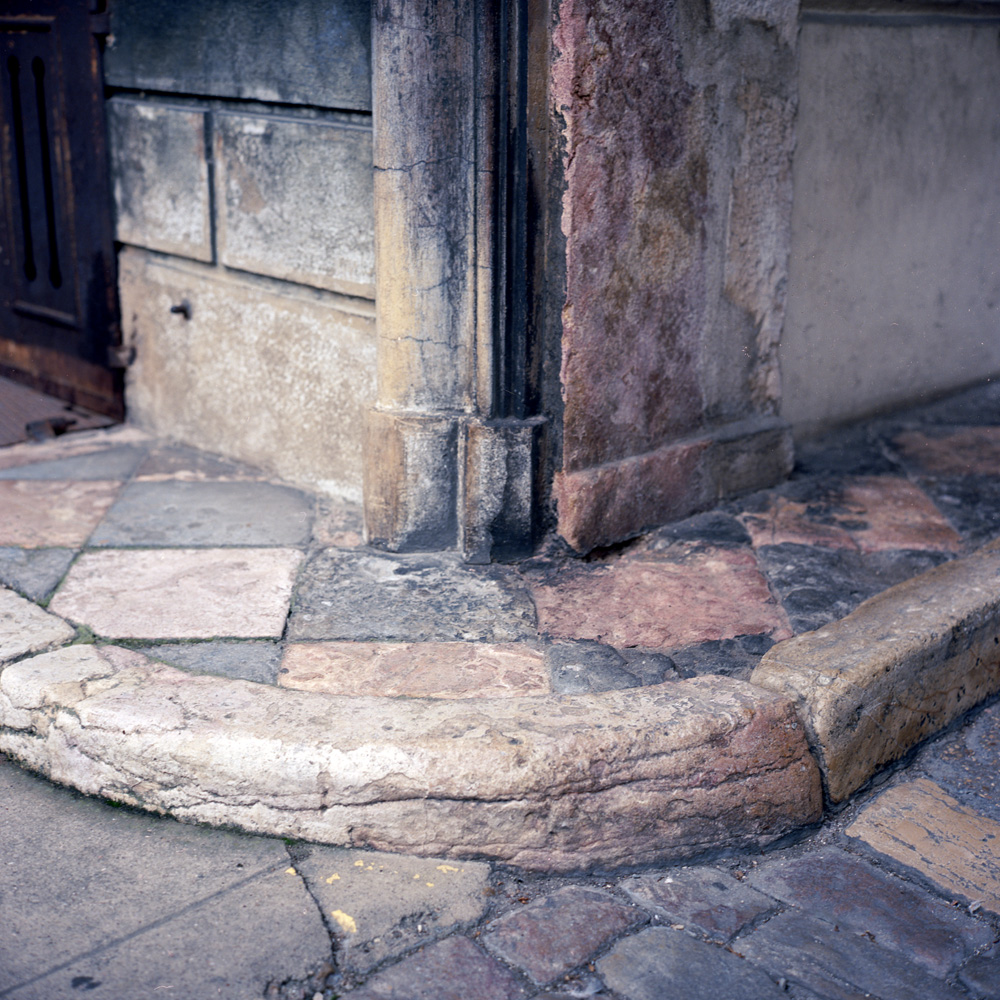
The red-and-black marble tile paving on the sidewalk inside the carriageway is an enchanting detail to the space, and a very clear sign of its age. It almost feels like you’re looking at a painting, and not the actual stone.
Red and Black Marble Sidewalk, 17th Century Courtyard
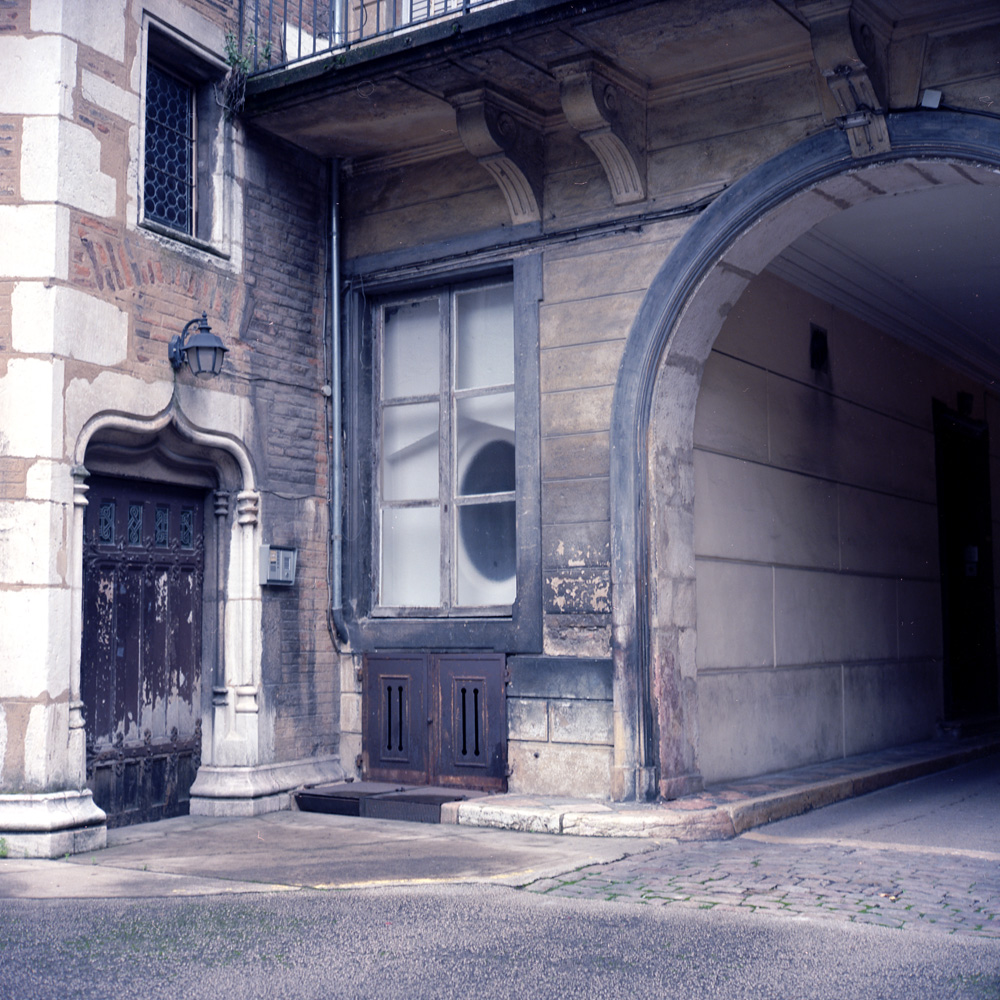
The carriageway into the courtyard is, I suspect, the primary means of vehicular ingress and egress to the Rue de L’Oratoire, as the intersecting street at the bottom of the Rue is a pedestrian-only thoroughfare.
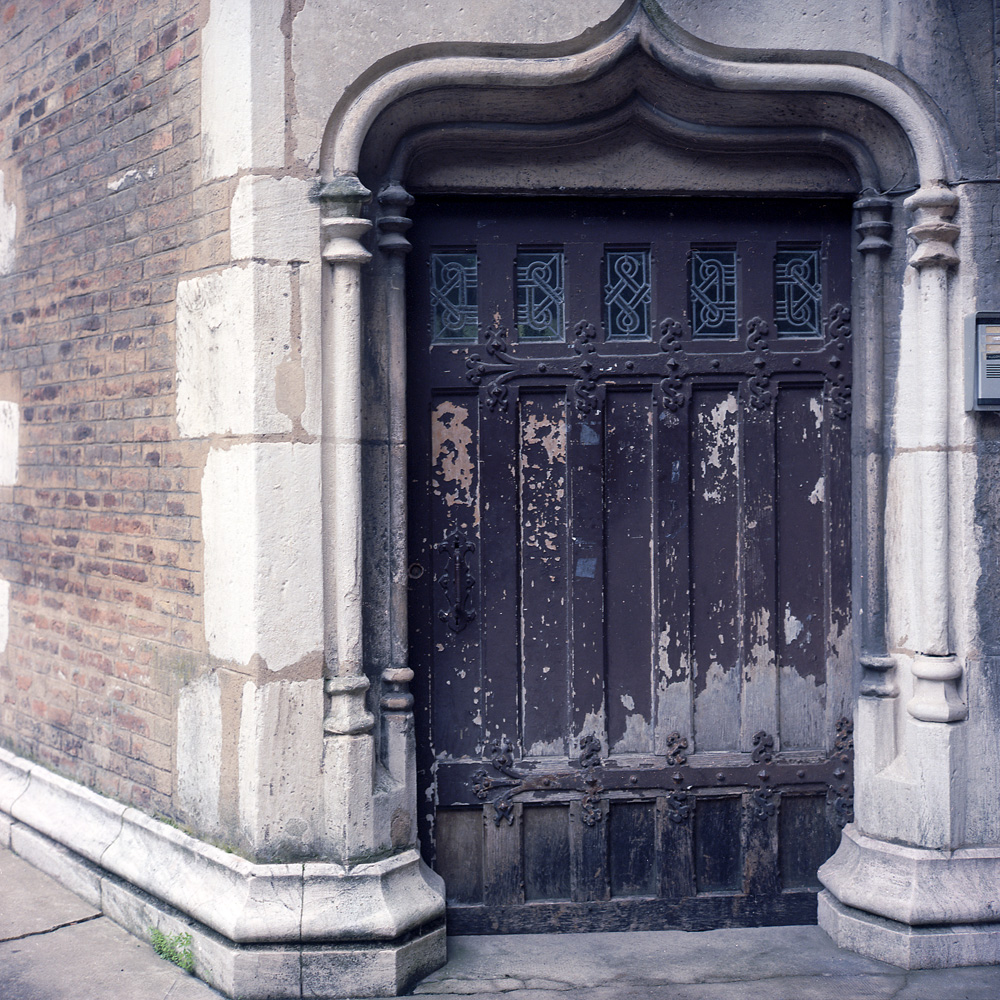
Door, Window, Carriageway, 17th Century CourtyardStaircase Tower Door, 17th Century Courtyard
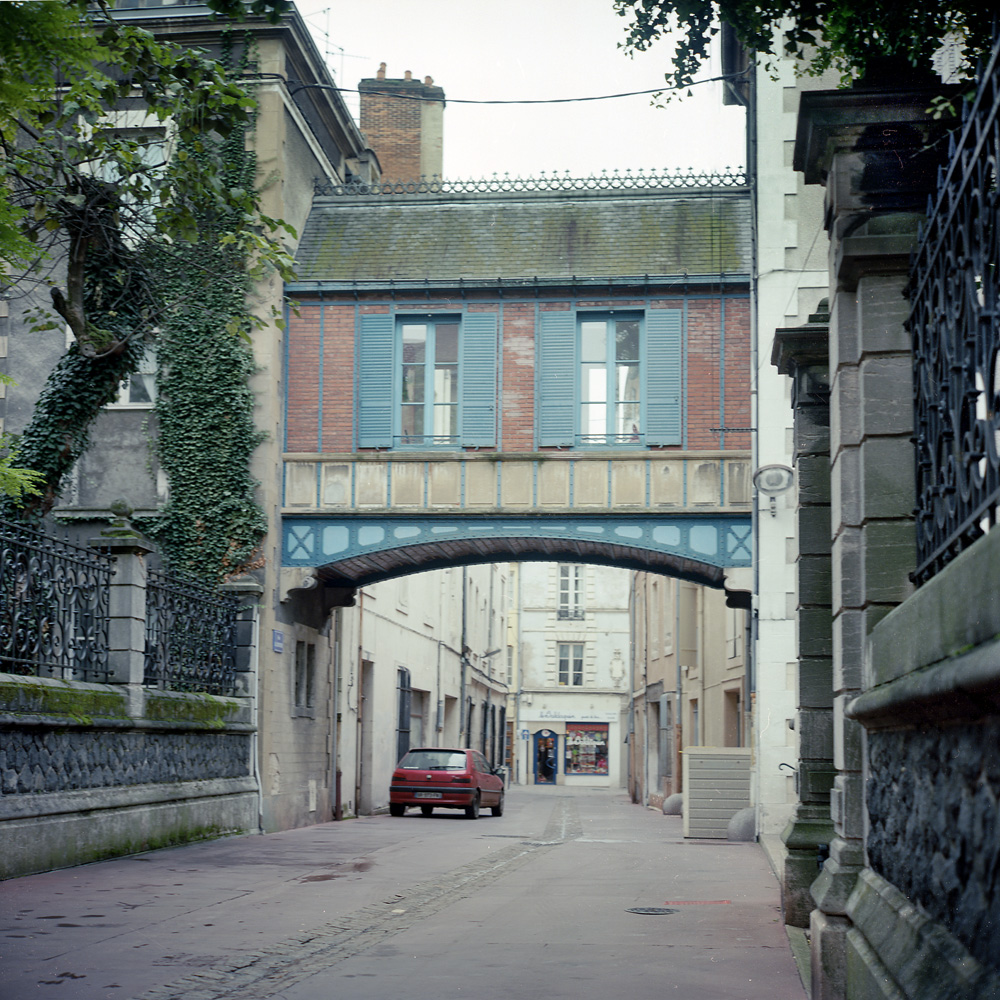
If you look through the archway over the Rue de L’Oratoire, you can see the pedestrian street, the Rue au Change. If the overpass connecting the apartment building with the building across the street looks Swiss, it should not be surprising in Chalon- it is about 70 miles (120km) to Geneva from Chalon. The building in the courtyard to which the iron gate and lamp at the top of this post is attached on the left looks just like a traditional Swiss chalet that you’d expect to see on an alpine meadow, not in the middle of a French town.
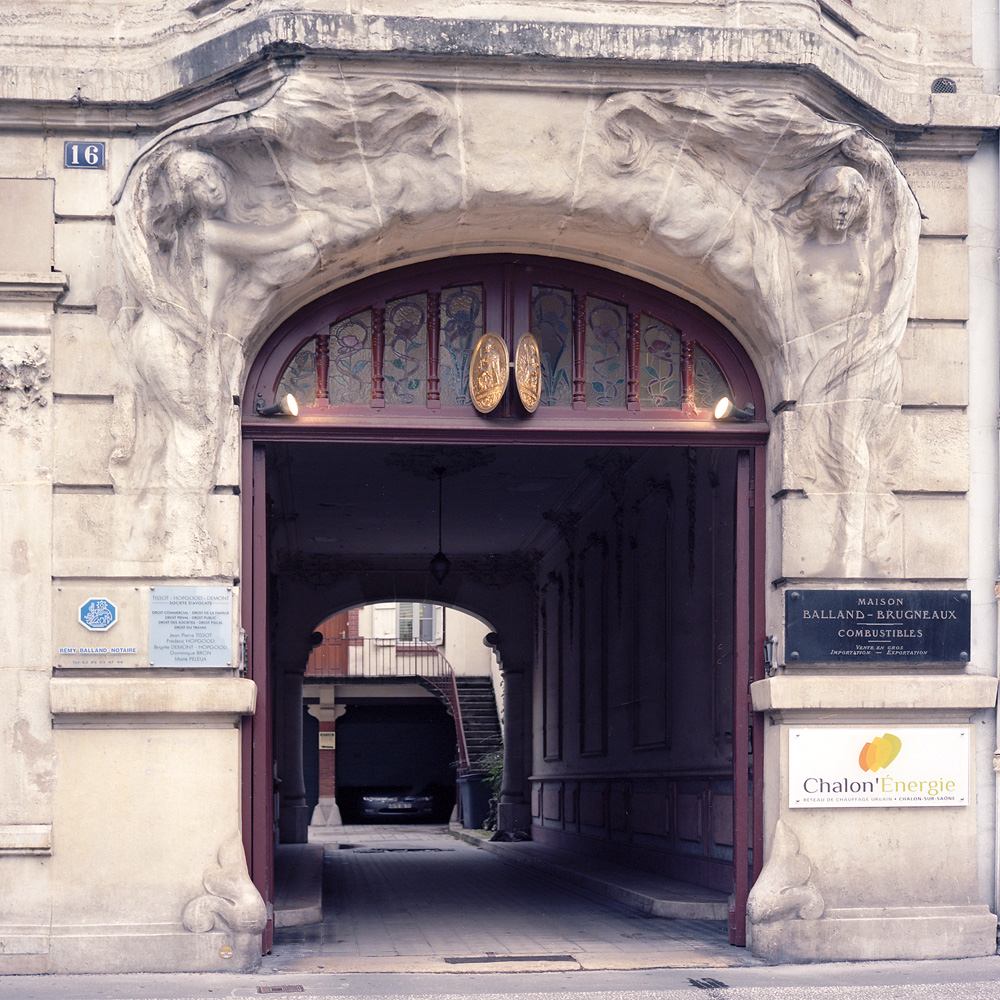
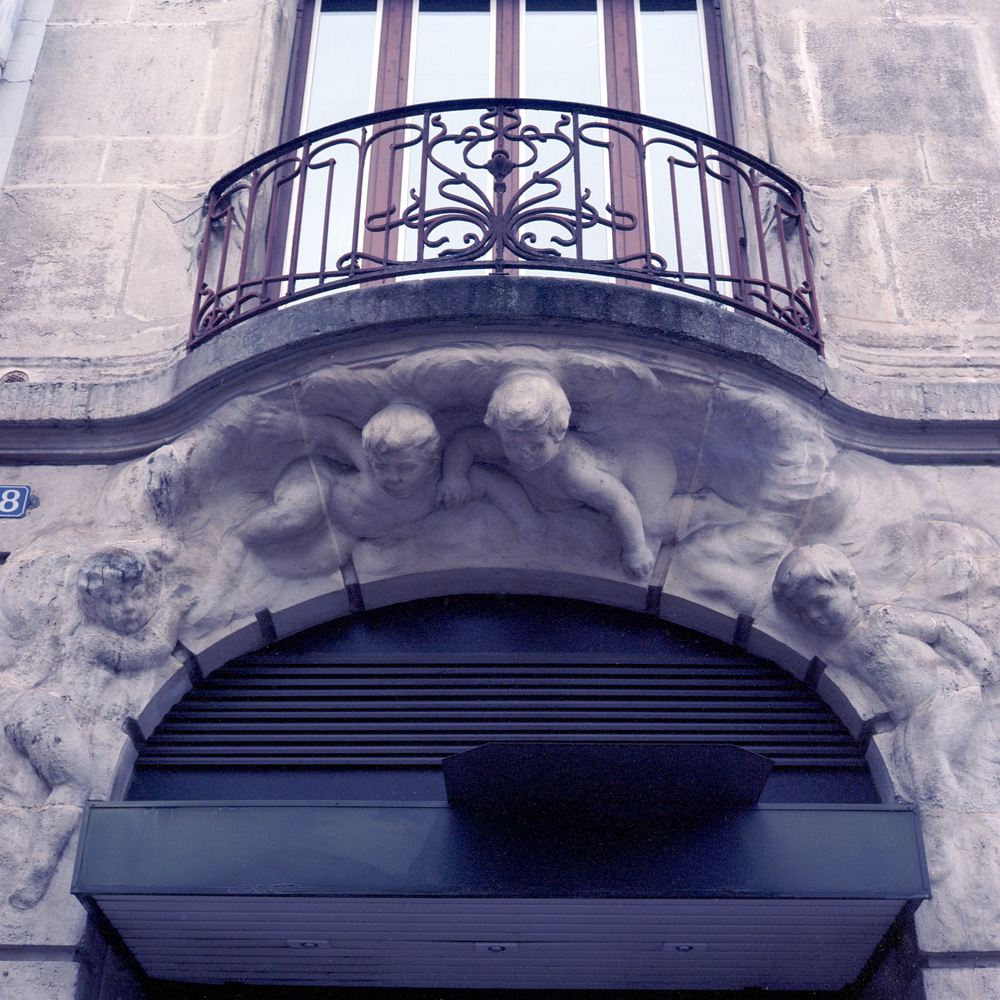
On the Boulevard de la Republique there is this fascinating Art Nouveau building that stands out amidst its neighbors. Having spent 10 days in Barcelona, perhaps the global epicenter of Art Nouveau, it’s hard not to be sensitive to it. A Gaudi building this isn’t, but the sculptures over the doors that support the first floor balconies are particularly notable – they look like they’re organically emerging from the stone, or perhaps swirling in and out of a magical smoke from some genie’s lamp.
Entrance, 16 Boulevard de la République
The archway over the building entrance (#18) is obviously stylistically linked to the entrance archway to the courtyard behind the building (#16 Blvd de la Republique), but in no way a mirror.
Entrance, 18 Boulevard de la Republique, Chalon-sur-Saone
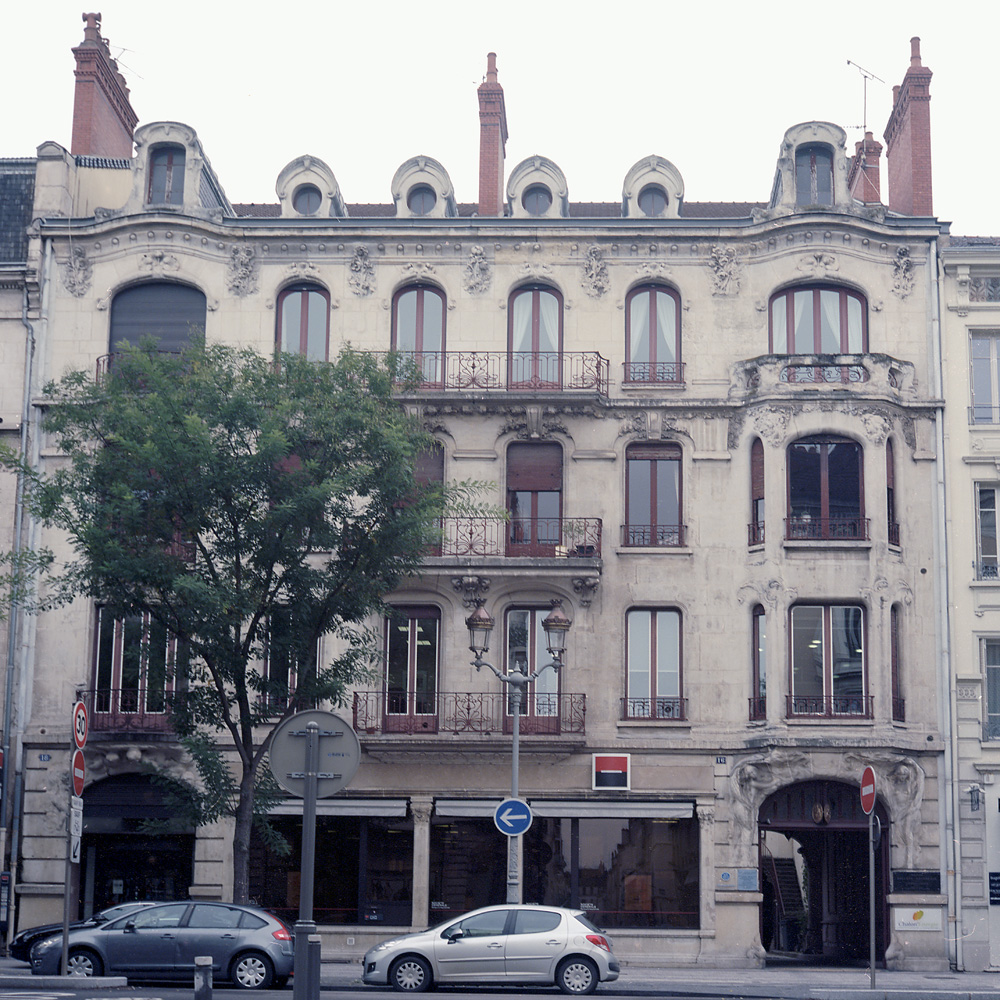
Here is the full facade, so you can appreciate the context of the doorways. I wonder what it housed in the past, and for what purpose it was built. Today there appear to be offices in the building on the lower levels, and possibly apartments on the upper floor.
Facade, Number 16-18 Boulevard de la Republique, Chalon-sur-Saone
I did not see anything else like it in town, in my admittedly extremely brief survey of Chalon, which makes me wonder all the more about the motivation for building it. How did this come to be? It’s obviously prior to the (now gone) Kodak presence in Chalon. It also doesn’t have the feel of being the residence of a single wealthy family, like the Gaudi commissions in Barcelona.
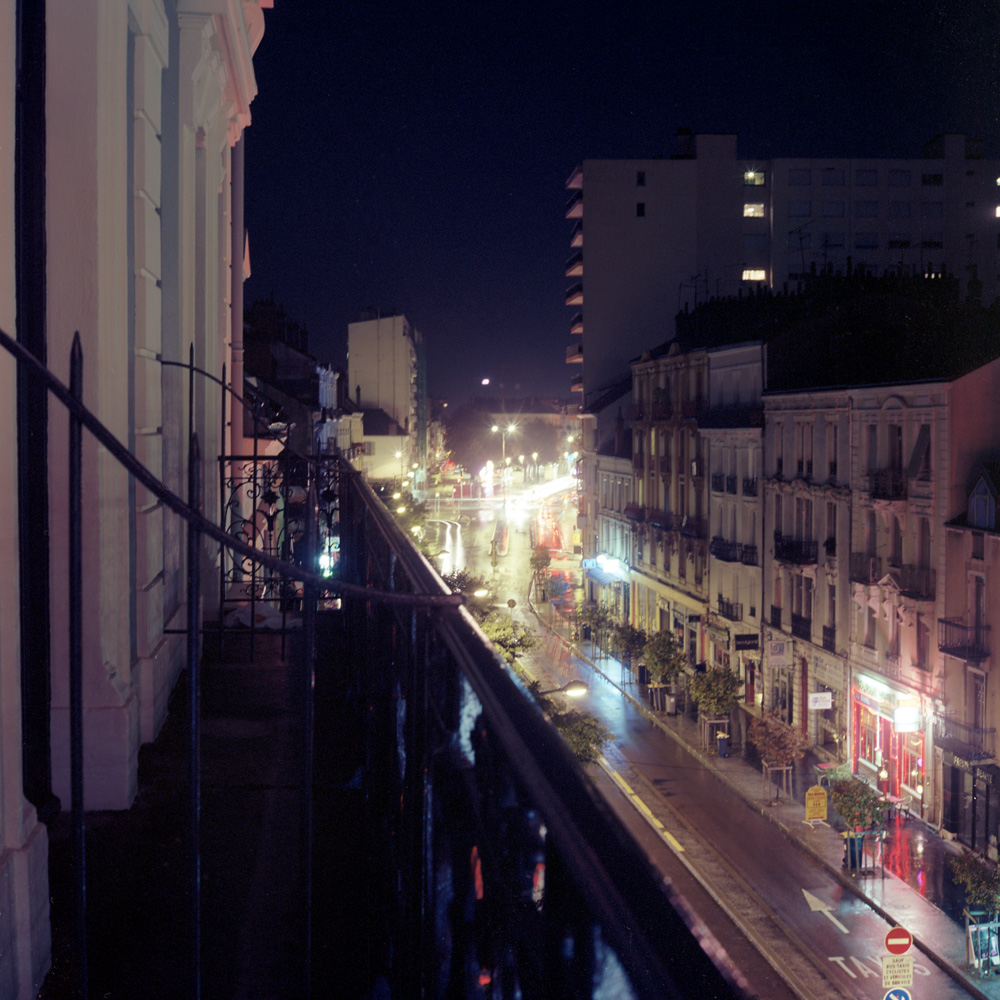
I know, Chalon-sur-Saone is NOT in Paris. It is in fact several hundred kilometers from Paris, and about 120 kilometers from the Swiss border, on the river Saone, which feeds the Rhone. I stayed at the Hotel St.Georges, which is immediately adjacent to the train station. It was the perfect location in town for me because of my travel schedule. It had been rainy off and on the duration of my visit to Chalon. I got lucky when it stopped raining after dinner long enough for me to step out on my balcony and take some night photos. If you’ve been following my blog for any length of time you know I like taking night photos- I think they’re particularly poetic with their distorted colors and blurred motion.
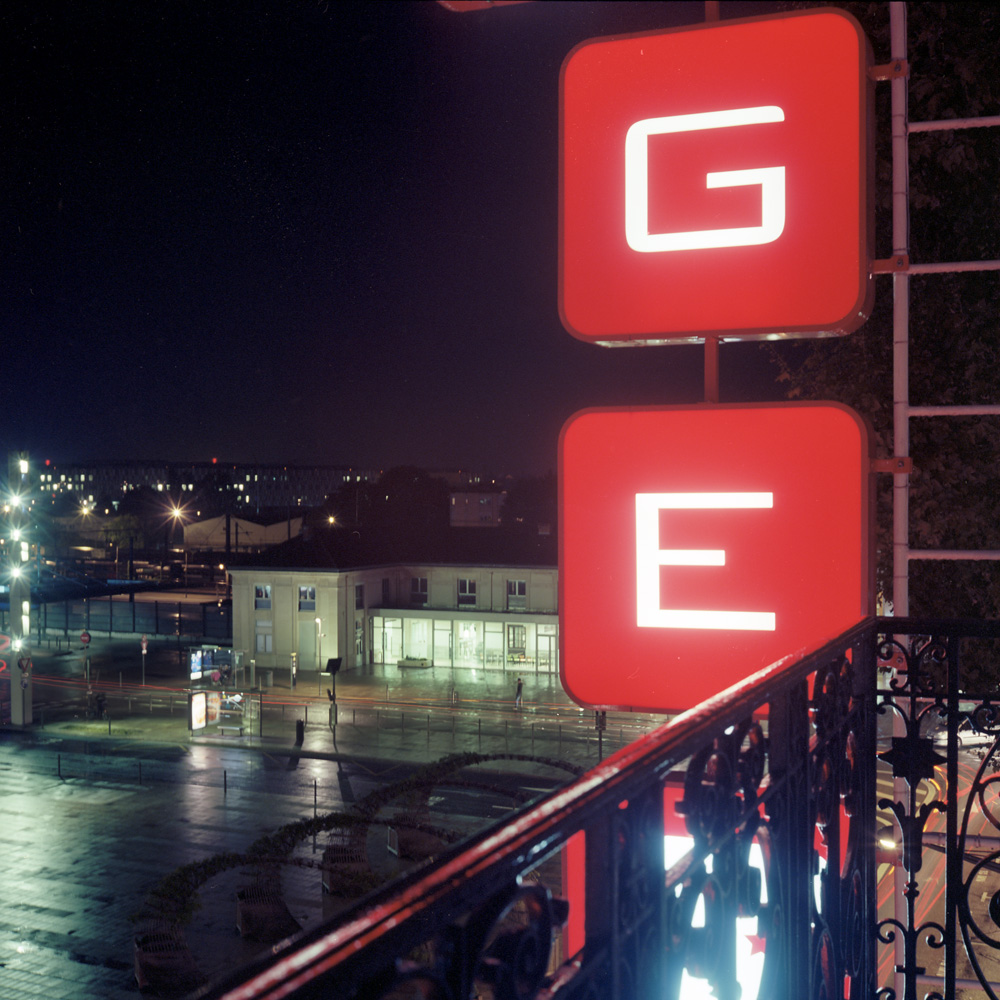
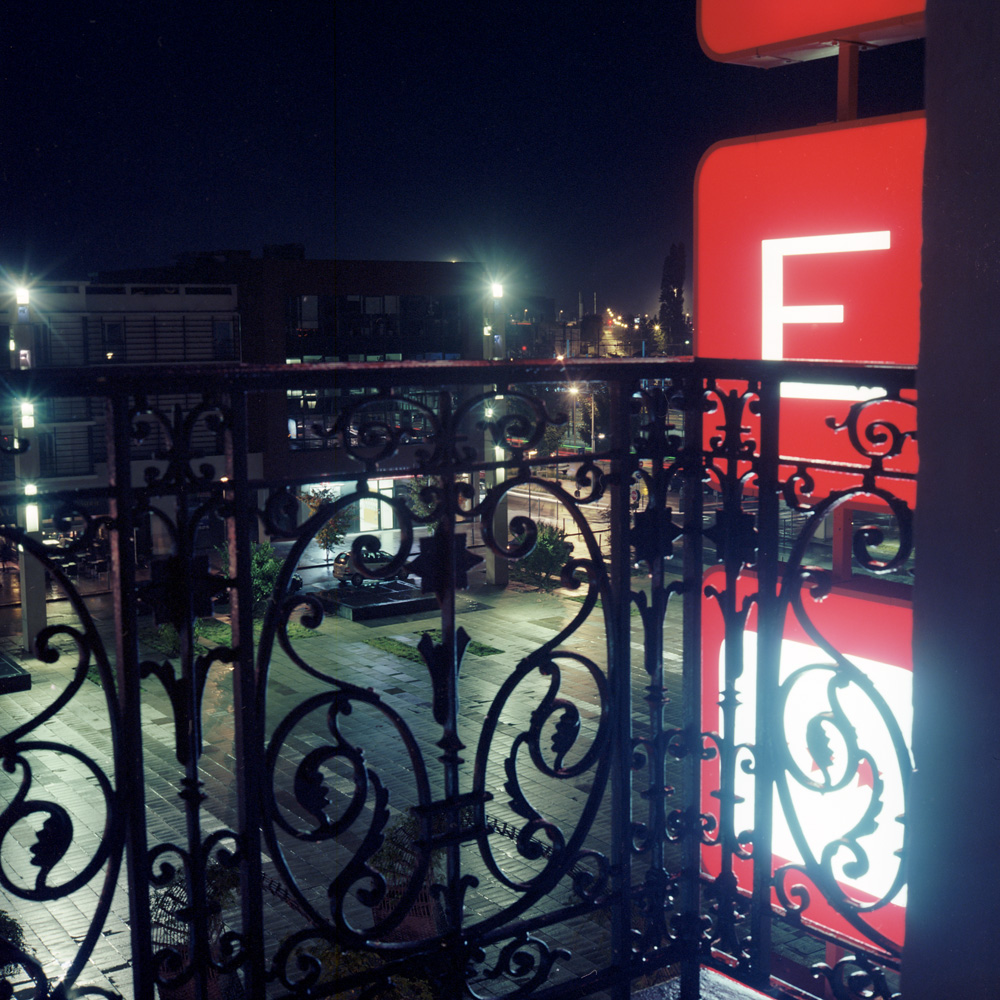
Here is the view of the hotel marquee from the balcony of my room. The train station is in the background.
St Georges Hotel Marquee, Railway Station
A view up the Avenue Jean Jaures from my balcony. In the far background on the avenue you can start to see the lights of a traveling carnival that was set up in town.
Avenue Jean Jaures, St. Georges Hotel, Night
A different view of the plaza in front of the hotel. Across the plaza is the British Pub-style restaurant where I had lunch right after my arrival. The food was excellent and cheap (10 euros for a 3-course lunch!), but it cemented in my mind that the French don’t quite know what to do with pasta – the veal cutlet was delicious, but the pasta that accompanied it was bare, and the marinara sauce came in a dipping cup more appropriate for salad dressing on the side rather than an integral part of a pasta dish.
Balcony Rail, Plaza, Hotel St. Georges
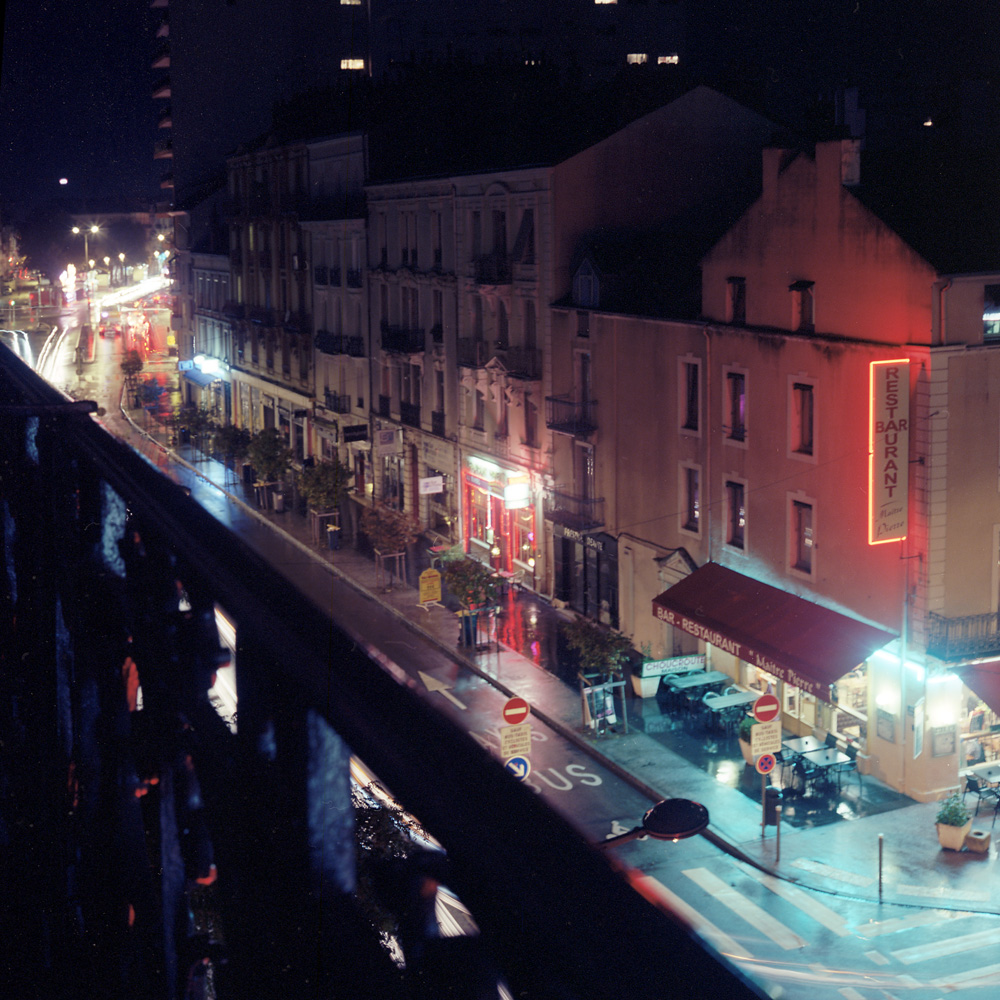
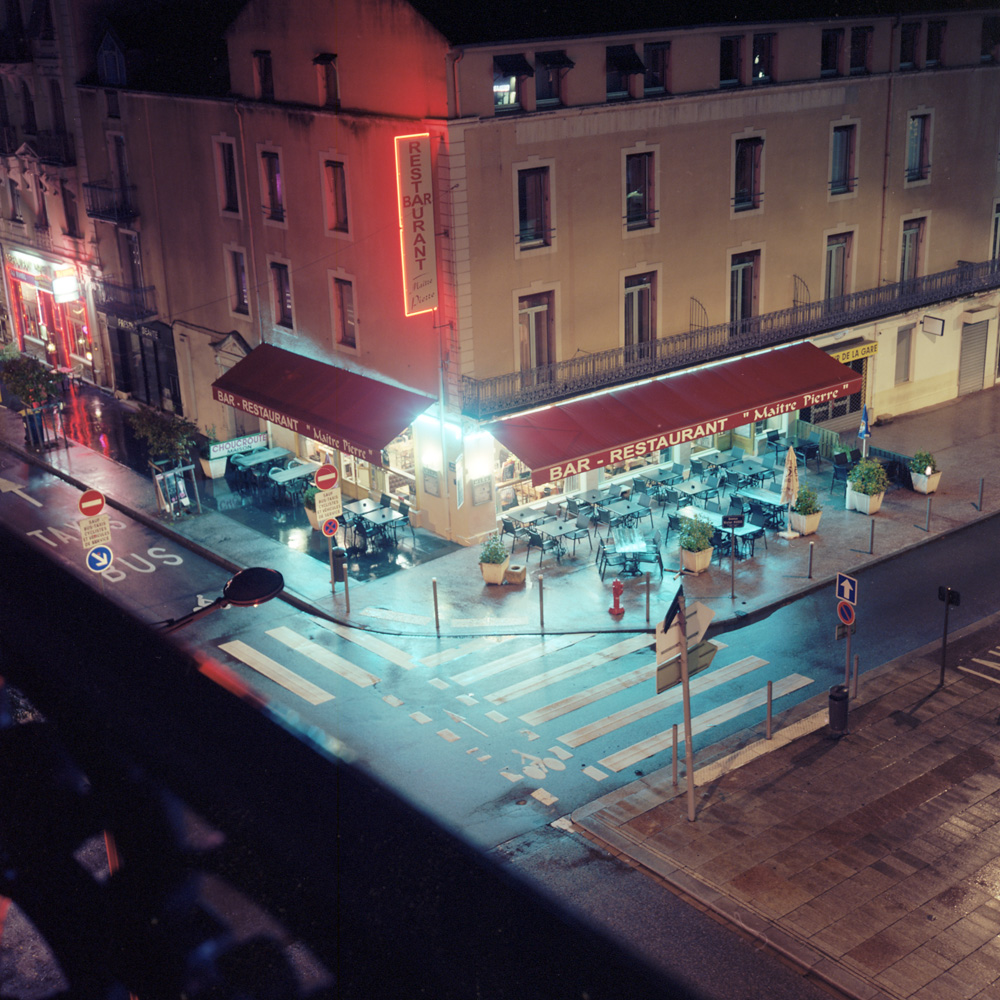
The corner across the street is the Maitre Pierre restaurant, which never seemed busy, and two doors up the Avenue Jean Jaures is an Indian restaurant.
Avenue Jean Jaures, Night
A close-up view of the Maitre Pierre restaurant.
Maitre Pierre Restaurant, Night
Photo-geek techie note, for those who care: shot with my Rolleiflex 2.8E, using Kodak Ektar 100. I may have said this before, but my favorite film for night photography is Portra 160. I love the way it handles mixed lighting and the extreme contrast you get at night. When I came to Chalon, I wasn’t expecting to do any night photography, so I left all the Portra in Paris, and all I had for color was Ektar 100. You can see from these photos that if that suddenly became my only option for color night photography, I wouldn’t be mad. It’s not a case of not liking Ektar for night photography, just liking Portra more.
Notre Dame looks very different in color than in black-and-white. The stone takes on a different texture, the shapes of the arches and buttresses are somehow different, and I think you feel the age of the place much more. This is, after all, a 900 year old building.
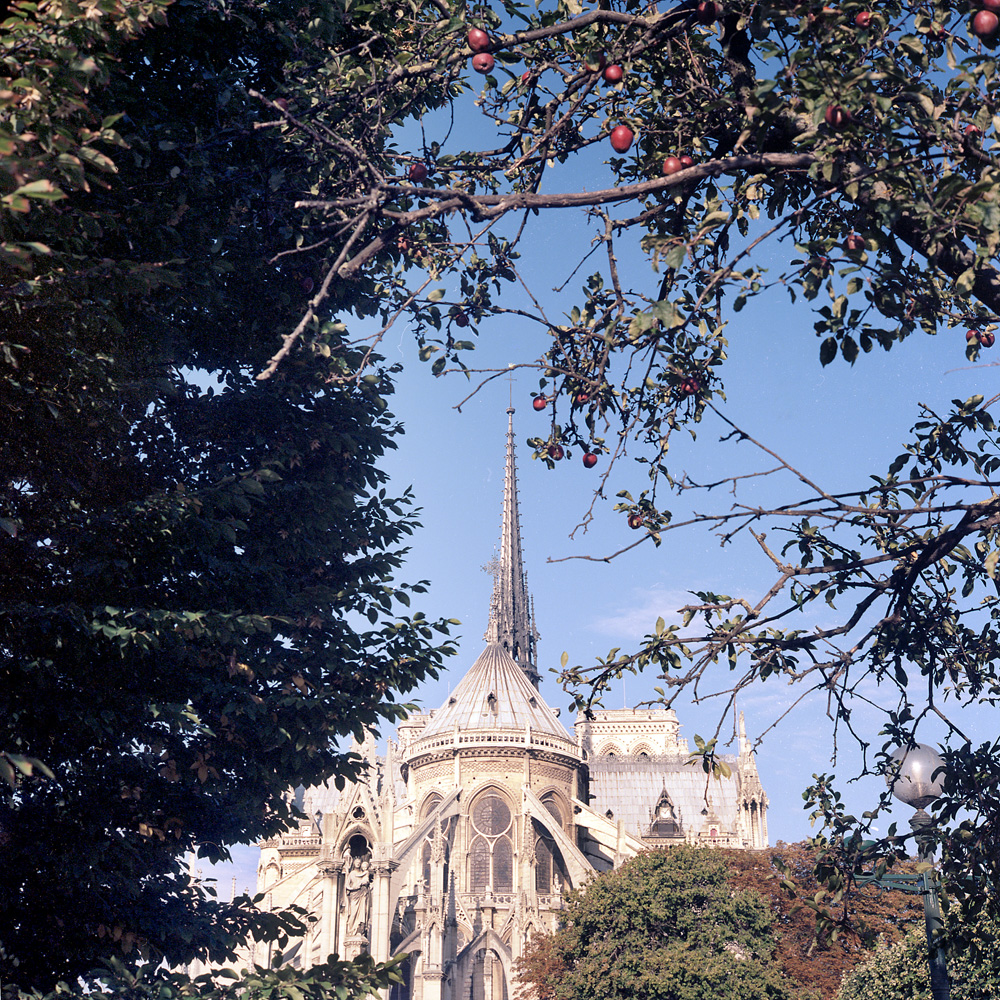
In the garden behind the cathedral, there is an apple tree. The groundskeepers must zealously patrol for fallen fruit, as I never saw one on the ground in a week of passing through. I was talking with someone at work about this apple tree and he observed an irony of having an apple tree in the garden of a cathedral, if you’re into Christian symbolism.
Notre Dame, Apple Tree
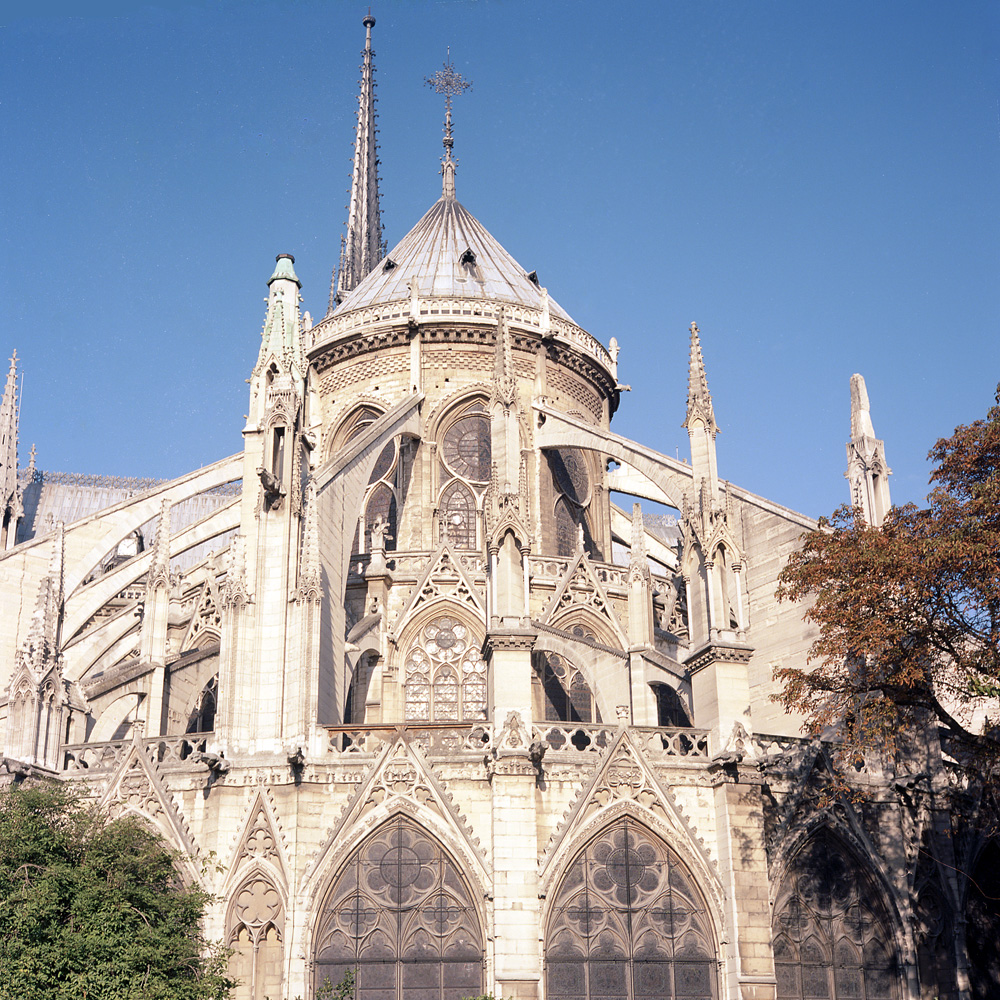
A closer-in view of the rear of the cathedral, including the spire. The towers top out at 226 feet, but the spire and its weather-vane go on to 300 feet tall. I don’t think you realize that when looking at the building because of the relative mass of the towers, and the perspective you have when viewing either spire or towers – you’re always looking up, and at the distances required to see both, the height differential is erased by perspective. You can clearly see in this photo the stacked wedding-cake structure of the building – the lower floor with its side chapels spreads out much wider than the center aisle.
Notre Dame, Rear
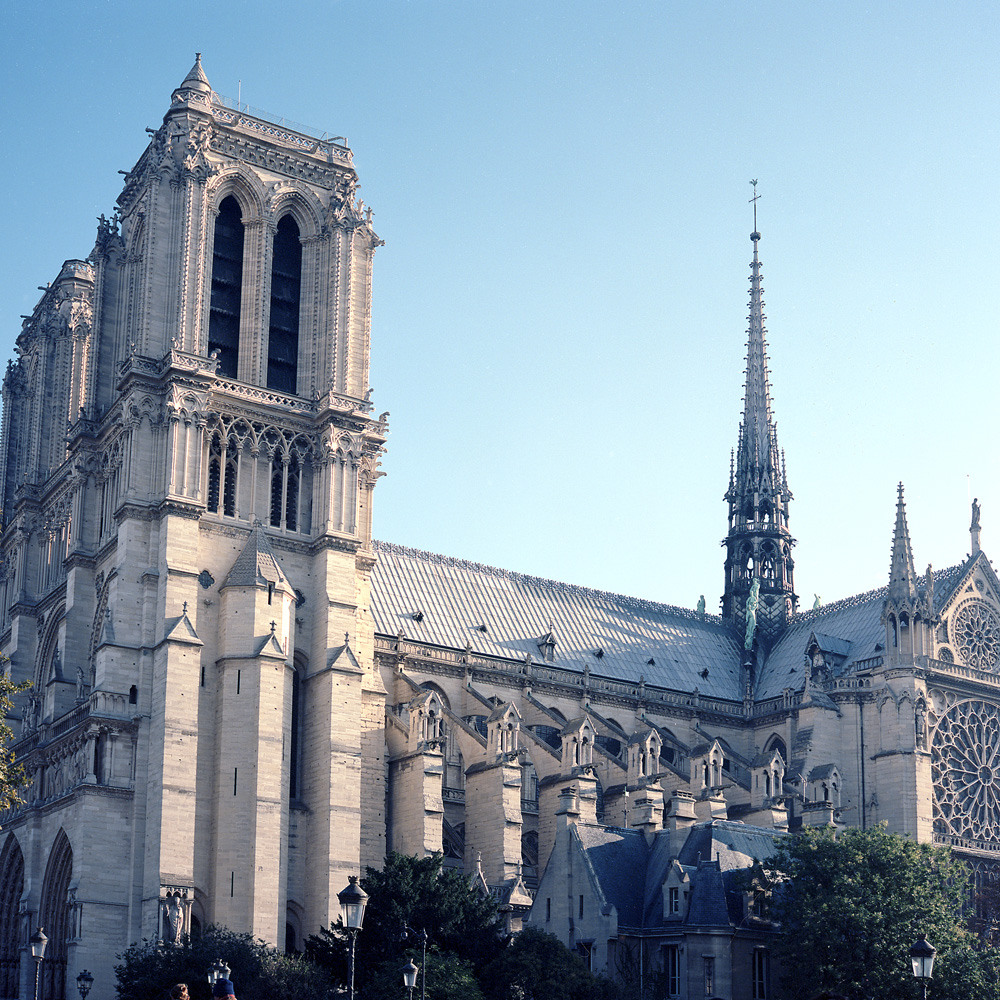
A side view of the cathedral, showing both the towers and the spire. Even from this view it’s hard to see an extra 75 feet of height on the spire.
Notre Dame, Side View
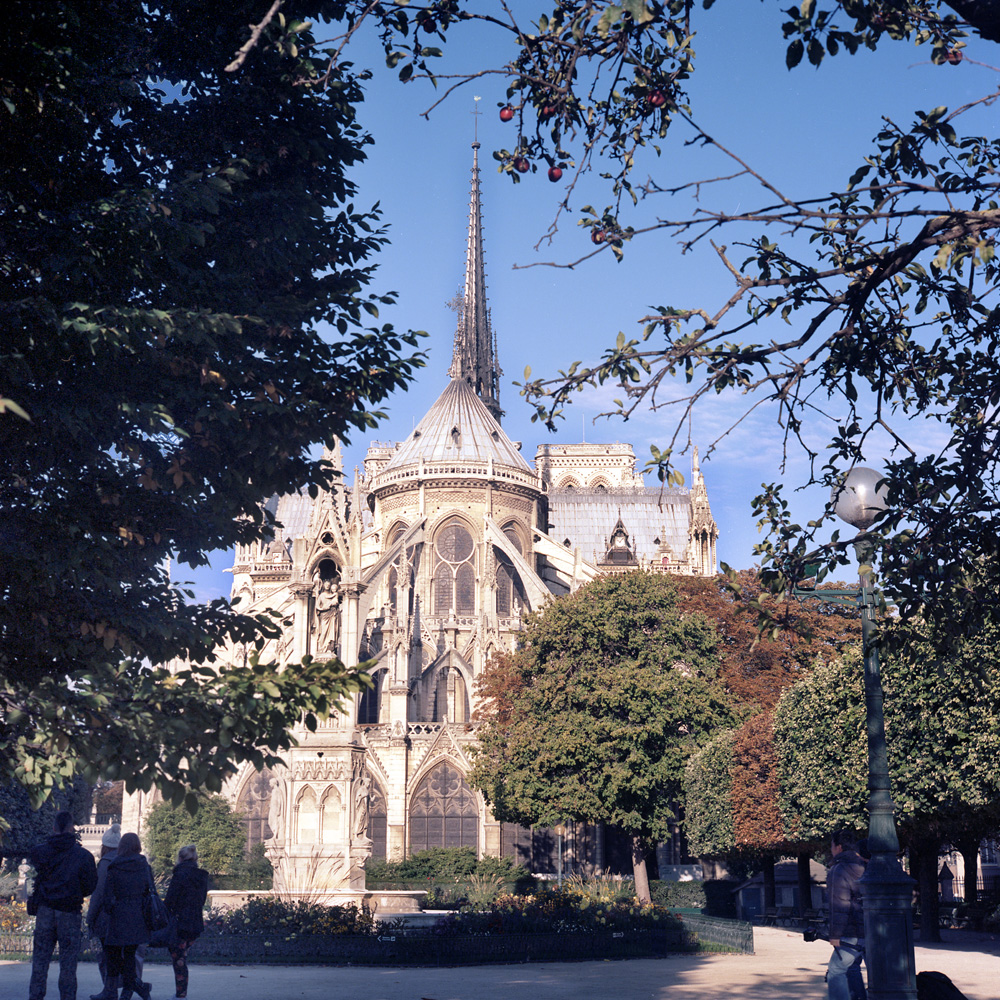
Another view of the rear, with the apple tree. This one includes people in the garden for perspective.
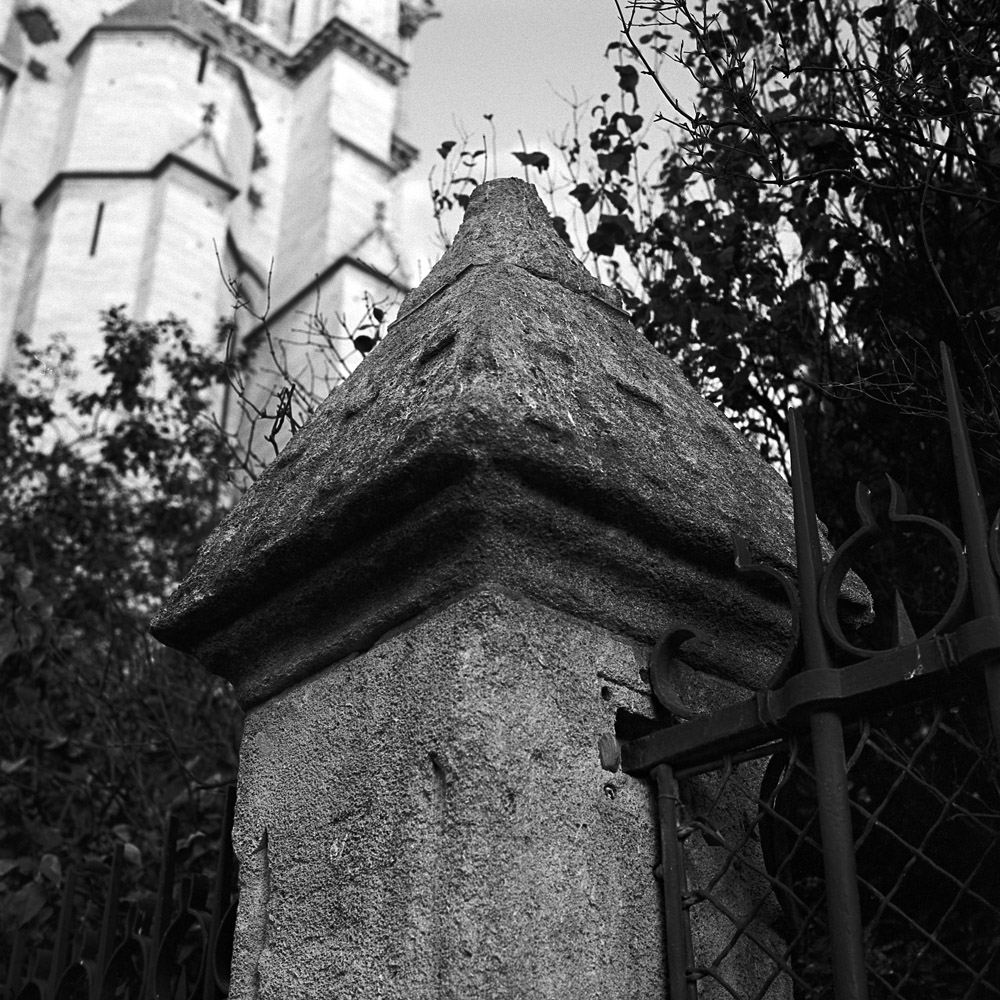
These are a few more from that last remaining roll of b/w I didn’t develop until yesterday. Just some additional looks at Notre Dame cathedral in black and white.
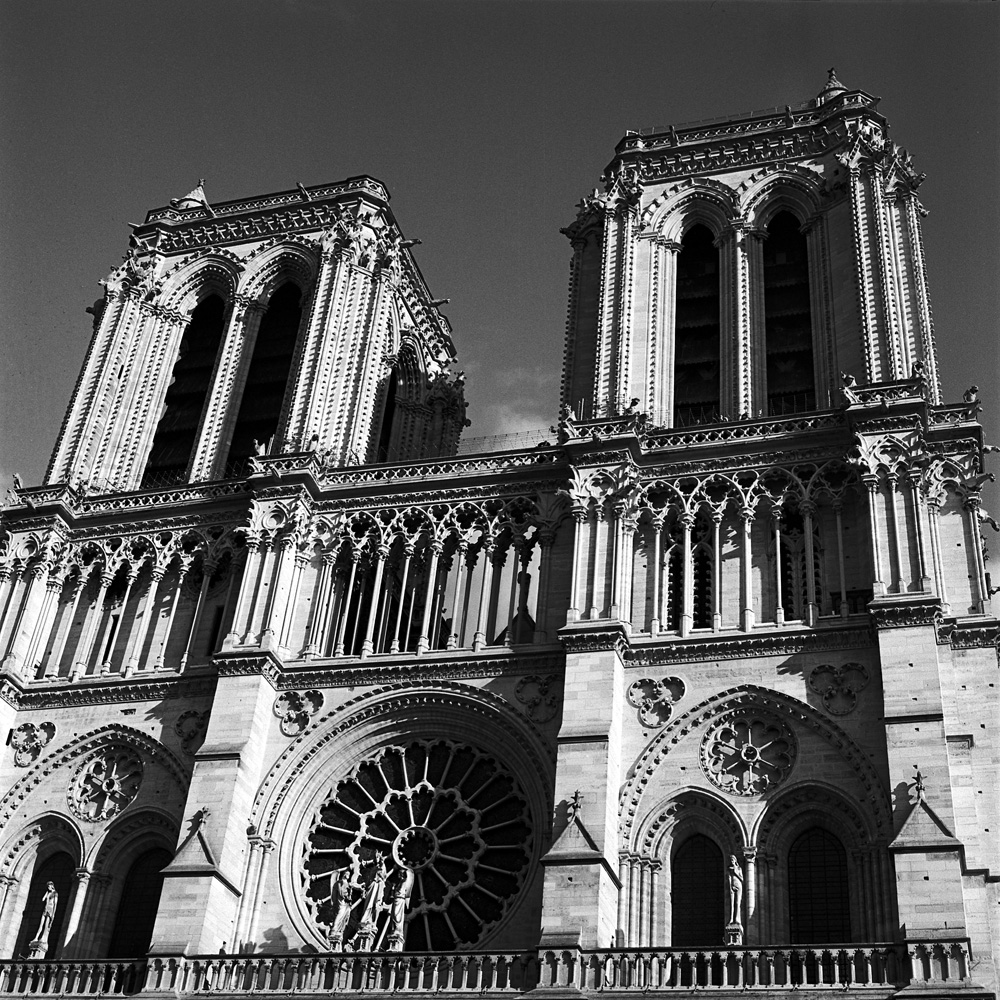
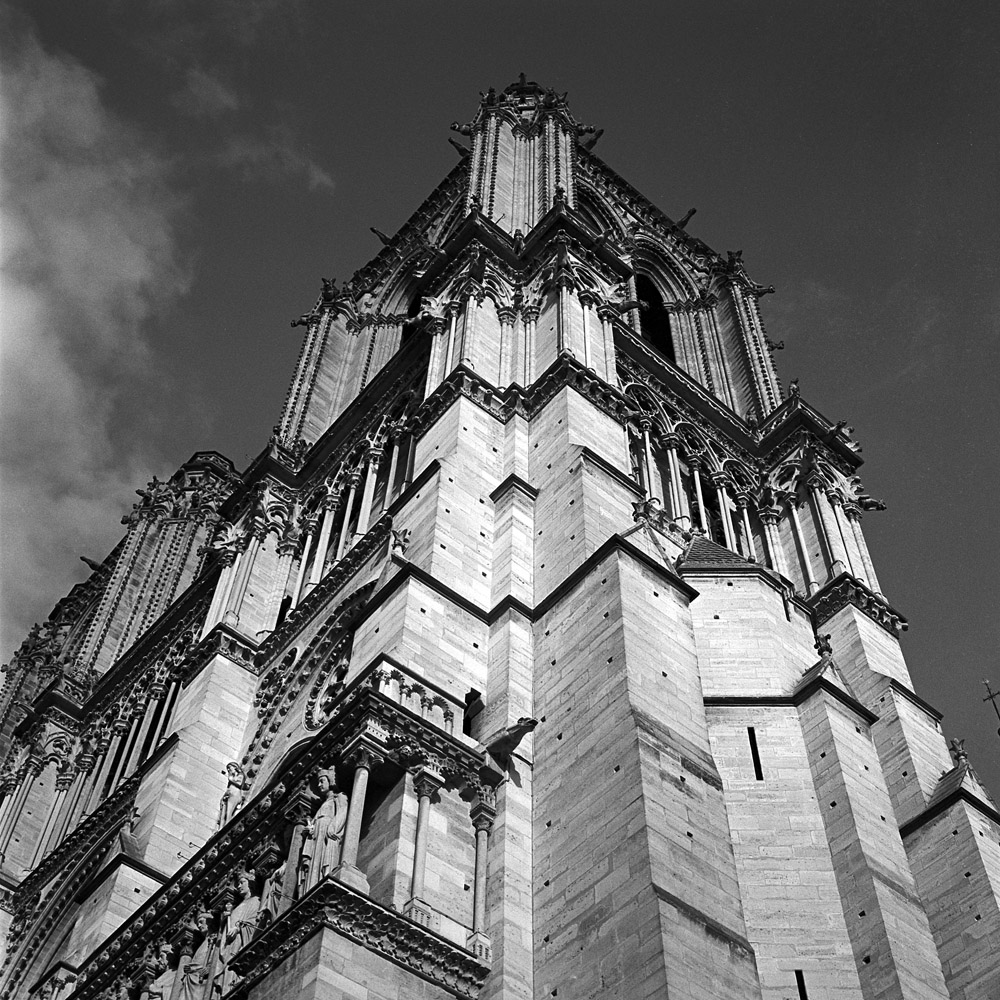
It’s hard to view the cathedral without trying to interpret the towers as a graphical element. They’re the most recognizable element to the church, perhaps other than the rose window. The main body of the church is actually rather narrow and delicate, relative to its perception. All those flying buttresses make it seem much more massive than it is. The tower facade, though, really establishes that perception because when viewing it straight on, it seems like a solid wall, and that the church behind it must be equally as massive.
Twin Towers, Notre Dame
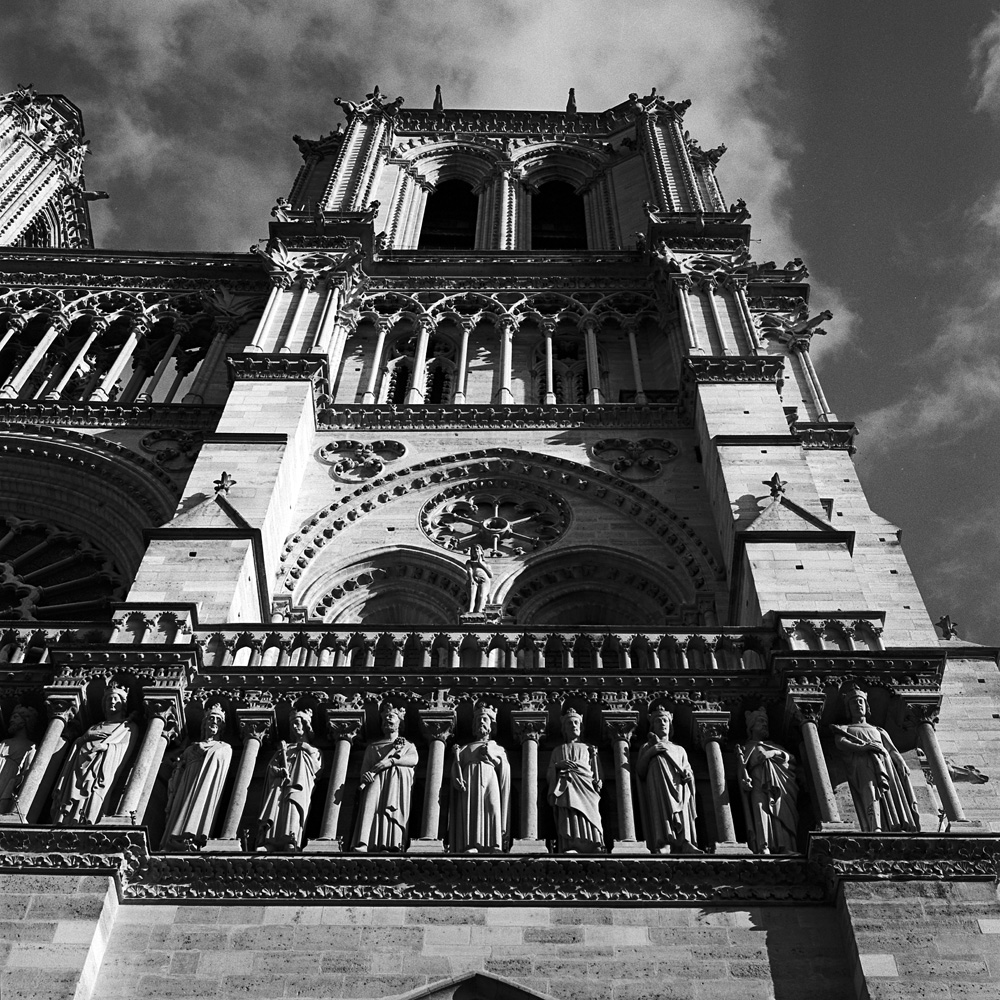
Trying to look at the towers is a vertigo-inducing experience. They are quite tall, and the nature of the decorations make you keep looking up to see all the details to the very last set of gargoyles some 226 feet in the air. Getting up in the towers to view them up close and personal is vertigo-inducing as well – it’s a nearly 400-stair climb to the top of the tower (which I did NOT do – I’m too out-of-shape to attempt something so heart-stressing). At one point in time, Notre Dame was the largest building in the western world – you can still easily spot it from the 2nd tier of the Eiffel Tower, despite the intervening buildings, several miles and the bend in the river between the two landmarks.
Tower, Notre Dame, Looking Up
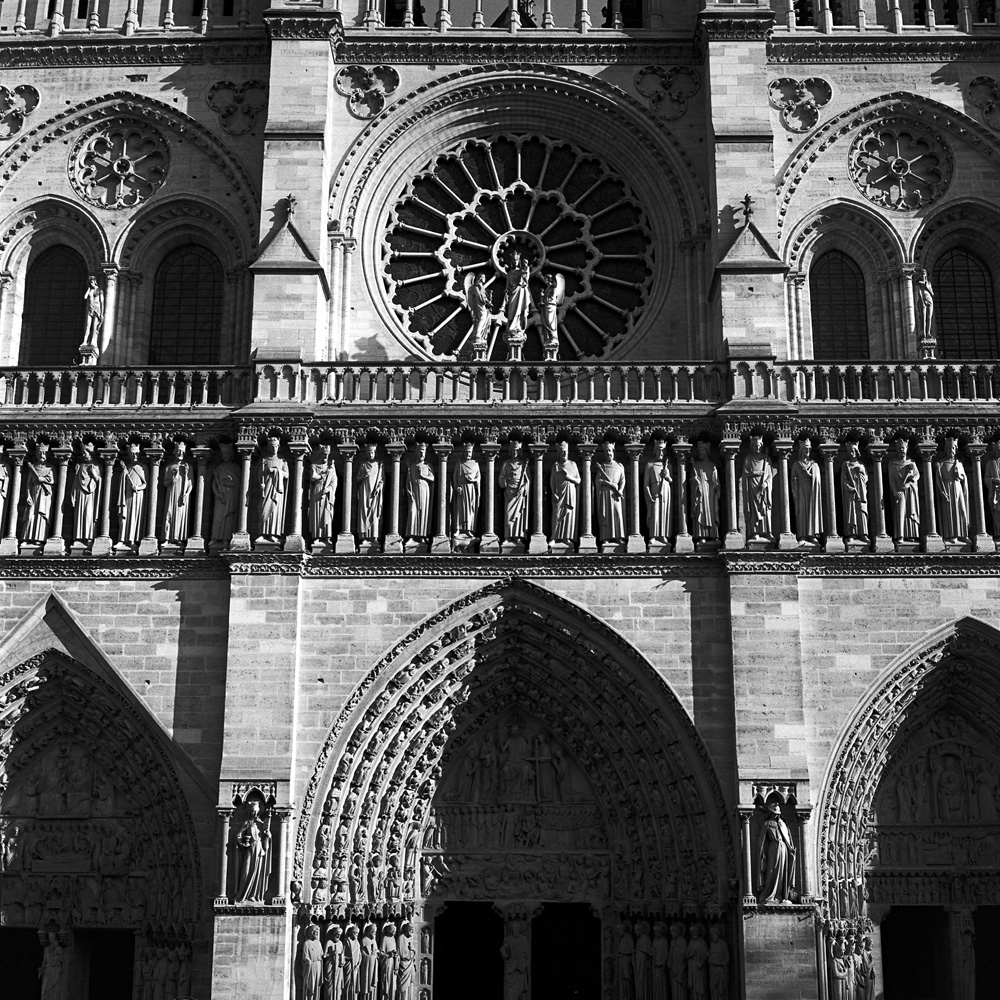
Here is a view of the incredibly detailed facade. One thing I did not realize until looking at this photo is the fact that all three main doorways are different. I always assumed that the left/right halves of the facade would be symmetrical. If you look carefully, the archway over the left hand door is a little smaller, and crowned by the angular, peaked molding. The right arch is larger and lacks the angular molding. Another detail that often gets forgotten – we assume that these cathedrals were all bare stone, and that the way we see them today is how they were intended. Au contraire – most cathedrals of the Romanesque and Gothic periods (the 7th-15th centuries) were brightly painted, inside and out. The statues on the exterior would all have been polychrome, as would the interior walls have been. Time, weather, wear and neglect have conspired to strip the coloring off the buildings. They did find some early medieval frescoes inside the old cathedral in Salamanca that had been covered up for centuries after an earthquake damaged both cathedrals (they’re kind of conjoined twins and share a wall).
Notre Dame Facade, Afternoon
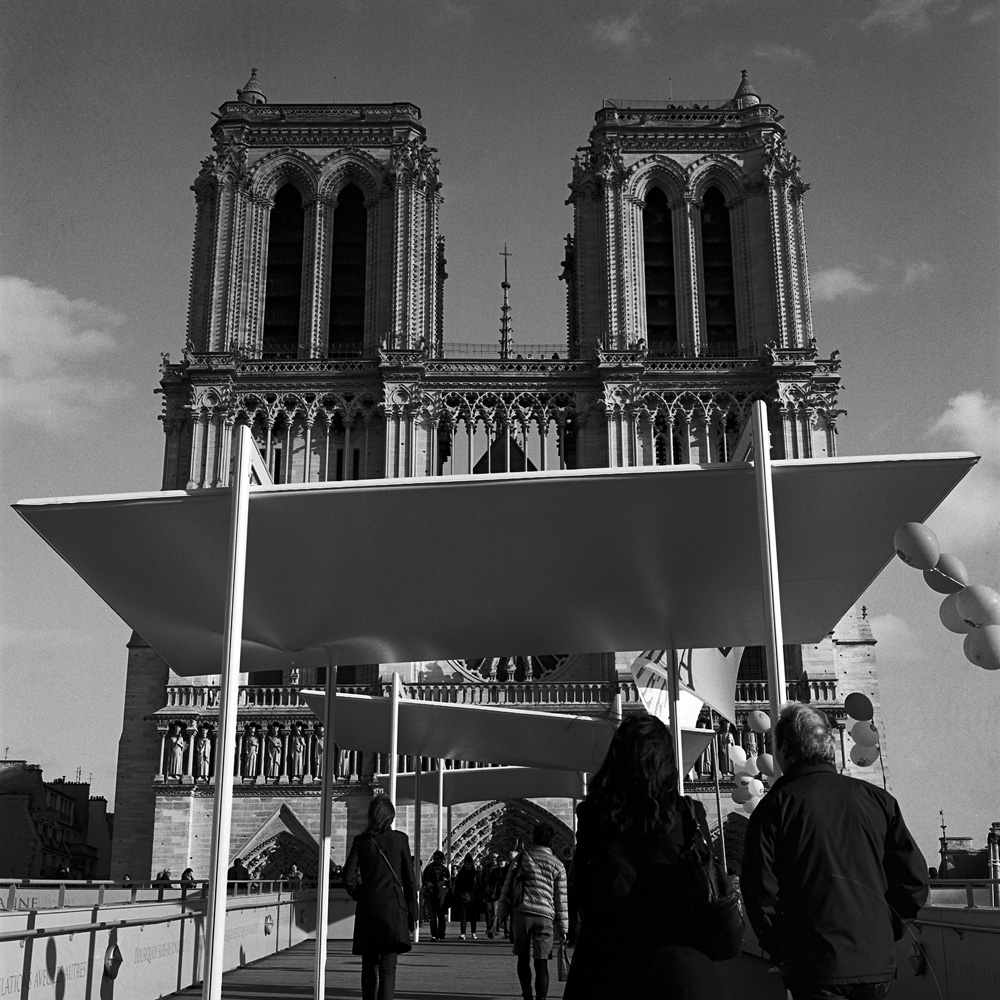
I really don’t know why they built this mammoth viewing/reviewing stand in the plaza in front of the cathedral. You can ascend the steps on the front face, or you can climb the ramp up the back. This is the view of the towers from the ramp – the tarp-like covers on the ramp provide a starkly modern contrast to the gothic stonework of the cathedral.
Notre Dame Towers, from RampTowers, Notre Dame Cathedral
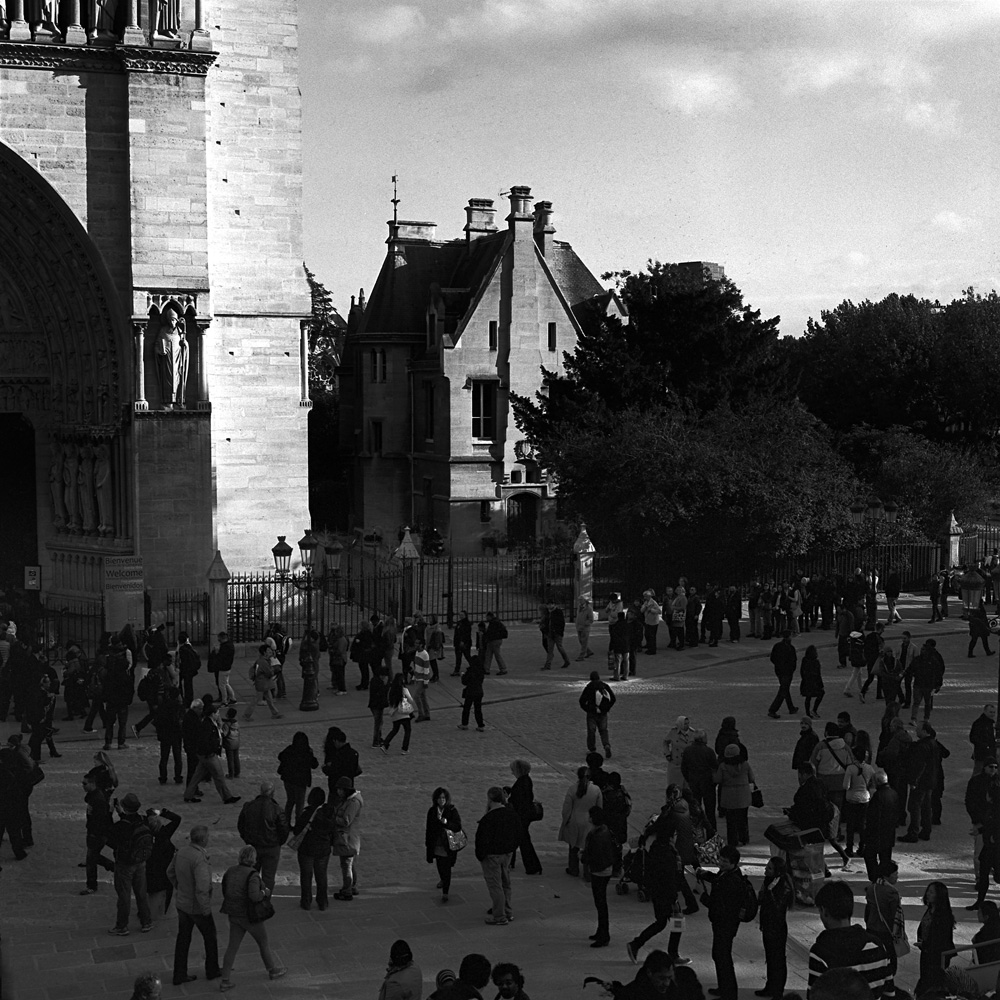
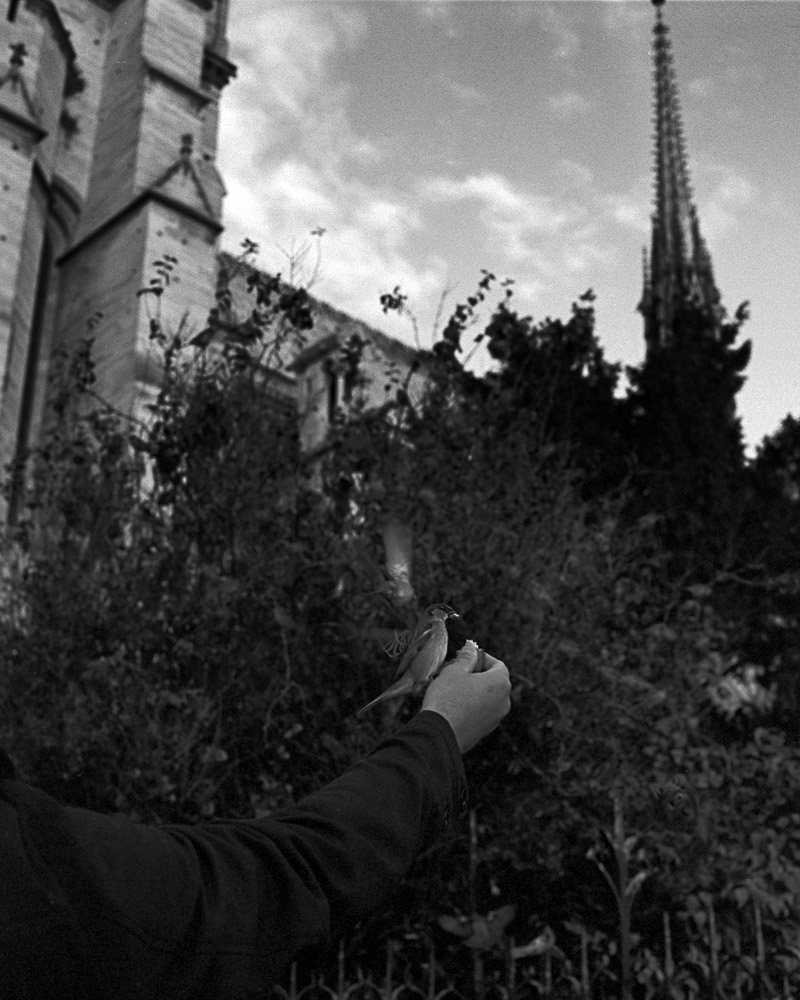
The crowds at Notre Dame are non-stop, even at night after the cathedral is closed. This is a typical weekday afternoon on the plaza out front. The little house to the right is the rectory for the cathedral. Along the fence surrounding the rectory is where you will find the bird feeders – people who will sell you a scrap of day old bread or a stale churro that you can hold up in your outstretched hand to attract the sparrows who will hover over to get a bite.
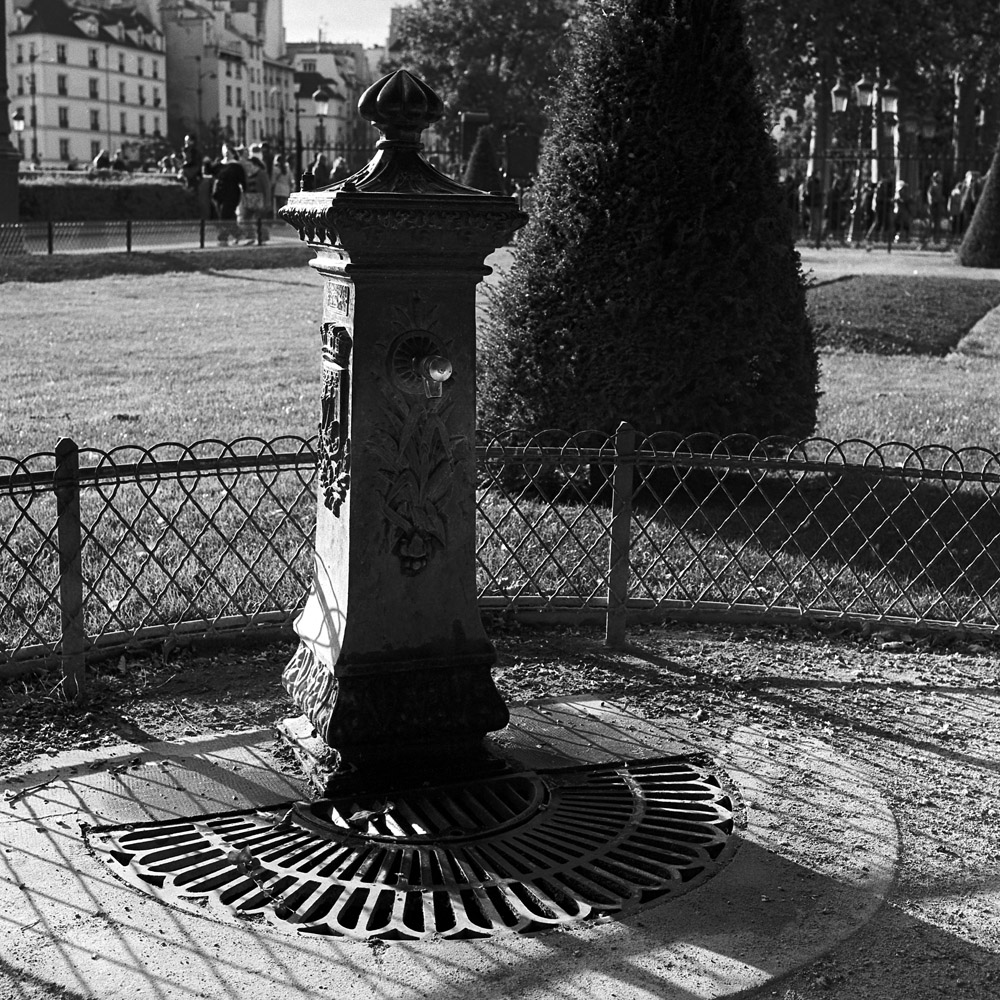
Beside the cathedral there is a park with views of the Seine, replete with benches, gardens and, as part of Haussmann’s renovations, public drinking fountains. I loved the way this looked backlit with the evening light. Consider it another one of my portraits of everyday objects.
Drinking Fountain, Notre Dame
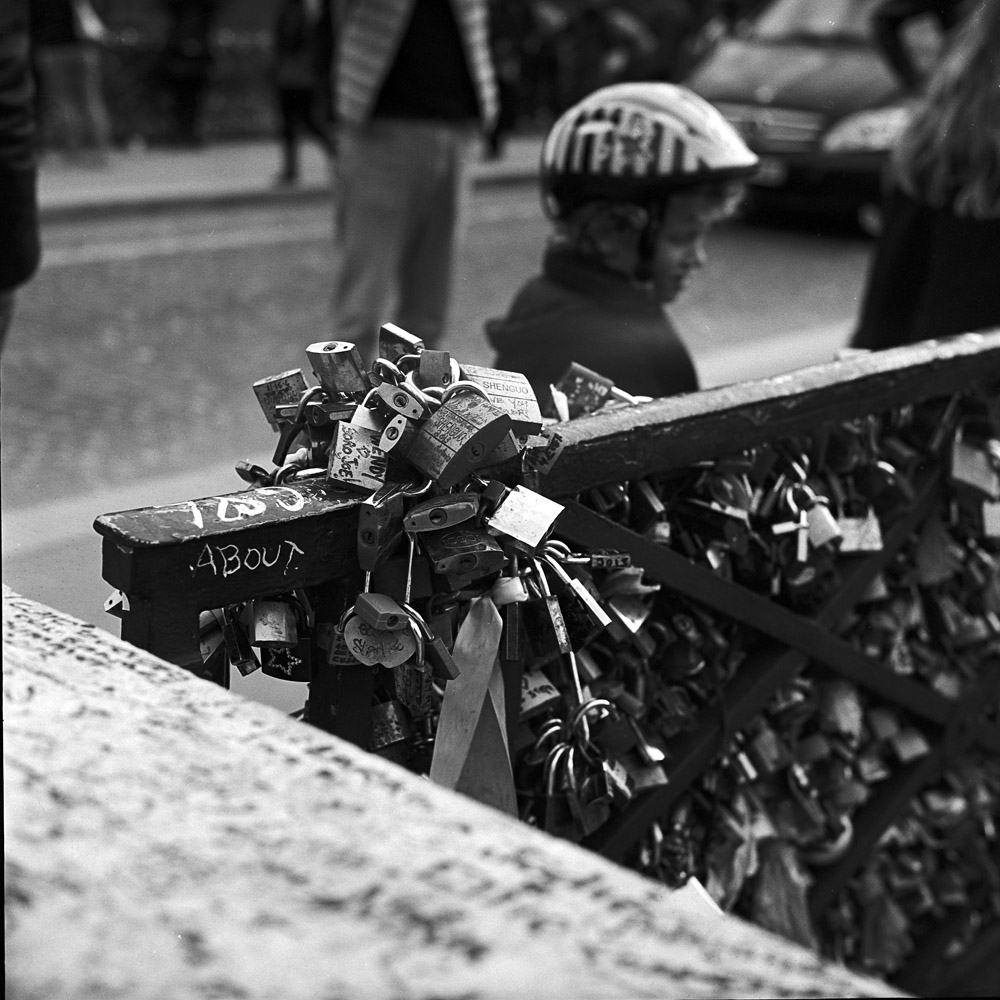
And last but not least, the tradition that began in Rome of young couples buying a padlock, writing their initials on it, locking it to the railing of a bridge, and tossing the keys in the river as a symbol of how their love cannot be undone has come to Paris. It is so popular that it has infested three or four bridges across the Seine now, and the boquinistes with bookstalls along the Rive Gauche nearest the Ile de la Cité sell a variety of padlocks and permanent markers. It seems only natural that people would do this on the bridges closest to Notre Dame, as it is one of the most romantic, inspiring buildings in a city full of romantic inspiration.
Love Locks, Notre Dame
(see, I told you you wouldn’t have to wait long for the next Paris post!)
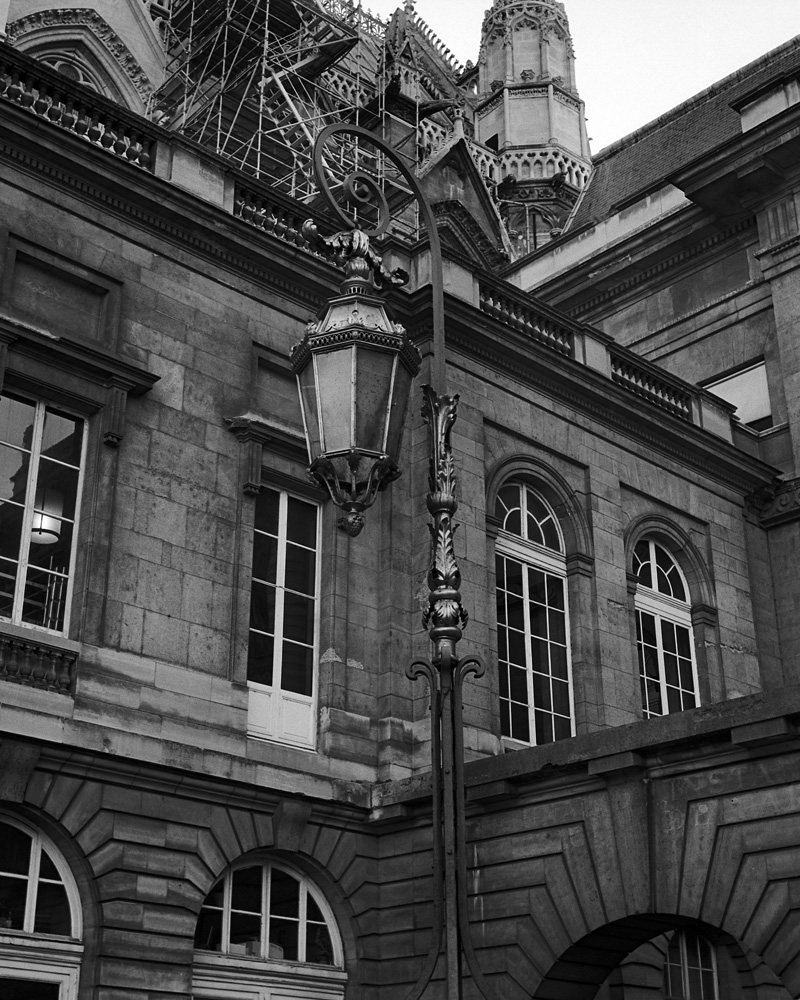
So I FINALLY got around to developing the last roll of black-and-white from the trip today. Here are some odds-n-ends from the Palais de Justice. These are from the courtyard through which you exit after you visit Sainte Chapelle (you can see the spire of the chapel in the background of the lantern photo).
Not only did the lantern appeal to me, but the absolutely crazy Escher-esque layers of the building behind it just begged to be photographed. It’s like many different buildings collided and transformed into another entirely new one.
Lantern, Courtyard, Palais de Justice
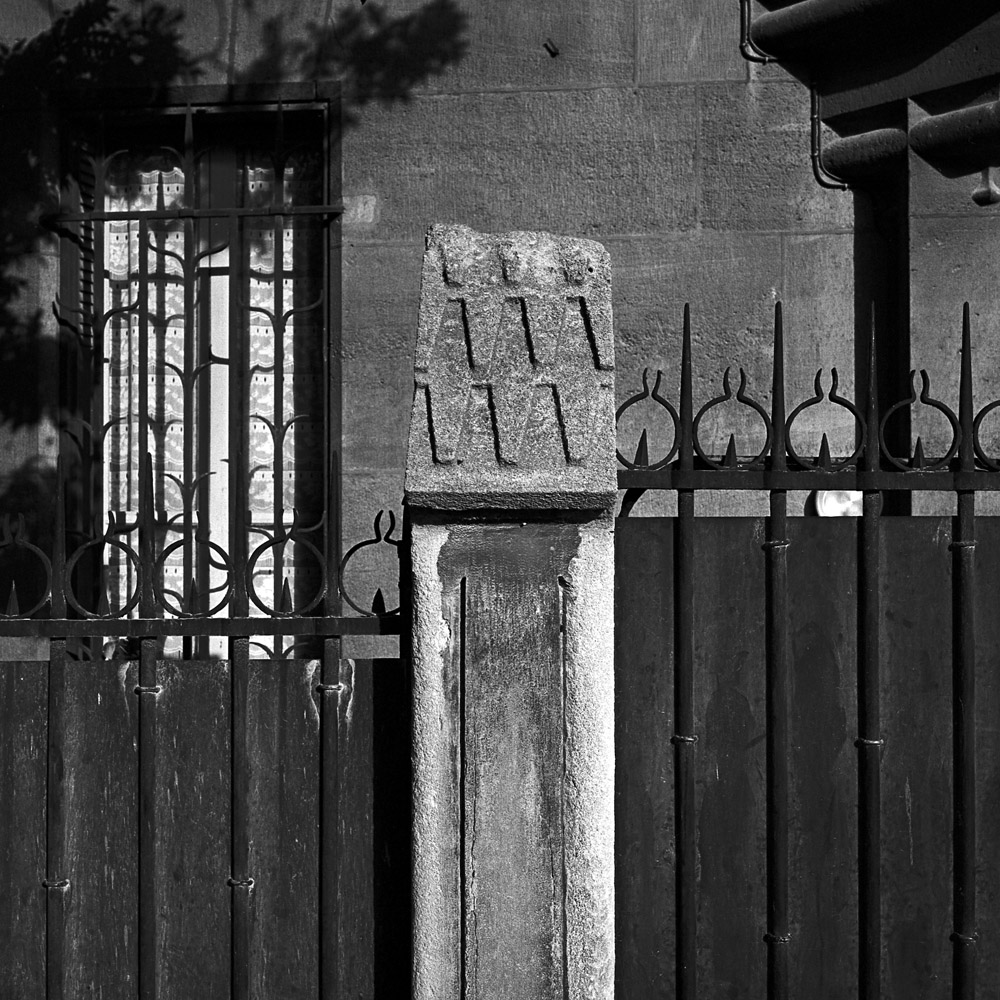
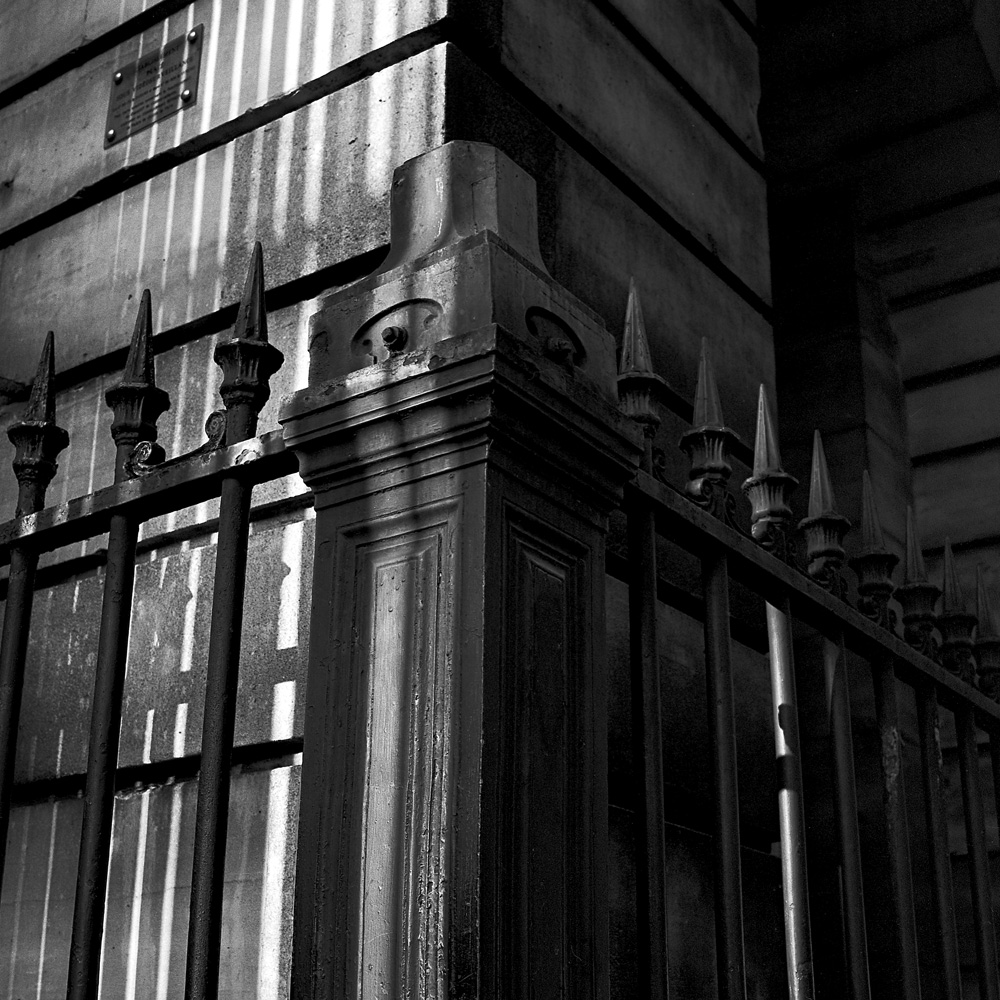
This is a fencepost on an iron railing around the Palais de Justice building. I thought the sunlight passing through the outer fence casting a striped shadow on the wall behind this iron fence had an ironic feeling of multiple layers of prison at a place of justice.
Fence, Palais de Justice
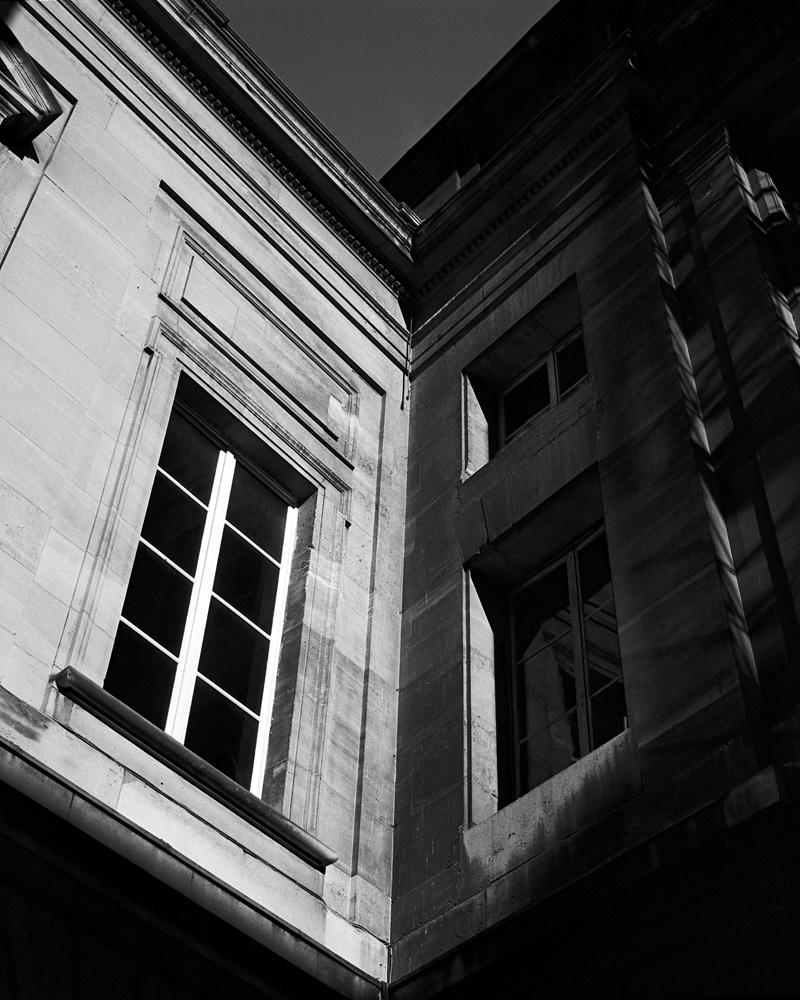
These windows also had an Escher-esque quality to them because they have balance but not symmetry – again lots of angles that mimic and overlap without being truly parallel.
Windows, Palais de Justice
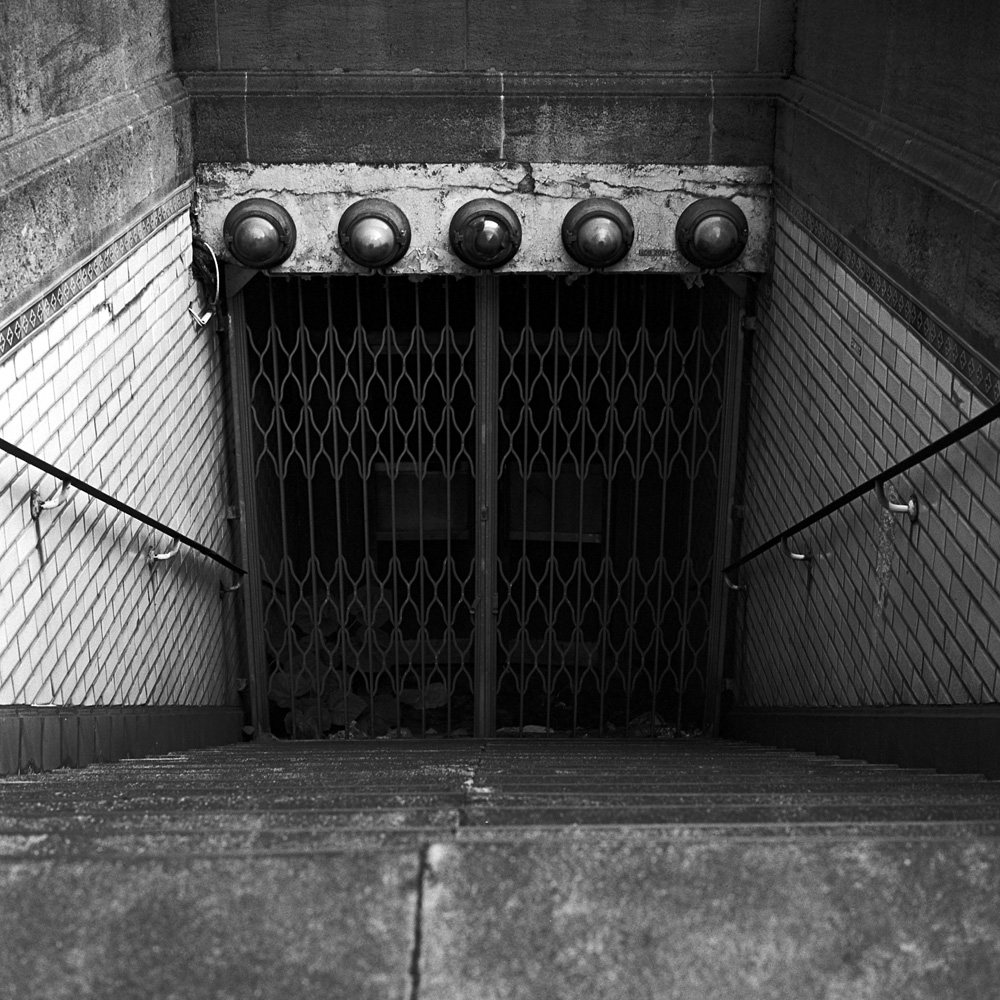
On the way out of the courtyard you pass by what seems to be an entrance to the Metro, all closed up. This is a block and a bit from the main entrance to the Cité metro, so it is possible this was a direct entrance to enable workers at the Palais de Justice to go directly to and from their offices. Or it could just be an underpass or an entrance to a tunnel system connecting multiple buildings in the neighborhood. I’m voting for subway entrance even though it doesn’t have the nifty bronze art nouveau surround because the lamps above the gates look like the lamps over the Cité station entrance. Any Parisian readers are more than welcome to chime in and correct me.
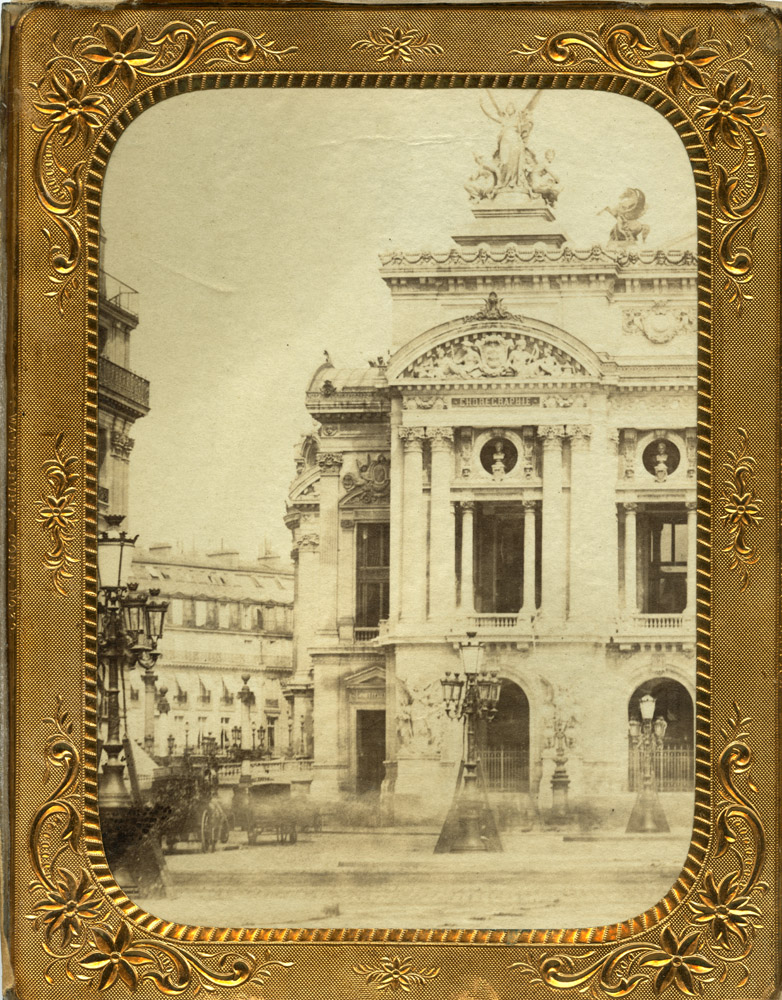
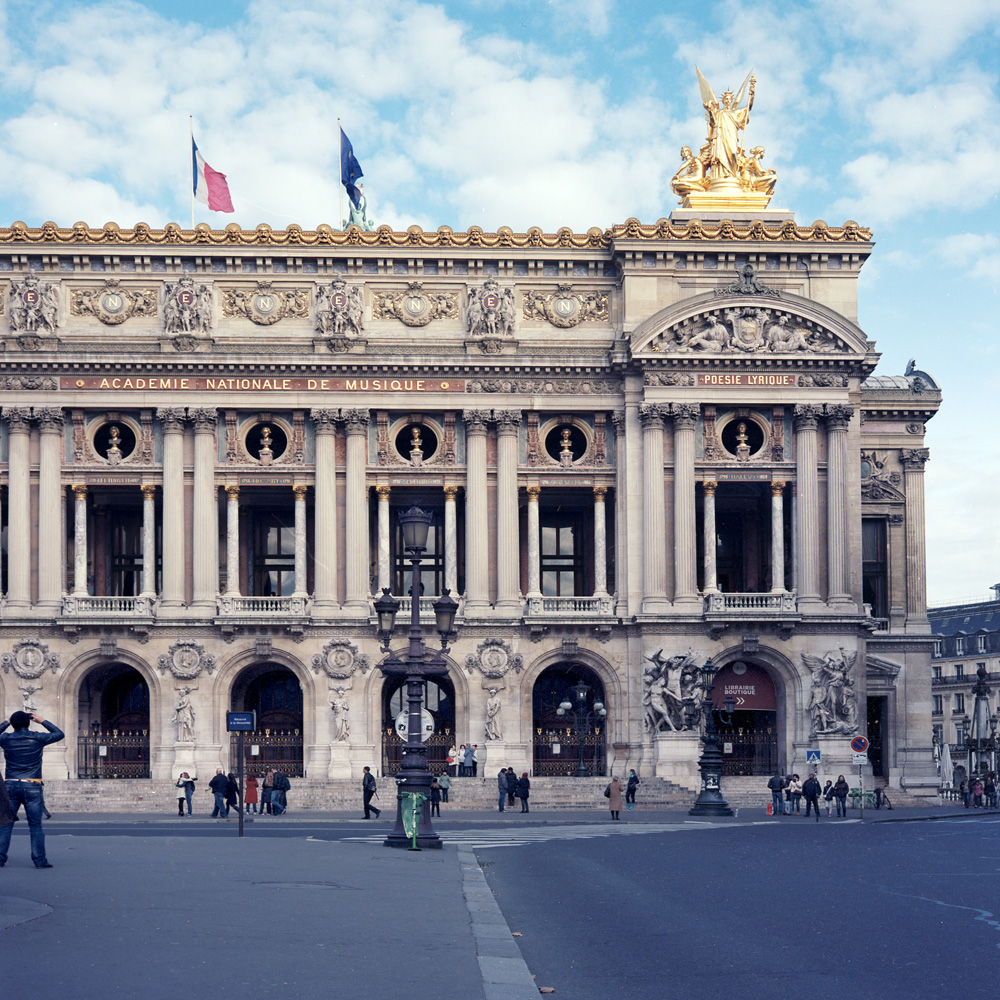
I thought I’d start this post off with a comparison of my 1870s photo of the Opera Garnier with the photo I took this year in 2013. Not exactly the same shot (the antique is of the left side of the facade whereas mine is of the right and middle) but I did manage to include several of the same elements.
Paris Opera albumen printFacade, Opera Garnier
I don’t know when my vintage photo was taken, but it could be as early as 1867 when the facade was unveiled. Alas, the lampposts have changed, and significantly decreased in number. I can only imagine what the plaza in front would have looked like with all those lamps lit.
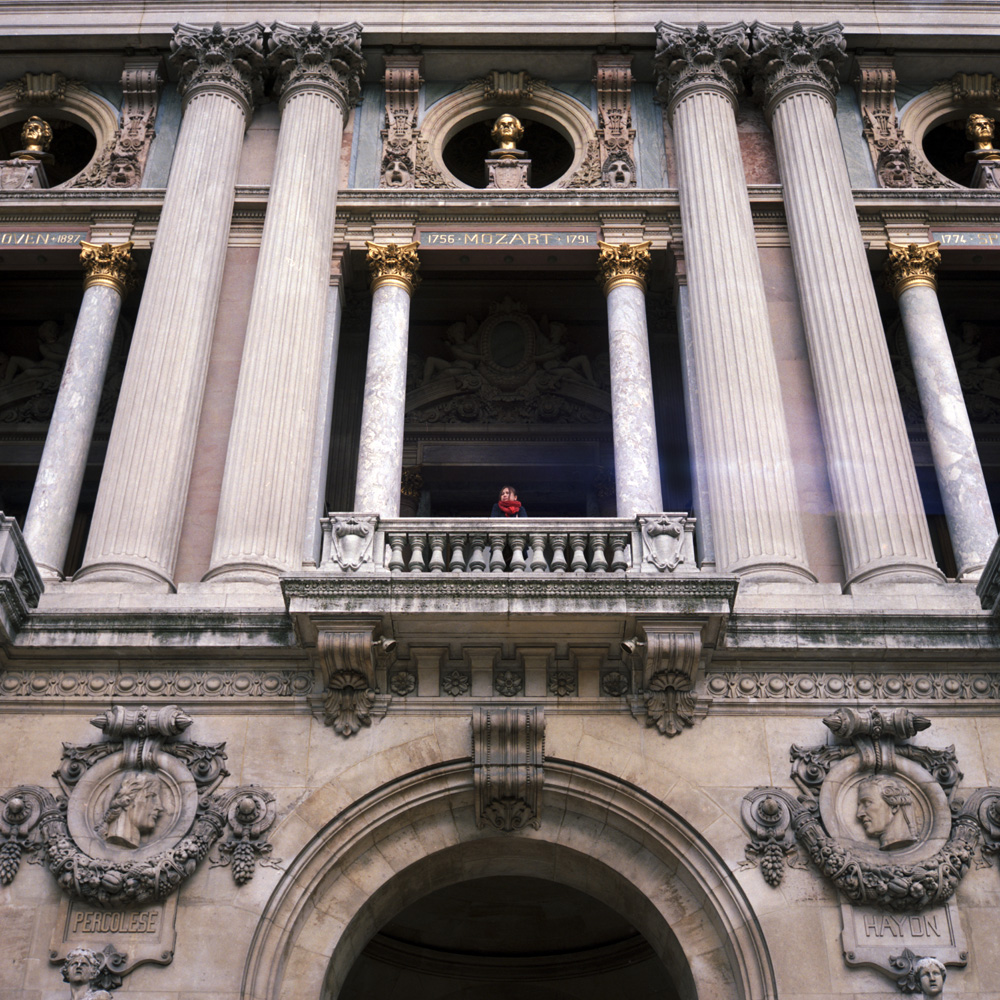
This was a lucky grab of the arcaded balcony on the front when the woman wearing the red scarf just happened to be looking out.
Front Balcony, Opera Garnier
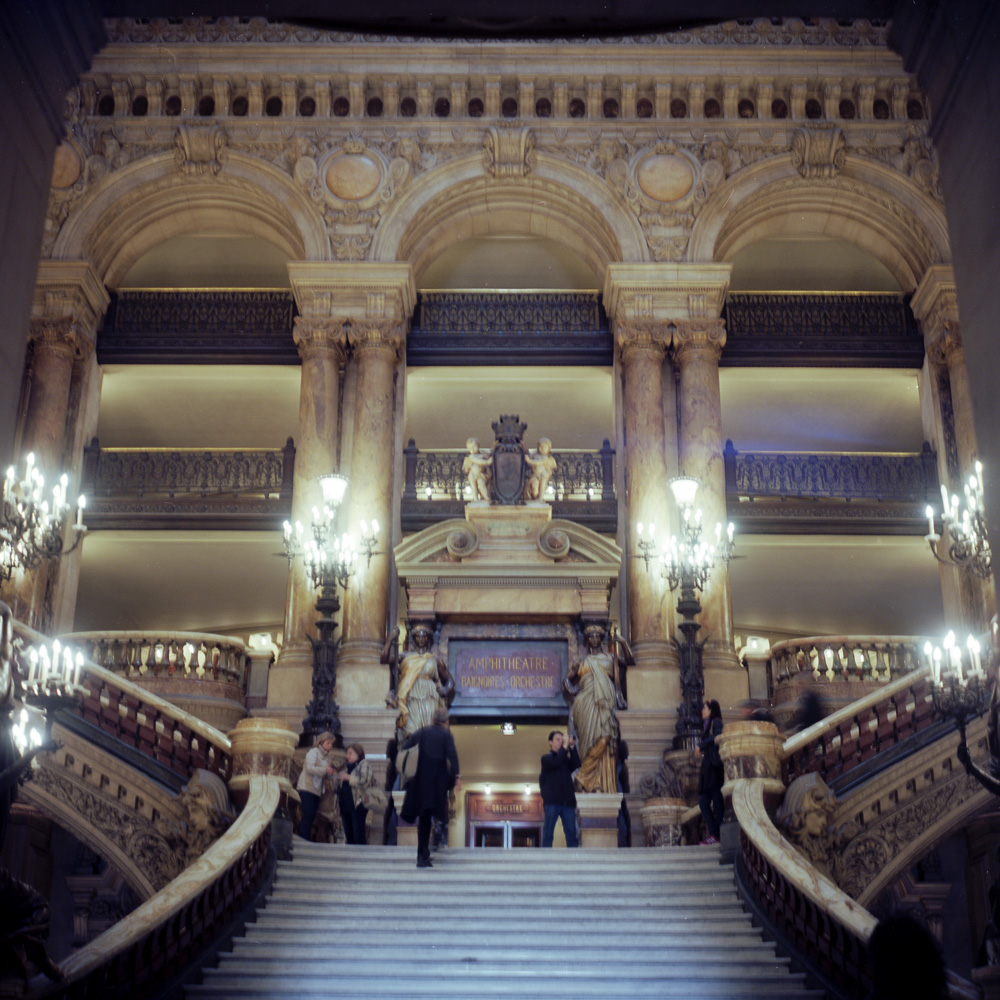
The grand staircase at the Opera Garnier was one of the highlights of the building, and considered a major attraction from the moment it opened. It has been much copied around the world. Photos of the space do not do it justice – this IS truly one of the great public rooms of the world.
Grand Stair Hall, Opera GarnierGrand Staircase, Opera Garnier
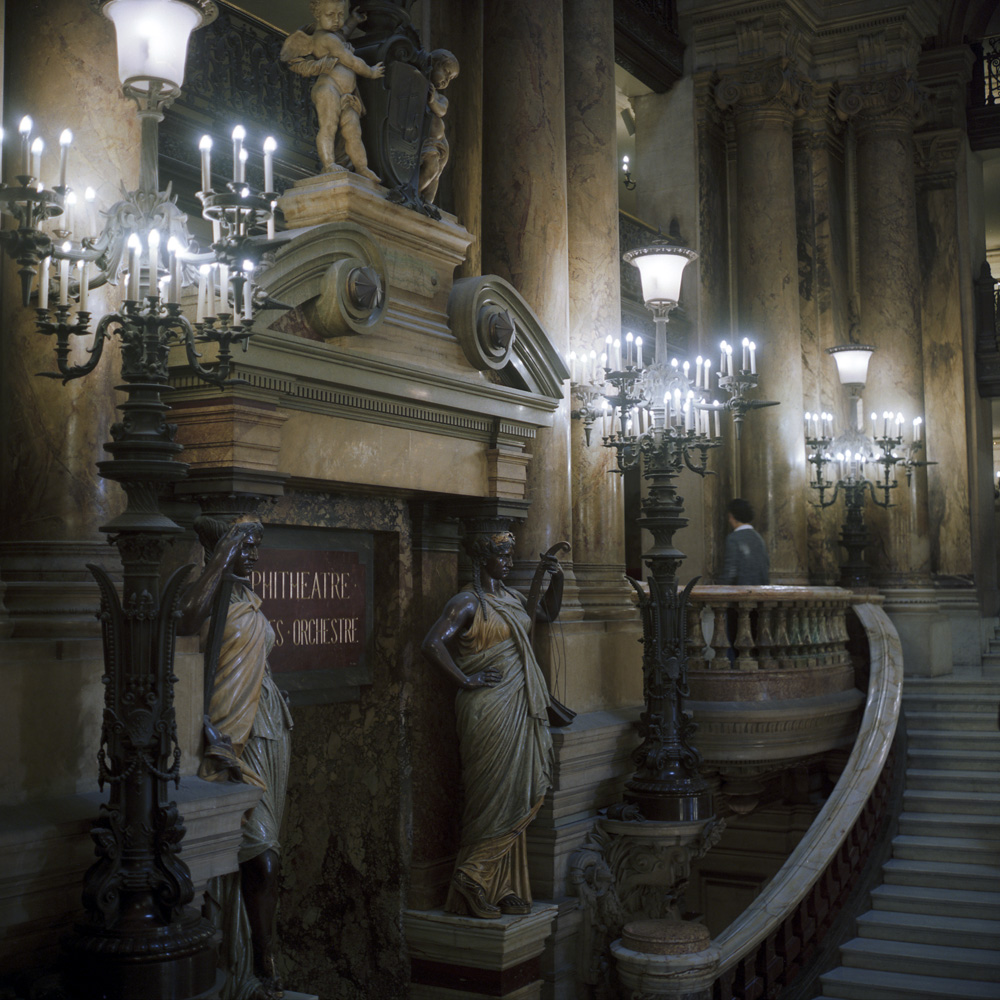
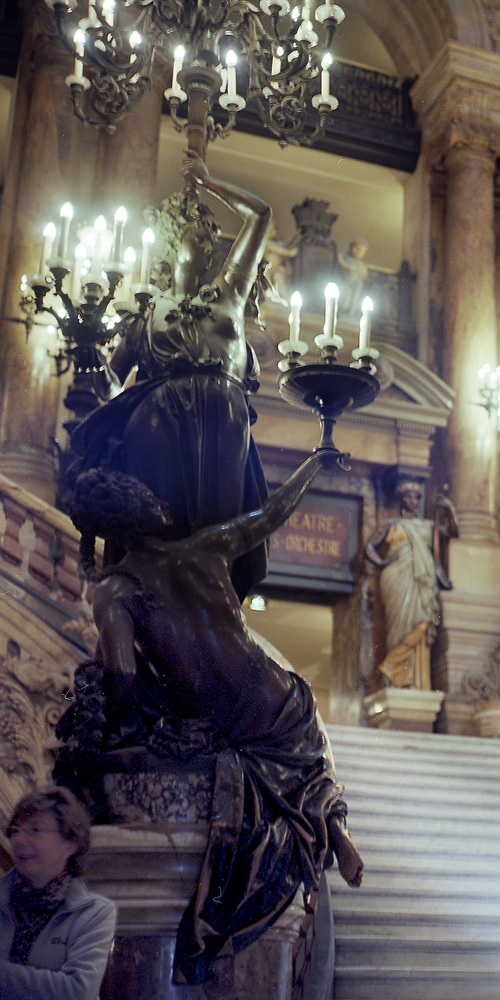
I did something a little different with this shot – I cropped it very tall and vertical. It was in part because I wanted to focus the attention on the bronze candelabra, and also to deal with some horrible flare in the right-hand side of the image coming from one of the other light fixtures in the hall.
Candelabra, Stairs, Opera Garnier
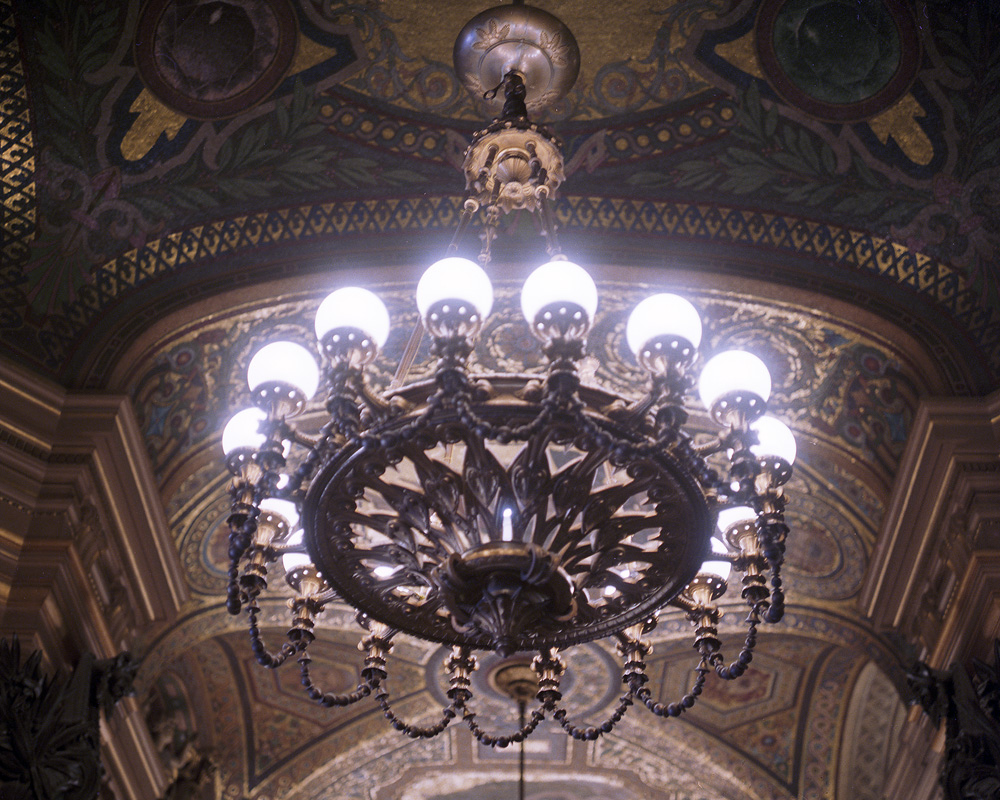
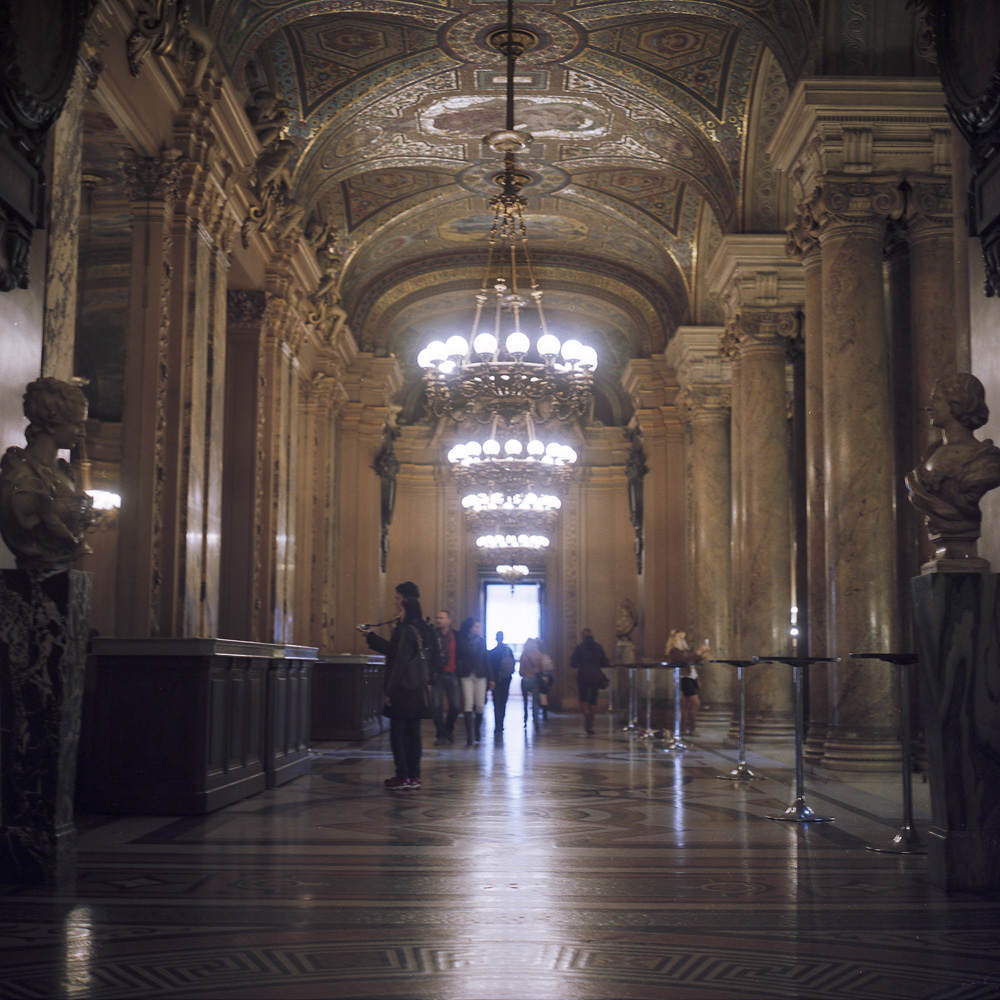
The Opera Garnier is famous for one particular chandelier (and we’ll get to that), but it houses a multiplicity of beautiful light fixtures. Here are some samples of the variety of chandeliers at the opera:
Hall Chandelier, Opera GarnierReception Hall, Opera Garnier
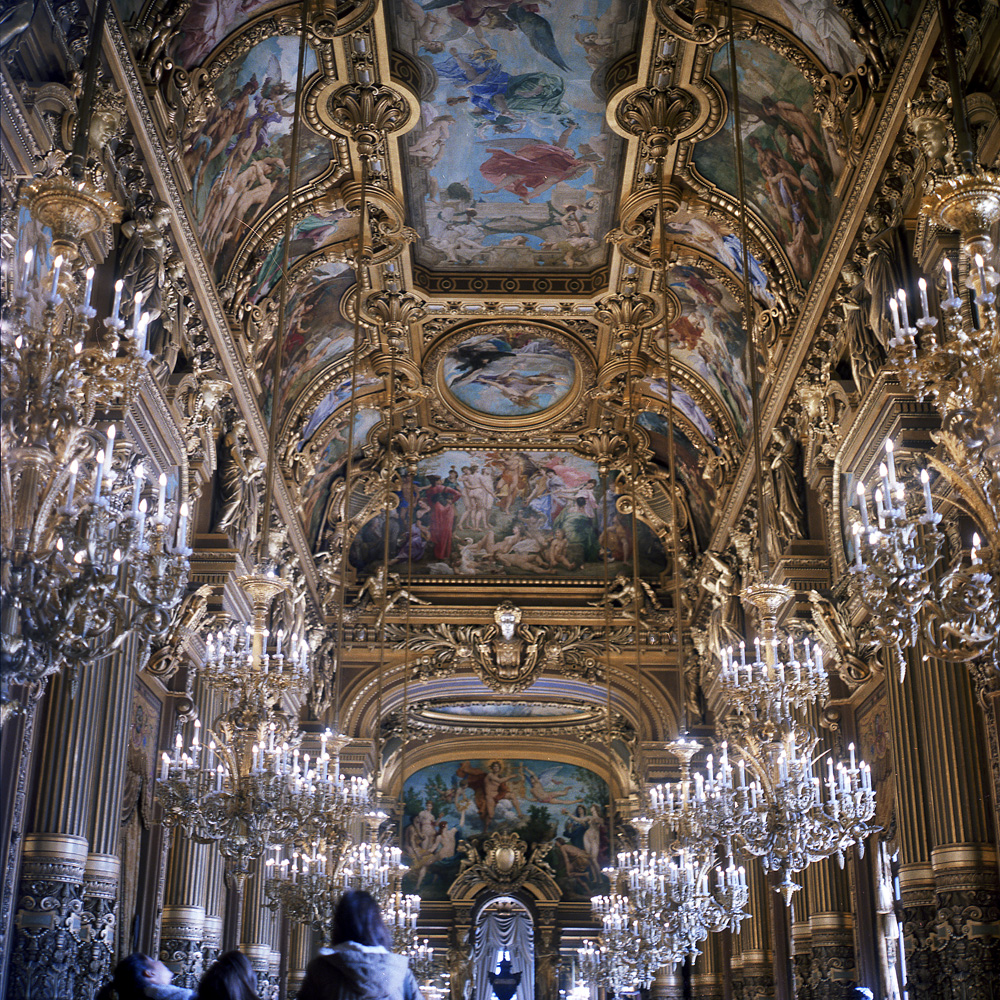
The salon is reminiscent of the Hall of Mirrors at Versailles, but if it is possible, it is even MORE over-the-top ornate than that palatial room, ceding to it only in length.
Salon, Opera Garnier
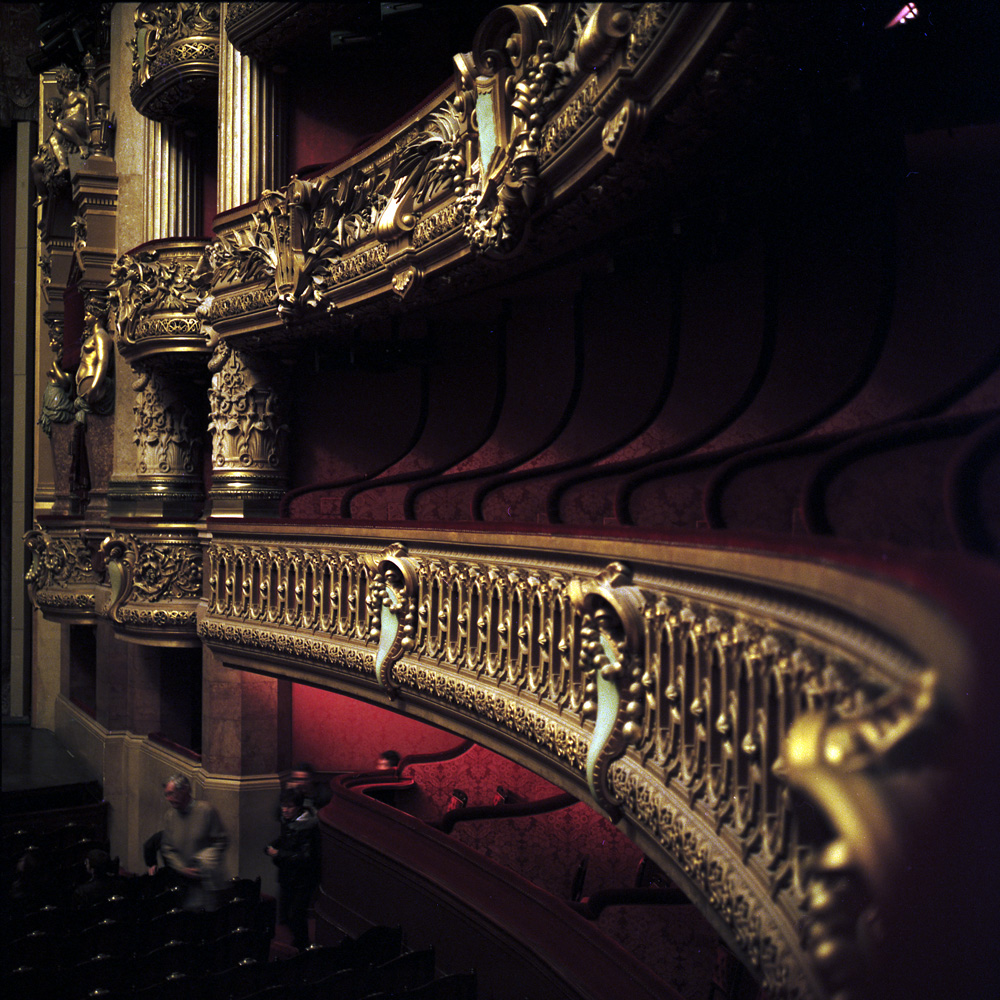
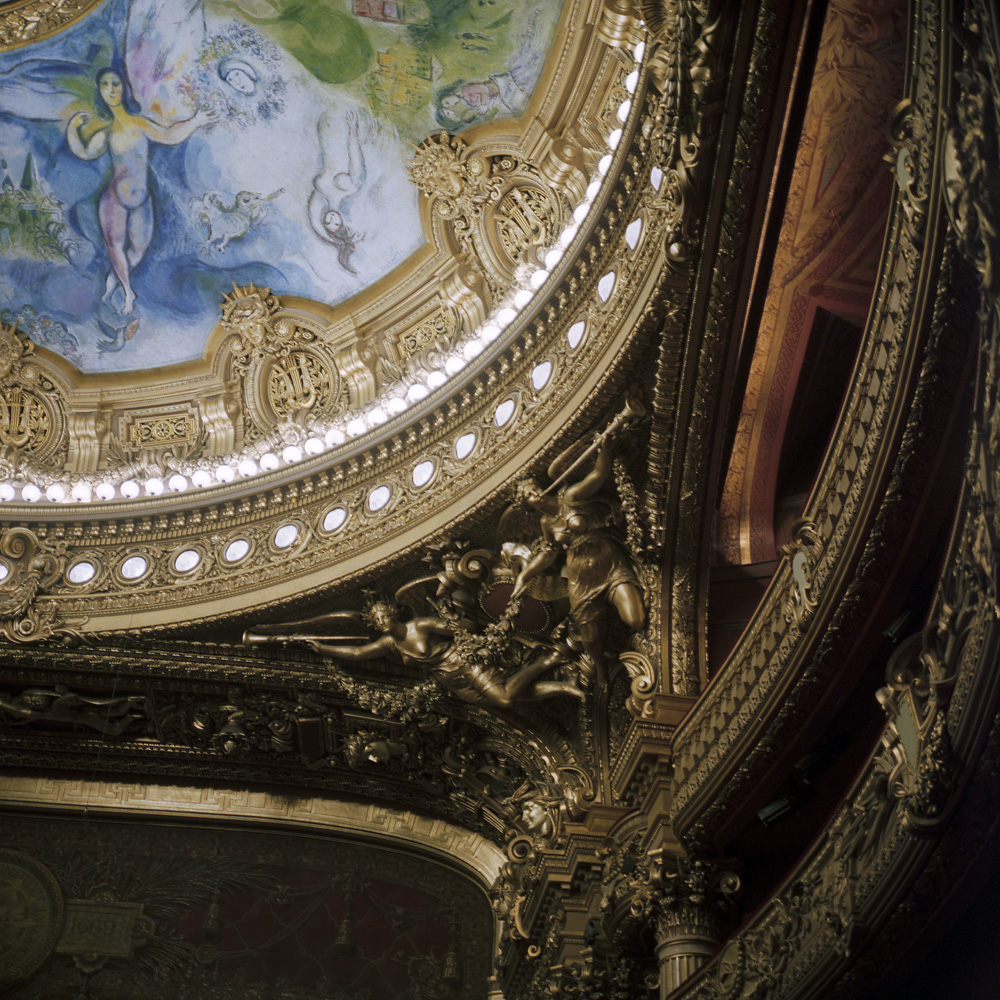
The hall itself is a candy confection of red velvet, gold leaf, and frescoed ceiling. Attending a concert here would be quite the experience – I would think you could easily be distracted from the performance by just trying to take in all the architectural details! I don’t know that this would be more sublime than my experience of the concert at the Palau de la Musica in Barcelona, but it would certainly be a feast for the senses.
Box Seats, Opera Garnier AuditoriumGiltwork, Ceiling, Opera Garnier
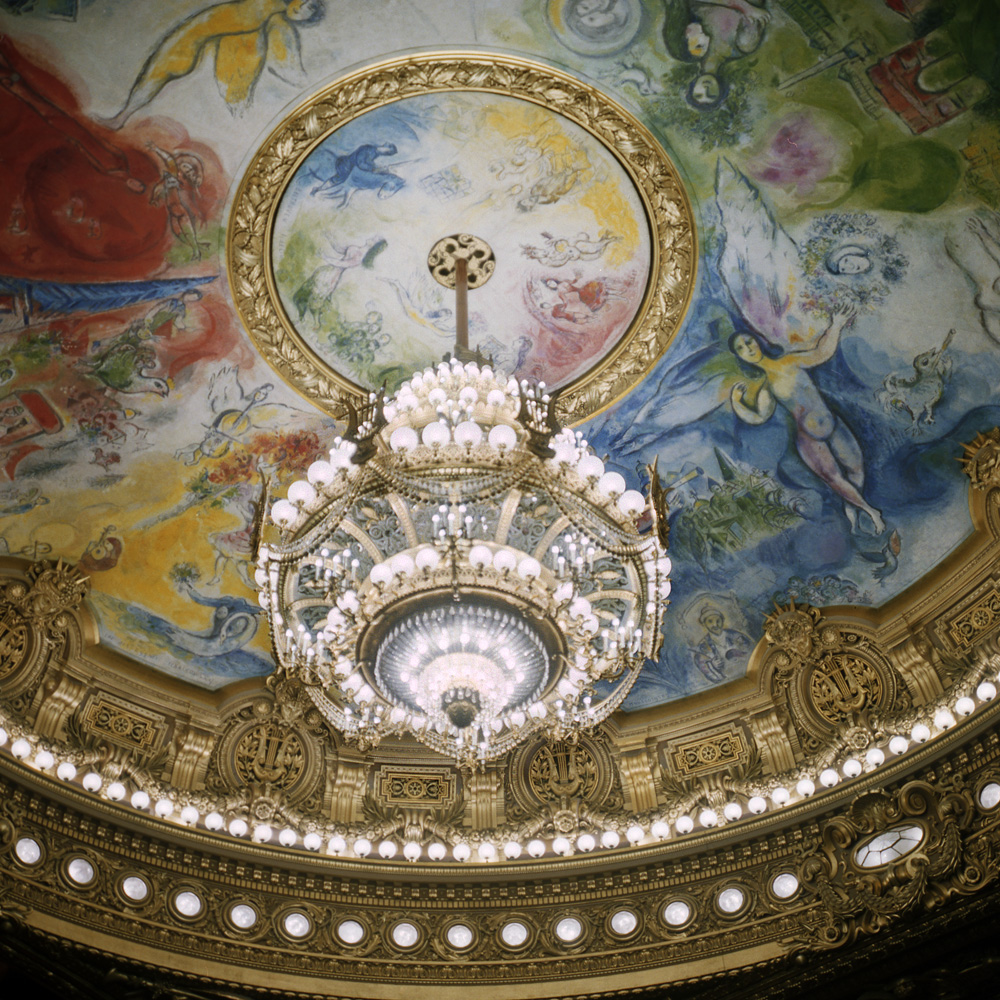
And last but not least, we get to the infamous chandelier. Perhaps the best known chandelier on the planet, this is the one around which the “Phantom of the Opera” story revolves. The ceiling, hinted at in the previous photo, is not the original ceiling design for the hall, but was painted in 1964 by Marc Chagall. It brings a modern touch to an otherwise very baroque space and the colors enliven and lighten the otherwise heavy and serious room. The chandelier weighs 7 tons. Originally it was raised through the cupola for cleaning, but now it is lowered. One of the counterweights for the chandelier crashed through the ceiling in 1896, killing an audience member, thus inspiring that part of the Phantom story. The other bit about the underground lake beneath the opera comes from the fact that there is a man-made cistern under the foundations because the ground water is so high that they needed to relieve water pressure on the foundations. It had the added benefit of providing an ample supply of water in case of fire.
Grand Chandelier, Opera Garnier
The Opera Garnier has been used for concerts and the ballet since it opened, and today it serves first and foremost as a dance space, although classical music continues to have a place in the schedule.
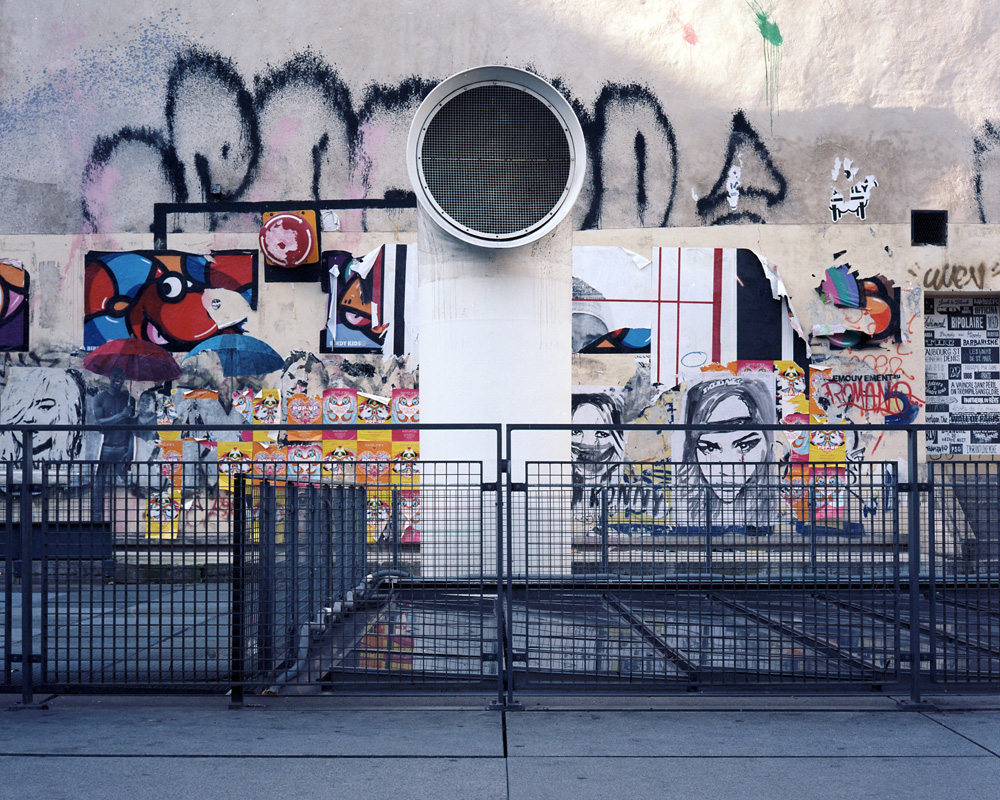
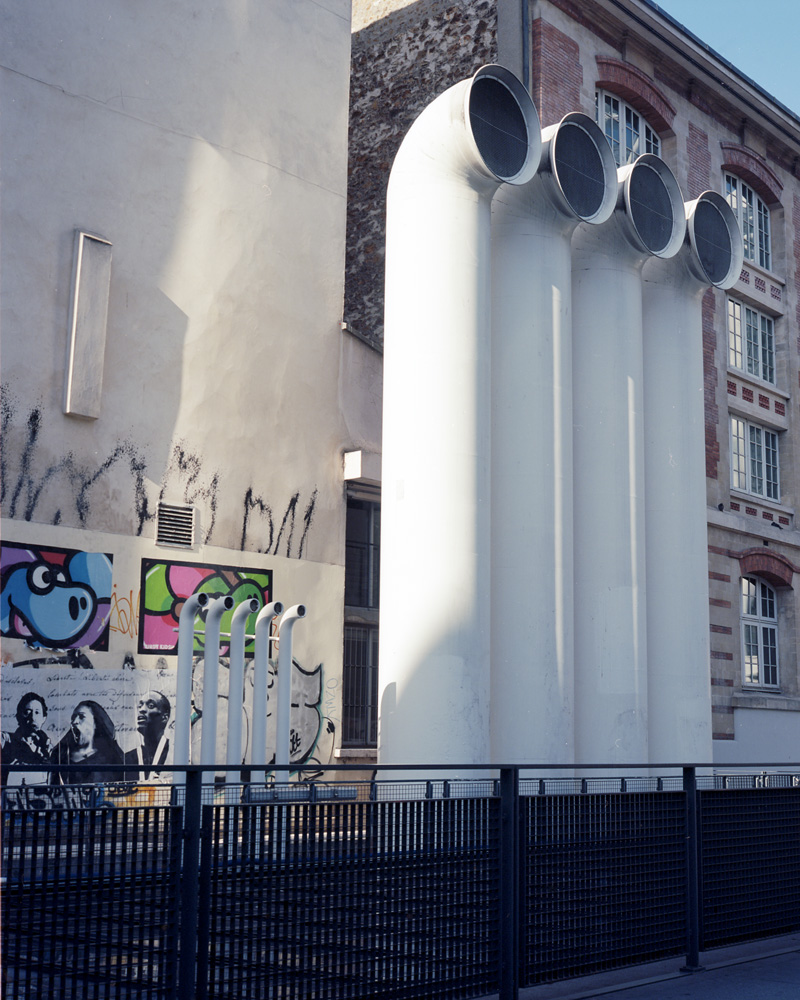
The Pompidou Centre is a massive modern art and culture facility in central Paris, on the western edge of the Marais district. Its architectural claim to fame is that it was designed with all its systems (heating, cooling, plumbing, visitor circulation, etc) exposed on the outside of the building, a sort of deconstruction of the notion of architecture. This, in addition to being an interesting concept, gives it another claim to fame: being perhaps the single ugliest piece of modern civic architecture known to man. And in a world where Brutalist architecture exists, this is no mean feat. What this does do positively, however, is provide a venue in which urban street art has a genuine, appropriate, sanctioned environment in which to exist. The wild vibrant gestural organic nature of street art contrasts with the highly composed, almost abstract structure of the ventilation and exhaust pipes and the security fencing around their access points.
Lone Exhaust, Pompidou CentreExhaust Stacks, Pompidou Centre
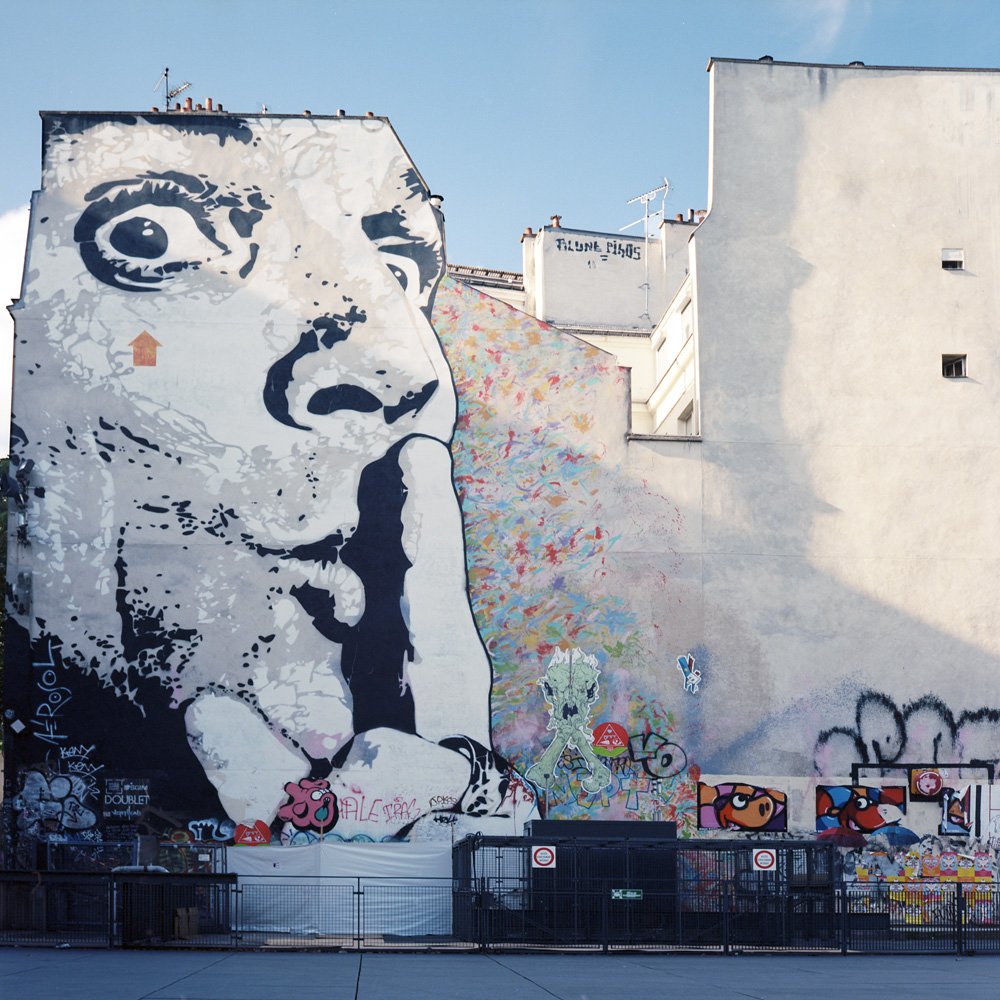
Street art has even been allowed to take over the stuccoed side of an existing 18th century building in what appears to be an homage to Salvador Dali.
Street Art, Pompidou Centre
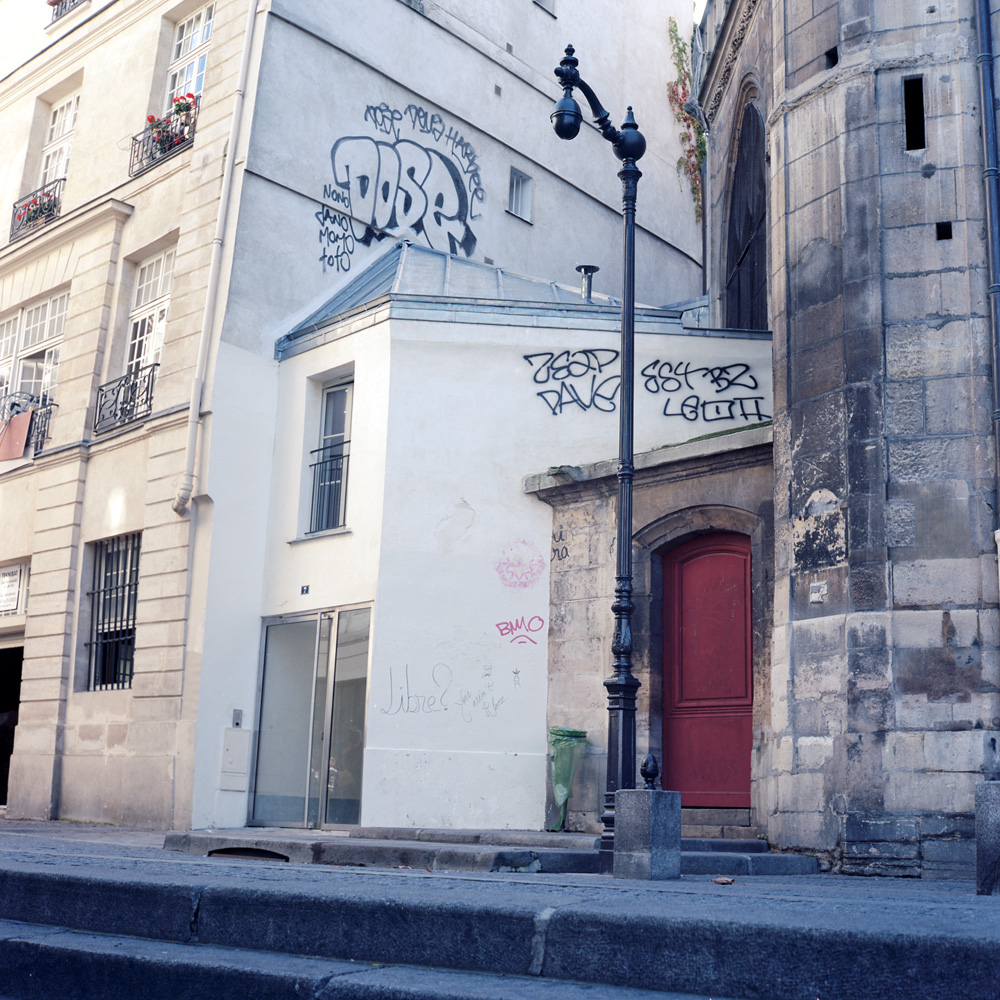
Of course this doesn’t entirely stop unsanctioned street art or even just flat-out graffiti of a very pedestrian variety from cropping up around it. Graffiti aside, I thought this little house squeezed in between the gothic church and the later townhouse was fascinating – I could actually see setting up a small studio on the ground floor and living in the room above it.
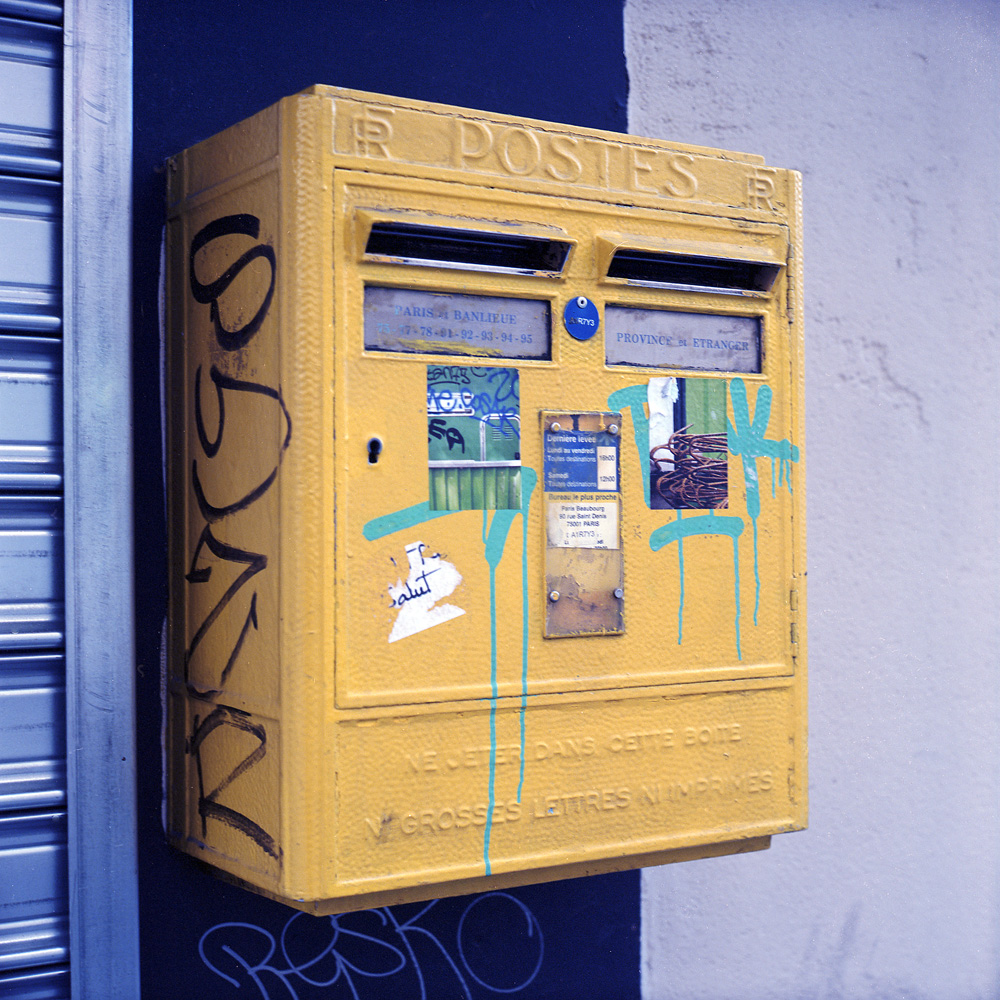
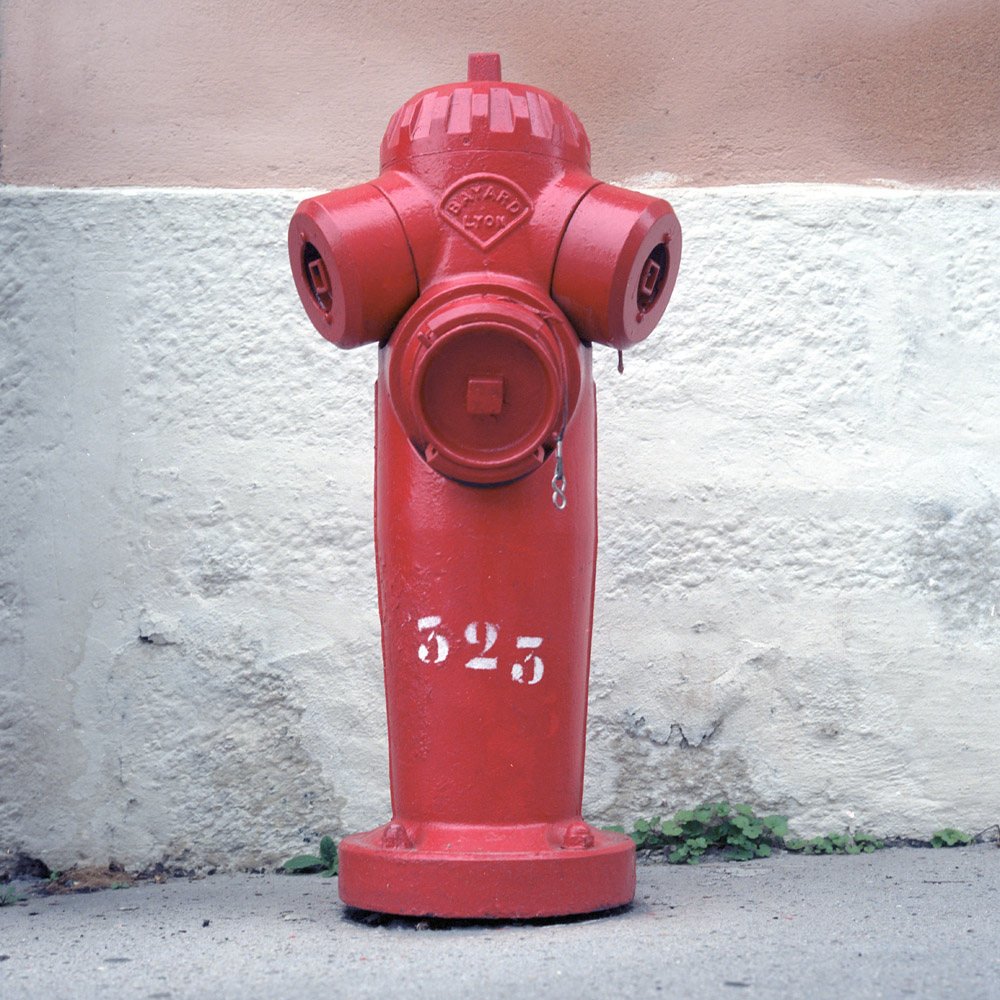
I’ve been making a habit of photographing things we see every day but take for granted, like mailboxes and fire hydrants. I couldn’t pass up the bright yellow mailboxes of Paris, and especially not this one that has been so overtly decorated with graffiti. I think I got lucky that this one was on a dark blue background at least in part, to set it off and compliment it.
Yellow Postbox, Paris
I know, I know, the hydrant from Chalon already made an appearance, but it was soooo long ago I figured you all had forgotten it, and it also fits the theme of “things”, especially brightly-colored things that we see but take for granted. So here it is.
Hydrant, Chalon
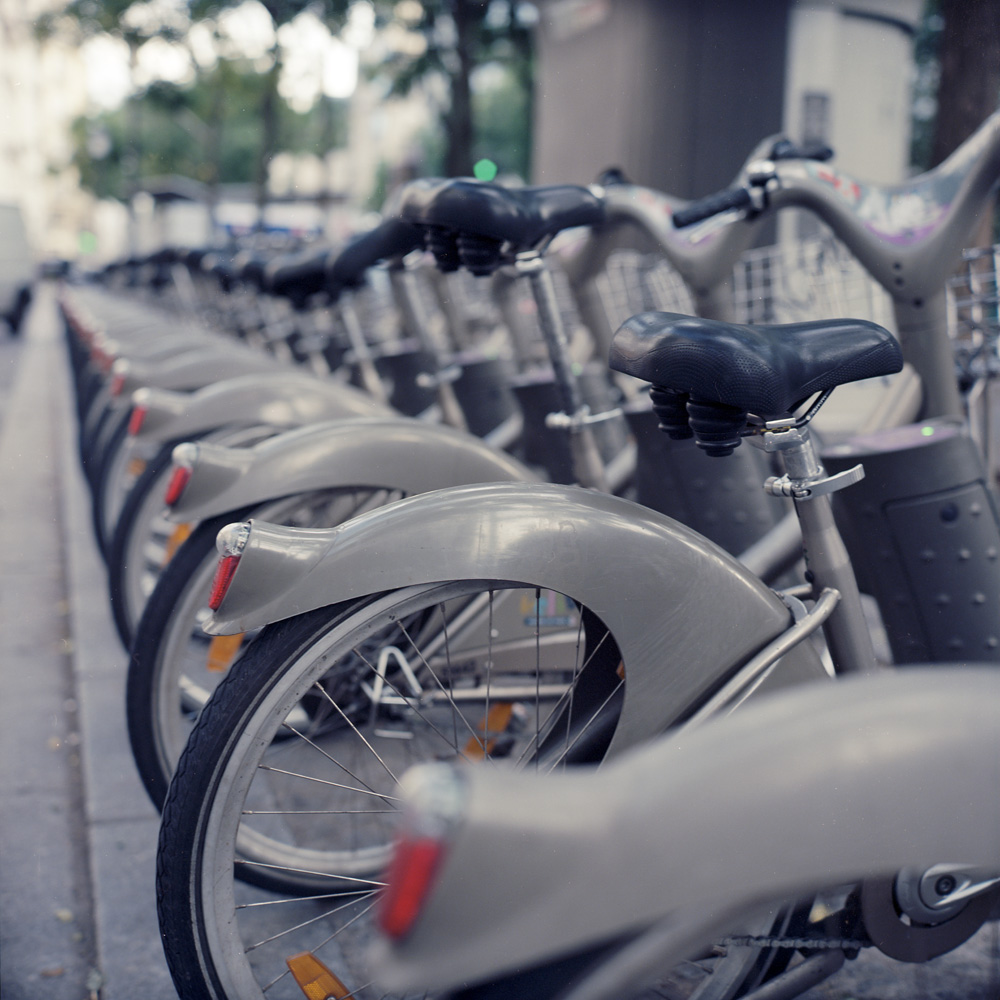
I’ve also been photographing the bikeshare bikes in DC, so I had to take a crack at interpreting their French cousins. Unlike here in the US, the bikeshare bikes seem to be of a single universal design in France. In Paris and in Chalon they are the same design, with the same colors, the prime difference being in the logos on the rear wheel cover and the local advertising. Frankly I could have done an entire photo-essay on the bikeshare bikes but I had other things on my agenda.
Ve’Lib Bikeshare
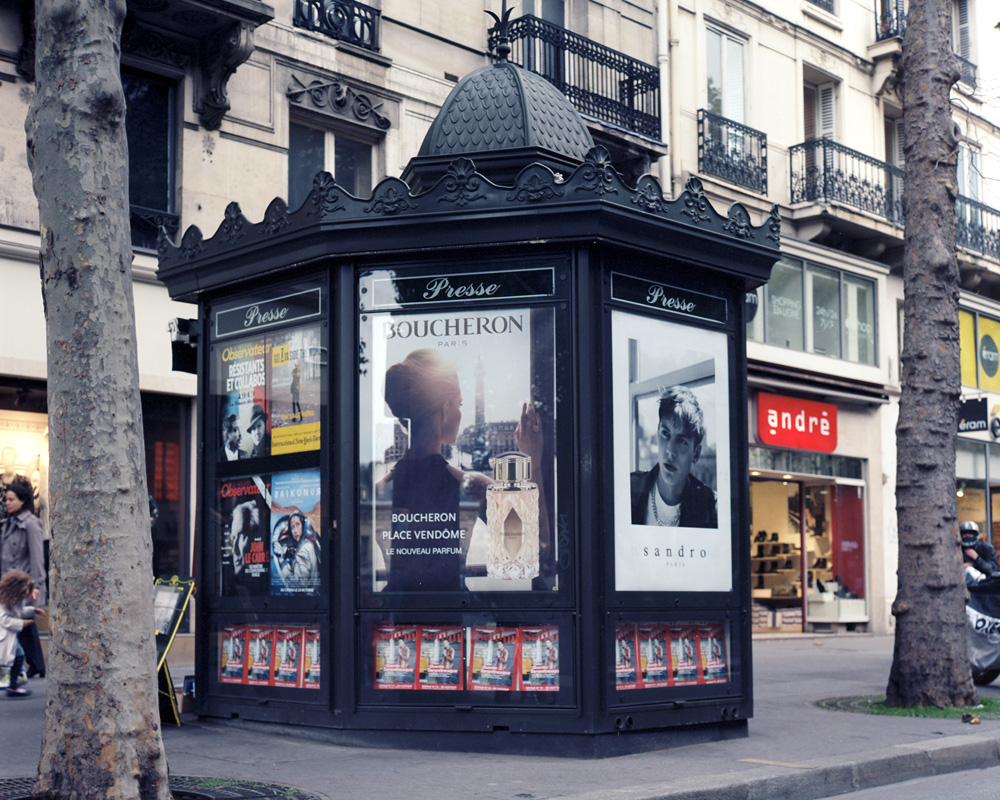
Newsstands fall into that category as well, I think, of things we see but ignore. They’re very functional, and in places that have them, we tend to notice their presence/absence more than we do their form. This one is very Parisian, but with a modern twist – instead of having static broadsides plastered to the outside, now the ads are LED displays or at least rotating banners so in the span of a minute, you can see three to five different ads scrolling past.
Newsstand, Boulevard St. Michel, Paris
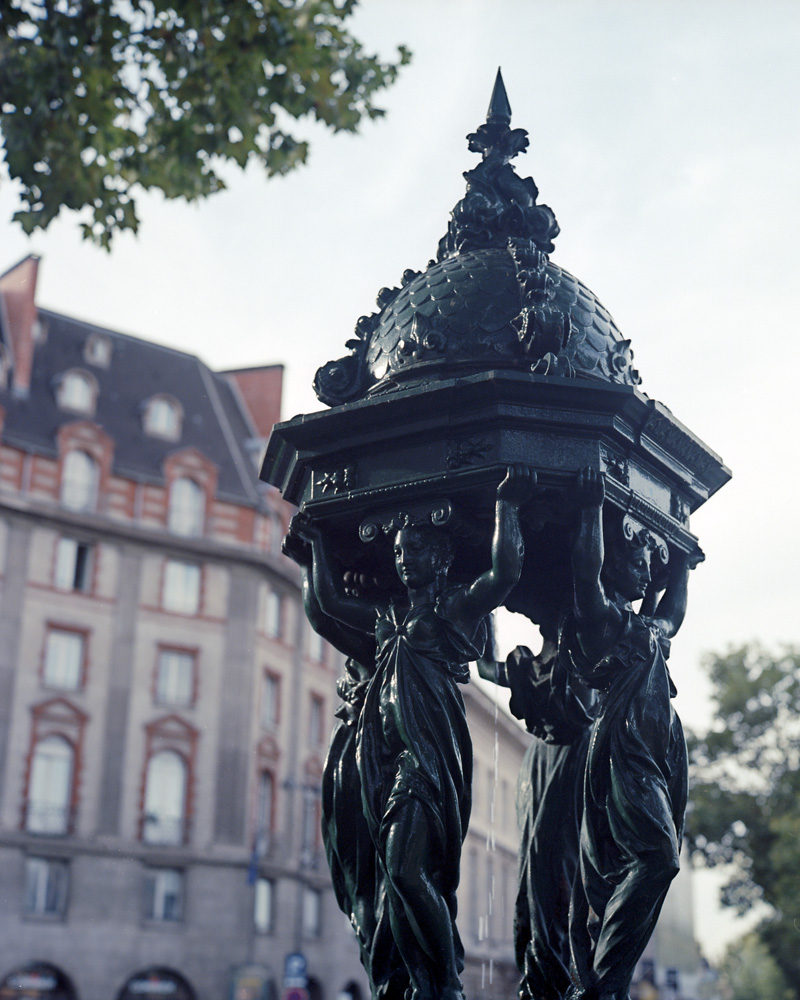
Last but not least, here is a public drinking fountain. I tend to notice them because here in DC for the most part if they exist at all they don’t work. In the 1870s, Baron Haussmann installed public drinking fountains across the city as part of a sanitation campaign, bringing fresh, clean drinking water to everyone. The design of the fountains was suitably ornate, bringing beautification along with safety.
 dcphotoartist