I went out with my parents for their joint birthday celebration (mom’s was a week before dad’s, while I was at Photostock). We like going to museums together, and they had never been to the Air & Space Museum annex by Dulles Airport. So we met in Reston for lunch, then drove out to the museum. Here are a few shots I took of the aircraft.
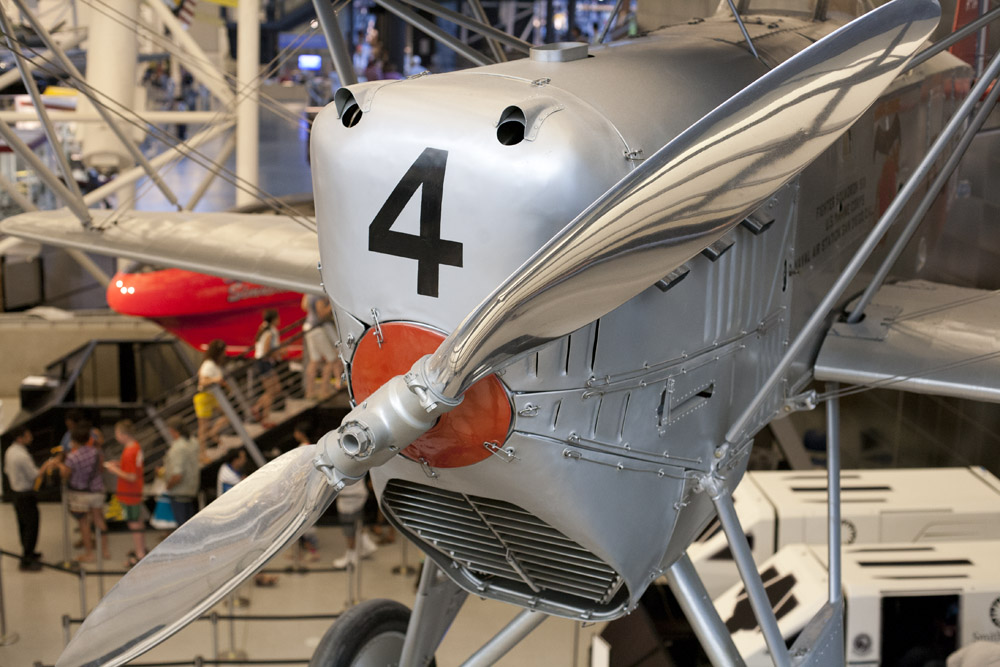
This is an early military biplane. Note the machine gun openings in the nose, just behind the propeller.
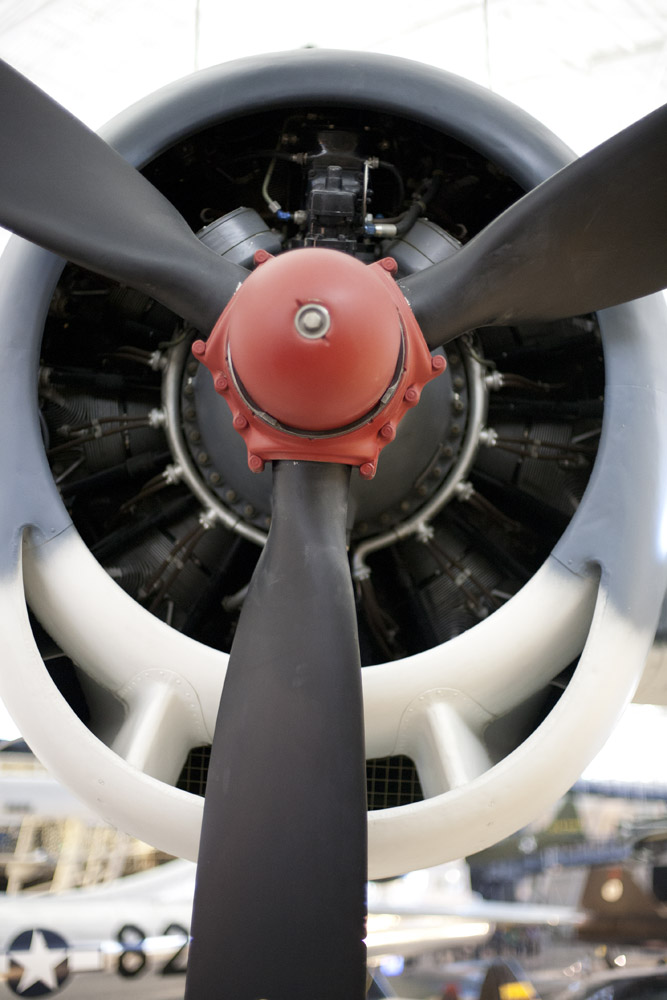
I find the propellers and radial engines on vintage aircraft fascinating – they make for very interesting compositions and lend themselves to geometric abstractions.
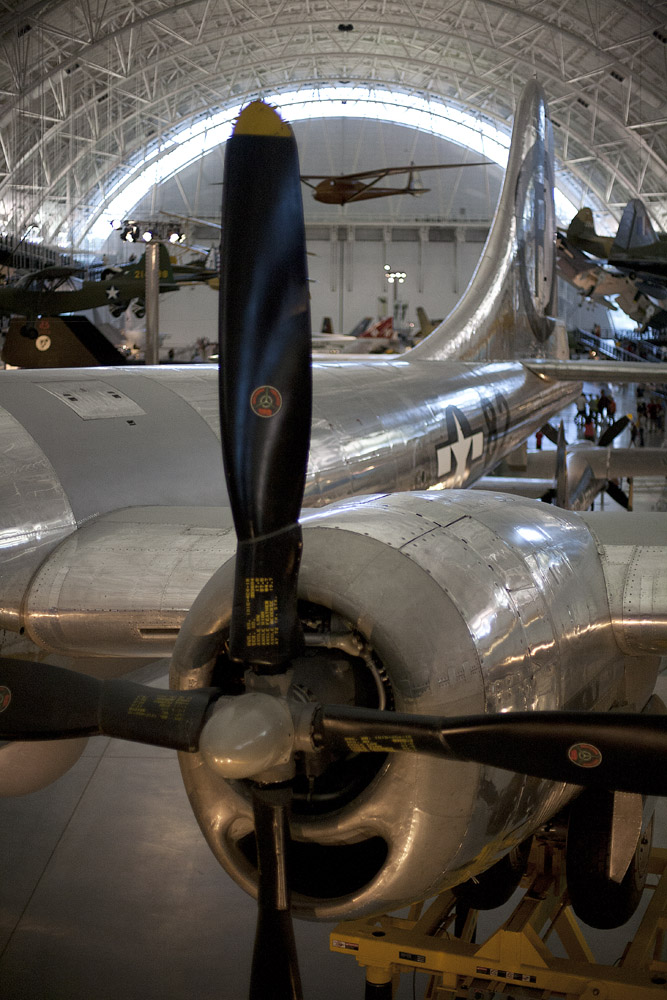
This is the propeller, wing and fuselage of the Enola Gay, the B29 Flying Fortress that dropped the atomic bomb over Hiroshima. There was some controversy when the plane first went on display about how the signage would read. I didn’t re-read it this time, but I know there were some WW II veterans who felt the original language was too apologetic toward the Japanese for the atomic bombing. To me, the plane is presented in an appropriately neutral setting, allowing visitors to judge for themselves what it means.
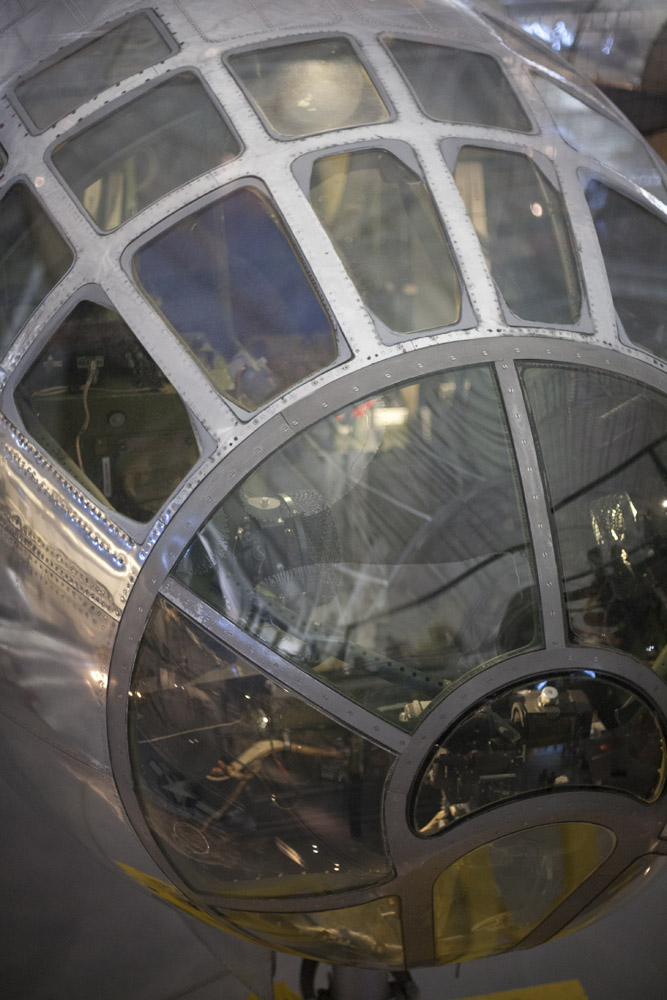
The cockpit of the Enola Gay. I don’t know if having a polarizer would have helped with the glare – the windows are plexiglass and have compound curves to them.
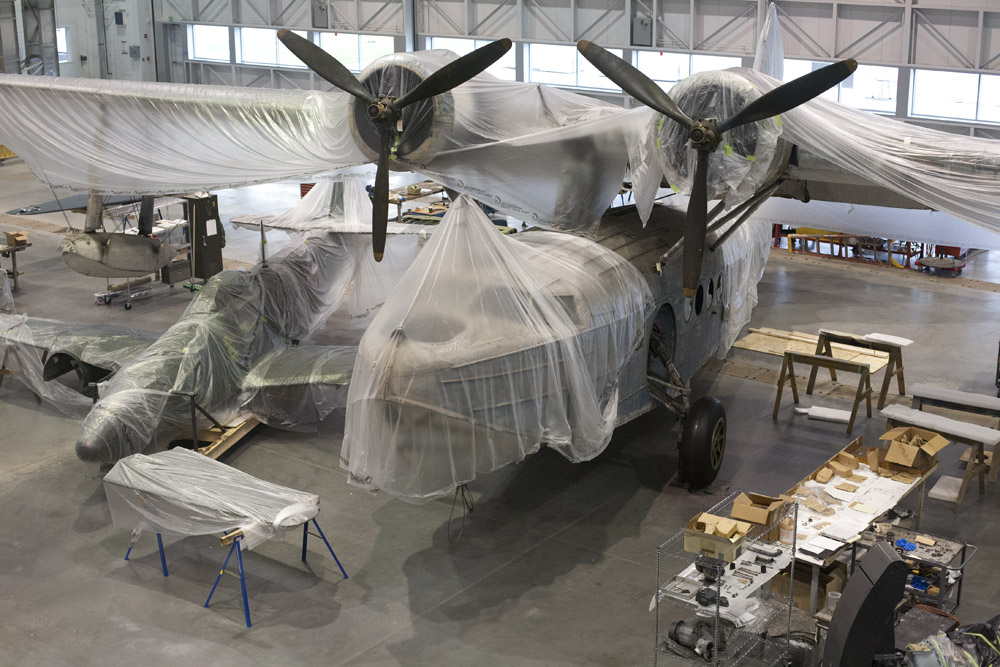
One of the neat things about the Udvar-Hazy center is that they now have the restoration facility open to view. You still can’t go down on the floor of the workshop like you could over at Silver Hill (that was a different place and a different time, where you toured by appointment, but could walk up and touch the Enola Gay, still disassembled and in need of polishing (which they would let you help out with if you wanted to volunteer – the plane has an enormous surface area)). Now they are actively working on a WW II US Navy Hellcat dive bomber (not pictured), and here is a flying boat with what appears to be a Korean War vintage jet fighter underneath its wing.
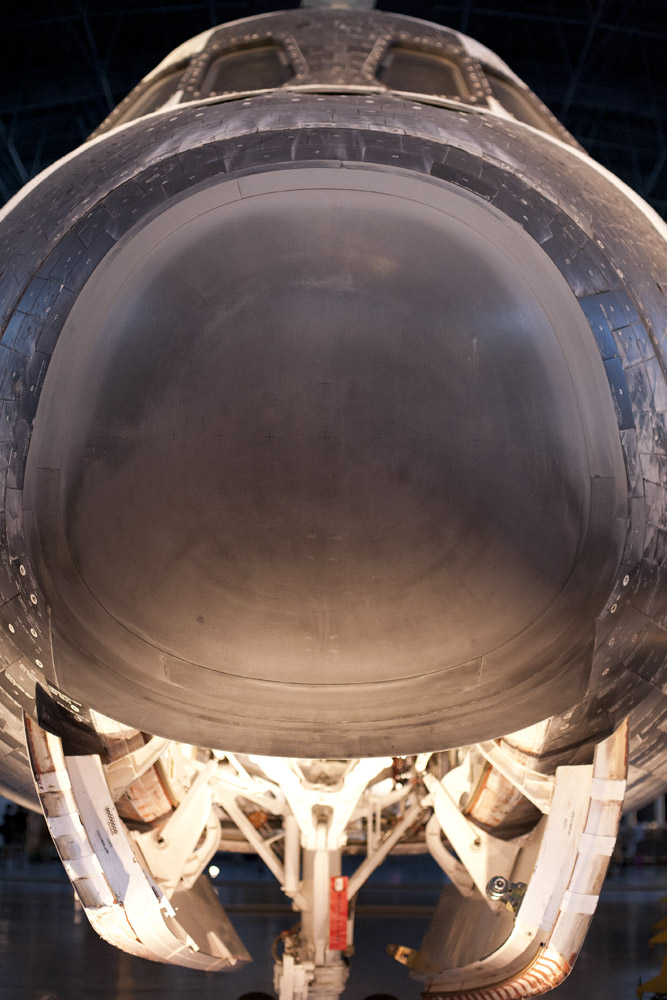
And of course, the piece de resistance, the Space Shuttle. I know almost everyone takes a version of this photo when visiting, but it’s such an impactful view of the iconic vessel.
All photos were taken with my Canon 5D mk1, and the Canon EOS 50mm f1.4.
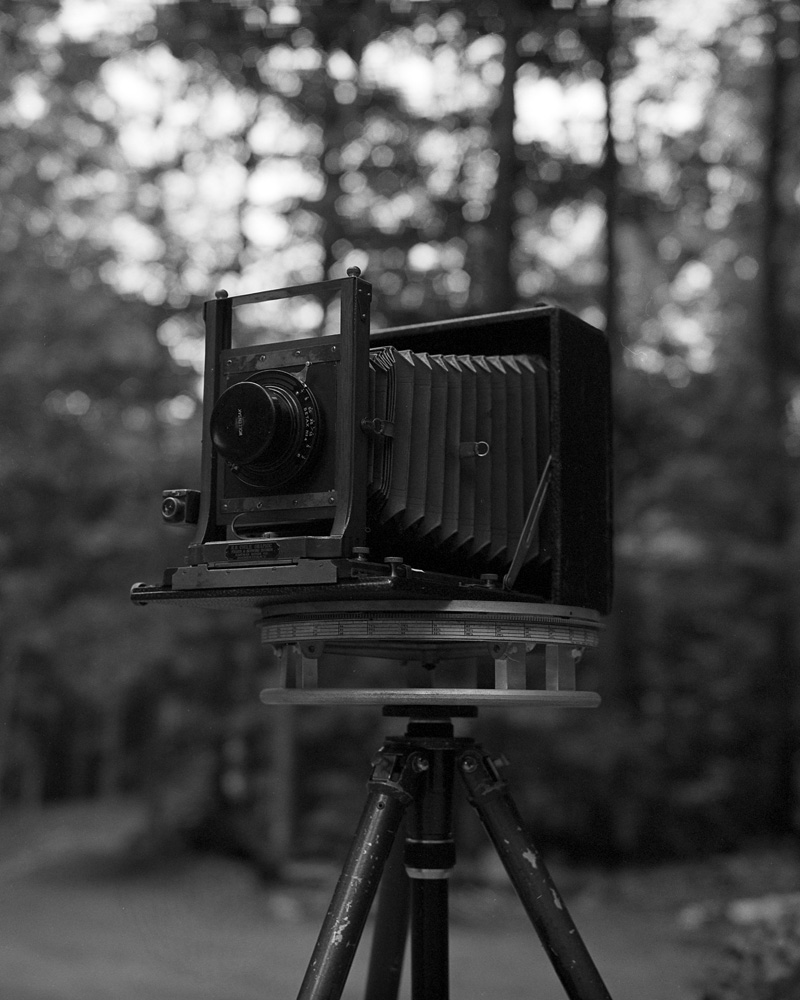
Since Photostock is all about photography, I thought I’d lead off this post with photos about cameras and taking pictures. The first photo is Jaime Young’s 9″ Cirkuit panoramic camera. A Cirkuit is just an ordinary Graflex field camera, but with some special modifications – it comes with a giant geared wheel and a series of reducing gears and flywheels to make it rotate up to 360 degrees and a special back that holds a 9″ tall roll of film. You can change the speed of rotation and the amount of rotation through changing gears and flywheels and adding stops to the large geared wheel. Jamie did a big group shot with the Cirkuit at the workshop facility dedication ceremony, where we had almost 70 people. The Cirkuit was absolutely needed this year to get the whole group shot done. One of the cool things about the Cirkuit is that because it rotates at a relatively slow speed, once the lens passes you, you can get up, run around, and get back in the picture, so you appear twice (or more). I’m itching to see the final print from the Cirkuit – some folks did just that, the run-around, and so they will be in the photo two, three, or in the case of one or two jokesters, even four times.
Cirkuit Graflex Panoramic Camera
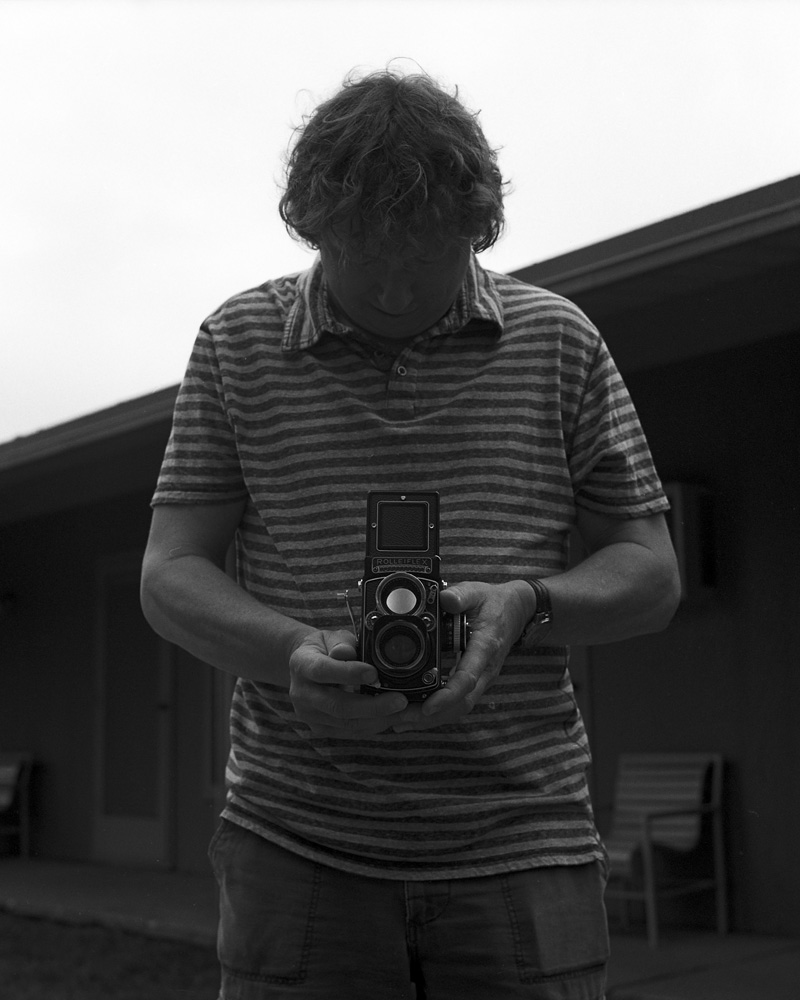
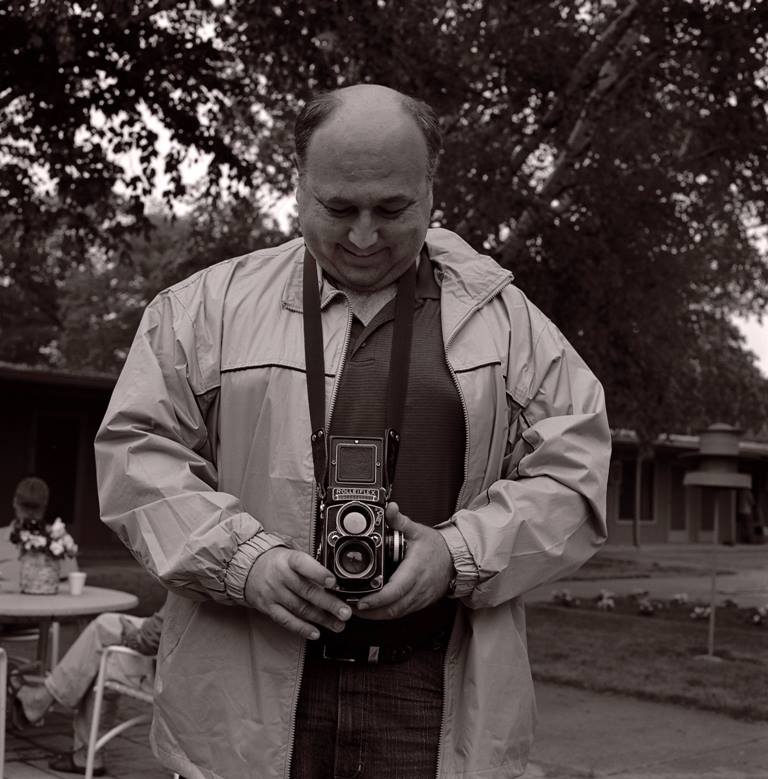
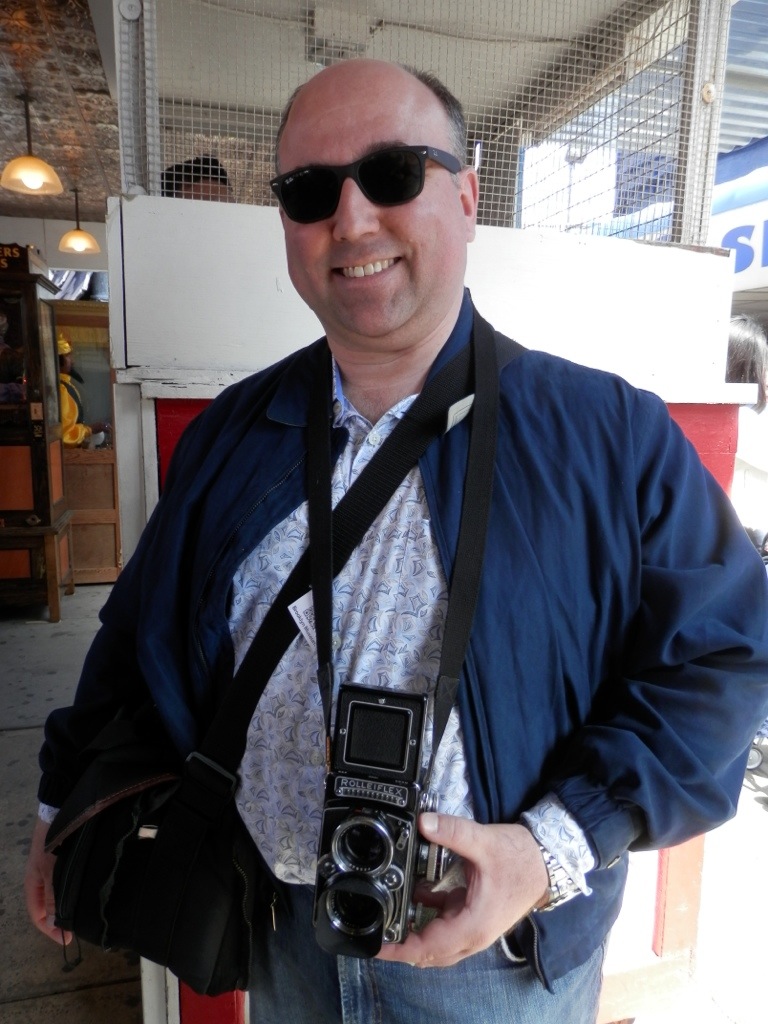
This is Steve Zimmerman, with his Rollei. We shot dueling Rollei photos of each other in a fit of silliness. His Rollei has a great story – he was out photographing in downtown Minneapolis, and some guy walked up to him and struck up a conversation about cameras and photography. The guy then pulls a BRAND NEW, IN ORIGINAL BOX Rolleiflex 2.8E, AND an equally brand new Leica M3 with the Summicron f2 lens out of a bag, and gives them to Steve for $100 each. Steve tried to pay him more (each of them was worth about 10x what he paid for them!) but the guy insisted on the cheap price, because “I know you’ll enjoy and appreciate them”.
Steve Zimmerman, Dueling Rolleis
Here’s Steve’s shot of me… why couldn’t he have photoshopped a full head of hair onto me? It would have helped compensate for the double chin…
Me, in a Rolleiflex Duel with Steve Zimmerman
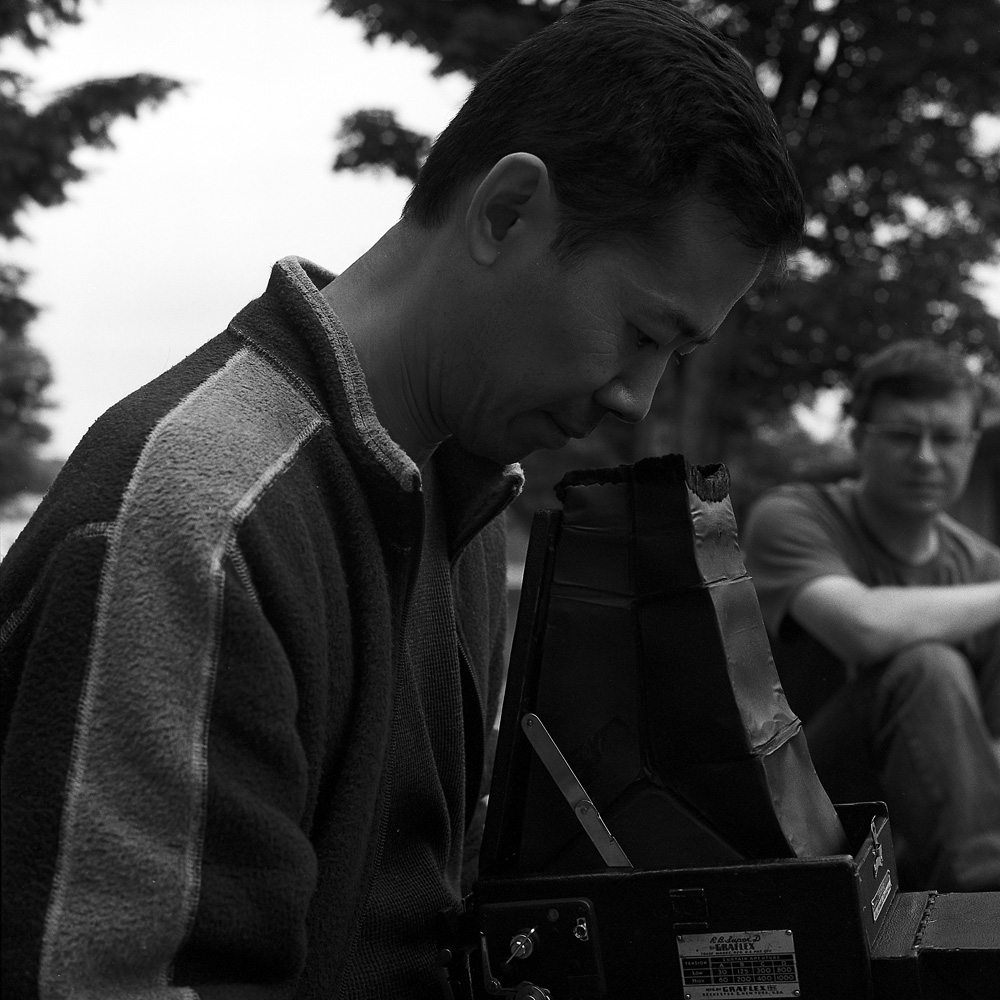
Someone (I forget who) brought a beautiful RB Graflex Super D 4×5 SLR to the event. Here is Dan Lin, a fantastic photographer who I’ve done a print trade with before, playing with the Graflex. Alex L is in the background.
Dan Lin, Trying Out A Graflex
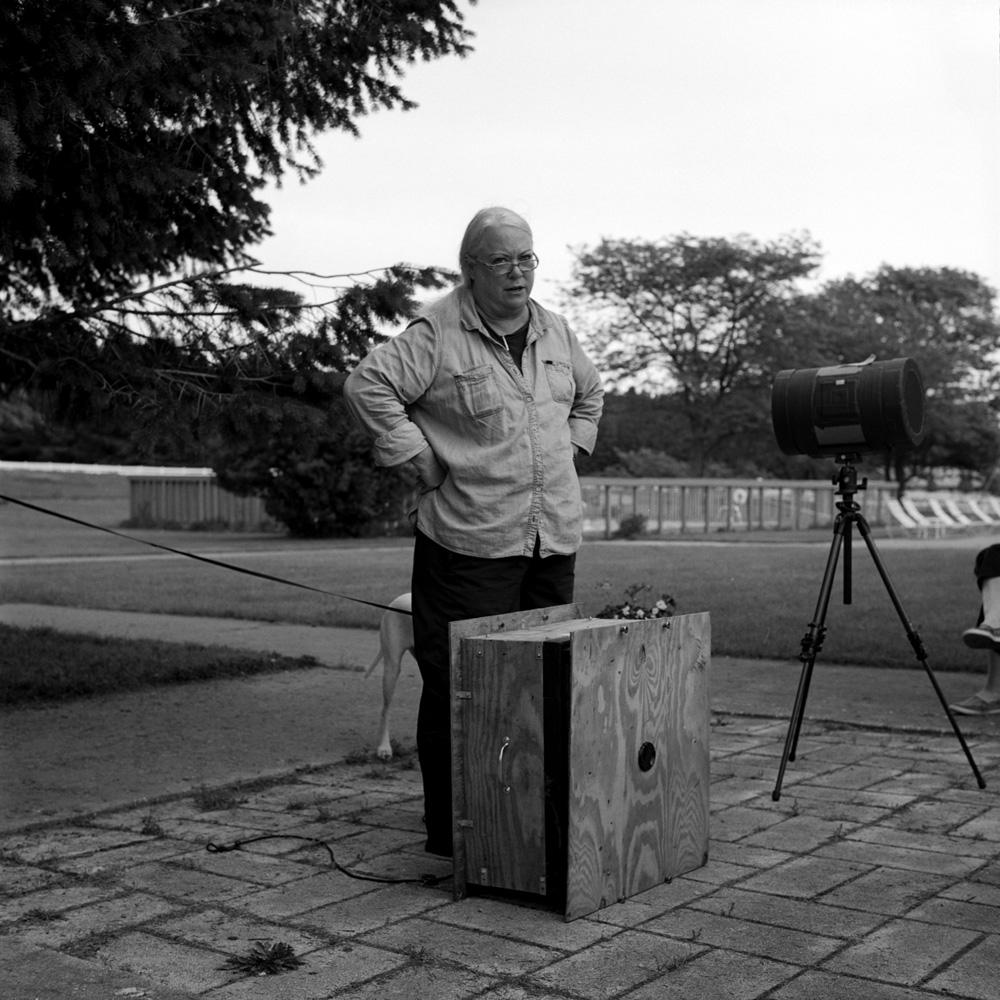
And here’s Judy Sherrod again, with her pinhole cameras. The one in front of her is the first version of her 20×20 wet plate pinhole box camera, made of plywood. It has since been retired and replaced with a new, better built one. The drum on the tripod behind her is an anamorphic pinhole. The pinhole is in the end of the tube, but the paper or film goes around the inside, instead of on the opposite wall of the camera. This works because of the way a pinhole works. The pinhole projects light in a very wide circle, not just a cone like a lens does. Doing so allows you to make some very different images.
Judy Sherrod, Pinhole Camera Demo
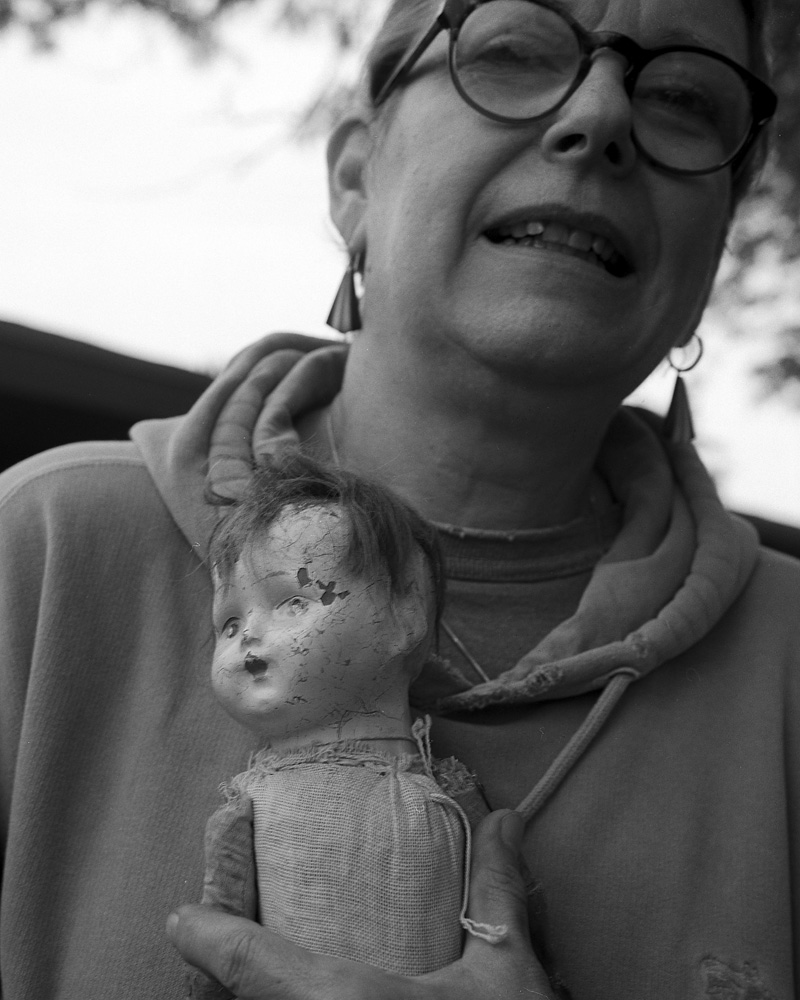
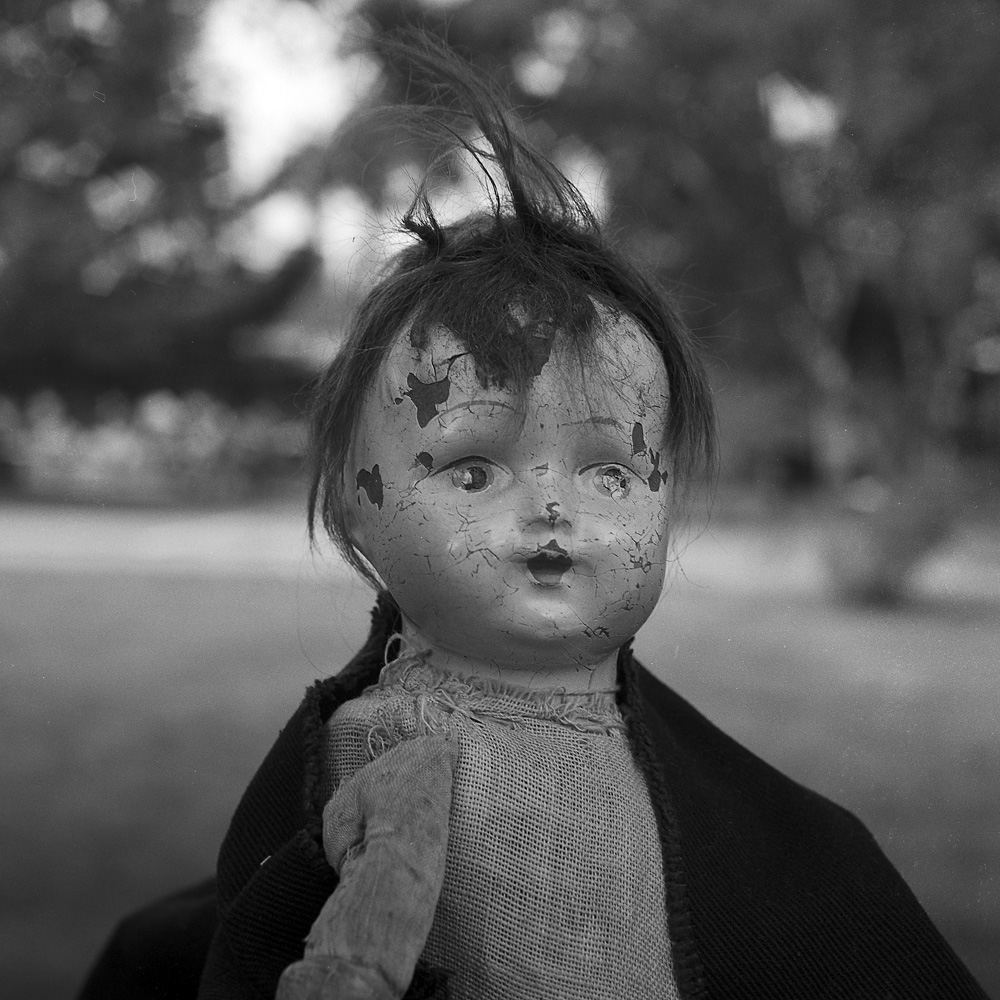
Here’s Dorothy Kloss with her creepy doll. She likes collecting antique dolls, and the creepier the better.
Dorothy and her Creepy Doll
It seems everyone has a Rolleiflex story somewhere or other. I was playing around with my Rollei and it reminded Dorothy that in some boxes of her father’s stuff, she has his old Rolleiflex, and maybe the Rolleinar close-up filters like I have and was using for the shot of her with the doll and this photo of the doll by itself. It inspired her to go dig through her dad’s stuff and find it when she got home.
Dorothys Creepy Doll
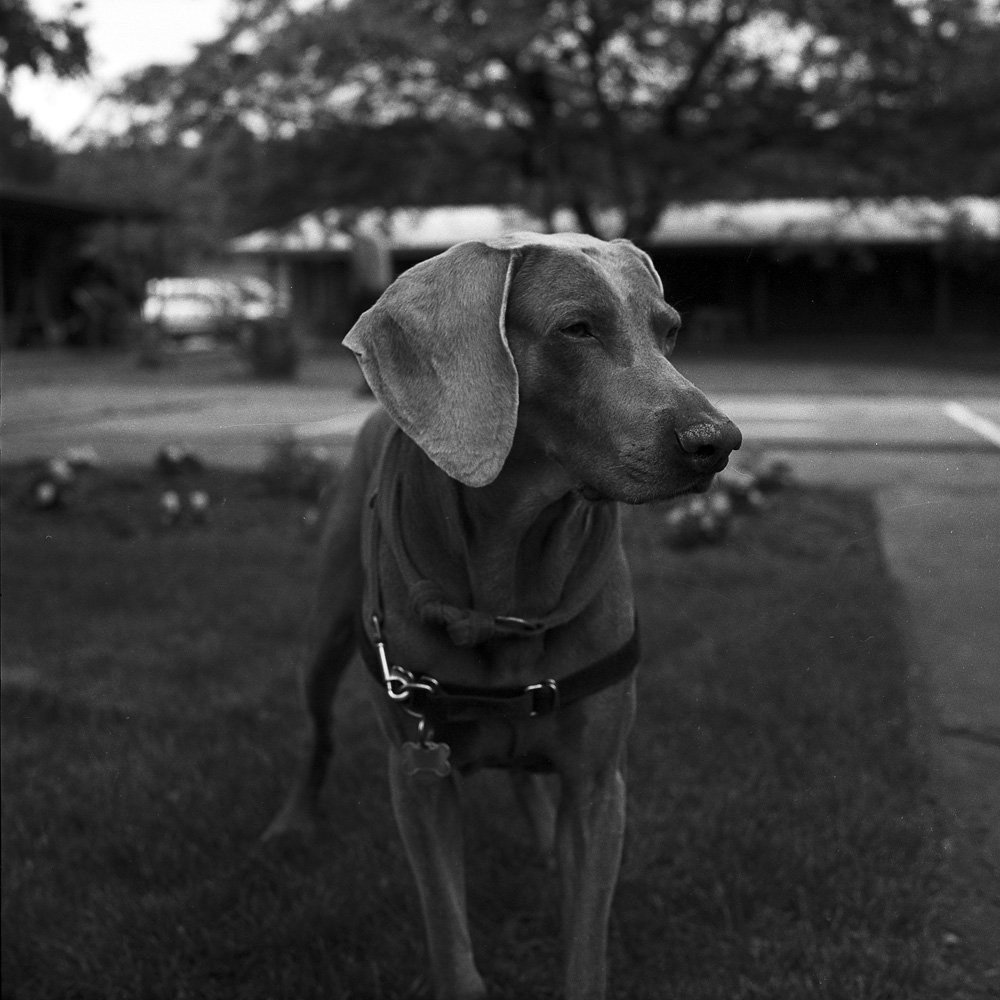
Pele the Weimeraner. Pele was a great dog and a fine addition to the Photostock community. He is very attentive and friendly, and you can see in the subsequent photo of him with Arnaldo, his owner, very fixated on his ball.
Pele
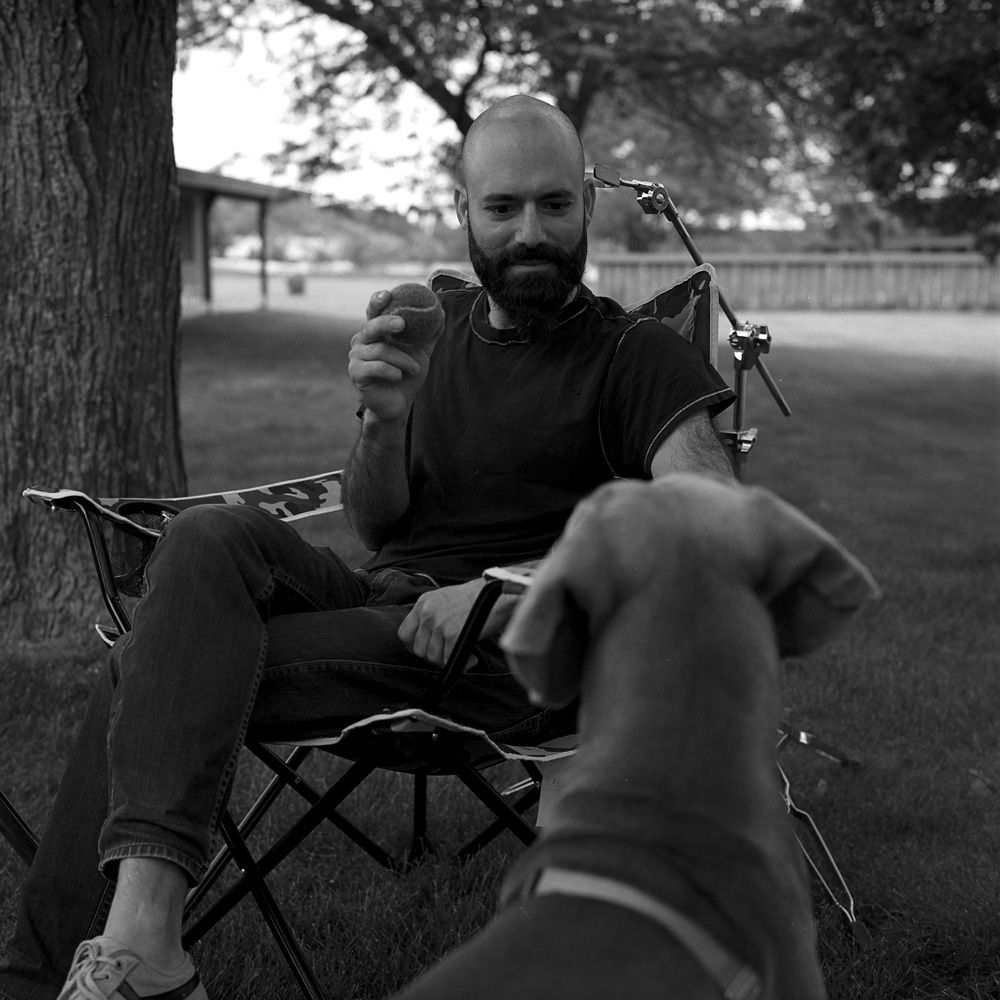
Arnaldo, in the posing chair with head clamp, waiting for the wet plate collodion portrait that Andrew Moxom took of him to develop, playing with Pele.
Arnaldo and Pele
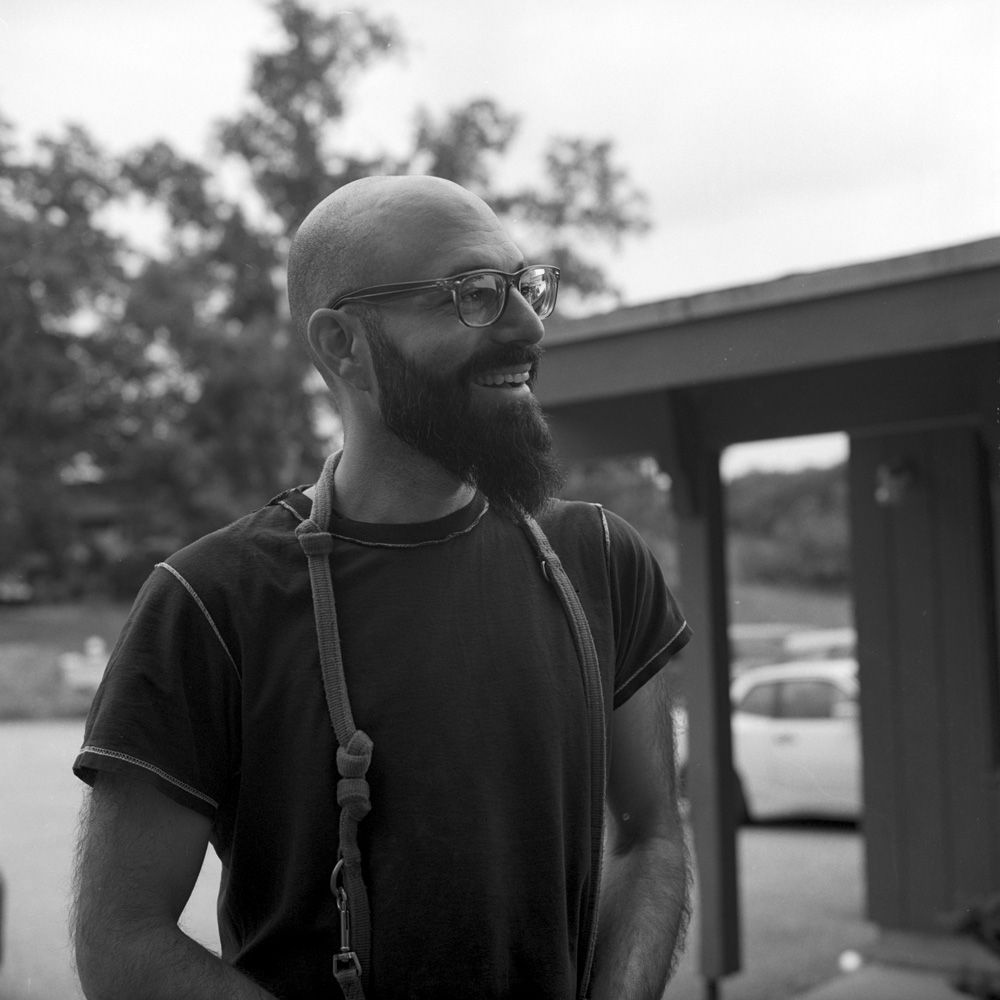
Arnaldo. Arnaldo is a photographer from New York City. He drove to Photostock from New York in a 1980s vintage Porsche 944, and continued on to the Southwest (New Mexico and Arizona if I’m not mistaken) afterward.
Arnaldo Vargas
Mat Marrash. Mat runs the Film Photography Project podcast, and does AMAZING 11×14 Infrared (!!!) photographs. Yes, I said 11×14, as in 11×14 inch film. He has a stock of Efke 11×14 infrared film that he’s working through – the Efke is no longer made, so once his stash is gone, that’s it.
Mat Marrash
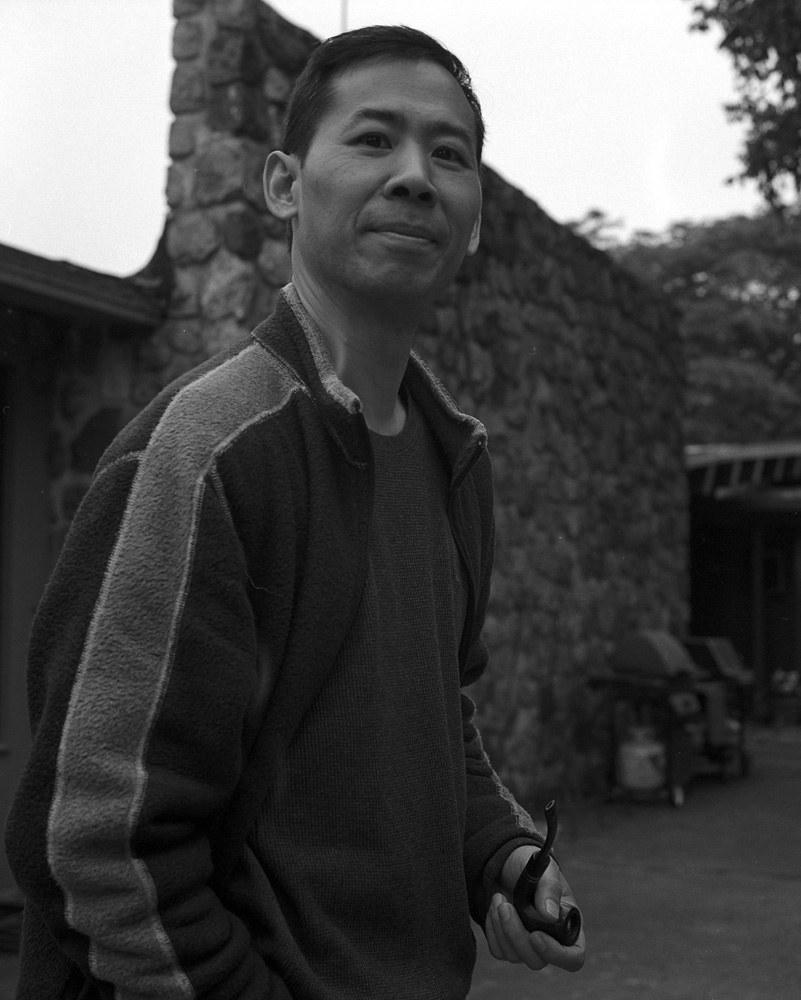
Here’s a portrait of Dan Lin, without the Graflex, but with his pipe. I don’t think I got one of him wreathed in smoke from it, but I might have one like that on one of the remaining rolls from the trip I still have to develop.
Dan Lin
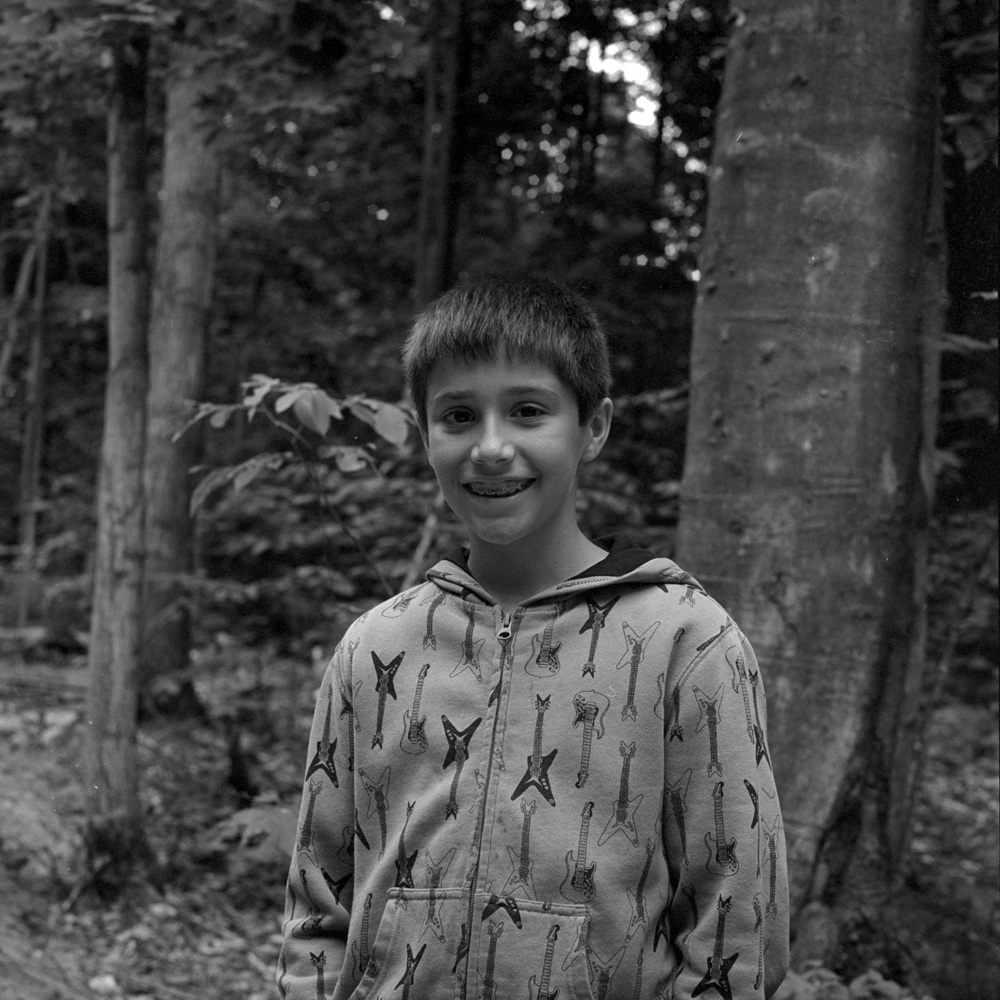
And in the closer for this post, is Evan Schwab, the son of Bill Schwab, our host and organizer for the event. Evan is a terrific little guy, very smart and a good conversationalist. A kid even WC Fields could like.
Here are a few shots from downtown Harbor Springs, Michigan.
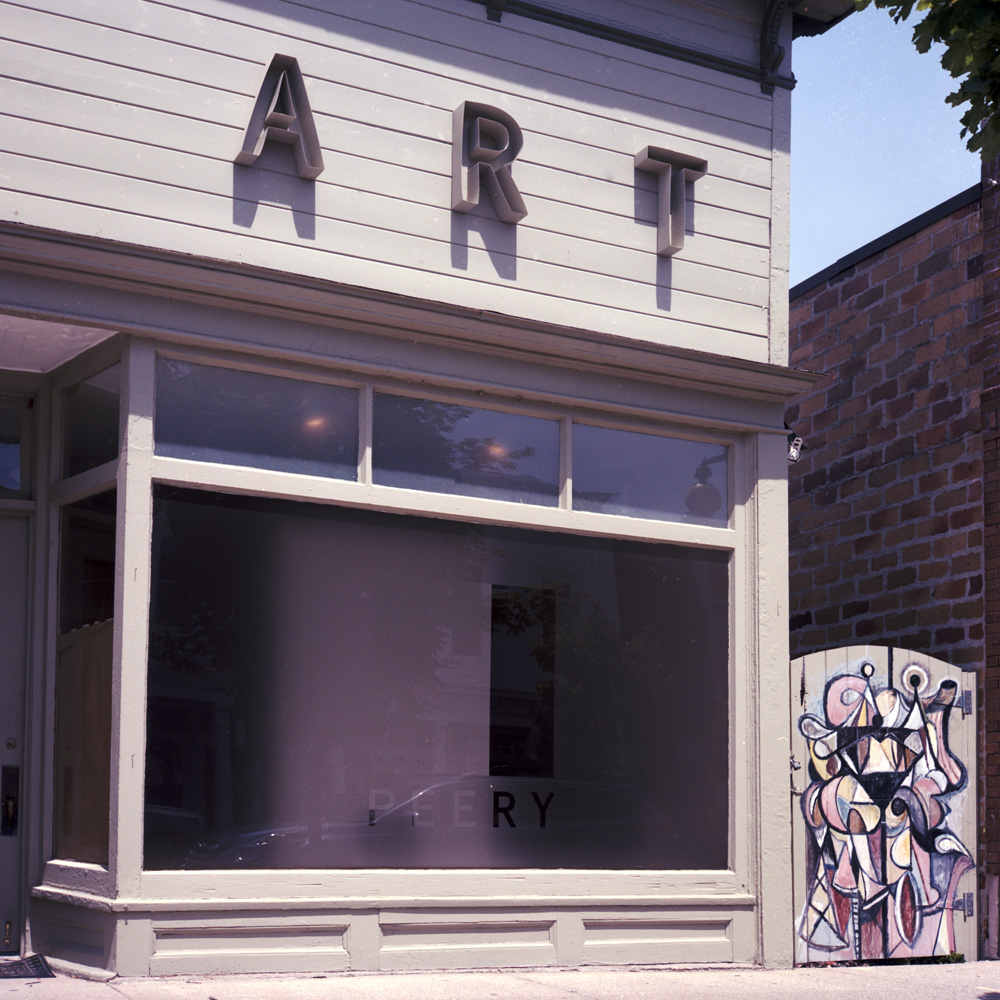
Under the heading of “but is it ART?”
Art Gallery, Harbor Springs
I couldn’t tell if it was out of business, not yet opened for the season, or in the process of opening for the first time, but it’s some kind of statement to have an art gallery with bare walls.
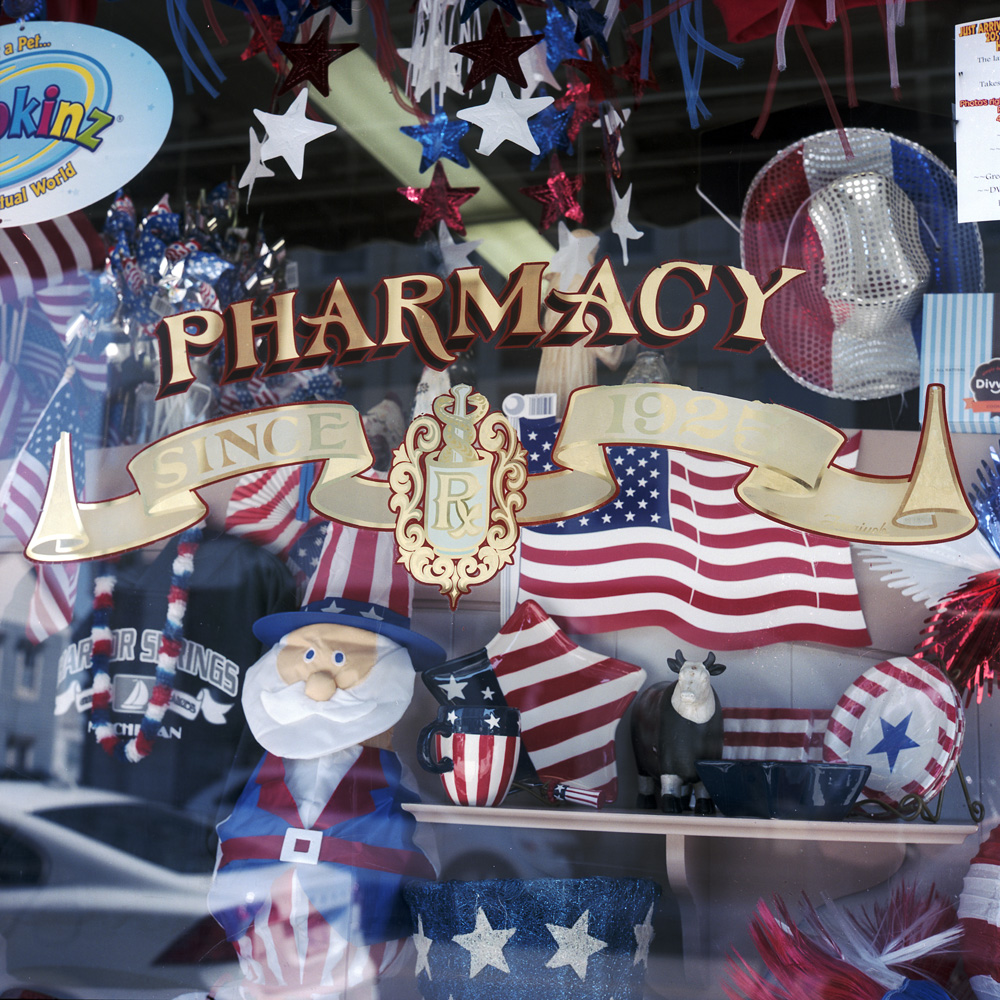
I loved the vintage feel of the gold leaf sign in the pharmacy window, and the riot of colors and designs on all the July 4th themed stuff in the window: Pharmacy Window, Harbor Springs
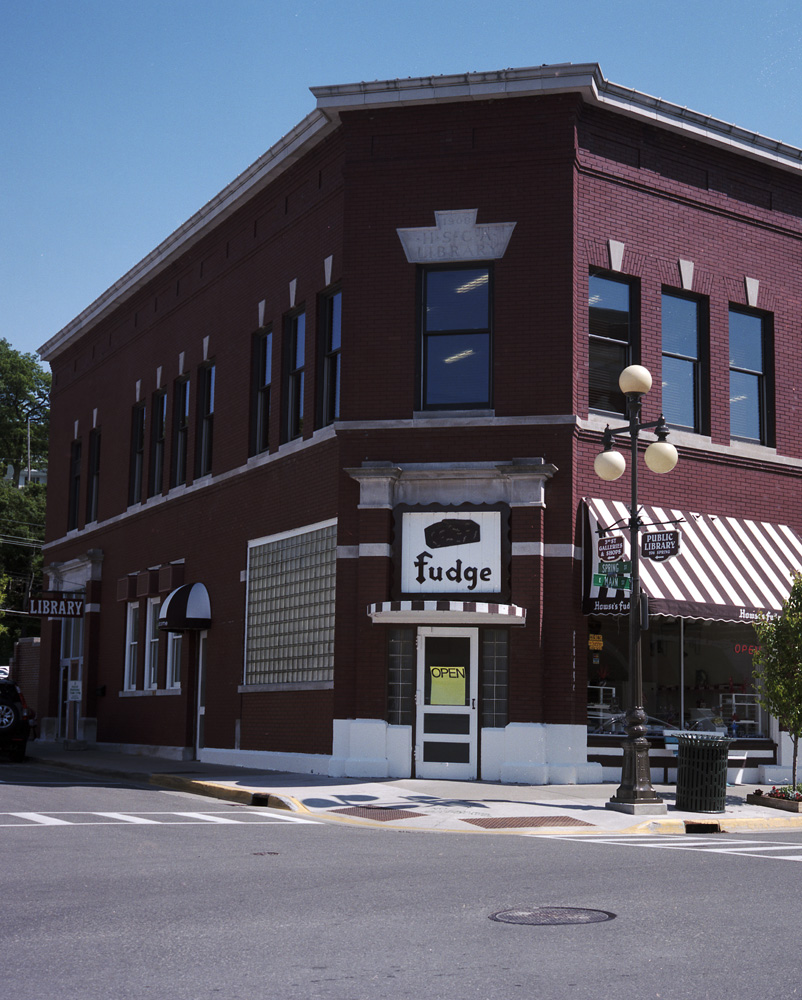
It also says something about a small town when the library is upstairs from a fudge shop:
Lbrary, Fudge Shop, Harbor Springs
I’ll leave it to you to decide what exactly it says.
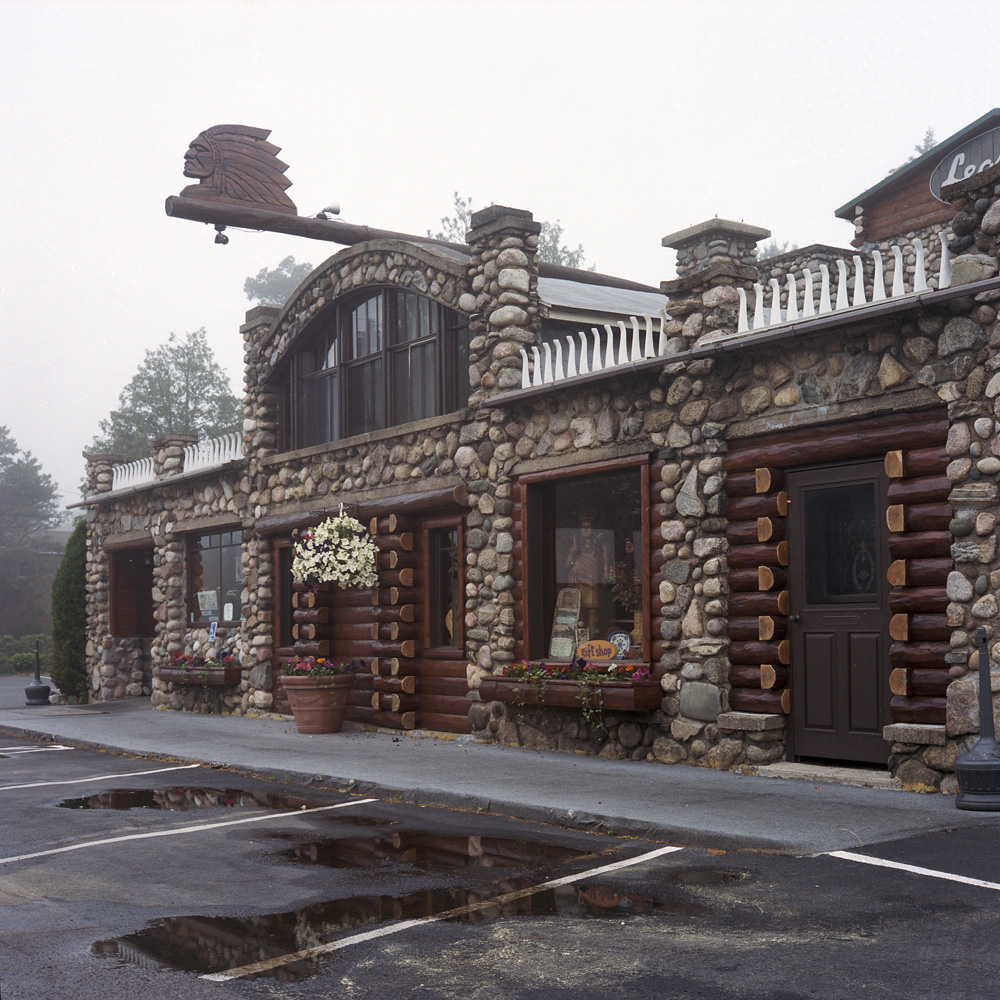
Here is the famous “Legs Inn”. The Inn serves Polish cuisine in a highly rustic, pseudo-native-american decor setting. It gets its name from the fringe of old stove legs fringing the facade.
Legs Inn
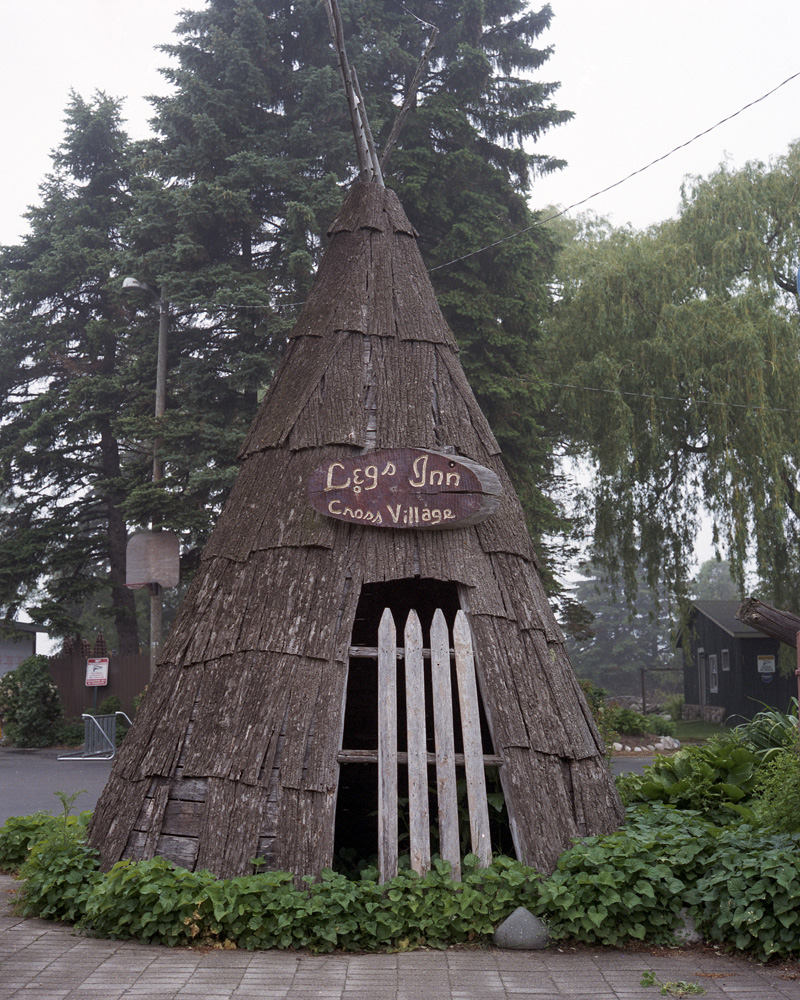
Commemorating the Native American presence in the area, the Legs Inn has this tipi construction outside in the parking lot.
Bark Tipi, Legs Inn
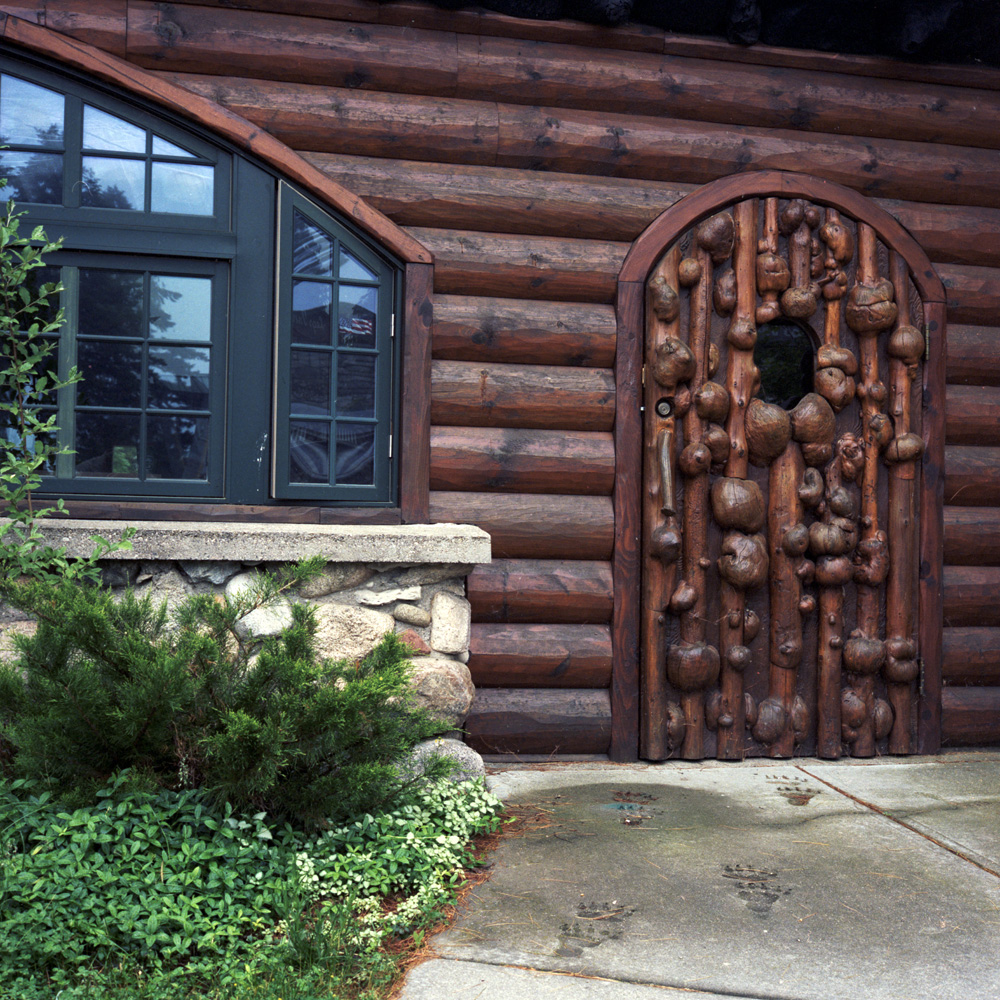
Across the street is this very knotty door, with fake bear paw tracks in the concrete sidewalk. Knotty Door, Legs Inn
I looked at the sidewalk and my first thought was “how cute – I want to keep the paw prints in the photo”. My second thought was, “what a pain in the ass that must be to shovel come wintertime – those are natural snow and ice traps!”.
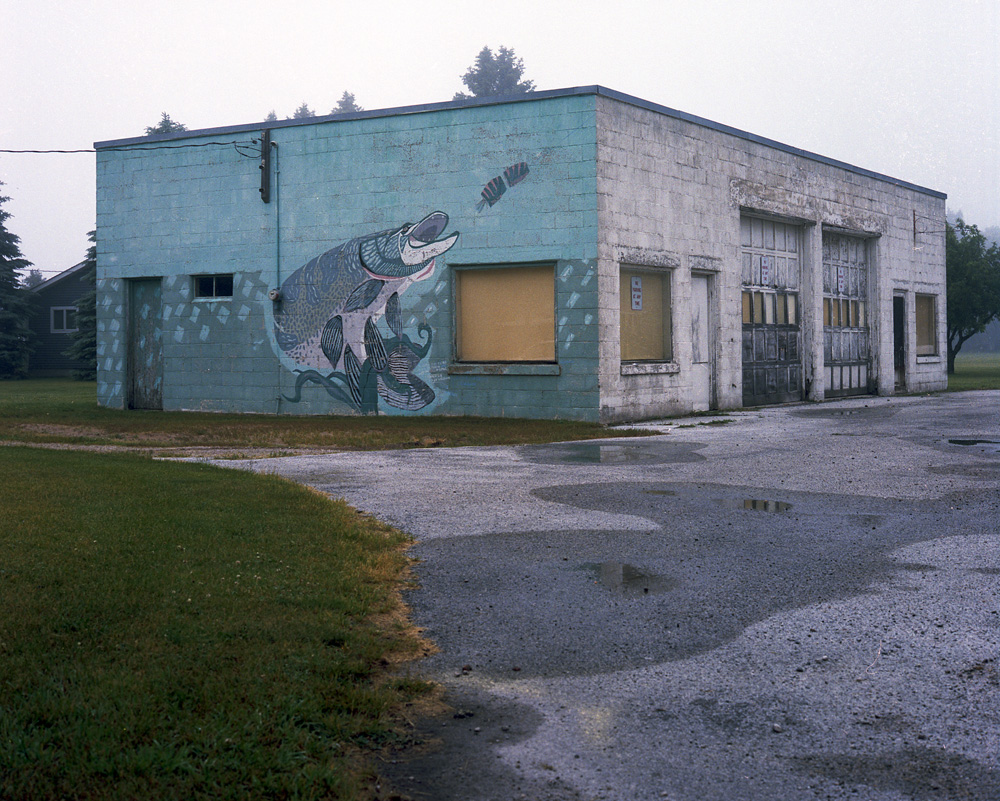
Across the parking lot from the Legs Inn is this old cinderblock garage building, all closed up, but with this gigantic mural of a Muskie leaping for a fishing lure.
Muskie Mural, Garage, Legs Inn
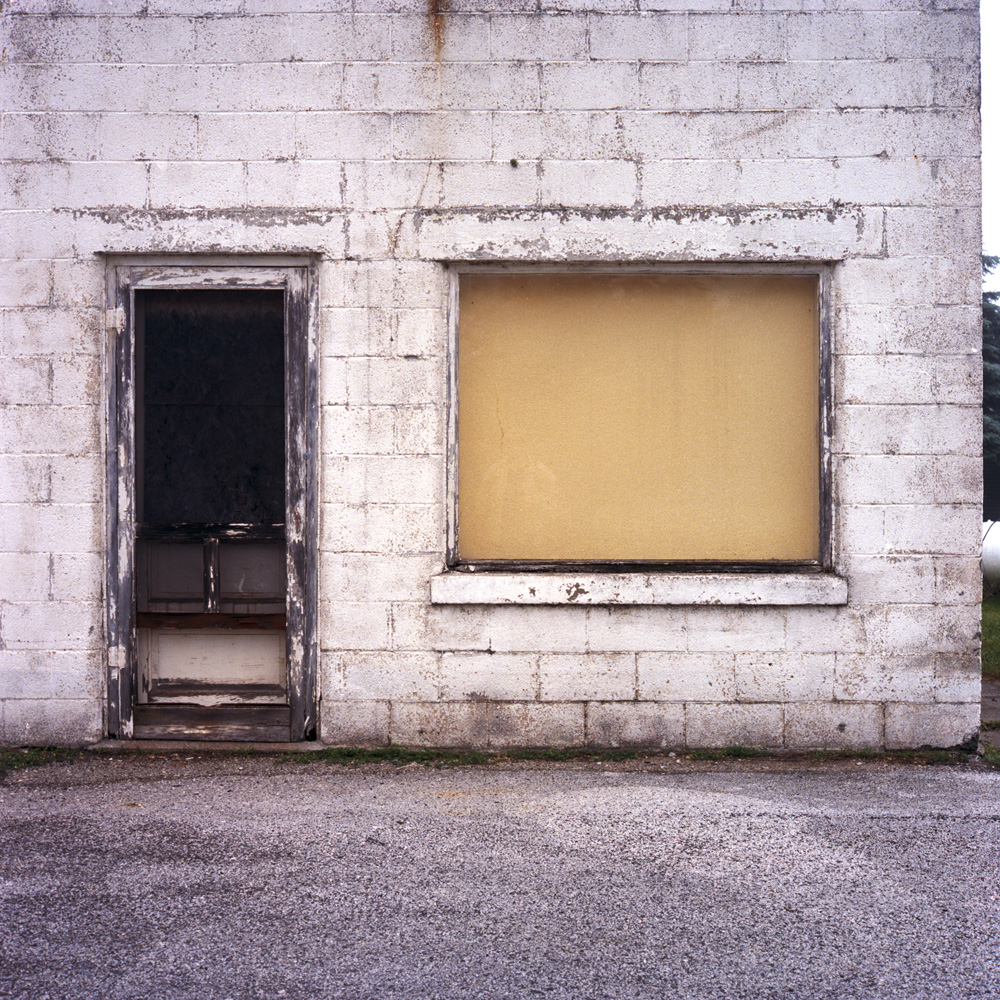
I just liked the texture of the garage wall, and wanted to do something with the geometric qualities of the door, window, and cinderblocks. I don’t normally like perspective-less flat planes, but this composition called out to me. I also liked the near-monochromatic nature of the scene – there are few hints other than the window shade that this is in fact a color photograph. Feedback on it welcomed.
Garage Office Door, Legs Inn
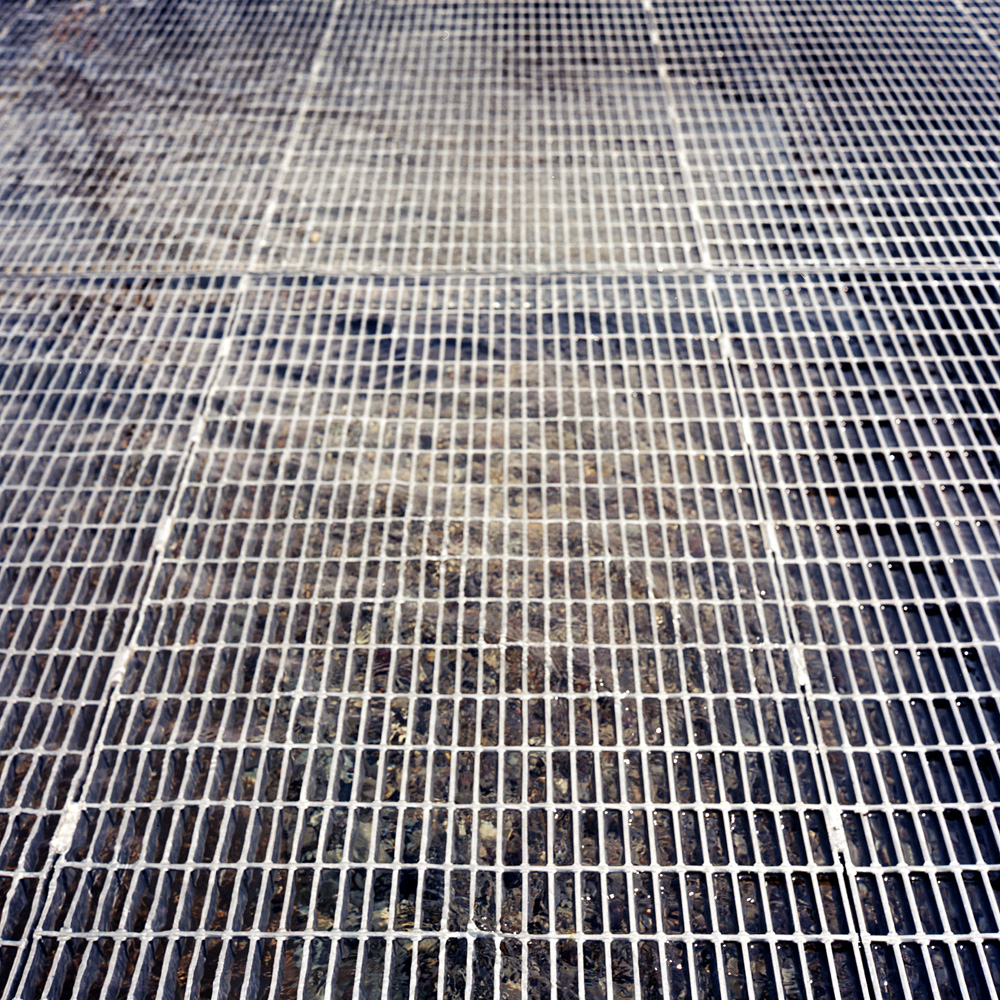
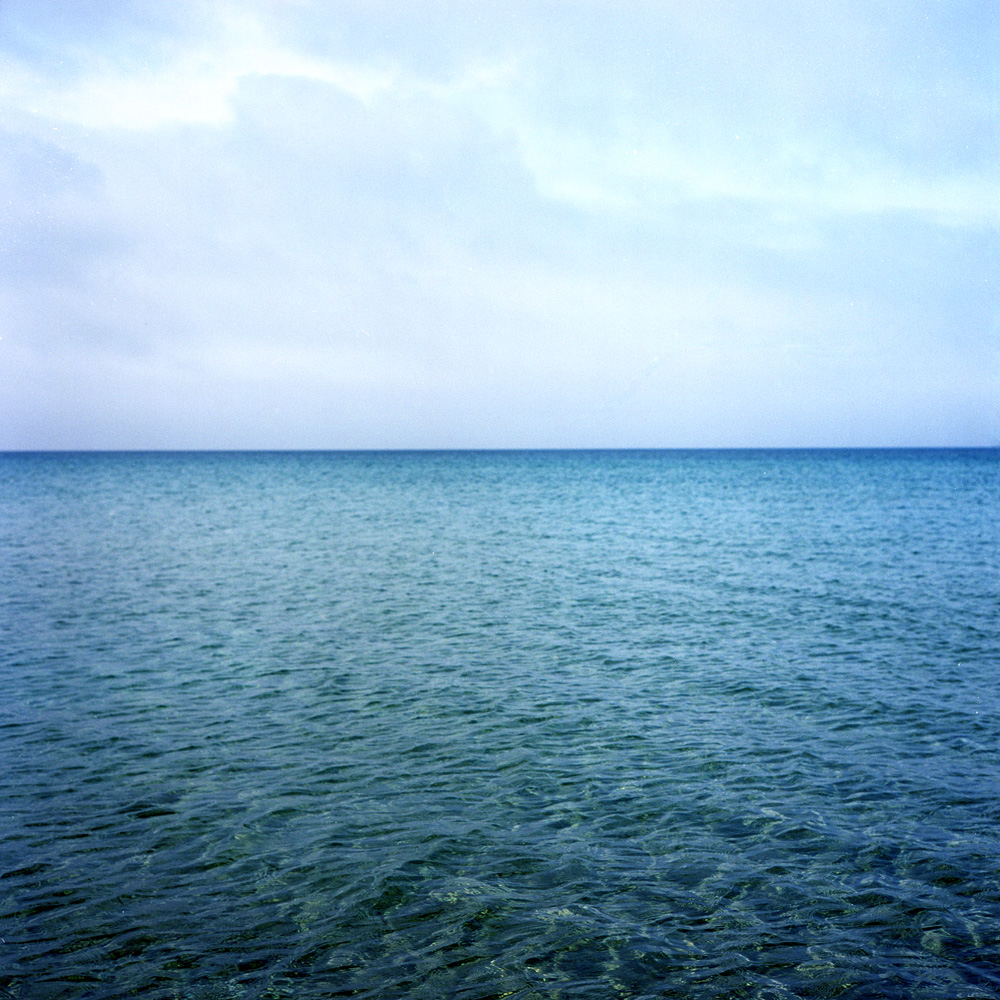
On a bright and sunny day, I went down to the boat ramp in Cross Village, Michigan, to get the sunny day version of something I had previously attempted in heavy fog – a photo of just the lake and sky. I went out on the boat ramp to take the photo, so I could be sure to not have any land in the foreground. Coming back from the decking over the water, I looked down and saw this:
Boat Ramp, Cross Village
The waters of Lake Michigan. Yes, it really is that blue and clear. I tried this shot also on a foggy day, but the fog was so intense I ended up with detail-less gray over sorta-textured gray, which was very uninteresting. I’m thinking of doing a Sugimoto-esque re-working of this to blur out the details in both sky and water so it becomes a study in color fields.
Lake Michigan
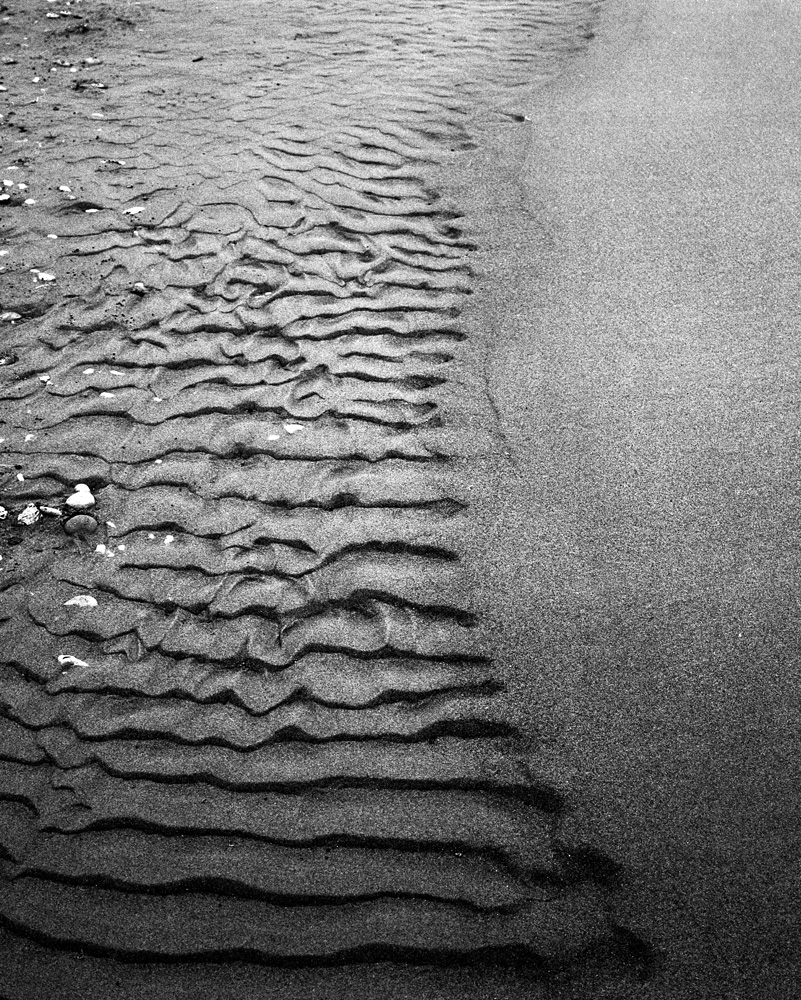
I know, heresy- I converted this shot to black-and-white from a color negative. Had it been a sunny day, I think the color would have worked, because I would have had the contrast in the scene to bring out the abstract nature of the composition. But I had profound fog as my lighting, so the b/w conversion gets me closer to what I was seeing in my mind’s eye for this shot.
Beach, Lake Michigan
All shots taken with my Rolleiflex 2.8E, with the films being a mish-mash of Kodak Portra 160, Kodak Portra 400 (the really foggy day stuff) and Kodak Ektar 100.
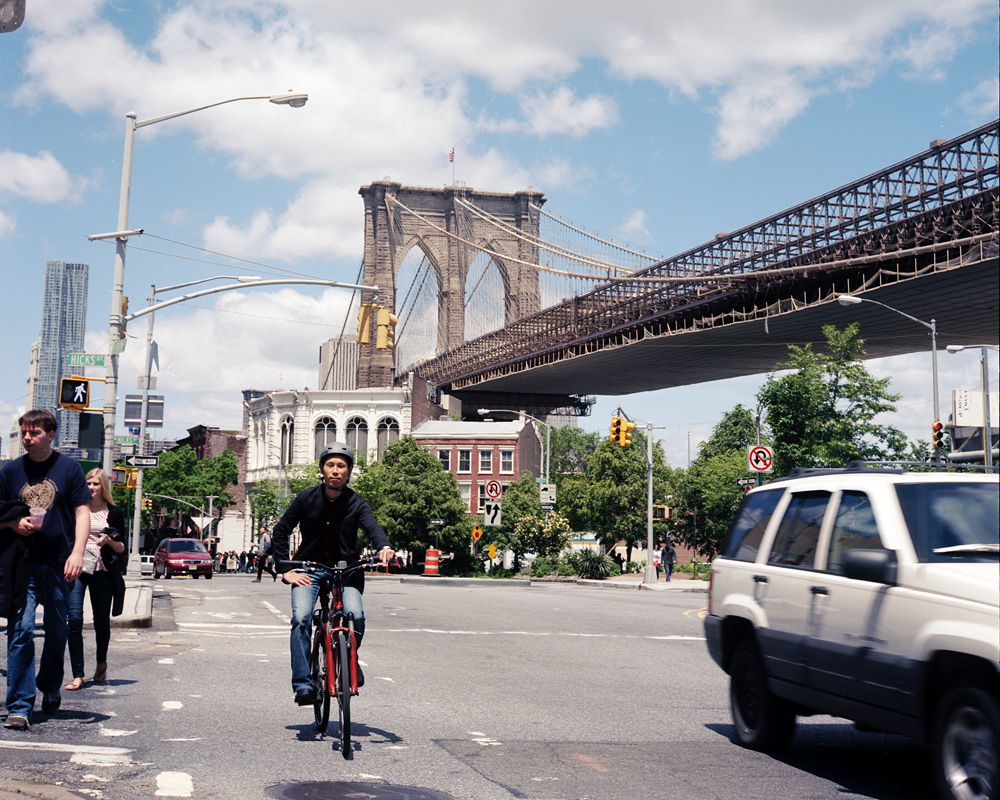
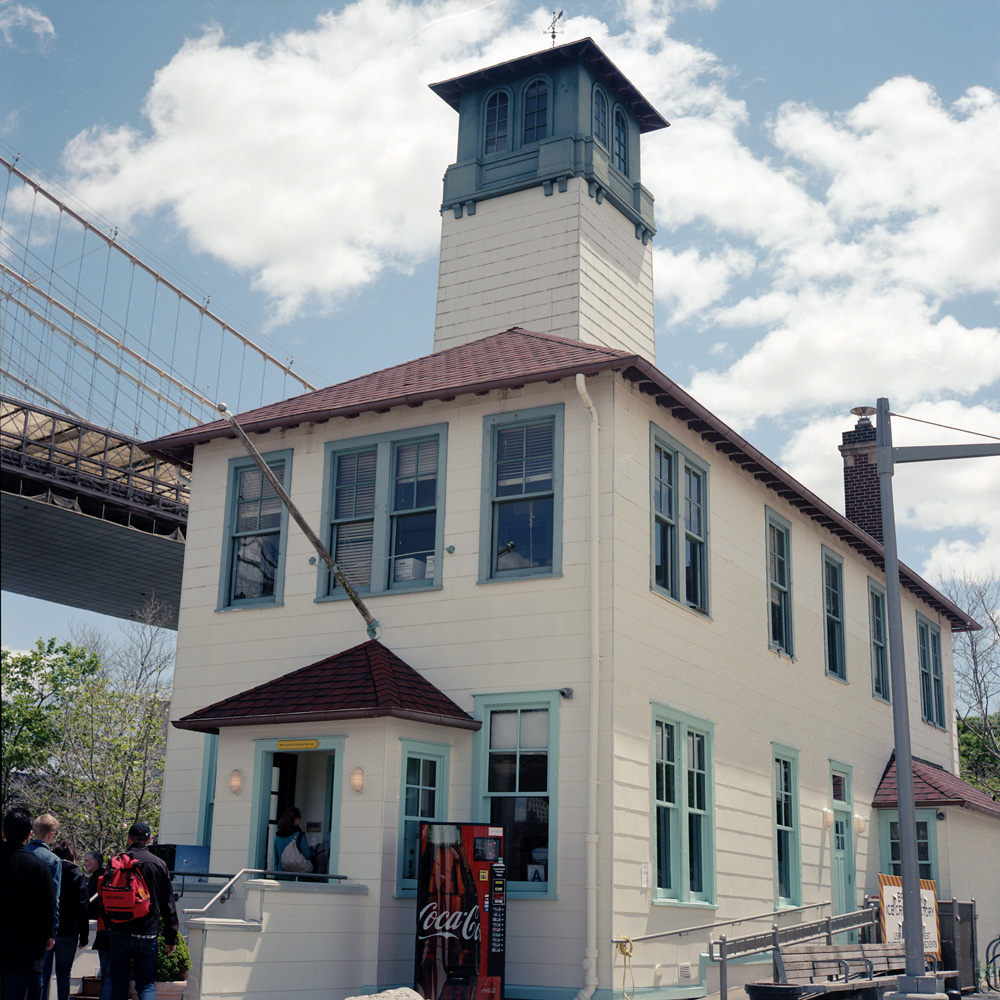
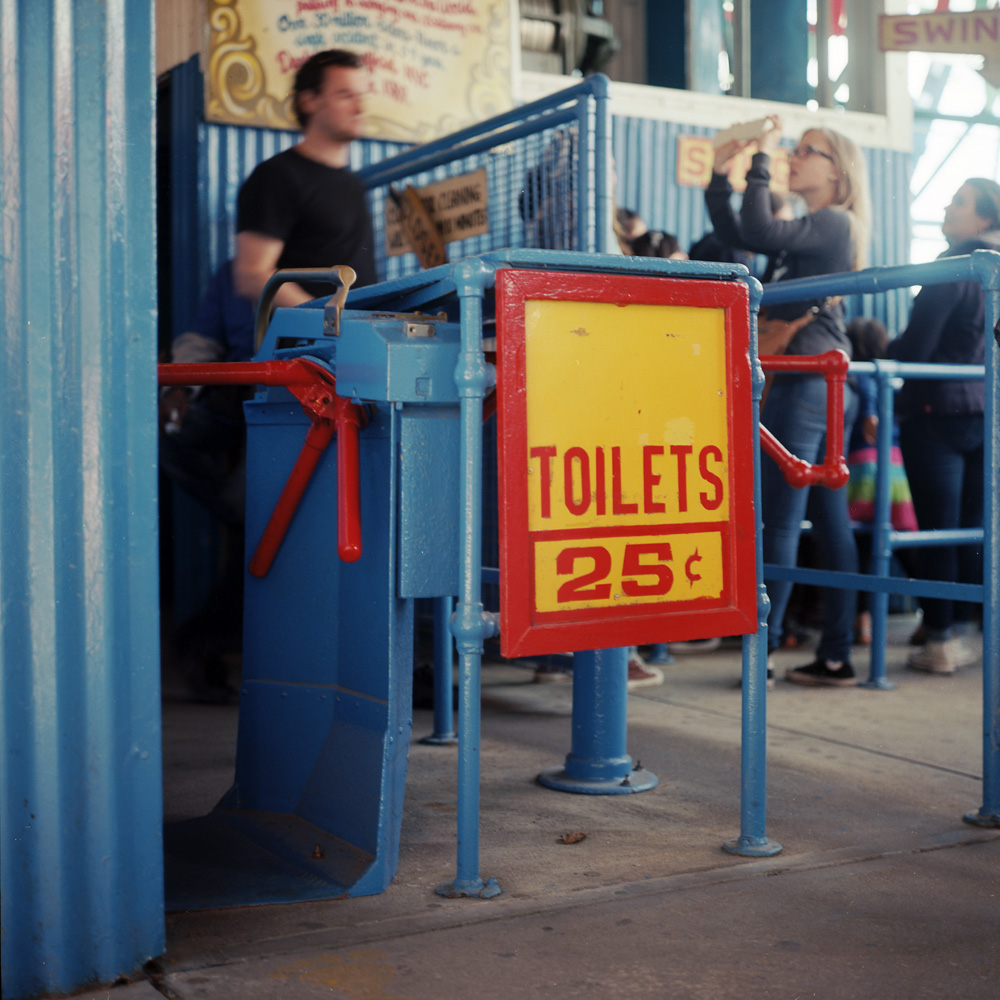
I was waiting in line for the Wonder Wheel at Coney Island. I had just spotted the turnstile for the pay toilet with its garish red and yellow paint job and 25 cents sign in early 20th century lettering and was composing a photo on the ground glass of the Rolleiflex. A voice called out to me, “Oh, that is a lovely Rolleiflex!”. I looked up to see an older gentleman with a souped-up walker (metallic paint job, hand brake, and a fold-down seat). We struck up a conversation about cameras and photography. He had been a camera salesman at an old store in Brooklyn, and remembered selling Rolleis like mine. I gave him my business card, and a few days after I got home, his grandson emailed me the photo you see here.
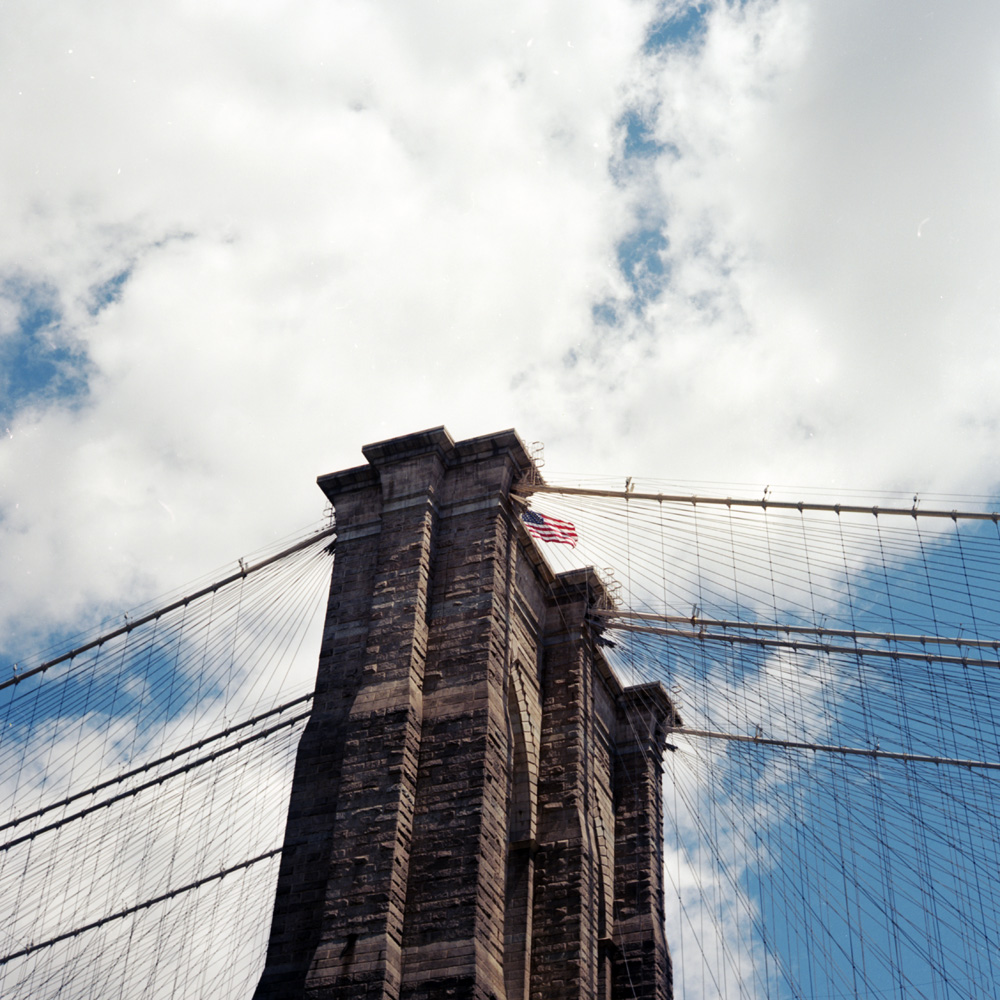
Brooklyn Bridge at Hicks StBrooklyn Bridge, Flag, Clouds
We got ice cream here at the Brooklyn Creamery- some of the best ice cream I’ve had in ages.
Brooklyn Creamery
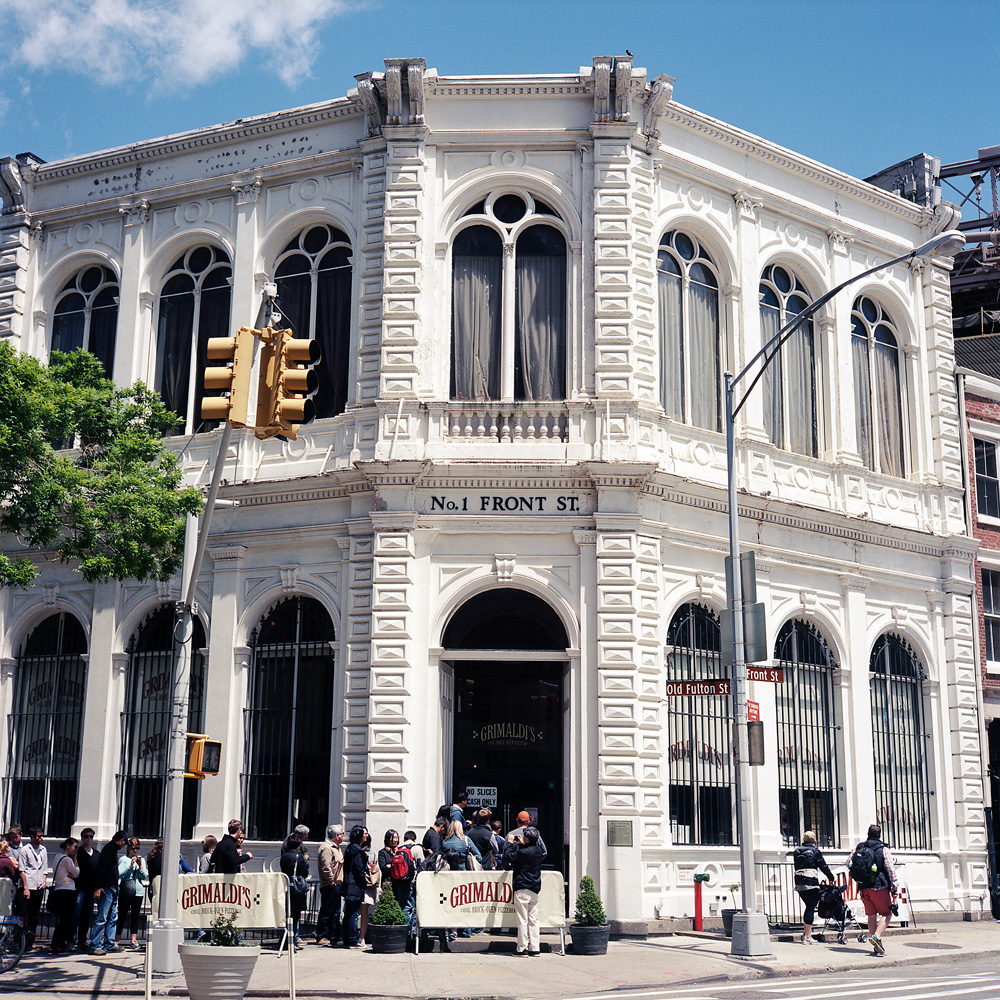
There is a line going down the block out the front door of Grimaldi’s Pizza basically every minute that they’re open. I don’t know if you can see the sign or not, but on one of their banners it says, “coal-fired pizza. Cash Only, No Slices”. I assume they mean charcoal when they say coal – I couldn’t imagine pizza made in an actual coal-burning oven. A little coal tar with your pepperoni?
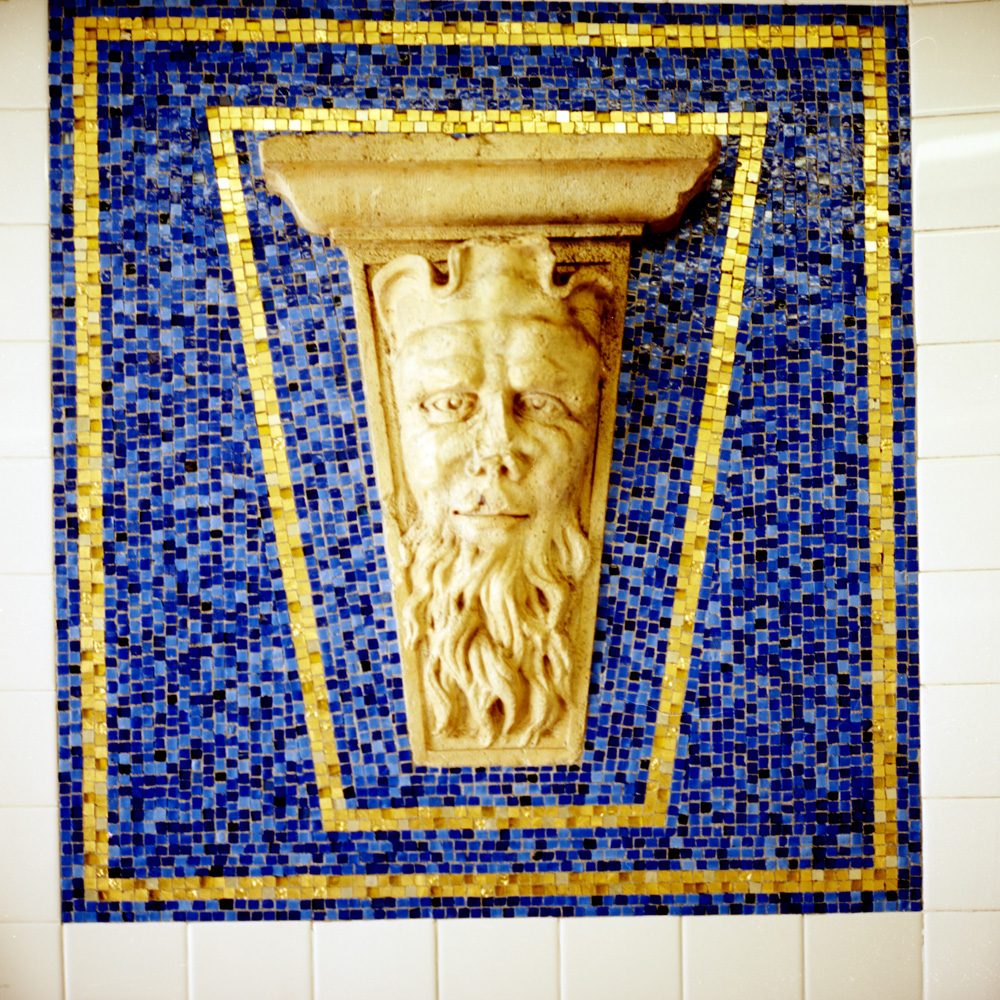
Despite the image in most people’s minds of the New York City subway being gritty, grimy, old and just plain filthy, once you get out of Manhattan there are some very attractive stations. This tile-work was in the entrance stairs to the station at Prospect Park for the Brooklyn Museum of Art.
Face, Prospect Park SubwayBrooklyn Museum Of Art
Coney Island:
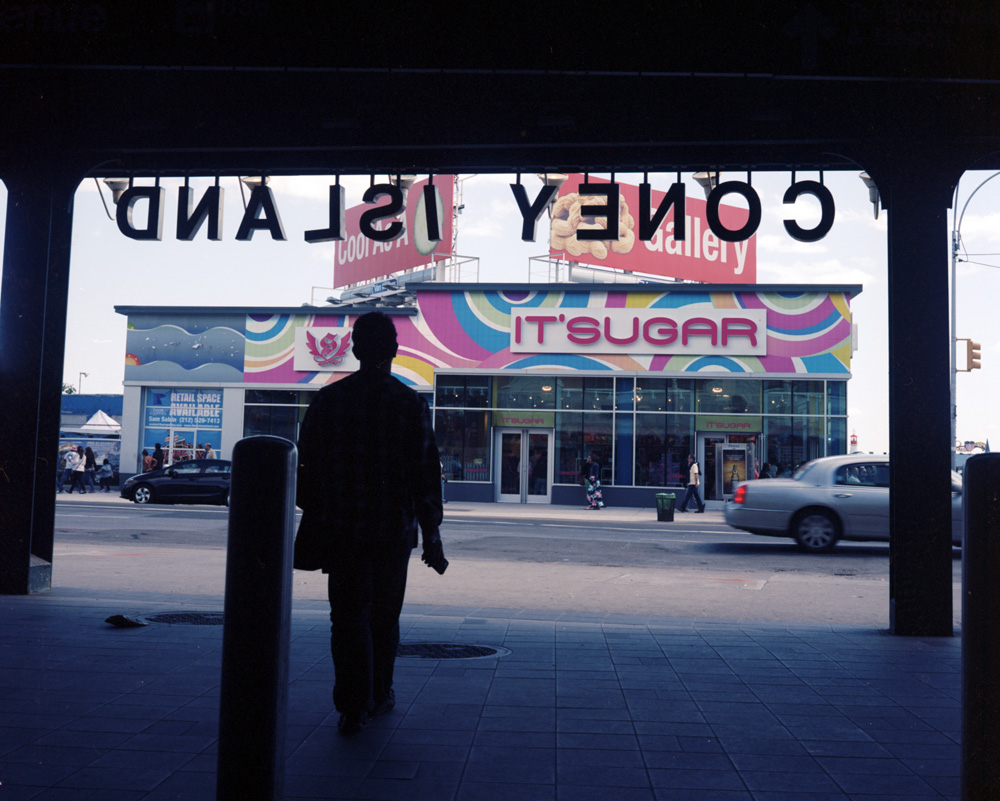
Arriving at Coney Island from the Subway.
Coney Island Sign, Subway Exit
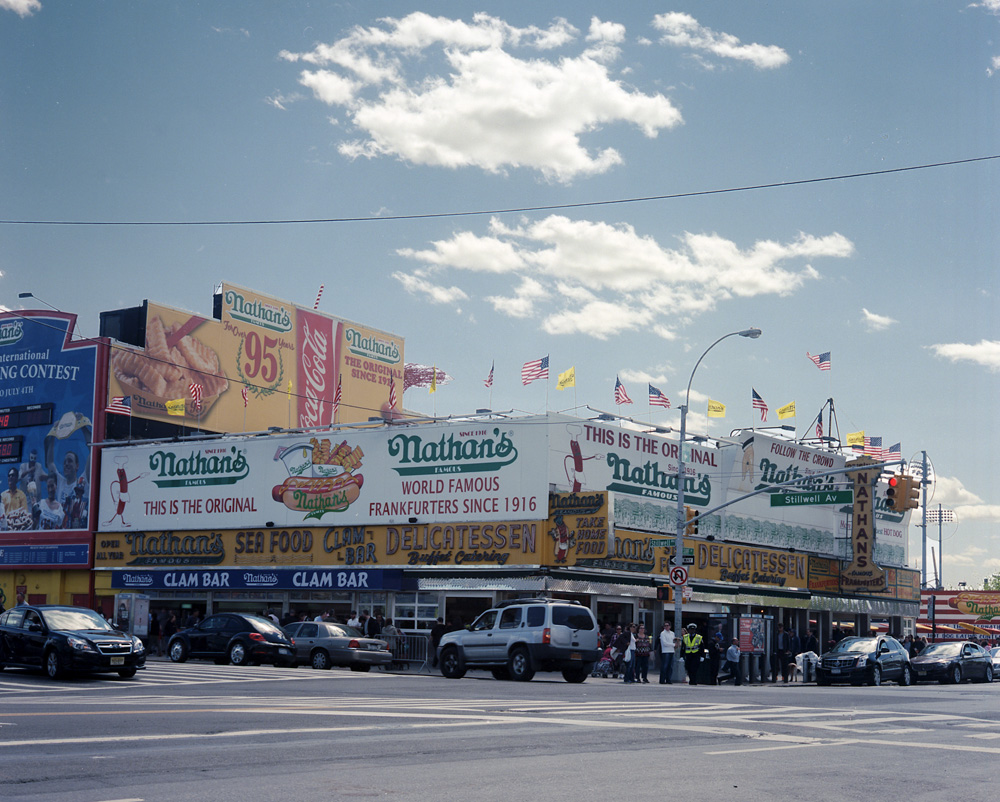
Nathan’s Hot Dogs – they’re a cliché, but still – you can’t pass up a Nathan’s hot dog and cheese fries your first time at Coney Island.
Nathan’s Hot Dogs, Coney Island
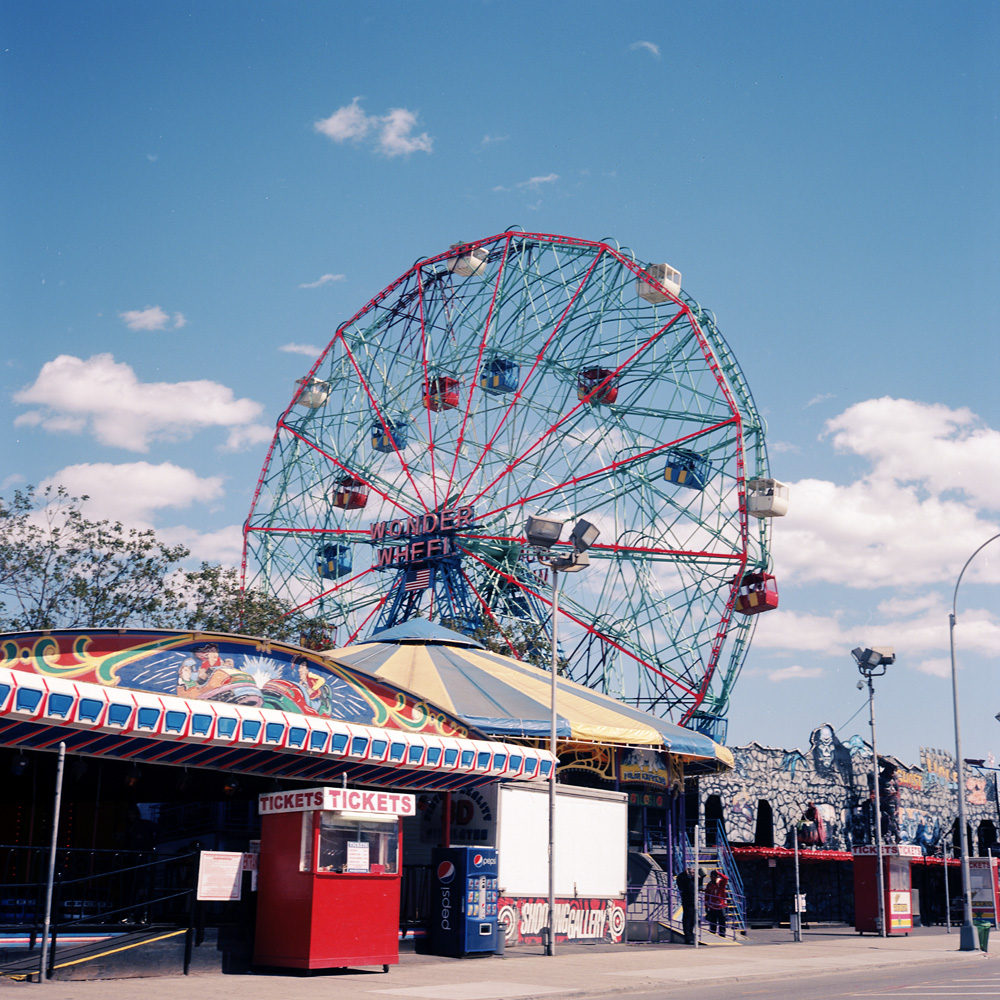
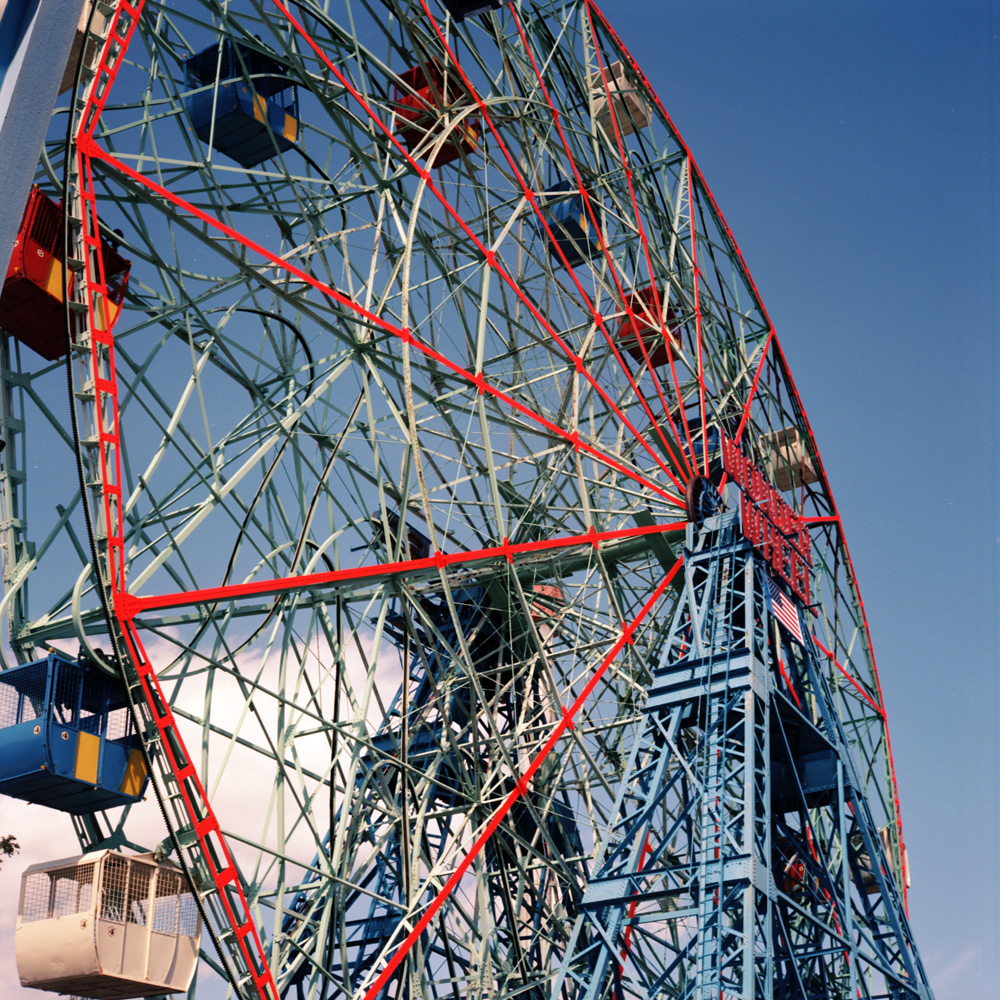
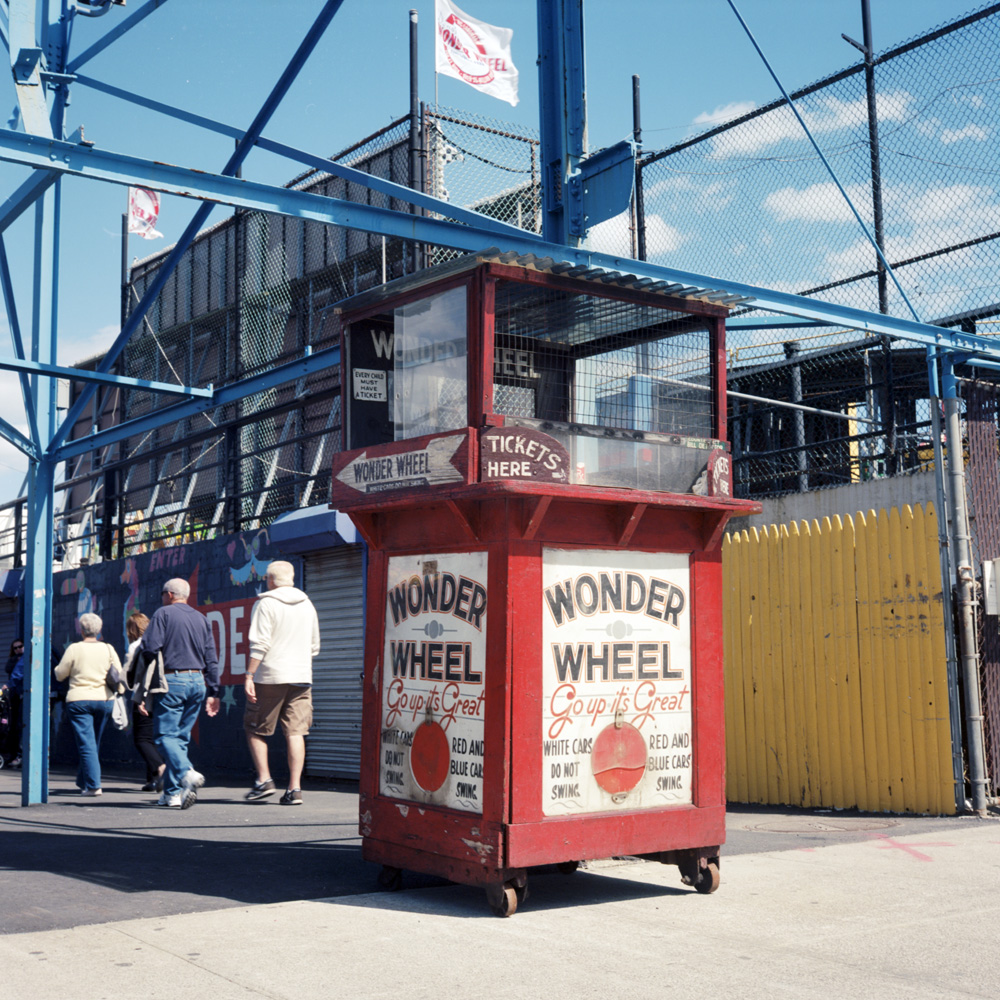
We had to ride the Wonder Wheel, and of course, we had to take one of the swinging cars, even though they don’t get as high.
The Wonder WheelThe Wonder WheelKiosk, The Wonder Wheel
While in line for the Wonder Wheel, I saw the sign for the pay toilet and wanted to take a picture of it – the sign and the old metal turnstiles are just so cool (and before you ask, I didn’t pay to go in and find out exactly what they looked and/or smelled like- even though it was opening weekend, it’s still Coney Island!). This old man with a fancy walker (purple anodized aluminum frame with a hand-brake and a fold-down seat) saw my Rolleiflex and struck up a conversation – he had been a camera salesman at a store in Brooklyn for many years and remembered selling them.
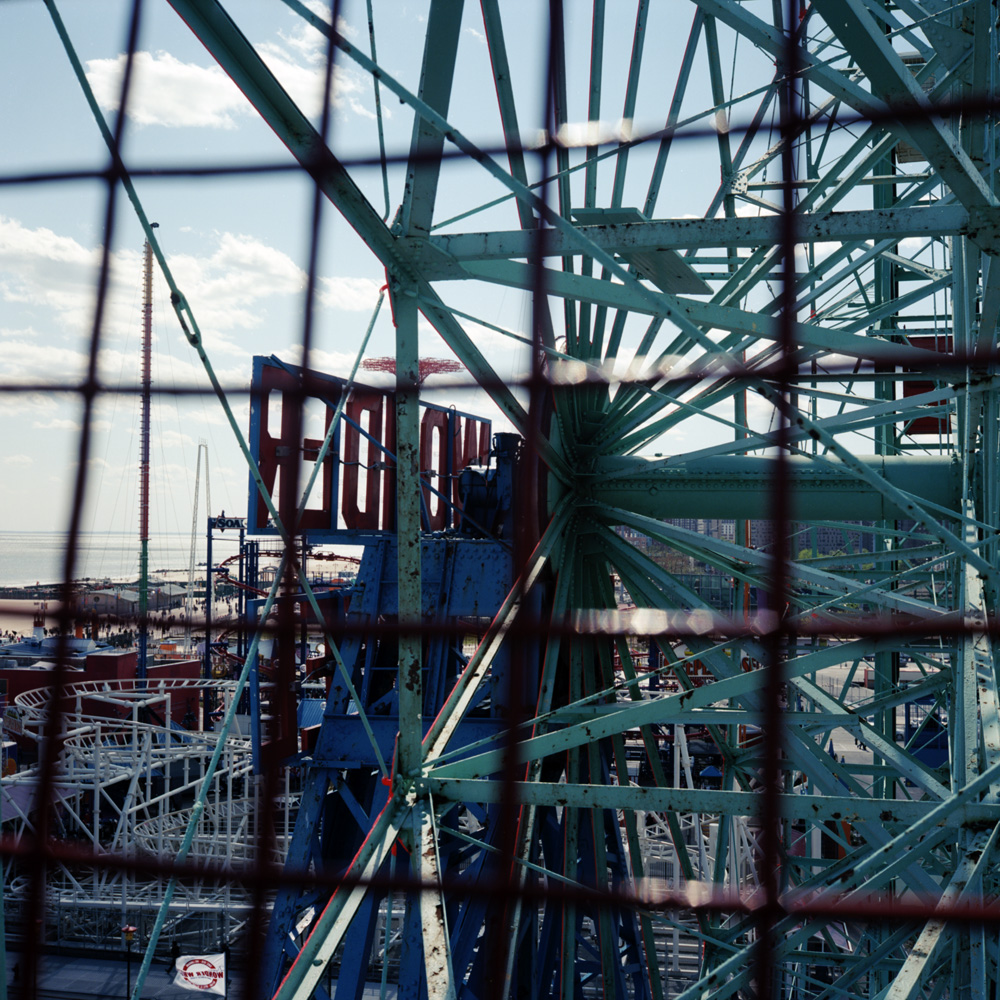
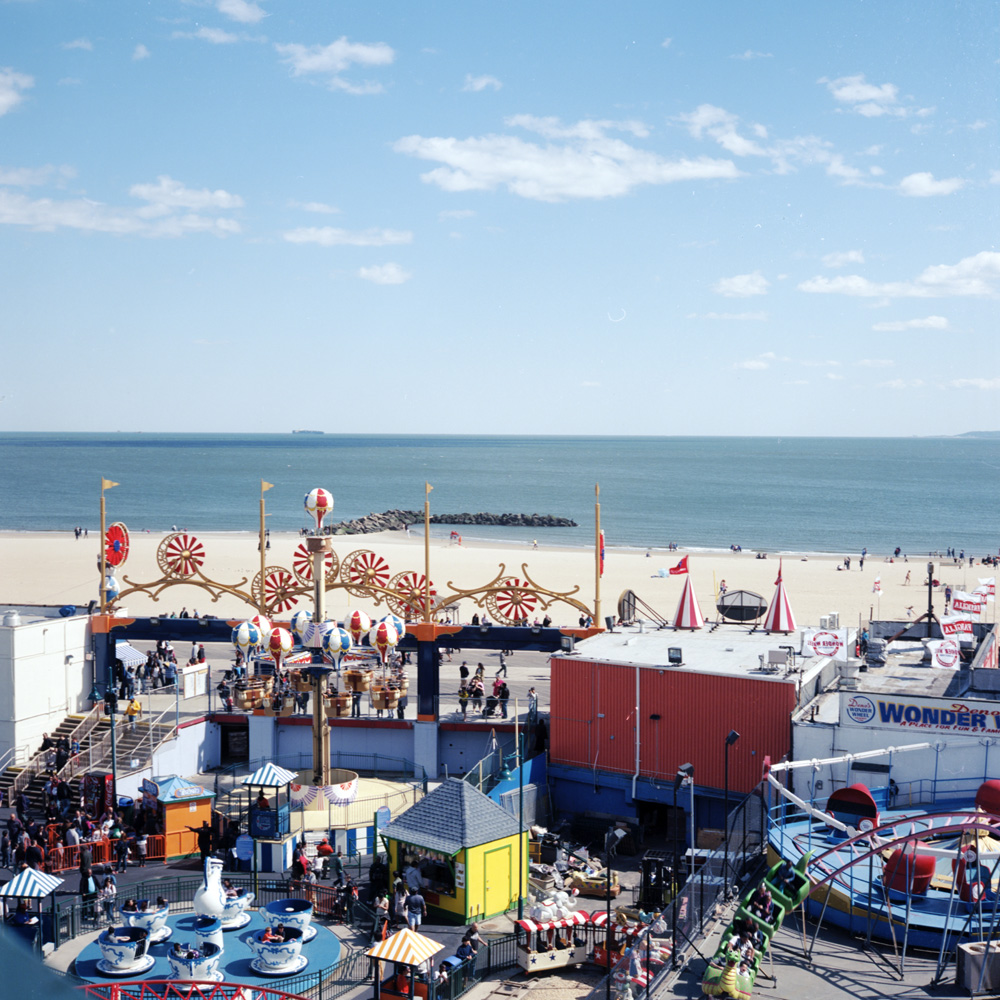
25 cent Toilet, The Wonder WheelInside the Wonder WheelLuna Park, The Beach, From the Wonder Wheel
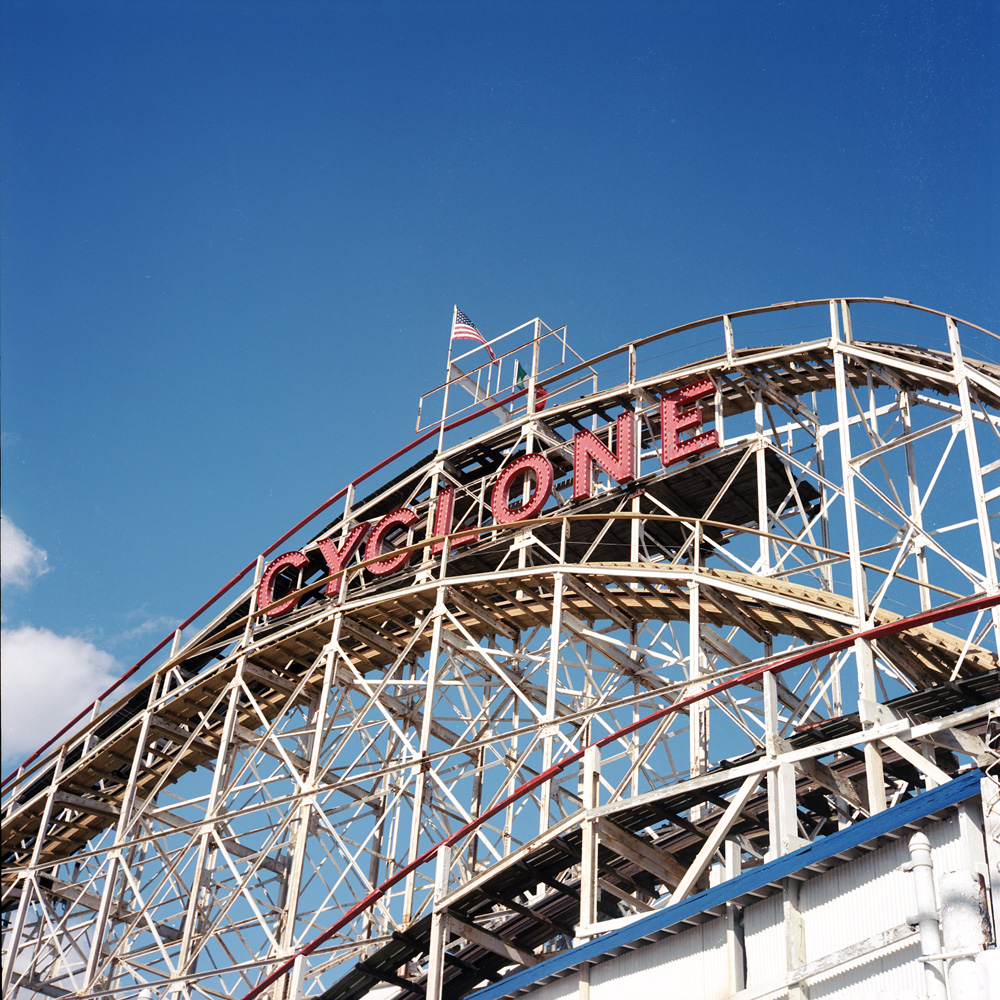
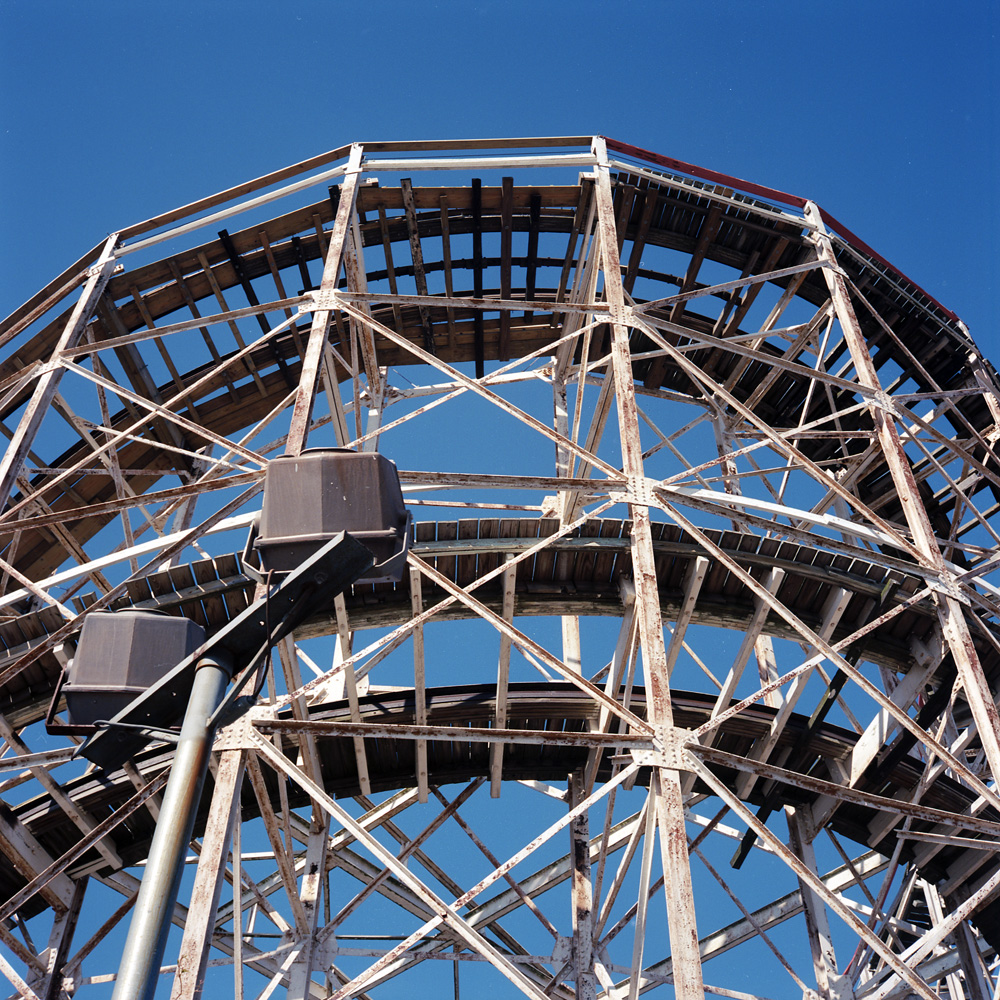
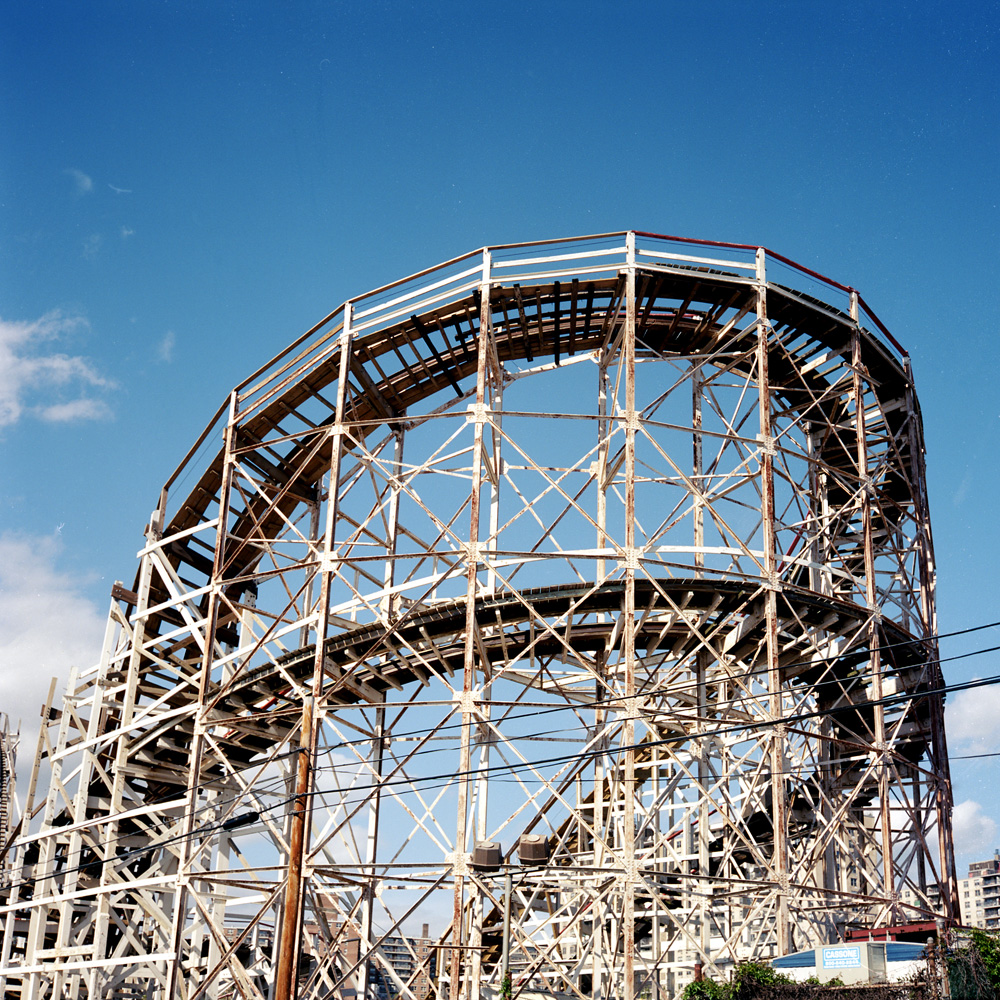
Here is the world-famous Cyclone roller-coaster. The ride was fun but frightening, not only because it is bone-jarring from the wood track, but because the coaster operators were not paying enough attention and allowed the incoming car to slam into the back of my car as we were getting loaded in. Fortunately we were already strapped/safety-barred in, so the shockwave of the impact passed through instead of knocking me forward into the back of the seat in front. Much as I love riding roller-coasters, especially the old wooden ones, I don’t think I’ll ride the Cyclone again.
Cyclone Coaster, Luna Park, Coney IslandBack Curve, The Cyclone, Coney IslandEnd View, The Cyclone, Coney Island
Lower Manhattan, Evening:
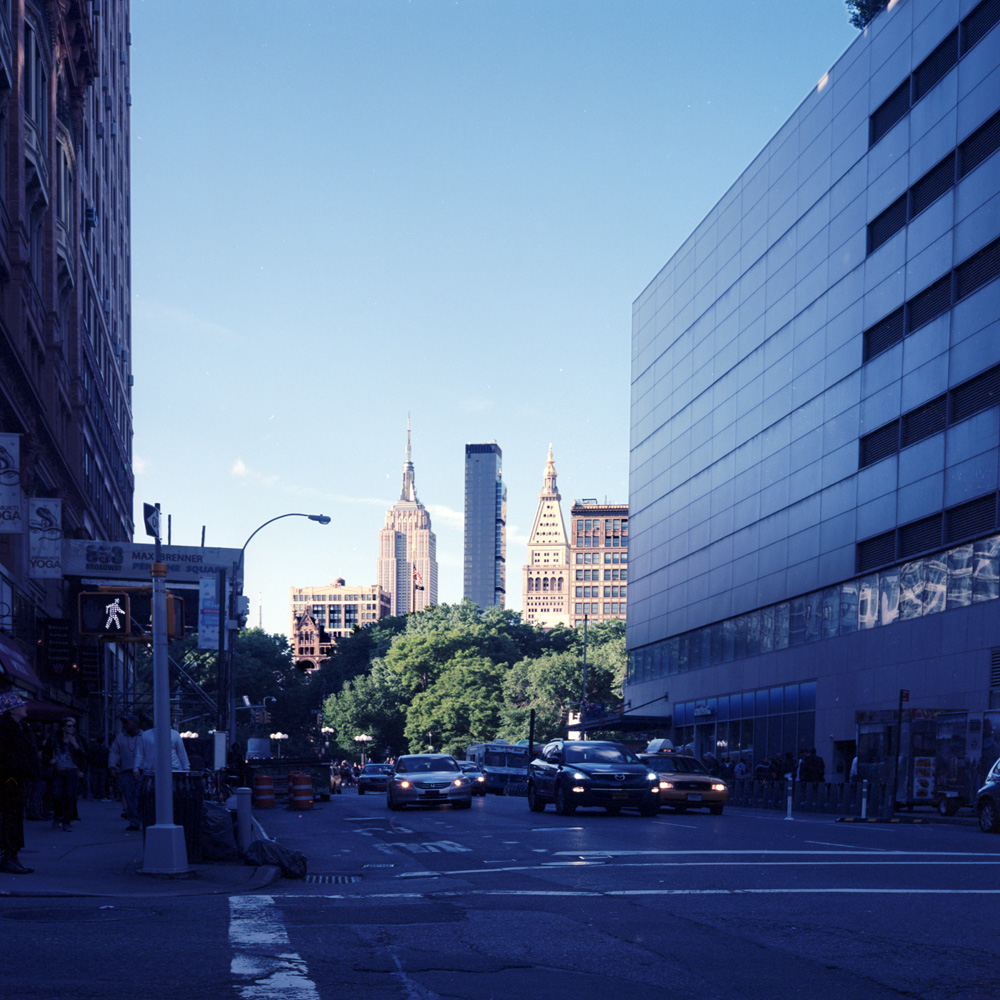
This was how I ended the day, back in lower Manhattan, hanging out around Union Square, and doing some book shopping at The Strand.
The Empire State Building, Union Square, BroadwayBow-front building, Manhattan, Evening
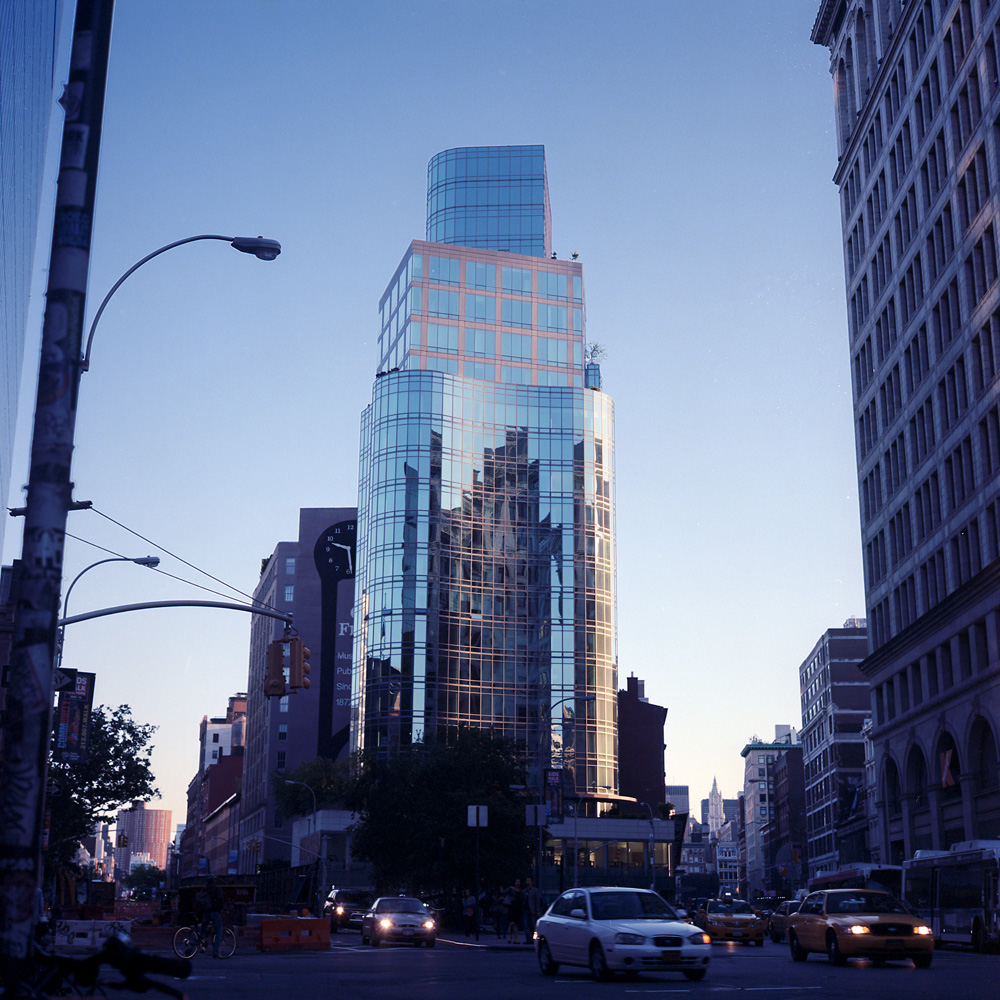
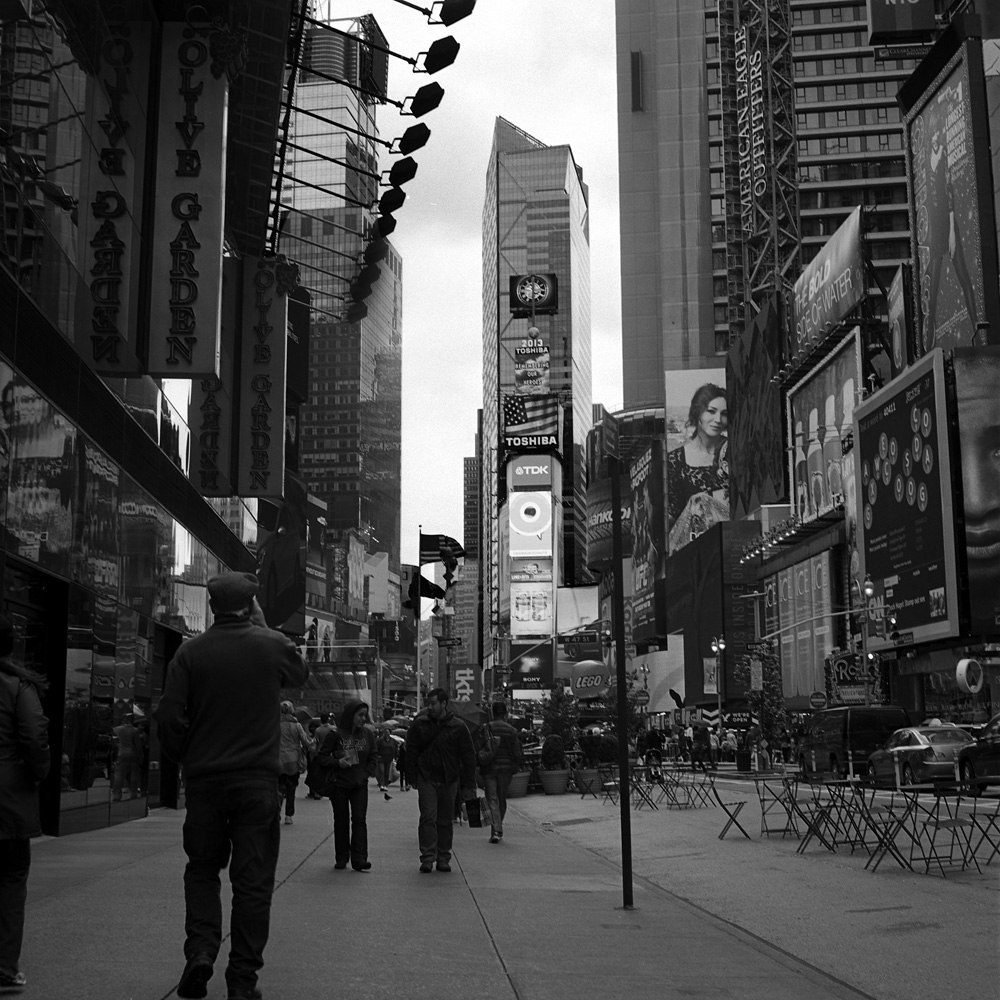
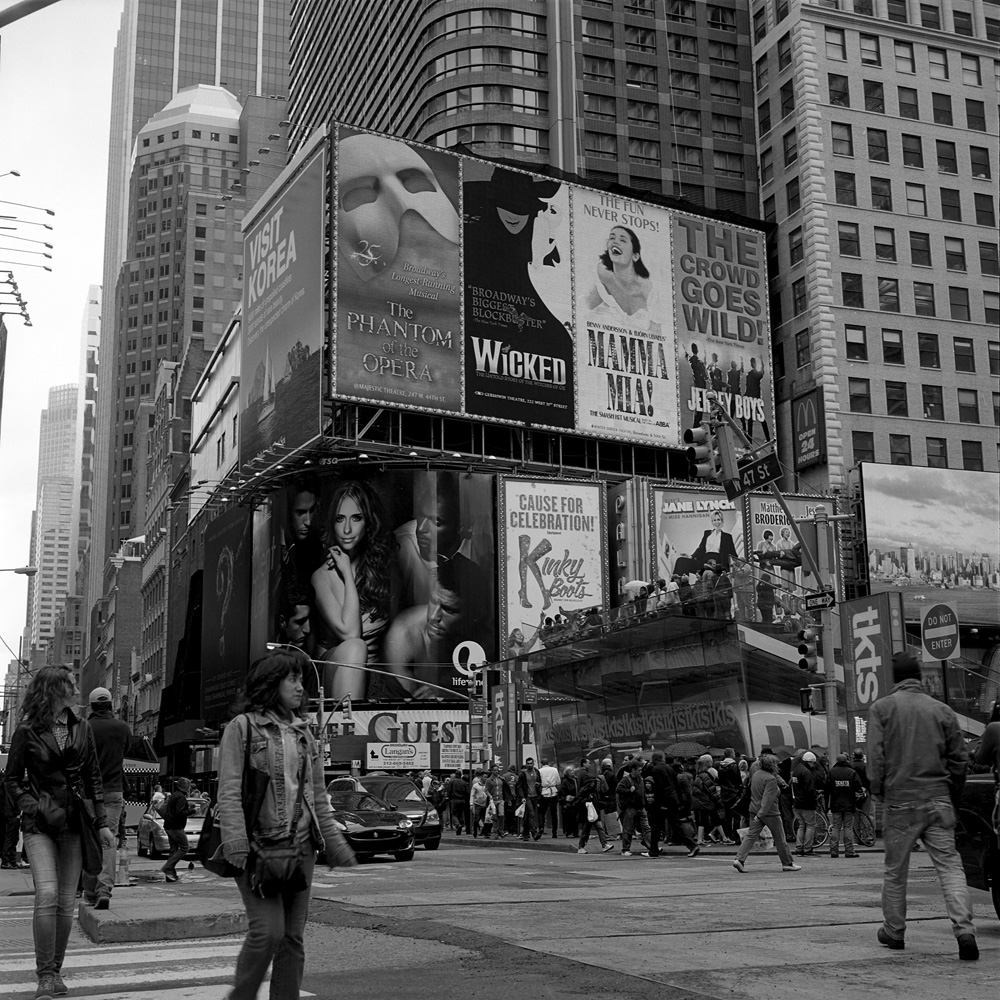
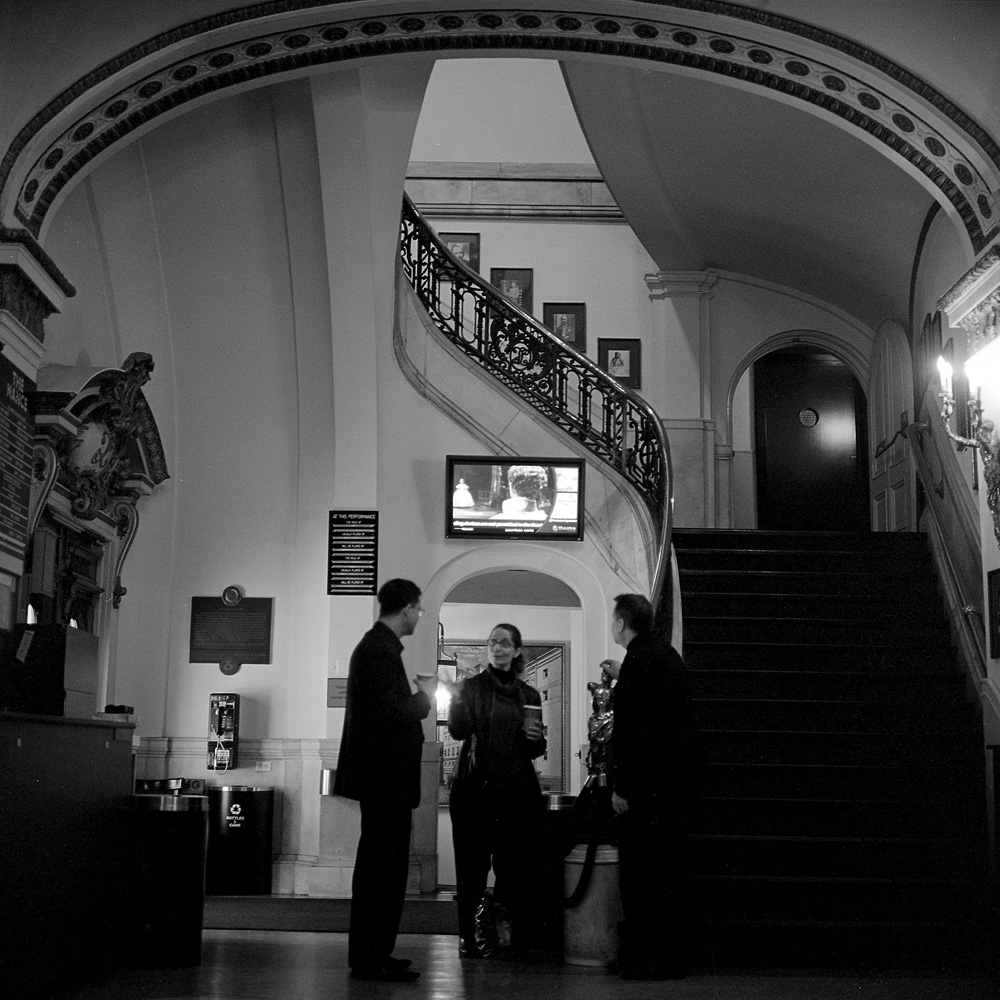
I took a quick jaunt up to New York for Memorial Day. This time, I ran around in Brooklyn a lot more, as I’ve spent plenty of time in Manhattan and am well familiar with the sights and sounds, pleasures and distractions it has to offer. I stayed near Times Square, and took in a play at the Lyceum Theater (how can you go to New York and NOT see something at the theater??).
Times Square, from BroadwayTimes Square, TKTS boothLyceum Lobby
The play I went to is “The Nance”, starring Nathan Lane. It’s about a burlesque theater company in New York in 1937, and Nathan Lane plays the part of Chauncey Miles, the “nance”, who performs comic relief bits between the striptease acts. The Nance was a common trope in burlesque theater, a sissy whose lines and mannerisms were full of double-entendres and sexual suggestiveness. They also often ran afoul of the morality police for “promoting indecency”, although their routines were fully clothed, and even the dialog was never sexually explicit. Nathan Lane is brilliant as Chauncey, (not that I would have expected anything less from him), and I was riveted throughout the performance. I wish I could have photographed the theater interior, not just the lobby, because it was itself something out of another era, and a unique experience. I had balcony seats, and even though they were in the third row of the balcony, and had an excellent view of the stage, the balcony is five flights up, and is pitched at a vertiginous slant, with very little walking space between the seats and the backs of the row in front, with no guard rail until the front row. Fortunately they did see fit to squeeze in bathrooms on the balcony so you didn’t have to hike up and down five flights.
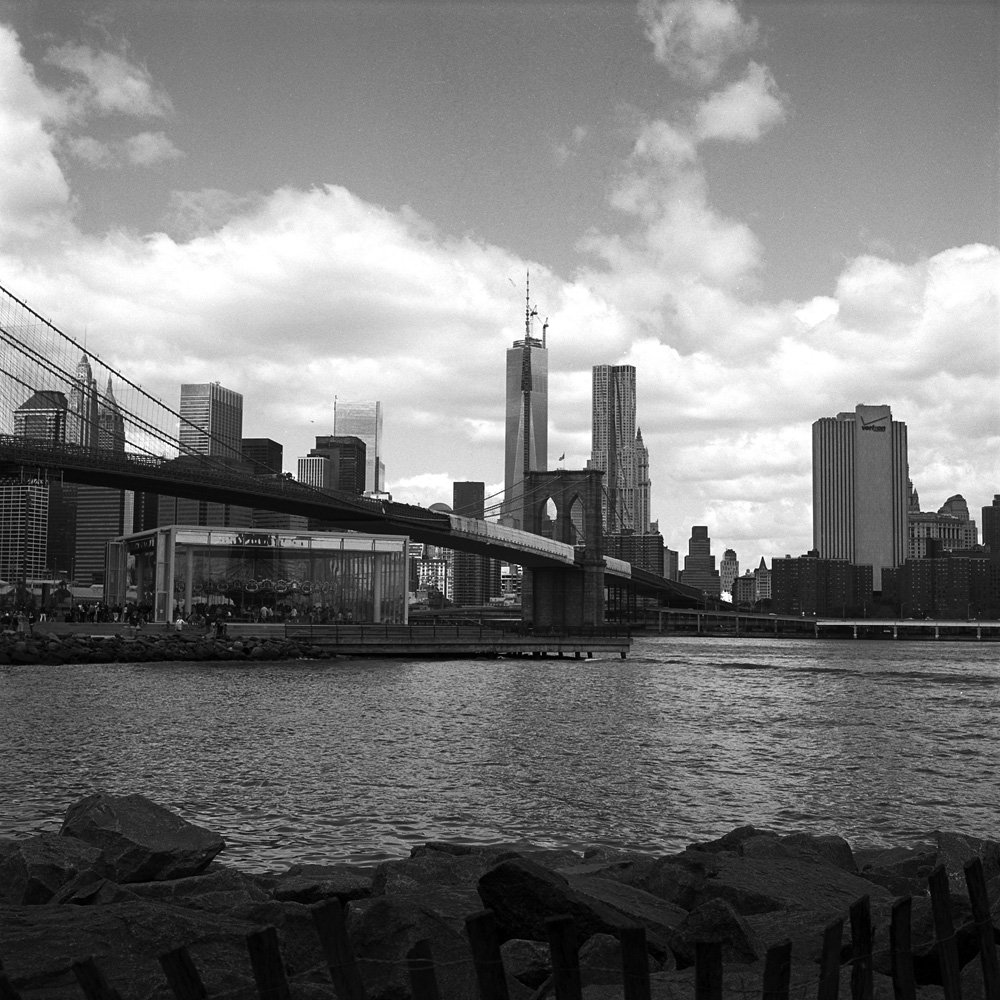
Brooklyn Bridge and Manhattan Skyline
The Brooklyn Bridge is so iconic. I didn’t get to walk across it this time (next trip), but I saw it from the Brooklyn side and got my photo with the skyline of Manhattan framing it. Looking at it here and now it’s hard to imagine what this view would have looked like when it was first built in 1883, with the bridge being as big as many of the buildings behind it. Now of course, Freedom Tower behind it is actually taller (with the spire) than the Brooklyn Bridge is long (1776 feet vs 1596 feet).
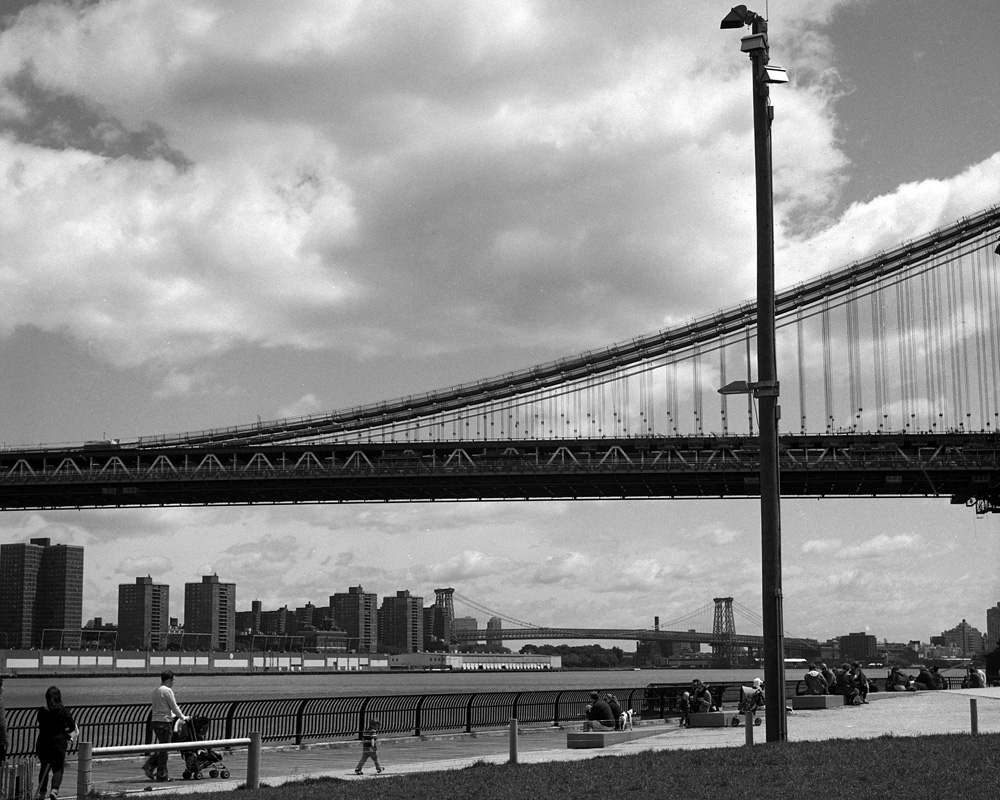
DUMBO, the Manhattan Bridge and the Williamsburg Bridge
On the East River, at least, bridges are a defining feature of New York. Here is the view from Brooklyn Bridge Park in DUMBO (which stands for Down Under the Manhattan Bridge Overpass, the new name for the neighborhood between the bridges, for those unfamiliar with the term) of the Manhattan Bridge and the Williamsburg Bridge to the north.
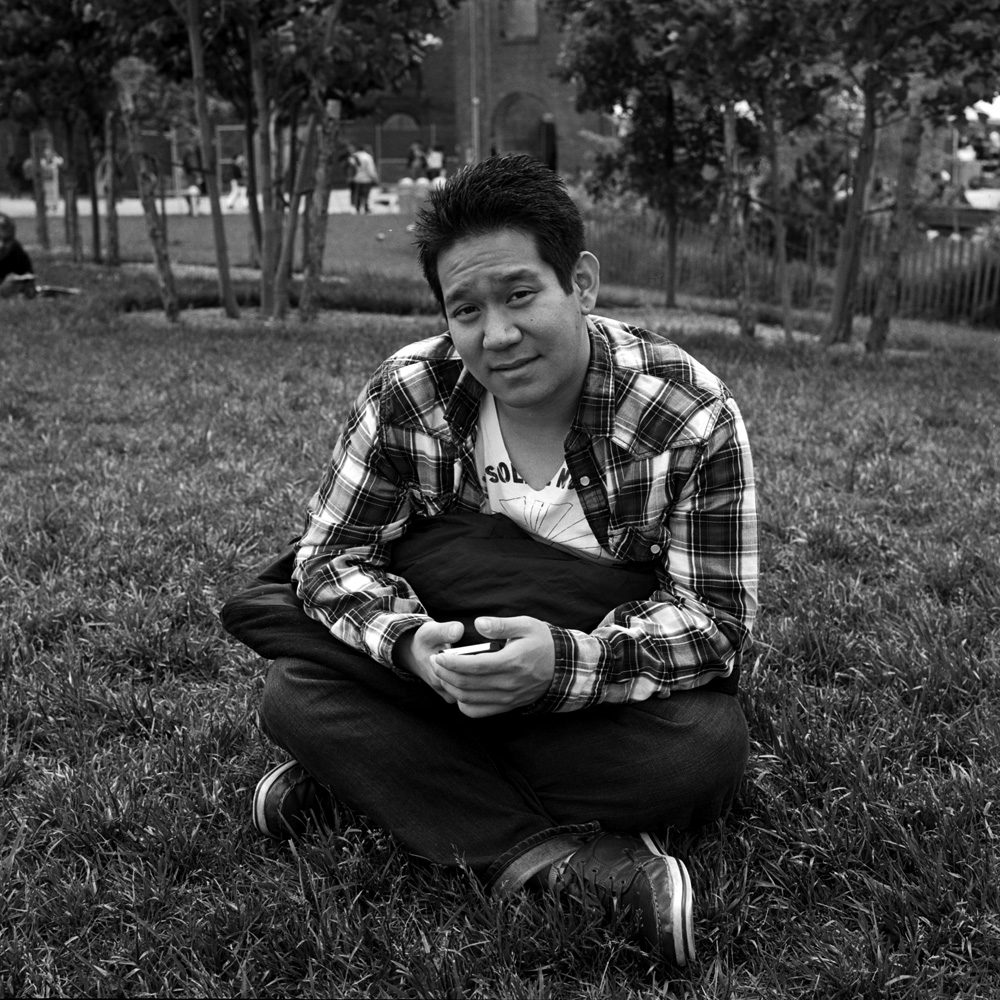
Tomo, Brooklyn Bridge Park
Amazing, isn’t it? There are green spaces in New York, besides Central Park. This is my friend Tomo, sitting on the lawn at Brooklyn Bridge Park. The park itself is fairly new, and runs south and west from the Manhattan Bridge, under the Brooklyn Bridge, and on down the East River, reclaiming a number of old piers that no longer support shipping.
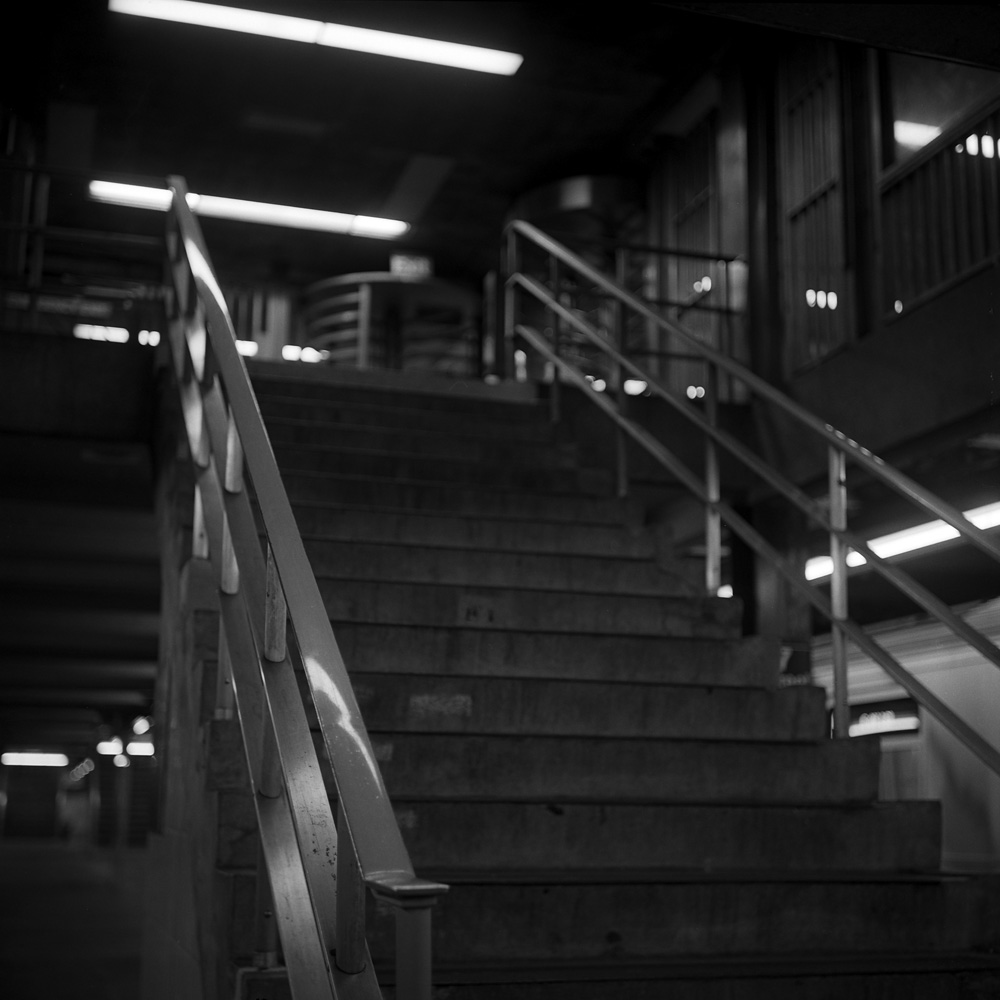
Platform Stairs, NY Subway
What trip to New York would be complete without a ride on the subway? Here’s a staircase to the platform, I want to say at the 57th Street F train station.
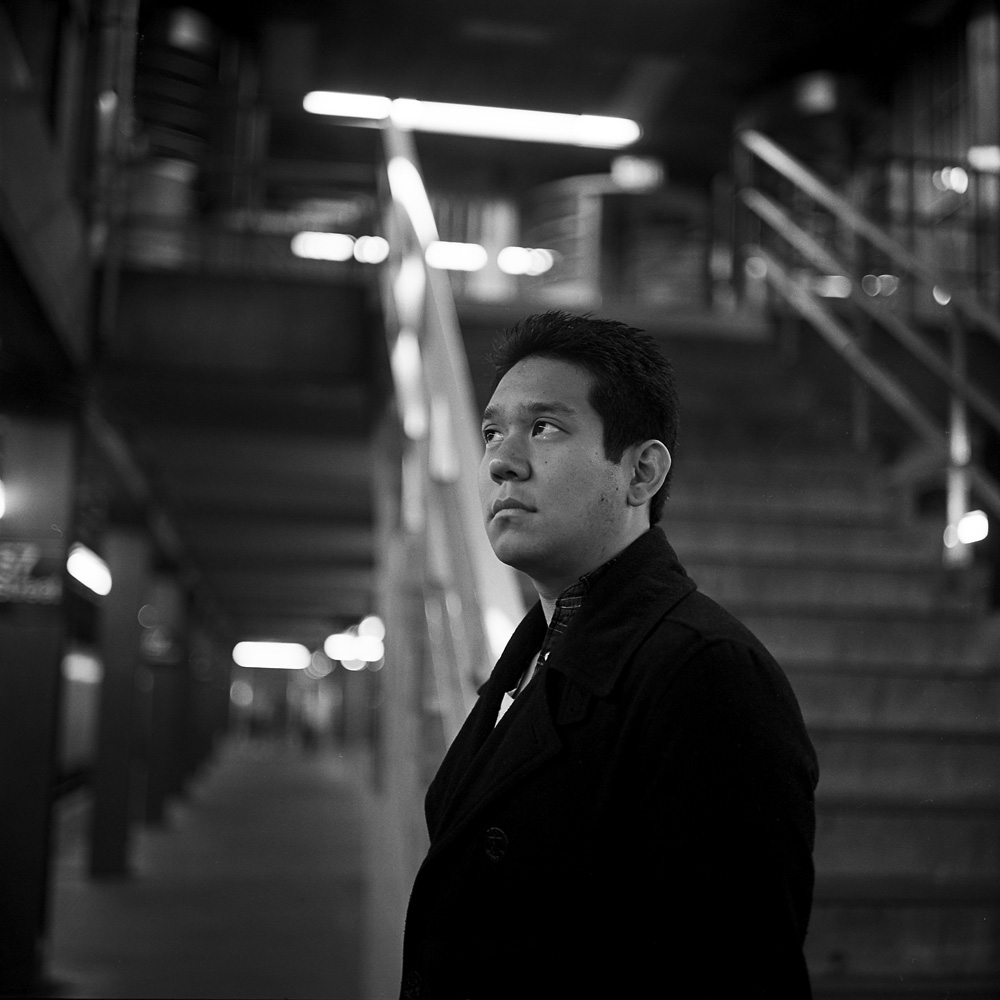
Tomo, Subway Platform
My friend Tomo, waiting for the train to Brooklyn with me.
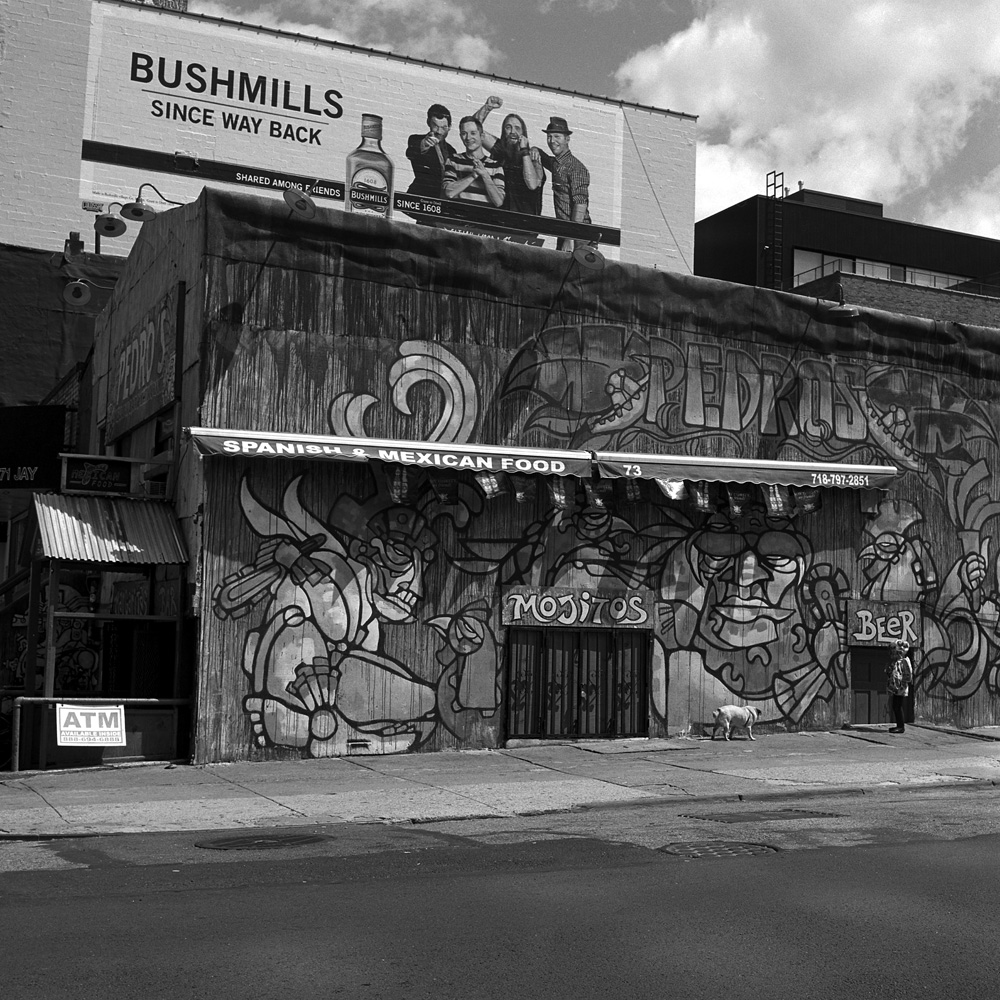
Pedros of Brooklyn
This shot would have been better in color, I know, but black-and-white was what I had loaded in the Rolleiflex at the time. Pedro’s is a Mexican restaurant in the heart of DUMBO, just a block or so down the hill from the York Street subway stop. Didn’t try it, so no comment one way or another on the food, but it sure looks like it would be fun. I’ll give it a try on my next trip, unless any of you have warnings for me!
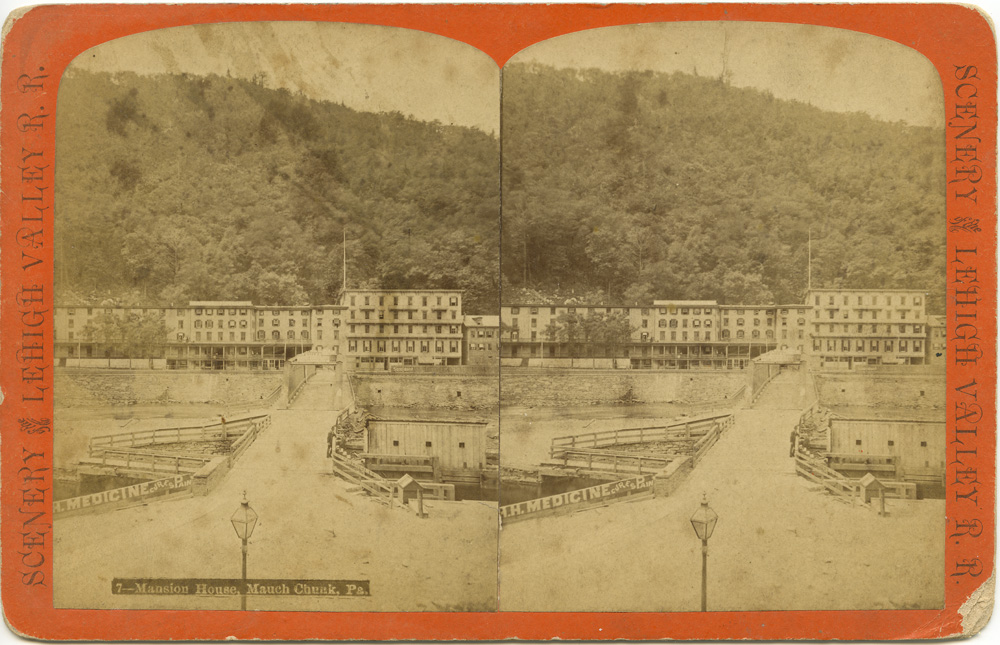
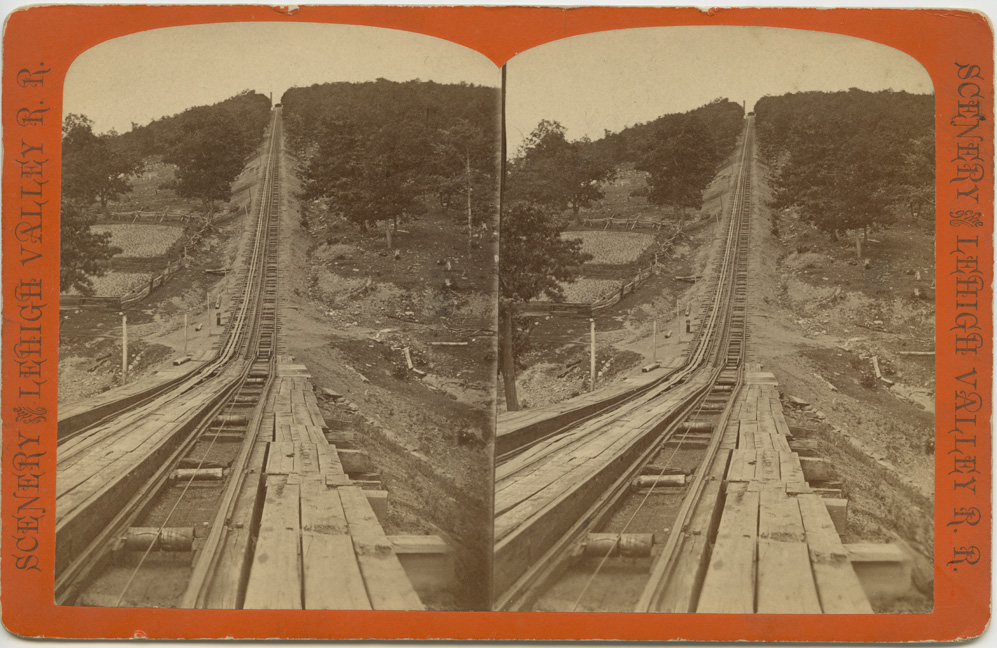
If you’ve been reading my blog long enough you’ll probably remember my saying I don’t collect stereoviews. That’s largely true – I will on occasion buy the odd one if it’s cheap and has an interesting subject, but I’m not really looking for them – collecting them is kinda like getting into sports trading cards of all varieties: just too much out there if it isn’t your primary focus. I am however collecting a specific series because it’s a small series – only about 24 images in total for the full set. The first one in the series that I acquired was found at an antique shop in Sacramento, California. The card shows a station on the Lehigh Valley Railroad, outside Mauch Chunk, Pennsylvania (now known as Jim Thorpe, PA). I have since found four more in the series. These are all early stereoviews from the 1870s (one of the new ones posted here today has a date on the reverse in pencil of October 4, 1876), identifiable as such by the size (they are larger than the later cards) and by the paper stock and printing style.
Here are the two latest acquisitions. I had been hunting for more on an irregular basis for the last year-plus, and then finally these two show up at almost the same time, and in quite good condition overall. I suspect it will be hard to complete the set, but it’s not like I’m on a schedule 🙂
Mansion House, Mauch Chunk, PASwitch Back RR, Lehigh Valley Railroad
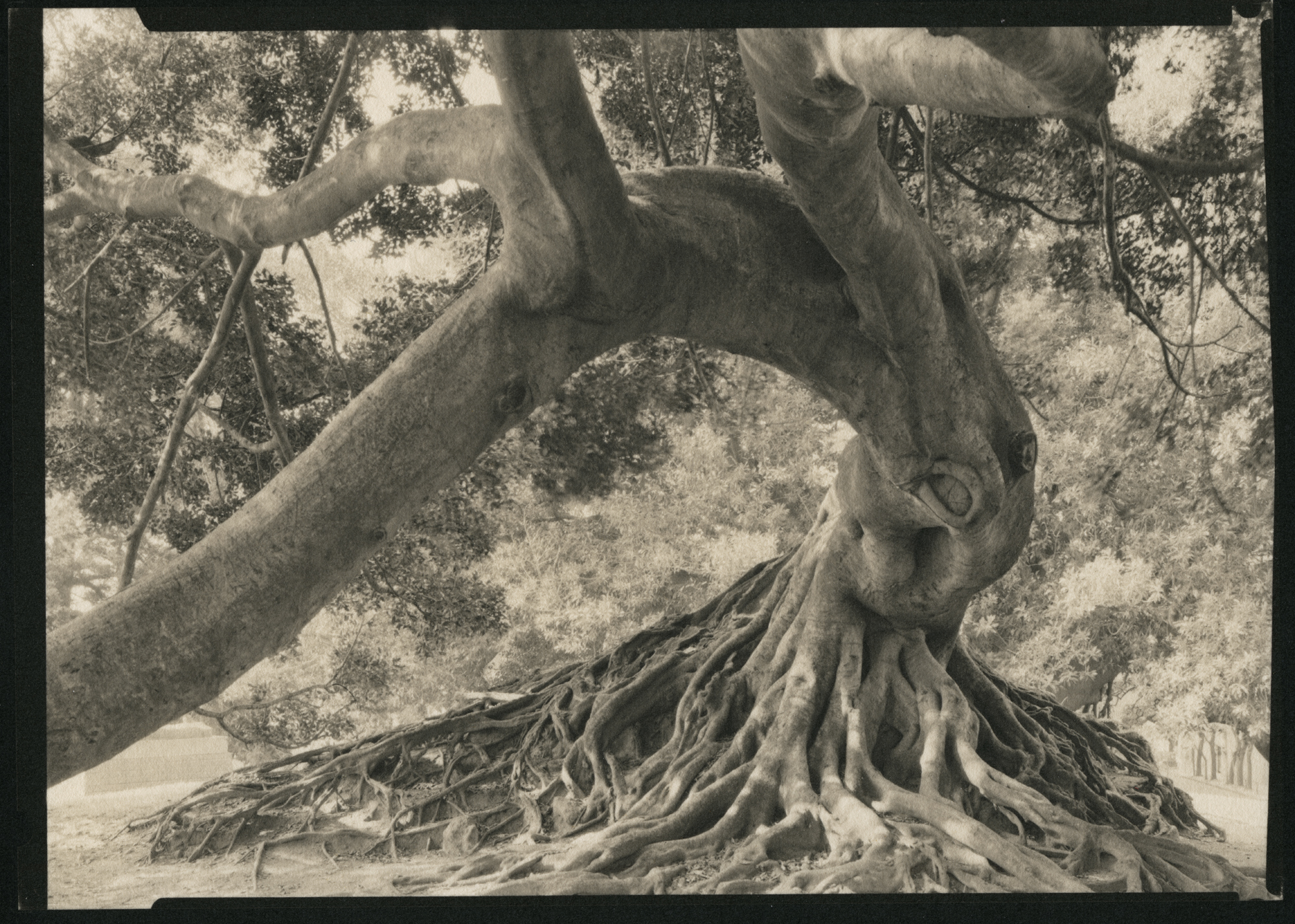
Well, the results were announced today, and my Ficus, Recoleta was awarded 2nd Prize in the contest overall. You can see the results here – April 2013 Issue, Rangefinder Magazine.
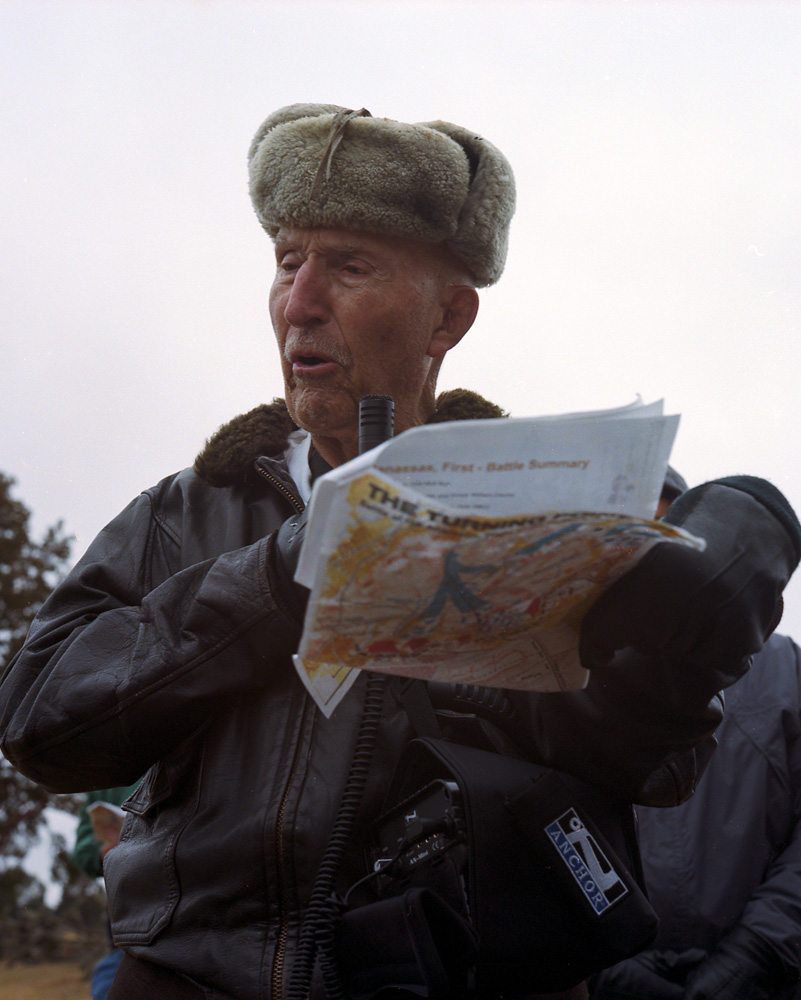
I’m a member of the Smithsonian Resident Associates program – its a whole collection of educational and entertaining activities offered throughout the year ranging from evening lectures to hands-on arts and crafts courses to day tours and even week-long study trips, as well as a certificate program in Art History taught in conjunction with The Corcoran School of Art and George Washington University. A couple weekends ago I went on one of their history tours to Manassas Battlefield for the battle of First Manassas, with Ed Bearss as the tour leader. For those who don’t know, Ed is an underappreciated national treasure. He turns 90 in a month and a bit, was combat wounded in WW II (hit five times by a Japanese machine gun), is the Chief Historian Emeritus of the US Park Service, and appeared in Ken Burns’ The Civil War documentary as well as a regular on the History Channel’s Civil War Journal. He has forgotten more about the Civil War than any of us will ever know. Ed, at 90, still leads tours over 250 days a year. I’ve taken five of his tours now (maybe six?), but he has some die-hard groupies out there that make me look like a slacker wanna-be fan (I’ve been on tours before where other folks have proudly announced they’ve taken every tour he offers through the Smithsonian, sometimes more than once).
Ed Bearss talking in front of the Stone House, Manassas Battlefield
Ed is a marvelous story-teller. He recounted the tale of how Stonewall Jackson got his nom-de-guerre:
“And General Bee, upon seeing Thomas Jonathan Jackson with his troops in the edge of the woods, called out to his men “There stands Jackson like a stone wall; rally behind the Virginians”. He may not have meant it as a compliment, however. It all depends, you see, on whether or not he said those two phrases in the same breath. Bee, you see, was a South Carolinian, and may not have held Jackson in particularly high regard. One version has it that he said the two comments an hour apart – if he said them together, it’s a compliment. But if he said them separately, “there stands Jackson like a stone wall” comes off as rather a put-down. The only way we’ll know for sure what General Bee meant is if one of us dies and goes to heaven or hell, and meets General Bee and asks him which it was”
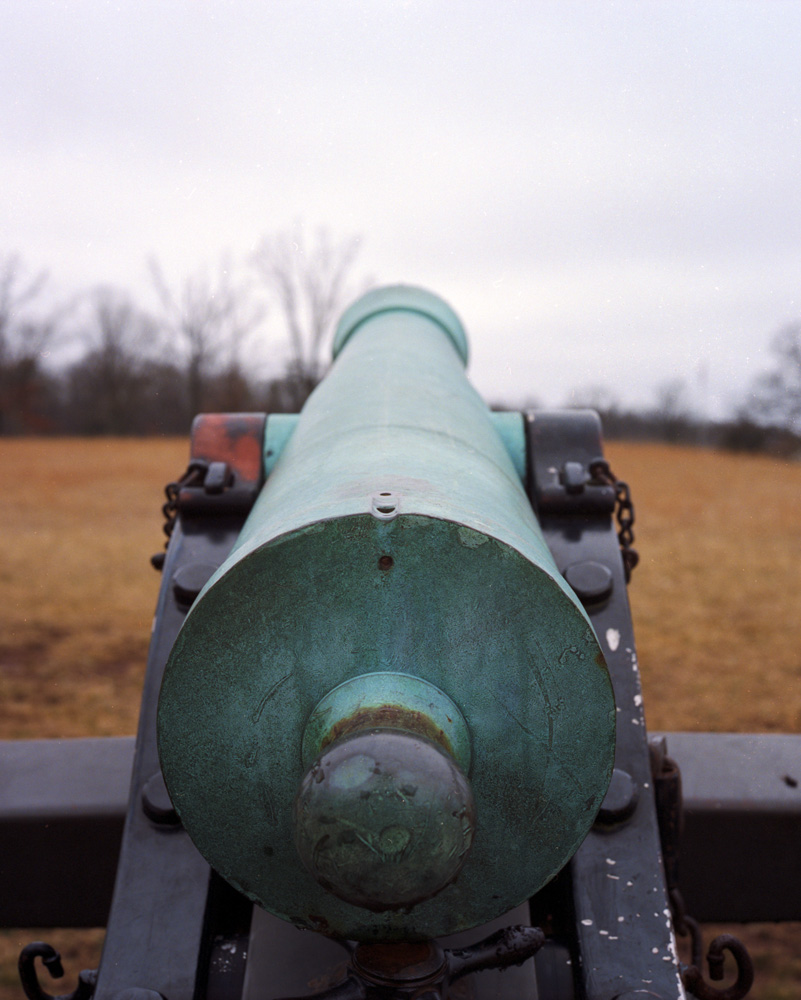
Ed Bearss with Battlefield MapConfederate Cannon, Manassas
This cannon, although NOT original to the battlefield, is in the relative position of Stonewall Jackson’s unit. One remarkable feature when you see the battlefield is how close the units were- one battery of Union cannon traded hands five times over the course of the day, and they were not more than 100 yards from the Confederate lines.
Henry House
The Henry House that you see in the above photo was the home of the widow Henry, one of the first civilian casualties of the Civil War. The house that you see standing now is not her house, but a replacement. Her house was of similar footprint but only one and a half stories tall. It was destroyed when those Union cannons I mentioned previously were turned and fired point-blank into the house where Confederate infantry had concealed themselves and were firing on the Union gunners. One cannonball tore through the house and removed widow Henry’s foot on its way through as she lay in bed.
Within eyesight of the Henry House was the home of “Gentleman” Jim Robinson. Jim was a mulatto man, and the half-brother of widow Henry. Their father was “King” Carter, the tidewater plantation owner and one of the wealthiest men in America at the time of the Revolution. Jim was born a slave but manumitted by his father upon Mr. Carter’s death.
The monument immediately beside the Henry House was erected by Union soldiers immediately after the war, and is one of the oldest Civil War memorials. Perhaps THE oldest is also at Manassas, but is not much more than a pedestal today. It was erected during the war by Confederate soldiers to commemorate one of their generals who was killed at 1st Manassas, but torn down by Union soldiers some time after 2nd Manassas.
Stone House with cannonball, Manassas
Here is the door to the Stone House, with the cleverly placed cannonball embedded in the wall. Note I said cleverly placed – there are a total of five cannonballs stuck in the stonework of the house, but none of them are there as a result of either the first or second battles of Manassas. Rather, they were added to the house at a much later date (some time in the early 20th century) by the owner, to boost the tourist appeal. How do we know? well, for one thing, all of them are neatly embedded, with no flaking, chipping or fracturing of the stone as would have been the case if the wall had been struck by the cannonball at high velocity. For another, one of the cannonballs is of a type not invented or used until some time in the 1870s.
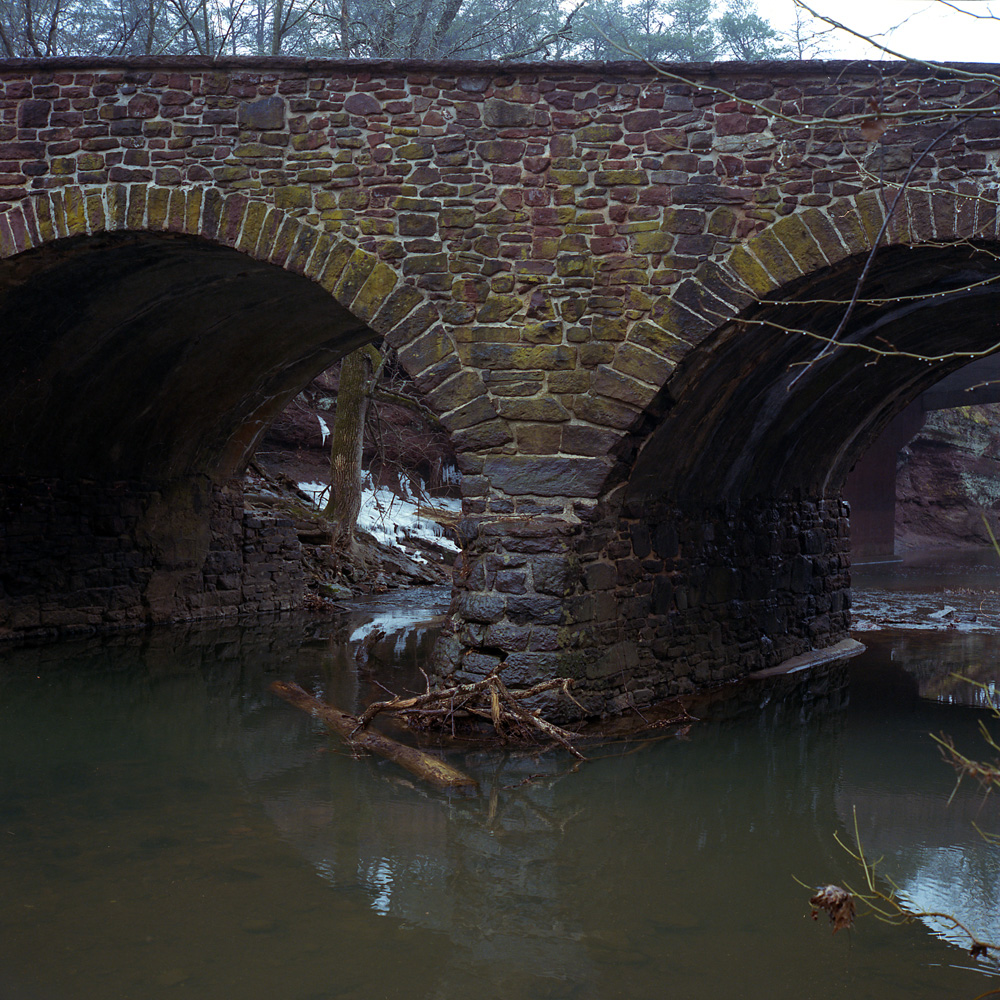
Under the Stone BridgeBull Run from the Stone BridgeStone Bridge over Bull Run
Here is the stone bridge, around which much of the early fighting of the day took place. The bridge spans Bull Run, and although the bridge you see here today is of the same stone as the one that stood there at the battle, it is not the original bridge but rather a reconstruction – during the war, the Confederates demolished the central arch of the bridge to deny Union forces access to the other side. This did not stop them of course, but instead Union engineers built a wooden span on the existing foundations, and then it was rebuilt in the 1884 as you see it today. This was the original course of the Warrenton Turnpike (today’s Route 29, the Lee Highway) and all traffic on that route crossed this bridge until the route was straightened and a new two-lane bridge was built adjacent in the 1960s.
I’ll close with another portrait of Ed, with his swagger stick made from a .50 caliber machine gun bullet. Ed at the Stone Bridge






 dcphotoartist