Tag Archives: anonymous vernacular

The joys of Anonymous Vernacular photos

Here are three of my latest collecting acquisitions. First, the daguerreotype. A very nice quarter-plate dag, extremely well exposed, and very subtly hand-tinted and gilded. If you look carefully you can see the hands are flesh-toned, and the face has a hint of it as well. The gentleman’s watch fob and the edges of the book pages are gilded. Both of these touches would have been “up-sells” at the time of the commissioning of the image. I haven’t popped this one out of its case yet because the glass is resting directly on the mat, and not bound by a brass frame as part of a package, and the glass is in so tight that I’d be afraid of cracking it or tearing the velvet surround trying to get it out. The scan does not do it justice, as the scanner’s lens can’t quite focus on the image plane.
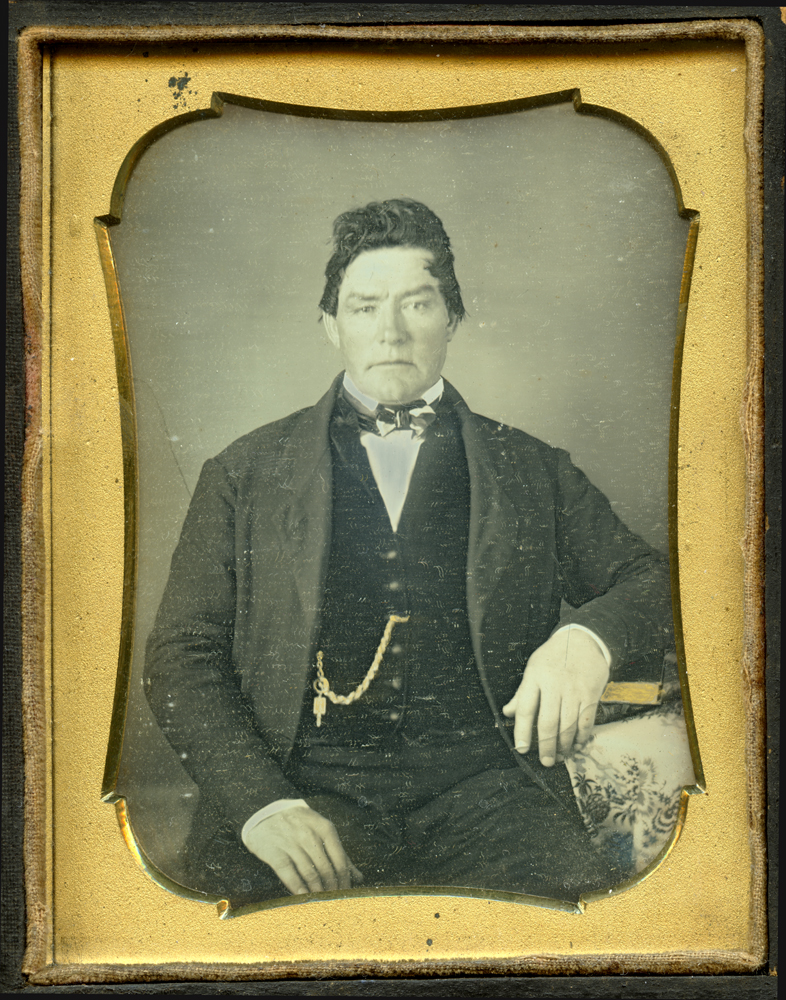
Anonymous Daguerreotype, Quarter-Plate, in half case

Next up are a pair of rather fun images. They’re totally anonymous, both from a photographer’s and a subject’s point of view. The why of collecting them is rather simple – they’re interesting. And they were bargains. Bought off Ebay, they sold at the right (wrong from the sellers’ perspective) time of day and attracted no other bids, so I got them for a penny apiece. You don’t have to spend a lot of money to start collecting, and these are proof. The thing that grabbed my attention about both of these initially were the auction titles- “African-American/Native American man” and “Two Men doing a Tom Sawyer”. I’m deleting the seemingly obligatory “rare” from the titles because EVERYTHING on Ebay is “rare”, and if it doesn’t look like a dog chewed on it, it’s also “minty”. Minty describes a flavor or odor, not a condition. These are both obviously not “minty”, but that’s ok – what counts is the image itself. While a pristine image is a beautiful thing to find, I also enjoy finding photos that look like they’ve had a life, and were not just bought and stuck in an album on a hidden shelf.

On the “African-American/Native American man” photo, it is an albumen print, and there are some obvious mis-handling marks from the time of printing (see the silver splotch over his shoulder). I will grant the “rare” on this one as images like this are while perhaps not truly “rare” they are uncommon. I’m actually on the fence about who and what this young man might be. The straight hair suggests Native American, but some of the facial features like the nose and cheekbones could be African or even Asian features, and certainly very likely to be mixed race of some sort. Guessing from the attire (and PLEASE correct me if I’m wrong) this was taken in the 1890s.
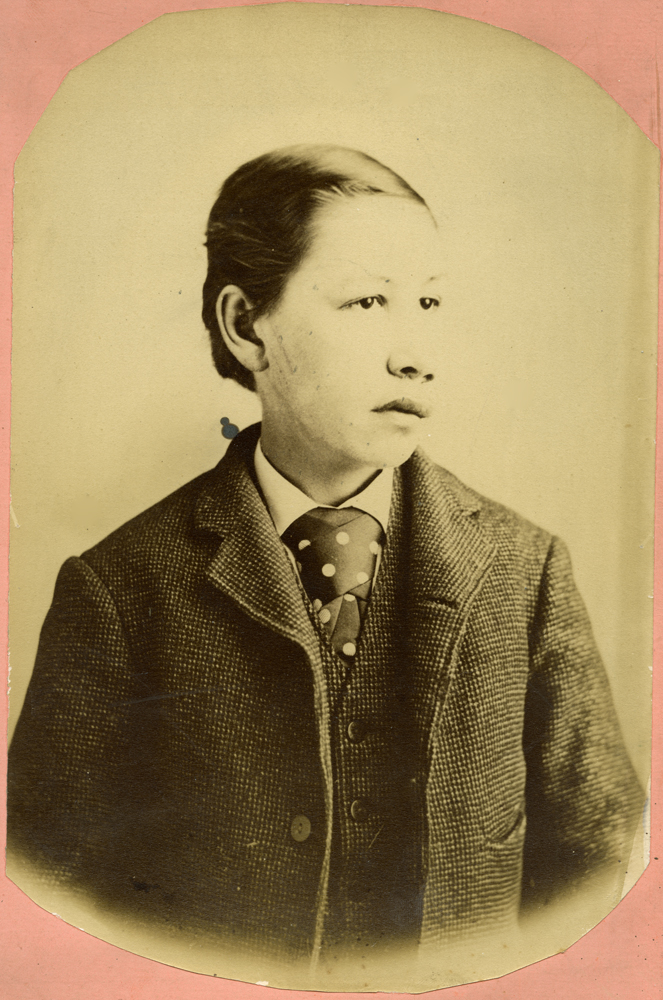
Anonymous Asian-, Native-, or African-American boy

The last image has no other way to describe it but “FUN”. Two men white-washing a fence, posing with their paint cans and brushes. A real slice of Americana, I love the sense of humor about it as well as the pop-culture reference before there was such a concept as a pop-culture reference. I’m sure Tom Sawyer would have had a good laugh at this if he were real, to see it. It even looks like the depictions of Aunt Polly’s house from movies. This is on silver gelatin “gaslamp” paper, and mounted on embossed card stock. I’ve tweaked the scan a bit to improve the picture quality overall, so don’t entirely trust the color balance.
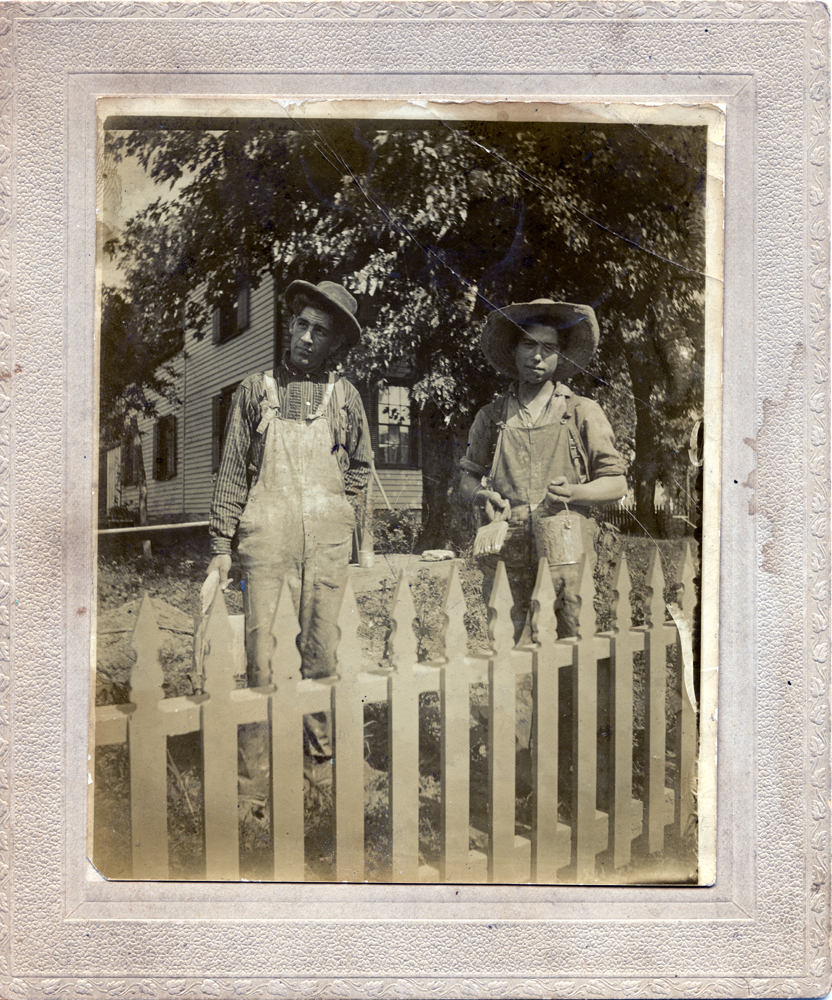
Two Men Whitewashing a Fence

Busy Week in Collecting, Part 3 – more “Gay Interest” tintypes

As I’ve said before, you can’t really call these images that get sold as “Gay Interest” “gay” because the concept as we know it today didn’t exist in the 19th century. Men have always been physically and emotionally intimate with each other but the concept of two men (or women) living together in an emotionally intimate bonded relationship for life (or at least serially to the exclusion of the opposite sex) is very much a late 20th century concept. They are interesting though because they suggest possibilities – the absolute anonymity of the images leaves open the questions and suggestions to the modern imagination of what might have motivated the sitters to pose together, and particularly in the very openly affectionate and intimate way that they did.

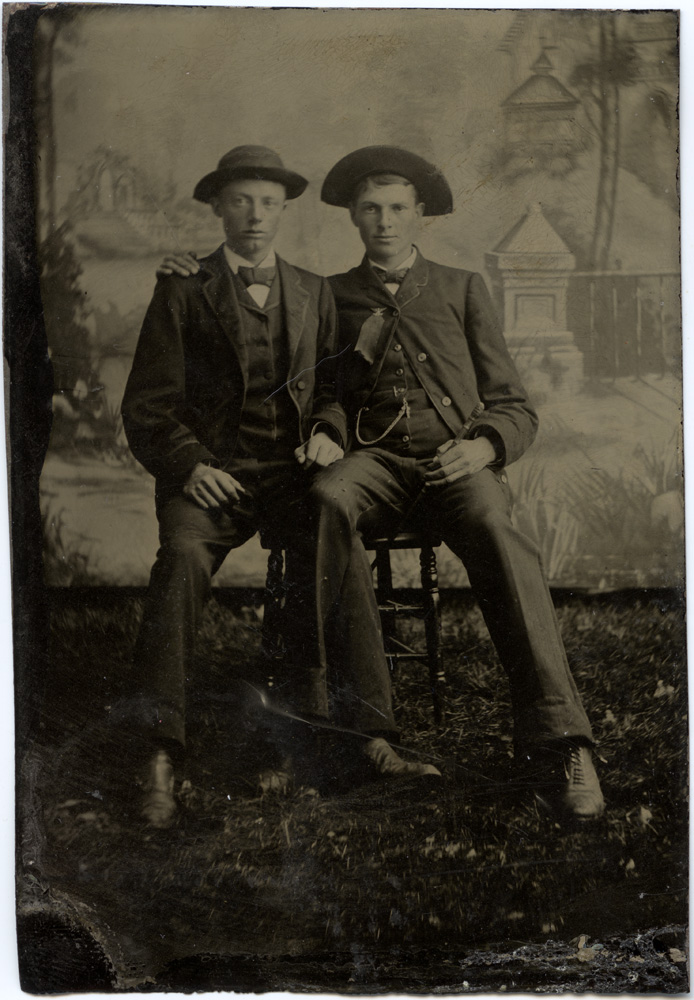
Tintype, Two Affectionate Pals (Brothers?)

These two men are very affectionate with each other. Their very similar appearance suggests they may be brothers, or they could just be very close friends. Quite possibly they were battlefield friends – the one on the right appears to be wearing a Grand Army of the Republic campaign ribbon. This may well have been taken at a unit reunion in the years following the war – note the photo was taken out of doors, on the grass, in front of a painted backdrop. I’m always interested to find images like this because it says so much more about the sitters than does a strictly studio portrait – there was some event occurring at which they wanted to record and remember their presence, and document their relationship. What was this event? Why use the painted backdrop instead of the landscape scene at the location?

This next image is even more ambiguous than the first one. Obviously from the fashions, a later image (end of the 19th/beginning of the 20th century).

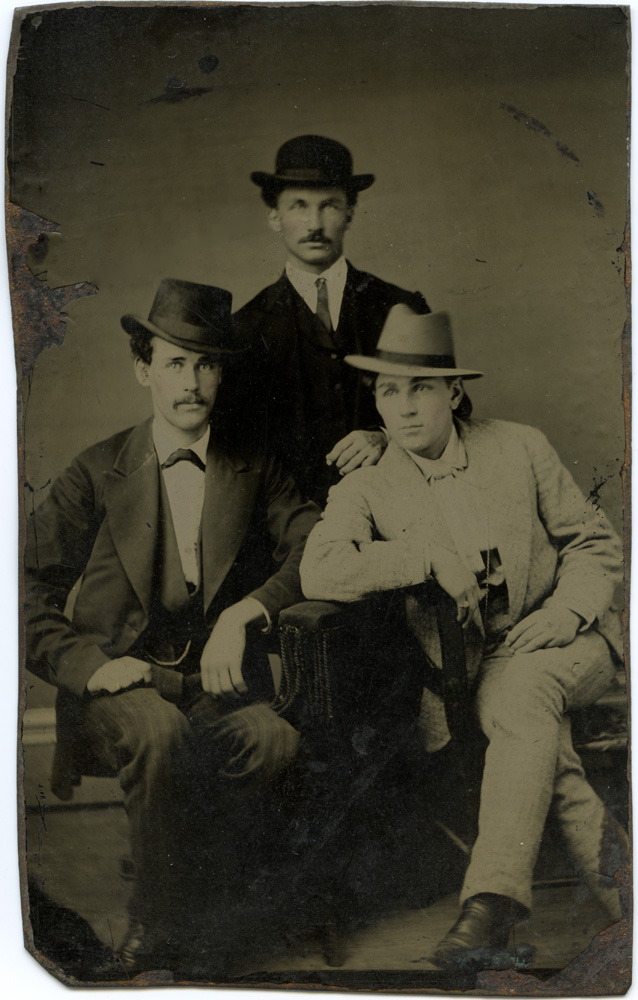
Tintype, Three Dandys

Again most likely just three friends, but the possibilities and suggestions are more ripe with potential for a late 20th century interpretation. The most interesting bit is the juxtaposition of the very fashionable dandy with the light suit with the staid middle-class burghers to his right and behind. Who was the dapper dandy, and what was his relationship to these gentlemen? Was he a foreign friend, visiting from overseas? Some exotic celebrity they had the good fortune to corral into posing with them, the 19th century equivalent of the cell-phone snap on the red carpet with a movie star? Certainly, the posing would have largely been the result of the photographer’s efforts to fit all three of them in the frame together, but the contrast between the dandy and the seated burgher couldn’t be more striking than if he were naked.

Anonymous Vernacular photographs

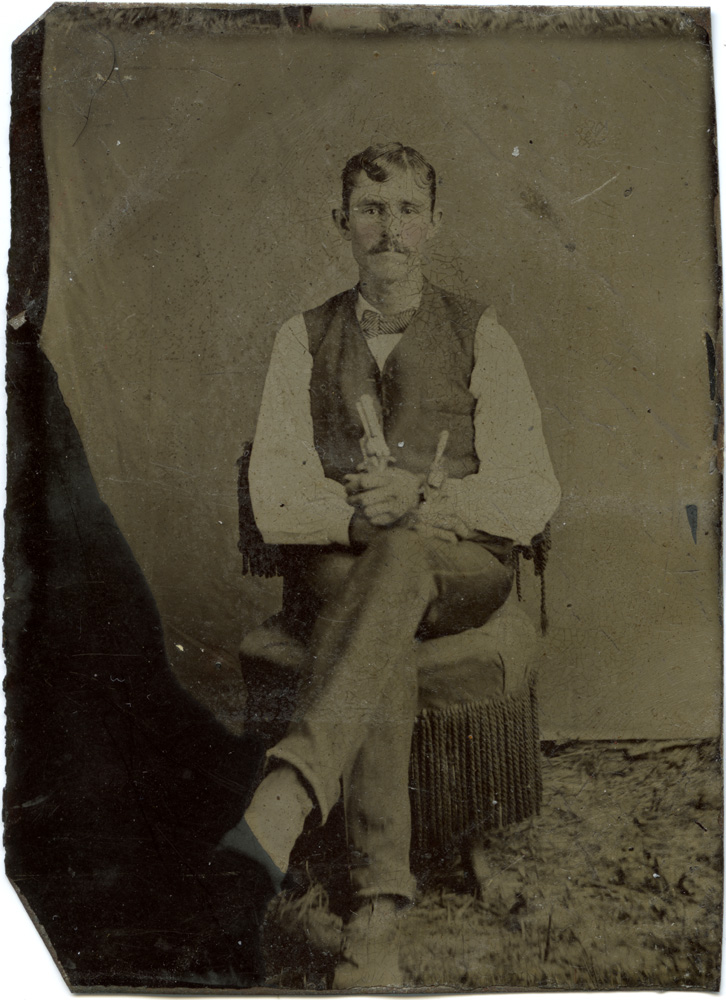
Here’s a little gem I recently uncovered. No date, no attribution, no name of the subject. It’s a little approximately 1/6 plate tintype. Definitely not from a professional studio, as the plate is ragged – the edges appear to have been almost torn from a bigger sheet, and the collodion pour and/or development are uneven. The photo was taken in the field (literally – you can see the grass under the sitter’s chair, and the backdrop looks like it might have been a rug or blanket with some kind of fringe on top, thrown over a hastily erected backdrop stand). Still, the photographer went to the effort to tint the cheeks on the sitter. It brings to mind the civil war soldier portraits with the young men about to march off to war posing with pistols. I wonder, like with those war portraits, if the pistols are indeed property of the subject or if they are merely props he chose to pose with because they looked cool (many of the civil war soldier photos are using prop weapons that belonged to the studios. Many soldiers had not yet been issued firearms when they had their pictures taken, and they often posed with weapons inappropriate to their rank and status – enlisted men with non-government issue pistols, for example). Was he a saloon keeper? A lawman? The guns are kind of dinky, and he’s handling them rather casually. I think it’s the aura of uncertainty that lingers with an image like this that makes it so fascinating.

Anonymous Vernacular - The Pistol Packer

I’m using the term “Vernacular Photography” to describe this image. A good friend of mine gave me a definition for it (after a rather contentious debate from which I learned some humility): “Vernacular photography is photography by indigenous populations for indigenous consumption”. Meaning photographs that are created with the intent to be consumed by the audience that created them. The photographer does not have to be known or unknown; neither does the sitter. What matters is the intent. So a Mathew Brady portrait of a client off the street, commissioned by that client for their own personal use, even if the client were famous, would be vernacular, but Brady’s civil war documentary, even the camp scenes of soldiers at rest, would not. Diane Arbus’ photos are NOT vernacular, nor are Ansel Adams’. Their work was created for the express purpose of exposing an idea and sharing it with the world at large. Vernacular photography is created for a known, limited audience. Non-vernacular photography (art photography, documentary, etc) is created for an unknown, unlimited audience. The sitter for my tintype here probably had no expectation of the life of his image beyond whoever he gave it to being able to remember a moment in time at some now-unrecorded location. By collecting it, publishing it and categorizing it, though, do I now lift it out of that category of vernacular image by giving it that unknown, infinite audience?

There’s a wonderful book on the American Tintype by Steven Kasher called “America and the Tintype” which catalogs the better part of a century’s worth of mostly anonymous, vernacular photography from the tintype era. If you’re interested in the subject, I highly recommend picking up a copy.