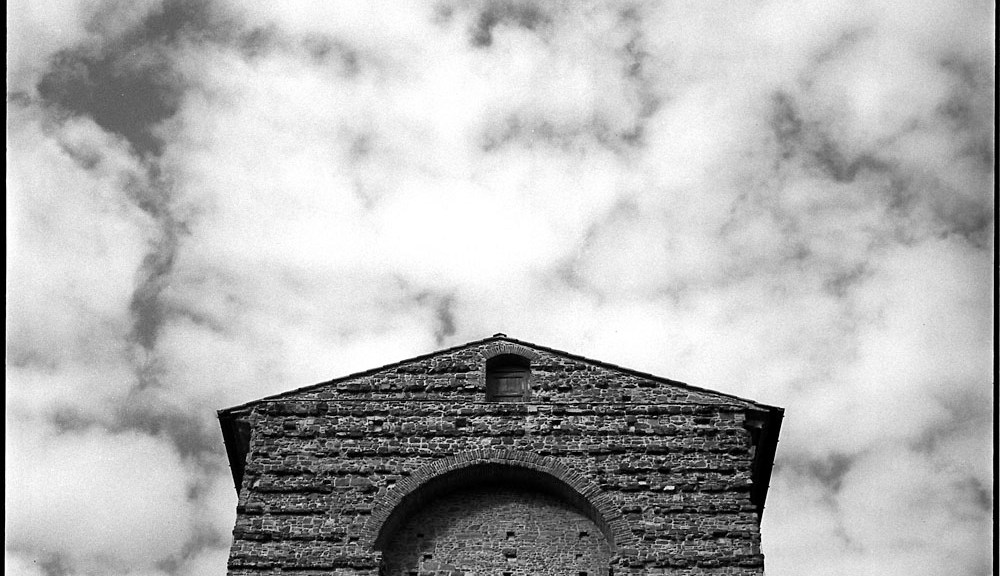
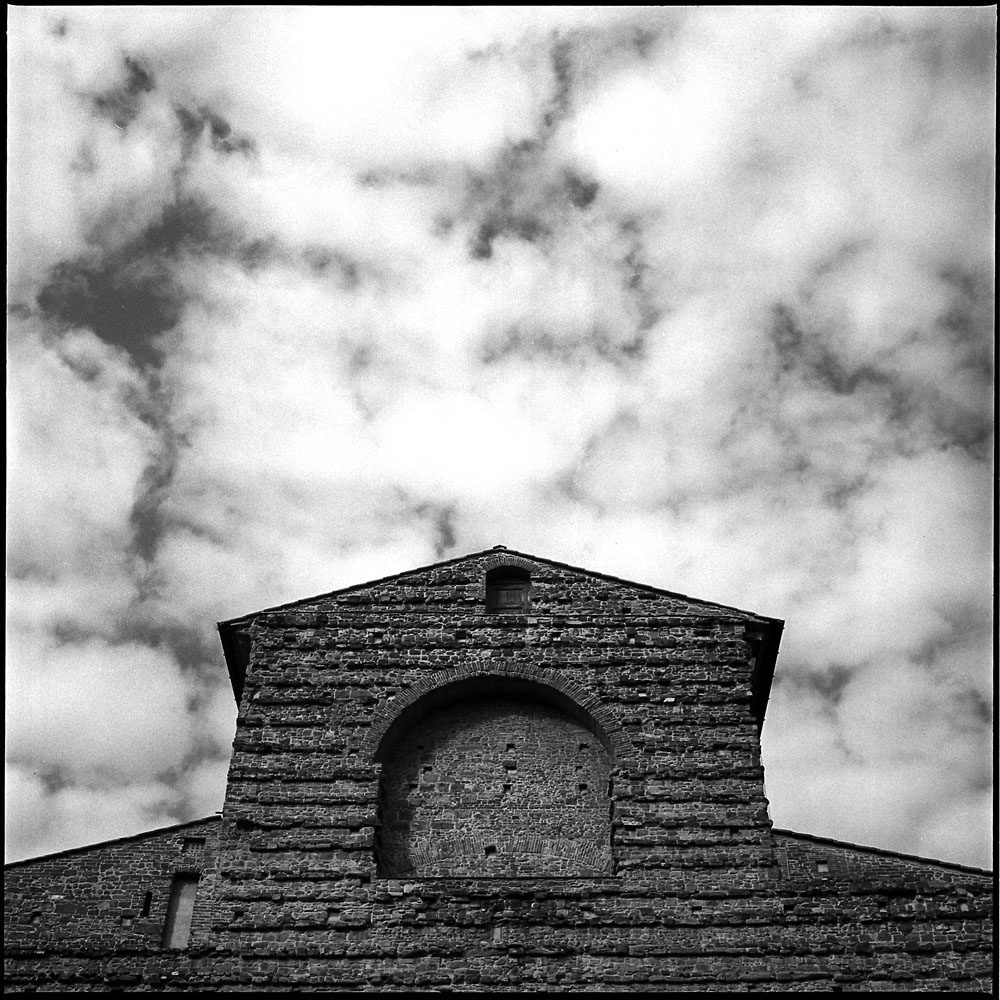
My take on the facade of San Lorenzo, the Medici family parish church and originally the primary cathedral for the city of Florence.
San Lorenzo Facade, Clouds, Florence
The facade is one of the most famous unfinished structures in Italy. The church was designed by Brunelleschi, but he died before it was completed. The Medici family, who were financing the construction of the church, commissioned Michelangelo to design a new facade. He built a scale model, but the design was never executed. In 2009, a CGI model of his design was projected on the existing facade for a period of time to gauge reaction to completing the facade, but nothing more has come of it. While the Michelangelo design is quite beautiful, the current facade has sat as-is for over 500 years, so I think it would be a sacrilege to both the existing building and the Michelangelo design to build it now.
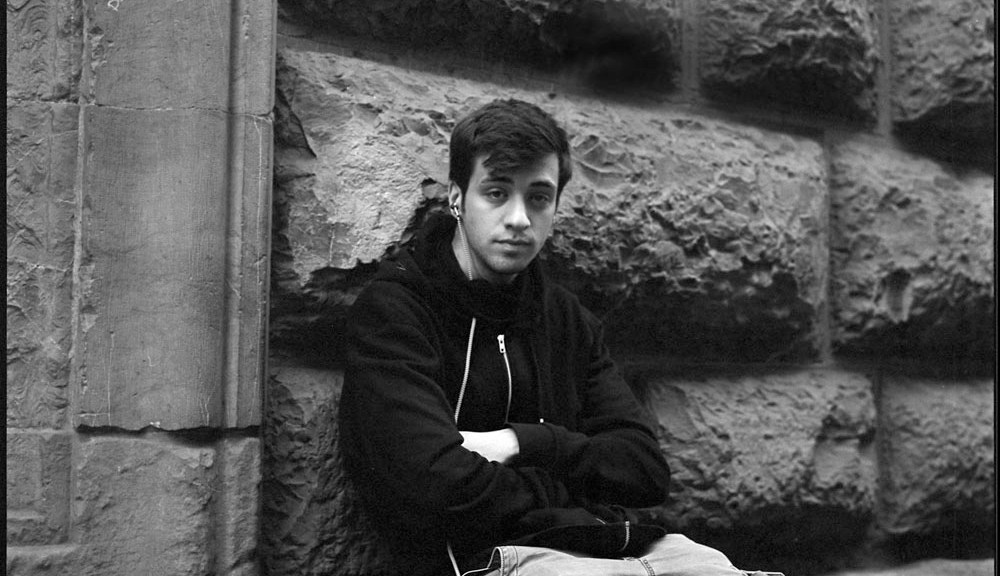
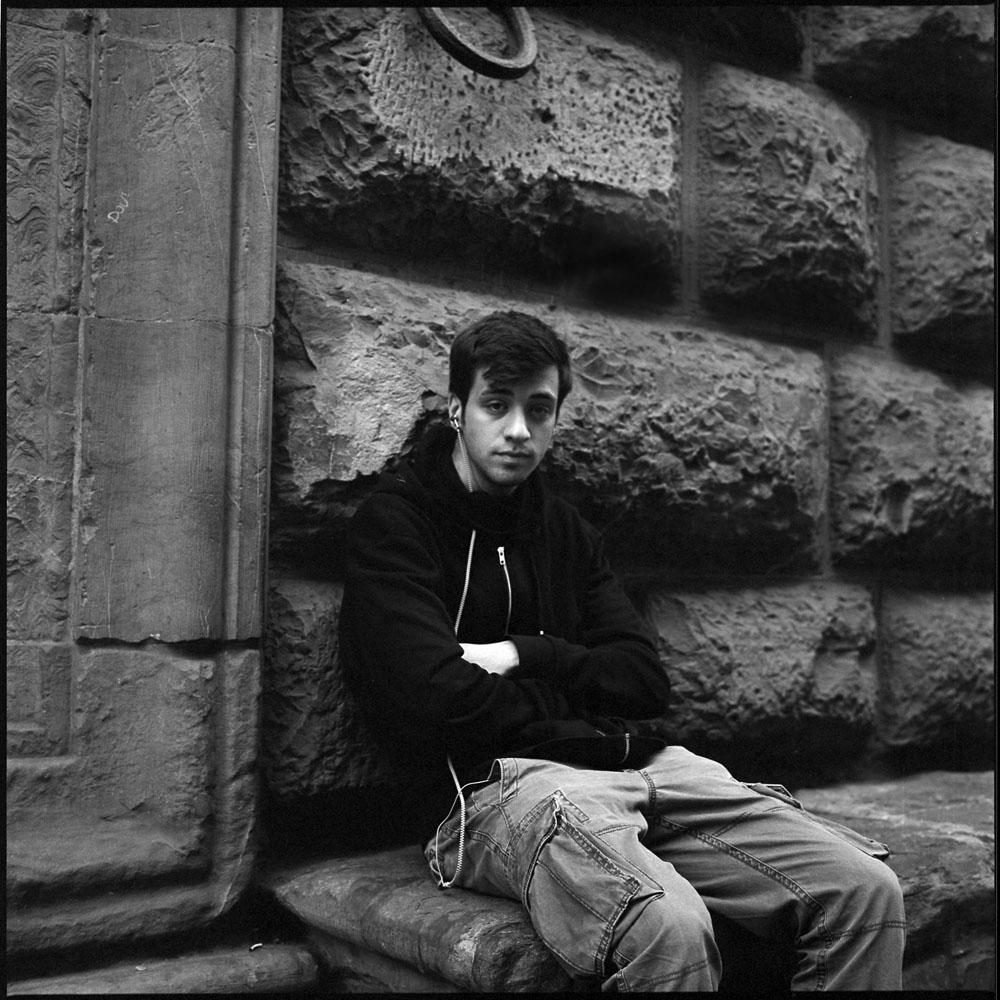
I saw this young man sitting on the bench around the Palazzo Medici-Riccardi. I don’t know what he was waiting for – might have been a bus, or a group of students visiting the Palazzo. Regardless, his pose cried out to make his portrait.
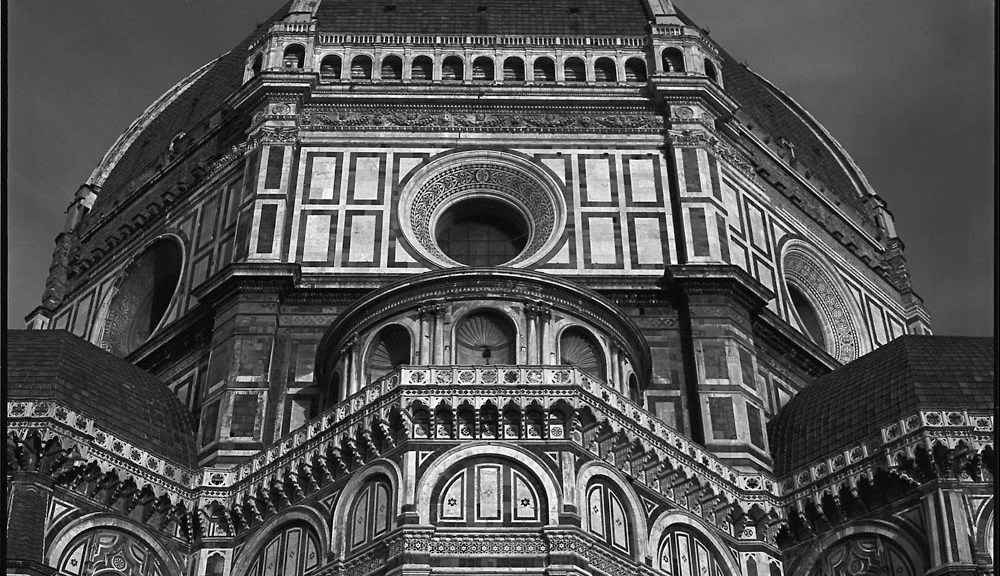
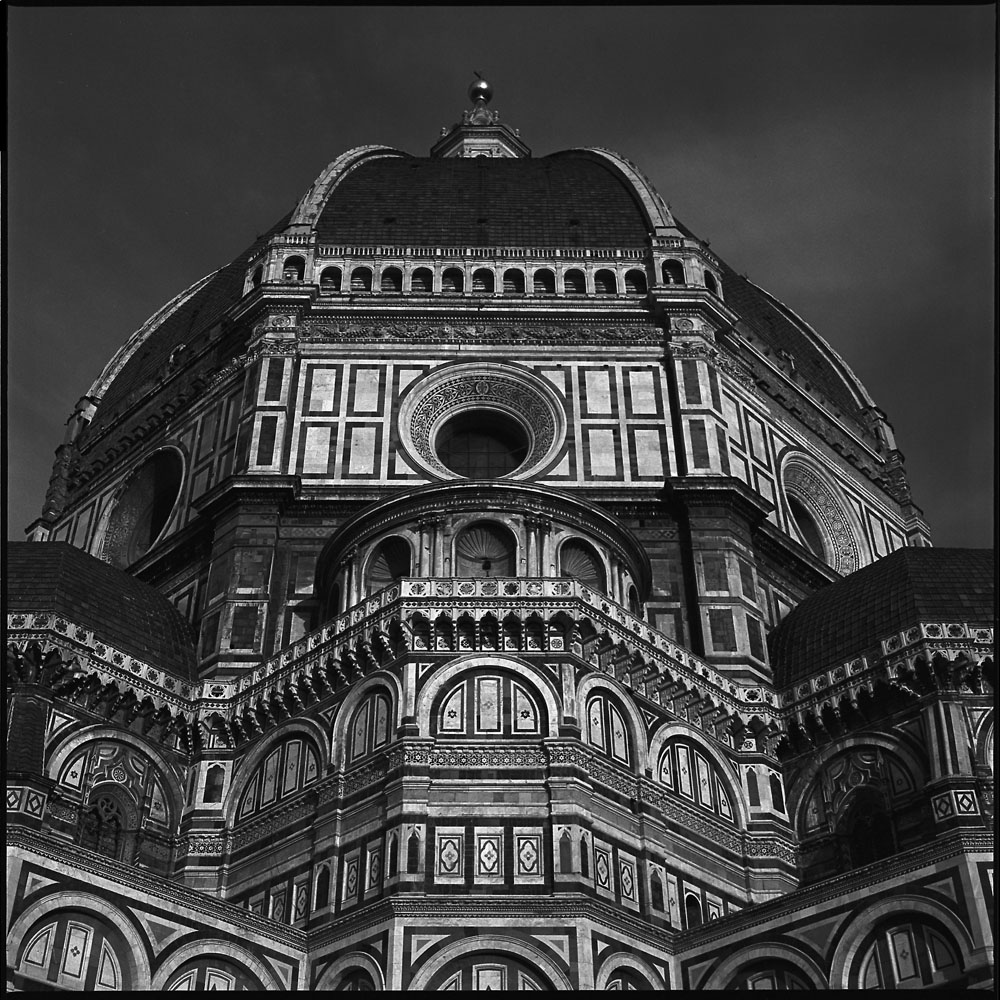
Here is the famous dome of the Duomo, Florence’s main cathedral. Designed by Brunelleschi, one of the Renaissance’s greatest architects, and built using highly innovative techniques and equipment that other than the power source being humans and/or animals, any large construction crew today would recognize. The dome has stood as one of the most recognizable symbols of Florence, if not all Italy, for nearly six centuries.
Cupola, Santa Maria Del Fiore, Florence
There’s a terrific book out there on the dome and its design and construction, Brunelleschi’s Dome: How a Renaissance Genius Reinvented Architecture, if you want to read more about it. I’m actually going to go back and re-read it myself, now that I’ve re-visited the cathedral and have been reminded of just how magnificent and amazing it is. The dome and its lantern stand at an impressive 375 feet high, making it the largest dome in Western architecture until the modern era, and it still remains the largest ever built using brick and mortar.
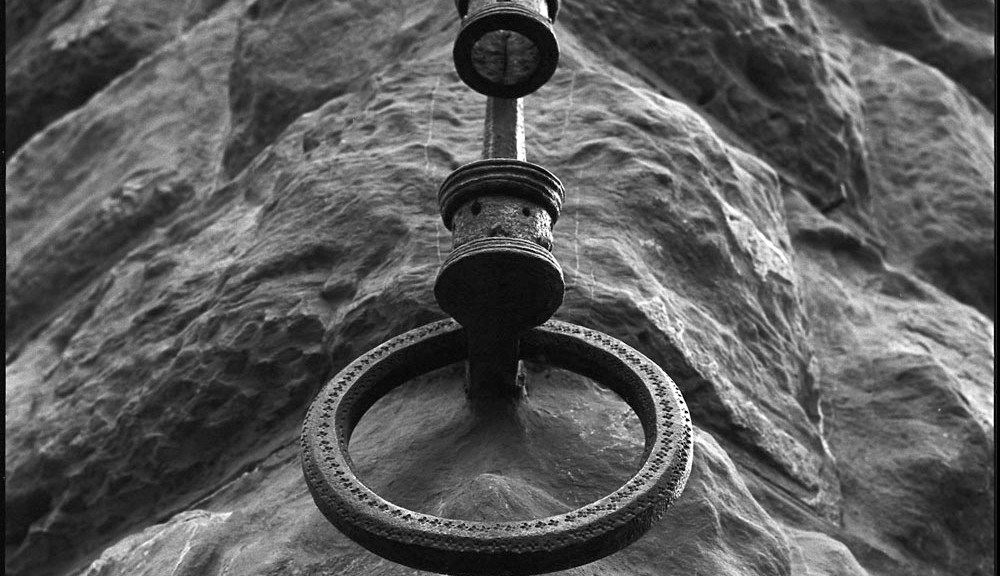
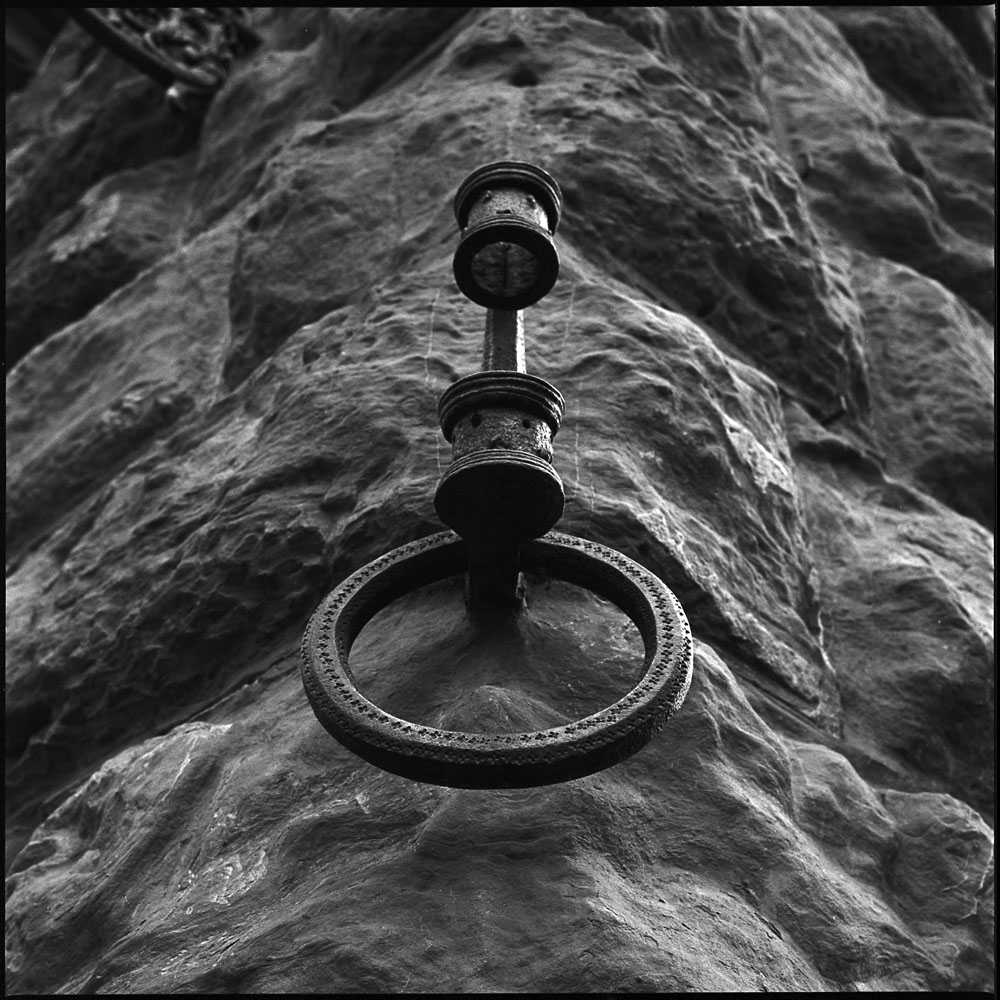
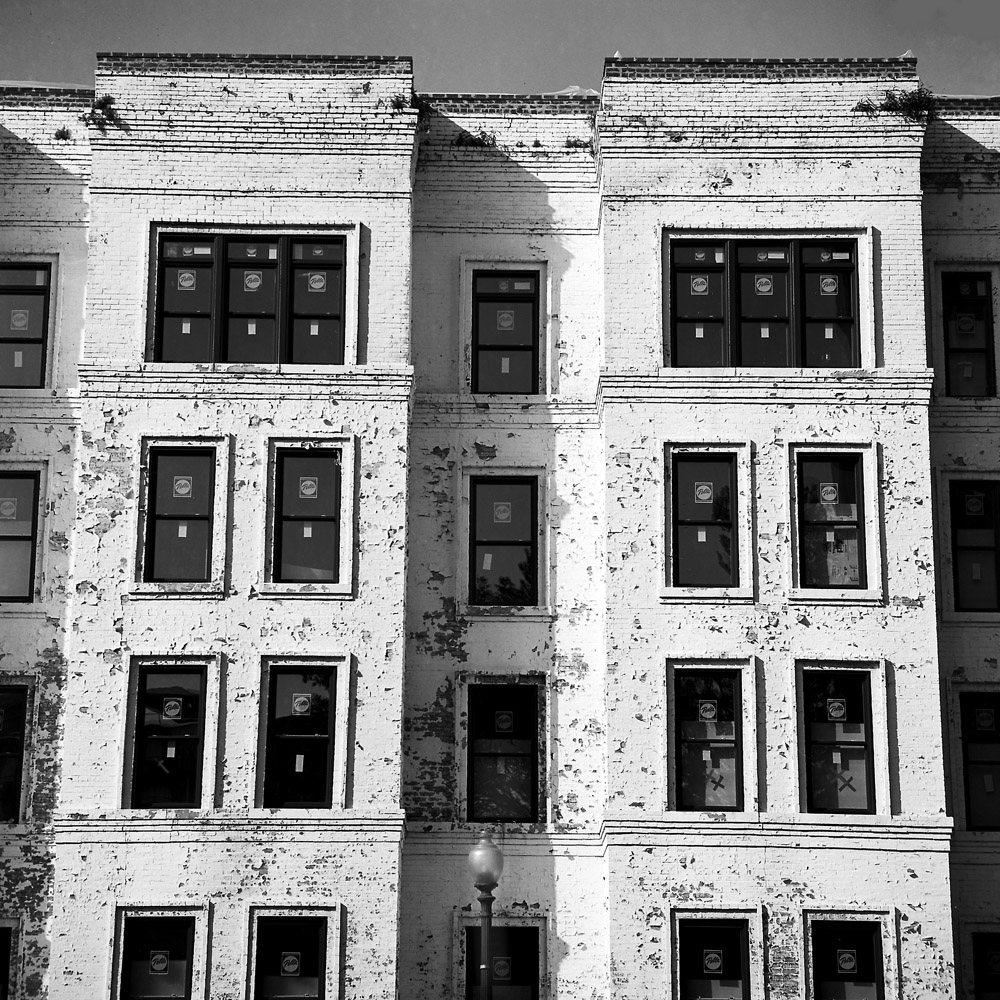
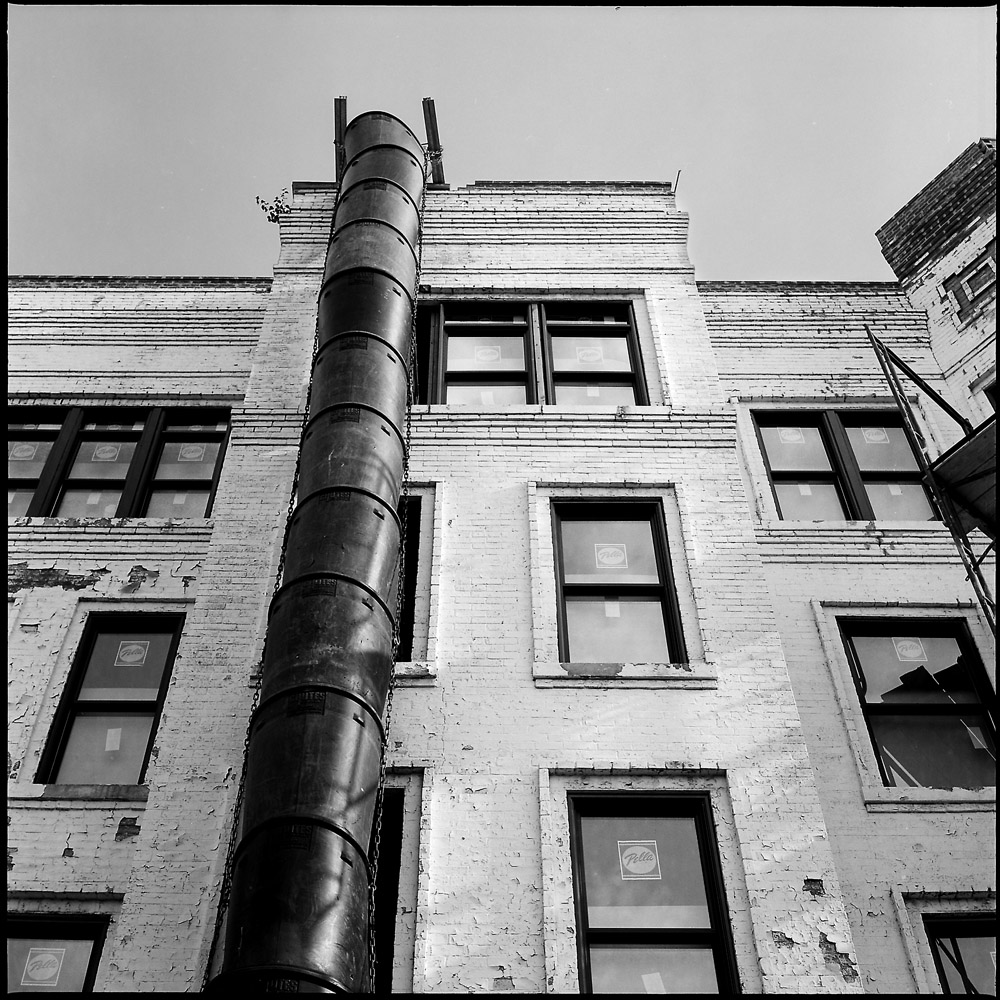
Well, it’s more like two bays, one lamp, but that’s a lot less poetic. This is another one from the same building in the Windows post, that I can’t believe I never posted.
Two Towers, One Lamp
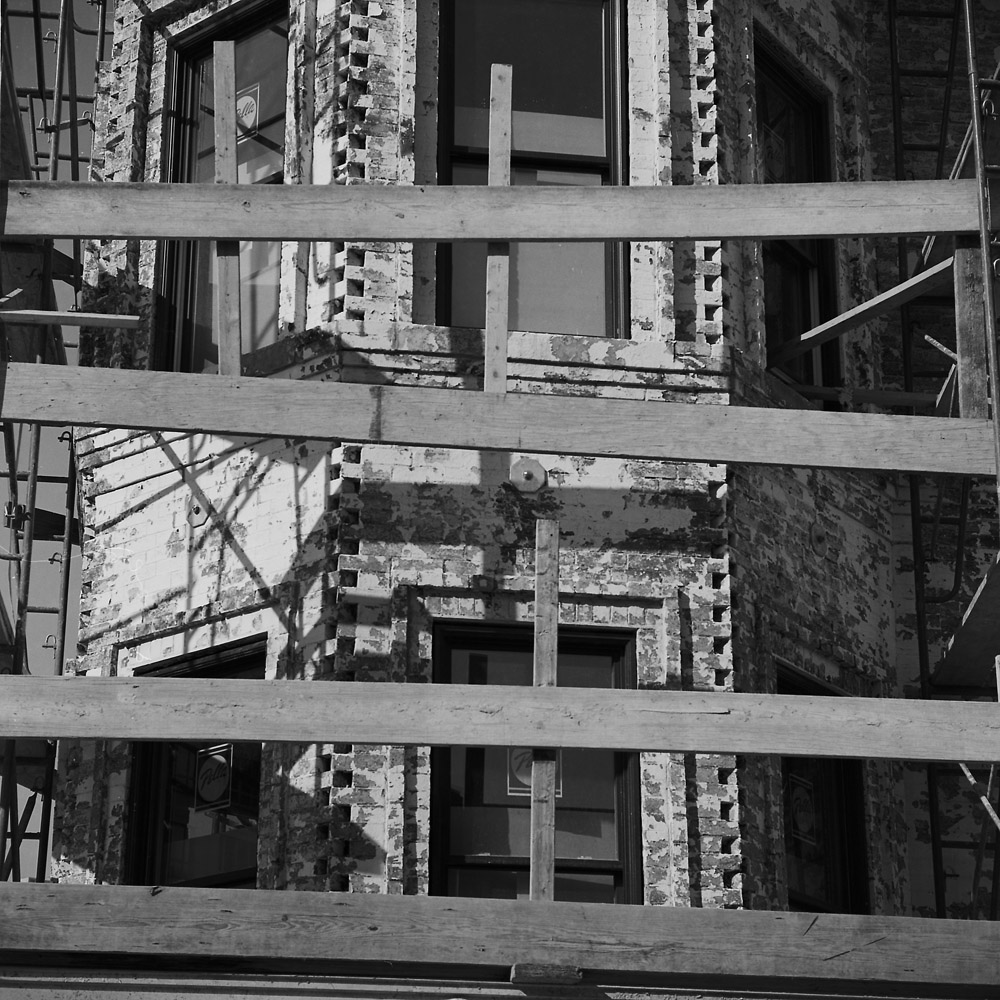
While it’s not quite abstract, it is very much about repeating patterns and their contrasts in a single scene, the contrasts being the texture of the peeling paint, and the single lamp-post.
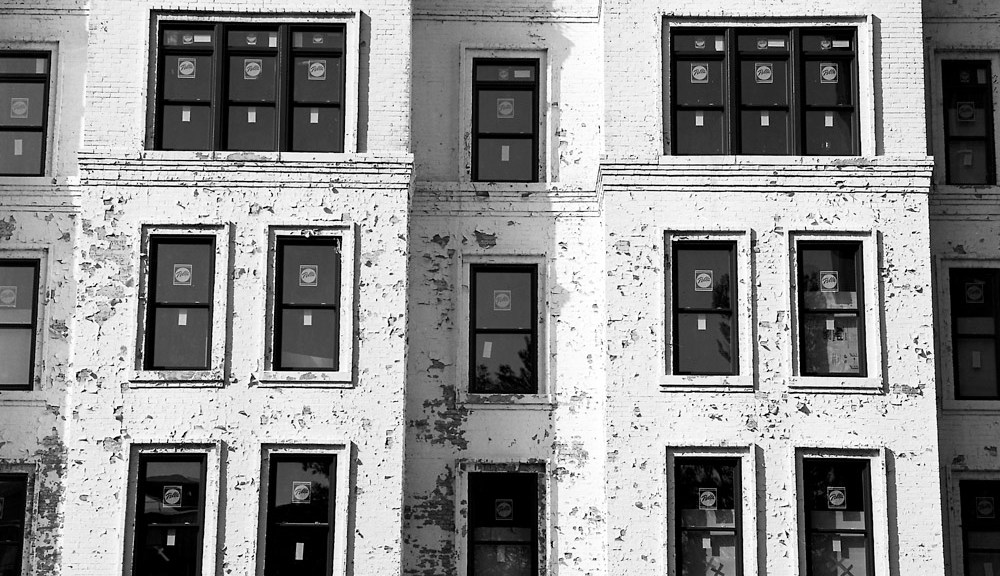
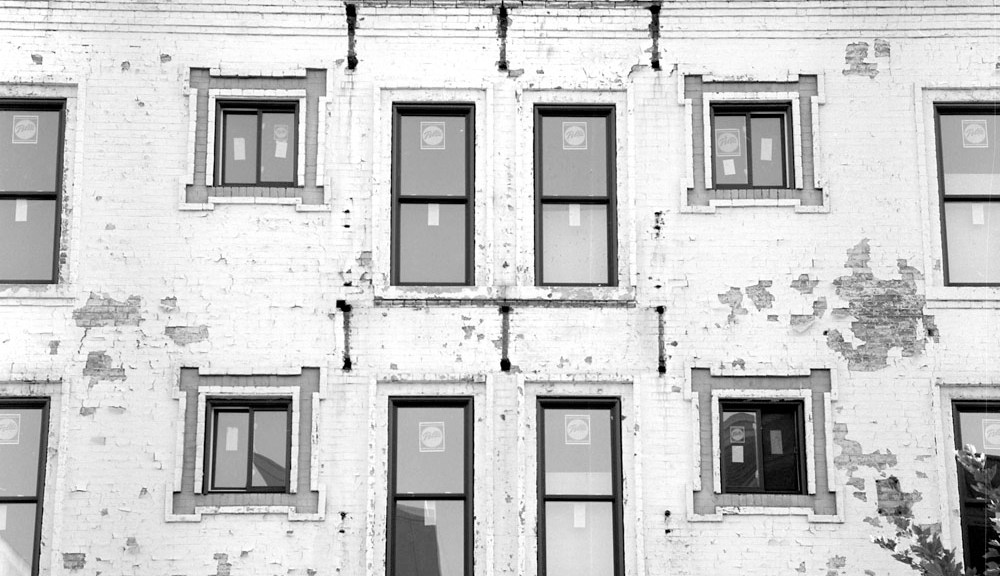
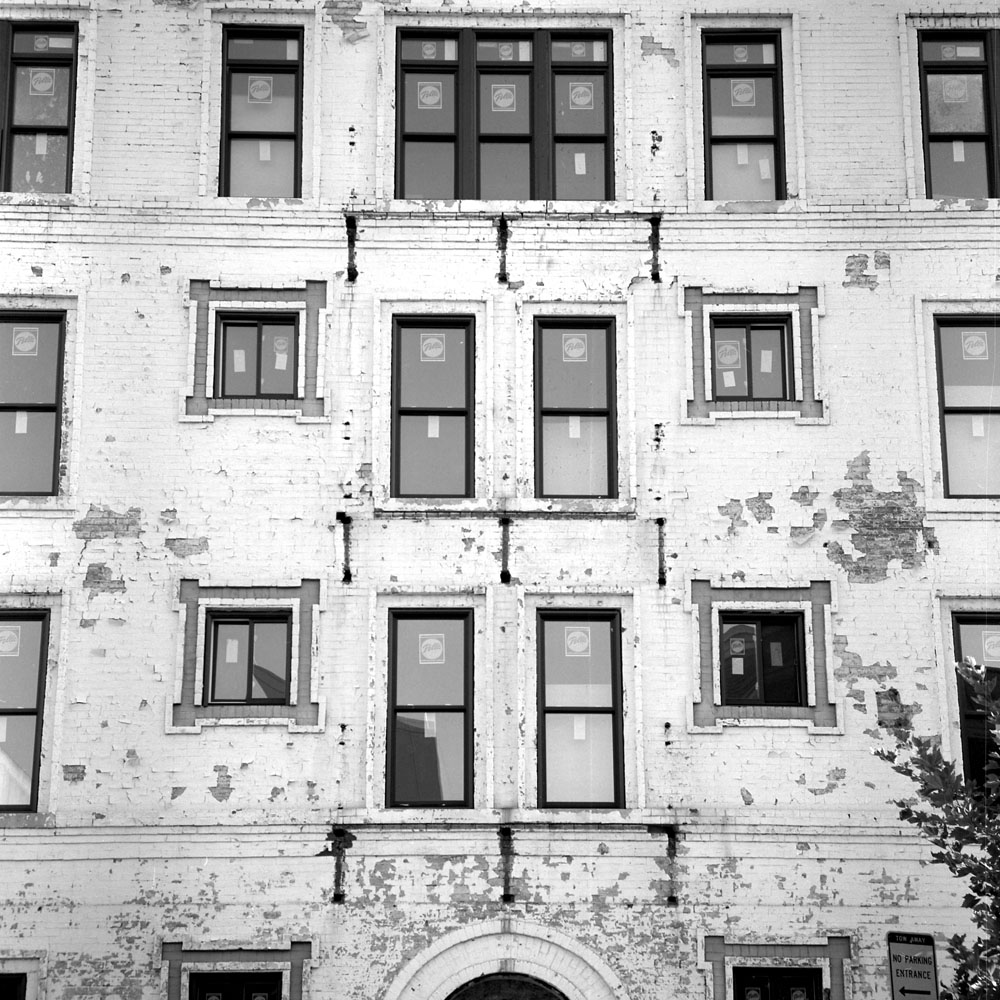
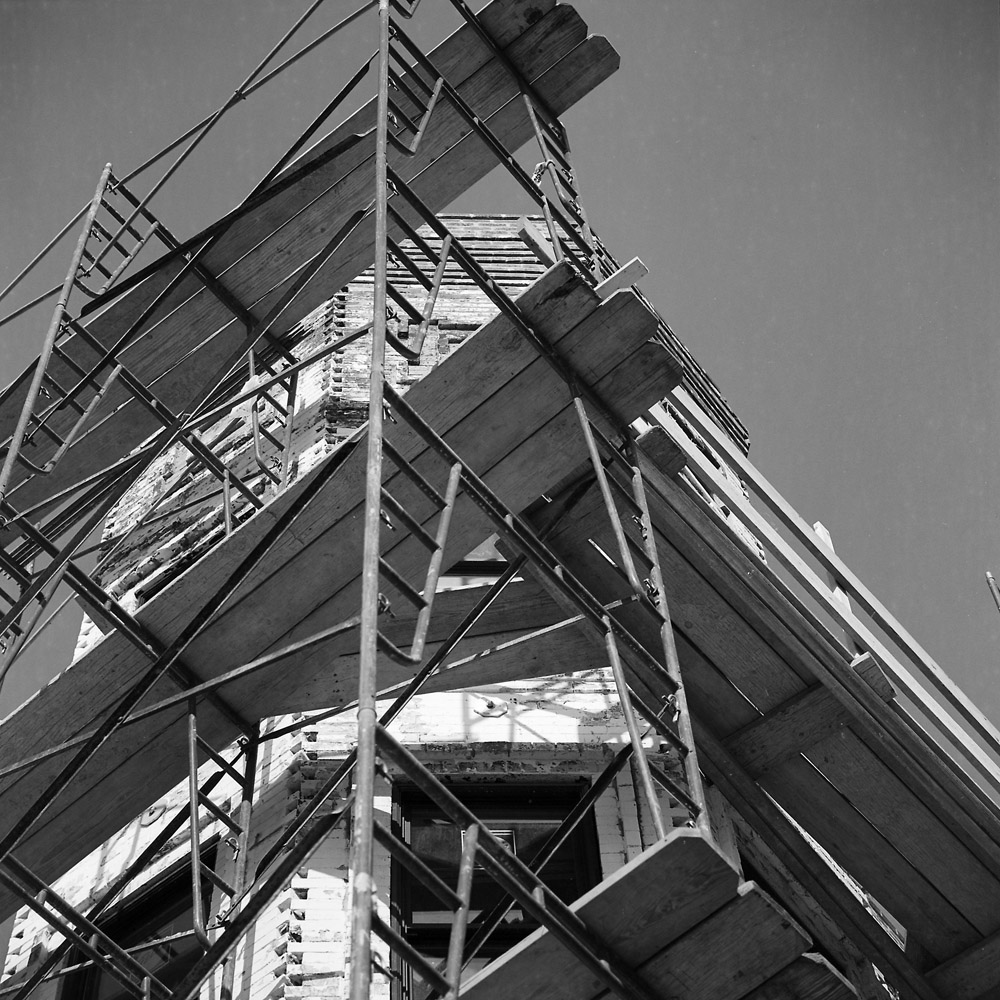
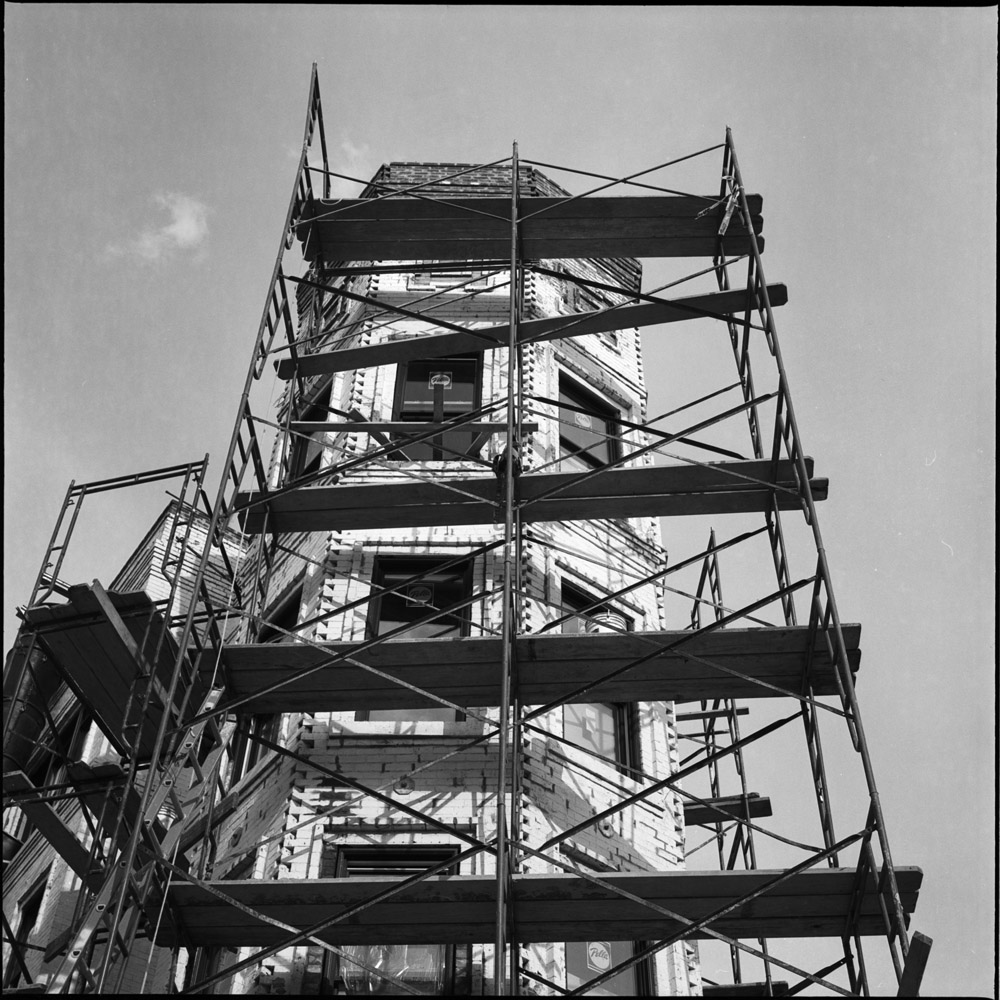
An architectural abstraction at the construction site across the street from my office. This building has been an inspired location for me – I’ll be a little sad when the construction is done because the building will be all neat and new again and won’t have all the cool textures it has now. But it will present entirely new options for photographing, I’m sure, so I’ll adapt and overcome, as the Marines say.
Rock Creek Park is a large urban park that runs from where Rock Creek enters the Potomac River to its headwaters some 30 miles away in central Maryland. Part of that park is owned and operated by the United States Park Service, and part is a regional park operated by Montgomery County, Maryland. The park dates to the 1890s and was surveyed by Frederick Law Olmsted, the famous landscape designer. In one of the greenest cities (Washington DC has more tree coverage than any other major US city, earning it the nickname “the tree capital of the US” and making it a living hell twice a year for allergy sufferers), it is a natural oasis of wild landscape. It was not always so, as Rock Creek provided the power to dozens of mills that functioned as the industrial engine such as it was for Washington and its surrounding farmland. Today, Pierce Mill is one of the few remaining complete structures to commemorate that industrial heritage. If you take a wander up the trails that parallel the stream, though, you can find signs of some of the other mills that dotted the landscape.
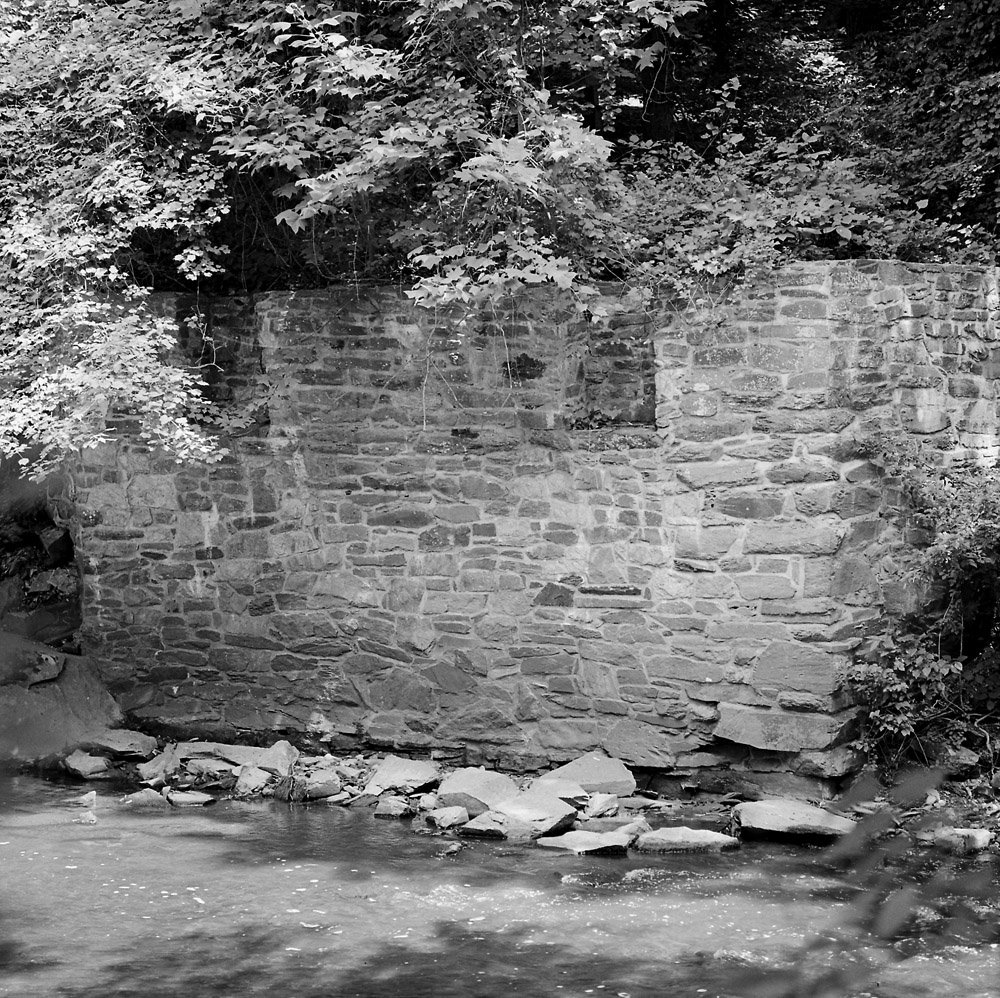
This structure marks the remnants of one of the larger mills along Rock Creek. I’d have to go back and take notes on the signage along the path that indicates what this mill produced and who owned it and when it operated, but most likely it ceased to function in the 19th century. To require such large foundations, it must have been a substantial operation, though.
Mill Foundations, Rock Creek
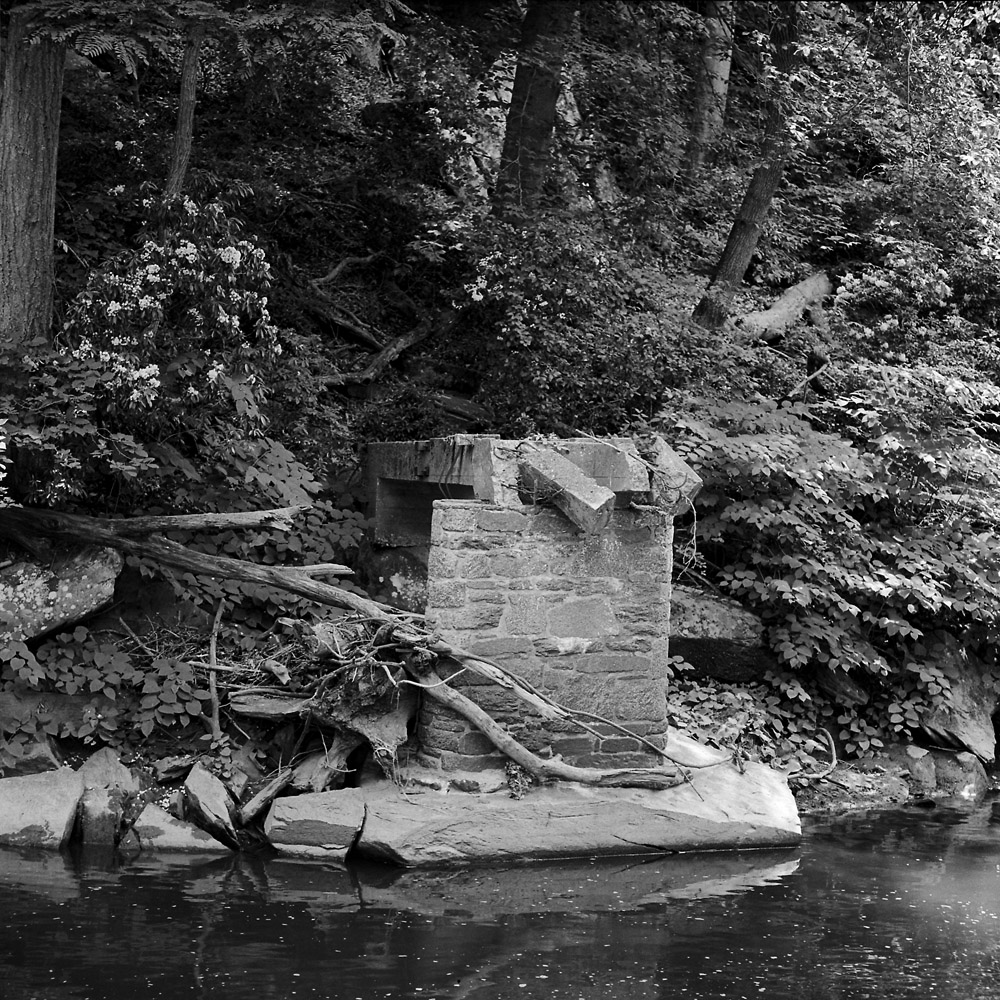
Here is the footing for a small bridge that spanned the creek.
Bridge Footing, Rock Creek
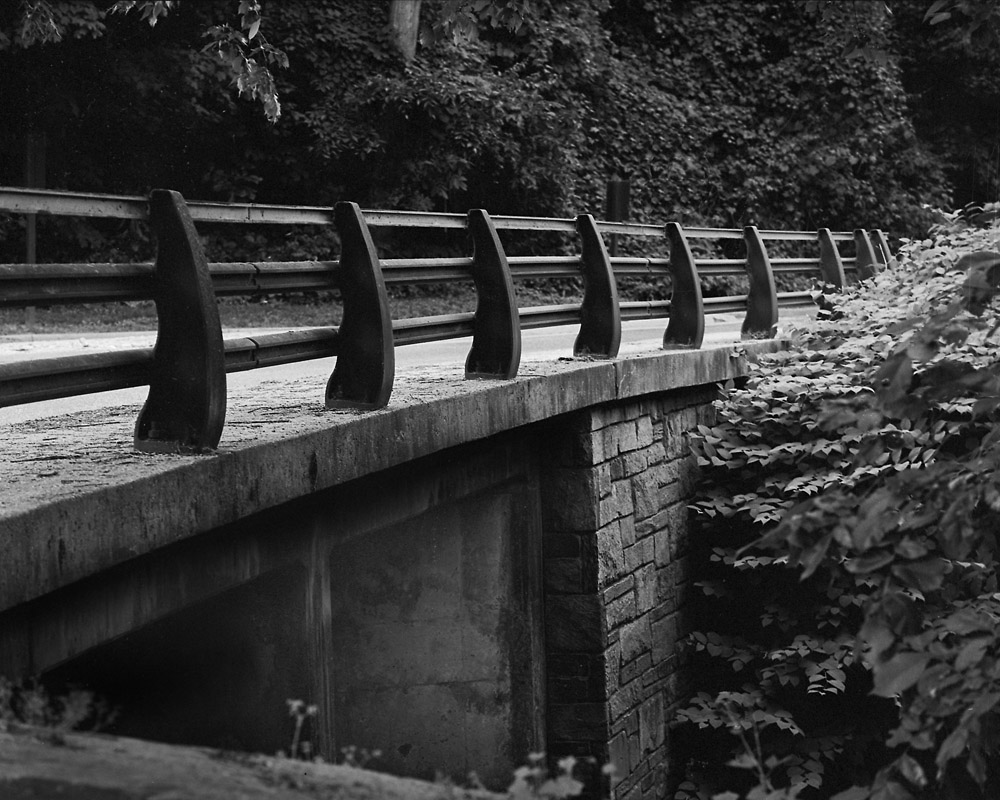
Somewhat more modern evidence of the urbanization of Rock Creek, a road bridge that spans the creek and provides access to the park from the neighborhoods around it.
Bridge over Rock Creek
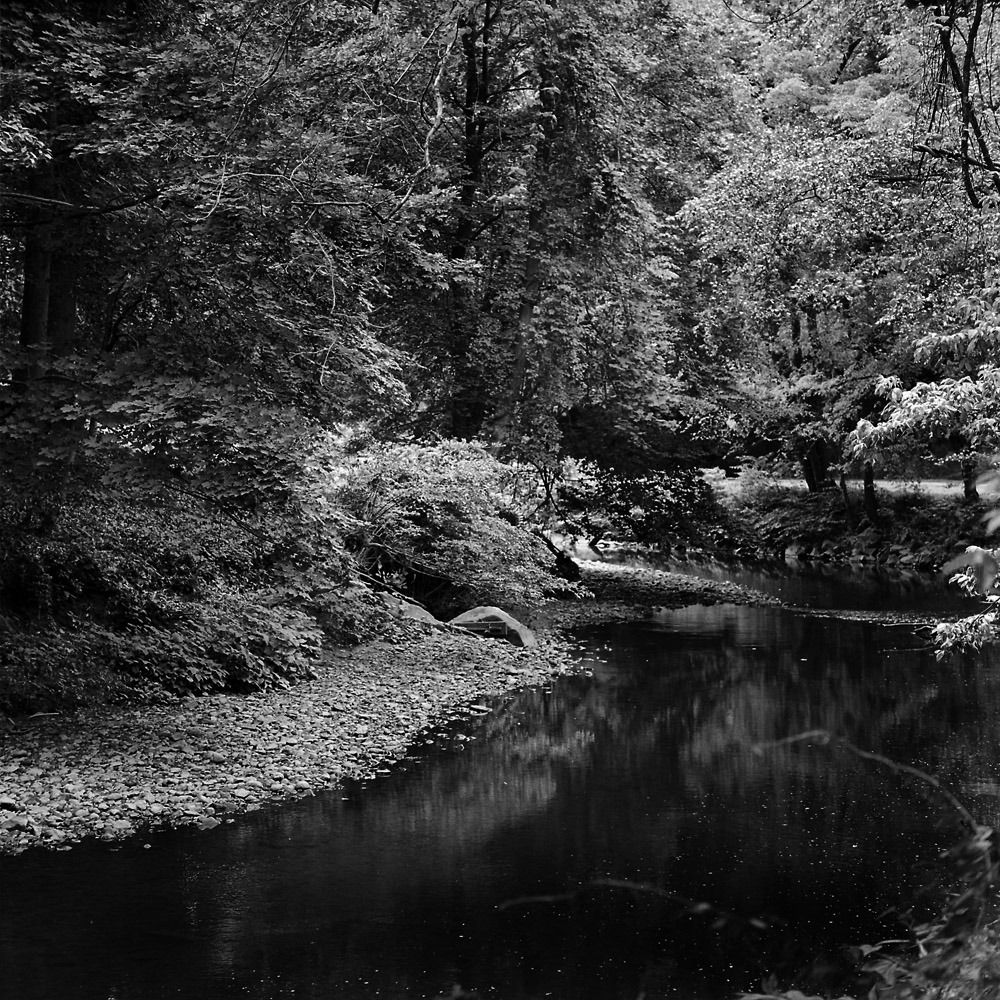
A gravelly bend in the creek, dappled with sunlight. Hard to imagine that within 200 yards of either side of this stream there are roads, houses, cars and businesses.
Gravelly Bend, Rock Creek
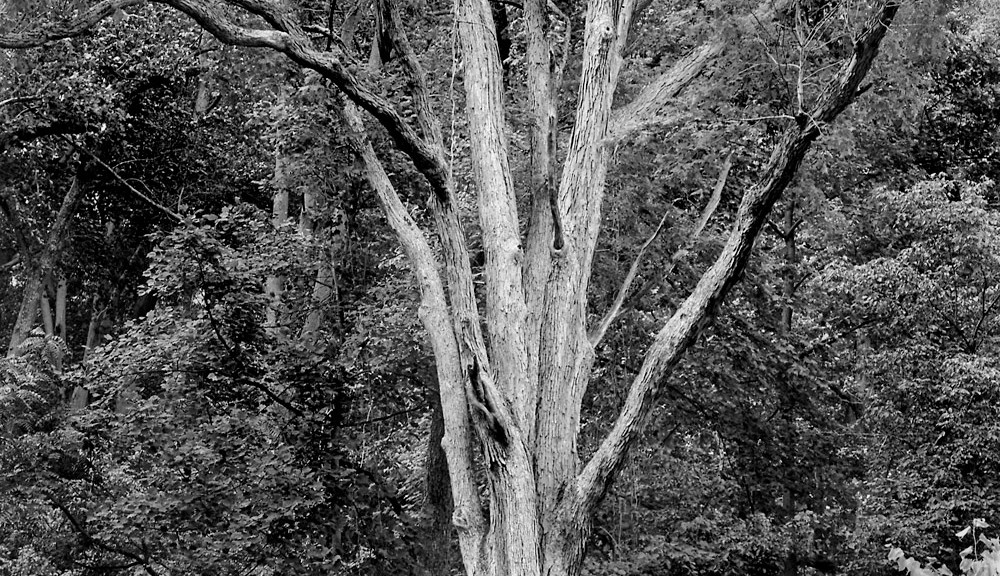
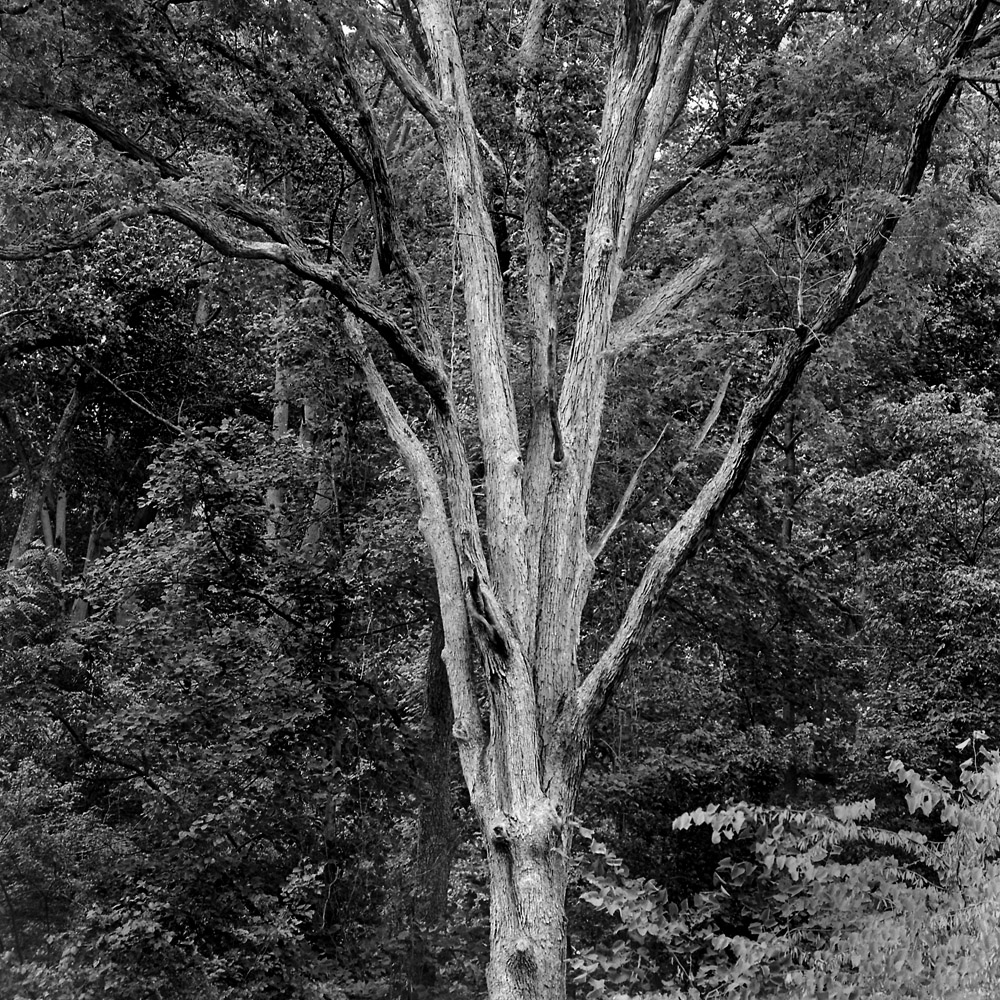
A tree along the trail that follows the stream.
Shaggy Bark, Rock Creek
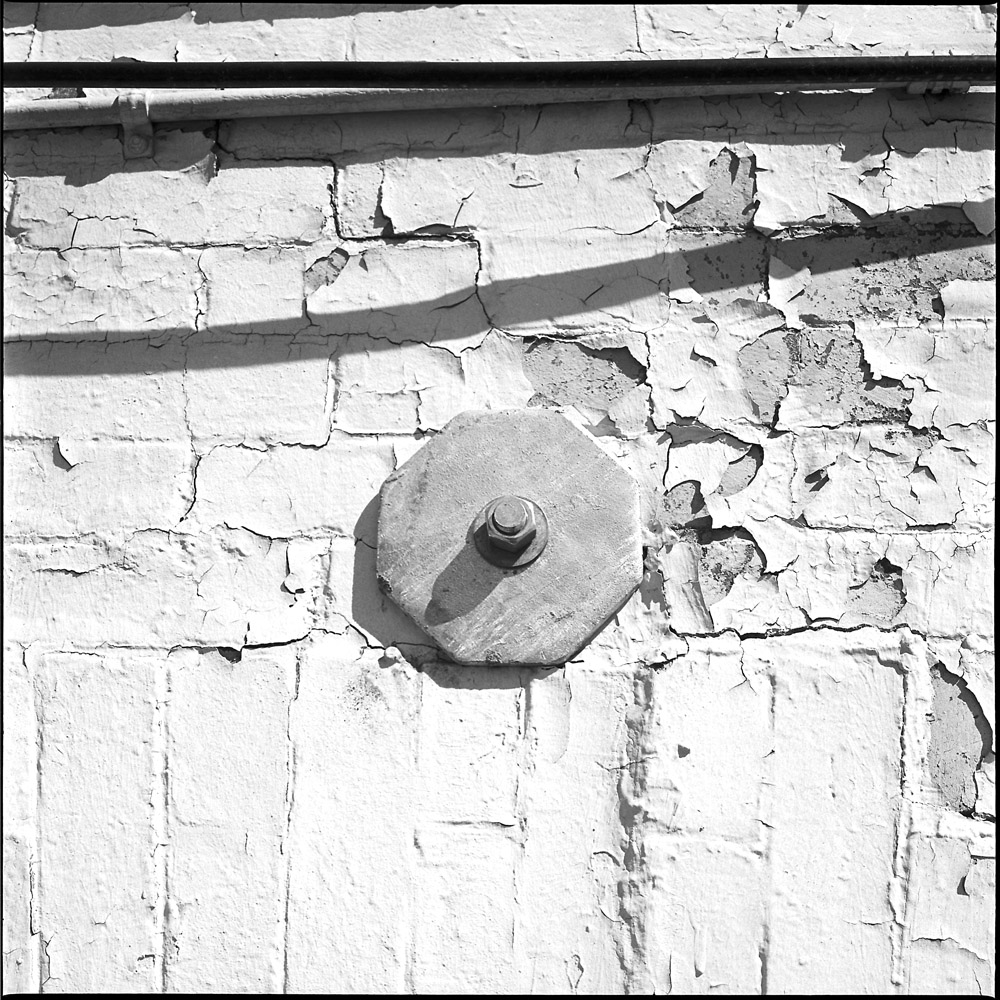
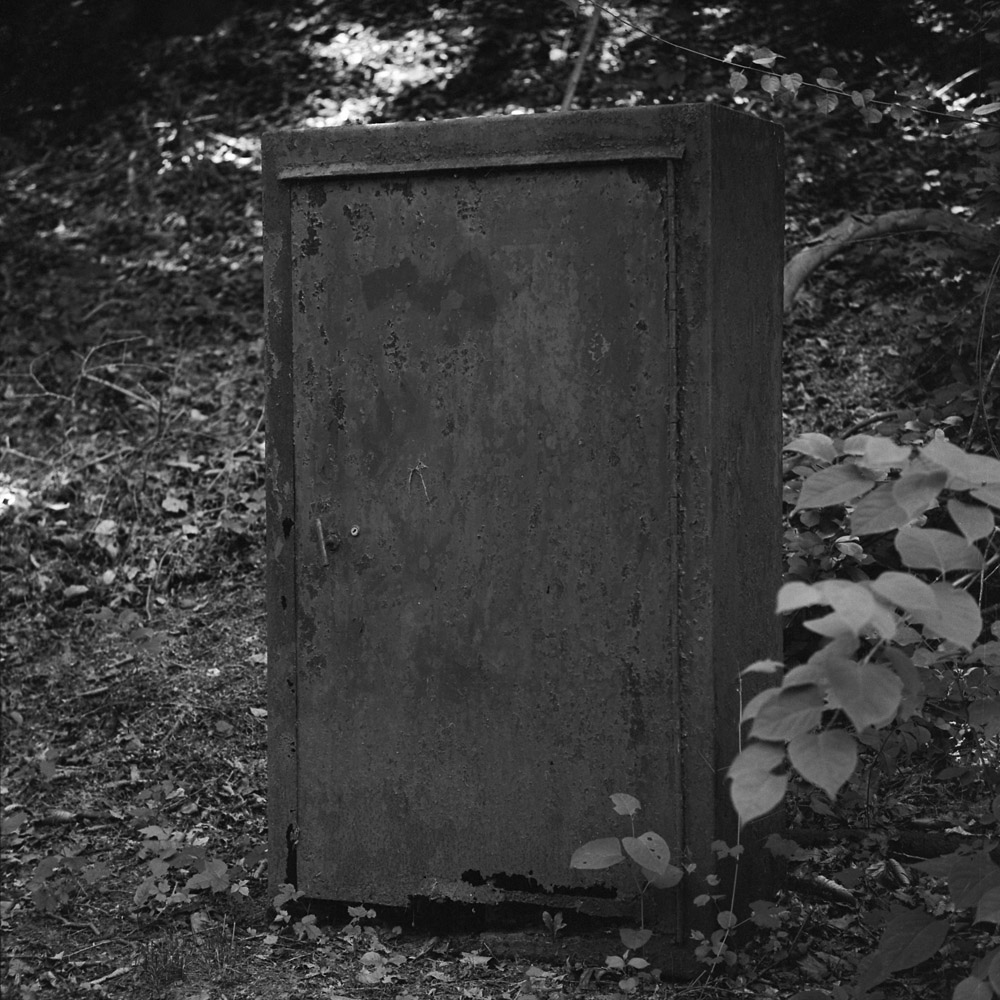
And a final reminder of man’s presence – an electrical junction box. It has the feel of being a monolith, left behind by an alien civilization, purpose unknown, long abandoned, or a portal to another place and time like the wardrobe portal to Narnia.
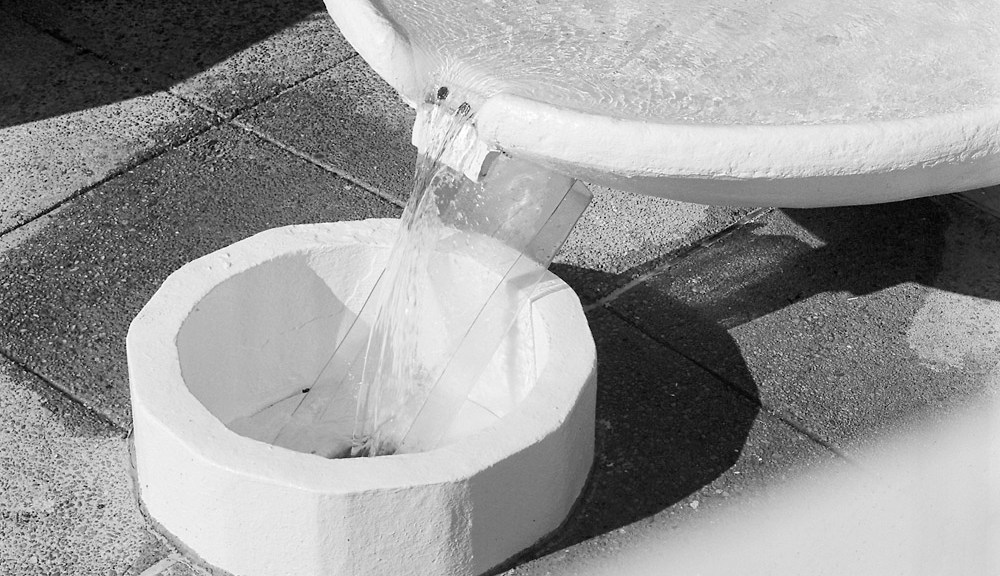
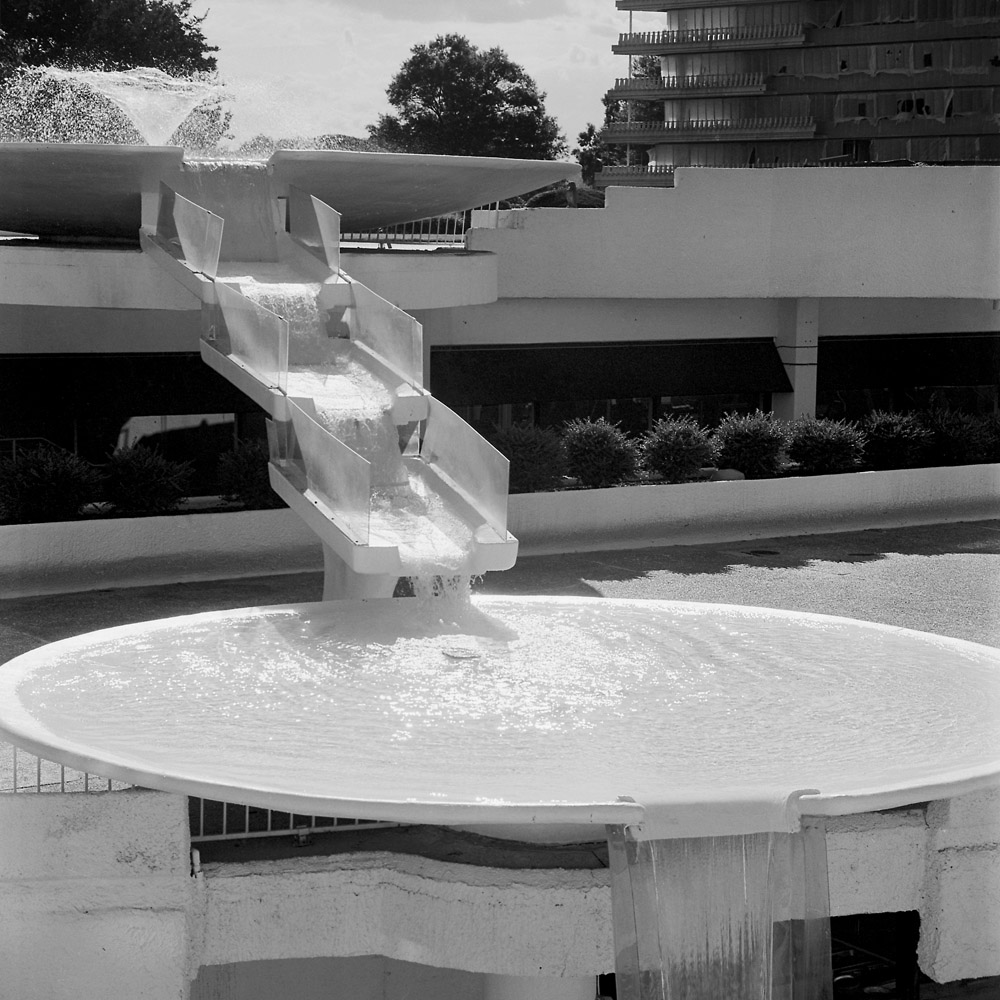
Just a few more shots of the fountains at the Watergate apartment complex. Today, it sits in a prestigious location with beautiful river views. It was sited on former industrial land – it sits now where the Washington Gas Light plant used to be, and next door, where the Kennedy Center now sits, was a brewery. The complex was designed in part to harmonize with the Kennedy Center, which was originally envisioned to be curvilinear and organic. Later, due to construction costs, it was redesigned into the sharp-edged rectangle that it is today.
There is debate over the origin of the name Watergate – there are multiple possible referents. Part of the land the complex was built on belonged to the C&O Canal, and overlooks the water gate that marks the eastern terminus of the canal and where its water rejoined the Potomac. A second candidate is the “water gate” from the Potomac to the Tidal Basin that regulates the flow of water into the basin at high tide. The third candidate is the steps down to the Potomac from the Lincoln Memorial beside Memorial Bridge, which was used from the 1930s to the 1960s as an outdoor concert venue, with performers located on a barge in the river. Concerts ended in 1965 with the advent of jet aircraft service into National Airport. I vote for the C&O Canal as the source of the name – the other two features are obscured from view of the complex by the Kennedy Center and the natural curve of the river.
Twin Fountains, Watergate
The fountains in the complex were specifically designed to create not only a visually pleasing effect, but to also simulate the sound of a natural waterfall.
Fountain, Hole, Watergate
I don’t know how successful the auditory engineering was (the fountains are pretty quiet, and they sound like fountains to me), but they certainly do create a visually pleasing space as well as a moderating effect on the temperature around the courtyard.
Fountain, Center Courtyard, Watergate
The Watergate complex was the first mixed-use development in the District. It had shops, restaurants, doctors’ and dentists’ offices, commercial office space, and even a hotel, in addition to luxury condominium residences. As originally planned, it was even supposed to have 19 “villas” (read townhouses), be 16 stories tall, and in all occupy 1.9 million square feet. After wrangling with codes, design commissions, and budgetary constraints, it was reduced in height to today’s 13 stories, the villas were eliminated, and the total square footage was cut back to 1.7 million square feet.
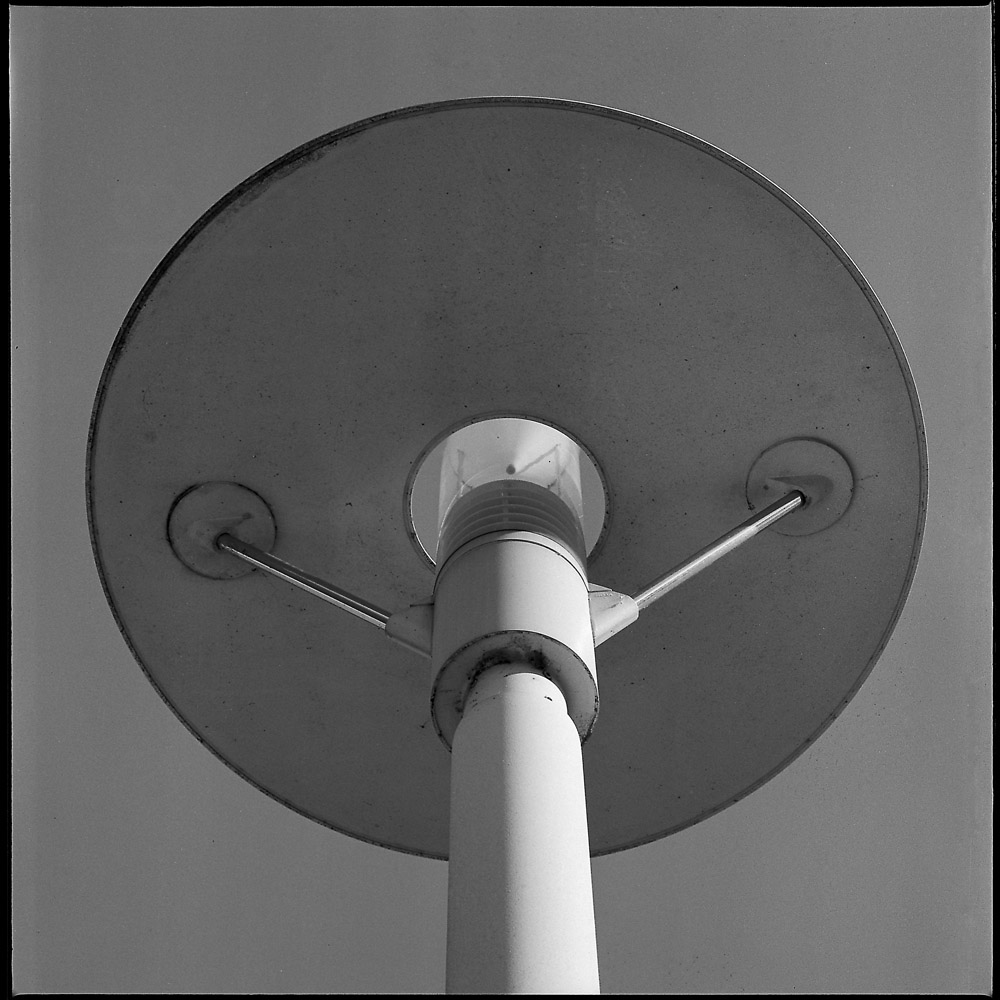
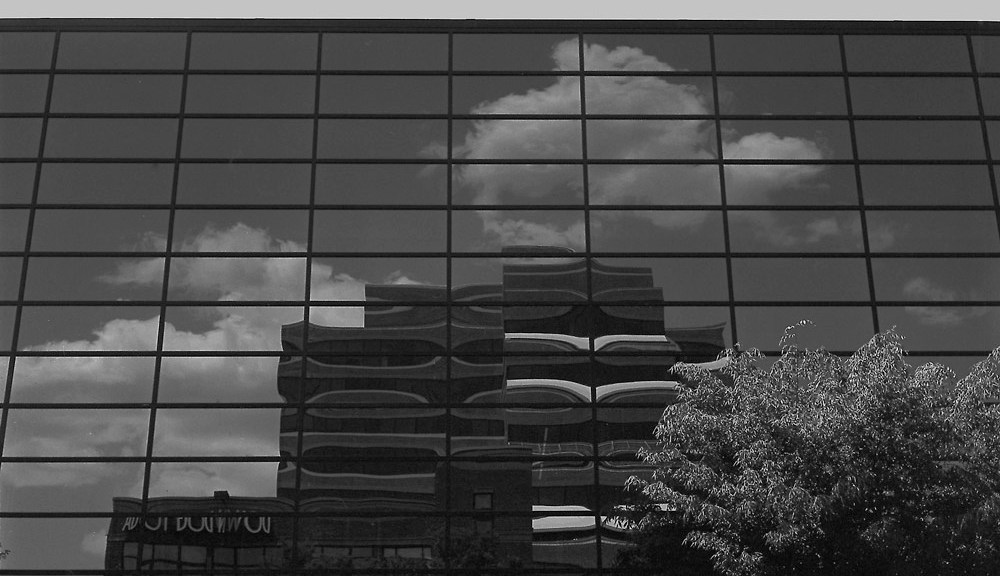
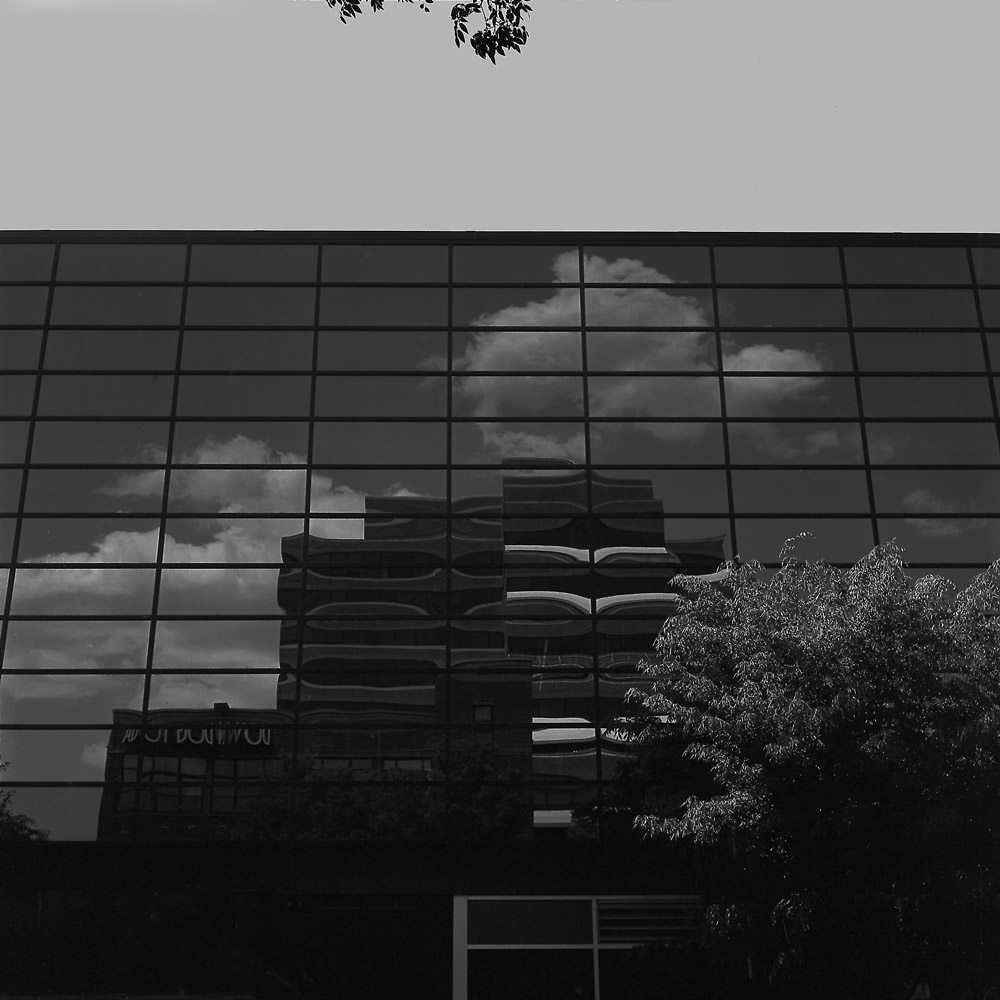
Yet more in my series of everyday objects. This time, it’s a lamppost, a safety cone (I’m not calling it a traffic cone because in this context, it’s being used to warn pedestrians of an uneven paver), parking meters again, and a police call box. You may have wondered at seeing some of my images with a black border and others without. I generally try to compose full-frame, and I like including the black border to show that. I also feel that in some cases, the black border helps define the image especially if the background is predominantly bright. I don’t ever add one to make it look as if what you see is full frame if in fact it is cropped, or to make you think it was made in a different format than presented. The images I post online for the most part are scanned from the negative, and given the nature of film, sometimes the backing paper leaks light along the edge, or other things happen during processing that require me to crop a little. Sometimes, I have to crop a lot because the composition just wasn’t right in the full square of the 120 image size. In those cases, I leave the edges alone and don’t put a black border on.
Twin MetersSafety ConePolice Call BoxLamppost, Kennedy Center




 dcphotoartist