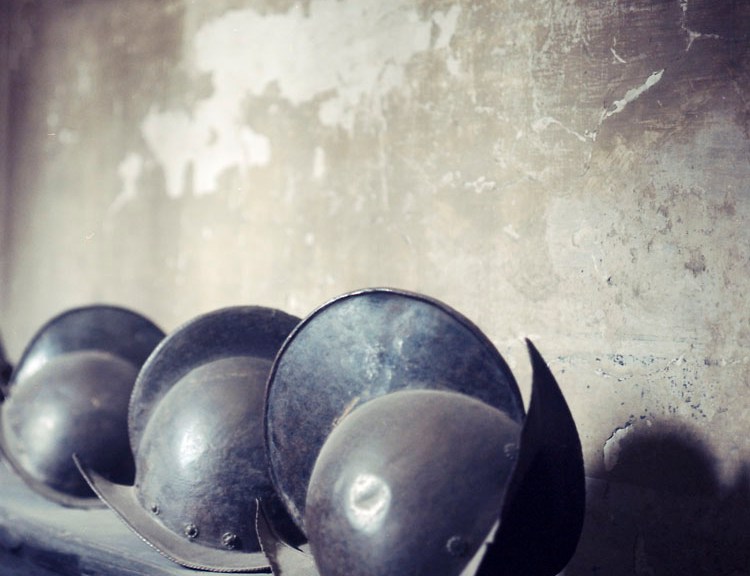
In a guardroom in the Castel Sant’Angelo preserved as an example of what such a space would have looked like in the 17th or 18th century, a row of steel helmets have been laid out:
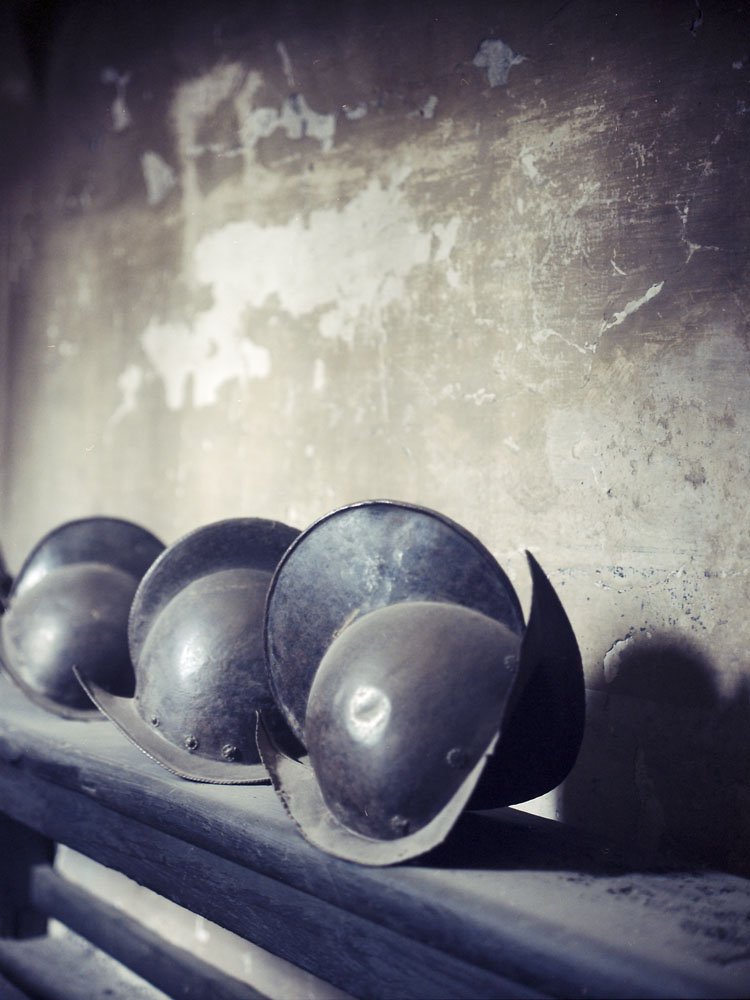
In a guardroom in the Castel Sant’Angelo preserved as an example of what such a space would have looked like in the 17th or 18th century, a row of steel helmets have been laid out:
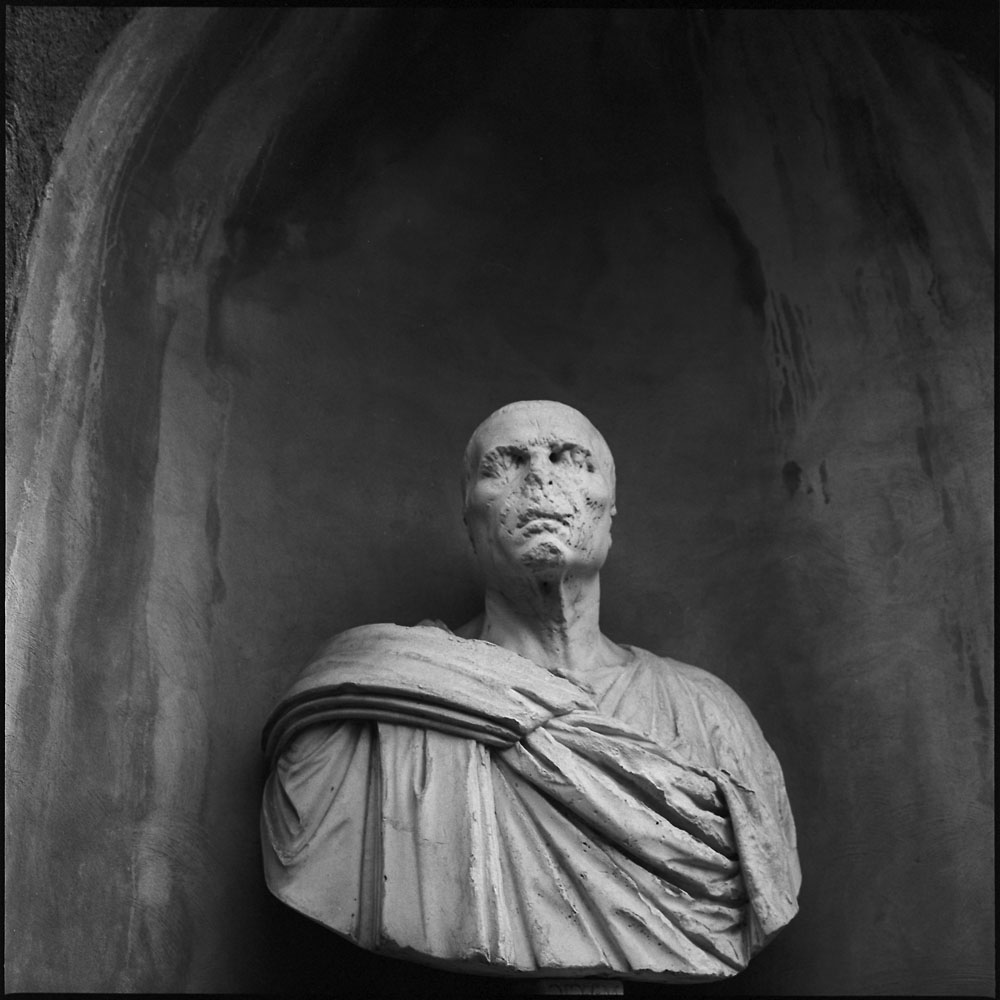
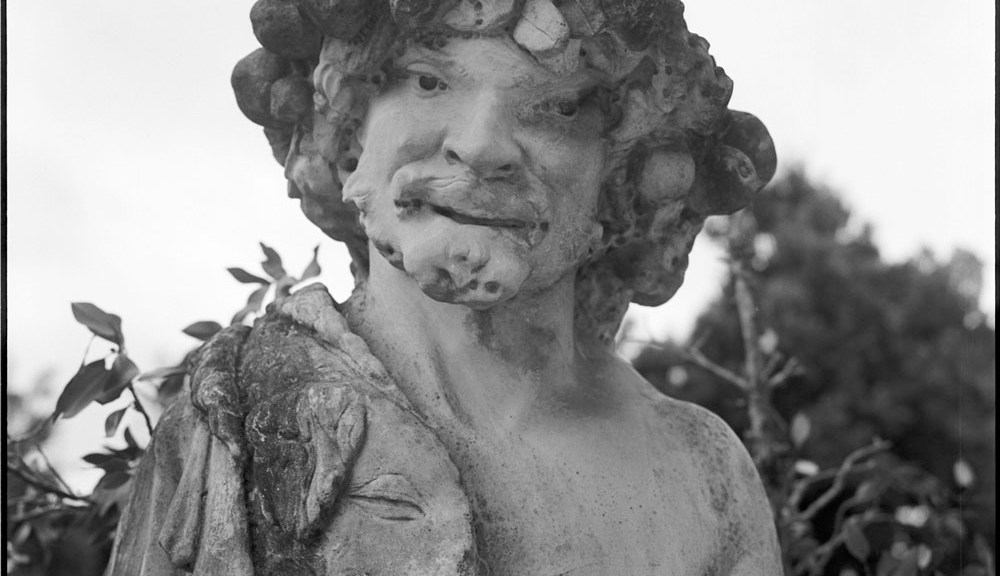
These two pieces are quite moody, and that somber undertone of them inspired me. From their weathered appearance to the various forms of damage they’ve taken over the centuries, they act as a kind of memento mori to remind us that even art in marble will eventually die.
I’ve joked to friends that this one is proof that there were zombies in ancient Rome – but in fact the damage to the face is probably caused by relatively contemporary rivals seeking to damage the visage of a now-dead adversary, or inadvertent blows from overzealous Renaissance-era treasure hunters or clumsy builders trying to clear debris in preparation for fortifying the former Imperial tomb.
This one has suffered different indignities – while his visage remains relatively intact, at some point his head was separated from his shoulders, and later re-attached.
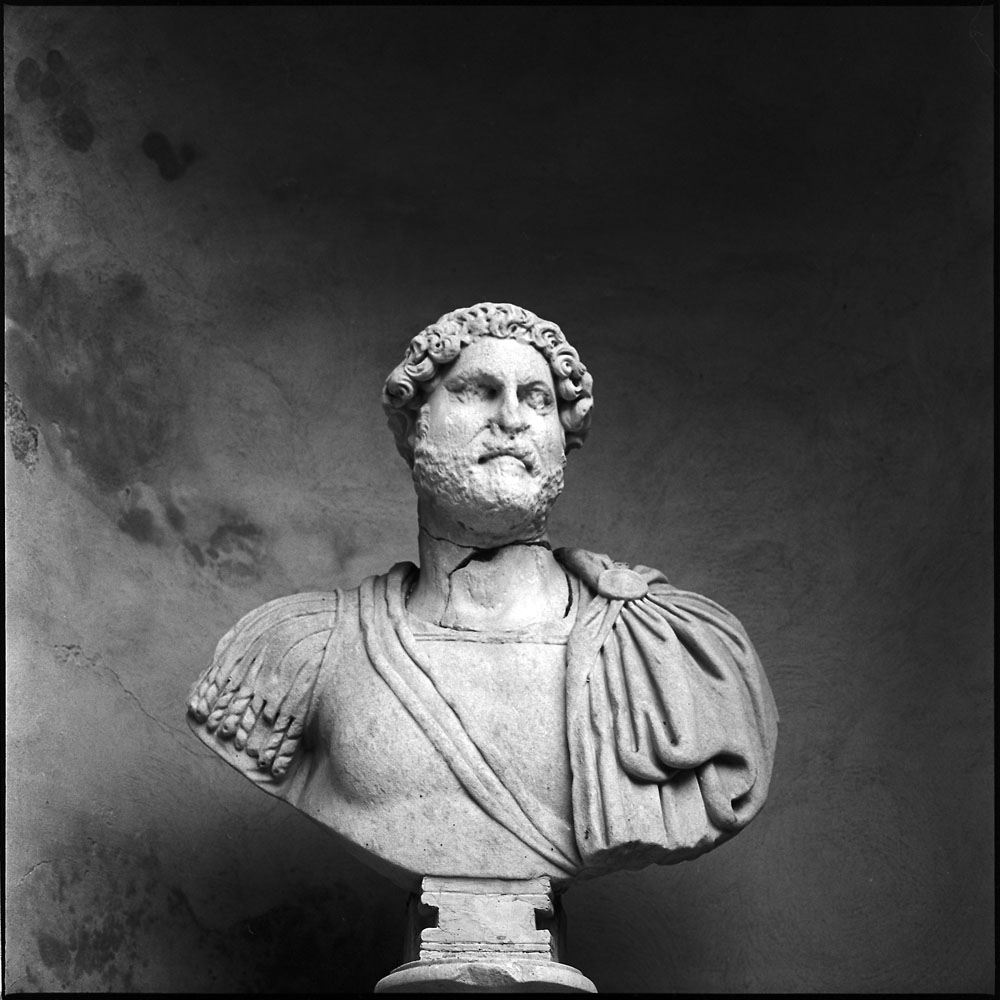
Just for the record, to the best of my knowledge there were no zombies running around ancient Rome.
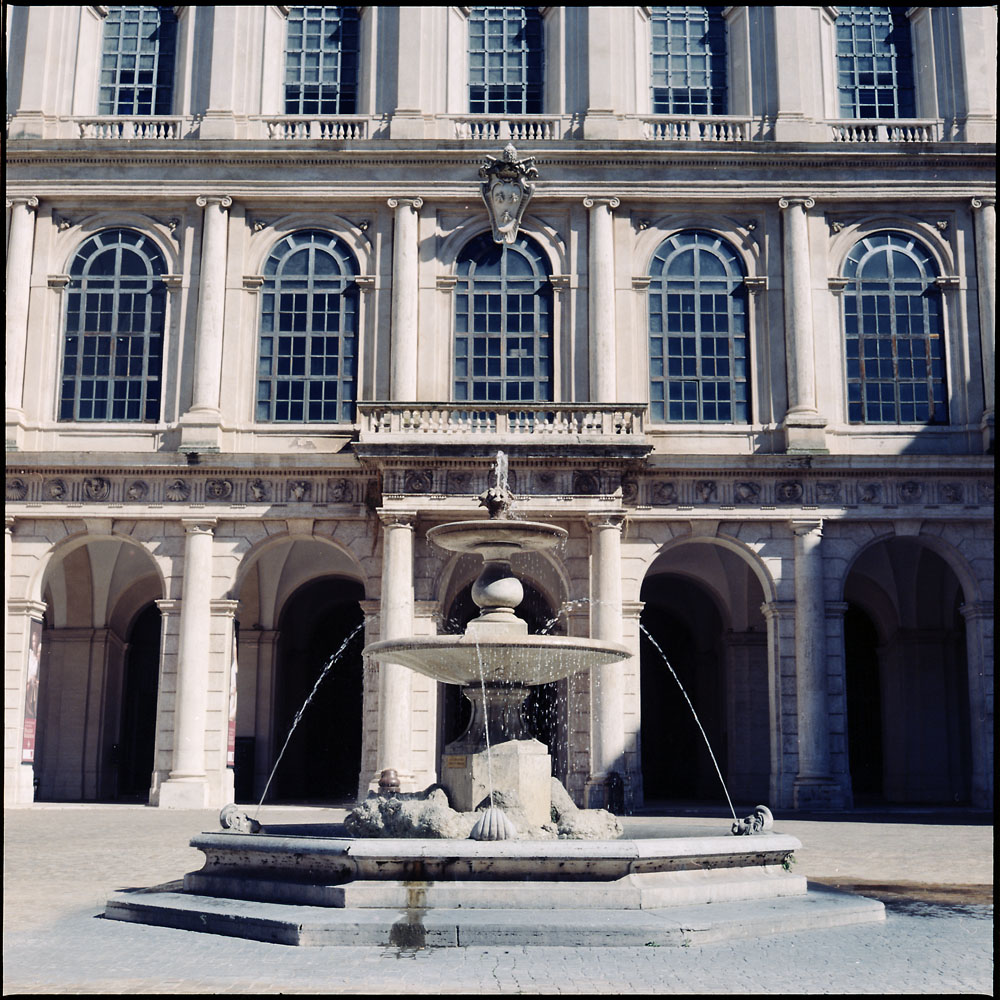
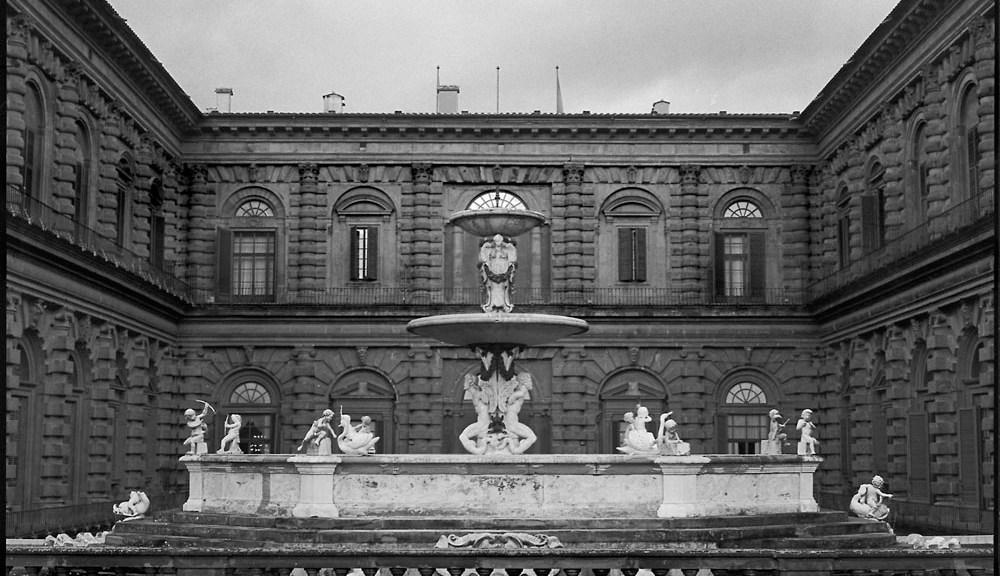
Today the Palazzo Barberini houses another great art museum, home to two Caravaggios, a version of Hans Holbein’s portrait of Henry VIII of England, and Bernini’s bust of Cardinal Barberini among many other masterpieces of Renaissance and Baroque painting. Here is the entrance facade as designed by Bernini, seen from the entrance courtyard with its central fountain.
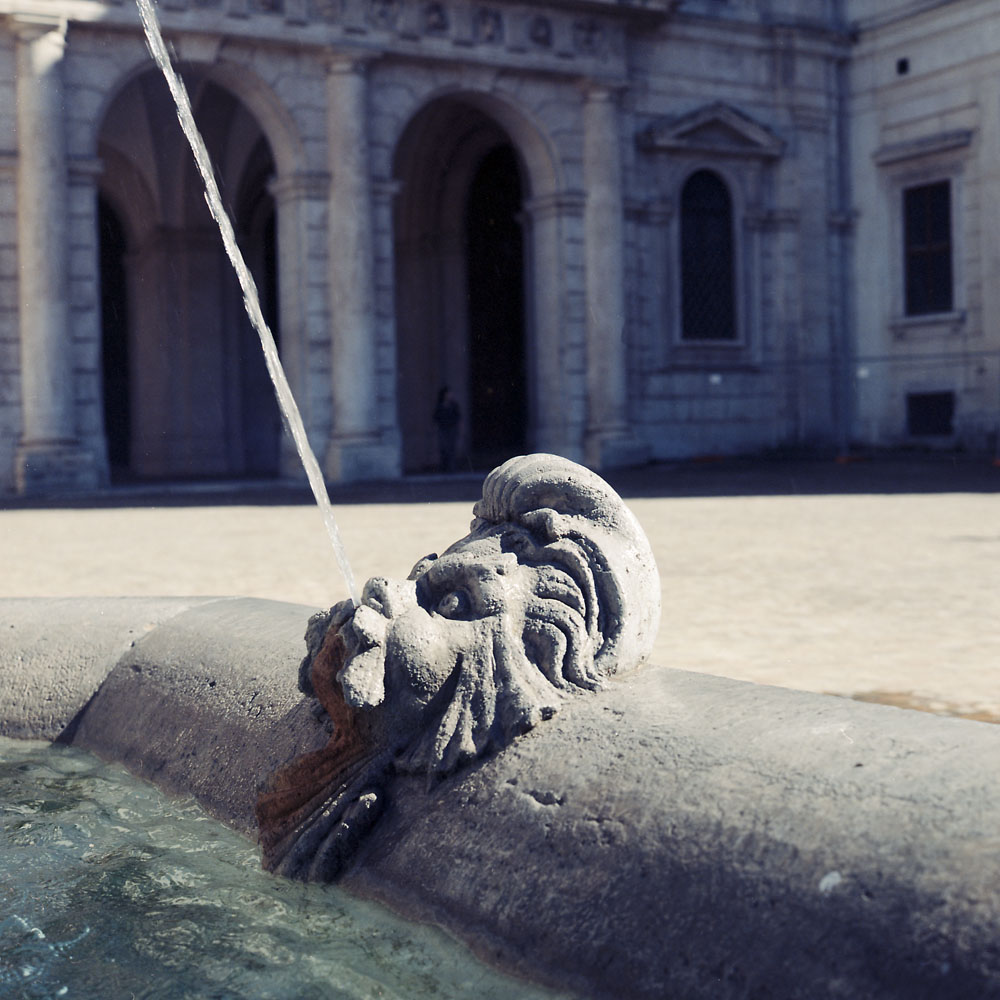
A detail of one of the water jets in the fountain:
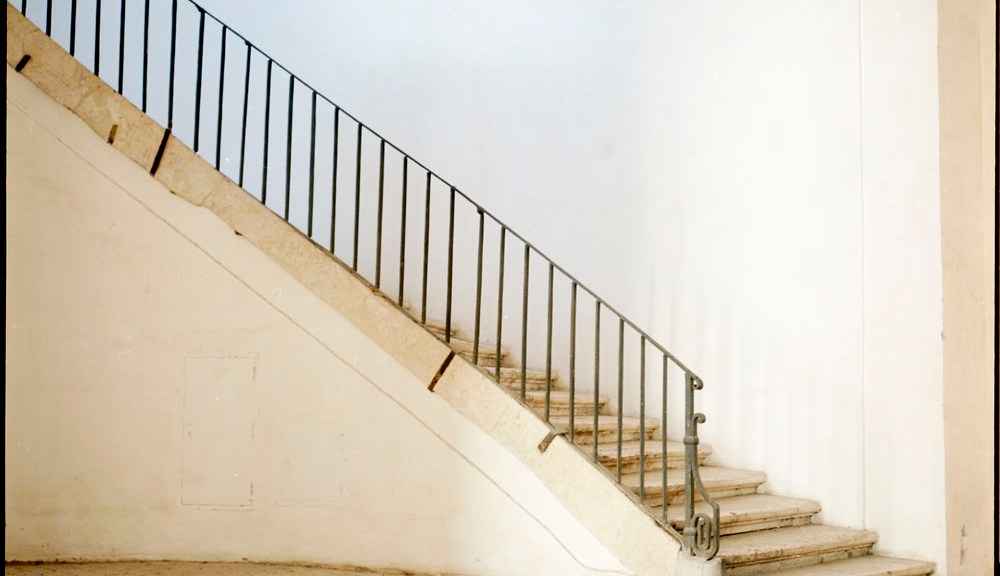
A staircase leading up to the rear gardens from the coachway underneath the palace. To the left out of the frame is the famous stepped ramp to the rear of the garden also designed by Bernini. Sometimes when you’re photographing, you get into this mindset of one type of image or another – for example, I had been shooting black-and-white film, and when composing this, I was still in the black-and-white headspace. I was thinking about the tones of the scene and the gradations from bright to dark. I don’t know if I even realized at the time I was shooting in color. When I was editing through my negatives, I saw this one and thought, “gosh, that’s likely to be a throwaway shot, but I’ll scan it just in case”. I wasn’t sure it would be sharp enough, because my memory of the space was that it was exceedingly dark and I winged it with a handheld exposure, roughly 1/4 of a second.
Well, you can see what happened. Not only was it sharp, but I seem to have mastered serendipity. The colors in the scene are beyond beautiful – the subtle blue from the cold light of the palace shadow seeping down into the stairway from the garden entrance to the rich golden hue of the paving stones and the plaster on the wall.

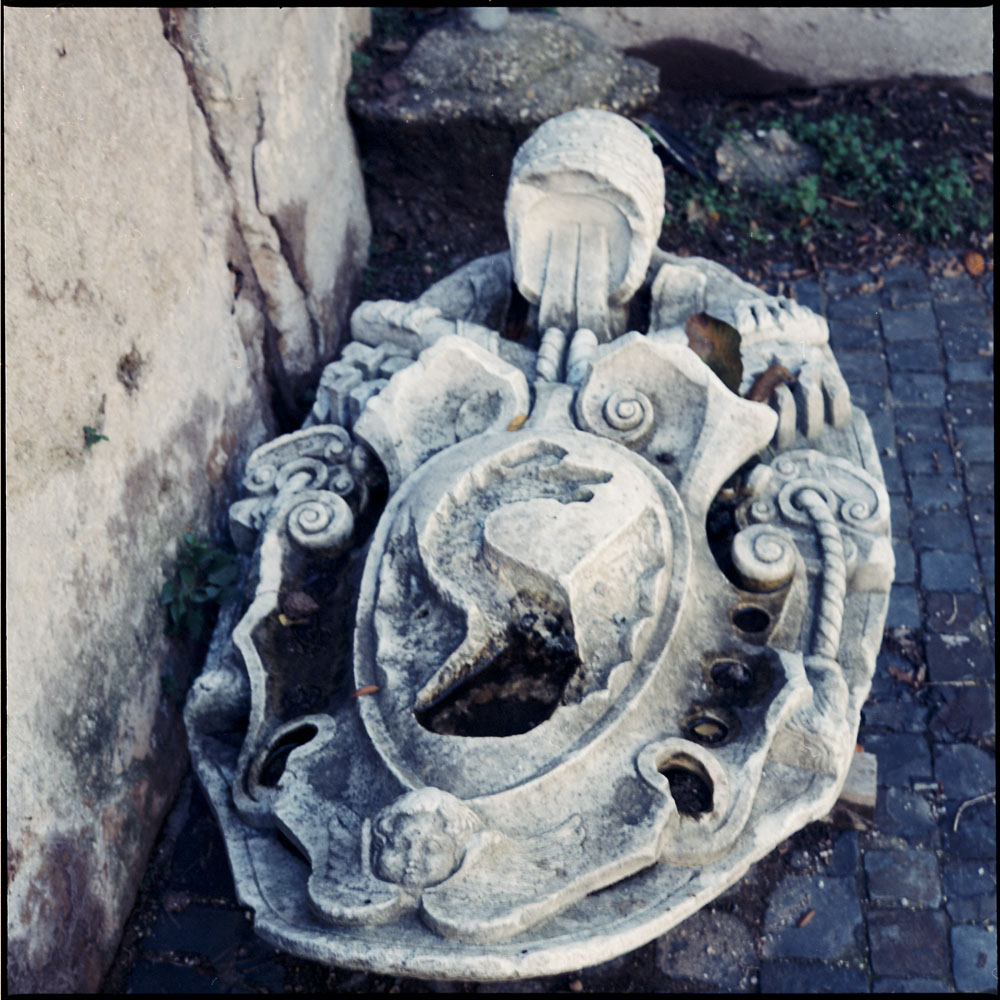
Poking around the grounds of the palazzo, I saw two massive carved stone coats of arms lying on the ground in a side service yard. One was the papal coat of arms of Maffeo Barberini, Pope Urban VIII. To be expected – this was his palace. This one, on the other hand, is a bit surprising – the papal coat of arms for Paul V – Camillo Borghese. During the years of their respective papacies, the Borghese and Barberini estates were neighbors, and Scipione Borghese, the Cardinal Nepotente to Paul V, was a friend and fellow art enthusiast with Maffeo Barberini. After Urban VIII’s death, the Barberini palace was seized and not returned to the Barberini family for some years, but neither the Pope doing the seizing nor the pope who returned it to them were Borghese. Both families (Borghese and Barberini) were one-papacy families, unlike the Medici with four, and the Della Rovere with two.
Here are a few more individual photos of the Palazzo Pitti.
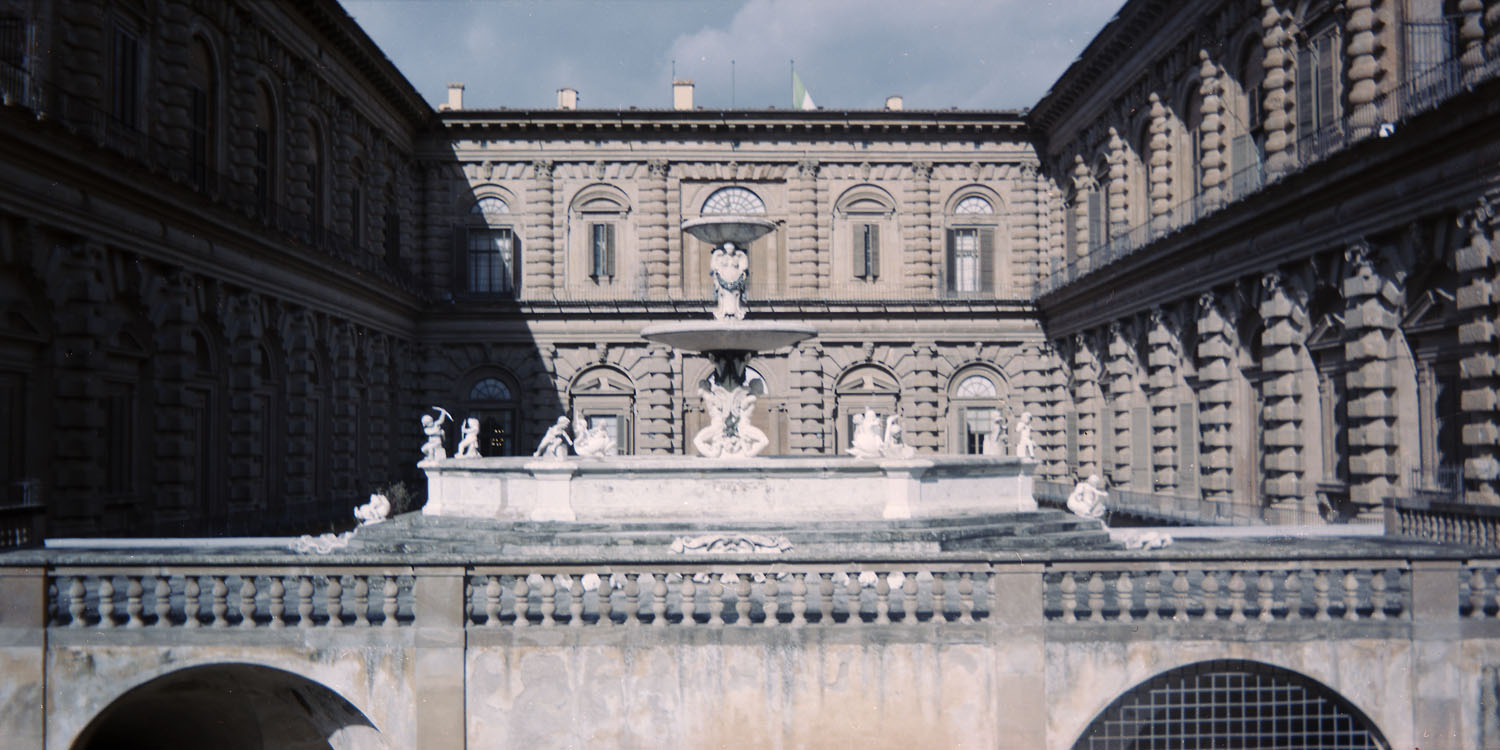
The first one is another version of the rear view of the Palazzo, from the Boboli Gardens. There’s a vast difference in quality between this one and the one I took with the Belair X6-12. The Belair has its charms, but I still prefer the sharpness and contrast of the Rollei version.
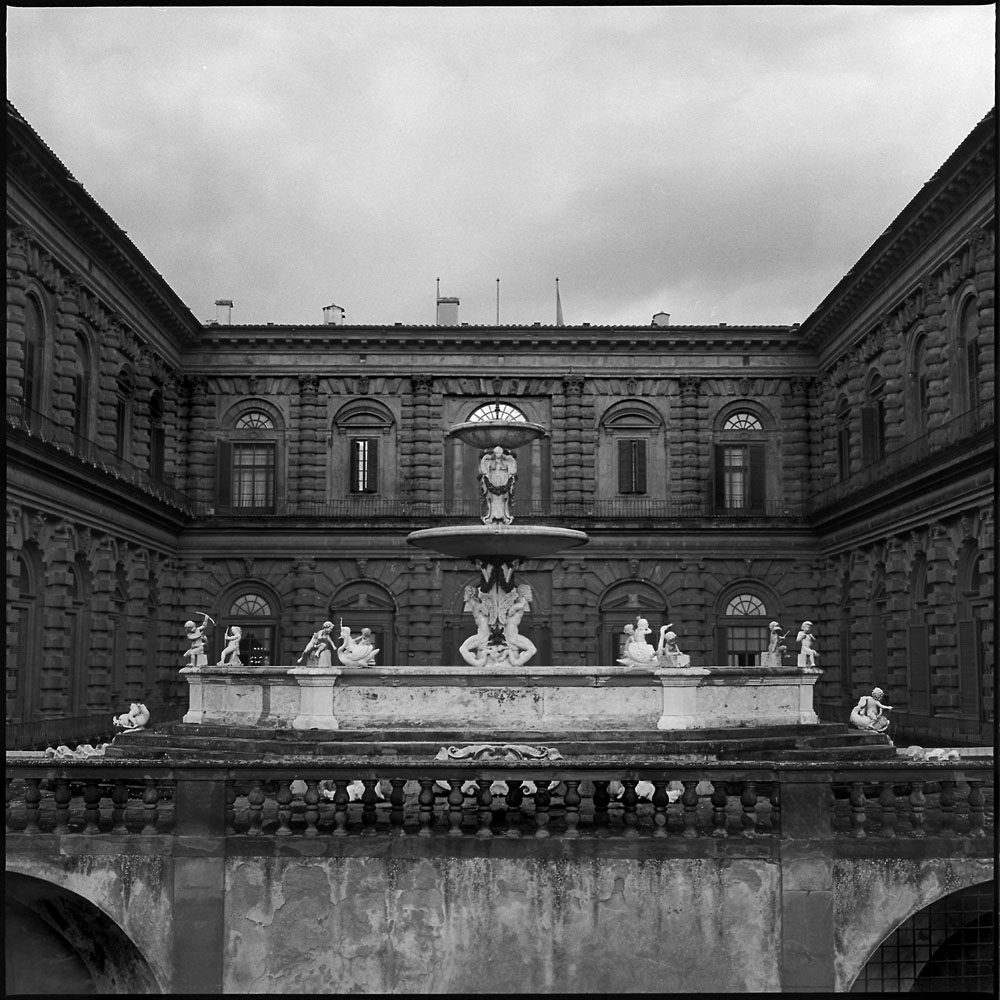
Here is the panoramic version from the Belair for direct comparison.
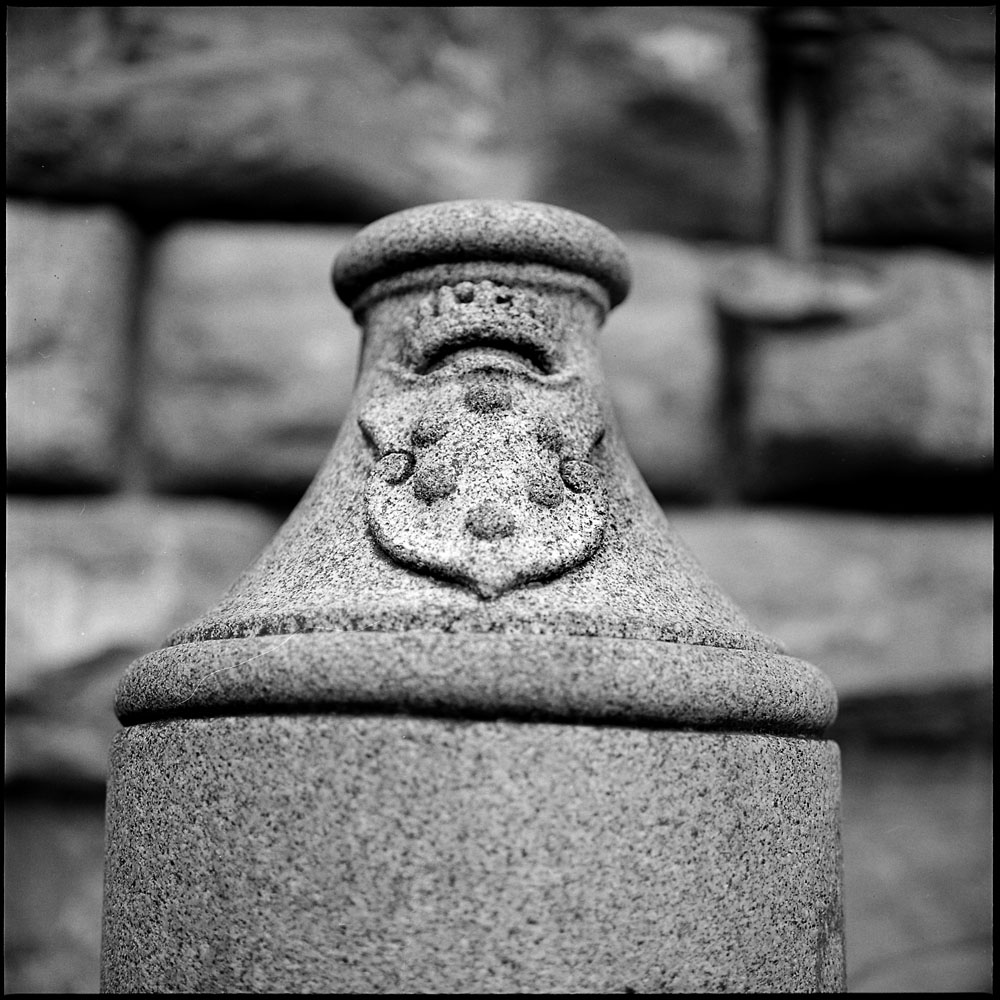
Out front of the palace there are these massive granite bollards, carved with the Medici coat of arms. While they’re kinda-sorta the equivalent of a traffic cone, they don’t really qualify for my “portraits of ordinary objects” series, do you think?
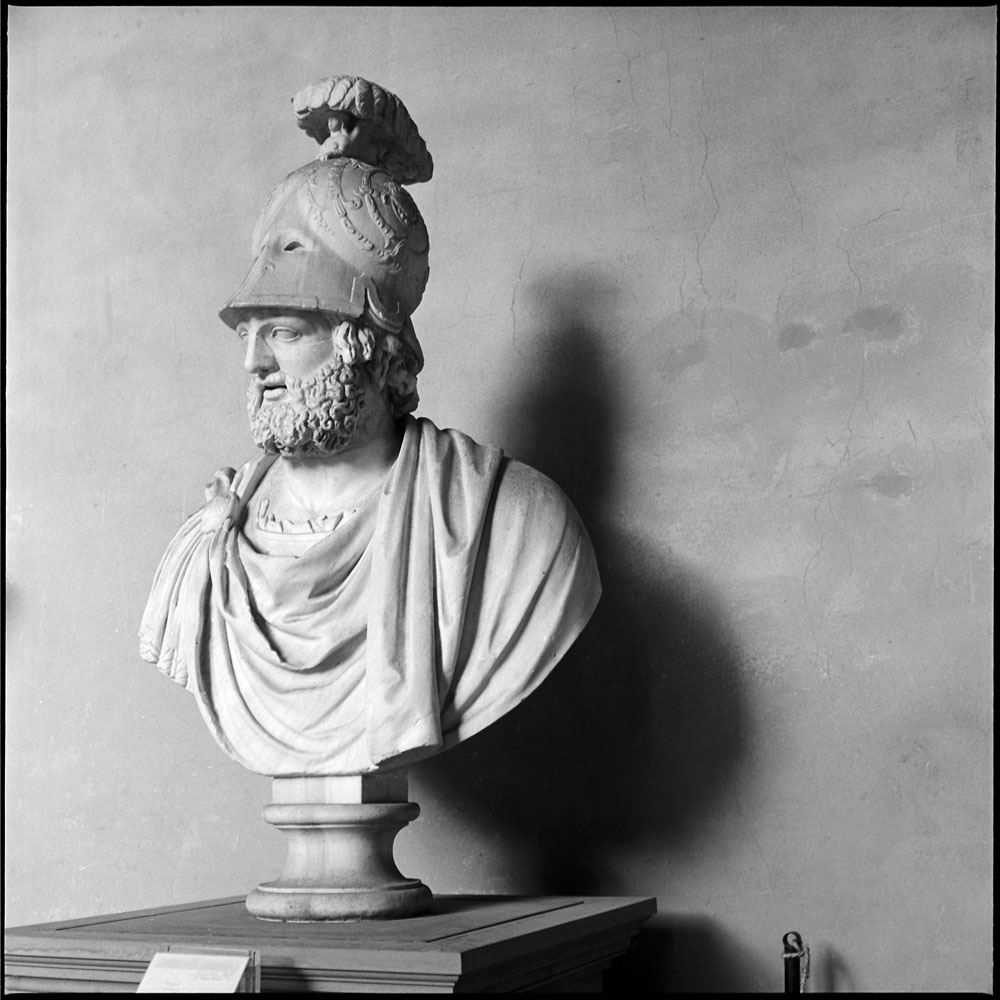
A marble bust of a man in a stylized Greek helmet. This would be a 16th or 17th century piece, so the ancient Greek style helmet would have been done to make him appear heroic and classical, an idealized noble warrior type.
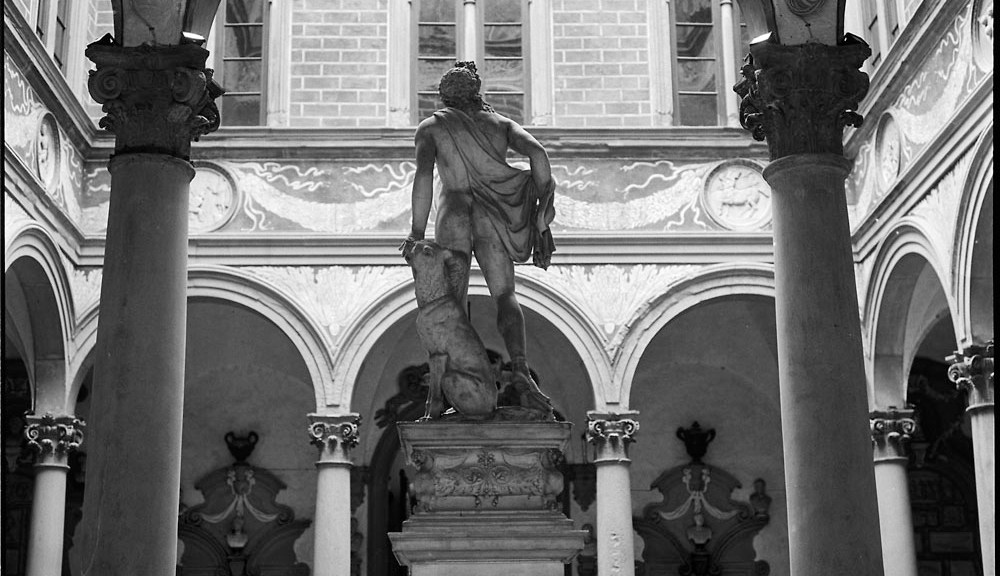
A view of the courtyard in the Medici-Riccardi Palace in Florence. The courtyard was designed by Michelozzo the 15th century artist and architect for Cosimo the Elder, and is the first Renaissance building in Florence. Originally there was a street-side loggia that was later filled in, and two “kneeling” windows were added according to designs by Michelangelo.
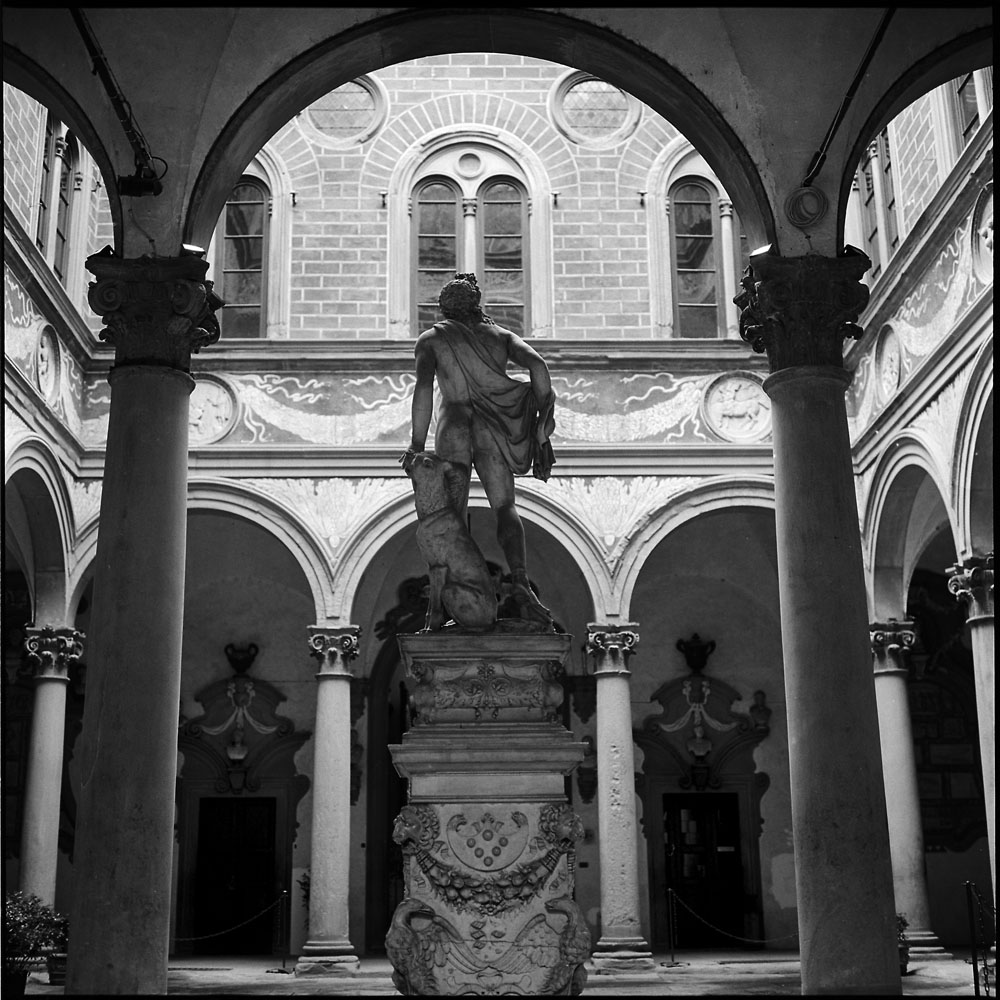
The statue in the courtyard is Orpheus, by the sculptor Baccio Bandinelli. This palace was the primary residence not only of Cosimo the Elder but Lorenzo Il Magnifico. When you tour the palace you can even visit one of the bedrooms although it is furnished in 17th century style.
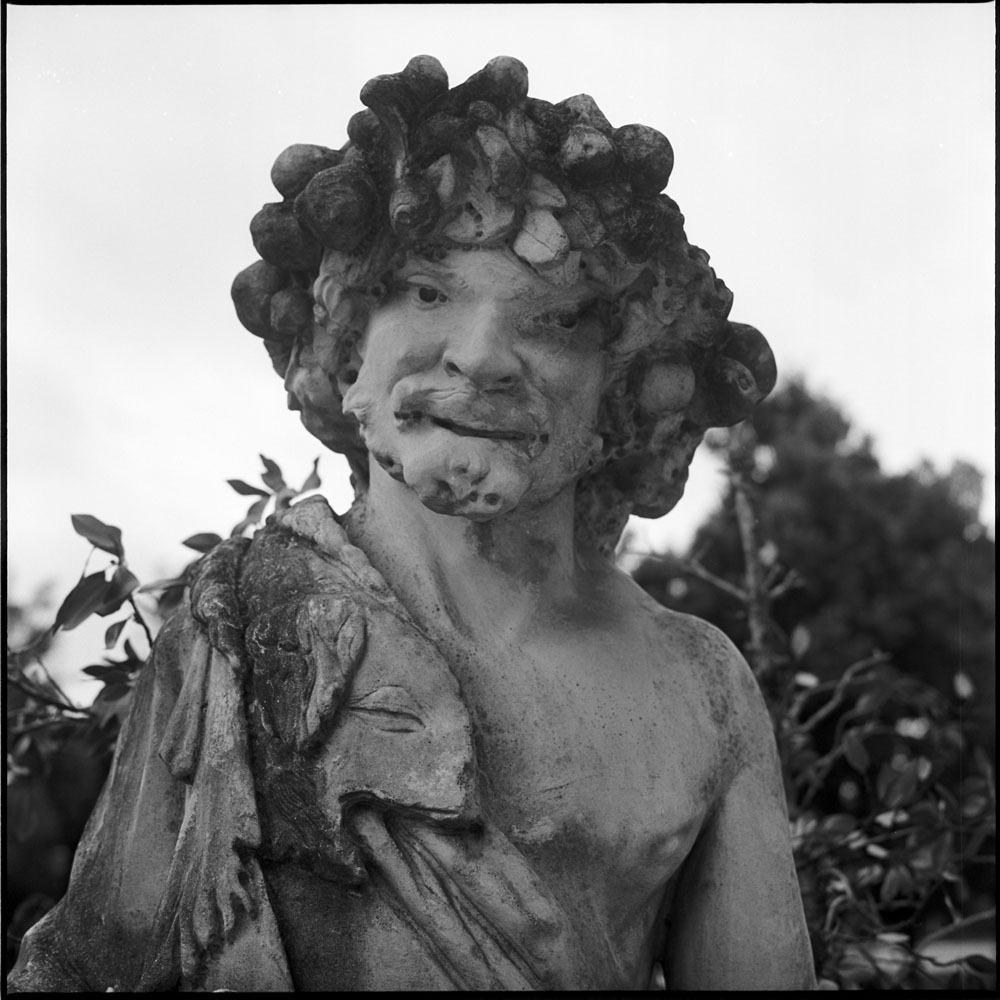
A statue of Bacchus, or perhaps a satyr, in the gardens of the Villa Borghese.
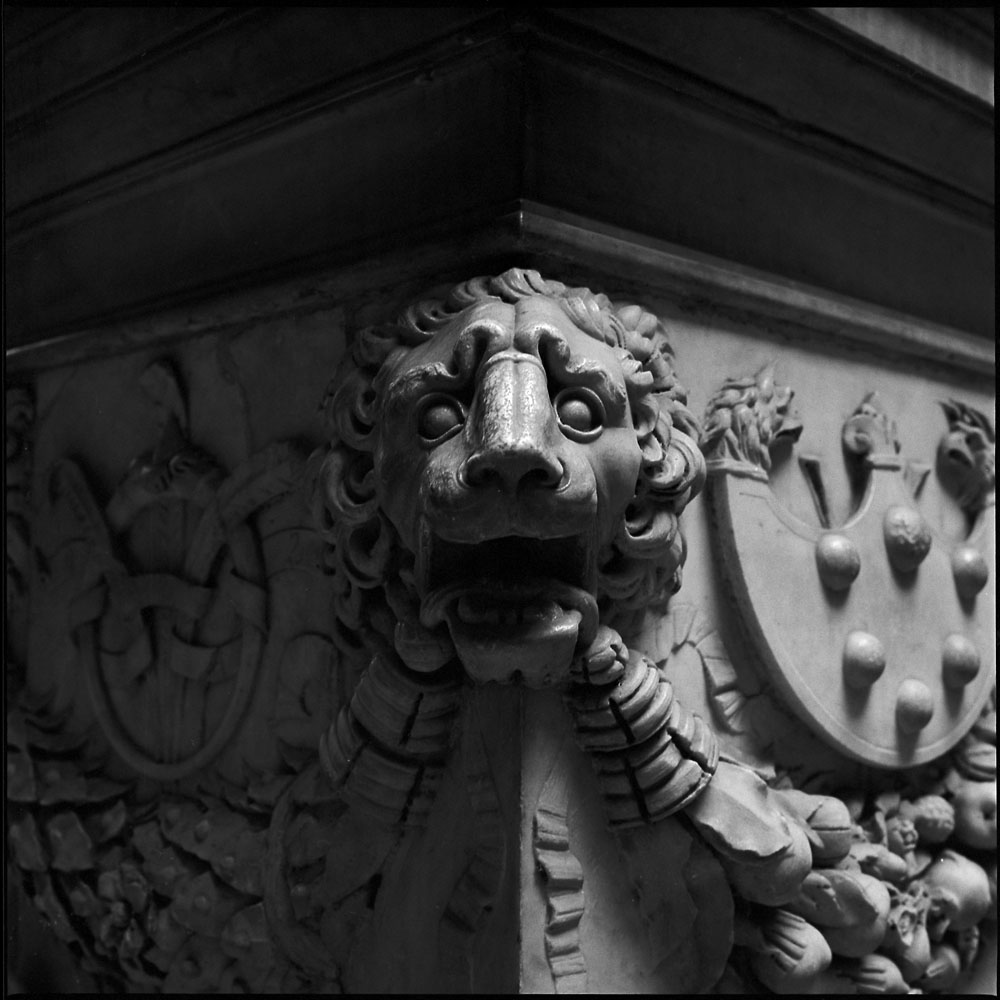
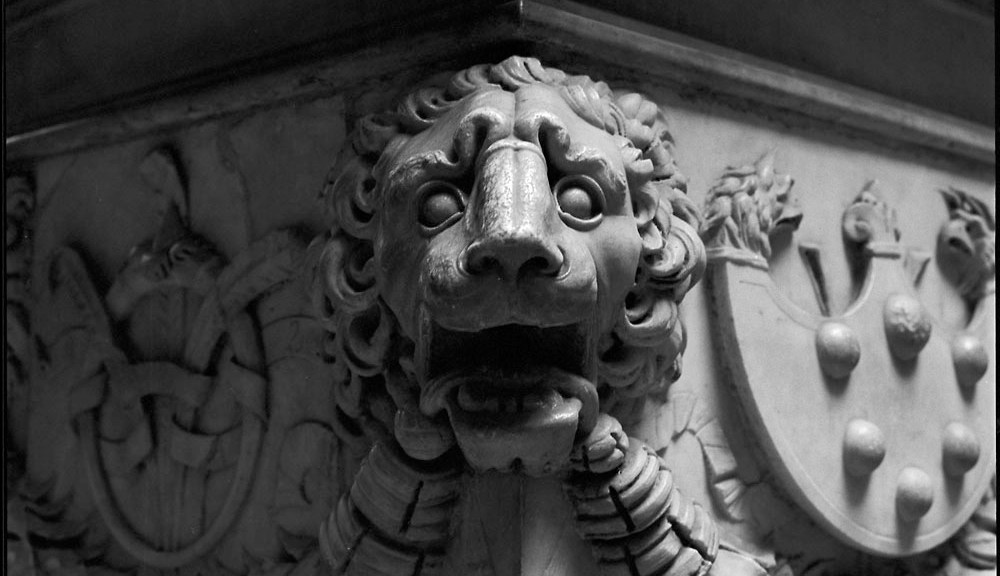
This lion’s head and the Medici coat of arms (six gold balls) adorn the pedestal to a statue in the courtyard of the Medici-Riccardi palace in Florence. I’m very glad that day was gray and overcast or this would have been too contrasty to photograph- the left half of the pedestal would have been deep inky black and utterly devoid of detail.
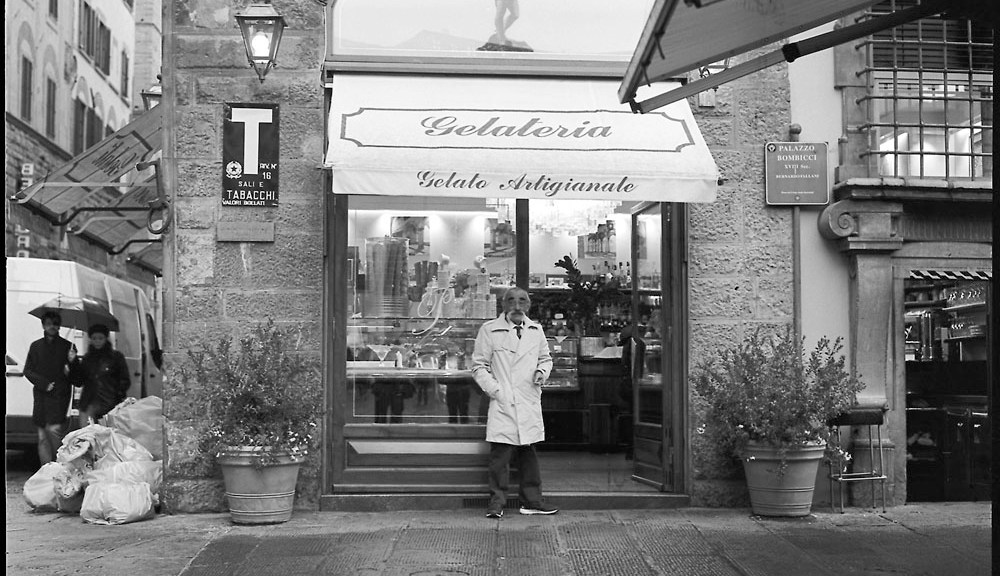
Another rain photo, this time in the evening. I’m amused by the man in the dress trench coat and sneakers sheltering under the gelateria awning.
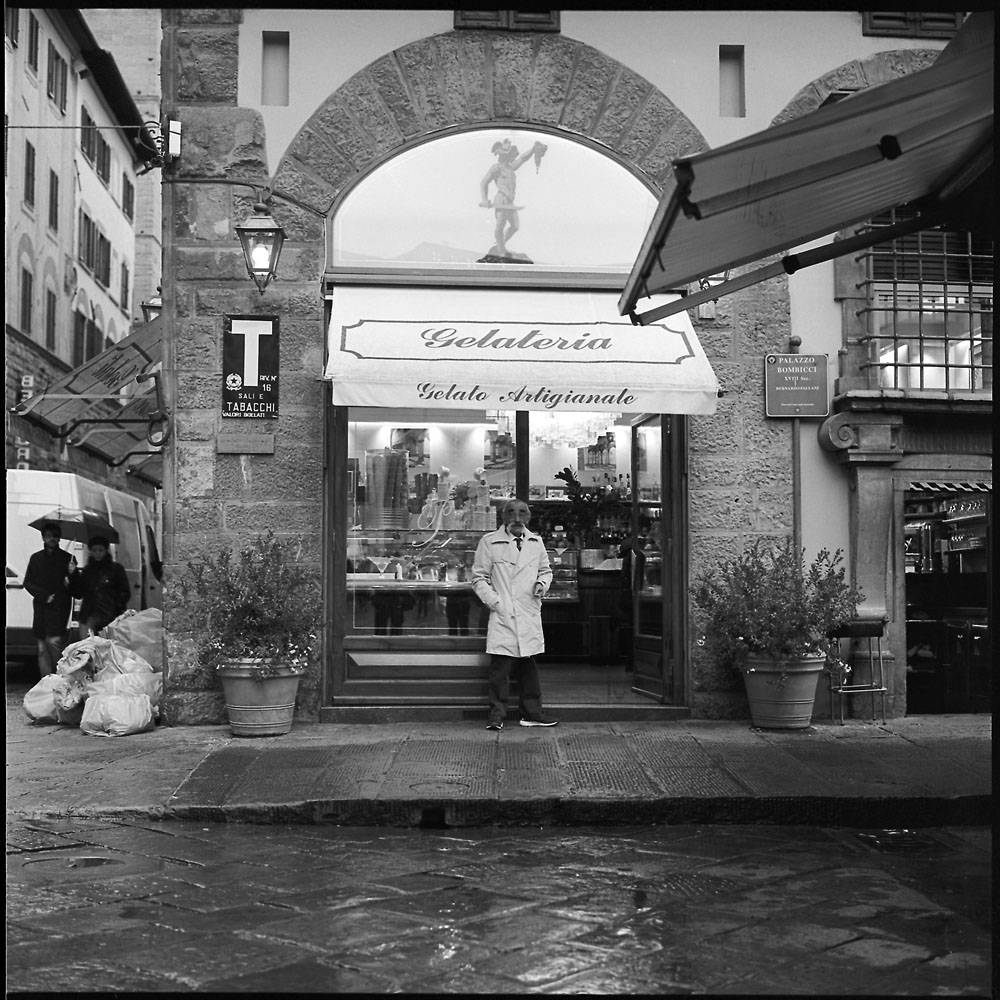
Sometimes I think photographers are allergic to rain – as soon as two drops come out of the sky they hide their cameras and run for cover. But there are many beautiful images to be made in foul weather.
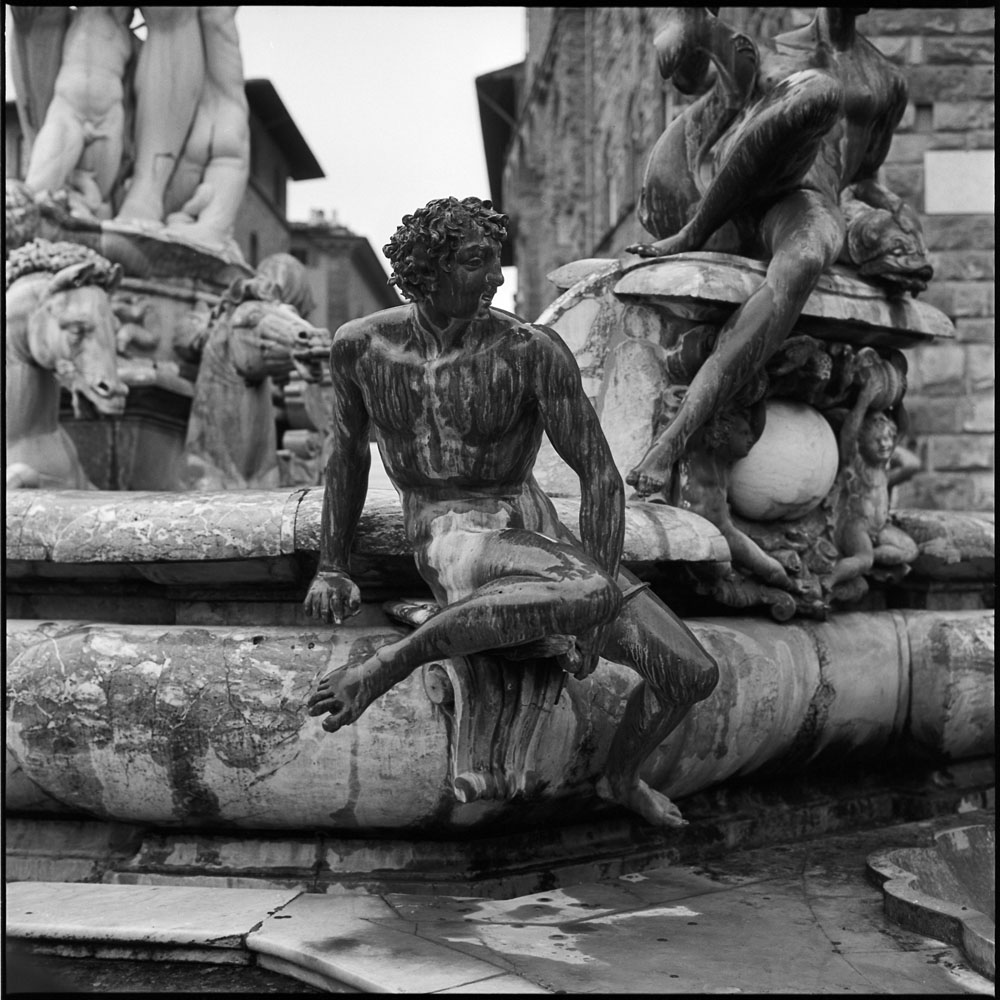
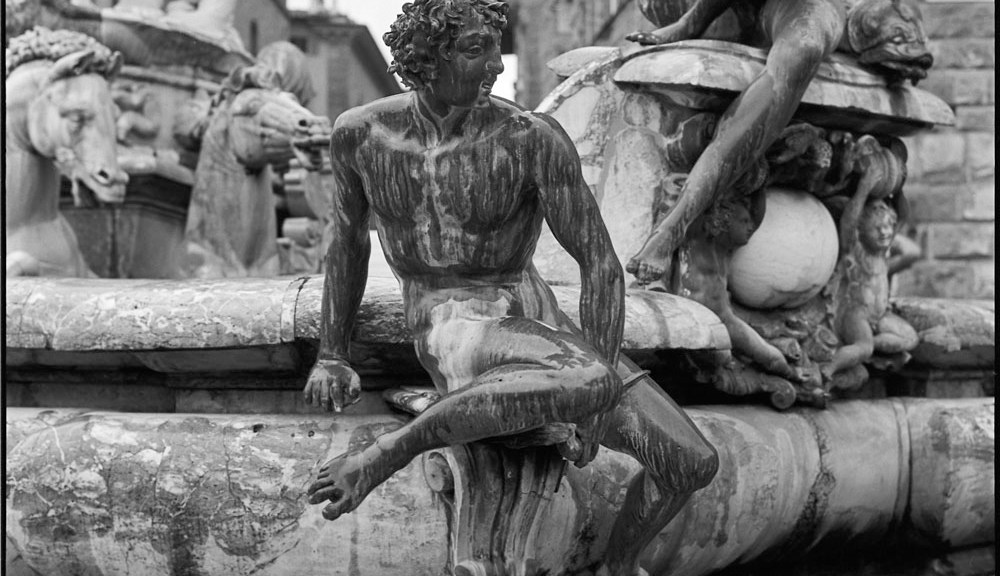
There’s something special and different, and even a tad ironic, about photographing a fountain in the rain. The statues are wet but in a very different way than they look from the normal spray of the fountain. And I think that doing it in black and white adds something more to it- this wouldn’t be as successful an image if it were in color.
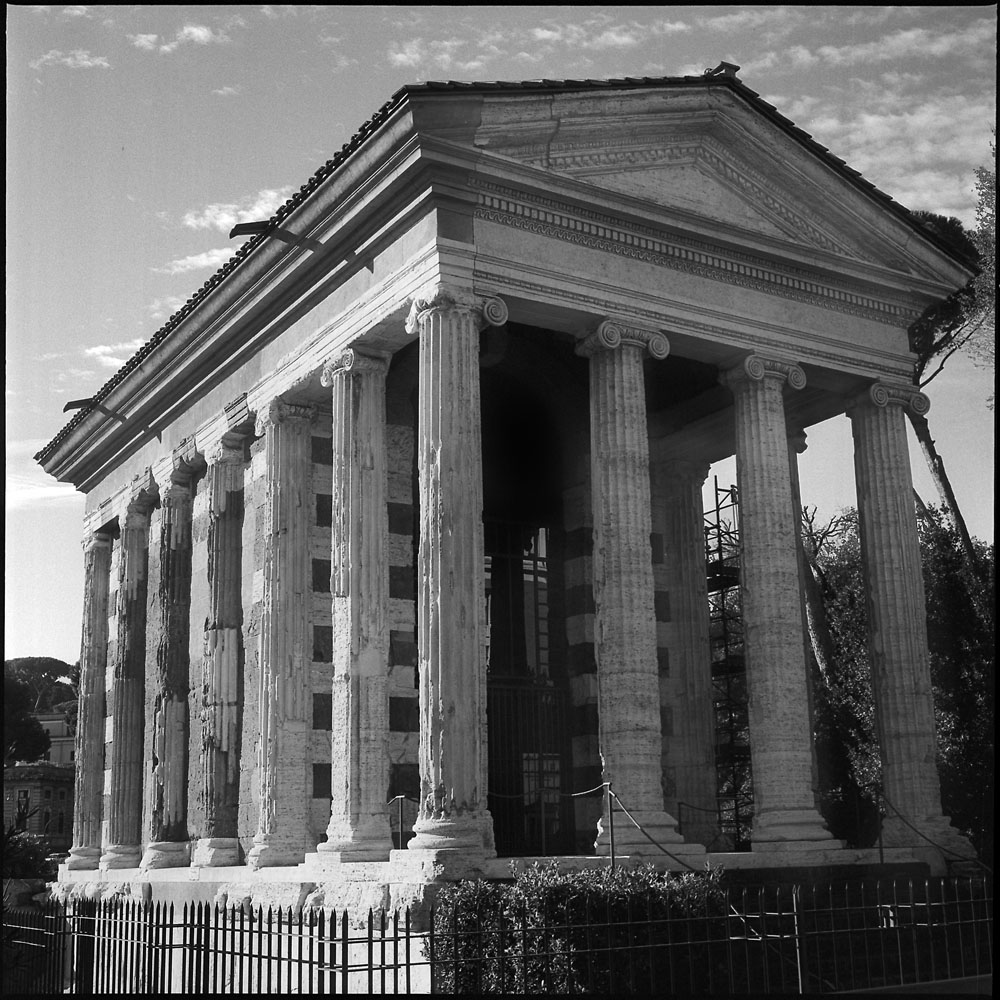
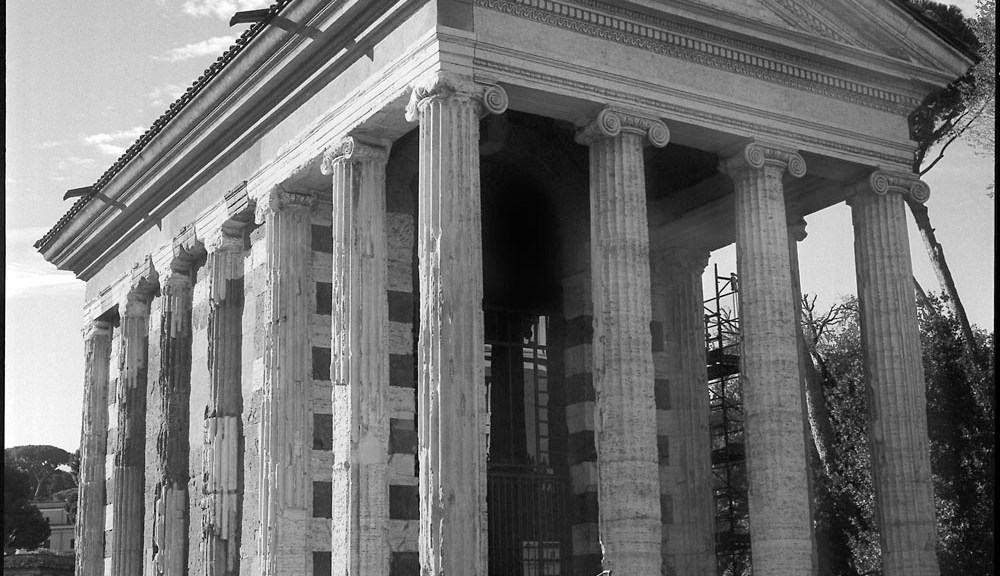
In a previous post I mentioned the Temple of Hercules Victor and the Fountain of the Tritons on the Piazza Bocca Della Verita, and the associated temple and church of the Temple of Portuno and the Basilica of Santa Maria in Cosmedin. Here they are.
The Temple of Portuno is more or less contemporary to, although somewhat newer than, the Temple of Hercules Victor. It survived into the Christian era and was re-purposed as a Christian church, to later fall into disuse. It has been stabilized and restoration work is ongoing.
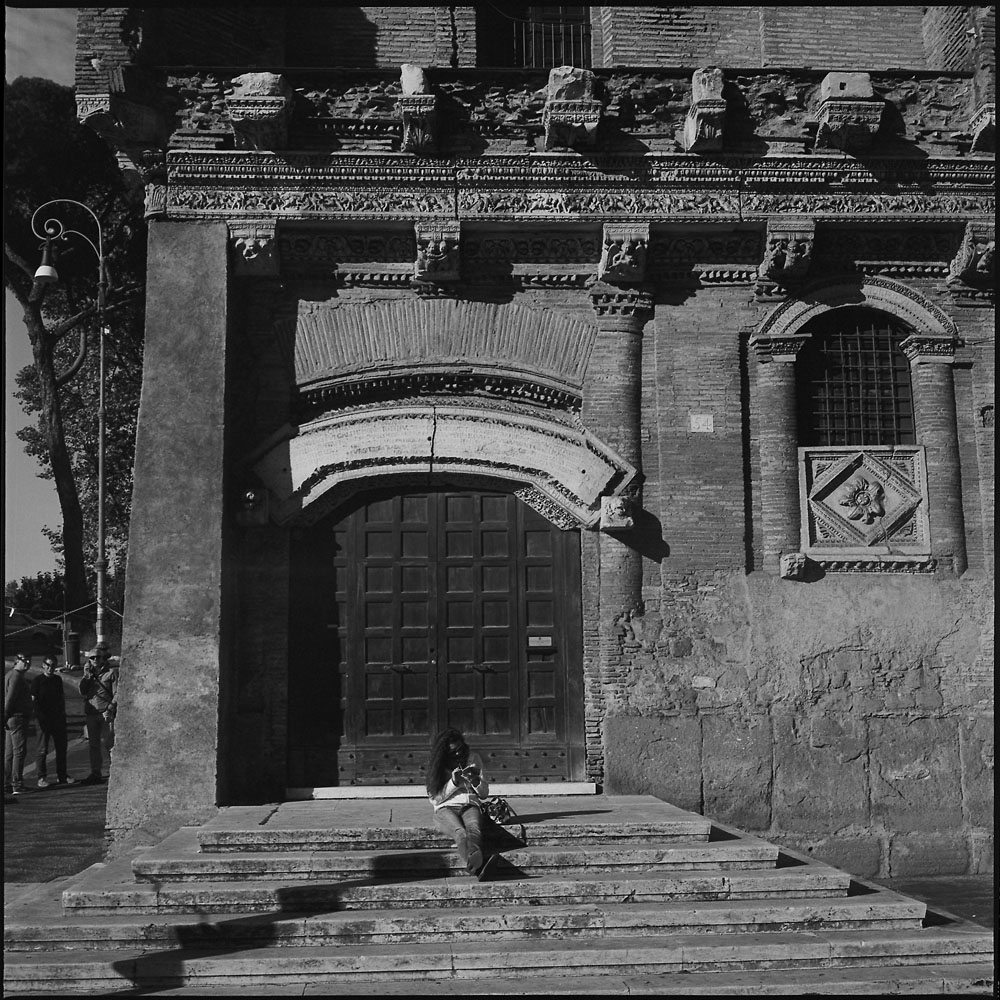
The library of the Casa Dei Crescenzi sits immediately across the street from the Temple of Portuno. The structure in this shot is early medieval/Romanesque in design. I saw the girl sitting on the steps, waiting for the library to open, or perhaps waiting for a bus. From the camera’s perspective, the men around the corner appear to be looking at her and commenting, although in all probability it was me and my camera that piqued their interest, since from their position they would not have actually been able to see the girl.
This is the Romanesque bell-tower of Santa Maria in Cosmedin, one of the older Christian churches in Rome, home to the Bocca Della Verita which now resides on the front porch, the easier to access for tourists. Saint Valentine’s relics also are kept here. I thought it was particularly striking with the sunlight just cresting the roof of the church and backlighting the tower. Contrast this with my earlier shot of the Campanile in Florence.
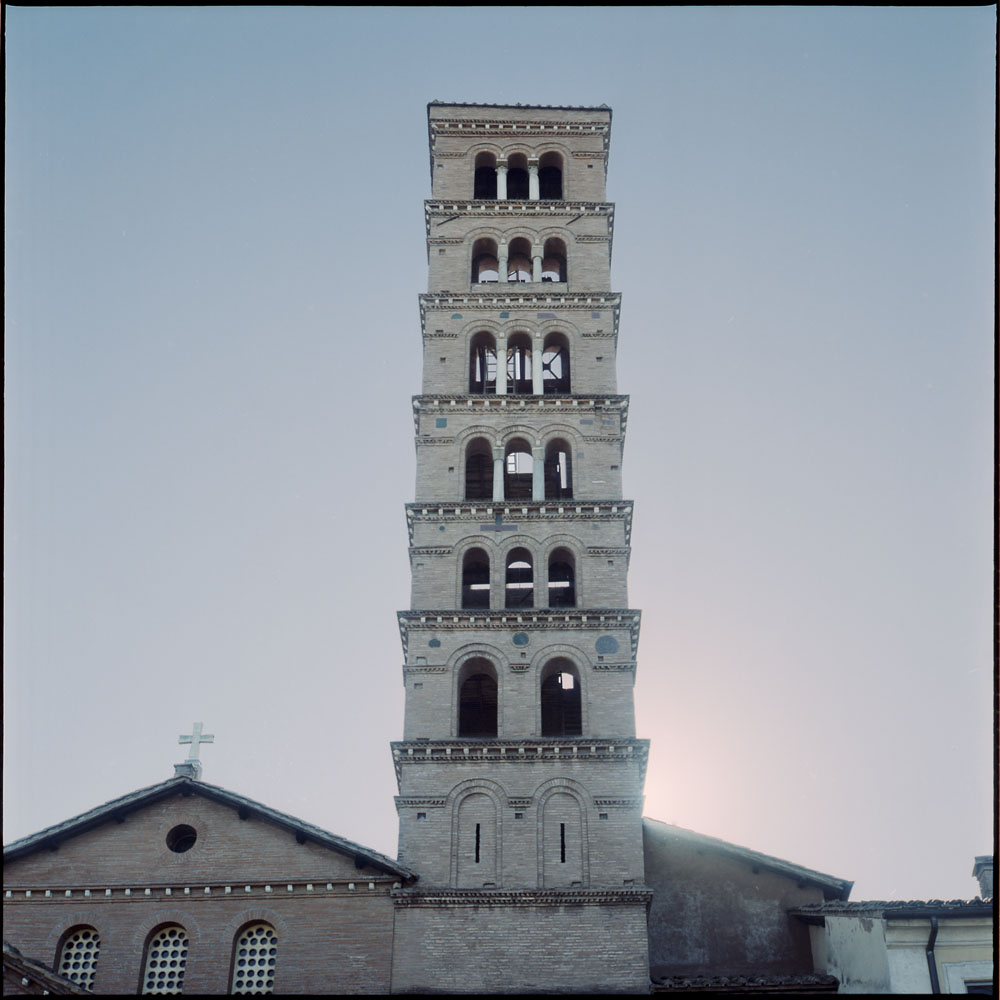
I’m particularly pleased at how well my camera handled the backlighting without flare or loss of resolution. It did a remarkable job for a 60-year old lens. And maybe it’s also a sign that I’m becoming a better photographer such that I composed it to minimize problems.
 dcphotoartist