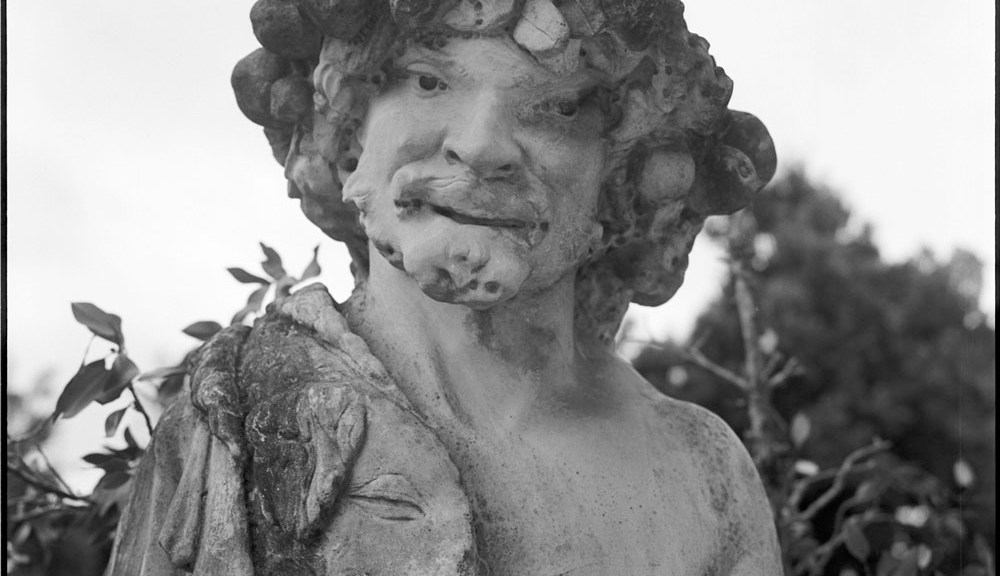
A statue of Bacchus, or perhaps a satyr, in the gardens of the Villa Borghese.
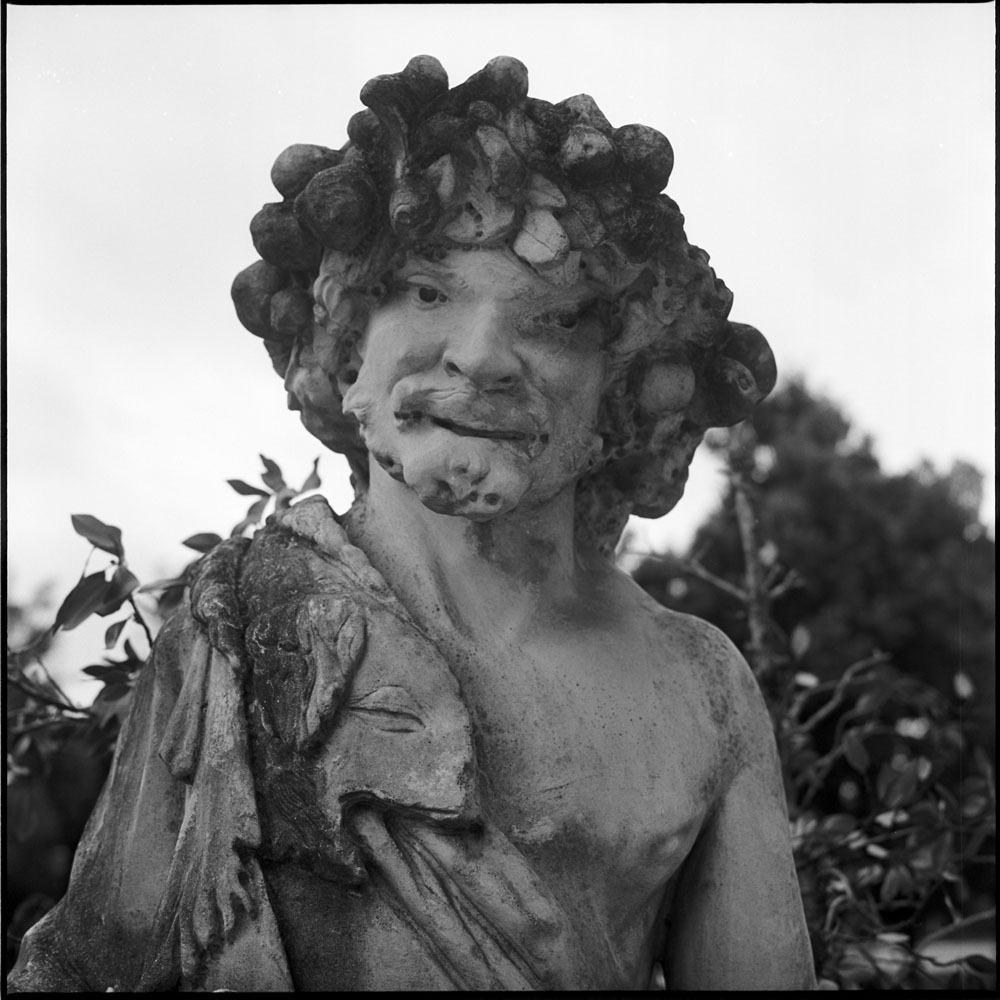
A statue of Bacchus, or perhaps a satyr, in the gardens of the Villa Borghese.
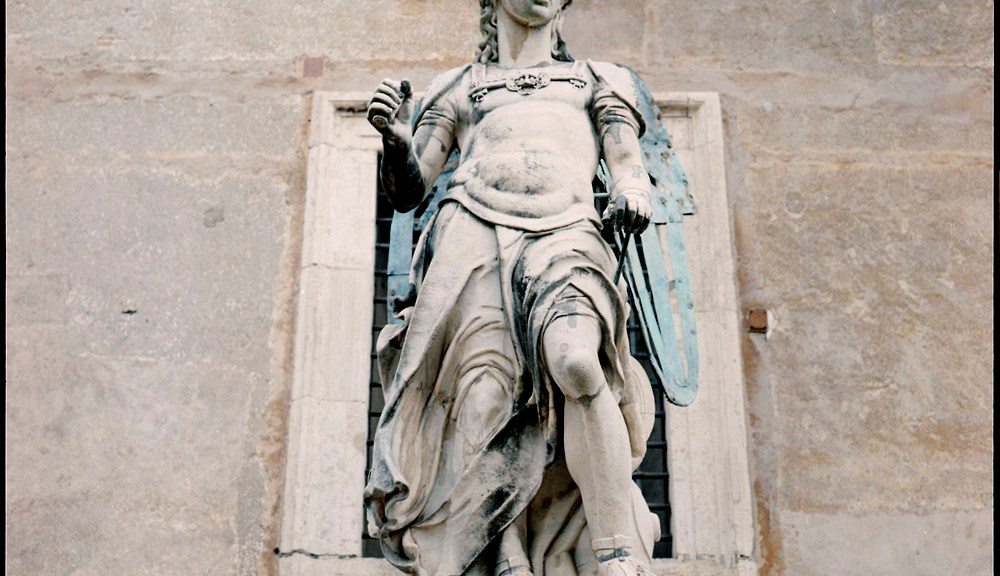
The statue of the Archangel Michael in the inner courtyard of the Castel Sant’Angelo. This is at the mid-level courtyard after ascending the ramp that passes through the crypt of Hadrian/castle dungeon. around it are numerous Roman marble busts in various nooks, and a well for providing water to the Papal apartments above.
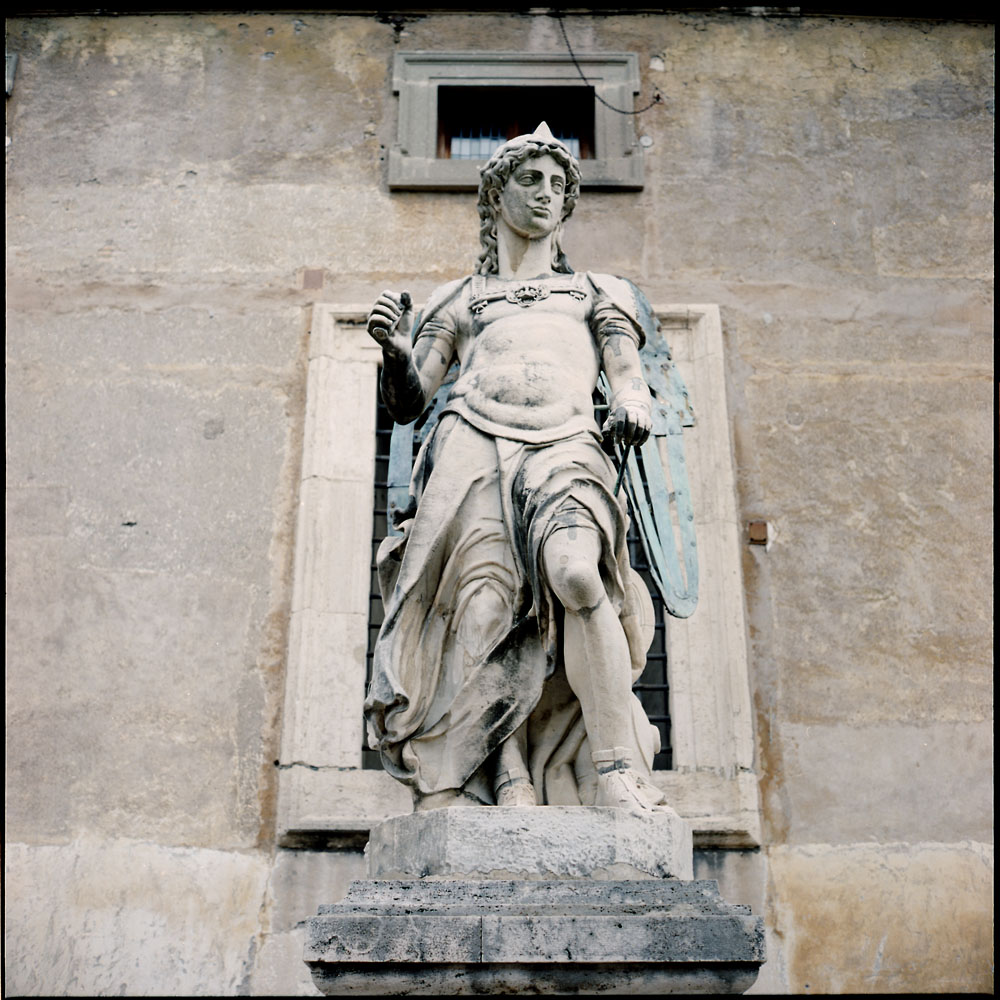
The statue dominates the courtyard, though, with its bronze wings patina’d green and weathered countenance.
I had mentioned in an earlier post about Michelangelo and the “Unfinished” sculptures. Here are some of the pieces in the Accademia’s main hall.
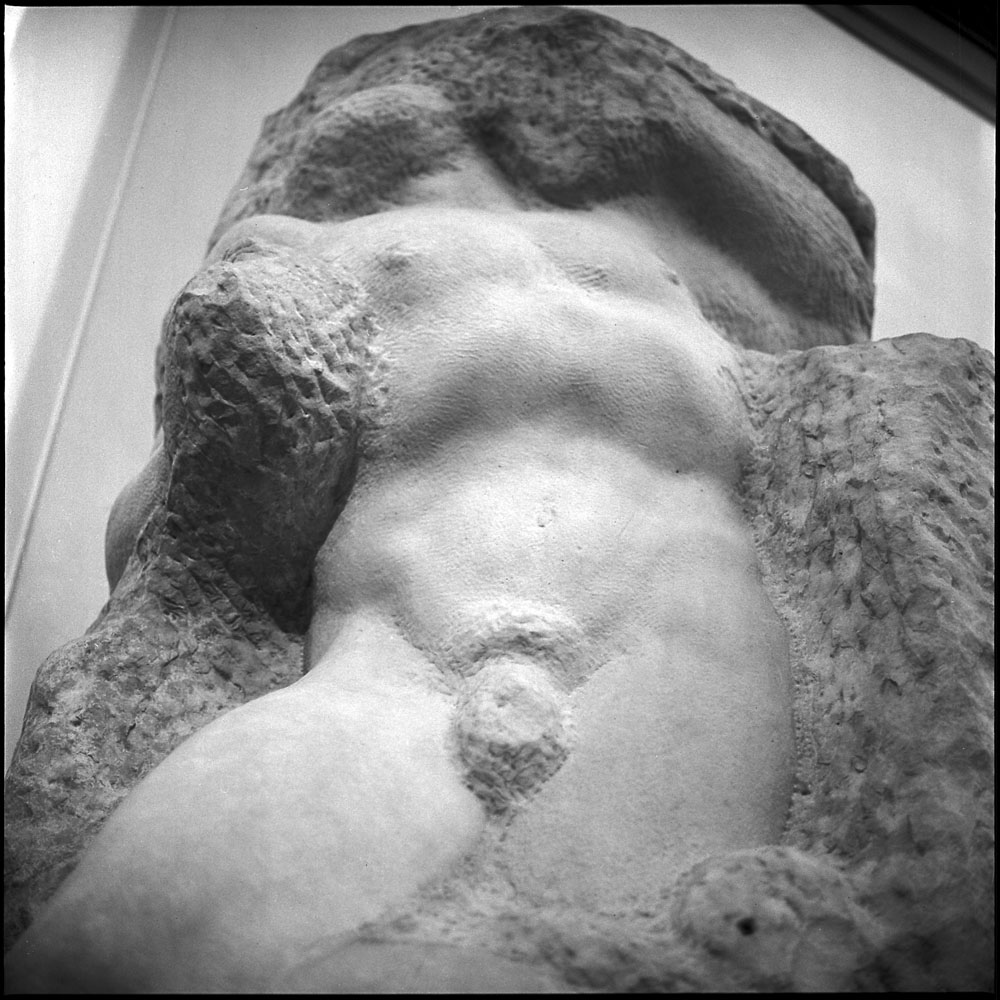
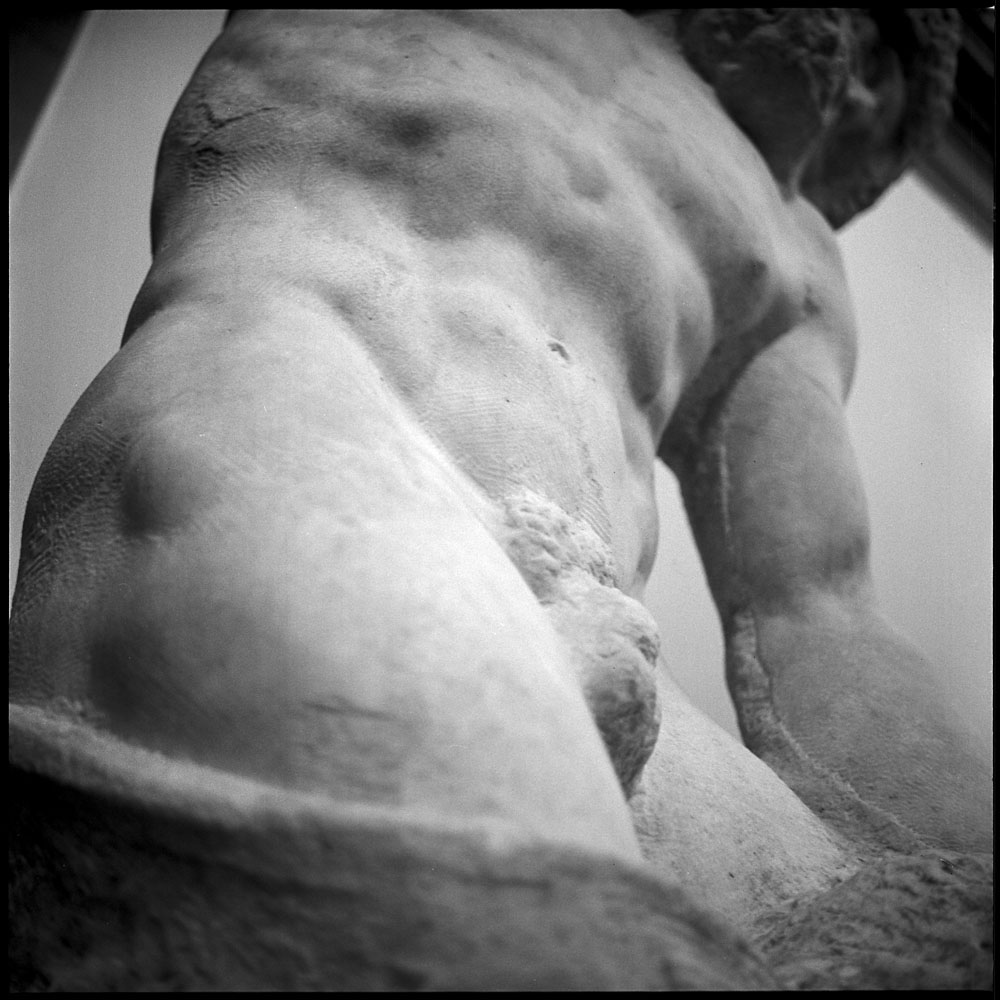
If you look carefully at them, it’s hard to truly call them unfinished – there is a certain deliberateness about what is carved finely and what is left rough.
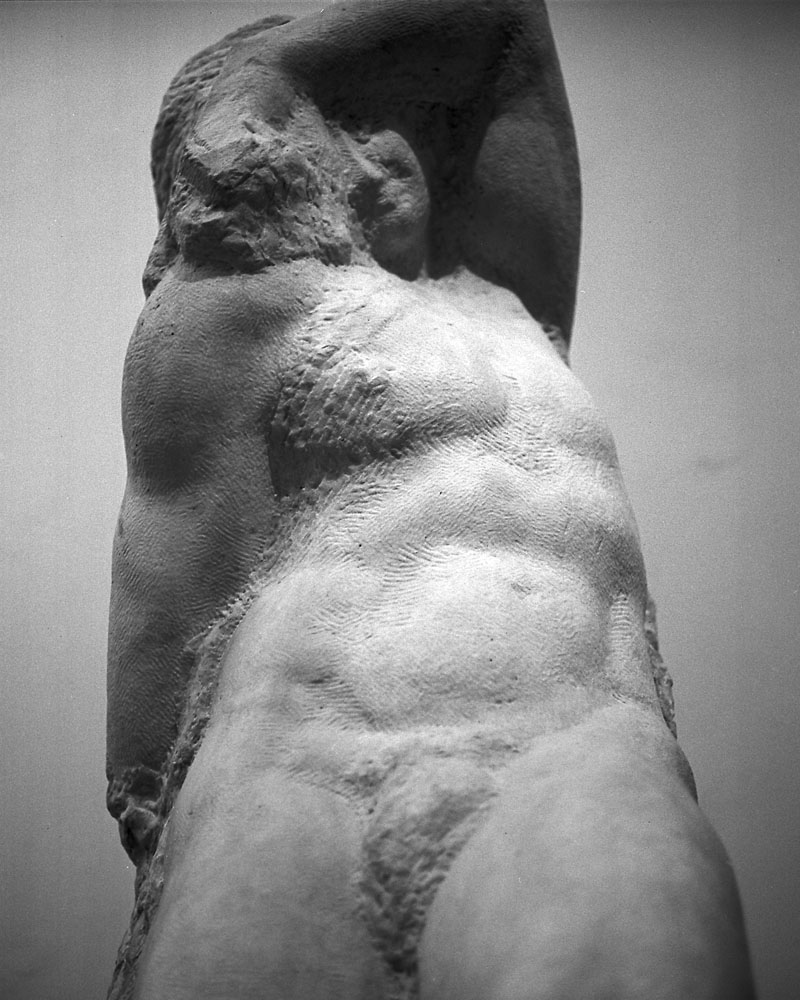
The coarse textures blend very naturally with the revealed forms. To my eyes, and from my (granted rather limited) experience of stone carving, this kind of texture and modeling is something done very intentionally.
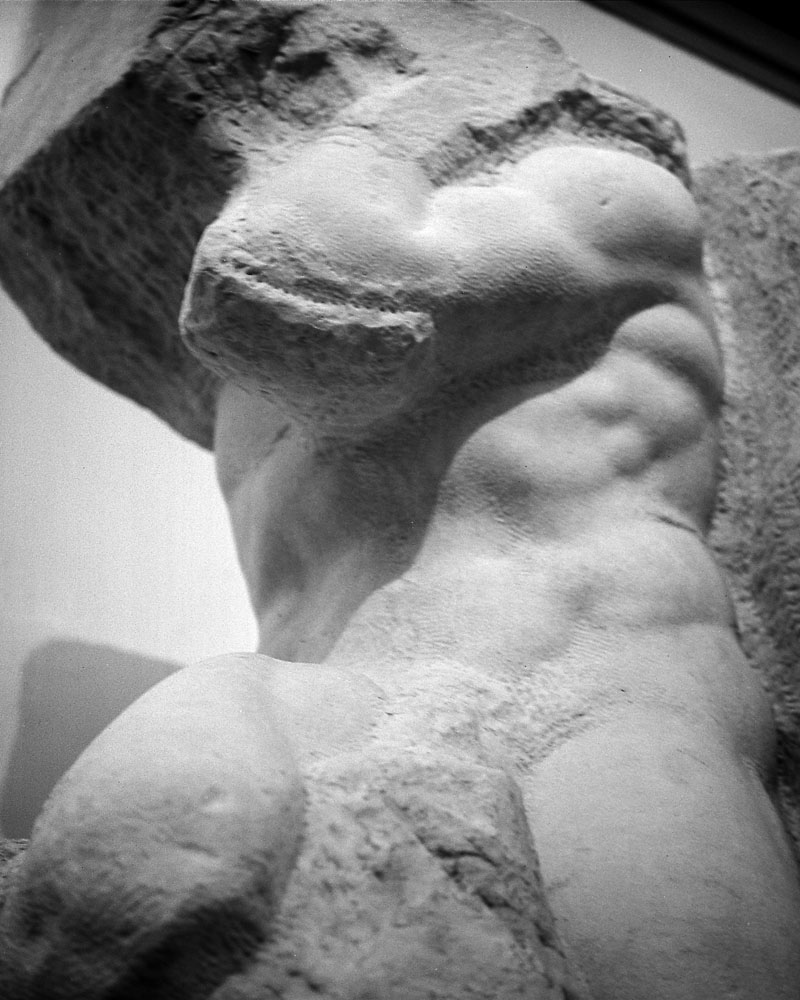
While there are certainly areas that are unrefined, the transitions are fascinating and at the very least provide an insight into the working technique of a genius master sculptor, and given how far ahead he was in so many other aspects of his art, it is entirely possible for him to have been five centuries ahead of his time in his thinking, much the way Caravaggio’s paintings were.
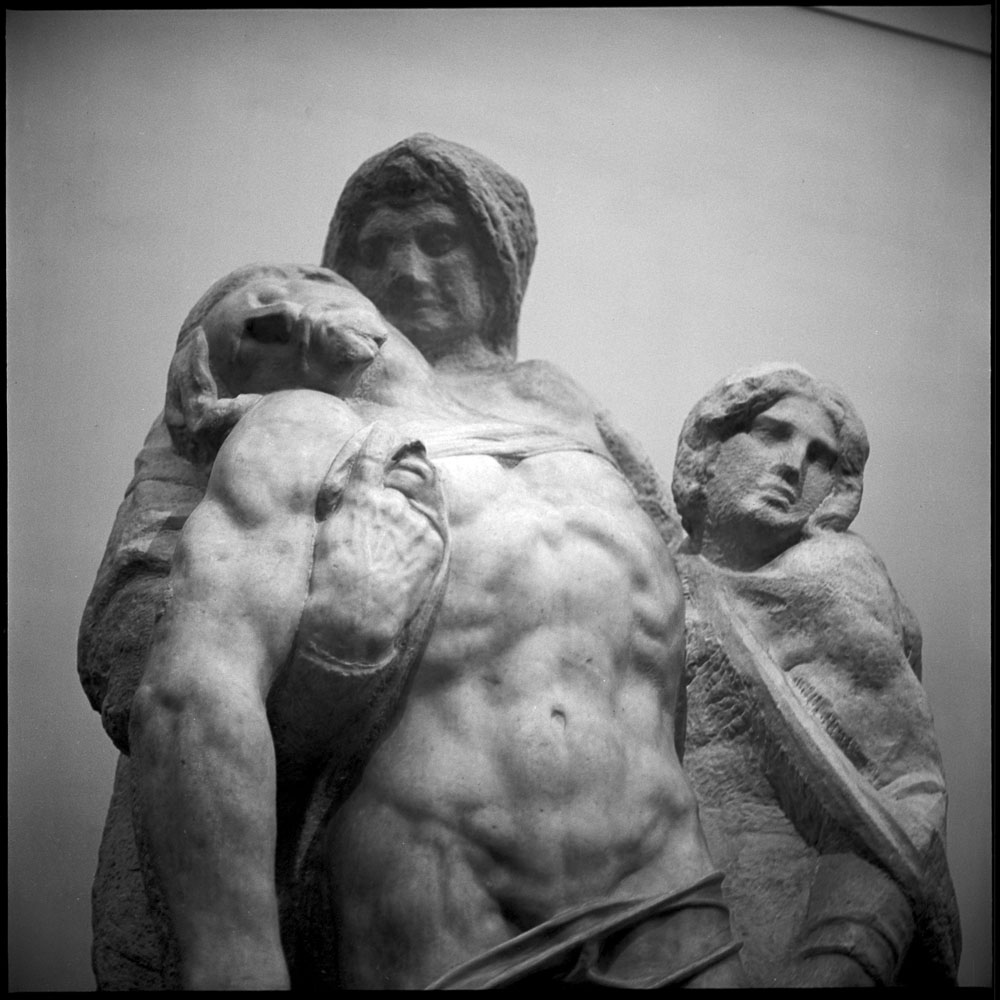
And I couldn’t let the opportunity pass without remarking on something that virtually everyone who’s ever looked at a Michelangelo painting or sculpture of a woman has noticed- his women are really just men with boobs and long hair. The hand of Mary that’s supporting a very robust looking Jesus in this “unfinished” Pieta is one of the manliest hands I’ve ever seen on a woman.
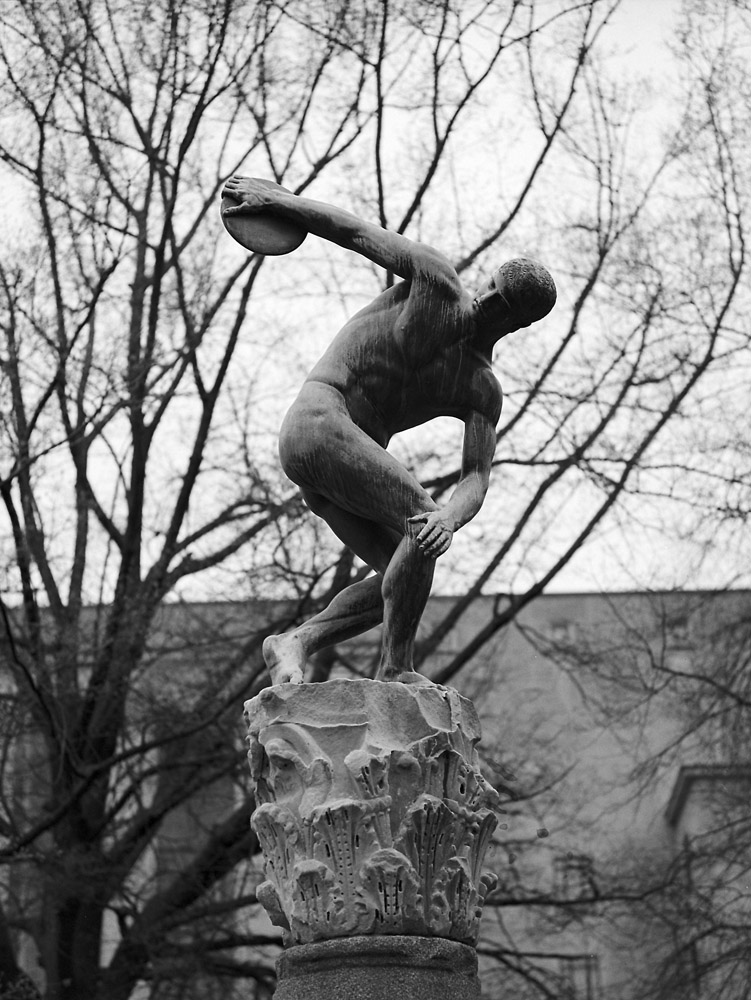
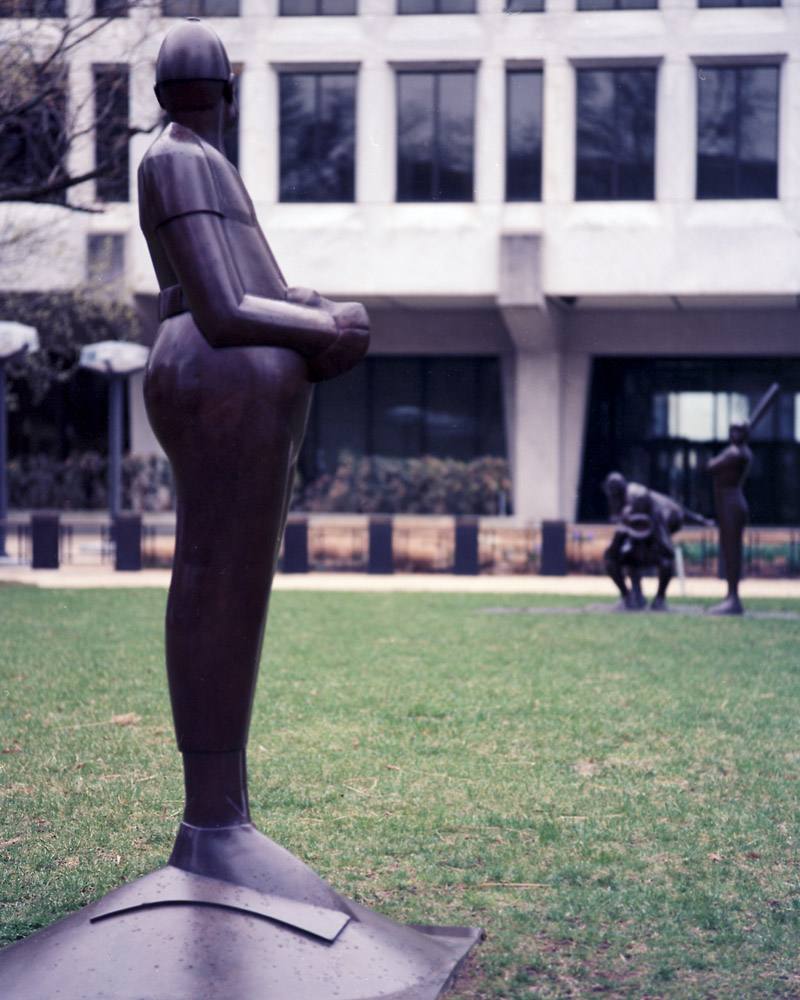
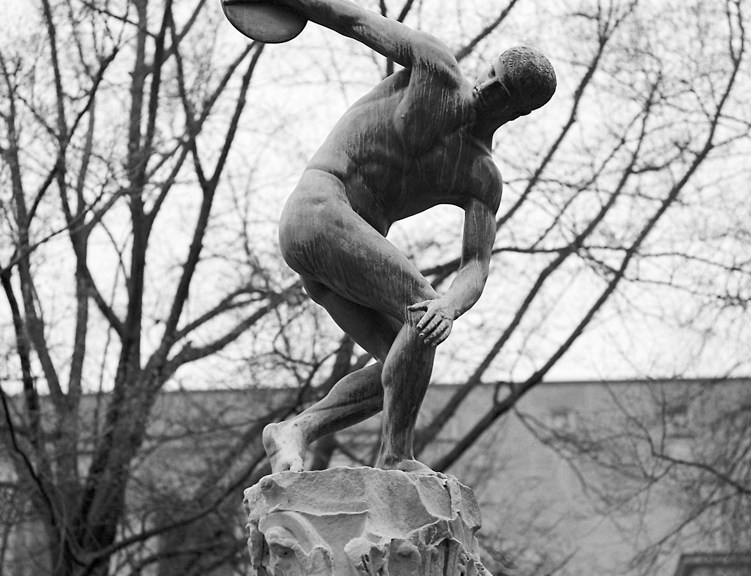
The Federal Reserve Board of Governors buildings in Washington DC have an incredible art collection inside. Most of it is not accessible to the public, as it is displayed throughout the working areas of the facilities. There is, however, an exhibition space inside one of the buildings that can be viewed by appointment – The Federal Reserve Art Collection. There are some pieces, however, that are on permanent public display. There is a gorgeous fountain that operates from April to November-ish (depending on weather) and on the north side of the Martin building, there is the baseball sculpture and the Italian bronze Discus Thrower sculpture. It’s not entirely clear from my reading that the baseball sculpture, entitled Full Count, is part of the Federal Reserve collection, but I believe it to be so from this article. The Discus Thrower, however, is not. It is a replica of the Discobolos of Myrmon, an ancient Roman bronze, given to the people of the United States by the nation of Italy in commemoration of the United States’ assistance in returning Nazi looted art after World War II.
Here is the discus thrower statue. He stands atop a marble column head carved to mimic an ancient Corinthian capital. The discus thrower is located in a city park which also houses a tennis court.
I have two different takes on Full Count – one in color and one in b/w, each from a different perspective. The color image is viewing the sculptural group from over the pitcher’s shoulder. The white marble building in the background is the Martin building of the Federal Reserve.
The black-and-white image is my take on just the pitcher, from a profile view. Both were shot on the same rainy, overcast day.
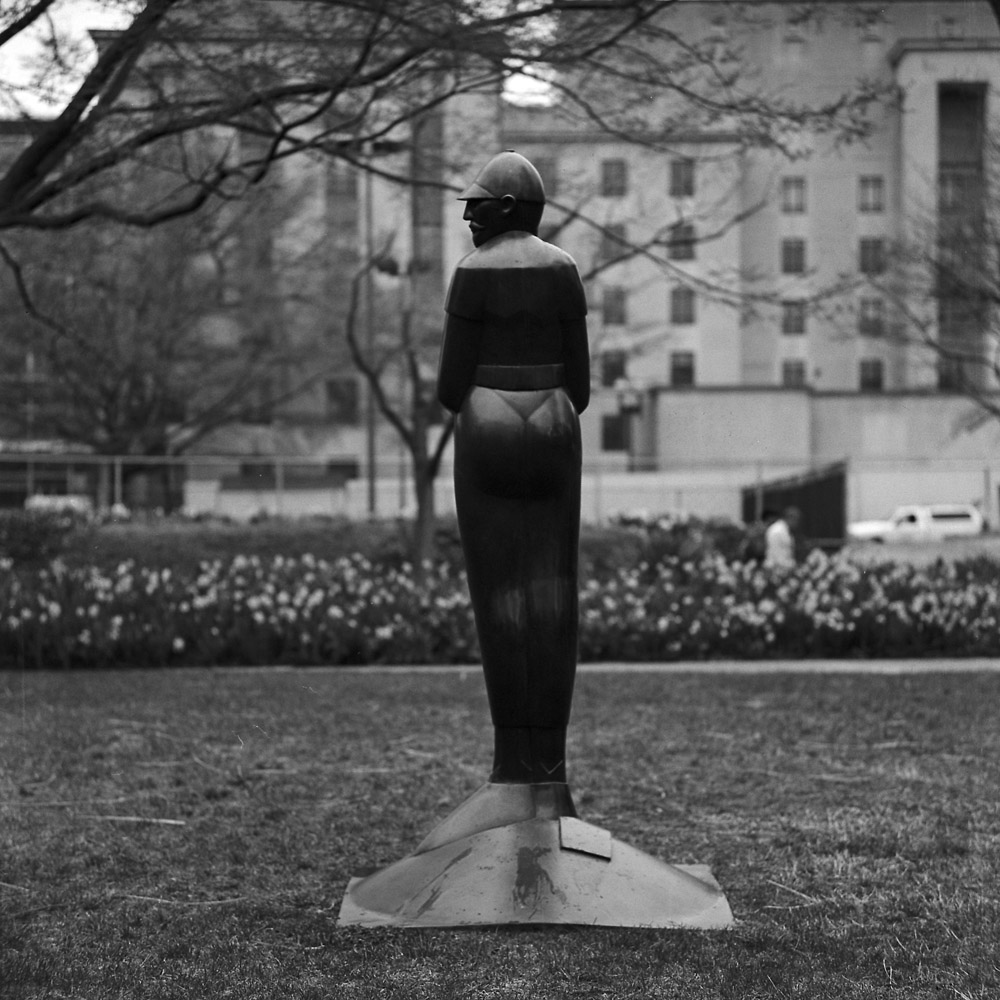
I think the two images side-by-side really brings out what I was talking about yesterday regarding emotional impact of an image in one medium vs the other. There’s no judgment value being placed on that difference – each one has its own equally valid resonance, and there’s no need to prefer one medium over the other, just as joy and sadness are equal emotional partners.
All three images were shot with my Tele-Rolleiflex. As I’m getting used to shooting with it, I’m really liking the images it makes. It just takes a bit of practice to get to know when to use it and how best to use it to take advantage of its strengths.
The building I stayed in at 231 Fort York Boulevard is a thoroughly modern 28-story high rise, composed of glass and steel. At street level, however, the architects softened the impact with a still thoroughly modern, but decidedly more organic, approach. Twisting ribbons of blackened steel, undulating concrete, and dense vegetation combine to give it an almost Antoni Gaudi feel.
A loveseat style bench, formed out of an undulation in the concrete:
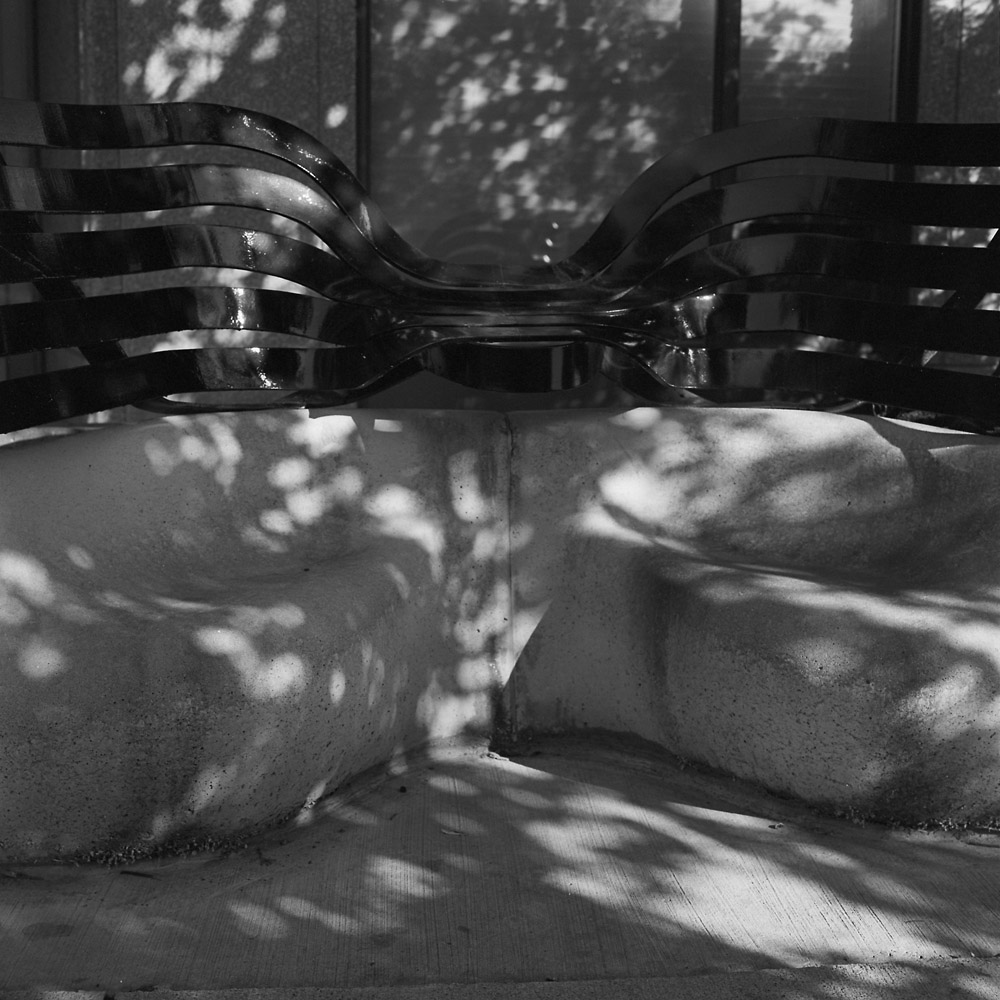
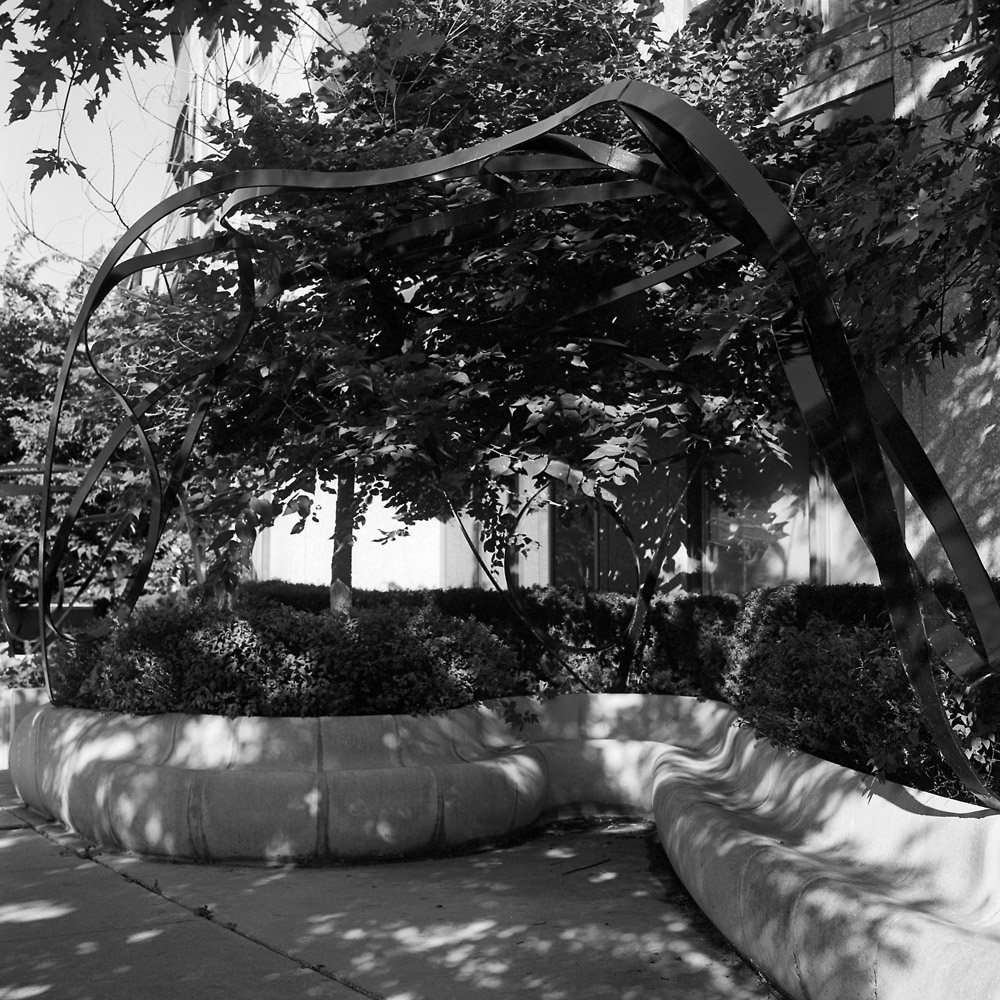
A canopy formed out of steel ribbons and the branches of trees shade another larger seating area:
The building entrance is a riot of steel ribbons, twisted into organic shapes that bring to mind ocean waves and seashells:
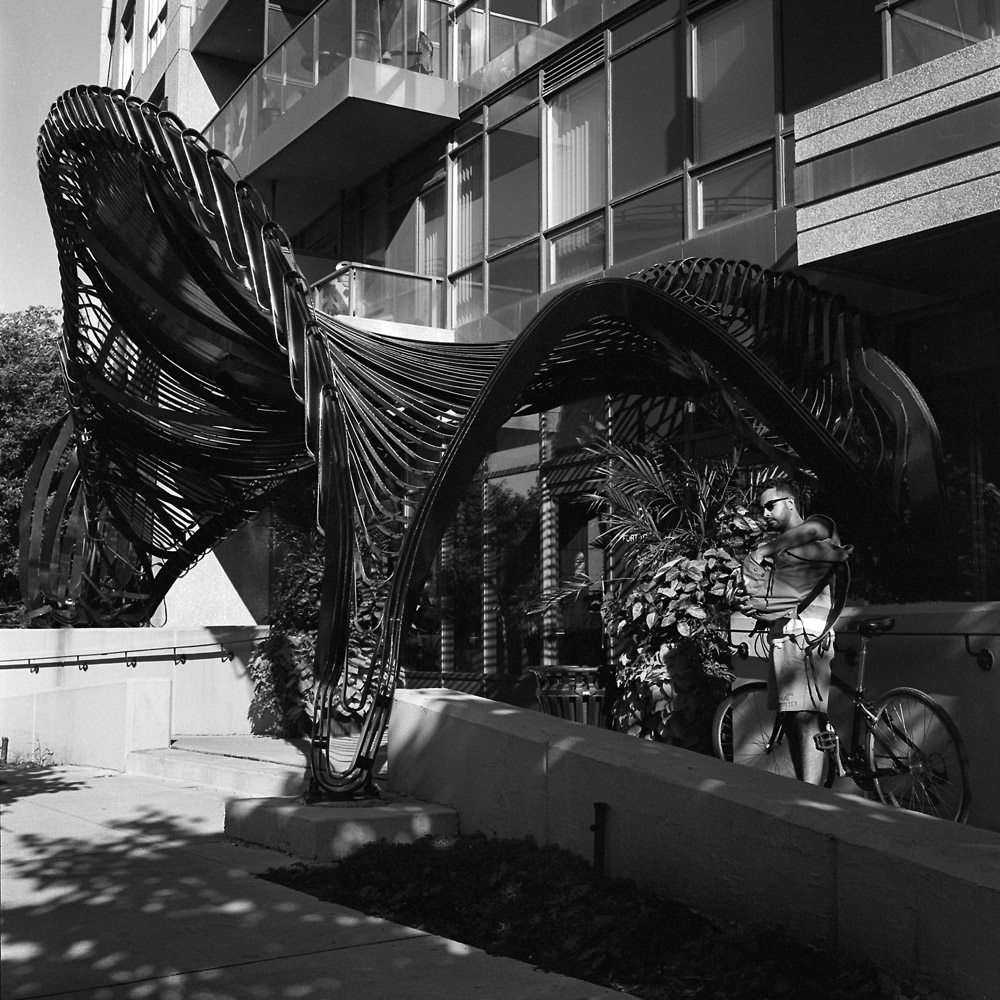
As an architectural critic, I question the use of these shapes because they really don’t relate to the building at all – they’re found only on the street side, and only at street level. The courtyard entrance where vehicle drop-off and pickup occurs has nothing at all like this, and nowhere else at any higher level is this style repeated. None of the upper balconies have ribbon-like railings, just typical glass and steel flat planes.
As a pedestrian, though, I’m quite pleased that it exists – it certainly makes the sidewalk level more interesting and in the summertime, more pleasant!
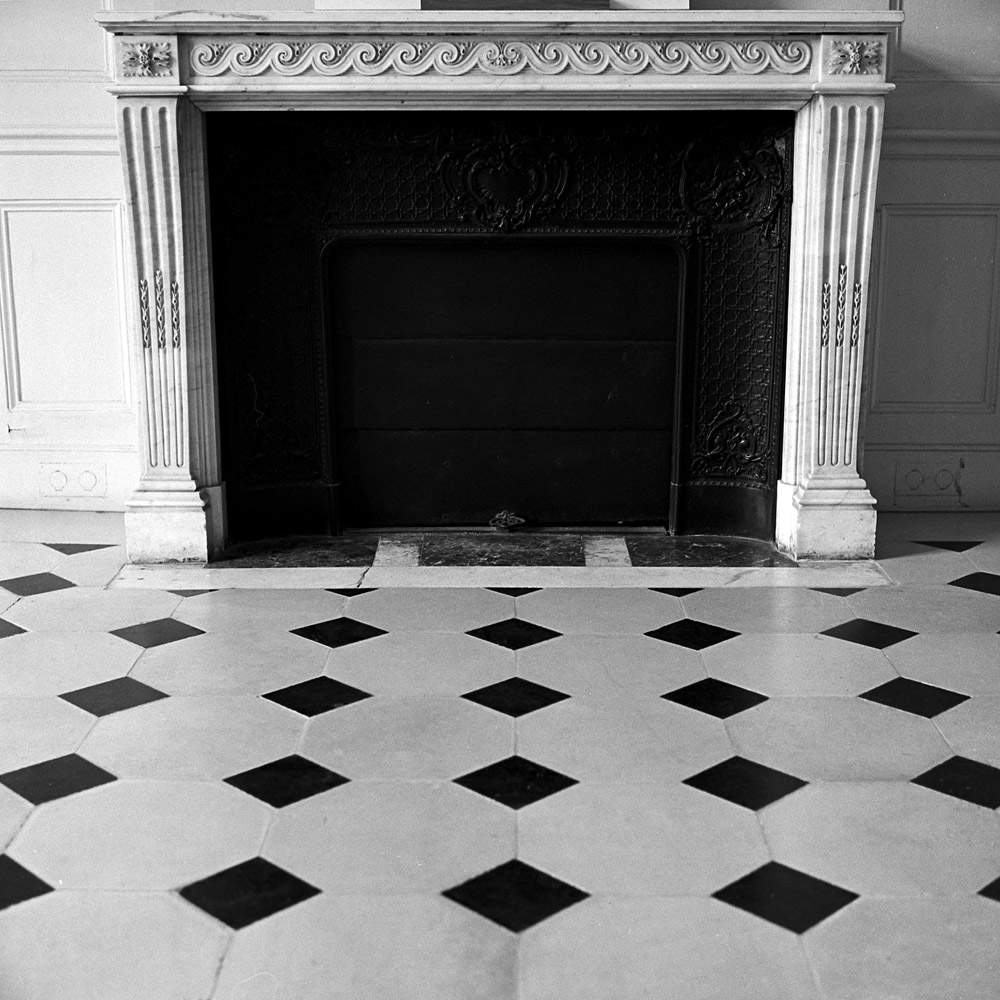
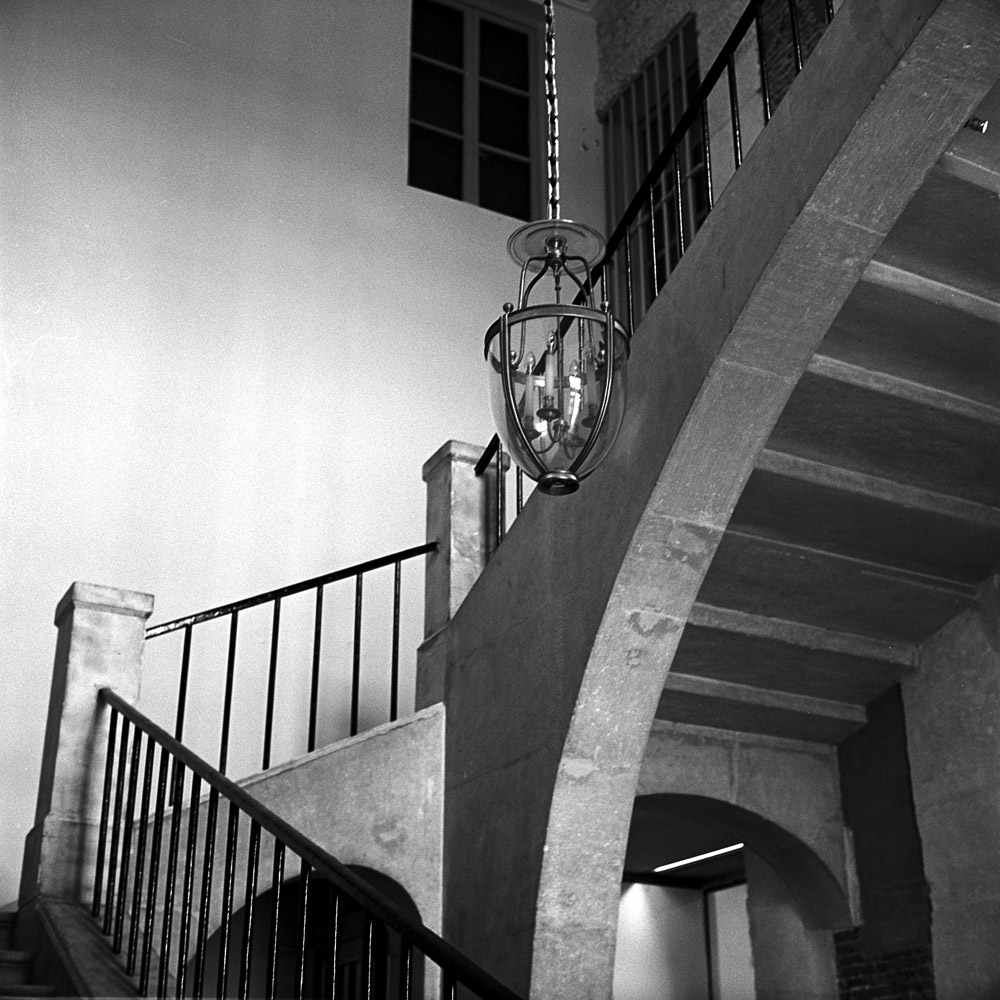
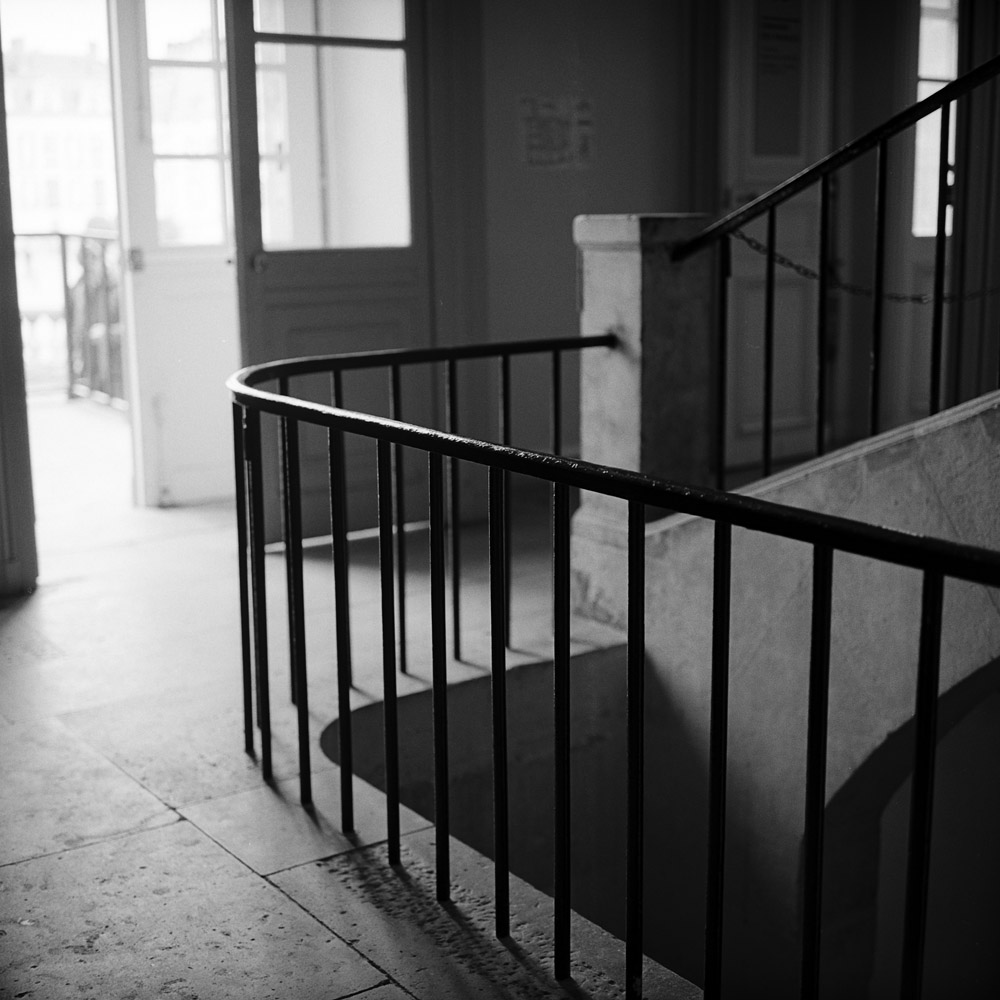
Here are my takes on the palace of Versailles, in black-and-white. There are actually quieter spaces within the building where you can take photos without a gazillion tourists blocking your view and making appreciation of the space impossible, unlike the state apartments. I’m dividing this post into two sections – architecture and sculpture.
ARCHITECTURE
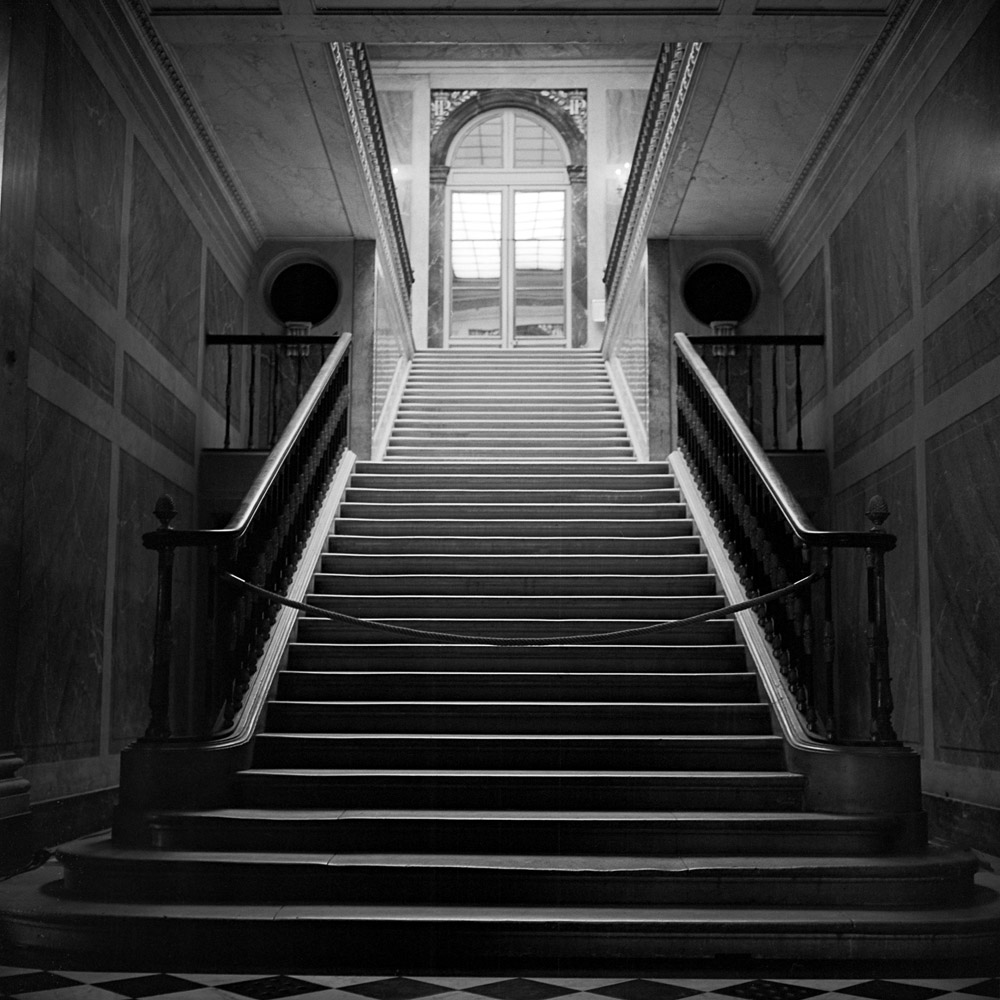
Here’s a side staircase. Not the grand stairs that led to the queen’s apartments, but nonetheless, a magnificent entry.
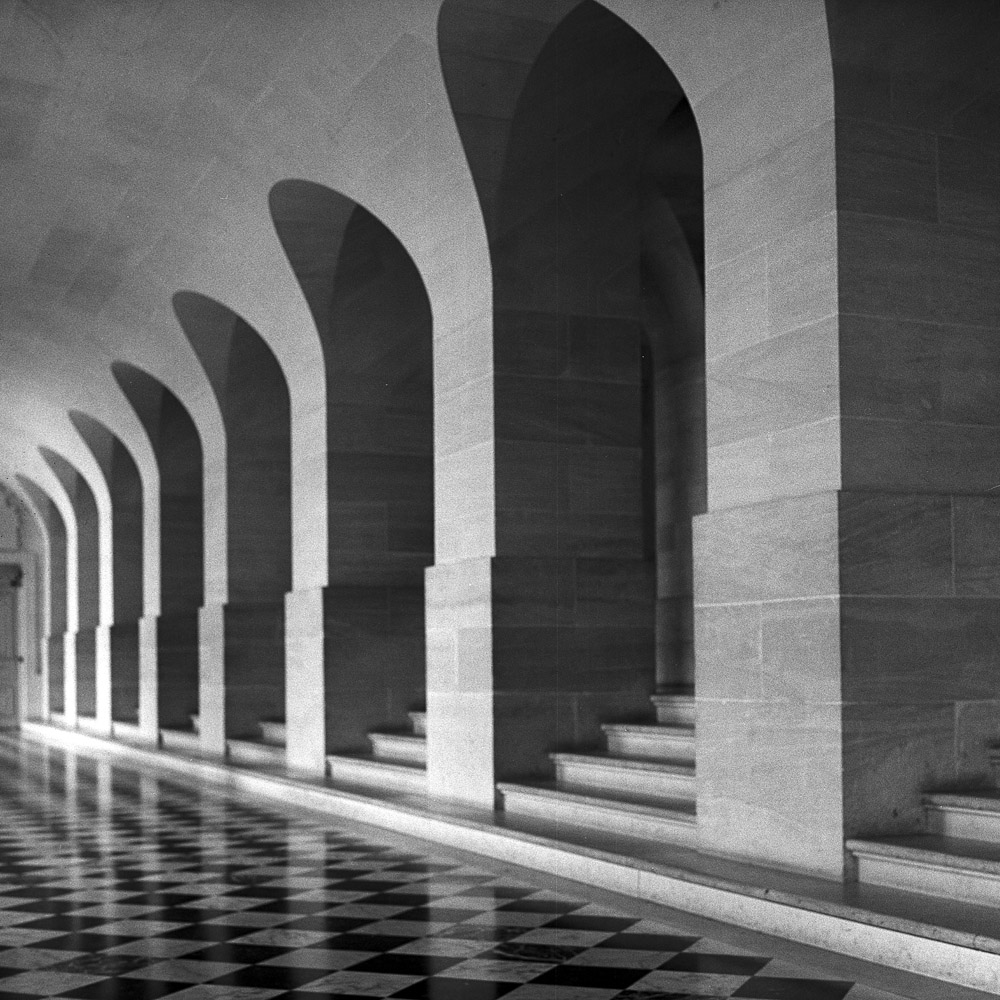
This hall is behind and beneath the state apartments, looking out to the gardens to the west.
This doorway is the central door leading out from the hall above to the gardens.
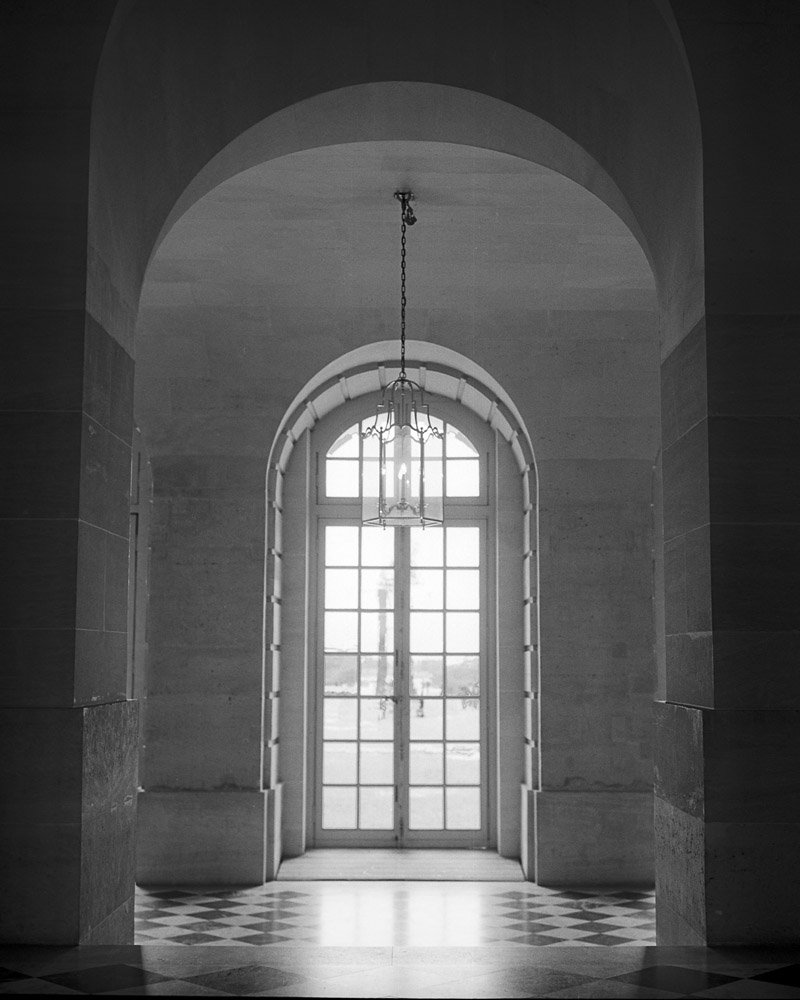
These three are from one of the side buildings outside the palace proper, where the gift shop and ticket office are located today. Anywhere else they would be special, but at Versailles, they are relegated to the service space.
SCULPTURE
Sculpture is everywhere at Versailles, from the entrance gates to the halls in the basement.
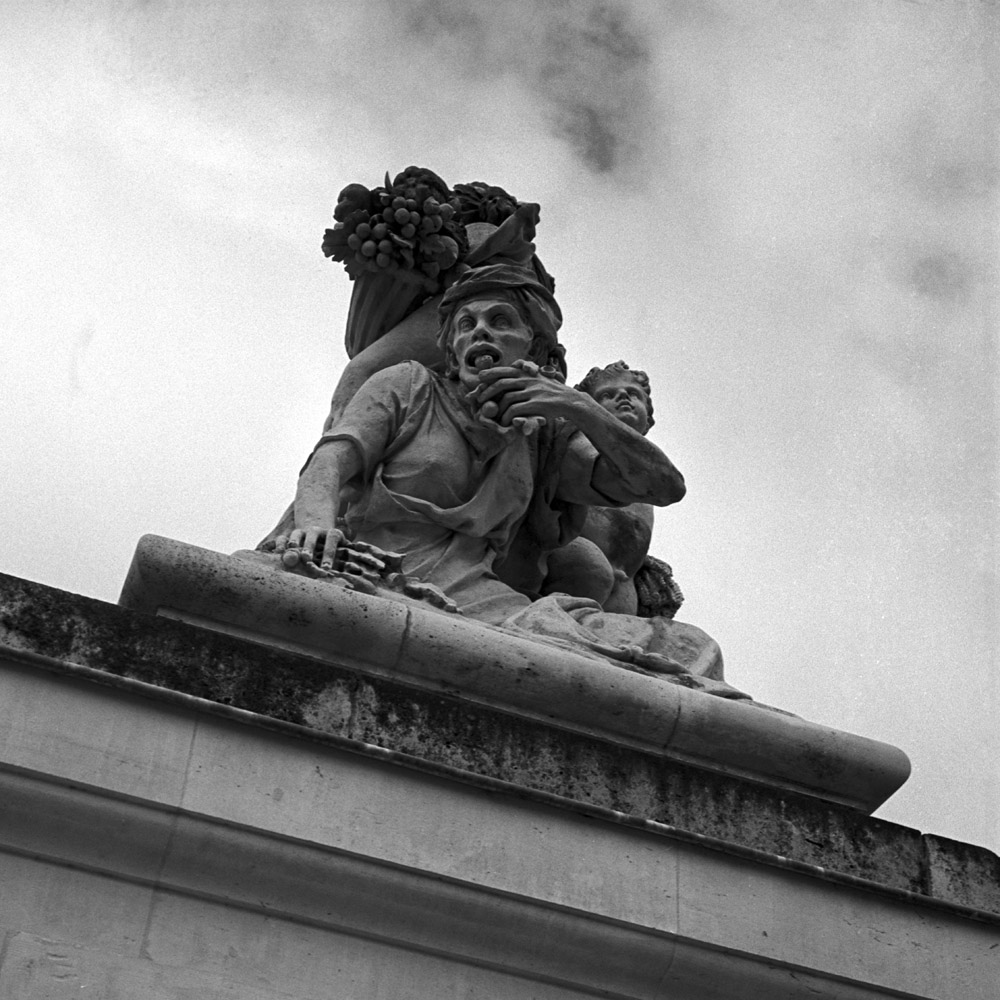
This grotesque is on the back side of one of the heroic female “virtues” at the entrance gates to the palace. Seeing this, it’s not hard to see how the peasant classes who were starving would see it as emblematic of how the nobles viewed them and took umbrage accordingly.
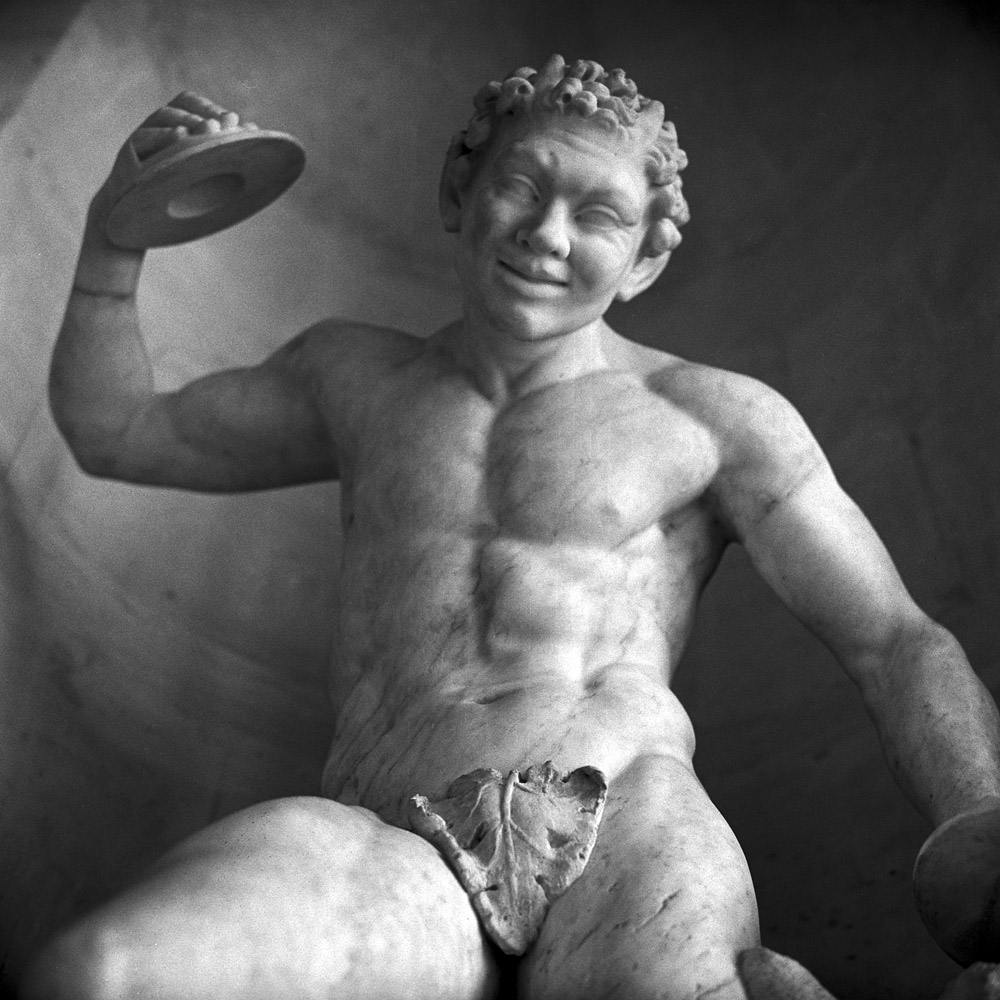
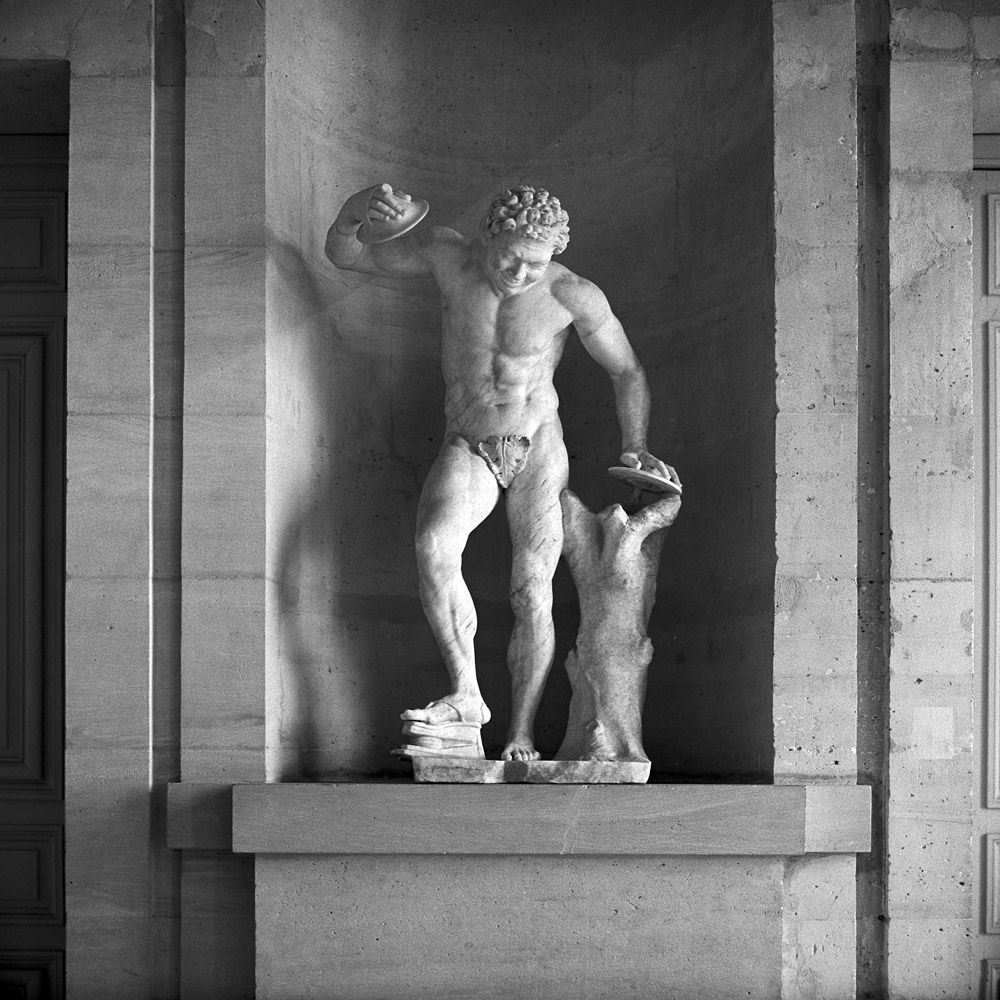
This Satyr is in one of the halls of the ground floor of the palace, relegated to a corner where few tourists venture. I suspect his fig-leaf is a Victorian-era excess, as it appears to be glued on much after the fact.
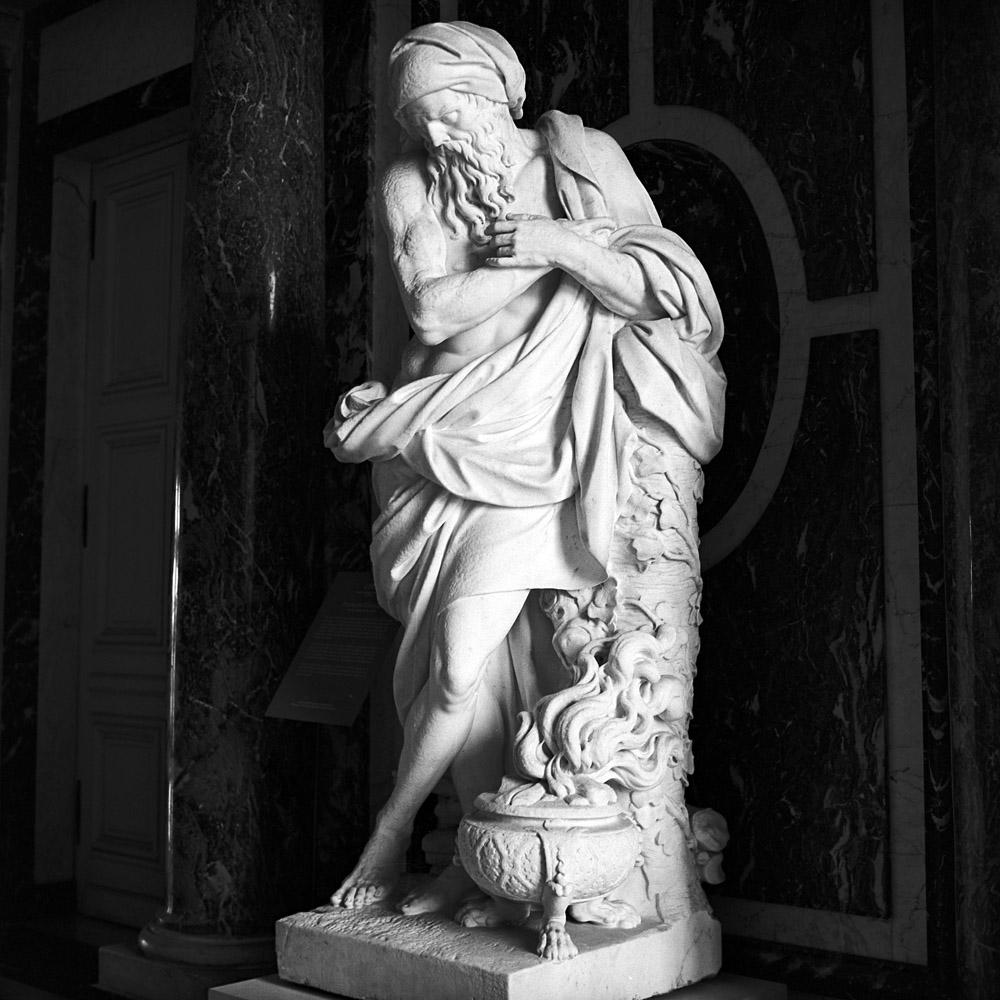
I’m not sure who/what this statue represents, but it appears to be some kind of hermit/mystic, judging from his attire and the smoking pot at his feet.
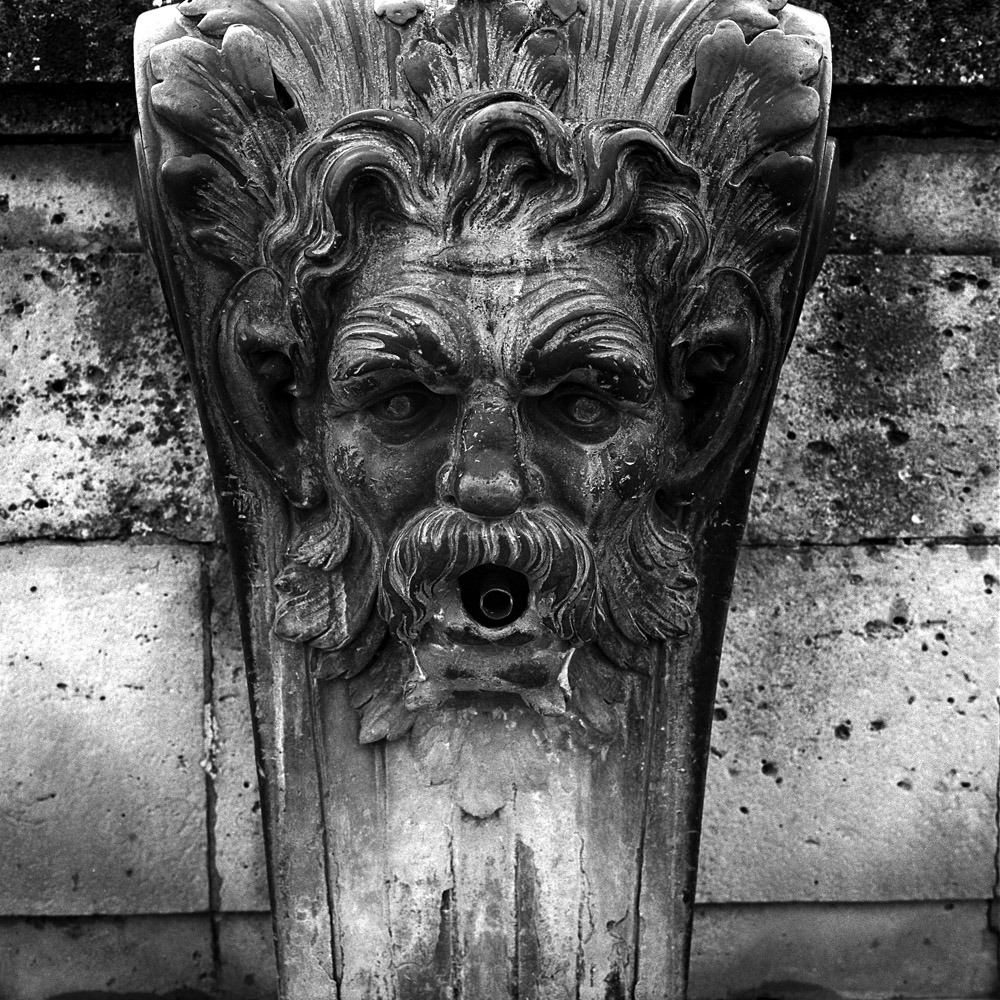
Here is a water fountain outside the palace in the main forecourt.
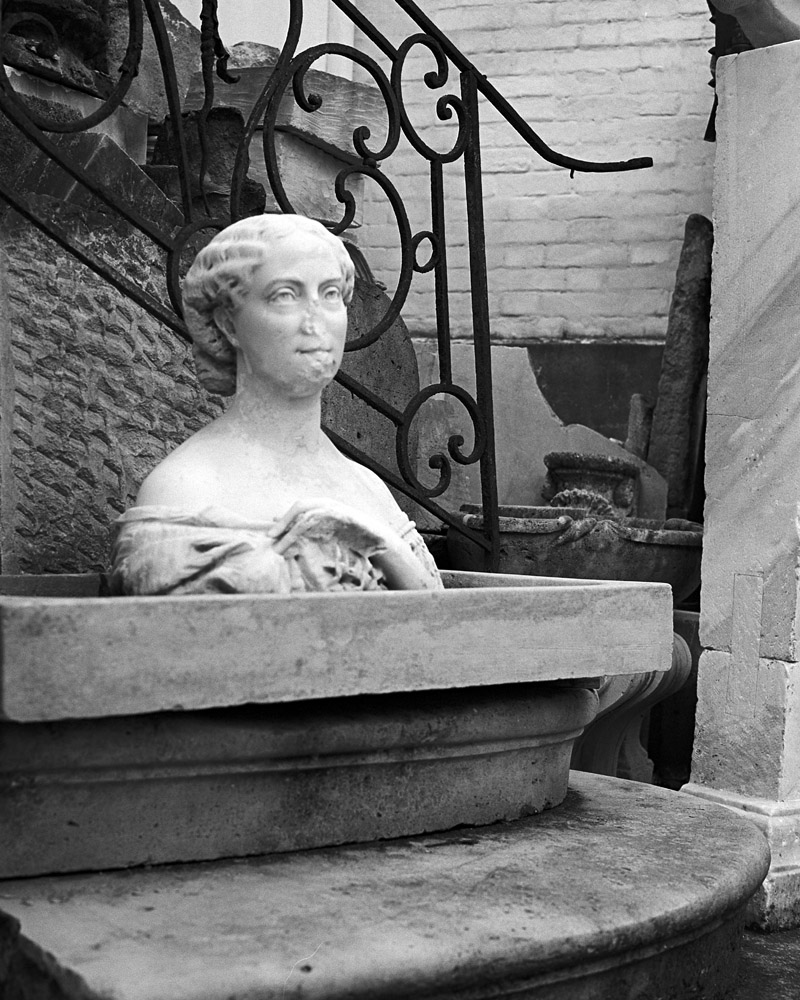
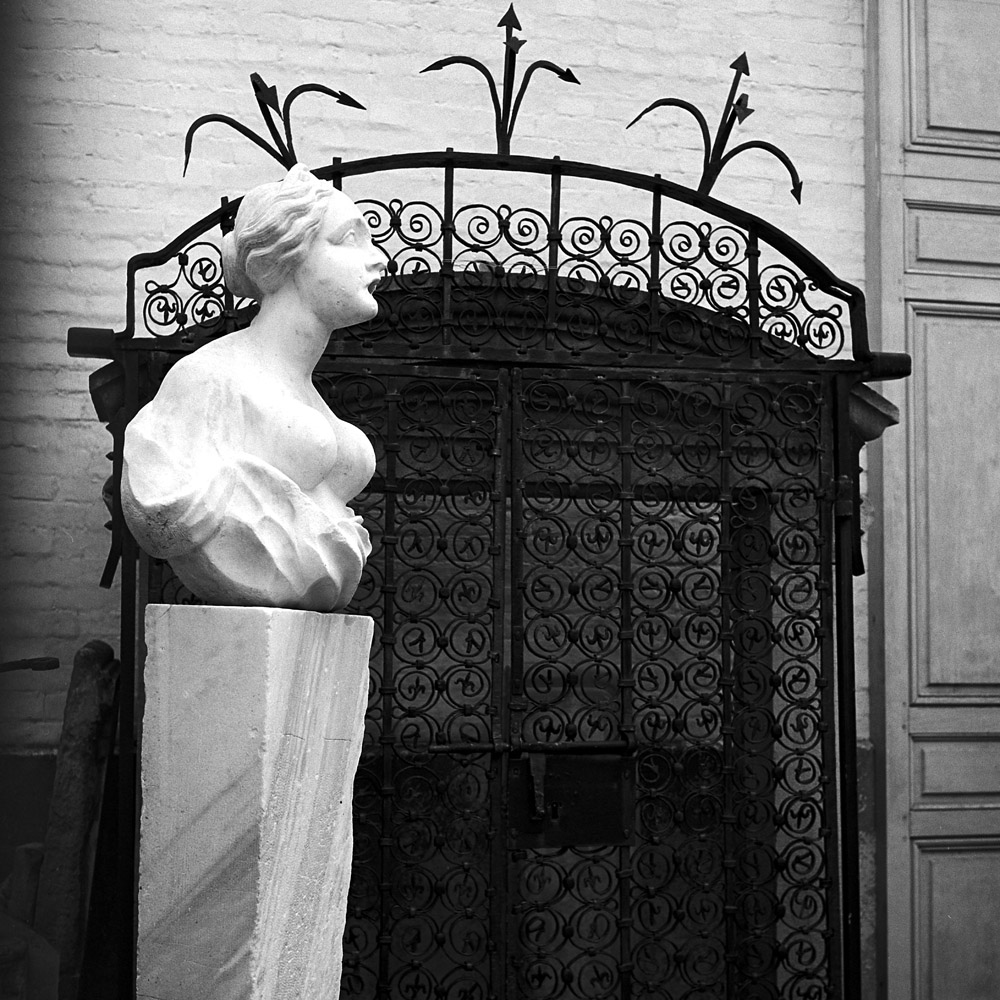
These last two were found in the town of Versailles in the outdoor courtyard of an architectural antiques dealer. A different take and a contrast to the exquisite statuary in the palace, they nonetheless have their own beauty and dignity.
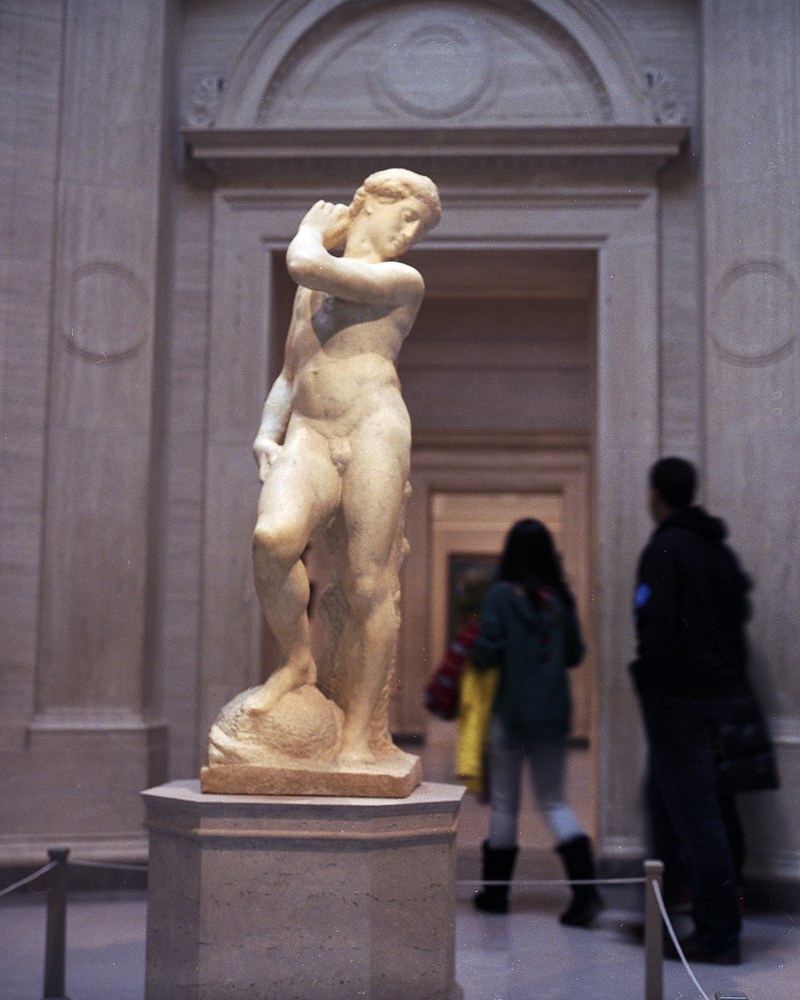
From January to March of this year, Michelangelo’s David/Apollo, normally resident in the Bargello museum in Florence, was on loan to the National Gallery of Art in DC. Being a huge Michelangelo fan, I had to go see it. The last time it was exhibited here in the US was during Harry Truman’s presidency. In fact, there are only three known or attributed works by Michelangelo in the United States (a drawing and two sculptures, one of which is in a private collection), so it’s a rare day when you can get to see something from his hand.
One of Michelangelo’s “unfinished” sculptures, much speculation exists around the entire series of the “unfinished” carvings – were they unfinished because Michelangelo was always biting off more than he could chew and didn’t have time, or did he deliberately leave them “unfinished” because he was making an artistic statement about the relationship between the image, the stone and the carving? Either way, they make for a tantalizing insight into the mind and the technique of one of the world’s greatest sculptors.
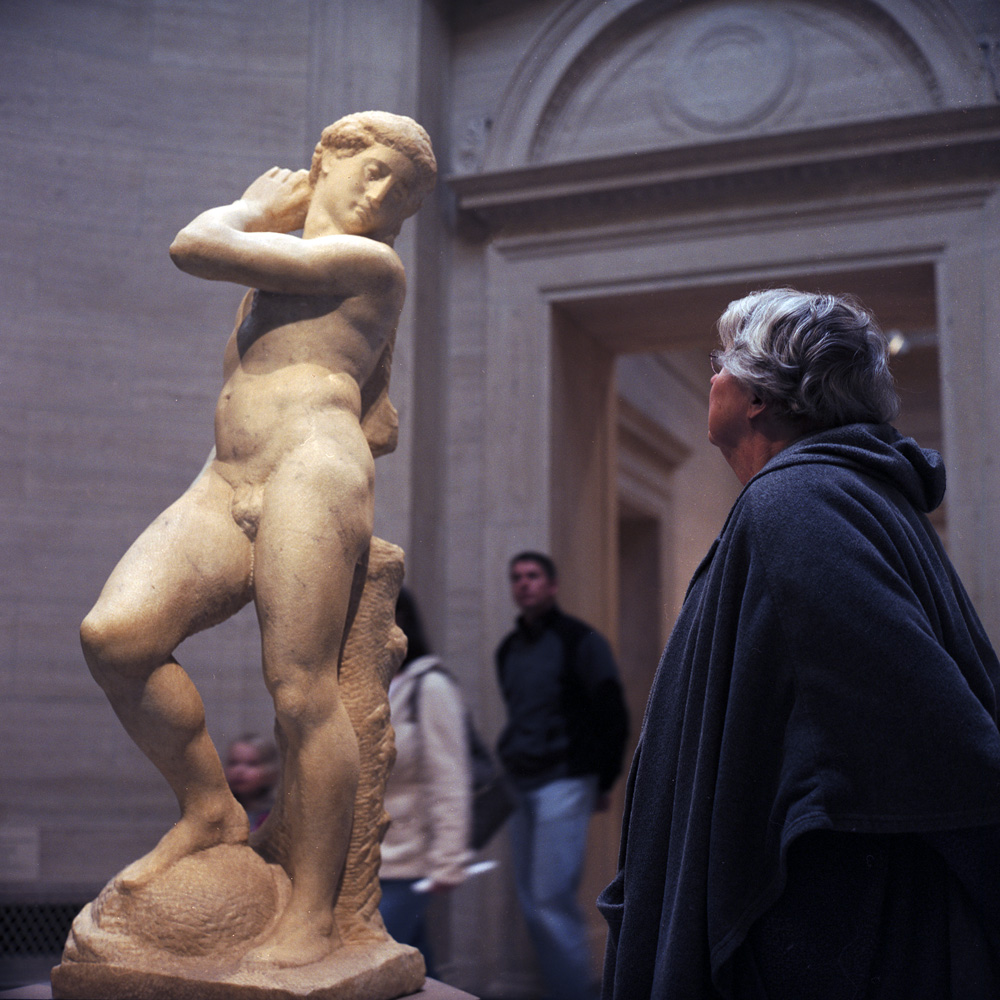
I’m almost as fascinated by the people who come to look at art as I am the art itself. Sometimes (frequently, actually) I’m very annoyed with museum patrons because they’ll blithely traipse right between you and a work or the wall label for it that you’re trying to look at, rented headset on, completely oblivious to the fact that you now cannot read or see the exhibit. But when they’re not blocking your view, the way they look at art is endlessly interesting. Some will point, some will stand back and appraise, some will “print-sniff” and get close enough the guards have to warn them off. Some will ingest silently, others will pontificate to their audience of friends (and anyone else within earshot), often as not with art history textbook opinions and/or not entirely accurate “facts” about the artwork and/or the artist.

 dcphotoartist