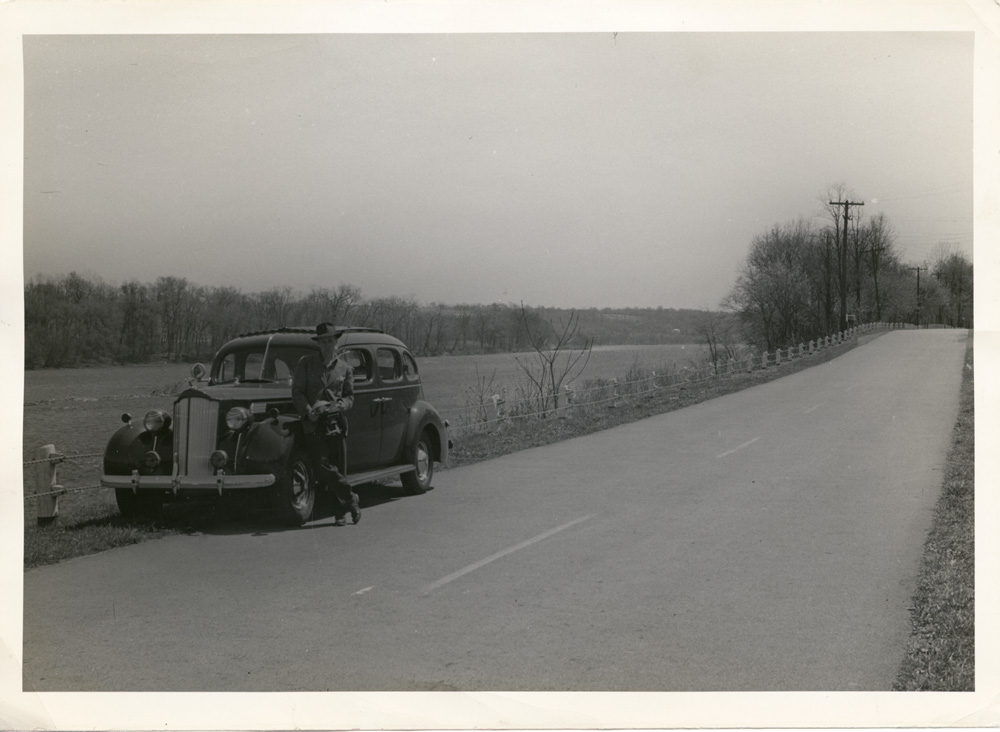
Here’s a neat anonymous vernacular photo of a man, his car and the open road – it’s in many ways the American archetype. The car is a 1938 Packard (appears to be a Packard 120, their ‘entry level’ model, sort of like a Mercedes C-Class today).
1938 Packard
Despite the fact that the car is a near-luxury car, this is so emblematic of the American psyche – a man and his car on the open road, the spirit of freedom and independence. It’s also remarkable to see how far the American roadscape had come by 1938 from 1919 when then-Lt.Col. Eisenhower crossed the country in a military convoy averaging 5.6 mph, requiring 573 hours to cover 3250 miles. Less than 10% of the road surface in the US was paved in 1919. I took the same approximate route Eisenhower did, in 2000, and it took roughly 42 hours (3 1/2 days at roughly 12 hours a day).
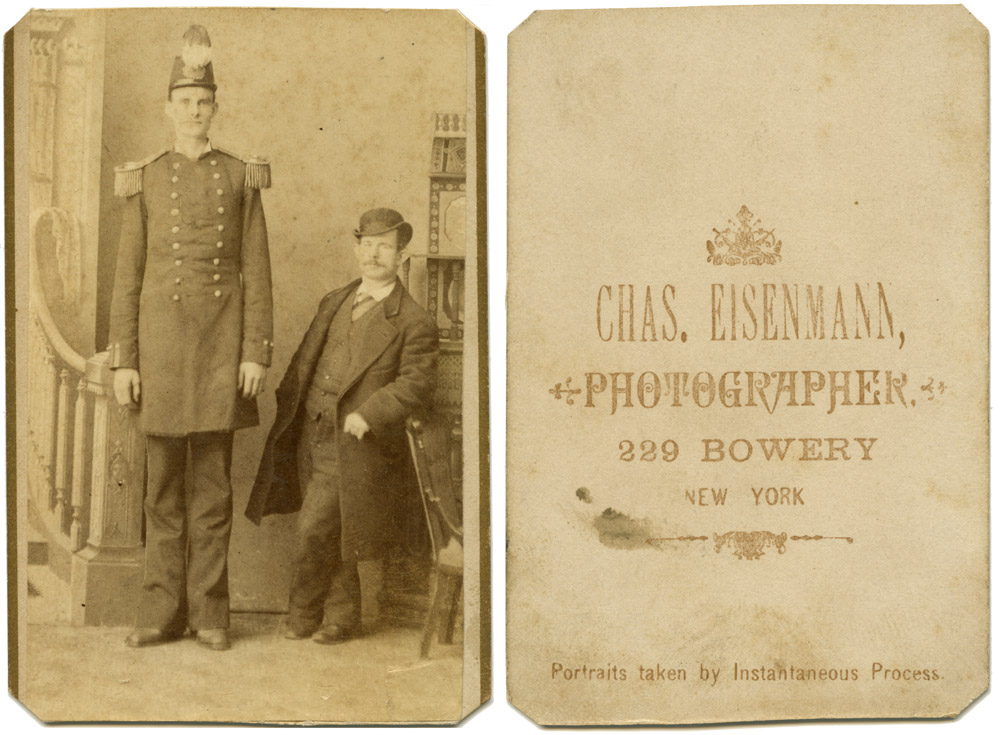
Another CDV of a circus freak, this is Landon Middlecoff, “The Kentucky Giant”, as photographed by Charles Eisenmann, “the Popular Photographer” and documentarian of the theater trade.
Landon Middlecoff, the ‘Kentucky Giant’, by Eisenmann
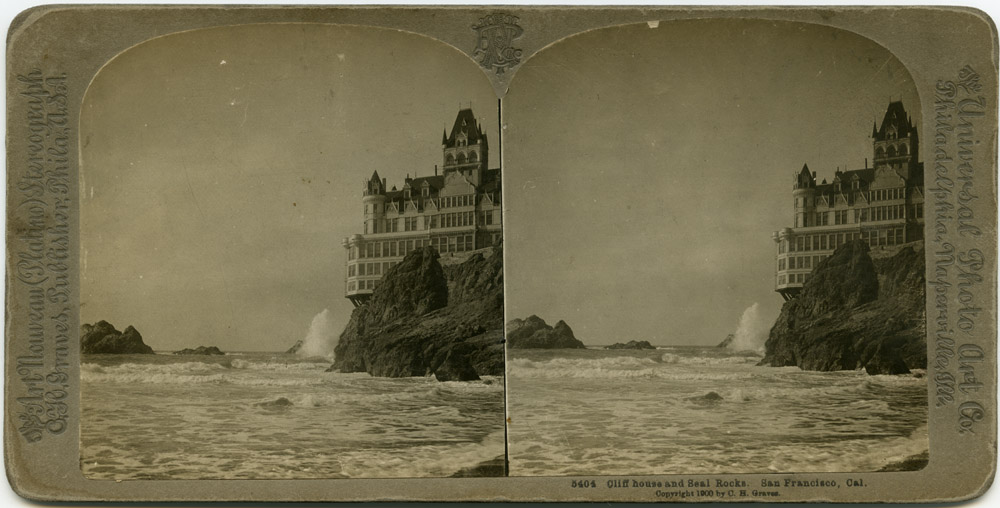
A beautiful stereoview of one of my favorite places. Seeing the building from this perspective, it’s no wonder it collapsed and burned in the 1906 earthquake. It’s amazing it didn’t slide wholesale into the sea!
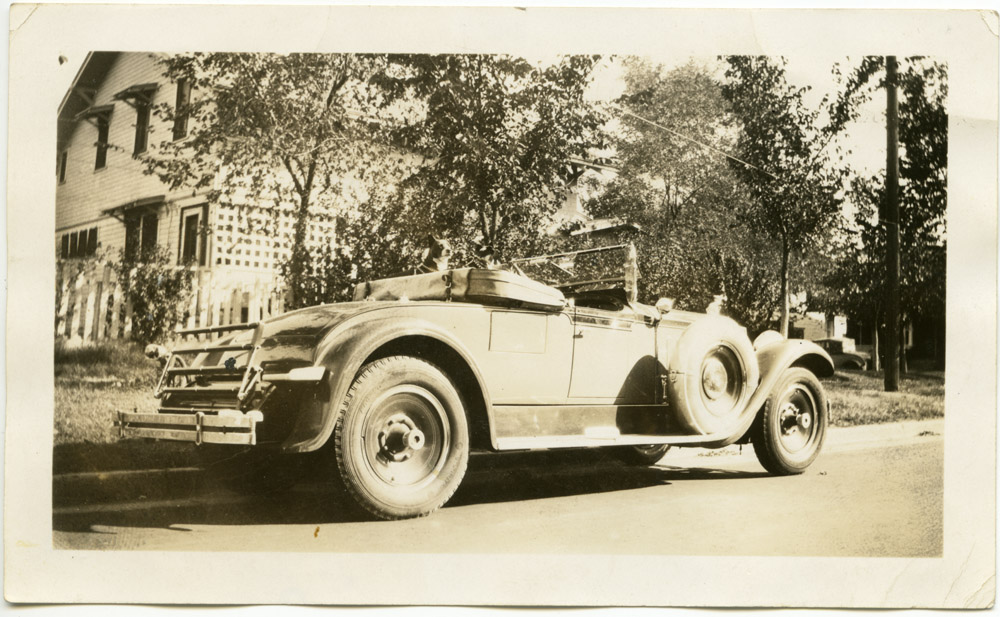
Here’s a snapshot of a 1930 Packard Big Eight roadster (I’ll give a fudge factor of -1 to -2 years, but I’m pretty confident it is a 1930). Notice the golf bag door in the rear fender, and the terrier sitting on the convertible top. It’s definitely a Packard – the wheels and hubcaps are pretty definitive, but the absolute dead giveaway is the hood ornament.
Ok – I managed to get my FotoWeekDC portfolio contest entry submitted. With three hours to spare, give or take. I’m submitting nine images from my Colors of Night series. I finally got to take advantage of my (rather pricey) large format film holders for my scanner, and re-scanned some of my 5×7 negatives from San Francisco. I submitted 5 San Francisco and 4 Washington DC night shots. Fingers crossed, they’ll go over well.
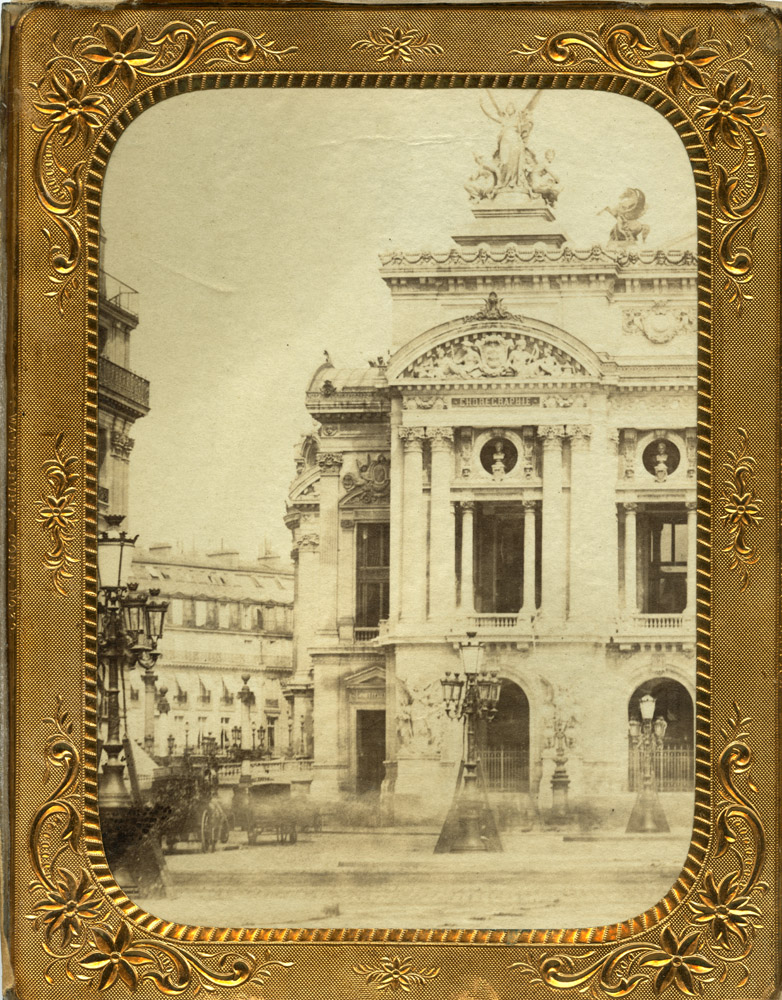
Here is an oddity – a cased albumen print of the Paris Opera house, taken shortly after it opened. The Opera was commissioned in 1861, and completed in 1875. The image could be as early as 1867, when the facade of the not-yet-completed opera house was bared of its scaffolding for the first time. This was taken with a wet-plate camera – notice the foggy foreground? That was pedestrian traffic blurring in the long exposure required by the collodion emulsion.
Paris Opera albumen print
The oddity is that someone would have put this in a brass mat and case (the case is now missing), and not presented this as a cabinet card or some other mounted paper format.
This image provides a cautionary tale for collectors – nothing went terribly wrong, and I don’t think I grossly over-paid for it, but when it was listed, it was described as a salt print from a calotype negative. I assumed from the brass mat that this description was accurate. Upon receiving the item, it became obvious that it was NOT a salt print (one easy way to tell is the gloss of the paper surface) and that it was NOT from a calotype (calotypes are paper negatives and are generally softer and more lacking in detail than an image from a glass or film negative).
The image was purchased from a dealer in France, who acquired the image from someone in Romania, as evidenced by the inner envelope the image arrived in. The outer envelope was marked with my proper address here in the United States, but the inner envelope had stamps and a return address from Romania. Pretty cool, eh? Kinda like that photo I have of an Osage brave from the Arkansas territory – it started life in Arkansas, was collected in New York, then ended up in Paris, and I bought it and brought it back to the US. It just shows that like houses and cars, photographs have a life of their own and we are mere custodians for the next generation.
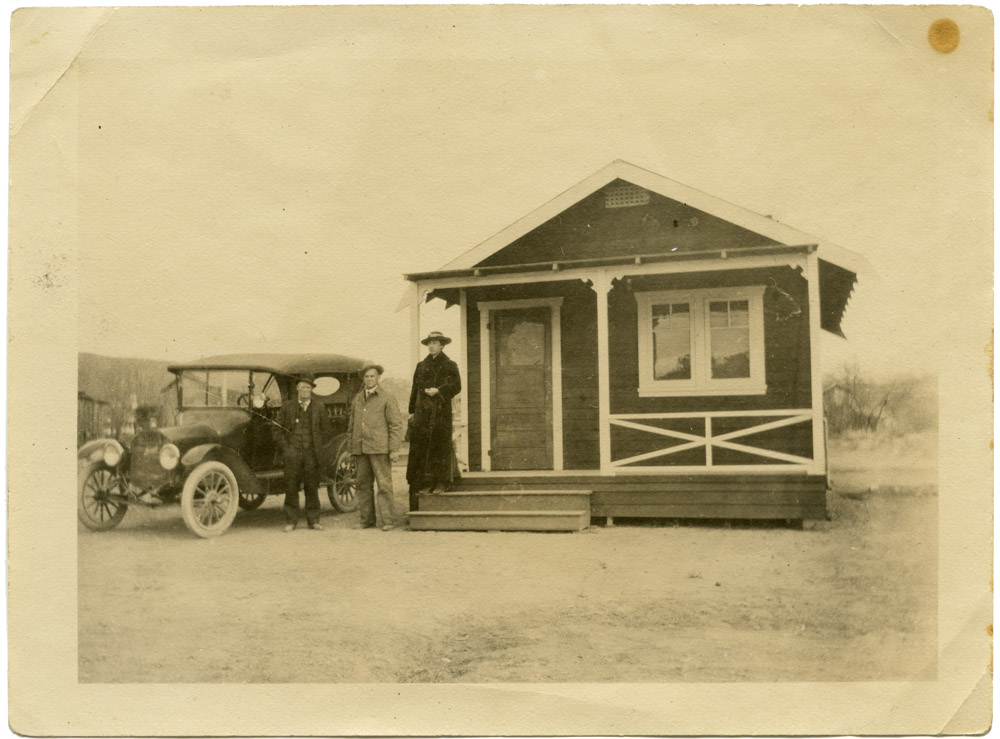
Here’s a picture of a 1918 Ford Model T touring car. Location unknown, but from the size and style of the house, and the seeming emptiness behind it, I’d venture a guess that this is a rental cabin near a beach or inland body of water – it appears to be wintertime though, from the clothes the subjects are wearing. 1918 Model T Ford
I’ve got a few more car images coming in the next few days – a bunch of my favorite make, Packard. I’ll post ’em when I get ’em.
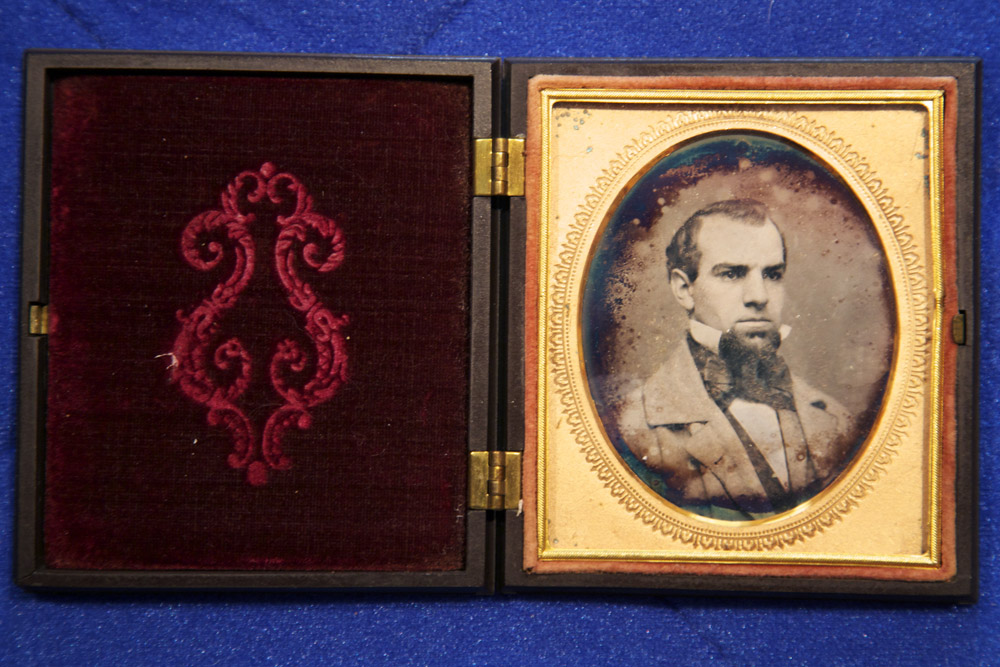
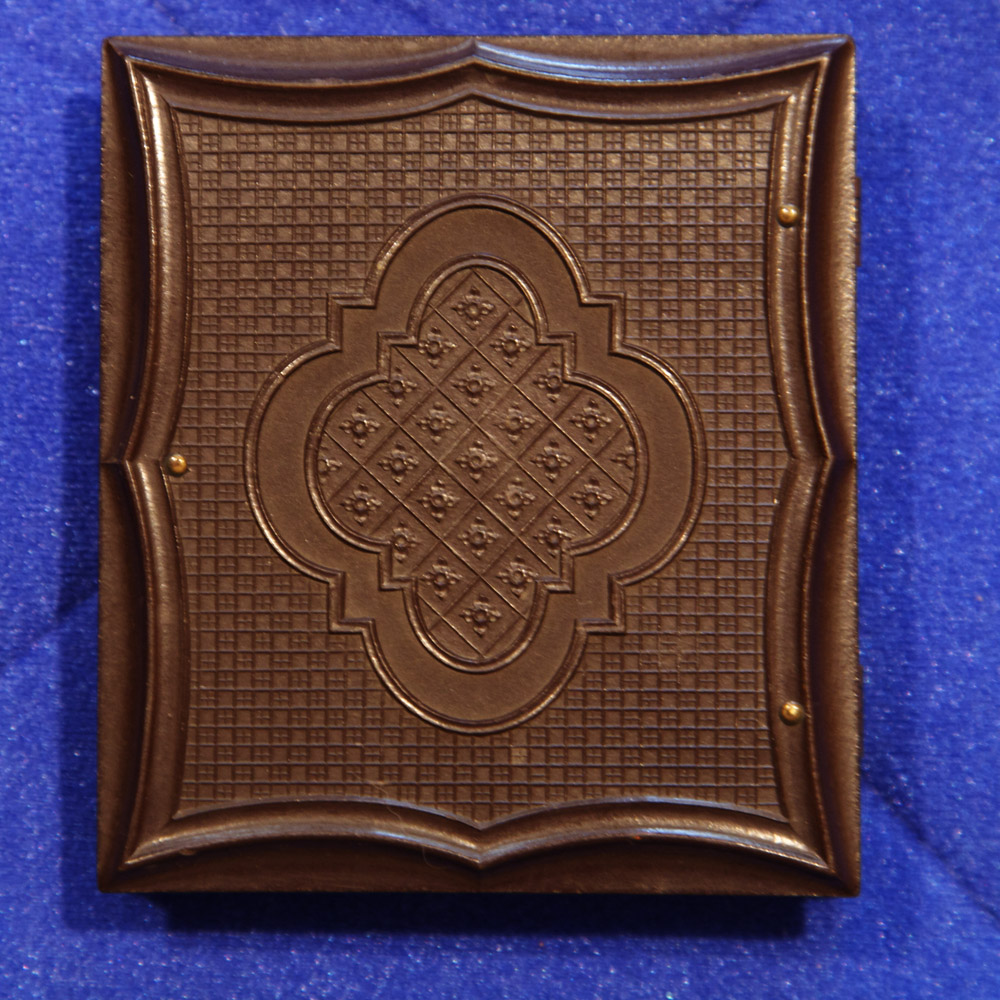
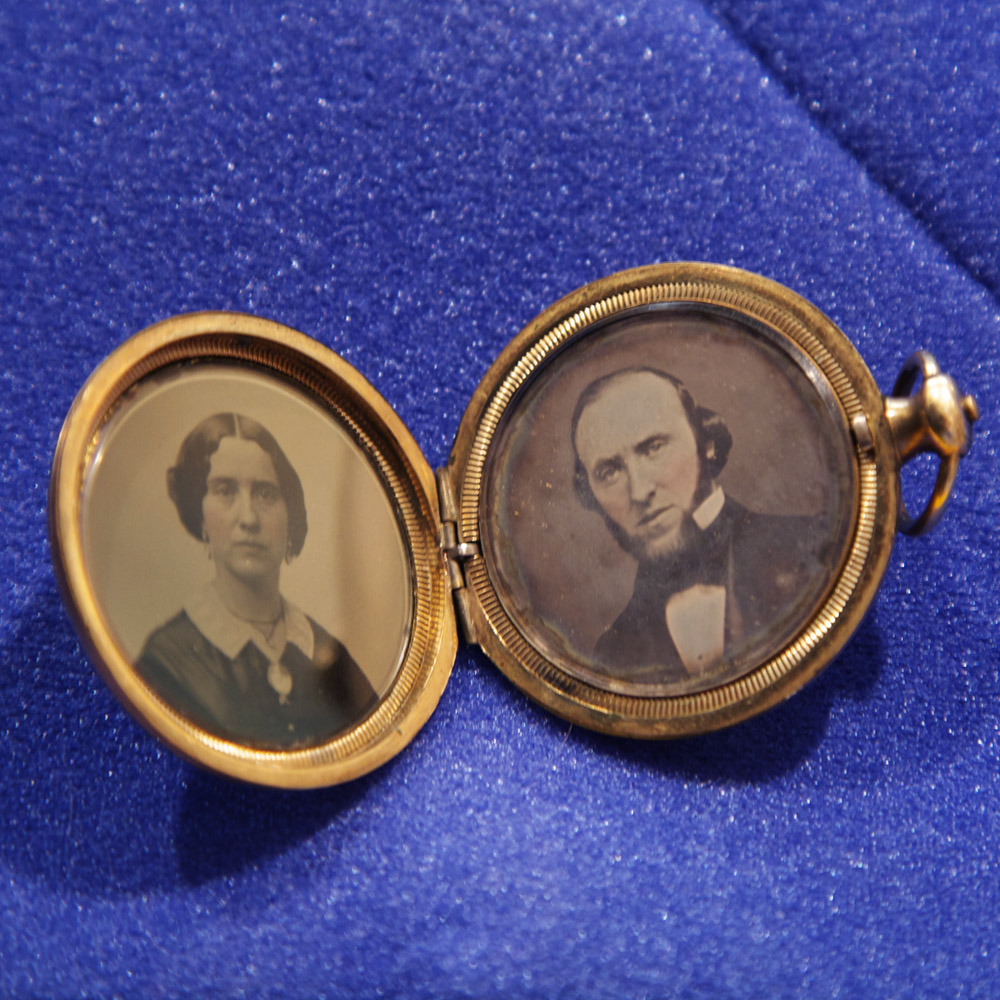
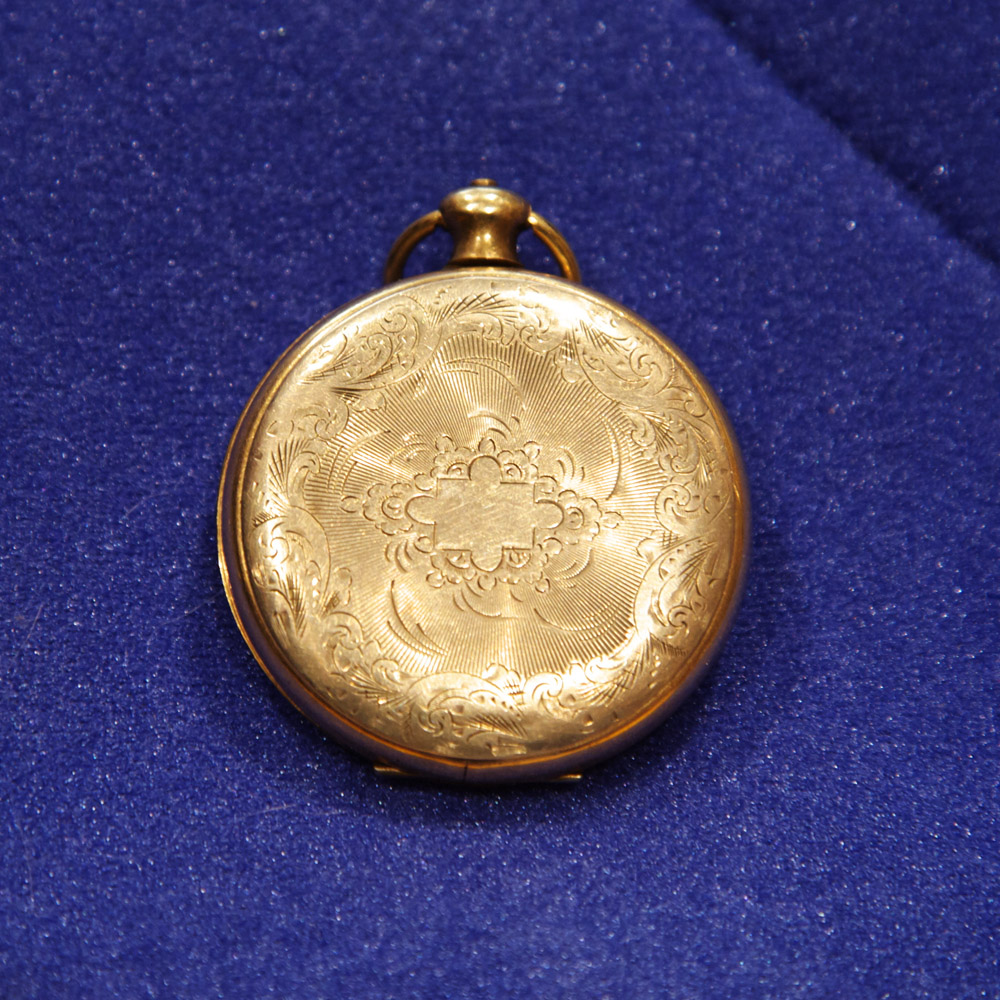
Here are two new daguerreotypes just arrived at the collection- a strong portrait of an anonymous young man in a gorgeous gutta-percha geometric design case, and my first ever photographic jewelry; a strikingly engraved locket with a daguerreotype and tintype of father and daughter (that’s the most logical explanation for the different image types inside).
The 1/6th plate daguerreotype of the young man with a goatee:
Anonymous young gentleman with goateeCase design, Daguerreotype anonymous gentleman with goatee
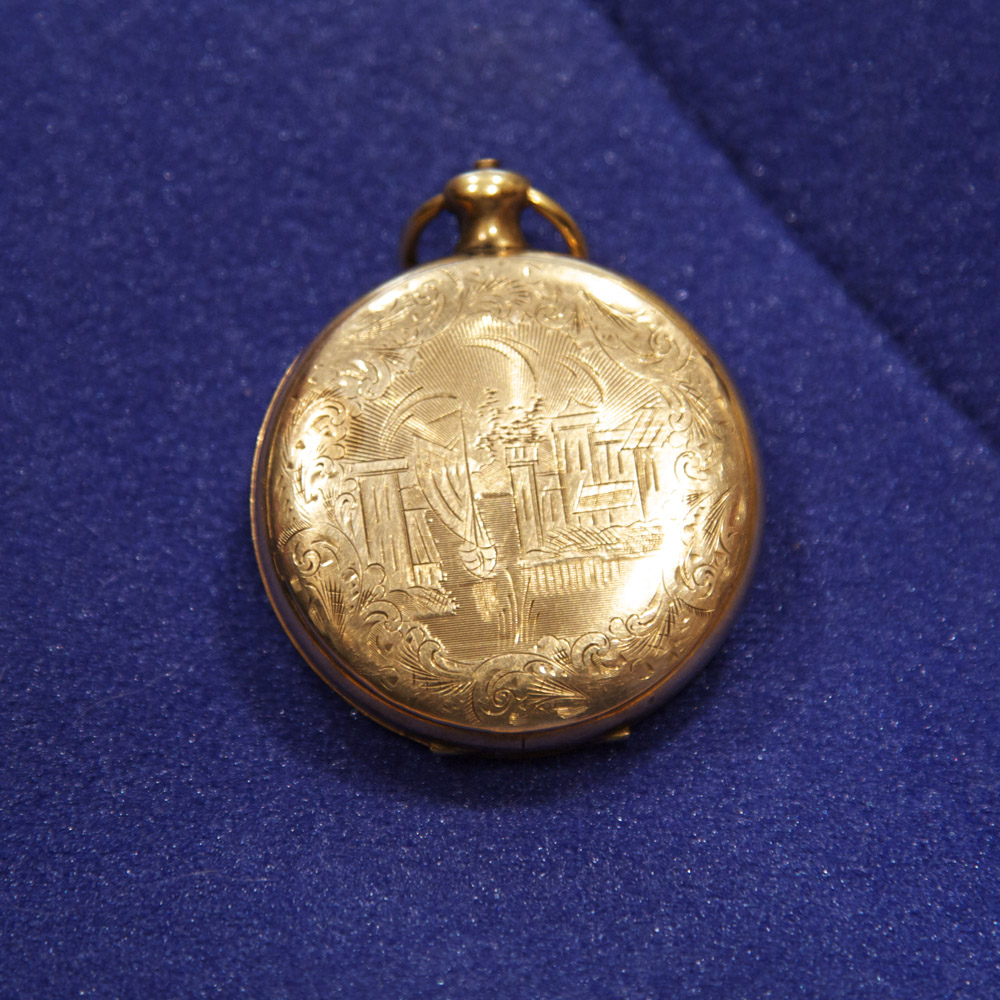
I was trying to figure out why the man in this locket would have been a daguerreotype, but the woman a tintype. Were they husband and wife, it would make sense for both images to be the same type, as they would have been taken at the same time. But if it were father and daughter, it would make sense for the photos to have been taken at two different times – the daughter would be carrying around a memento (probably a memento morii) of her father. And the ship sailing into harbor on the front cover perhaps suggests why – the girl may have been the daughter of a sailor or ships captain/officer, who perished at sea… or not… he may have died at home of old age, but that wouldn’t make as much sense or as neat a story.
Daughter and Father, daguerrian locketLocket, rear coverLocket, front cover, ship sailing into harbor
The locket is in excellent overall condition, considering it is much older than most pocket watches I have (I’d place it in the 1860s), yet it has much less wear on the hinge edge where it would be slid in and out of a collar or a pocket.
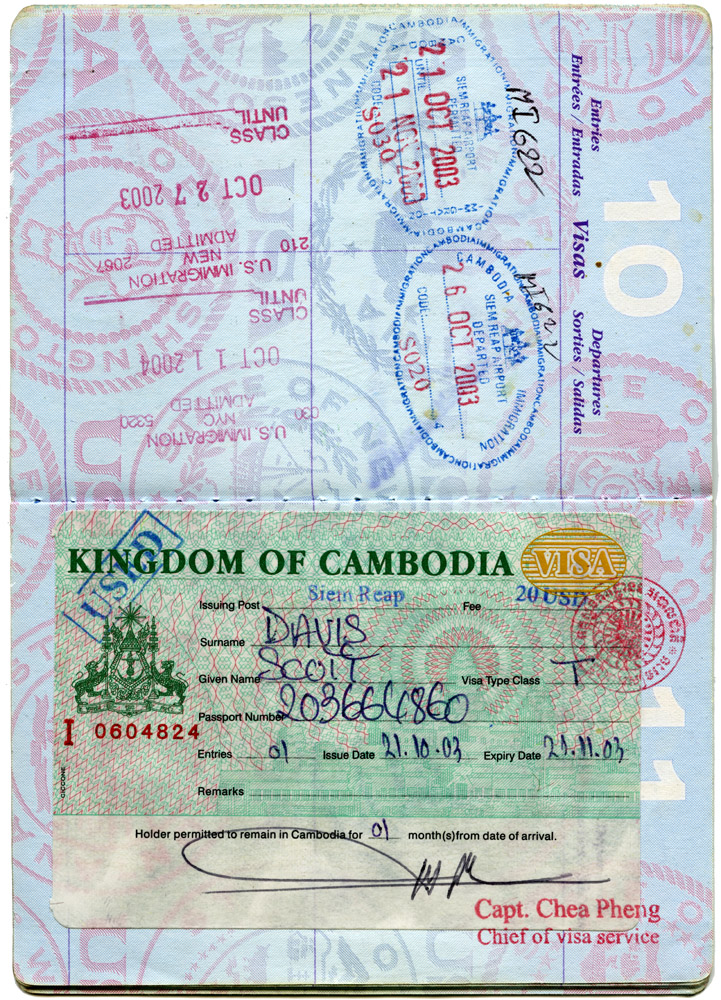
I’ve been a lot of places (Argentina, Belize, Uruguay, Canada, Mexico, Puerto Rico, England (3x), France, Netherlands, Belgium, Spain (4x), Italy (2x), Singapore, Cambodia and Thailand), and of all the souvenirs I’ve brought back, I think the Cambodian entry visa in my passport has to be the best of all of them. Everyone else just gives you a rubber ink stamp mark. The Cambodians take an entire page with this beautifully engraved visa sticker.
Cambodian Visa
Is that not the coolest foreign travel souvenir you can think of?
Actually, to be entirely honest, the coolest thing I bring back from every trip are the memories of the places and the people. I had been forewarned about how Cambodia was (and probably still is outside of the ultra-luxury hotels) a largely cash economy. I arrived armed with five hundred US Dollars in cash. I was insufficiently forearmed with information at the time to know that A: the US Dollar is widely accepted and usually preferred over local currency, and B: the exchange rate is much better at the exchange booths in town rather than the airport, if you must in fact exchange currency. So, when I arrived at the airport in Siem Reap (the city amidst the ruins of Angkor), I went to the foreign exchange cart (yes, a cart, wheeled outside on the curb in good weather) to get fifty or so dollars changed into riel. In all the hubbub (trying to keep an eye on my luggage, watch for my driver, and then pay attention to the currency exchange, I was a dingbat and left the pouch where I had all my money on the counter on top of the cart. I didn’t realize I had done this until I was checked in to my hotel and my driver had gone. To compensate, I went to the local bank, got a cash advance from my credit card, and carried on (the cash advance is another story altogether). My last day in Cambodia, my guide said, “you’ve got almost two hours before your flight leaves. Go ask the airport lost & found office if they have your money. What have you got to lose?” So I went to the lost and found after checking my luggage. The lost and found guy started giving me the third degree – what color was the envelope? were there any markings on it? Was it in a pouch? The currency exchange booth guys saw it left on the counter, and turned it in. It was locked up in the airport director’s safe. I had expected to never see it again, as that $500 represented at the time two years pay for the average Cambodian. I feel certain that had I made the same mistake in New York, even at a high-class hotel, the envelope would just have disappeared with nary a trace. The guys at the exchange cart were so scrupulously honest that they never even looked in the envelope to see what was there, they just turned it in. Gives you renewed faith in humanity to know that people for whom that kind of money would have made such a HUGE difference were honest enough to turn down the opportunity to take advantage of it.

 dcphotoartist