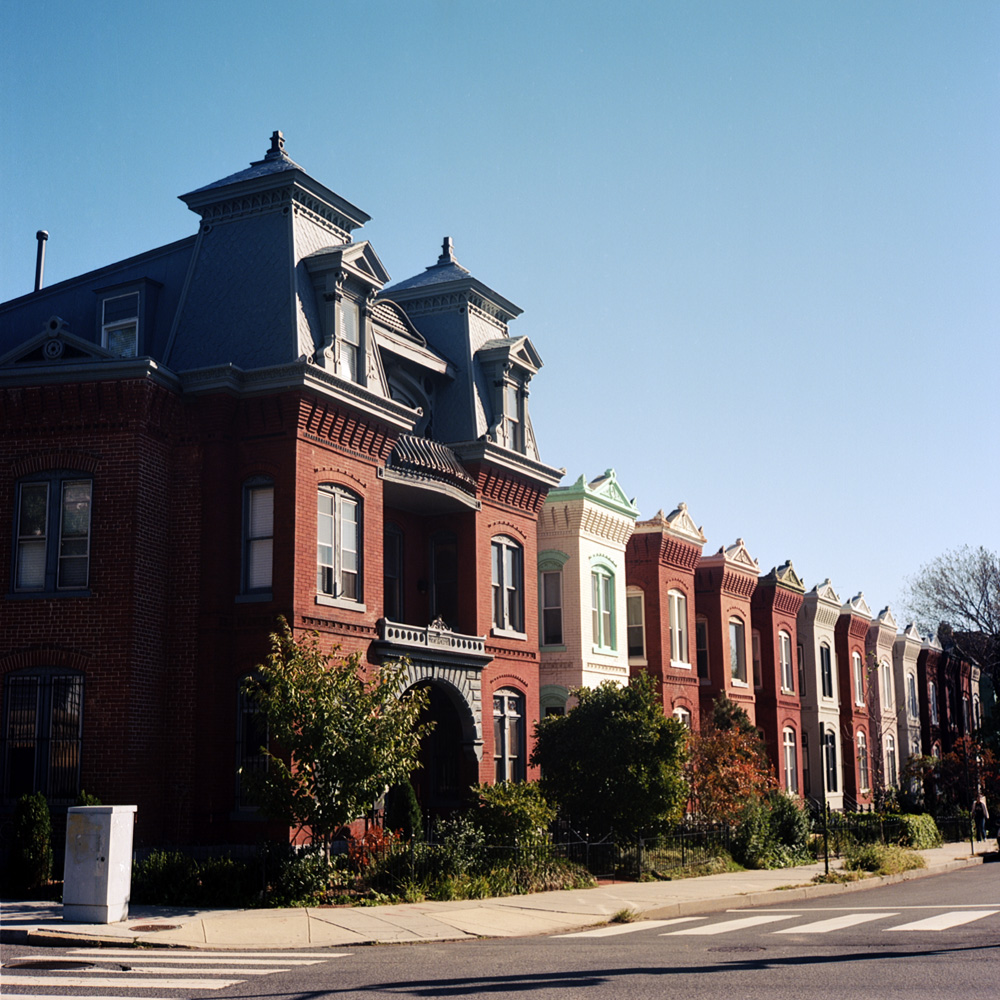
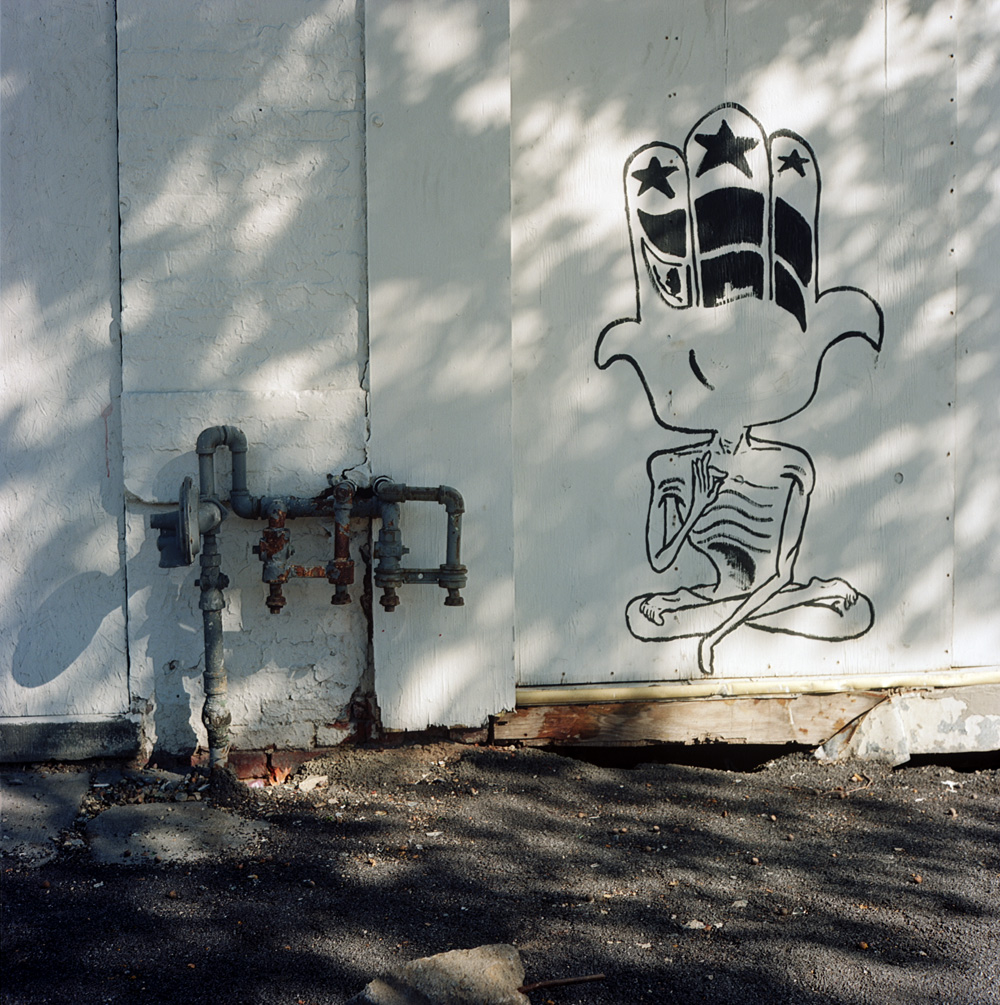
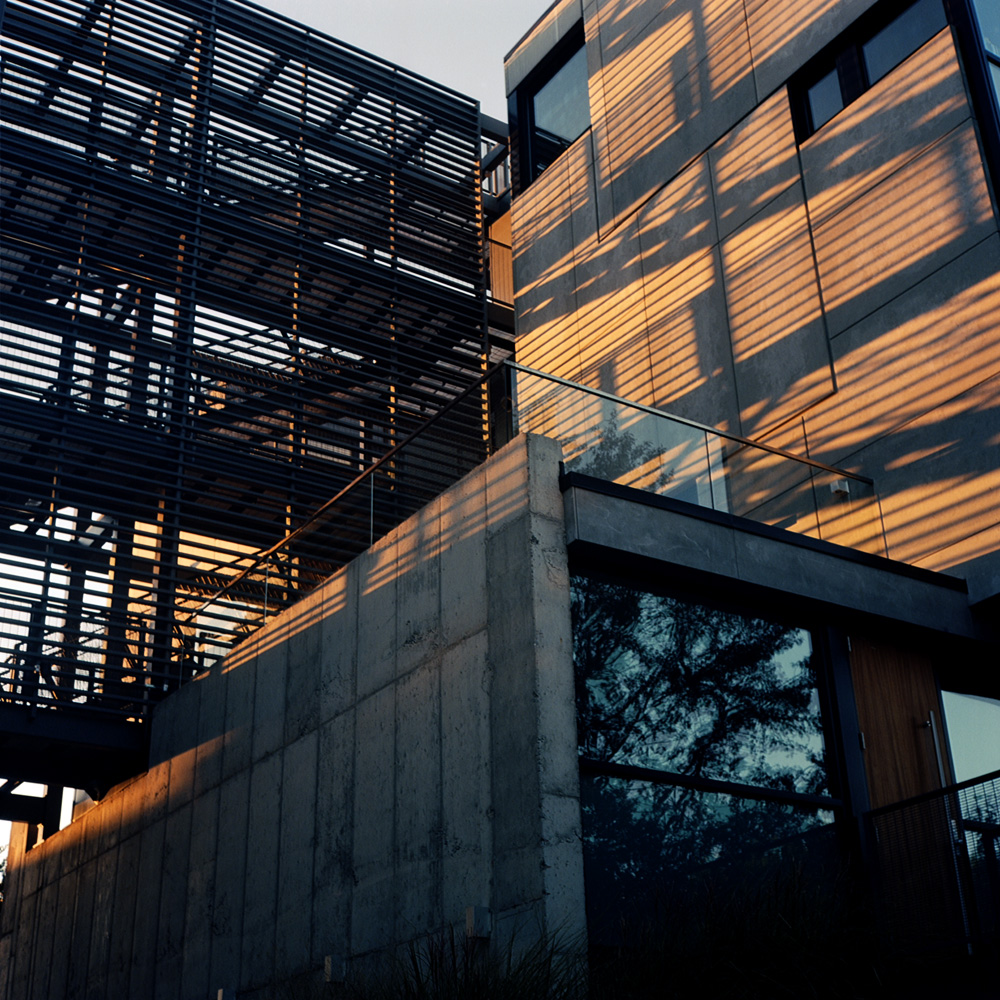
13th Street & Florida AvenueGraffiti, DC Flag Design, 14th StreetApartment Building, 11th and Florida Avenues
These were all shot with my Rolleiflex shortly after I bought it. It’s a 2.8E model, from the 1950s, with the Planar lens. There certainly are limits to the fixed “normal” lens on the Rolleiflex, but working within those limits, it’s a beautiful camera that produces beautiful results. I’m very tempted to take it with me on a vacation as my sole camera and see what I can get with it. I like how compact it is and how unobtrusive, compared to say my Mamiya RB67. All images shot on Kodak Ektar 100.
Betcha thought I had quit collecting! Nah, it’s just in hiatus – makes for a good winter pastime when you’re cooped up in the house. But I found a couple more images that were interesting enough to add.
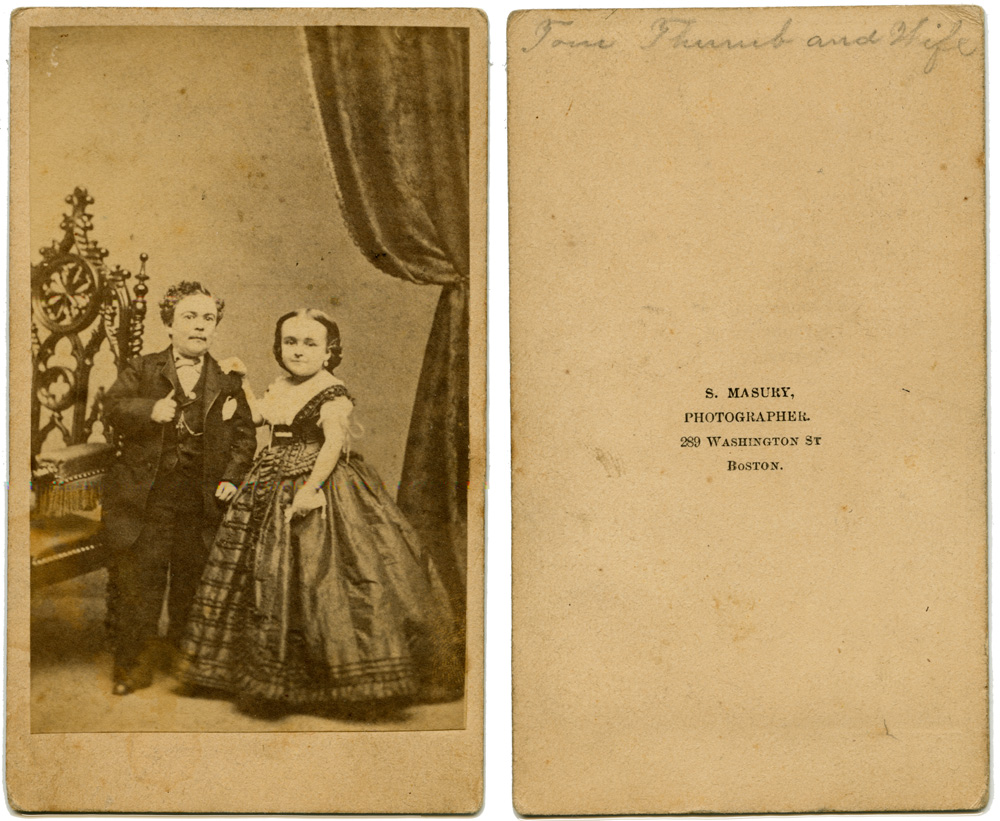
First up – another Tom Thumb and his Wife. I love this one not only because it shows them in their advancing years, but it demonstrates that they remained culturally relevant throughout their lives. I also love the handwritten notes on the back – in this case it gets things wrong about them (they were NOT 18th century performers, and I’m not aware that they were musicians – Tom Thumb’s main performance was as a comic impersonator, doing skits where he portrayed Napoleon and Cupid).
Tom Thumb and Minnie Warren, in their advancing years
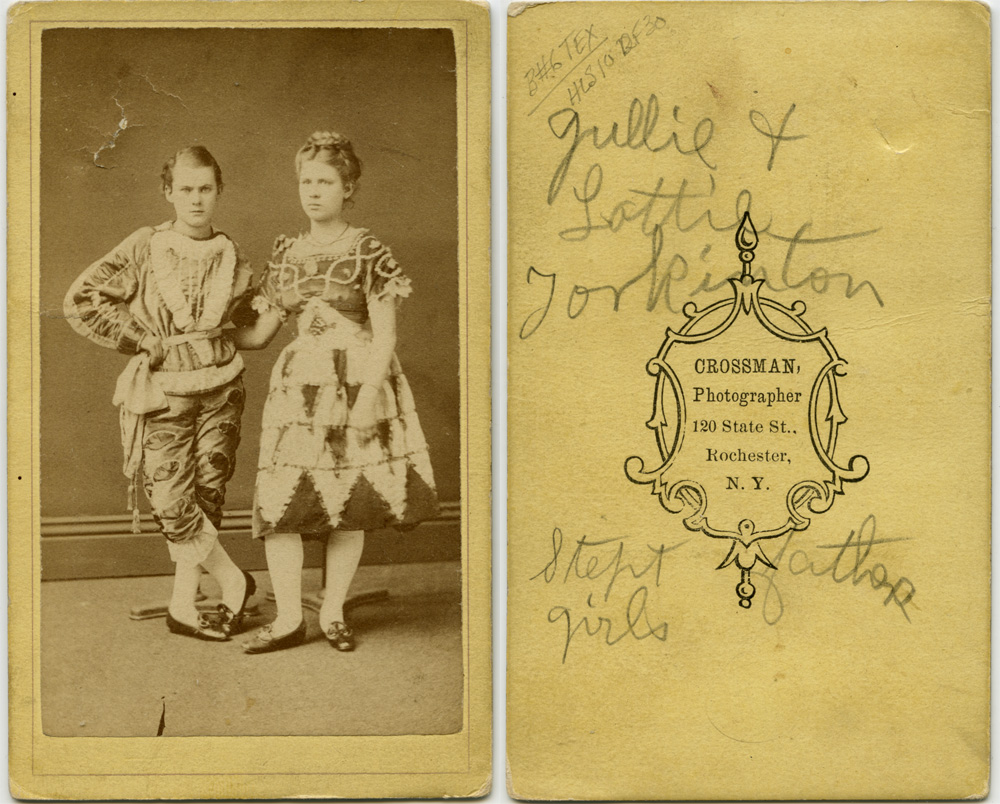
Here’s another circus performer pair – the hand-written label says “Gullie and Lottie Tarkinton”. I was unable to find any reference to who they were. They’re not listed on Olympians of the Sawdust Circle. I’m guessing they are sisters, perhaps even twins. The one is dressed and posed in a very masculine way, quite in contrast to the other, which is its own kind of interesting. And I’m a sucker for a photo that you can see the head clamp stands in.
My promo postcards arrived via UPS today. They’re awesome! The printing is outstanding, as is to be expected from ModernPostcard (http://www.modernpostcard.com). I got them 6.5 x 8.5, as there was no price difference between that size and 5×7. 500 should be enough to last me through Artomatic and still have leftovers to send out.
Feedback on the card design, both front and back, is welcome. I trimmed the white space on the back when making the JPG to save on file size.
Modern Postcard is a great company to deal with – they provide you with design templates for both front and rear in a variety of application packages (InDesign, Photoshop, Illustrator, Quark to name a few), and provide very simple instructions on how to prepare the files and how to transmit them to get the best results. You can even download monitor ICC profiles for proofing to be sure what you envision matches what they print. Are they the cheapest? No, but they are top quality, and you don’t have to agree to get daily spam emails from them in order to have postcards printed at a discount unlike some other printing firms (cough,cough, vistaprint, cough, cough).
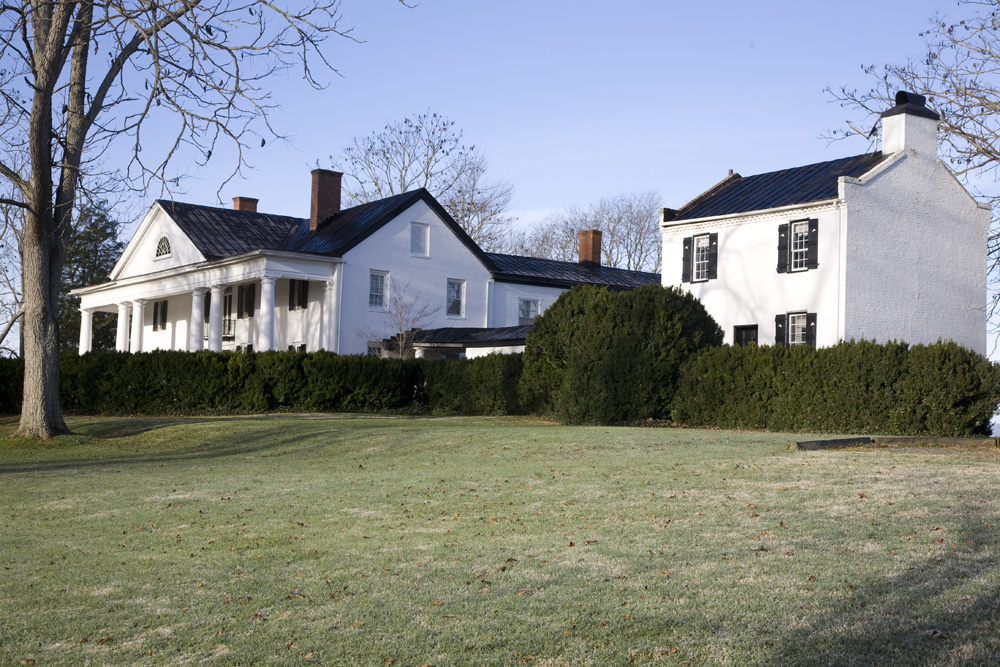
On the trip, we stayed at The Inn at Meander Plantation – an 18th century Virginia plantation house converted into a Bed & Breakfast inn. Their claim to fame in addition to the beautiful home is the food in their kitchen – they have outstanding dinner service (which you do not have to be a guest at the inn to partake of) consisting of locally grown produce and meats, using traditional regional recipes, paired with Virginia wines.
Dinner and breakfast are served in the manor house dining room. The current kitchen is housed in the ell behind the main house, and the original kitchen has been converted into a two-story suite. The original slave quarters are also converted into two guest rooms.
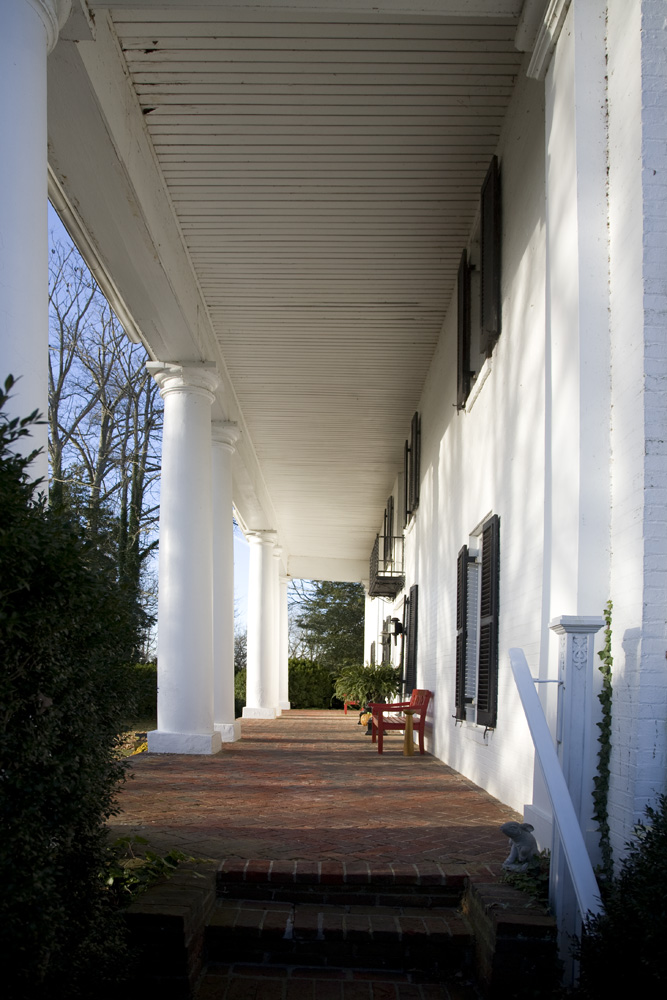
Meander Plantation House, and Kitchen WingFront Porch, Meander Plantation
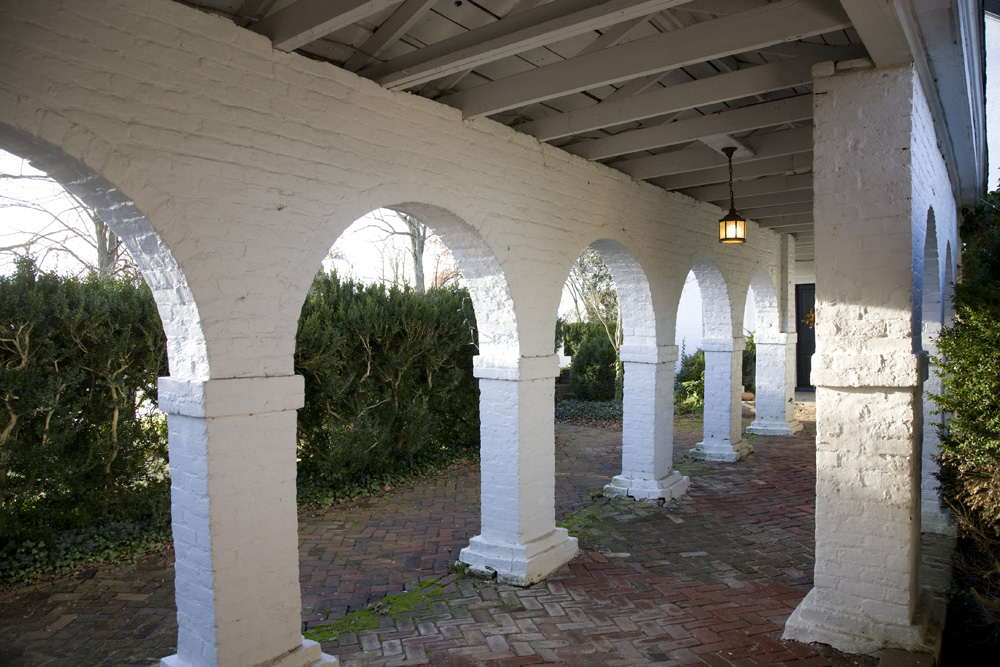
Kitchen Arcade, Meander Plantation
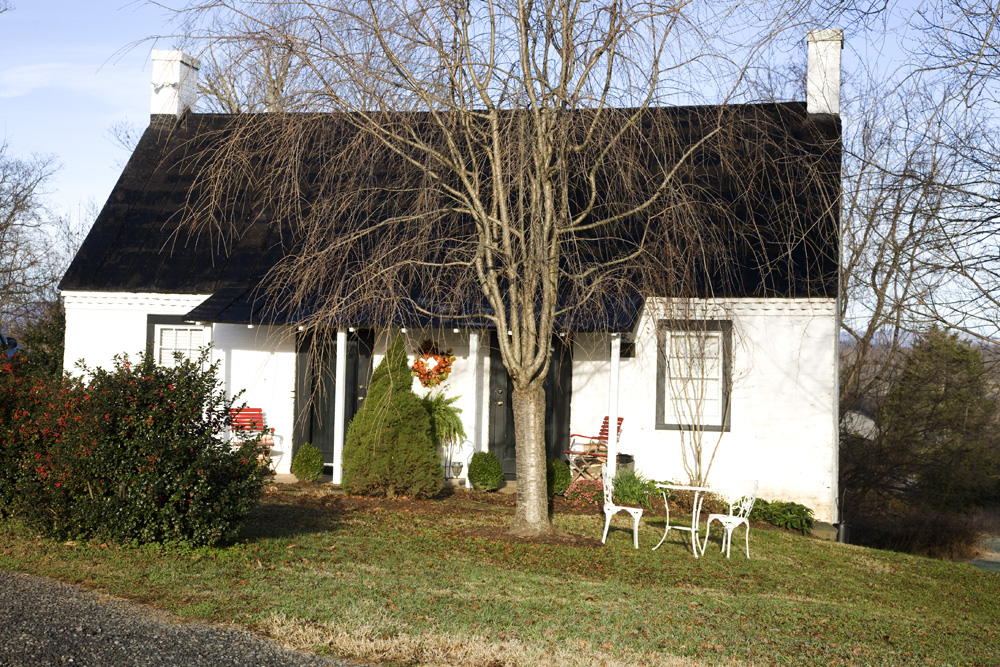
We had the two rooms in the former slave quarters. Now very cozy and charming, you could tell that these rooms were far more primitive inside than the main house rooms, but also by extension that these were luxurious in comparison to the general housing for slaves. These must have been the rooms for the families of the slaves who worked in the house, not only because of the quality of the construction but the proximity to the main house and kitchen (only a few yards removed from the kitchen building). The cooks would probably have lived in the room above the kitchen, and the maids/house-servants in this house.
Meander Plantation is very pet-friendly and dogs are allowed in the outbuilding guest rooms and suites. Mom and dad have this little mixed-breed terrier-esque dog named Tess who they bring with them whenever they travel, so we got the two adjoining rooms in the slave cottage to accommodate the dog. The plantation has a big golden retriever who is very friendly, and Tess would go play on the lawn with the Golden.
I know- this was a terribly long time to wait to do something with these images – Thanksgiving was November of last year. No excuses will be offered. My parents and I have a tradition of going somewhere within a reasonable driving distance of home every year over the Thanksgiving holiday weekend, usually anchored around visiting house museums. It started a couple years ago going to the Hagley Museum outside Wilmington, Delaware, and the Barnes Collection. Another year we went to see The Oatlands plantation outside Leesburg, Virginia. This trip we went to Charlottesville, Virginia to see Monticello, Thomas Jefferson’s home, and Montpelier, James Madison’s home. We stayed a few miles away in a plantation home turned inn, Meander Plantation.
Montpelier:
Home of James Madison, the fourth President of the United States. He drafted the Bill of Rights (the first ten amendments to the Constitution) from Montpelier. Like so many southern gentleman plantation owners, he was better at spending money than making it or managing his estate, so when he died, his wife was left with massive debts that she could little afford to pay, so she ended up having to sell off the lands and eventually the house as well. In the 20th century, Marion Scott Dupont owned the house, which had grown to quite a large edifice with 55 rooms. She bequeathed the house to the National Trust for Historic Preservation upon her death in 1983. In 2003, an effort was begun to return the house to the 22 rooms of James Madison’s time – the restoration was completed in 2008. Today, due to the trials and tribulations of time, the house is largely comprised of empty rooms, with the odd bit of furniture here and there as Madison’s original belongings were sold off and scattered to the four winds nearly two centuries ago. The remaining 2600 acres of the original estate are today devoted to an equestrian center, gardens and agricultural research.
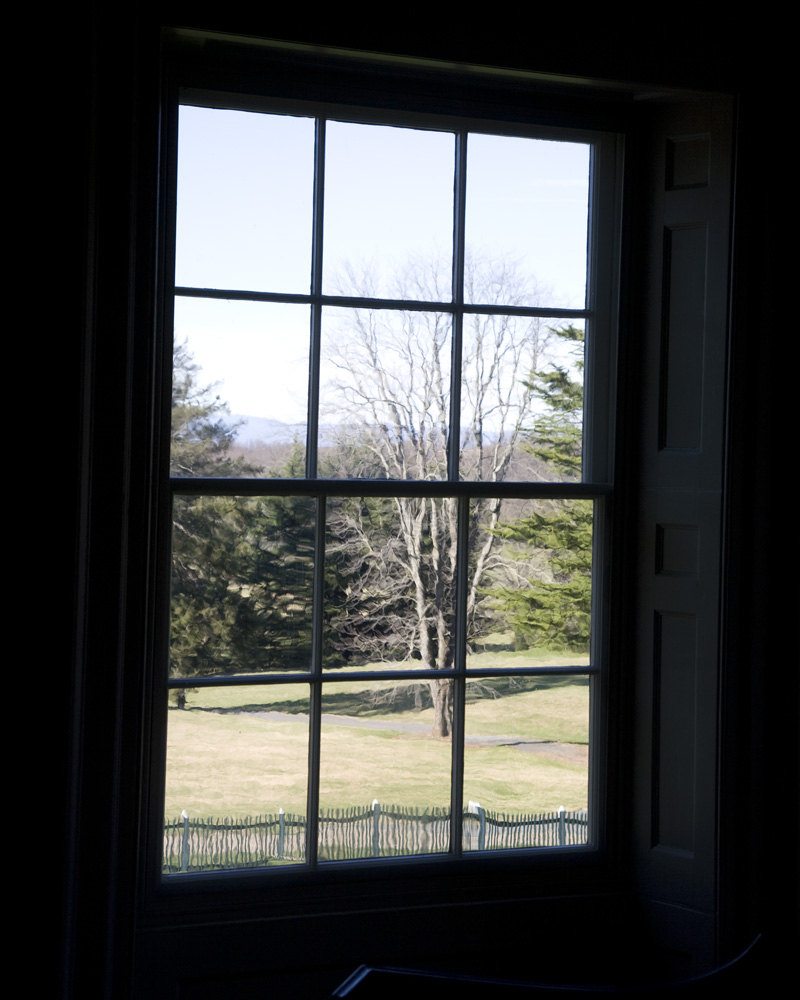
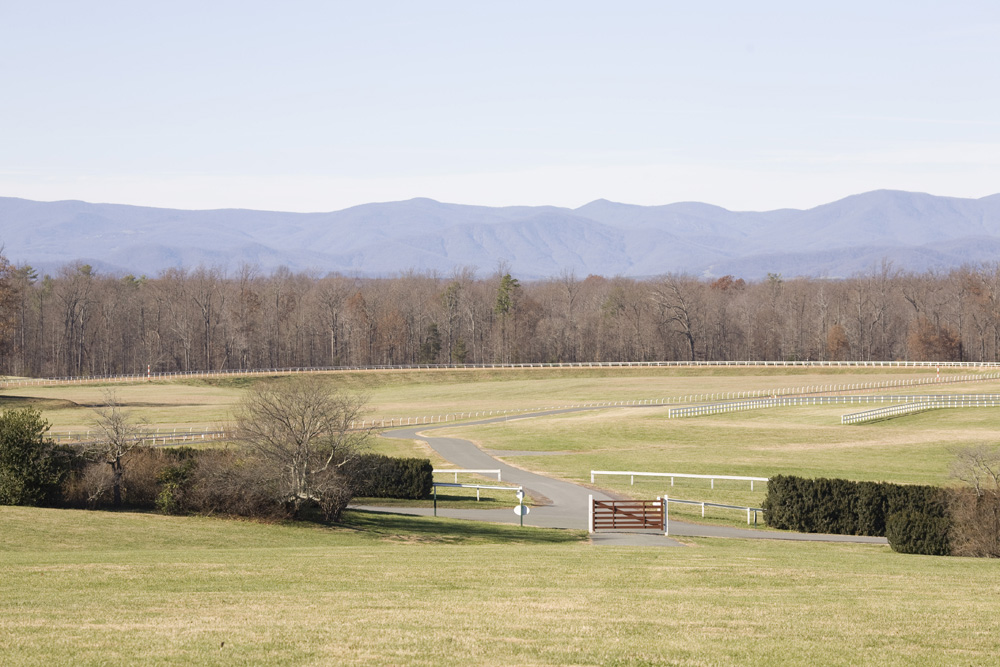
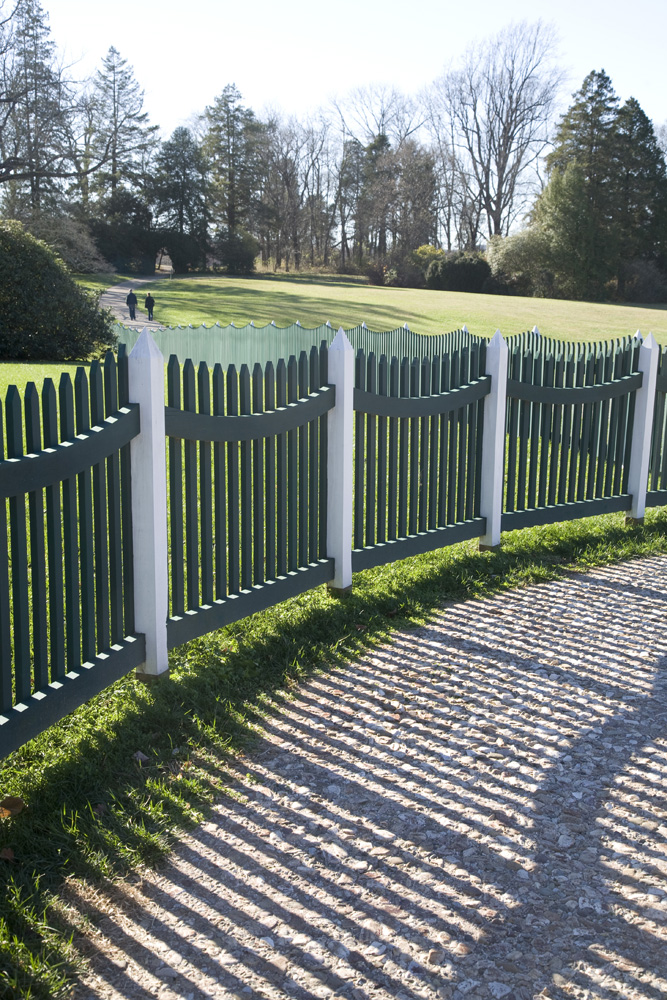
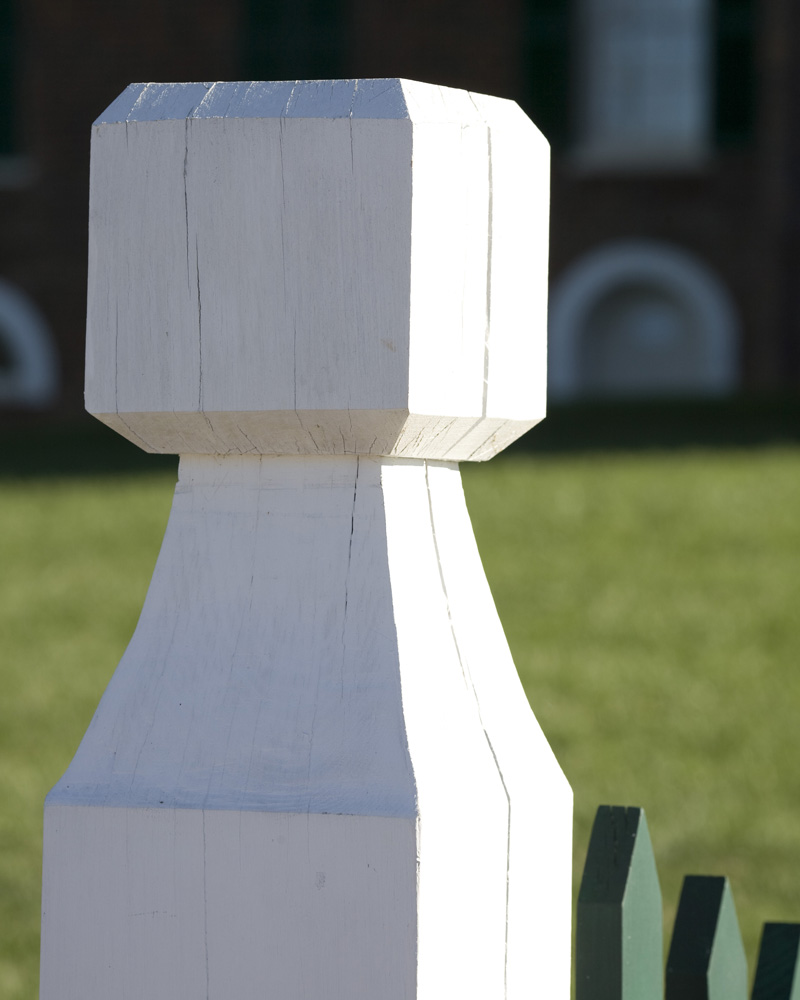
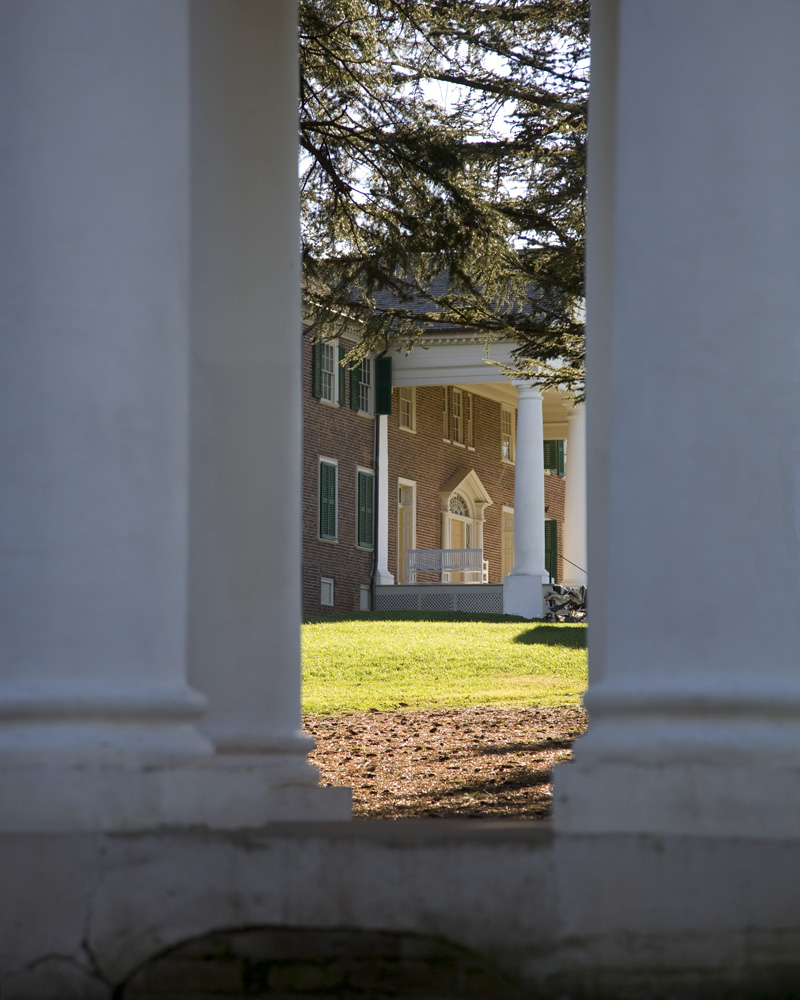
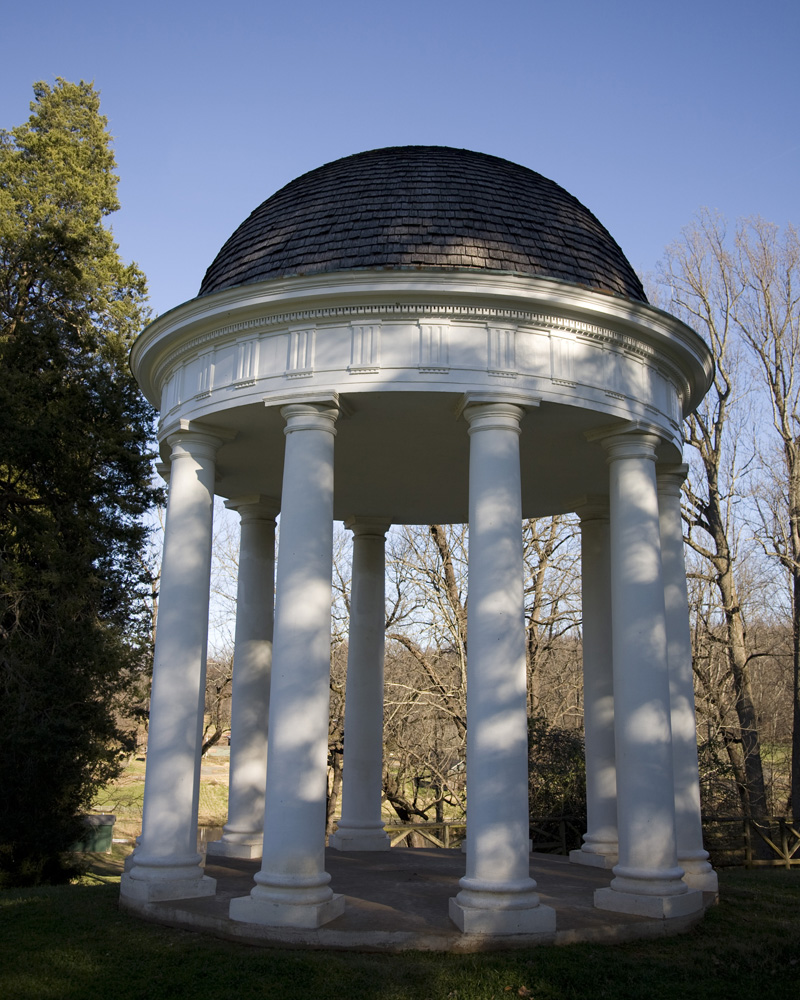
The View from James Madison’s LibraryThe Blue Ridge Mountains, from MontpelierFence, Approaching the House, MontpelierFence Detail, MontpelierFront Porch, Montpelier, from Madison’s TempleMadison’s Temple
You may be wondering why I’ve not included any images of the full front of the house. They take tour groups through in 10-15 minute intervals, and there were always groups of tourists on the front porch, and/or baby carriages and wheelchairs parked out front that were most un-photogenic.
After touring the house, you can visit the gardens that Marion Scott Dupont installed.
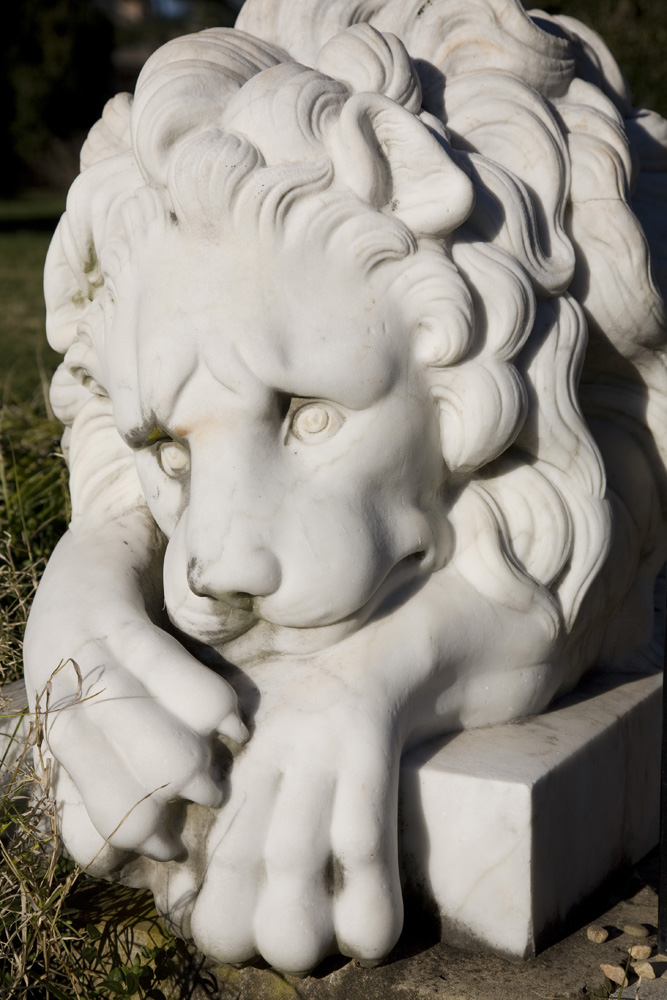
The gardens at that time of year present mostly boxwood hedges that aren’t terribly interesting without getting an aerial view. So you’ll have to suffice with the garden lion for now.
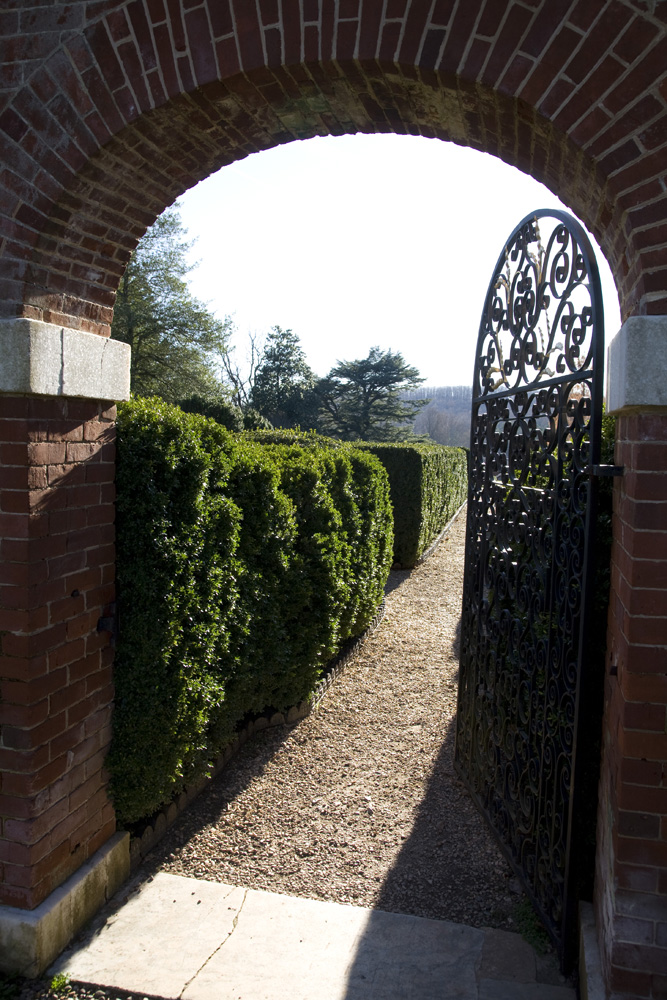
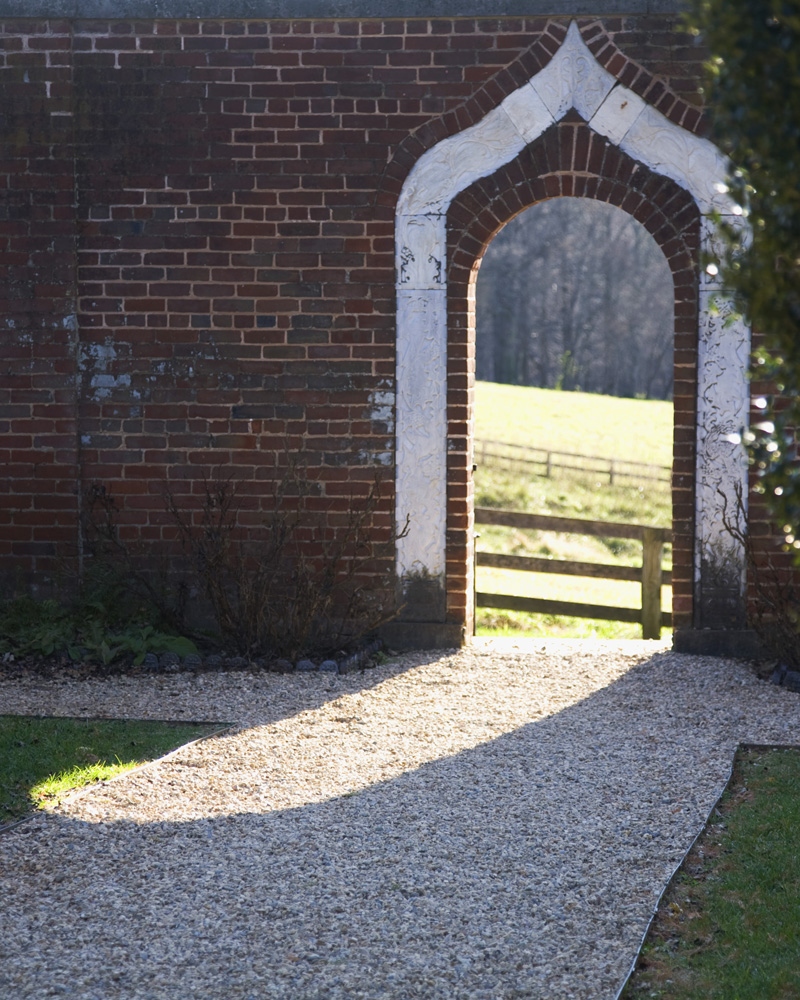
Exit, Walled Garden, Montpelier
The return path to the visitor center:
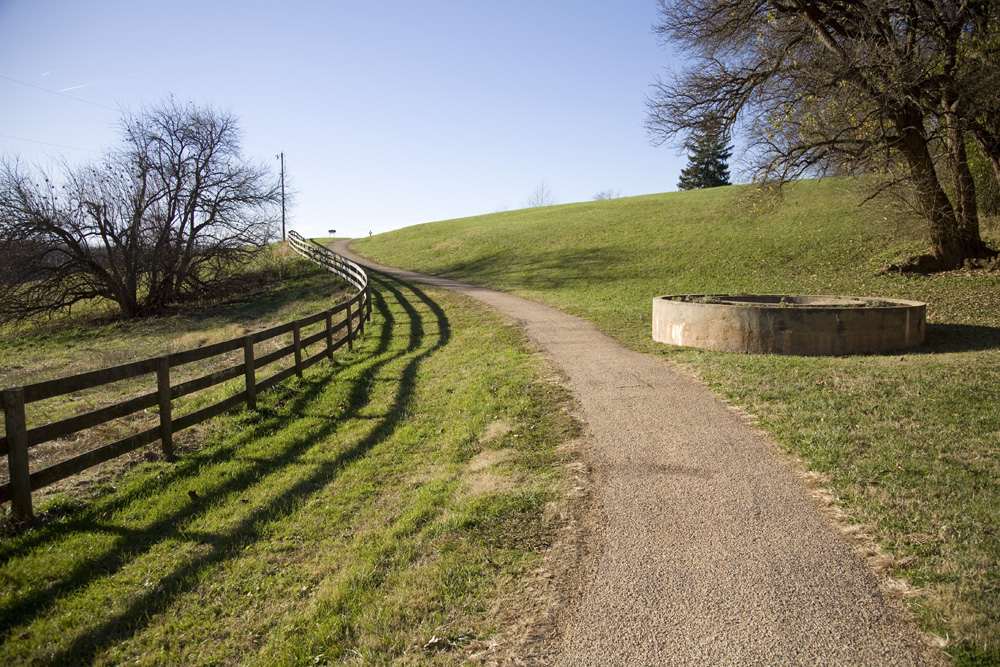
Lane to Visitor’s Center, Montpelier
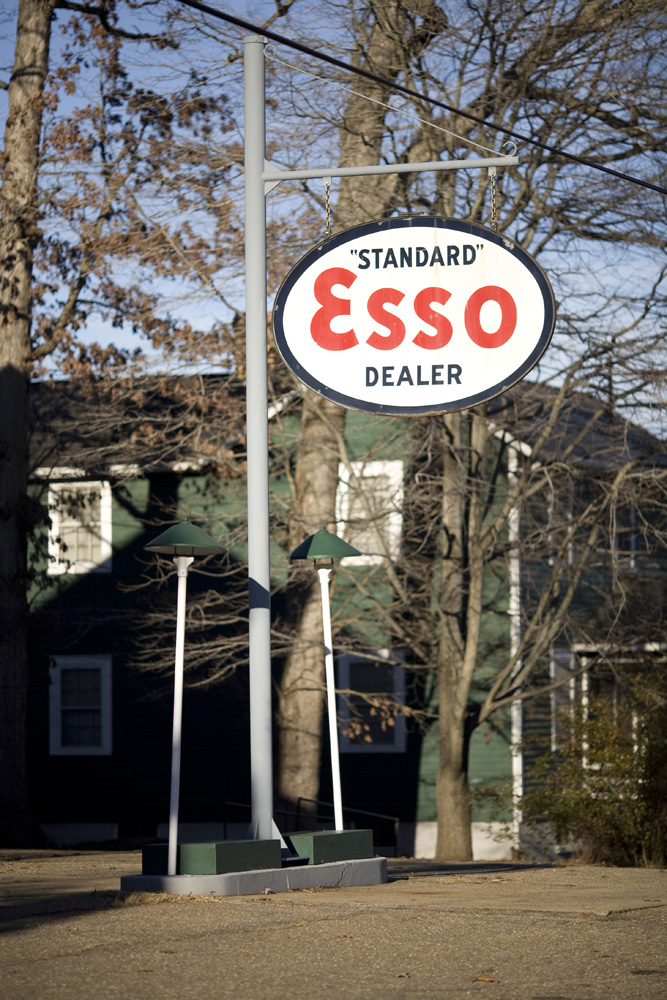
The Duponts had a private rail line that came to Montpelier as Marion Scott Dupont’s father, William Dupont, worked in Washington DC and wanted to have easy access to work and home. The rail station still stands and is now a civil rights museum. Across the street is a well-preserved Esso station from the 1920s.
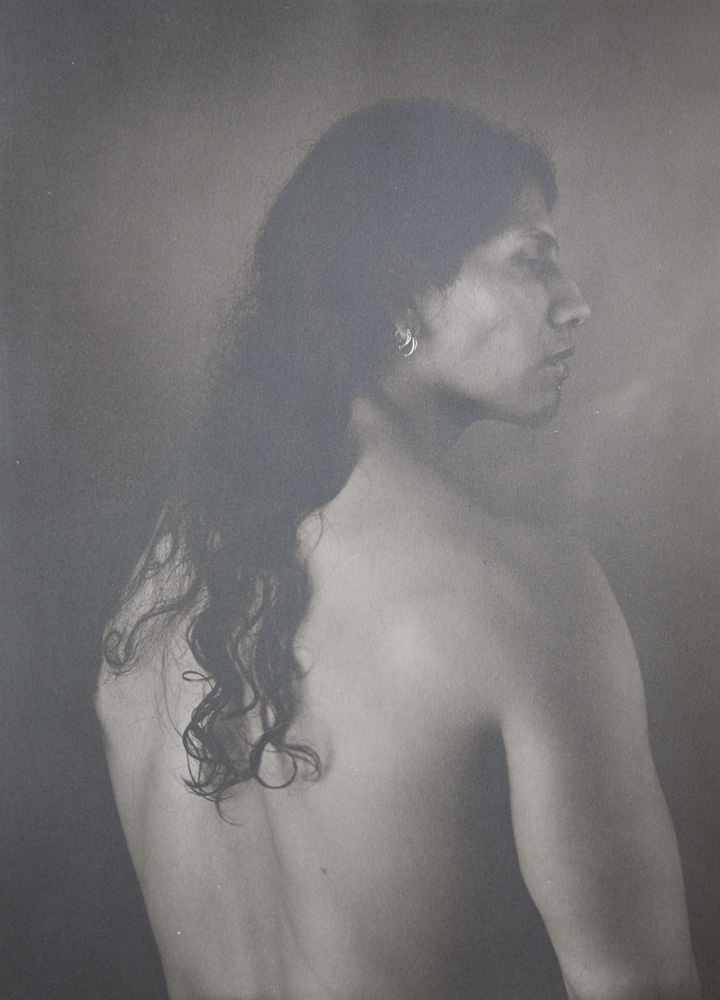
This is a portrait I did of Christian, a friend of mine. He’s a personal trainer and dancer, originally from Argentina. The original print is from a 14×17 inch negative. I had to trim it a little because there is a flaw in the edge of the negative (not sure why exactly, I suspect the edge of the film slipped during development and got blocked by a ridge in the development tank). But that’s the beauty of working with such a giant negative – if you have to trim an inch off the edge, it’s not a big deal.
Ok- I’ve re-photographed the print now and it looks SOOOO much better – much sharper detail.
I finished up my first session of my Intro to Platinum/Palladium Printing class today. I had eight students, all highly motivated and enthusiastic, and it was a big help in making the class succeed. I was a bit nervous as this was my first time running the class, and it was sold out. There was a very diverse audience – about half and half male and female, and age ranges from early 20’s to late 60s (maybe older than that, but it’s not a very polite thing to ask). I was really thrilled that everything went smoothly – on day one, we all talked about the process, shared work and little bios of our artistic backgrounds, and then went out in Glen Echo Park to walk around and shoot some images. We made 10 negatives all told, enough for everyone in the class to own one, with a couple spares. Since platinum/palladium is a contact printing process, we shot all the film with my 5×7. Most of the students had never used a view camera before, so it was an additional learning experience for them. I took the film home with me and developed it that night, so that students would have real live working negatives, properly developed, for the class, and to keep a sample to see what a good negative looks like.
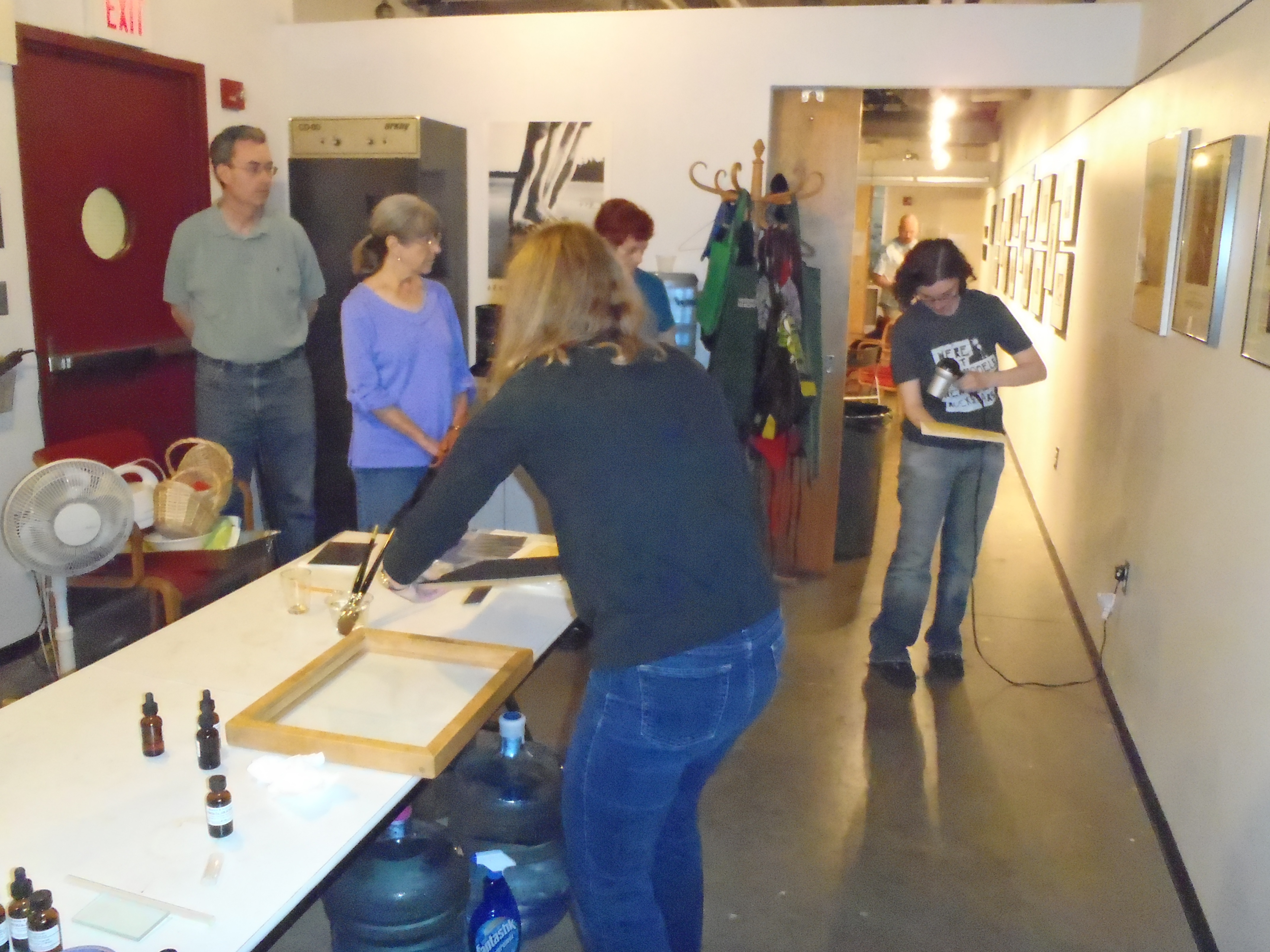
Today, we got in to the darkroom early, set up and went through the process, end to end. I began with a coating demonstration, then exposed the print, developed, cleared, washed and dried it. Then I cut my students loose and let them coat and print away. Students Coating and Printing
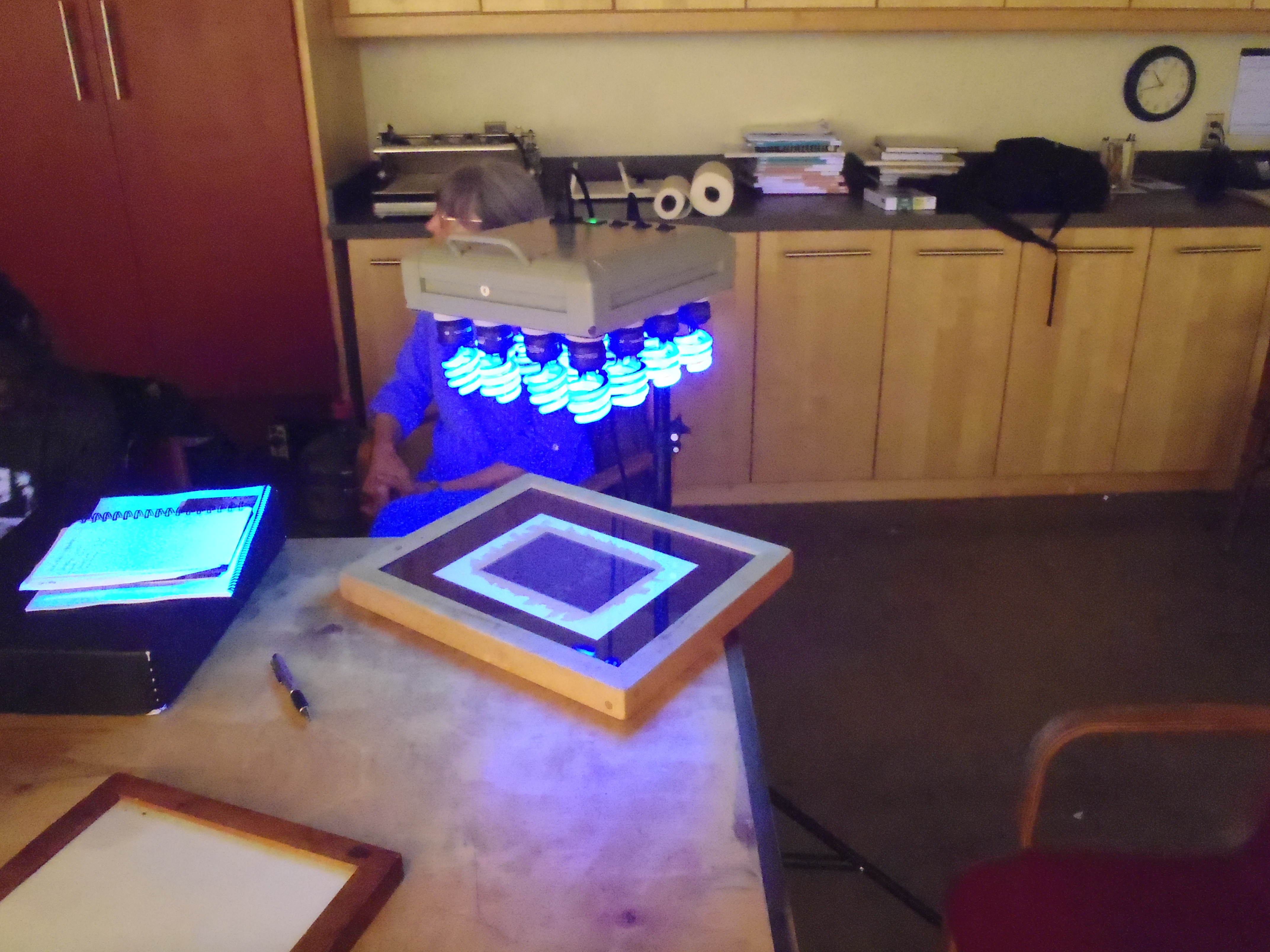
We used a combination of artificial UV light source and natural daylight – it was a cloudy overcast day, so actually not a bad day for doing pt/pd prints, but exposure times were LONG outdoors – with some negatives, up to 25 minutes. For a quick-and-dirty portable UV light source, I used a 16-socket PhotoDiox lamp house with black-light compact fluorescent tubes. It worked out great for exposing, if a little slow (the average exposure with it was 12 minutes), but we could only do one at a time with it. We still managed to get two prints done for each student, which is not bad for a single day printing session with so many people trying to use a small facility.
Exposing a Print
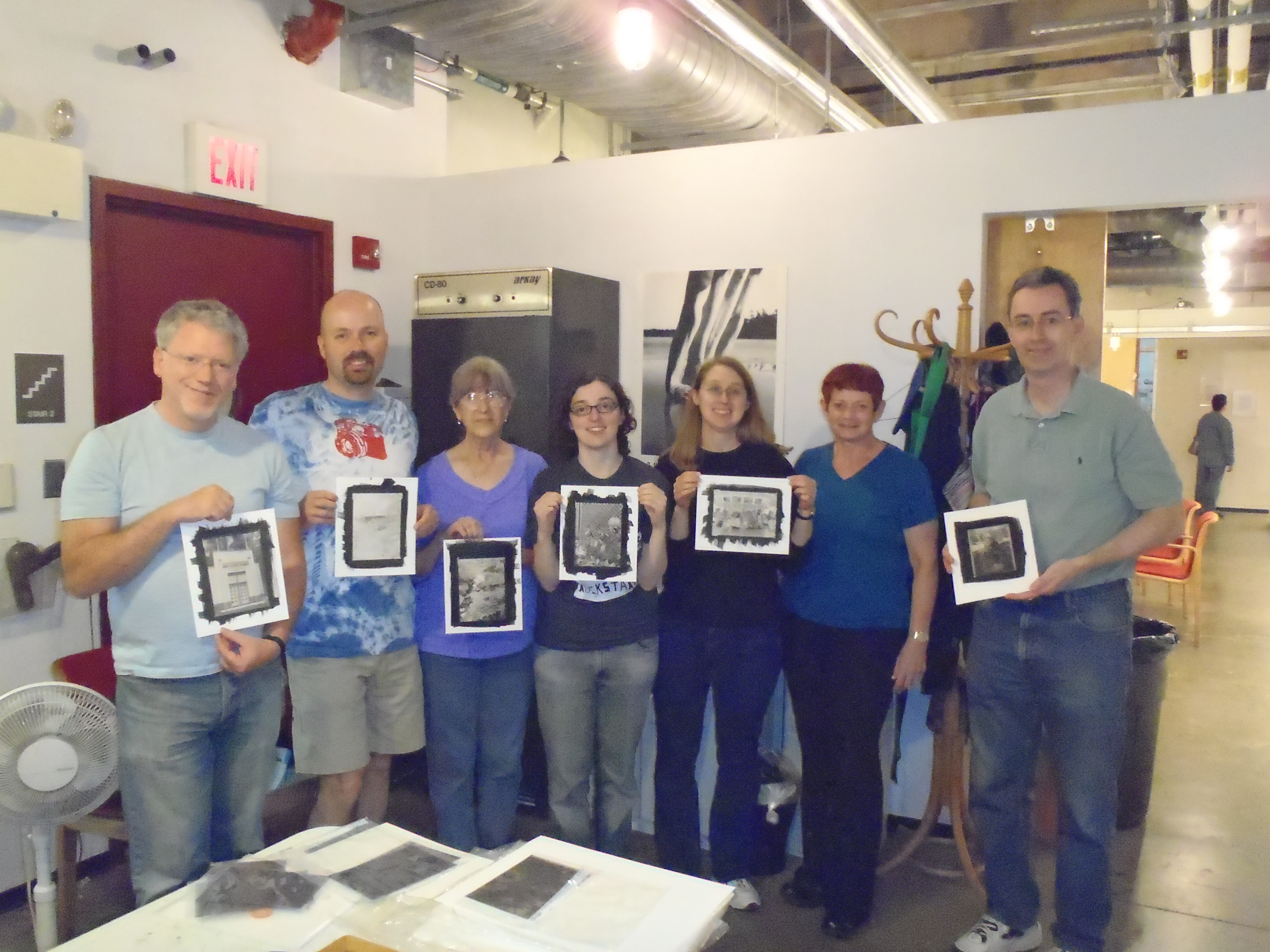
We got the chance to try both traditional develop-out palladium prints and printing-out Ziatypes (a variation on the theme but the image if fully formed during exposure and requires only a water wash step instead of development. Here are my students posing with their prints –
Class Photo – May 5-6 Intro To Platinum/Palladium Printing, Photoworks
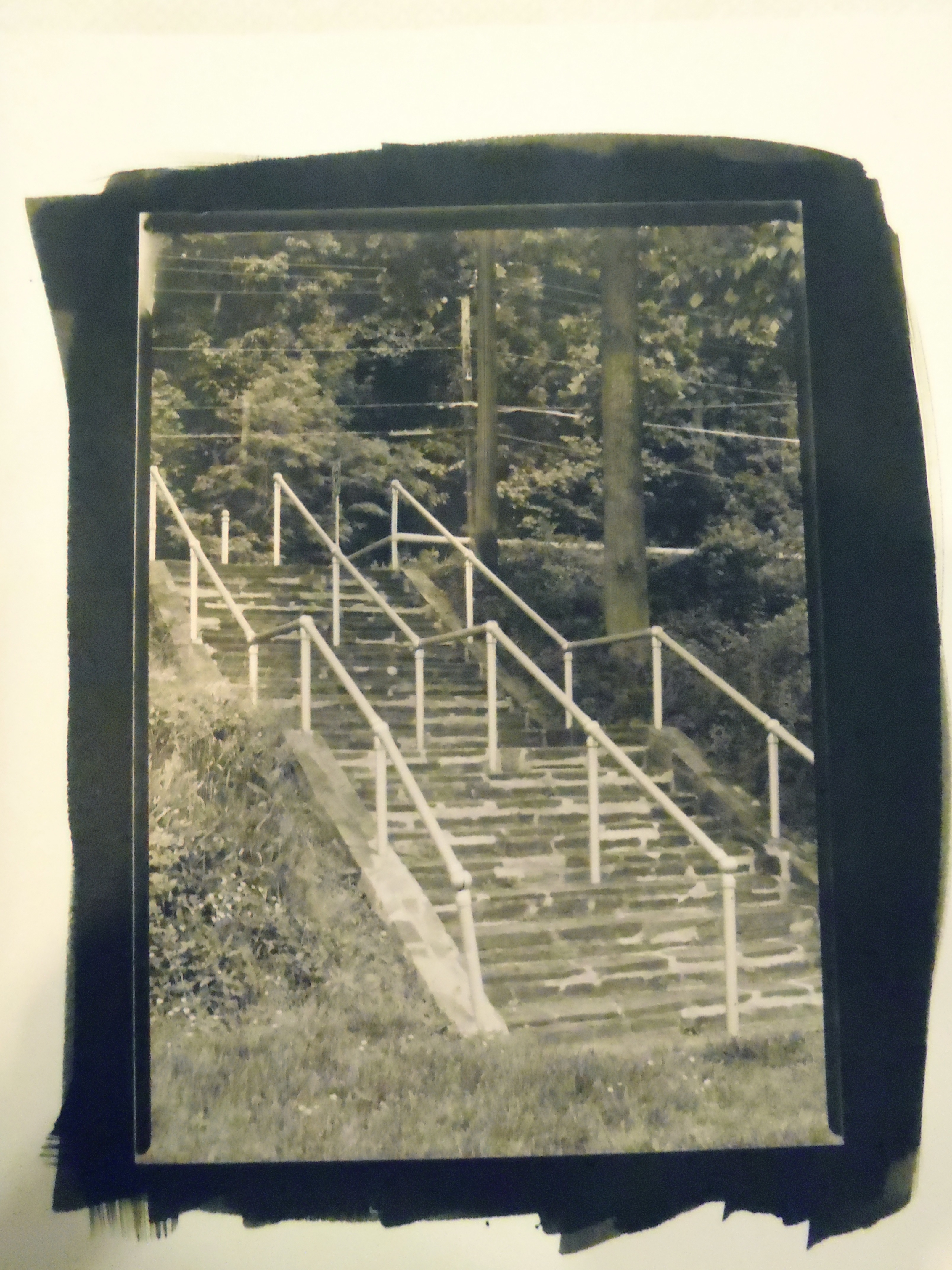
And here’s a finished print of one of the student images. The print is still wet, and the crappy Olympus digital P&S I was using didn’t white balance well, so my apologies in advance if the shot looks a little yellow –

 dcphotoartist