Category Archives: About Art

Alternative Photo Revolution – Kevin Kelly

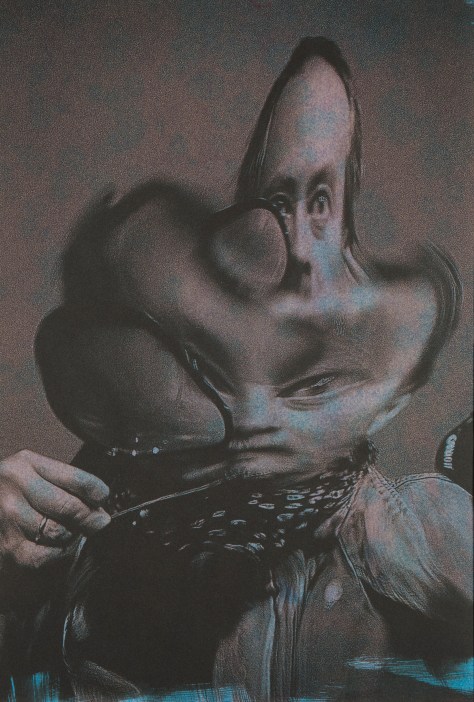
Another one of our artists participating, Kevin Kelly, has been working for a long time on a series of images concerning gender and sexuality. I wanted to present a short video concerning his work here (if you pay attention, you’ll get to see the Dylan Ellis Gallery space in Toronto, where the show is going in May for the Contact festival).

Kevin Kelly GENDER PreDoc 1080p from Simon Haworth on Vimeo.


Alternative Photo Revolution

Glen Echo | Glen Echo Park in the Ballroom, Backroom

March 28
Viewings will be taking place from 1-9pm with a formal reception from 6-9pm. Admission: Free

New Orleans | L’Entrepot

March 31-April 1
Private reception on Friday March 31st from 6-9pm.
General admission is $10
VIP Collector ticket is $30 admission + chance to win a unique permanent print
Stay at home ticket $25 for a chance to win a unique permanent print
Tickets can be purchased on Eventbrite.
April 1st, viewings will be open to the public from 1-9pm. The Julia Street First Saturday event is from 6-9pm with all gallery’s in the area having receptions

Toronto | Connections Gallery

May 15-June 17
Opening May 18 from 6-9pm
The Toronto portion of the exhibition is a part of the Contact Photography Festival

#ContactPhoto #202Creates #202Fotos #acreativedc #glenechophotoworks #photoworks #altprocessrevolution #DylanEllisGallery #ConnectionsGallery #Toronto #NewOrleans #NOPA #KevinKelly

AltProRevSponsors

Alternative Photo Revolution – Interview with Brittany Fleming

As some  of you may remember from my Rendering the Spirit show, I interviewed the artists participating in the show via email. For APR, I did the same. With 40 artists participating and a quick turn on the time-frame, I’m only posting a few interviews.

Today’s interview: Brittany Fleming

Tell us a bit about your photographic work: * how did you get interested in photography? 

Born and raised in rural Ontario, Brittany spent most of her adolescence outside experimenting with a camera. It was during a three-month backpacking trip to Europe that her interest in travel and photography was sparked. “Being able to combine my passion for travel with photography opened up a new way of thinking. I came back to Canada knowing what I wanted to do.” 

Leaving Fergus behind, Brittany left for school in Ottawa where she completed a two- year photography program at Algonquin College. Before graduating, she started her career as a Lifestyle Photographer with Union Eleven, where she currently works. 

* what kind of work do you produce (how would you categorize your work)? 

I currently work for a studio in Ottawa, Union Eleven where I`m a lifestyle photographer. The work I show for galleries is my Street photography & Photojournalism. 

* what themes or subjects inspire you? 

I am currently working on three projects that are close to my heart. The first is about urban development and the ever changing cityscape. I document this environment through street photography. The second is an ongoing project about agriculture – showcasing farmers from our past, present, and the future of farming through a photojournalistic lens. Lastly, I am combining street photography and photojournalism to bring light to the human rights issues of our time, specifically women’s rights. 

How do you see your work in relationship to the larger art world:

* did you come to photography from another medium?

no

* do you feel your work is influenced by other media/periods/genres? If so, which ones, and why? 

On backpacking trips I was able to connect with locals. I have the ability to connect the camera to the heart, to feel the subjects and their story. An anthropologist at heart, my aim is to show the social landscape of my time. Deriving my photographic influences from Robert Frank, Diane Arbus, Walker Evans, Garry Winogrand, and Lee Friedlander, I always try to keep the human condition in focus. 

Could you talk a bit about the piece you submitted to the APR show? 

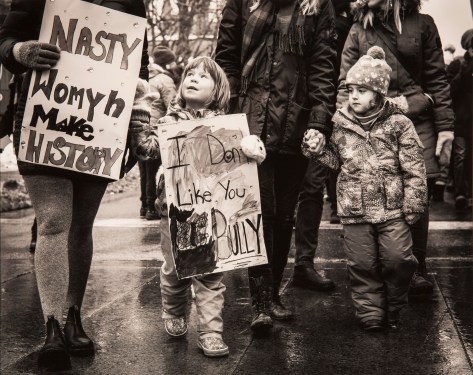
We all want to feel equal. My work is strongly influenced by this innate desire, and I’ve chosen to expose it through a female perspective. 

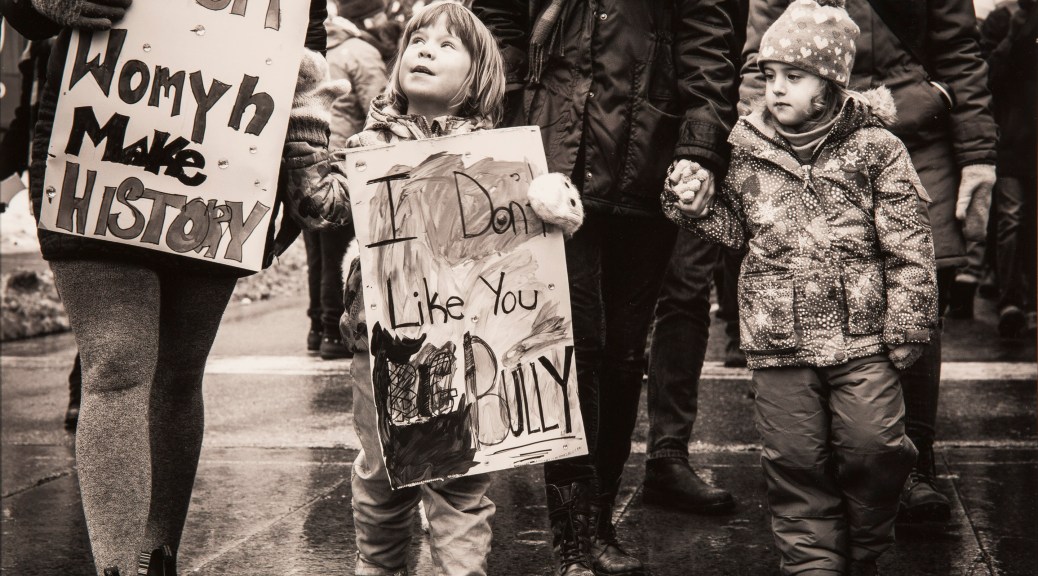
Captured in this photo are a group of people at the women rights march. Showing the young girls looking up to their mothers sparked a strong emotion. Thinking about this young girl, her past, present and, future. 

I too, yearn to feel accepted and equal. My hope, by sharing this image, is to show how truly brave these women are and how grateful they are for their rights and freedoms. We all have the power to go ahead and face our fears, follow our passions, and do so with grace. Our successes and failures are what will shape the generations of tomorrow. 

What is your experience with analog photography? Digital photography? 

When i was in school for photography we uses 4×5 cameras. Other then that I primarily shoot with my DSLR. 

Do you normally print your own work, or have others print for you? 

Bob and the team at Alternative Photo Services do an amazing job at printing my work for me. They are experts at bringing my images to life. 

Have you ever worked in alternative processes before? 

No this will be my first time 

 Brittany Fleming

Glen Echo | Glen Echo Park in the Ballroom, Backroom

March 28
Viewings will be taking place from 1-9pm with a formal reception from 6-9pm. Admission: Free

New Orleans | L’Entrepot

March 31-April 1
Private reception on Friday March 31st from 6-9pm.
General admission is $10
VIP Collector ticket is $30 admission + chance to win a unique permanent print
Stay at home ticket $25 for a chance to win a unique permanent print
Tickets can be purchased on Eventbrite.
April 1st, viewings will be open to the public from 1-9pm. The Julia Street First Saturday event is from 6-9pm with all gallery’s in the area having receptions

Toronto | Connections Gallery

May 15-June 17
Opening May 18 from 6-9pm
The Toronto portion of the exhibition is a part of the Contact Photography Festival

#ContactPhoto #202Creates #202Fotos #acreativedc #glenechophotoworks #photoworks #altprocessrevolution #DylanEllisGallery #ConnectionsGallery #Toronto #NewOrleans #NOPA

AltProRevSponsors

Alternative Photo Revolution – Artists

As a follow-up to my previous announcement about Alternative Photo Revolution, I wanted to post a list of the participating artists. One of the conceits of the show is that virtually all work presented will be printed by Bob Carnie, an internationally recognized photo printer and master craftsman. Bob has been in the forefront of experimenting with bridging the gap between digital and wet-darkroom technologies. He was the first person to take a Durst Lambda enlarger (a digital enlarger that was designed to make traditional C-prints from digital files) and use it to produce enlarged negatives on Ortho film. Bob has used this technique to make the required negatives for alternative process prints from sources as diverse as in-camera 4×5 sheet film to iPhone digital files.

Participating in the show is a bit of a leap of faith and trust in Bob’s creative vision and talent, as none of the participants will have seen their final prints before they hang in the gallery (Bob has been kept extremely busy producing, mounting and matting 40 images for the show in addition to running his lab). Some of the artists in the show are long-time alternative process workers, like myself, and others have only worked digitally, and never printed their own work.

Here is the list of artists and their organizations/locations.

Gallery 44: Alexis Jackson

Seneca IDP: Kin Lon Ma

Photoworks: Scott Davis

New Orleans Photo Alliance: David Armentor

Toronto: Marc Betsworth, Tamiko Winters, Paul Taborovsky, Kevin Kelly, Alan Dunlop, Lisa Murzin, Ron Erwin, John Migicovsky, Evan Dion, Salina Kassam, Philip Jessup, Marlene Hilton Moore, Juli Lyons, Skip Dean, Thomas Brasch, Matthew Plexman, Laura Paterson, Bob Carnie, Monica Glitz

St Thomas: Jeff Suchak

Quebec: Hugues Rochette, Jean Lauzon, Madeleine Marcil, Claude Dagenais, Guy Lafontaine, Mirabelle Ricard, Guy Glorieux

Ottawa: Brittany Fleming

Saskatoon: Jennifer Crane

Vancouver: Brendan Meadows

Seattle: Andrej Gregov

Texas: Larry Hayden

New York: Bryan Helm

The following three artists are supplying their own prints for this show:

Ginette Clément (Quebec)- Lumen Silver Gelatin

Stephen McNeill (Toronto)- Silver Gelatin Photogram

David Christensen (Calgary)- Silver Gelatin

AltProRevSponsors

Glen Echo | Glen Echo Park in the Ballroom, Backroom

March 28
Viewings will be taking place from 1-9pm with a formal reception from 6-9pm. Admission: Free

New Orleans | L’Entrepot

March 31-April 1
Private reception on Friday March 31st from 6-9pm.
General admission is $10
VIP Collector ticket is $30 admission + chance to win a unique permanent print
Stay at home ticket $25 for a chance to win a unique permanent print
Tickets can be purchased on Eventbrite.
April 1st, viewings will be open to the public from 1-9pm. The Julia Street First Saturday event is from 6-9pm with all gallery’s in the area having receptions

Toronto | Connections Gallery

May 15-June 17
Opening May 18 from 6-9pm
The Toronto portion of the exhibition is a part of the Contact Photography Festival

#ContactPhoto #202Creates #202Fotos #acreativedc #glenechophotoworks #photoworks #altprocessrevolution #DylanEllisGallery #ConnectionsGallery #Toronto #NewOrleans #NOPA


Alternative Photo Revolution Show

I’m thrilled to announce the upcoming Alternative Photo Revolution show, which I have been assisting and coordinating to bring to Glen Echo Park later this month.

What is the Alternative Photo Revolution?

Combining contemporary photography with historical photo printmaking processes, the Alternative Photo Revolution (APR) is one of a kind. This group show features works by photographers from across North America, printed by internationally recognized master printer Bob Carnie. Hitting the road at the end of March, APR will be popping up in Glen Echo, Maryland then New Orleans, Louisiana before returning home to the Connections Gallery in Toronto, Canada for inclusion in the Contact Photo Festival from May 15-June 17. APR seeks to use the burgeoning trend of pop-up galleries and shows to broaden the awareness and appeal of historic photographic techniques. The one-day pop-up will be at Glen Echo Park in the Back Ballroom of the Spanish Ballroom building, and will be open from 1-9pm. A number of the artists represented will be in attendance at the wine and cheese reception from 6-9pm. The APR show at Glen Echo is co-sponsored by Glen Echo Photoworks, which is celebrating its 42nd year of providing outstanding photographic education and exhibitions.

 AltProRevSponsors


Alternative Photo Revolution
Glen Echo Park, Maryland-Ballroom Backroom | March 28 | 1-9pm
New Orleans | L’Entrepot | 527 Julia Street | March 31 6-9pm & April 1 1-9pm Toronto | Connections Gallery | 1840 Danforth Ave | May 15-June 17 Opening May 18 6-9pm

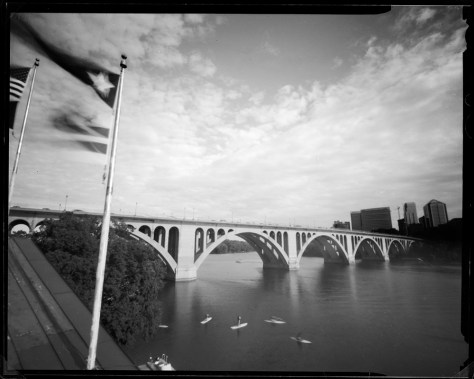
KeyBridgeFlagsPinhole.jpg

Photo © Scott Davis, 2016 4×5 Travelwide pinhole, 65mm fl, platinum print.

Photography, Presentation and Insomnia

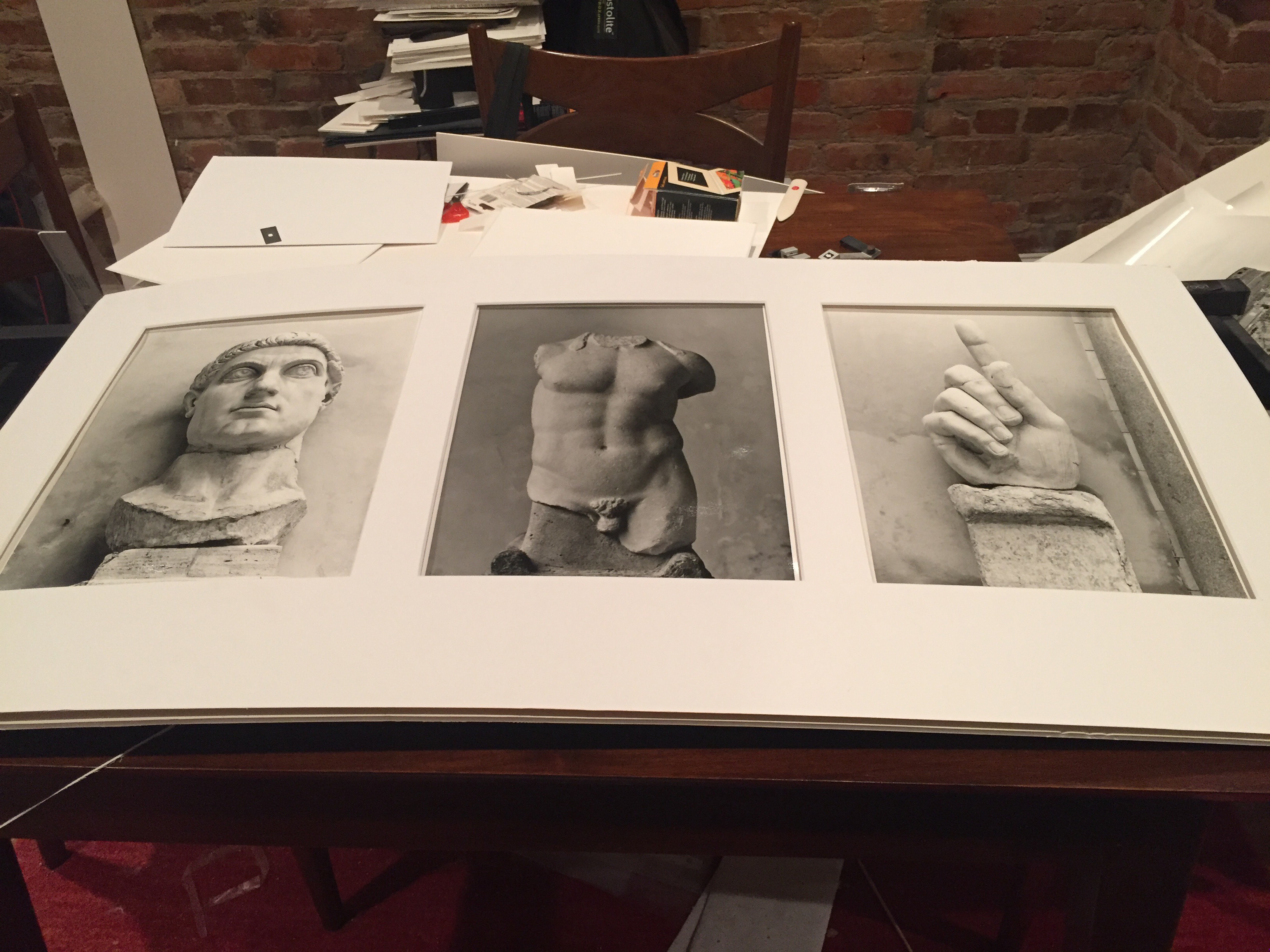
What do you do at 2:30 AM when you’re stricken with a bout of insomnia? Why you tackle a prototype matting job for a very large triptych (3x 10×13 images in a 20×40 mat/frame). Which of course you mis-measure the windows in the horizontal dimension, ending up cutting them 1/4″ too wide. 

At least I didn’t screw it up prototyping with 8 ply mat board (which I’ve been known to do before). I think the sequence and the tonal values works for the series, which I’m titling “Head, Heart, Hand”. Or something to that effect. 
I think sometimes (perhaps most of the time? All of the time?) presentation can make or break an image. Its success is the culmination of many decisions that begin with the decision of what camera and film to pick up before heading out the door in the morning, following through to what to point the camera at, on to what developer, paper, process, cropping… it doesn’t end until the framed print is hung on a wall, sequenced with the rest of the prints in the show. They all build on each other. 

Head, Heart, Hand – Capitoline Museum, Rome

What do you all think of the sequencing of this triptych? Head, Heart, Hand, or the other way round? Any other critique/feedback is welcome.

All three images were shot on Kodak Tri-X, in my 1956 Rolleiflex 2.8E. Film developed in Pyrocat HD, printed on Ilford Warmtone MG fiber paper processed using Ilford Warmtone developer. 

SINISTER IDYLL – HISTORICAL SLAVERY AND THE MODERN PASTORAL LANDSCAPE – Sully Plantation

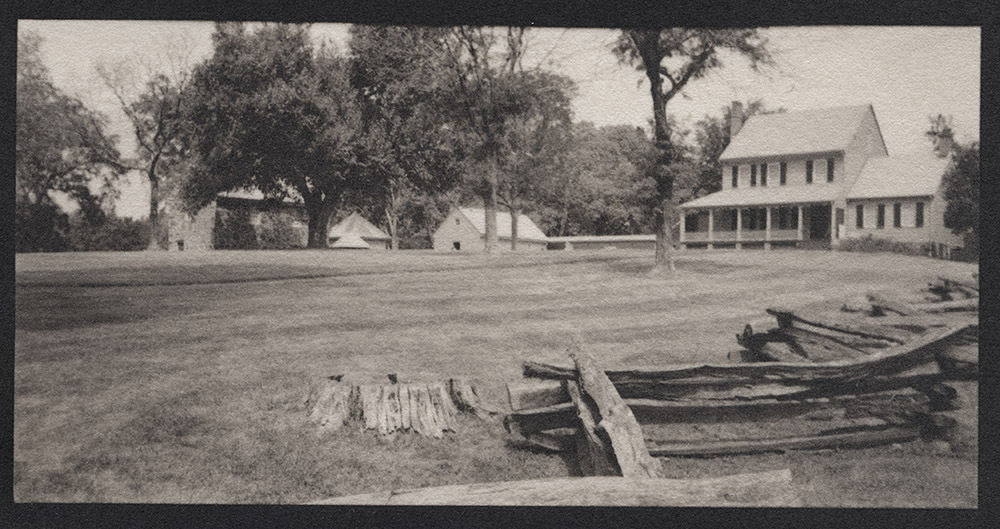
Sully Plantation is another historic homestead in the Washington DC suburbs. Today, sited across the road from the Udvar-Hazy Annex of the Air and Space Museum and the runways for Dulles International Airport, it is a tiny oasis of parkland in the middle of major development. This is one of the older properties I’ve been to, with the current house begun in 1793 and completed in 1799. It was built by Richard Bland Lee, Robert E. Lee’s uncle and the first Virginia representative to Congress. The property covered some 3,100 acres. It had been in the Lee family since the 1740s.

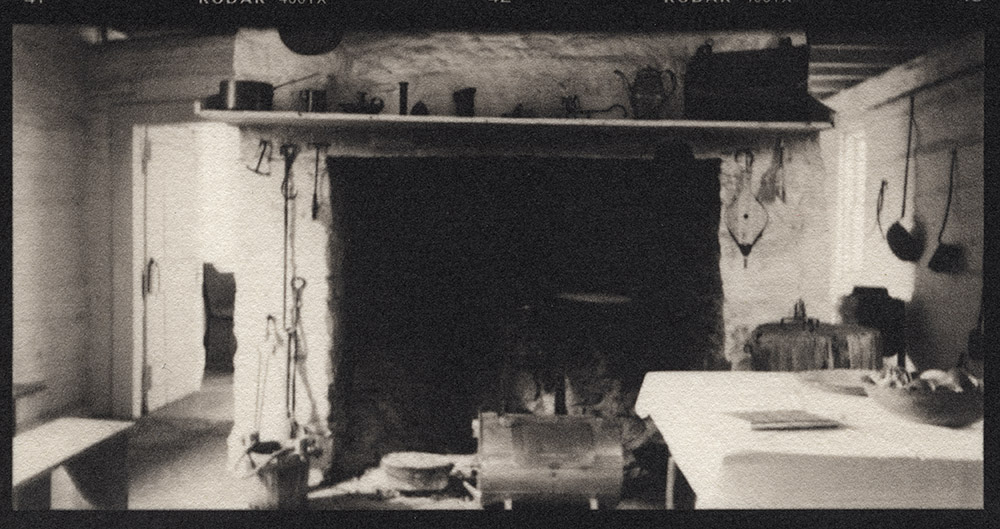
Kitchen at Sully
Kitchen at Sully

This is the kitchen at Sully. On the other side of the massive fireplace is the laundry. While it gives the appearance of bustling domesticity and comfort, it is still the site of slave labor that would have been conducted from before dawn to well after sundown seven days a week, fifty-two weeks a year. The comfort and ease of life of the Lee family and their guests would have been the product of this room.

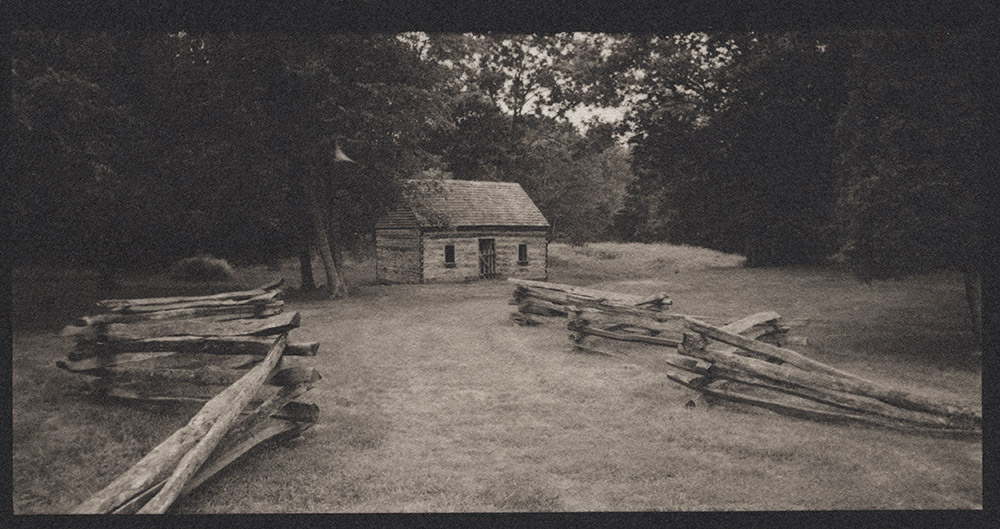
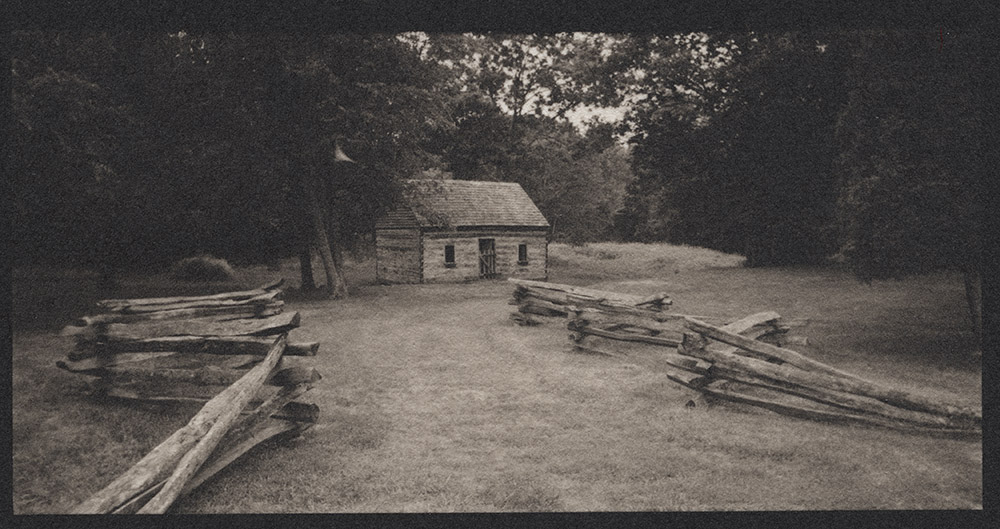
Recreated Slave Cabin, Sully

It bears minding that this one-room cabin with no glass in the windows, no insulation in the floor, walls or ceiling, a single stone fireplace for warmth in winter, and a long walk to the well, would have been luxurious by the standards of the field slaves. They most likely lived in large barracks-style buildings at considerable remove from the Sully house, with less privacy and fewer conveniences. Contrast this with the big house, with glass pane windows, carpets, fireplaces in every room, imported mirrors to brighten the parlor when the sun went down, feather beds, and a kitchen outside of the house to keep cooking odors and the risk of fire away.

Sully House and Dependencies

A view of Sully from the slave residence’s perspective. On the left you can see the stone dairy house – a structure with spring-fed pools to keep milk, butter, and other perishables cool year-round. Next is the smoke house where they would have smoked meats to preserve them, and then the laundry and kitchen, connected to the big house by a covered walkway. All this would have seemed like an alien world to the field slave, and still a strange place they worked in but did not belong to for the house slaves living in the cabin with this view.

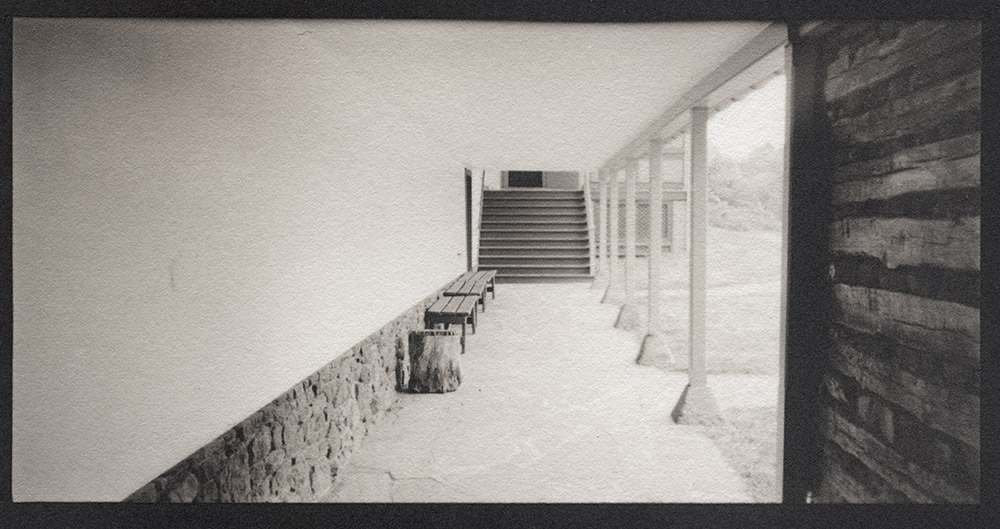
Walkway from Kitchen to House

I’ve subtitled this one “Fifty Feet is a Thousand Miles” – although that covered walkway from the kitchen to the house is a short distance, walking it with breakfast, lunch and dinner made for someone else’s consumption every day of your life must have produced some significant cognitive dissonance for the women who worked the kitchen.

I remember hearing from a friend whose wife was a docent at Sully that Mrs. Lee remained friends with and corresponded with her personal maid for the rest of her life, even after her maid was freed from slavery and she had returned to Philadelphia where she was from. These kinds of friendships, and they did happen, certainly complicate the narrative of slaveowners and the enslaved, but it is still no excuse or balm for the absolute moral failure that was slavery. The friendship of a woman and her maid is not compensation for the remaining hundred-plus men, women and children who worked twelve hours a day in heat and cold, rain and snow, planting, tending and harvesting crops all for the profit and comfort of someone else without compensation or even decent living conditions.

Sinister Idyll – Image Accepted to Size Matters at Medium Festival of Photography

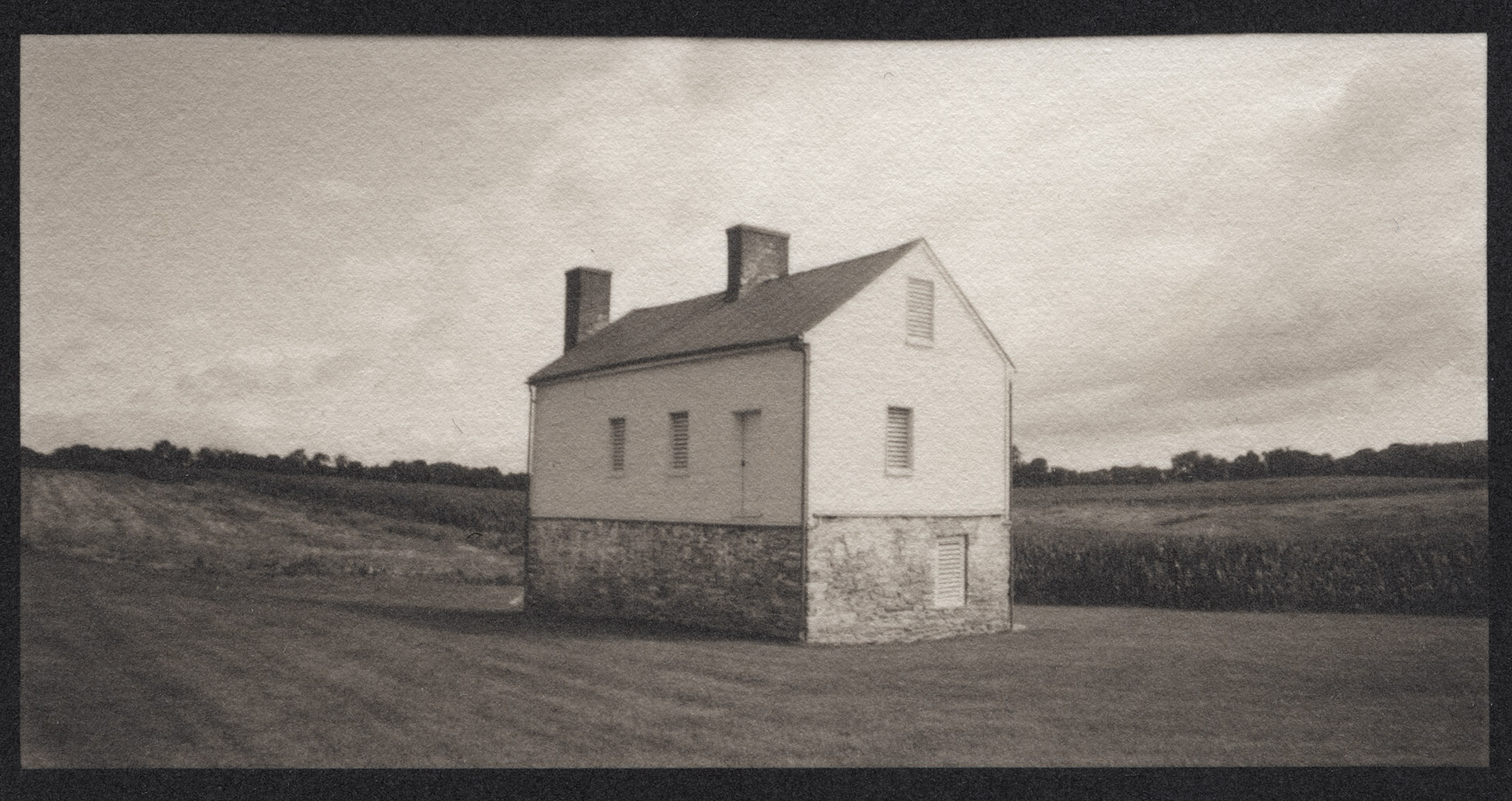
My image “Bachelors’ Quarters, L’Hermitage” from the Sinister Idyll series has been selected as a finalist in the Size Matters exhibition at the Medium Festival of Photography in San Diego.

To quote the prospectus for Size Matters:

Size Matters is the signature exhibition of the Medium Festival of Photography and San Diego’s month of photography: PHOTOLAB. We’re proud to partner with Lensculture and Low Gallery to host Size Matters from Oct. 22 – Nov. 12, 2016. We’re excited to welcome Allie Haeusslein, the Associate Director of Pier 24 Photography in San Francisco, as the 2016 Size Matters juror.

Size Matters celebrates photographs that offer an intimate viewing experience by showcasing the power of photographic prints less than 10” in the widest dimension. Medium will host an opening reception with the exhibiting artists on Saturday, Oct. 22 from 7-10pm.

Allie Haeusslein is the Associate Director at Pier 24 Photography in San Francisco, one of the largest spaces dedicated to photography in the United States.

We’re honored to have Allie as the juror for Size Matters, selecting the exhibition content and purchase award. Her background as a photography curator, writer, and historian promises an unforgettable exhibition.

I will try to attend, and I hope to see some of you there!

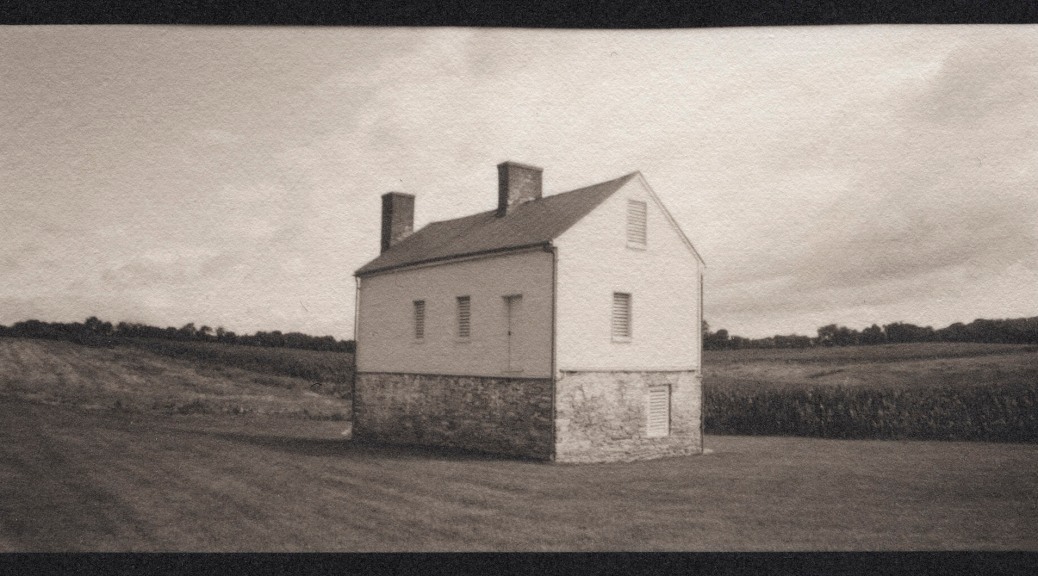
Bachelors House, Best Farm

2 1/4″ x 4 1/4″ palladium print on Hahnemuhle Platinum Rag 100% cotton 320gsm fine art paper. Edition of 10.

Rendering The Spirit: Interview with Hendrik Faure

Could you tell me your name?
Hendrik Faure

Where are you from?
Germany

How did you get into photography as an art medium (as opposed to casual or professional use)?
I do not remember for sure, I have a darkroom since 1966 and soon was interested in fine art printing, made solarisations and lith-printing. Later I hand-coloured my still life photographs.

Which alternative processes do you practice?
copperplate photogravure following method of Talbot/Klic.

What attracted you to alternative processes in general?
Interest in photohistory and in aesthetic well composed pictures.

What drew you to the specific media you practice?
Pictorialistic photogravures in literature and museums.

How does the choice of media influence your choice of subject matter (or vice versa)?
The medium fits the message.

In today’s mobile, electronic world of instant communication and virtual sharing of images, how important is it to you to create hand-made images?
Important enough to spend three days work per print edition

Is your choice to practice alternative, hand-made photography a reaction to, a complement to, or not influenced by the world of digital media?
When I began photography, there was no digital. Later I had my first computer. It was a Tandy TRS 80 model 3 and already had a mouse. She crawled through the floppy drive slot and tragically died within. I suppose, then the mouse did not like computers. I made some stills with dead mice. This was the strongest influence of digital media to my work.

Do you incorporate digital media into your alternative process work?
Photogravures need an inter-positiv, which I make chemical-based on document-film or digital on pictorio ohp. Digital so-called full frame cameras give freehand a quality like 24x36mm film cameras on tripod, but tend to have no soul.
I use digital capture sometimes if film is not possible. In the scrap project I captured pictures as well electrical as film-based (middle-format to 8x10inch).

If so, how do you incorporate it? Is it limited to mechanical reproduction technique, or does it inform/shape/influence the content of your work?
I use digital media for inferior photowork and seldom for multimedia projects.

What role do you see for hand-made/alternative process work in the art world of today? Where do you see yourself in that world?
This may be decided some 50 years later

Scrap Yard, Winter, by Hendrik Faure

Curating Rendering The Spirit

If you’ve never curated a group show before, especially one with international reach, it’s hard to imagine the level of effort that goes into putting on an art exhibit. You have to put out the call for entries, manage the publicity to make sure you get enough work submitted to fill the walls even after reviewing and editing, and then handle the acceptance emails and collect the accepted work.

Oh, and be prepared for things not working out as planned. I feel extremely lucky we had only two hiccups with submitted work. One was minor – one piece of work came off its mounting in transit. With a quick email to the artist, I got his permission to open the frame and re-mount the work properly so it would present well on the wall. In the process, I also replaced the source of the problem (gummy adhesive squares that were NOT archival) with water-activated linen tape loops using acid-free wheat paste for adhesive. No artist’s work is going to be damaged by me on my watch!

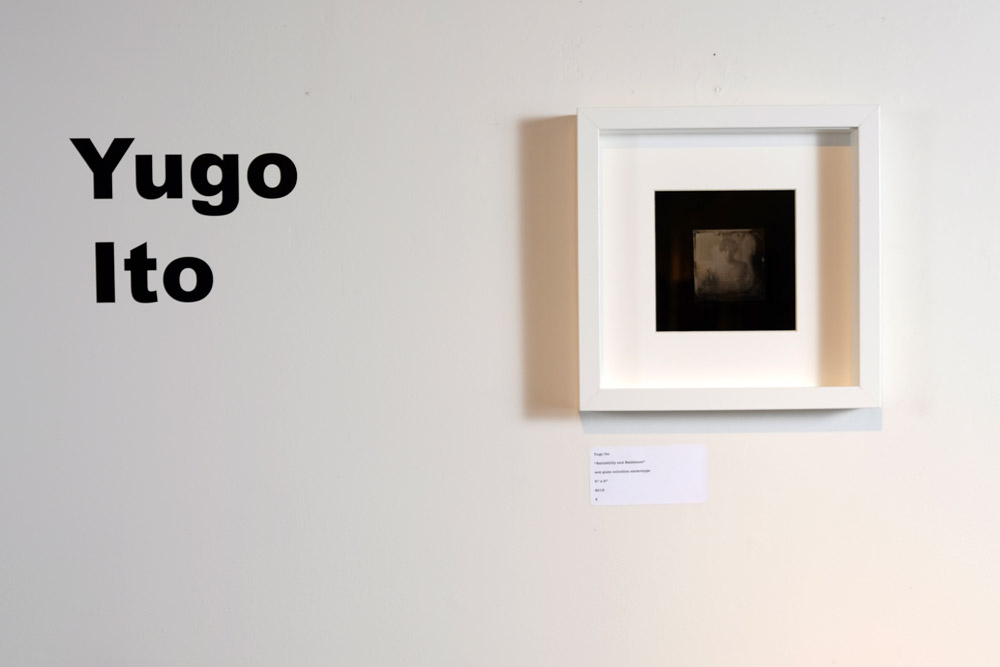
The second hiccup was totally beyond anyone’s control, which is what made it so maddening. Yugo Ito’s photograph coming from Japan was shipped in plenty of time to arrive at the gallery. However, it got stuck in customs in New York for almost two weeks. There was nothing to be done but to wait, as customs is a black hole into which things enter and exit at their own pace and there is no transparency or communications possible beyond checking the tracking number on the USPS website. Creativity saved the day, though – since the actual work was not in the gallery for the opening, I took the JPEG of the work from the submission and printed it, mounting it to the wall with a sheet of glass and some L-pins. It would be represented in spirit even if not in actuality.

Once all the work has arrived, you have to plan how you’re going to hang it. You can look at JPEGs all you want, and generally gauge which artist’s works should hang next to which other artist, but the actual sequencing and spacing can’t really be figured out until you have the actual framed work in hand at the gallery. Next it’s measure, measure, measure, and then plan, and re-measure, before driving the first nail into the wall. Having gallery interns to help with the hanging makes life so much easier (Shout-out to my interns! Thank you!!).

Now the work is all hung, you can relax, right? NO. Then it’s plan the reception, send out the invites, send out the press releases, buy too much cheese and crackers at Costco, and then throw a party. There’s the curator’s remarks to prepare, and handouts about the work to write. Oh, and blogging about it all the while!

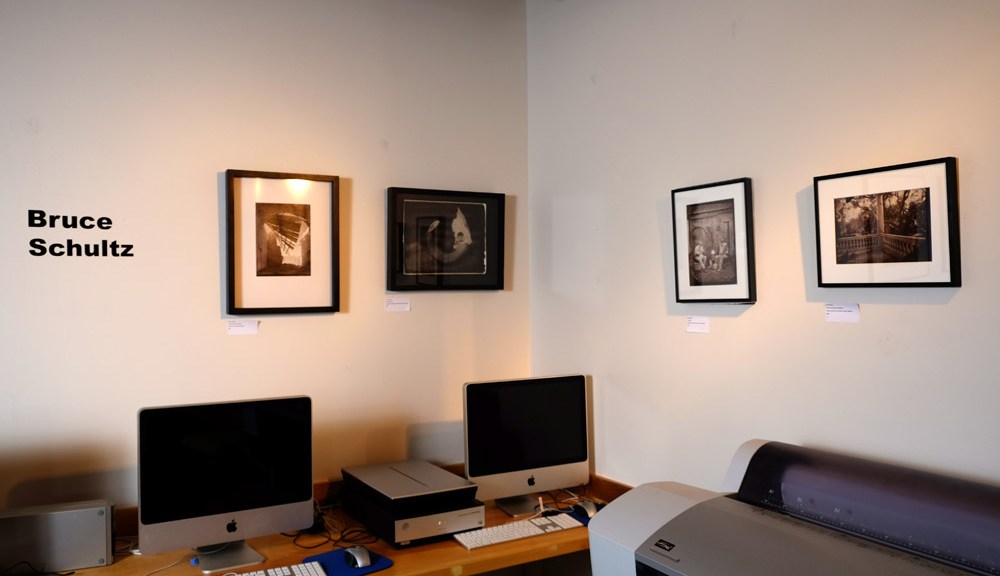
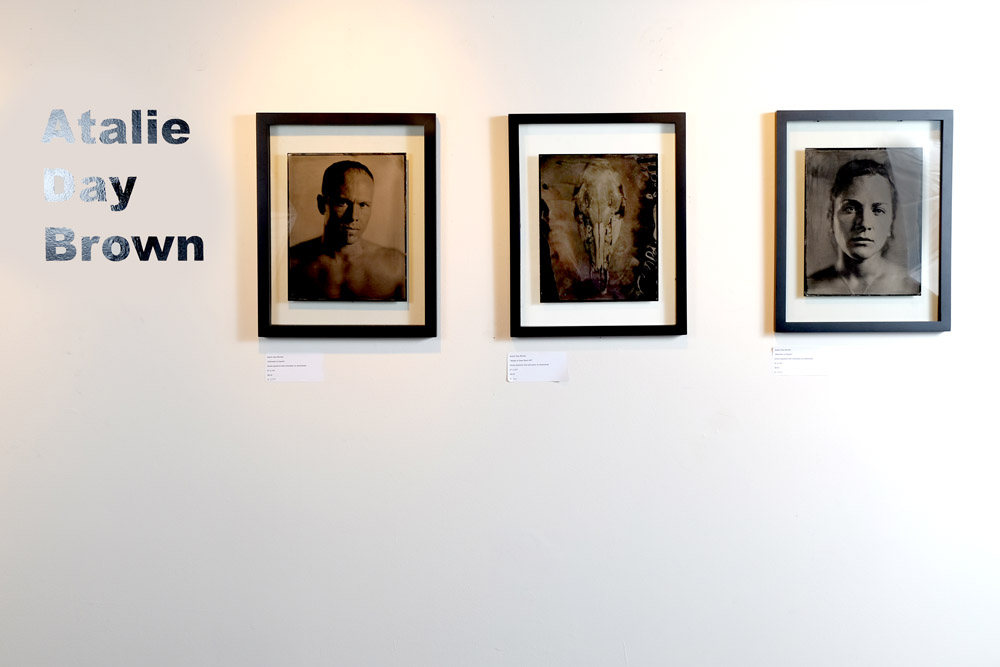
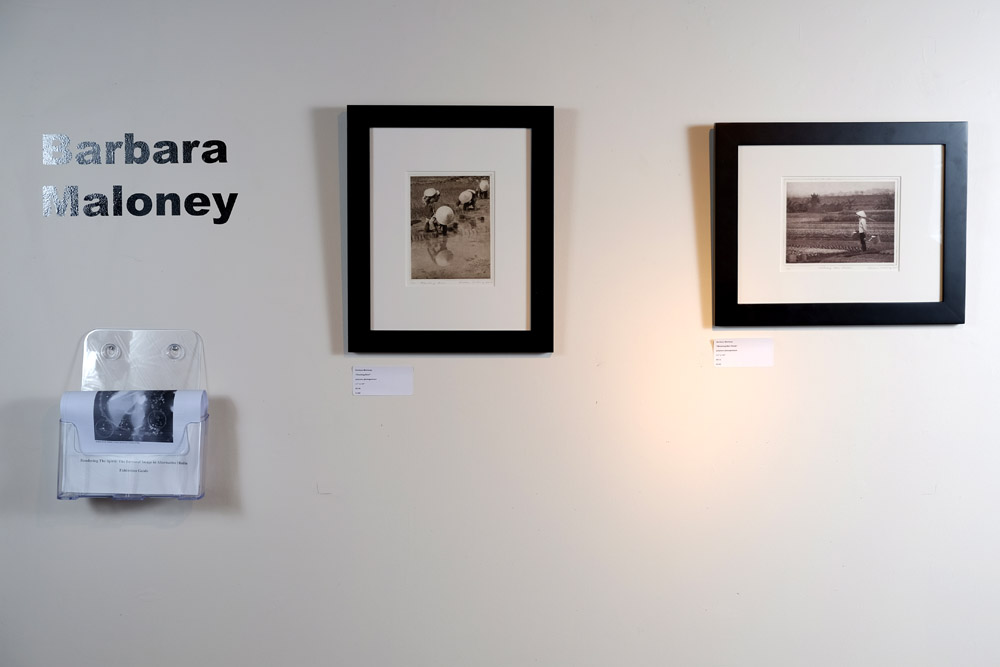
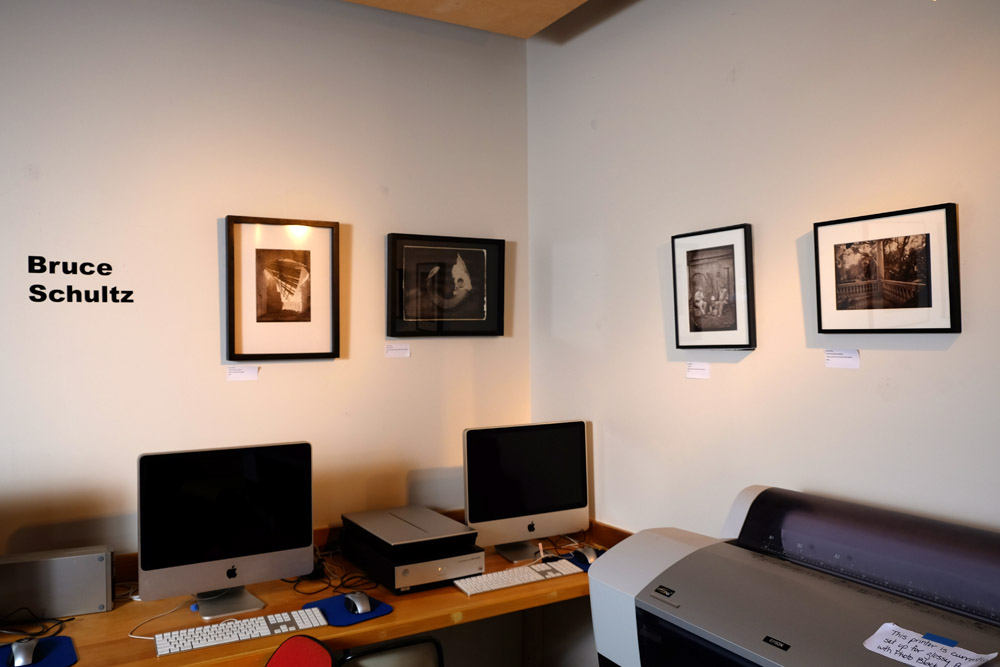
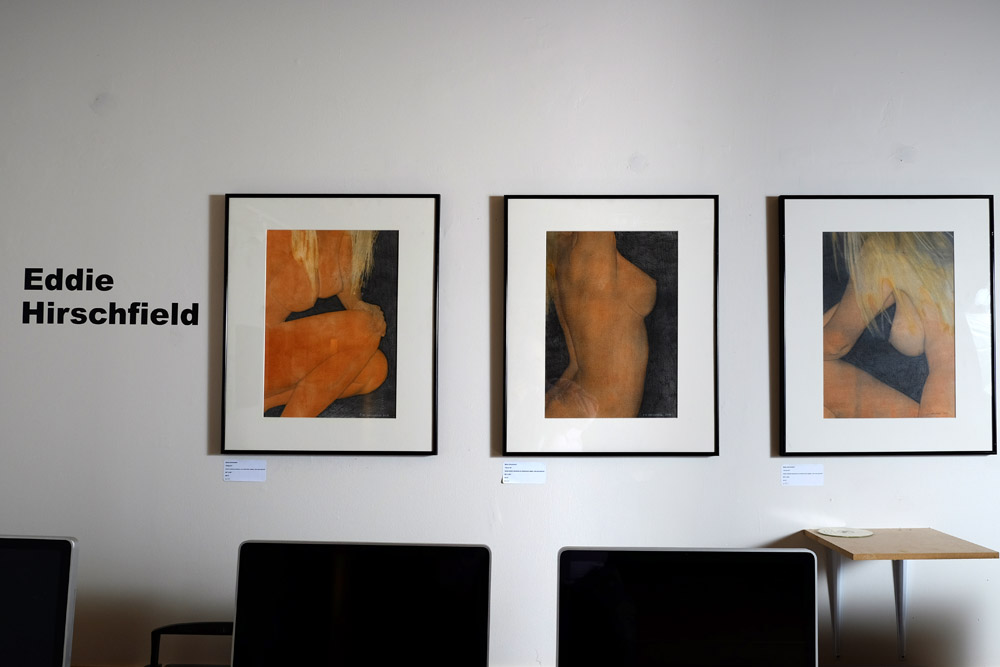
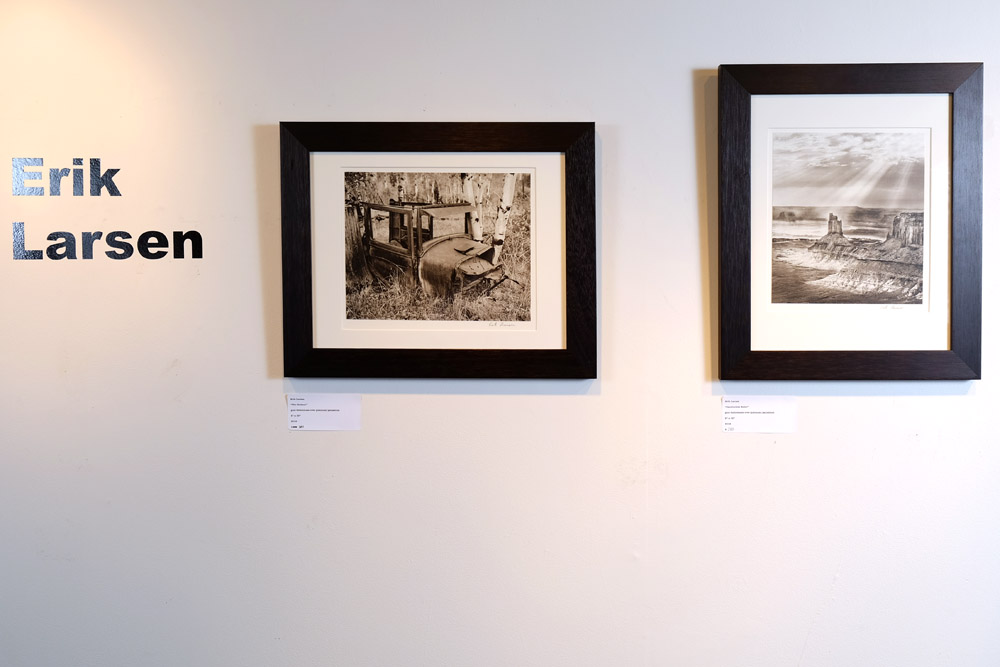
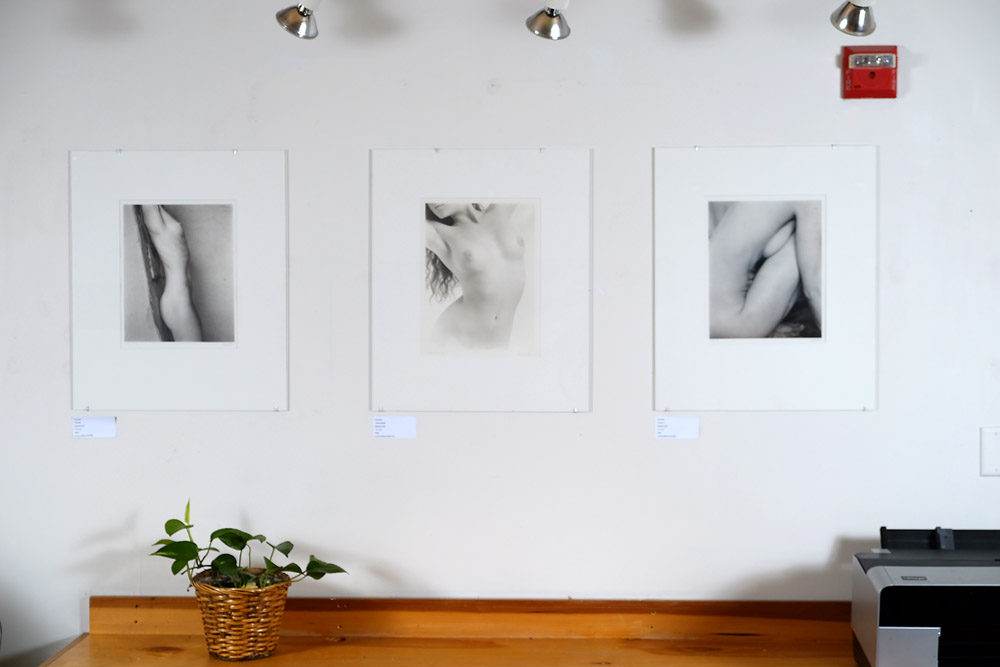
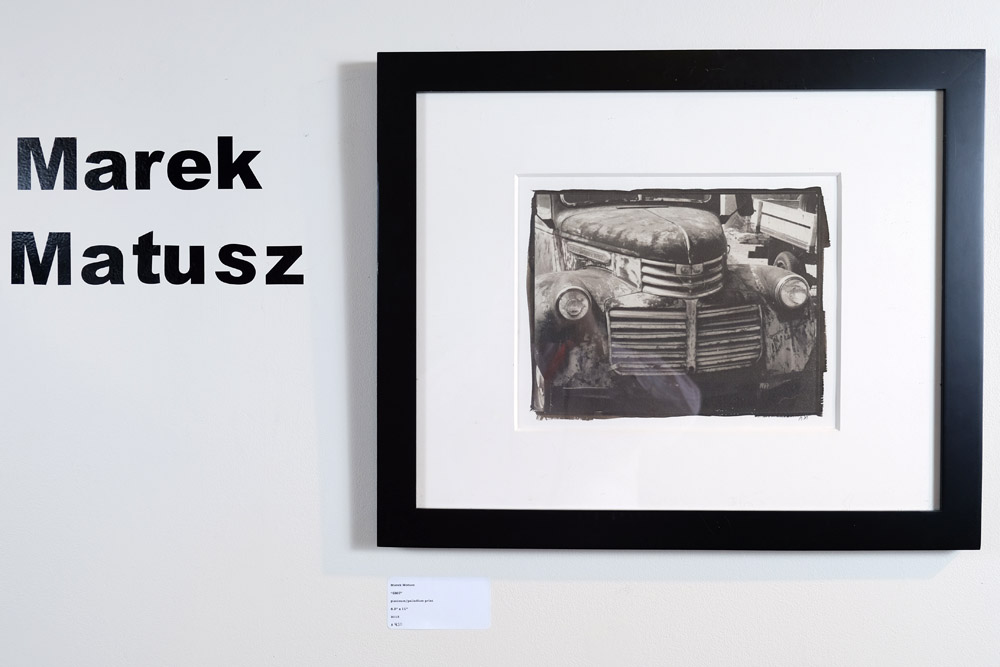
At some point during the show, ideally right after you’ve hung the work but before the public comes in to see it, you document the exhibit. Below are a few excerpts from the show as hung. One of the great challenges of curating a show is that once you have it up on the wall, what might look good in the space presents a wicked challenge to document. Trying to photograph pieces in corners where you can’t get a light on them from the other side means that you’ll either have dramatic falloff in the scene from one side to the other, or you’ll have a hideous reflection of your umbrella or other diffuser in the picture glass. I opted for a bit of falloff rather than reflections where possible because the falloff can be compensated for to a degree in Photoshop – a big blinding white reflection of an umbrella cannot.

Atalie Brown
Atalie Brown
Barbara Maloney
Barbara Maloney
Bruce Schultz
Bruce Schultz
Eddie Hirschfield
Eddie Hirschfield
Erik Larsen
Erik Larsen
Ian Leake
Ian Leake
Marek Matusz
Marek Matusz
Yugo Ito
Yugo Ito

You’re not done until the show is over, the work taken down, and the artists have picked up their work or you’ve shipped it off to hither and yon. Then you get to relax for a day or two, and if you’re a busy curator, it’s back to the process all over again!

Model Shoot with the Fuji X-T1 – Part 1

Yesterday I had a model shoot with three aspiring models who needed to build their portfolios. We went to a billiards parlor for the afternoon and I put them and the Fuji through its paces. It was also the first test in the field for my new 400 w/s bare-bulb strobes. The new strobes are battery-powered via external rechargeable batteries. They can be configured to sit on-camera and be triggered via hot shoe, take a wireless remote trigger like a PocketWizard, be triggered via sync cord, or be triggered by a proprietary wireless trigger system that also allows you to remotely adjust the power level from the camera position. The first one I bought was a Calumet-labeled version. When Calumet was still in business in the US, these were quite expensive – a single head unit plus the required but not included battery pack would have set you back a cool $1000. Nowadays, they’re on clearance on Amazon for $300 or so. They are also now being sold with the NEEWER, Flashpoint and Godox labels, at a much more reasonable price – I got a NEEWER version with the external rechargeable battery pack for $400 as a second unit for doing fill flash or background lighting.

These first two shots were taken with Alex shooting pool. In the first shot, I set him up taking the break shot. Don’t let the fact that he’s a model fool you- he’s also a pool shark – right after this shot, his break dropped three balls. I wouldn’t bet against him. This was taken with the Fuji 56 f1.2. My main light was the Calumet Genesis in an umbrella softbox, and the fill was the NEEWER with a gridded reflector and a red gel in it. Having the ability to both color gel and grid the fill is really handy, as the color adds a touch of drama to the scene, and the grid keeps it from spraying all over the place and coloring things you don’t want it to, like the table felt.

Alex
Alex

For this shot, I kept the lights the same but switched to the 23mm f1.4 so I could get in close and still get the extension of his shoulder, arm, cue, and the ball on the table, as this table was in the middle of the room with other tables behind me, and I only had about four or five feet to work in. The red gel adds a touch of drama and energy to the shot without overwhelming, and is a good way to deal with the very mixed light in a pool hall where you can have fluorescent (the over-the-table lights), halogen/tungsten (lights in the bar area and on the walls) and LED (accent lights like rope lights around partition walls and the like, or under the bar) all in the same area.

Alex
Alex

I also did some head shots with Alex (who is an easy, professional model to work with). I backed this indie film called Hallucinaut on Kickstarter last year and as my reward, I got these kaleidoscope-lensed glasses that appear in the film as a prop. I chose them specifically as my reward as something that would make a really cool prop for photo shoots. This was their first appearance in one of my shoots. They really pick up and reflect colors well, and make for a dramatic statement.

Alex, with Hallucinaut glasses

A variation on the theme, I broke out my welder’s goggles and matched them up with a vintage leather jacket for a steampunk look. Alex’s short-cropped hair adds to the look by letting the goggles really stand out against the shape of his head.

Alex, going Steampunk

In the last look for Alex, I did two versions of this really clean, minimal portrait. When I showed it to him on screen he commented “I have a really long neck!” as if that was a bad thing. I reminded him of what you’ll hear on every season of the now-ended America’s Next Top Model – it’s a really good thing to have a long neck. Tyra Banks and her photographers were always reminding the contestants to elongate their bodies and gestures, to create drama and elegance. If you have a short neck, stretch it out, otherwise the camera can make it look like you’re neckless and just have a head glued directly to your torso.

Alex
Alex

These were both shot outdoors under the eave of a parking garage, and combining the flash in a beauty dish as a fill with the backlight of the street behind made it easy to completely blow out the background into a nice even white. Handy trick when you’re going studio-less and need an even background.

Alex
Alex

I shot all these images in RAW, then converted afterward to JPEG. I like working this way because it feels more like traditional darkroom photography, where I’m working from the in-camera negative. Working from in-camera JPEGs, while still very good, to me is not as good because it’s like making a copy of a print – changes have been made and nuances have been degraded.

Not that there should be any doubt, but the Fuji 56mm is a knockout lens (Fuji has always made some top-grade glass, especially for their medium-format cameras). The falloff in sharpness at wide-open or near wide-open is creamy-smooth, and the rendering of out-of-focus highlights is never harsh or jagged.

Takeaways from this shoot:

-Work with good models. Not everyone is a good model, and not all good models start out that way, but if you’re new to the process of working with models, hire folks (and I do mean hire, as in pay for with cash, not just trade-for-prints/CD) who have experience working with photographers.

-know your equipment. If I were not as experienced with studio lighting, figuring out what was going on with my Calumet/NEEWER flashes could have been a pain, as they don’t have modeling lights (to save on battery life) and are not TTL because they’re made to be universal and are not dedicated to any one system.

-have fun. Be loose, work with your environment, take advantage of the opportunities it presents, and challenge yourself to overcome its obstacles. You’ll make much better pictures that way.