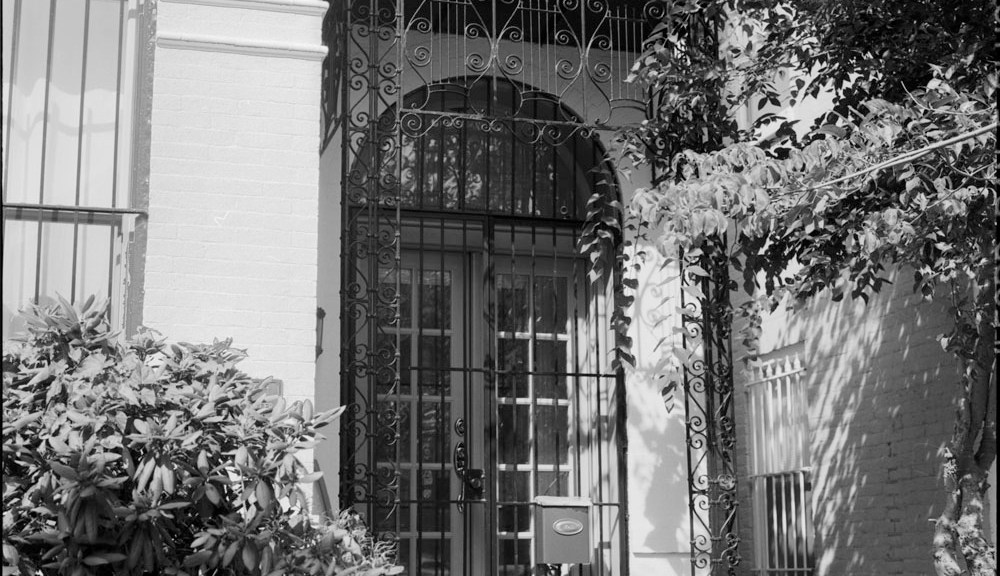
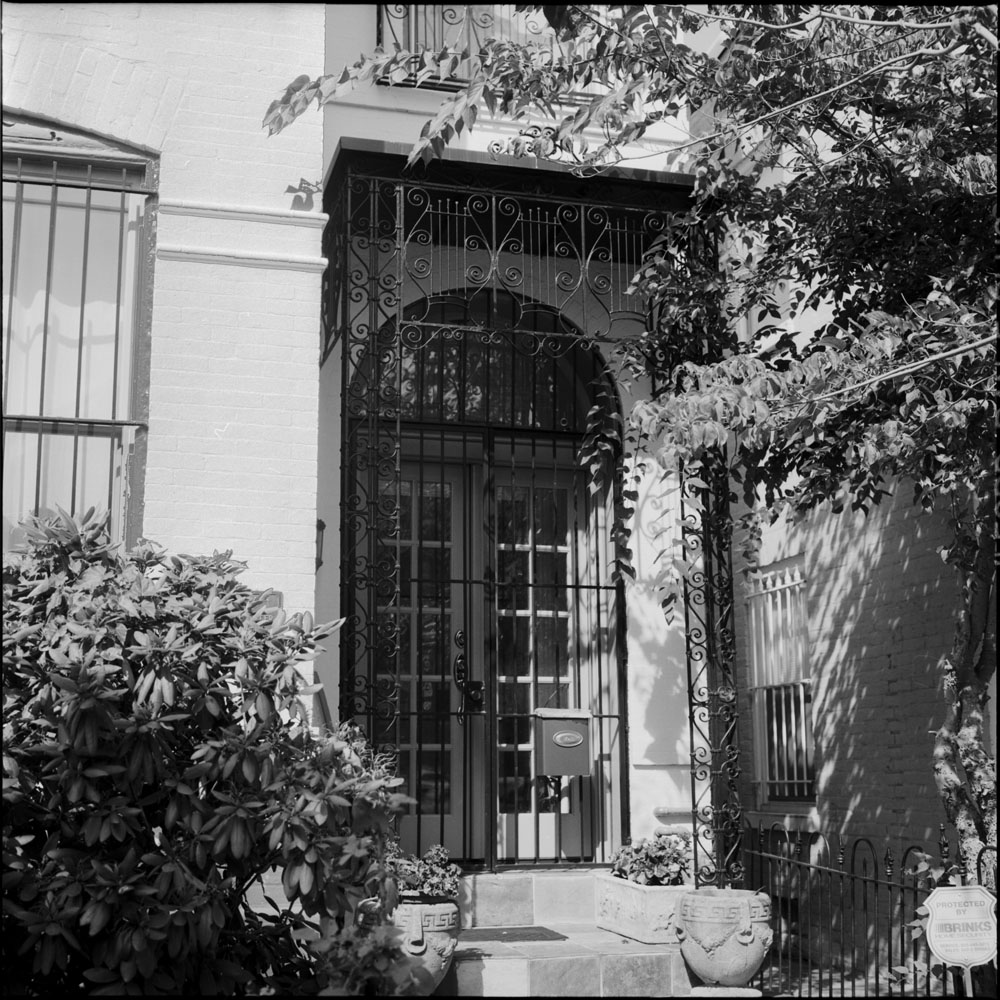
This is the home of Lilian Evanti, a pioneering African-American opera singer. She was a soprano, perhaps the equal of Marian Anderson (they actually performed together in 1926) but did not have the fame or success in the United States that Marian would go on to have, so she mainly performed on European and South American stages where audiences (and management!) were more open to black women in operatic leading roles. She was born in Washington DC and resided here for much of her life. You can tell from the ironwork on the outside of her house that this was a musical home.
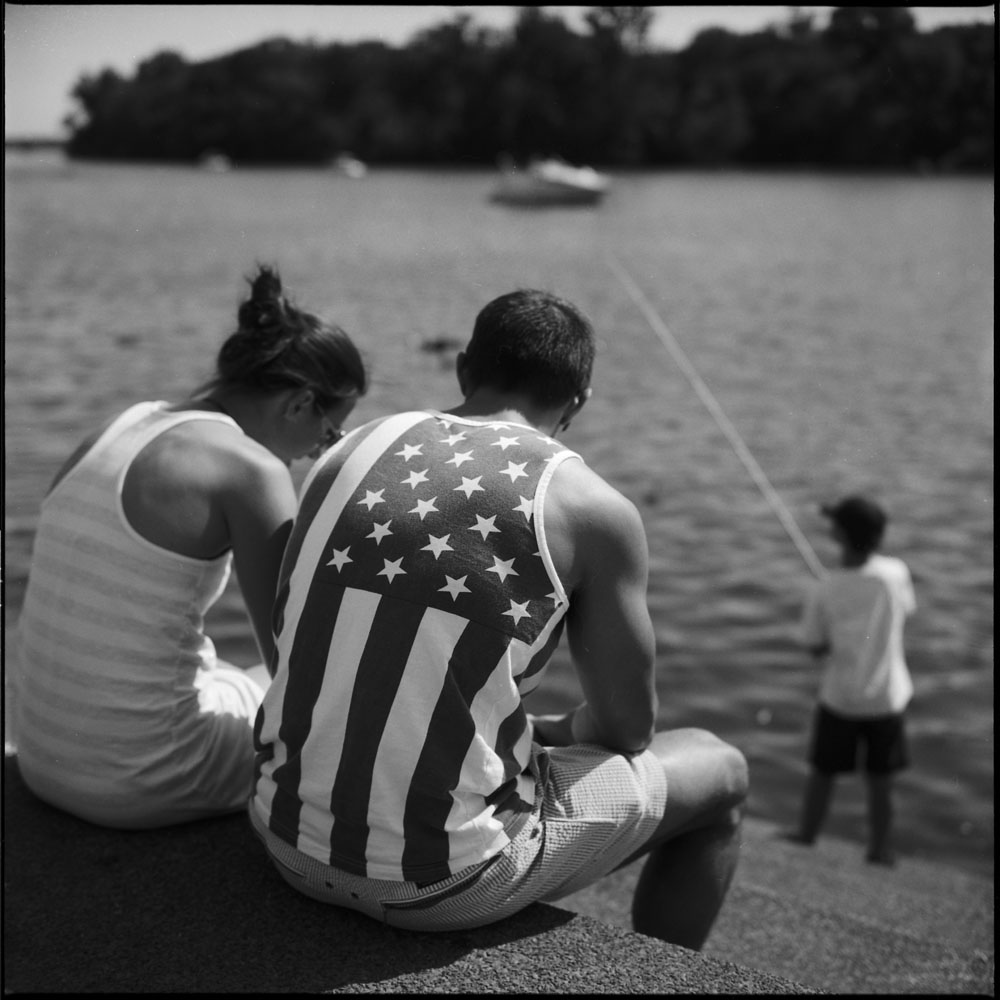
I took a stroll through the riverfront park in Georgetown this weekend. There are some steps down to the water that are a popular hang-out spot for people of all ages. This young couple was enjoying the view together, and the little boy was fishing a few steps down from them.
Boy Fishing, Georgetown
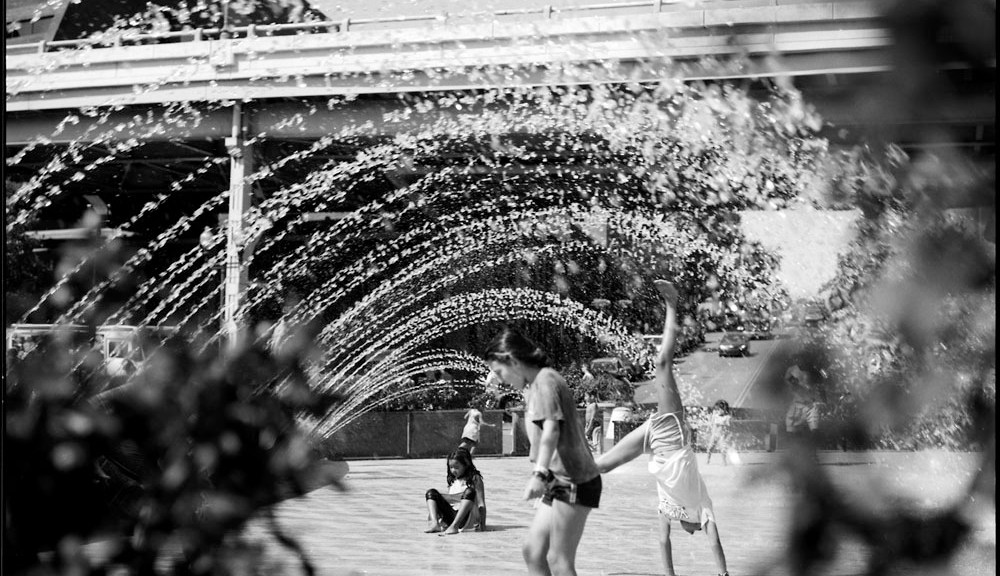
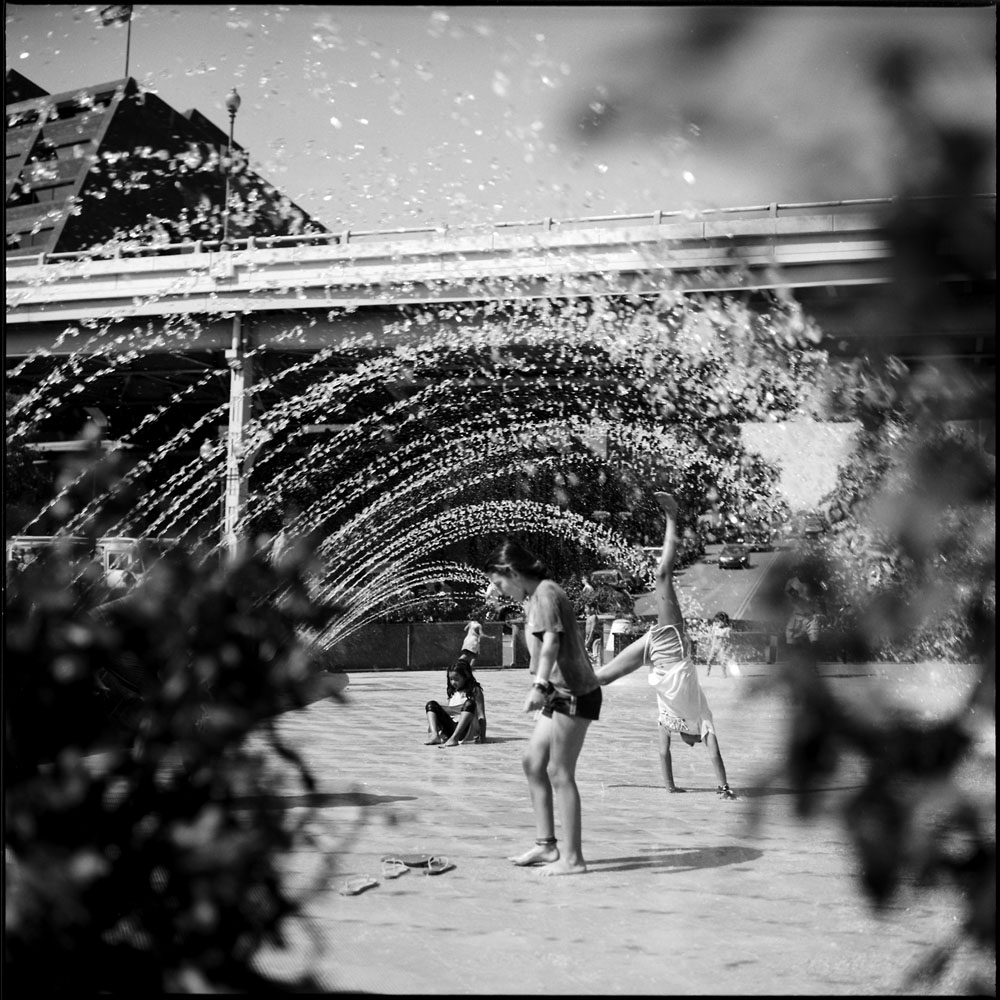
In the same park there is a large fountain just made for people (mostly kids, but I do see some young-at-heart adults occasionally venture into it too) to run under and get wet to relieve themselves from the heat of a scorching summer day. It’s almost as refreshing to watch them running in and out of the fountain as it is to do it yourself! (not that I’m going to do it while wearing a Rolleiflex around my neck)
Georgetown Fountain Kids
And just for your curiosity, no, I’m not lurking in the shrubbery to take this photo – there are two planters, one at each end of the fountain, and photographing down the length of the fountain makes shooting through them a natural point of view. Plus the branches of the rose bush provide some nice framing for the shot.
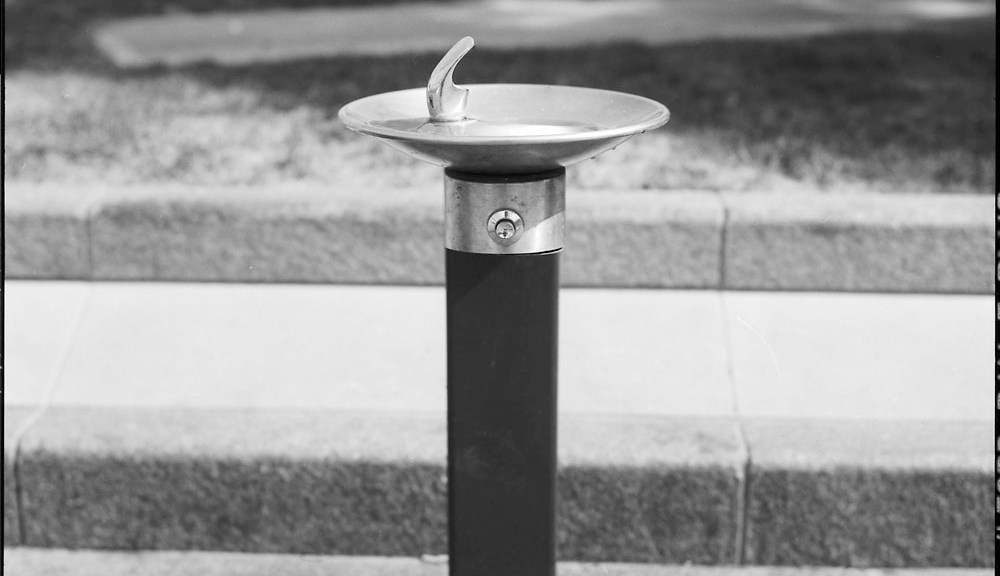
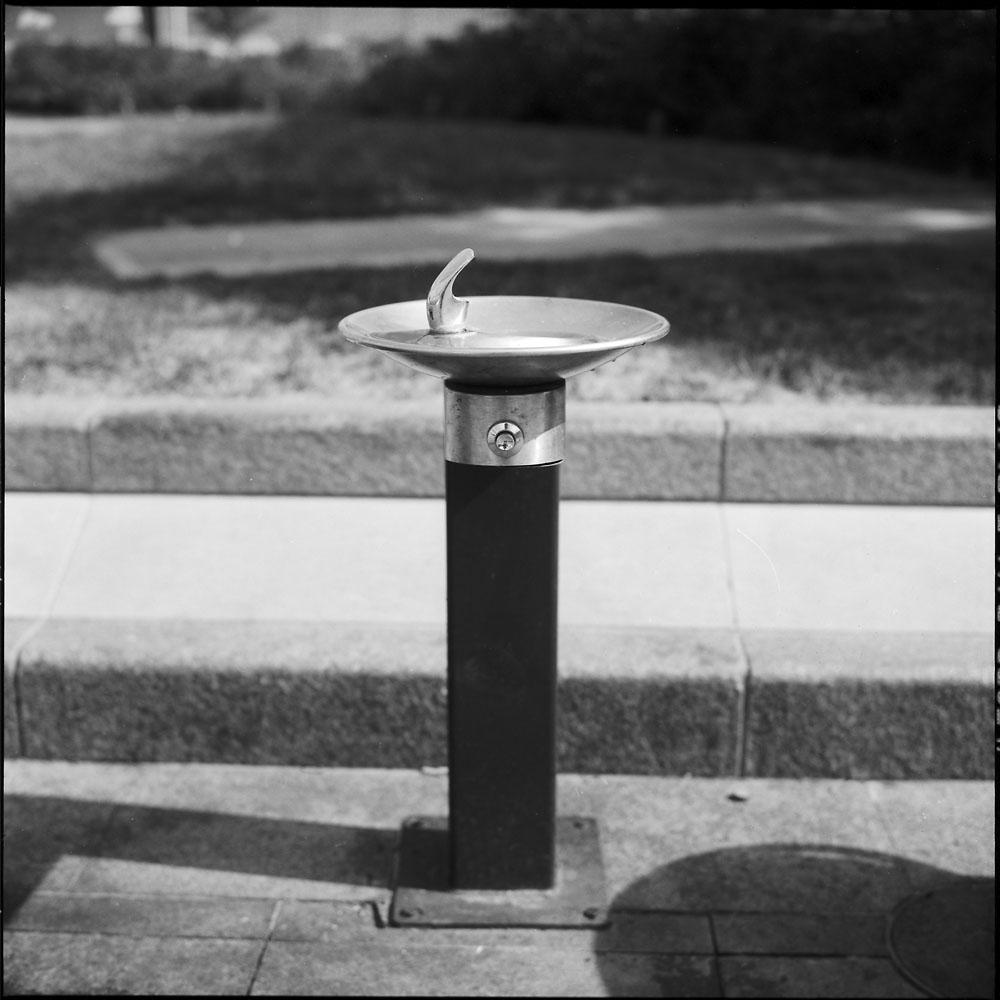
Public drinking fountains are becoming rare creatures. Even rarer are ones that work. They’re kind of like frogs – their disappearance heralds a collapse of public infrastructure the way frogs disappearing are a sign of ecological collapse. When we are no longer willing to provide safe, clean, free drinking water to the public, I think it says something about us as a society, and it’s not complimentary.
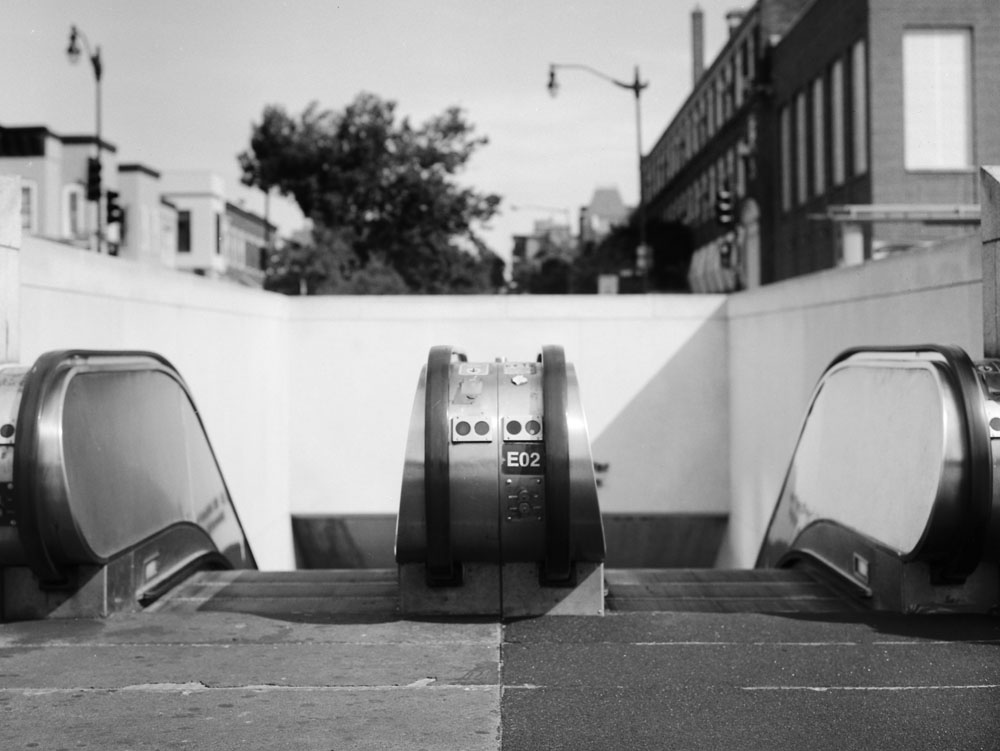
Water Fountain, U Street
To get photo-geeky for a moment, this was shot with my usual Rolleiflex 2.8E, and to ensure I was getting the extremely narrow depth-of-field I wanted, I used Ilford PanF film, which is a very slow ISO 50, and rated it at ISO 25 for good measure. I like PanF for the extremely fine grain it provides, and it allows me to use large apertures in bright daylight, however it does get very contrasty, more than I normally would like, so processing it is tricky to keep the contrast under control.
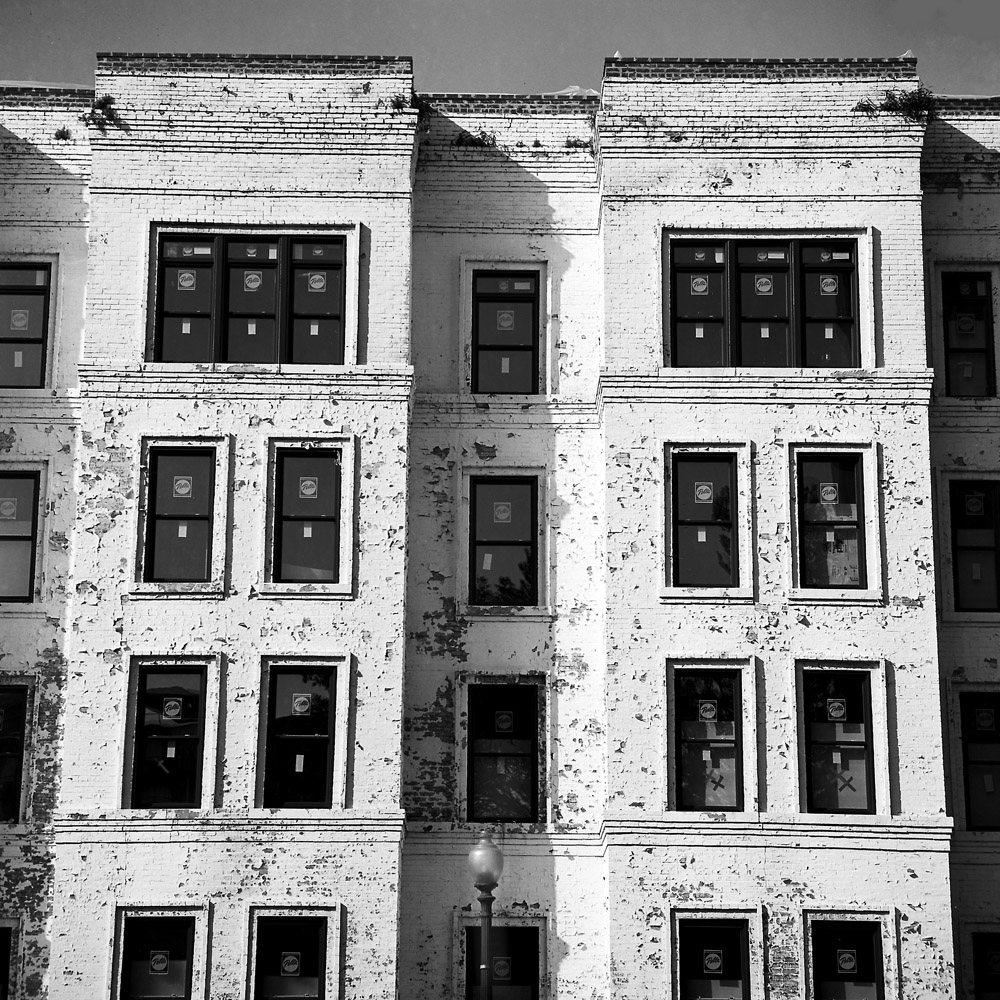
Well, it’s more like two bays, one lamp, but that’s a lot less poetic. This is another one from the same building in the Windows post, that I can’t believe I never posted.
Two Towers, One Lamp
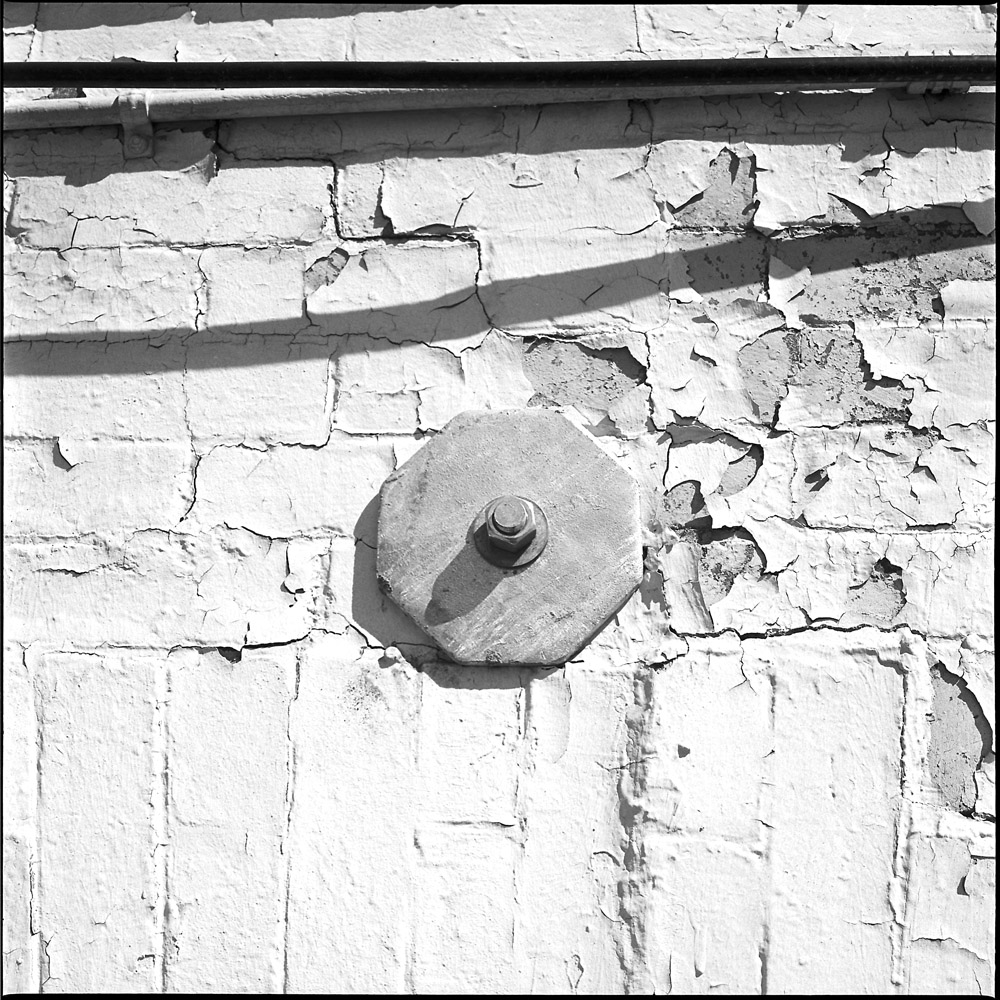
While it’s not quite abstract, it is very much about repeating patterns and their contrasts in a single scene, the contrasts being the texture of the peeling paint, and the single lamp-post.
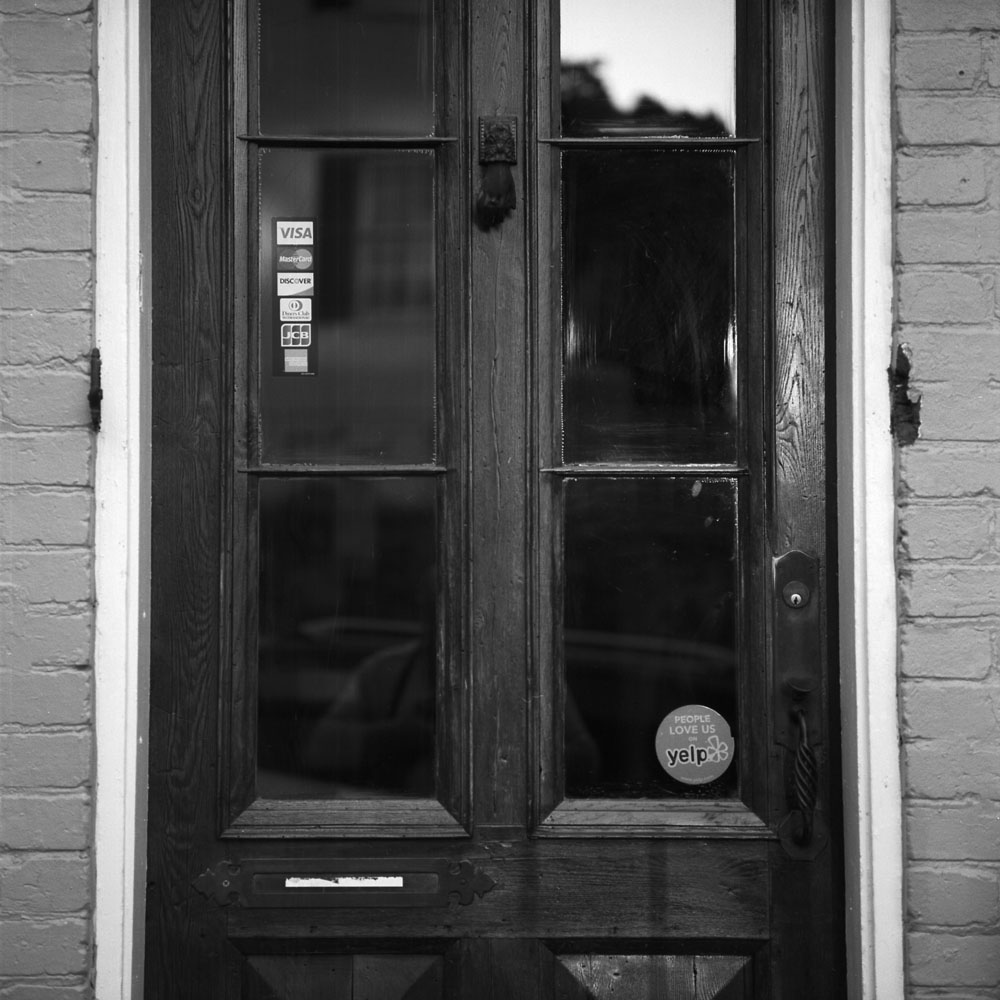
Just a single frame this time, of a door in Georgetown with a cast-iron knocker. I wish I had a front door that could take that kind of knocker – I’ve always loved the hand holding a ball knocker since I saw them in Spain as a teenager. They bring back pleasant memories. They’re kind of like Proustian madeleines, but less edible.
Door-knocker, Georgetown
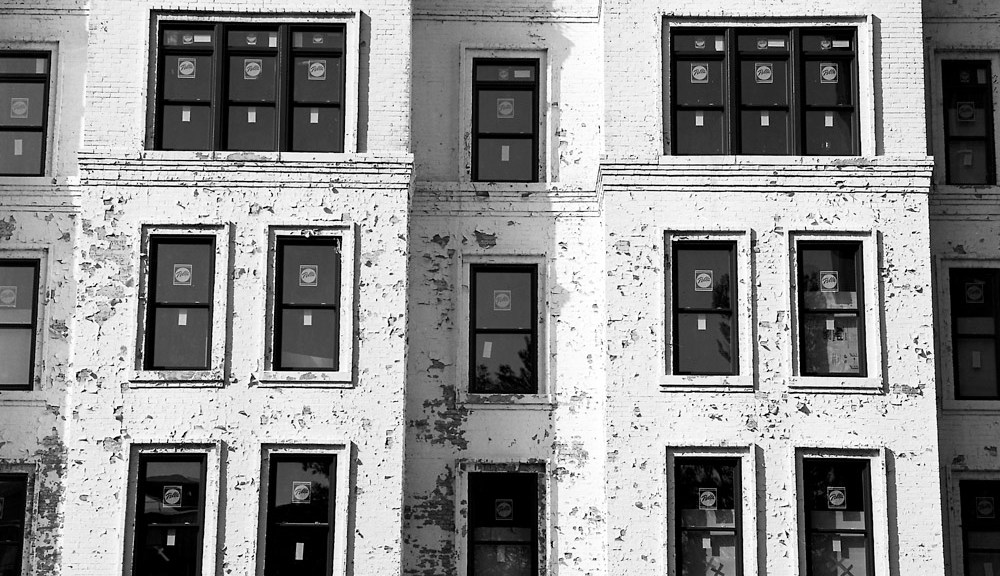
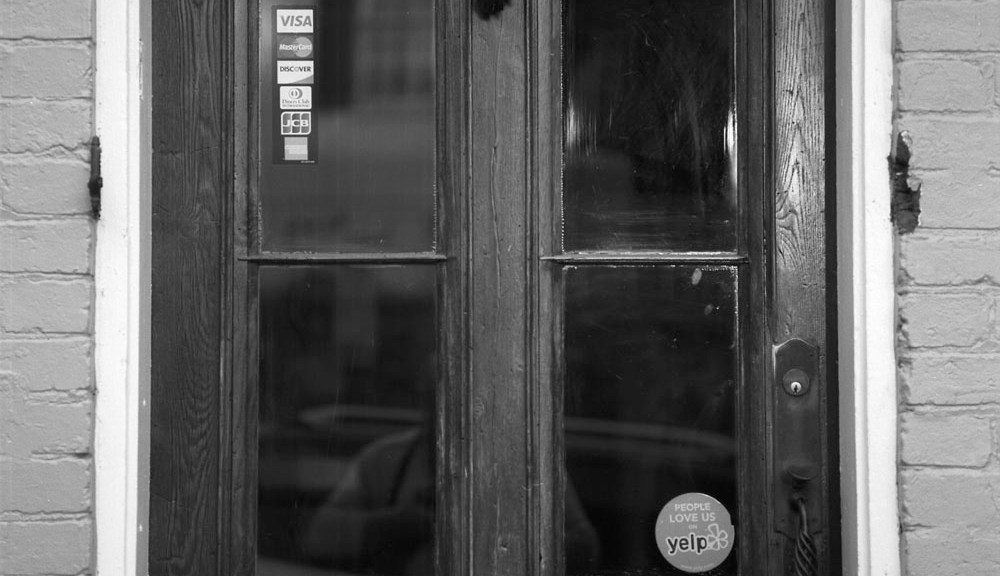
I’m also visually drawn to window glass that is partially transparent and partially opaque from reflections and light hitting it. There’s a certain sense of mystery about what’s behind it because it’s only half-seen.
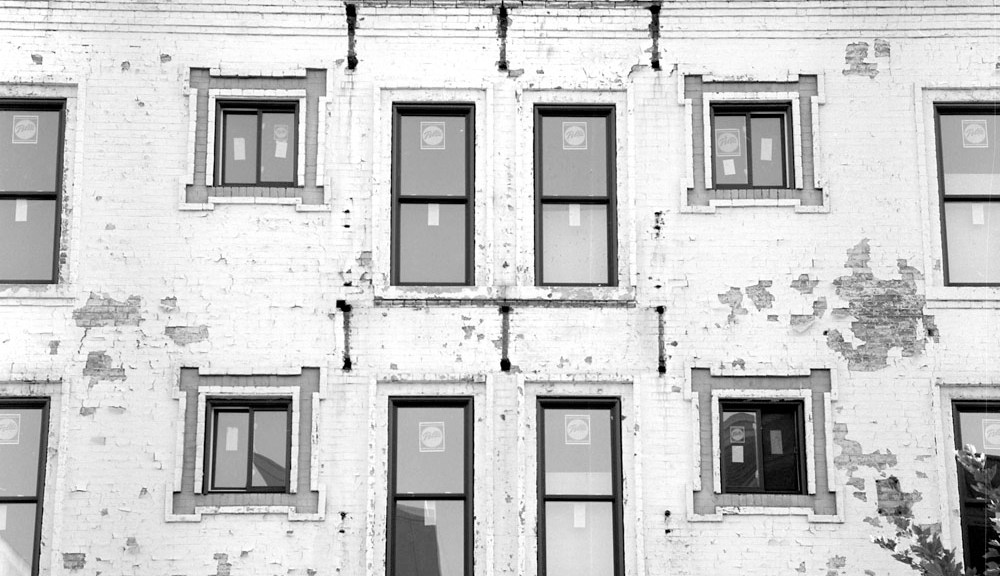
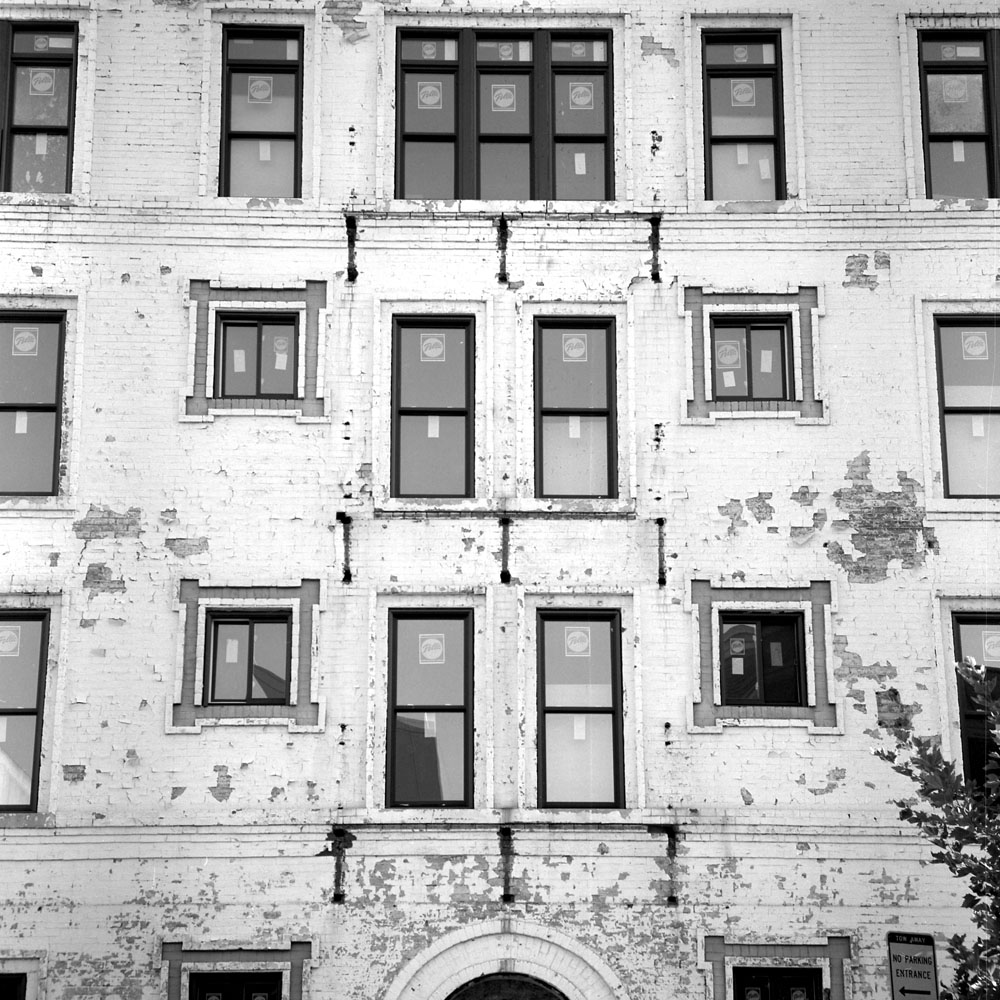
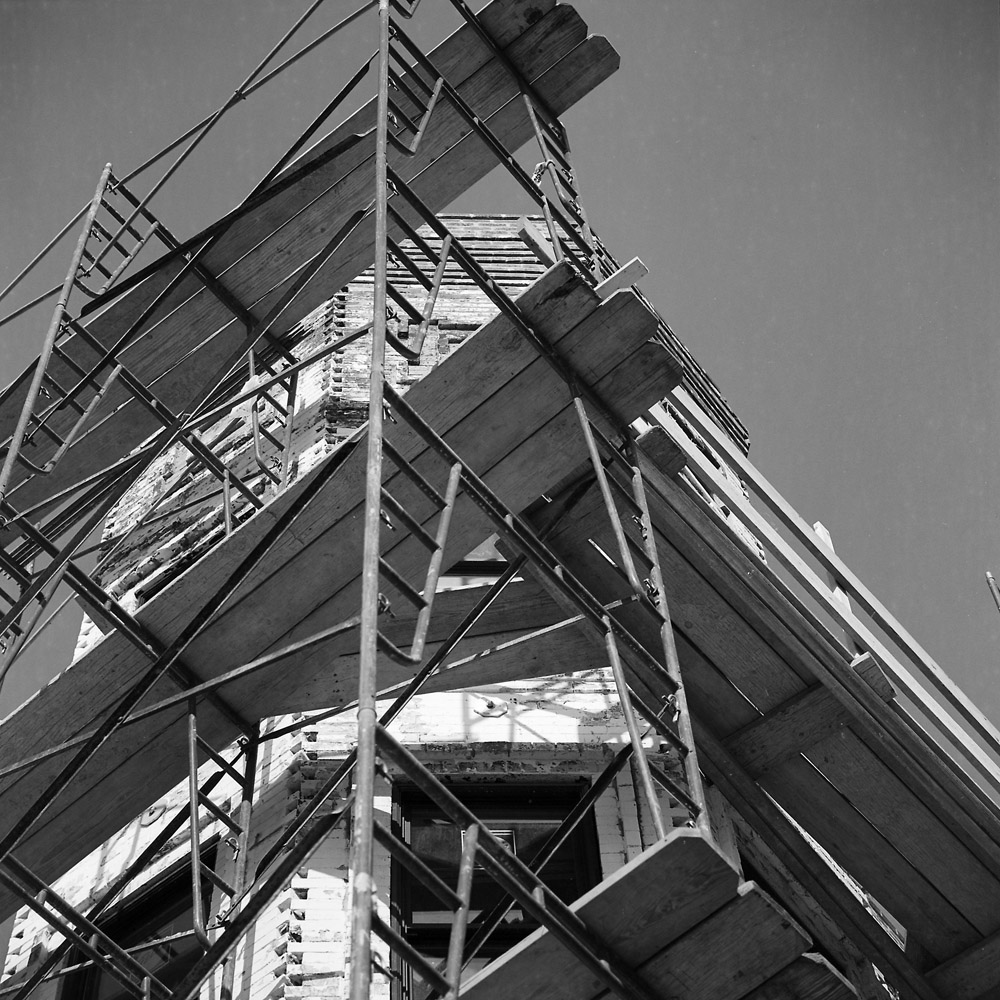
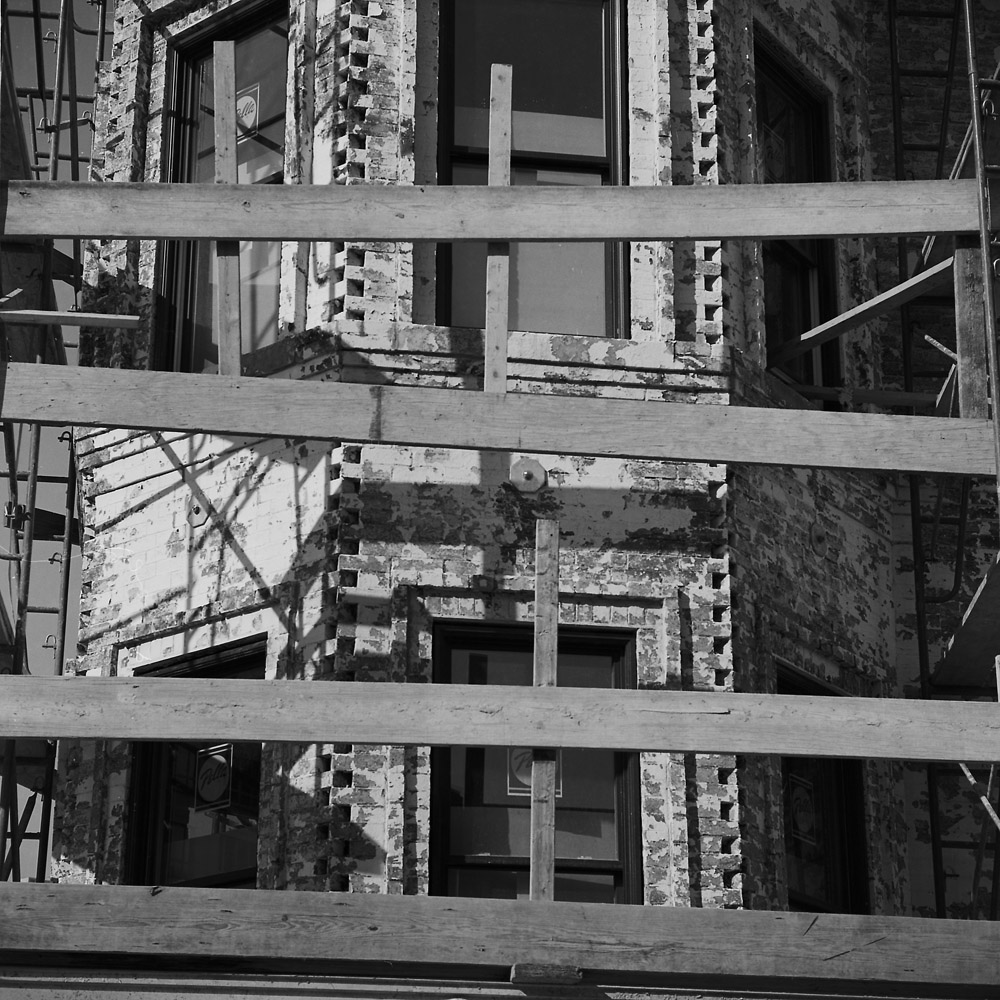
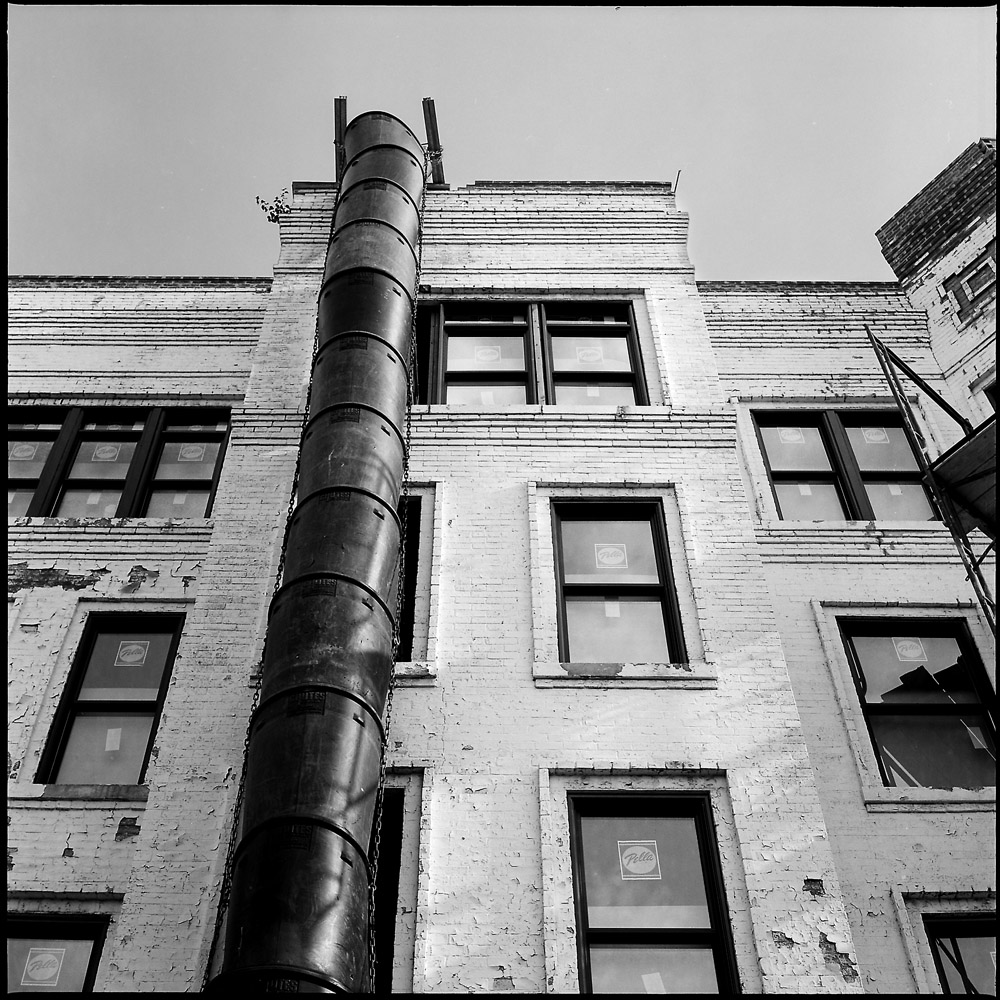
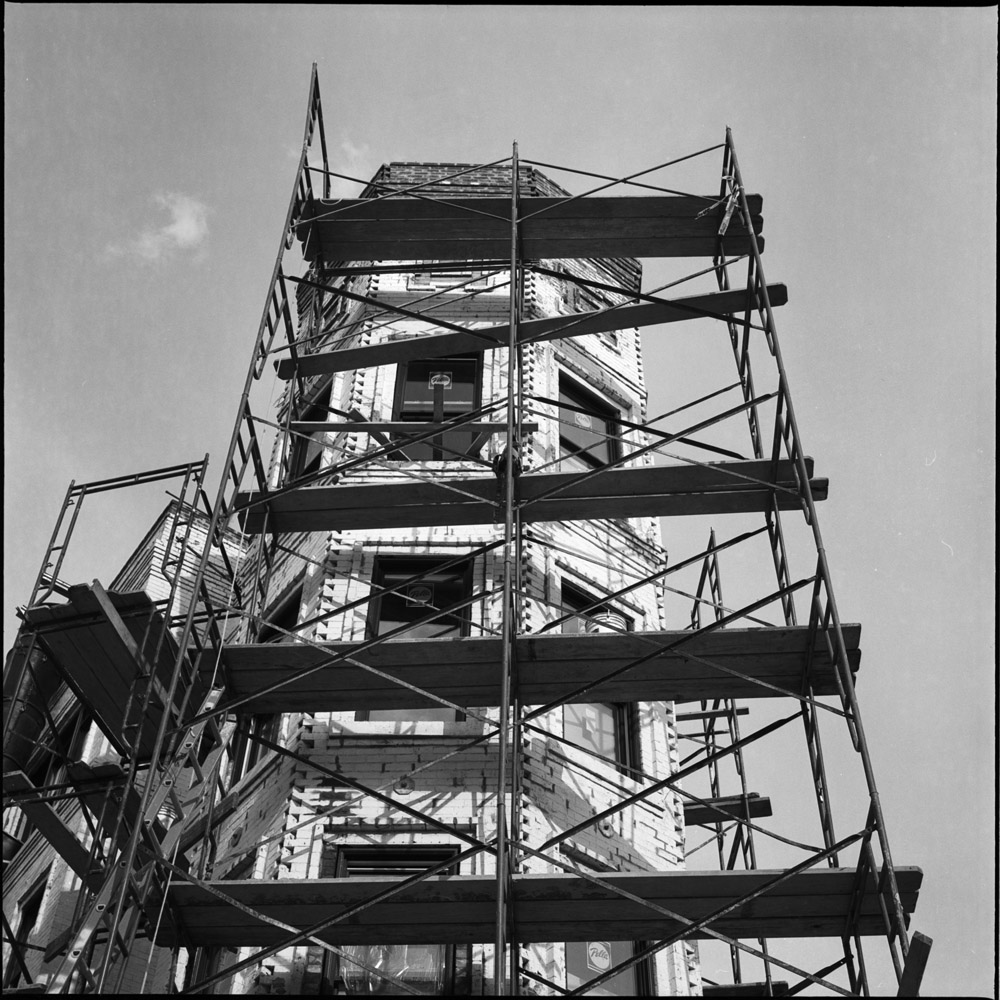
An architectural abstraction at the construction site across the street from my office. This building has been an inspired location for me – I’ll be a little sad when the construction is done because the building will be all neat and new again and won’t have all the cool textures it has now. But it will present entirely new options for photographing, I’m sure, so I’ll adapt and overcome, as the Marines say.
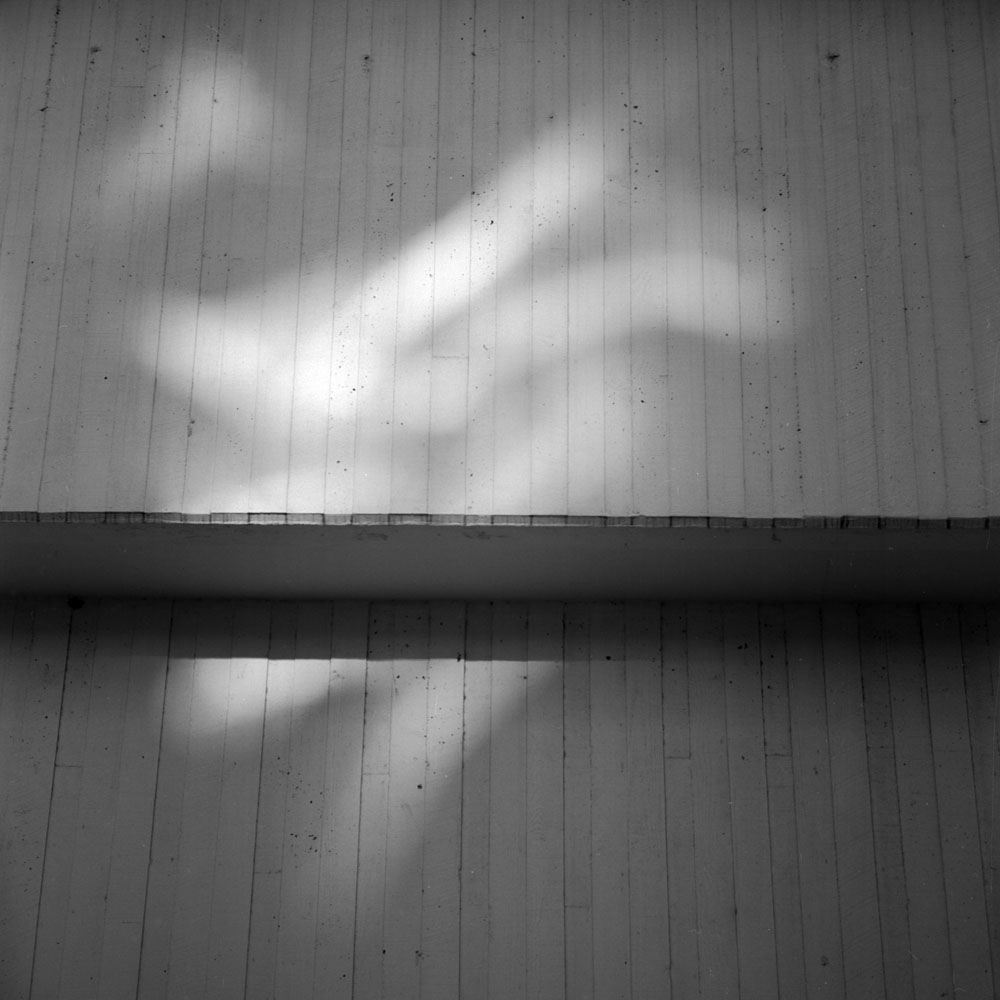
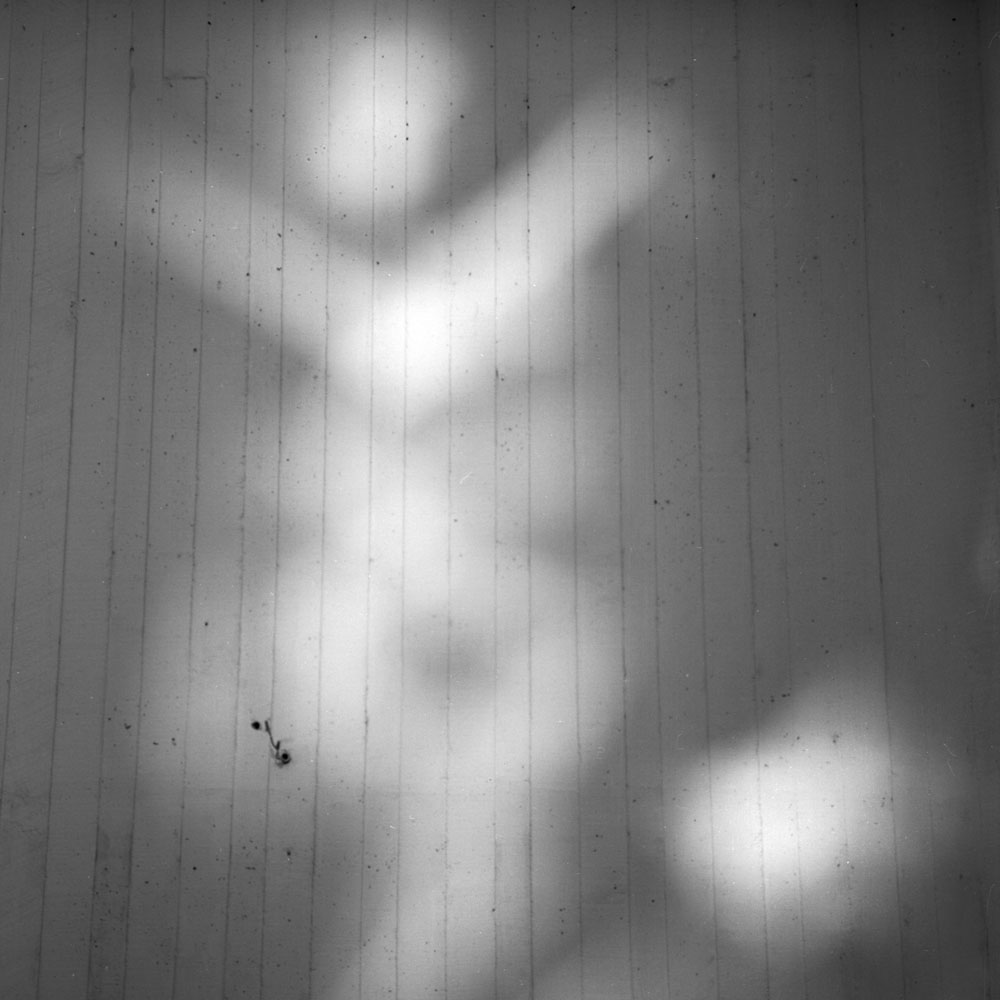
Well, it’s not a Chinese wall, obviously, but it is a wall. And a natural phenomenon, light reflected on the wall filtered by the patterns of tree branches, ends up looking LIKE Chinese characters. They’re obviously not real Chinese characters, but they have a very calligraphic feel to them.
Here’s a few shots of Georgetown from below- another vista most tourists don’t see, and heck, even most Washingtonians don’t know exists, because they never continue on Water Street past the piers for Key Bridge, if they even go that far.
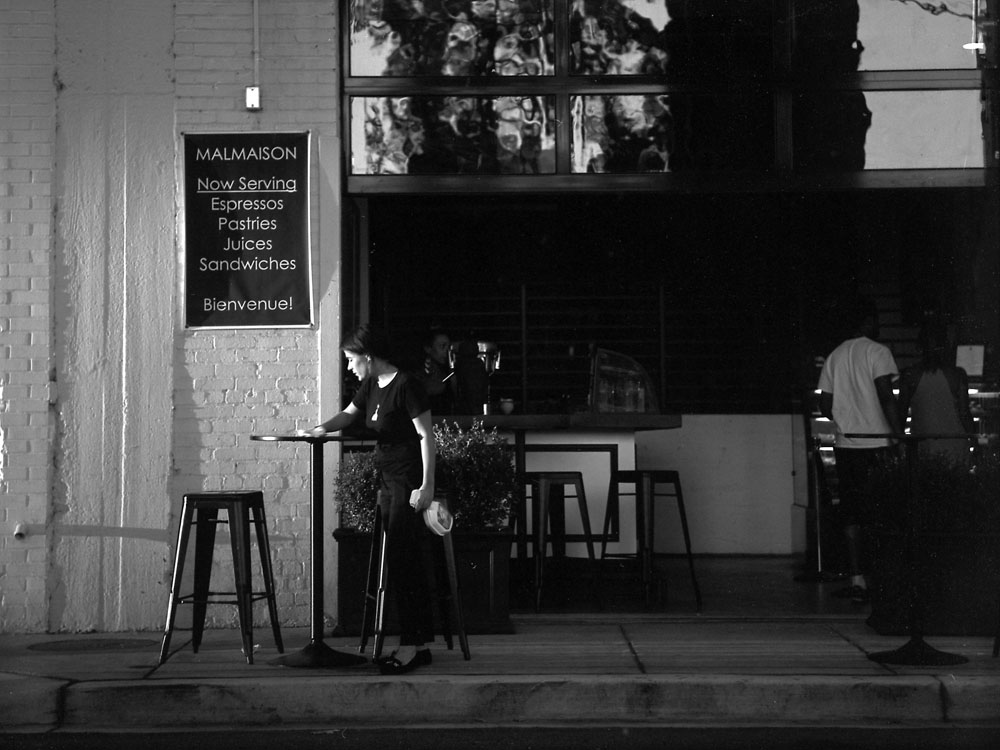
Cafe Malmaison is a recent arrival under the Whitehurst Freeway, in the section of Water Street that still feels a bit seedy and disreputable.
Cafe Malmaison, Under The Whitehurst
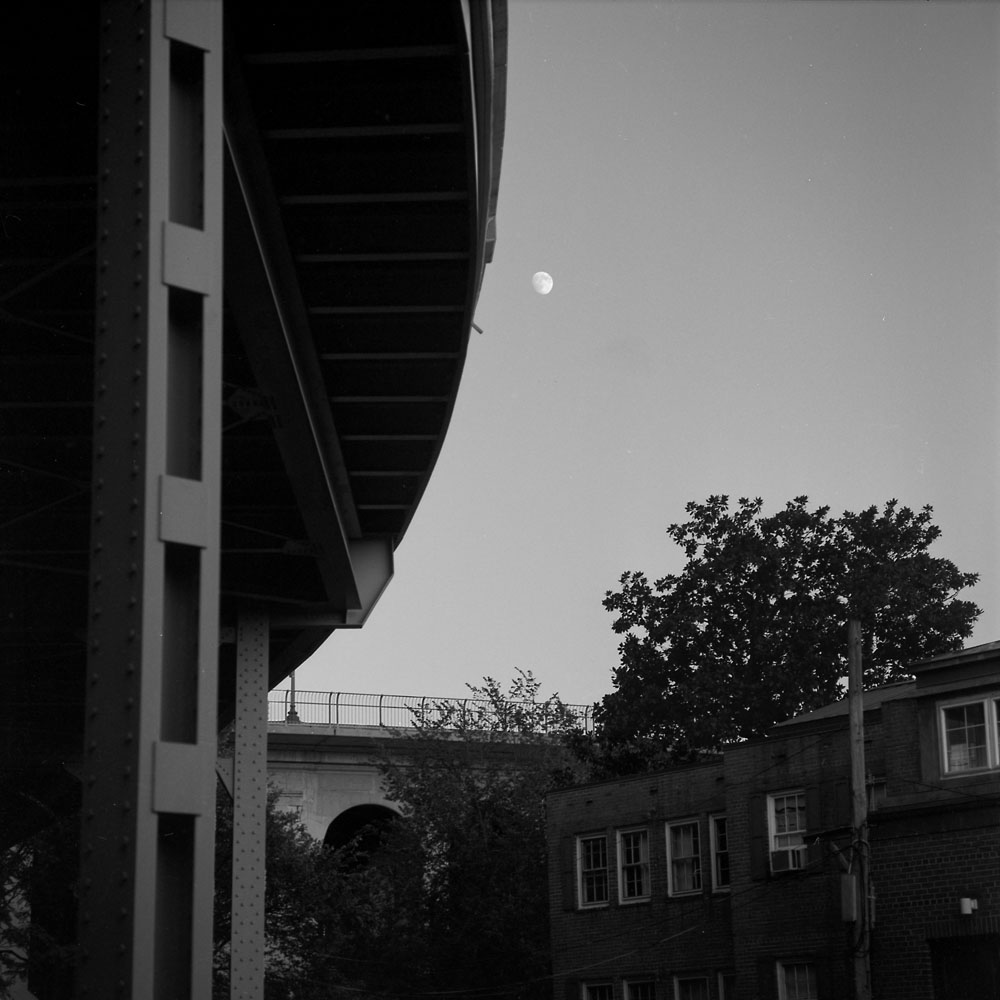
This is the view of the off-ramp to the Whitehurst looking up from Water Street/the Capital Crescent Trail, with the moon hanging in the sky over the buildings of the Potomac Boat Club.
Moon, Whitehurst Off-Ramp
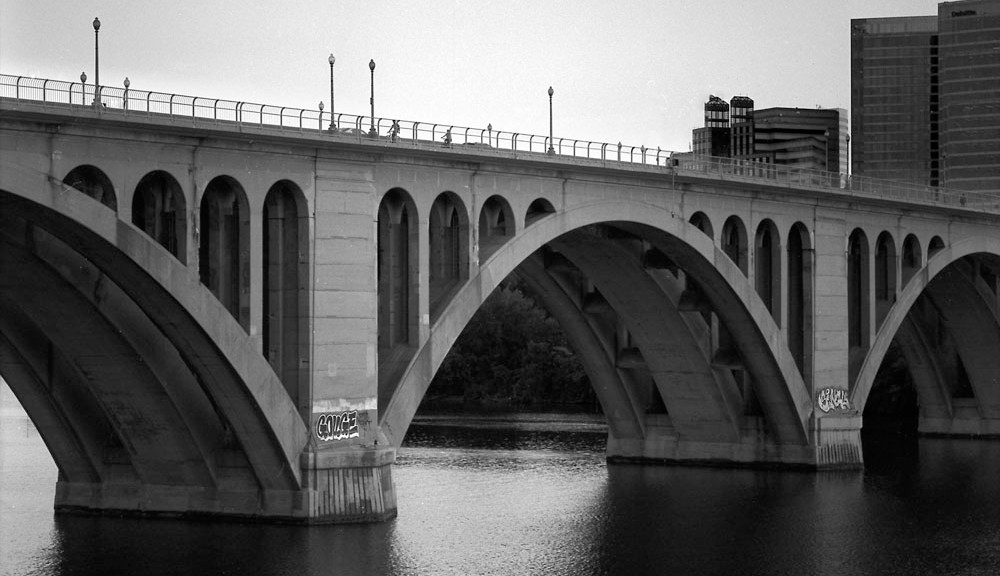
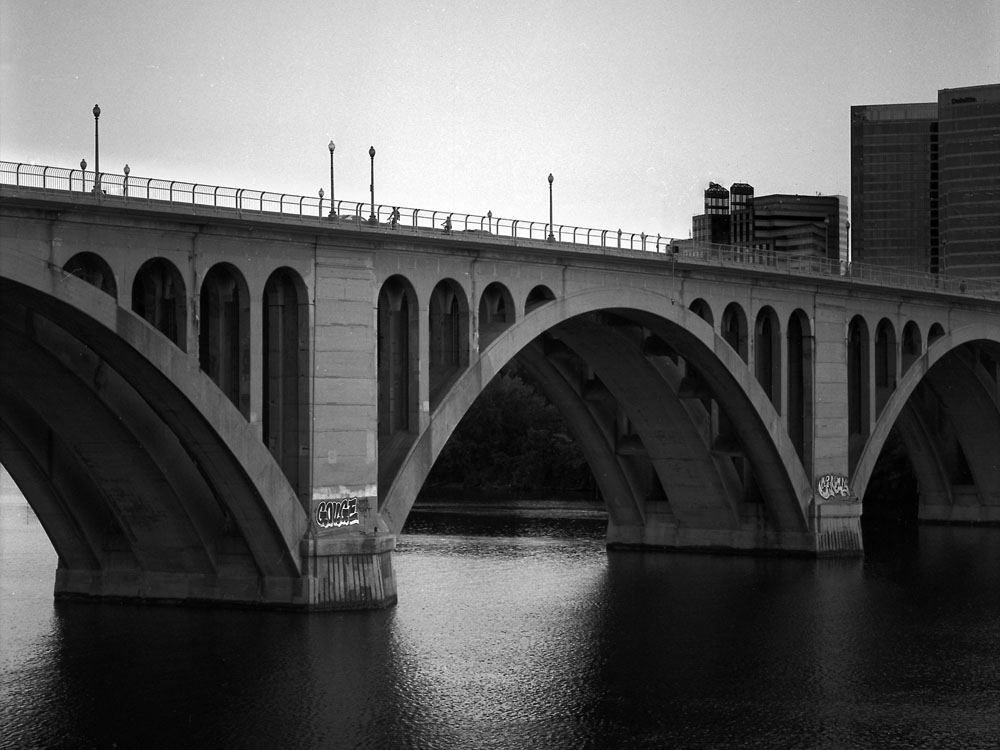
And Key Bridge’s western elevation, lit by the setting sun.
I was out on a photo-walk after work the other evening and wandered through Georgetown with the Rolleiflexes. I walked down under the Whitehurst and through the riverfront park. If you pass beyond the end of the park, you go under Key Bridge and come to the boat houses. Across the street from the boathouses where you can rent canoes, kayaks and stand-ups to take out on the river, there are stairs that take you up to the level of the C&O Canal. There’s the remains of the Alexandria Aqueduct Bridge that crossed the Potomac just past the Potomac Boat Club building. The Aqueduct Bridge was originally built in the 1860s to carry canal boats from the C&O Canal to the Alexandria Canal. Later it was improved by adding a road bridge and a deck for electric trolley cars. It was demolished in the 1930s to make way for Key Bridge (which was so named to honor Francis Scott Key, the author of the US National Anthem, whose house was demolished to make room for the bridge). The Alexandria Aqueduct Bridge piers are a popular spot for young people to hang out, especially in the summer time.
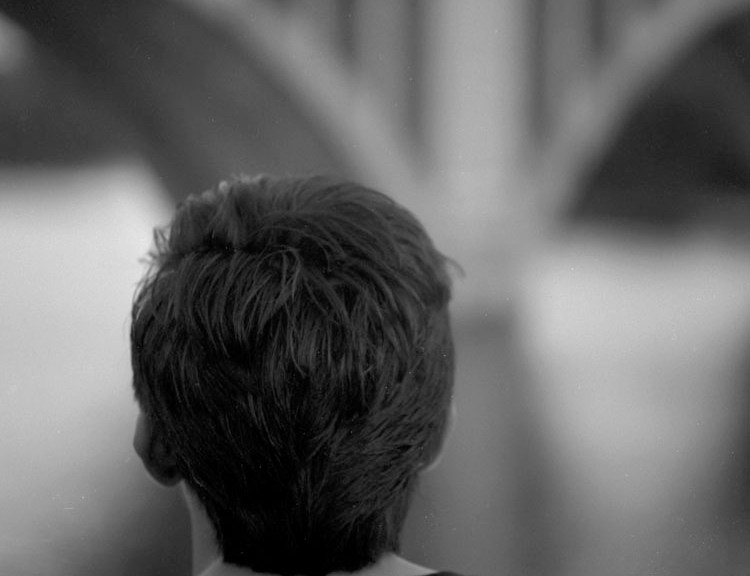
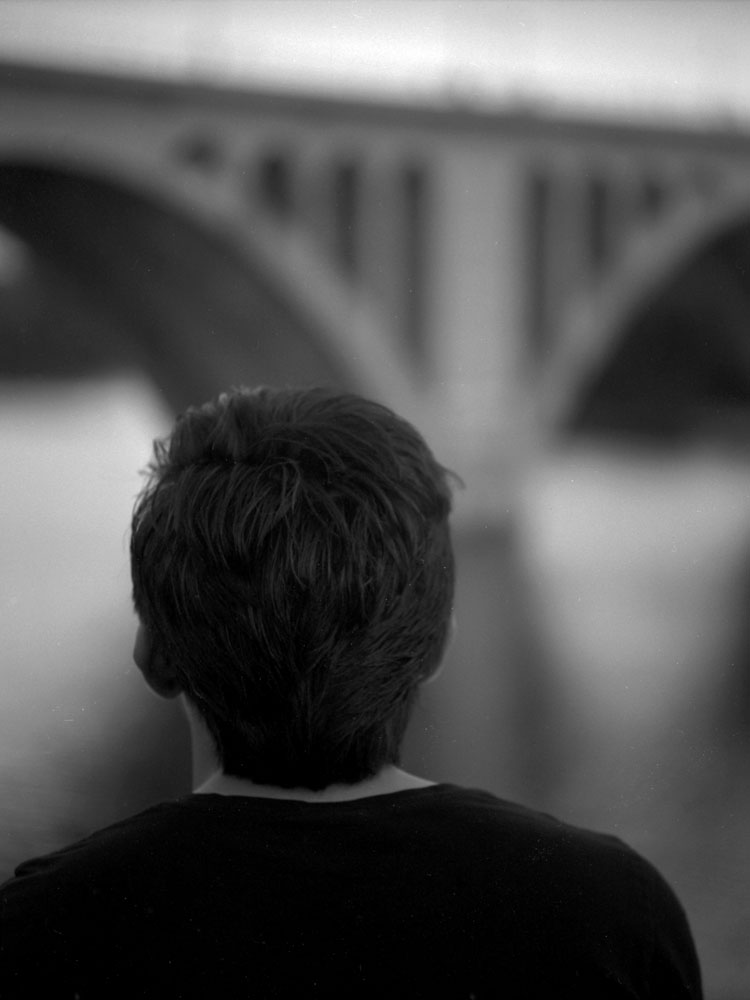
The Boy Who Dreams of a Bridge
I went out to the end of the pier with the thought of getting a shot of the west-facing side of Key Bridge while it was still illuminated by the setting sun. A bunch of teenagers were hanging out there. Another woman photographer who was there coincidentally at the same time and I were both out on the end of the pier, shooting the bridge and the riverscape. One of the teens asked what we were doing. The woman ignored him, but I told him I was taking pictures of the bridge, and whatever else struck my fancy. He returned his attention to his friends and the scene in front of them. Looking down, I saw this scene through the viewfinder of my camera and quickly composed the shot. While I’m not normally a big gear geek (at least in my writings- I hope!), this is one case where I will geek out on my hardware and talk a bit about the choices I made.
I had been wanting for a long time to capture scenes like this – something suggestive, a little mysterious, a little ethereal, where the viewer can insert themselves into the scene. I haven’t always been successful, at least not to the degree I was looking for, and hadn’t really hit upon the right combination of toys and technique to make it happen. Well, I’ve obviously found it. The camera is my Tele-Rolleiflex, coupled with the Rolleinar 0.35 close-up attachment. For whatever reason when they made the original Tele-Rolleiflex, Rollei limited the minimum focus distance to roughly 8 feet (2.5 meters). By itself, this makes the Tele-Rollei rather limited in usefulness especially as a portrait camera. To compensate for this, Rollei made available the 0.35 and 0.70 Rolleinar close-up attachments. Since one of my ambitions for the Tele was doing portraits, I felt it was incumbent upon me to acquire at least the 0.35, which I have, and used on this shoot. The net effect of the Tele plus the Rolleinar is seen here, and in the next image. They give an extremely soft, dreamy look to the out-of-focus background areas.
Being able to create that extremely shallow depth-of-field combined with the extremely soft out-of-focus area throws the “3-D” effect into high relief, and lends itself when used appropriately to creating fantastical scenes like the one above where the bridge in the background, while very distinct, is sufficiently soft and far-away-looking that it could be real or it could be a dream – which it is remains for the viewer to decide. Thus the title of the image.
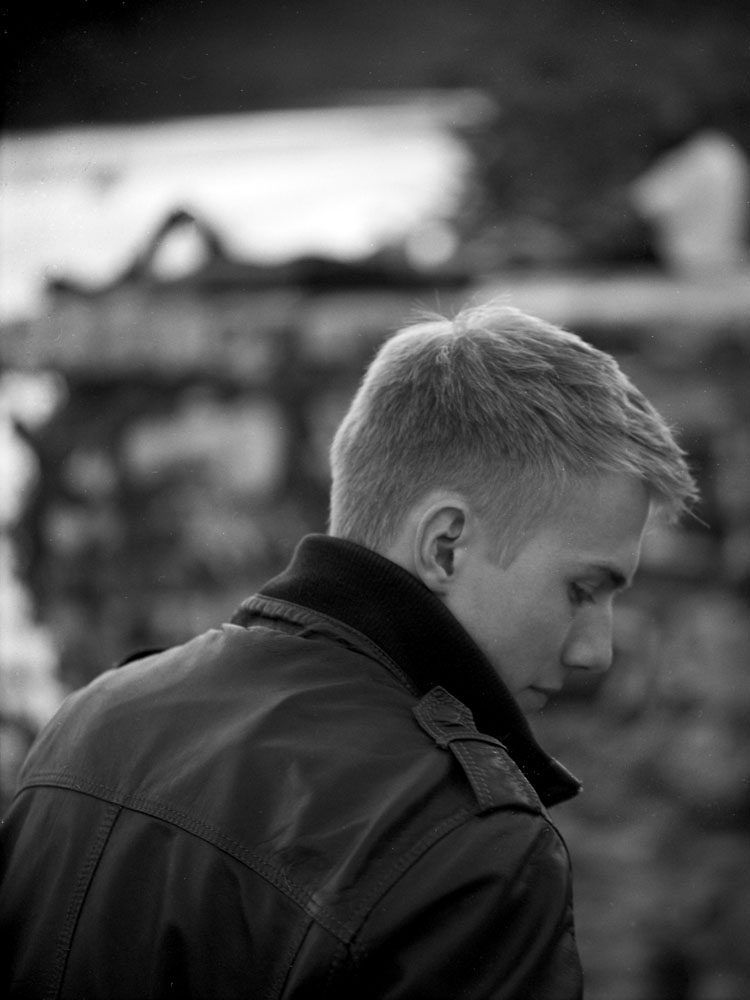
Blond Boy, Georgetown
At the same place and same time, I turned around to look up the river and saw a trio of very blond, very Germanic-looking young folks (Georgetown University students? Youth tourists?) sitting on the edge of the stone walkway. This boy turned sideways to look at the girl beside him and was momentarily caught with soft, subtle backlighting. If you look carefully you can make out some more kids lounging on the opposite side of the old canal bed. It’s a very romantic, mysterious, suggestive composition – what is he looking at out of the frame? Where is he? Why is he there?
 dcphotoartist