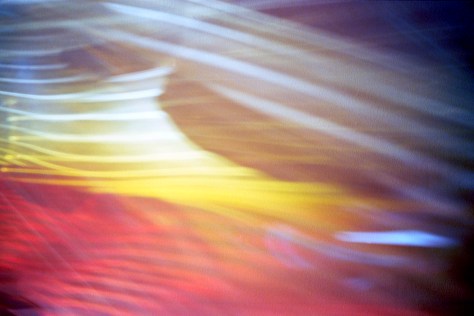
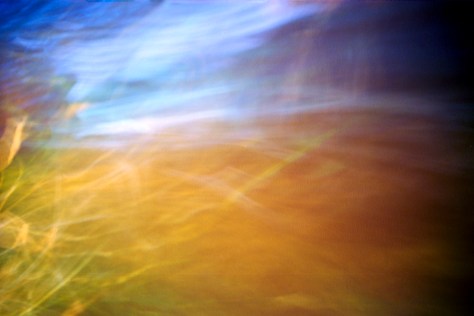
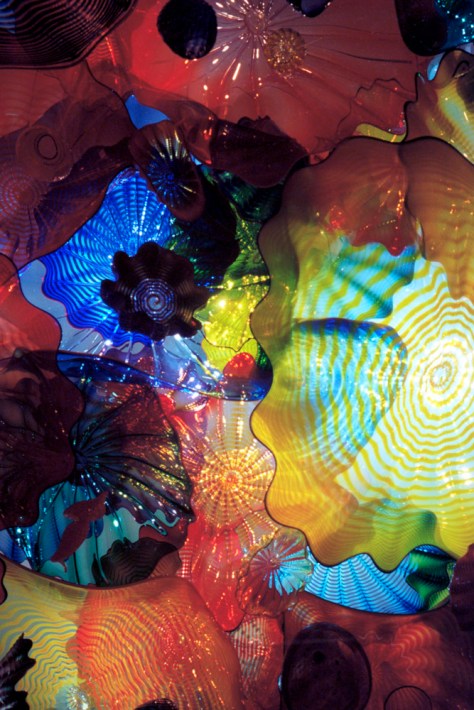
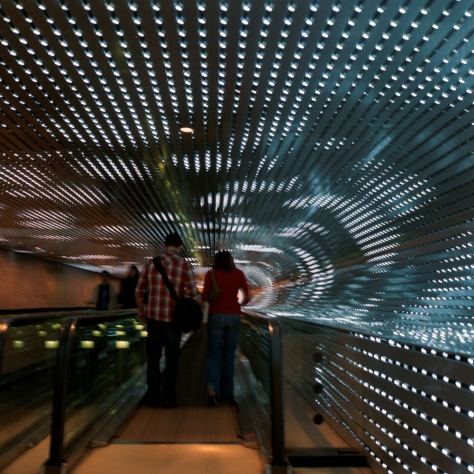
This was taken over the Thanksgiving weekend at my visit to Richmond, Virginia and the Dale Chihuly glass exhibit at the Virginia Museum of Fine Art. There was a passageway between rooms where the ceiling had been filled with all these marine-inspired glass forms and then lit from above. The glass forms (seen in the last image) then projected these really abstract color and light patterns on the walls. These were interesting enough that I tried to capture some of the effect of it.
Shot with my Contax G2, 21mm lens, and Kodak Ektar 100 film – hand-held.
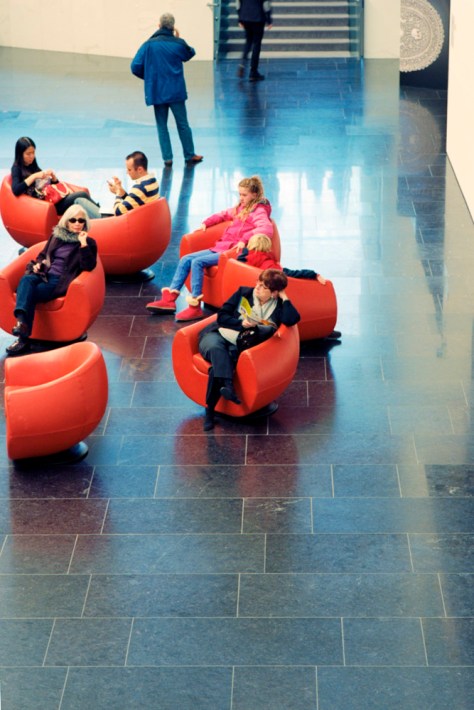
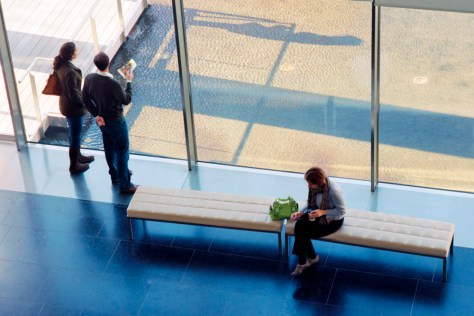
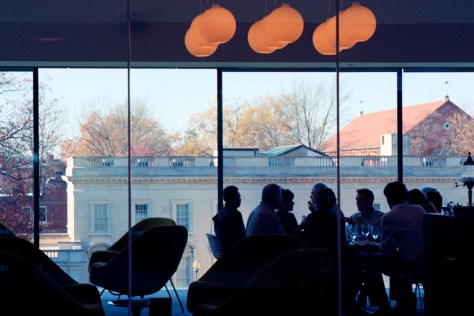
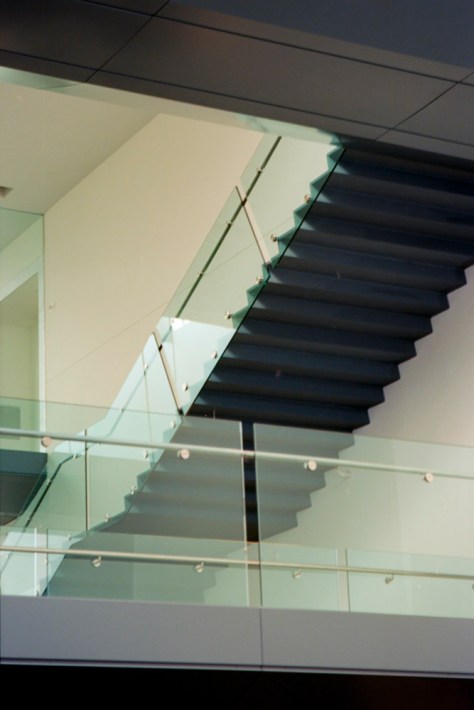
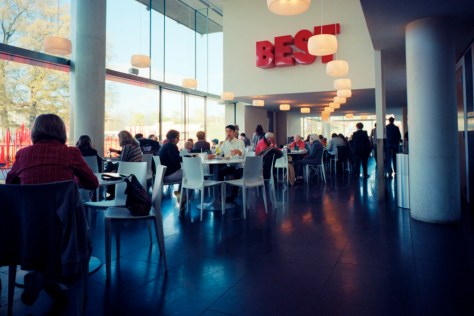
I realize there are no people in the staircase shot so it’s not technically people-watching, but it’s part of the same space, and in a way the absence of people can be about the interaction of people with a space in the same way that people in the frame can be. All photos were taken with my Contax G2 and the 90mm and 21mm lenses. Film used was Kodak Ektar 100.
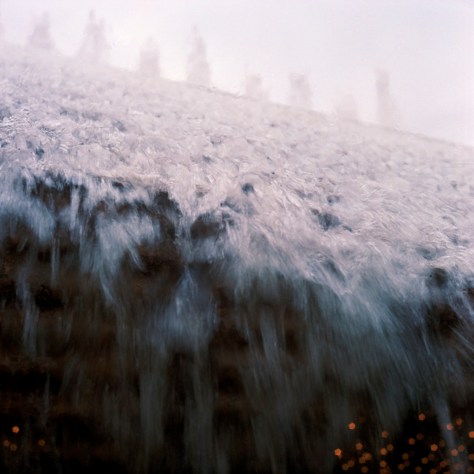
This fountain is visible from both above ground and below as it cascades down a series of steps, sliced through in cross-section. The East and West wings of the National Gallery of Art in Washington DC are connected via an underground passageway, and in the middle of this passageway is a large cafe and seating area. The wall of the passageway opposite the cafe is floor-to-ceiling glass, looking directly in to this fountain. The odd orange dots in the lower corners of the photo are reflections of the Christmas lights on miniature trees placed in front of the window. I deliberately used a moderately slow (1/30th of a second) shutter speed combined with a fairly wide aperture (f5.6 I think) to keep some blur in the water and render it abstract. Just off camera right in this photo is where the light sculpture I posted earlier is located.
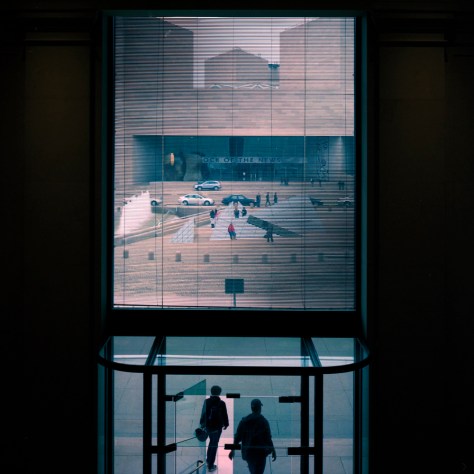
East Wing, National Gallery of Art, seen from the West Wing exit
Here is a view of the I.M. Pei designed East Wing of the National Gallery of Art, from the exit of the John Russell Pope designed West Wing. The strange colors are caused by the coatings on the glass to prevent UV transmission and keep the lobby cool in the summer. I waited for some people to go through the doors to add a touch of energy and human engagement to the image. You can see the above-ground portion of the fountain from this photo.
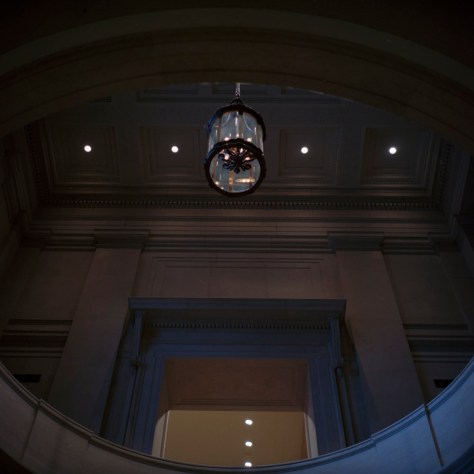
North Lobby, National Gallery of Art
This is the North entrance lobby of the West Wing of the National Gallery of Art. I’m standing at street level by the security guard’s desk, looking up through the oculus at the chandelier. This is another grand space that is under appreciated because most people never look UP when passing through to take in the building design.
All photos were taken with my Rolleiflex 2.8E, using Kodak Portra 800.
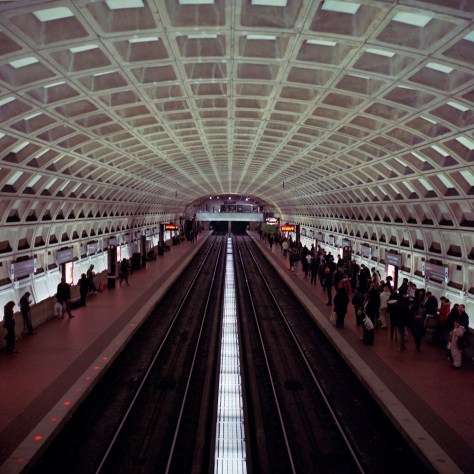
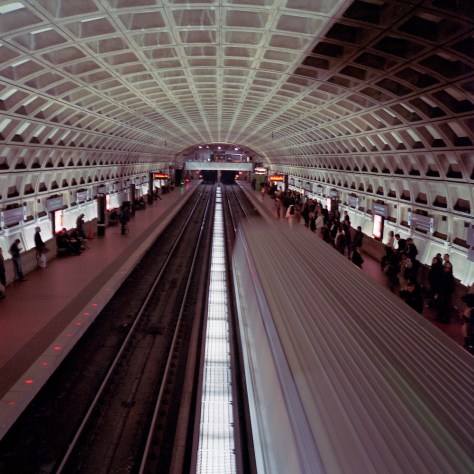
Two shots of the Gallery Place Metro station, looking down on the Red Line platform from the mezzanine. Taken with the Rolleiflex 2.8E, hand-held, with Portra 800. Exposure times were 1/2 second or 1 second @ f2.8.
Kogod Courtyard, West Facade, NightKogod Courtyard, South Facade, NightKogod Courtyard, Southeast View, DayKogod Courtyard, West View, DayKogod Courtyard, South View, Day
Here are some views of the Kogod Courtyard of the National Portrait Gallery. The blue lighting in the nighttime shots of the courtyard was for an after-hours reception being held at the museum. The courtyard used to be a fairly typical Victorian-era affair with a pair of fountains and some scraggly looking shrubbery, open to the air and more importantly, the weather. A few years ago they undertook a multi-million dollar renovation, ripping out the old landscaping and (non-working) fountains and enclosing it with a Norman Foster designed undulating glass roof. At first I found the interior design rather stark. It has grown on me, though, with the modern interpretations of fountains being just a thin sheet of water flowing in a rectangle across the floor. Of course the roof is the masterwork – it bends and twists like a piece of origami paper. The courtyard is now a very pleasant place to sit and just pass the time, reading a book or eating something from the museum cafe.
All photos were taken with my Rolleiflex 2.8E, on Kodak Portra 800 film. Also, for the die-hard photo geeks out there, I’ve been using the free light meter app for my iPhone to do the metering. I’d say it works pretty darned well 🙂
National Gallery of Art, Light Sculpture #1National Gallery of Art, Light Sculpture #2National Gallery of Art, Light Sculpture #3
Three shots of the light sculpture in operation, taken with the Rolleiflex, hand-held, using Kodak Portra 800. I thought it would make for a different take on the piece compared to the video (which was shot on my iPhone, thus the shakiness). The light sculpture has been set so that it will never in fact repeat itself exactly.
Here’s my first video post- I went to the National Gallery of Art today and shot this little video clip of the light sculpture between the underground cafe and the East Wing of the National Gallery. This is one of the pleasures and benefits of living in Washington DC – virtually all museums are free admission, and open 7 days a week. I’d be hard pressed to move elsewhere and give up this perk. Do note that the National Gallery of Art is NOT part of the Smithsonian, although it is co-located with the other Smithsonian museums on the National Mall. I actually made it a three museum day – I started off with the African-American Civil War Museum, which is located in my neighborhood. For a small, privately funded museum without the visibility or the location of the big name museums downtown, they did an impressive job of displaying and interpreting the storyline and the supporting artifacts in their collection.
I knew they were there, but in more than a decade of living near them, I had never made it in. Today I decided to stop by and see, since they were open (a past problem due to their former facilities). I’m very glad I did. Because I’m a civil war nut, there wasn’t a LOT new to me, but there was enough to make it worthwhile. They do a great job contextualizing the African-American experience from the beginnings of European colonization in the Americas through the Civil War, and beyond to the Civil Rights era. I highly recommend the visit.
To bracket the experience, I stopped in the National Portrait Gallery/Museum of American Art (which IS part of the Smithsonian, and has awesome opening hours, from 11 am to 7 pm every day except Christmas). This is one of the very best museums in DC, in my opinion, not only because they’re in a beautiful Greek Revival building originally designed to house the US Patent Office (which I have a personal connection to the building – an ancestor of mine was a US Senator from Maine who commissioned the construction of the building), but they also have some of the very best photography (and non-photographic art) exhibits. They have some daring younger curators putting together brilliant exhibits that include painting, photography, prints, and sculpture, keeping the underlying theme of the American experience to unify sometimes very disparate artworks and objects. Today I saw “The Civil War and American Art“, rather a contrast to the African-American museum because it was filled with big-ticket paintings and original photographs. At least it was not neglectful of the African-American experience, including multiple paintings on the question of slavery and its impact on the American psyche and the Civil War.
Then it was on to the National Gallery of Art. Yes, I know, whirlwind day. The NGA had a photography show in their basement gallery on the subject of “Serial Portraiture”. Serial Portraiture is defined as works of portraiture that span an extended period of time and/or depict multiple aspects of a person’s character or moods. The exhibit featured works by Alfred Stieglitz, Paul Strand, Andre Kertesz, Harry Callahan, Emmet Gowin, Milton Rogovin, and a handful of contemporary photographers like Francesca Woodman and Ann Hamilton. The show itself is interesting, depicting classic as well as contemporary takes on the serial portrait and its use to explore contemporary concerns with identity and expression. The exhibition catalog (available as a PDF) is a failure, as it excludes more than half the material in the show. This is where the NGA is a consistent disappointment – they mount some potentially interesting exhibits of photography, but they hide them away in the basement, and then if they produce an exhibition catalog at all, they produce some half-hearted flimsy pamphlet. The Portrait Gallery/American Art Museum, on the other hand, when they produce a catalog, like the Civil War Art exhibit, they go all out with a hardcover volume with supplemental materials beyond what is presented in the exhibit.
To cleanse the palate after that, I stopped by the Michelangelo “David-Apollo” display upstairs. This is the kind of thing the NGA does get right (although they wouldn’t allow photos!!! BOO HISS) – classical art by dead white men. I really wish a piece like this was on display when I was taking my stone carving classes, as studying photos of Michelangelo’s carving technique is radically insufficient. If you have the opportunity, please come and see the piece while it is here – it returns to Italy at the end of March, 2013.
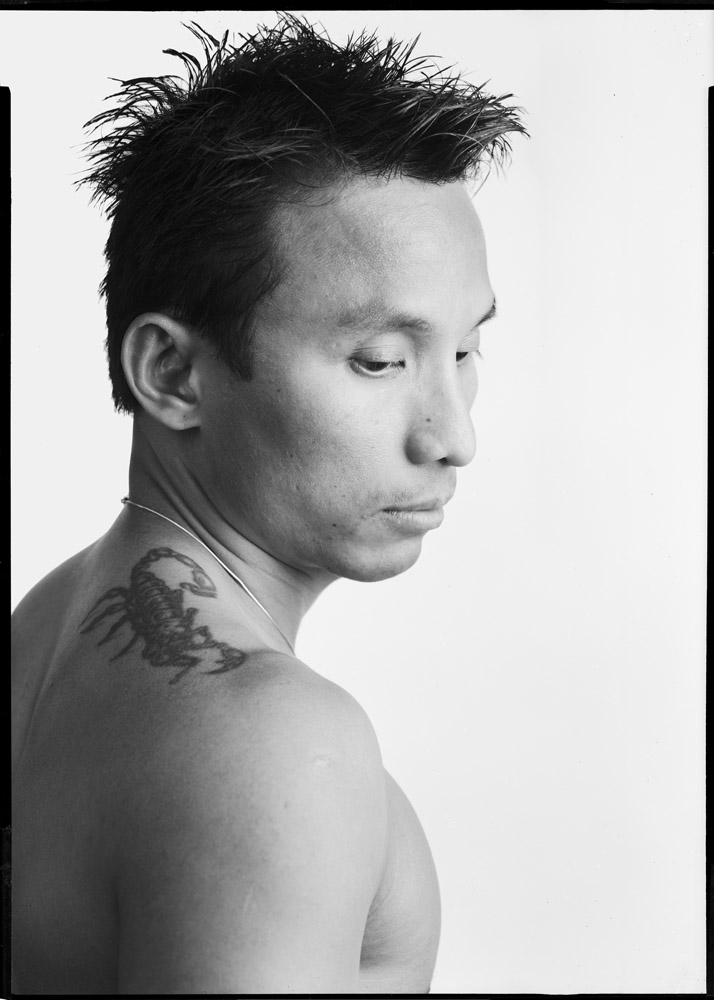
Another friend’s portrait. 5×7, Ilford FP4+, Kodak 14″ Commercial Ektar lens. I had him stand in front of white seamless paper, and then lit him from the right with a large softbox, reflector on his left, and a second light on the backdrop to bring the white up. Developed in PMK Pyro developer.
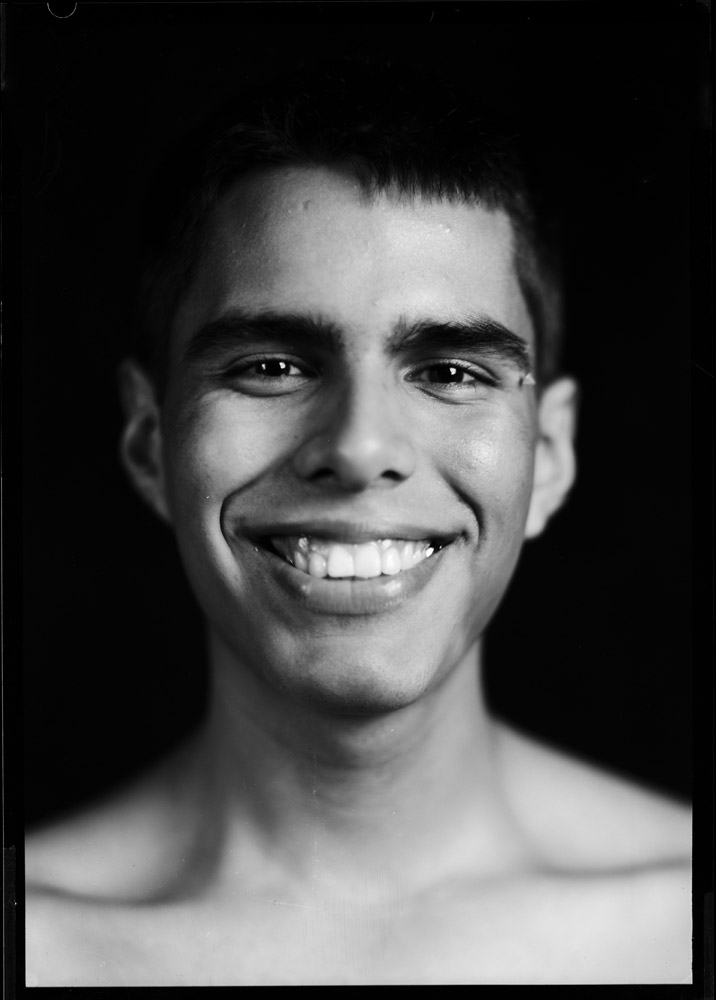
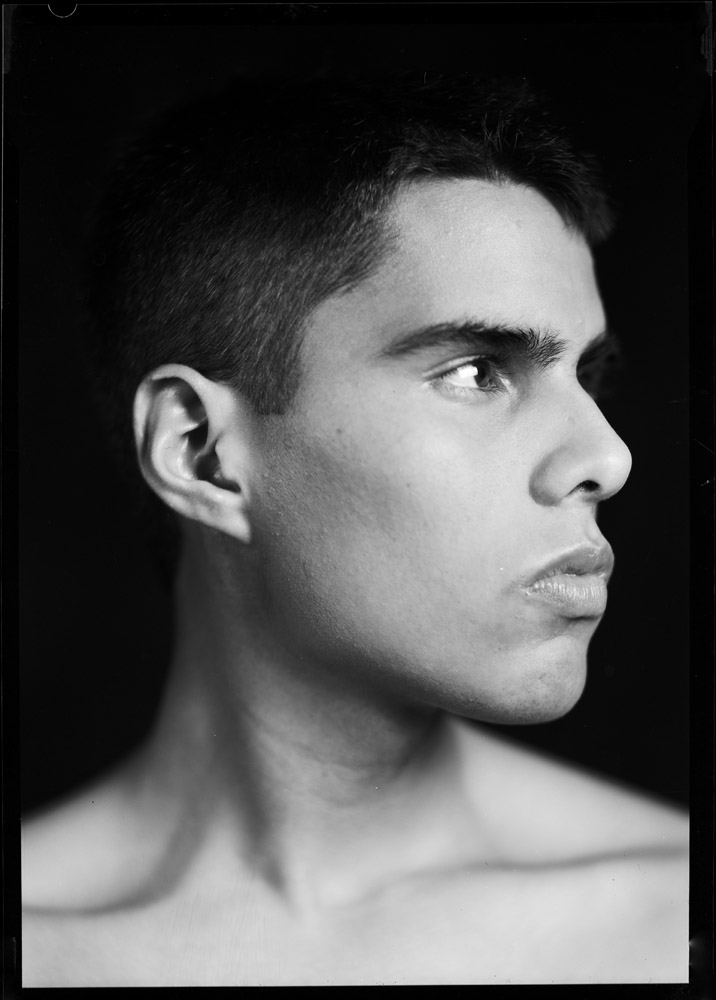
Just wanted to share a pair of portraits I shot a while ago of a young man who sat for a personal project of mine. They show two very different perspectives on him – his smile is particularly radiant, but the profile is terribly serious. These were shot with my antique Century Studio Master portrait camera and a 14″ Seneca Whole Plate Portrait f5 lens. These used my typical lighting setup of one main light in a giant softbox with a fill reflector on the opposite side.
Two more from Gettysburg itself, and three more from the Catoctin Furnace.
Horse CarriageGettysburg Rail Depot
The rail depot is now a little museum, with exhibits relating to Lincoln’s visit.
Catoctin Furnace VentIronmasters House RuinsIronmasters Root Cellar
The iron master of Catoctin Furnace was responsible for all the finished product coming out of the factory. His house was quite large. Today it stands in ruins. The ‘root cellar’ image is my assumption of what the space might have been – it is not labeled on the site. I’m guessing at its function by the proximity to the house (it would have been immediately behind the house, near the kitchen). The other possibility is that it is the spring/well for the house. Since I lacked a flashlight, I did not go in to try and find out what was in there.






 dcphotoartist