Category Archives: News/Announcements

The new and improved studio

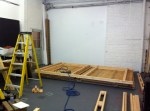
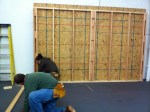
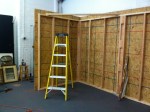
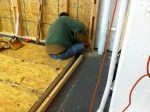
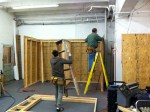
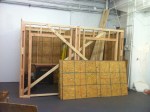
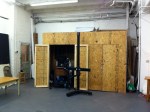
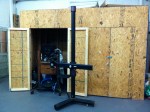
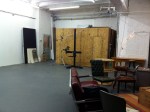
Well, after much hemming and hawing and consternation, the new storage locker for the studio is done! All my stuff is now safely stowed, and the studio looks a thousand times neater and more professional. Here are photos of the locker under construction:

One of the big challenges was the fact that the floor is far from level. The building was once a taxi/livery dispatch and maintenance facility. The floor has multi-directional slopes to it to allow for cleaning of spilled coolant/transmission fluid/oil. In one corner (opposite where the locker is) there’s even a covered-over maintenance trench for greasemonkeys to get under the cabs to change the oil.

Upcoming collectors show in New York

For those who might be interested, here’s a link to The Photography Collectors’ Show in New York next Saturday, March 19. I’m toying with the idea of going up to see it.

Here is a list of dealers who will be in attendance:

Steve Yager
Adam Forgash
Casey A. Waters
Christopher Wahren
D. T. Pendleton
Dennis Waters
Erin Waters
Greg French
Henry Deeks
Maria DiElsi
Thomas Harris
Stacy Waldman
Arthur Dristiliaris
Brian Caplan
David Chow
Dr. Stanley Burns
Glenn Vogel
Jack Domeischel
Julian Wolff
Larry Berke
Lisa Taos
Richard Hart
Richard Silver
Stephen Perloff
Stuart Butterfield
Susan Davens

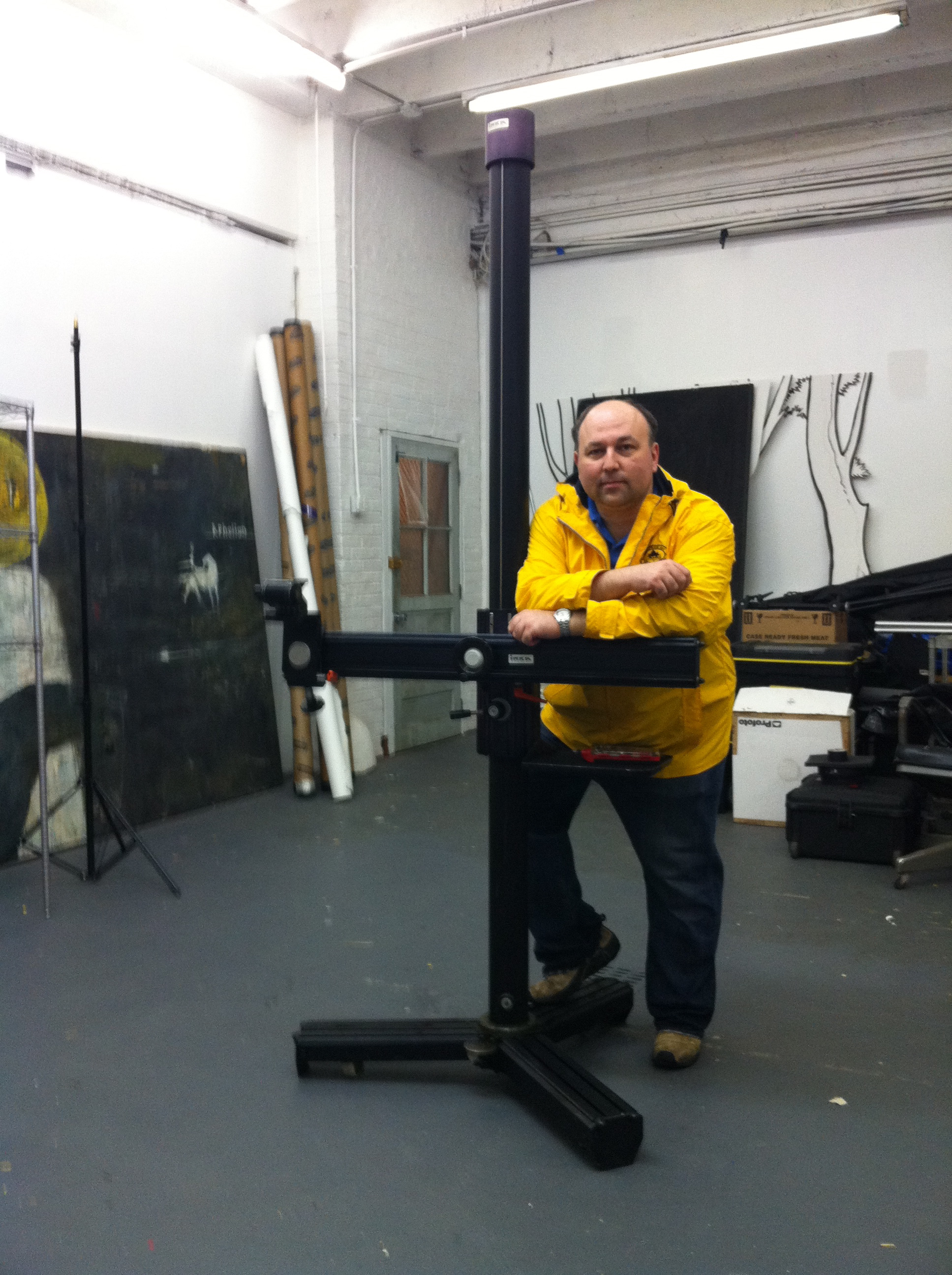
The studio stand, in the studio!

Ok-

after trekking up to Philadelphia and back driving a big GMC Sierra pickup truck, the INKA studio stand is in its new home. We’re having a meeting with a contractor this week to discuss the storage lockers (they’ll be going up behind where I’m standing in this shot, to the right of the door).

The INKA studio stand, and me, in the studio

Busy weekend at the studio

Today I’m driving up to Philadelphia to pick up a studio stand – I found a great deal on an INKA stand that can handle any camera I’ve got, including the 14×17. The challenge will be getting it in the truck. Tomorrow I’ll have no problem unloading it as we’ll have several guys at the studio who can help. We’re meeting to discuss and hopefully even start building the storage units at the studio. The momentum is building and I’m getting excited about actually being able to use the space! Pictures of the storage unit and the cleaned-up studio to follow when we have something to show.

Settling in to the new studio

I was out to my parents’ house for lunch yesterday, and on a whim, as we were discussing possible family vacation plans, I decided that it was time to bring the studio camera from their basement down to the studio (a much more logical place for it to live). So with a bit of clever maneuverings, we drove their Toyota Highlander across the snow-filled yard (they still have a good 6 inches on their grass) and pulled it up at the basement door. Mom had this fear that the Toyota (with a good 8 inch ground clearance) would get stuck in the snow, so she got on the John Deere lawn tractor with the snow-blower and blew a path from the driveway to the basement door. Completely un-needed, and she probably did more harm to the lawn with the John Deere (which had chains on the tires) than the Toyota would have.

Dad and I got the camera stand out of the basement, which was a minor miracle, as my dad is 72, with a bad back, and the stand is made of solid oak and cast iron. It fit, barely, in the back of the Highlander with the rear seats folded forward. On the way home I rounded up a couple friends and we unloaded everything down at the studio much easier than getting the stand into the back of the car (it helps that the studio is at street level and we only had to take the stand up one single step to get it in the back door. While I have the Highlander, I’m going to do another run over to the studio today with a bunch of accessories, and try to get the space a bit more organized.

Good article on Artists’ Statements

I’ve been getting asked for these things more and more recently, and it drives me nuts – it’s not that I’m incapable of writing something thoughtful and relevant about my work, but I’m often submitting different bodies of work to different target audiences, and I have to compose something de novo every time I submit. It’s good to hear that serious gallerists find artists statements somewhere between a distraction and an obstacle to sales.

http://www.huffingtonpost.com/daniel-grant/are-artists-statements-re_b_701604.html

My most recent artist’s statement:

My work is about human relationships and perception. “Human Commodities” uses humor to deal with a critically serious topic – the way in which we categorize, pigeonhole and commodify each other especially when it comes to intimate relationships. Men, especially, and especially by other men, are categorized as desirable or not based on their physical attributes – musculature, age, race, hair or lack thereof. When seeking a partner, we tend to use food analogies to describe the object of desire. This is natural, as sex is surpassed as a primal urge perhaps only by food. However, by objectifying people, especially through a food metaphor, it reduces them and de-humanizes them. I mean to interrogate and trouble this objectifying process by throwing into (comic) relief the process of commodification of men. I mean to challenge the viewer to question the very stereotypes they use to categorize objects of sexual desire – what makes one man qualify for “prime beef” instead of “sausage”, and can those very same criteria be turned on their head situationally to transform the subject?

How does that work for you?

The new studio

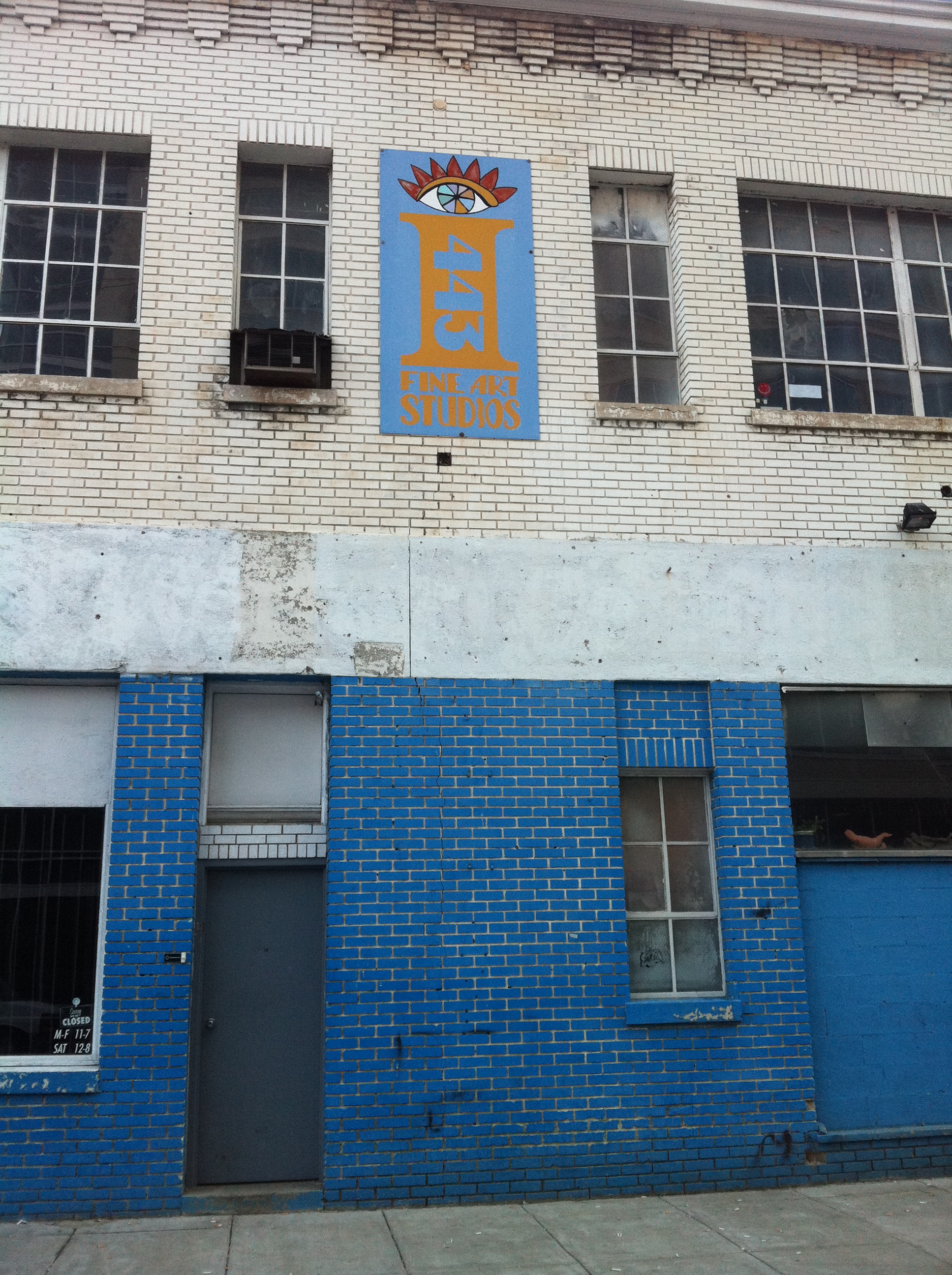
Here is my new studio! 443 I Street, NW – a short walk from Mount Vernon Square metro, Chinatown, and a short bus ride out Massachusetts avenue from Union Station. I’ll post more photos of the interior once I’ve had a chance to do some clean-up and get my stuff settled in.

New Studio Location

Stieglitz Steichen Strand at the Metropolitan Museum

Over this past weekend I went up to New York to see the Steiglitz, Steichen and Strand exhibit at the Metropolitan Museum of Art. I had been hearing about the show from a number of people and wanted very much to see it based on their comments, but approached with some apprehension, as rumor had it that the show was too darkly lit and hard to see. That assertion was patently not the case – the only reason it was hard to see the show was the milling hordes in the exhibition salons. Bad for me, good for the museum, as it means attendance is at healthy levels.

The show features three seminal figures in early 20th century American photography – Alfred Stieglitz, Edward Steichen and Paul Strand. Stieglitz is the connection between Steichen and Strand, as it was through his gallery and publications such as Camera Notes and Camera Work that both other artists were launched to the public. Steichen and Strand represent opposite ends of the art photography spectrum in many ways – Steichen was very much in the photography-as-painting school of soft focus lenses and heavily manipulated prints, whereas Strand, who got his beginnings in the same theoretical approach, represents the “new” photography-as-photography idiom that declared photography should be accepted as an art form for its own merits, rather than try to emulate painting or drawing.

Stieglitz’s work in this show bridges both schools. Works ranging from his early New York street scenes and his Equivalents through his Georgia O’Keefe nudes and his late “straight” photography which returned to New York City as viewed from his gallery and apartment windows. The Strand work on display did little for me – they had a limited selection of his Mexico portfolio, which is his most interesting work to my taste.

As an aspiring gum bichromate printer and quasi neo-pictorialist, the work of greatest interest to me was the Steichen segment of the exhibit. Were it not for the constant need to evade elbows and heels, I could easily have spent an entire day looking at just the Steichen room, studying the prints. On one wall, they had Steichen’s “The Pond – Moonlight”, and three variations of the Flatiron building, representing the descent into twilight and nightfall. I had only ever seen these prints reproduced in books before, and so no book reproduction can do them justice. Previously, I had no idea the scale of the originals – I envisioned them to be at most 8×10 inches in size. In fact, the “Pond – Moonlight” and Flatiron prints were something in the 12×15 to 14×17 inch size range – quite dramatic. Not only is the paper surface wrong, but the subtlety of the color palette is lost to the printers’ inks. I have yet to figure out how Steichen did it, but the gum image itself had a surface to it that was as if they had in fact been lacquered, not formed from multiple exposures in sensitized chemicals. In other images, notably some nudes, brush strokes were clearly visible, adding texture and movement to the figures. It made me wish that Steichen were still alive or that I could go back in time to interrogate him about his gum materials and techniques.

Unlike the Steichen work, Paul Strand’s images were very much in the scale I was used to seeing them reproduced. However, the majority of his work whether silver gelatin or platinum/palladium was a rich brown color, printed dark and low in contrast. Most reproductions tend to boost the contrast and render his work in black/white/gray tones, which gives a very different impression of his work.It is perhaps the Strand work at the show that made people feel that the exhibit was under-lit, as his work is printed dark enough that it is hard to view in anything other than brilliant illumination. The rationale for this difference between original prints and reproductions I can guess at – people are expecting “black-and-white” photography to look, well, black-and-white, and even vintage work is expected to be somewhat contrasty. It is entirely possible that Strand went on to print his work with more modern silver-gelatin papers that have the cool-tone black-and-white look we think of today, and this was merely a sampling of his early prints from early images, therefore the book reproductions are not deliberate manipluations of his work – I have not seen enough vintage Strand prints to know.

One last aside – I saw a number of Stieglitz prints marked “Silver-Platinum prints”. I’ve never seen or heard of this particular medium before, so if any of the assembled ears here have any input on what makes a “Silver-Platinum Print”, please pass that along!

The John Dugdale School

In doing a bit of browsing around today in response to a Facebook posting, I came across a link for the John Dugdale School. I once had the opportunity to take a two-day seminar with him at his studio in New York City. The experience of studying with him was transcendent – I count that weekend as one of the greatest influences ever on my photographic trajectory. The fact that his VISION is so strong even with his sight almost entirely gone is just one of the inspirational things about working with him. He’s also the only person I’ve ever felt comfortable enough with as a photographer that if he asked me to pose nude for him, I would. He’s such a brilliant, gentle soul, full of searing honesty, that being around him brings out the same in you, and helps you make more revealing, connected photographs. My intent is to find out if the school is still operating, and take another seminar with him when the weather is warmer. John, you see, is a bit like John Coffer – he prefers to live a 19th century life, with minimal trappings and intrusions of the electronic world. His farmhouse in upstate New York has no central heat or air conditioning, most likely no phone and definitely no internet. I wouldn’t be surprised if the road is dirt, for that matter. I’ve posted a link to his website for the school in my links. In any case, here’s to you, John, may you make many more photos for many decades to come!

Alternative Process conference in Toronto, May 8-13, 2011

I just found out about this conference. Sounds like an interesting opportunity for anyone interested in alt-process work. APPS Symposium
I personally (at least virtually) know a number of the presenters, so I can say with confidence it will be worthwhile.