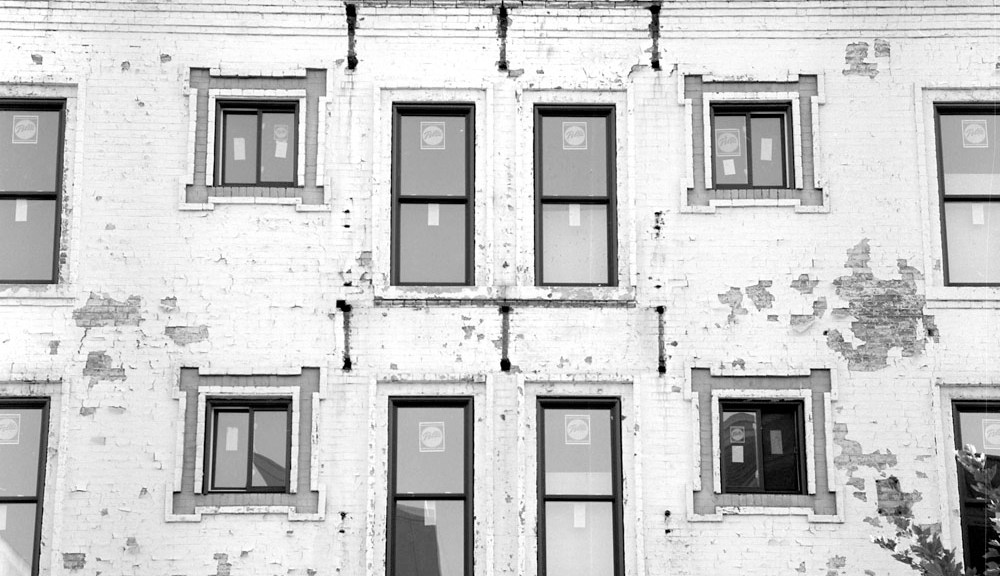
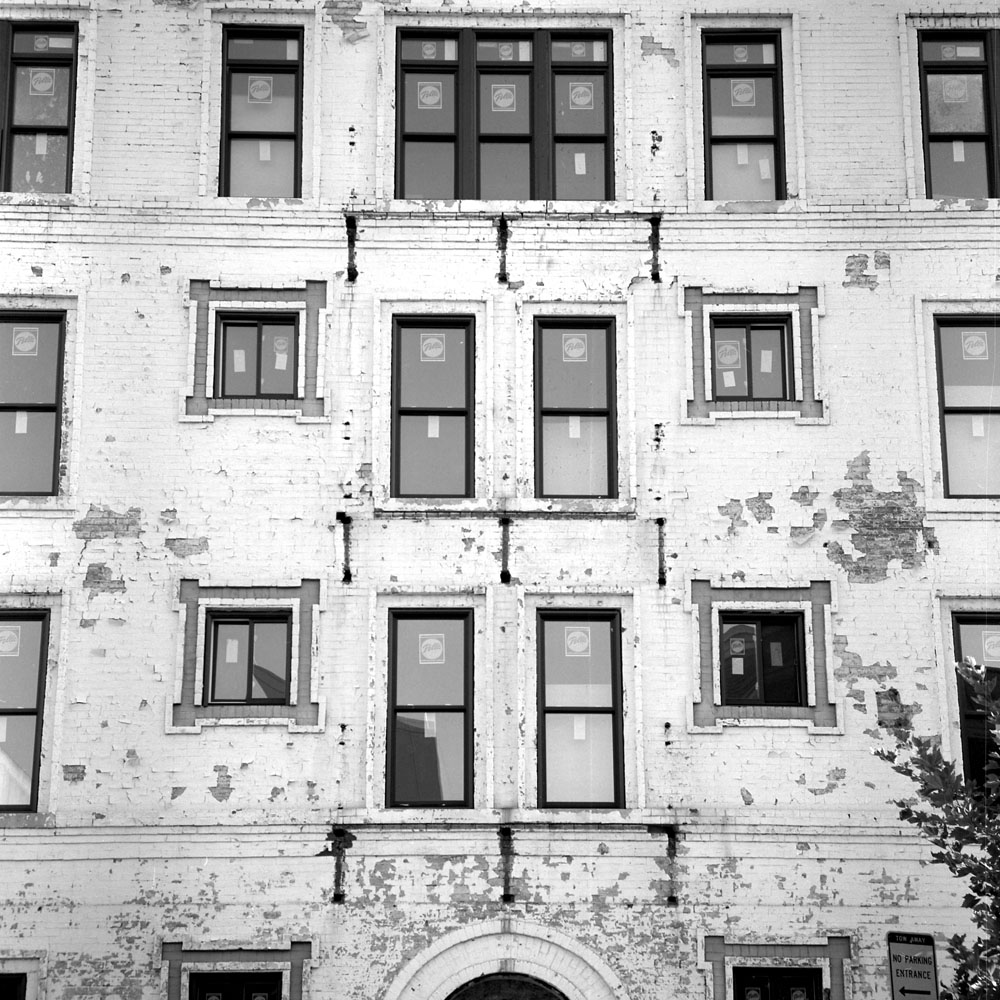
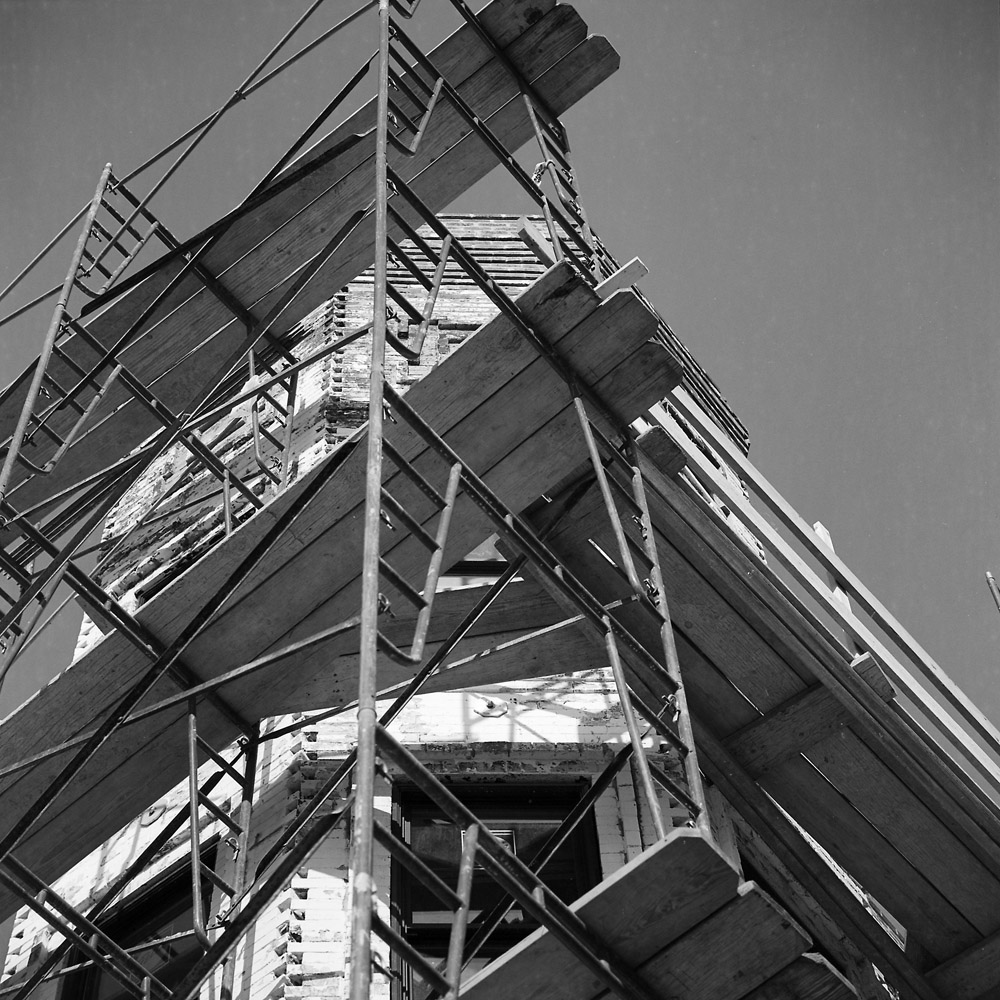
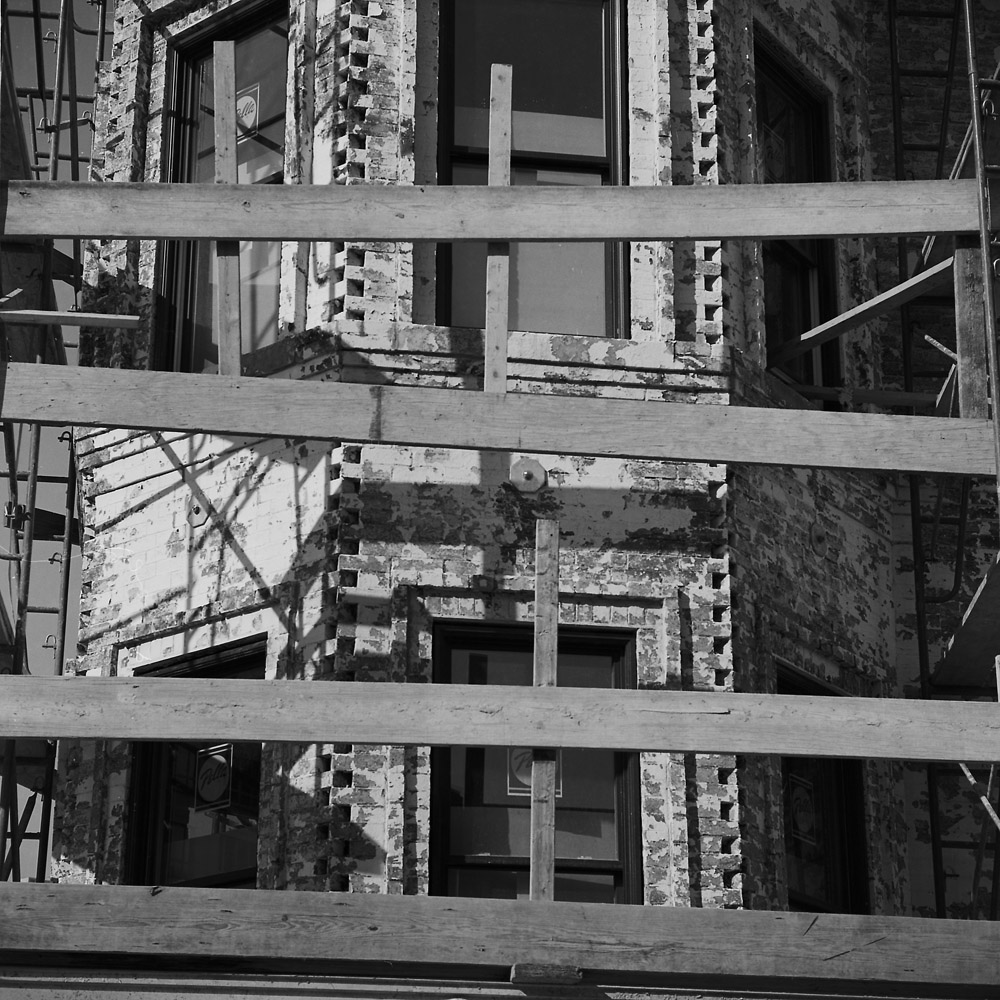
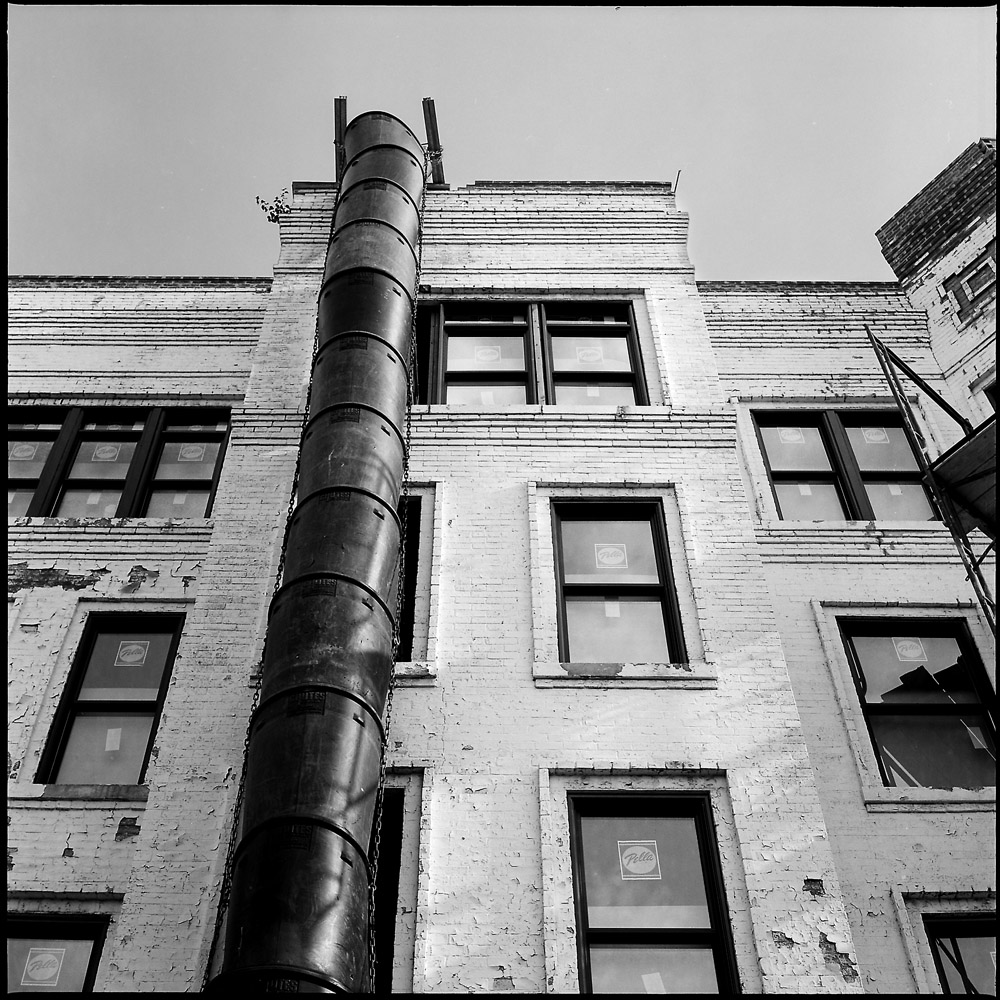
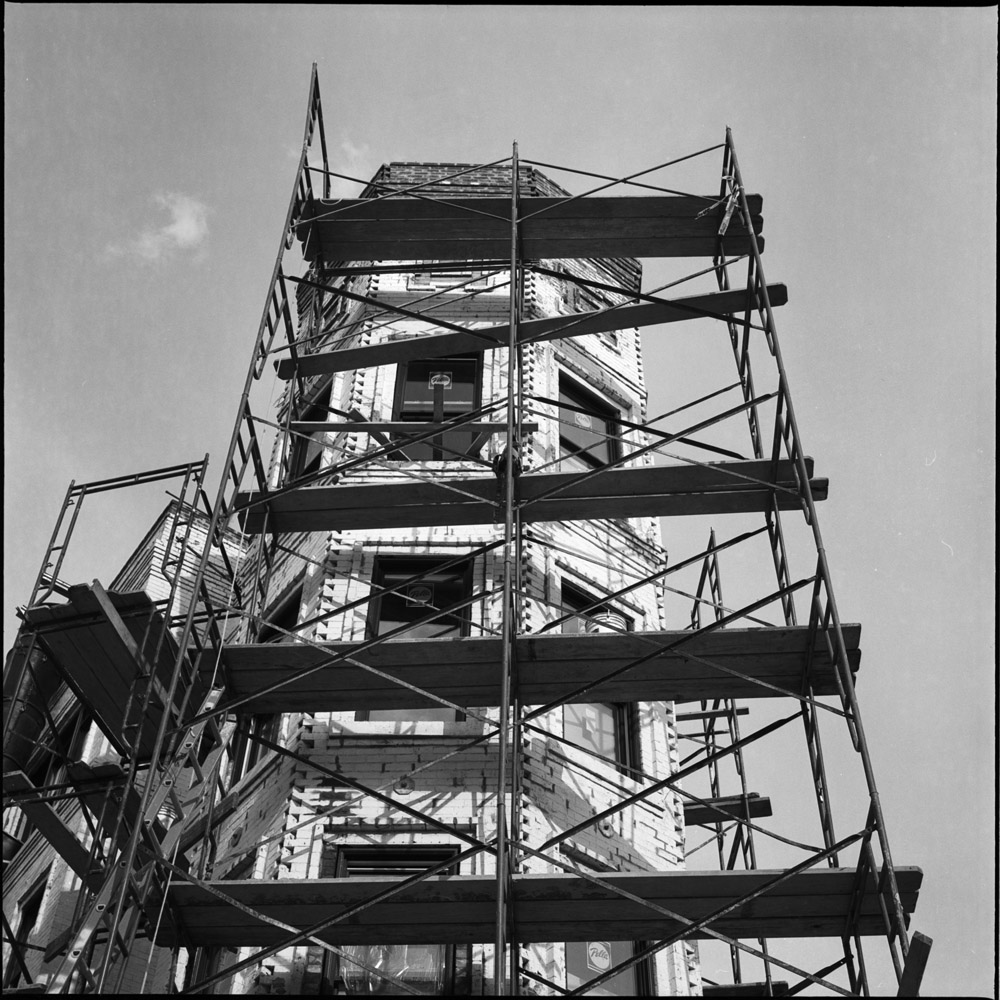
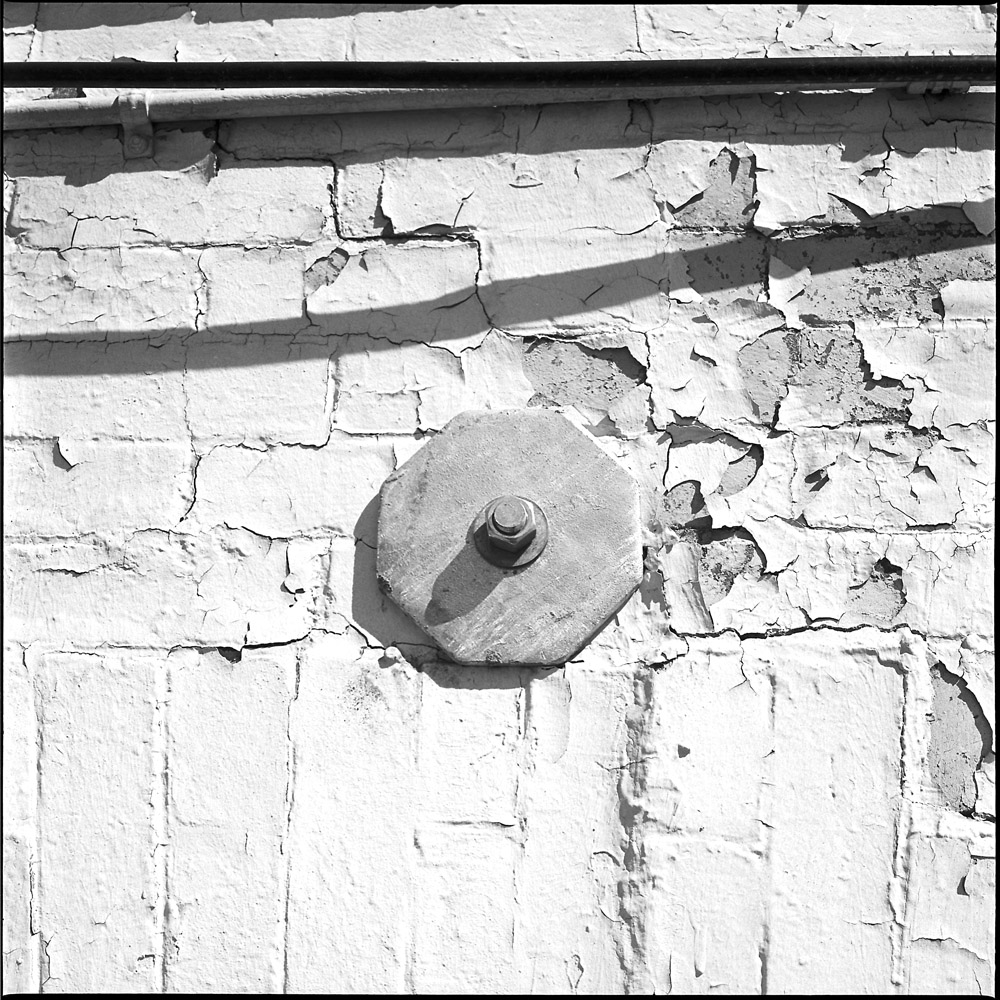
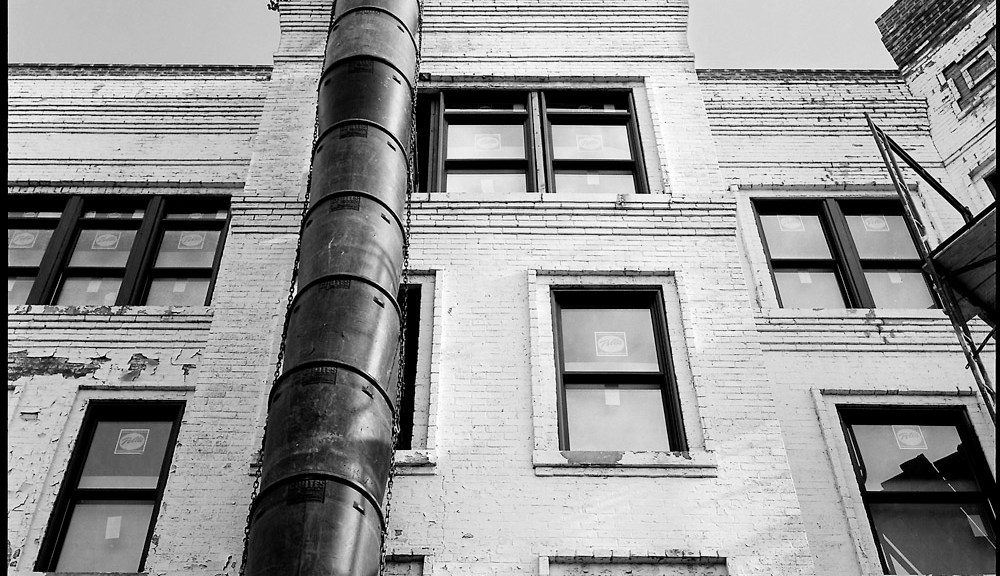
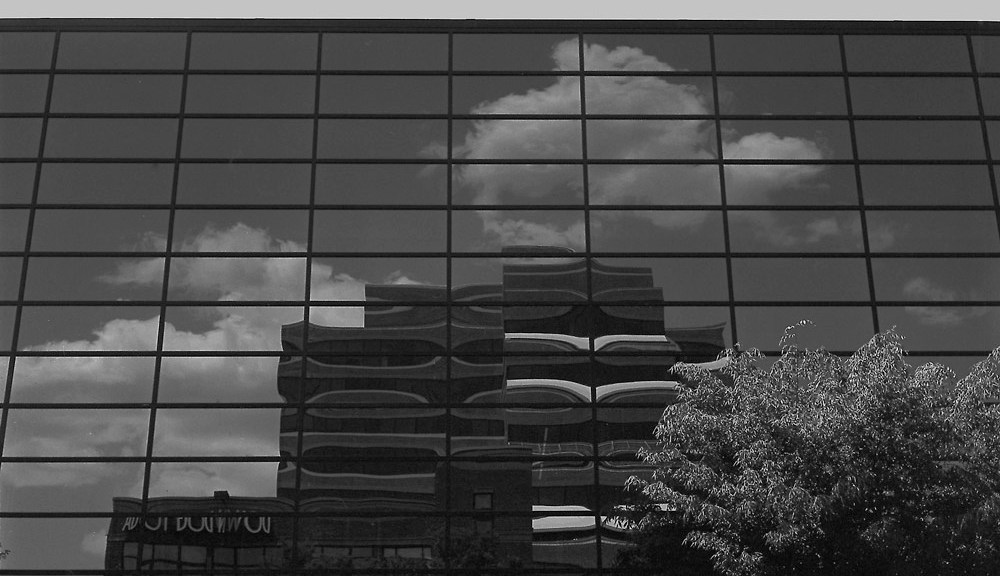
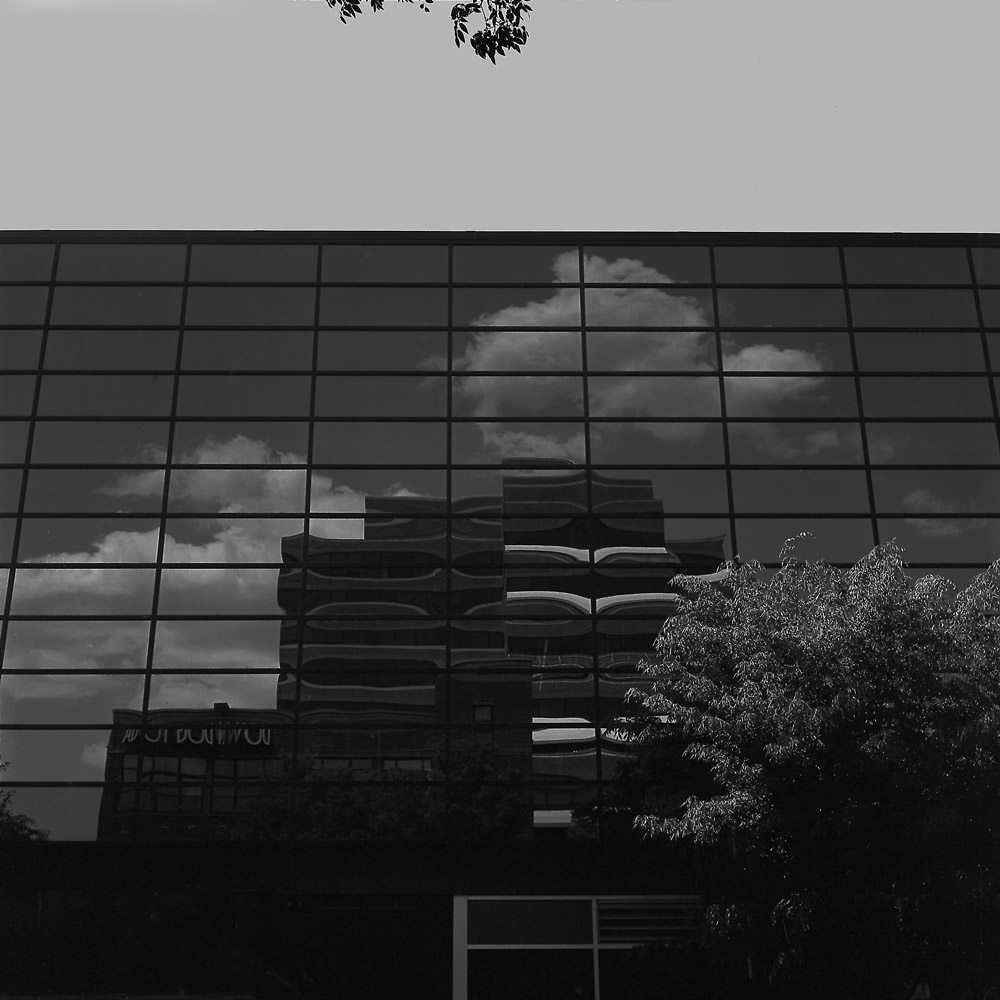
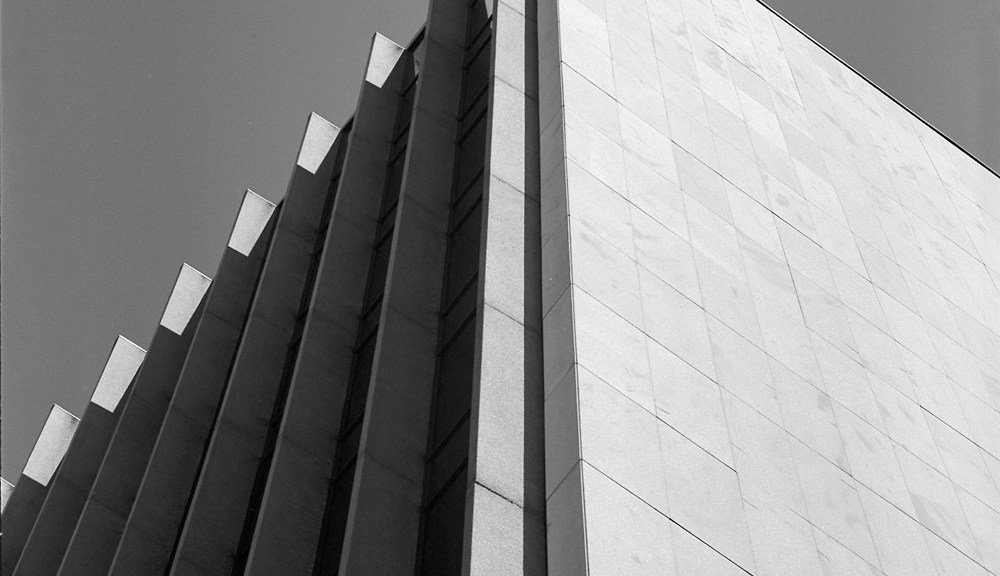
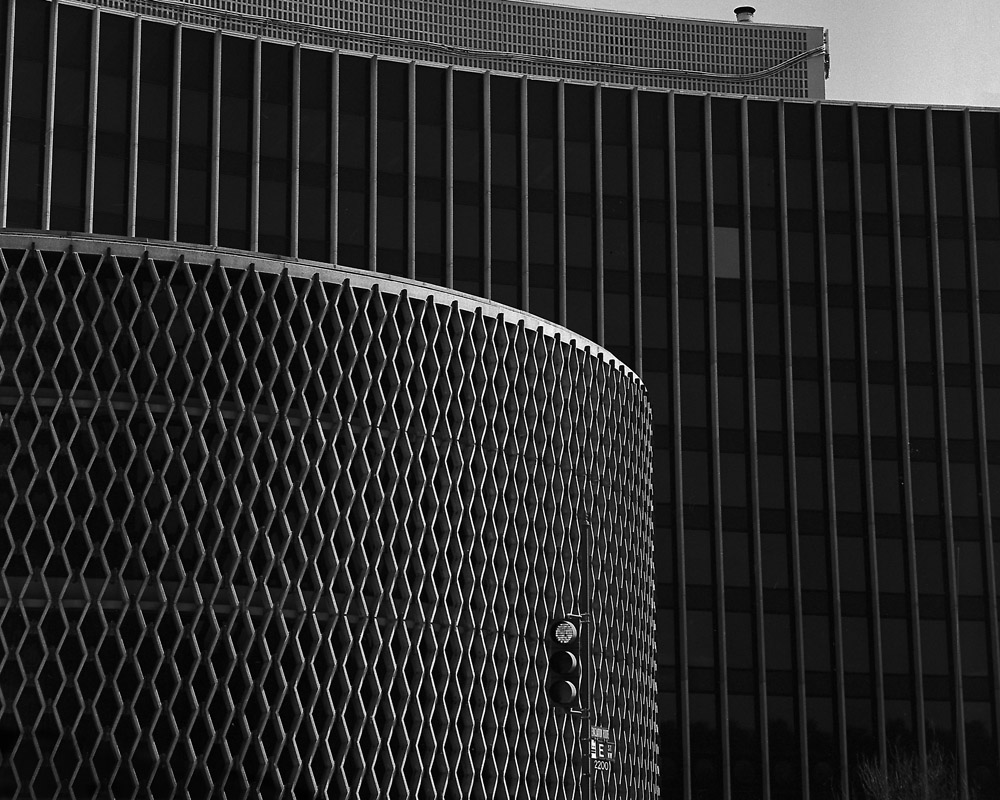
An architectural abstraction at the construction site across the street from my office. This building has been an inspired location for me – I’ll be a little sad when the construction is done because the building will be all neat and new again and won’t have all the cool textures it has now. But it will present entirely new options for photographing, I’m sure, so I’ll adapt and overcome, as the Marines say.
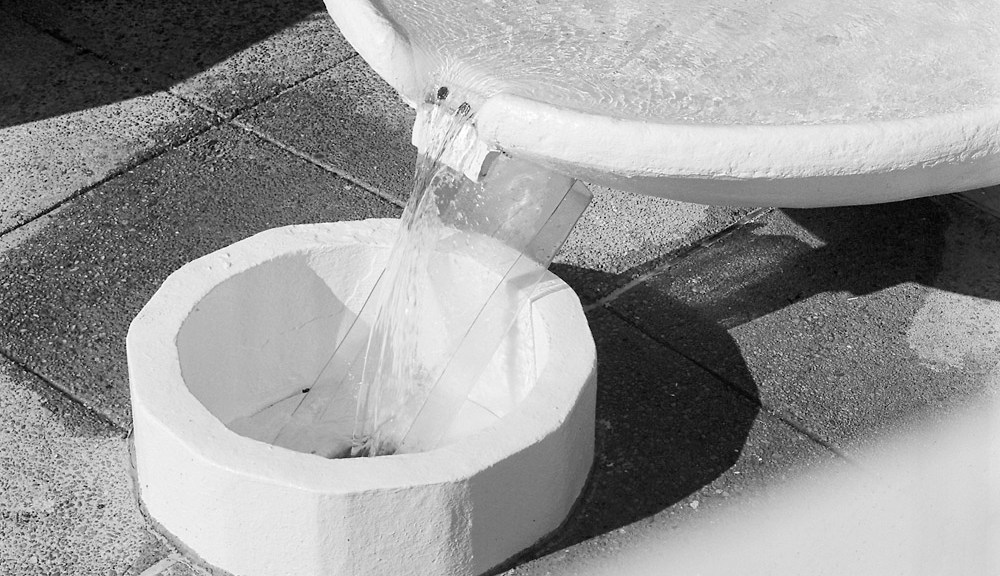
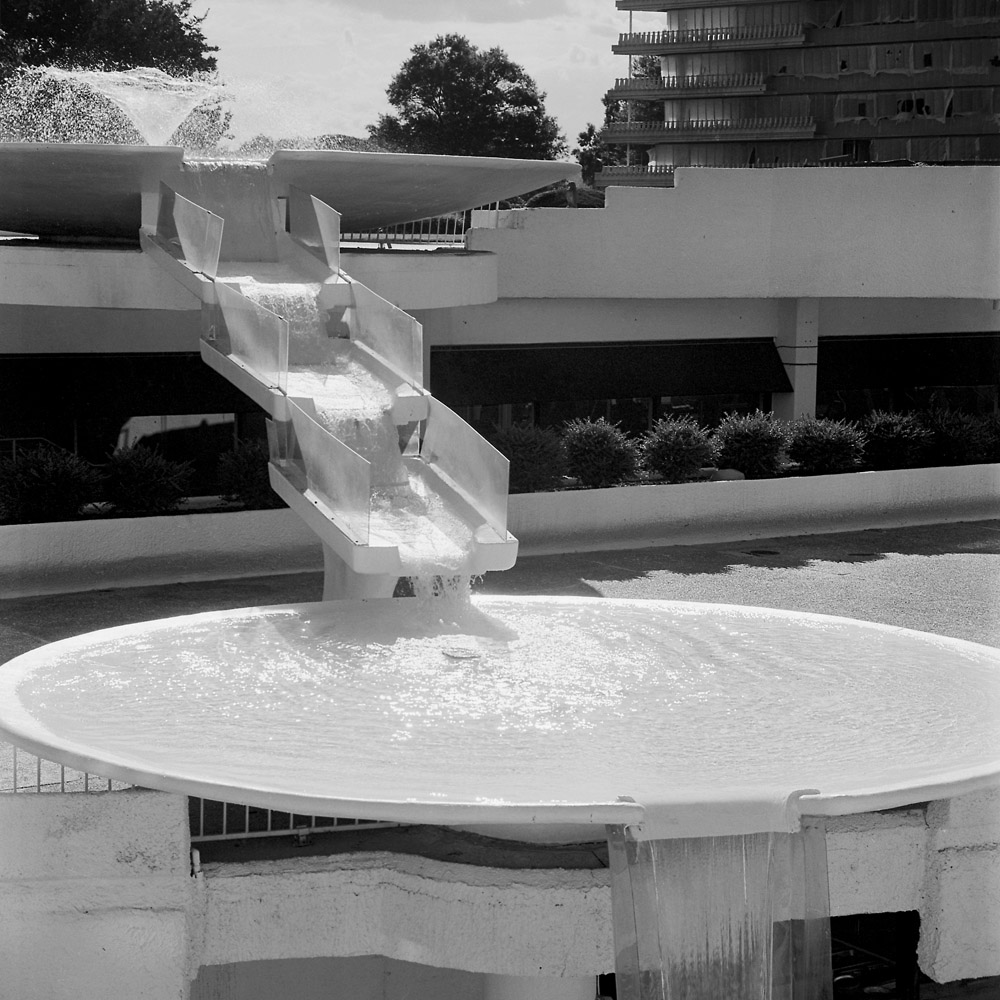
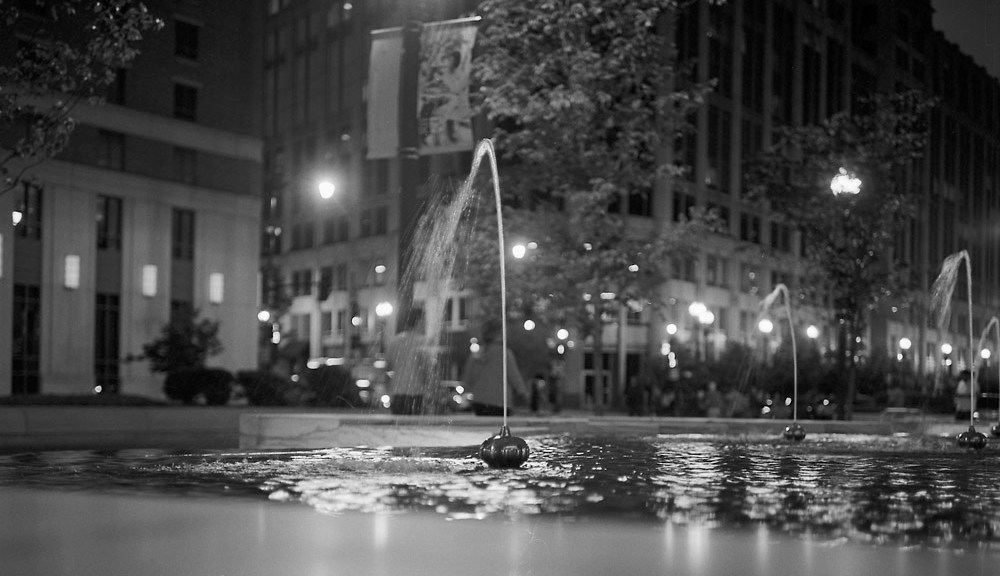
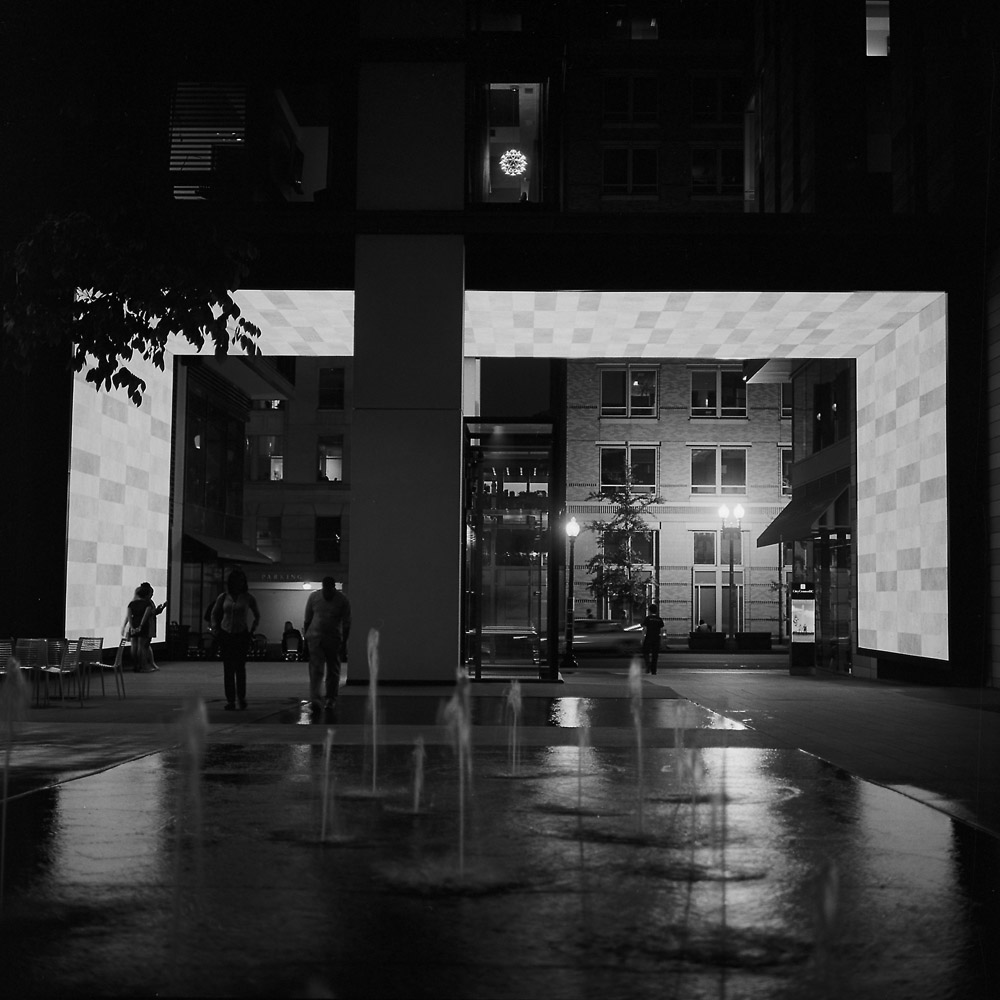
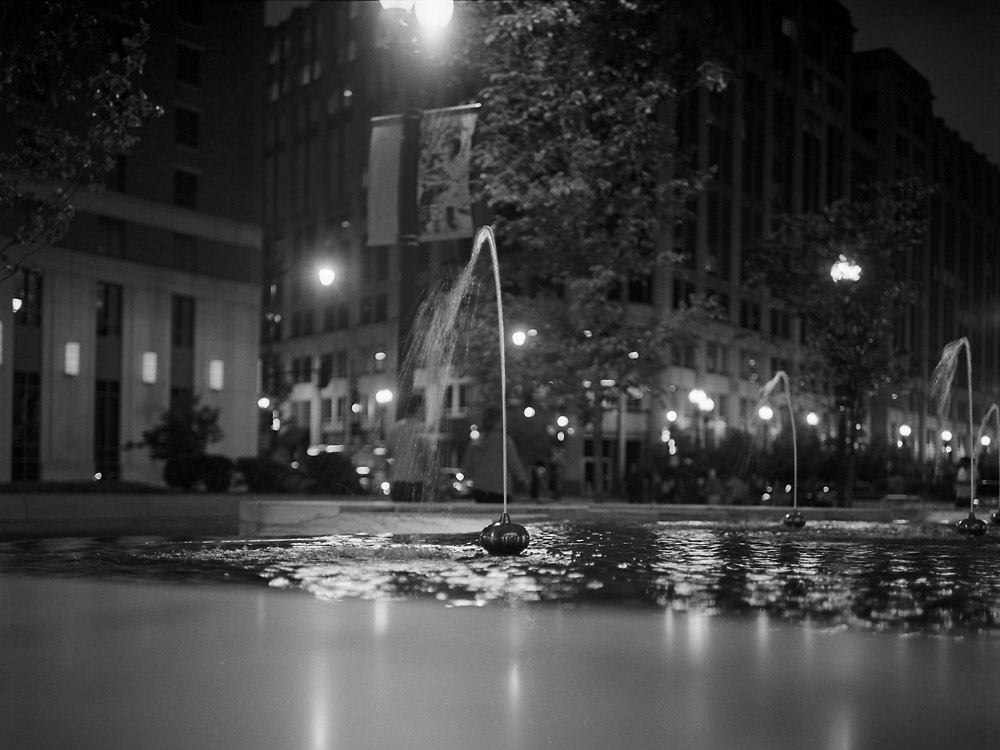
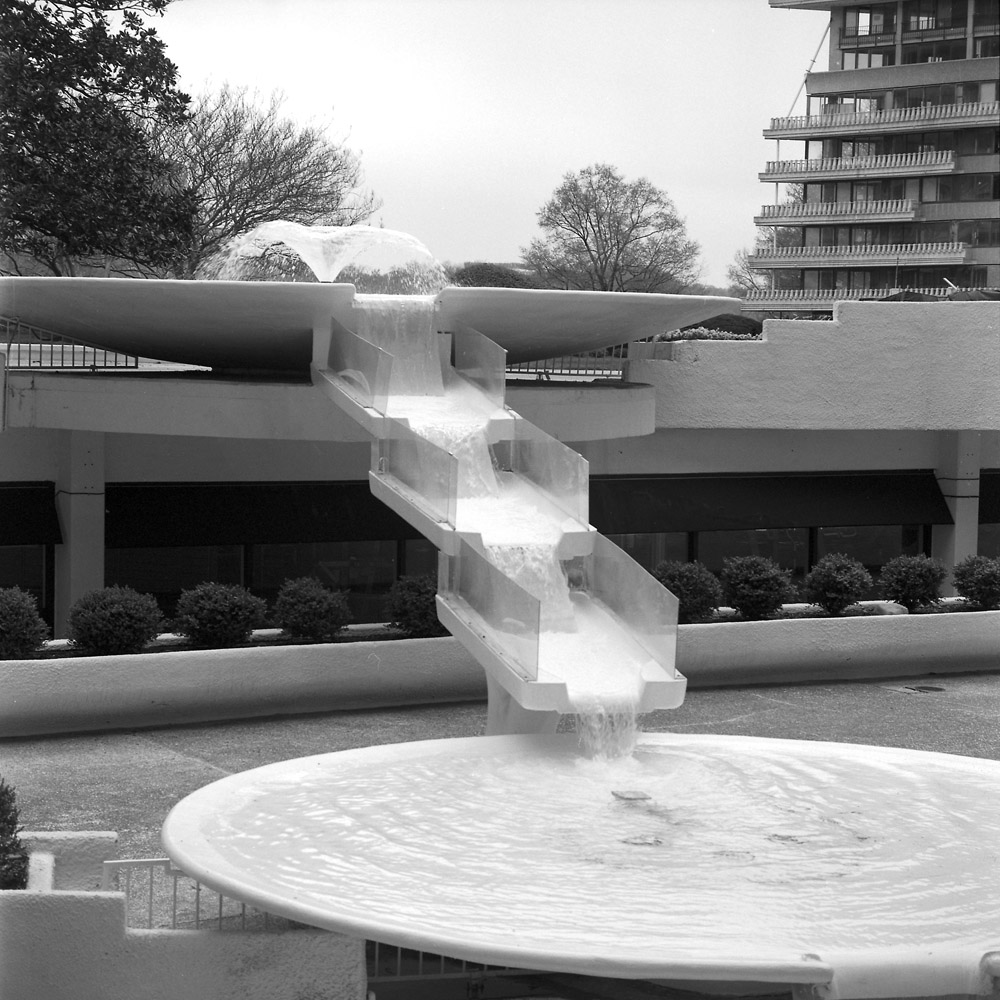
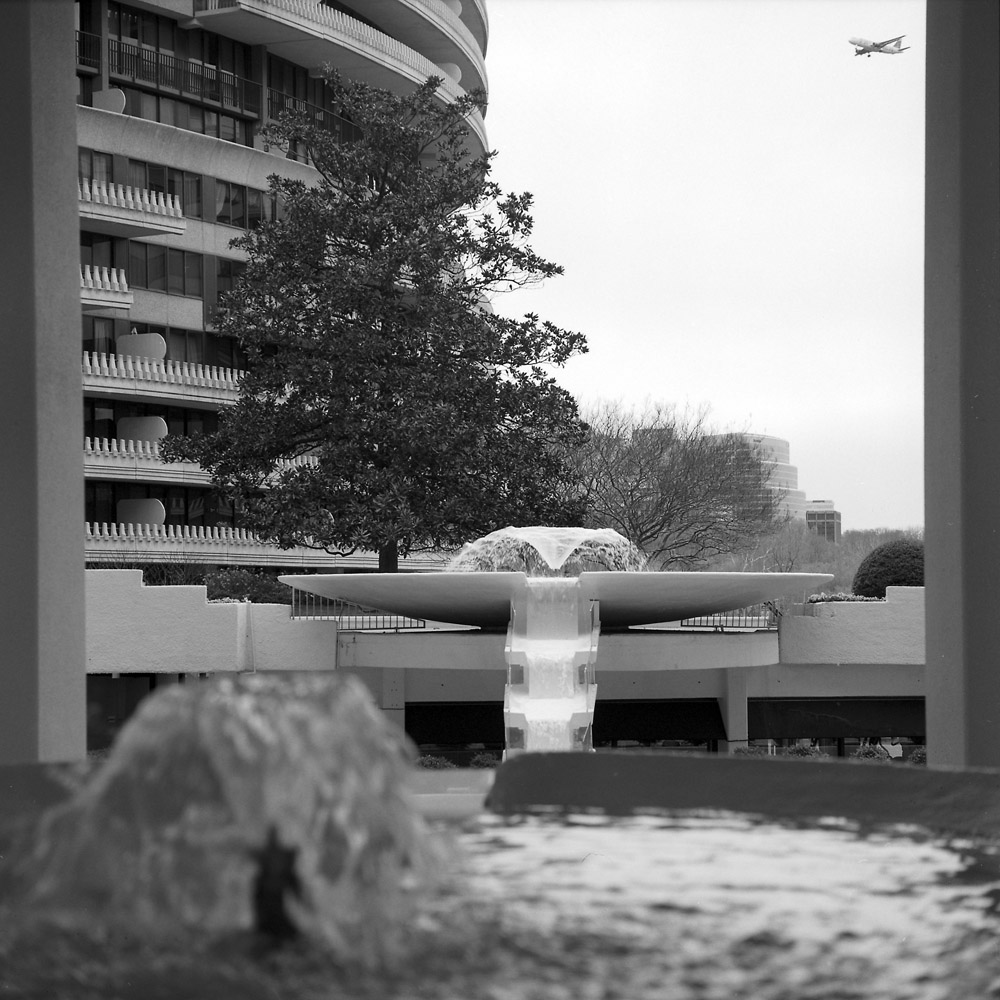
Just a few more shots of the fountains at the Watergate apartment complex. Today, it sits in a prestigious location with beautiful river views. It was sited on former industrial land – it sits now where the Washington Gas Light plant used to be, and next door, where the Kennedy Center now sits, was a brewery. The complex was designed in part to harmonize with the Kennedy Center, which was originally envisioned to be curvilinear and organic. Later, due to construction costs, it was redesigned into the sharp-edged rectangle that it is today.
There is debate over the origin of the name Watergate – there are multiple possible referents. Part of the land the complex was built on belonged to the C&O Canal, and overlooks the water gate that marks the eastern terminus of the canal and where its water rejoined the Potomac. A second candidate is the “water gate” from the Potomac to the Tidal Basin that regulates the flow of water into the basin at high tide. The third candidate is the steps down to the Potomac from the Lincoln Memorial beside Memorial Bridge, which was used from the 1930s to the 1960s as an outdoor concert venue, with performers located on a barge in the river. Concerts ended in 1965 with the advent of jet aircraft service into National Airport. I vote for the C&O Canal as the source of the name – the other two features are obscured from view of the complex by the Kennedy Center and the natural curve of the river.
Twin Fountains, Watergate
The fountains in the complex were specifically designed to create not only a visually pleasing effect, but to also simulate the sound of a natural waterfall.
Fountain, Hole, Watergate
I don’t know how successful the auditory engineering was (the fountains are pretty quiet, and they sound like fountains to me), but they certainly do create a visually pleasing space as well as a moderating effect on the temperature around the courtyard.
Fountain, Center Courtyard, Watergate
The Watergate complex was the first mixed-use development in the District. It had shops, restaurants, doctors’ and dentists’ offices, commercial office space, and even a hotel, in addition to luxury condominium residences. As originally planned, it was even supposed to have 19 “villas” (read townhouses), be 16 stories tall, and in all occupy 1.9 million square feet. After wrangling with codes, design commissions, and budgetary constraints, it was reduced in height to today’s 13 stories, the villas were eliminated, and the total square footage was cut back to 1.7 million square feet.
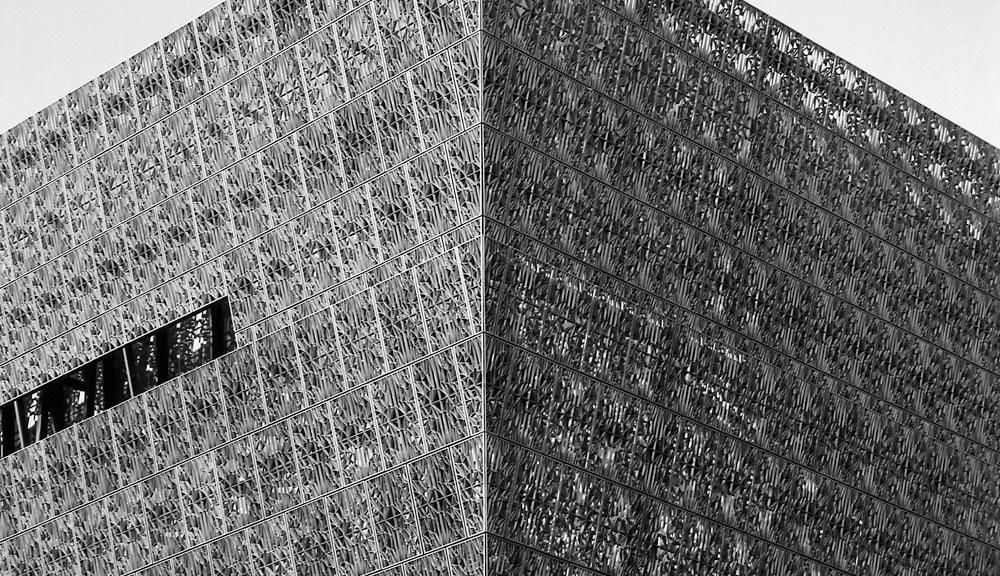
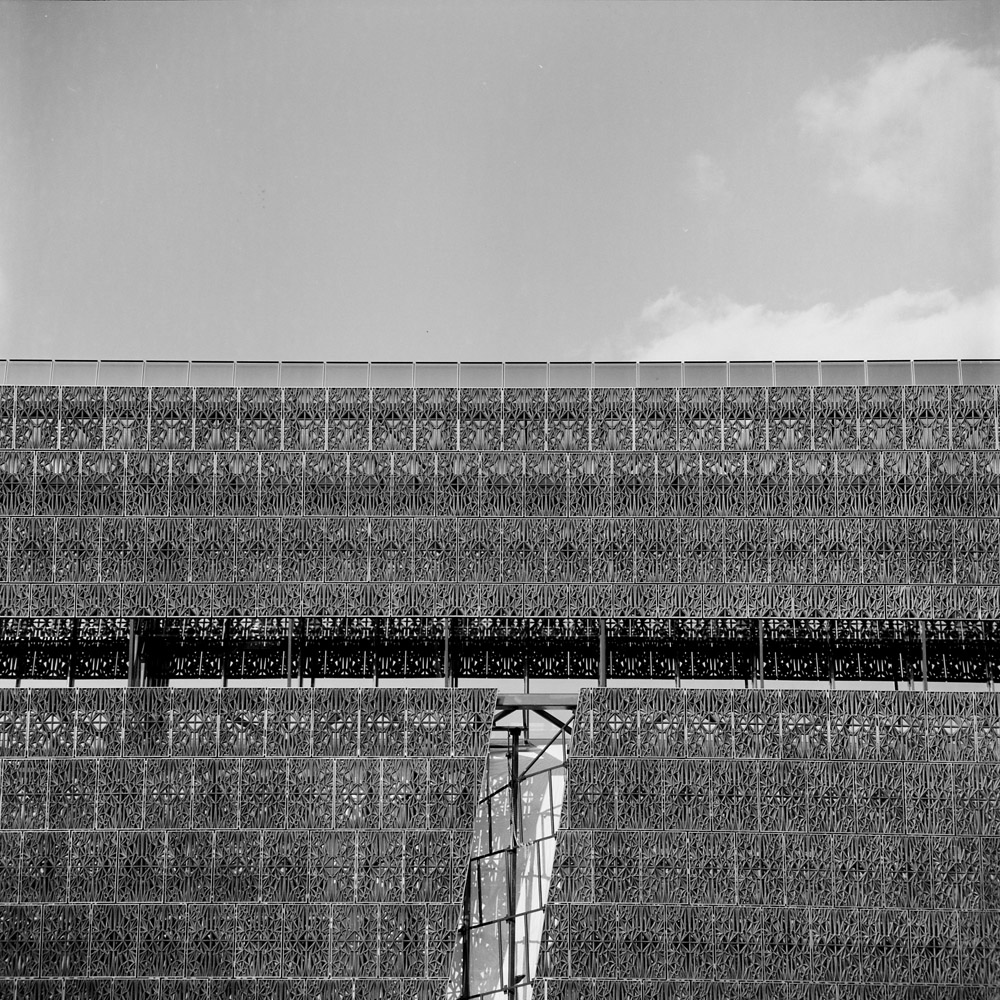
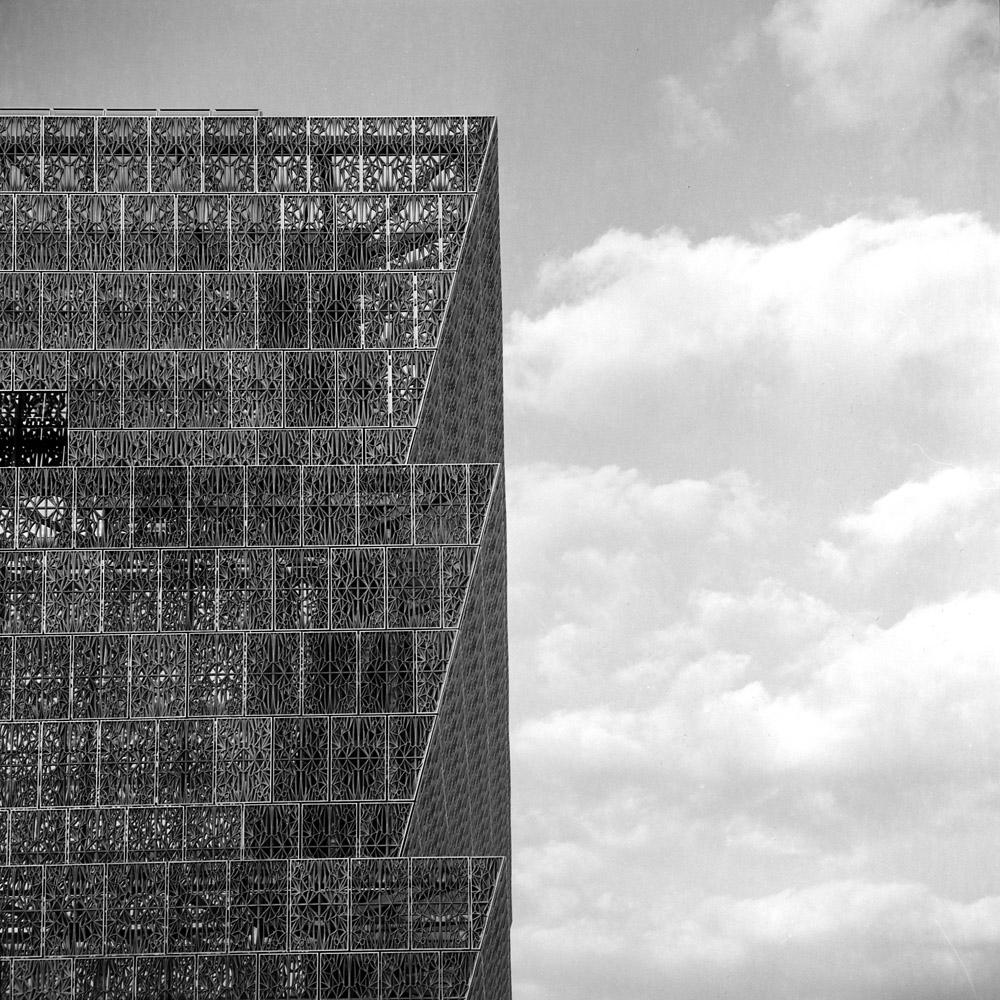
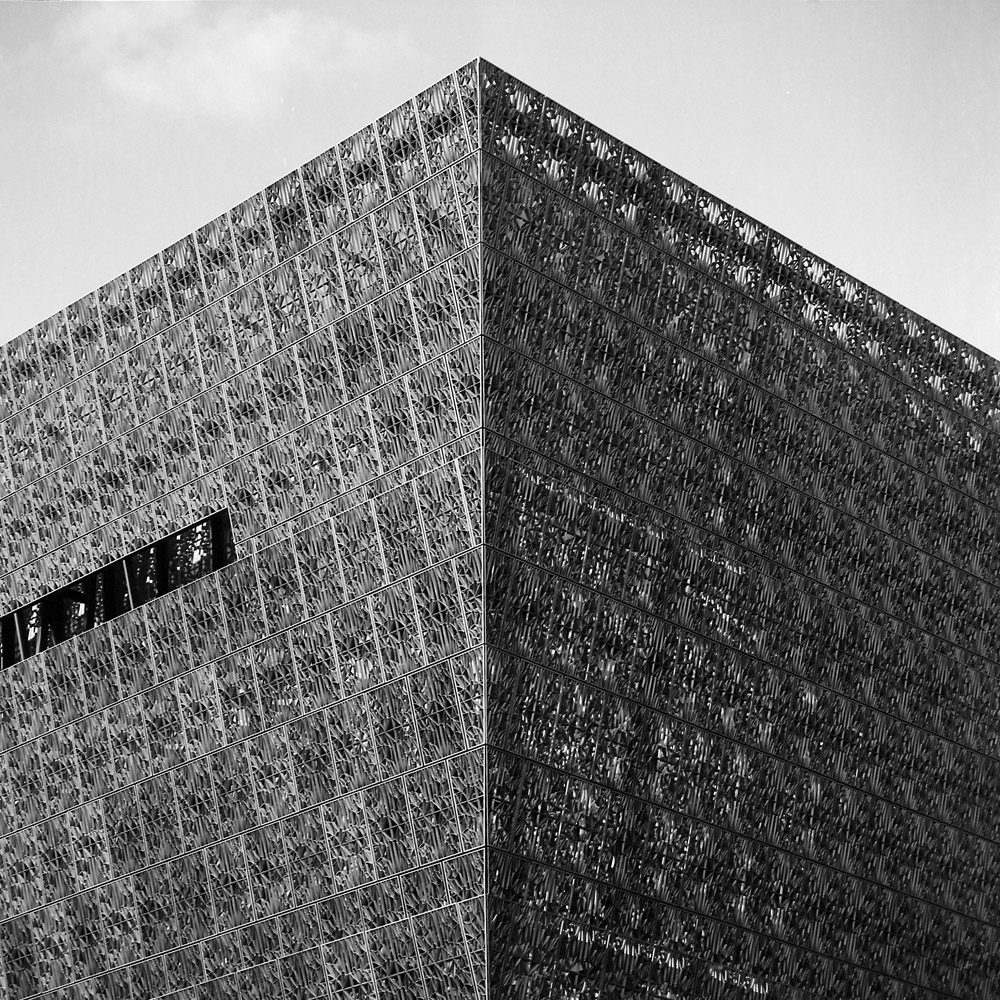
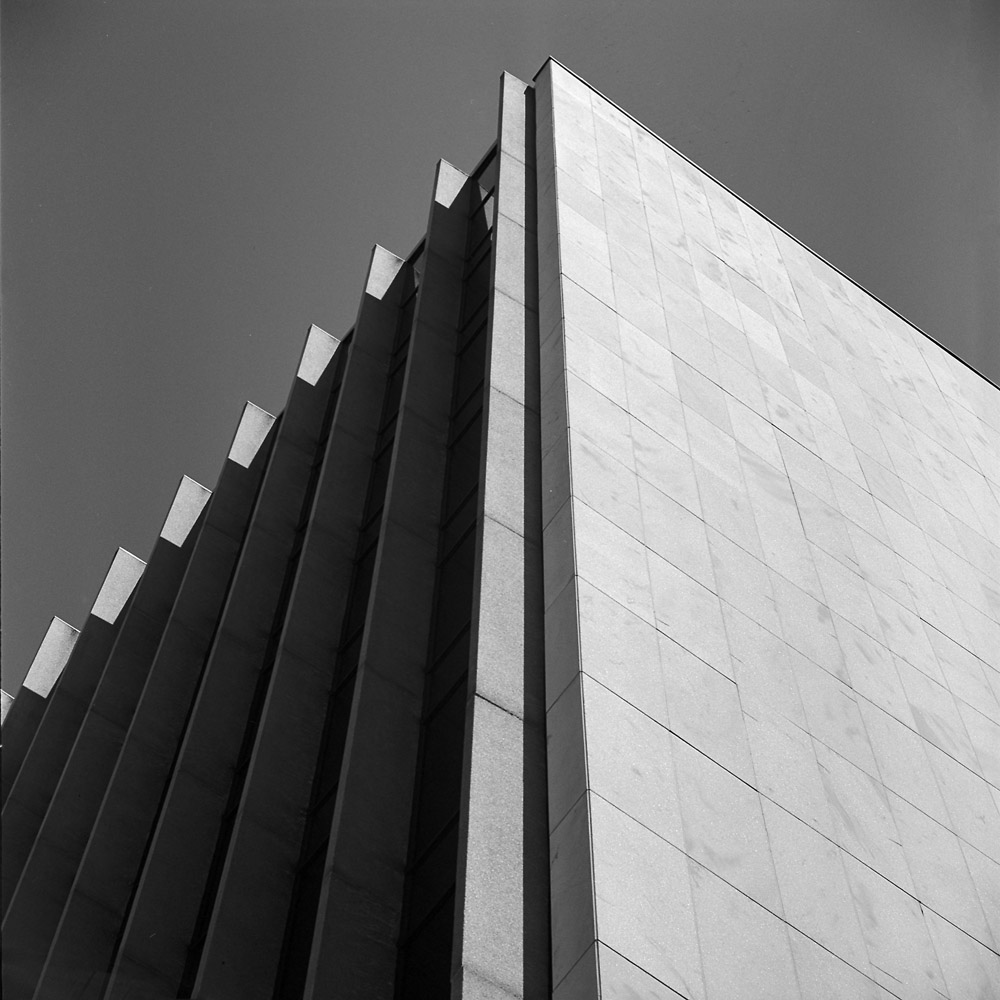
If you recall an earlier post, I had some shots of the new National Museum of African-American History and Culture (I’ll call it the African-American History Museum for short) in color, taken as architectural abstracts. Here are a few in black-and-white. The building shape lends itself extremely well to these kinds of geometric abstract studies. I think the architect nailed the design prospectus,making references to the cross-cultural influences of Africa on the American experience.
Seen here against the sky it feels like a seascape, a reminder of the trans-Atlantic voyage that brought three centuries worth of slaves to the New World.
African-American History Museum
The bronze-colored metal screening on the outside has a tropical botanical motif. It is both protective screen and mask, concealing and revealing, ancient and modern. The patterning is reminiscent of Kente cloth batik designs.
African-American History Museum
The overall shape of the structure is that of a three-tiered African crown, but viewed from different angles, it can be a monolith or a pyramid, or the prow of a ship.
Here are a few architectural details on the Brewmaster’s Castle, just off Dupont Circle. The house is so named because it was built by Christian Heurich, the founder of Heurich Brewing Company, which operated in Washington DC from the 1880s to 1956. Mr. Heurich ran the company until his death at the age of 102 in 1945. The original company and their brewery are no more, although it has been resurrected under the moniker Olde Heurich Brewing by the great grandson of Christian Heurich, and now produces craft beers under the brand Foggy Bottom. Due to a lack of facilities in Washington, the beers are brewed in upstate New York. The original brewery itself was located where the Kennedy Center now sits.
The house is now a museum and retains an extraordinary amount of the original furnishings and decorations from the period of its creation in 1892-94. The house was bleeding-edge technologically at the time – it had electric and gas lighting, central radiator heating, ventilating skylights for cooling, a pneumatic communication system, an elevator, and even a central vacuum for cleaning. The structure is made of steel and reinforced concrete to be fireproof, and although it has 15 fireplaces, due to the central heating systems, none have ever been used.
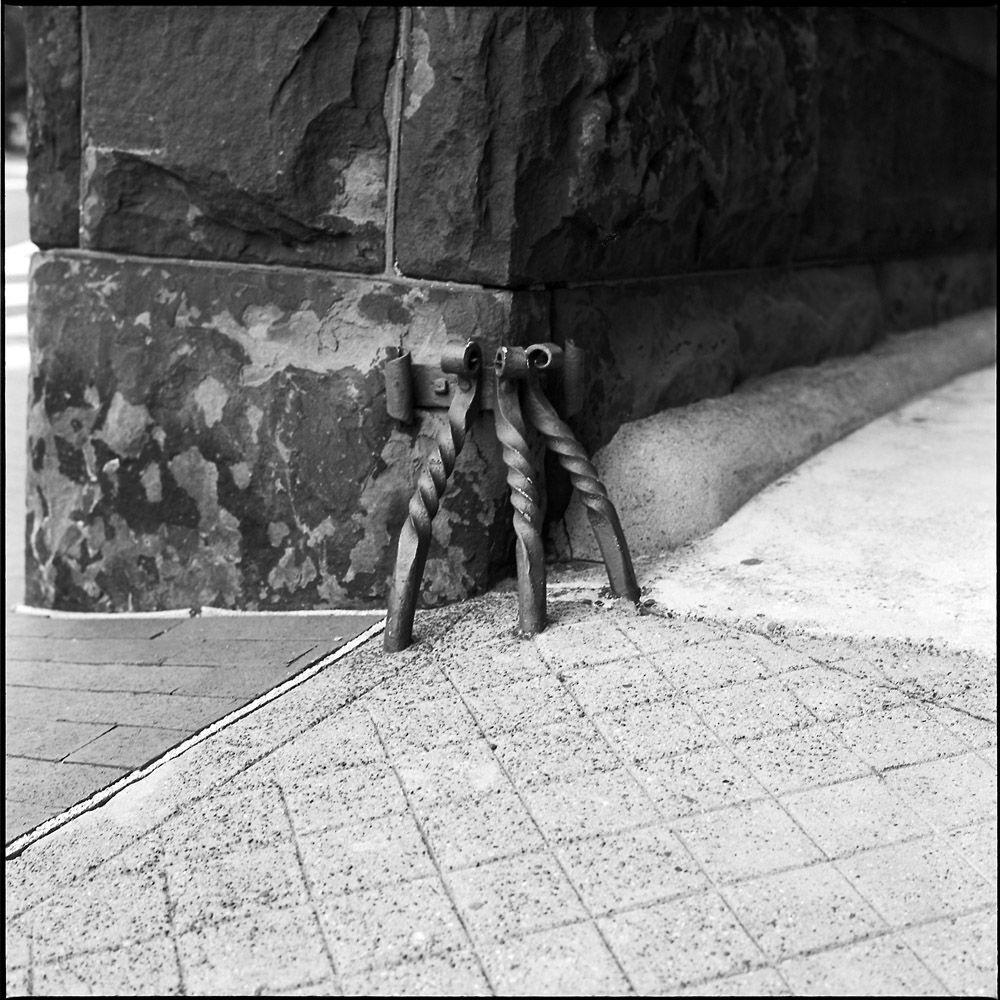
The house looms large over the neighborhood, as it is one of the last remaining mansions of the era around the circle (some have been converted to embassies, one is now the Scientology headquarters in DC, and the rest have been demolished and replaced by apartment and office buildings) and it stands out as a period piece quite in contrast to its neighboring structures from the 1950s through the 1970s. I’m fascinated by the decorative ornamental detailing on the house, as well as some of the functional bits, like this bootscrape-
Bootscrape, Brewmaster’s Castle
It is built into the base of the column supporting the porte cochere over the carriageway in front of the house. It is, of course, on the outside, and not on the house side of the porte cochere.
The bootscrape is out of view to your left in this scene – this is the entrance portico under the porte cochere. I was drawn to this composition by the repeating and converging curves of the stairs, the carriageway, and the arches of the porte cochere.
Portico, Brewmaster’s Castle
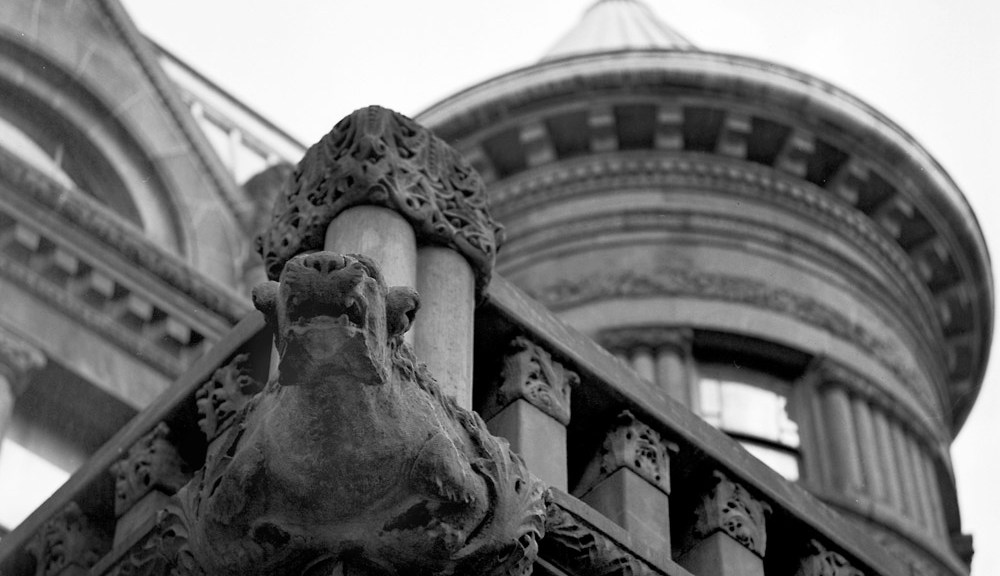
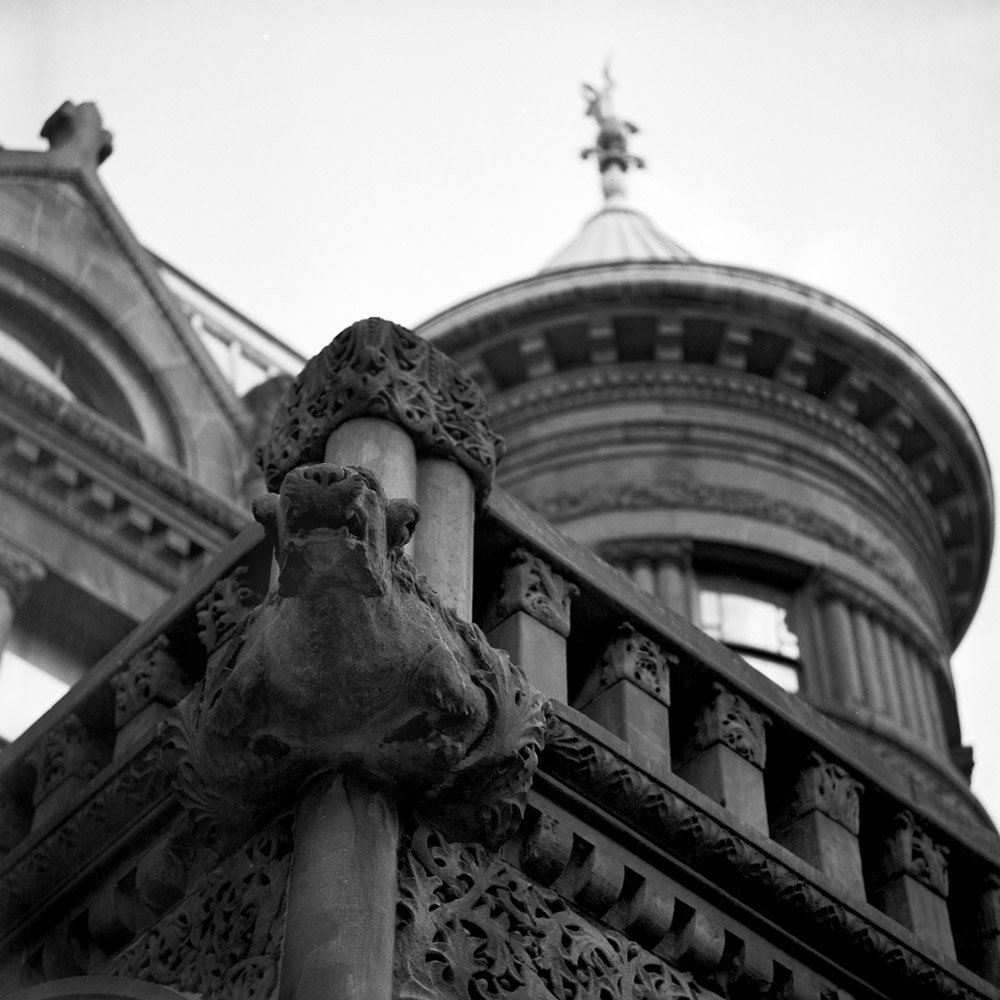
Looking up, this is one of the gargoyles on the outer edge of the porte cochere, and behind it the ornamental spire on the turret that inspired the house’s nickname, Brewmaster’s Castle.
Gargoyle, Turret, Brewmaster’s Castle
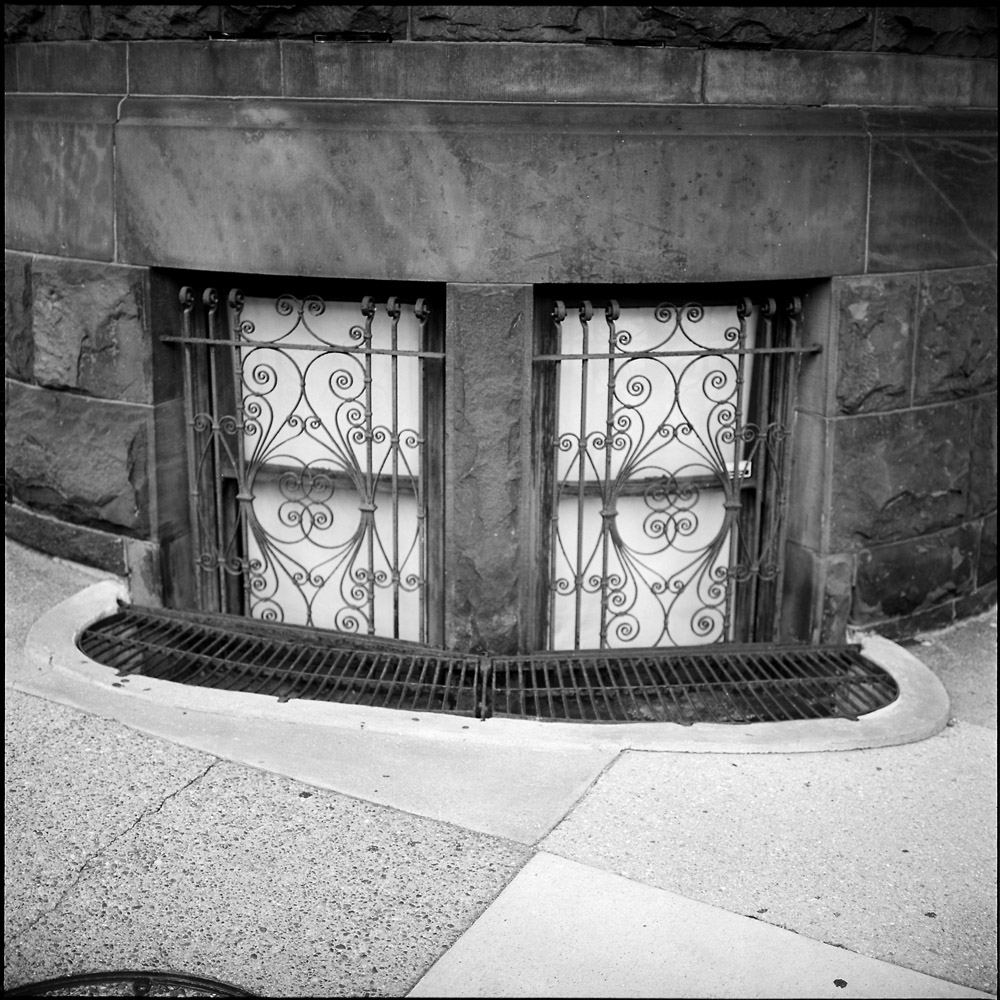
Turning around and looking down, the service spaces are equally detailed, and the innovative thought behind the construction is in evidence.
Windows, Brewmaster’s Castle
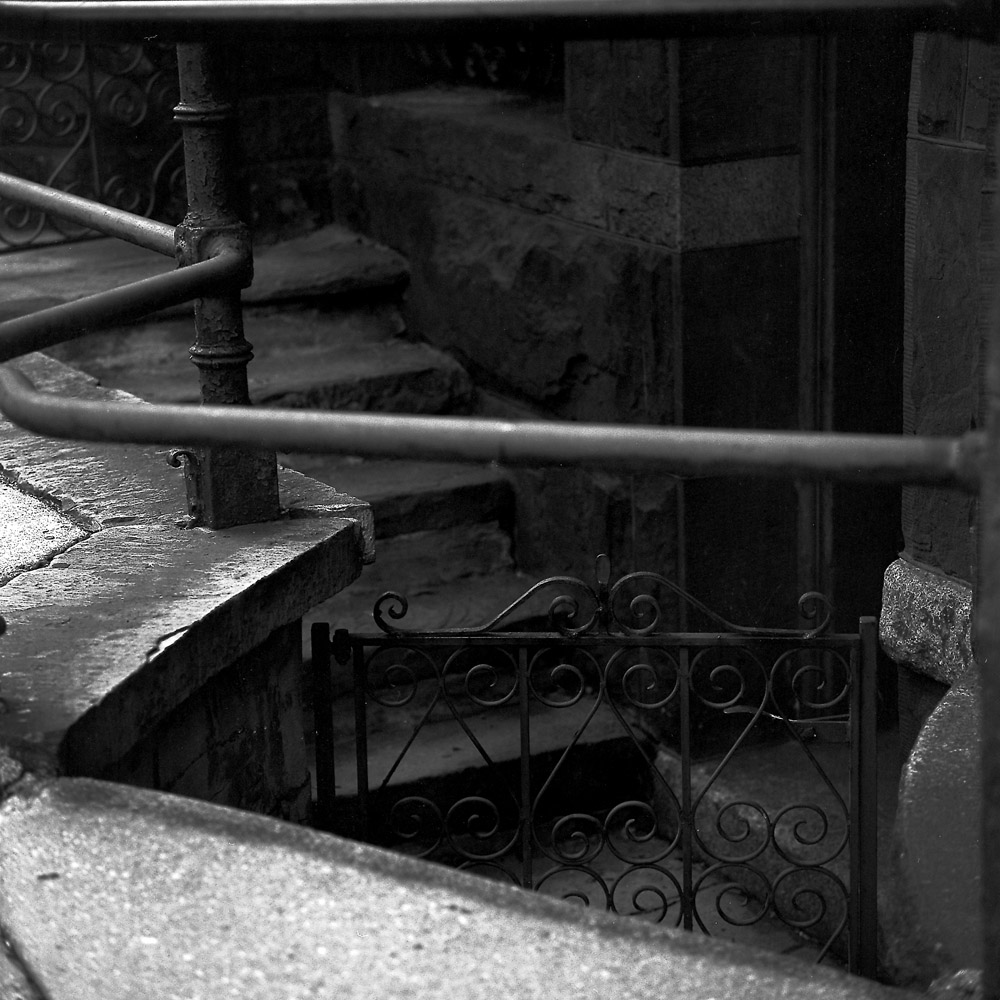
The trade entrance has TWO wrought-iron gates, one at the top and another at the bottom of the stairs.
Trade Entrance, Brewmaster’s Castle
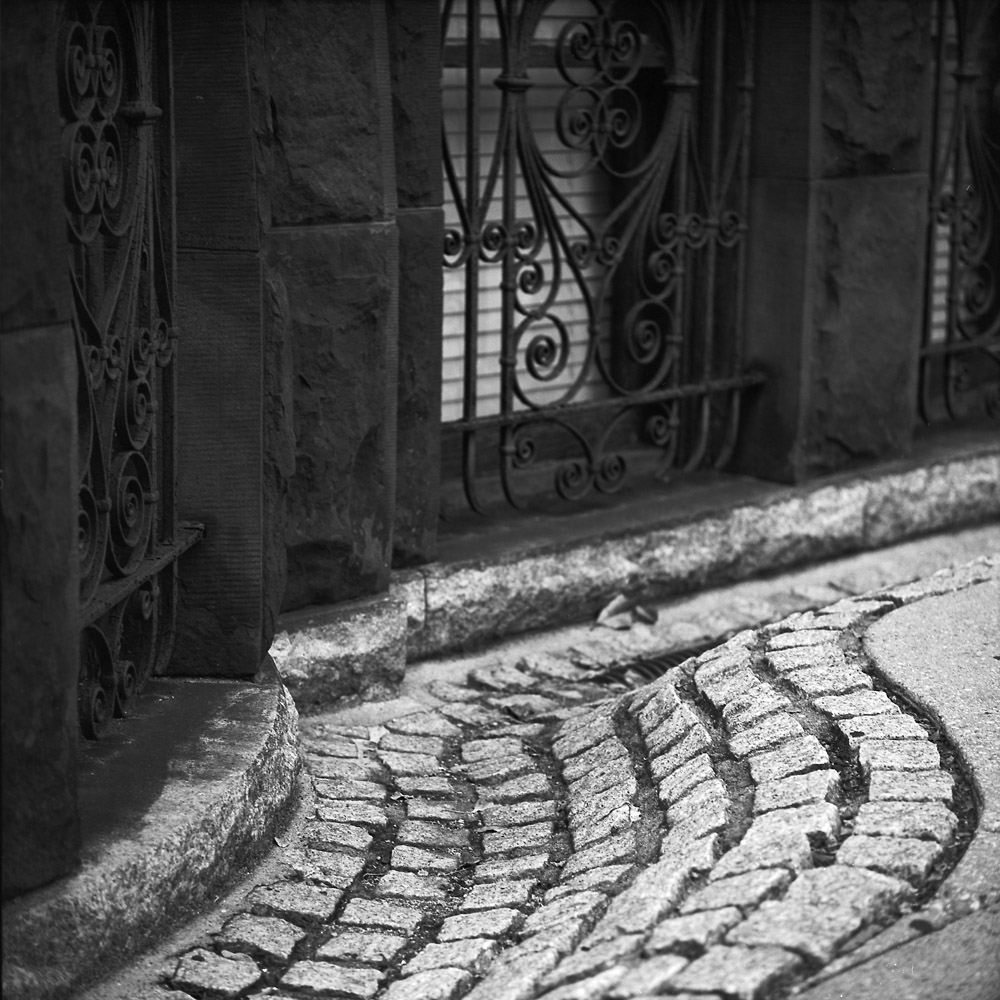
The sidewalk doesn’t pull right up to the foundations, but rather a sinuous cobblestone gutter system surrounds the house, providing adequate drainage so the basement doesn’t flood in a storm.
Gutters, Brewmaster’s Castle
The house is open for tours several days a week. While I haven’t been inside yet, I’m planning a visit soon.
I don’t think a whole lot of words need be said about these fountains – I just like the juxtaposition of day and night with the common theme of moving water.
City Center FountainNew York Avenue FountainWatergate FountainWatergate Fountain
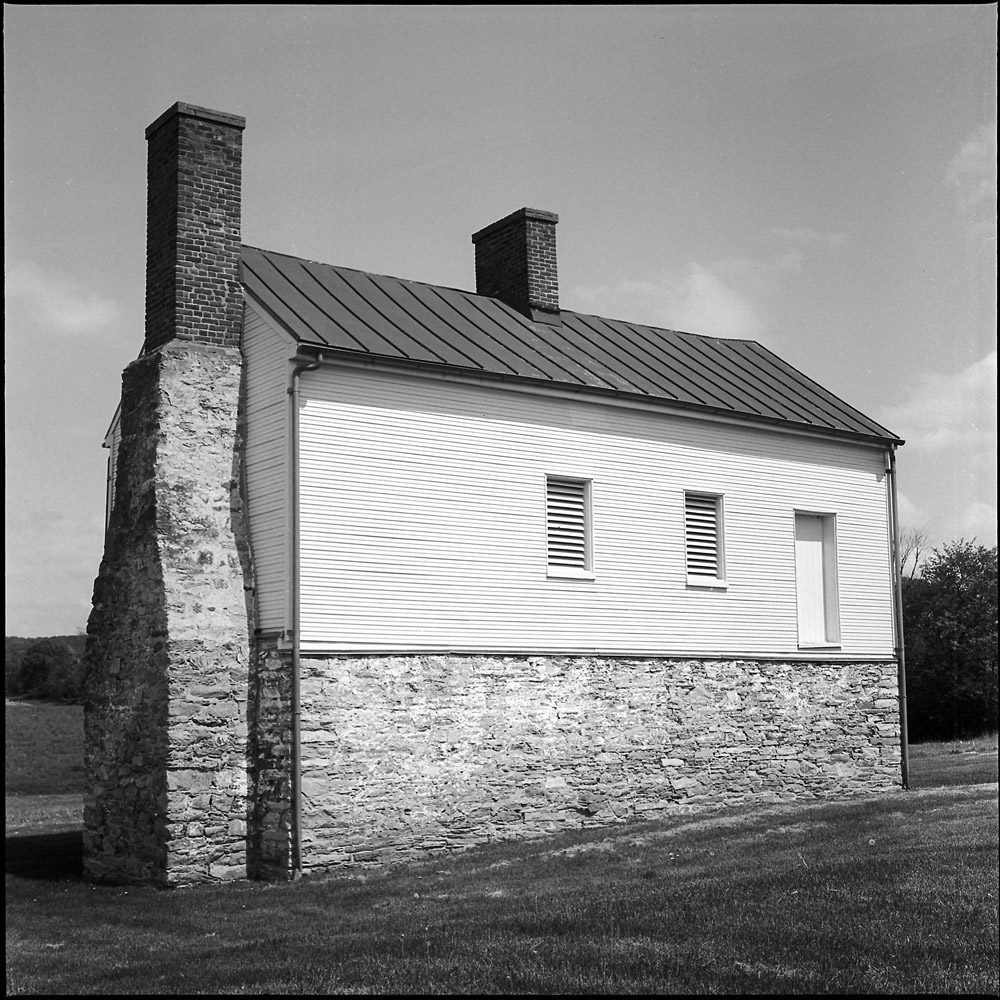
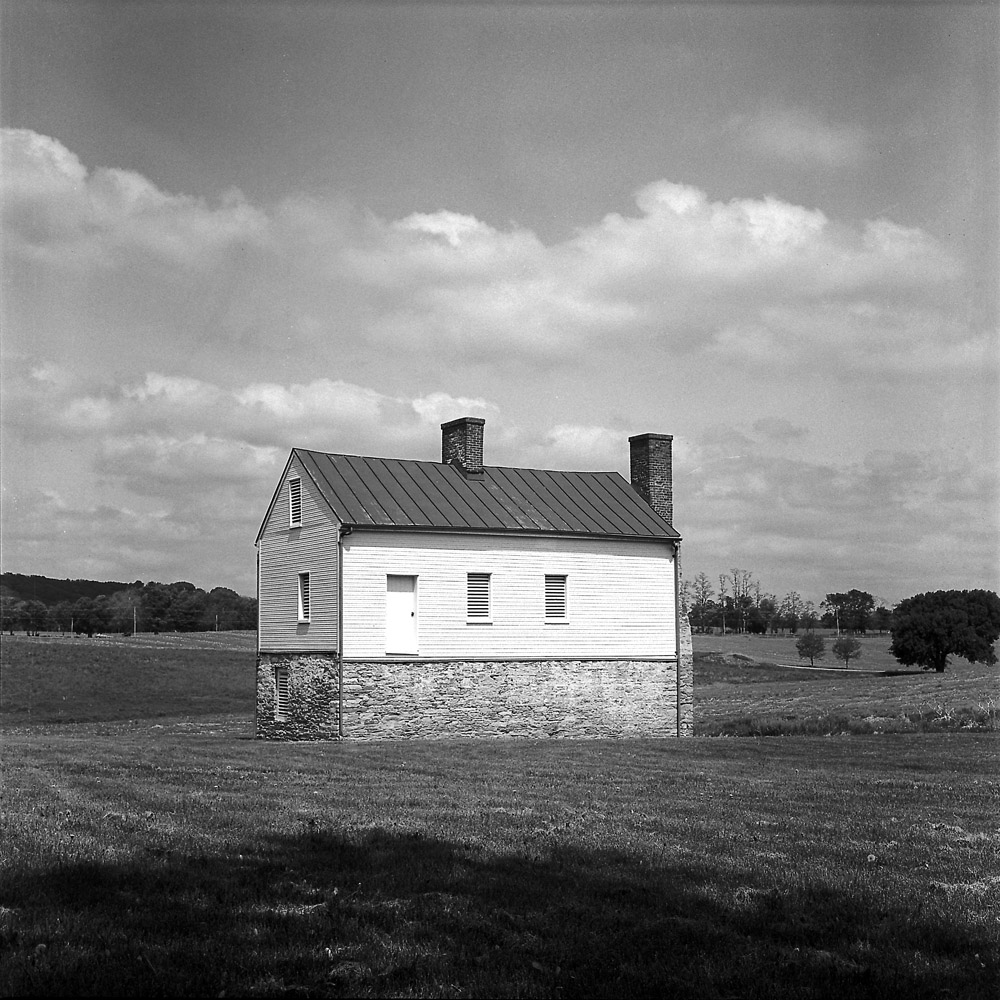
The Best farm is the largest remaining property on the battlefield at Monocacy. The original property was 750 acres, today it retains 270-some. The property was owned by a white family who immigrated from Santo Domingo (now Haiti) at the beginning of the 19th century, fleeing political and social unrest after the slave rebellion on the island. They re-established their plantation outside Frederick, Maryland, which they named L’Hermitage. The landowners who established the farm had 90 slaves, an unusually large number for a property of its size, and they were the second-largest holding of slaves in the county. According to the Park Service website, one theory has it that they were trying to replicate the slave-labor system they were used to in Haiti, and had that many slaves as part of a rental scheme where they would rent them out to neighboring farmers. On my tour, it was mentioned several times that recent evidence has come to light that the farm operation included the breeding of slaves like racehorses for sale.
The main house is quite large, bigger even than the Thomas farm house. Like the Thomas and Worthington homes, it is not open for tours. The interior is in quite rough shape, but stable. Perhaps one day they will be able to restore it and re-open the home for interpretive tours. The farm was privately operated until 1993 when the park service acquired it. The house was not occupied during the later years of farm operation, though, judging from the condition visible through the windows. If I recall correctly the last occupant of the home was a relative of former Senator Mac Mathias. I wonder if she knew the full history of her property – I don’t know how comfortable I would feel living in a house, no matter how lovely, that was built on the profits from the sale of human beings.
Big House, Best Farm
I originally thought this structure was the summer kitchen. In fact, it was a secondary home on the property. It was furnished with plaster walls with decorative motifs, much to the same standard as the main house. It is thought that the structure was built to support other French refugees from Haiti and the French Revolution who were relatives or friends of the family. There would have been a porch with stairs on this side facing the house to provide access. The row of slave cabins would have been between this structure and the main road. If they were still standing, they would be visible in the background of this scene.
Secondary House, Best FarmSecondary House, Best Farm
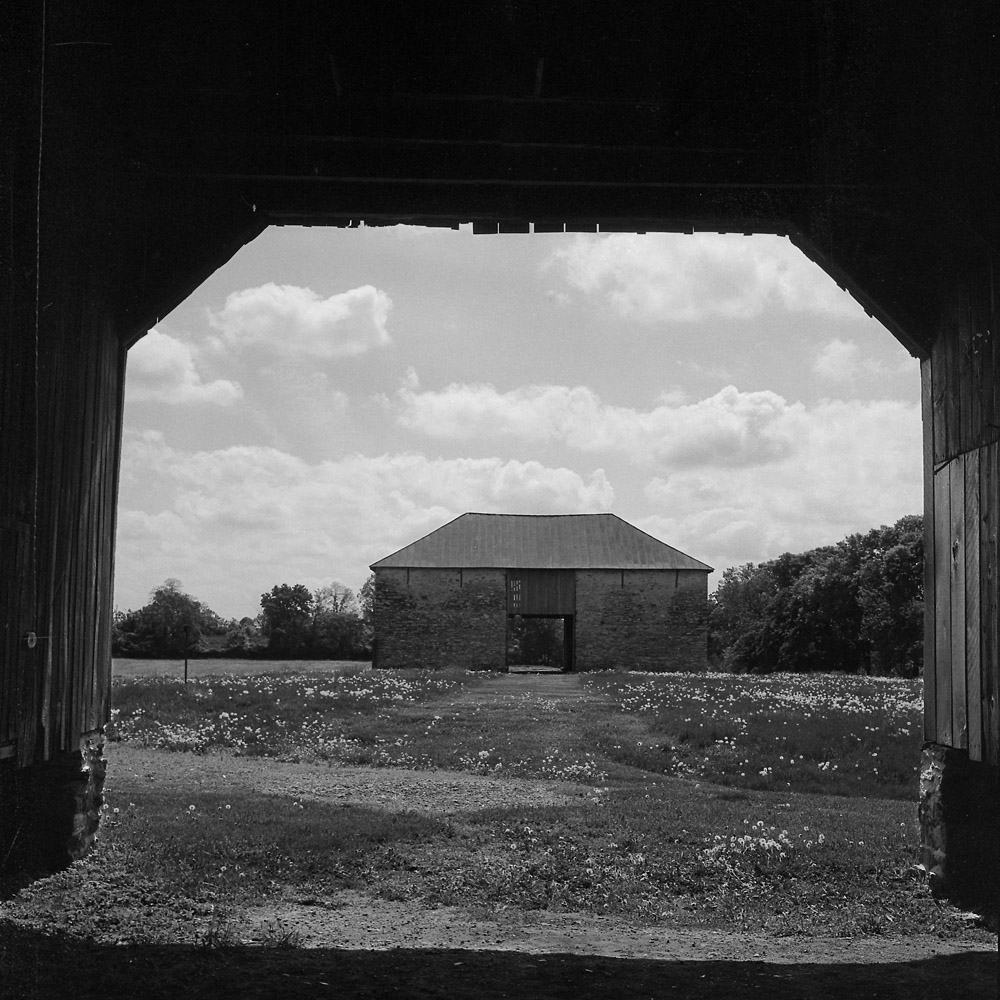
Here is a view of the stone barn as seen from inside the corn crib. I remember seeing this barn from the interstate highway as we would drive past every weekend when I was a child, and wanting to go see it up close. I had no idea then of the history of the property. The roof of the barn is of course not original, but the stone walls themselves date to 1798 when they were mentioned in the tax assessment. It is an unusual structure in its design, and looks and feels more like a French or English country barn from the 18th century than an American barn structure.
Stone Barn, Best Farm
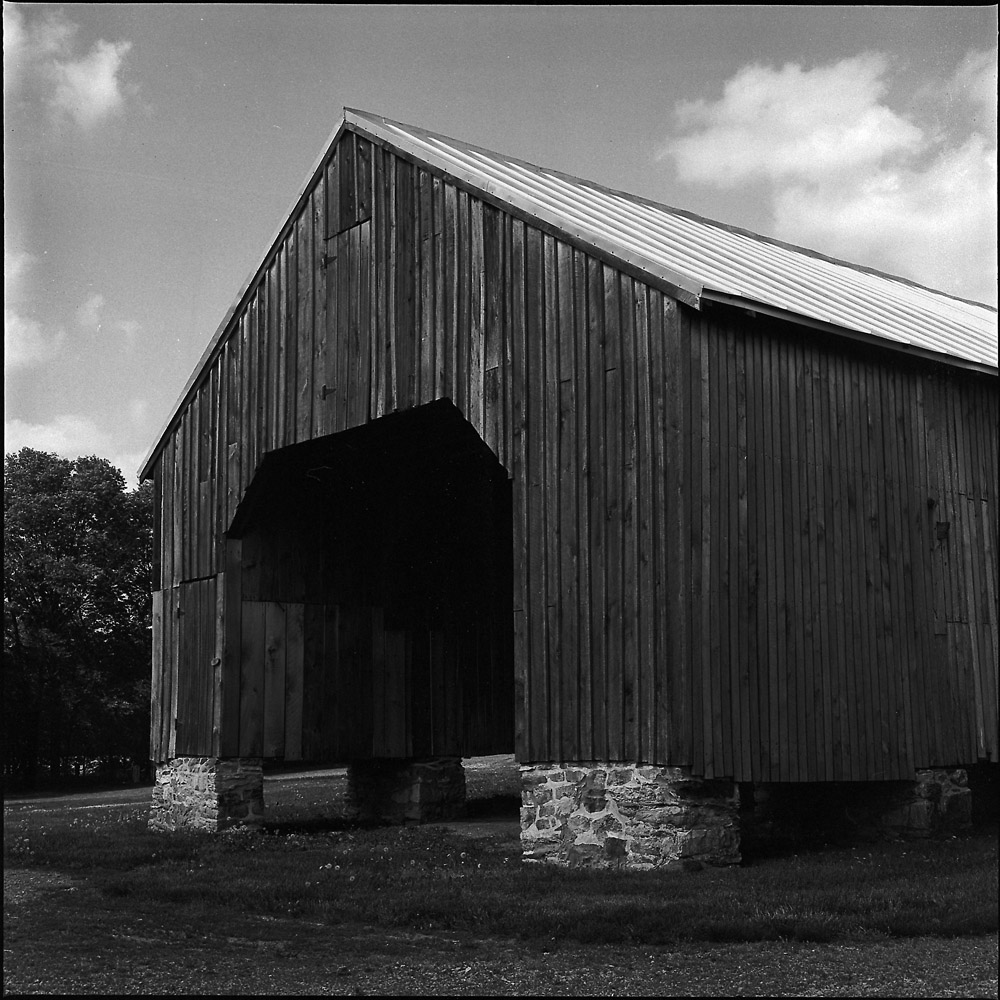
A view of the corn crib.
Best Farm Corn Crib End
The reason the farm is called the Best farm is that it was leased for operation by the Best family from 1864 until 1993. It was owned, however, by the Trail family, which has provoked a friendly dispute between Ed Bearss and the Park Service staff because he still wants them to call it the Trail farm, not the Best farm.
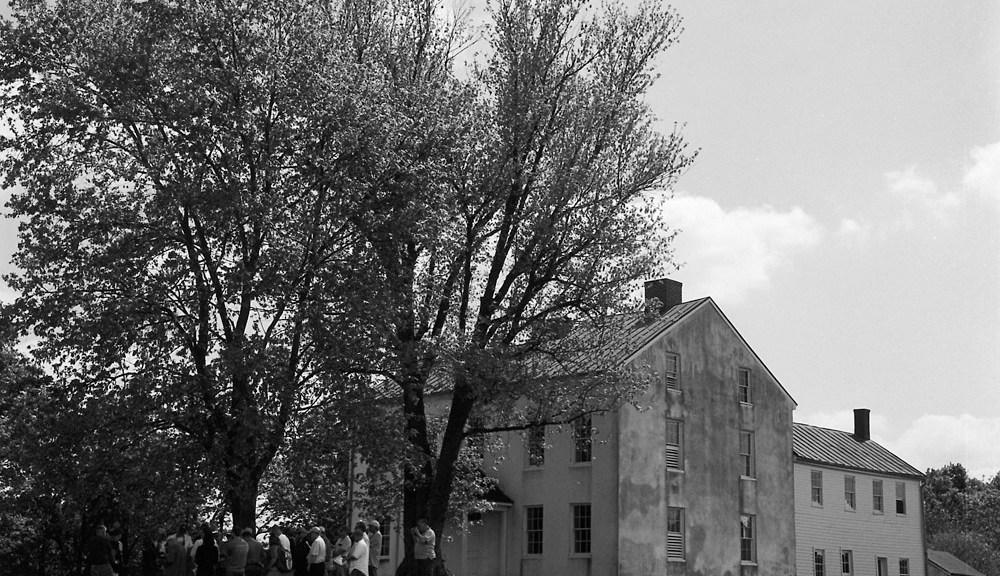
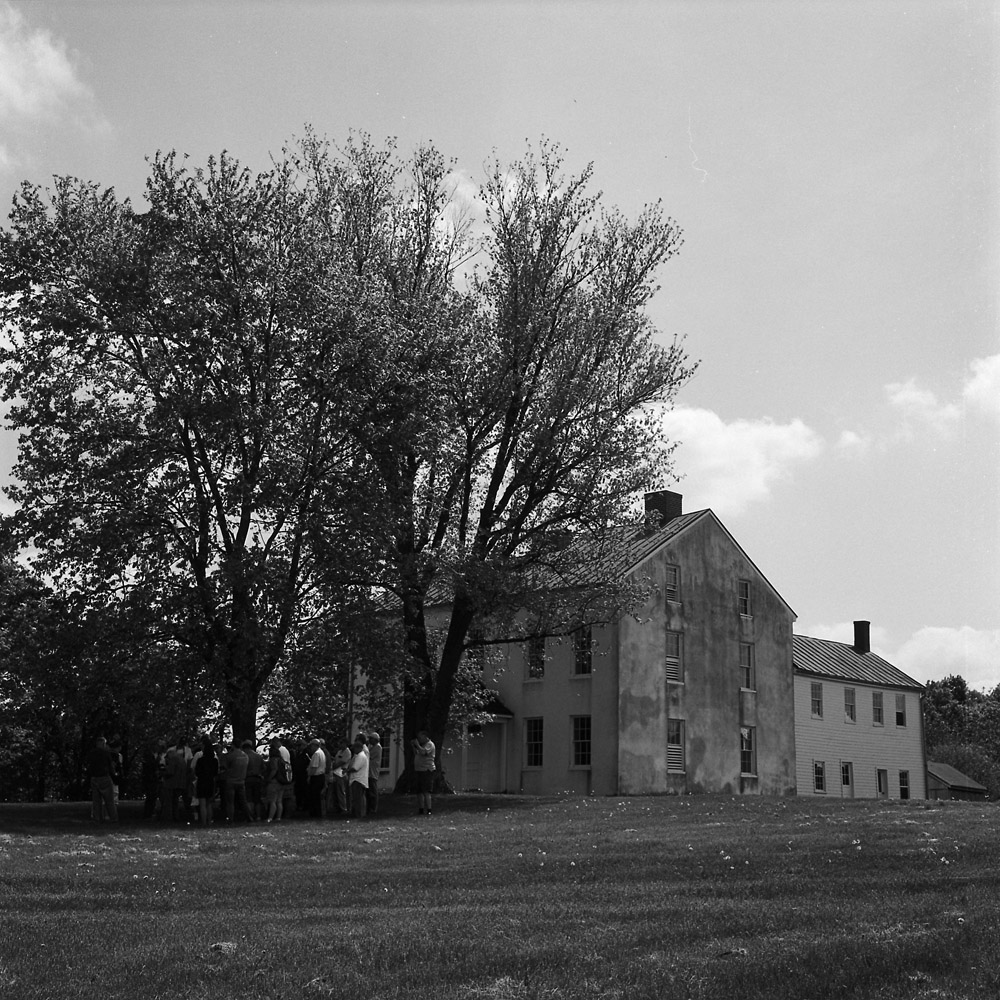
Views of the Worthington House. This house was the center of a smaller farm operation (relative to its neighbors, at roughly 300 acres) through which the Monocacy battle transpired. Rebel forces had crossed the Monocacy river at a ford adjacent to this property, and set up an artillery position near the house, from which they could see not only the Thomas house, but the Union positions at the railroad junction perhaps a mile or so away. Throughout the battle, the Worthington family took shelter in their basement, and their six year old son watched the battle through the gaps in a boarded-up window. He would later publish a book about his experience.
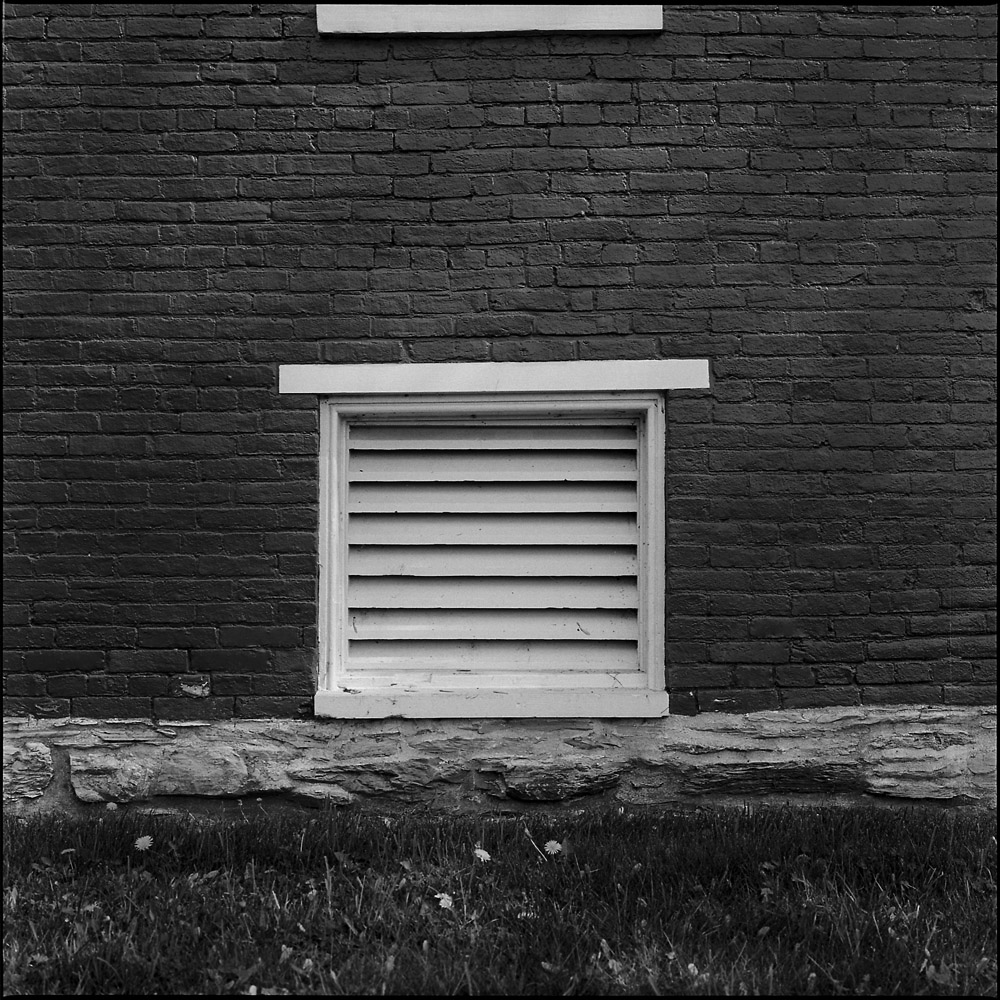
This louvered window is most likely the window through which young Glenn Worthington witnessed the battle, as it has the best views across the property where the Rebel units would have positioned themselves.
Basement Window, Worthington House
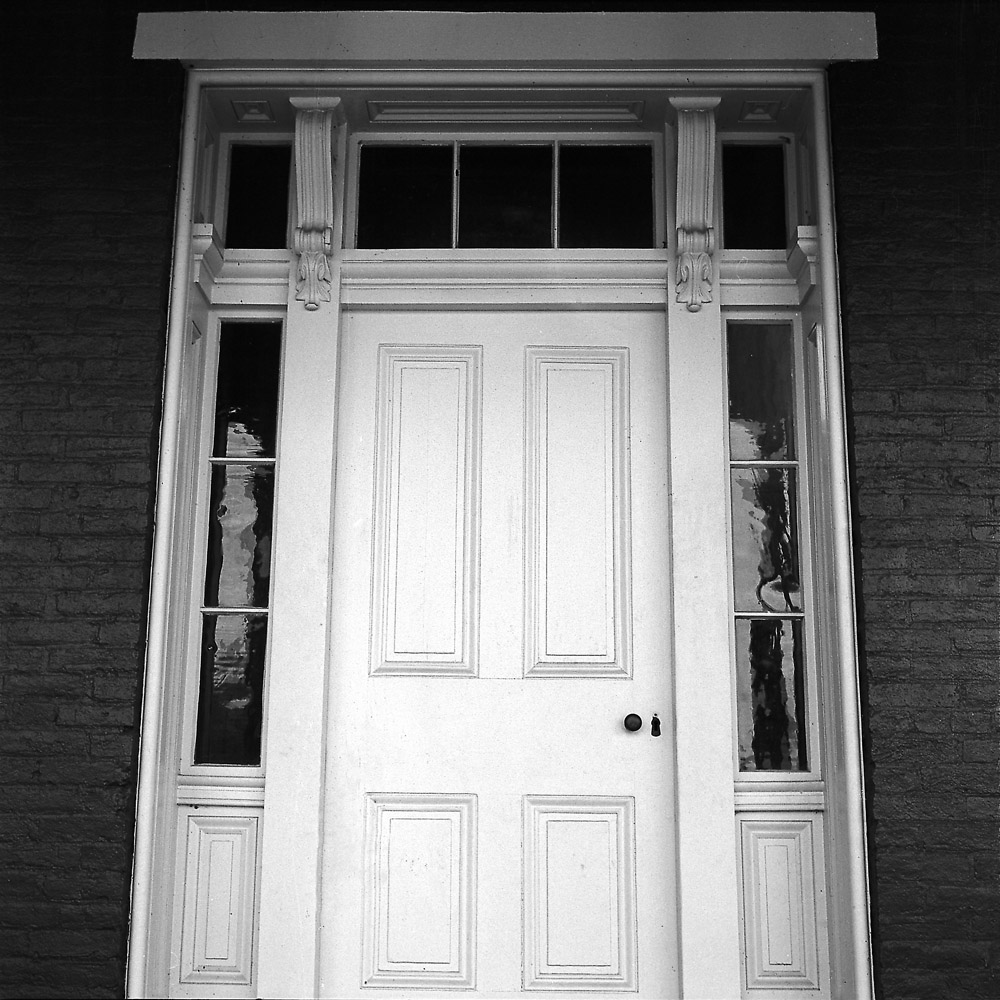
A detail shot of the front door to the Worthington house
Worthington House Door
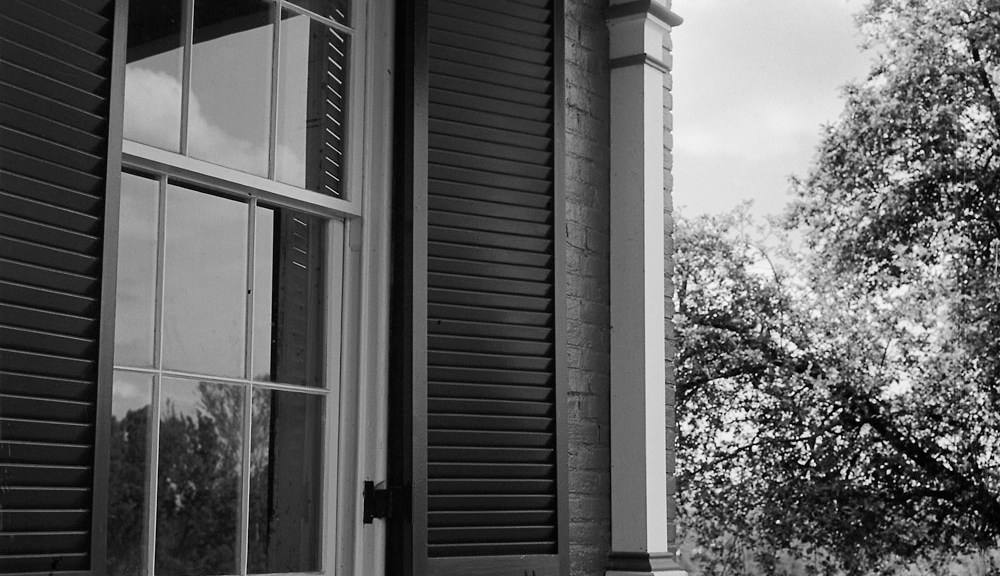
A view off the front porch, including the lawn where the Rebel forces took up position.
Worthington House Front Window
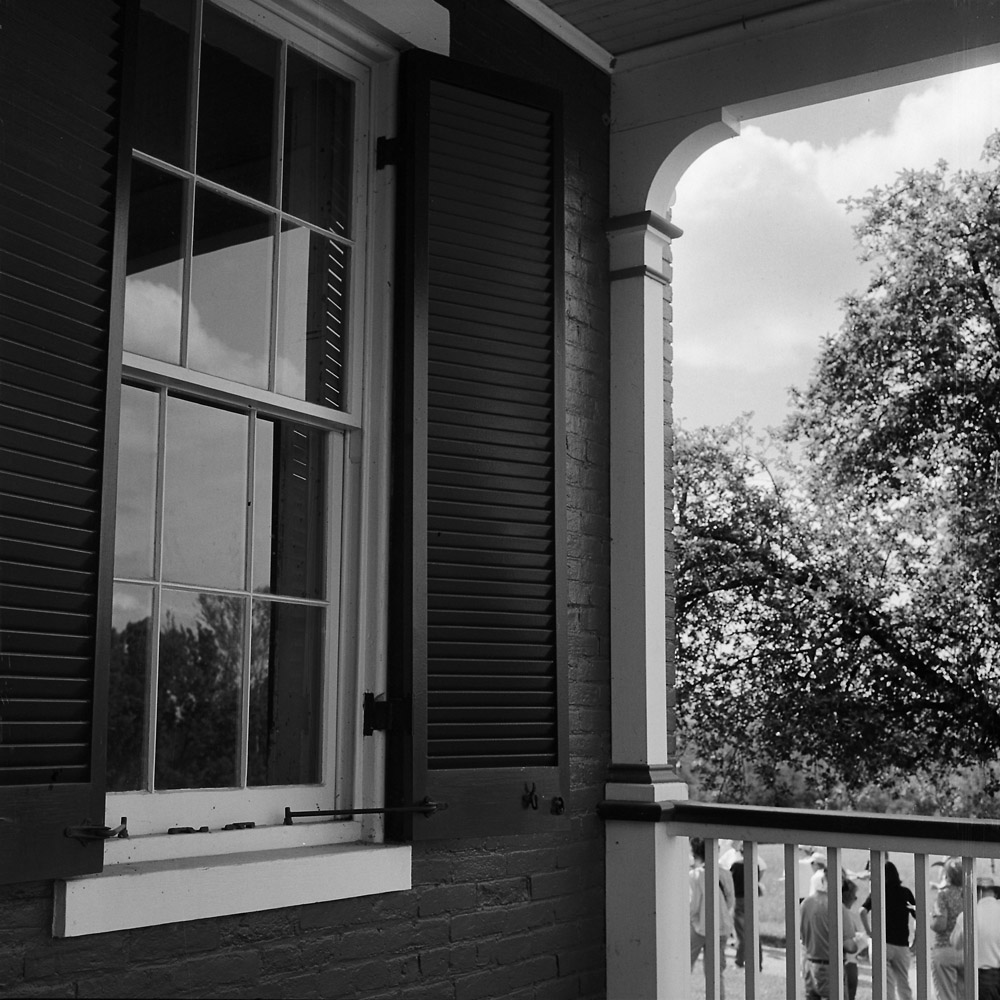
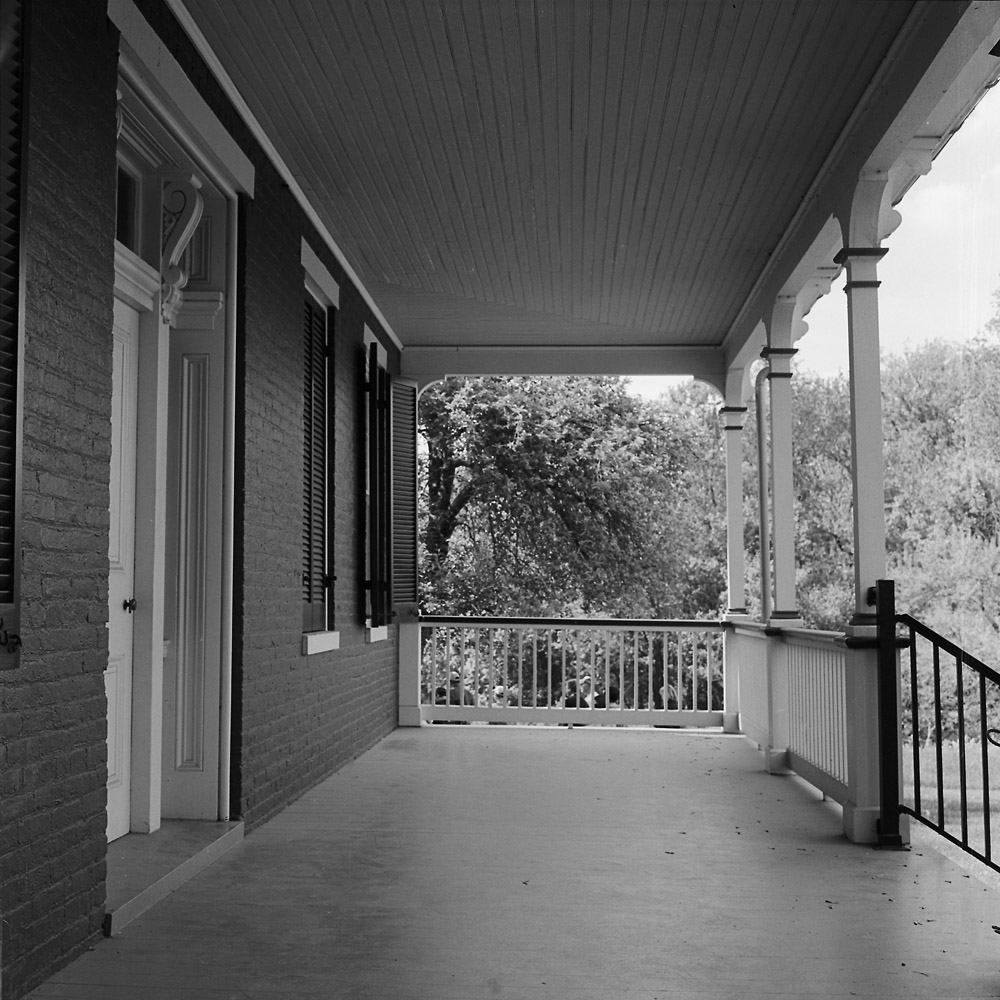
a view looking down the length of the front porch. This is very much like the front porch that would have been on the Thomas house.
Worthington House Front Porch
I did take a view of the whole Worthington house front, but something went wrong with the negative and I don’t feel like spending several hours in Photoshop cleaning it up and trying to fix it. I’ll save it for another day and go back and re-photograph it.



 dcphotoartist