Category Archives: Daguerreotypes
Two new Daguerreotypes
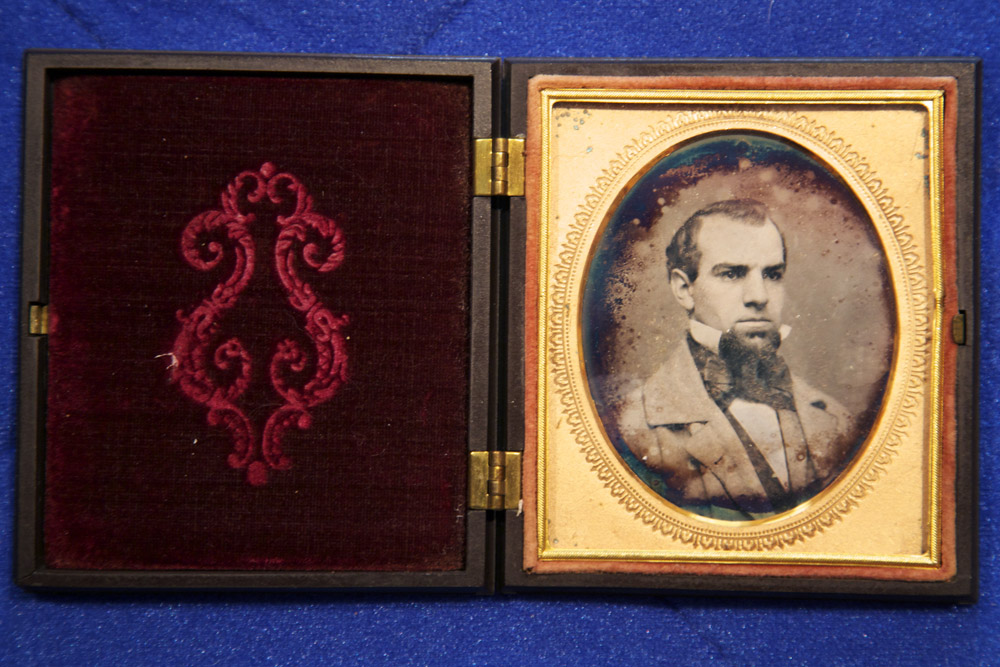
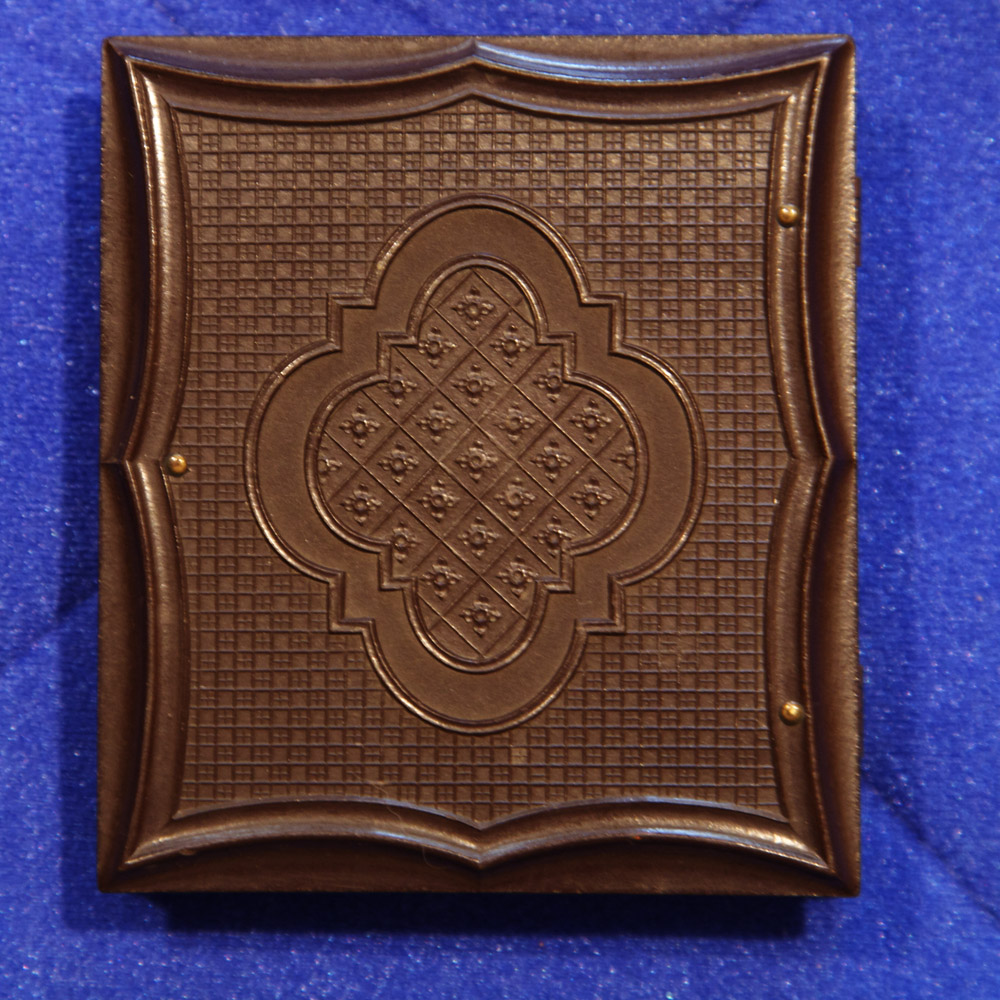
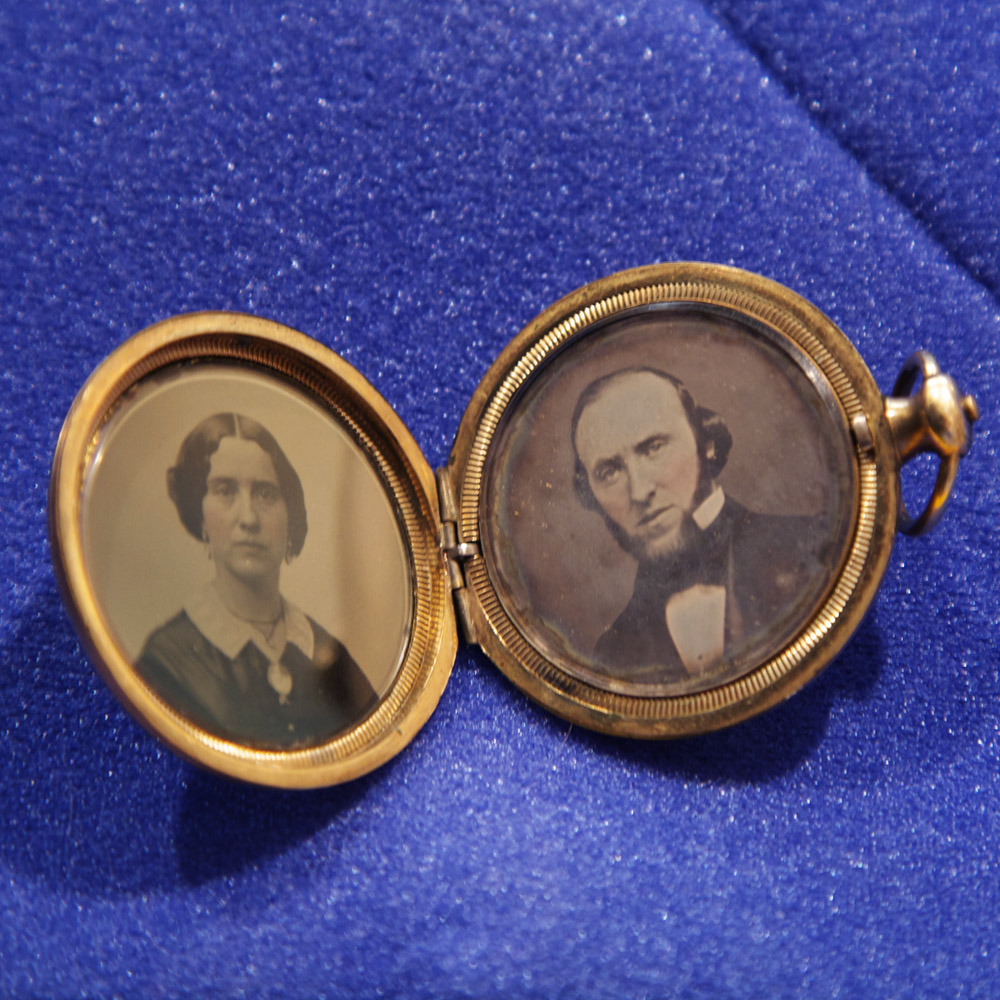
Here are two new daguerreotypes just arrived at the collection- a strong portrait of an anonymous young man in a gorgeous gutta-percha geometric design case, and my first ever photographic jewelry; a strikingly engraved locket with a daguerreotype and tintype of father and daughter (that’s the most logical explanation for the different image types inside).
The 1/6th plate daguerreotype of the young man with a goatee:
I was trying to figure out why the man in this locket would have been a daguerreotype, but the woman a tintype. Were they husband and wife, it would make sense for both images to be the same type, as they would have been taken at the same time. But if it were father and daughter, it would make sense for the photos to have been taken at two different times – the daughter would be carrying around a memento (probably a memento morii) of her father. And the ship sailing into harbor on the front cover perhaps suggests why – the girl may have been the daughter of a sailor or ships captain/officer, who perished at sea… or not… he may have died at home of old age, but that wouldn’t make as much sense or as neat a story.
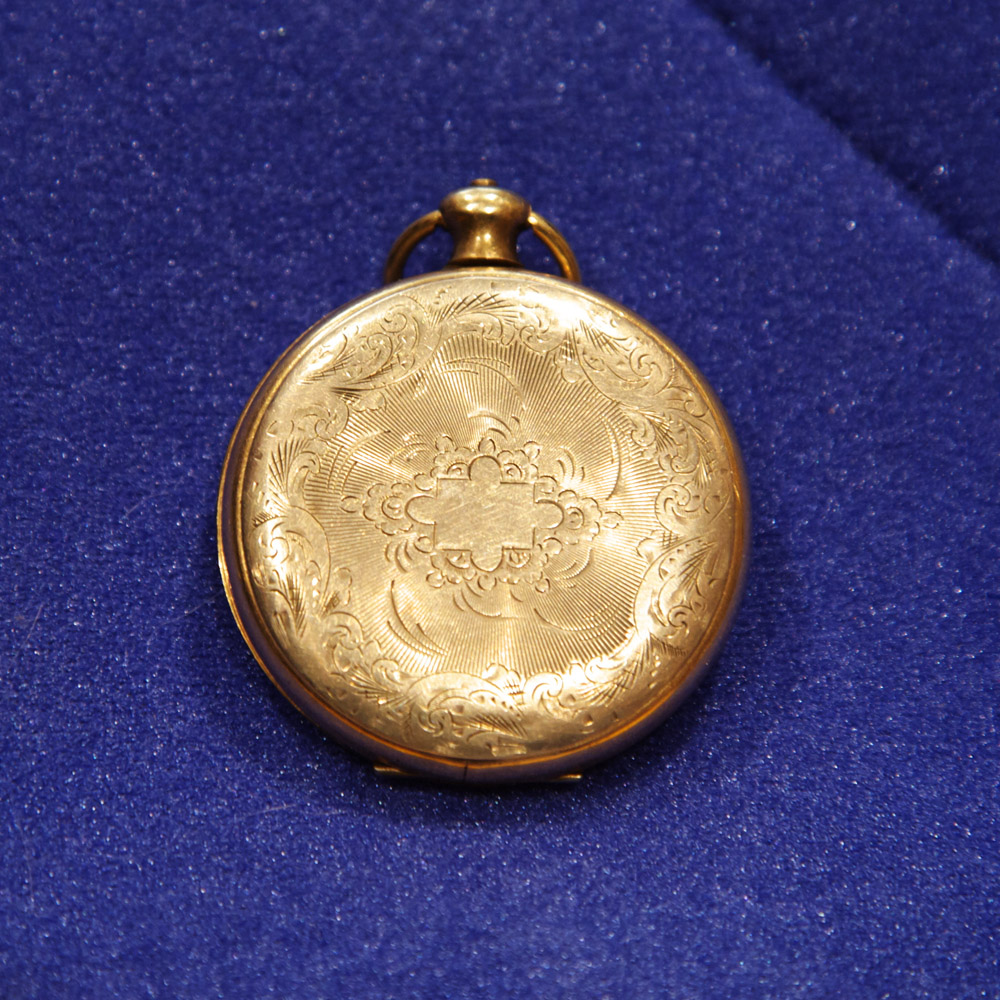
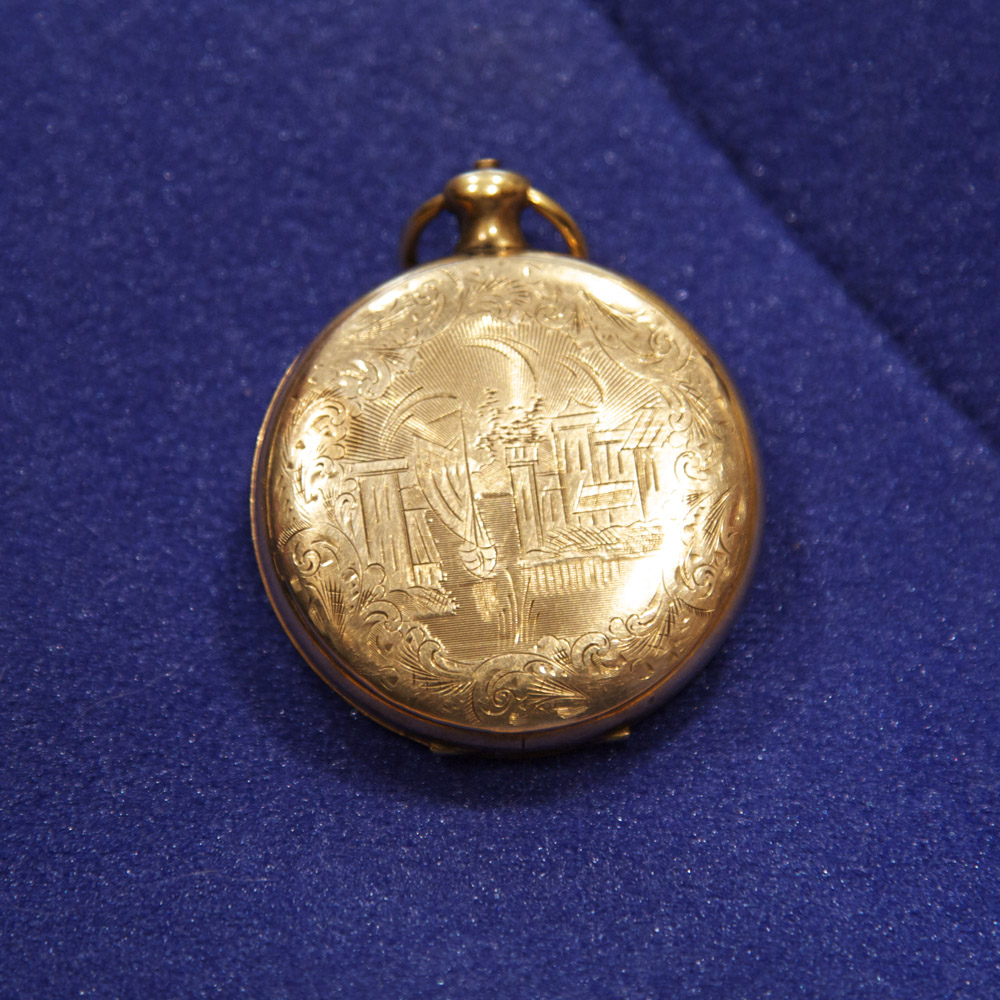
The locket is in excellent overall condition, considering it is much older than most pocket watches I have (I’d place it in the 1860s), yet it has much less wear on the hinge edge where it would be slid in and out of a collar or a pocket.
Quarter plate Daguerreotype, Lady with Glasses
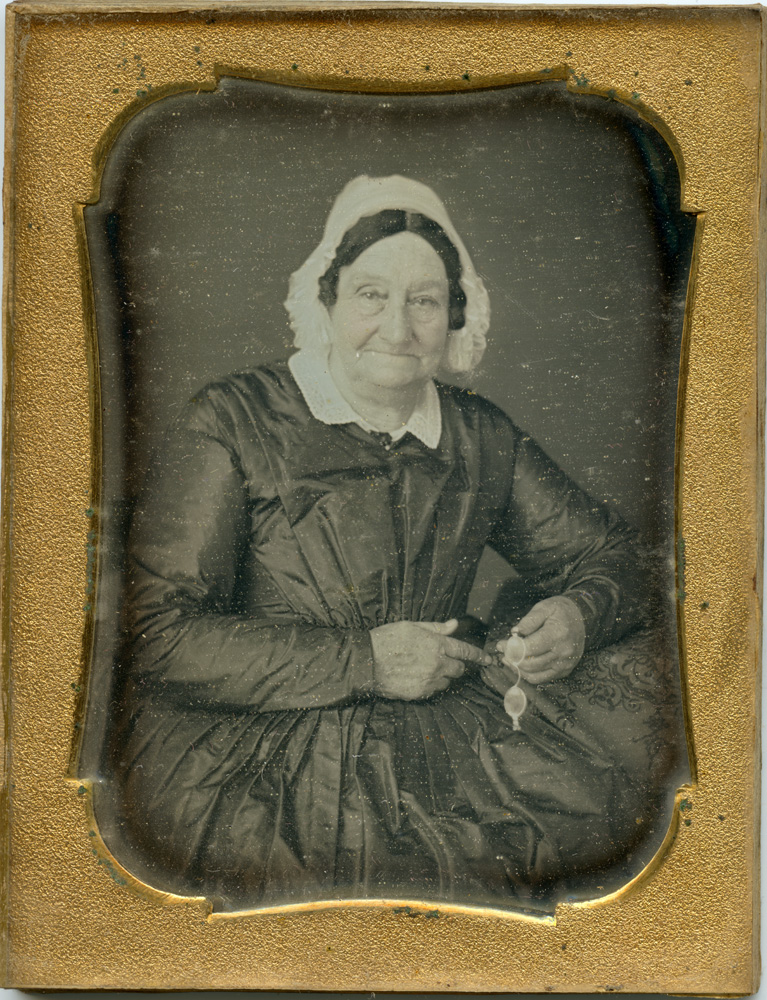
The newest addition to the collection. She arrived today in USPS. I love the simple gesture of pointing to the glasses, as if to indicate a prized possession.
The scan again does not do justice – it picks up and magnifies every little dust fleck. I’m not going to bother cleaning the dust off because this one still has the complete intact original paper seals on the packet. This one is circa 1840-45, closer to ’45 than ’40 based on the style of the mat. The truly early images had very simple mats with just the top corners rounded, or an elongated octagon for the opening, and usually with either a smooth but matt finish or a pebble-grain texture to the mat.
The New Dags, and the original Tintype that started it all…
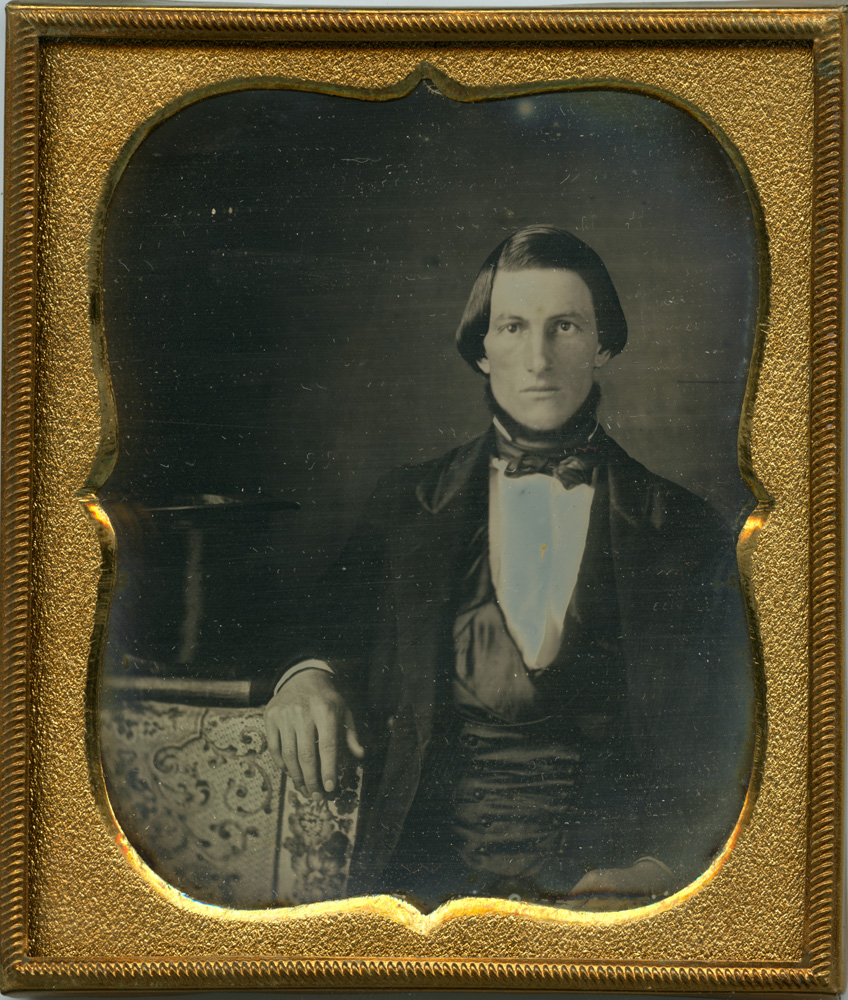
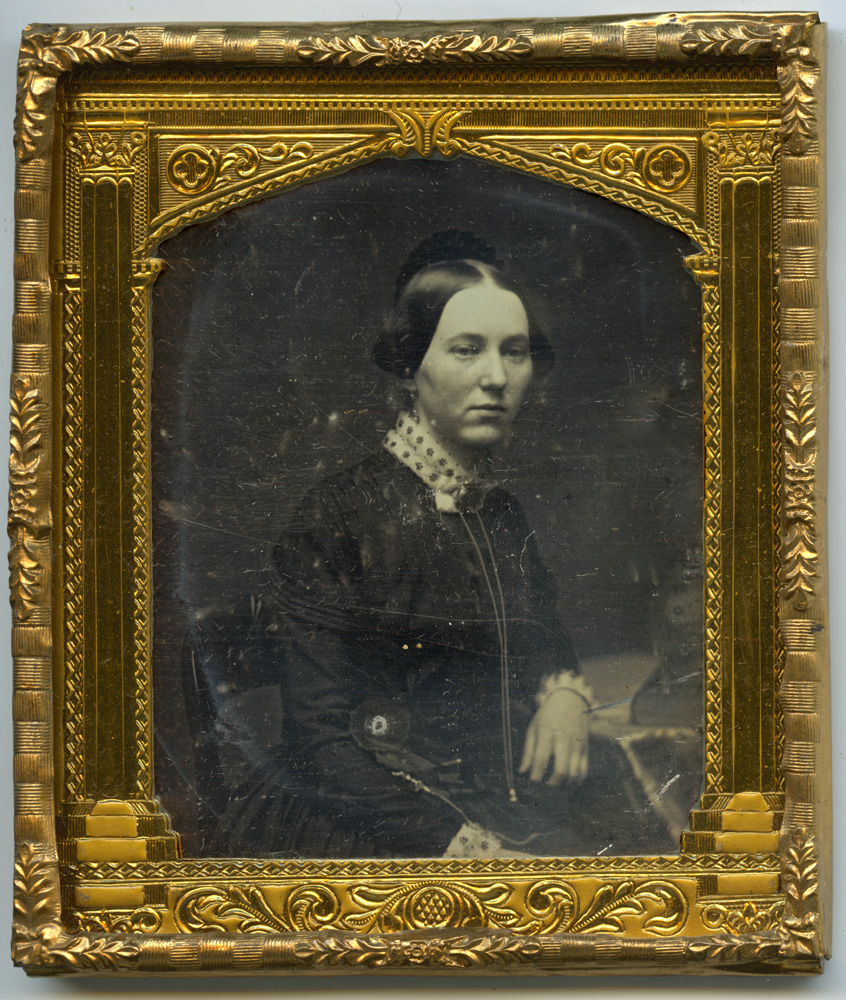
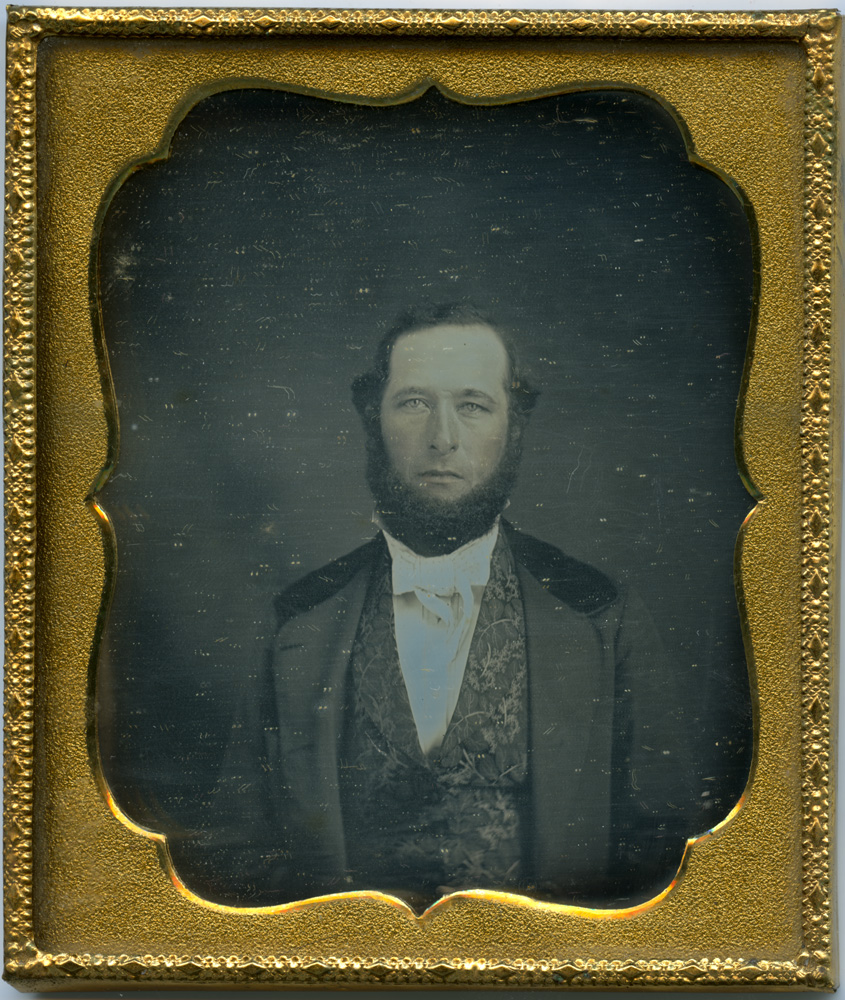
Here are the three new daguerreotypes that arrived yesterday. The scans do not do them justice, as they pick up every fleck of dust and scratch and magnify them, plus the images themselves are slightly soft due to being just out of the scanner’s focusing range. They’re all 1/6 plate daguerreotypes in full leather cases. Mrs. A.A. Hill and the gentleman with the top hat have had their seals replaced and glass and mats cleaned recently. The anonymous gentleman in the fancy vest still has his original seals on the packet. Given that the cases of the two gentlemen’s photos are almost identical (same style of mat and packet frame, same style of case lining – plain red silk), the odds are in favor of them both having been made within a year or two of each other – the gent in the fancy vest would have been photographed sometime between 1847 and 1851.
And last but certainly not least, is the photo that started it all. This was the first image I ever “collected” – it was an inheritance from my grandmother. Alas she did not get to tell me what if anything she knew about him, as it came to me shortly before she passed away. Thanks to a friend who is a serious civil war buff and re-enactor, I have been able to put some information together about who he might be. The soldier was a member of the 76th Pennsylvania Zouaves, who trained and fought in Moroccan-style uniforms adopted from French Zouave units. Zouaves (pronounced zoo-ahh-vah), patterned after the French Zouaves, were elite units especially popular in the Union Army. They were known for their precision on the drill field and for their colorful uniforms consisting of gaiters, baggy pants, short red jackets with trim, and turbans or fezzes.* Given the area of Pennsylvania in which my family lived, he was probably a member of Company B, D or E of the 76th Pennsylvania. The 76th Pennsylvania was involved in a number of major conflicts during the Civil War, including the assault on Fort Wagner (made famous in the movie Glory where the 54th Massachussetts (the first authorized all African-American unit) won their honor in the assault on the ramparts), Drewry’s Bluff, Cold Harbor, the siege of Petersburg, the battle of Fair Oaks, and the surrender of Johnston’s army. As typical, they lost more men to disease than to combat – 161 killed vs 192 laid low by disease. The officers fared better- 9 killed vs. 2 lost to illness. I don’t know for certain, but I believe my ancestor was one of the survivors.
According to my friend, this image was made in late 1861 or early 1862, as the uniform changed over the course of the war to more closely resemble the standard Union blue uniforms. Also, in this picture he looks to be in the peak of health. Most veterans by late in the war were looking rather thin, and on the Confederate side, downright malnourished.
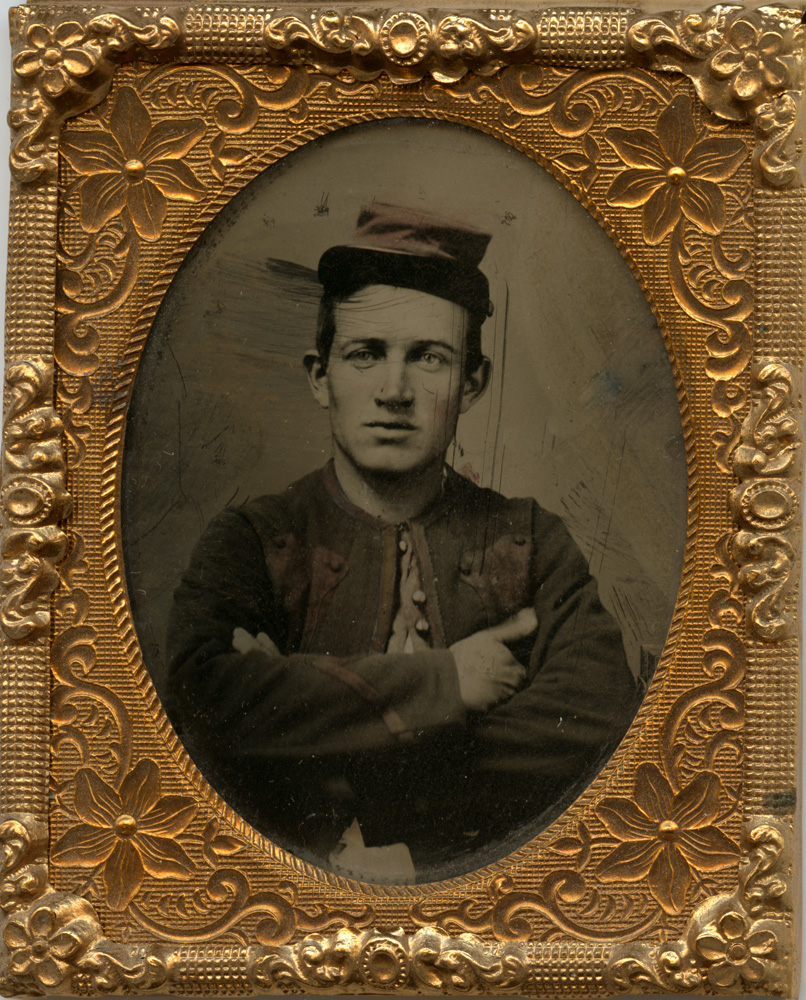
The photo is a 1/9th plate tintype in a half-case – the case is designed to look like a miniature book, but now the front cover has gone AWOL.
If anyone can help identify him more specifically, your assistance would be GREATLY appreciated. The last name would most likely be Berger (or a spelling variation on the same) or Riley. Davies is also possible, but less likely as I think the Davies branch didn’t immigrate to the US until the 1870s, but that could be wrong.
It COULD be George W. Reilly of Company E, but according to the records I found, he entered service in 1865, as a substitute for someone else who was drafted, so the early uniform date would not make sense.
It could also be James D. Davis or George Davis, who were Corporals in Company C, but the spelling of the name is wrong for the time period.
Another possibility is James P. Davis of Company K. Again, the spelling is wrong, but the location is a fit – Company K was organized in Schuykill County, which is where the Davies branch of the family lived. Two other Davises, Robert and Isaac, are listed as privates in Company K, but both were killed in action. So I’m a bit confused as to who he might have been. He’s got some kind of rank insignia on his sleeve, but it is only one stripe, and Union corporals had two stripes. In the modern Marine Corps, lance corporals get a single stripe, but this is not a Marine uniform. So herein lies a giant mystery.
Collection summary
I received three more daguerreotypes in the mail yesterday, and that inspired me to do a mini inventory of the daguerreotype and other cased images collection. Don’t take my collection as being statistically accurate as to the population of cased images out there, but the general trend is I think illustrative of the market in general.
1/9th Plate
- One milk glass ambrotype in oval velvet pushbutton case
- Two ambrotypes in gutta percha/thermoplastic cases
- One daguerreotype in leather case
- Two tintypes in half leather cases
1/6th Plate
- Three daguerreotypes in half leather cases
- Four daguerreotypes in gutta percha/thermoplastic cases
- Twelve daguerreotypes in leather cases
- Two ambrotypes in leather cases
- One ambrotype in leather case
- One ambrotype in gutta percha/thermoplastic frame
- One ambrotype in brass mat, missing frame or case (most likely frame)
- Four tintypes in leather cases
1/4 plate
- One daguerreotype, missing case
- One daguerreotype, in half leather case
- Three daguerreotypes in leather cases
- One ambrotype, in half leather case
1/2 plate
- Two ambrotypes in leather cases
So, forty-two cased images altogether, with twenty-eight being 1/6th plate. Seventeen ambrotypes/tintypes, twenty-five daguerreotypes. Thirty-four in some form of leather case, seven in gutta percha/thermoplastic. I’m making a distinction between a half leather case and a whole leather case only from a collectors perspective – the half-cases are images whose cover was separated from the image at some point in time and not retained. Daguerreotypes are over-represented in the collection because that’s what I’ve made an effort to collect. There are probably more cased tins/ambros out there than daguerreotypes. 1/6th plate dominates, because that was the most common size produced. 1/9th plate is probably less uncommon than my collecting habit would indicate, again because of personal taste. The 1/4 plate and larger, though, are far less common. Prices have ranged from as little as free (one is an inherited piece) to $300 (which believe it or not was not one of the half plate images). Most have been in the $30-$150 range. Most images are by undocumented photographers of anonymous subjects, but perhaps four have the sitter identified, and I have one by Plumbe, two by Brady (although one of the Bradys may not be, as the case halves are different), one by Judson of Newark, NJ, one by Clark of New Brunswick, NJ, one by Kimball of New York, NY. One is from Argentina, the rest are American. One is allegedly Ulysses S. Grant’s niece. One is definitively dated 1849. Several others are probably older, including the Brady and Plumbe daguerreotypes, but most are from the 1850s.
On another date, at a different time, I’ll inventory the CDV/uncased image collection, which is much larger and more diverse.
Anonymous Daguerreotype

Just another random daguerreotype. I was drawn to the image by the hand-coloring which is subtle, unlike some I’ve seen where it can get over-the-top, and the flaw in the hand-coloring – notice that her face was nicely tinted, but they forgot to do her hands!
I’m no fashion expert, so I can’t give you more precise information about dating the image based on the wardrobe of the girl, but from the style of the dag itself, you can tell this one is from the 1850s – the mat itself is ornate and highly tooled, and the packet is wrapped in a gilt brass frame. Early daguerreotypes (1839-mid 1840s) have very simple geometric mats, often with a pebble texture. As the 1840s turned into the 1850s you get the thermoplastic cases and the more stylized mats, and ending with the ornate mats and packet frames. Tooled leather cases continue side-by-side with the thermoplastic cases through the Daguerrian era and on into the end of the cased tintype era, so using the case itself to date the image is not sufficient. If I can find my reference book that has a timeline of the evolution of photographic presentation styles, I’ll amend this to clarify when thermoplastic cases came into being and when they died out, but that could be a while – my library is a bit higglety-pigglety right now as I’ve run out of shelf space (2000+ volumes will do that to you).
More updates to the Victorian Photographers maps
I’ve added four more studios to the New York and three to the Philadelphia Victorian photography studios maps.
New York:
- William J. Tait, corner Greenwich & Cortlandt streets
- John C. Helme – Daguerreotype studio, 111 Bowery
- Abraham Bogardus – Daguerreotype studio (early), Greenwich & Barclay
- Mathew Brady – Daguerreotype studio (early), 205-207 Broadway
Philadelphia:
- D.C.Collins & Co. City Daguerreotype Establishment, 100 Chestnut Street
- Reimer, 612 N. 2nd Street
- Van Loan & Ennis – Daguerreotype studio, 118 Chestnut Street
Just a little more fun with the photographers maps compilation.
Here’s a quick link to the maps in case:
Some more food for thought – I think I’ve mentioned this before, about the migration over time of certain studios, moving uptown in New York as their client base moved further uptown – to better illustrate this, I’ve pulled the studio addresses for three of the most prominent portrait studios of the day, and listed them in chronological order as best possible:
Mathew Brady:
- 205-207 Broadway
- 359 Broadway
- 635 Broadway
- 785 Broadway
Gurney & Sons
- 349 Broadway
- 707 Broadway
- 5th Avenue & E. 16th Street
Abraham Bogardus
- Greenwich & Barclay Streets
- 363 Broadway
- 872 Broadway
Also notice how close they all were to each other. While I don’t have dates per-se for each of the addresses, notice that at one point, all three were in the same block of Broadway (the 300 block), and again later, all three were in a two block span of Broadway, further uptown (700-800 block). Even early on, they were clustered close to each other in Lower Manhattan – 643 Bleecker is not far from Greenwich & Barclay, and another photographer, William J. Tait, was just a block or two away at Greenwich & Cortlandt streets.
The Early Bradys
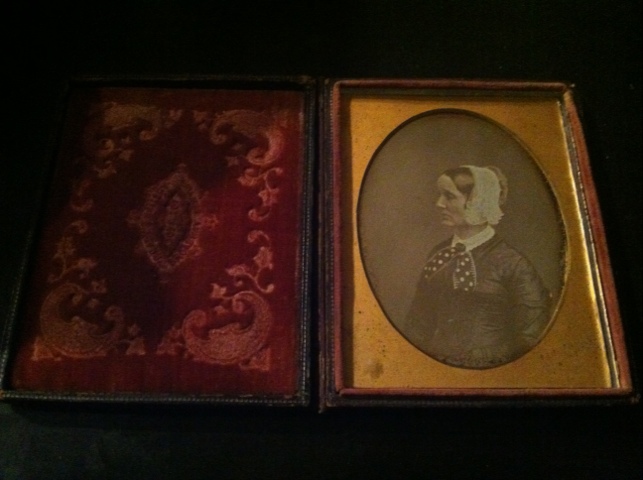
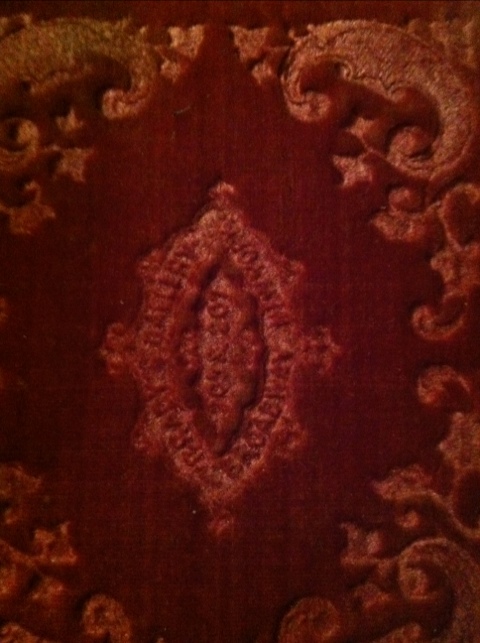
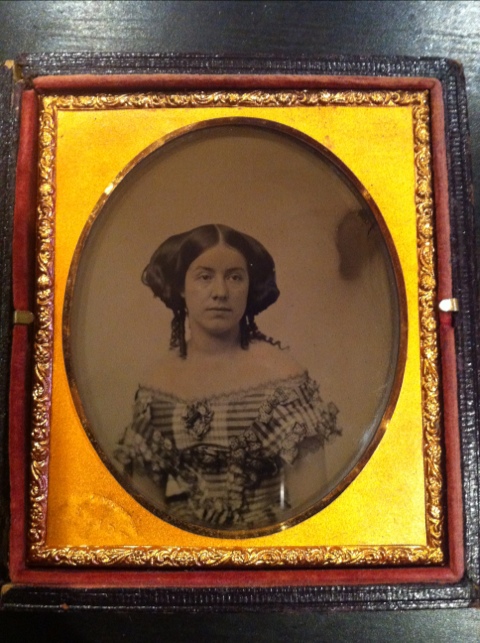
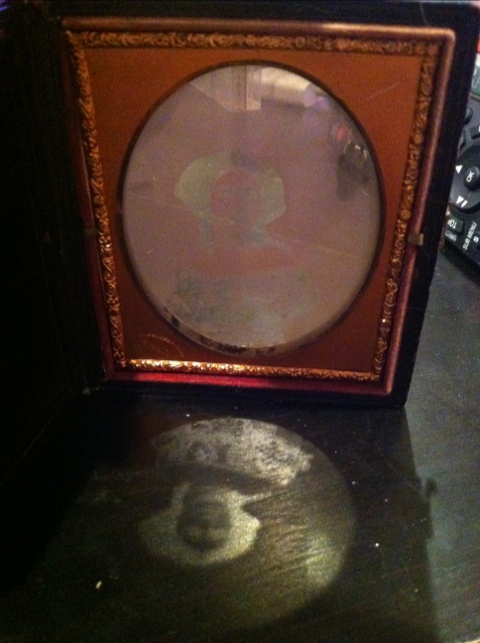
Here are my two early Mathew Brady images. The one is a simple daguerreotype, and based on the mat style, I’d place it as an early dag – pre 1850, maybe as early as 1845. The velvet pad on the dag shows Brady’s New York studio address. I’ve also posted the ambrotype, which is a later image. This is an interesting and unusual presentation, where the image can be viewed from either side.
More from the collection – tins and ambros and dags, oh my!
Fred Jones, born June 15, 1855, ca. 1861, Concord, New Hampshire. Here’s a photo of a little boy dressed up as a soldier. I haven’t done any further research into the Jones family of Concord, but I’d suspect that little Fred’s dad went off to war and Fred was just playing his part and being patriotic, imitating dad.
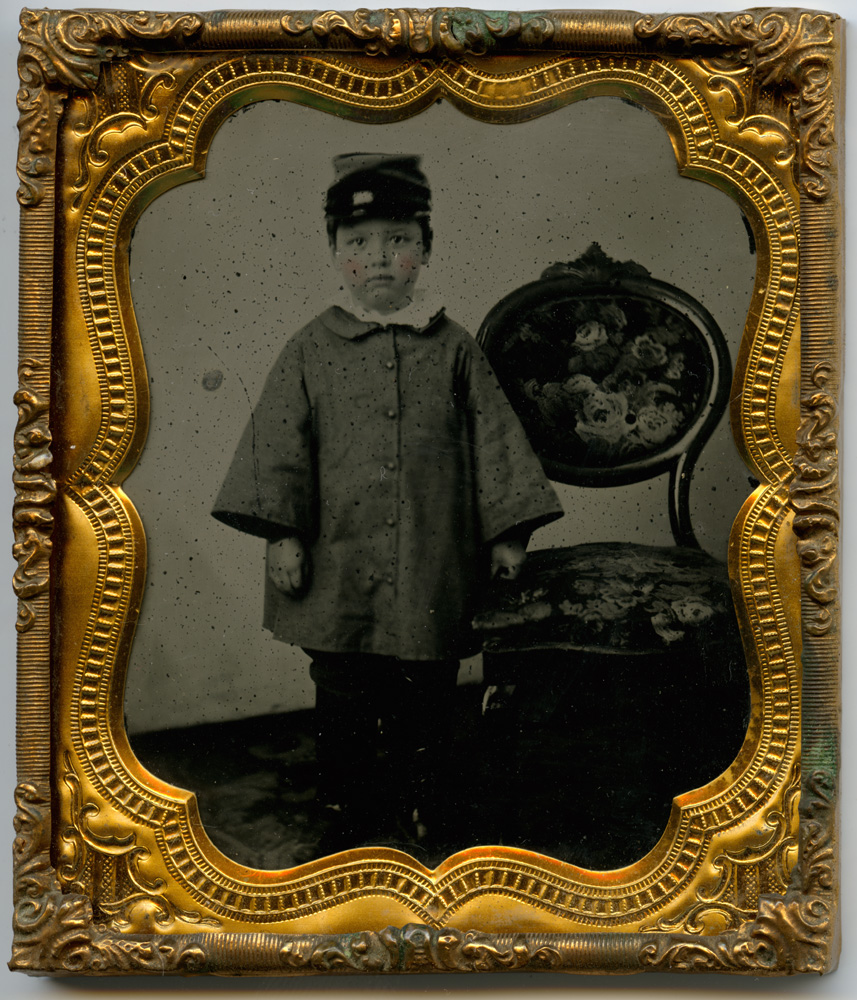
The image is a black glass ambrotype in a thermoplastic/gutta percha frame, suited to hang on a wall. I acquired this one from a descendant of the subject, so it came with more biographical data than is usual. While I’m glad I was able to buy it, I can’t imagine how anyone could let such a piece of family history be sold out of the family. My apologies in advance to my Facebook friends who have already seen this image, but it was so neat that when it arrived, I couldn’t resist posting it with my iPhone immediately.
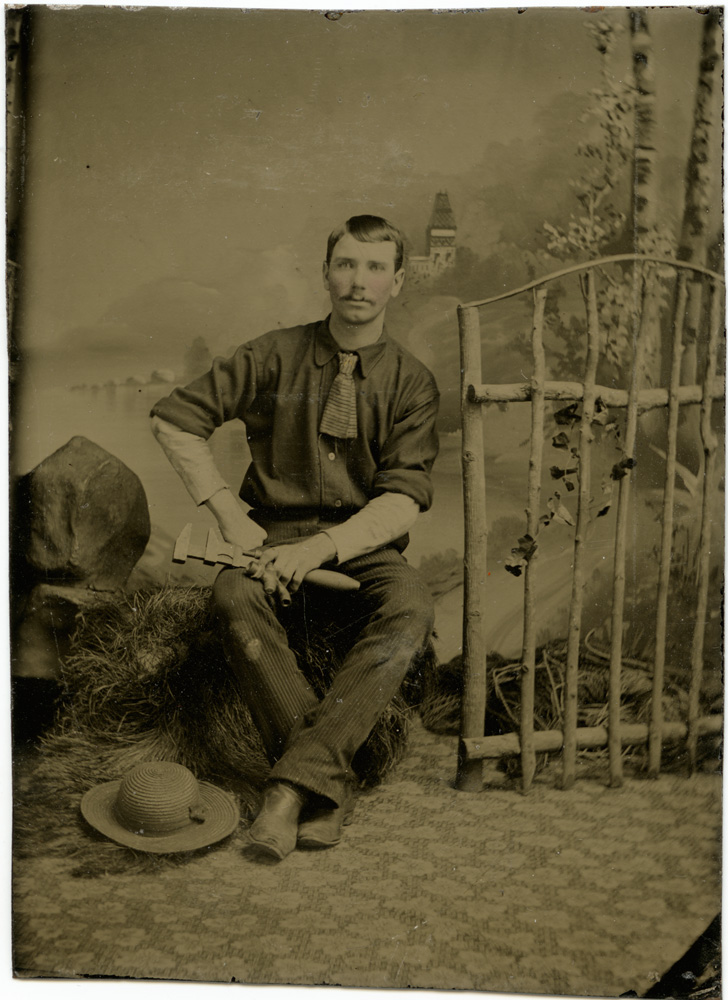
This next image is an “occupational” tintype. A popular genre in its day, the occupational photograph shows ordinary working-class people with tools of their trade and/or professional attire that showed who and what they were (railroad conductors, butchers, carpenters etc). This has become a very popular genre to collect, and certain professions are much more collectible than others (anything to do with photography is highly sought after, for example).
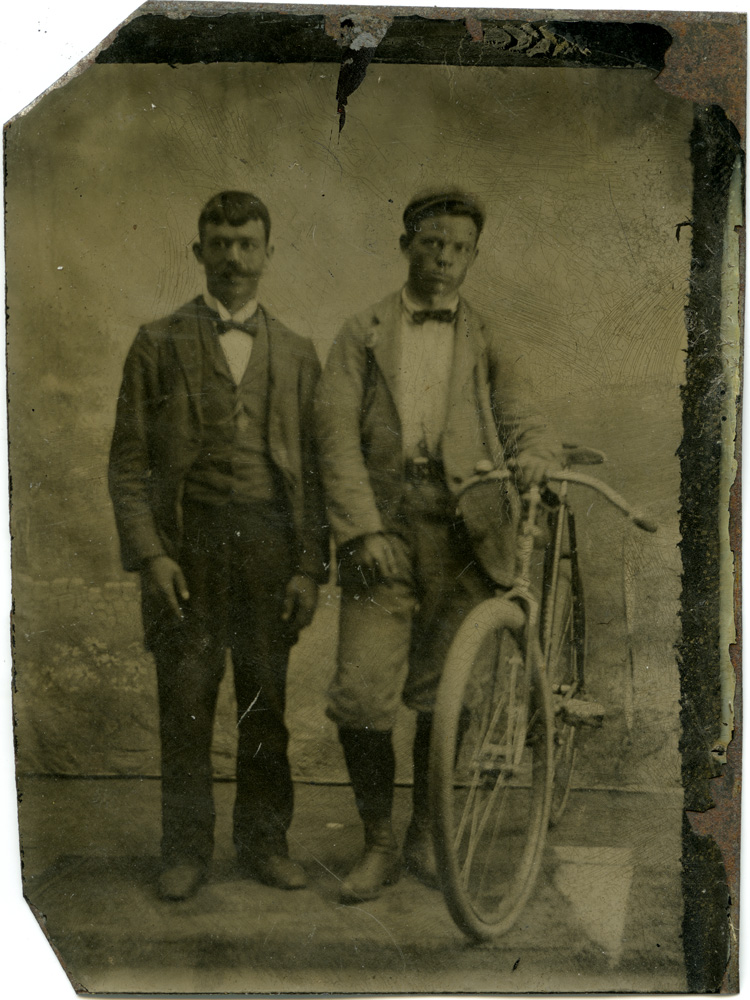
Two men and a bicycle. This was inspired by a friend of mine who collects images of men with facial hair and images of bicycles – killing two birds with one stone here. My guess on the age of the image, based on the bike tires, would be sometime between 1890-1910. Pneumatic bike tires were invented in 1889, and first commercially produced in 1890.
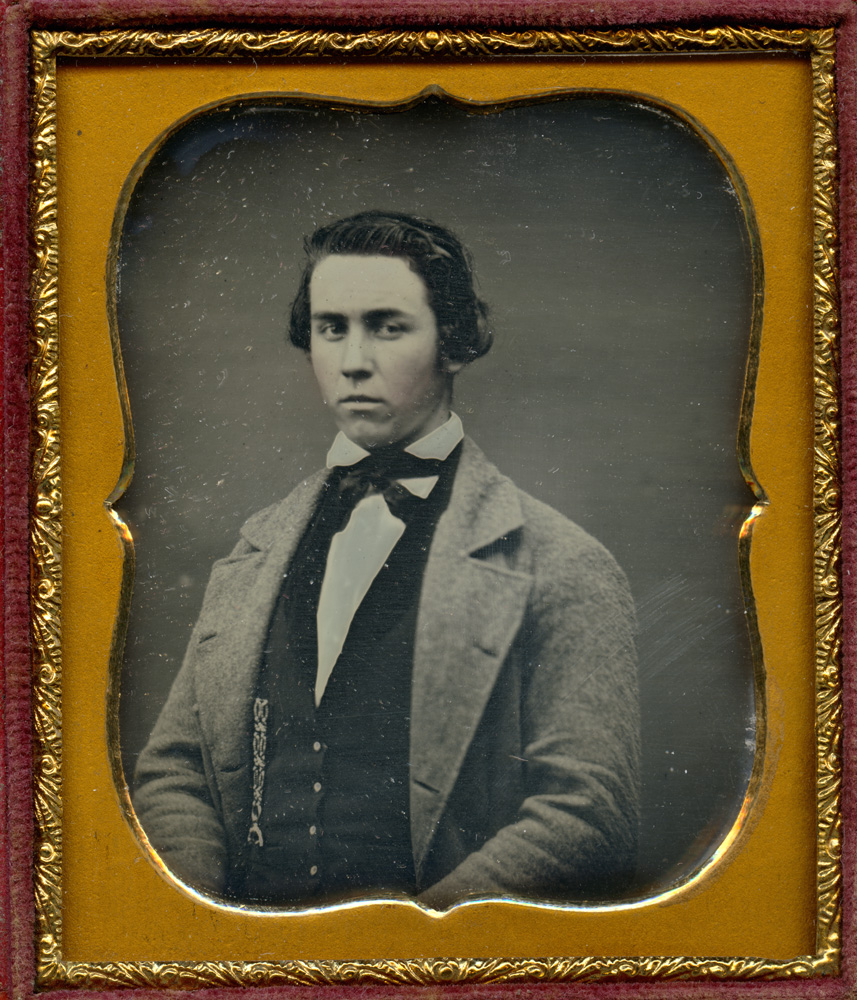
And last but certainly not least, a nice 1/6 plate daguerreotype. Because the scanner picks up every little dust particle, it’s hard to tell from the scan that this is actually one of the most lovely daguerreotypes in my collection. Virtually free of imperfections, from wipe marks to polishing scratches, this image of a young man in a rich wool coat is truly striking. It is in a very red leather case (most cases are brown), complete. The hinge has been replaced with modern tape, but otherwise the whole is quite original.
I’m still trying to figure out how to post my Brady clear glass ambro – when I can get a little table-top studio set configured in my dining room, I’ll take photos of it to post here. The trick with it is that the image is viewable from both sides. There is no black backing paper, and the case is in three pieces – a front cover, a center panel with the image, and a rear cover, all hinged together like a little book. I’ll have to do some creative posing of the piece to demonstrate this and to display the image clearly. I’ve seen very few ambrotypes presented this way, and the few I have were also Mathew Brady images. I’m far from a fount of knowledge on this subject, so I don’t know if this was a uniquely Brady thing to do, or if I just haven’t seen enough images yet to know how widespread the practice actually was.
The joys of Anonymous Vernacular photos
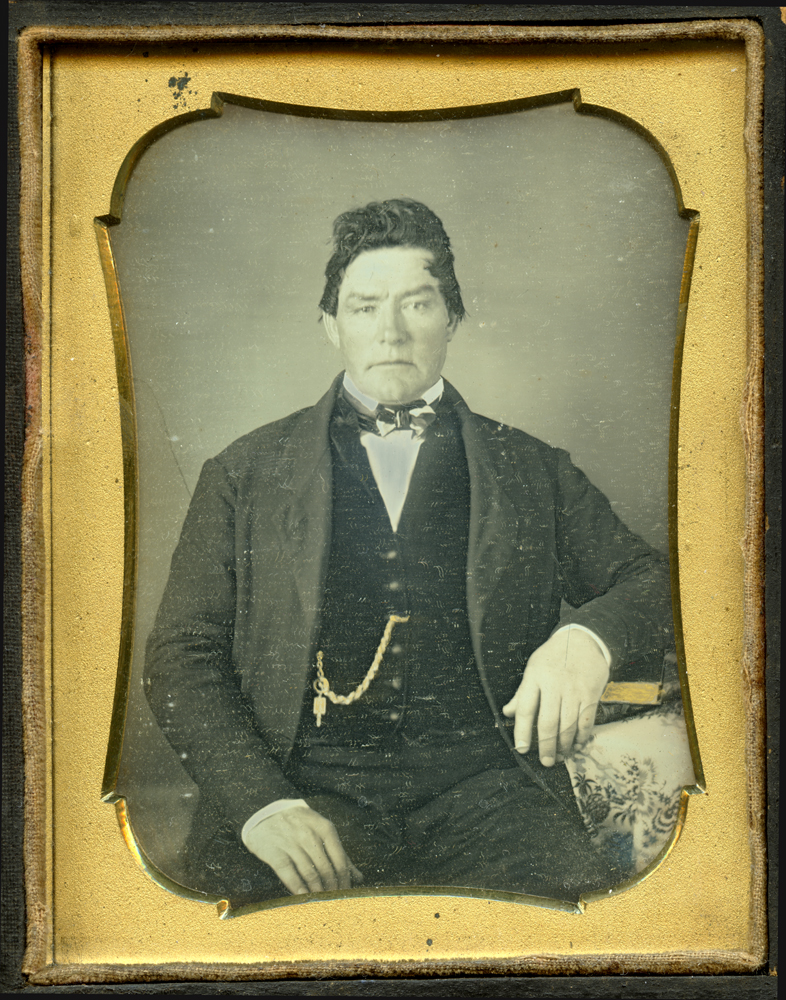
Here are three of my latest collecting acquisitions. First, the daguerreotype. A very nice quarter-plate dag, extremely well exposed, and very subtly hand-tinted and gilded. If you look carefully you can see the hands are flesh-toned, and the face has a hint of it as well. The gentleman’s watch fob and the edges of the book pages are gilded. Both of these touches would have been “up-sells” at the time of the commissioning of the image. I haven’t popped this one out of its case yet because the glass is resting directly on the mat, and not bound by a brass frame as part of a package, and the glass is in so tight that I’d be afraid of cracking it or tearing the velvet surround trying to get it out. The scan does not do it justice, as the scanner’s lens can’t quite focus on the image plane.
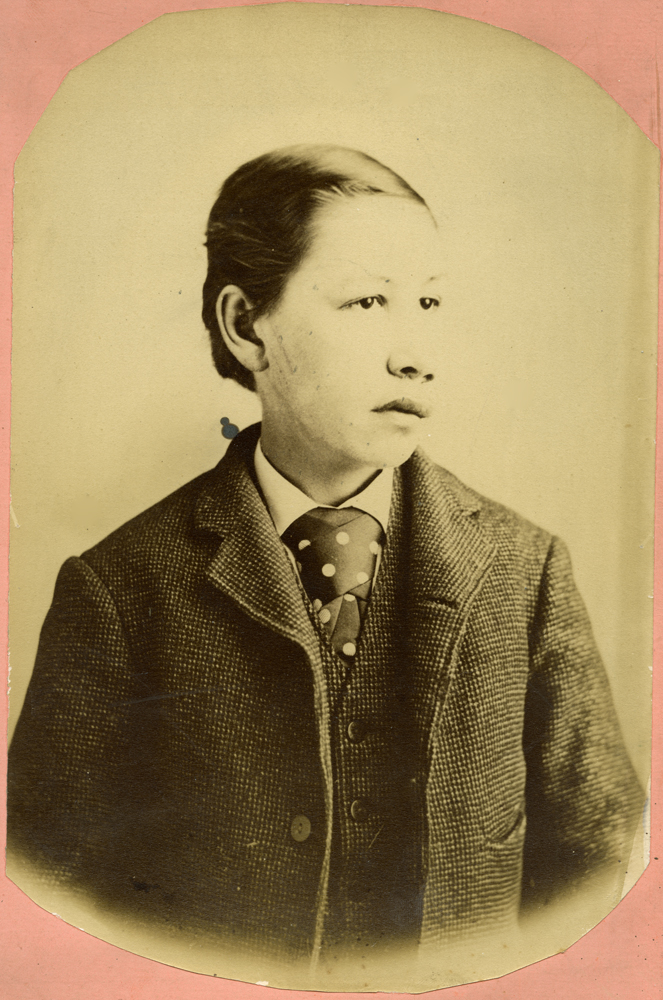
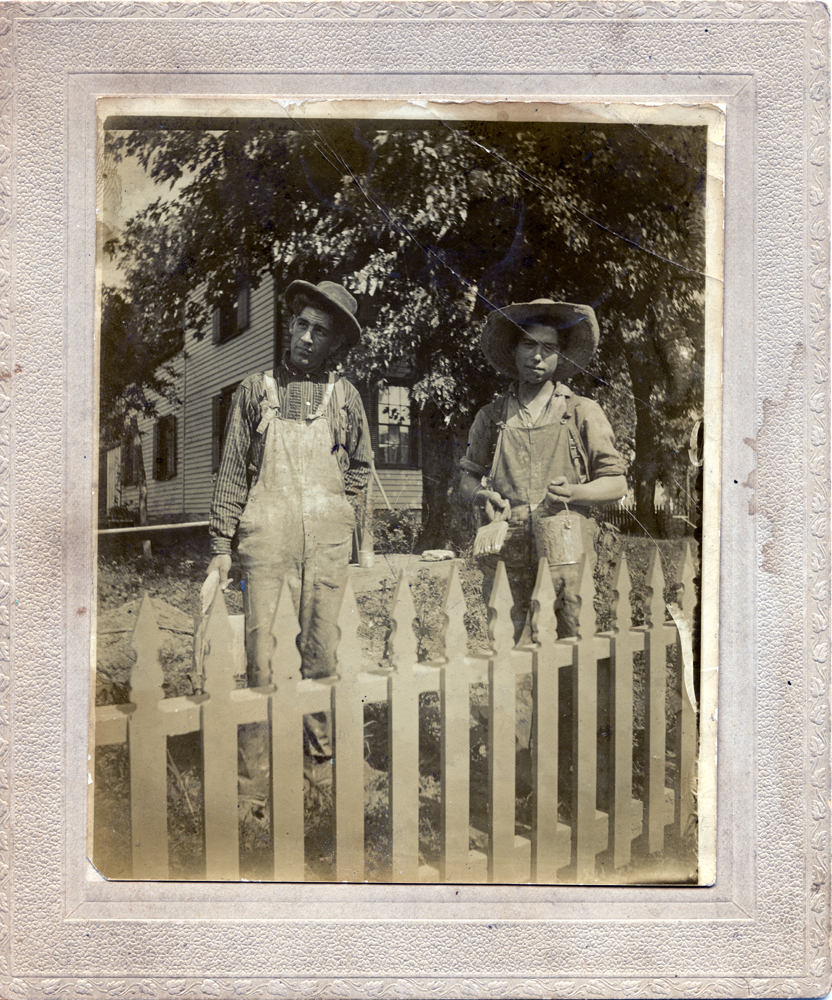
Next up are a pair of rather fun images. They’re totally anonymous, both from a photographer’s and a subject’s point of view. The why of collecting them is rather simple – they’re interesting. And they were bargains. Bought off Ebay, they sold at the right (wrong from the sellers’ perspective) time of day and attracted no other bids, so I got them for a penny apiece. You don’t have to spend a lot of money to start collecting, and these are proof. The thing that grabbed my attention about both of these initially were the auction titles- “African-American/Native American man” and “Two Men doing a Tom Sawyer”. I’m deleting the seemingly obligatory “rare” from the titles because EVERYTHING on Ebay is “rare”, and if it doesn’t look like a dog chewed on it, it’s also “minty”. Minty describes a flavor or odor, not a condition. These are both obviously not “minty”, but that’s ok – what counts is the image itself. While a pristine image is a beautiful thing to find, I also enjoy finding photos that look like they’ve had a life, and were not just bought and stuck in an album on a hidden shelf.
On the “African-American/Native American man” photo, it is an albumen print, and there are some obvious mis-handling marks from the time of printing (see the silver splotch over his shoulder). I will grant the “rare” on this one as images like this are while perhaps not truly “rare” they are uncommon. I’m actually on the fence about who and what this young man might be. The straight hair suggests Native American, but some of the facial features like the nose and cheekbones could be African or even Asian features, and certainly very likely to be mixed race of some sort. Guessing from the attire (and PLEASE correct me if I’m wrong) this was taken in the 1890s.
The last image has no other way to describe it but “FUN”. Two men white-washing a fence, posing with their paint cans and brushes. A real slice of Americana, I love the sense of humor about it as well as the pop-culture reference before there was such a concept as a pop-culture reference. I’m sure Tom Sawyer would have had a good laugh at this if he were real, to see it. It even looks like the depictions of Aunt Polly’s house from movies. This is on silver gelatin “gaslamp” paper, and mounted on embossed card stock. I’ve tweaked the scan a bit to improve the picture quality overall, so don’t entirely trust the color balance.
 dcphotoartist