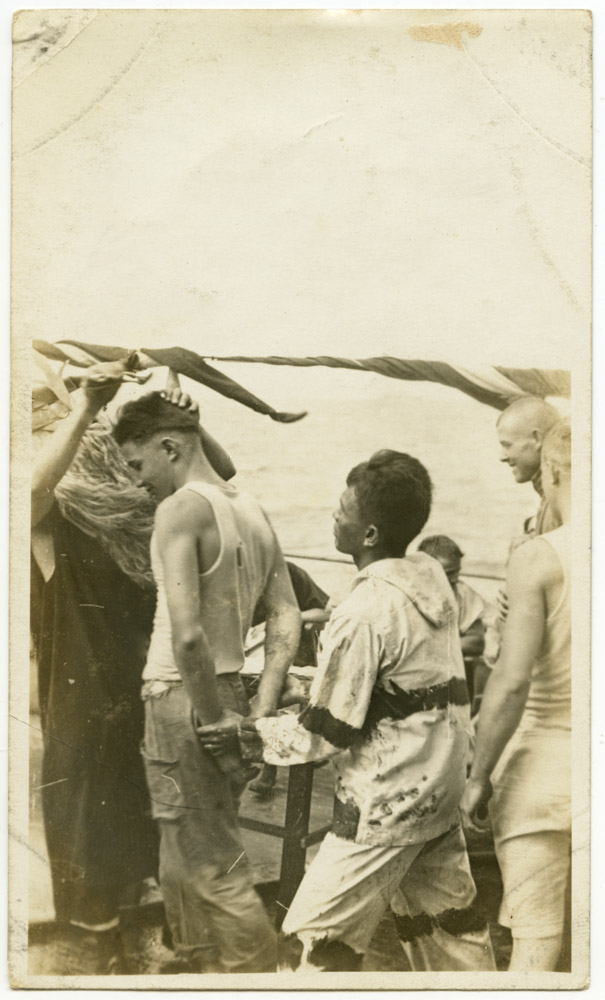
Here is a vintage silver gelatin print of a sailor’s ritual head shaving on his first crossing of the equator. Note the “mermaid” in long blond wig administering the shaving, and the asian sailor restraining the recipient of the haircut. This must have been a merchant ship, possibly in the Pacific, pre- WW II. In any case, a fascinating snippet of nautical culture as seen from an insider’s perspective.
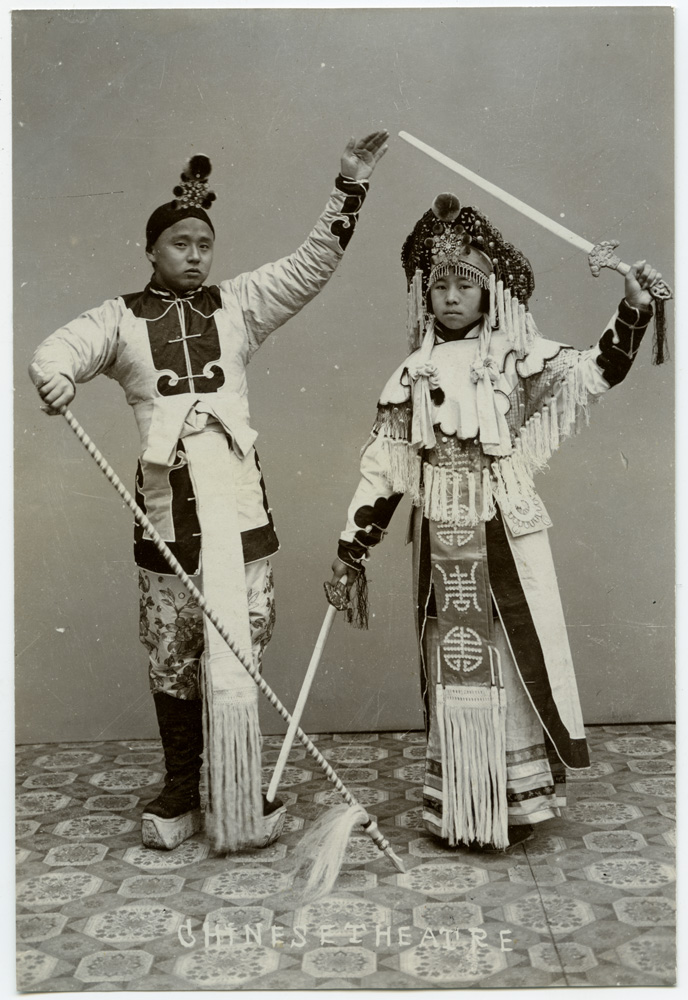
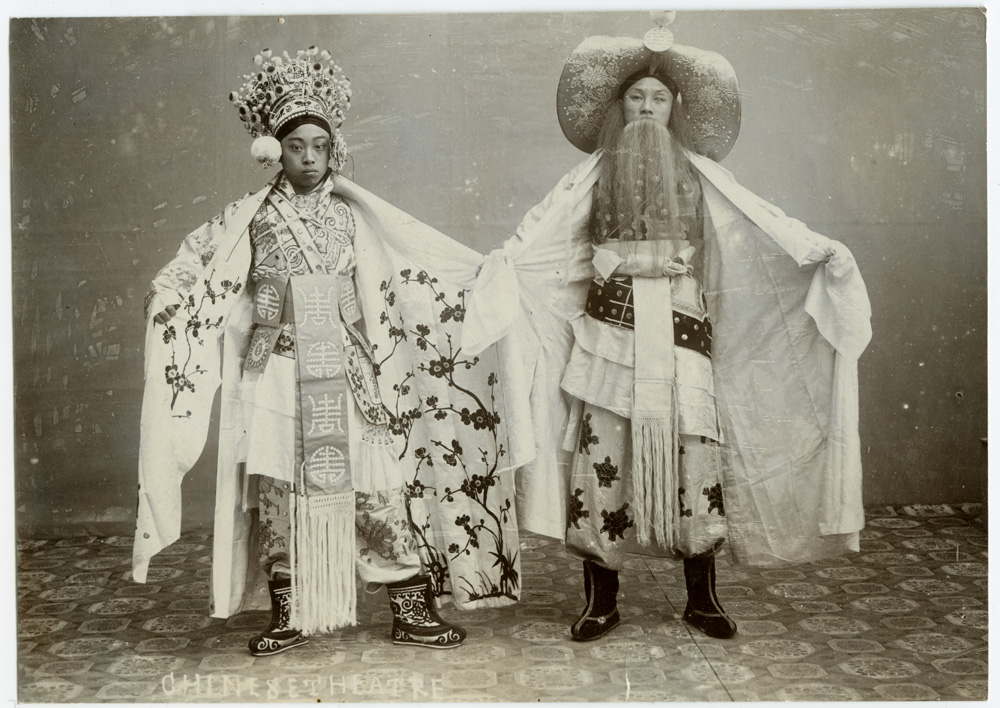
here are two turn-of-the-20th century souvenir photos from China. They depict performers in the Peking Opera. They come from the period marking the end of single-sex performers, when all roles both male and female would be played by male performers. Gender segregation of the opera began to phase out in the 1920s. For much the same reasons as in the West, Chinese theater was single sex because being an itinerant actor was seen as very much akin to being a prostitute. And despite the attempt to preserve the honor and virtue of women by banning them from performing on stage, the boys who played female roles on the stage themselves became prostitutes. Can’t win for trying, I guess.
Peking Opera PerformersPeking Opera Performers
I would classify these as genuine “gay interest” images because they represent a moment in history where the enactment of same-sex desire was sanctioned, even if in masquerade. It’s a rarity photographically because in the West, same-sex drama had largely been eliminated well before the photographic era, lingering on symbolically into the 19th century in the operatic tradition of castrati. If anyone out there recognizes the roles these actors are portraying, and the name(s) of the opera(s) they are from, the feedback would be most welcome.
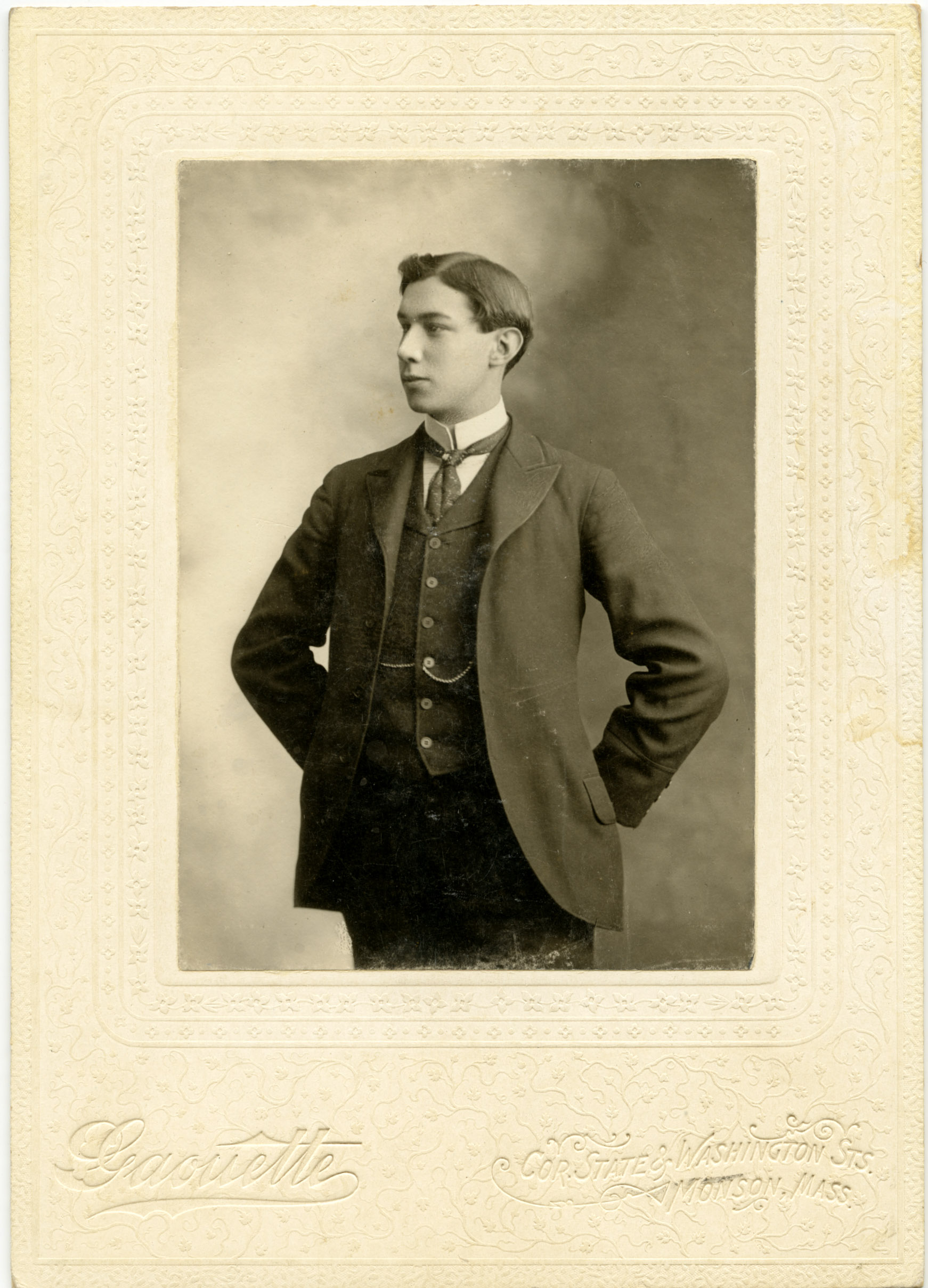
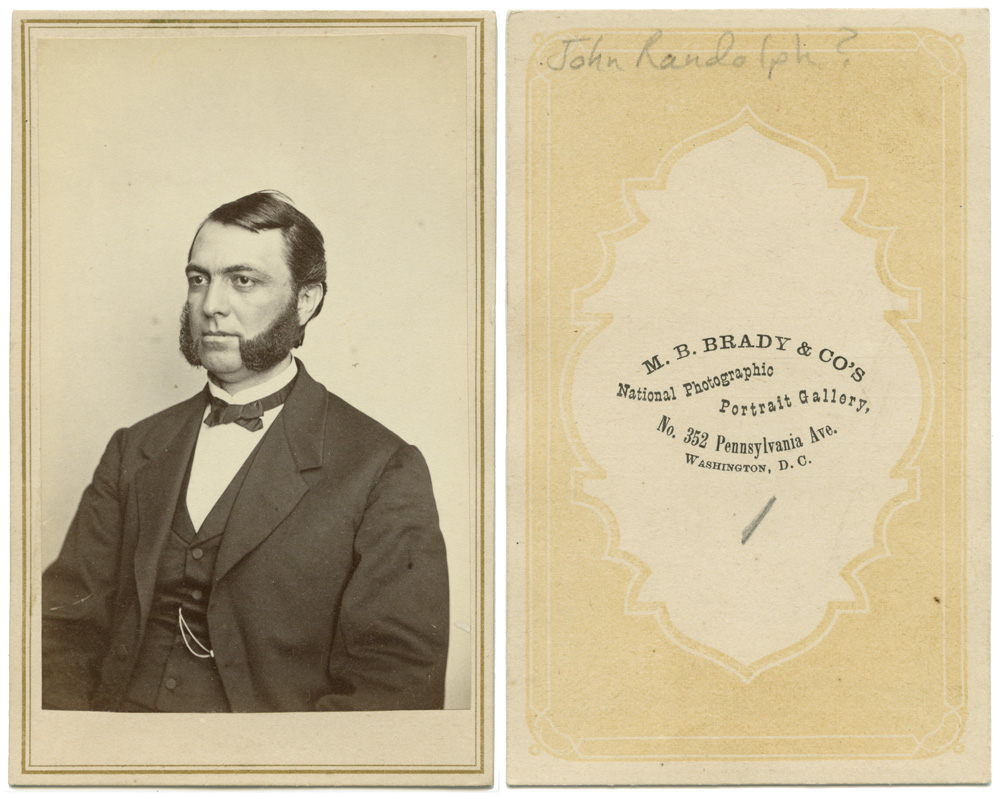
Two more CDVs – a Brady from the DC studio, and judging by the backmark style, a later (post Civil War) image. The sitter is reputed to be named John Randolph, one of the FitzRandolphs of Philadelphia (or could it be the FitzRandolphs who gave the original land grant to found Princeton University?). Evidence is unclear, but the picture is very.
John Randolph, by Mathew Brady
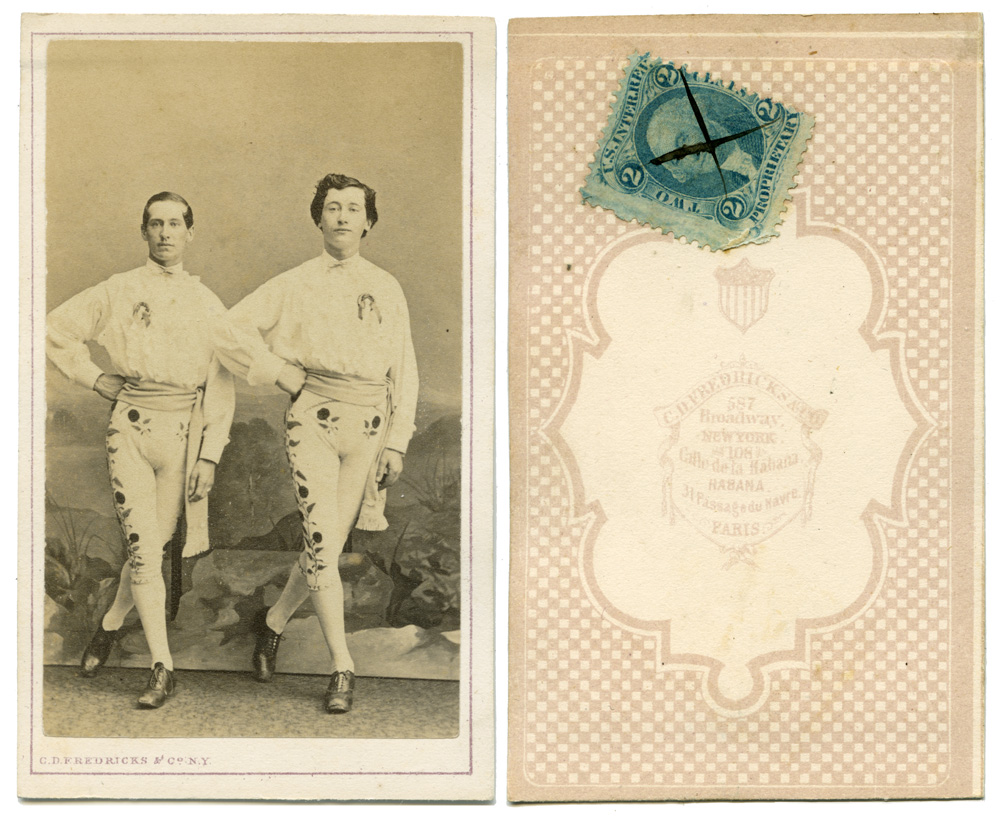
The second CD is from the Fredericks studio, of New York, Havana and Paris. As the subject is toreadors, I’m guessing this was taken at either the Paris or Havana studios. Bullfighting has never had any serious following in the United States, so toreadors would be unlikely to come to New York on a performing tour of the US. I thought I had another Fredericks CDV somewhere in my collection, but I’ll be damned if I can find it – I may have just recorded the address on my New York studio map during a scan of studio backmarks on eBay.
Two Toreadors, by Fredericks of New York, Havana and Paris
This is another image that could have been marketed as “gay interest”, thankfully it wasn’t. Despite their costumes and matching fey poses, there’s nothing about them that shouts (or whispers) 19th century code for gay. Pure 21st century wishful thinking.
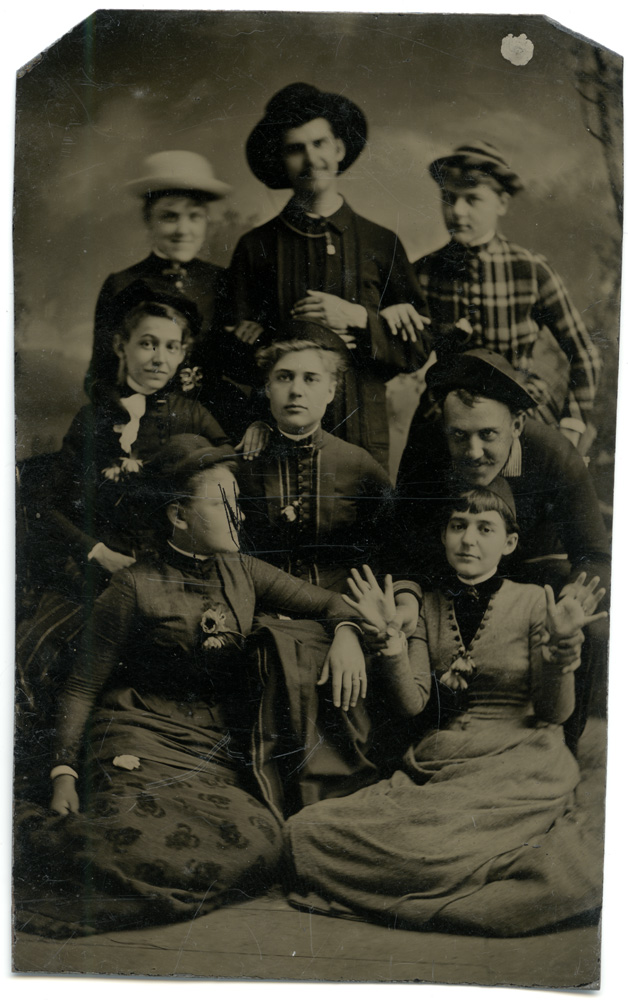
Another genre of tintypes to collect is the “trickster”. These could be anything from examples like these where the photographer switched heads on bodies in the shot (don’t ask me how, my guess is it involved re-photographing a dissected original) or people dressed in drag, to modern-day ones like someone wearing victorian period costumes but sporting a digital watch or an iPod.
Trickster Tintype #1
Trickster Tintype #2
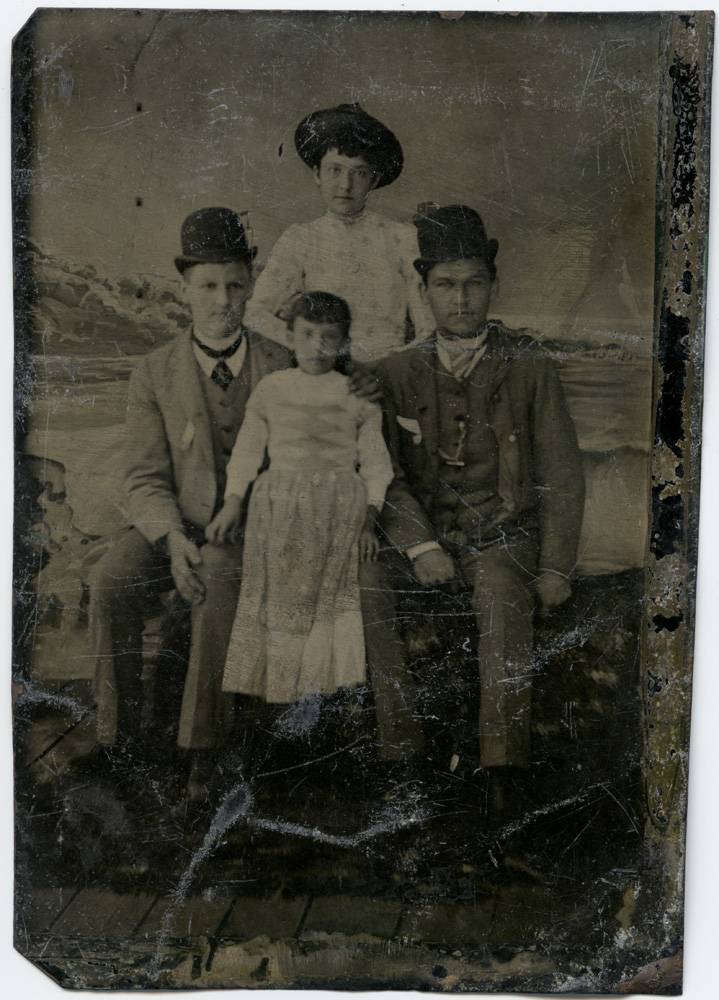
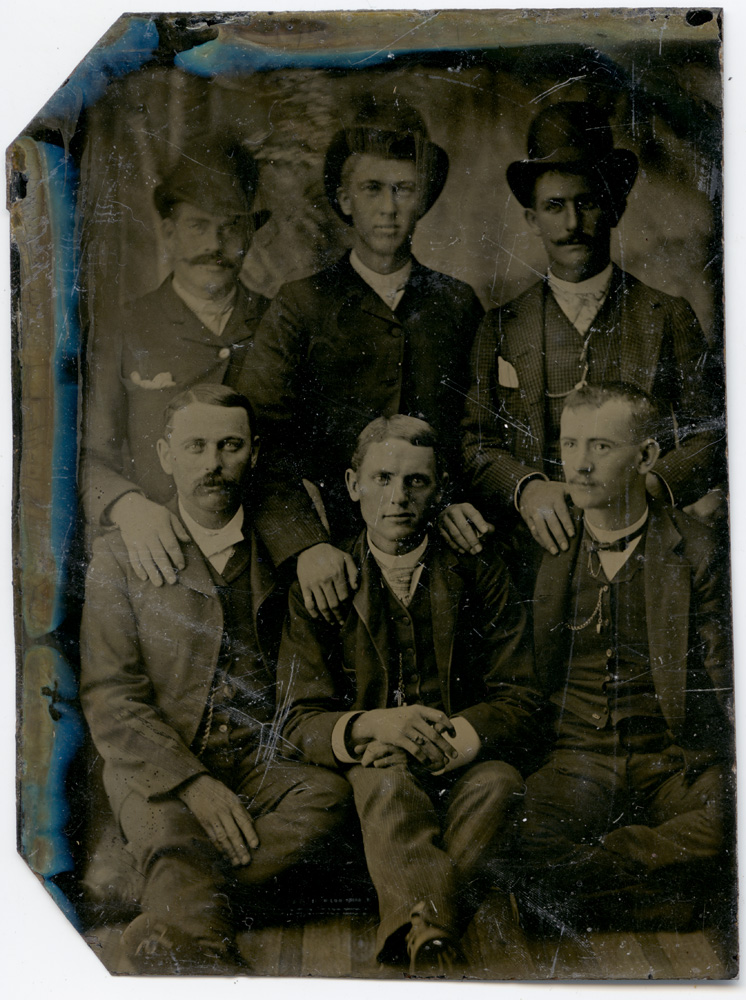
Little loose tintypes like these (approximately 2×3 inches each) are generally a very affordable entree into collecting. These are both probably from the 1890s/early 1900s.
Tintype, Sextet of Gentlemen
Tintype, Father & Son?
Here are two tintypes that would probably get listed on eBay as “gay interest”. The one appears to me to be pretty obviously a father and son posing in formal wear. The other is much more ambiguous – is it a trio of gay couples? Just six friends stopping by the tintype parlor on a lark? One of the men in the front row appears to be clenching a cigar in his fingers, and two of the men in the front row seem to have some kind of numbers chalked on the soles of their shoes (who knows what it is, if anything). Also very odd is the staging- the men in front look like they’re sitting on the floor, but the men behind them appear to be standing upright, not sitting or kneeling. Are the two men in the front row (left and center) brothers? Inquiring minds want to know!
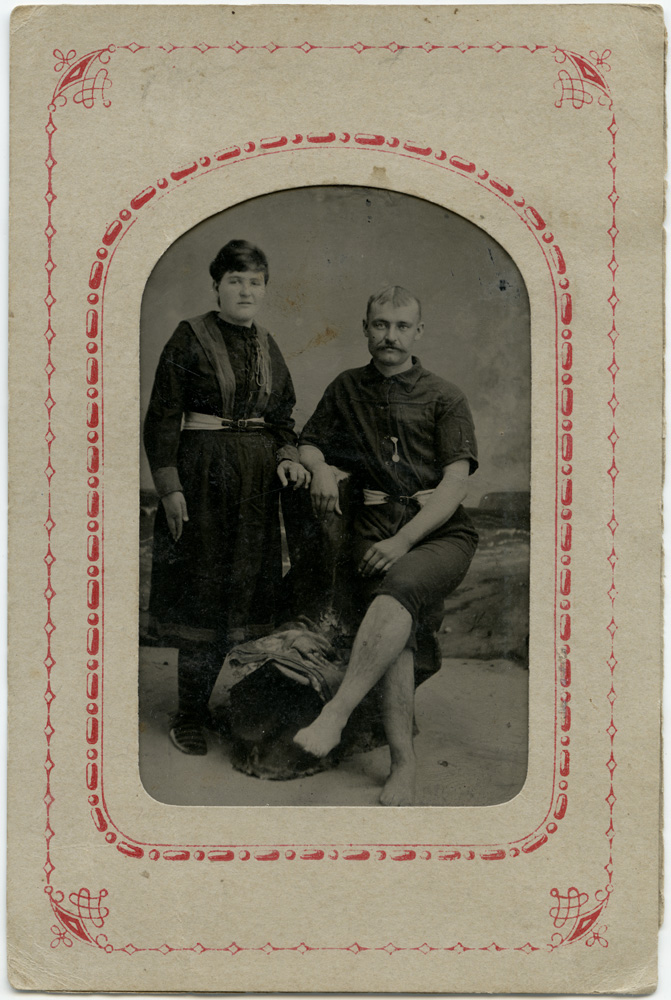
Last but not least, aren’t you glad swimwear has evolved since the 1880s? How’d you like to go for a dip in the ocean and have to wear that stuff? It’s bad enough when your swim trunks dry out and get salty – imagine that feeling all over! And how long would it take for what looks like wool to dry after a thorough immersion in salt water? You’d be as likely to catch pneumonia from the swimsuit!
I went to the DC Antique Photo Show today. The show took up three meeting rooms at the Holiday Inn Rosslyn. Two smaller rooms were devoted to postcard collectors, and the much larger main room was strictly photographic images. I toured the entire show, but got a bit lost in the detail with the postcard dealers – there’s just way too much material to look through! My intent was to try and hunt down a couple stereoviews for my set of Lehigh Valley Railroad stereoviews, but that thought quickly went out the window when it could have taken the entire day to just sift through the stereoviews of just two or three vendors.
I did find something pretty cute and nifty though – a woman there, the mother of one of the Civil War image vendors, was making and selling (very cheaply) little fabric pouches for storing cased images. I bought four to cover my thermoplastic cased daguerreotypes. The pouches are made of color-fast fabric (it feels like a good-quality felt). The 1/6 plate size are $1.50 each – if you’re interested, let me know and I can send you the lady’s email. I won’t post it here, out of respect for her, so she doesn’t get bombarded by spammers.
In the main room is where I got in trouble. It started with a book – “Shooting Soldiers” by Dr. Stanley Burns. The book is about the history of medical photography during the Civil War. Dr. Burns is a SERIOUS collector of antique images, and has amassed an astounding collection of Civil War period medical images, among other topics. The images in the book are from his collection. He himself was there at the show, and autographed the book for me.
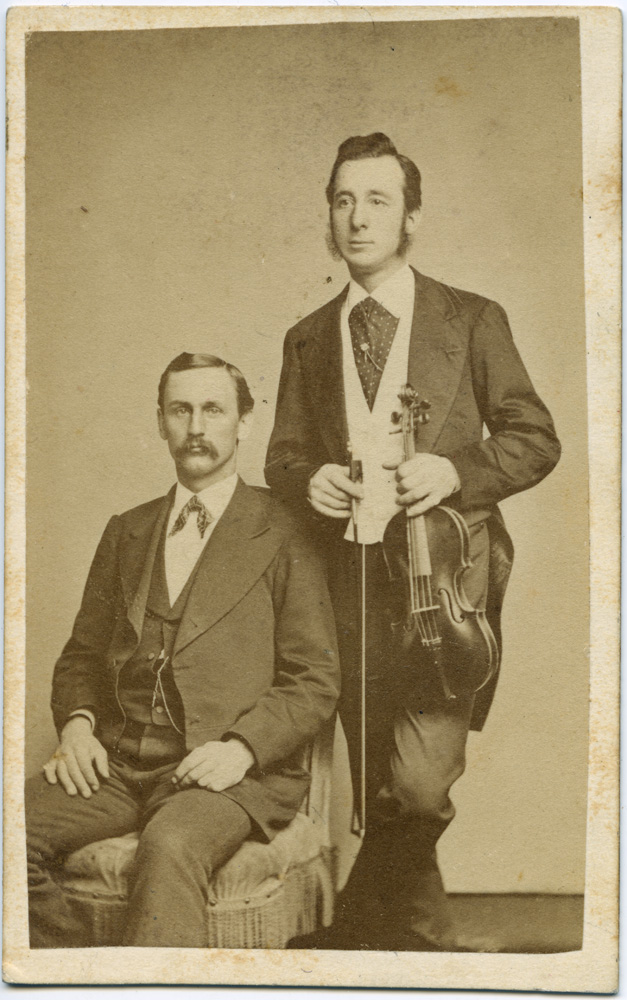
Across the way there was a booth selling native american images, and CDVs. Would that my budget could have stretched this much, but alas, the Alexander Gardner CDV of Vice President (and later President) Andrew Johnson was not to leave the show in my hands. I did acquire a nice period CDV of two musicians, one seated, the other standing, holding his violin.
Musical Duo, Boston
The vendor indicated that the duo was famous in their day. When I asked who they were, he didn’t know either, but acted as if I should somehow know myself! Sorry, but I haven’t kept up on mid-19th century performers. Have you? If someone out there in collector-land does recognize them and can pass it on, it would be much appreciated!
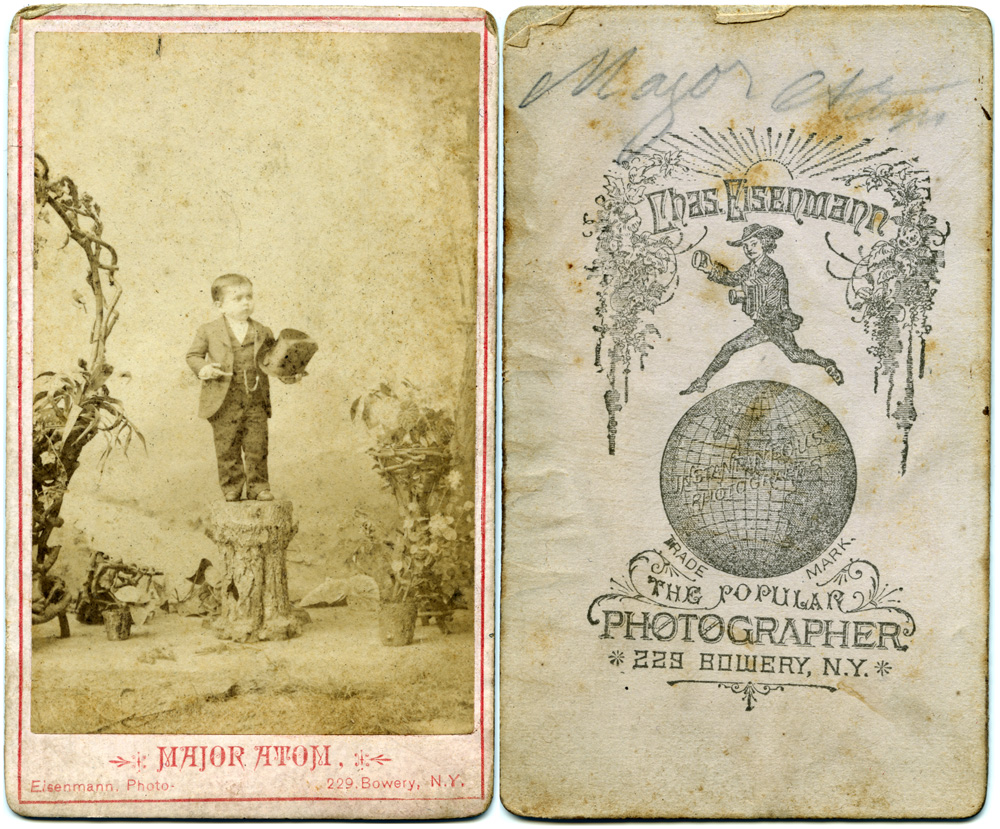
At another booth I found a neat addition to my circus freaks collection – another midget, Major Atom! And it gave me yet another address for one of my New York studios to put on my map – Chas. Eisenmann, “The Popular Photographer”. I love the advertising slogans these photographers came up with – it’s a little window on the Victorian era mindset.
Major Atom, by Chas. Eisenmann
I found a famous Native American cabinet card – “Rain-in-the-face”, taken at Morse’s Palace of Fine Art in San Francisco. Rain-in-the-face was a cohort of Sitting Bull, a war chief of the Hunkpapa Sioux. He was one of the warriors responsible for Custer’s defeat. It’s a beautiful image, and although the card is damaged, the damage doesn’t significantly detract from the quality of the portrait.
Rain-in-the-face, by Morse, San Francisco
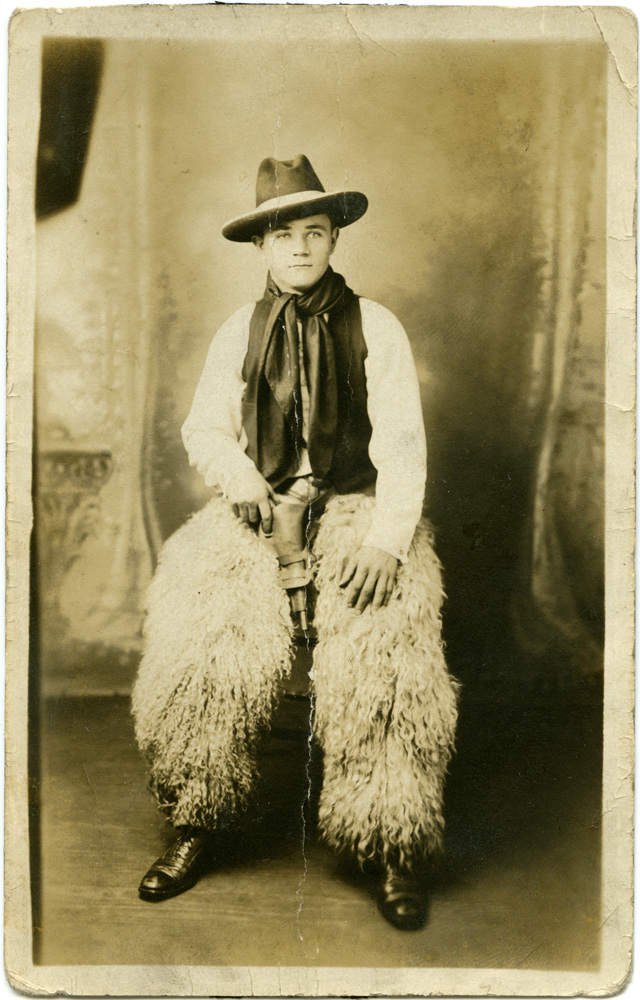
Well, if I got me an Indian, I had to get me a Cowboy! This one is looking just a little bit gay.
The Gay Caballero
I have no idea if in fact he was gay, but by 21st century sensibilities, he’s a little too well put together, he’s gripping his pistol in an oh-so-suggestive manner, and those chaps!
I must put in a plug for someone at the show – he was not only a vendor of antique images, he’s also a modern-day Daguerreotypist himself. Casey Waters does modern daguerreotypes using mercury development, which by itself is cool because it’s the REAL way to make a daguerreotype. But even cooler, among other things, he’s done night-time daguerreotypes – I pity his car’s battery because I can’t imagine how long the headlights had to be on in order to record the image on the plate.
To check out his work, you can visit Casey Waters Daguerreotypes (the night-time daguerreotypes are nine rows down from the top of the page, on the left and center columns).
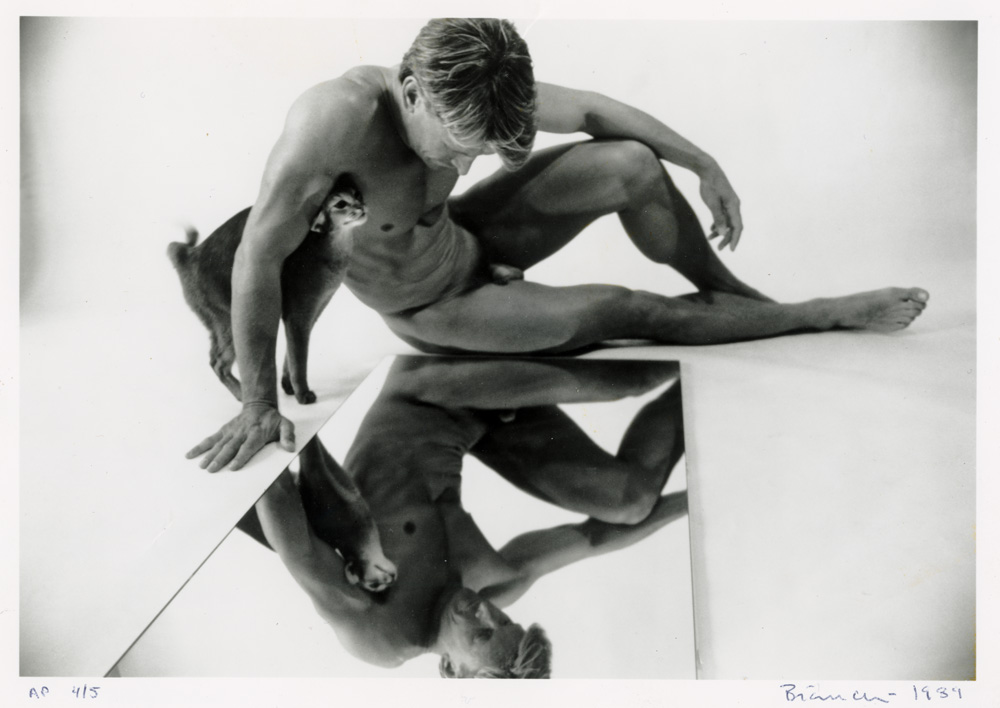
Last but not least, there was a Tom Bianchi print I picked up. There is a little damage to the print (which I touched up in the scan), which is why I was able to get it so cheap. It’s also marked as 4/5 Artists Proofs. Which means that Tom Bianchi gave it away to someone, it wasn’t sold commercially. The damage is minor, and easily repairable, so I may actually try to retouch it myself. Tom Bianchi, Artist's Proof, 1989


 dcphotoartist