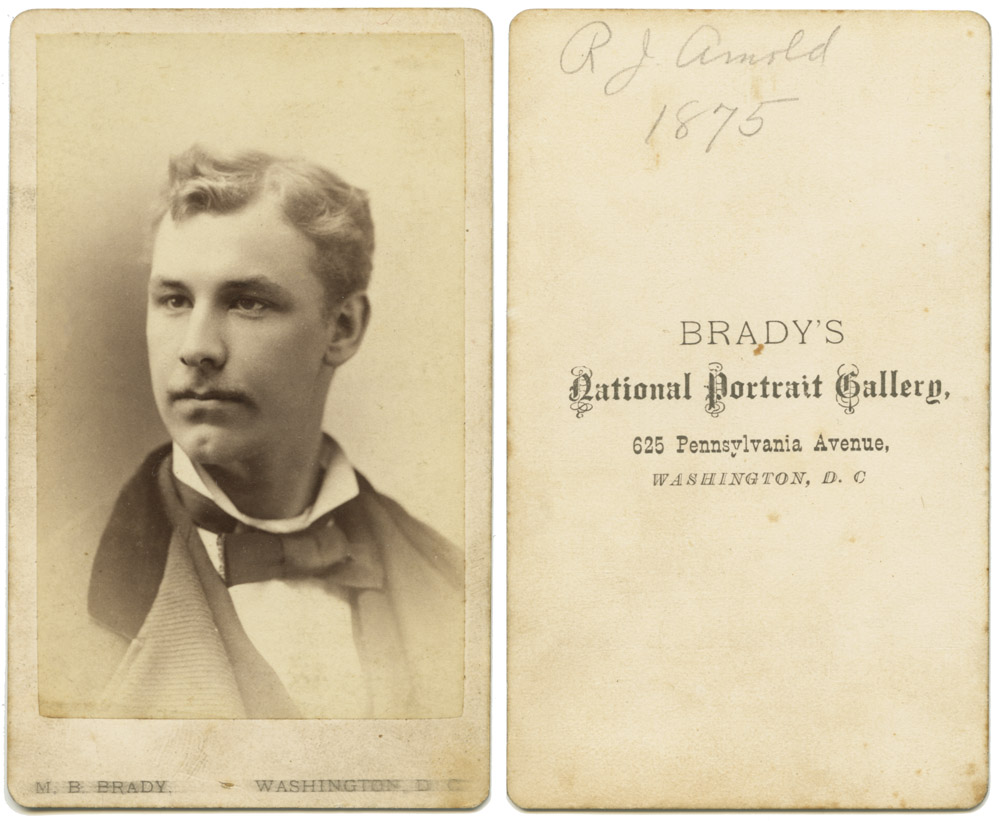
Here is a CDV by Brady from his later years at his Washington DC studio. The subject is R.J. Arnold, who went on to have a career as a photographer in California. Brady CDV, R.J. Arnold
For more information about Mr. Arnold, there is a very nice website about California photographers from the 1870s-1990s at CAViews.com.
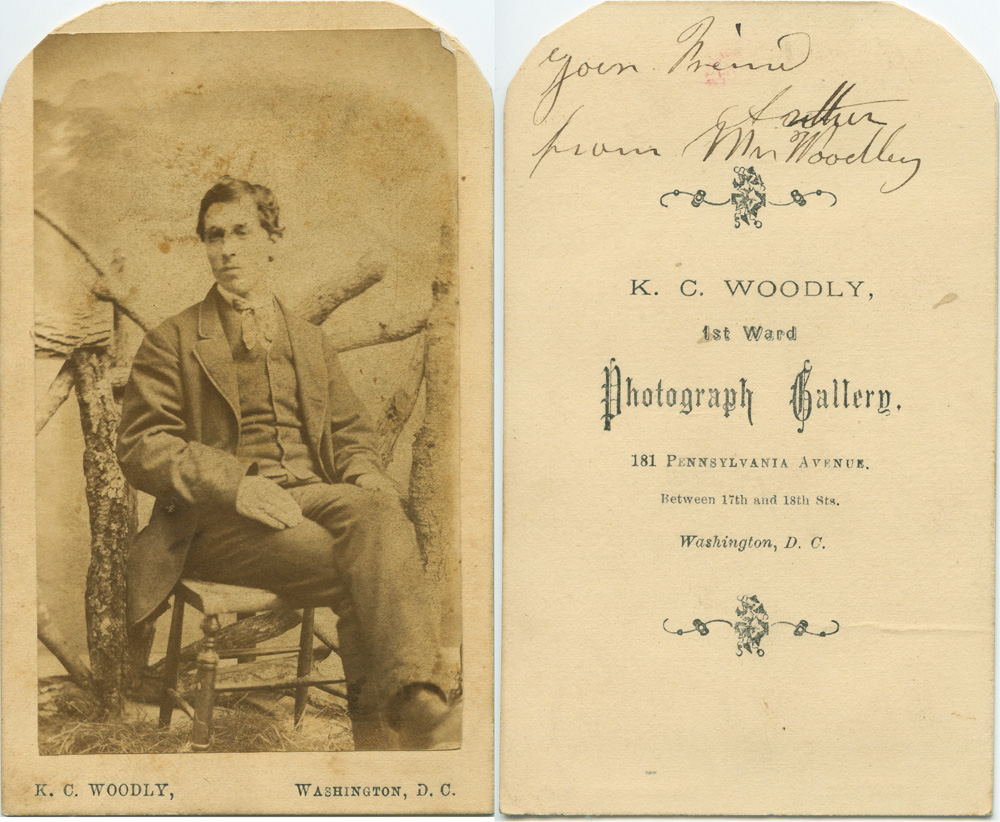
It is seldom that you find photographs of early photographers, so this was a neat acquisition for me. I have one other image that I believe is of a photographer (the label is vague – it could be the photographer himself or it could be merely inscribed by the photographer to the sitter).
K.C. Woodly CDV, Washington DC
Images of photographers with the tools of their trade are, unfortunately, extremely collectible and therefore out of my budget. But this photo of Mr. Arnold as a young man fills a nice niche as a stepping-stone to the goal of a cdv or tintype of a photographer with his camera.
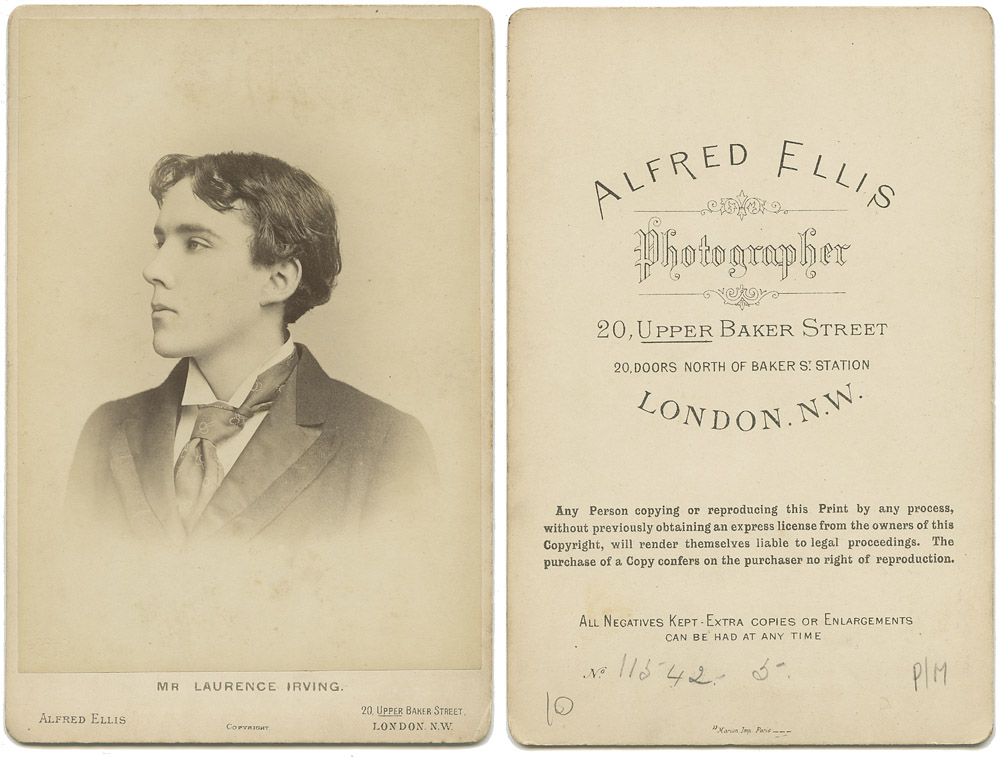
Laurence Irving is the son of Henry Irving, the famous actor and theater owner who inspired one of Bram Stoker’s characters in Dracula (and for whom Bram Stoker worked). Laurence had a short life and tragic end, perishing in 1914 in a maritime disaster on the St. Lawrence River (an irony that I’m sure was lost on him). I’m guessing that in this photo he must have been in his 20s, so this would have been taken sometime in the 1890s.
Also fascinating is the photographers’ description of the studio address: 20 UPPER Baker Street, 20 doors north of Baker Street Station. Which puts it across the street more or less from 227 B Baker Street, the fictive home of Sherlock Holmes.
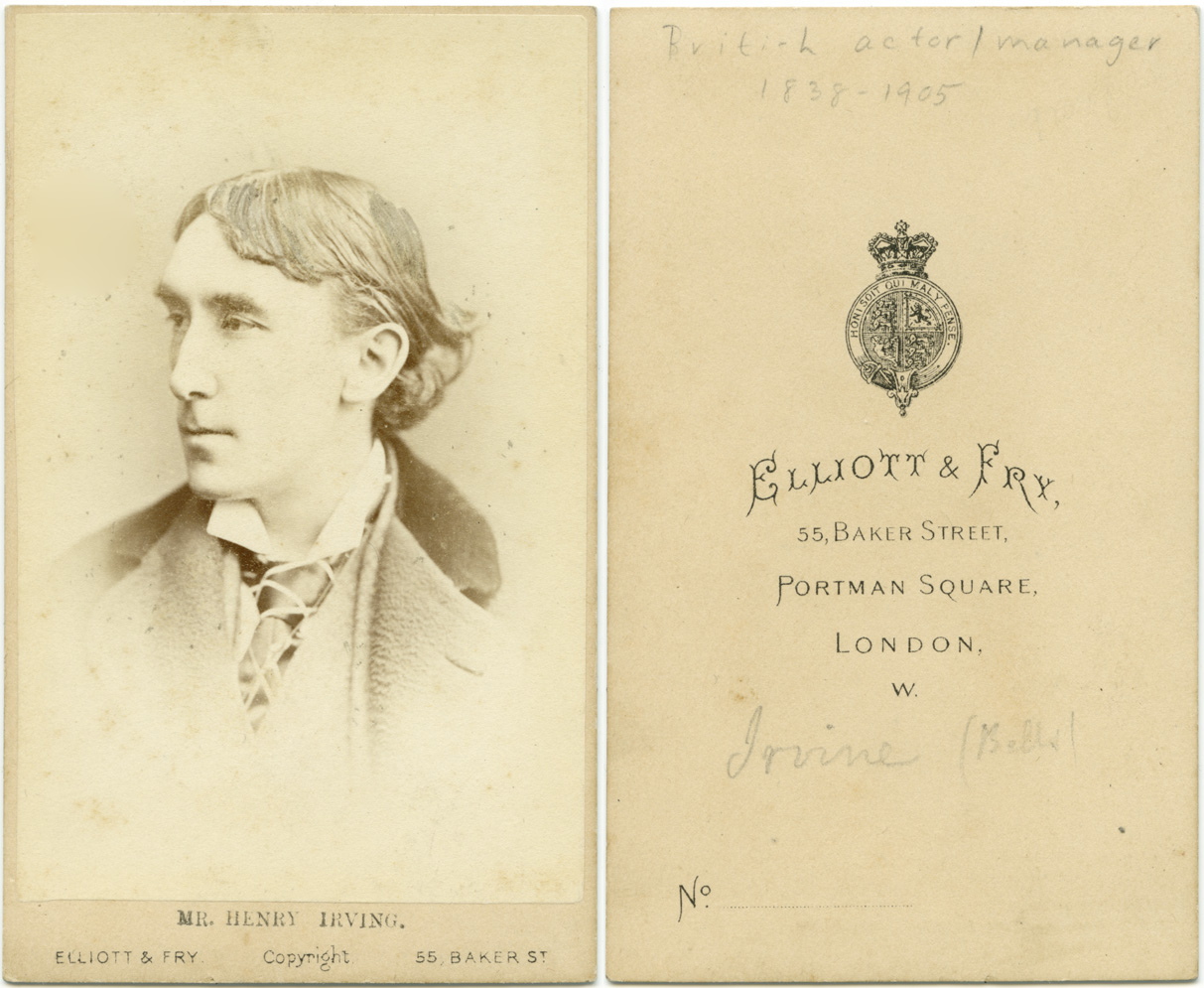
I have a photo of his father, Henry Irving, already in my collection:
Carte De Visite, Henry Irving, British Actor, by Elliot & Fry
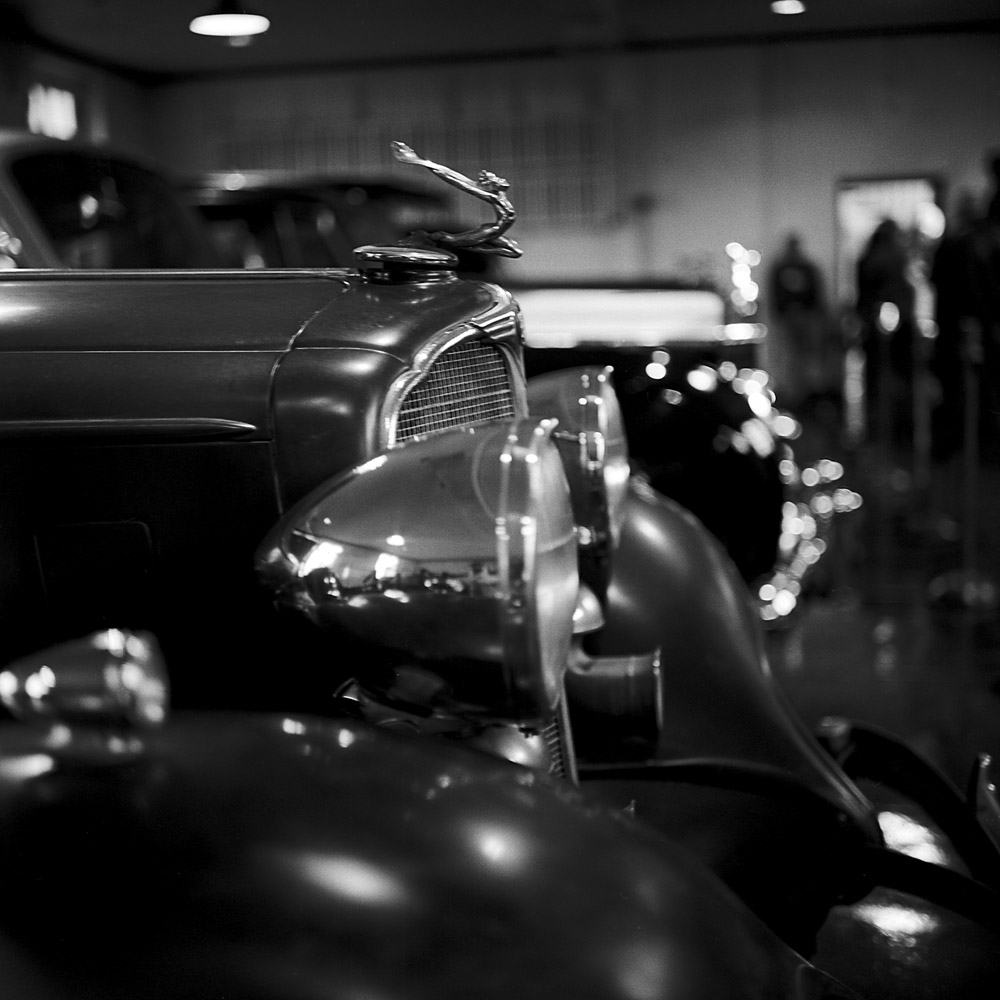
Nemours was the home of Mr. Alfred I. Dupont, one of the wealthiest men in America in the early 20th century. When stripped of his directorship at Dupont, he sought out new business opportunities including investing in Florida real estate. Spending a significant amount of time in Florida, he needed a car, and kept this Buick rumble-seat coupe at his property there. The car, unlike the others garaged at Nemours, is in original, survivor condition, complete with faded paint and dulled chrome. What makes it all the more remarkable is that the car survives without major damage (or blood on the bumpers!) as Mr. Dupont was by the time he owned the car deaf in both ears and blind in one eye.
A.I. Dupont’s Buick
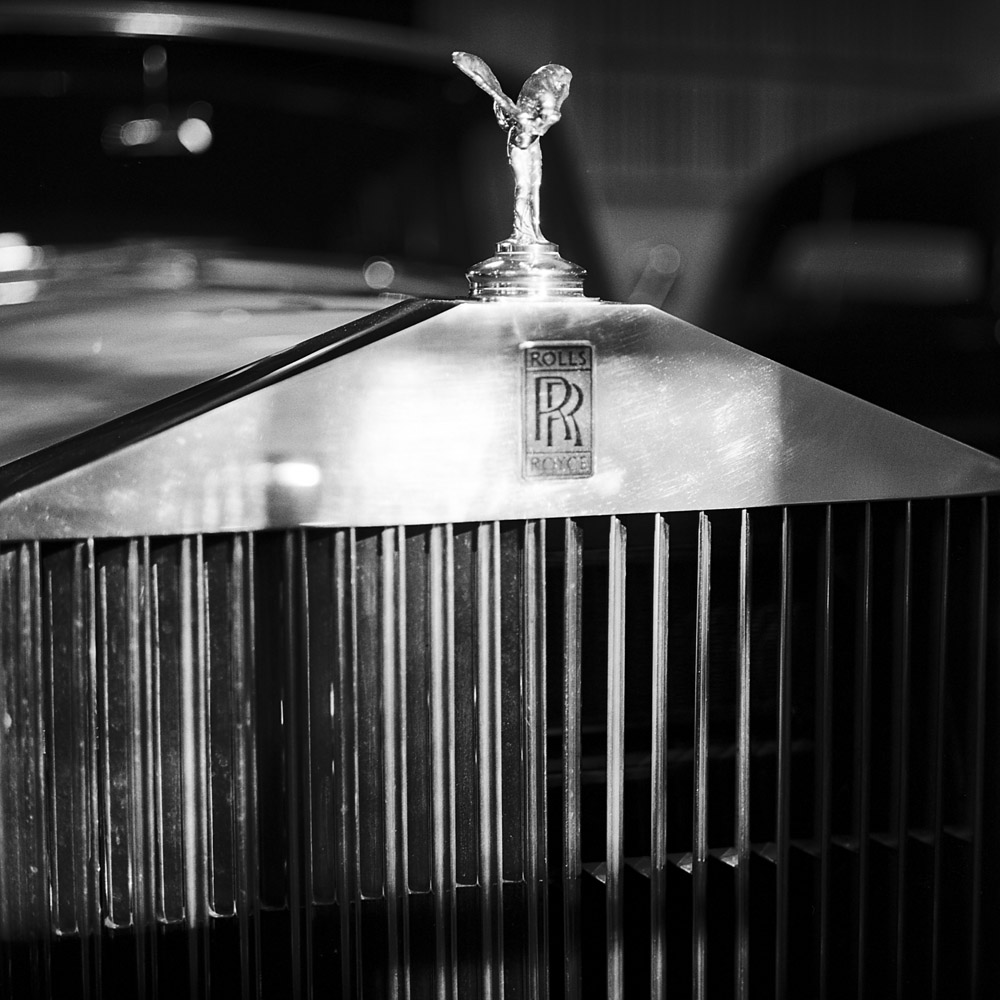
His third wife, the true love of his life, outlived him by nearly 40 years. Her last car was this 1960 Rolls Royce Phantom V. According to the docents, this Phantom V is the #2 production car of that year, with #1 being in possession of Her Royal Britannic Majesty, Queen Elizabeth II.
Mrs. Dupont’s Rolls Royce Grille
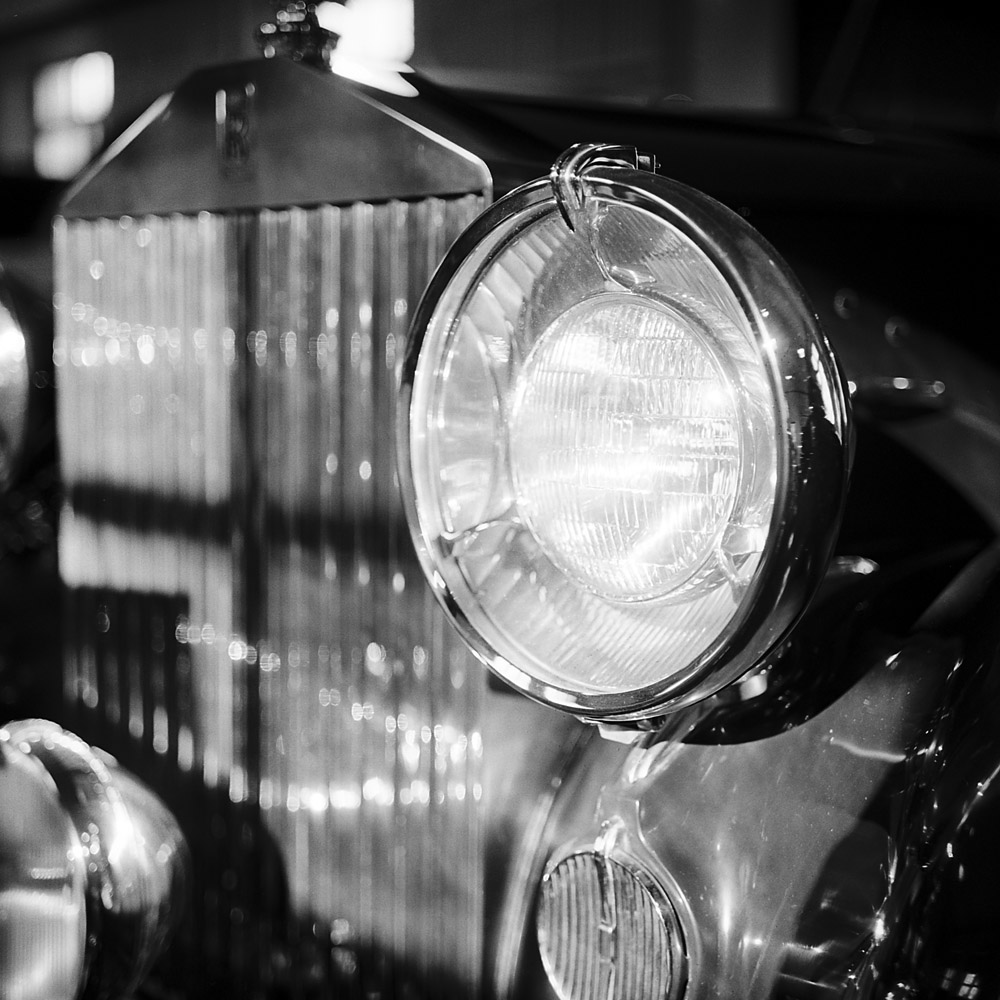
This headlamp belongs to the second Rolls Royce in the Dupont stable, a 1950 model if memory serves.
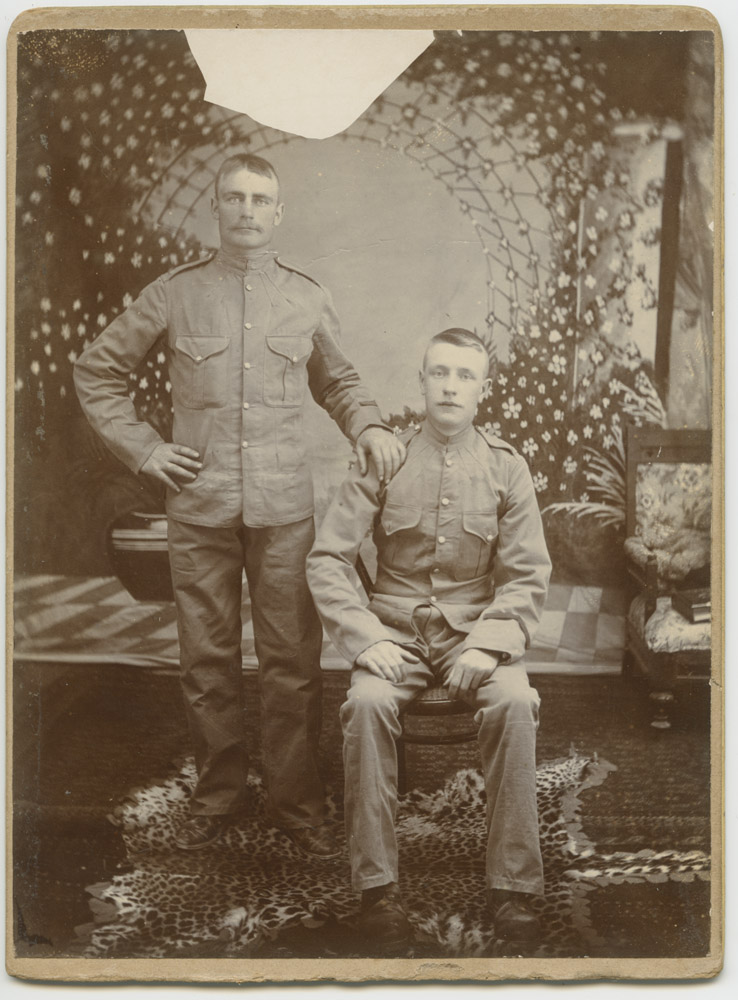
Into every life a little rain must fall now and again. Here is the latest arrival to my collection – a pair of British soldiers posing atop a cheetah skin rug. I’m not sure of the date – perhaps some military history buffs out there will be able to identify the time period more precisely (my best guess is between 1890-1910, perhaps as old as the 1880s) but more likely in the 19th century. In any case, the seller shipped it in a plastic sleeve that was loose, and held down with tape. The card either through direct action of the seller or carelessness got attached to the tape, and a big chunk of the emulsion lifted off the card. FORTUNATELY, A: I didn’t pay a lot for the image, and B: the big chunk stayed intact, so it is possible it can be re-attached without being too terribly obvious.
Two British Soldiers
This ‘restoration’ is a purely photoshop restoration, quick-and-dirty with my limited photoshop skills. You can see what the card SHOULD look like with the chunk re-attached.
Two British Soldiers, Chunk Restored
When I bought this, I saw it as a wonderful example of that genre of homosocial images of men being affectionate that you saw so very much of in the 19th century but faded out by World War I and pretty much disappeared by World War II. This very much has the feel of two soldiers of the Raj, or given the cheetah pelt, somewhere in Imperial Africa. Although probably it was in a London studio. These kinds of photos disappeared as changing attitudes toward men and women and their relationships evolved. The rise of urbanization, factory work, and the buddings of gender equality transformed the personal social sphere, particularly for unmarried people, and what had previously been mono-gendered changed to become heterogenous. With that heterogeneity came the rising expectation of directing your affections, at least in public, toward the “appropriate” gender. Even if the homosocial relationships didn’t go away, the practice of documenting them was suppressed.
I know folks have asked me about this before, so I thought I’d compile the list of photography books I’ve collected. This is a comprehensive but not complete listing of the photographic monographs and/or compilations in my library. I know I’m missing the vintage Ansel Adams guide to Yosemite that he produced for the Sierra Club back in the 1950s or 60s from this list, but I can’t lay my hands on it at the moment, so it’s missing. Any exhibition catalogs listed here are listed here because they are catalogs from exhibits I did not see in person, and there are probably a half-dozen others just floating around the house and/or the library.
Title
Artist/Author
Publisher
Publication Date
Notes
4 A M
Adu
Formosa Books
2000
Olympic Portraits
Annie Liebowitz
Bullfinch
1996
(Don’t) Call Me Shirley
Brett M. Cochrane
Knopf Australia
1995
Burma: Something Went Wrong
Chan Chao
Nazareli Press
2000
The Great Wall of China
Chen Changfen
Yale University Press
2007
Beauty of Darkness
Connie Imboden
Custom & Limited Editions
1999
1st Edition
The Raw Seduction of Flesh
Connie Imboden
Silver Arts
1999
softcover, Signed
Piercing Illusions
Connie Imboden
Foto Book Press
2001
softcover, Signed
Beijing Spring
David and Peter Turnley
Stewart, Tabori and Chang
1989
All My Lies Are True
David Carol
Kabloona Press
2009
Signed, personalized to me
Edward Curtis – The Master Prints
Edward Curtis
Arena Editions
2001
Hardcover
Edward Steichen – The Early Years
Edward Steichen
Princeton University Press
1999
Edward Weston: The Form of the Nude
Edward Weston
Phaidon Press
2005
Margarethe Mather and Edward Weston: A Passionate Collaboration
Edward Weston, Margarethe Mather
W.W. Norton
2001
Suffering The Ideal
F. Holland Day
Twin Palms
1995
Hardcover, 1st Edition, Limited Edition
F. Holland Day
F. Holland Day
Van Gogh Museum
2001
Exhibition Catalog
Faces of the Eastern Shore
Frank Van Riper
Qesada House
1992
Softcover, signed, personalized to me
The Photographs of Frederick H. Evans
Frederick Evans
Getty
2010
Exhibition Catalog
Foro Italico
George Mott
Powerhouse Books
2003
1st Edition, slipcovered
Inside Life
Greg Gorman
Rizzoli
1997
1st Edition, Signed, Slipcovered with signed print
As I See It
Greg Gorman
Powerhouse Books
2000
1st Edition, signed
Natural Fashion: Tribal Decoration from Africa
Hans Silvester
Thames & Hudson
2008
Kazu
Herb Ritts
Parco
1995
1st Edition
Tuscany: Inside the Light
Joel Meyerowitz
Main Street
2003
Manzanar: Photographs by Ansel Adams
John Armor, Peter Wright
Times Books
1988
Lengthening Shadows Before Nightfall
John Dugdale
Twin Palms
1995
Signed, personalized to me, dated 2006
Life’s Evening Hour
John Dugdale
August Press
2000
Hardcover, Limited Edition
Picturing Men – A Century of Male Relationships in Everyday American Photography
John Ibson
Smithsonian
2002
The Luminous Years
Karl Bissinger
Abrams
2003
Passage to Angkor
Kenro Izu
Friends Without Borders
2005
1st Edition, signed
Homo Sum
Konrad Helbig
6×6.com
2010
Not dated – guessing at publication date
Skin
Laurent Elie Badessi
Edition Stemmle
2000
Red Color News Soldier
Li Zhensheng
Phaidon Press
2003
Panoramas of the Far East
Lois Conner
Smithsonian
1993
Photography’s Antiquarian Avant-Garde: The New Wave in Old Processes
Lyle Rexer
Abrams
2002
American Photographs: The First Century
Merry A. Foresta
Smithsonian
1996
At First Sight: Photography and the Smithsonian
Merry A. Foresta, Jenna K. Foley
Smithsonian
2003
The Pre-Raphaelite Camera
Michael Bartram
Little, Brown & Company
1985
Eye Mind Spirit – the Enduring Legacy of Minor White
Minor White
Howard Greenberg Gallery
2008
Face to Face: The Art of Portrait Photography
Paul Ardenne
Flammarion
2004
Collaboration: The Photographs of Paul Cadmus
Paul Cadmus
Twelvetrees Press
1992
1st Edition, Limited Edition
Physique: Classic Photographs of Naked Athletes
Peter Kuhnst
Thames & Hudson
2004
Man to Man: A History of Gay Photography
Pierre Borhan
Vendome Press
2007
The Hyena & Other Men
Pieter Hugo
Prestel
2007
Shooting Soldiers – Civil War Medical Photographs by R.B. Bontecou
R.B. Bontecou
Burns Archive Press
2011
Torero
Reuven Afanador
Edition Stemmle
2001
1st Edition
Sombra
Reuven Afanador
Merrell
2004
1st Edition
Mil Besos
Reuven Afanador
Rizzoli
2009
1st Edition
Cuba in the 1850s Through the Lens of Charles DeForest Fredricks
Robert M. Levine
University of South Florida Press
1990
Robert Mapplethorpe and the Classical Tradition
Robert Mapplethorpe
Guggenheim Museum
2004
Exhibition Catalog
Hymn to the Earth
Ron Rosenstock
Silver Strand Press
2003
Signed, Numbered Edition # 597
Maryland’s Civil War Photographs: The Sesquicentennial Collection
Ross Kelbaugh
Maryland Historical Society
2012
Signed, Numbered Edition # 130, personalized to me
America and the Tintype
Steven Kasher
ICP/Steidl
2008
Spirit Capture: Photographs from the National Museum of The American Indian
While I was in Paris, I went to see a major exhibition at the Musee D’Orsay, Masculin/Masculin, a retrospective of the male nude in art from 1800 to the present. It was beautifully presented, almost overwhelming in size and scope, and extremely memorable. At the time, I thought about buying the catalog because it had outstanding reproductions of the work in the exhibit, including many works and artists I was unfamiliar with. I decided not to because of the size and weight of the catalog, especially considering that it was only available hardcover and my bags were already close to the weight limit. After I got home, I was kicking myself for not buying it after all. I got a second chance, however, when a friend who lives in New York told me he would be going in early December, and he offered to bring me back a copy. It arrived today, just in time to be a Christmas present to myself.
This got me thinking about museum exhibition catalogs. I generally try to buy them for exhibits I’ve enjoyed when I have the chance, because it serves as a reminder of the work exhibited, and it goes a long way to helping support the museum mounting the exhibit, especially when the museum (like all the galleries of the Smithsonian and the National Gallery of Art) does not charge admission. As a result, I thought I’d list the exhibitions I’ve collected catalogs from.
In rough chronological order, descending, they are:
Charles Marville, National Gallery of Art, Washington DC, 2013
Masculin/Masculin, Musee D’Orsay, Paris, France 2013
Photography and the American Civil War, Metropolitan Museum of Art, New York 2013
Faking it: Manipulated Photography Before Photoshop, National Gallery of Art, Washington DC, 2013
40 under 40: Craft Futures, Renwick Gallery, Washington DC, 2012
Stieglitz, Steichen, Strand, Metropolitan Museum of Art, New York, 2010
Hide/Seek: Difference and Desire in American Portraiture, Smithsonian National Portrait Gallery, Washington DC, 2010
Framing the West: The Survey Photographs of Timothy H. O’Sullivan, Smithsonian American Art Museum, Washington DC, 2010
Truth/Beauty: Pictorialism and the Photograph as Art – 1845-1945, Phillips Gallery, Washington DC, 2009
Faces of the Frontier: Photographic Portraits from the American West, National Portrait Gallery, Washington DC, 2009
Titian, Tintoretto, Veronese: Rivals in Renaissance Venice, Boston Museum of Fine Art, Boston, 2009
Impressed by Light: British Photographs from Paper Negatives, 1840-1860, National Gallery of Art, Washington DC 2008
All the Mighty World: Photographs of Roger Fenton, Metropolitan Museum of Art, New York, 2004
Segnali di Fumo: L’avventura del West nella Fotograffia, Castello Sforzesco, Milan, Italy 1994
Circa 1492: Art in the Age of Columbus, National Gallery of Art, Washington DC, 1992
Treasure Houses of Britain, National Gallery of Art, Washington DC 1985
Tutankhamen, National Gallery of Art, Washington DC 1977
The Family of Man, Museum of Modern Art, New York, 1955*
*obviously I did NOT attend the Family of Man exhibit, as I wasn’t even a fantasy in my grandparents’ minds in 1955. But I do have the exhibition book.
Also note that I’ve listed where I saw the exhibit, not necessarily who published the catalog.
Perhaps the oddest is the Segnali di Fumo catalog, purely on account of the incongruity of going all the way to Milan, Italy to see photographs of the American West (well, I didn’t GO to Milan to see the exhibit, but happened upon it as I was leaving the Castello Sforzesco), with a significant body from the Amon Carter museum in Texas. Which I haven’t been to yet, but really ought to. It would also help close the loop on my France trip, for it is there that the first known photograph ever is held – Niepce’s first known heliograph of the view out his studio window at his estate near Chalon-sur-Saone (that I couldn’t visit because it was closed for the season). I’m sure I’m missing one or two from my collection, and my collection of catalogs is a pale shadow of the total number of exhibits I’ve been to either because no catalog was produced (producing an exhibition catalog is a major undertaking and not done casually or cheaply) or because I couldn’t afford it at the time.
Another day I’ll put together a catalog of my photography monographs, as I know this is of interest to some. It’s not a huge collection, especially in light of my overall library size, but it is a work in progress.
Here’s another rather rare image – a portrait of what appears to be an actor by Camille Silvy. Camille Silvy was a French photographer who moved to London in 1858 and opened a studio at 38 Porchester Terrace, Bayswater. He photographed society clients, including many members of the British royal family, as well as royals of other nations (the queen of Hawaii among others). According to Wikipedia,
He closed his studio and returned to France in 1868. He himself believed that his nervous system had been damaged by exposure to potassium cyanide in the darkroom but it more likely that he suffered from manic depression. The last thirty years of his life were spent in a succession of hospitals, sanatoria and convalescent homes.
So he had a working career in London of approximately 10 years, in which he made over 17,000 sittings – rather productive for a short career. That’s about six portraits a day, 300+ days a year. According to the Wikipedia entry, the National Portrait Gallery in London has his daybooks, which include 12,000 photo illustrations to accompany the records of sittings. I’d love to visit them and see if I could find out who this actor was. Maybe next year when I return the favor to visit my friends Peter and Mirza who came to see me in Paris.
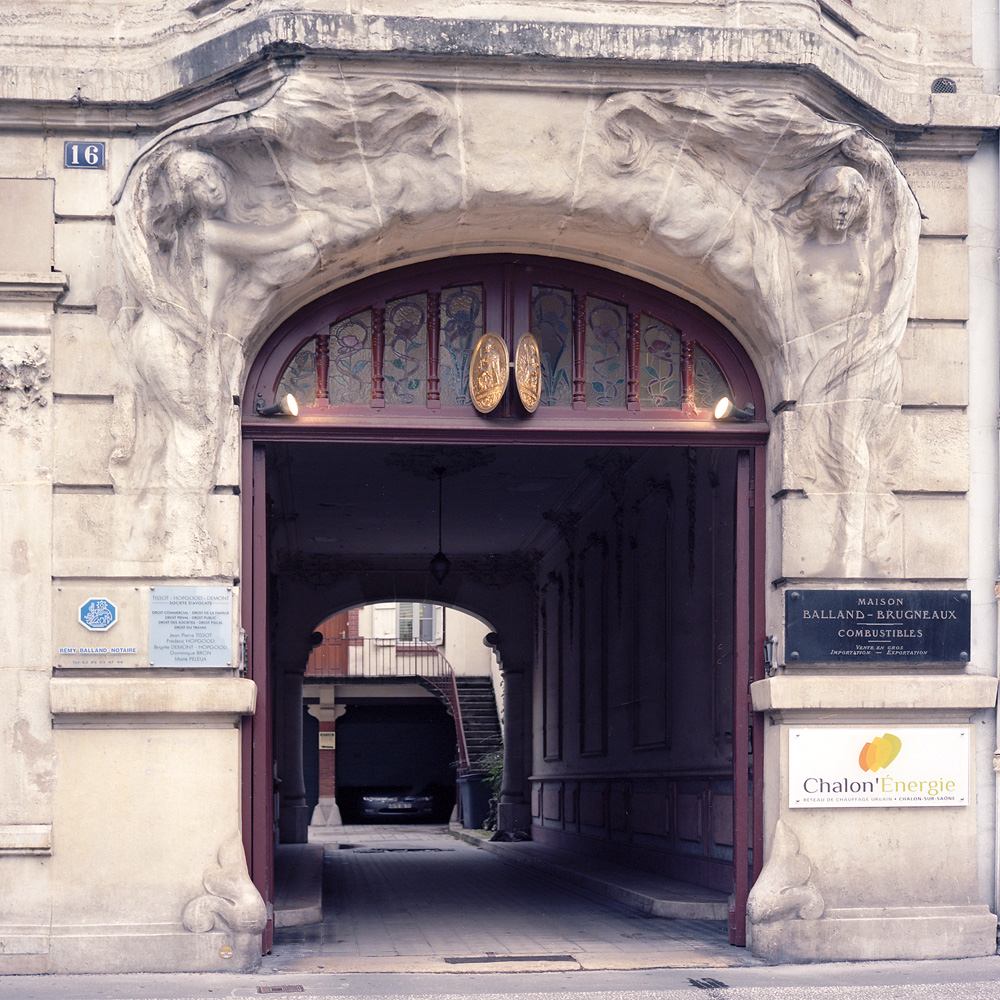
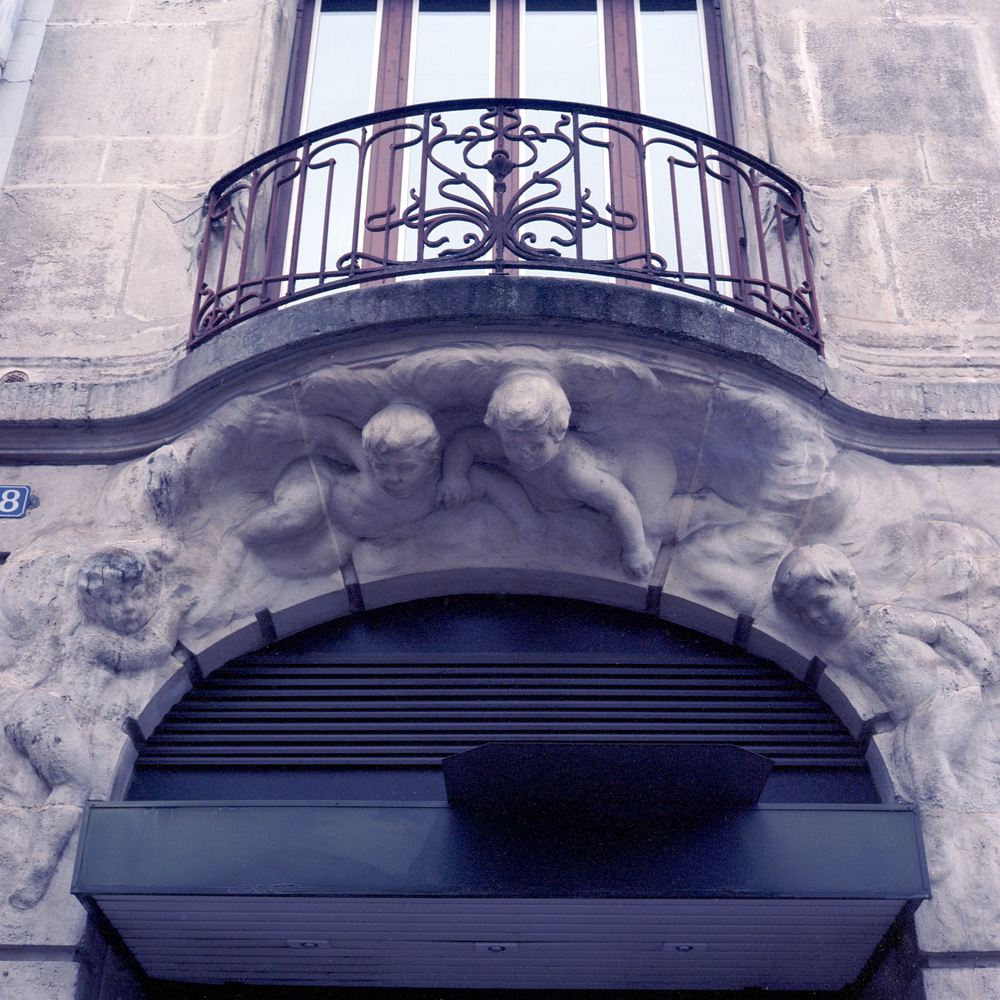
On the Boulevard de la Republique there is this fascinating Art Nouveau building that stands out amidst its neighbors. Having spent 10 days in Barcelona, perhaps the global epicenter of Art Nouveau, it’s hard not to be sensitive to it. A Gaudi building this isn’t, but the sculptures over the doors that support the first floor balconies are particularly notable – they look like they’re organically emerging from the stone, or perhaps swirling in and out of a magical smoke from some genie’s lamp.
Entrance, 16 Boulevard de la République
The archway over the building entrance (#18) is obviously stylistically linked to the entrance archway to the courtyard behind the building (#16 Blvd de la Republique), but in no way a mirror.
Entrance, 18 Boulevard de la Republique, Chalon-sur-Saone
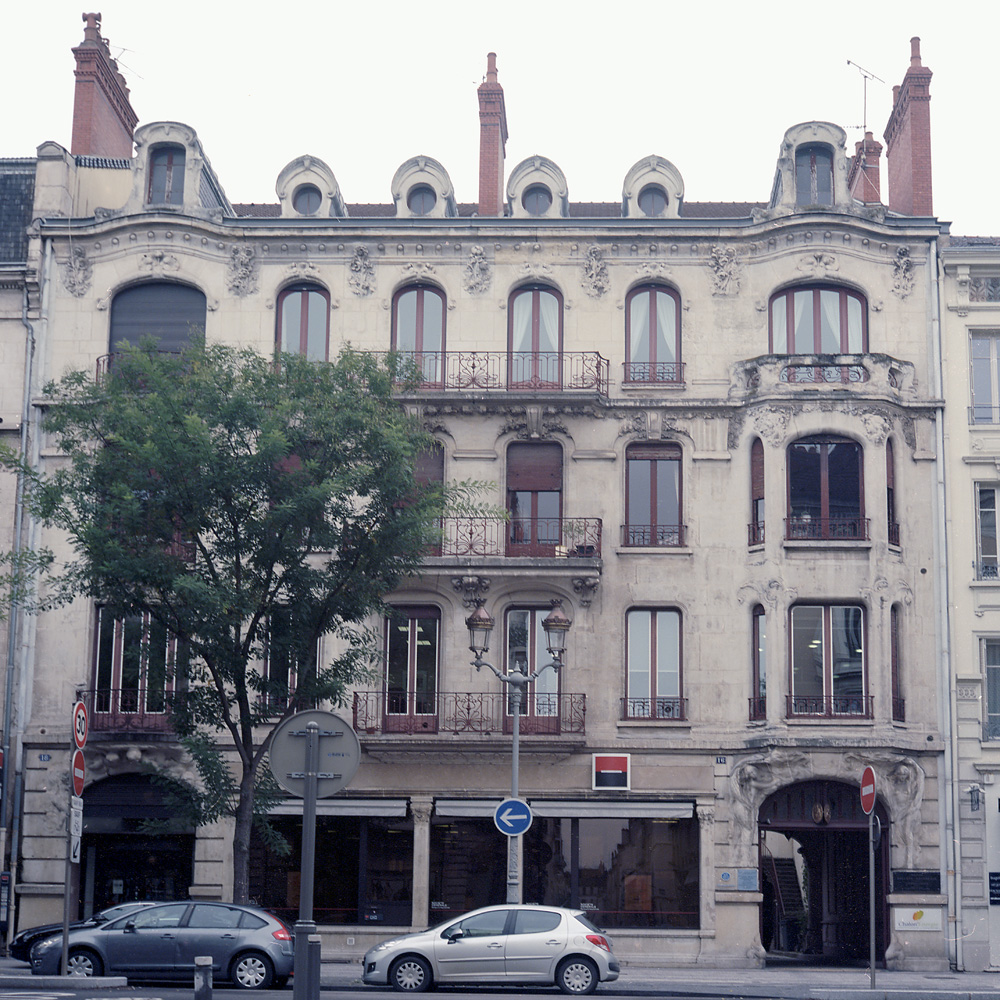
Here is the full facade, so you can appreciate the context of the doorways. I wonder what it housed in the past, and for what purpose it was built. Today there appear to be offices in the building on the lower levels, and possibly apartments on the upper floor.
Facade, Number 16-18 Boulevard de la Republique, Chalon-sur-Saone
I did not see anything else like it in town, in my admittedly extremely brief survey of Chalon, which makes me wonder all the more about the motivation for building it. How did this come to be? It’s obviously prior to the (now gone) Kodak presence in Chalon. It also doesn’t have the feel of being the residence of a single wealthy family, like the Gaudi commissions in Barcelona.
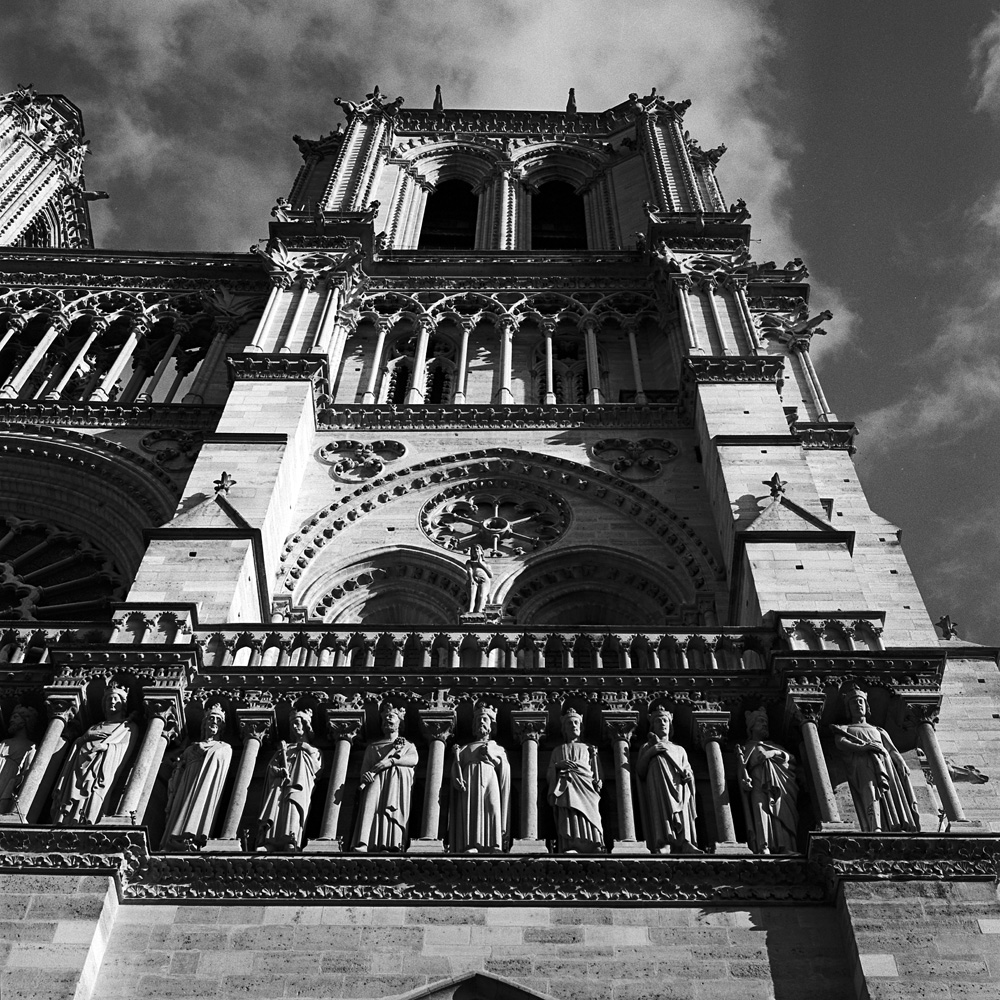
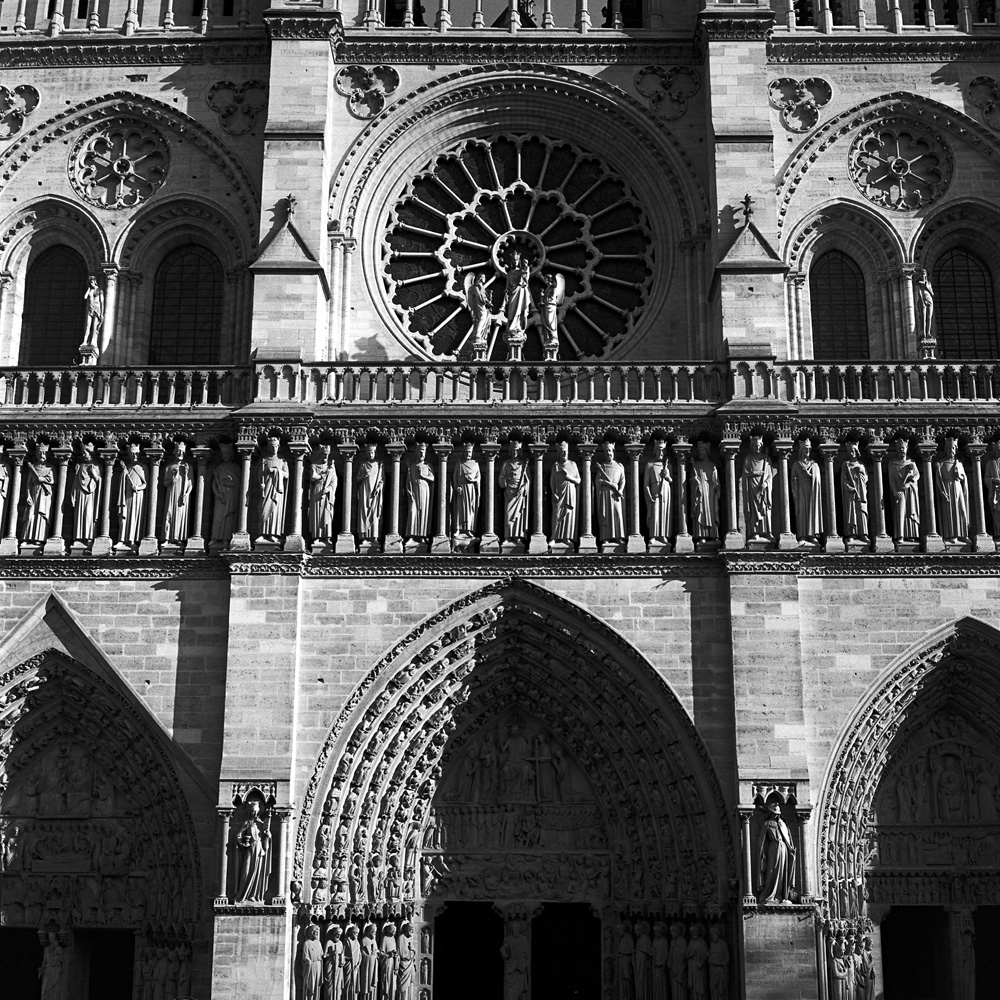
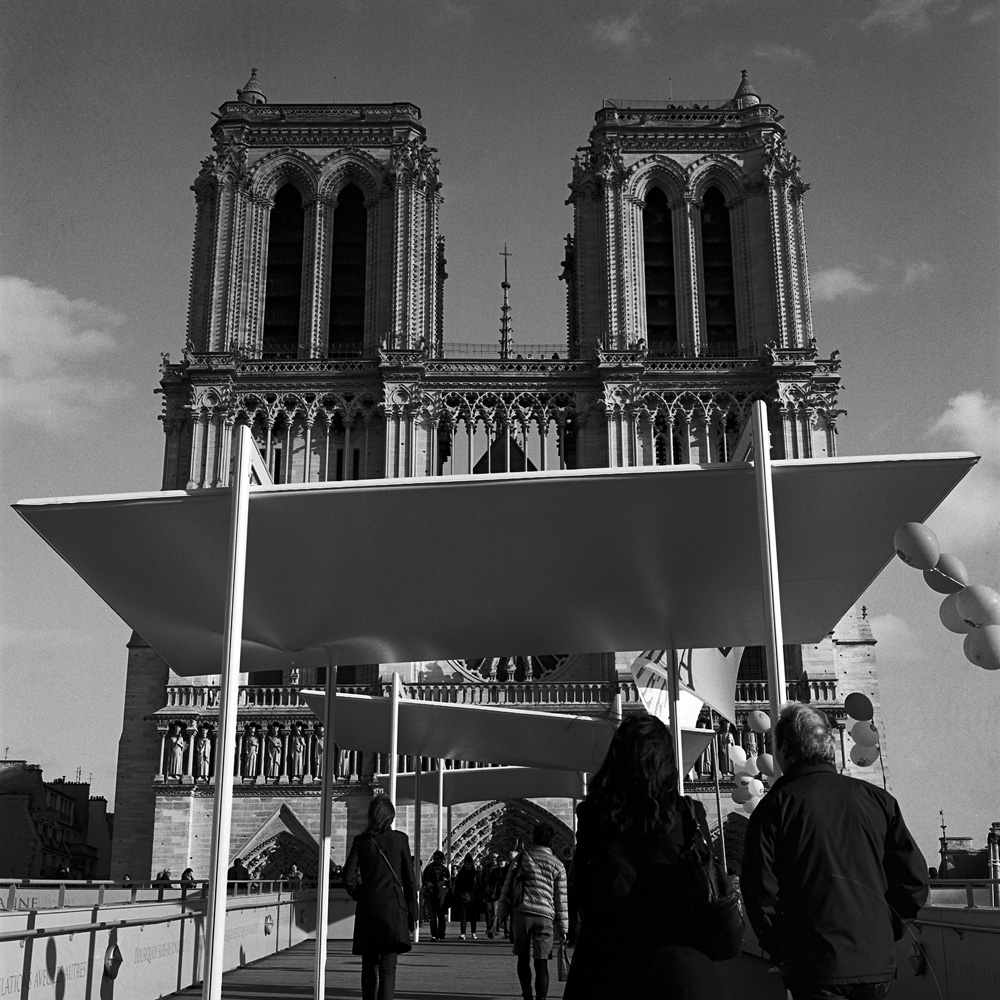
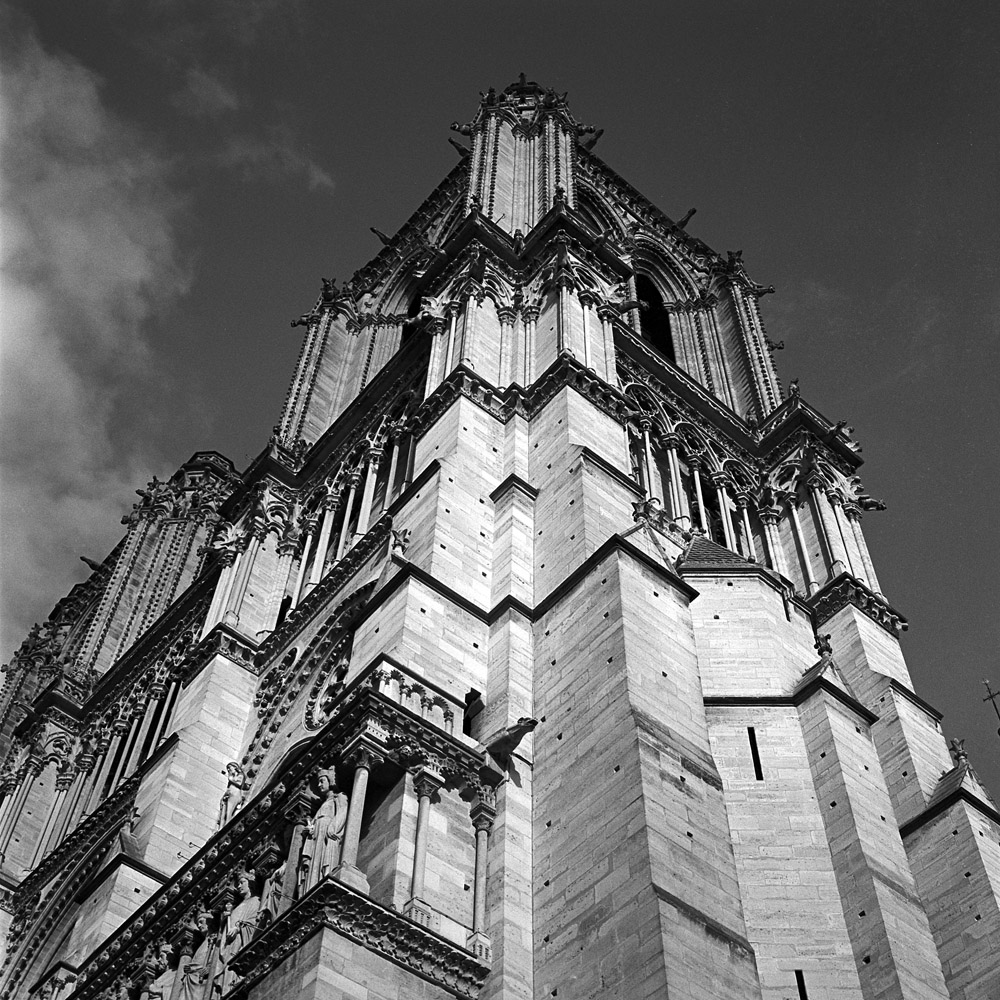
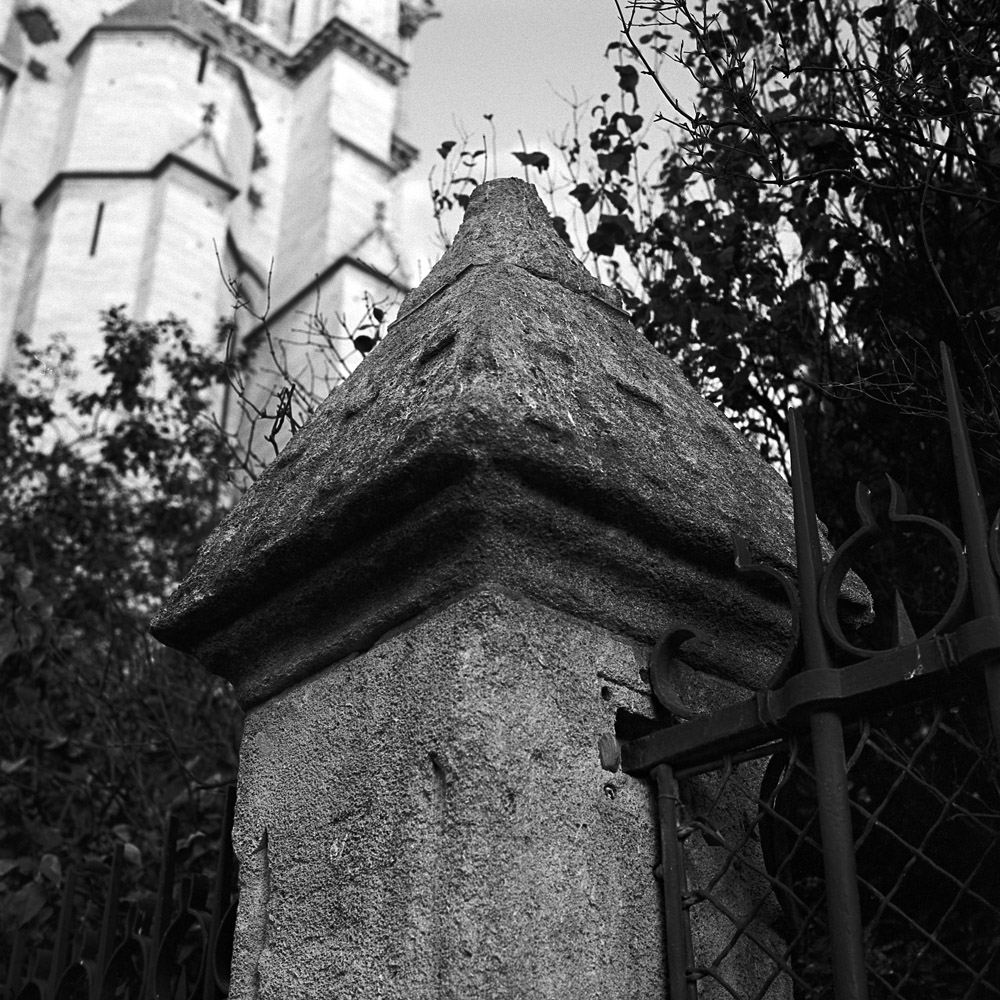
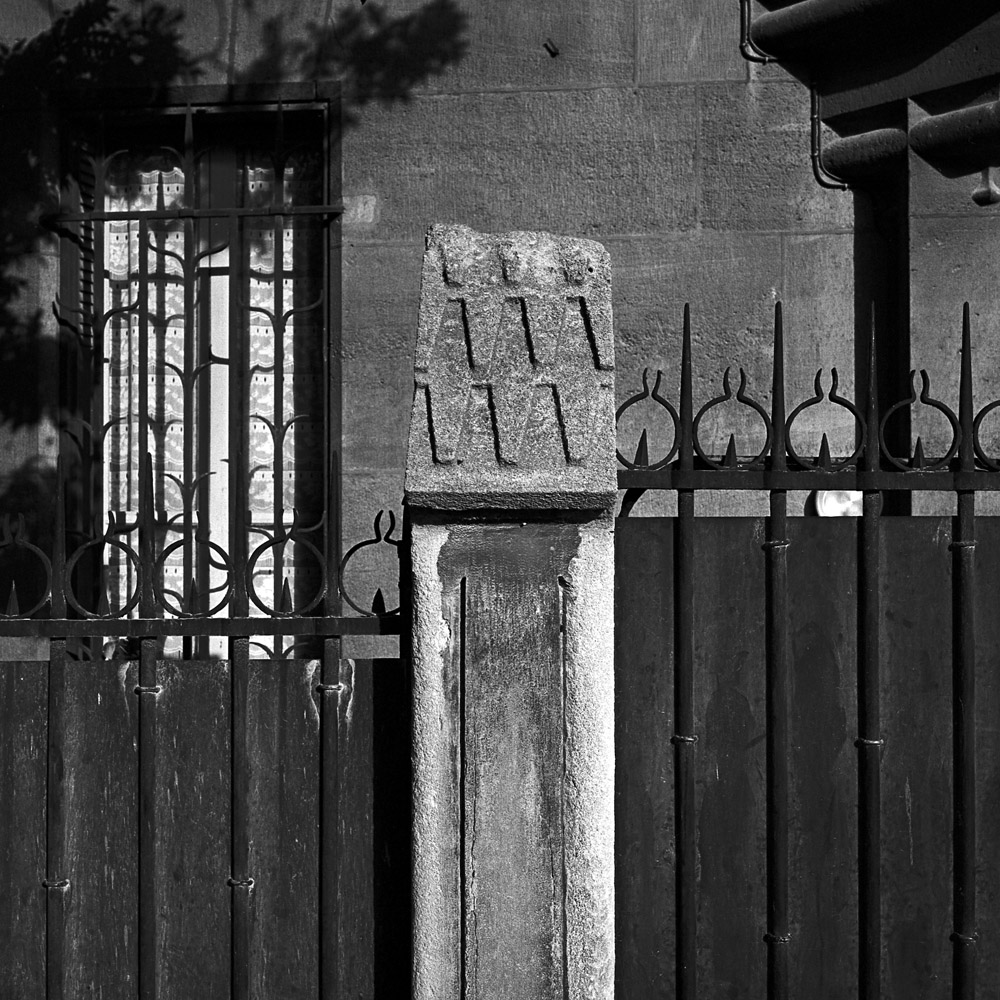
These are a few more from that last remaining roll of b/w I didn’t develop until yesterday. Just some additional looks at Notre Dame cathedral in black and white.
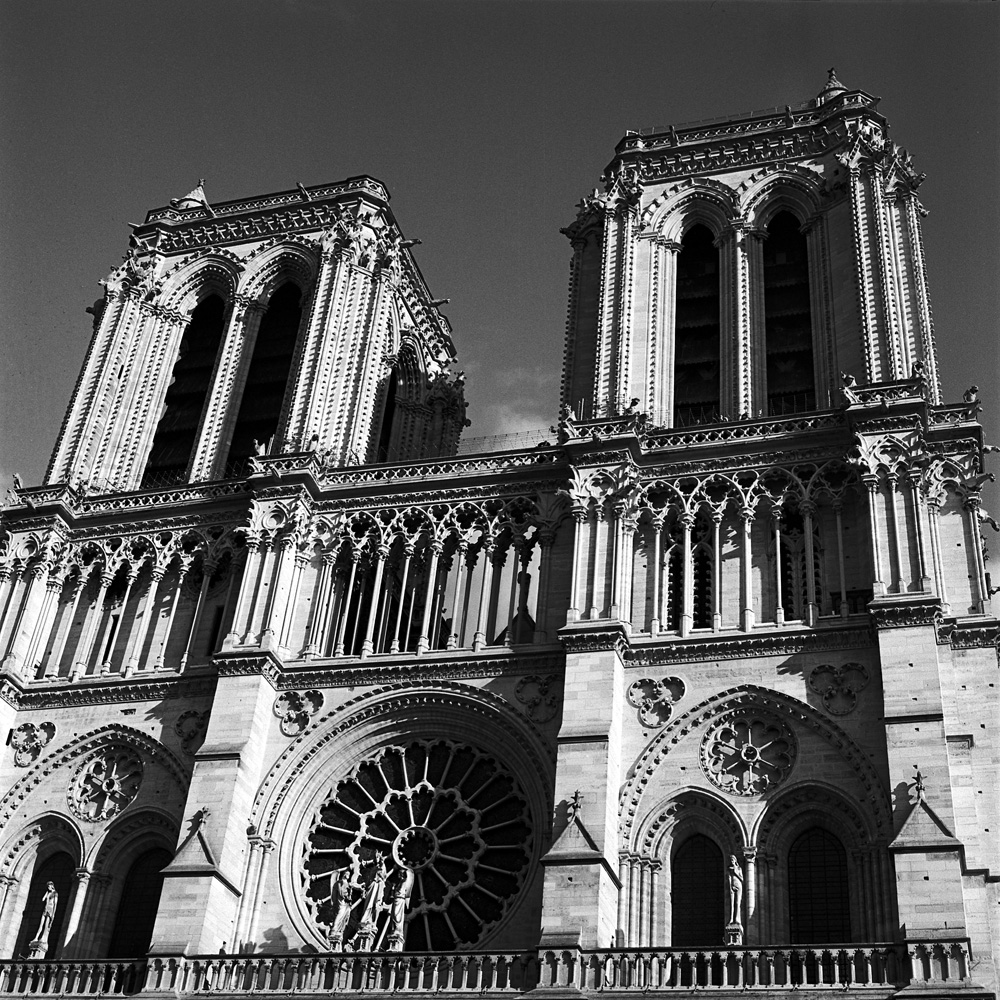
It’s hard to view the cathedral without trying to interpret the towers as a graphical element. They’re the most recognizable element to the church, perhaps other than the rose window. The main body of the church is actually rather narrow and delicate, relative to its perception. All those flying buttresses make it seem much more massive than it is. The tower facade, though, really establishes that perception because when viewing it straight on, it seems like a solid wall, and that the church behind it must be equally as massive.
Twin Towers, Notre Dame
Trying to look at the towers is a vertigo-inducing experience. They are quite tall, and the nature of the decorations make you keep looking up to see all the details to the very last set of gargoyles some 226 feet in the air. Getting up in the towers to view them up close and personal is vertigo-inducing as well – it’s a nearly 400-stair climb to the top of the tower (which I did NOT do – I’m too out-of-shape to attempt something so heart-stressing). At one point in time, Notre Dame was the largest building in the western world – you can still easily spot it from the 2nd tier of the Eiffel Tower, despite the intervening buildings, several miles and the bend in the river between the two landmarks.
Tower, Notre Dame, Looking Up
Here is a view of the incredibly detailed facade. One thing I did not realize until looking at this photo is the fact that all three main doorways are different. I always assumed that the left/right halves of the facade would be symmetrical. If you look carefully, the archway over the left hand door is a little smaller, and crowned by the angular, peaked molding. The right arch is larger and lacks the angular molding. Another detail that often gets forgotten – we assume that these cathedrals were all bare stone, and that the way we see them today is how they were intended. Au contraire – most cathedrals of the Romanesque and Gothic periods (the 7th-15th centuries) were brightly painted, inside and out. The statues on the exterior would all have been polychrome, as would the interior walls have been. Time, weather, wear and neglect have conspired to strip the coloring off the buildings. They did find some early medieval frescoes inside the old cathedral in Salamanca that had been covered up for centuries after an earthquake damaged both cathedrals (they’re kind of conjoined twins and share a wall).
Notre Dame Facade, Afternoon
I really don’t know why they built this mammoth viewing/reviewing stand in the plaza in front of the cathedral. You can ascend the steps on the front face, or you can climb the ramp up the back. This is the view of the towers from the ramp – the tarp-like covers on the ramp provide a starkly modern contrast to the gothic stonework of the cathedral.
Notre Dame Towers, from RampTowers, Notre Dame Cathedral
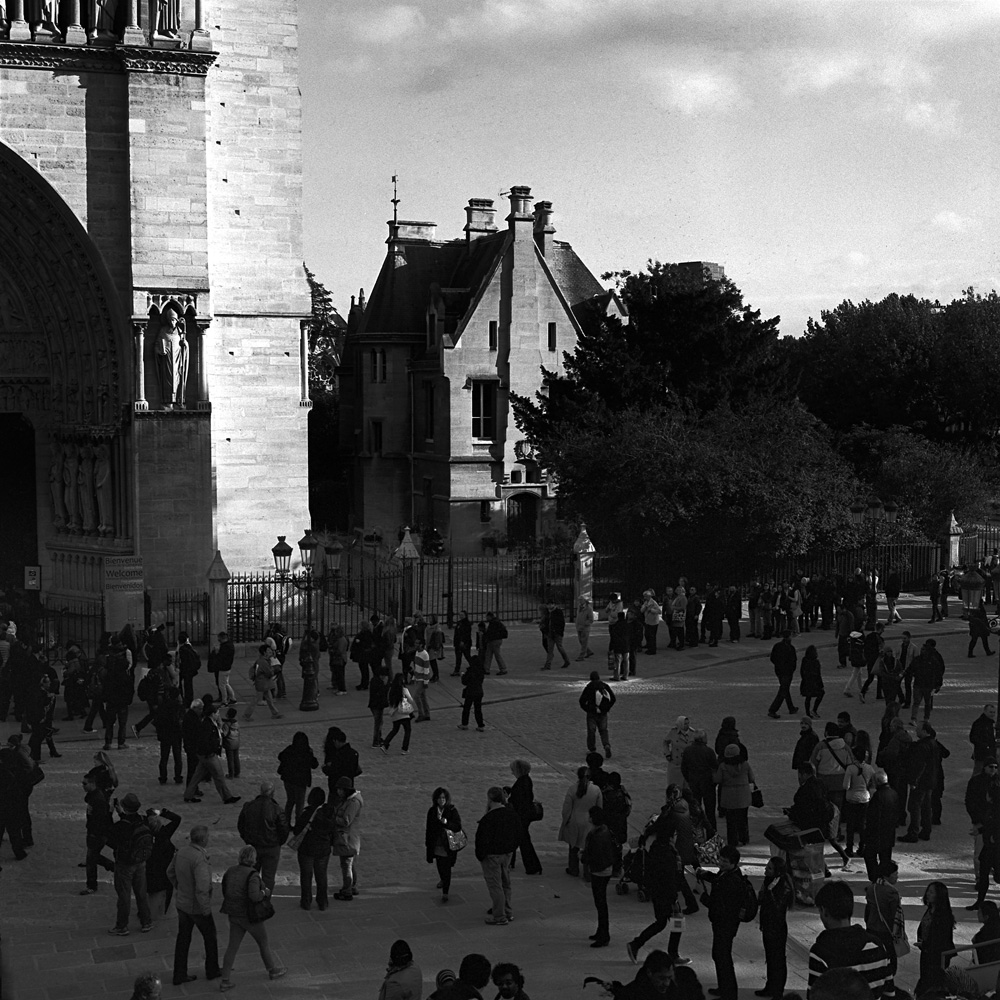
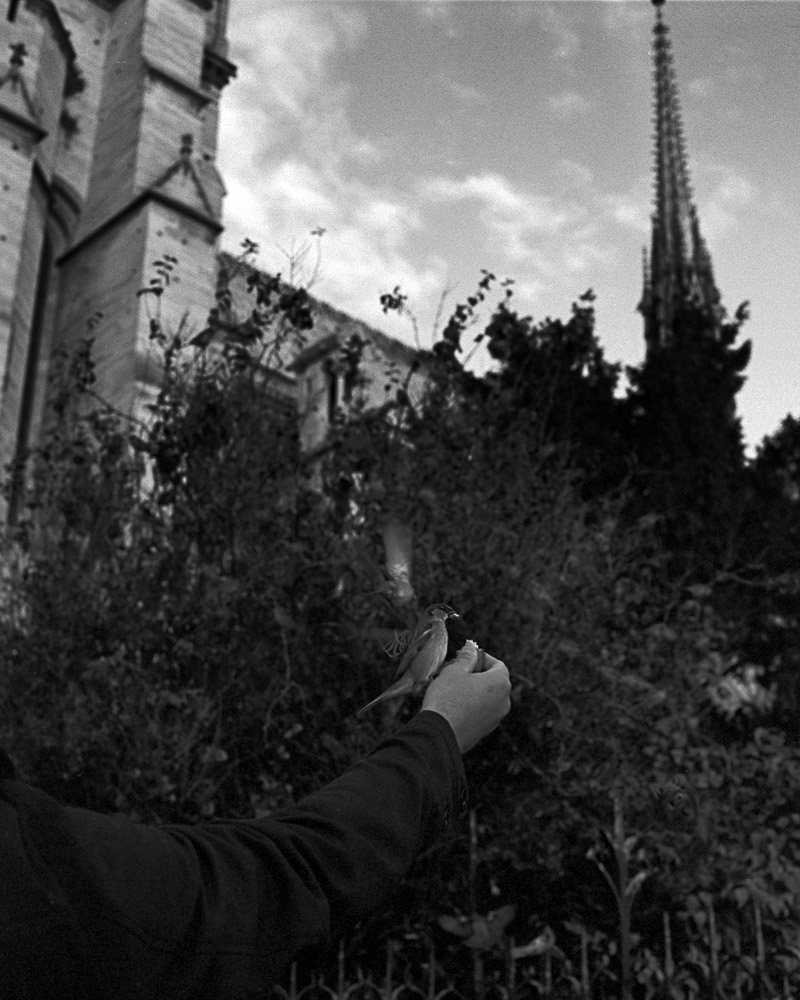
The crowds at Notre Dame are non-stop, even at night after the cathedral is closed. This is a typical weekday afternoon on the plaza out front. The little house to the right is the rectory for the cathedral. Along the fence surrounding the rectory is where you will find the bird feeders – people who will sell you a scrap of day old bread or a stale churro that you can hold up in your outstretched hand to attract the sparrows who will hover over to get a bite.
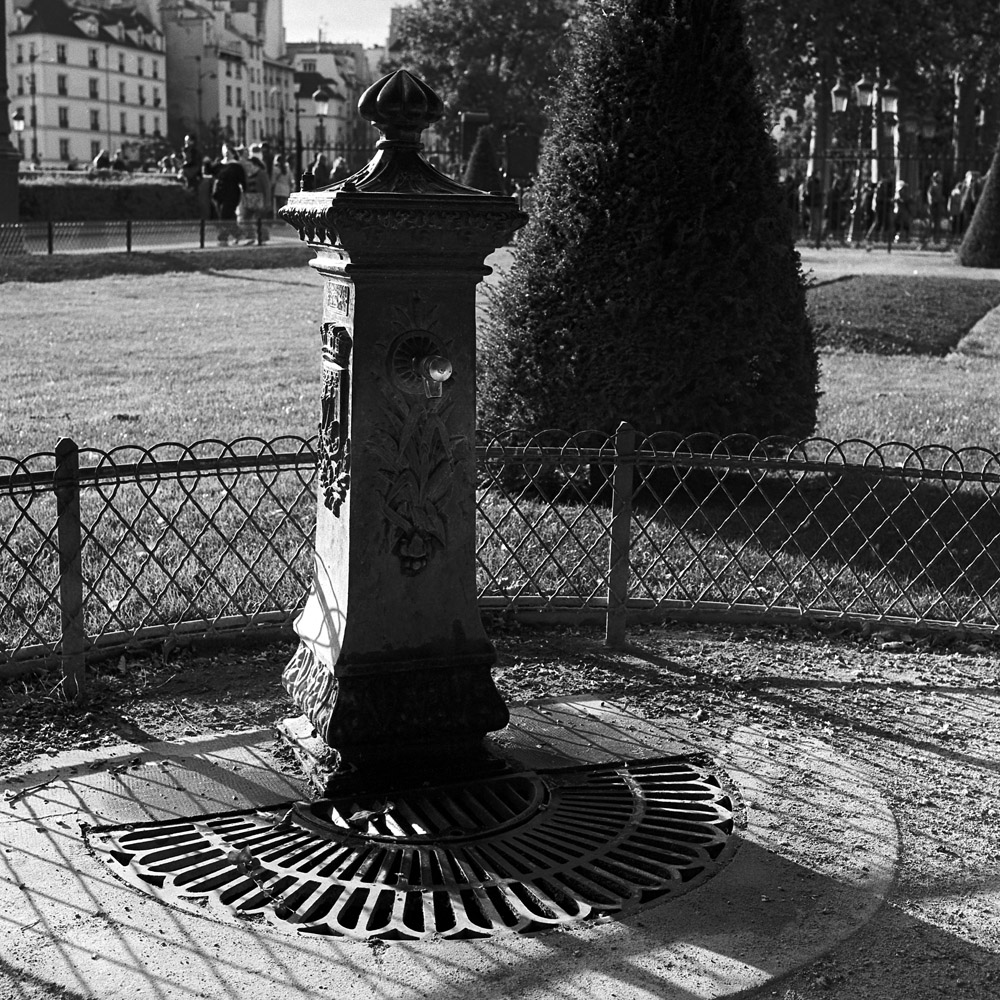
Beside the cathedral there is a park with views of the Seine, replete with benches, gardens and, as part of Haussmann’s renovations, public drinking fountains. I loved the way this looked backlit with the evening light. Consider it another one of my portraits of everyday objects.
Drinking Fountain, Notre Dame
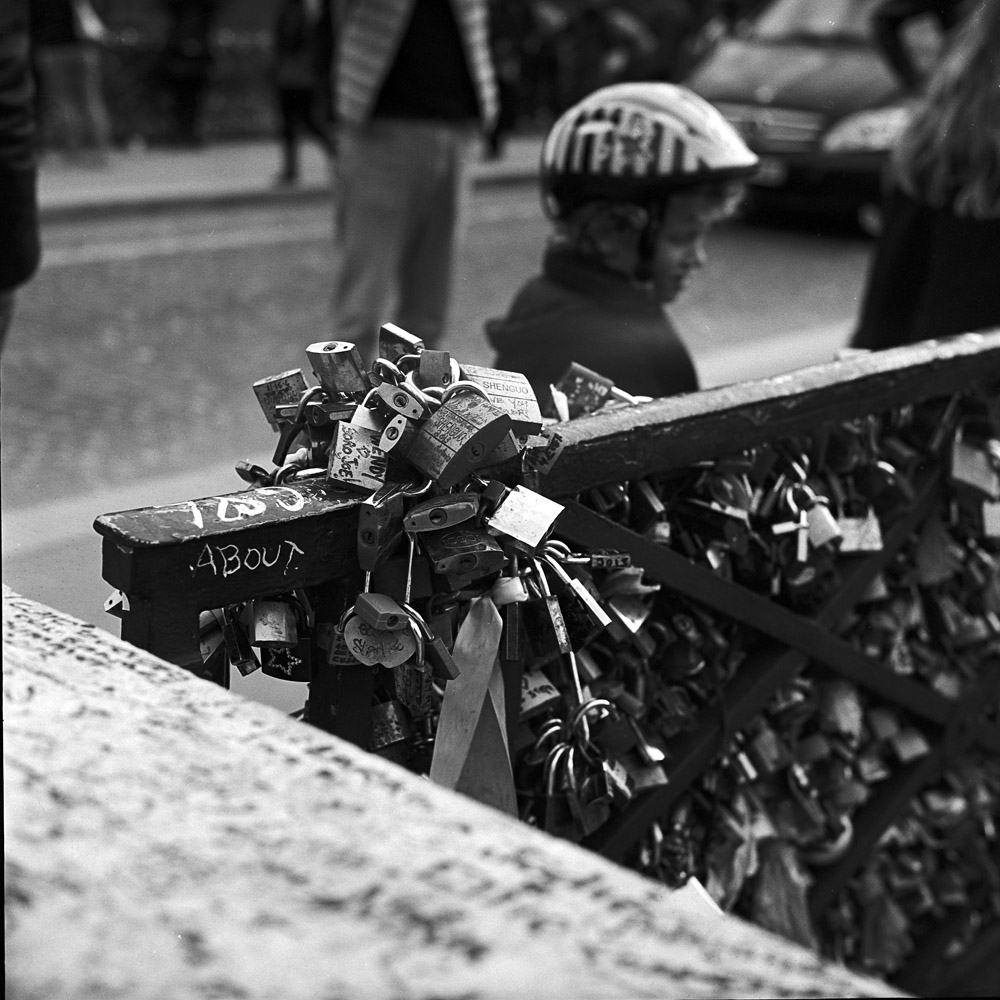
And last but not least, the tradition that began in Rome of young couples buying a padlock, writing their initials on it, locking it to the railing of a bridge, and tossing the keys in the river as a symbol of how their love cannot be undone has come to Paris. It is so popular that it has infested three or four bridges across the Seine now, and the boquinistes with bookstalls along the Rive Gauche nearest the Ile de la Cité sell a variety of padlocks and permanent markers. It seems only natural that people would do this on the bridges closest to Notre Dame, as it is one of the most romantic, inspiring buildings in a city full of romantic inspiration.
Love Locks, Notre Dame
(see, I told you you wouldn’t have to wait long for the next Paris post!)
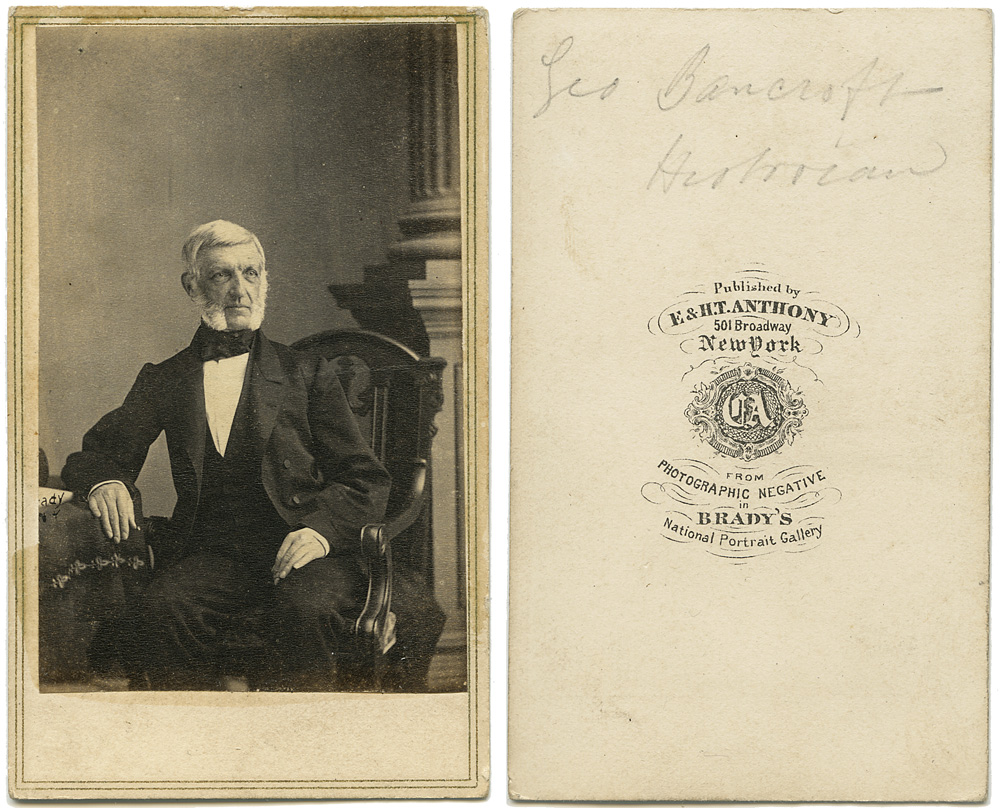
At first I was wondering why a CDV of an American historian would have ended up in the United Kingdom (the seller I bought this from is in England). After reading up on who George Bancroft was, now it makes sense. George Bancroft, in addition to being an historian, was Secretary of the US Navy, founder of the United States Naval Academy in Annapolis, and served as the US Minister to the United Kingdom from 1846-49. After the Civil War, he also did a stint as minister to Berlin from 1867-1874. He lived to the ripe old age of 91, dying in 1891.
George Bancroft, by Brady
His political life should not be seen to overshadow his academic life – he entered Harvard at age 13 and graduated at 17, and went on to study in Europe under some of the greatest academics and philosophers of the day. He authored a ten-volume set on the history of the United States, entitled, humbly enough “A History of the United States, from the Discovery of the American Continent to the Present Day”.
I also thought you, my loyal readers, could stand a break from all the Paris photos. They’ll resume soon enough.


 dcphotoartist