Category Archives: Exhibitions

Michelangelo and the “Unfinished” Sculptures

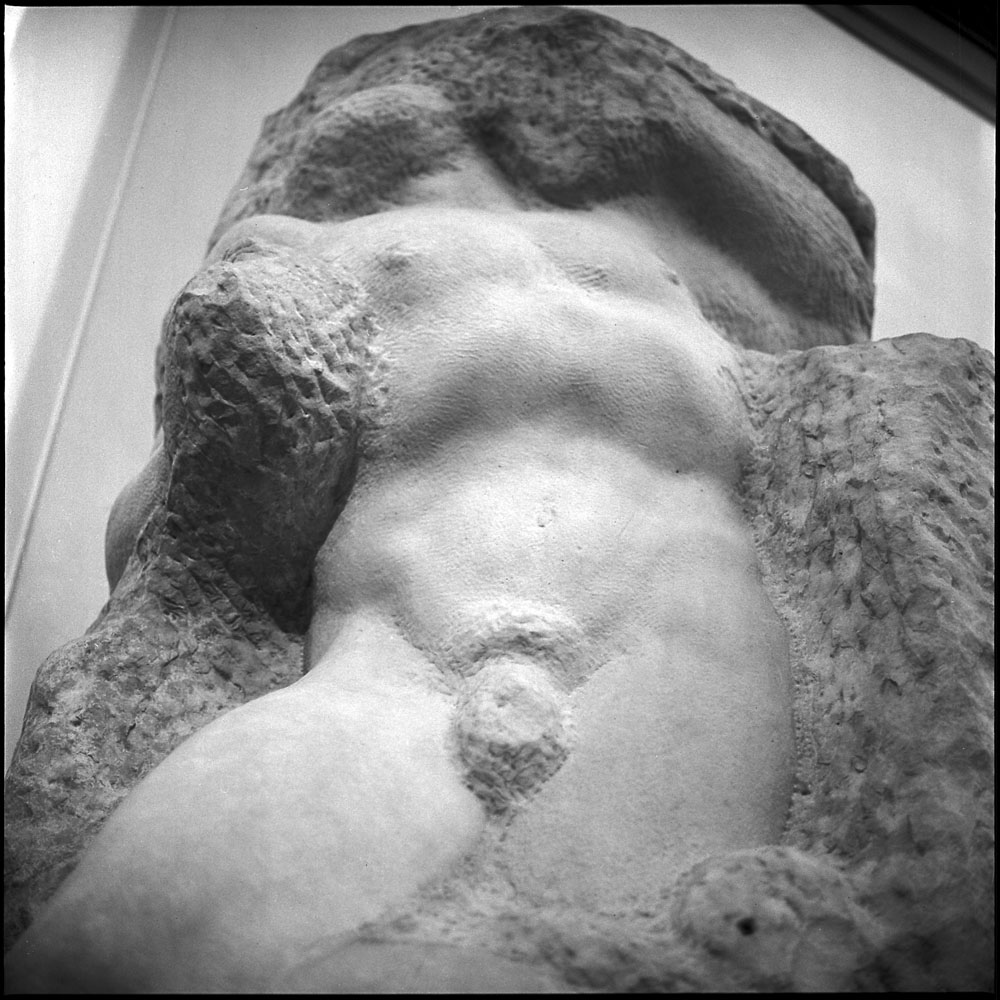
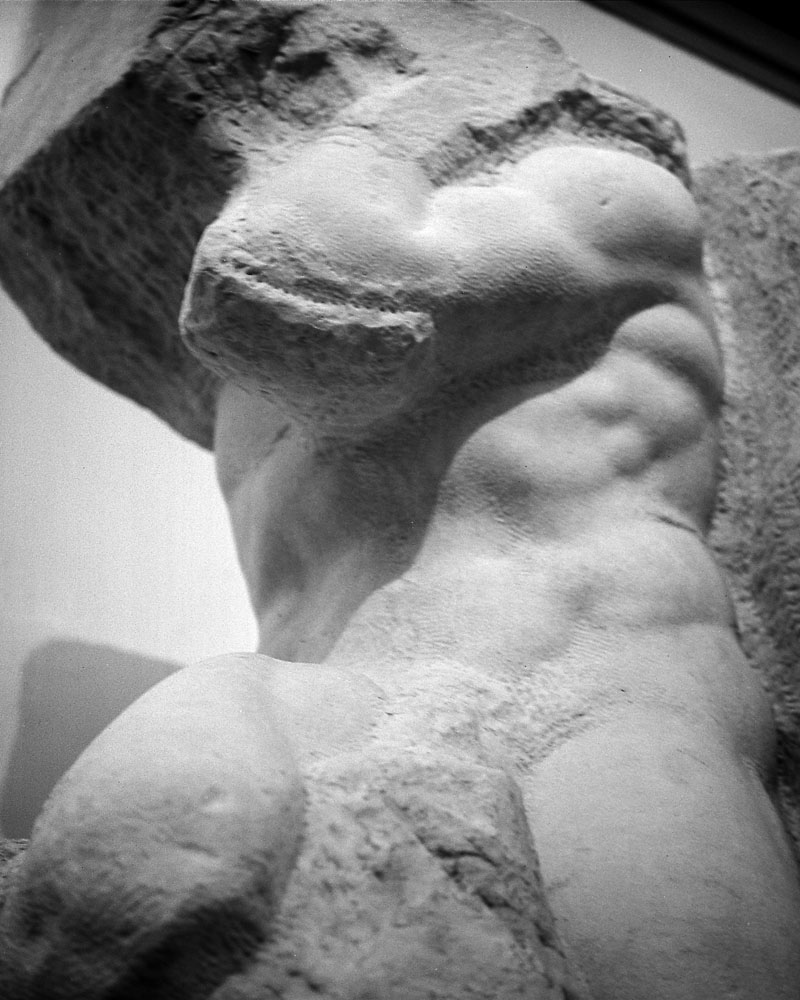
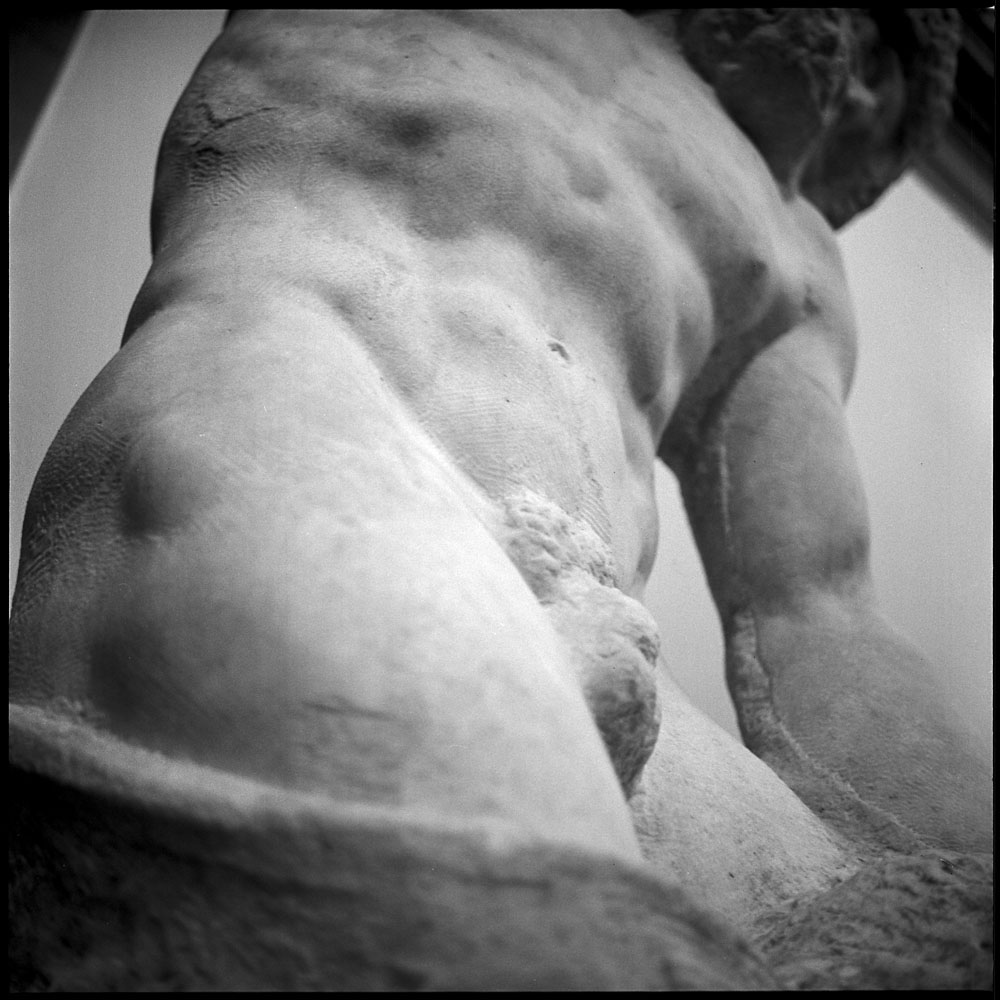
I had mentioned in an earlier post about Michelangelo and the “Unfinished” sculptures. Here are some of the pieces in the Accademia’s main hall.

Unfinished Sculpture

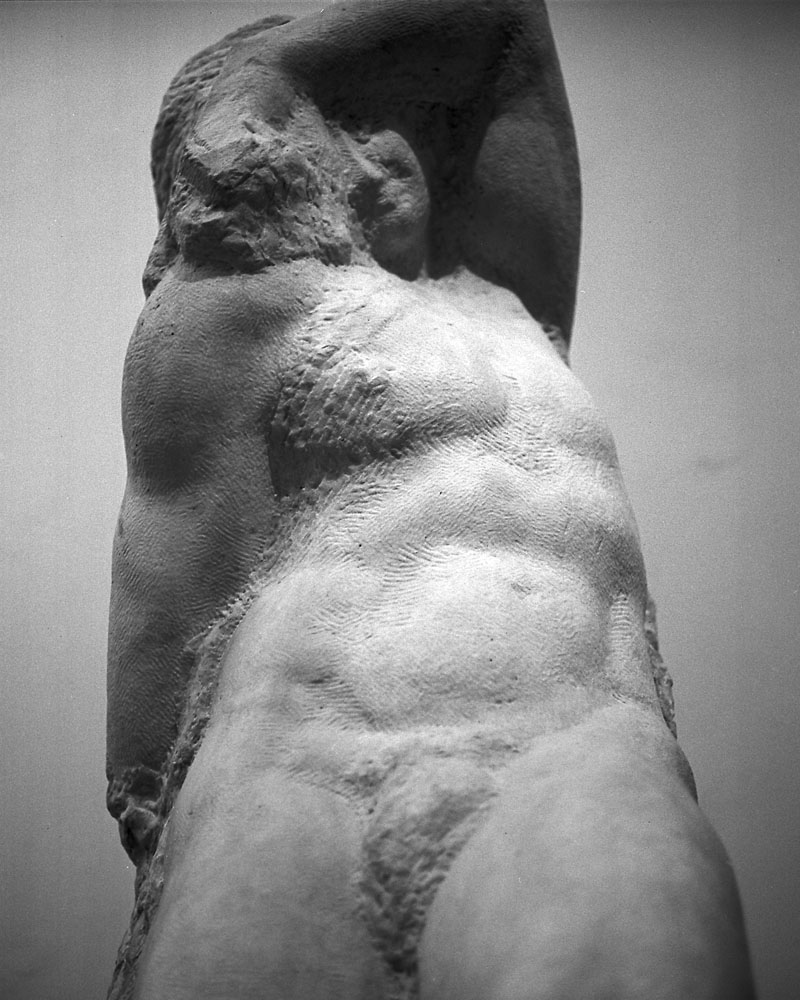
If you look carefully at them, it’s hard to truly call them unfinished – there is a certain deliberateness about what is carved finely and what is left rough.

Unfinished Sculpture

The coarse textures blend very naturally with the revealed forms. To my eyes, and from my (granted rather limited) experience of stone carving, this kind of texture and modeling is something done very intentionally.

Unfinished Sculpture

While there are certainly areas that are unrefined, the transitions are fascinating and at the very least provide an insight into the working technique of a genius master sculptor, and given how far ahead he was in so many other aspects of his art, it is entirely possible for him to have been five centuries ahead of his time in his thinking, much the way Caravaggio’s paintings were.

Unfinished Sculpture

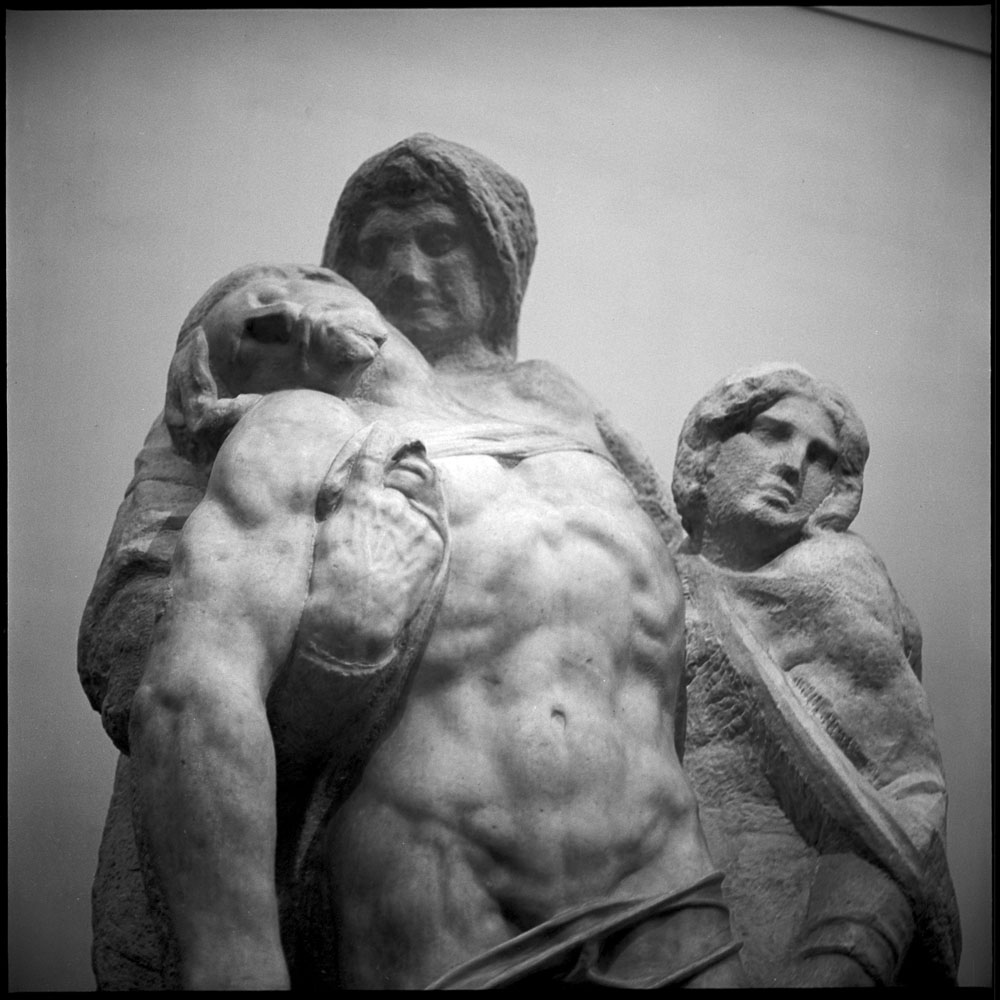
And I couldn’t let the opportunity pass without remarking on something that virtually everyone who’s ever looked at a Michelangelo painting or sculpture of a woman has noticed- his women are really just men with boobs and long hair. The hand of Mary that’s supporting a very robust looking Jesus in this “unfinished” Pieta is one of the manliest hands I’ve ever seen on a woman.

Unfinished Pieta
Unfinished Pieta

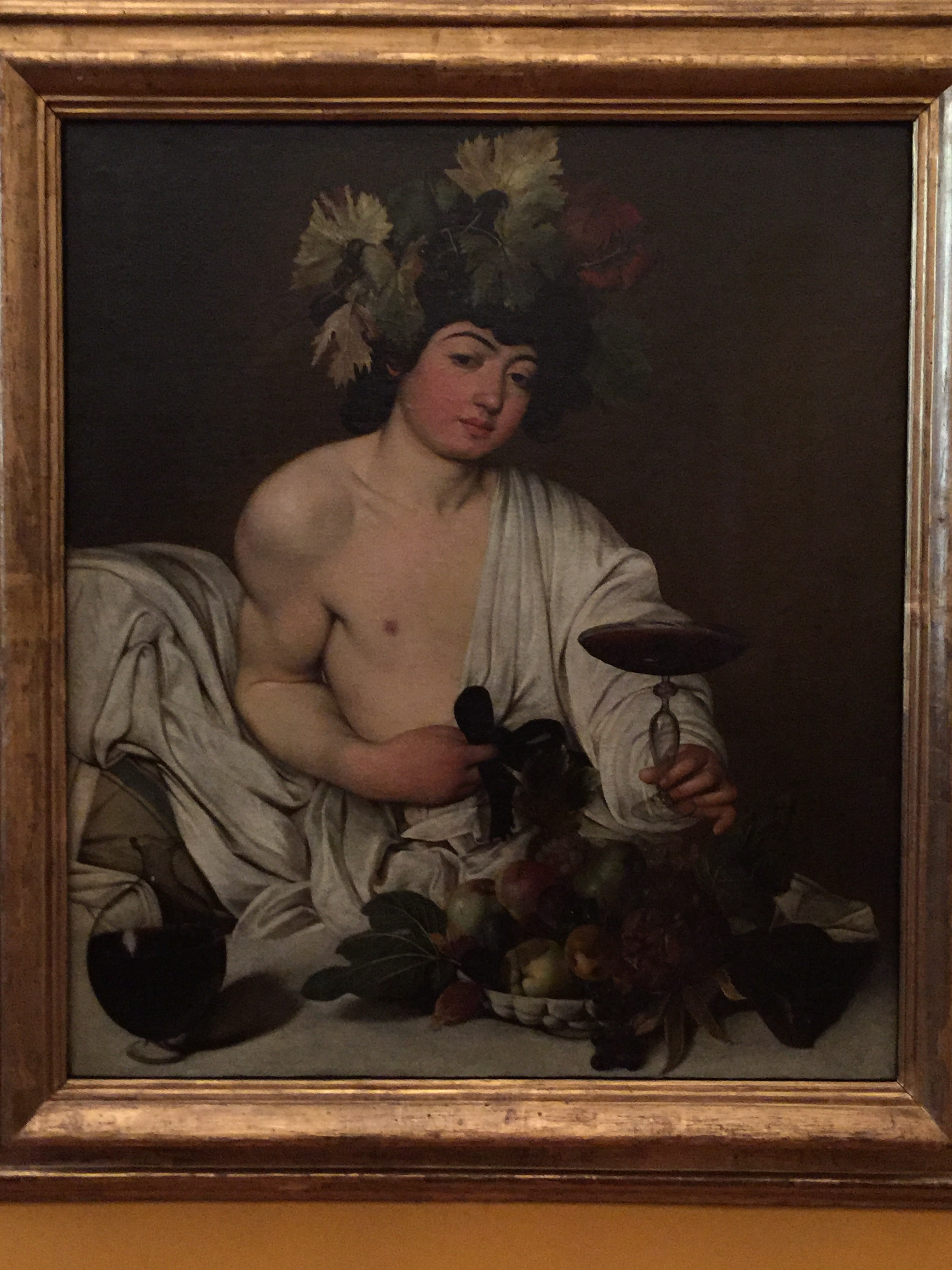
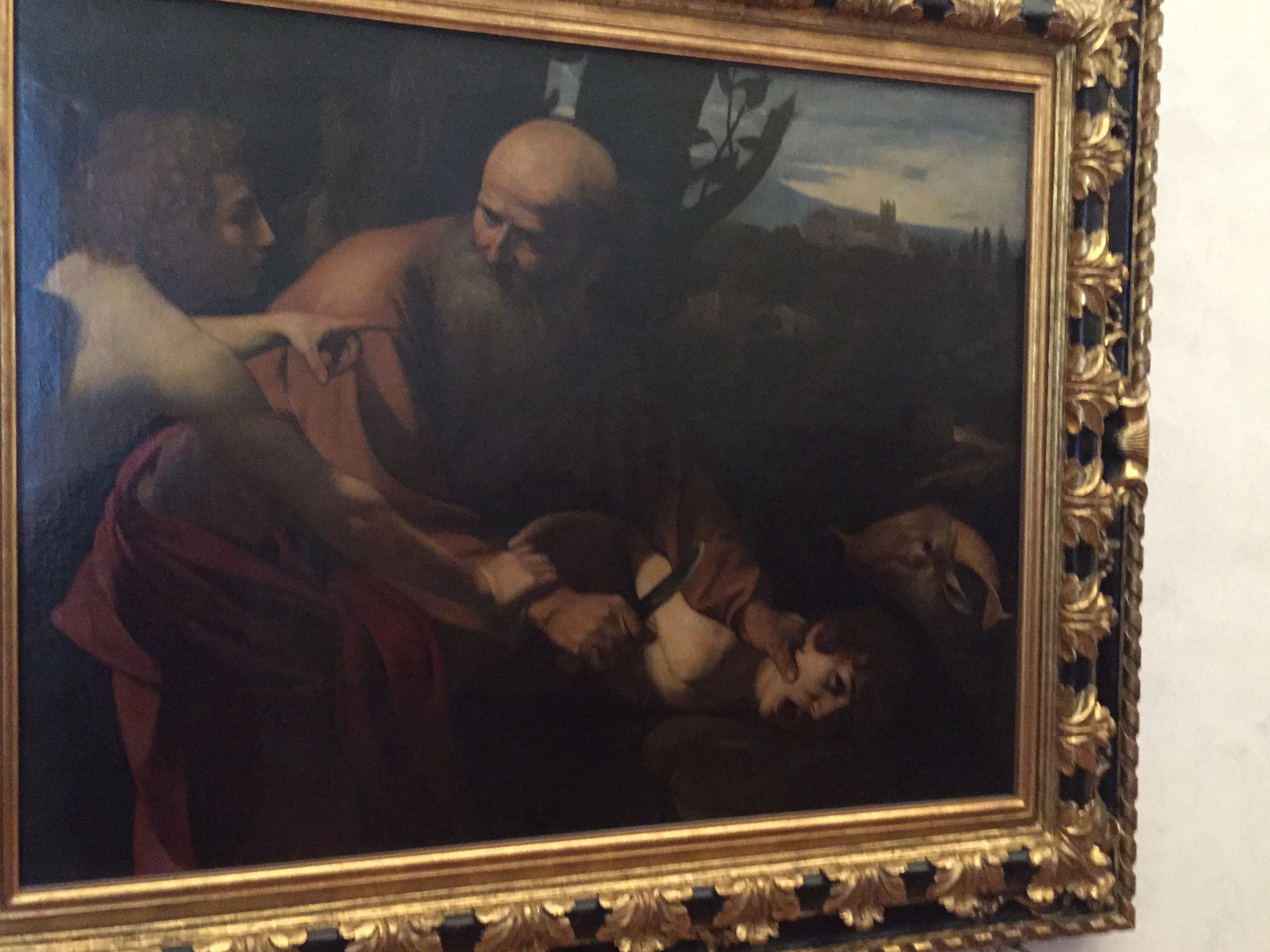
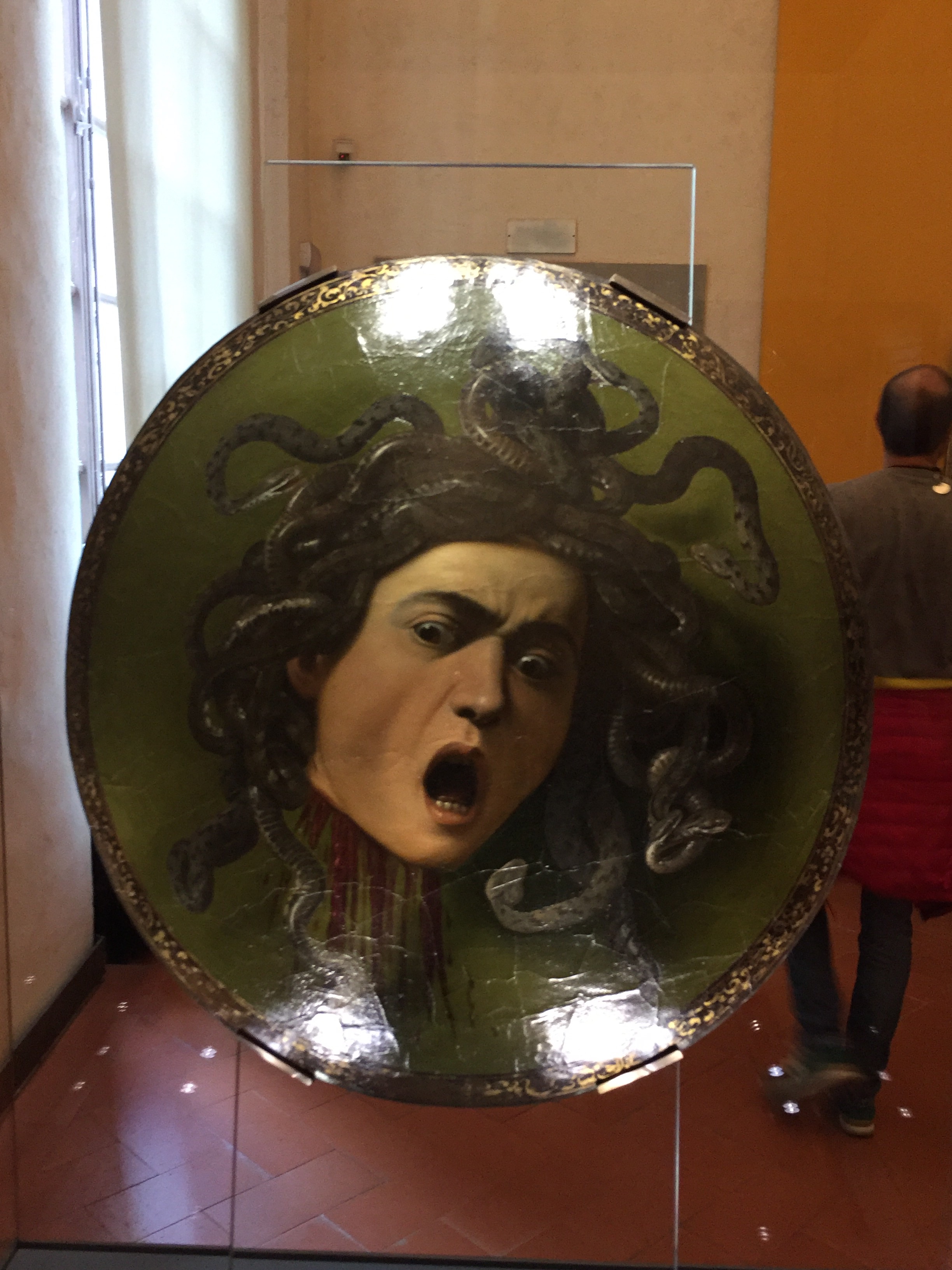
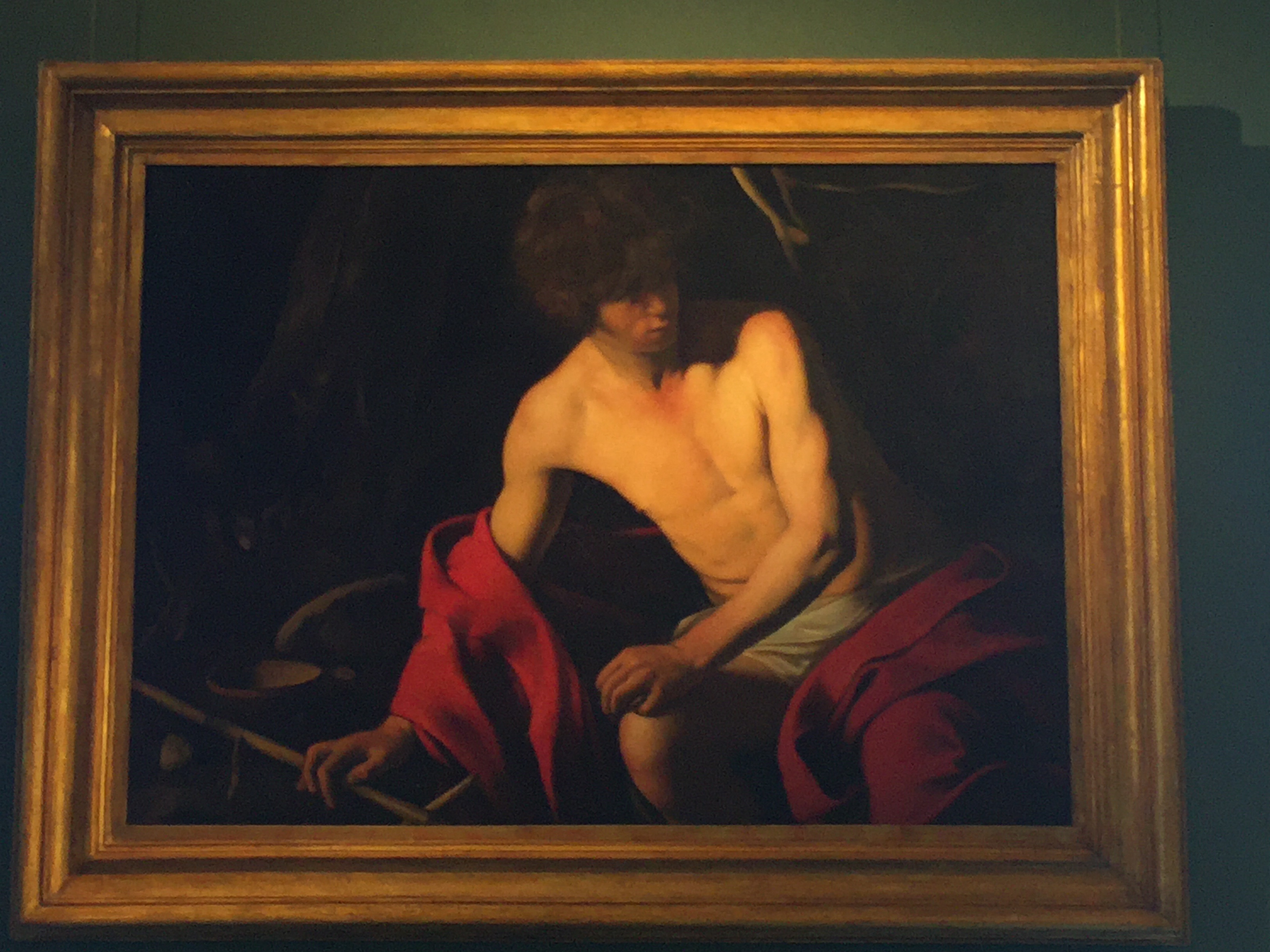
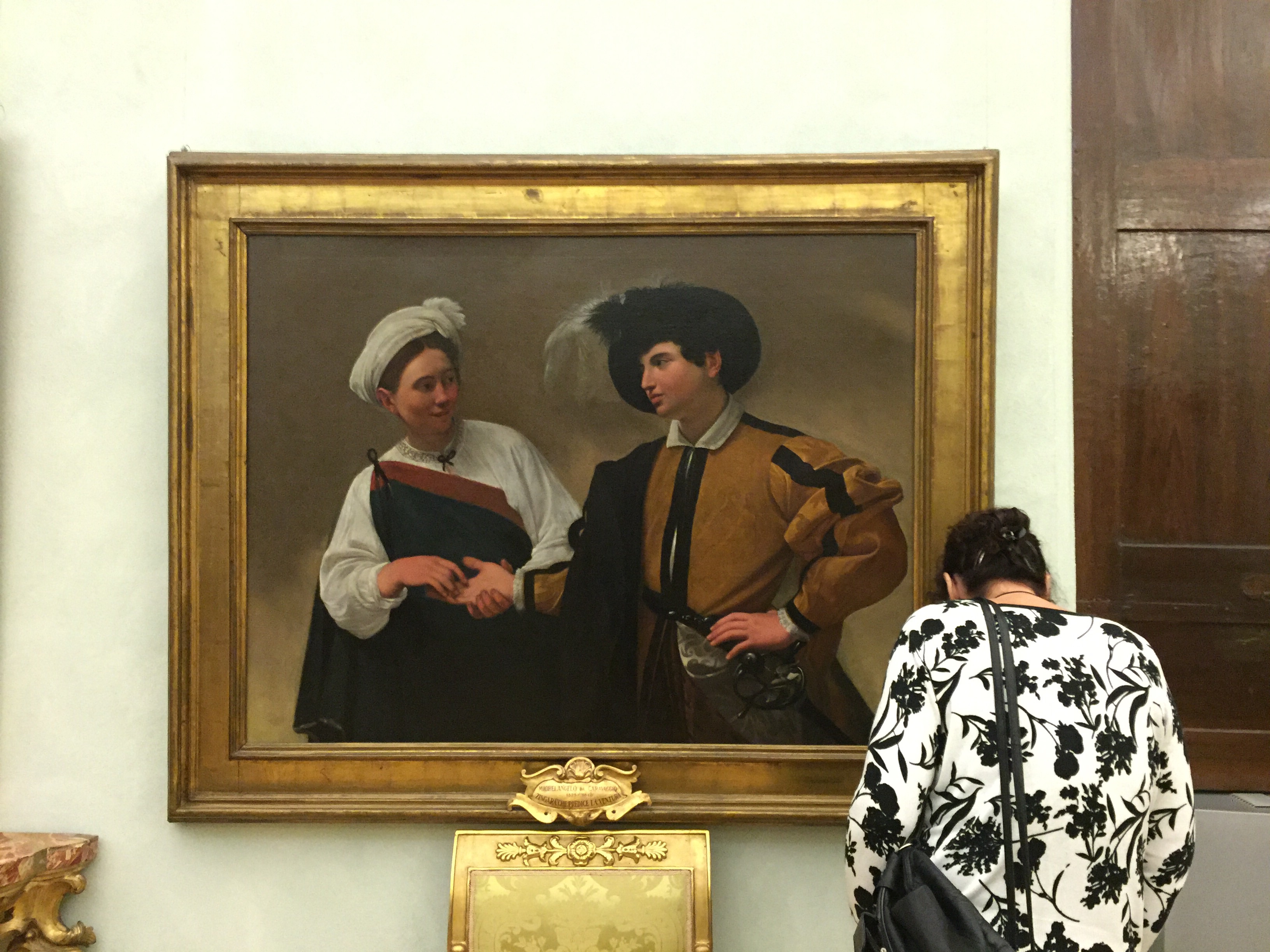
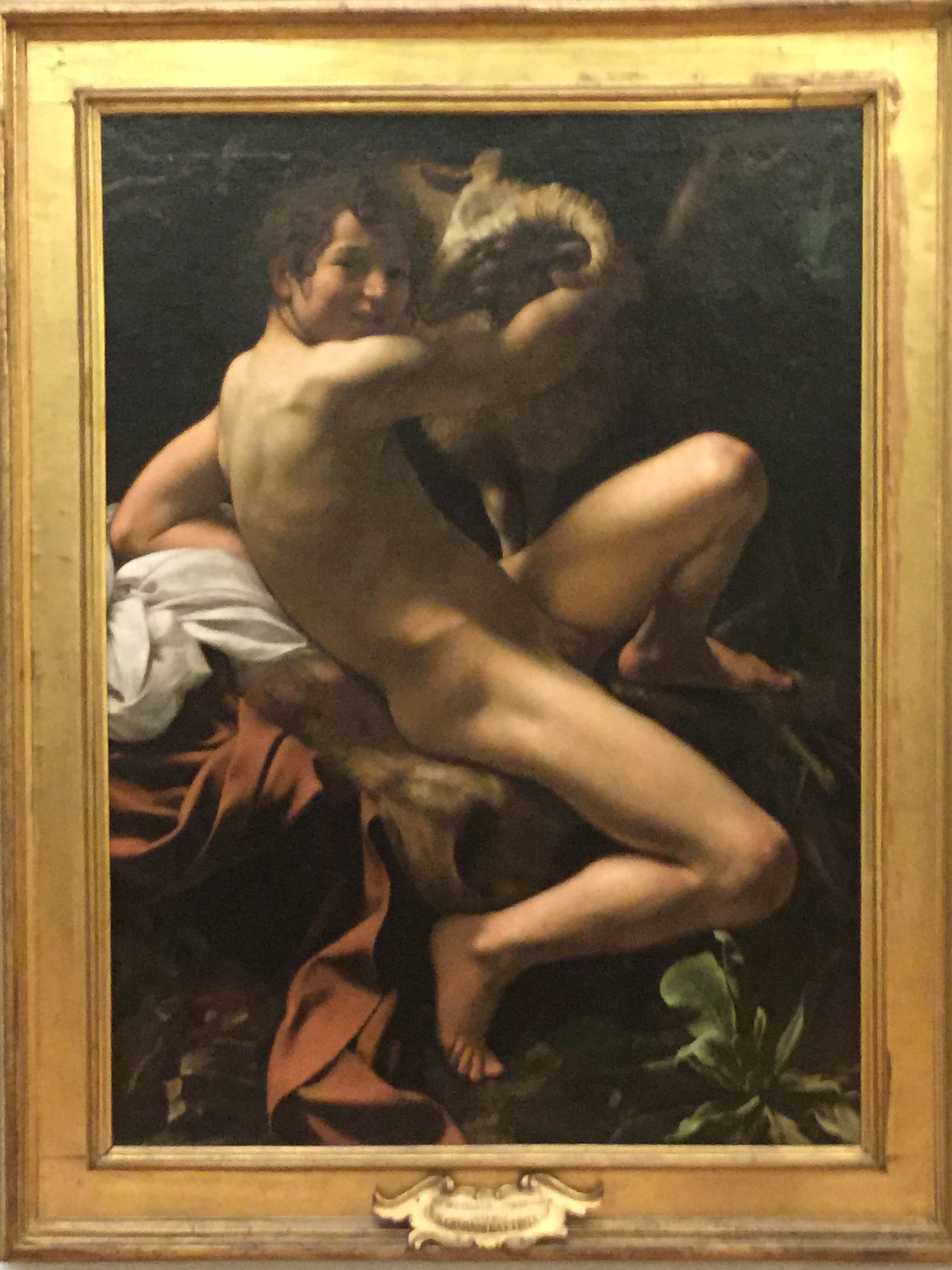
The Caravaggio Odyssey

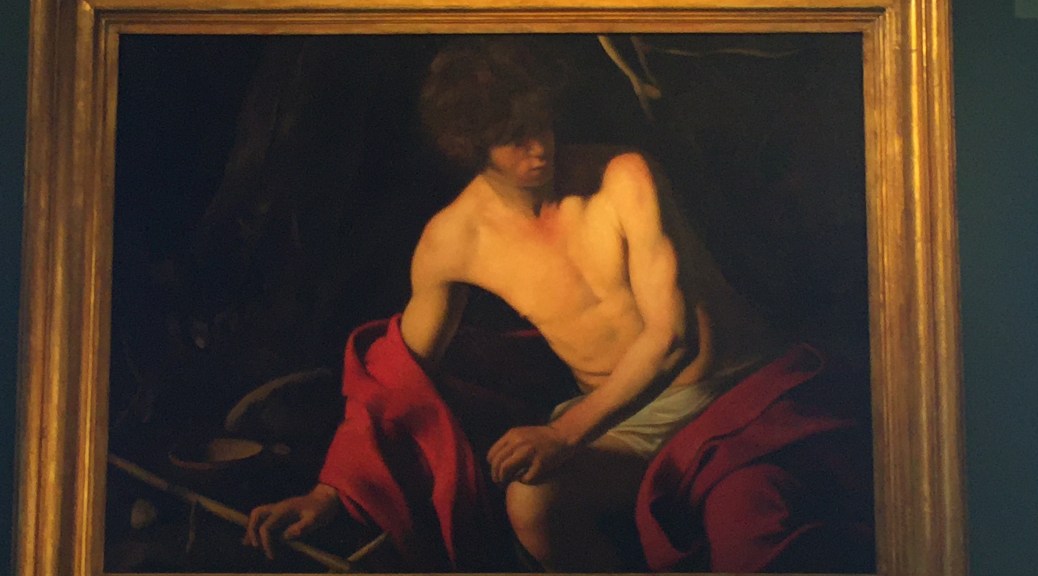
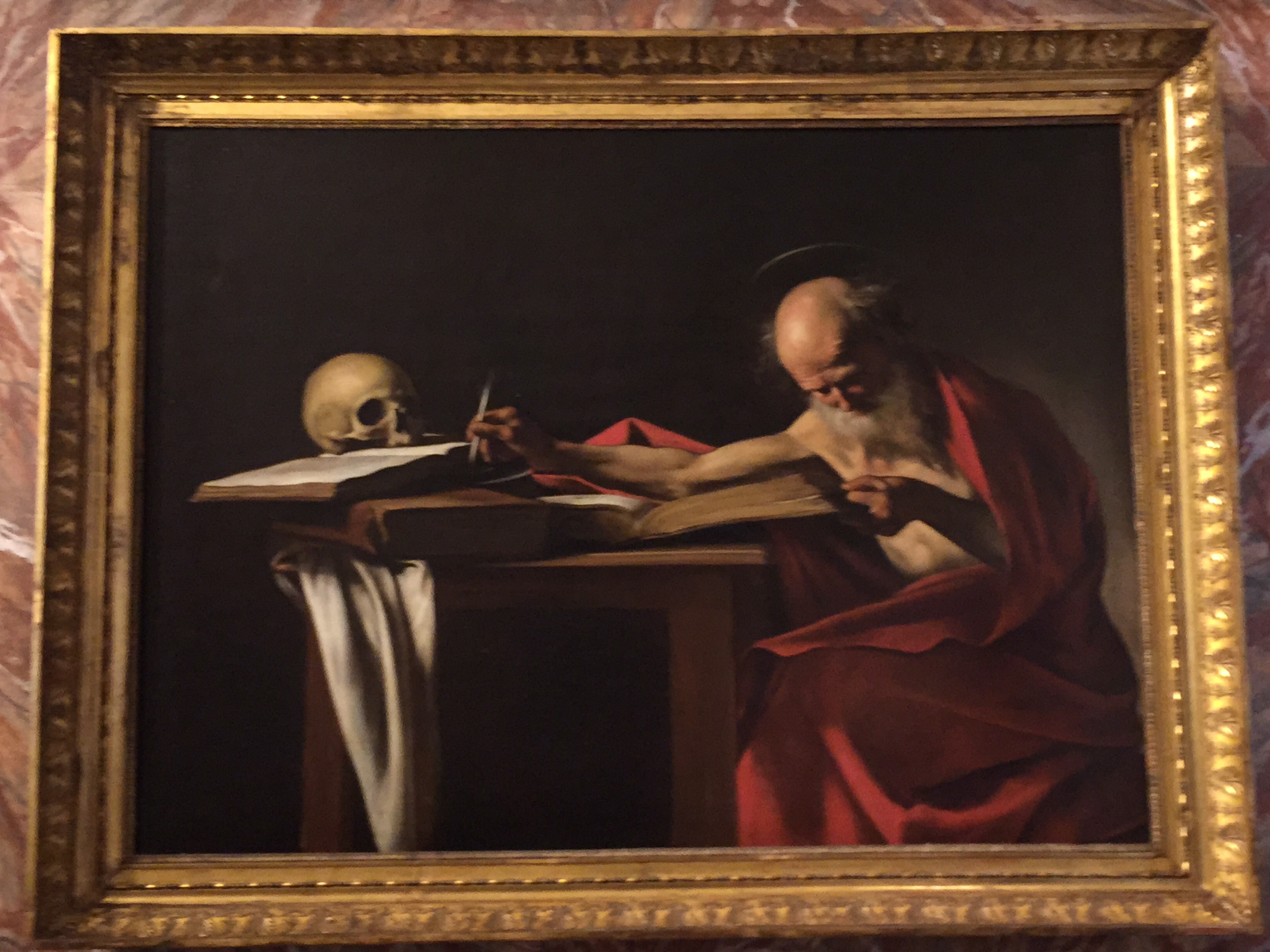
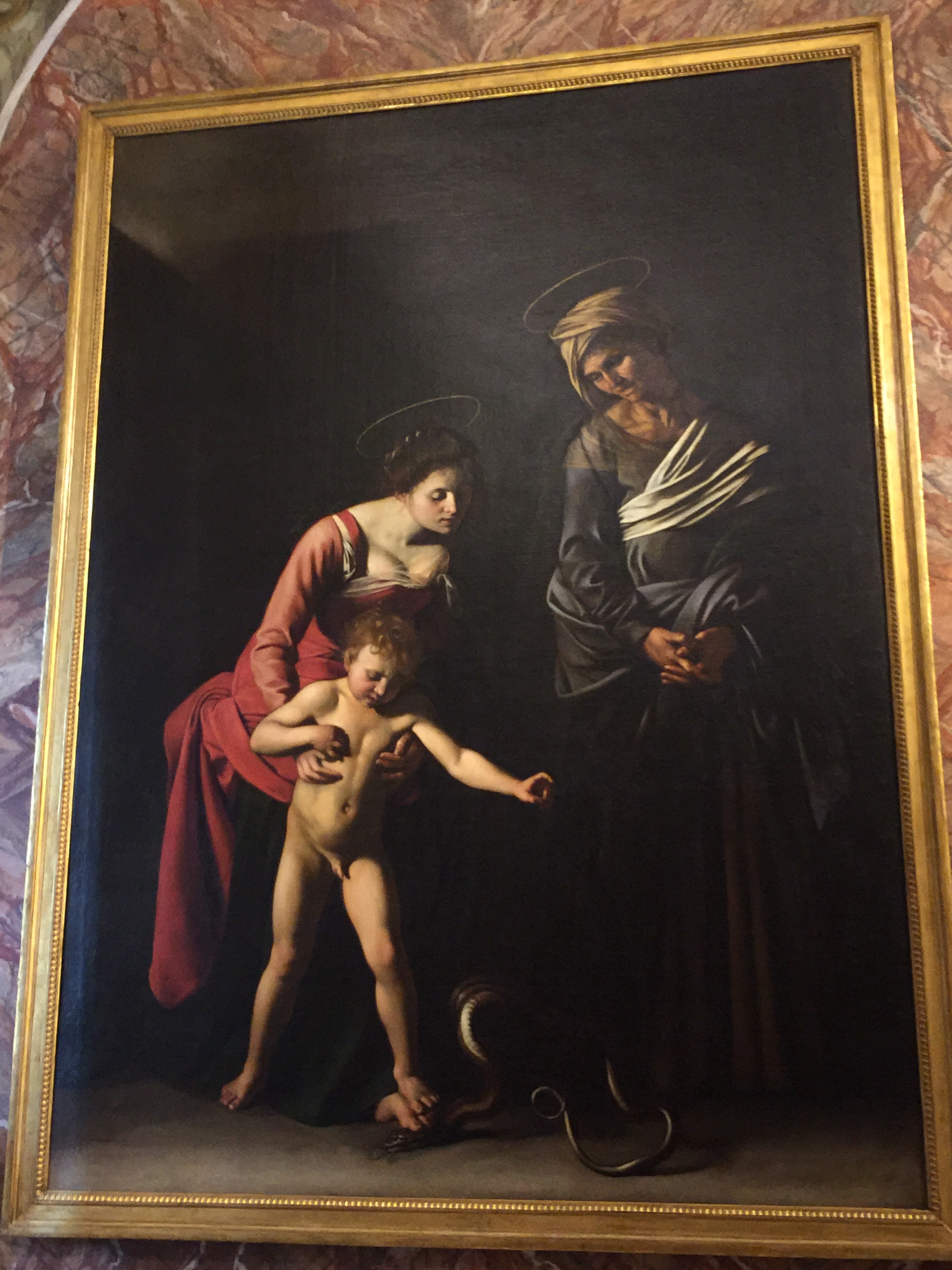
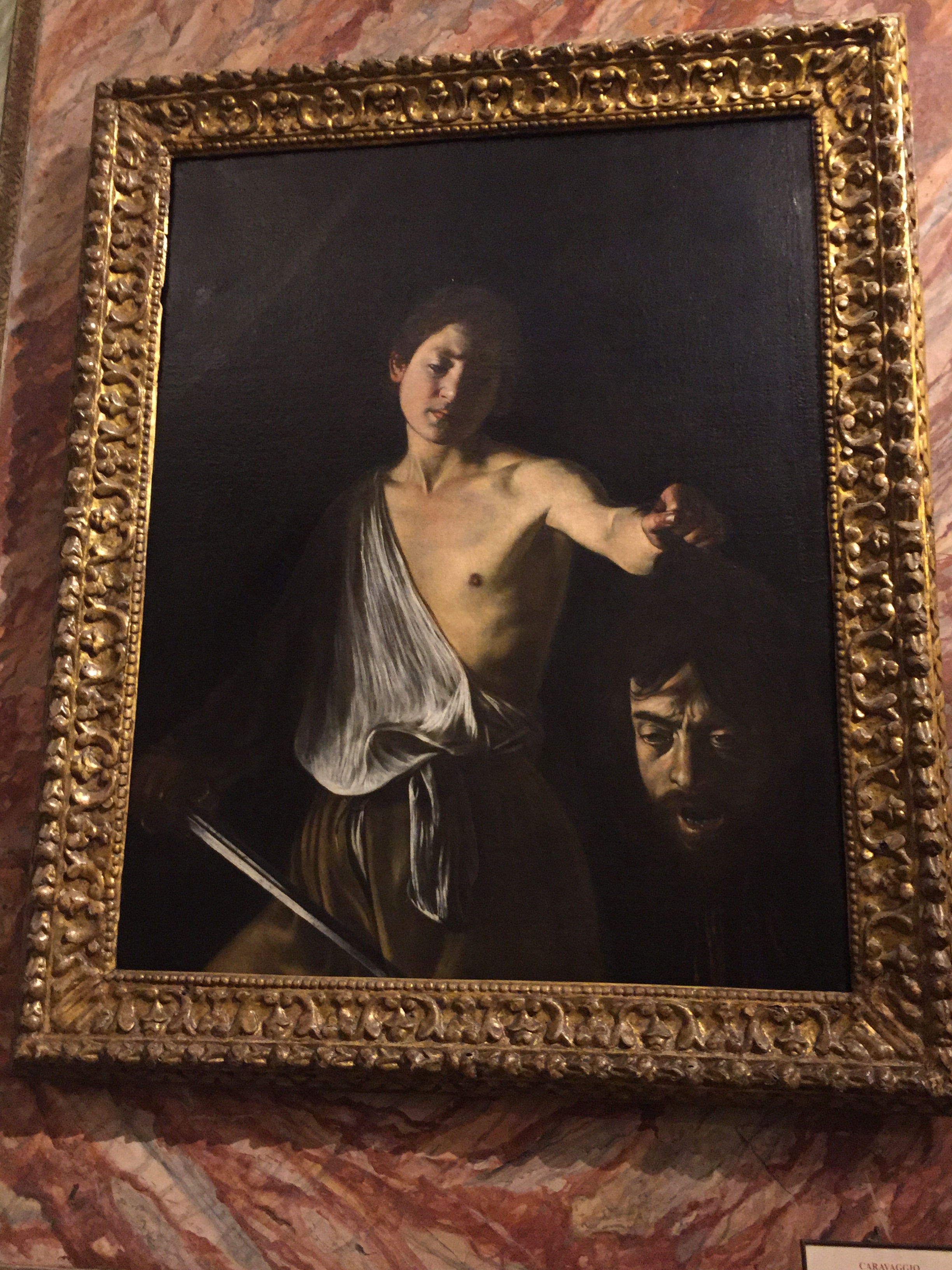
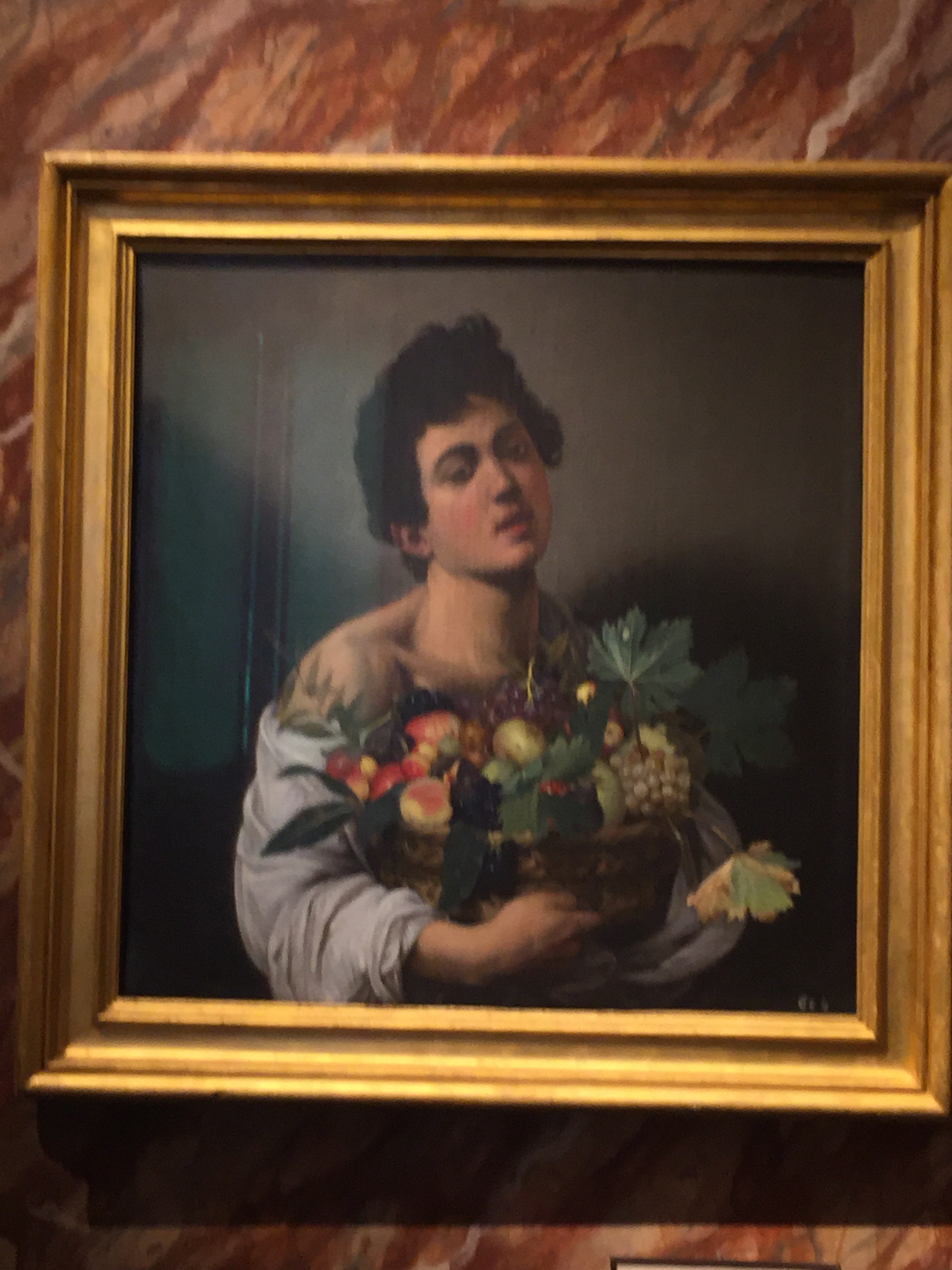
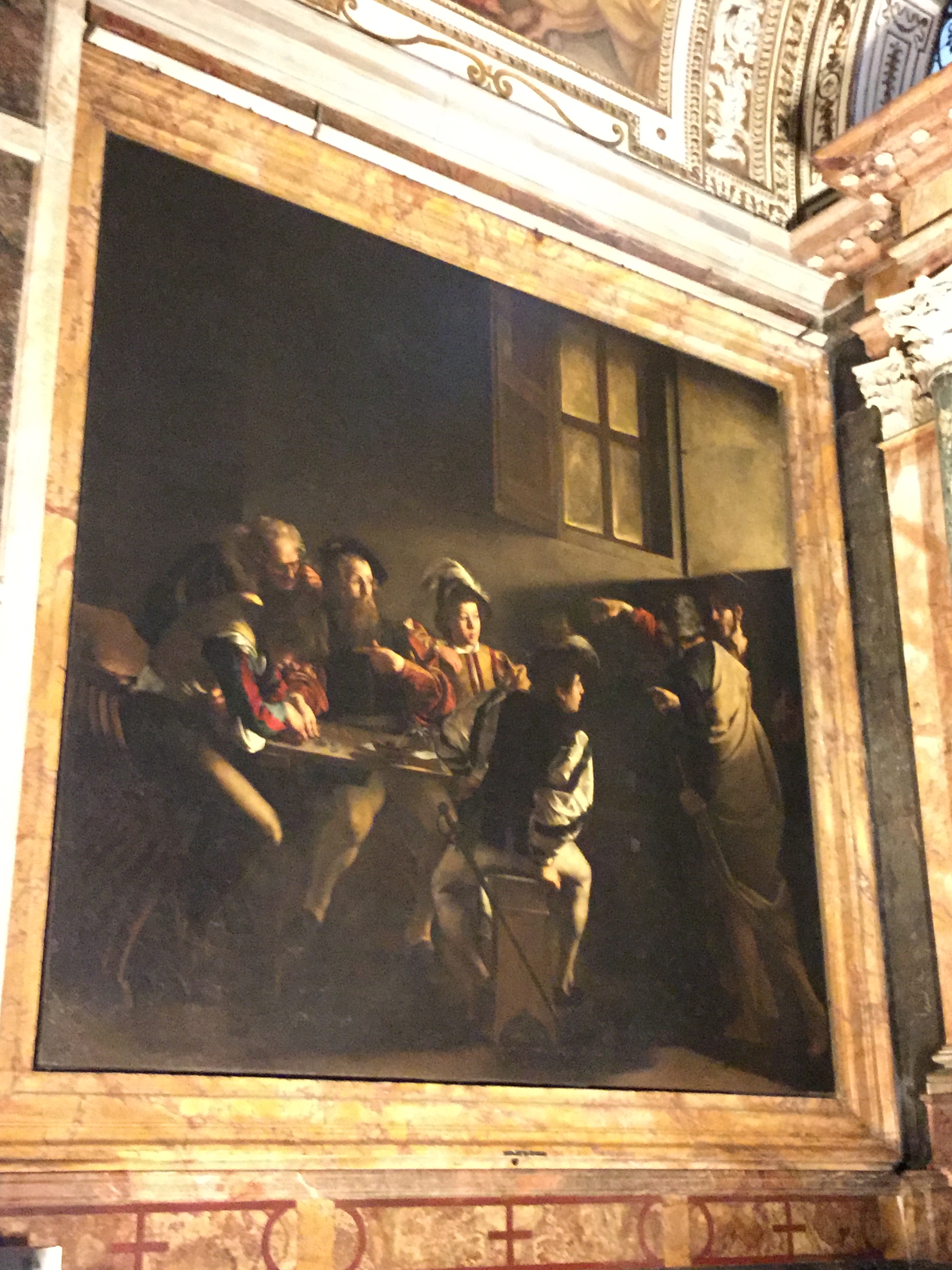
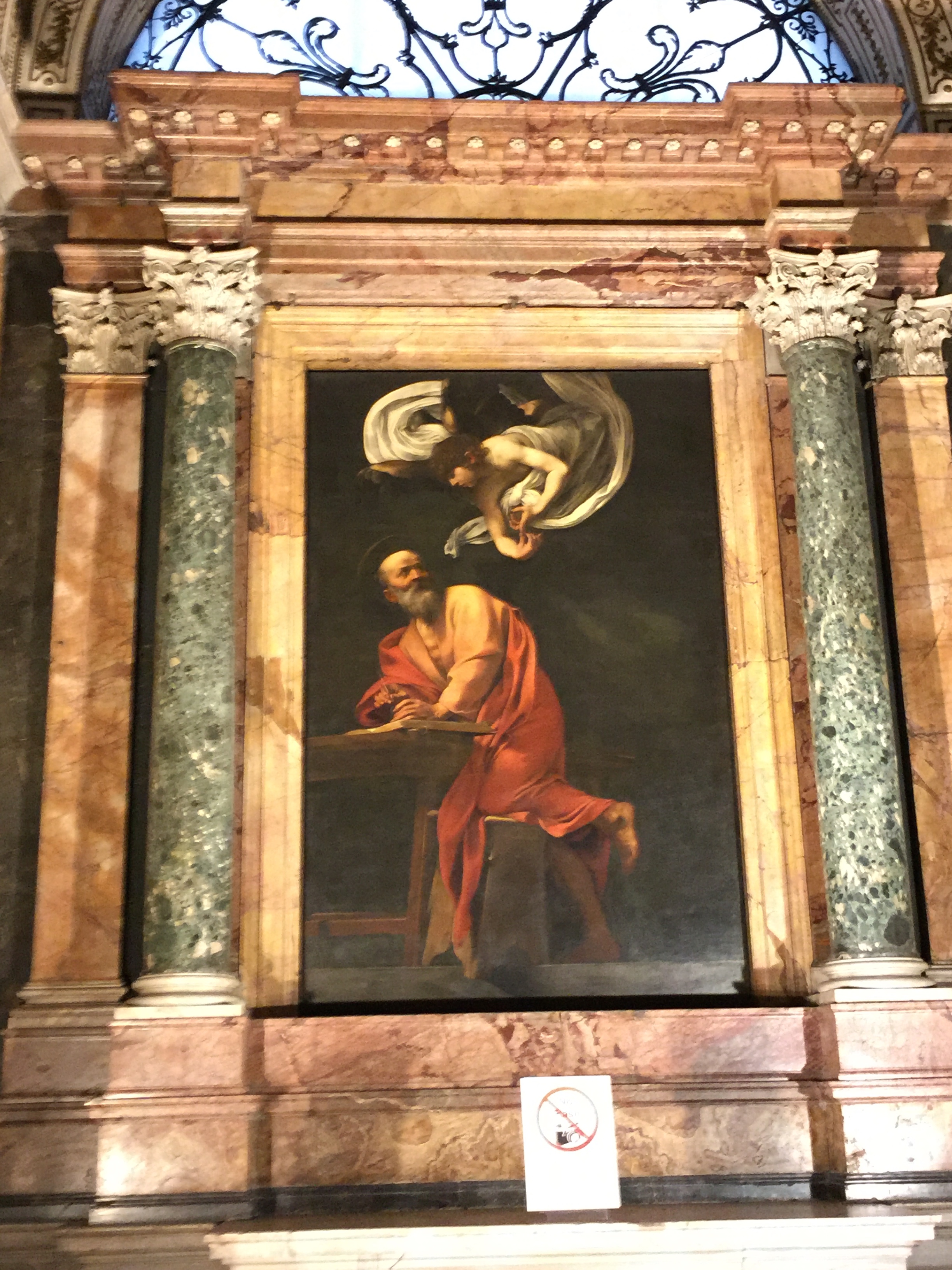
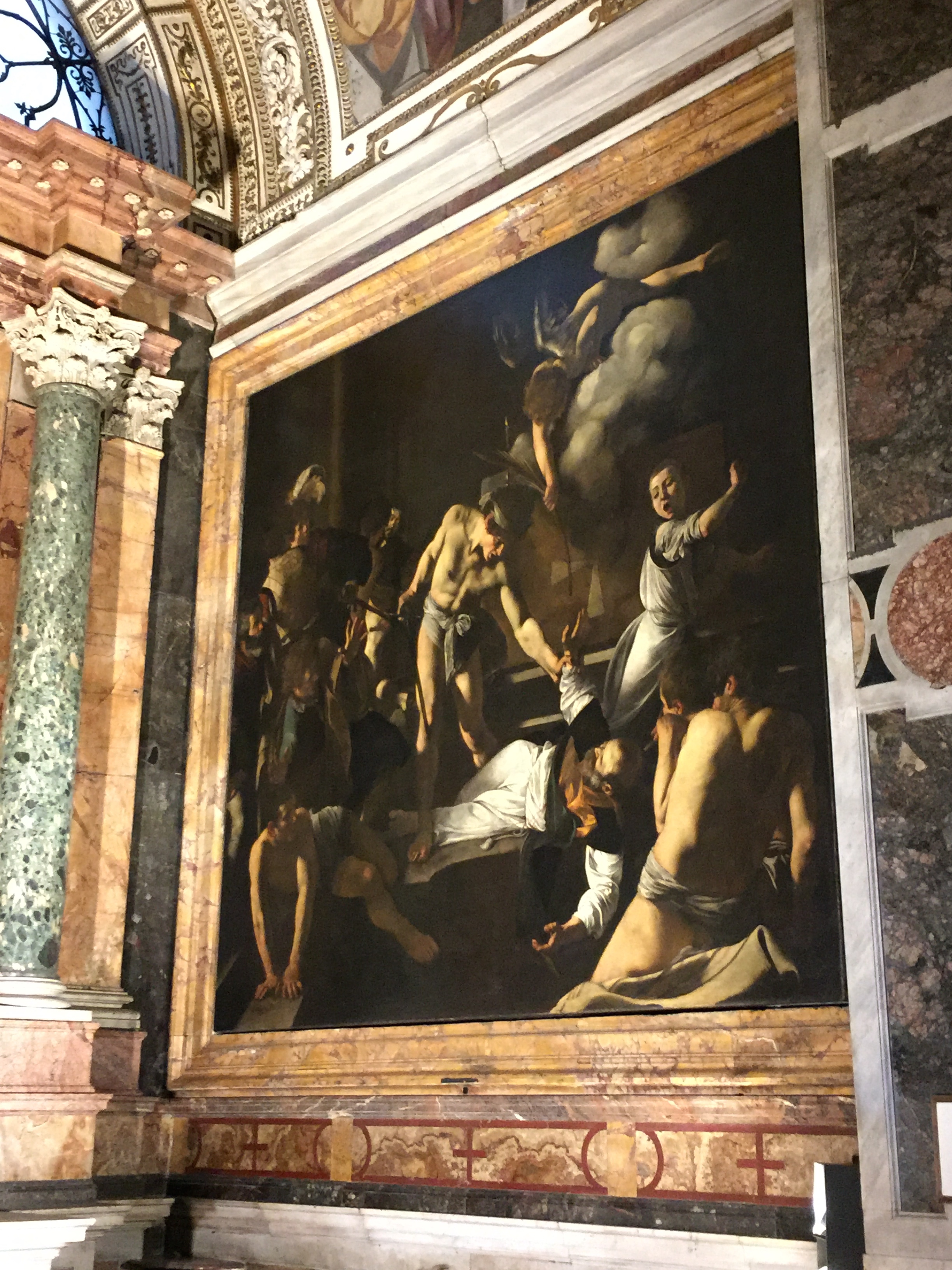
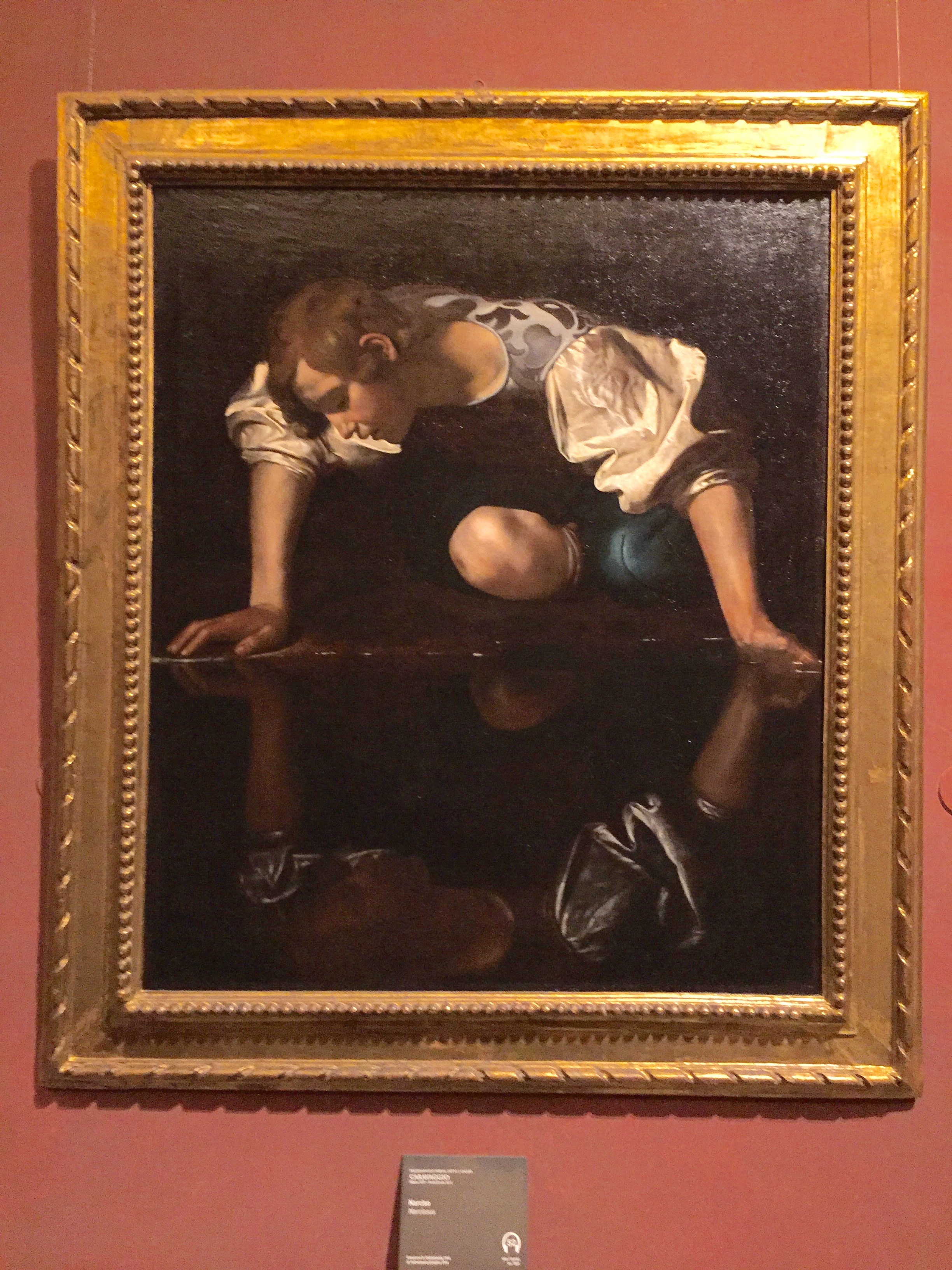
One of the things I wanted to do on this trip was to see as many of the Caravaggio paintings as I could. I only missed four of the paintings in Rome – The Deposition of Christ, The Martyrdom of St. Ursula, Madonna of Loreto, and Saint Francis in Meditation. On this trip I got to see the three in Florence as well. It will take at least two more trips to Italy to catch the rest of them, as they’re scattered in Milan, Naples, Cremona, Messina and on the Island of Malta (which is technically a separate country, but it’s close enough you can fly there from Rome for under $200 r/t).

There are a few more scattered around the world, in London, Dublin, Berlin, Vienna, St. Petersburg, and one or two more European cities, plus two in the US I haven’t seen yet.

The photos here capture most of the ones I saw on this trip, but not all, as some were very poorly lit and/or too difficult to photograph because of placement. For example, the other tourists at the Palazzo Doria-Pamphilij who wouldn’t get out of the way combined with the lighting placement creating a glare spot on the canvas no matter the angle made it not worth attempting. The altarpiece and side pieces at Santa Maria Del Popolo were too high up, at a steep angle, and even with the 1€-per-5-minutes lighting, the space was dark and chapel rail put you too far back to get a good photograph.

Bacchus
Bacchus
The Sacrifice of Isaac
Medusa
Medusa
John the Baptist
John the Baptist
St. Jerome
St. Jerome
Madonna of the Palafrenieri
David and Goliath
David and Goliath
Sick Bacchus
Sick Bacchus
Boy with a Basket of Fruit
The Calling of St. Matthew
Inspiration of St. Matthew
Martyrdom of St. Matthew
Narcissus
Narcissus
Judith and Holofernes
The Fortune-Teller
The Fortune-Teller
St John The Baptist
St John The Baptist

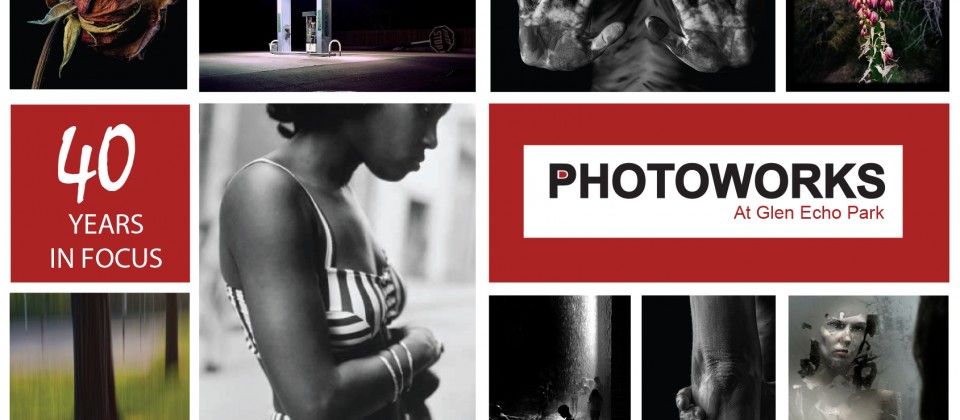
Photoworks 40th Anniversary Gala and Fundraiser
Photoworks 40th Anniversary
Signature Gala

Saturday
February 21
8-10 PM
Photoworks Gallery @ Glen Echo Park

Silent Auction and Photography Raffle
Champagne and Desserts
Black and White Attire Suggested

Come Celebrate the Photoworks Community!

Step 1: RSVP lgmphotoworks@gmail.com
Step 2: Purchase your Gala Ticket

2 Ticket Options
Platinum Gala Ticket
$150 ticket admits 1 and includes SIGNATURE PHOTOGRAPH

Silver Gala Ticket
$50 ticket admits 1 person to the event

Click Here for Ticket Purchase

Final Notes:
1. Space is limited!
2. We recommend that you purchase your tickets before Feb 7th
3. Visit www.glenechophotoworks.org to purchase tickets
4. RSVP lgmphotoworks@gmail.com to save your spot

Questions? lgmphotoworks@gmail.com
Visit us on facebook at glenechophotoworks

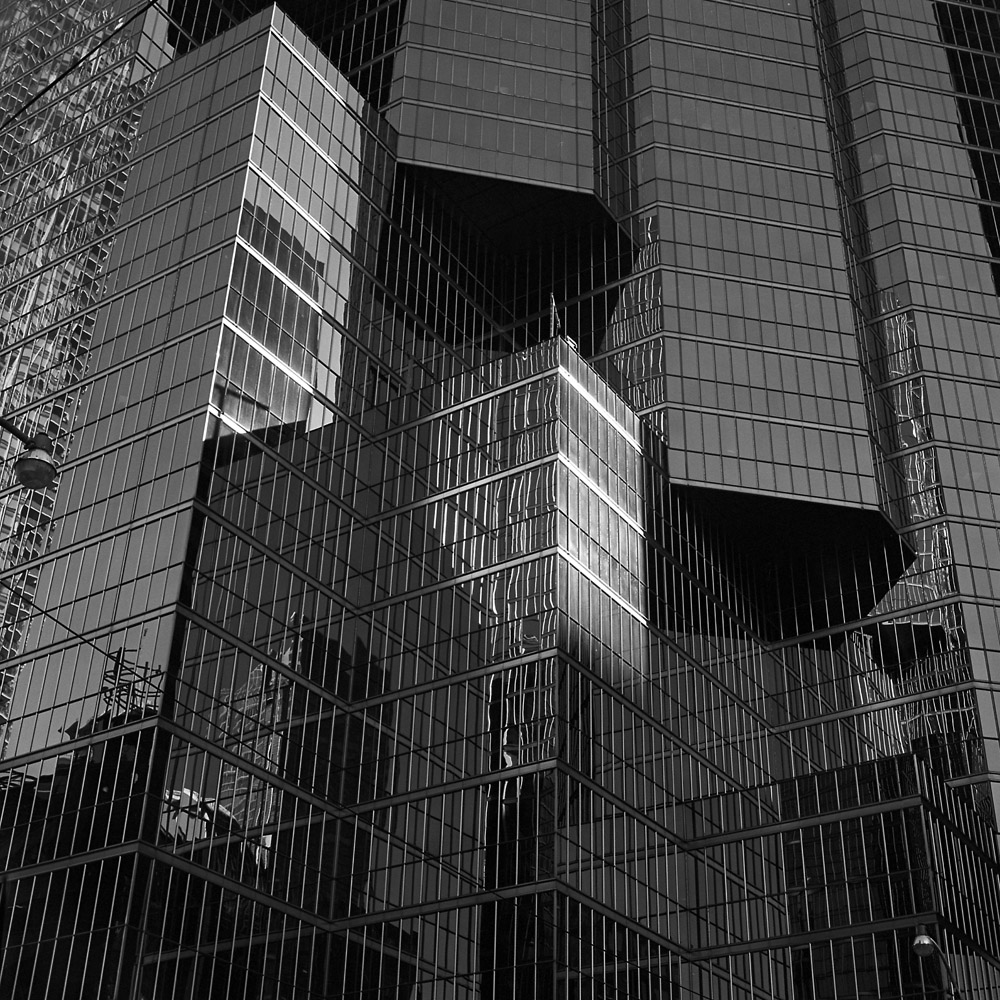
I will have a piece in the fundraiser:

Two Streetlamps, Reflections, Glass and Steel
Romeo & Juliet

Art In America, September 2014

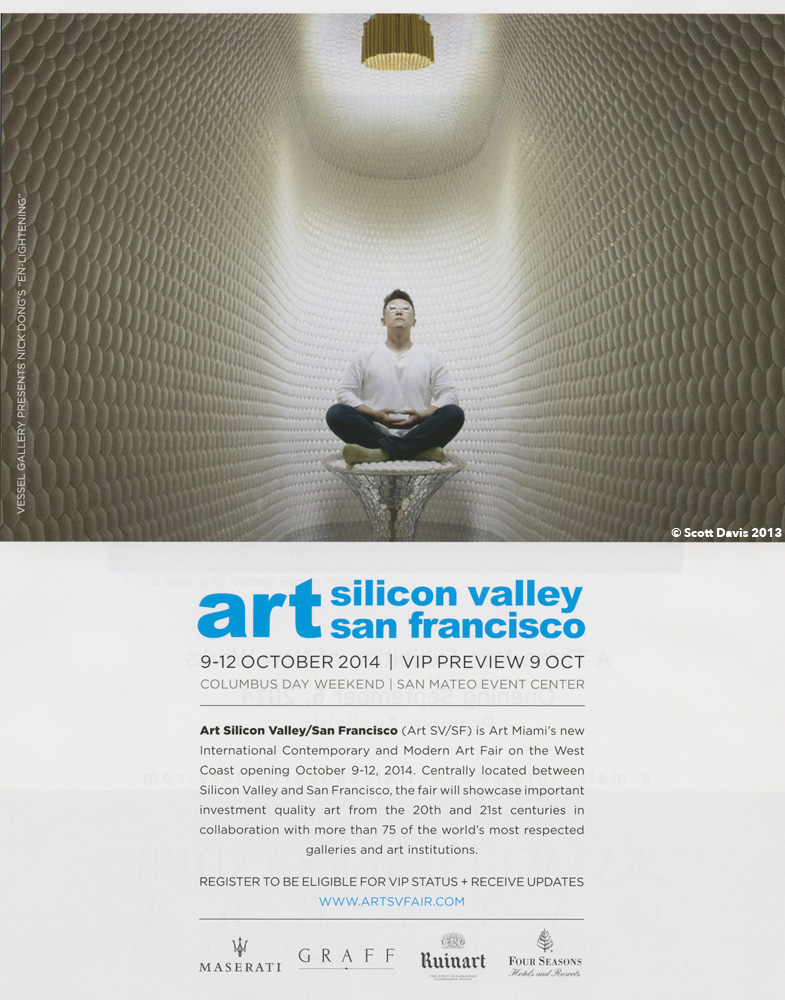
A photo of mine has been used in the current issue of Art In America (September, 2014) as the signature image for the Art Silicon Valley/San Francisco (Art SV/SF) art fair, happening Columbus Day weekend (October 9-12). The image is of my friend Nick Dong’s “Enlightenment Room” piece when it was installed here last year at the Renwick Gallery.

Art In America, September 2014 - Art SV/SF Art Fair Ad
Art In America, September 2014 – Art SV/SF Art Fair Ad

I would complain that they didn’t give me proper credit for the image (The Copyright notice you see in this image was added by me for the purpose of posting this here), but they also screwed up the name of the piece in the ad caption, so I’m not the only one being dissed.

That said, it’s still VERY cool to have one of my images used in an advertisement in Art In America.

Closing Reception Reminder – Silver Visions, River Road Unitarian Church, 5/3

Just a reminder we’re having the closing reception for our Silver Visions: Large Format Photography show at the River Road Unitarian Church on Saturday, May 3, from 3-5 pm. Please come out and see the work (and maybe even buy something??? Prices are very reasonable!).

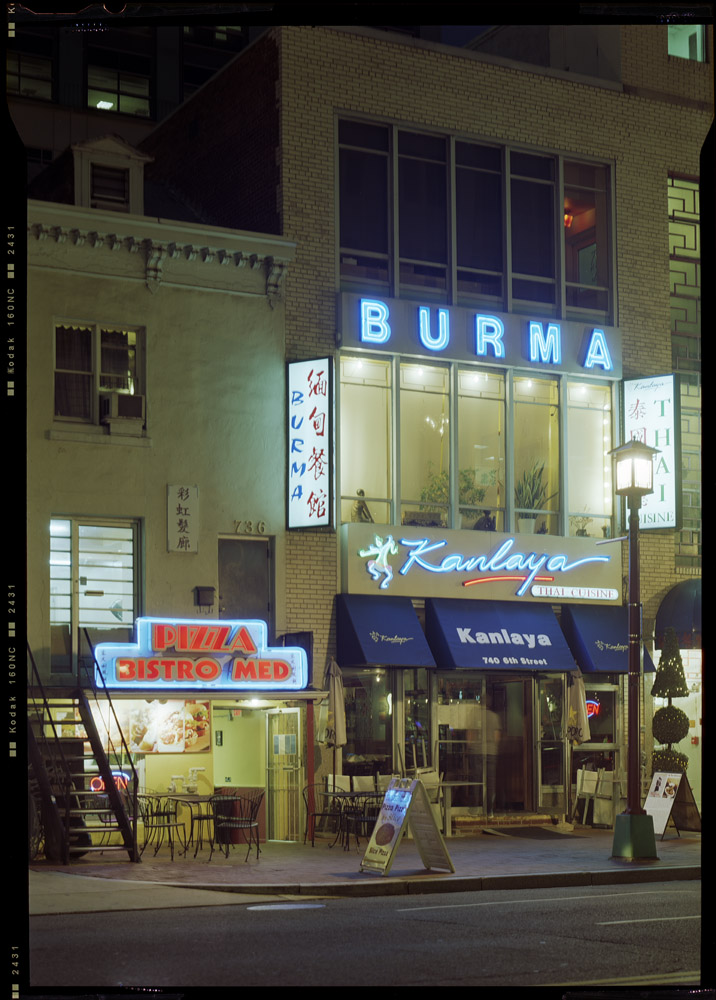
Burma Restaurant, Chinatown, DC

The church is located at 6301 River Rd, Bethesda, MD 20817, but the entrance is on Whittier Boulevard (turn on to Whittier from River Road and make the second left into their driveway – the immediate left is the exit from their parking lot).

For more information about the exhibit or visiting hours or directions, see:

River Road Unitarian Church Exhibitions

Museum Exhibition Catalogs

While I was in Paris, I went to see a major exhibition at the Musee D’Orsay, Masculin/Masculin, a retrospective of the male nude in art from 1800 to the present. It was beautifully presented, almost overwhelming in size and scope, and extremely memorable. At the time, I thought about buying the catalog because it had outstanding reproductions of the work in the exhibit, including many works and artists I was unfamiliar with. I decided not to because of the size and weight of the catalog, especially considering that it was only available hardcover and my bags were already close to the weight limit. After I got home, I was kicking myself for not buying it after all. I got a second chance, however, when a friend who lives in New York told me he would be going in early December, and he offered to bring me back a copy. It arrived today, just in time to be a Christmas present to myself.

This got me thinking about museum exhibition catalogs. I generally try to buy them for exhibits I’ve enjoyed when I have the chance, because it serves as a reminder of the work exhibited, and it goes a long way to helping support the museum mounting the exhibit, especially when the museum (like all the galleries of the Smithsonian and the National Gallery of Art) does not charge admission. As a result, I thought I’d list the exhibitions I’ve collected catalogs from.

In rough chronological order, descending, they are:

  • Charles Marville, National Gallery of Art, Washington DC, 2013
  • Masculin/Masculin, Musee D’Orsay, Paris, France 2013
  • Photography and the American Civil War, Metropolitan Museum of Art, New York 2013
  • Faking it: Manipulated Photography Before Photoshop, National Gallery of Art, Washington DC, 2013
  • 40 under 40: Craft Futures, Renwick Gallery, Washington DC, 2012
  • Stieglitz, Steichen, Strand, Metropolitan Museum of Art, New York, 2010
  • Hide/Seek: Difference and Desire in American Portraiture, Smithsonian National Portrait Gallery, Washington DC, 2010
  • Framing the West: The Survey Photographs of Timothy H. O’Sullivan, Smithsonian American Art Museum, Washington DC, 2010
  • Truth/Beauty: Pictorialism and the Photograph as Art – 1845-1945, Phillips Gallery, Washington DC, 2009
  • Faces of the Frontier: Photographic Portraits from the American West, National Portrait Gallery, Washington DC, 2009
  • Titian, Tintoretto, Veronese: Rivals in Renaissance Venice, Boston Museum of Fine Art, Boston, 2009
  • Impressed by Light: British Photographs from Paper Negatives, 1840-1860, National Gallery of Art, Washington DC 2008
  • All the Mighty World: Photographs of Roger Fenton, Metropolitan Museum of Art, New York, 2004
  • Segnali di Fumo: L’avventura del West nella Fotograffia, Castello Sforzesco, Milan, Italy 1994
  • Circa 1492: Art in the Age of Columbus, National Gallery of Art, Washington DC, 1992
  • Treasure Houses of Britain, National Gallery of Art, Washington DC 1985
  • Tutankhamen, National Gallery of Art, Washington DC 1977
  • The Family of Man, Museum of Modern Art, New York, 1955*

*obviously I did NOT attend the Family of Man exhibit, as I wasn’t even a fantasy in my grandparents’ minds in 1955. But I do have the exhibition book.

Also note that I’ve listed where I saw the exhibit, not necessarily who published the catalog.

Perhaps the oddest is the Segnali di Fumo catalog, purely on account of the incongruity of going all the way to Milan, Italy to see photographs of the American West (well, I didn’t GO to Milan to see the exhibit, but happened upon it as I was leaving the Castello Sforzesco), with a significant body from the Amon Carter museum in Texas. Which I haven’t been to yet, but really ought to. It would also help close the loop on my France trip, for it is there that the first known photograph ever is held – Niepce’s first known heliograph of the view out his studio window at his estate near Chalon-sur-Saone (that I couldn’t visit because it was closed for the season). I’m sure I’m missing one or two from my collection, and my collection of catalogs is a pale shadow of the total number of exhibits I’ve been to either because no catalog was produced (producing an exhibition catalog is a major undertaking and not done casually or cheaply) or because I couldn’t afford it at the time.

Another day I’ll put together a catalog of my photography monographs, as I know this is of interest to some. It’s not a huge collection, especially in light of my overall library size, but it is a work in progress.

More images published at Eastern Sierra Center for Photography – male nudes

I have had eight images published at Eastern Sierra Center for Photography’s website in their “Paradigmatic Nudes” gallery online. Most of these images you’ve seen here before on my blog. The images featured are my whole-plate sized gum bichromate prints of Philip, a model I’ve worked with and my Type 55 Polaroid 4×5 format shots of my friend Jose. I’d like to give a big shout-out to Laura Campbell, their curator and director, for repeatedly selecting my work and having faith in my creative vision. Please go check out their website and see the entire gallery.


Jose, Legs
Jose, Legs

Large format Nudes at Eastern Sierra Center for Photography

Paris in October – part 25 – Hans Z, Street Photographer

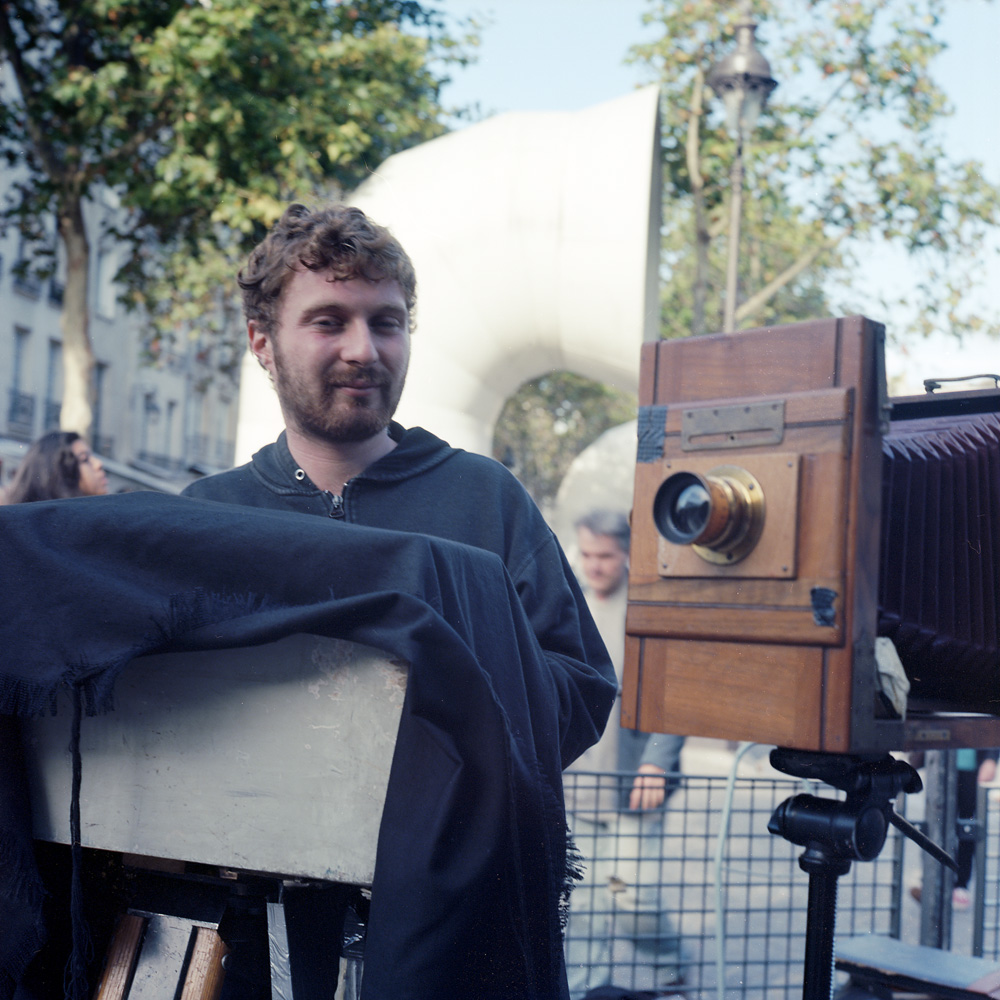
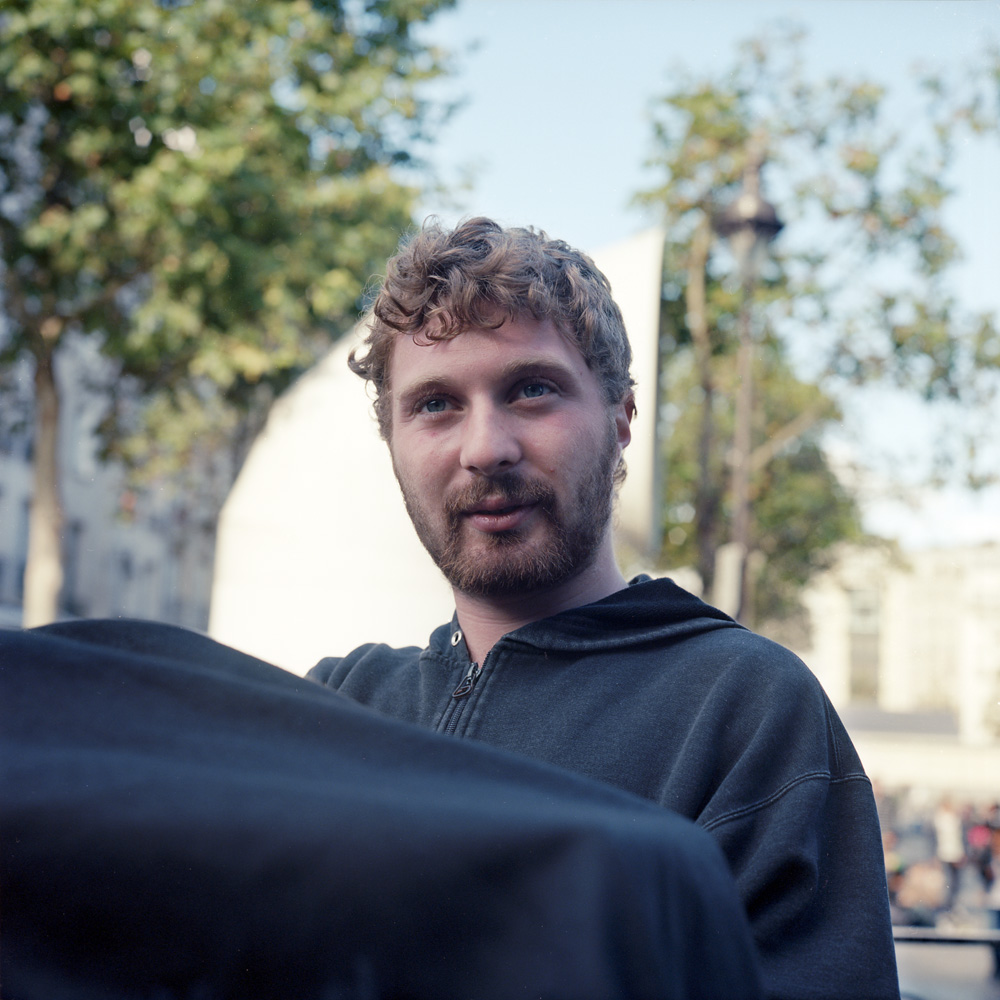
Meet Hans Zeeldieb, the street photographer working outside the Pompidou Centre. He was set up with his vintage 5×7, paper negatives, and portable darkbox doing portraits for 15 Euros a pop. He shot and developed them on the spot in 15 minutes. We struck up a friendly conversation when I saw his camera and he saw mine and talked a lot about photography. He sent me down the street a few blocks to the Centre Iris to go see an exhibit of wet plate collodion images by Jacques Cousin and several of his students, as well as some work by my friend Quinn Jacobson. Several years ago, I was involved in a gallery space in Hyattsville, Maryland called Art Reactor, where I curated a show of photographs made using the whole plate format*, and Quinn was one of the artists I selected. I think I made Hans a little nervous, as he overexposed the image of me. He did capture a good expression of me though, so I was happy to support a fellow working photographer.

In the first photo, I caught Hans with his hands in the darkbox, processing a print. The way it works, he exposes a paper negative in the camera, then develops it in the box. After the negative is developed, he sandwiches it with another piece of paper, opens a window in the dark box to expose it again, and processes the second paper, which now has a positive image. There are several advantages to this process – by working with paper, the development and fixing is much faster than with film, and you can use the same chemistry for both your negative and your finished print. I’ve seen or read about other itinerant photographers using much the same technique around the world, from Madrid to Kabul.

Hans with his camera, processing a photo

Here is a portrait of Hans outside the Pompidou Centre, just a close-up this time without the camera in the frame. He seems a little lost in thought – I think he was counting time for the print he was developing.

Hans, at the Pompidou Centre

* Whole Plate format is the original photographic format, defined today as 6 1/2 x 8 1/2 inches. It is not entirely certain how this size was chosen by Daguerre as the plate size he wanted to use, but reasonable speculation ties it to book printer’s printing plates. It has varied in its specification over time, but it settled on the 6 1/2 by 8 1/2 size by the late 19th century.

Charles Marville exhibit at the National Gallery of Art

The River Seine by Charles Marville

Charles Marville: Photographer of Paris

Around 1832 Parisian-born Charles-François Bossu (1813–1879) shed his unfortunate last name (bossu means hunchback in French) and adopted the pseudonym Marville. After achieving moderate success as an illustrator of books and magazines, Marville shifted course in 1850 and took up photography, a medium that had been introduced 11 years earlier. His poetic urban views, detailed architectural studies, and picturesque landscapes quickly garnered praise. Although he made photographs throughout France, Germany, and Italy, it was his native city—especially its monuments, churches, bridges, and gardens—that provided the artist with his greatest and most enduring source of inspiration.

By the end of the 1850s, Marville had established a reputation as an accomplished and versatile photographer. From 1862, as official photographer for the city of Paris, he documented aspects of the radical modernization program that had been launched by Emperor Napoleon III and his chief urban planner, Baron Georges-Eugène Haussmann. In this capacity, Marville photographed the city’s oldest quarters, and especially the narrow, winding streets slated for demolition. Even as he recorded the disappearance of Old Paris, Marville turned his camera on the new city that had begun to emerge. Many of his photographs celebrate its glamour and comforts, while other views of the city’s desolate outskirts attest to the unsettling social and physical changes wrought by rapid modernization. Taken as a whole, Marville’s photographs of Paris stand as one of the earliest and most powerful explorations of urban transformation on a grand scale.

By the time of his death, Marville had fallen into relative obscurity, with much of his work stored in municipal or state archives. This exhibition, which marks the bicentennial of Marville’s birth, explores the full trajectory of the artist’s photographic career and brings to light the extraordinary beauty and historical significance of his art.

I went this weekend with my parents to see this exhibit. It is a wonderfully presented exhibition, and proof positive that when the National Gallery tries hard to do a good photography show, they can. The exhibition had special resonance for my father and I as we have just been to Paris, and trod the same streets documented in these photographs.

The exhibition has over 100 prints of Charles Marville’s work on display, ranging from early salt-paper portraits made from calotype negatives (negatives made on paper) to large albumen prints of architectural studies from glass collodion negatives. His architectural works have a significant sociological aspect as they document neighborhoods in transition from medieval warrens of twisted streets and cantering buildings flung up haphazard against one another, populated by the Parisian working class, to the modern, wide boulevarded, sanitized, luxurious Paris created by Baron Haussmann that we think of today.

Among the modernizations he documented were the new gas street lamps being installed, and the public urinals Haussmann designed to improve public sanitation (a major obsession of his). While many of the street lamps were preserved with electrification and can still be seen today, only one of Haussmann’s urnials still stands on Parisian streets.

Marville even includes himself in this transition, as he frequently used himself or an assistant as a stand-in for scale and emotional impact amidst the tumult and construction/destruction he photographed. He even photographed his prospering studio in a location that a scant few years later would also fall victim to Haussmann’s ‘modernizations’.

At the peak of his career he was the official photographer of Paris, but by the time of his death, he had faded into obscurity, his work ending up stored in state and city archives, and not a single obituary was published to mark his passing. He may have died in obscurity, but his work survived and preserved the city in transition, sometimes with his images being the sole record of the city that was.

The exhibit will be traveling to the Metropolitan Museum of Art in New York in January. If you can make it, it will be well worth your while.

Peoples Choice Voting – Onward Compé 14

Here’s one instance of where Richard Daley’s admonition to “get out, vote early, vote often” is actually legitimate! Please go visit my entry in the Onward Compé `14 competition, and vote for me in the Peoples’ Choice category. You can vote daily, so please do!

Jose, Torso, Kneeling