Category Archives: Photography

Photostock 2013 – Lake Oneal and The Birchwood Inn

I don’t recall if I regaled you all with the saga of my stuck rental car. I had heard from some other folks at Photostock about Lake Oneal, which they said was absolutely beautiful, but really needed to be photographed in foggy conditions. Something was mentioned about the road to it being challenging, but that kinda got lost in my memory at the time. On my last day at Photostock, I decided to drive around on my own and take some photos. I had stopped in the general store in Good Hart and the owner gave me a map of Emmett County and marked a number of photogenic sights on it. I headed out, map in hand, stopping at the boat launch in Cross Village to get my shots of Lake Michigan. Carrying on, I saw the road to Lake Oneal marked on the map. At the end of the road there was a symbol for a boat launch. I thought, “how bad can the road be if there’s a boat launching ramp at the end?”. So, naive as I was, I drove back there. The road had some sandy spots in it, but nothing I couldn’t navigate around in my Ford Fusion. Then, at the very end of the road, there was a tall uphill, and on the downslope to the parking/unloading area, a VERY sandy stretch. I managed to get down the slope fine, so I figured I could follow the same track back up. NOT. I tried, several times, and ended up getting the car stuck on the side of the road. Long story short, two and a half hours and $300 later, my car was back on a hard surface road.
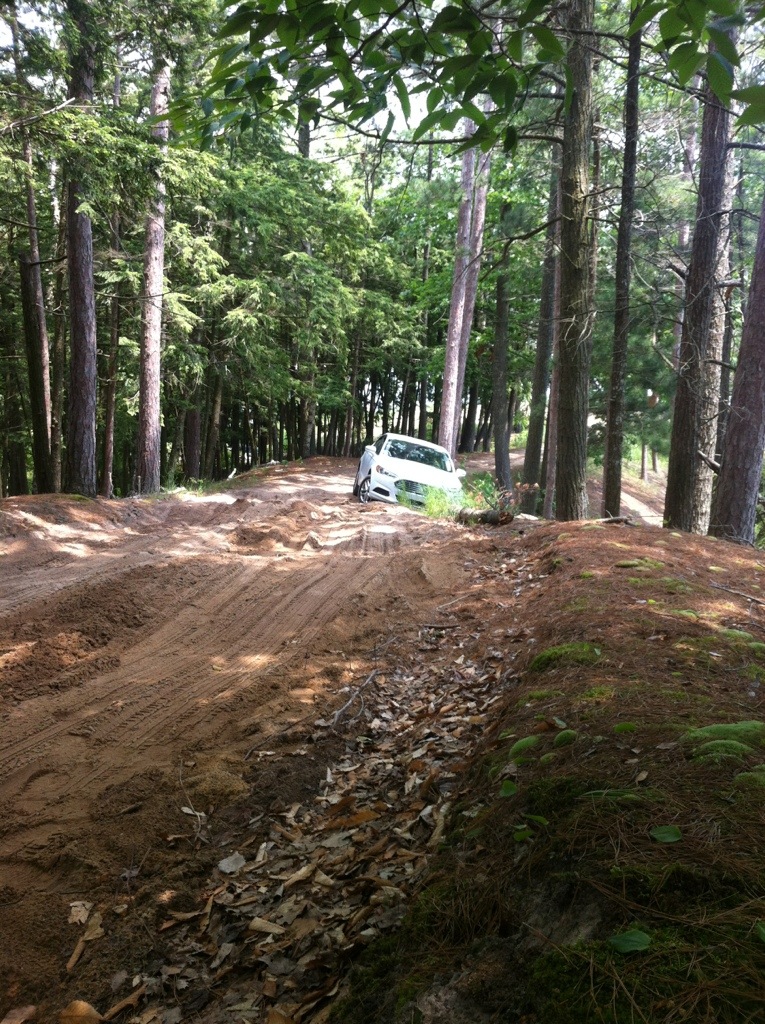
The Sandy Uphill
The Sandy Uphill

While I was stuck there, in the bright beautiful sunlight of a fog-less afternoon, I decided I would take on the challenge thrown down by the other photographers of getting a good shot of the lake with no fog. Here are the results:
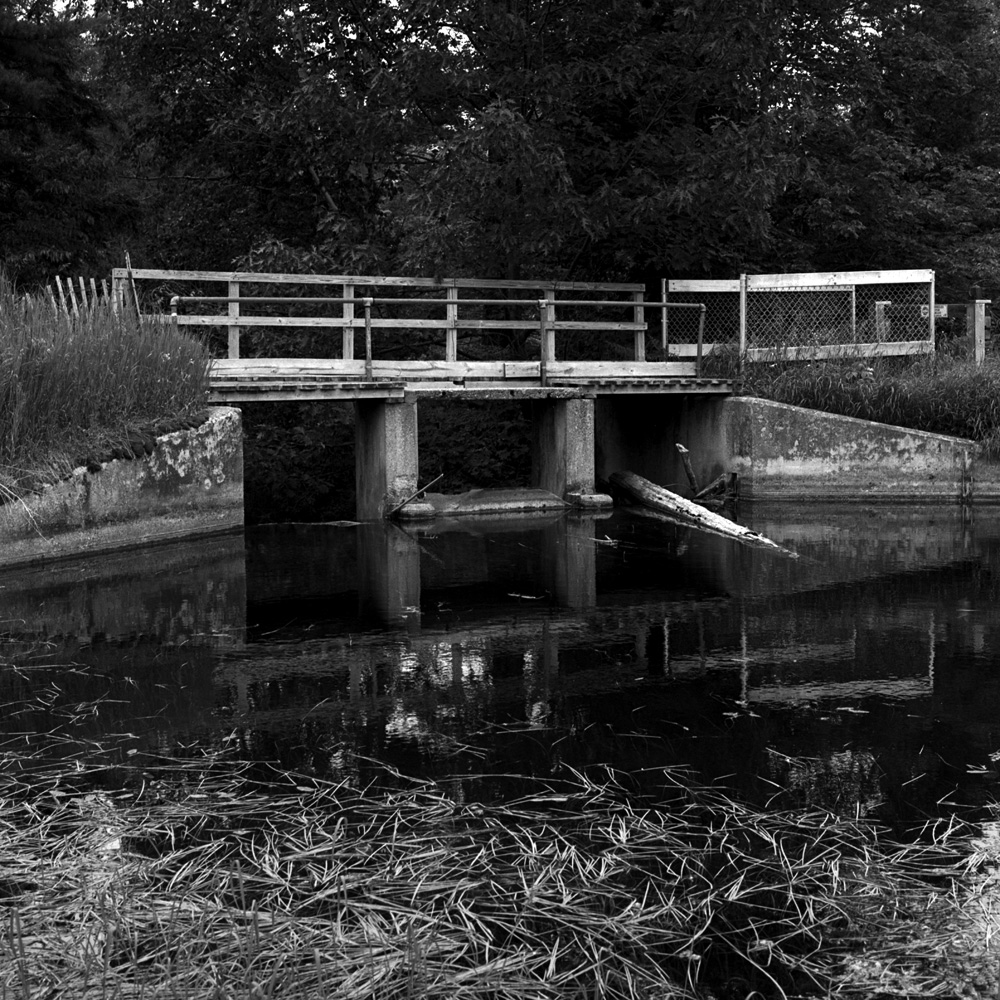
Bridge, Oneal Lake
Bridge, Oneal Lake

The bridge is over a sluice/runoff drain for the lake. Judging from the stands of dead trees sticking out of the lake waters, the lake was an artificial lake. Why it was created I’m not sure, but I’m not about to complain.
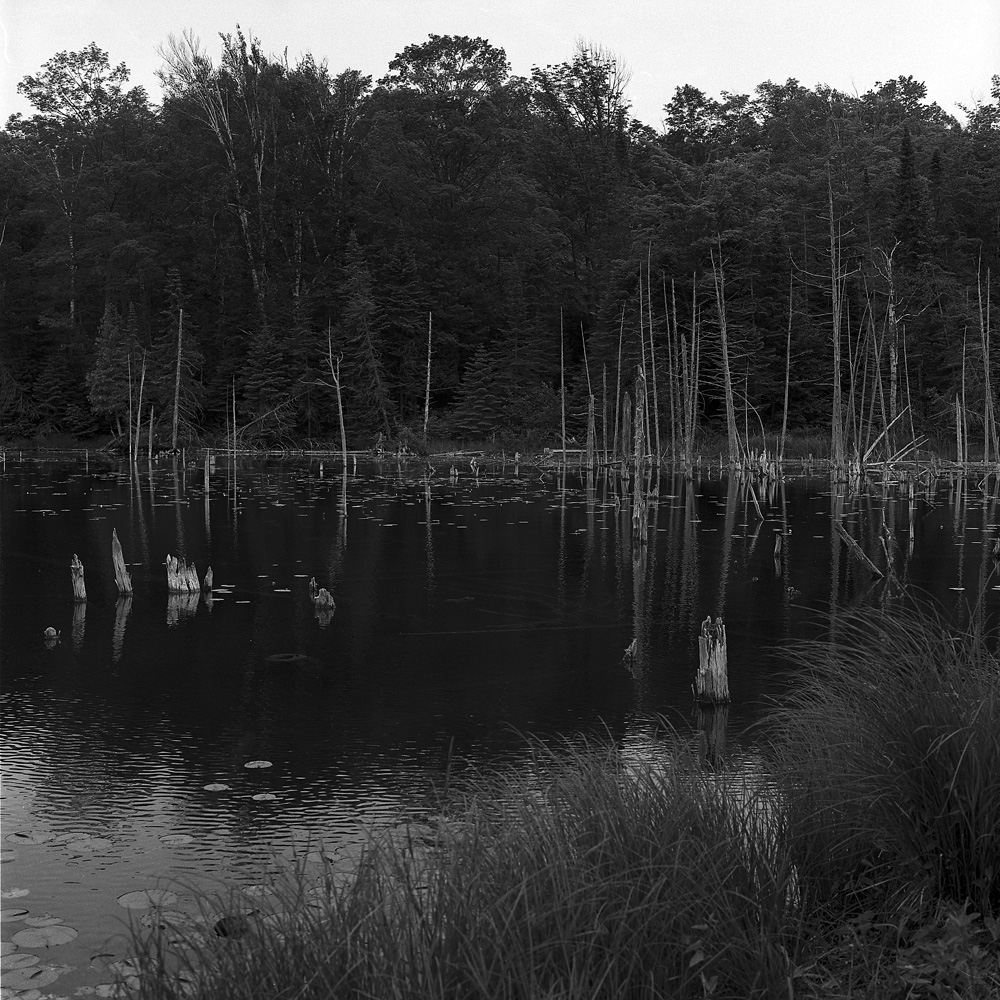
Oneal Lake
Oneal Lake

Here you can better see the snags of dead trees reflected in the waters. Other than the leaden white sky (there was a little overcast, but still bright sun), I’d say challenge met.

These next two photos are of/at the Birchwood Inn, our headquarters for Photostock. The first one is of some magnificent clouds we had one evening. The roof of the annex to the inn is just visible at the bottom.
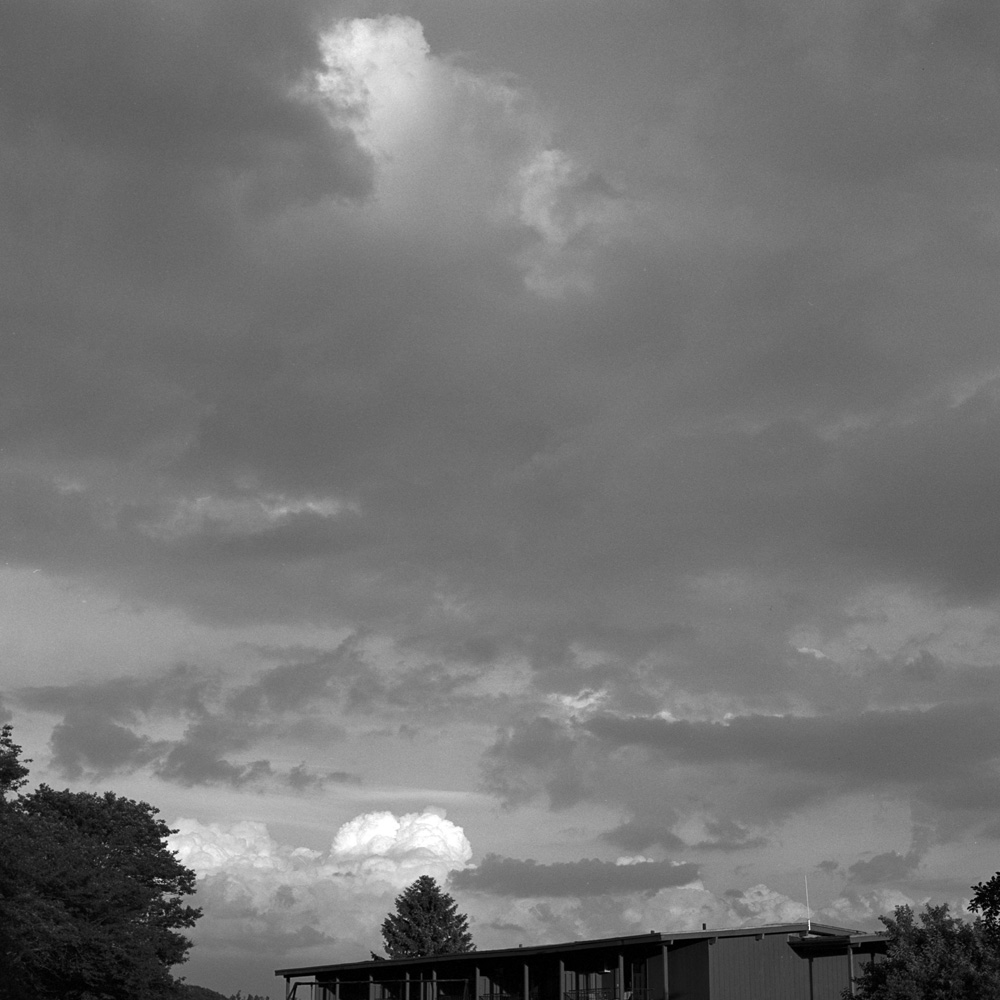
Clouds, Birchwood Inn, Evening

The last photo of this post is the Birchwood Inn’s patio illuminated by the full moon. This was I believe the night of the “super-moon”, but late enough it no longer appeared larger than normal. But it sure was bright and beautiful.
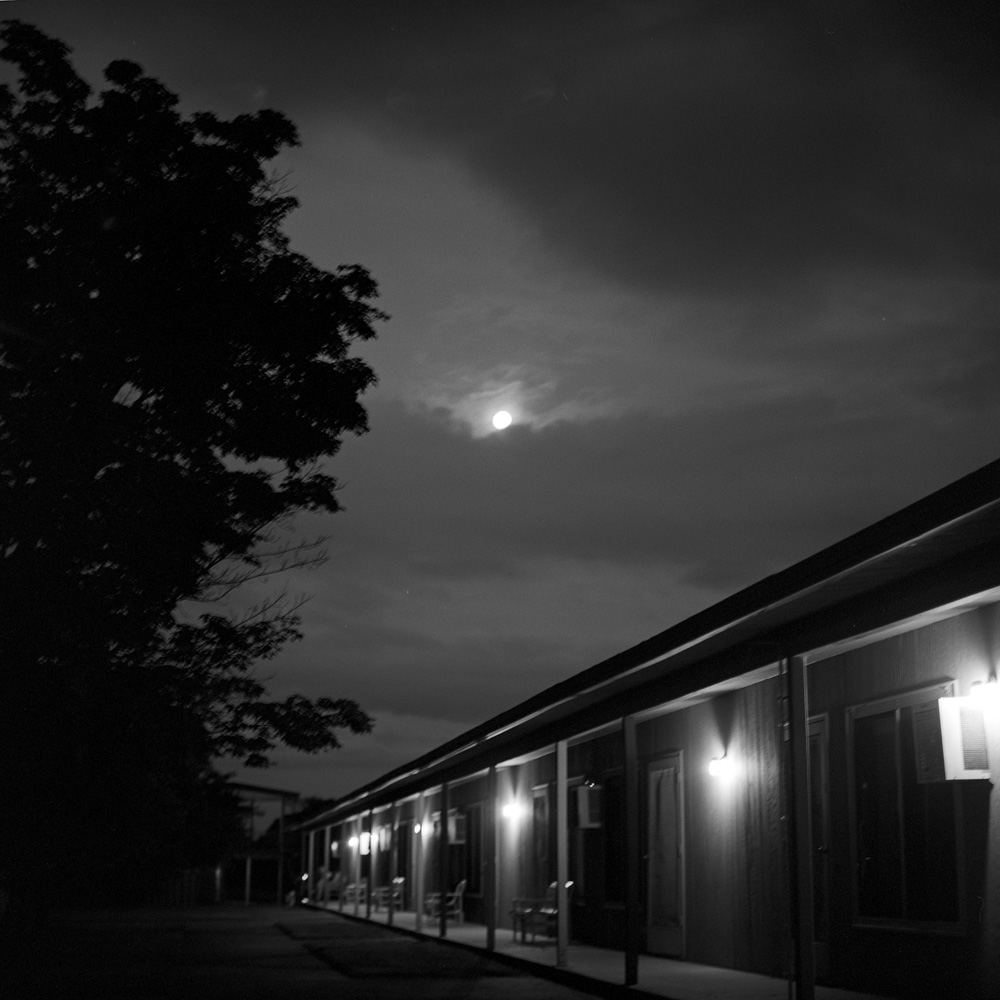
The Birchwood, Moonlight

All the black and white images were taken with my Rolleiflex 2.8E, on Ilford Delta 400 film. The color shot was from my iPhone. Which was my lifeline to getting un-stuck, but barely – signal at Lake Oneal was so bad, I kept dropping my calls to AAA. So two words of caution should you ever want to visit Lake Oneal yourself – ONE: bring your own 4-wheel drive/offroad vehicle, preferably with a bumper-mounted winch, and TWO: a satellite phone would not be a bad investment. I watched two different 4wd vehicles go up that hill, and both had trouble, although one fared better than the other. The first one was only technically 4wd, because his front transfer case was acting up and so the power was only going to the rear wheels. His knobby tires and high clearance were what enabled him to get out. The other one spun and sputtered and wallowed through the sand but made it out in one pass.
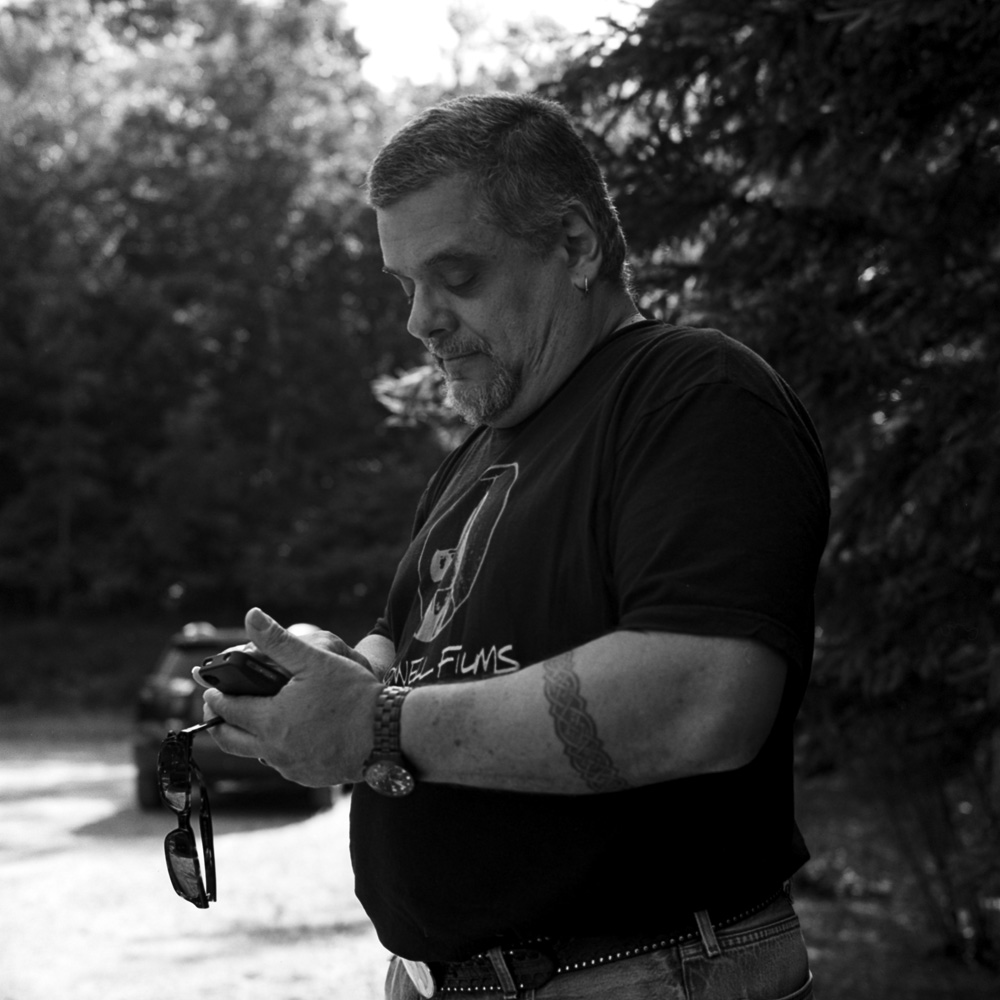
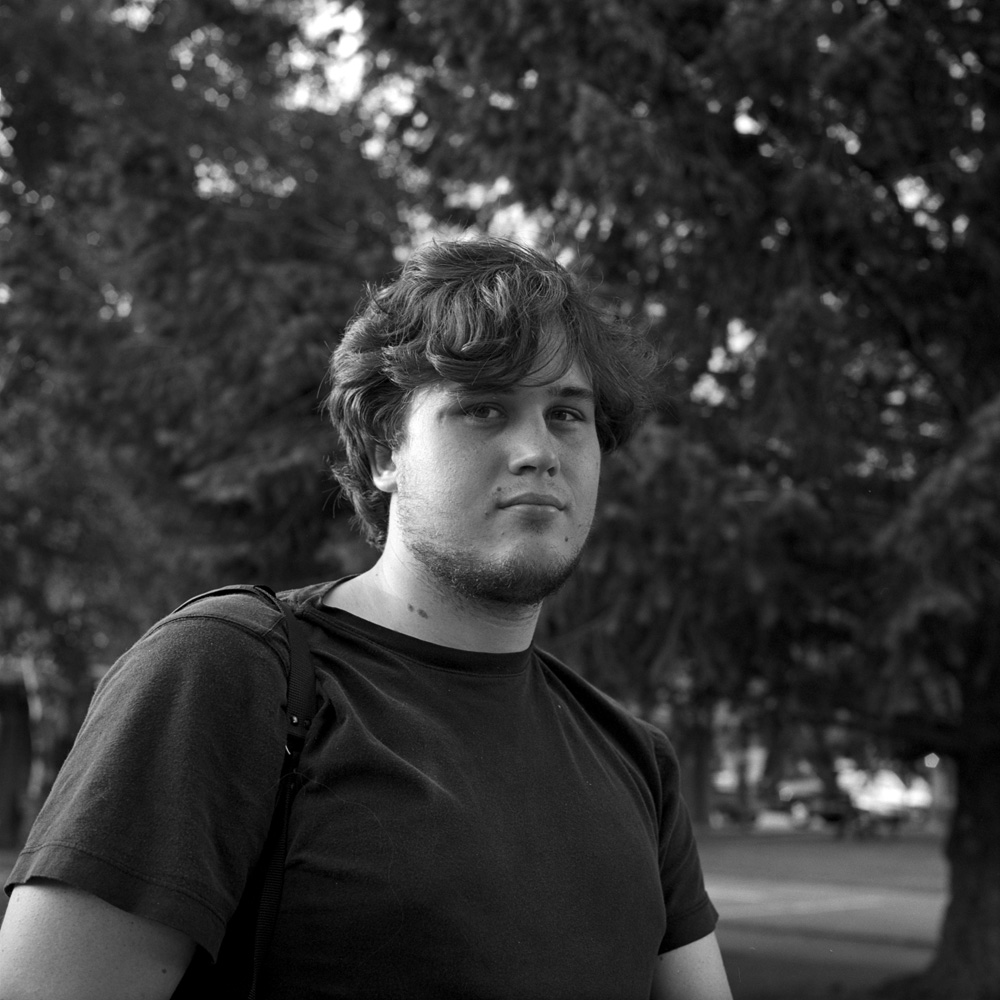
Yet More Faces of Photostock 2013

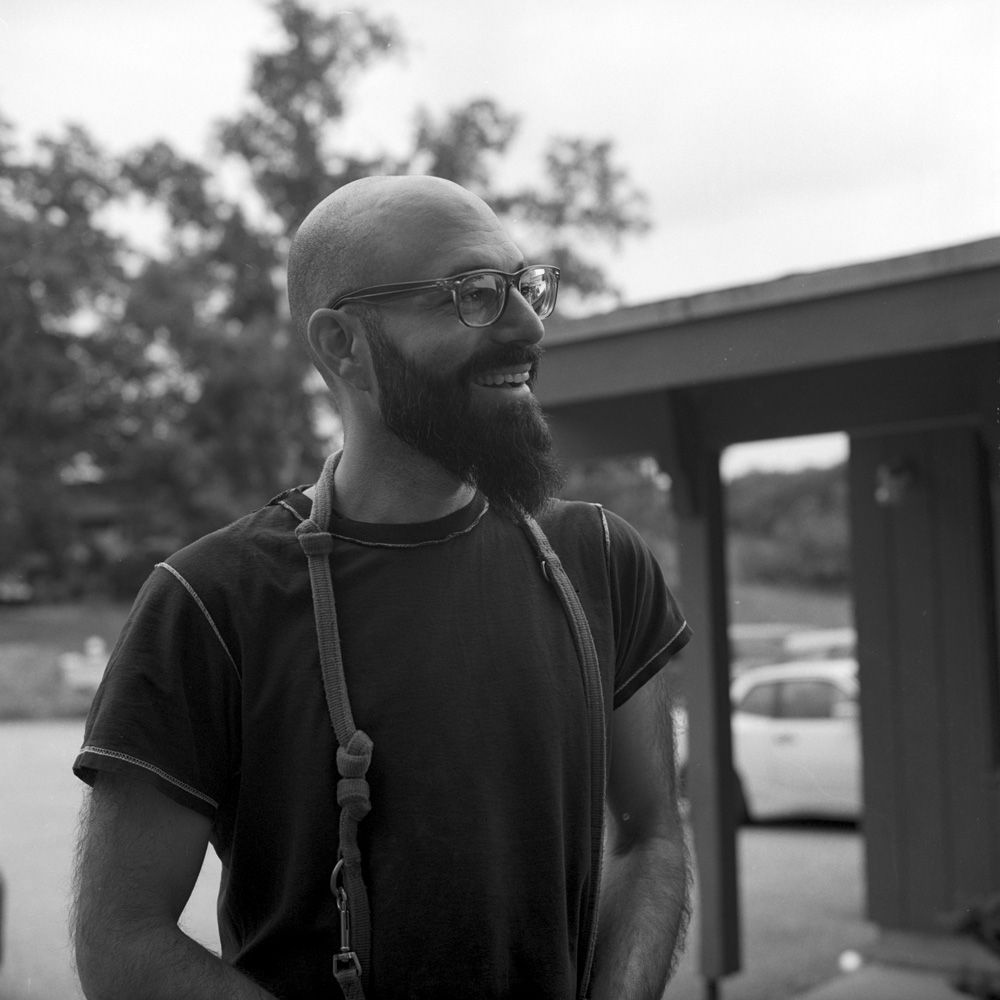
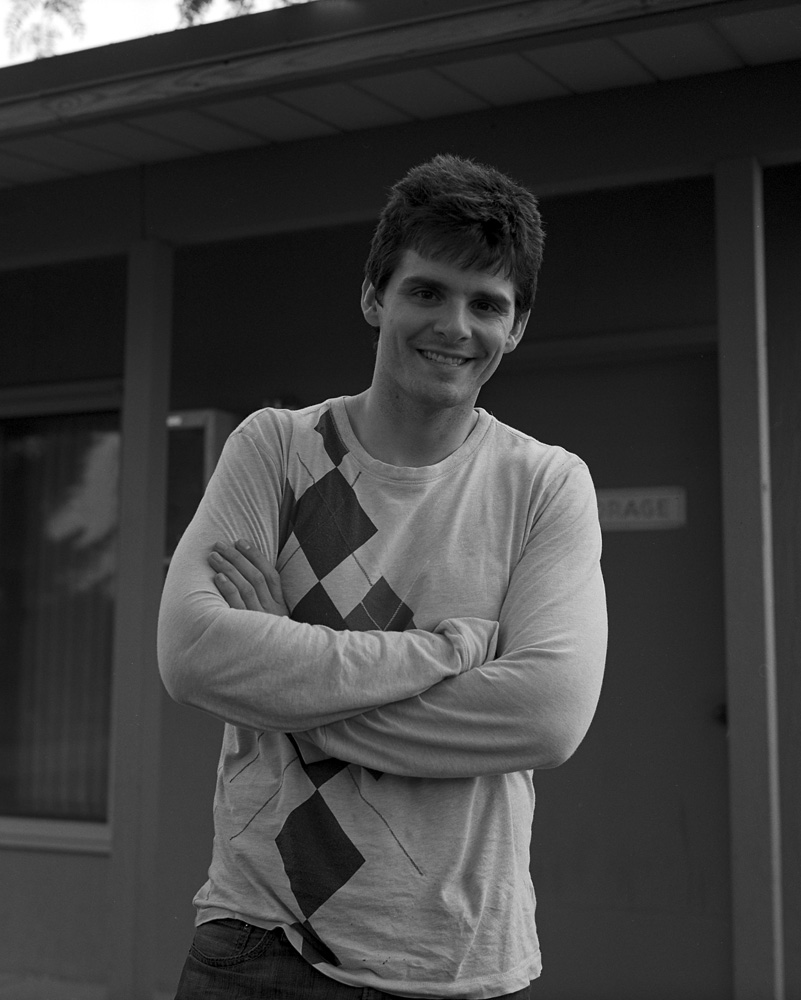
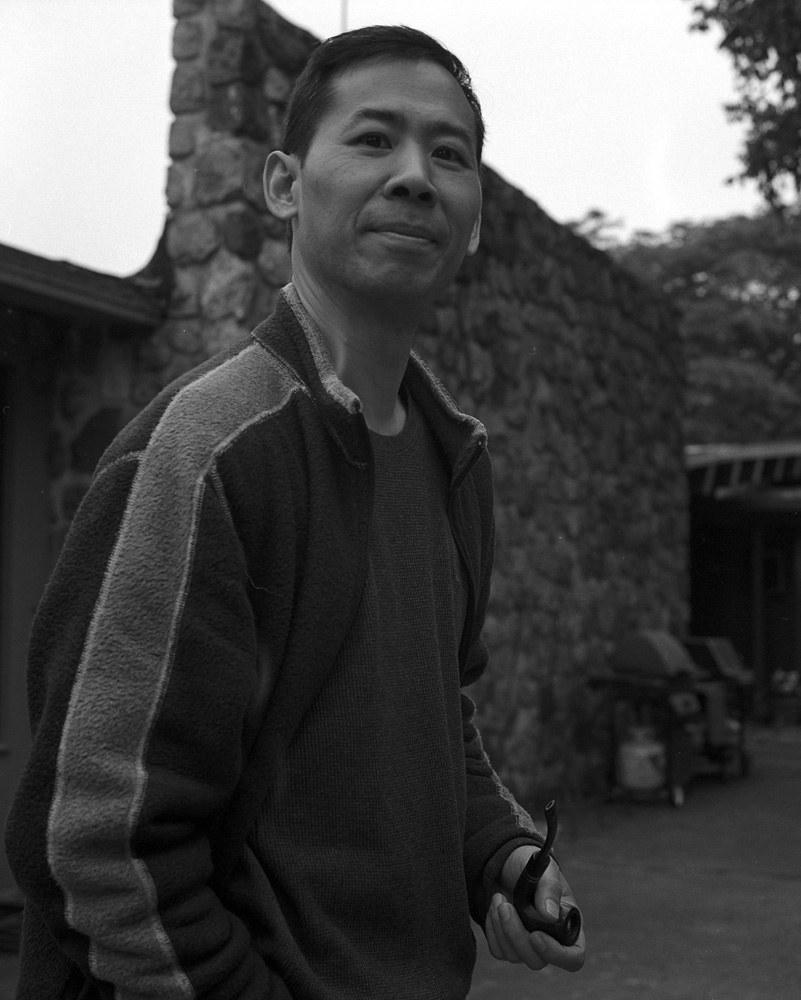
Here are some more (the last batch, actually) of my “Faces of Photostock”. In no particular order:

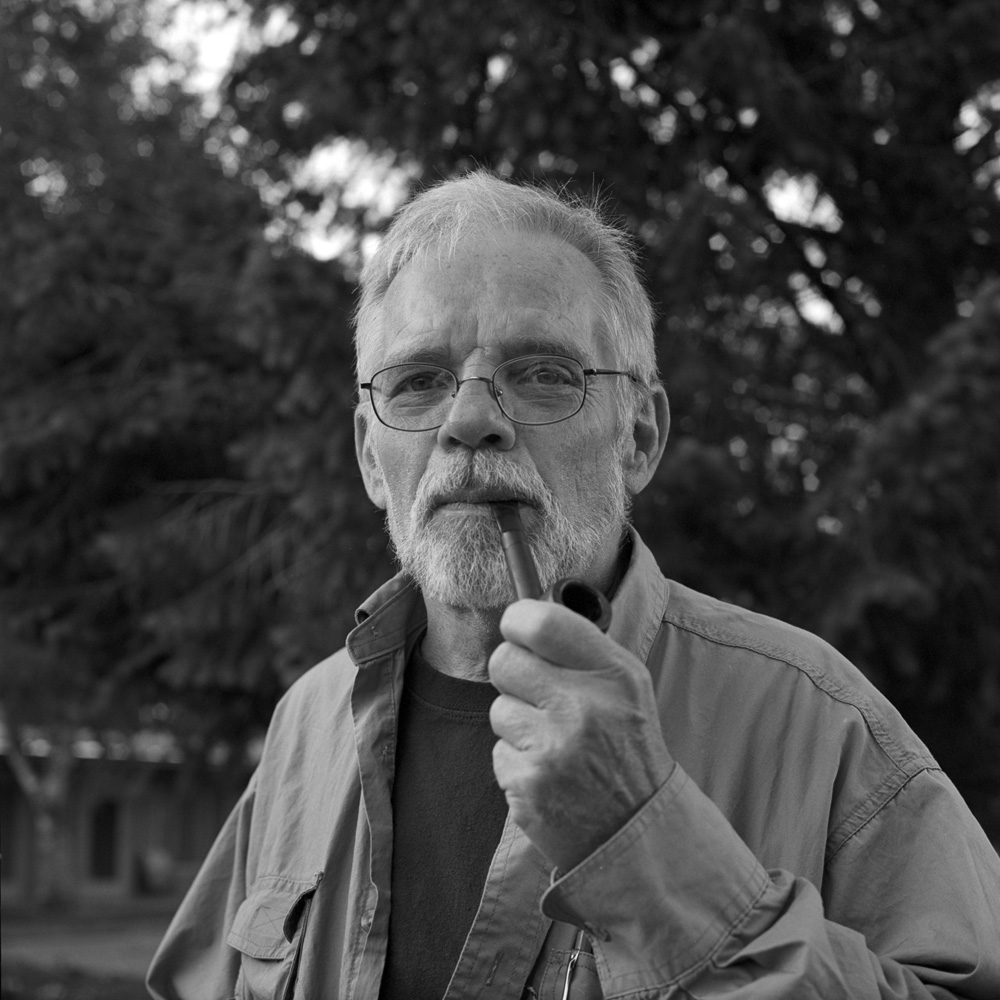
Kerik Kouklis
Kerik Kouklis
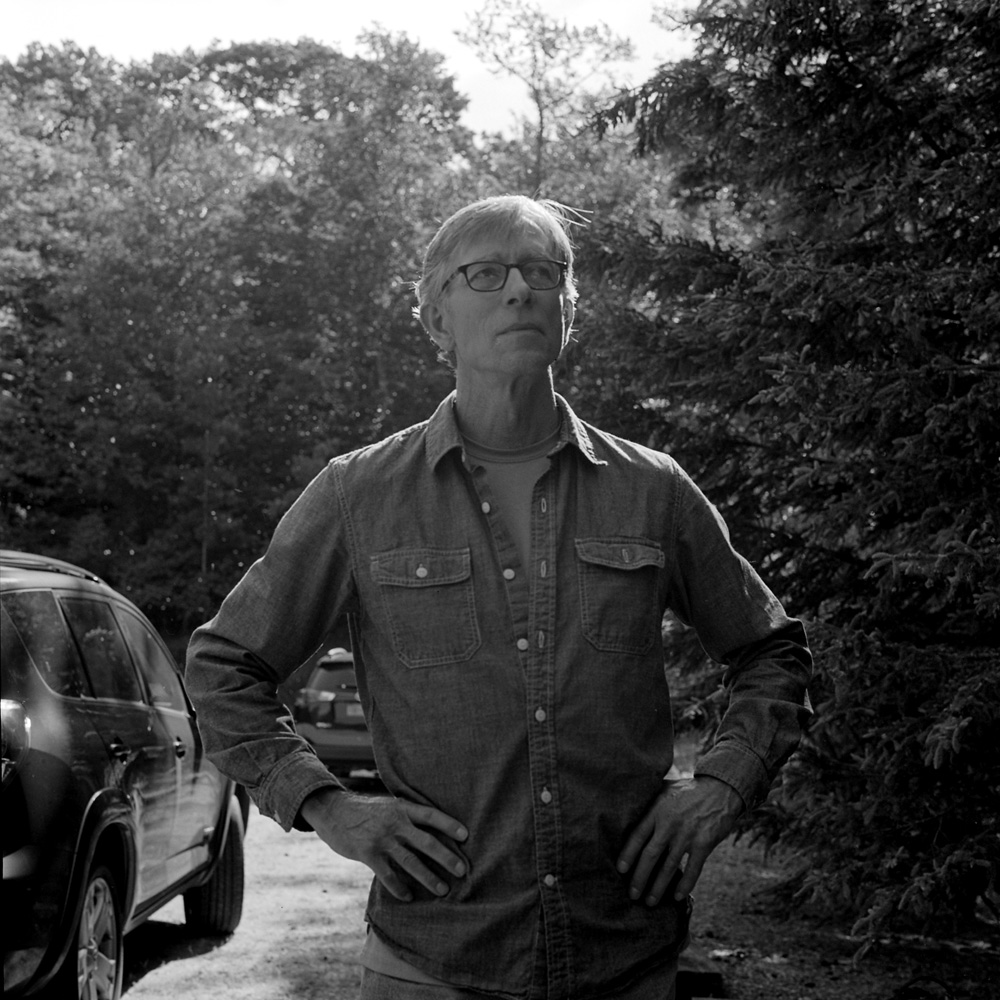
Kris Johnson
Kris Johnson
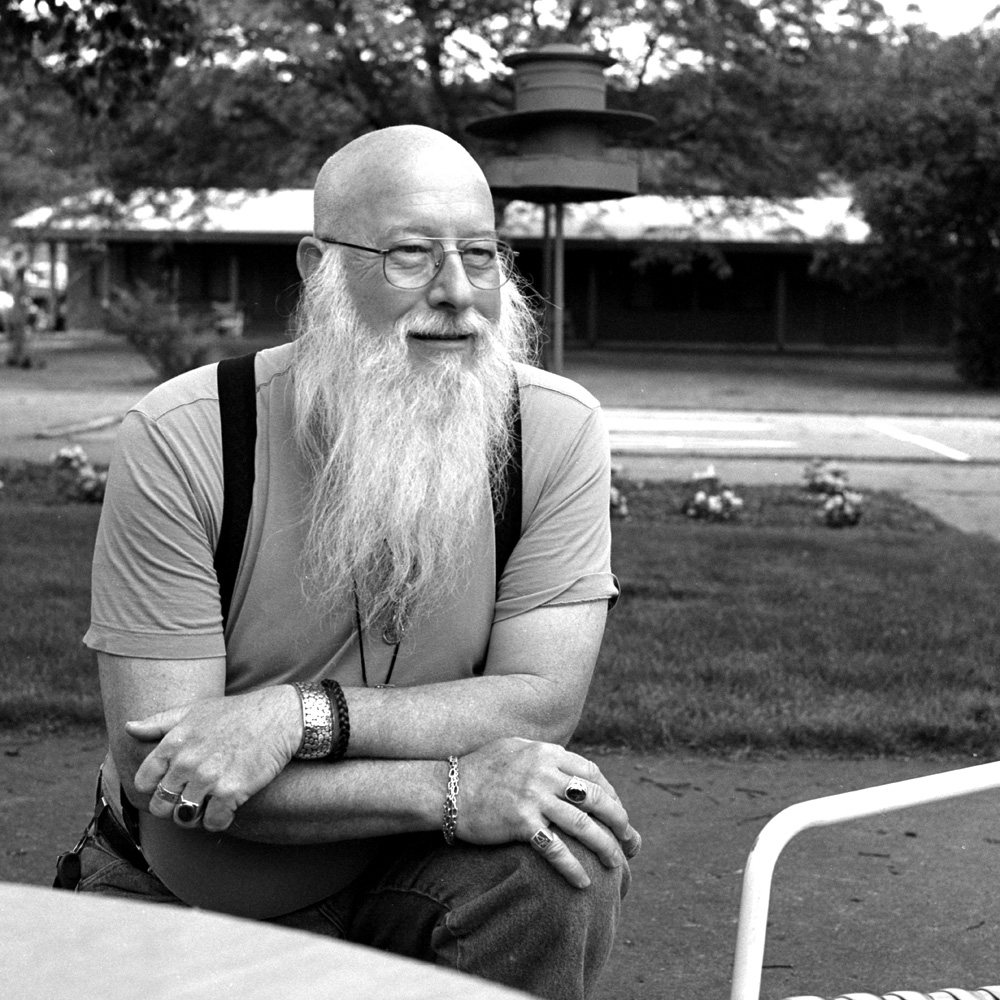
Jim Russell
Jim Russell
Robert Bender
Robert Bender
Dennis Wood
Dennis Wood
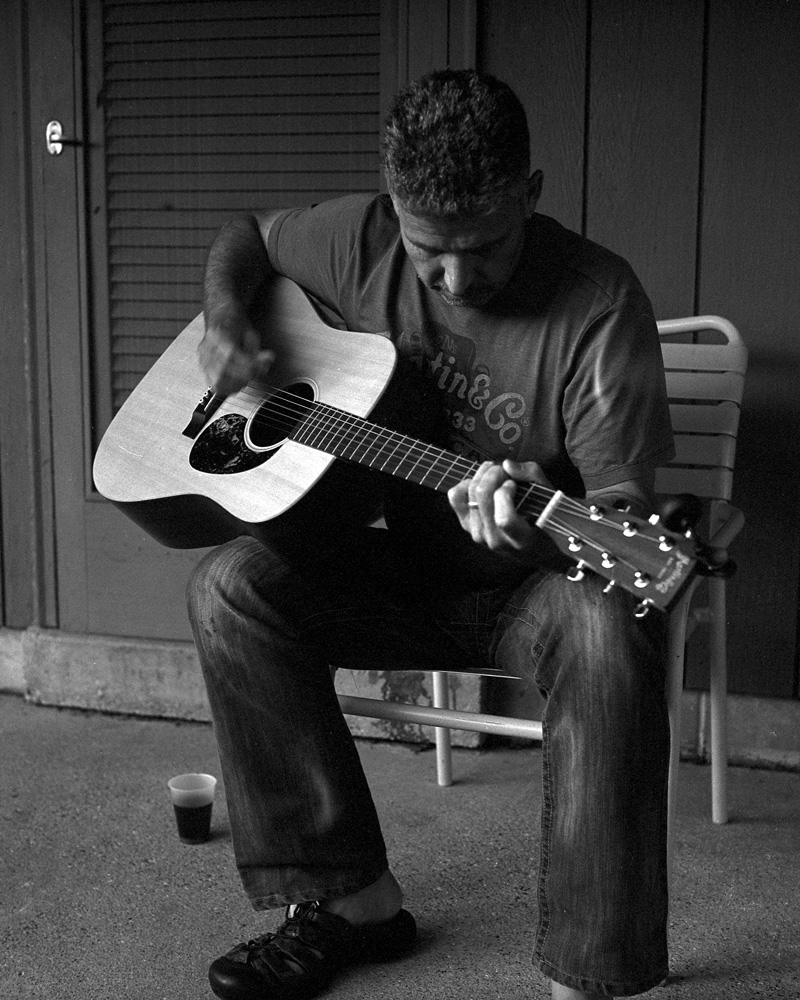
Andrew Moxom, Guitar

Well, no particular order other than I bracketed the series with folks not looking directly at the camera. I’m including these shots for sentimental reasons more than for the quality of the portraits.

All shots taken with my Rolleiflex 2.8E, on Ilford Delta 400 developed in Pyrocat HD. That Rollei is a fantastic portrait camera, considering it has a fixed “normal” lens on it, isn’t it?

Photostock 2013 – St. Ignatius Church, Good Hart

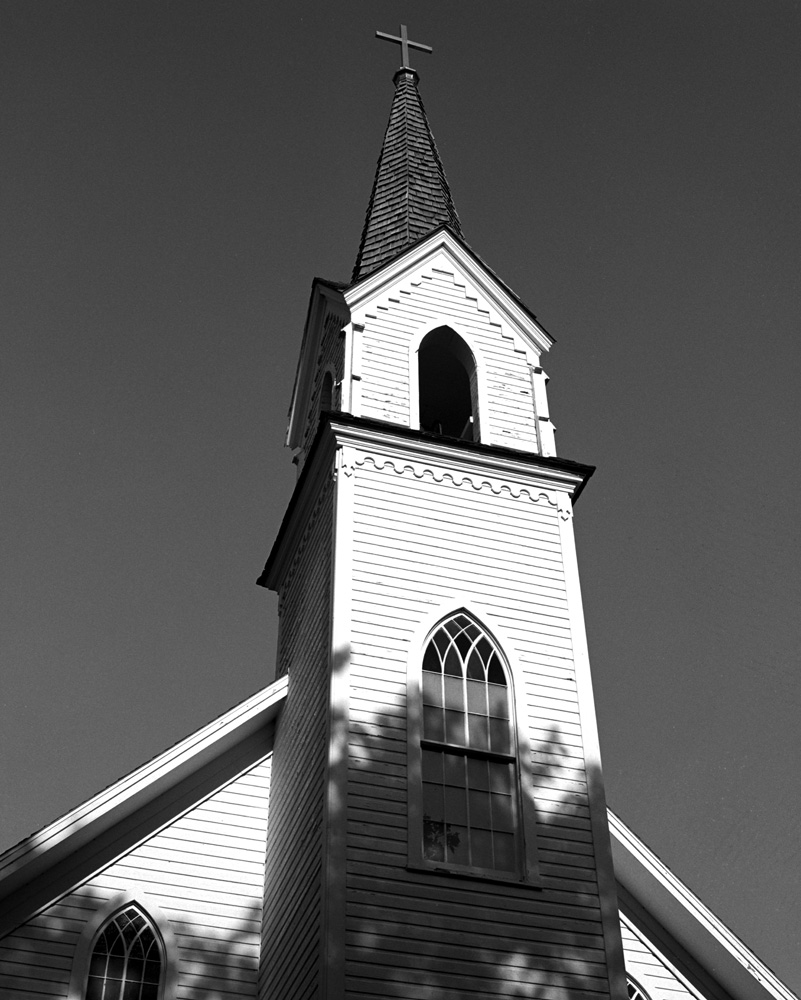
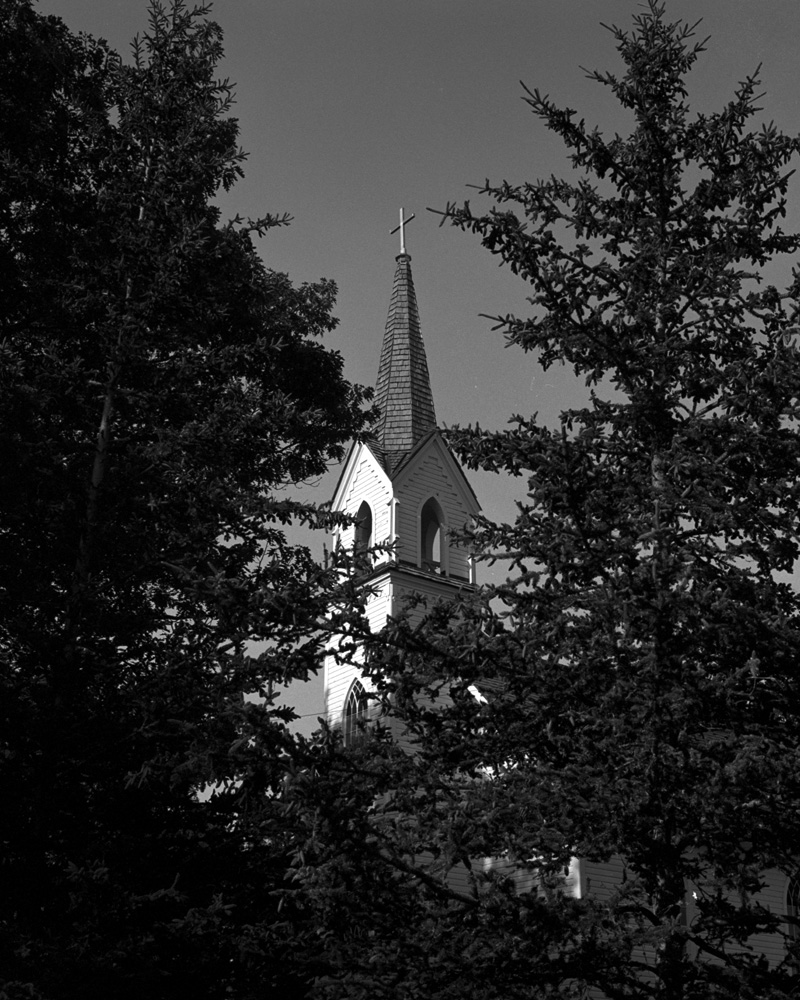
Here are the promised photos of St. Ignatius Church and the cemetery next door. St. Ignatius Church as it currently stands is the third structure to have been erected on the site, the oldest of which was the French Catholic mission to convert the natives in the 1700s.

St Ignatius Steeple
St Ignatius Steeple
St Ignatius, Trees
St Ignatius, Trees

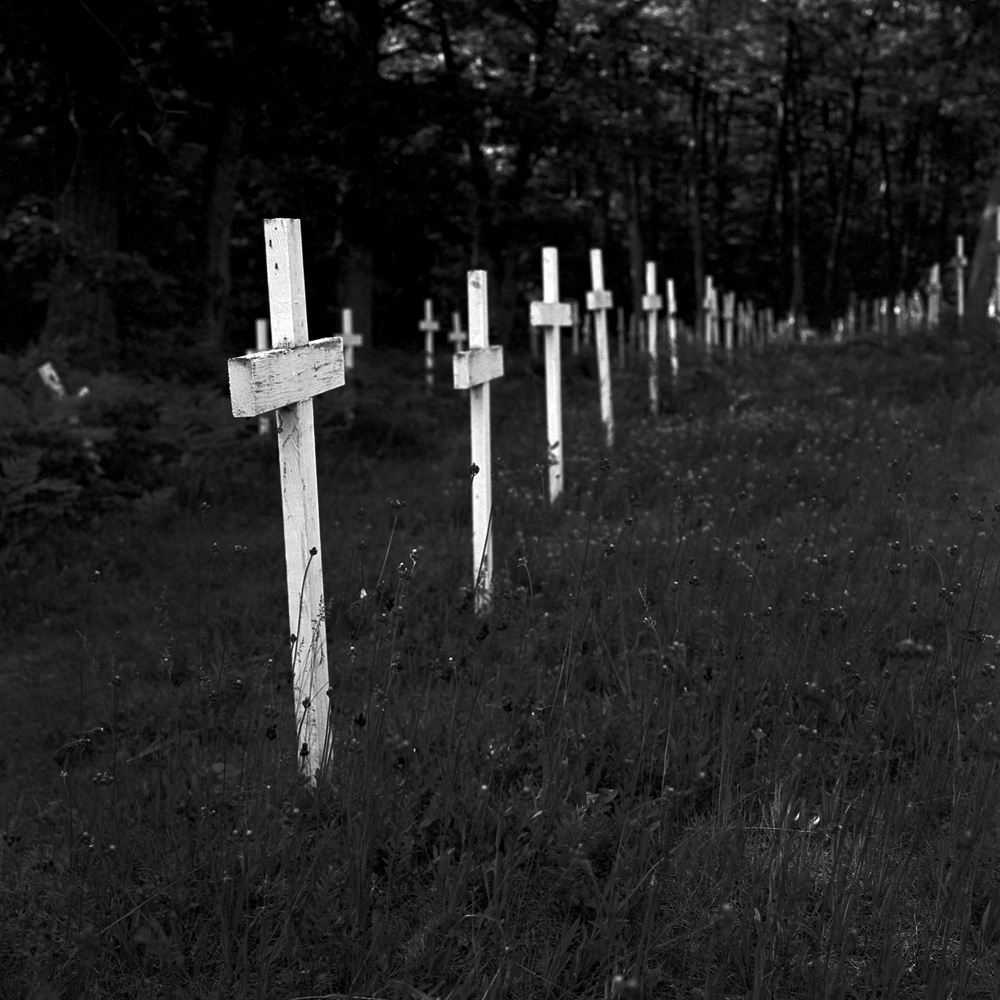
Today, the churchyard contains mostly 19th and early 20th century burials of Polish and Scandinavian immigrants. The churchyard is famous for the white wooden crosses for grave markers.

Crosses, St. Ignatius Cemetery

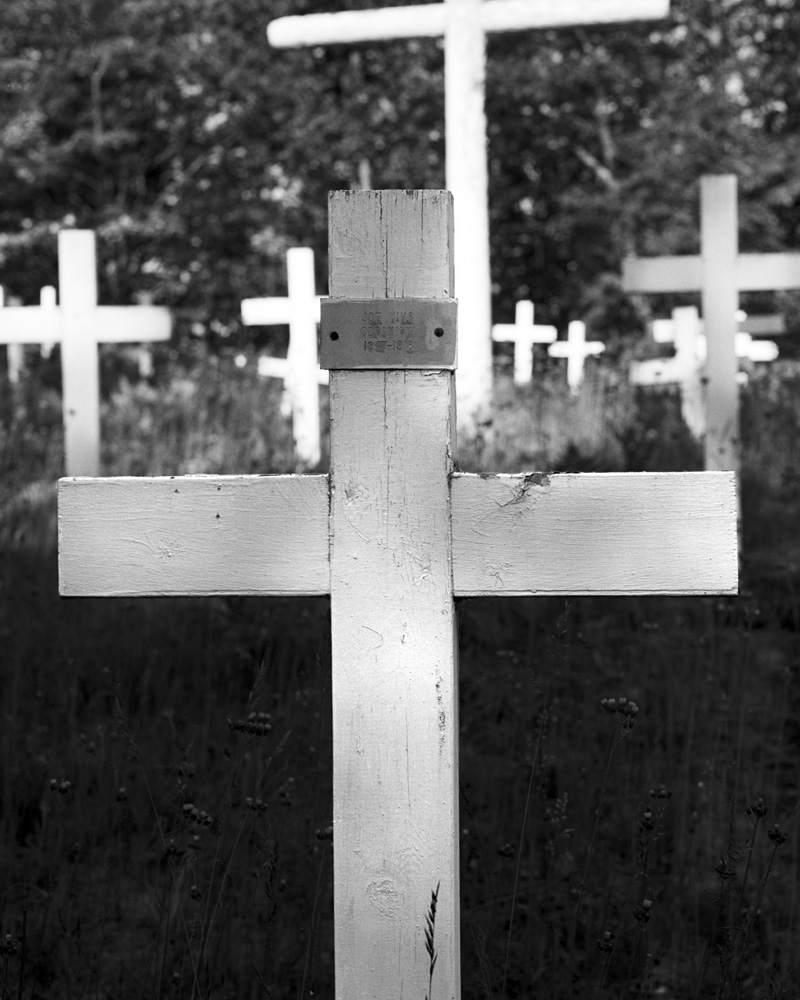
Here is a close up to show the tin markers with the names and biographical data on the crosses.

Joe King Odganicki
Joe King Odganicki

The church no longer has an active congregation, but is maintained by a local organization for its preservation.

Photostock 2013 – abandoned buildings

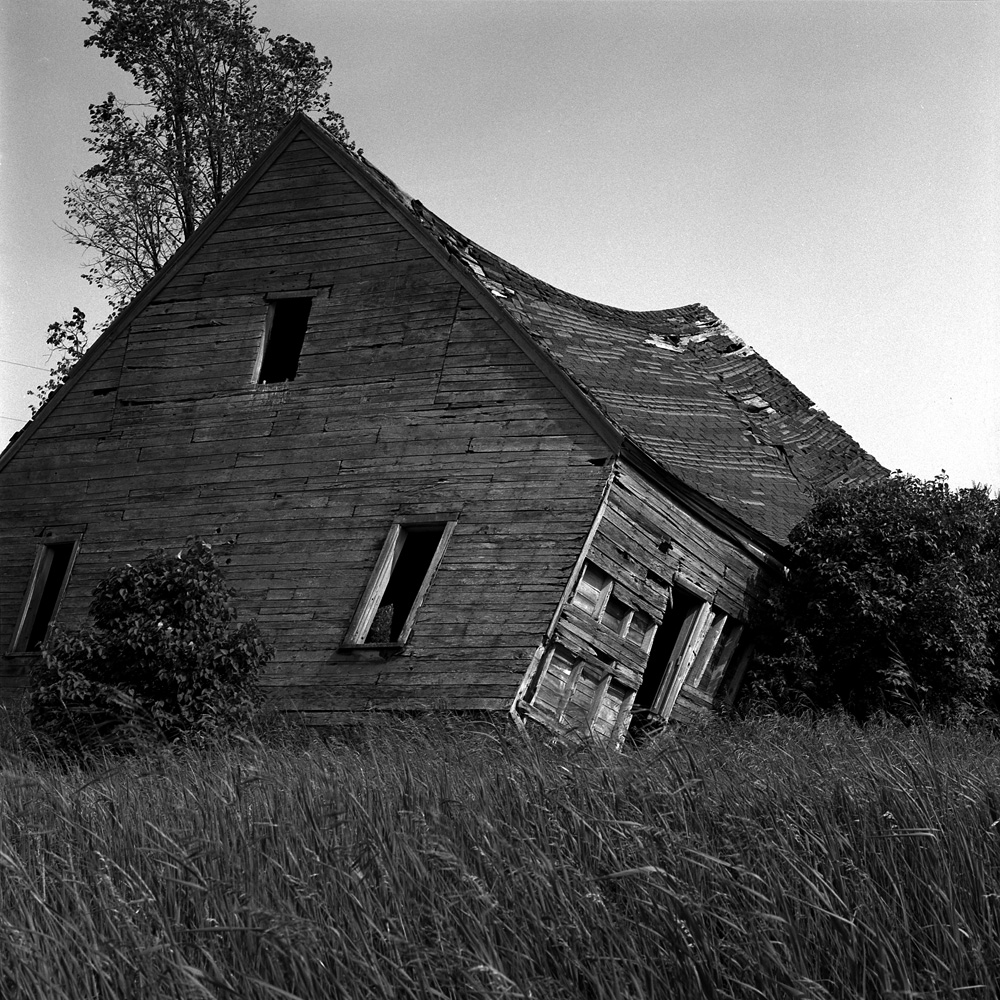
Although these houses are familiar to Photostock participants from years past, I figure most of my readers have never seen them. The first building is across the intersection from Moose Jaw Junction, a roadside restaurant and bar near Larks Lake. The property is for sale, should anyone want a total tear-down.

The Slumping House, End View, Moose Jaw Junction

A different view of the building:

The Slumping House, Moose Jaw Junction

This house is/was a little cabin across the street from the St. Ignatius church in Good Hart, Michigan. Pictures of the church and its cemetery will be forthcoming in another post. From what I hear tell from past Photostockers, the cabin used to be far more intact than it is now and they have watched it deteriorate into this condition over the last half-dozen years.

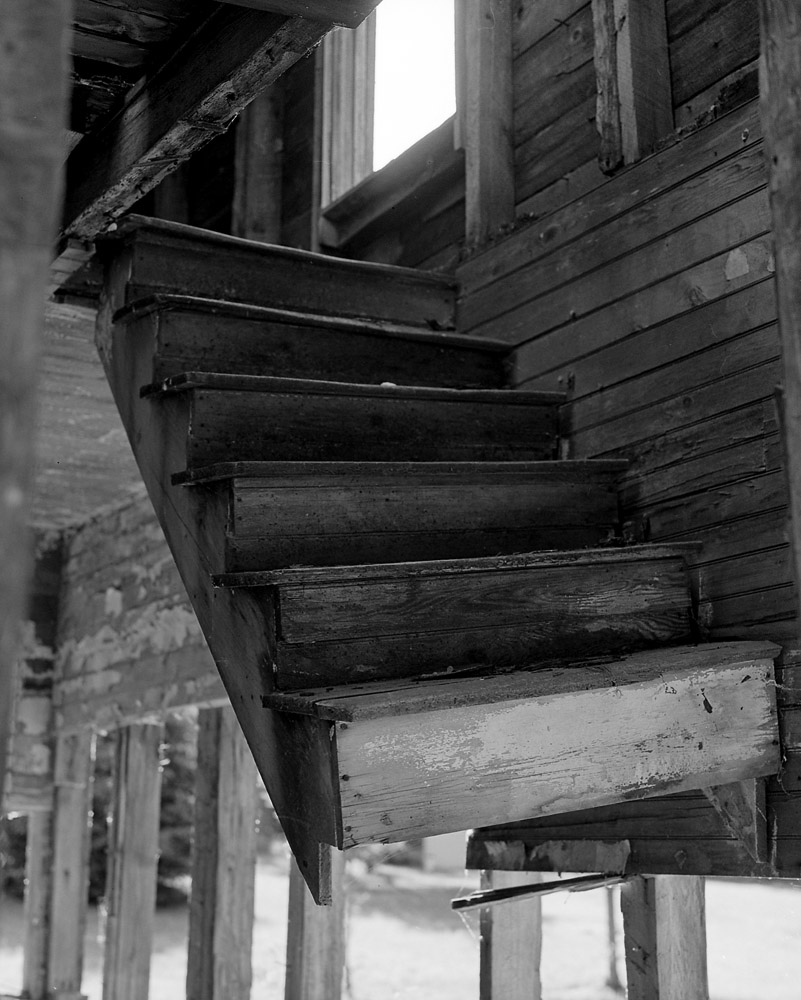
One wall of the house is essentially gone, and you can look inside the structure through it. I would NOT attempt to enter, as there is a considerable debris field on the floor of the lower level, making for a prime residential facility for wildlife of the four-legged and no-legged varieties. You can see the remnant of the staircase through the opening in the wall, though. The texture of the wood and the coloring of it reminded me a bit of Bodie, the California gold-mining ghost town in the Eastern Sierra.

Hanging Stairs, Good Hart

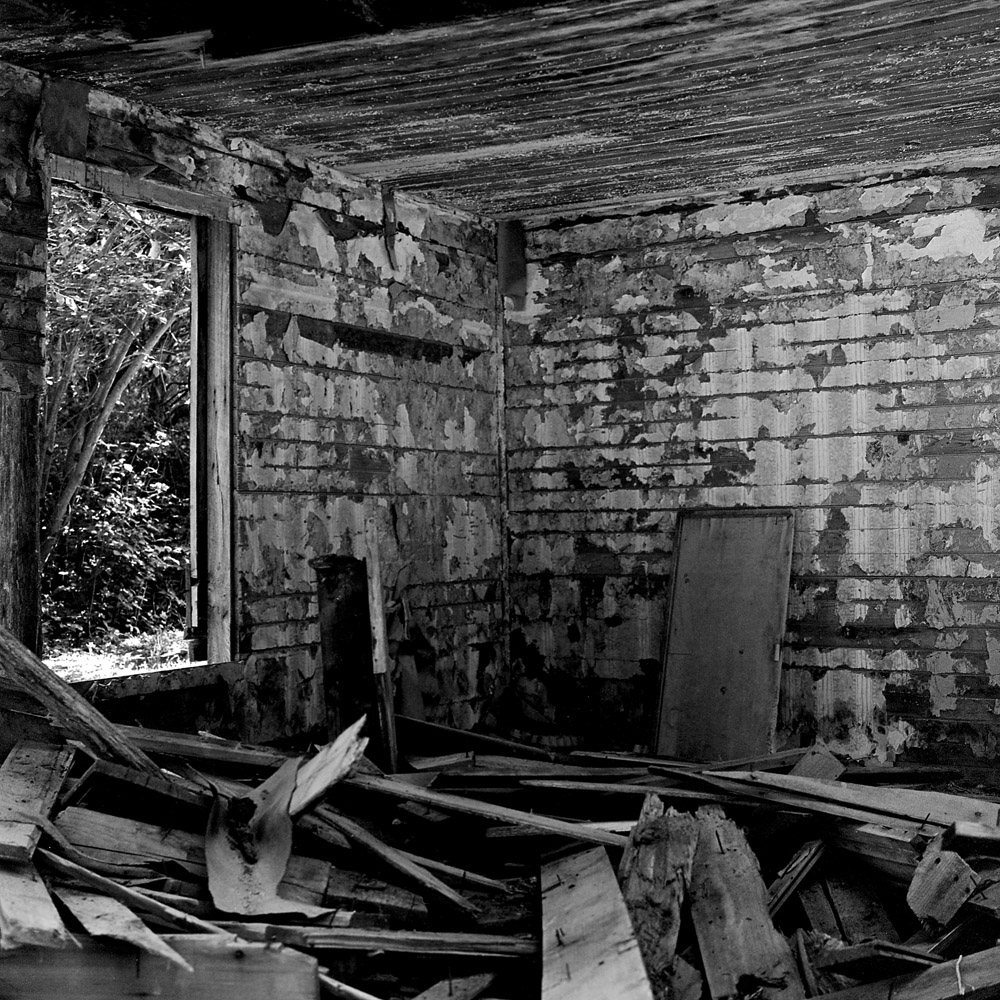
This is a view of the debris field and the remaining structural walls of the house. Amazing how the light level balanced between inside and outside- no HDR or even burning/dodging required to preserve interior and exterior detail alike through the window frame.

House Interior, Good Hart

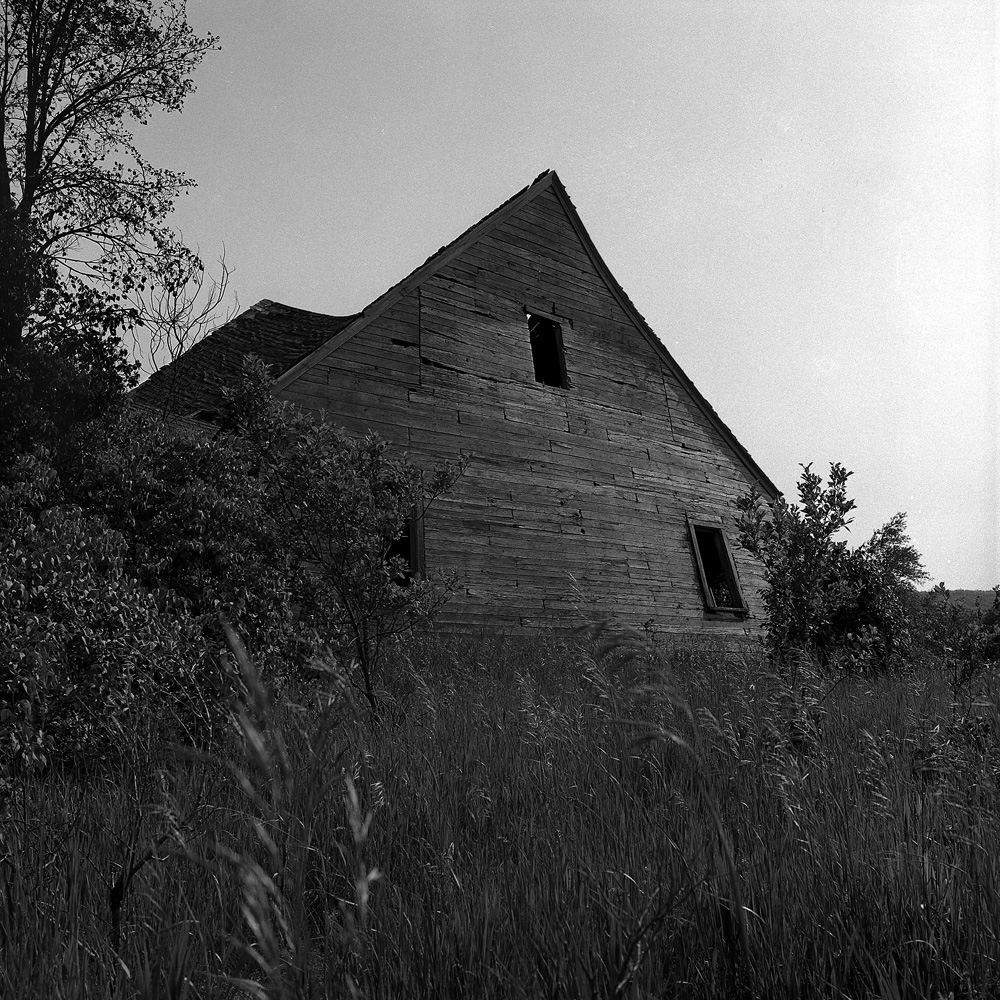
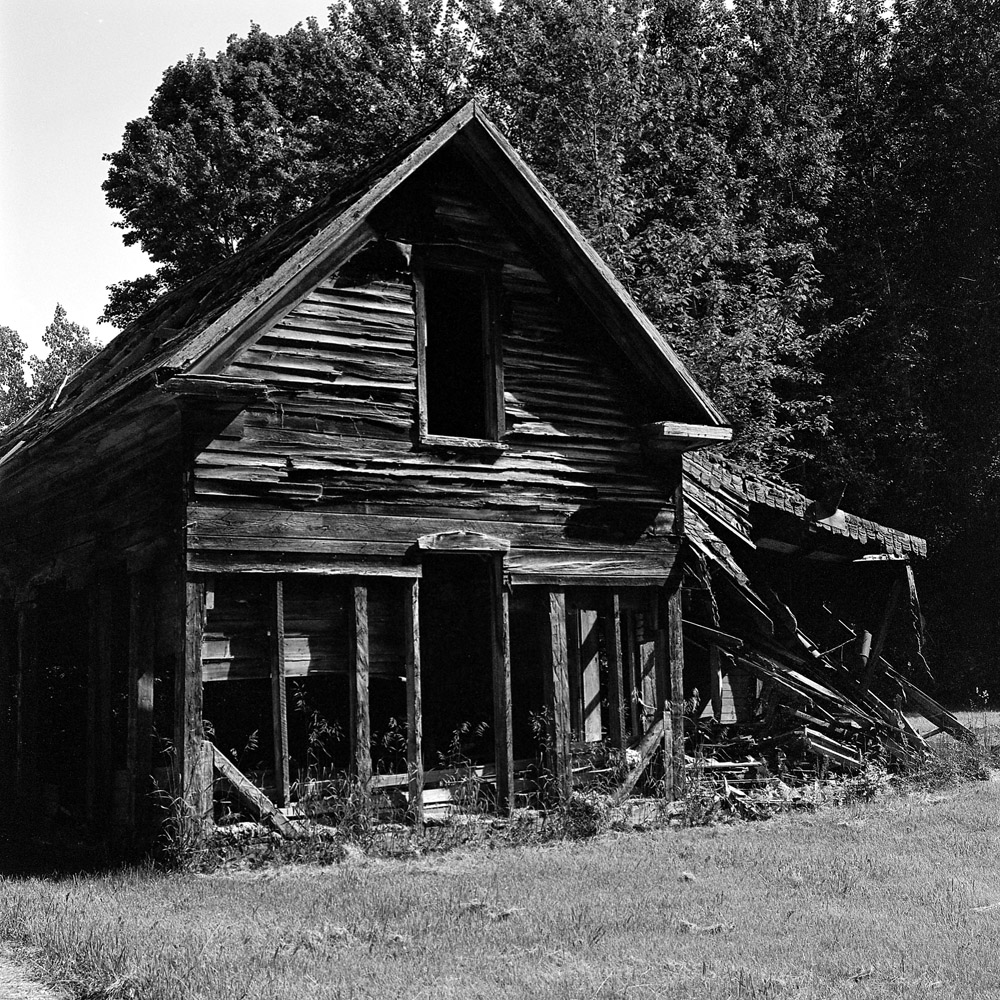
Here is a view of the end of the house, showing the whole of the structure.

Collapsing House, Good Hart

All shots taken with my Rolleiflex 2.8E on Ilford Delta 400, developed in Pyrocat HD developer at 1:1:100 dilution.

July 4th Shoot – Figure in the Landscape, Along the Potomac

I was determined to avoid crowds and public gatherings on July 4th. Post 9/11 I get nervous in large crowds, especially when ingress and egress are difficult, and when large numbers of them are drunk. Not that my PTSD* gets triggered and I feel like the walls are closing in or anything (although I did get near-panic at Obama’s first inauguration- that was just WAY too many people and it was hard to move- even if something rather pedestrian happened like someone fell and got hurt, or a bottle of carbonated beverage froze and burst and people panicked THINKING it was a gunshot, you could have gotten trampled to death in the stampede!). Anyway, back to the real story – so I wanted to avoid the National Mall, because it’s just a filthy zoo of humanity on the 4th, so I called up a friend who had expressed an interest in posing for me, and we went out along the Potomac to some spots I know that are fairly private and make for good shooting. These are the first few images from the shoot (we’re still negotiating the use of the rest of them).

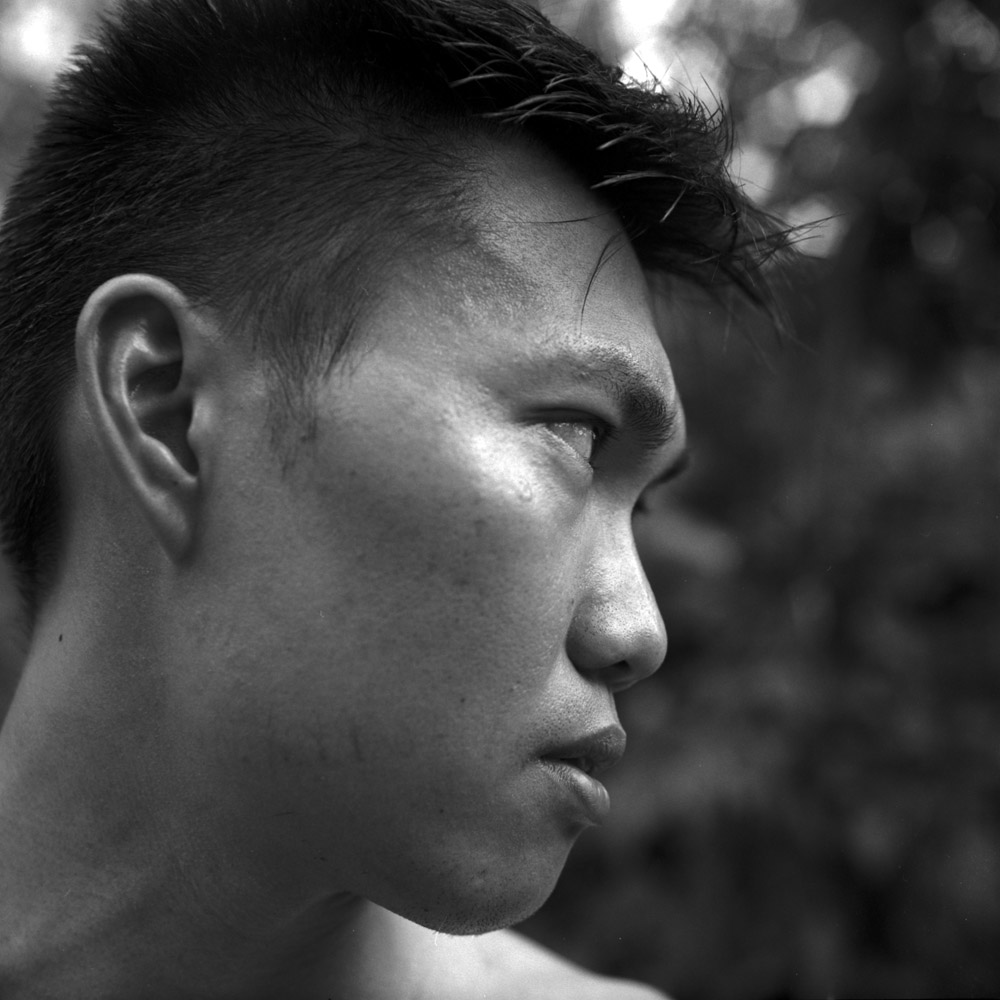
Chern K - Profile
Chern K – Profile

These first two portraits I particularly like. The profile shot was taken with a Rolleinar close-up adapter on my Rolleiflex. The Rolleiflex by itself has a minimum focus distance of 3 feet, which is fine for general subjects, but for flowers, bugs, macro photography in general, and even tight portraits, 3 feet is not close enough. So Rollei in their infinite wisdom invented the Rolleinar close-up filter sets. They come in four strengths – 1,2,3 and 4. The 4 is extremely rare and you almost never see one on the market in any size. The #1 cuts the minimum focus down to 1.5 feet, the #2, to .75 feet, and so on. I have a #1 and a #2. At some point I MAY get a #3. Some people complain that the Rolleinars add too much “distortion” to portraits and as such are bad for doing them. I say shots like this disagree with that notion. If you need more proof, check out the work of Richard Avedon, as well as my friend Sanders McNew (the book cover for “Triptych: Sixteen Months” looks like a good example).

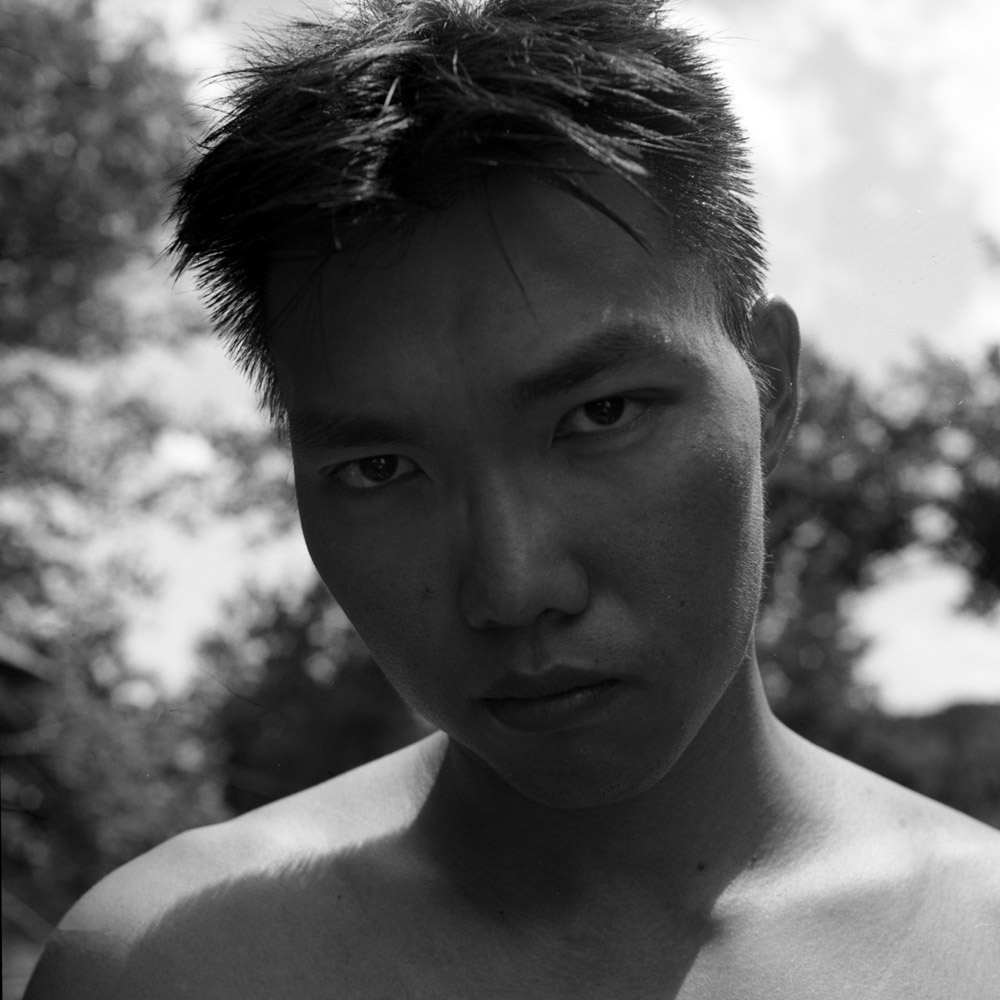
Chern K - Backlit Portrait
Chern K – Backlit Portrait

The backlit portrait was shot normally, no close-up filter required. I was figuring out the exposure for this shot and used my meter in incident reading mode. I had a brief doubt when taking the shot because the meter was suggesting only 1 stop different from what would have used for a non-backlit subject, but I went ahead and used the setting anyway. My doubts were renewed when I looked at the raw negative – reading a negative is a skill any serious film photographer should develop, and I’m pretty good at it now, having looked at literally thousands of negatives I’ve produced over the years, but I’m still, always, getting better at it. This was a case in point.

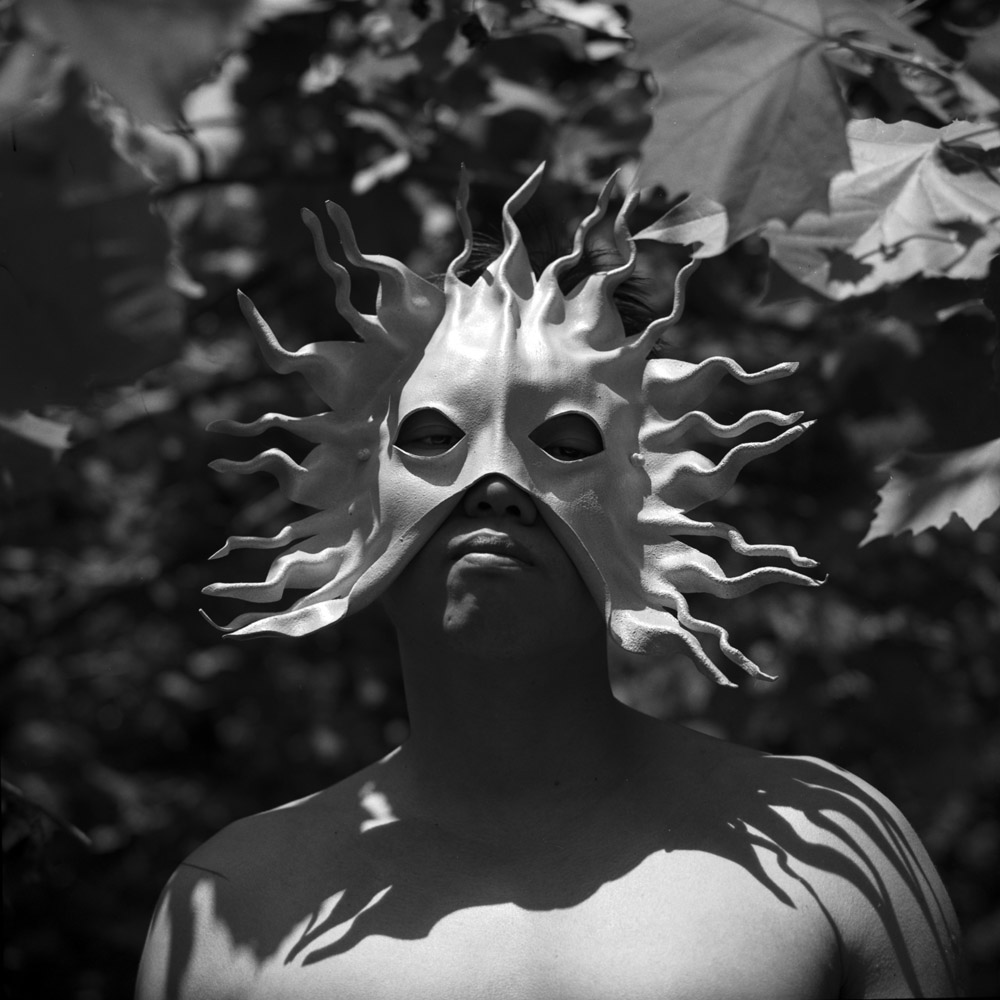
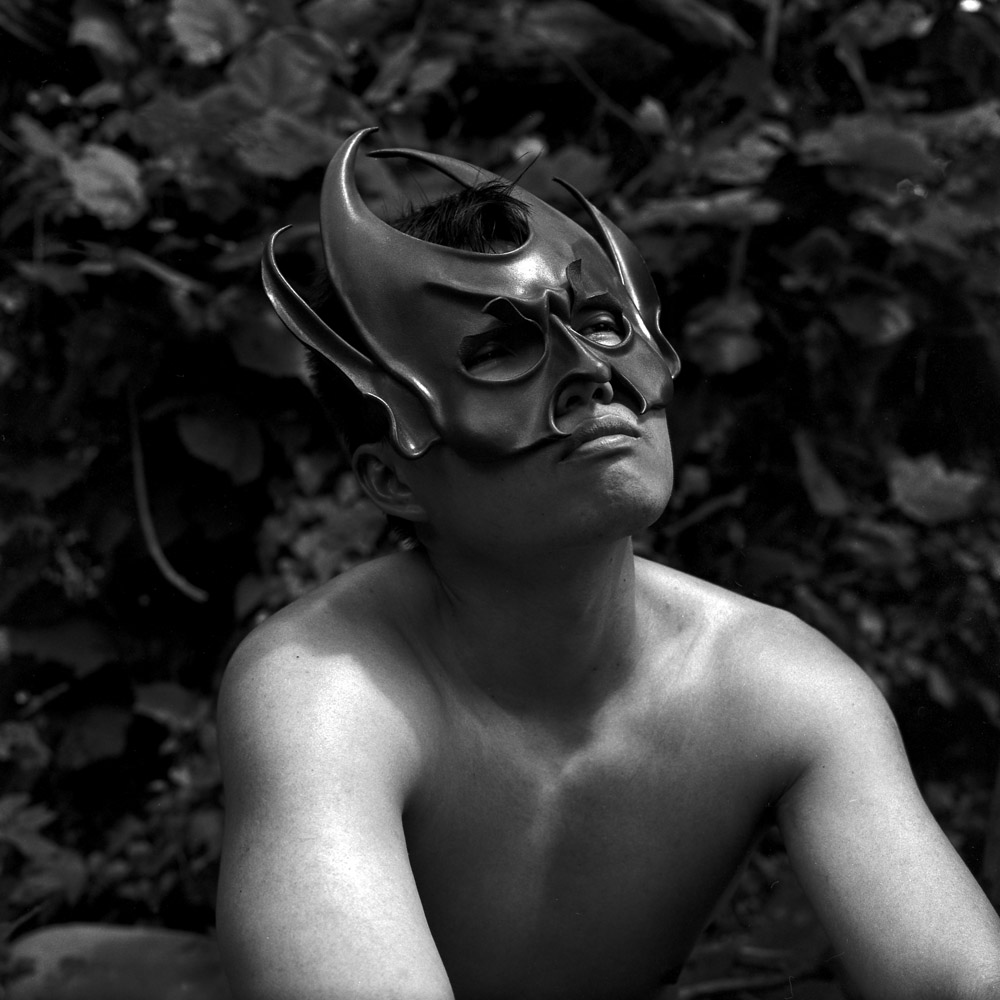
Then we got into playing with props, specifically, an ostrich egg and some leather masks I got at the Maryland Renaissance Festival.

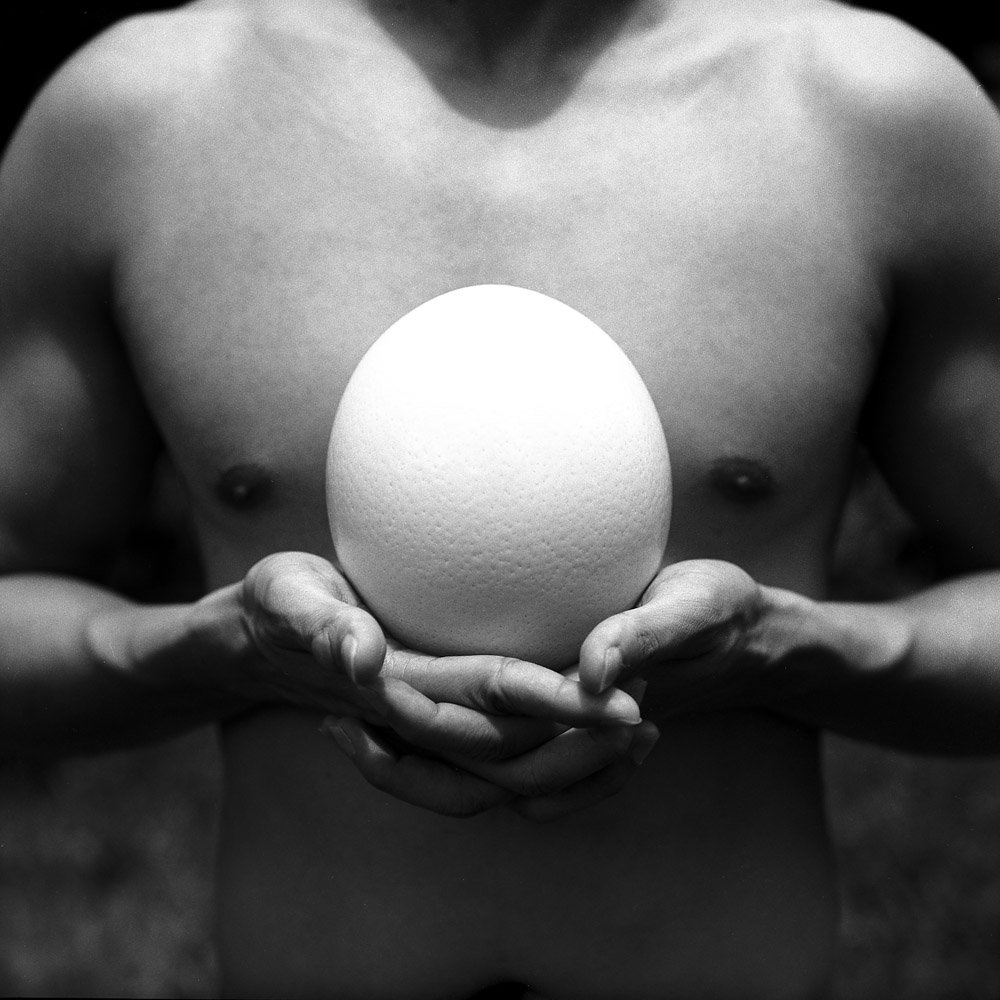
Chern K - Ostrich Egg
Chern K – Ostrich Egg

I’ve been carrying around this ostrich egg shell for a while – I got it as a prop to use for another shot in my Tarot Cards: Re-imagined series. But getting the model who is supposed to use it to show up and sit for me has been a challenge, so it has been lingering, unloved, in my prop bag for some time. Well, it earned its keep with this shot. This is just a straight scan of the negative, so I’m still playing around with how to render the ostrich egg better – I want to preserve detail in the shell without it looking gray, or getting too blown out. Just as I got the shot composed, clouds kept drifting in and out of the sun’s path, changing the nature of the shot. I watched and noticed that the blown-out brilliant highlight caused by the direct sun on the shell’s smooth surface was greatly reduced by the cloud cover. By the time I got the meter reading for the cloud-diffused light, though, the clouds had moved on and it was back to full sun. So a waiting game ensued. I took this shot with partial, thin cloud diffusion because it was getting too hot for either of us to keep standing there waiting for a big cloud to drift back over again!

Chern K - The Sun Peeks Out
Chern K – The Sun Peeks Out
Chern K -Devil Mask
Chern K -Devil Mask

Here are the mask shots. Not much to say about these really – they’re fairly self-explanatory with the masks doing the talking. The masks were also bought for use in the Tarot Cards: Re-imagined series, and this is giving me new impetus to take up the series again and try to finish the Major Arcana.

I shot these all with Ilford PanF because it is such a slow film, and I wanted to try and shoot a lot of these wide open to get the blown-out, swirly background the lens is capable of producing. On the Rollei this can be a challenge with faster films because the fastest shutter speed is 1/500th of a second, which still isn’t fast enough in bright daylight to let me shoot the way I was looking to if I used even FP4+.

I don’t know if it was because I had been bottling up my human figure creative juices for so long, or the fact that I had a good model who understood how to pose and move, or having the right tool in my hands for the job, or what, but I got a crazy amount of successful images from this shoot- fully 24 out of 36 were ones I wanted to work with. That’s an amazing hit ratio, especially when you consider that of the 12 I didn’t pick, probably 1/2 were variations on a theme of ones I DID pick. So an 80% +/- hit rate? WOW.

* I was working in the Pentagon on 9/11, when the plane hit. Low-flying aircraft still make me jittery, but 12 years on, that’s about it. I have it pretty good all things considered.

Philosophical Musing – Film Development and Physical Experience

I was just developing some film in my darkroom (only two rolls left from Photostock… they will be done tonight!) and while loading the rolls onto the reels in the dark, I thought about the fact that I close my eyes while loading the film, and I picture the movements in my mind’s eye. Never you mind that it is pitch black in the darkroom at that moment, so it makes no difference if my eyes are closed or not. The room’s not getting any darker with my eyes closed. It also made me think about how someone who is blind from birth perceives things like that- I KNOW what my gestures look like because I’ve seen them – I have a definite sense of the space they use and the way they form my body even with my eyes closed. But what is someone who is blind’s perception of such things? I’ve only ever talked with blind folks on a couple of occasions, and I don’t recall them using gestures when talking. If it is something they’ve never experienced, would they even be able to describe it to someone who is sighted?

The Colors of Twilight in DC

This is an exploration of twilight into dusk in and around the 14th Street and U Street corridors in Northwest Washington DC. All these shots were taken in the same evening, and are within walking distance of one another (although in the name of time efficiency I drove from one area to the other so I wouldn’t lose the last light in the sky).

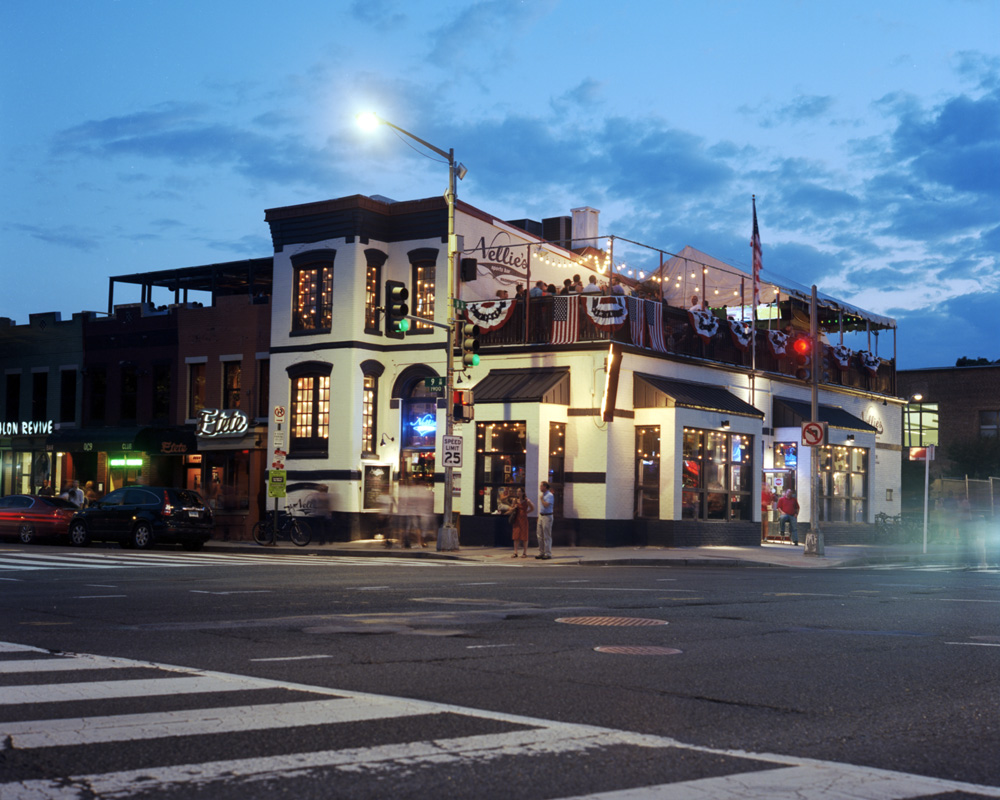
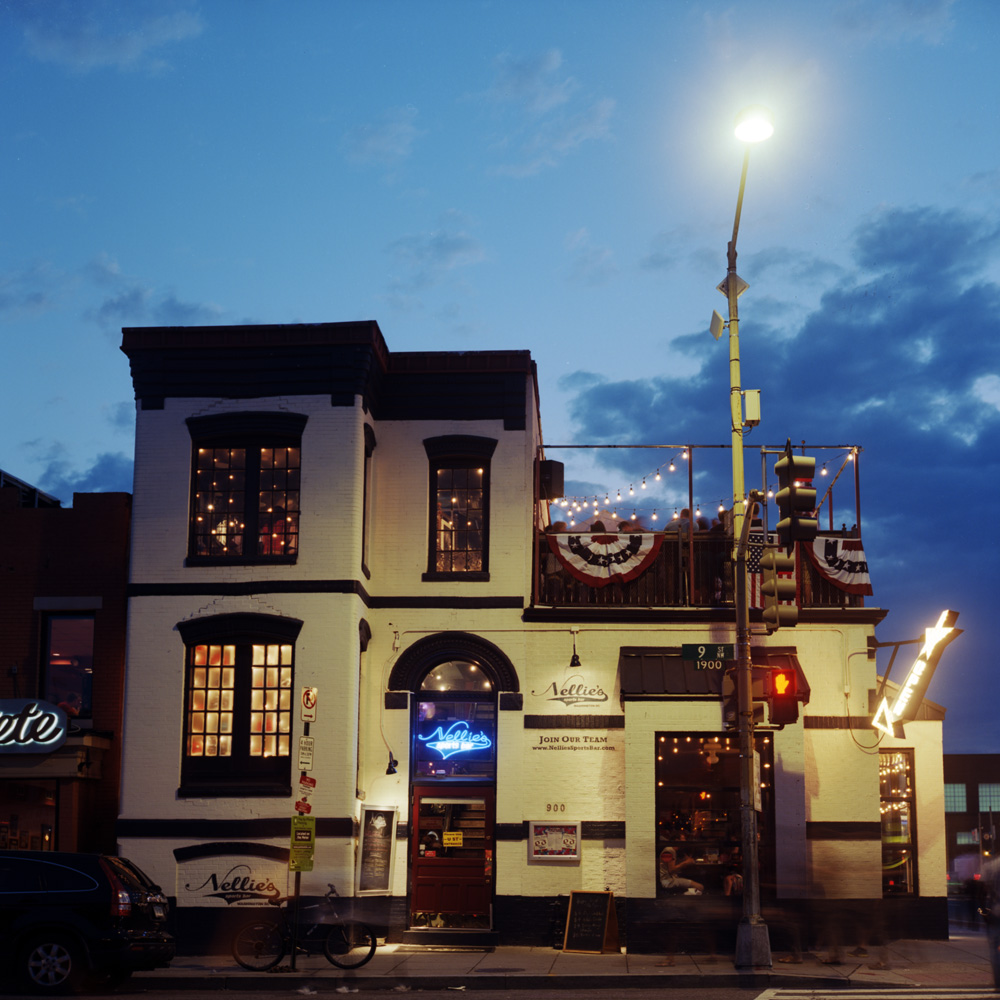
Nellies is a gay sports bar (betcha never thought you’d hear THAT particular combination!) at the corner of 9th and U Street and Florida Avenue (U Street turns into Florida Avenue at 9th). I’ve driven by hundreds of times and always thought about photographing their lights, specifically the “OPEN” arrow on the corner. The night I started this project, I decided to shoot the building from two different angles, one to capture the general ambiance of the intersection, the other to specifically address the OPEN sign.

Nellies Sports Bar, From Florida Avenue
Nellies Sports Bar, From 9th Street

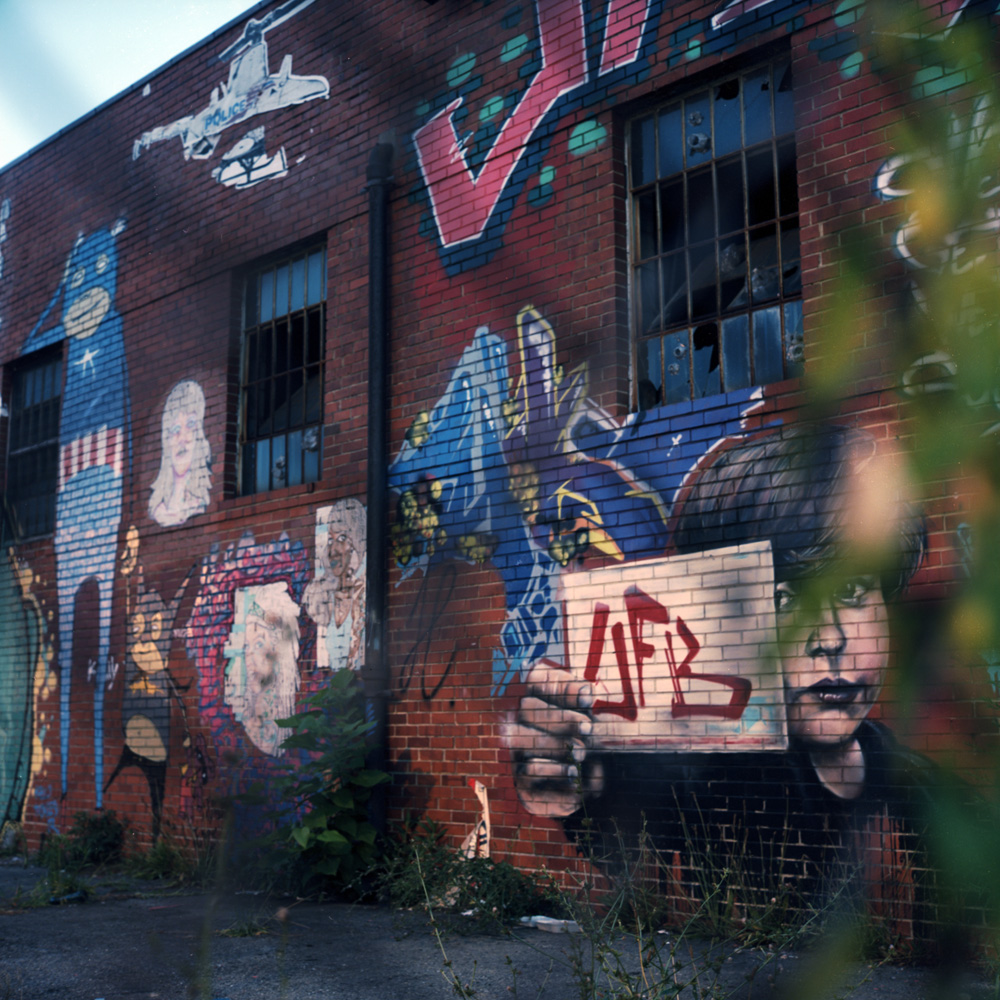
Around the corner from Nellies is this abandoned warehouse which has some really wild and cool and somewhat disturbing graffiti on it. I shot some of this graffiti through the chain link fence around the side lot. The disturbing piece I intentionally cropped out of the shot, as it is the nude lower half of a female body that appears to have been severed from its torso.

Graffiti, Chain Link Fence, Twilight

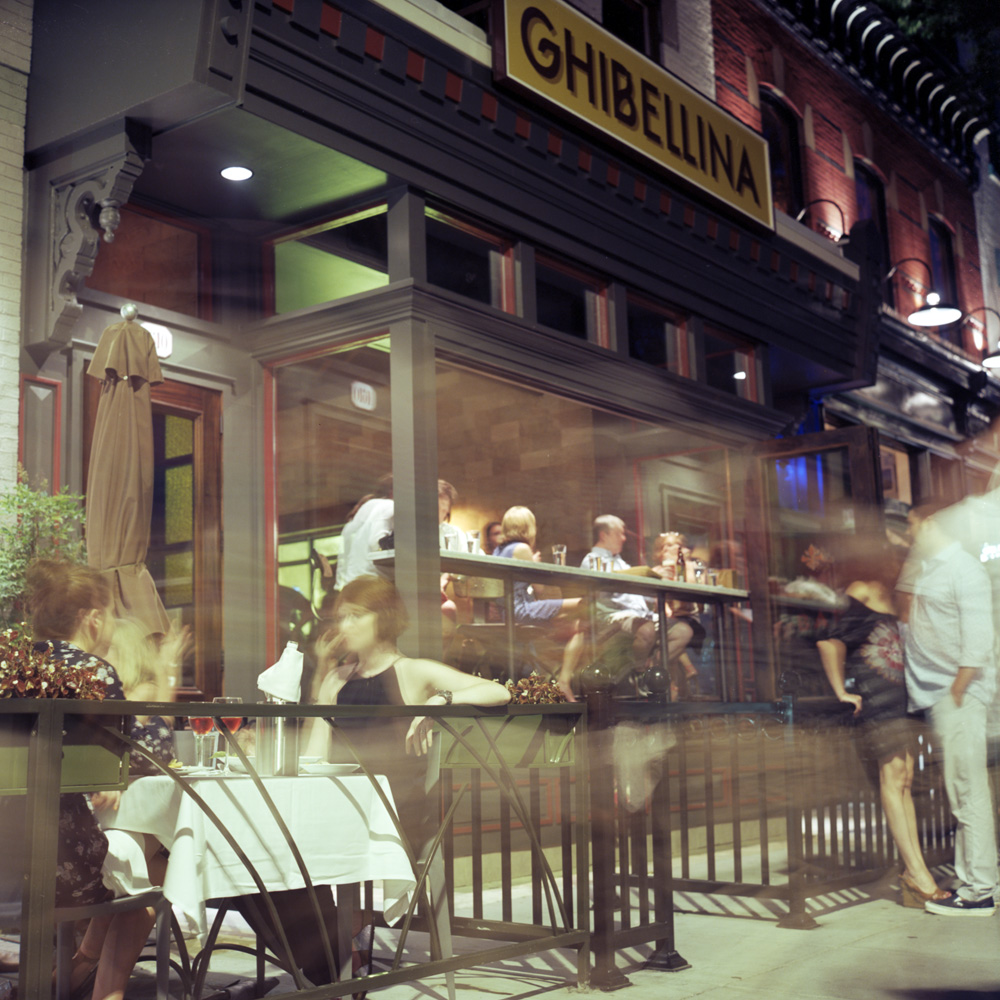
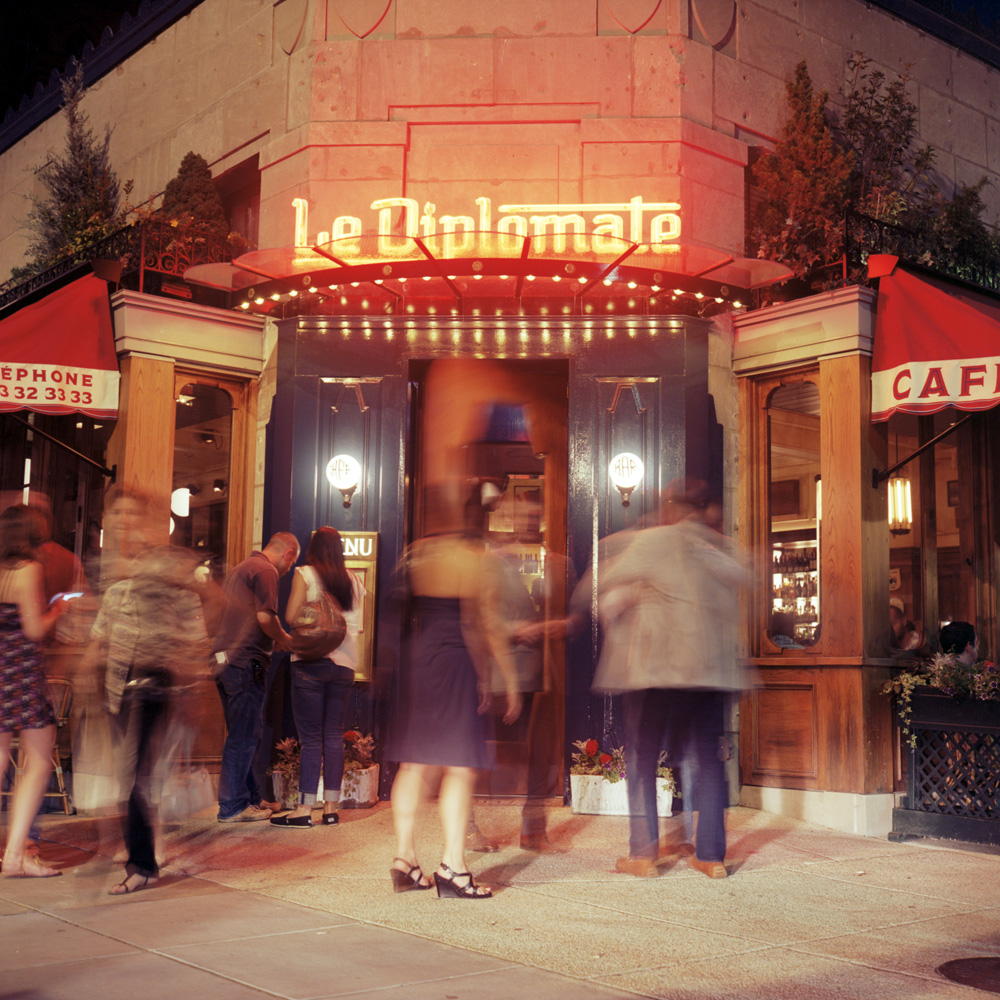
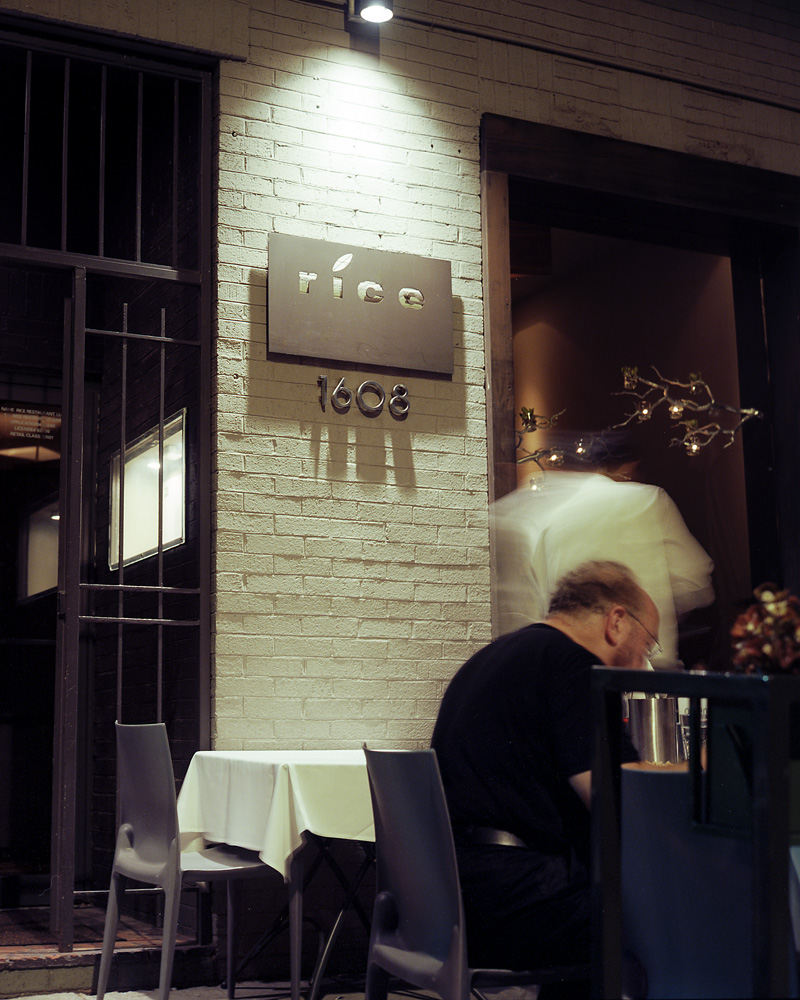
Over on 14th Street, we have had an explosion of new restaurants in the last five years, with a huge spate in the last year alone. Rice Restuarant is arguably the best Thai restaurant in DC, and certainly the most innovative. A good friend of mine opened it gosh, maybe ten years ago, virtually pioneering the restaurant boom in the neighborhood. Now next door to Rice is Ghibellina, an Italian joint that opened this year, and next door to that is Pearl Dive, an oyster bar, which opened perhaps 2 years ago. Le Diplomate is a French bistro across the street in what was originally a car dealership in the 1920s, then became a laundromat. Le Diplomate also opened earlier this year.

Ghibellina
Ghibellina
Le Diplomate
Le Diplomate
Rice Restaurant
Rice Restaurant

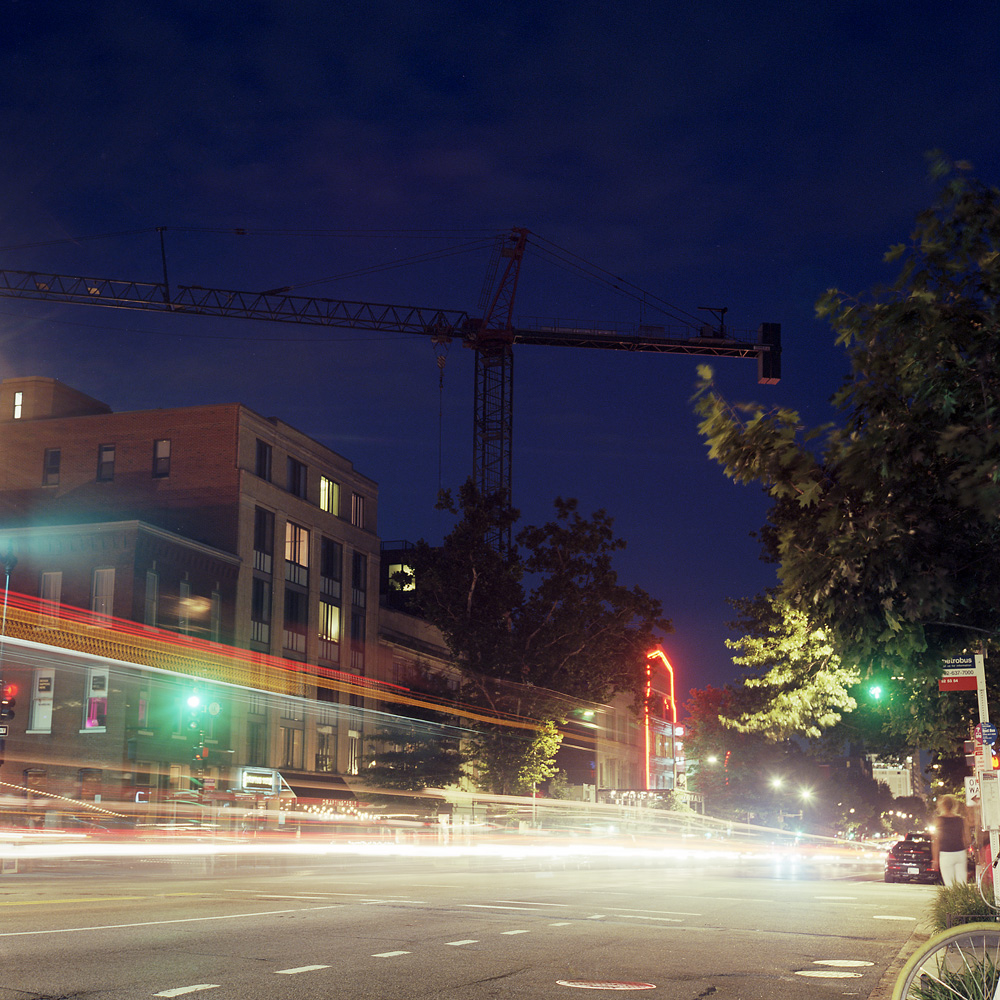
At the intersection of 14th and Q Streets, I pointed my camera south on 14th to try and capture the energy of the neighborhood, through the traffic, the lights, the construction boom represented by the crane, and the people on the sidewalks.

Crane, 14th Street, Twilight

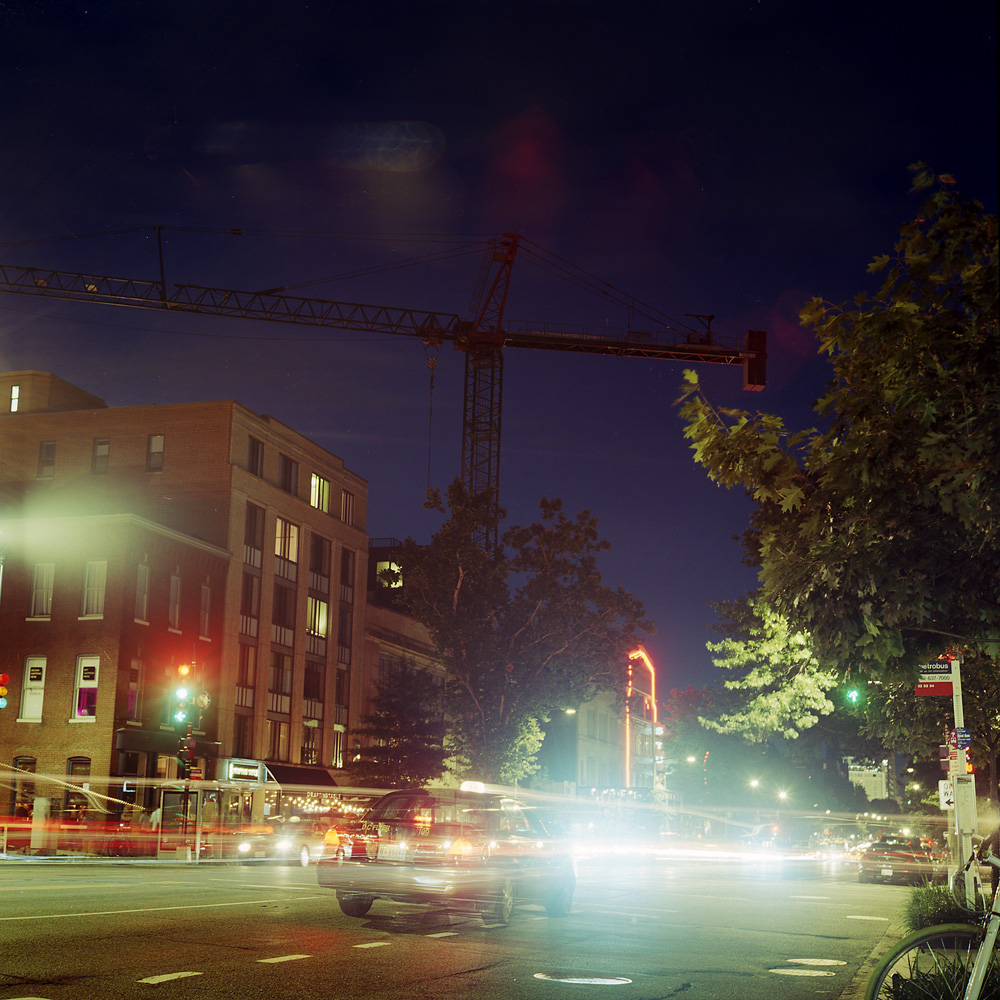
Here is a second version of the shot, a longer exposure, that captures the car sitting at the traffic light, then traffic taking off when the light changed. The funky stuff in the sky is a combination of reflections of the tail-lights and head-lights of the cars reflecting off the clouds and lens flare caused by the lights directly shining into the lens.

Crane, Traffic, 14th Street, Dusk

I’m not sure if I like this one well enough to keep it or if some other night I go back and try to re-shoot it. Feedback welcomed. All shots, as is becoming normal to say now, were taken with my Rolleiflex 2.8E, on Kodak Ektar 100 film. This was in part an experiment to see how well Ektar would fare against Portra 160 as a low-light film. I’ve loved Portra as a low-light film for its ability to handle mixed lighting conditions. I’d say this put to rest any thoughts of Ektar 100 being inferior- it does look different, to be sure, but I’d say it did a pretty darned good job. I think I might even prefer it in some cases.

Smithsonian Folklife Festival

Here are a few shots from my visit to the 2013 Smithsonian Folklife Festival. The Folklife Festival is held every year on the National Mall, and it is a celebration of cultures and traditions from around the world. This year’s featured country is Hungary, and the overall theme is “One World, Many Voices”. There are representatives of many indigenous cultures around the world from Hawaiian Islanders to Penobscot Indians to Quechua speakers from Bolivia and Peru to Tuvan people from Siberia. The “many voices” part has to do with showcasing efforts to preserve vanishing languages and cultures. Go to the Smithsonian Folklife Festival Official Page to learn more about the events and programs for this year’s festival.

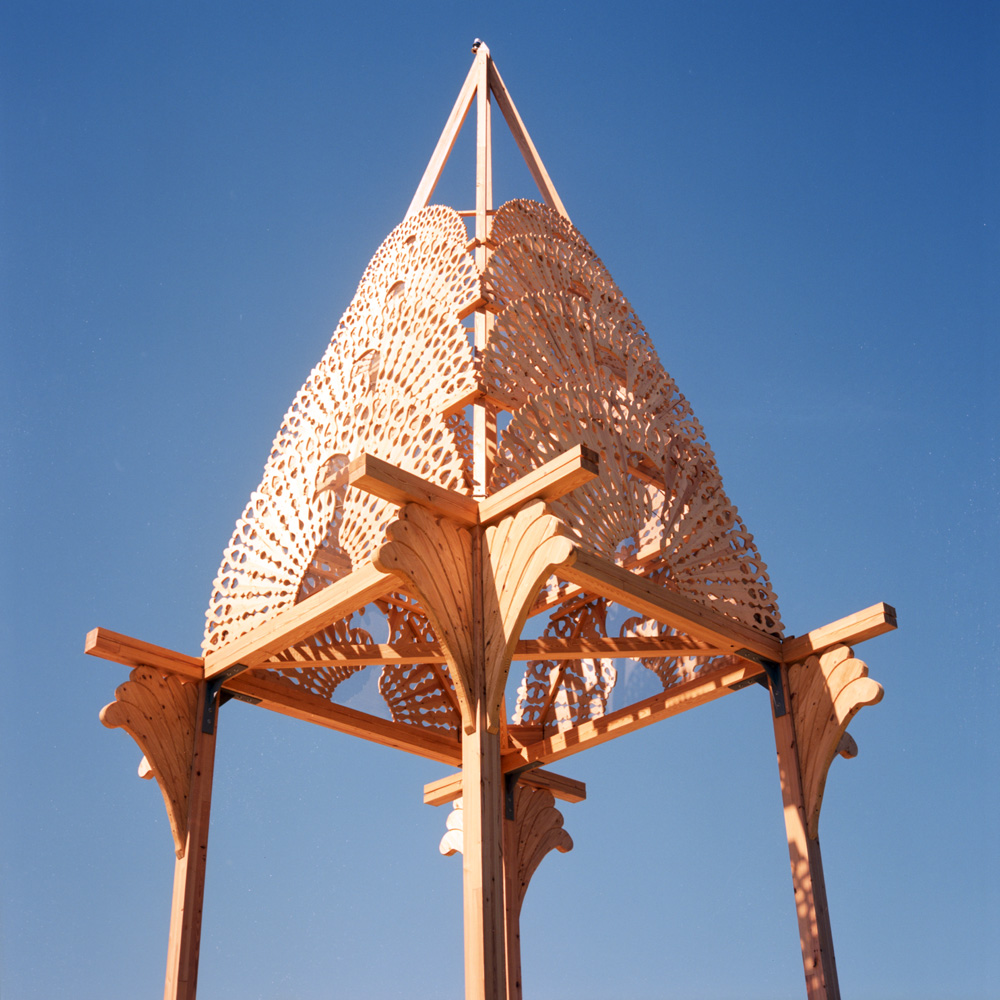
This pavilion is part of the Hungarian exhibit – playing on traditional Hungarian crafts like lace-making and using the forms and styles in a wooden structure.

Hungarian Pavilion
Hungarian Pavilion

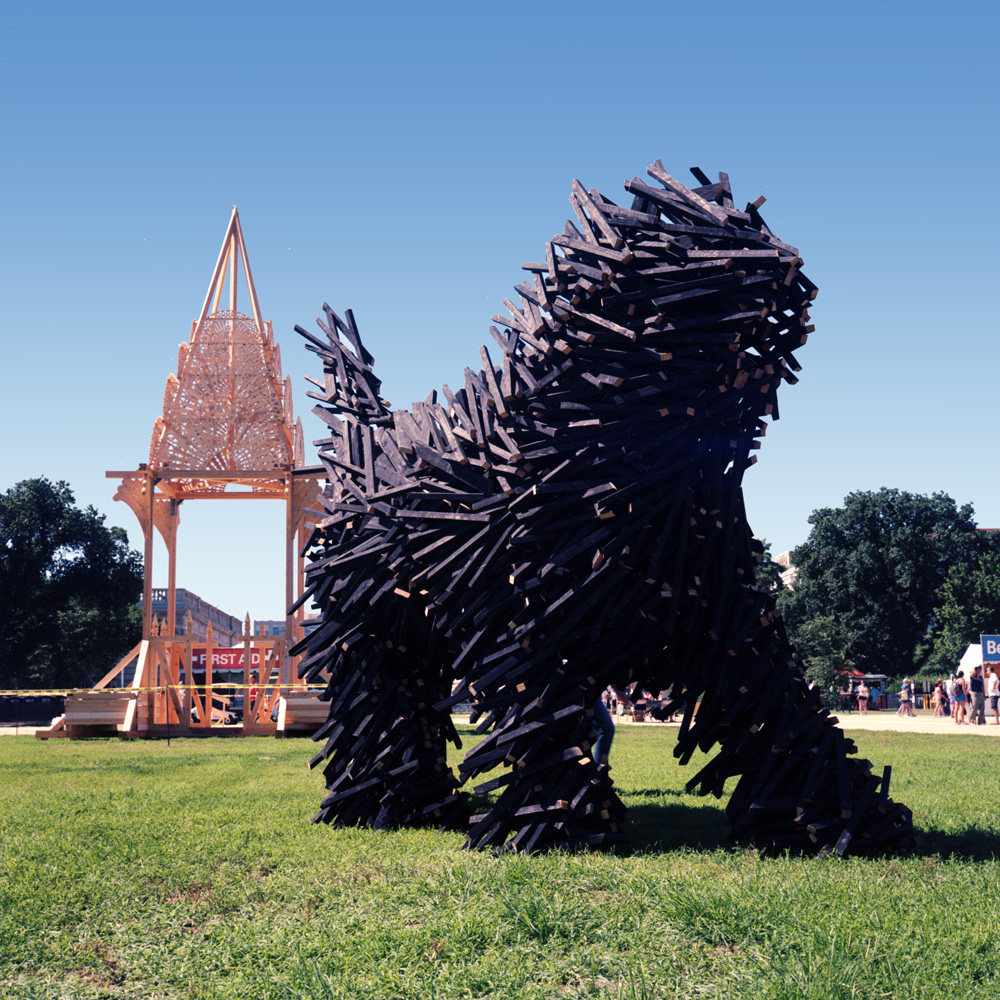
And here is a sculpture of a Puli shepherd dog, rendered in blackened wood. Pulis are similar to Komondor sheep herding dogs except they are black, not white. They used to get shorn along with the sheep they guarded, but now are left to grow their coats out as a fashion statement, to the impairment of the dog’s mobility.

Kuvacs Sculpture
Kuvacs Sculpture

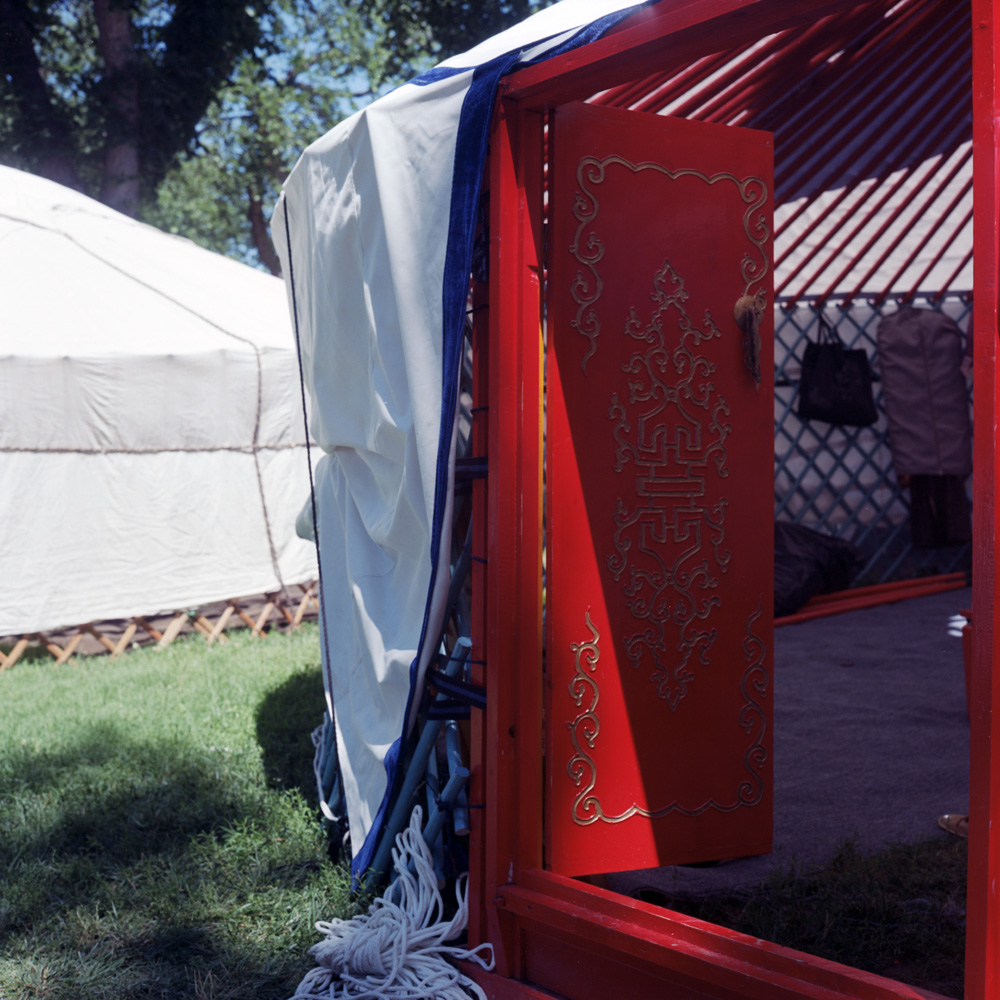
The door of a Yurt, representing the various nomadic peoples of Siberia who are sharing their culture this year at the Folklife Festival. Yurts are traditional nomadic home structures – they are portable like tents, with canvas or fabric tops and latticework side walls.

Yurt Door
Yurt Door

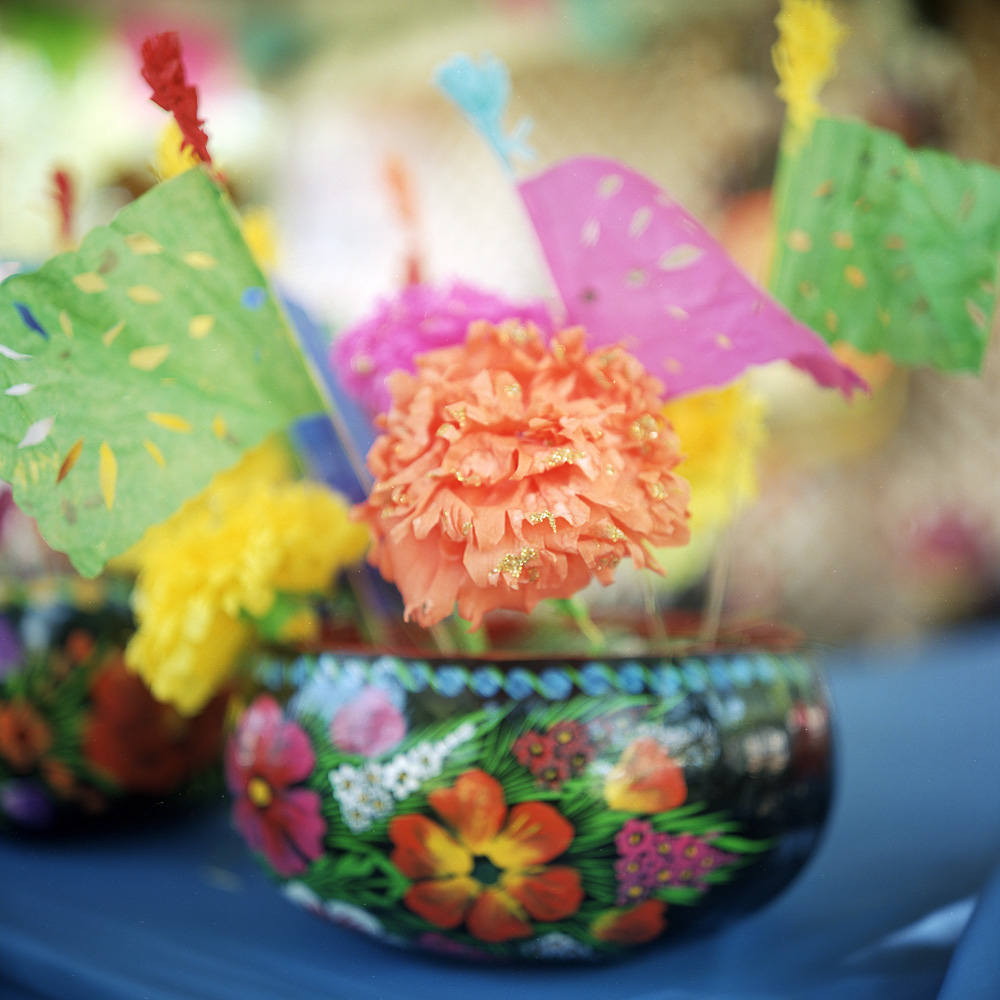
Paper flowers in the Mexican pavilion:

Paper Flowers, Mexican Pavilion

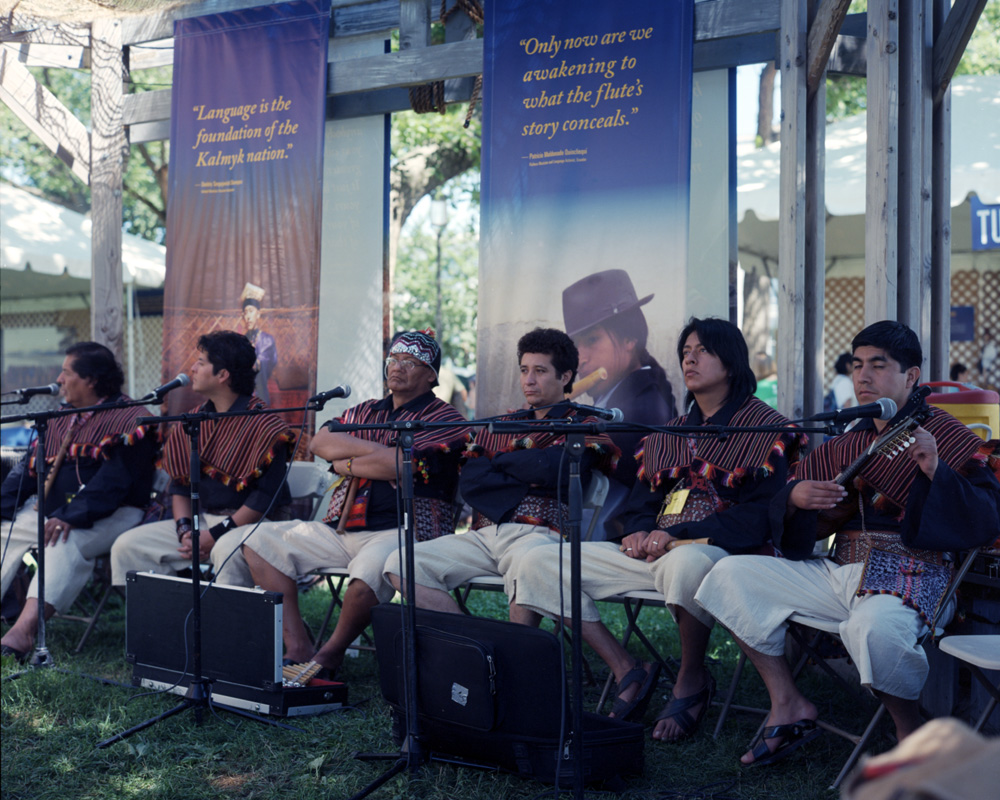
Quechua musicians, getting ready to perform a traditional Quechua song, talking about the meaning of their indigenous language and the importance of preserving the language, to pass on the connection to their cultural traditions of respect for the environment.

Qechua Musicians
Qechua Musicians

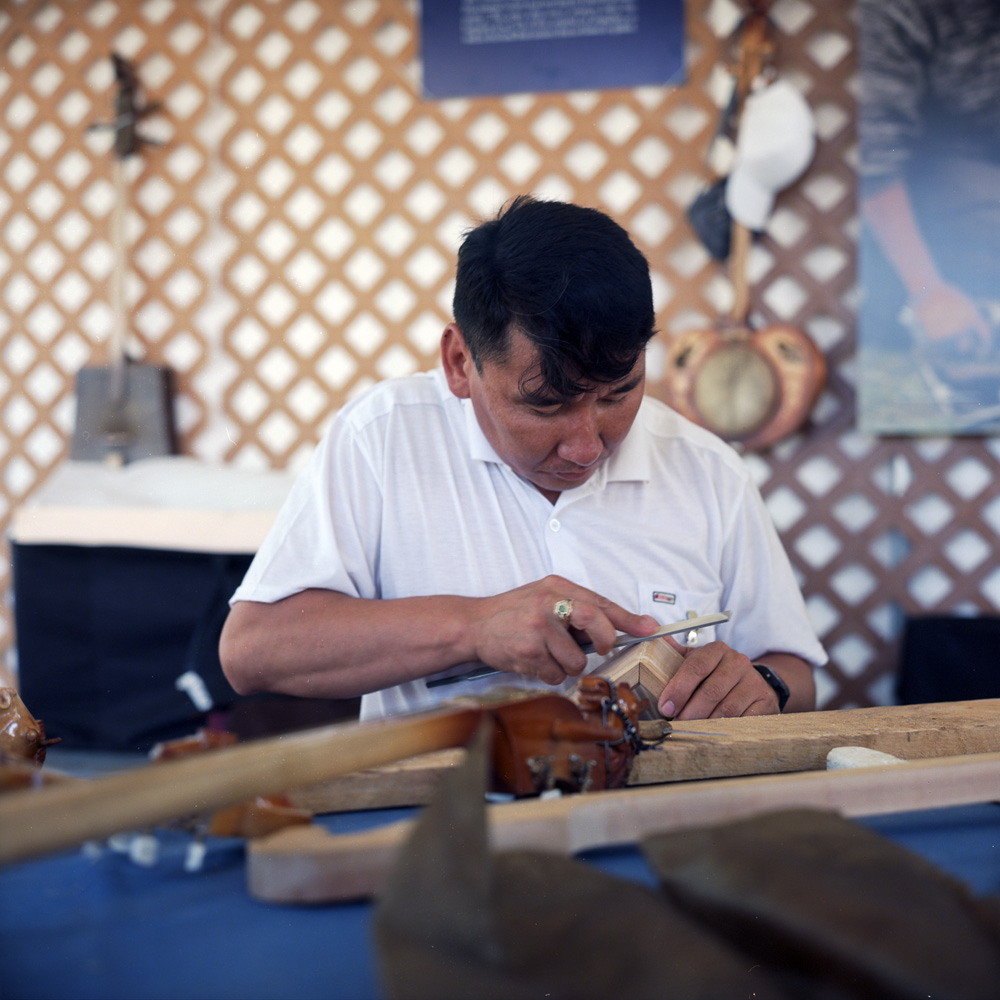
A Tuvan instrument maker, carving the body of a lute:

Tuvan Instrument Maker

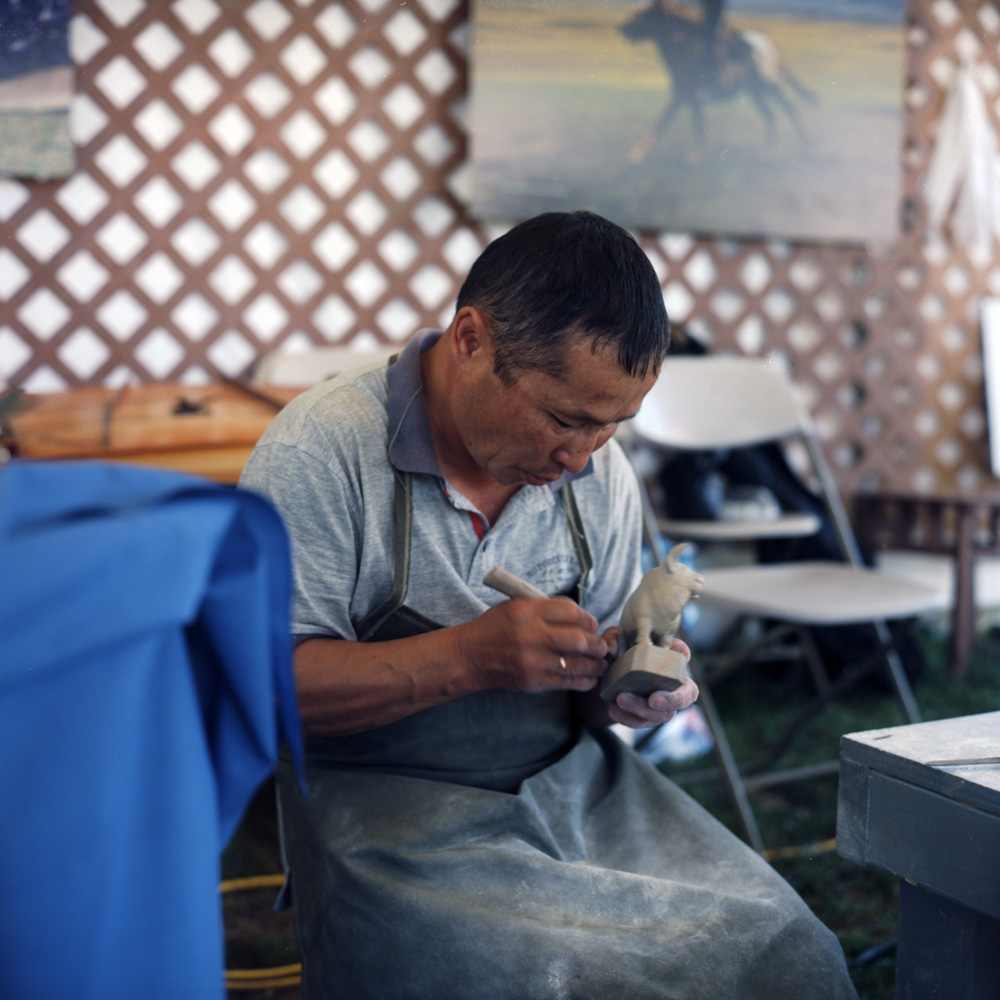
A Tuvan stone-carver, demonstrating hand-carving techniques, making a bull out of soapstone:

Tuvan Stone-carver
Tuvan Stone-carver

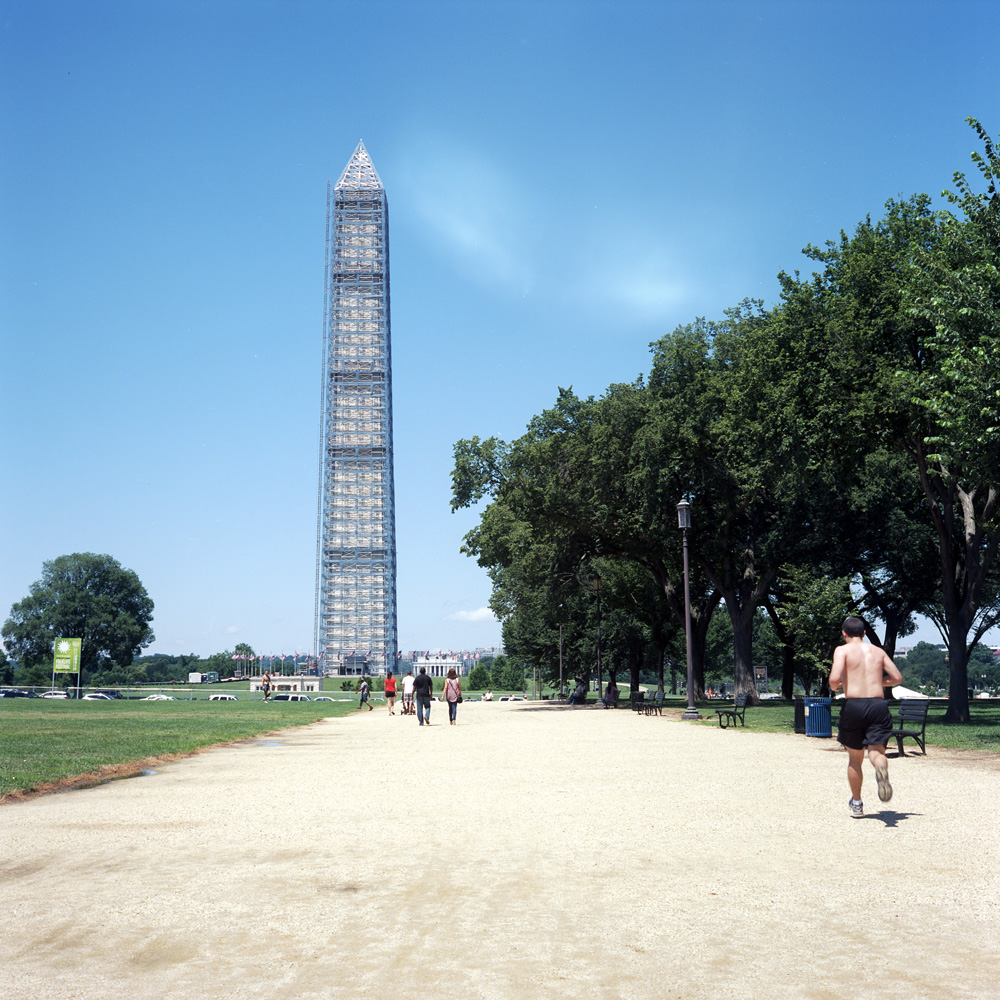
These last three shots are not specifically of the Folklife Festival, but are representative of the location and the spirit of the day. The weather was quite hot, but at least we had a relatively dry day with periodic breezes (Washington DC, particularly the area of the Mall, was built on a swamp, and big chunks of the Mall area, especially west from the Washington Monument, are actually landfill. Which is why the Washington Monument is sinking very slowly. So summertime in DC can be particularly miserable – almost New Orleans-esque in its heat and humidity).

Washington Monument
Washington Monument

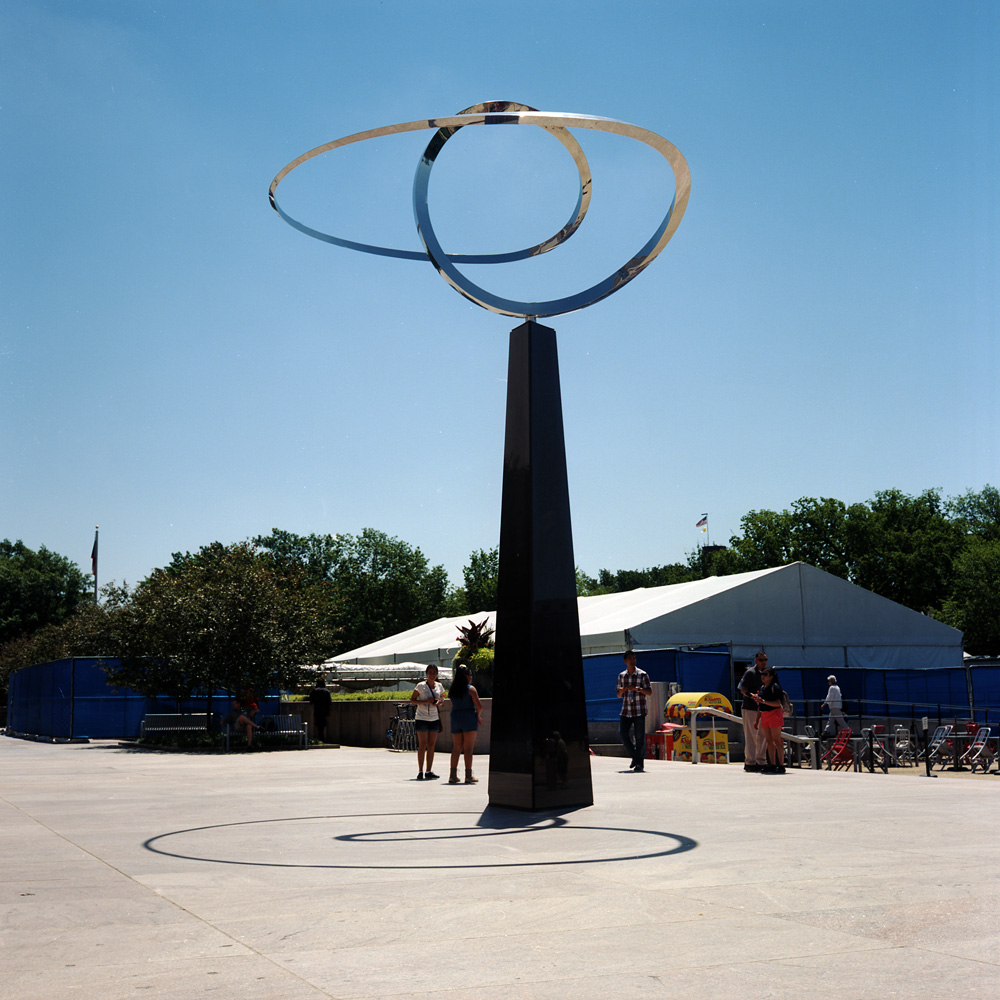
The sculpture is outside the American History Museum, which caps one end of the Folklife Festival and plays host to the temporary festival gift shop.

Sculpture, Cloud, American History Museum

It was tough waiting for people to NOT be walking through the shadow of the sculpture on the pavement. I’ll have to come back and shoot this again in the wintertime when it casts a longer shadow and there are fewer people out on the plaza so I can catch it as more of an abstract piece.

Sculpture, Shadow, American History Museum

All shots were taken with my Rolleiflex 2.8E, on Kodak Ektar 100 film.

Air and Space Museum- Udvar-Hazy Extension at Dulles Airport

I went out with my parents for their joint birthday celebration (mom’s was a week before dad’s, while I was at Photostock). We like going to museums together, and they had never been to the Air & Space Museum annex by Dulles Airport. So we met in Reston for lunch, then drove out to the museum. Here are a few shots I took of the aircraft.

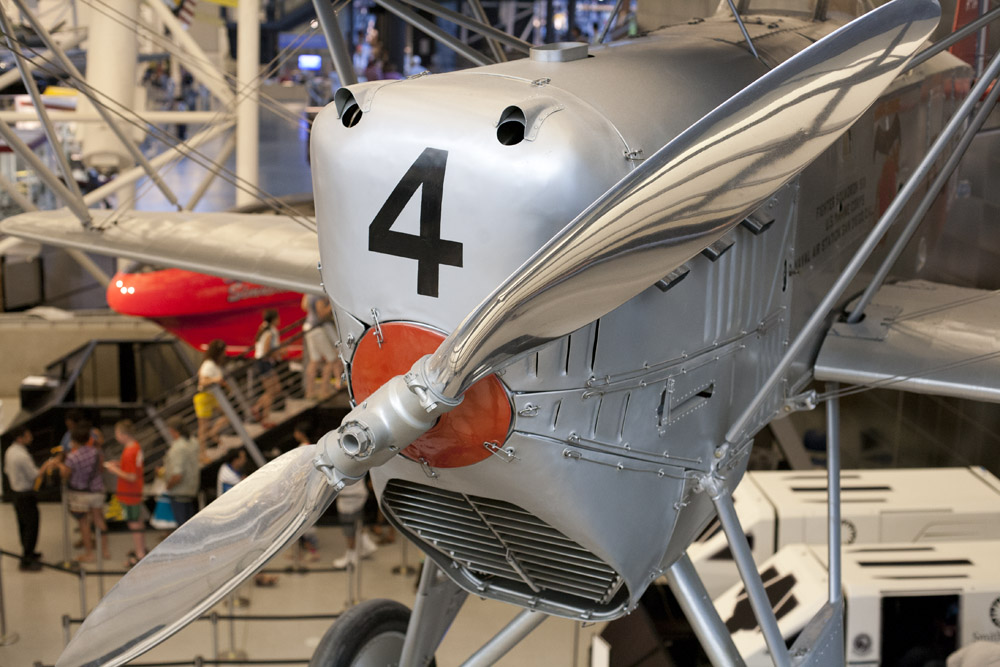
This is an early military biplane. Note the machine gun openings in the nose, just behind the propeller.

AirSpace007

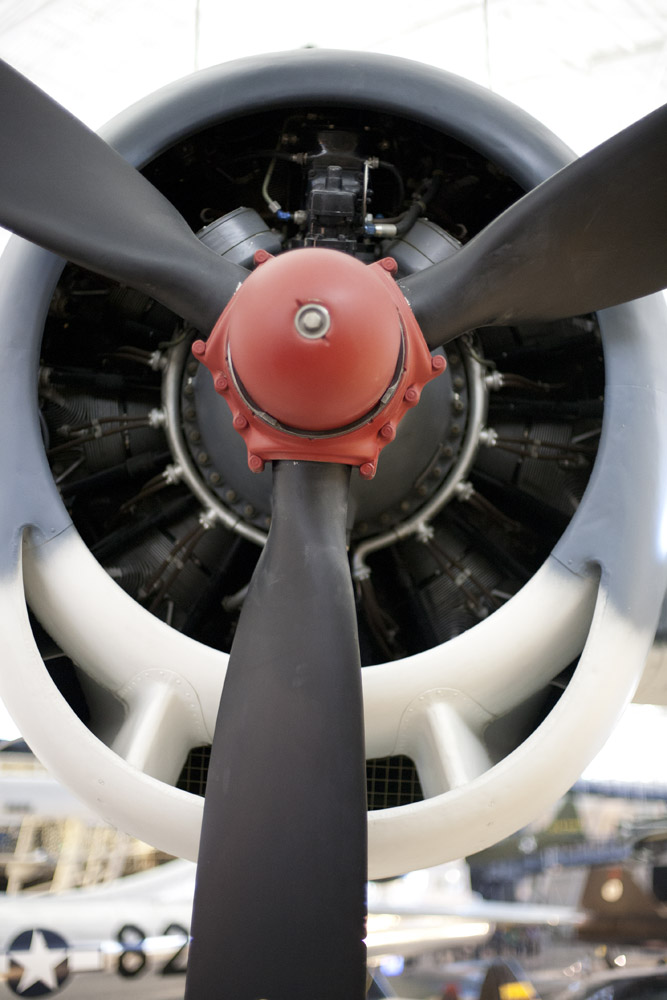
I find the propellers and radial engines on vintage aircraft fascinating – they make for very interesting compositions and lend themselves to geometric abstractions.

AirSpace009

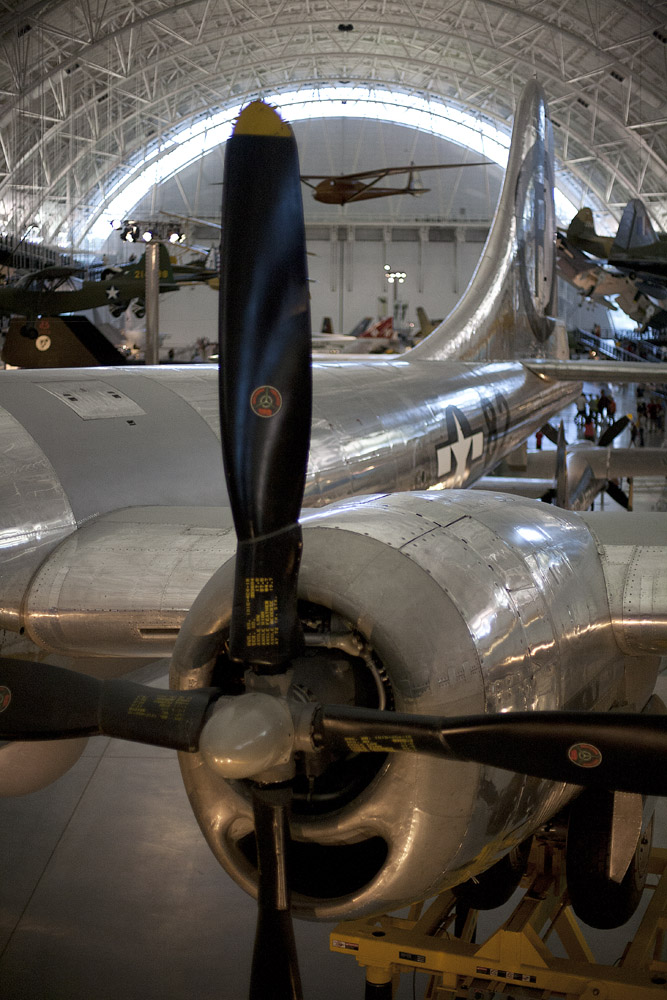
This is the propeller, wing and fuselage of the Enola Gay, the B29 Flying Fortress that dropped the atomic bomb over Hiroshima. There was some controversy when the plane first went on display about how the signage would read. I didn’t re-read it this time, but I know there were some WW II veterans who felt the original language was too apologetic toward the Japanese for the atomic bombing. To me, the plane is presented in an appropriately neutral setting, allowing visitors to judge for themselves what it means.

AirSpace010

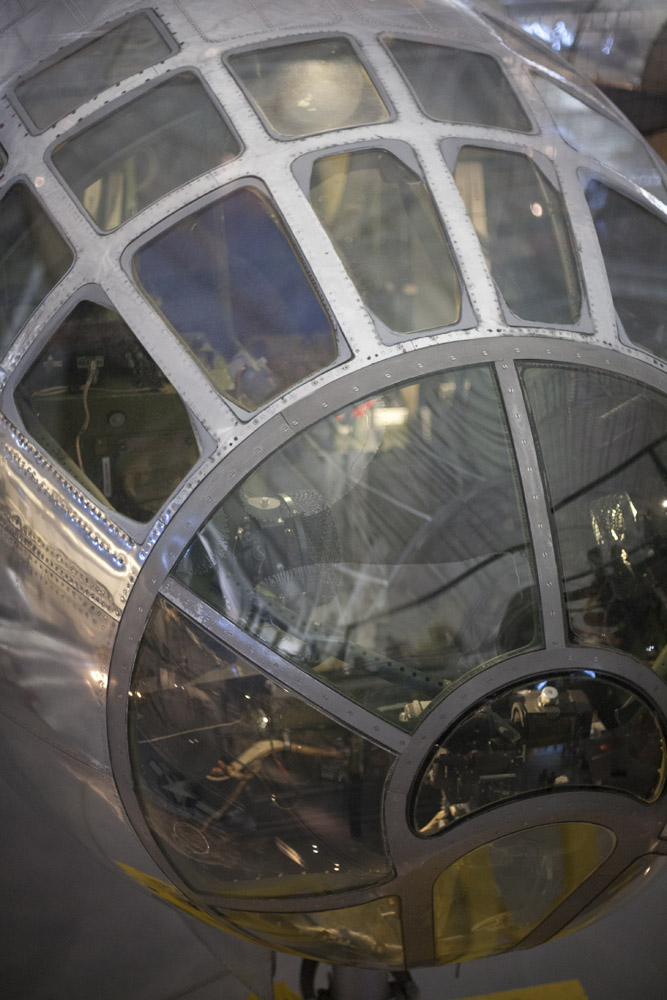
The cockpit of the Enola Gay. I don’t know if having a polarizer would have helped with the glare – the windows are plexiglass and have compound curves to them.

AirSpace011

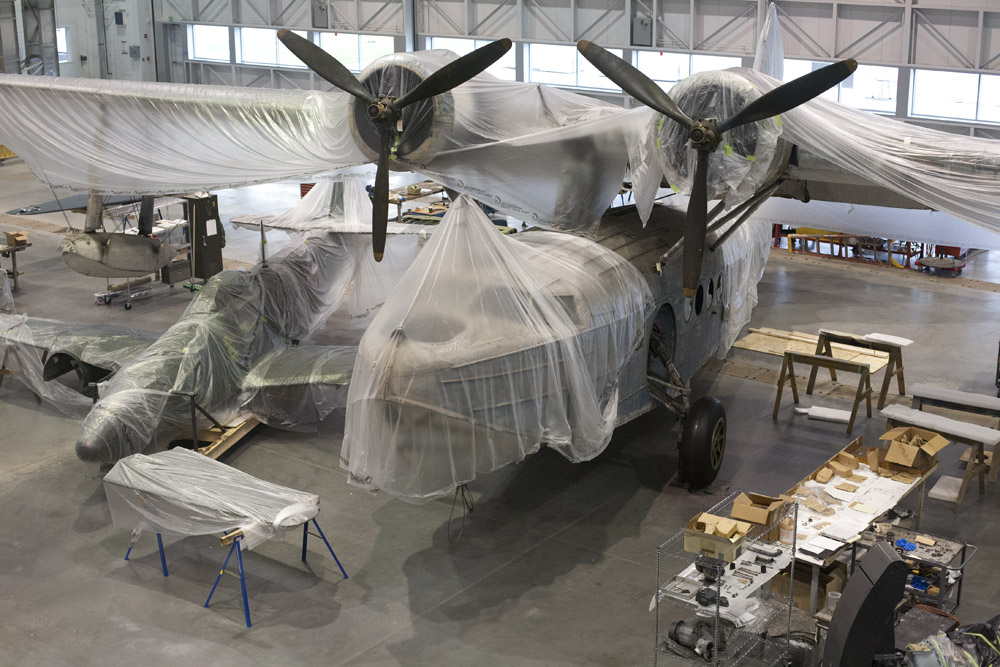
One of the neat things about the Udvar-Hazy center is that they now have the restoration facility open to view. You still can’t go down on the floor of the workshop like you could over at Silver Hill (that was a different place and a different time, where you toured by appointment, but could walk up and touch the Enola Gay, still disassembled and in need of polishing (which they would let you help out with if you wanted to volunteer – the plane has an enormous surface area)). Now they are actively working on a WW II US Navy Hellcat dive bomber (not pictured), and here is a flying boat with what appears to be a Korean War vintage jet fighter underneath its wing.

AirSpace013

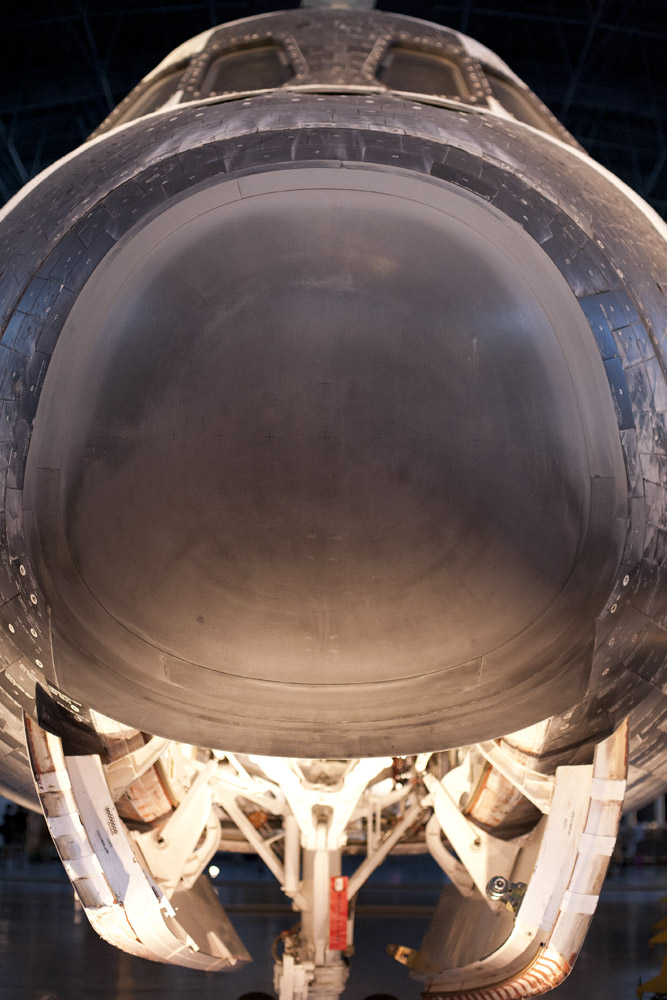
And of course, the piece de resistance, the Space Shuttle. I know almost everyone takes a version of this photo when visiting, but it’s such an impactful view of the iconic vessel.

AirSpace018

All photos were taken with my Canon 5D mk1, and the Canon EOS 50mm f1.4.

Photostock 2013 – Some Black and White Work

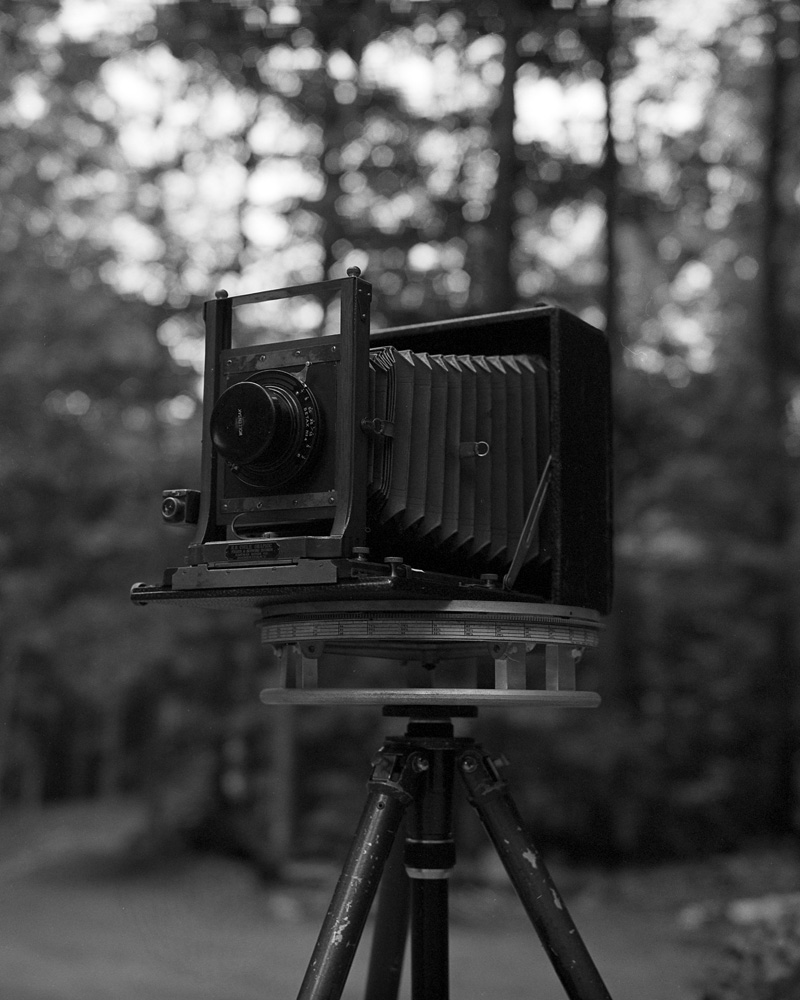
Since Photostock is all about photography, I thought I’d lead off this post with photos about cameras and taking pictures. The first photo is Jaime Young’s 9″ Cirkuit panoramic camera. A Cirkuit is just an ordinary Graflex field camera, but with some special modifications – it comes with a giant geared wheel and a series of reducing gears and flywheels to make it rotate up to 360 degrees and a special back that holds a 9″ tall roll of film. You can change the speed of rotation and the amount of rotation through changing gears and flywheels and adding stops to the large geared wheel. Jamie did a big group shot with the Cirkuit at the workshop facility dedication ceremony, where we had almost 70 people. The Cirkuit was absolutely needed this year to get the whole group shot done. One of the cool things about the Cirkuit is that because it rotates at a relatively slow speed, once the lens passes you, you can get up, run around, and get back in the picture, so you appear twice (or more). I’m itching to see the final print from the Cirkuit – some folks did just that, the run-around, and so they will be in the photo two, three, or in the case of one or two jokesters, even four times.

Cirkuit Graflex Panoramic Camera

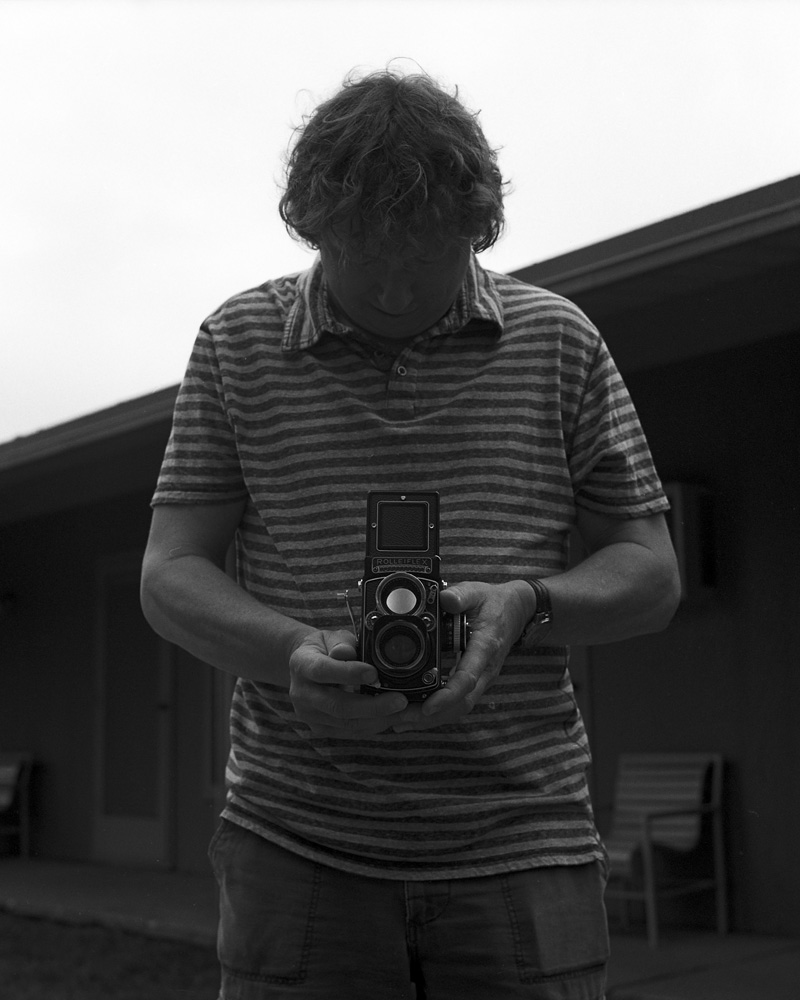
This is Steve Zimmerman, with his Rollei. We shot dueling Rollei photos of each other in a fit of silliness. His Rollei has a great story – he was out photographing in downtown Minneapolis, and some guy walked up to him and struck up a conversation about cameras and photography. The guy then pulls a BRAND NEW, IN ORIGINAL BOX Rolleiflex 2.8E, AND an equally brand new Leica M3 with the Summicron f2 lens out of a bag, and gives them to Steve for $100 each. Steve tried to pay him more (each of them was worth about 10x what he paid for them!) but the guy insisted on the cheap price, because “I know you’ll enjoy and appreciate them”.
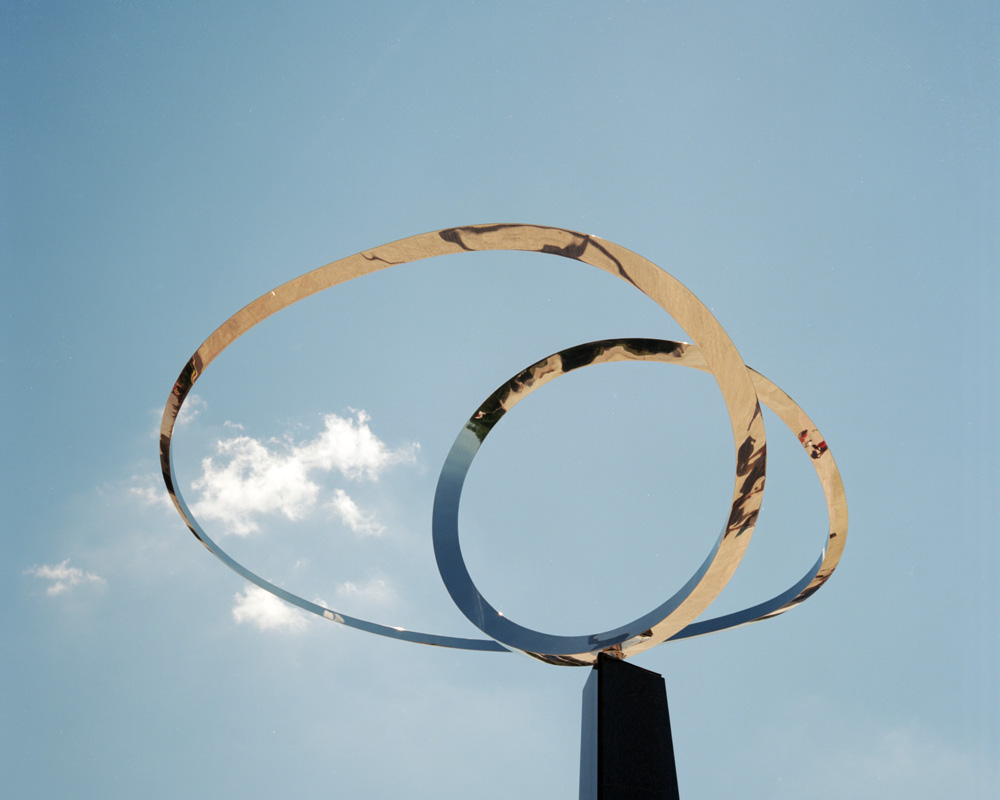
Steve Zimmerman, Dueling Rolleis

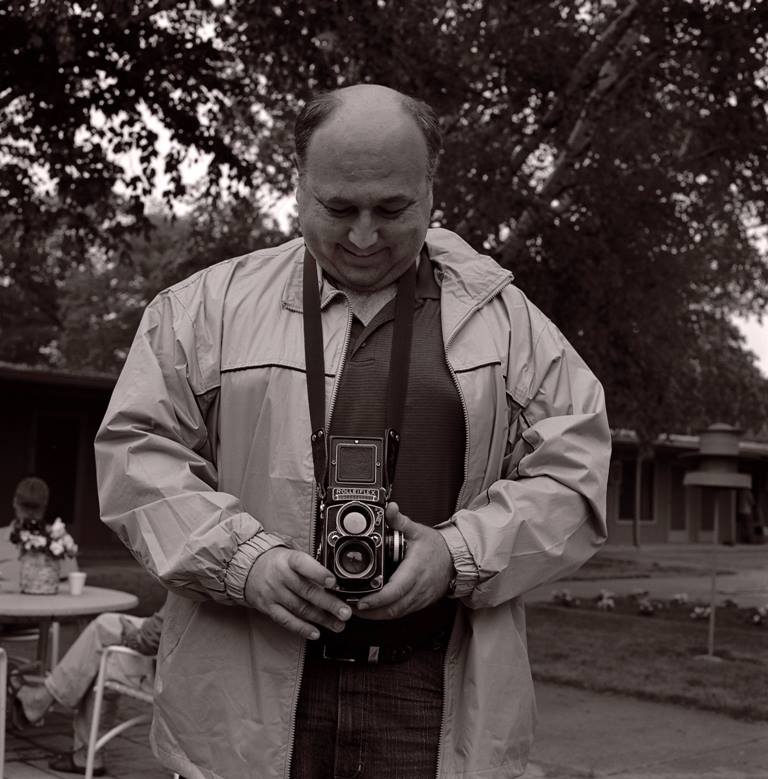
Here’s Steve’s shot of me… why couldn’t he have photoshopped a full head of hair onto me? It would have helped compensate for the double chin…

Me, in a Rolleiflex Duel with Steve Zimmerman

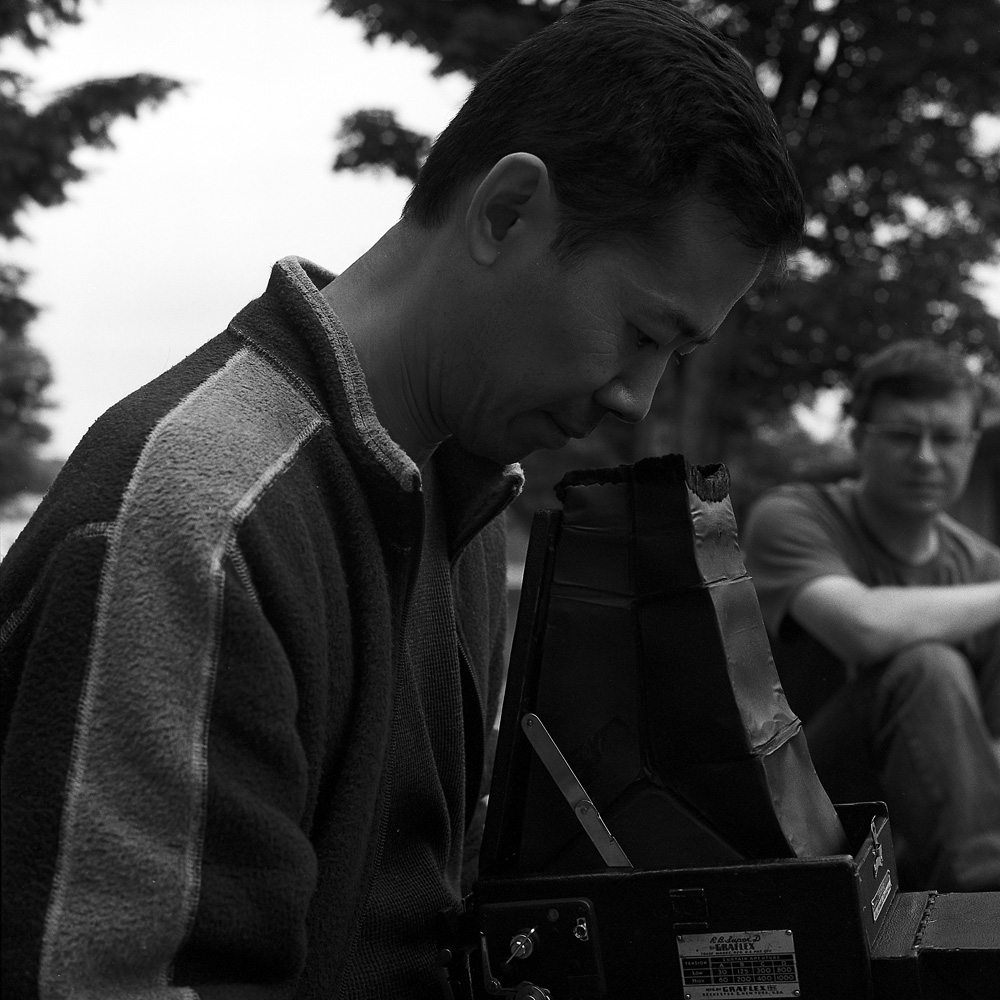
Someone (I forget who) brought a beautiful RB Graflex Super D 4×5 SLR to the event. Here is Dan Lin, a fantastic photographer who I’ve done a print trade with before, playing with the Graflex. Alex L is in the background.

Dan Lin, Trying Out A Graflex

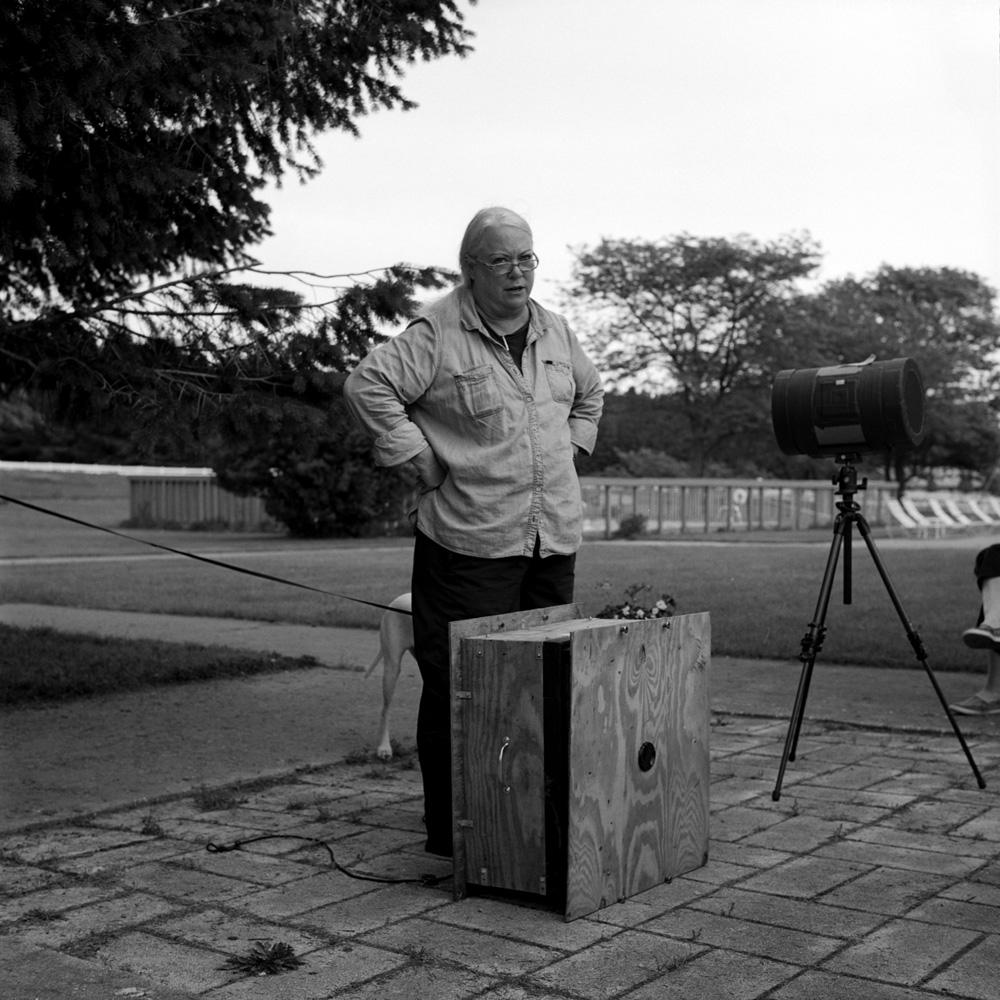
And here’s Judy Sherrod again, with her pinhole cameras. The one in front of her is the first version of her 20×20 wet plate pinhole box camera, made of plywood. It has since been retired and replaced with a new, better built one. The drum on the tripod behind her is an anamorphic pinhole. The pinhole is in the end of the tube, but the paper or film goes around the inside, instead of on the opposite wall of the camera. This works because of the way a pinhole works. The pinhole projects light in a very wide circle, not just a cone like a lens does. Doing so allows you to make some very different images.
Judy Sherrod, Pinhole Camera Demo

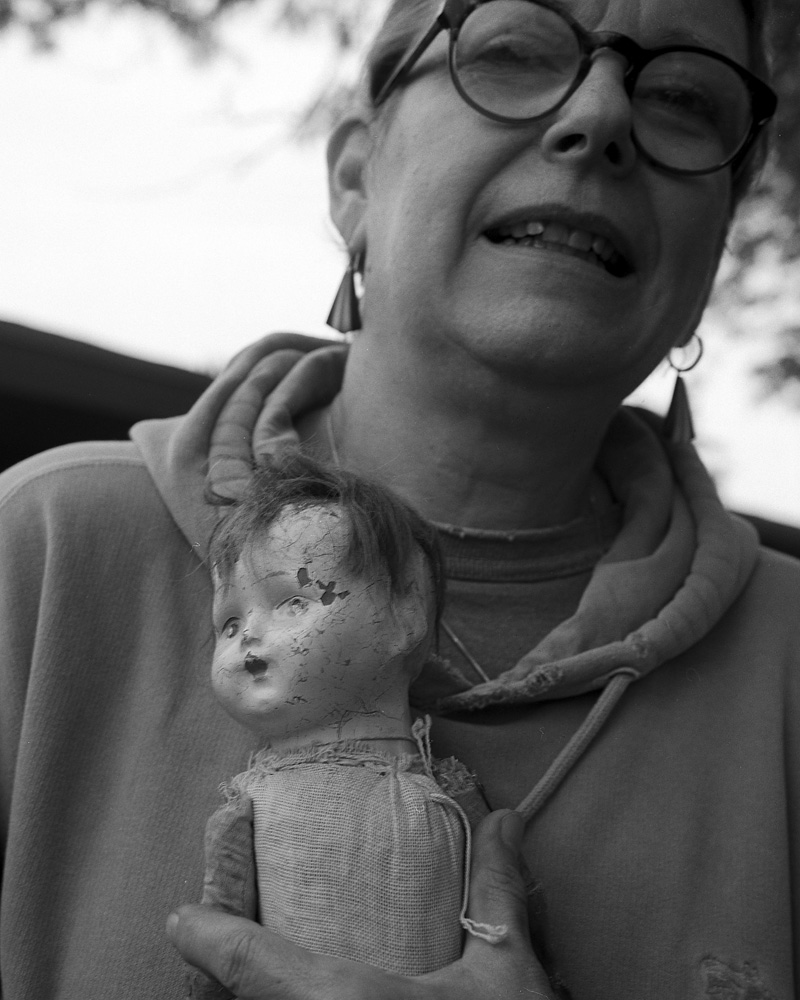
Here’s Dorothy Kloss with her creepy doll. She likes collecting antique dolls, and the creepier the better.

Dorothy and her Creepy Doll

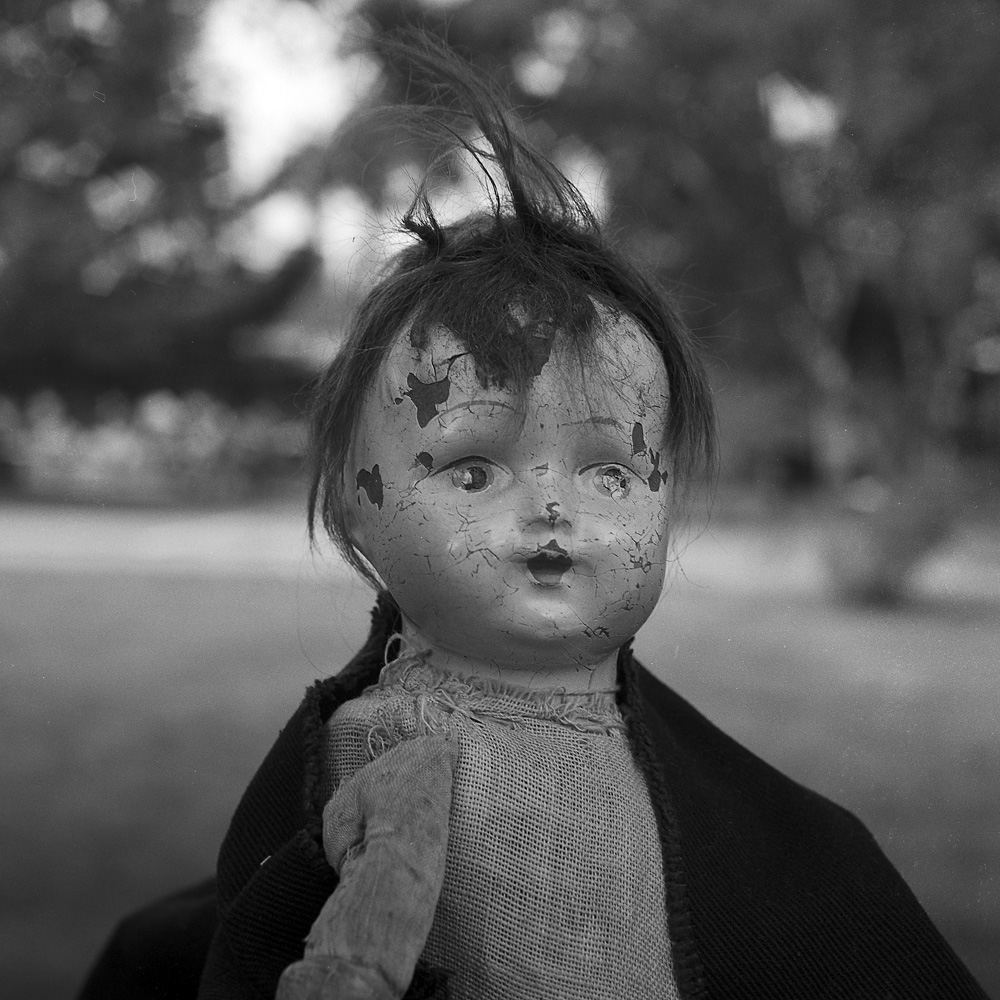
It seems everyone has a Rolleiflex story somewhere or other. I was playing around with my Rollei and it reminded Dorothy that in some boxes of her father’s stuff, she has his old Rolleiflex, and maybe the Rolleinar close-up filters like I have and was using for the shot of her with the doll and this photo of the doll by itself. It inspired her to go dig through her dad’s stuff and find it when she got home.

Dorothys Creepy Doll

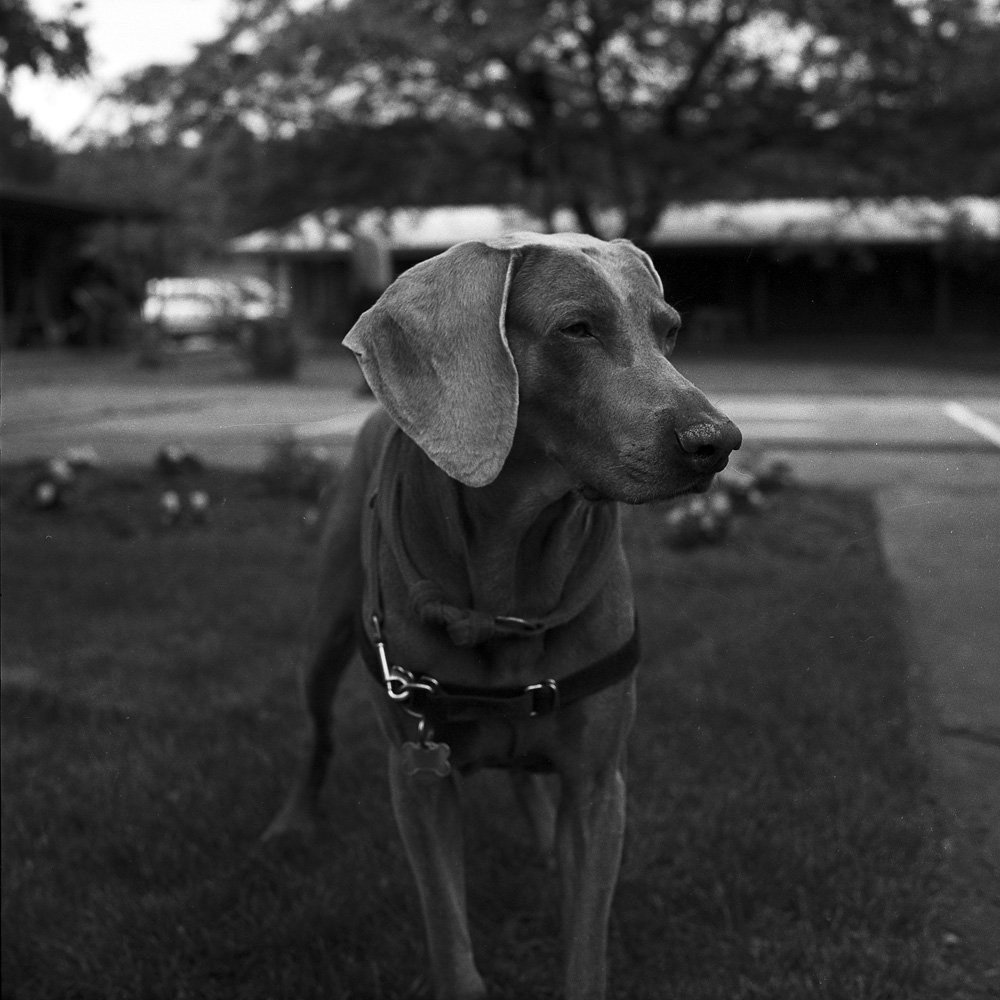
Pele the Weimeraner. Pele was a great dog and a fine addition to the Photostock community. He is very attentive and friendly, and you can see in the subsequent photo of him with Arnaldo, his owner, very fixated on his ball.

Pele
Pele

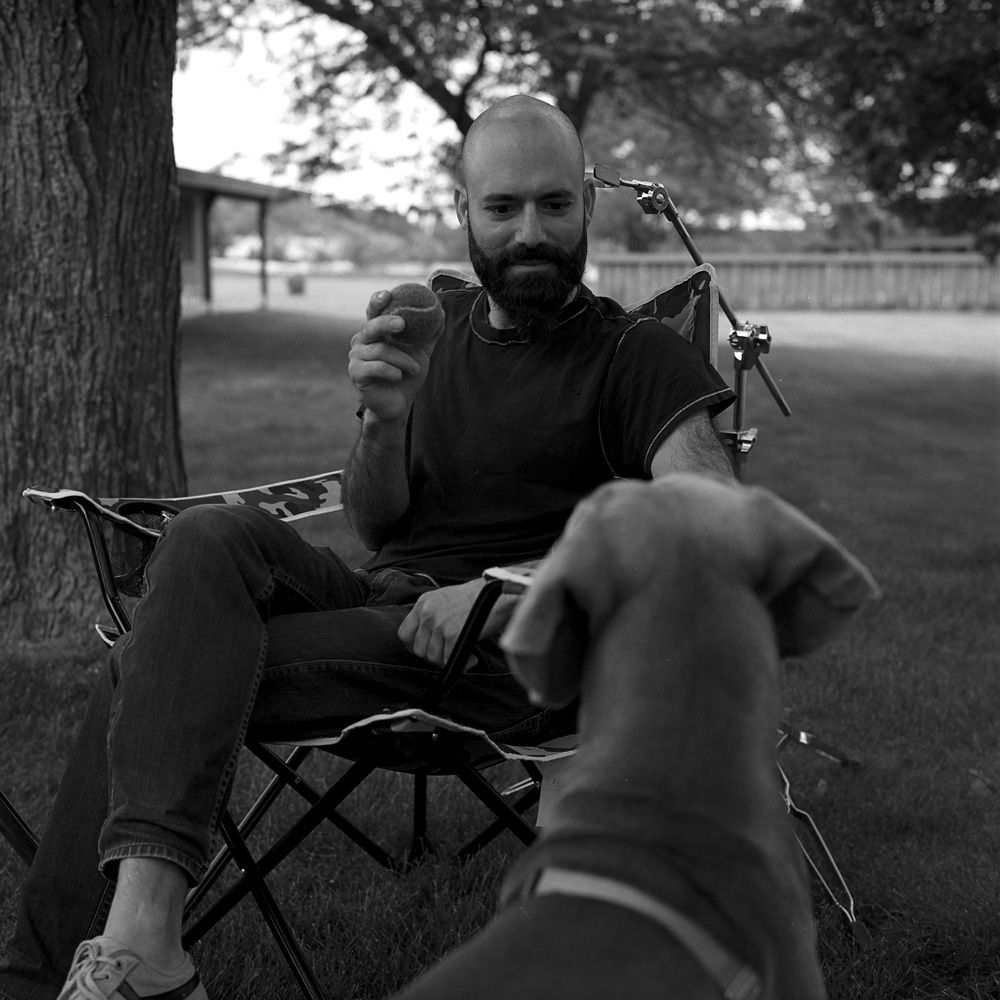
Arnaldo, in the posing chair with head clamp, waiting for the wet plate collodion portrait that Andrew Moxom took of him to develop, playing with Pele.

Arnaldo and Pele
Arnaldo and Pele

Arnaldo. Arnaldo is a photographer from New York City. He drove to Photostock from New York in a 1980s vintage Porsche 944, and continued on to the Southwest (New Mexico and Arizona if I’m not mistaken) afterward.

Arnaldo Vargas
Arnaldo Vargas

Mat Marrash. Mat runs the Film Photography Project podcast, and does AMAZING 11×14 Infrared (!!!) photographs. Yes, I said 11×14, as in 11×14 inch film. He has a stock of Efke 11×14 infrared film that he’s working through – the Efke is no longer made, so once his stash is gone, that’s it.

Mat Marrash
Mat Marrash

Here’s a portrait of Dan Lin, without the Graflex, but with his pipe. I don’t think I got one of him wreathed in smoke from it, but I might have one like that on one of the remaining rolls from the trip I still have to develop.

Dan Lin
Dan Lin

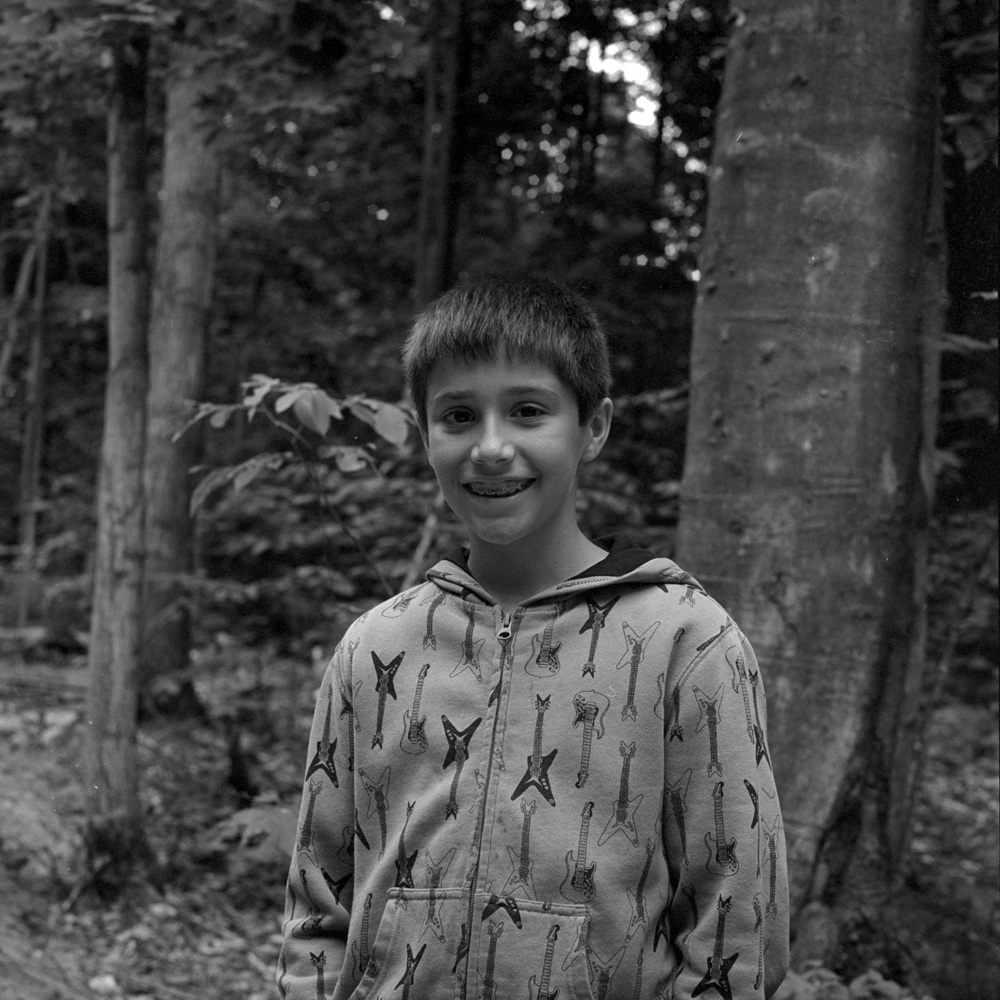
And in the closer for this post, is Evan Schwab, the son of Bill Schwab, our host and organizer for the event. Evan is a terrific little guy, very smart and a good conversationalist. A kid even WC Fields could like.

Evan Schwab
Evan Schwab