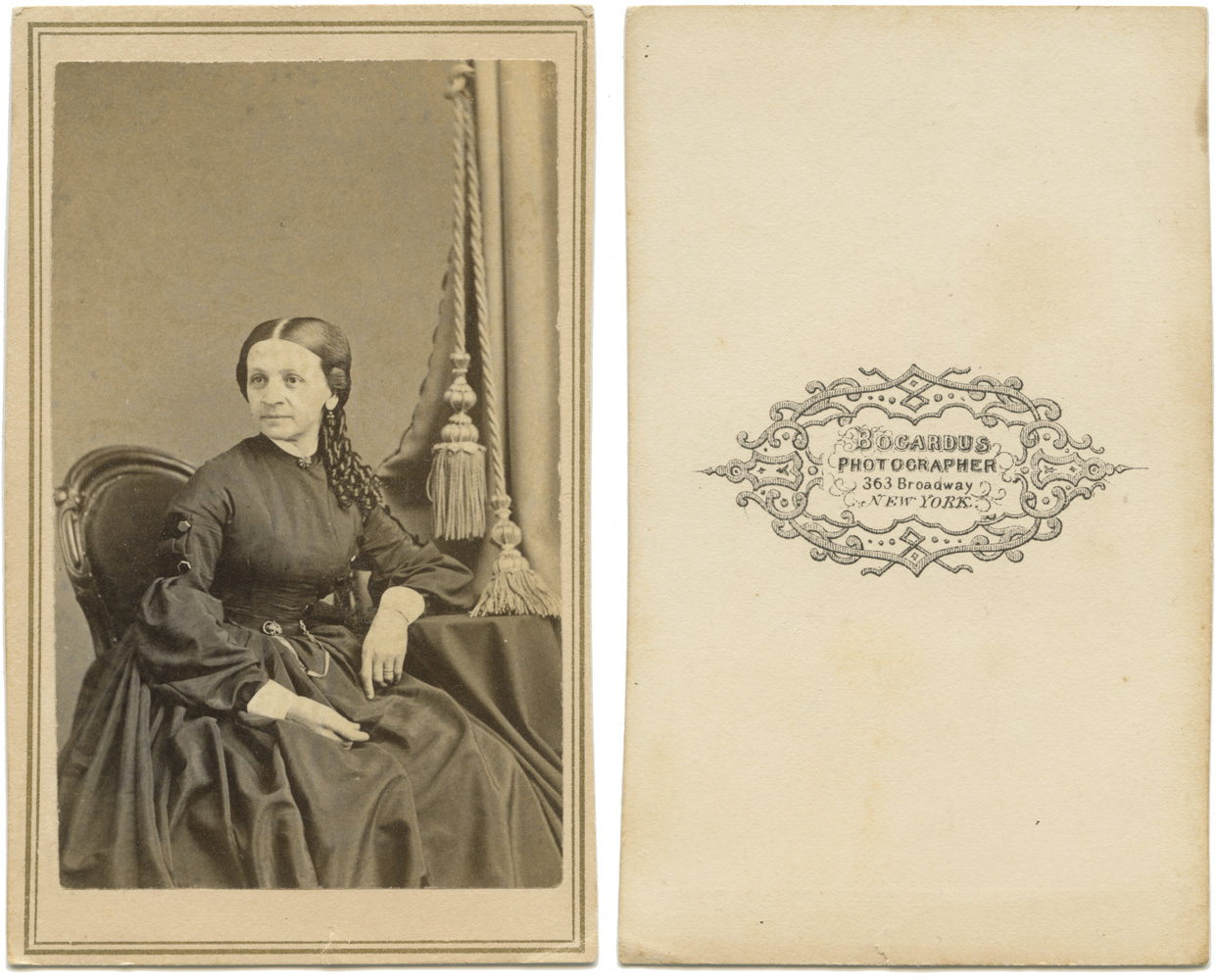
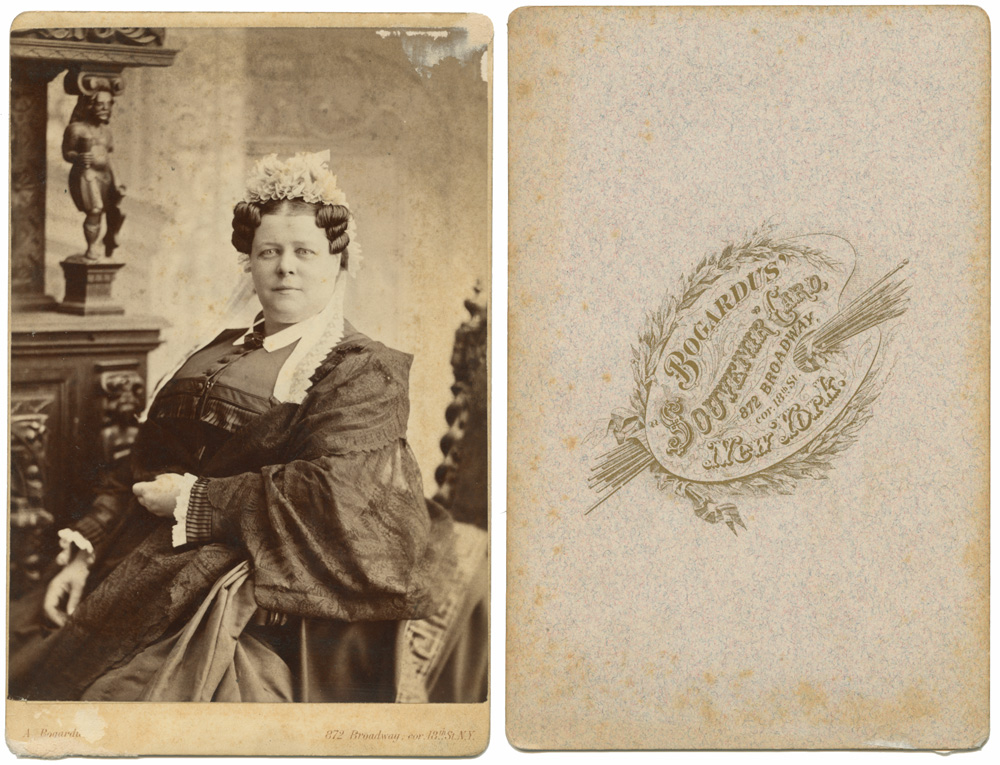
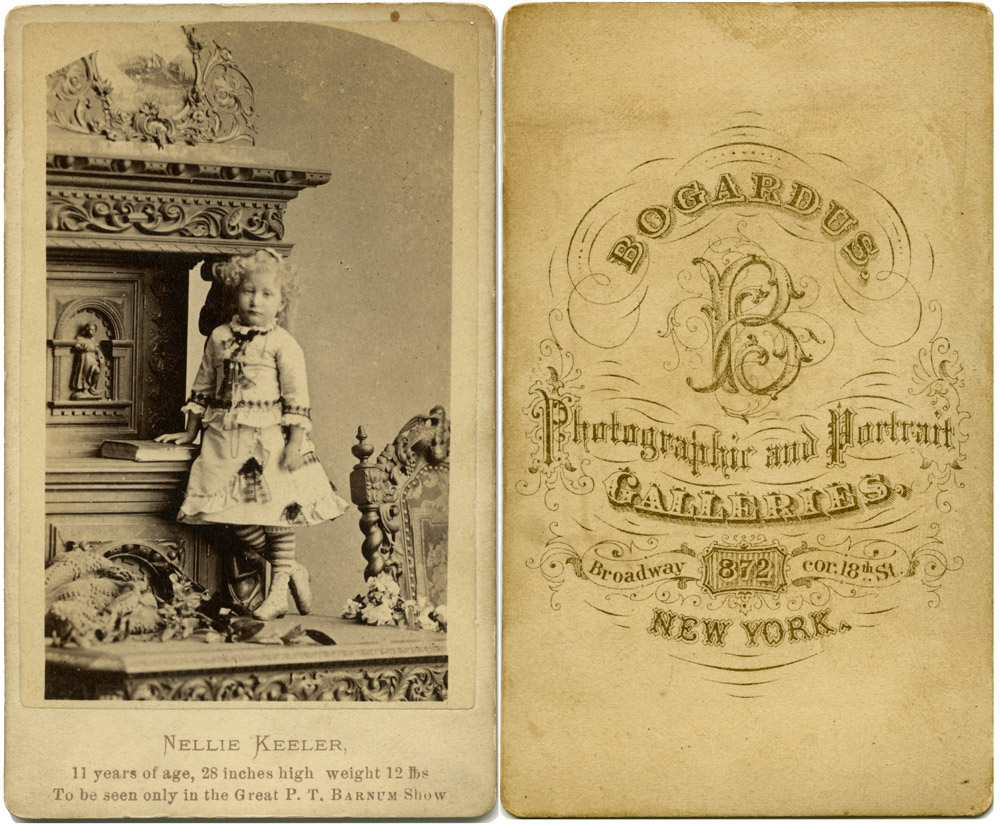
This is an anonymous portrait by Bogardus, one of the “big names” in mid-19th century American portrait photography. The carte itself and the print are in excellent condition, and I love the photographer’s blind stamp on the back. I’m including two more below by Bogardus to show the different blind stamps he used. I’m sure it evolved further over time, but these are the ones I have in my collection.
Plump lady cabinet card, Bogardus StudioNellie Keeler, on Bogardus’ Sideboard
On a parallel but unrelated note, I think the cabinet in the Nellie Keeler and plump lady photos is to Bogardus what the “Reaper” clock is to Brady (as referenced in my previous blog post). The article I linked mentioned that the author found two copies of the Reaper clock like the one Brady had in his studio – it would be very cool to find Bogardus’ sideboard and bring it into a studio.
Here is a CDV of Suzie Reed, another one of Barnum’s Little People. The image is by Brady, even though the backmark just says E. & H.T. Anthony. The image is documented in the Meserve Collection, which was a collection of Brady images assembled by Frederick Hill Meserve that ended up being one of the largest repositories of Brady’s work not held in a museum. Another notable hallmark is the “reaper” clock, which made a regular if infrequent appearance (there are some 60 known images by Brady featuring the clock, but more may exist in the negatives as the clock may have been cropped out of the final prints). There’s a great article about the clock online – Bob Frishman’s Story of the Brady ‘Reaper’ Clock.
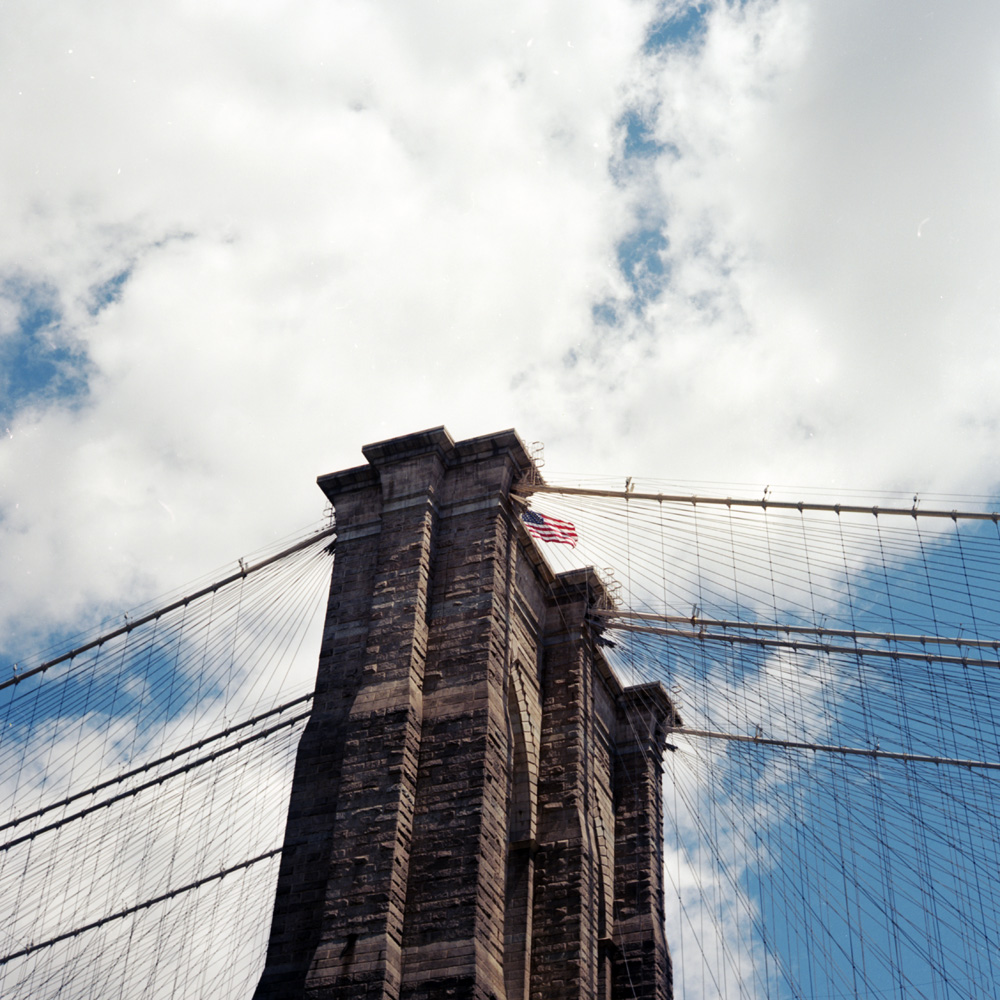
Brooklyn Bridge at Hicks StBrooklyn Bridge, Flag, Clouds
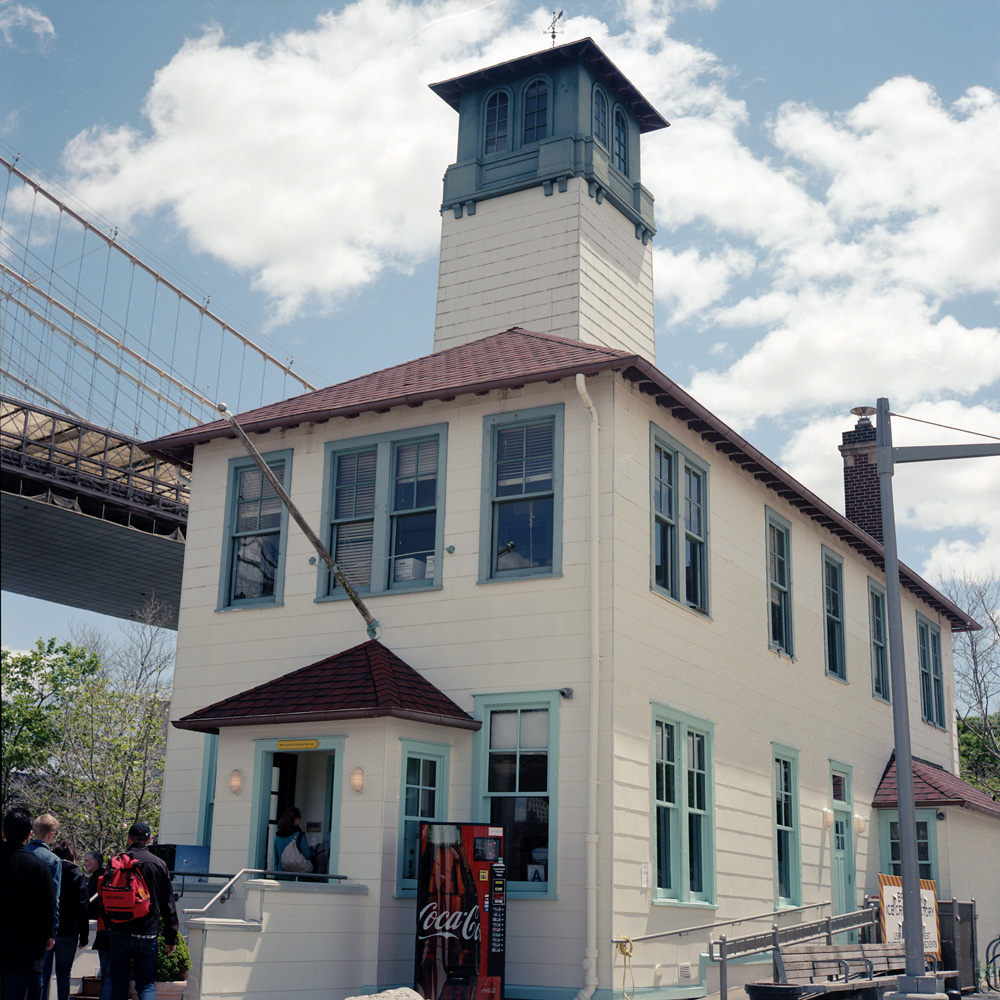
We got ice cream here at the Brooklyn Creamery- some of the best ice cream I’ve had in ages.
Brooklyn Creamery
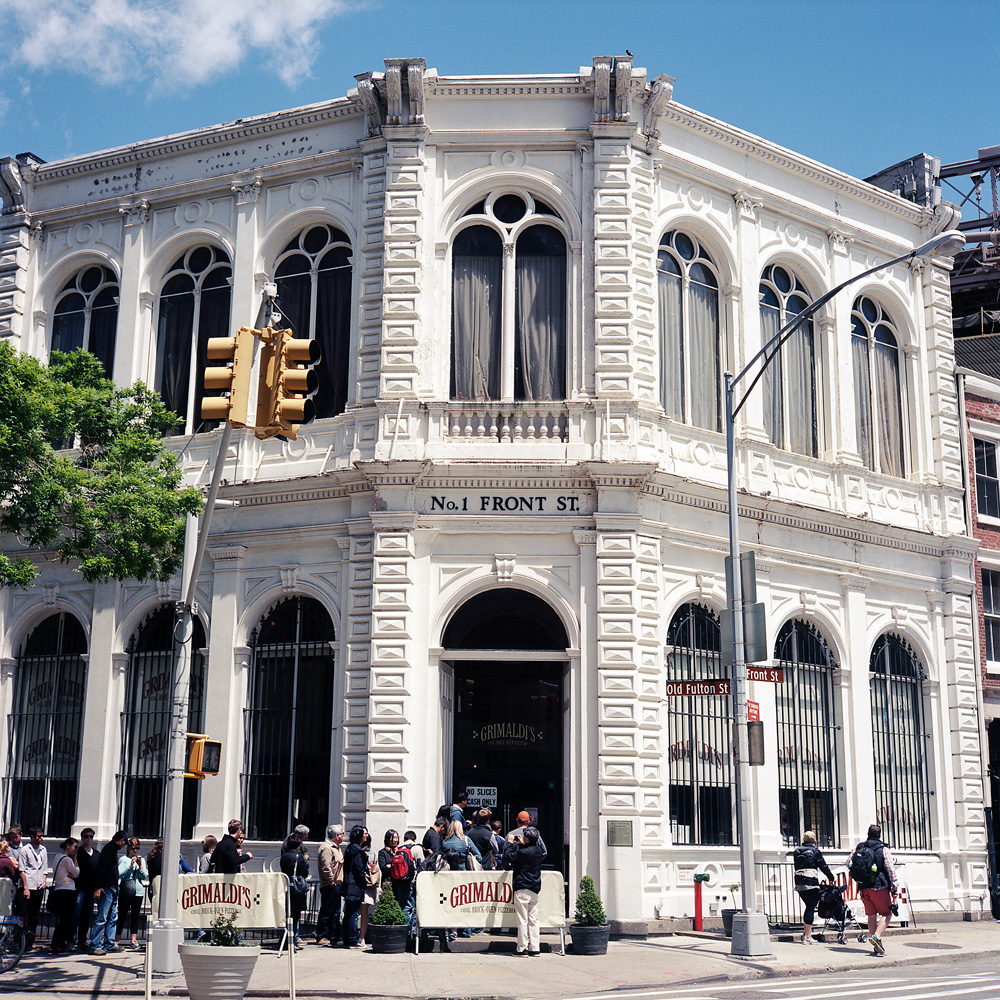
There is a line going down the block out the front door of Grimaldi’s Pizza basically every minute that they’re open. I don’t know if you can see the sign or not, but on one of their banners it says, “coal-fired pizza. Cash Only, No Slices”. I assume they mean charcoal when they say coal – I couldn’t imagine pizza made in an actual coal-burning oven. A little coal tar with your pepperoni?
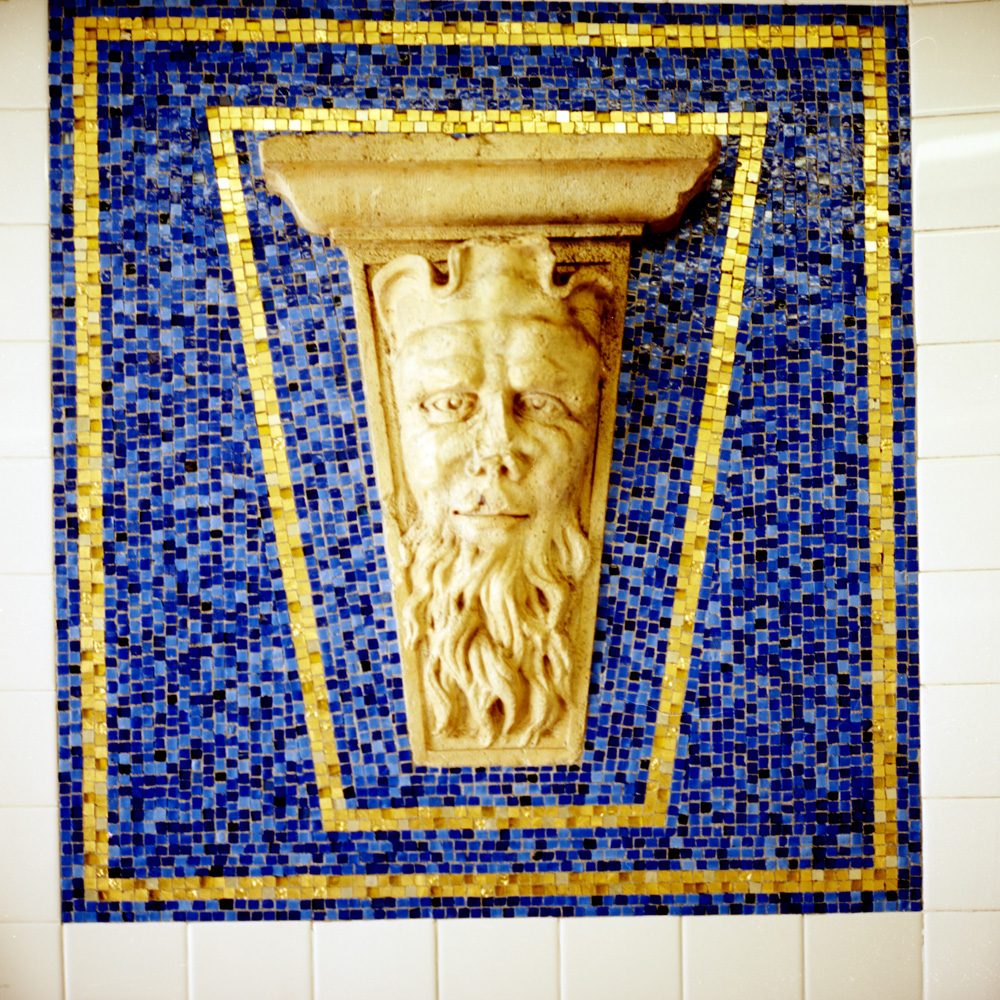
Despite the image in most people’s minds of the New York City subway being gritty, grimy, old and just plain filthy, once you get out of Manhattan there are some very attractive stations. This tile-work was in the entrance stairs to the station at Prospect Park for the Brooklyn Museum of Art.
Face, Prospect Park SubwayBrooklyn Museum Of Art
Coney Island:
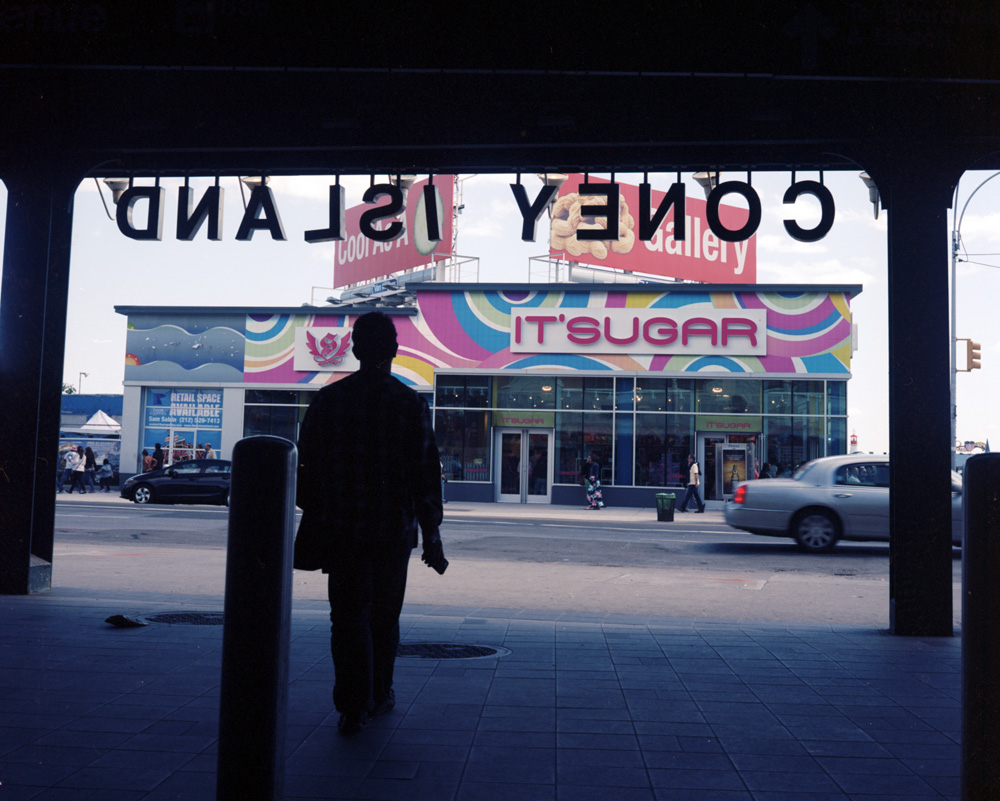
Arriving at Coney Island from the Subway.
Coney Island Sign, Subway Exit
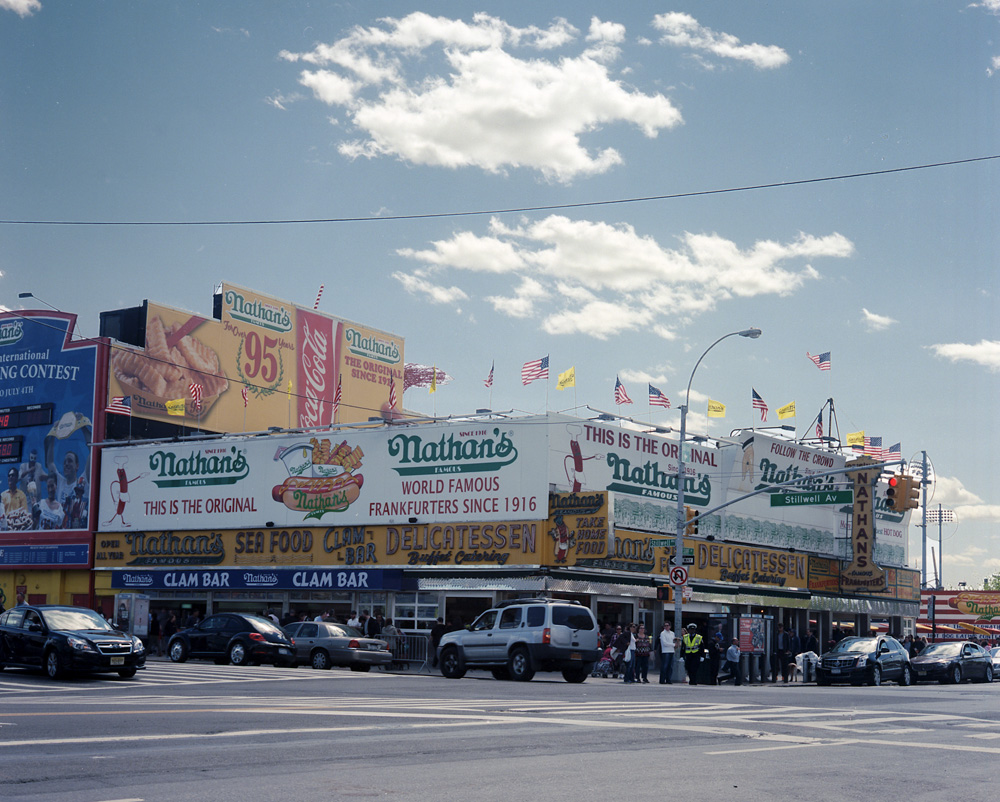
Nathan’s Hot Dogs – they’re a cliché, but still – you can’t pass up a Nathan’s hot dog and cheese fries your first time at Coney Island.
Nathan’s Hot Dogs, Coney Island
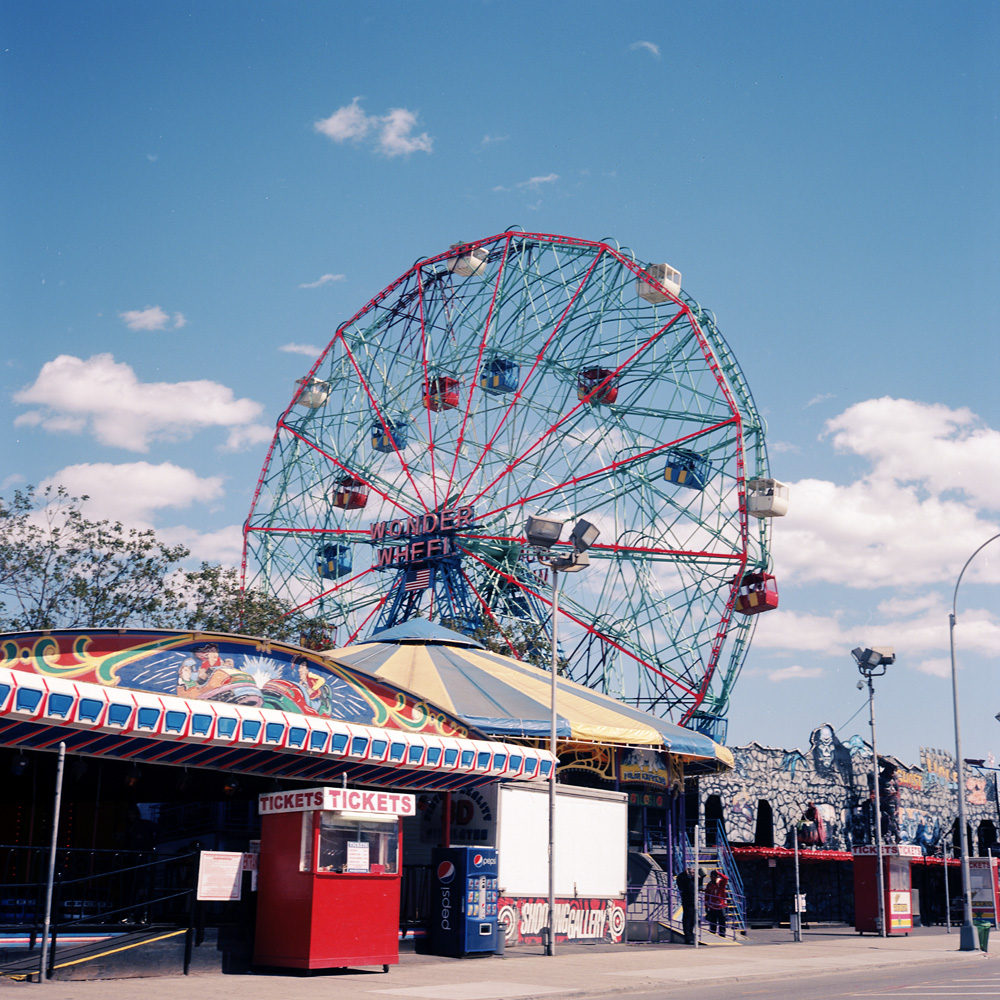
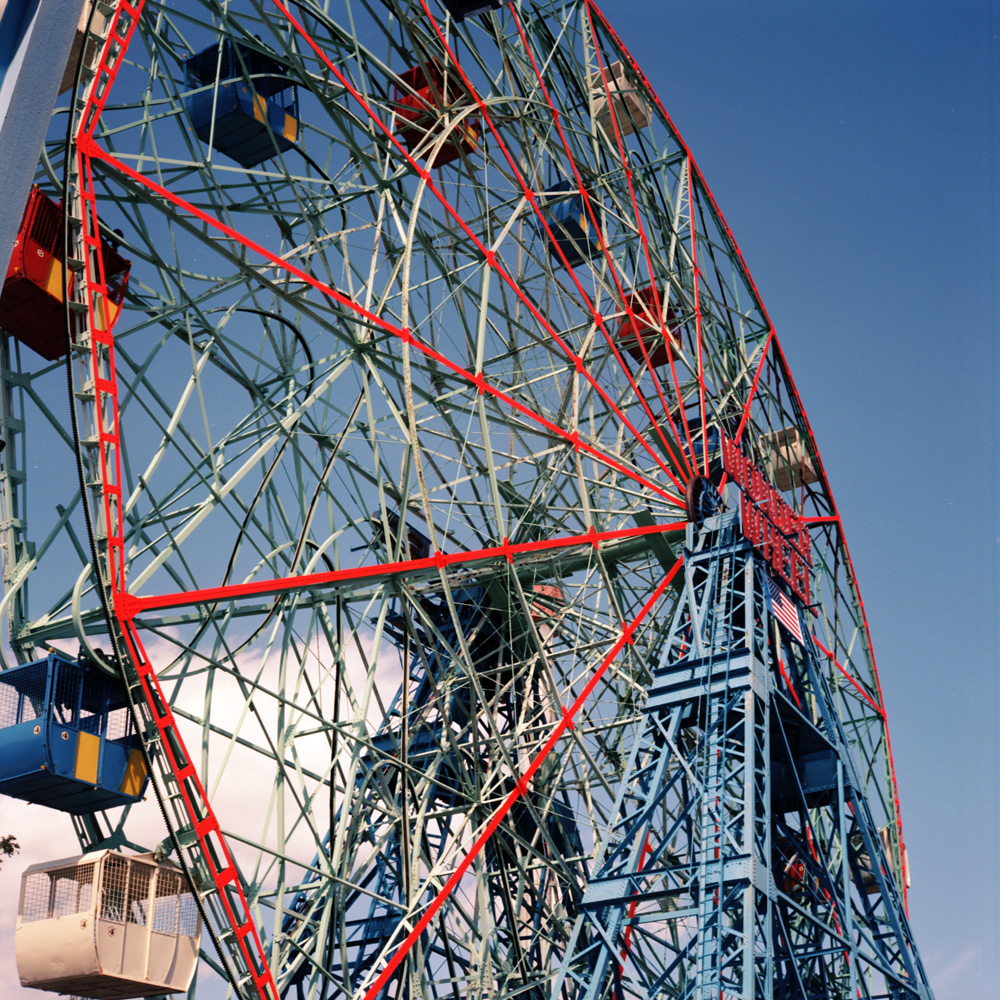
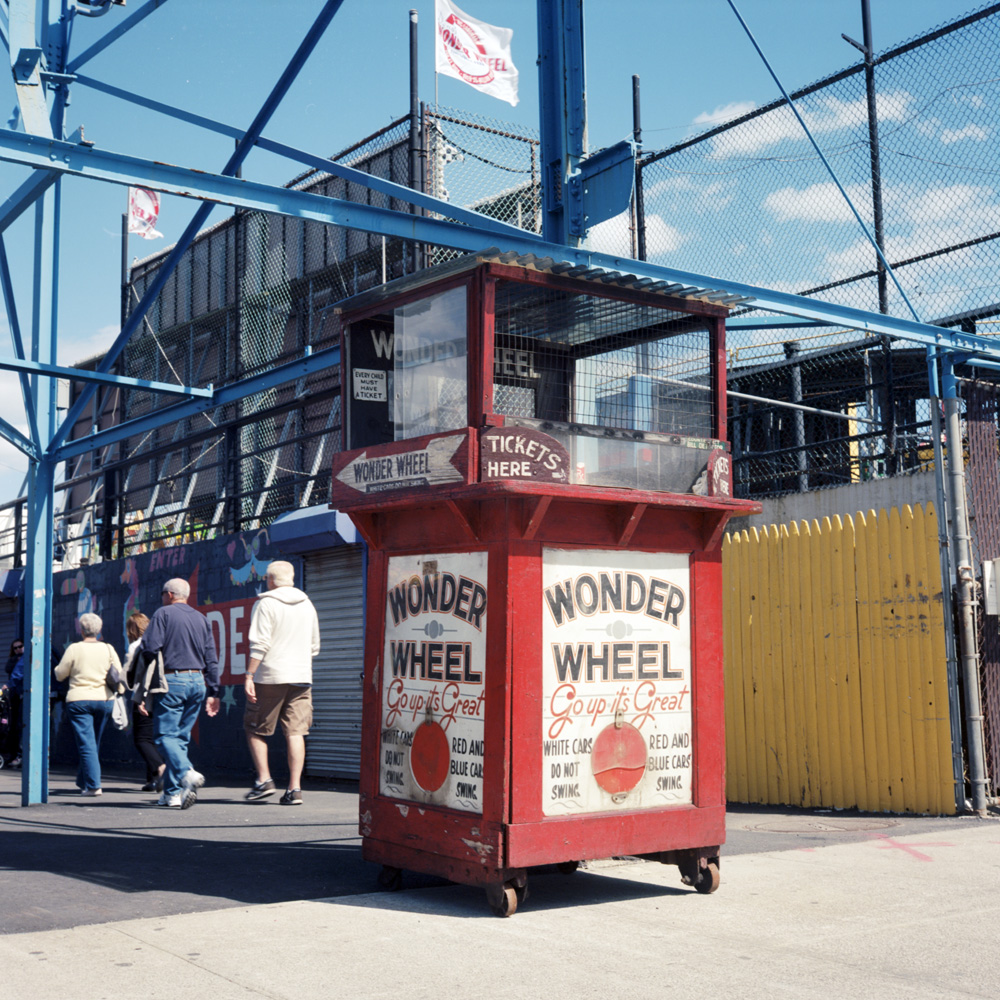
We had to ride the Wonder Wheel, and of course, we had to take one of the swinging cars, even though they don’t get as high.
The Wonder WheelThe Wonder WheelKiosk, The Wonder Wheel
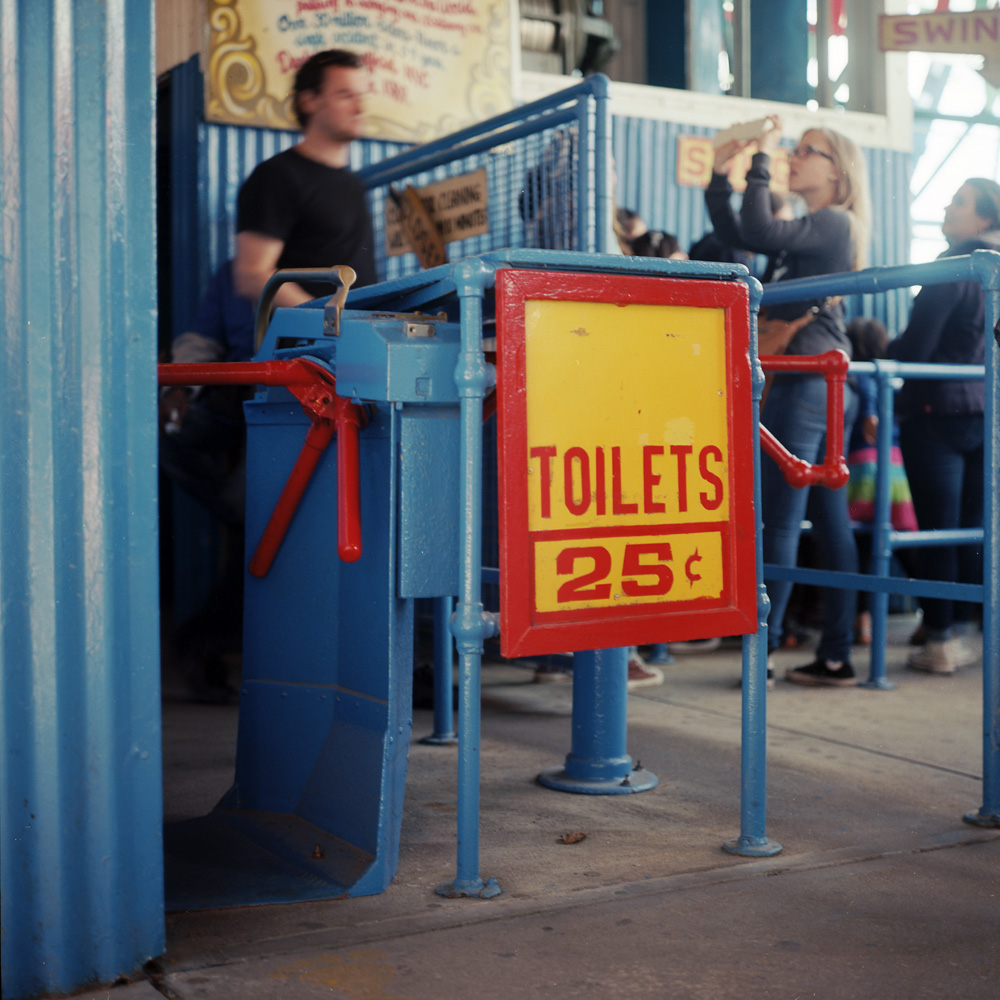
While in line for the Wonder Wheel, I saw the sign for the pay toilet and wanted to take a picture of it – the sign and the old metal turnstiles are just so cool (and before you ask, I didn’t pay to go in and find out exactly what they looked and/or smelled like- even though it was opening weekend, it’s still Coney Island!). This old man with a fancy walker (purple anodized aluminum frame with a hand-brake and a fold-down seat) saw my Rolleiflex and struck up a conversation – he had been a camera salesman at a store in Brooklyn for many years and remembered selling them.
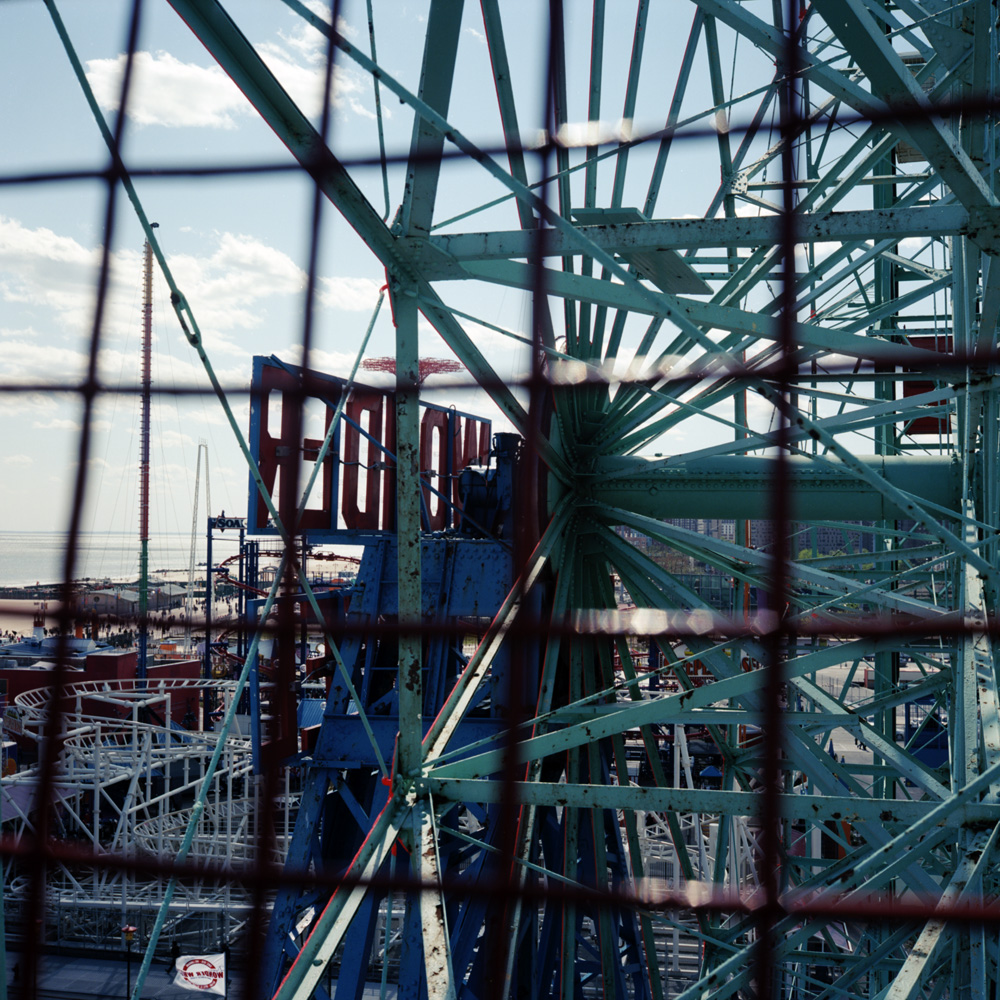
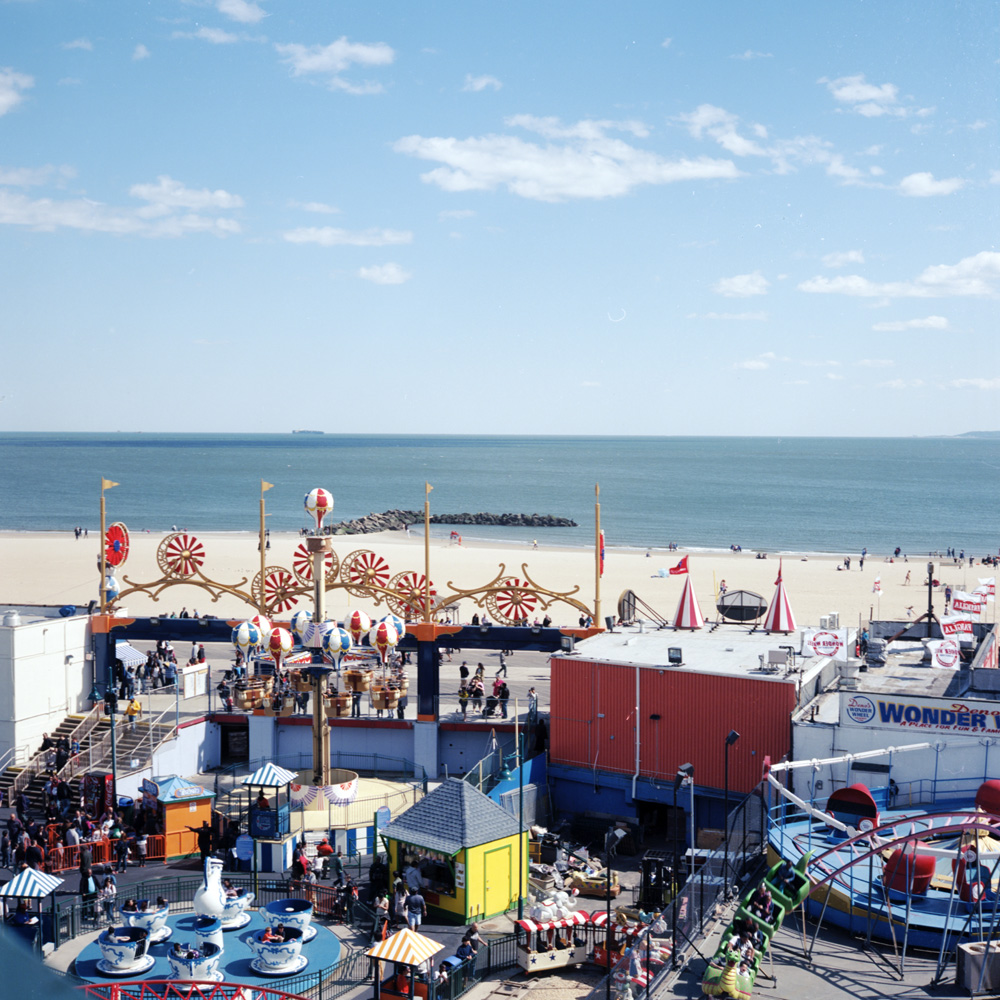
25 cent Toilet, The Wonder WheelInside the Wonder WheelLuna Park, The Beach, From the Wonder Wheel
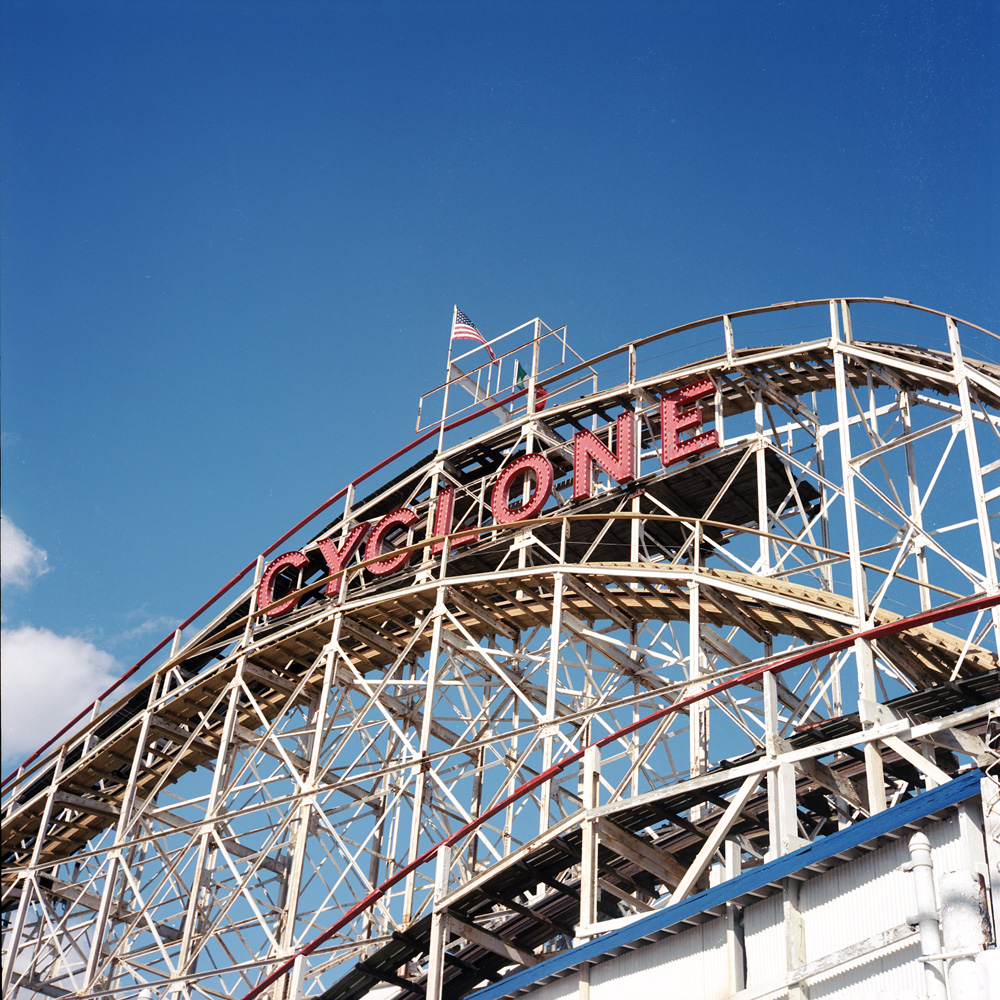
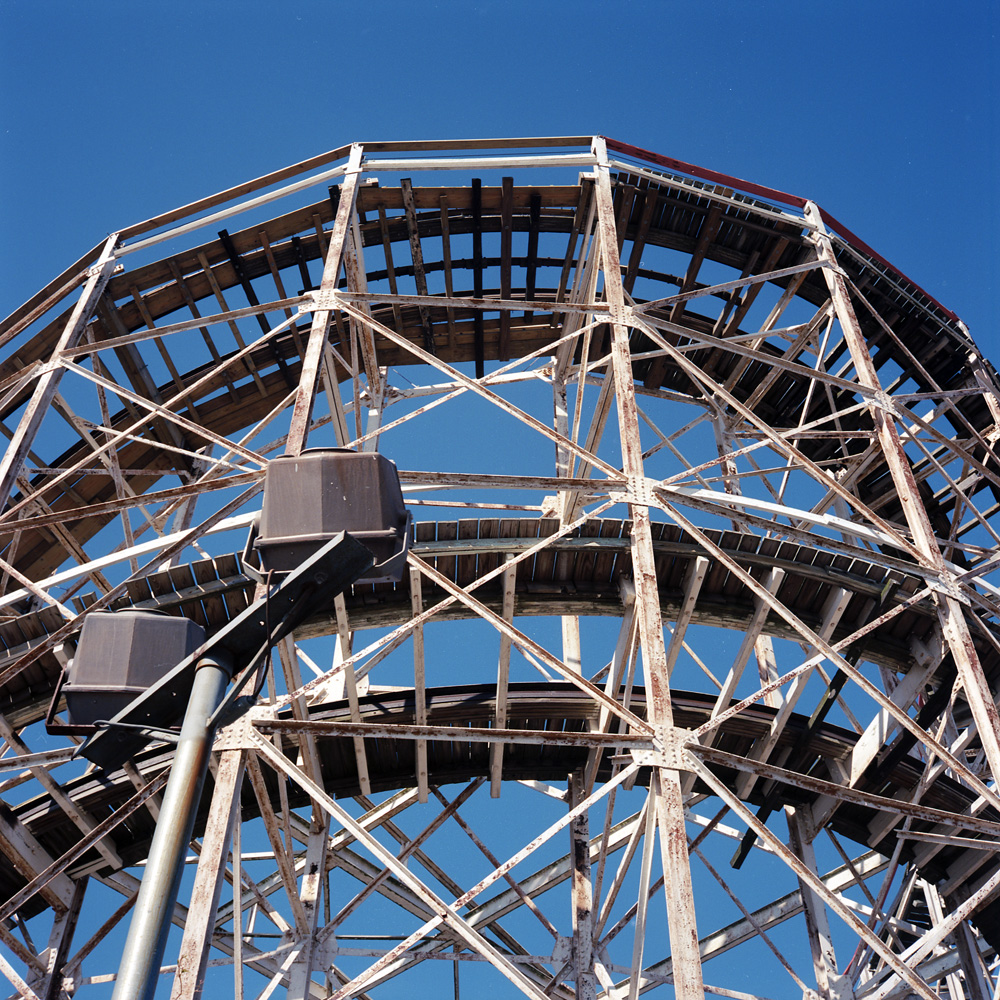
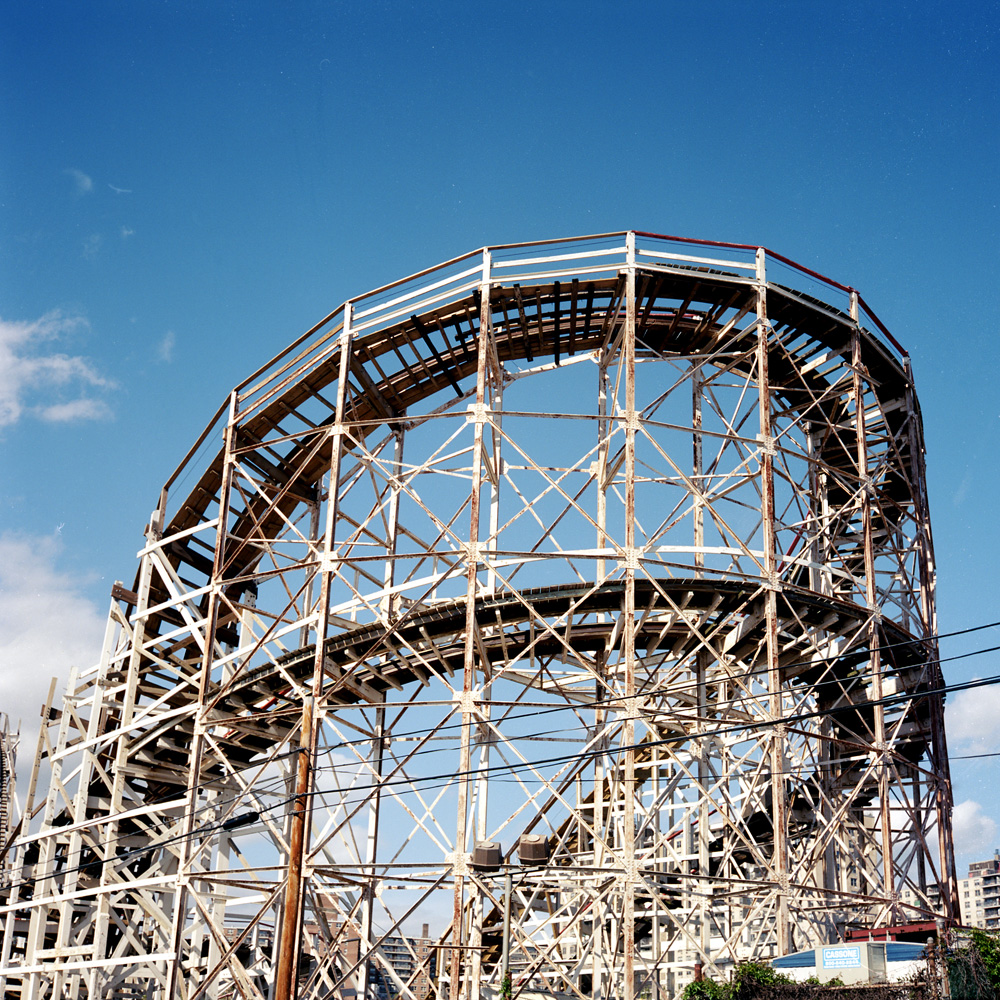
Here is the world-famous Cyclone roller-coaster. The ride was fun but frightening, not only because it is bone-jarring from the wood track, but because the coaster operators were not paying enough attention and allowed the incoming car to slam into the back of my car as we were getting loaded in. Fortunately we were already strapped/safety-barred in, so the shockwave of the impact passed through instead of knocking me forward into the back of the seat in front. Much as I love riding roller-coasters, especially the old wooden ones, I don’t think I’ll ride the Cyclone again.
Cyclone Coaster, Luna Park, Coney IslandBack Curve, The Cyclone, Coney IslandEnd View, The Cyclone, Coney Island
Lower Manhattan, Evening:
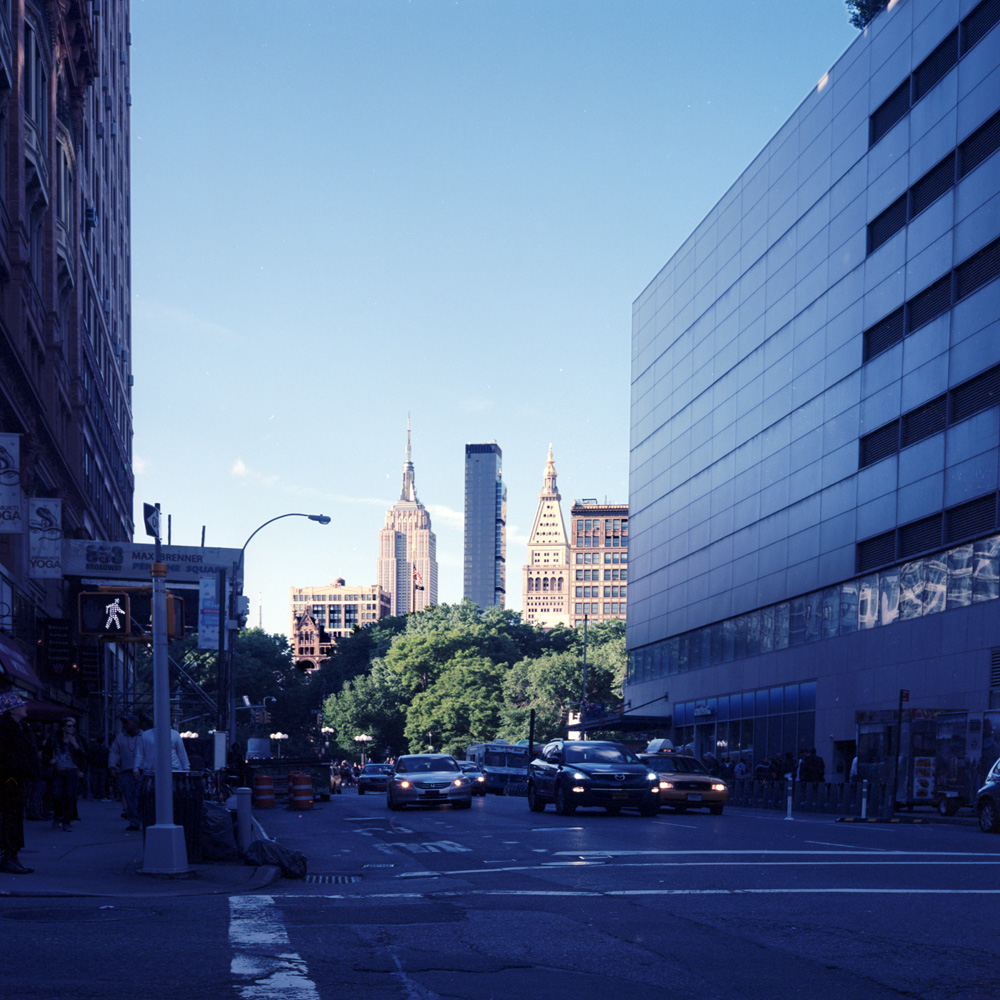
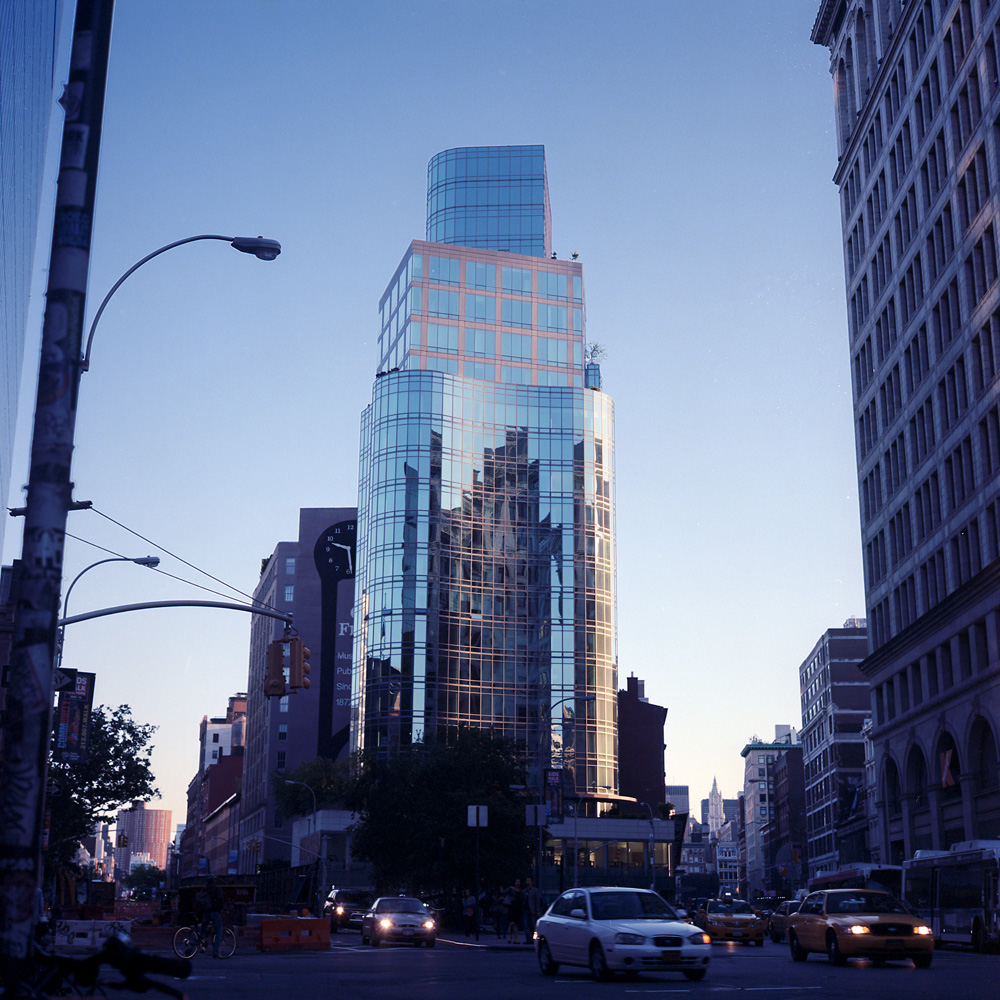
This was how I ended the day, back in lower Manhattan, hanging out around Union Square, and doing some book shopping at The Strand.
The Empire State Building, Union Square, BroadwayBow-front building, Manhattan, Evening
In honor of my latest acquisition for my collection (posted immediately below), I’m going to recap my 19th century Native American images collection.
The new image is a school class photo from Springfield, South Dakota. I find the image fascinating and remarkable by virtue of the racial diversity in the school group. Though the class is mostly Native American, there are white and African-American girls in the class as well. I think the teacher who inscribed the card on the verso is the woman in the center of the photograph.
Native American School Group, Springfield, South Dakota
The inscription reads: “With best wishes, Your loving teacher, Mary B. Benedict, North Walton, Delaware Co. New York. Alice & Lucy Cougar”. I’m assuming that Alice & Lucy Cougar are two of the Native American girls in the photo, but which two I’m not sure.
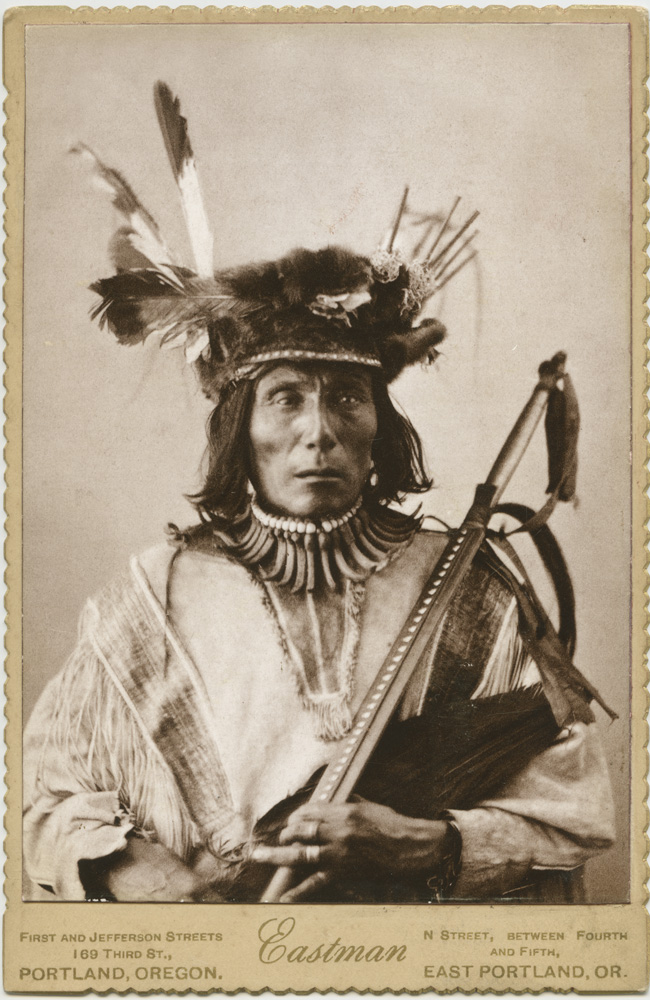
Native American by G.L. EastmanNative American and Friend,Klamath Falls, Oregon
I’m not sure on the date on this one – it could well be early 20th century, but I’m including it because it is non-exploitative. If anything it is similar in spirit to the school class group in depicting interaction between Native and non-Native Americans in apparent social equality.
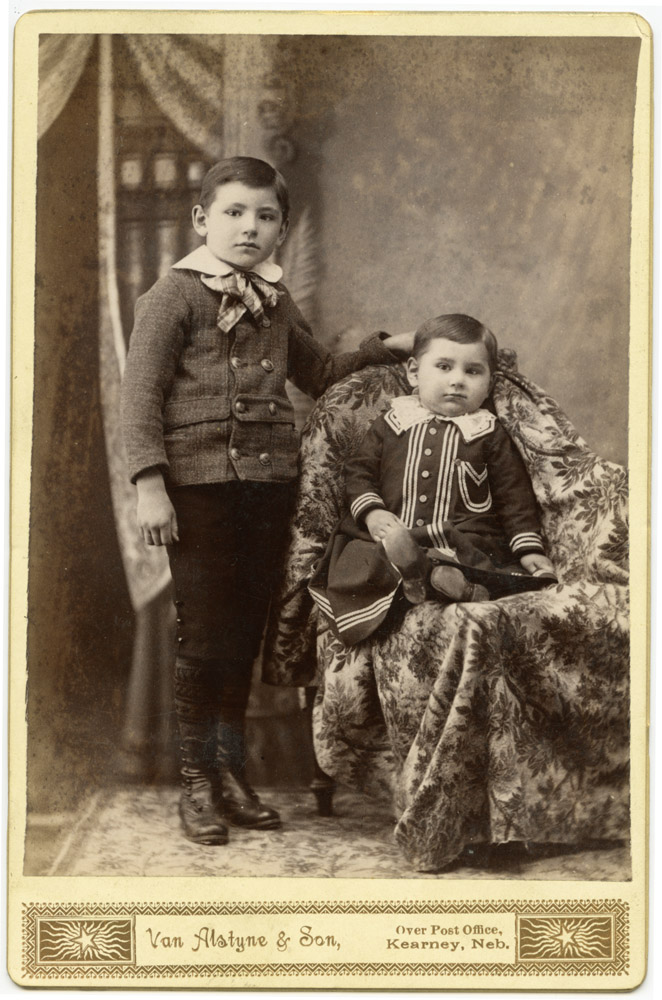
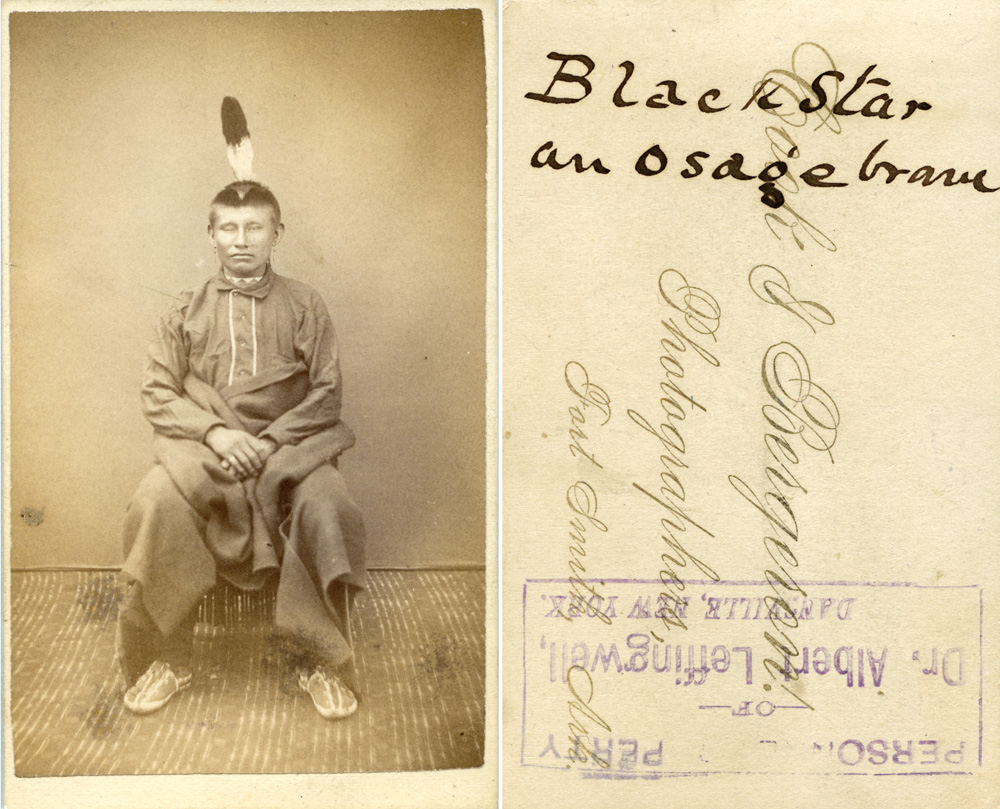
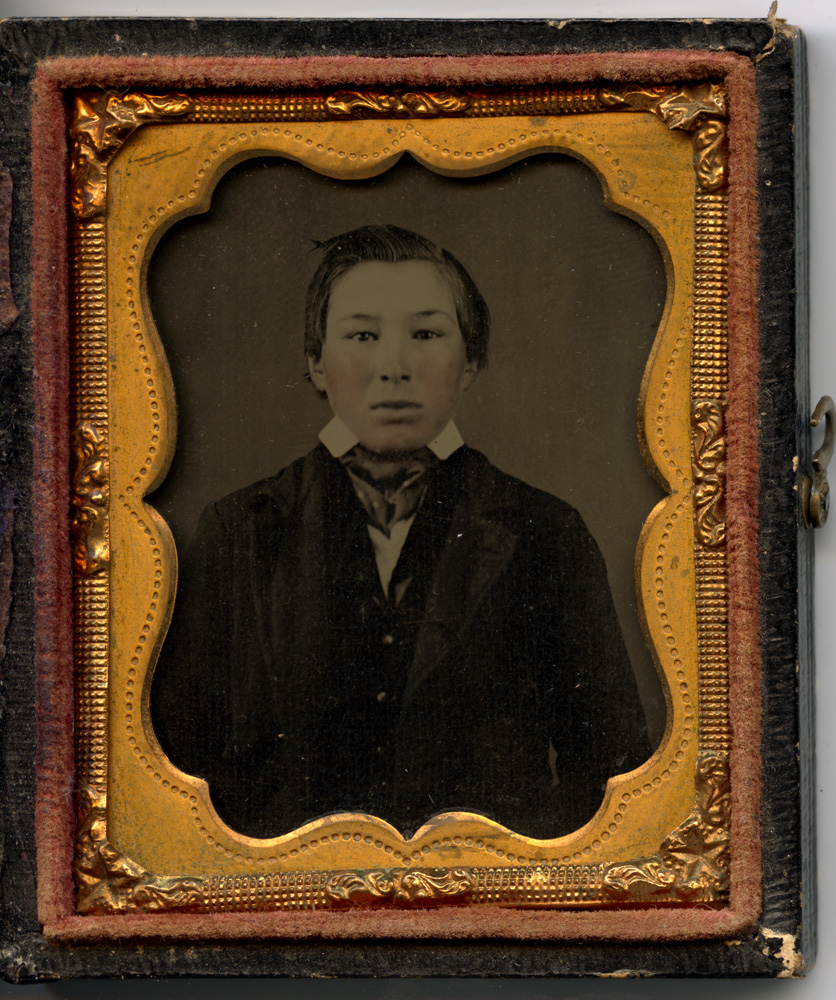
Two Native American Boys, Kearney, NebraskaRain-in-the-face, by Morse, San FranciscoBlack Star, an Osage BraveNew Mexican Native CoupleAmbrotype, Penobscot Boy, 1857
This last one is probably the oldest image of a Native American I own, and will most likely remain so, as images this old are quite rare. Most imagery of Native Americans is from the west and mid-west, as Native populations had been largely subsumed and/or eradicated from the east coast by the time photography arrived.
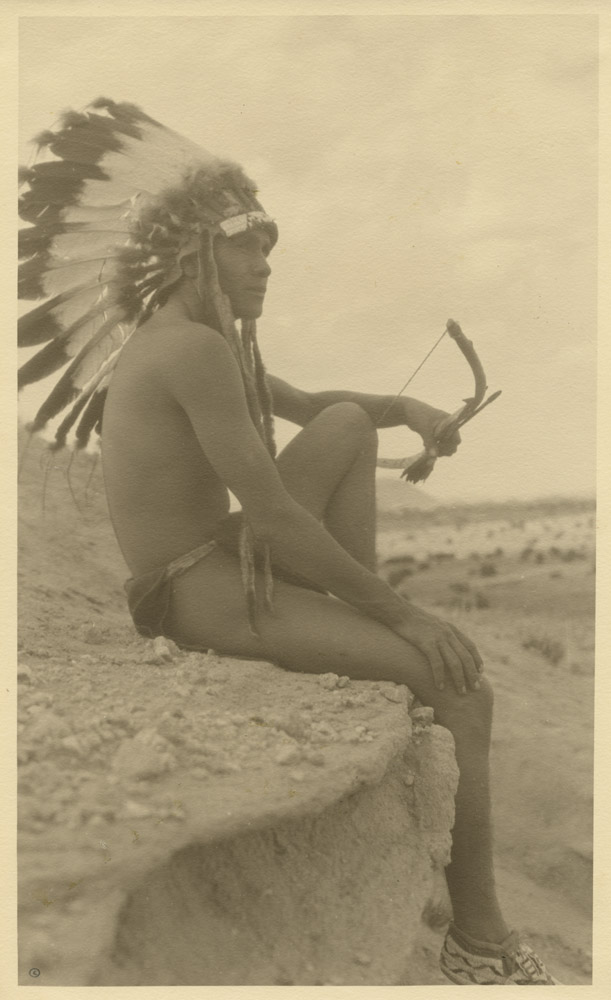
The other two “Art” photos of Native Americans I have are, albeit sympathetic, exploitative portrayals of Native American men in the line of “Noble Savage/Vanishing Tribe” imagery meant to play on the sympathies (and perhaps the subconscious erotic sentiments) of an Eastern, caucasian audience. The reason I say erotic sentiments is that they depict handsome young Native men wearing signals of exotic “nativeness” (headdress, jewelry), but little else. The signs of “nativeness” may or may not be any degree of authentic or relevant to the individual wearing them. The George Eastman photo here is heading that direction in that the costumery the subject wears may not be of any one particular tribe, much as Edward Curtis would do when he felt a photo needed a little something – he would hand his sitter some wardrobe accessory that they might never have otherwise worn and got them to don it for the picture. In that regard, photos like Curtis’ and Eastman’s work are not “documentary” in a strict sense, but they are often the only record that exists of a person or a culture, so they do have record value.
Navajo Brave, Grand Canyon, attributed to Karl MoonA Tewa Bowman, by W. Allen Cushman
While the Carl Moon “Navajo Brave” may be wearing authentic Navajo jewelry, he’s not wearing much else, and the loincloth is not exactly practical daily wear. I could be wrong, but the “New Mexican Native Couple” image shows what I believe would have been far more typical attire for that region of the country. Native Americans may be blessed with a higher melanin content in their skin, but that’s still not a good reason to run around near naked all day at 5000′ elevation under a blazing sun.
The “Tewa Bowman” is another in the same vein – what little accoutrements he wears may be authentic or may not, but to the intended audience for the image it is irrelevant because they neither know nor care; the bow and feathered headdress point to “Indian-ness” and the comeliness and physical condition of the sitter make him “noble” in the same spirit of a Grecian marble nude.
These images leave a complicated, conflicted legacy. They purport to be records of a vanishing culture, yet the record they leave is at best fuzzy and at worst totally inaccurate. The 20th century “save the noble savages” images took the problematic record images one step further. By the dawn of the 20th century, there was a growing awareness in Anglo civilization that Native cultures and peoples were truly vanishing, and the attitude began to shift from approval of that fact to a sense of loss and a desire to intervene in that downward spiral. These “art” images fed a market for Anglos who had no first-hand knowledge of Native culture and felt some degree of racial guilt. Even if the base motivation was in the right place, the images exploited Native subjects to feed a market, wether through distortion of identity, sexual exploitation, or both.
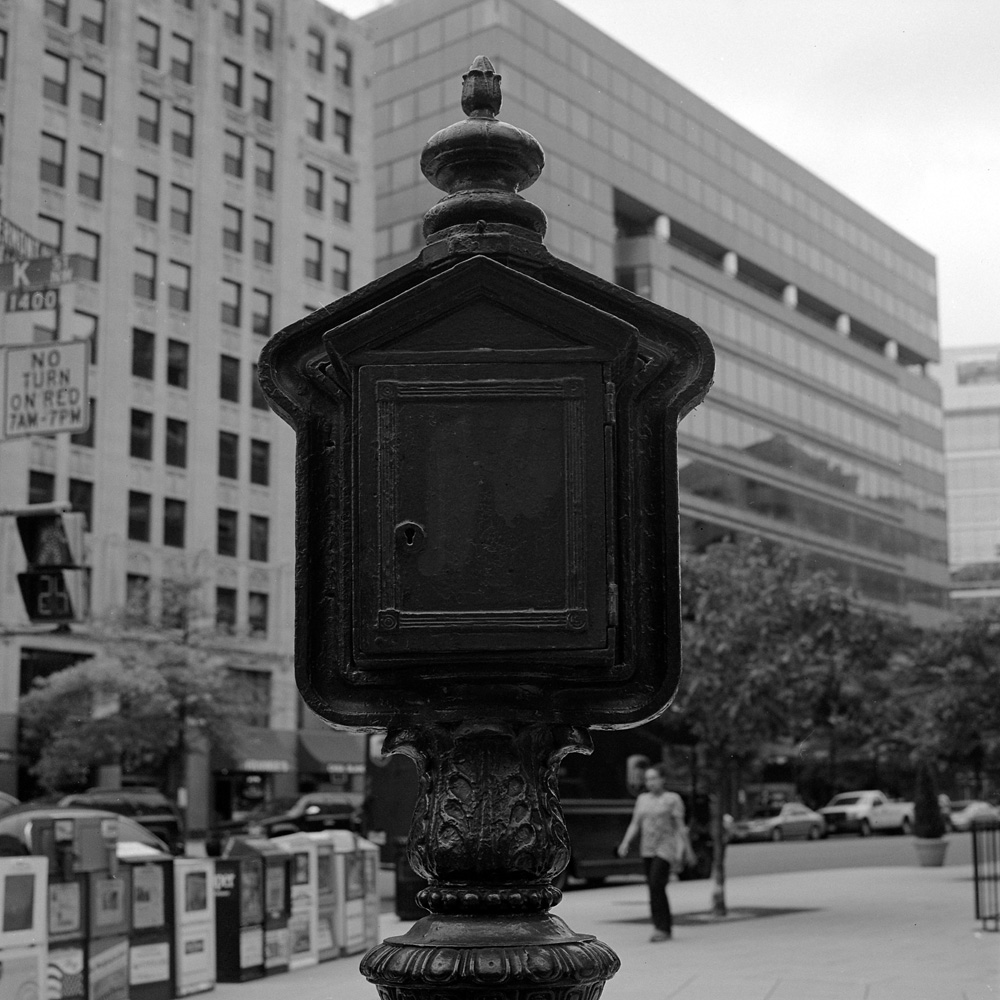
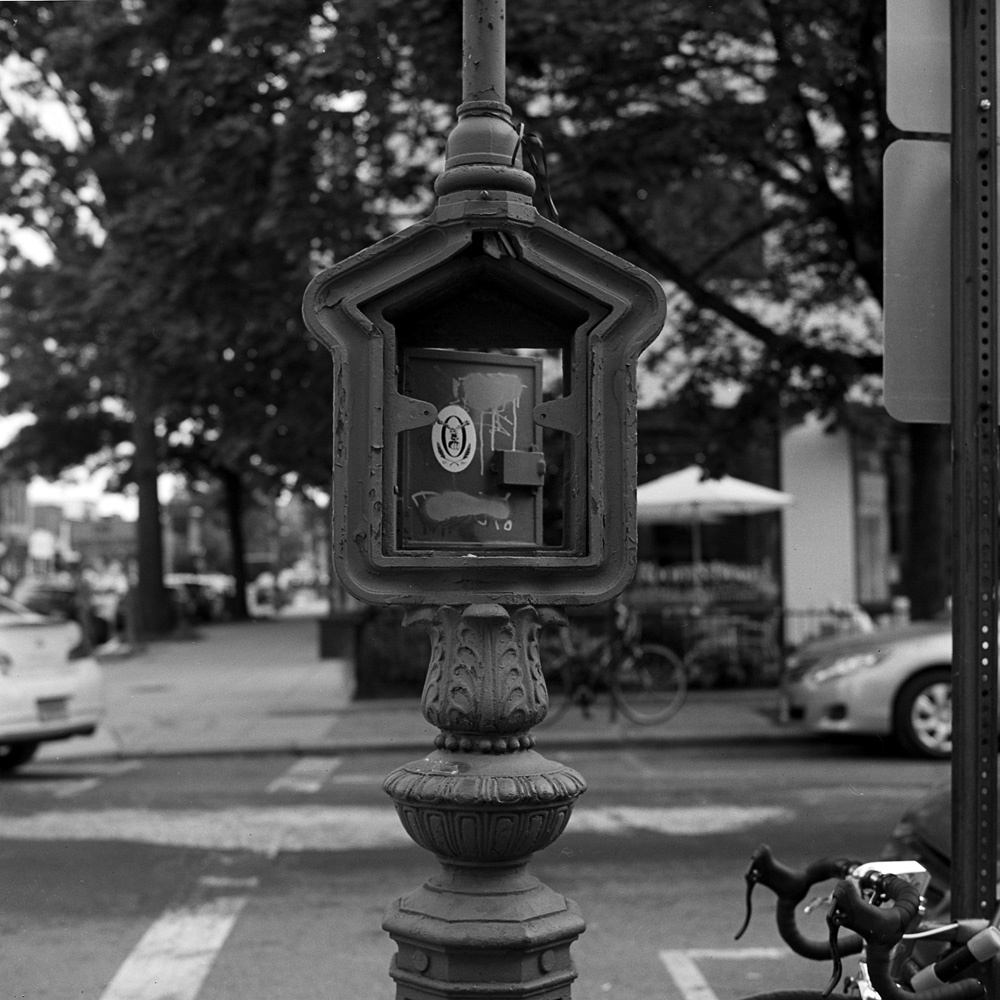
I was just doing a little research on these, as I’ve seen them here in DC for years but didn’t know much about them. Washington DC was one of the first cities in the US, and perhaps even in the world, to get them. They were first implemented in Albany, New York in 1877, and in Washington DC in 1883. The most famous ones, of course, are the blue kiosks from the UK, made so by the Dr. Who tv series. In the UK, they phased them out in the 1970s, but they remained in use in Washington DC until the early 1980s, so they had a run of almost a full century. Surprisingly enough, their physical remains have outlasted the pay phone – it is easier to find a (gutted, non-functioning) police call box here than it is to find a functioning pay phone now, despite the fact that public phones are still in use.
I found a video online from a DC Police Department historian who talked about the police call boxes, and he had a very funny story to relate – back in the day before police radios were implemented, if a patrolman had to arrest someone, the only way he had to contact central dispatch to get a wagon to come pick up the perpetrator was to physically bring the perp to the call box, call for the wagon, and wait at the call box. So that would explain why patrolmen in the past were a bit rougher and meaner during the arrest process, as they often had to subdue a perp for not just long enough to get them in his vehicle, but for a several block walk and then an additional 10-15 minutes waiting for the van!
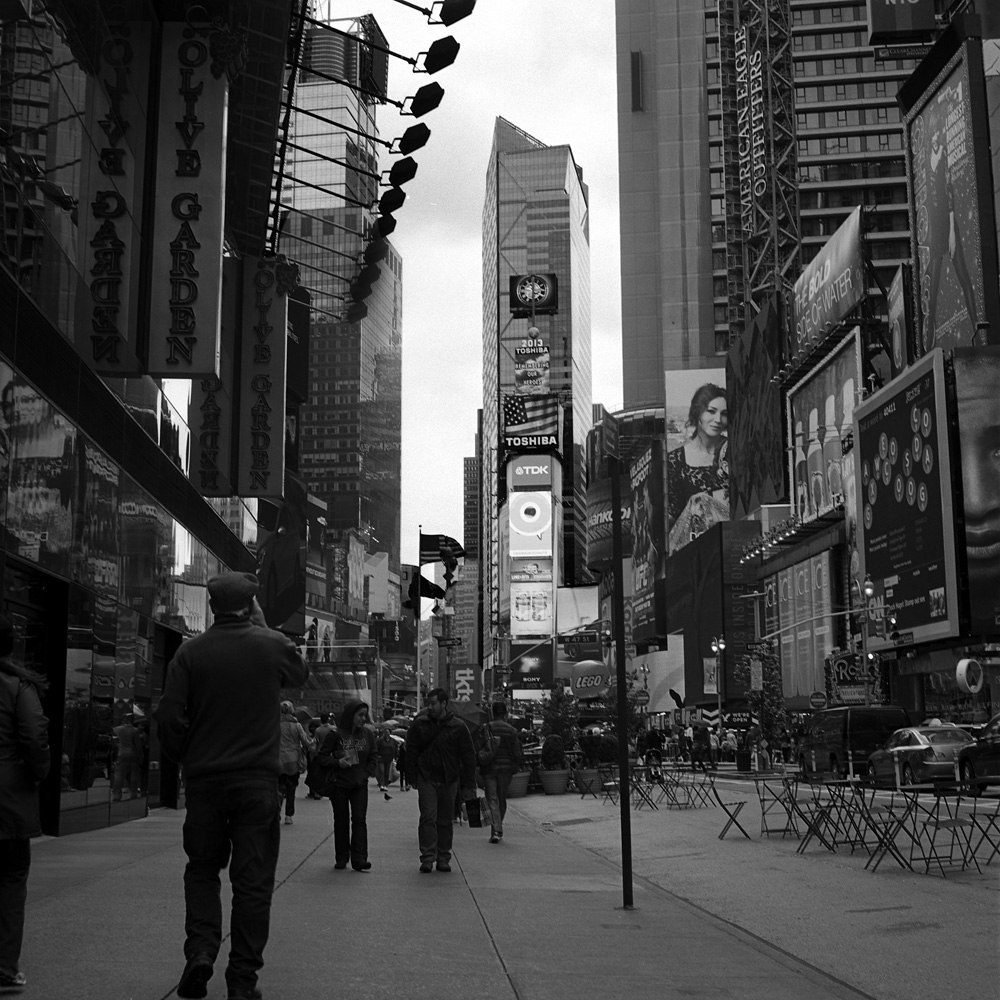
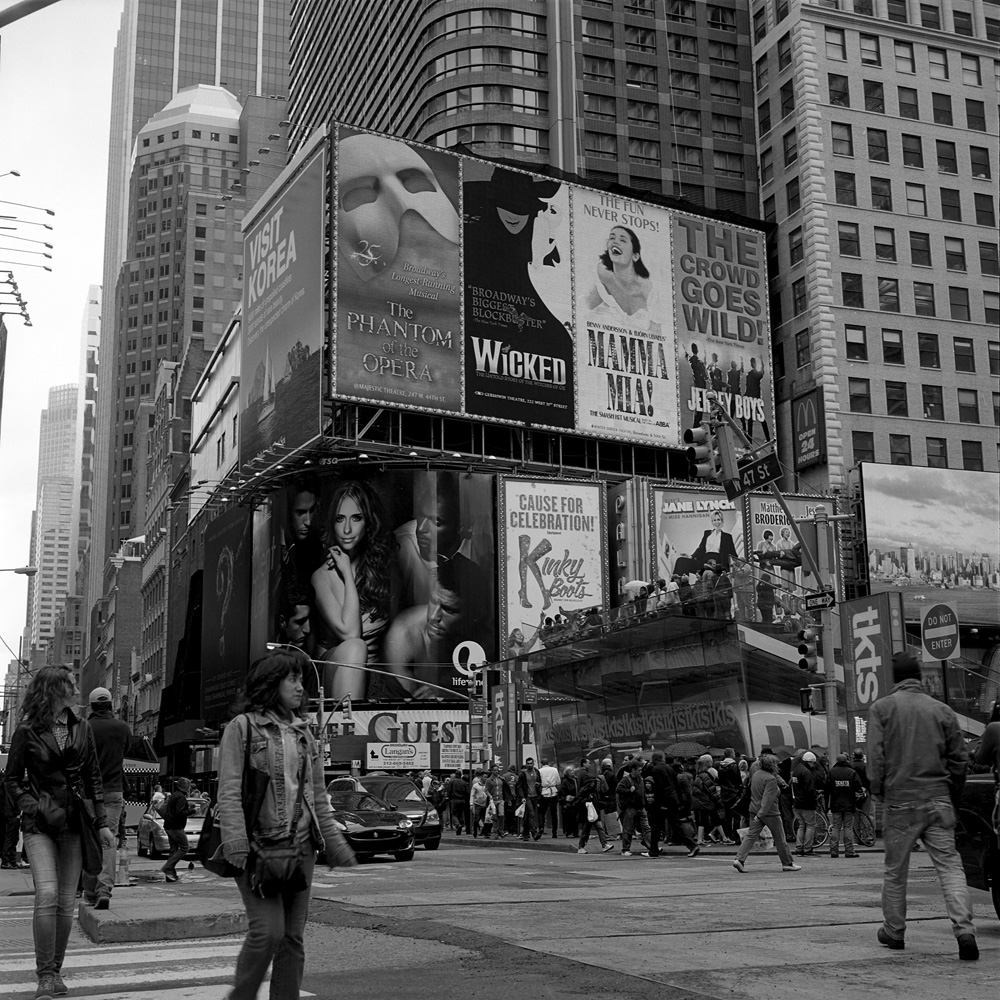
I took a quick jaunt up to New York for Memorial Day. This time, I ran around in Brooklyn a lot more, as I’ve spent plenty of time in Manhattan and am well familiar with the sights and sounds, pleasures and distractions it has to offer. I stayed near Times Square, and took in a play at the Lyceum Theater (how can you go to New York and NOT see something at the theater??).
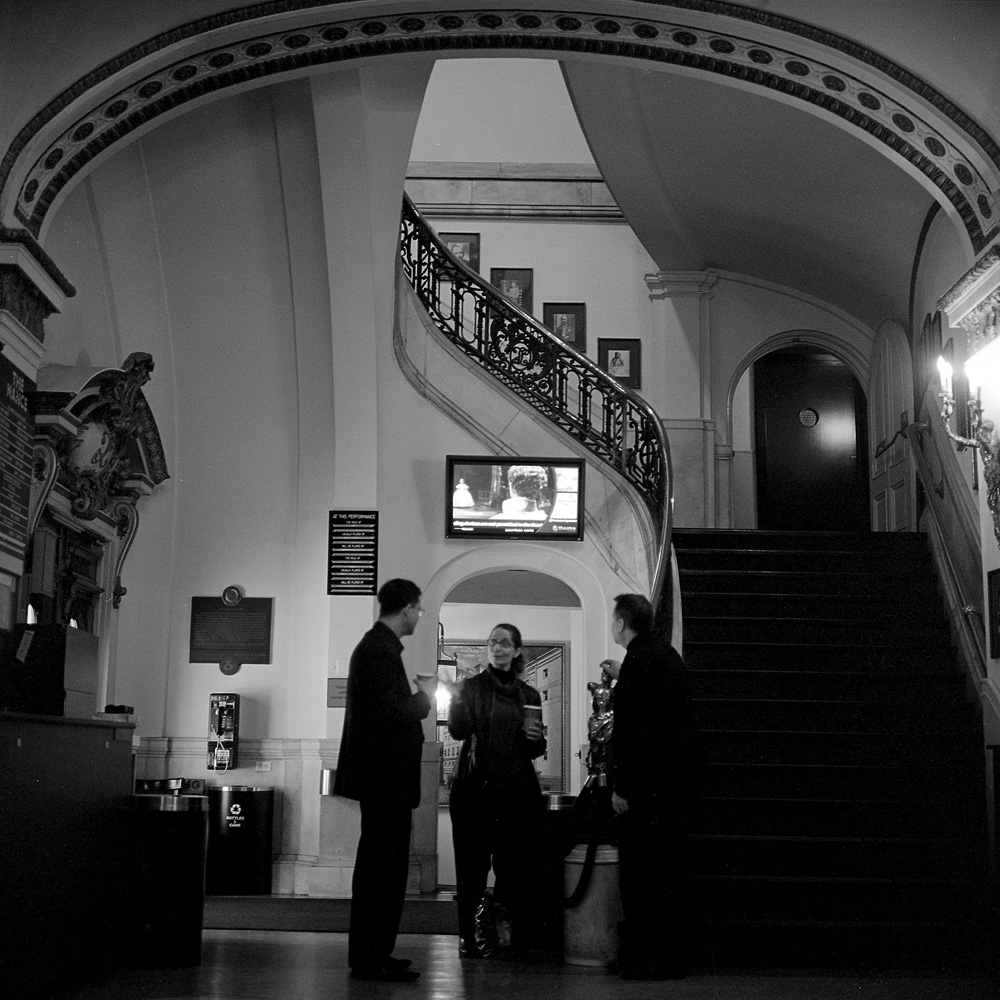
Times Square, from BroadwayTimes Square, TKTS boothLyceum Lobby
The play I went to is “The Nance”, starring Nathan Lane. It’s about a burlesque theater company in New York in 1937, and Nathan Lane plays the part of Chauncey Miles, the “nance”, who performs comic relief bits between the striptease acts. The Nance was a common trope in burlesque theater, a sissy whose lines and mannerisms were full of double-entendres and sexual suggestiveness. They also often ran afoul of the morality police for “promoting indecency”, although their routines were fully clothed, and even the dialog was never sexually explicit. Nathan Lane is brilliant as Chauncey, (not that I would have expected anything less from him), and I was riveted throughout the performance. I wish I could have photographed the theater interior, not just the lobby, because it was itself something out of another era, and a unique experience. I had balcony seats, and even though they were in the third row of the balcony, and had an excellent view of the stage, the balcony is five flights up, and is pitched at a vertiginous slant, with very little walking space between the seats and the backs of the row in front, with no guard rail until the front row. Fortunately they did see fit to squeeze in bathrooms on the balcony so you didn’t have to hike up and down five flights.
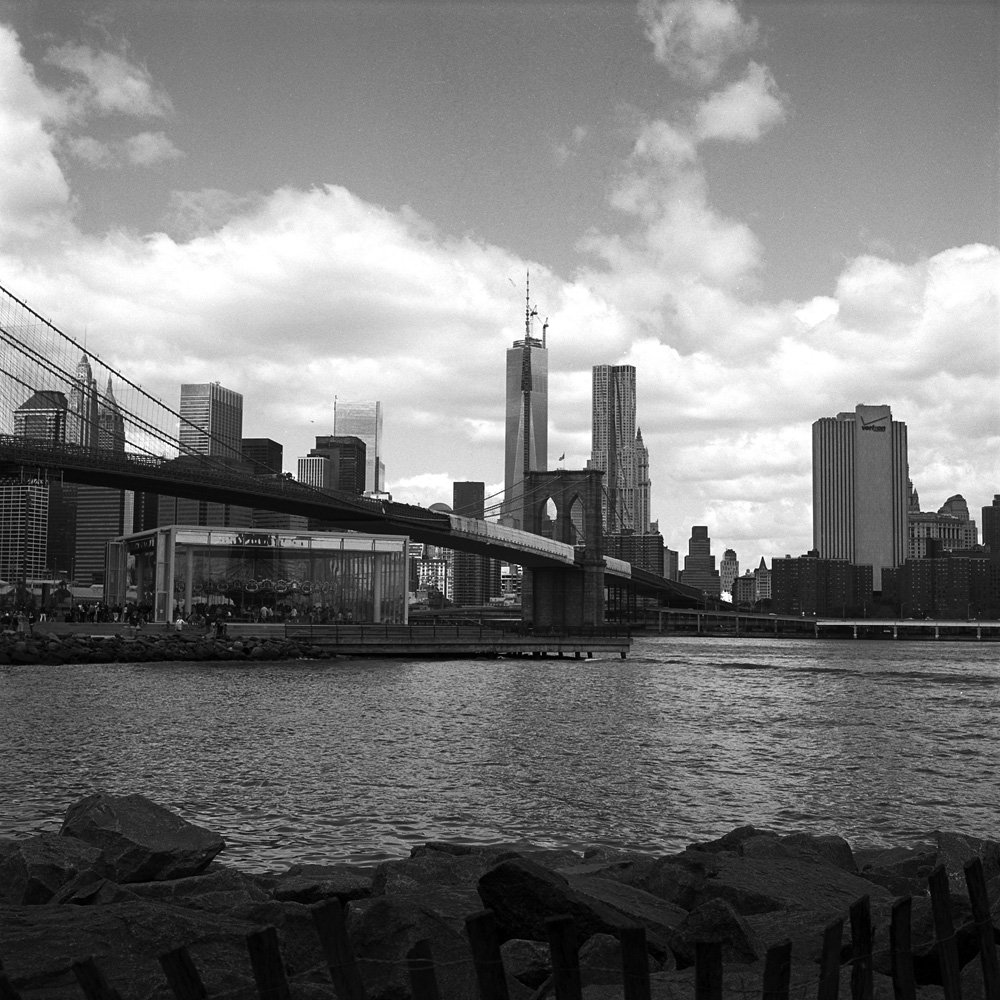
Brooklyn Bridge and Manhattan Skyline
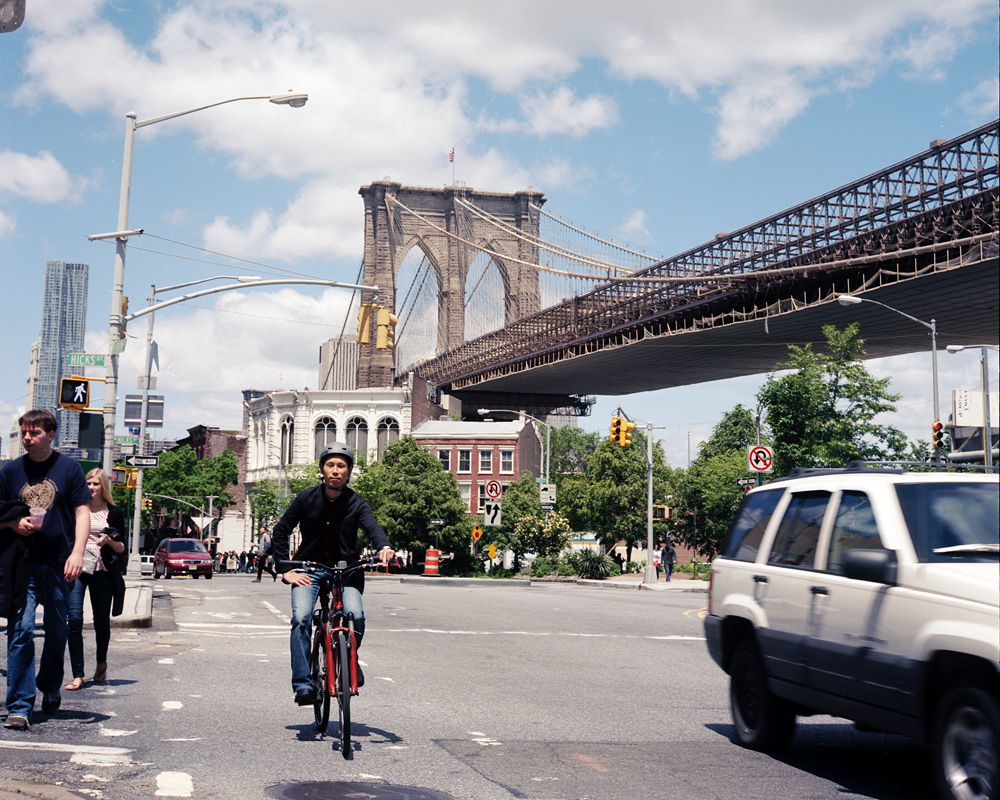
The Brooklyn Bridge is so iconic. I didn’t get to walk across it this time (next trip), but I saw it from the Brooklyn side and got my photo with the skyline of Manhattan framing it. Looking at it here and now it’s hard to imagine what this view would have looked like when it was first built in 1883, with the bridge being as big as many of the buildings behind it. Now of course, Freedom Tower behind it is actually taller (with the spire) than the Brooklyn Bridge is long (1776 feet vs 1596 feet).
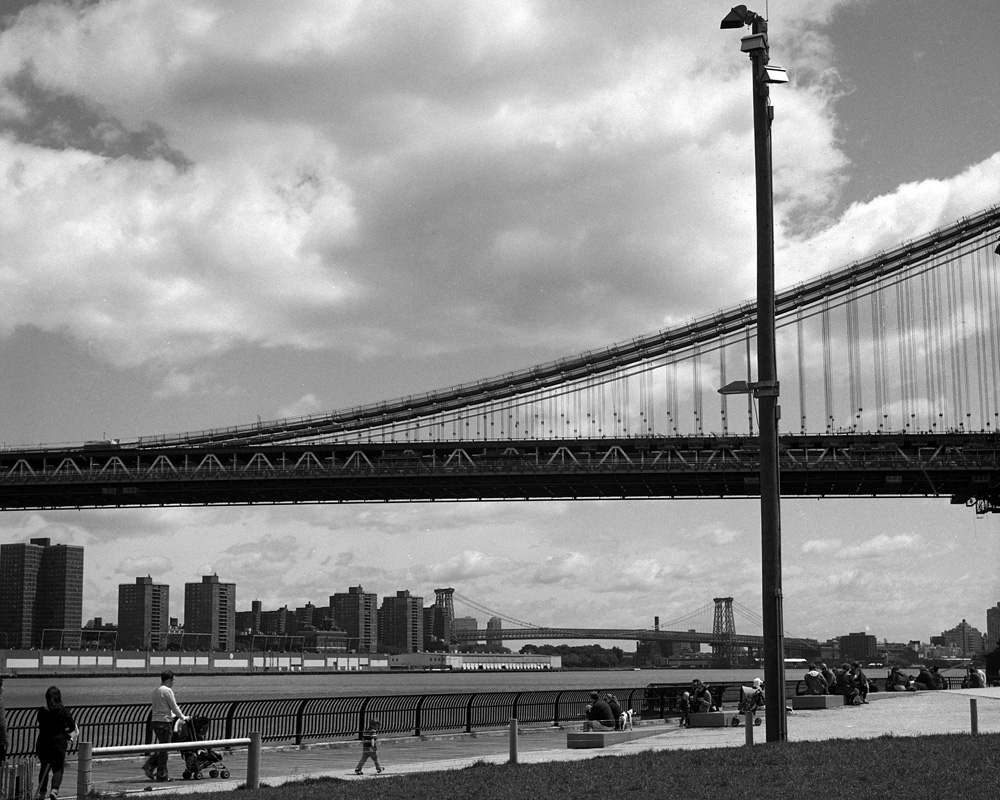
DUMBO, the Manhattan Bridge and the Williamsburg Bridge
On the East River, at least, bridges are a defining feature of New York. Here is the view from Brooklyn Bridge Park in DUMBO (which stands for Down Under the Manhattan Bridge Overpass, the new name for the neighborhood between the bridges, for those unfamiliar with the term) of the Manhattan Bridge and the Williamsburg Bridge to the north.
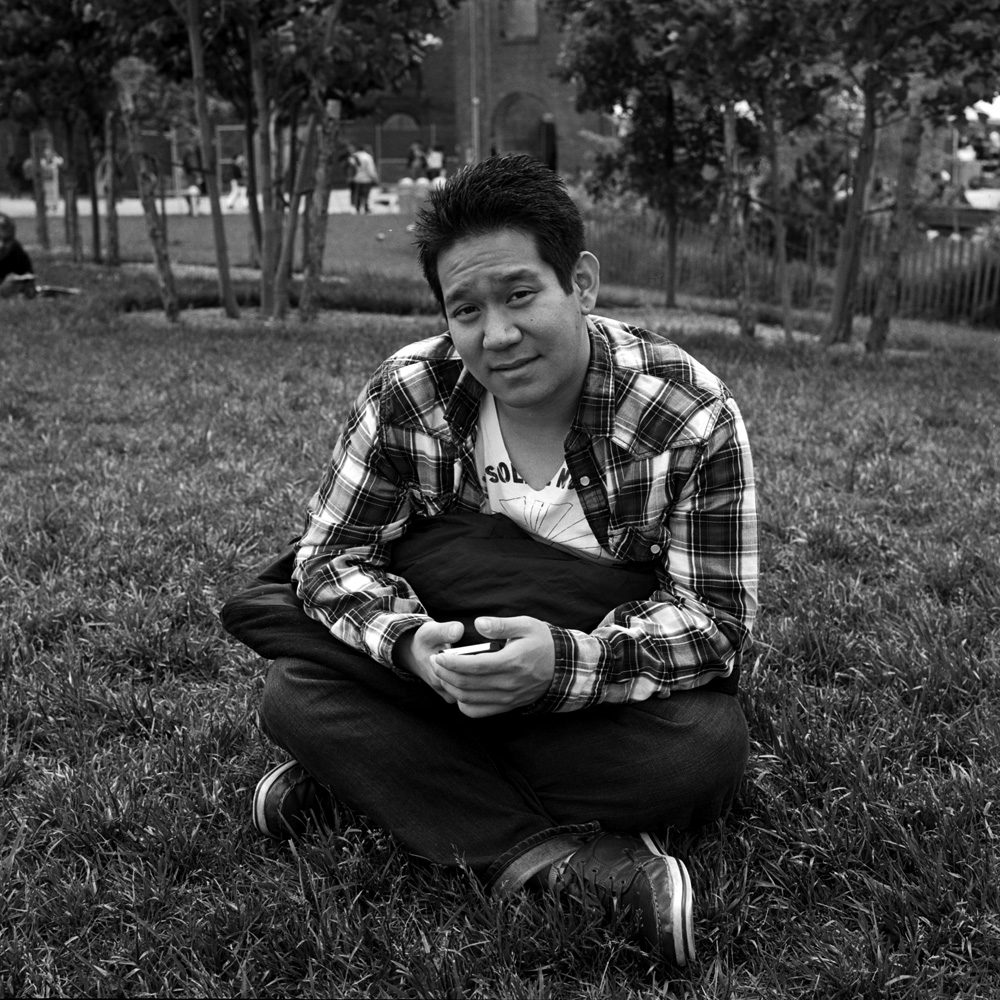
Tomo, Brooklyn Bridge Park
Amazing, isn’t it? There are green spaces in New York, besides Central Park. This is my friend Tomo, sitting on the lawn at Brooklyn Bridge Park. The park itself is fairly new, and runs south and west from the Manhattan Bridge, under the Brooklyn Bridge, and on down the East River, reclaiming a number of old piers that no longer support shipping.
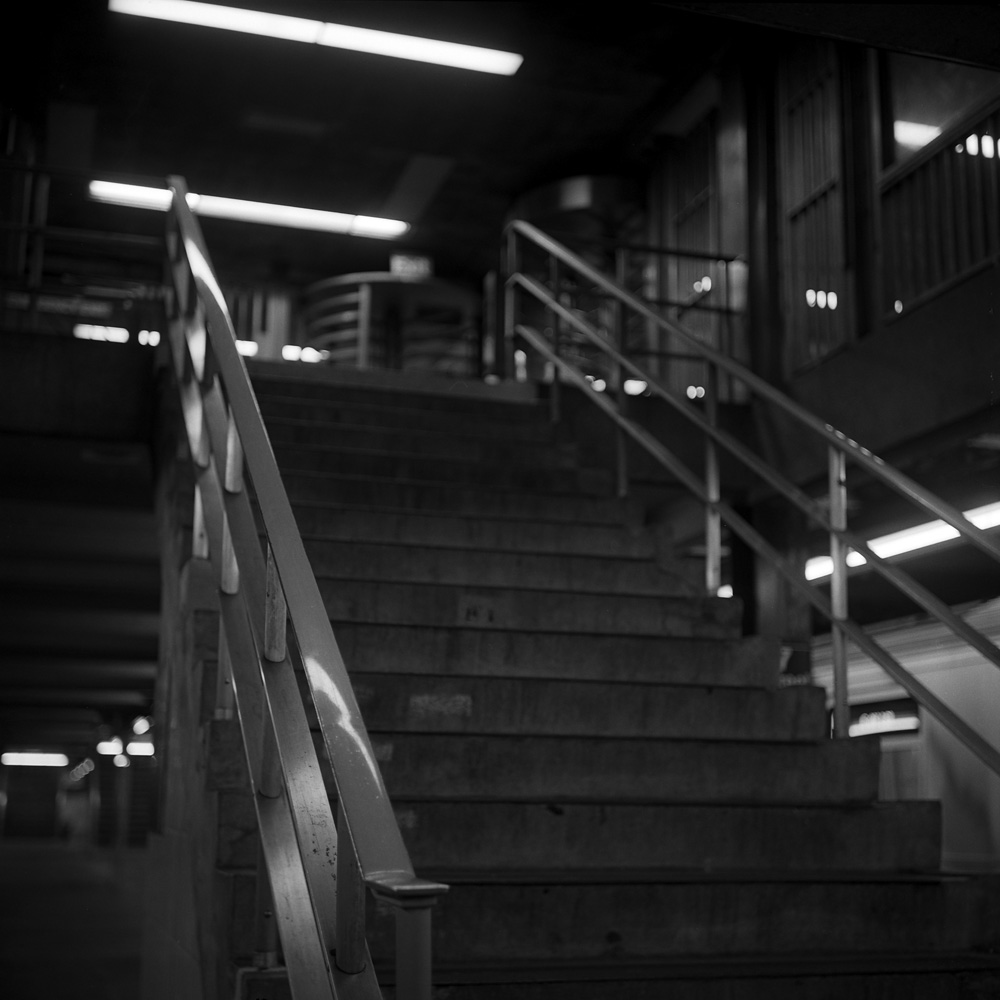
Platform Stairs, NY Subway
What trip to New York would be complete without a ride on the subway? Here’s a staircase to the platform, I want to say at the 57th Street F train station.
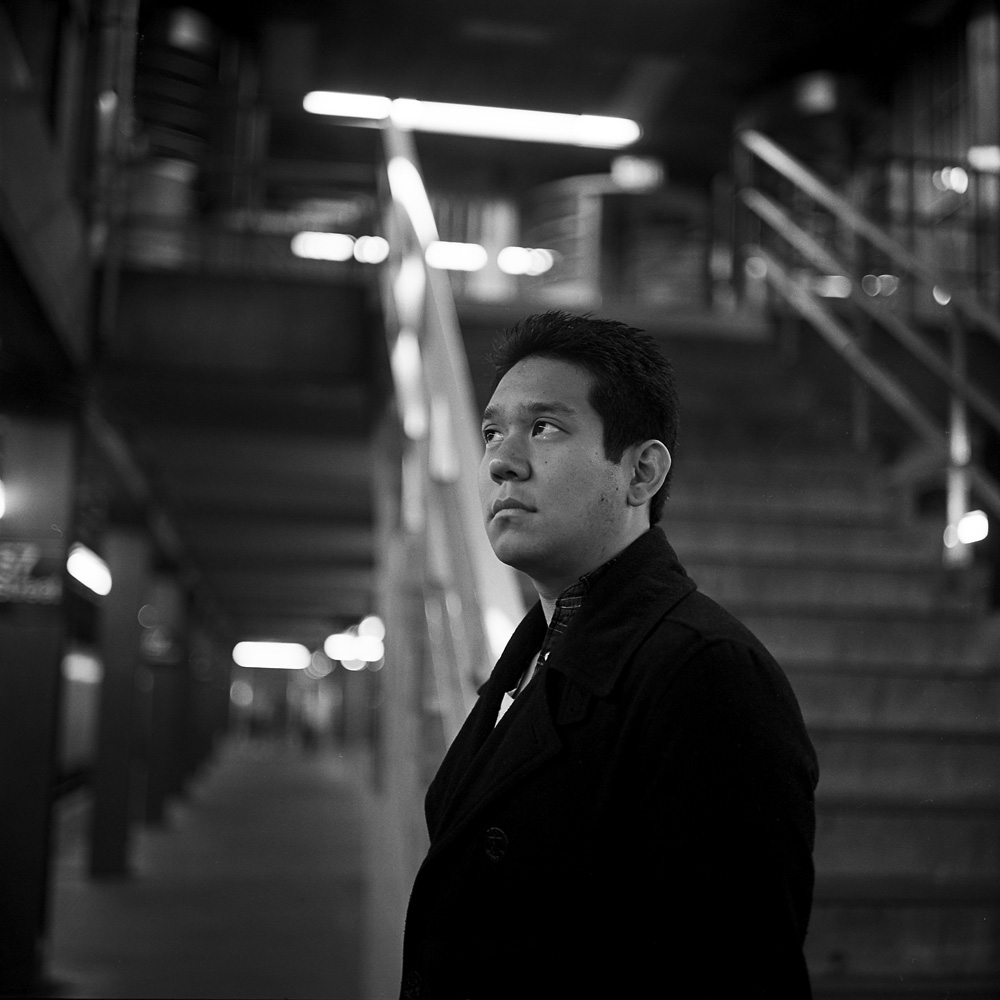
Tomo, Subway Platform
My friend Tomo, waiting for the train to Brooklyn with me.
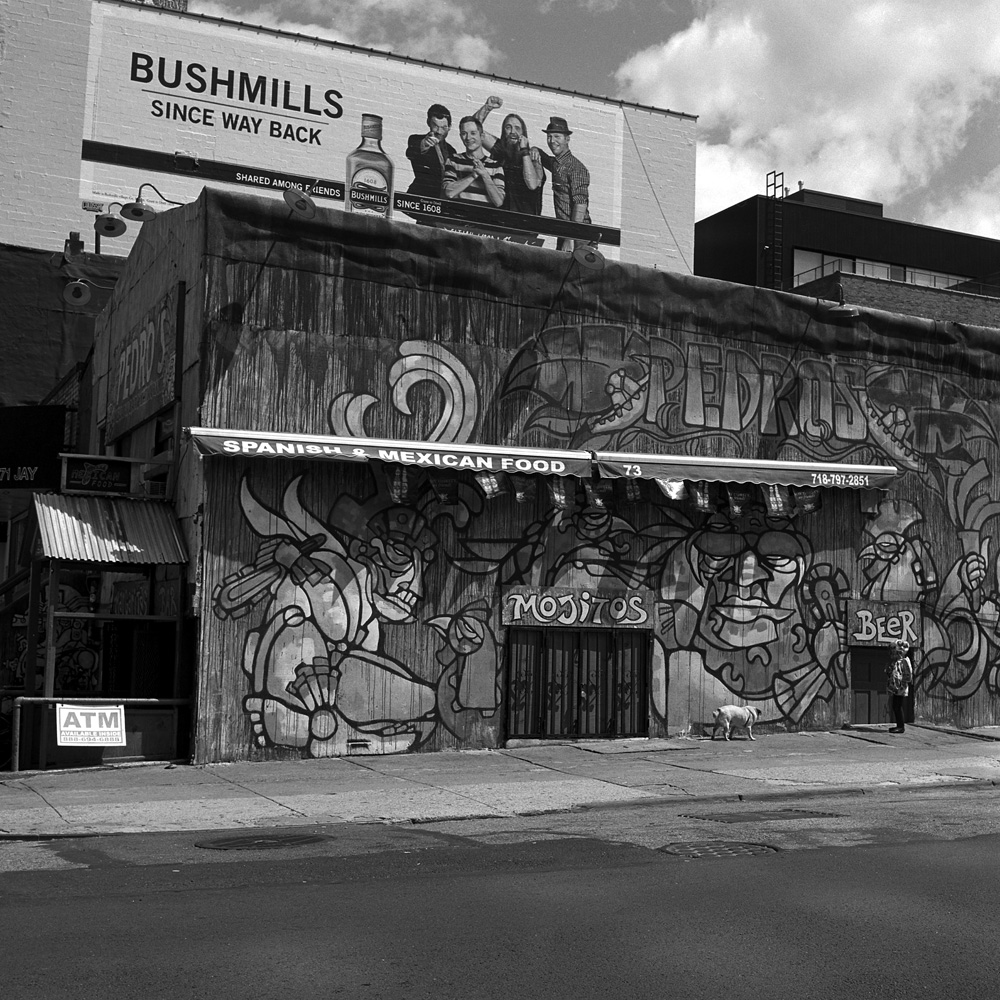
Pedros of Brooklyn
This shot would have been better in color, I know, but black-and-white was what I had loaded in the Rolleiflex at the time. Pedro’s is a Mexican restaurant in the heart of DUMBO, just a block or so down the hill from the York Street subway stop. Didn’t try it, so no comment one way or another on the food, but it sure looks like it would be fun. I’ll give it a try on my next trip, unless any of you have warnings for me!
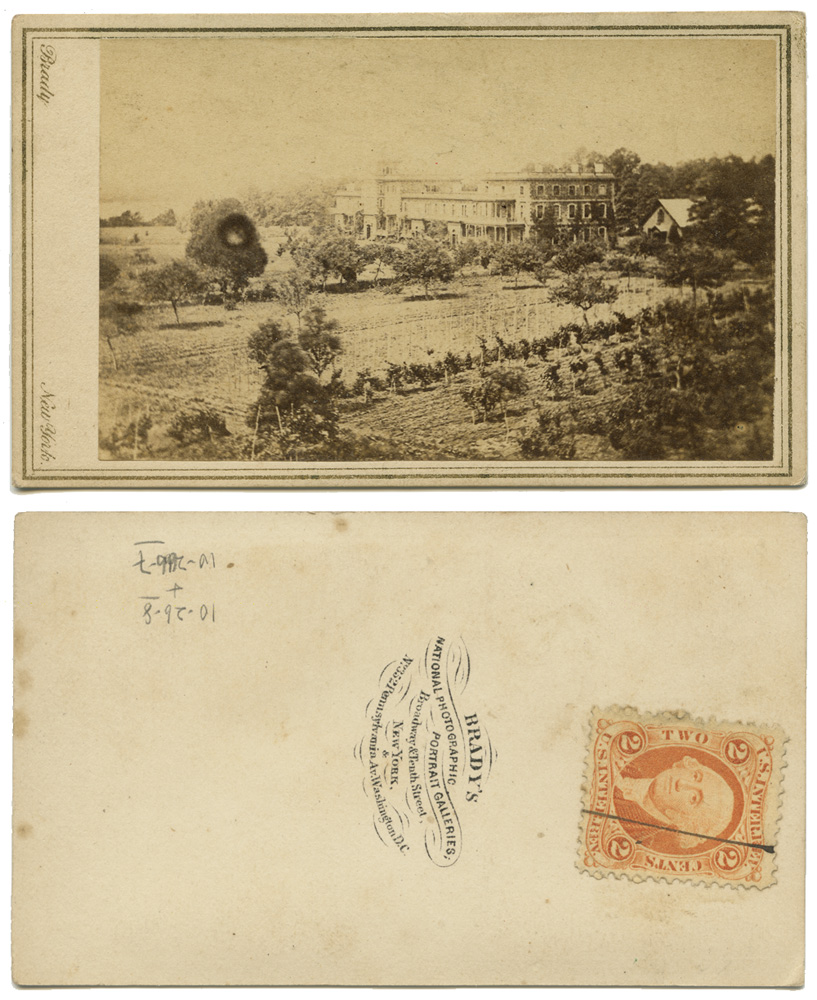
This is not a recent acquisition, but something I’ve had in the collection for a while, before I started blogging about my collection. So here it is – the Pleasant Valley Winery in Hammondsport, NY – the first bonded winery in the US. It’s hard to say if this would have been done by Mathew Brady himself or one of his assistants. The winery opened in 1860, so this would have been done during the Civil War. The client would have been a big enough deal that you’d think Brady would have done it himself, but he was also busy enough with his studios in DC and New York, servicing high-profile clients, and doing some battlefield photography around Washington DC, it would be hard for him to have taken the two to three days it would have required for him to run out there by train (assuming there was a rail connection to Hammondsport from New York City, it would be entirely likely in 1860 that he had to change trains at least once, and quite possibly more, using railroads that topped out at 30-35 miles per hour. Today, following the likely rail route from New York City to Albany, then west to Hammondsport, it is over 375 miles and takes 6 1/4 hours on interstate highways).
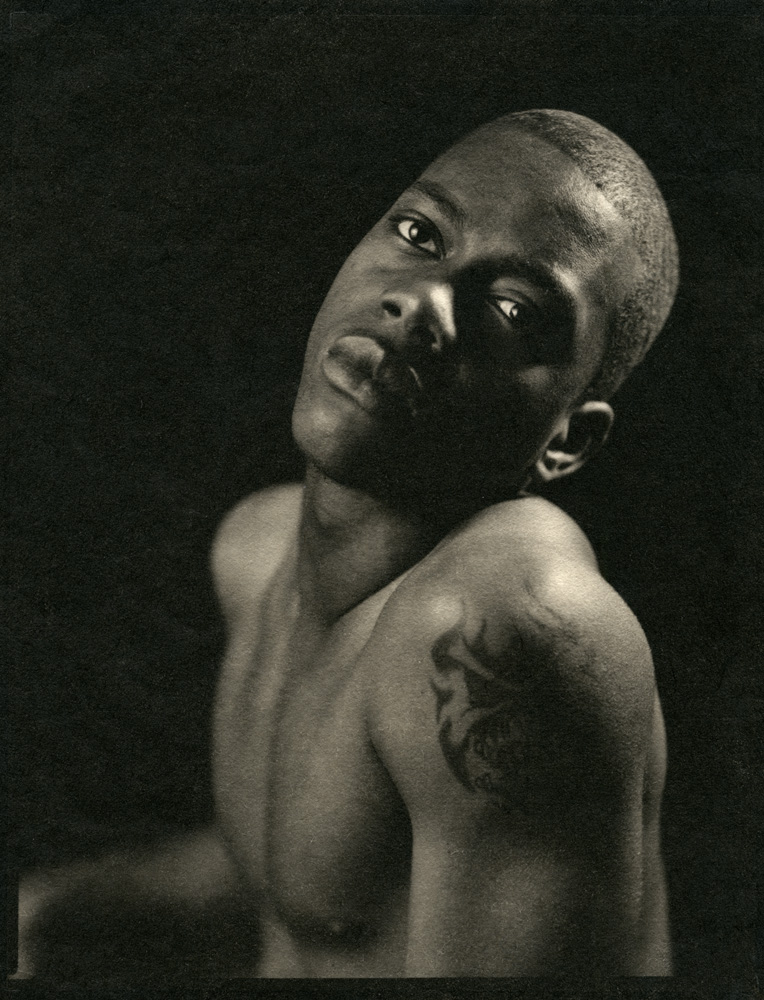
I’m showing seven of my platinum/palladium and gum bichromate prints at ArtDC as part of The Chemical View, an exhibit of alternative process photographic prints.
Who: artdc Gallery
What: The Chemical View
Where: 5710 Baltimore Ave., Hyattsville, MD 20781
Exhibition dates: 5-26-13 to 6-23-13
Reception: Saturday, 6-1-13 12 to 7-10pm
Web: http://www.artdc.com
Curator: Barry Schmetter
Alternative-Process Photography Exhibition to Open at the artdc Gallery on June 1
The Chemical View: Alternative Process Photography will open on Saturday, June 1 at the artdc Gallery in Hyattsville, Maryland. The show will highlight the work of eight Washington-area artists working in the medium of alternative process photography. The show will include examples of tintypes, ambrotypes, platinum and palladium prints, cyanotypes, Van Dyke prints, bromoils, gum prints, and hand-painted liquid emulsion prints.
“This is a rare chance to see a wide range of handmade prints that represent the gamut of chemical-based photographic processes.”, said Barry Schmetter, the show’s curator. “The artists are drawing on the history of the photographic process to explore contemporary themes.”
The artists included in show are: Scott Davis, Henry Friedman, Eddie Hirschfield, Carole Hollander, Suzanne Izzo, Joanna Knox, Barry Schmetter, and George L. Smyth.






 dcphotoartist