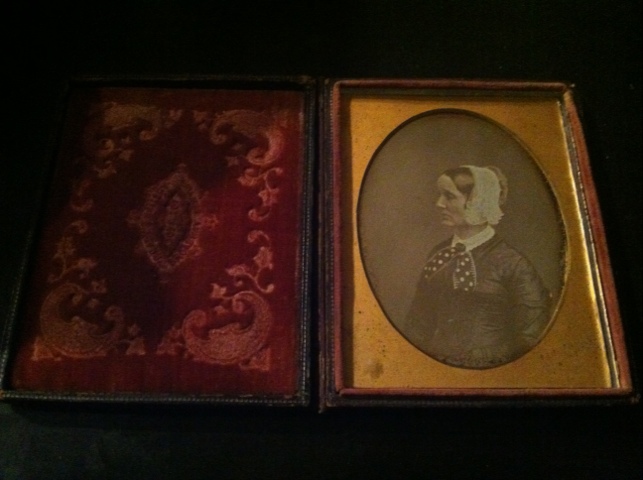
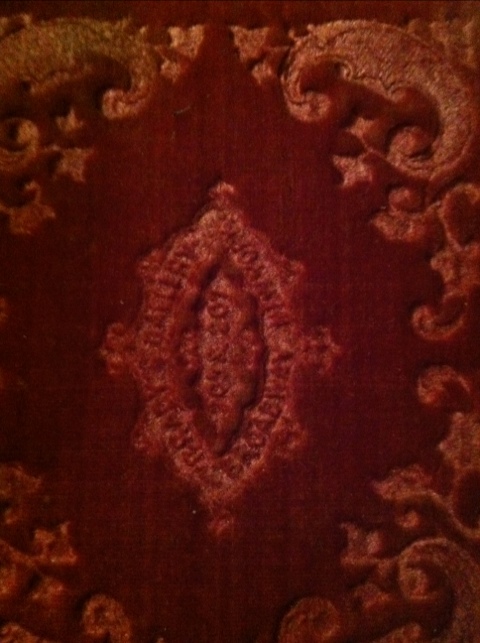
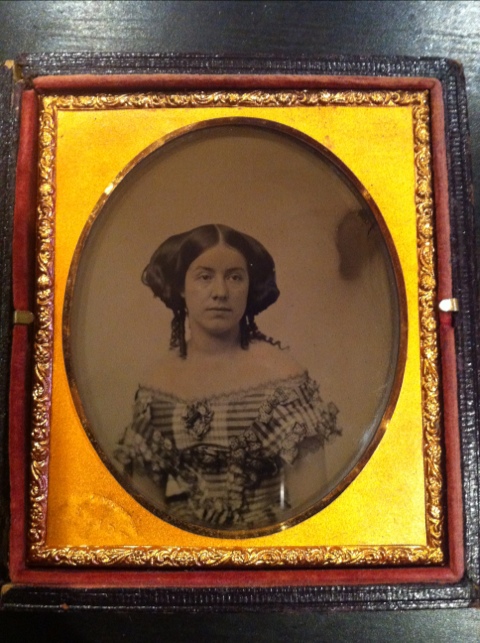
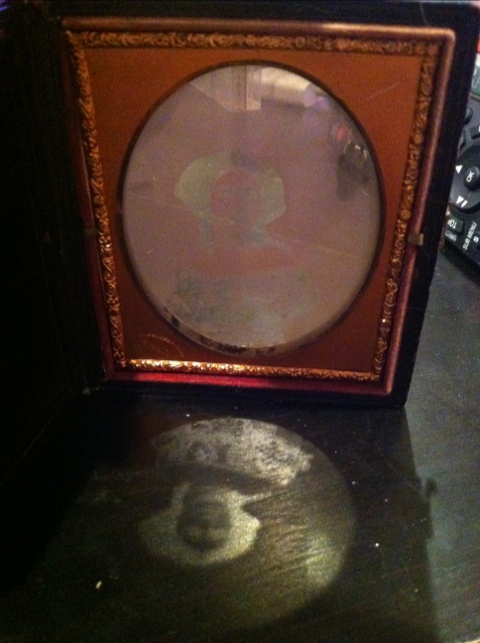
Here are my two early Mathew Brady images. The one is a simple daguerreotype, and based on the mat style, I’d place it as an early dag – pre 1850, maybe as early as 1845. The velvet pad on the dag shows Brady’s New York studio address. I’ve also posted the ambrotype, which is a later image. This is an interesting and unusual presentation, where the image can be viewed from either side.
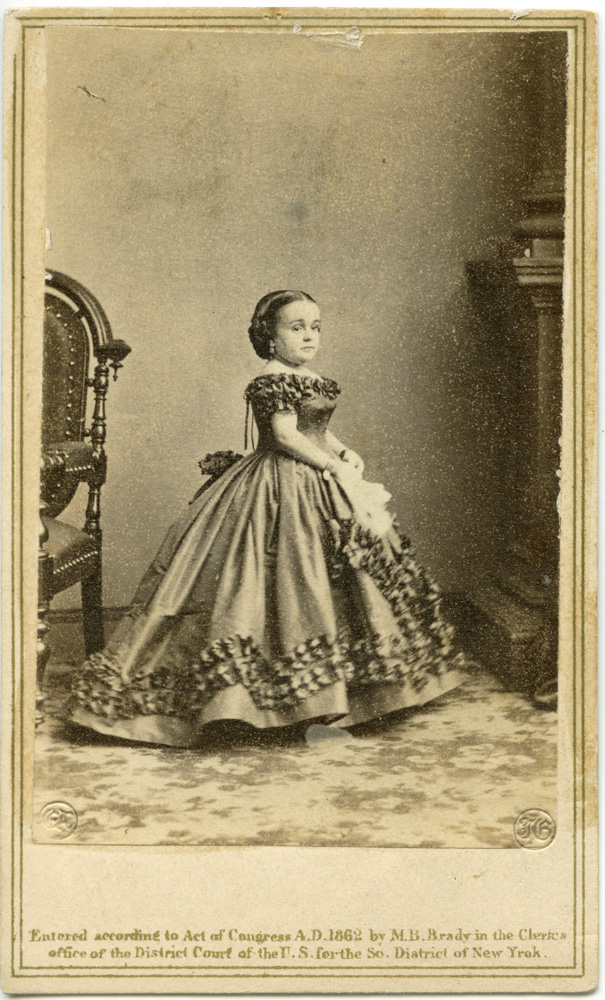
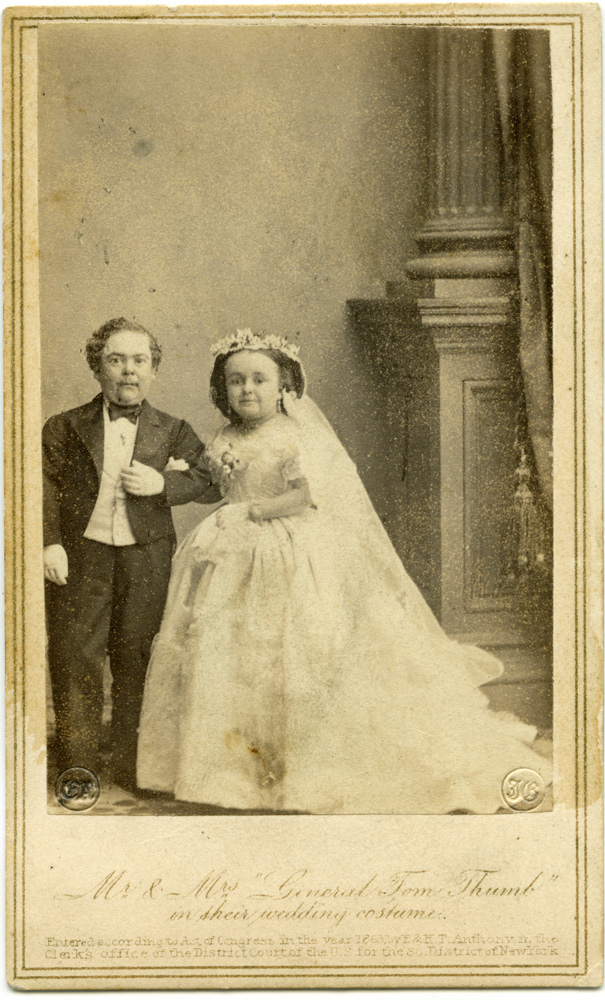
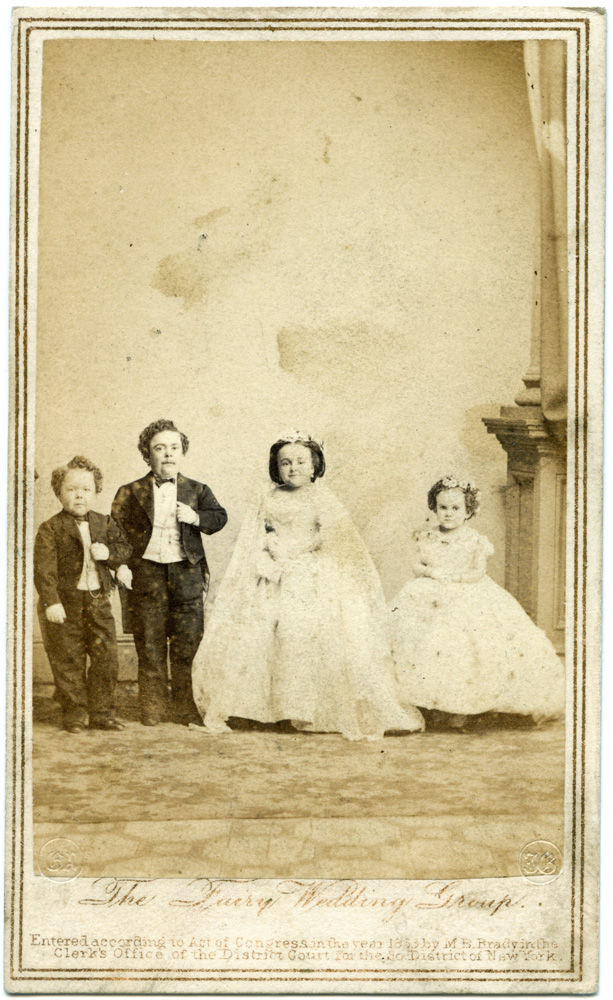
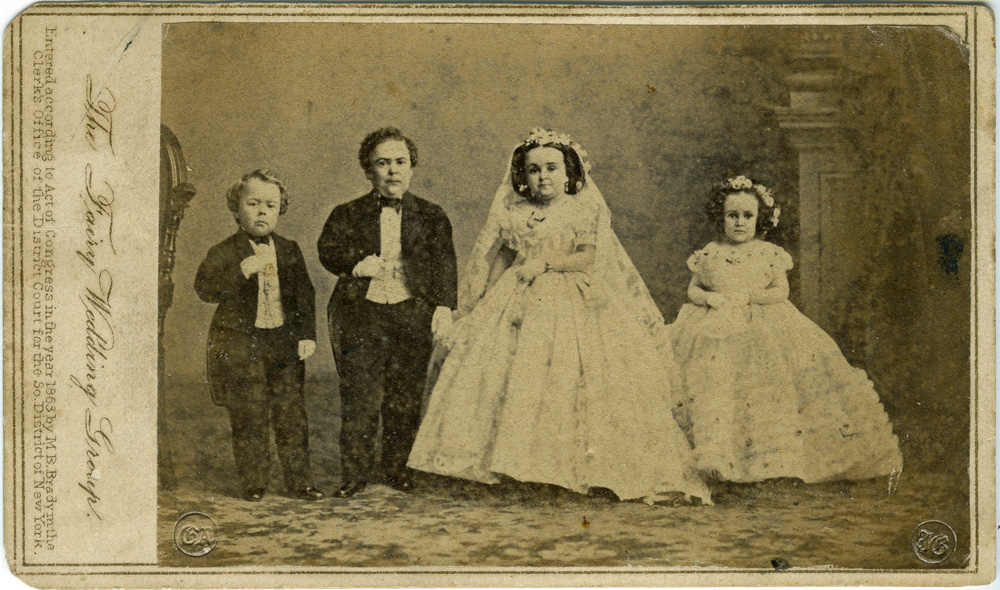
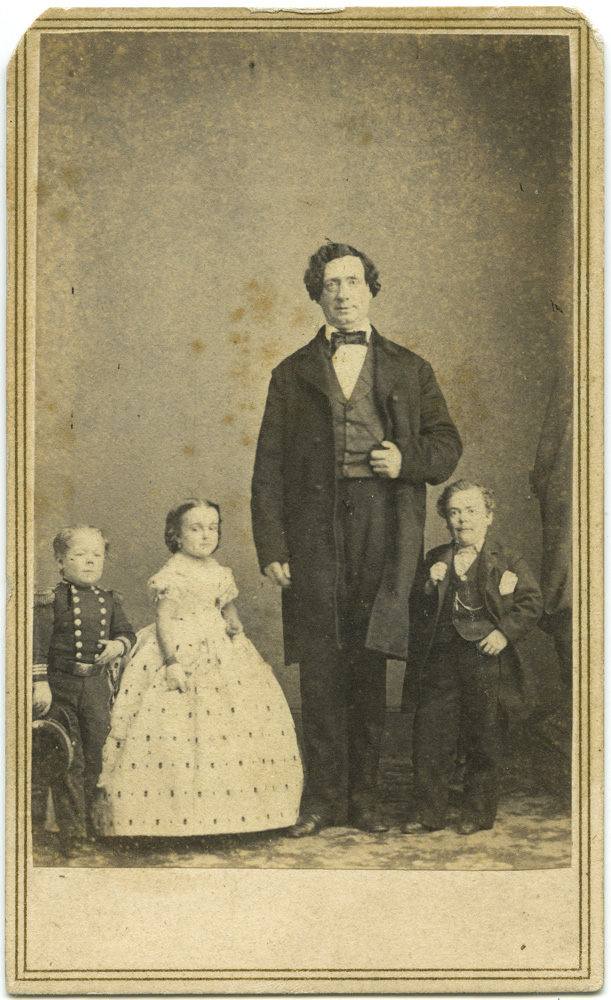
I’ve been fascinated by the Tom Thumb “Fairy Wedding” photos since I found the first one. Now that I’ve discovered that there were multiple poses sold, I’m building a collection of them, trying to see if I can find them all. So far, I have four Brady images from the wedding, an unsigned image of Commodore Nutt and what appears to be a regular girl child without back-stamp, and another Brady image of Tom Thumb, his wife, Commodore Nutt and what I’m guessing is a circus giant (he appears to be twice the size of Charles Stratton – Tom Thumb – who was 3 feet 4 inches tall at his death, making the giant next to him in the neighborhood of 7 feet tall).
Here are the new ones:
Lavinia Warren Stratton, Mrs. Tom ThumbBride & Groom, The Fairy Wedding
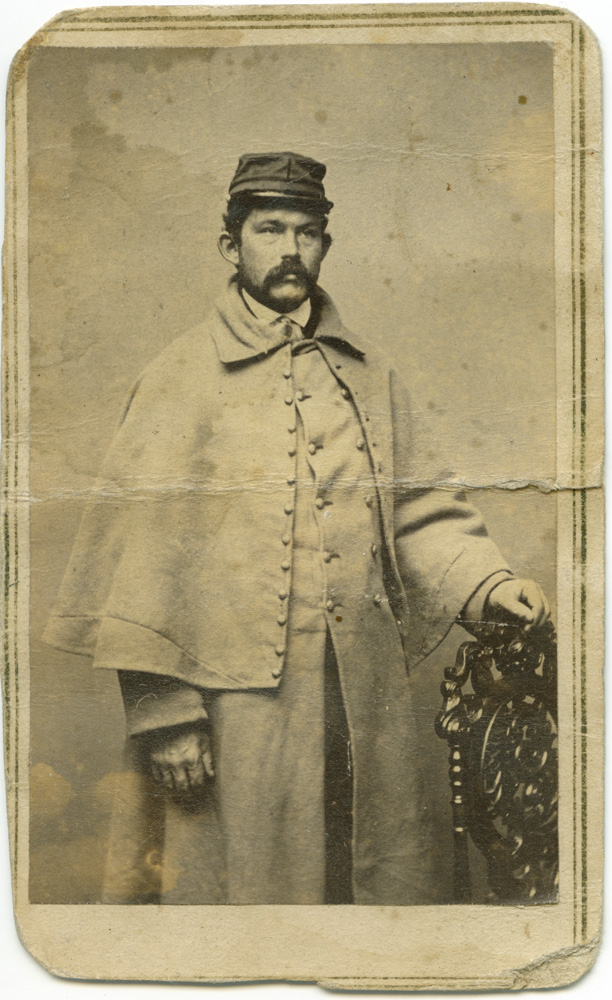
Here’s a Union soldier, identity unknown, from the William J. Tait studio. This may well have been taken immediately prior to shipping out to battlefields unknown – the studio address is Courtlandt Street and Greenwich Street in lower Manhattan – basically in the site of the modern World Trade Center. Back then it would have been only two or three blocks from the waterfront piers. It’s another image that obviously meant a lot to someone as it has a fold across the middle – someone was carrying it around with them in a pocket. Did the sitter die in combat, or was it just a fond memory of a critical time in US history that inspired the owner to keep it at hand?
Union Soldier, Wm. J. Tait studio, NY
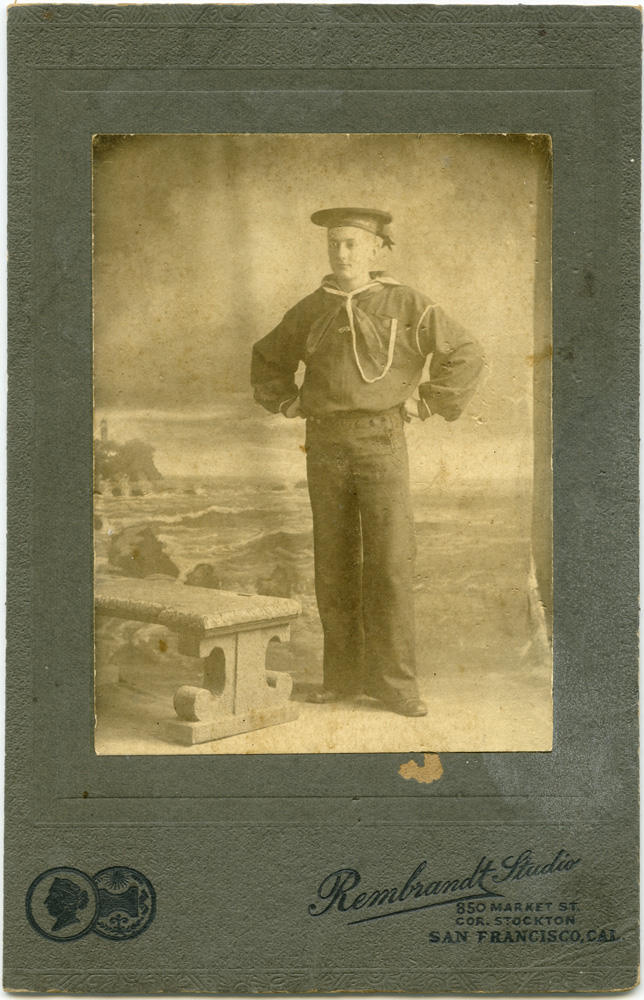
In a totally different light, here’s a west coast sailor. This time, most likely the 1890s, on a cabinet card. The original card is a little bit bigger than 3.5″ by 5″. I did a very mild clean-up of the scan in Photoshop to make the image more readable online. The original card is slightly lower in contrast and has a couple very minor spots in the background that do not interfere with the subject. I tried to scan his hat at high resolution to see if I could read the ship’s name he was assigned to, but it couldn’t be resolved (at least not with my scanner).
Sailor, 1890s, Rembrandt Studio, San Francisco
There’s a noticeable difference between the two photos, and I don’t think it is just attributable to the changes in photo technology between 1860 and 1890. The Civil War sitter has a far more somber expression on his face and in his body language – it’s as if he knows he is going to die, and this is a reminder to send back to his family so they won’t forget him when he’s gone. The 1890s sailor, on the other hand, is having a lark, getting his portrait done while in port perhaps as much a souvenir of the location as anything else. Later I’ll re-scan and post my Hong Kong sailor photos to provide a comparison.
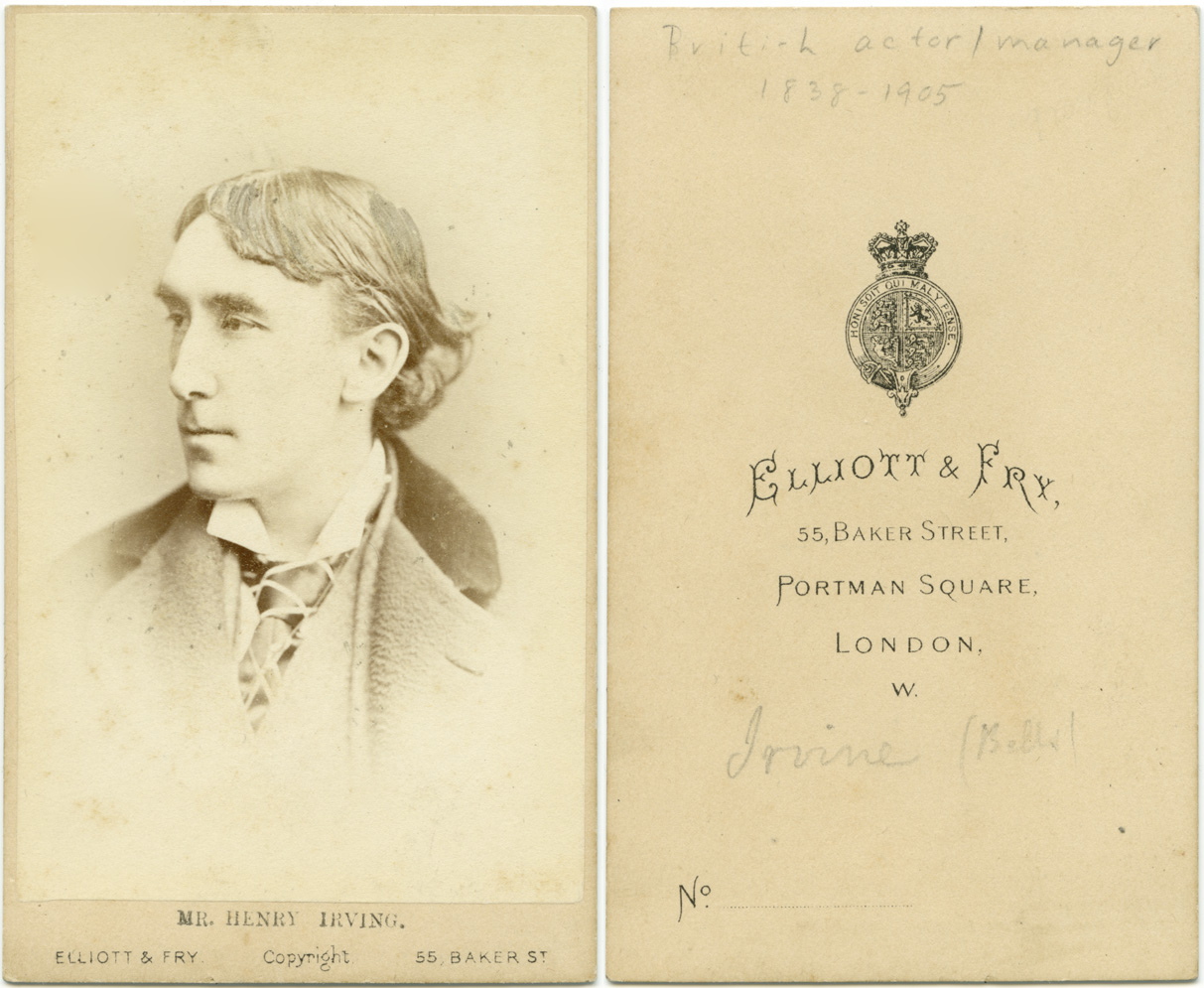
Carte De Visite, Henry Irving, British Actor, by Elliot & Fry
Here is Henry Irving, the celebrated English thespian, who owned and operated the Lyceum Theater in London. He was the first actor ever to receive knighthood. He hired Bram Stoker to be his stage manager at the Lyceum, and is allegedly the inspiration for the stage manager character in Stoker’s Dracula novel (a character notably absent from all the Dracula movies).
You’ll notice on the verso of the carte the coat-of-arms for the Order of the Garter. From my biographical research on Mr’s Elliot & Fry, they ran a very successful high-end studio in London, doing portraits of public and social, artistic, scientific and political eminences of the Victorian era. The studio operated for over 100 years before being bought out by another notable photographic firm. Most of their negatives were lost during the bombings of London in WW II. Neither Mr. Elliot or Mr. Fry were members of the Order, so the logo on their card must have been a sales pitch to their clientele to suggest the status by association. For those not in the know, the Order of the Garter is the highest possible social honor one can receive from the Queen of England. At any moment in time there are no more than 24 members of the order plus the Queen/King and the Prince of Wales. Membership is by nomination from current members, and at a minimum qualification you must already be knighted by the Queen.
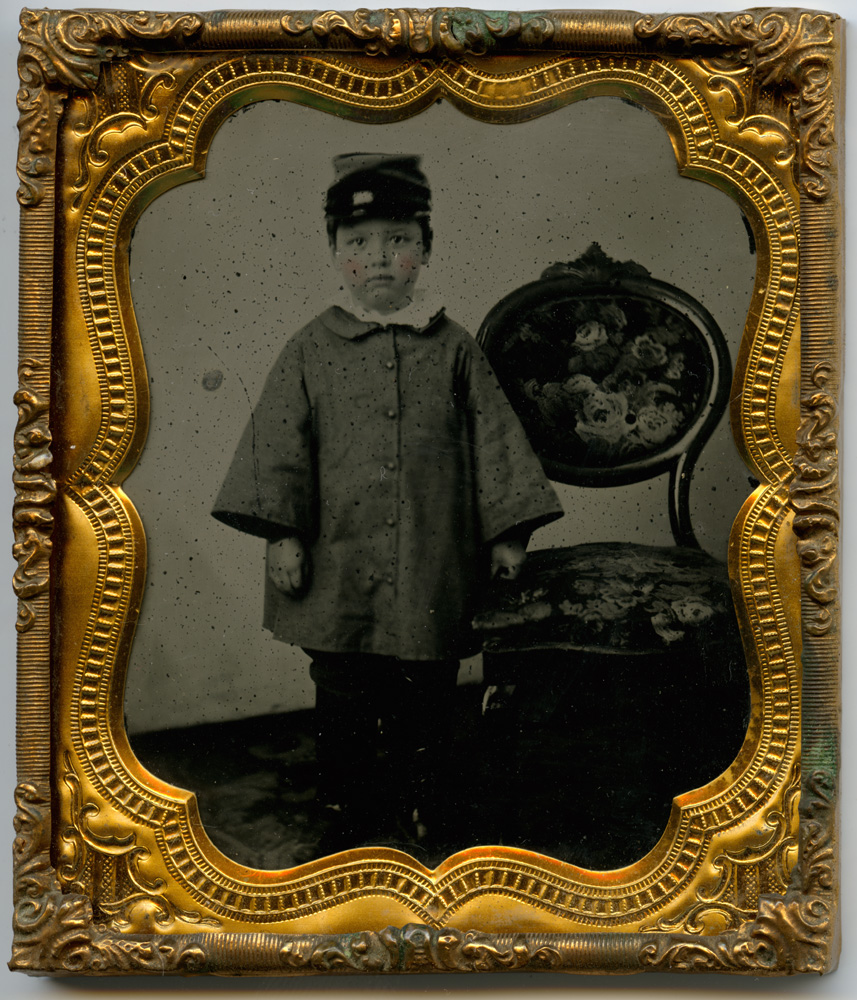
Fred Jones, born June 15, 1855, ca. 1861, Concord, New Hampshire. Here’s a photo of a little boy dressed up as a soldier. I haven’t done any further research into the Jones family of Concord, but I’d suspect that little Fred’s dad went off to war and Fred was just playing his part and being patriotic, imitating dad.
Fred Jones, 1861, framed black glass Ambrotype
The image is a black glass ambrotype in a thermoplastic/gutta percha frame, suited to hang on a wall. I acquired this one from a descendant of the subject, so it came with more biographical data than is usual. While I’m glad I was able to buy it, I can’t imagine how anyone could let such a piece of family history be sold out of the family. My apologies in advance to my Facebook friends who have already seen this image, but it was so neat that when it arrived, I couldn’t resist posting it with my iPhone immediately.
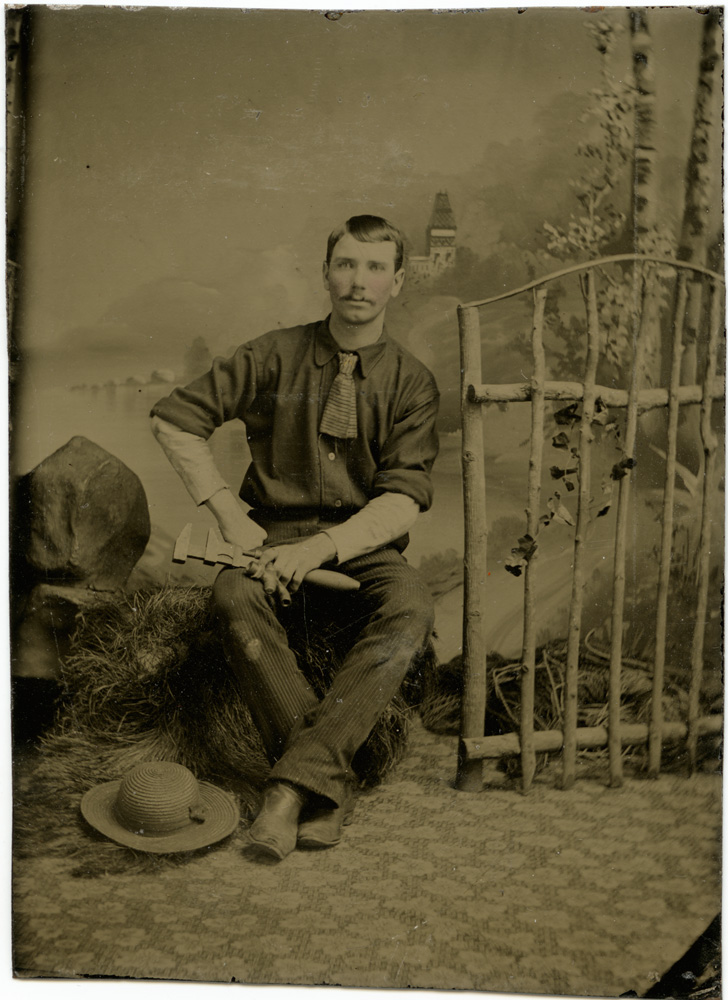
This next image is an “occupational” tintype. A popular genre in its day, the occupational photograph shows ordinary working-class people with tools of their trade and/or professional attire that showed who and what they were (railroad conductors, butchers, carpenters etc). This has become a very popular genre to collect, and certain professions are much more collectible than others (anything to do with photography is highly sought after, for example).
Tintype, Occupational, Plumber
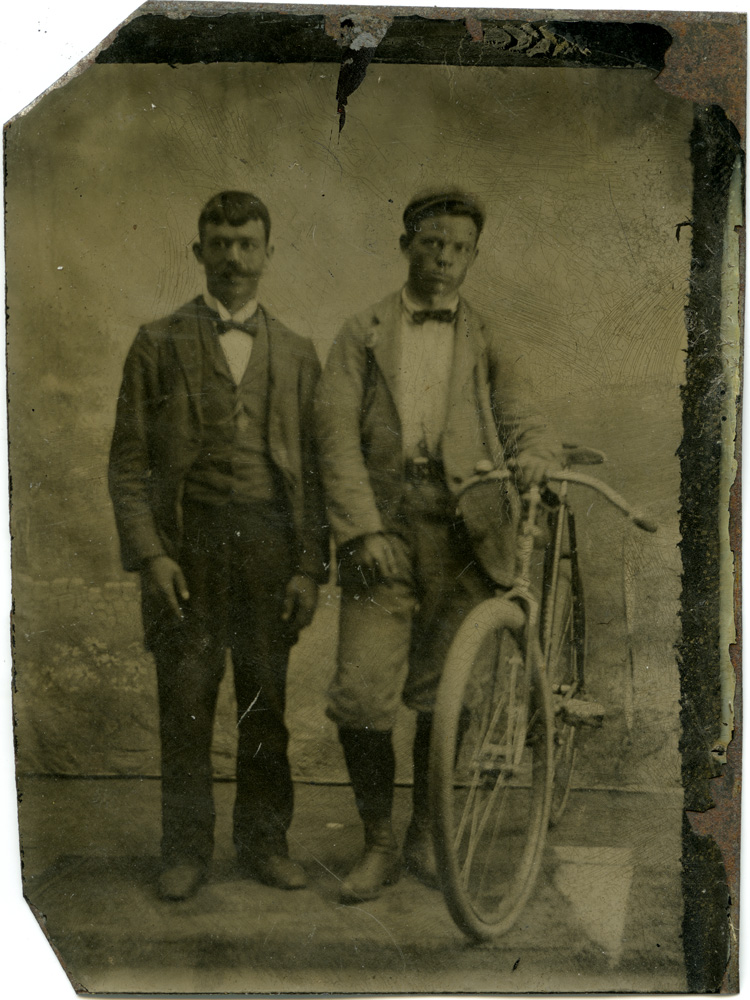
Two men and a bicycle. This was inspired by a friend of mine who collects images of men with facial hair and images of bicycles – killing two birds with one stone here. My guess on the age of the image, based on the bike tires, would be sometime between 1890-1910. Pneumatic bike tires were invented in 1889, and first commercially produced in 1890.
Tintype, Two Men and a Bicycle
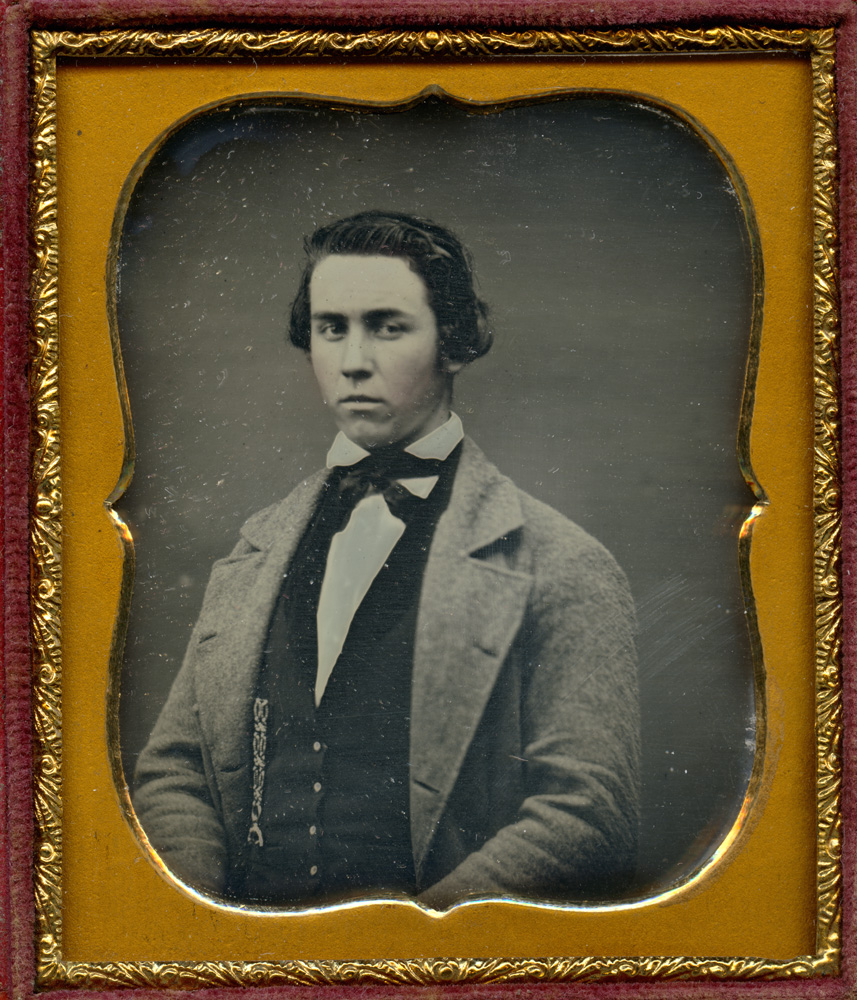
And last but certainly not least, a nice 1/6 plate daguerreotype. Because the scanner picks up every little dust particle, it’s hard to tell from the scan that this is actually one of the most lovely daguerreotypes in my collection. Virtually free of imperfections, from wipe marks to polishing scratches, this image of a young man in a rich wool coat is truly striking. It is in a very red leather case (most cases are brown), complete. The hinge has been replaced with modern tape, but otherwise the whole is quite original.
Daguerreotype, Anonymous Young Man, 1/6th Plate
I’m still trying to figure out how to post my Brady clear glass ambro – when I can get a little table-top studio set configured in my dining room, I’ll take photos of it to post here. The trick with it is that the image is viewable from both sides. There is no black backing paper, and the case is in three pieces – a front cover, a center panel with the image, and a rear cover, all hinged together like a little book. I’ll have to do some creative posing of the piece to demonstrate this and to display the image clearly. I’ve seen very few ambrotypes presented this way, and the few I have were also Mathew Brady images. I’m far from a fount of knowledge on this subject, so I don’t know if this was a uniquely Brady thing to do, or if I just haven’t seen enough images yet to know how widespread the practice actually was.
I was adding some more photographers to my maps (two more New York and one more DC), and I was re-thinking the addresses of some of the DC photographers. If I take as legitimate the KC Woodly studio address as ” 181 Pennsylvania Avenue, between 17th and 18th Streets”, then there was another studio that I had, Henry Ulke, at 278 Pennsylvania Avenue, that would make much more sense being between 18th and 19th Streets instead of more-or-less on the grounds of the US Capitol. I’ll have to do some research and see when the addresses on Pennsylvania Avenue stopped being split east/west of 16th Street. My guess is that it was sometime shortly after the Civil War, if my CDVs are anything to go by.
I just added another “fairy wedding” photo from the Brady group. It’s fun to see how many different poses were taken, and how widely distributed they are. This latest one arrived from the UK. I’m going to put them all together here so they can be seen at the same time without flipping through my blog to find the others.
Fairy Wedding Group #3The Fairy Wedding, 1863 E&HT Anthony print, ObverseCommodore Nutt, Mrs. and Mr. Tom Thumb Commodore Nutt and unknown little woman, Anonymous CDV (probably Brady)
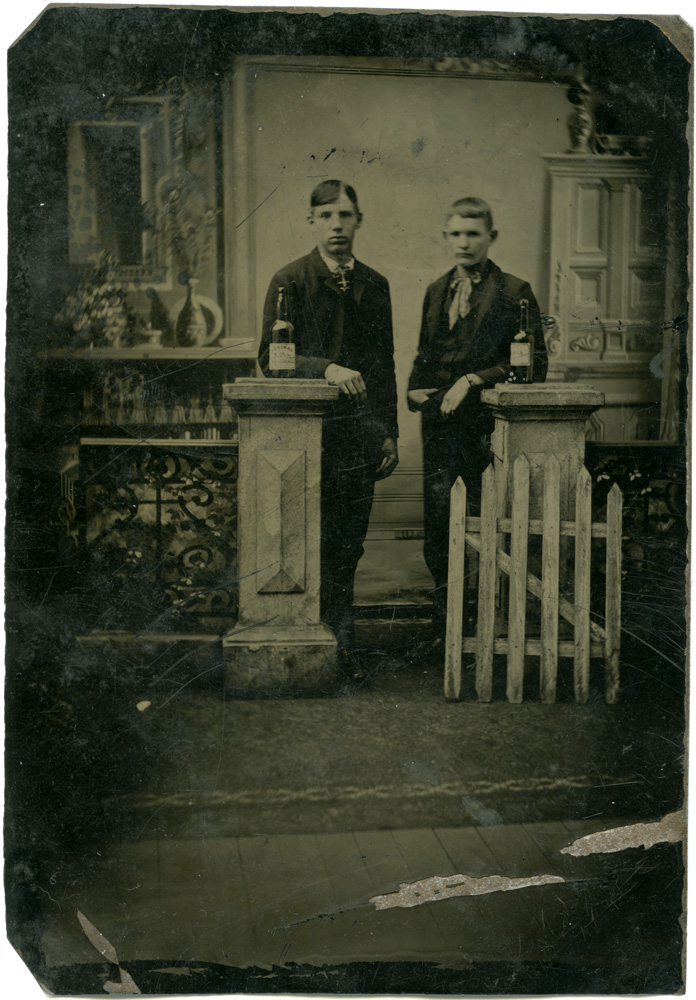
Tintype, Two Brewers, Keystone Cabinet Export Beer
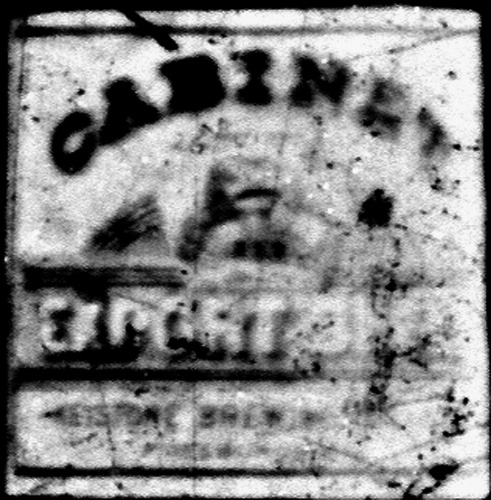
Here is another occupational tintype – this one is a bit unusual, not rare, just unusual, in that most of the unmounted tintypes you find are approximately CDV sized or 1/6 plate. This is roughly 1/4 plate size – a little larger than average. Interesting that if you look carefully, you can see that the photographer pre-focused on the set, so the beer bottles and the gate are in focus, but the two men are not completely sharp. This was sold to me as wine-makers as the subject – thanks to the magic of a good scanner, I was able to read the label on one bottle. It says Cabinet Export Beer, Keystone Brewing. I can’t make out the line that has the location. In doing my own simple web searching, most of the references I get are to Keystone Beer, the Coors subsidiary. If anyone out there knows a good reference to historic brewing in the US (or outside the US – I did see some mention of a Keystone Brewing in the UK). In any case, here’s a close-up of the label, in case anyone recognizes this. Bottle Label, Keystone Brewing Cabinet Export Beer
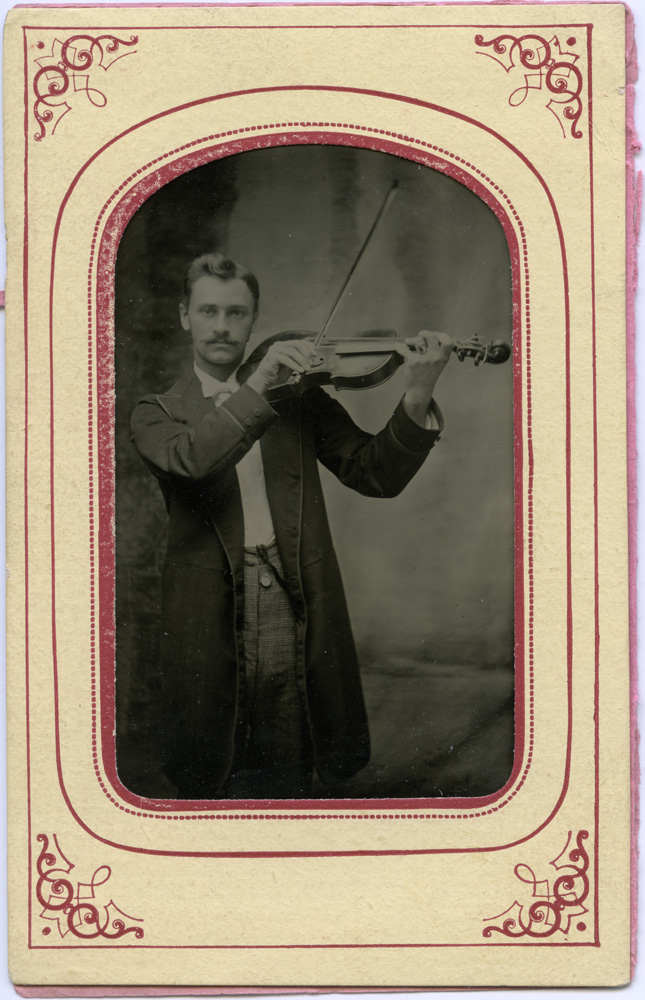
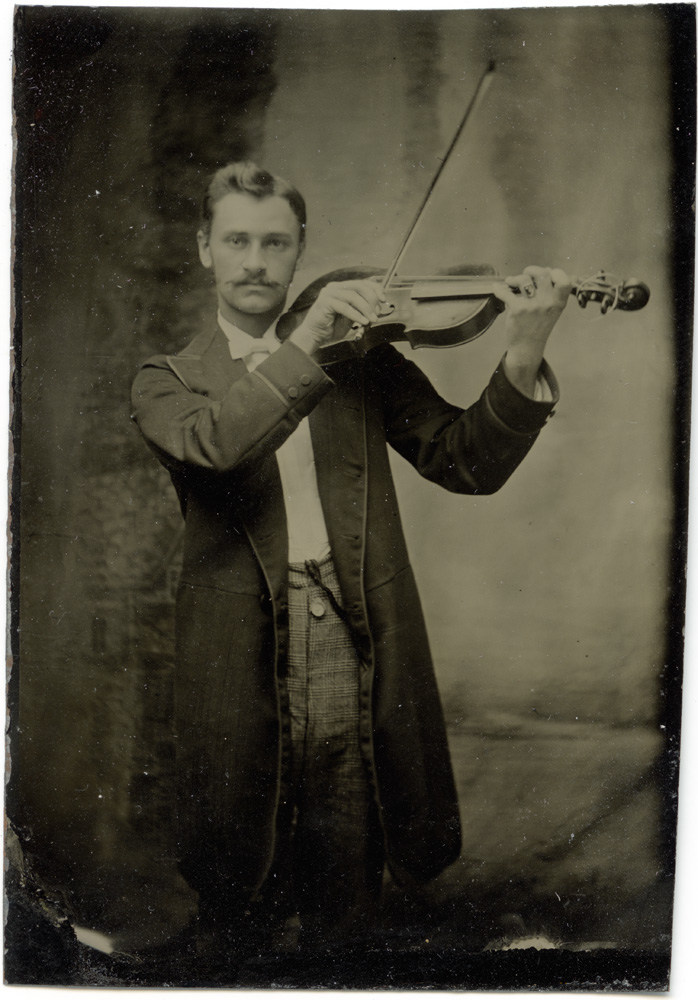
I think this is becoming another theme I’m collecting – this makes for the third image of a musician or group of musicians in my collection. It’s also, condition-wise, one of the most lovely tintypes I’ve found so far. As you can see, it came in this darling little paper slip-cover which has a fold-over cover to it made of the same pink paper as the backing. I love the overall quality of the image – you can certainly see quite distinctly the characteristics of a wet-plate image taken with a Petzval lens that would have been used at the time – the shallow depth of field and obvious field curvature (look how distorted the backdrop behind the subject is). I’d even be tempted to attribute the blur on the violin bow to the lens characteristics but knowing that this was at least a one second exposure, if not ten or fifteen, simple movement is a much more likely explanation. I’ve scanned the image both in and out of the paper sleeve to provide historical context for the image as well as display the entire image as made and seen by the photographer. Tintype, Violinist, in presentation matTintype, Violinist, entire plate

 dcphotoartist