Category Archives: Portraits

Faces of Photostock 2013

Last week (June 19-23) I was in the upper upper corner of the Lower Peninsula of Michigan (troll land – why? because it’s under the (Mackinac) Bridge!). The event was Photostock 2013, a very loose, casual gathering of photographers to hang out, shoot, share work, talk photo, and just relax. The event was held at the Birchwood Inn in Harbor Springs, Michigan, which is on Lake Michigan, not far south of the Mackinac Bridge. The bridge spans the strait that separates Lake Michigan from Lake Huron. It’s the second longest suspension bridge in North America, and the fourth longest in the world.

Here’s a photo of the bridge in the morning fog:

Mackinac Bridge, Morning Fog

To clarify some confusion, Mackinac is pronounced Mackinaw (why I don’t know, but it is). If it’s a transliteration from a Native American word, then you’d think Pontiac should have been pronounced Pontiaw. But it’s not. Go figure. Anyway, you’ll sometimes see Mackinac written Mackinac and others Mackinaw. And same with the resort island of the same name.

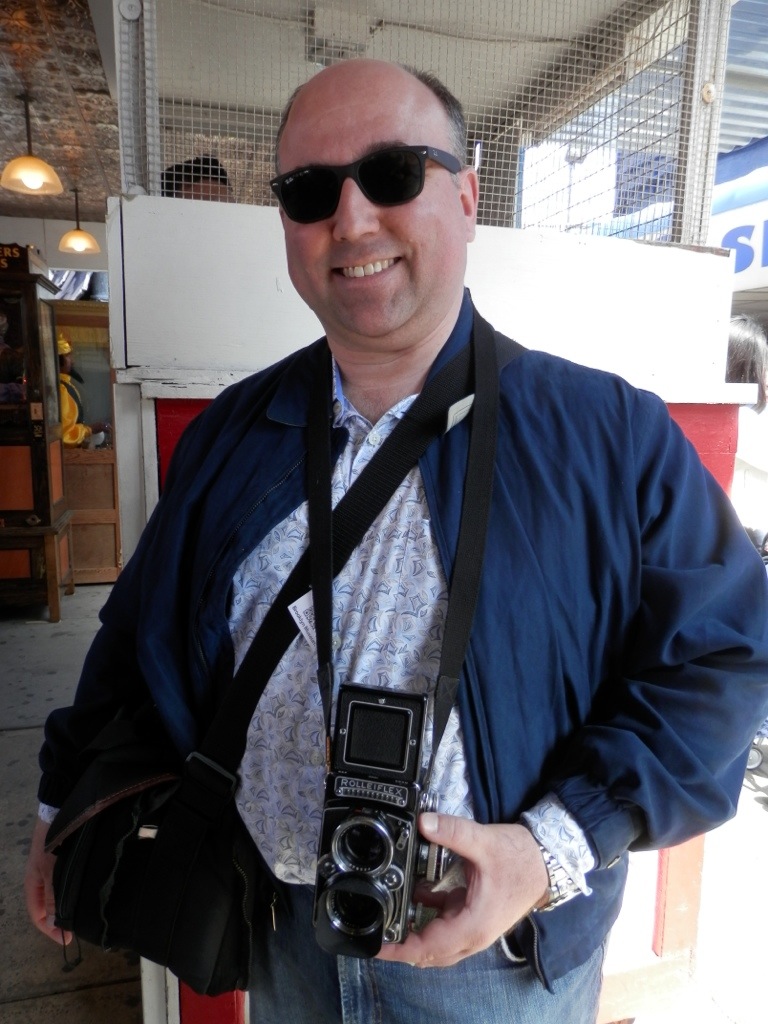
Back to Photostock- it’s an environment where you don’t feel like the odd man out for being a total photo geek for bringing TWO Rolleiflexes with you (that was me, and in comparison to some folks, I was highly under-geared!). Here I am having fun with my Rolleiflexes- they’re wearing my Ray-Ban Wayfarers:
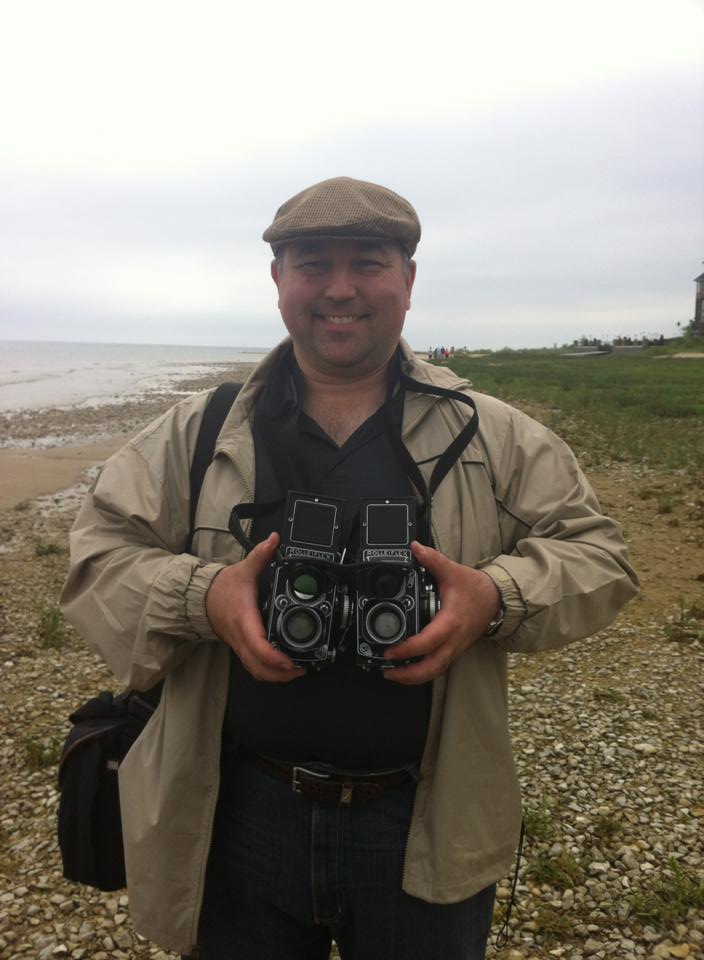
Me And My Rolleis
Me And My Rolleis

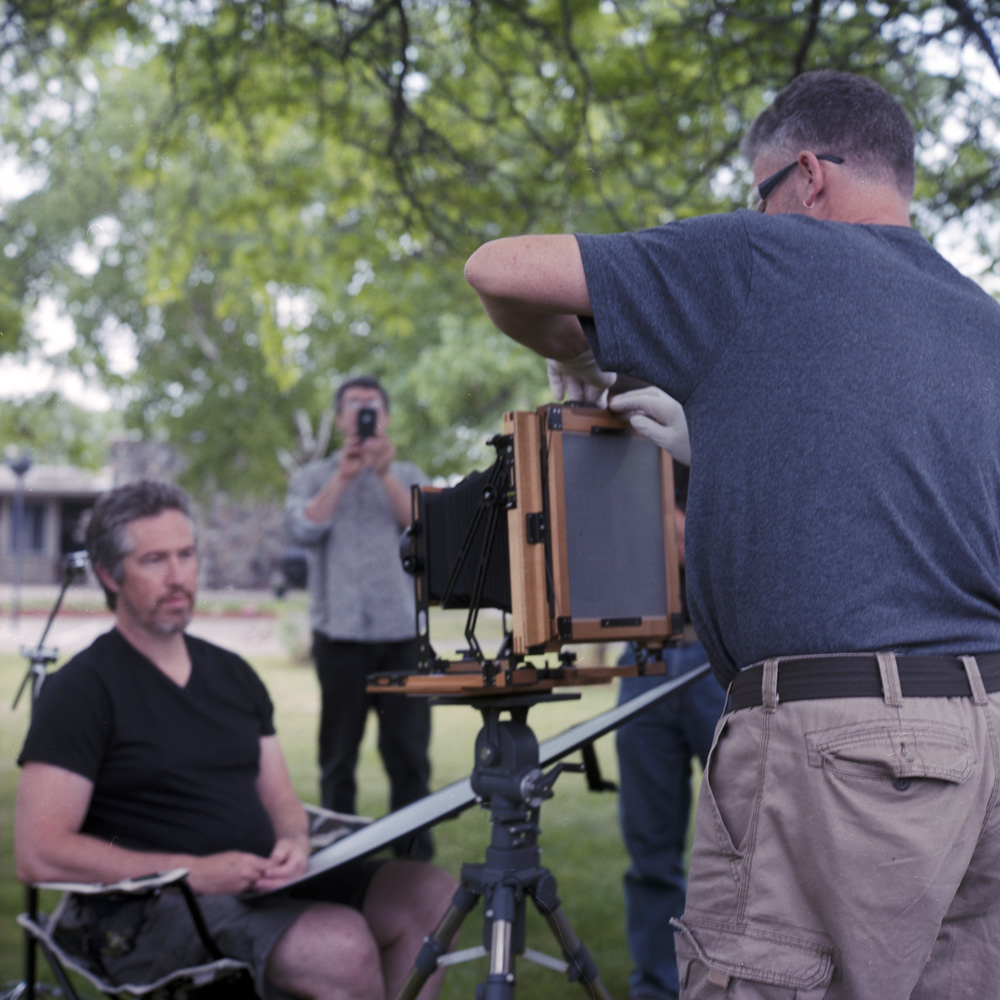
The coolest thing about it for me was getting to meet a whole bunch of folks in the flesh I only knew virtually, from participating on APUG (http://www.apug.org), Large Format Photography (http://www.largeformatphotography.info/forum), and Rangefinder Forum (http://www.rangefinderforum.com). Some of them I’ve known as virtual beings for nearly a decade. Everyone attending was just terrific, and I can’t think of a single conversation that was anything other than interesting or a person who was anything other than energizing to talk to. We had some really fantastic photographers give demonstrations of their work, like Judy Sherrod showing off her homemade 20×24 wet plate pinhole cameras and the accompanying alumitypes she made with it – WOW. Talk about inspirational – here was someone who was told “no, it can’t be done”, decided that no was not an acceptable answer, and proved the naysayers wrong. She shot wet plate pinhole photos of the beach and ocean at Pass Christian, Mississippi, coating her giant plates at home, driving to the beach, setting up, exposing, driving back and processing the plates all within a half hour span – pretty amazing considering that her exposures were 7-10 minutes each!

Judy Sherrod's Pinhole Camera
Judy Sherrod’s Pinhole Camera

EDIT:

I received the following note from Judy Sherrod clarifying the information about the wet plate pinhole work:

The 20×20 pinhole cameras are made to shoot wet-plate collodion plates in a collaboration with S.Gayle Stevens. Gayle is the collodion artist. I am not. I make the boxes.
I live in Texas, she lives outside of Chicago, and we work from a darkroom in Pass Christian, Mississippi. It’s a long commute for each of us!
We coat the plate in the darkroom, put the plate in the camera, put the camera in the car, jump in and drive to the beach, where the exposures are made. Most exposures are about three minutes. Then we put the camera back in the car and return to the darkroom for processing.
Thank you for writing about this project. It has turned into a dream come true for me. I can’t wait to see what happens next!

looks like I got a couple facts turned around in my head! Thanks, Judy for the clarification!

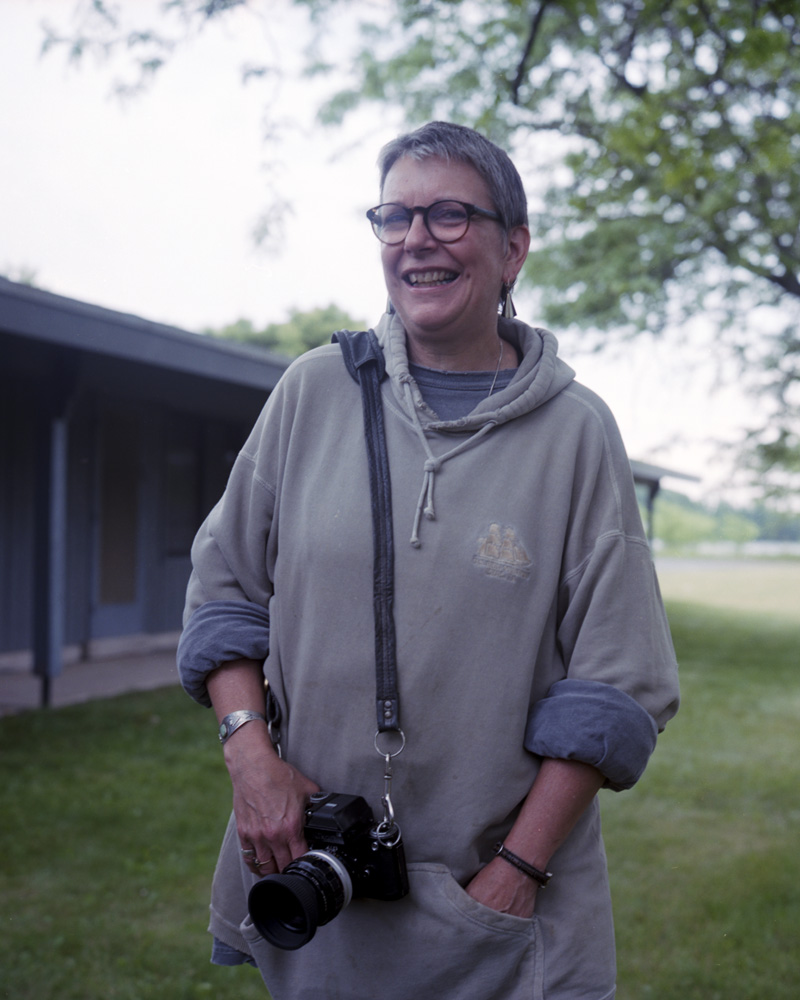
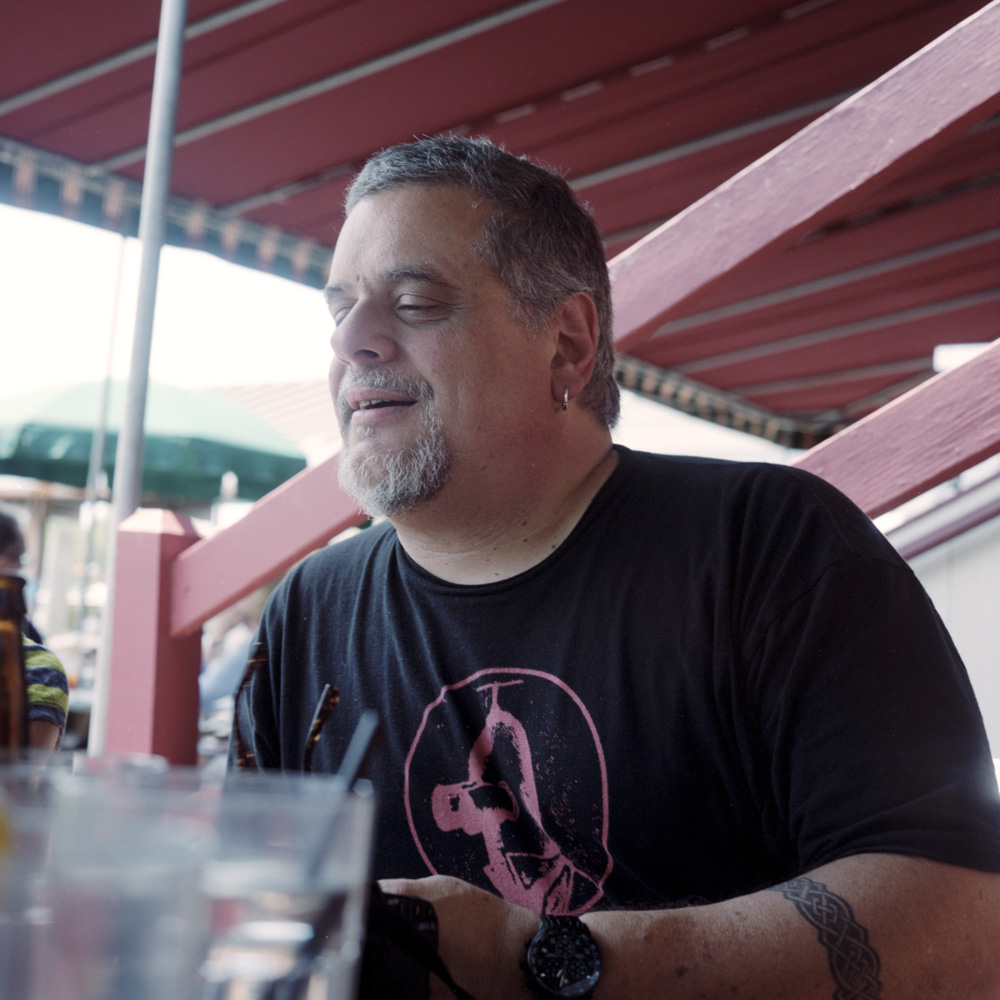
This is a preliminary set of photos of the people attending Photostock – there were nearly 70 people participating throughout the week, and I’m sure there were some I barely saw let alone got to meet and talk with.
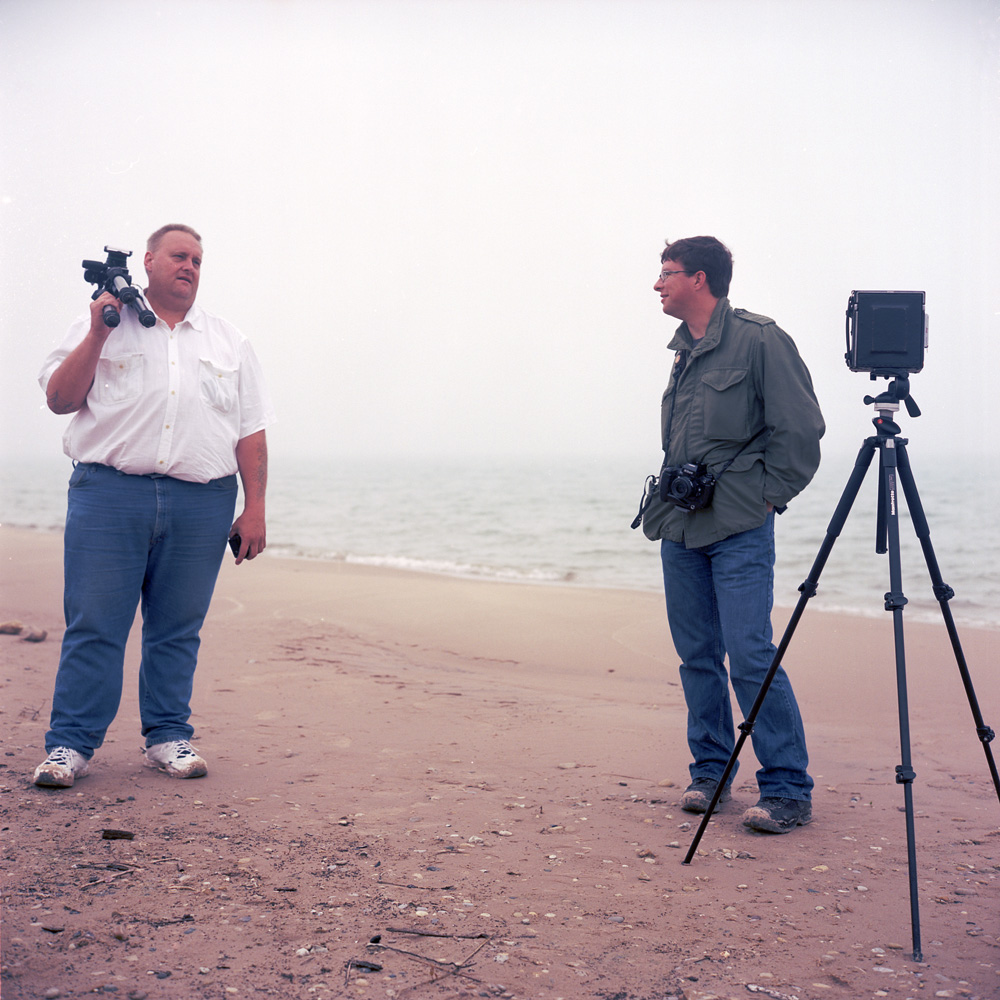
Alex L and Friend
Alex L and Friend
Alex L and Ken Johnson
Andrew Moxom Making a Wet Plate Portrait
Bruce Barlow, with a Richard Ritter Camera
Dorothy Kloss
Dorothy Kloss
David (Ike) Eisenlord and Jamie Young
Kerik Kouklis at Lunch
Kris Johnson
Kris Johnson

I’ll have a whole lot more to show once I get all my b/w film developed.
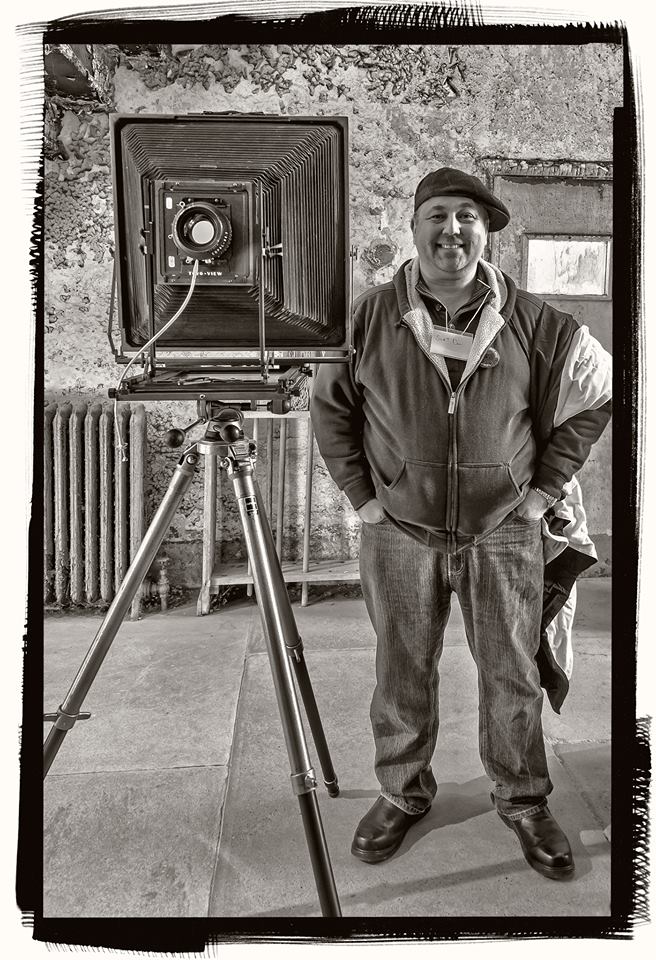
Photo of me

Me and the Canham 14x17
Me and the Canham 14×17

Here’s a photo of me at Eastern State Penitentiary with my Canham 14×17, courtesy my friend, Tom Finzel. He does a lot of HDR stuff and does it with subtlety (well, most of the time 🙂 ). I really like the image he made – I look good in this shot, which is all the more amazing since I smiled and held steady through about 15 seconds worth of HDR multiple exposures. I would have made a good model for a daguerreotypist!

Tom was trying to make an image that looked like platinum/palladium. While the color’s too neutral, it’s not a bad likeness.

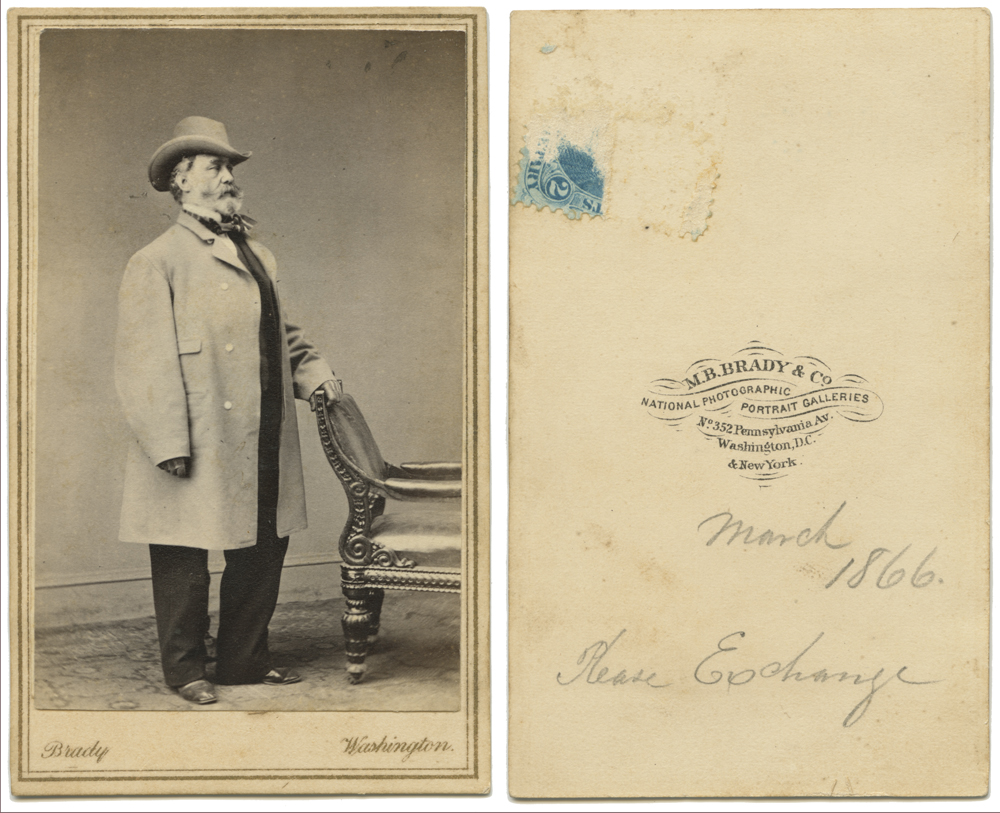
Brady CDV, Washington DC studio, 1866

The inscription on the back is a bit cryptic – “Please Exchange”. Exchange for what? Unless they didn’t like the pose, I can’t see what’s wrong with it to want to exchange it. The CDV is actually in excellent condition, with no creases, bent corners, or overall flaws to the print. I’m certainly happy with it!

Gentleman, March 1866, Mathew Brady Studio, Washington DC

He looks “western” with that hat and coat, but that’s not saying much – although the outfit has a cowboy feel to it, he’s obviously a very rich cowboy, as that’s a very fine coat. Brooks Brothers would be proud to hang such a coat in their showroom today.

Me, in the picture for once

I was waiting in line for the Wonder Wheel at Coney Island. I had just spotted the turnstile for the pay toilet with its garish red and yellow paint job and 25 cents sign in early 20th century lettering and was composing a photo on the ground glass of the Rolleiflex. A voice called out to me, “Oh, that is a lovely Rolleiflex!”. I looked up to see an older gentleman with a souped-up walker (metallic paint job, hand brake, and a fold-down seat). We struck up a conversation about cameras and photography. He had been a camera salesman at an old store in Brooklyn, and remembered selling Rolleis like mine. I gave him my business card, and a few days after I got home, his grandson emailed me the photo you see here.

20130611-131135.jpg

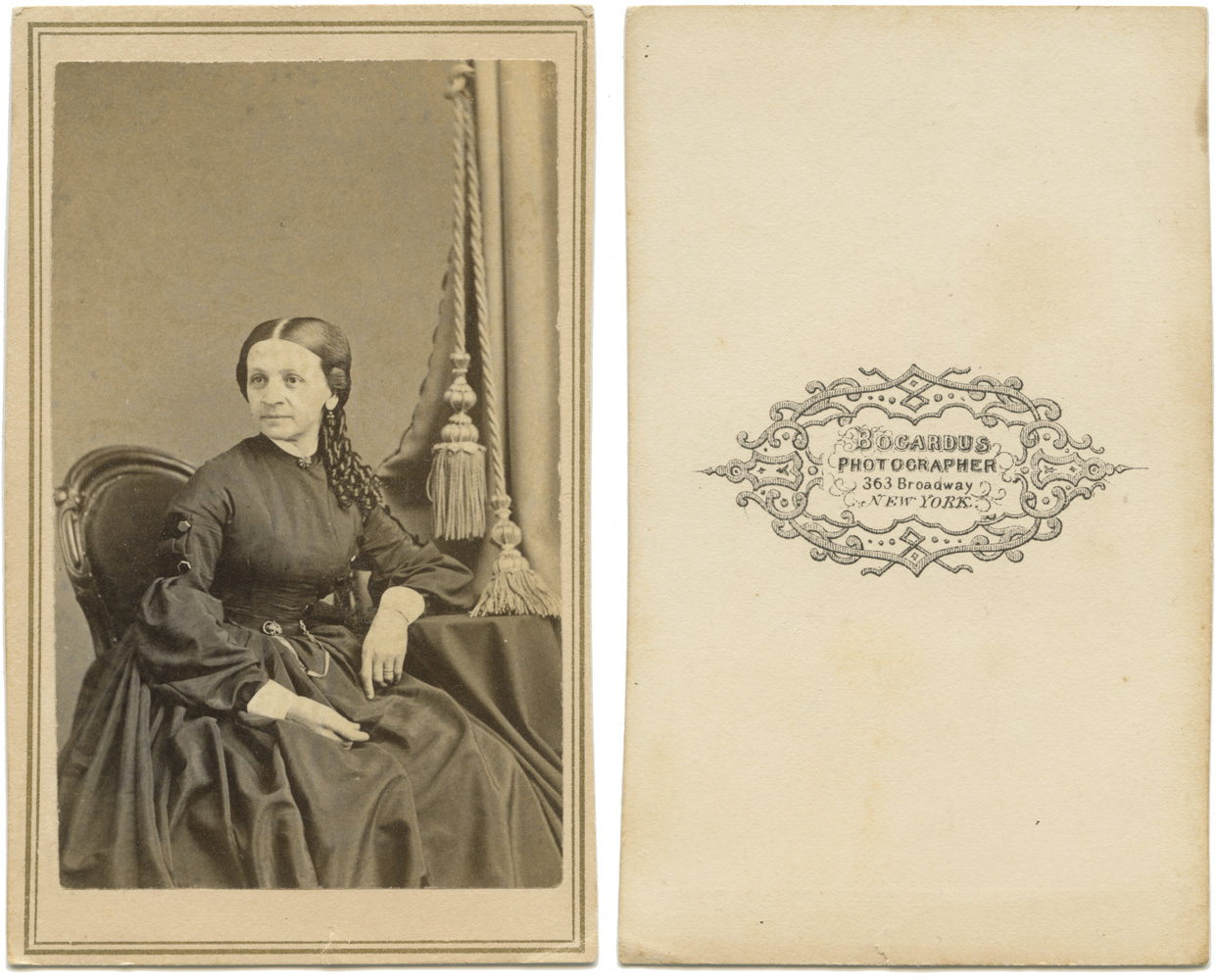
Anonymous Woman by Bogardus

Anonymous Woman by Bogardus

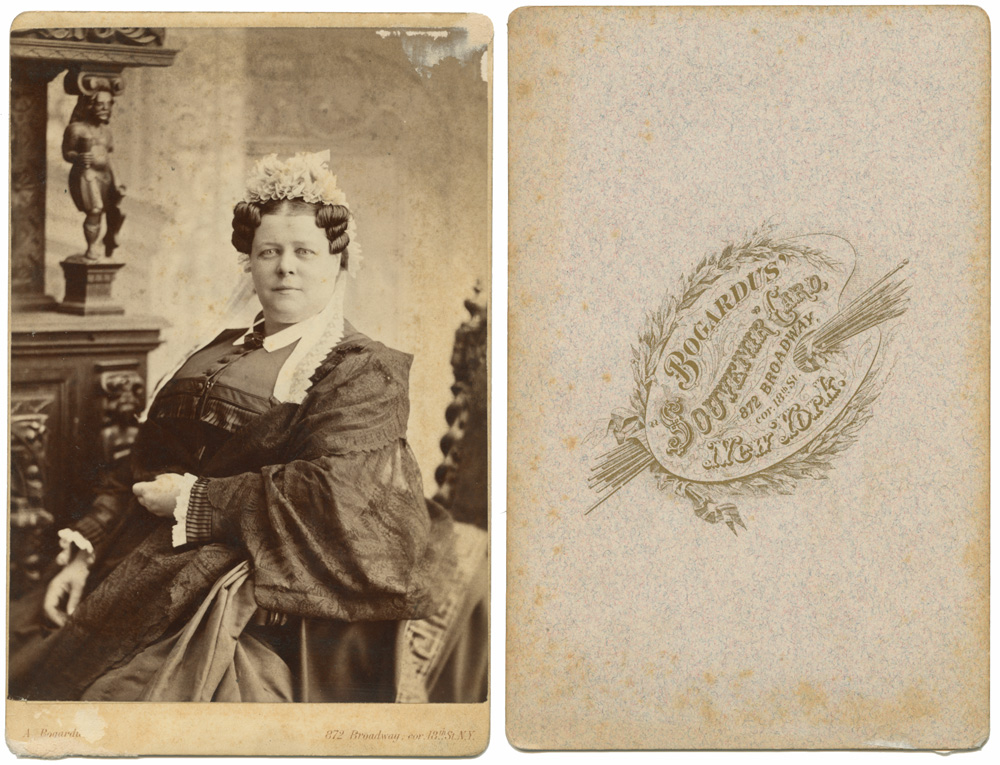
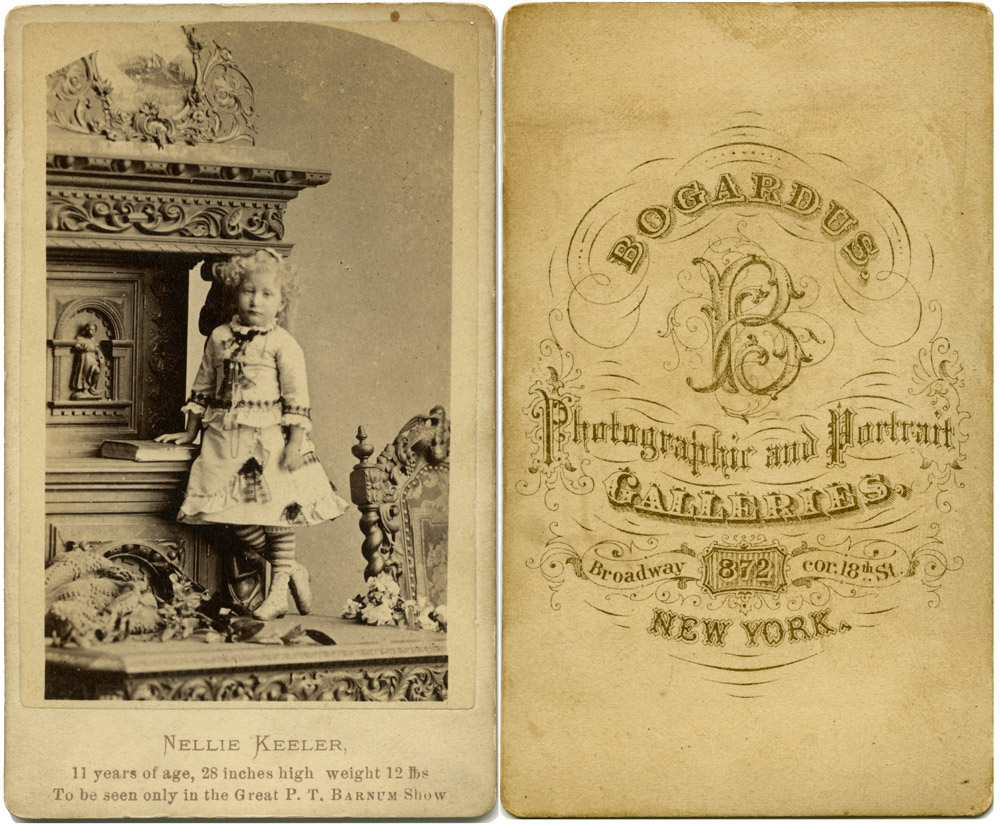
This is an anonymous portrait by Bogardus, one of the “big names” in mid-19th century American portrait photography. The carte itself and the print are in excellent condition, and I love the photographer’s blind stamp on the back. I’m including two more below by Bogardus to show the different blind stamps he used. I’m sure it evolved further over time, but these are the ones I have in my collection.

Plump lady cabinet card, Bogardus Studio
Nellie Keeler, on Bogardus' Sideboard
Nellie Keeler, on Bogardus’ Sideboard

On a parallel but unrelated note, I think the cabinet in the Nellie Keeler and plump lady photos is to Bogardus what the “Reaper” clock is to Brady (as referenced in my previous blog post). The article I linked mentioned that the author found two copies of the Reaper clock like the one Brady had in his studio – it would be very cool to find Bogardus’ sideboard and bring it into a studio.

Native Americans

In honor of my latest acquisition for my collection (posted immediately below), I’m going to recap my 19th century Native American images collection.

The new image is a school class photo from Springfield, South Dakota. I find the image fascinating and remarkable by virtue of the racial diversity in the school group. Though the class is mostly Native American, there are white and African-American girls in the class as well. I think the teacher who inscribed the card on the verso is the woman in the center of the photograph.

Native American School Group, Springfield, South Dakota

The inscription reads: “With best wishes, Your loving teacher, Mary B. Benedict, North Walton, Delaware Co. New York. Alice & Lucy Cougar”. I’m assuming that Alice & Lucy Cougar are two of the Native American girls in the photo, but which two I’m not sure.

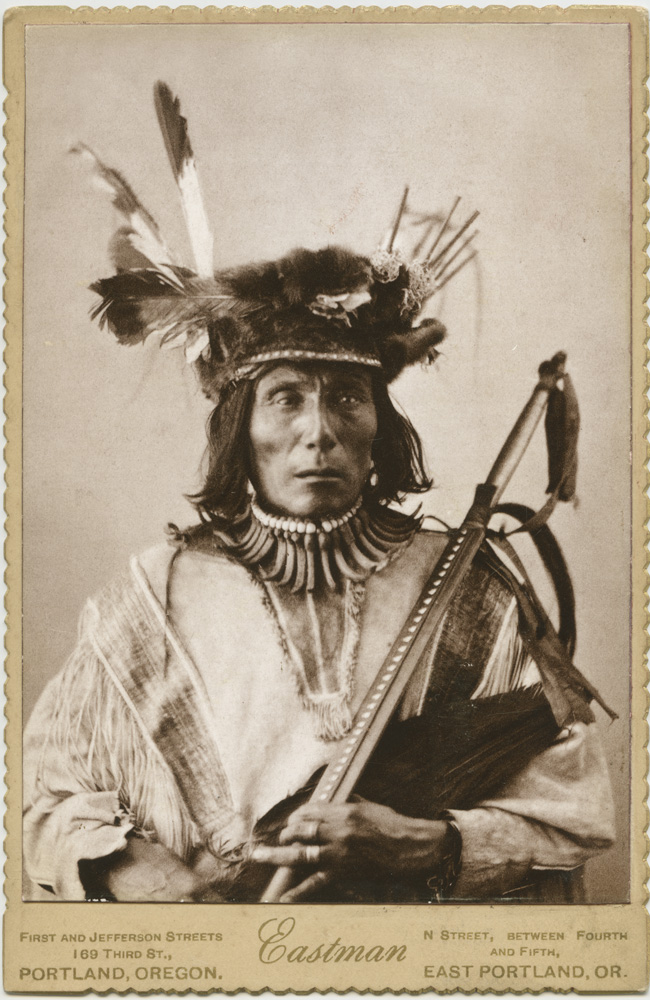
Native American by G.L. Eastman
Native American and Friend,Klamath Falls, Oregon

I’m not sure on the date on this one – it could well be early 20th century, but I’m including it because it is non-exploitative. If anything it is similar in spirit to the school class group in depicting interaction between Native and non-Native Americans in apparent social equality.

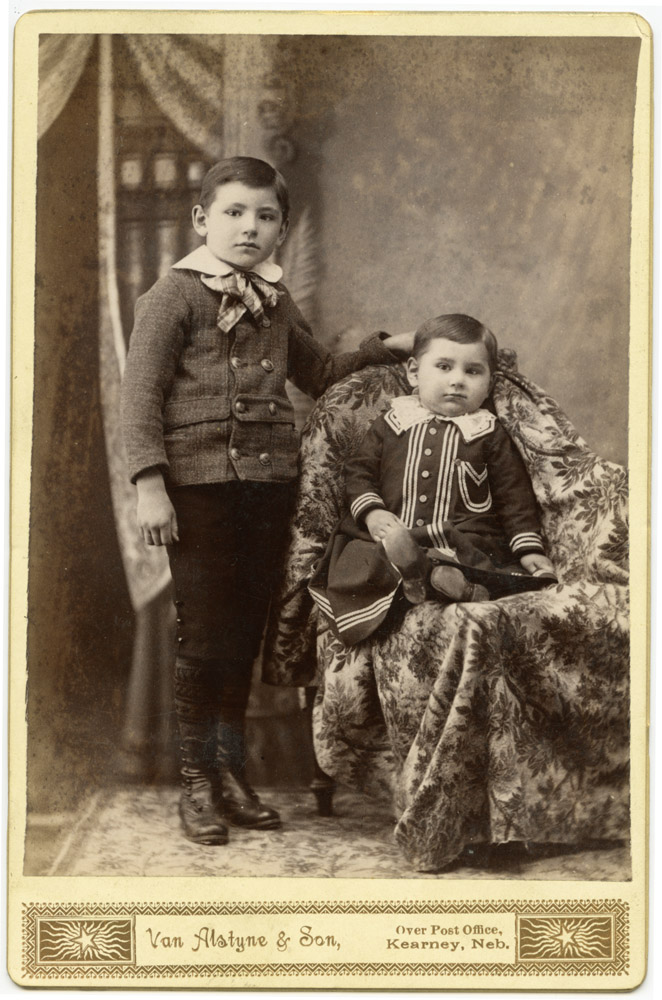
Two Native American Boys, Kearney, Nebraska
Rain-in-the-face, by Morse, San Francisco
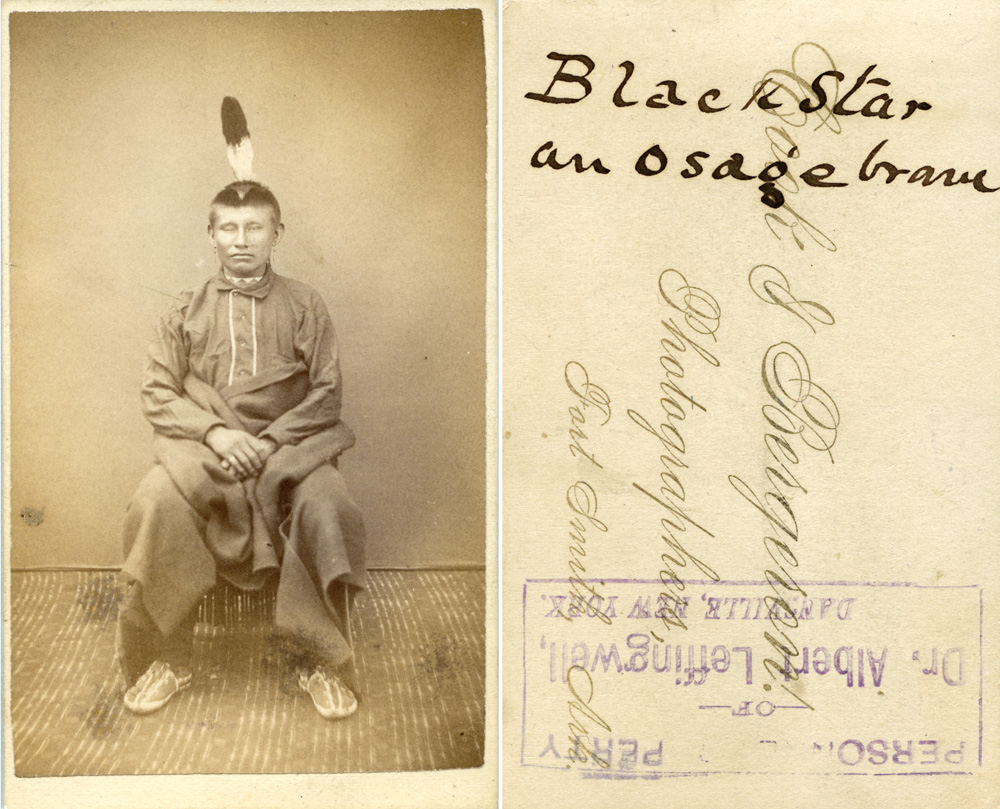
Black Star, an Osage Brave
New Mexican Native Couple
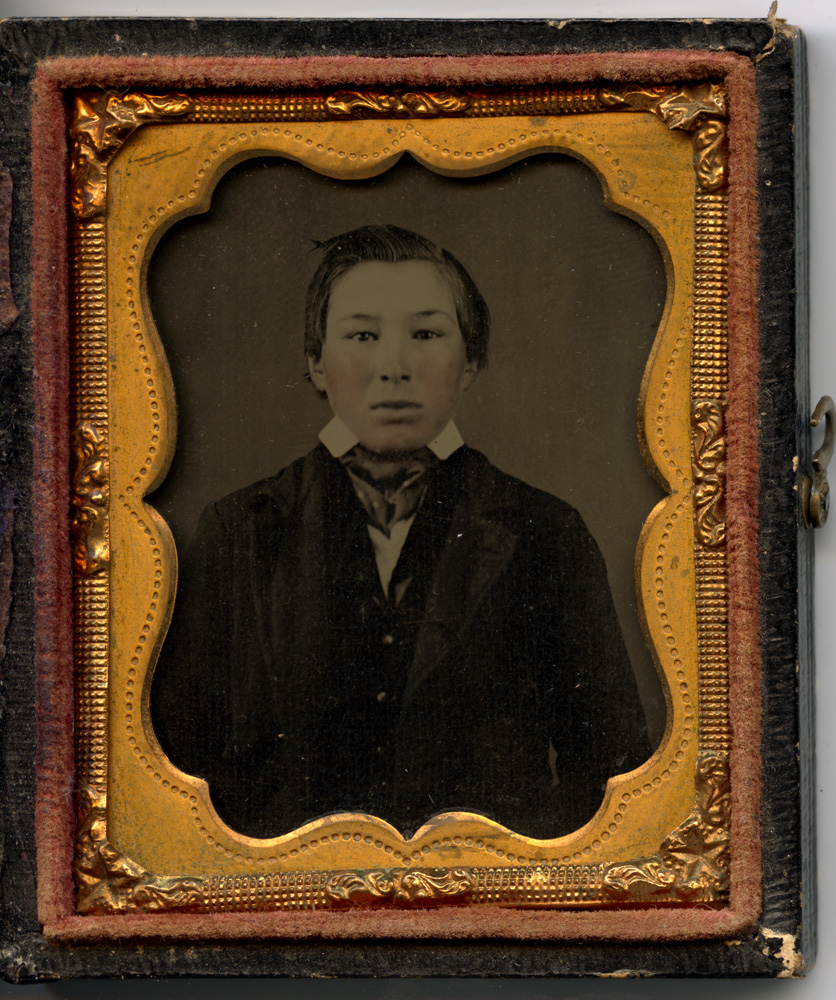
Ambrotype, Penobscot Boy, 1857

This last one is probably the oldest image of a Native American I own, and will most likely remain so, as images this old are quite rare. Most imagery of Native Americans is from the west and mid-west, as Native populations had been largely subsumed and/or eradicated from the east coast by the time photography arrived.

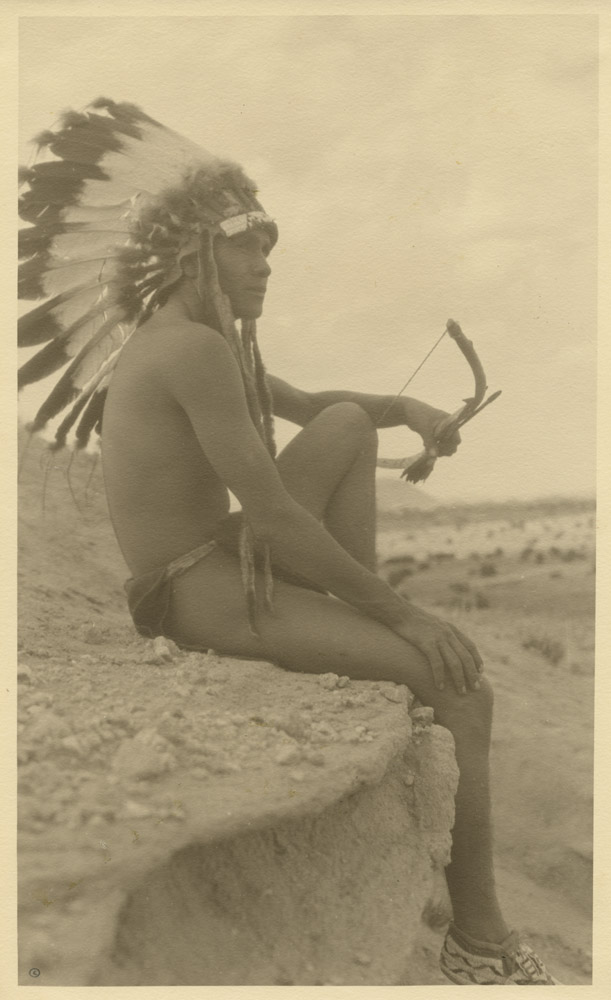
The other two “Art” photos of Native Americans I have are, albeit sympathetic, exploitative portrayals of Native American men in the line of “Noble Savage/Vanishing Tribe” imagery meant to play on the sympathies (and perhaps the subconscious erotic sentiments) of an Eastern, caucasian audience. The reason I say erotic sentiments is that they depict handsome young Native men wearing signals of exotic “nativeness” (headdress, jewelry), but little else. The signs of “nativeness” may or may not be any degree of authentic or relevant to the individual wearing them. The George Eastman photo here is heading that direction in that the costumery the subject wears may not be of any one particular tribe, much as Edward Curtis would do when he felt a photo needed a little something – he would hand his sitter some wardrobe accessory that they might never have otherwise worn and got them to don it for the picture. In that regard, photos like Curtis’ and Eastman’s work are not “documentary” in a strict sense, but they are often the only record that exists of a person or a culture, so they do have record value.

Navajo Brave, Grand Canyon, attributed to Karl Moon
A Tewa Bowman, by W. Allen Cushman

While the Carl Moon “Navajo Brave” may be wearing authentic Navajo jewelry, he’s not wearing much else, and the loincloth is not exactly practical daily wear. I could be wrong, but the “New Mexican Native Couple” image shows what I believe would have been far more typical attire for that region of the country. Native Americans may be blessed with a higher melanin content in their skin, but that’s still not a good reason to run around near naked all day at 5000′ elevation under a blazing sun.

The “Tewa Bowman” is another in the same vein – what little accoutrements he wears may be authentic or may not, but to the intended audience for the image it is irrelevant because they neither know nor care; the bow and feathered headdress point to “Indian-ness” and the comeliness and physical condition of the sitter make him “noble” in the same spirit of a Grecian marble nude.

These images leave a complicated, conflicted legacy. They purport to be records of a vanishing culture, yet the record they leave is at best fuzzy and at worst totally inaccurate. The 20th century “save the noble savages” images took the problematic record images one step further. By the dawn of the 20th century, there was a growing awareness in Anglo civilization that Native cultures and peoples were truly vanishing, and the attitude began to shift from approval of that fact to a sense of loss and a desire to intervene in that downward spiral. These “art” images fed a market for Anglos who had no first-hand knowledge of Native culture and felt some degree of racial guilt. Even if the base motivation was in the right place, the images exploited Native subjects to feed a market, wether through distortion of identity, sexual exploitation, or both.

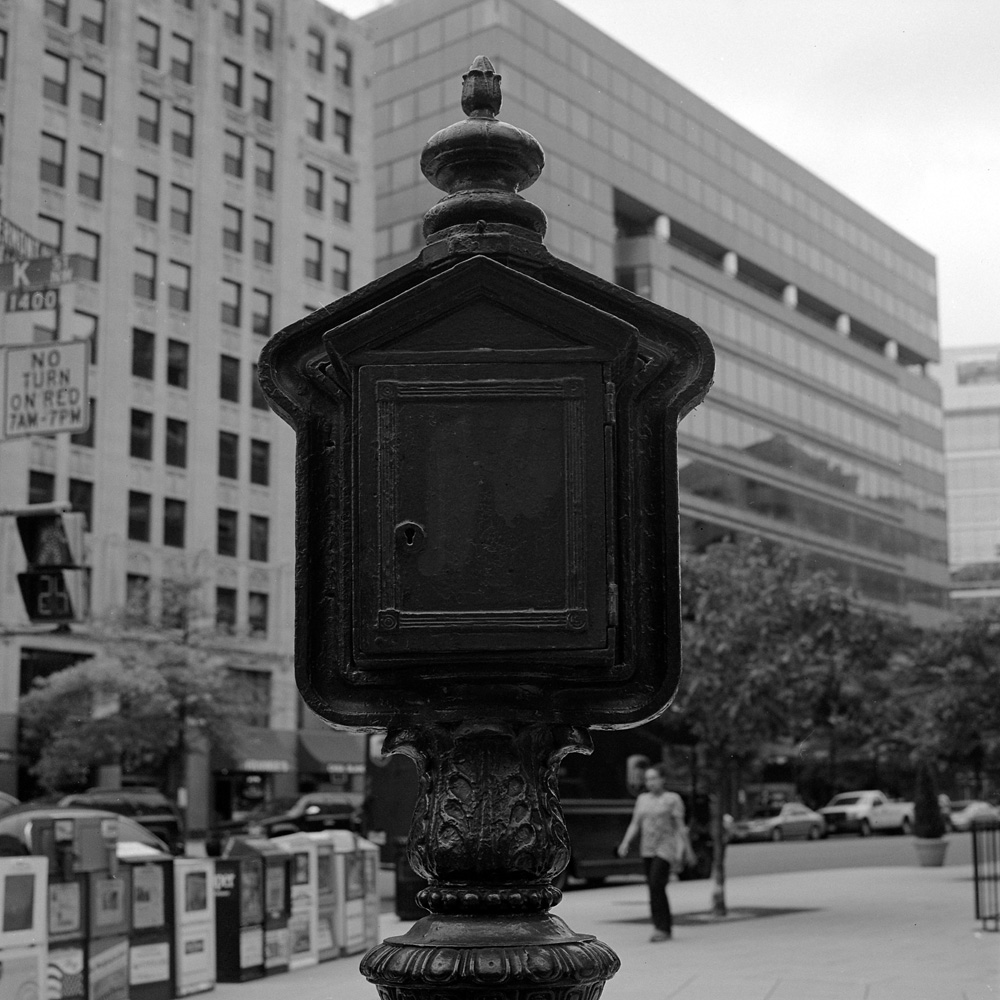
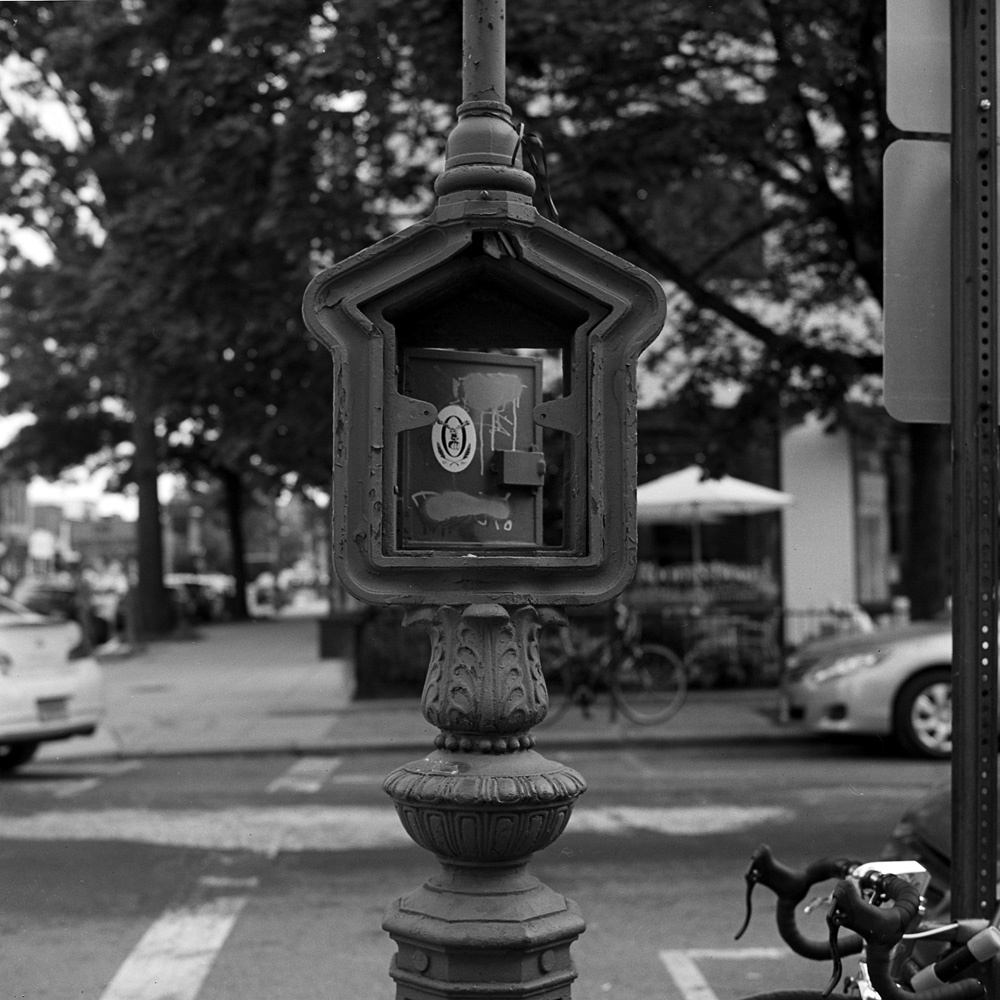
Police Call Boxes

Police Call Box
Police Call Box

I was just doing a little research on these, as I’ve seen them here in DC for years but didn’t know much about them. Washington DC was one of the first cities in the US, and perhaps even in the world, to get them. They were first implemented in Albany, New York in 1877, and in Washington DC in 1883. The most famous ones, of course, are the blue kiosks from the UK, made so by the Dr. Who tv series. In the UK, they phased them out in the 1970s, but they remained in use in Washington DC until the early 1980s, so they had a run of almost a full century. Surprisingly enough, their physical remains have outlasted the pay phone – it is easier to find a (gutted, non-functioning) police call box here than it is to find a functioning pay phone now, despite the fact that public phones are still in use.

I found a video online from a DC Police Department historian who talked about the police call boxes, and he had a very funny story to relate – back in the day before police radios were implemented, if a patrolman had to arrest someone, the only way he had to contact central dispatch to get a wagon to come pick up the perpetrator was to physically bring the perp to the call box, call for the wagon, and wait at the call box. So that would explain why patrolmen in the past were a bit rougher and meaner during the arrest process, as they often had to subdue a perp for not just long enough to get them in his vehicle, but for a several block walk and then an additional 10-15 minutes waiting for the van!

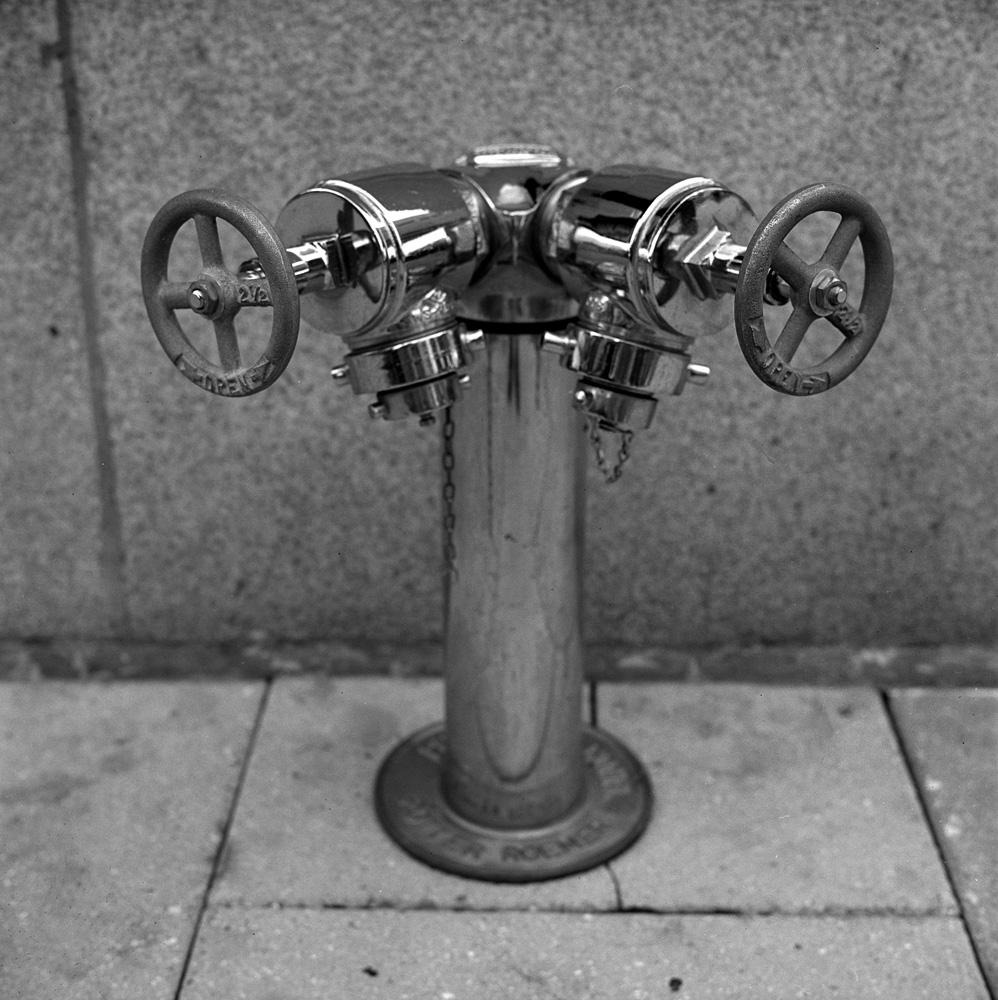
Portraits of Everyday Objects, Part 2

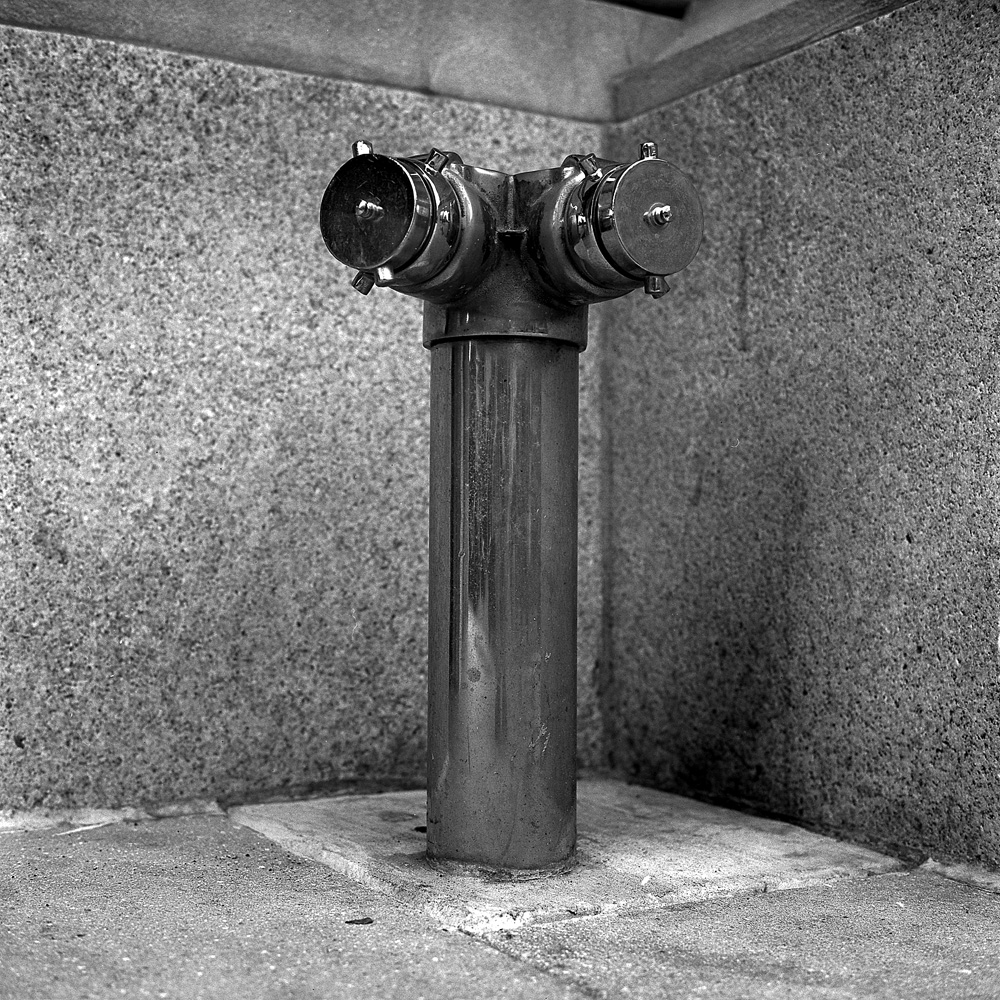
Valveless Siamese Connecting Pipe
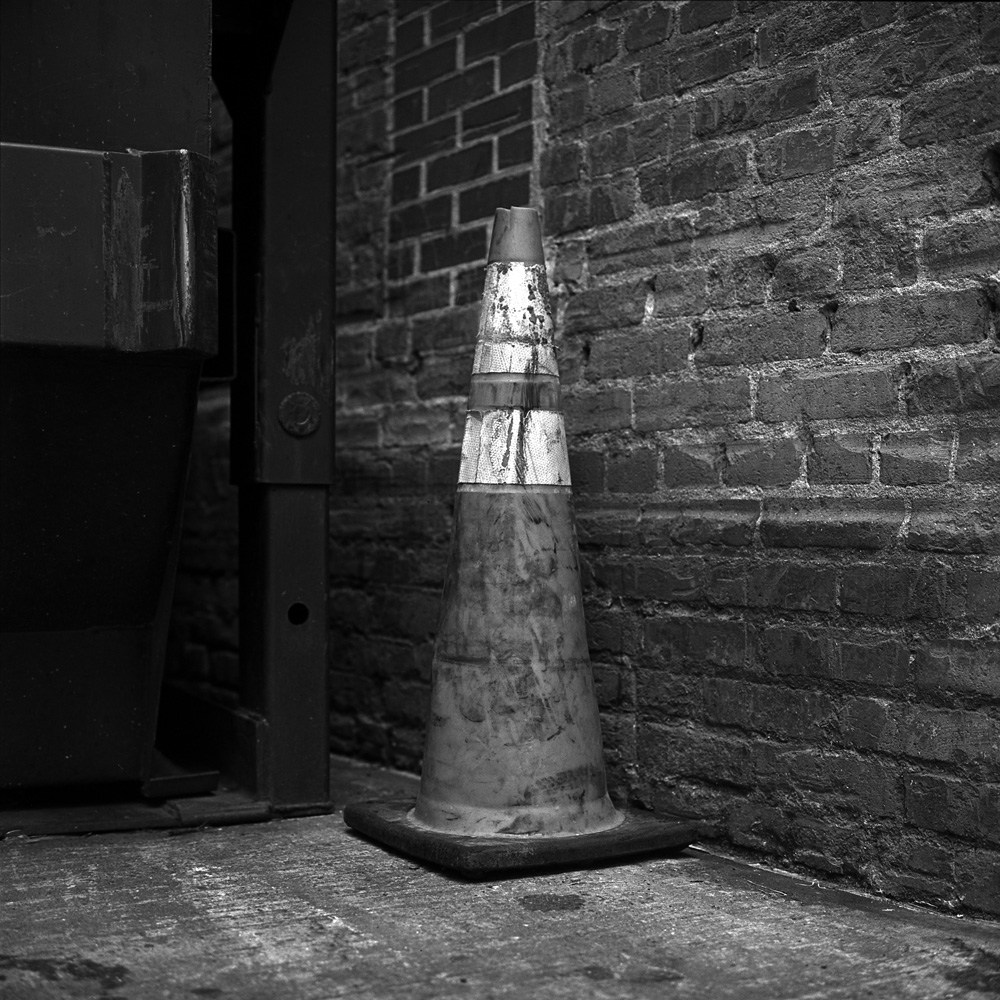
Traffic Cone
Traffic Cone
Abandoned Police Call Box
Siamese Spigot
Siamese Spigot

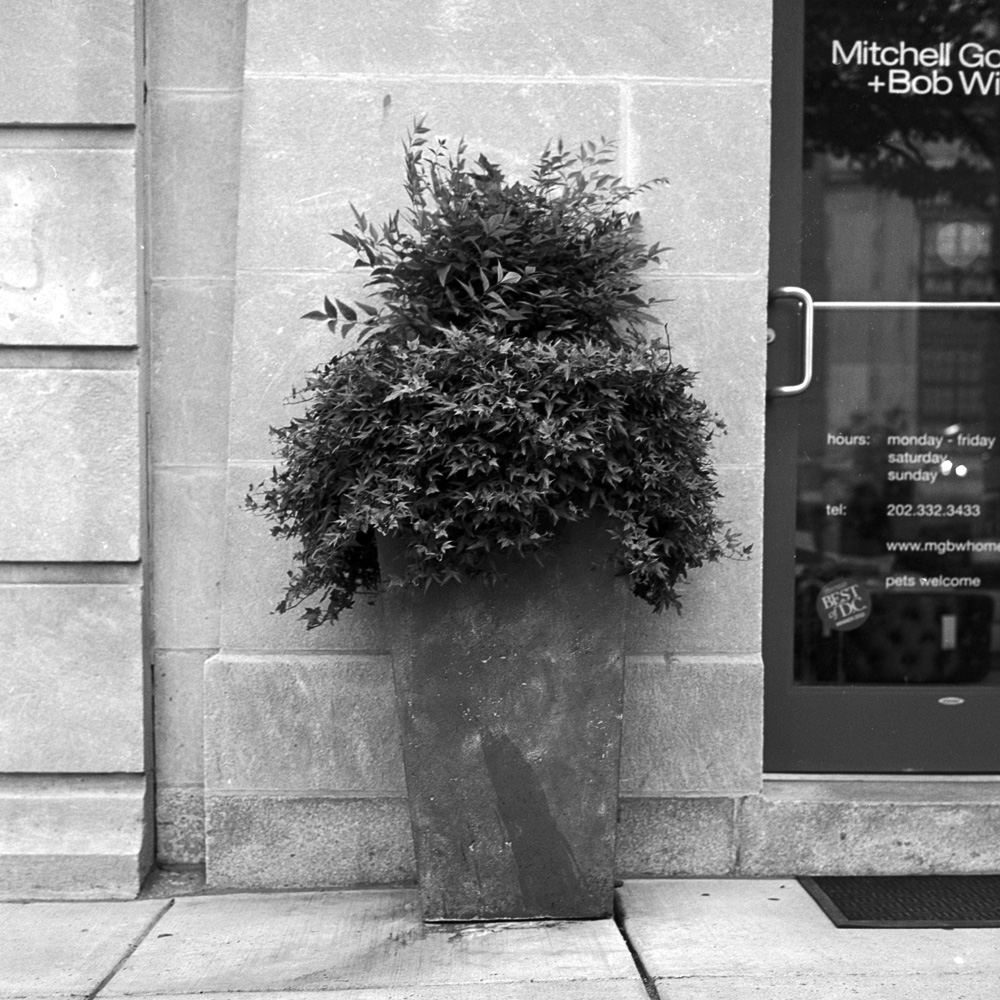
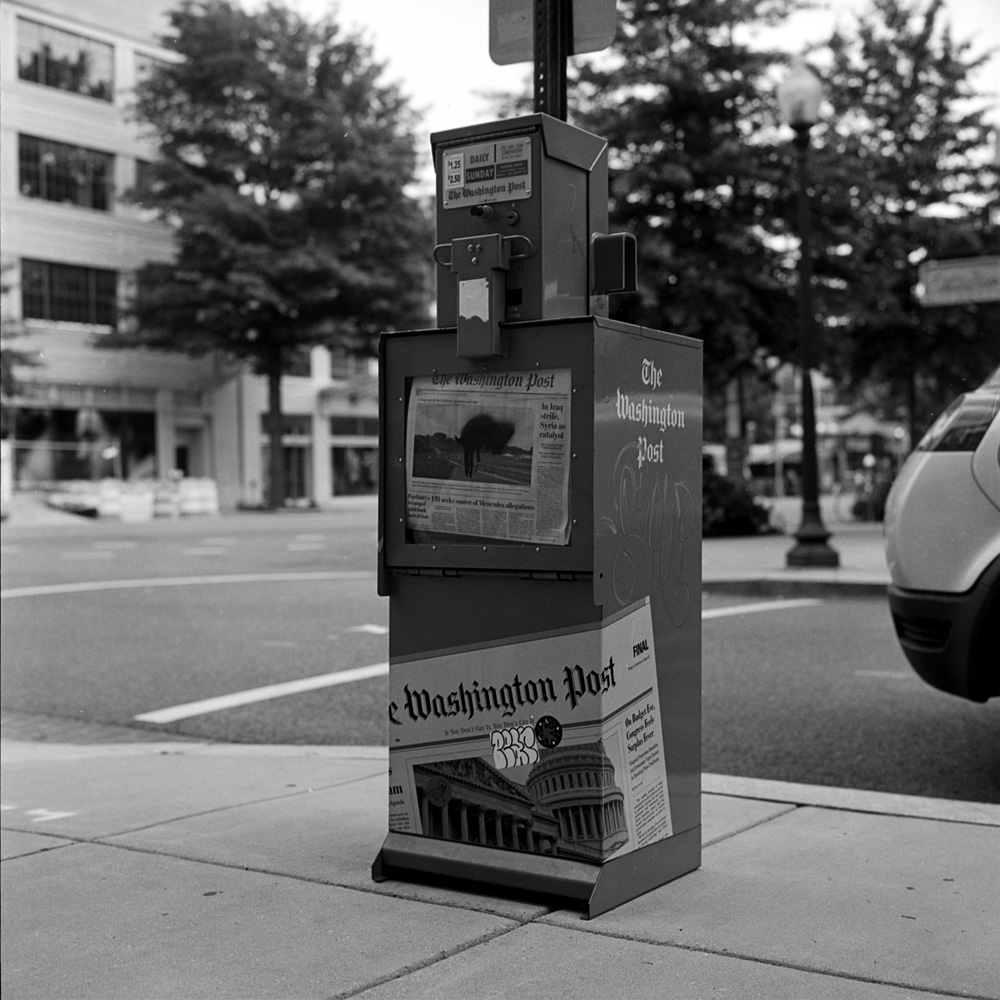
Portraits of Everyday Objects

Everyday Objects- Planter
Everyday Objects- Washington Post Paper Box
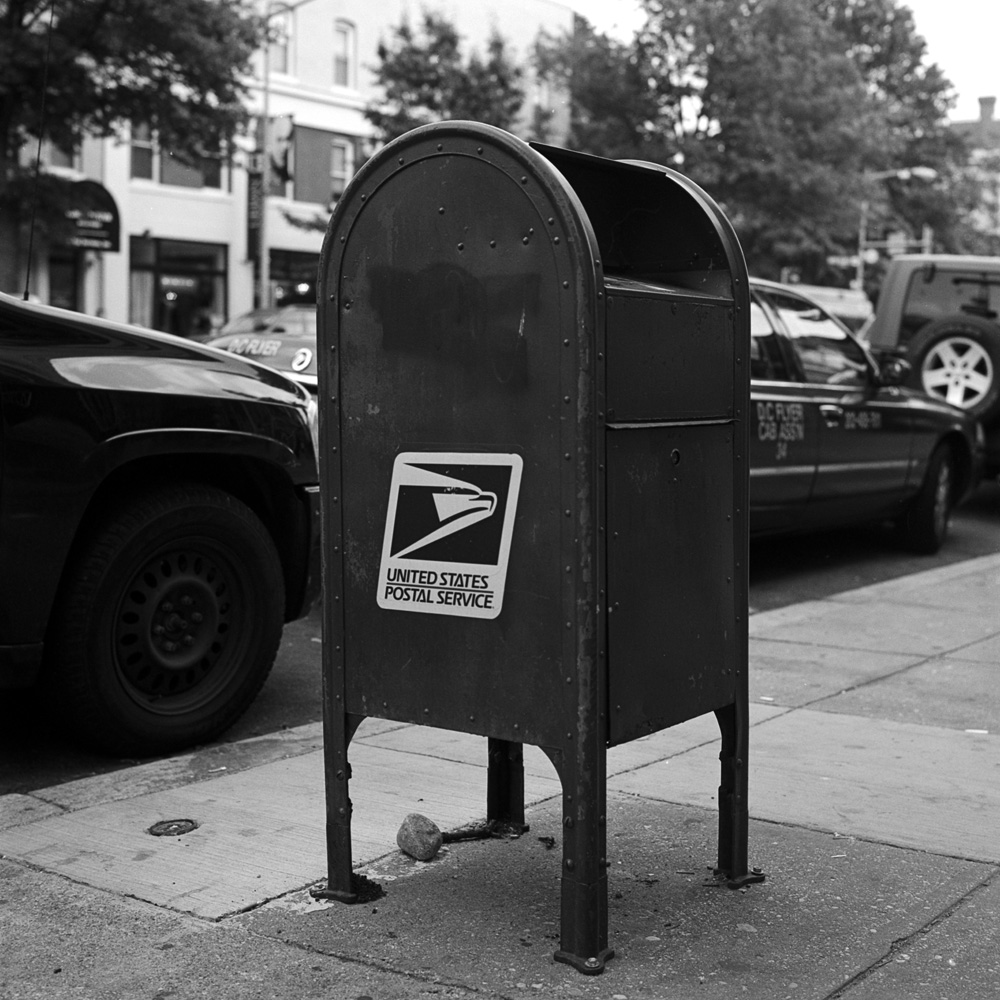
Everyday Objects- Mailbox

Here’s some more of a new series I’m working on – portraits of everyday objects. I want to show things we pass every day but don’t pay attention to as if they were subjects deserving of portraits. These are by definition environmental portraits, as these things are found in our environment, not in a contextless studio.

Portrait

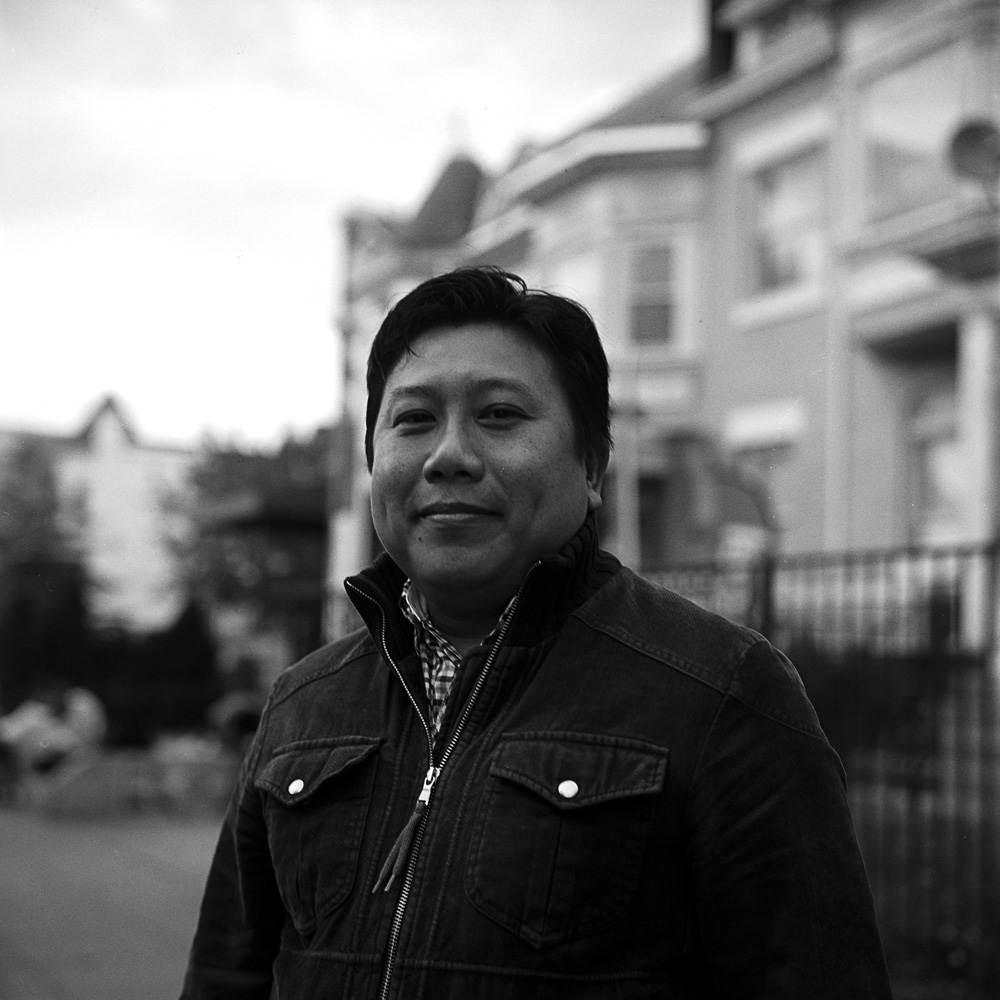
Simon, #1
Simon, #1
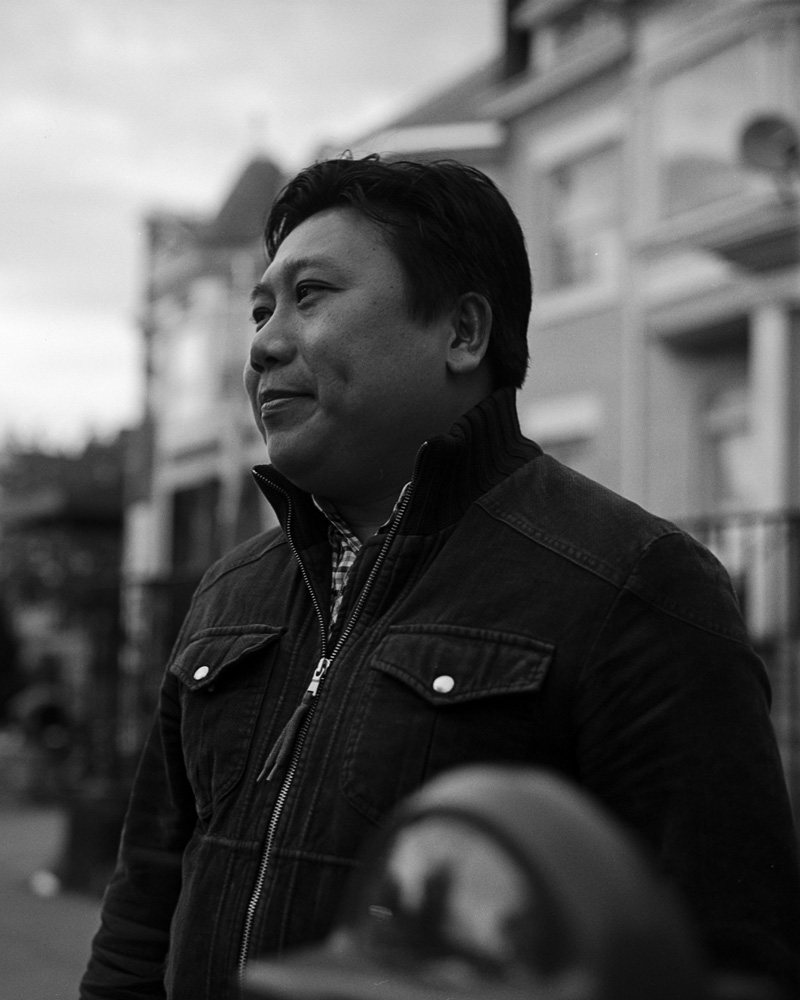
Simon, #2
Simon, #2

Simon is a friend I’ve known for over 15 years (I think he’d be mildly scandalized to realize exactly how long we’ve known each other). I took these two portraits of him the other day when we met for dinner. Comments on which one you prefer welcome and actively solicited.

Rolleiflex 2.8E, Ilford HP5+.