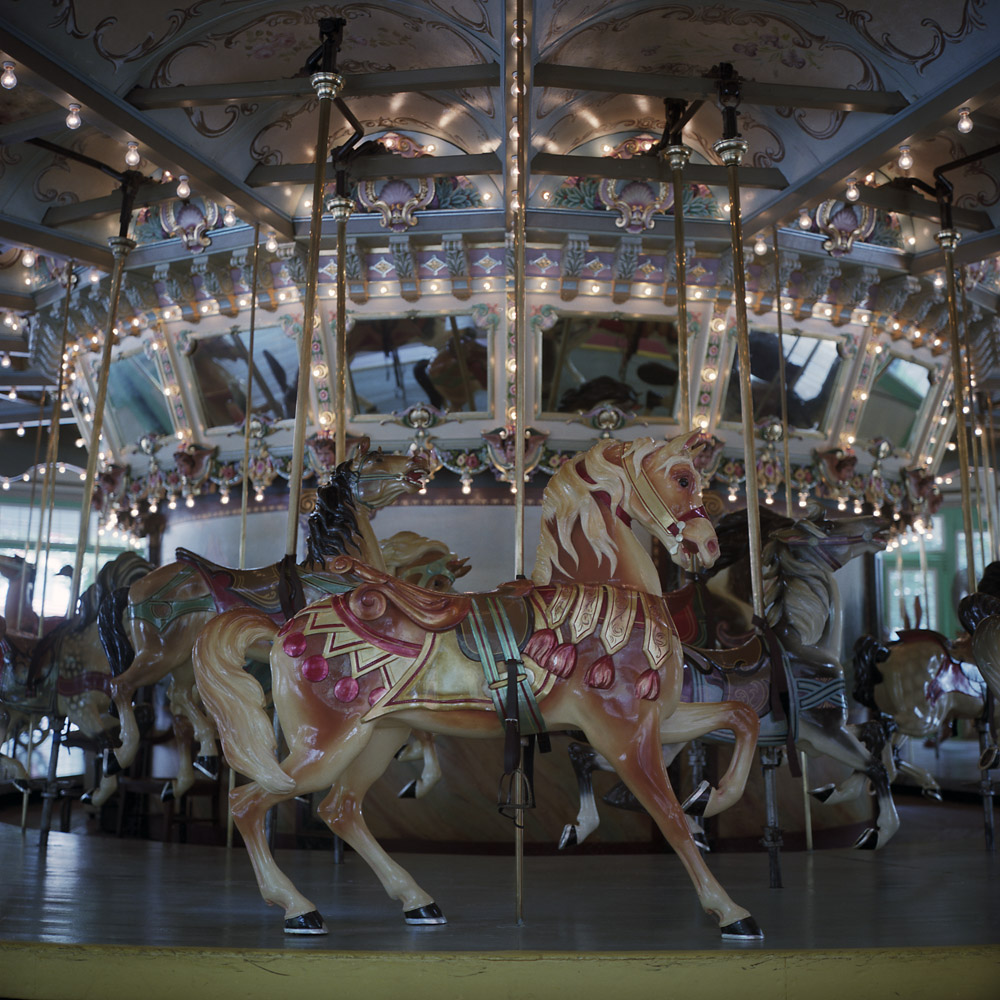
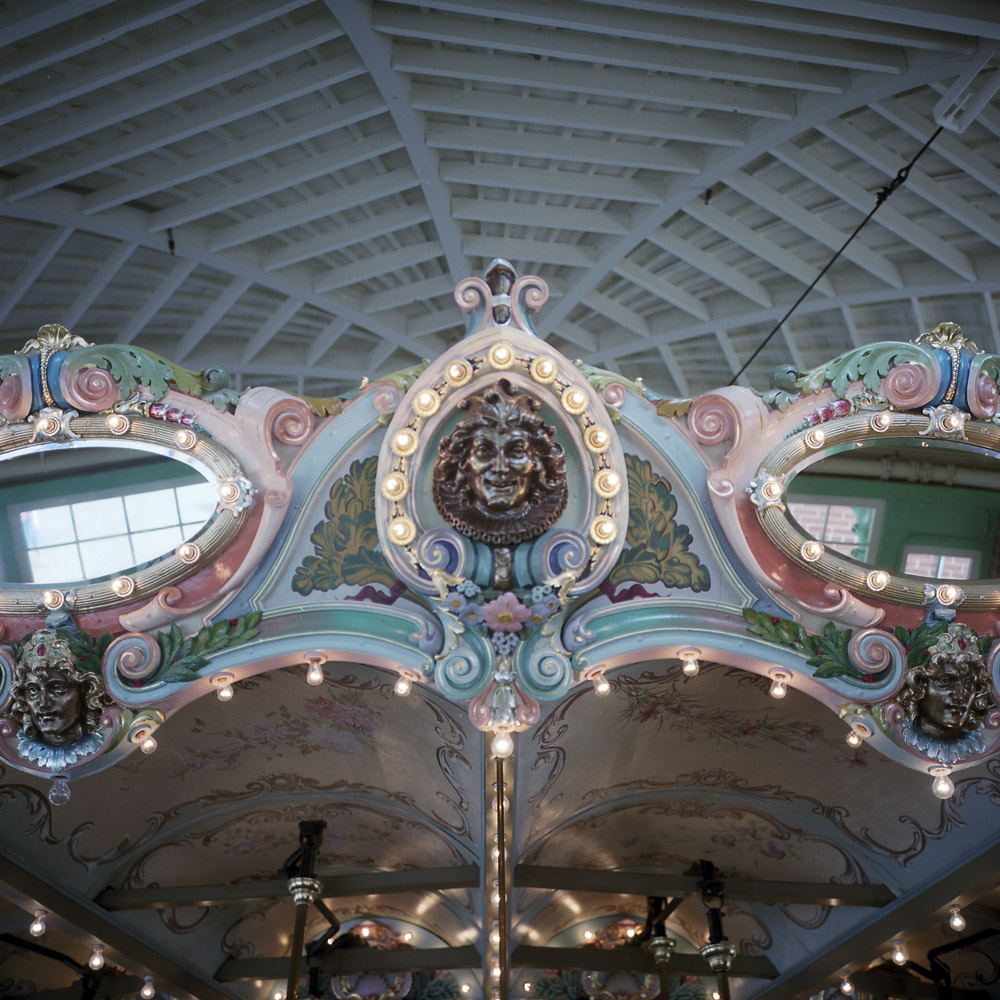
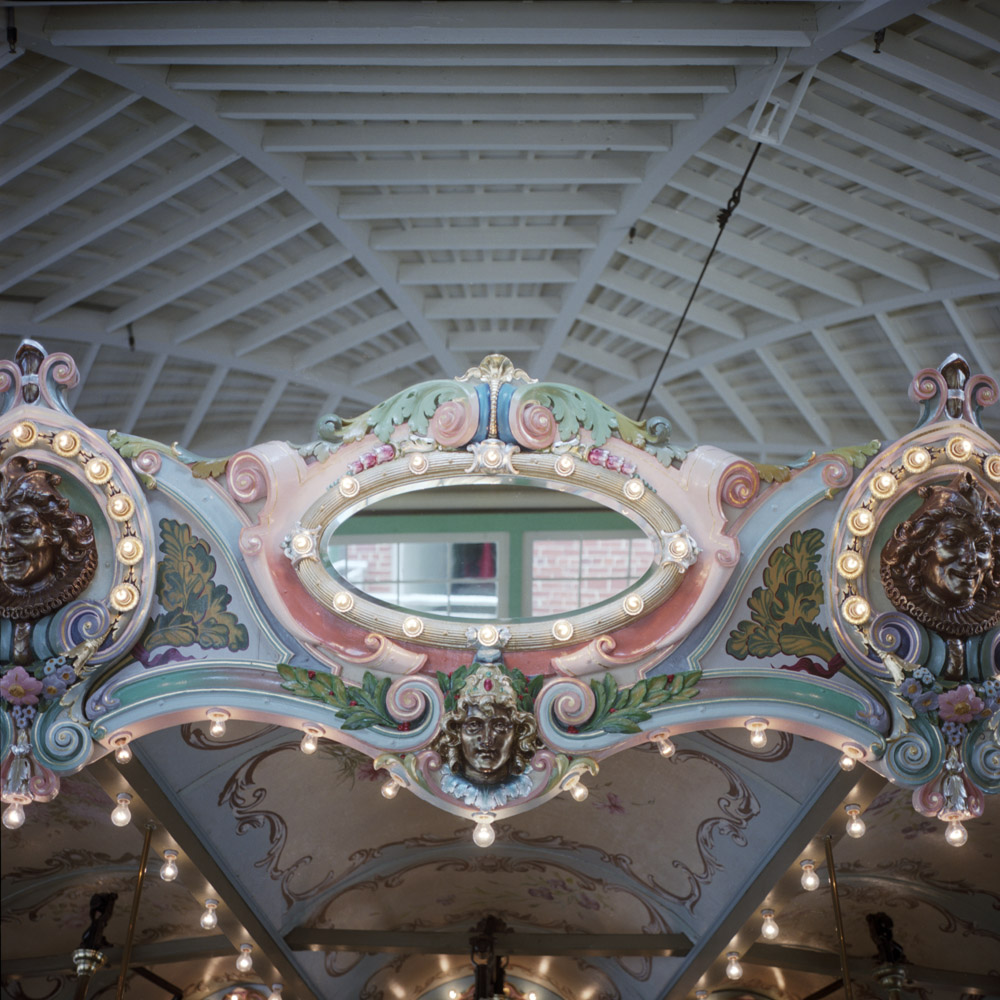
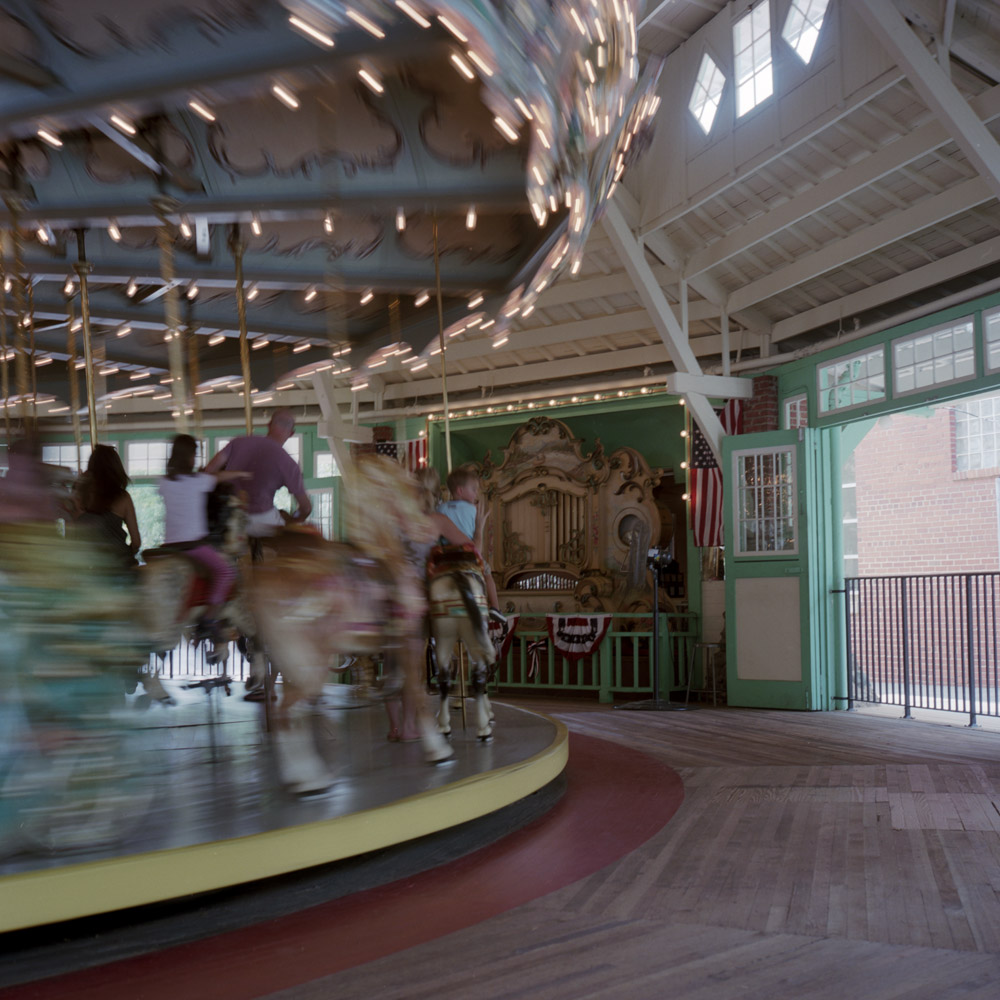
Dentzel Carousel HorseFaces of the Dentzel CarouselMirror and roof vaulting, Glen Echo Dentzel CarouselThe Dentzel Carousel in motion
Here are some images I took over Labor Day weekend at Glen Echo Park of the original Dentzel carousel. The Carousel is from the first decade of the 20th century, and is original to the park. It has been restored and is fully operational as you can see. One of the horses on the carousel is actually 100% original paint and as such it is roped off so you can’t ride it. The pipe organ/calliope is also fully functional and it has nearly an hours worth of music before it repeats.
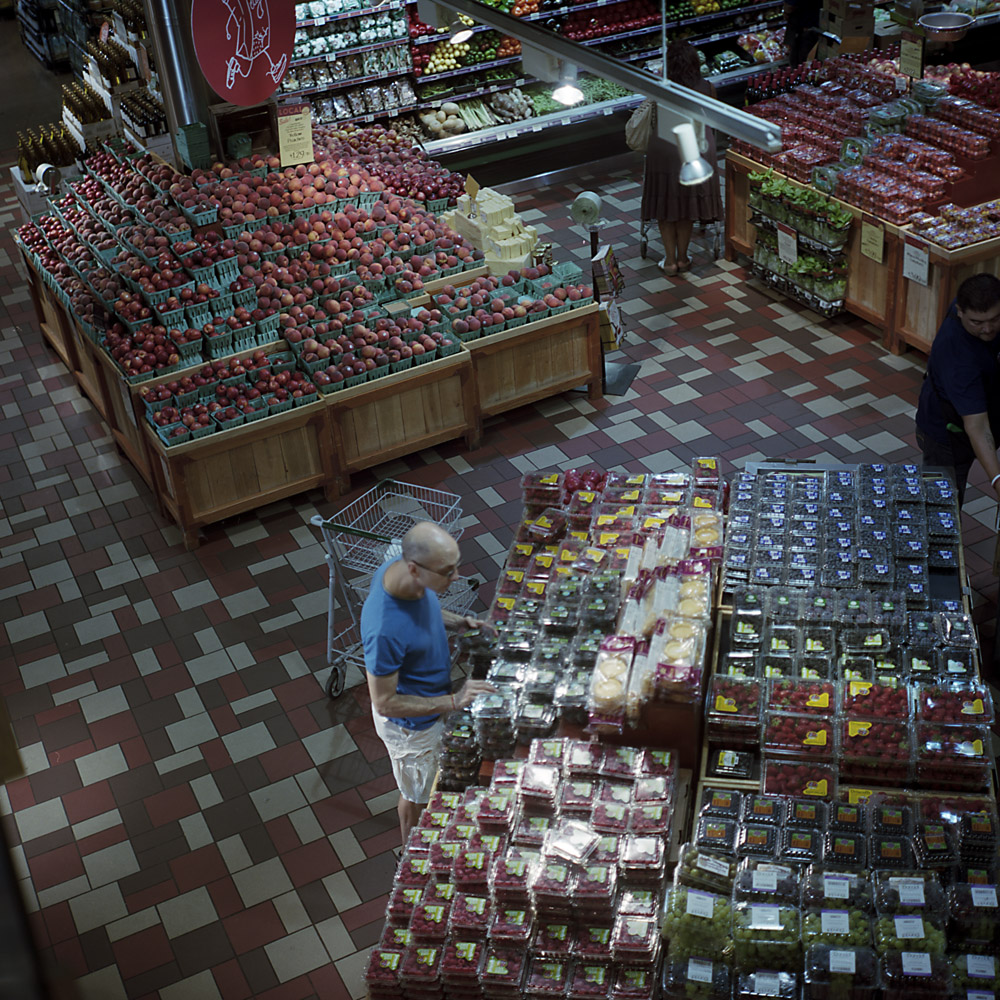
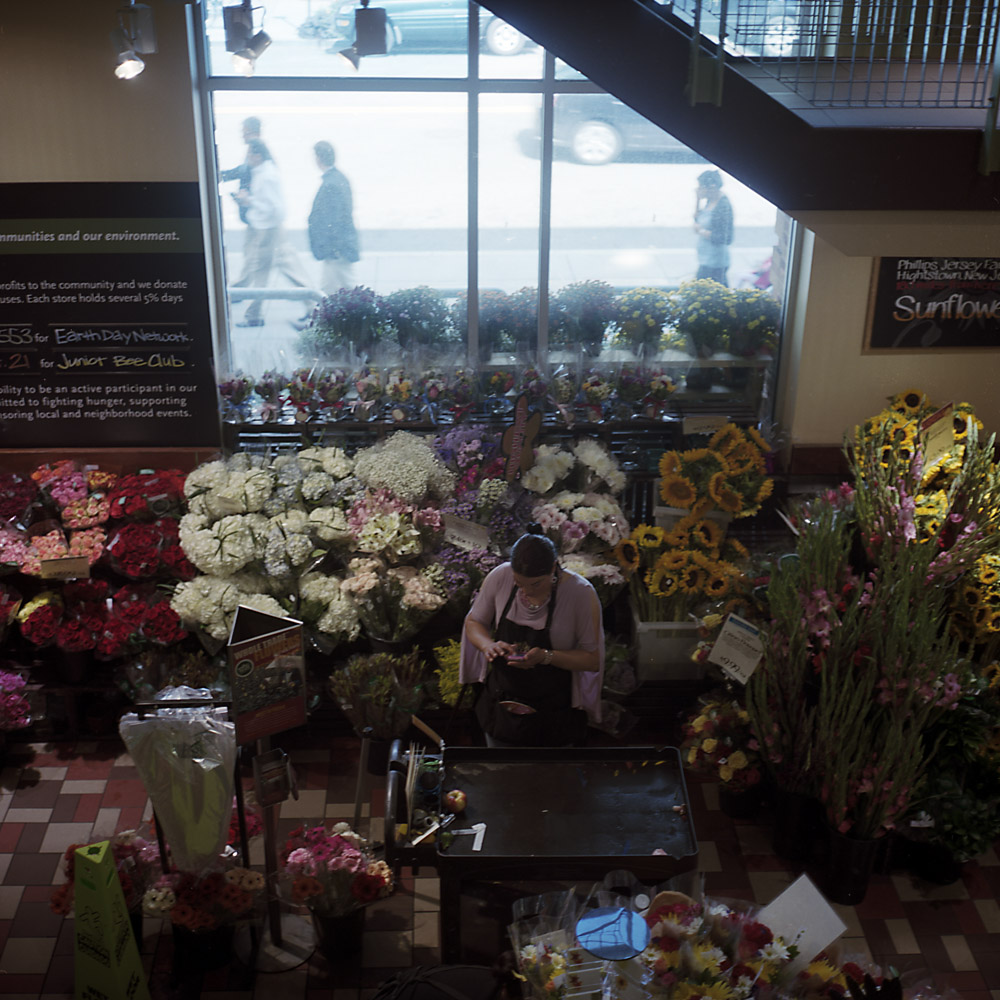
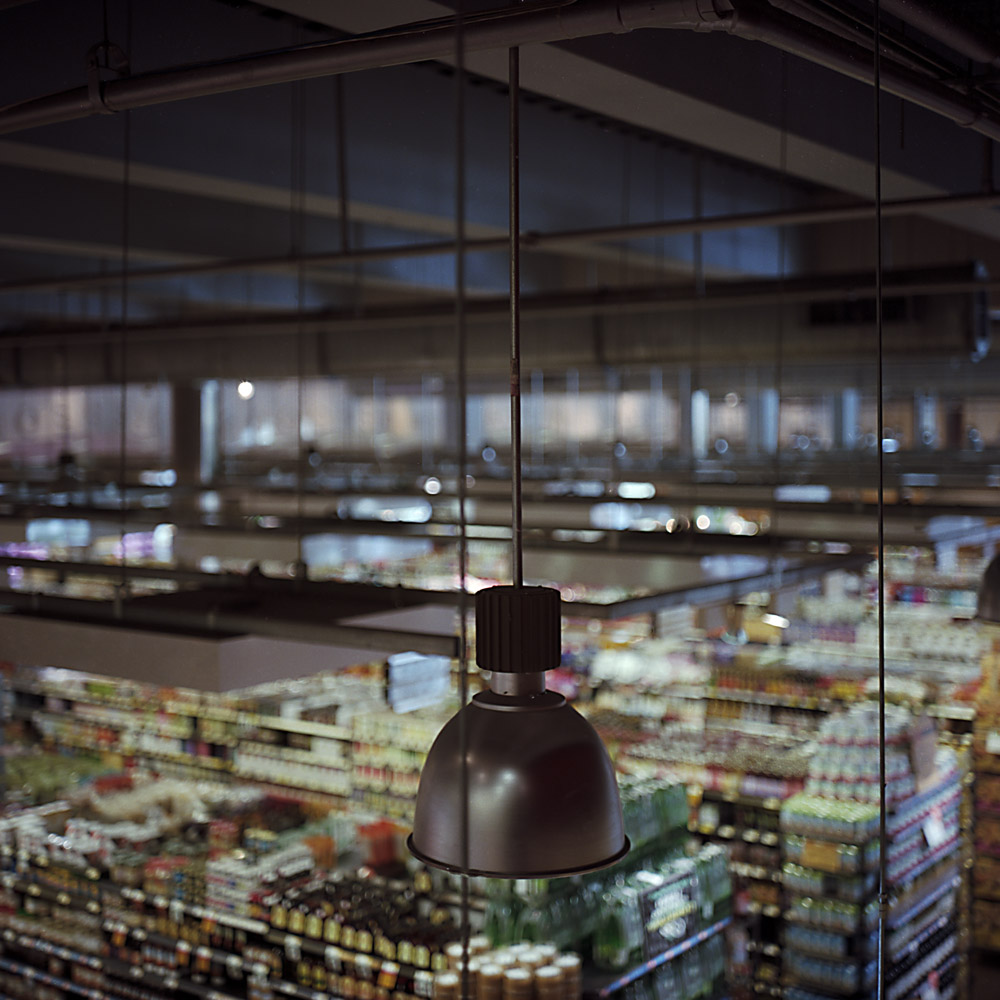
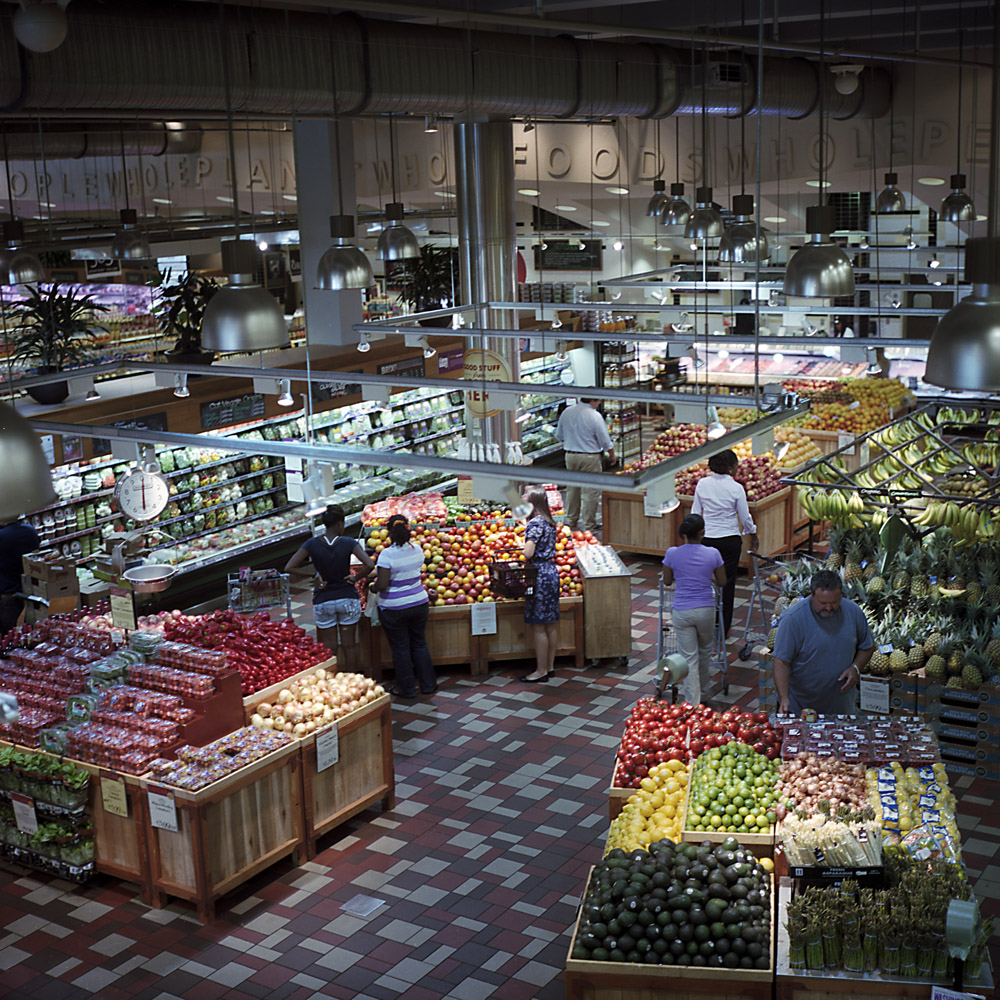
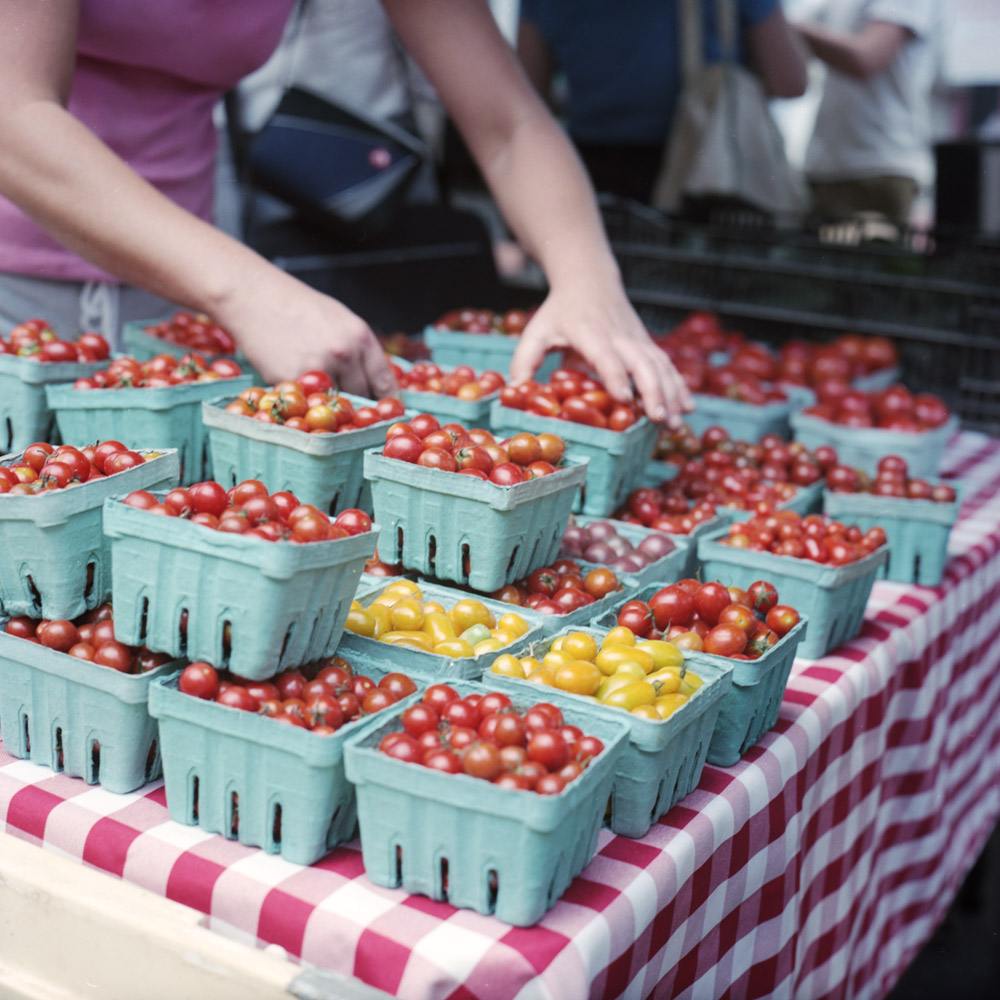
Fruit Shopper, Whole Foods P StreetFlower stall, Whole Foods Market, P StreetLamp, overhead view, Whole Foods P StreetProduce Department, Whole Foods P StreetTomatoes, Penn Quarter Farmers Market
The last image was taken at the Farmers’ Market and NOT at Whole Foods, but it’s food themed, and I wanted to include it but had to re-scan it from last time, so here is the revised scan.
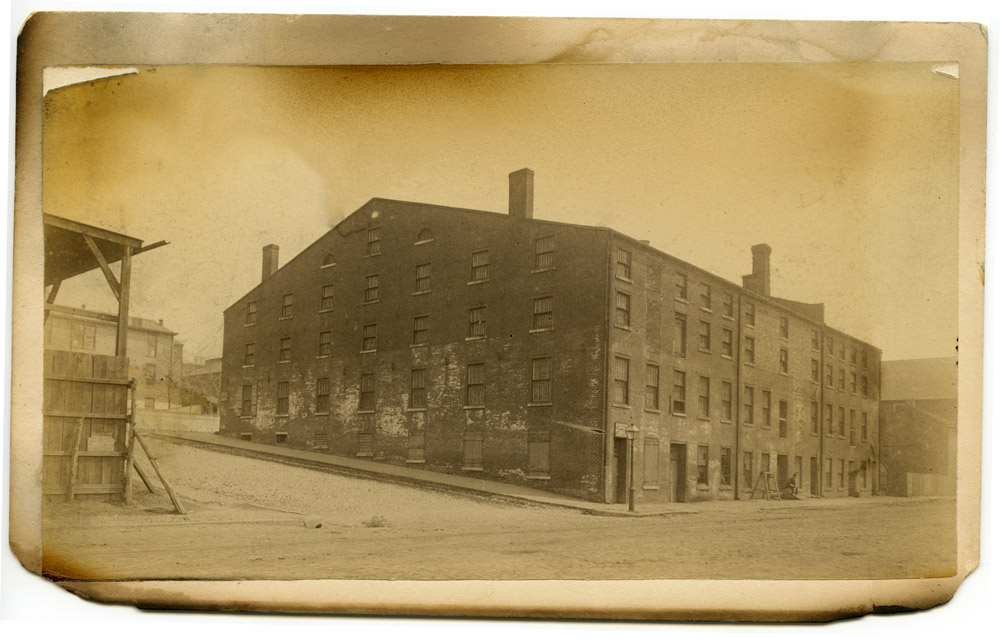
Here is a previously undocumented photograph of Libby Prison in Richmond, Virginia. The second-most infamous prisoner-of-war camp in the Confederacy (after Andersonville), it housed Union officers and had an appallingly high mortality rate. For more information on the prison and its history, check: Libby Prison.
This view is most probably post-war, as most of the photos of the building even in 1865 show the whitewash on the lower levels as intact, and the Libby Prison sign in place hanging over the downhill sidewalk from the upper street facade.
Libby Prison, Richmond, VA
After the fall of Richmond to Union forces, the prison was used to house Confederate officer prisoners of war, this time with greatly improved physical conditions to include windows with panes in them. Later, it became a museum, and was even dismantled and re-assembled in Chicago, but when it failed as a tourist attraction, the materials of the building were sold off as souvenirs.
As you can see the image was exposed to fire at some point, with scorching around the edges. I’m guessing the age to be between 1870-1880.
Here is a photo from the National Archives that shows the prison in 1865.
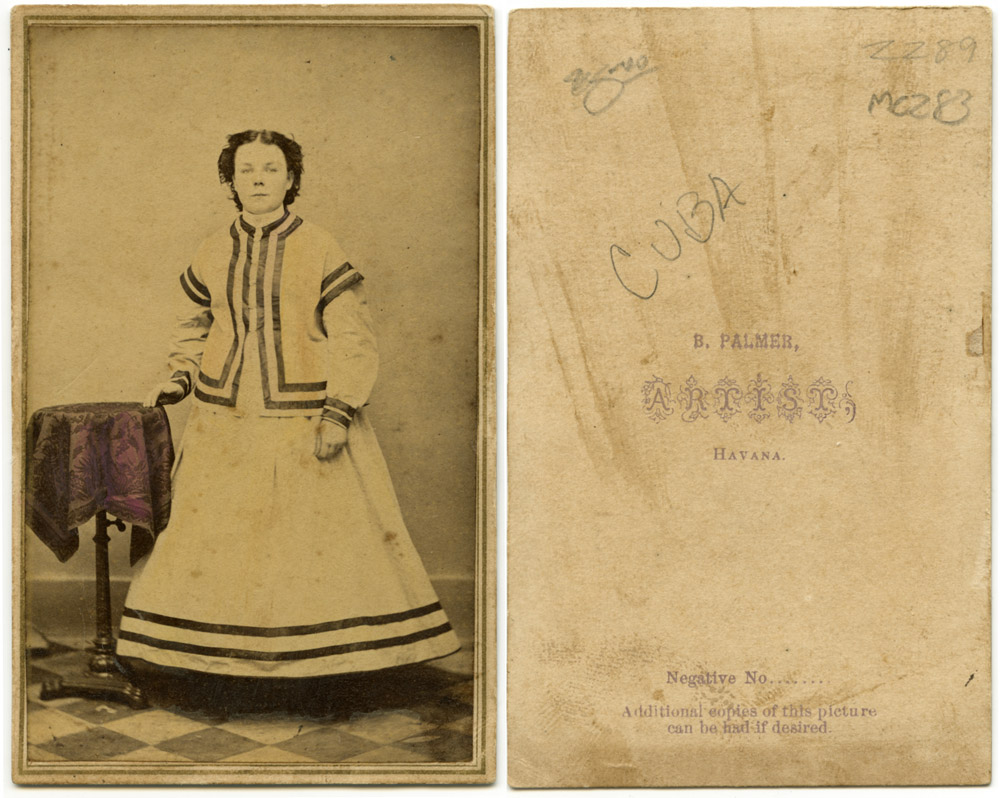
For your evening’s delectation, here is a nicely hand-colored CDV of an anonymous lady from Havana, Cuba. This is only the second CDV I have with an association with Cuba – I have a C.D. Fredericks that lists the Havana studio on the back mark, but is not necessarily taken there. In this case, Mr. B. Palmer, Artist, Havana is the only designation, so I must assume the photo was indeed taken in Havana. No street address is mentioned, which would be neat to have to be able to cross-check at some point in the future to see if his studio still stood. The entire backmark is in English, so I wonder if he catered to the tourist trade exclusively. The lady in the photo appears to be an adult, so I’ve called her Dama and not Señorita.
Today, I passed the 20,000 viewers mark. And surprisingly enough, at the time of writing, Egypt was the top viewing country of the day, with 66, and the US came in a distant second at 14. Usually the US is the 800 pound gorilla in the viewership statistics. In a shout-out to my readers, I’d also like to acknowledge the folks in Afghanistan who’ve read my blog – I’m guessing you’re US (or NATO) servicemen and women, but just as cool if you’re Afghan citizens! The one place I’m baffled I’ve not had any visitors from is the PRC – Peoples’ Republic of China.
I’m happy to have anyone who’s interested take a look at my ramblings. If you’d like, please leave me a little note to let me know who you are and where you’re from.
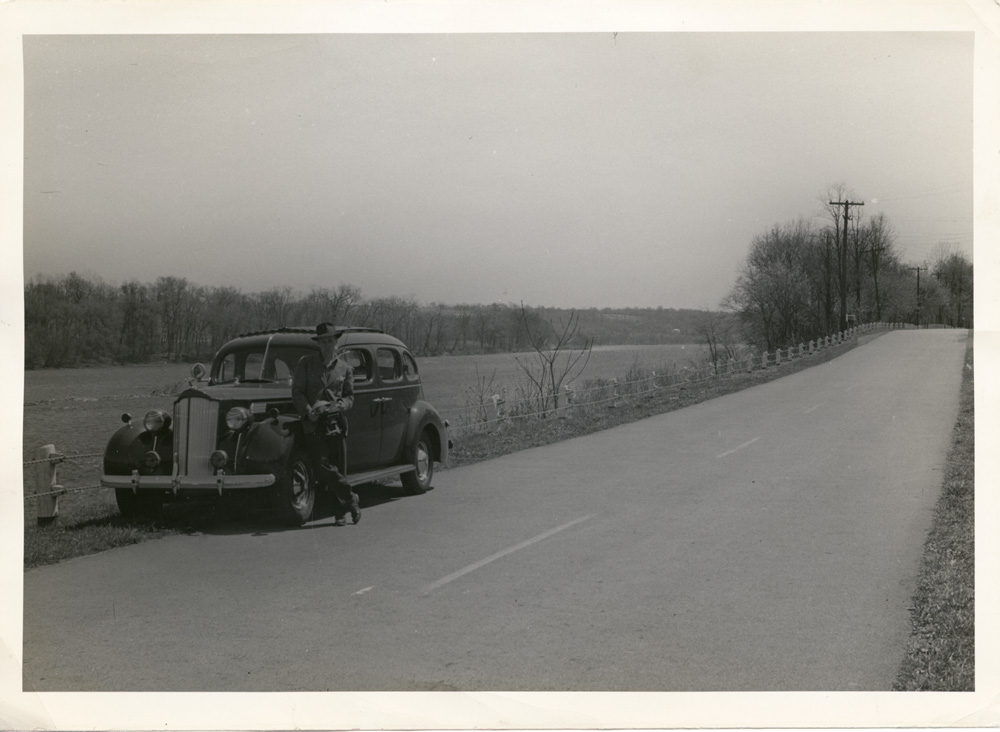
Here’s a neat anonymous vernacular photo of a man, his car and the open road – it’s in many ways the American archetype. The car is a 1938 Packard (appears to be a Packard 120, their ‘entry level’ model, sort of like a Mercedes C-Class today).
1938 Packard
Despite the fact that the car is a near-luxury car, this is so emblematic of the American psyche – a man and his car on the open road, the spirit of freedom and independence. It’s also remarkable to see how far the American roadscape had come by 1938 from 1919 when then-Lt.Col. Eisenhower crossed the country in a military convoy averaging 5.6 mph, requiring 573 hours to cover 3250 miles. Less than 10% of the road surface in the US was paved in 1919. I took the same approximate route Eisenhower did, in 2000, and it took roughly 42 hours (3 1/2 days at roughly 12 hours a day).
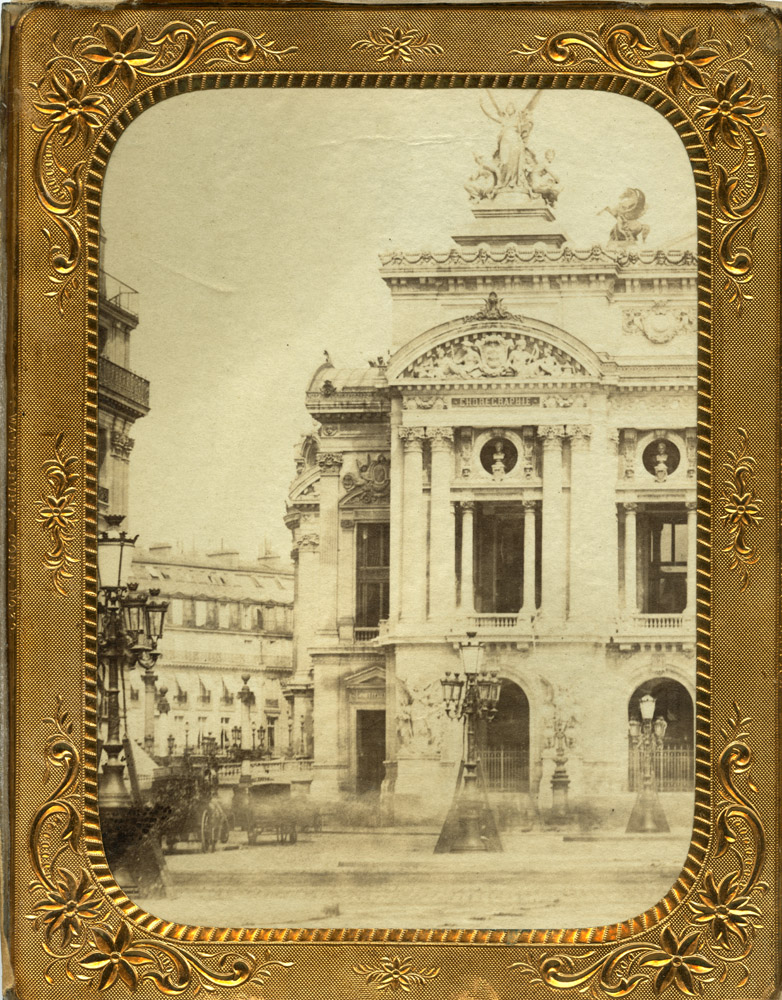
Here is an oddity – a cased albumen print of the Paris Opera house, taken shortly after it opened. The Opera was commissioned in 1861, and completed in 1875. The image could be as early as 1867, when the facade of the not-yet-completed opera house was bared of its scaffolding for the first time. This was taken with a wet-plate camera – notice the foggy foreground? That was pedestrian traffic blurring in the long exposure required by the collodion emulsion.
Paris Opera albumen print
The oddity is that someone would have put this in a brass mat and case (the case is now missing), and not presented this as a cabinet card or some other mounted paper format.
This image provides a cautionary tale for collectors – nothing went terribly wrong, and I don’t think I grossly over-paid for it, but when it was listed, it was described as a salt print from a calotype negative. I assumed from the brass mat that this description was accurate. Upon receiving the item, it became obvious that it was NOT a salt print (one easy way to tell is the gloss of the paper surface) and that it was NOT from a calotype (calotypes are paper negatives and are generally softer and more lacking in detail than an image from a glass or film negative).
The image was purchased from a dealer in France, who acquired the image from someone in Romania, as evidenced by the inner envelope the image arrived in. The outer envelope was marked with my proper address here in the United States, but the inner envelope had stamps and a return address from Romania. Pretty cool, eh? Kinda like that photo I have of an Osage brave from the Arkansas territory – it started life in Arkansas, was collected in New York, then ended up in Paris, and I bought it and brought it back to the US. It just shows that like houses and cars, photographs have a life of their own and we are mere custodians for the next generation.
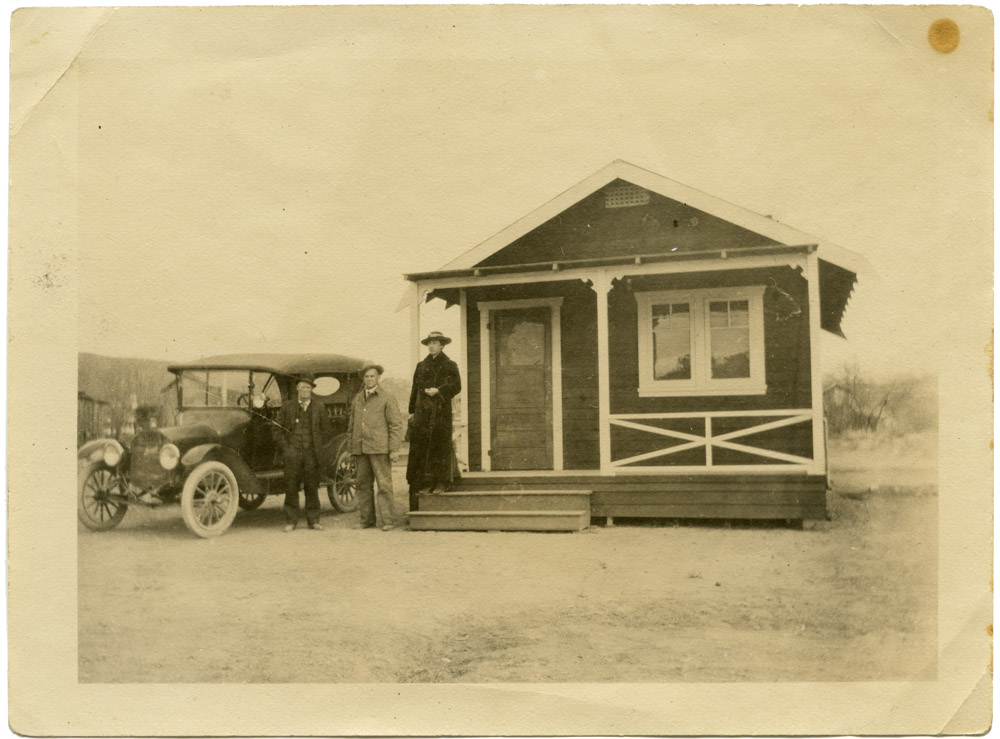
Here’s a picture of a 1918 Ford Model T touring car. Location unknown, but from the size and style of the house, and the seeming emptiness behind it, I’d venture a guess that this is a rental cabin near a beach or inland body of water – it appears to be wintertime though, from the clothes the subjects are wearing. 1918 Model T Ford
I’ve got a few more car images coming in the next few days – a bunch of my favorite make, Packard. I’ll post ’em when I get ’em.
 dcphotoartist