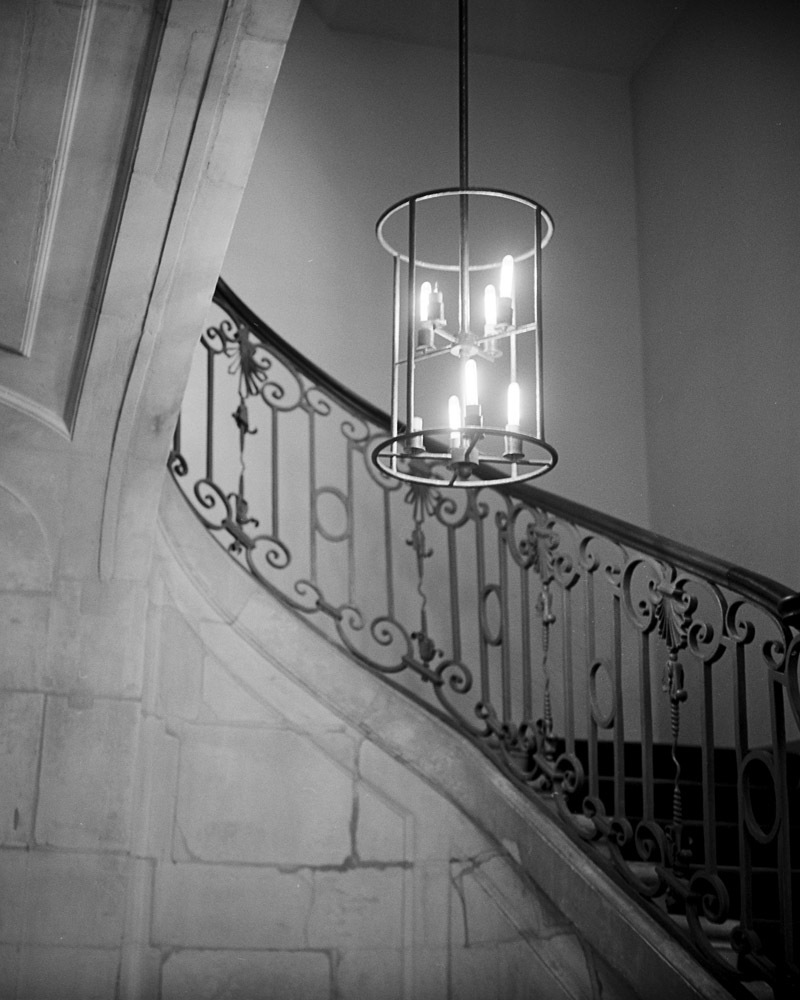
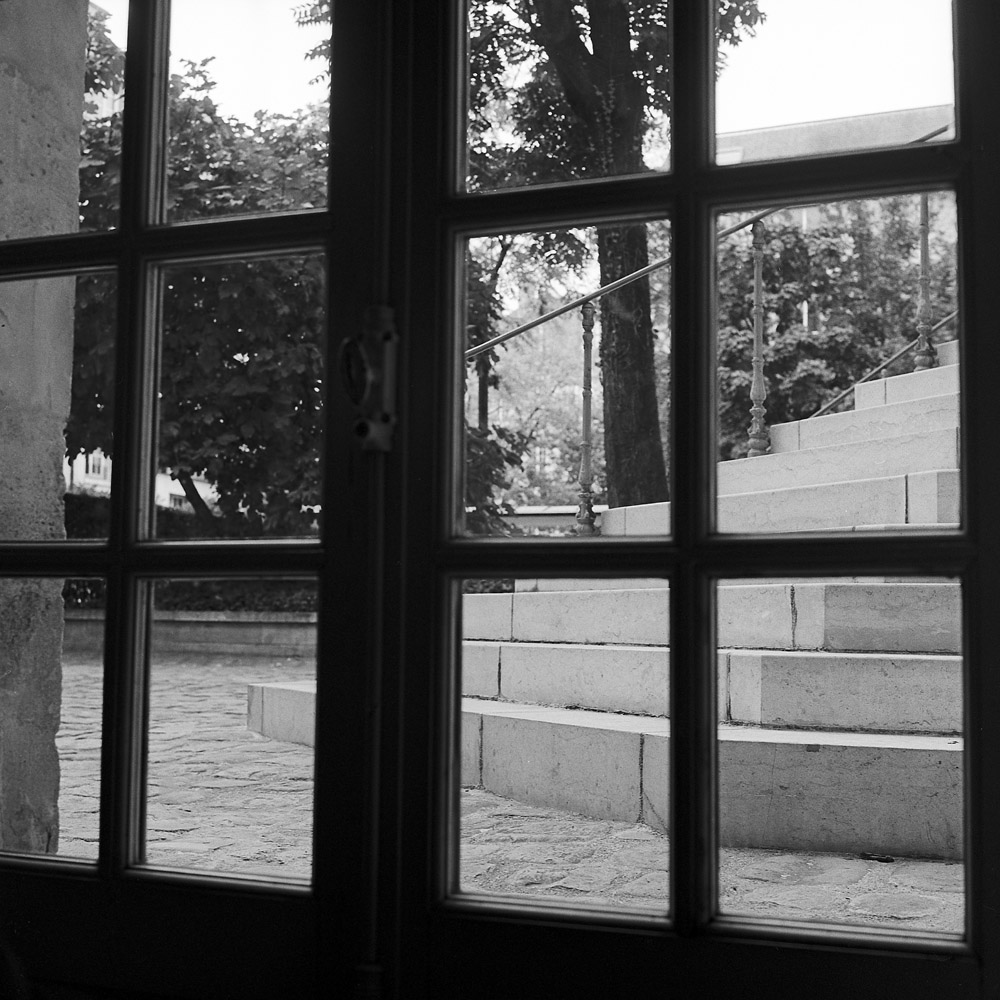
A photographer’s visit to Paris would not be complete without a trip to the Maison Europienne de la Photographie. The primary exhibit was Sebastiao Salgado’s current body of work documenting indigenous ways of life and remote places around the world. It would have been very hard to photograph the exhibit itself as it was VERY crowded, so I turned my lens toward the building. The entrance is a very modern looking (read 1960s style) wing, but the main block of the facility is housed in another one of those 18th century Parisian hotels that once belonged to some noble family.
Staircase, La Maison Europienne de La PhotographieWindow, Courtyard, La Maison Europienne de La Photographie
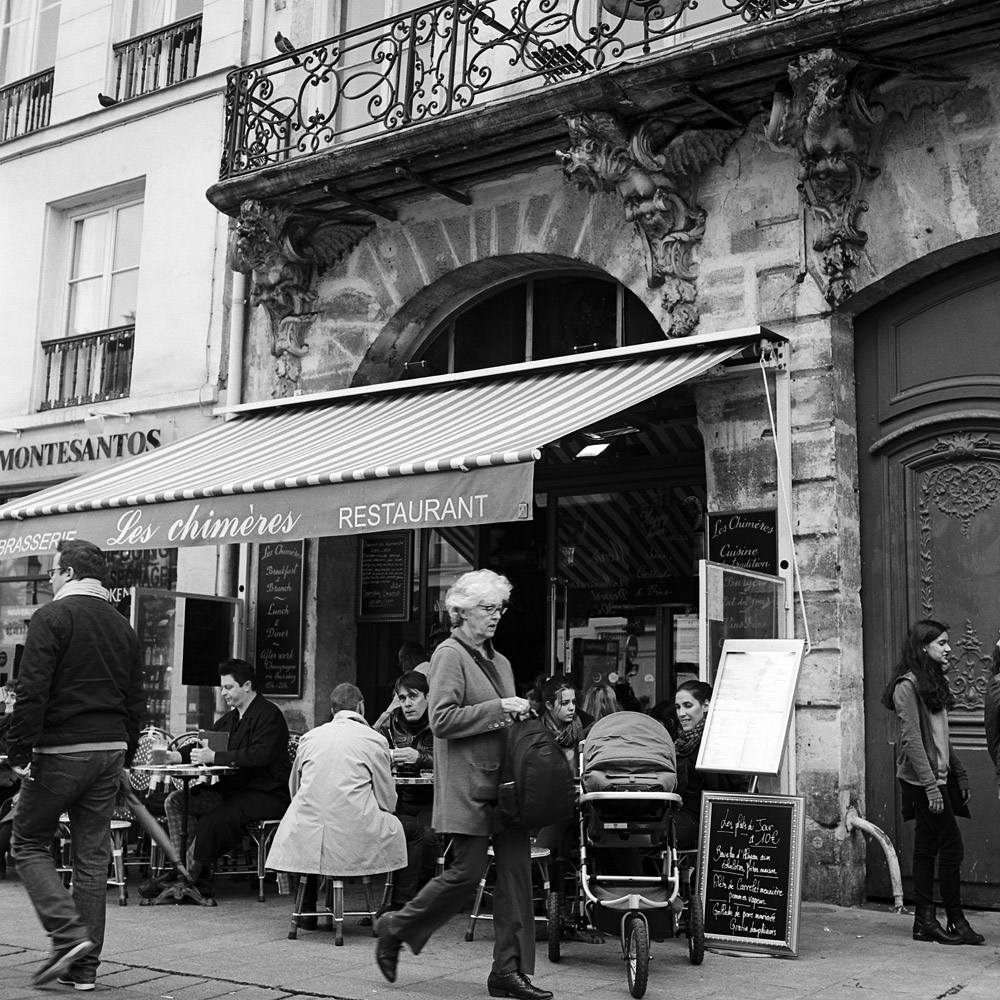
After visiting La Maison, my father and I ate here at Les Chimeres for lunch. It was a fairly chilly (for October) day, and you can see Parisian cafe culture at work – despite the chill, people were sitting outside of their own free will. This was true across the city, and in all weather (it took a brisk rain to drive people inside completely).
Les Chimeres Restaurant, Marais
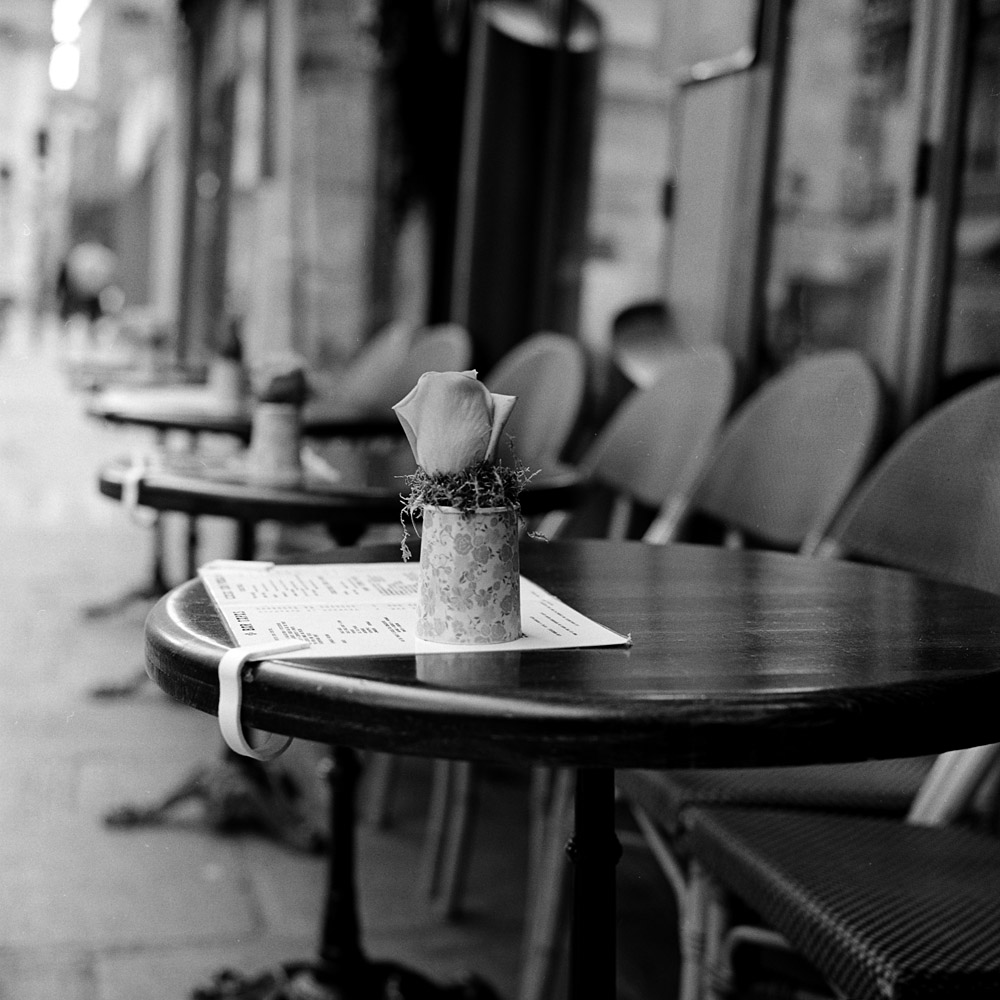
Near the Pompidou Centre, I came upon this row of cafe tables set up and waiting for patrons. I know it’s a bit treacly and cliché as photos go, but it’s representative of the place and the atmosphere.
Cafe Tables, Pompidou Centre
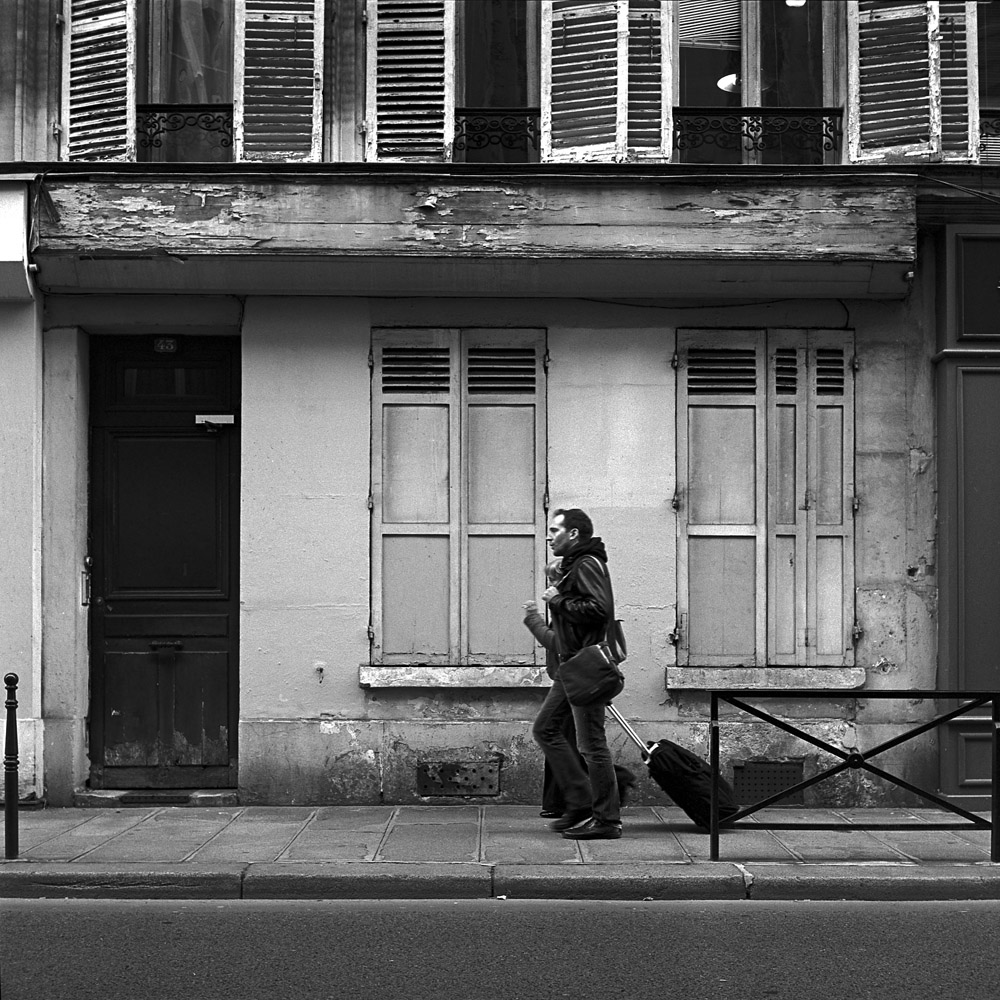
Around the corner from La Maison and Les Chimeres was this scene. Number 43, Rue Francois Miron. I have no idea if anyone famous or noteworthy lived (or lives) there, but the weathered texture and the irregular symmetry and repeating patterns of the building cried out to be photographed.
43 Rue Francois Miron
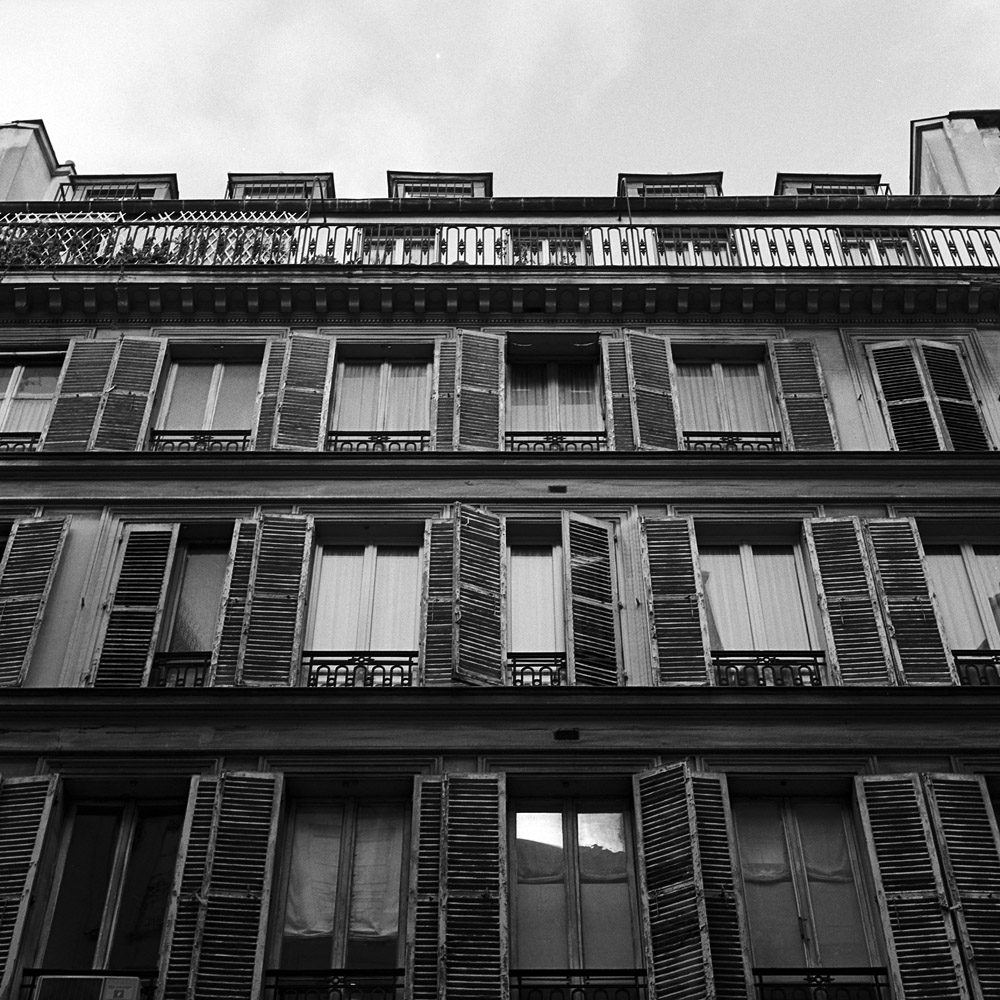
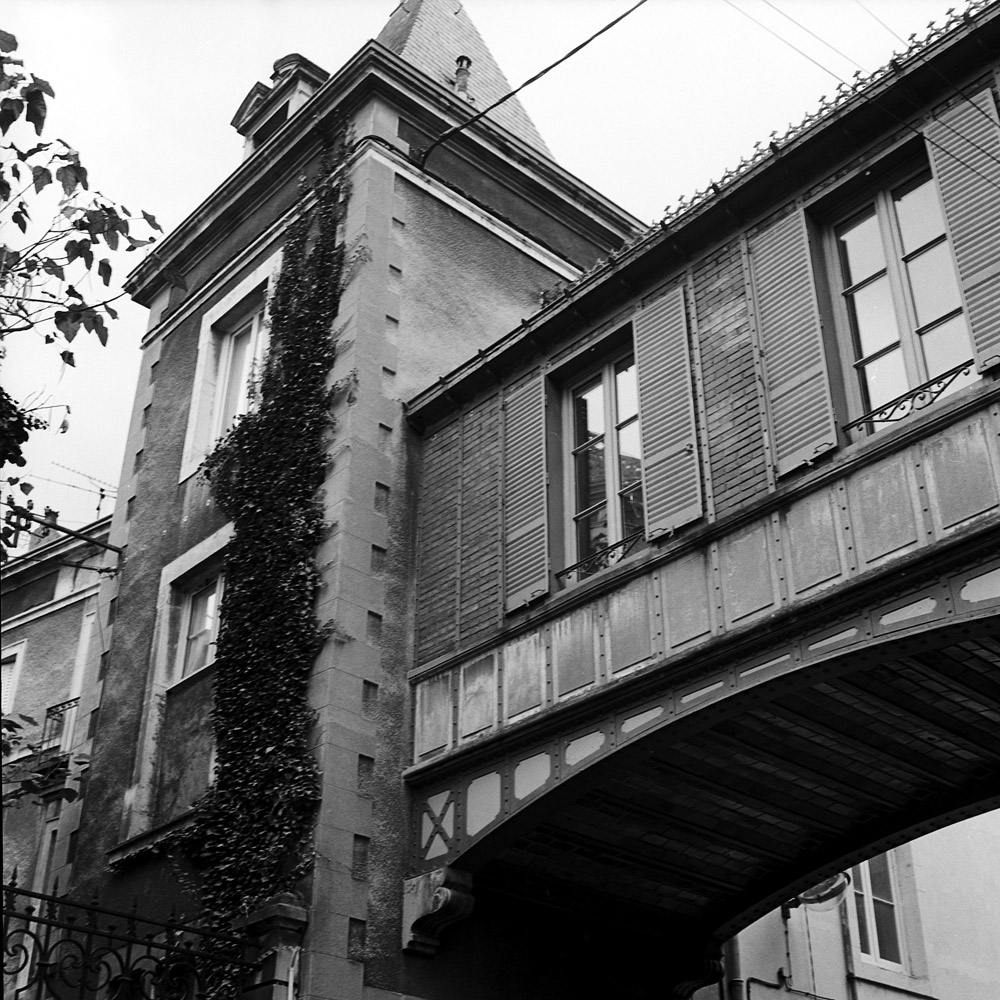
I love looking up at buildings – it’s sometimes hard to do, and it forces you to break out of your street-level perspective. In places like New York, where the buildings are so tall, it can almost induce a sort of negative vertigo, but it still behooves us to stop and re-think how we see the world. Plus, you might miss something interesting if you don’t.
Upstairs, 43 Rue Francois Miron
Again, everything was shot with a Rolleiflex 2.8E, on Kodak Tri-X film.
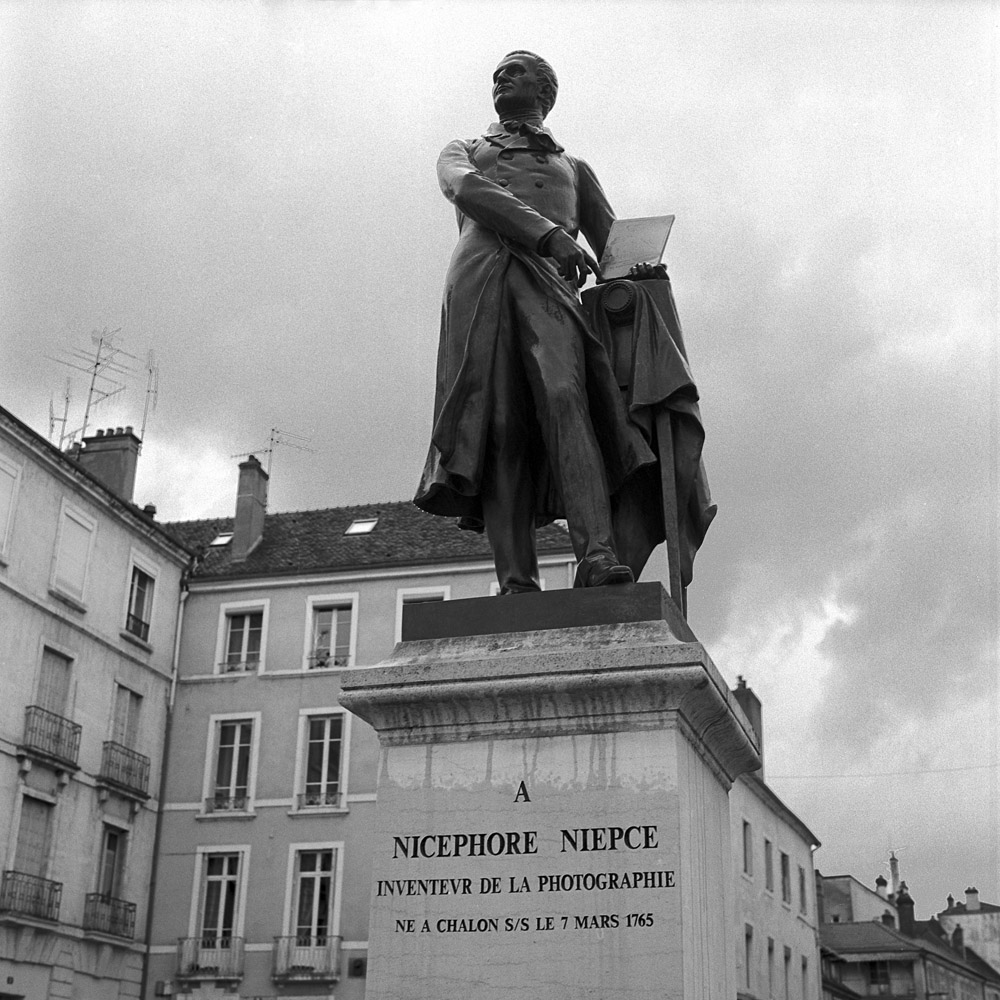
Here are a few more photos from Chalon-sur-Saone. The Niepce monument is the marker of the reason I took the trip in the first place – to visit the birthplace of photography. Nicephore Niepce invented the first successful photographic process, Heliography, in the mid 1820s. One reason most people haven’t heard of it and have never seen a photograph made by this process is that due to the extreme insensitivity to light of the chemicals, a single exposure required HOURS to record an image which ruled it out for photographing any non-static subject, like people, animals, or even plants, and it made photographing buildings difficult as well. In the early 1830s up until his death in 1833, he collaborated with Louis Daguerre, the net result of which was the publication of the Daguerreotype process in 1839.
Niepce Monument, Chalon
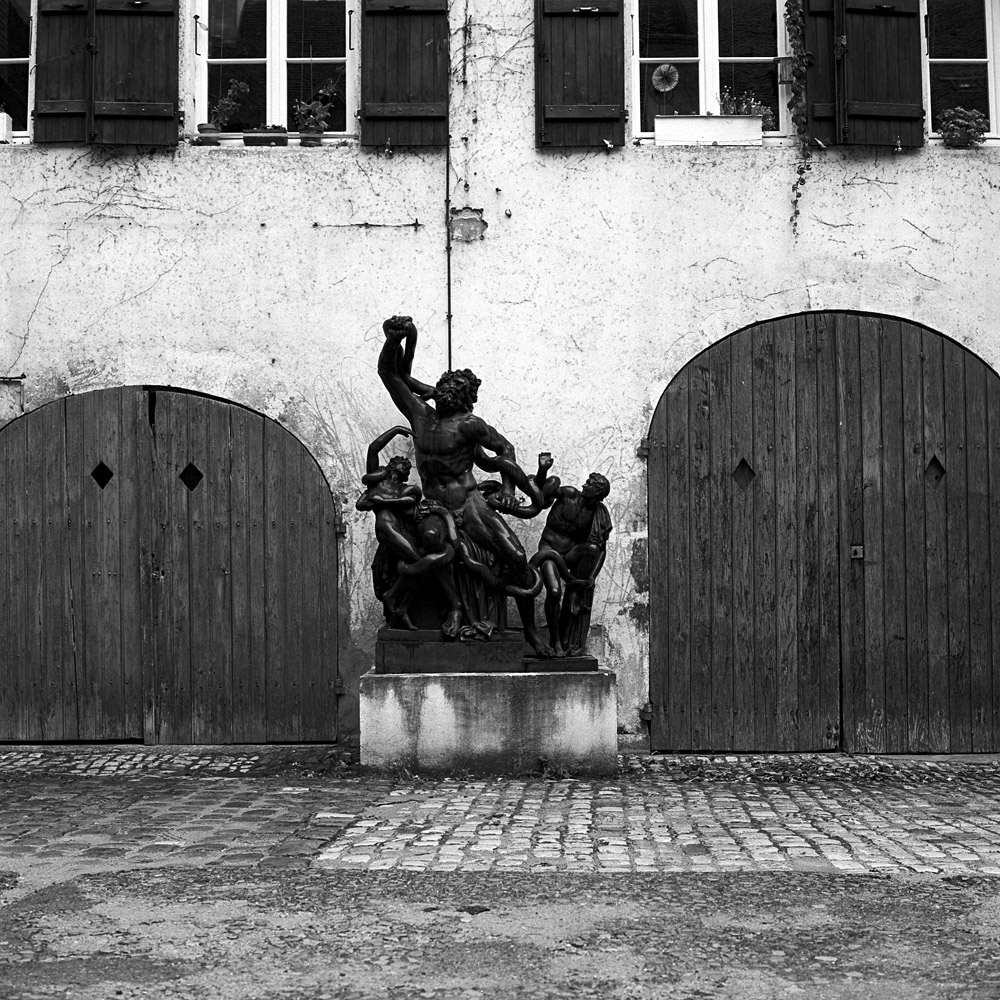
This statue of Laocoon, an ancient Greek mythological figure of a priest who warned the Trojans against admitting the wooden horse into the city, and was punished by he and his sons being devoured by sea serpents (for various reasons by various deities, depending on which version of his story you read). He’s also credited with the phrase “beware of Greeks, bearing gifts”. It’s a bit of odd statuary to find in a random courtyard around the corner from the Niepce Museum in Chalon, but there it is.
Laocoon, Courtyard, Chalon
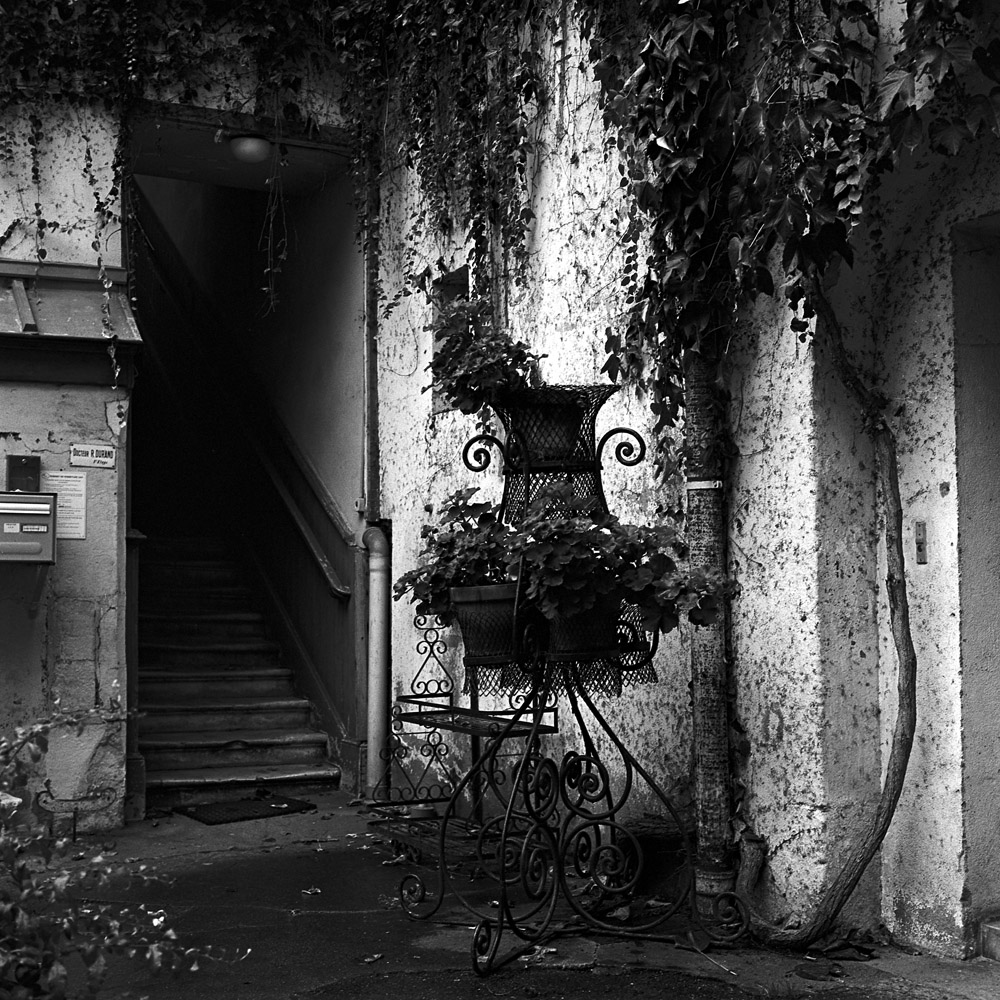
In the same courtyard as the Laocoon statue, there was this iron plant stand in front of the stairs to a second-floor doctor’s office.
Stairs, Planter, Courtyard, Chalon
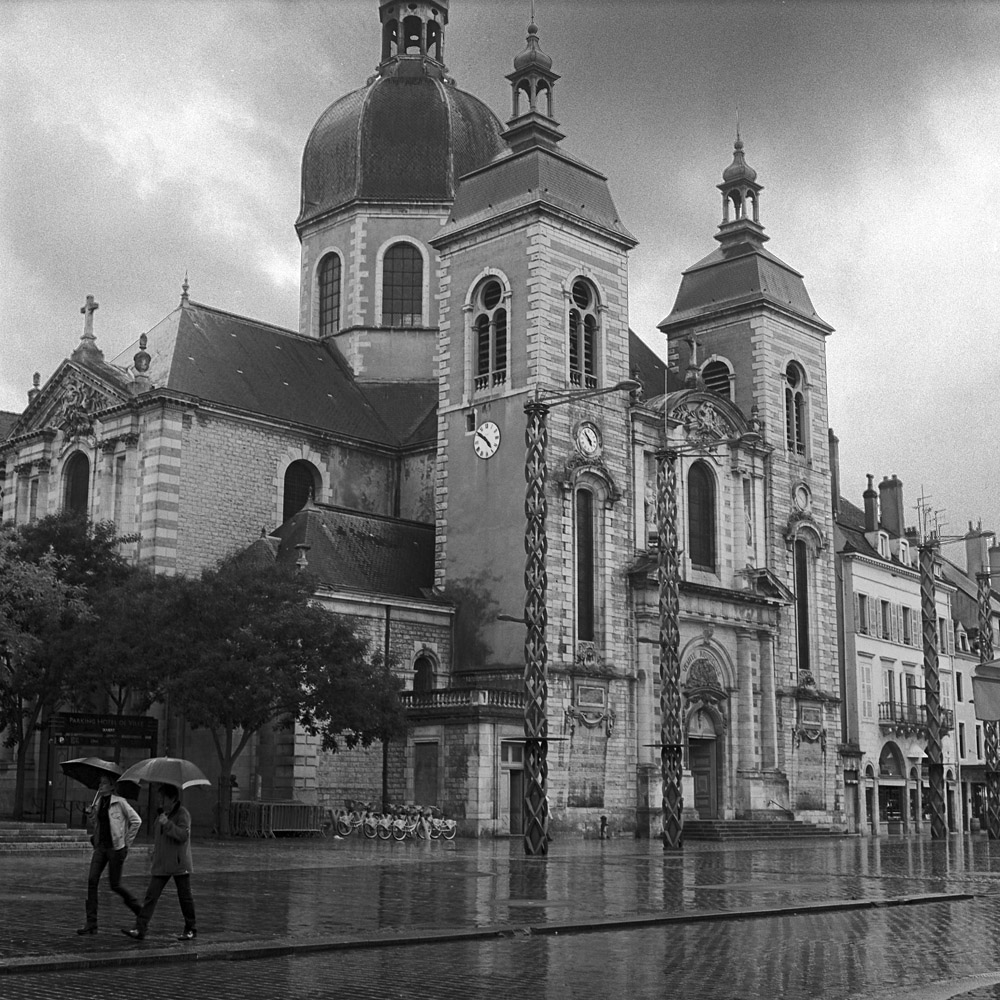
This is the basilica in Chalon. In significant architectural contrast to the old cathedral (which has parts dating back to the 7th century, and abuts the Roman walls of the town), this is clearly a 17th century structure. I peeked inside and the stained glass is very modern, like the lower windows at Notre Dame, but even more drab – greens and yellows and clear glass, and in desperate need of a cleaning from the outside. The light fixtures on the plaza are quite new and part of an effort to reinvigorate the downtown area. If you look carefully at them, at around the 12 foot mark, you’ll see metal disks protruding that serve as anti-climbing devices.
Here are businesses and storefronts in Chalon-sur-Saone.
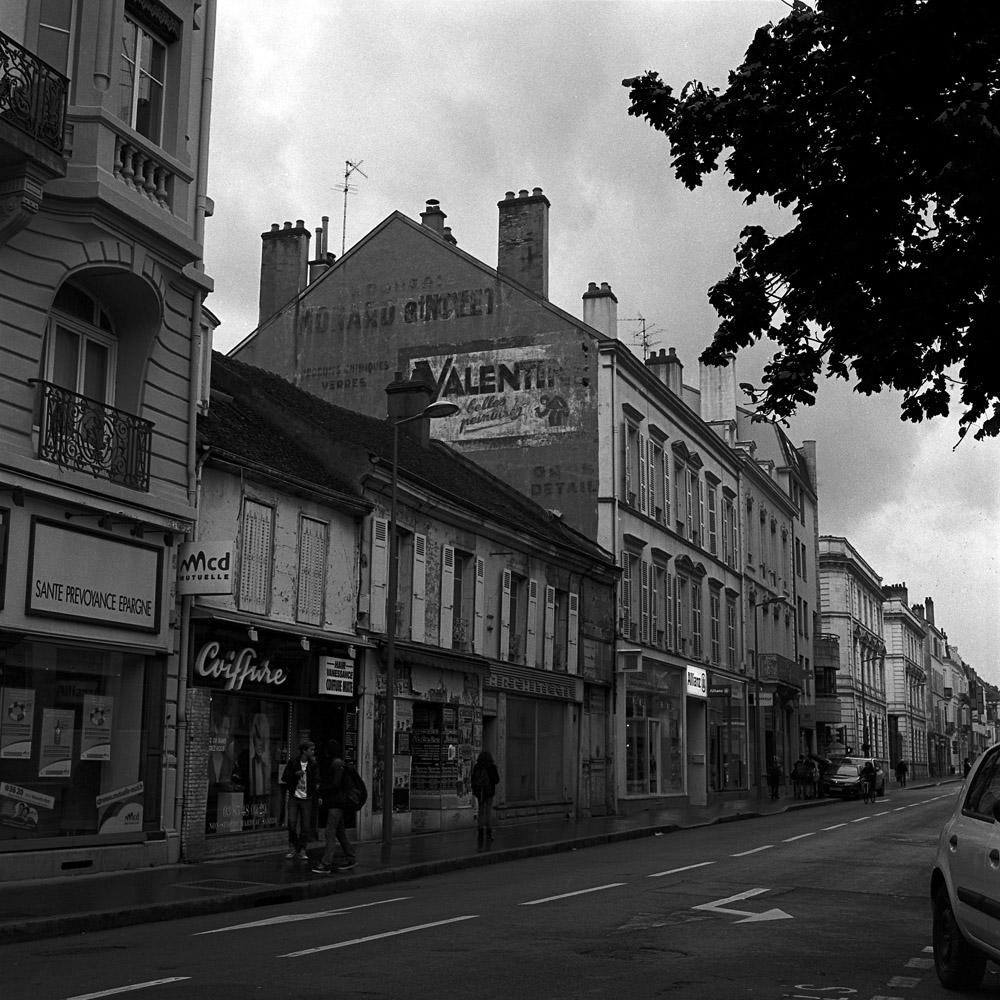
The old advertisement still visible on the wall of the building is on a street leading away from the old (2nd-16th Century) core of the town. Just around the corner is a McDonalds, with view camera designs etched in the windows. Even if the rest of the world doesn’t know it, the Chalonnais certainly remember what portion of their heritage is related to photography.
Old Advertisements, Chalon
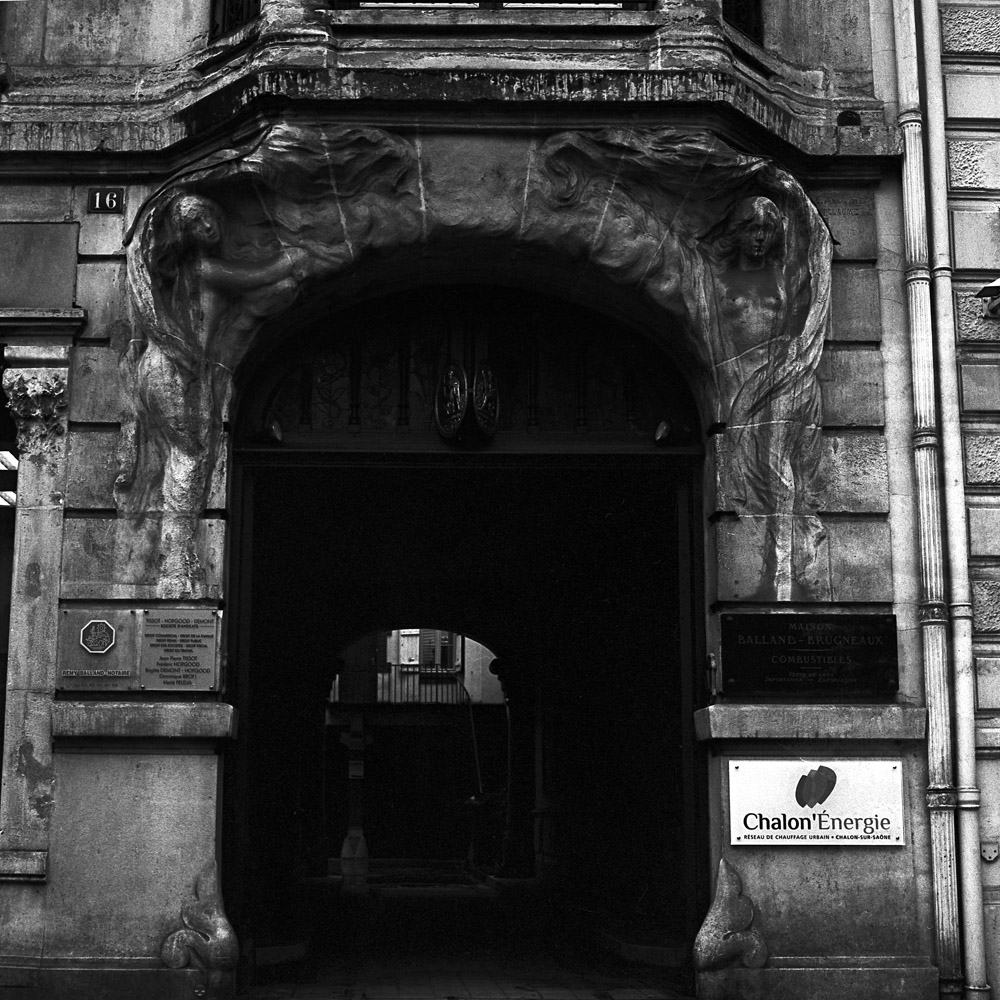
After spending ten days in Barcelona a few years ago, I became highly attuned to Art Nouveau architecture. Although Chalon is not particularly close to Barcelona (or Paris or any other major center for European architecture in the 19th century) the facade of this building is a particularly striking example of Noucentisme.
16 Blvd de la Republique, Chalon
Walking the streets of Chalon, you can tell that the town has had better days, but it is by no means a dying town, as can be seen from the businesses on the streets of the city center.
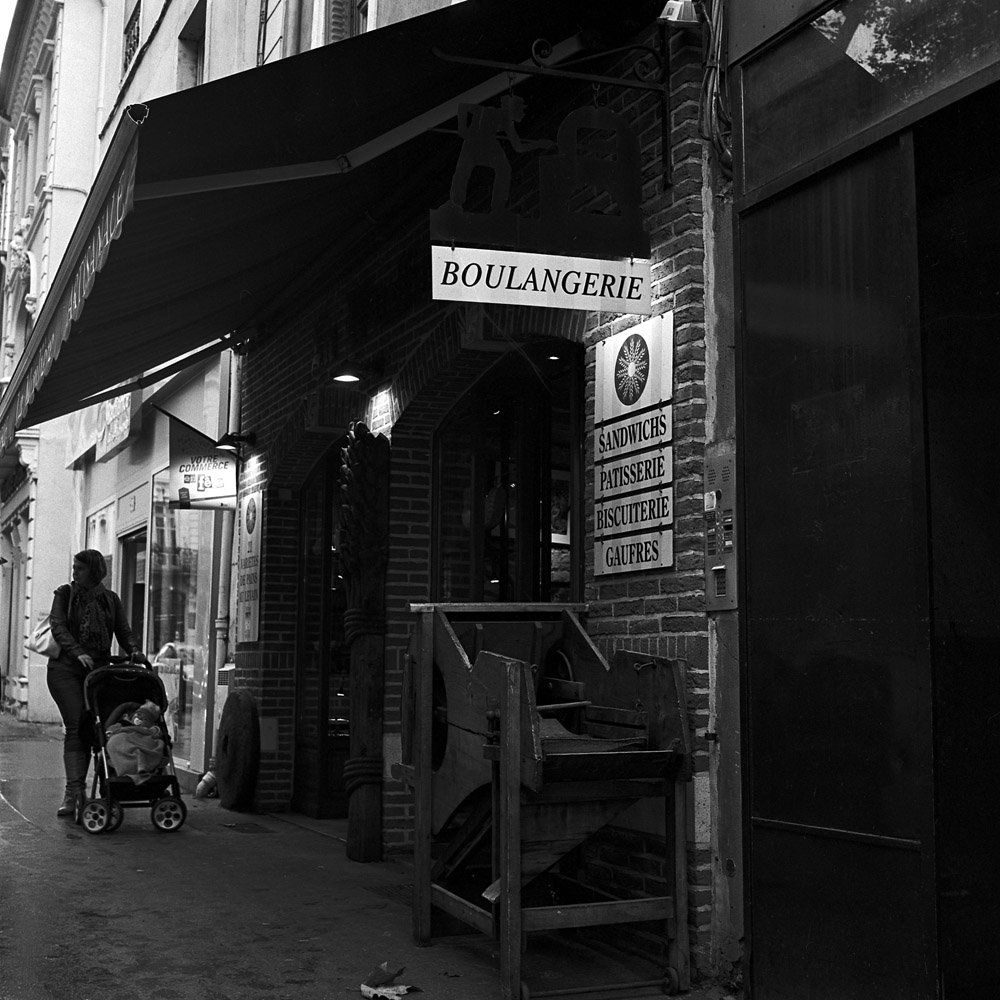
This boulangerie (bakery) was always busy whenever I walked past.
Boulangerie, Chalon
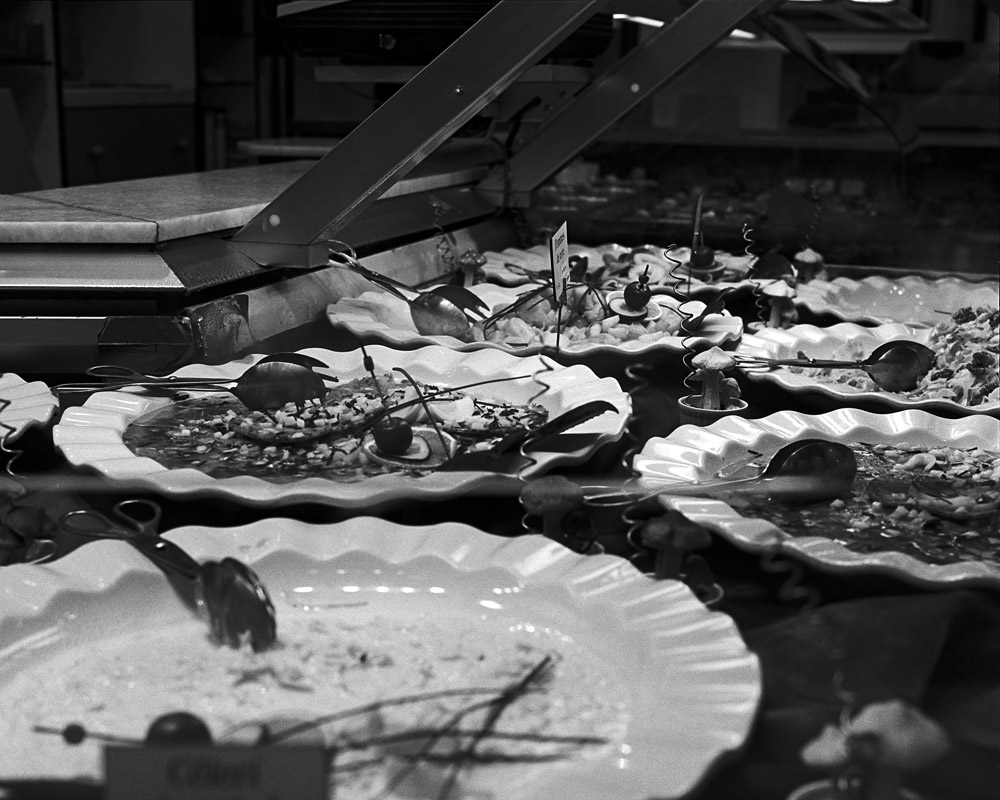
This fishmongers’ had particularly appealing plates of fresh seafood in their display cases.
Poissonierre, Chalon
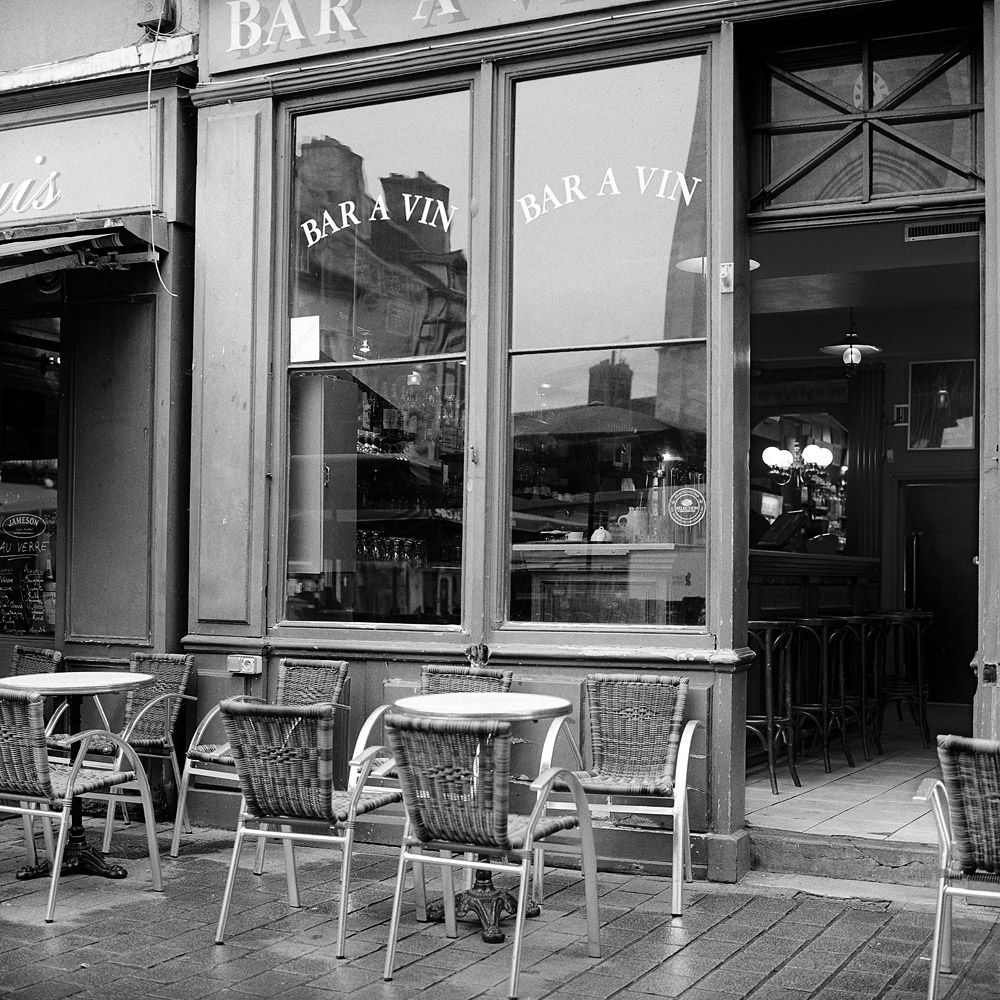
The Bar A Vin is located on the main square across from the cathedral. If things look particularly quiet, bear in mind I was there on a weekday, in the middle of the afternoon between lunch and dinner, and it was raining.
Bar A Vin, Chalon
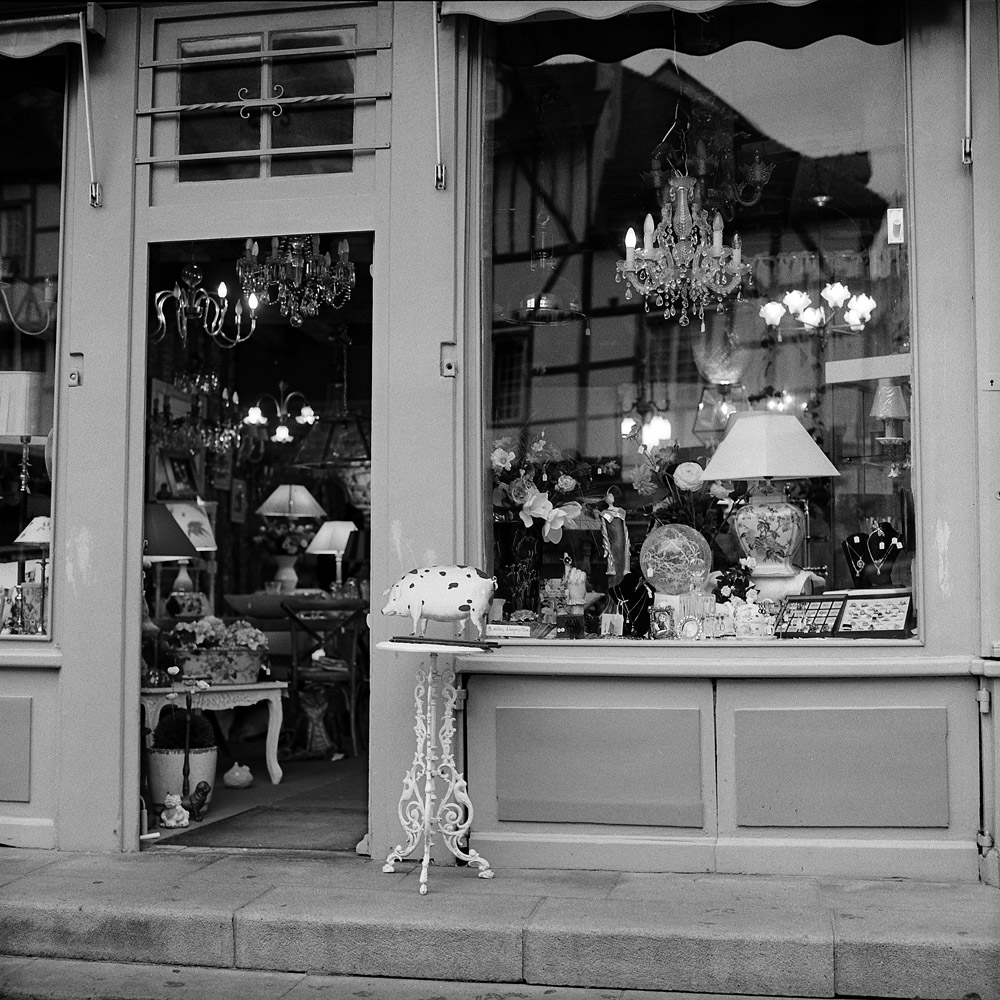
The lamp store was on another corner of the square and had the cutest little pig sign out front. The glow from all the lamps inside was enough to make it easy to balance the exposure between inside and outside.
Lamp Store, Chalon
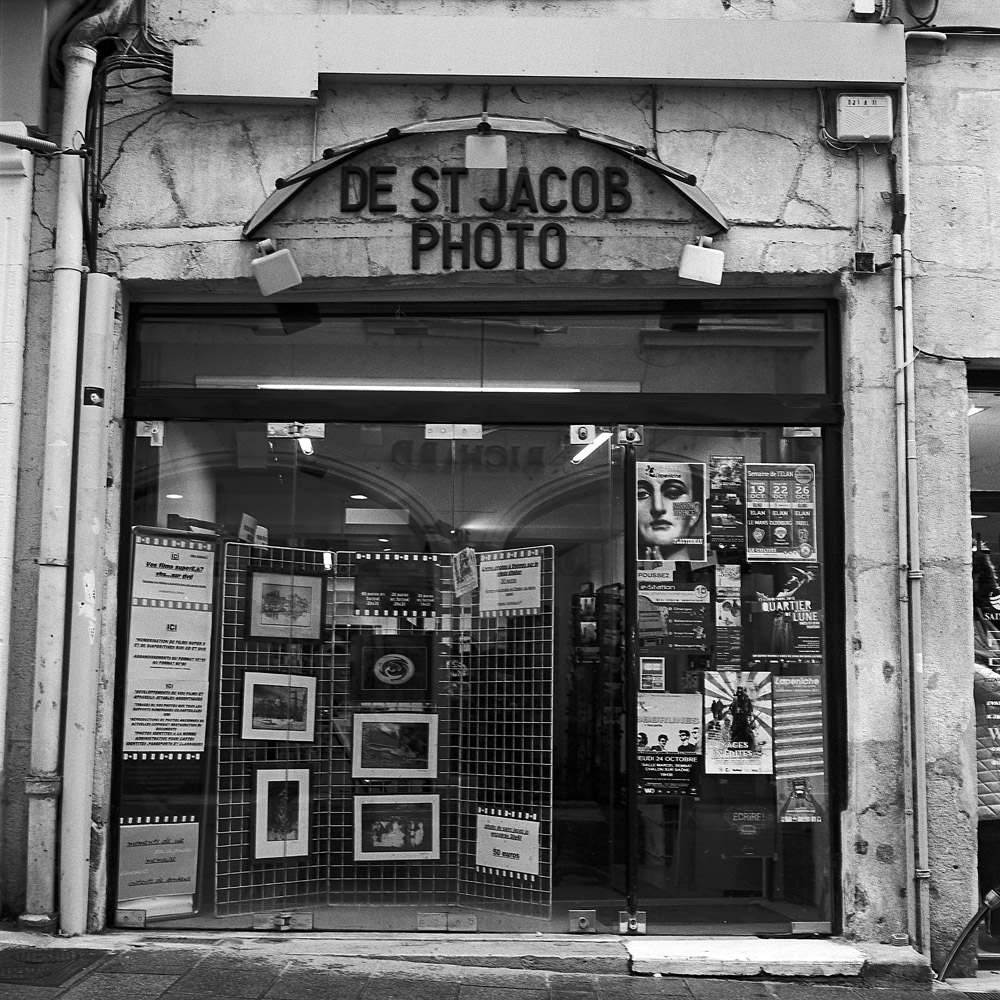
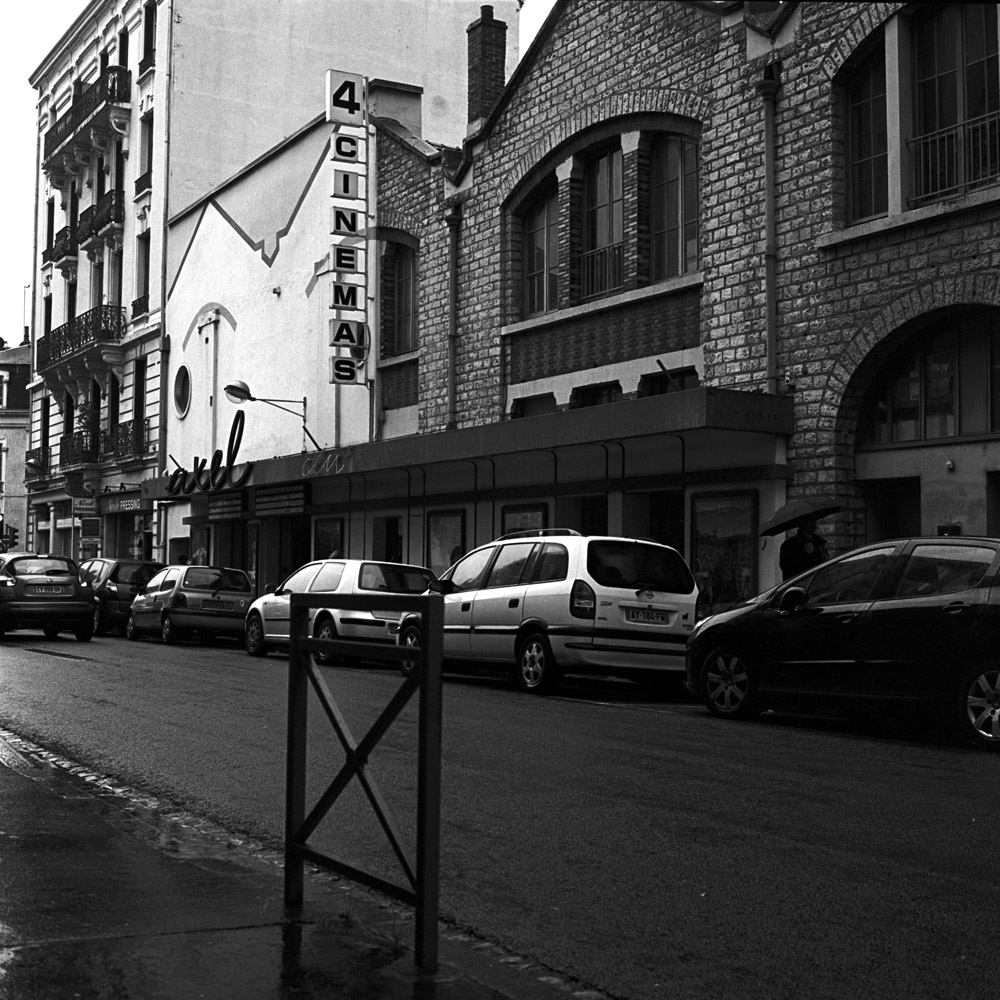
What photo essay about Chalon-sur-Saone could be complete without photos of things related to photography? Here is a photo studio in the center of the medieval district, and the 4-screen movie theater.
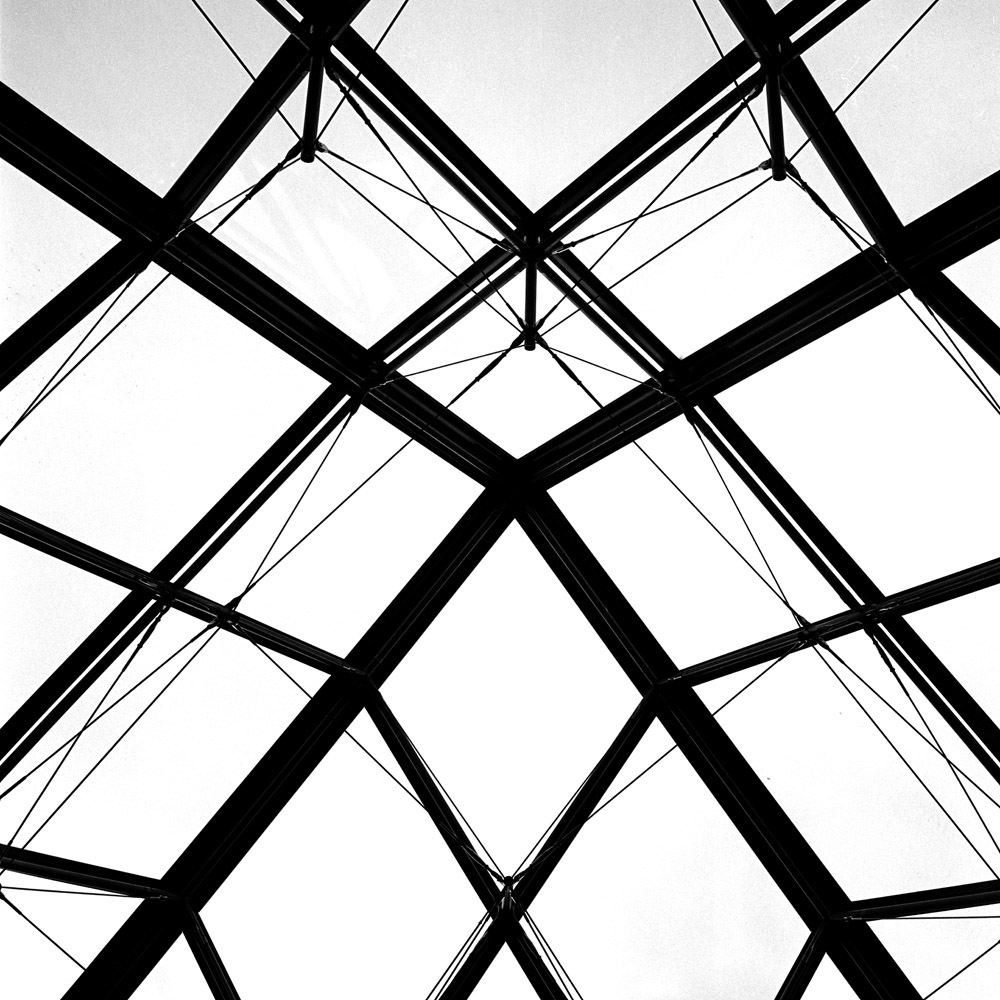
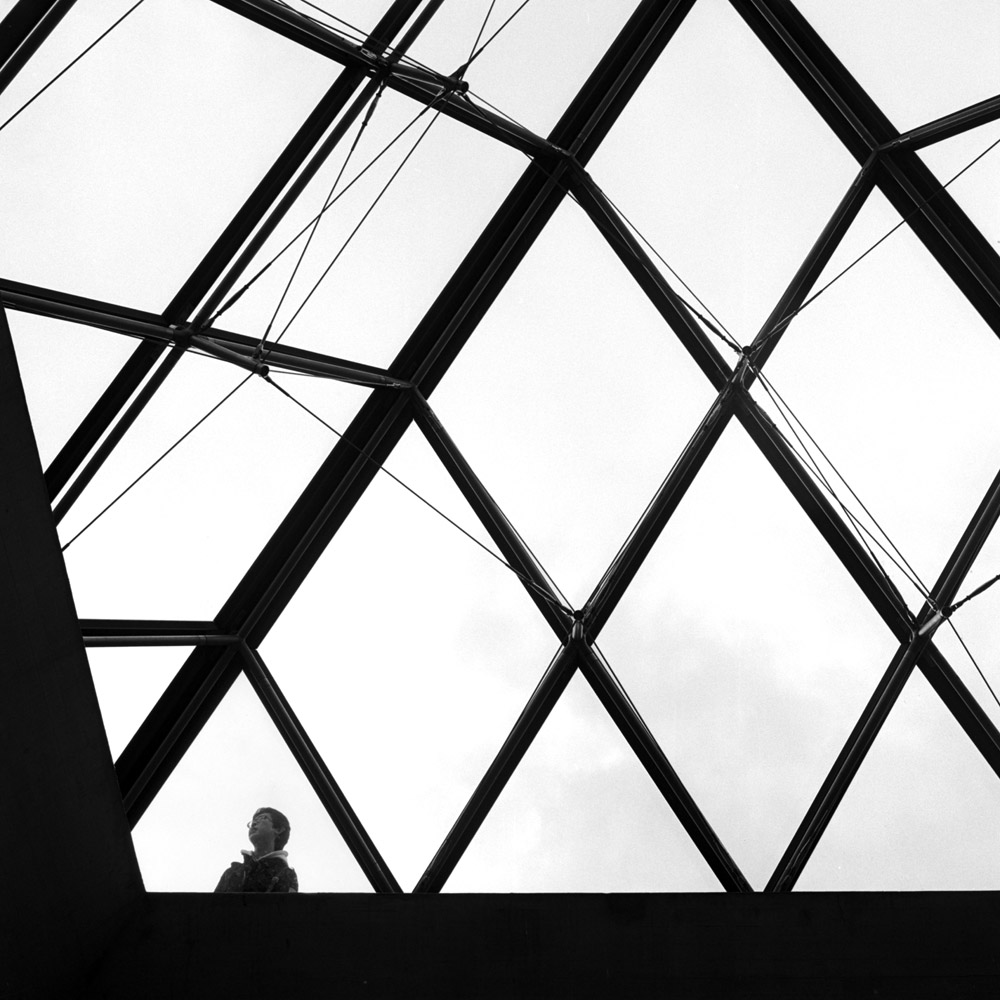
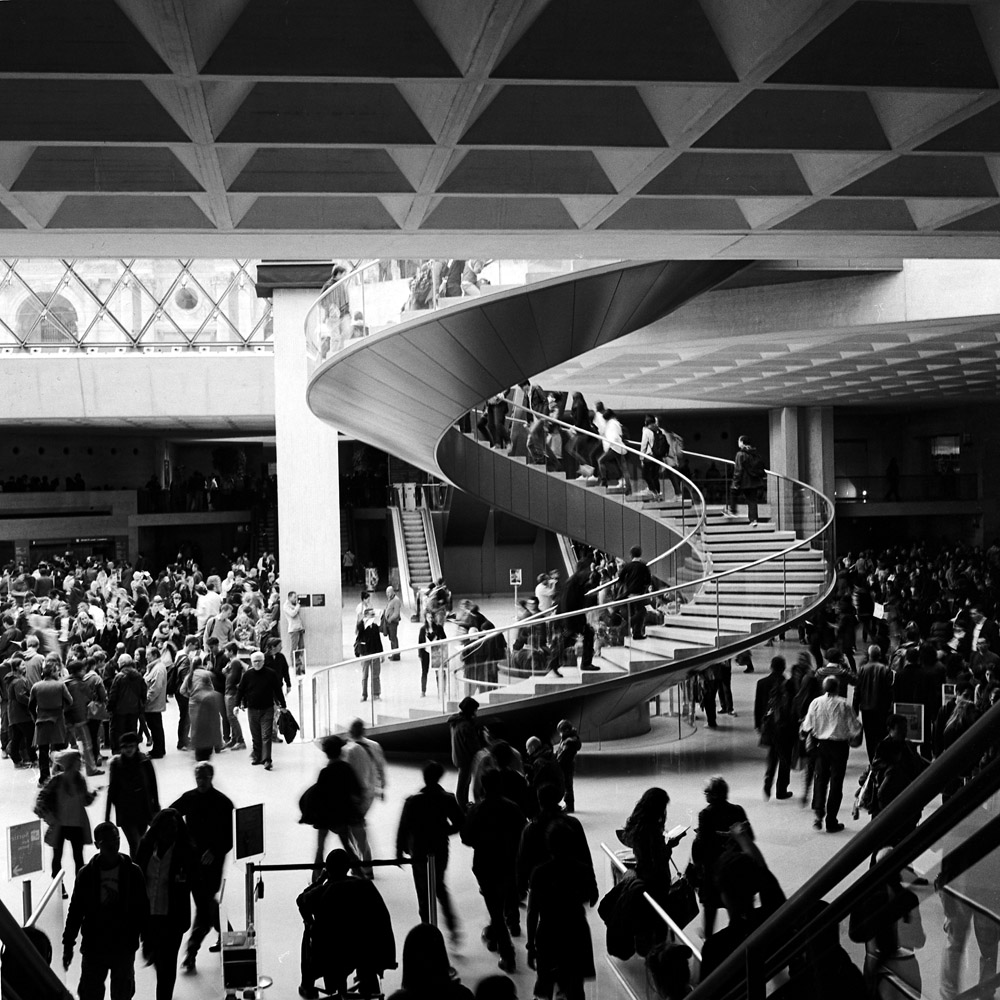
We’ll start with the Louvre museum. Here are some photos of the building itself. The Pyramid, the glass entrance structure that opens to the underground entrance lobby, is fascinating in itself for the geometry it creates and the possibilities for abstraction, and for the clash of modernity against 18th and 19th century architectural sensibilities that hallmark the rest of the building.
The Pyramid, from belowPyramid, Boy
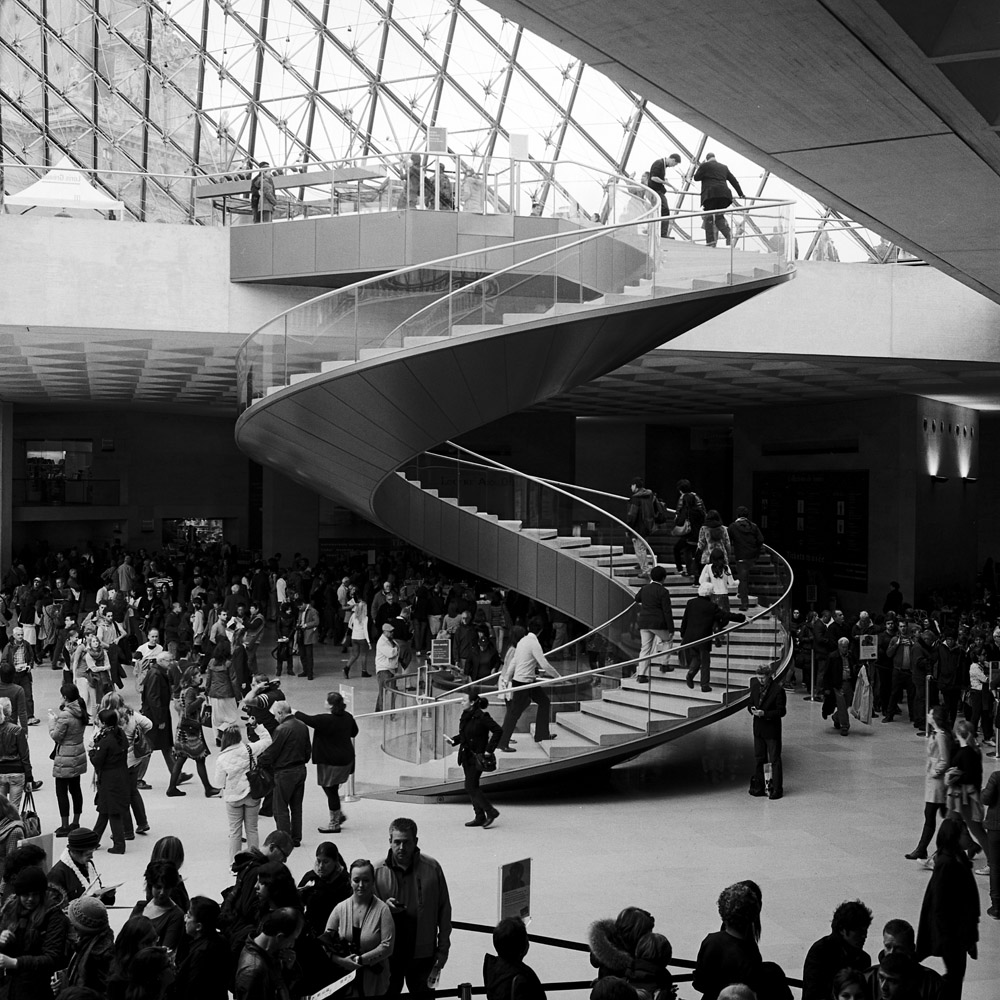
Under the pyramid there is a vast entrance plaza with a huge spiral stairs. In the center of the spiral stairs is the accessibility elevator, a cylinder that rises and falls to transport people to and from the plaza above, and looks like it should be a stage set from 2001: A Space Odyssey.
Spiral Stair, Under the Pyramid
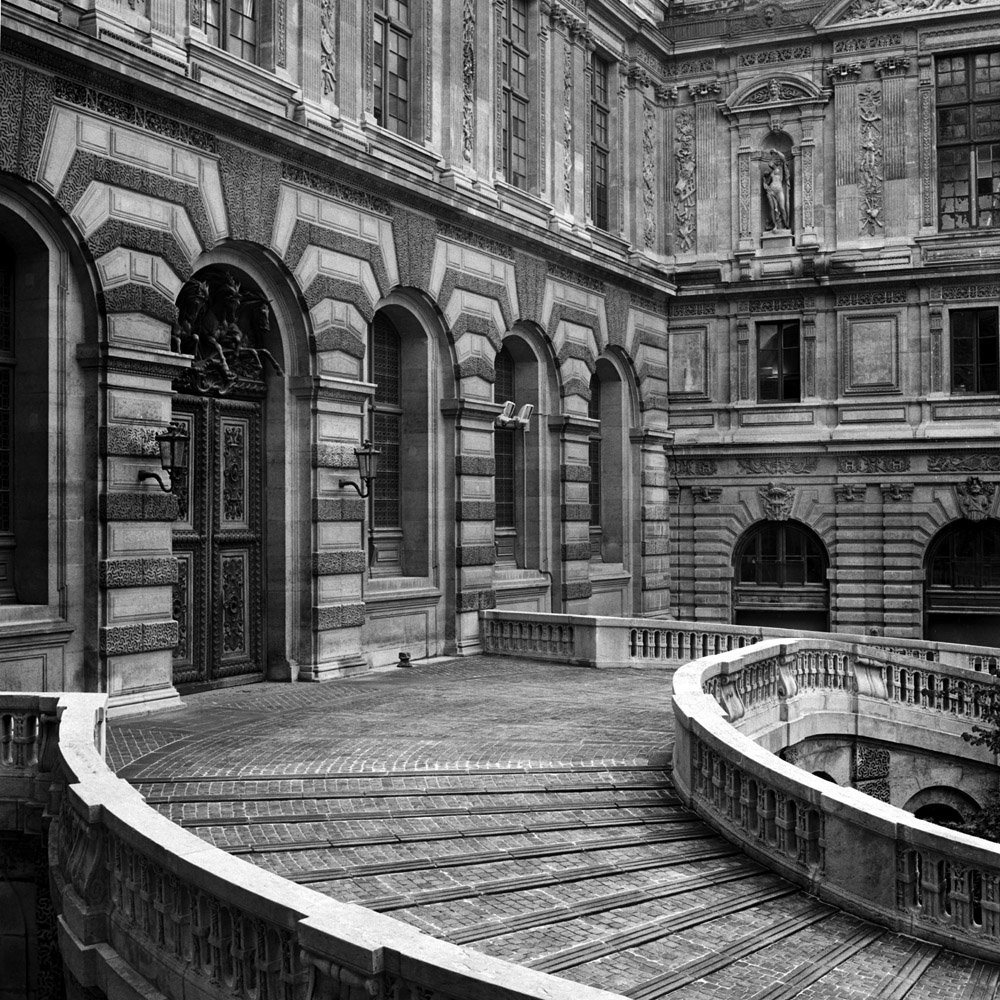
The contrast, a Napoleonic-era entrance ramp and doors (see the N’s in the frieze above the windows and doors). This is empty because the courtyard is closed to the public and filled with construction equipment.
Courtyard, Louvre
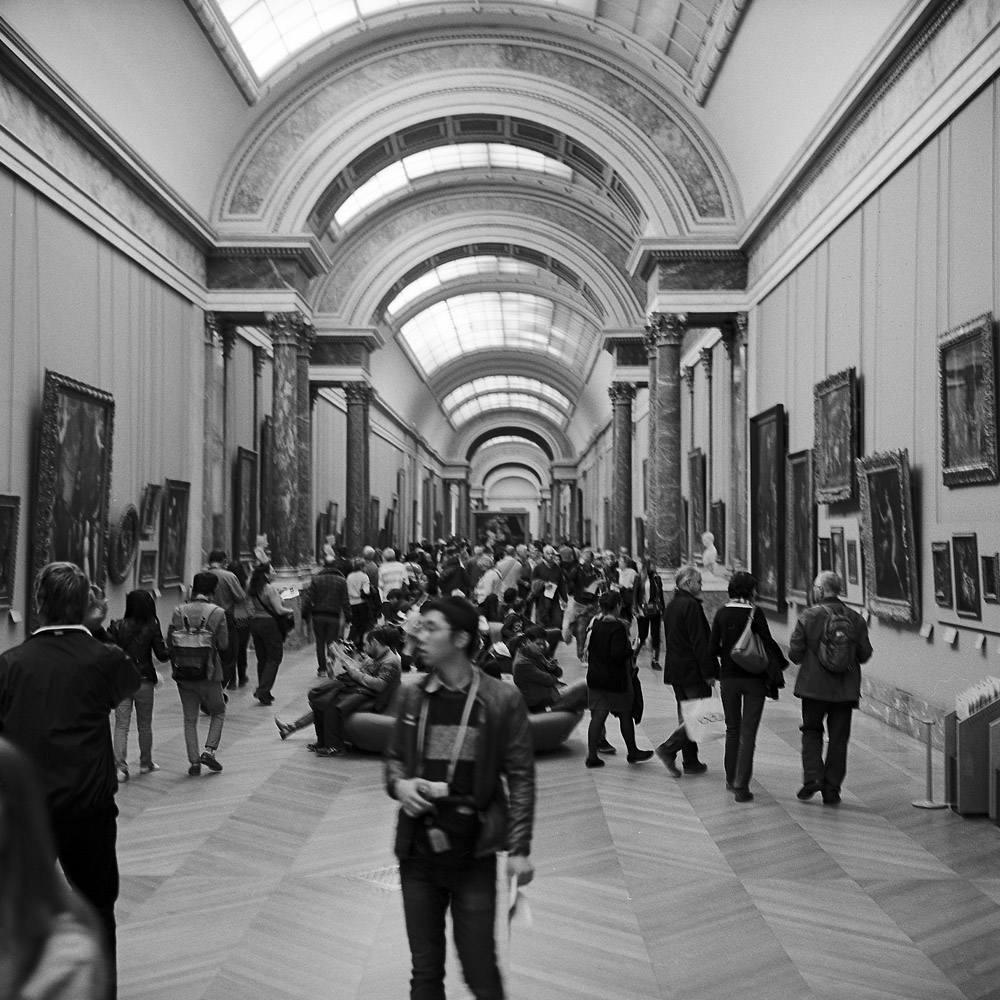
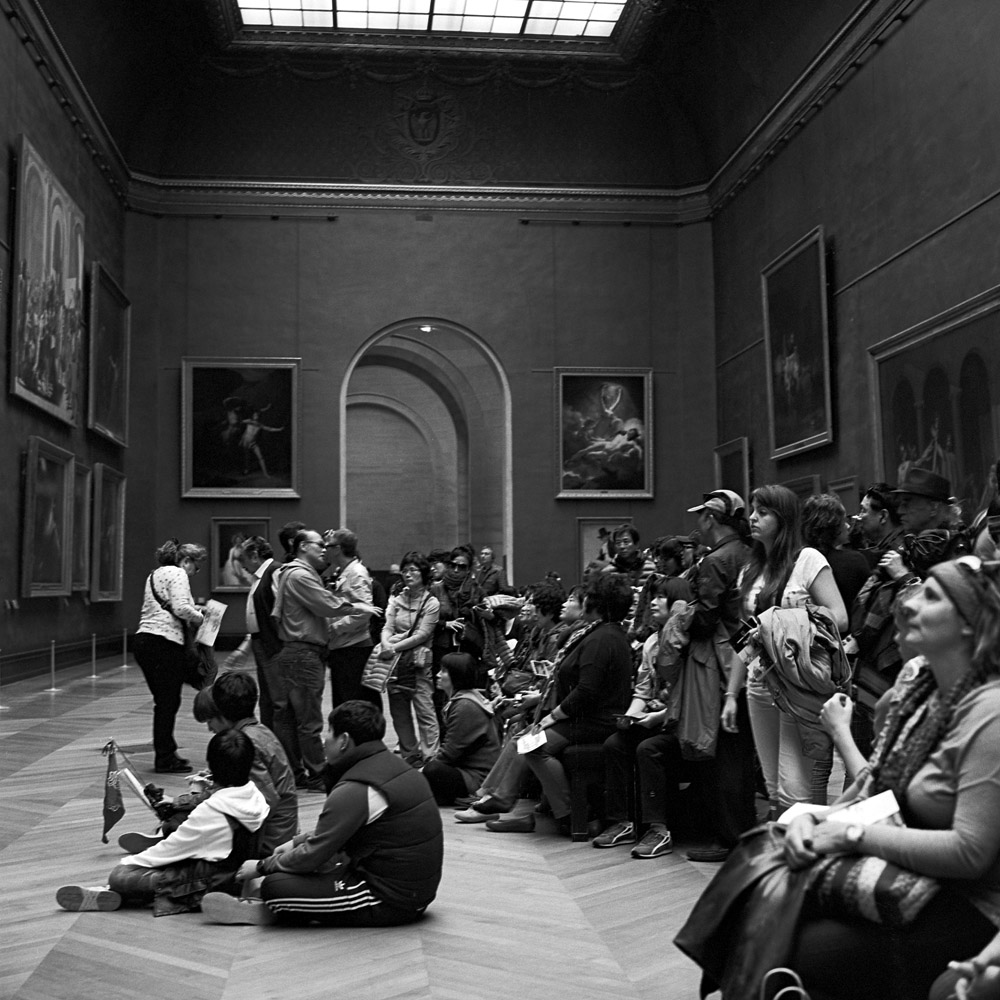
As you can see, the Louvre is a VERY busy museum. I don’t know if it is the most visited art museum in the world or not (I think it is), but it also has to be one of the largest if not the largest. I really only saw parts of one wing of the museum (there are three), and you could easily spend a half a day in there every day for a month and still not see everything.
The Grand GalleryVisitors, Napoleon crowns Josephine
The grand gallery is where the Italian Renaissance masterworks are held – the three non-Mona Lisa DaVincis are here, along with the Caravaggios – highlights of the collection that most interested me.
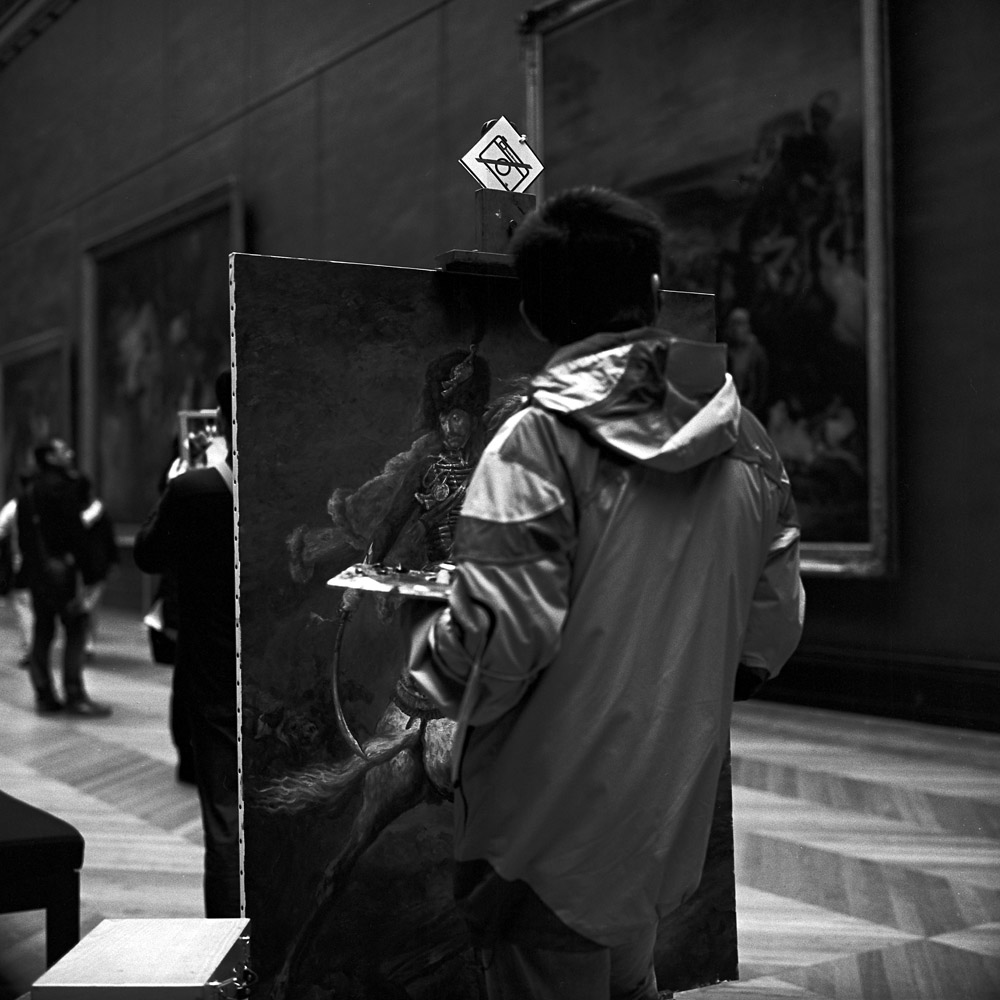
In the section with the 19th century French paintings, there was a painter with his easel set up, copying the famous painting of the cavalryman in the bearskin hat. I couldn’t resist taking this shot as much because of the “no photography” sign he had on his easel. I’ll justify it by saying that I think it had more to do with not wanting to be disturbed by flashes popping than anything else.
Copyist, Louvre
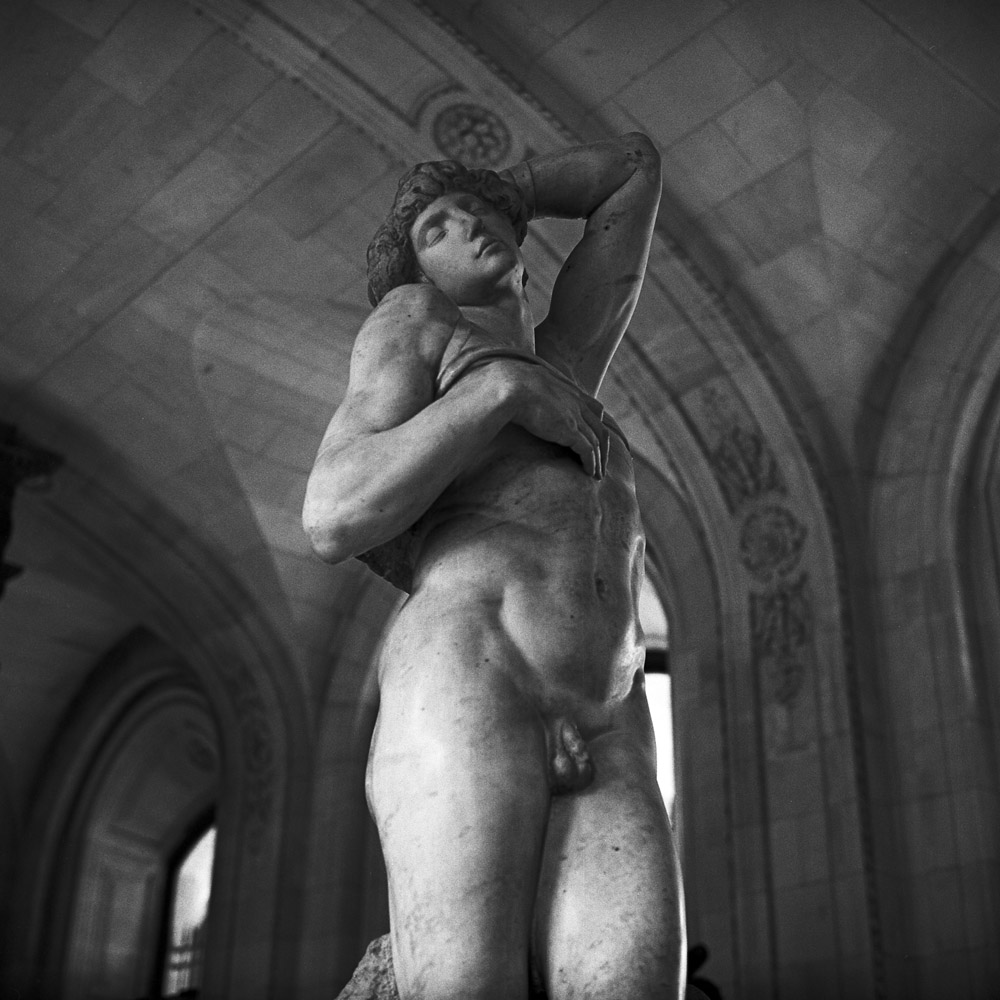
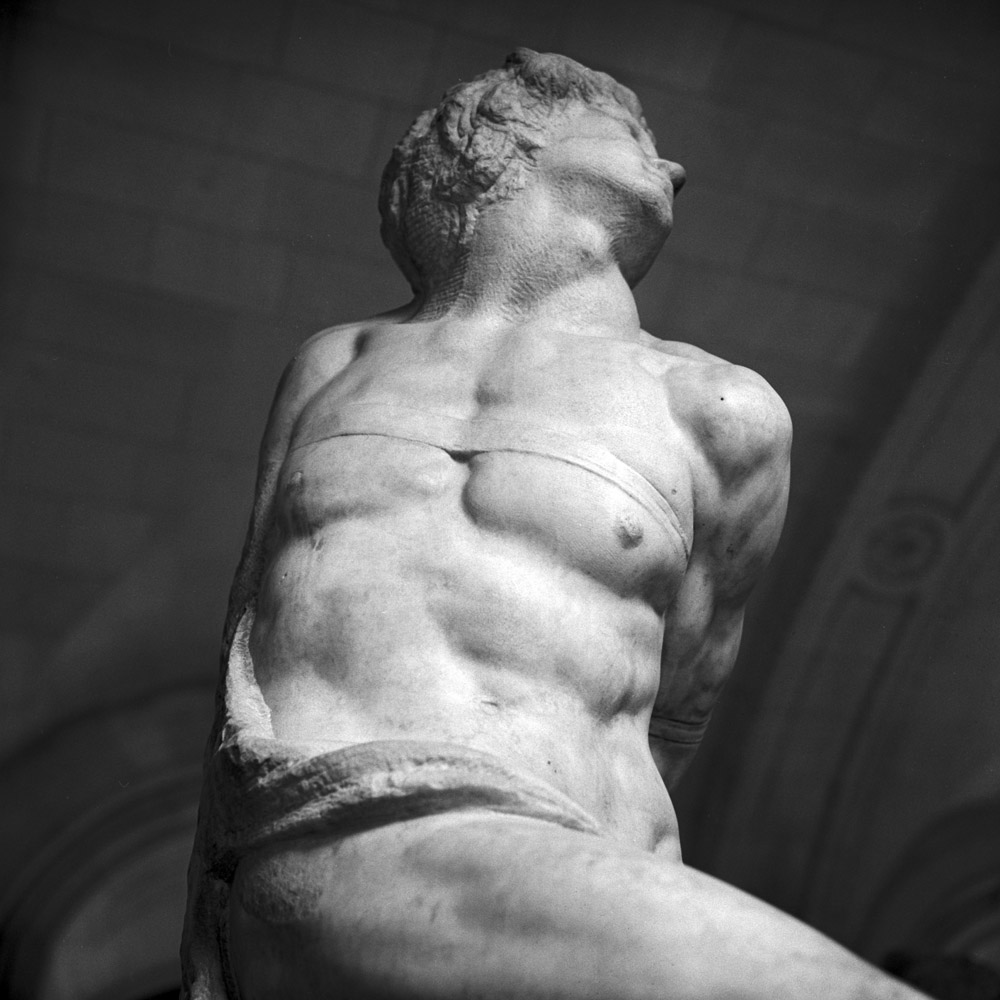
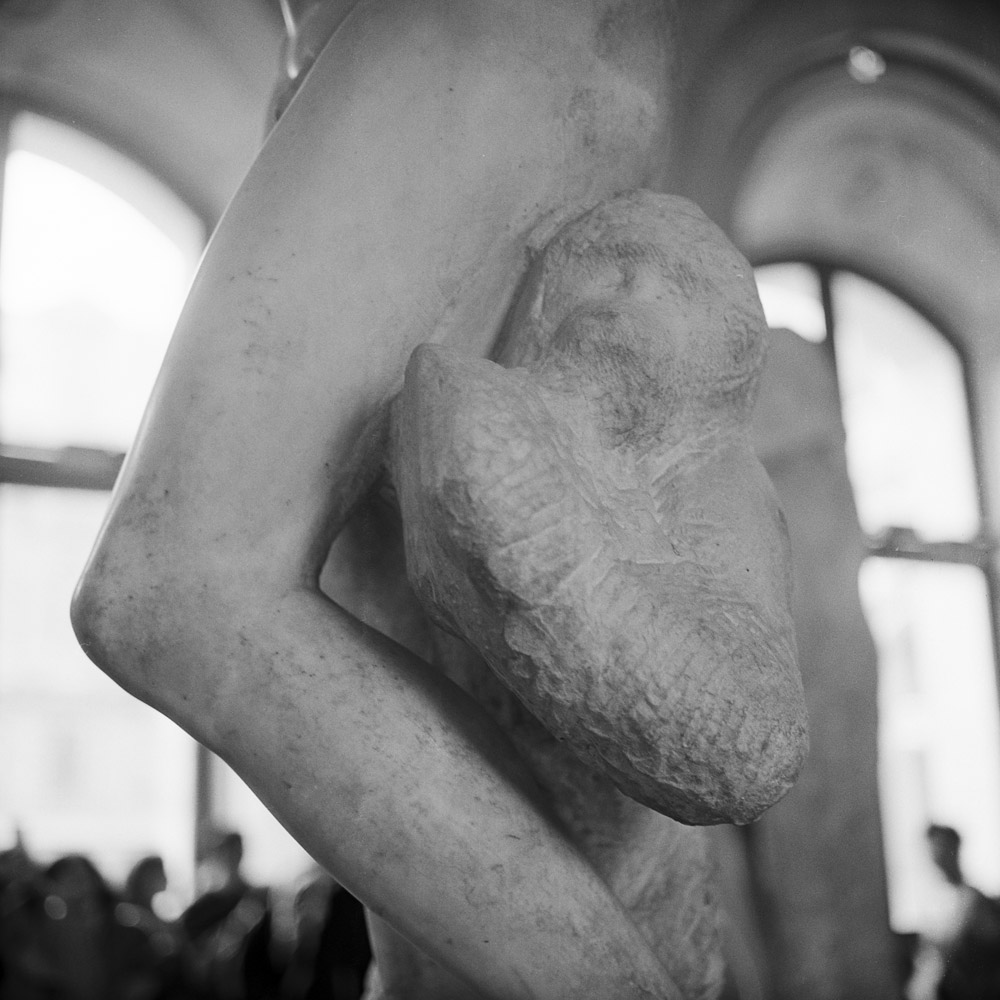
The Louvre has perhaps the very best collection of Michelangelo’s sculpture outside of Italy. Two of the Medici tomb sculptures are in the sculpture gallery, and are of intense interest to me because they are part of the “unfinished” pieces in style. There is still significant debate as to whether the “unfinished” pieces are in fact unfinished or if their appearance is exactly what Michelangelo intended. They are called “unfinished” because they have coarse textures in parts and tool marks are prominent over significant portions of the pieces, to the point that some portions of the pieces are in fact only roughed-in forms without complete features.
Well, Chalon-sur-Saone is NOT in Paris, obviously. But I did go there as part of this trip. Chalon is a small city on the banks of the Saone (pronounced Son) river, about 130 kilometers from the Swiss border. The reason for the visit was not to take a river cruise (Chalon is the departure point for many river cruises as the Saone feeds into the Rhone river at Lyons and from there flows to the Mediterranean) but to visit the birthplace of photography. But didn’t Louis Daguerre invent it in Paris in 1839? No. Nicephore Niepce (pronounced Knee-eps) actually discovered the very first viable photographic process in 1822 when he was able to create photogravure etchings. By 1825 he was working with a process he called “heliography” involving coating bitumen of Judea dissolved in lavender oil on pewter plates. It was fine for mechanical reproduction of static subjects but not terribly useful for anything else, as his exposure times ran longer than eight hours. In the early 1830s he collaborated with Daguerre on developing an improved process. Alas, he died in 1833, and was not able to see the fruition of his labors.
Today’s post from Chalon covers the black-and-white photos I took. Chalon is more than river cruises and dead inventors – the town dates back to Roman times, and although little visible remains of its Roman years, the medieval core of the city is still very visible and accessible. The square in front of the cathedral features half-timbered buildings from the 14th century.
Patron Saint Statue, Chalon
The cathedral in Chalon may look somewhat newer – the facade took heavy damage and was restored in the 19th century, but parts of the structure date back to the 8th.
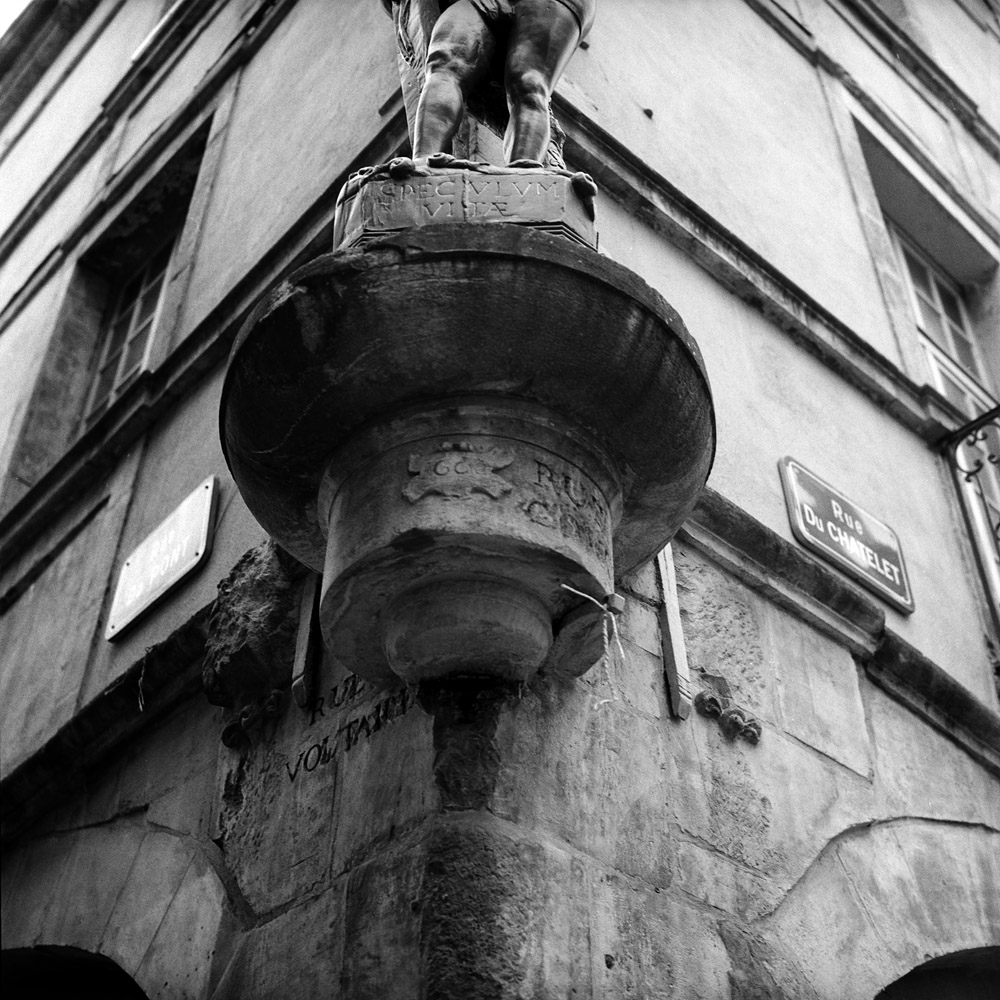
Thinking of how things change, here we have very clear evidence – in the 19th century there was a major reformation of the way street addresses were indicated. Previously, instead of having odd numbered houses on one side of the street and evens on the other, the numbers would go up sequentially on one side of a street and when they reached the end of the street, they’d turn around and keep going up until they got to the beginning, so it was possible to have number 3 in the same block as number 252, which was extremely confusing. Also, with all the turmoil in France from the 1780s until the 1880s, streets were frequently re-named. This intersection shows what were once Rue Voltaire and Rue Comerce are now Rue du Pont and Rue du Chatelet.
Speculum Vitae, Chalon
Number 9 is a good example – I don’t know what the original street number was, but the 9 is a typical blue and white enamel-on-metal plaque from the late 19th/early 20th century. The house, obviously, dates to 1550.
Number 9, circa 1550
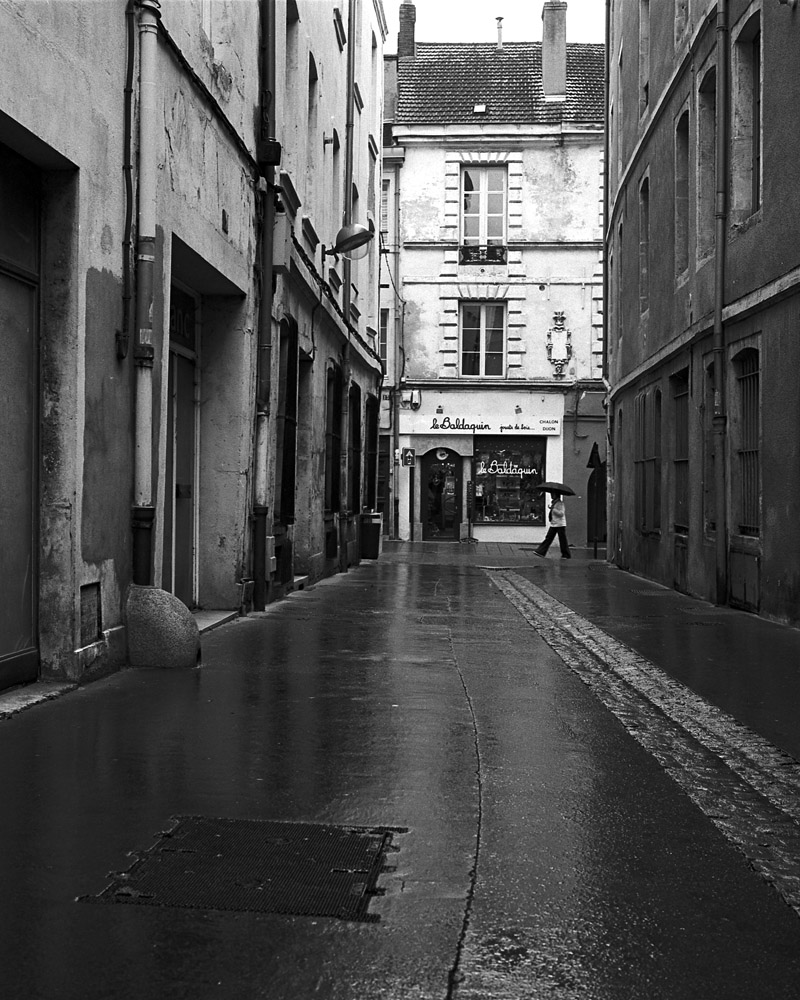
Rue de L’Oratorie is another example. This is the street on which Niepce was born; his house is behind me, at modern #15. However, there is a plaque on the wall of the courtyard that leads to Rue de L’Oratorie which says the Niepce birth home is at #9. THe plaque indicating the location of the home was placed before the address reformation, so you can imagine my confusion when looking for #9 and not finding it at all! Fortunately Rue de L’Oratorie is only really 2 blocks long, and there is a second sign in the rue on the house itself. I don’t have photos of the house taken with the Rolleiflex because it’s quite nondescript and the rue itself is rather narrow at that end, making it hard to photograph more than a bit of a wall. I do have photos on my iPhone of the signs that I’ll post with the color images later.
Rue de L’Oratorie, Chalon
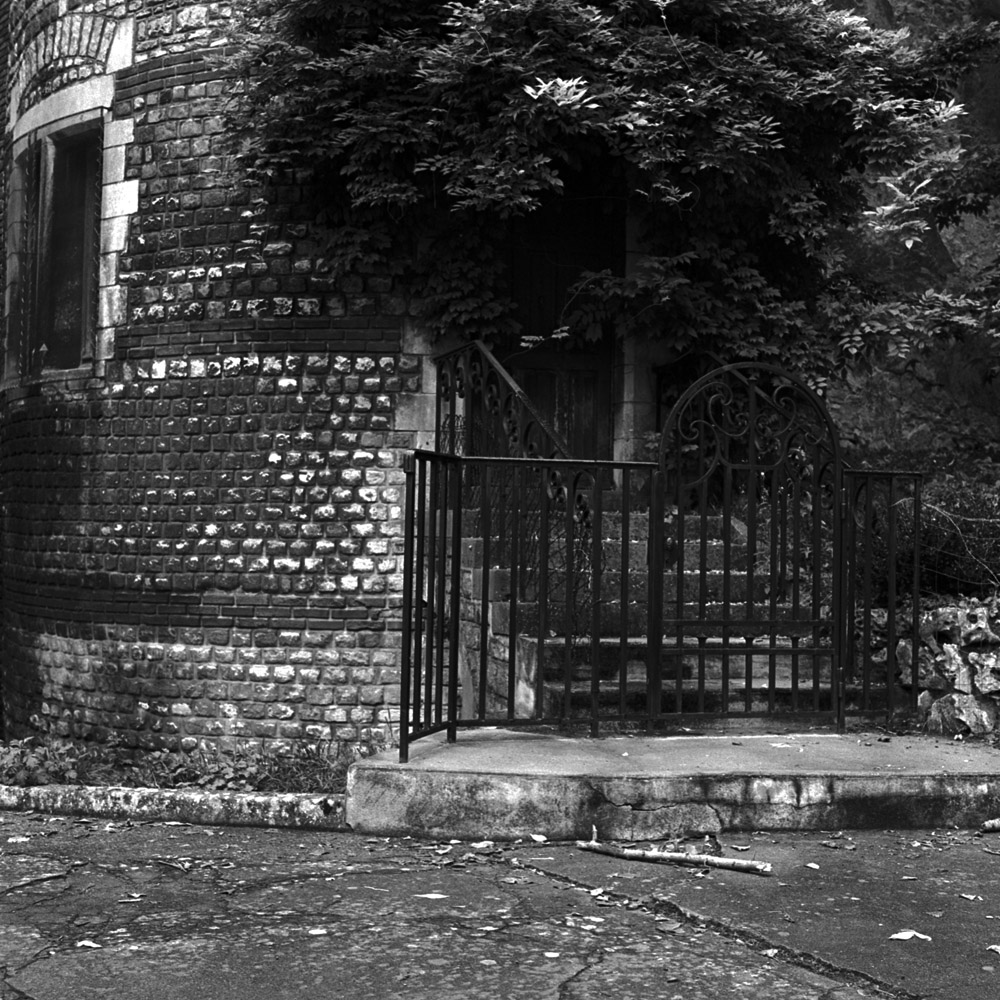
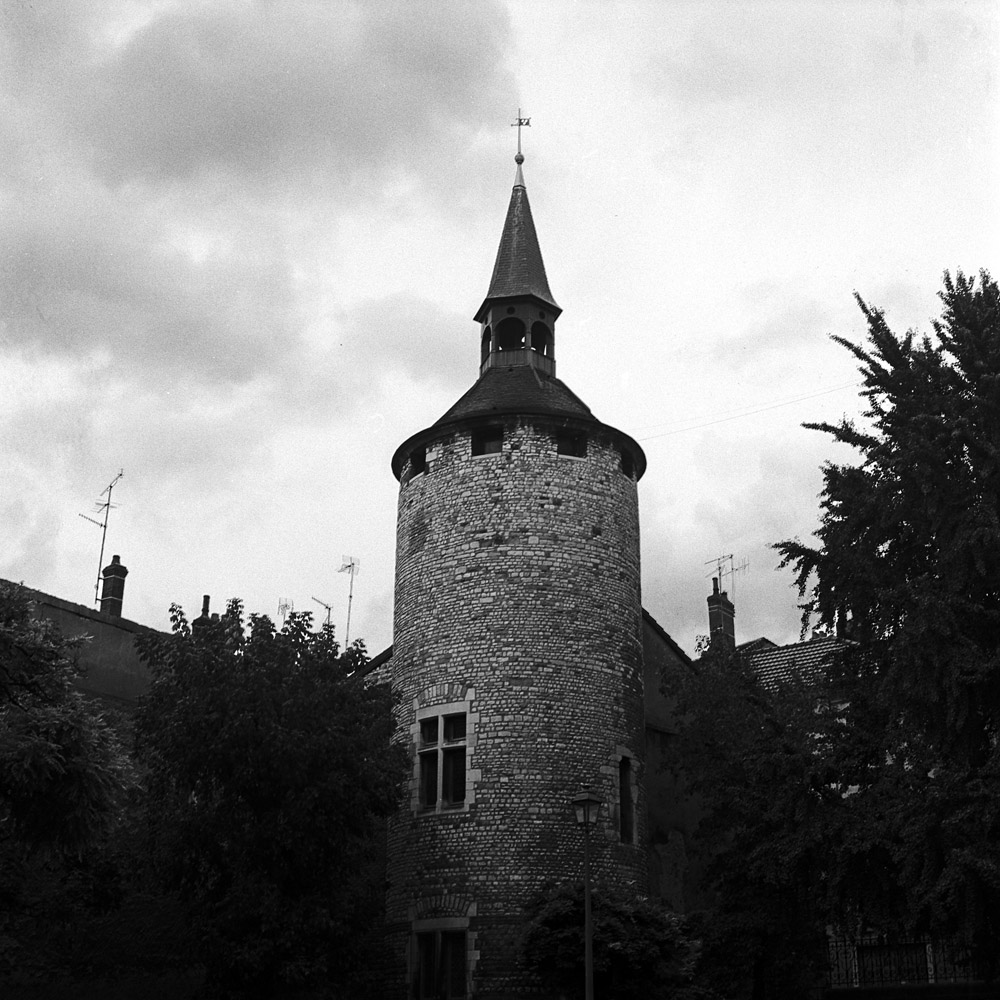
These are views of the Tour Saudon, a 14th century tower house right around the corner from Niepce’s birthplace.
Tour Saudon, GateTour Saudon, Rue de L’Oratorie
Also on the Rue de L’Oratorie, this house has a bridge connecting its two halves on each side of the street.
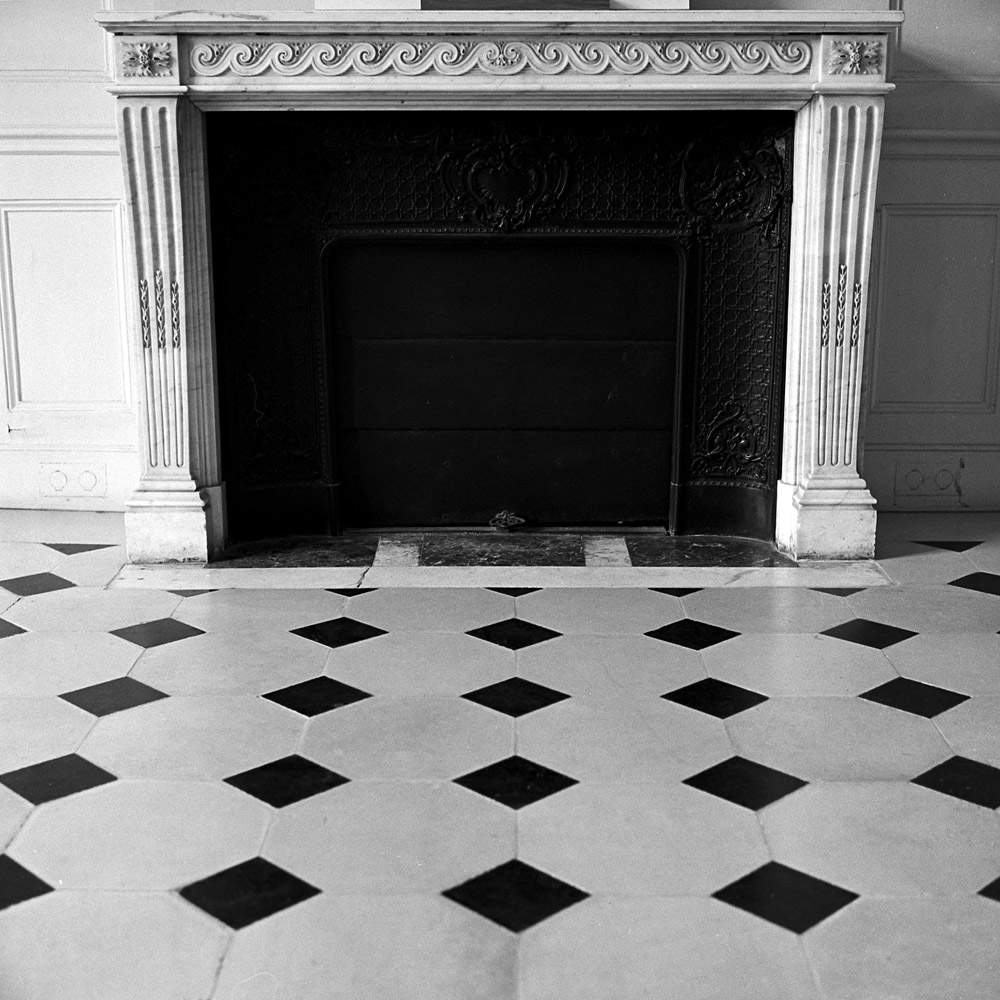
Here are my takes on the palace of Versailles, in black-and-white. There are actually quieter spaces within the building where you can take photos without a gazillion tourists blocking your view and making appreciation of the space impossible, unlike the state apartments. I’m dividing this post into two sections – architecture and sculpture.
ARCHITECTURE
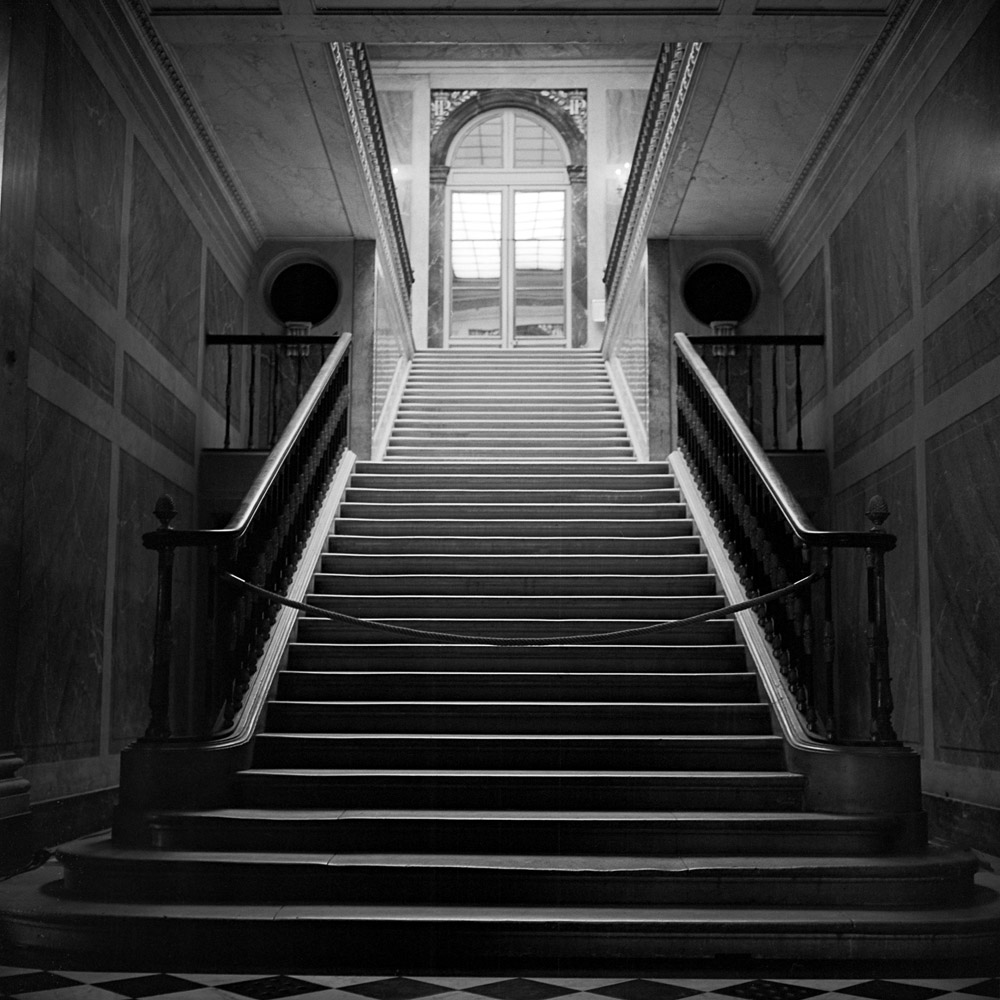
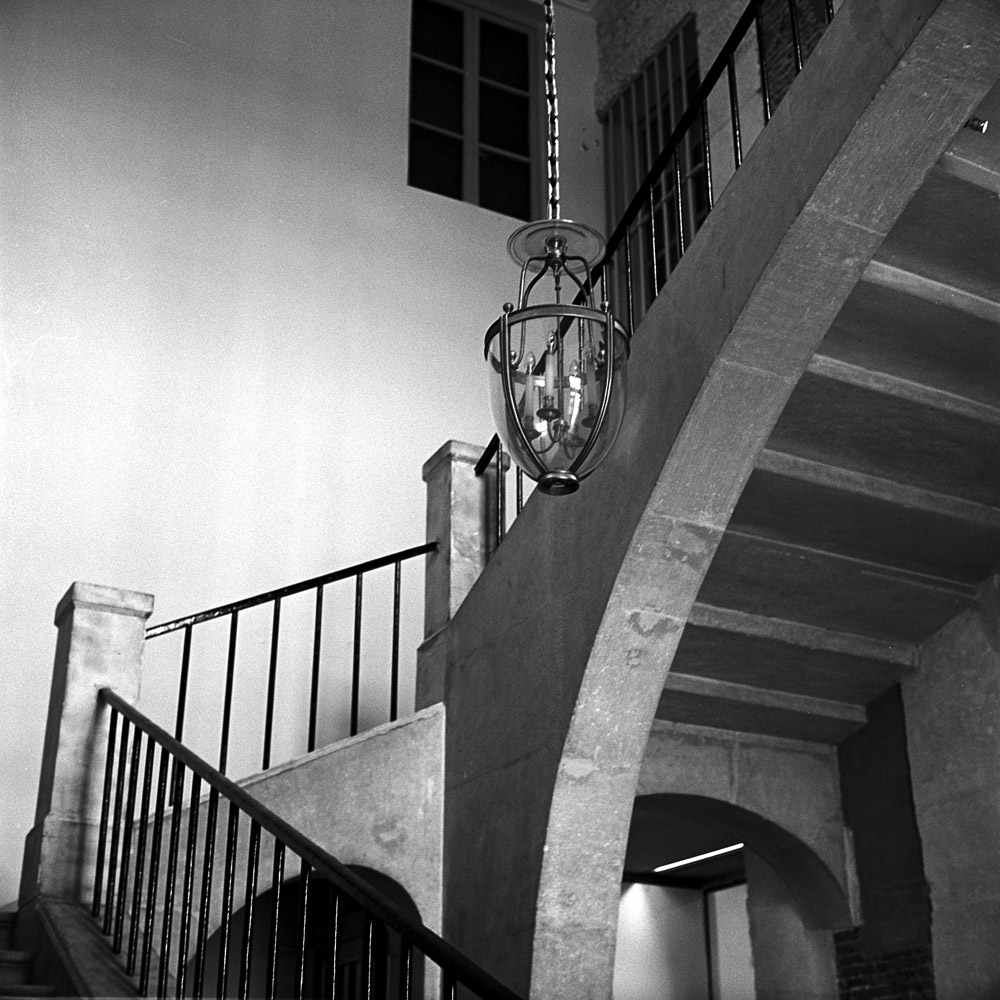
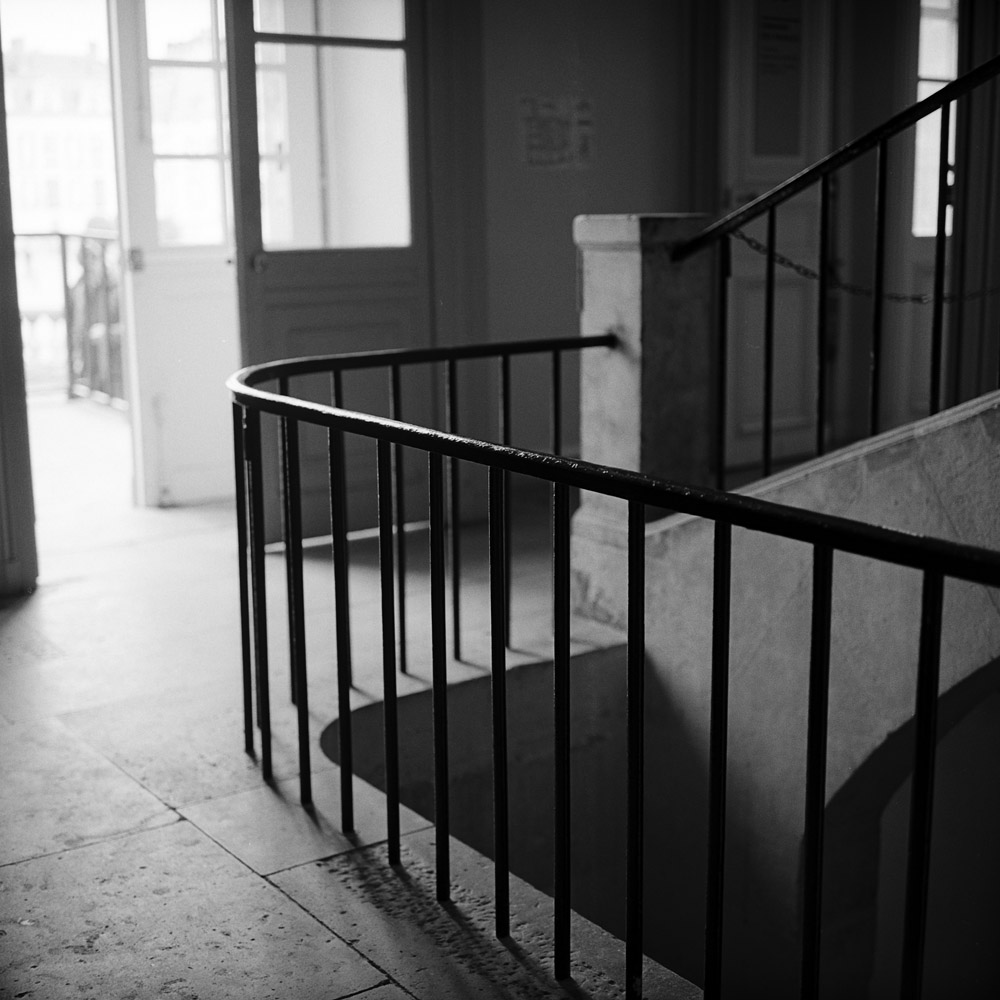
Here’s a side staircase. Not the grand stairs that led to the queen’s apartments, but nonetheless, a magnificent entry.
Side Stairs, Versailles
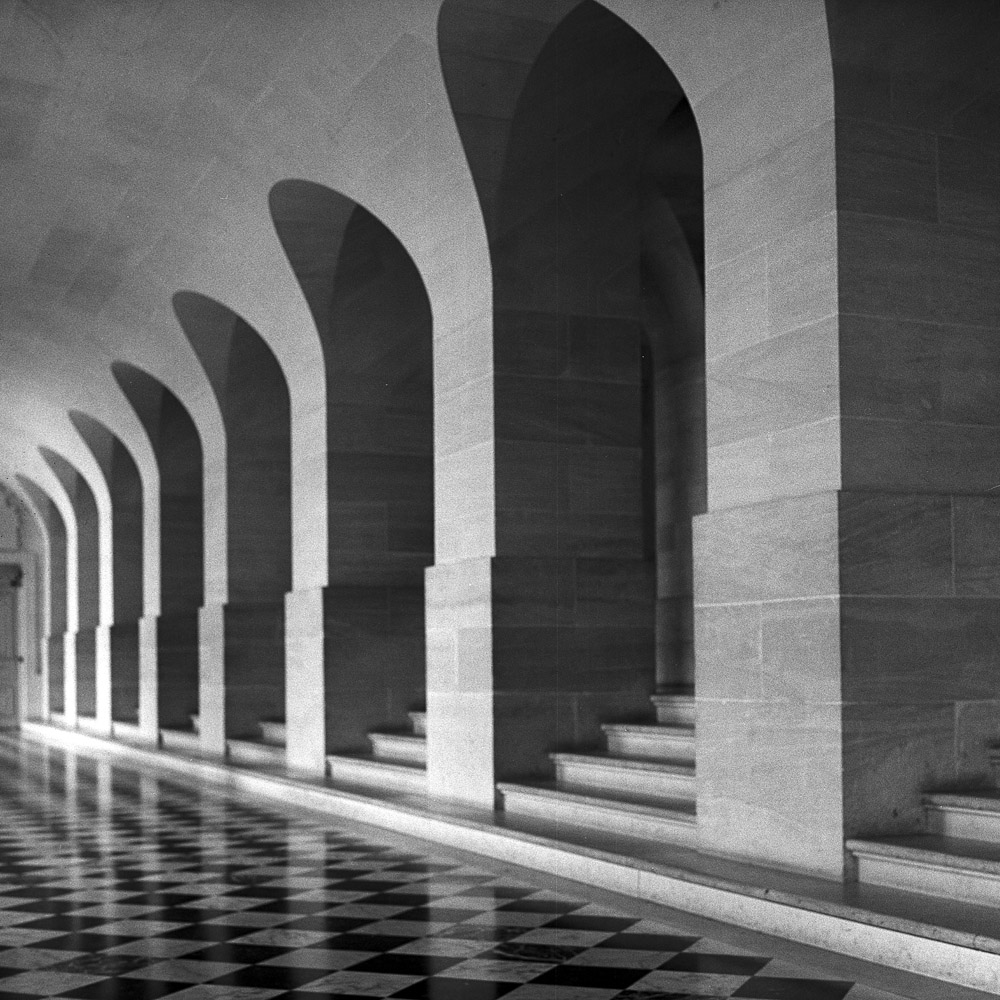
This hall is behind and beneath the state apartments, looking out to the gardens to the west.
Hall, Arches, Versailles
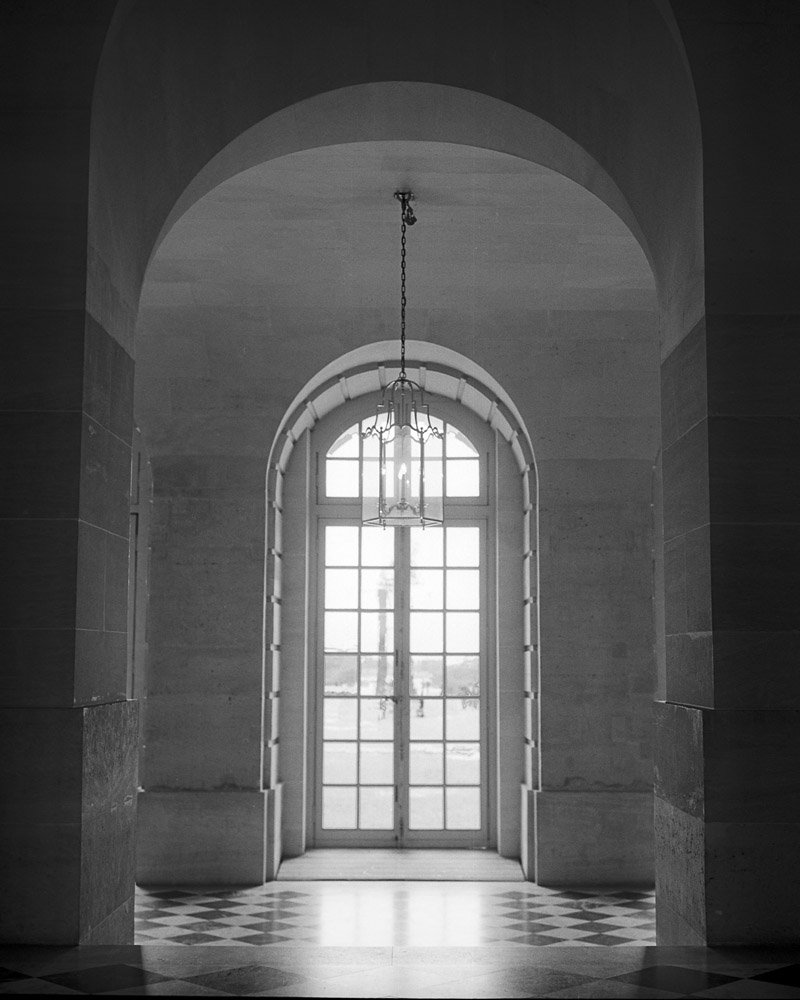
This doorway is the central door leading out from the hall above to the gardens.
Versailles Doorway
These three are from one of the side buildings outside the palace proper, where the gift shop and ticket office are located today. Anywhere else they would be special, but at Versailles, they are relegated to the service space.
Sculpture is everywhere at Versailles, from the entrance gates to the halls in the basement.
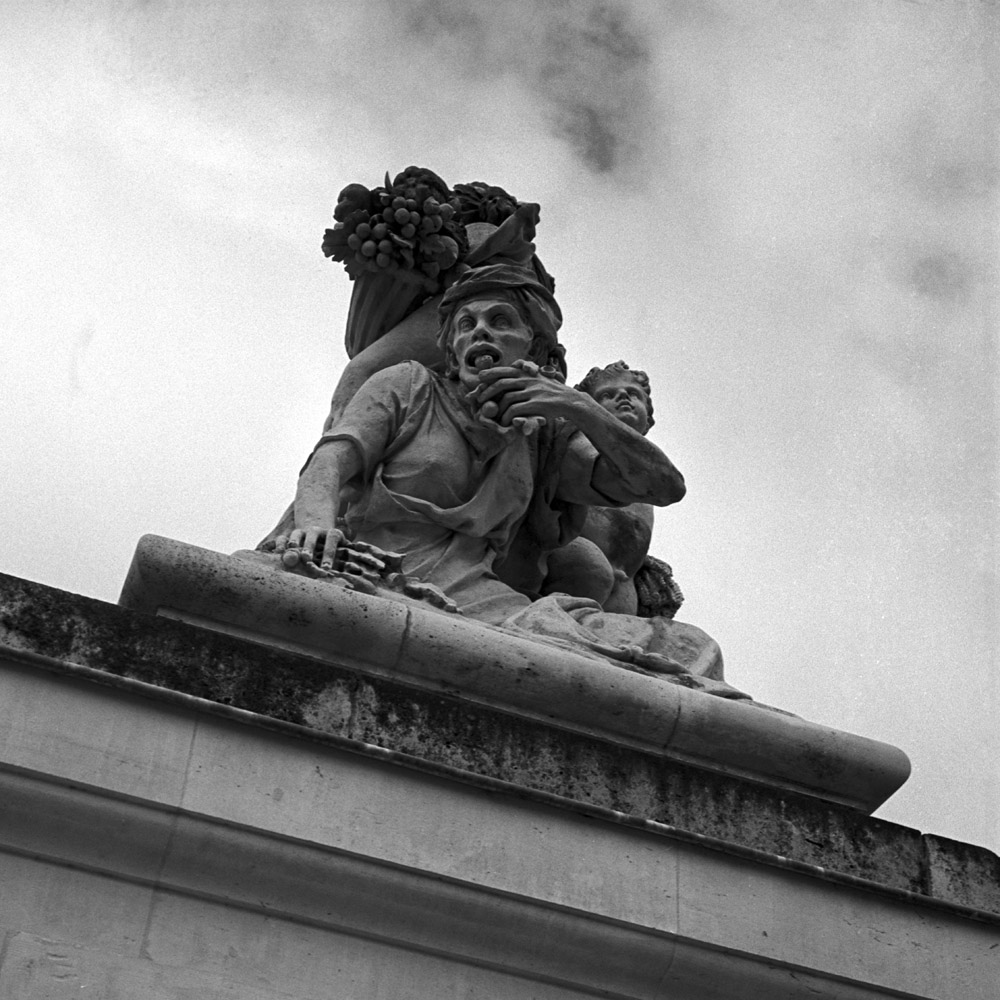
This grotesque is on the back side of one of the heroic female “virtues” at the entrance gates to the palace. Seeing this, it’s not hard to see how the peasant classes who were starving would see it as emblematic of how the nobles viewed them and took umbrage accordingly.
Grotesque, Versailles
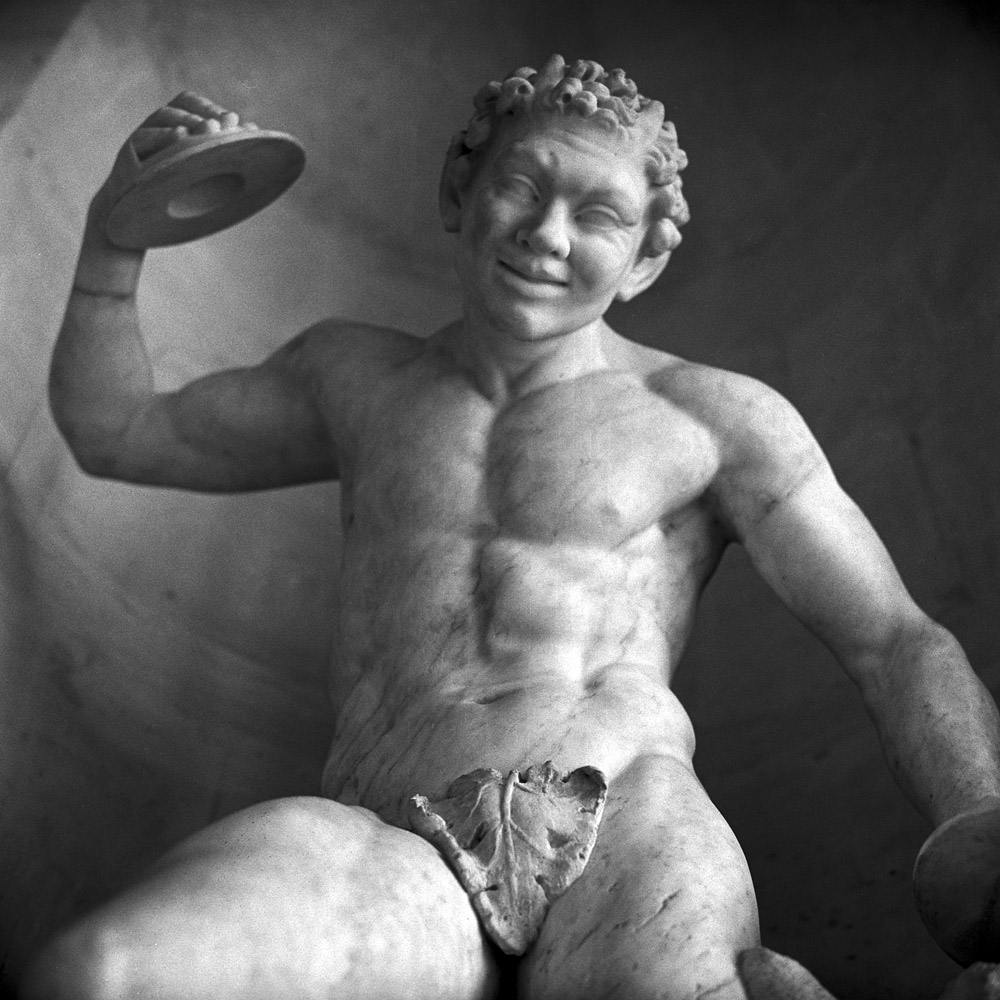
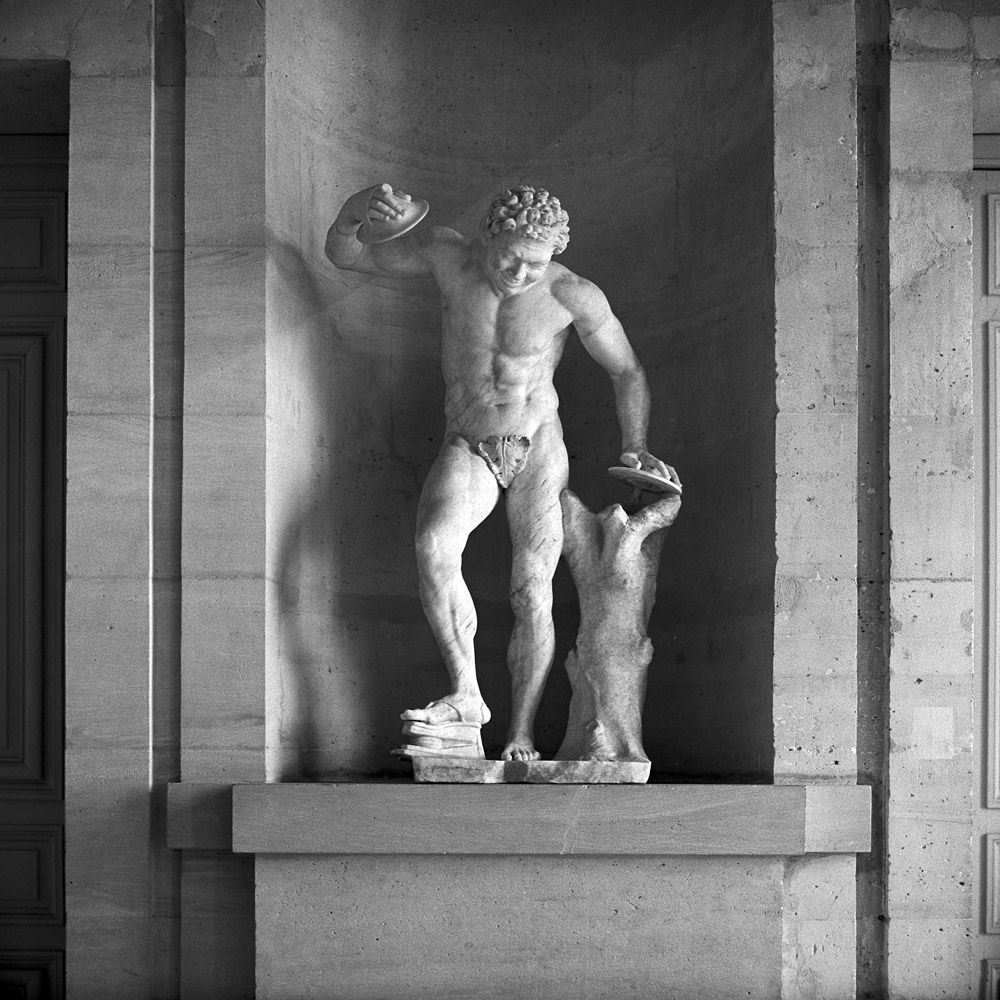
This Satyr is in one of the halls of the ground floor of the palace, relegated to a corner where few tourists venture. I suspect his fig-leaf is a Victorian-era excess, as it appears to be glued on much after the fact.
Satyr, VersaillesSatyr, Versailles
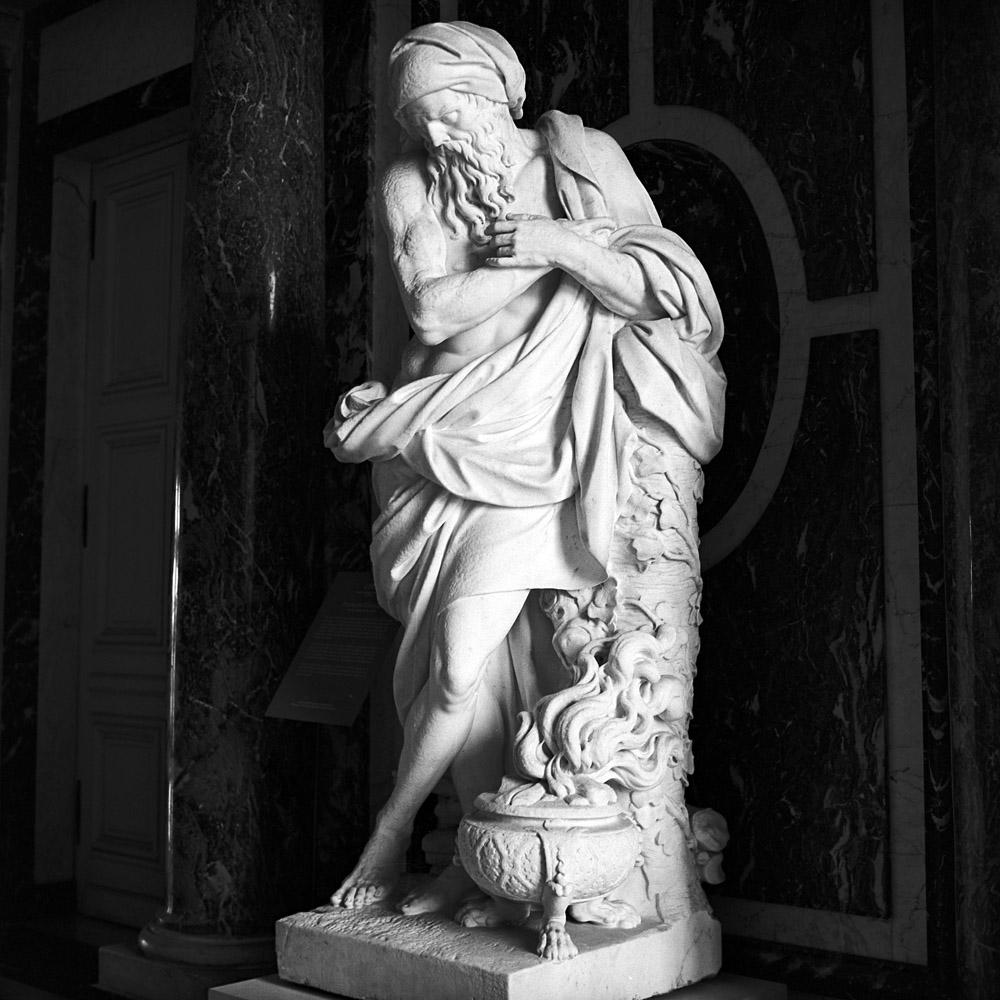
I’m not sure who/what this statue represents, but it appears to be some kind of hermit/mystic, judging from his attire and the smoking pot at his feet.
Hermit, Versailles
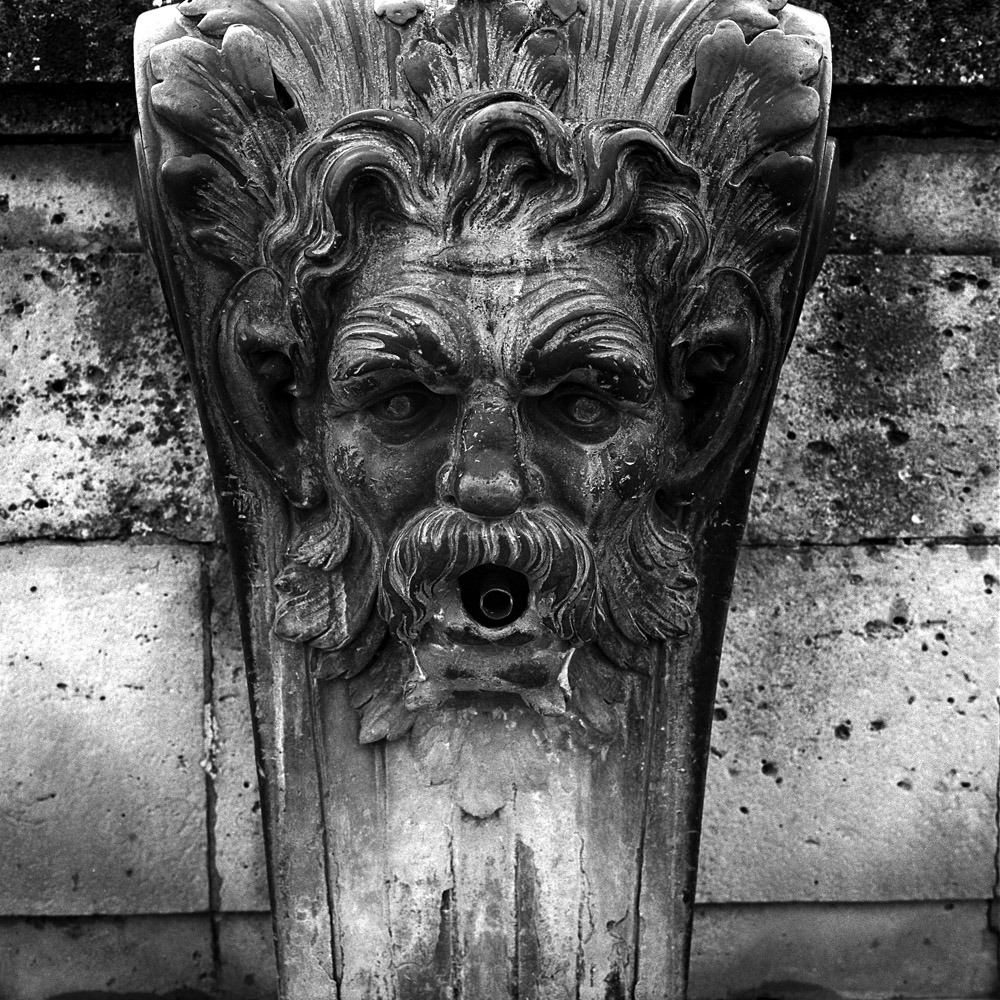
Here is a water fountain outside the palace in the main forecourt.
Fountain, Versailles
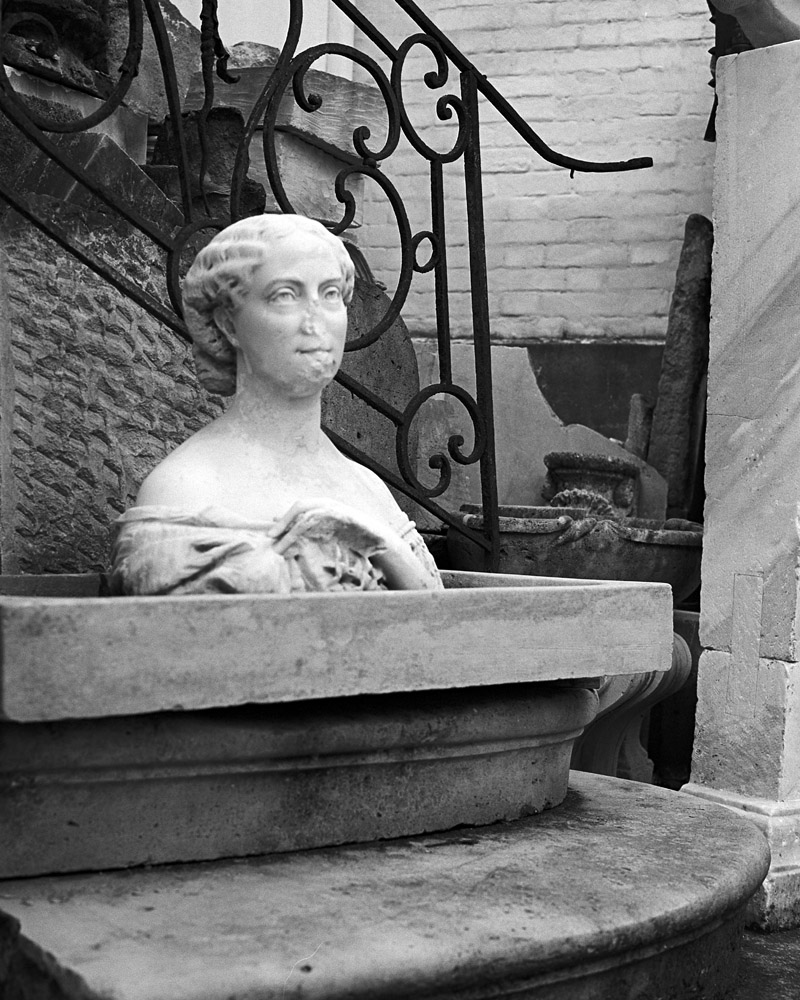
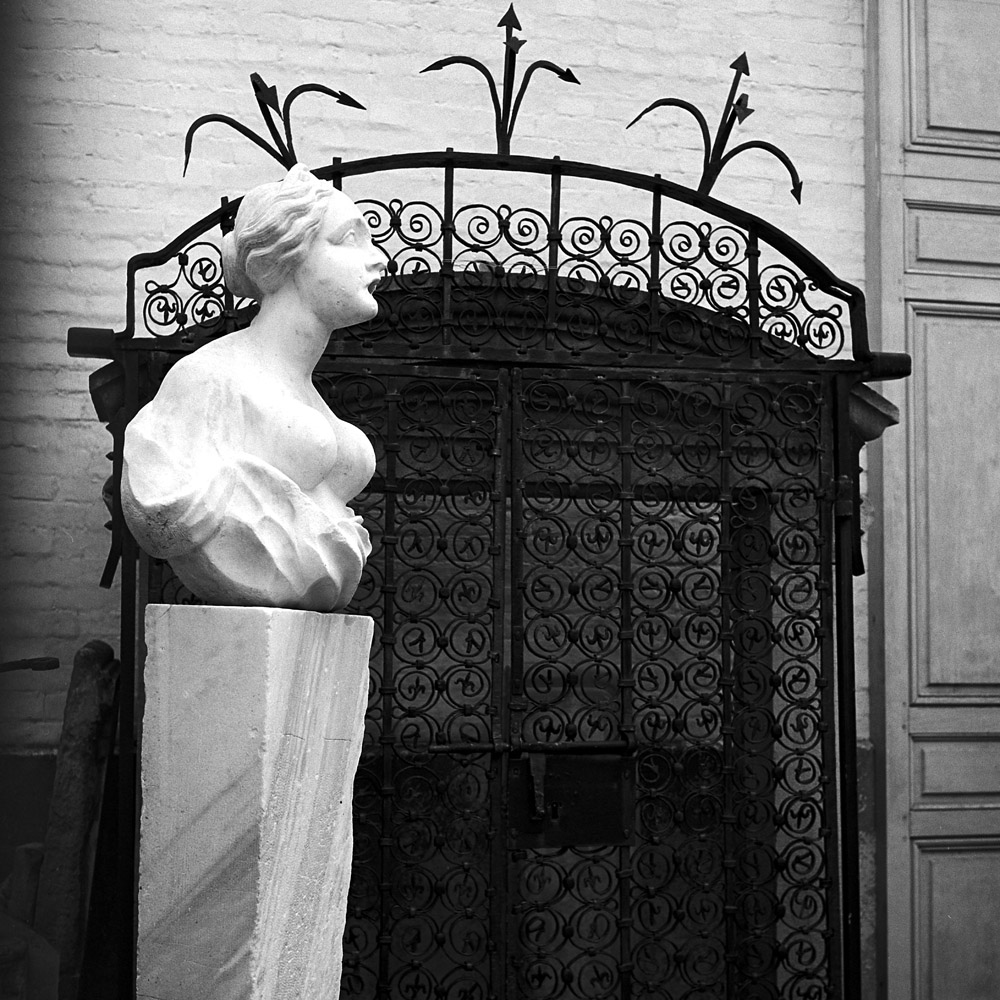
These last two were found in the town of Versailles in the outdoor courtyard of an architectural antiques dealer. A different take and a contrast to the exquisite statuary in the palace, they nonetheless have their own beauty and dignity.
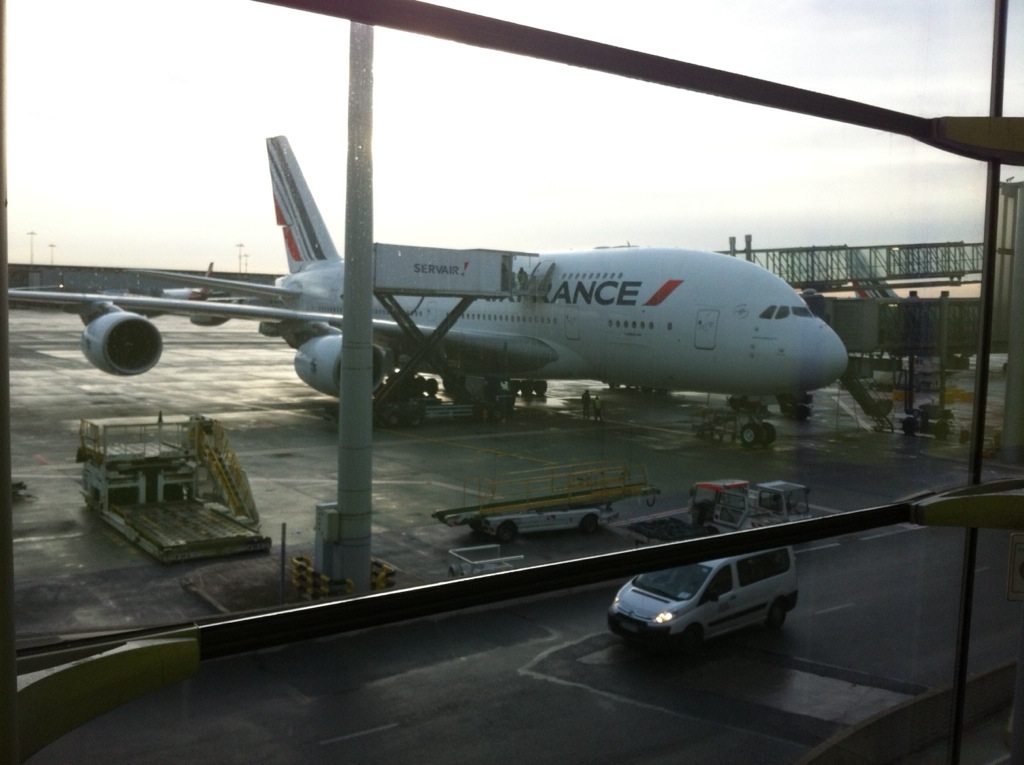
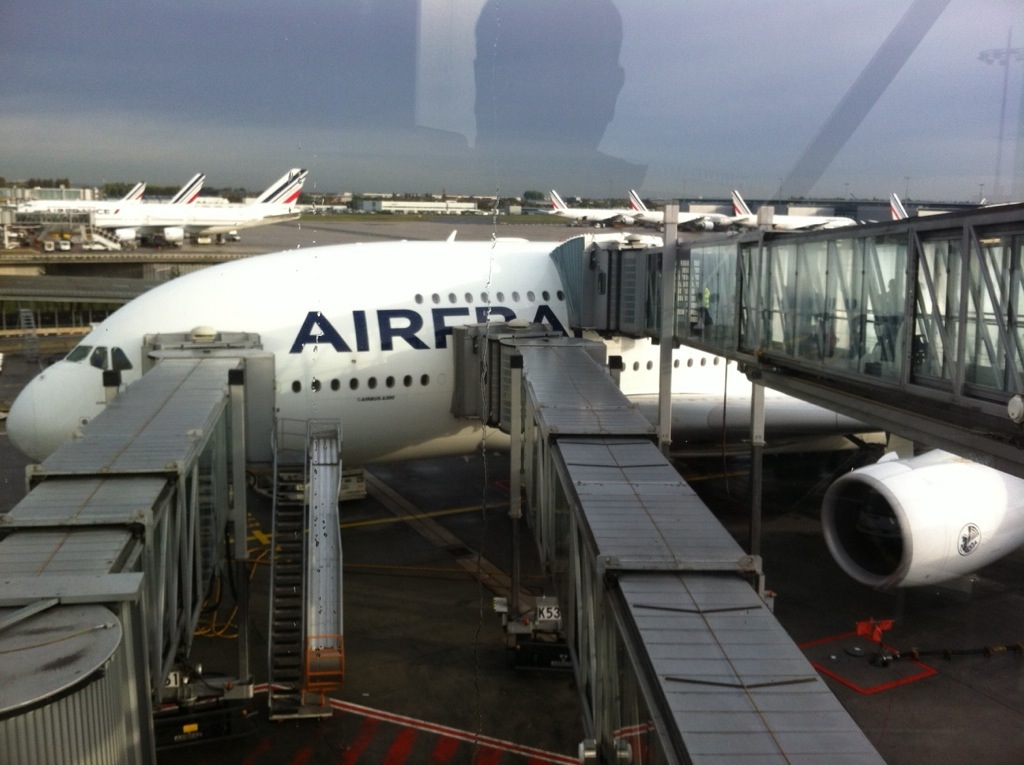
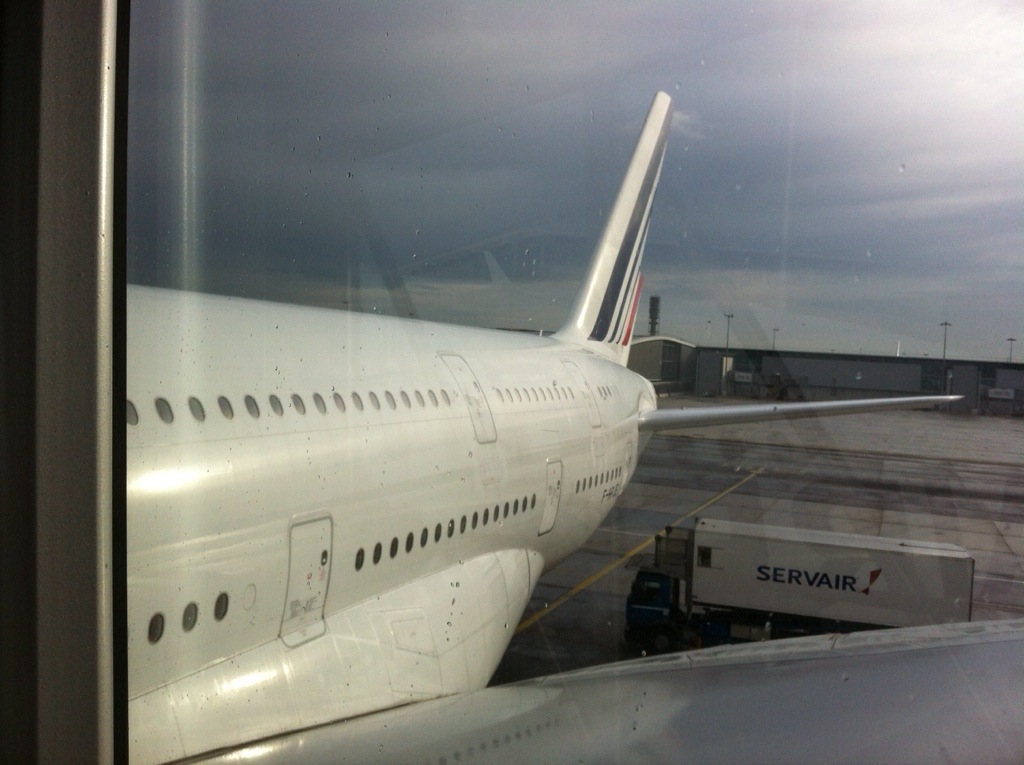
Whenever you travel, of course it involves transportation. I suppose I could call this post “trains, planes and automobiles”, although cars were the least feature of this trip for me. Starting off with planes, the return flight from Paris was on an Air France Airbus A380. I had wanted to see what one was like since they were announced back in the late 1990s. Thanks to my dad splurging on our plane tickets, we had seats in the premium economy section, which put us on the upper deck of the plane. Perhaps because of its size, the A380 was the smoothest riding plane I can recall flying in.
Here it is at the gate at Charles De Gaulle airport.
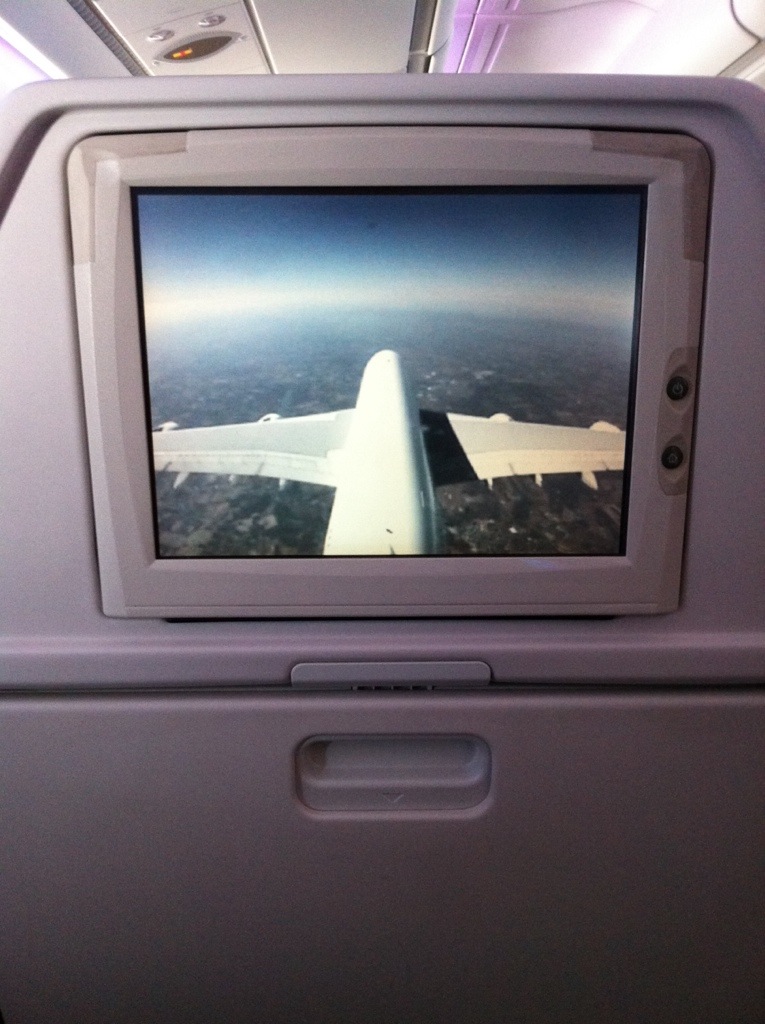
One other neat feature of the plane is that in the entertainment console in the headrest, one option is to view the tail cam. They have a camera somewhere near the top of the tail rudder that has a view of the aircraft and the landscape below it. Here it is, on the approach to Dulles International Airport:
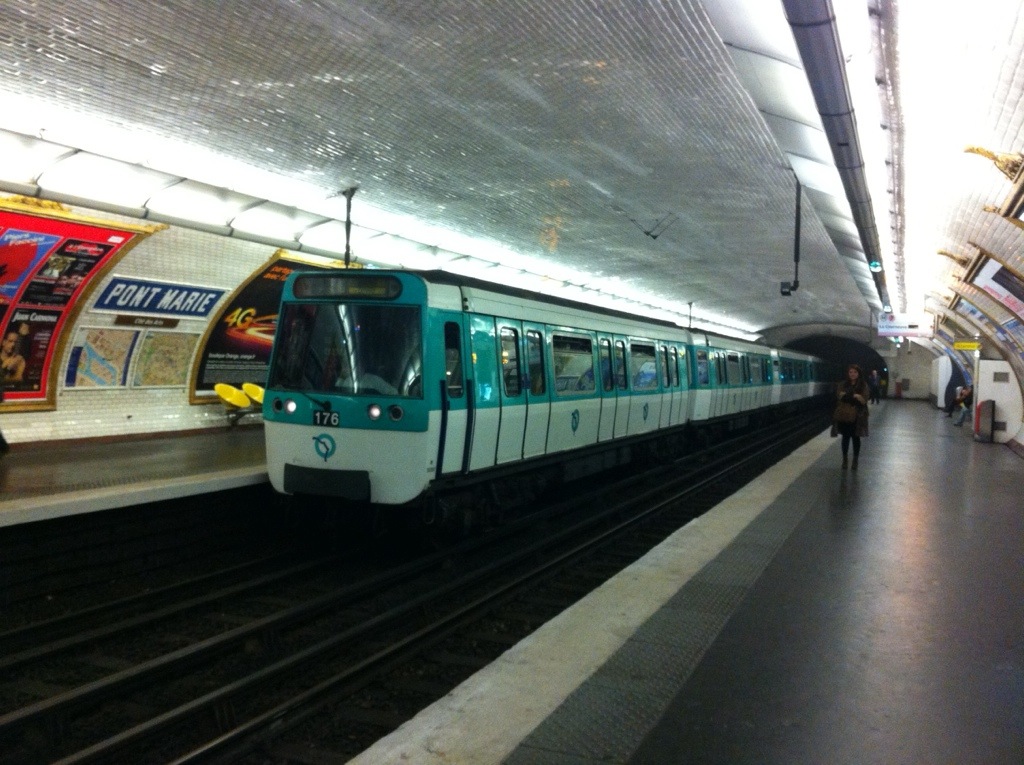
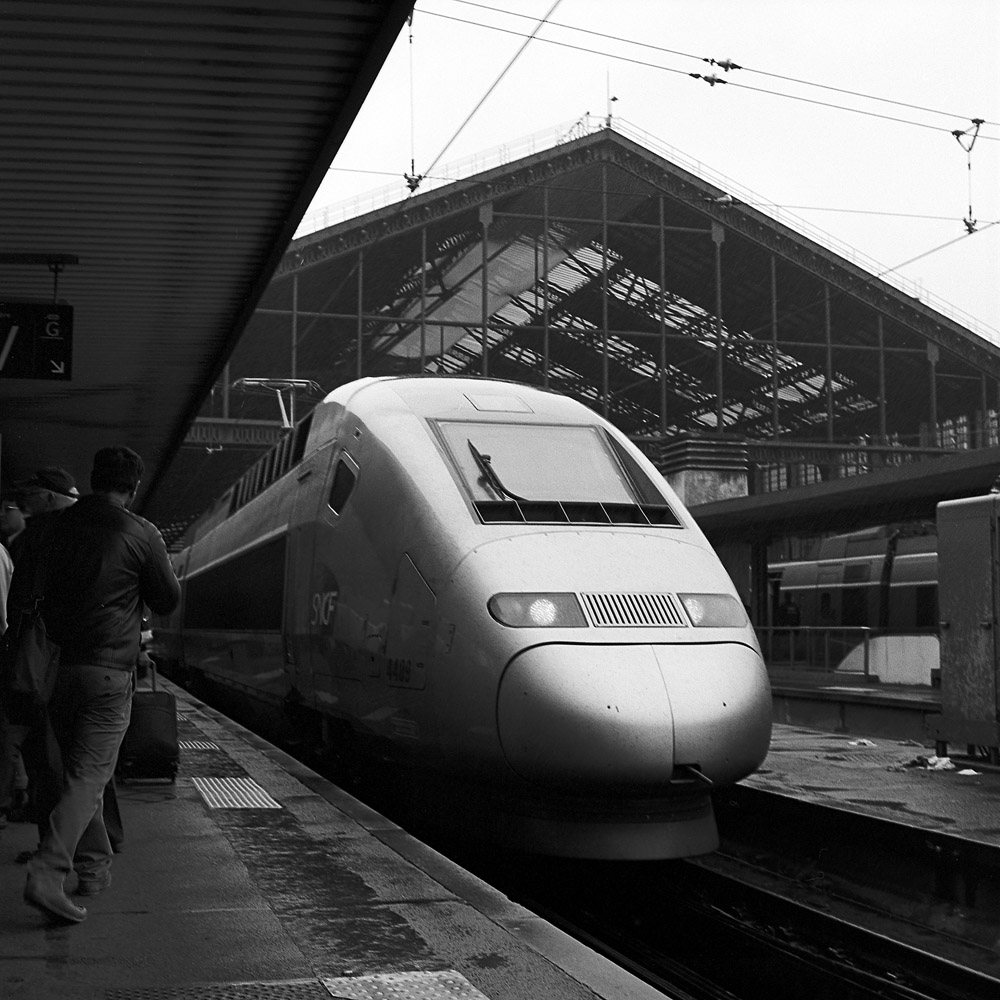
Most of my travels within France were train based. I took the Metro within Paris, a commuter train to Versailles, and a TGV to Chalon. The TGV to Chalon was not the famous super-fast train that goes to Marseilles in 3 hours, but nonetheless, it’s a fast, smooth, quiet train that pivots as it goes around curves.
Paris Metro scenes:
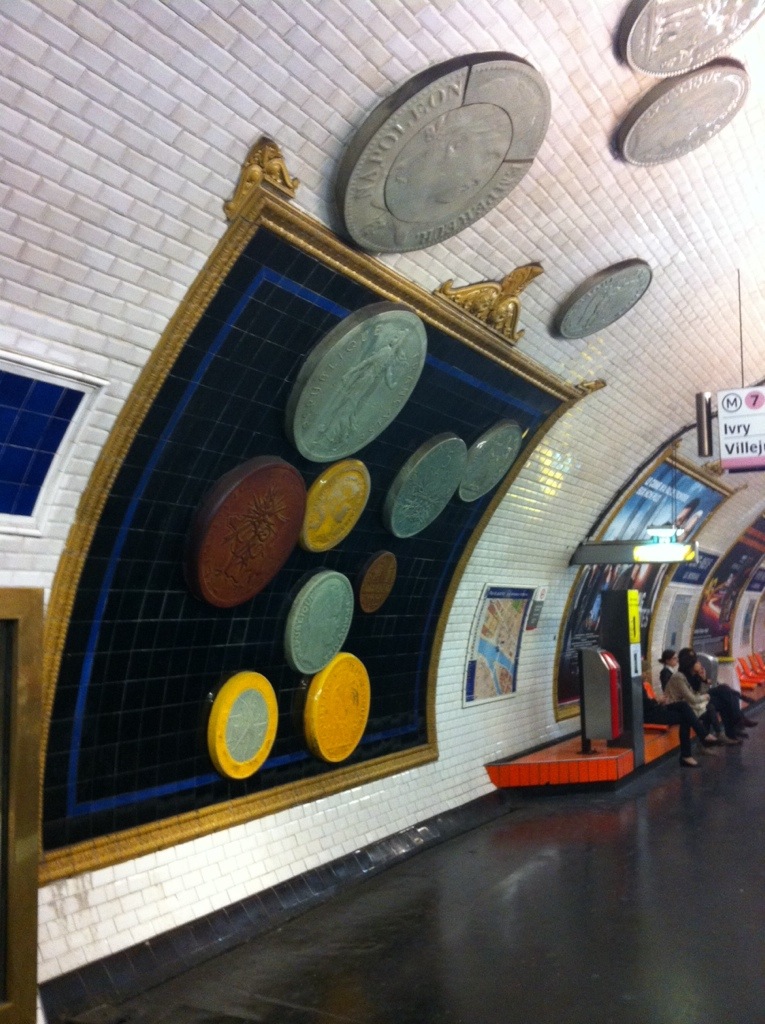
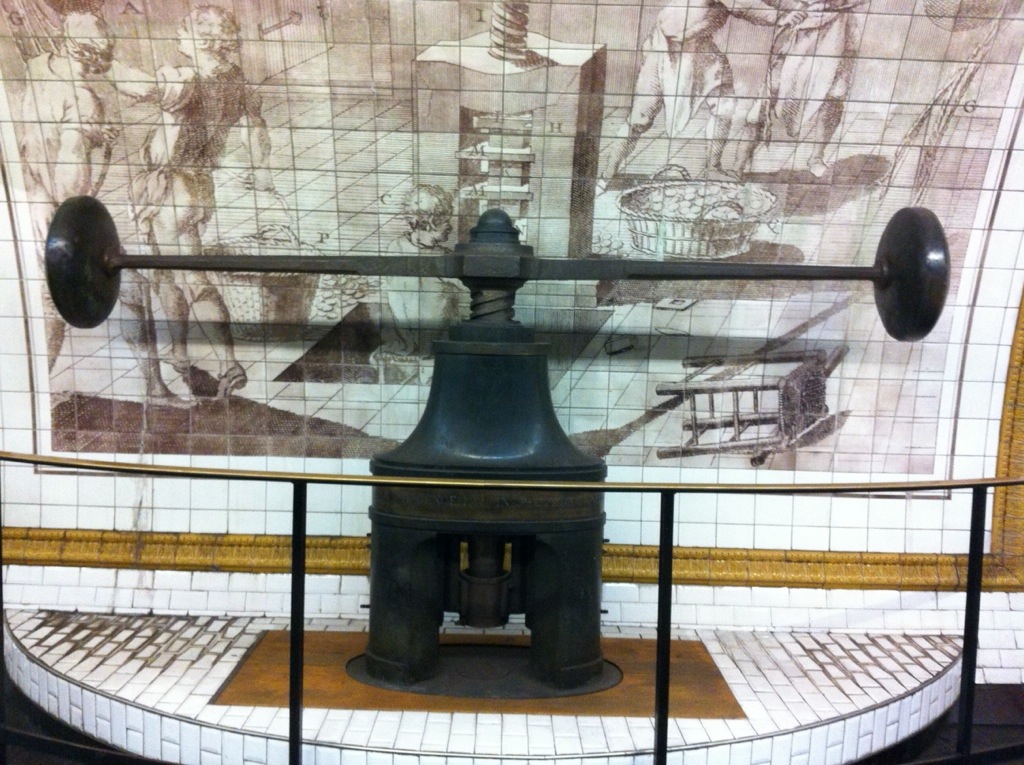
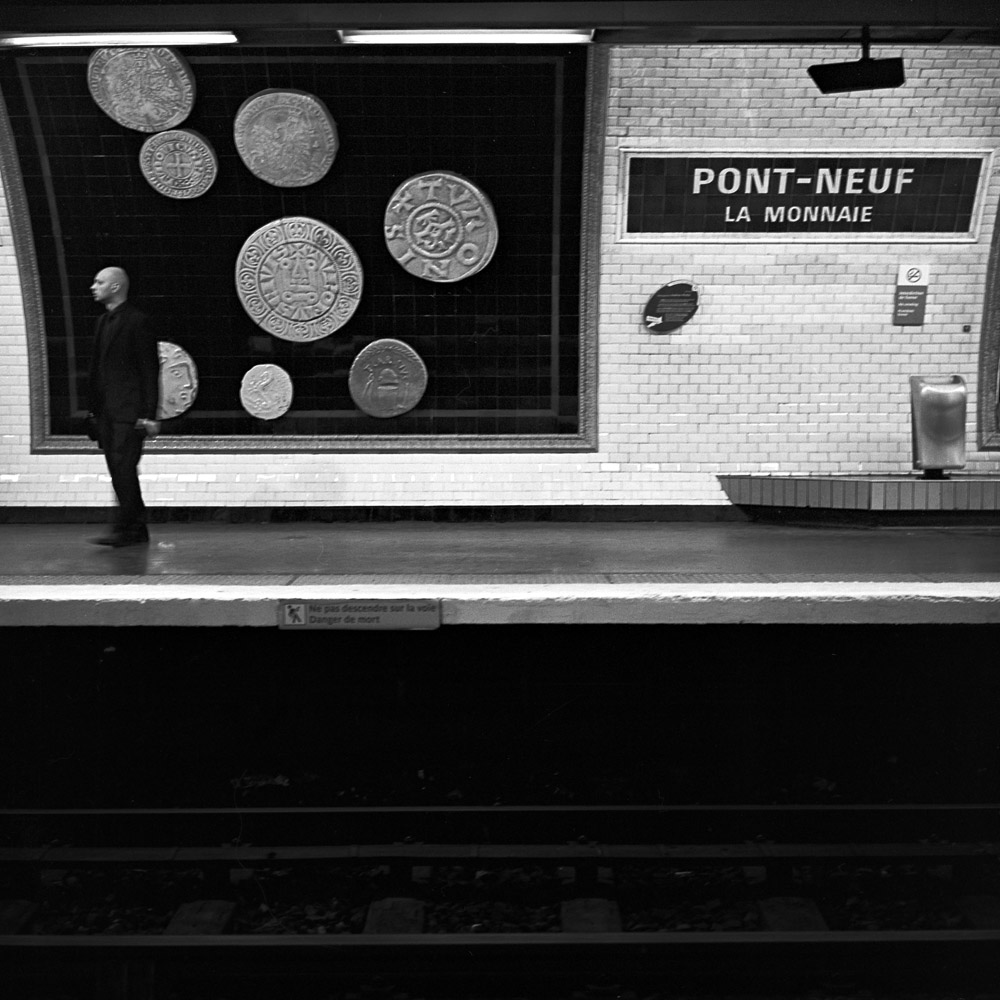
The Monnaie station (the Mint) had these large ceramic replica coins flowing up the wall, over the ceiling and on to the wall of the opposite platform. The platform also had this giant antique coin press on display:
I wish they would do things like that here in the Washington DC metro.
Here’s a take on the same station in black-and-white.
Paris Metro-Pont Neuf
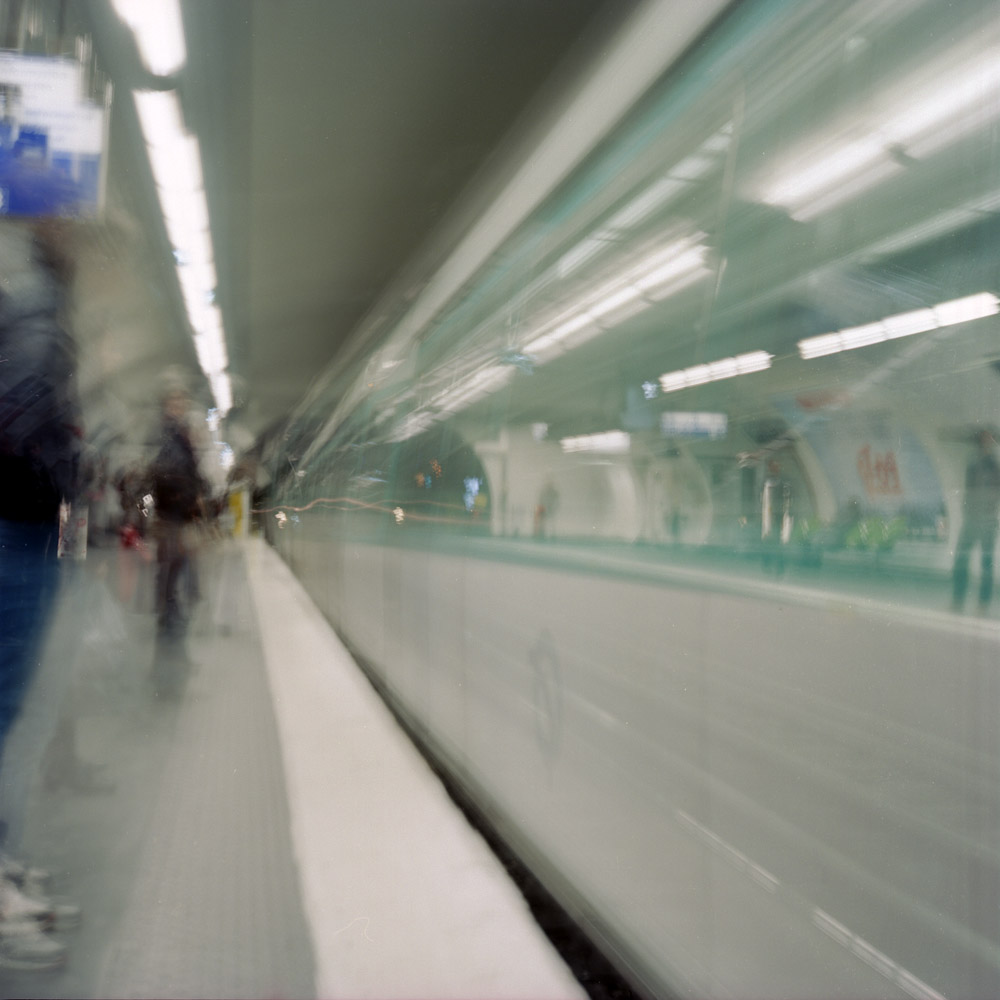
And another view of the Metro in motion:
Speeding Metro
I took a TGV from Paris to Chalon-sur-Saone to go visit the home of Nicephore Niepce, the original inventor of photography. To say that my train trip was an adventure would be fairly accurate – my first train, which was supposed to take me directly to Chalon, instead took me to Besancon, which is a scant 60km from the Swiss border. I had to take three more trains to end up in Chalon, two and a half hours after I was supposed to arrive there.
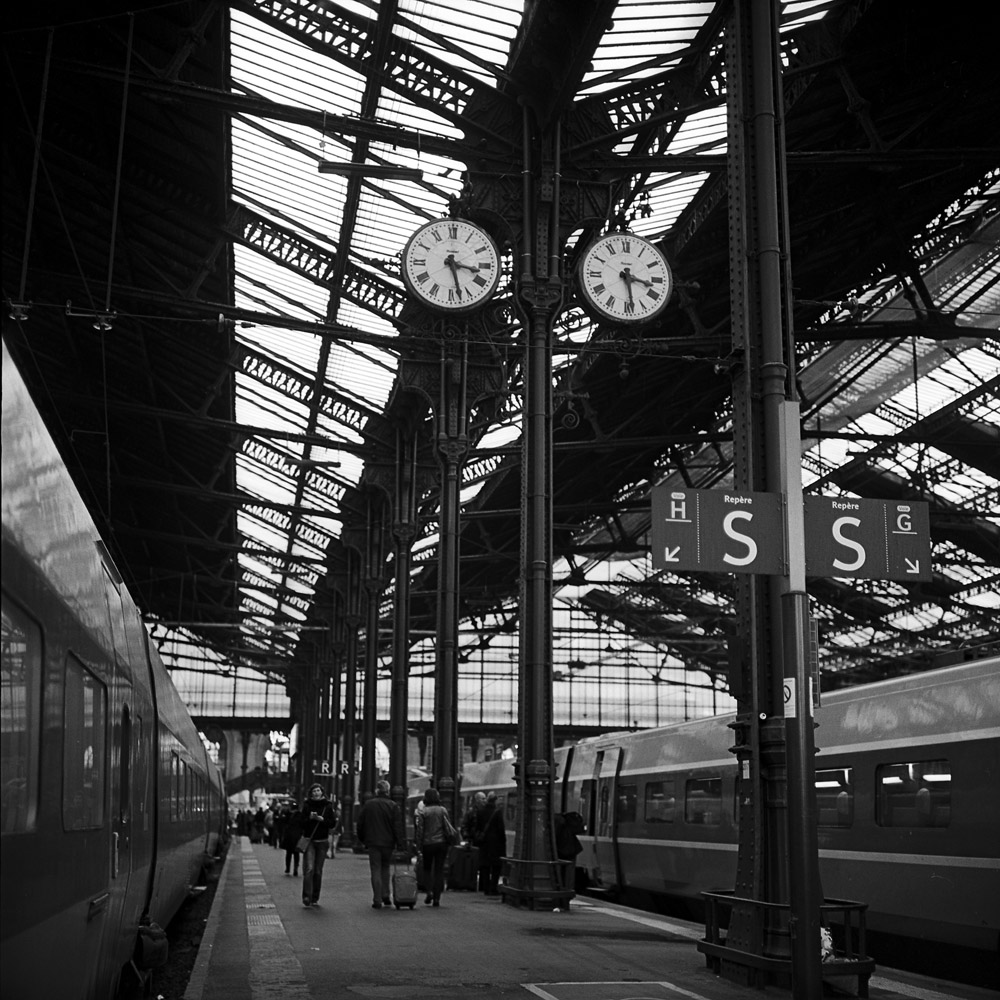
It all worked out ok in the end, and the return trip was far less adventurous. Here is the Gare D’ Lyon, my starting (and ending) point in Paris: TGV, Gare D’ Lyon
My apologies for the very long delay in writing. Did you all miss me? Part of it was just a general busy-ness and part of it was that I was traveling to Paris for ten days, then waiting for my color film to come back from the lab, and processing and scanning my black-and-white work. Paris was a blast – I have to say it was an orgy of great food – I did not have a single bad meal, or even a humdrum one, in the entire 10 days. Well, ok, the breakfast at the airport on the day of the return flight was, well, airport food, but that doesn’t really count. I’d say the meals on Air France made up for it. I’ll save the rest of the food chat for another post – I took pictures of most of my meals.
I took only one camera with me on this trip, the Rolleiflex. It has only one focal length, and is entirely manual. I know to some folks, shooting their entire vacation with a normal lens would be heresy. I found that in actuality, there were perhaps a half-dozen photos that I took that in retrospect would have been better with a different focal length, and another half-dozen to ten that I didn’t take because they wouldn’t work with the focal length I had. This out of almost 400 frames (33 rolls of 120, 12 frames/roll). I kept my film palette largely restricted to two films – Kodak Ektar 100 for color (with two exceptions) and Tri-X for black-and-white. I did make the mistake of dragging along with me a whole bunch of additional film that I didn’t need to bring (way too much alternative black-and-white film, like some Ilford Pan-F and FP4+). The color exceptions were some Portra 160 for long night-time exposures and some Portra 800 for low-light where I could only hand-hold the camera.
I’ll start this series of posts off with a pair of highlights: the Eiffel Tower and Notre Dame Cathedral.
The Eiffel Tower:
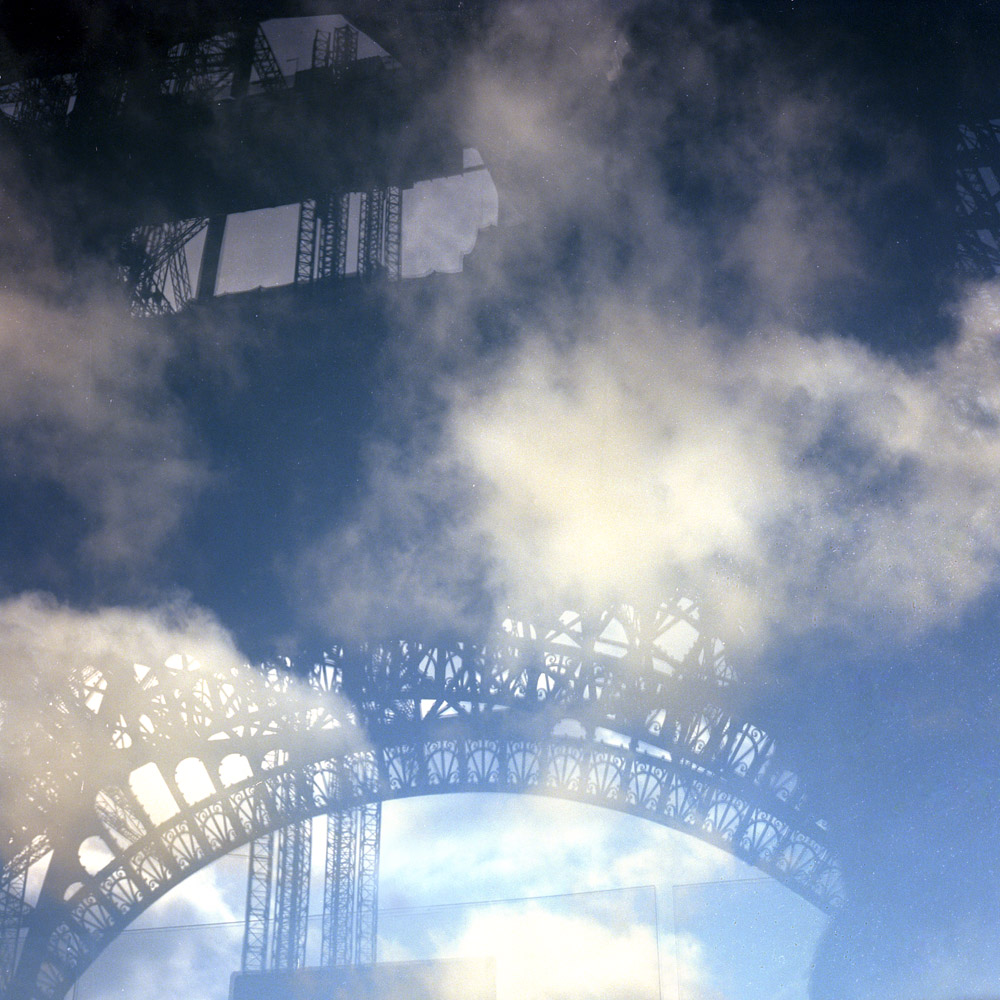
Eiffel Tower Shadow, Clouds
This was a happy catch. I saw the shadow of the tower and the clouds passing overhead reflected in the glass of the security partition for the queue to enter the Eiffel Tower. I took a chance that it would work, and voila! (Tish, that’s French!!!) I was afraid that it would come out fuzzy because I was trying to focus on two different things that were not actually on the plane where they appeared (the security glass partition) and the color balance would be impossible to get right because the anti-shatter coatings on the glass created a bit of a prismatic effect. There’s still a touch of yellow in the clouds I couldn’t eliminate but otherwise it wasn’t too bad.
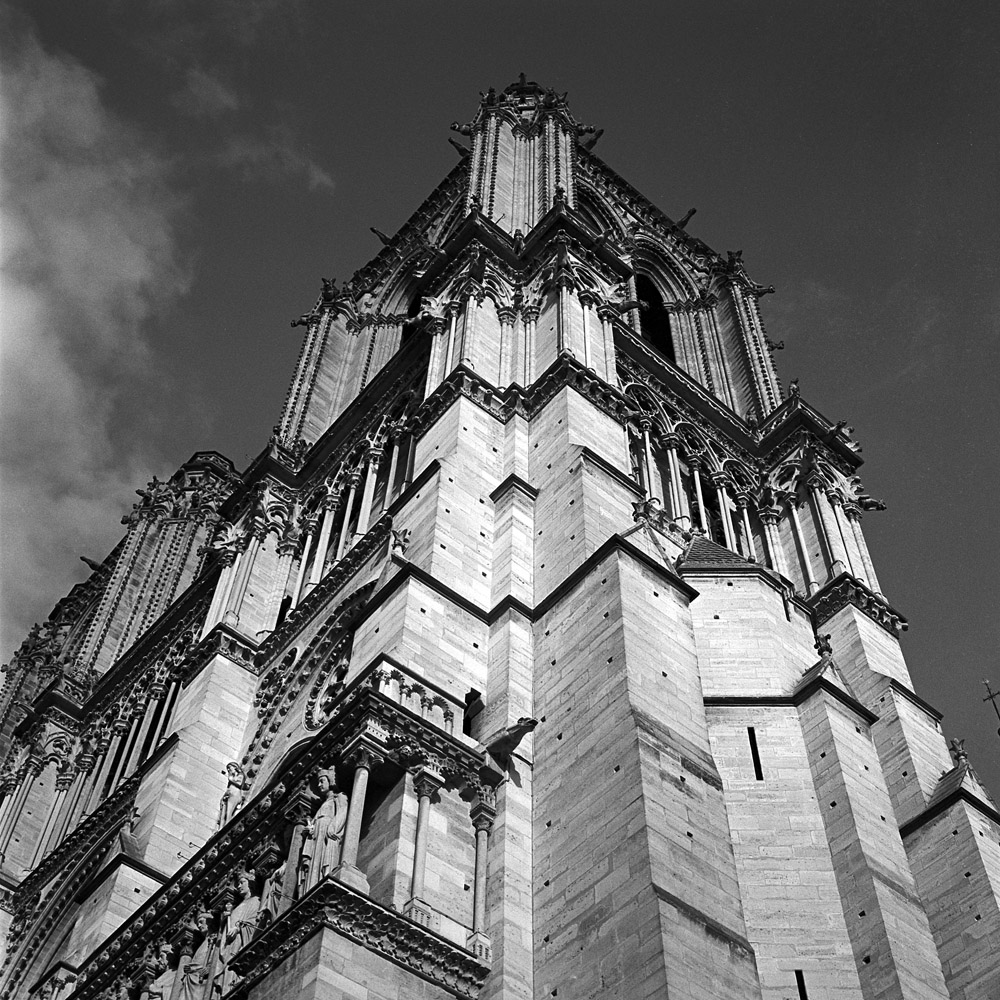
Here’s a shot of Notre Dame Cathedral, taken from a different perspective.
Towers, Notre Dame Cathedral
Notre Dame is actually a challenge to photograph because it has a very direct east-west orientation, so for much of the day, the facade that you want to see represented is facing west and in shadow/backlit. I was able to time this photo in the late afternoon so it was well illuminated.
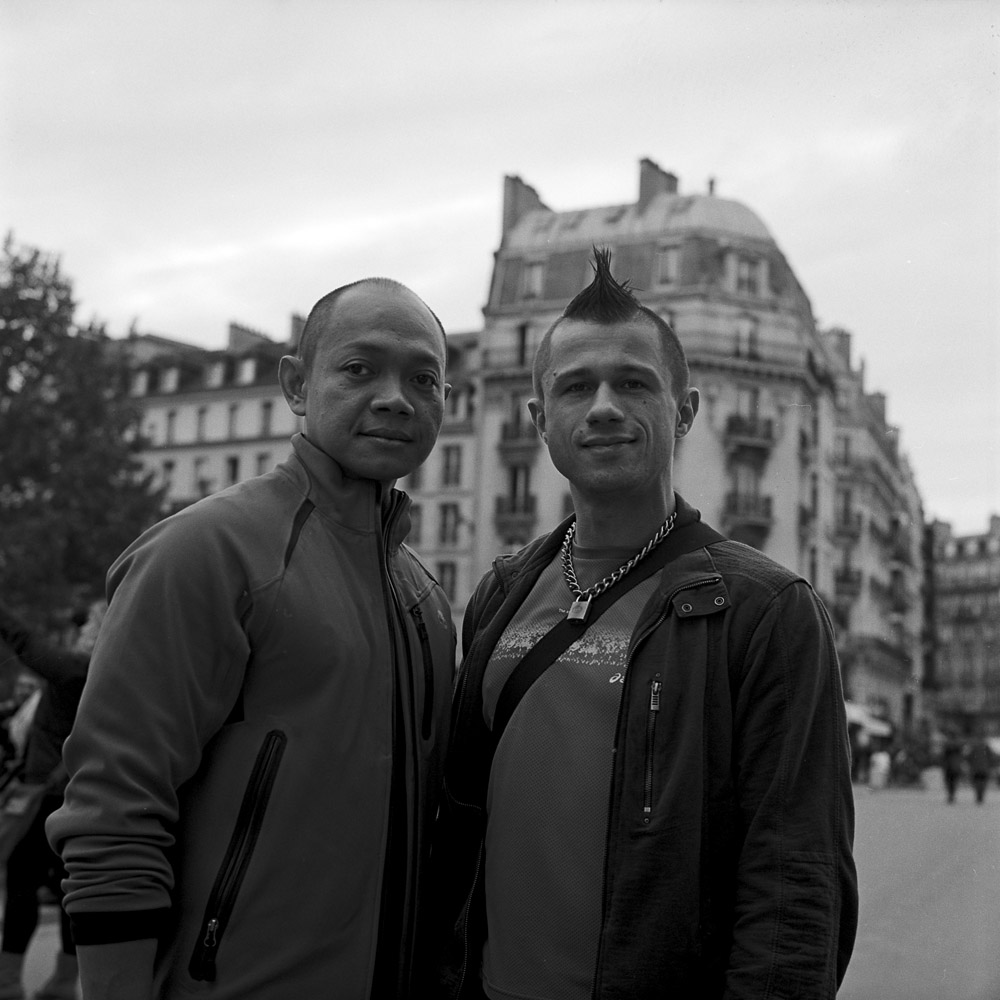
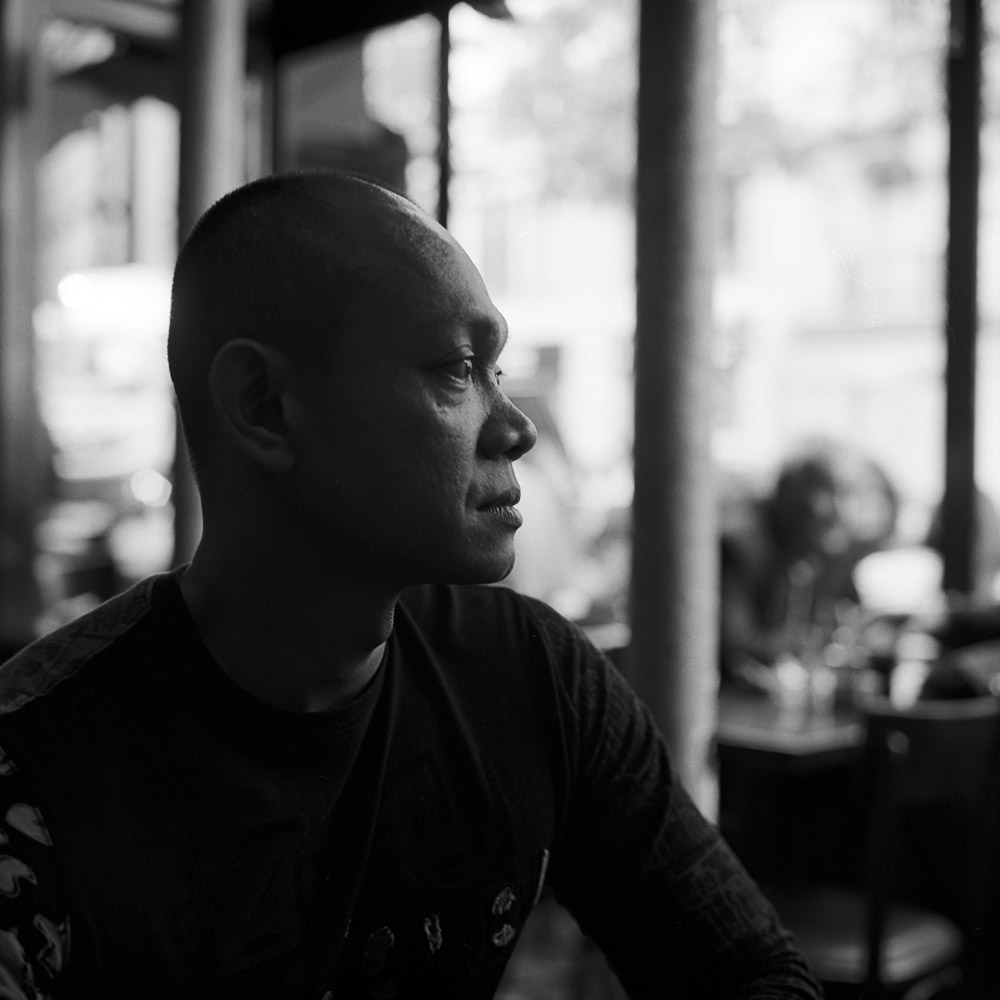
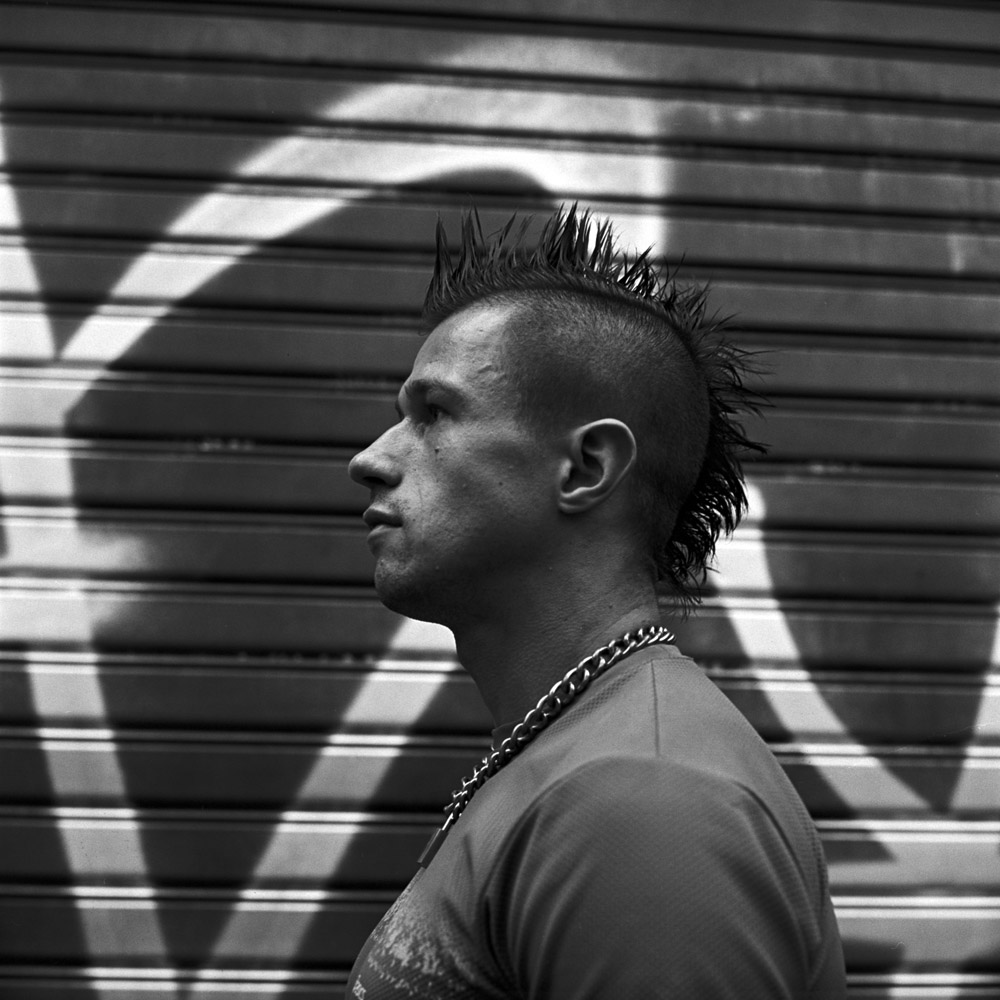
The Rollei made for a perfect travel camera – phenomenal image quality, very easy to handle, and because it is so quiet (no mirror slap, the leaf shutter just makes a little ‘snick’ when it fires) it is great for candids. Thinking of which, I did grab a couple portraits of friends of mine who came over from London to visit. They recently moved there from Singapore. The last time we saw each other in person was 2003, so almost exactly a decade apart. Gosh have we all changed, but it was so great to see them again.
Mirza and PeterMirza, Cafe Le ProgrèsPeter, Profile, Blvd St. Martin
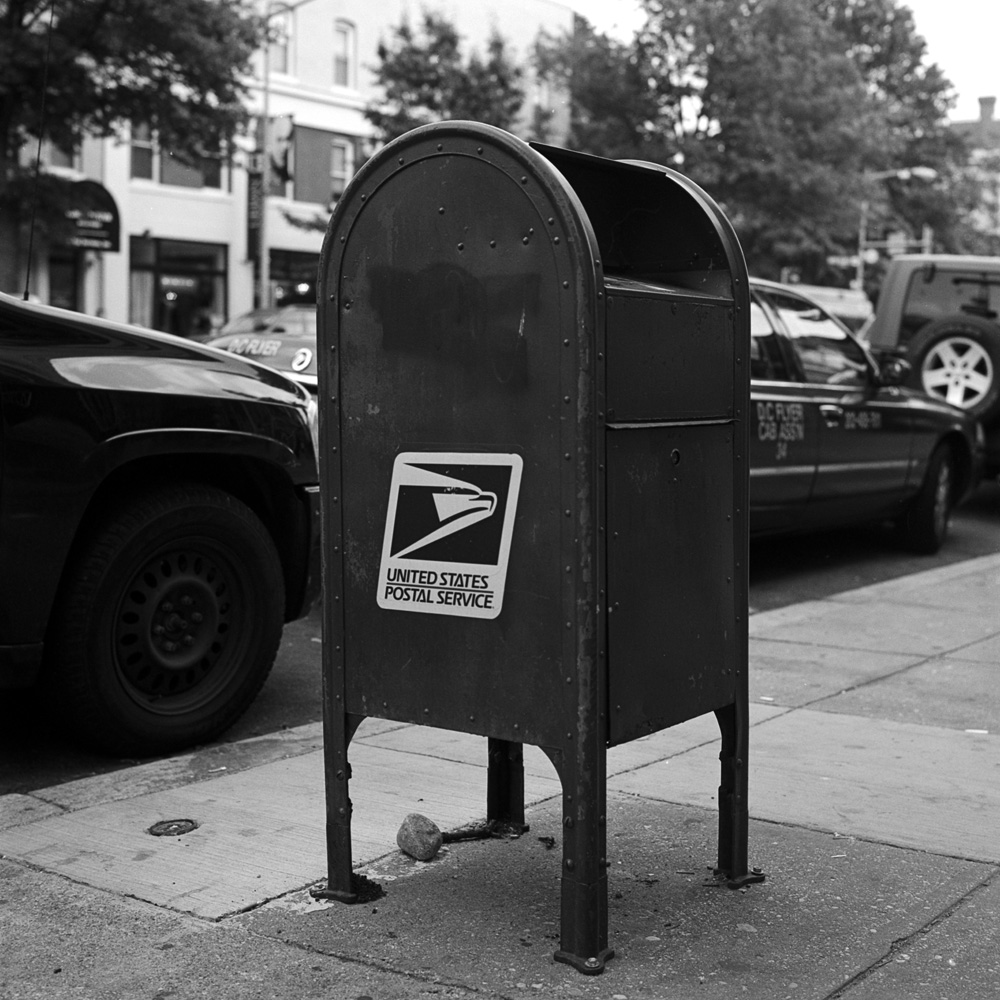
Everyday Objects- PlanterEveryday Objects- Washington Post Paper BoxEveryday Objects- Mailbox
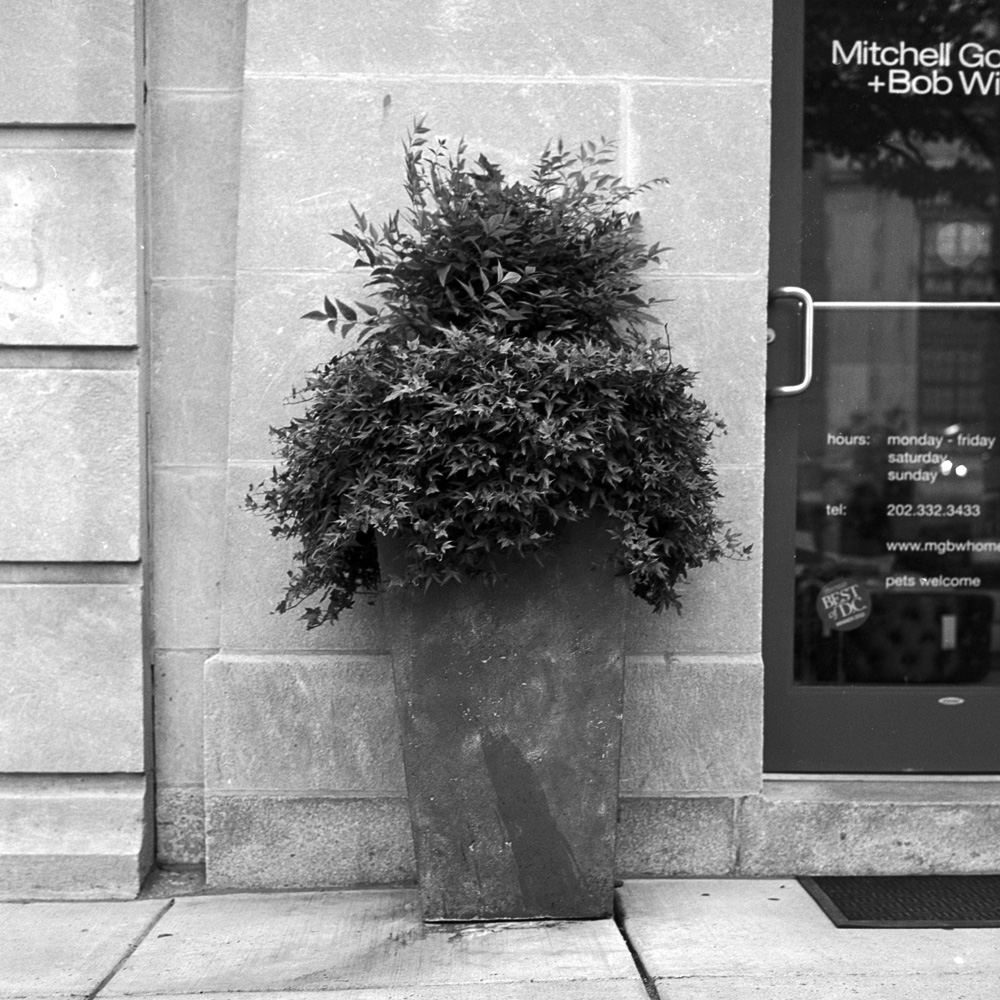
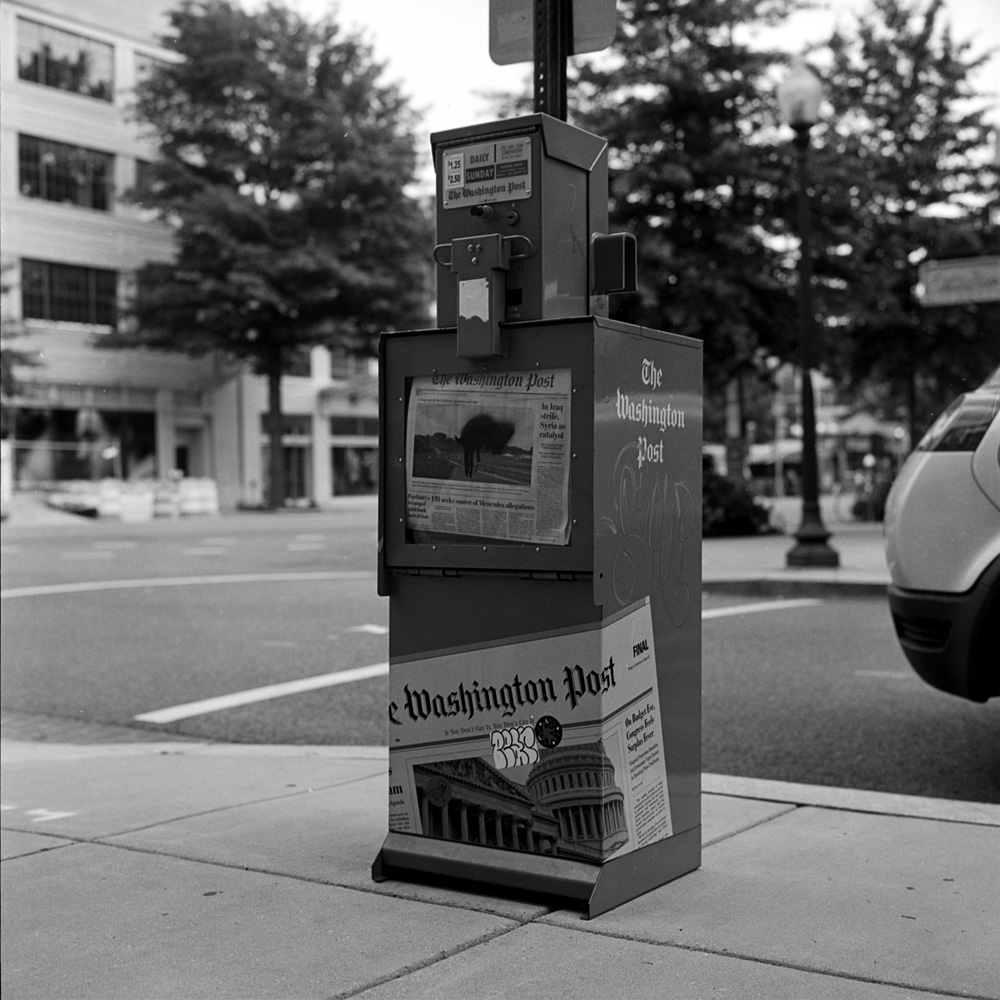
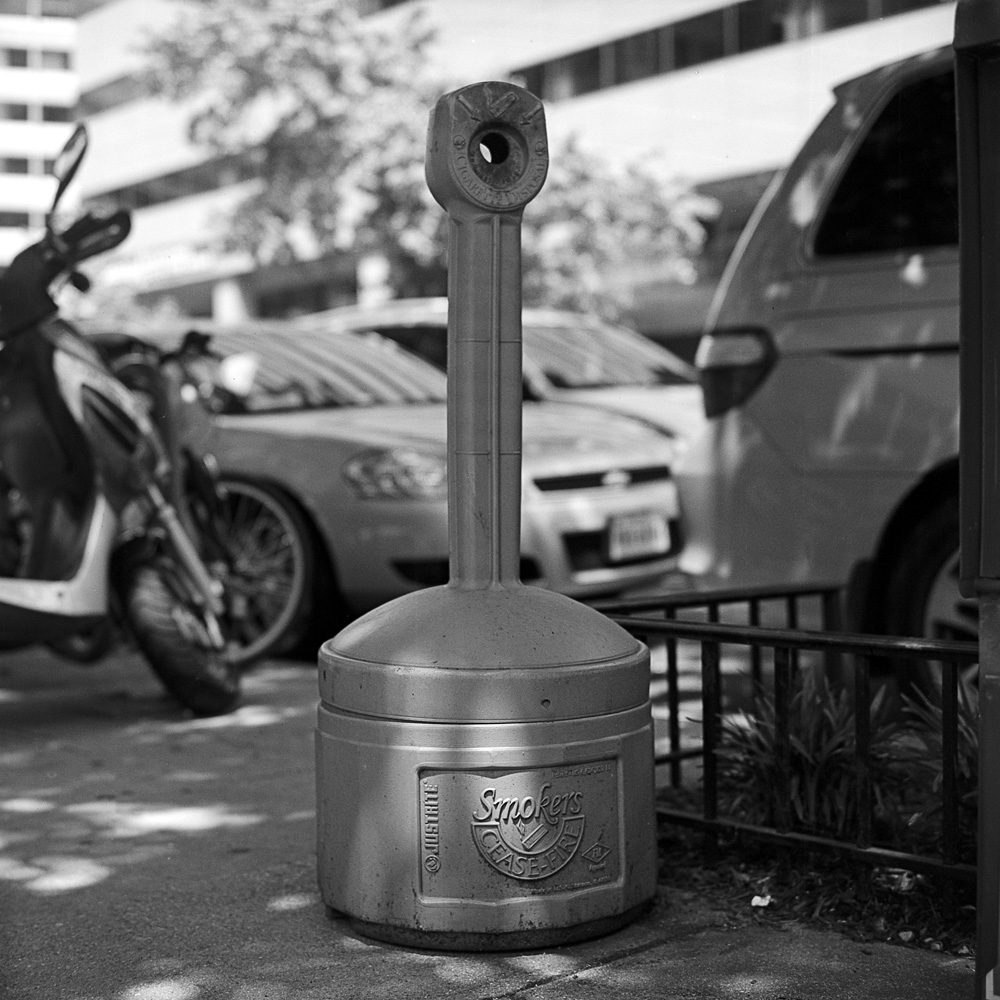
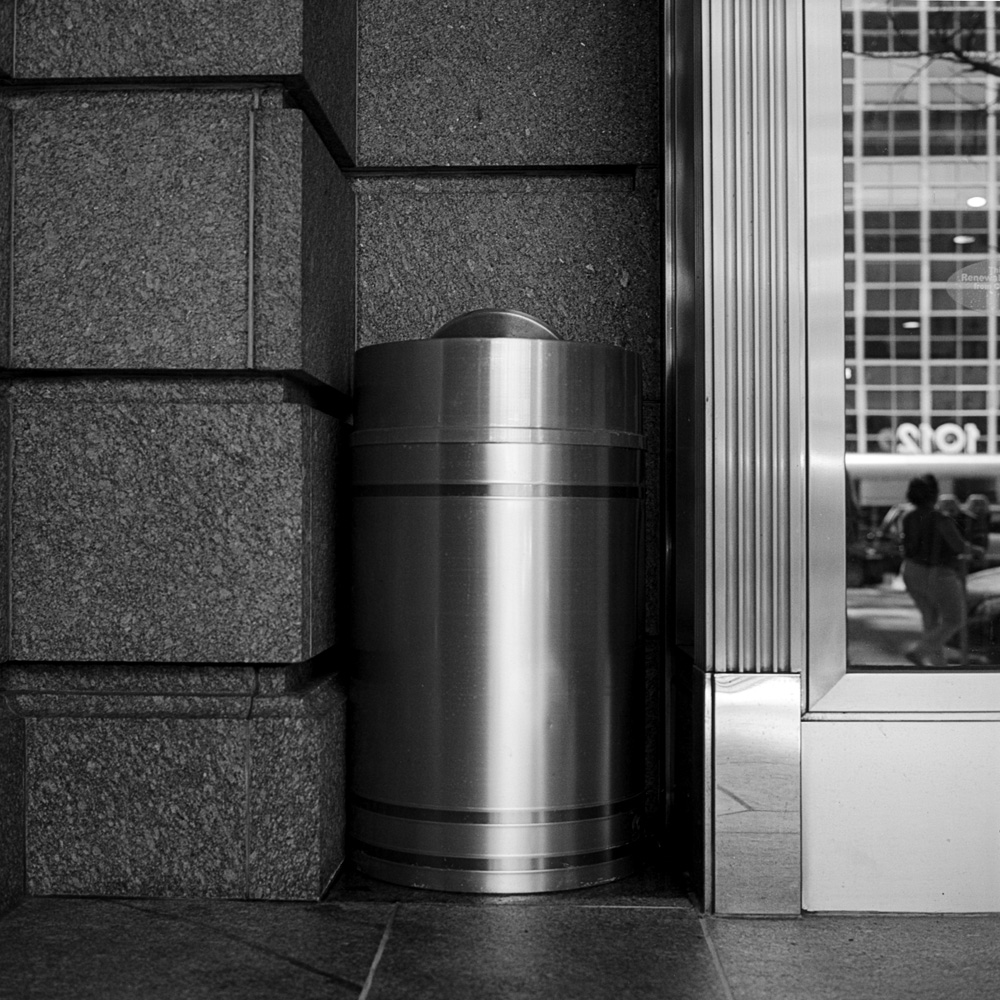
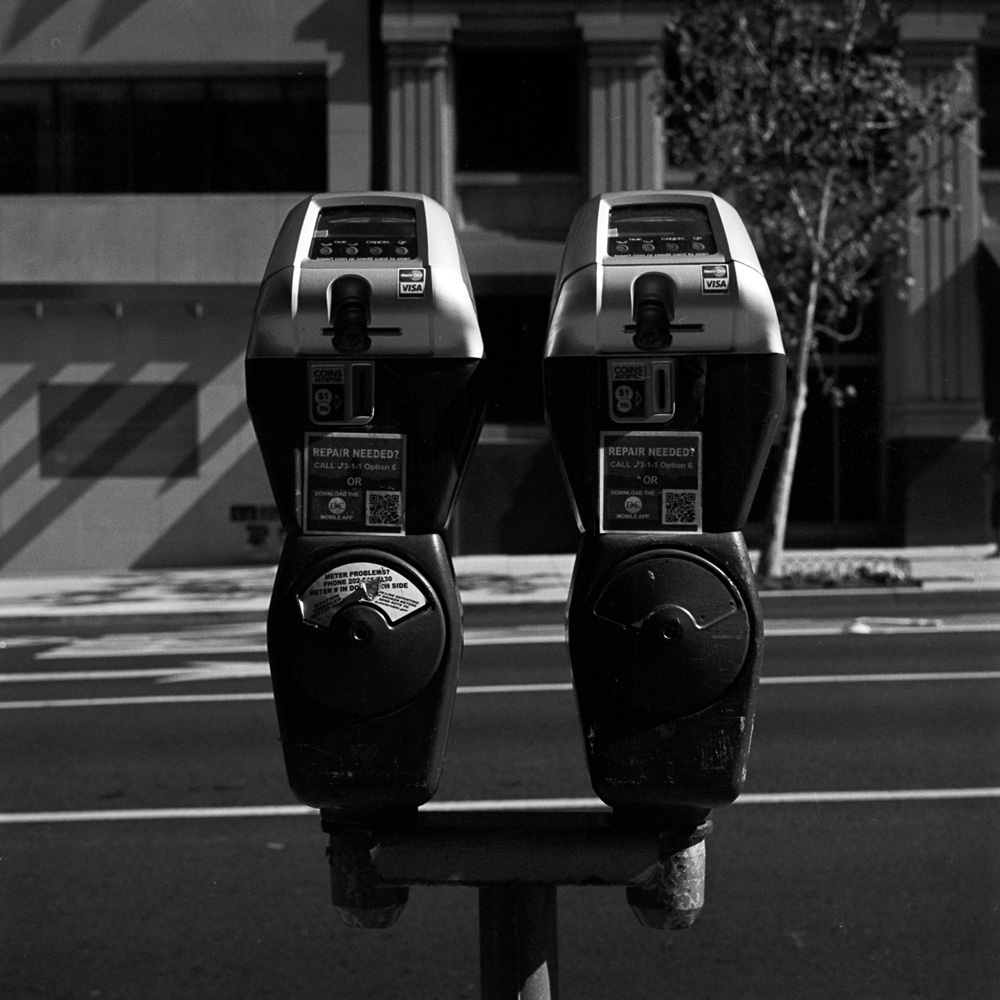
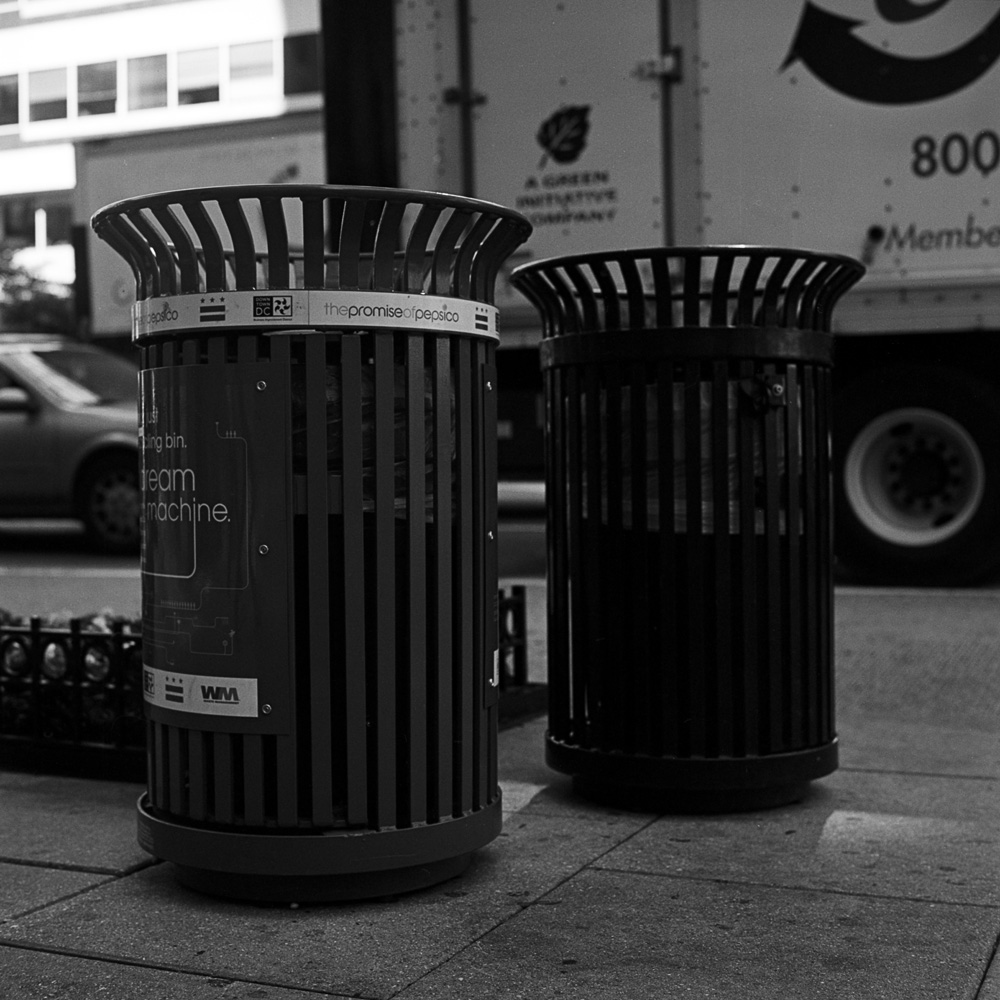
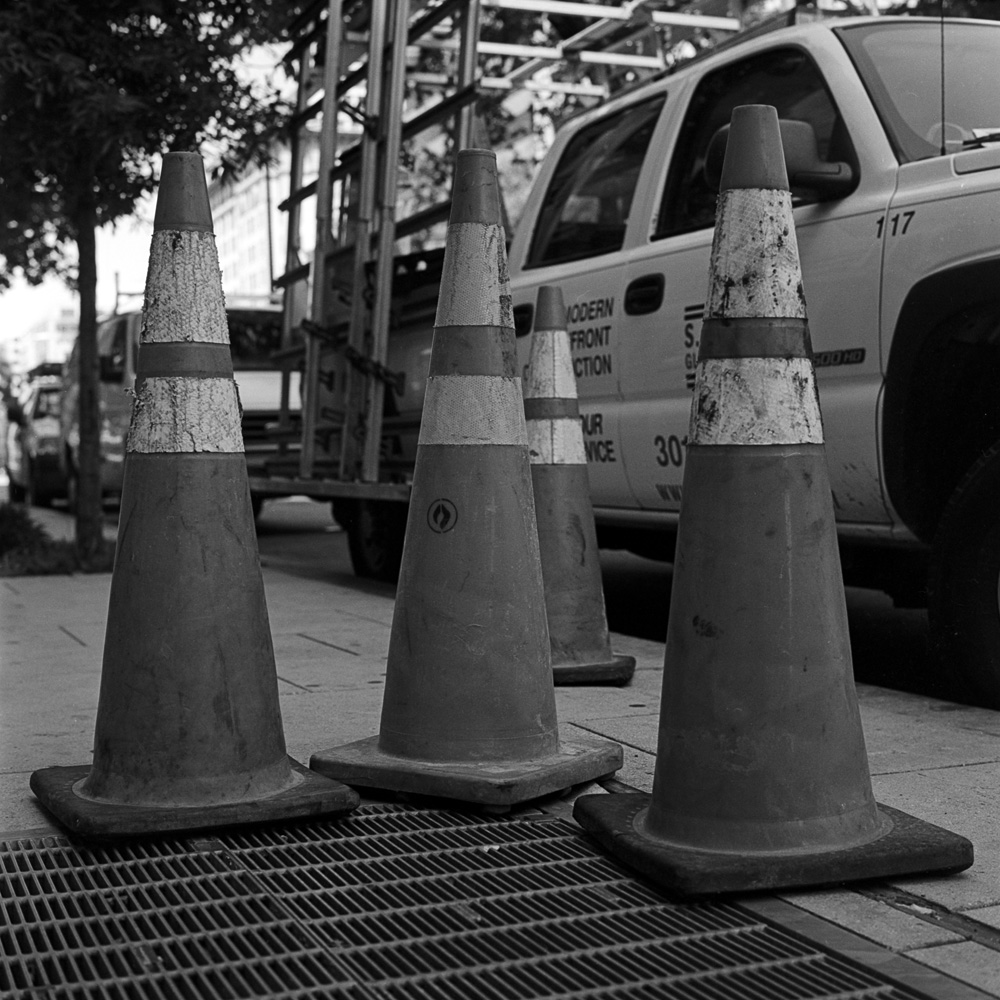
Here’s some more of a new series I’m working on – portraits of everyday objects. I want to show things we pass every day but don’t pay attention to as if they were subjects deserving of portraits. These are by definition environmental portraits, as these things are found in our environment, not in a contextless studio.
Smoker’s PotChrome TrashcanTwin Parking MetersCouple – Recycling BinsTraffic Cones – Family Group
This is the start of a new series I’m working on – portraits of everyday objects. I want to show things we pass every day but don’t pay attention to as if they were subjects deserving of portraits. These are by definition environmental portraits, as these things are found in our environment, not in a contextless studio. I’ve done a few before in color, but I think the black-and-white lends them a certain formality that elevates them from record shots.




 dcphotoartist