Here begins my Italian saga. I got back less than a week ago from my Italian excursion, having spent 12 days in Florence and Rome. I posted an odd and end from my phone while on the road, but now that I’m home I’m working my way through the 79 (yes, 79!) rolls of film I shot. I’ve got 16 processed so far, and will try to develop some more after work during the week so I don’t have to totally binge on the weekends.
If you’ve been following the blog, shortly before I went away I got a Lomo Belair X/6-12 panoramic camera. I posted a few shots I took with the 58mm super-wide lens, and that lens is, well, marginal at best. Very soft, very low-contrast, and horrendous barrel distortion. Not the kind of lens I would want to shoot a lot of architecture with, and that’s what I’d be shooting a lot of in Italy. I brought it with me just in case, but kept the 90mm lens on the camera and ended up shooting exclusively with that.
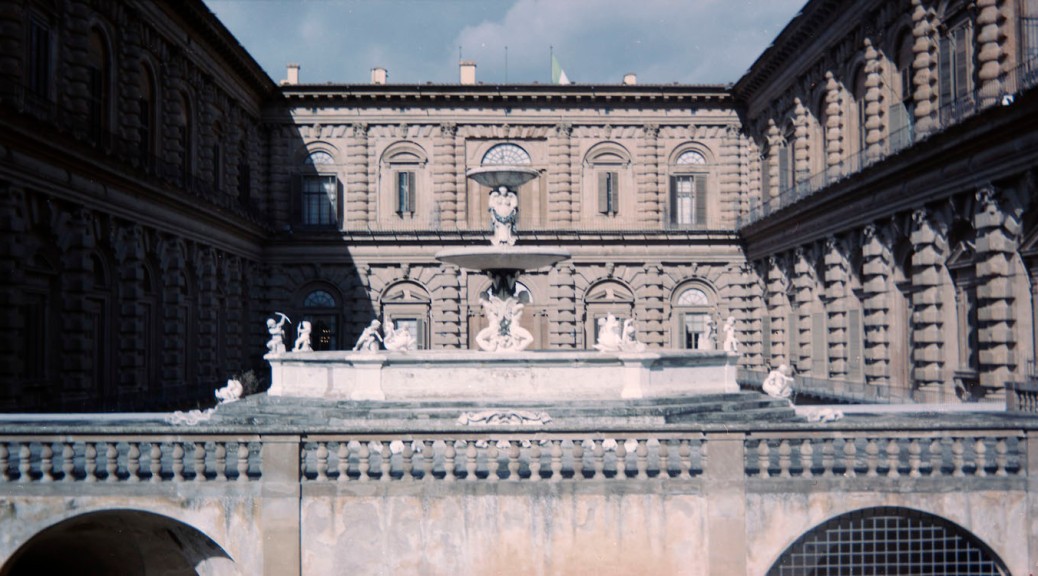
This is the courtyard of the Palazzo Pitti, as seen from the Boboli gardens behind it. As you can see from this shot, the 90 is sharper than the 58, but still not up to the standards of a glass lens (the 58 and the 90 are both plastic).
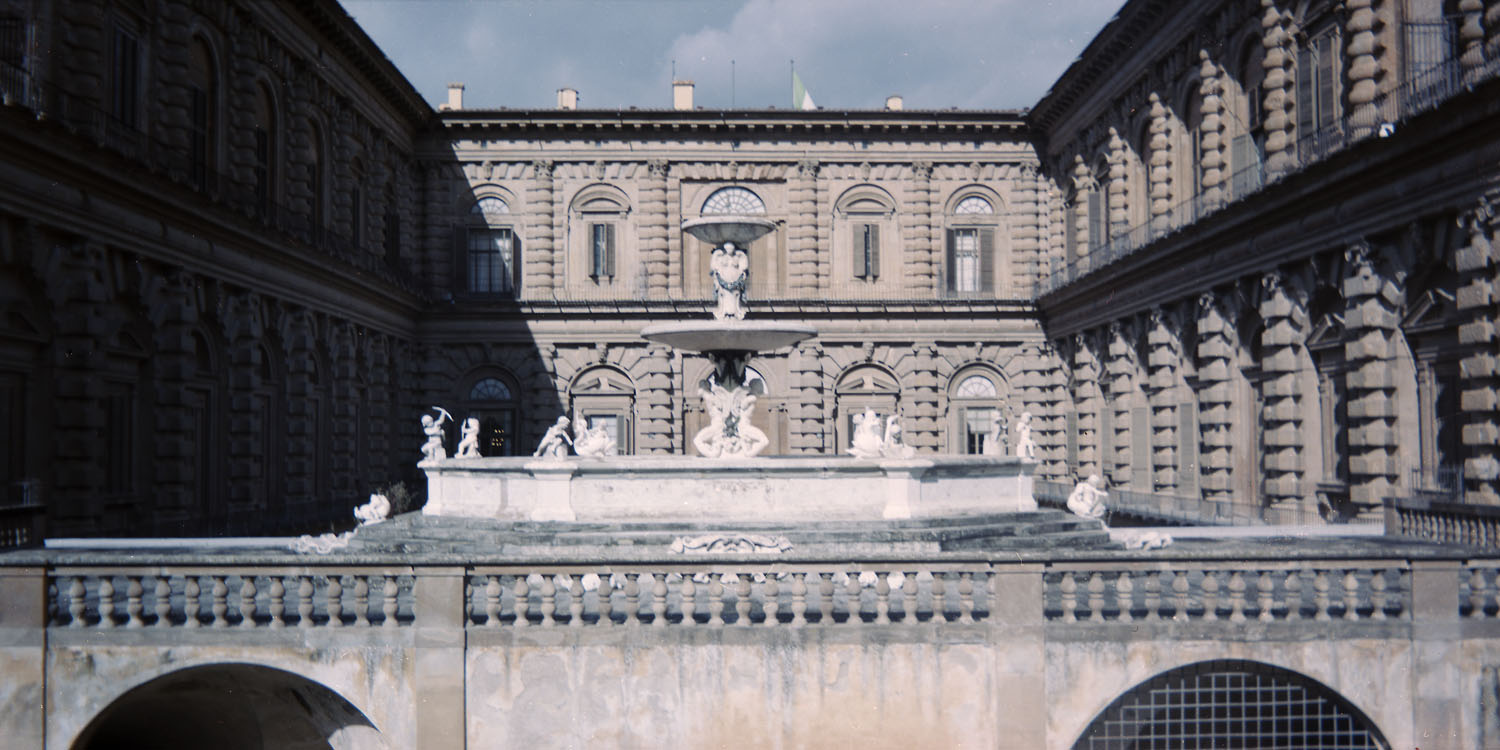
The 90 is better, but better is a relative term. Certainly, I wouldn’t have been able to take these shots without the camera, and I genuinely like them, but they’re not what I normally think of when I think of my style of photograph. If I’m going to stick with the camera, it’ll be a mental adjustment to apply the tool to tasks appropriate to it. It’s very good at transforming the time of day of a shot- while this is titled “Ponte Vecchio Evening”, it was actually shot around 10AM.
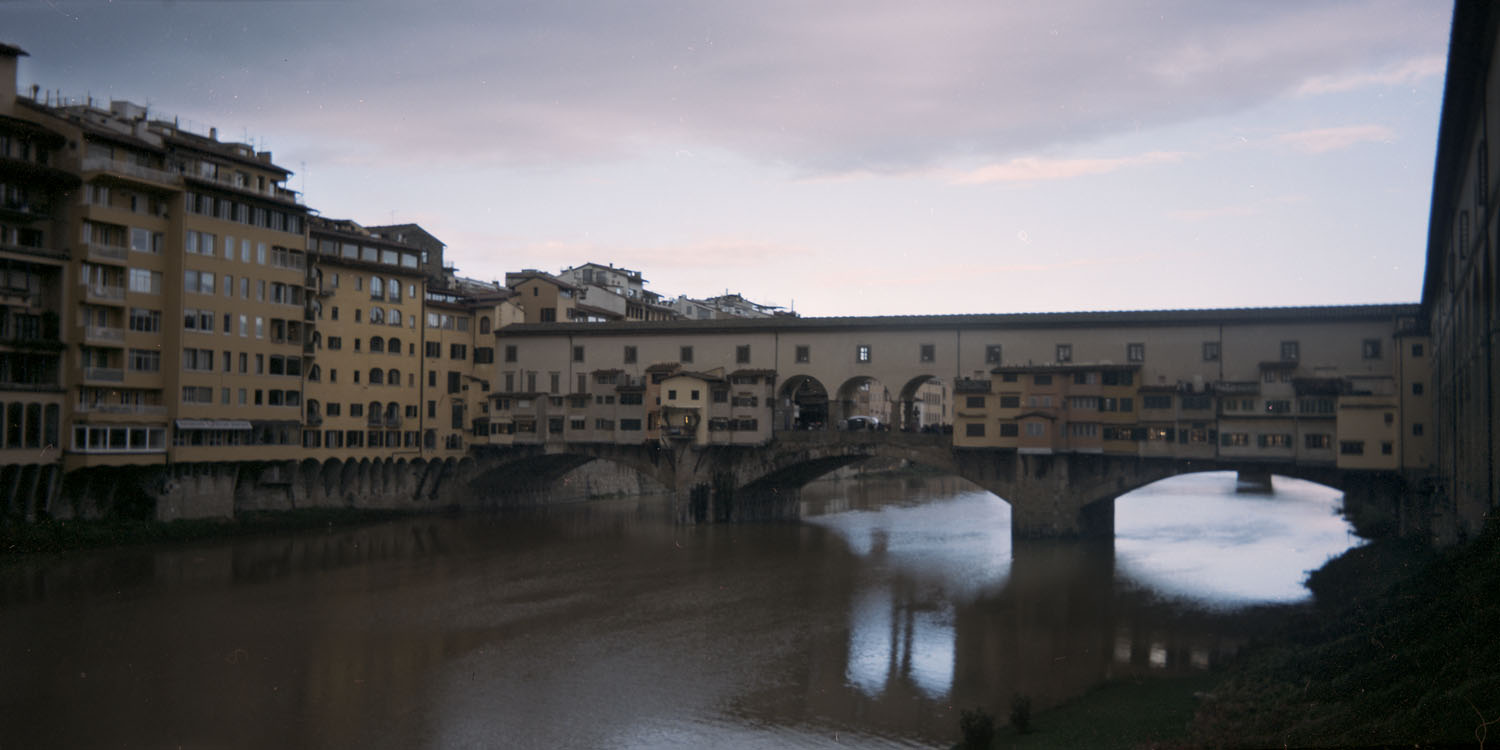
This has also been a lesson for me in making peace with cropping. I’ve been for the most part a full-frame kind of guy – I try to compose to the edges of my frame so everything shows the way I want it to and I don’t need to crop. But sometimes, the best of intentions when composing in the heat of the action don’t always work, and you learn to crop after the fact. This shot, for example. In the original full frame, the obelisk was dead center in the frame. I think at the time I pushed the shutter button I thought the little girl was out of the picture, but there she was. On the left, the edge of the fountain in front of the obelisk was intruding into the scene. Looking at the image actually captured, all the action in the scene included the little girl playing off against the obelisk, and the edge of the fountain was a real distraction. Cropping to get rid of the fountain completely changed the dynamic and makes the image go from being a record shot to something actually interesting.
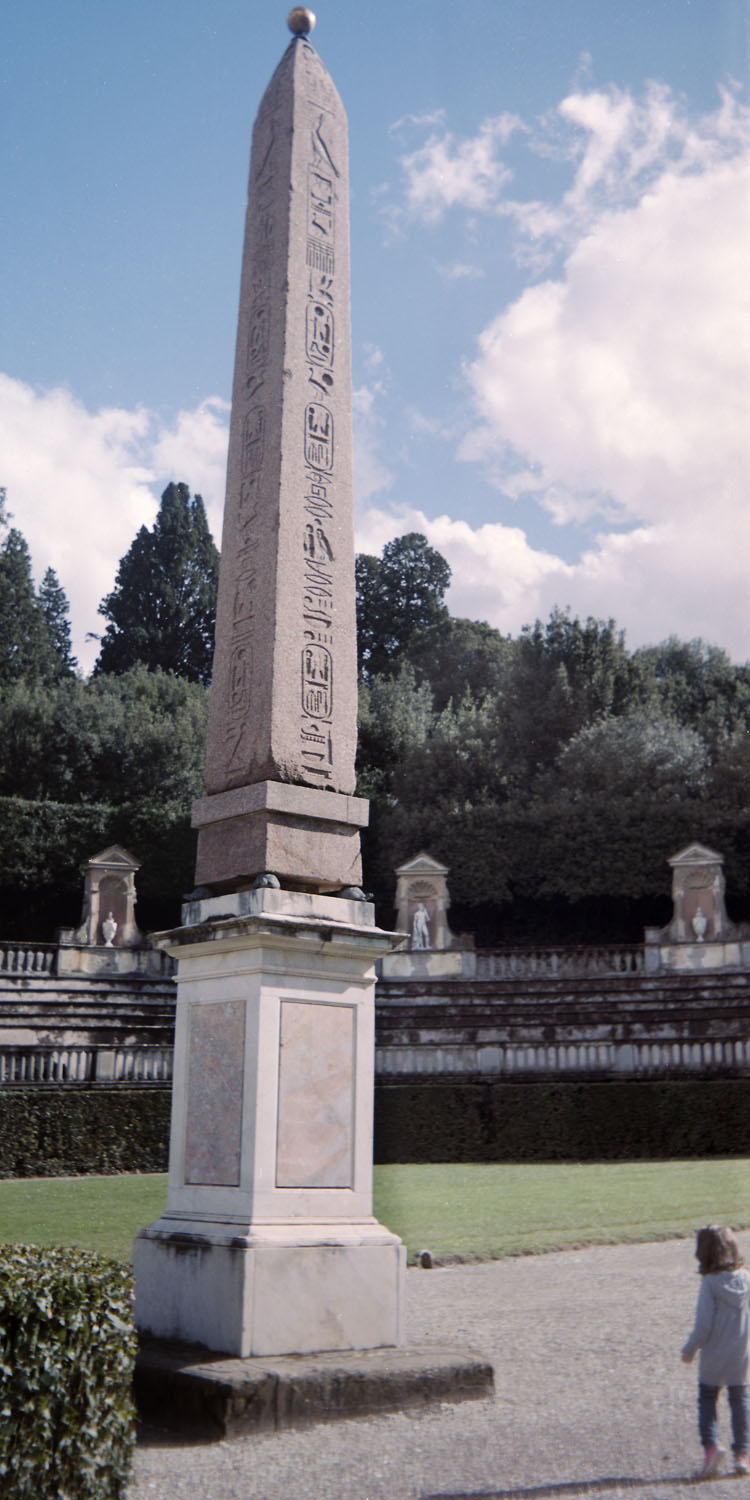
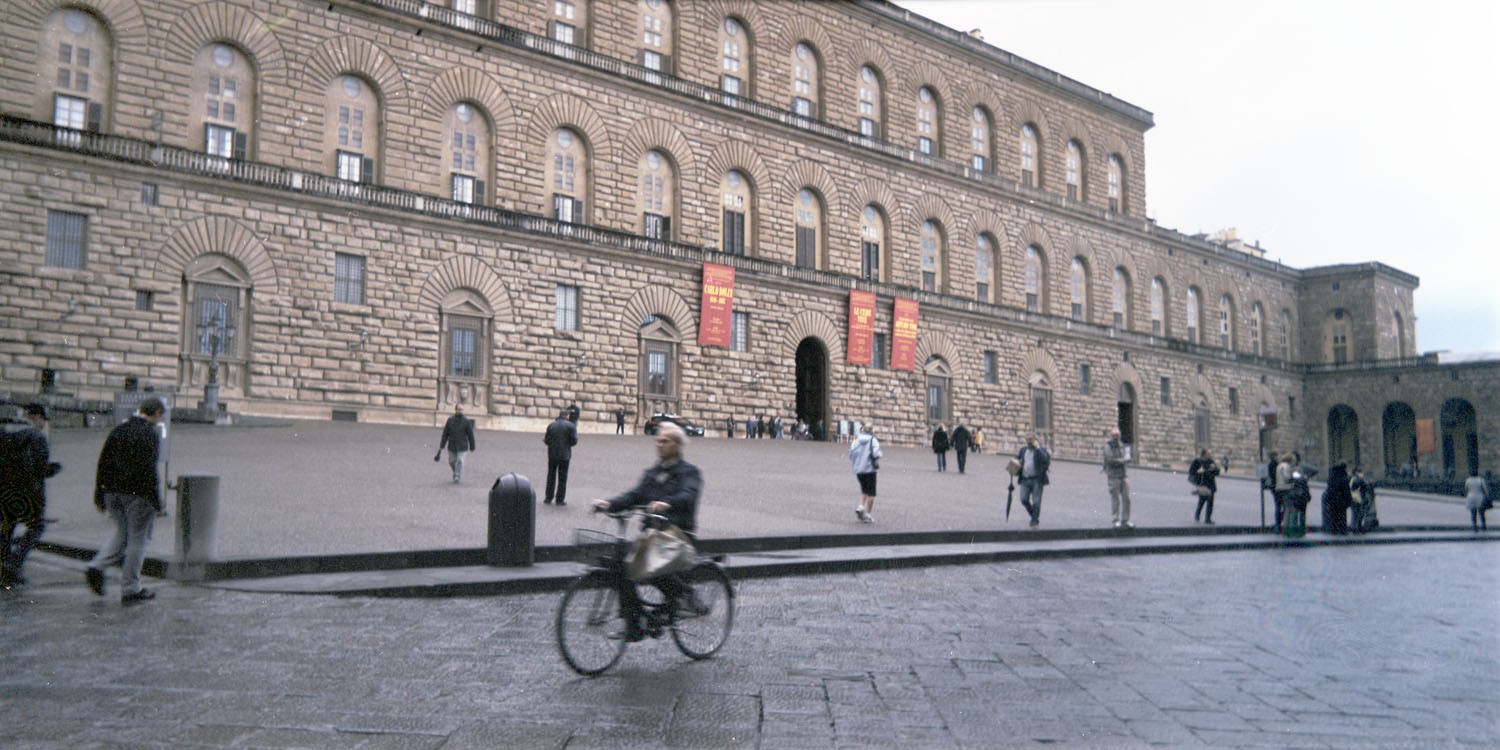
This is the facade of the Palazzo Pitti, originally home to the Medici family, later a residence for Napoleon Bonaparte, then the administrative center of the Italian government for the first few years after unification, and now an art museum. The shutter has a maximum speed of 1/125th of a second, which is fairly slow all things considered. I don’t know how fast an exposure this was – the camera doesn’t tell you what speed it is using – so I’m guessing somewhere in the 1/60th range given the amount of movement in the cyclist. That’s another thing you have to make peace with with this camera – unpredictability. I don’t know that I’m there yet. I’ve got about 12 more rolls of film from this camera to process in my black-and-white film, so we’ll see how I feel after getting through those.
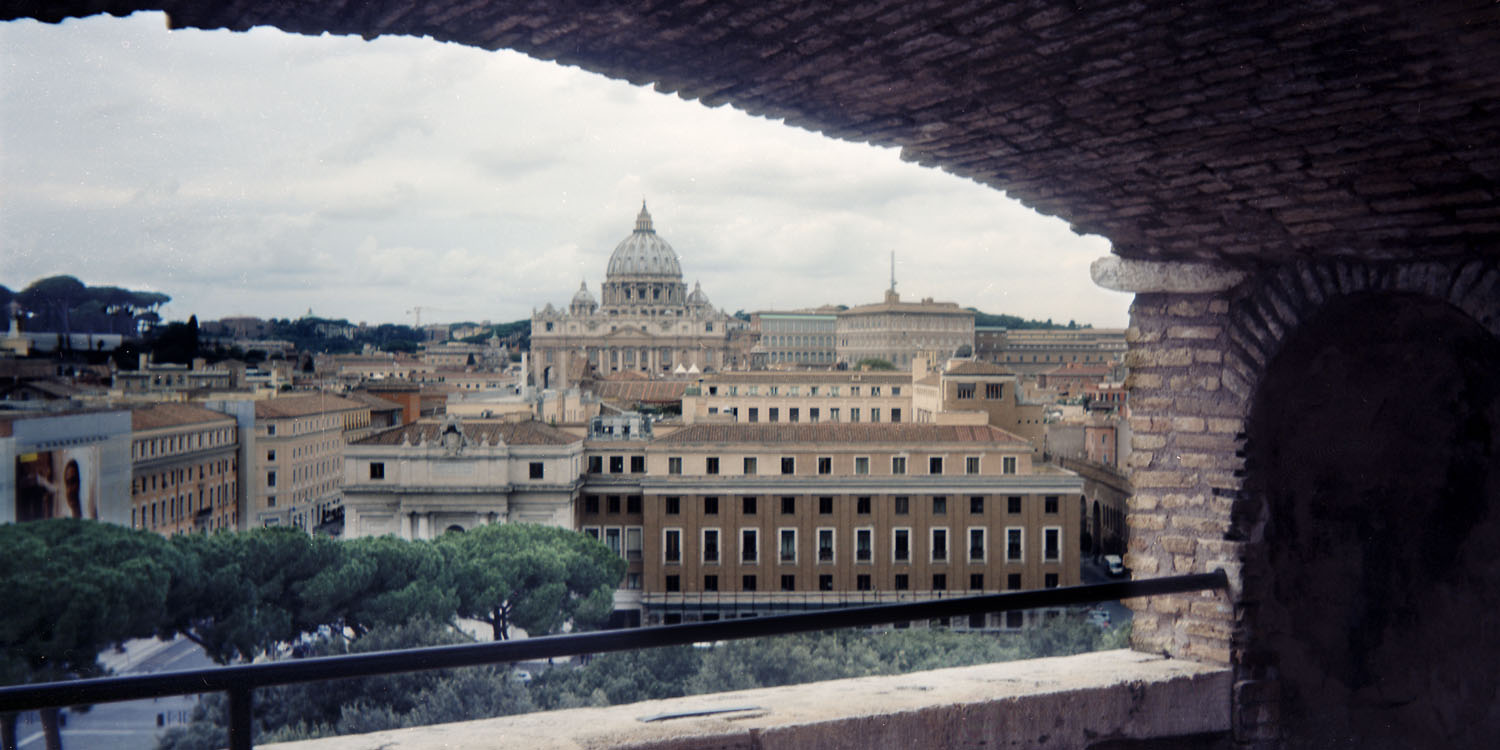
Sometimes the panoramic composition works phenomenally, like this one of St. Peter’s Basilica as seen from inside an arch on the Castel Sant’Angelo.
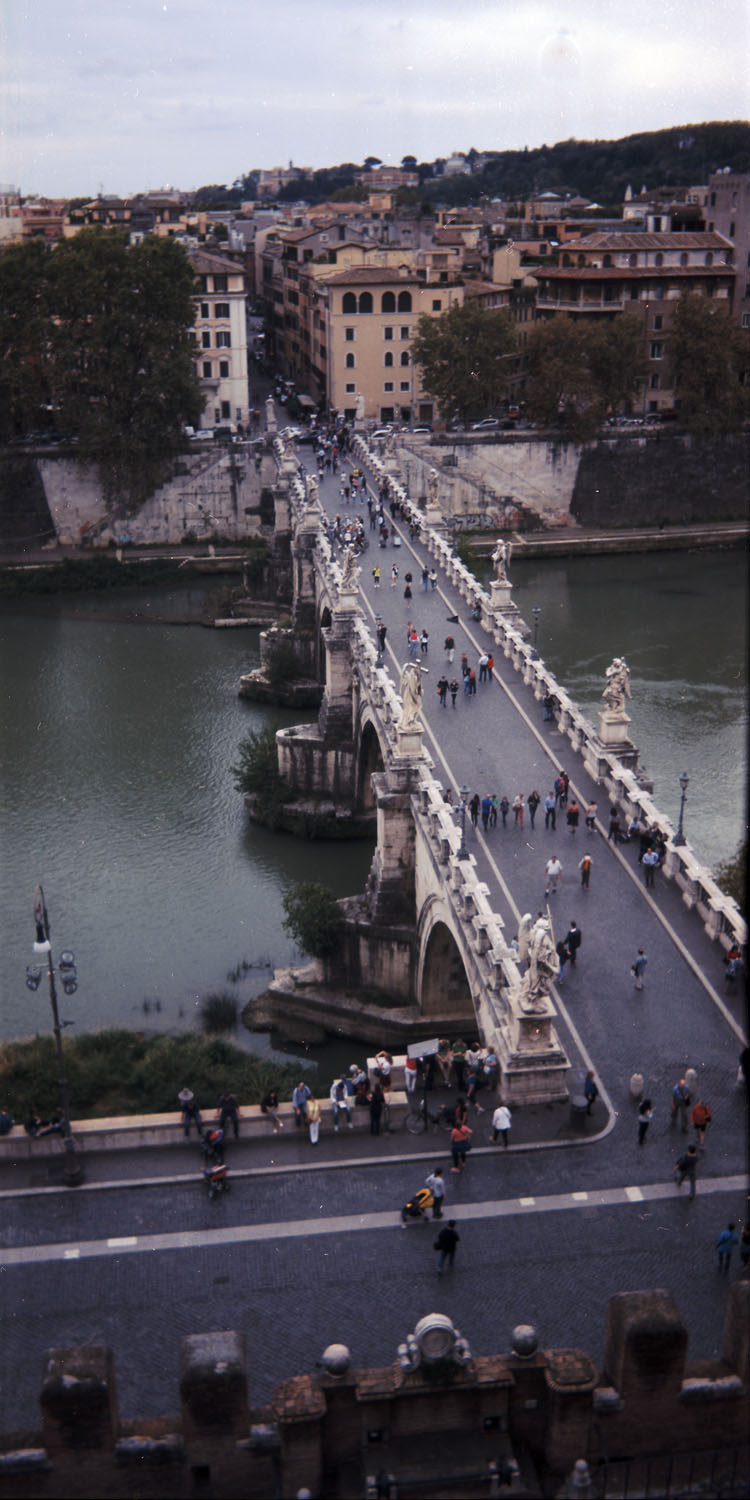
Other times, the panorama gives you compositional challenges that provide serendipitous solutions to themselves, like shooting the bridge in front of the Castel Sant’Angelo. The landscape around the bridge provides an S shape through the composition that leads your eye around and through the entire scene, not just pulling you from lower right to upper left and shooing you out of the frame at the end.
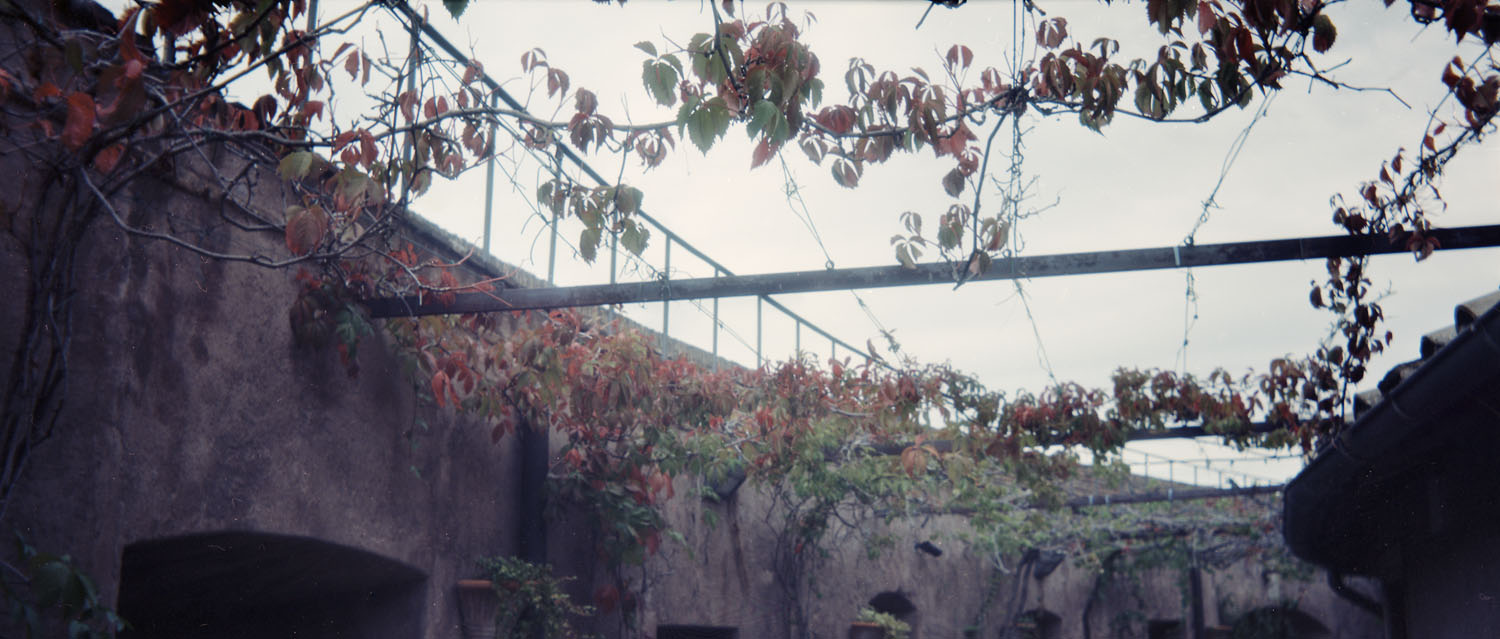
Another argument in favor of cropping – the original of this included the heads of the patrons of the Castel Sant’Angelo cafe (yes, they have a cafe in the battlements of the Castel Sant’Angelo, which began life almost 2000 years ago as the burial monument to the Roman Emperor Hadrian).
 dcphotoartist