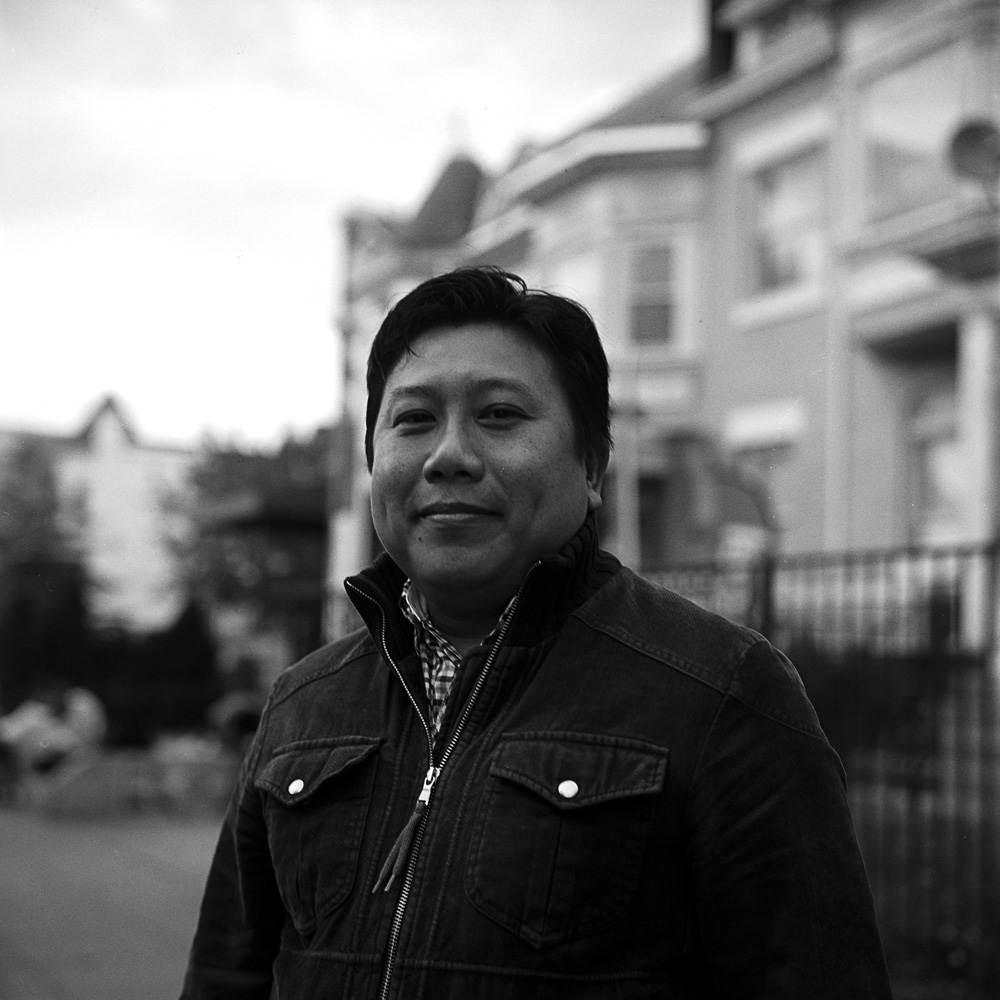
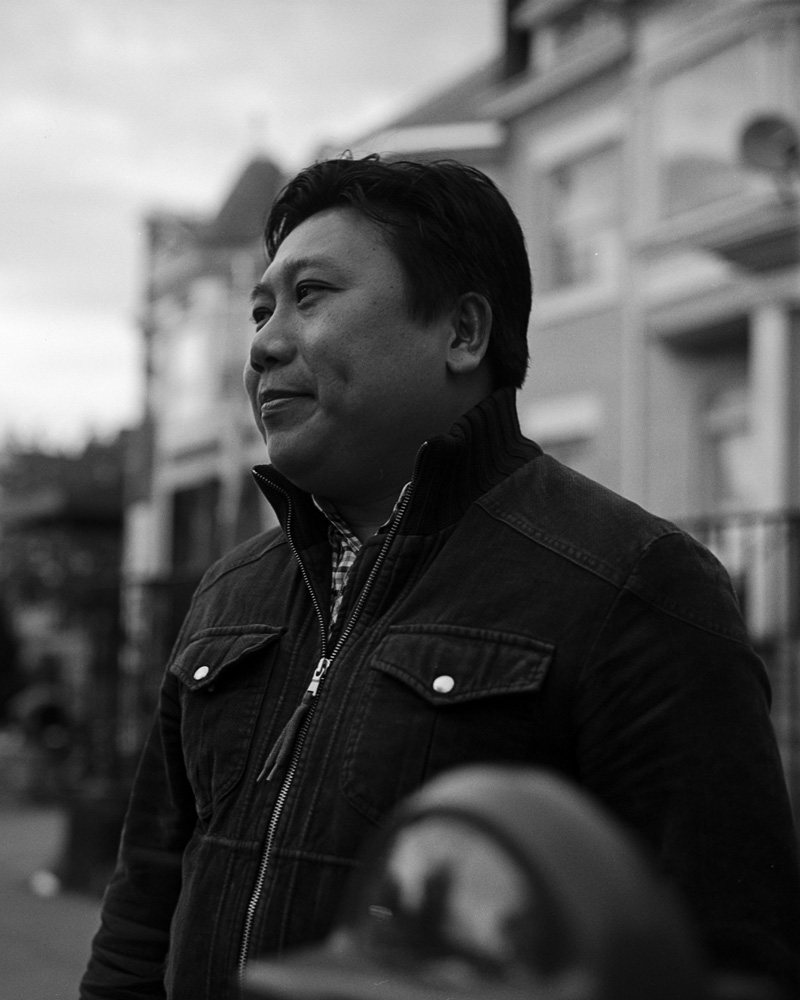
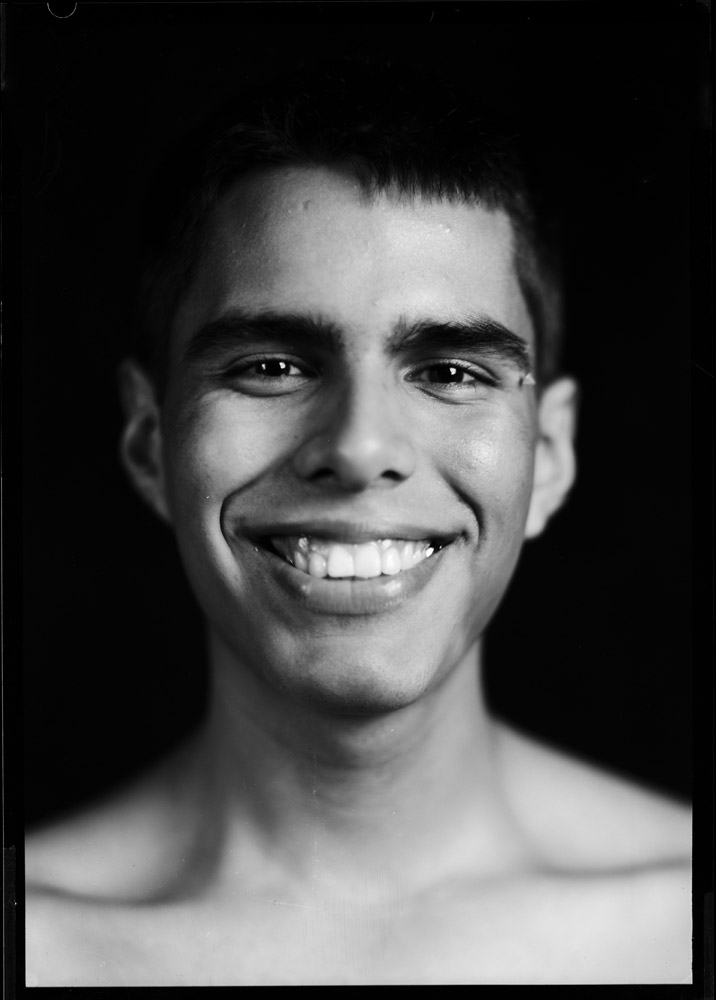
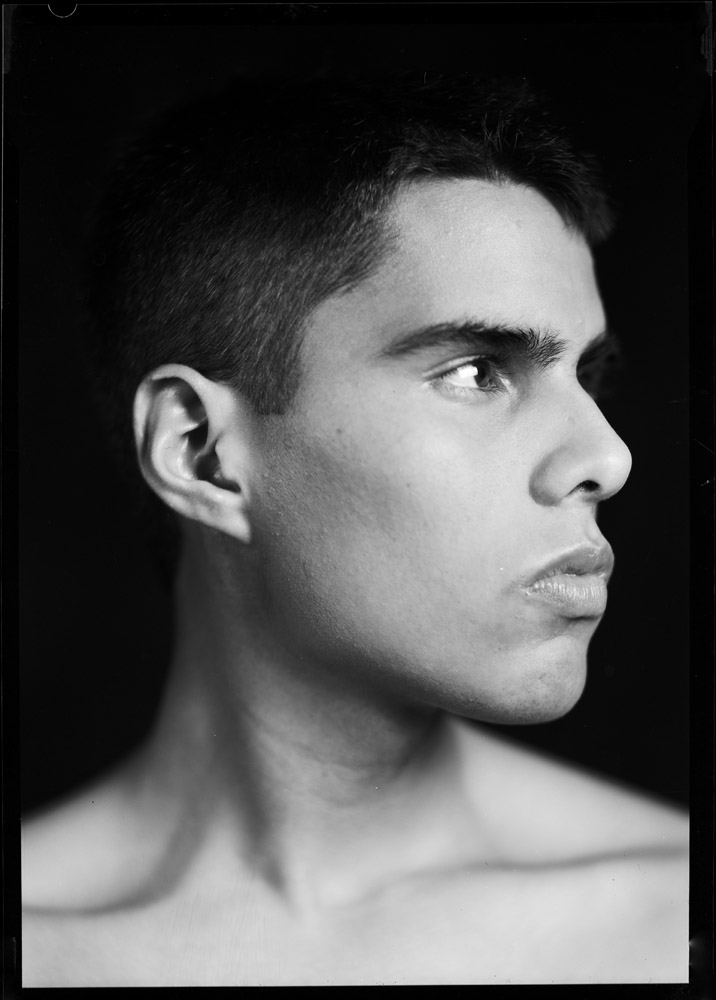
Simon is a friend I’ve known for over 15 years (I think he’d be mildly scandalized to realize exactly how long we’ve known each other). I took these two portraits of him the other day when we met for dinner. Comments on which one you prefer welcome and actively solicited.
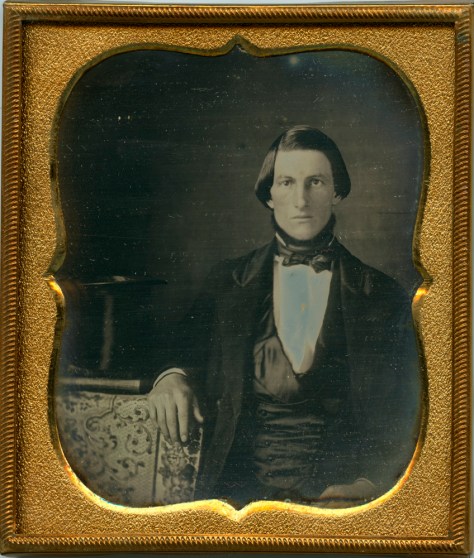
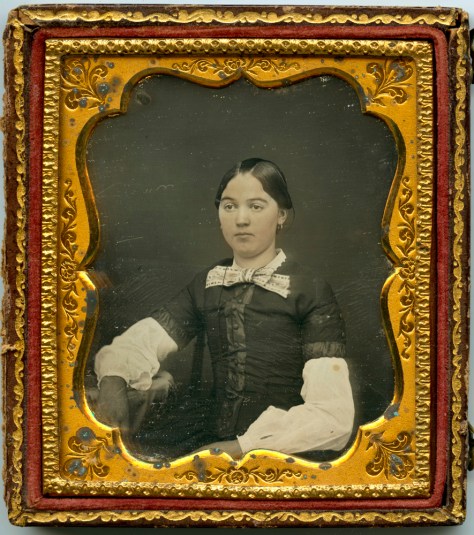
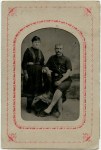
here is a young couple who posed at Mathew Brady’s Washington DC studio. They must have been “somebodys” because Brady bothered to copyright the image. I’ve seen enough of his images to notice that the copyright notice is used inconsistently, which leads me to think it was either to protect specific images because of the subject matter, or it may have been time-delimited as a result of a copyright dispute between himself and Alexander Gardner arising out of Gardner’s work for Brady during the Civil War. I’ve noticed it most often on the Fairy Wedding images, but also on the Brady version of the Seth Kinman elkhorn chair (I don’t have the Brady version, just the Alex Gardner version, which has Gardner’s studio stamp on the back, but Seth Kinman’s copyright notice on the front. I don’t recall if the Brady one has Brady’s copyright or Kinman’s).
If any of you Civil War buffs or Victorian America historians recognize this couple, any information would be greatly appreciated.
I was showing my latest daguerreotype to a friend the other day and she asked me how many do I have. I hadn’t really thought about it, so I sat down today and did an inventory. I came up with
Image Type
gemtype
1/9th plate
1/6th plate
1/4 plate
1/2 plate
Daguerreotype
1
1
20
6
0
Tintype
1
2
5
0
1
Ambrotype
0
2
7
2
1
Albumen
0
0
0
0
1
Total
2
5
32
8
3
for a grand total of 50 cased images.
I’ll recap as many of them as I have good scans for here. One of these days I’ll get around to re-scanning/photographing the others, which I originally posted to Facebook but not at a consistent file size.
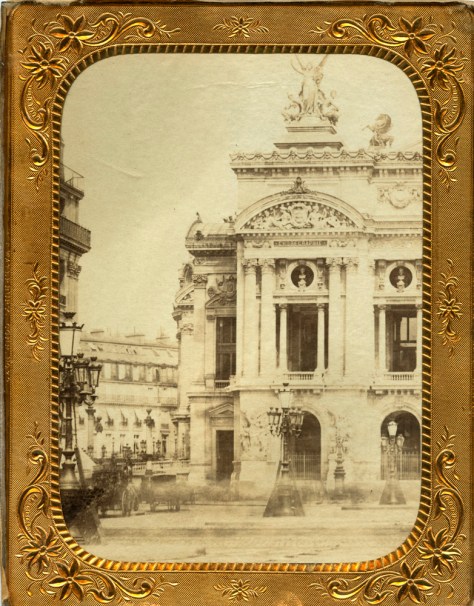
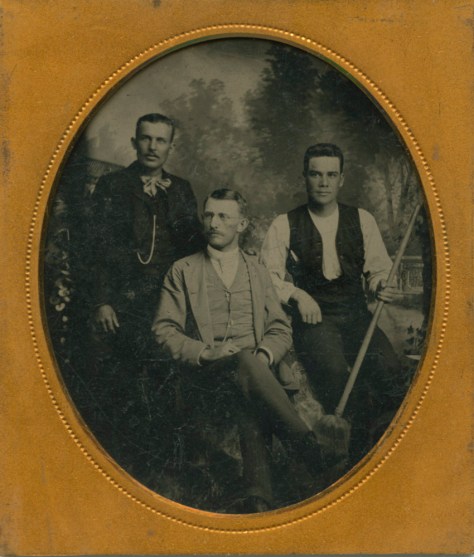
Paris Opera albumen printShopkeepersAnonymous Daguerreotype, ca. 1840-1845
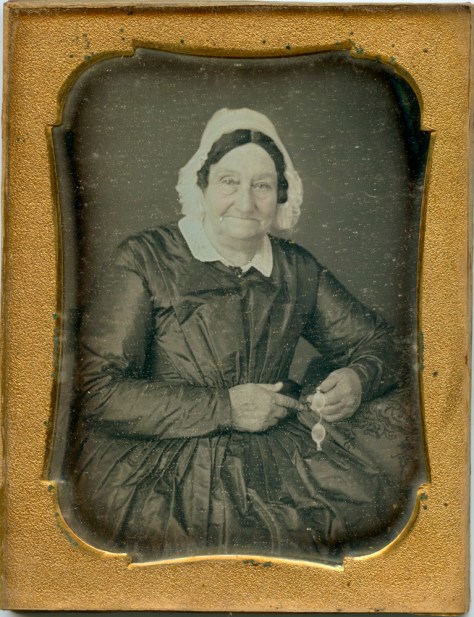
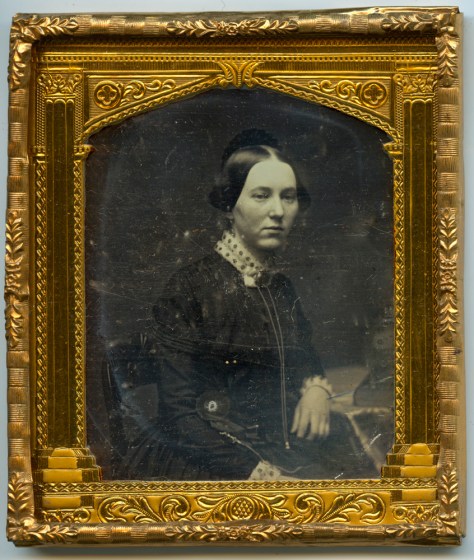
Daughter and Father, daguerrian locketAnonymous young gentleman with goateeLady with glasses, Daguerreotype, quarter plate, anonymous
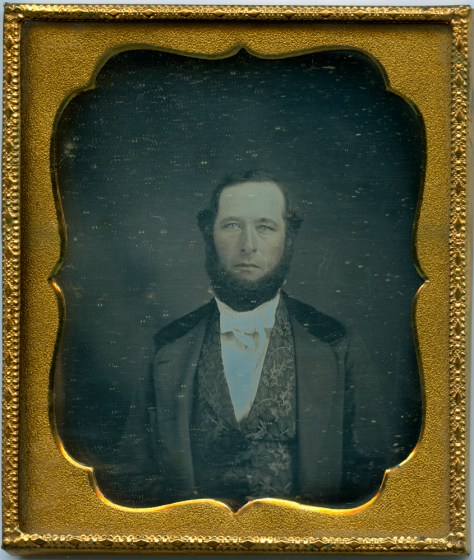
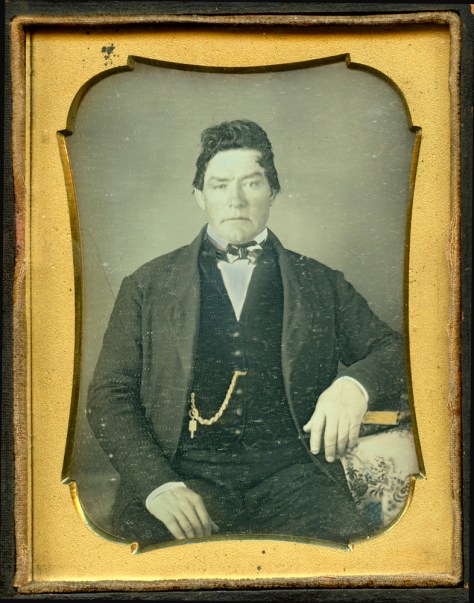
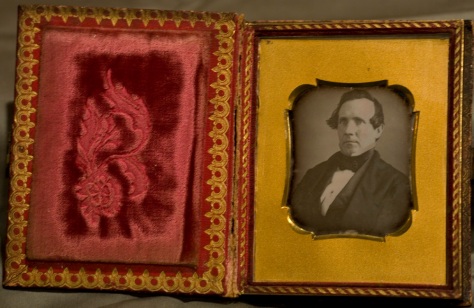
Mrs. A.A. Hill, DaguerreotypeAnonymous Gentleman in Fancy VestGentleman With Top Hat, dated October 15, 1849Anonymous Daguerreotype, Young Girl, Hand-colored, in Half Case
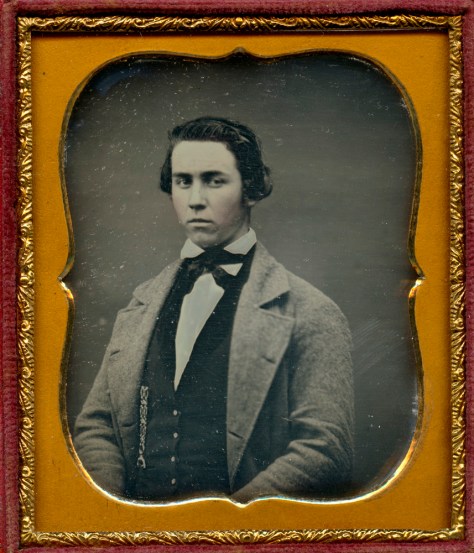
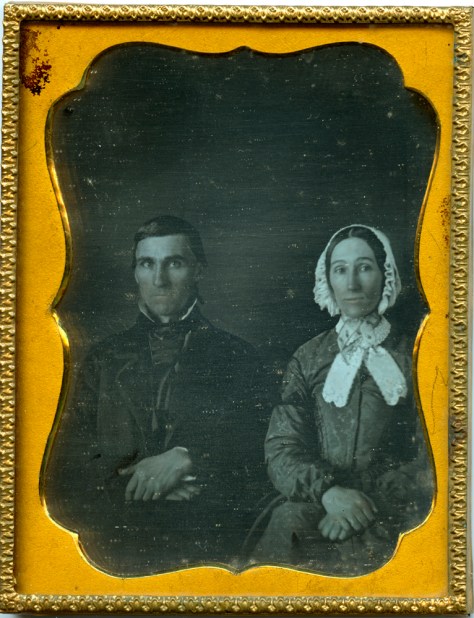
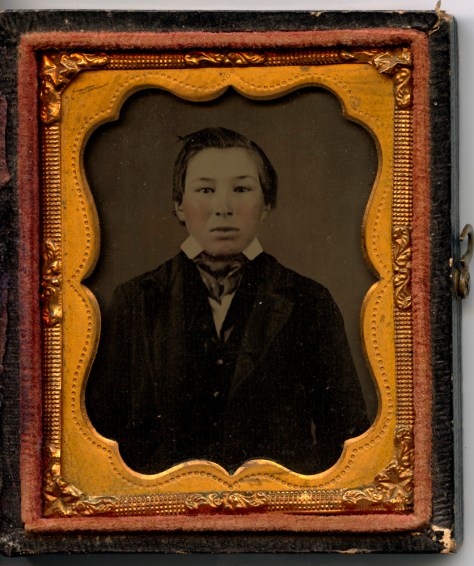
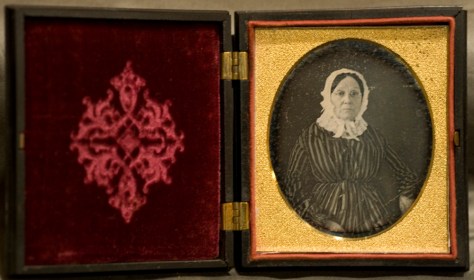
Daguerreotype, Anonymous Young Man, 1/6th PlateFred Jones, 1861, framed black glass AmbrotypeAnonymous Daguerreotype, Quarter-Plate, in half caseAnonymous, Daguerreotype, Couple, Charlottesville, VAAmbrotype, Penobscot Boy, 1857Sixth Plate Daguerreotype in Union case, anonymous lady in bonnet
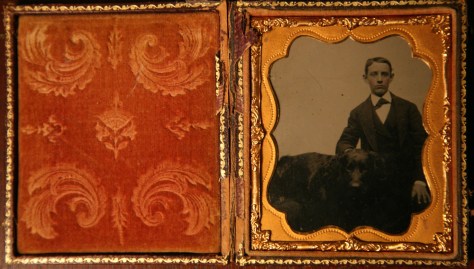
Quarter-plate Daguerreotype, Gentleman in book-form caseTintype, boy and his dog.Anonymous Gentleman. Daguerreotype, Half case.
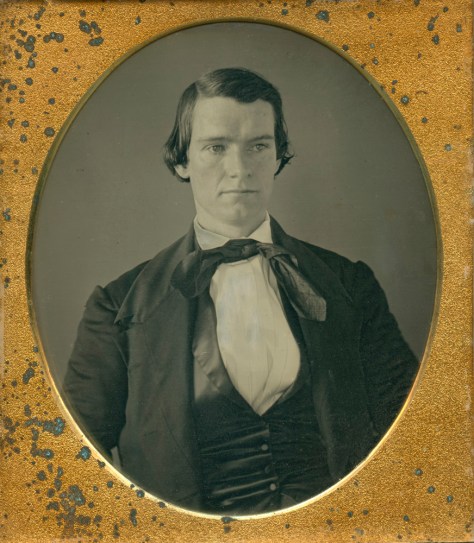
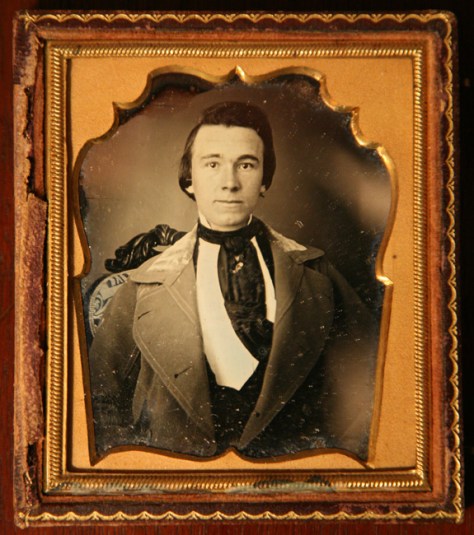
This was a beautiful dag, in such nice condition and with such overall quality that it seemed a crying shame to pass it up, especially at the price it went for.
Anonymous Daguerreotype, ca. 1840-1845
I particularly love the use of soft light to model the face. This is what a good portrait is all about – an accurate yet absolutely flattering rendering of a subject. One of the reasons I collect images like this is to have a personal library of excellent images to use as reference material when shooting my own portraits. You can study an image like this for hours and never get bored of looking at it.
Tintype, Two Brewers, Keystone Cabinet Export Beer
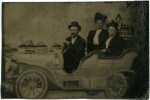
Family in Novelty Car, Cliff House, San Francisco
Trickster Tintype #2
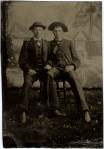
Tintype, Two Affectionate Pals (Brothers?)
Tintype, Father & Son?
Trickster Tintype #1
Tintype, Bathing Beauties
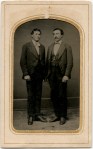
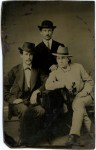
Tintype, Three Dandys
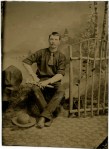
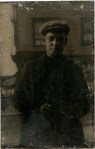
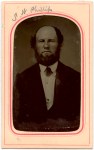
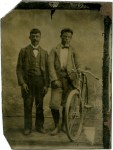
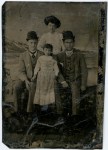
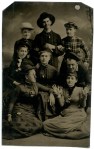
I thought it would be fun to review my loose tintypes. These are only the ones I’ve previously posted to the blog, not the entire collection. They run the range from tiny gemtype size (the one of Mr. Phillips in the top hat) to quarter-plate size (almost 5×7). They span a time period from the 1860s to the 1920s. Assembled they present a fascinating if incomplete snapshot of daily life in Victorian America. Showing everything from affectionate friends to unconventional family groups to people on vacation to working people with the tools of their trades, they portray a slice of life otherwise undocumented in literature or historical narrative. This is one of the great joys of collecting images like this – not just the traditional studio portraits, but the images that express meaning and personality beyond a marker that someone existed.
Just wanted to share a pair of portraits I shot a while ago of a young man who sat for a personal project of mine. They show two very different perspectives on him – his smile is particularly radiant, but the profile is terribly serious. These were shot with my antique Century Studio Master portrait camera and a 14″ Seneca Whole Plate Portrait f5 lens. These used my typical lighting setup of one main light in a giant softbox with a fill reflector on the opposite side.
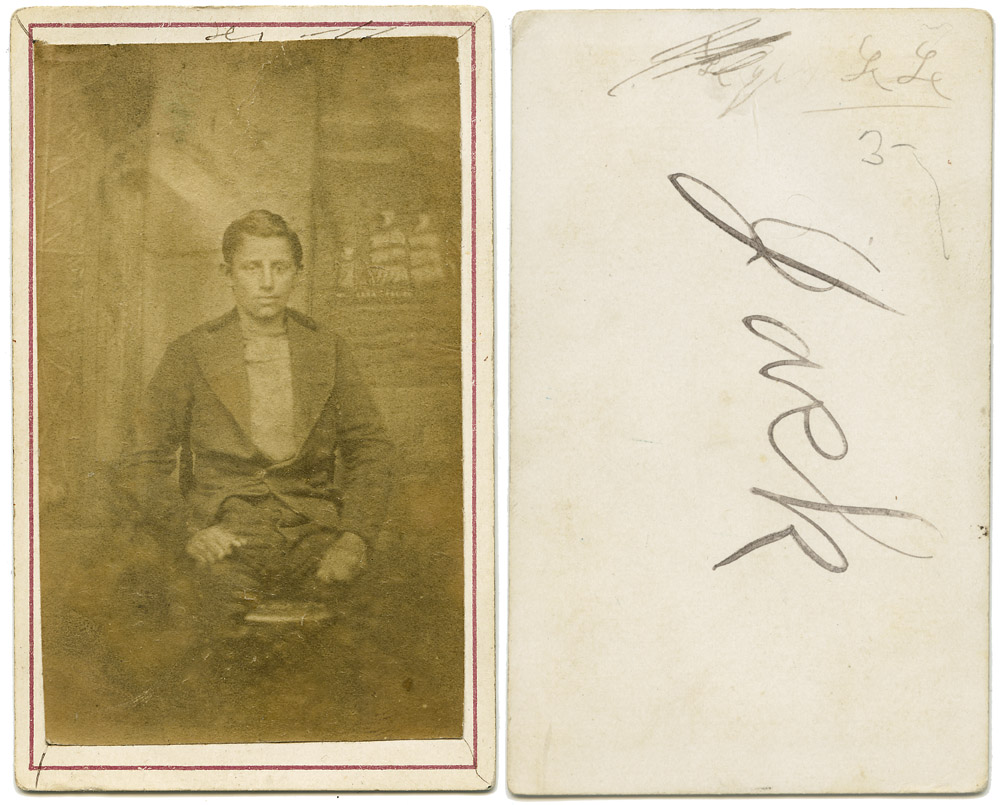
Another CDV from today’s excursion: I’m assuming the young man is a sailor, based on his attire and the view of the ship through the painted window on the backdrop. The only identifying mark of any kind is the oversized signature on the verso, “Jack”, although the “c” in Jack is oddly formed – could it be Jaek? Jark? Jack seems most likely.
Jack the Sailor
Although it has as much to do with condition as it does the image itself, I love the atmospheric feel of the photo and the Mona Lisa-esque expression on his face. I don’t know if he is in fact a sailor, but without other evidence to the contrary, that’s what I’m calling him.
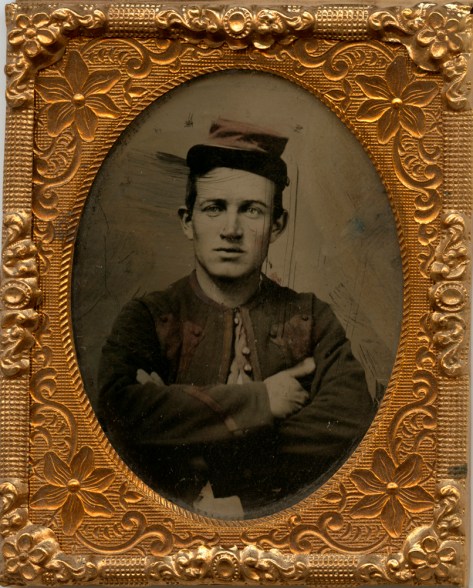
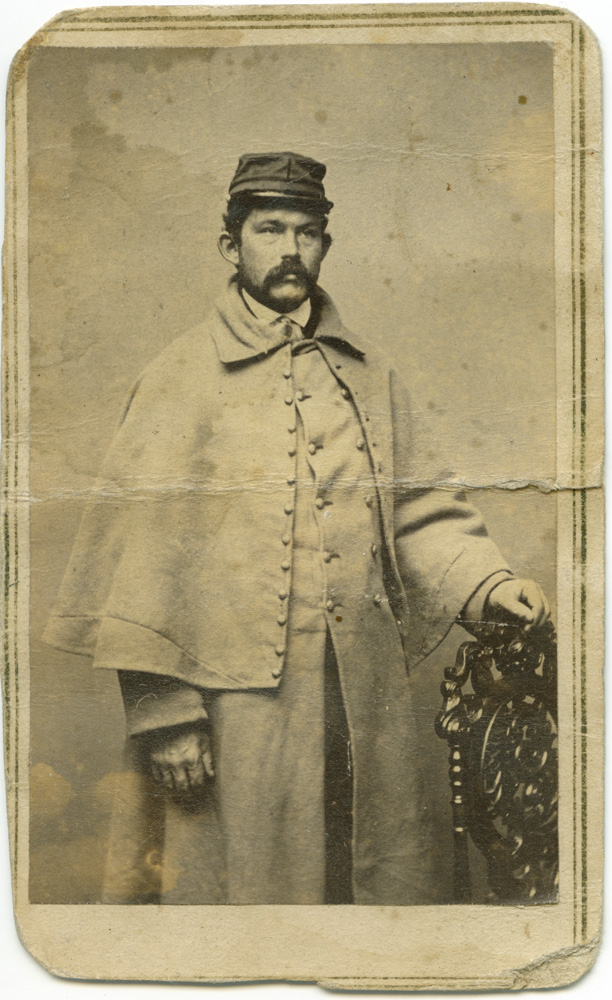
Here’s a Union soldier, identity unknown, from the William J. Tait studio. This may well have been taken immediately prior to shipping out to battlefields unknown – the studio address is Courtlandt Street and Greenwich Street in lower Manhattan – basically in the site of the modern World Trade Center. Back then it would have been only two or three blocks from the waterfront piers. It’s another image that obviously meant a lot to someone as it has a fold across the middle – someone was carrying it around with them in a pocket. Did the sitter die in combat, or was it just a fond memory of a critical time in US history that inspired the owner to keep it at hand?
Union Soldier, Wm. J. Tait studio, NY
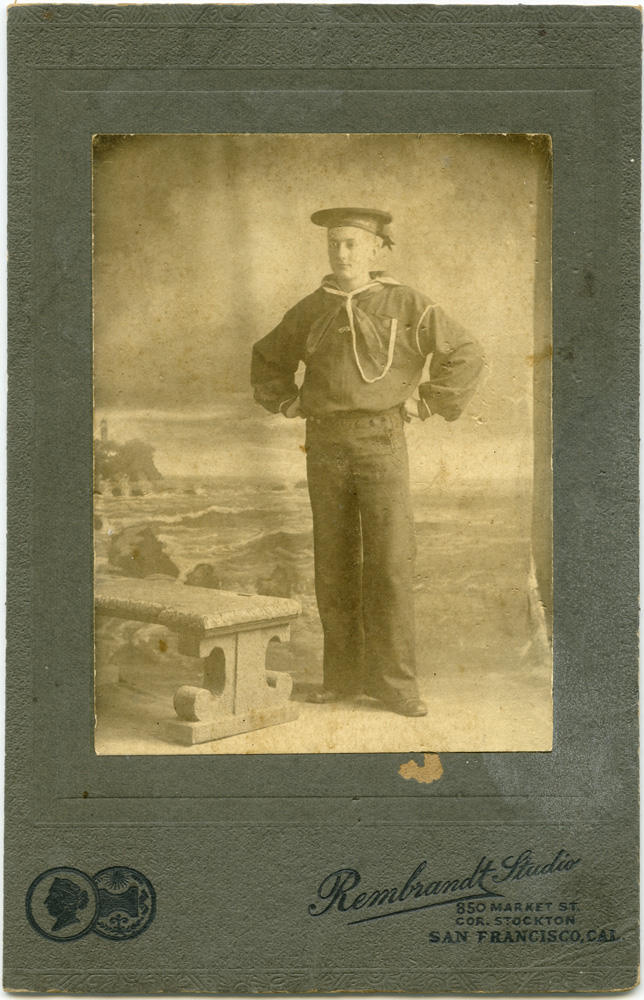
In a totally different light, here’s a west coast sailor. This time, most likely the 1890s, on a cabinet card. The original card is a little bit bigger than 3.5″ by 5″. I did a very mild clean-up of the scan in Photoshop to make the image more readable online. The original card is slightly lower in contrast and has a couple very minor spots in the background that do not interfere with the subject. I tried to scan his hat at high resolution to see if I could read the ship’s name he was assigned to, but it couldn’t be resolved (at least not with my scanner).
Sailor, 1890s, Rembrandt Studio, San Francisco
There’s a noticeable difference between the two photos, and I don’t think it is just attributable to the changes in photo technology between 1860 and 1890. The Civil War sitter has a far more somber expression on his face and in his body language – it’s as if he knows he is going to die, and this is a reminder to send back to his family so they won’t forget him when he’s gone. The 1890s sailor, on the other hand, is having a lark, getting his portrait done while in port perhaps as much a souvenir of the location as anything else. Later I’ll re-scan and post my Hong Kong sailor photos to provide a comparison.
It’s been a while since I added anything here, because I’ve been insanely busy dealing with a whole bunch of personal business (breaking up, evicting my ex, cleaning up the aftermath, starting dating again, reconfiguring my office, building a new home wireless network since the ex took the wireless router, getting nasty bronchitis, recovering from said bronchitis, etc etc you know…). I haven’t had a lot of time for collecting or thinking about it as a result. Well, the dust has settled and I’ve been casually acquiring an odd and end here and there, so I’m back to writing about it again.
One of the things that has interested me, and helped drive me into this whole civil war period image collecting thing, is my hometown – Chambersburg, PA. Chambersburg was perhaps the most trampled ground north of the Mason Dixon line during the Civil War. Prior to the war, John Brown planned his raid on Harpers’ Ferry while living there, and met with Frederick Douglass to discuss the plans (Douglass advised against attacking the federal arsenal). Jeb Stuart’s cavalry raided it for the first time in 1862. Then Lee’s troops passed through on their way to Gettysburg in ’63, and in 1864 General McCausland’s troops demanded a ransom of $500,000 in US currency or $100,000 in gold, which the town refused to pay, so it was put to the torch.
In digging around on Ebay, I found an image of a man who was born a few towns over from Chambersburg. That got me thinking about the old hometown, and I started searching for Chambersburg related stuff. I acquired a group of photos spanning a good 20+ years of work from a single studio, which in further searching on Ebay seems to have been the most prominent if not the only studio in town at the time.
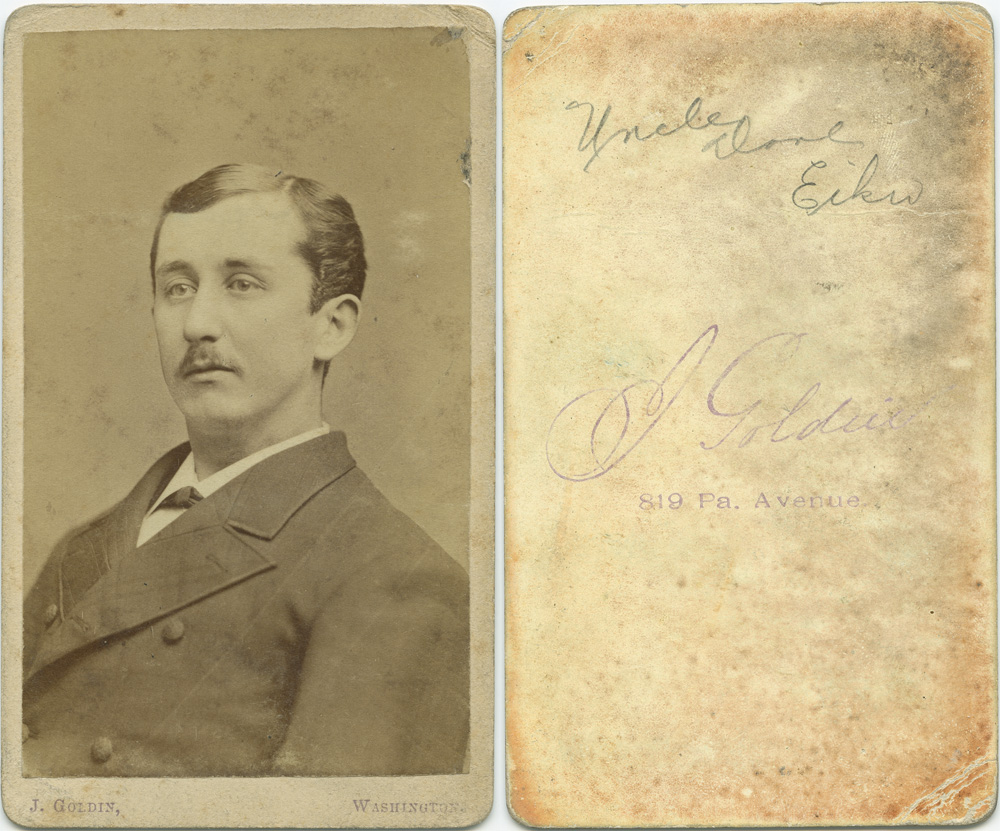
Here is the image that got me thinking about Chambersburg, a photo of David Eiker, born in Quincy, Pennsylvania. Quincy is a tiny one-stoplight town a few miles east of Chambersburg. This photo was taken at the J. Goldin studio in Washington DC.
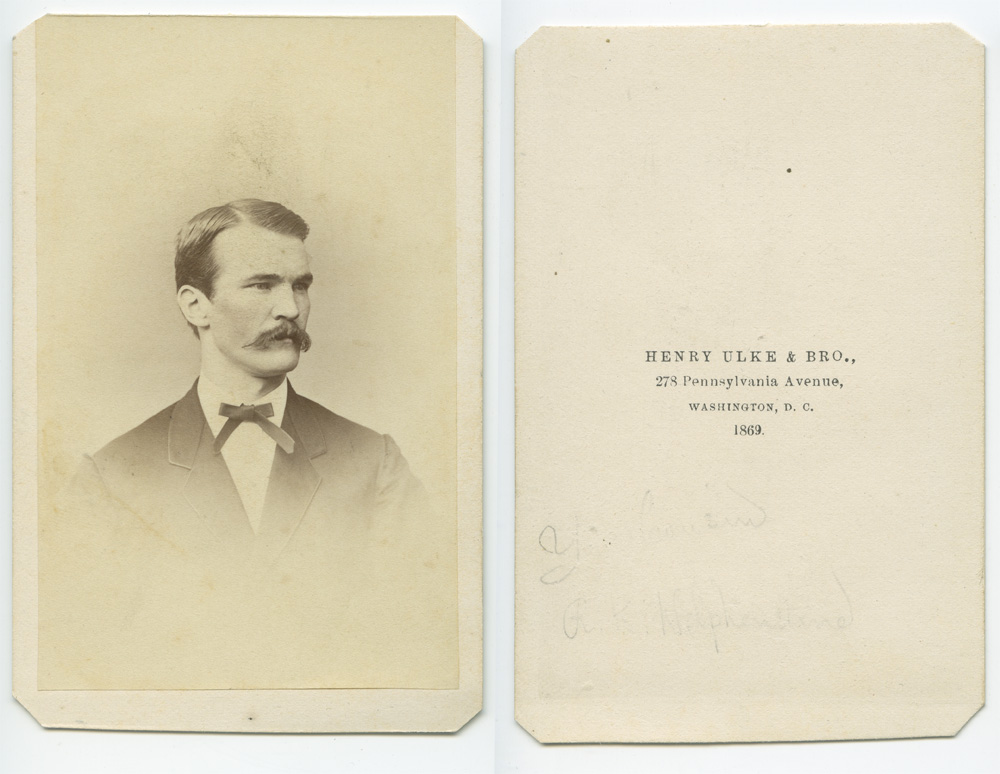
Acquired at the same time was a more-or-less unrelated photo of a Mr. R.K. Hopkinson, taken at the Henry Ulke & Bro. studio in Washington DC. The common thread was the Washington, DC studio. Mr. R.K. Hopkinson Served in Company D of the 3rd Massachusetts Heavy Artillery during the civil war.
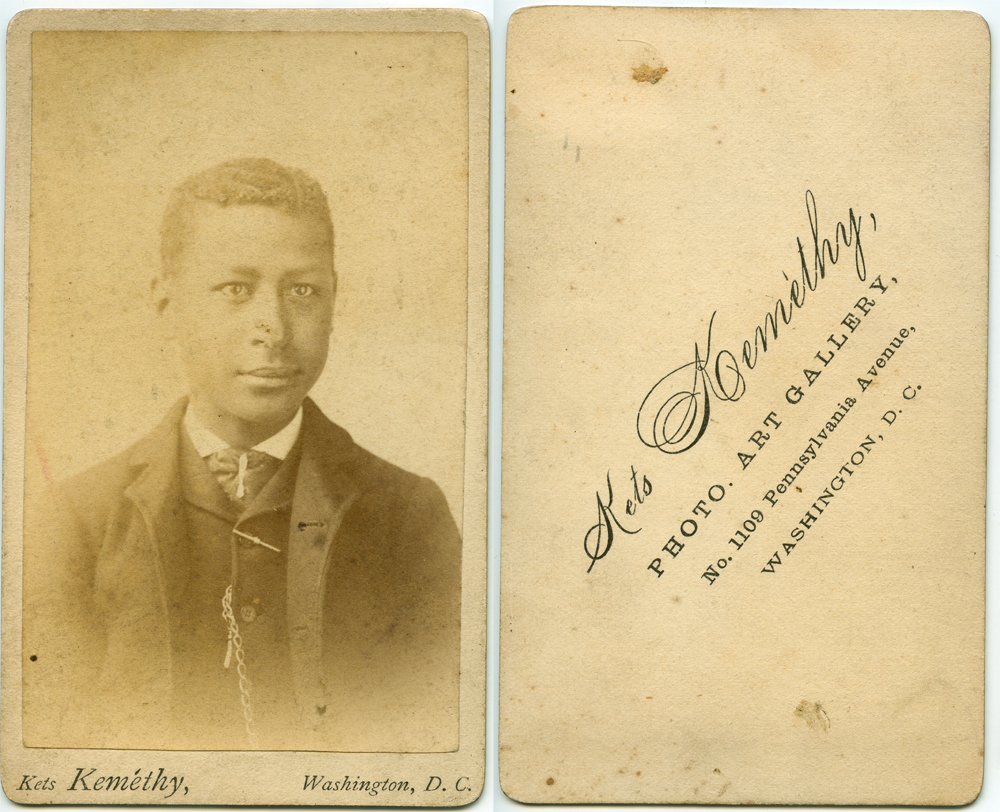
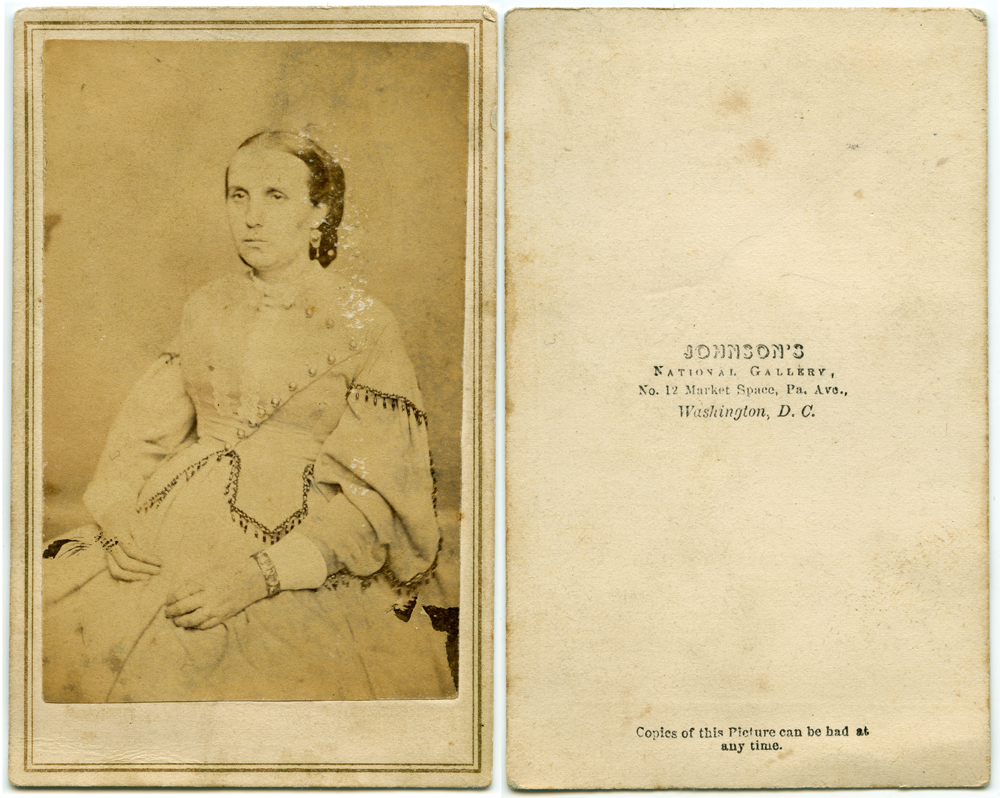
African-American Gentleman, Washington DCAnonymous Lady, Johnson's National Gallery
Two new DC portrait studio pictures from the 1860s-1870s. The African-American gentleman photo is quite interesting because it shows the relative prosperity that was possible so shortly after the Civil War for African-Americans in Washington DC. It is all the more remarkable because it exists in spite of segregation. It’s probably a window into the period of Reconstruction, before the southern states began instituting Jim Crow laws designed to economically suppress African Americans.
The woman is rather unremarkable, but the photographer’s back-stamp is what interests me – particularly the street address. When I first saw this, the address description helped clarify where another DC photo studio was located – The Schroeder & Rakeman studio. Of course the “Market” referred to no longer exists, but where it was is now a complex of buildings called “Market Square”, and is in immediate proximity to most of the other photo studios in Washington at that time.

 dcphotoartist