Tag Archives: Rome

In The Garden of The Beasts (Villa Borghese)

The title of this post is in reference to the statuary of animals both fantastic and natural found on the grounds of the Villa Borghese and its garden park in Rome.

Scipione Borghese was the Cardinal Nephew of Pope Paul V. The Cardinal Nephew (Cardinal Nepotente in Italian, from which the term nepotism is derived) was an official position and title in the church until 1692. In addition to the familial tie it implies, the position brought with it immense opportunities for wealth and power. Scipione Borghese took full advantage of these opportunities, at one point being one of the largest landowners in central Italy. He was a lover of art, and had a passion for gardening, creating famous gardens at both the Palazzo Borghese and the much larger private park of the Villa Borghese. The gardens consist of 148 acres of naturalistic parkland landscaped in the English fashion.

The Villa Borghese itself sits on the edge of the park, and houses the Galleria Borghese, an art museum focused around the collection amassed by Scipione Borghese. The art includes paintings by Caravaggio, Titian, and Raphael, ancient Roman sculpture, and contemporary work by Bernini. The museum operates by timed, limited entry tickets, so unlike some of the larger, more popular museums (think Vatican Museum or the Louvre in Paris), the experience is never crushing as only a fixed number of people are in the museum at any time. You can always see the art without jostling or rushing. The park, on the other hand, is open to the public free of charge. It provides an oasis of greenery and openness amidst the chaos and compactness bordering on claustrophobia that is the city of Rome.

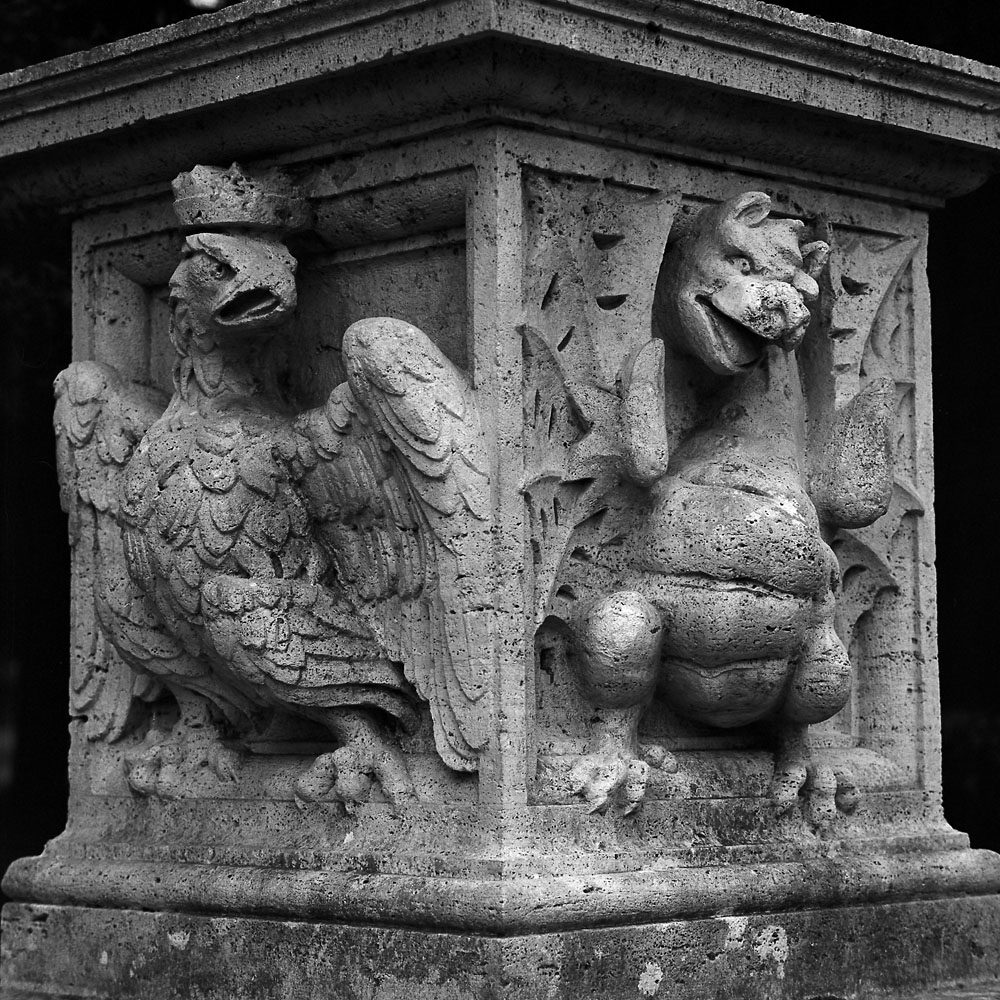
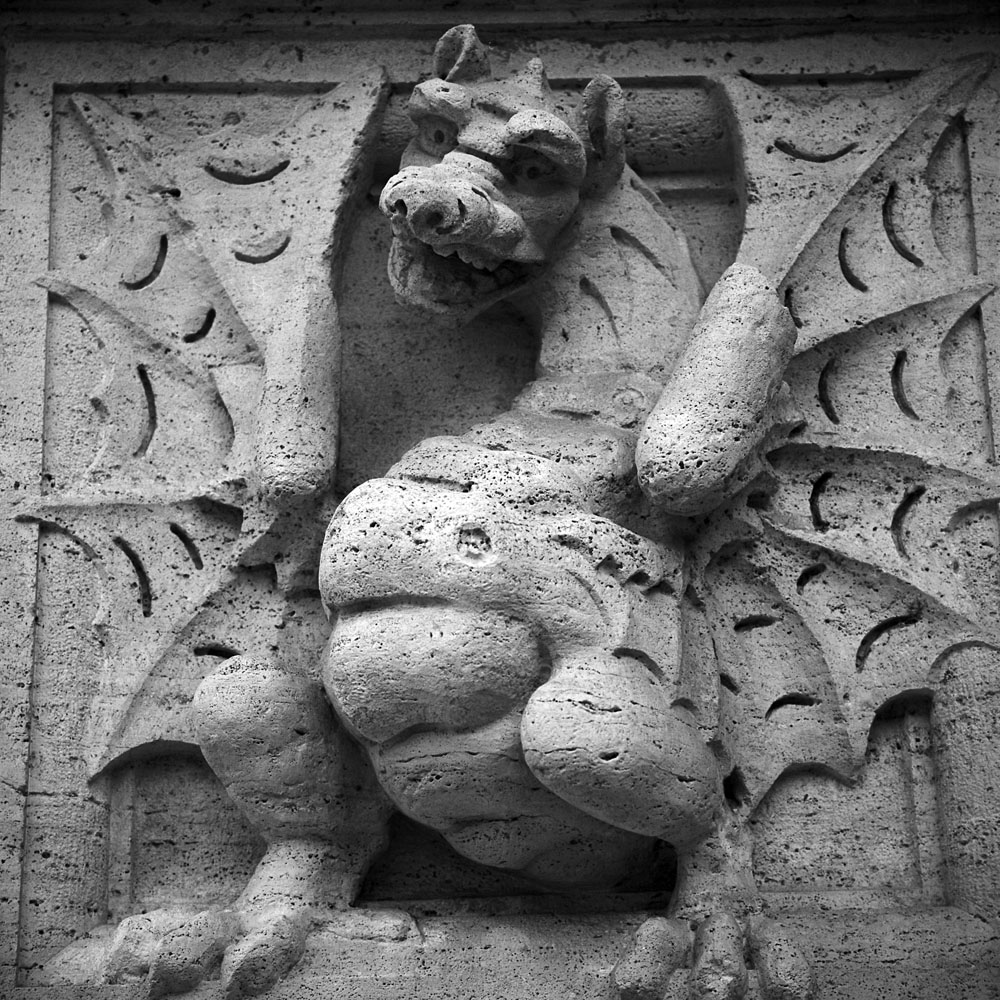
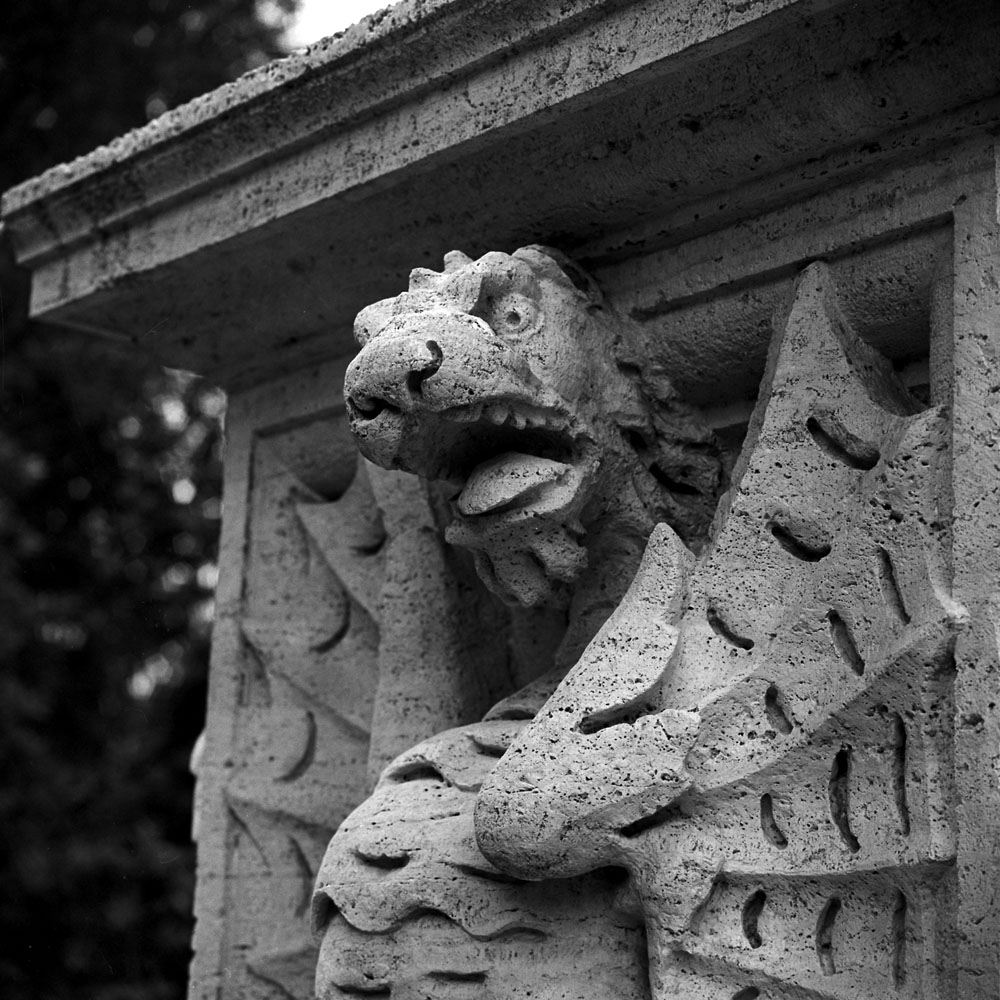
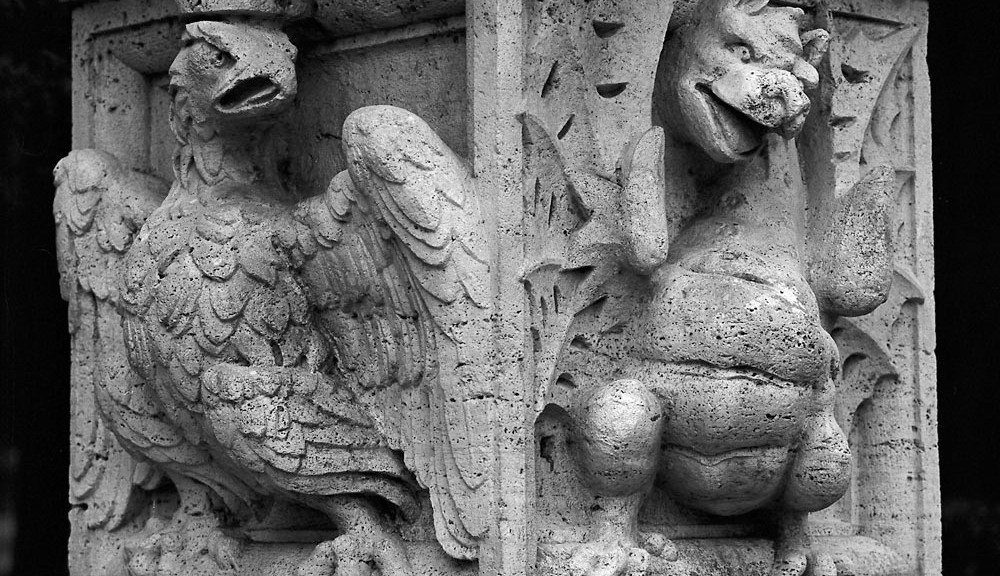
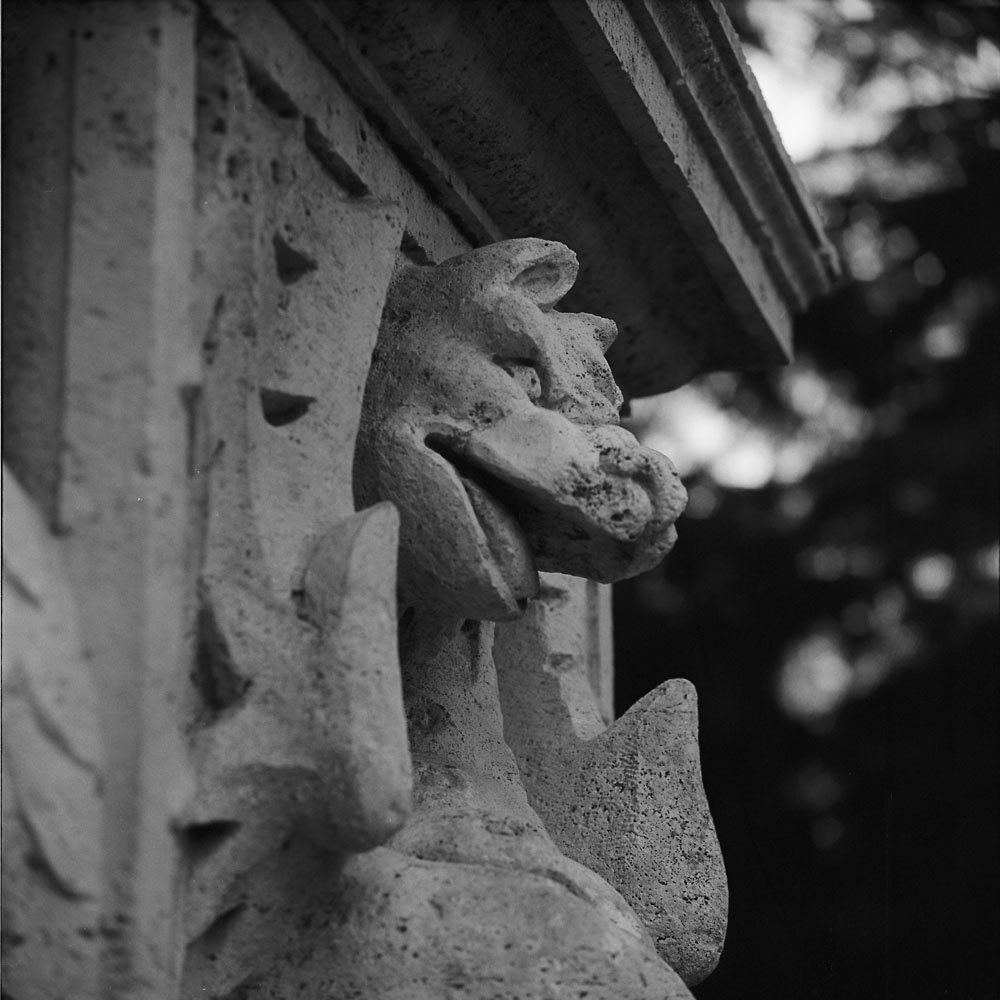
The plaza in front of the Villa is decorated by statuary, fountains, and an Egyptian obelisk or two. On the wall that demarcates the boundary between the plaza and the park, pedestals to support decorative urns are carved with dragons and eagles, elements from the Borghese family coat of arms. The eagles and dragons here are from the pedestals.
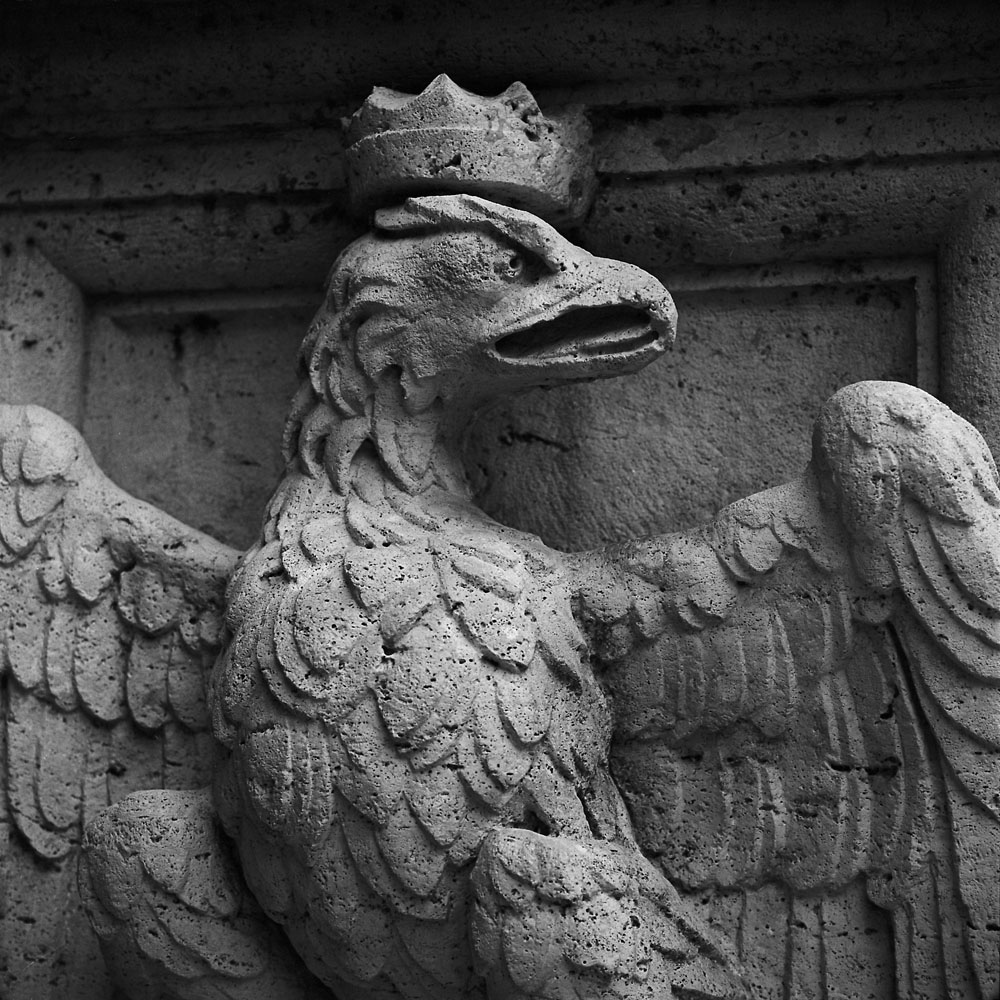
Eagle, Villa Borghese
Dragon, Profile, Villa Borghese
Dragon and Eagle, Villa Borghese
Dragon, Villa Borghese
Snarling Dragon, Villa Borghese

The lion devouring the stag is from an ancient Roman marble vessel on the side terrace of the Villa Borghese.
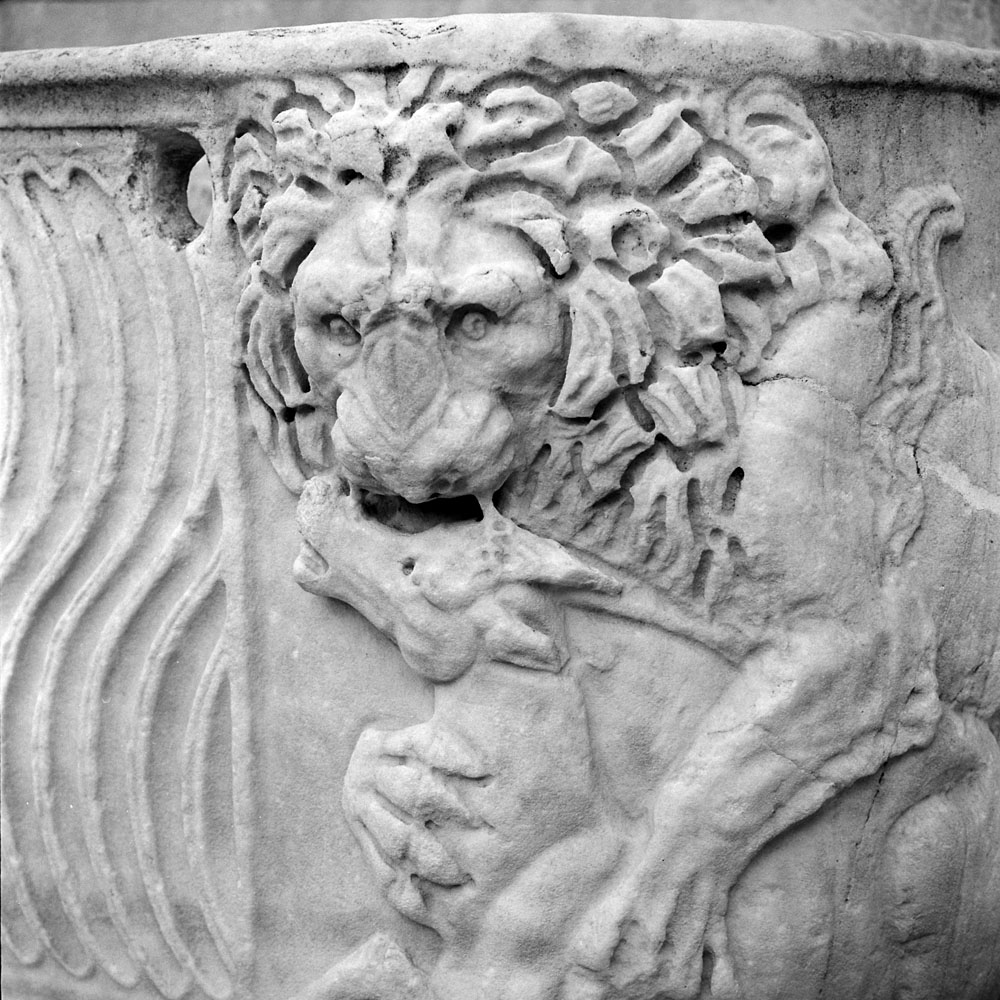
Lion and Stag, Villa Borghese

The bull’s head is from one of a pair of cornucopia/planters adorning the front steps to the Villa Borghese.
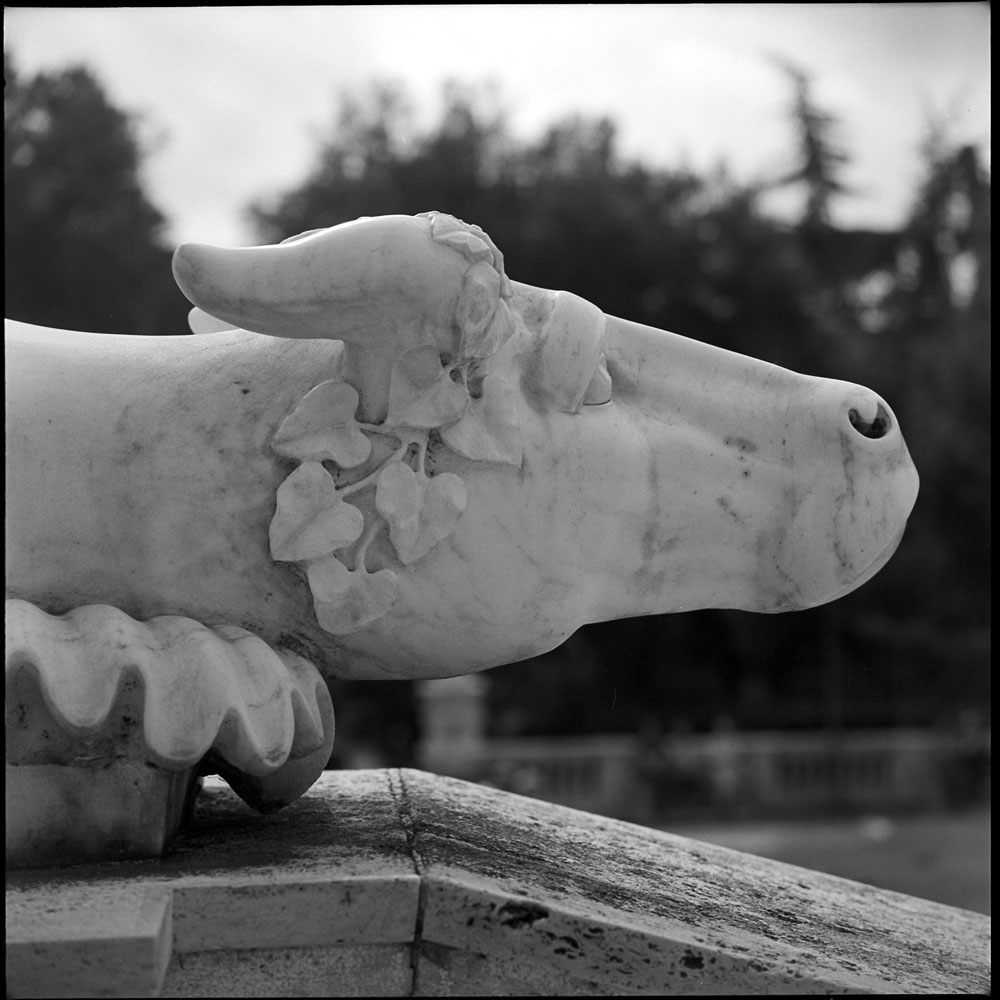
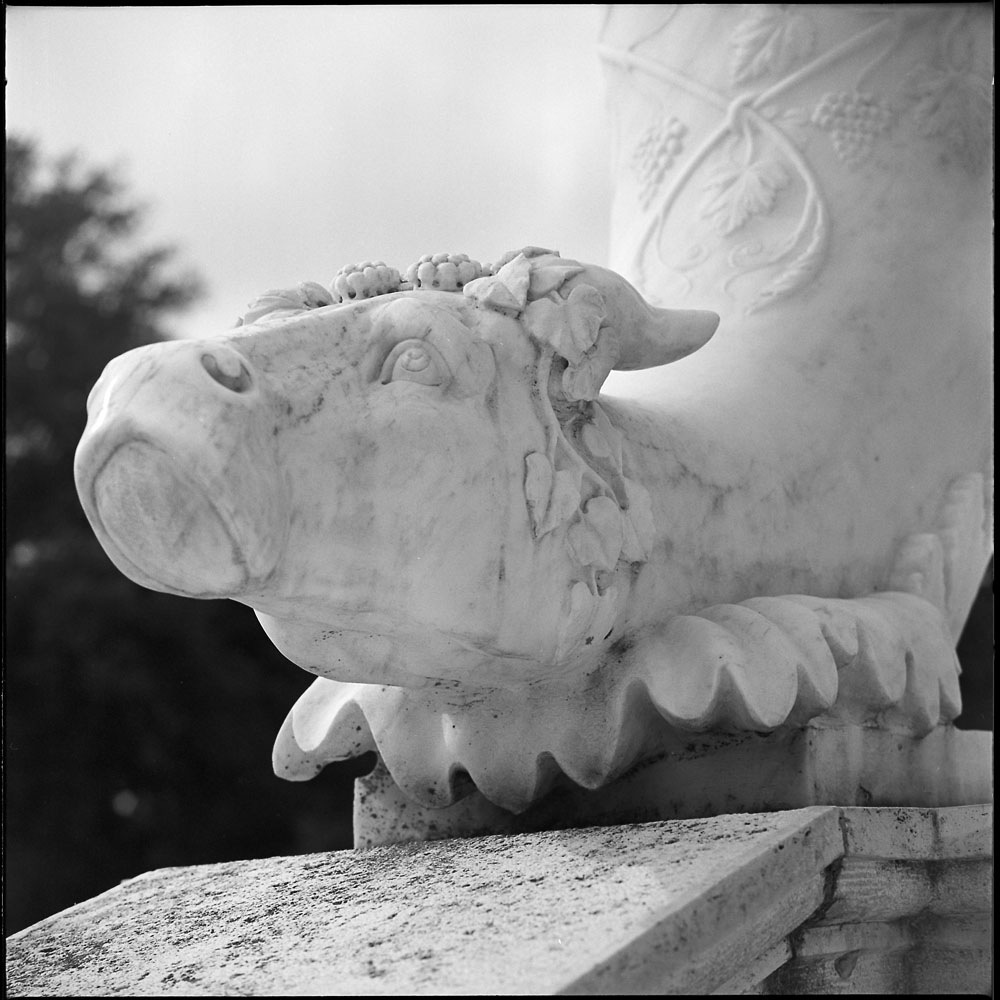
Bulls Head, Profile, Villa Borghese
Marble Bulls Head, Villa Borghese

For the photo geeks in the house, these were all shot with my Tele-Rolleiflex, many using the 0.35 Rolleinar close-up filter. The 0.35 Rolleinar helps bring the minimum focus down from 8 feet to a much more manageable 4-ish.
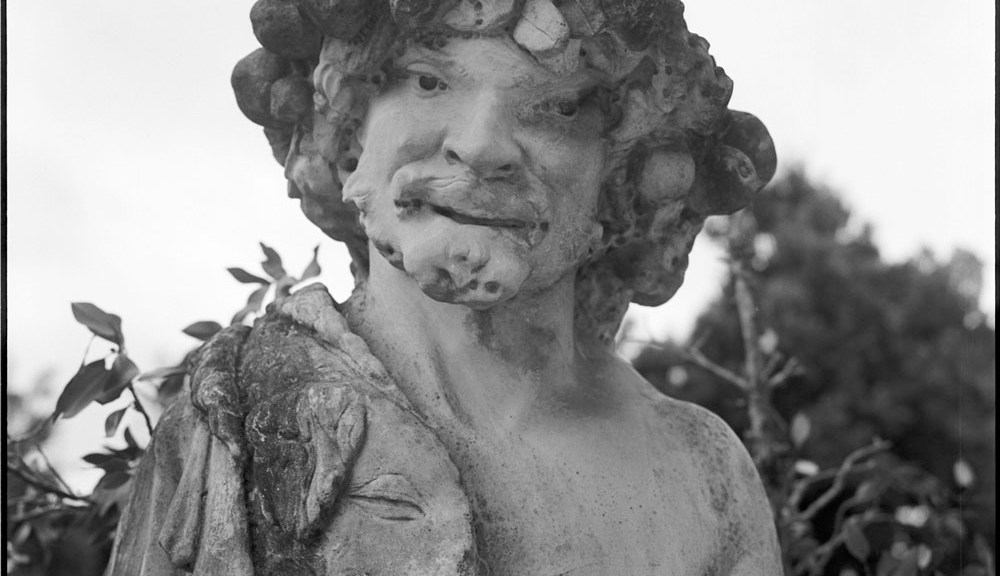
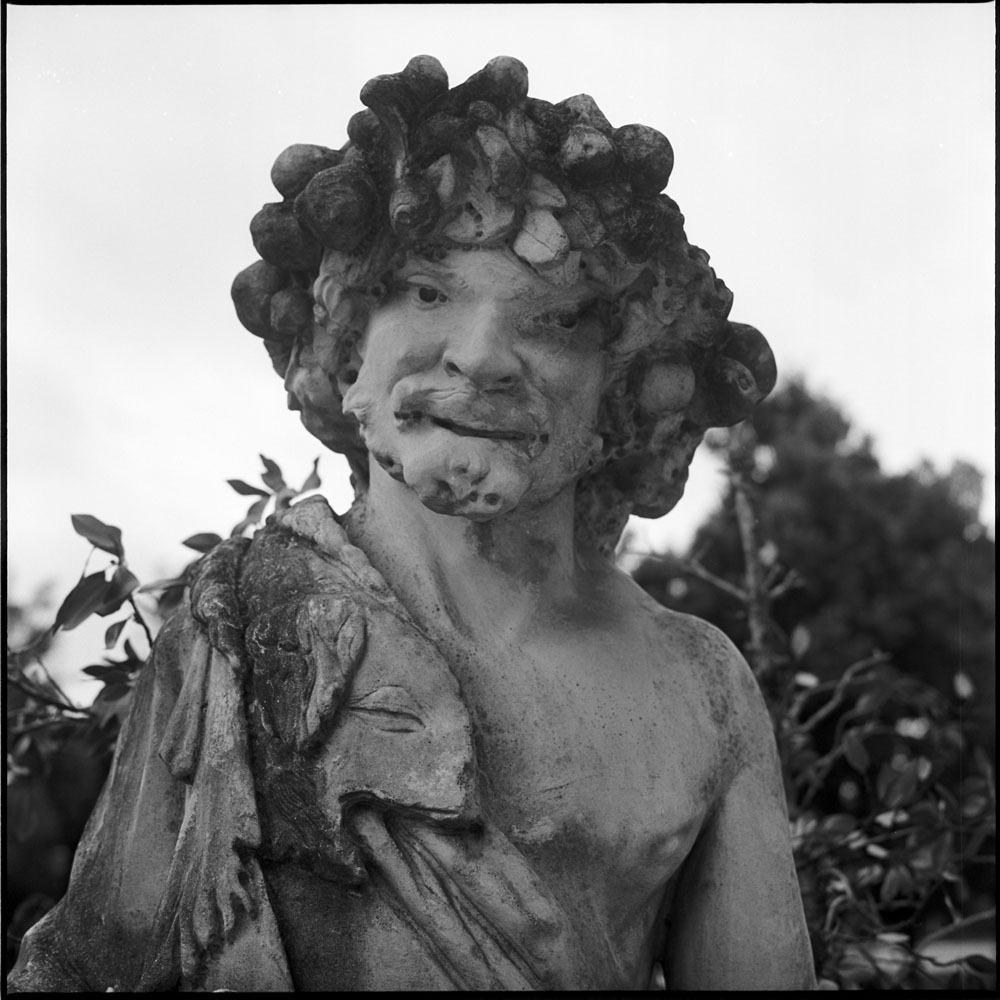
Bacchus, Villa Borghese Gardens

A statue of Bacchus, or perhaps a satyr, in the gardens of the Villa Borghese.

Bacchus, Villa Borghese Gardens

Around the Piazza Bocca Della Verita

In a previous post I mentioned the Temple of Hercules Victor and the Fountain of the Tritons on the Piazza Bocca Della Verita, and the associated temple and church of the Temple of Portuno and the Basilica of Santa Maria in Cosmedin. Here they are.

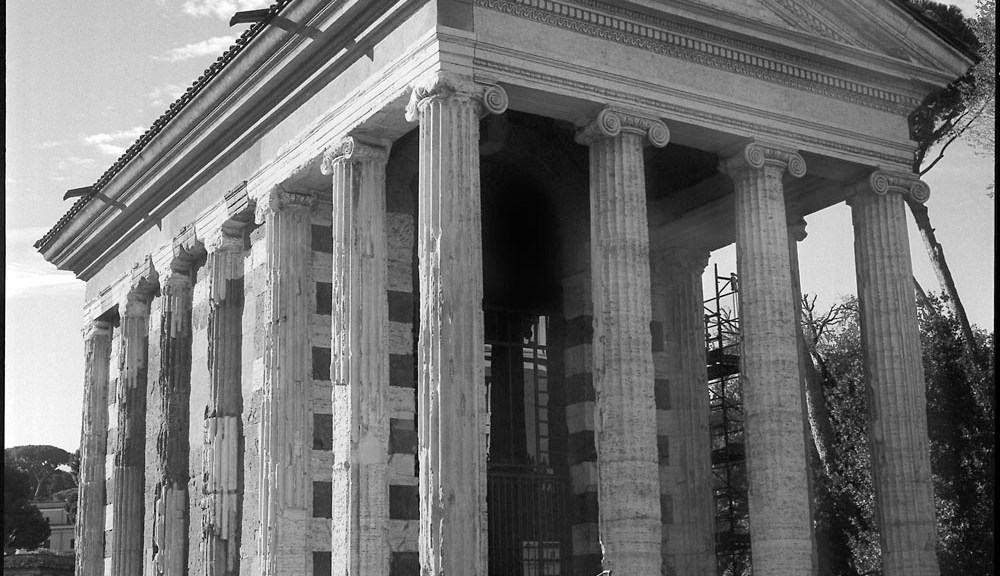
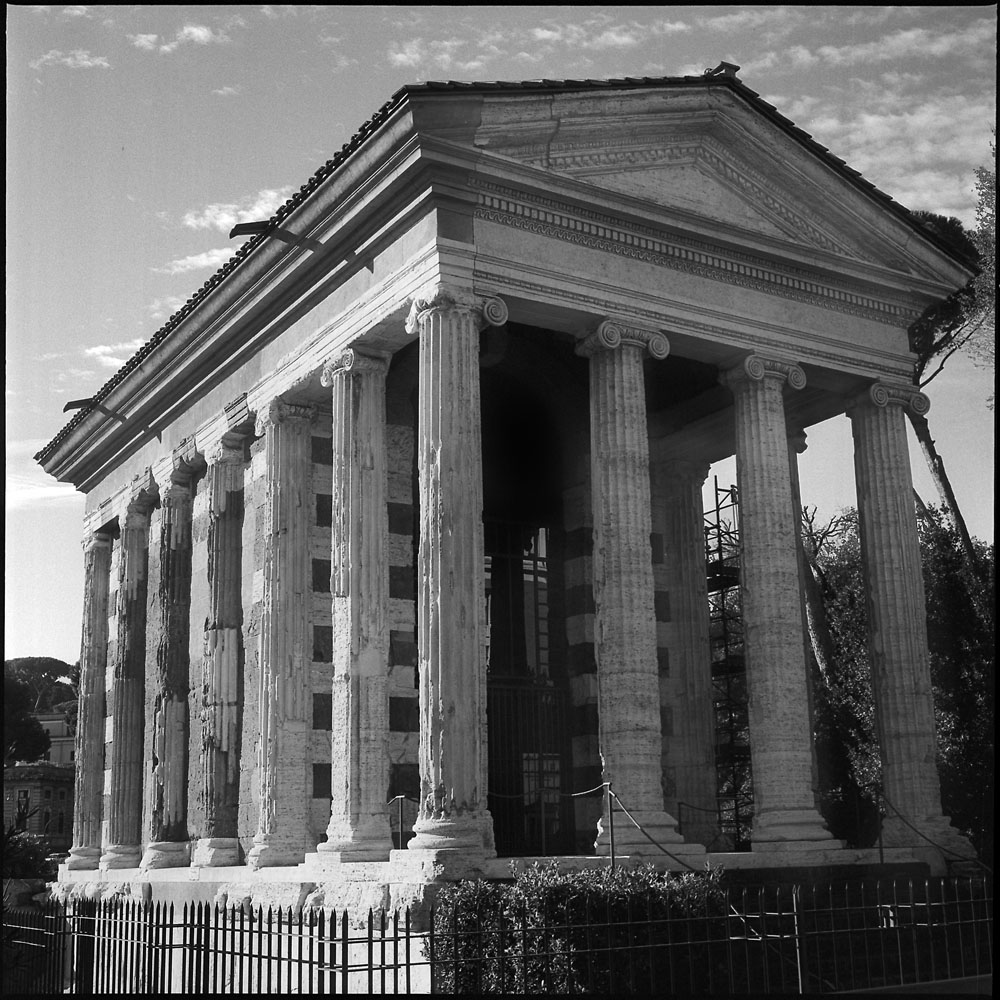
The Temple of Portuno is more or less contemporary to, although somewhat newer than, the Temple of Hercules Victor. It survived into the Christian era and was re-purposed as a Christian church, to later fall into disuse. It has been stabilized and restoration work is ongoing.

Temple Of Portuno
Temple Of Portuno

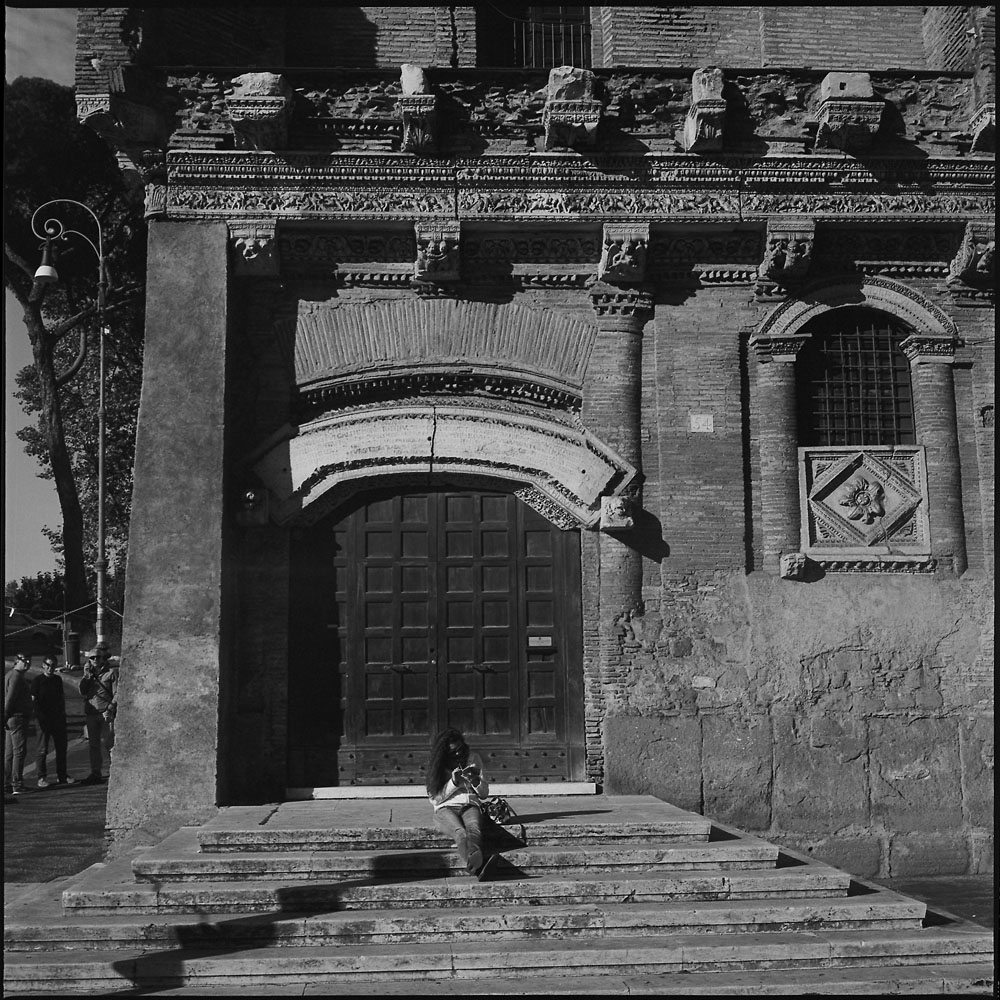
The library of the Casa Dei Crescenzi sits immediately across the street from the Temple of Portuno. The structure in this shot is early medieval/Romanesque in design. I saw the girl sitting on the steps, waiting for the library to open, or perhaps waiting for a bus. From the camera’s perspective, the men around the corner appear to be looking at her and commenting, although in all probability it was me and my camera that piqued their interest, since from their position they would not have actually been able to see the girl.

Casa Dei Crescenzi Library

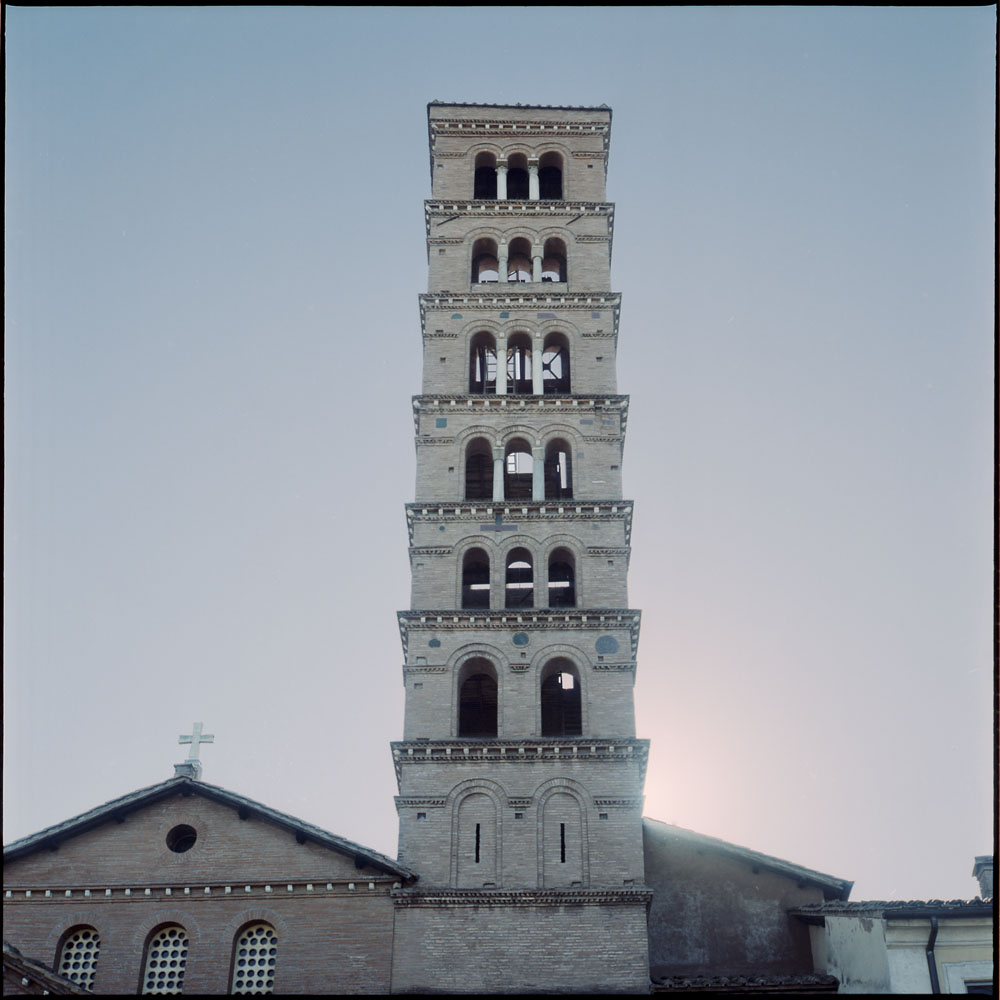
This is the Romanesque bell-tower of Santa Maria in Cosmedin, one of the older Christian churches in Rome, home to the Bocca Della Verita which now resides on the front porch, the easier to access for tourists. Saint Valentine’s relics also are kept here. I thought it was particularly striking with the sunlight just cresting the roof of the church and backlighting the tower. Contrast this with my earlier shot of the Campanile in Florence.

Belltower, Sta. Maria in Cosmedin

I’m particularly pleased at how well my camera handled the backlighting without flare or loss of resolution. It did a remarkable job for a 60-year old lens. And maybe it’s also a sign that I’m becoming a better photographer such that I composed it to minimize problems.

Here a Photographer, There a Photographer…

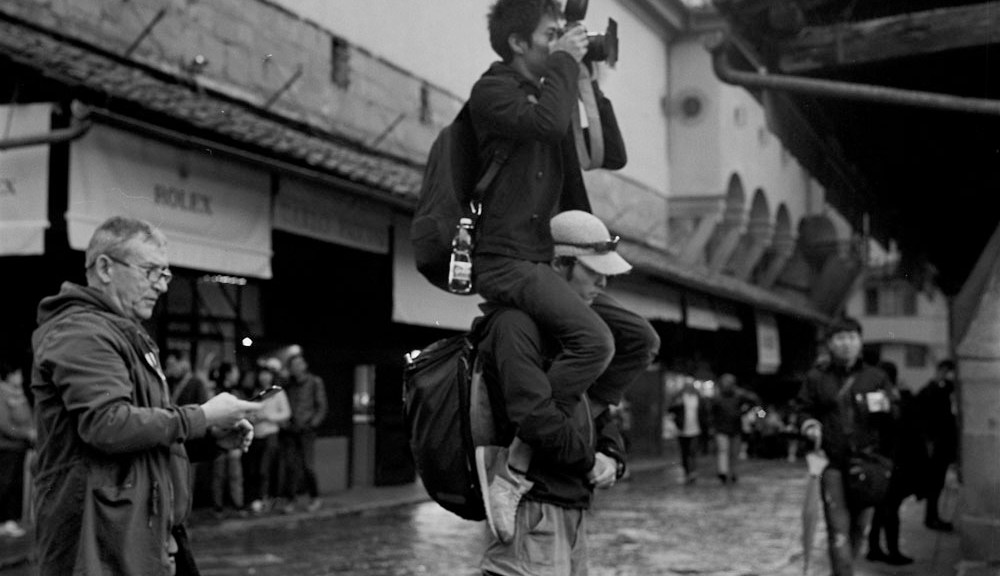
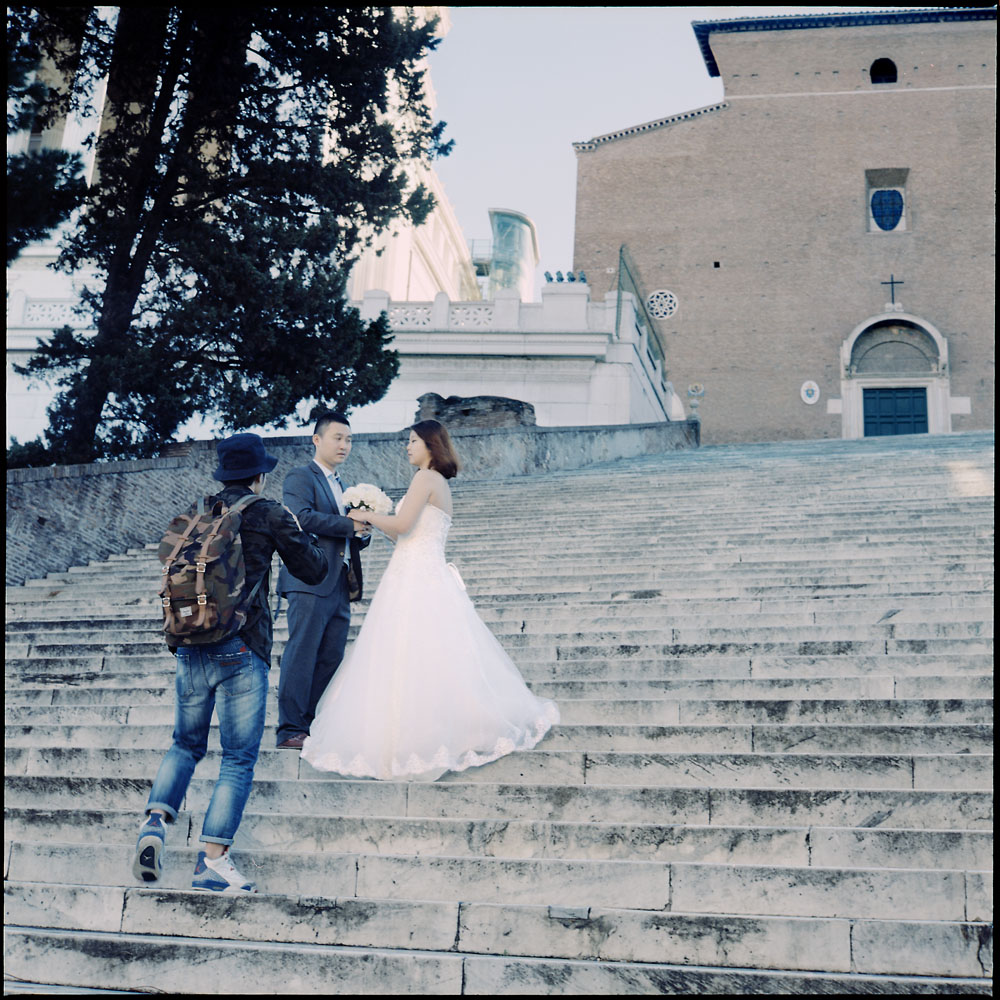
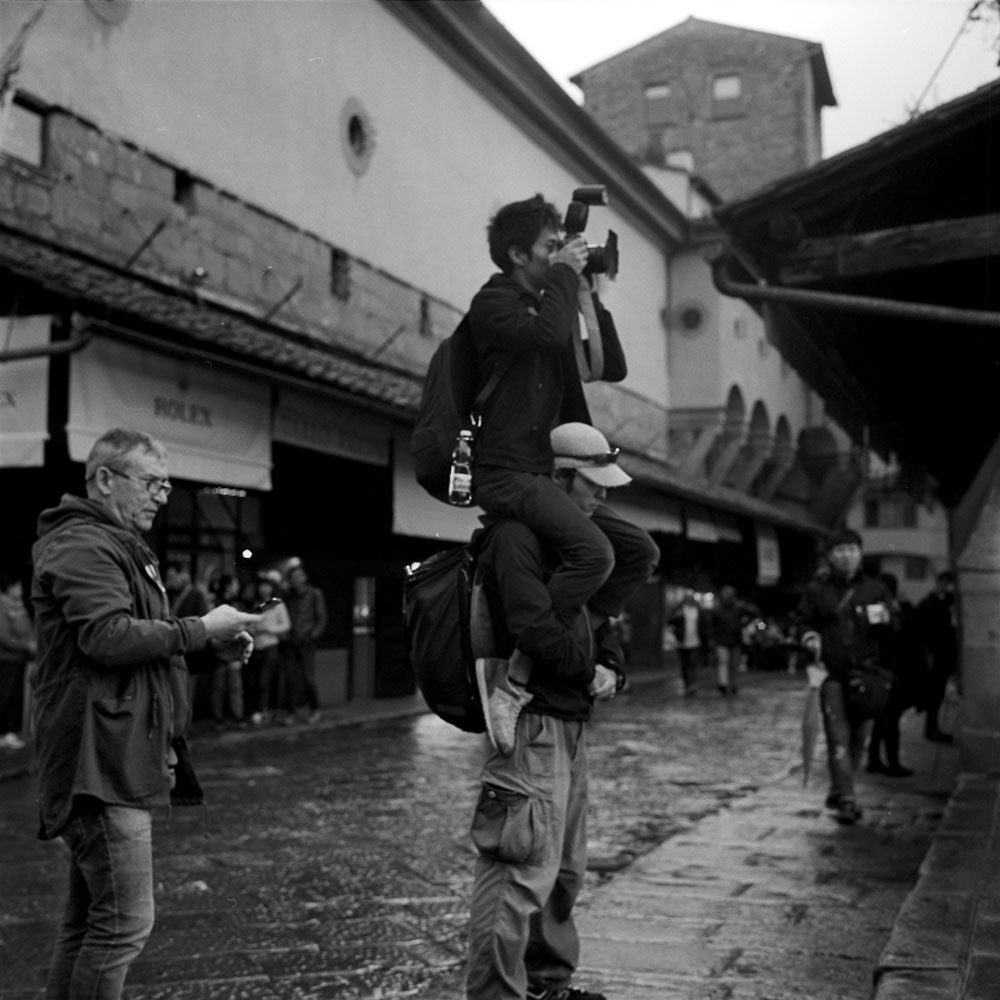
These are two of the wedding photographers I saw in action on my trip – I saw at least two more that I didn’t capture. All were Chinese – I guess it’s a thing now for Chinese couples to come to famous landmarks ( I saw this in Paris as well when I was there ) to get their wedding photos done. I don’t know if they were actually having their weddings in Rome and Florence, or just getting their pictures taken. I’d have loved to have asked, but the photographers were busy working and I’m not going to interrupt them.

I’m not at all surprised by the first location- the steps of Santa Maria in Aracoeli are a very popular destination spot for wedding couples. They were lucky that it was a quiet day – in peak season the steps are very popular with tourists, including pilgrims climbing them on their knees hoping for divine intercession to heal illness or get pregnant, although not so much these days. There are 124 steps (122 if you start on the right-hand side).

Wedding, Steps of Santa Maria in Aracoeli

In Florence, this was the scene on the Ponte Vecchio, next to the Cellini monument. I know photographers will go to some lengths to get the shot, but this is really taking it to another level. I also observed a much more conventional photo-taking outside the Duomo early in the morning on another day.

Wedding Photographer, Ponte Vecchio

The Temple of Hercules, Rome

Here is the Temple of Hercules Victor. When built, this would have been on the banks of the Tiber, or at least had a clear view of the river. The level of the city has risen some 17 feet since Roman days, so this now sits downhill from the Lungotevere (the street that runs along the riverbank). The tile roof is a much later reconstruction. This temple is the oldest surviving marble building in Rome, dating to approximately the 2nd century BC.

Temple Of Hercules
Temple Of Hercules

In the plaza in front of it there sits the Fountain of the Tritons, completed in 1715 as part of a renovation project for the plaza in front of Santa Maria in Cosmedin, the medieval basilica that houses the famous “Bocca della Verita” and the skull of St. Valentine.

Fountain, Temple of Hercules

The Temple of Hercules Victor and the neighboring Temple of Portunus (not visible in this view) were converted into Christian churches in the early post-Pagan era, thus their relative high degree of preservation. Neither are active churches now. While the Temple of Hercules Victor today is solid and stable, work is ongoing on the Temple of Portunus and both remain closed to visitors. The closures may also represent a side effect of the budget woes currently besetting Italy.

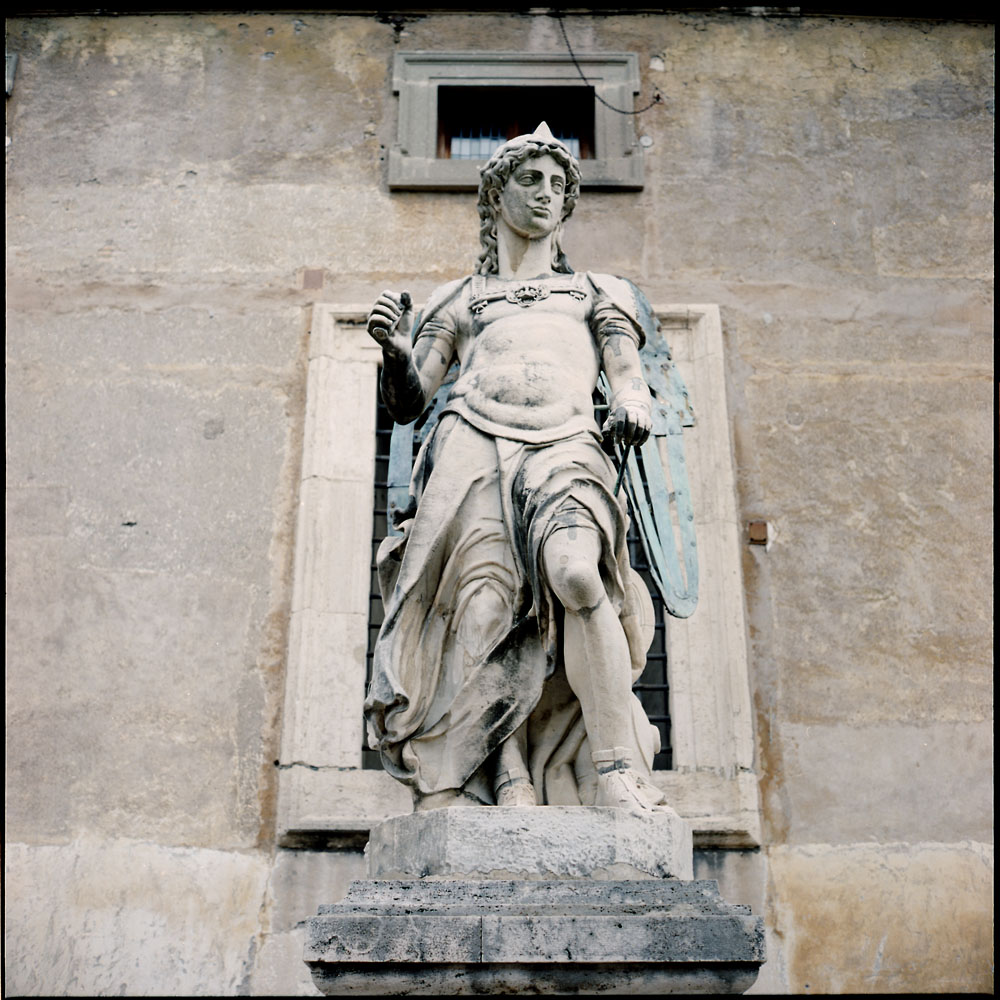
The Archangel Michael, Castel Sant’Angelo

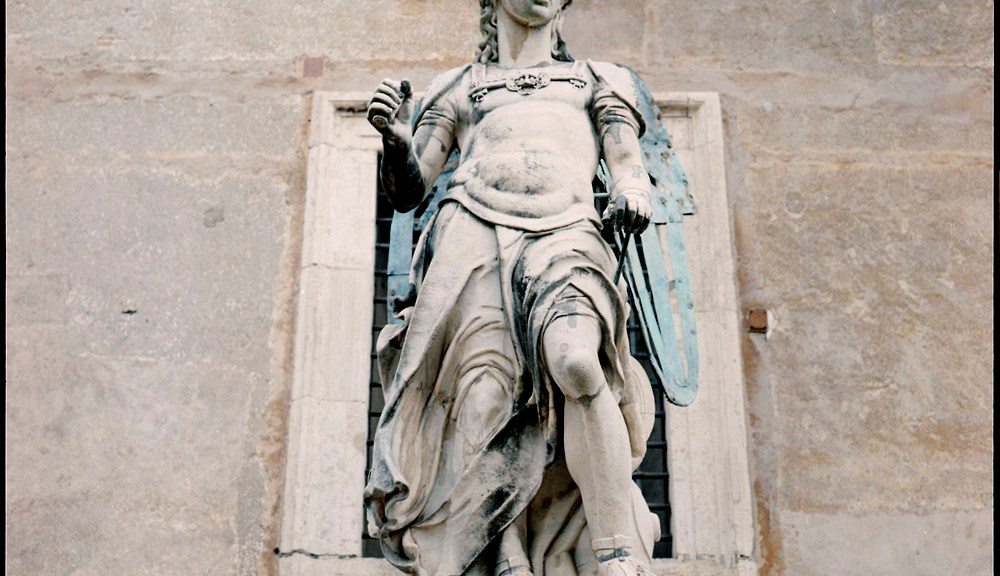
The statue of the Archangel Michael in the inner courtyard of the Castel Sant’Angelo. This is at the mid-level courtyard after ascending the ramp that passes through the crypt of Hadrian/castle dungeon. around it are numerous Roman marble busts in various nooks, and a well for providing water to the Papal apartments above.

Archangel Michael, Castel Sant'Angelo
Archangel Michael, Castel Sant’Angelo

The statue dominates the courtyard, though, with its bronze wings patina’d green and weathered countenance.

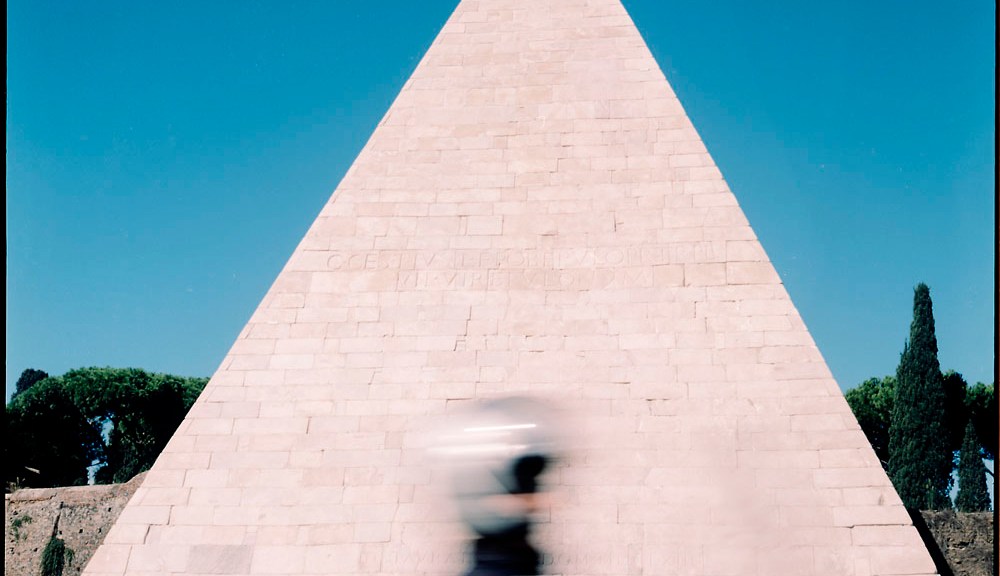
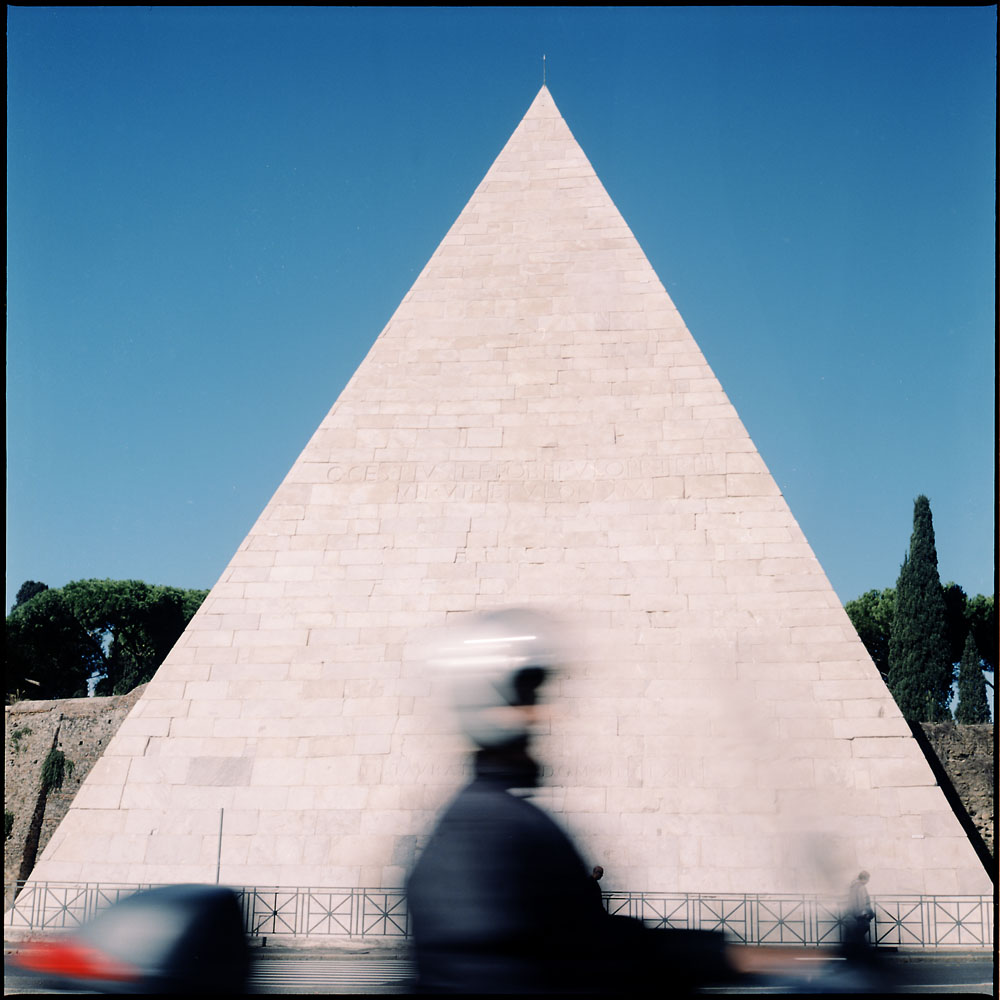
Pyramid of Cestius, Scooter

When you get off the Pyramide Metro station, the very first thing you see upon exiting is the old city gate in the walls of Rome. Pan left and the very next thing is the Pyramid of Cestius. Caius Cestius was a wealthy Roman citizen who, inspired by the pyramids of Egypt, decided he wanted a white marble pyramid as his funerary monument. He had his tomb built into the city walls. His goal of not being forgotten certainly succeeded as we still know who he was today, some two thousand years after his passing.

Pyramid of Cestius, Scooter

His monument backs onto the “English” Cemetery, known technically as the Cimiterio Accatolico (non-Catholic cemetery), final resting place of many English expatriates (and Russian, and American, and French…) including the luminaries of 19th century Romantic literature, Shelley and Keats. The Pyramid of Cestius is in fact open for tours, but they only offer them one day a week, twice a month, and you need to make reservations.

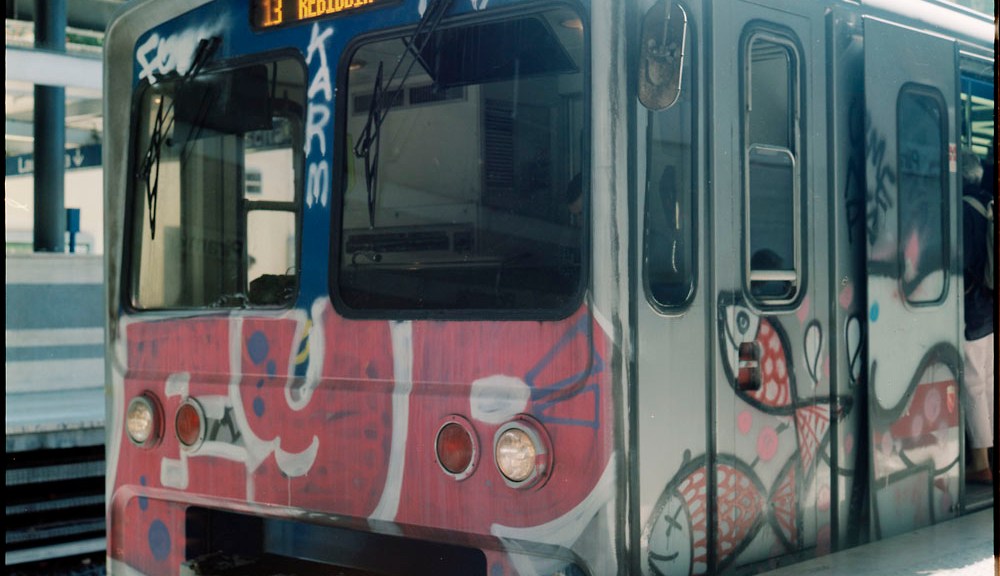
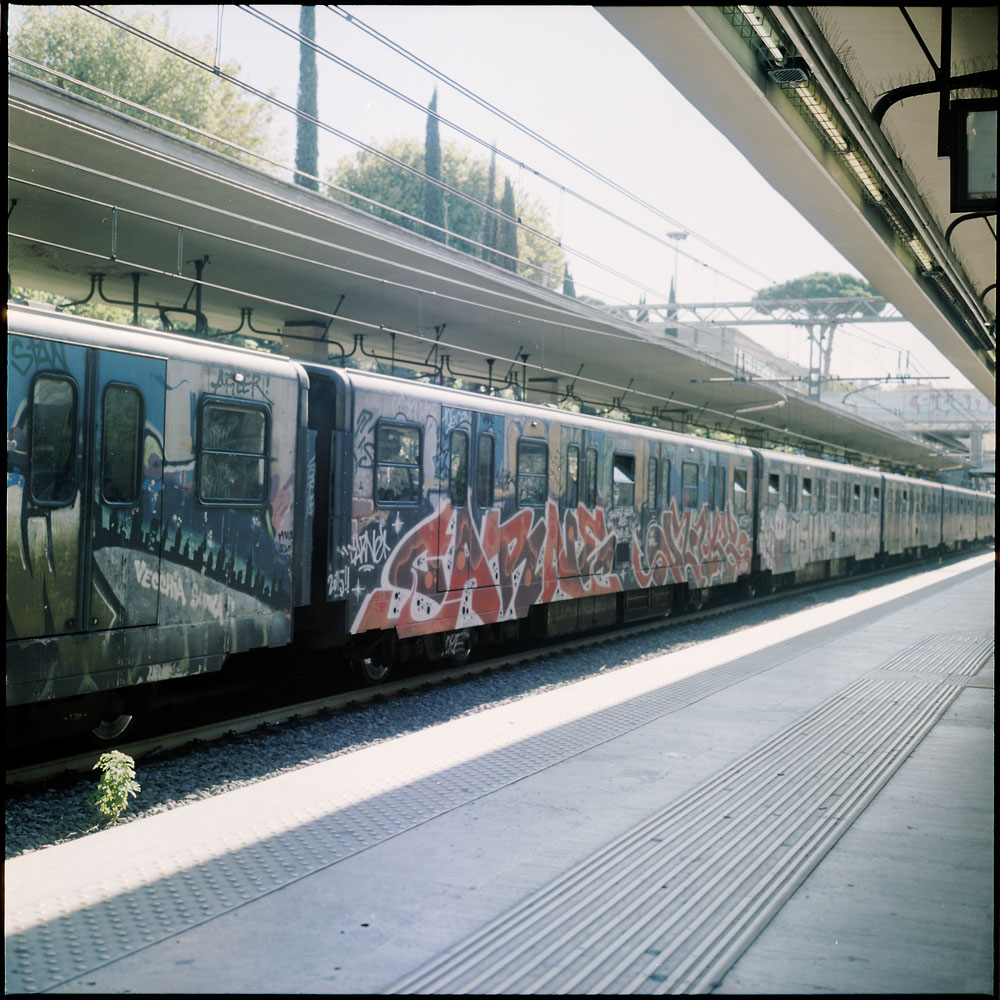
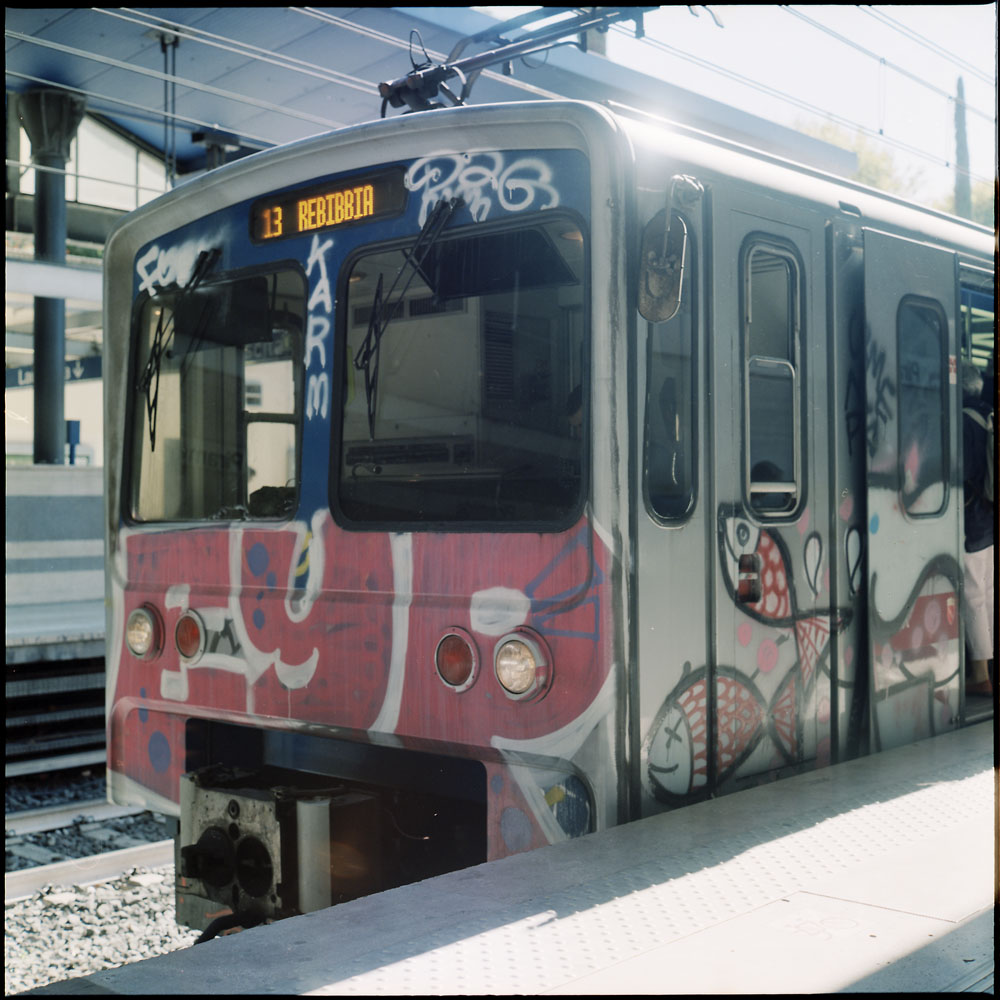
Roman Subway Trains, Graffiti

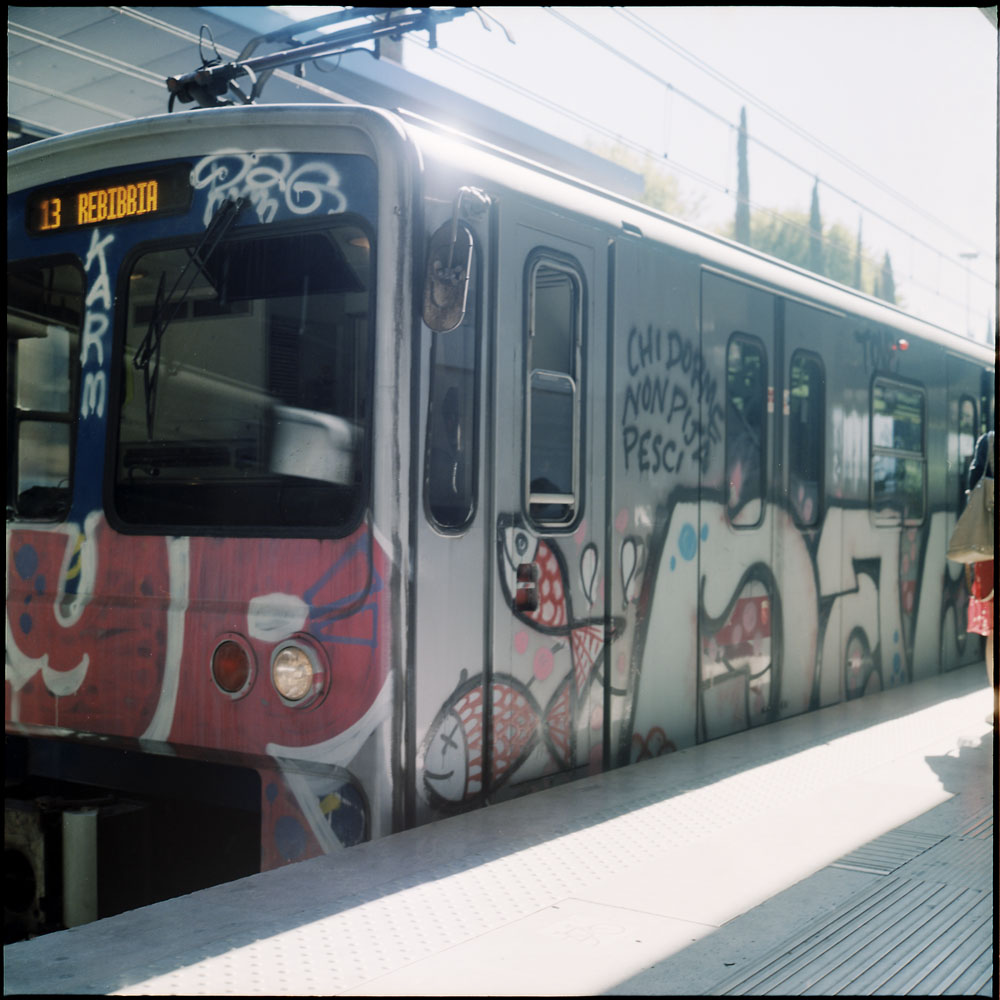
The Roman subway trains are covered in graffiti in a way reminiscent of the New York City subway trains in the 1970s and 80s. I assume the yards where the trains are parked at night are insecure – that would be the only explanation I can think of for the sheer amount of graffiti.

Subway Train, Graffiti, Rome

While my memory of New York City subways in the 1970s is a bit vague, my impression is that the graffiti there was not so much artistic as it was mostly tagging by individuals and/or gangs. Here, as in seemingly all things Italian, there is an underlying artfulness to at least some of it.

Train To Rebibbia, Rome

And even the text commentary (“Who sleeps not [something] with the fishes”) is relevant to the designs. I don’t know if my misreading of the handwriting is wrong or if the phrase is some Italian/Roman slang phrase that Google Translate can’t figure out. Any readers who understand the expression, please chime in and correct me!

Train with Fish to Rebibbia

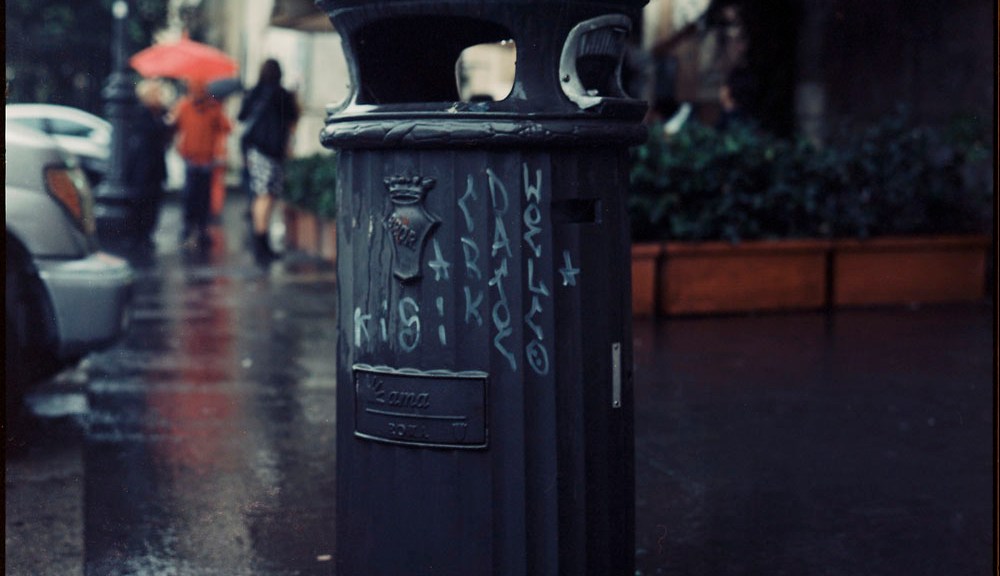
Trashcan, Theater of Marcellus, Rome

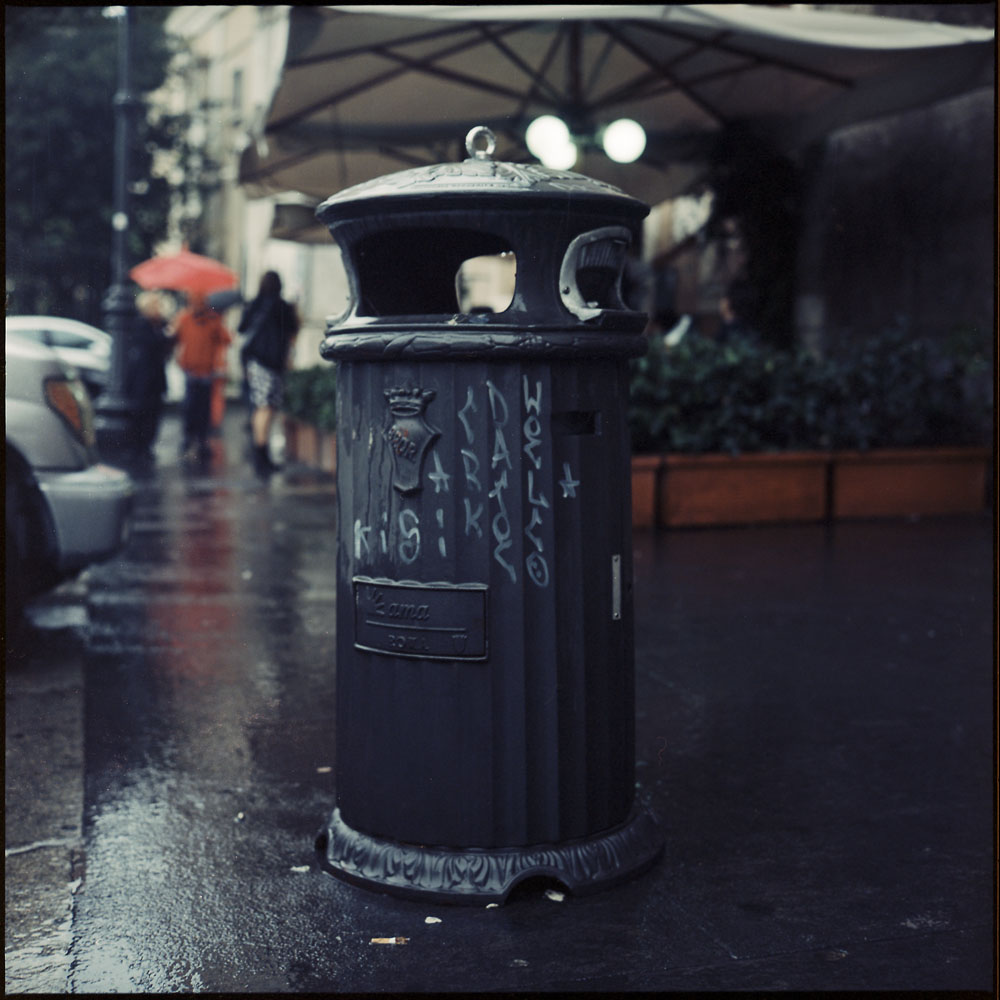
Another of my portraits of ordinary objects – this time a trash can in Rome, outside the Theater of Marcellus, at the foot of the Palatine Hill. The trash can sits at attention, doing its duty exposed to the elements. Neither rain nor snow nor ill-placed cigarette butts deter it from its appointed task.

Trashcan in the rain, Rome

I don’t usually photograph in the rain, but I was so excited to be in Rome, running around and photographing without constraints, I didn’t care if people were staring at me as if I were some kind of freak, photographing a trash can in the rain with a 60 year old camera. This particular composition appealed to me because while the trash can is the center of attention and the star of the show, the background of the cafe umbrellas and the woman in the red coat with matching umbrella convey an extra level of that sense of how people turn their backs on public conveniences like trash cans and ignore them until they need them. Everything else is more important and more deserving of protection/attention.

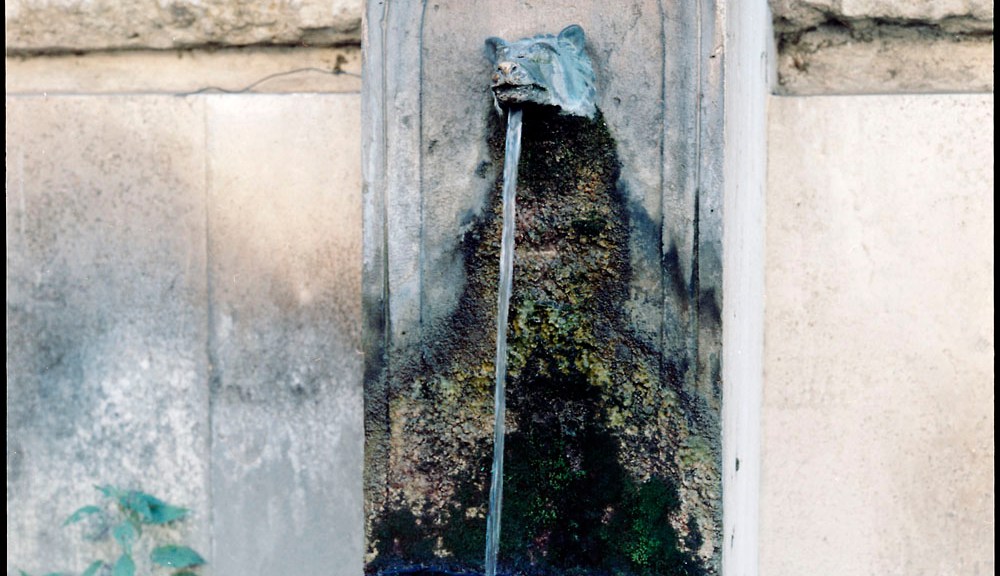
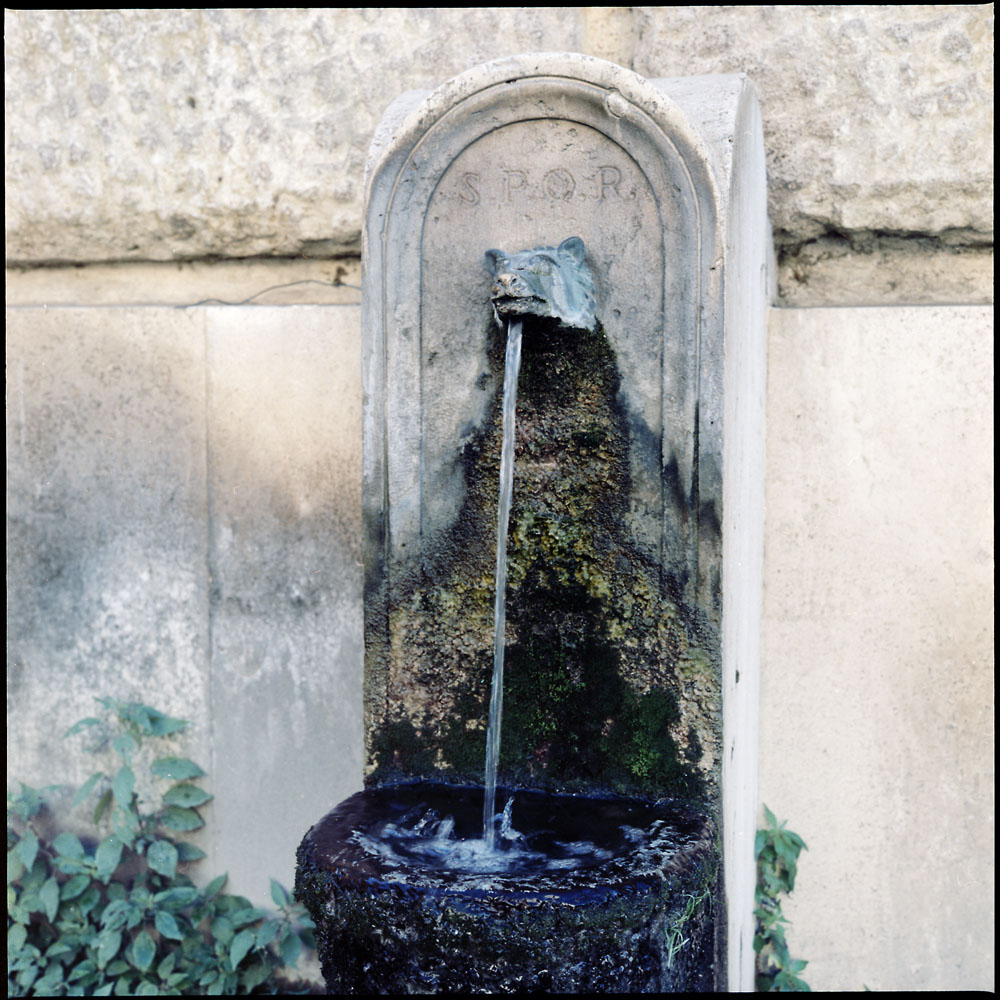
SPQR Fountain, Centrale Montemartini

I found this fountain with its traditional wolf’s head and SPQR inscription, both symbols of ancient Rome, in the entrance courtyard to the Centrale Montemartini museum. I suspect they’re relics of the Fascist era as the power plant was built during Mussolini’s pre-war leadership, and symbols of Imperial Rome were in very high demand.

SPQR Fountain, Centrale Montemartini

Today, it adds a touch of tranquility to an industrial setting.