Tag Archives: Washington DC

Stereoviews of Washington DC

I was out to my parents’ house this weekend for Easter dinner, and I found my stash of stereoviews I had been keeping there. I thought I’d scan in a few of them to add to the online collection here. These are from Washington DC, my guess is mostly from the 1920s and 1930s, although the one of the Library of Congress as viewed from the Capitol dome could be as old as the 1890s.
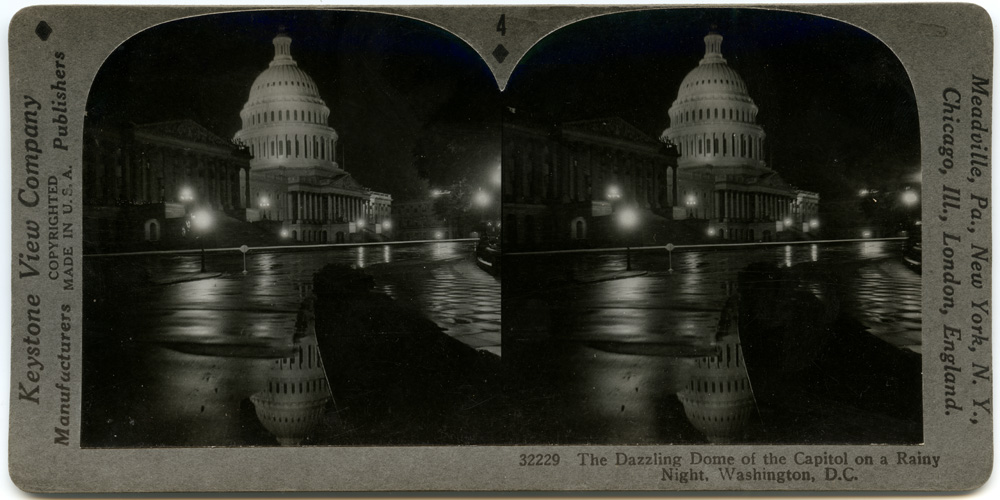
The US Capitol Dome reflected in the rain

I love this shot because it represents a personal passion when photographing- nighttime photography. It’s just a great shot of the Capitol dome all illuminated, reflecting in the wet street.
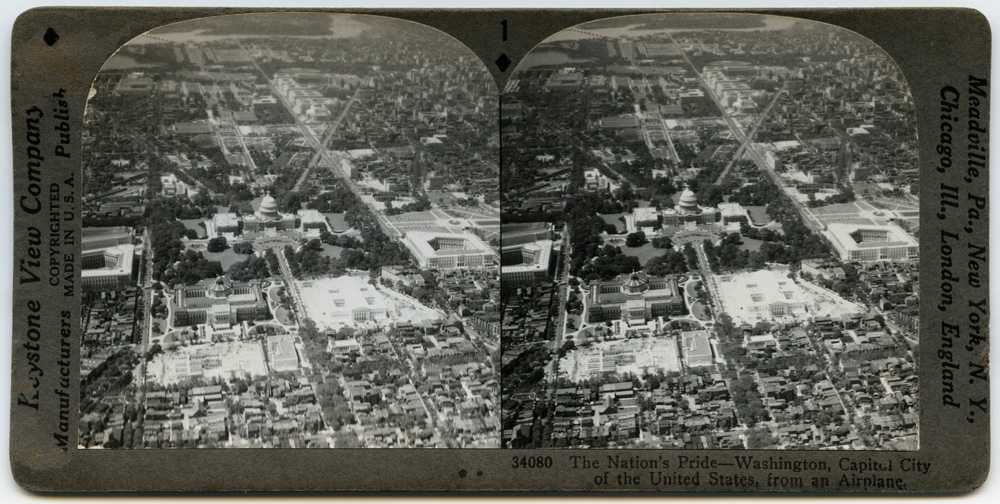
Capitol Hill Aerial View

Here’s an aerial view of Capitol Hill, looking west. In the immediate foreground, starting with the US Capitol as the 12 O’clock position, going clockwise, is the US Senate offices, the US Supreme Court (the very bright white building, which stands today on the grounds of the former Old Brick Capitol Prison, home to civil war spies among others), across the street and a little more to the foreground is the Folger Shakespeare Library, and then continuing on is the Library of Congress, and finishing up to the left and slightly into the background/west of the US Capitol are two of the US Congress office buildings. On the right, far in the distance, is the Natural History Museum, and the big gulf between it and the Capitol shows these to have been taken before 1937, as the National Gallery of Art building was begun at that time and opened to the public in 1941.
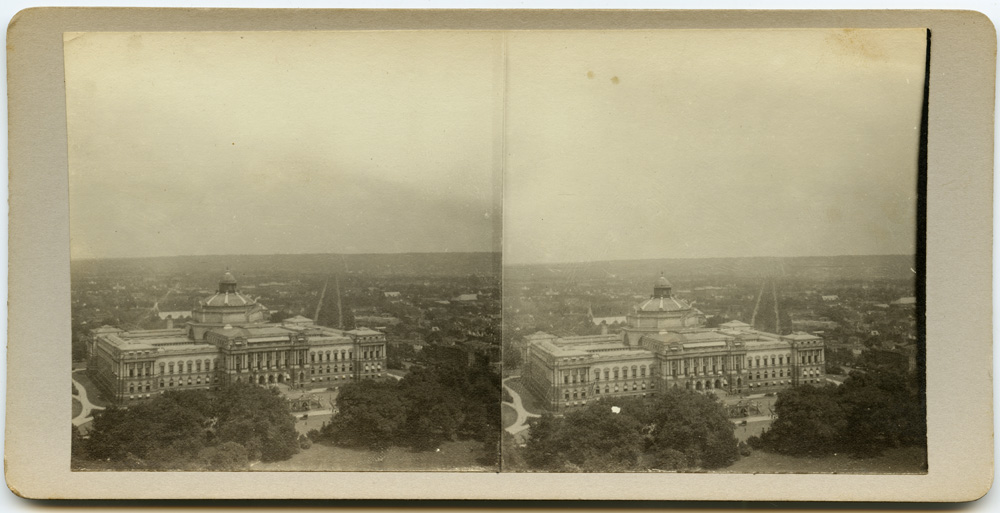
Library of Congress, as seen from the Capitol dome

Last but not least, we have the Library of Congress, as seen from the top of the US Capitol dome. The view is looking east down Pennsylvania Avenue toward the Anacostia River. This, the main building of the Library of Congress (LoC) is one of the most spectacular buildings in Washington DC, and if you are ever here, well worth the visit for the architecture alone, if not for one of the special exhibits they routinely have on display. When I went in last year to see a photography exhibit (and yes, the LoC is one of the great photography museums of the world, but much of their collection is viewable by appointment only), they had the reconstruction of Thomas Jefferson’s personal library that he donated upon his death to form the nucleus of the LoC collection. In comparison to today’s LoC, which has a copy of every book, magazine and newspaper published since the 1870s, and a healthy selection of those before as well, Jefferson’s collection was a meager 6500 books, what he lacked in quantity he made up for in quality. He had his own organizational scheme for his library, arranged by topic. It’s a fascinating display and worthwhile for any bibliophile. For more information about the exhibit, see the LOC Website
A night at the circle…

Well, I finally got off my keyster and went out shooting tonight. I loaded up ten sheets of 5×12 in the Canham and went over to Dupont Circle to burn some long exposures onto film. This process always takes a lot longer than you think it should because inevitably setting up with a 5×12 (or any view camera for that matter) invites dozens of total strangers to approach you and ask questions. I always view it as an opportunity to educate people about the ongoing viability of film photography, and so I’m always happy to chat, even if the light is changing (fortunately after dark there’s no worry about the light changing – you only need to take one meter reading and stick with it for the rest of the shoot).

I’ve had this idea for a shot for a long time, and never quite got around to trying it until tonight. I did two versions of it – here’s hoping at least one works. The idea was a shot of a city bus pulling up to the bus stop, and loading/unloading passengers. Ideally it would be a 30-second or so exposure. I played a bit fast and loose with this one because the traffic pattern at the bus stop I was using resulted in a lot of stop-and-go and made it hard to get the shot in just 30 seconds. I’m going to develop the film tomorrow and we’ll see what came of it. If it worked as planned, I’ll have light trails leading up to the bus at the curb, and a fairly clear bus at the stop, along with the passengers and the interior. I did one version with my 240mm Apo-Germinar, which wasn’t wide enough to get the whole bus in at the bus stop. I switched to the 159 Wollensak Extreme Wide-Angle for the second shot, and stopped the lens down further to allow for the longer exposure time needed. I’m pretty sure I’ll get most if not all the bus in at the bus stop (I don’t mind if the roof gets a little cut off), but it’s hard to tell without watching the scene through the lens, and at that hour of the night it would mean waiting another half hour for the next bus to come around, and maybe nobody would be waiting to get on or wanting to get off at that stop, and I’d miss the shot. If this first try doesn’t work out, I’ve got other locations I can give a whirl that might work better.

I’m BAAAACK! To posting that is…

It’s been a while since I added anything here, because I’ve been insanely busy dealing with a whole bunch of personal business (breaking up, evicting my ex, cleaning up the aftermath, starting dating again, reconfiguring my office, building a new home wireless network since the ex took the wireless router, getting nasty bronchitis, recovering from said bronchitis, etc etc you know…). I haven’t had a lot of time for collecting or thinking about it as a result. Well, the dust has settled and I’ve been casually acquiring an odd and end here and there, so I’m back to writing about it again.

One of the things that has interested me, and helped drive me into this whole civil war period image collecting thing, is my hometown – Chambersburg, PA. Chambersburg was perhaps the most trampled ground north of the Mason Dixon line during the Civil War. Prior to the war, John Brown planned his raid on Harpers’ Ferry while living there, and met with Frederick Douglass to discuss the plans (Douglass advised against attacking the federal arsenal). Jeb Stuart’s cavalry raided it for the first time in 1862. Then Lee’s troops passed through on their way to Gettysburg in ’63, and in 1864 General McCausland’s troops demanded a ransom of $500,000 in US currency or $100,000 in gold, which the town refused to pay, so it was put to the torch.

In digging around on Ebay, I found an image of a man who was born a few towns over from Chambersburg. That got me thinking about the old hometown, and I started searching for Chambersburg related stuff. I acquired a group of photos spanning a good 20+ years of work from a single studio, which in further searching on Ebay seems to have been the most prominent if not the only studio in town at the time.
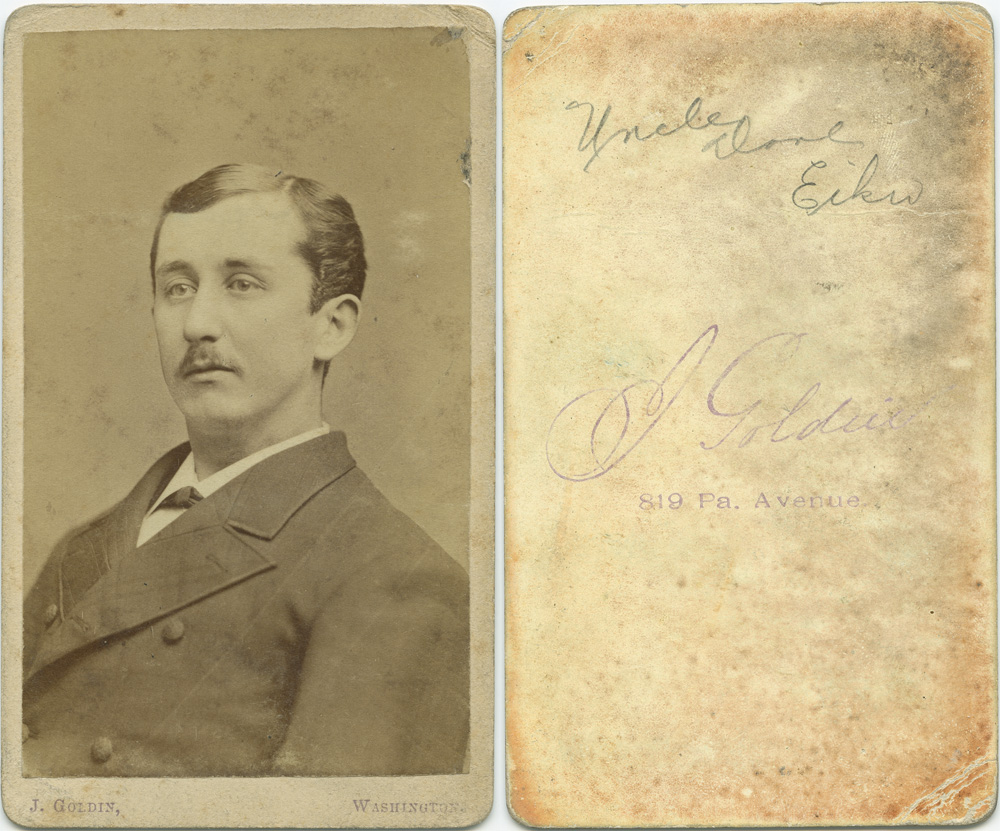
Here is the image that got me thinking about Chambersburg, a photo of David Eiker, born in Quincy, Pennsylvania. Quincy is a tiny one-stoplight town a few miles east of Chambersburg. This photo was taken at the J. Goldin studio in Washington DC.

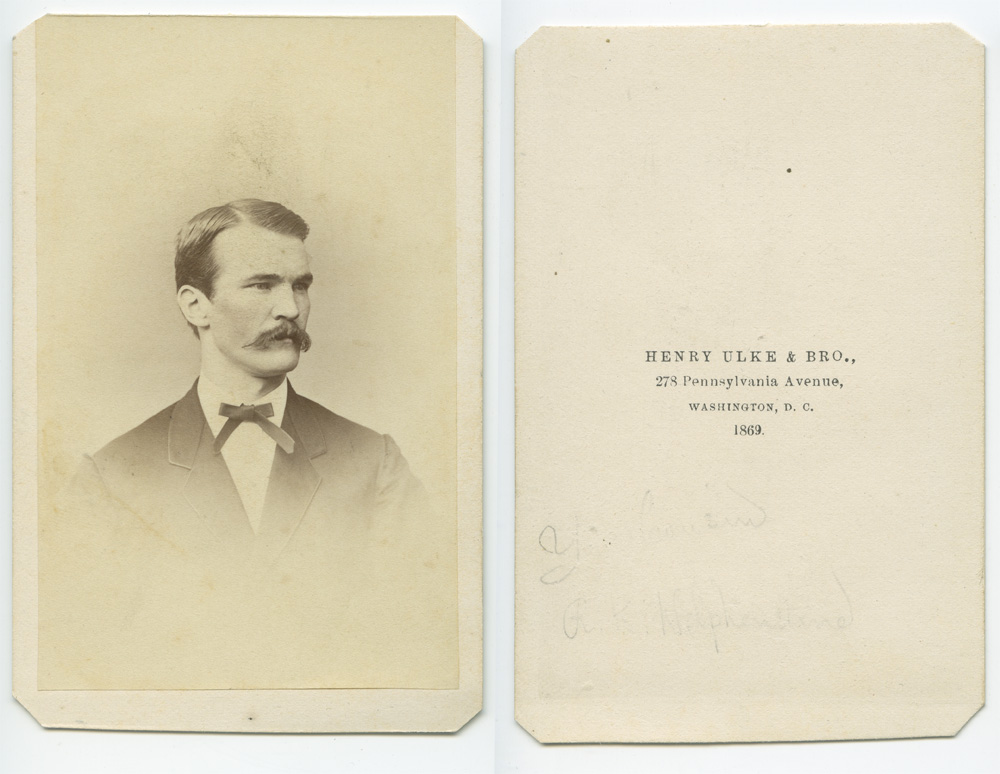
Acquired at the same time was a more-or-less unrelated photo of a Mr. R.K. Hopkinson, taken at the Henry Ulke & Bro. studio in Washington DC. The common thread was the Washington, DC studio. Mr. R.K. Hopkinson Served in Company D of the 3rd Massachusetts Heavy Artillery during the civil war.

Three new Victorian photo parlors to add…

I’ve found two more Washington DC parlors and one New York Daguerrian studio:

J. Golden – 819 Pennsylvania Avenue
Henry Ulke & Bro. – 278 Pennsylvania Avenue

The New York Daguerrian parlor is:

A.J. Beals – 156 Broadway

The address for Henry Ulke’s studio would put him today squarely on the grounds of the US Capitol, not far from the Spring Grotto, if the address is correct. Either they had a different street numbering scheme, the address is in Southeast DC instead of Northwest DC (which would put him at an even more unlikely location, a tiny triangle park just beside the Library of Congress building), or the Capitol grounds were greatly enlarged sometime between the 1870s and 1900. Given how so far so many of these studios’ locations can be accurately pinpointed today, even though the streetscape has changed a lot, I’m liking the probability that the address is correct, and that the streetscape has changed, rather than the location being inaccurate.

Food glorious food…

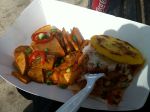
I know I’ve mentioned this once before, but I have to again sing the praises of the DC food truck scene. Today’s lunch was a Wonky Dog from the Eat Wonky truck – a gigantic hotdog topped with home-cut fries (skin on), squeaky cheese (yes, it really does kinda squeak when you chew on it), and gravy. It has been forever since I had gravy on fries, and I had forgotten how good that tastes! It’s amazing how a little lunch can bring back happy childhood memories. It’s comfort food of the best (and worst from a healthy-diet perspective) variety. Wonky also makes a kick-ass whoopie pie. I had one the other day with a nutella-hazelnut filling… heaven.

Something having next to nothing to do with photography…

… other than that I like to take pictures of it with my iPhone.

There’s this awesome and growing DC food truck scene. I had seen and heard a little about it, then when my office location made it possible to find them, I decided I’d give it a try. One bite and I was hooked! I track most of them on Twitter to know when and where they’ll be on any given day. There’s everything from barbecue to savory pies, Latin American to Laotian, pizza to pastries (mostly cupcakes). This has been the first useful thing I’ve found to do with Twitter – now I can plan my lunch outings and find way better food than the skanky Chinese buffet and the food-by-the-pound place within walking distance of the office. I’ve got some definite favorites –

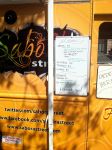
  • Sabor’a Street – Latin American arepas with a gourmet twist. My favorite so far, the shredded barbecue pork arepa on corn cakes.
  • La Gloria Mexicana – cheap, good Mexican food
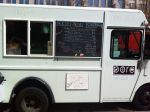
  • PORC – Purveyors Of Rolling Cuisine – a barbecue sandwich place, with homemade chocolate truffles for dessert.
  • Eat Wonky – hotdogs, sandwiches and mind-blowing homemade whoopie pies.
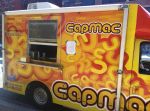
  • CapMacDC – to die for gourmet macaroni and cheese. I had a goat cheese macaroni with broccoli pesto and breadcrumbs I would expect to pay $15 for in a sit-down restaurant. Theirs? $7.
  • SweetBites – a rolling dessert truck with cupcakes to rival those storefront cupcakes for 25% less.

Did I mention that one of the bennies of the food truck scene is the terrific prices? Most mains are $6-7, and it takes work to spend more than $9 for lunch. There’s some interesting things going on – a significant number of Mexican/Latin food trucks, some rather exotic trucks (the Lobster Truck – home of the $13 lobster sandwich and the 1 1/2 hour line), and some experiments in fusion cuisine that don’t always fire on all cylinders. No matter, it beats the stuffing out of McDonalds!

In the spirit of past images

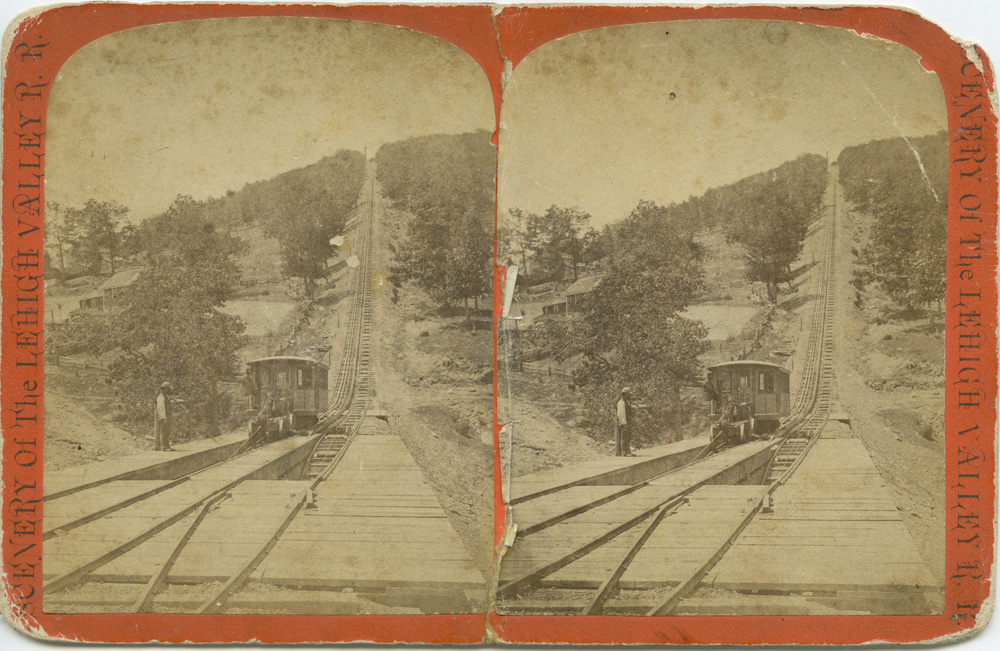
After digging up the stereoview of the Lehigh Valley Railroad station, I did a quick peek on Ebay to see if I could find any others. Whaddya know, my first search turns up another in the series. It’s in pretty rough condition, but I bought it anyway because it was going cheap. This is one case of a stereoview set that I’ll actually try to complete – there’s only 24 in the set. I have a casual interest in railroad memorabilia, as my grandfather was a conductor on the Pennsylvania Railroad’s Broadway Limited between Altoona an Chicago in the first half of the 20th century. I’m also a roller-coaster fan, so finding a photograph of the first roller-coaster is pretty cool (first roller-coaster you say? see the blurb below).

Incline, Lehigh Valley Railroad

This is a picture of the switch-back gravity railroad, which was originally built to aid in bringing coal from the top of the mountain to the railroad. It quickly grew into a tourist attraction, and then became the first roller-coaster in the United States, when it became dedicated to passenger service. The car would be towed to the top of the mountain on one track, then switch and fall down the other track propelled by gravity alone. There was a driver/brakeman in the car to prevent it from flying off at the bottom out of control.

The town is Mauch Chunk, Pennsylvania, now known as Jim Thorpe, PA, named to honor the Native American athlete. Ironically enough, Jim Thorpe was from Oklahoma, and his sole connection to Mauch Chunk is that he attended the Carlisle Indian Industrial School in Carlisle, Pennsylvania, and that Mauch Chunk was a Native American name approximately meaning “Bear Mountain”, because the mountain in whose shadow the town was built looks like the back of a bear. After he died in 1953, his surviving wife sold his remains to the town, which hoped that his grave would be a tourist attraction.

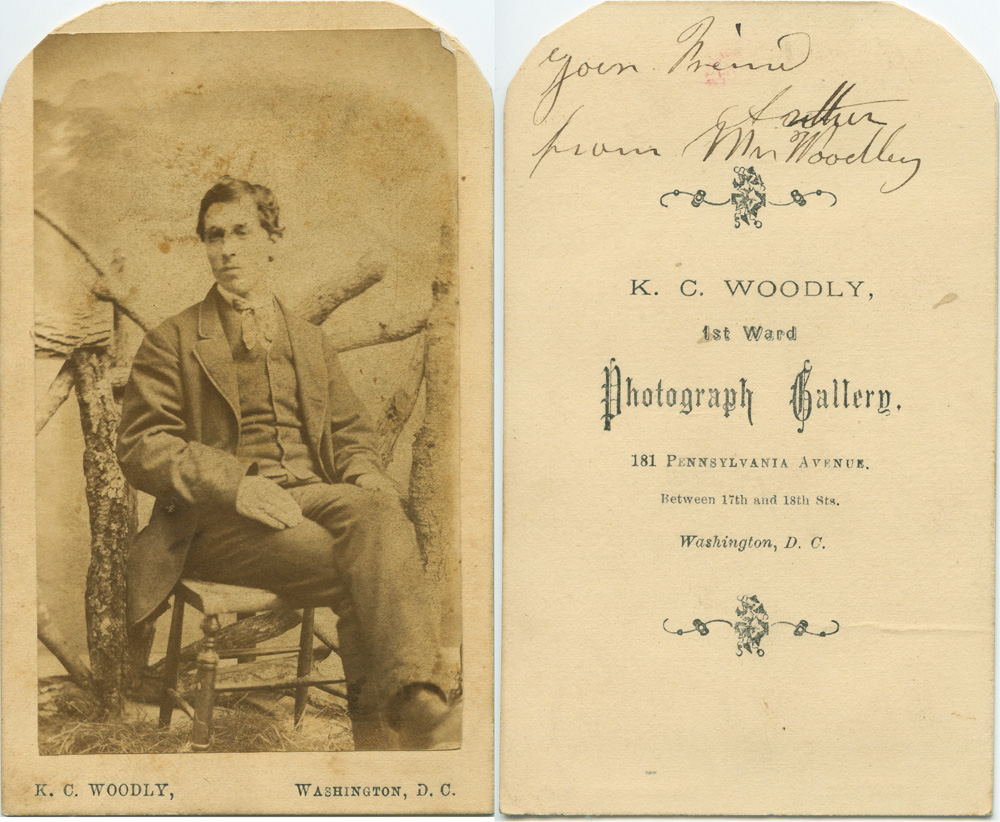
This next image is another recent acquisition – another Washington DC carte-de-visite. This one, if the inscription on the back is accurate, is a self-portrait by the photographer, or at least the inscription is by the photographer – “Your Friend – From Mr. Arthur(sp?) Woodley”. I’m curious if the Woodly on the card is a typographical mistake, as the signature really does look like it says “Woodley”. I’m also curious if the Woodley/Woodly is any relation to the Woodleys for whom Woodley Park was named. Given how small a town DC was in the 1860s, I’d say the odds are in favor.

K.C. Woodly CDV, Washington DC

The address on this one is a mystery – 181 Pennsylvania Avenue would put the studio on the Capitol lawn. Furthermore, he indicates that the studio is located between 17th and 18th Streets, which would make 1781 Pennsylvania Avenue a more likely actual address. I wonder if the printer was short on E’s and 7s when he ran these off.

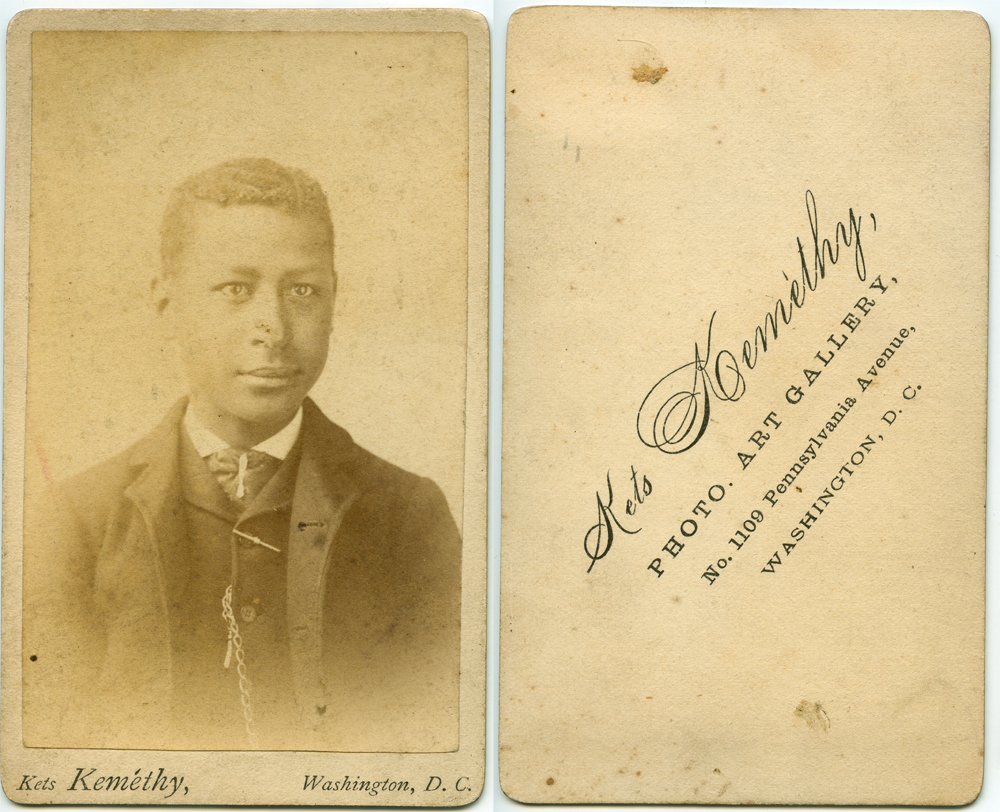
Two more DC portraits

African-American Gentleman, Washington DC
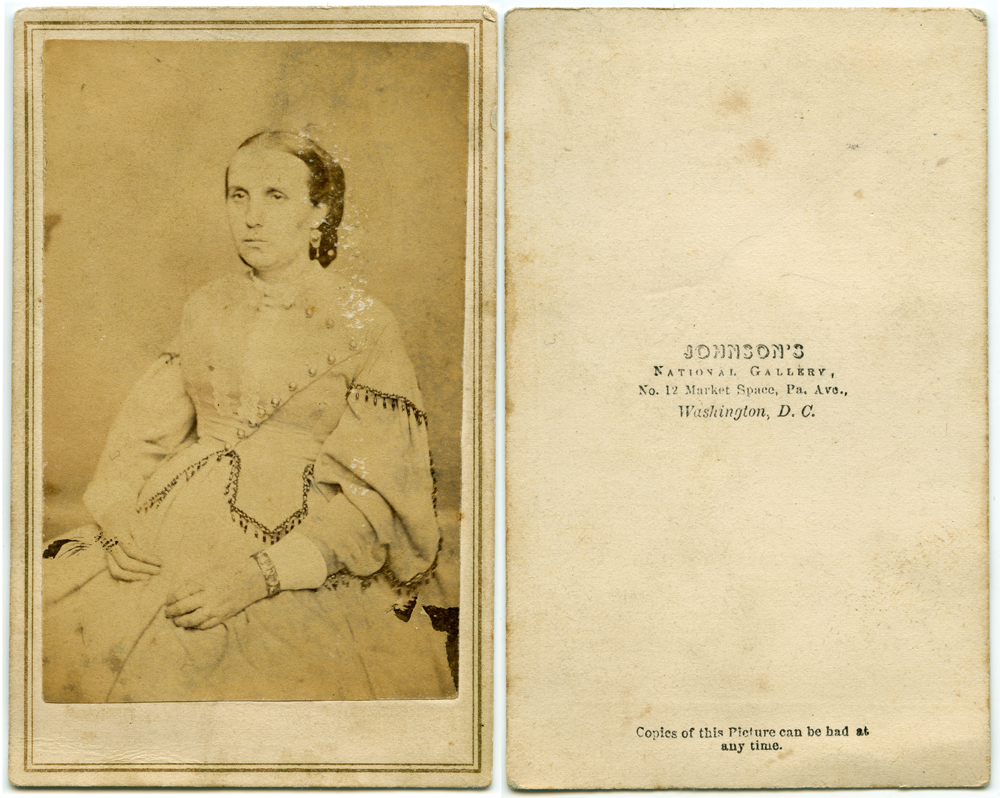
Anonymous Lady, Johnson's National Gallery

Two new DC portrait studio pictures from the 1860s-1870s. The African-American gentleman photo is quite interesting because it shows the relative prosperity that was possible so shortly after the Civil War for African-Americans in Washington DC. It is all the more remarkable because it exists in spite of segregation. It’s probably a window into the period of Reconstruction, before the southern states began instituting Jim Crow laws designed to economically suppress African Americans.

The woman is rather unremarkable, but the photographer’s back-stamp is what interests me – particularly the street address. When I first saw this, the address description helped clarify where another DC photo studio was located – The Schroeder & Rakeman studio. Of course the “Market” referred to no longer exists, but where it was is now a complex of buildings called “Market Square”, and is in immediate proximity to most of the other photo studios in Washington at that time.

Washington DC Victorian era photographers’ map

Washington DC Photographers

Here is a link to the DC photographers’ map. I’ve got some more photographers written down somewhere that I’ll be adding to the map soon. I found addresses on a CDV for Alexander Gardner’s studio, but oddly enough there were A: two addresses not adjacent but still proximate to each other, and B: neither one was the address I thought it was. There is still the remains of a wet-plate era portrait studio that you can see from the alley behind the National Council of Negro Women’s headquarters in the 800 block of Pennsylvania Avenue. Even though it’s not a portrait studio, I’m including Clara Barton’s Missing Soldiers Office on the map as a point of interest because it, like so many of these studios, was presumed lost for decades but only recently re-discovered, and is chronologically and geographically contemporaneous with the studios I’m tracking. At some point I’m sure either the patrons or the staff of her bureau availed themselves of the photographic archives of the studios in the neighborhood to help in finding missing soldiers after the war.

Also interesting – Alexander Gardner began his career in Washington working as Mathew Brady’s studio manager. At some point they had a falling out and Gardner opened his own studio. I didn’t realize it was literally next door to Brady’s.

I can also now definitively place Schroeder & Rakeman’s studio in Northwest DC, having found another photographer making reference to the “Market” at Pennsylvania Avenue, which is where the Navy Memorial is currently located.

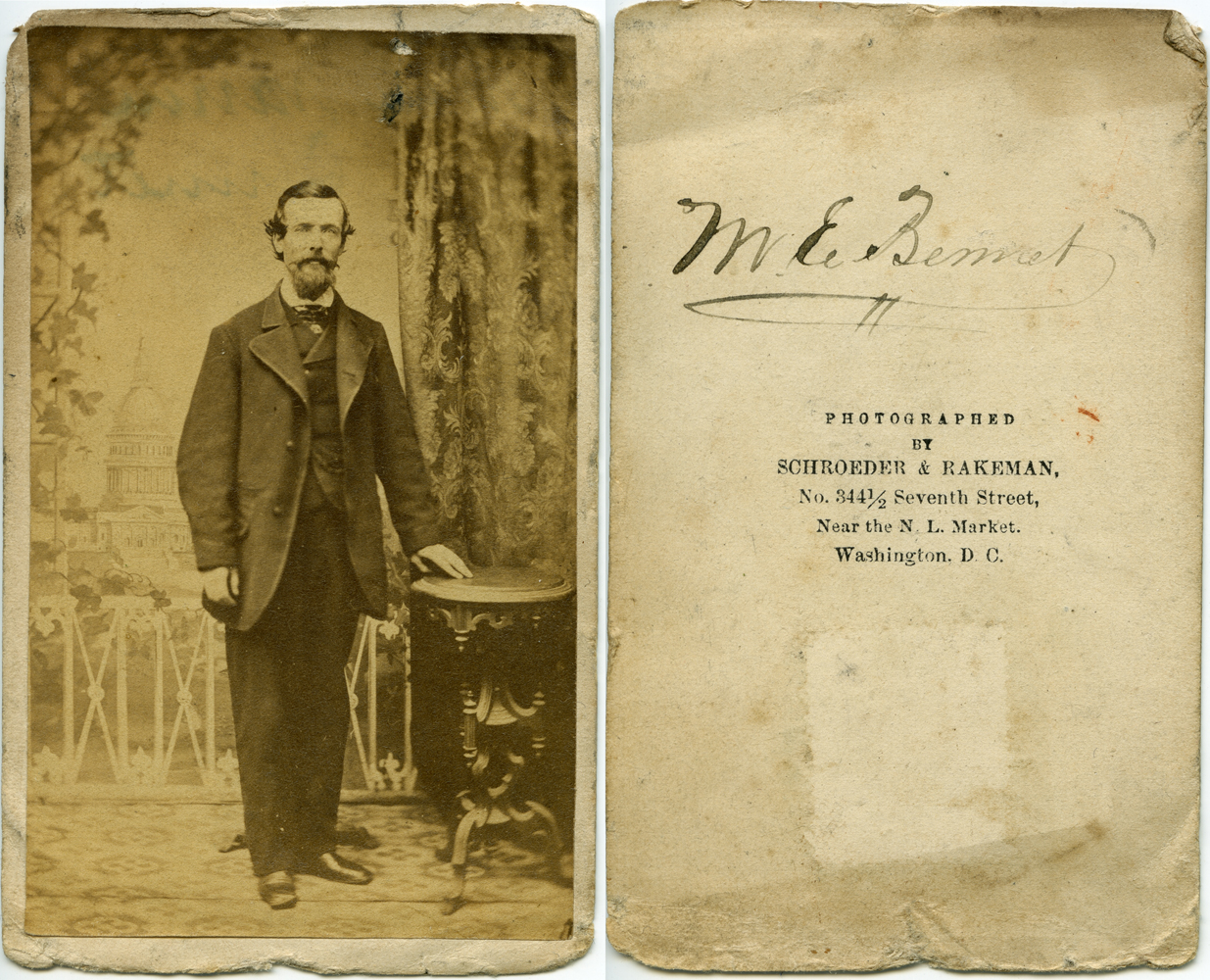
M.E. Bennet of Washington, DC by Schroeder & Rakeman

M.E. Bennet, by Schroeder & Rakeman, Washington DC

Another little CDV added to the collection, from Schroeder & Rakeman, 344 1/2 Seventh Street. It’s nice to find an image that is identified, even if the subject remains anonymous after the naming. I’ll have to do some digging around to find out who this might have been. Obviously the photo was made post- civil war, as it shows the dome of the US Capitol completed in the painted backdrop. I did look up a map of Washington DC from the 1850s to see if I could find the ‘N.L. Market’ referenced in the photographers’ back stamp. While the building (or place – the market could have been a permanent outdoor location), the address is part of what is now called the “Market Square” office/condo complex, including the Navy Memorial. Another option for the studio would be at 344 1/2 Seventh Street, SE. Which ironically enough puts it within a block of Eastern Market. I can find no reference to Eastern Market as anything other than Eastern Market, however, which throws this location for the studio into doubt.