I just got back from my most recent trip to Mexico City. This trip was very art-centric – I went to two different photography exhibit opening receptions. I also brought along a new-to-me camera to try out – I recently acquired a 3 1/4 x4 1/4 inch Graflex RB Super D (in layman’s terms, a large format SLR that uses 3×4 inch sheet film). It’s quirky to say the least, but there are things that it does that it does so well (I particularly love the quality of the Kodak lens it has on it) that the benefits outweigh the quirks.
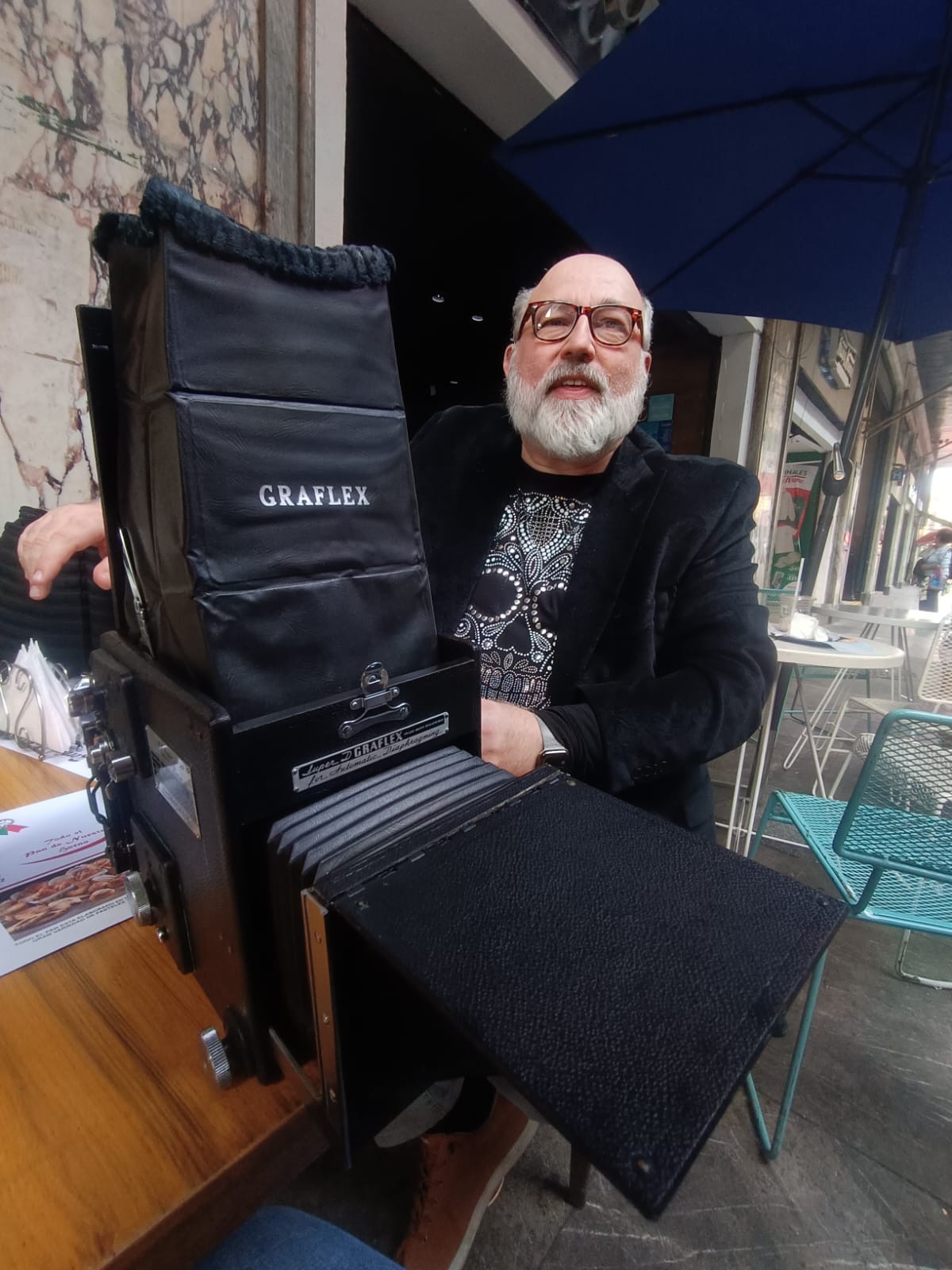
That’s me with the camera. My friend Gabriel Barajas took that of me with the camera using my iPhone.
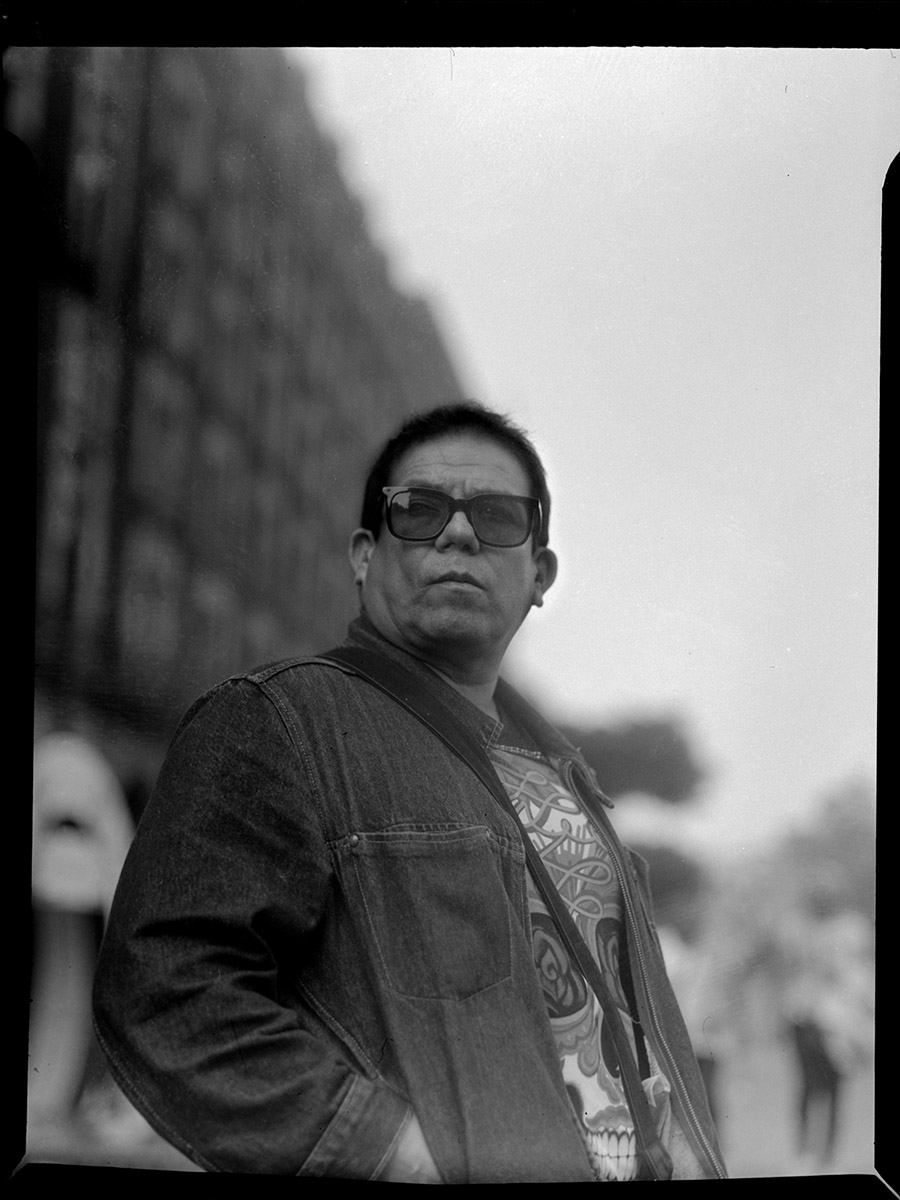
That’s Gabriel, taken using the Graflex.
I used it for some street photography around the neighborhood where I was staying. This time I rented an apartment in Condesa instead of staying at my usual hotel the Hotel Geneve in the Zona Rosa. The reasons were multiple: first and foremost because this trip was in time for the Day of the Dead ceremonies AND the Mexican Grand Prix Formula 1 races, hotels in the central parts of the city were outrageously overpriced (Hotel Geneve, which is normally in the $100/night range, was asking almost $400/night that week). Second, when I made the bookings, I was thinking I would need to be close to a gallery in the San Miguel Chapultepec neighborhood where we thought we would be having activities for our conference. The gallery changed their mind and rescinded the offer of hosting an exhibition, at which point we had to cancel the conference (no exhibit, no presenters at the conference, as this was a major part of their compensation).
Since I had already booked the apartment and the plane ticket, and finding alternate lodging would have been difficult and increasingly more expensive the closer I got to the trip, I kept the apartment. Condesa is a very nice neighborhood, but it has fallen victim to gentrification in the worst way- a large number of housing units in the neighborhood are now short-term rentals, and so many locals have been priced out of the neighborhood. The cute cafes, bistros, and boutiques? If I closed my eyes and only listened to my wallet, I’d be forgiven for thinking I was in Greenwich Village or the Marina District. Breakfast one morning was almost $20 for a petite breakfast sandwich and a coffee.
Also, while it is not unreasonable that not every tourist should speak the local language, it was particularly galling as someone who goes to Mexico for the purpose of keeping up his Spanish language skills to find myself the only person speaking Spanish to the wait staff at said breakfast joint for the entire duration of my meal. The gringos were walking in and speaking in English as if it were to be expected the staff would all speak it, not even making a gringo high school Spanish attempt to ask if they spoke English first.
This didn’t used to be a frequent topic of conversation in Mexico City- on previous visits, nobody would bring it up. This trip, almost anyone I talked to for more than 15 minutes was talking about the transformation of Condesa and Roma neighborhoods into overpriced Gringolandia.
Enough about that, and on with the pictures, which is what y’all are here to see!
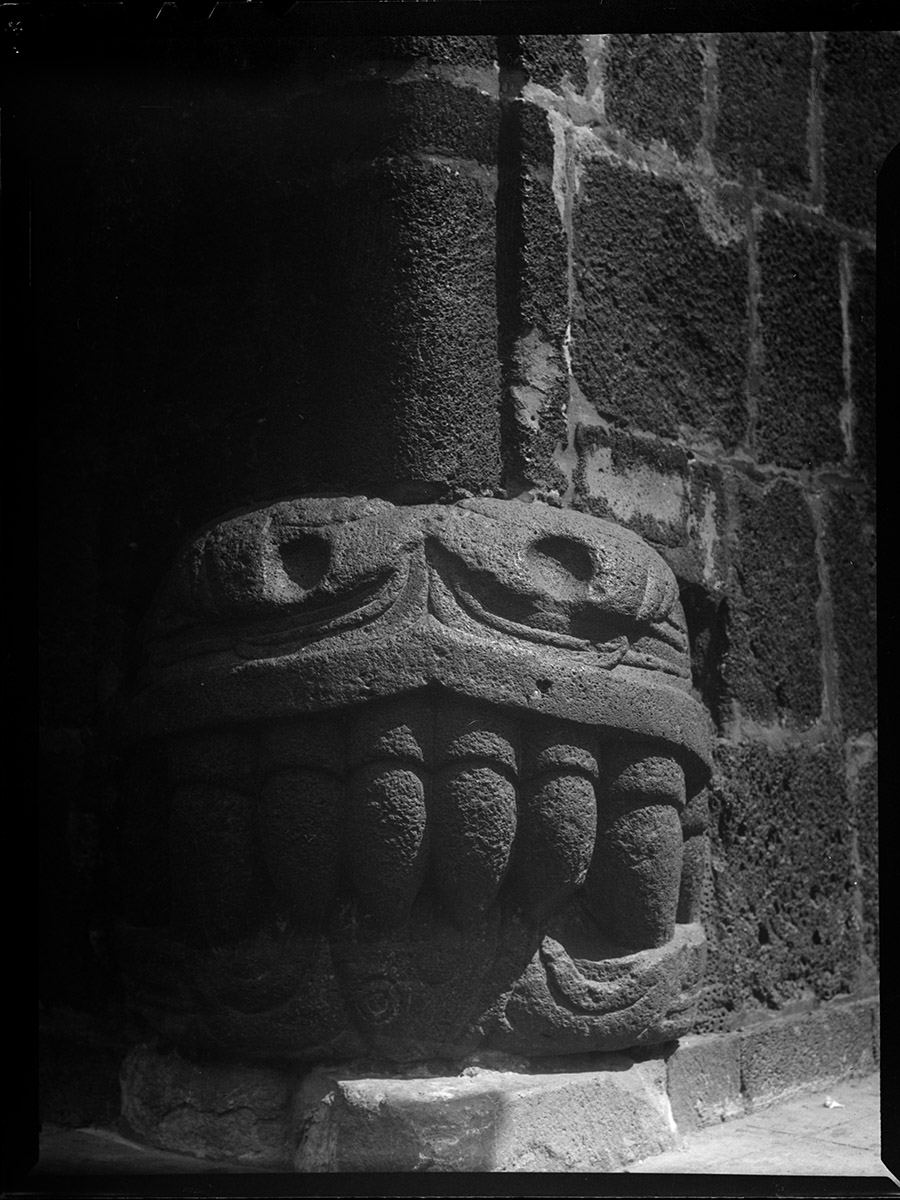
We’ll start off with a banger – this is the head of a serpent taken from the Mexica Templo Mayor on the Zocalo, and re-used as a cornerstone of a palace built by one of Hernan Cortez’s lieutenants. The palace remained in the hands of the family that built it until the 1980s. It now houses the Museo de la Ciudad de Mexico.
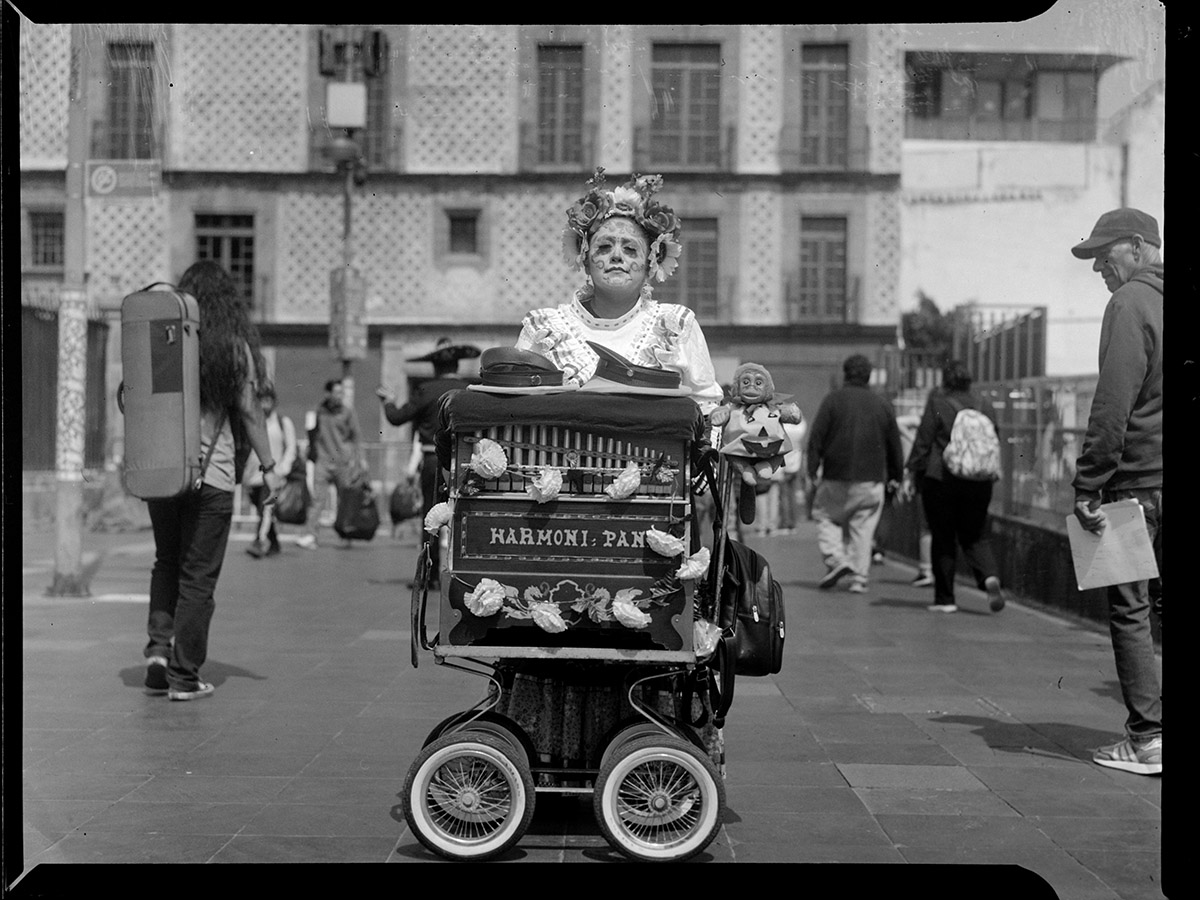
Throughout the Centro Histórico, you’ll find organ grinders busking for spare change. This woman organ grinder had gotten herself dressed and coiffed and painted for Day of the Dead. Behind her is the Museo Archivo de la Fotografía, where I was headed to see the opening reception for my friend Alejandro Sanchez Mociños’ exhibit Muerteadas, about the traditions around the Day of the Dead in the Valle de Etla in Oaxaca state.
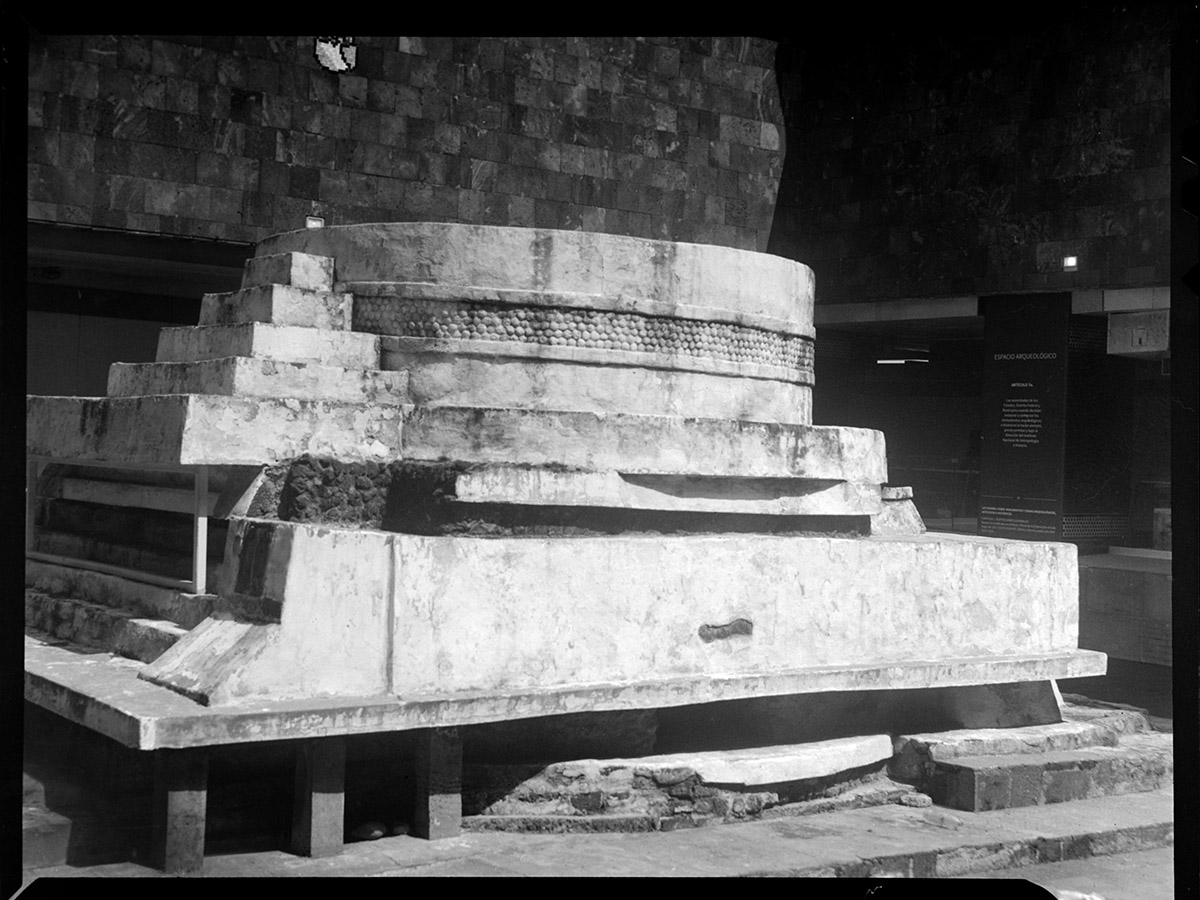
How often do you find a Mexica temple in the middle of a subway station? During the excavations to build the Pino Suarez station of the Mexico City Metro system in the 1970s, this temple to Ehecatl the god of the winds, was discovered. The station was built around it and it serves as a miniature archaeological museum in the middle of a public transport system.
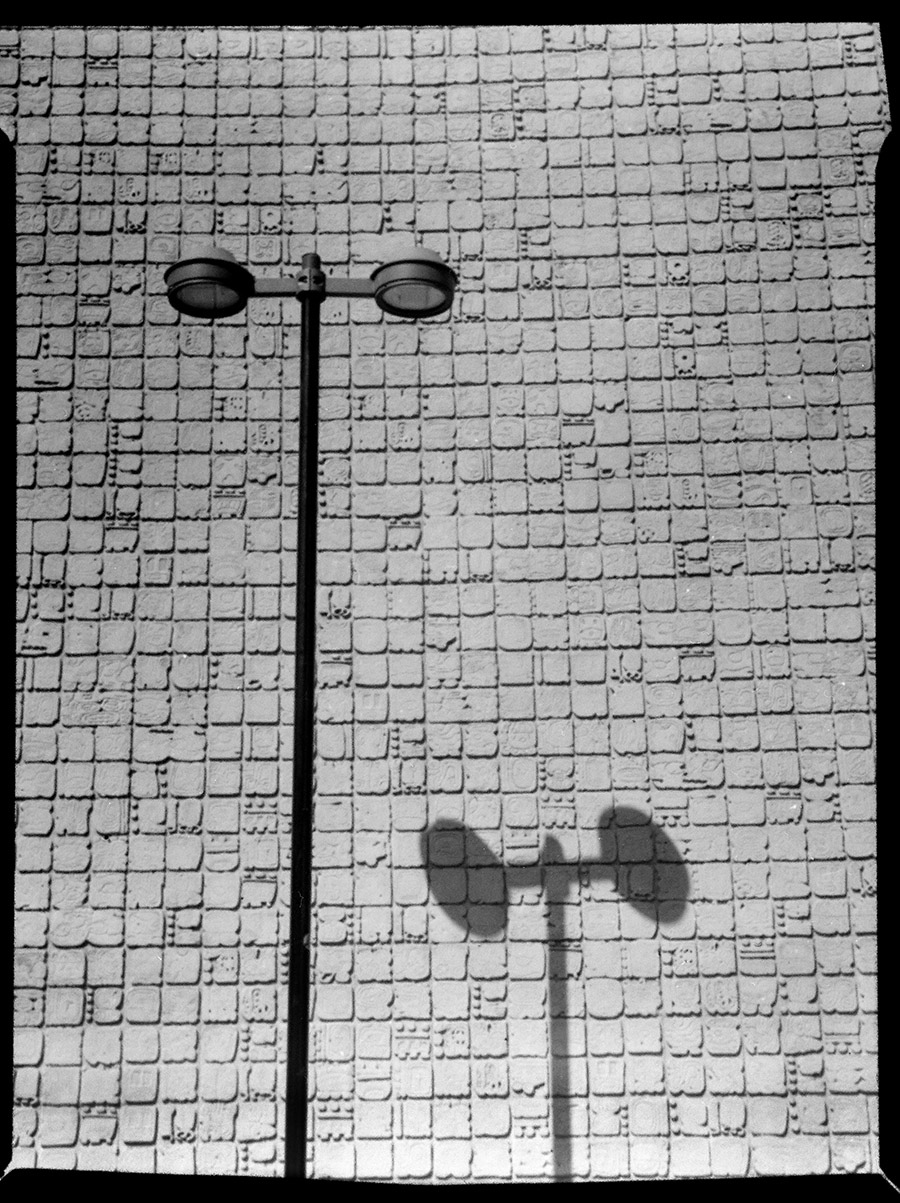
Bridging the gap between ancient and modern, we have this scene outside the Insurgentes metro station. A modern street lamp casts its shadow on the metro station wall, stylized to look like ancient glyphs.
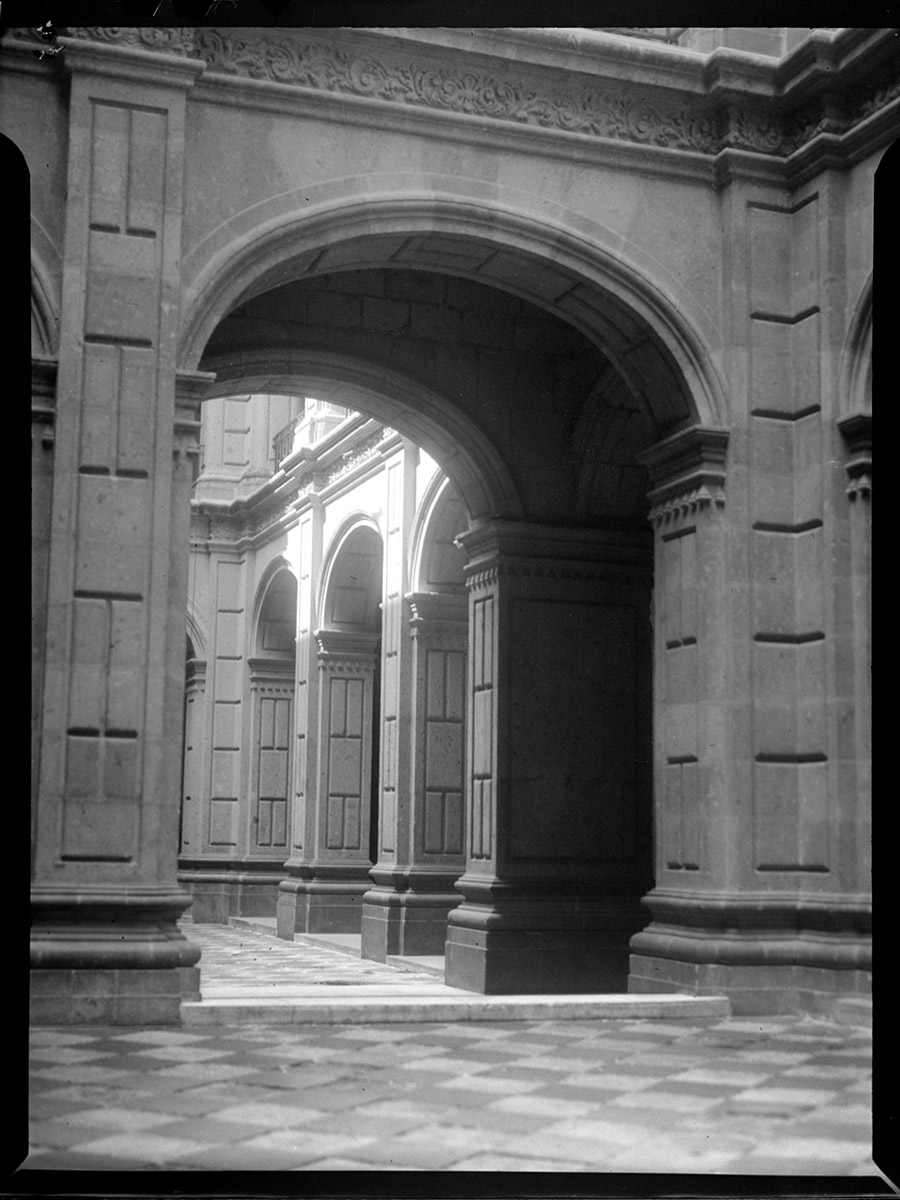
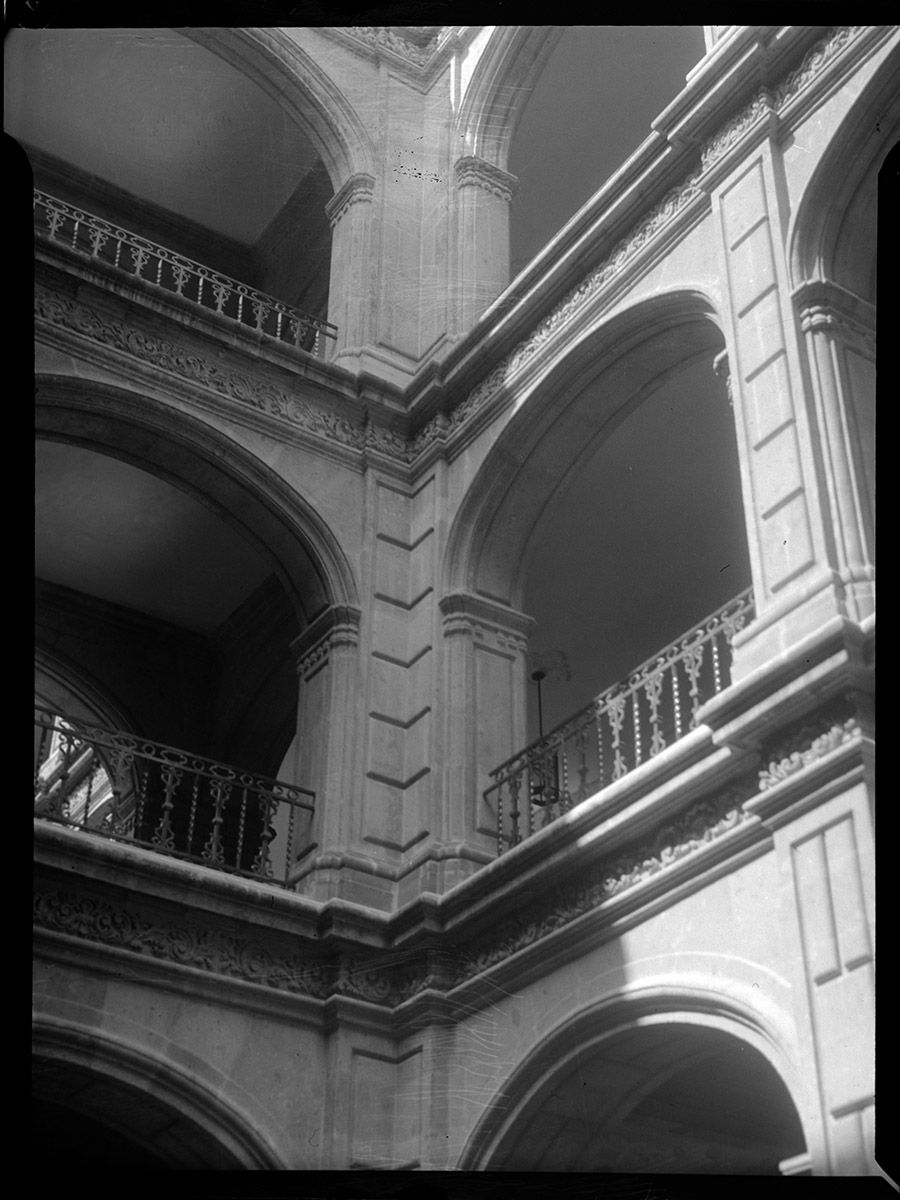
Two views of the courtyard of the Antiguo Colegio de San Ildefonso. The school itself dates back to 1588 as a Jesuit preparatory school, but the buildings we see here today are from the 1720s. It has been a preparatory school, a military academy, a judicial center, and a medical center. Today it serves as an art museum, best known for the murals on the staircase and around the courtyard painted by the masters of 20th century Mexican Muralism including Diego Rivera, David Alfaro Siqueiros, Jose Clemente Orozco, Fernando Leal and Fermin Revueltas.
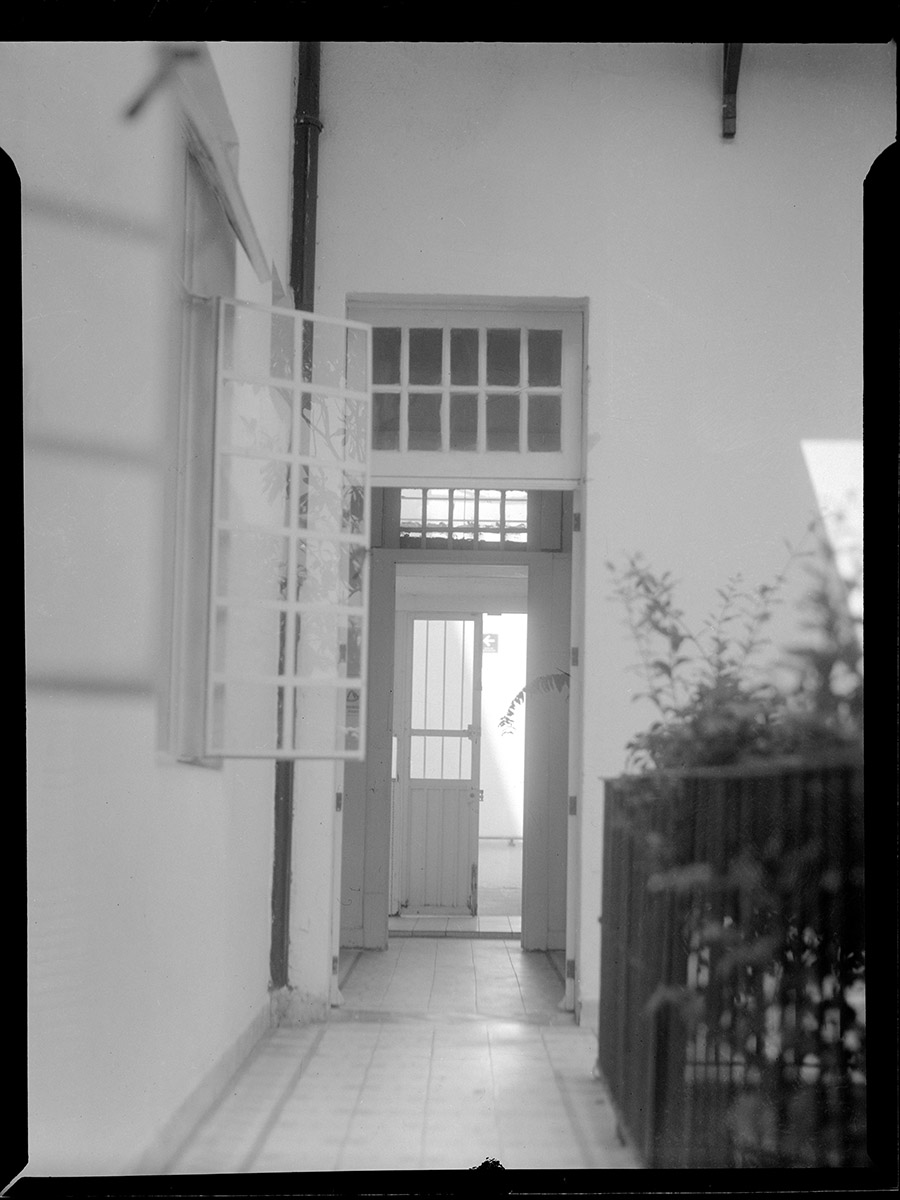
Waxing more modern, this is a view across a second-story balcony in a courtyard of a house in Condesa. The house has been converted into an art gallery, design store, and photography bookshop, and it overlooks Parque España.
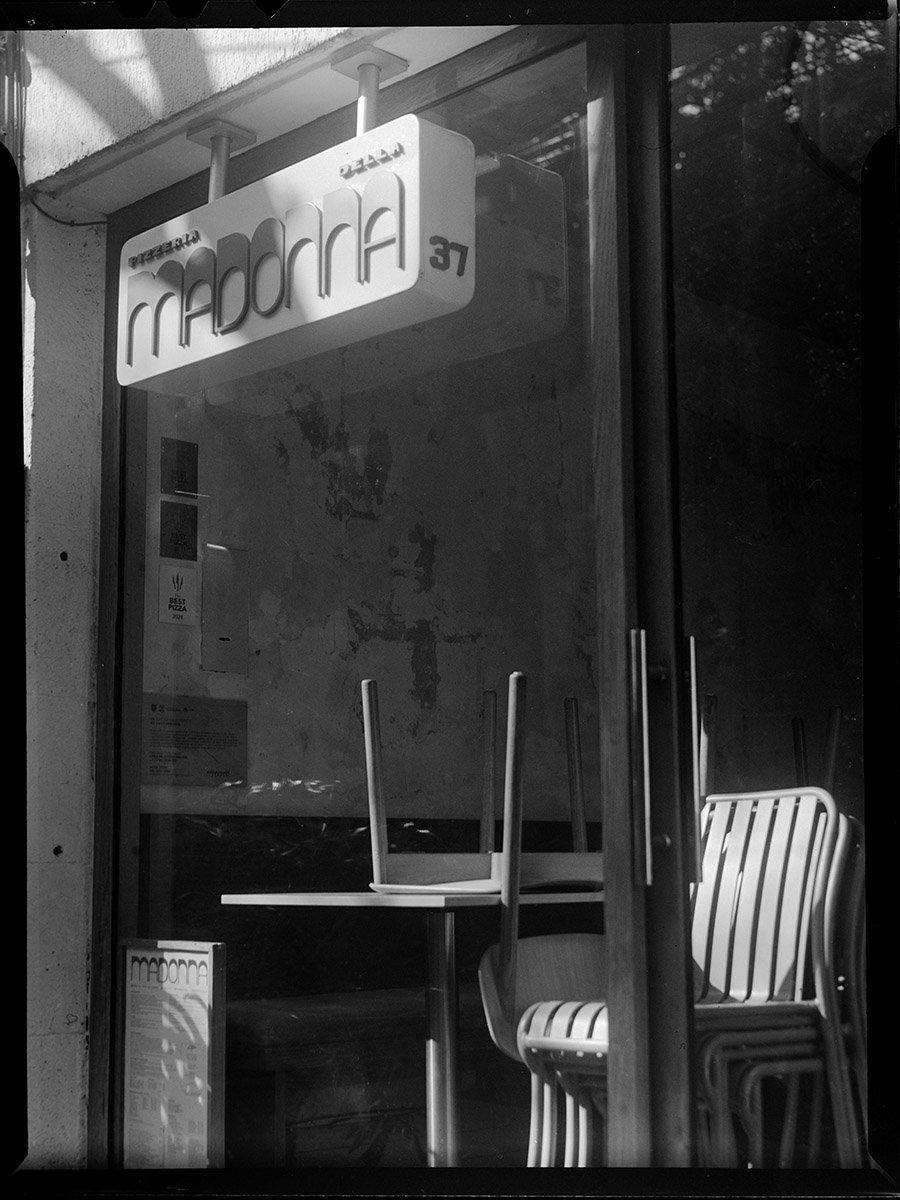
In keeping with the design thought, I came across this view of a pizzeria in Roma Norte and just had to stop and take a shot of the morning light pouring through the window into the shop. I just loved how the light pooled on the stack of chairs, and gave just enough to keep the background from turning into a black cave.
All these shots were not only taken with a 70-ish year old camera that is 100% manual, but they were taken on 40 year old film, and developed at home.

