All posts by dcphotoartist

Rendering The Spirit: Interview with Bruce Schultz

What is your name, and where are you from?
Bruce Schultz from Lafayette, Louisiana.

How did you get into photography as an art medium (as opposed to casual or professional use)?
I’ve always taken photographs for myself as an artistic expression, since the early 1970s.

I make images with wet-plate collodion to make tintypes on metal, or ambrotypes on glass, or glass negatives to make paper prints in the form of salt prints and albumen prints. I have one salt print and three albumen prints in this show, all from glass negatives.

What drew you to the specific media you practice?
I grew bored with making black and white images with film, printed onto factory-coated silver gelatin paper, something I had done for almost 40 years. As digital photography had emerged as the dominant means of making pictures, I regressed and sought out the basics of photography as it was first practiced. So I took a workshop in Missouri with wet plate photographer Bob Szabo in 2007.
Since then, I no longer shoot film. I make tintypes at civil war reenactments, and also photograph a wide range of subject matter from still lifes, landscapes and nudes. I’ve made images for movies (“Beautiful Creatures” and a remake of “The Magnificent Seven.”) And TV shows including “American Horror Story” and “Into the Badlands,” in addition to several CD covers.

How does the choice of media influence your choice of subject matter (or vice versa)?
Since my chosen process requires exposures of several seconds to minutes, action can’t be photographed but even that can be overcome if one is willing to invest in a high-powered, eyebrow singeing flash equipment. I will occasionally pay homage to 19th century images.

In today’s mobile, electronic world of instant communication and virtual sharing of images, how important is it to you to create hand-made images?
I’m not opposed to digital photography, and I use it in my career as a communications specialist, but digital imagery is too realistic, too perfect for my purposes. With wet-plate collodion, serendipitous flaws are inherent in the process. Fingerprints, smudges on the edges, specks of dust, bubbles, scratches, are inevitable and they make it obvious that this is a one-of-a-kind handmade image never to be repeated.

Is your choice to practice alternative, hand-made photography a reaction to, a complement to, or not influenced by the world of digital media?
I don’t really think about the digital realm, what I’ve done digitally or anyone else has done with a digital camera. I do often marvel that in the time span that I make one image with the wet-plate process, someone could shoot hundreds of pictures. Because of the labor and time involved to set up the chemicals and equipment, making an image with the wet-plate process is a deliberative effort. One has to make sure that what has caught their eye is truly worth the effort and time to make just one picture.

And I have to admit that I get some kind of rush from knowing that I’m making photographs the same way that the early photographers did, experiencing the same frustrations when things go wrong, and the same tingle of excitement when everything comes together. Using the same formulae and materials but with the benefit of modern technology like air conditioning in a darkroom and electric lights.

Do you incorporate digital media into your alternative process work?
I have made digital prints from my wet plate images, but they do not equal a print from a wet-plate negative and I no longer do that because the quality is inadequate.

If so, how do you incorporate it? Is it limited to mechanical reproduction technique, or does it inform/shape/influence the content of your work?
I want to learn to make digital negatives from tintypes to make albumen and salt prints. I am even willing to attempt using digital capture to generate a digital negative and from that, make albumen and salt prints, especially for images that I make while traveling abroad since flying on airplanes can’t be done with flammable chemicals and hundreds of pounds of equipment.

What role do you see for hand-made/alternative process work in the art world of today?
Sales of vintage photography have increased with higher and higher prices as buyers recognize the significance of photographs that have survived for more than a century..
Alternative process work has emerged as a significant movement as the art audience recognizes the effort and dedication required to generate these images. And shows like this one illustrate that more people are creating bodies of work based on handmade imagery.
That’s not to say that serious artistic expressions can’t be the product of digital capture, but so many images are being created digitally that we are being overwhelmed with snapshots fired in scattergun fashion. I’ve read that more photographs have been taken in the past 2 years than in the first 150 years of photography. I’m not sure how that figure was derived, but it is mind-boggling. But most of those images will never move beyond a phone or computer screen, and it’s expected that many will become lost in the progression of obsolescence.
It also troubles me that folks get so caught up in taking a snapshot or video that they don’t truly experience a moment for what it is. A photograph or video will never convey an experience. Credit photographer Sally Mann for expressing that notion in her book that memories are being supplanted by photographs of a slice in time, and not living in the moment and experiencing what is happening in a viewfinder and not actually in front of our eyes. Years from now, we will remember an event as it was, or does the photograph corrupt our memories? I know that I now cannot be sure if some of my earliest memories were what I recall, or what my father’s 8mm movies show.

Where do you see yourself in that world?
I have no idea. I’m too busy shooting pictures, mixing chemicals and coating paper for printing to worry about my miniscule impression on the art world.

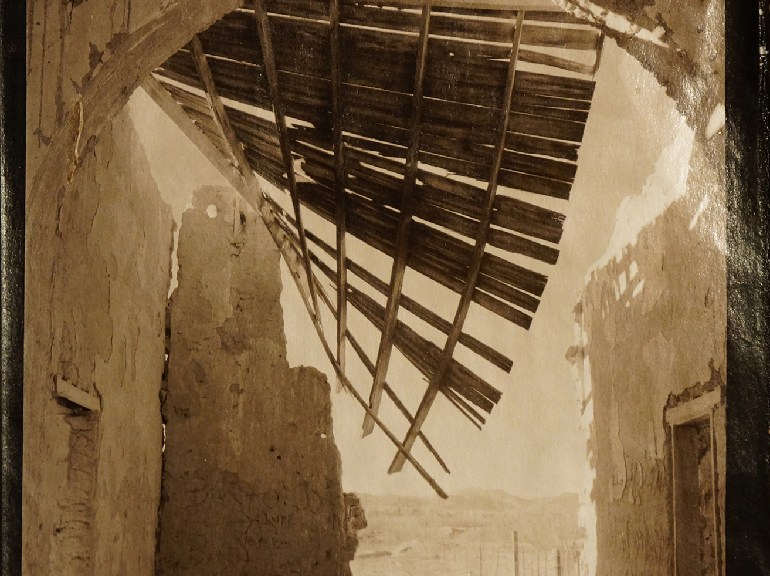
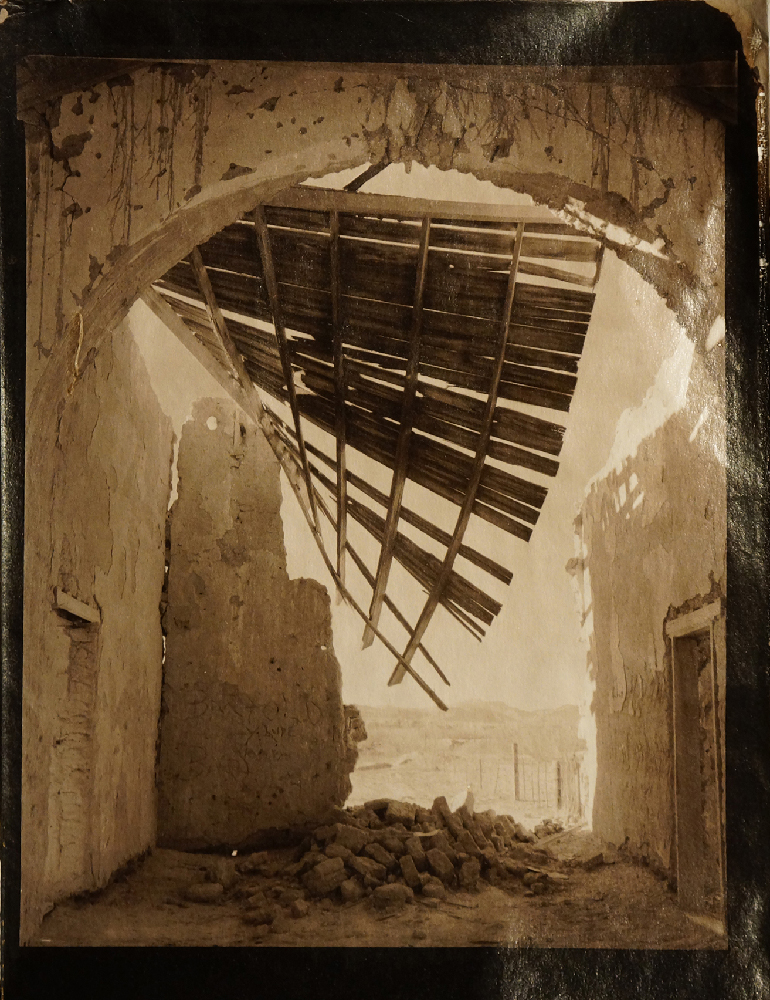
Church at Ruidoso, Texas

Rendering The Spirit: Interview with Dan Schlapbach

Could you tell me your name?
Dan Schlapbach

Where are you from?
Freeland, MD (about a mile south of the PA border)

How did you get into photography as an art medium (as opposed to casual or professional use)?
Since the first time I picked up my father’s Lordomat 35mm camera decades ago, I have experimented with the medium. As I advanced through schools and my education I considered various photographic careers, but ultimately decided that a career in photographic education would allow me to keep my artistic photographic practice tangential but not central to my vocation. I have been very fortunate to have the opportunity to use my photographic interests and skills to create art.

Which alternative processes do you practice?
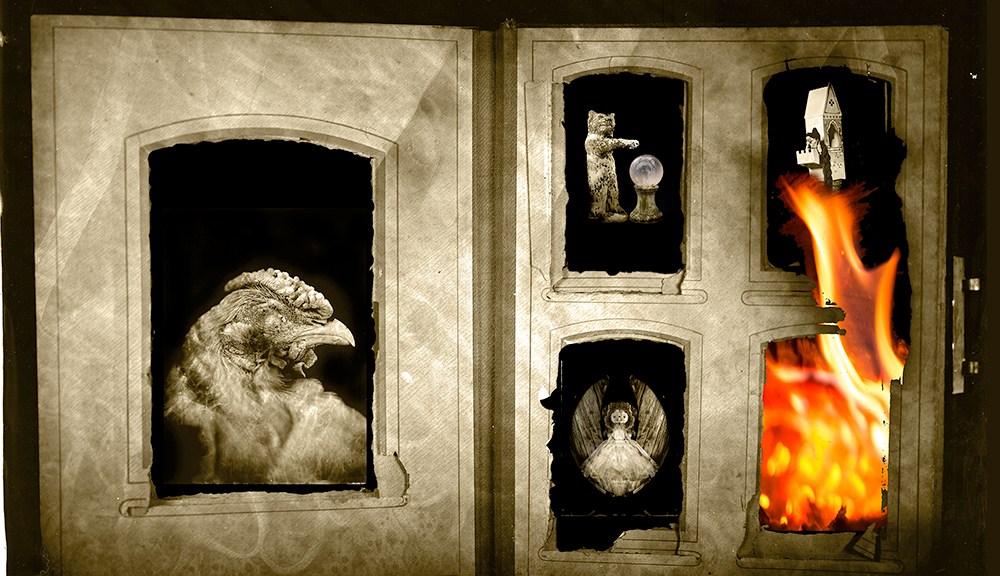
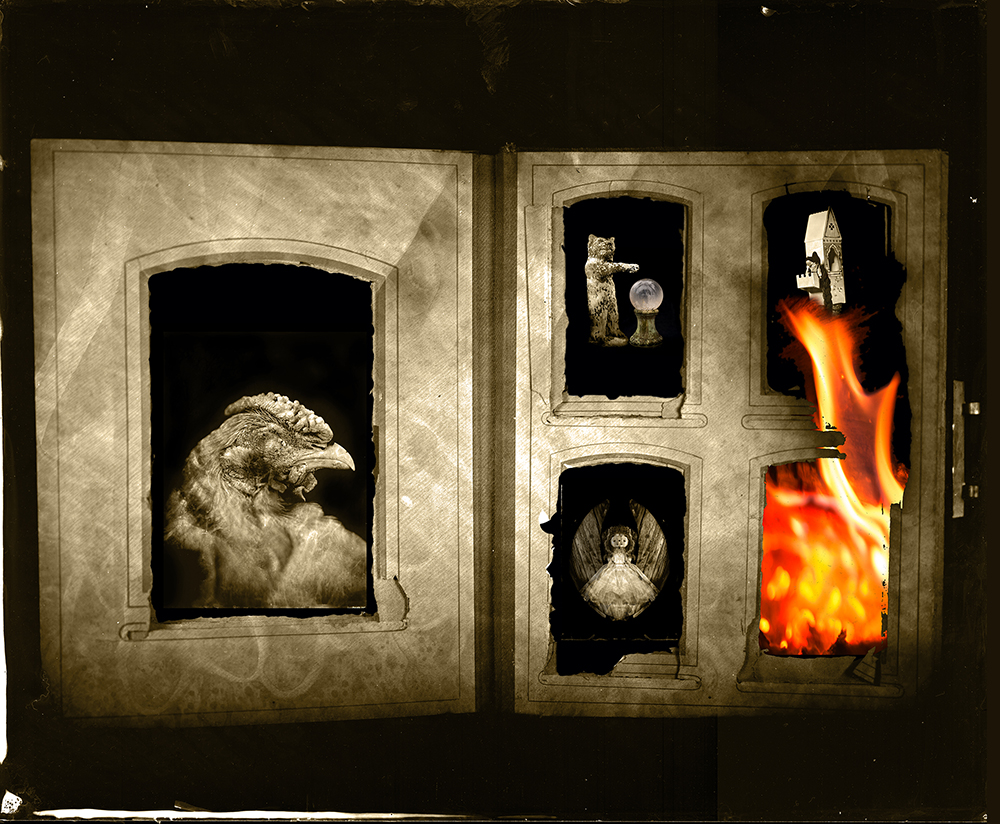
Several (pinhole cameras, cyanotypes, palladium, etc., but wet-plate collodion is my passion). The particular process presented in this exhibition is relievo ambrotype. The relievo ambrotype process is a 19th-century photographic technique that incorporates multiple layers of photographs to create a single image. The foundation of the process is wet plate collodion. The wet plate collodion process is capable of producing different kinds of photographs: it may be coated onto a piece of black metal to produce a tintype; it may be coated onto a piece of glass to produce a negative from which it is possible to make positive prints; or if the processed glass plate is backed with a piece of black material the result is a positive image called an ambrotype.
John Urie introduced the relievo ambrotype in Glasgow in 1854. Relievo refers to a sculptural technique in which shapes project from or recede into a surrounding background. The relievo ambrotype achieved this relief effect by layering the glass collodion image plate over another image or background. This process was used almost exclusively for portraits between the 1850s and 1860s, and the backgrounds (usually fabricated) situated the subjects – e.g. identifying the Civil War soldier in his battlefield, indicating the sitter’s social status, or creating a potentially faux document of a visit to an exotic locale.

What attracted you to alternative processes in general?
Digital photography for me is too quick, perfect and sterile. I have always enjoyed playing with the photographic medium. While this is, of course, certainly possible with digital manipulation (e.g. Photoshop), I prefer to create handcrafted images. I love tactile practices.

What drew you to the specific media you practice?
I have always been interested in 19th-century photography, especially Civil War and Westward expansion photography. Wet-plate collodion was the dominant practice during those years. It still fascinates me to consider the fortitude it must have taken to use this process, which we now view is very cumbersome, to make images soon after battles, or after scaling to a 10,000 foot precipice. Moreover, the process makes truly unique images. While prints may be made from wet-plate collodion negatives, ambrotypes made from this process are one-of-a-kind. The relievo ambrotype allows me the option to play with and blend both 19th-century and contemporary photographic techniques and practices.

How does the choice of media influence your choice of subject matter (or vice versa)?
I am trying to blend the look of the antiquated wet-plate collodion process with contemporary digital imaging. I will often photograph older or timeless objects with the wet-plate process and more contemporary subjects for the digital component.

In today’s mobile, electronic world of instant communication and virtual sharing of images, how important is it to you to create hand-made images?
It is critical to me. While I certainly fully appreciate and love all that digital imaging offers, for my personal practice, digital photography is less fulfilling. I have always loved working in the darkroom and would dearly miss the tactile process of image making. The process helps me to slow down and really study what it is that I am photographing.

Is your choice to practice alternative, hand-made photography a reaction to, a complement to, or not influenced by the world of digital media?
I think it is both a reaction and compliment to digital imaging. I appreciate the speed and flexibility that digital photography offers, but I love the meditative, methodical wet-plate collodion process. It may take me several days to complete a single work. But, the antiquated and contemporary processes complement each other in my works. The relievo ambrotype process allows me to blend antiquated, alternative process with contemporary digital image making techniques.

Do you incorporate digital media into your alternative process work?
Not always, but yes with the digital relievo ambrotypes.

If so, how do you incorporate it? Is it limited to mechanical reproduction technique, or does it inform/shape/influence the content of your work?
Yes, it very much informs the content of my work. While wet-plate is still my passion, I do also love the options that digital imaging offers me. I can manipulate the images in multiple ways.

What role do you see for hand-made/alternative process work in the art world of today? Where do you see yourself in that world?
In the fast-paced, Instagram world in which we live, I think it is important that some artists slow down and use their hands to craft images. Digital imaging, and all that it offers, is fantastic and should be embraced, but it is critical that we not loose sight of the slow, handcrafted image.

Index of Illuminations, by Dan Schlapbach

Reminder – Rendering The Spirit opens on Friday, May 18, and runs through April 11. The artists’ reception will be held March 26 from 6-8pm at Glen Echo Photoworks, 7300 MacArthur Boulevard, Glen Echo, Maryland, 20812.

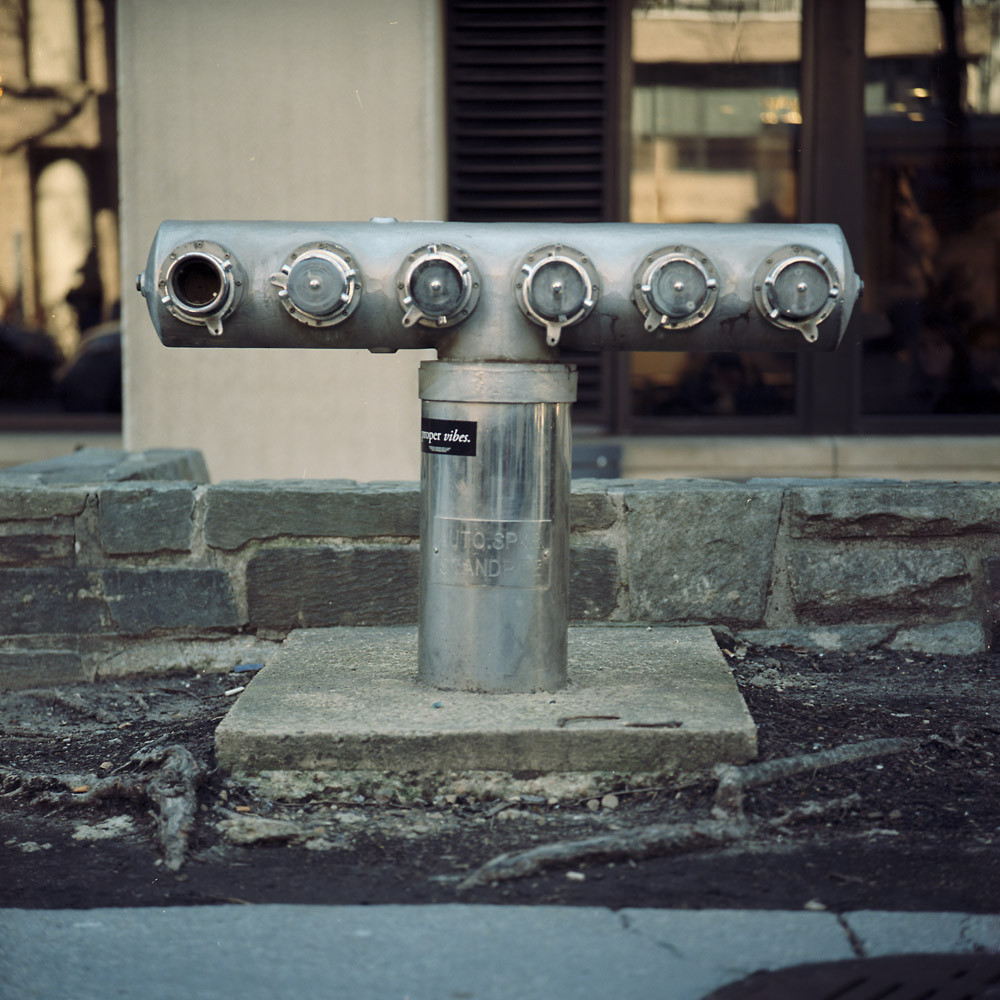
Portraits of Ordinary Objects – Multi-hose Connector

I don’t know if I’ve ever seen a fire hose connector with more connections on it than this one, outside the George Washington University library. The location may be key – if the library ever catches fire, that much paper will require a lot of water to keep it all from going up in a ball of flame.

Multi-Hose Connector

Either that or it’s some kind of arcane commentary on the Starbucks Coffee in the library basement immediately behind it.

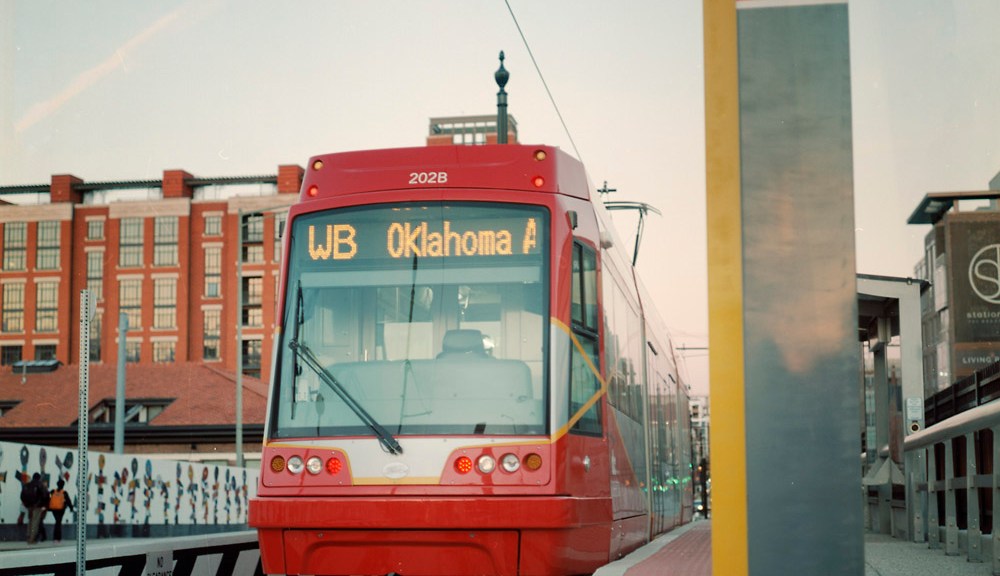
DC Inaugurates Streetcar Service (50 years after removing it)

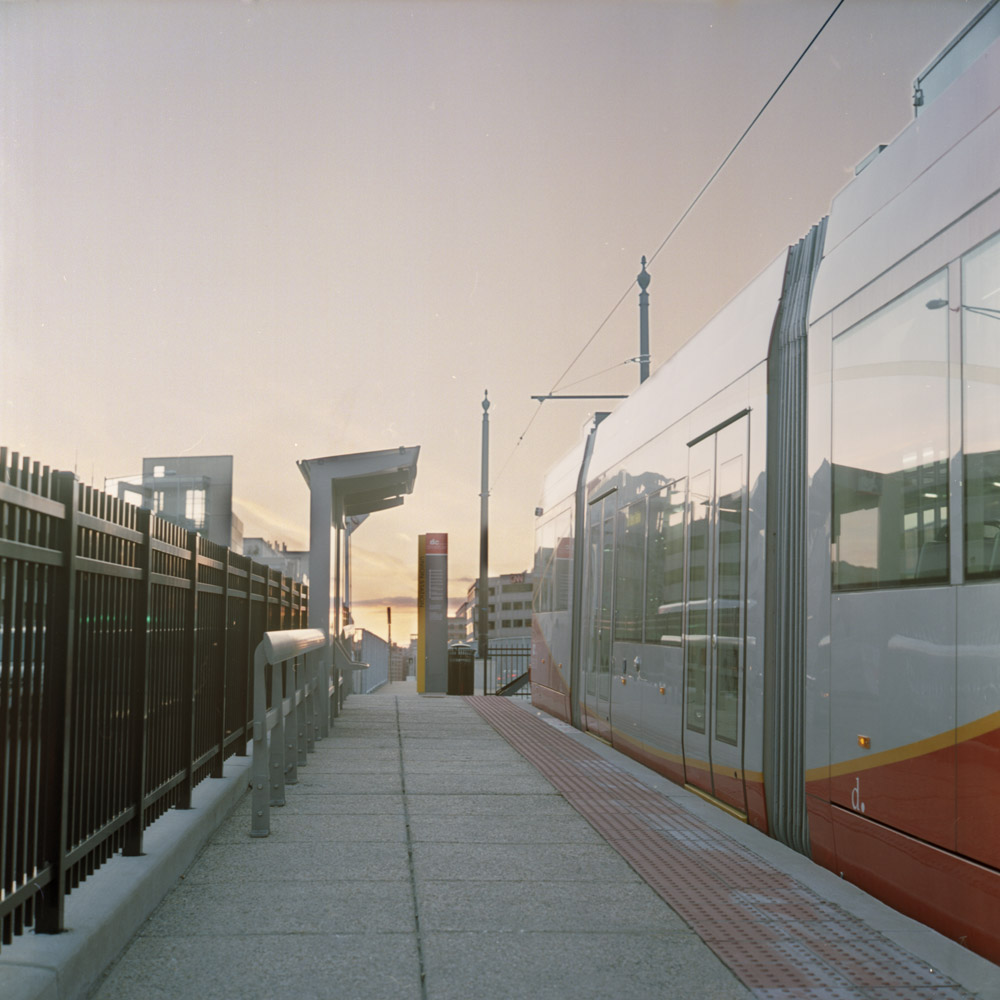
I’m a big public transportation junkie, so when I heard they were finally launching the DC Streetcar on H Street Northeast (a public works project over a decade in the making and long overdue – the tracks have been in place for two or three years now), I was so excited I ran over after work last Friday to see it and ride it only to find out I was a day early! So I satisfied my urge and photographed the streetcar at the Union Station end of the line, catching it at sunset. The shiny new car reflected not only the setting sun but the buildings across the street, bringing the surrounding urbanscape out of frame back into the picture.

DC Streetcar, Union Station, Sunset

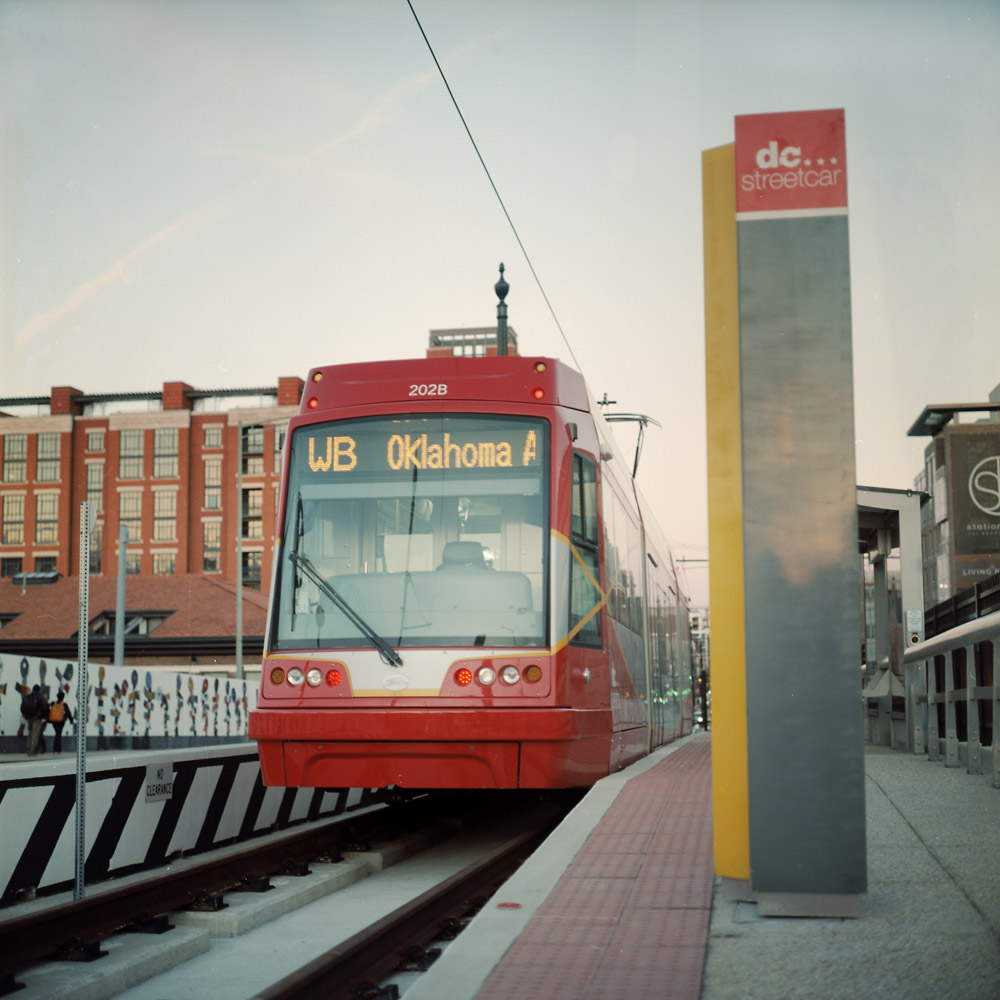
Here is a different view of the streetcar, waiting at the Union Station end of the line, looking down H Street. H Street was, fifty or so years ago, a thriving business district catering mostly to a middle-class African-American clientele. Then along came the riots after the assassination of Martin Luther King Jr., and then with the 1980s, the cocaine and crack epidemics. H Street was devastated.

Westbound Oklahoma Avenue Streetcar

Obviously now, not so much. It has transformed starting in the early 2000s with the real estate boom. Perhaps the turning point was the creation of a large condominium complex, Senate Square, on the grounds of what was originally a Catholic school and later the Capitol Children’s Museum. Now, pawn shops and lake trout joints are being replaced by artisanal coffee roasters, fancy pubs serving British-Indian fusion cuisine, and cultural outlets like the Atlas Theater and the Rock n’ Roll Hotel (which is not a hotel, but a bar and concert venue). Instead of a Murry’s, the neighborhood is now sporting a Whole Foods.

When finally fully operational (at the moment, the streetcar only runs less than half the length of installed track), the streetcar will connect Union Station and the governmental core of the city to east of the Anacostia River, a long-suffering neighborhood where good jobs and access to quality goods and services have been sorely lacking.

Rendering The Spirit: Interview with Yugo Ito

Could you tell me your name?
Yugo Ito

Where are you from?
I am from Nagoya, Japan.

How did you get into photography as an art medium (as opposed to casual or professional use)?
Since I was born as a son of the fourth generation of my family-business photo studio, it was natural for me to get into photography. I have completed PGdip in photography at the University of the Art London after completing BA in Management in Tokyo.

Which alternative processes do you practice?
Wet Plate Collodion

What attracted you to alternative processes in general?
Because I thought that I needed to experience the same amount of difficulty taking a photo as photography pioneers had.

What drew you to the specific media you practice?
Because as being one of modern photographers, I felt I must know and respect how photography pioneers invented and developed photography.
And also, I thought that photography would have lost its reliability and its power of assuring the referent’s existence in future if we keep taking photos digitally. It is because, as we all know well, digital photography allows us to easily edit a photograph. Our offspring might not be able to trust our photographs to be 100% like us. The age of that photography tells the truth is over. To be more precise, the age has been already over with the advent of film photography. Thus, I decided to learn Wet Plate Collodion process to restore its essential features.

How does the choice of media influence your choice of subject matter (or vice versa)?
With a big influence of being as a son of the fourth generation of my family-business photo studio, I strongly believe that photography is ultimately a means recording our precious lives, times, things. So, that affects my choice of subject matter.

In today’s mobile, electronic world of instant communication and virtual sharing of images, how important is it to you to create hand-made images?
We feel we want to take a photo when we cannot digest occurrences going by too soon right in front of us. As a result, we are drowning in a sea of abundant photographs. It is a very tough work to pick up what we really want to keep out of them. Have you ever thought that how hard for family members to select which photo to keep or not after you passed away? I experienced such a situation when my grandmother passed away. I think that our impulse to take a photo is almost one of our instincts. Thus, we would need to think to add one more option to solve the problem, which is to create hand-made images. It would make it easy to select photographs for the sake of the future.

Is your choice to practice alternative, hand-made photography a reaction to, a complement to, or not influenced by the world of digital media?
Unfortunately, there were many victims of the Great East Japan Earthquake 2011 who lost their photographs taken over the previous ten years because they were only kept digitally. Although most of the photographs in their digital devices disappeared, many physical photographs such as prints and negatives were saved. This made me realize once again how important not to keep our photographs only digitally.

Do you incorporate digital media into your alternative process work?
I appreciate digital media in that its easiness to record something. Also, being able to store them on a Cloud-based storage system is its merit. So, I don’t suppose that we should choice only one of media.

If so, how do you incorporate it? Is it limited to mechanical reproduction technique, or does it inform/shape/influence the content of your work?
If in Japan, for example, I would like to offer an opportunity to make a physical photograph such as alternative prints, ambrotypes or tintypes by using a digital photograph of customers in order to increase the possibility that their photographs survive on natural disaster such as Tsunami. There is a limit on how many photos you can store on a Cloud-based storage system, and also we can’t trust those digital stuff completely.

What role do you see for hand-made/alternative process work in the art world of today? Where do you see yourself in that world?
Some say that uploading photos onto a Cloud-based storage system is the best way of preserving photographs. It is partly true and I agree with it only for the Tsunami case, etc… However, I strongly disagree with not leaving photos as tangible states. I sometimes wonder that the dignity of time passage mood mostly rising from old tangible printed photos itself would greatly contribute to the dignity of the photography referent. Japan has a unique aesthetics called ‘Wabi-Sabi’ (侘び寂び), which is described as finding beauty in imperfection and impermanent. It is very difficult to express in English. But, if I would translate it, Wabi (侘び) is a mind of accepting withering and lacking and the beauty of simplicity and commonplace things, not from luxurious, gorgeous or flamboyant things. Sabi (寂び) is the beauty from a withered state that comes with age. Wabi is the inner side and Sabi is the outer side. It is the beauty rising from negative sentiments. 侘(wabi) and 寂(Sabi), these Japanese characters are negative meanings. I think that this particular aesthetic represents the dignity and the affection toward aging printed photos. Due to that it has just been around 10 years since the digitized photography wave started, I’ve got questions. How much affection we feel toward old photos does time passage contributes to? Can we have the exactly same feeling by our old digital photos in future? The appearance of photos stored digitally never age.

If once people know the easiness to take a photo by a digital camera, it is difficult to teach them how important to keep physical photos, such as prints. But we learned how fragile digital photographs were from the Great East Japan Earthquake 2011 with a lot of victims. I suppose that hand-made/alternative process works appeal people better than just teaching people how important printing is. These old styles/techniques are new to them. It would be great if people could make a physical photograph in the end. Photographs do not exist for the past, photographs do exist for the future. As long as I treat photography in the art world, These are what I would love to share with people.

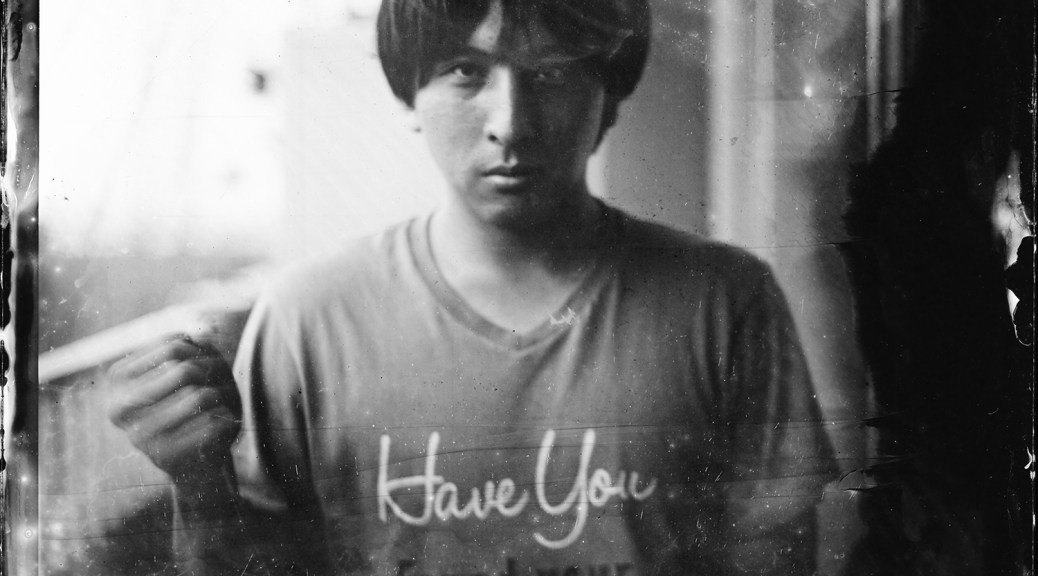
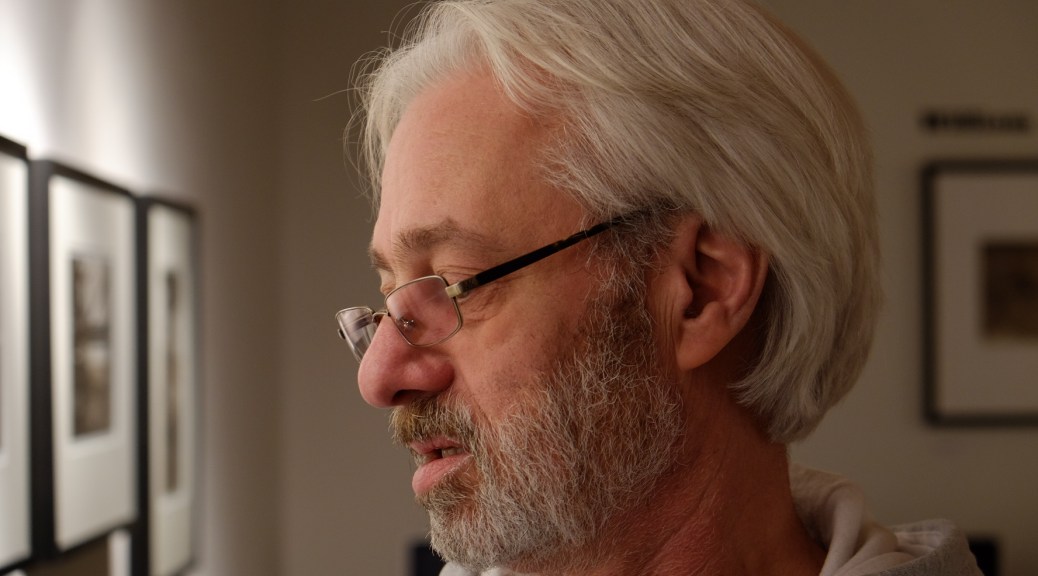
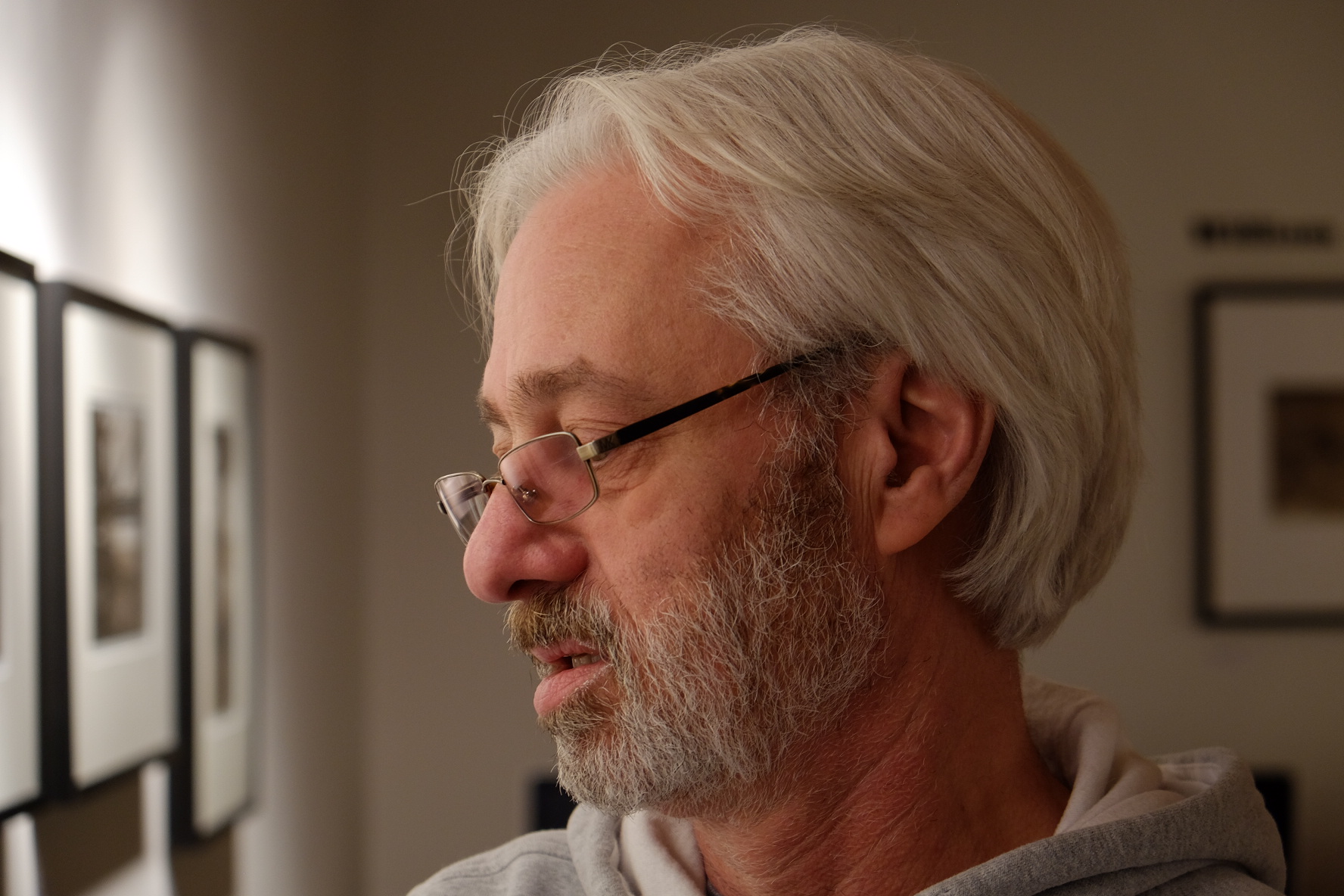
Self-Portrait, Yugo Ito

A reminder: Rendering The Spirit runs from March 18 to April 11. The opening reception will be held March 26 from 6-8pm at Photoworks, 7300 MacArthur Boulevard, Glen Echo, Maryland 20812.

Rendering The Spirit: Interview with Atalie Day Brown

What is your name?
My name is Atalie Day Brown and my husband’s name is Jared Brown.

Where are you from?
I grew up in small-town Cumberland, Maryland and my husband is from Crownsville, MD. We currently live in Pasadena, MD.

How did you get into photography as an art medium?
I have been obsessed with photography since I was a kid. My grandfather was an amateur photographer and I was always inspired by his imagery and talent. I have always been attracted to photography as an art form. Originally, I wanted to become a fine art photographer, it was only when I entered art school/college that I decided to focus more on photojournalism. My husband has had an on-going casual curiosity with photography, but he became more interested while I was going through art school. We decided a few years ago to pursue alternative processes together, as a team.

Which alternative processes do you practice?
We currently create tintypes and ambrotypes

What attracted you to alternative processes in general?
Alternative processes involve a deeper level of intent. It takes additional time and resources to create handmade imagery, therefore you must be purposeful when creating one. You have to consider so many factors and develop a plan. Our tintypes are made using an 8×10 Kodak Studio Camera, circa 1920, and a Petzval lens from 1868; thus, the equipment is large and cumbersome. This process is a labor of love and we appreciate the many aspects of its anatomy.

What drew you to the specific media you practice?
Tintypes have always been an interest to both me and my husband. We love the ethereal qualities tintypes lend to our subjects. Furthermore, the chemical process is a constant challenge, and we (mostly) enjoy combating those seemingly never-ending factors. The historical implications of the medium is also attractive, we love researching pioneers in this field. Another alluring part of the process is the individuality of every single image, no two are ever the same.

How does the choice of media influence your choice of subject matter (or vice versa)?
When creating tintypes, we are constantly debating what subject matter will translate honestly into a tintype image. We select people that are kindred spirits to the process, which can be very divisive. As for still life, we have found that organic matter adds a unique texture to the image. We also enjoy incorporating traditional tintype elements with the modern world.

In today’s mobile, electronic world of instant communication and virtual sharing of images, how important is it to you to create hand-made images?
Creating handmade images in this era of instant-gratification photography is extremely important to us. We are constantly inundated with snapshots, and while they have their place, creating a tangible piece of art using a time-consuming, obsolete medium is truly gratifying.

Is your choice to practice alternative, hand-made photography a reaction to, a complement to, or not influenced by the world of digital media?
Our decision to create alternative photographs is absolutely influenced by current digital media. However, we would have discovered the process regardless of digital media.

Do you incorporate digital media into your alternative process work?
No.

What role do you see for hand-made/alternative process work in the art world of today? Where do you see yourself in that world?
We see alternative processes offering a different avenue for artists who are interested in re-defining alternative mediums in a contemporary manner. I think these handmade processes will become more and more appealing as digital photography continues to dominate. The chemistry and darkroom is a magical place. We just hope to participate in the revival of this medium, one tintype at a time.

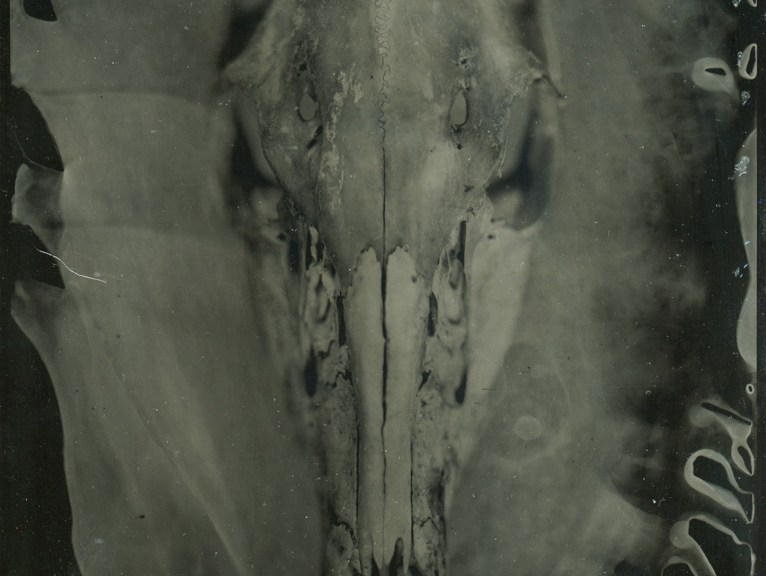
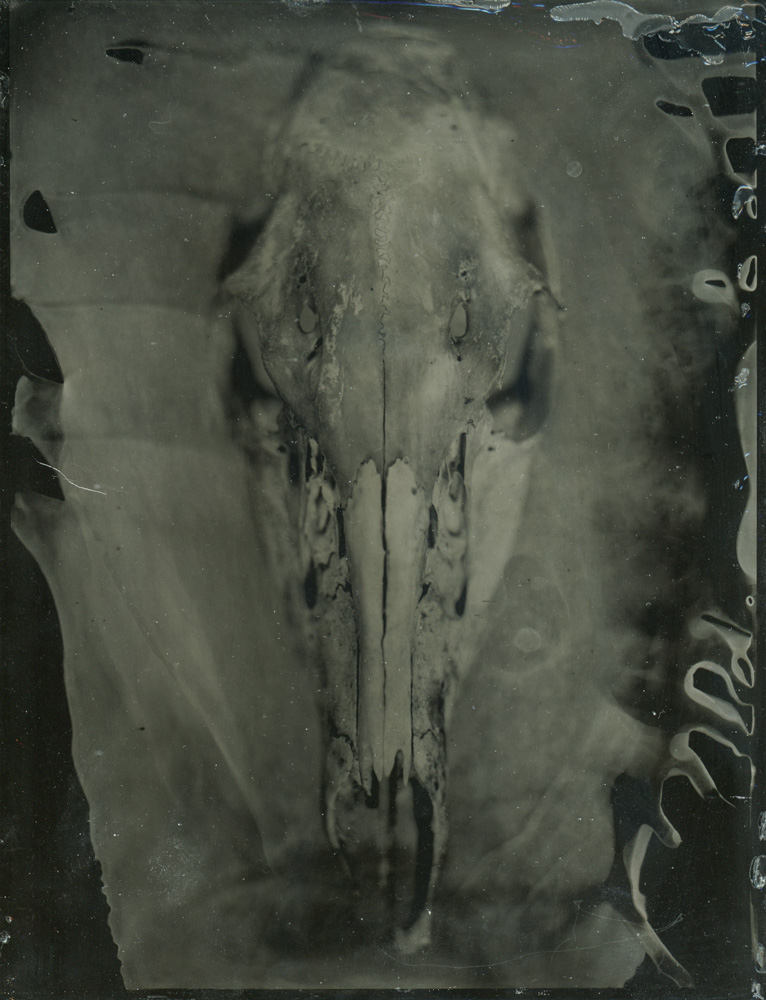
Skull, by Atalie Day Brown

Rendering The Spirit opens March 18, with the Artists’ Reception on Saturday, March 26, from 6-8pm at Photoworks, 7300 MacArthur Boulevard, Glen Echo, Maryland, 20812.

New Camera: Fuji XT-1

As most of you know, I’m a die-hard film shooter. And I’m not about to stop- I seriously love my Rolleiflexes. But there is a real-world place for a good digital camera in my toolkit. 

I was using a Canon 5D mk.1 for a long time- perhaps ten years now. It still does a very good job of doing what it does, but it is BIG, it is HEAVY, and the image quality and technical features of newer cameras have really outstripped what it can do. 

I’ve been investigating alternate options to replace it. One thought was a Canon 6D, which would give me another full-frame chip with higher resolution, better color rendering and low-light performance, and I could keep all my existing lenses. But that would still have been really outside my budget. Even more so a 5D mk.3. Neither one would have solved my issue with weight, which quickly becomes an obstacle to regular use.

I looked at what I use my camera for- mostly events (as in documentary shooting, not commercial event photography), portraits and travel. I wanted something that would give me improved low-light performance, be much smaller and lighter, and give me the quality of glass I was used to with my Canon L lenses. 
I turned to mirrorless cameras, did some looking around, and after getting feedback from some trusted friends, arrived here: 


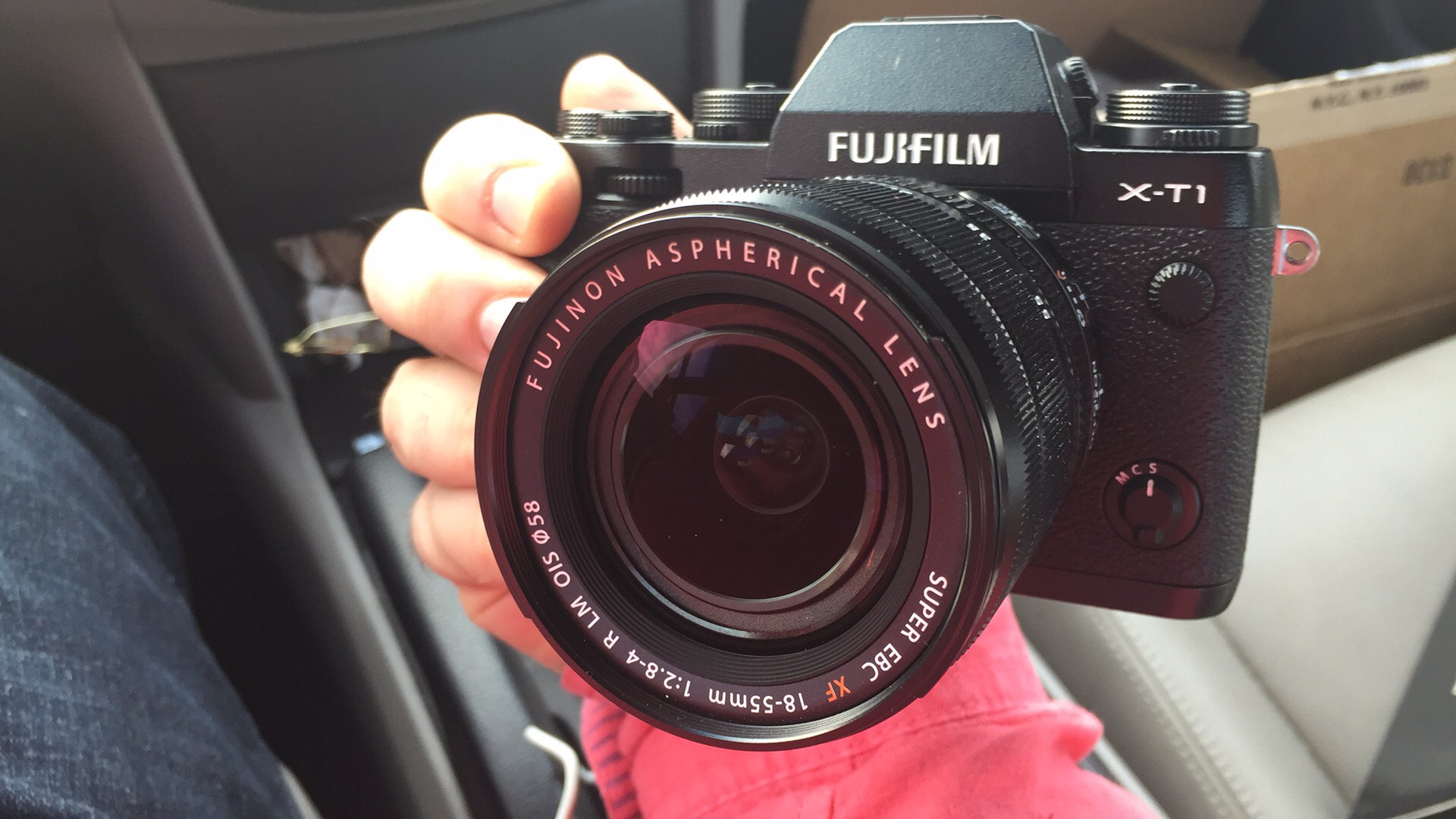
Fuji X-T1
 
The Fuji X-T1. It has a 16 megapixel APS-C sensor, a line of outstanding lenses in the focal length range I use the most, and as you can see in the photo above, is quite a bit smaller than the 5D. Not to mention quite a bit more affordable. 

Right now I only have the “kit” zoom lens. Calling this a kit lens is a bit like calling the 24-105 L lens with my 5D a kit lens. It’s an 18-55, or the equivalent of a 27-84 in 35mm/full-frame terms. A maximum aperture of f2.8-f4 means for a compact zoom, it’s quite fast. It also has optical image stabilization, a nice plus when shooting hand-held in low light. 


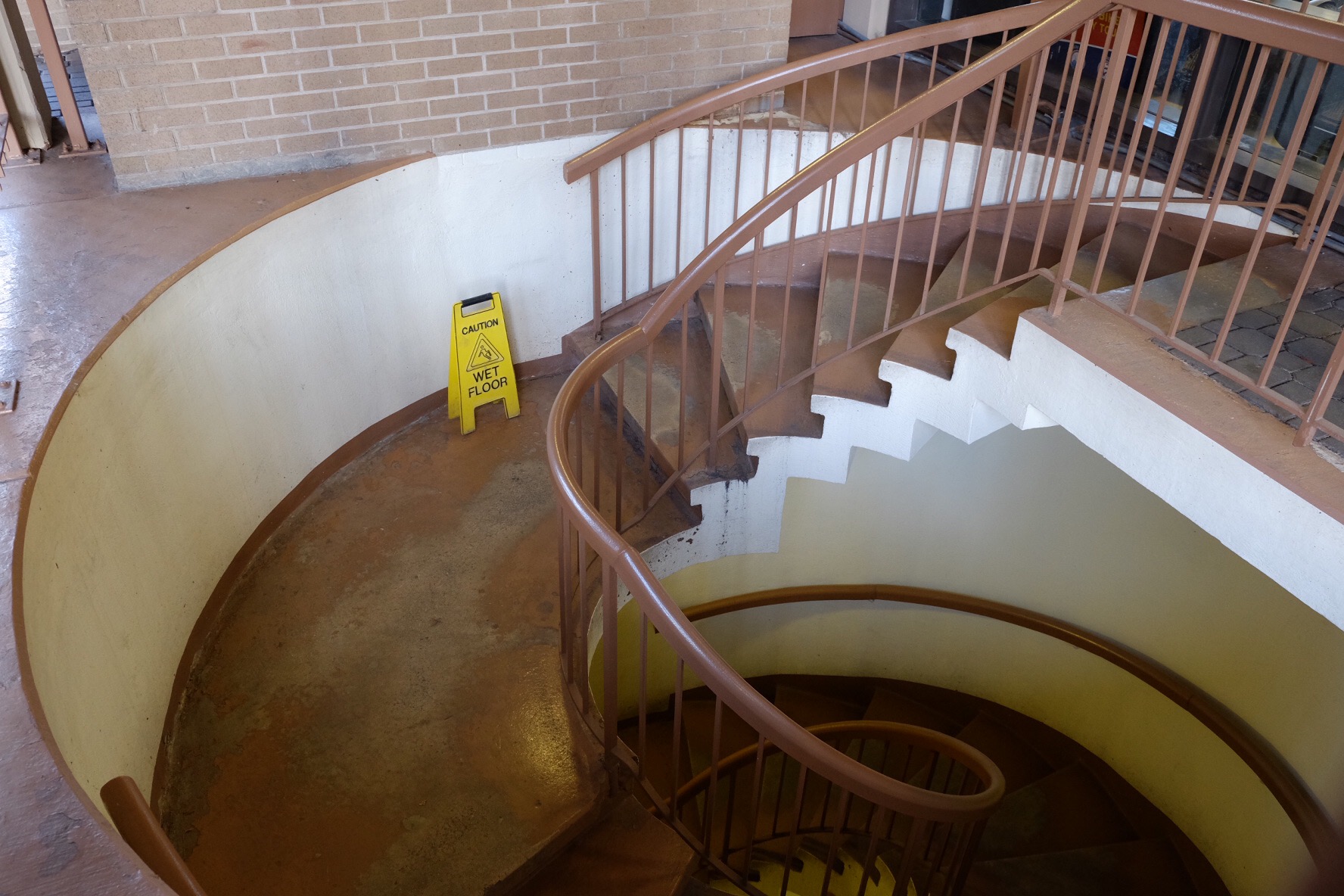
stairwell- hand-held @ 1/8th second
 
Things I like about the lens: image quality is excellent. The range of focal lengths covered is very useful. It does a great job with both near and distant subjects. The out-of-focus rendering is pleasant. 


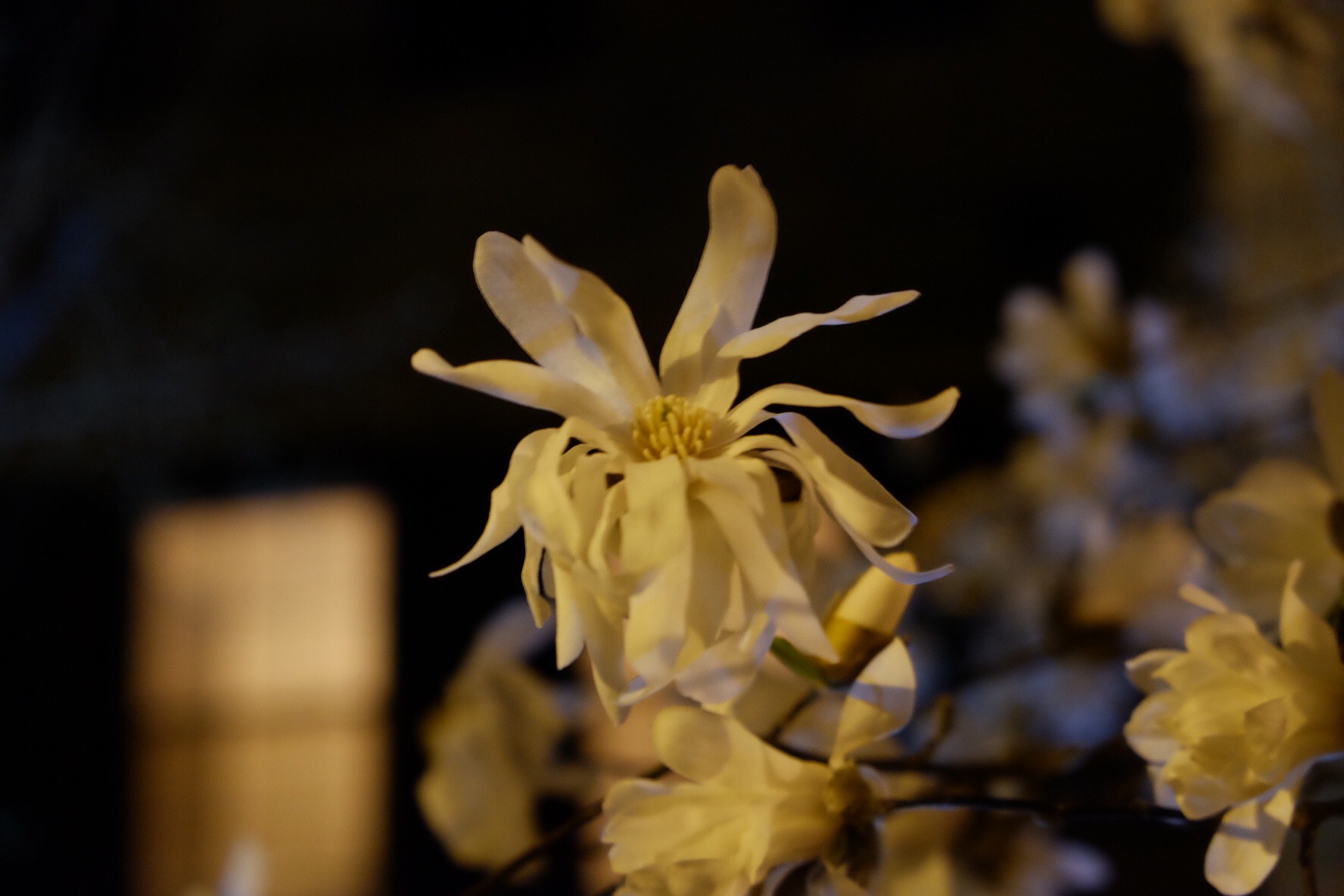
dogwood bloom, night-time
 
Things I don’t like: switching from autofocus to manual requires a separate switch to be toggled. That switch is small and on the back of the barrel, close to the body, so toggling it requires taking the camera away from your eye. The aperture control ring is not mechanical with defined click-stops, but is instead electronic, making it hard to tell if you’re turning it the right way, and easy to turn it away from your preferred f-stop. 


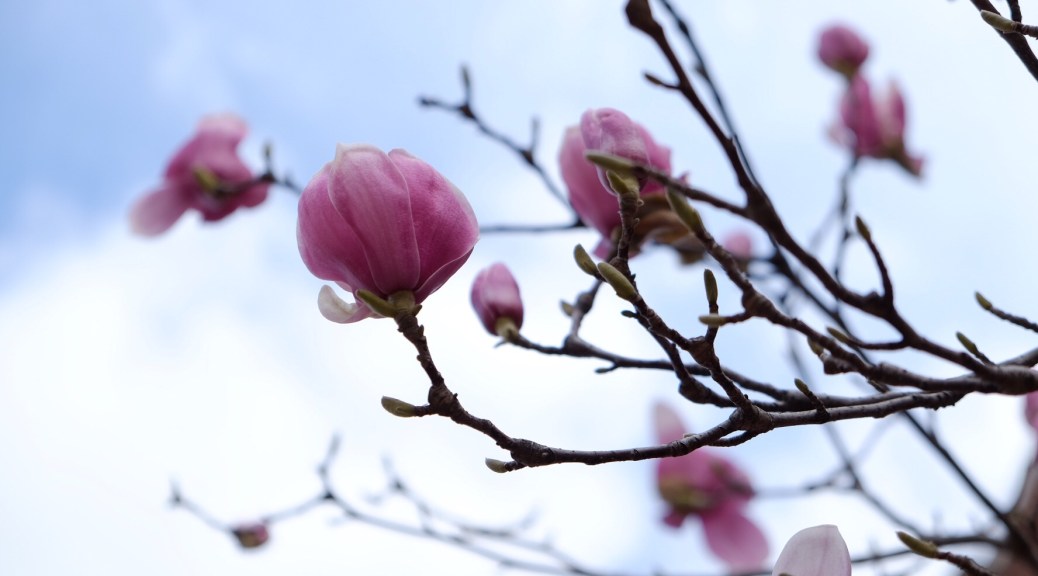
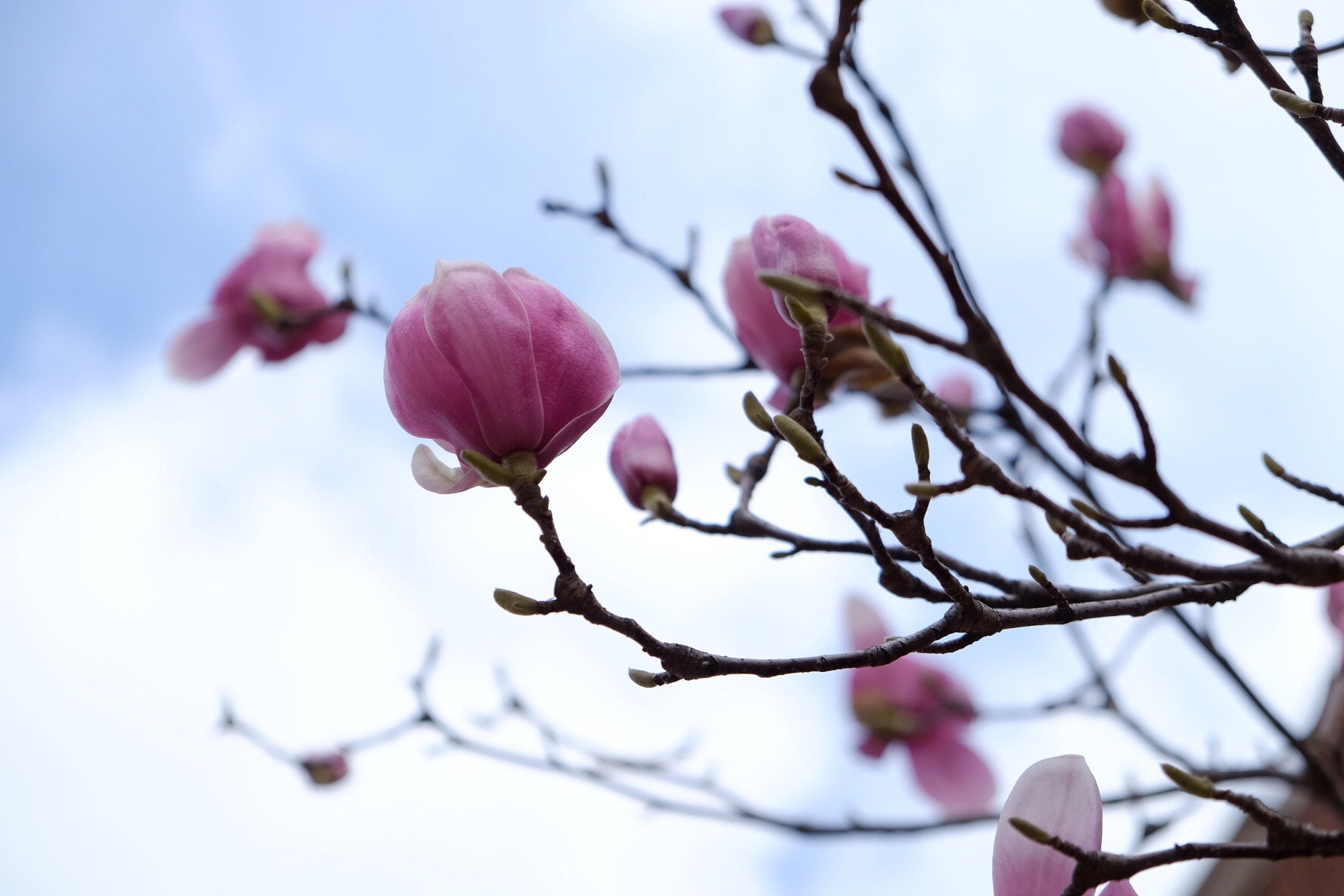
magnolia blooms
 
This is not a problem with their prime lenses, two of which I will be acquiring soon. 

Also, as you can see, the image quality and color rendition of the image chip in the X-T1 leaves nothing to be desired even at relatively high ISO. The dogwood bloom at night was shot at ISO 6400. It has two extended range ISO settings above that, but I have yet to explore those. 

The camera has a whole host of other options including film emulsion emulation modes (all of these were shot in Astia simulation, which is a little lower in contrast with a slightly less saturated palette for more pleasing portraits). It also has black and white modes, including red filter and yellow filter simulations. 

Some environmental portraits:


Julian
  
Tan
  
Missy
 
A black-and-white shot with the red filter mode on:

Richard

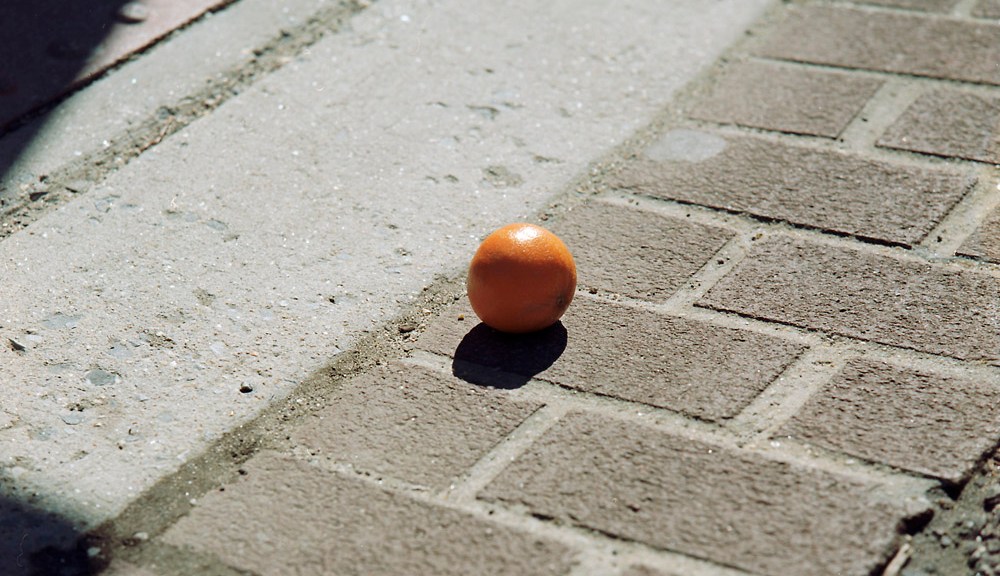
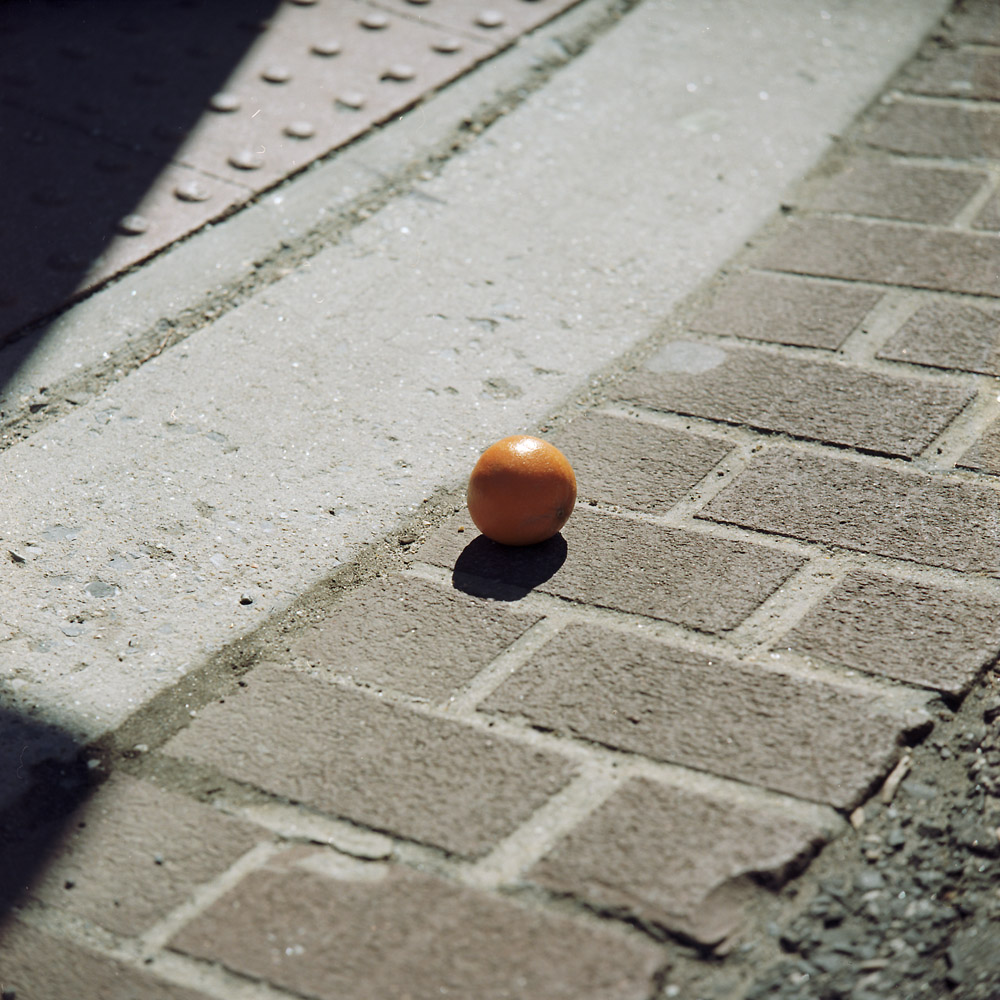
Forlorn Orange, Abandoned in the Gutter

It’s been a while since I’ve posted any of my own images. I was out on a lunch break walkabout near my office and saw this poor little orange (or is it a tangelo?) someone had dropped in the gutter. It cried out to be photographed, so here it is…

Forlorn Orange
Forlorn Orange

Rendering The Spirit: Interview with Eddie Hirschfield

Could you tell me your name?
Ed Hirschfield

Where are you from?
New Jersey, but have been in the DC area since 1975.

How did you get into photography as an art medium (as opposed to casual or professional use)?
My degree is in Photography (The George Washington University), and I’ve always been interested in it as art medium.

Which alternative processes do you practice?
Hand coated emulsions, Cyanotypes, Cliché Verre

What attracted you to alternative processes in general?
The potential for unique images. 

What drew you to the specific media you practice?
The introduction of serendipity into the creation of the images.

How does the choice of media influence your choice of subject matter (or vice versa)?
For the images accepted in this show, I was going for a painterly effect, and the nude lends itself to this.

In today’s mobile, electronic world of instant communication and virtual sharing of images, how important is it to you to create hand-made images? 
Extremely important. There’s a fleeting aspect to the new way to share photographs. A physical image has more staying power.

Is your choice to practice alternative, hand-made photography a reaction to, a complement to, or not influenced by the world of digital media? 
To a degree, it is a reaction, for the reasons stated above. However, without being influenced by the fleeting nature, and “perfection”/repeatability of digital, I’m not sure if I would have been as open to creating work which is so prone to flaws, chance, and experimentation. I’d like to think I would, but I have noticed a change in my work, since the advent of digital. 

Do you incorporate digital media into your alternative process work? 
No.

If so, how do you incorporate it? Is it limited to mechanical reproduction technique, or does it inform/shape/influence the content of your work?
N/A

What role do you see for hand-made/alternative process work in the art world of today? Where do you see yourself in that world?
I think this is a great time for photographers pursuing alternative processes. In a world obsessed with instant gratification, the time, and passion, required to create unique images is a great antidote. I also see a greater appreciation, among the public, for the craftsmanship inherent in alternative processes. As for my place in this world, it’s not something I think about. I just want to continue my work, and continue to create photographs.

Eddie Hirschfield
Eddie Hirschfield

Rendering The Spirit: Interview with Barbara Maloney

What is your name?
Barbara Maloney

Where are you from?
I was born in Washington, DC, and live now in Howard County, Maryland, halfway between Washington and Baltimore.
 
How did you get into photography as an art medium?
Almost as soon as I got my first SLR, I took a photography class, where I learned to shoot, develop black and white film, and print.  I was smitten with every aspect of the process and began to see the world in terms of images. 
 
Which alternative processes do you practice?
I work primarily with temperaprint, which is a variation of gum bichromate, and polymer photogravure.

What attracted you to alternative processes in general?
I think that it was in the early 1990’s that Polaroid transfers became popular.  I loved the look of Polaroid color on watercolor paper, and I loved the beauty of imperfection and unpredictability of the process after having worked for several years making full range, full tone silver gelatin prints.  Within a rather short time, I was drawn to some of the more traditional historic processes.

What drew you to the specific media you practice?
I had the great fortune to live in London from 1993 to 2000.  During this time, I had the opportunity to take classes in alternative photographic processes with the late Peter Fredrick at Kingsway College.  We learned several historic techniques, like cyanotype, VanDyke brown, p.o.p., gum bichromate, etc.—all of which I quite liked… but it was Peter’s own process, temperaprint and also photo-etching that truly resonated with me.  
 
How does the choice of media influence your choice of subject matter (or vice versa)?
Subtly, I think.  I have a few on-going projects (windows & mirrors, the garden of sculptures, the C & O Canal, the watershed behind my house, for example) where I take photos that I know will eventually be printed as temperaprints or photogravures…but much of the time, I take photographs as a means of discovery & pleasure, without a great deal of thought as to the final image.  Some will translate beautifully as alternative prints; others will not. 

In today’s mobile, electronic world of instant communication and virtual sharing of images, how important is it to you to create hand-made images? 
It is very important to me.  I am delighted that photography has become so easy & so spontaneous, and that we are able to share photos instantaneously.  But it is pretty wonderful, as well, to be able to take some of our work many steps further, to create something that comes out of us as artists.  Perhaps it’s similar to the difference between a quick email relating events and a soulfully written poem.  Hand-made images have that quality.

Is your choice to practice alternative, hand-made photography a reaction to, a complement to, or not influenced by the world of digital media?
I would say that initially, there was no influence by the world of digital media.  I began working in alternative photography at a time when I was mostly making silver gelatin prints.  Now, the choice to practice hand-made photography is a complement to the world of digital media. 

Do you incorporate digital media into your alternative process work?
I shoot digitally and make my enlarged color separation negatives (used for temperaprint) and positives (for polymer photogravure) via my computer.  This is so much easier, faster, and more reliable than working in the darkroom.   
 
If so, how do you incorporate it?  Is it limited to mechanical reproduction technique, or does it inform/shape/influence the content of your work? 
I don’t limit myself to using digital techniques for sheer mechanical reproduction, but most of the digital manipulation that I make is small in comparison to what was originally seen and shot.  I’m in early stages of a new project, however, that references a time in the past of personal significance.  I suspect that digital compositing will play a greater role in my printmaking for these images.

What role do you see for hand-made/alternative process work in the art world of today?  Where do you see yourself in that world?
It seems to me that hand-made/alternative process work has an important role in the art world today.  Many artists are using historic and other hand-made processes to produce pieces with incredibly varied aesthetics.  There’s a fairly steep learning curve with much alternative work, but the rewards in terms of expressiveness and creative possibility are enormous.  My work tends to be quiet, contemplative, and pictorial.  I follow my heart every step of the way, and I truly feel like the handmade aspect of printmaking is necessary to complete my vision.

Planting Rice, by Barbara Maloney