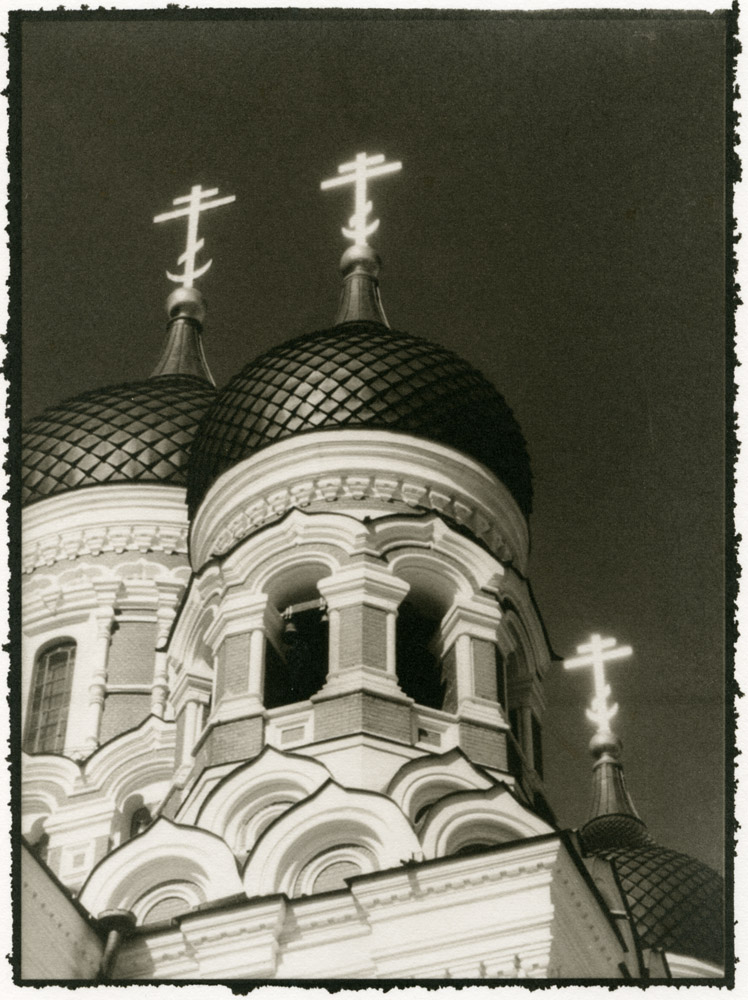
Just wanted to post a print made by one of my students, from my Advanced Topics in Platinum/Palladium printing. The advanced topics class covers contrast control techniques, working with different papers, making digital negatives, and gum-over-platinum prints. This was made from a digital negative we created in class from a medium-resolution JPEG! I’m impressed. Patrick will have a print to be proud of as a result of this class.
Orthodox Cathedral, by Patrick Brown
By the way, I will be re-running my Intro to Platinum/Palladium course at Photoworks, October 20-21. If you are interested, please sign up now, while there’s still room!
I found another photographer in New York to add to my map. This is a case of one photographer taking over the same studio of another – in this case, a Mr. A.W. Jordan took over the premises of Abraham Bogardus’ old studio.
I found the reference to A.W. Jordan on an 1870s Carte-de-visite of a civil war veteran multiple amputee, and the same address was used by Bogardus in the velvet pad on one of his daguerreotypes. It would be interesting to find out if there was another tenant in the studio between Bogardus and Jordan, or if the studio was sold to Jordan directly from Bogardus.
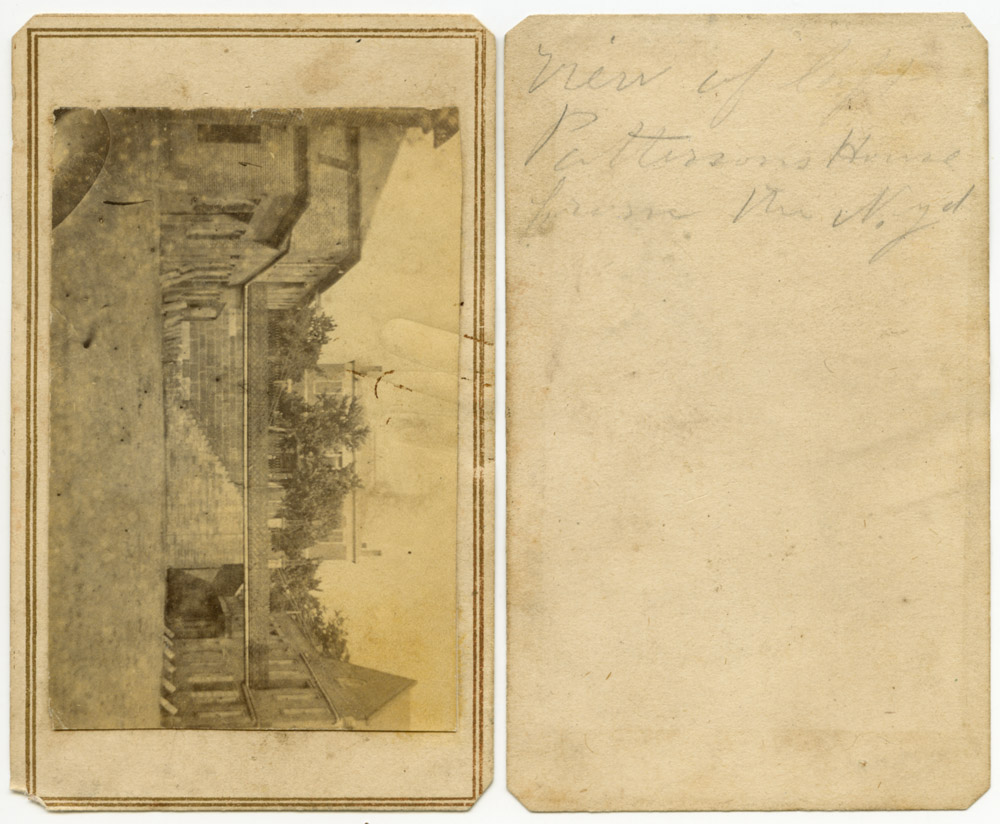
Here’s an anonymous CDV, labeled on the back “View of Patterson’s House, from the N. Yd” I take that to mean North Yard. It must have been an industrialists home, built on the grounds of the factory.
Patterson House CDVCloseup, Patterson House
This is only the second architectural CDV I’ve found. I did some cleanup on the scan of the close-up to make it easier to view. If anyone has any idea where this is/was, I would greatly appreciate feedback. The cdv was purchased in south-west Virginia, near Staunton and Harrisonburg. This is perhaps the poorest condition CDV I own, as it has separated into its various components – the albumen print has separated from the card backing, which has separated into two separate, very thin and delicate layers. This is actually interesting because it gives you an insight into how these were assembled, and the various weights and qualities of the paper components. This is also the first CDV I have that the glass plate negative shows a crack in the print (note the lower left corner of the image). I’ve seen plenty of other larger wet collodion images shot on glass plate that show cracks, perhaps the most infamous one being Alexander Gardner’s last portrait of Abraham Lincoln where the plate cracked right through his head. But I’ve never seen a CDV sized image with a cracked plate. Either it just didn’t happen all that often, or the plates that did crack were re-shot and discarded, or both. In any case, this must have been a very important image to someone to have survived the damaged plate.
*ADDENDUM*
Patterson House was the home of one of the first commandants of the US Navy Yard in Washington DC. So N. Yd. stands for Navy Yard. This would also place the image in the 1860s, perhaps inter-war or possibly pre-war. Given the location, it is quite possible this image came from either the Brady or Gardner studios, or perhaps even Timothy O’Sullivan. It is impossible to say as there is no identifying imprint on the recto, and the original verso layer of the card is missing. Further research is merited. Because there is no imprint on the front, I would suspect Gardner over Brady, as Gardner did not print his name on the front of his CDVs, and he had a strong relationship with the US Military (he was the one called to photograph the Lincoln conspirators after their capture and incarceration aboard US Navy ironclads anchored at the Navy Yard and the subsequent execution, held a scant few blocks away on what is now the grounds of Fort McNair). So I may well have another Gardner image!
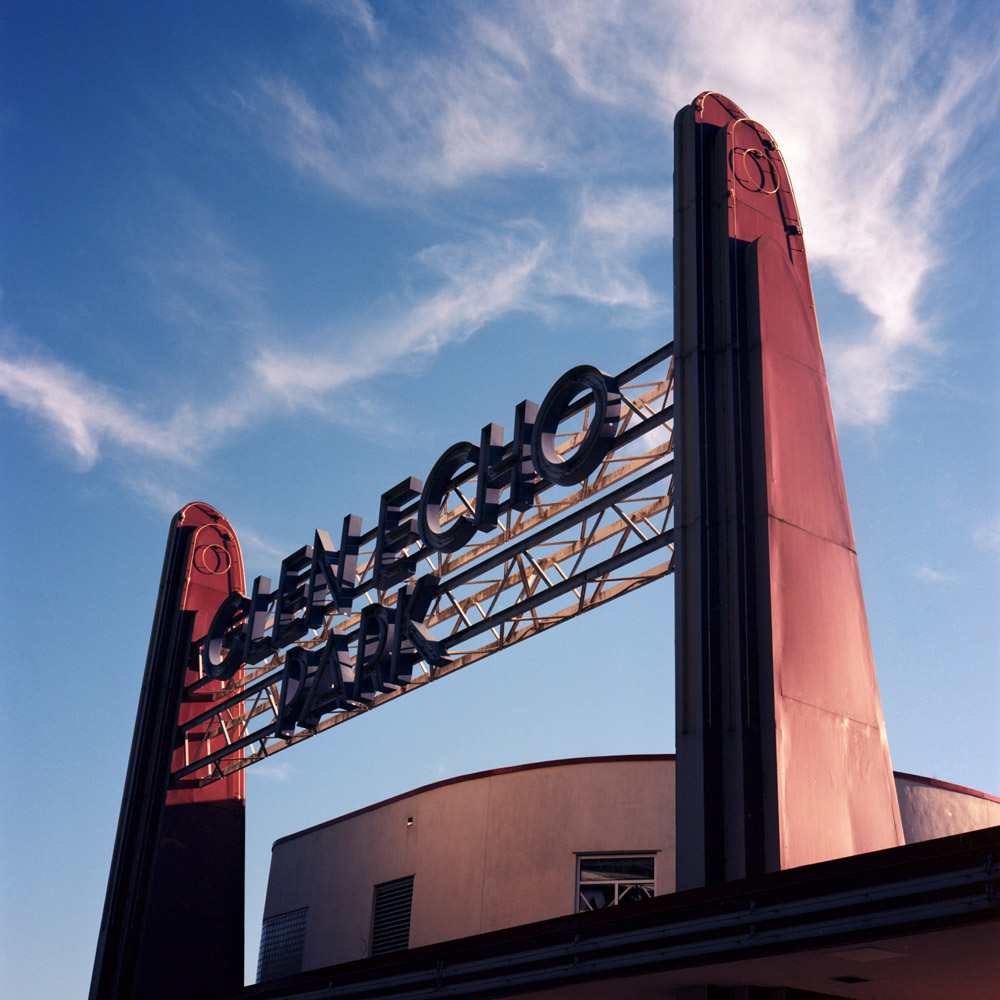
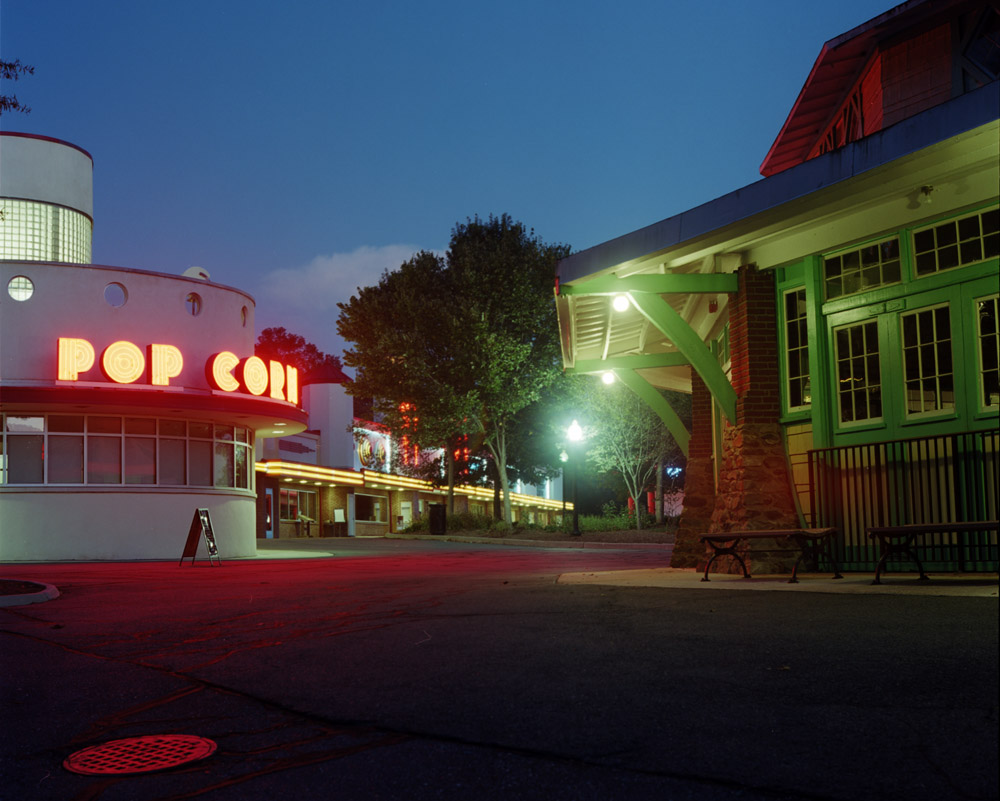
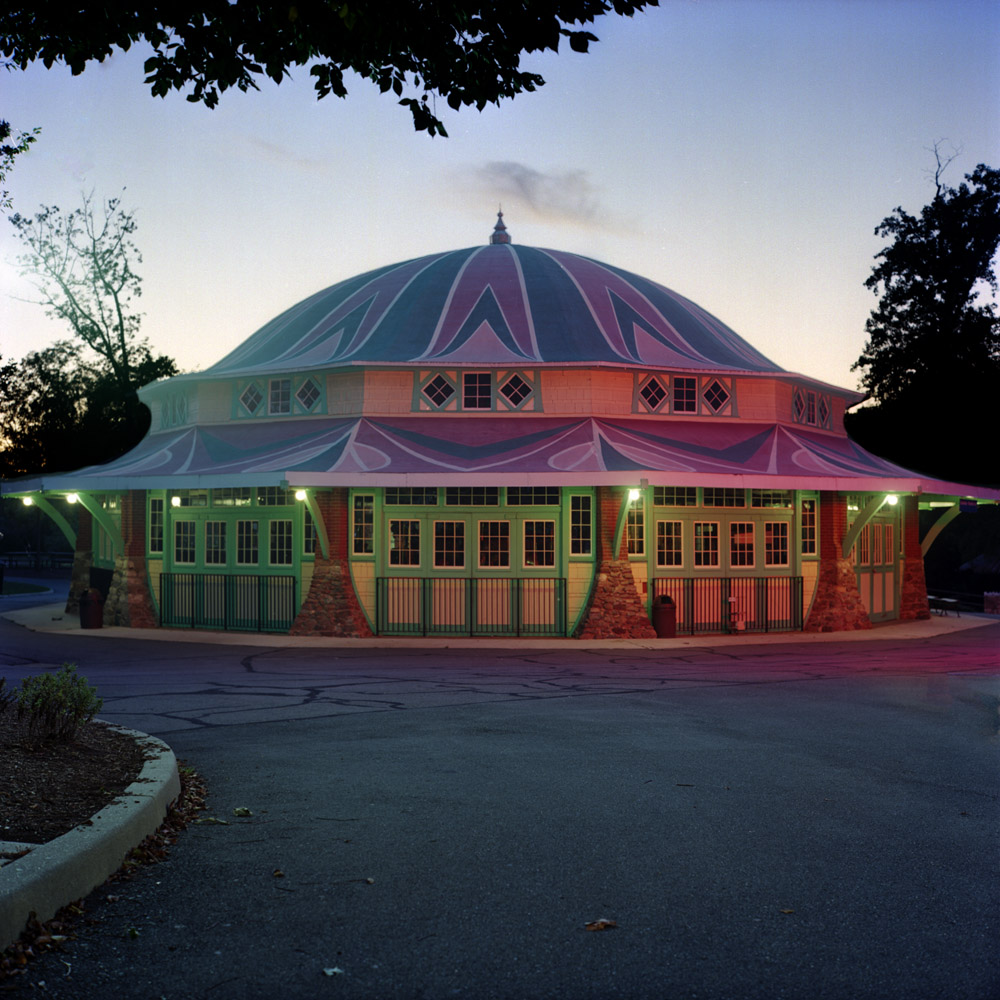
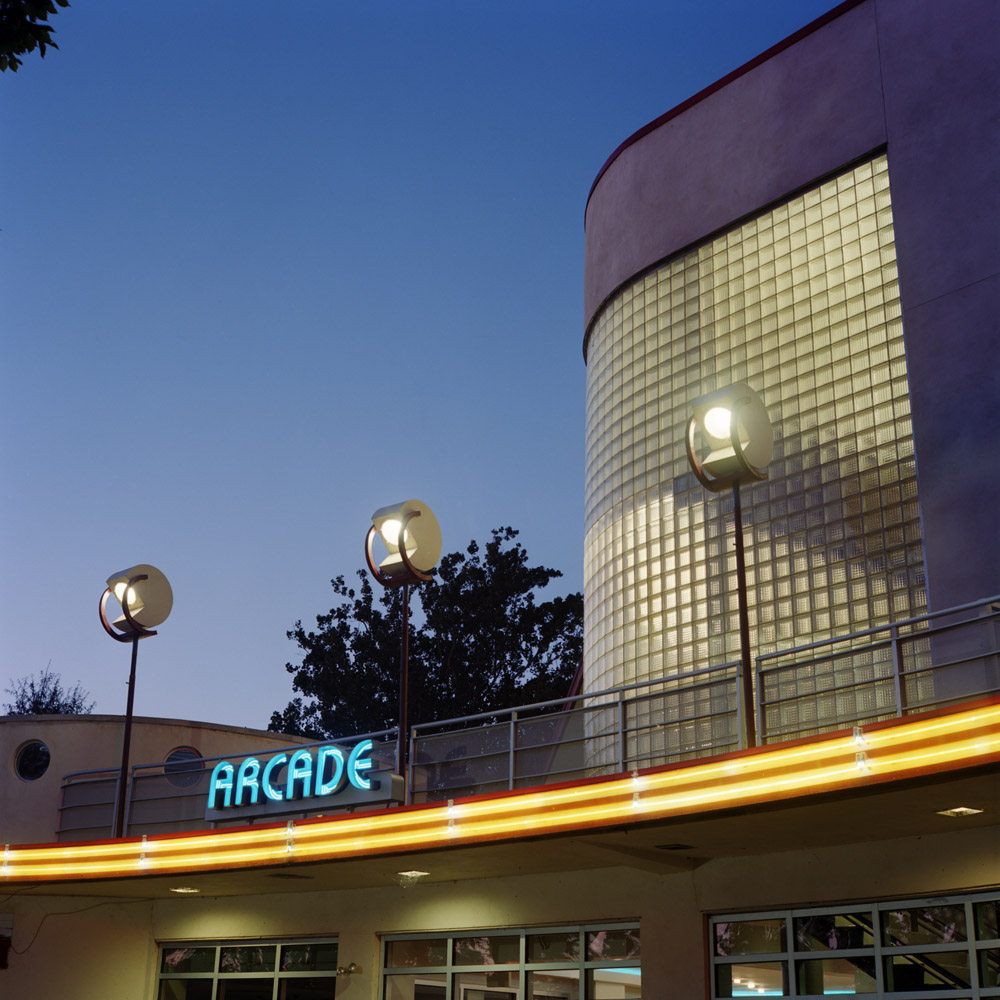
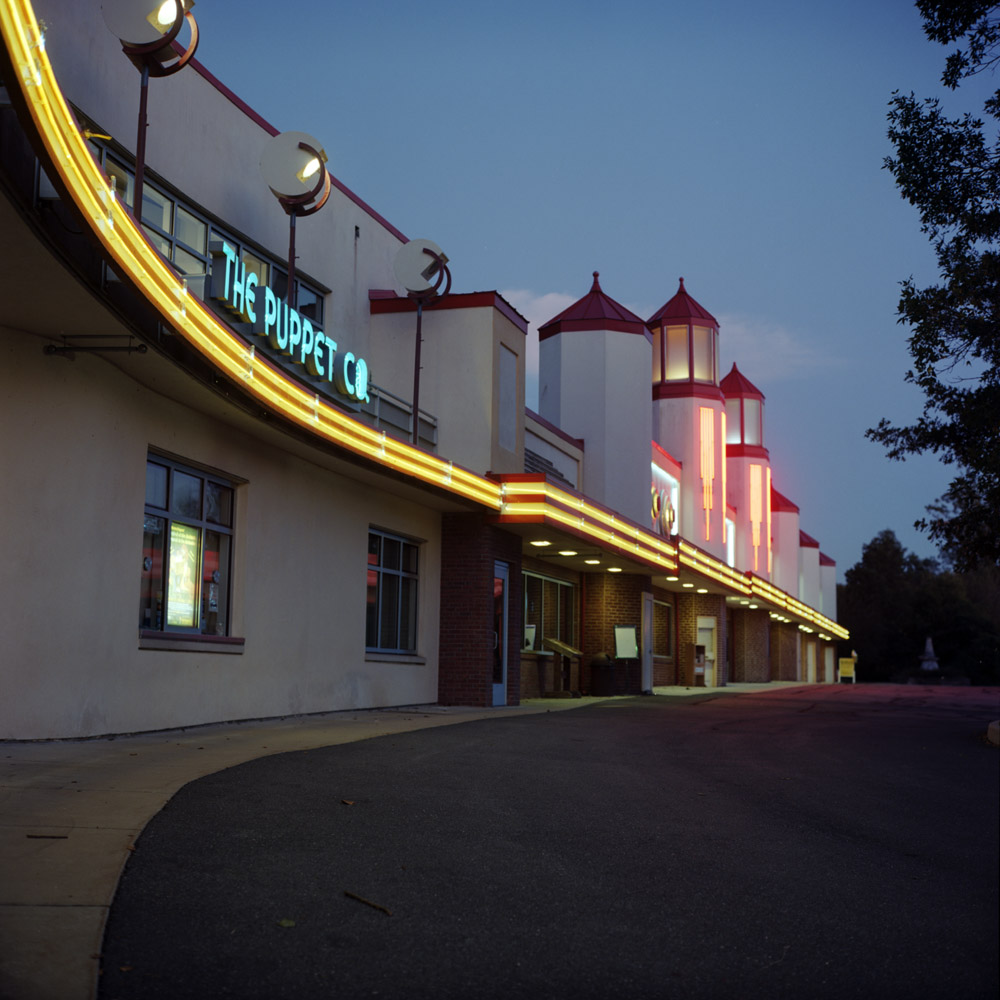
More of my twilight/nighttime exposures. The subject is Glen Echo Park, again. I love shooting in the park because of the wonderful neon lights, and the fact that while it’s never BUSY at that time of day, it’s never empty either. The park is always changing with the seasons, and it has a very secluded feel despite the proximity to the nation’s capitol and two very busy highways.
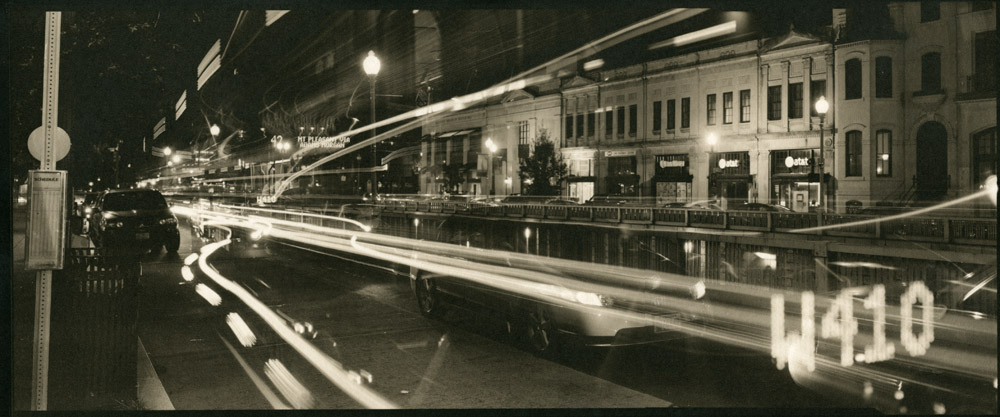
Dupont Circle bus stop, Palladium over Fumed Silica
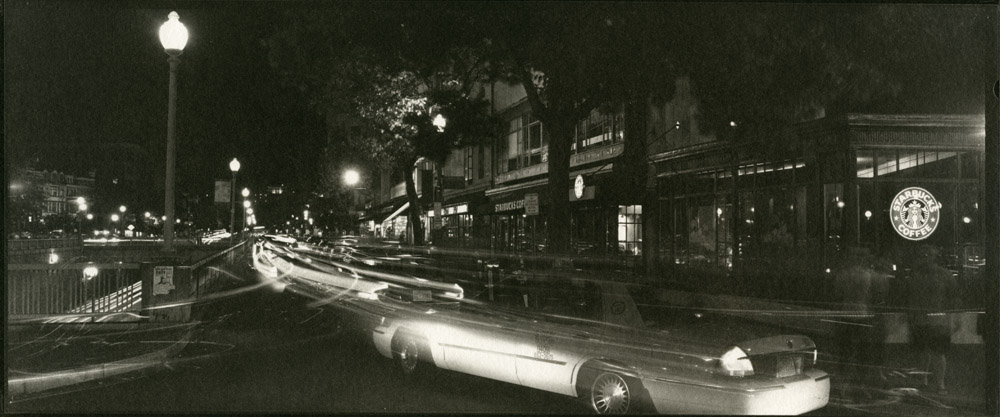
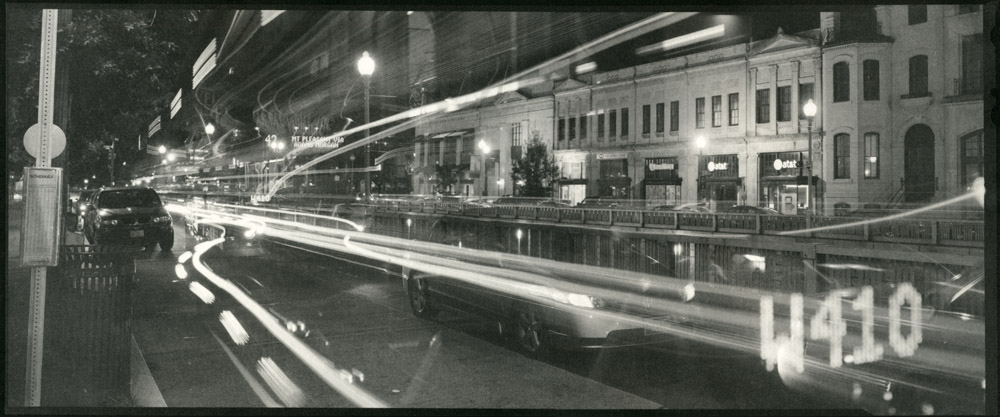
Here’s another of my 5×12 panoramics of Dupont Circle here in Washington DC. This was several exposures on the same negative, yielding an approximate minute and thirty seconds or thereabouts. We were printing from this negative in my Advanced Topics in Platinum/Palladium Printing class out at Photoworks Glen Echo this past weekend. The print I scanned for this image was printed on Bergger COT320 pre-treated with fumed silica. The fumed silica yields a definite boost in dmax.
The next print is of the same negative, but printed as a Ziatype. Ziatypes are a variation on palladium, but they use either Lithium Palladium or Cesium Palladium and Ammonium Ferric Oxalate instead, which yields a neutral-to-cool tone image more like platinum in color, and they are a printing-out process developed in water as opposed to a develop-out process that requires Potassium Oxalate or Ammonium Citrate as a developer.
The distinction between printing-out and developing-out, in addition to the chemistry variations, is the fact that a printing-out print’s final exposure is judged by visual inspection – what you see when you pull the print from the contact frame is pretty much what you’re going to get when it is washed, cleared, and dried, but a developing-out print will have some kind of ghost image that is anywhere from almost imperceptible to a partial rendition of the final image prior to development. Neither one is better than the other, except that the Ziatype is easier for beginners until they gain confidence in their coating and printing skills. Ziatypes also have a wide range of contrast controls that will also affect image color in addition to contrast.
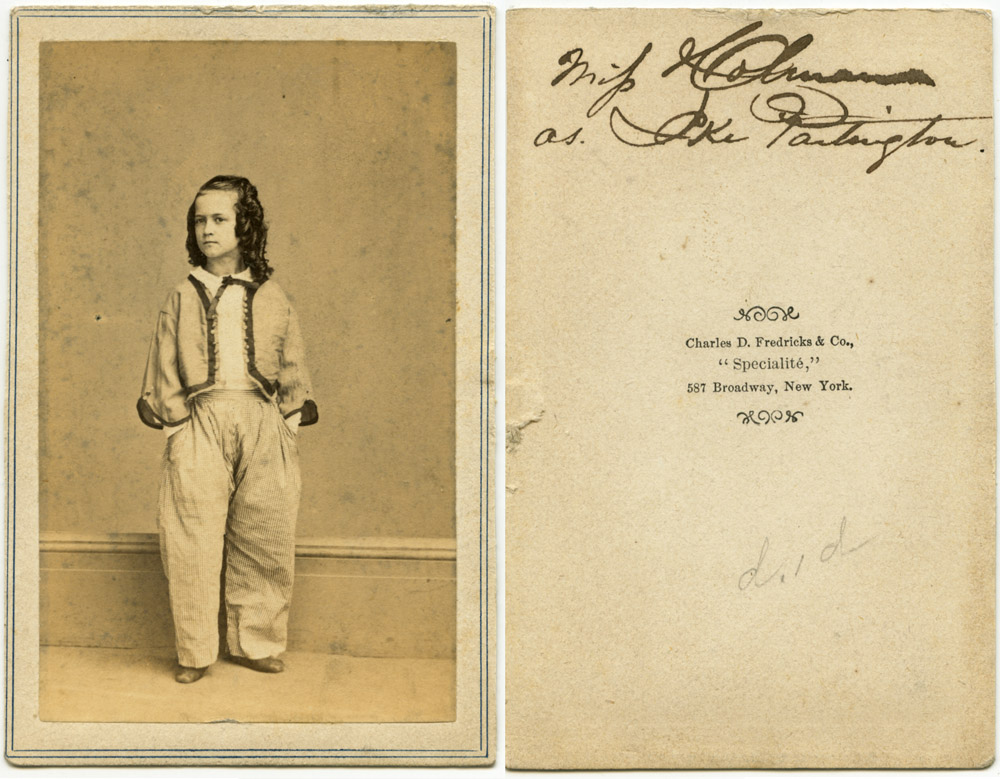
Another actor in costume photo from the golden age of CDVs. Miss Sallie Holman dressed as Ike Partington (if you couldn’t tell from the name, a comedic role involving gender confusion/cross-dressing). This one hits on all the notes – a great CDV of a performer in costume, cross-dressing, “gay interest”, celebrity photographer. This is somewhat equivalent to the famous Garbo-in-a-tux photo of the 1930s, or Dustin Hoffman as Tootsie.
CORRECTION: It is Ike Partington, so I have corrected the title and elsewhere to reflect that.
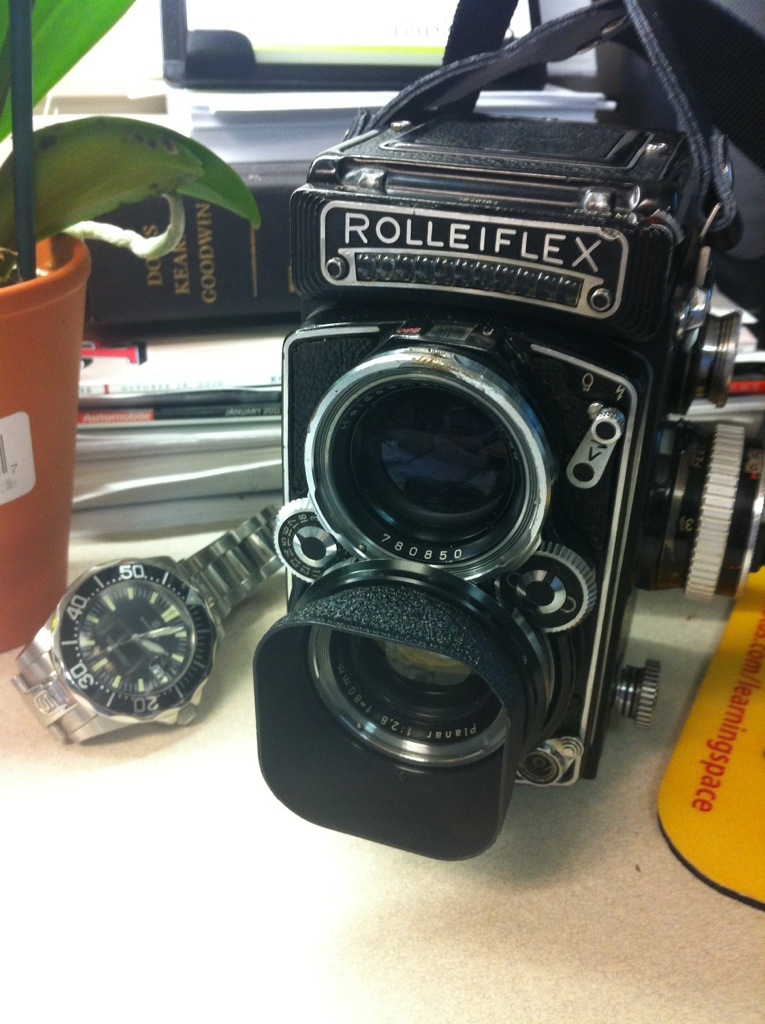
My beautiful Rolleiflex, all kitted out with a proper strap and lens hood now. The strap arrived maybe two weeks ago and the lens hood, an after-market metal hood with a lovely black crackle finish, arrived yesterday from Amazon.com. I was a tad worried about the lens hood because third-party Rollei accessories have a bad reputation, but this seems every bit as nice as the Rollei hoods and it’s a fraction of the price. $30 +/-, versus $200+ for genuine Rollei branded hoods. I’m using the thing, not collecting it!
Original print roughly 4×6, in a cardboard passé-partout with the photographer’s imprint Henline (or is it Henune – hard to tell from the typeface), Klamath Falls, Oregon. It’s another image that’s fun to speculate on the relationship between the sitters – most probably just friends, but who knows? It’s the odd-couple pairing that inserts the questions as much as anything else. Unlike other, older tintype photos of two unrelated men together, there’s no obvious physical affection occurring. Is the absence of affectionate gesture a sign of “just friends”, or is it an indicator that by the 20th century, affectionate gestures between men were no longer acceptable, even when it was “just friends”?


 dcphotoartist