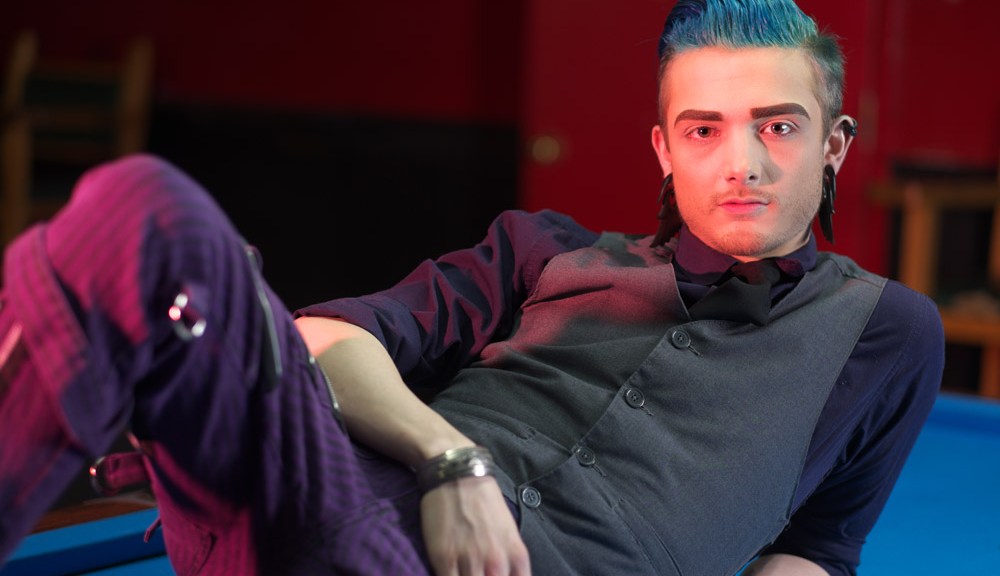
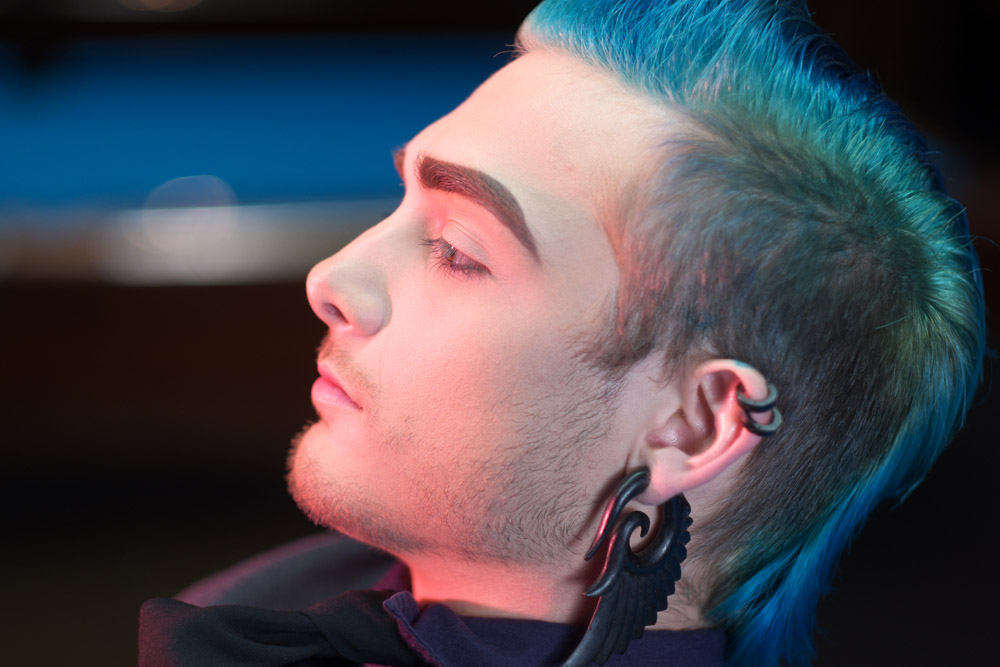
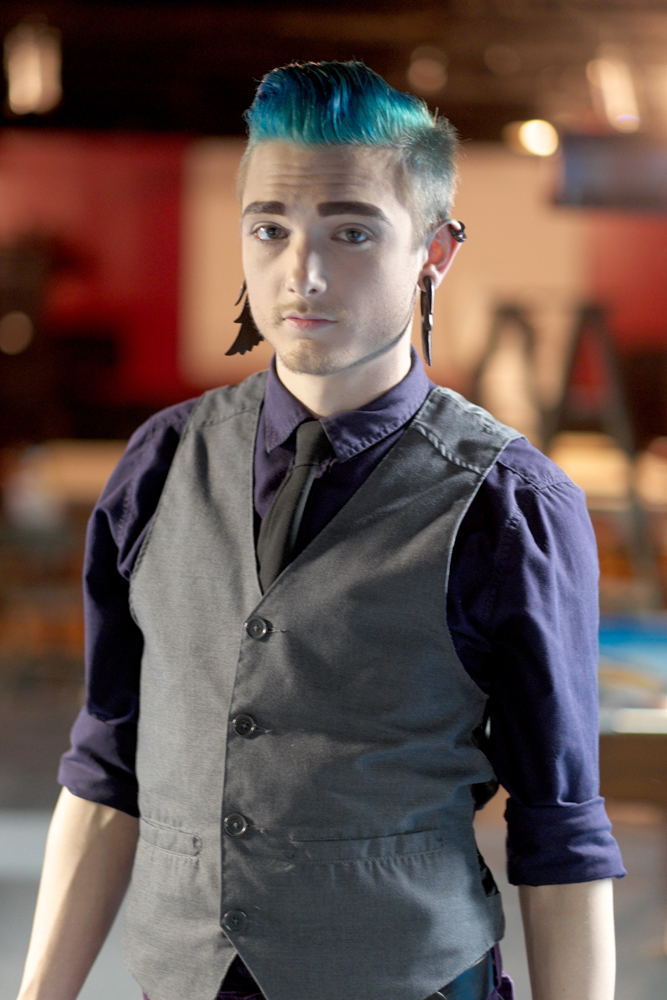
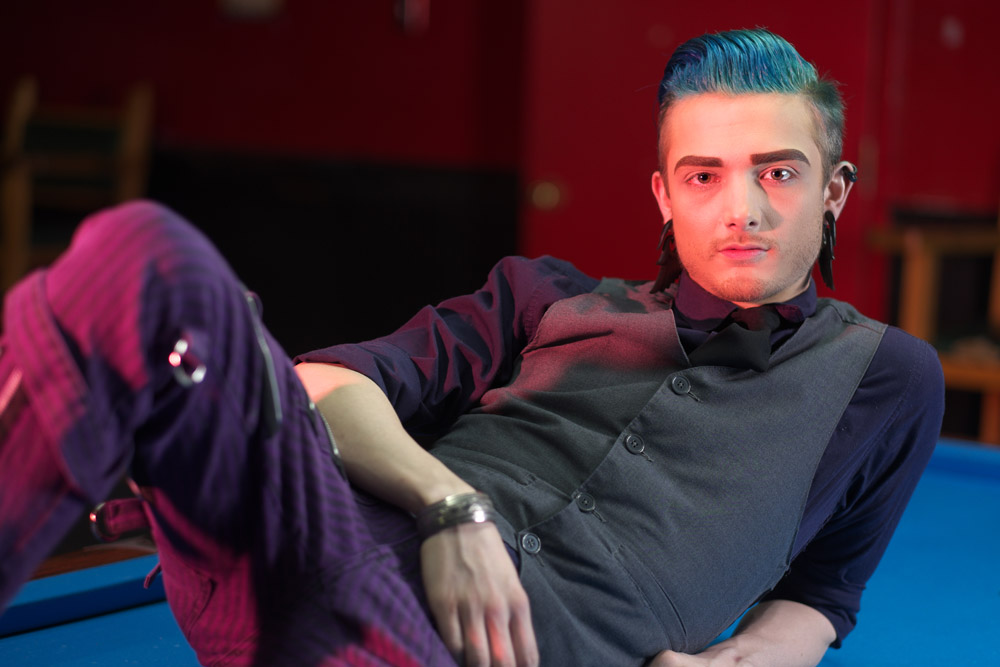
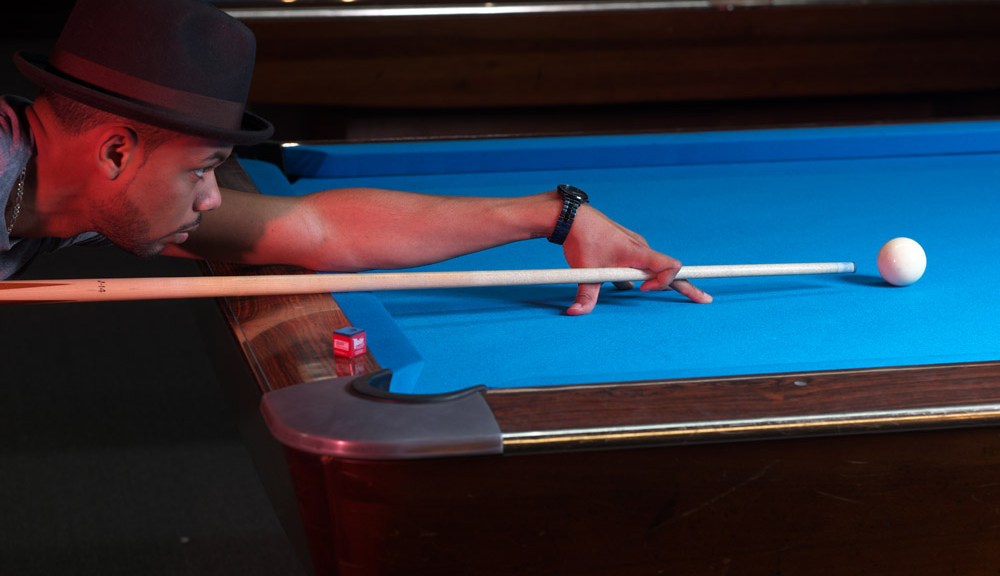
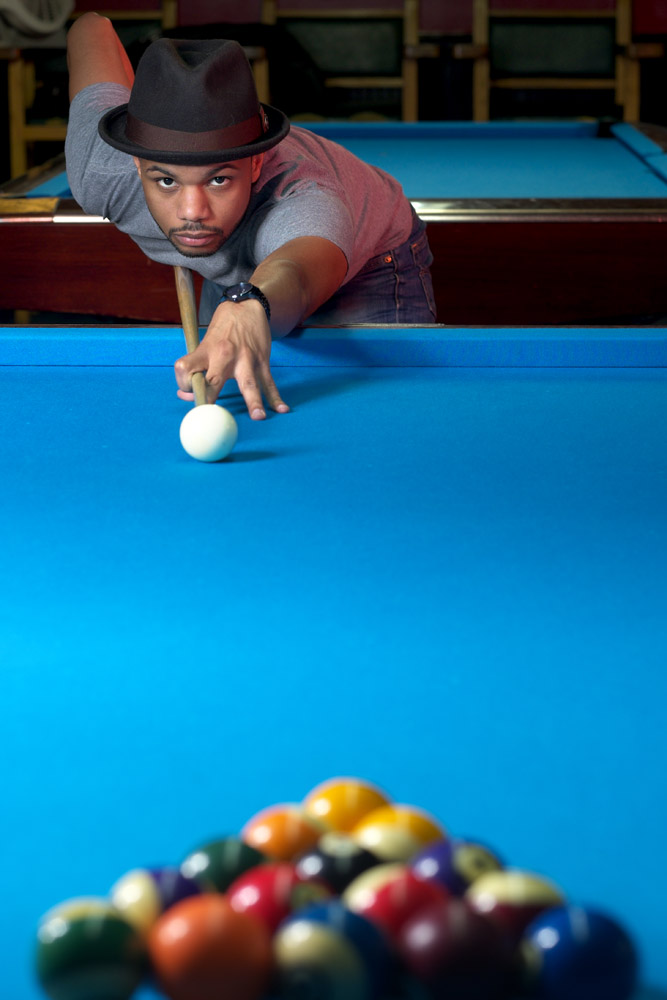
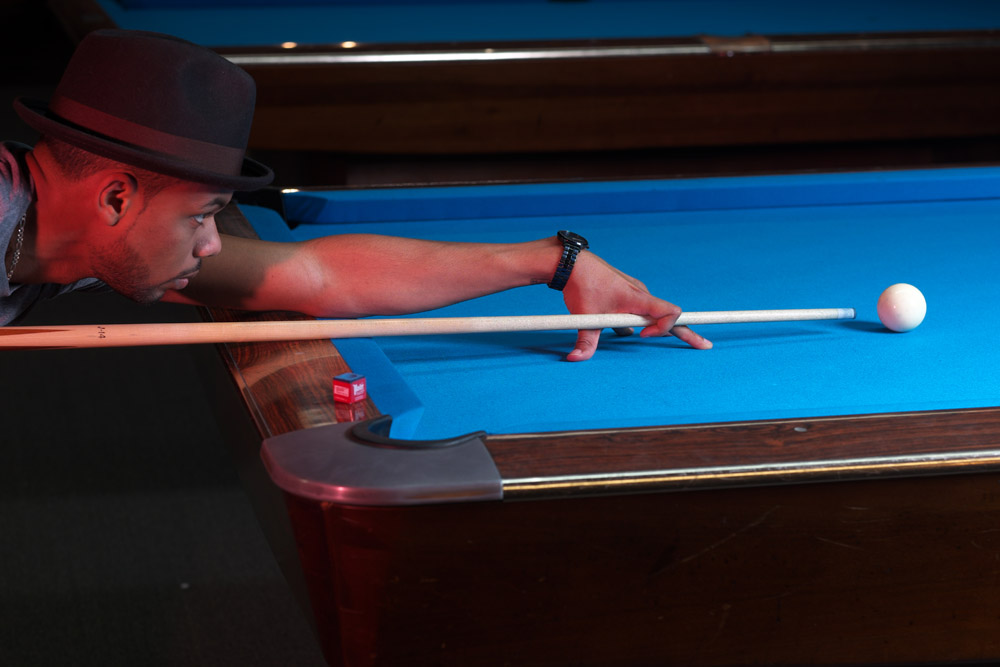
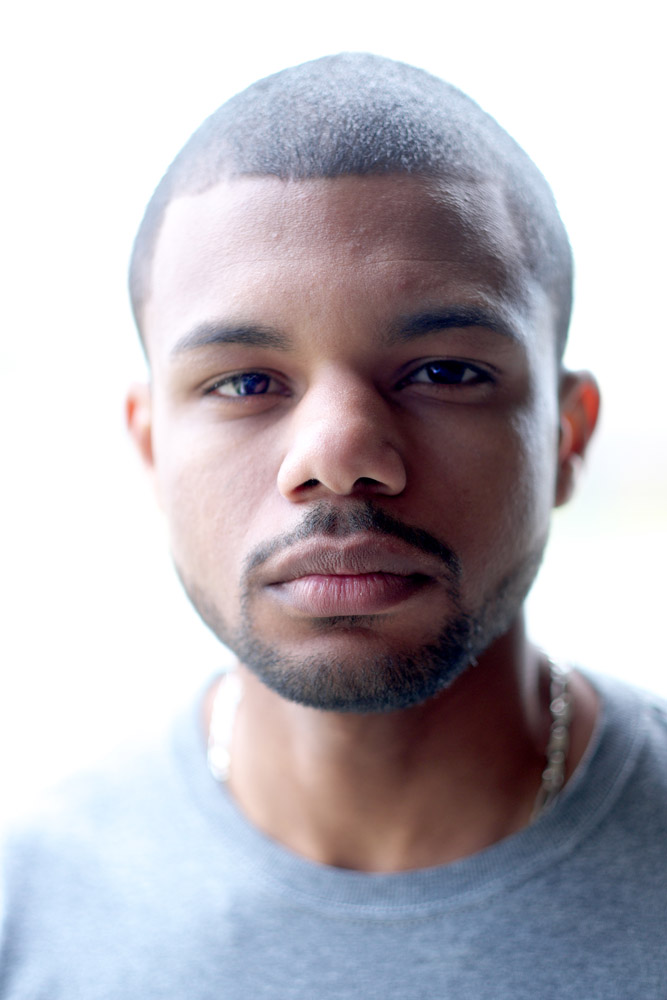
Here’s the set I did with Jayy Ruger (his professional name). While it definitely pays to add the colored gel to the fill light to add a touch of drama and character to a scene, it also pays to give it a light touch. In this first profile shot, if his face had gone totally red, it would have looked freakish or just poorly exposed/lit. Instead, the red on his cheek gives the image depth, and makes his otherwise flat makeup look more alive. Compare to the second image which was lit entirely with the overhead fluorescent light above the pool table where he looks almost corpse-like (entirely appropriate if you’re going Goth but maybe not the best look if you’re doing a family portrait).
Jayy RugerJayy Ruger
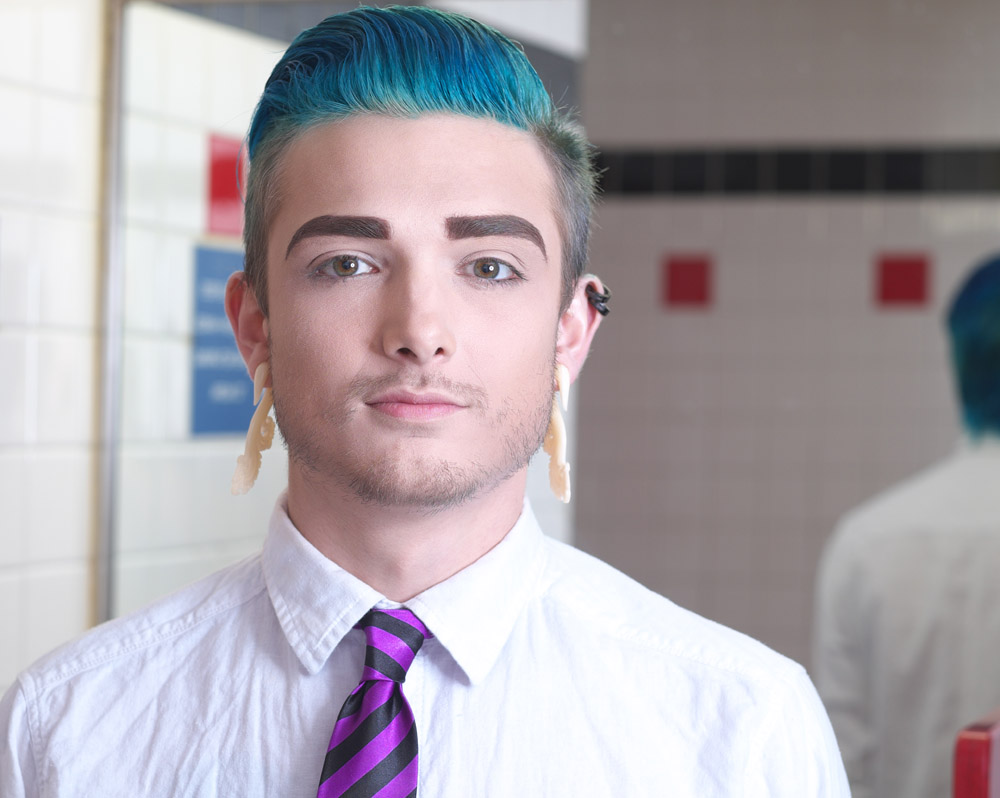
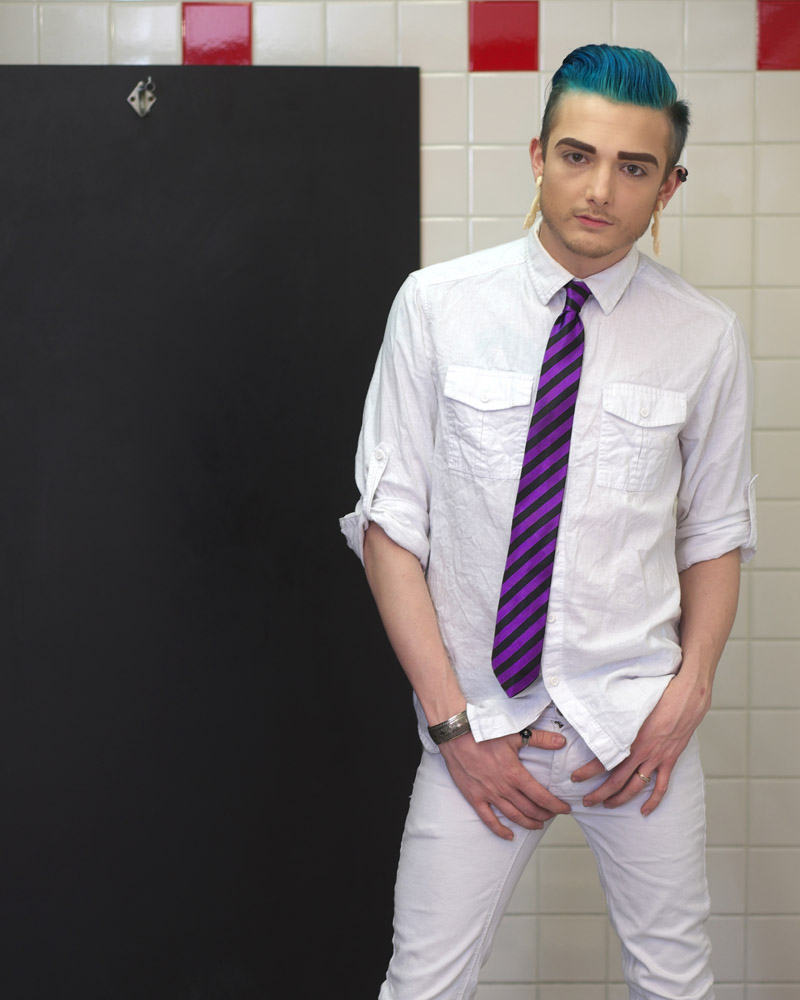
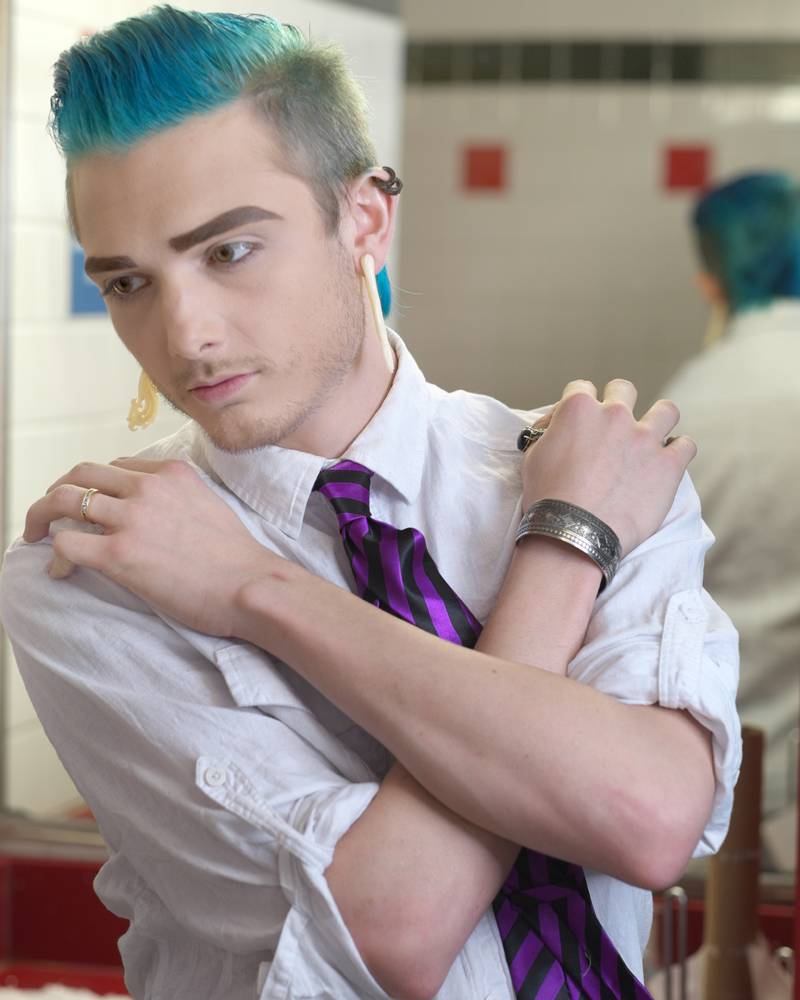
Late last year I went on a lighting binge, and one of the light modifiers I bought was a beauty dish. I had this specialized one from Bowens I really wanted to try out because the dish has a hybrid diffuser with a center grid. In the bathroom interior shots, it was the only light source I brought to the scene. The rest of the light is from the existing bathroom lights and the fill created by the white walls acting as reflectors.
Jayy RugerJayy Ruger
One of the great strengths of the Fuji (and one of the reasons I bought it) is its incredibly good handling of mixed color temperature lighting. You can see the color of light in the next several shots does vary, but regardless of what I threw at it, the Fuji did a terrific job of keeping skin tones natural and not shifting fabrics off in some wild direction in response to a mix of light sources.
Jayy RugerJayy Ruger
Back to using a red gel again – it adds a bit of a sinister note to the shot, which creates an interesting tension between that look and the suggestive pose.
Jayy Ruger
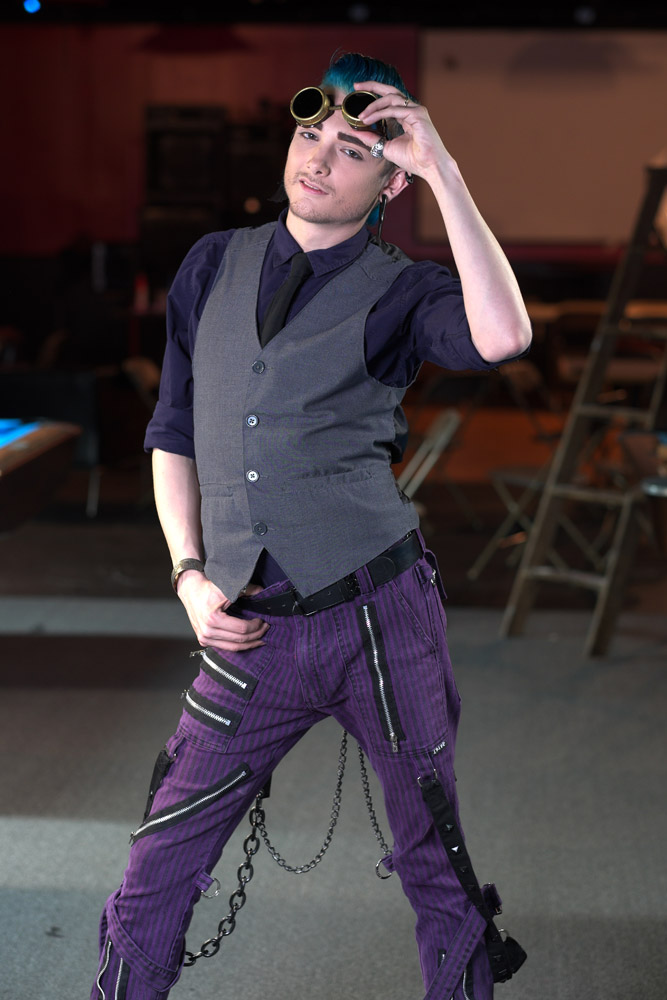
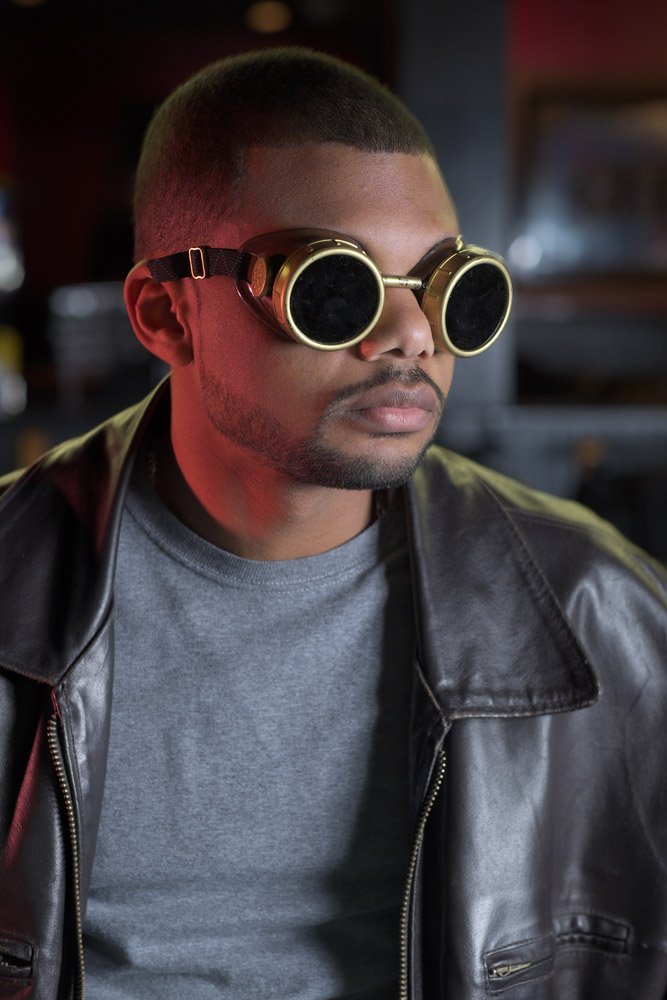
And we’ll close on a fun note – Jayy was being a great model and got into the whole steampunk thing with the goggles (he was already halfway there with his outfit!)
Jayy Ruger
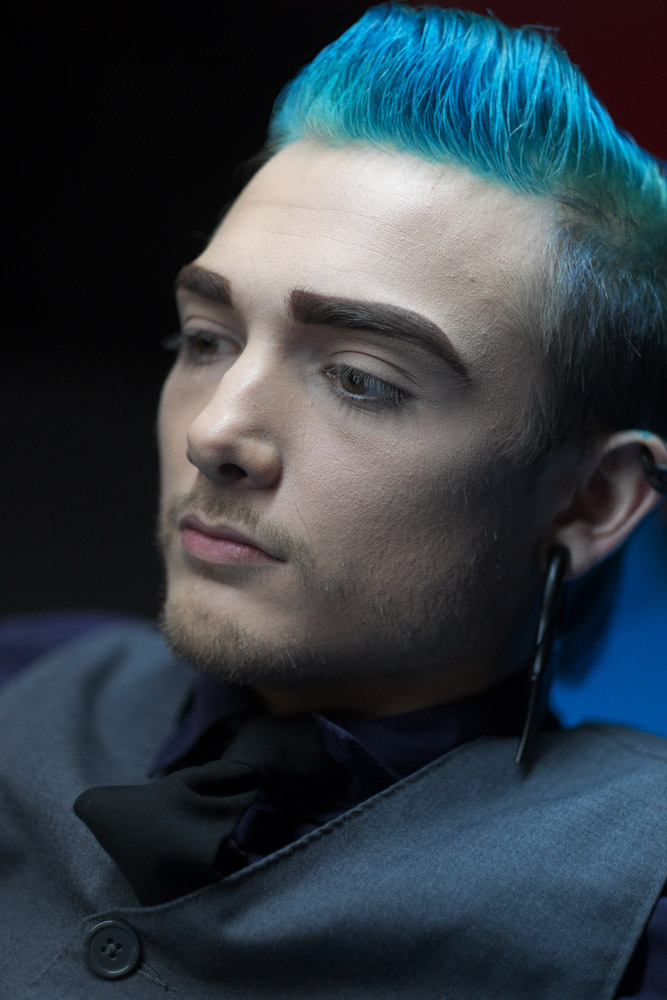
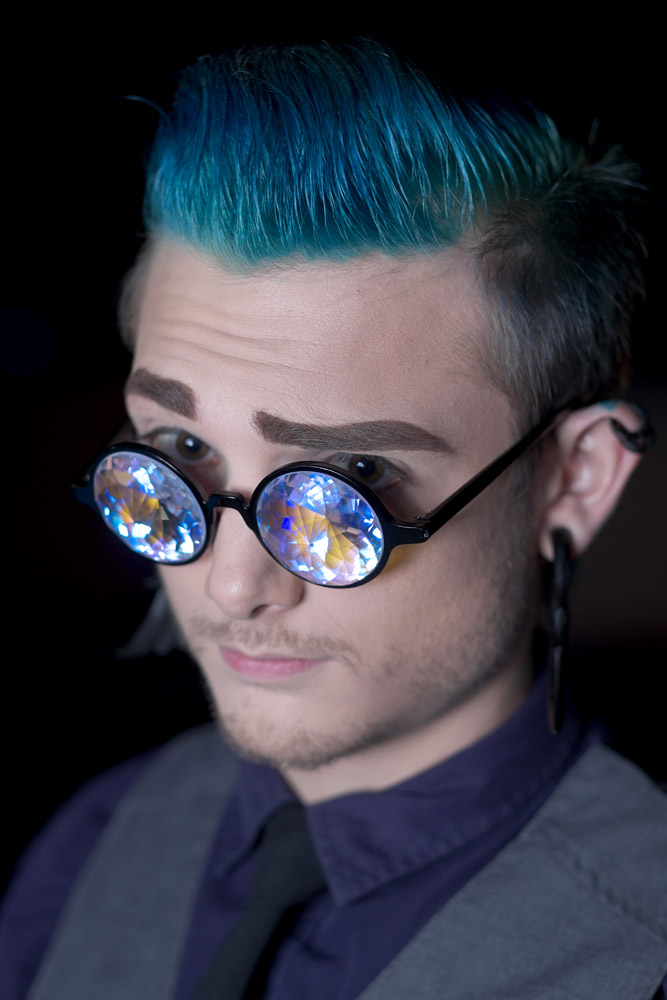
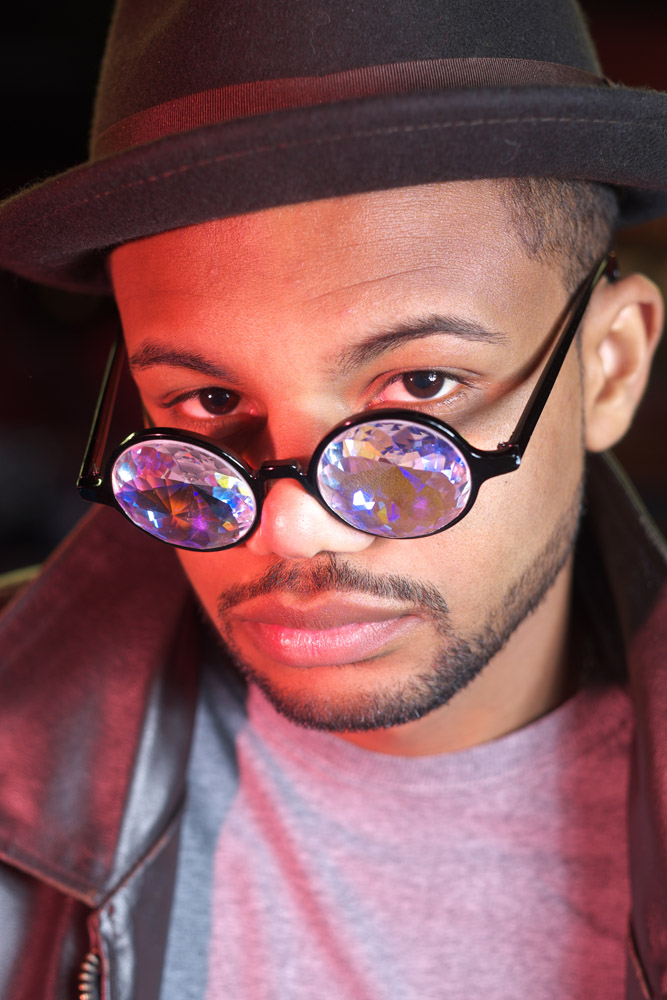
These are the same kaleidoscope glasses you saw in the previous model set with Alex. This shot was lit solely with an umbrella softbox. It’s like an umbrella, but more of a tight parabolic shape instead of the broad surface umbrella you normally think of. There’s a slit in the side of the fabric that allows the flash unit to sit inside the umbrella’s body, and then you can close it inside entirely with the diffuser (if you remember to bring it!). I wanted to focus your attention on Jayy in this shot so I moved in super tight and used a relatively fast shutter speed to let the background go completely dark. In the full length shot immediately previous to this one, I dragged the shutter to give a lot of background light, allowing you to sense the quality of the space behind him.
Yesterday I had a model shoot with three aspiring models who needed to build their portfolios. We went to a billiards parlor for the afternoon and I put them and the Fuji through its paces. It was also the first test in the field for my new 400 w/s bare-bulb strobes. The new strobes are battery-powered via external rechargeable batteries. They can be configured to sit on-camera and be triggered via hot shoe, take a wireless remote trigger like a PocketWizard, be triggered via sync cord, or be triggered by a proprietary wireless trigger system that also allows you to remotely adjust the power level from the camera position. The first one I bought was a Calumet-labeled version. When Calumet was still in business in the US, these were quite expensive – a single head unit plus the required but not included battery pack would have set you back a cool $1000. Nowadays, they’re on clearance on Amazon for $300 or so. They are also now being sold with the NEEWER, Flashpoint and Godox labels, at a much more reasonable price – I got a NEEWER version with the external rechargeable battery pack for $400 as a second unit for doing fill flash or background lighting.
These first two shots were taken with Alex shooting pool. In the first shot, I set him up taking the break shot. Don’t let the fact that he’s a model fool you- he’s also a pool shark – right after this shot, his break dropped three balls. I wouldn’t bet against him. This was taken with the Fuji 56 f1.2. My main light was the Calumet Genesis in an umbrella softbox, and the fill was the NEEWER with a gridded reflector and a red gel in it. Having the ability to both color gel and grid the fill is really handy, as the color adds a touch of drama to the scene, and the grid keeps it from spraying all over the place and coloring things you don’t want it to, like the table felt.
Alex
For this shot, I kept the lights the same but switched to the 23mm f1.4 so I could get in close and still get the extension of his shoulder, arm, cue, and the ball on the table, as this table was in the middle of the room with other tables behind me, and I only had about four or five feet to work in. The red gel adds a touch of drama and energy to the shot without overwhelming, and is a good way to deal with the very mixed light in a pool hall where you can have fluorescent (the over-the-table lights), halogen/tungsten (lights in the bar area and on the walls) and LED (accent lights like rope lights around partition walls and the like, or under the bar) all in the same area.
Alex
I also did some head shots with Alex (who is an easy, professional model to work with). I backed this indie film called Hallucinaut on Kickstarter last year and as my reward, I got these kaleidoscope-lensed glasses that appear in the film as a prop. I chose them specifically as my reward as something that would make a really cool prop for photo shoots. This was their first appearance in one of my shoots. They really pick up and reflect colors well, and make for a dramatic statement.
Alex, with Hallucinaut glasses
A variation on the theme, I broke out my welder’s goggles and matched them up with a vintage leather jacket for a steampunk look. Alex’s short-cropped hair adds to the look by letting the goggles really stand out against the shape of his head.
Alex, going Steampunk
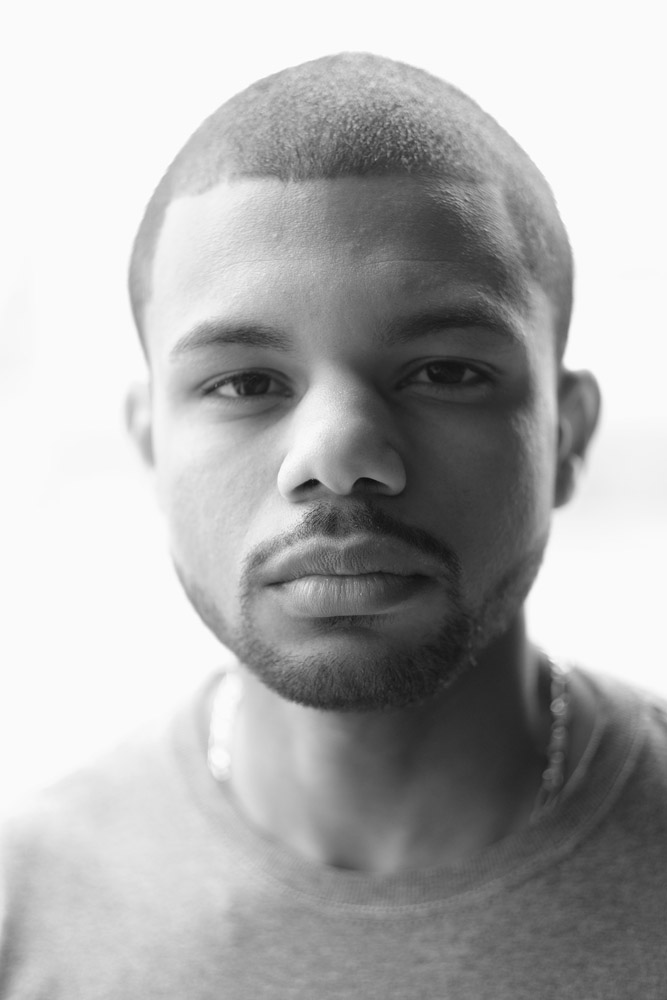
In the last look for Alex, I did two versions of this really clean, minimal portrait. When I showed it to him on screen he commented “I have a really long neck!” as if that was a bad thing. I reminded him of what you’ll hear on every season of the now-ended America’s Next Top Model – it’s a really good thing to have a long neck. Tyra Banks and her photographers were always reminding the contestants to elongate their bodies and gestures, to create drama and elegance. If you have a short neck, stretch it out, otherwise the camera can make it look like you’re neckless and just have a head glued directly to your torso.
Alex
These were both shot outdoors under the eave of a parking garage, and combining the flash in a beauty dish as a fill with the backlight of the street behind made it easy to completely blow out the background into a nice even white. Handy trick when you’re going studio-less and need an even background.
Alex
I shot all these images in RAW, then converted afterward to JPEG. I like working this way because it feels more like traditional darkroom photography, where I’m working from the in-camera negative. Working from in-camera JPEGs, while still very good, to me is not as good because it’s like making a copy of a print – changes have been made and nuances have been degraded.
Not that there should be any doubt, but the Fuji 56mm is a knockout lens (Fuji has always made some top-grade glass, especially for their medium-format cameras). The falloff in sharpness at wide-open or near wide-open is creamy-smooth, and the rendering of out-of-focus highlights is never harsh or jagged.
Takeaways from this shoot:
-Work with good models. Not everyone is a good model, and not all good models start out that way, but if you’re new to the process of working with models, hire folks (and I do mean hire, as in pay for with cash, not just trade-for-prints/CD) who have experience working with photographers.
-know your equipment. If I were not as experienced with studio lighting, figuring out what was going on with my Calumet/NEEWER flashes could have been a pain, as they don’t have modeling lights (to save on battery life) and are not TTL because they’re made to be universal and are not dedicated to any one system.
-have fun. Be loose, work with your environment, take advantage of the opportunities it presents, and challenge yourself to overcome its obstacles. You’ll make much better pictures that way.
As most of you know, I’m a die-hard film shooter. And I’m not about to stop- I seriously love my Rolleiflexes. But there is a real-world place for a good digital camera in my toolkit.
I was using a Canon 5D mk.1 for a long time- perhaps ten years now. It still does a very good job of doing what it does, but it is BIG, it is HEAVY, and the image quality and technical features of newer cameras have really outstripped what it can do.
I’ve been investigating alternate options to replace it. One thought was a Canon 6D, which would give me another full-frame chip with higher resolution, better color rendering and low-light performance, and I could keep all my existing lenses. But that would still have been really outside my budget. Even more so a 5D mk.3. Neither one would have solved my issue with weight, which quickly becomes an obstacle to regular use.
I looked at what I use my camera for- mostly events (as in documentary shooting, not commercial event photography), portraits and travel. I wanted something that would give me improved low-light performance, be much smaller and lighter, and give me the quality of glass I was used to with my Canon L lenses.
I turned to mirrorless cameras, did some looking around, and after getting feedback from some trusted friends, arrived here:
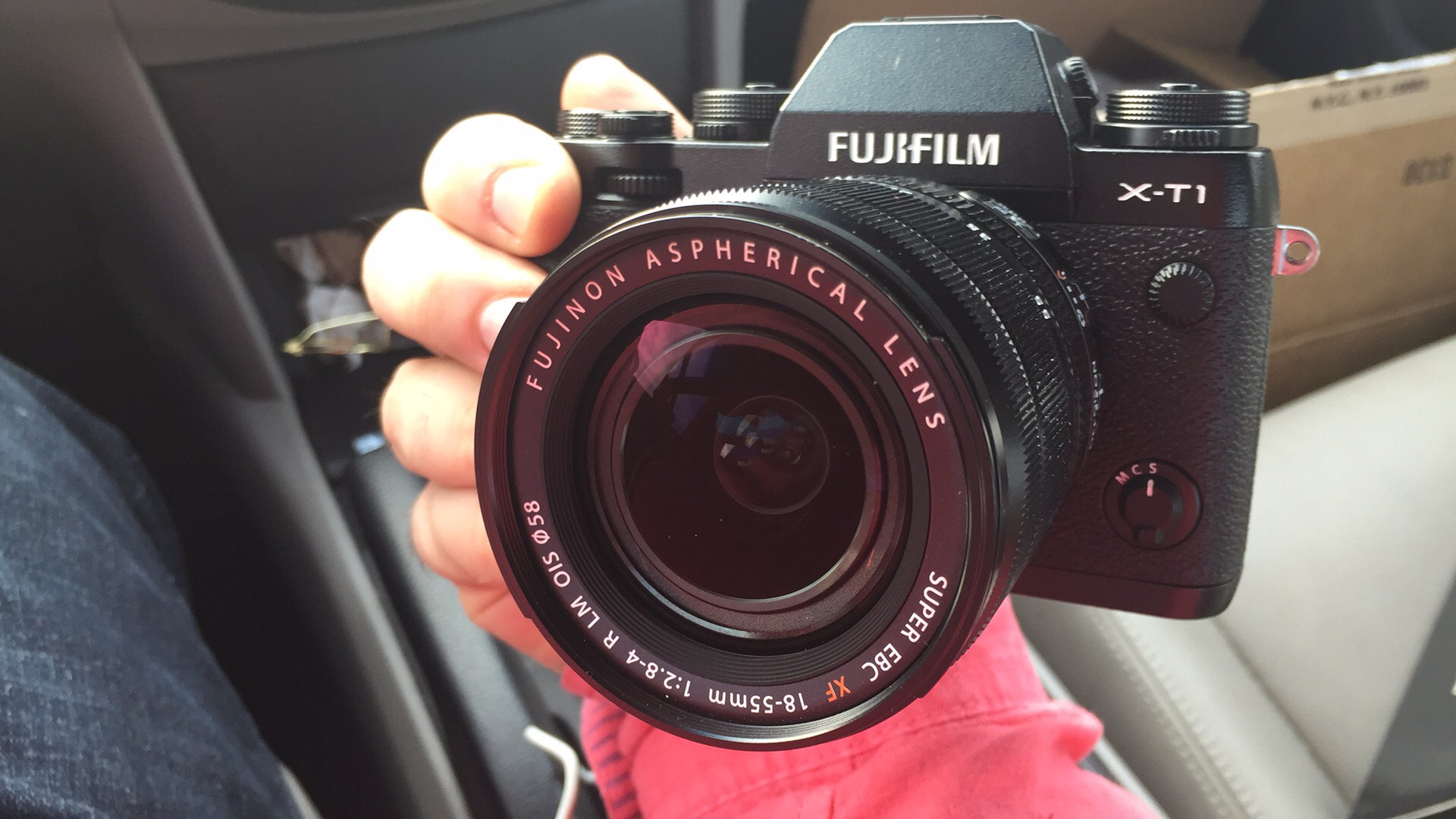
Fuji X-T1
The Fuji X-T1. It has a 16 megapixel APS-C sensor, a line of outstanding lenses in the focal length range I use the most, and as you can see in the photo above, is quite a bit smaller than the 5D. Not to mention quite a bit more affordable.
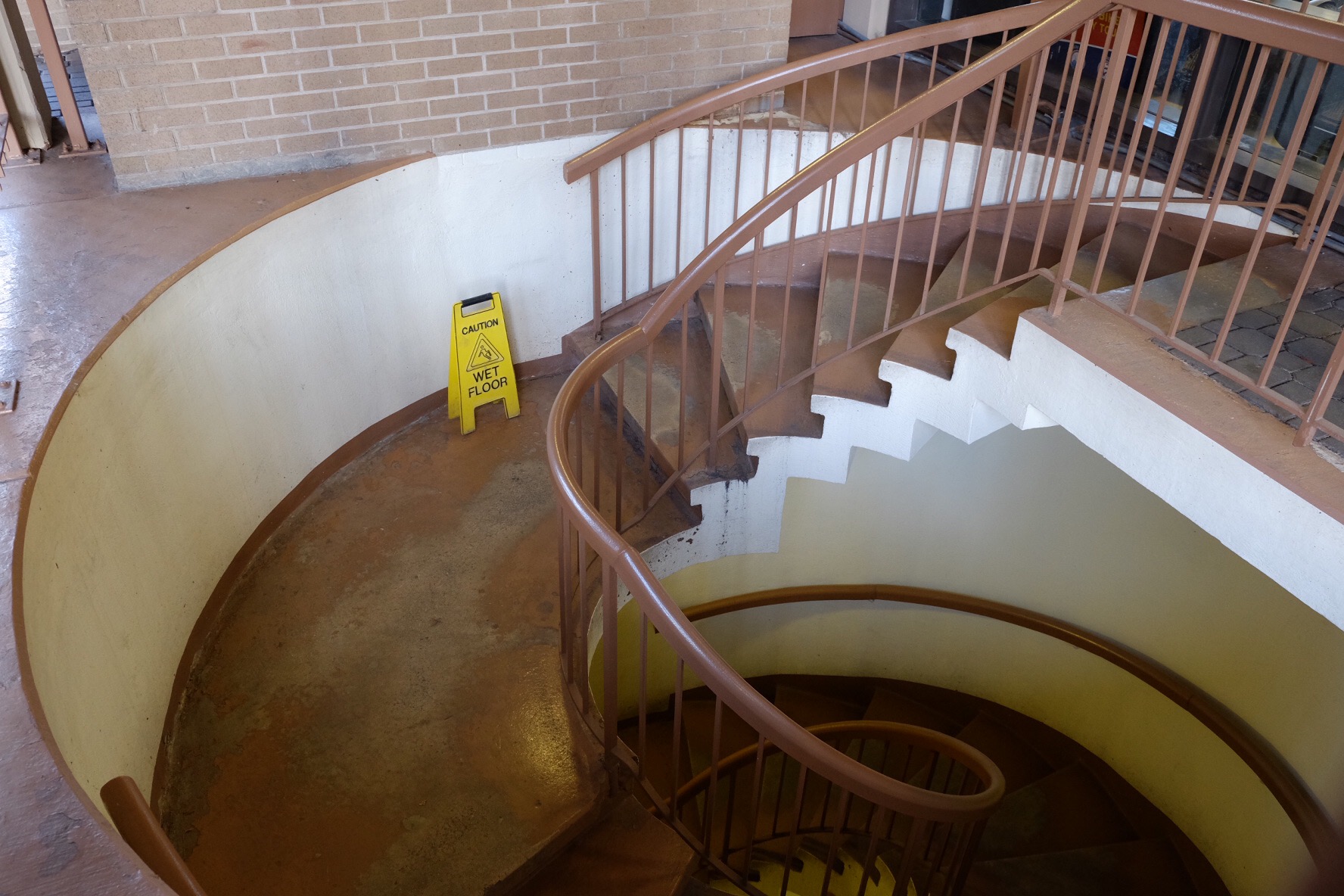
Right now I only have the “kit” zoom lens. Calling this a kit lens is a bit like calling the 24-105 L lens with my 5D a kit lens. It’s an 18-55, or the equivalent of a 27-84 in 35mm/full-frame terms. A maximum aperture of f2.8-f4 means for a compact zoom, it’s quite fast. It also has optical image stabilization, a nice plus when shooting hand-held in low light.
stairwell- hand-held @ 1/8th second
Things I like about the lens: image quality is excellent. The range of focal lengths covered is very useful. It does a great job with both near and distant subjects. The out-of-focus rendering is pleasant.
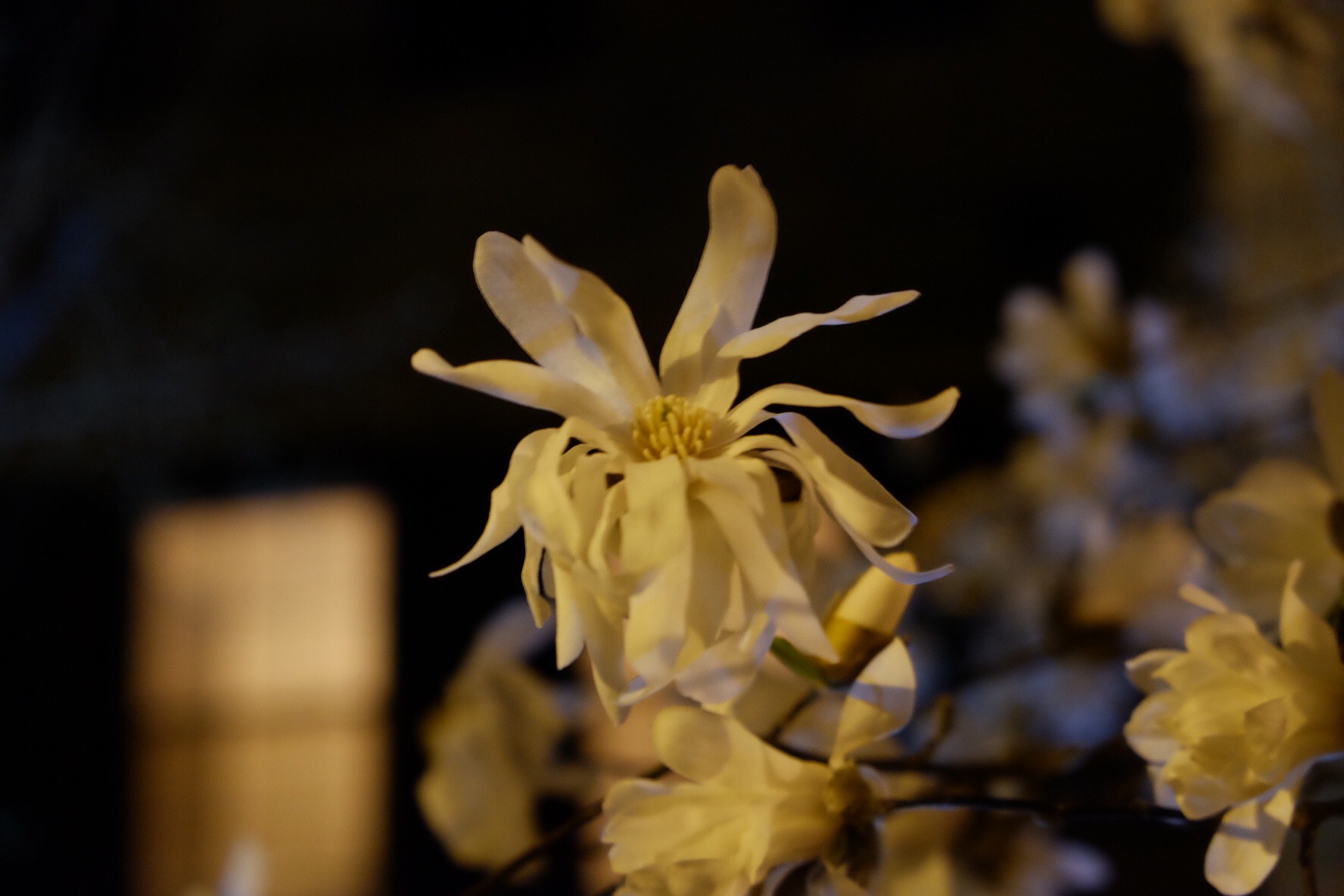
dogwood bloom, night-time
Things I don’t like: switching from autofocus to manual requires a separate switch to be toggled. That switch is small and on the back of the barrel, close to the body, so toggling it requires taking the camera away from your eye. The aperture control ring is not mechanical with defined click-stops, but is instead electronic, making it hard to tell if you’re turning it the right way, and easy to turn it away from your preferred f-stop.
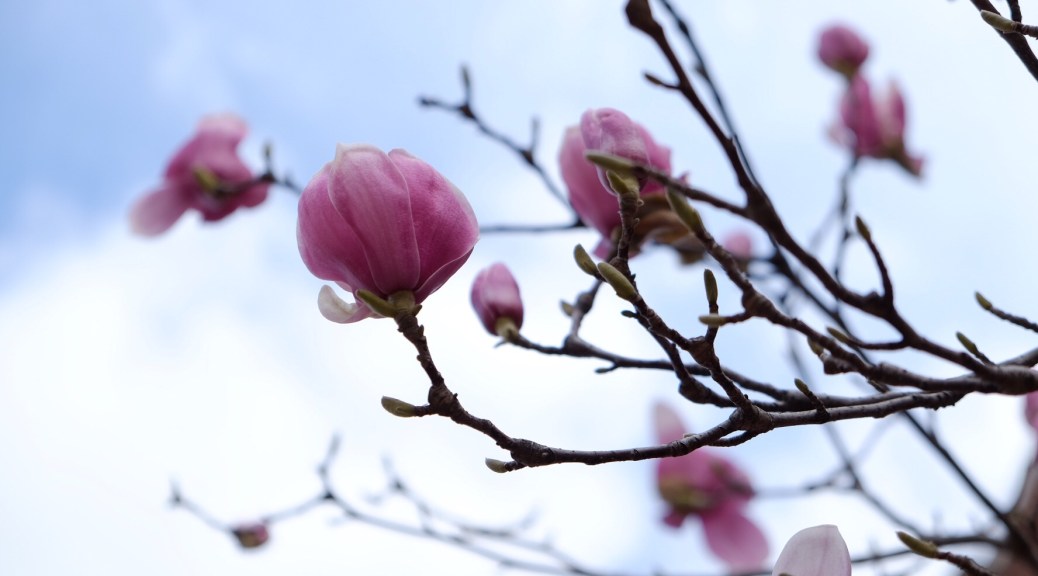
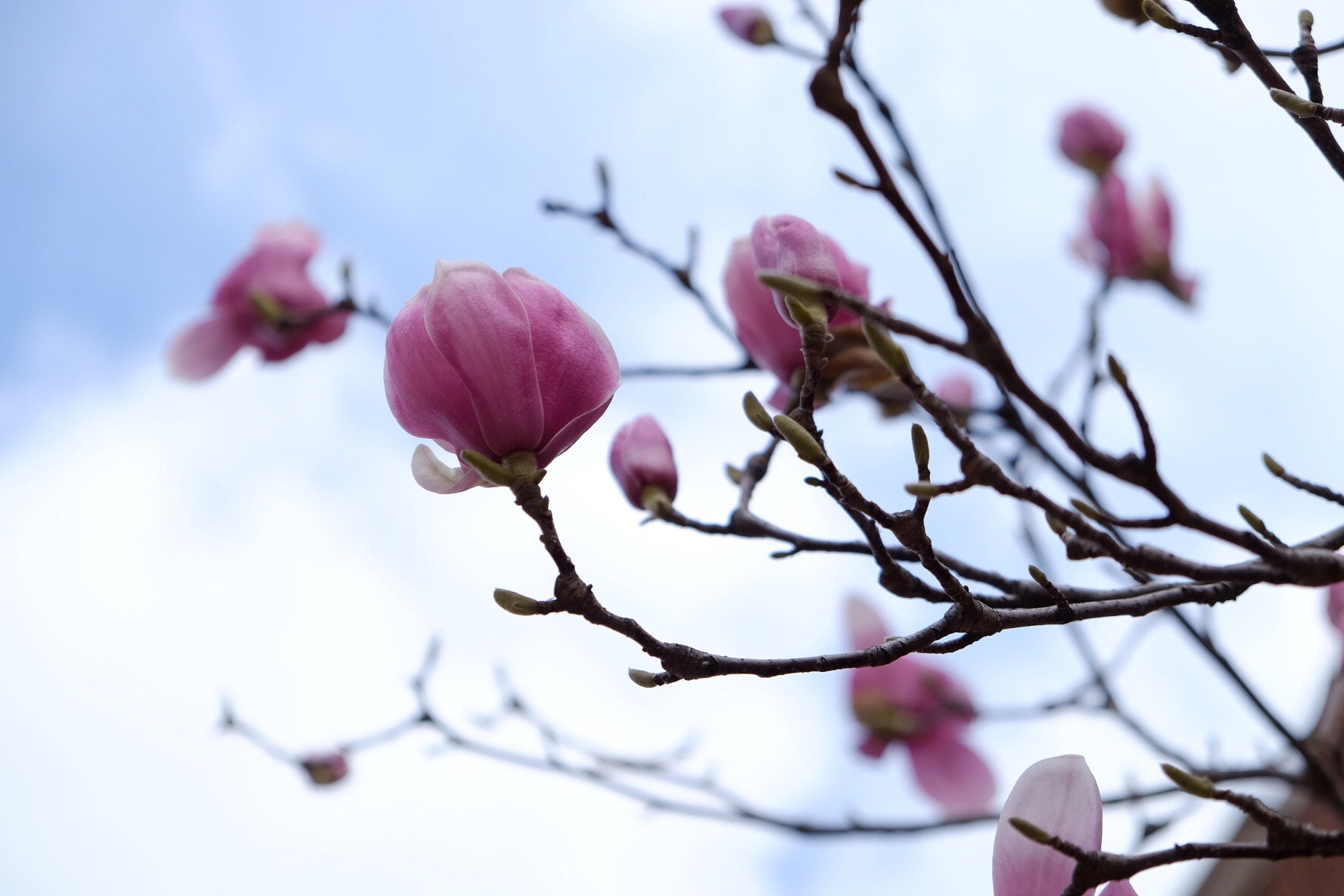
magnolia blooms
This is not a problem with their prime lenses, two of which I will be acquiring soon.
Also, as you can see, the image quality and color rendition of the image chip in the X-T1 leaves nothing to be desired even at relatively high ISO. The dogwood bloom at night was shot at ISO 6400. It has two extended range ISO settings above that, but I have yet to explore those.
The camera has a whole host of other options including film emulsion emulation modes (all of these were shot in Astia simulation, which is a little lower in contrast with a slightly less saturated palette for more pleasing portraits). It also has black and white modes, including red filter and yellow filter simulations.
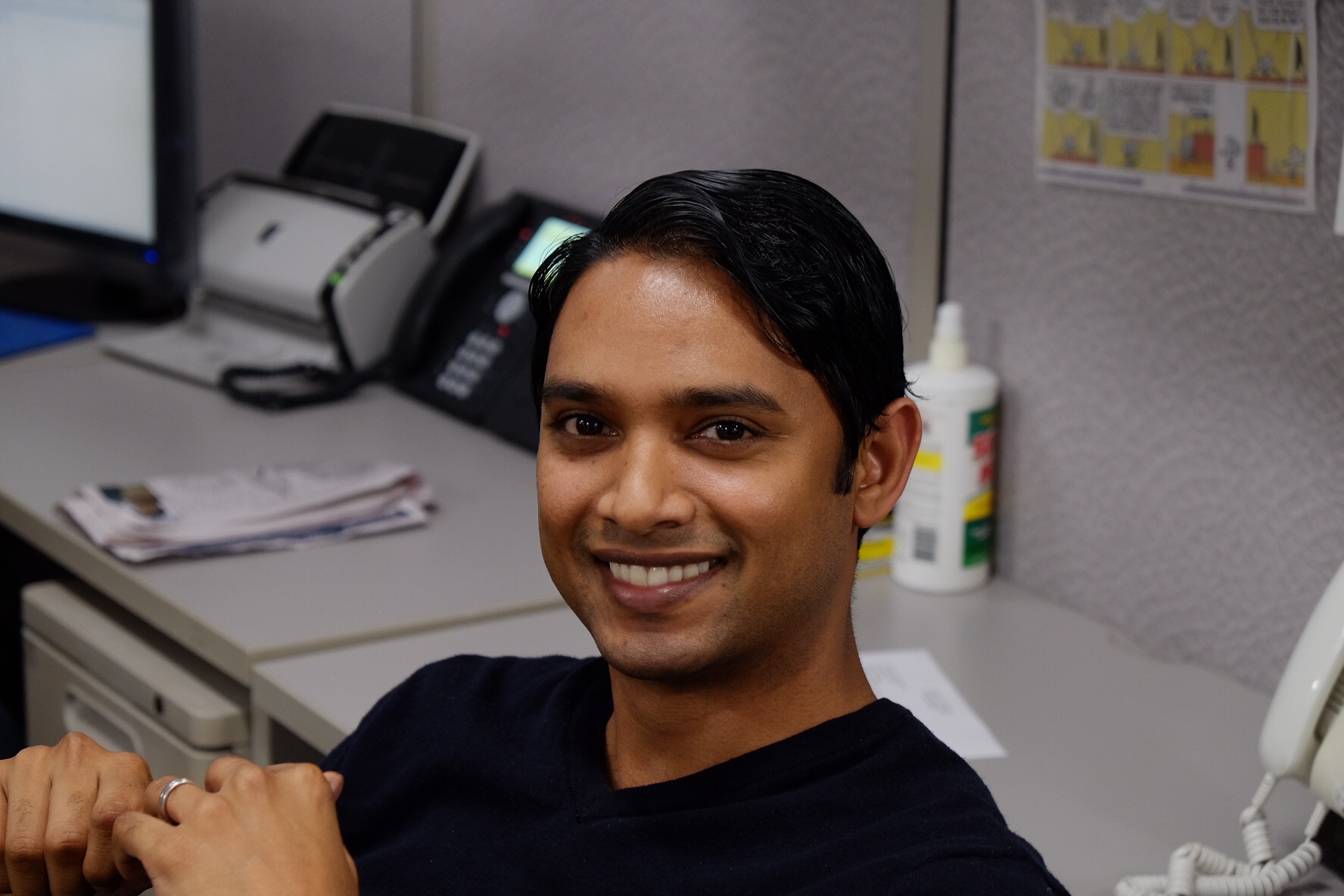
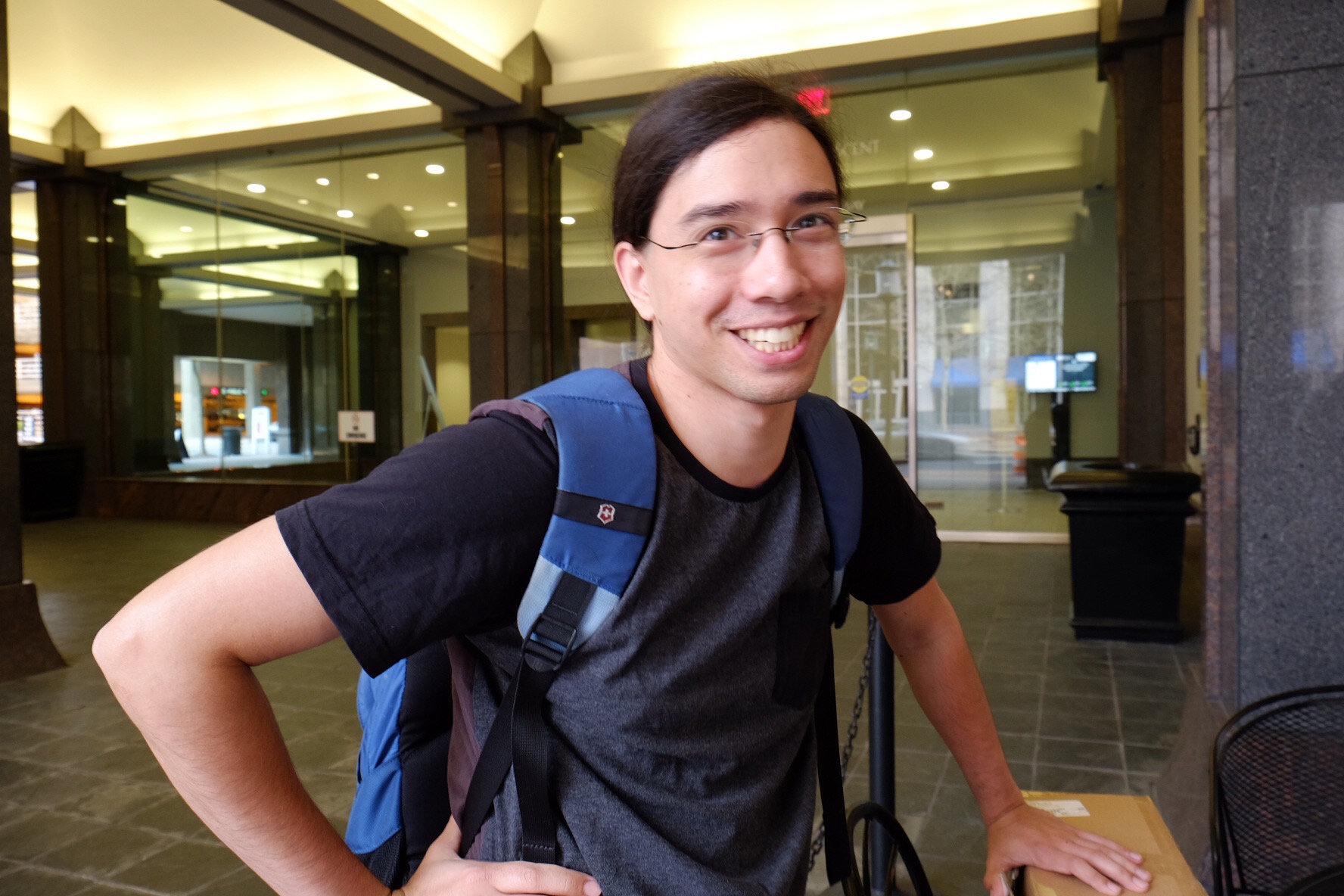
Some environmental portraits:
Julian TanMissy
A black-and-white shot with the red filter mode on:
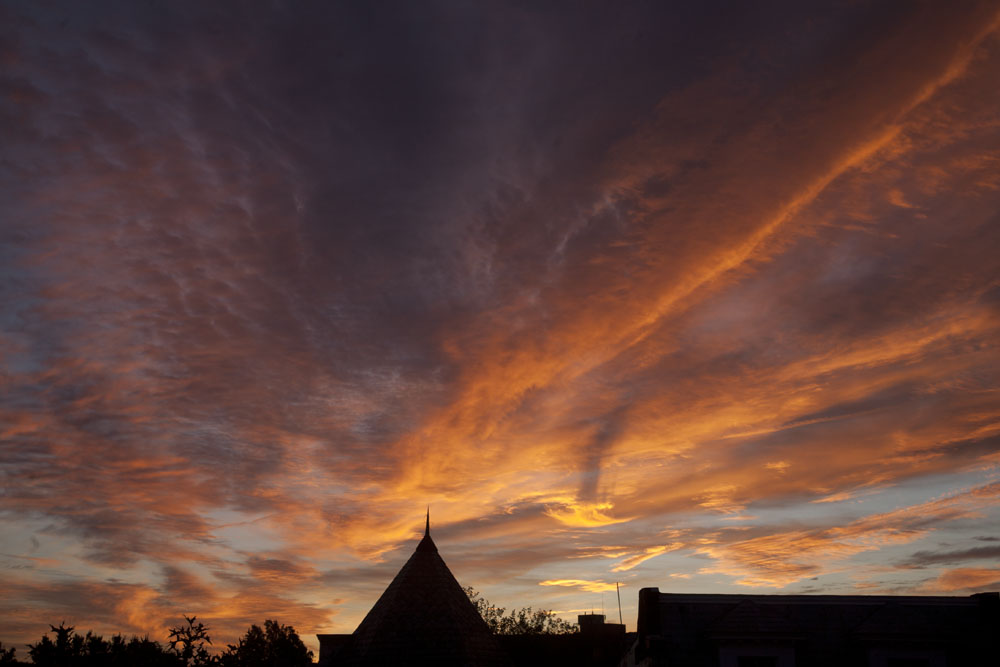
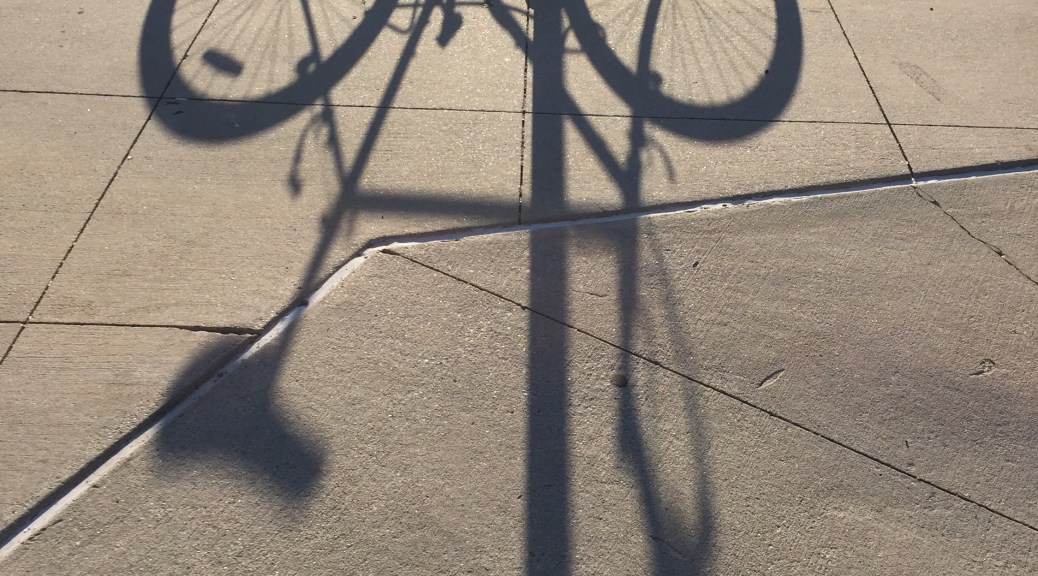
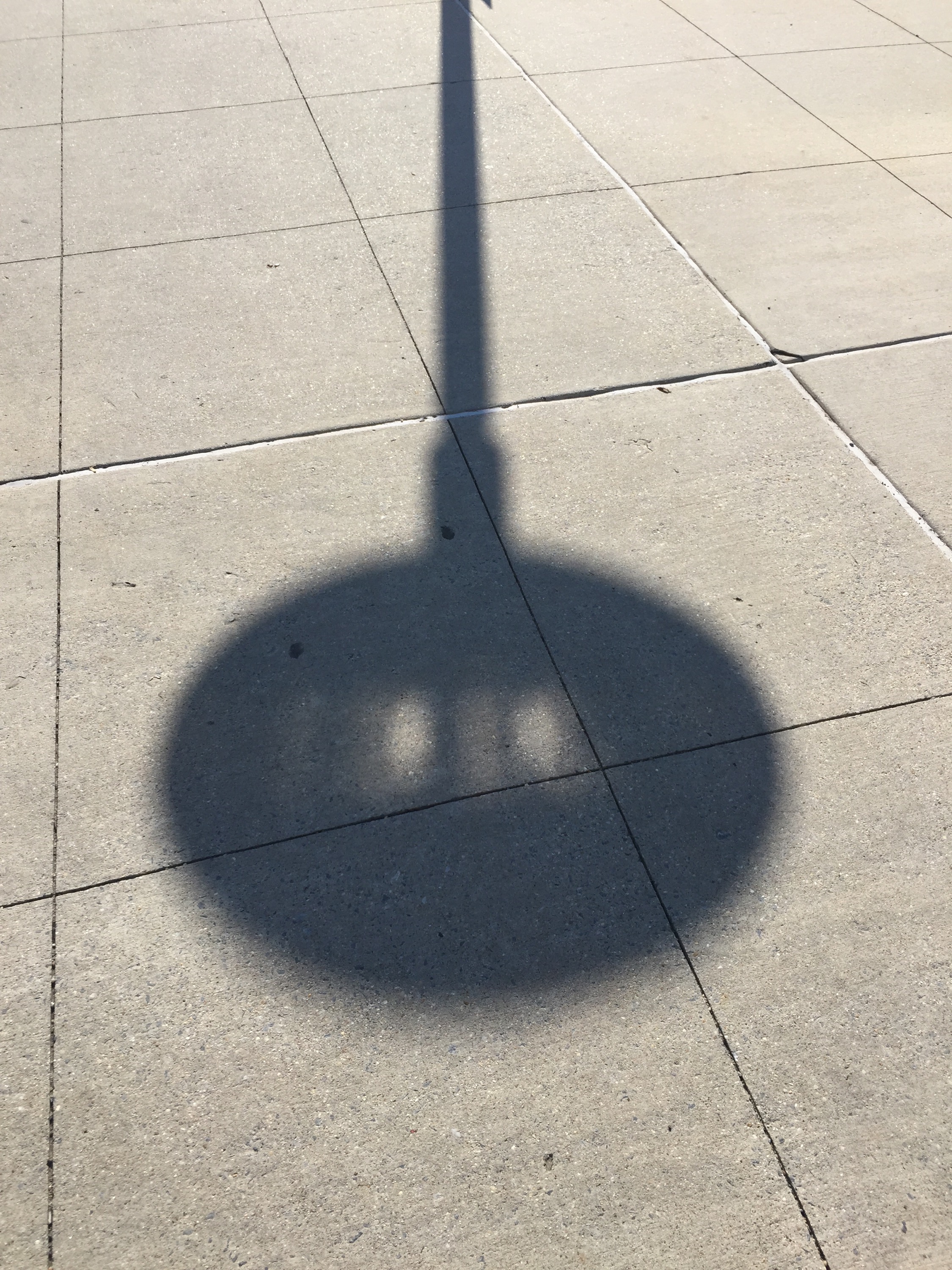
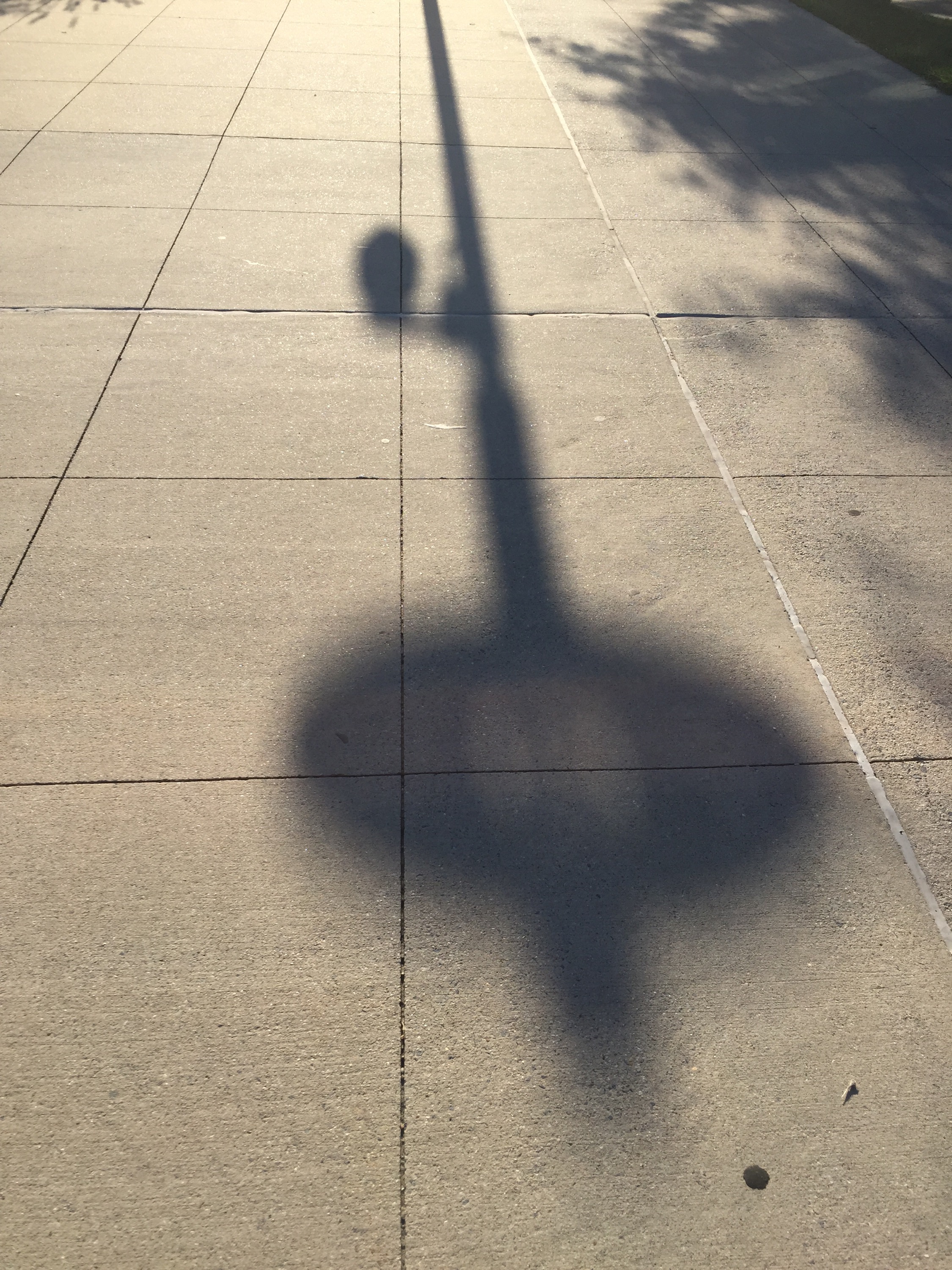
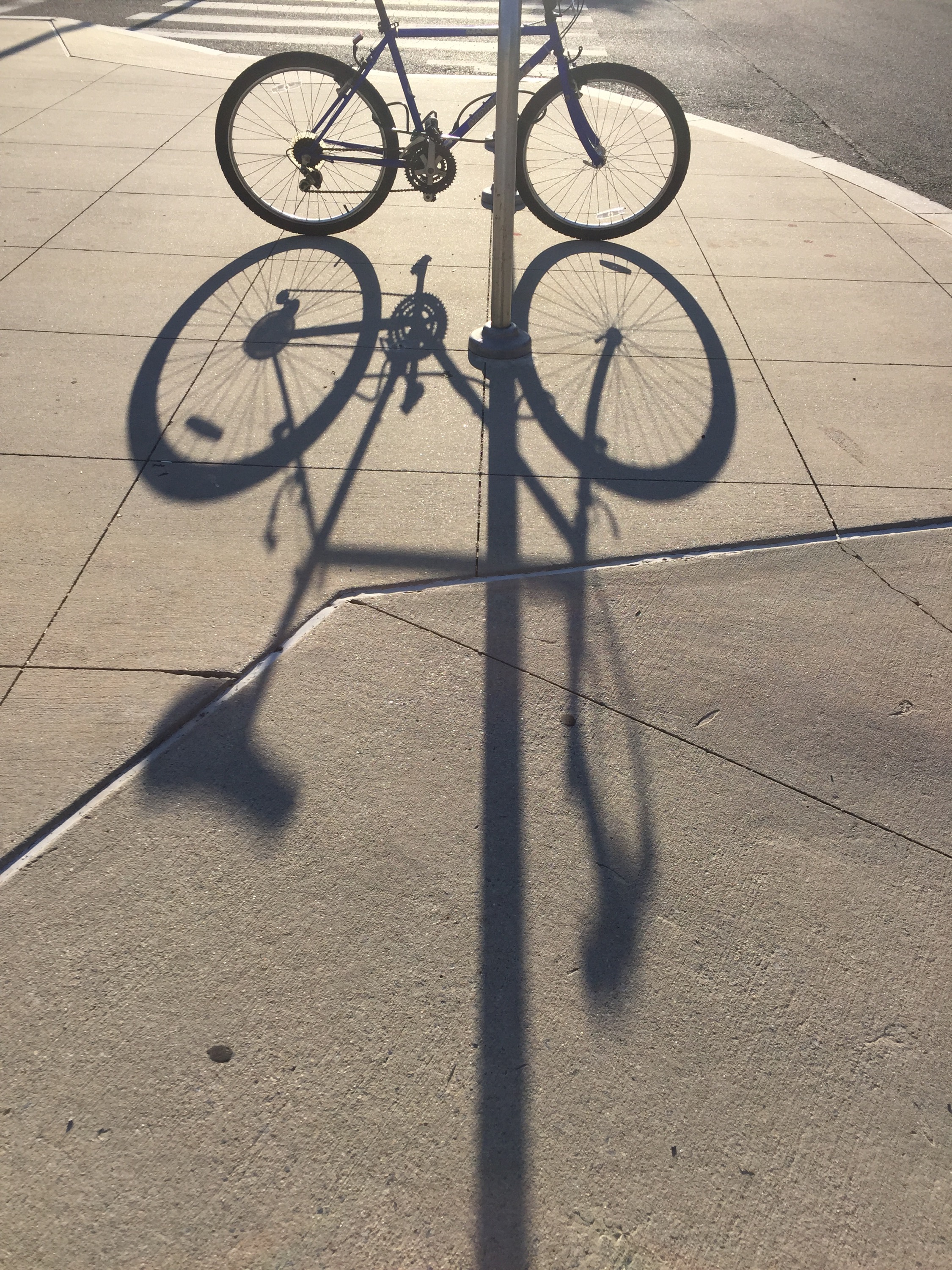
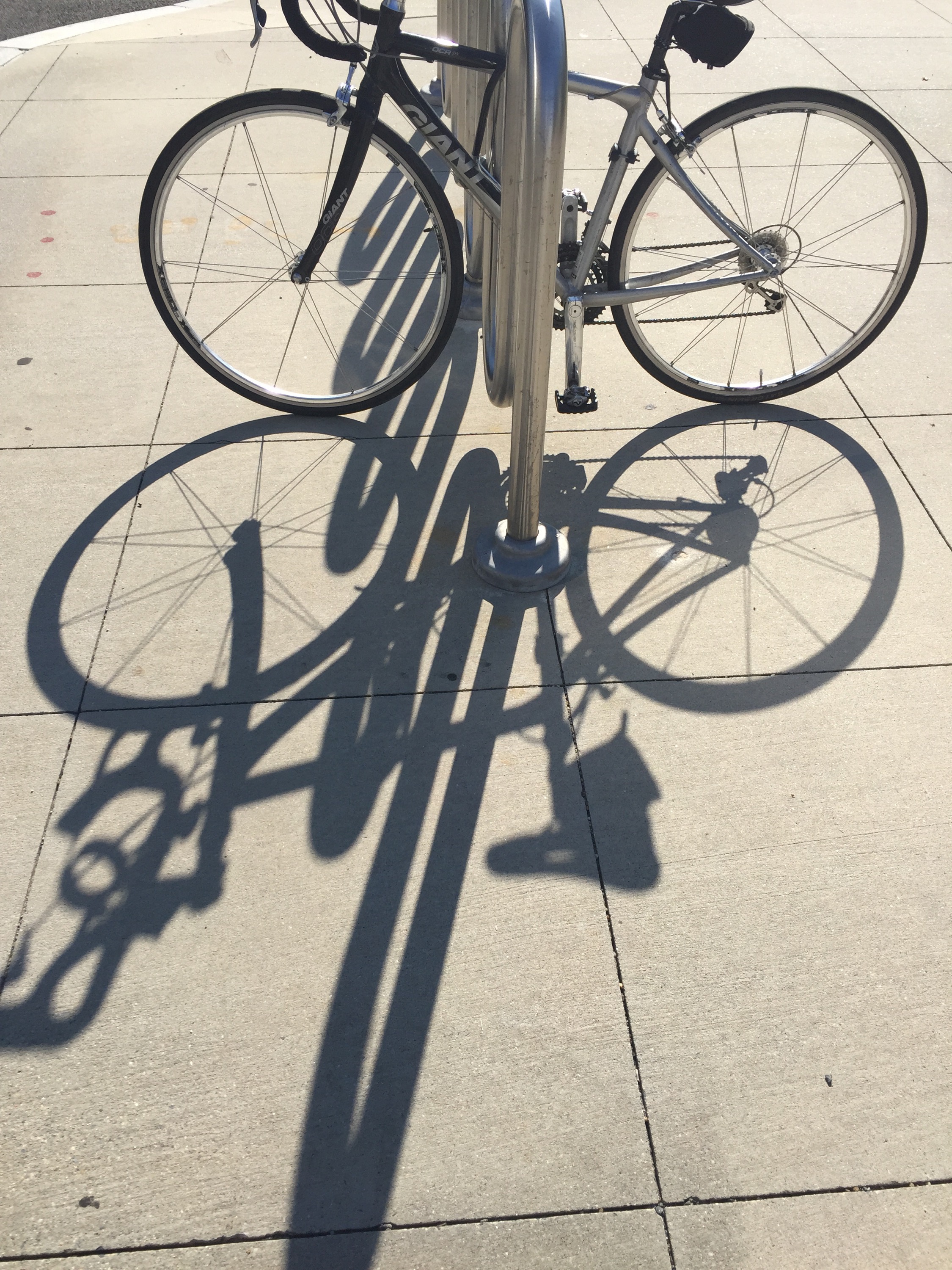
This was a simple exercise with my iPhone in seeing. I photographed the same things at two different times of day, from different points of view. In many ways they are extremely similar: they’re both studies in form and abstraction, with the shadows of the things as the main subject rather than the things themselves (more so of the lamp post than the bike rack, but you get the idea). Can you guess which ones were taken in the morning and which in the evening?
Notice the color, texture and angle of light in each shot. See how the changing light transforms the shapes and makes them look different.
This was just a quick and dirty exercise, but something I recommend for anyone interested in improving their vision and technique.
Another pairing of iPhone vs. Rollei in the battle of “the best camera is the camera you have”:
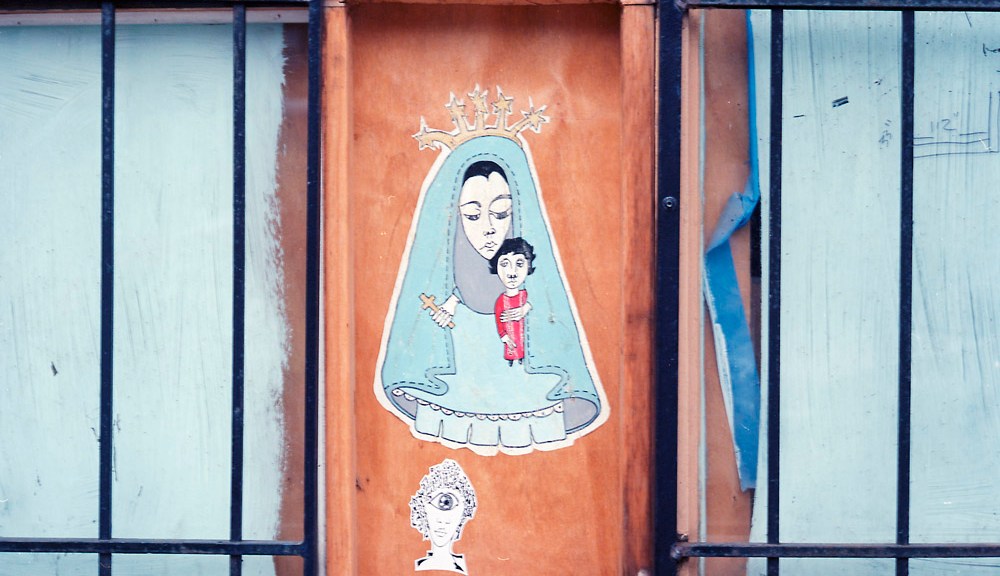
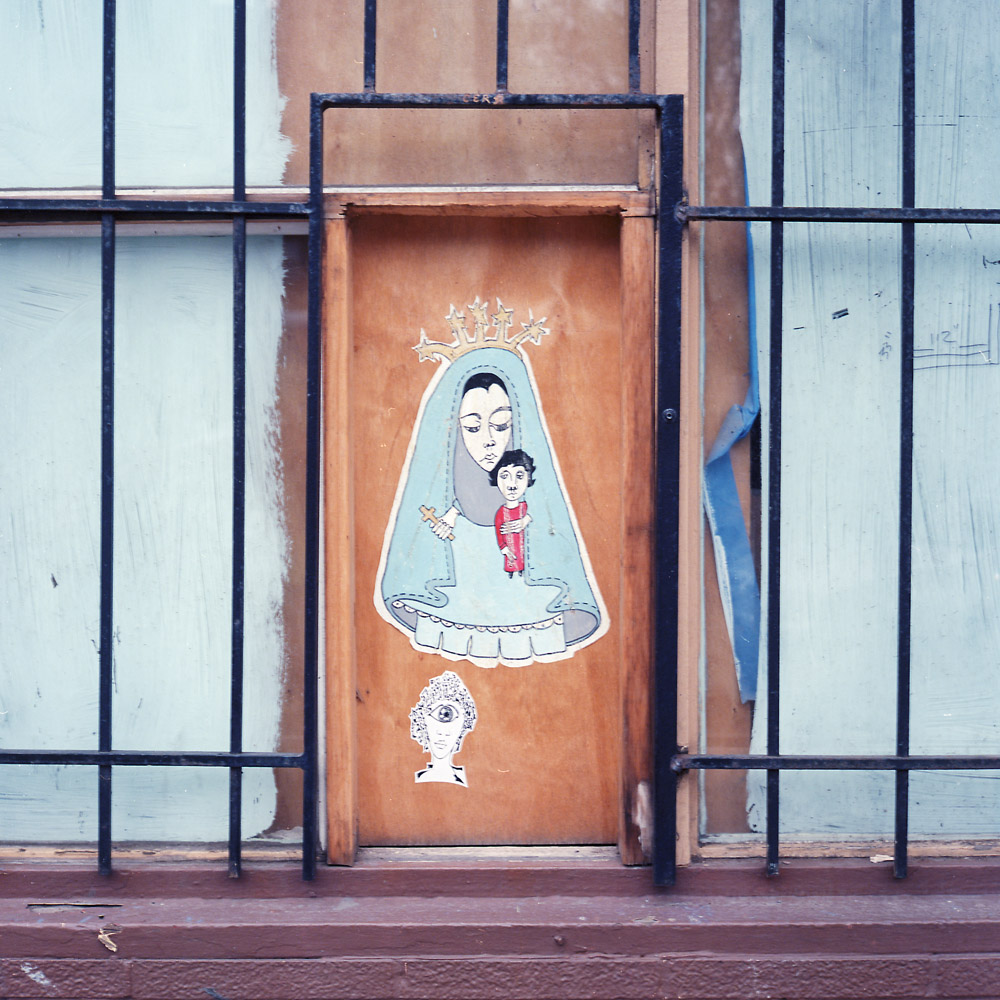
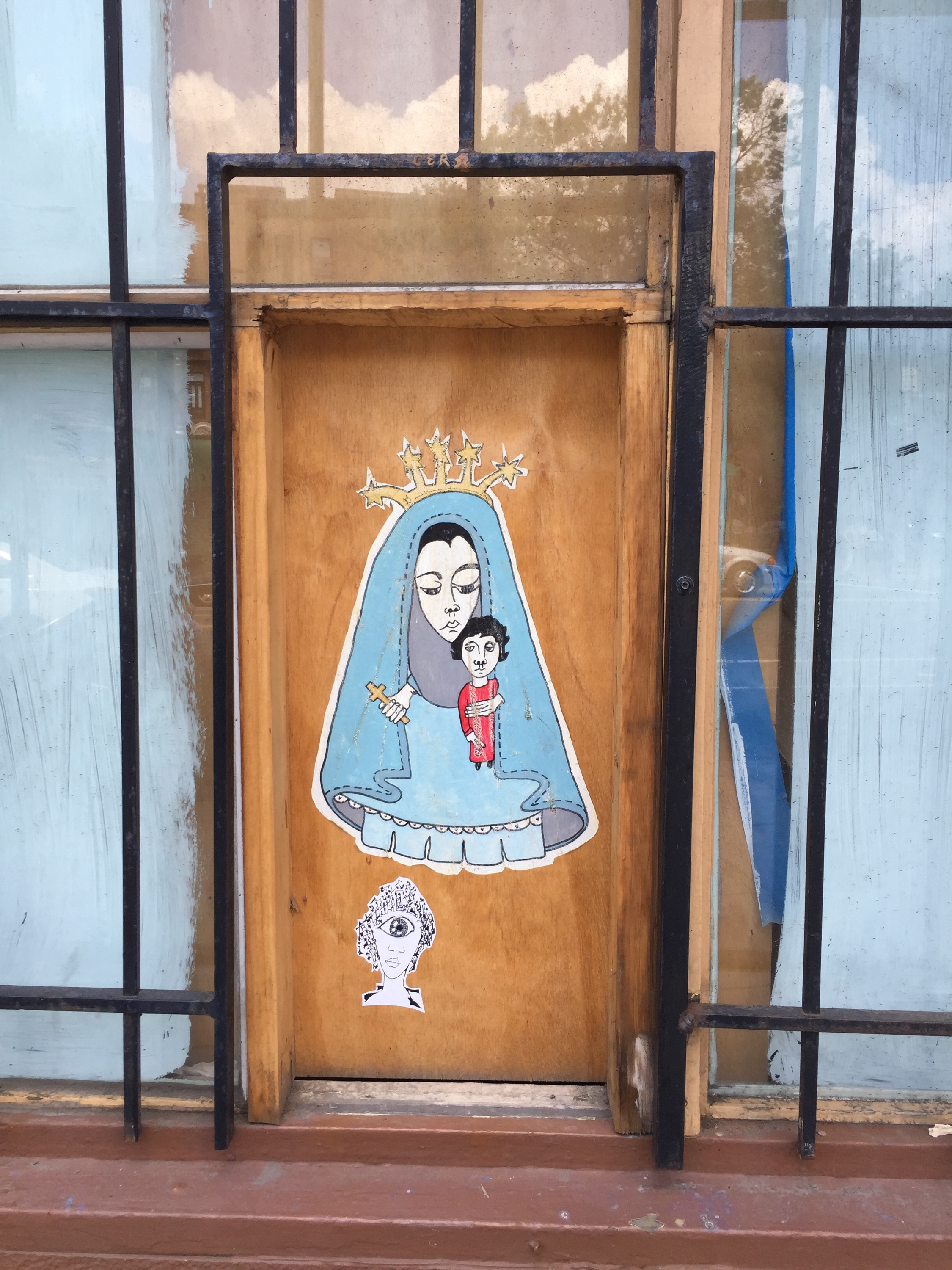
Mother Mary Passthru, RolleiMother Mary Passthru, iPhone
I was lucky that I got back around with the Rollei to take this shot because within a week of my return with the Rollei, construction crews had started work on the building and Mother Mary of the Takeout Passthru, the not-so-baby Jesus and the One-Eyed Wonder beneath them had been removed and replaced by a fresh sheet of plywood. Gone was the shrine to the blessed deli, replaced by the altar of rapid gentrification.
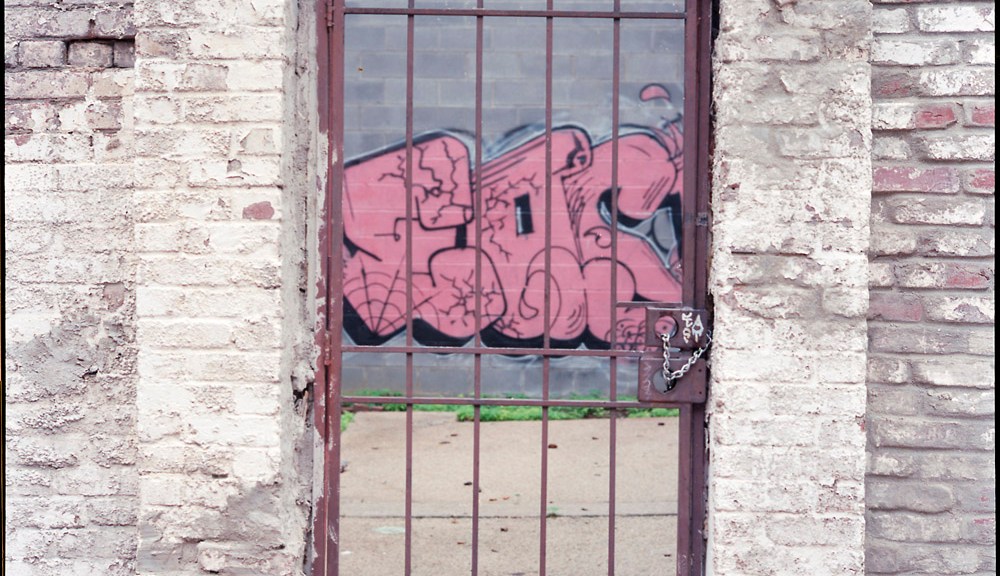
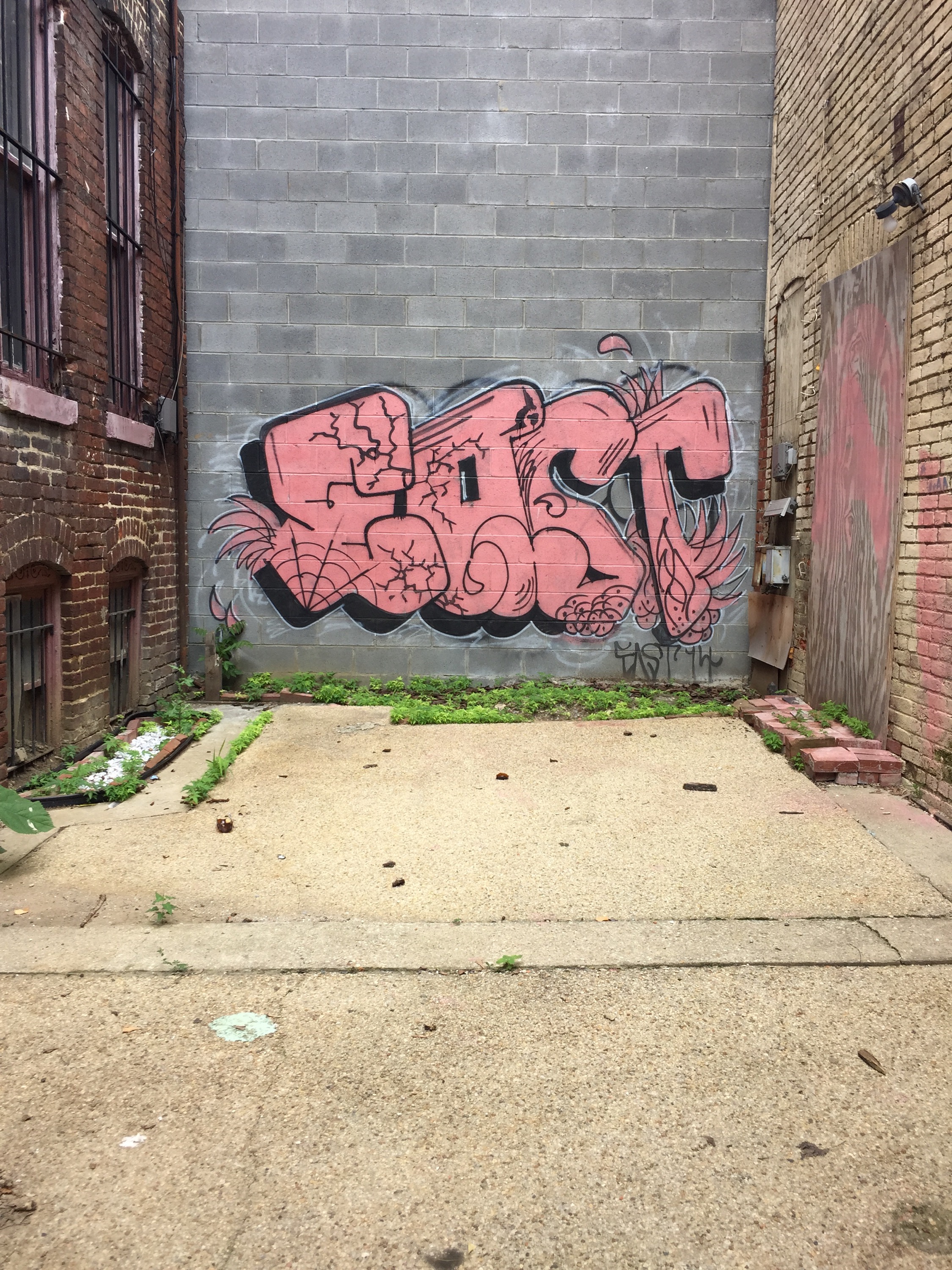
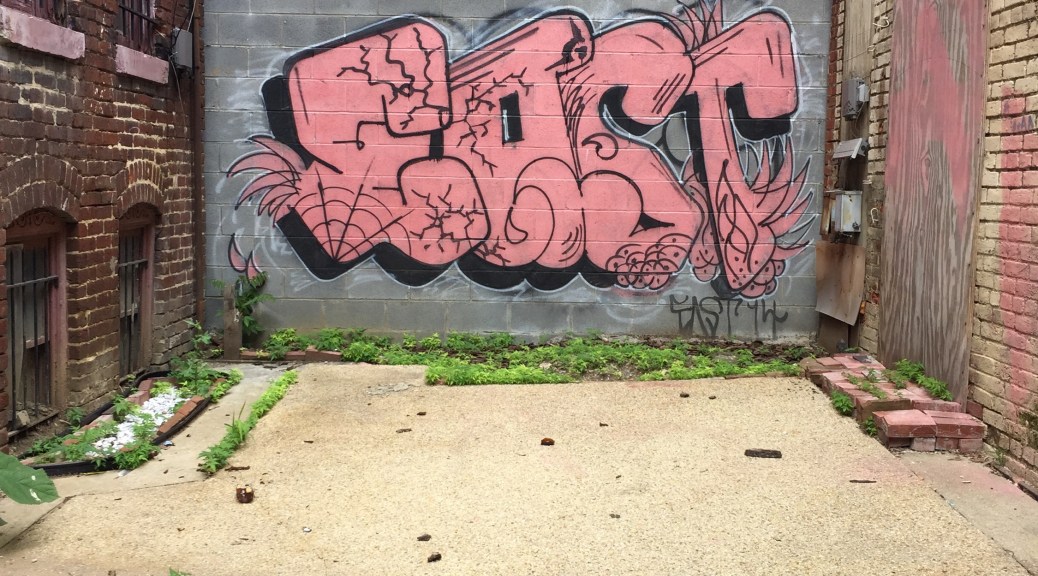
A while back I posted an item about sometimes the best camera is the camera you have with you at the time you need to take a picture. Certainly, there may be other cameras that are better suited to the task at hand, but they don’t do you any good if you don’t have them with you. To whit, the first image. I came upon this bit of graffiti in an alley between two buildings. It’s almost as if it were an art installation in itself, the way it’s situated. When I first saw it, the camera I had on hand was my iPhone. It certainly did a good job of capturing the scene.
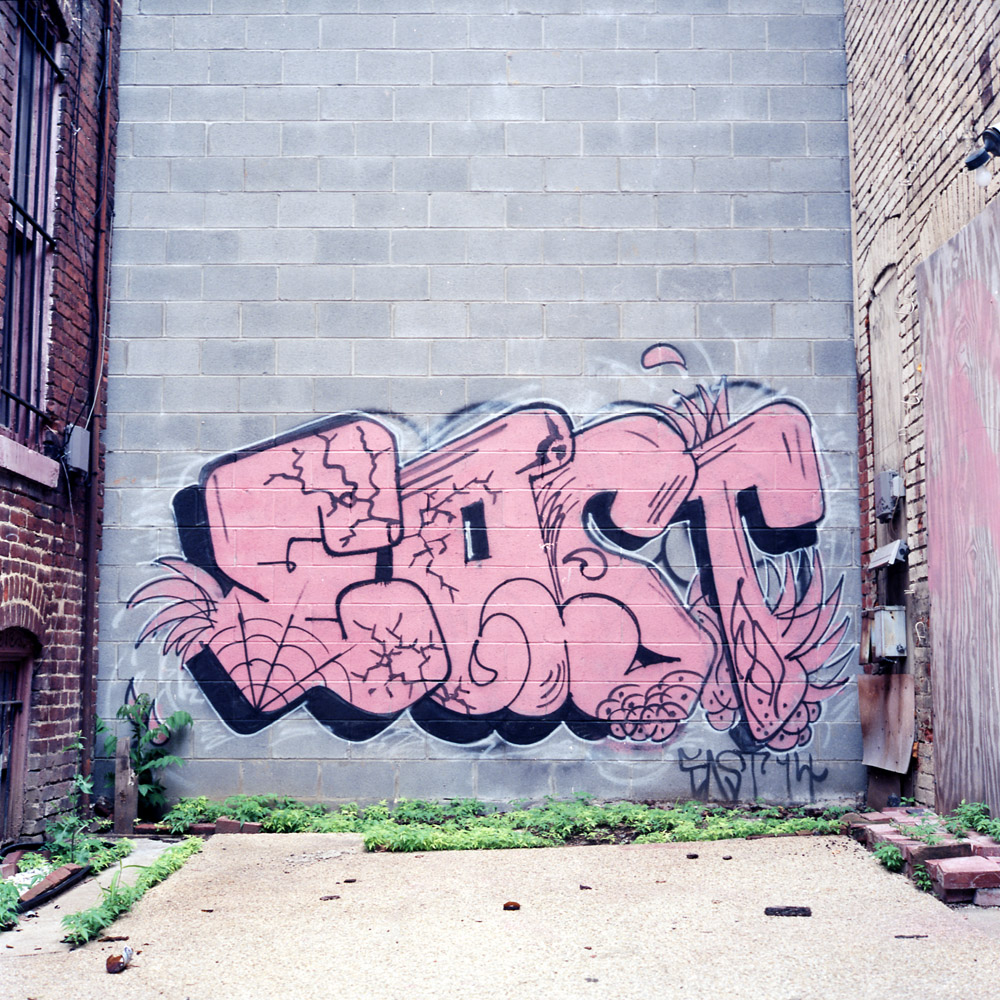
I promised to come back with my Rolleiflex to photograph it again, to see how different the two cameras’ visions were, and how they rendered the scene differently.
Graffiti, 14th & Corcoran
It’s not really a fair comparison, given that the sensor for the iPhone is the size of a Q-tip, if that, and the film in my Rolleiflex is 2 1/4 inches square, or about 300 times the size. Also, the lens has a different field of view- the iPhone is somewhere between a 28mm and 35mm lens’ field of view (moderately wide-angle), translated into 35mm equivalent, whereas the lens on my Rollei is a “normal” (50mm equivalent). The two cameras give very different renderings of the scene – the iPhone gives you much more of a sense of the space, whereas the Rollei makes the graffiti the star of the show.
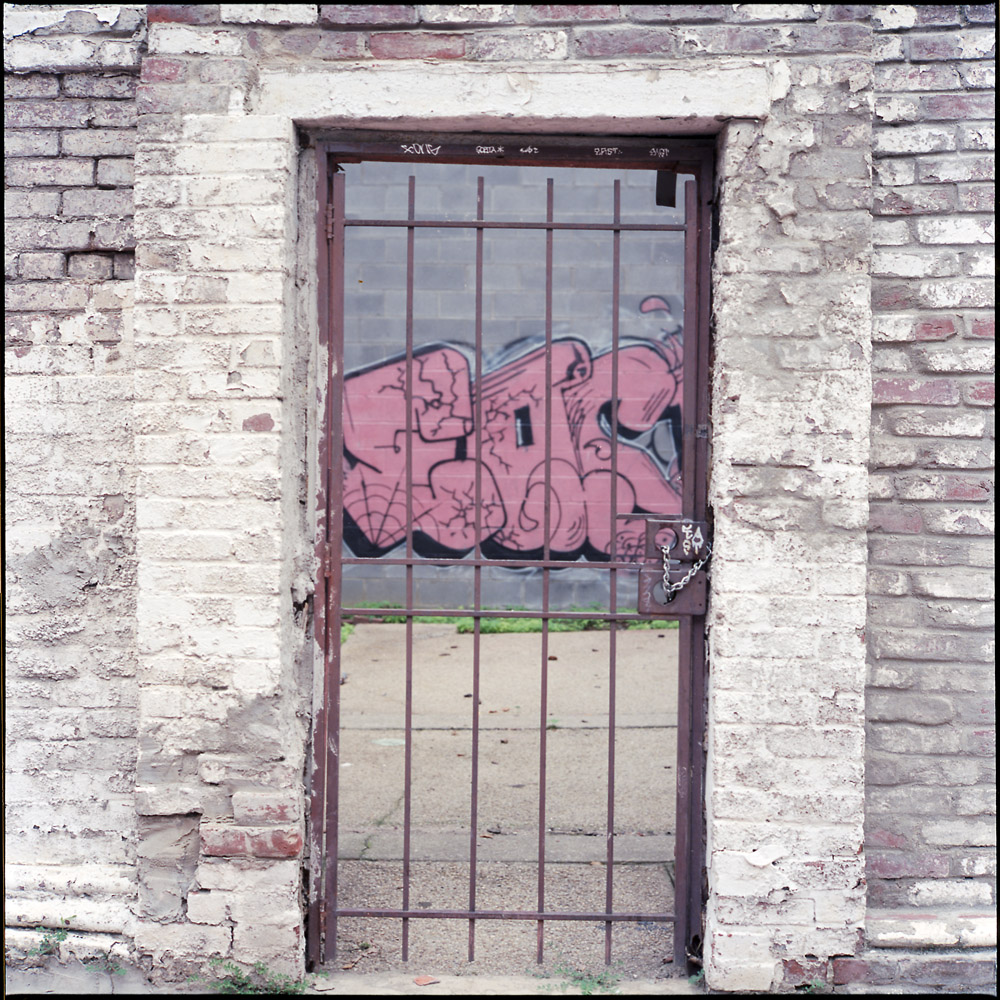
Graffiti, 14th & Corcoran, Door
Here is the locked gateway to the space where the graffiti is. Now you can get a sense of the drama of it – it’s hidden behind a locked gate, guarded like some treasure on display at more than an arm’s distance.
You know the old adage, “the best camera is the one you have with you”? It’s true. I got lucky and found these two shots as I was walking around the other day waiting to meet a friend for lunch.
They’re snaps with my iPhone. It was the camera I had with me at the time. And proof that it’s the photographer, not the camera, or the software, that makes the image.
I’ll be back in the neighborhood today after work with my Rolleiflex, and I’ll take them again. Different photos, different camera, different aspect ratio, so they’ll feel very different. I’ll try to remember to post them when they’re done.
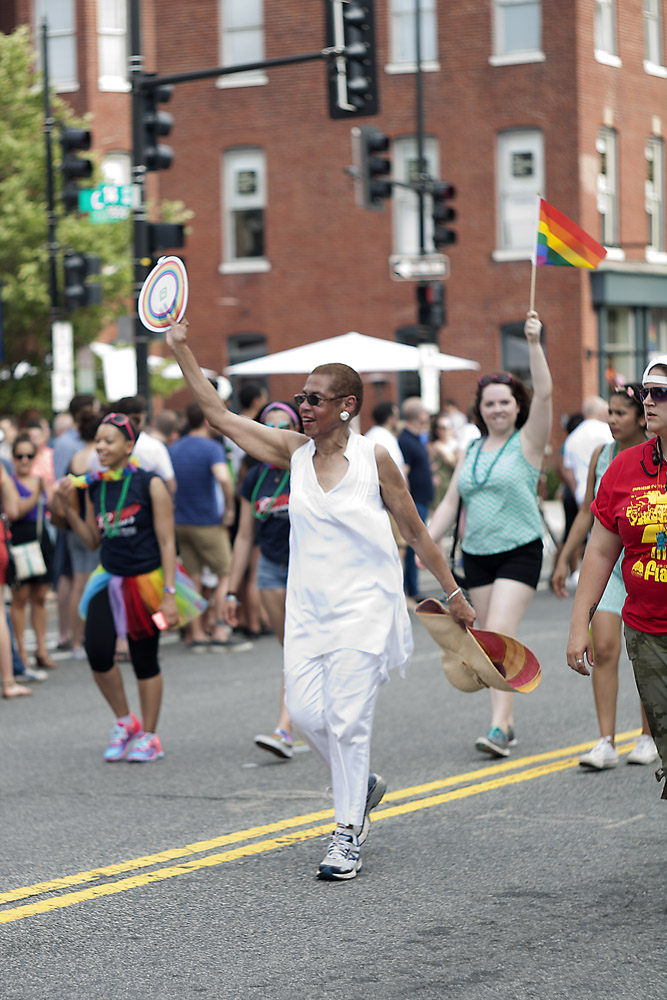
The DC Gay Pride Parade always features a political contingent. This year being an off-year for elections, we saw fewer than usual (last time it seemed like there were an interminable array of political contingents – virtually everyone running for office in DC, suburban Maryland and suburban Virginia was in the parade). I captured two notable entries – V. Gene Robinson, the Episcopal Bishop of Vermont and the first openly gay Episcopal Bishop, and Eleanor Holmes Norton, DC’s representative in Congress (who can’t vote on anything because DC isn’t a state). She’s always at the Pride march every single year, and has been for as long as I can remember (and I’ve been attending these things for close on 25 years now).
V. Gene RobinsonEleanor Holmes Norton
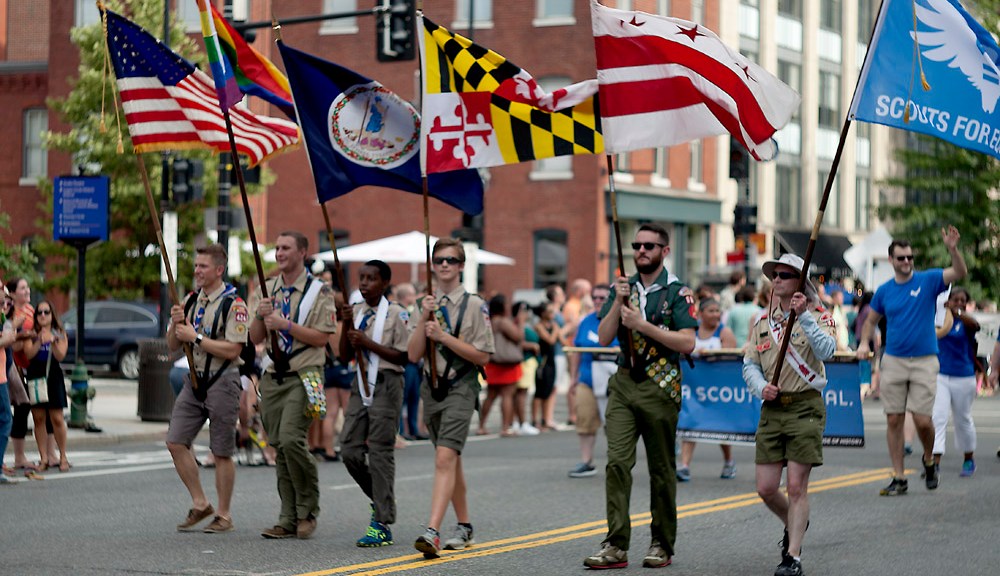
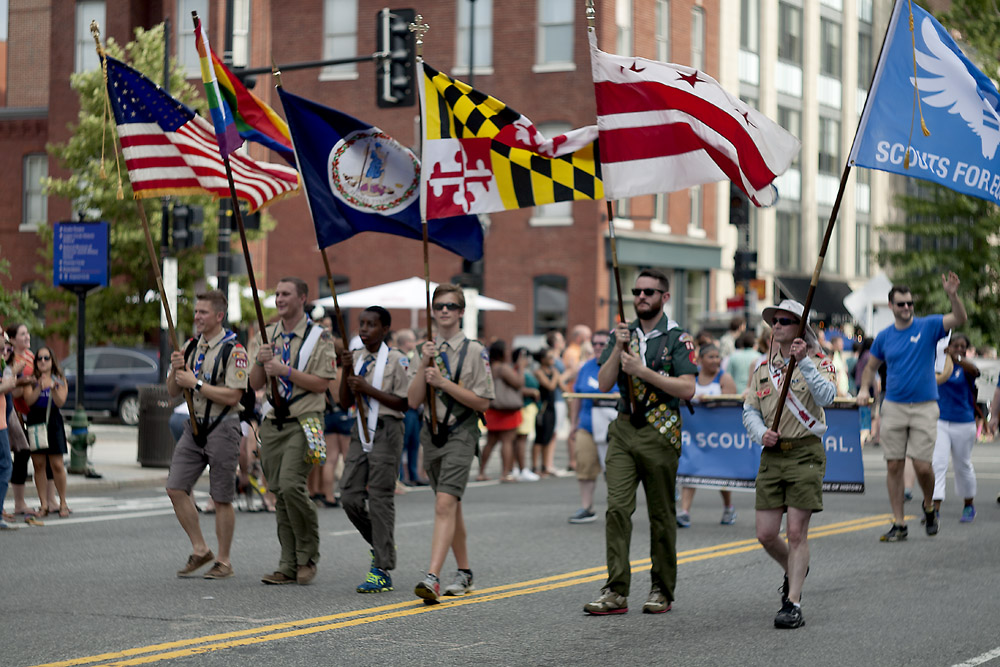
I’ll put the Boy Scouts under the political banner only because of the ongoing controversy surrounding gay scouting that has dragged on far too long.
Boy Scouts for Equality
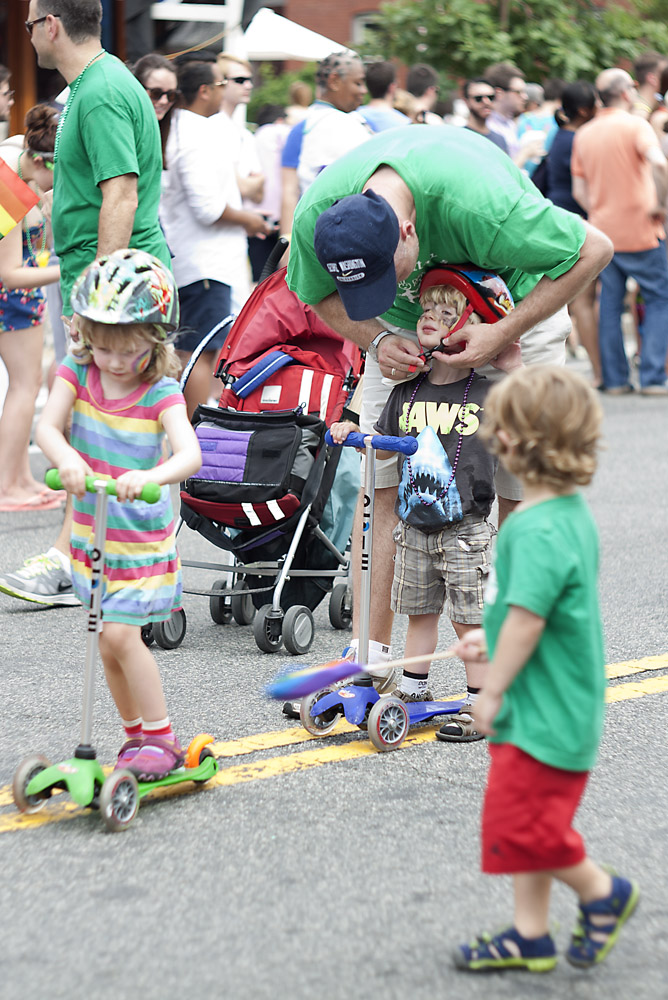
What a sign of change in the parade – when I first started attending, there were virtually no children to be seen anywhere, either in the parade itself or even in the audience. Now, not only do you have married gay couples marching, you have married gay couples with kids, and the friends of their kids and the parents of the friends of their kids marching with them. This was I believe the PFLAG (Parents & Friends of Lesbians And Gays) contingent, with parents and kids just being parents and kids.
Kids with Scooters
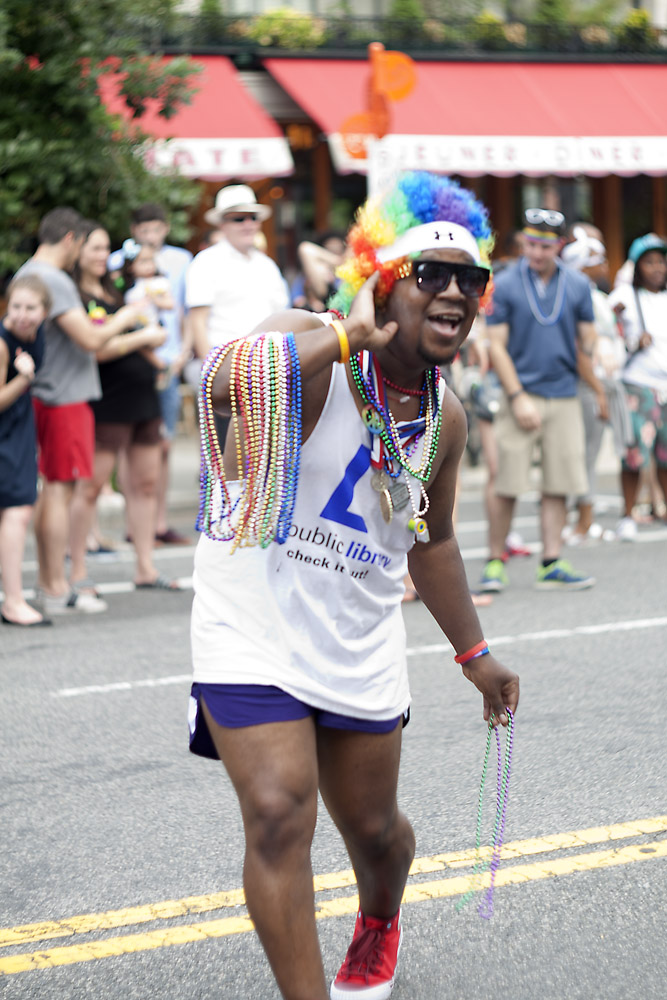
Many city agencies march in the parade. It’s not quite San Francisco, where the Fire, Police, and even the Sanitation departments have contingents (the sanitation workers ride those little ride-behind sidewalk sweepers that look kind of like lobsters with brushes for claws). But hey, this year we had the DC Public Library giving out beads!
The Public Library…Beads?
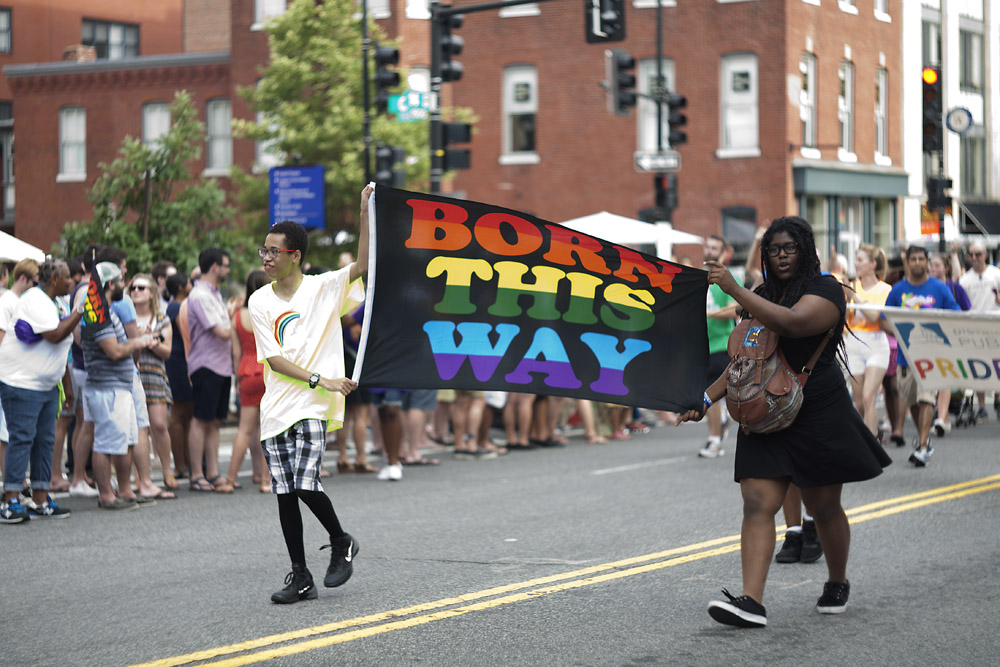
And the DC Public Schools had a very large contingent of kids of all genders, gender expressions and sexual orientations marching with their gay and ally teachers. I think it’s terrific when kids are allowed to express themselves and be who they are with pride – marching in the parade means that they’re less likely to end up on the street, homeless, addicted and practicing survival prostitution.
DCPS, Born This Way
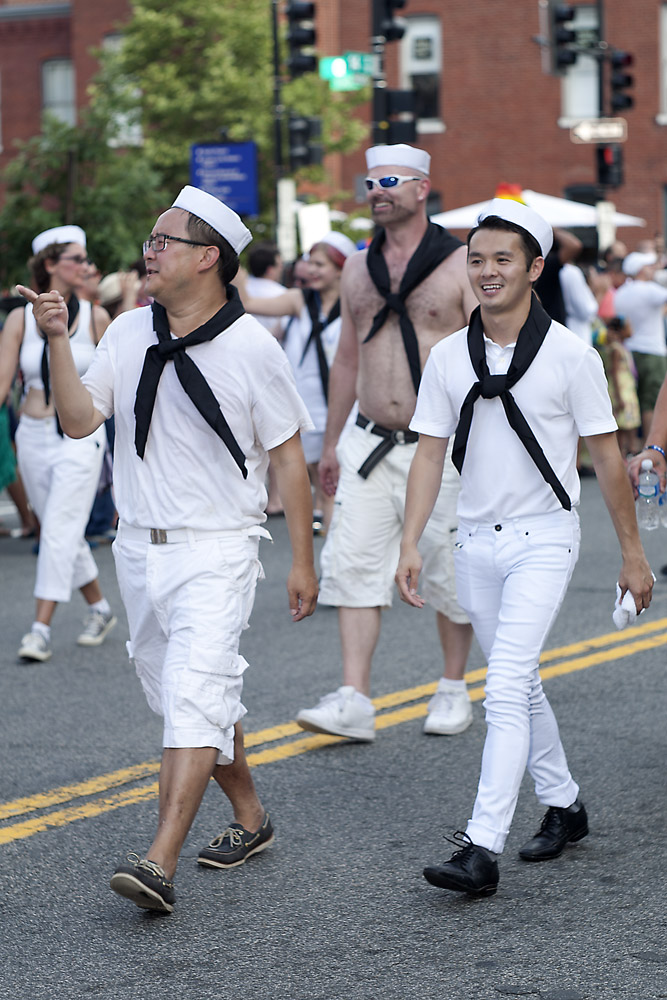
The United States Military had a very strong presence – each major branch of the service marched, and the grouping was led by a uniformed color guard. Here are some very cute sailors in sailor suits.
In The Navy…
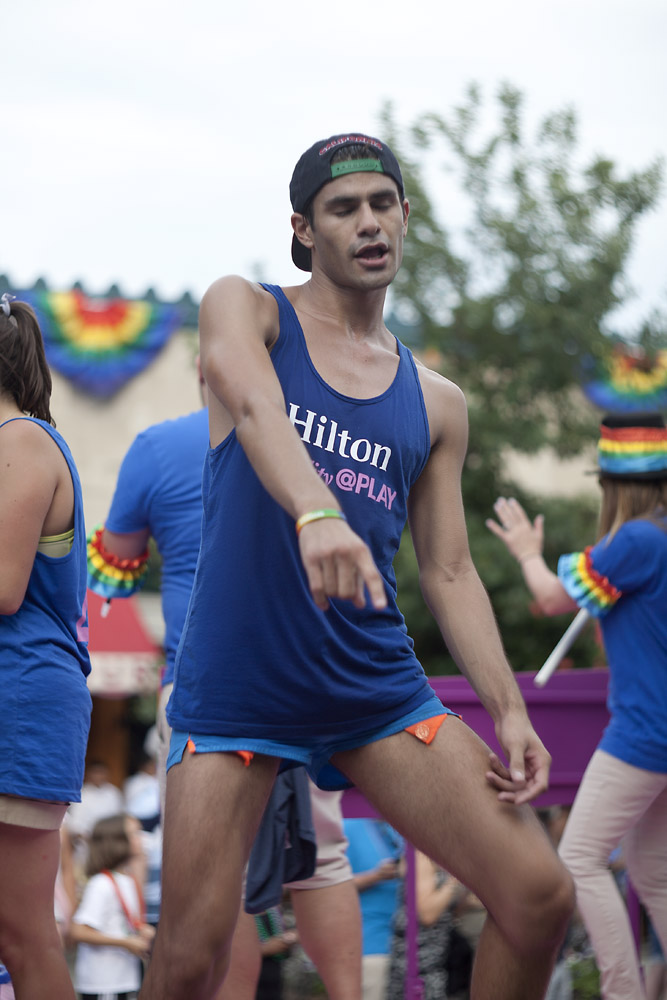
What gay pride parade would be complete without a float (or ten) of scantily clad go-go boys drenched in glitter, gyrating to a disco beat? Pride has moved upscale with corporate presences from Fortune 500 companies (Lockheed Martin, Booz Allen Hamilton, and here, Hilton Hotels), and they’re not afraid to get their sexy on. Twenty years ago, you’d not have seen any of these groups.
Party at the Hilton!
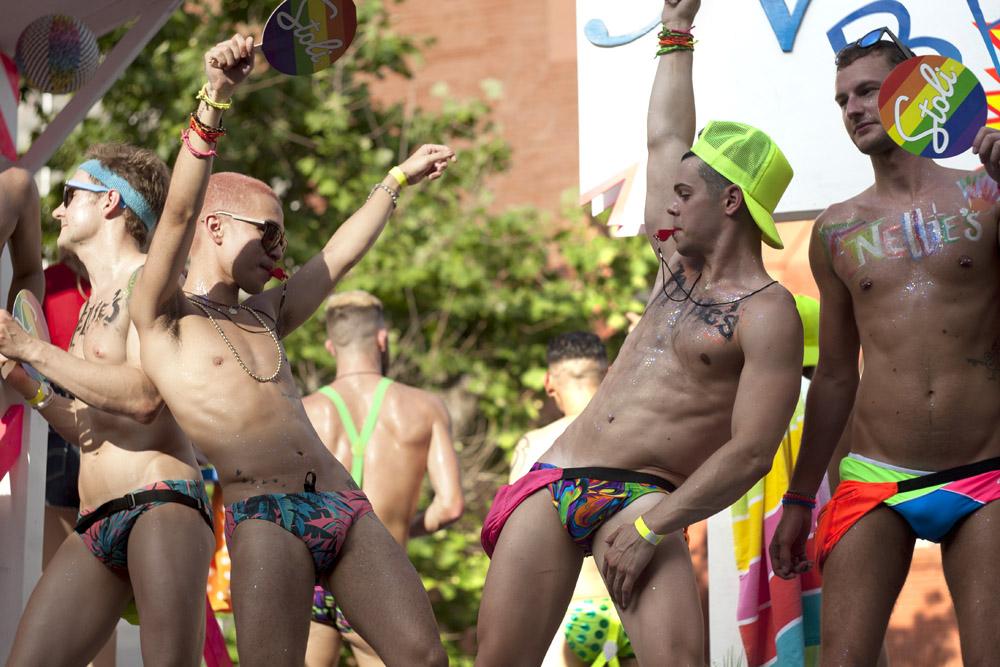
Of course, it’s the local businesses that are willing to go all-out in the just-slightly-naughty department. Nellie’s Sports Bar had quite the collection of go-go boys.
Nellies Beach Boys
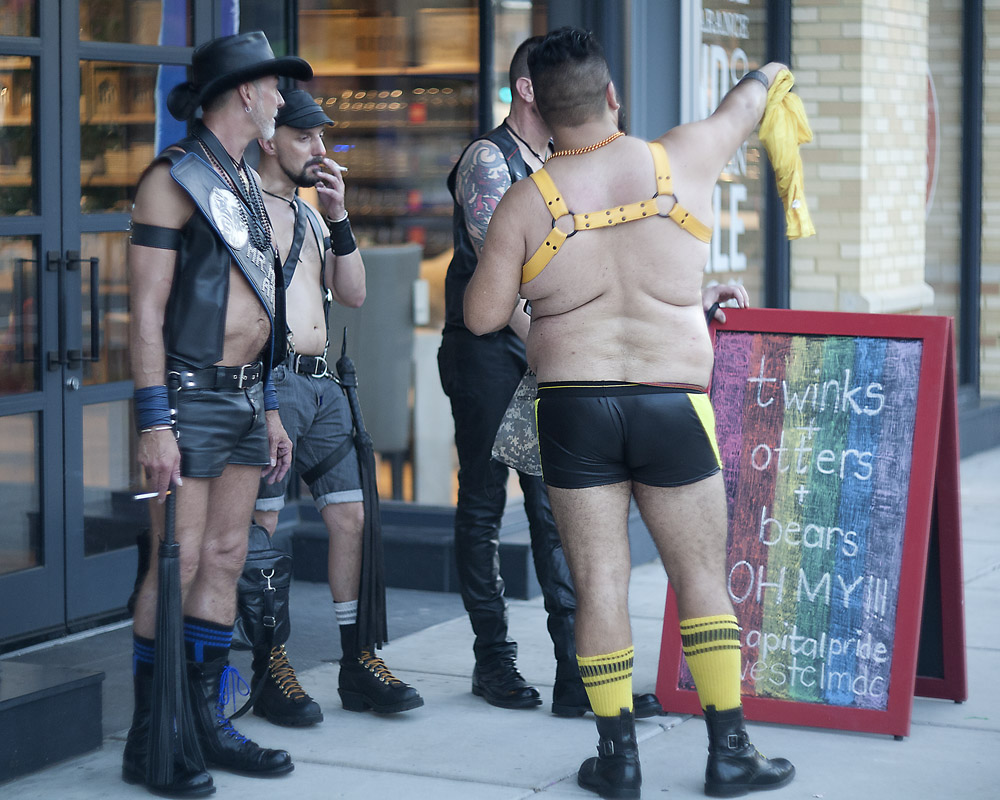
Another thing a Pride parade wouldn’t be complete without: the Leather contingent. Here are four leathermen hanging out in front of the West Elm furniture store by the “Twinks and Otters and Bears, oh my!” sign, tempting passersby to shop for a chair and a sling…
Twinks, Otters and Bears, oh my!
And the perennial favorite, always the first contingent in the parade, Dykes on Bikes.
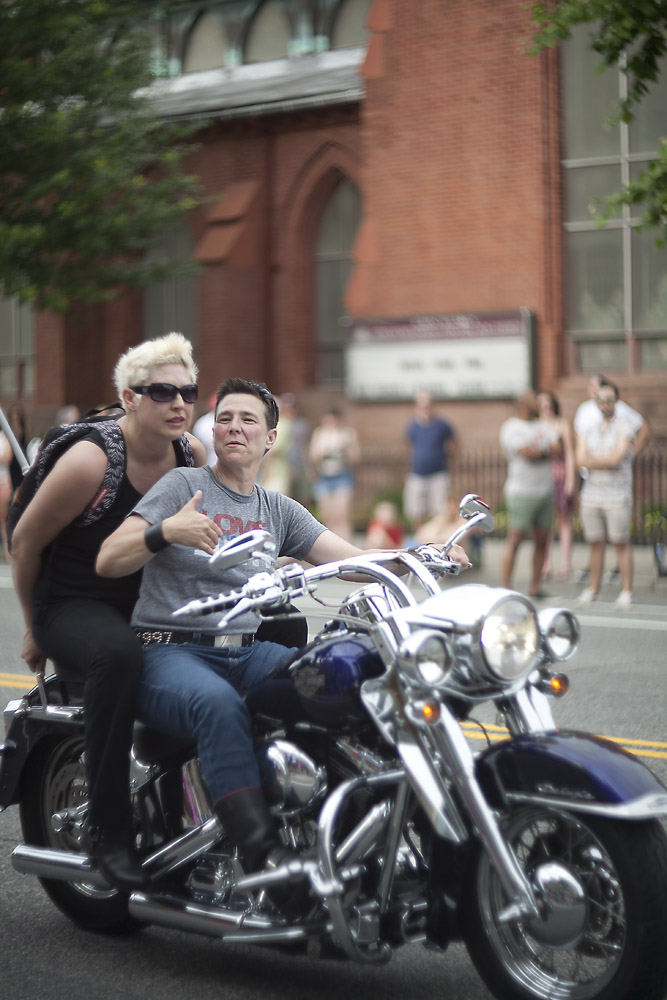
Boy (I don’t know her real name, but Boy is what she goes by) is a multiple sash winner in leather contests, and has been a fixture around the DC area for a very long time. She’s the one driving the bike.
Boy, Bike
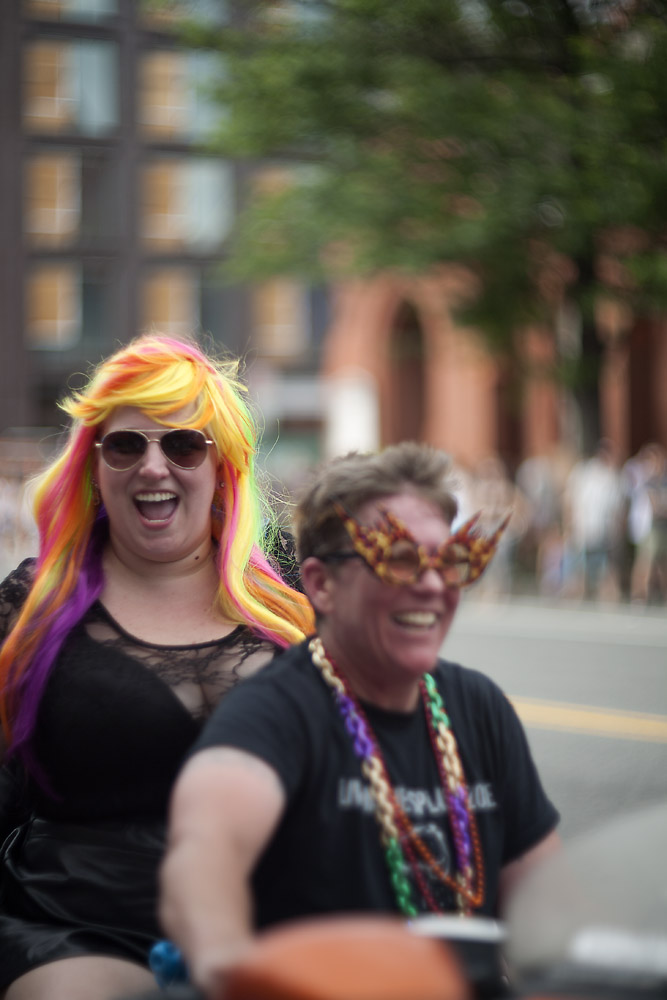
Another lesbian couple (I’m assuming, they could be just friends) riding in the parade:
Bright Wig, Bike
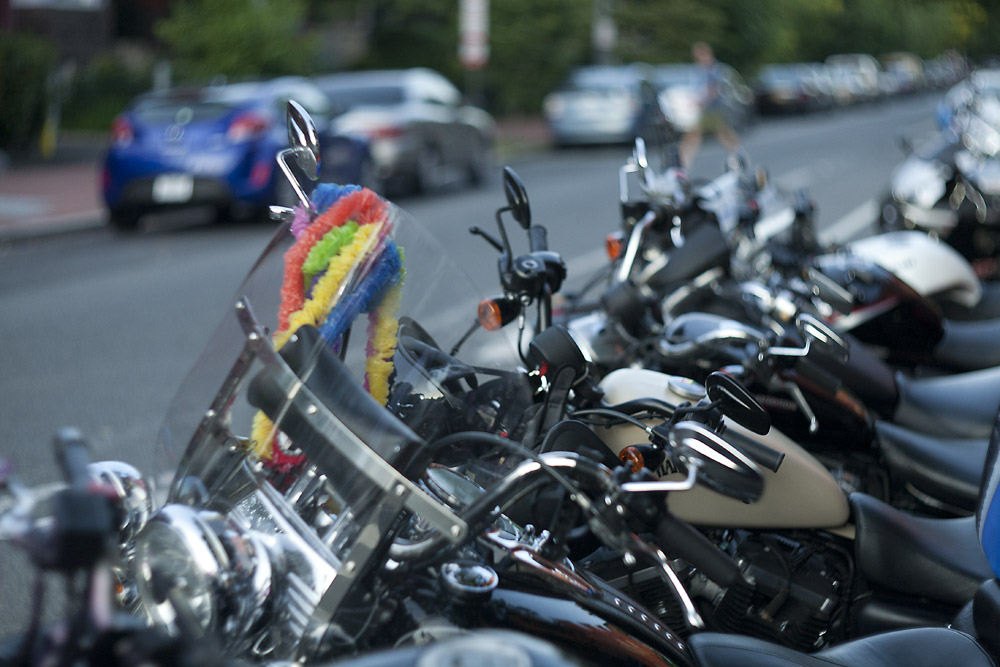
And to cap it off, a row of Bykes (Dykes, Bikes… Bykes, get it?) parked outside a restaurant on 14th Street at the end of the parade route.
Here are some photos from yesterday’s Gay Pride Parade. These were faces in the crowd of people watching the parade.
This first picture is the reason why we need gay pride parades still – I was standing on the curb, waiting for the parade to arrive, and this woman carrying this sweet little girl came up to me and said, “She’s a Pride baby – she needs her picture taken! Take her picture, she’s a Pride baby!”. When I put the camera to my eye to compose the photo, the mother turned her head so her face would not appear in the photo, only the little girl’s.
Pride Baby
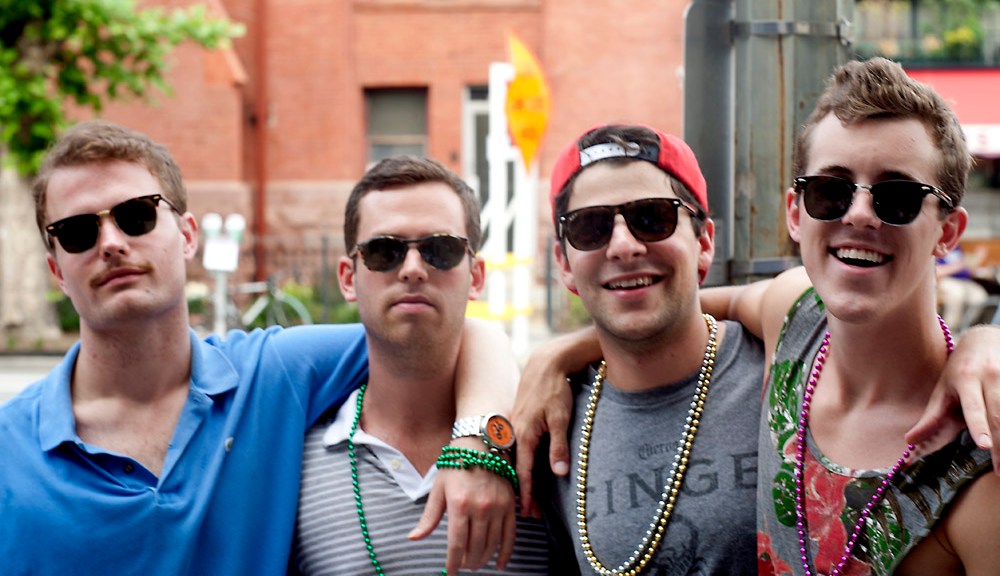
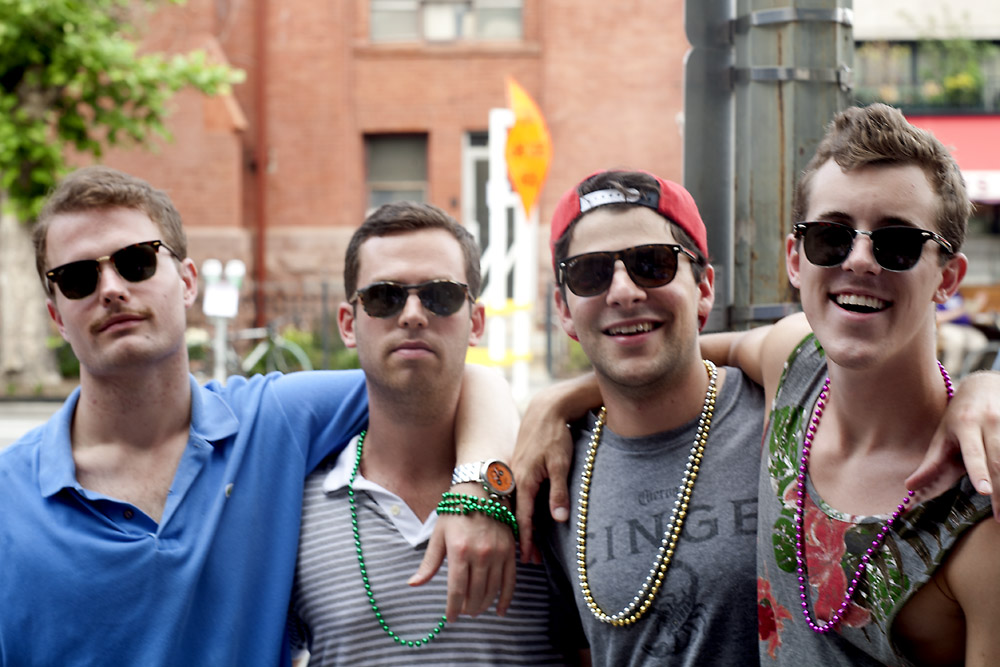
These guys saw me standing with my camera and approached, asking to be photographed. They asked me where the photos were going to be used – “Will these be in the New York Times?” I told them I’m shooting for this blog, and they said “you can use our photos anywhere!”. I hope they find this photo and enjoy it!
Besties
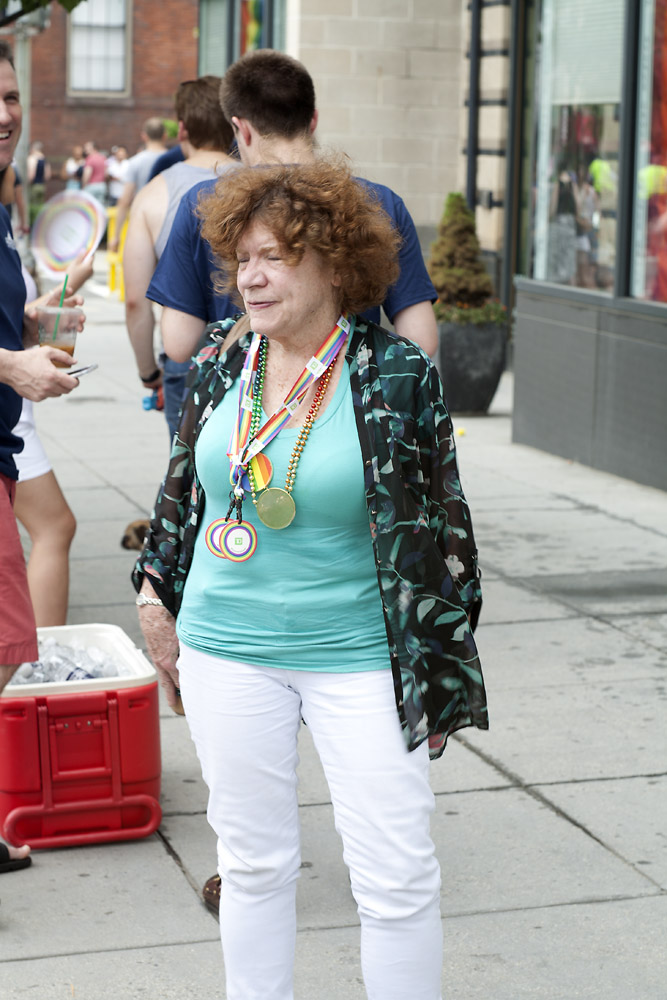
I don’t know her name or if she is in fact a mother, but I’m calling her Pride Mama for all her ribbons and beads.
Pride Mama
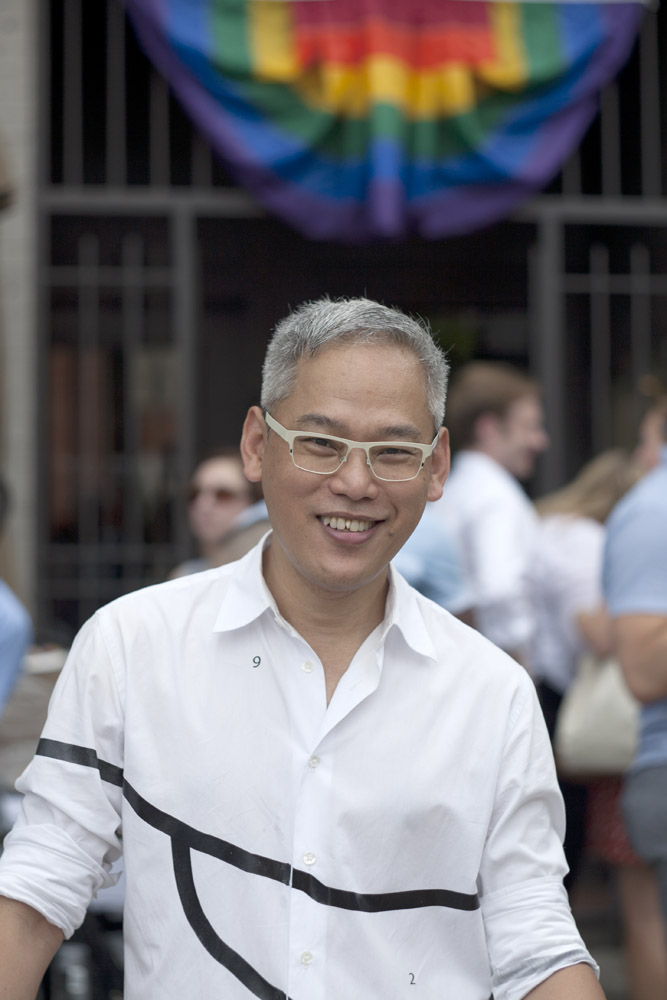
This is my friend, Sak Pollert, who owns Rice restaurant on 14th Street (where I parked myself to watch the parade, as the restaurant is on the shady side of the street in the afternoon when the parade is passing).
Sak P.
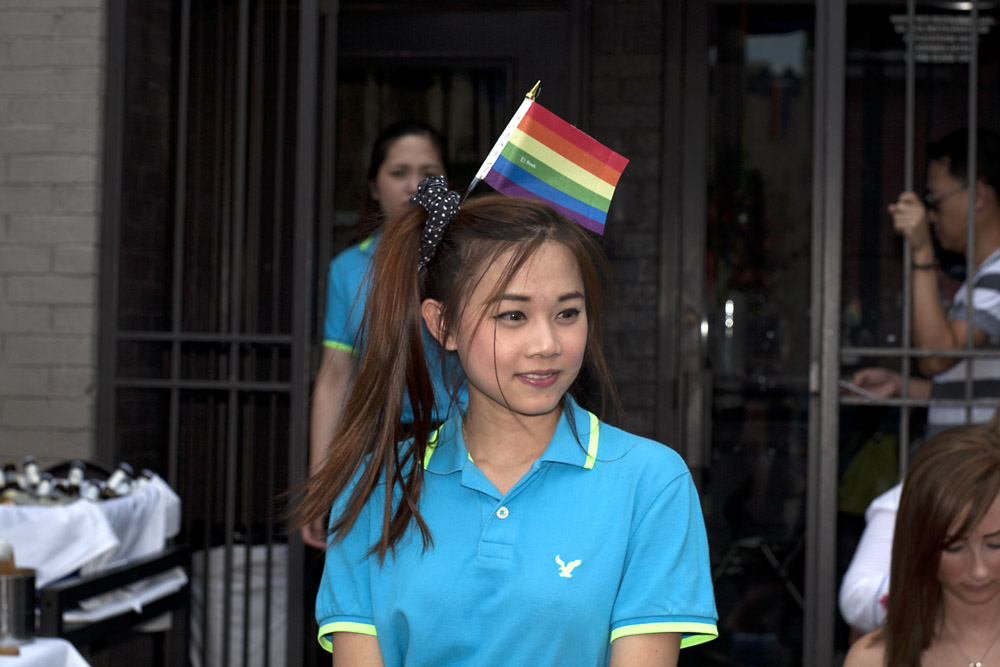
One of the waitresses at Rice – she put a rainbow flag in her hair like a chopstick.
Rainbow Waitress
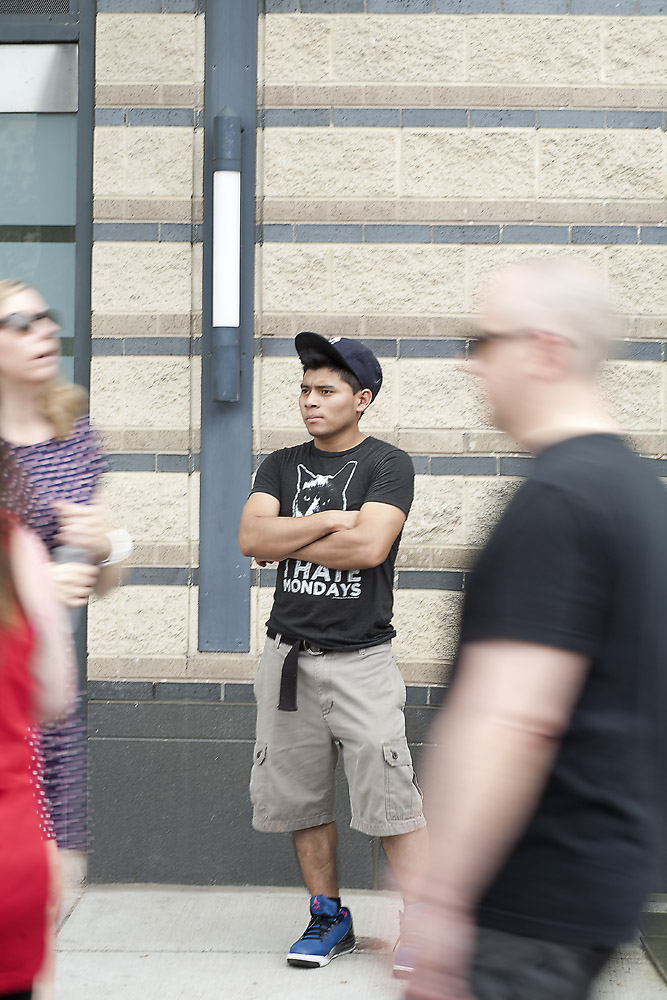
I think this guy is one of the busboys/kitchen staff at Rice, out to watch the parade. I loved his Grumpy Cat T-shirt.
I Hate Mondays
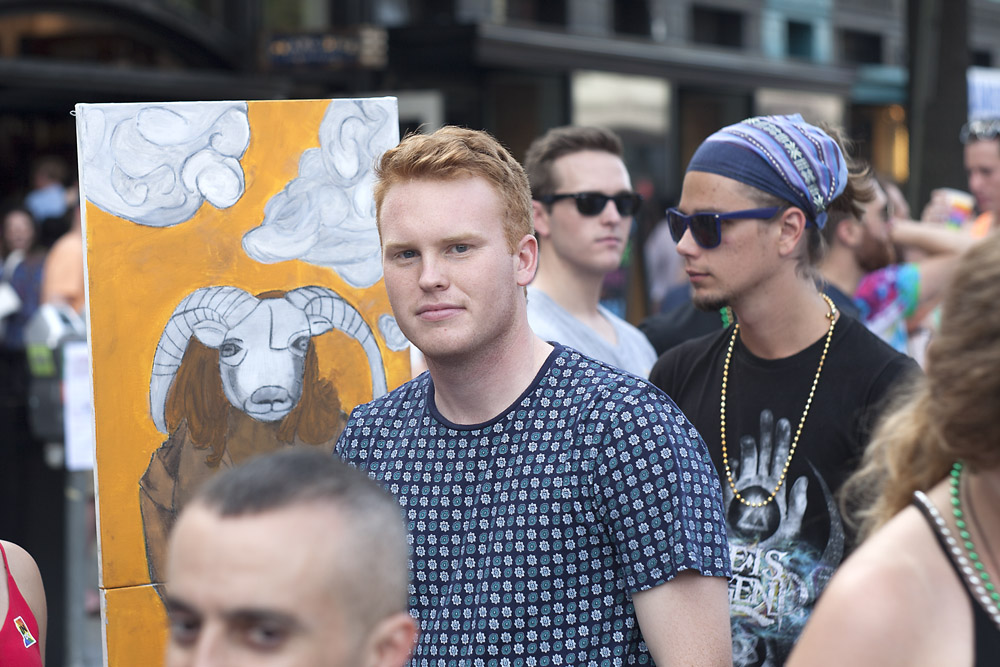
I don’t think this guy actually had anything to do with the goat in a trench coat sign behind him (I think it belongs to the guy in the black t-shirt to his left). When he saw me composing the image, he straightened up, made eye contact, and posed.
Boy, Goat Sign
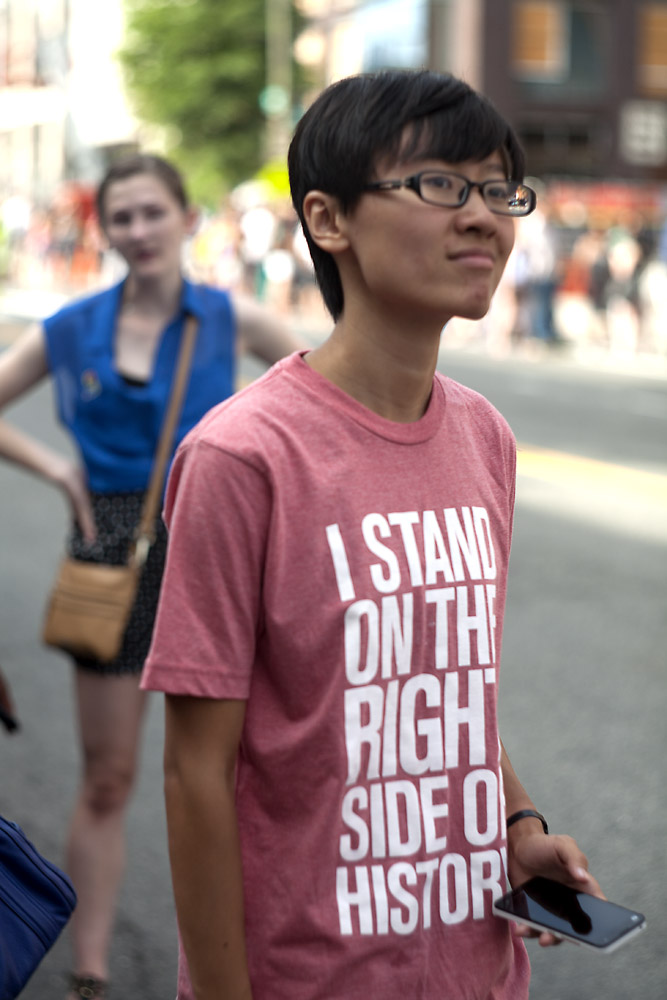
This young lady was standing next to me for a while, and I wanted to get a photo of the shirt with that caption.
Right Side of History
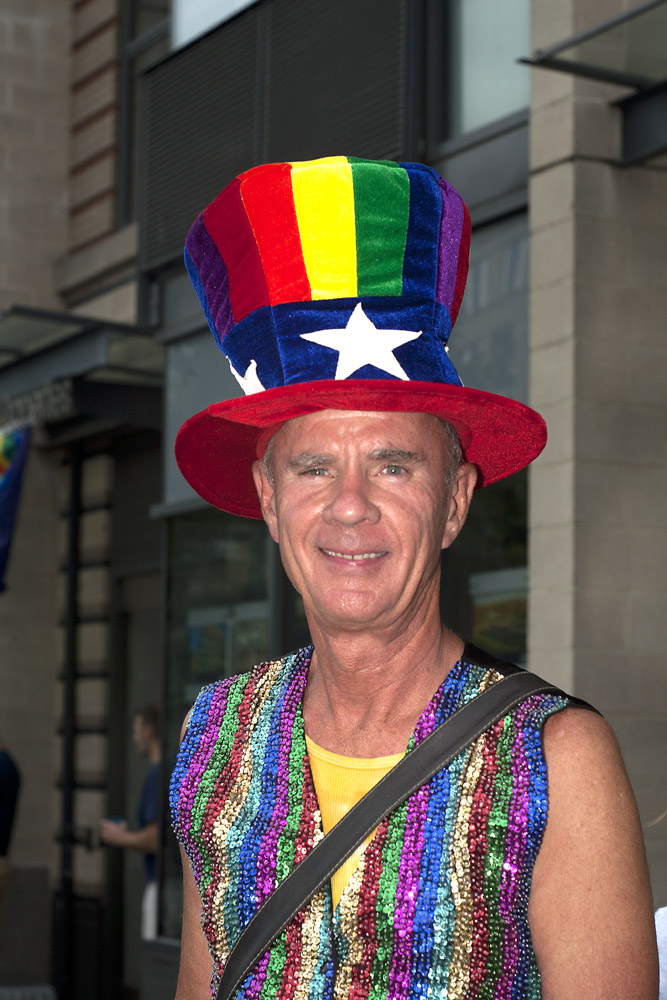
This gentleman was all decked out in rainbow finery (if you call tons of sequins ‘finery’). He was certainly in the spirit of the day! Not visible except by interpolation were his six-inch platform heels.
Rainbow Top Hat
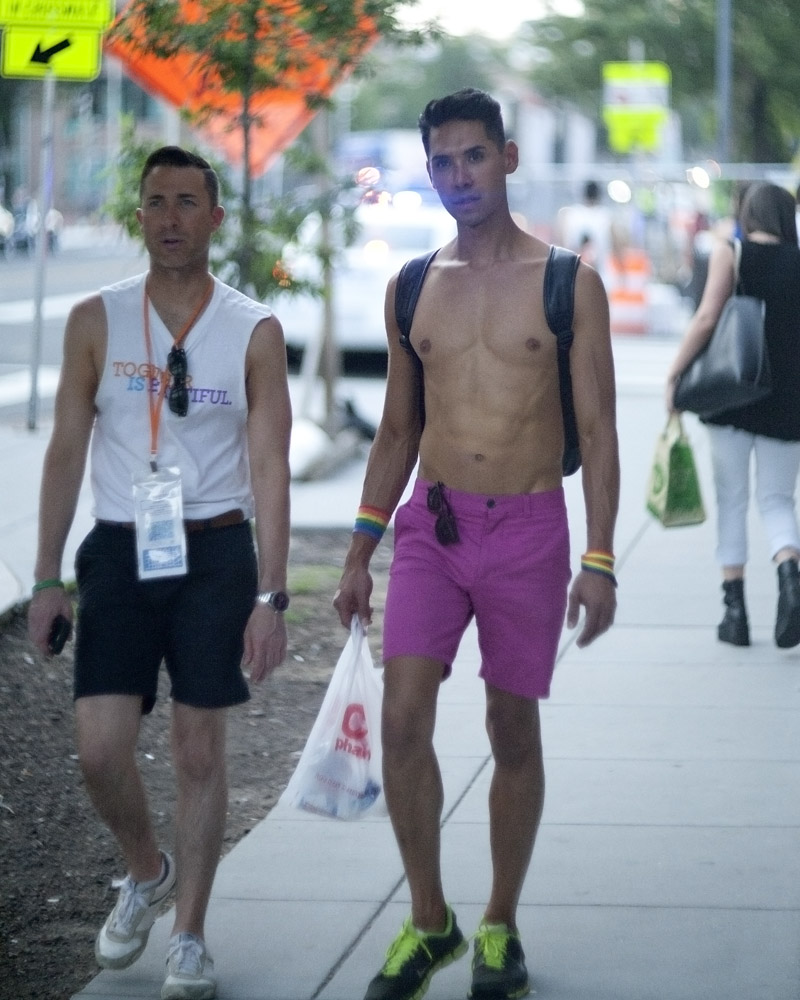
I titled this one “Apres Parade” because I caught these two as we were all leaving the parade, heading home after a long, hot, fun day.
Apres Parade
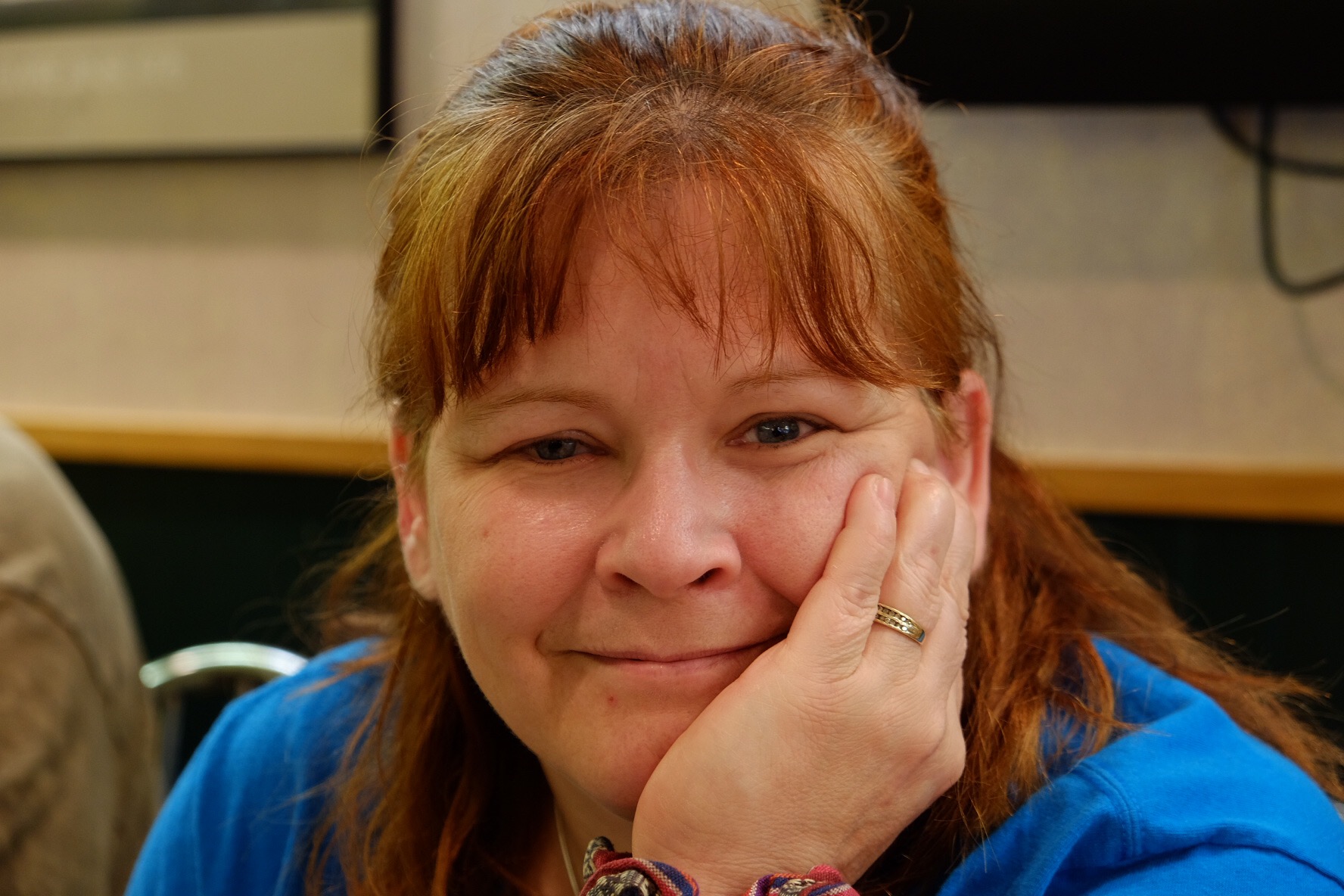
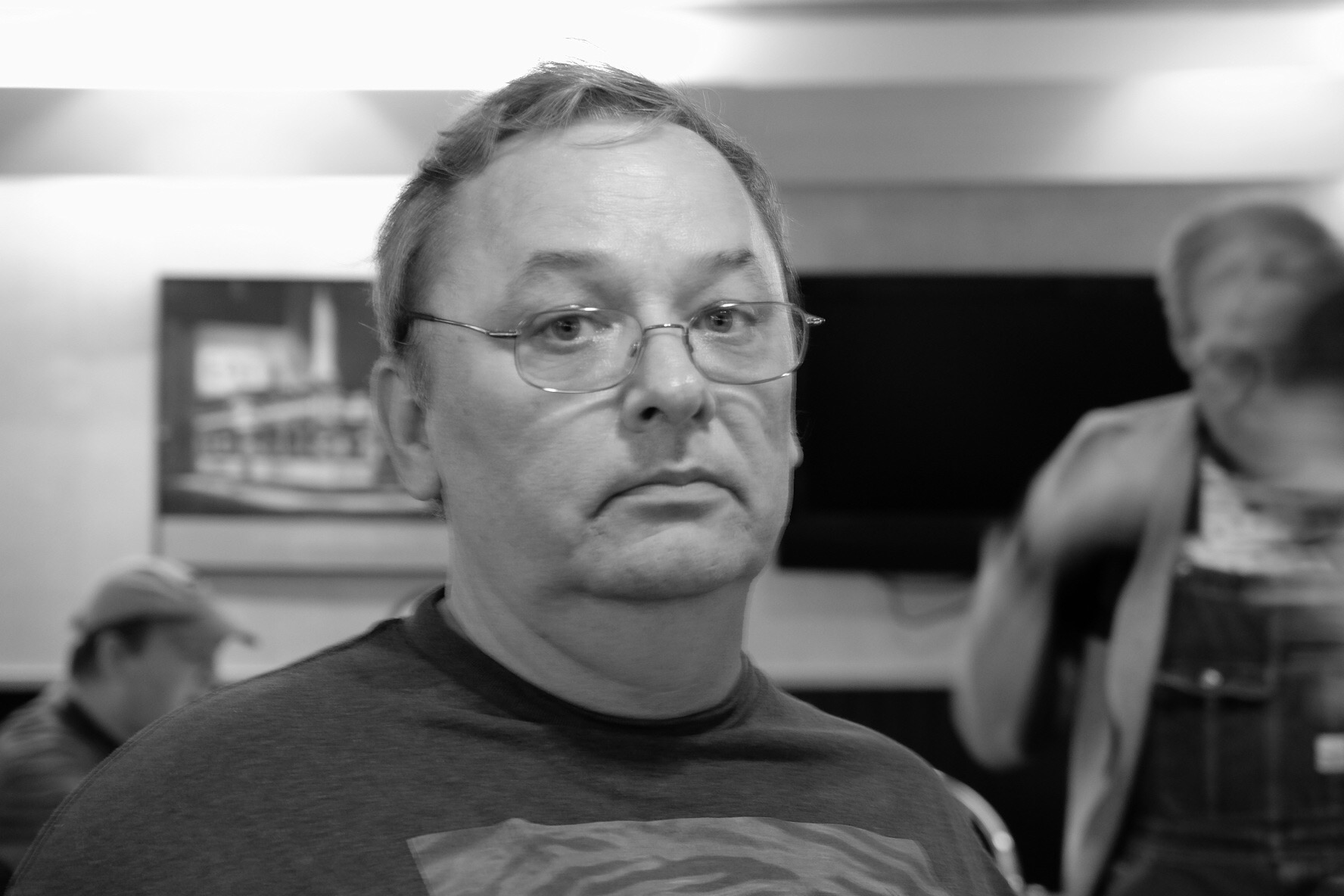
This was another experiment photographically. I shot the whole parade using my Helios 85mm f1.5 lens. This is the second time I’ve shot the parade with this lens – I did it for the first time the last time I photographed the Pride parade, and the lens was brand new to me then. It’s a bit of an oddity because it’s manual focus and it uses a pre-set aperture – unlike modern all-automatic lenses, this one you have to tell it to stop down the aperture on the lens by turning a separate ring. The lens has a particular signature to its look – when focused and configured properly, it produces a “swirly” background (most visible in the “Apres Parade” image in this post, and several others (Bright Wig, Bike and Miss Gay Virginia) in an upcoming post. The lens is big, heavy, a bit slow to use, especially because of the aperture mechanism, and exposures are sometimes a little off because there is no communication between the lens, camera, and flash. The “swirl” is something I’m still debating if I like. I might need to just shoot more with it to decide.


 dcphotoartist