Category Archives: Large Format Cameras

Great Article from Petapixel

What I’ve Learned About Photo Gear Over the Past 40 Years

Terrific summary and great dispelling of the constant upgrade myth. A great photographer can make great images with a pinhole or a Brownie box camera, in addition to a CaNikSonEikaBlad. A mediocre photographer gets caught up in an upgrade chase thinking gear is the solution to a skills problem. Don’t get me wrong, gear is fun, and its always nice to have the right tool for the job – there are photos you can take with a Canon 5D that you can’t take with a Hasselblad, and photos you can take with an 8×10 Sinar you can’t take with a Leica (the old “don’t use a hammer to do a screwdriver’s job” adage). But when it comes down to it, it’s far to easy to blame the tool when we don’t get what we were looking for (“I would have gotten the photo if only I had an xxxx”). This is part of why I’m fixating on my Rolleiflex. It’s just one camera, with just one lens – it’s forcing me to pay more attention to what I’m shooting and how I’m shooting it rather than running around with two or three bodies and half a dozen lenses in two or more formats. My Argentina trip of a few years ago was a prime example – I had the 5×7 with six (SIX!!!!) lenses, 13 film holders (13!!!!), and a tripod, along with my Contax G1 with 45mm and 28mm lenses. While I did take some wonderful photos in each format, I’m pretty sure both suffered as a result. Certainly, there were photos I could not have taken with one that I did with the other. My Recoleta cemetery photos would not have happened with the Contax, and my street scenes in San Telmo and La Boca would not have happened with the 5×7. But by dividing my attention between the two systems and two ways of thinking probably meant that I wasn’t fully in the mindset of either system and then tried (and failed) to make images with one that would have been better done with the other.
Glen Echo Recap – in color

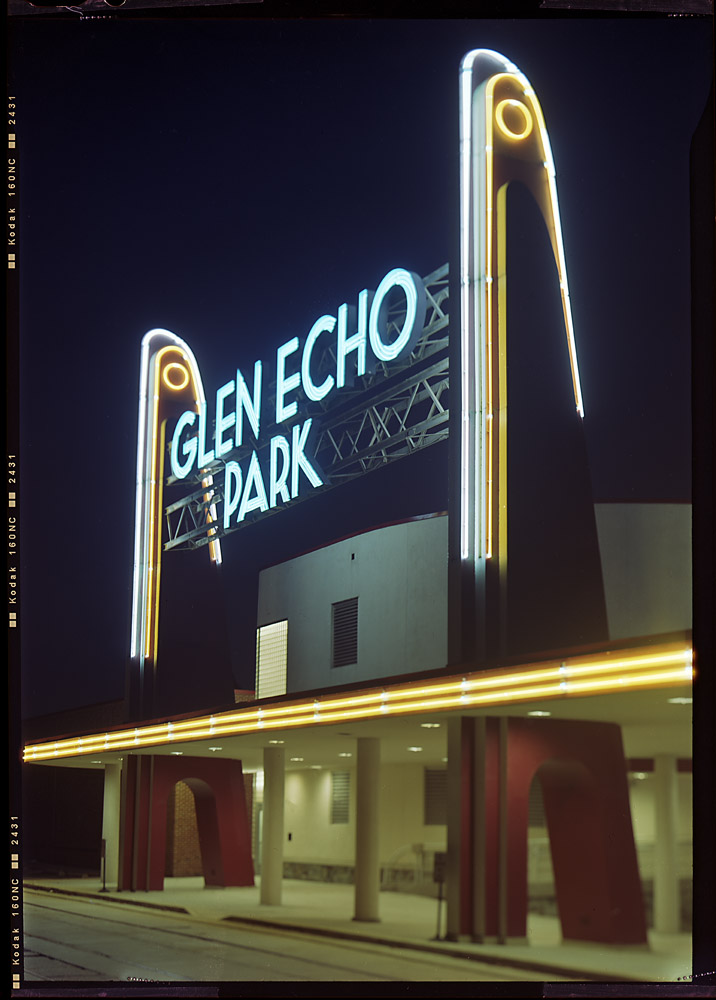
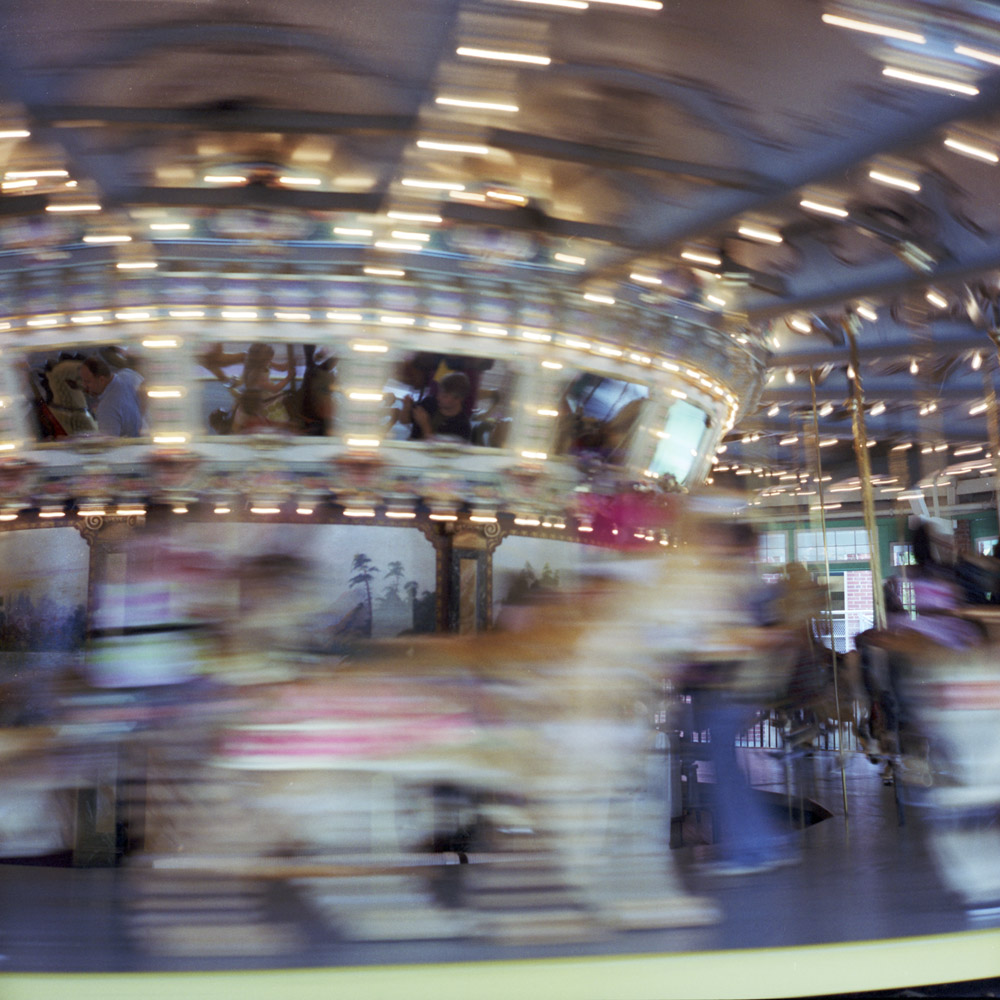
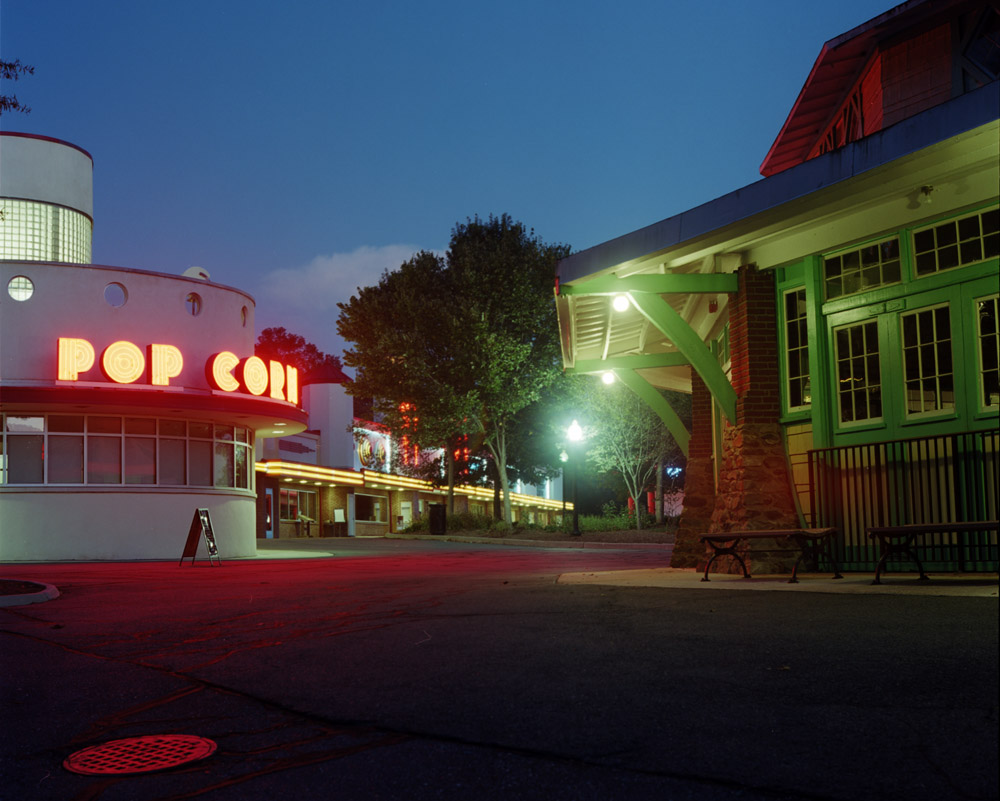
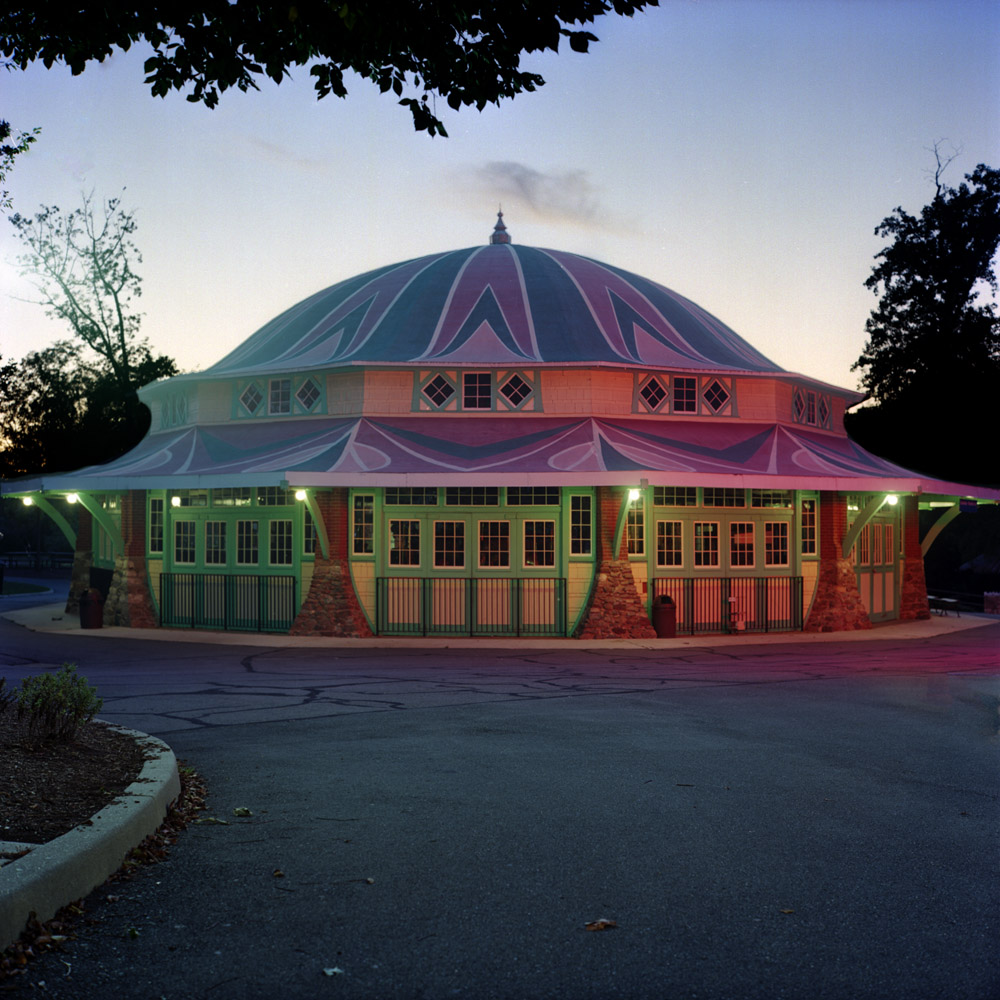
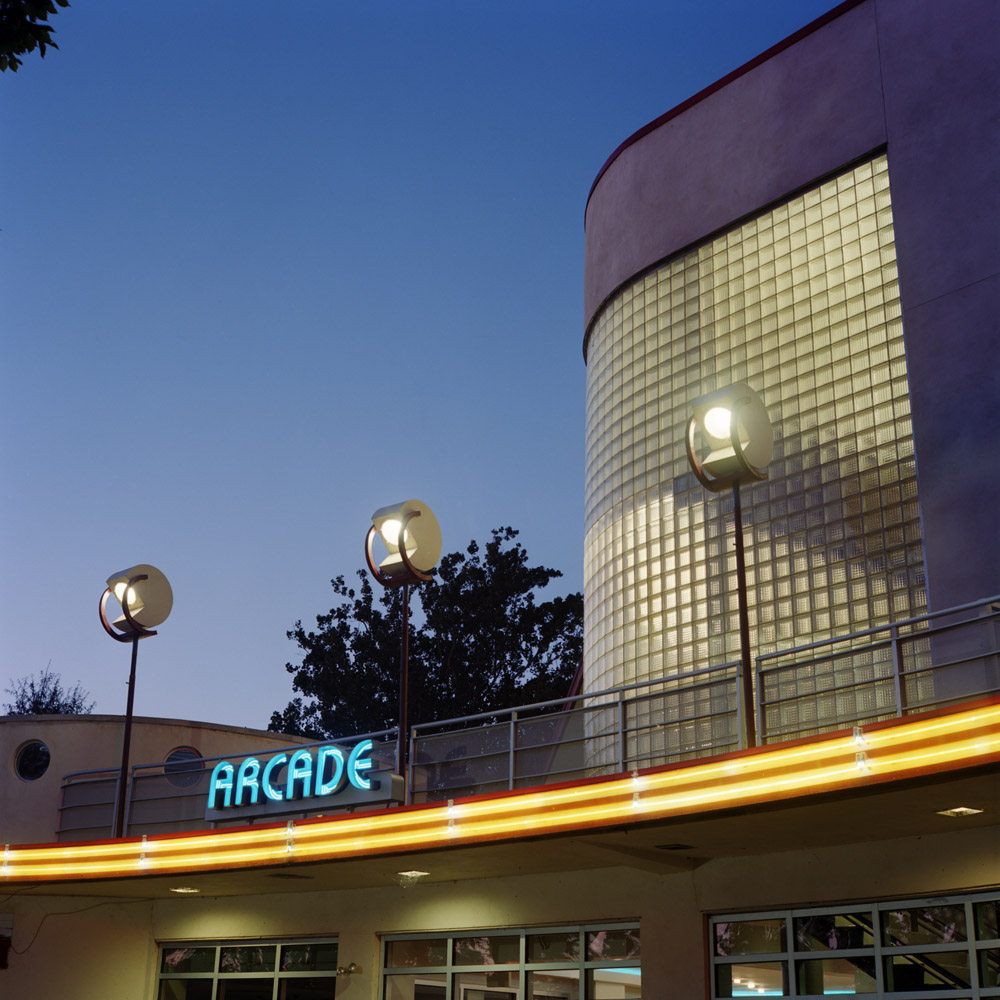
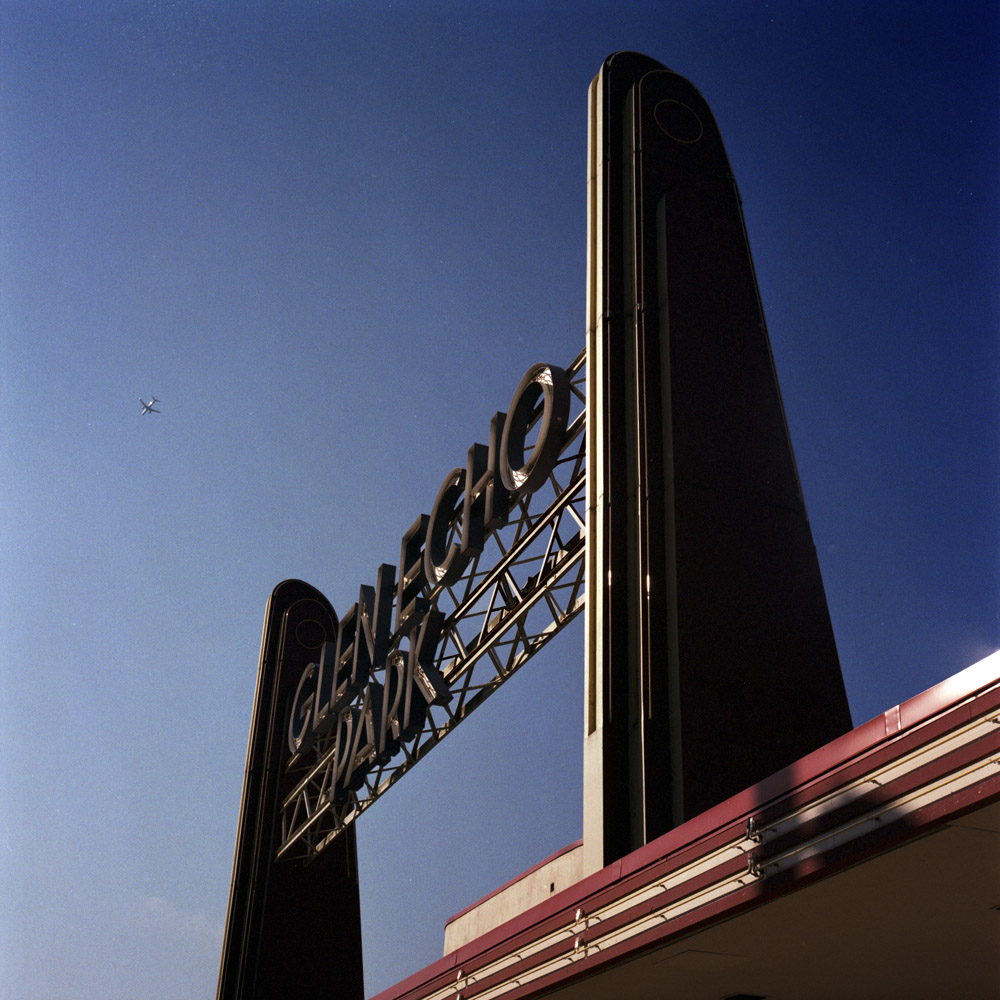
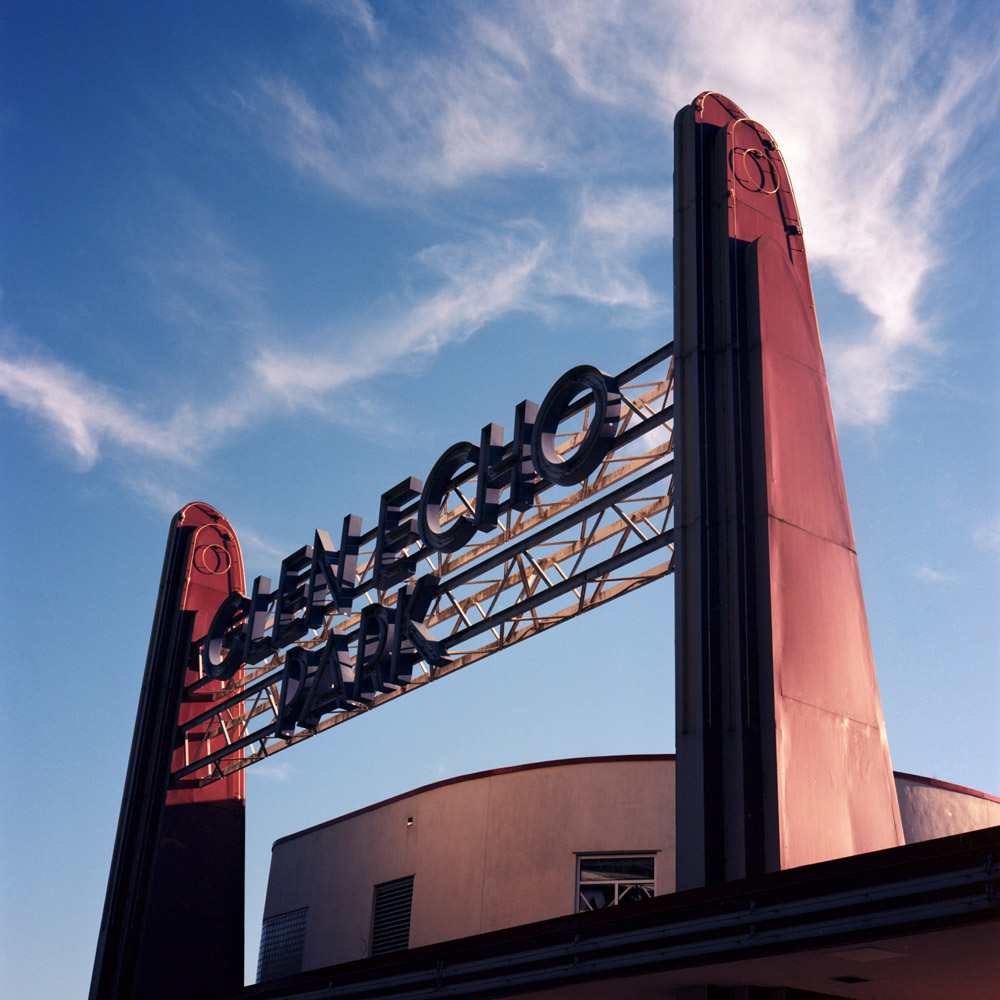
Just thought I’d do a re-visit of all my Glen Echo color work, to put them in one place. When I get a bit more organized, I’ll put my platinum/palladium Glen Echo photos together and do another mini-gallery. This has all been shot with a mixed bag of films and cameras. Mostly my Rolleiflex 2.8E, with one nod to my Canham 5×7 (the Glen Echo sign at night – it’s special enough it gets its own row). The films have been Kodak Portra 160NC, Kodak Ektar 100, Fuji NPS 160, and Fuji NPH 400. With the exception of the Ektar 100, most of the film used has been anywhere from a couple years out of date to almost a dozen years expired. Which says a lot about the quality of modern color film emulsions.

Part of the purpose of this exercise was in response to a discussion recently on an online photography forum I read where someone was complaining about how hard it was to take good photos in places you are familiar with. While I love travel photography (I’m getting ready to indulge in some serious travel photography early next year, probably one of those once-in-a-lifetime trips – I’ll keep you updated as the time approaches), I think it’s absolute baloney that you can’t take interesting photos of places you know and see every day. If anything, the opposite is true. But each type of photography requires a different mindset. Photographing on the road requires you to be able to filter out the extraneous detail because it’s ALL wondrous and new. Photographing at home requires you to turn off the detail filter so you start finding the interesting stuff you ignore because it’s what you see every day.

Photographing my own neighborhood is about recording and observing change – it’s like doing a series of portraits of the same person – this week in a suit, next week in a sundress, then later in an anorak, this year a little taller, next year a beard, the year after with a tan and a buzz cut. The Glen Echo photos are another form of portraiture, portraiture of a place. Places can have spirits and identities, and their face changes over time, just like a person’s.

Glen Echo Sign, Morning
Glen Echo Park Sign, Evening
Glen Echo Sign
Glen Echo Sign
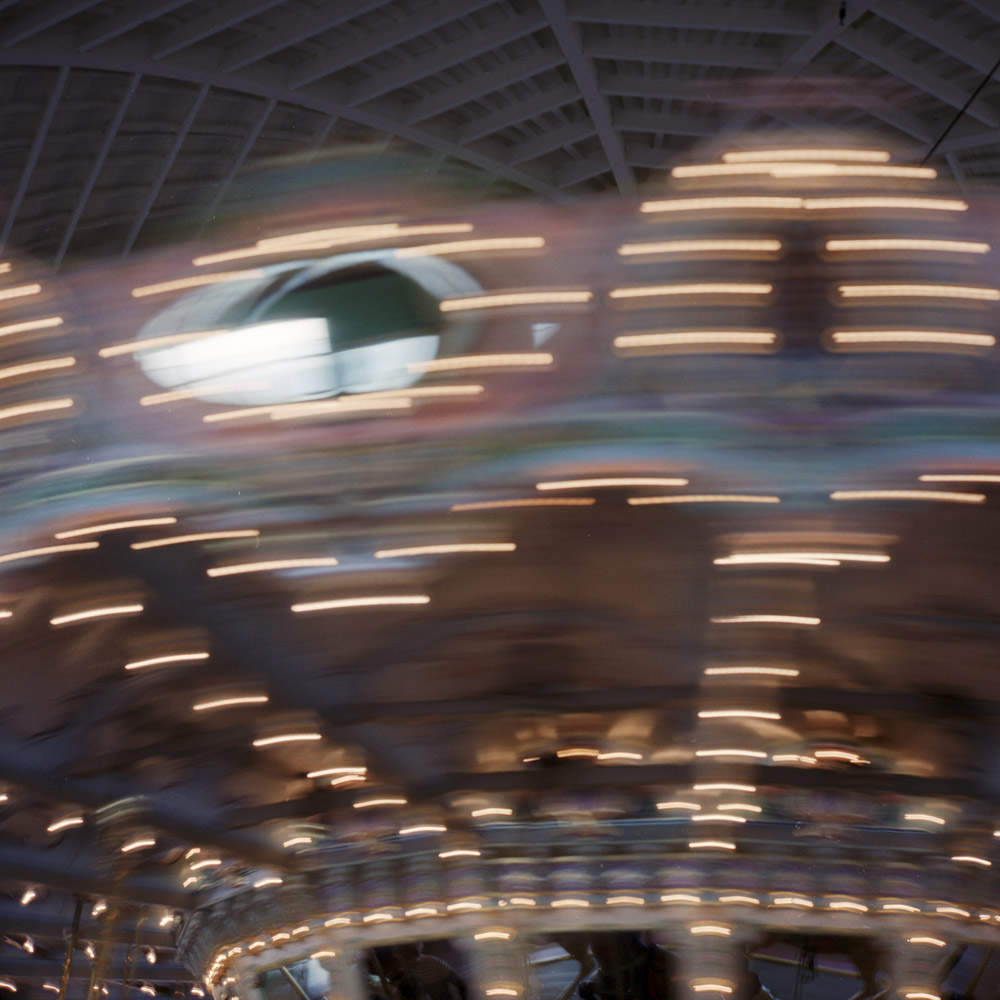
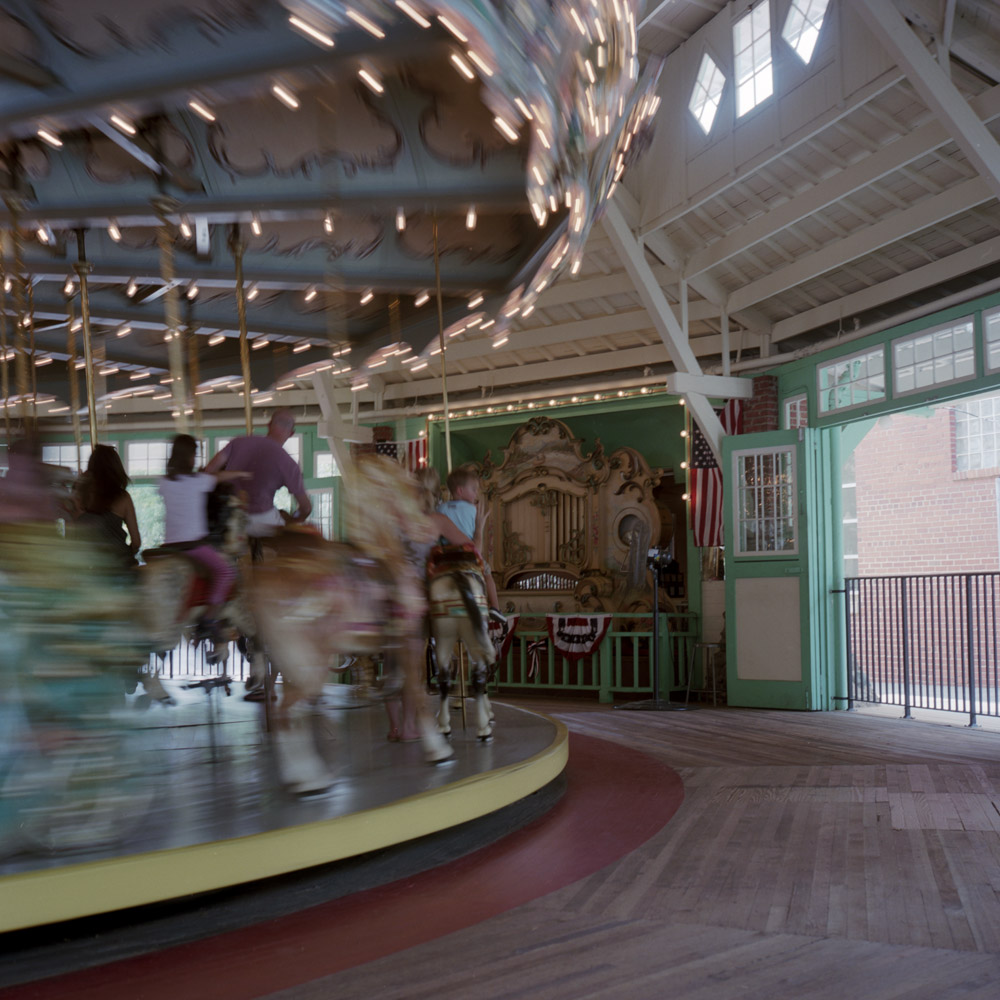
Glen Echo Carousel in Motion, #1
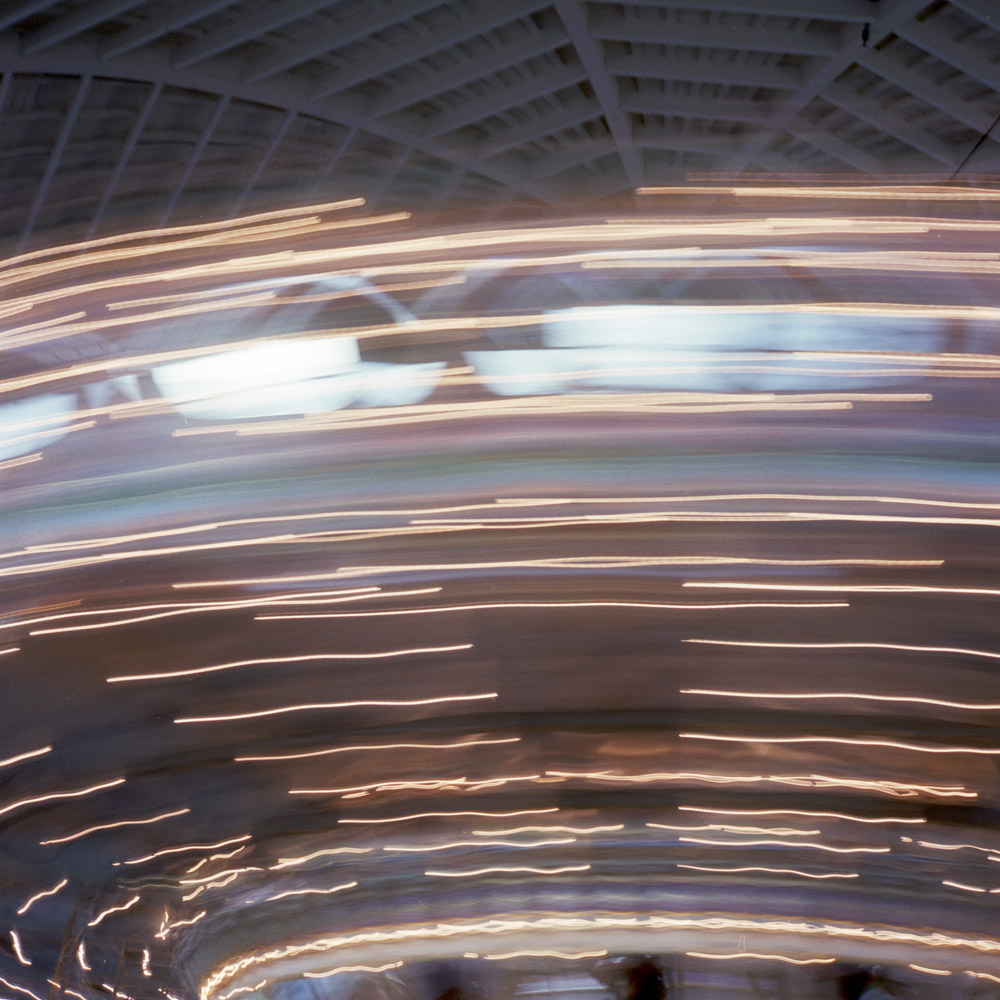
Glen Echo Carousel in Motion, #2
Glen Echo Carousel in Motion, #3
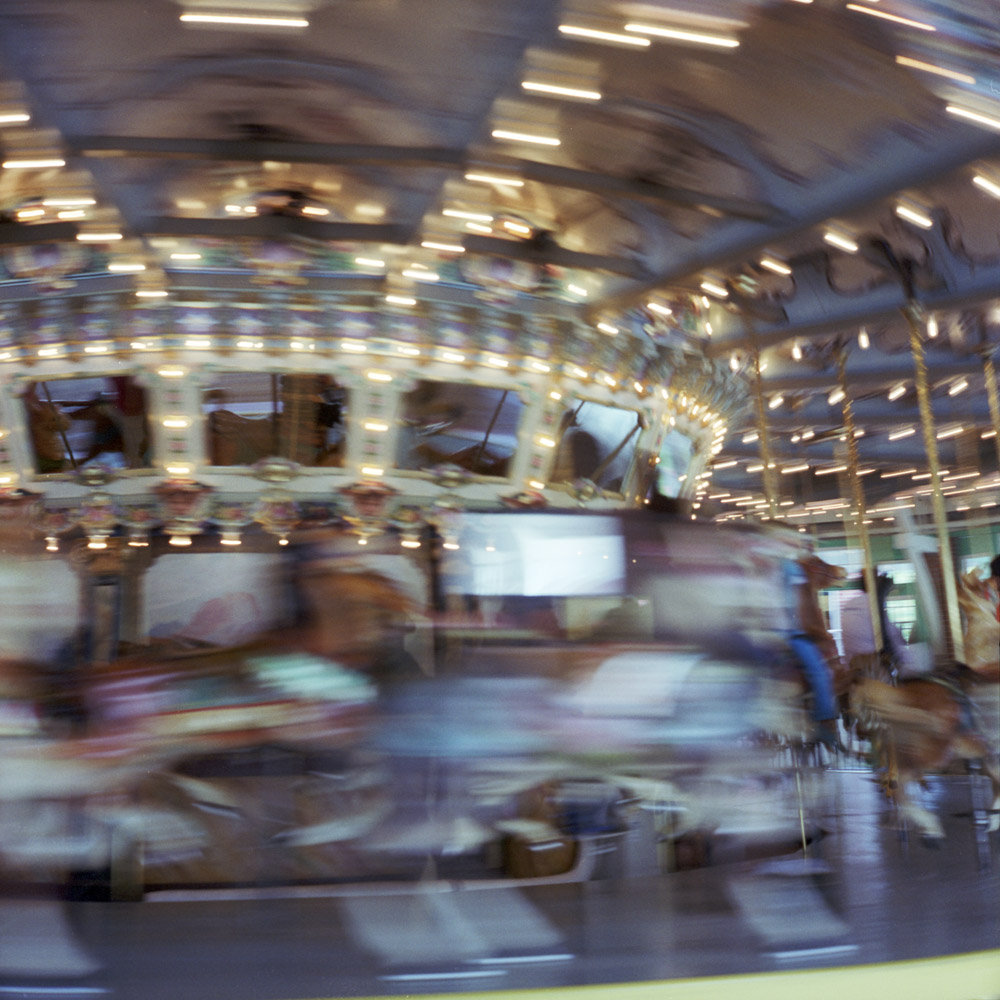
Glen Echo Carousel in Motion, #4
Glen Echo Carousel, Midway, Twilight
Dentzel Carousel, Glen Echo, Sunset
Glen Echo Arcade, Twilight
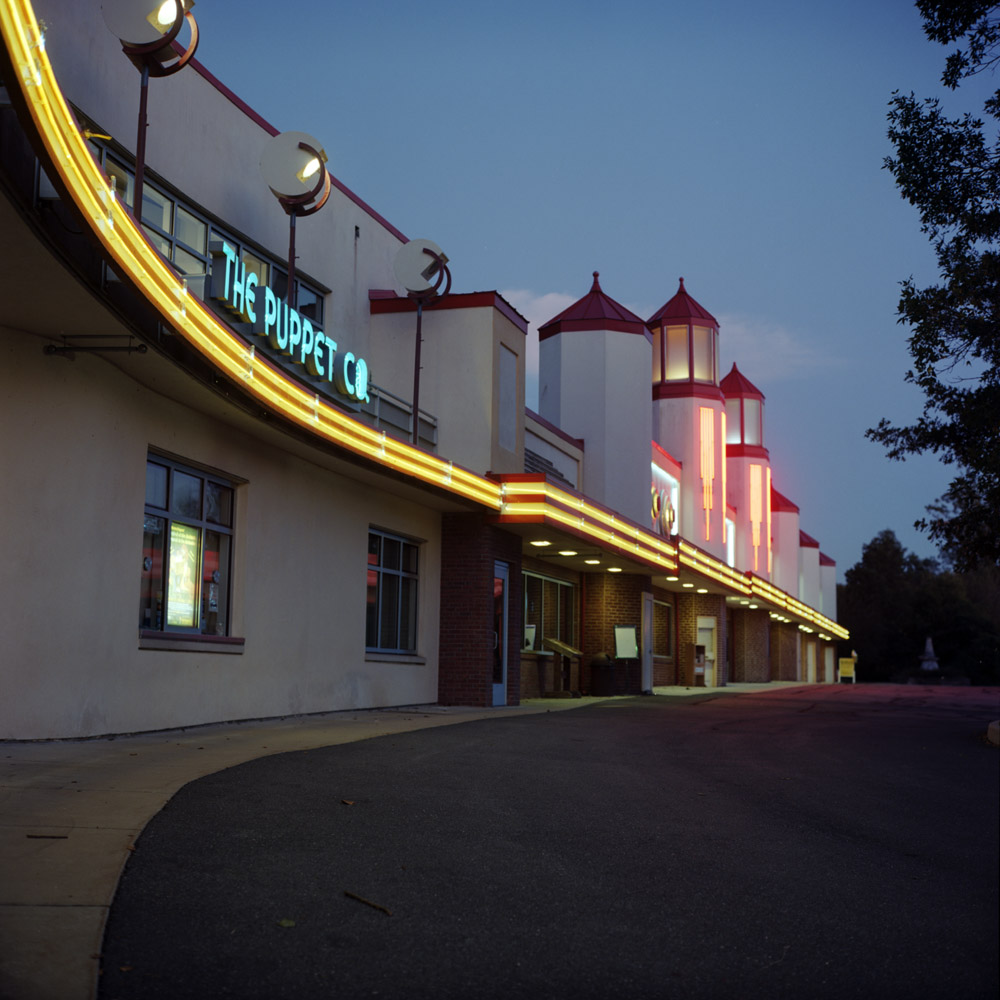
Glen Echo Arcade,Puppet Company, Twilight
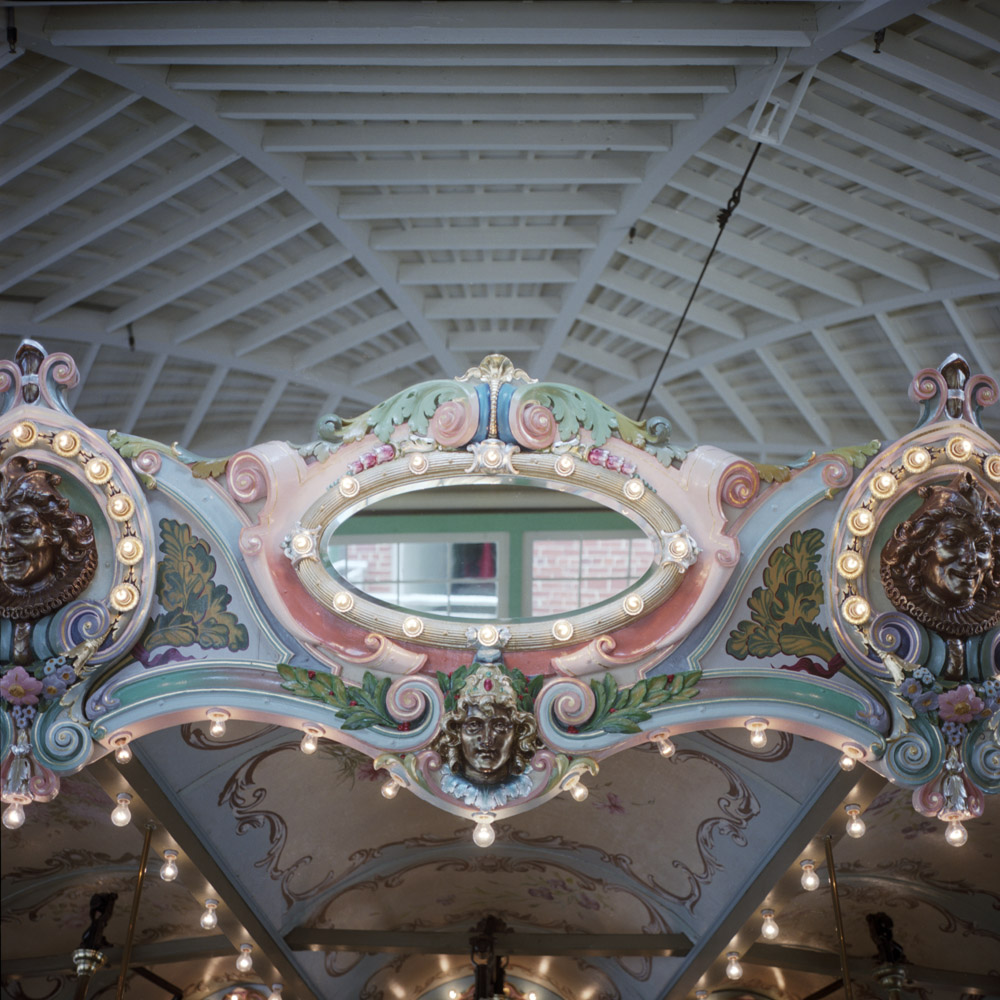
Mirror and roof vaulting, Glen Echo Dentzel Carousel
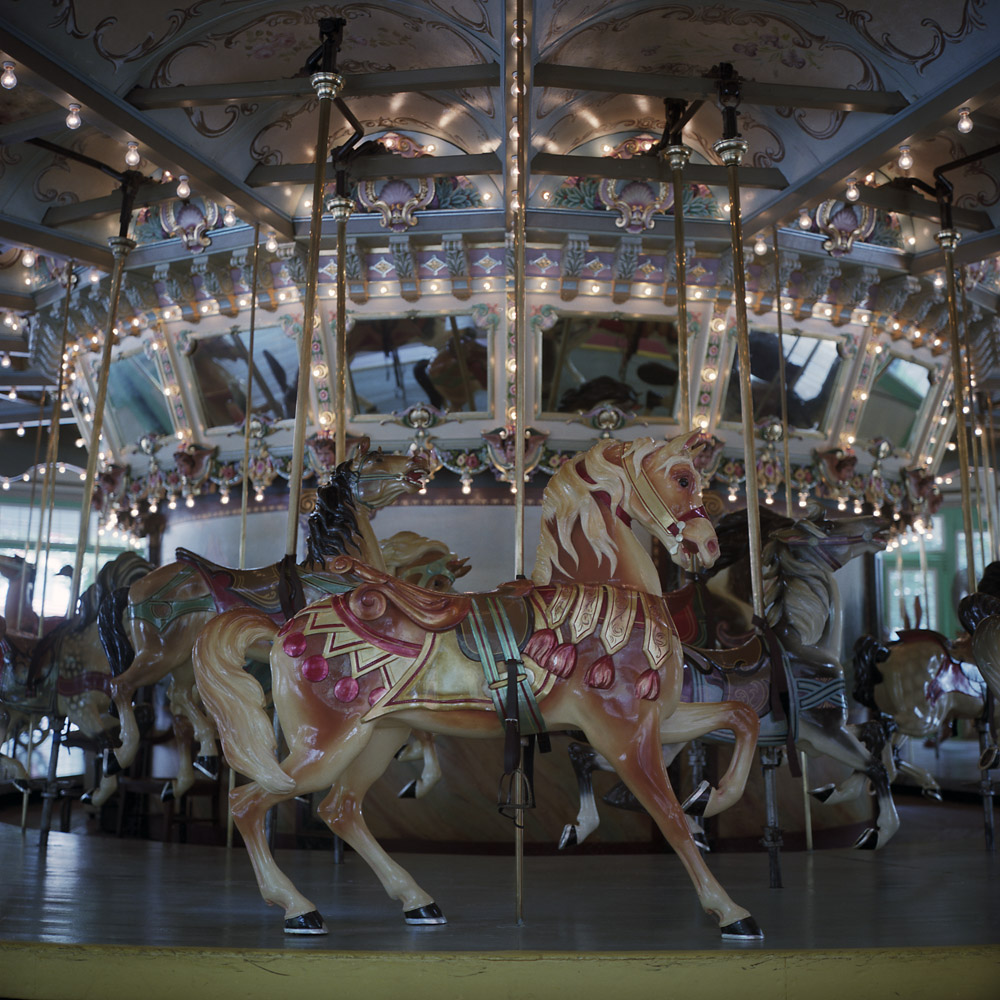
Dentzel Carousel Horse
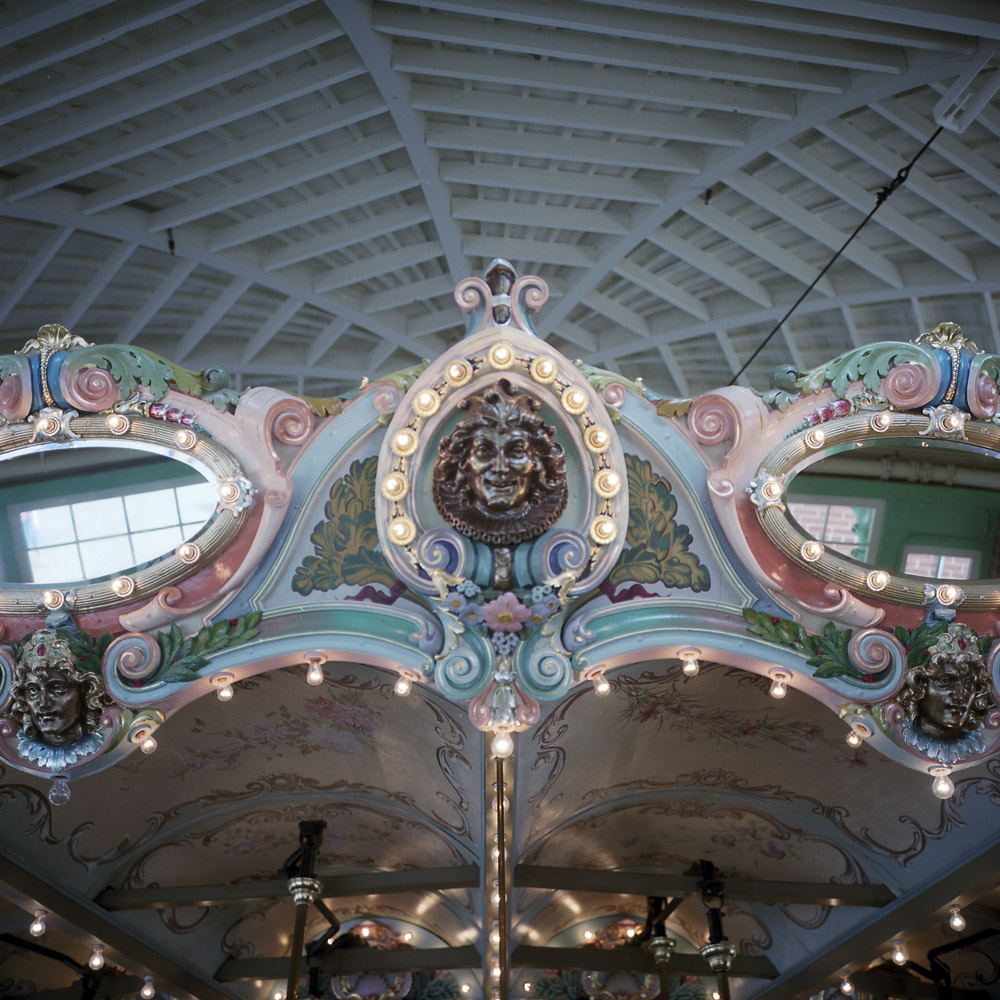
Faces of the Dentzel Carousel
The Dentzel Carousel in motion
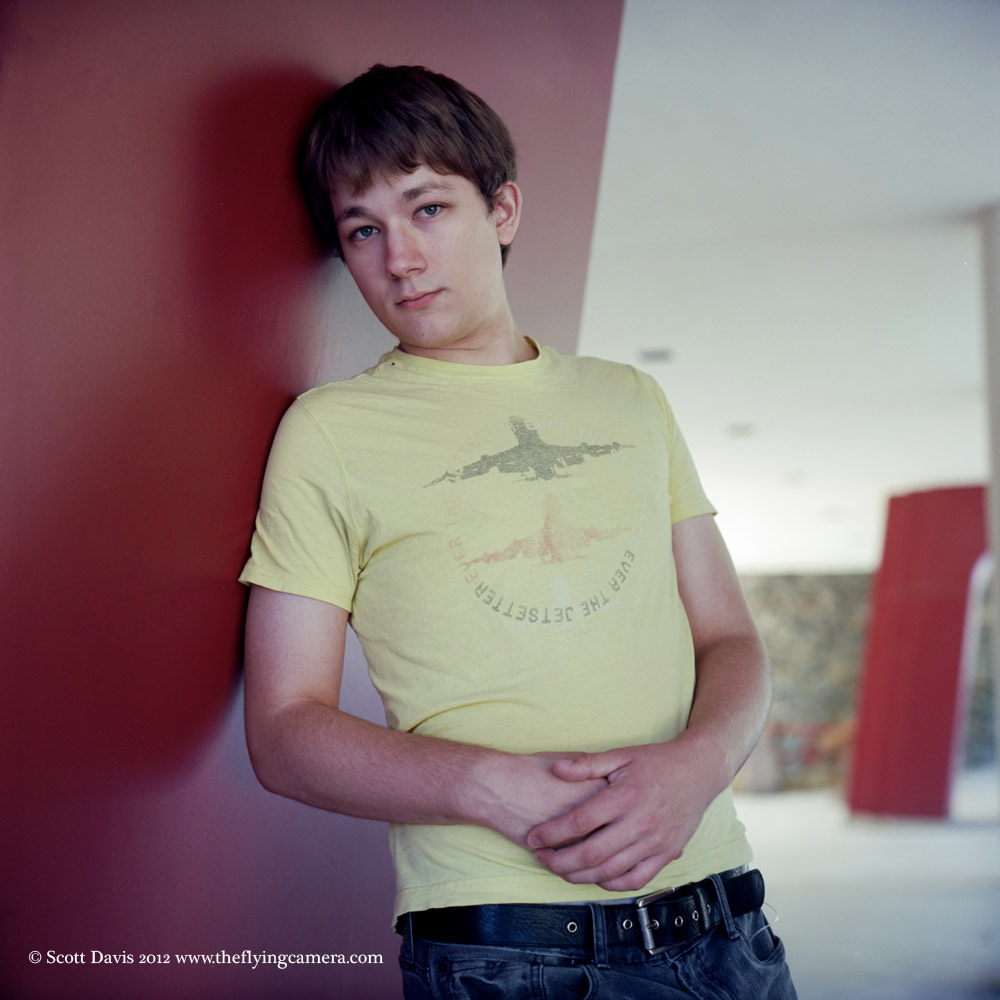
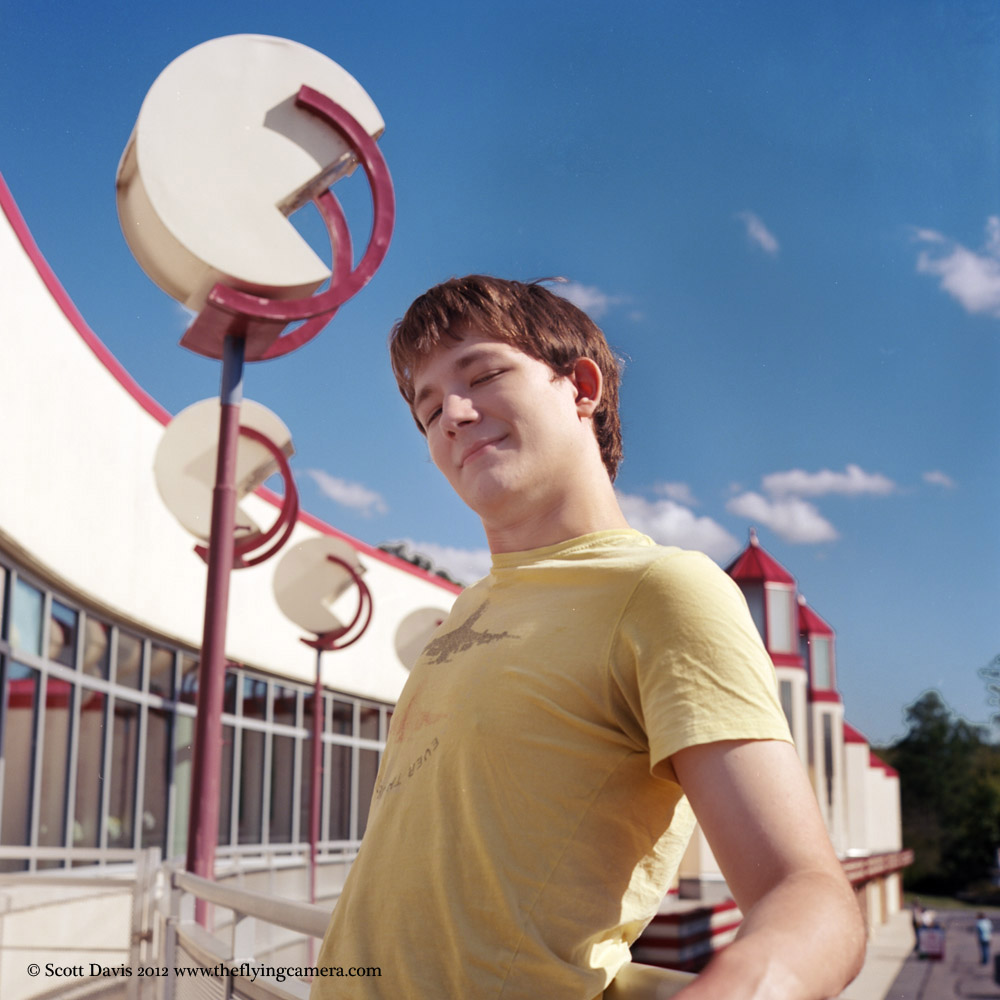
James, Glen Echo Park #1
James, Glen Echo Park #2

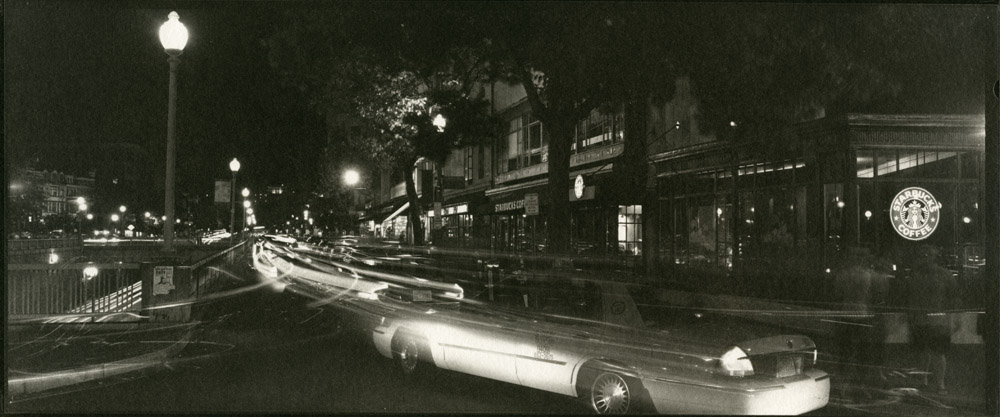
Dupont Taxi, Palladium

Taxi, Northbound on Connecticut at Dupont Circle, Night

Another image in that nighttime series. Palladium print, Bergger COT320 paper.

Variations on a theme – Palladium versus Ziatype

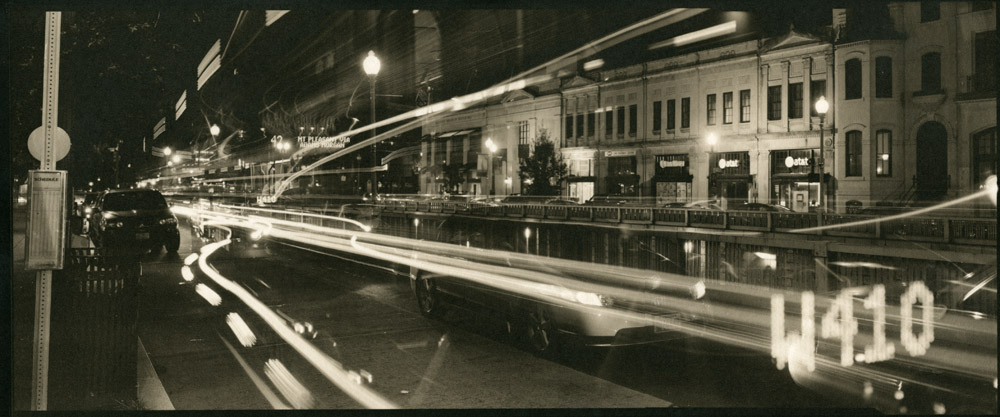
Dupont Circle bus stop, Palladium over Fumed Silica

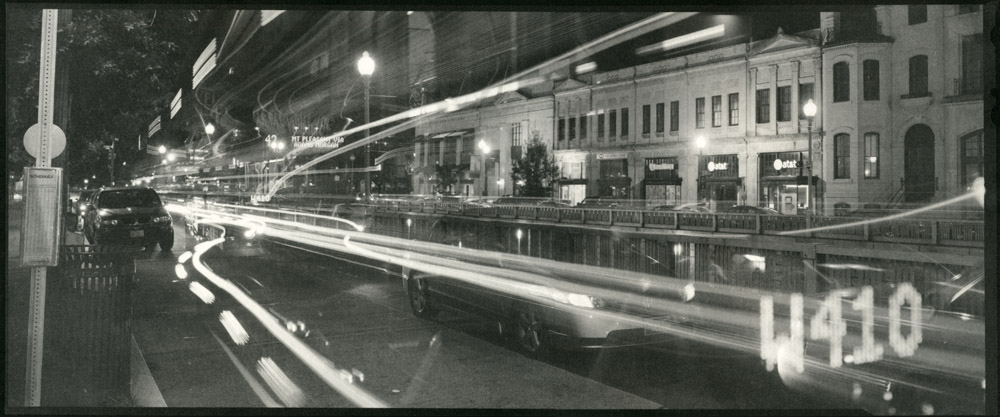
Here’s another of my 5×12 panoramics of Dupont Circle here in Washington DC. This was several exposures on the same negative, yielding an approximate minute and thirty seconds or thereabouts. We were printing from this negative in my Advanced Topics in Platinum/Palladium Printing class out at Photoworks Glen Echo this past weekend. The print I scanned for this image was printed on Bergger COT320 pre-treated with fumed silica. The fumed silica yields a definite boost in dmax.

The next print is of the same negative, but printed as a Ziatype. Ziatypes are a variation on palladium, but they use either Lithium Palladium or Cesium Palladium and Ammonium Ferric Oxalate instead, which yields a neutral-to-cool tone image more like platinum in color, and they are a printing-out process developed in water as opposed to a develop-out process that requires Potassium Oxalate or Ammonium Citrate as a developer.

The distinction between printing-out and developing-out, in addition to the chemistry variations, is the fact that a printing-out print’s final exposure is judged by visual inspection – what you see when you pull the print from the contact frame is pretty much what you’re going to get when it is washed, cleared, and dried, but a developing-out print will have some kind of ghost image that is anywhere from almost imperceptible to a partial rendition of the final image prior to development. Neither one is better than the other, except that the Ziatype is easier for beginners until they gain confidence in their coating and printing skills. Ziatypes also have a wide range of contrast controls that will also affect image color in addition to contrast.

Dupont Circle bus stop, Ziatype

Further Colors of Night- DC’s Chinatown

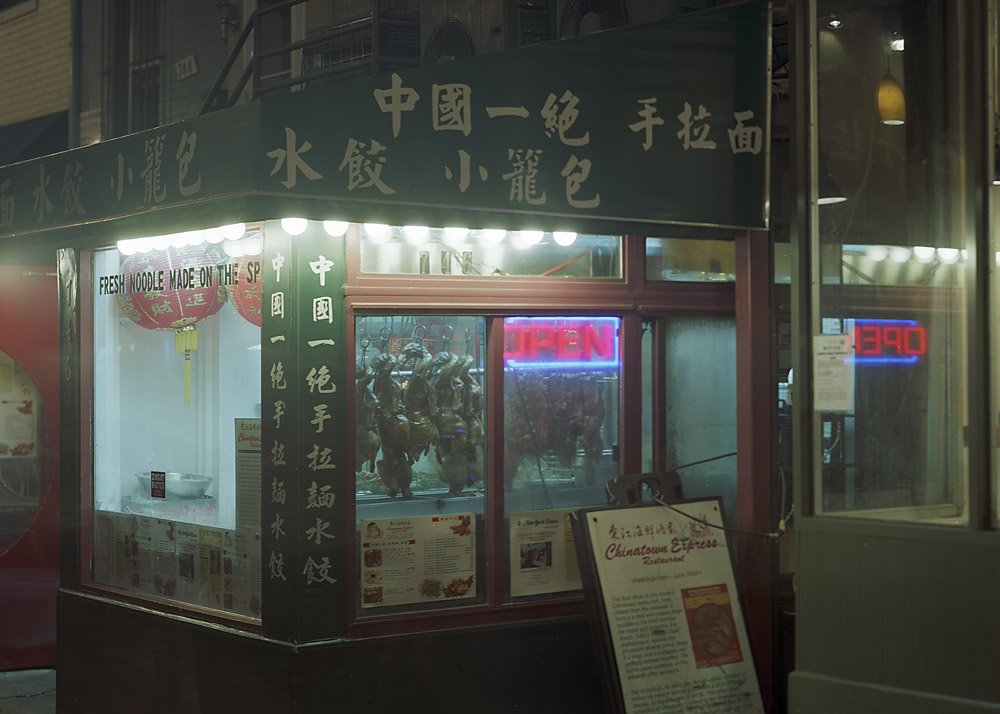
Fresh Noodles Made Daily

The fresh noodles and Peking duck house on 6th Street, NW. I think someone needs to teach them about Windex, as the “OPEN” sign is fuzzy not from being out of focus in my composition but from the splattered duck fat on the window. And no, I’ve never eaten there to know if the food is any good or not. But if you’re lucky when you wander by you can watch them making traditional Chinese noodles in the window, stretching and re-folding the dough over and over and over again, then cutting the ends and BOOM! you’ve got all these separate strands of pasta.

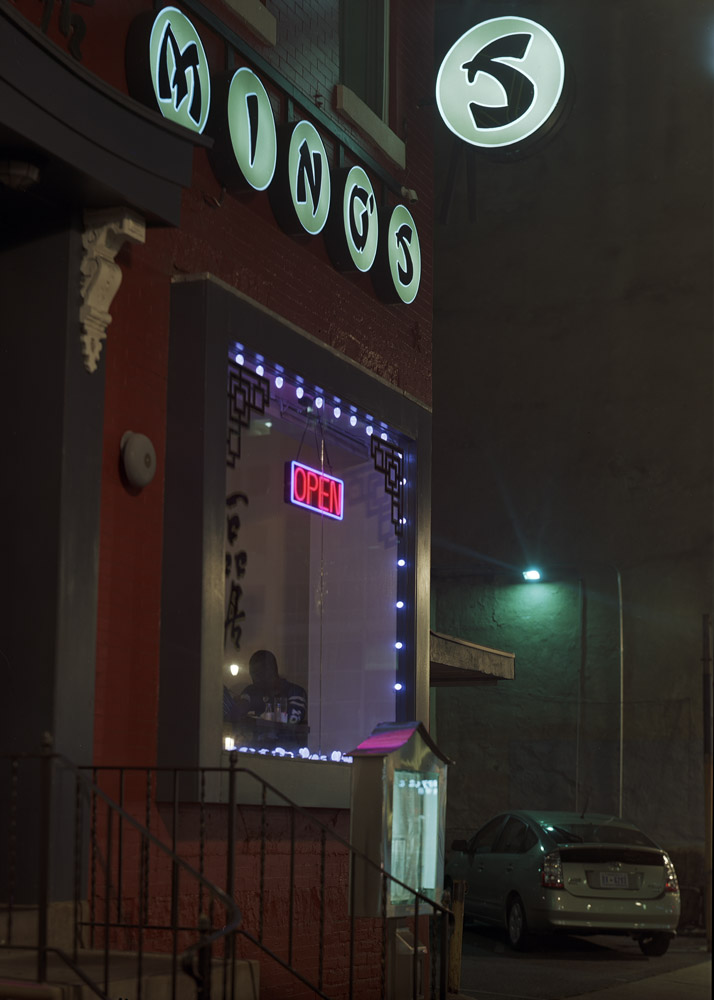
Mings Chinatown
Mings Chinatown

I liked the juxtaposition of the empty sidewalk out front, the lone Prius in the parking lot next door, and the intimate diners in the window.

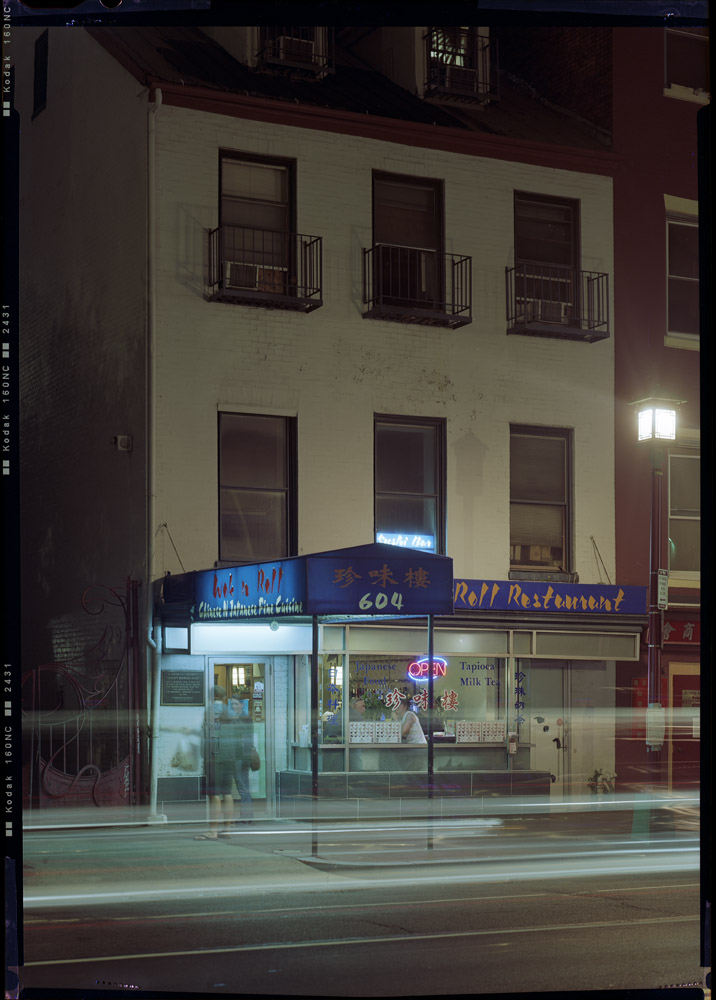
Secession Sushi - The Wok 'n Roll in the Surratt House
Secession Sushi – The Wok ‘n Roll in the Surratt House

This one gets a cutesy title because there’s just something so post- and meta- and ironic and all that kind of stuff about having a sushi joint on the ground floor of Mary Surratt’s boarding house, where the plot to assassinate Abraham Lincoln was hatched. Don’t believe me? Read the plaque on the wall of the house, like the two time-blurred figures in the photo are doing. It’s a very odd vestige of what downtown Washington looked like in 1865, and despite what Robert Redford would have had you believe in “The Conspirator” (by filming in an albeit lesser mansion in Savannah, Georgia), evidence of the utterly middle-class lifestyle of Mary Surratt.

All the above images were shot with my Canham woodfield 5×7, using my Kodak 12″ Commercial Ektar, using Kodak Portra 160nc film.

The Colors of Night – more Washington DC and environs shots

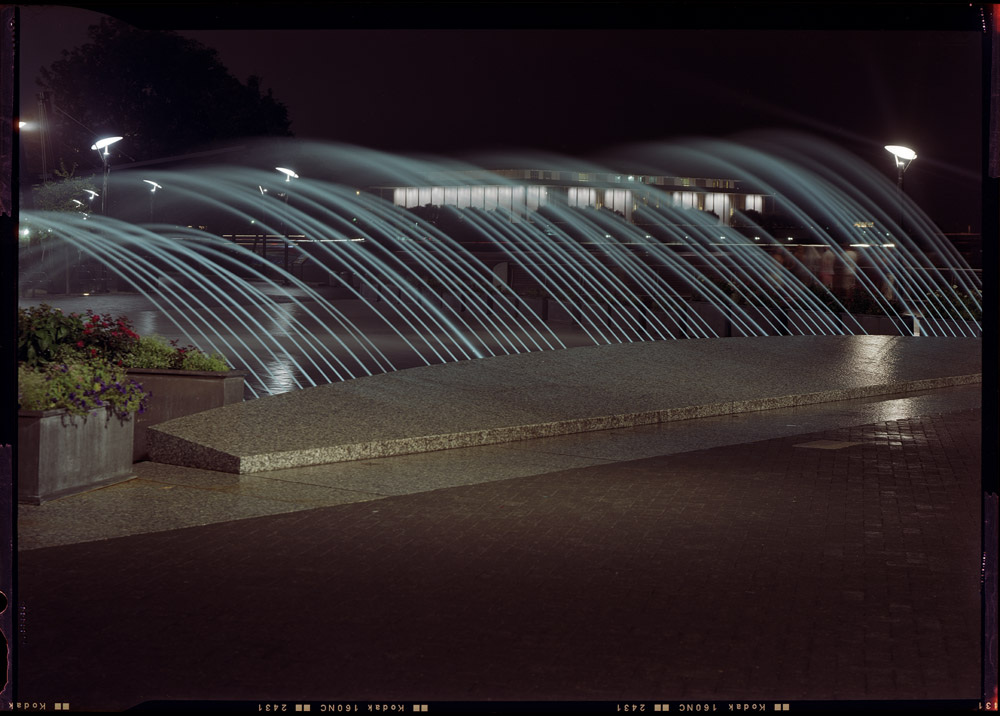
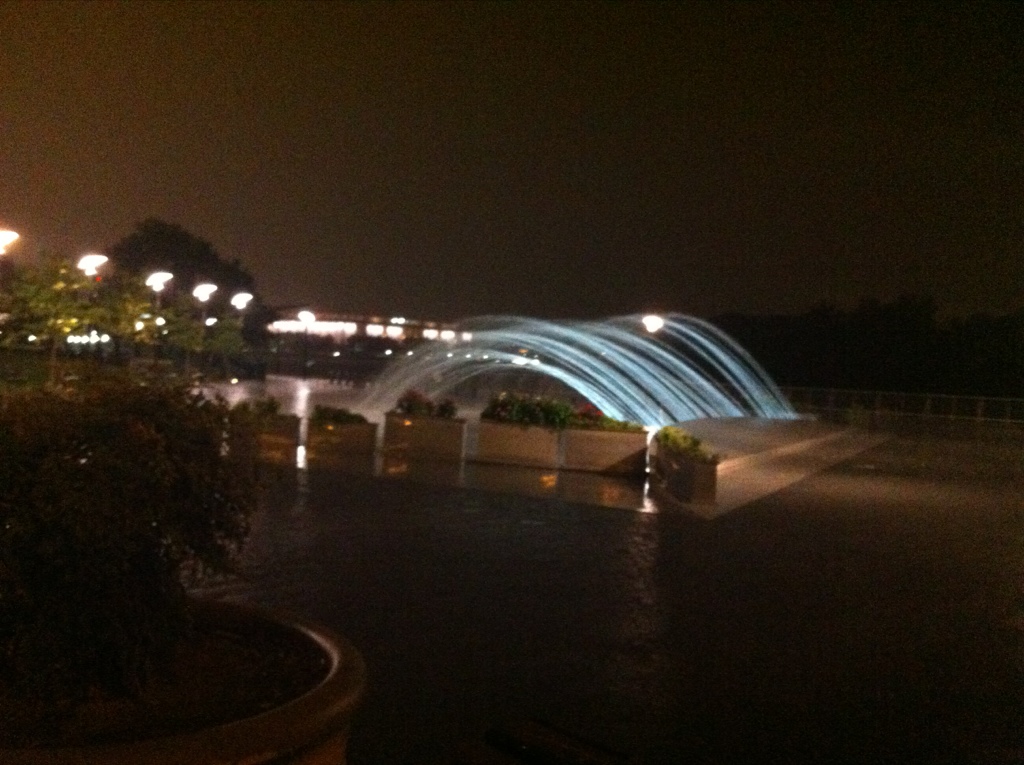
Fountain, Georgetown Waterfront, Kennedy Center

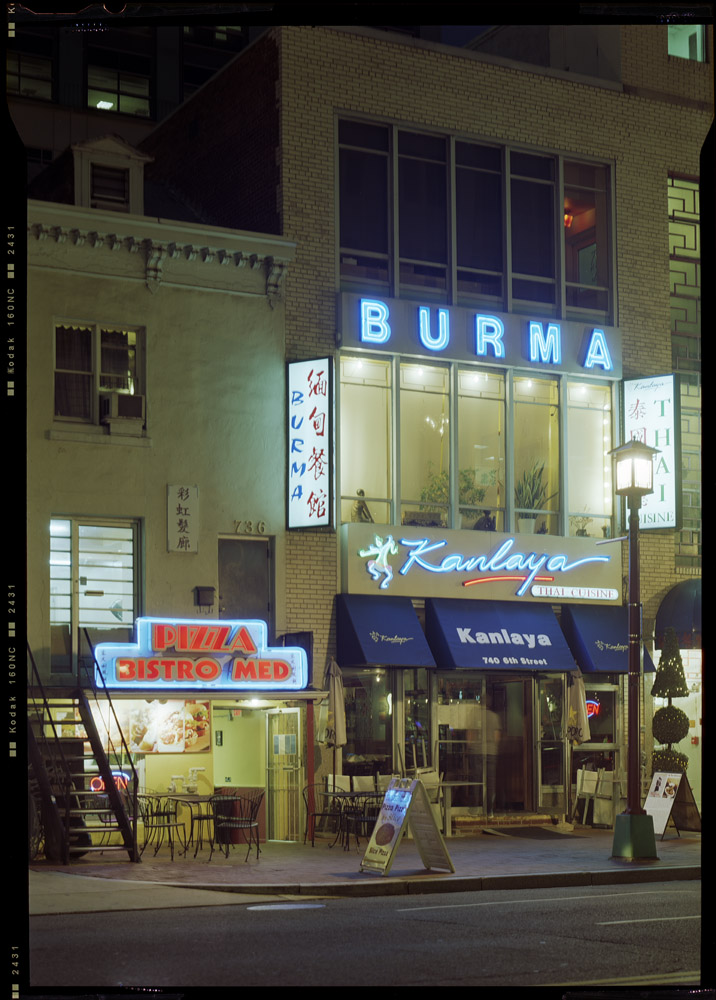
Burma Restaurant, Chinatown, DC
Glen Echo Sign
Glen Echo Sign


Three more in my DC at night series. These were all shot with the Canham 5×7 wood field, and if memory serves, all were taken with the Kodak 12″ Commercial Ektar lens.

Some of my remaining 5×7 color negative film

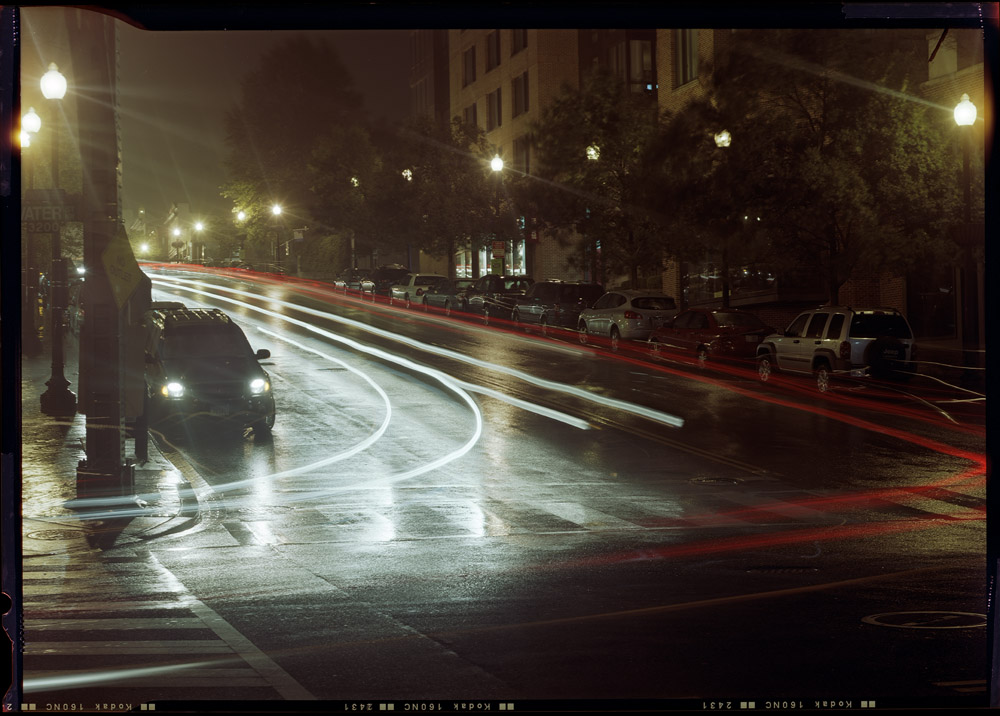
Georgetown in a Rainstorm

Here’s another in my DC at Night photos – the intersection of Wisconsin Avenue and Water Street, under the Whitehurst Freeway in Georgetown. I was down there shooting some other scenes, trying to finish off my 5×7 color negative film stock (I bought a 50 sheet box when it was only $150 a box…now, over $400!!!!). This was taken with my 12″ Kodak Commercial Ektar lens. A roughly 30 second exposure. I was a bit nervous during the shoot as I was out in the rain, with a carbon-fiber tripod, and sheltering under a gigantic steel overpass. I think the lightning was a few miles away though, and nothing happened. I was a little bummed that none of the lightning recorded in the sky as anything other than general fog, but hey… the headlamps and tail lights of the cars recorded very nicely, don’t you think?

Busy photo day

Today was a very busy day. This morning I went out to Glen Echo Photoworks to help out with the open house. We had a lot of folks come through asking about my upcoming classes and about the prints I brought along.

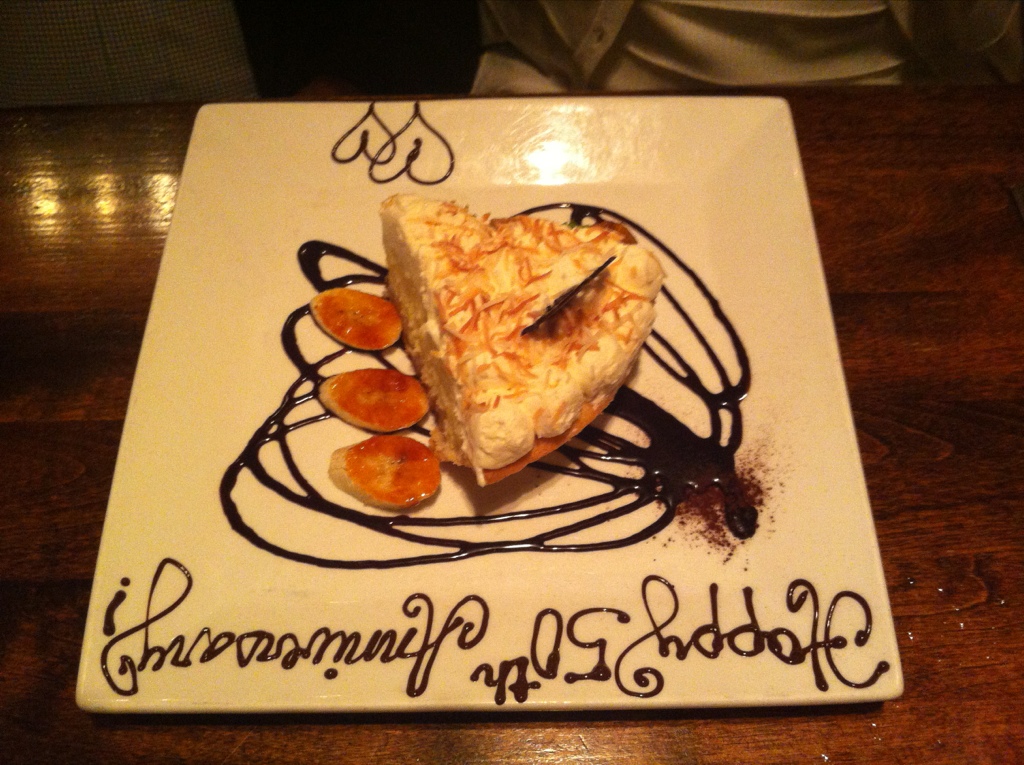
Then I went to dinner with my parents for their 50th anniversary at Blacksalt, which is a fancy fish and seafood restaurant here in DC. I had made the reservations and told the restaurant about the anniversary in advance, so they prepared special menus that said Happy 50th Anniversary on them, and when dessert came out, they specially decorated the plate with chocolate sauce.

20120901-215241.jpg

The photo relevance here is that I brought the Rollei along to take their photo at the table. I’ll have the film dropped off Tuesday and get it back later this week.

On the way home, I detoured back to Glen Echo and waited for the neon lights to come on so I could burn through some more of that 5×7 Portra I have sitting around. And burn through it I did. I also stopped off in Georgetown and shot some more on the waterfront, and even grabbed a couple of sheets in the rain. I’m really looking forward to seeing those!

20120901-215800.jpg

First Session of Intro to Platinum/Palladium Printing a success

I finished up my first session of my Intro to Platinum/Palladium Printing class today. I had eight students, all highly motivated and enthusiastic, and it was a big help in making the class succeed. I was a bit nervous as this was my first time running the class, and it was sold out. There was a very diverse audience – about half and half male and female, and age ranges from early 20’s to late 60s (maybe older than that, but it’s not a very polite thing to ask). I was really thrilled that everything went smoothly – on day one, we all talked about the process, shared work and little bios of our artistic backgrounds, and then went out in Glen Echo Park to walk around and shoot some images. We made 10 negatives all told, enough for everyone in the class to own one, with a couple spares. Since platinum/palladium is a contact printing process, we shot all the film with my 5×7. Most of the students had never used a view camera before, so it was an additional learning experience for them. I took the film home with me and developed it that night, so that students would have real live working negatives, properly developed, for the class, and to keep a sample to see what a good negative looks like.

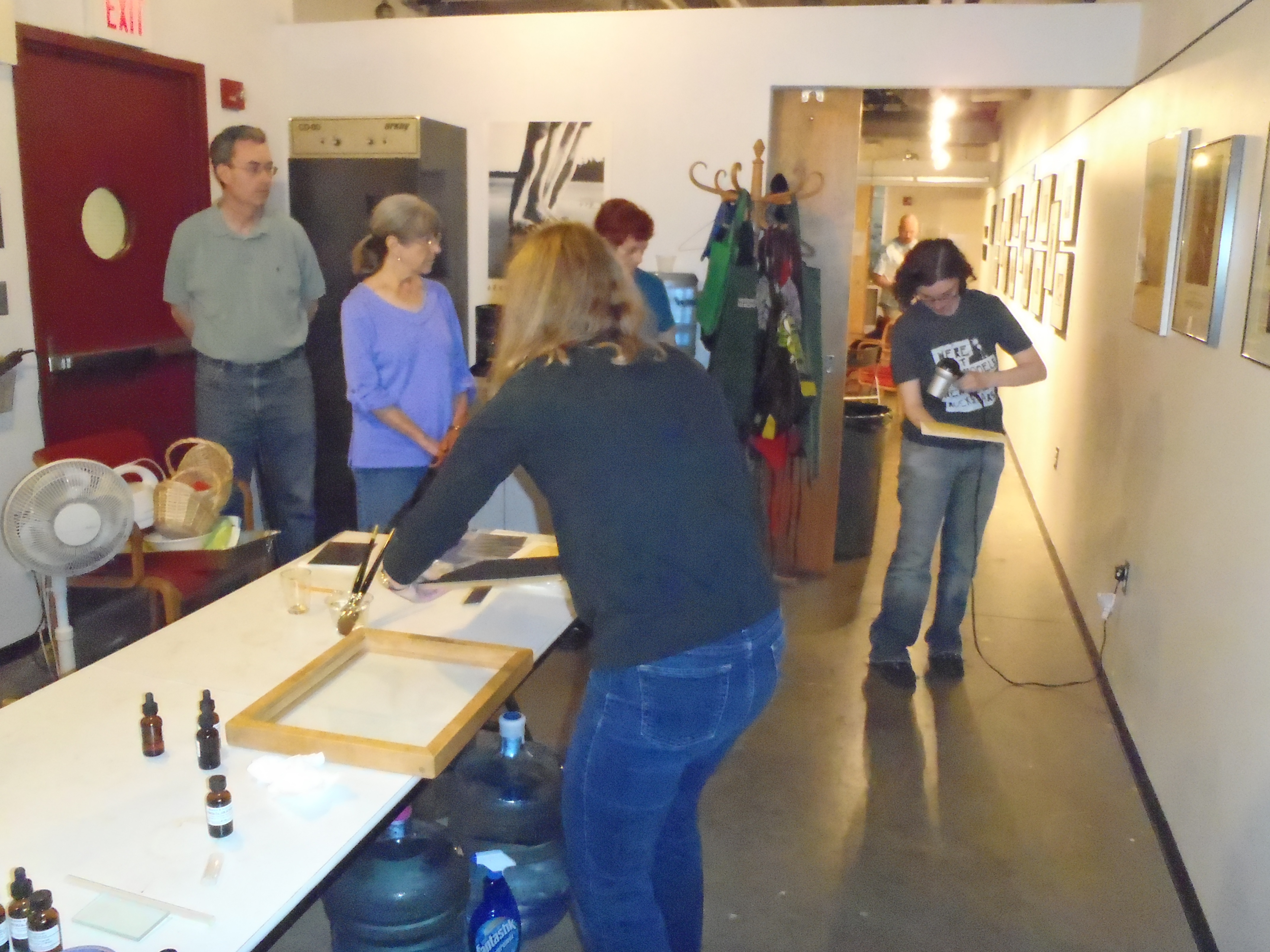
Today, we got in to the darkroom early, set up and went through the process, end to end. I began with a coating demonstration, then exposed the print, developed, cleared, washed and dried it. Then I cut my students loose and let them coat and print away.

Students Coating and Printing

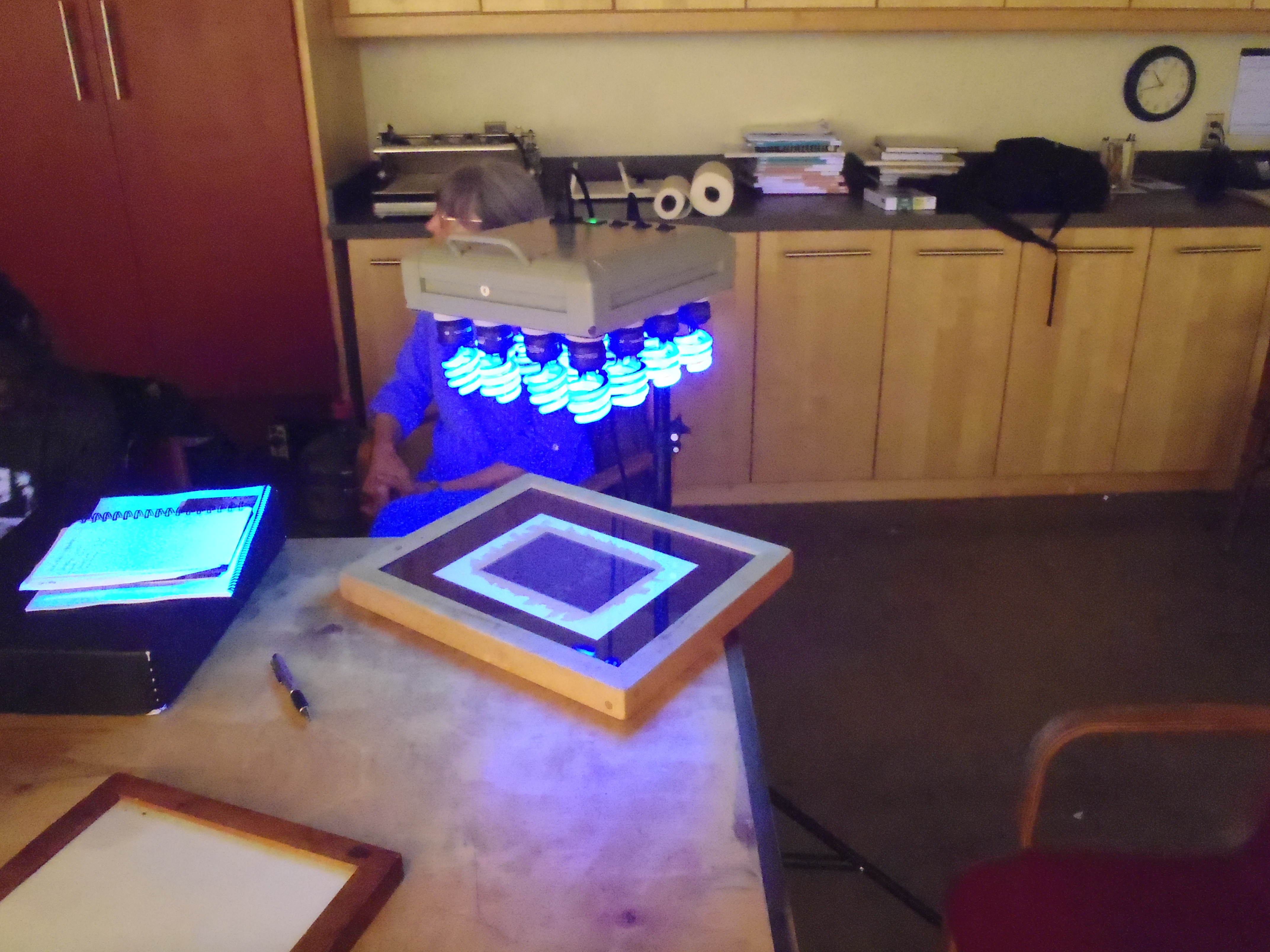
We used a combination of artificial UV light source and natural daylight – it was a cloudy overcast day, so actually not a bad day for doing pt/pd prints, but exposure times were LONG outdoors – with some negatives, up to 25 minutes. For a quick-and-dirty portable UV light source, I used a 16-socket PhotoDiox lamp house with black-light compact fluorescent tubes. It worked out great for exposing, if a little slow (the average exposure with it was 12 minutes), but we could only do one at a time with it. We still managed to get two prints done for each student, which is not bad for a single day printing session with so many people trying to use a small facility.

Exposing a Print
Exposing a Print

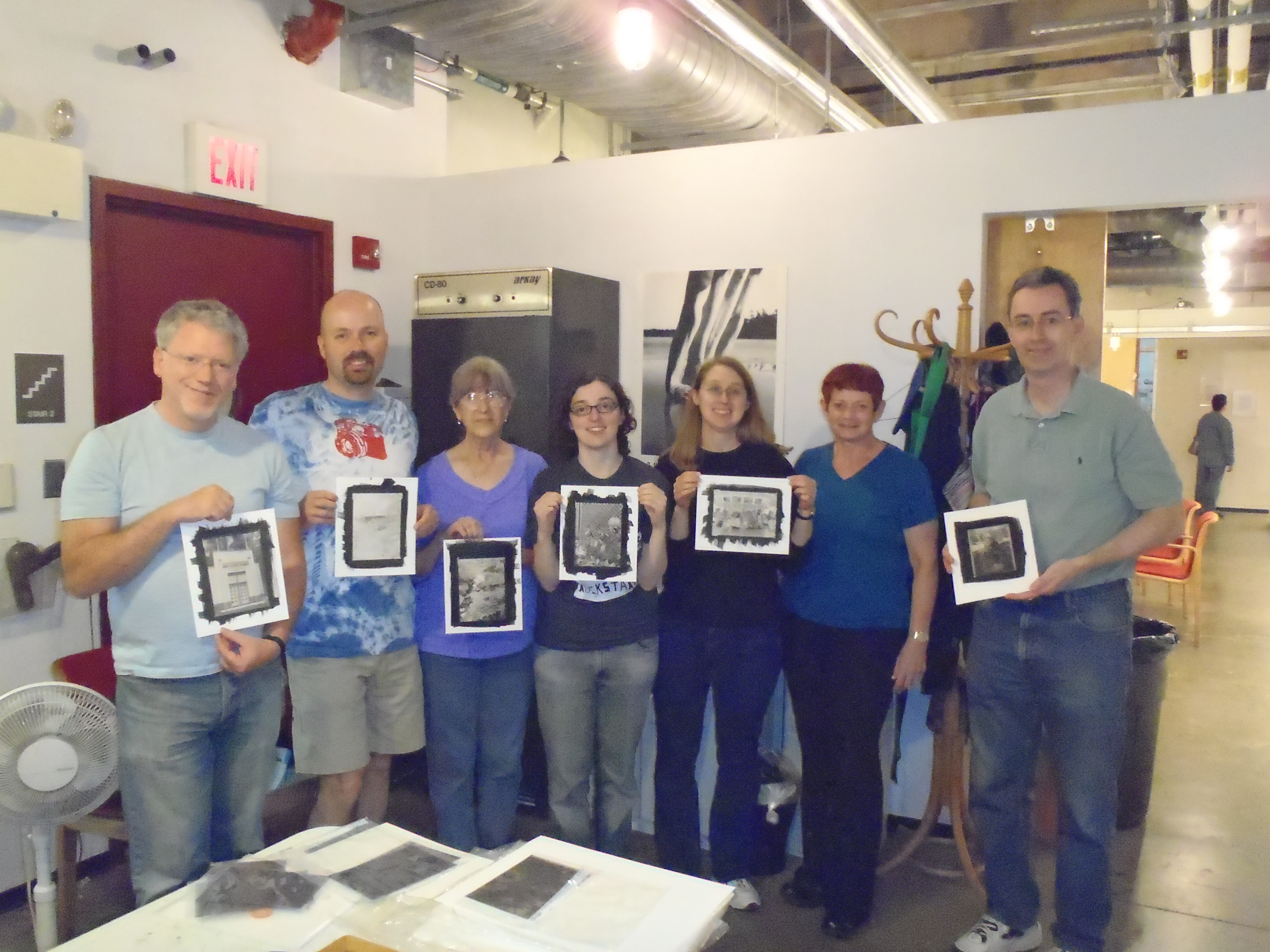
We got the chance to try both traditional develop-out palladium prints and printing-out Ziatypes (a variation on the theme but the image if fully formed during exposure and requires only a water wash step instead of development. Here are my students posing with their prints –

Class Photo - May 5-6 Intro To Platinum/Palladium Printing, Photoworks
Class Photo – May 5-6 Intro To Platinum/Palladium Printing, Photoworks

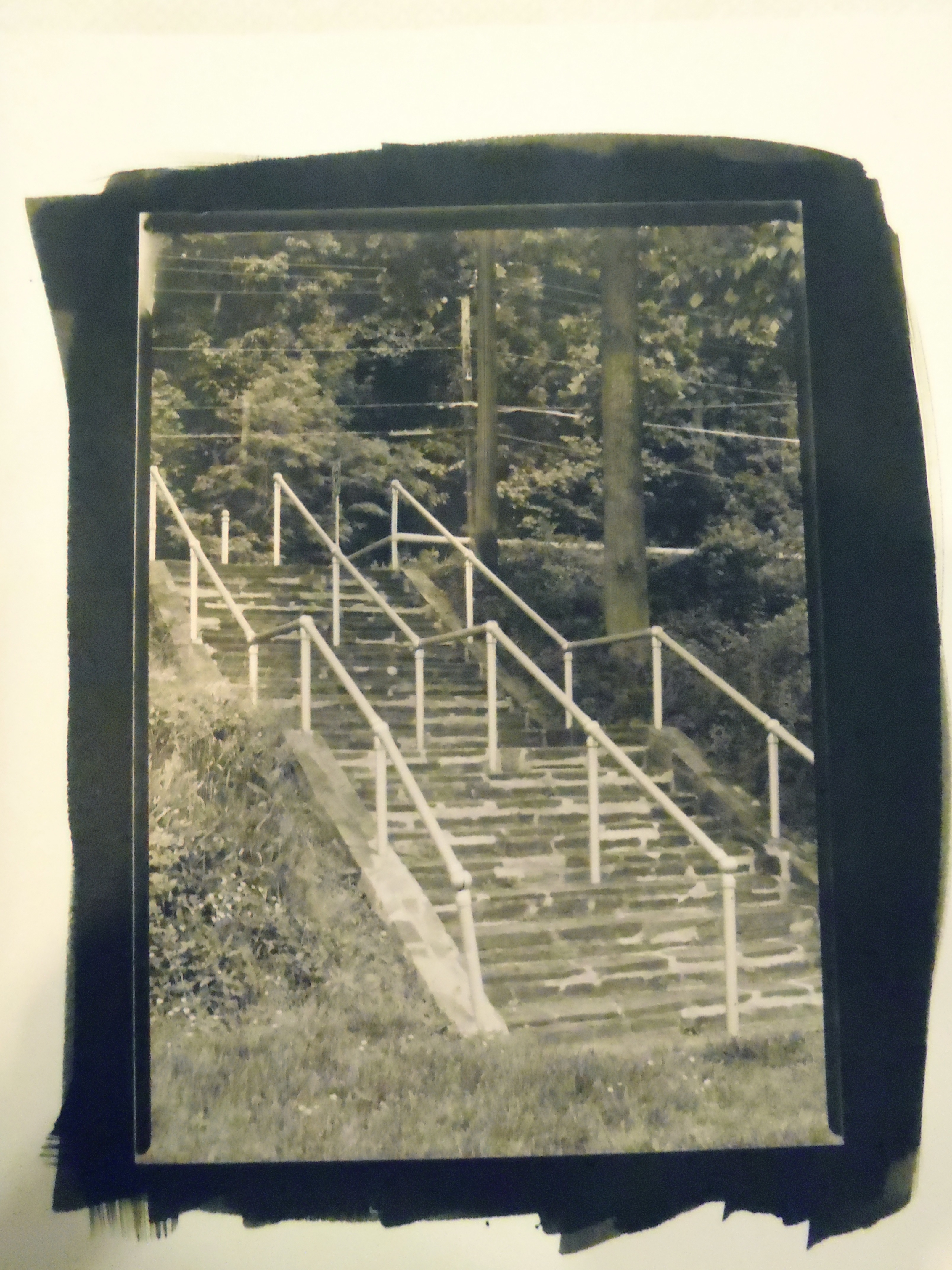
And here’s a finished print of one of the student images. The print is still wet, and the crappy Olympus digital P&S I was using didn’t white balance well, so my apologies in advance if the shot looks a little yellow –

Stairs, Glen Echo
Stairs, Glen Echo

Busy photo weekend ahead

Well, I just got finished loading up film holders in preparation for the next few days’ shooting. I have one shoot scheduled for tomorrow evening after work, and another for Saturday evening. I may well be certifiably crazy for the amount of darkroom work this will have me doing – I’ve got 10 sheets of 14×17, 20 sheets of whole plate (6.5×8.5 inch), and 16 sheets of 5×12 loaded and ready to shoot. I may be even more insane for even considering the jumps between formats. I’ll risk it though because I have so many ideas – I want to try and shoot my three-panel “folding screen” idea on the 14×17 with at least one of my models, I’ve got some more ideas for the “human commodities” series, and I also have ideas for the body panoramas. I’ve got to remember to bring some of my costume pieces from my RenFest outfit tomorrow as well as the shopping bags for the Human Commodities bit. See what I mean about crazy? At least this is a GOOD crazy.