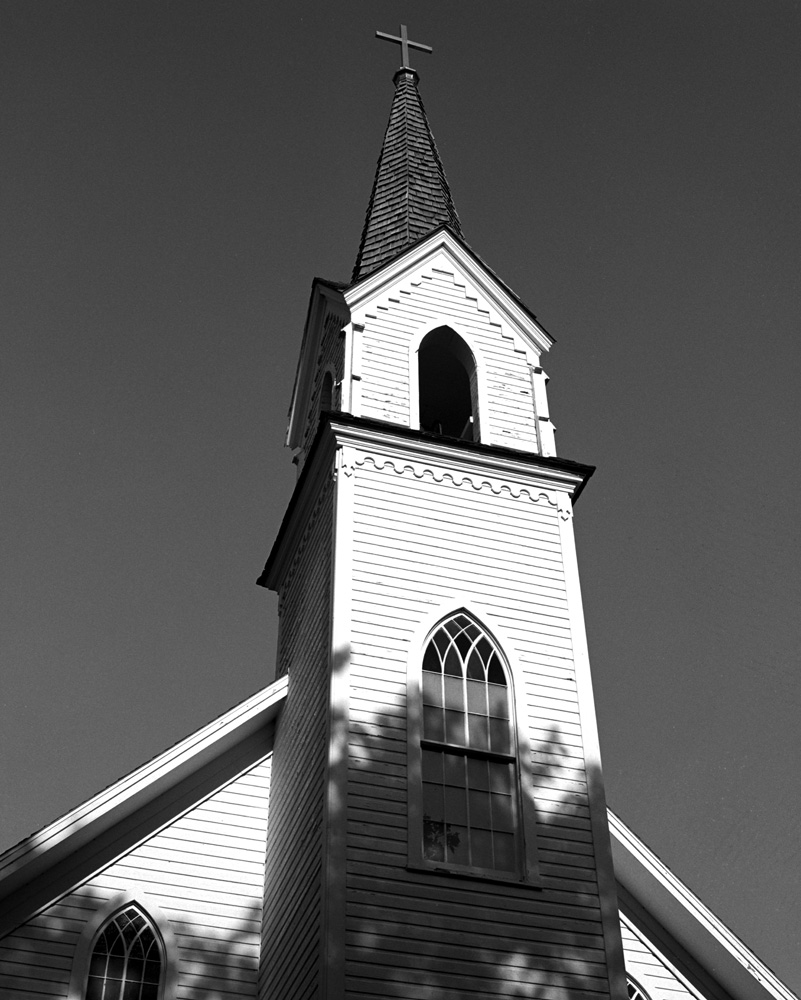
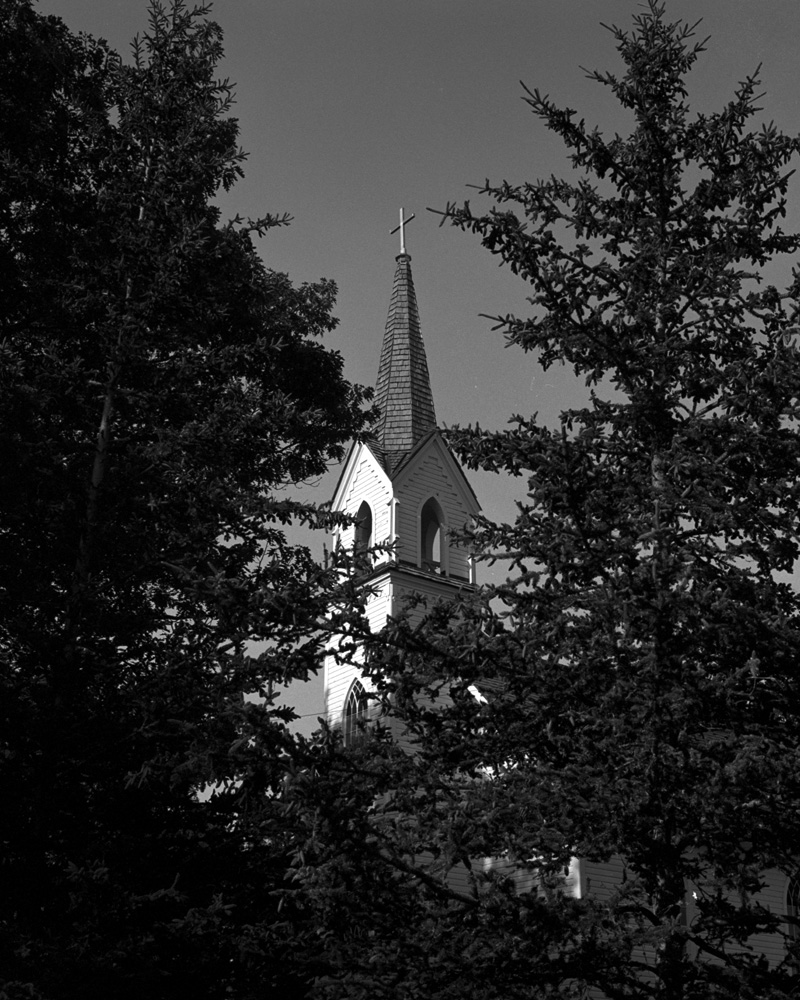
Here are the promised photos of St. Ignatius Church and the cemetery next door. St. Ignatius Church as it currently stands is the third structure to have been erected on the site, the oldest of which was the French Catholic mission to convert the natives in the 1700s.
St Ignatius SteepleSt Ignatius, Trees
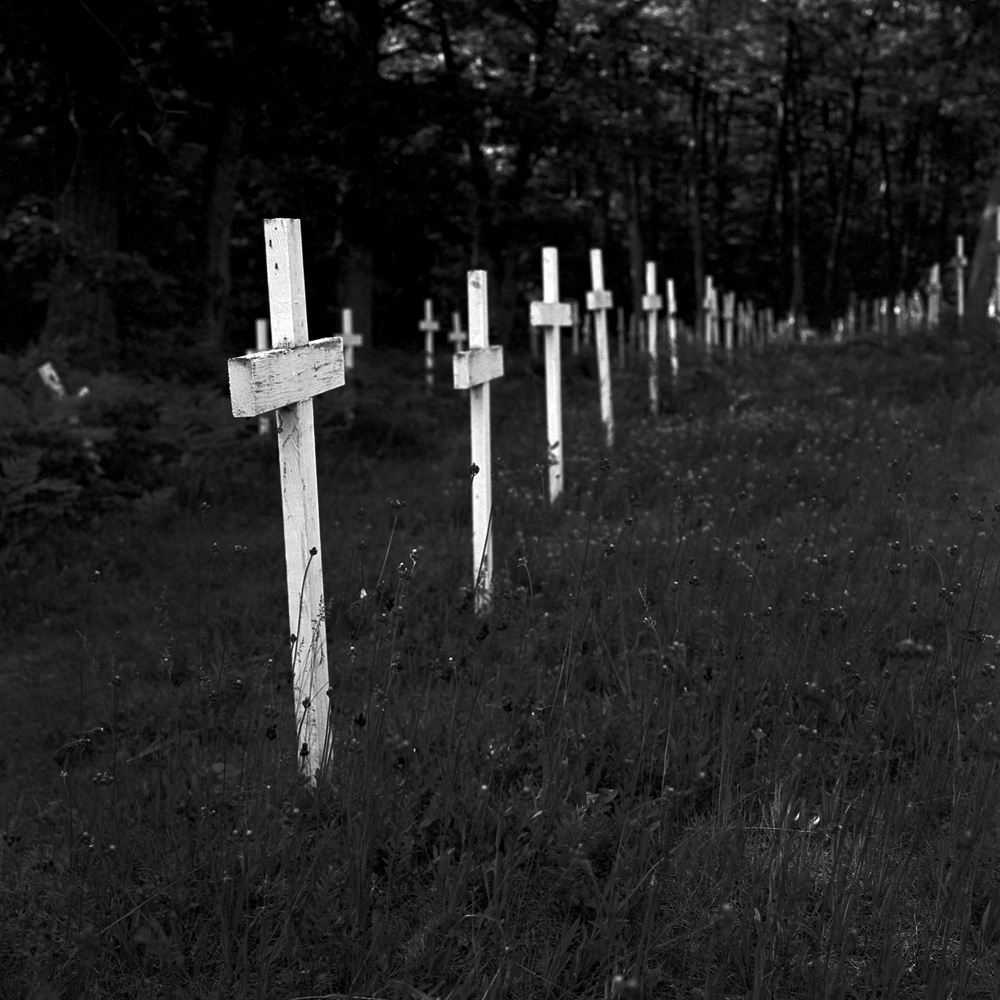
Today, the churchyard contains mostly 19th and early 20th century burials of Polish and Scandinavian immigrants. The churchyard is famous for the white wooden crosses for grave markers.
Crosses, St. Ignatius Cemetery
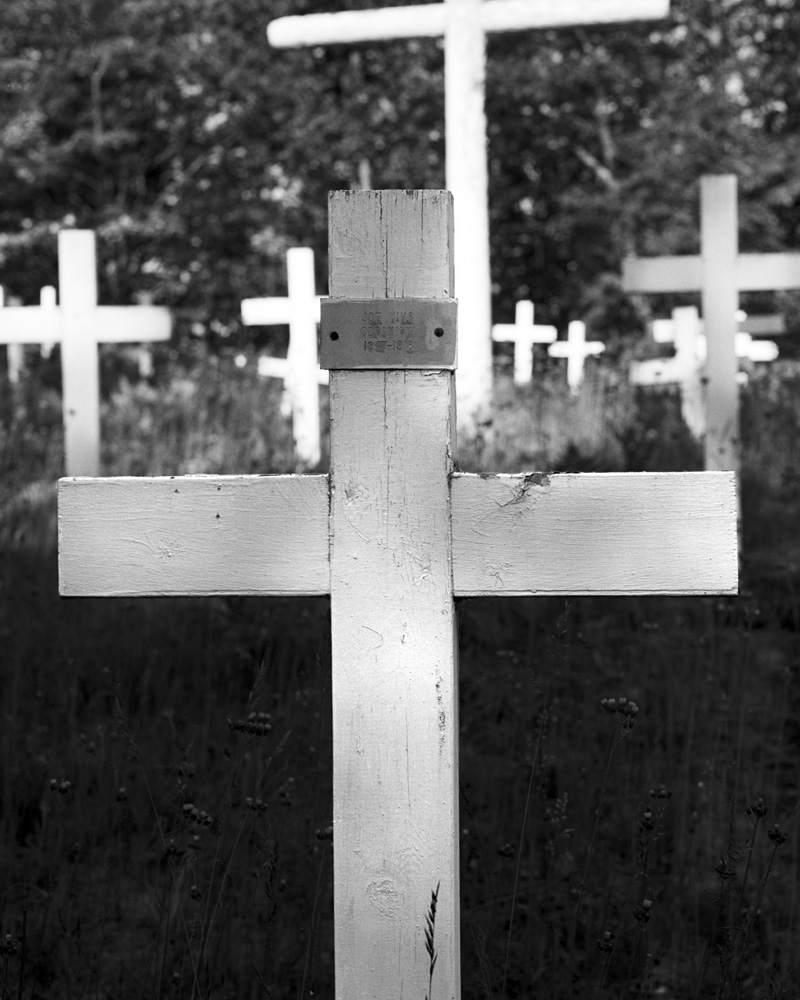
Here is a close up to show the tin markers with the names and biographical data on the crosses.
Joe King Odganicki
The church no longer has an active congregation, but is maintained by a local organization for its preservation.
Although these houses are familiar to Photostock participants from years past, I figure most of my readers have never seen them. The first building is across the intersection from Moose Jaw Junction, a roadside restaurant and bar near Larks Lake. The property is for sale, should anyone want a total tear-down.
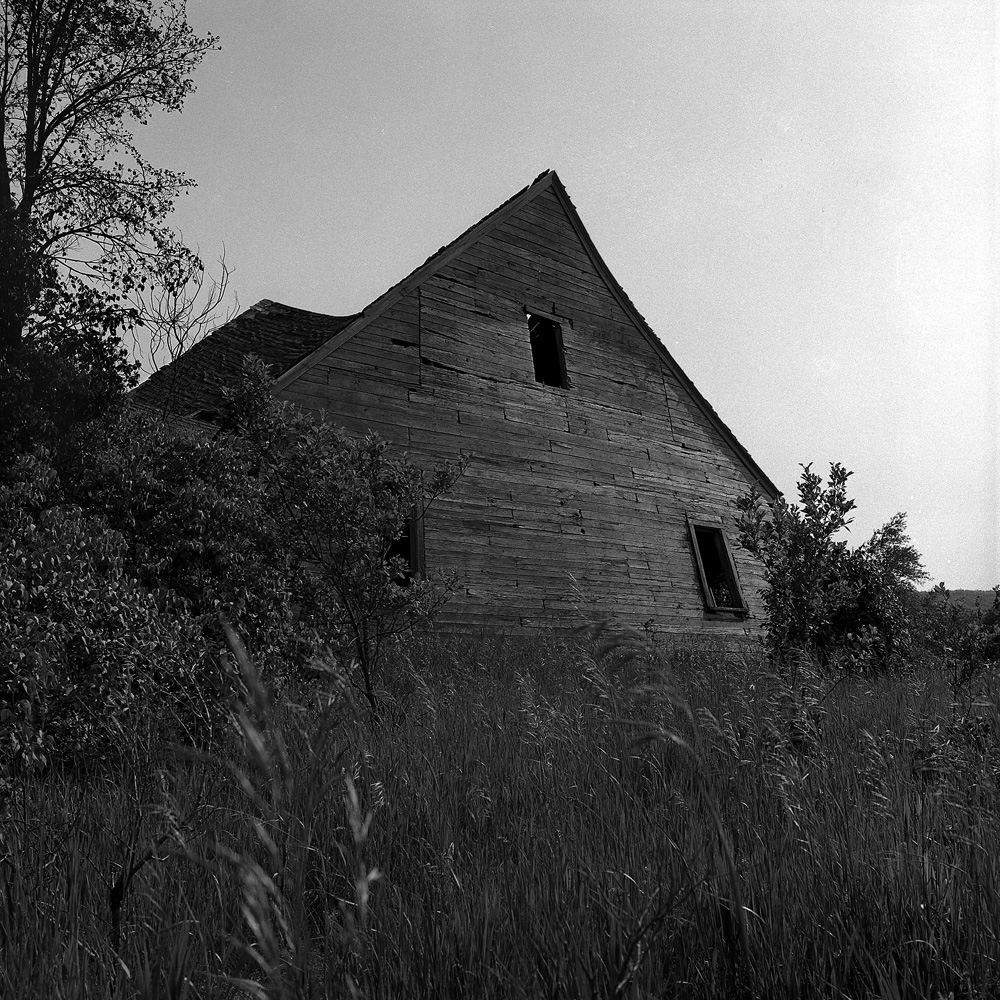
The Slumping House, End View, Moose Jaw Junction
A different view of the building:
The Slumping House, Moose Jaw Junction
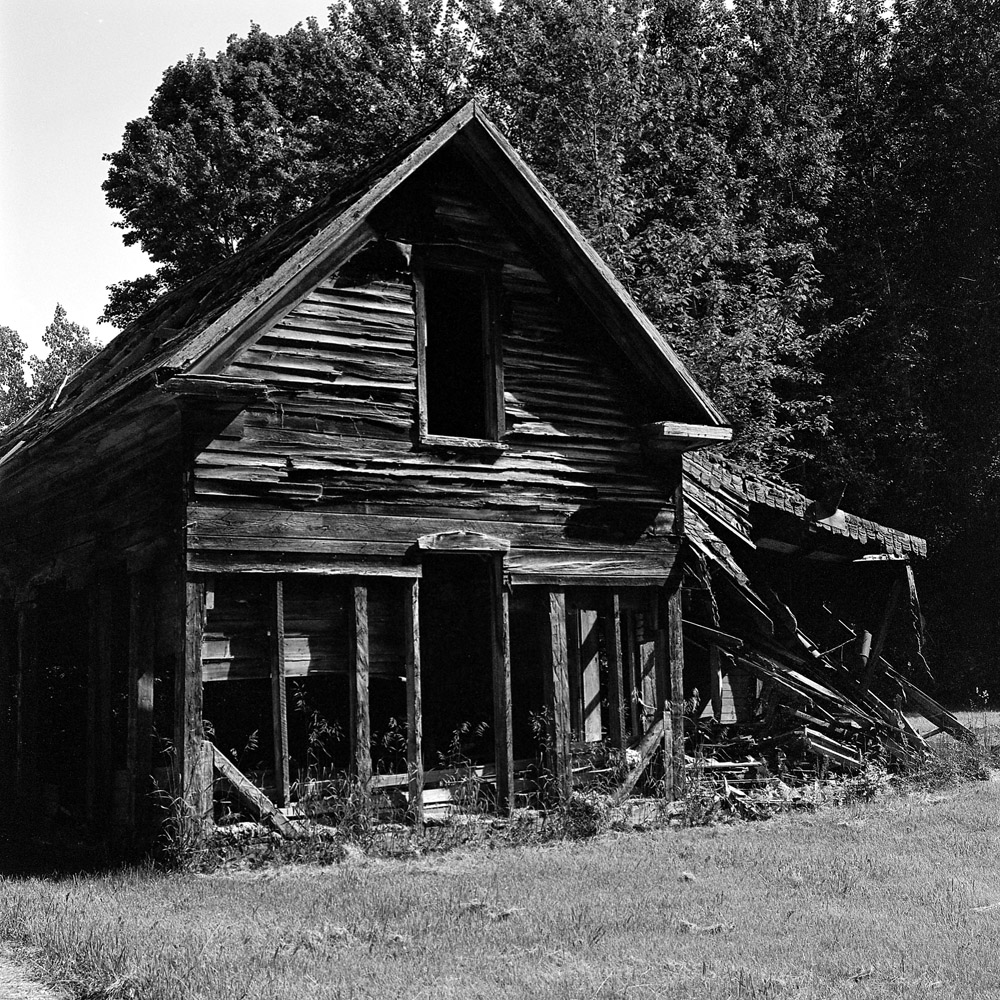
This house is/was a little cabin across the street from the St. Ignatius church in Good Hart, Michigan. Pictures of the church and its cemetery will be forthcoming in another post. From what I hear tell from past Photostockers, the cabin used to be far more intact than it is now and they have watched it deteriorate into this condition over the last half-dozen years.
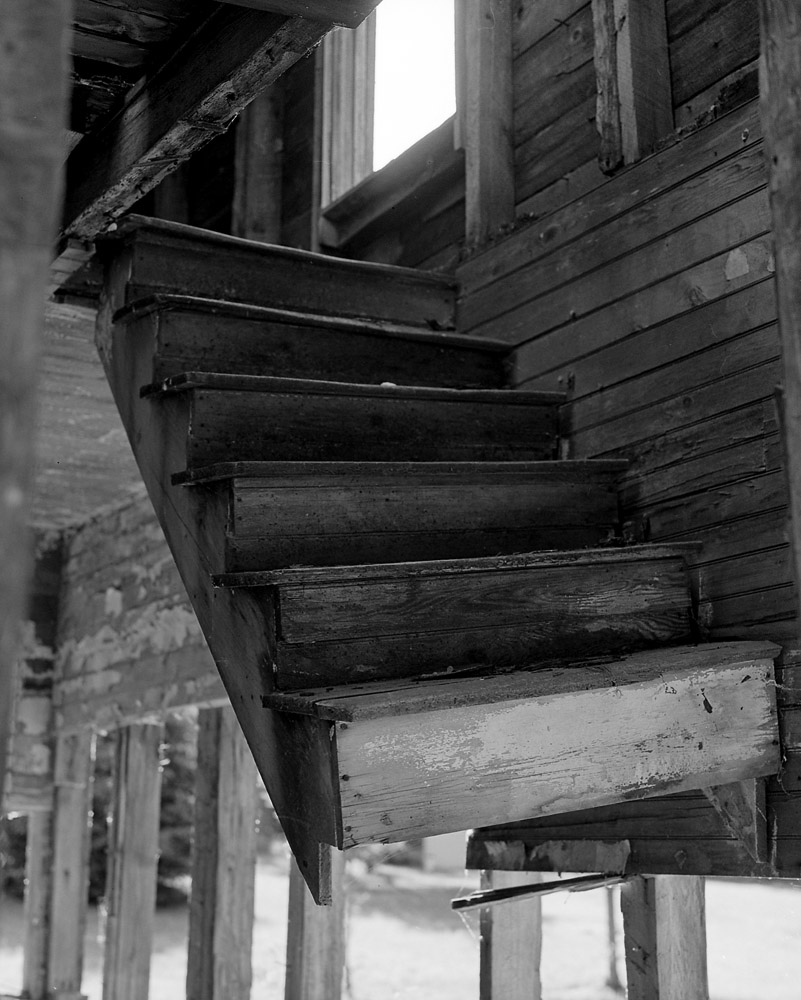
One wall of the house is essentially gone, and you can look inside the structure through it. I would NOT attempt to enter, as there is a considerable debris field on the floor of the lower level, making for a prime residential facility for wildlife of the four-legged and no-legged varieties. You can see the remnant of the staircase through the opening in the wall, though. The texture of the wood and the coloring of it reminded me a bit of Bodie, the California gold-mining ghost town in the Eastern Sierra.
Hanging Stairs, Good Hart
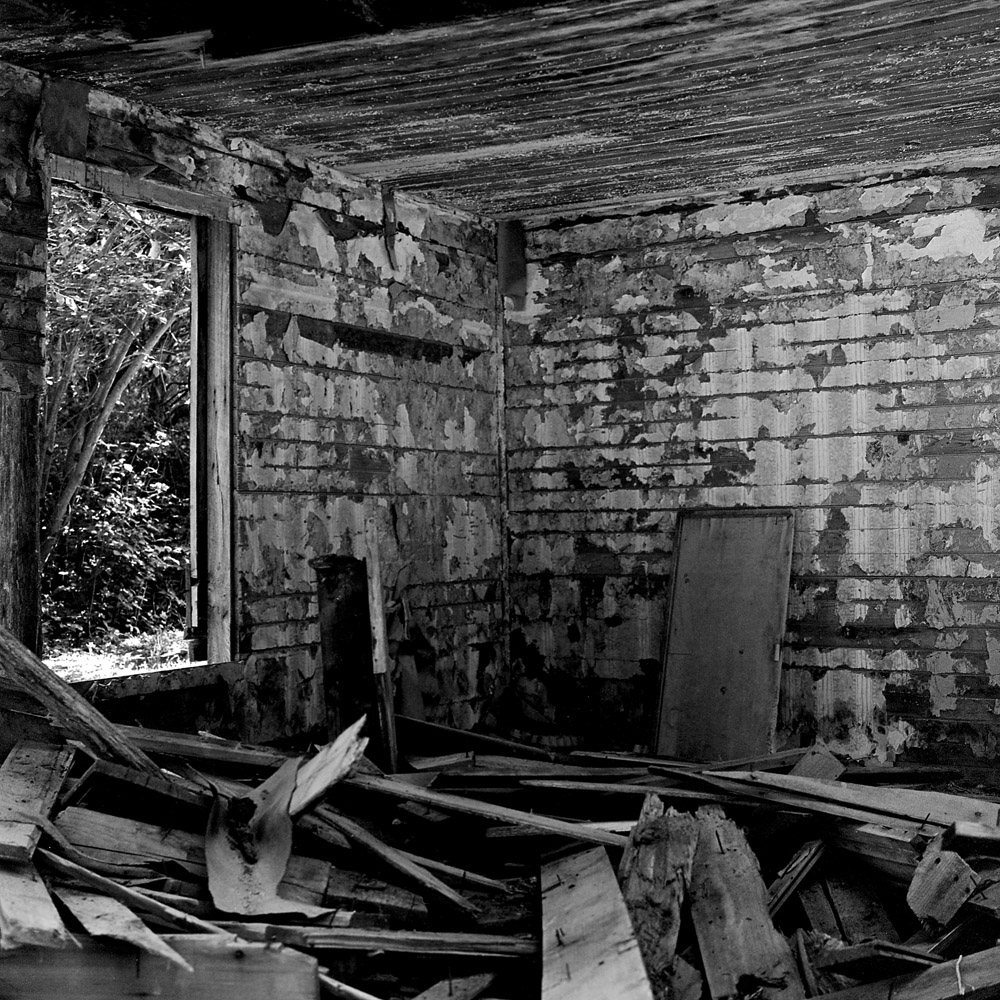
This is a view of the debris field and the remaining structural walls of the house. Amazing how the light level balanced between inside and outside- no HDR or even burning/dodging required to preserve interior and exterior detail alike through the window frame.
House Interior, Good Hart
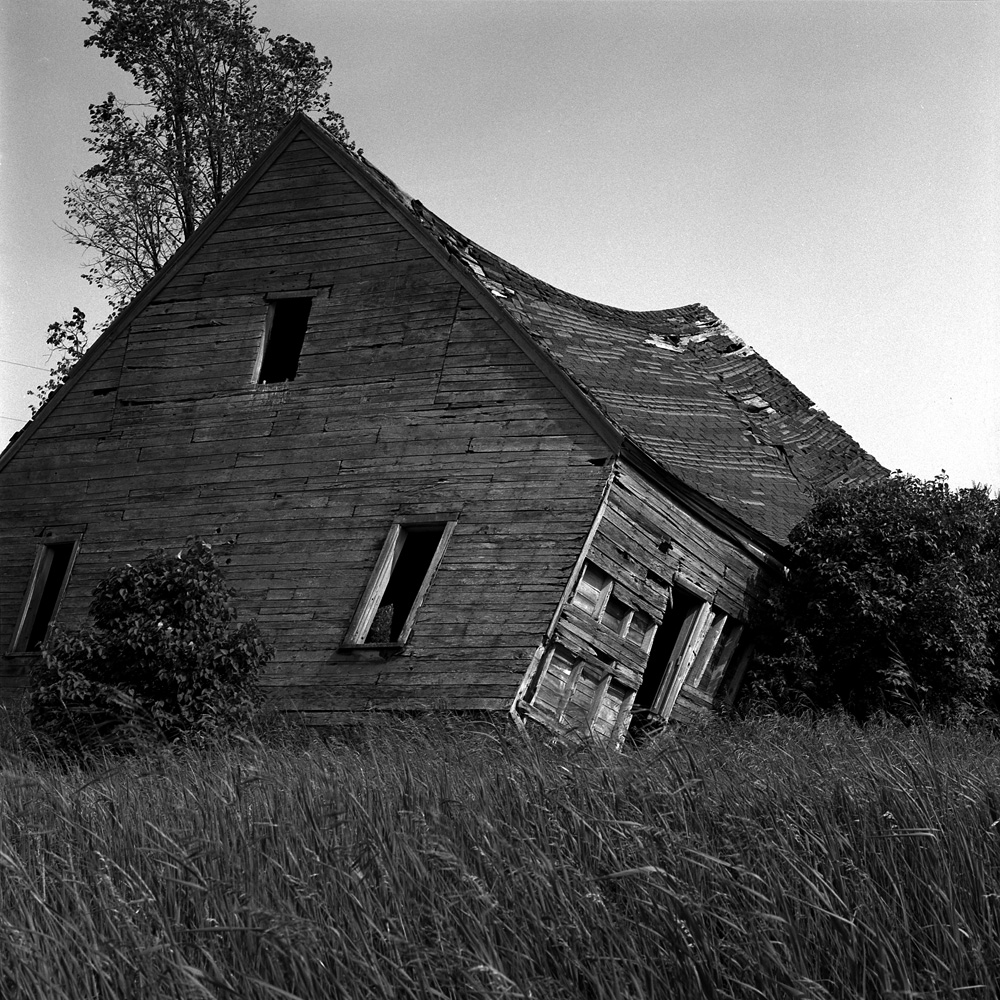
Here is a view of the end of the house, showing the whole of the structure.
Collapsing House, Good Hart
All shots taken with my Rolleiflex 2.8E on Ilford Delta 400, developed in Pyrocat HD developer at 1:1:100 dilution.
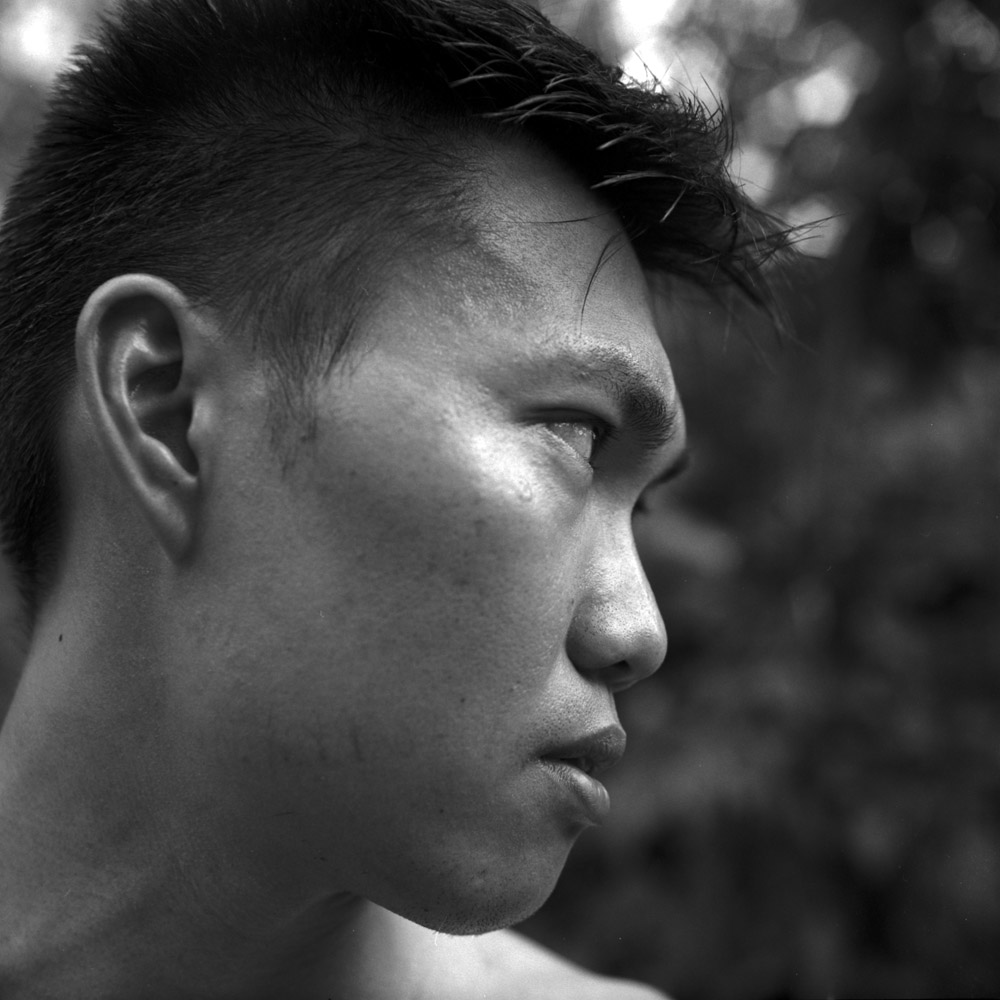
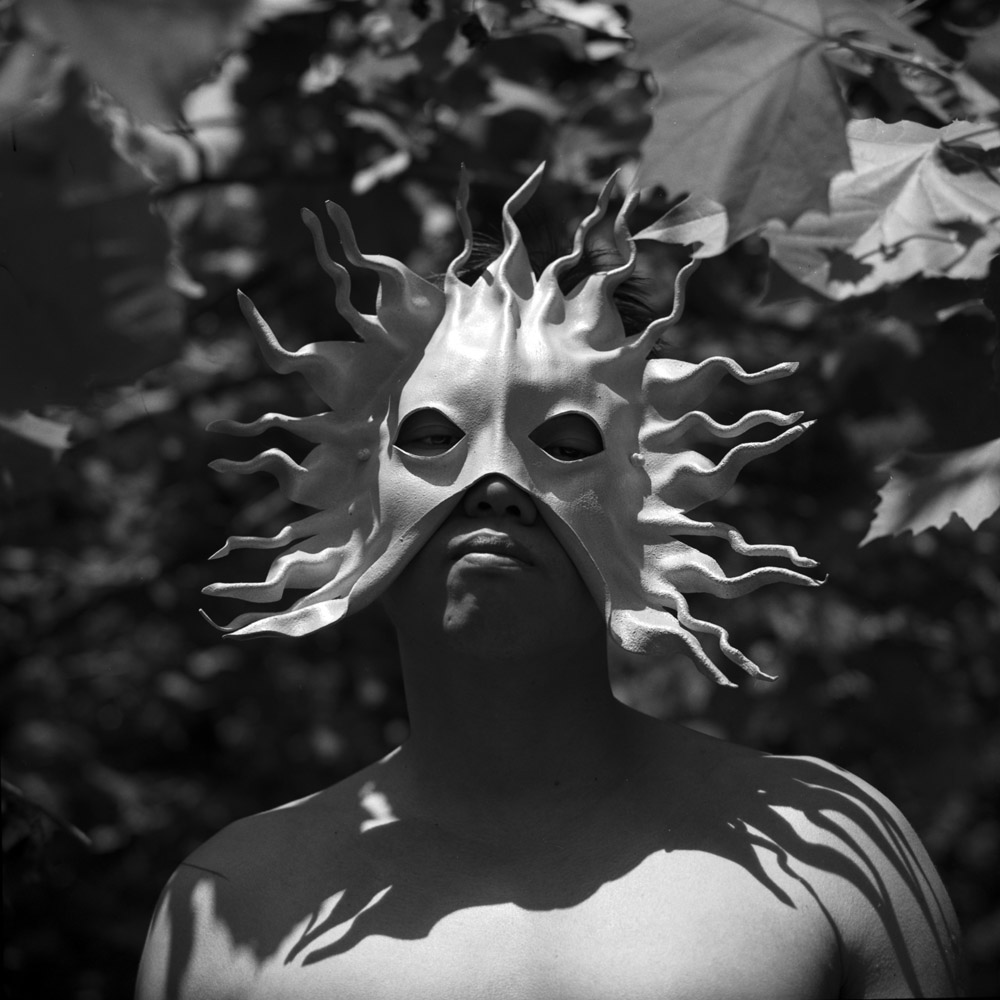
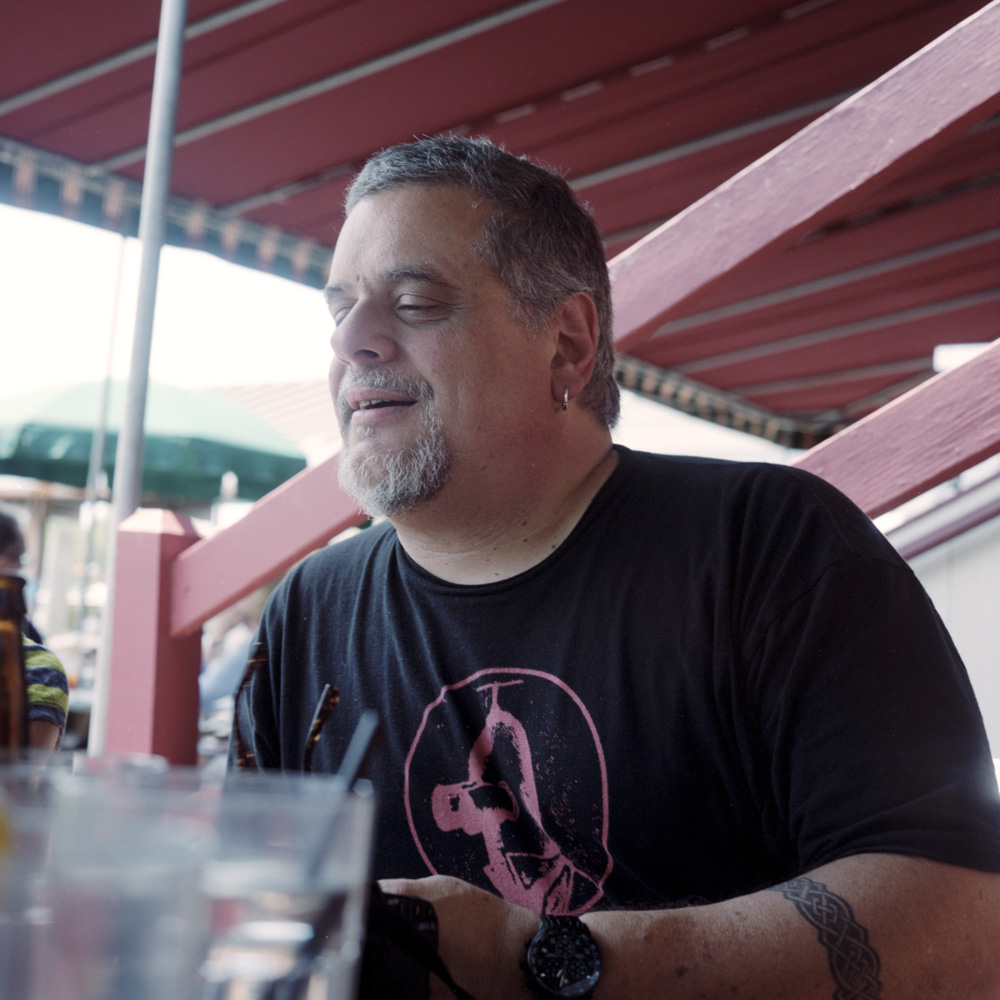
I was determined to avoid crowds and public gatherings on July 4th. Post 9/11 I get nervous in large crowds, especially when ingress and egress are difficult, and when large numbers of them are drunk. Not that my PTSD* gets triggered and I feel like the walls are closing in or anything (although I did get near-panic at Obama’s first inauguration- that was just WAY too many people and it was hard to move- even if something rather pedestrian happened like someone fell and got hurt, or a bottle of carbonated beverage froze and burst and people panicked THINKING it was a gunshot, you could have gotten trampled to death in the stampede!). Anyway, back to the real story – so I wanted to avoid the National Mall, because it’s just a filthy zoo of humanity on the 4th, so I called up a friend who had expressed an interest in posing for me, and we went out along the Potomac to some spots I know that are fairly private and make for good shooting. These are the first few images from the shoot (we’re still negotiating the use of the rest of them).
Chern K – Profile
These first two portraits I particularly like. The profile shot was taken with a Rolleinar close-up adapter on my Rolleiflex. The Rolleiflex by itself has a minimum focus distance of 3 feet, which is fine for general subjects, but for flowers, bugs, macro photography in general, and even tight portraits, 3 feet is not close enough. So Rollei in their infinite wisdom invented the Rolleinar close-up filter sets. They come in four strengths – 1,2,3 and 4. The 4 is extremely rare and you almost never see one on the market in any size. The #1 cuts the minimum focus down to 1.5 feet, the #2, to .75 feet, and so on. I have a #1 and a #2. At some point I MAY get a #3. Some people complain that the Rolleinars add too much “distortion” to portraits and as such are bad for doing them. I say shots like this disagree with that notion. If you need more proof, check out the work of Richard Avedon, as well as my friend Sanders McNew (the book cover for “Triptych: Sixteen Months” looks like a good example).
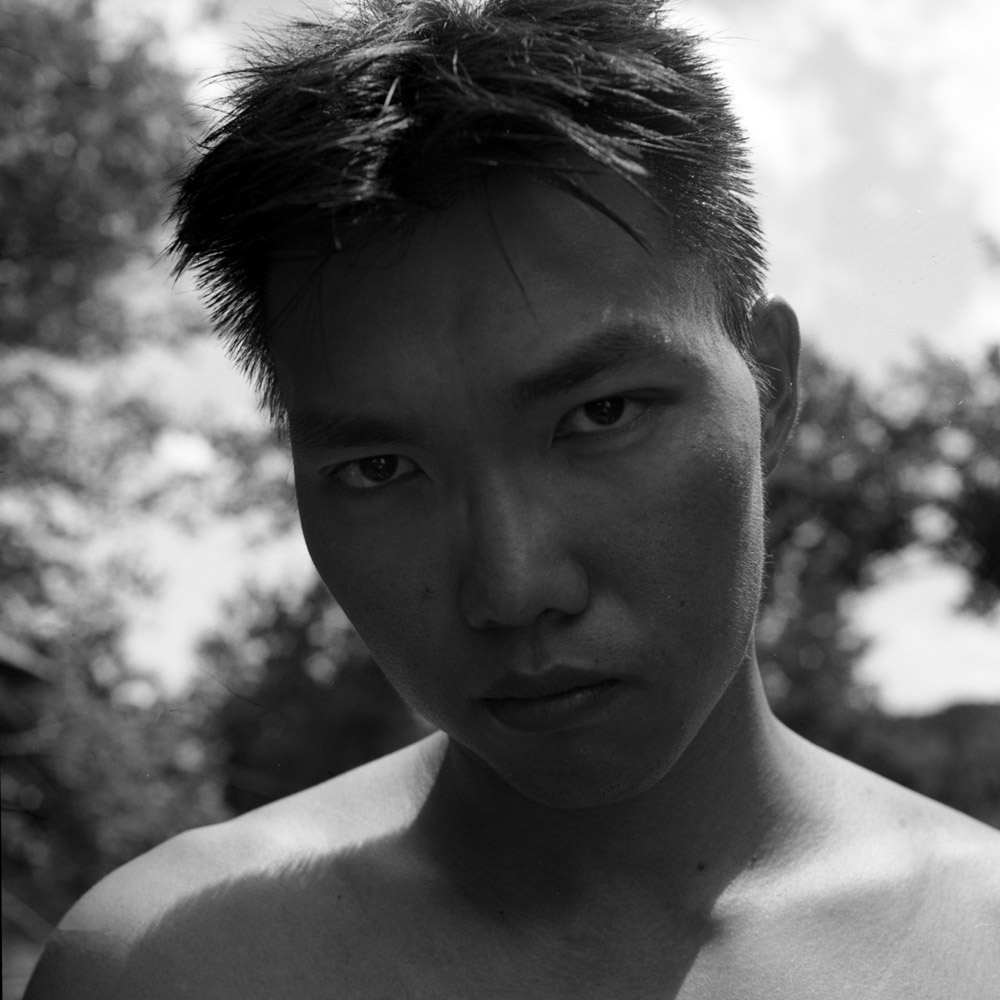
Chern K – Backlit Portrait
The backlit portrait was shot normally, no close-up filter required. I was figuring out the exposure for this shot and used my meter in incident reading mode. I had a brief doubt when taking the shot because the meter was suggesting only 1 stop different from what would have used for a non-backlit subject, but I went ahead and used the setting anyway. My doubts were renewed when I looked at the raw negative – reading a negative is a skill any serious film photographer should develop, and I’m pretty good at it now, having looked at literally thousands of negatives I’ve produced over the years, but I’m still, always, getting better at it. This was a case in point.
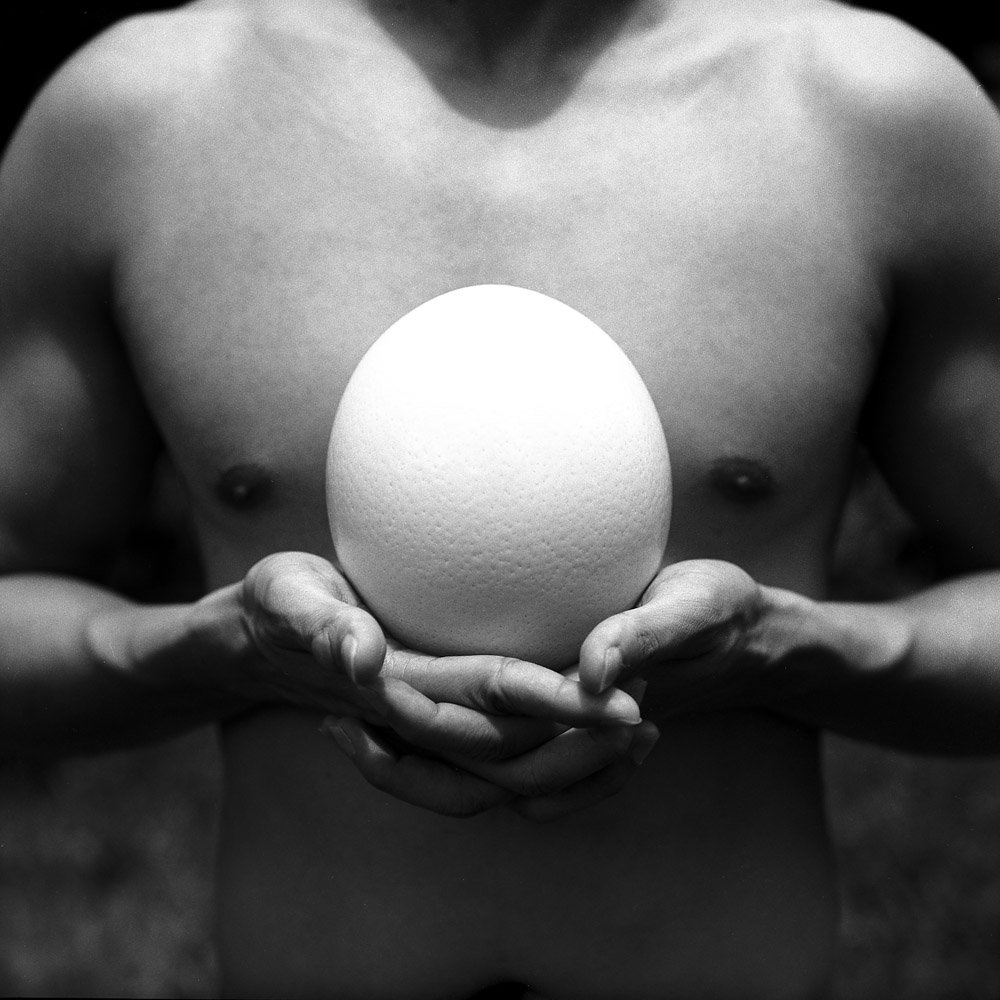
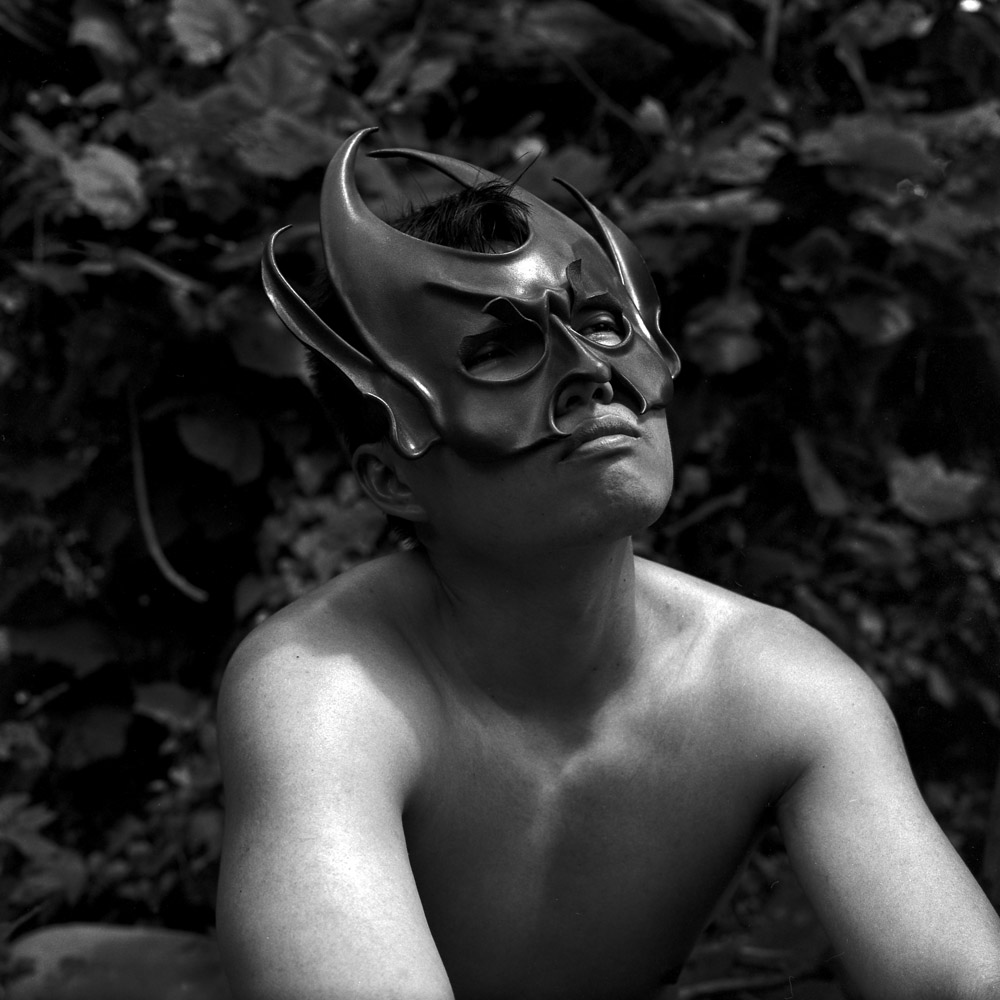
Then we got into playing with props, specifically, an ostrich egg and some leather masks I got at the Maryland Renaissance Festival.
Chern K – Ostrich Egg
I’ve been carrying around this ostrich egg shell for a while – I got it as a prop to use for another shot in my Tarot Cards: Re-imagined series. But getting the model who is supposed to use it to show up and sit for me has been a challenge, so it has been lingering, unloved, in my prop bag for some time. Well, it earned its keep with this shot. This is just a straight scan of the negative, so I’m still playing around with how to render the ostrich egg better – I want to preserve detail in the shell without it looking gray, or getting too blown out. Just as I got the shot composed, clouds kept drifting in and out of the sun’s path, changing the nature of the shot. I watched and noticed that the blown-out brilliant highlight caused by the direct sun on the shell’s smooth surface was greatly reduced by the cloud cover. By the time I got the meter reading for the cloud-diffused light, though, the clouds had moved on and it was back to full sun. So a waiting game ensued. I took this shot with partial, thin cloud diffusion because it was getting too hot for either of us to keep standing there waiting for a big cloud to drift back over again!
Chern K – The Sun Peeks OutChern K -Devil Mask
Here are the mask shots. Not much to say about these really – they’re fairly self-explanatory with the masks doing the talking. The masks were also bought for use in the Tarot Cards: Re-imagined series, and this is giving me new impetus to take up the series again and try to finish the Major Arcana.
I shot these all with Ilford PanF because it is such a slow film, and I wanted to try and shoot a lot of these wide open to get the blown-out, swirly background the lens is capable of producing. On the Rollei this can be a challenge with faster films because the fastest shutter speed is 1/500th of a second, which still isn’t fast enough in bright daylight to let me shoot the way I was looking to if I used even FP4+.
I don’t know if it was because I had been bottling up my human figure creative juices for so long, or the fact that I had a good model who understood how to pose and move, or having the right tool in my hands for the job, or what, but I got a crazy amount of successful images from this shoot- fully 24 out of 36 were ones I wanted to work with. That’s an amazing hit ratio, especially when you consider that of the 12 I didn’t pick, probably 1/2 were variations on a theme of ones I DID pick. So an 80% +/- hit rate? WOW.
* I was working in the Pentagon on 9/11, when the plane hit. Low-flying aircraft still make me jittery, but 12 years on, that’s about it. I have it pretty good all things considered.
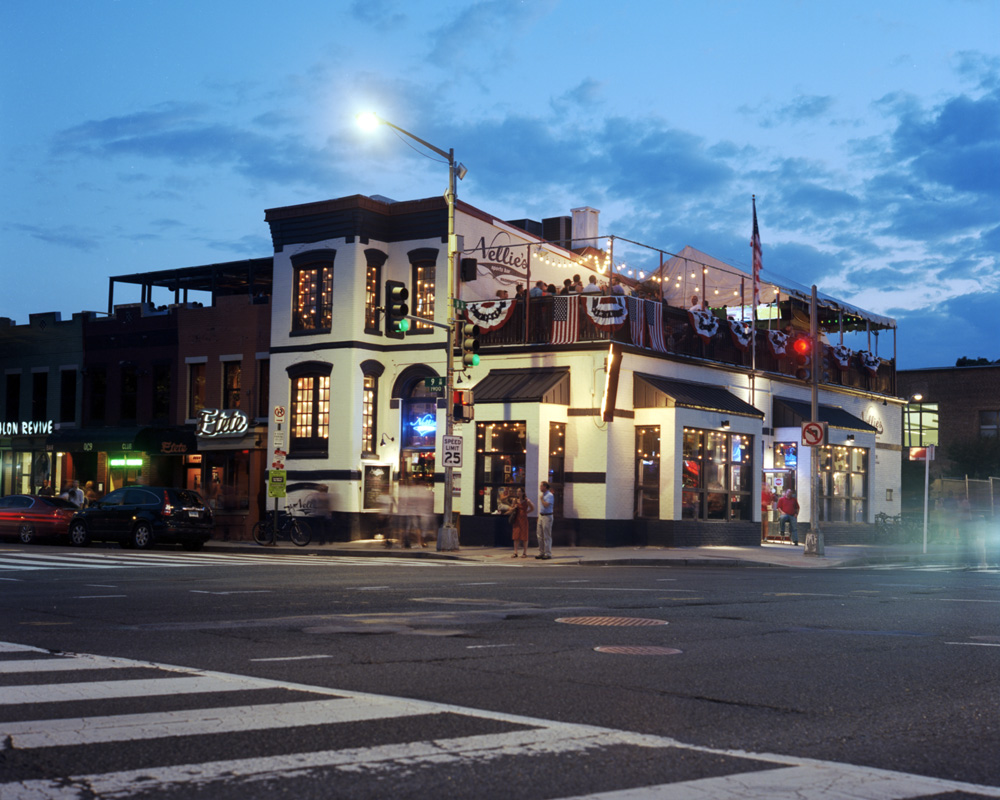
This is an exploration of twilight into dusk in and around the 14th Street and U Street corridors in Northwest Washington DC. All these shots were taken in the same evening, and are within walking distance of one another (although in the name of time efficiency I drove from one area to the other so I wouldn’t lose the last light in the sky).
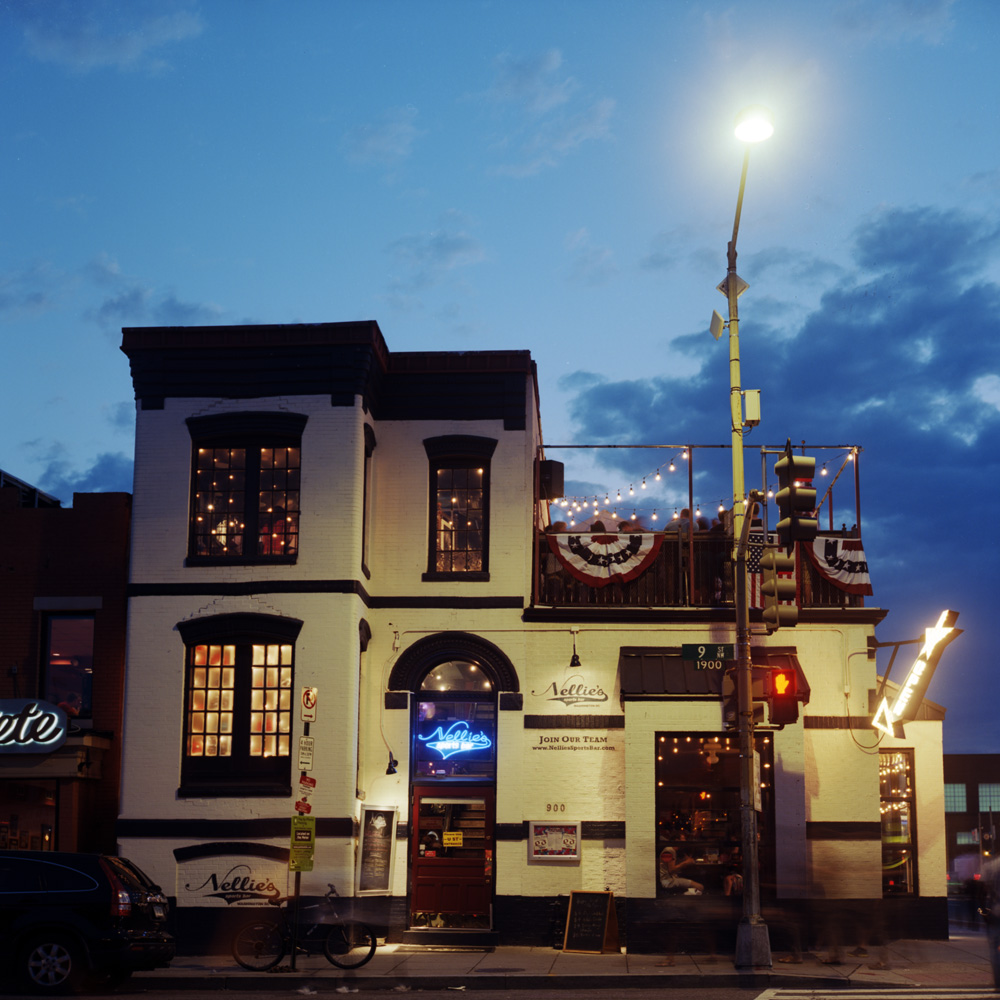
Nellies is a gay sports bar (betcha never thought you’d hear THAT particular combination!) at the corner of 9th and U Street and Florida Avenue (U Street turns into Florida Avenue at 9th). I’ve driven by hundreds of times and always thought about photographing their lights, specifically the “OPEN” arrow on the corner. The night I started this project, I decided to shoot the building from two different angles, one to capture the general ambiance of the intersection, the other to specifically address the OPEN sign.
Nellies Sports Bar, From Florida AvenueNellies Sports Bar, From 9th Street
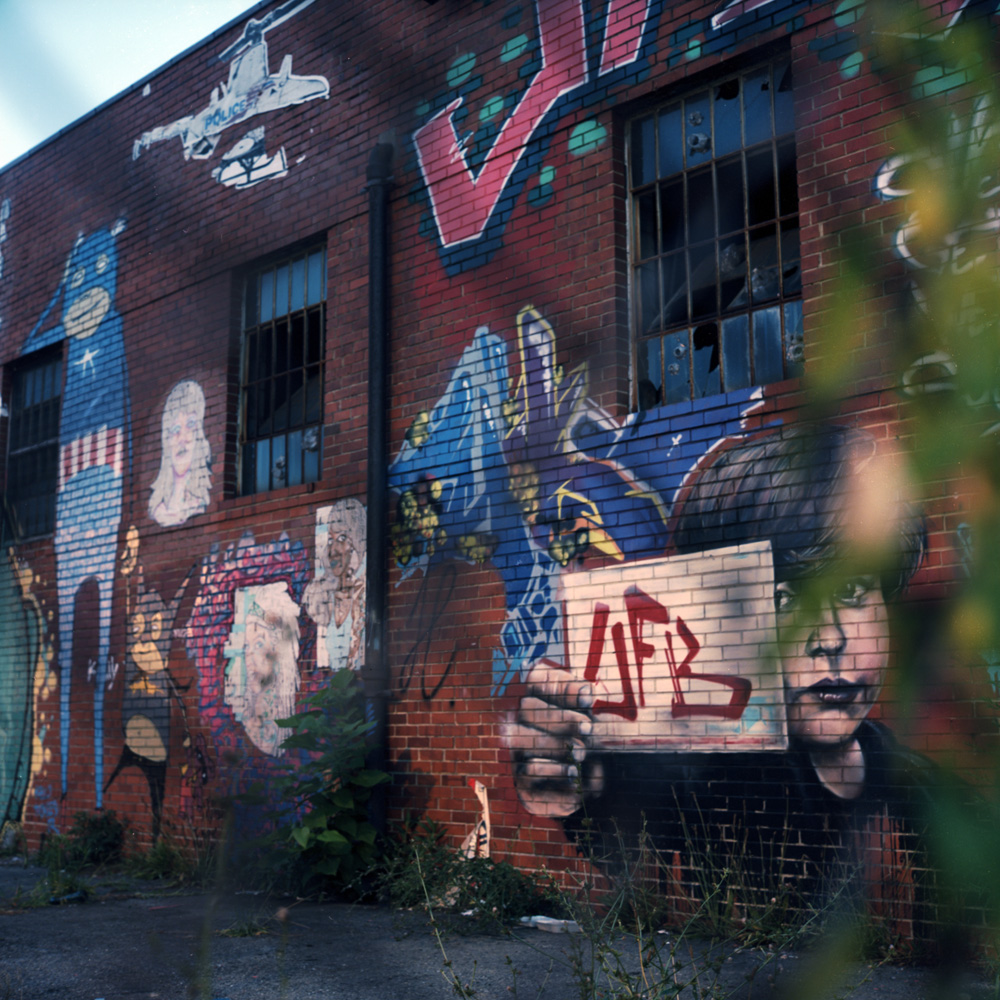
Around the corner from Nellies is this abandoned warehouse which has some really wild and cool and somewhat disturbing graffiti on it. I shot some of this graffiti through the chain link fence around the side lot. The disturbing piece I intentionally cropped out of the shot, as it is the nude lower half of a female body that appears to have been severed from its torso.
Graffiti, Chain Link Fence, Twilight
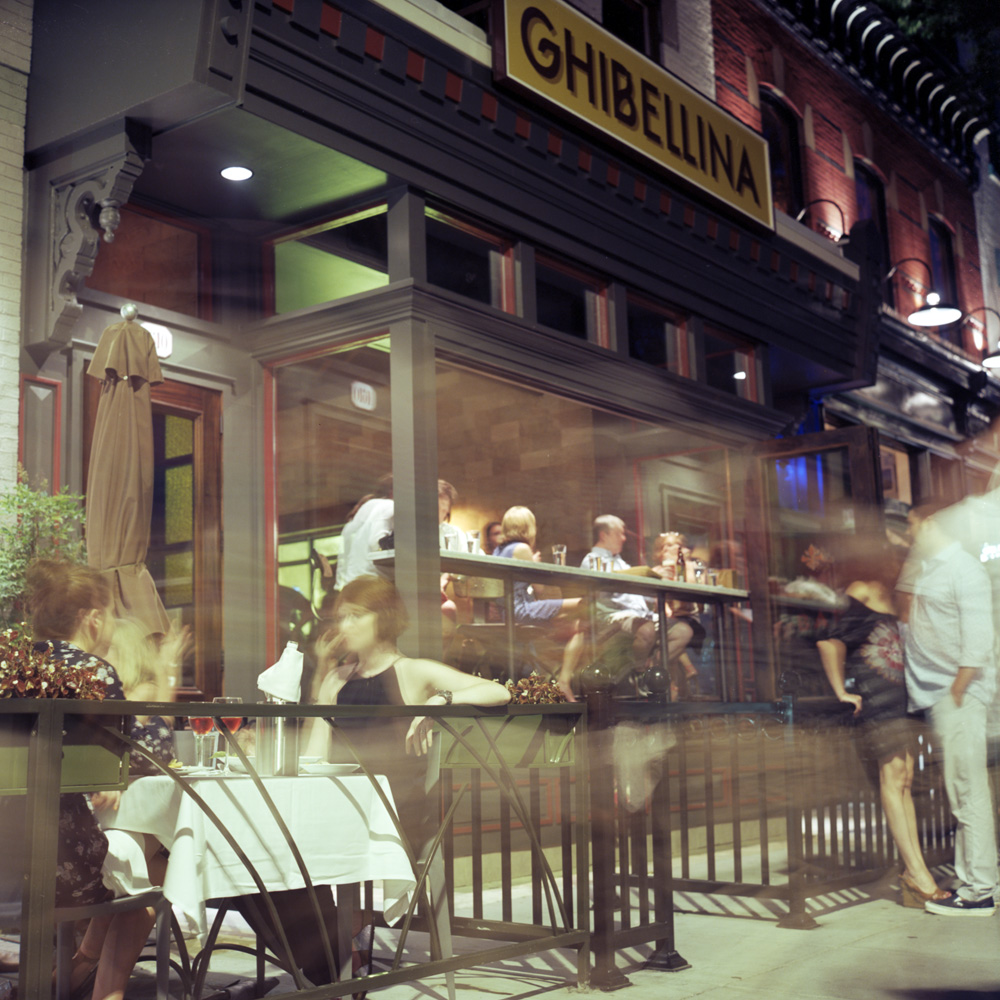
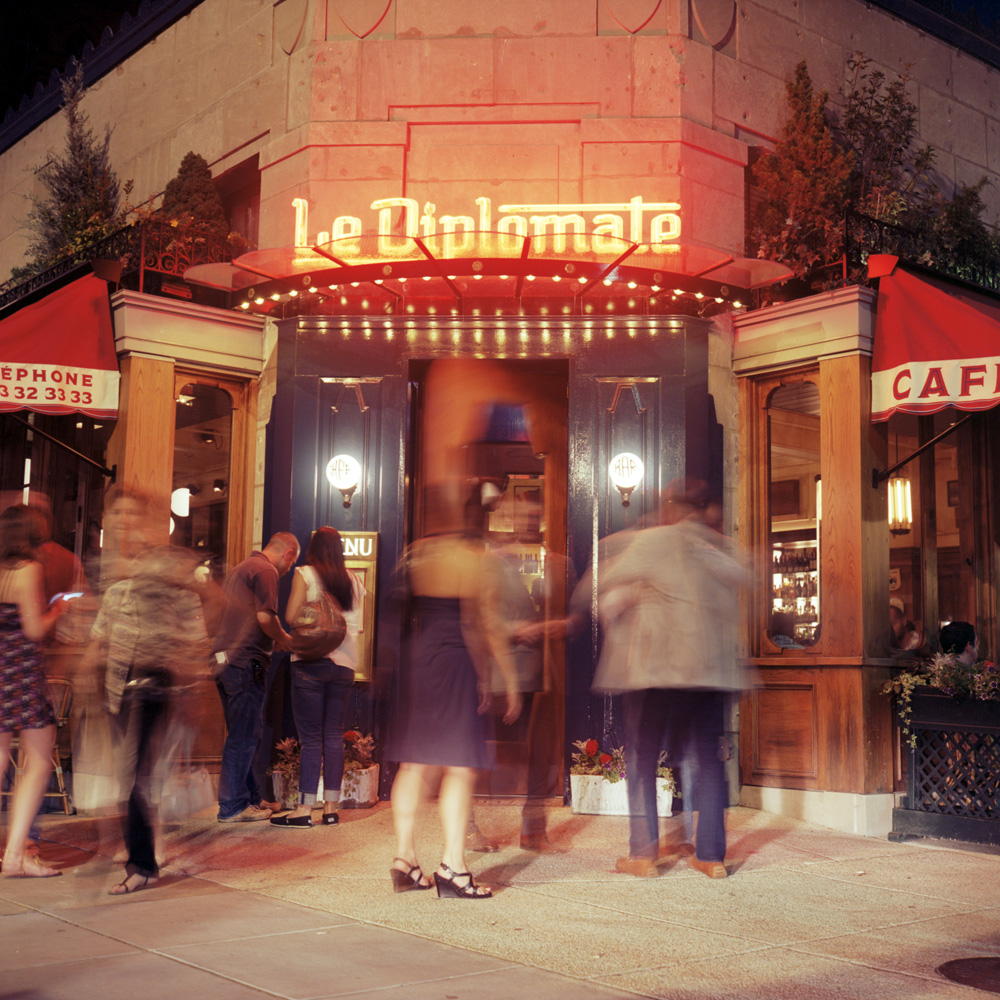
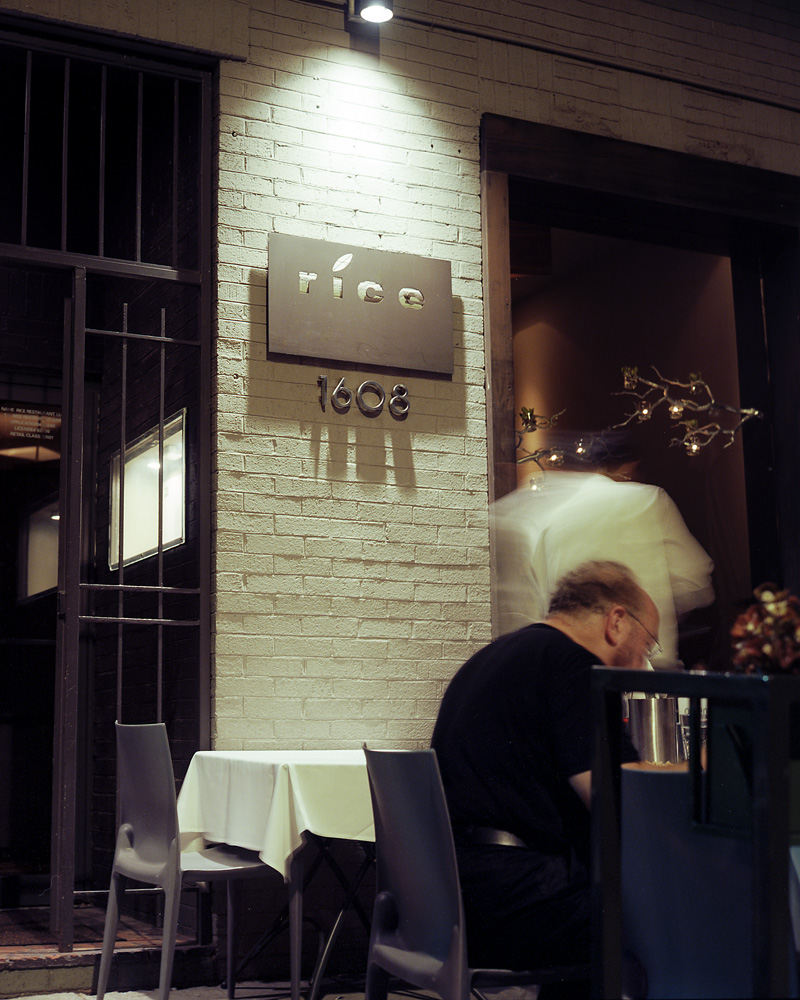
Over on 14th Street, we have had an explosion of new restaurants in the last five years, with a huge spate in the last year alone. Rice Restuarant is arguably the best Thai restaurant in DC, and certainly the most innovative. A good friend of mine opened it gosh, maybe ten years ago, virtually pioneering the restaurant boom in the neighborhood. Now next door to Rice is Ghibellina, an Italian joint that opened this year, and next door to that is Pearl Dive, an oyster bar, which opened perhaps 2 years ago. Le Diplomate is a French bistro across the street in what was originally a car dealership in the 1920s, then became a laundromat. Le Diplomate also opened earlier this year.
GhibellinaLe DiplomateRice Restaurant
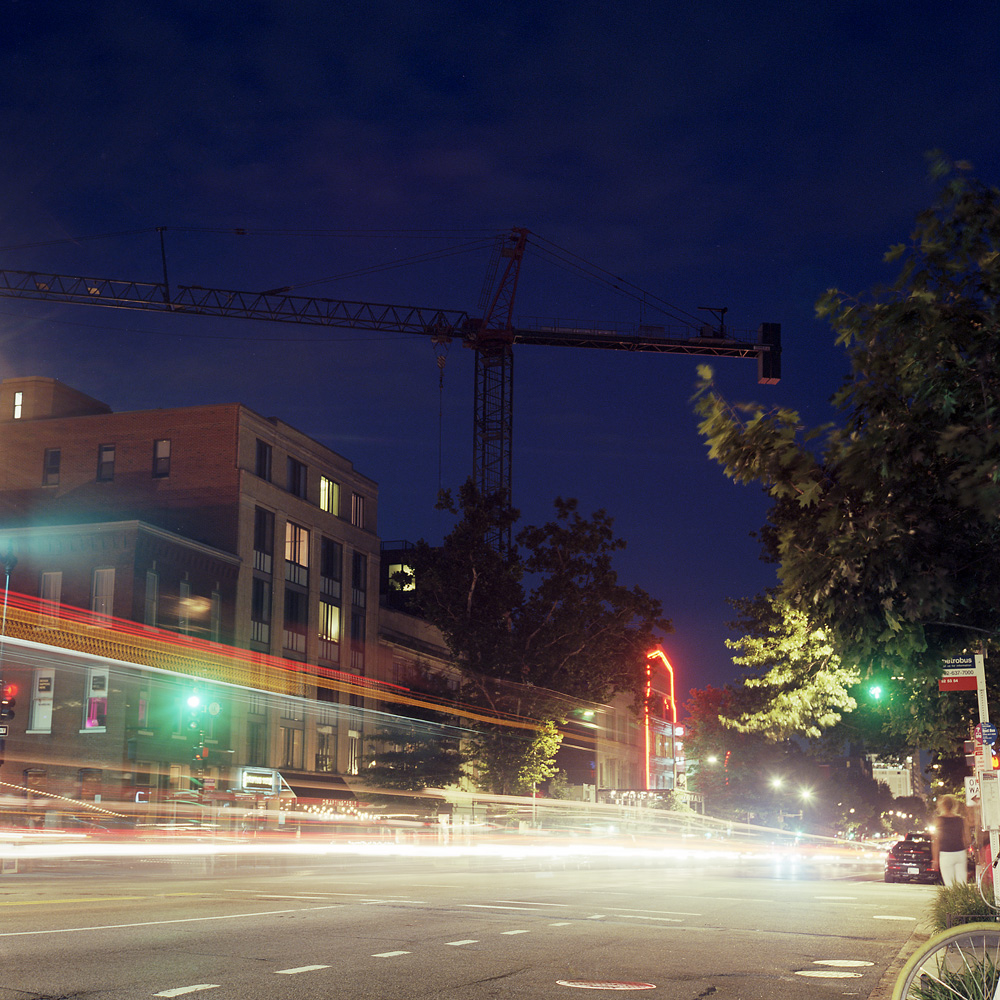
At the intersection of 14th and Q Streets, I pointed my camera south on 14th to try and capture the energy of the neighborhood, through the traffic, the lights, the construction boom represented by the crane, and the people on the sidewalks.
Crane, 14th Street, Twilight
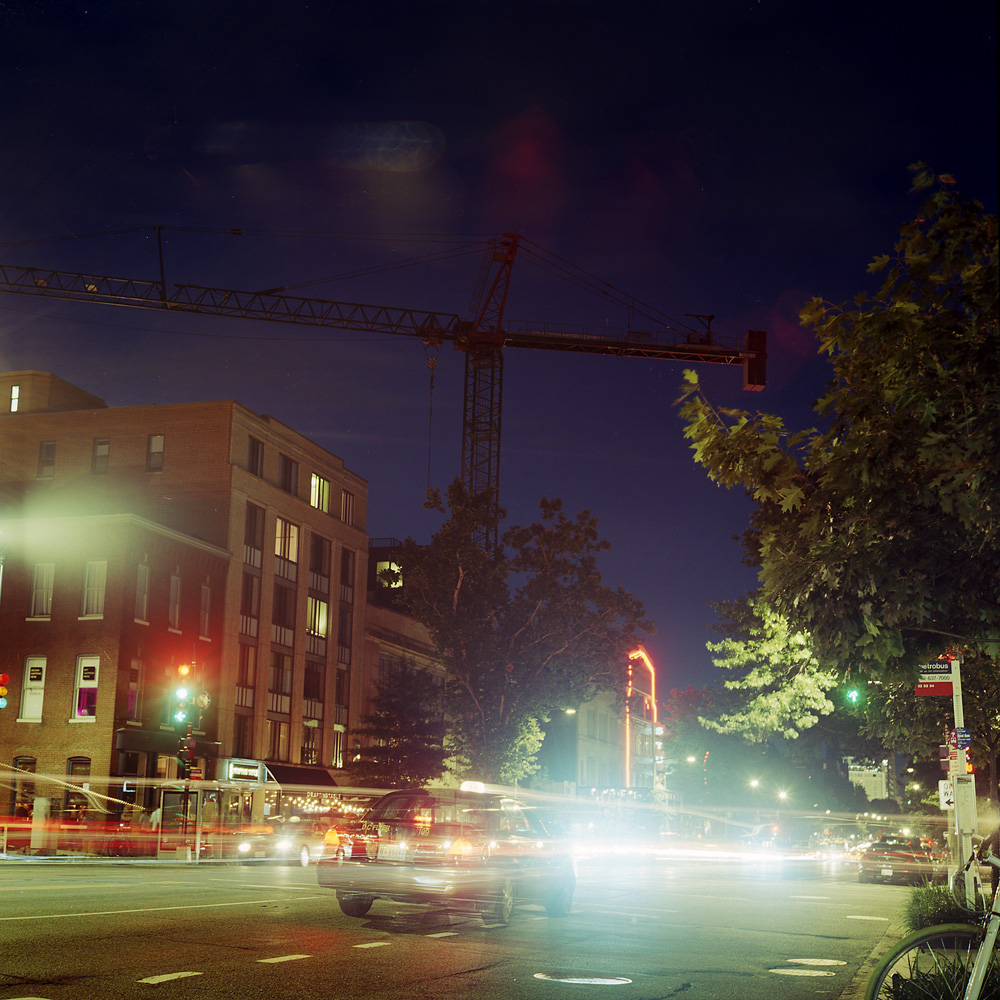
Here is a second version of the shot, a longer exposure, that captures the car sitting at the traffic light, then traffic taking off when the light changed. The funky stuff in the sky is a combination of reflections of the tail-lights and head-lights of the cars reflecting off the clouds and lens flare caused by the lights directly shining into the lens.
Crane, Traffic, 14th Street, Dusk
I’m not sure if I like this one well enough to keep it or if some other night I go back and try to re-shoot it. Feedback welcomed. All shots, as is becoming normal to say now, were taken with my Rolleiflex 2.8E, on Kodak Ektar 100 film. This was in part an experiment to see how well Ektar would fare against Portra 160 as a low-light film. I’ve loved Portra as a low-light film for its ability to handle mixed lighting conditions. I’d say this put to rest any thoughts of Ektar 100 being inferior- it does look different, to be sure, but I’d say it did a pretty darned good job. I think I might even prefer it in some cases.
Here are a few shots from my visit to the 2013 Smithsonian Folklife Festival. The Folklife Festival is held every year on the National Mall, and it is a celebration of cultures and traditions from around the world. This year’s featured country is Hungary, and the overall theme is “One World, Many Voices”. There are representatives of many indigenous cultures around the world from Hawaiian Islanders to Penobscot Indians to Quechua speakers from Bolivia and Peru to Tuvan people from Siberia. The “many voices” part has to do with showcasing efforts to preserve vanishing languages and cultures. Go to the Smithsonian Folklife Festival Official Page to learn more about the events and programs for this year’s festival.
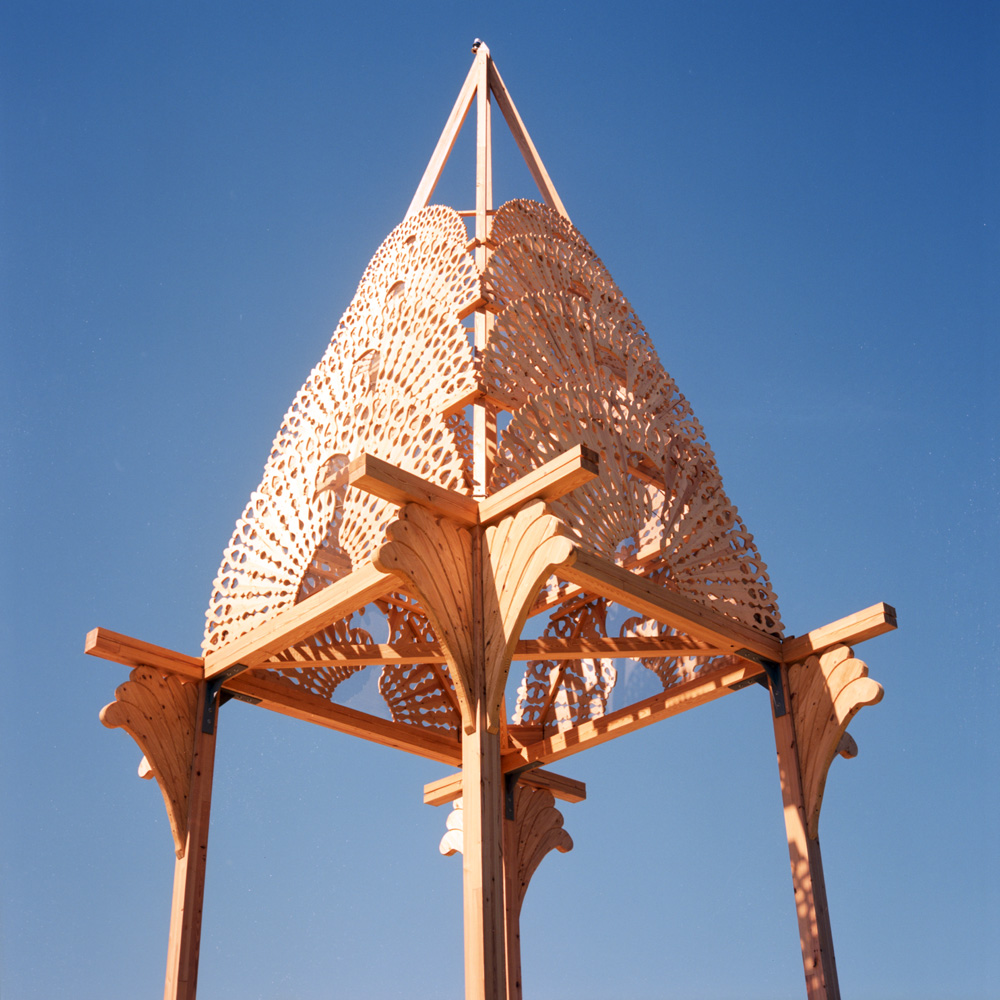
This pavilion is part of the Hungarian exhibit – playing on traditional Hungarian crafts like lace-making and using the forms and styles in a wooden structure.
Hungarian Pavilion
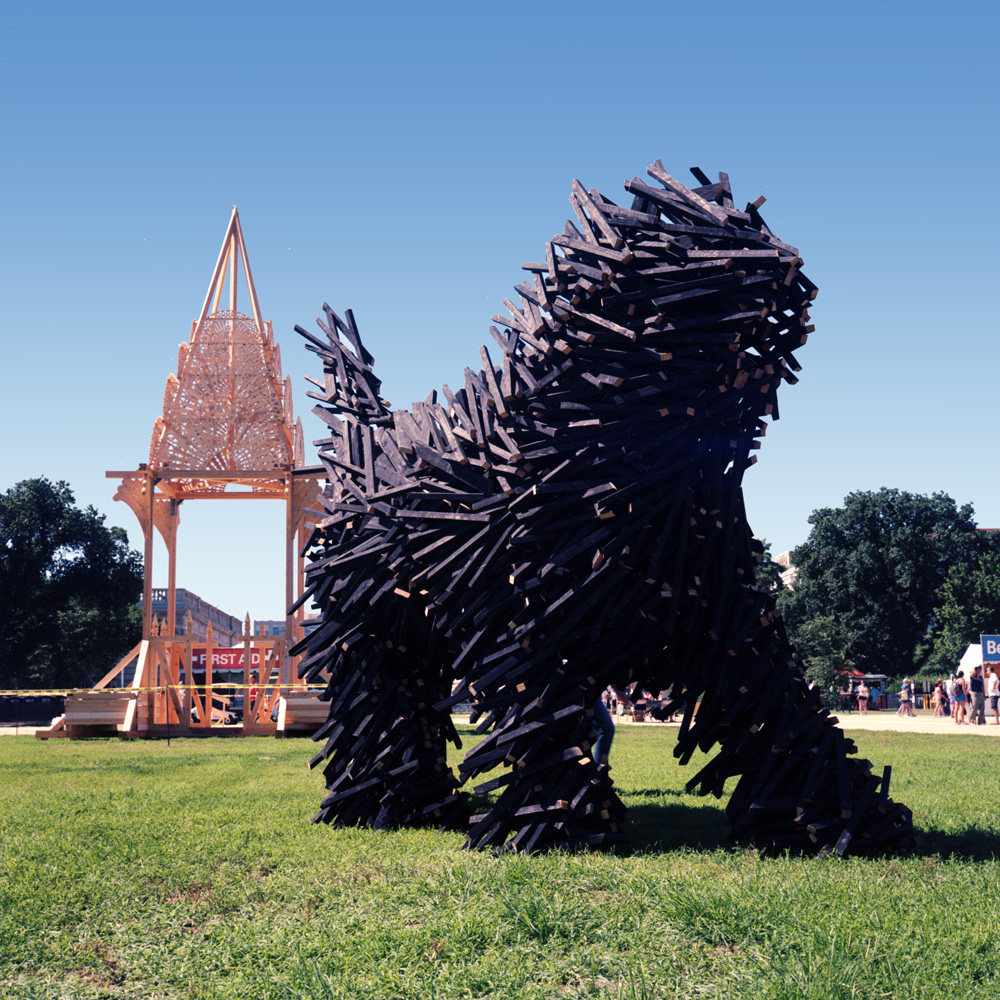
And here is a sculpture of a Puli shepherd dog, rendered in blackened wood. Pulis are similar to Komondor sheep herding dogs except they are black, not white. They used to get shorn along with the sheep they guarded, but now are left to grow their coats out as a fashion statement, to the impairment of the dog’s mobility.
Kuvacs Sculpture
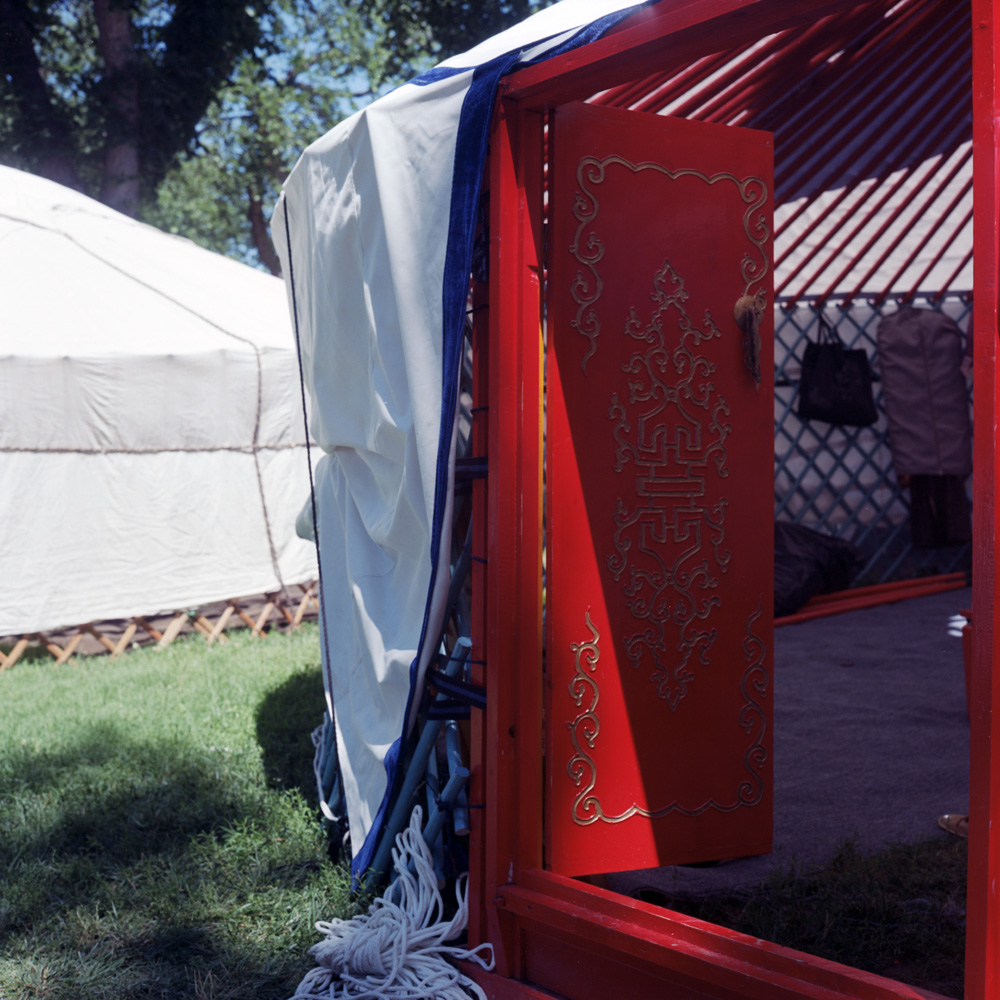
The door of a Yurt, representing the various nomadic peoples of Siberia who are sharing their culture this year at the Folklife Festival. Yurts are traditional nomadic home structures – they are portable like tents, with canvas or fabric tops and latticework side walls.
Yurt Door
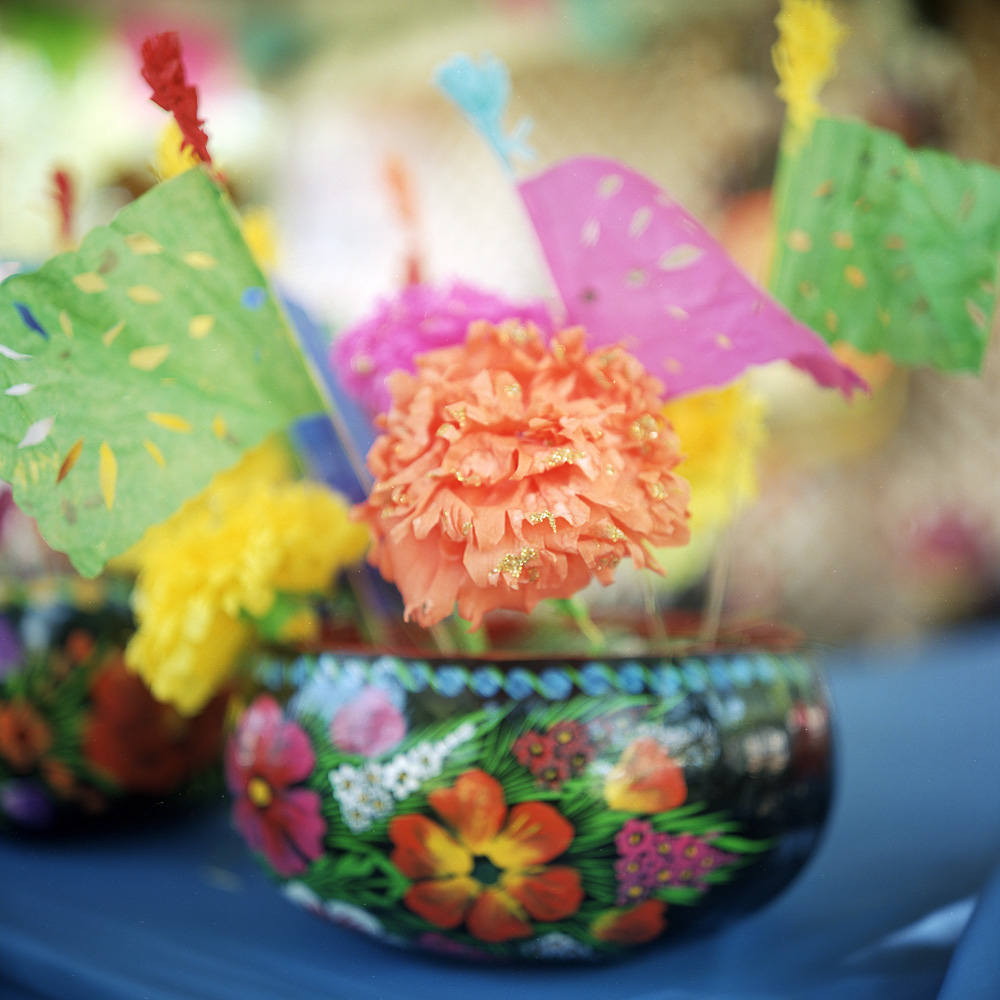
Paper flowers in the Mexican pavilion:
Paper Flowers, Mexican Pavilion
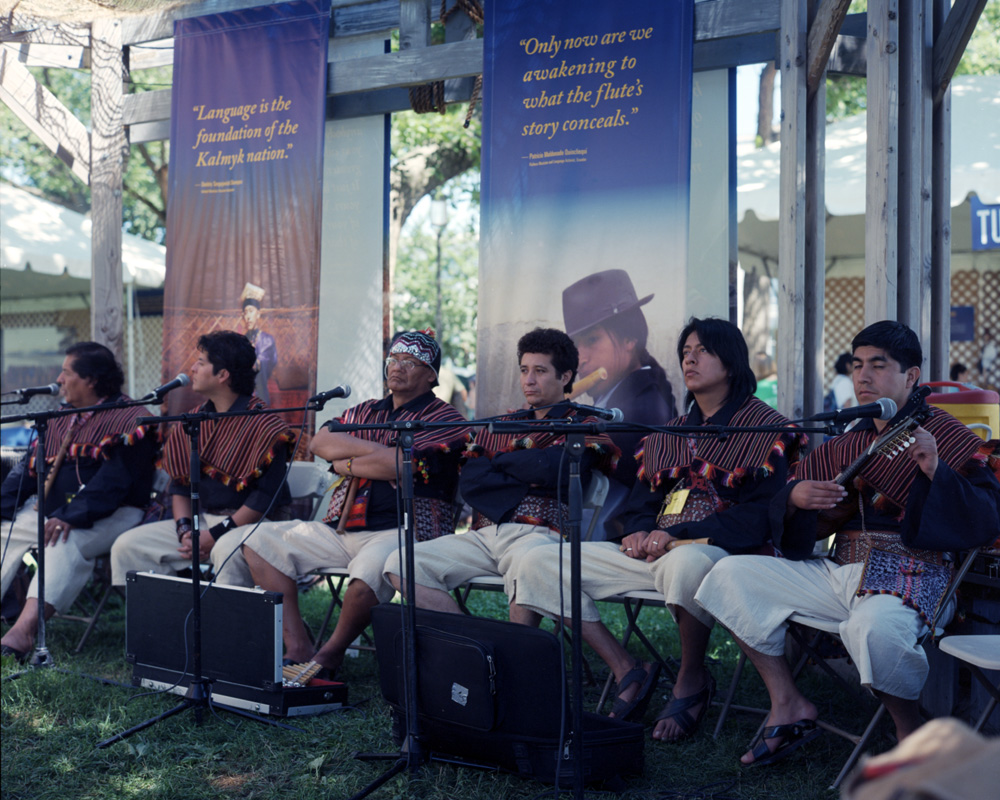
Quechua musicians, getting ready to perform a traditional Quechua song, talking about the meaning of their indigenous language and the importance of preserving the language, to pass on the connection to their cultural traditions of respect for the environment.
Qechua Musicians
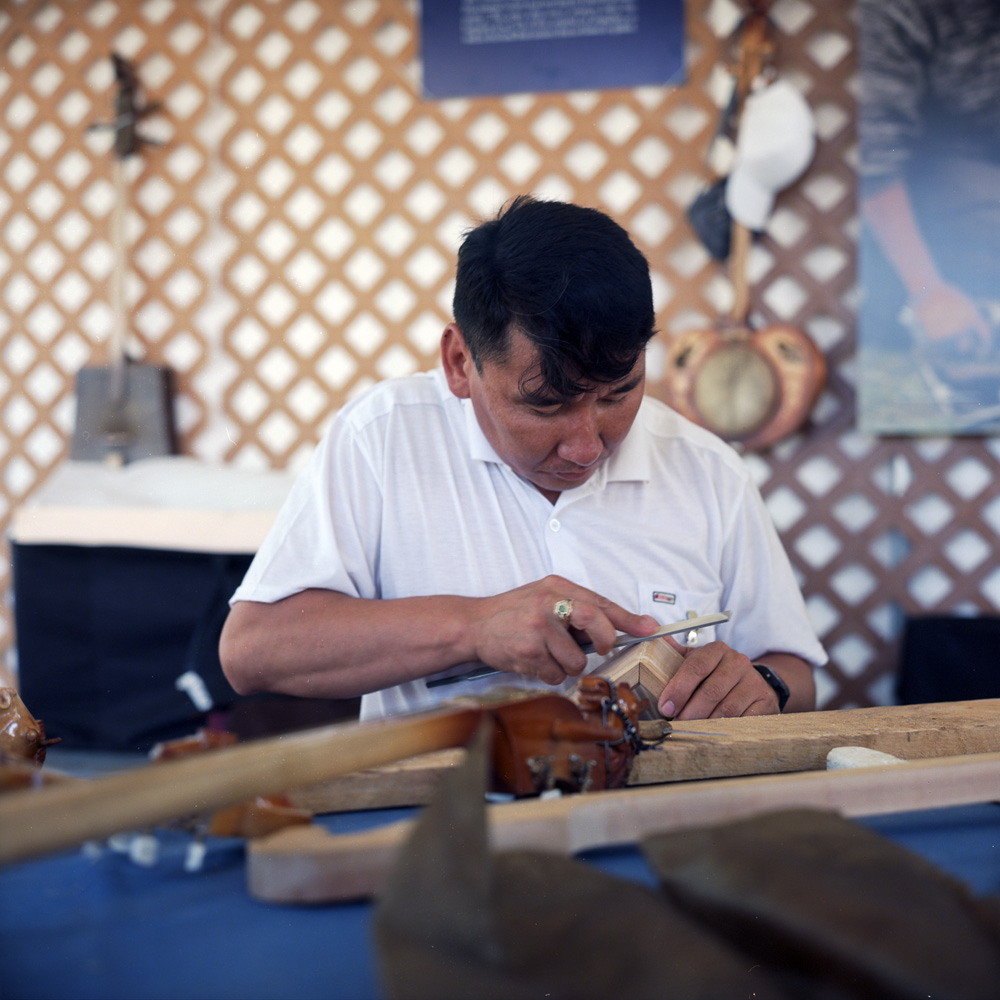
A Tuvan instrument maker, carving the body of a lute:
Tuvan Instrument Maker
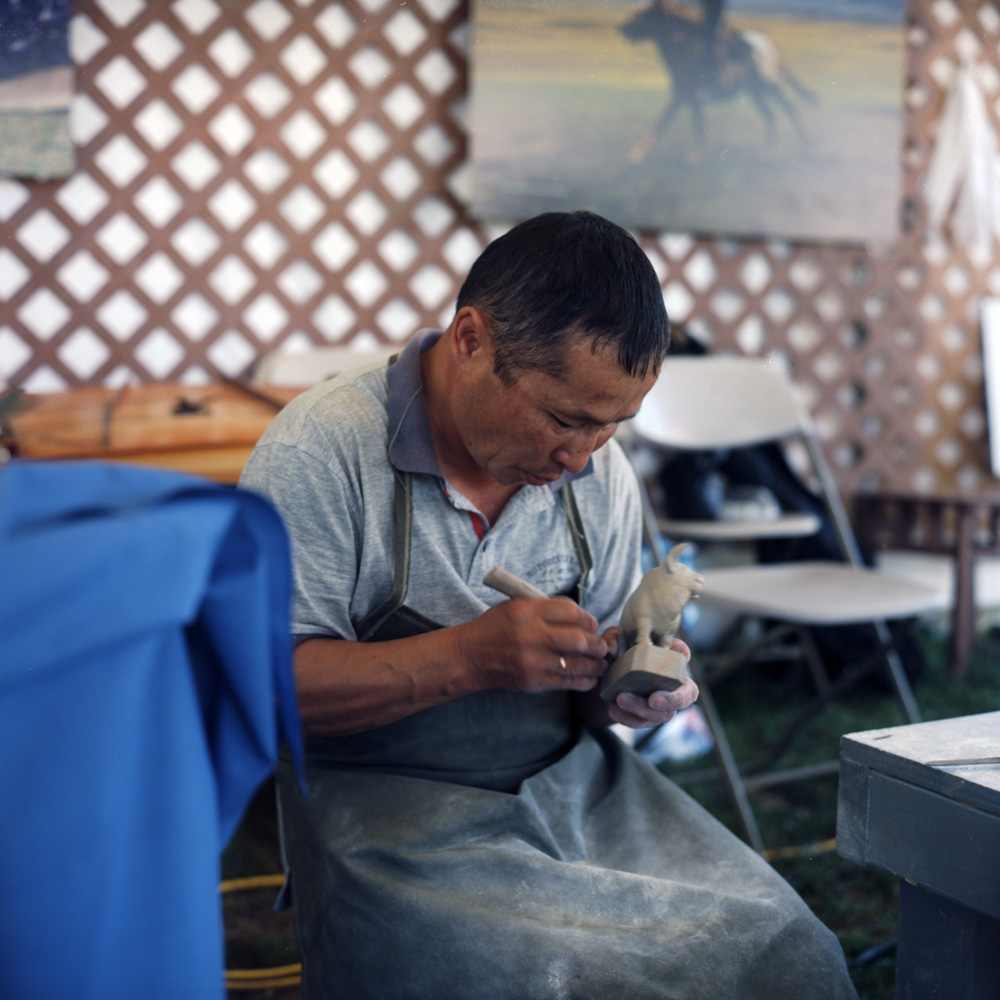
A Tuvan stone-carver, demonstrating hand-carving techniques, making a bull out of soapstone:
Tuvan Stone-carver
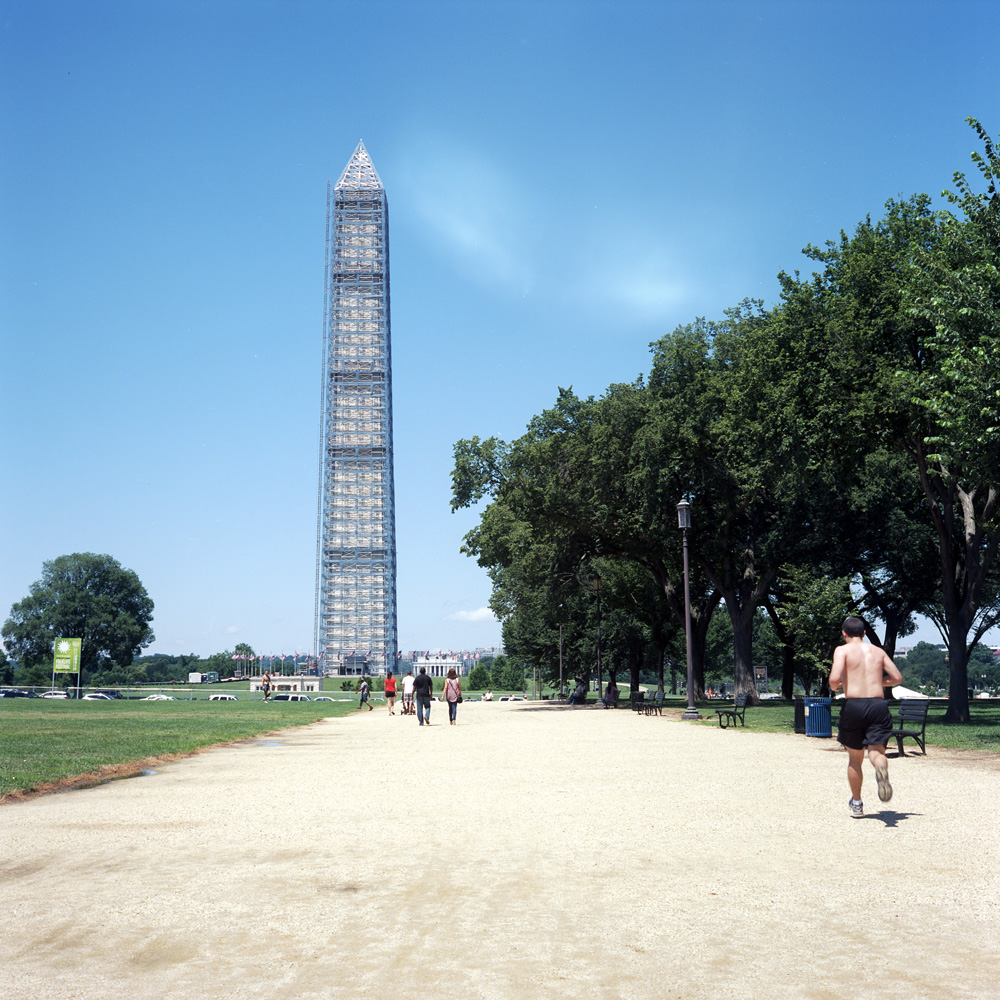
These last three shots are not specifically of the Folklife Festival, but are representative of the location and the spirit of the day. The weather was quite hot, but at least we had a relatively dry day with periodic breezes (Washington DC, particularly the area of the Mall, was built on a swamp, and big chunks of the Mall area, especially west from the Washington Monument, are actually landfill. Which is why the Washington Monument is sinking very slowly. So summertime in DC can be particularly miserable – almost New Orleans-esque in its heat and humidity).
Washington Monument
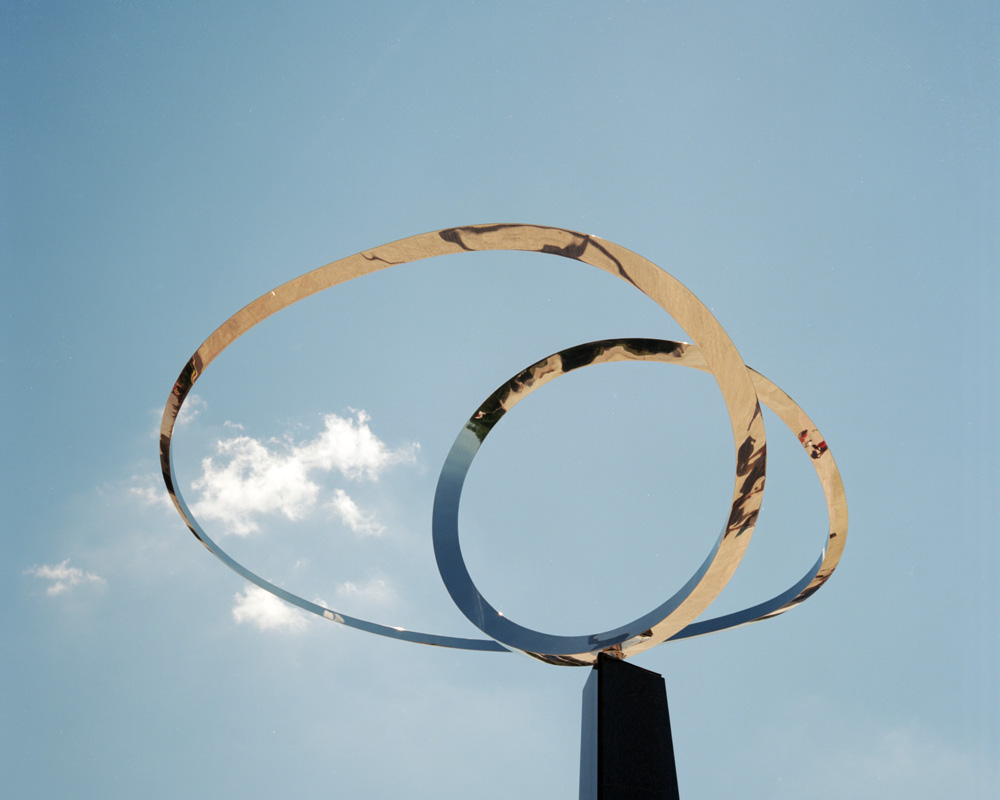
The sculpture is outside the American History Museum, which caps one end of the Folklife Festival and plays host to the temporary festival gift shop.
Sculpture, Cloud, American History Museum
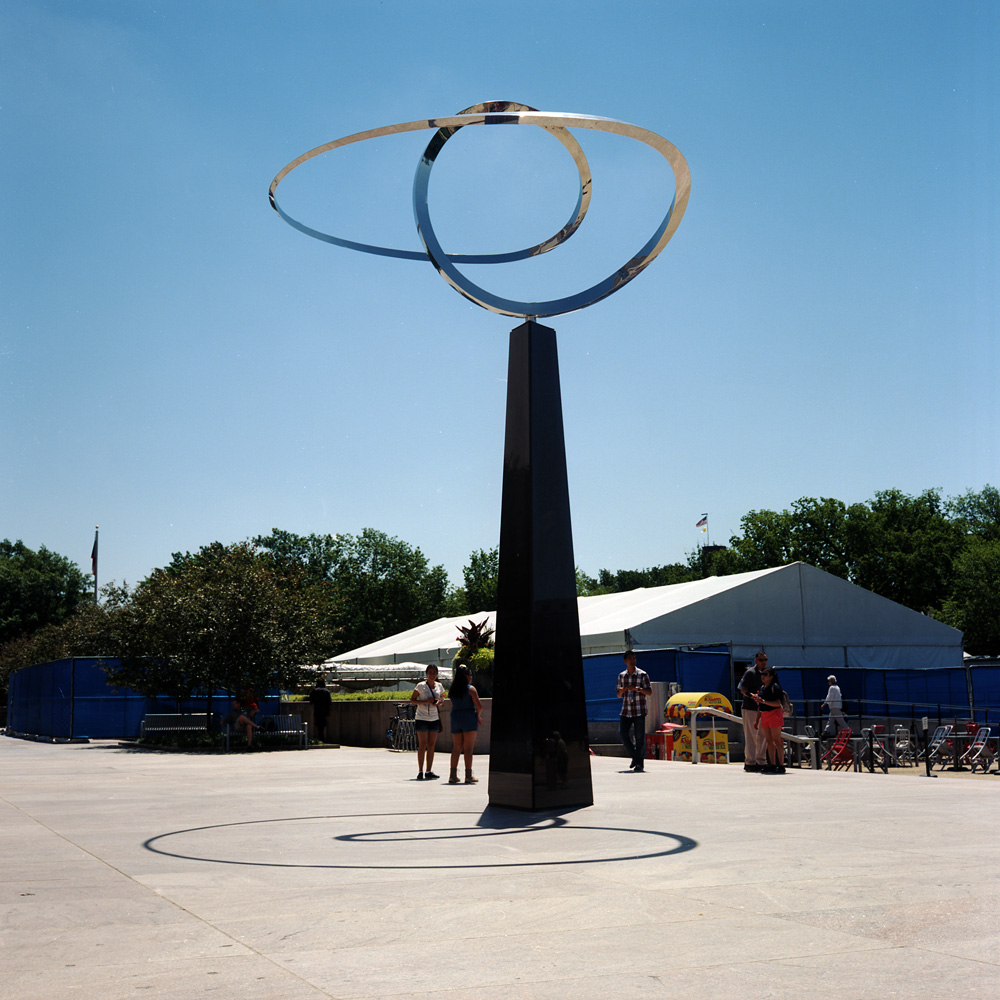
It was tough waiting for people to NOT be walking through the shadow of the sculpture on the pavement. I’ll have to come back and shoot this again in the wintertime when it casts a longer shadow and there are fewer people out on the plaza so I can catch it as more of an abstract piece.
Sculpture, Shadow, American History Museum
All shots were taken with my Rolleiflex 2.8E, on Kodak Ektar 100 film.
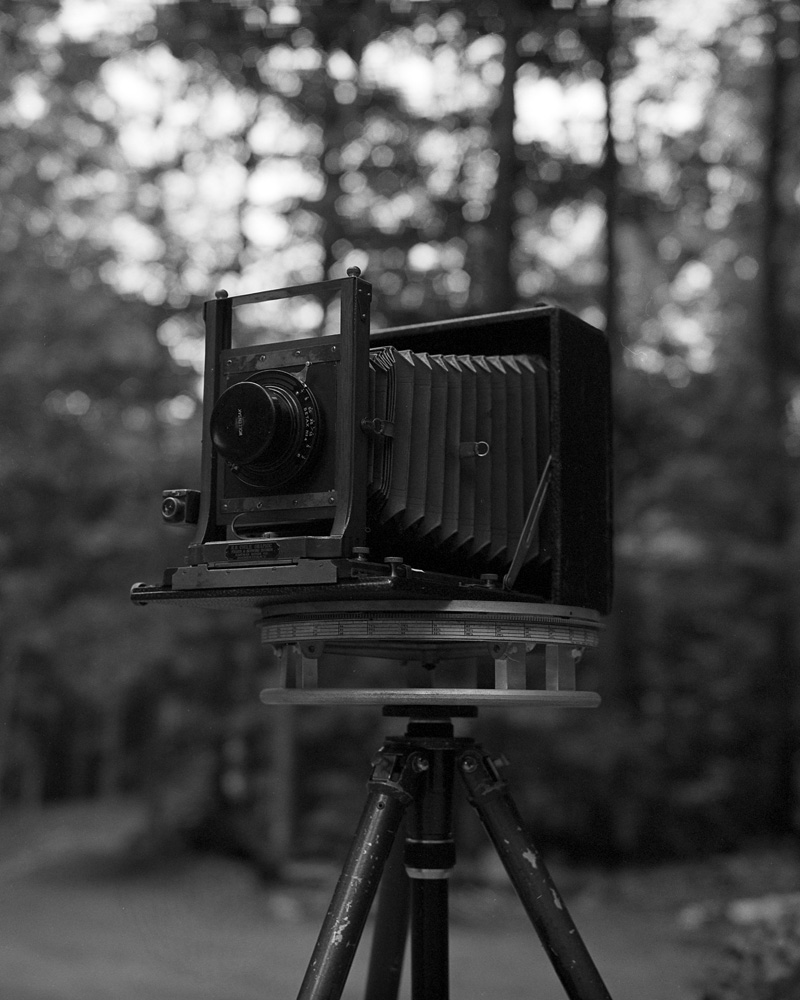
Since Photostock is all about photography, I thought I’d lead off this post with photos about cameras and taking pictures. The first photo is Jaime Young’s 9″ Cirkuit panoramic camera. A Cirkuit is just an ordinary Graflex field camera, but with some special modifications – it comes with a giant geared wheel and a series of reducing gears and flywheels to make it rotate up to 360 degrees and a special back that holds a 9″ tall roll of film. You can change the speed of rotation and the amount of rotation through changing gears and flywheels and adding stops to the large geared wheel. Jamie did a big group shot with the Cirkuit at the workshop facility dedication ceremony, where we had almost 70 people. The Cirkuit was absolutely needed this year to get the whole group shot done. One of the cool things about the Cirkuit is that because it rotates at a relatively slow speed, once the lens passes you, you can get up, run around, and get back in the picture, so you appear twice (or more). I’m itching to see the final print from the Cirkuit – some folks did just that, the run-around, and so they will be in the photo two, three, or in the case of one or two jokesters, even four times.
Cirkuit Graflex Panoramic Camera
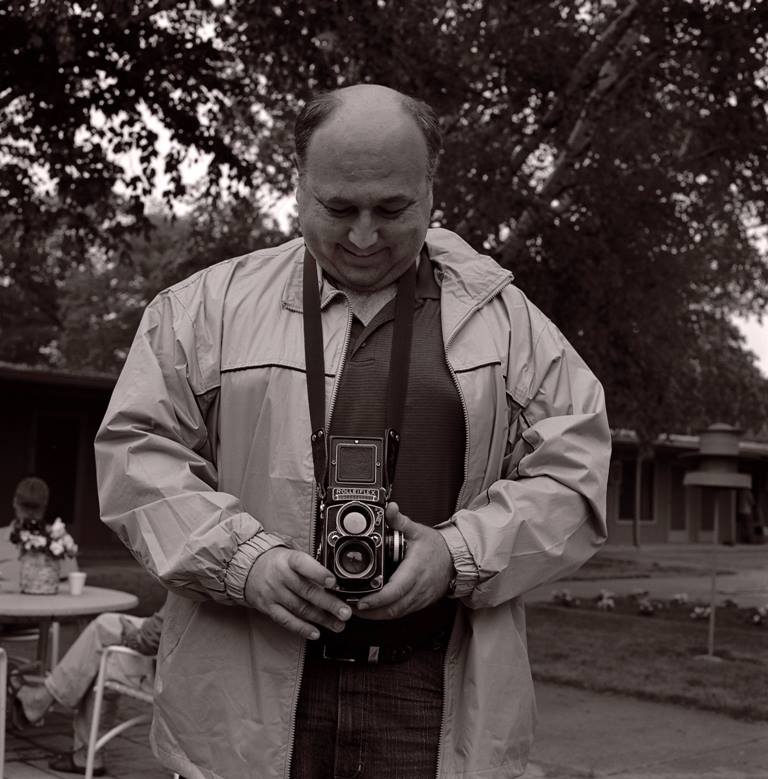
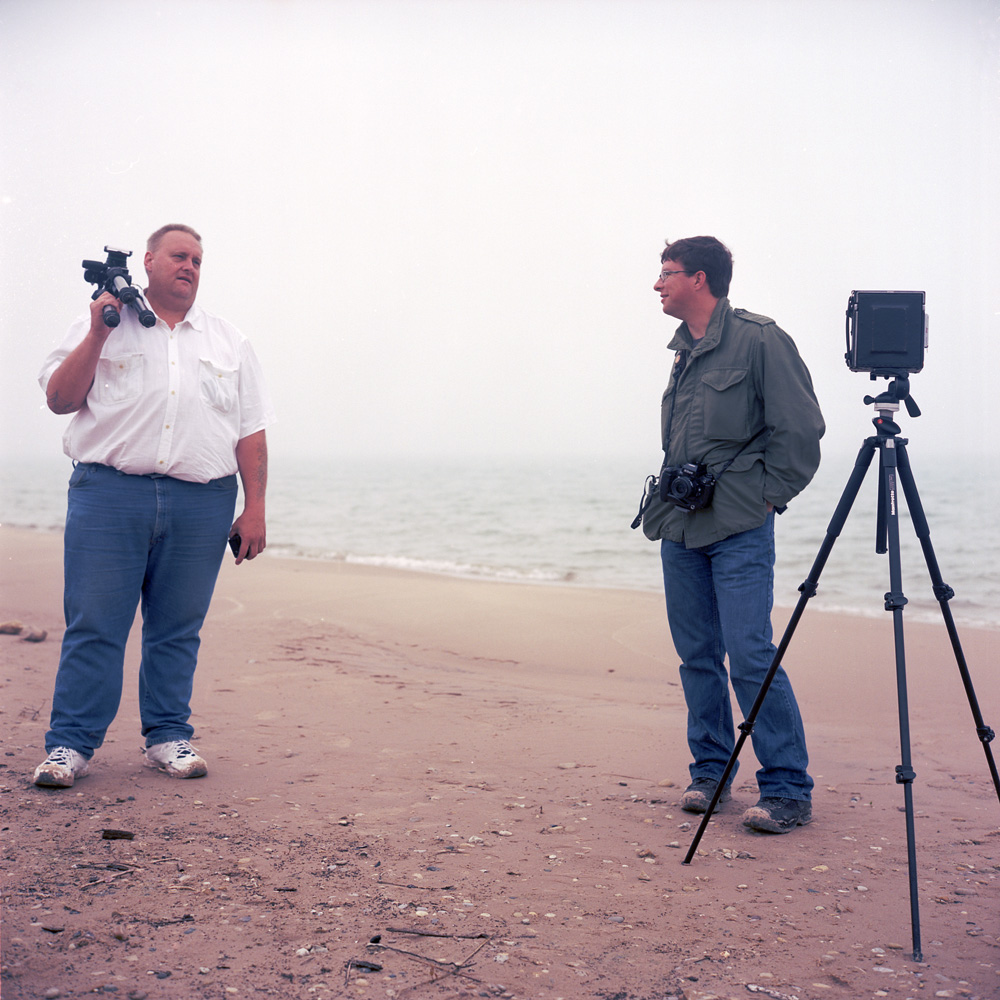
This is Steve Zimmerman, with his Rollei. We shot dueling Rollei photos of each other in a fit of silliness. His Rollei has a great story – he was out photographing in downtown Minneapolis, and some guy walked up to him and struck up a conversation about cameras and photography. The guy then pulls a BRAND NEW, IN ORIGINAL BOX Rolleiflex 2.8E, AND an equally brand new Leica M3 with the Summicron f2 lens out of a bag, and gives them to Steve for $100 each. Steve tried to pay him more (each of them was worth about 10x what he paid for them!) but the guy insisted on the cheap price, because “I know you’ll enjoy and appreciate them”.
Steve Zimmerman, Dueling Rolleis
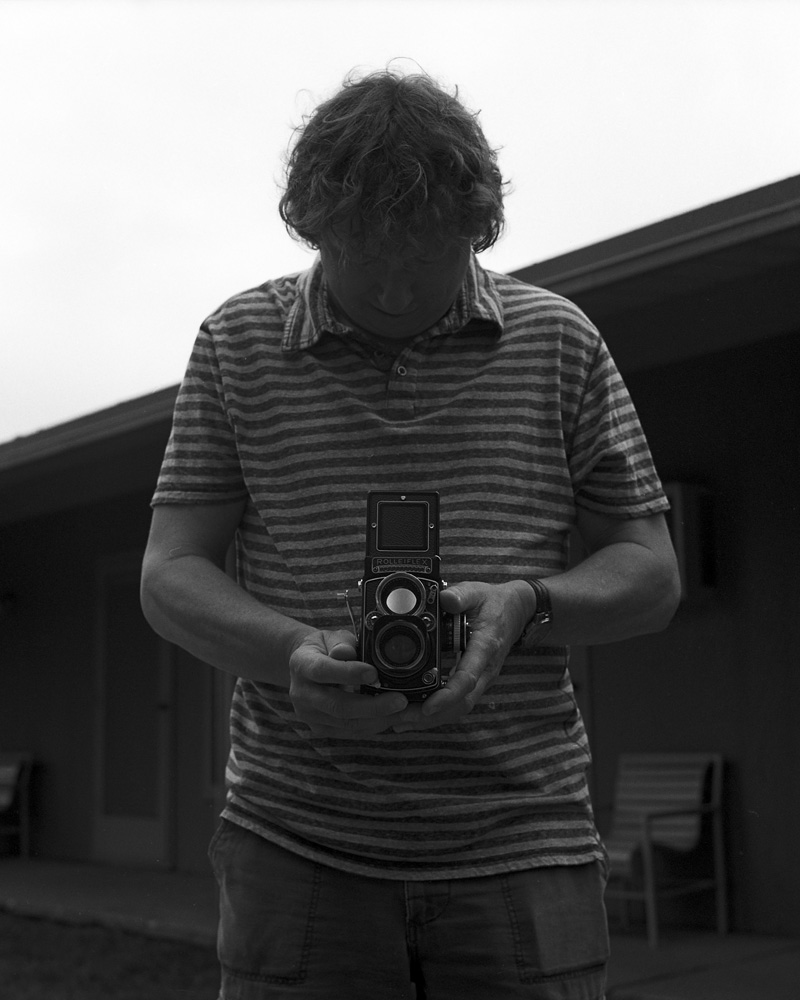
Here’s Steve’s shot of me… why couldn’t he have photoshopped a full head of hair onto me? It would have helped compensate for the double chin…
Me, in a Rolleiflex Duel with Steve Zimmerman
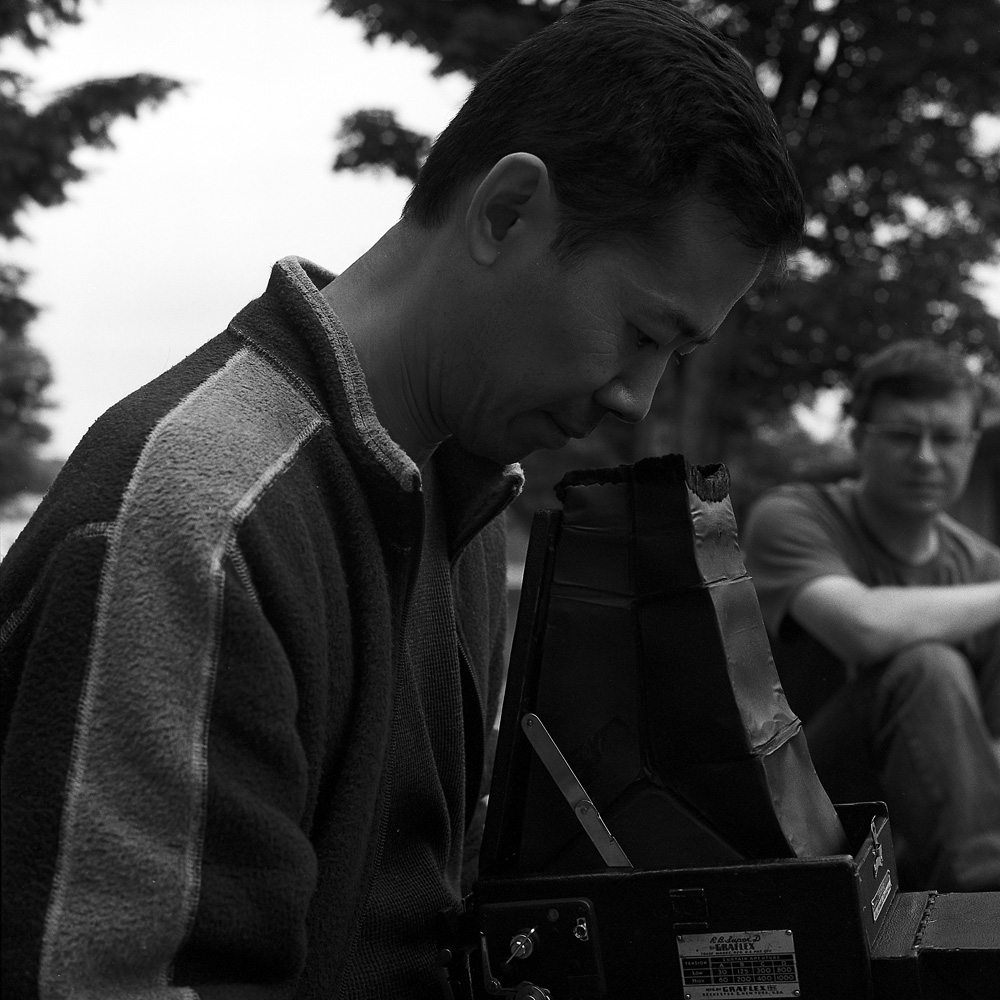
Someone (I forget who) brought a beautiful RB Graflex Super D 4×5 SLR to the event. Here is Dan Lin, a fantastic photographer who I’ve done a print trade with before, playing with the Graflex. Alex L is in the background.
Dan Lin, Trying Out A Graflex
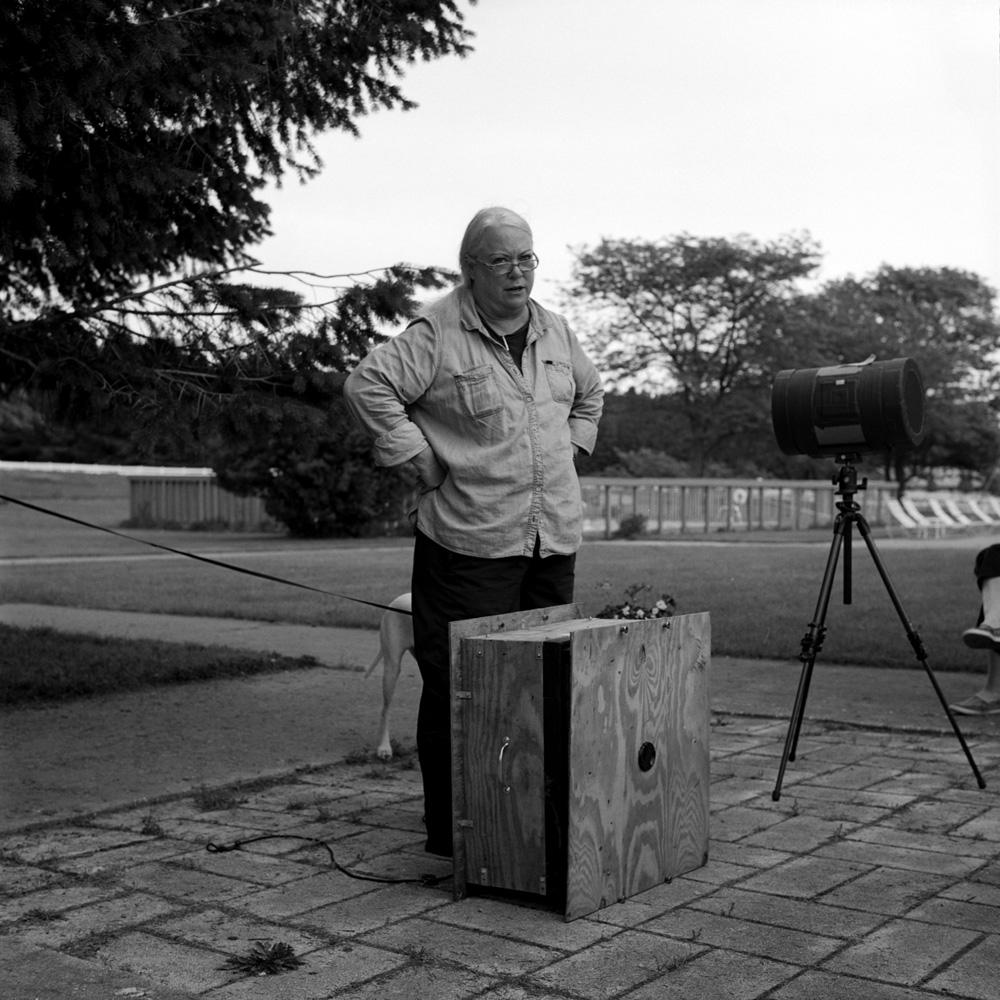
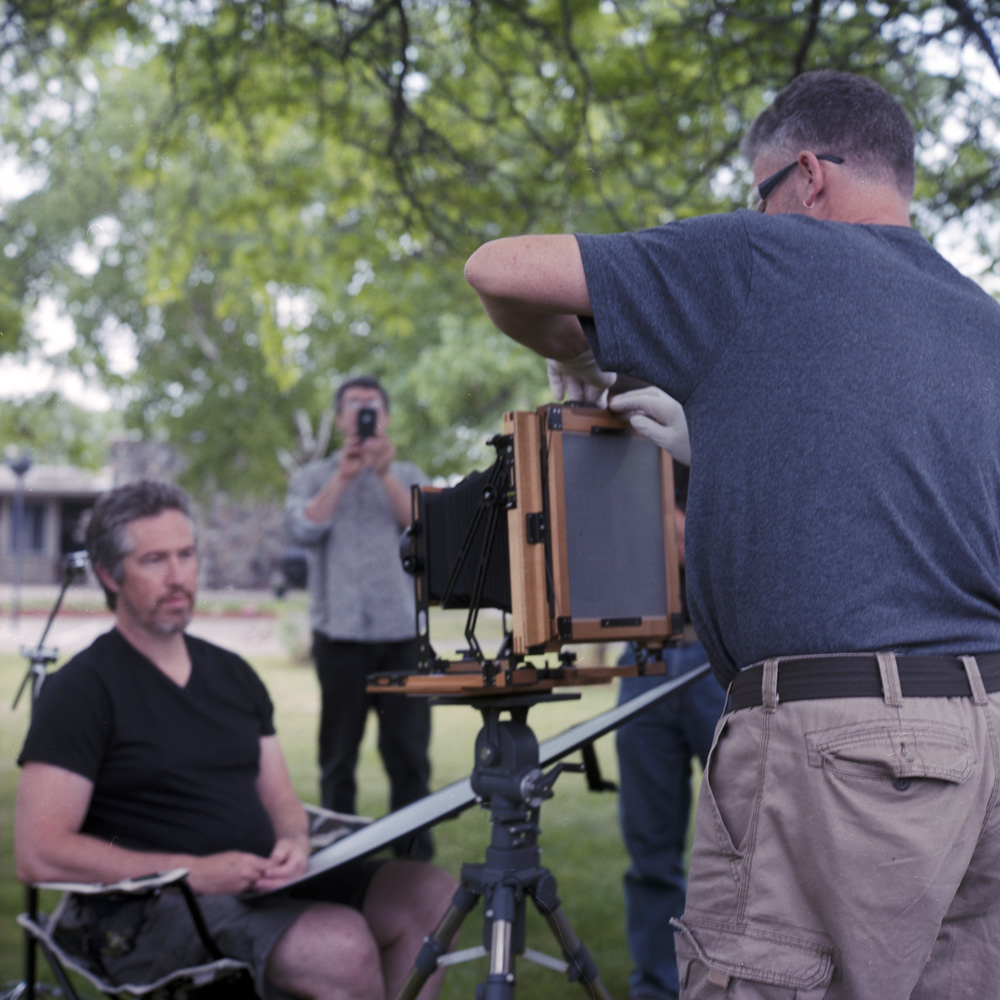
And here’s Judy Sherrod again, with her pinhole cameras. The one in front of her is the first version of her 20×20 wet plate pinhole box camera, made of plywood. It has since been retired and replaced with a new, better built one. The drum on the tripod behind her is an anamorphic pinhole. The pinhole is in the end of the tube, but the paper or film goes around the inside, instead of on the opposite wall of the camera. This works because of the way a pinhole works. The pinhole projects light in a very wide circle, not just a cone like a lens does. Doing so allows you to make some very different images.
Judy Sherrod, Pinhole Camera Demo
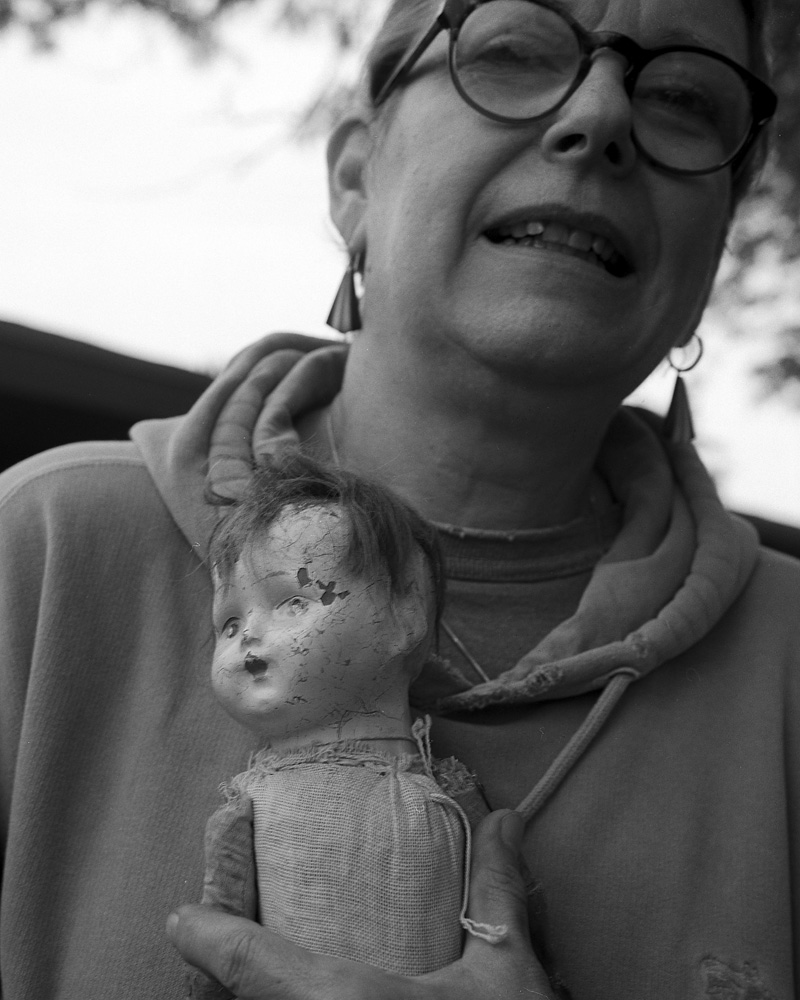
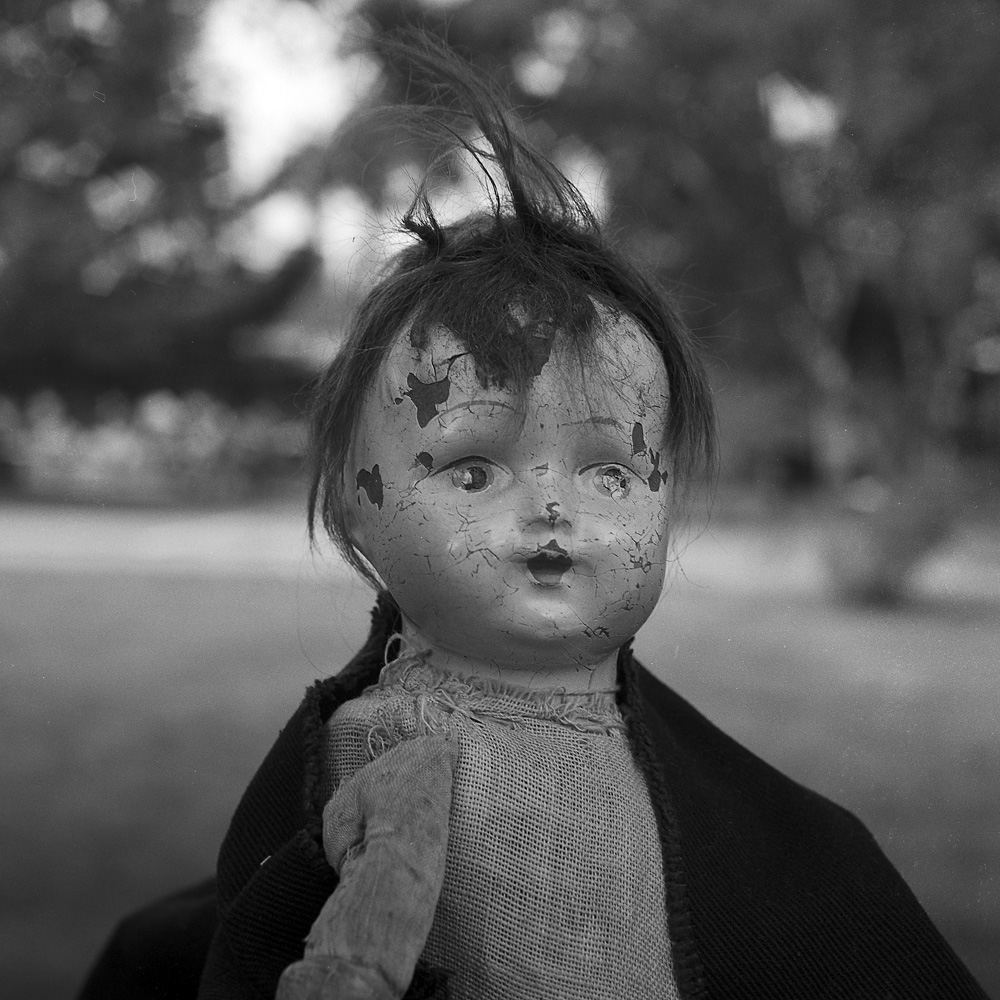
Here’s Dorothy Kloss with her creepy doll. She likes collecting antique dolls, and the creepier the better.
Dorothy and her Creepy Doll
It seems everyone has a Rolleiflex story somewhere or other. I was playing around with my Rollei and it reminded Dorothy that in some boxes of her father’s stuff, she has his old Rolleiflex, and maybe the Rolleinar close-up filters like I have and was using for the shot of her with the doll and this photo of the doll by itself. It inspired her to go dig through her dad’s stuff and find it when she got home.
Dorothys Creepy Doll
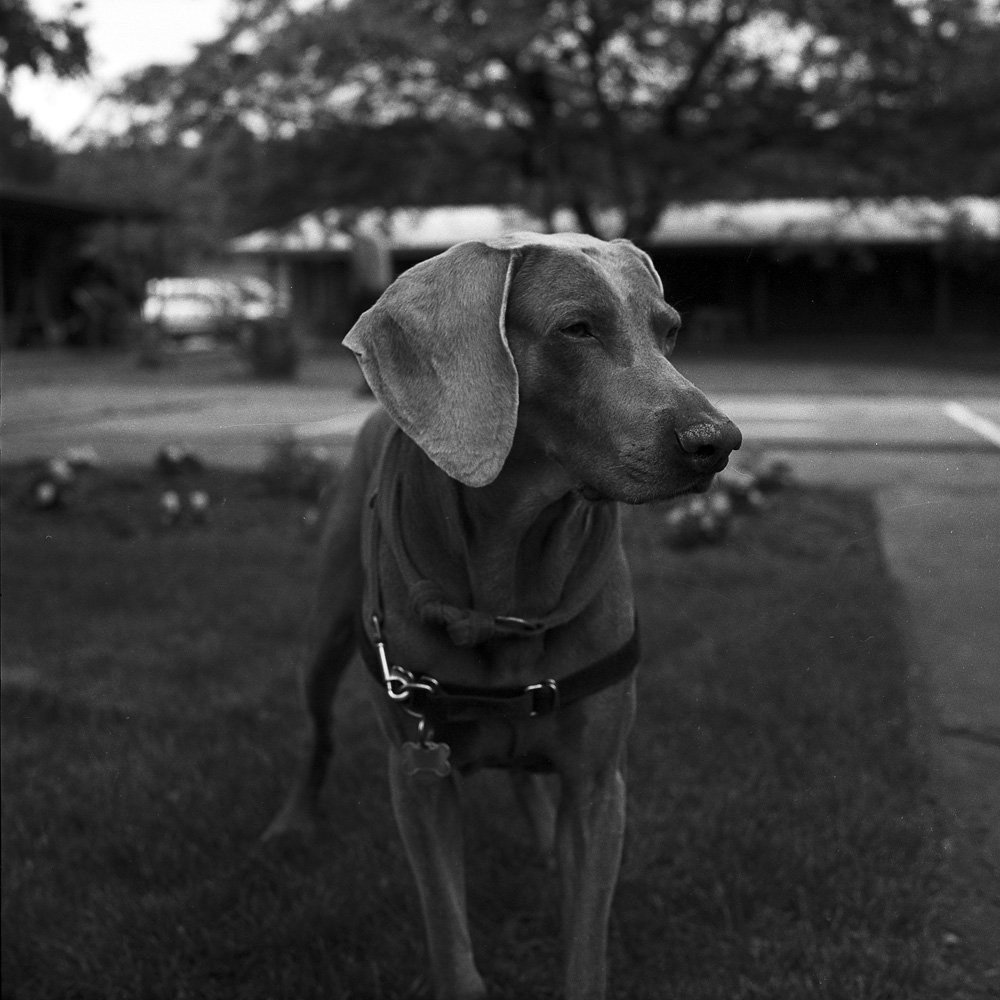
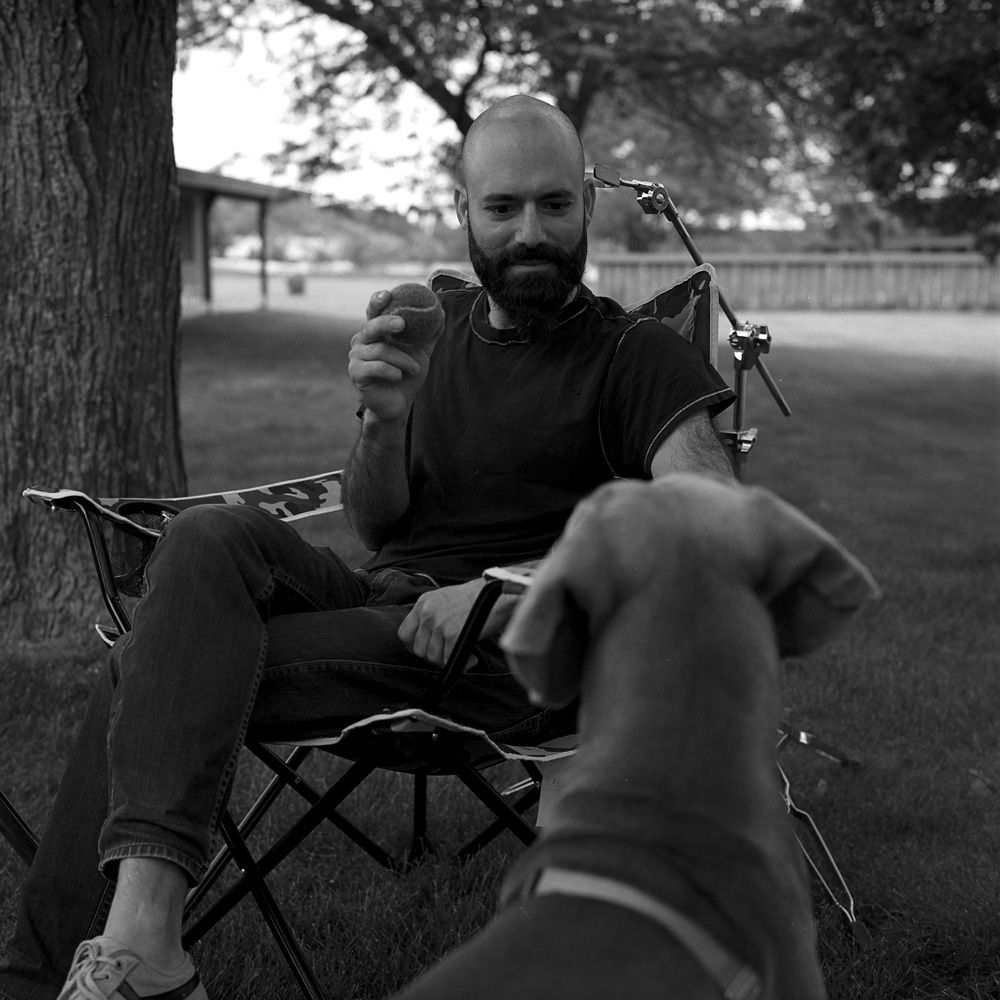
Pele the Weimeraner. Pele was a great dog and a fine addition to the Photostock community. He is very attentive and friendly, and you can see in the subsequent photo of him with Arnaldo, his owner, very fixated on his ball.
Pele
Arnaldo, in the posing chair with head clamp, waiting for the wet plate collodion portrait that Andrew Moxom took of him to develop, playing with Pele.
Arnaldo and Pele
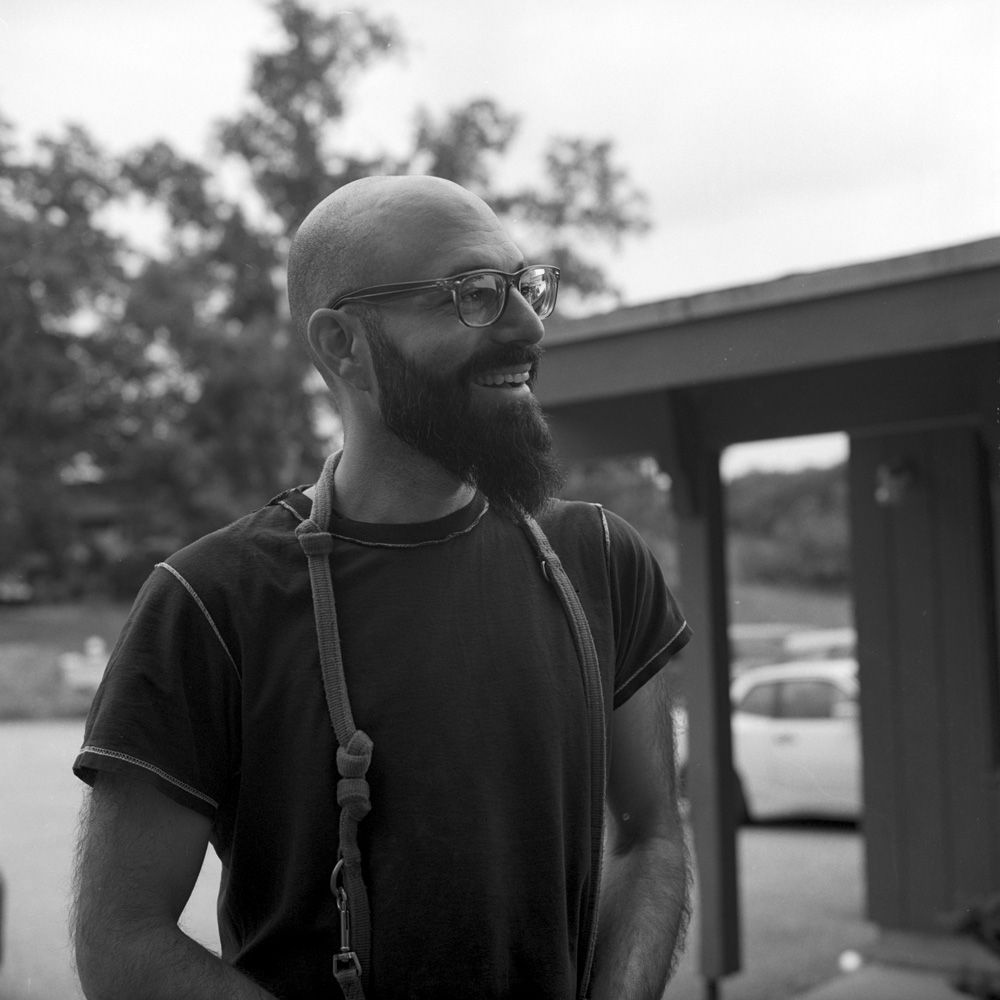
Arnaldo. Arnaldo is a photographer from New York City. He drove to Photostock from New York in a 1980s vintage Porsche 944, and continued on to the Southwest (New Mexico and Arizona if I’m not mistaken) afterward.
Arnaldo Vargas
Mat Marrash. Mat runs the Film Photography Project podcast, and does AMAZING 11×14 Infrared (!!!) photographs. Yes, I said 11×14, as in 11×14 inch film. He has a stock of Efke 11×14 infrared film that he’s working through – the Efke is no longer made, so once his stash is gone, that’s it.
Mat Marrash
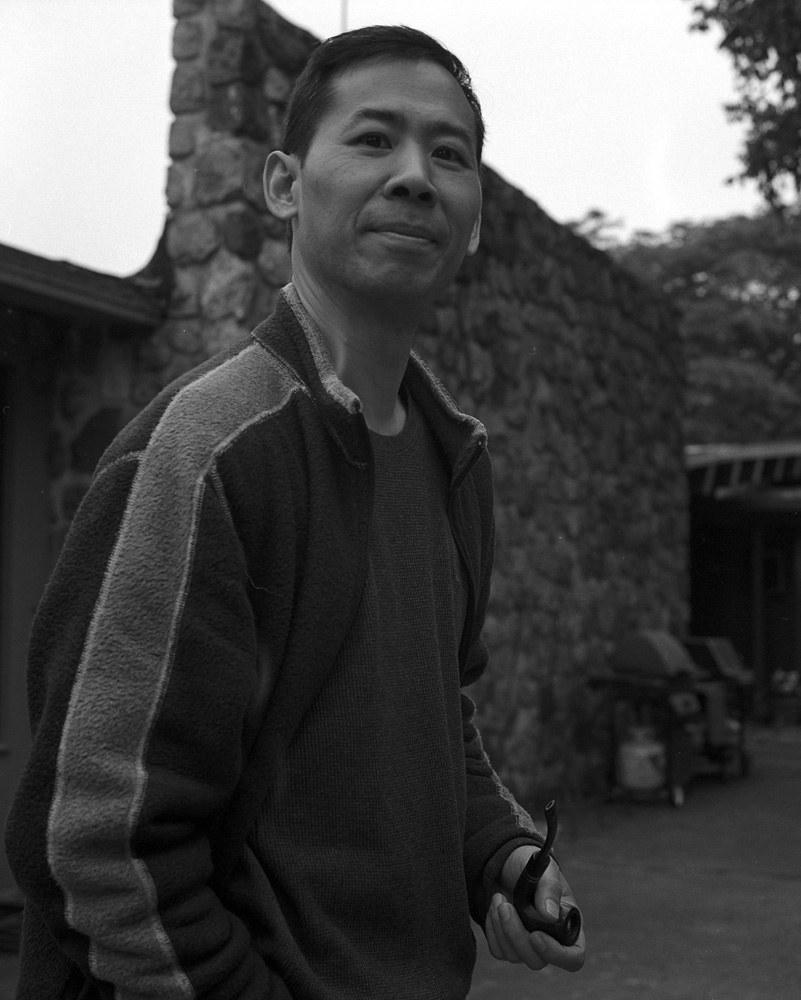
Here’s a portrait of Dan Lin, without the Graflex, but with his pipe. I don’t think I got one of him wreathed in smoke from it, but I might have one like that on one of the remaining rolls from the trip I still have to develop.
Dan Lin
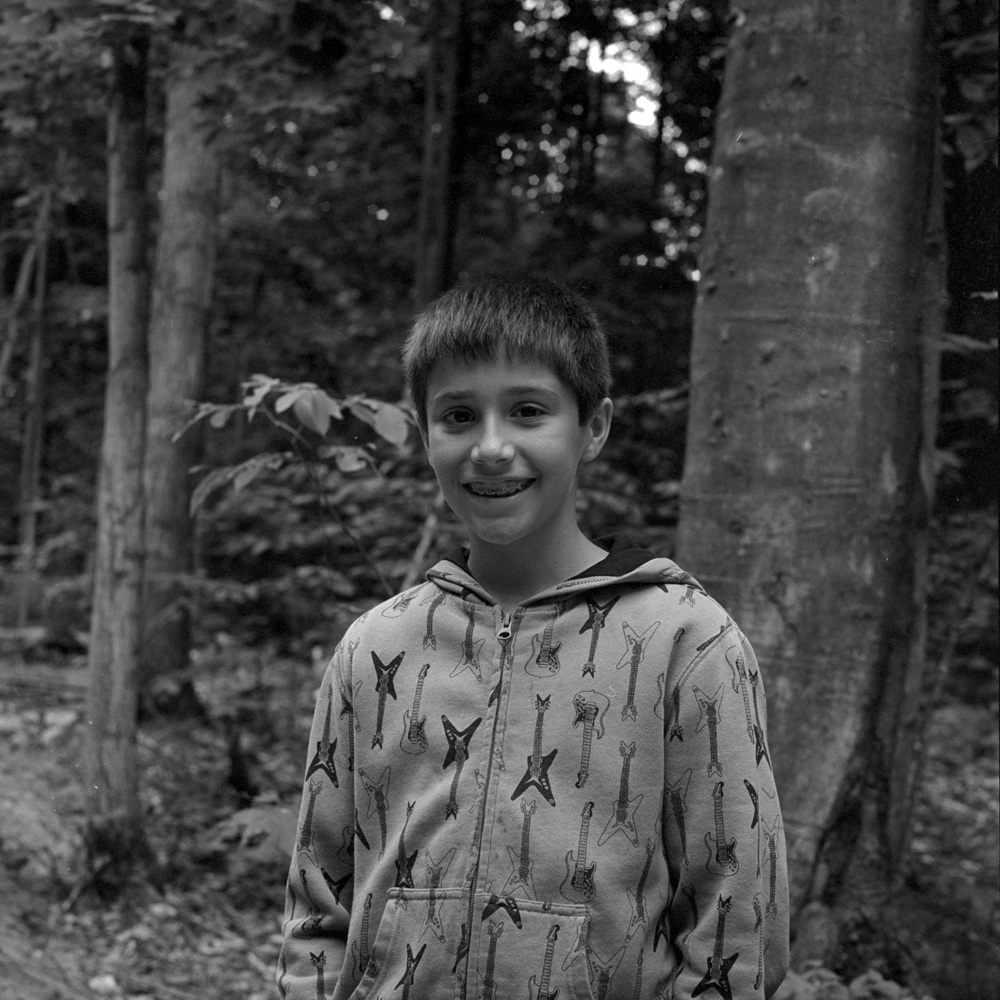
And in the closer for this post, is Evan Schwab, the son of Bill Schwab, our host and organizer for the event. Evan is a terrific little guy, very smart and a good conversationalist. A kid even WC Fields could like.
Here are a few shots from downtown Harbor Springs, Michigan.
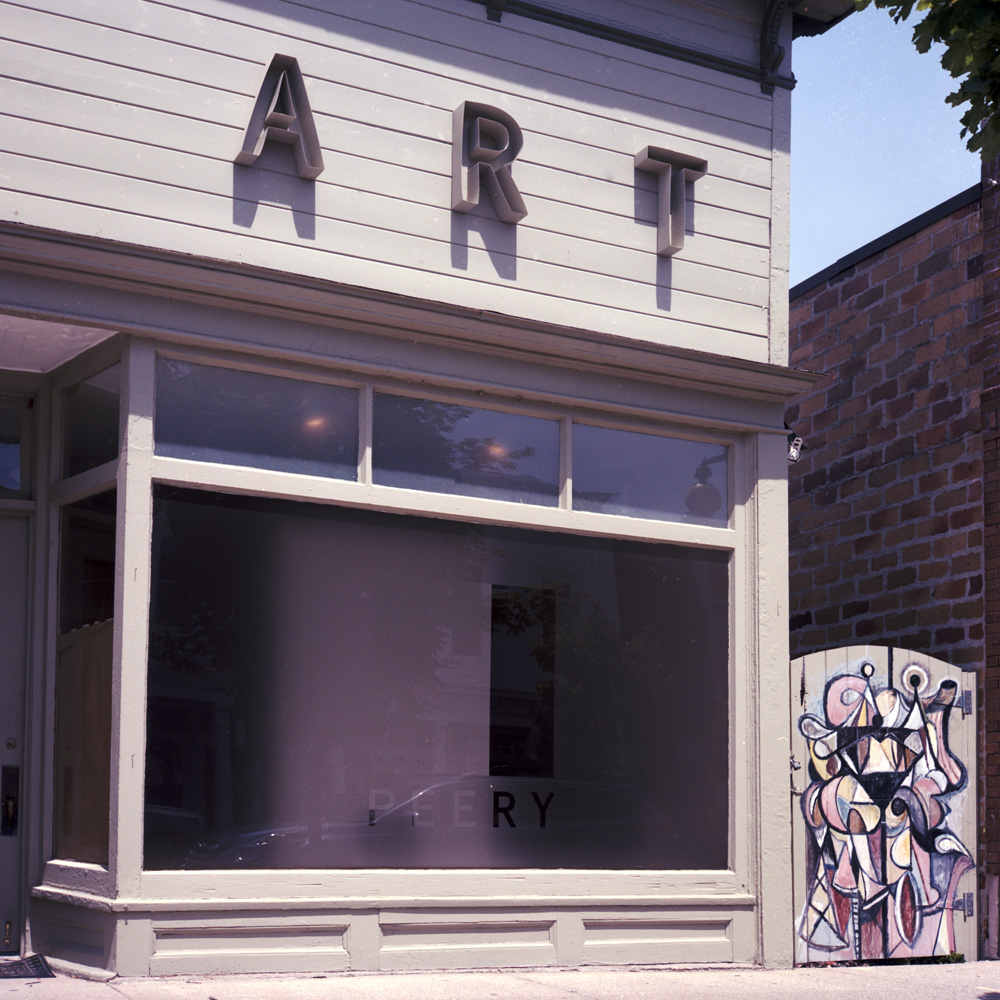
Under the heading of “but is it ART?”
Art Gallery, Harbor Springs
I couldn’t tell if it was out of business, not yet opened for the season, or in the process of opening for the first time, but it’s some kind of statement to have an art gallery with bare walls.
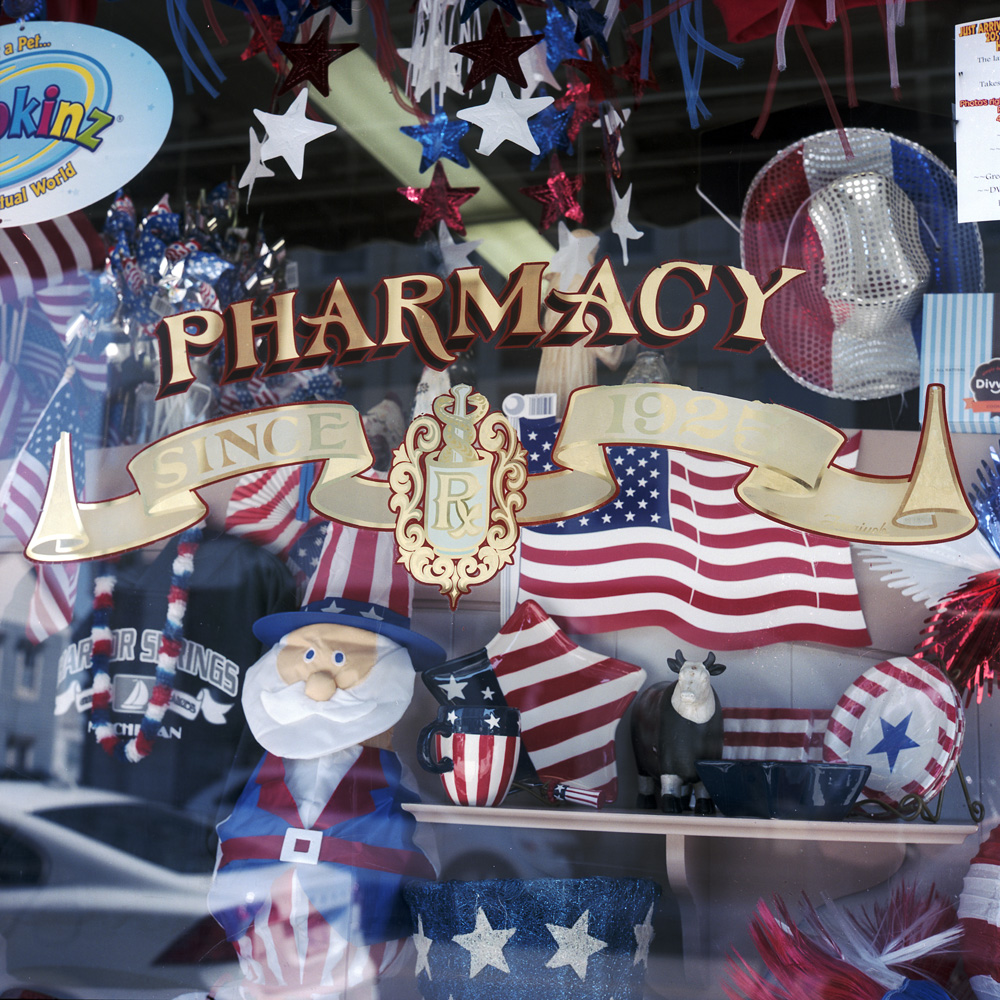
I loved the vintage feel of the gold leaf sign in the pharmacy window, and the riot of colors and designs on all the July 4th themed stuff in the window: Pharmacy Window, Harbor Springs
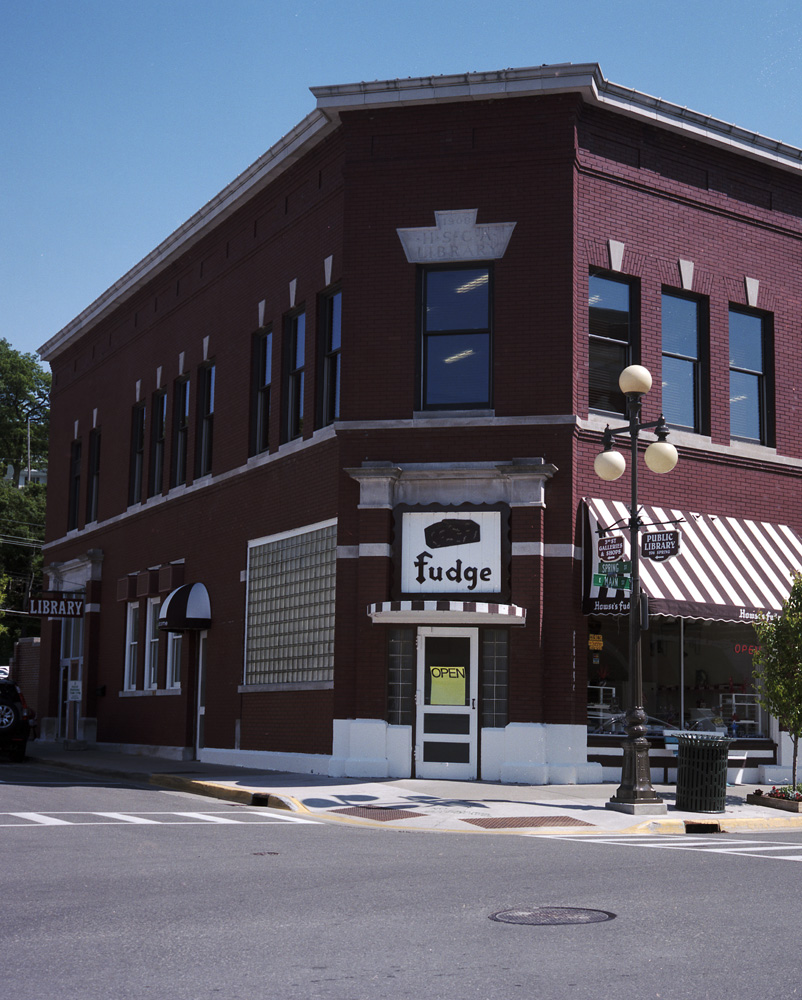
It also says something about a small town when the library is upstairs from a fudge shop:
Lbrary, Fudge Shop, Harbor Springs
I’ll leave it to you to decide what exactly it says.
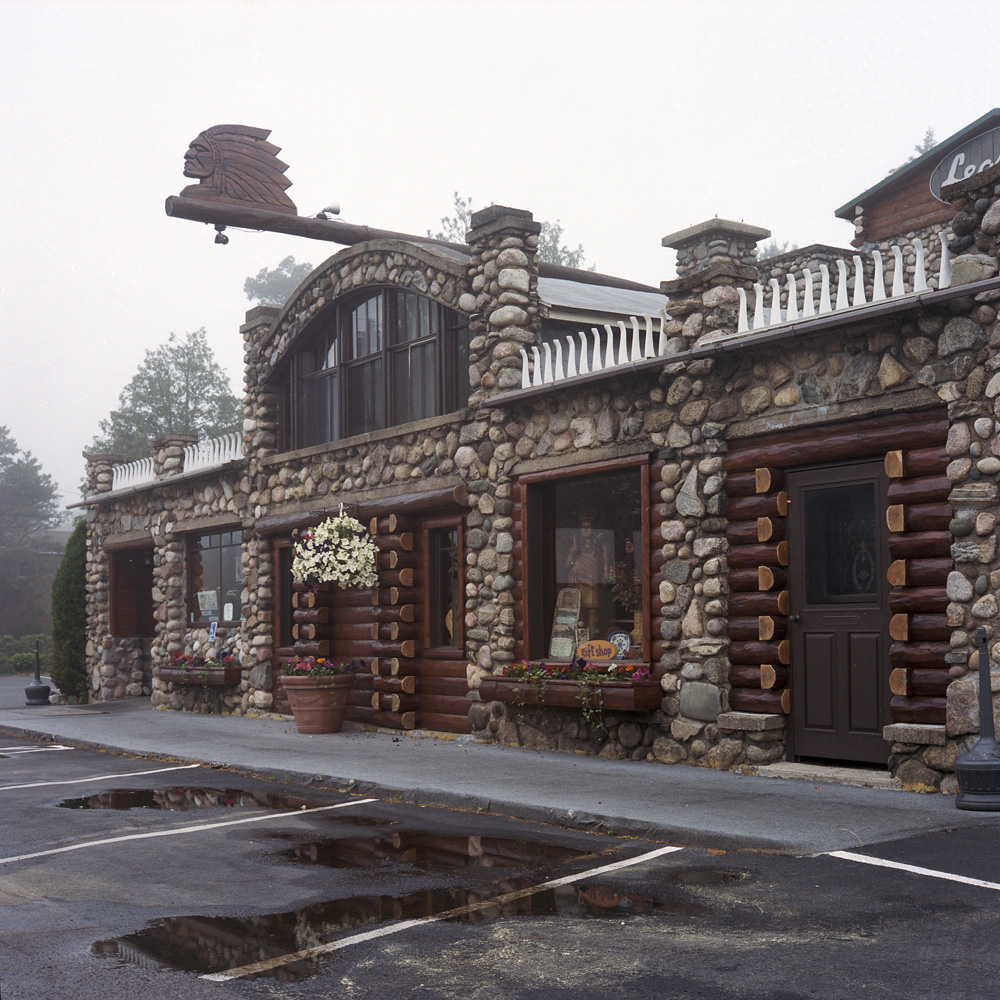
Here is the famous “Legs Inn”. The Inn serves Polish cuisine in a highly rustic, pseudo-native-american decor setting. It gets its name from the fringe of old stove legs fringing the facade.
Legs Inn
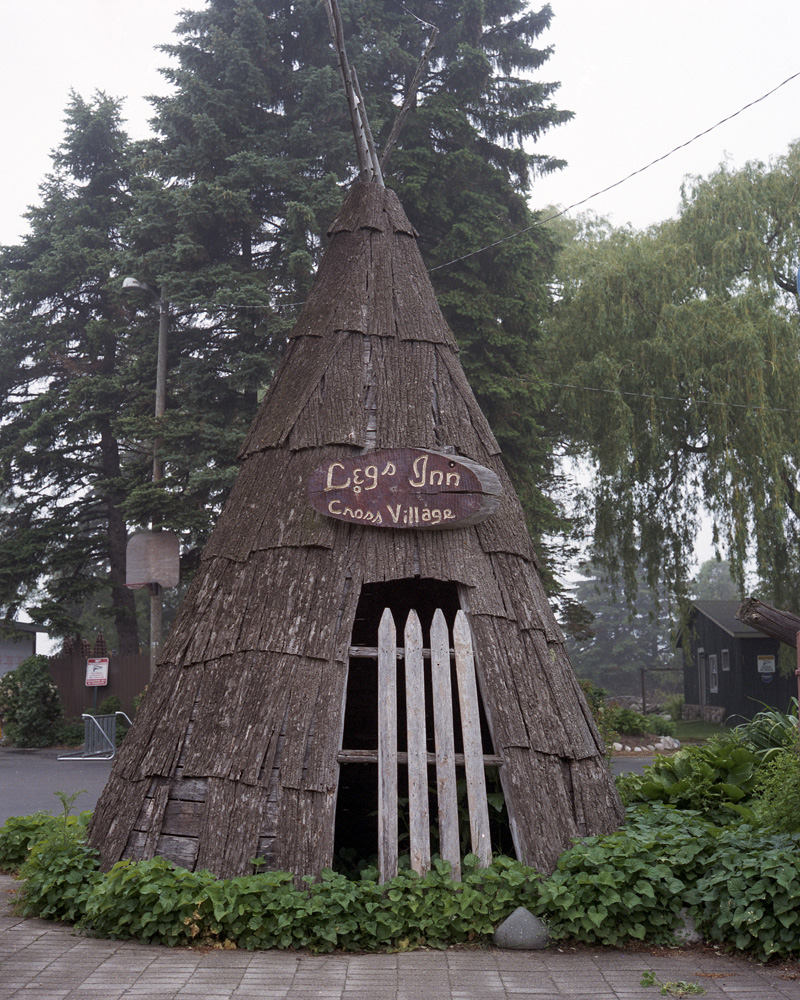
Commemorating the Native American presence in the area, the Legs Inn has this tipi construction outside in the parking lot.
Bark Tipi, Legs Inn
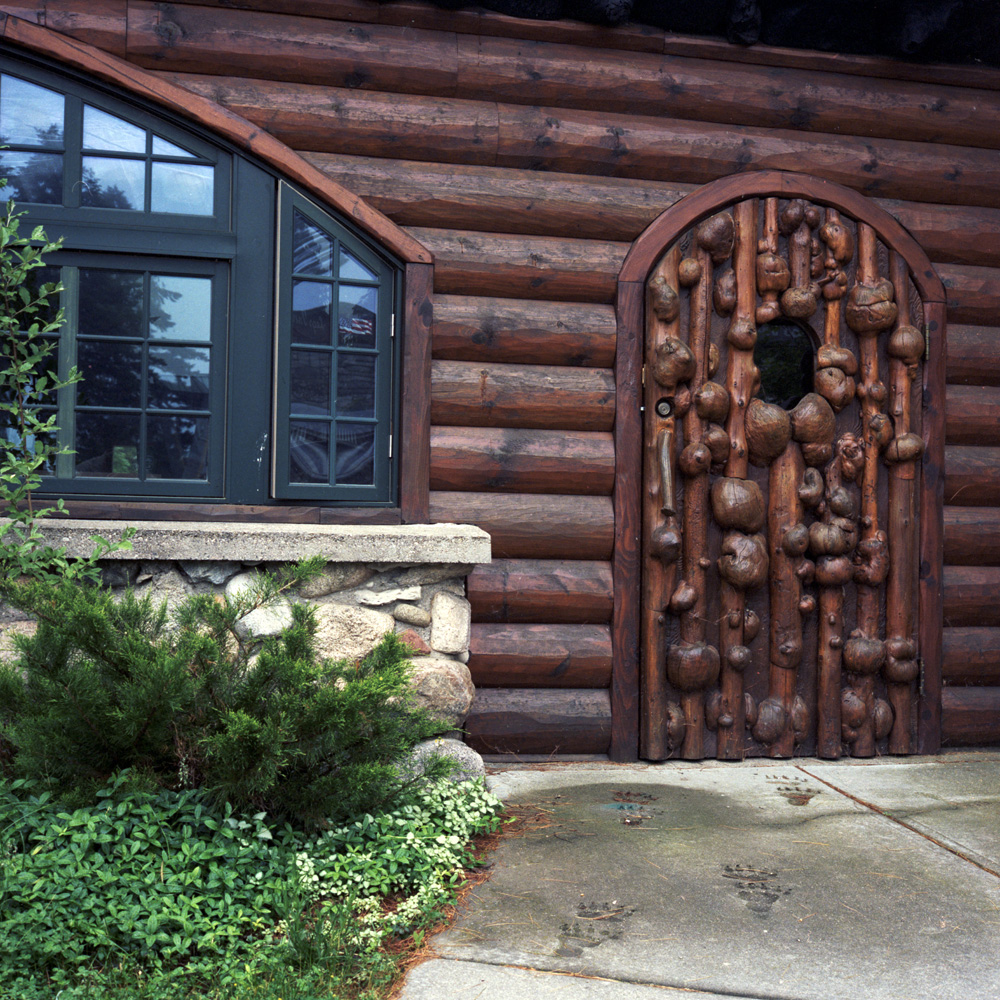
Across the street is this very knotty door, with fake bear paw tracks in the concrete sidewalk. Knotty Door, Legs Inn
I looked at the sidewalk and my first thought was “how cute – I want to keep the paw prints in the photo”. My second thought was, “what a pain in the ass that must be to shovel come wintertime – those are natural snow and ice traps!”.
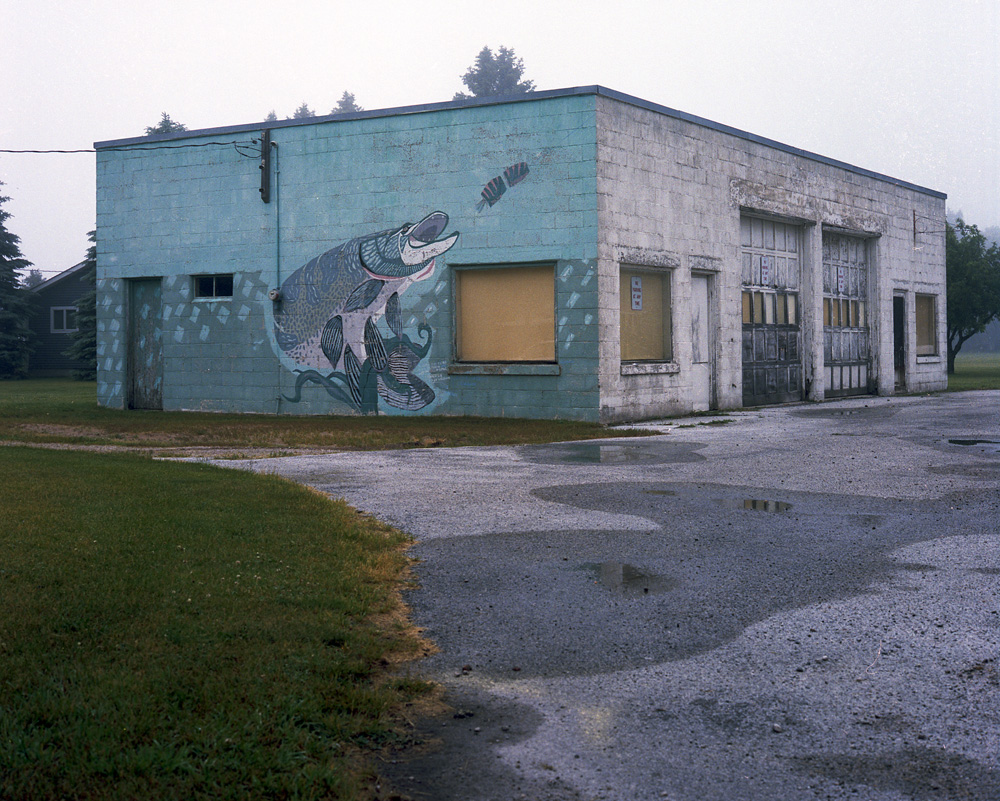
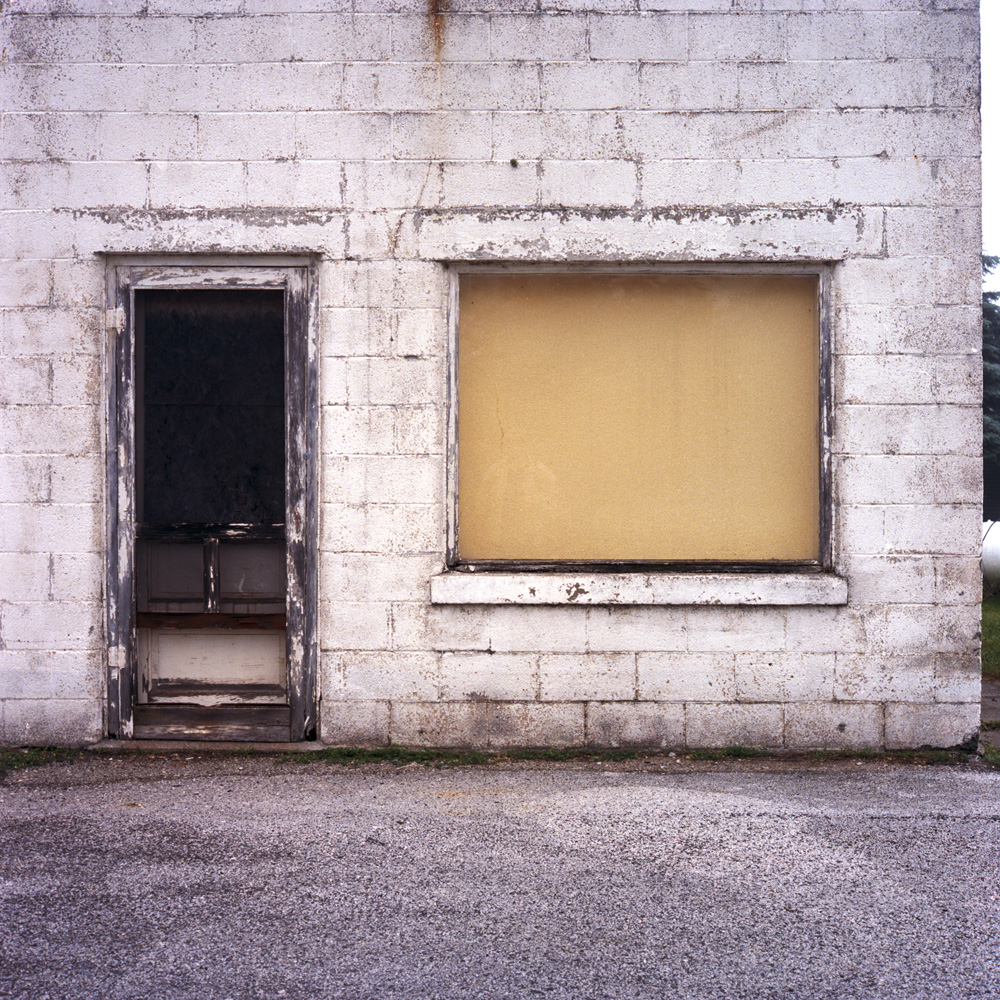
Across the parking lot from the Legs Inn is this old cinderblock garage building, all closed up, but with this gigantic mural of a Muskie leaping for a fishing lure.
Muskie Mural, Garage, Legs Inn
I just liked the texture of the garage wall, and wanted to do something with the geometric qualities of the door, window, and cinderblocks. I don’t normally like perspective-less flat planes, but this composition called out to me. I also liked the near-monochromatic nature of the scene – there are few hints other than the window shade that this is in fact a color photograph. Feedback on it welcomed.
Garage Office Door, Legs Inn
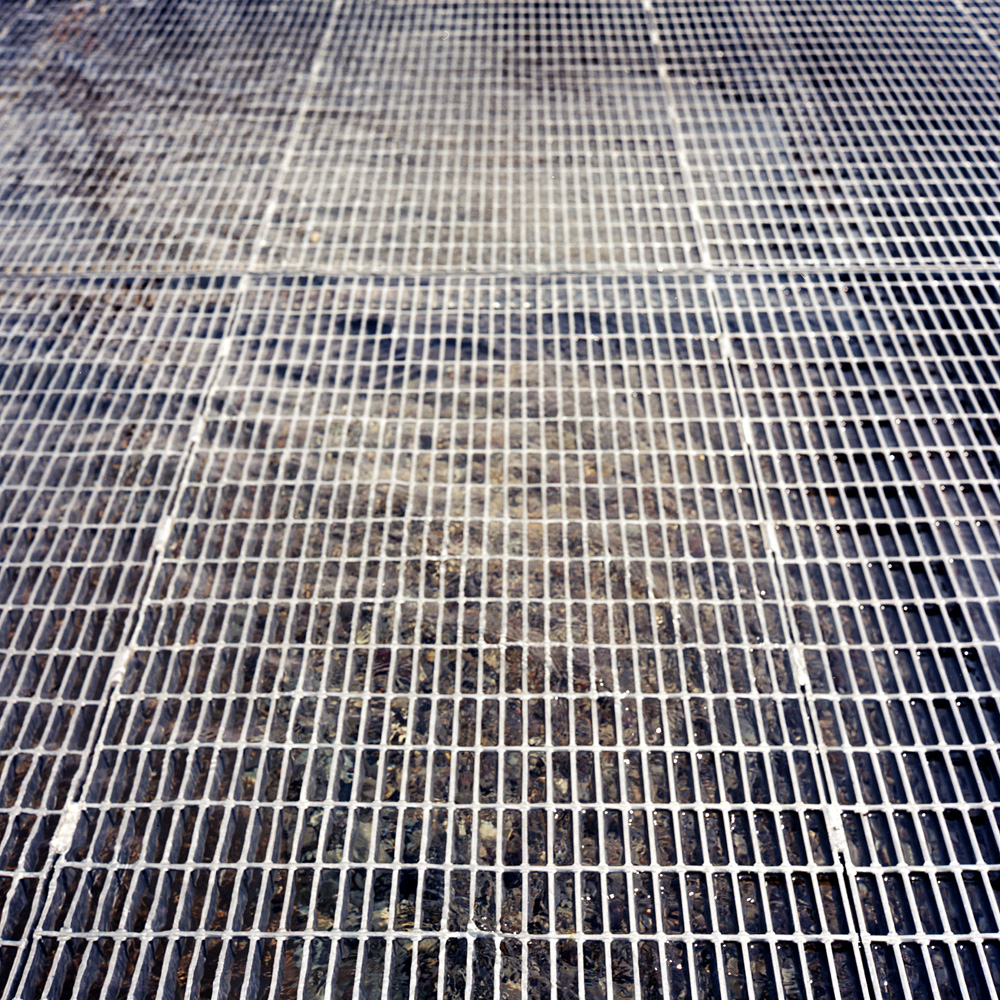
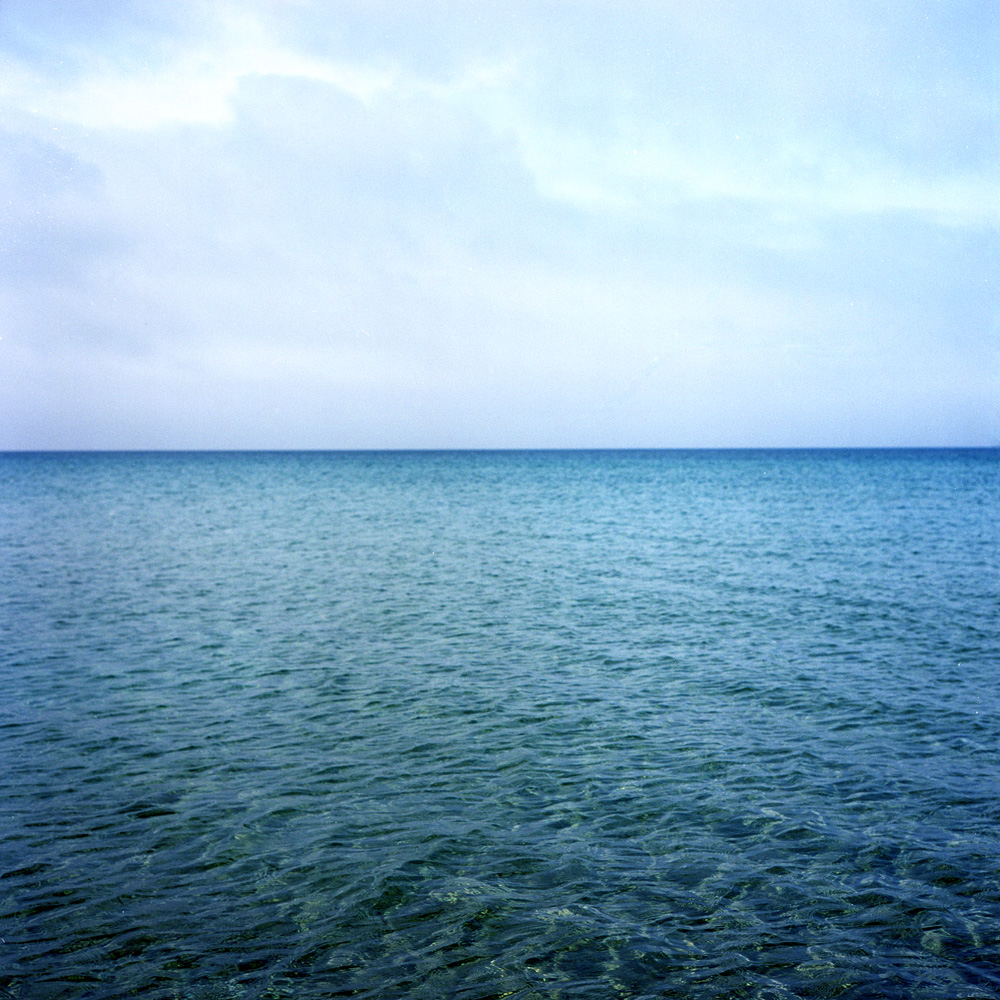
On a bright and sunny day, I went down to the boat ramp in Cross Village, Michigan, to get the sunny day version of something I had previously attempted in heavy fog – a photo of just the lake and sky. I went out on the boat ramp to take the photo, so I could be sure to not have any land in the foreground. Coming back from the decking over the water, I looked down and saw this:
Boat Ramp, Cross Village
The waters of Lake Michigan. Yes, it really is that blue and clear. I tried this shot also on a foggy day, but the fog was so intense I ended up with detail-less gray over sorta-textured gray, which was very uninteresting. I’m thinking of doing a Sugimoto-esque re-working of this to blur out the details in both sky and water so it becomes a study in color fields.
Lake Michigan
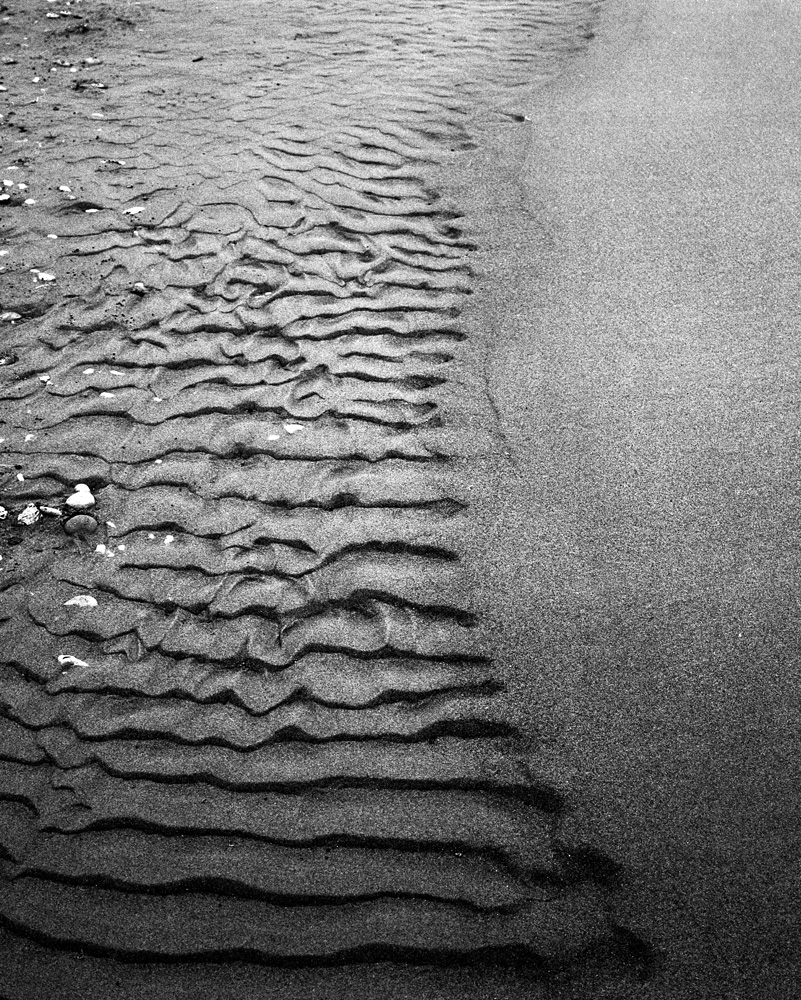
I know, heresy- I converted this shot to black-and-white from a color negative. Had it been a sunny day, I think the color would have worked, because I would have had the contrast in the scene to bring out the abstract nature of the composition. But I had profound fog as my lighting, so the b/w conversion gets me closer to what I was seeing in my mind’s eye for this shot.
Beach, Lake Michigan
All shots taken with my Rolleiflex 2.8E, with the films being a mish-mash of Kodak Portra 160, Kodak Portra 400 (the really foggy day stuff) and Kodak Ektar 100.
Last week (June 19-23) I was in the upper upper corner of the Lower Peninsula of Michigan (troll land – why? because it’s under the (Mackinac) Bridge!). The event was Photostock 2013, a very loose, casual gathering of photographers to hang out, shoot, share work, talk photo, and just relax. The event was held at the Birchwood Inn in Harbor Springs, Michigan, which is on Lake Michigan, not far south of the Mackinac Bridge. The bridge spans the strait that separates Lake Michigan from Lake Huron. It’s the second longest suspension bridge in North America, and the fourth longest in the world.
Here’s a photo of the bridge in the morning fog:
Mackinac Bridge, Morning Fog
To clarify some confusion, Mackinac is pronounced Mackinaw (why I don’t know, but it is). If it’s a transliteration from a Native American word, then you’d think Pontiac should have been pronounced Pontiaw. But it’s not. Go figure. Anyway, you’ll sometimes see Mackinac written Mackinac and others Mackinaw. And same with the resort island of the same name.
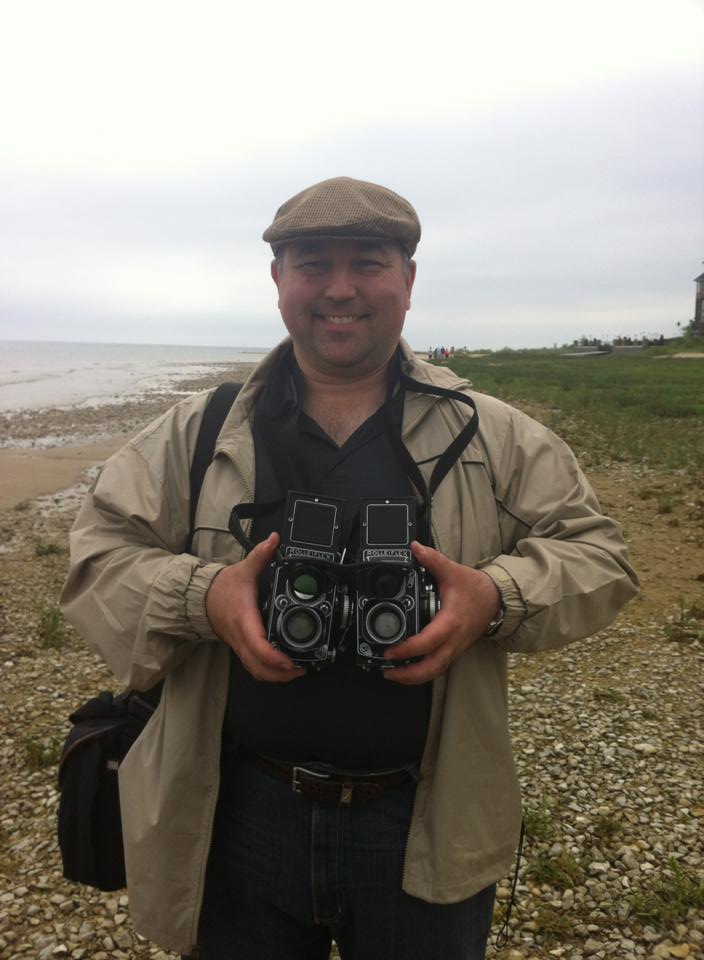
Back to Photostock- it’s an environment where you don’t feel like the odd man out for being a total photo geek for bringing TWO Rolleiflexes with you (that was me, and in comparison to some folks, I was highly under-geared!). Here I am having fun with my Rolleiflexes- they’re wearing my Ray-Ban Wayfarers:
Me And My Rolleis
The coolest thing about it for me was getting to meet a whole bunch of folks in the flesh I only knew virtually, from participating on APUG (http://www.apug.org), Large Format Photography (http://www.largeformatphotography.info/forum), and Rangefinder Forum (http://www.rangefinderforum.com). Some of them I’ve known as virtual beings for nearly a decade. Everyone attending was just terrific, and I can’t think of a single conversation that was anything other than interesting or a person who was anything other than energizing to talk to. We had some really fantastic photographers give demonstrations of their work, like Judy Sherrod showing off her homemade 20×24 wet plate pinhole cameras and the accompanying alumitypes she made with it – WOW. Talk about inspirational – here was someone who was told “no, it can’t be done”, decided that no was not an acceptable answer, and proved the naysayers wrong. She shot wet plate pinhole photos of the beach and ocean at Pass Christian, Mississippi, coating her giant plates at home, driving to the beach, setting up, exposing, driving back and processing the plates all within a half hour span – pretty amazing considering that her exposures were 7-10 minutes each!
Judy Sherrod’s Pinhole Camera
EDIT:
I received the following note from Judy Sherrod clarifying the information about the wet plate pinhole work:
The 20×20 pinhole cameras are made to shoot wet-plate collodion plates in a collaboration with S.Gayle Stevens. Gayle is the collodion artist. I am not. I make the boxes.
I live in Texas, she lives outside of Chicago, and we work from a darkroom in Pass Christian, Mississippi. It’s a long commute for each of us!
We coat the plate in the darkroom, put the plate in the camera, put the camera in the car, jump in and drive to the beach, where the exposures are made. Most exposures are about three minutes. Then we put the camera back in the car and return to the darkroom for processing.
Thank you for writing about this project. It has turned into a dream come true for me. I can’t wait to see what happens next!
looks like I got a couple facts turned around in my head! Thanks, Judy for the clarification!
This is a preliminary set of photos of the people attending Photostock – there were nearly 70 people participating throughout the week, and I’m sure there were some I barely saw let alone got to meet and talk with.
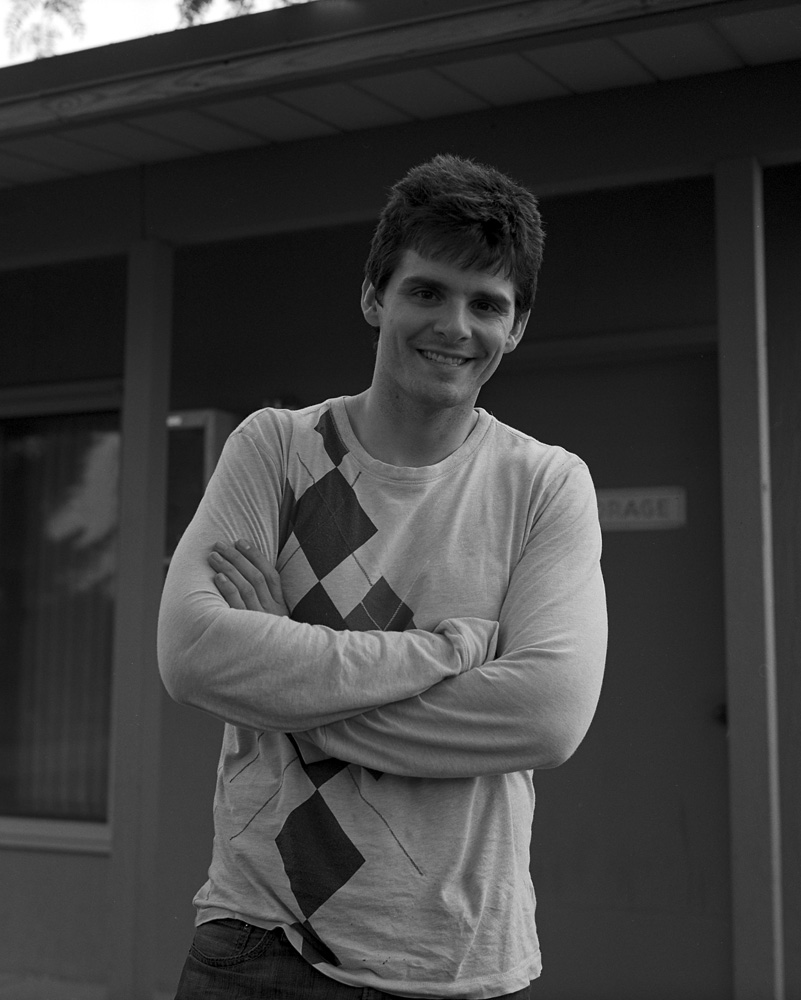
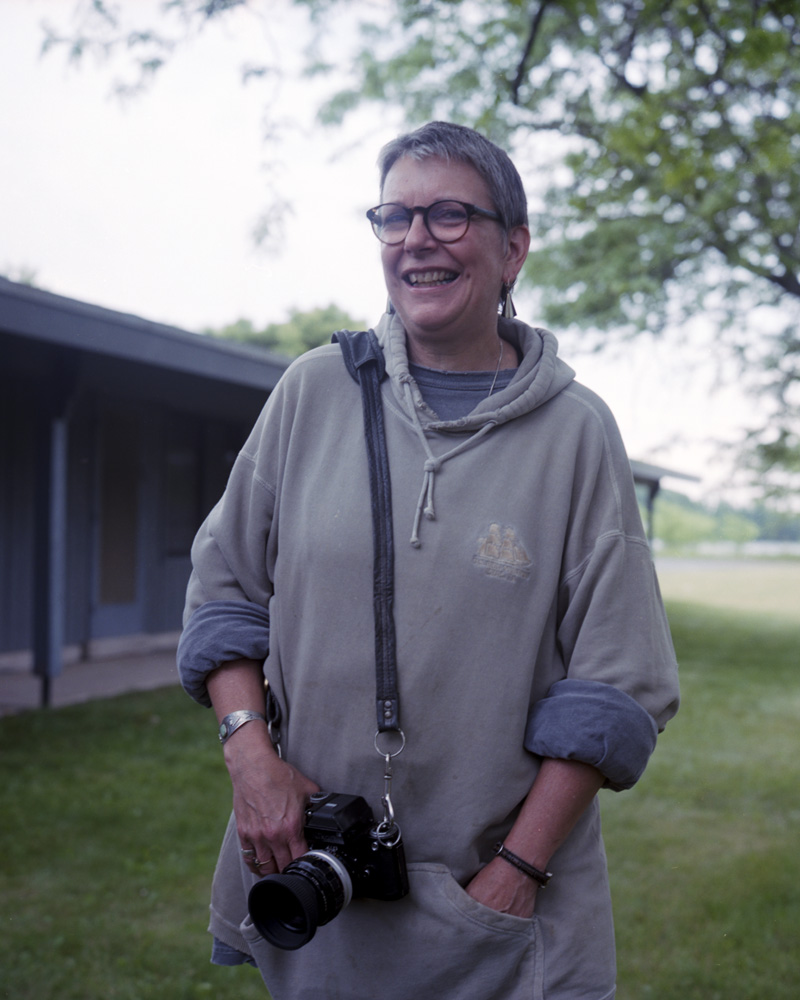
Alex L and FriendAlex L and Ken JohnsonAndrew Moxom Making a Wet Plate PortraitBruce Barlow, with a Richard Ritter CameraDorothy KlossDavid (Ike) Eisenlord and Jamie YoungKerik Kouklis at LunchKris Johnson
I’ll have a whole lot more to show once I get all my b/w film developed.
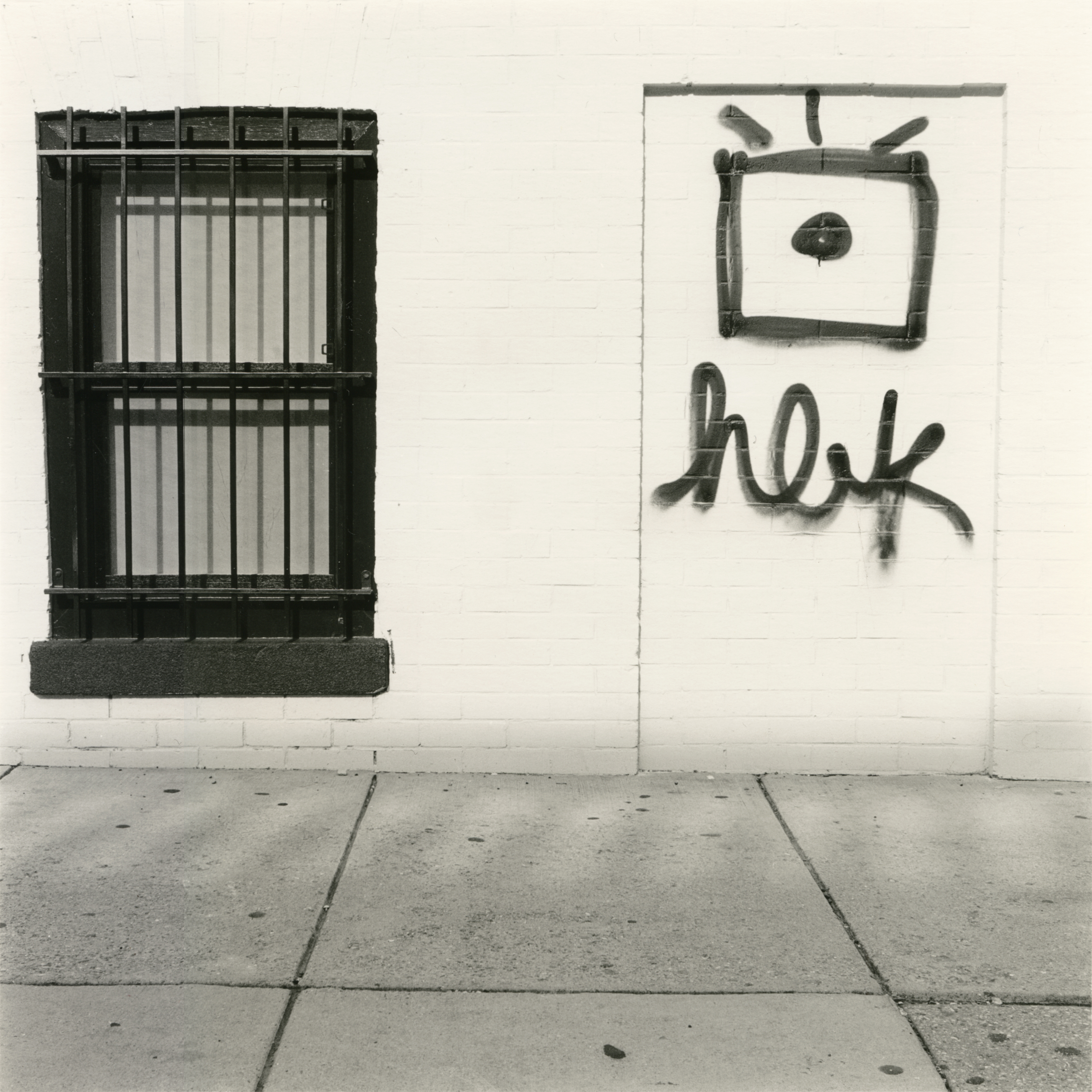
I’ve gotten back into doing a little sliver gelatin printing and enlarging since I’ve been shooting the Rolleiflex like a madman. I wanted to try something out with my printing, so I was doing split development of my prints with both warmtone and cooltone developer. The way it works is I have two developer trays, one for each kind of developer. I’m using the Ilford Warmtone and Ilford Cooltone (a now-discontinued product that I was given a case of some years ago). I want the shadows cool but the mids and highlights warm, so I start my development cycle with 30 seconds in the cooltone developer, then move to the warmtone developer for the remaining minute and a half. The below examples are printed on Ilford Warmtone paper (if you want a warmtone image, you have to use a warmtone paper – you can make a warm paper go cool with a cool developer, but you can’t warm up a coldtone paper short of sepia toning).
Window, Graffiti, 15thStreet
This is the warmest I can get in my highlights and mid tones using this process. The Ilford warmtone paper doesn’t seem to get very warm at all.
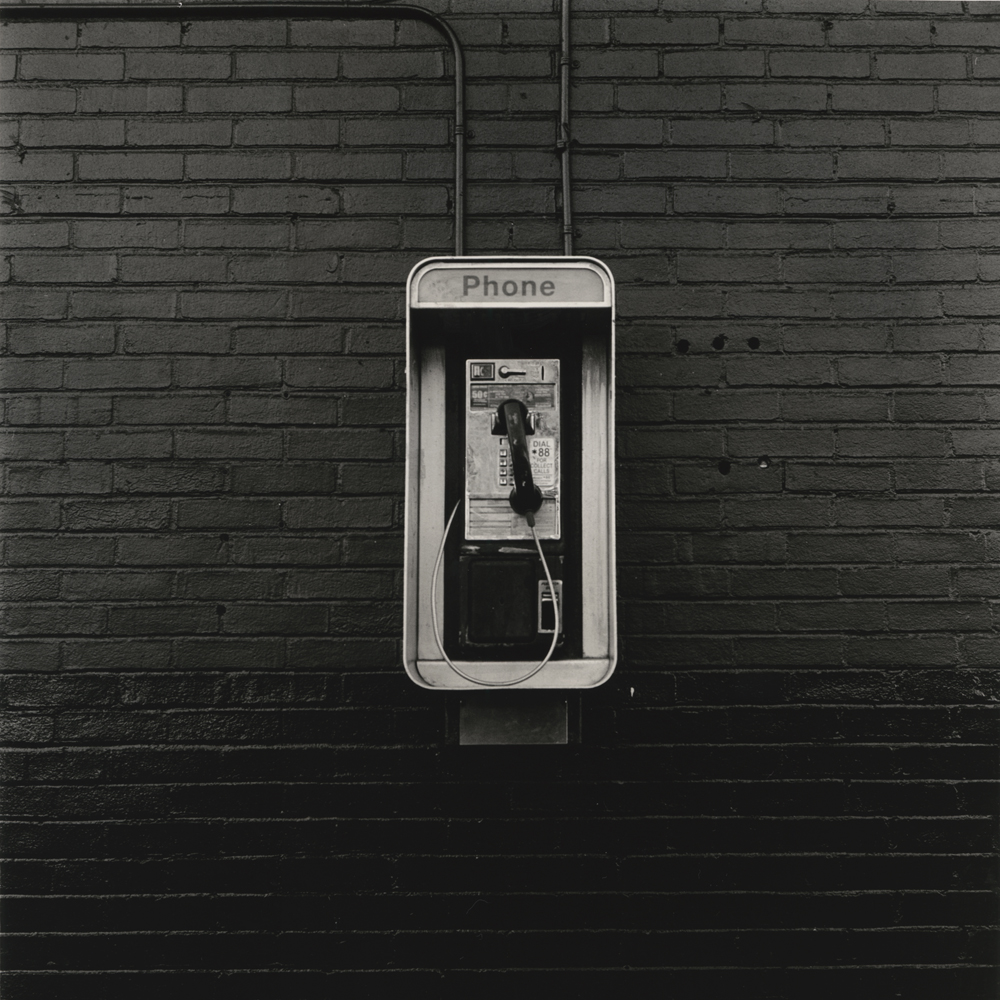
Here’s another in my series of Everyday Objects – the near-apocryphal payphone. In trying to find one, it actually took some looking! They’re not completely vanished from the landscape, but you actually have to go looking in somewhat rougher neighborhoods now to find one because anyone living above the poverty line these days has a cellphone, and nobody wants to carry around a pocketful of quarters AND dimes to make a call.
Everyday Objects – Payphone
I was getting a little nervous about making enlargements as it has been forever and a day (at least five years) since I last made an enlargement. Turns out it’s a skill like riding a bike – once you learn, you never really forget.
Both shots were taken with my Rolleiflex 2.8E, on Ilford HP5+, developed in Pyrocat HD. I think I’ve mentioned it before, but Pyrocat is my go-to developer, even for small and medium-format negatives to be enlarged (or scanned!). Pyro developers in general have great built-in contrast masking from the stain, so it is possible to retain detail in highlights in images that would require burning and dodging were they processed in another developer.
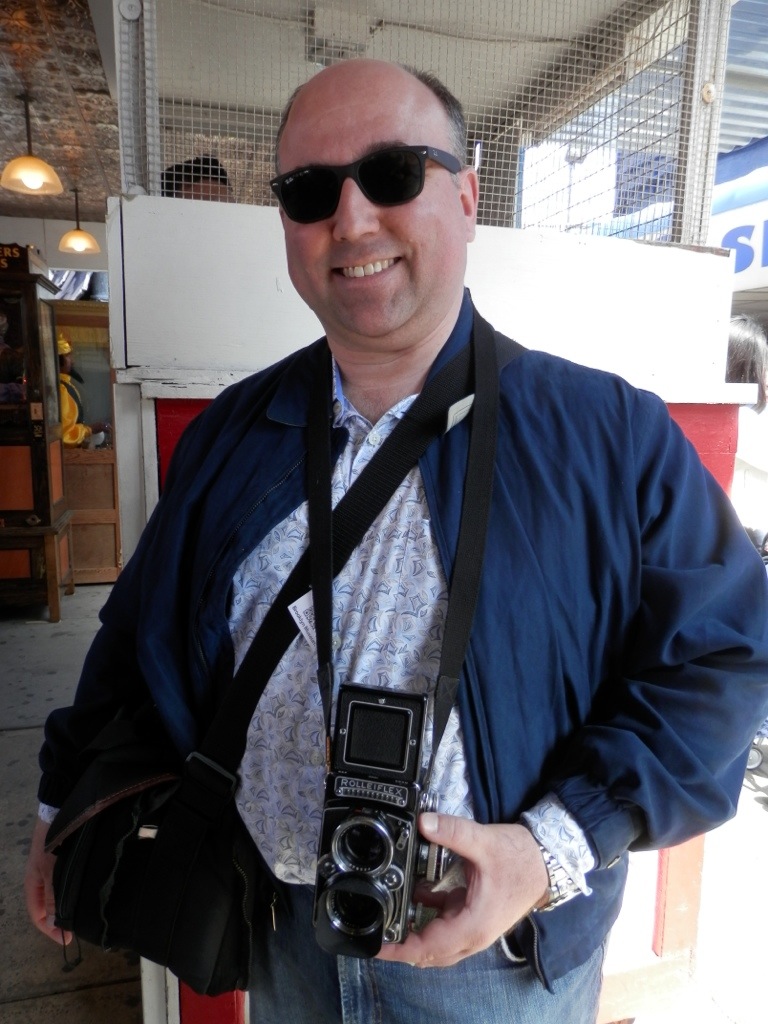
I was waiting in line for the Wonder Wheel at Coney Island. I had just spotted the turnstile for the pay toilet with its garish red and yellow paint job and 25 cents sign in early 20th century lettering and was composing a photo on the ground glass of the Rolleiflex. A voice called out to me, “Oh, that is a lovely Rolleiflex!”. I looked up to see an older gentleman with a souped-up walker (metallic paint job, hand brake, and a fold-down seat). We struck up a conversation about cameras and photography. He had been a camera salesman at an old store in Brooklyn, and remembered selling Rolleis like mine. I gave him my business card, and a few days after I got home, his grandson emailed me the photo you see here.






 dcphotoartist