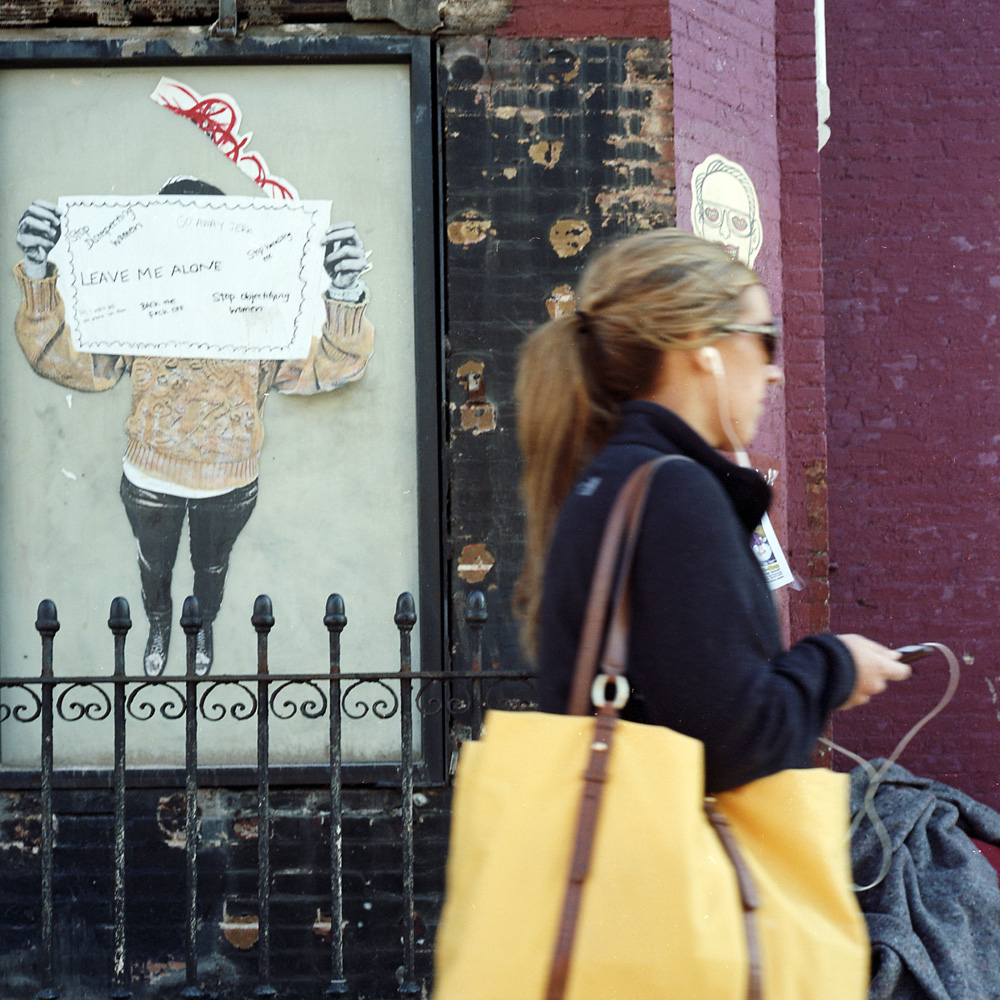
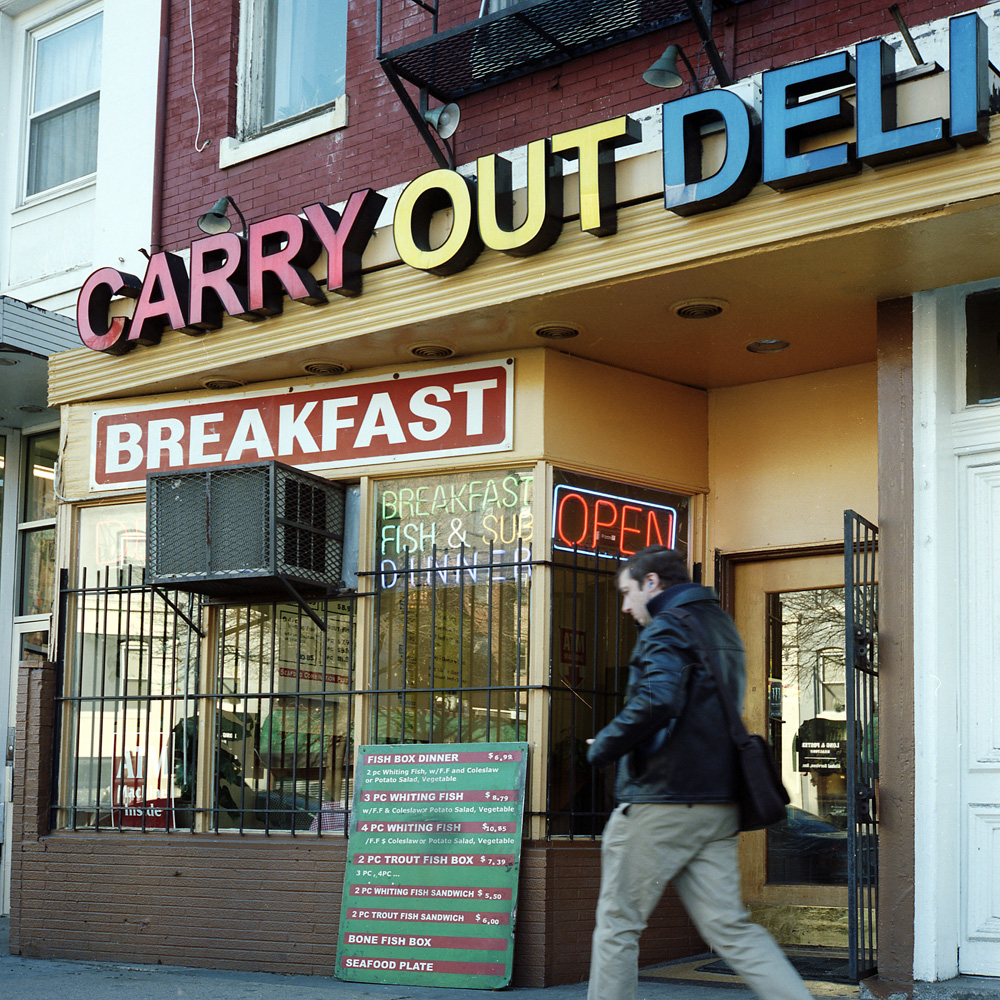
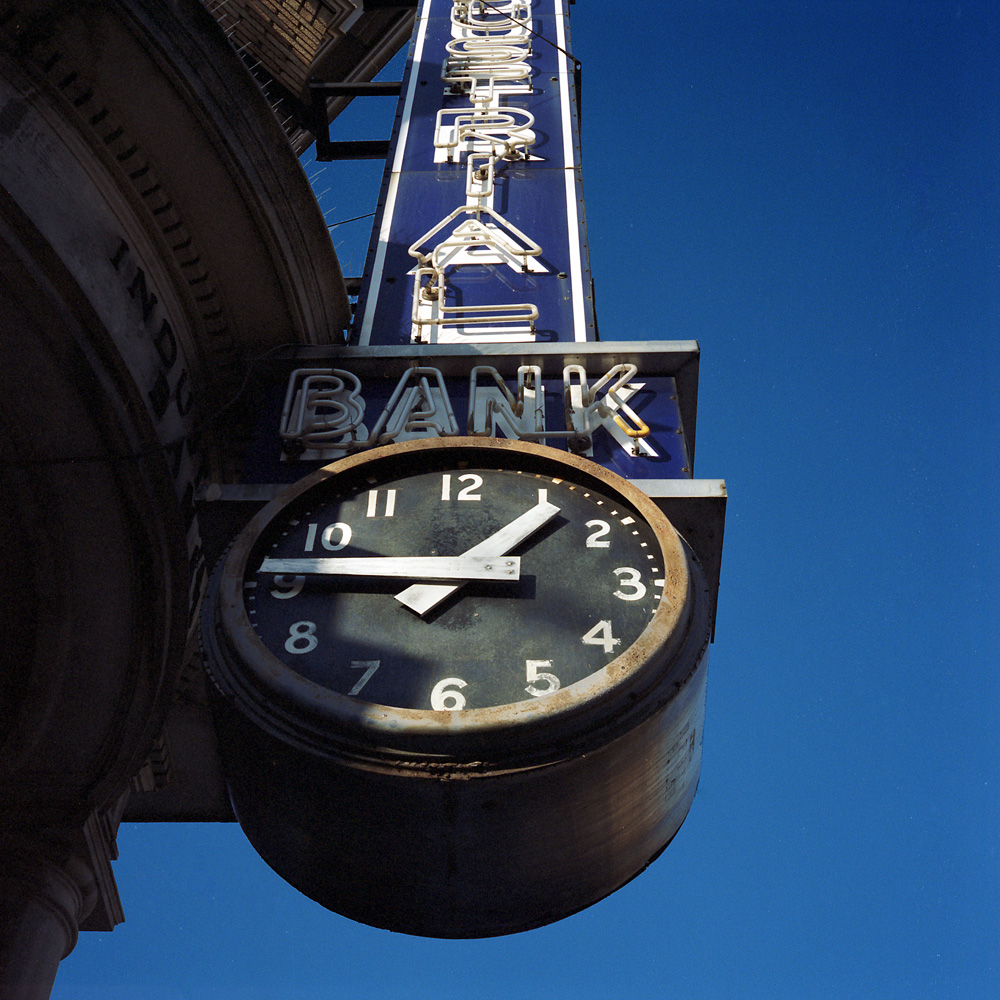
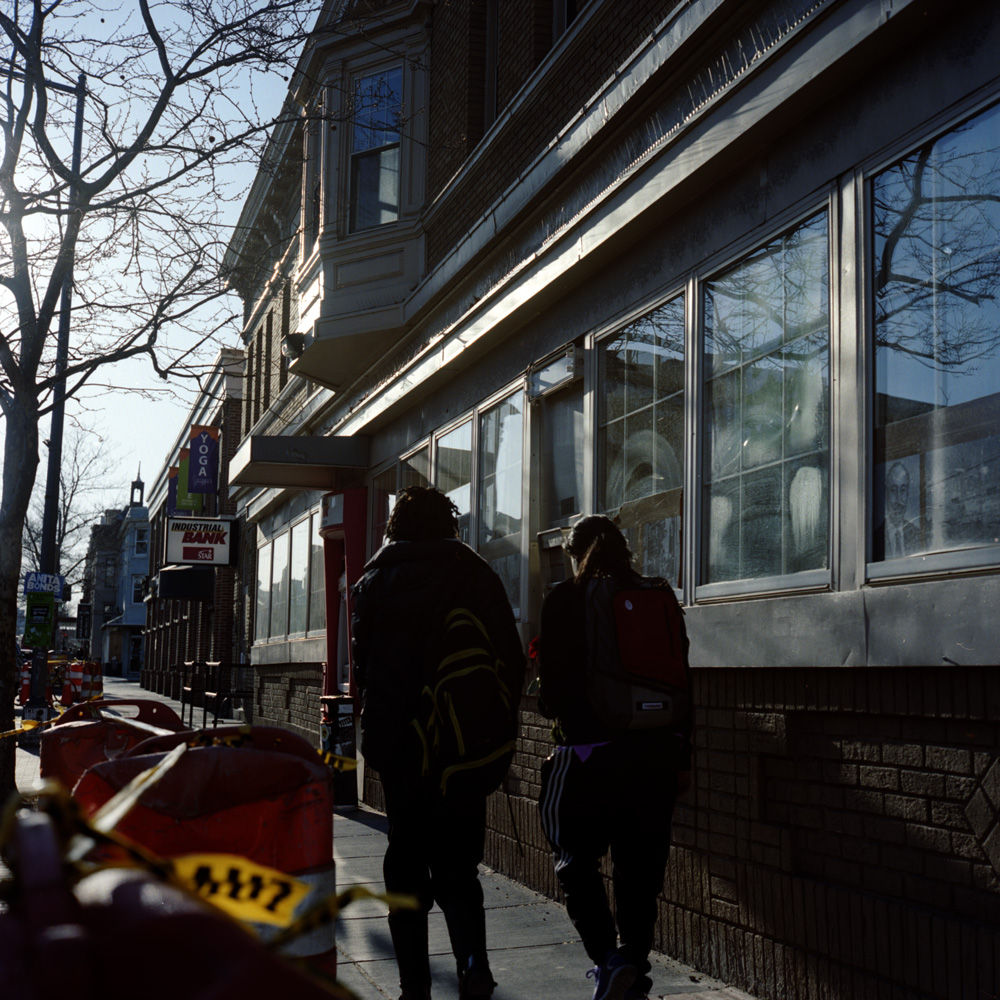
Just some random shots from around my neighborhood. All with the Rolleiflex 2.8E, on Portra 400.
Just some random shots from around my neighborhood. All with the Rolleiflex 2.8E, on Portra 400.
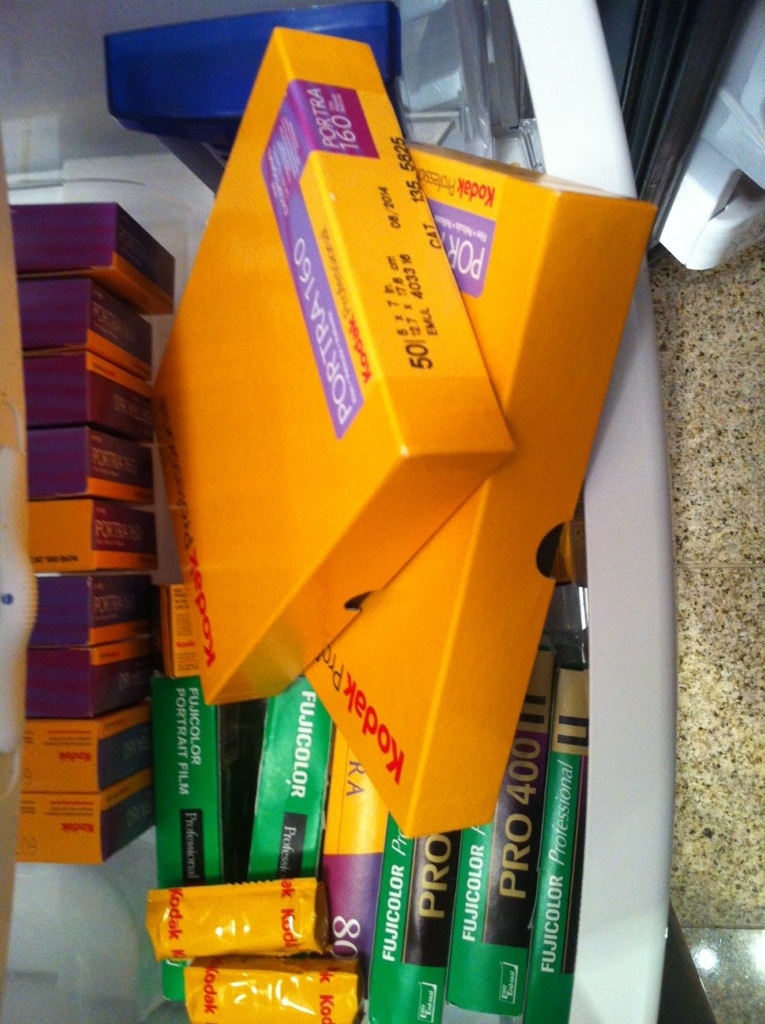
My new batch of Kodak Portra 160 just arrived today. For a long while I thought it would remain a pipe dream to get to shoot this film again in this size, as the price had more than doubled since I first purchased it. But B&H Photo, the ultimate camera superstore, had a batch on sale, so I snapped up two boxes, hopefully enough to complete a project.
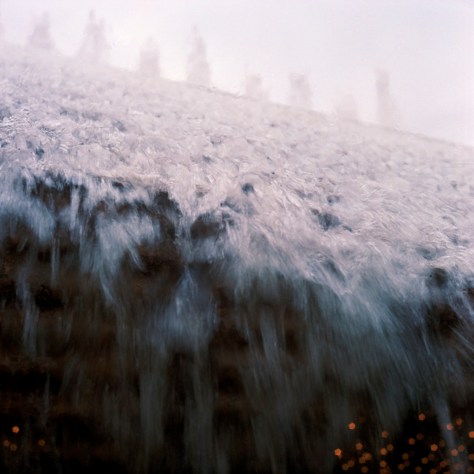
This fountain is visible from both above ground and below as it cascades down a series of steps, sliced through in cross-section. The East and West wings of the National Gallery of Art in Washington DC are connected via an underground passageway, and in the middle of this passageway is a large cafe and seating area. The wall of the passageway opposite the cafe is floor-to-ceiling glass, looking directly in to this fountain. The odd orange dots in the lower corners of the photo are reflections of the Christmas lights on miniature trees placed in front of the window. I deliberately used a moderately slow (1/30th of a second) shutter speed combined with a fairly wide aperture (f5.6 I think) to keep some blur in the water and render it abstract. Just off camera right in this photo is where the light sculpture I posted earlier is located.
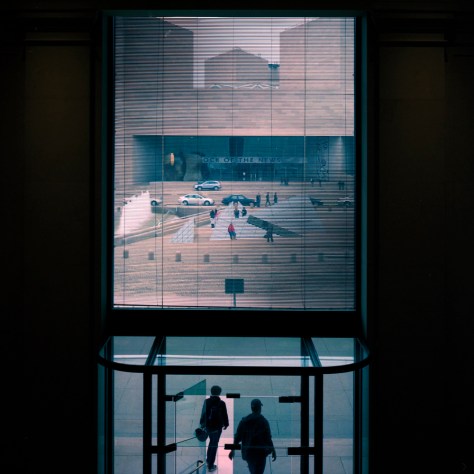
Here is a view of the I.M. Pei designed East Wing of the National Gallery of Art, from the exit of the John Russell Pope designed West Wing. The strange colors are caused by the coatings on the glass to prevent UV transmission and keep the lobby cool in the summer. I waited for some people to go through the doors to add a touch of energy and human engagement to the image. You can see the above-ground portion of the fountain from this photo.
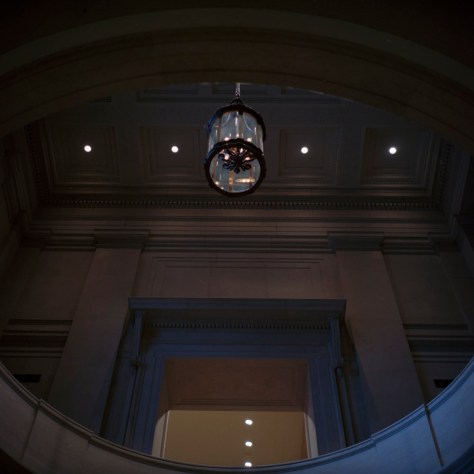
This is the North entrance lobby of the West Wing of the National Gallery of Art. I’m standing at street level by the security guard’s desk, looking up through the oculus at the chandelier. This is another grand space that is under appreciated because most people never look UP when passing through to take in the building design.
All photos were taken with my Rolleiflex 2.8E, using Kodak Portra 800.
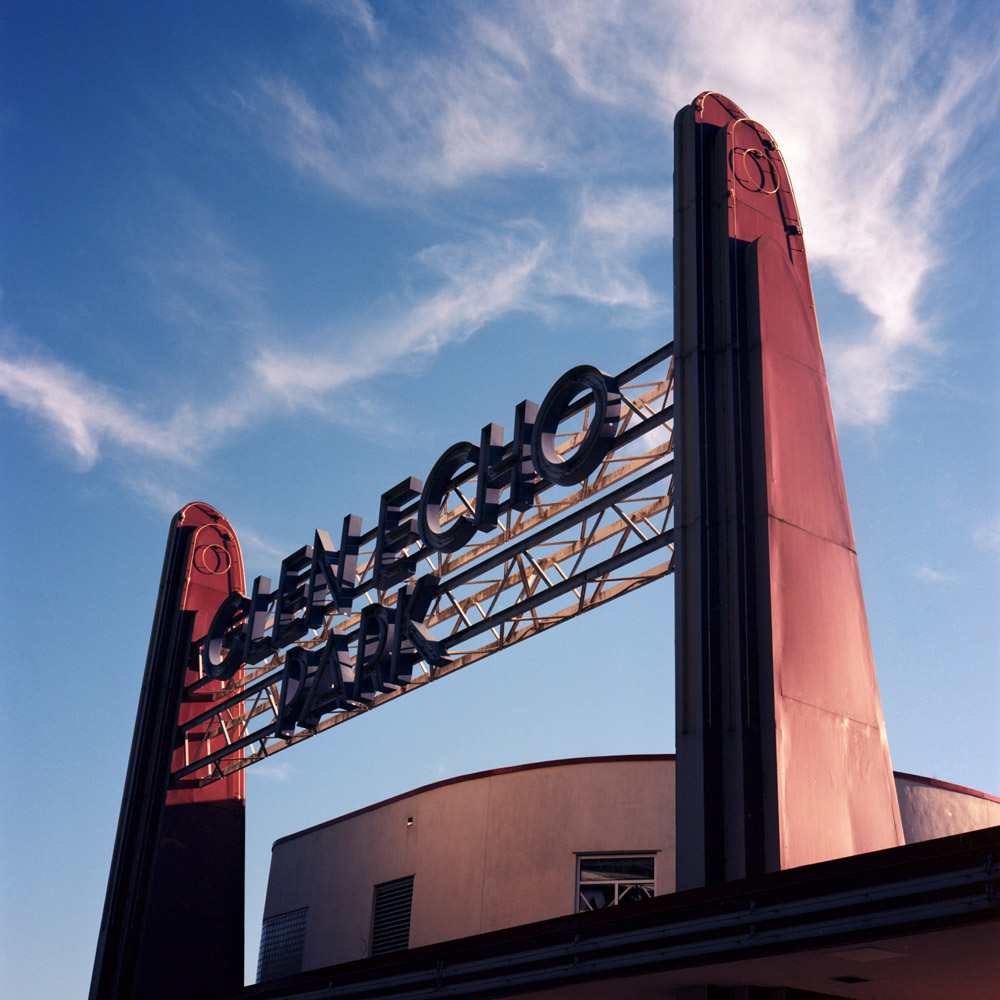
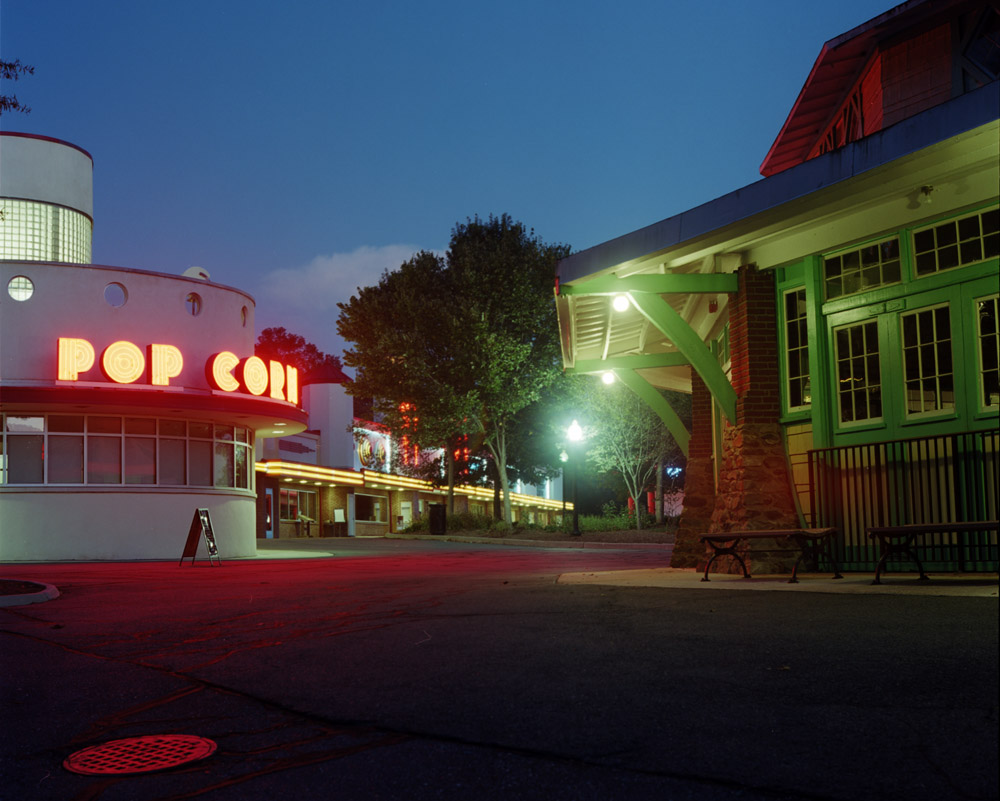
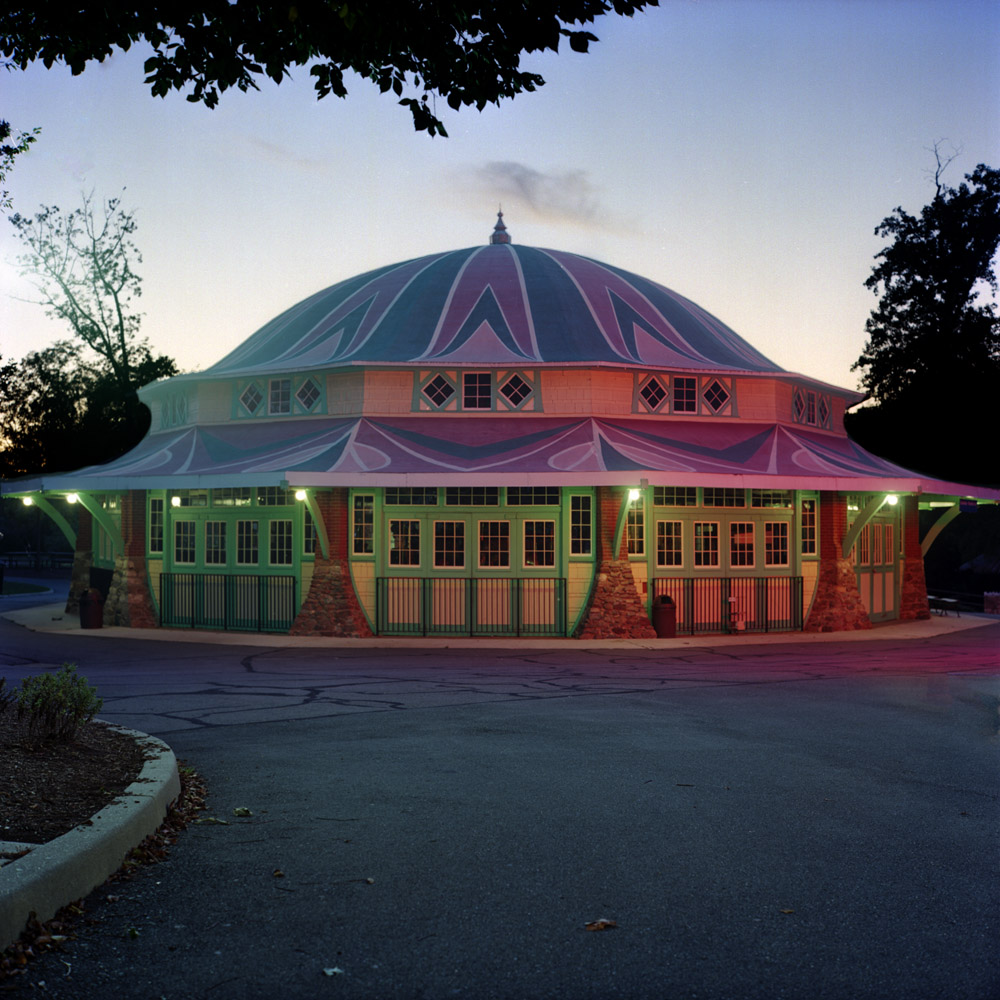
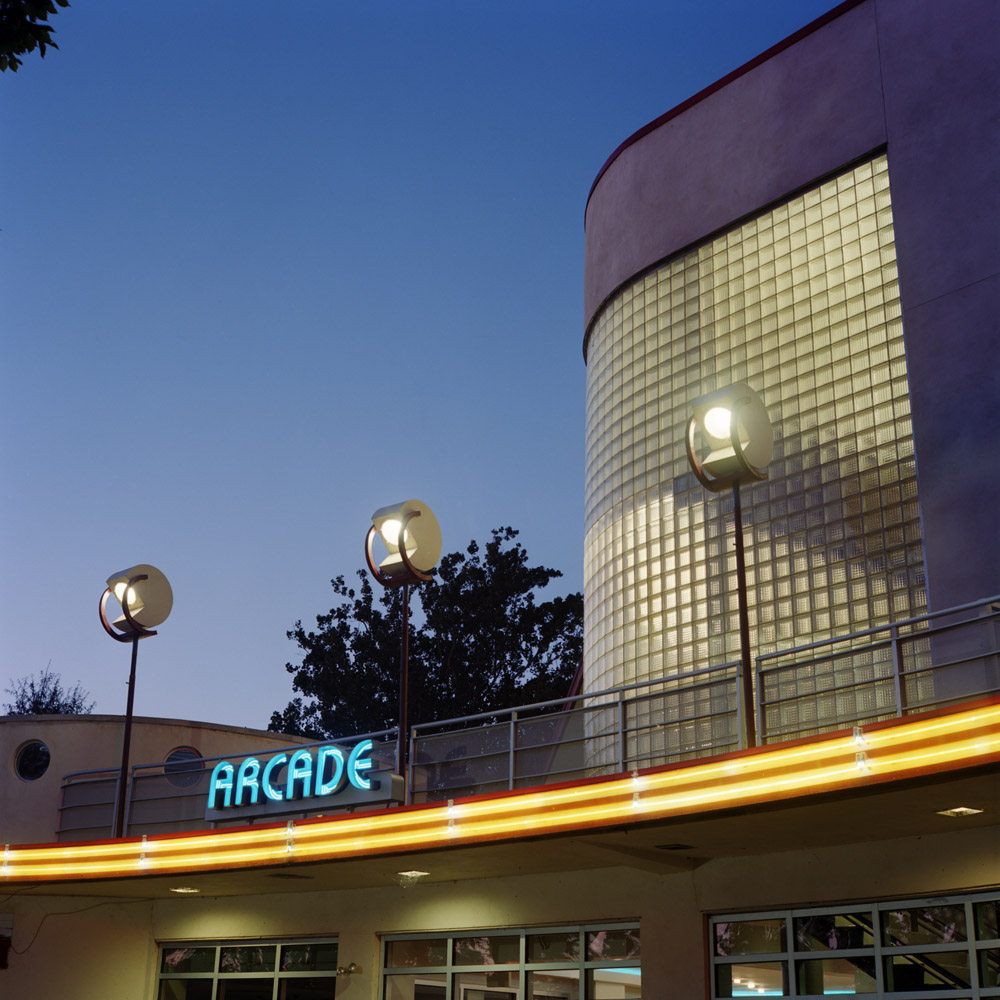
Rolleiflex 2.8E, Kodak Ektar 100.
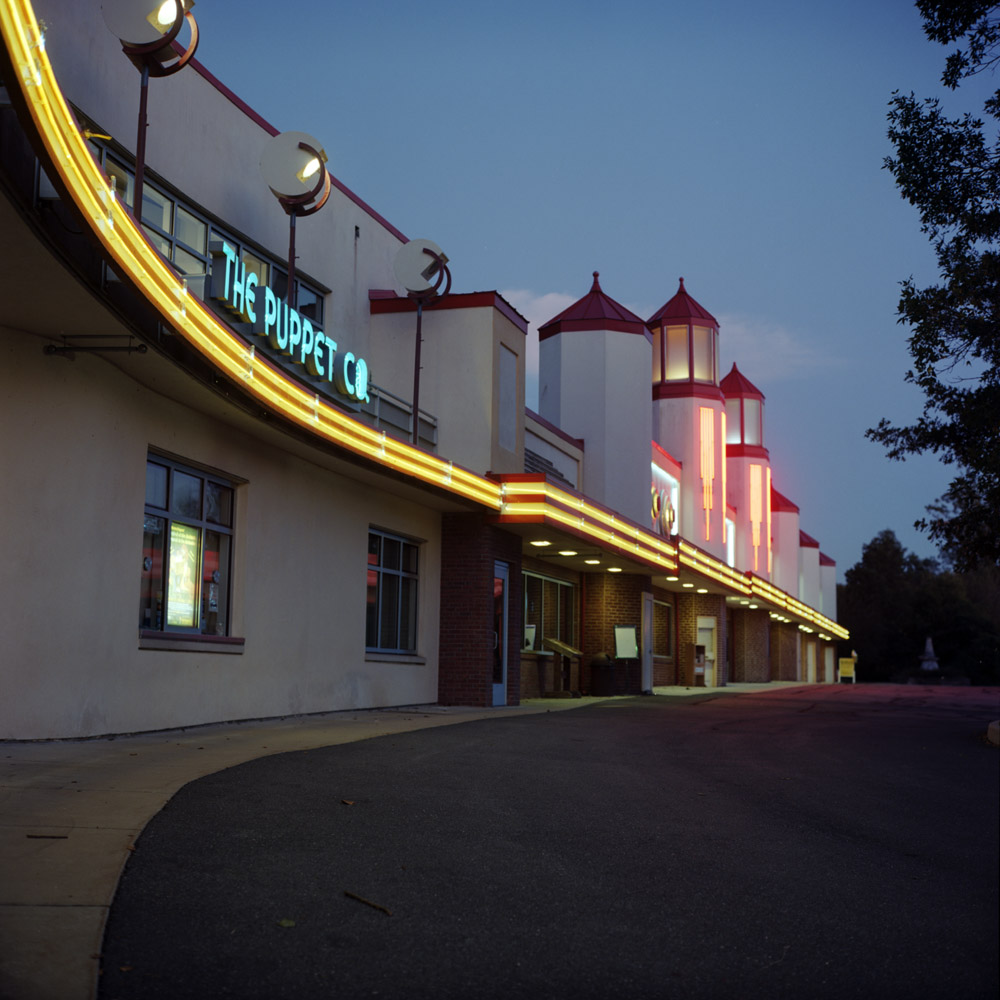
More of my twilight/nighttime exposures. The subject is Glen Echo Park, again. I love shooting in the park because of the wonderful neon lights, and the fact that while it’s never BUSY at that time of day, it’s never empty either. The park is always changing with the seasons, and it has a very secluded feel despite the proximity to the nation’s capitol and two very busy highways.
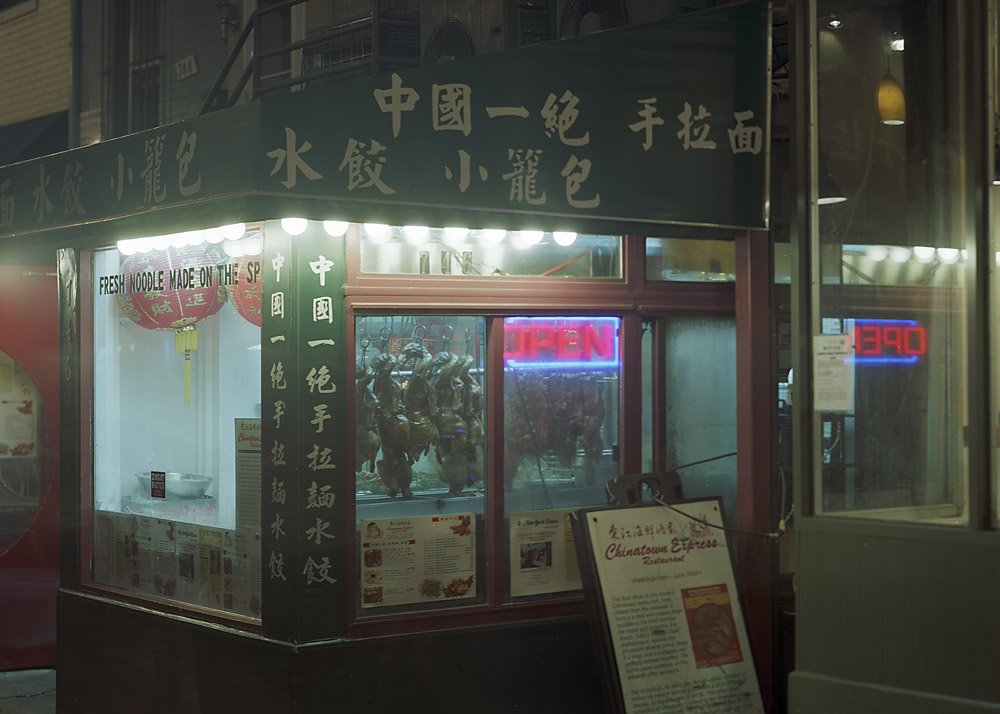
The fresh noodles and Peking duck house on 6th Street, NW. I think someone needs to teach them about Windex, as the “OPEN” sign is fuzzy not from being out of focus in my composition but from the splattered duck fat on the window. And no, I’ve never eaten there to know if the food is any good or not. But if you’re lucky when you wander by you can watch them making traditional Chinese noodles in the window, stretching and re-folding the dough over and over and over again, then cutting the ends and BOOM! you’ve got all these separate strands of pasta.
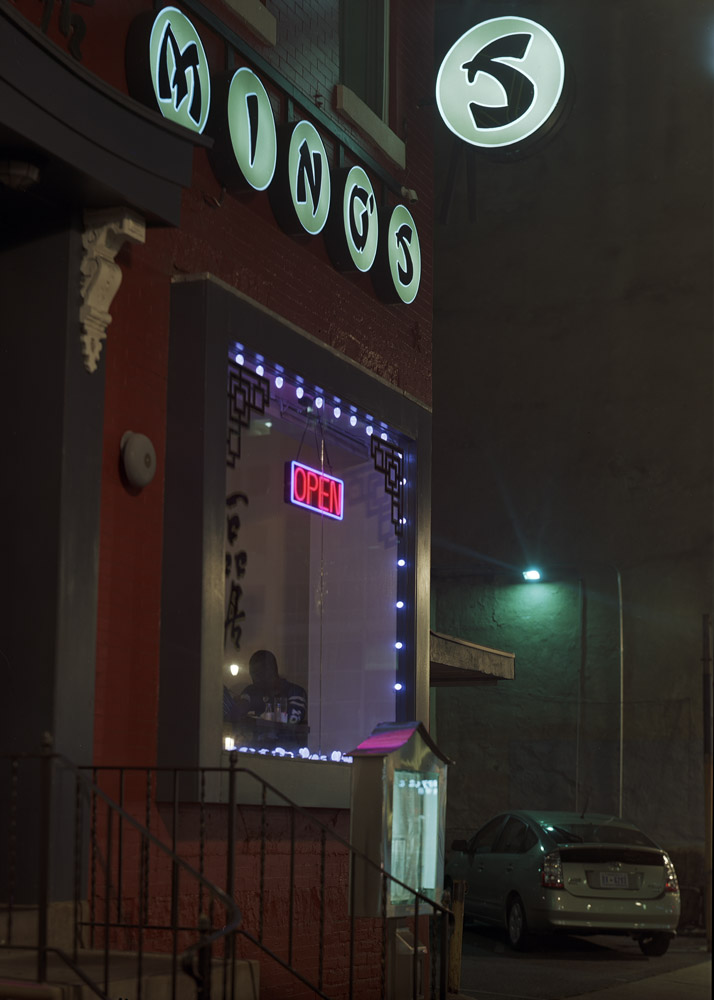
I liked the juxtaposition of the empty sidewalk out front, the lone Prius in the parking lot next door, and the intimate diners in the window.
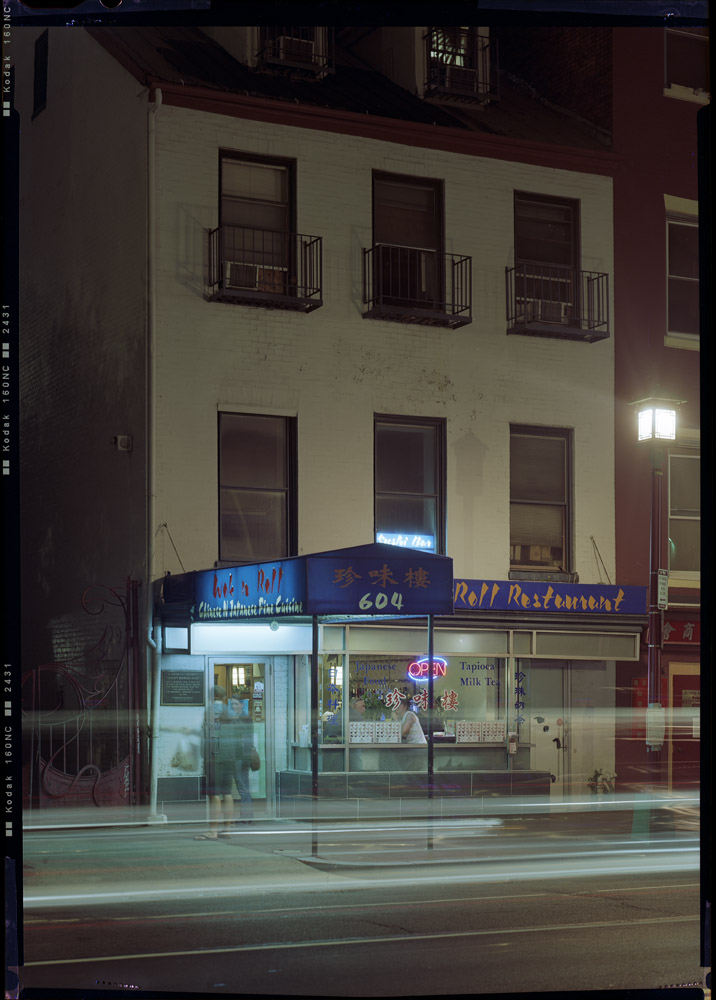
This one gets a cutesy title because there’s just something so post- and meta- and ironic and all that kind of stuff about having a sushi joint on the ground floor of Mary Surratt’s boarding house, where the plot to assassinate Abraham Lincoln was hatched. Don’t believe me? Read the plaque on the wall of the house, like the two time-blurred figures in the photo are doing. It’s a very odd vestige of what downtown Washington looked like in 1865, and despite what Robert Redford would have had you believe in “The Conspirator” (by filming in an albeit lesser mansion in Savannah, Georgia), evidence of the utterly middle-class lifestyle of Mary Surratt.
All the above images were shot with my Canham woodfield 5×7, using my Kodak 12″ Commercial Ektar, using Kodak Portra 160nc film.
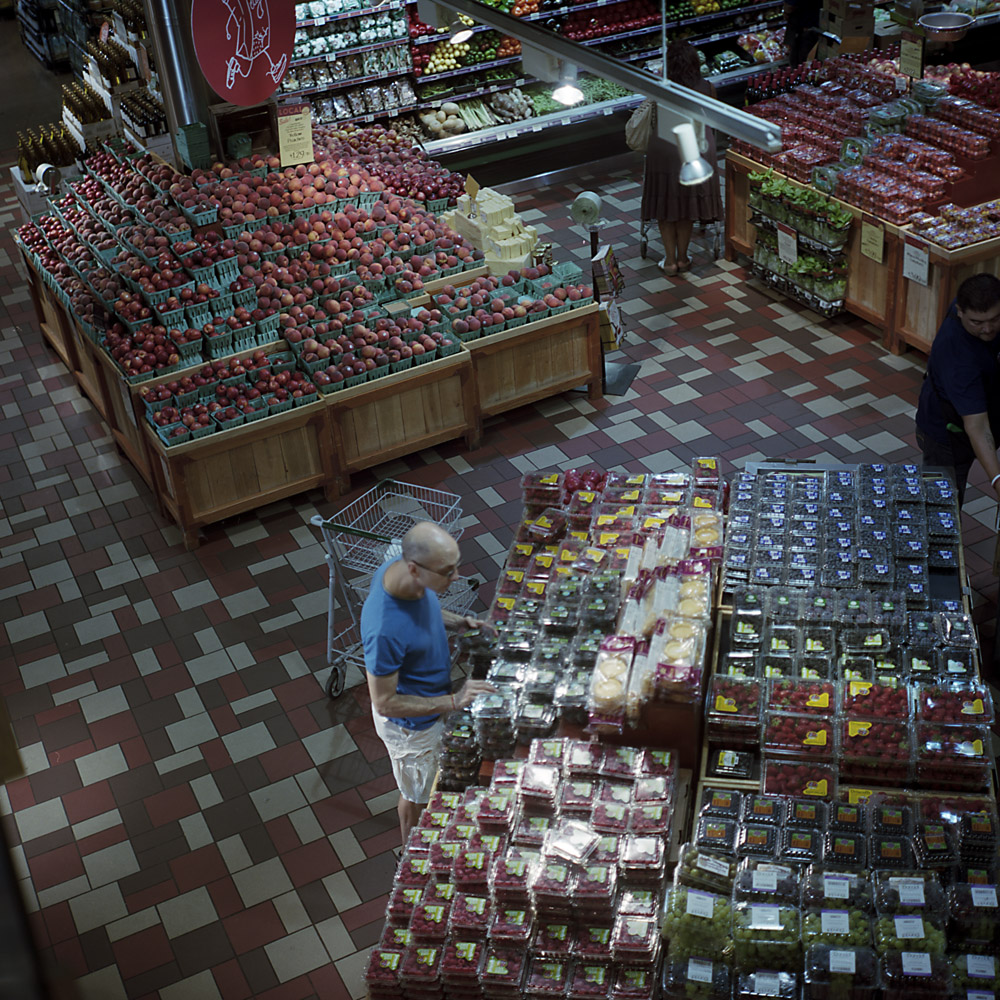
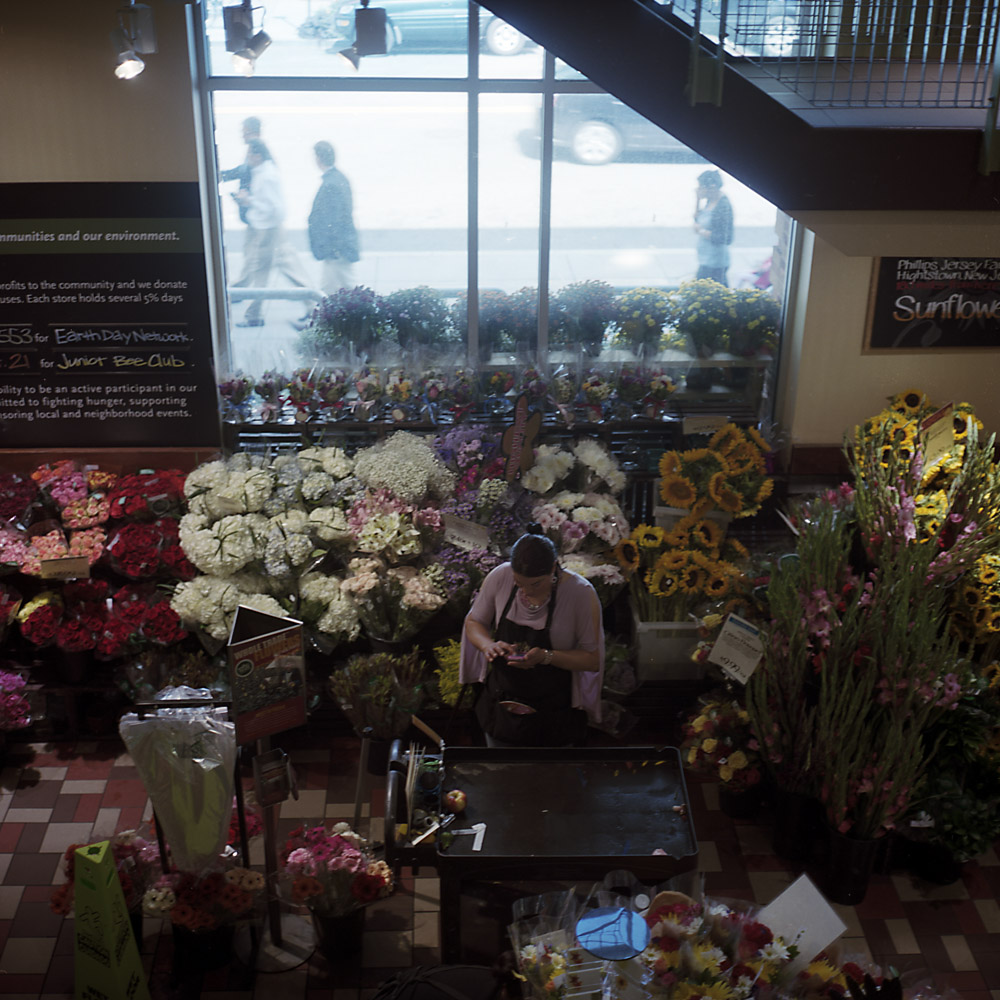
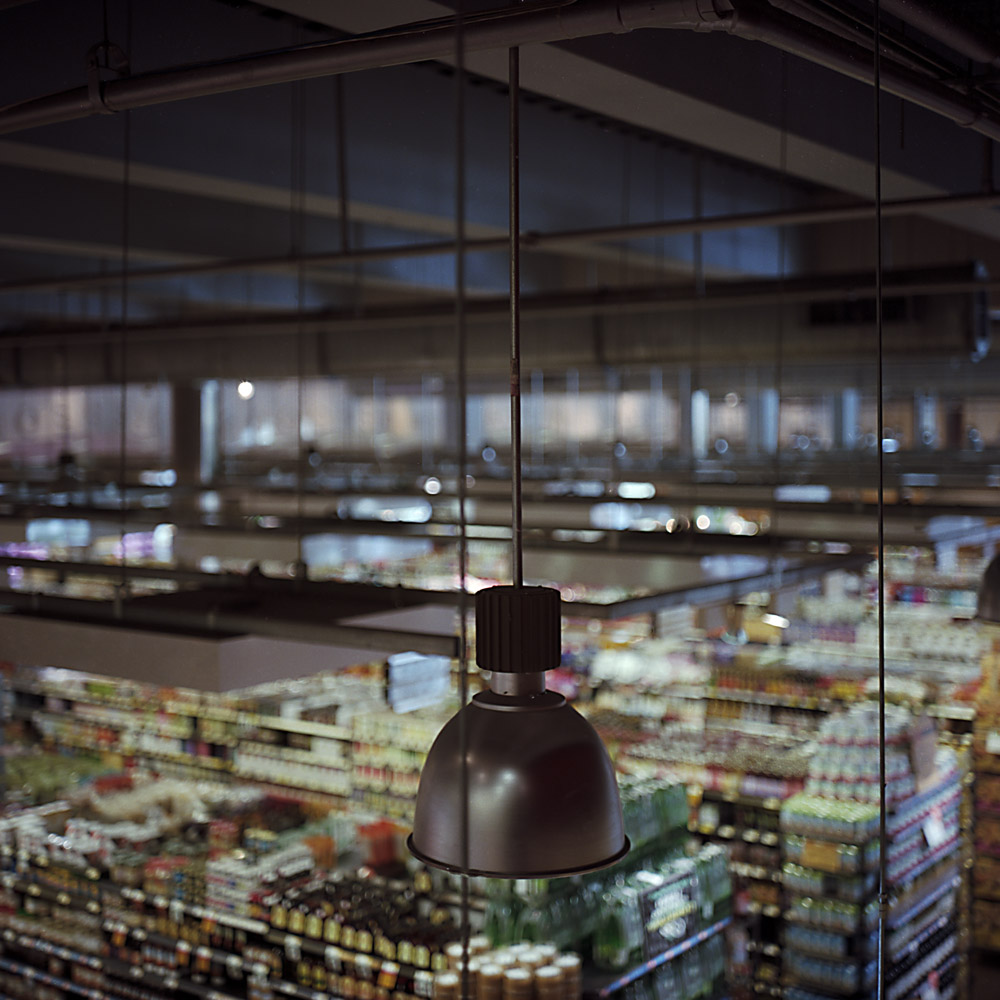
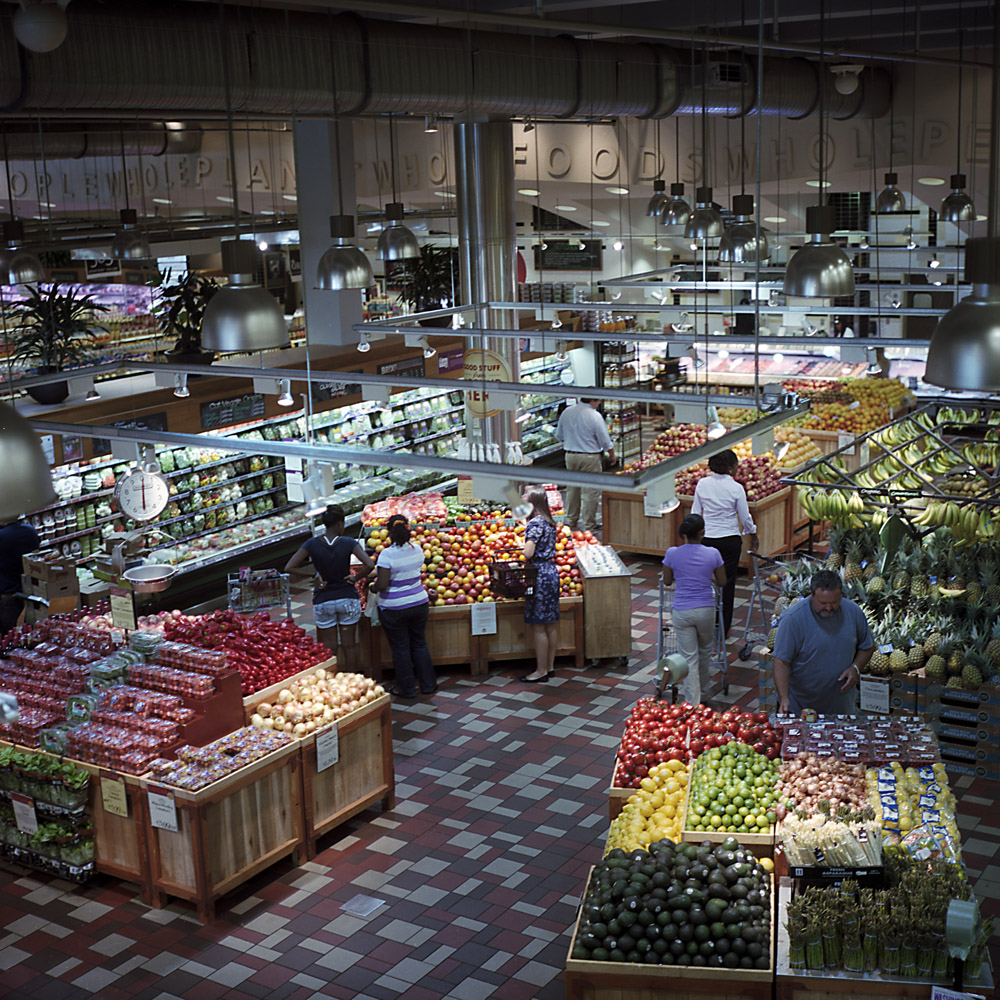
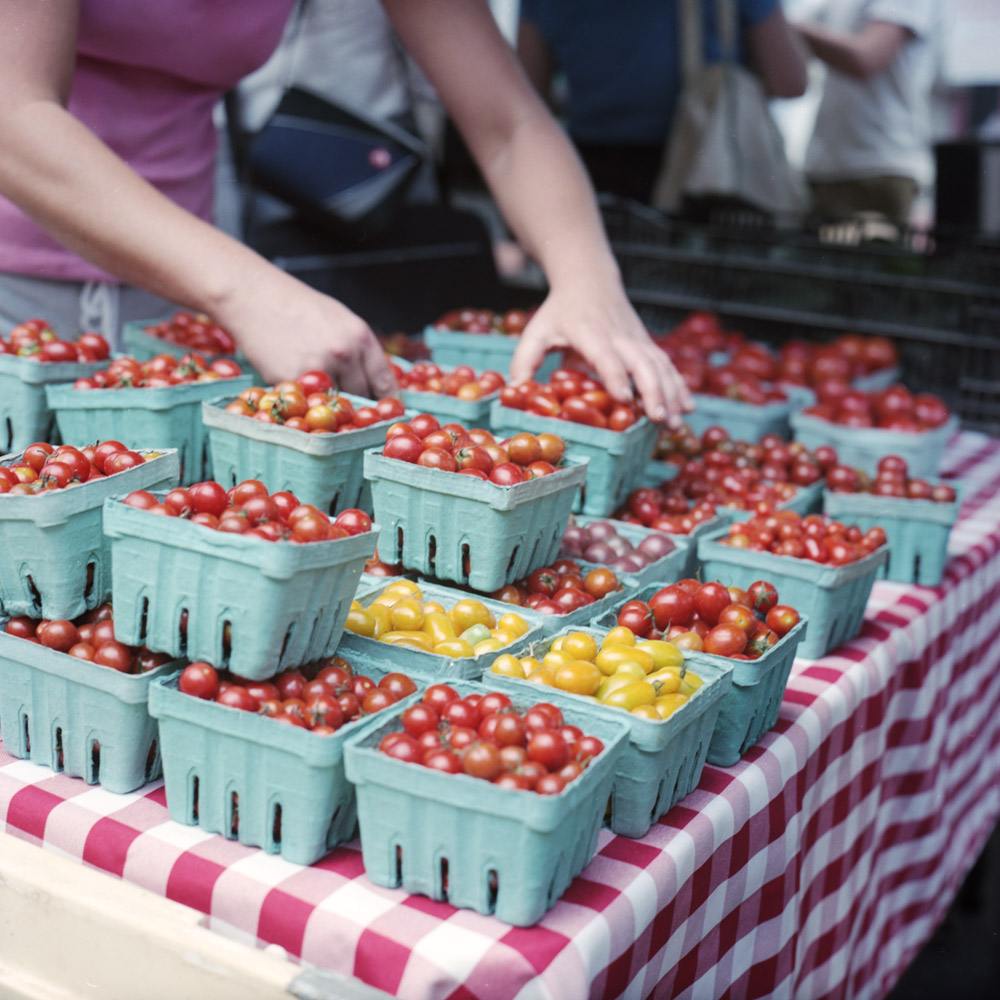
The last image was taken at the Farmers’ Market and NOT at Whole Foods, but it’s food themed, and I wanted to include it but had to re-scan it from last time, so here is the revised scan.
Today was a very busy day. This morning I went out to Glen Echo Photoworks to help out with the open house. We had a lot of folks come through asking about my upcoming classes and about the prints I brought along.
Then I went to dinner with my parents for their 50th anniversary at Blacksalt, which is a fancy fish and seafood restaurant here in DC. I had made the reservations and told the restaurant about the anniversary in advance, so they prepared special menus that said Happy 50th Anniversary on them, and when dessert came out, they specially decorated the plate with chocolate sauce.
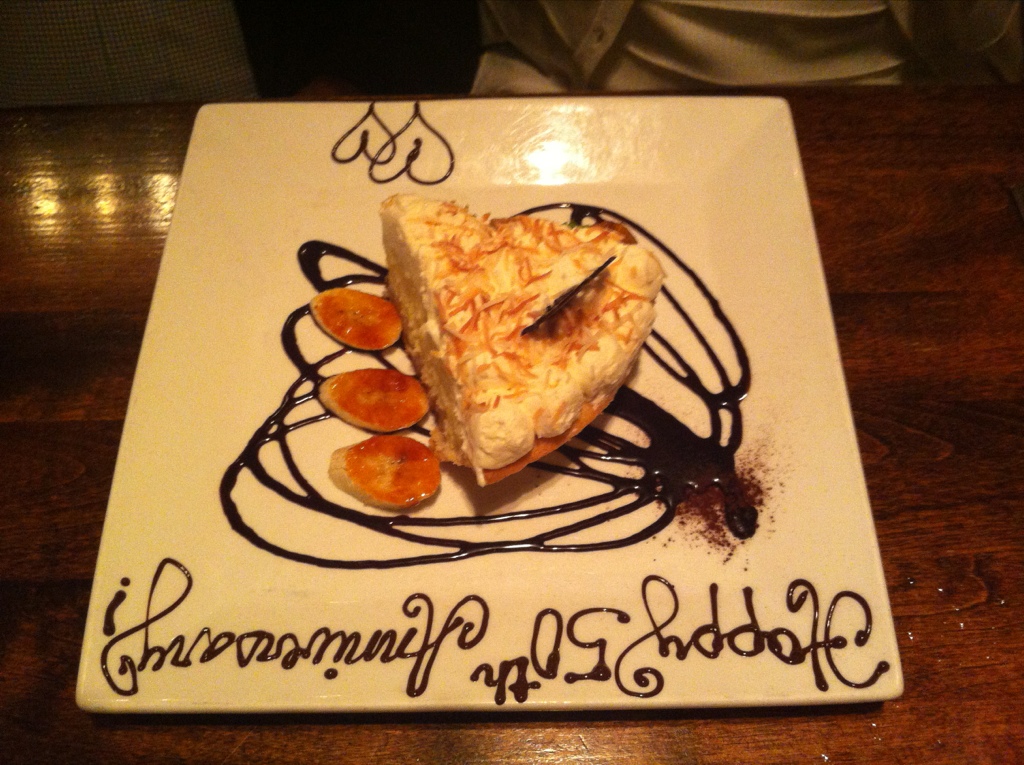
The photo relevance here is that I brought the Rollei along to take their photo at the table. I’ll have the film dropped off Tuesday and get it back later this week.
On the way home, I detoured back to Glen Echo and waited for the neon lights to come on so I could burn through some more of that 5×7 Portra I have sitting around. And burn through it I did. I also stopped off in Georgetown and shot some more on the waterfront, and even grabbed a couple of sheets in the rain. I’m really looking forward to seeing those!
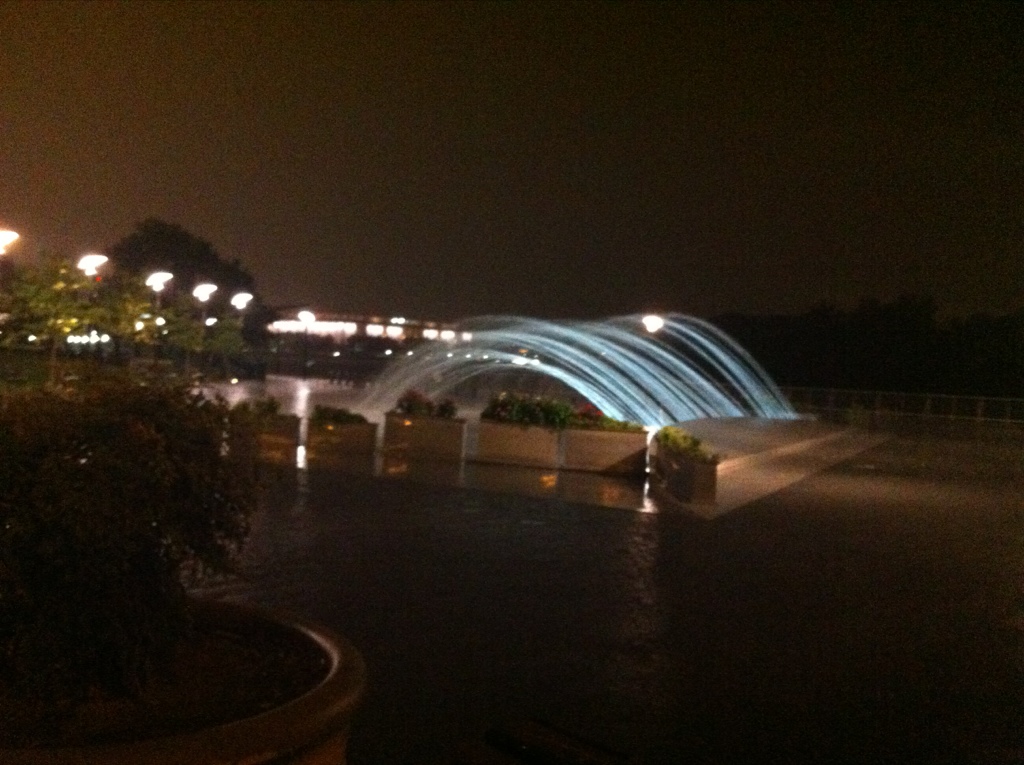
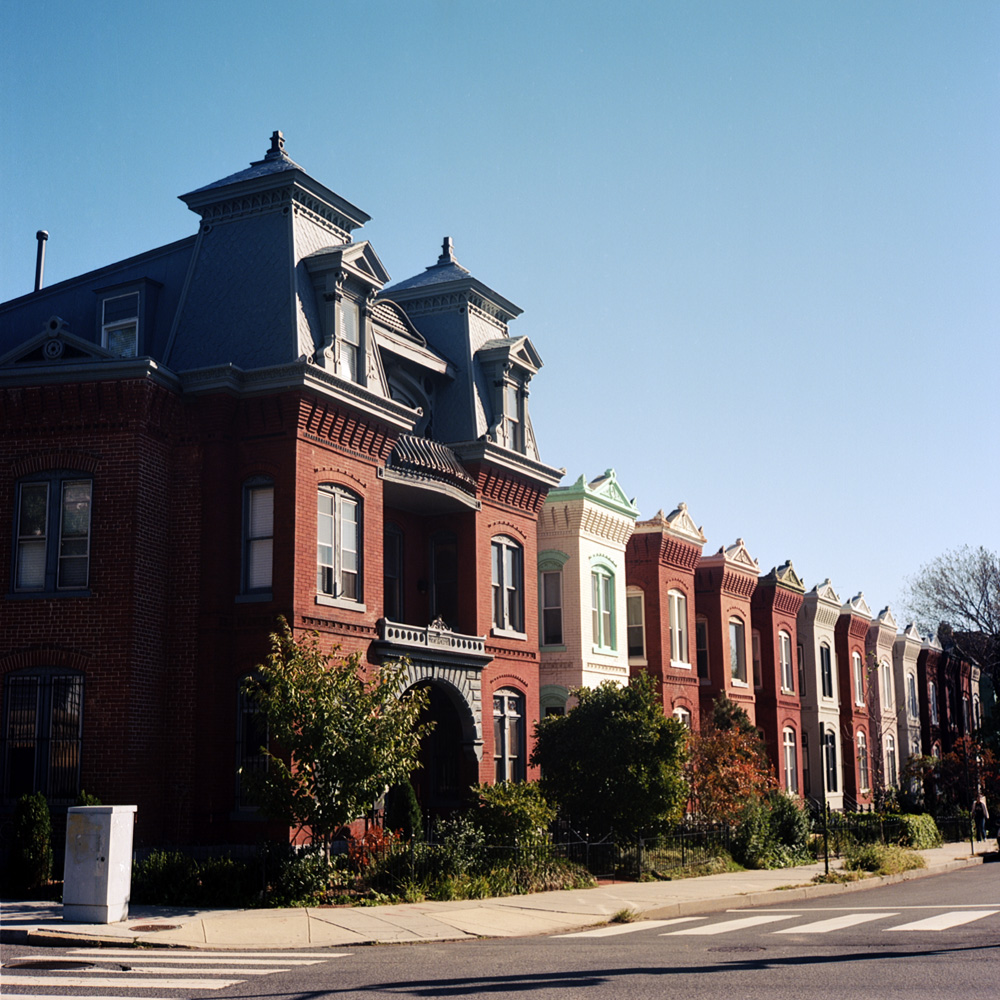
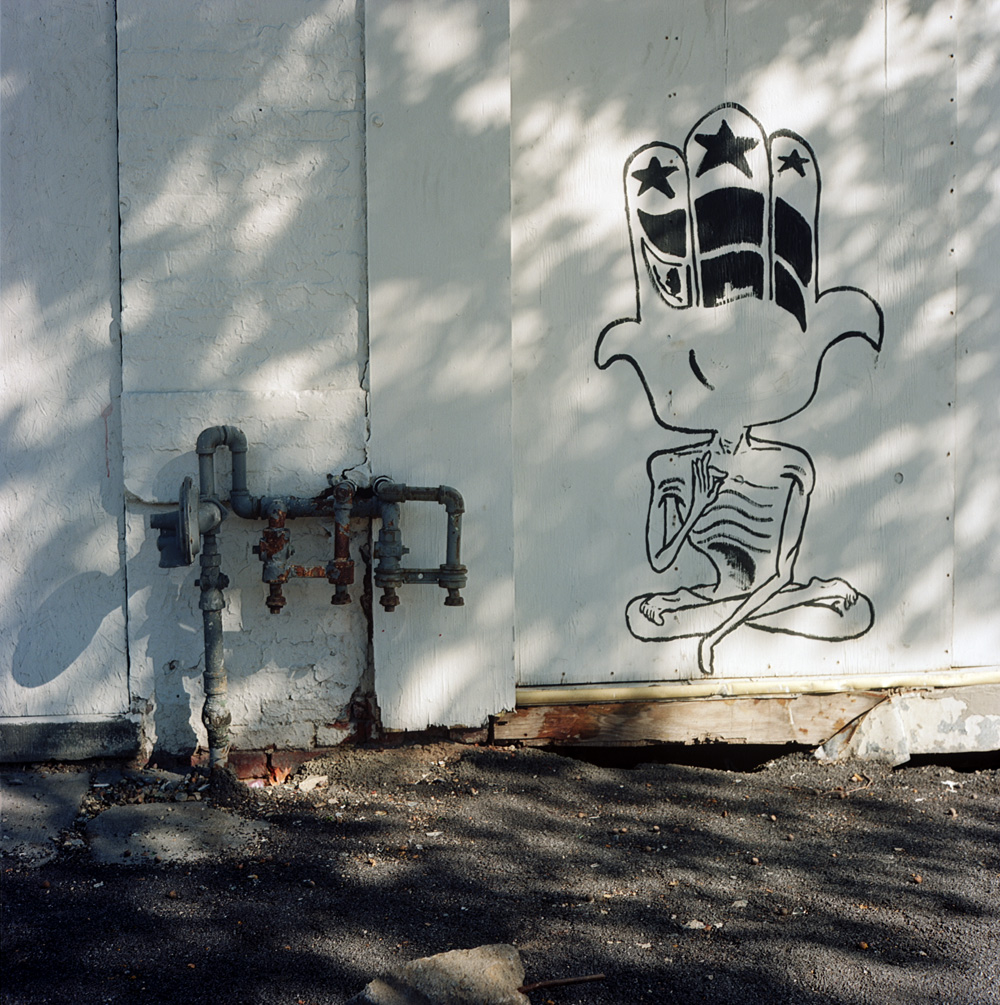
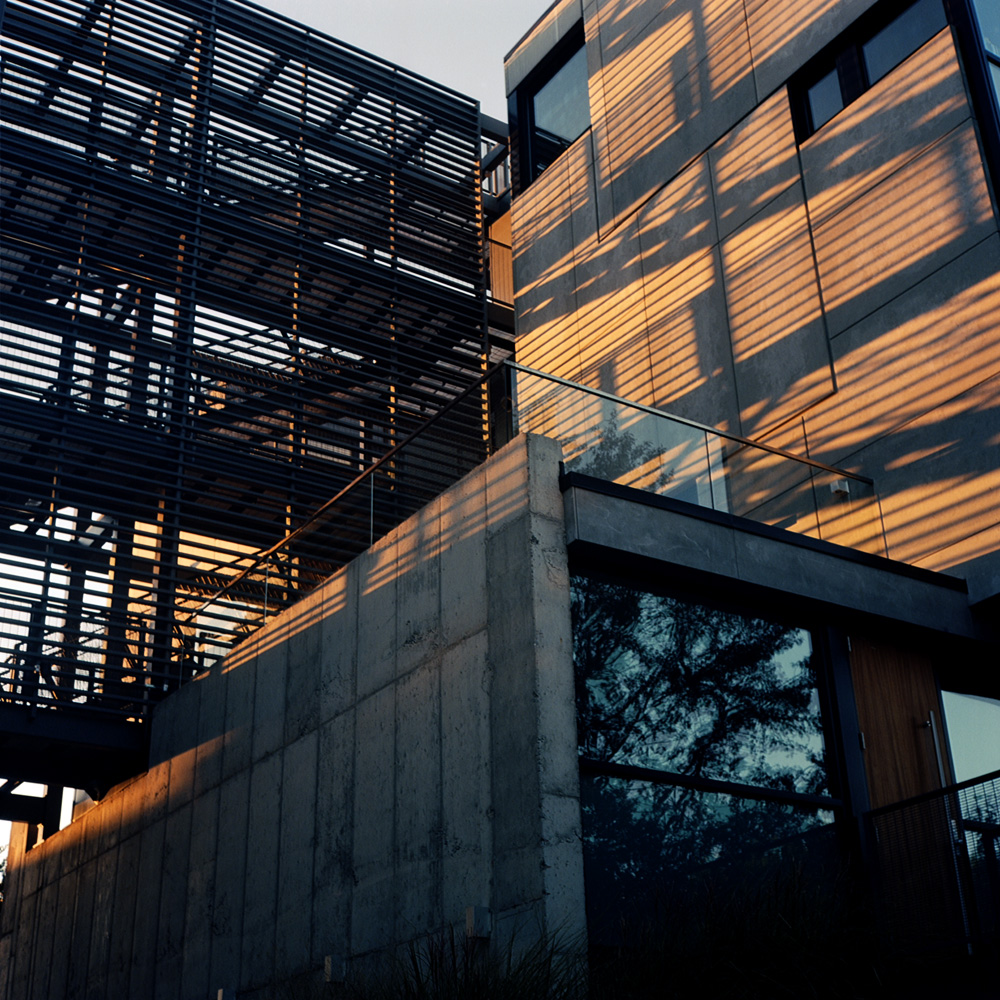
These were all shot with my Rolleiflex shortly after I bought it. It’s a 2.8E model, from the 1950s, with the Planar lens. There certainly are limits to the fixed “normal” lens on the Rolleiflex, but working within those limits, it’s a beautiful camera that produces beautiful results. I’m very tempted to take it with me on a vacation as my sole camera and see what I can get with it. I like how compact it is and how unobtrusive, compared to say my Mamiya RB67. All images shot on Kodak Ektar 100.
Ok – frustration time rears its ugly head again. Got all my software updated and connected together, and I even went out yesterday and splurged (there goes the rest of the tax refund!) on an Epson 3880 printer. Now that everything is wired up, I tried doing some scans with the new SilverFast AI8. Reflective scans at medium and even high res (1200 dpi) worked great. Scans from negatives worked up to 2400 dpi. The software allows you to input resolutions beyond 2400 dpi – I wanted to see what would happen at 4800 dpi because I was scanning a large negative (5×7 inch) to have it reproduced at very large size (30×42-ish, maybe even bigger). Well…… SilverFast AI8 choked on the request. The scan completed in a reasonable amount of time (maybe 5 minutes- SOOO much faster than on my old computer), but then took 20+ minutes to “process”, at the end of which, it failed. Again at 3200 dpi – same thing. At 2400 dpi, it worked just fine, so I’ll live with that, as A: technically that’s the optical resolution maximum of the scanner (anything higher is software interpolation I believe), and B: it’s still big enough a file (about 600mb) for the custom lab to work with.
I LOVE Kodak Portra 160nc film after this exercise though – it is VERY easy to scan (with decent software – with craptastic software no film scans easily) and it handles chaotically mixed lighting conditions with ease and aplomb. In the shot I was scanning last night, I had rainbow-colored neon, sodium-vapor streetlights, and fluorescent and incandescent interior lighting, at night, all in the same scene. The only thing I had to color correct for was a minor overall tint caused by sloppy processing at the lab I used at the time. Pretty amazing stuff. Now if they’d only charge less than $350 for a 50 sheet box of the stuff, I’d shoot it more often!
I do have to give SilverFast its props – I tried scanning the same negative with the EpsonScan software that came with the scanner – I had to do MAJOR color correction and density correction with the EpsonScan file. The SilverFast scan was almost dead-on on the first try, and I’ll just need to tweak to my taste, along with some dust and hair removal via the Healing brush. Figuring out how to do this myself saves $80-90 per image in scanning fees at the custom lab every time I want to make a print. Now, to figure out which paper surface(s) and brand(s) I want to use. I got a pack of Epson’s top-of-the-line premium glossy, along with a pack of the Calumet heavy-weight glossy paper to compare; the Calumet paper is dramatically cheaper than the Epson.
 dcphotoartist