Category Archives: Architecture

The Roman Forum

I went to the Forum on a bright and sunny day, thinking I would pass the time until I could get in the Colosseum. Little did I realize that the two-plus hour delay on entering the colosseum was for timed entry tickets, not general admission, even with my Roma Pass, and I would still have to wait in line for two hours to get in. It all worked out in the end – I enjoyed the Forum and wandered the periphery of the Colosseum and got some good shots of the exterior, and took a pass on going inside. Now that I know better I’ll go back the next time and get timed-entry tickets or book a tour in advance. Do NOT get suckered in by the tour guides touting skip-the-line access on the plaza around the Colosseum – the guides who give the tours are of questionable expertise and foreign language skill, so about the only plus you’ll get from going in with them is skipping the line.

This column is one of the few remaining columns of a loggia across from the Basilica Julia.
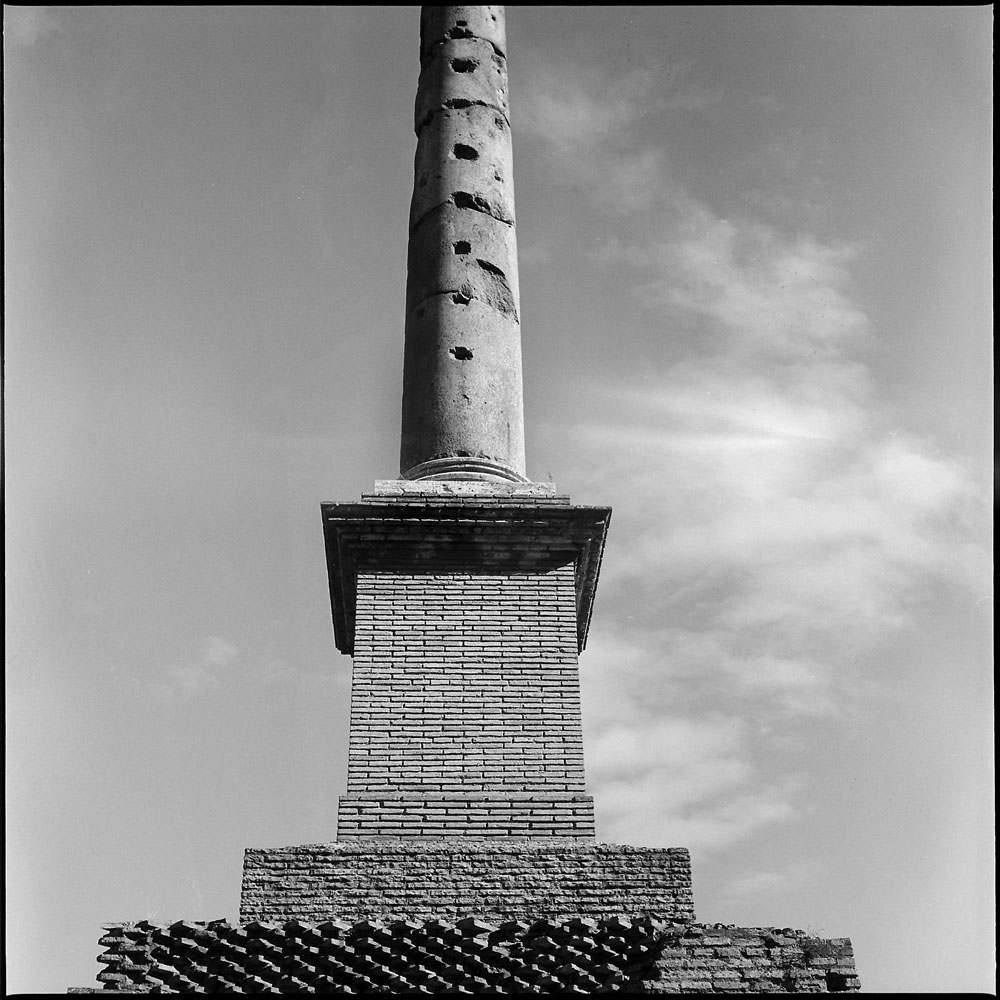
Solitary Column, Imperial Forum

The temple of Vesta is a small circular structure, with a few columns and a fragment of a wall jutting up. This would have housed a flame kept burning by the Vestal virgins, women who pledged celibacy for some thirty years of service. They would have been too old to marry or have children by their retirement, but if they were able to wait that long, they were richly rewarded and retired to lives of considerable luxury and comfort. If they couldn’t wait, well… they and their defilers were sentenced to death.
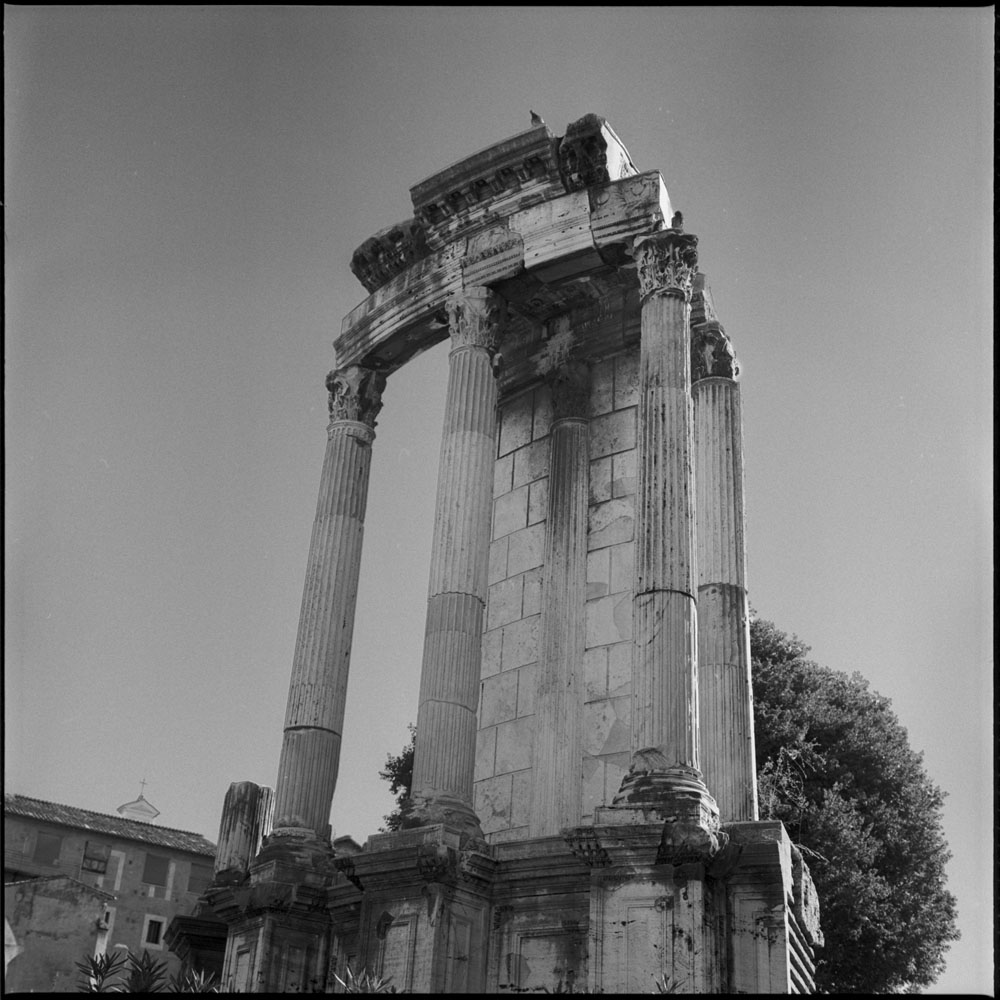
The Temple of Vesta
The Temple of Vesta

I caught this school group in the Forum, one student presenting a topic about the place to his fellow students. I suspect it was a project for a history course. Made me wish I had gone to school somewhere in Europe that we would have taken field trips to the Forum, instead of to the American History museum to look at displays of Revolutionary War muskets.
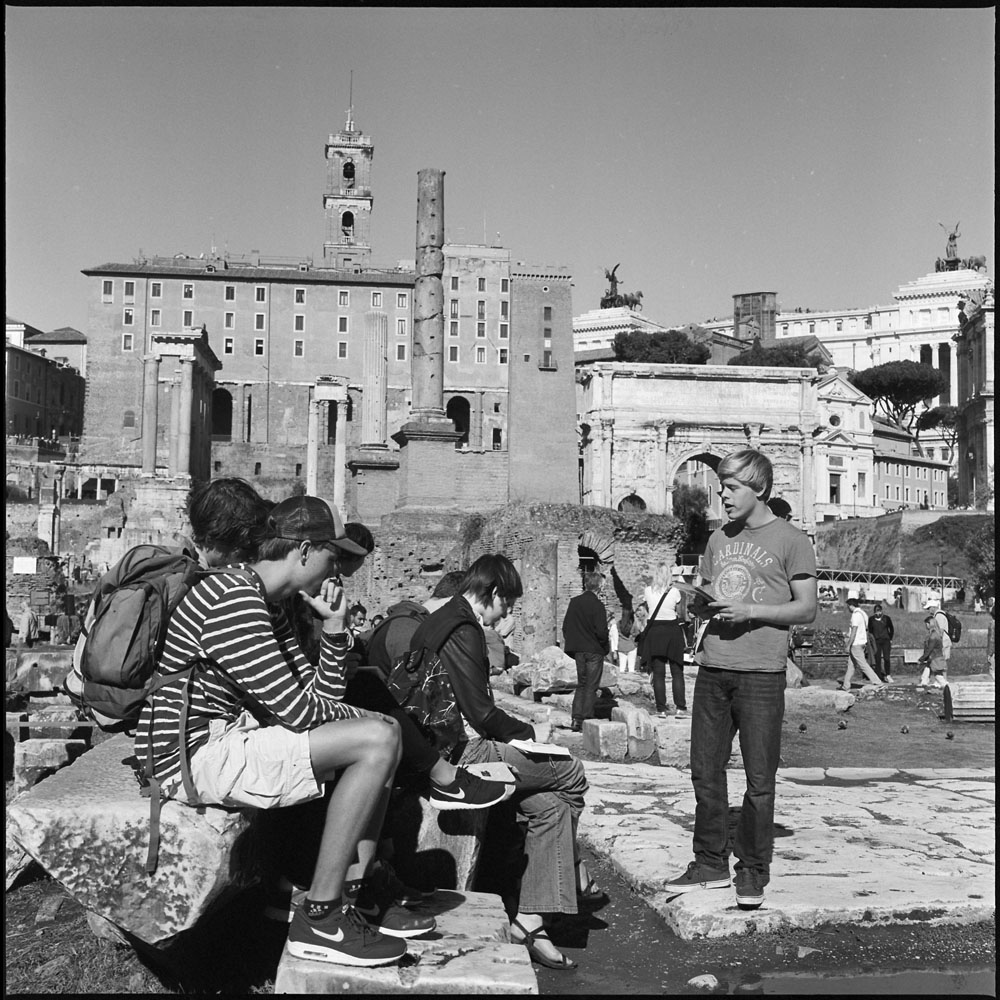
A School Group at the Forum

Two of the major surviving structures of the Forum are visible in this view – the Temple of Romulus (now part of the Basilica of Saints Cosmas and Damiano) and the Temple of Antoninus and Faustina. The temple of Romulus is the cylindrical structure in the foreground. Because of its early re-use as a Christian church, the temple of Romulus is, after the Pantheon, the best preserved Roman temple in the city. The Roman Senate structure is also quite well preserved, and the main Senate chamber retains is marble steps and the black marble slab that supposedly marks the tomb of Romulus.
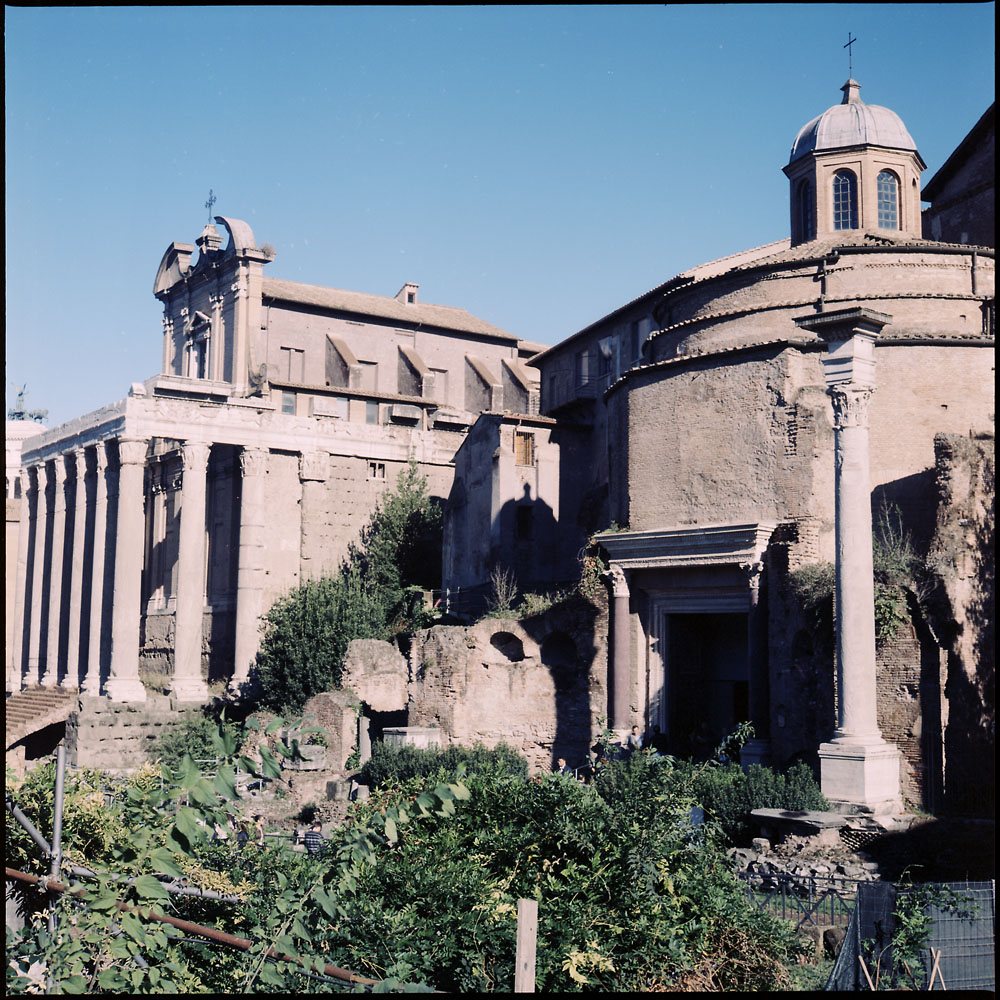
Temple of Antoninus and Faustian and the Temple of Romulus
Temple of Antoninus and Faustina and the Temple of Romulus

A striking rarity are the doors of the temple of Romulus – they are the ORIGINAL bronze doors, over 2000 years old. Many other temple doors have been either removed and melted down for re-use or, as in the case of the doors of the Senate building, moved by Bernini to Saint John Lateran. You can really feel the patina of the ages when looking at these doors.
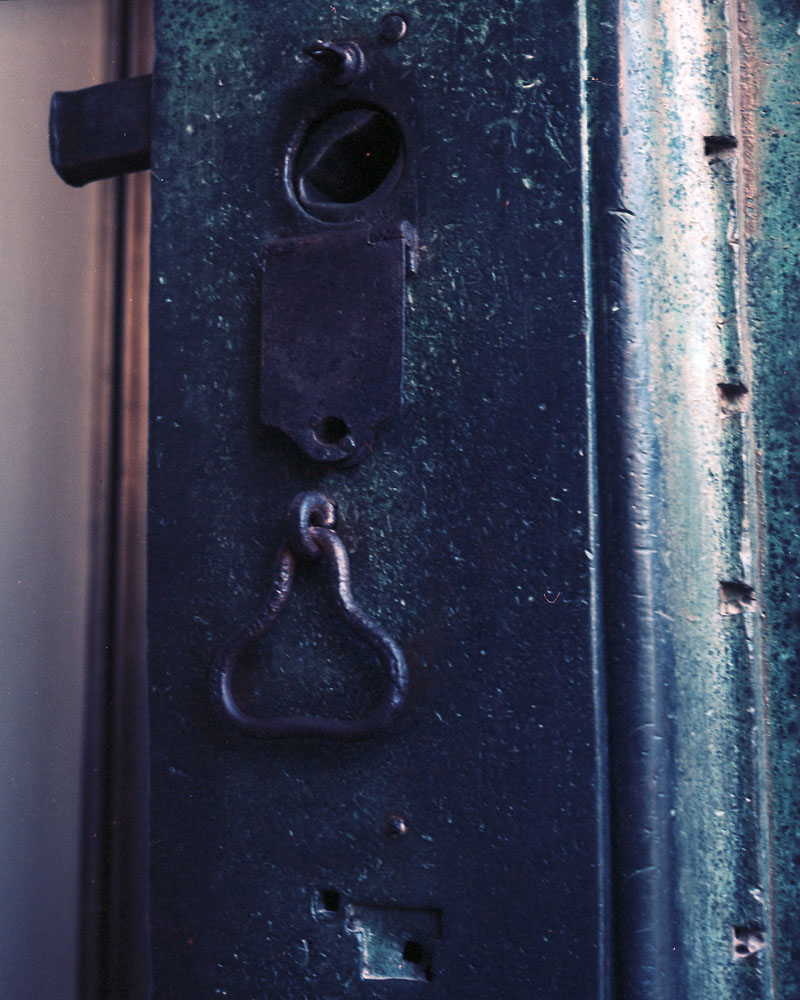
Ancient Bronze Door, Temple of Romulus

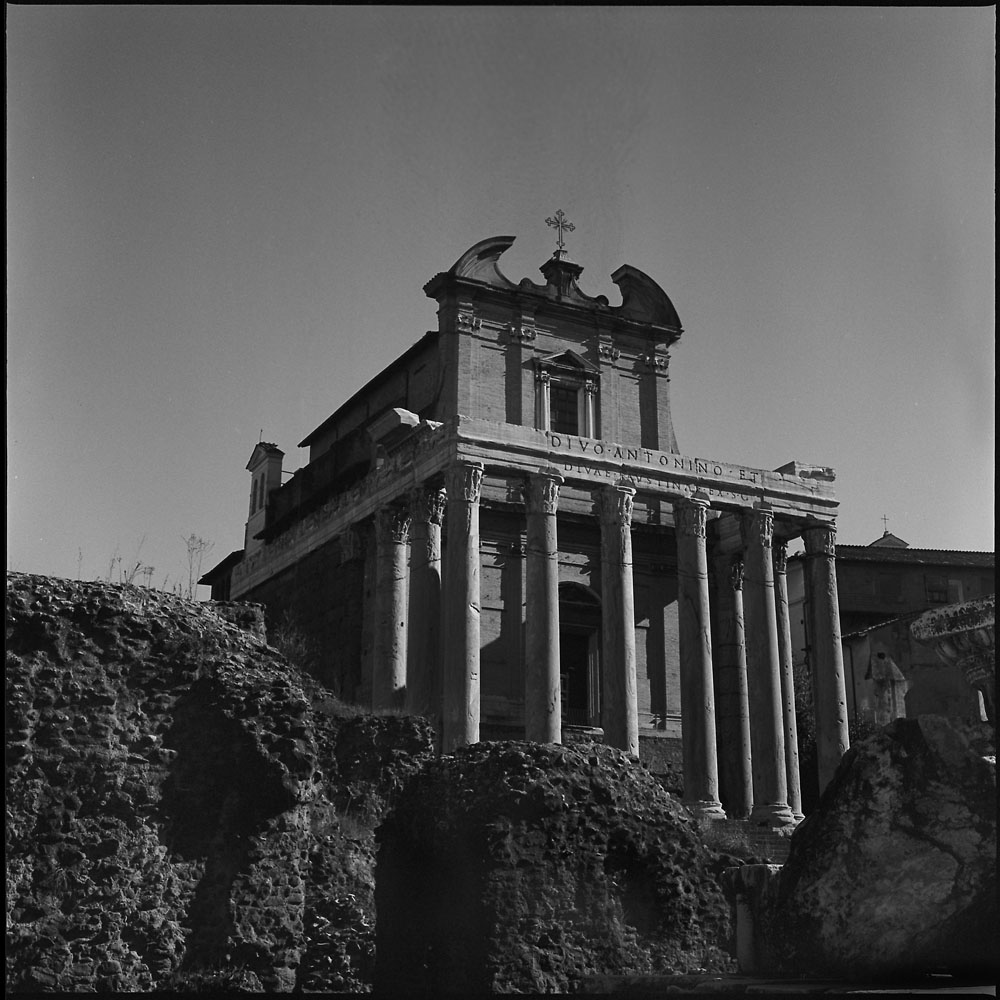
The Temple of Antoninus and Faustina was originally built in honor of Faustina, the wife of Emperor Antoninus. She was deified upon her death, and Antoninus had the temple erected in her memory. When he passed away, he too was deified and added to the temple’s namesakes. The colonnade survives in its current state of preservation due to the later conversion of the structure into a Christian church. You can see the former entrance to the church a whole story above the top of the steps – at the time of the conversion, the Forum had infilled to the level of the door.The columns also owe their survival to this infilling – you can see the diagonal gouges in the columns from where ropes or chains were wrapped around them in an attempt to pull them down. This may have been because of an anti-Pagan movement during the early Church, or it may have been by marble scavengers trying to get the columns for their stone.
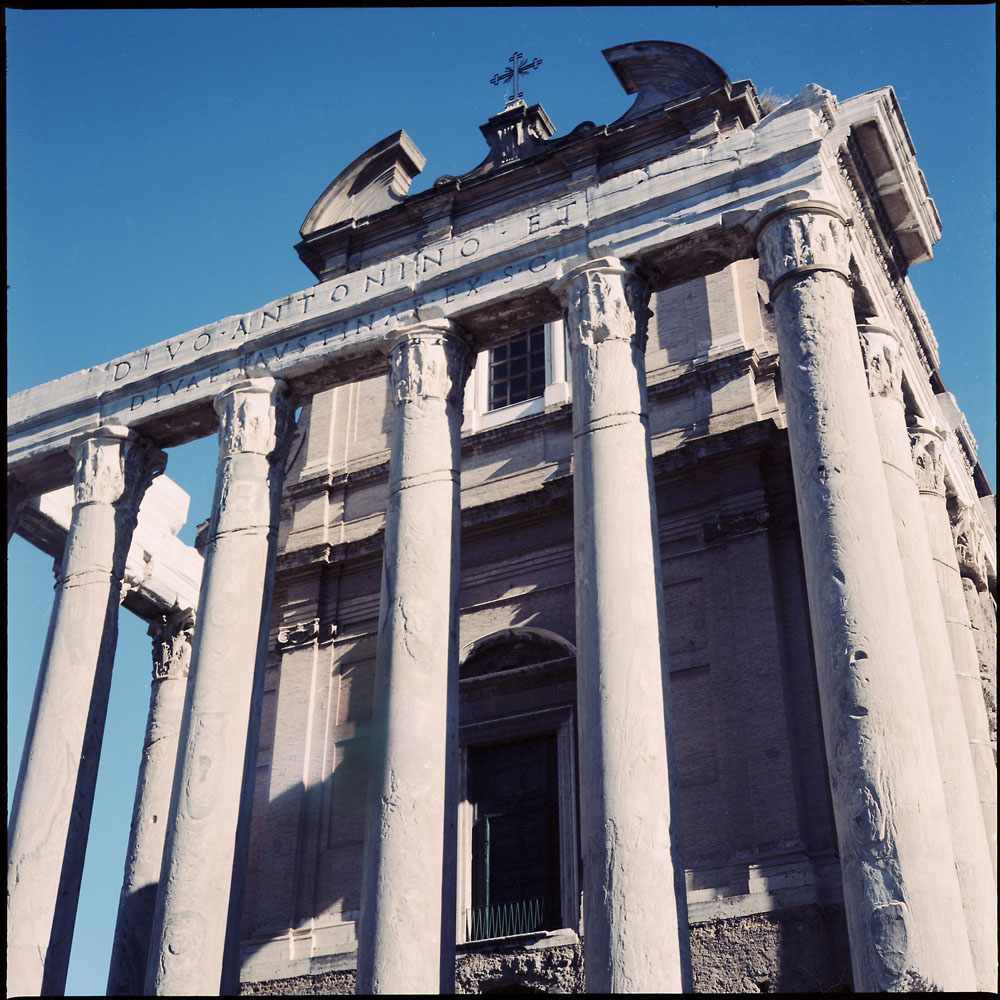
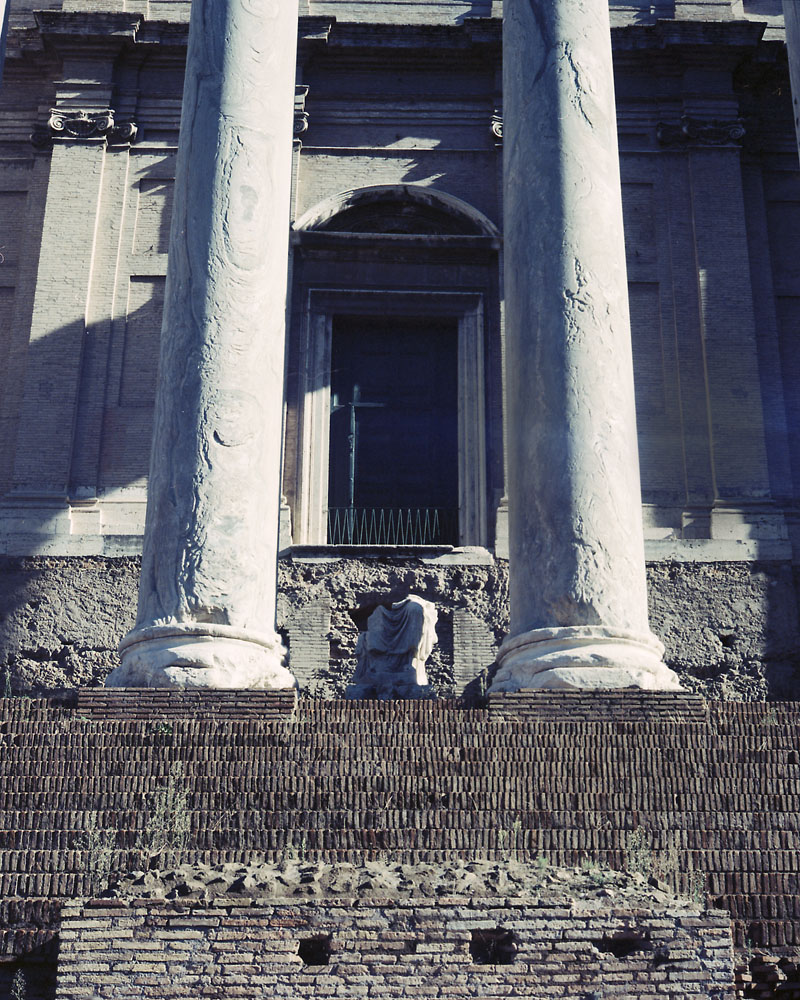
Temple of Antoninus and Faustina
Columns and steps, Temple of Antinous and Faustina
Temple of Antoninus and Faustina

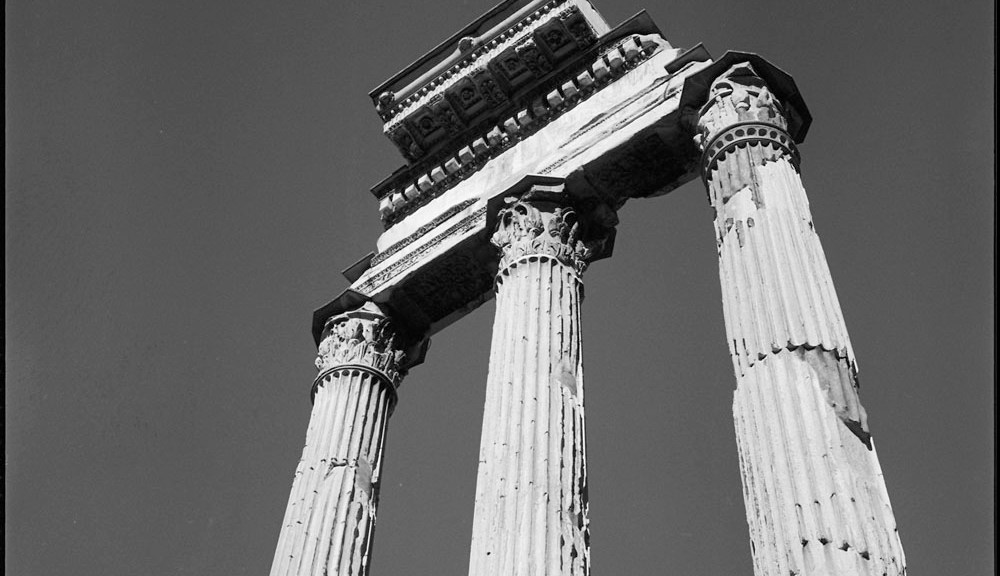
Most of the temples of the Forum are ruins – a few scant columns remain of them, or in some cases only foundations. The temple of Castor and Pollux is one survivor with a few columns to mark its location. Their losses are due to various anti-Pagan movements and repeated use of the Forum as a low-effort quarry for marble to be used in the palaces of popes and cardinals.
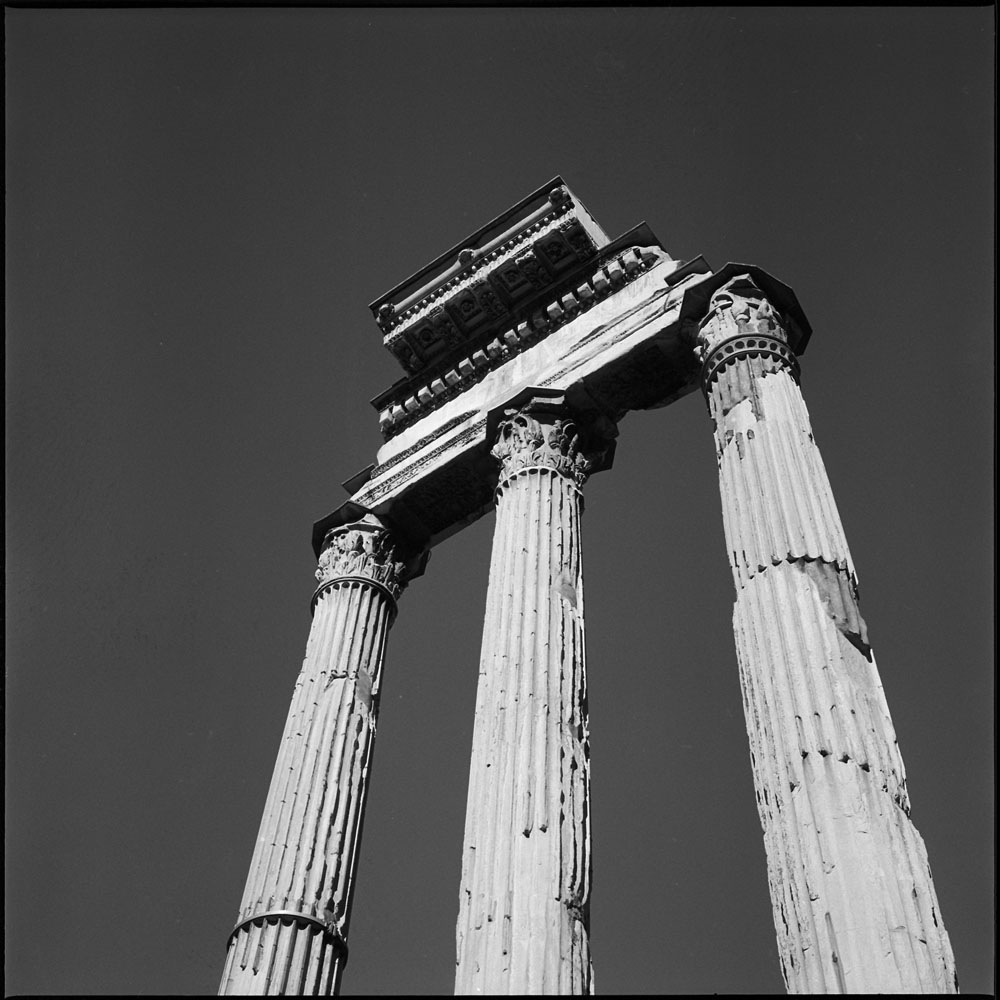
The Temple of Castor and Pollux

The original altar from the spring of Juturna was on display inside the temple of Romulus as part of a temporary exhibition when I was there. This side depicts the twins Castor and Pollux, who supposedly visited the spring to water their horses. The temple of Castor and Pollux is directly across from the spring. They have a replica in place at the spring itself.
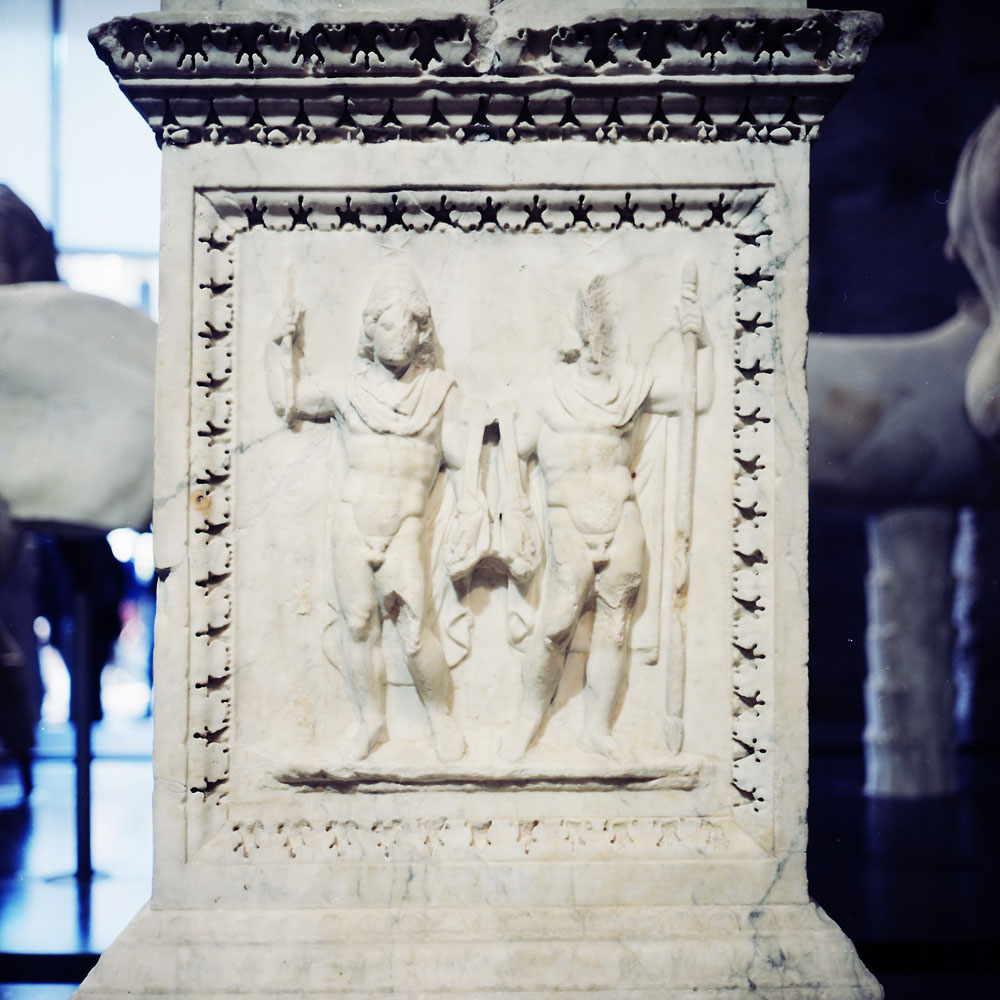
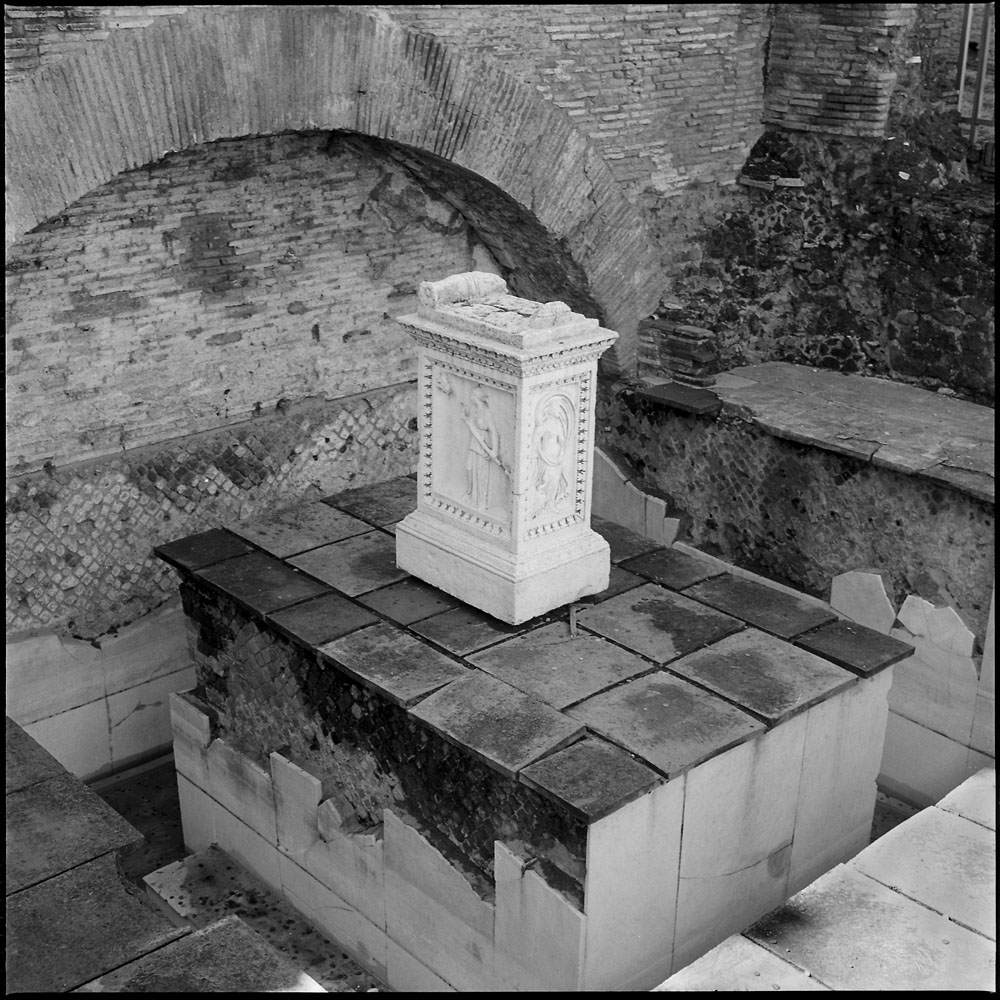
The Altar of Castor and Pollux from the Lacus Juturnae
Spring of Juturna, Roman Forum

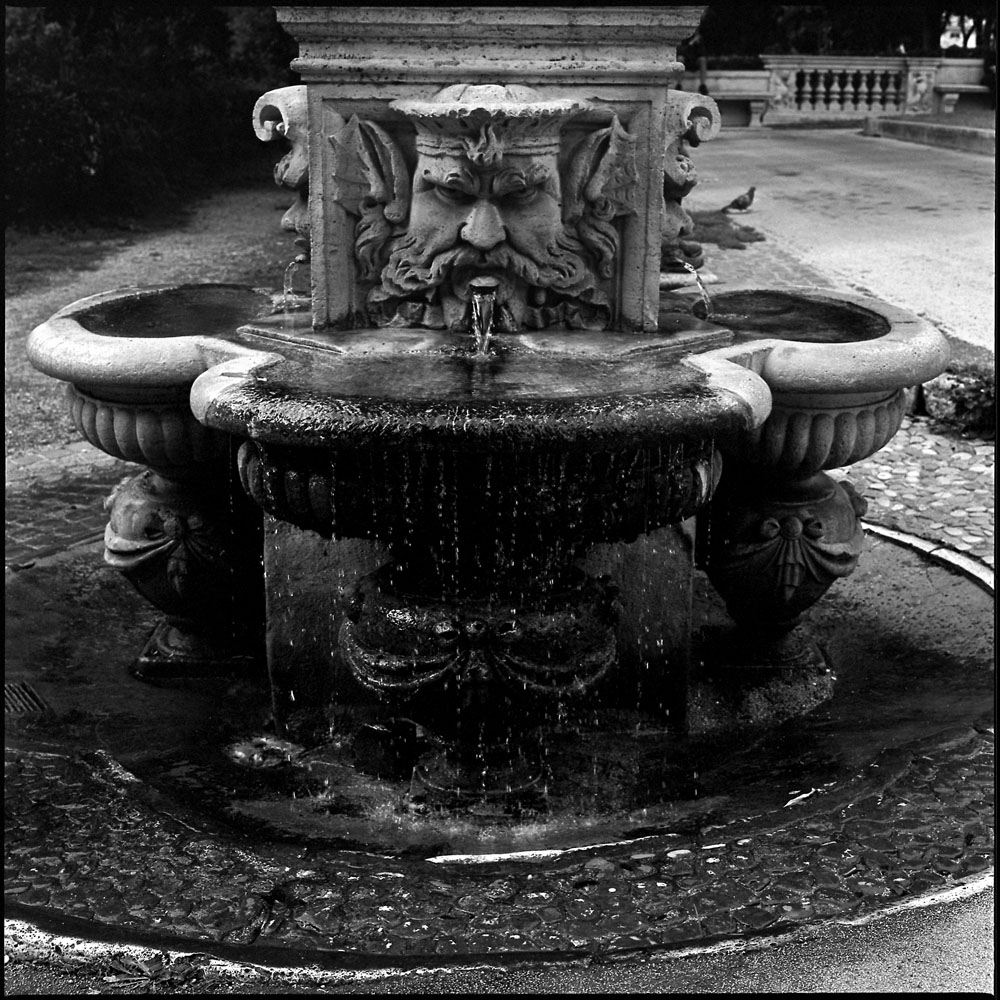
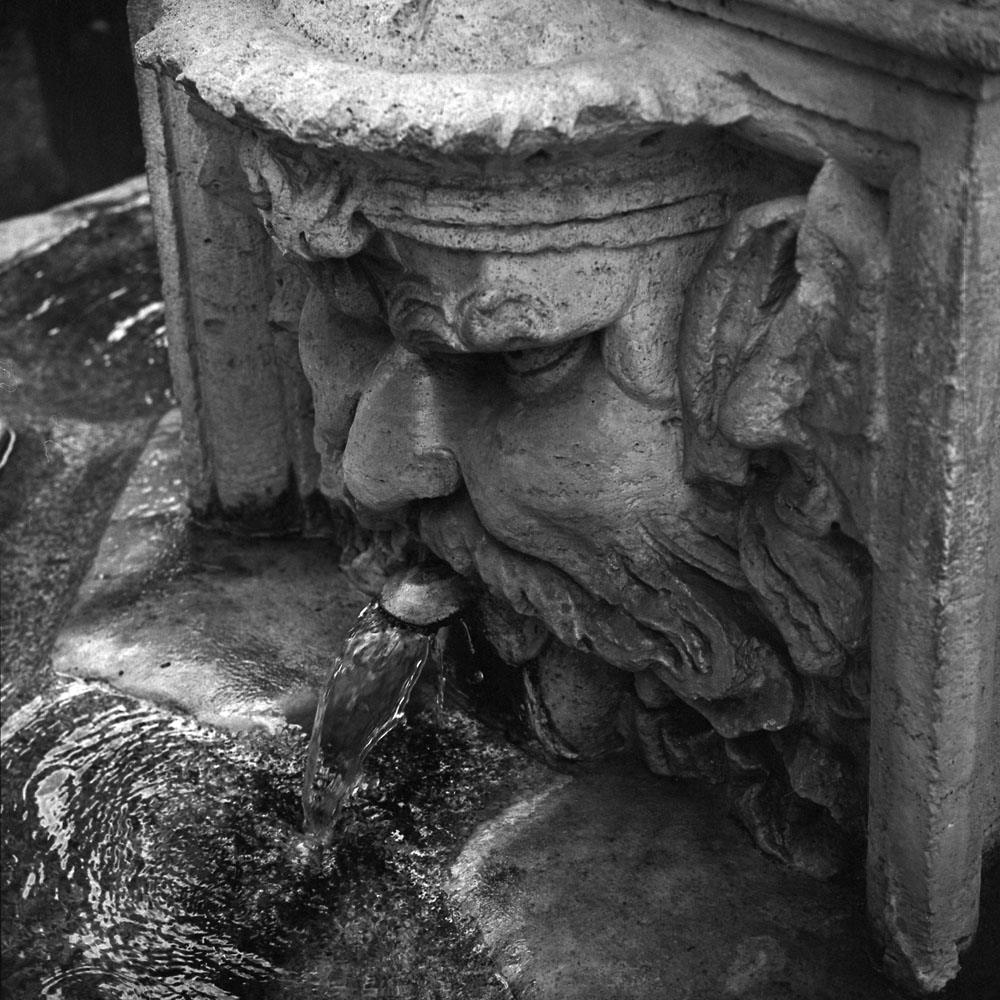
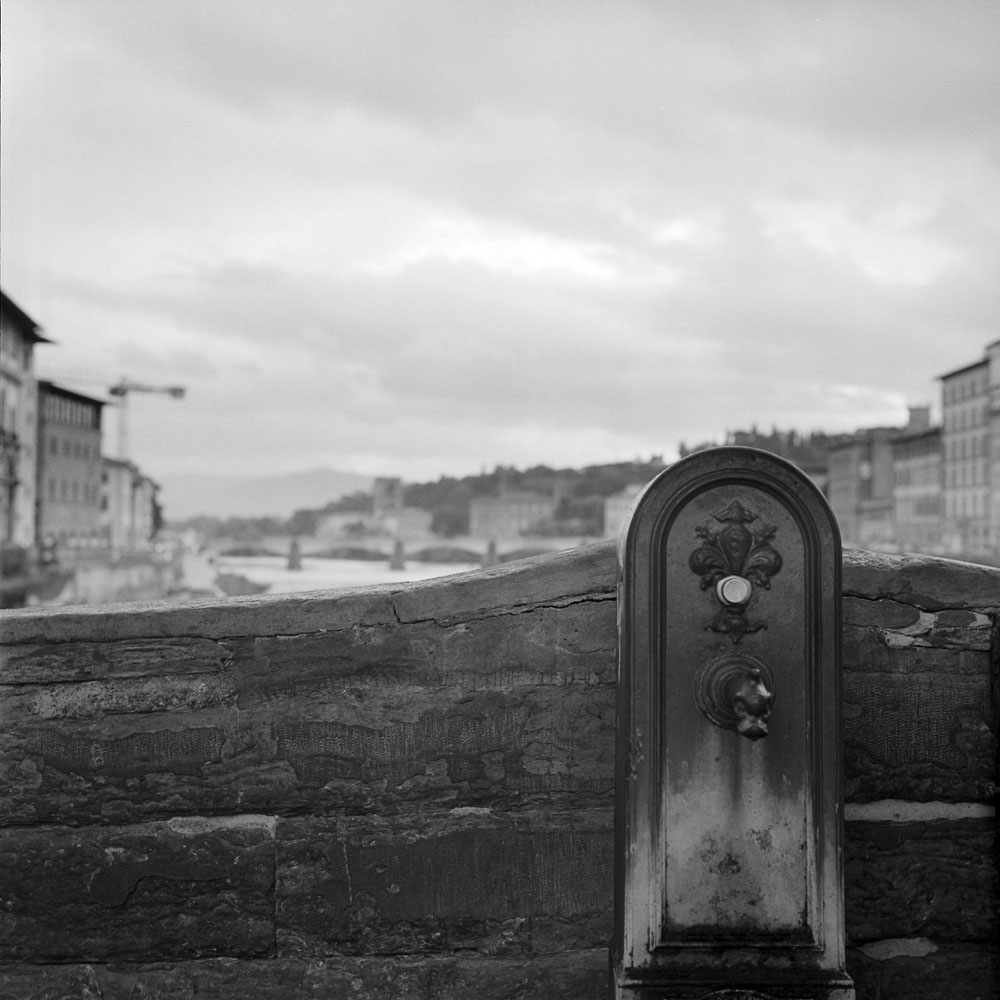
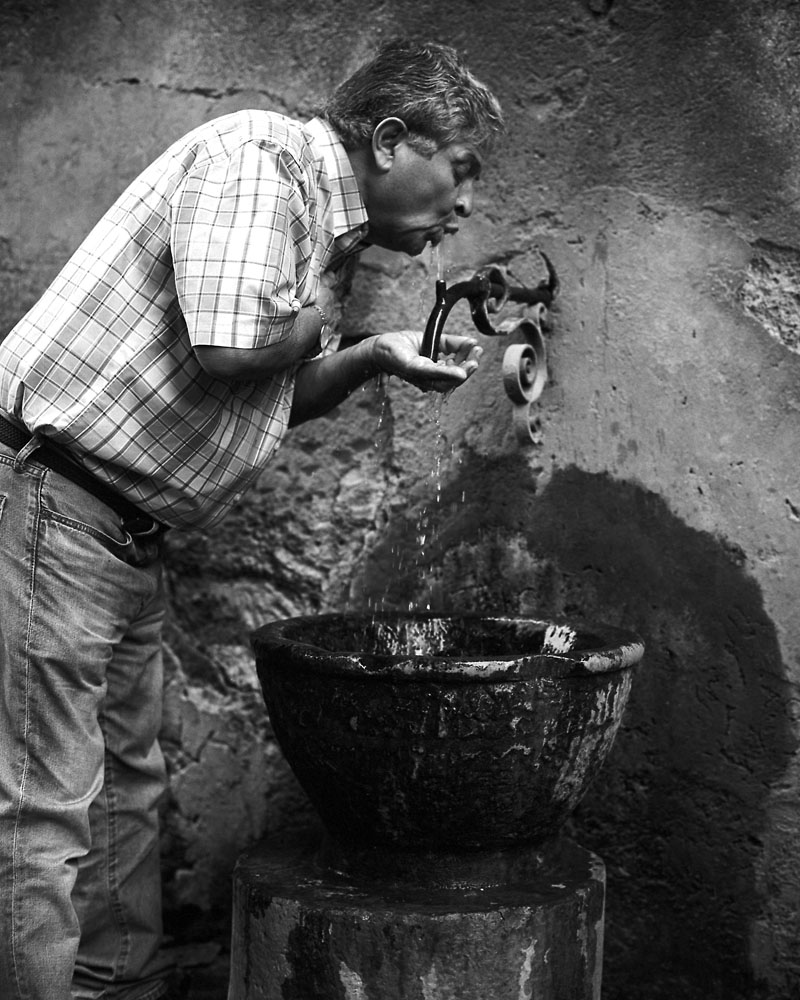
Italian Fountains

This is somewhat of a recap of some earlier images, but they’ve been a running theme in my Italian work so I thought I’d pull together a collection of my photos of fountains from Rome and Florence.
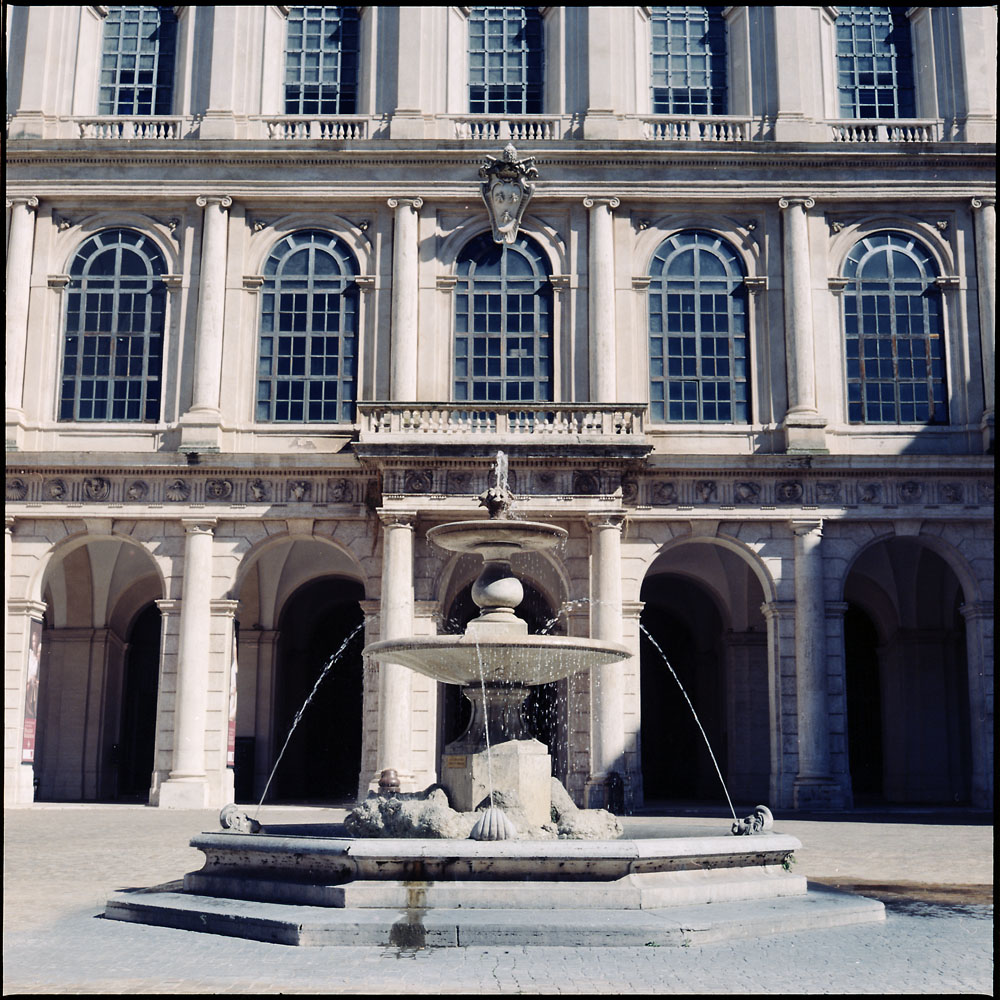
Fountain Detail, Palazzo Barberini
Fountain, Capitoline Steps, In the Wind and Rain
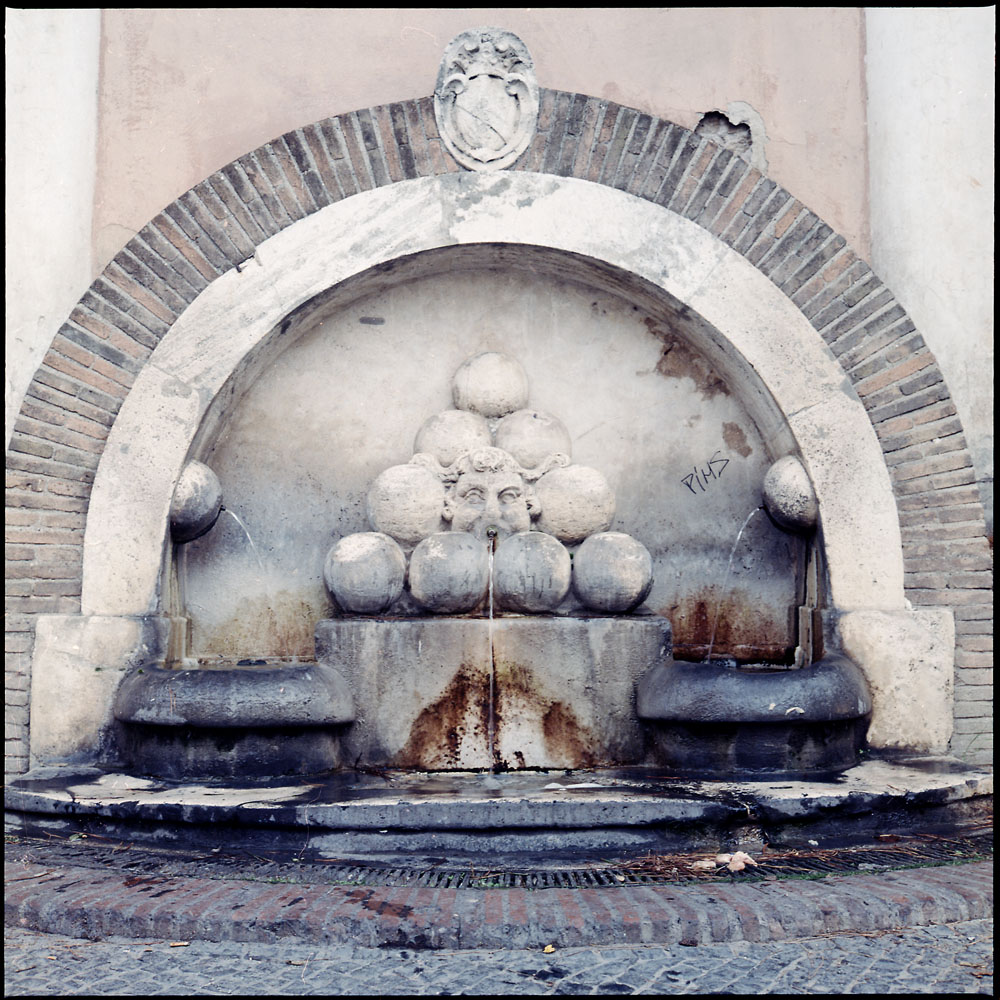
Cannonball Fountain
Cannonball Fountain
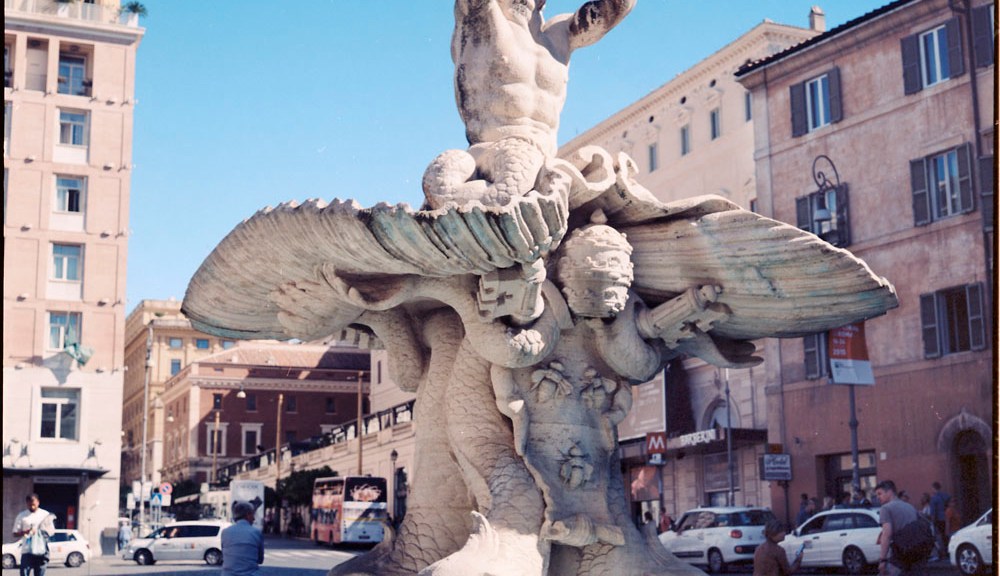
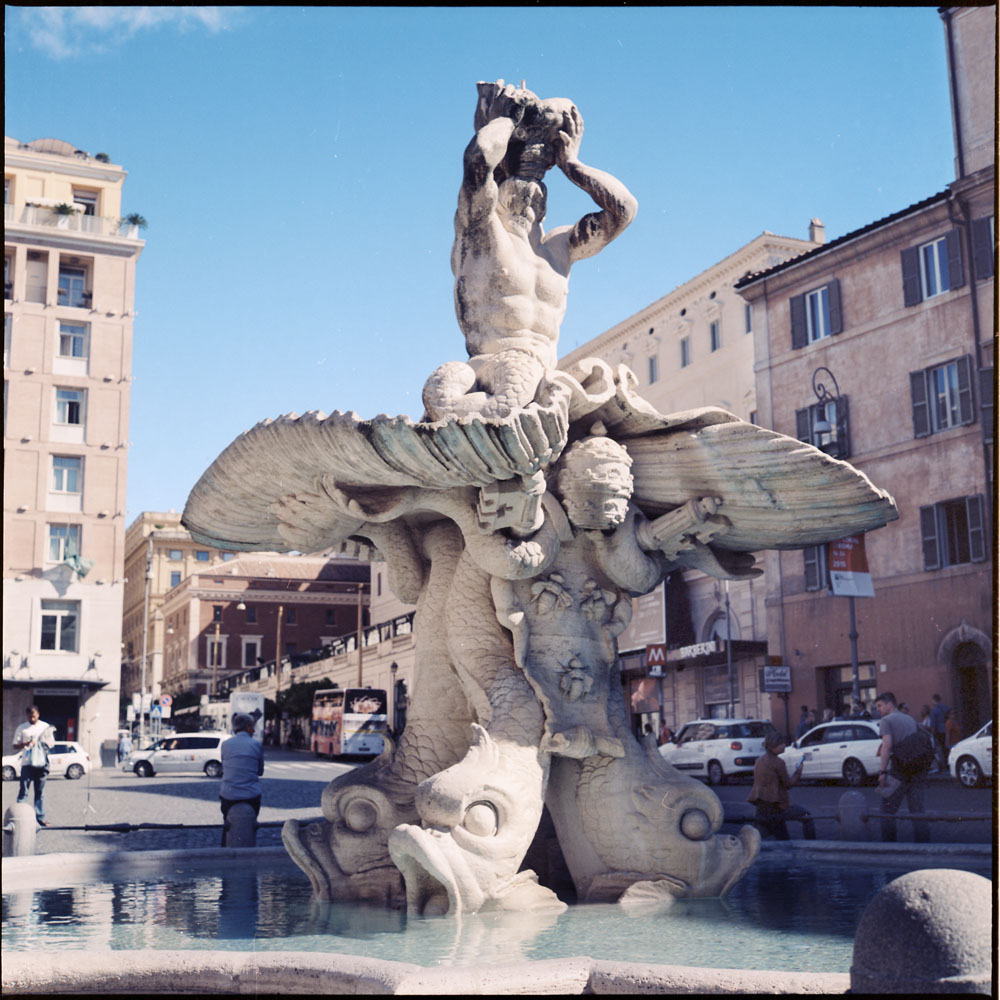
Triton Fountain, Piazza Barberini
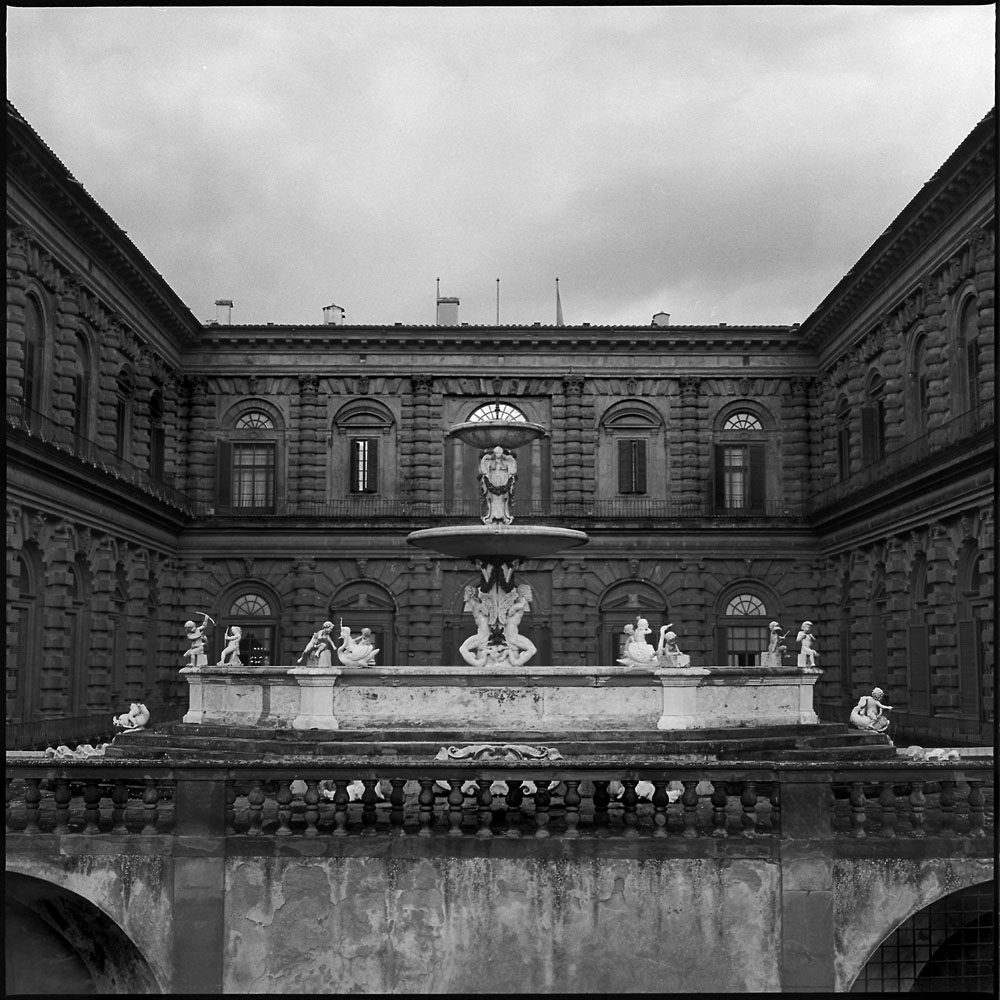
Fountain, Palazzo Pitti
Facade, Villa Barberini
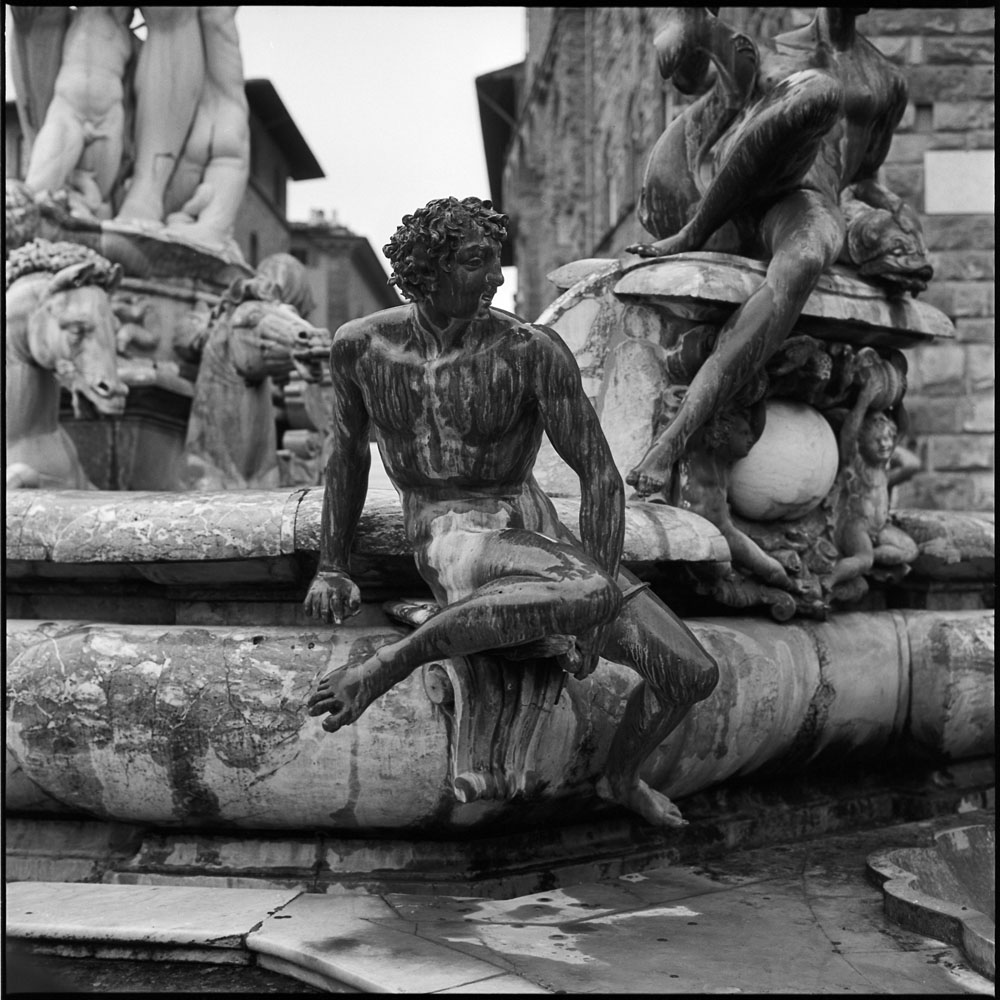
Figure, Neptune Fountain, Piazza della Signoria
Fountain, Temple of Hercules
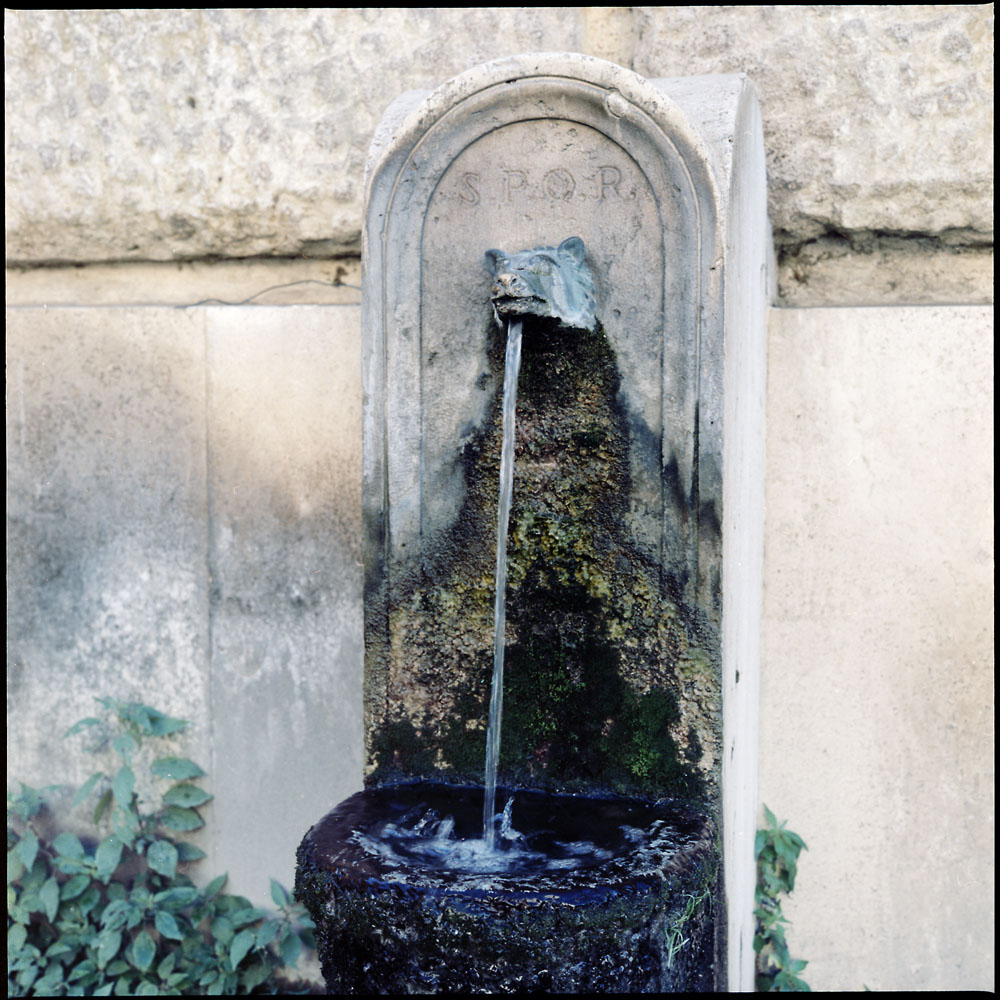
SPQR Fountain, Centrale Montemartini
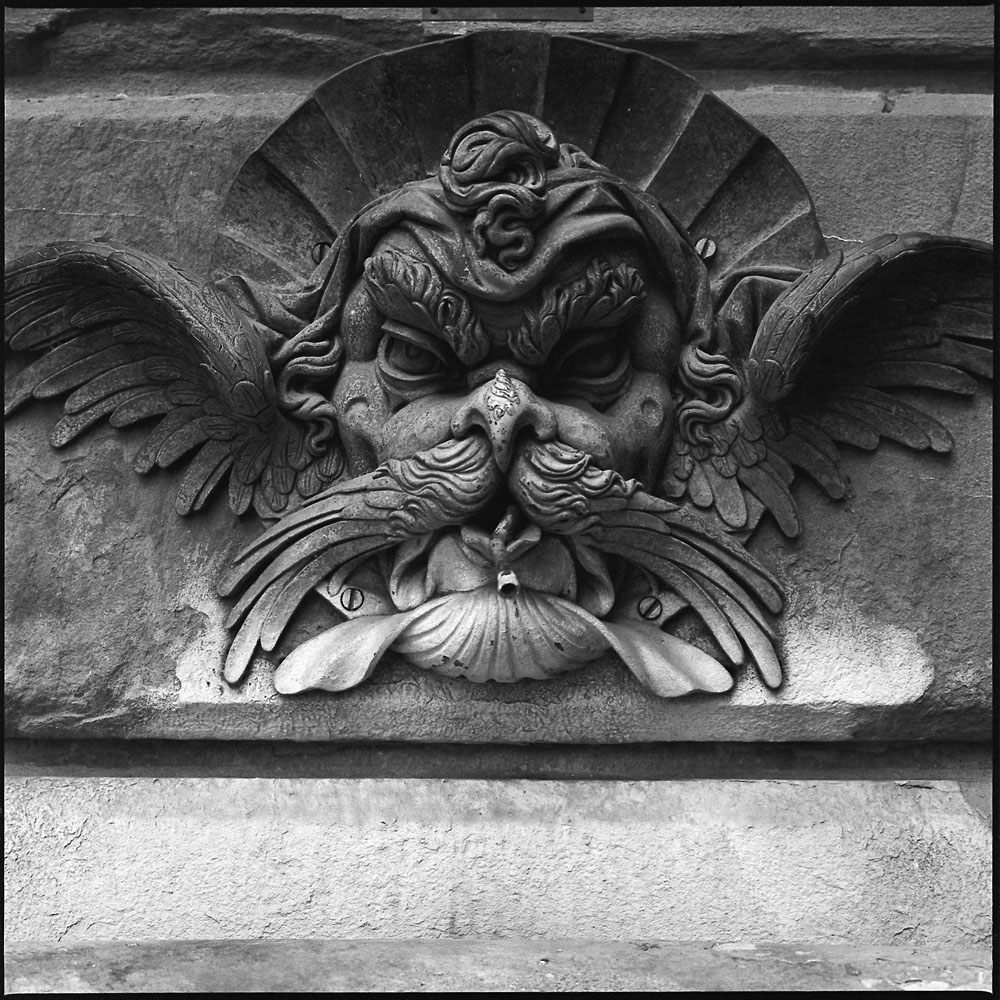
Fountainhead, Palazzo Pitti
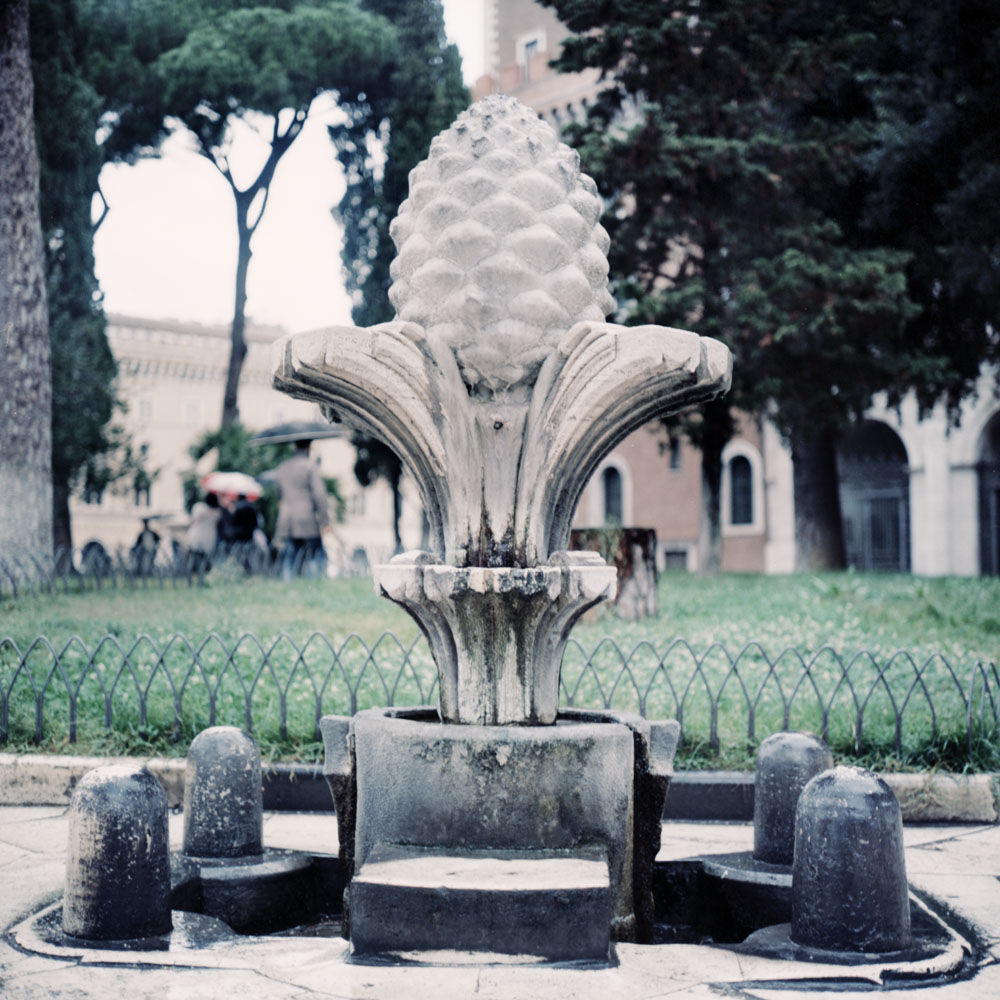
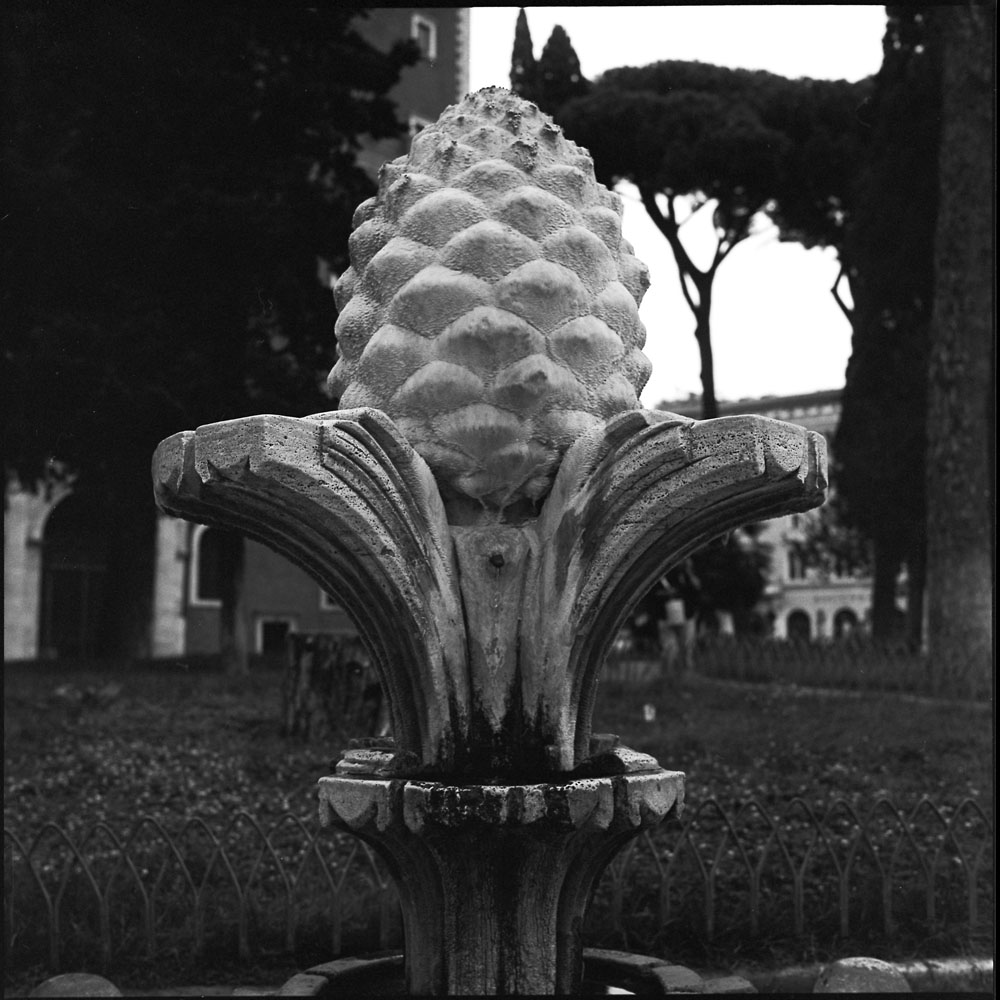
Pinecone Fountain,Piazza Venezia, Rome
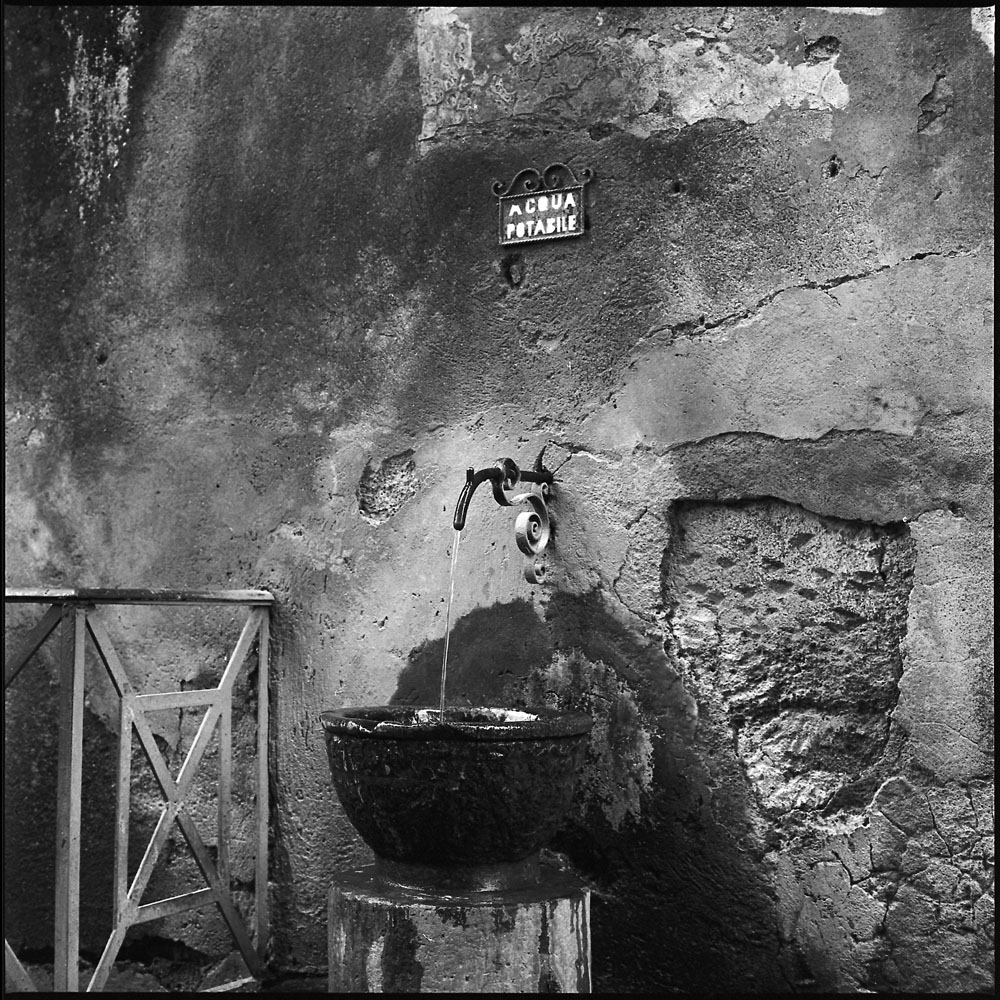
Acqua Potabile, Castel Sant'Angelo, Rome
Acqua Potabile, Castel Sant’Angelo, Rome
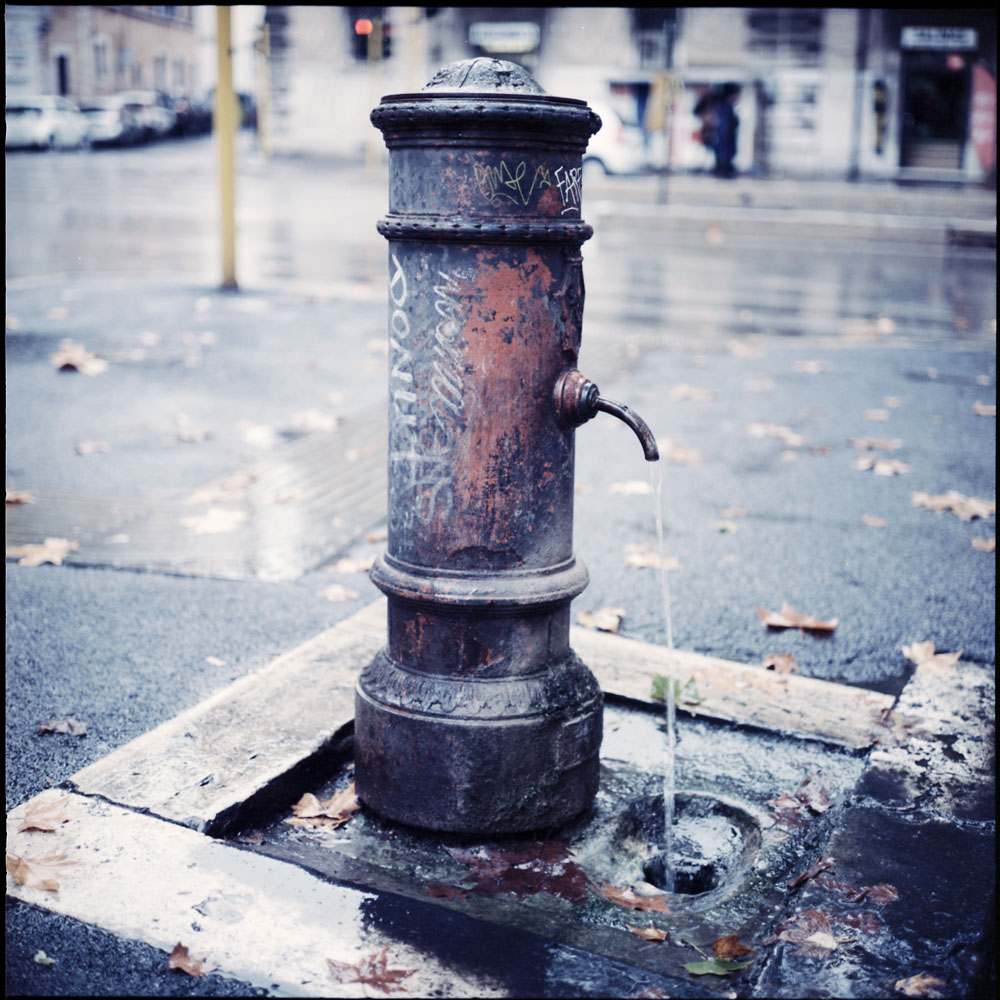
Water Fountain, Trastevere, Rome
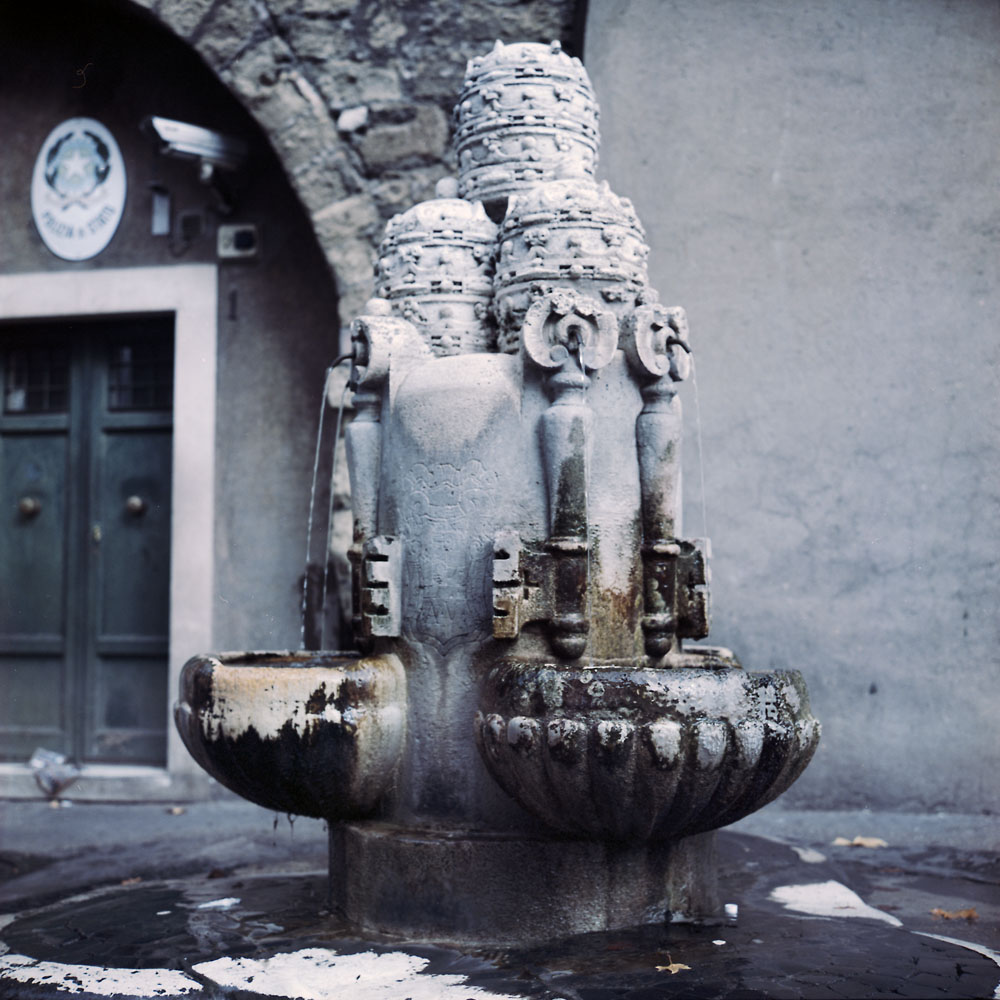
Papal Tiara and Keys Fountain, Vatican
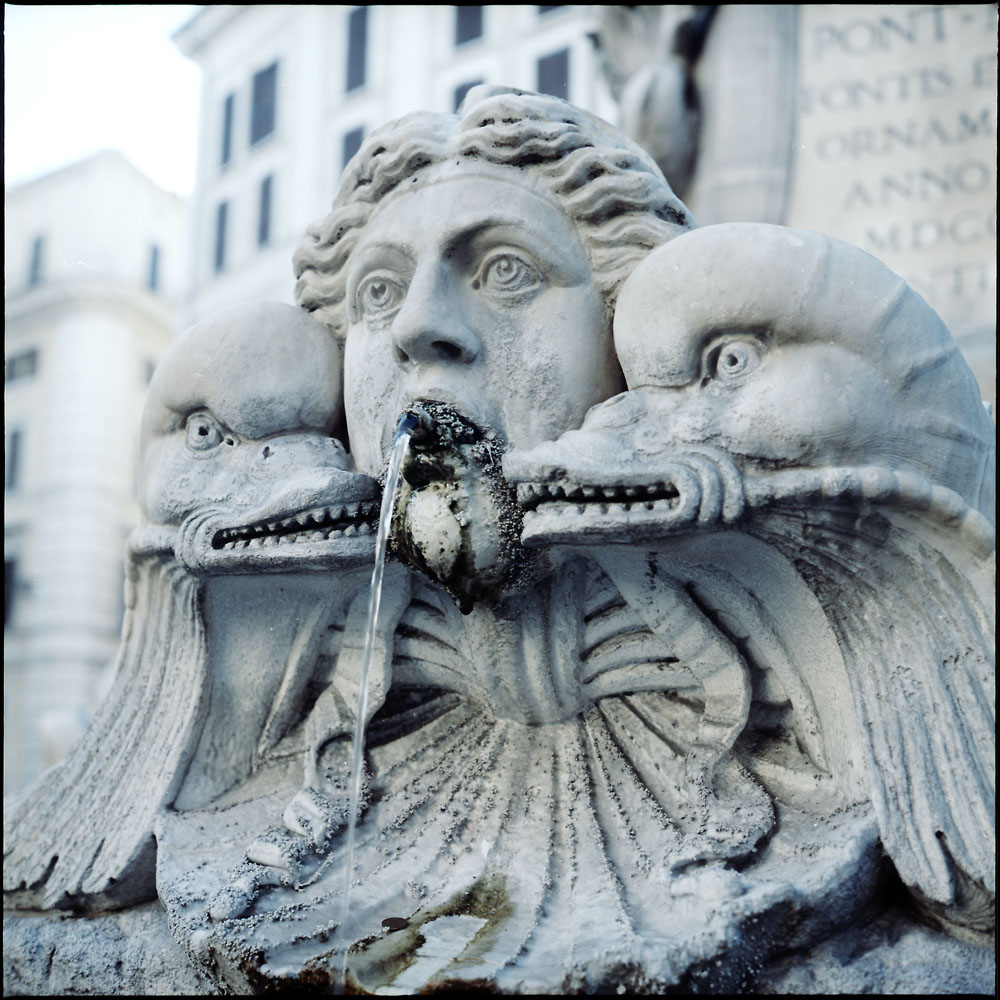
Fountain, Pantheon
Fountain, Pantheon
Fountain, Villa Borghese, Rome
Fountain, Villa Borghese Park, Rome
Fountain, Palazzo Barberini
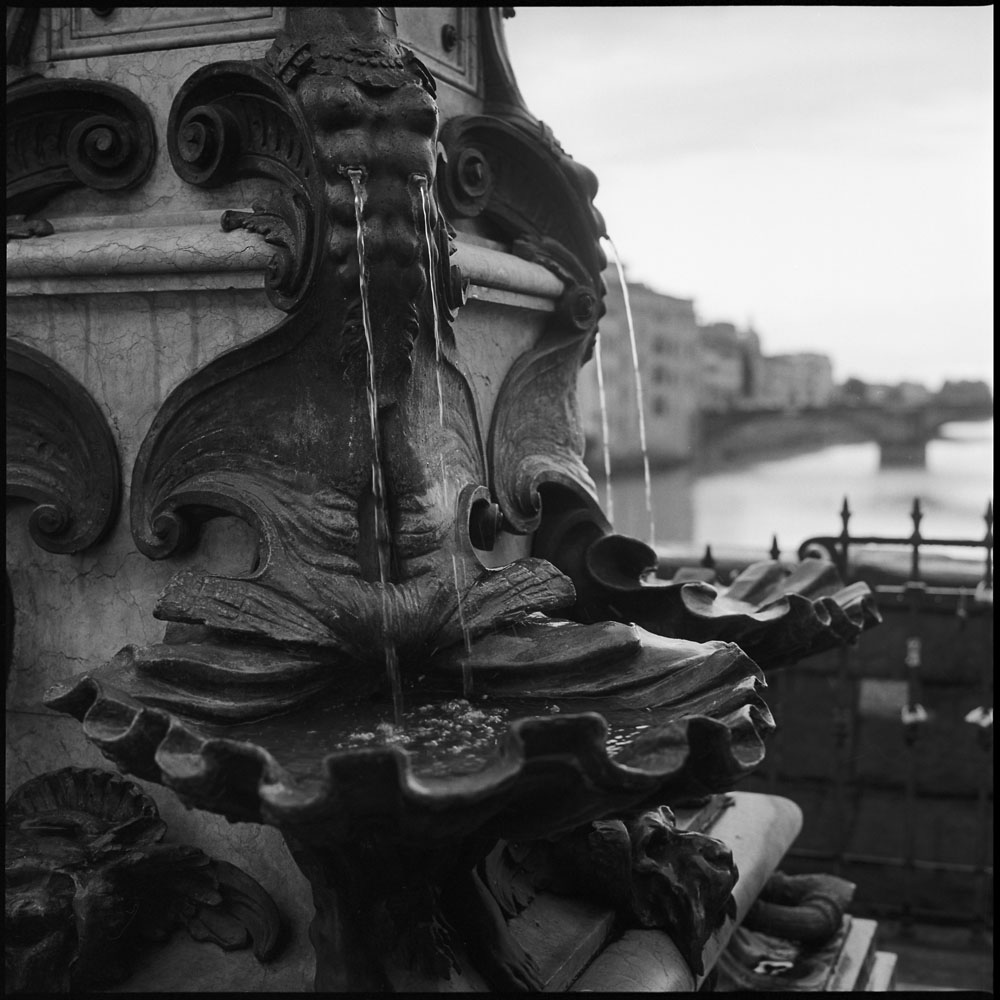
Drinking Fountain, Ponte Vecchio, Florence
Drinking Fountain, Castel Sant'Angelo, Rome
Drinking Fountain, Castel Sant’Angelo, Rome
Cellini Fountain, Ponte Vecchio, Florence
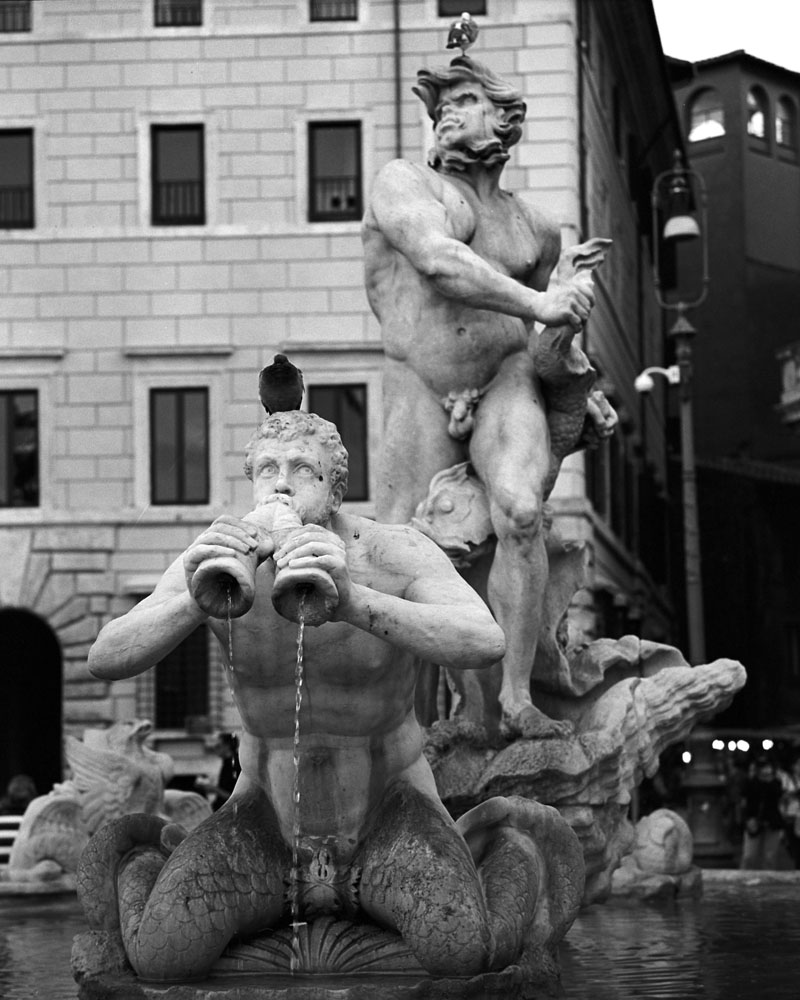
Trumpeting Merman, Fountain, Piazza Navona
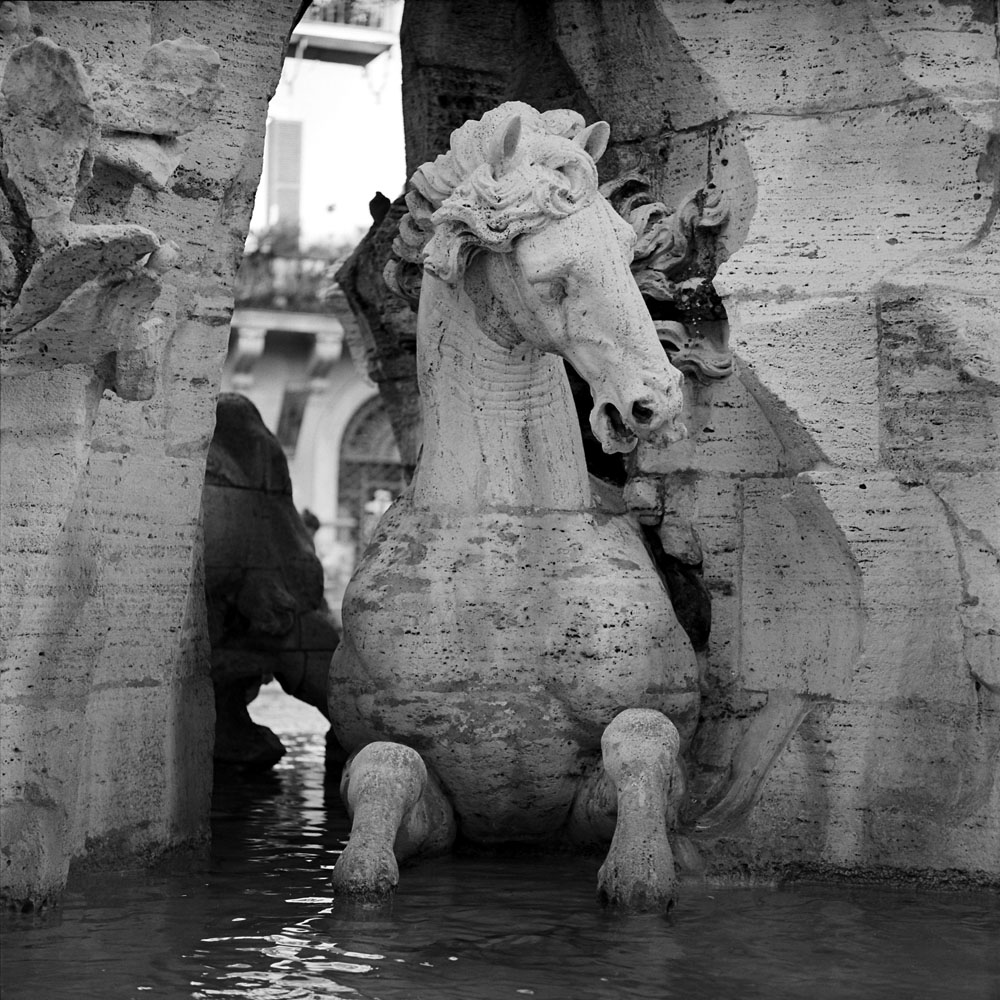
Horse, Four Rivers Fountain, Piazza Navona
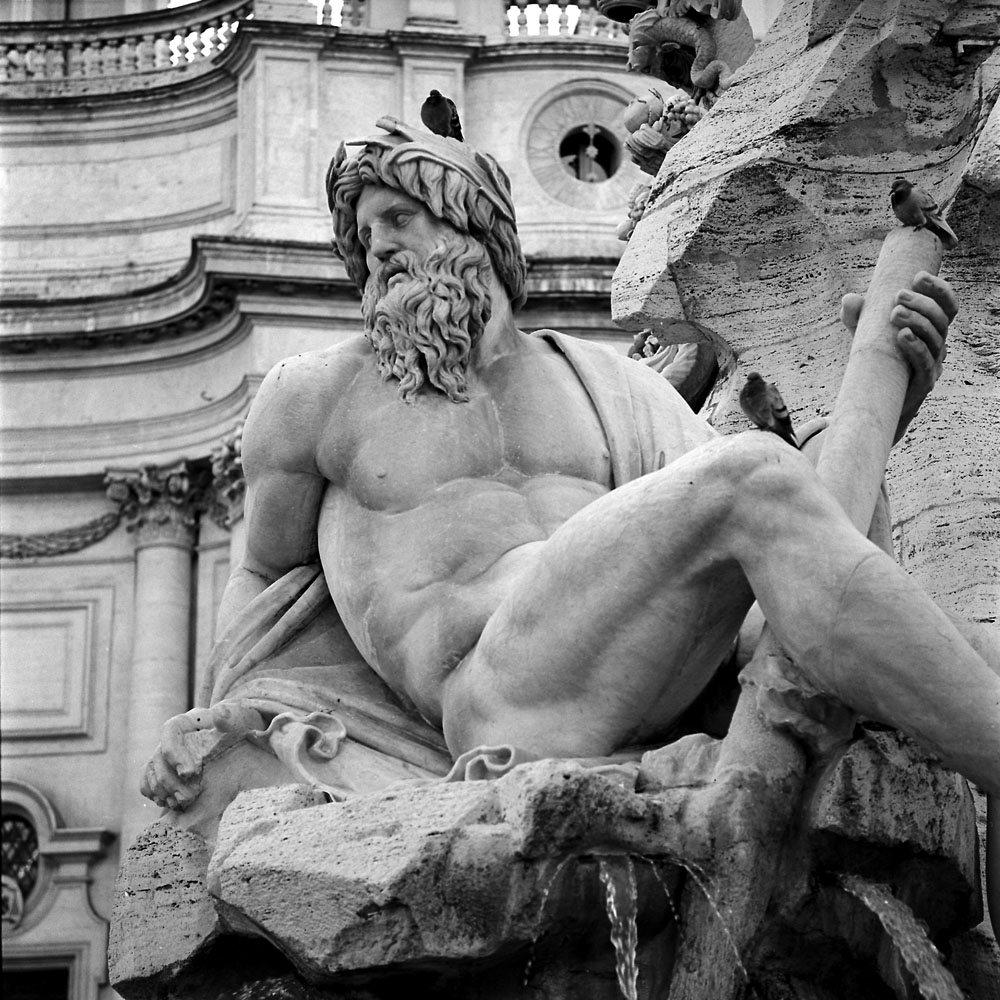
River God, Four Rivers Fountain, Piazza Navona
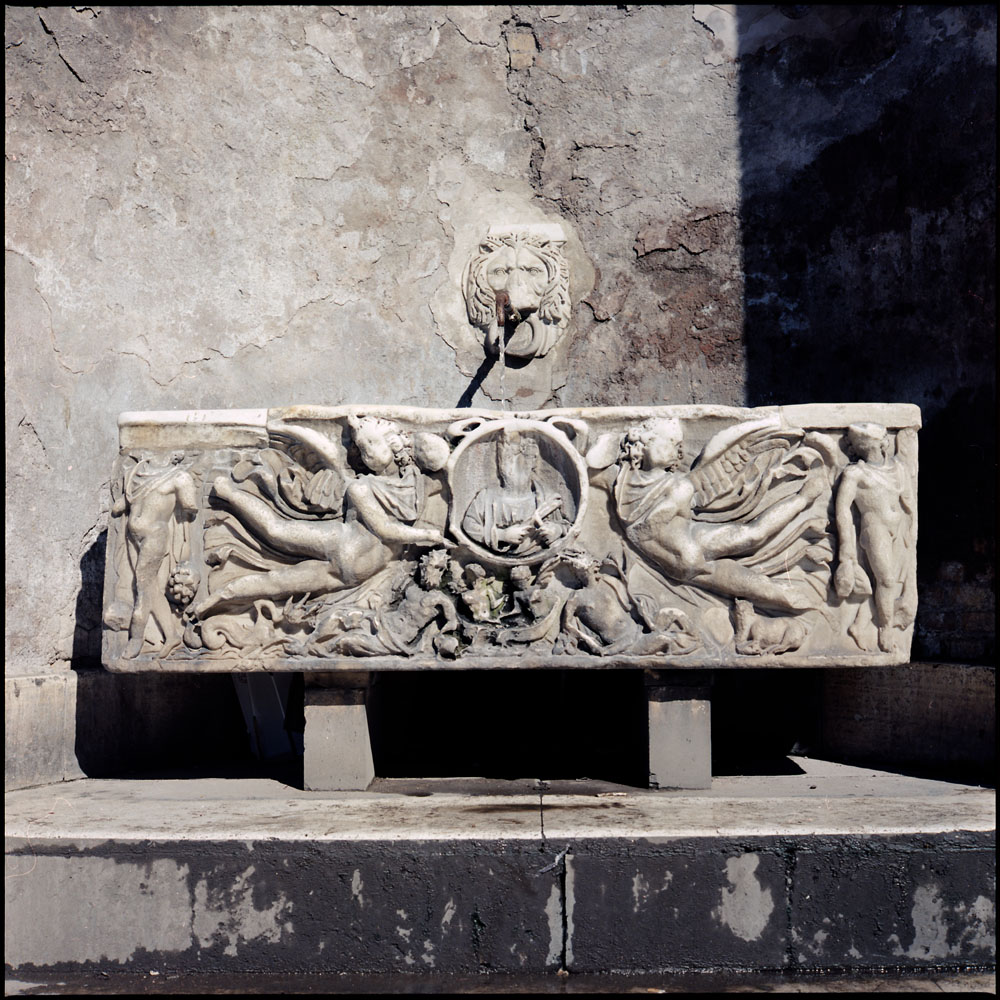
Ancient Fountain, Colosseum
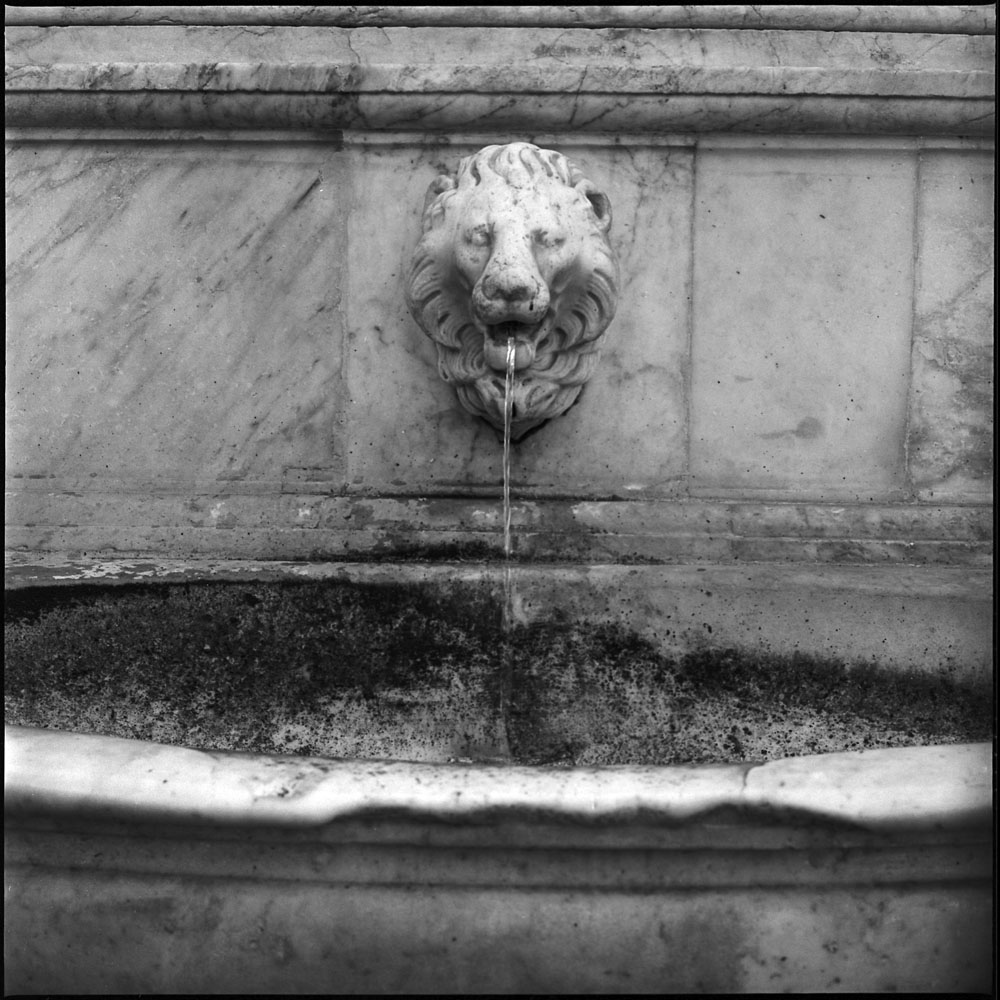
Lion Head Fountain, San Lorenzo, Florence
Pinecone Fountain, Piazza Venezia

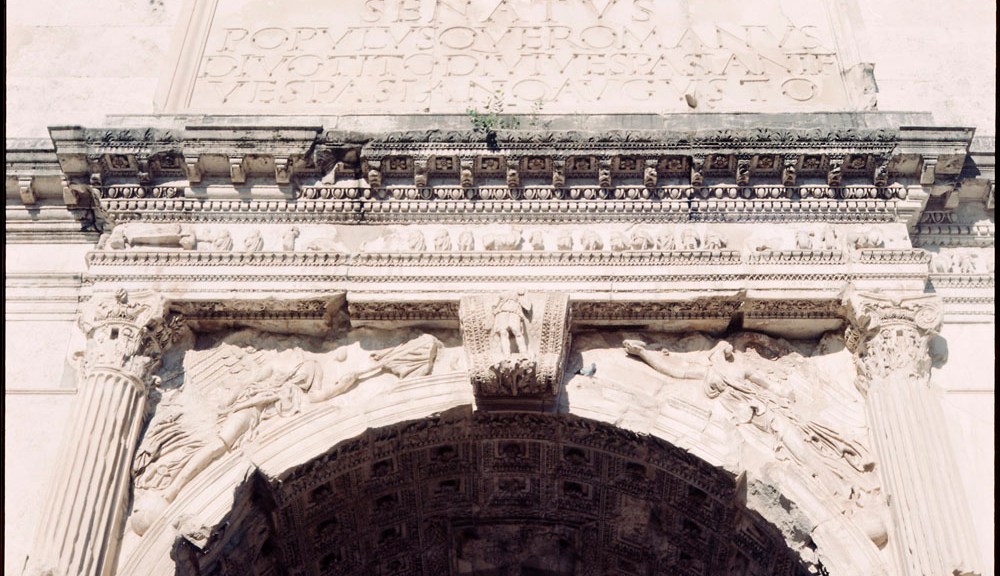
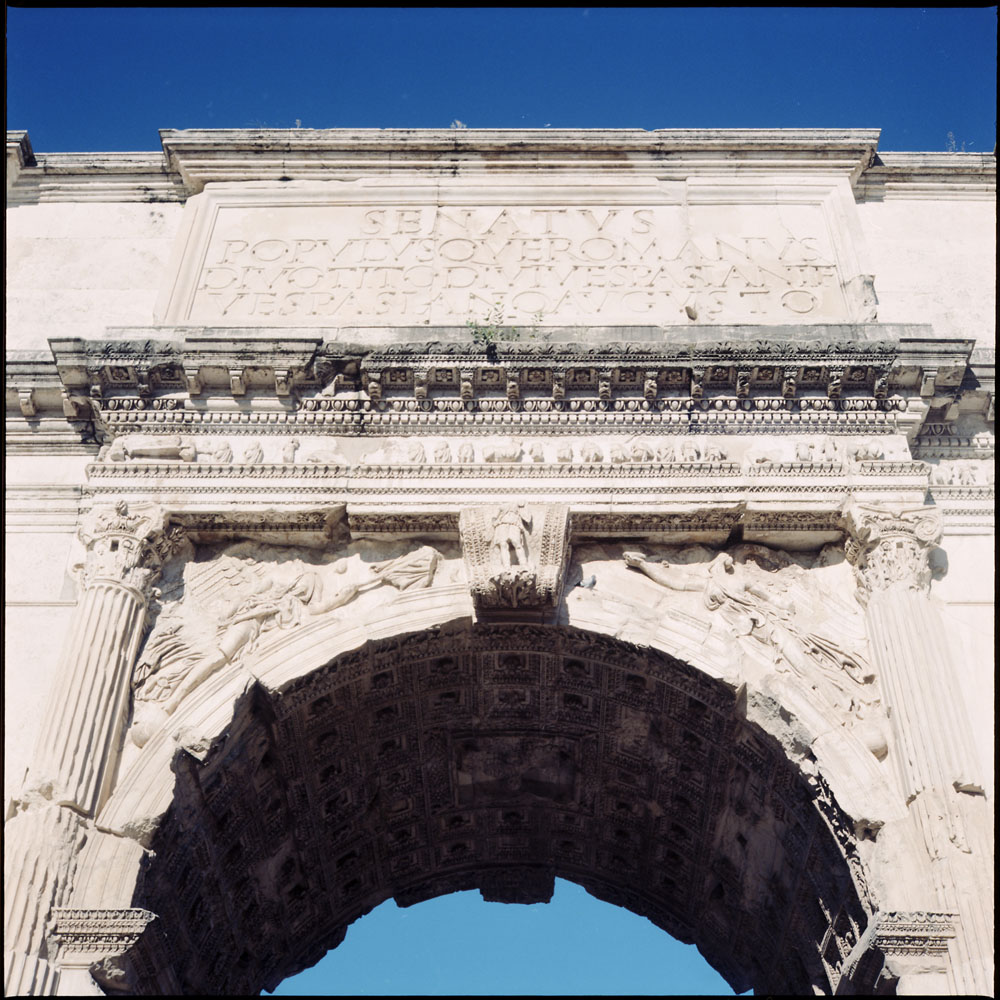
The Arch of Titus at the entrance to the Forum

Many emperors had triumphal arches erected. Immediately beside the Colosseum is the arch of Constantine. The arch of Septimus Severus stands at the foot of the Capitoline hill, at the one end of the Forum. There are others scattered around the Empire, and of course, they inspired many later constructions, such as Napoleon’s Arc De Triomphe in Paris, the Soldiers’ and Sailors’ Arch in New York City, Wellington Arch in London, and the Arch of the General Staff Building in St. Petersburg. Ironically, the latter two were built to commemorate the Russian and English victories over Napoleon. This is the arch of Titus, at the opposite entrance to the Forum.

Arch of Titus, Forum

You can see the inscription which reads:

SENATVS

POPVLVSQVE·ROMANVS
DIVO·TITO·DIVI·VESPASIANI·F(ILIO)

VESPASIANO·AVGVSTO

which translates to:

The Roman Senate and People (dedicate this) to the divine Titus Vespasianus Augustus, son of the divine Vespasian.

The inscription itself and the central arch are the remaining original parts of the arch. It was restored and reconstructed in the 19th century. The reconstruction was done in Travertine marble to demonstrate the difference between the original and reconstructed parts, and the reconstructed columns were left plain in contrast to the fluted columns of the original.

The arch would have originally had a sculptural group on top of perhaps horses and chariots, or perhaps the emperor riding a pegasus. The inscription would have been filled with metal letters in silver, gold or some other metal (bronze is possible but less likely as it would have oxidized and bled green patina over the face of the arch).

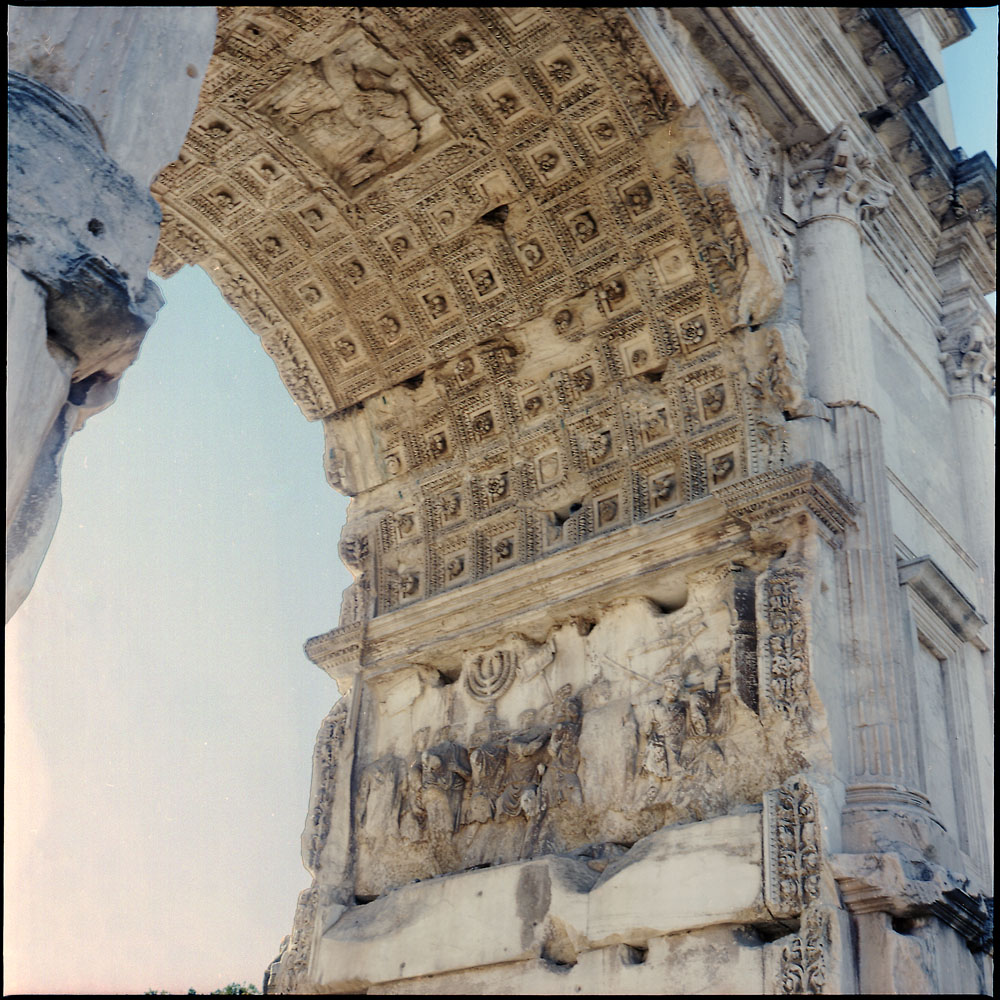
In the interior of the arch, you can see the spoils of war being brought back to Rome from the Temple in Jerusalem, particularly the golden Menorah. This was originally painted golden color, with the background blue. During a spectrographic survey of the arch for the Arch of Titus Digital Restoration Project in 2012 discovered the remains of yellow ochre paint in the menorah.

Arch of Titus, Interior

Palazzo Barberini in Color

Today the Palazzo Barberini houses another great art museum, home to two Caravaggios, a version of Hans Holbein’s portrait of Henry VIII of England, and Bernini’s bust of Cardinal Barberini among many other masterpieces of Renaissance and Baroque painting. Here is the entrance facade as designed by Bernini, seen from the entrance courtyard with its central fountain.

Facade, Villa Barberini

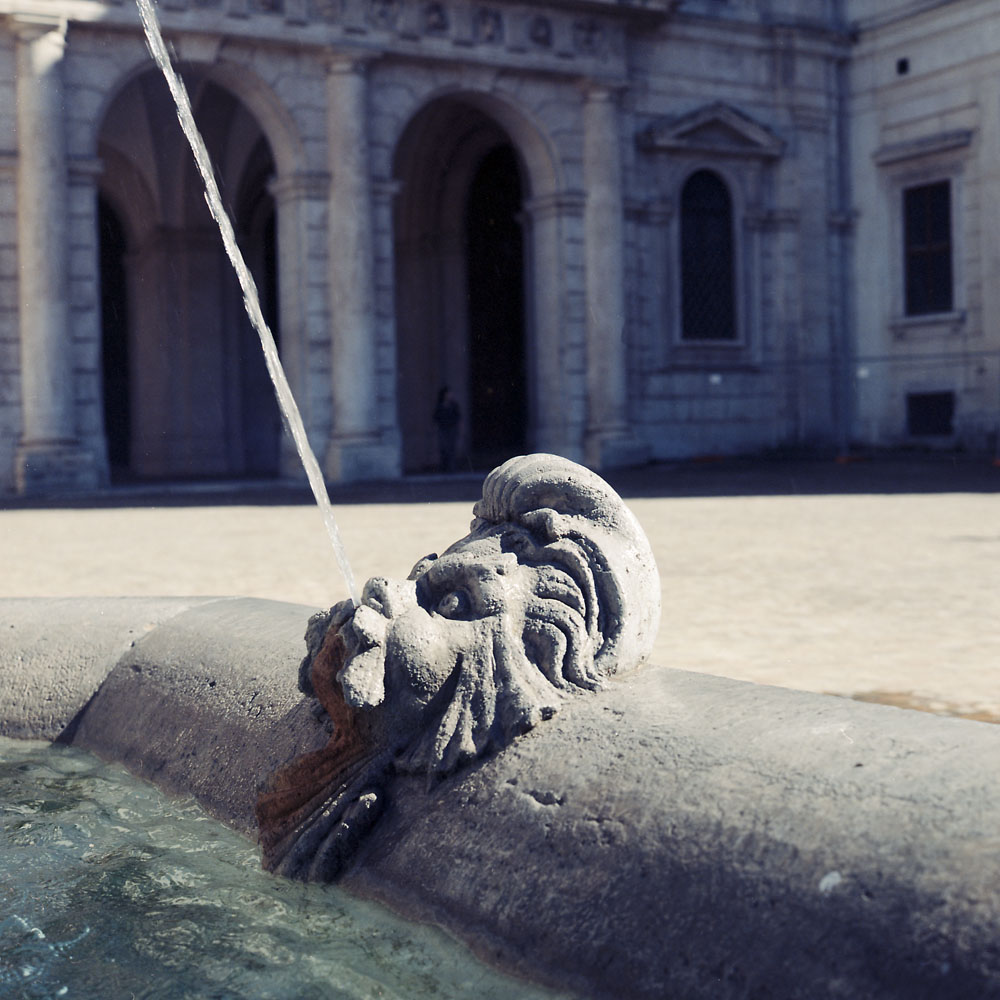
A detail of one of the water jets in the fountain:

Fountain Detail, Palazzo Barberini

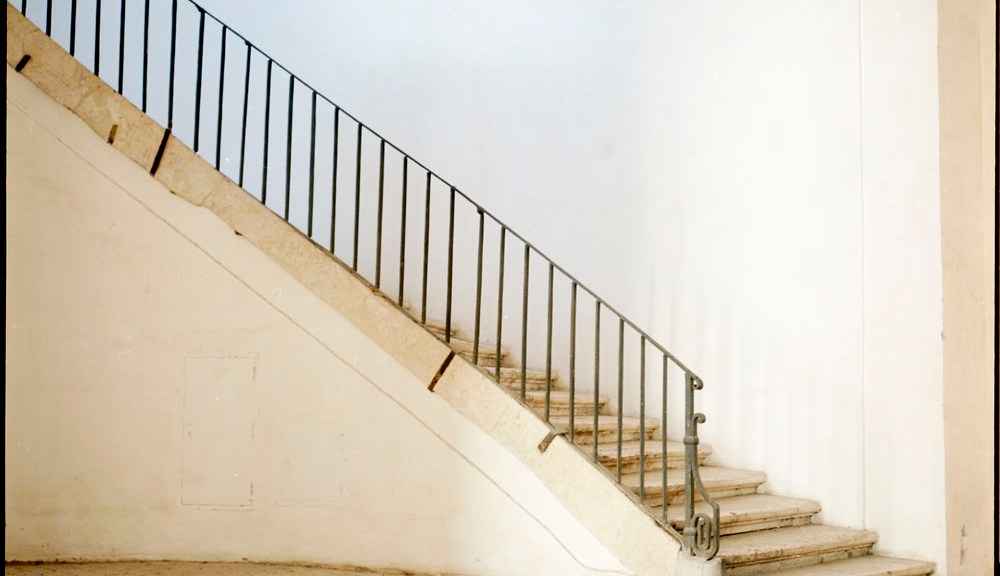
A staircase leading up to the rear gardens from the coachway underneath the palace. To the left out of the frame is the famous stepped ramp to the rear of the garden also designed by Bernini. Sometimes when you’re photographing, you get into this mindset of one type of image or another – for example, I had been shooting black-and-white film, and when composing this, I was still in the black-and-white headspace. I was thinking about the tones of the scene and the gradations from bright to dark. I don’t know if I even realized at the time I was shooting in color. When I was editing through my negatives, I saw this one and thought, “gosh, that’s likely to be a throwaway shot, but I’ll scan it just in case”. I wasn’t sure it would be sharp enough, because my memory of the space was that it was exceedingly dark and I winged it with a handheld exposure, roughly 1/4 of a second.

Well, you can see what happened. Not only was it sharp, but I seem to have mastered serendipity. The colors in the scene are beyond beautiful – the subtle blue from the cold light of the palace shadow seeping down into the stairway from the garden entrance to the rich golden hue of the paving stones and the plaster on the wall.

Inner Courtyard Stair, Palazzzo Barberini

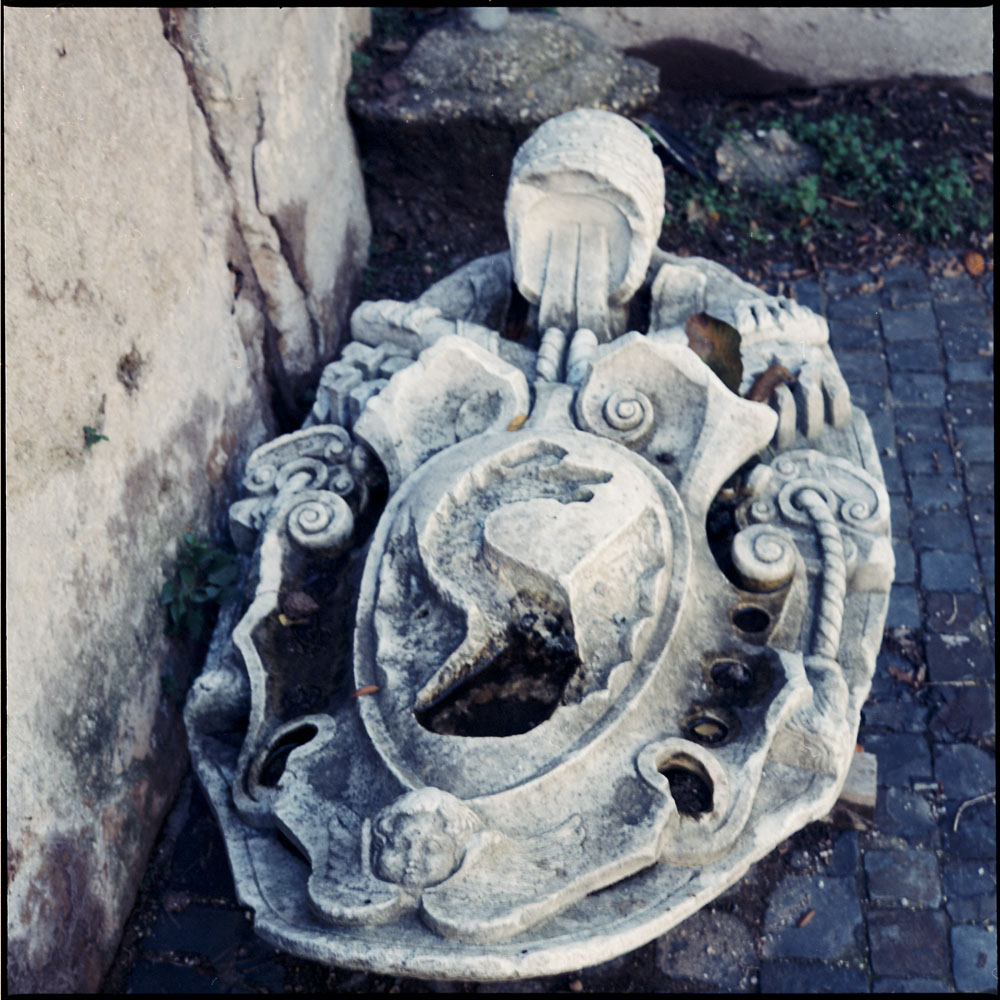
Poking around the grounds of the palazzo, I saw two massive carved stone coats of arms lying on the ground in a side service yard. One was the papal coat of arms of Maffeo Barberini, Pope Urban VIII. To be expected – this was his palace. This one, on the other hand, is a bit surprising – the papal coat of arms for Paul V – Camillo Borghese. During the years of their respective papacies, the Borghese and Barberini estates were neighbors, and Scipione Borghese, the Cardinal Nepotente to Paul V, was a friend and fellow art enthusiast with Maffeo Barberini. After Urban VIII’s death, the Barberini palace was seized and not returned to the Barberini family for some years, but neither the Pope doing the seizing nor the pope who returned it to them were Borghese. Both families (Borghese and Barberini) were one-papacy families, unlike the Medici with four, and the Della Rovere with two.

Borghese Papal Coat of Arms

The Palazzo Pitti, Revisited

Here are a few more individual photos of the Palazzo Pitti.

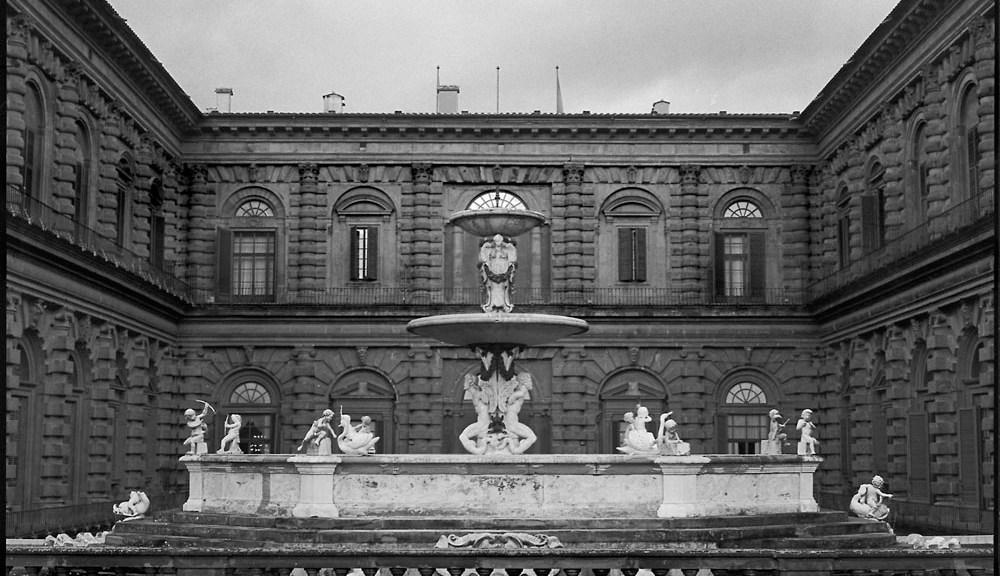
The first one is another version of the rear view of the Palazzo, from the Boboli Gardens. There’s a vast difference in quality between this one and the one I took with the Belair X6-12. The Belair has its charms, but I still prefer the sharpness and contrast of the Rollei version.

Fountain, Palazzo Pitti

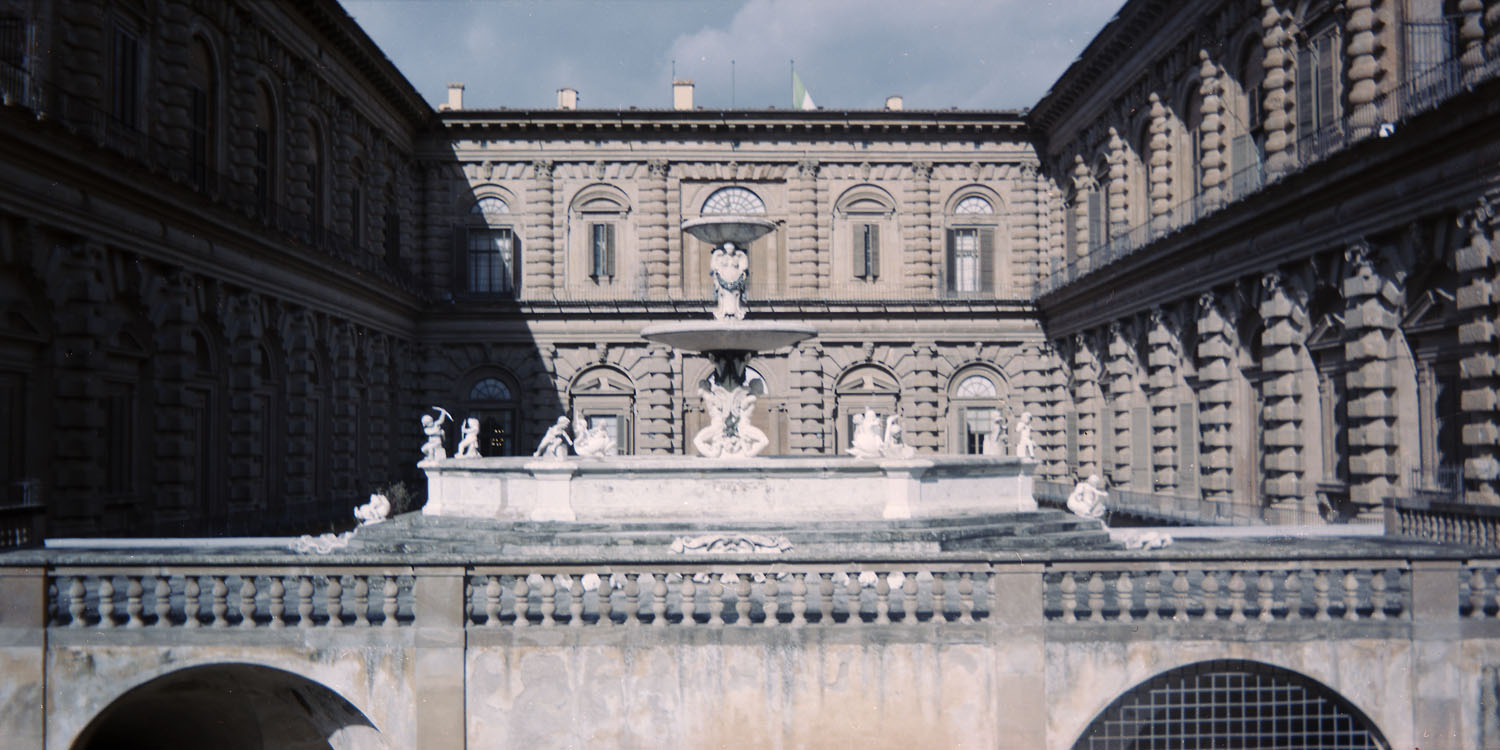
Here is the panoramic version from the Belair for direct comparison.

Pitti Palace, from the Boboli Gardens

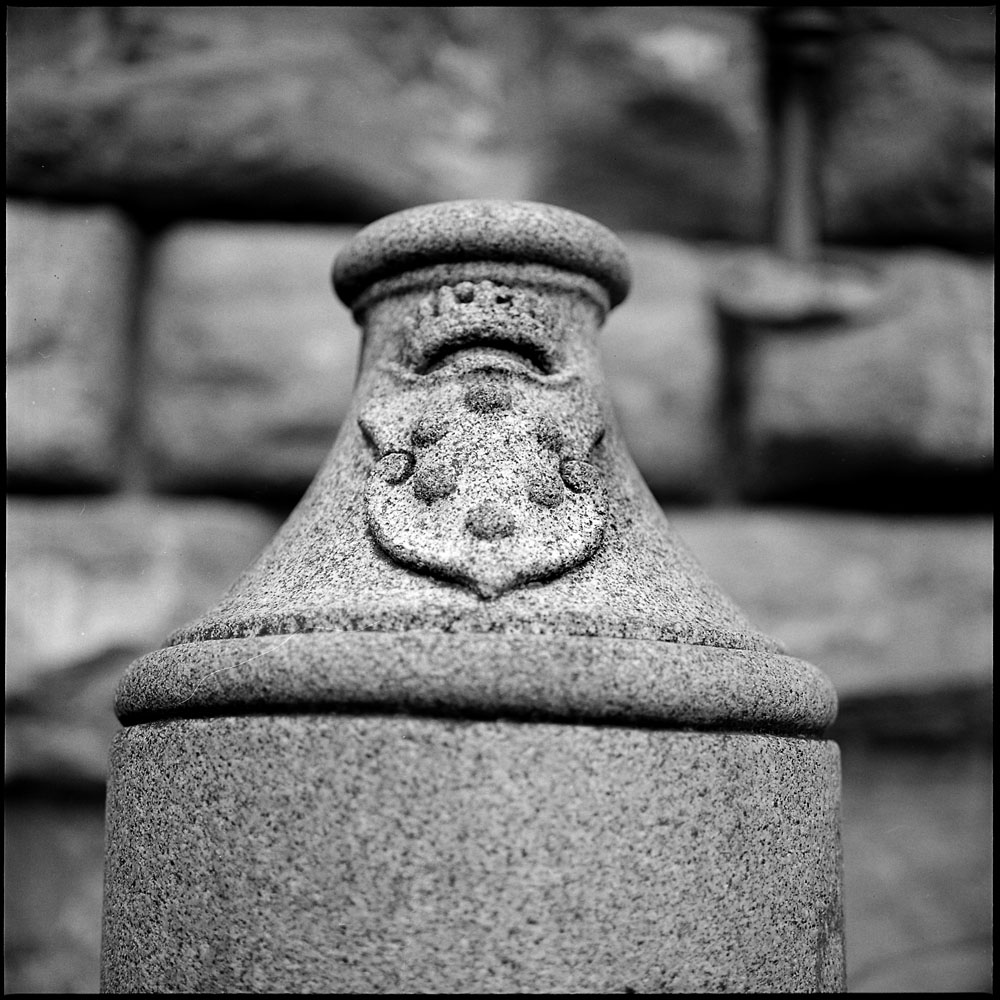
Out front of the palace there are these massive granite bollards, carved with the Medici coat of arms. While they’re kinda-sorta the equivalent of a traffic cone, they don’t really qualify for my “portraits of ordinary objects” series, do you think?

Granite Bollard, Medici Coat of Arms, Palazzo Pitti

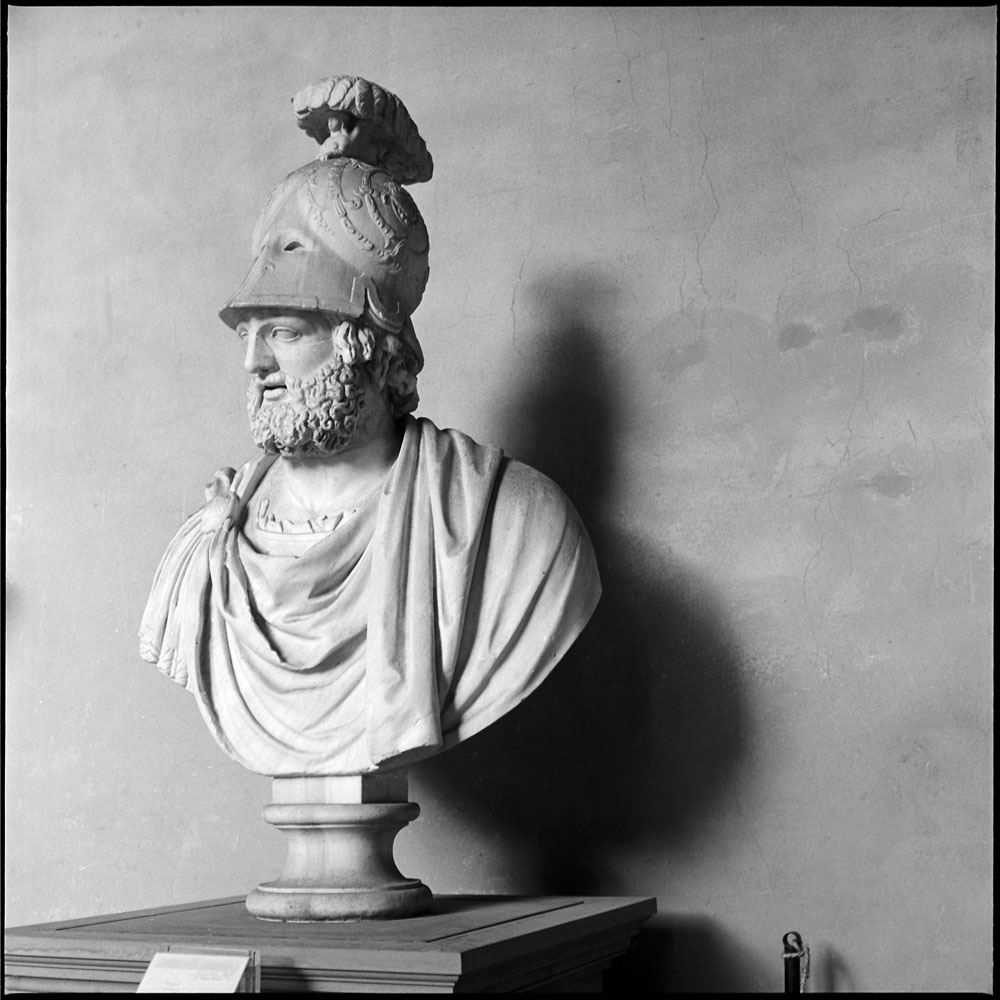
A marble bust of a man in a stylized Greek helmet. This would be a 16th or 17th century piece, so the ancient Greek style helmet would have been done to make him appear heroic and classical, an idealized noble warrior type.

Marble Bust, Courtyard, Palazzo Pitti

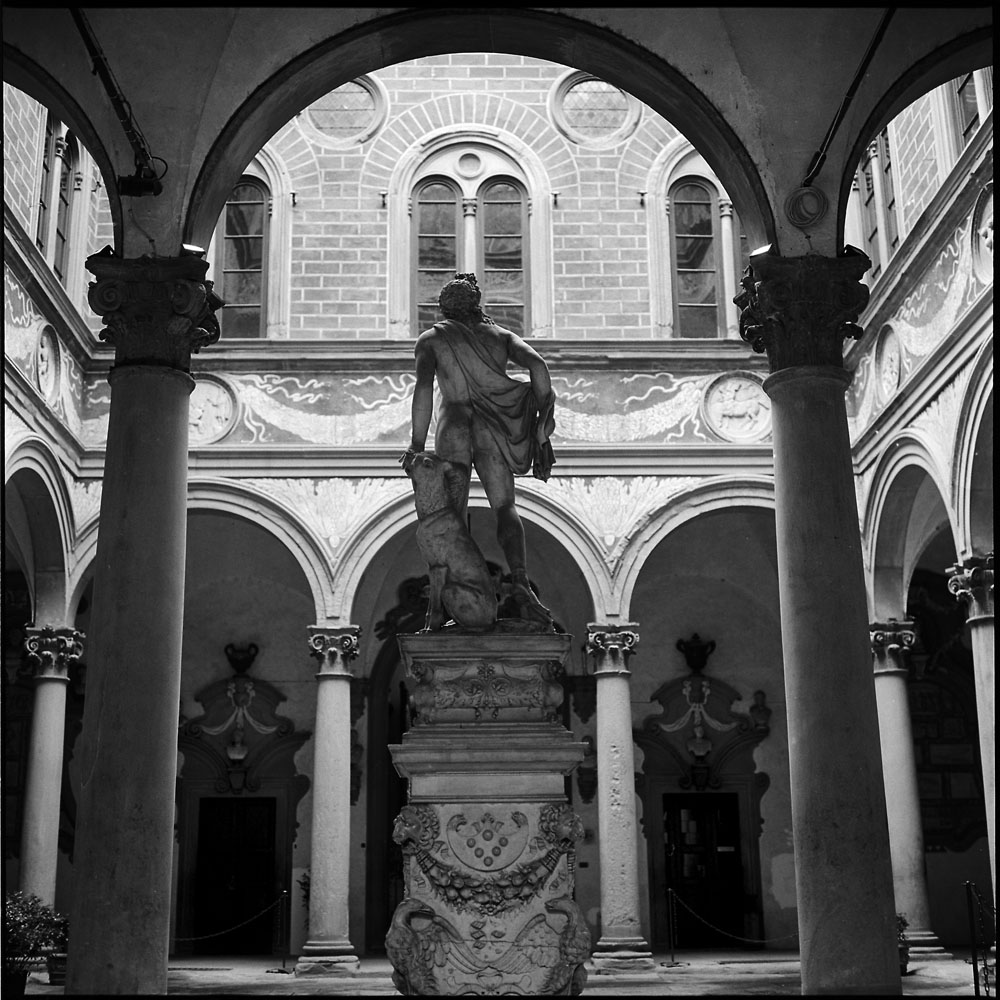
Courtyard, Medici-Riccardi Palace

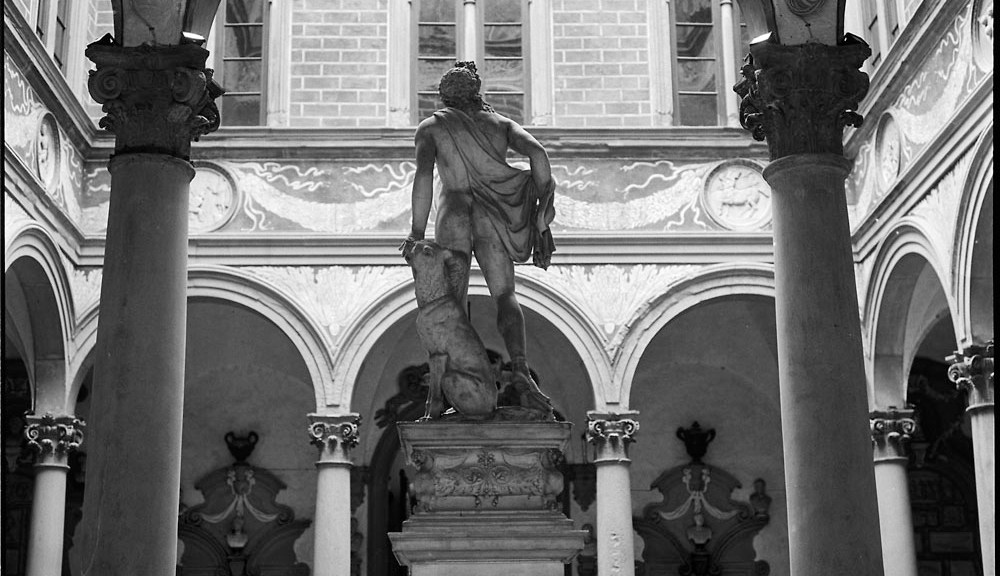
A view of the courtyard in the Medici-Riccardi Palace in Florence. The courtyard was designed by Michelozzo the 15th century artist and architect for Cosimo the Elder, and is the first Renaissance building in Florence. Originally there was a street-side loggia that was later filled in, and two “kneeling” windows were added according to designs by Michelangelo.

Courtyard, Medici-Riccardi Palace

The statue in the courtyard is Orpheus, by the sculptor Baccio Bandinelli. This palace was the primary residence not only of Cosimo the Elder but Lorenzo Il Magnifico. When you tour the palace you can even visit one of the bedrooms although it is furnished in 17th century style.

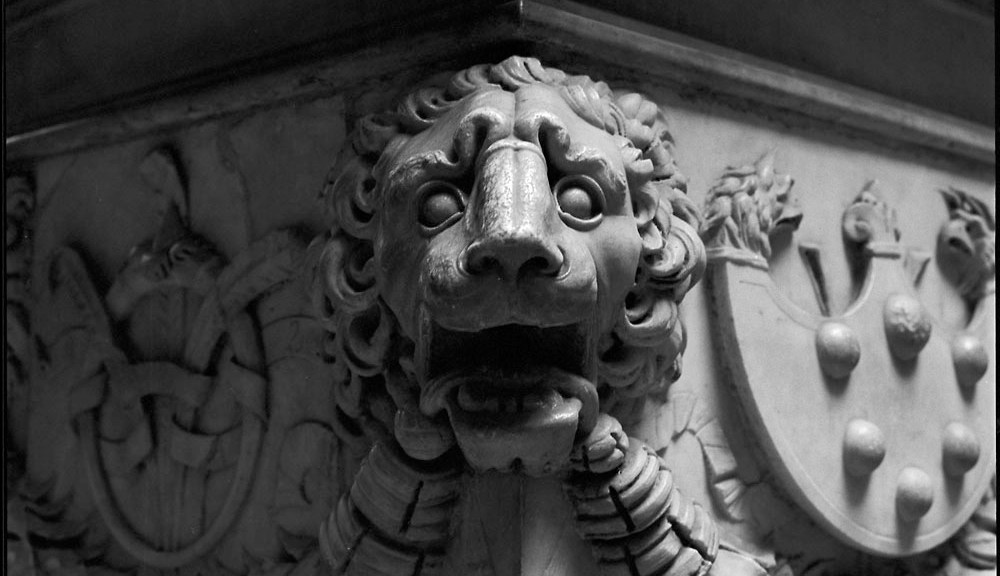
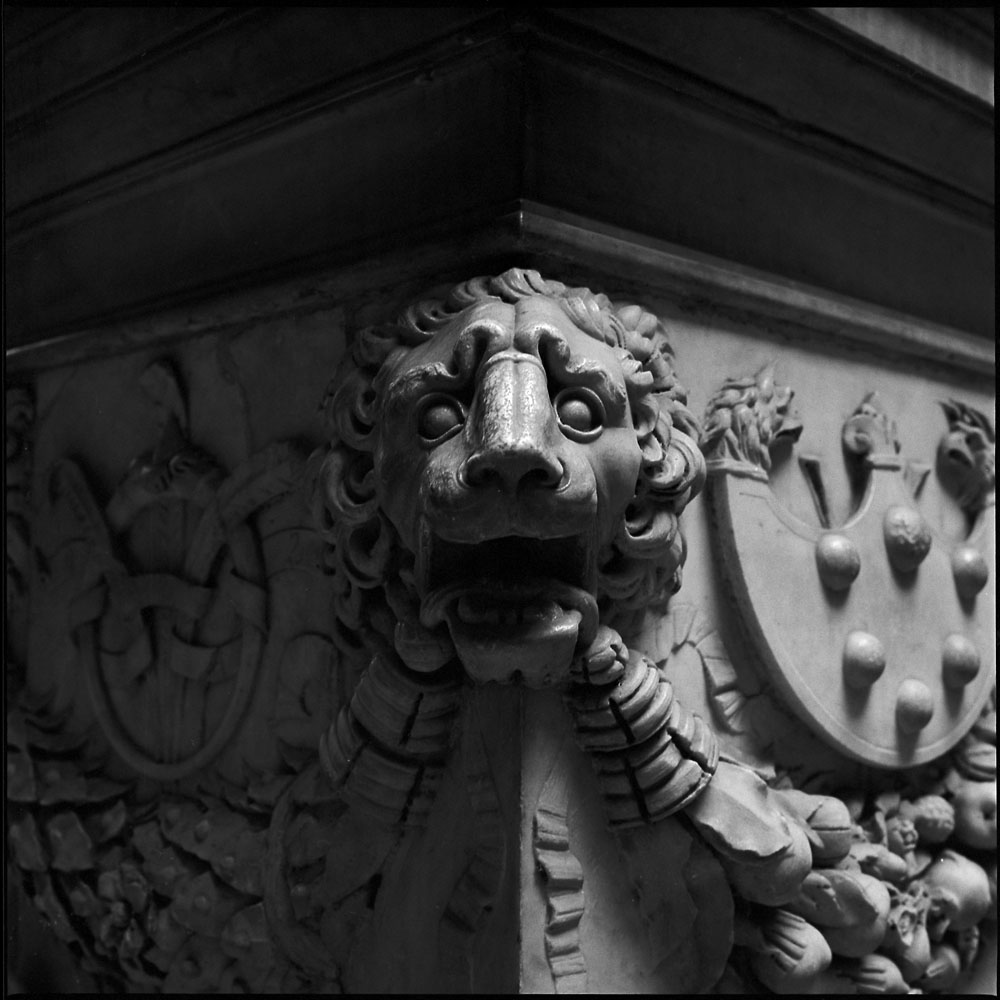
Lion Head, Medici Coat of Arms, Palazzo Medici-Riccardi, Florence

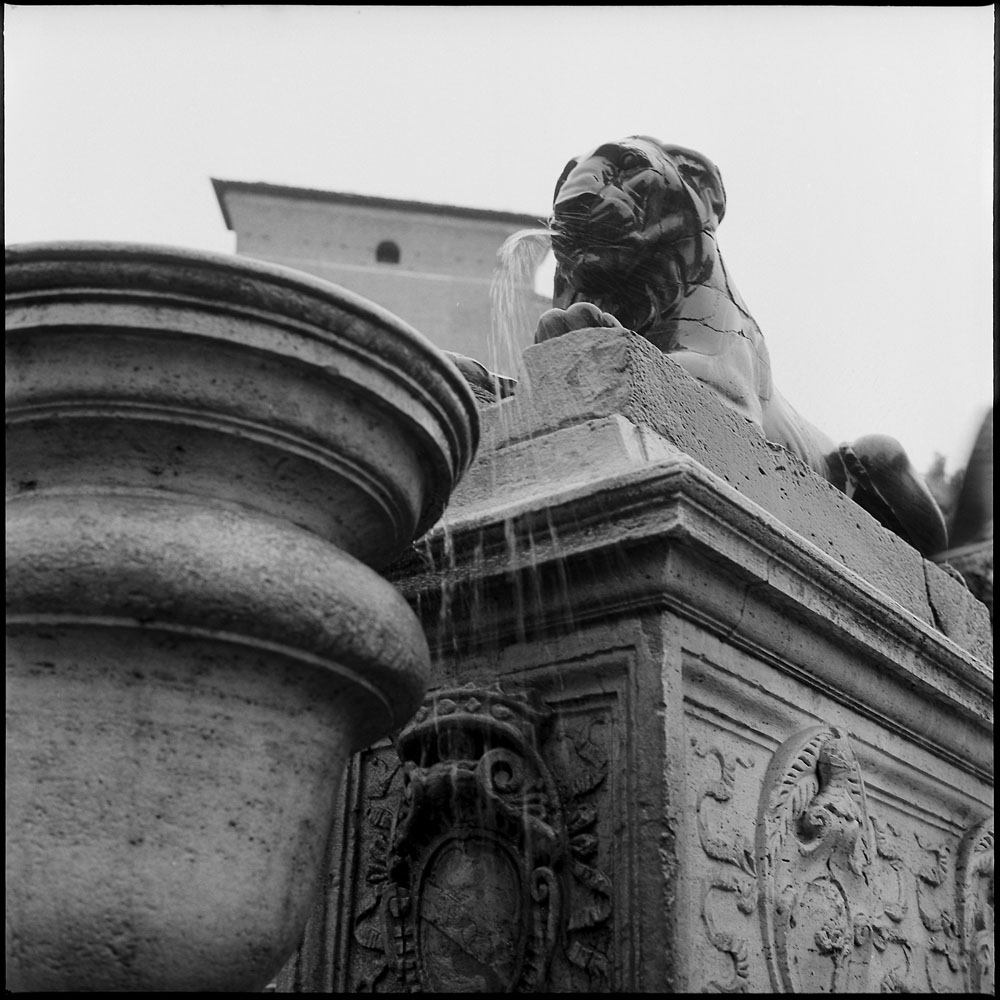
This lion’s head and the Medici coat of arms (six gold balls) adorn the pedestal to a statue in the courtyard of the Medici-Riccardi palace in Florence. I’m very glad that day was gray and overcast or this would have been too contrasty to photograph- the left half of the pedestal would have been deep inky black and utterly devoid of detail.

Lion's Head, Medici-Riccardi Palace
Lion’s Head, Medici-Riccardi Palace

Around the Piazza Bocca Della Verita

In a previous post I mentioned the Temple of Hercules Victor and the Fountain of the Tritons on the Piazza Bocca Della Verita, and the associated temple and church of the Temple of Portuno and the Basilica of Santa Maria in Cosmedin. Here they are.

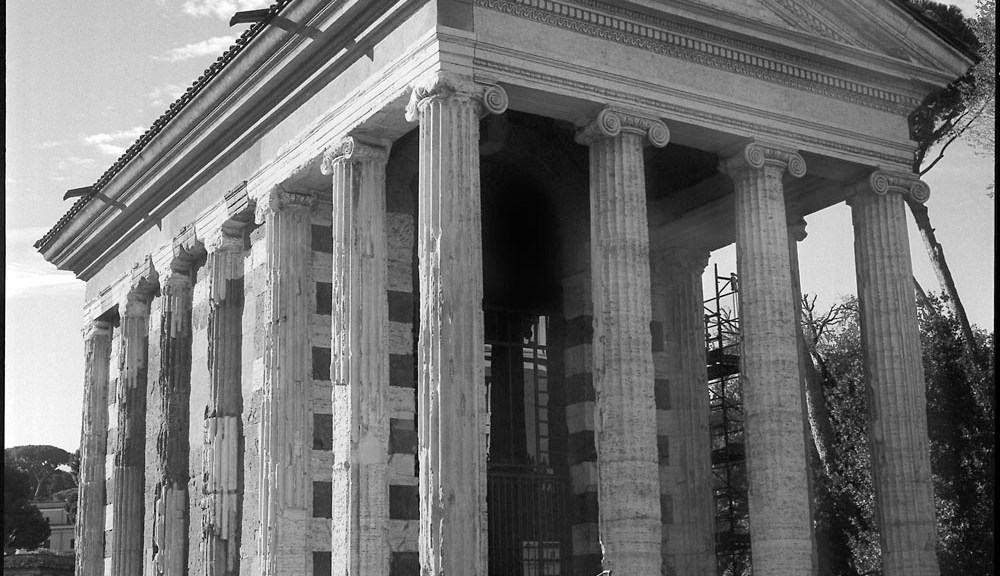
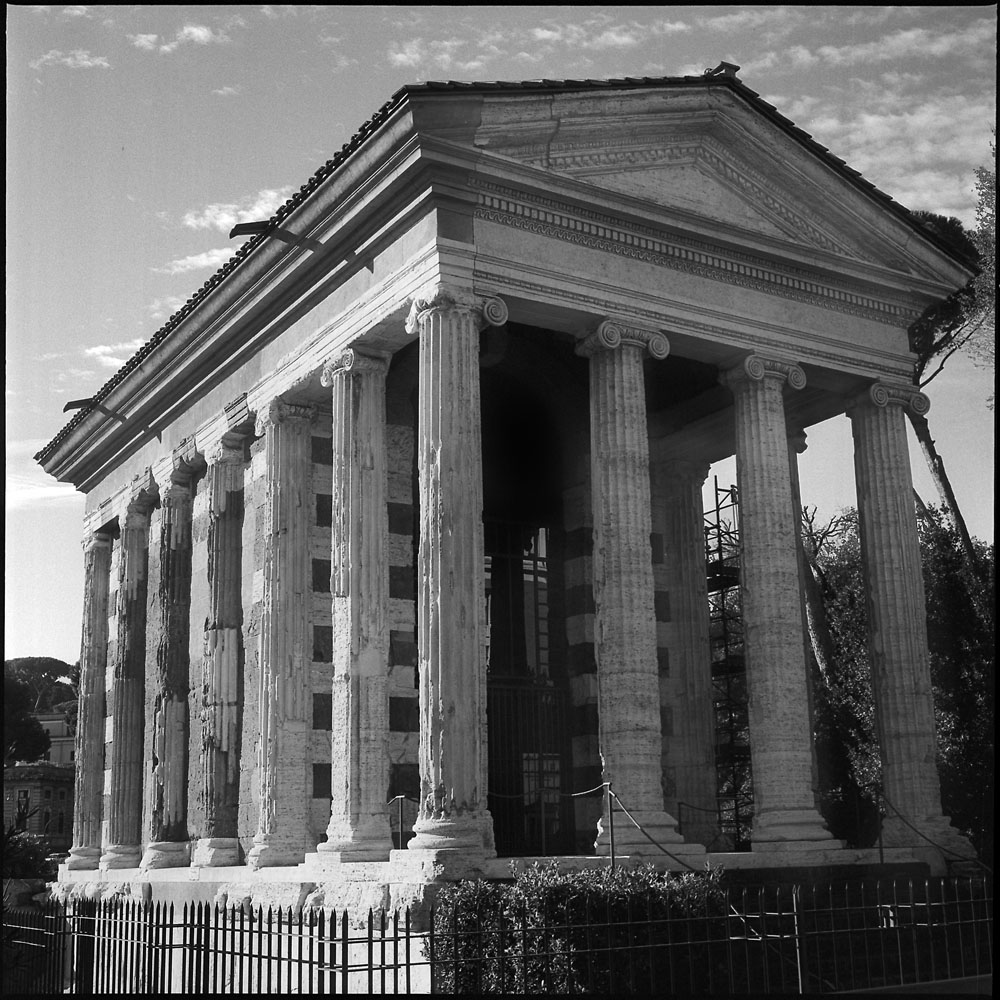
The Temple of Portuno is more or less contemporary to, although somewhat newer than, the Temple of Hercules Victor. It survived into the Christian era and was re-purposed as a Christian church, to later fall into disuse. It has been stabilized and restoration work is ongoing.

Temple Of Portuno
Temple Of Portuno

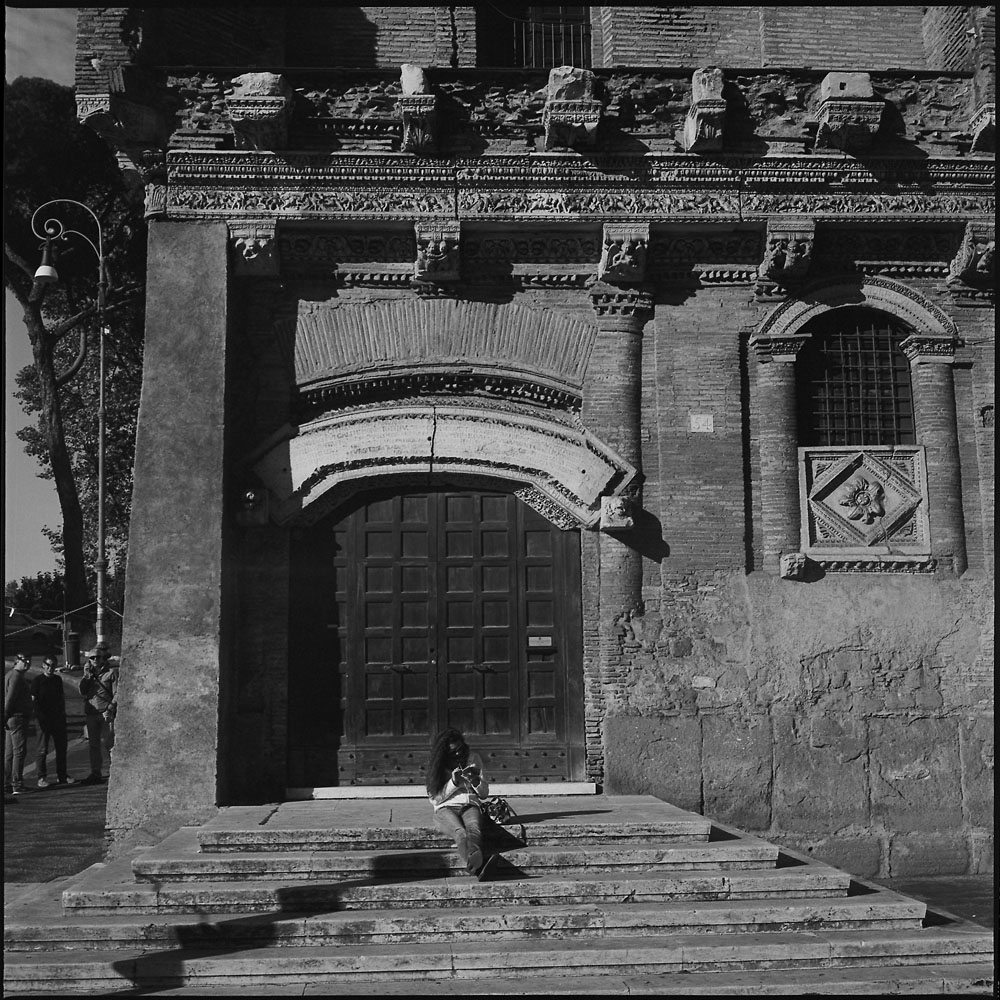
The library of the Casa Dei Crescenzi sits immediately across the street from the Temple of Portuno. The structure in this shot is early medieval/Romanesque in design. I saw the girl sitting on the steps, waiting for the library to open, or perhaps waiting for a bus. From the camera’s perspective, the men around the corner appear to be looking at her and commenting, although in all probability it was me and my camera that piqued their interest, since from their position they would not have actually been able to see the girl.

Casa Dei Crescenzi Library

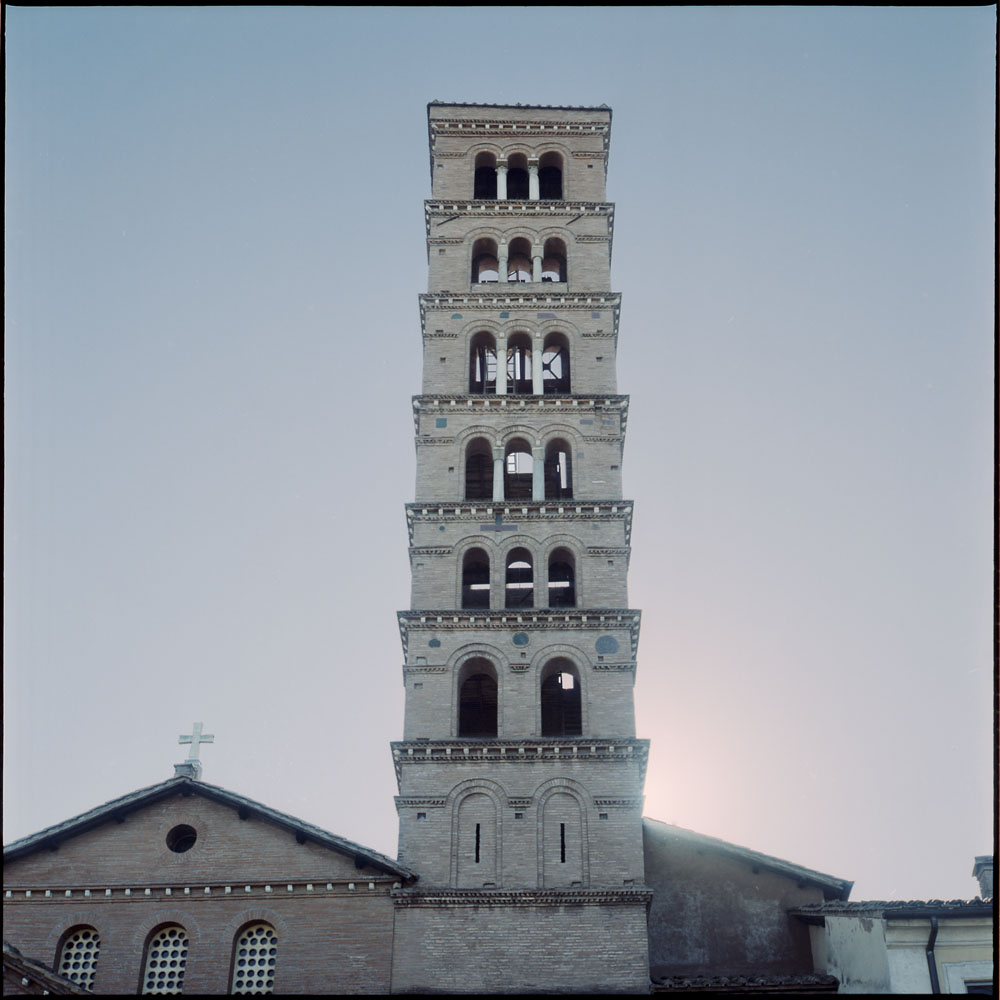
This is the Romanesque bell-tower of Santa Maria in Cosmedin, one of the older Christian churches in Rome, home to the Bocca Della Verita which now resides on the front porch, the easier to access for tourists. Saint Valentine’s relics also are kept here. I thought it was particularly striking with the sunlight just cresting the roof of the church and backlighting the tower. Contrast this with my earlier shot of the Campanile in Florence.

Belltower, Sta. Maria in Cosmedin

I’m particularly pleased at how well my camera handled the backlighting without flare or loss of resolution. It did a remarkable job for a 60-year old lens. And maybe it’s also a sign that I’m becoming a better photographer such that I composed it to minimize problems.

The Temple of Hercules, Rome

Here is the Temple of Hercules Victor. When built, this would have been on the banks of the Tiber, or at least had a clear view of the river. The level of the city has risen some 17 feet since Roman days, so this now sits downhill from the Lungotevere (the street that runs along the riverbank). The tile roof is a much later reconstruction. This temple is the oldest surviving marble building in Rome, dating to approximately the 2nd century BC.

Temple Of Hercules
Temple Of Hercules

In the plaza in front of it there sits the Fountain of the Tritons, completed in 1715 as part of a renovation project for the plaza in front of Santa Maria in Cosmedin, the medieval basilica that houses the famous “Bocca della Verita” and the skull of St. Valentine.

Fountain, Temple of Hercules

The Temple of Hercules Victor and the neighboring Temple of Portunus (not visible in this view) were converted into Christian churches in the early post-Pagan era, thus their relative high degree of preservation. Neither are active churches now. While the Temple of Hercules Victor today is solid and stable, work is ongoing on the Temple of Portunus and both remain closed to visitors. The closures may also represent a side effect of the budget woes currently besetting Italy.

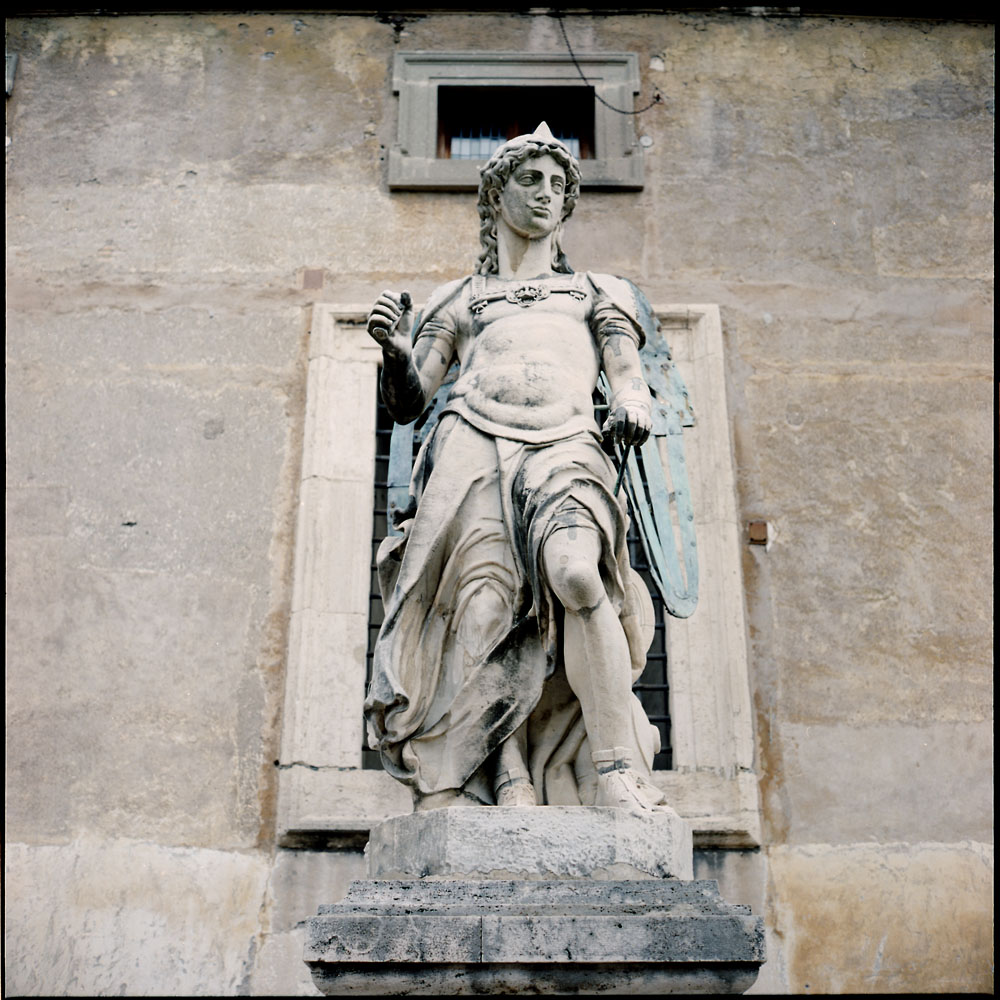
The Archangel Michael, Castel Sant’Angelo

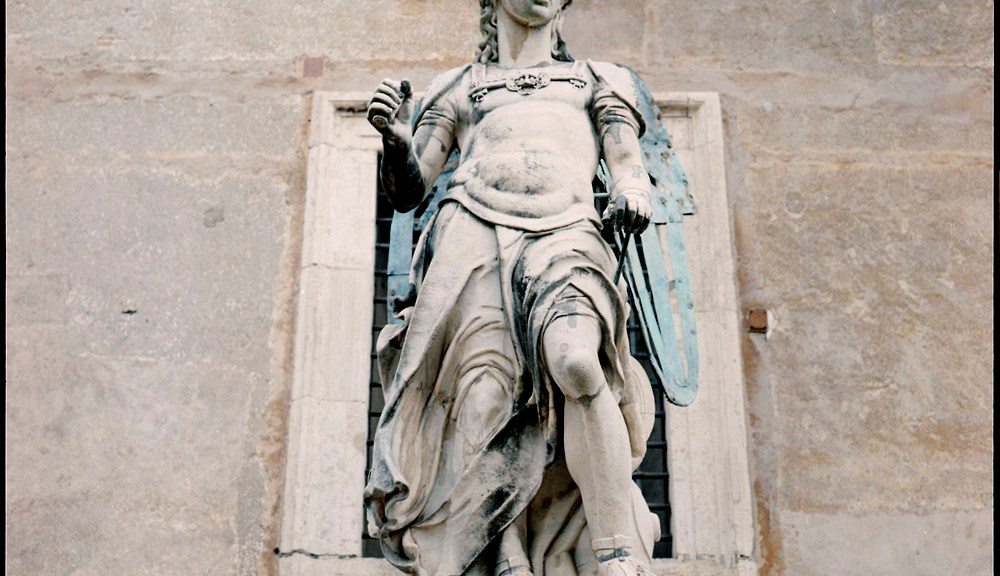
The statue of the Archangel Michael in the inner courtyard of the Castel Sant’Angelo. This is at the mid-level courtyard after ascending the ramp that passes through the crypt of Hadrian/castle dungeon. around it are numerous Roman marble busts in various nooks, and a well for providing water to the Papal apartments above.

Archangel Michael, Castel Sant'Angelo
Archangel Michael, Castel Sant’Angelo

The statue dominates the courtyard, though, with its bronze wings patina’d green and weathered countenance.