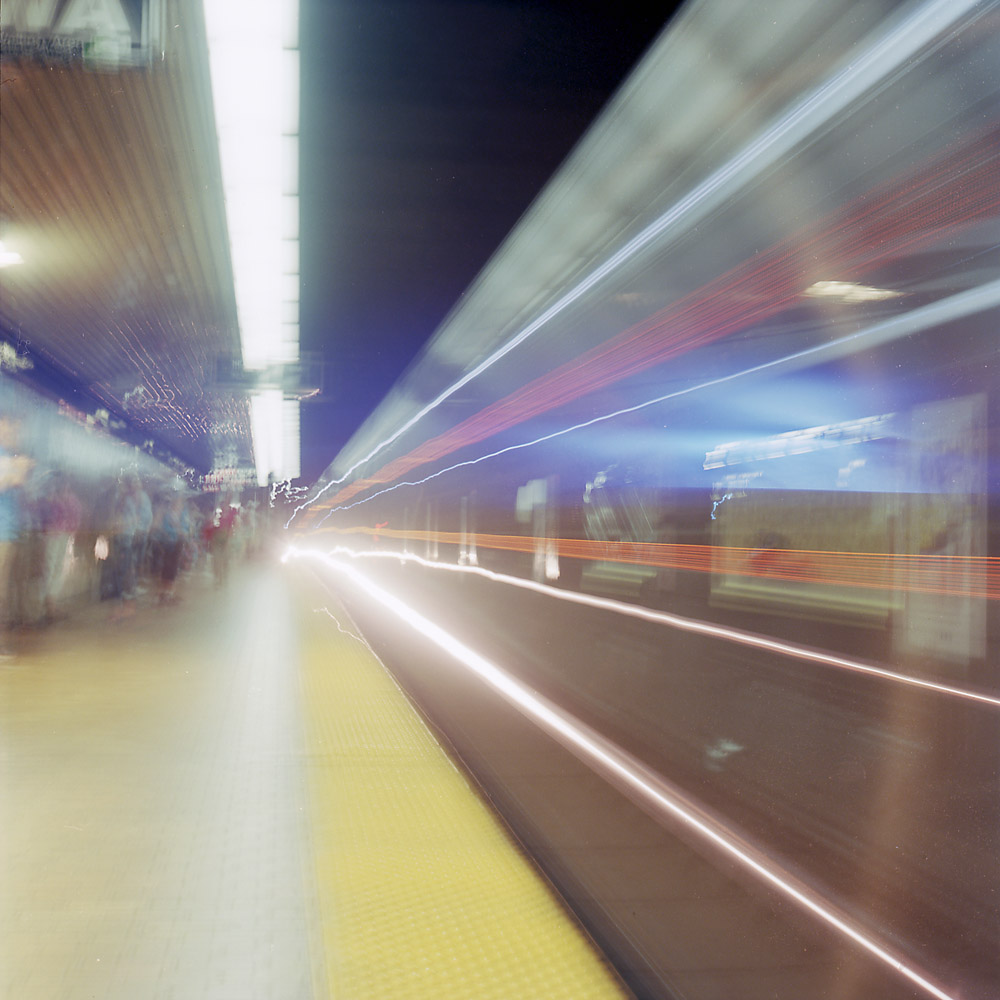
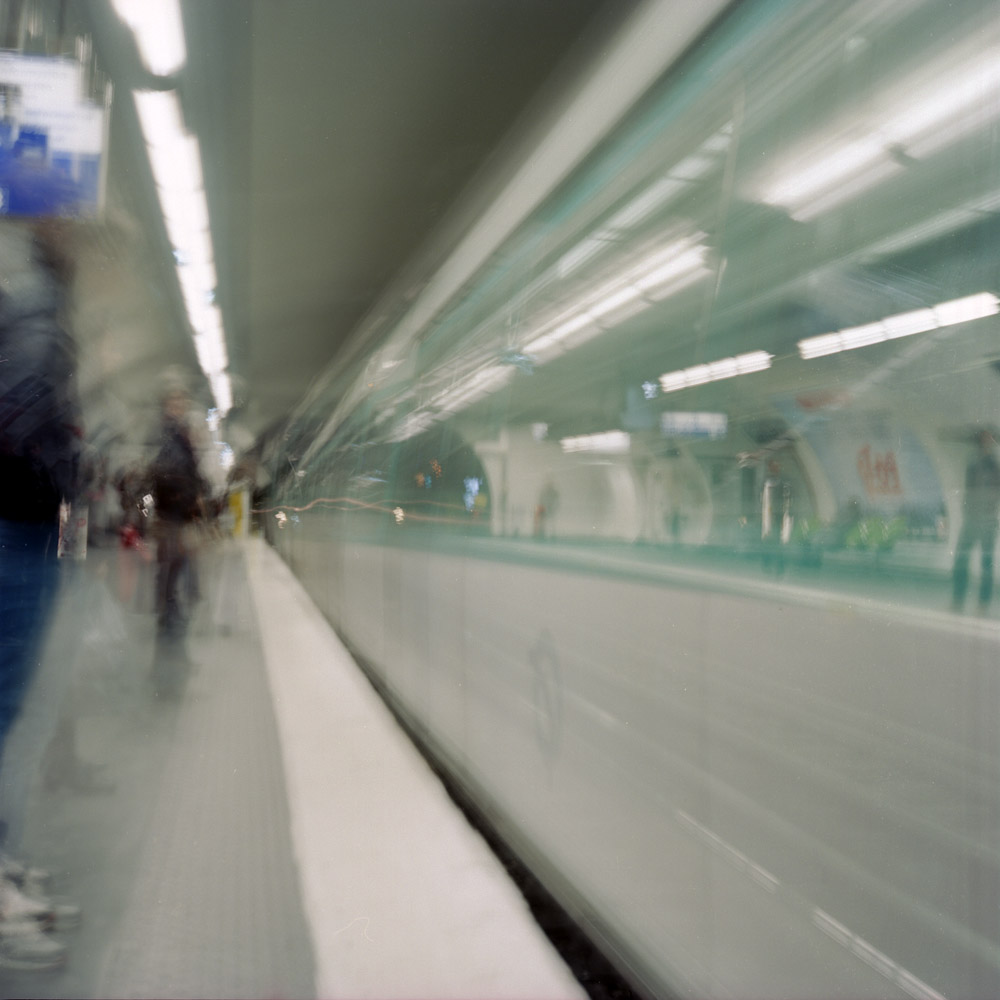
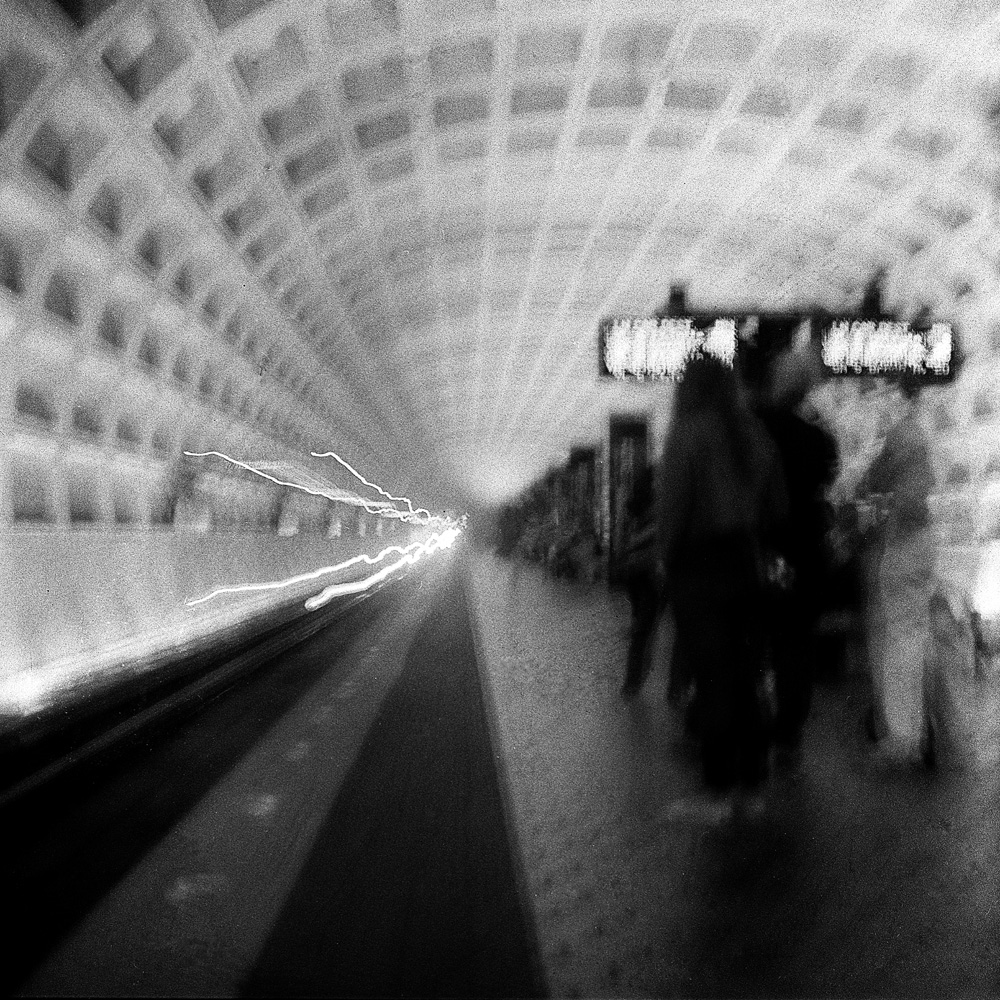
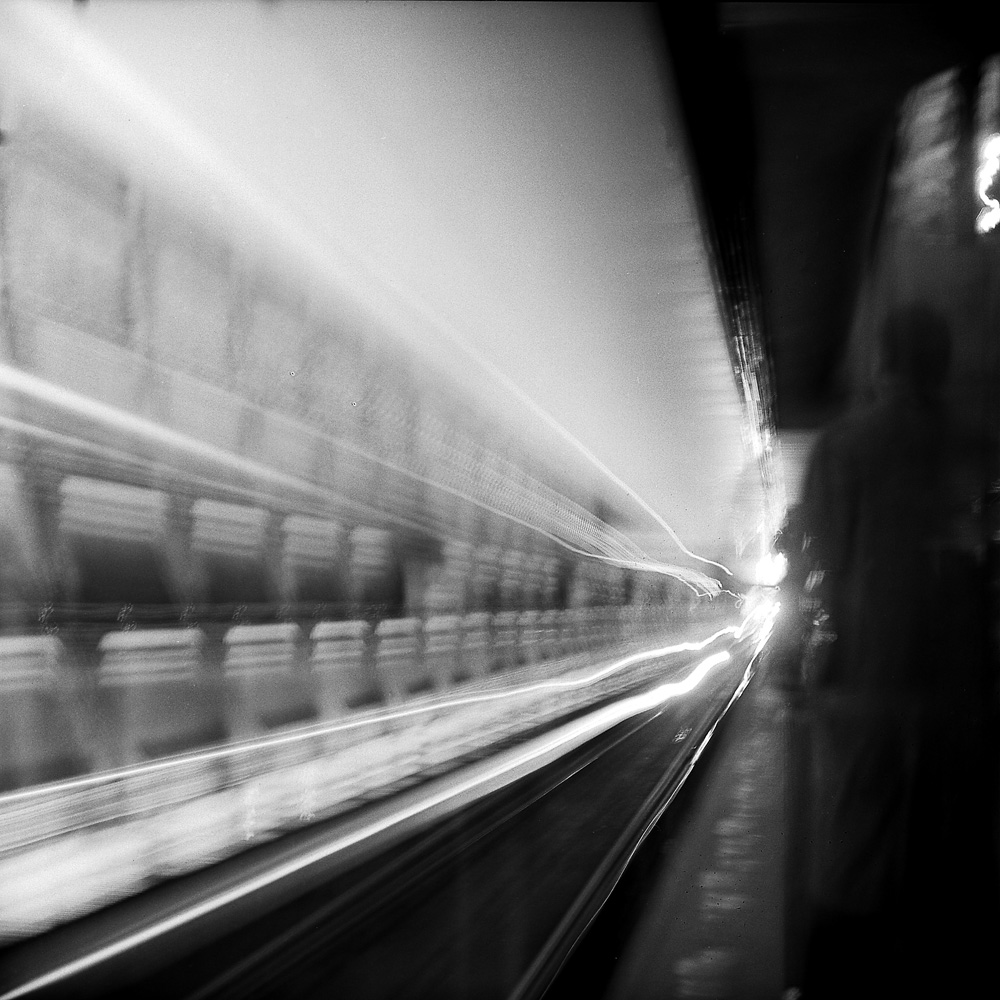
I mentioned in my post about Toronto how the different transit systems look and feel, even when capturing them in a similar way. Here are four shots of the Toronto, Paris and Washington DC subways. All four are behaving similarly – long handheld exposures as the trains pull in to the station, yet all four look and feel quite different.
Toronto SubwaySpeeding Metro, ParisMetro Train Arriving, Archives StationOncoming Metro
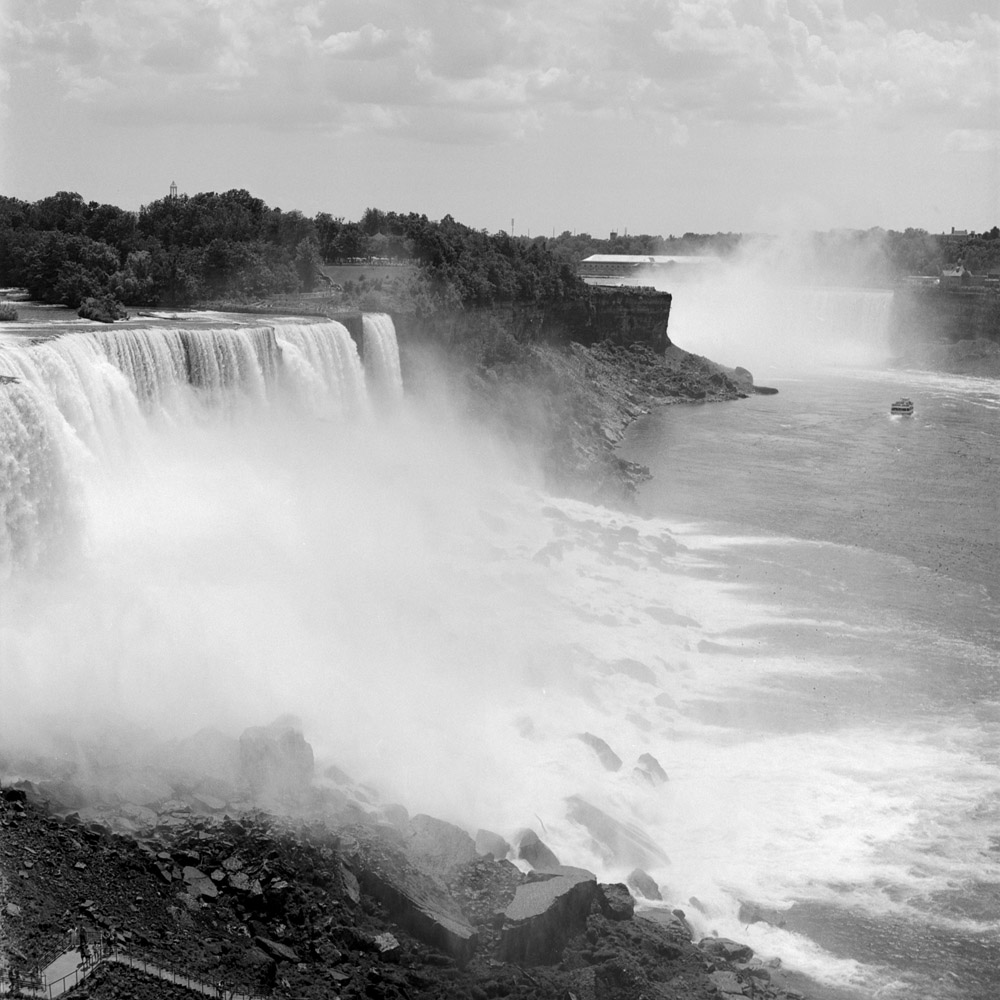
On the way up to Toronto, we stopped off at Niagara Falls to take in the view.
Niagara Falls, from the American Side
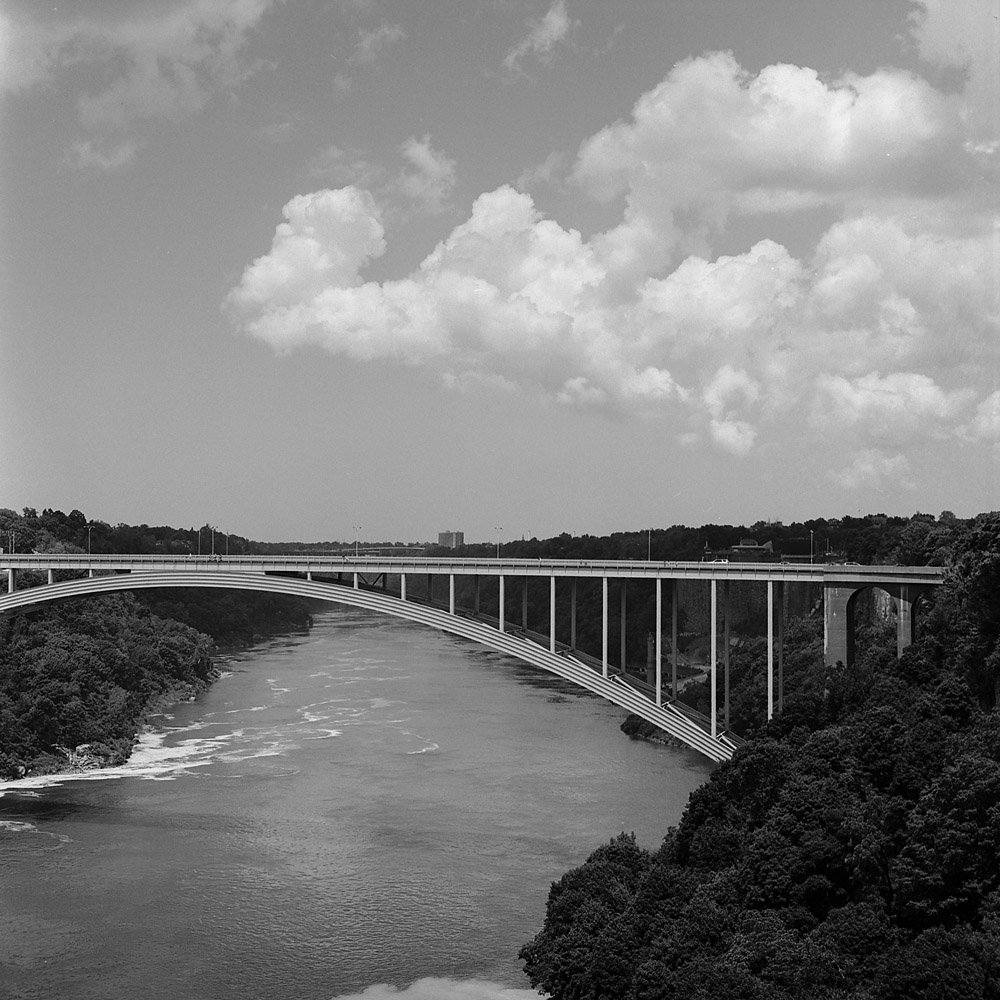
This is the Rainbow Bridge over the Niagara River, as seen from the observation deck on the American side.
Rainbow Bridge, Niagara Falls
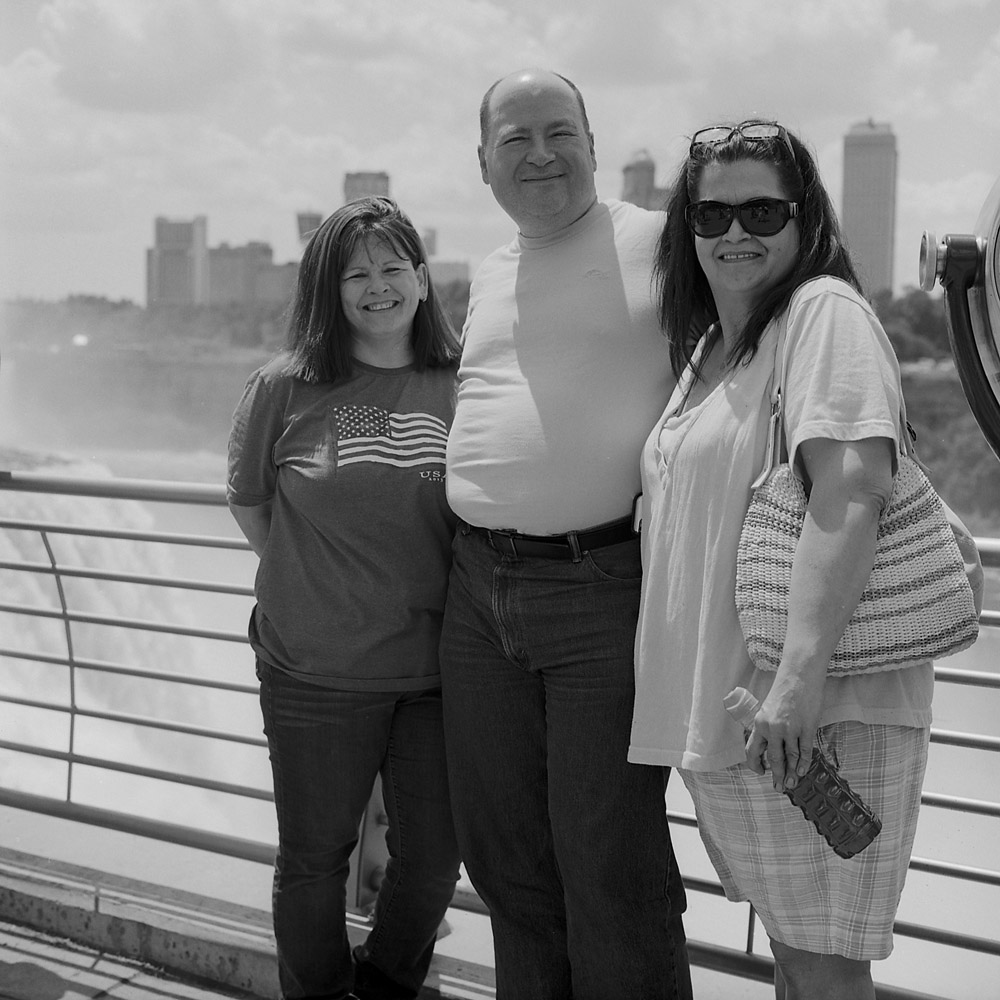
The “we” is my best friend Steve, his wife Missy, and her sister Marybeth.
Missy, Steve and Marybeth
Missy had never been to Niagara before so it was a must-stop. I think Steve and Missy are going to come back for a long weekend when they’re by themselves and not rushed to just enjoy the place.
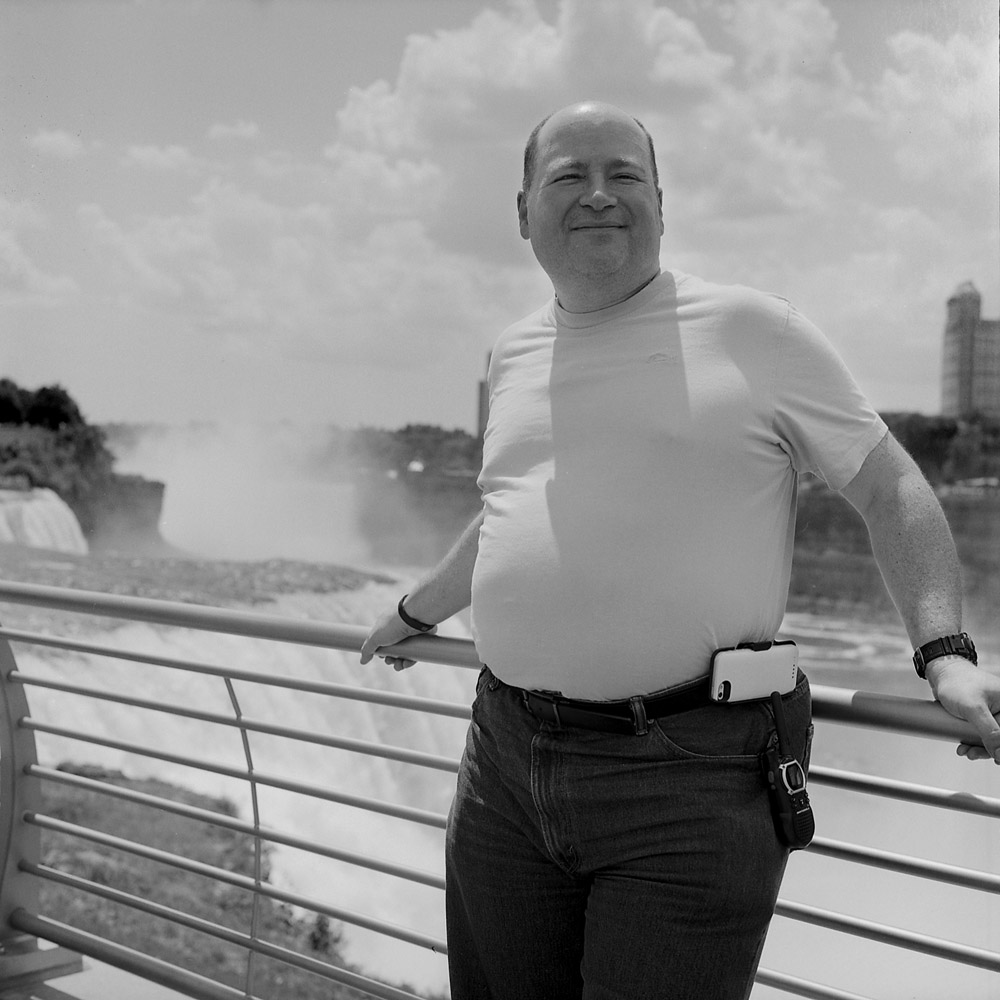
The shots are a little gray looking because we were severely backlit – we were at the falls around 2:30 PM and the sun was still very high in the sky, and the falls were west/southwest of where we were standing. Can’t change geography, so we just had to compensate for what we had to work with. Next time if we want photos with the falls as a backdrop, either I’ll bring a flash for fill or we’ll just take them in the morning when the sun is coming from the east.
Steve
All images once again care of my trusty Rolleiflex 2.8E on Ilford FP4+.
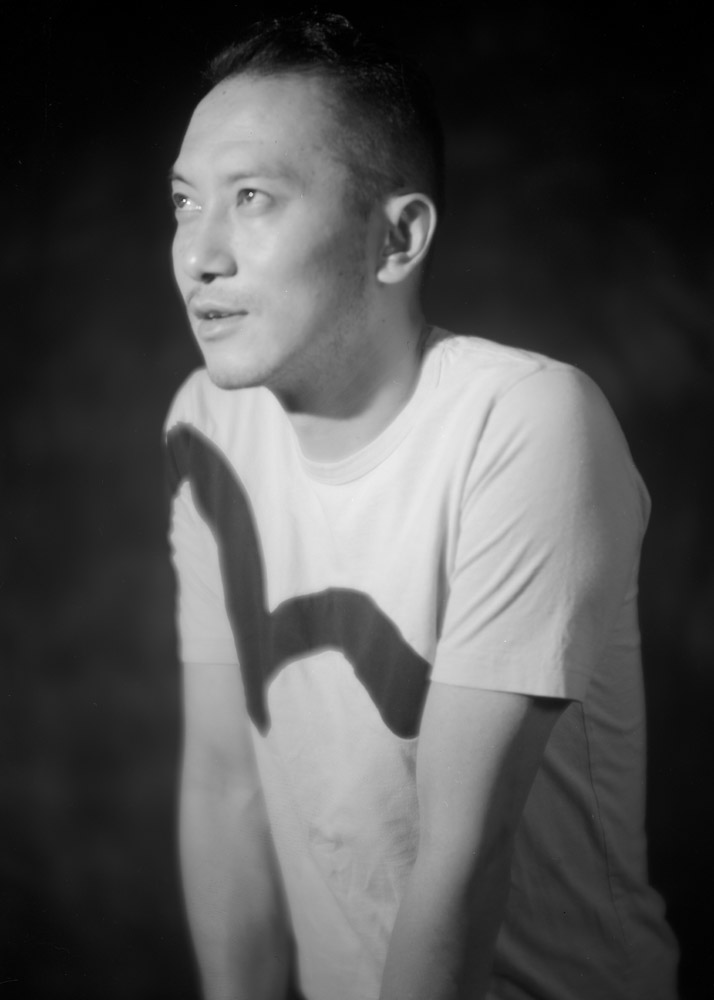
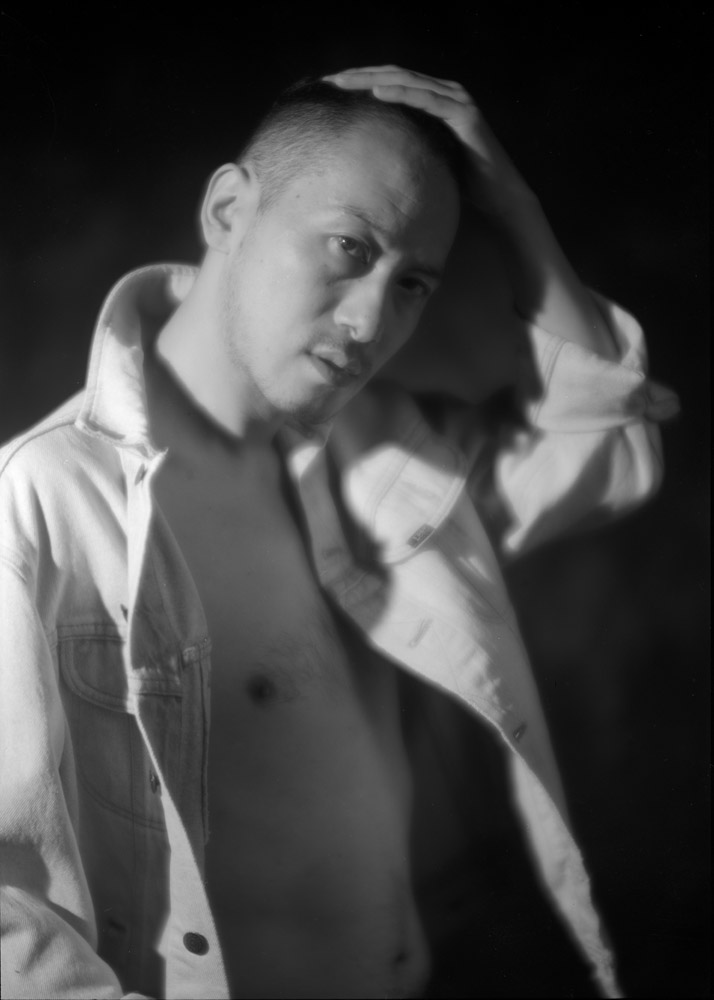
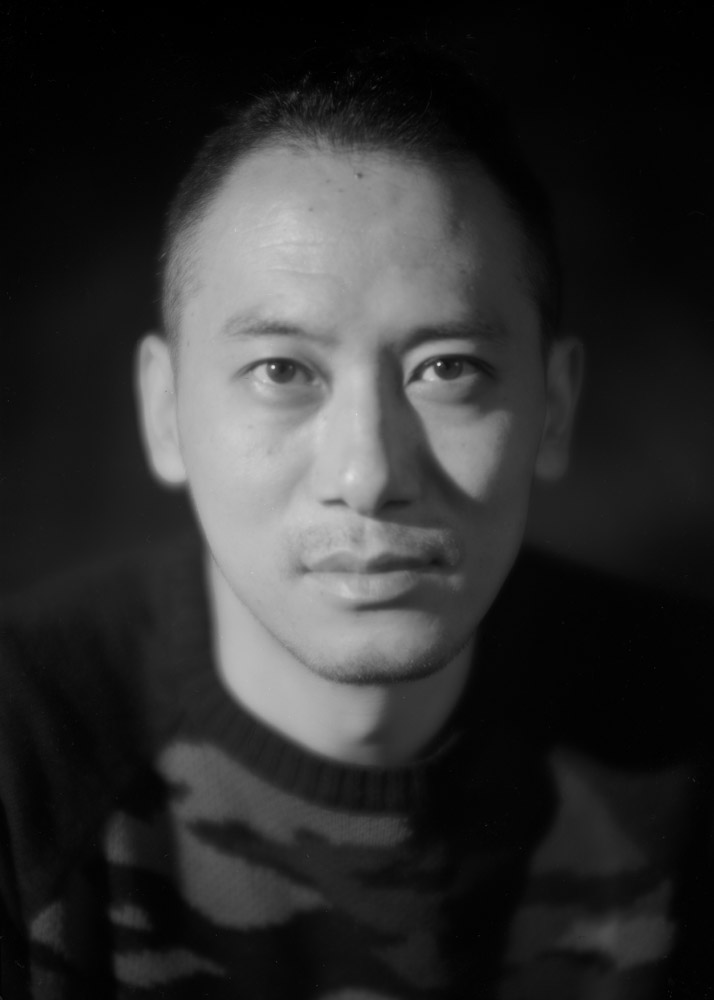
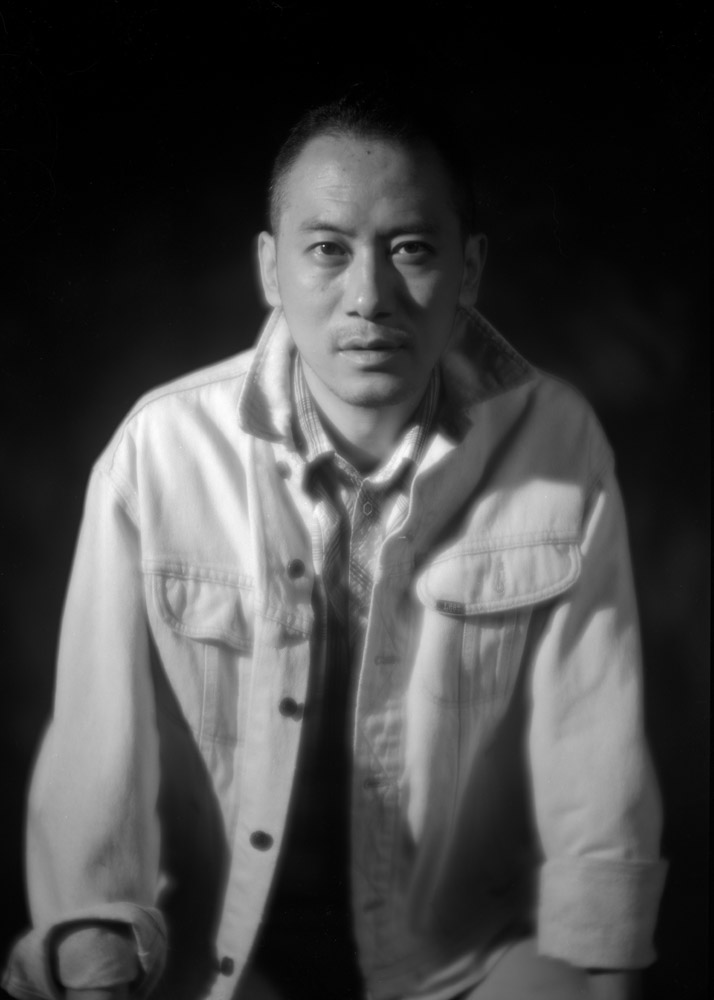
Five more from the shoot. Wanchuk is a fun subject because he always brings a creative energy to a shoot that brings out the best in both photographer and subject.
Wanchuk, T-shirtWanchuk, Profile“Girl With a Pearl Earring” Pose
I call that last one “Girl With a Pearl Earring” because the pose reminds me a bit of the Vermeer painting.
After doing a series of more serious poses, we decided to get a little funky and play around with faces and gestures.
Wanchuk, Denim Jacket
This last one is not typical of what I’d expect someone to use a soft-focus lens to shoot, expression-wise. I think it works, in spite of or perhaps because of the contrast between the content and the image style.
I think I wrote previously about the Hermagis Eidoscope soft-focus portrait lens I have on loan. Here are some results from it. As the lens is on loan to me and not mine, I have not sent it off to have replacement waterhouse stops made for it. It was expensive enough modifying my camera to fit the lens – I don’t want to spend more money on accessories for a lens I’ll have to return. That said, as the only waterhouse stop I have for the lens is the wide-open f5 stop, that’s the only one I’ve been using. It’s not only the maximum amount of light but also the maximum soft-focus effect. I’ve been told that if you stop the Eidoscope down past f8, it becomes a much more regular, sharp lens. But this is what you want to see with this lens anyway – the soft-and-fuzzies.
Wanchuk, close-up
I know the lens is flattering to women – I did not know if it would be too much for male portraiture though. I think my example here bears out the fact that it works well for both genders. Here is another portrait of my friend Wanchuk, this time a half-length shot with a different outfit. The soft-focus glow is especially apparent in this image, with the bright denim jacket giving lots of flare around the cuffs of the sleeves.
Wanchuk, denim jacket
These were shot on Ilford FP4+, with the lighting being just one 1000w Fresnel tungsten lamp and a silver reflector. I bought a pair of these cheap Chinese knockoffs of ARRI fresnel lights ($125/ea as opposed to more like $600/ea for the ARRI lights) for the purpose of teaching my large format photography class. Since I had a need for something that would work without needing electronic synchronization (the Hermagis has no shutter, therefore no flash sync), I broke the fresnels out again for this lens test. Proof positive that you don’t have to have massive, fancy, expensive strobe lighting setups to create great portraits. That said, I wouldn’t try this with my 14×17 using hot lights – there’s just not enough light to be had without literally cooking both subject and photographer.
As I mentioned previously, the Hermagis Eidoscope does not have a shutter in addition to not having an iris diaphragm for the aperture control, so I used a pair of spare dark slides from an old 5×7 film holder, held in a V configuration, as the shutter. I was able to pull off a roughly 1/30th second shutter speed by keeping the gap between the dark slides relatively modest (about a 20 degree wedge). Eventually I’ll print these in platinum/palladium.
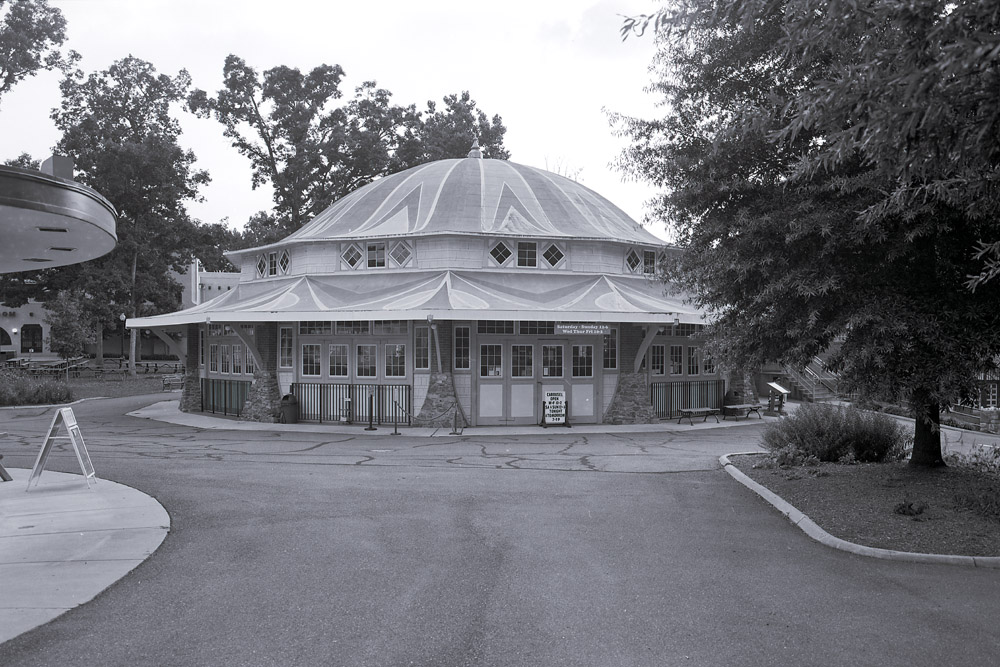
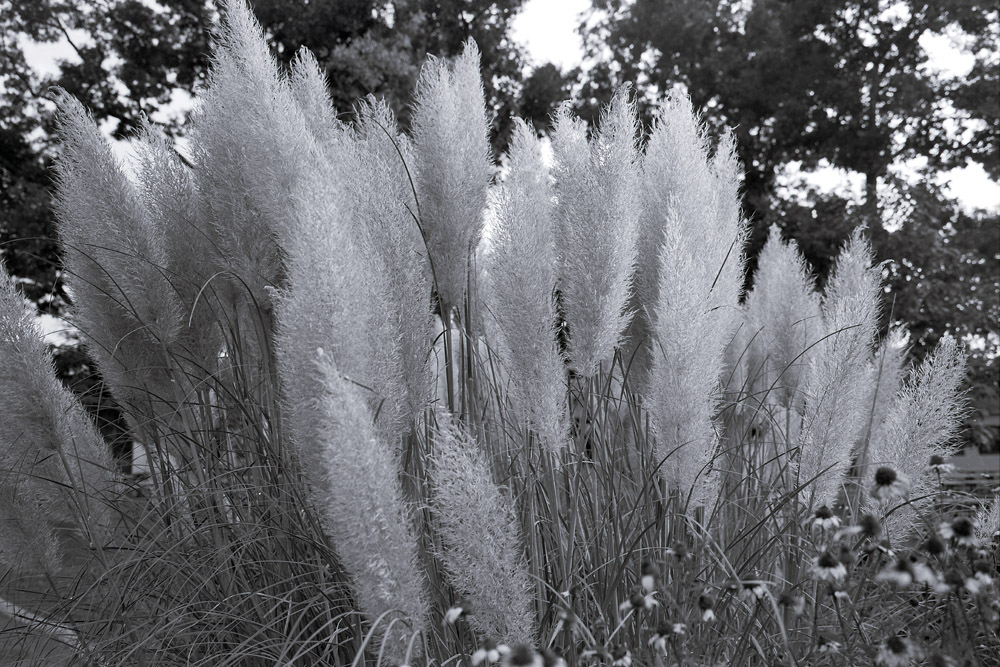
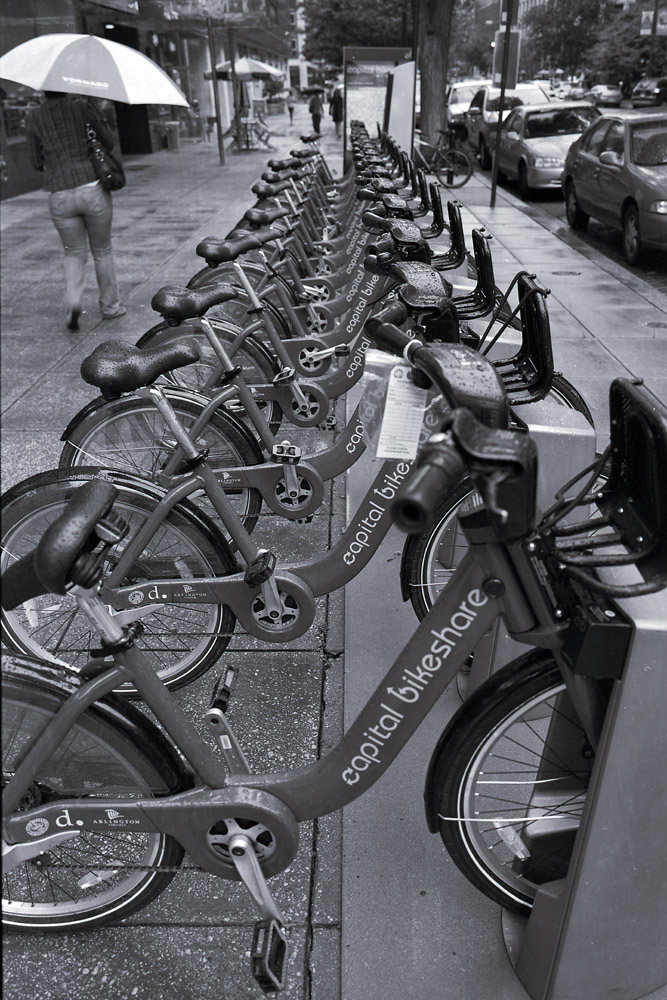
Carousel House, Glen EchoGrasses, Evening Light, Glen EchoBikeshare, Downtown in the Rain
A while back, before I went to Paris, a friend loaned me his Fuji GSW 690 II to play with, since I didn’t have anything in a wide-angle to take. While I wasn’t crazy about the camera’s operation, and I don’t particularly like the way it renders color on color film, I have to say going back and revisiting the black-and-white negatives I shot with it I’m actually pleasantly surprised. It might be worth giving another try some day. I may just have not shot enough with it to get a good feel for the operation.
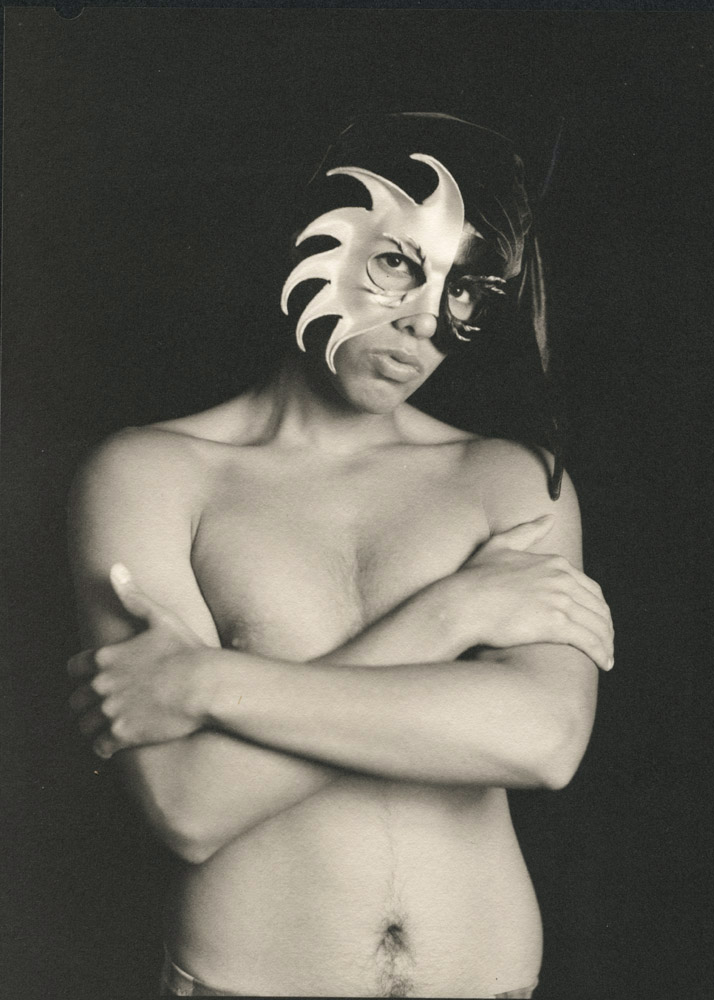
I dug up a few older platinum/palladium prints I did a couple years ago and realized they were worth sharing, so I thought I’d post them here today.
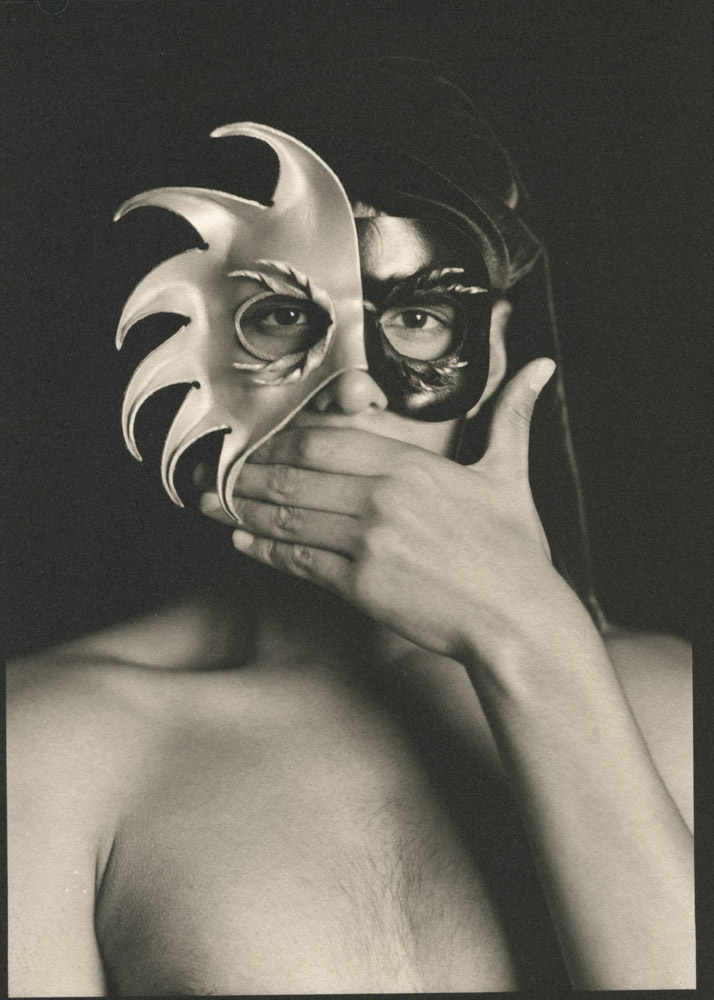
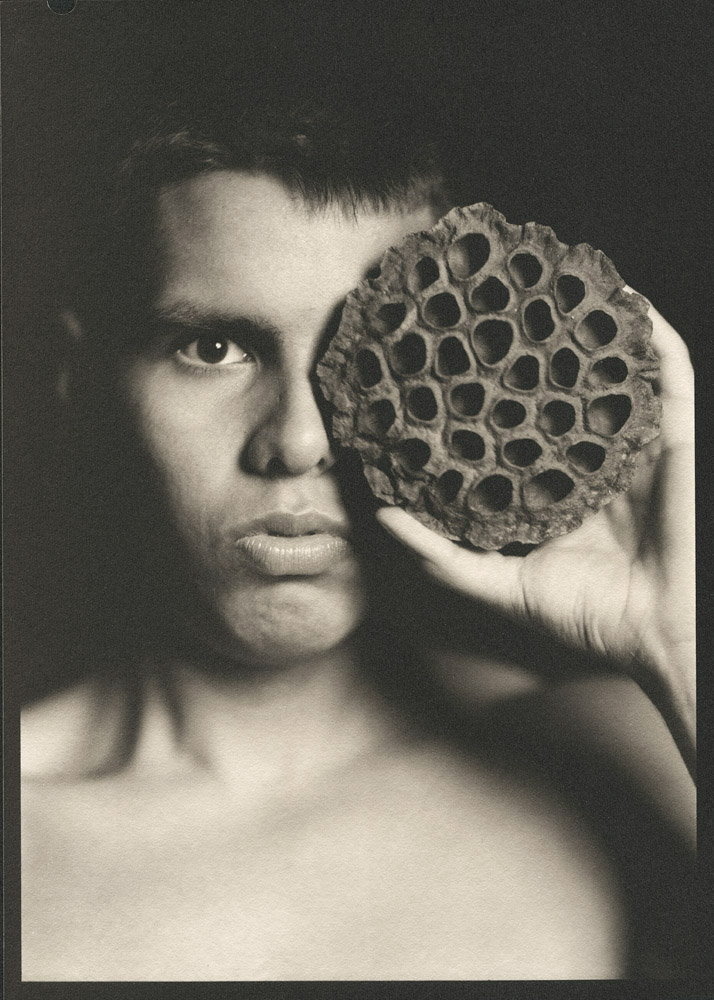
They were studies for a series I was working on – they didn’t make the editorial cut for the series, but as standalones they’re good. Jester
JesterPortrait with Lotus Seed Pod
These were shot in my home studio (aka the dining room) with a single light and a black velvet backdrop. The camera was my ancient studio portrait camera with a 5×7 back installed and a Seneca portrait lens (aka Wollensak Vesta, rebranded). I mention all this to show that you can produce great work with the simplest of set-ups and equipment, and you don’t have to have the latest and greatest or fancy facilities.
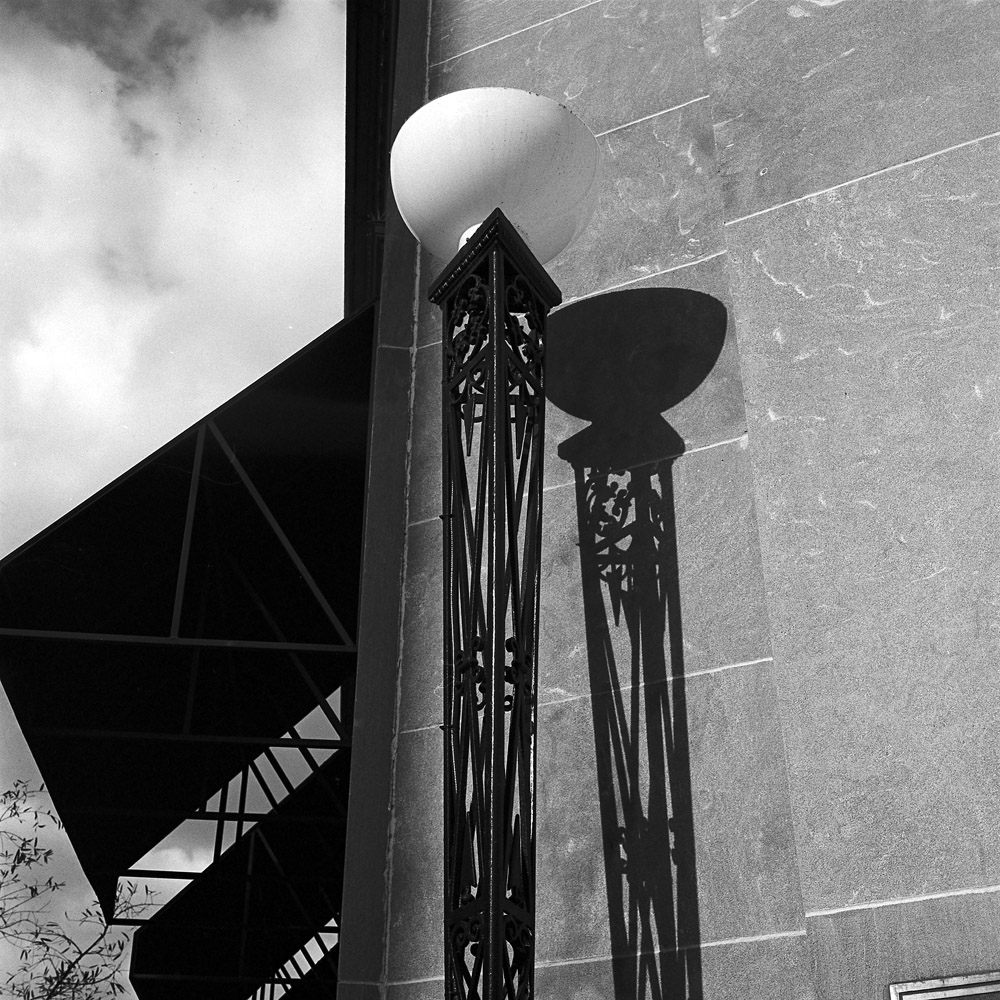
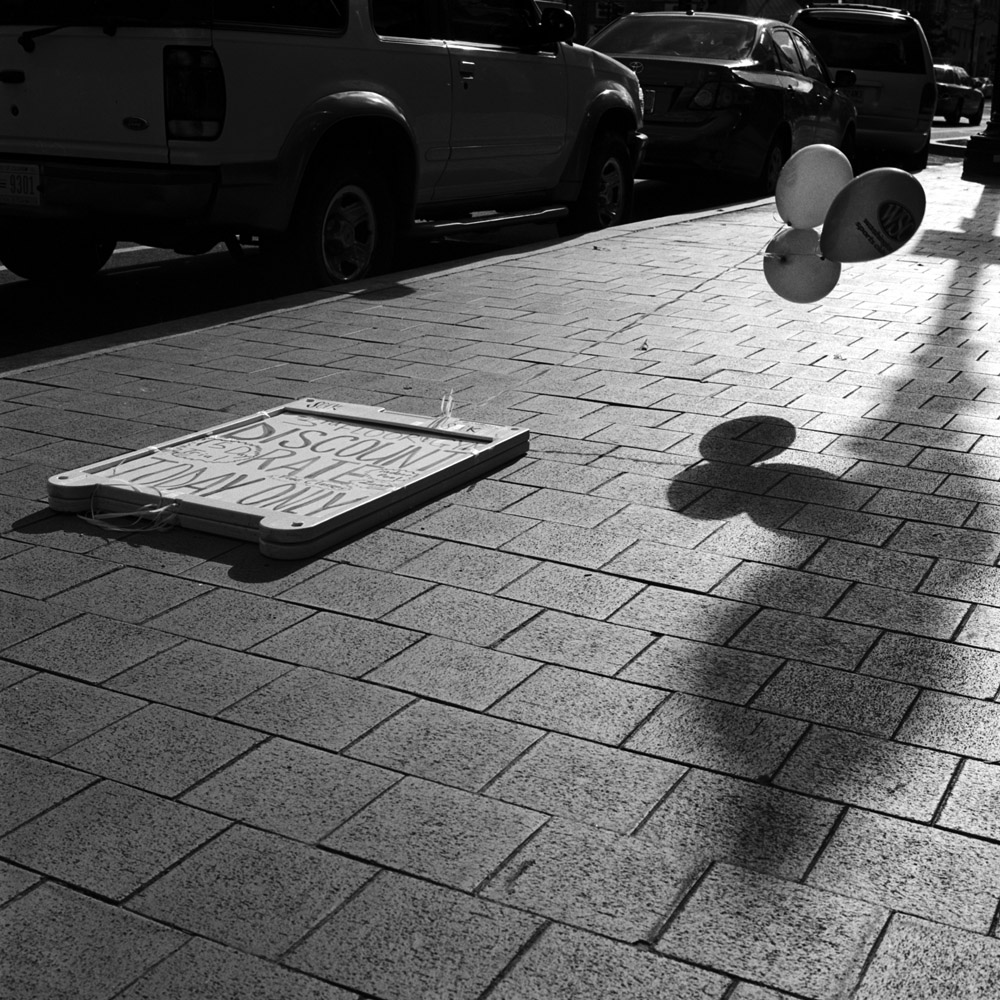
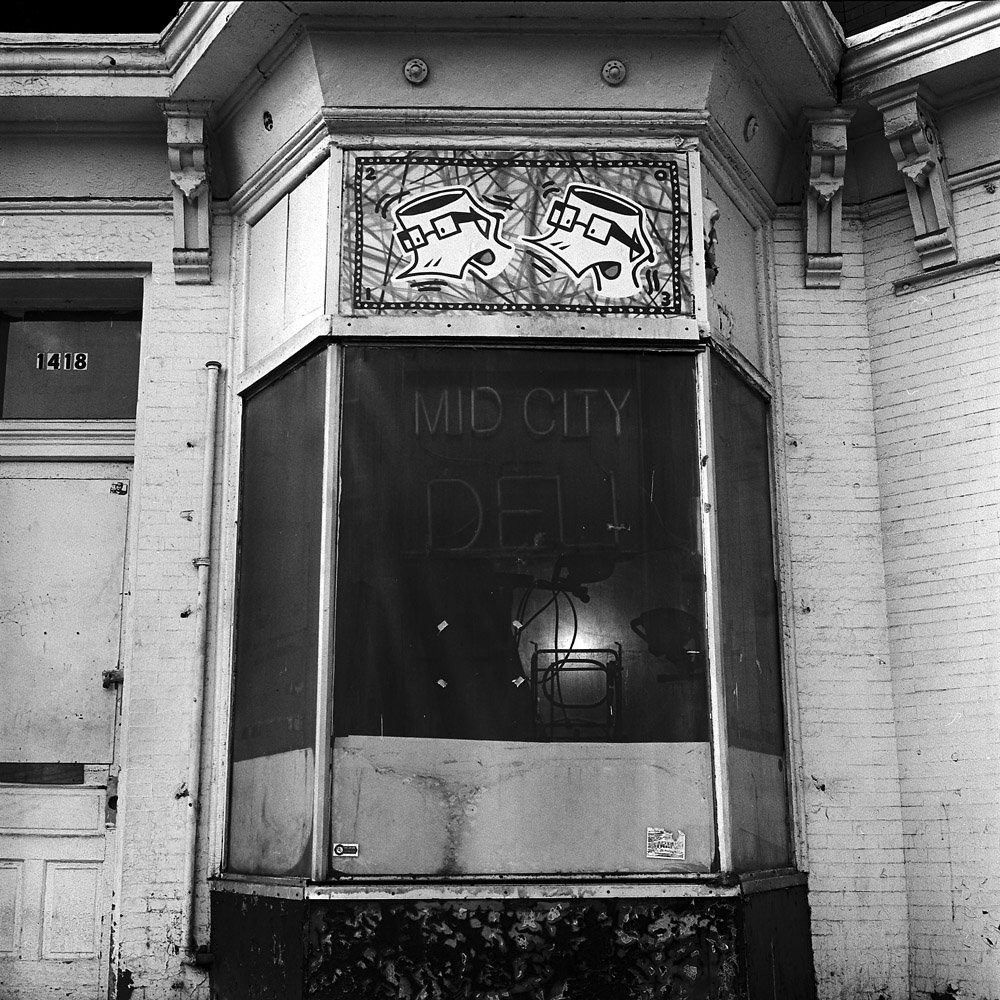
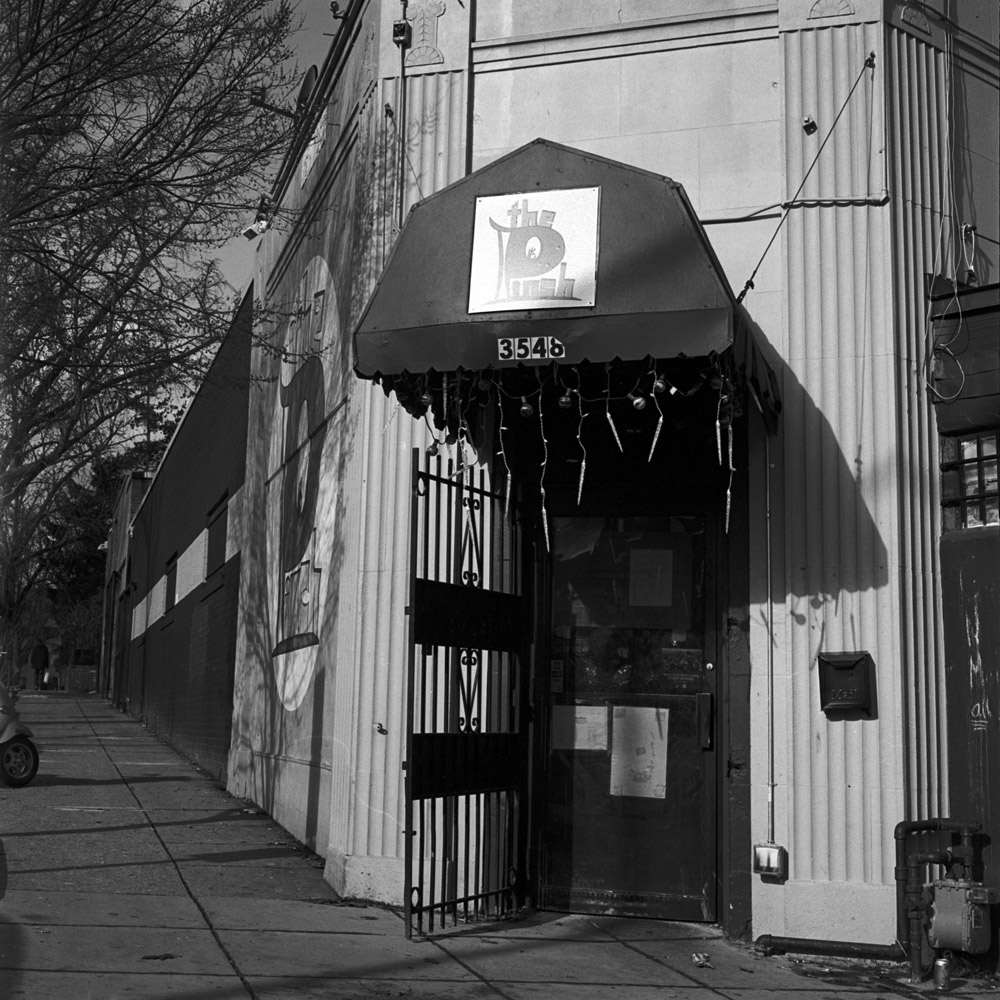
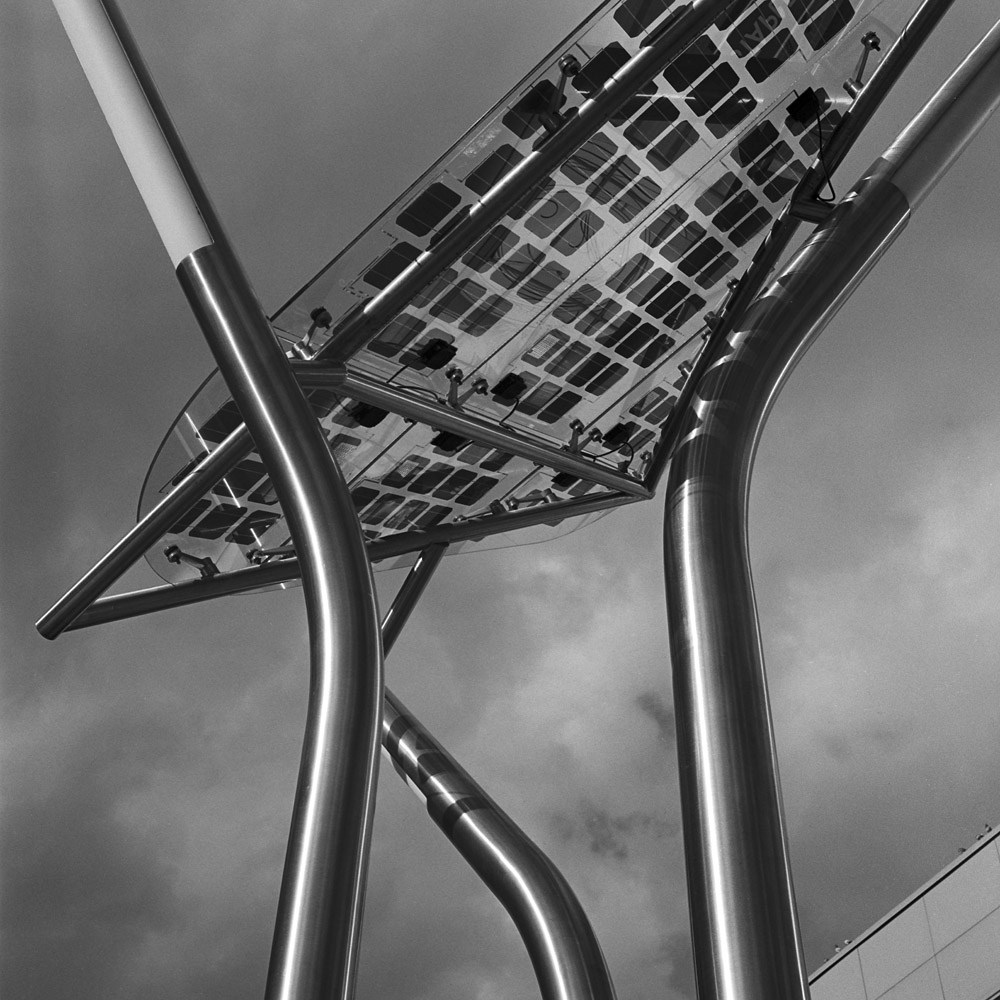
I’m not feeling particularly motivated to crank out my usual essay on the images I post, so today’s post will be more of a no-words posting, other than to say all images come from a wander up and down 14th Street back in early December.
Lamppost, Riggs Bank, 14th StreetDiscount Rate, One Day OnlyMid City DeliThe PinchSolar Powered Streetlight
I’ve probably talked about this before – I have a genealogical as well as spiritual connection to the National Portrait Gallery. An ancestor of mine, Senator John Ruggles of Maine was a big fan of all things patent related. During his tenure as a senator (1830-36), he realized that the US Patent Office was in horrible disarray. They were housed in an old building in poor condition, and as such it was a terrible disservice to patent seekers, patent holders, and the nation as a whole – if it was hard to get or defend a patent, innovators would leave the country and take their industries elsewhere. As a result, he managed to wrestle a patent office reform and the allocation of funds to build a new, fireproof, patent office building out of congress. The building now occupied by the National Portrait Gallery and the American Art Museum is that building. During the civil war, it functioned as a barracks and a hospital, and in 1865 it housed Abraham Lincoln’s second inaugural ball.
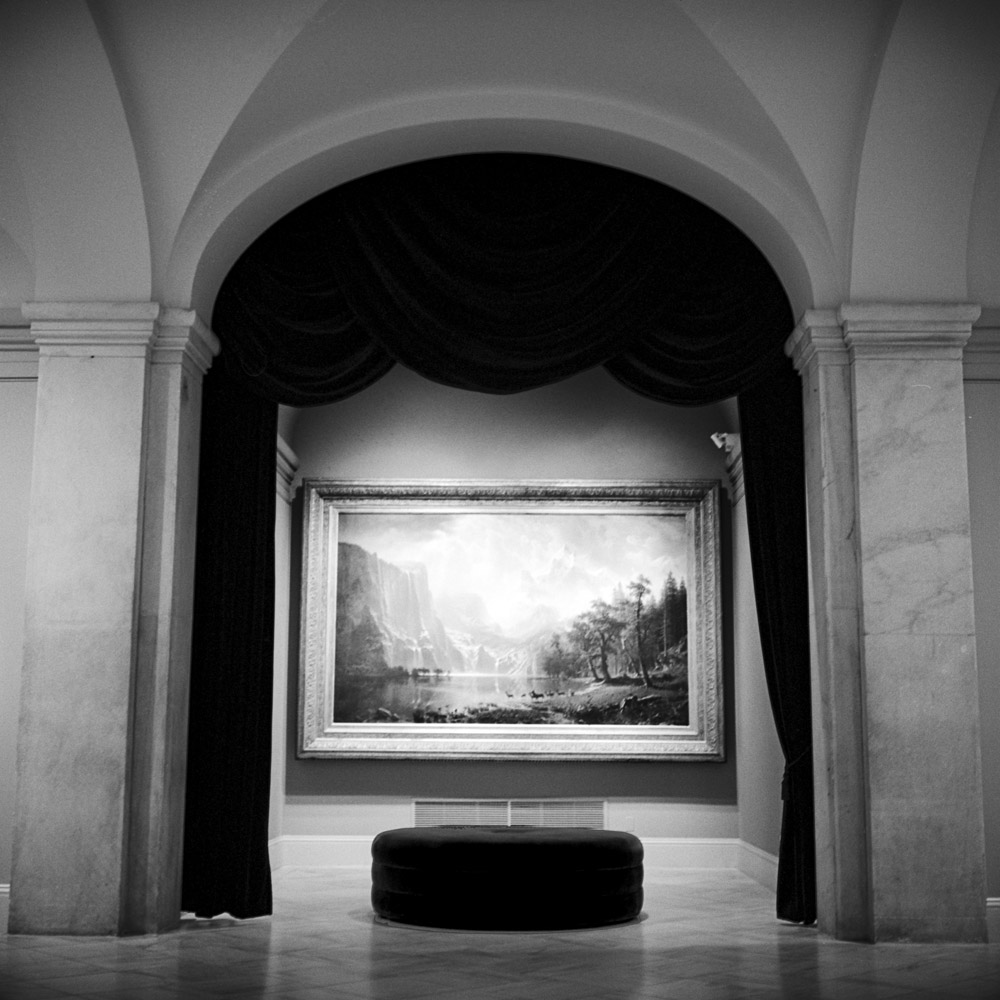
The building was built not only as a warehouse and government office, but from the first it was open to the public as an exhibition space to come see the patent models submitted with patent applications. As such, it makes for a fantastic museum, complete with dramatic display spaces to showcase some sometimes rather large pieces of art. This niche is a perfect example – all it took was some velvet curtains and matching settee.
Theatrical Painting, American Art Museum
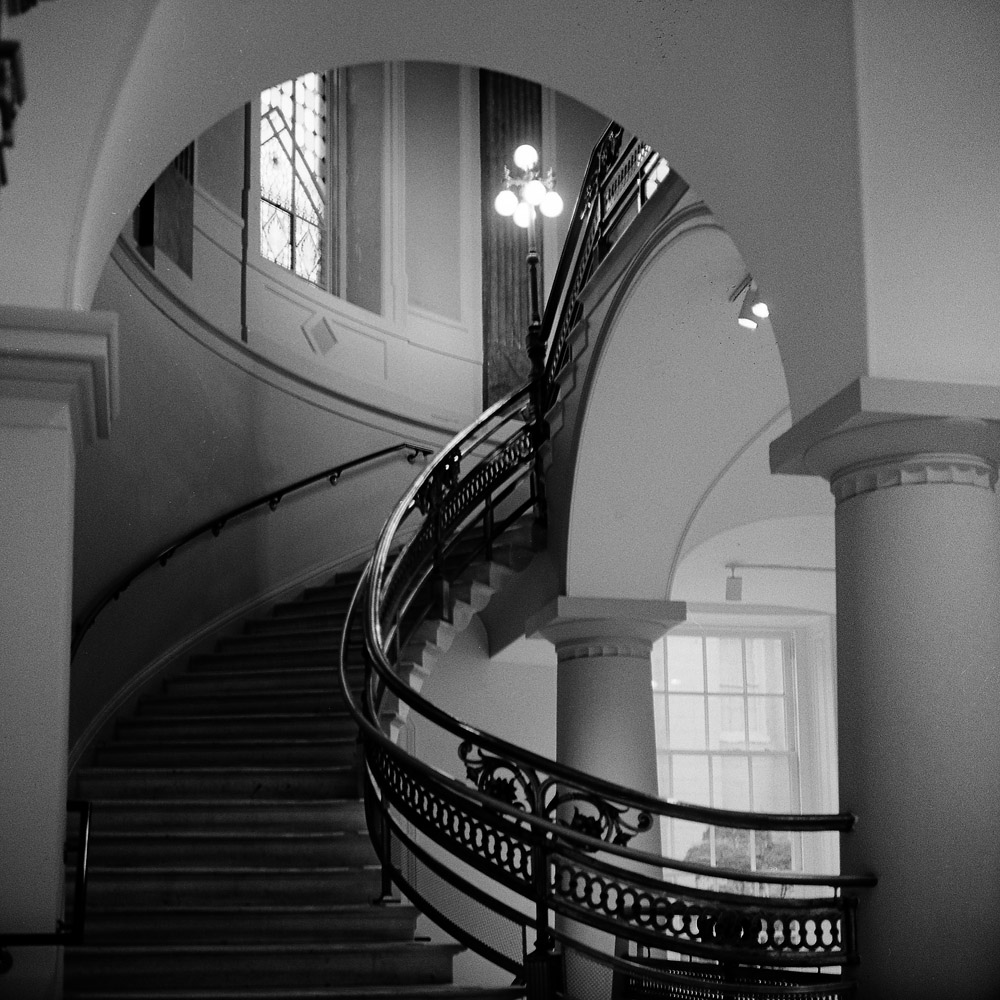
It has several of the most exquisite and dramatic staircases in the city, in my opinion. The following photos are of the main stairs that run from the F Street entrance up to the grand gallery on the third and fourth floors. There is another staircase that I can’t do justice to with the Rollei because it requires a wide-angle lens to show the sweep of the bannister and the giant mural of General Grant and his generals that spans the curved wall behind the stairs.
Staircase, National Portrait Gallery
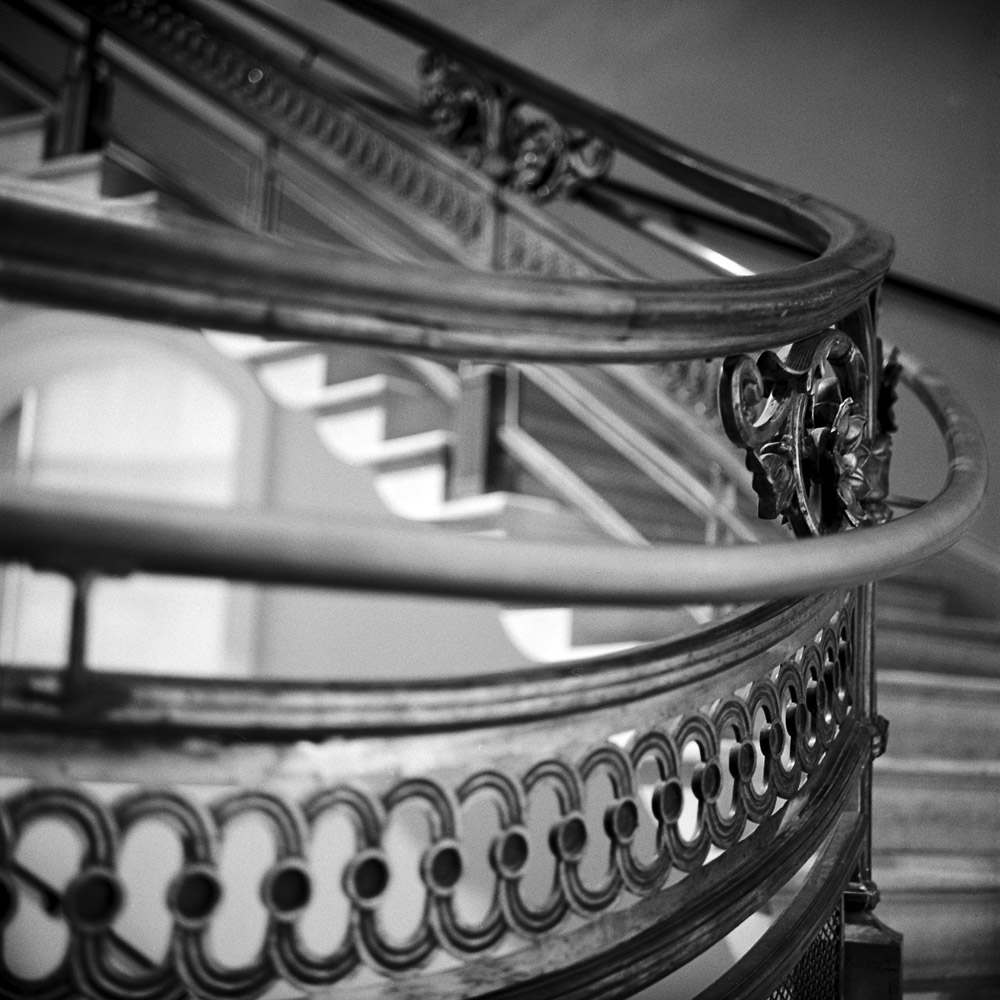
The brass and wood balustrade sweeps around in dramatic fashion. Wouldn’t you love to have a staircase like this in your house?
Rail, Staircase, National Portrait Gallery
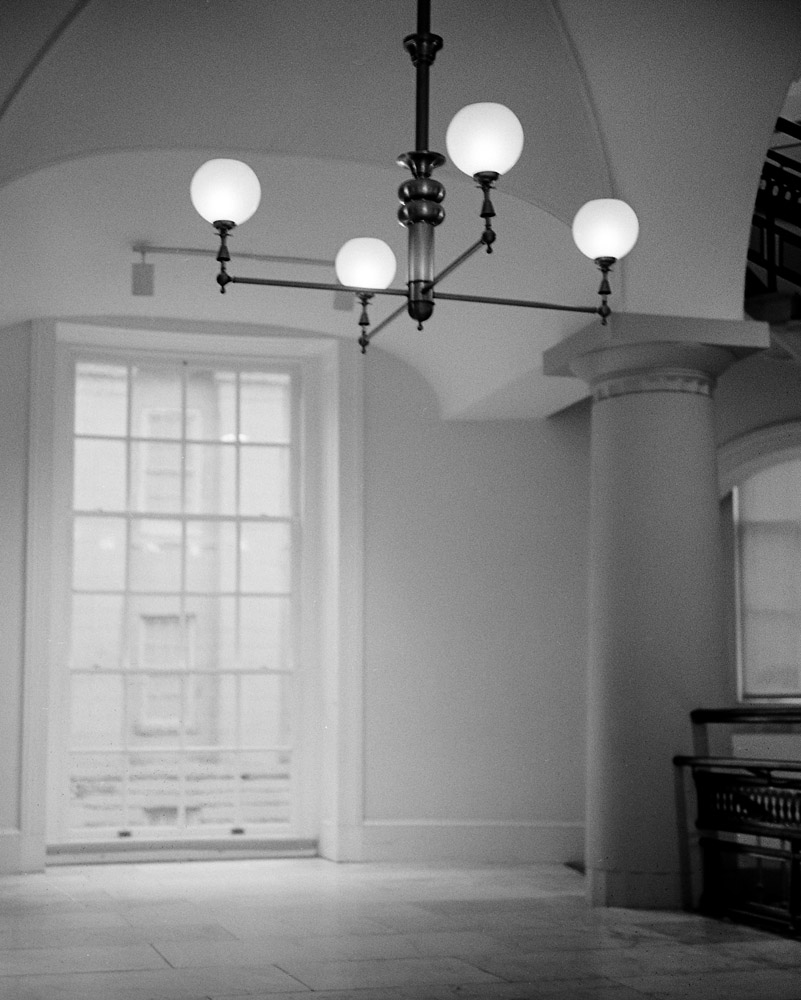
This chandelier is on the second floor landing. The window behind looks out into the courtyard of the dual museums. A few years ago, the courtyard was roofed over with a roof designed by Norman Foster. I was initially opposed to the concept of roofing the courtyard, removing the garden and paving the space with dark gray pavers. However, with time, I’ve come to love the space. They did keep some greenery, and made the space useable 365 days a year.
The chandelier is vintage mid-19th century gas adapted to electricity. It’s always a challenge to balance updating and modernization with historical preservation. I think they did an overall outstanding job with this building, and I’m thrilled to see it maintaining relevance and utility into the 21st century.
From the A.I. Dupont estate, Nemours, outside Wilmington, Delaware. A.I. Dupont, director of the Dupont chemical company, built the house as a gift to his second wife in an attempt to grow her affections for him. The 40,000 square foot house was built in 18 months. The interior features an elevator that runs from the basement to the third floor, a billiard room, bowling alley, an ice factory (the house was built before electric refrigeration, so they needed to be able to produce their own ice to keep the ice boxes cold), and a central vacuum system. The laundry was put in a separate building perhaps 30 yards from the main house so they could say they sent their laundry out.
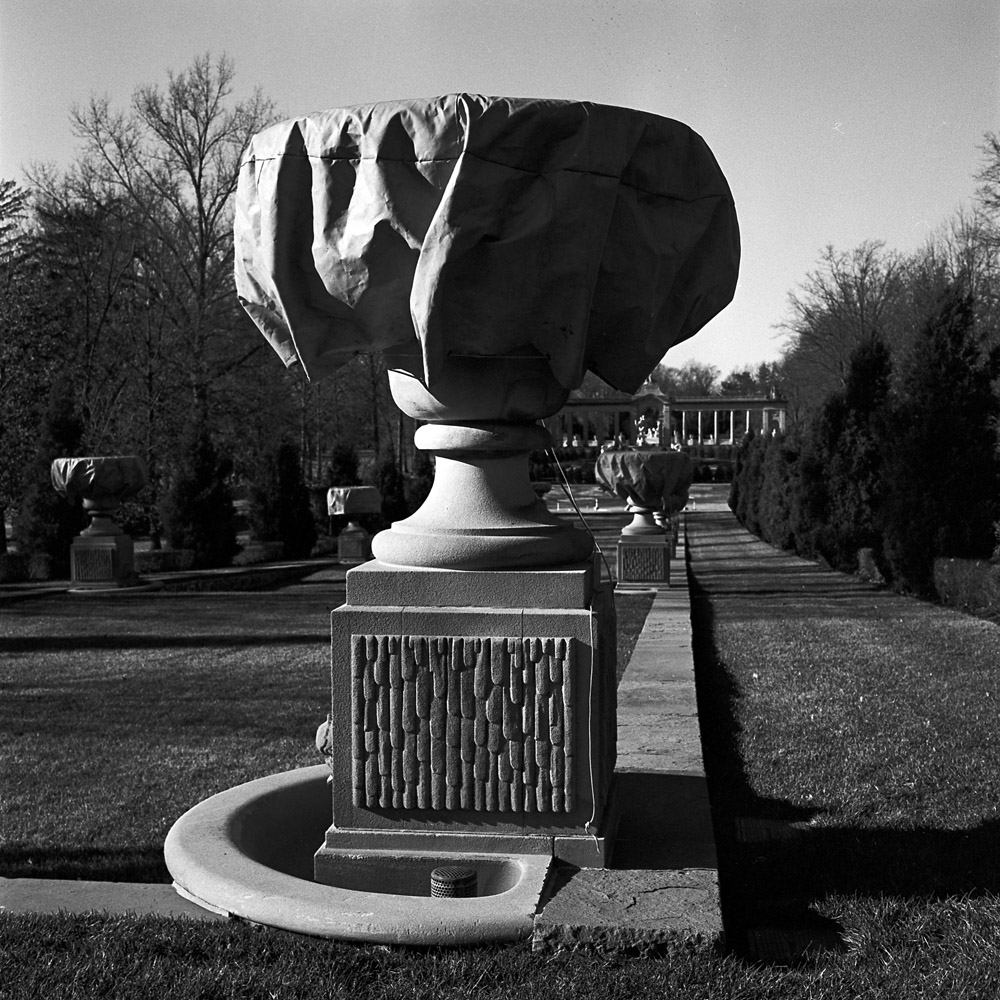
This is a view down the lawn from the mansion front, looking to the colonnade (which crowns a massive fountain on the other side). The garden urns have been prepared for winter with their canvas covers and their fountains drained. Even today, the estate totals some 300 acres, down from the original 3000.
Urn, Prepared for Winter, Nemours
I was at Nemours between Christmas and New Years to see it for the last open weekend of the year (it closes at New Years and re-opens in May). The house interior is decorated as the Duponts would have decorated for the holidays. No photos of the interior are allowed, so I do not have any pictures from inside the house. Photography on the grounds is acceptable, however, so I took these pictures of some of the details outside. In the spring, when garden tours are offered, I’ll have to go back and shoot the gardens in greater detail.
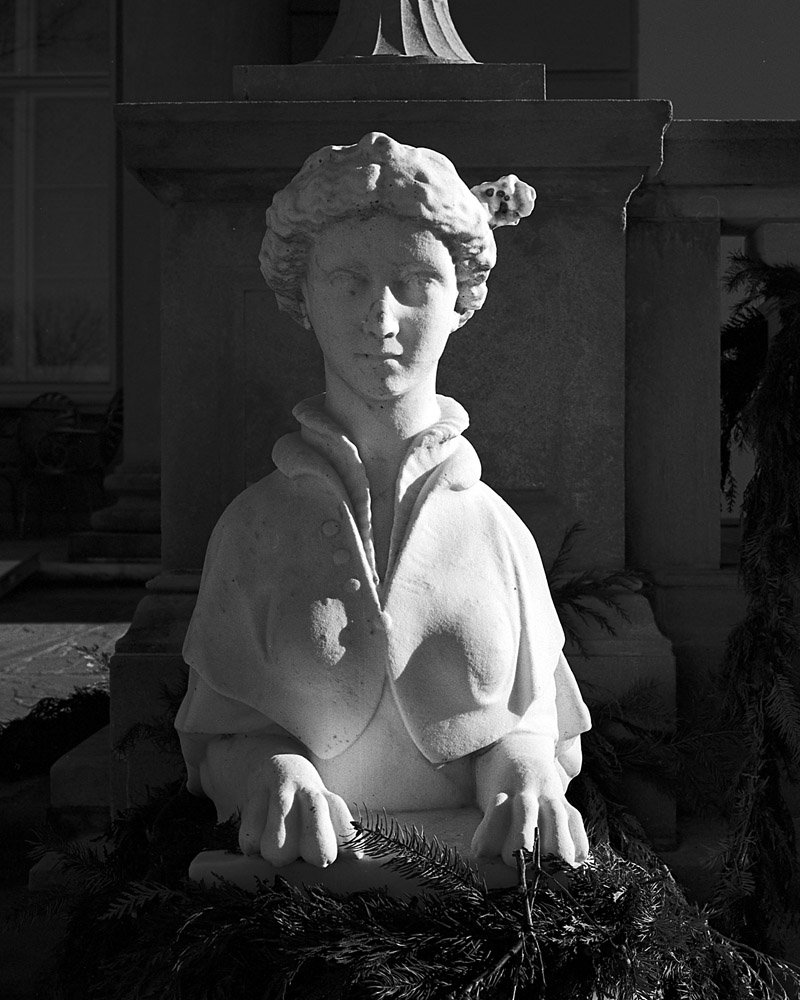
Here is a sphinx, one of a matched pair, guarding the front porch of the house. I loved the way her white marble glowed in the late afternoon winter sun.
We had a snowstorm a couple weeks ago. I know, bad me for taking so long to getting around to developing the pictures. And I have another roll from the snowstorm to go, as part of a batch. In any case, I decided I wanted to take pictures during the snowfall, so I bundled myself up and got out and about with the Rollei. This, and rain, are perhaps the two things the Rollei is less than ideal for, because the waist-level finder does nothing to prevent snow (or rain) from falling on the focusing screen. Unless of course it’s blowing sideways, at which point you have bigger problems.
I took the camera and my Induro carbon-fiber tripod out for a short walk up the street on my way to get dinner. It’s proof of the adage about finding interesting things to photograph in your own backyard. You just have to be willing to see them.
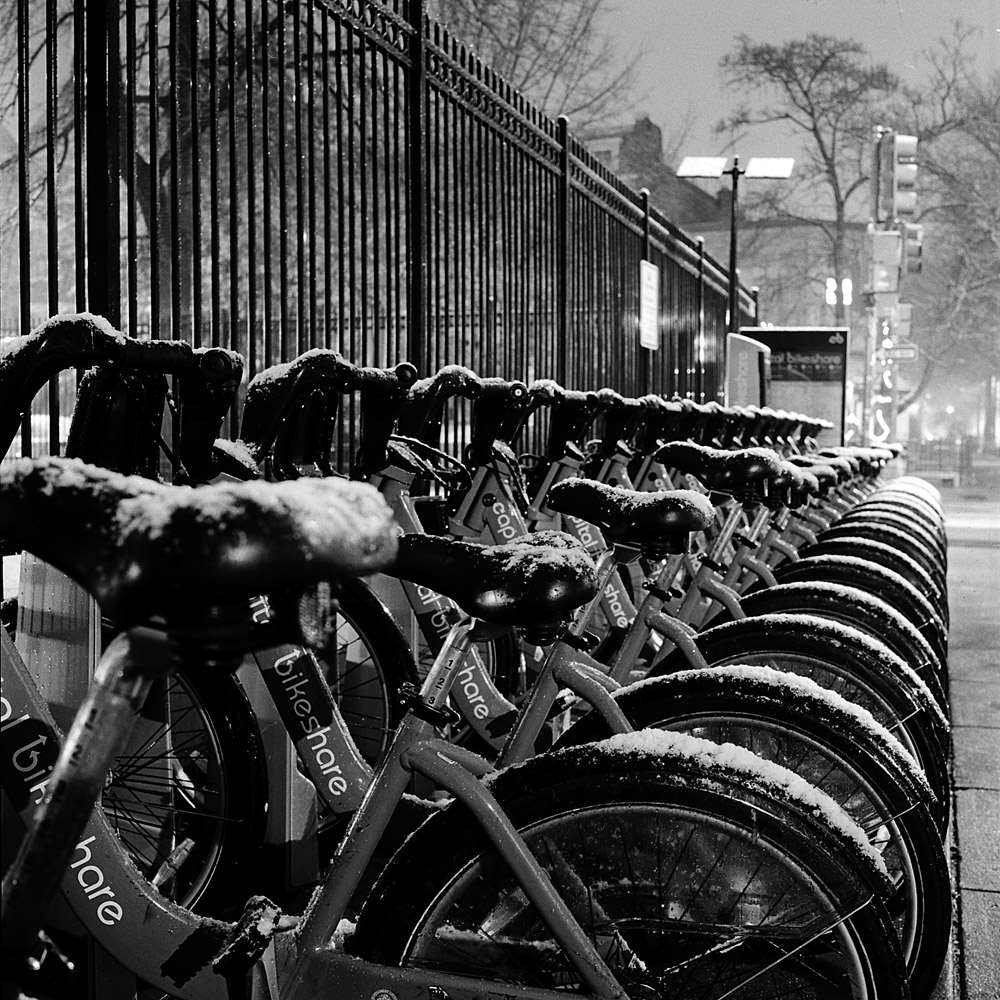
The bikeshare is a great source of material, especially if you like repeating shapes and patterns. The bike seats both break and reinforce the pattern as they are all set to slightly different heights.
Capital Bikeshare 11th Street
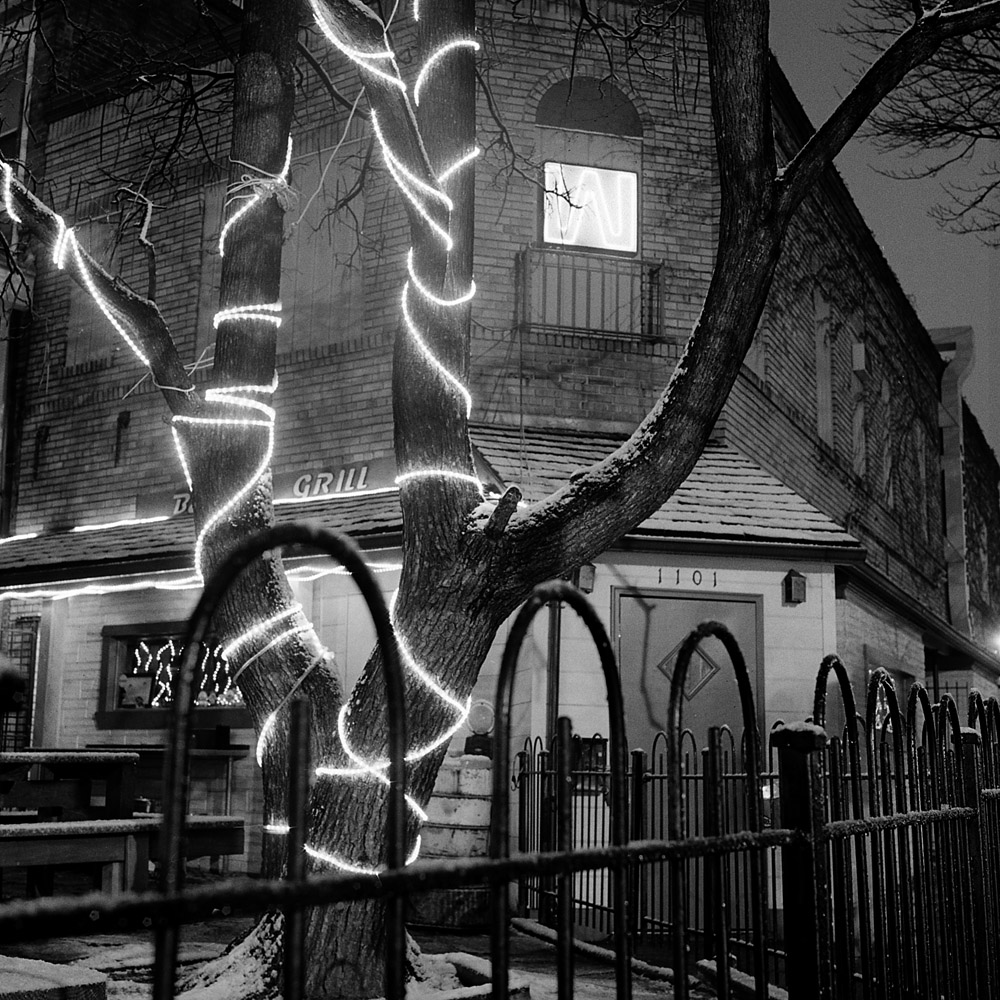
The Wonderland Ballroom is a neighborhood bar and grill. Until 2004, it was the Nob Hill, DC’s oldest continuously operating gay bar (opened in 1954), catering to a primarily African-American (and in the end, elderly) clientele. Now it serves a young, ethnically and sexually diverse crowd of urban hipsters. Plus ca change, as the French say – a side-effect of gentrification.
Wonderland Ballroom
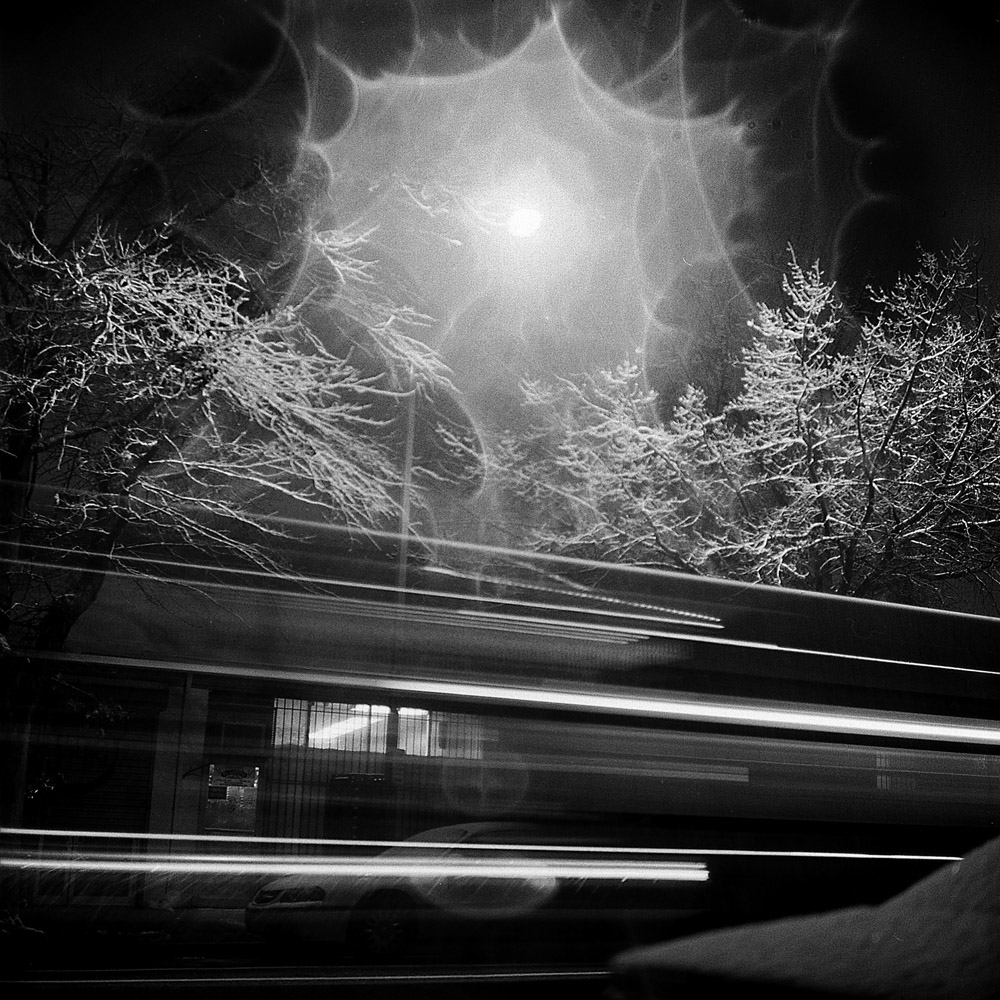
In a long time exposure (somewhere in the region of 30 seconds) I caught the lights of a passing city bus, under the flare of a street lamp. The awesome and dramatic flare from the street lamp is a combination of the lens on my particular camera, which is prone to strange flare artifacts when you put a light source directly in the scene pointed at the lens (due in part to some loss of coating on the front element of the lens) and the specular reflections from the falling snow. In some cases I’d find lens flare like this to be highly objectionable and would consider the shot ruined. In this case, though, I think it makes the image.



 dcphotoartist