Category Archives: CDVs

A Brace of Little People

A newly arrived pair of circus midgets – Admiral Dot and General Cardenas. The Admiral Dot image is not in the best of condition, but it’s a different photo than the one I already have, and for some reason there are certain little people images that are much more expensive than others – Admiral Dot and Che Mah the Chinese Dwarf being two among them. I have yet to find a Che Mah in a condition I’d like to have it in for less than $150, and I’ve been outbid twice now on nice ones. Dudly Foster is another one that seems to command high prices for some reason.

More on Admiral Dot, from showhistory.com:

Admiral Dot, was born Leopold Kahn in 1857(?). He was uncle of Samuel Kahn, “Major Atom”. In 1870, Phineas Taylor Barnum traveled with friends by train across the western United States. In San Francisco, a German named Gabriel Kahn offered the showman his dwarf son, Leopold. Barnum was quite taken with the little fellow, whom he said was “a dwarf more diminutive in stature than General Tom Thumb was when I found him.” Barnum promptly signed up Leopold under the new name of Admiral Dot, otherwise known as the the El Dorado Elf because he was such “a valuable nugget”.

As early as 1872, Barnum had already coined the phrase “The Greatest Show on Earth”, and now referrred to his circus as “P. T. Barnum’s Great Traveling World’s Fair”. At the time, Admiral Dot was touted as being sixteen years old, twenty-five inches tall, and a mere nineteen pounds. At least initially, Dot appeared on stage with his mother.

Admiral Dot’s career lasted for approximately the next twenty years, despite the fact that as he aged and grew taller he was soon eclipsed in size by smaller performers such as Major Atom, with whom he occasionally performed. Not one to rest on his laurels, Dot developed a stage persona that at one time saw him billed as “The Smallest Character Actor in the World”. During the 1880’s, Dot traveled with the Locke & Davis Royal Lilliputian Opera Company, which was populated by other famous little people such as the Magri Brothers and and Colonel Speck.

By the turn of the century, Leopold Kahn had settled in White Plains, New York, with his twenty-six-inch-tall wife Lottie Swartwood (a fellow performer in the opera company) and their two normal-sized children. Seeking respectability, Dot joined the Elks, sang with the town choir, and opened the Admiral Dot Hotel. The citizens of White Plains named the admiral honorary chief of the fire department, but unkindly referred to his business establishment as the Hotel Pee Wee (which, ironically, burned to the ground in 1911). Admiral Dot died of influenza in his home in White Plains on 28 October 1918, aged 54 years.
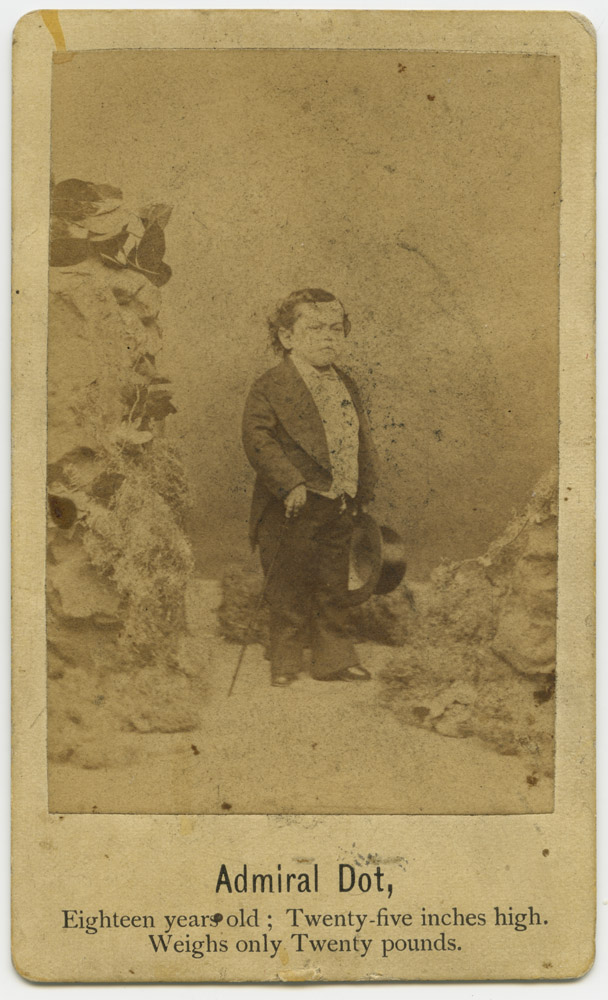
Admiral Dot, published by Anthony, photographer unnamed

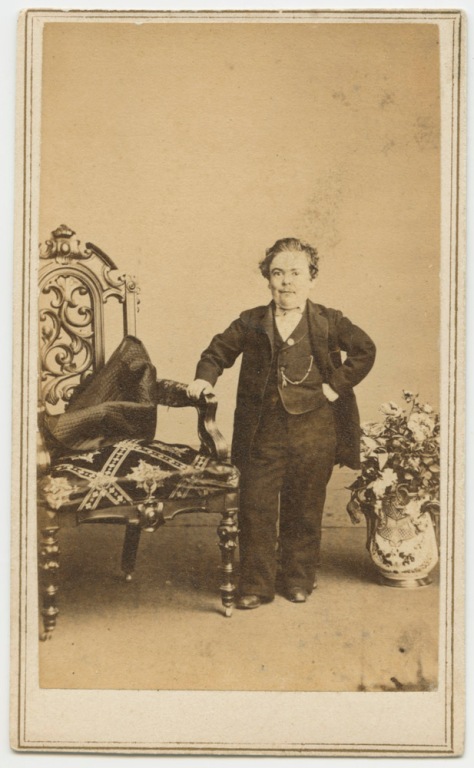
I couldn’t find any biographical references for General Cardenas – for all I know even the last name is fake and he was a Swede from Minneapolis and not hispanic at all. I’ll keep digging and see if I can find more about him. I did find a different photo of him on the Syracuse University online image library that looks like it was taken at the same time because his outfit is identical and the chair next to him appears the same, but its set in a faux-outdoors scene with a bunch of tufted grass around the chair.

General Cardenas, Anonymous Photographer

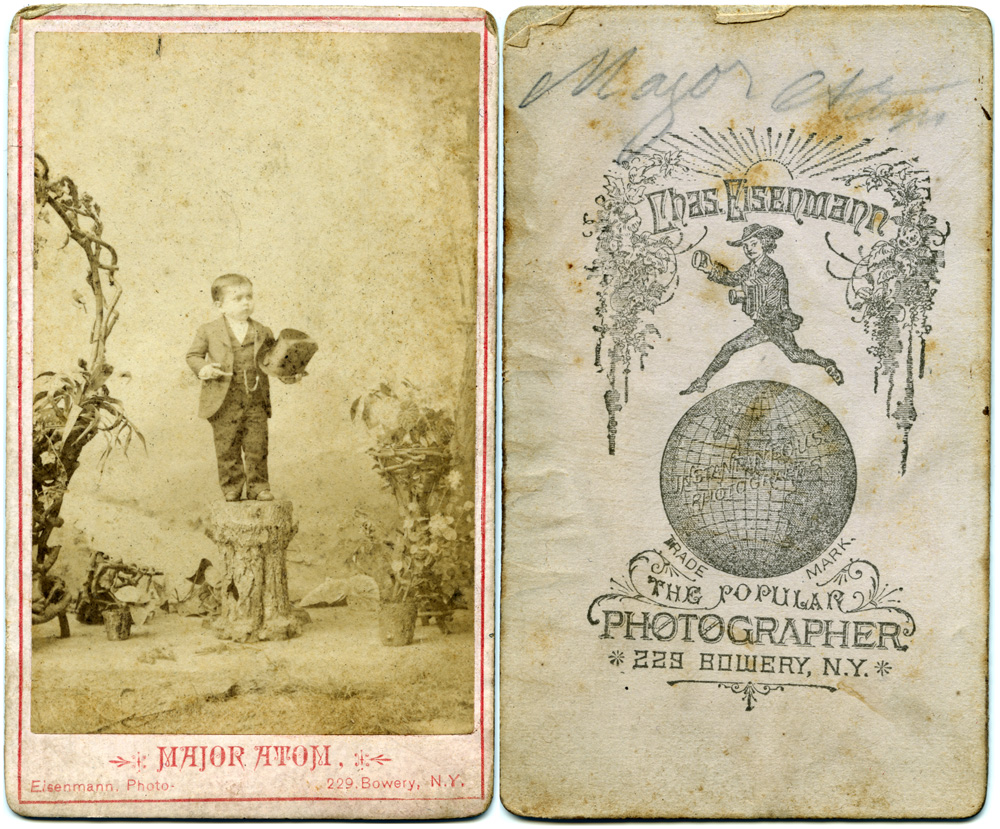
I’ll include some of my other little people with faux-military titles for reference, starting with Major Atom.
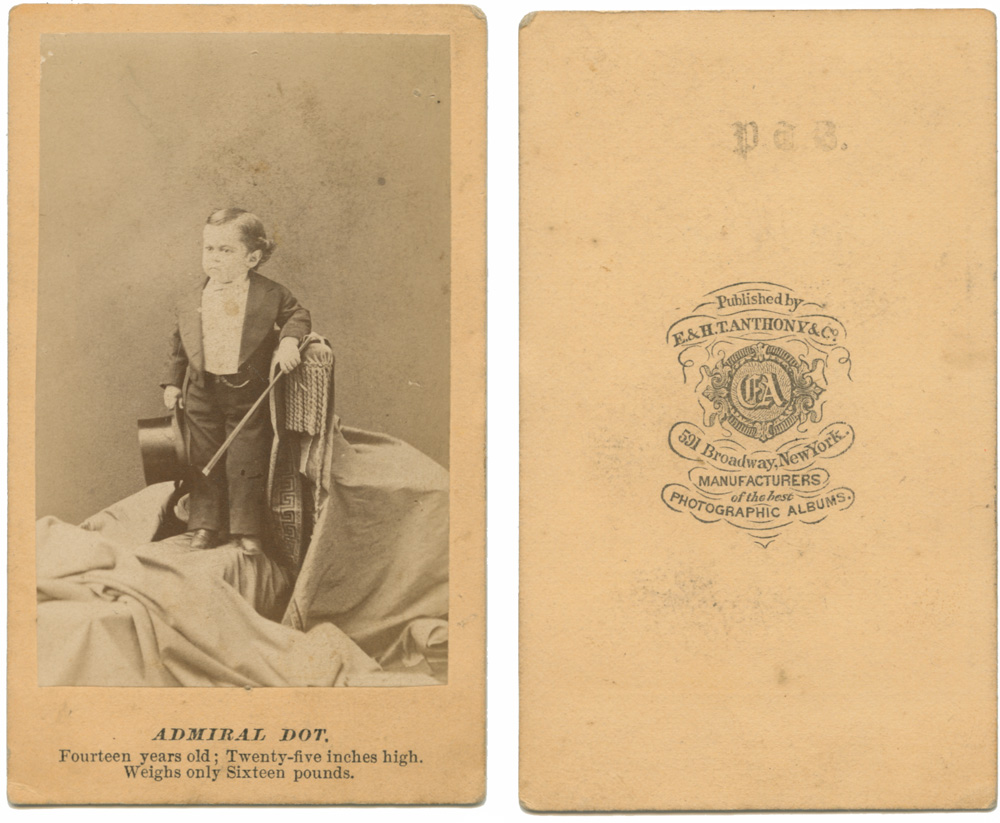
Admiral Dot, published by E&HT Anthony
Major Atom, by Chas. Eisenmann
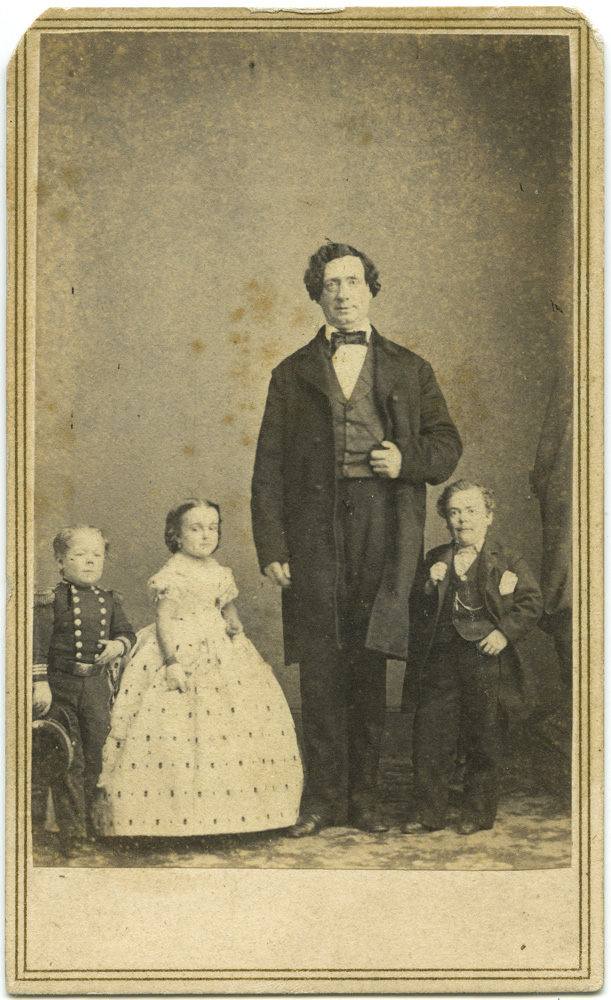
Commodore Nutt and unknown little woman, Anonymous CDV (probably Brady)
Commodore Nutt, Mrs. and Mr. Tom Thumb
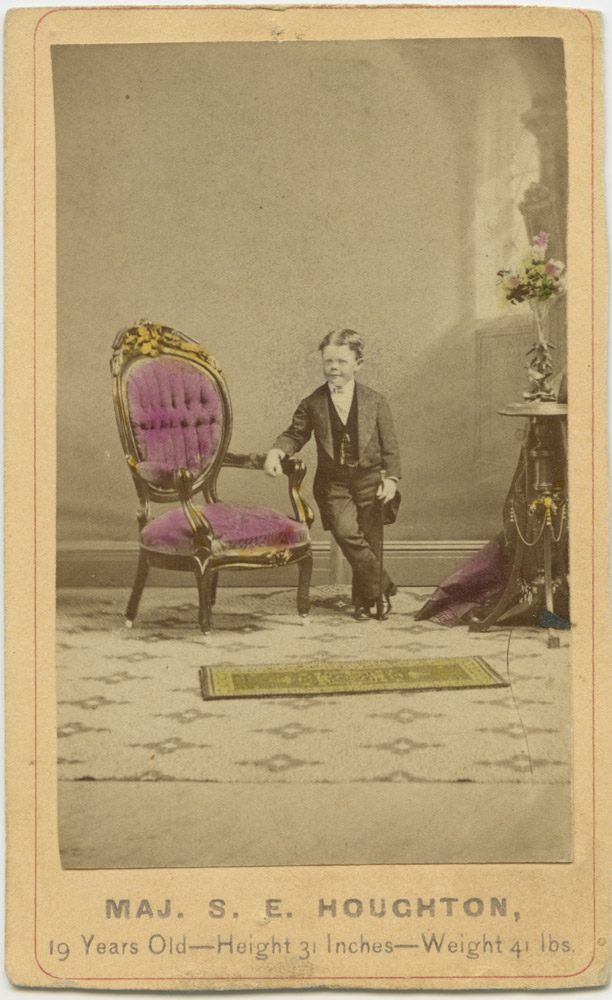
Major S.E. Houghton
Major S.E. Houghton

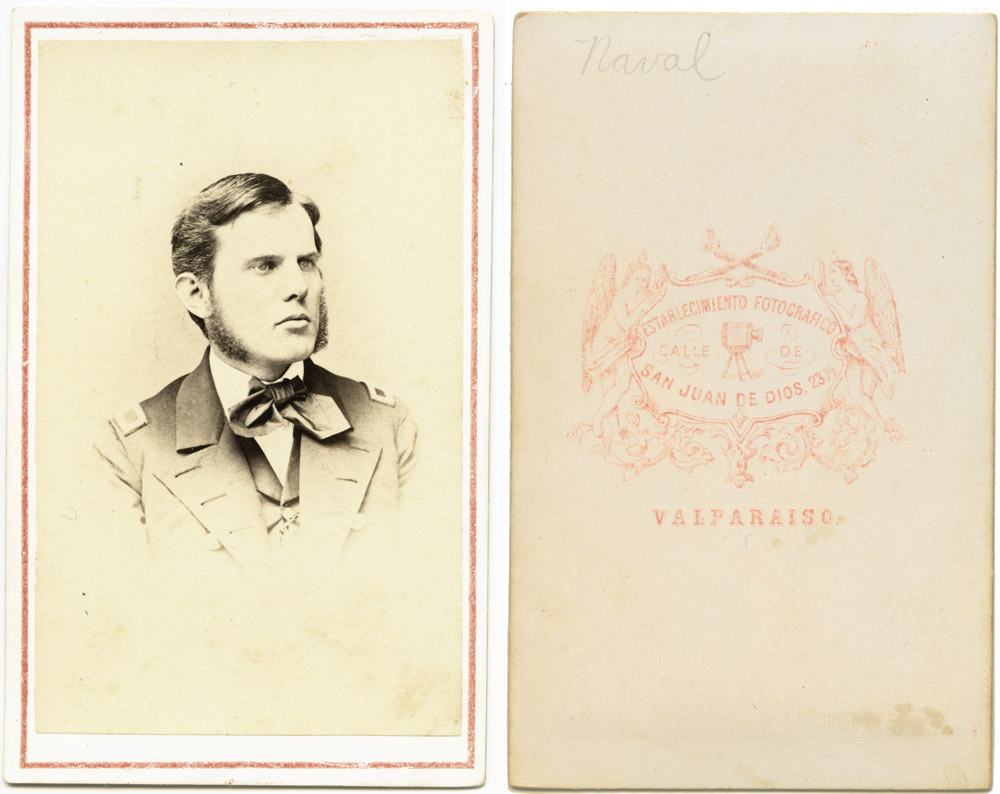
A Sailor Abroad – US Navy Officer in Valparaiso, Chile

US Naval Officer, Valparaiso, Chile, ca 1861

Another find from my Gettysburg excursion. He’s a US Navy Officer. I’m not sure of the dating – the jacket looks possibly post- Civil War, but the shoulder boards suggest he’s a Master (a rank no longer used, but the equivalent of a Lieutenant, Junior Grade today) circa 1861. They changed the Master’s insignia in 1862 from the blank bar to include a gold bar at each end and an anchor in the middle, and introduced the rank of Ensign to replace the previous rank of Passed Midshipman as the most junior commissioned officer rank. This is another records quest – I would suspect there were only one or two ships at most that would have docked in Valparaiso in 1861, and ship’s crews being significantly smaller in 1861 than they are now, there’s a good chance he was the only Master (or one of two) on the ship.

Hometown Soldier

Here is a CDV of a Union solider from Chambersburg, Pennsylvania, my hometown. I found it on an excursion up to Gettysburg this weekend. Judging from his overall appearance of health and cleanliness, this was probably taken at the beginning of the war when he enlisted. When I saw the image in the display case, I felt a need to acquire it just because it was from Chambersburg. After doing a little collecting, I’m getting the impression that there was only one, or perhaps two photo studios in Chambersburg for most of the 19th century, as this H. Bishop seems to be the most frequent studio back mark by far. I’m starting a records search to try and identify the young man, as there weren’t THAT many sergeants in the units from the Chambersburg area. I’m thinking a trip to the Kittochtinny Historical Society offices is in order when the weather is warmer and they’re back to full hours (I think they close up for the most part in the wintertime as their archives are in the Old Jail and are not heated). The Old Jail, by the way, is well worth a visit if you’re ever passing through Chambersburg – the main part of the jail is a Georgian structure dating to at least 1818, and was in use as a prison at least into the 1960s, when one of my father’s partners in his medical practice would take calls to see patients being held there.

Unknown Sergeant, Chambersburg, PA ca. 1861-62

A litte research…

I was inspired to do a bit more digging into a photographer whose images I’ve shown here before, Kets Kemethy. He was a Hungarian photographer who settled in Washington DC and operated a studio here. The inspiration came from a book I bought myself for Christmas entitled “Envisioning Emancipation: Black Americans and the End of Slavery“. The book talks about African-Americans and their presence in photography from the antebellum period through to the 20th century. The book constructs a theory of race, social systems and politics to explain the narrative that frames and constructs the images in the book, but it does so in a reasoned, supportable manner that does not leave non-academic readers grasping for dictionaries and water-pitchers just to finish a page.

I have a Kets Kemethy photo of an African-American young man that I’d like to try and date more precisely, so I wanted to do some digging into the studio’s history and see if there was anything published about him. I have found another African-American subject by him, so I was wondering if his practice specifically catered to well-to-do African-Americans (although 2 for 2 is hardly a statistically meaningful or accurate sampling). I did find this article from the 1902 Washington Times: there was a bit of a scandal in the Kemethy studio where Mrs. Kemethy shot at either her husband and/or a female customer who may or may not have been his mistress.
Washington Times, October 29, 1902

I also found a listing for his studio in Boyd’s Directory of Businesses from 1903, which is contemporaneous with the 1902 newspaper article, and an entry in the Photographic Times from 1890. Another image that shows up for Mr. Kemethy is in the Bibliotheque Nationale in Paris, of Henry Wood Elliot, sent to the Bibliotheque in 1884, according to the letter on Smithsonian letterhead. So this gives me some placement in time – Mr. Kemethy was working around the turn of the 20th century, so based on the size and style my image is probably from the 1890s. In all likelihood then the young man in my photo would have been born free, but it would also have been highly likely that his parents were born into slavery.

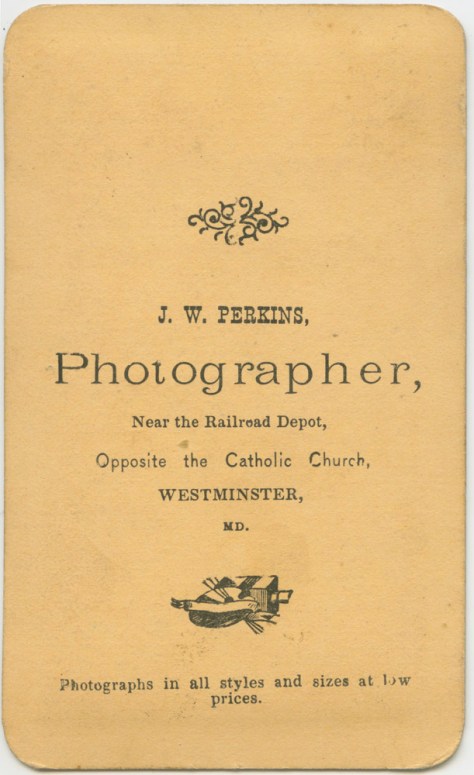
Another CDV verso

J.W. Perkins, Westminster

Gotta love the description of the location – “Near the Railroad Depot, Opposite the Catholic Church”. In a town as small as Westminster in the 1870s, that probably was a precise location. I bought this one for the back mark, not for the image (a somewhat faded baby). It was only $1, so I’m not going to complain much. I also like the combined palette and camera logo, implying artistry with a camera.

Tom Thumb, by C.D. Fredricks

Tom Thumb by C.D. Fredricks

Here’s another Tom Thumb, this time by C.D. Fredricks. Proof positive that even when at home in New York, Tom Thumb was photographer agnostic, but still selective – if not posing for Brady, he was still going to the best names in town to get his photos done.

Hobbypational? Vacational? Certainly not Occupational…

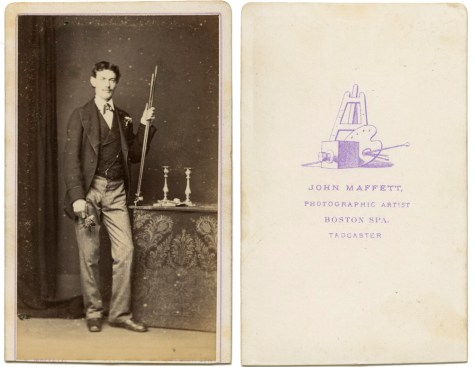
Fisherman by Maffett, Boston Spa, Tadcaster UK

Here’s another fun one – really quite bizarre, actually when you think about it. The sitter is posing with a corsage in one hand, a fishing rod in the other, wearing formal attire, standing next to a table with silver candlesticks, that looks like it might be an altar. In a photographers’ studio. Was he on vacation? A hobbyist fisherman? It’s certainly not an occupational because this is definitely a gentleman of leisure, not a working fisherman. And what’s with the corsage?

In keeping with my recent backmark/blind stamp post, I like this one a lot, as it tries to connect portrait photography with painting, or at least bridge the gap. There are quite a few in a similar vein, a definite response to the notion that photography was merely a mechanical, technical operation and not a true fine art.

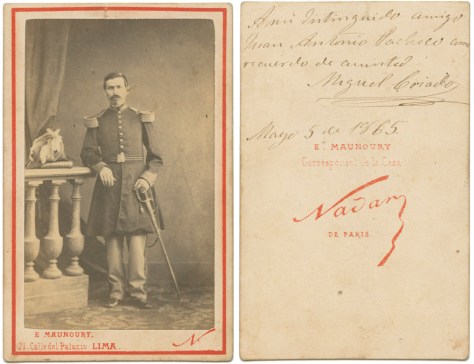
Miguel Criado, by Maunoury, Lima, Peru

Miguel Criado by Maunoury of Lima, Peru

I bought this image because it has so much interesting history to it. Not only is the sitter known, but so is the date of the card, and the photographer, and the recipient of the card. Señor Maunoury was a franchisee of Nadar’s studio in Paris, operating in Lima, Peru. The handwritten note says “To my distinguished friend Juan Antonio Pacheco as a token of friendship, Miguel Criado”. So here we have a photograph that has traveled halfway around the world, just a few years shy of its 150th birthday, created by a French-trained photographer, collected by an American. What a fascinating nexus of connections. I wonder what the provenance of the image was before I bought it. I think it’s very important especially in the globalized world of today to contemplate these peregrinations through space and time that allow items like this to come into our hands, much like my Black Star, Osage Brave image that began life in Fort Smith, Arkansas, was collected in New York State, then went to Paris before arriving in my collection, or the Paris Opera image that spent time in Bulgaria before being auctioned off on Ebay by another French dealer, and now resides in Washington DC. In some ways, this is really the purpose of photography – to connect people across space and time, allowing someone dead and gone more than a century past to live on in the minds of people in a place they never would have been to.

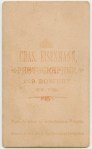
CDV Versos – the Evolution of the Blind Stamp

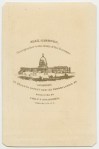
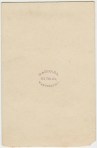
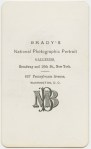
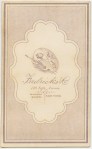
We’ll start this one with two of the most famous Victorian era photographers, Alexander Gardner and Mathew Brady. The Gardner blind stamp changes, but the only thing I can say for certain is that the stamp with the US Capitol building on it was during or shortly after the Civil War, as it touts his association with the Union army.

Alex Gardner, Version 1
Alex Gardner, Version 2
Alex Gardner, Version 3
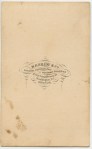
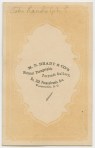
The Brady evolution is more obvious. The simple, plain version is his blind stamp from early in the Civil War period. The more ornate, shield-like design would be the 1870s, and the final version is the large letters.
Mathew Brady, Early
Mathew Brady, Early
Mathew Brady, Middle
Mathew Brady, Late
Mathew Brady, Late
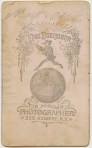
Note the similar evolution in Chas Eisenmann’s blind stamp design. I don’t have a good idea of how long a span of time it took for his design to evolve – it may have been as little as a few years, or it may have been a decade or more separating them. I think though that once he changed it, he stuck with the globetrotter logo for an extended period, perhaps 20 years or more.
Chas Eisenmann, Early
Chas Eisenmann, Late
C.D. Fredricks bind stamp. I know I have another one of his that would be the “middle” design, but I haven’t hunted it down in the CDV album I have – it would be the “middle” in that it no longer says, “specialité”, but also lists Paris and Havana as studio locations, but the design is not as fancy as the late one.
CD Fredricks, Early
CD Fredricks, Early
CD Fredricks, Late
CD Fredricks, Late
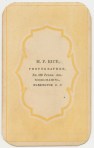
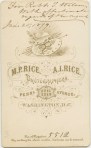
M.P. Rice. Note the change also includes the addition of (most likely) his son to the masthead of the business. Using the date on the verso, this style had arrived by the late 1870s, so the shield designs would have been late 1860s to early 1870s.
M.P. Rice, Early
M.P. Rice, Early
M.P. Rice, Late
M.P. Rice, Late
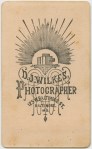
Finally some others for which I don’t have early/late pairings. These are just a few of the others I have, but I like looking at them just for the art.
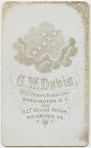
D. Wilkes
D. Wilkes
G.W. Davis
G.W. Davis
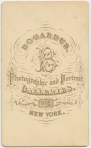
Abraham Bogardus
Abraham Bogardus
J. Gurney & Sons
J. Gurney & Sons

Circassian Beauties

To quote from Wikipedia:

Circassian beauties is a phrase used to refer to an idealized image of the women of the Circassian people of the Northern Caucasus. A fairly extensive literary history suggests that Circassian women were thought to be unusually beautiful, spirited, and elegant, and as such were desirable as concubines. This reputation dates back to the later Middle Ages, when the Circassian coast was frequented by Italian traders from Genoa, and the founder of the Medici dynasty, Cosimo I de Medici, had a well-known affair with a Circassian slave girl. During the Ottoman Empire. Circassian women living as slaves in the Sultan’s Imperial Harem started to build their reputation as extremely beautiful and genteel, which then became a common trope in Western Orientalism.
As a result of this reputation, in Europe and America Circassians were regularly characterised as the ideal of feminine beauty in poetry, novels, and art. Cosmetic products were advertised, from the 18th century on, using the word “Circassian” in the title, or claiming that the product was based on substances used by the women of Circassia.
In the 1860s the showman P. T. Barnum exhibited women whom he claimed were Circassian beauties. They wore a distinctive Afro-like hair style, which had no precedent in earlier portrayals of Circassians, but which was soon copied by other female performers, who became known as “moss haired girls”. These were typically presented as victims of sexual enslavement among the Turks, who had escaped from the harem to achieve freedom in America.

The combination of the popular issues of slavery, the Orient, racial ideology, and sexual titillation gave the reports of Circassian women sufficient notoriety at the time that the circus leader P. T. Barnum decided to capitalize on this interest. He displayed a “Circassian Beauty” at his American Museum in 1865. Barnum’s Circassian beauties were young women with tall, teased hairstyles, rather like the Afro style of the 1970s. Actual Circassian hairstyles bore no resemblance to Barnum’s fantasy. Barnum’s first “Circassian” was marketed under the name “Zalumma Agra” and was exhibited at his American Museum in New York from 1864. Barnum had written to John Greenwood, his agent in Europe, asking him to purchase a beautiful Circassian girl to exhibit, or at least to hire a girl who could “pass for” one. However, it seems that “Zalumma Agra” was probably a local girl hired by the show, as were later “Circassians”.Barnum also produced a booklet about another of his Circassians, Zoe Meleke, who was portrayed as an ideally beautiful and refined woman who had escaped a life of sexual slavery.
The portrayal of a white woman as a rescued slave at the time of the American Civil War played on the racial connotations of slavery at the time. It has been argued that the distinctive hairstyle affiliates the side-show Circassian with African identity, and thus,
resonates oddly yet resoundingly with the rest of her identifying significations: her racial purity, her sexual enslavement, her position as colonial subject; her beauty. The Circassian blended elements of white Victorian True Womanhood with traits of the enslaved African American woman in one curiosity.
The trend spread, with supposedly Circassian women featured in dime museums and travelling medicine shows, sometimes known as “Moss-haired girls”. They were typically identified by the distinctive hairstyle, which was held in place by the use of beer. They also often performed in pseudo-oriental costume. Many postcards of Circassians also circulated. Though Barnum’s original women were portrayed as proud and genteel, later images of Circassians often emphasised erotic poses and revealing costumes. As the original fad faded, the “Circassians” started to add to their appeal by performing traditional circus tricks such as sword swallowing.

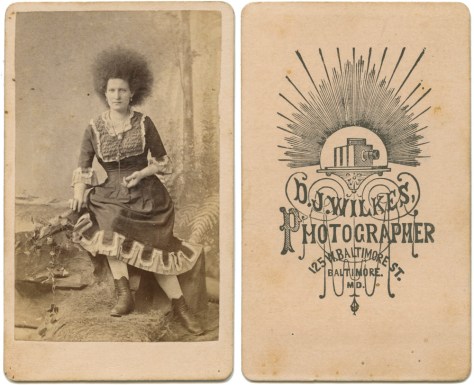
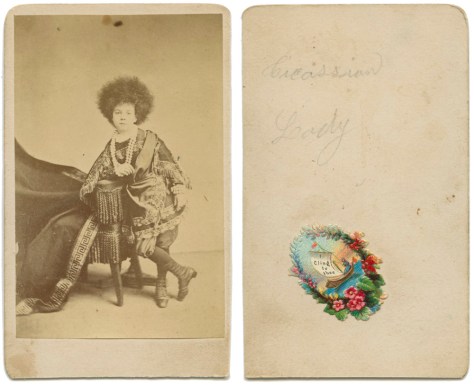
I had been hunting for a CDV of the Circassian Beauty for a while, and then found two images of “Circassian Beauties” on CDV recently. The one is fascinating because she’s obviously just a teenager. The other is an adult woman. I have seen other CDVs of Barnum’s Circassian, although I’ve seen a different name associated with her – Zenobia. It’s highly likely that there was more than one associated with Barnum’s Museum and later the traveling circus. I find the showman mentality of Barnum and his contemporaries utterly fascinating that they would have no qualms about not only faking someone supposedly from the Ottoman Empire, but that they would indulge in the exploitation of the specific mores and fears of their time that they did – enslaved white women as concubines of “the Oriental” was only one step removed from the notion of white women being sexually used by black men, especially in the immediate aftermath of the Civil War. And that Barnum would try to buy an actual Circassian woman speaks volumes to his mindset – while he would display her as liberated from slavery, in fact, he would acquire her as if she were still property.

Circassian Beauty, by D. Wilkes, Baltimore
Circassian Girl
Circassian Girl

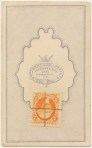
I’d love if anyone out there knows anything about the sticker on the back of the second card – thematically it could be contemporary to the card, but it could also be as recent as the 1930s.

The full article on Wikipedia can be found here: Circassian Beauties