Category Archives: Collecting

RIP David Prifti, 1961-2011

On November 23, 2011, David Prifti, a brilliant wet-plate photographer living, working and teaching in the Boston area, passed away after an extended battle with cancer. I am deeply saddened that such a bright light and creative force for positivity has gone out. I knew his work from APUG, Large Format Info, and the Collodion Forum, but never had the chance to meet him in person. I have seen his plates live though, hanging on gallery walls, and no web reproduction can do them justice. You can see his work online at the three previously mentioned websites (all linked from here). His work was part of the Masterplaters show that just closed November 22 at the Community College of Baltimore County Catonsville campus. Plans are in the works to bring the exhibit to the Washington DC area in the not-too-distant future – keep an eye on this blog for future information. There will be a memorial service on November 30th 4pm at the First Parish Unitarian Church in Concord, MA.

Upate 11/29/2011: Here is a link to a short writeup on the Huffington Post about David:
David Prifti, 1961-2011

There will be a scholarship fund established and named after him at the school where he taught. Information on donations is available in the linked article above.
Busy Week in Collecting, Part 3 – more “Gay Interest” tintypes

As I’ve said before, you can’t really call these images that get sold as “Gay Interest” “gay” because the concept as we know it today didn’t exist in the 19th century. Men have always been physically and emotionally intimate with each other but the concept of two men (or women) living together in an emotionally intimate bonded relationship for life (or at least serially to the exclusion of the opposite sex) is very much a late 20th century concept. They are interesting though because they suggest possibilities – the absolute anonymity of the images leaves open the questions and suggestions to the modern imagination of what might have motivated the sitters to pose together, and particularly in the very openly affectionate and intimate way that they did.

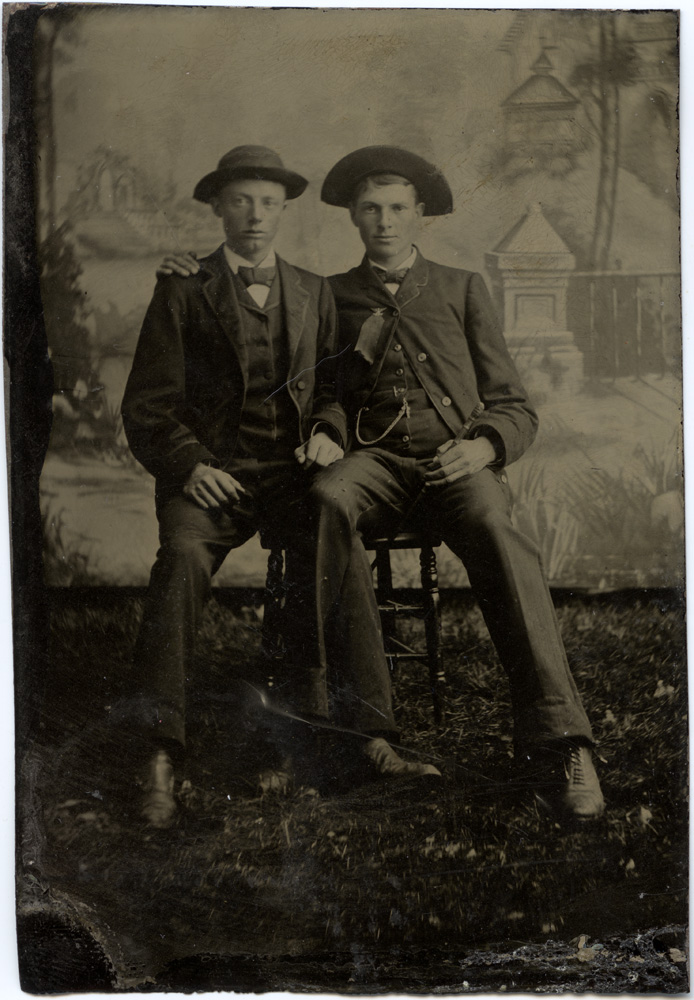
Tintype, Two Affectionate Pals (Brothers?)

These two men are very affectionate with each other. Their very similar appearance suggests they may be brothers, or they could just be very close friends. Quite possibly they were battlefield friends – the one on the right appears to be wearing a Grand Army of the Republic campaign ribbon. This may well have been taken at a unit reunion in the years following the war – note the photo was taken out of doors, on the grass, in front of a painted backdrop. I’m always interested to find images like this because it says so much more about the sitters than does a strictly studio portrait – there was some event occurring at which they wanted to record and remember their presence, and document their relationship. What was this event? Why use the painted backdrop instead of the landscape scene at the location?

This next image is even more ambiguous than the first one. Obviously from the fashions, a later image (end of the 19th/beginning of the 20th century).

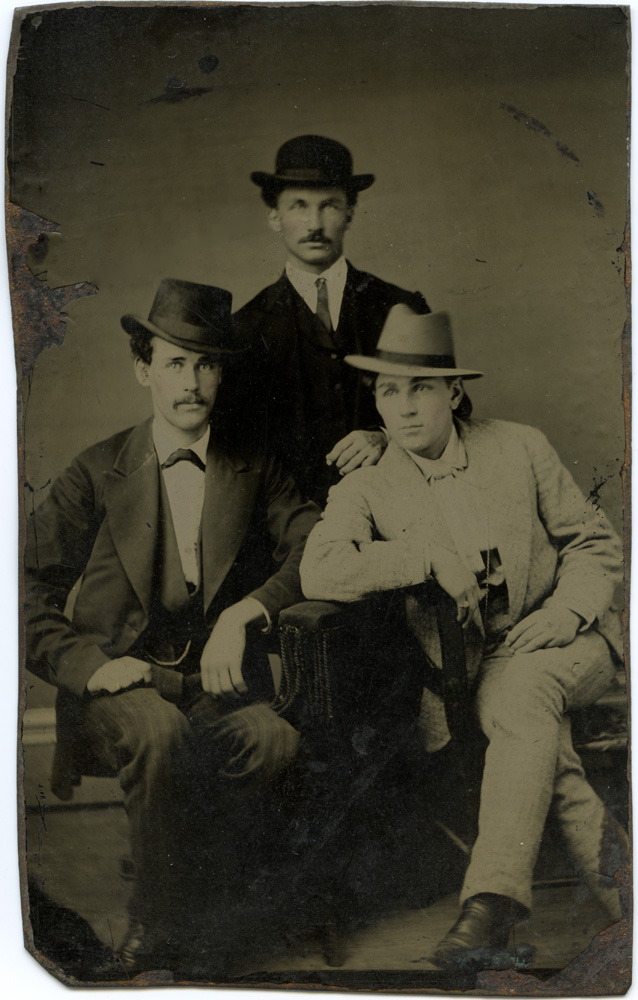
Tintype, Three Dandys

Again most likely just three friends, but the possibilities and suggestions are more ripe with potential for a late 20th century interpretation. The most interesting bit is the juxtaposition of the very fashionable dandy with the light suit with the staid middle-class burghers to his right and behind. Who was the dapper dandy, and what was his relationship to these gentlemen? Was he a foreign friend, visiting from overseas? Some exotic celebrity they had the good fortune to corral into posing with them, the 19th century equivalent of the cell-phone snap on the red carpet with a movie star? Certainly, the posing would have largely been the result of the photographer’s efforts to fit all three of them in the frame together, but the contrast between the dandy and the seated burgher couldn’t be more striking than if he were naked.

Busy Week in Collecting, Part 2 – various CDVs, including celebrity photos

Here for your viewing pleasure are three random CDVs. The first one I don’t have a lot to say about because the sitter is unknown. The photographer is William Shew, who began his photographic career on the East Coast, then moved out to San Francisco in 1851 to capitalize on the gold rush. He began his career as a Daguerreotypist, and his first studios in San Francisco were a mobile wagon parked in the plaza at Kearny between Clay and Washington streets – now Chinatown (which I hope to photograph the location as it appears today while I’m out in San Francisco on vacation). He was one of only three photographers in San Francisco at the time.

Anonymous CDV by Willam Shew, San Francisco

The next pair of images come from the mid-19th century cult of celebrity. Although both cards are not marked as to their photographer, there is a good probability that they were taken by the Brady studio, which was known for such subjects, and both had been photographed on other occasions by Brady. The first is Henry Ward Beecher, the prominent preacher and abolitionist and brother to Harriet Beecher Stowe, author of Uncle Tom’s Cabin and according to Abraham Lincoln, “this little lady whose book started this great big war”.

CDV of Henry Ward Beecher, photographer unknown (probably Brady)

This one may NOT be Brady’s, because the set is so plain – even the hat stand/support prop is rather simple for Brady’s studio, and oftentimes public figures of Beecher’s status would be invited to sit for their pictures whenever they visited a new town. These cards were the sports trading cards/Tiger Beat posters of their day, and people would collect them in albums to show off when friends came to visit.

The last image is another of Commodore Nutt and a woman who is unidentified, but another little person. It MAY be Minnie Warren, sister of Lavinia Warren, ex-sweetheart of Commodore Nutt who went on to marry General Tom Thumb in the Fairy Wedding (see previous post), but she appears smaller of stature than Minnie. It is also NOT the Commodore’s wife, who while below average height, was not a dwarf. Again, an anonymous image, but very much in the same vein. It may be possible to identify the photographer from the backdrop of the image. The custom backdrops like this were often like fingerprints or signatures for individual photographers’ work – the painted backdrops were often custom-made and very expensive, so they show up over and over again.

Commodore Nutt and unknown little woman, Anonymous CDV (probably Brady)

Note the feet of the posing clamp stand showing from behind the girl/woman. I love finding images that show the stand – it’s a bit of a reminder how the image was made. These would all have been shot in daylight studios on wet plate collodion negatives, which meant that the subjects still had multi-second exposures to hold still for.

Busy Week in Collecting, Part 1- Penobscot Indian Boy

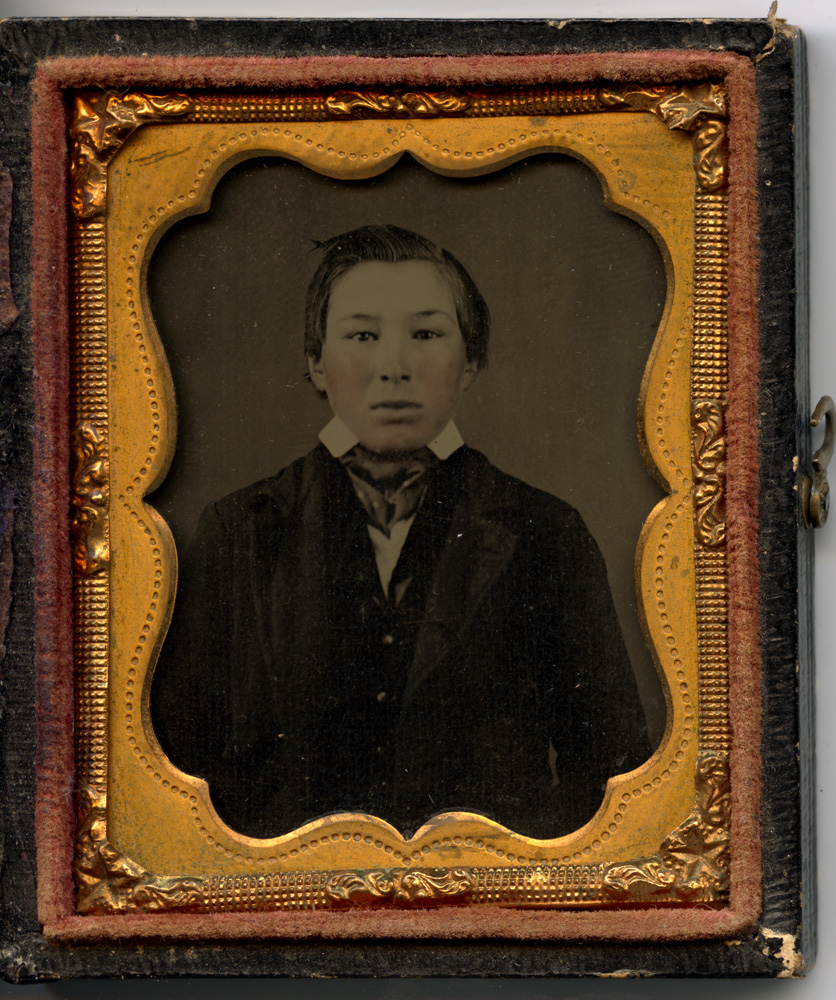
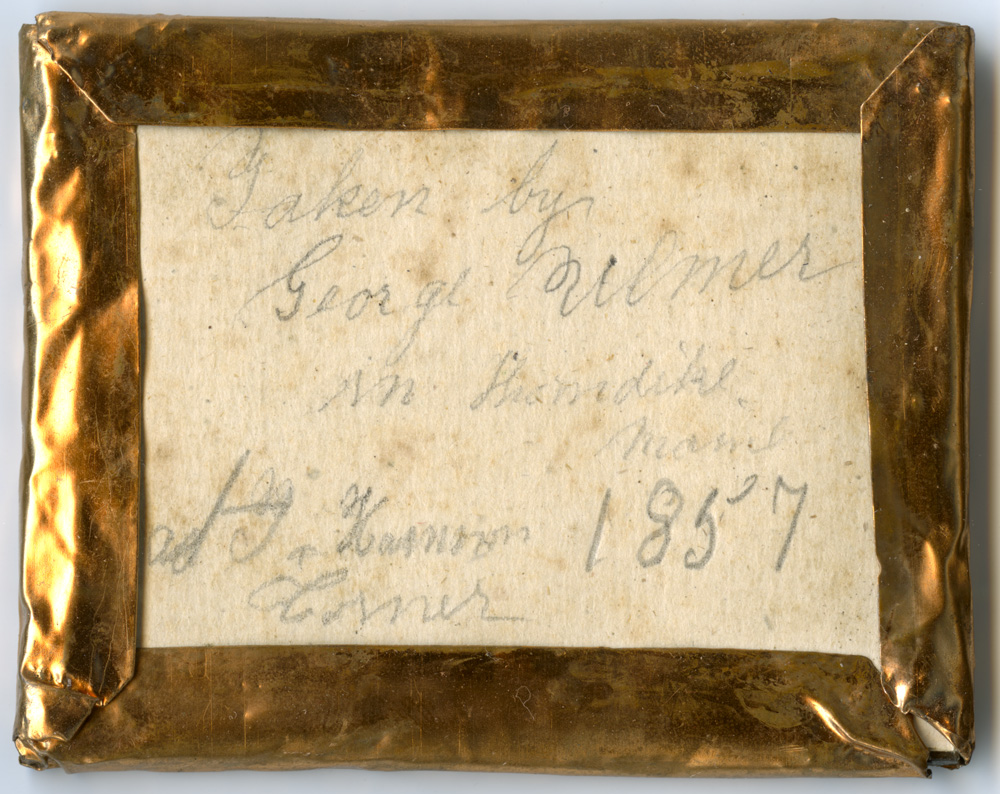
This was a wonderful find – a photo of a Penobscot Indian boy, in Anglo attire and haircut. A 1/9th plate ambrotype in a half case. Most fortunately, when the packet is removed from the half case, there is some attribution to the image. The subject himself remains unidentified, but the photographer put his name, location, and the date taken on the back. It appears to be George Ulmer(Bilmer?Kilmer?), in Thorndike, Maine 1857 At T & Harrison Corner. T could be short for Thorndike Road. If anyone has any information about an Indian School in Thorndike, Maine in the 1850s, or even better can point to attendance records, I would be eternally grateful.

Anonymous Vernacular photographs

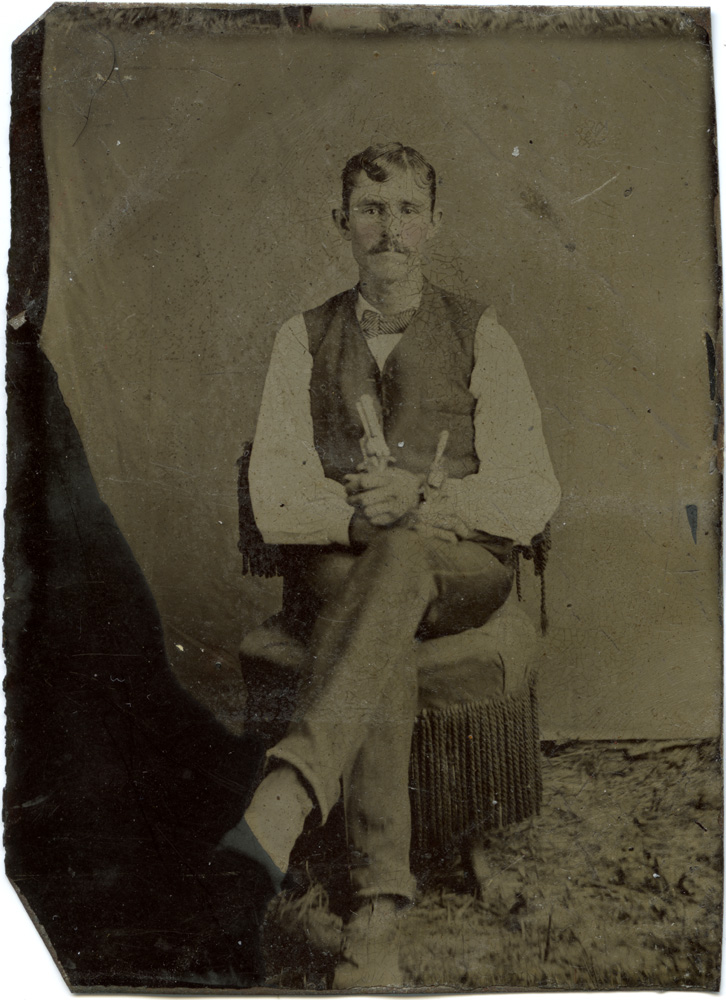
Here’s a little gem I recently uncovered. No date, no attribution, no name of the subject. It’s a little approximately 1/6 plate tintype. Definitely not from a professional studio, as the plate is ragged – the edges appear to have been almost torn from a bigger sheet, and the collodion pour and/or development are uneven. The photo was taken in the field (literally – you can see the grass under the sitter’s chair, and the backdrop looks like it might have been a rug or blanket with some kind of fringe on top, thrown over a hastily erected backdrop stand). Still, the photographer went to the effort to tint the cheeks on the sitter. It brings to mind the civil war soldier portraits with the young men about to march off to war posing with pistols. I wonder, like with those war portraits, if the pistols are indeed property of the subject or if they are merely props he chose to pose with because they looked cool (many of the civil war soldier photos are using prop weapons that belonged to the studios. Many soldiers had not yet been issued firearms when they had their pictures taken, and they often posed with weapons inappropriate to their rank and status – enlisted men with non-government issue pistols, for example). Was he a saloon keeper? A lawman? The guns are kind of dinky, and he’s handling them rather casually. I think it’s the aura of uncertainty that lingers with an image like this that makes it so fascinating.

Anonymous Vernacular - The Pistol Packer

I’m using the term “Vernacular Photography” to describe this image. A good friend of mine gave me a definition for it (after a rather contentious debate from which I learned some humility): “Vernacular photography is photography by indigenous populations for indigenous consumption”. Meaning photographs that are created with the intent to be consumed by the audience that created them. The photographer does not have to be known or unknown; neither does the sitter. What matters is the intent. So a Mathew Brady portrait of a client off the street, commissioned by that client for their own personal use, even if the client were famous, would be vernacular, but Brady’s civil war documentary, even the camp scenes of soldiers at rest, would not. Diane Arbus’ photos are NOT vernacular, nor are Ansel Adams’. Their work was created for the express purpose of exposing an idea and sharing it with the world at large. Vernacular photography is created for a known, limited audience. Non-vernacular photography (art photography, documentary, etc) is created for an unknown, unlimited audience. The sitter for my tintype here probably had no expectation of the life of his image beyond whoever he gave it to being able to remember a moment in time at some now-unrecorded location. By collecting it, publishing it and categorizing it, though, do I now lift it out of that category of vernacular image by giving it that unknown, infinite audience?

There’s a wonderful book on the American Tintype by Steven Kasher called “America and the Tintype” which catalogs the better part of a century’s worth of mostly anonymous, vernacular photography from the tintype era. If you’re interested in the subject, I highly recommend picking up a copy.

Three New Cased Images

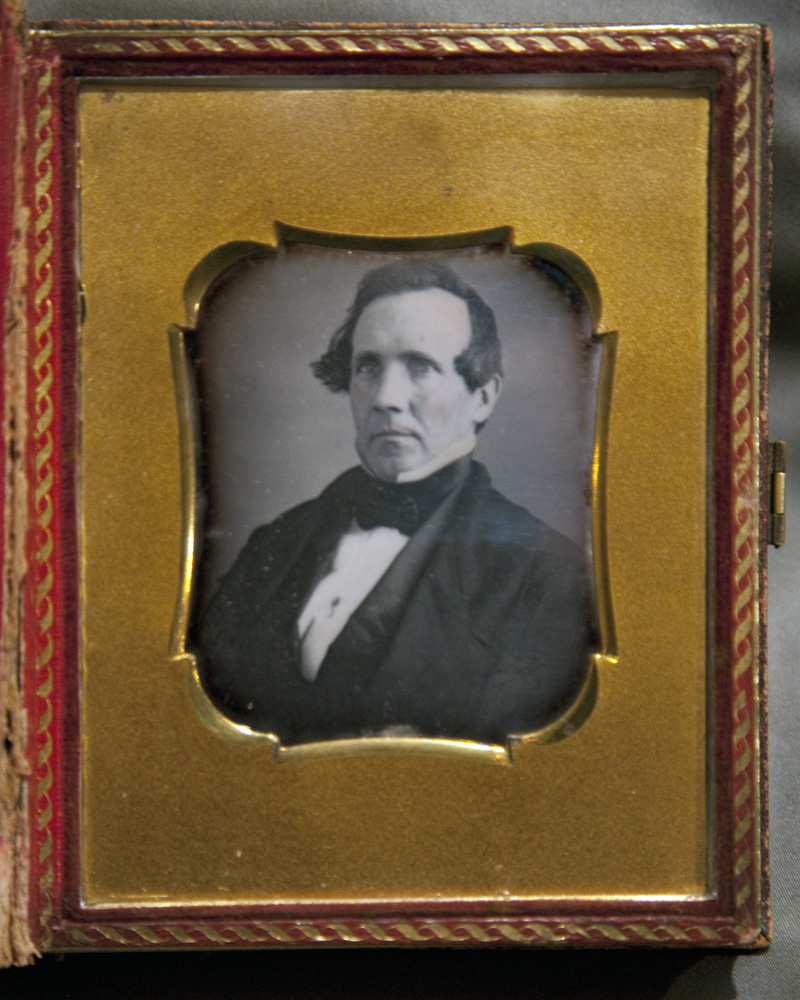
My three latest acquisitions. I’ve mentioned/showed the gentleman in the book-form case before, but I have a better photo of the image itself to include now. The little milk-glass ambrotype is truly exquisite. These are in a way consolation prizes for the one that got away – I was bidding on but got outgunned on a vintage 16×21 William Henry Jackson albumen print of Bridalveil falls at Yosemite, from the days of his Denver studio (1880-1897). That was a shame; at the closing bell I could have bought it but then I’d have had to turn around and re-sell it immediately, which would have been no fun. These I get to keep as long as I like.

C’est arrivee!

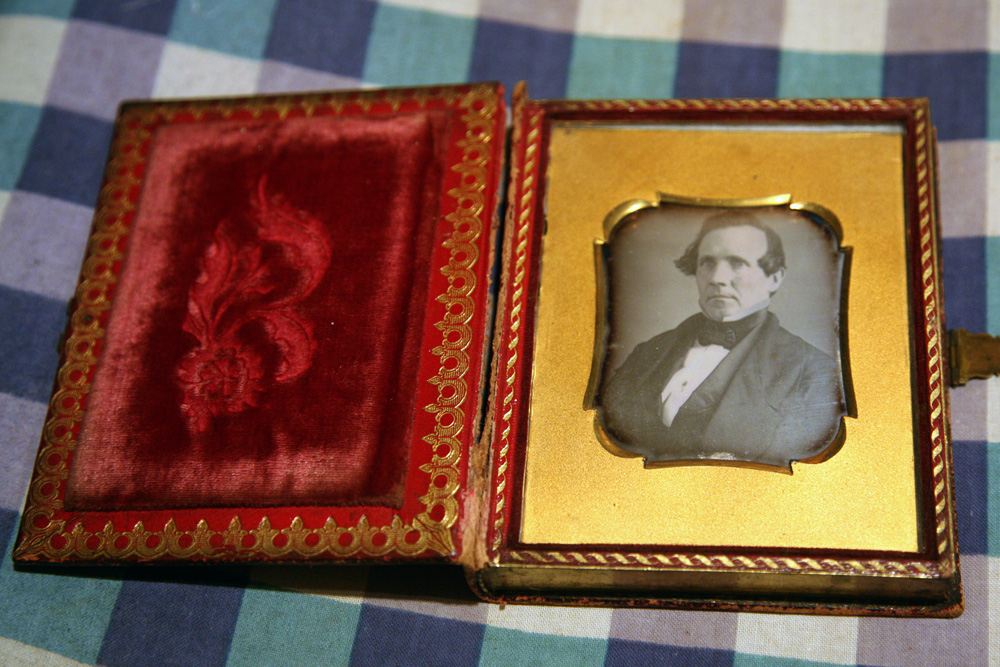
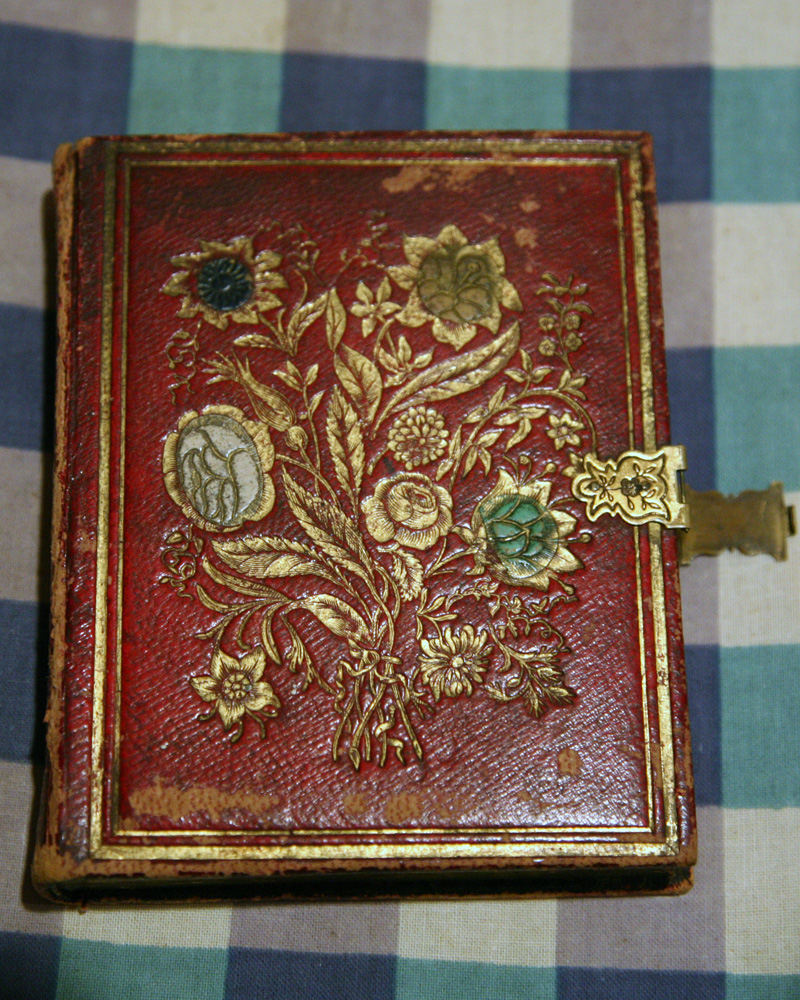
The first of the new images has arrived. The cased quarter-plate daguerreotype of a gentleman. The case itself is quite amazing – made to look like a little book, it’s nearly half an inch thick and gives the plate some real heft. Makes you wonder if the family had a series of them together on a shelf in their library. The image itself is in quite excellent condition, with minimal tarnishing around the edges of the mat. There is a very subtle hand-coloring applied to his cheeks. As you can see from the shot of the open case, the spine is torn but not completely broken.

Happy birthday, Daguerreotype!

Just a quick note – today marks the 172nd birthday of the Daguerreotype. It was on this day in 1839 that the French government declared the Daguerreotype process “free to the world” (after buying the patent rights from Daguerre in exchange for a life pension). Vive la France!!!

New Daguerreotypes coming!

Well, new to me that is…

I’ve been off the collecting kick lately because I had some more gear and supplies to buy for my own photography. I found a pair of 14×17 inch film holders that fit my Canham 14×17, and although they’re not a color match for the other three, they’re more than good enough – the external dimensions are identical, so they
re an exact fit, which is the most critical factor when looking for such things. Oh, and they’re less than half the price of new ones that do match my existing holders.

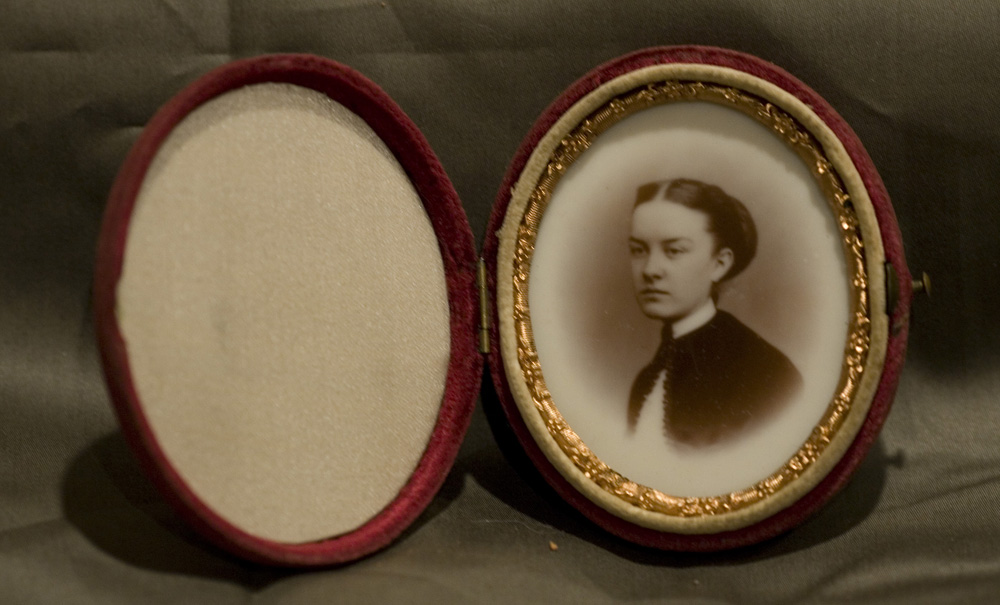
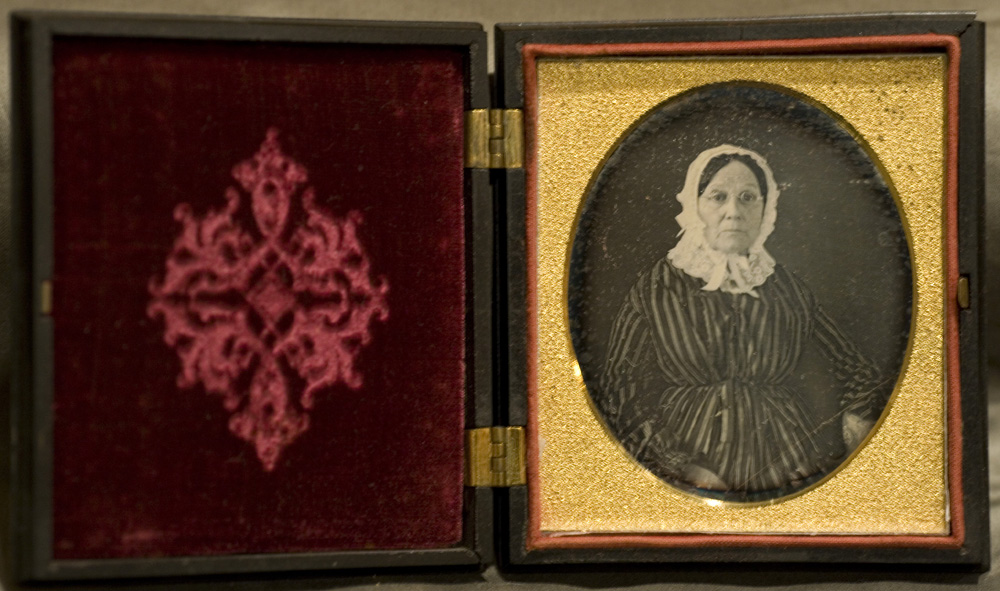
So, with that holdup out of the way, it’s on to more collecting. Two daguerreotypes and a milk glass ambrotype are en route. Daguerreotypes are much more familiar to most people, so I’ll save further commentary until I have them to show. A milk glass ambrotype though- you might wonder what is it? Simply, it’s an ambrotype on a piece of white, opaque glass. Not so simply, to get the image to show, you create a collodion negative the same way you would if you were planning to make albumen or salt prints. You coat a second wet plate onto a piece of milk glass (a white/opalescent glass), then separate the negative from the milk glass with a thin wire or shim or anything that will keep the collodion original very close to but not in contact with the new wet plate. Expose and process as normal for collodion. You end up with a positive on the milk glass (a negative of a negative is a positive). Because of the extra labor involved, they’re somewhat rare. The one I’ve got coming is a very small (1/9th plate size) oval portrait of a young woman, done with a very attractively executed vignette, in a red velvet case. I’ll post pictures as soon as I get it in my own hands. I have no idea who she is or what she did for a living, but something about the outfit feels like a nurse’s habit. Maybe it’s the vignette giving a subliminal halo to the woman adding to the impression – who knows? It probably is a civil war era image, but if that’s true, she’s probably not a nurse, as most of the official requirements for nurses during the civil war requested that they be doughy, extremely plain of looks, and past marriageable age. This girl is none of the above.

I’m BAAAACK! To posting that is…

It’s been a while since I added anything here, because I’ve been insanely busy dealing with a whole bunch of personal business (breaking up, evicting my ex, cleaning up the aftermath, starting dating again, reconfiguring my office, building a new home wireless network since the ex took the wireless router, getting nasty bronchitis, recovering from said bronchitis, etc etc you know…). I haven’t had a lot of time for collecting or thinking about it as a result. Well, the dust has settled and I’ve been casually acquiring an odd and end here and there, so I’m back to writing about it again.

One of the things that has interested me, and helped drive me into this whole civil war period image collecting thing, is my hometown – Chambersburg, PA. Chambersburg was perhaps the most trampled ground north of the Mason Dixon line during the Civil War. Prior to the war, John Brown planned his raid on Harpers’ Ferry while living there, and met with Frederick Douglass to discuss the plans (Douglass advised against attacking the federal arsenal). Jeb Stuart’s cavalry raided it for the first time in 1862. Then Lee’s troops passed through on their way to Gettysburg in ’63, and in 1864 General McCausland’s troops demanded a ransom of $500,000 in US currency or $100,000 in gold, which the town refused to pay, so it was put to the torch.

In digging around on Ebay, I found an image of a man who was born a few towns over from Chambersburg. That got me thinking about the old hometown, and I started searching for Chambersburg related stuff. I acquired a group of photos spanning a good 20+ years of work from a single studio, which in further searching on Ebay seems to have been the most prominent if not the only studio in town at the time.
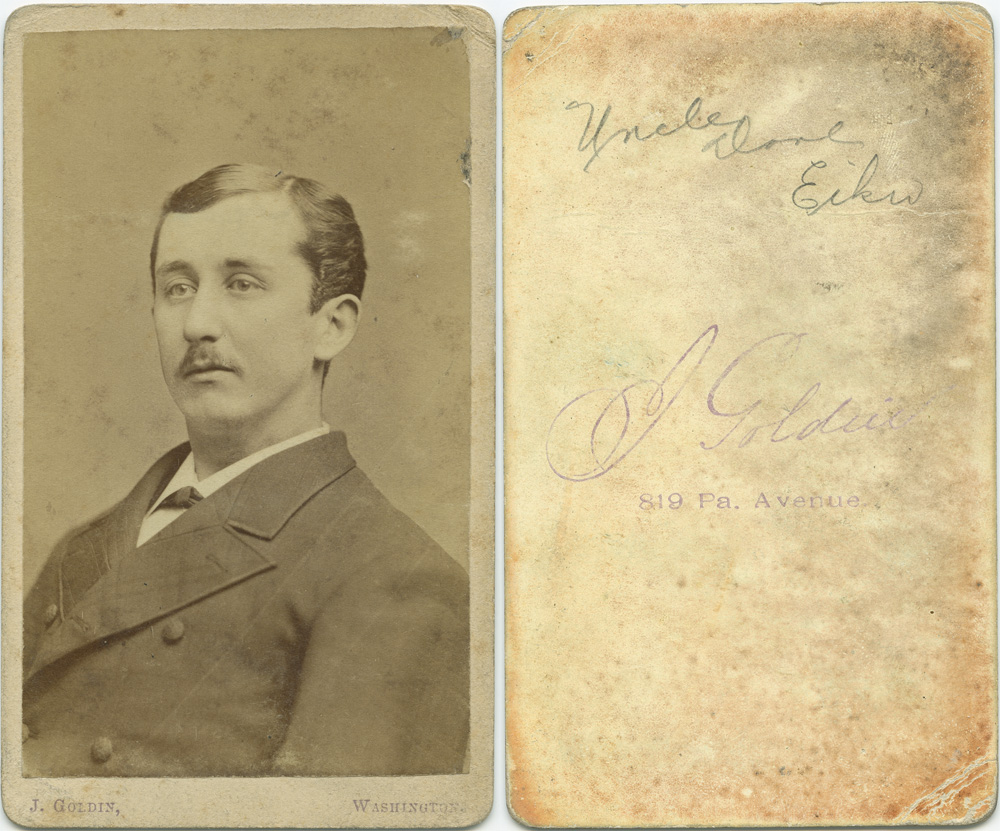
Here is the image that got me thinking about Chambersburg, a photo of David Eiker, born in Quincy, Pennsylvania. Quincy is a tiny one-stoplight town a few miles east of Chambersburg. This photo was taken at the J. Goldin studio in Washington DC.

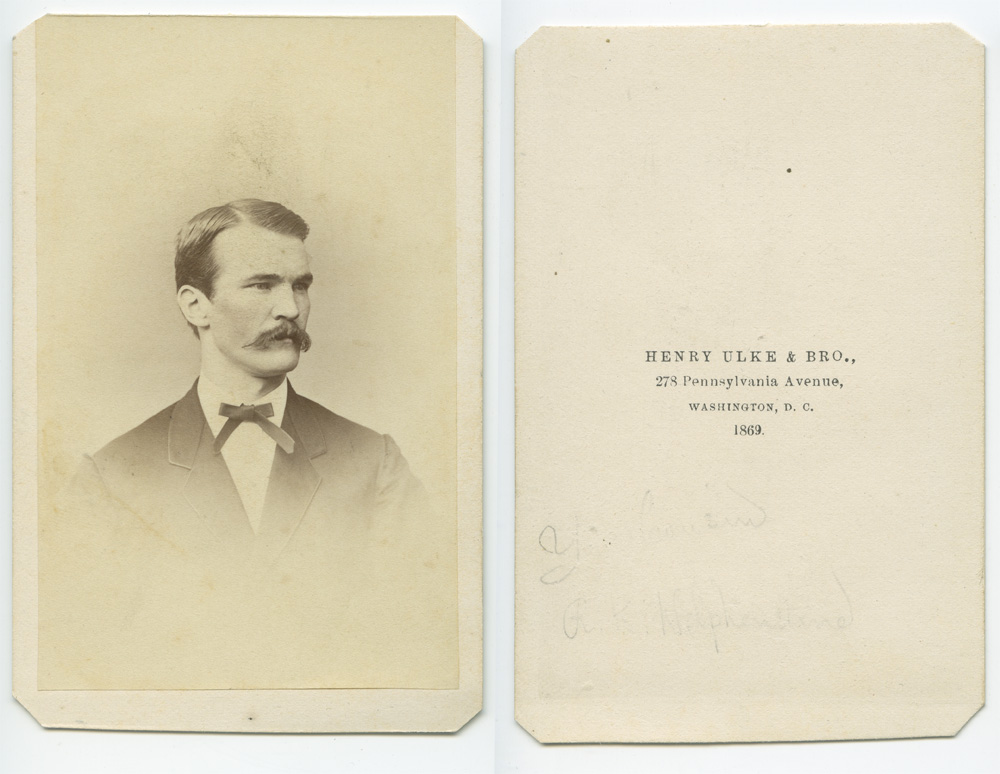
Acquired at the same time was a more-or-less unrelated photo of a Mr. R.K. Hopkinson, taken at the Henry Ulke & Bro. studio in Washington DC. The common thread was the Washington, DC studio. Mr. R.K. Hopkinson Served in Company D of the 3rd Massachusetts Heavy Artillery during the civil war.