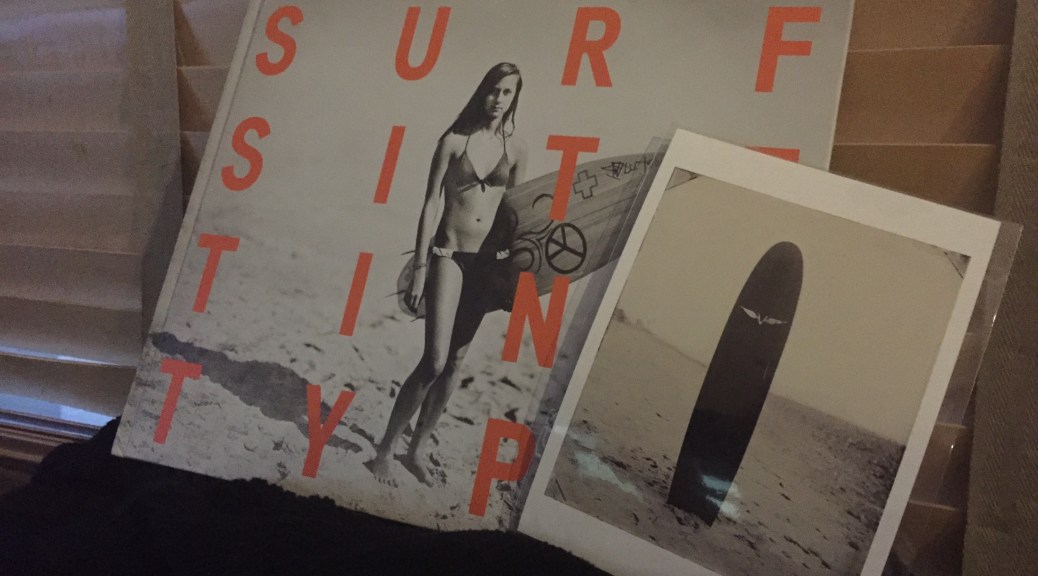
This arrived in the mail the other day: my autographed copy of Surf Site Tin Type by Joni Sternbach. She’s an amazing photographer who over the span of several years and thousands of miles went around the world photographing surfers and surf culture using vintage camera gear in wet-plate collodion.
The print accompanying it was a bonus for participating in the Kickstarter campaign- an image of Duke Kahanamoku’s surfboard.
I’ve added a bunch of other books to the catalog here, and re-organized it to make it less painful to scroll through and find something. One of these days I’ll even find the time to finish cataloging the back-issues of Photographers International I have listed.
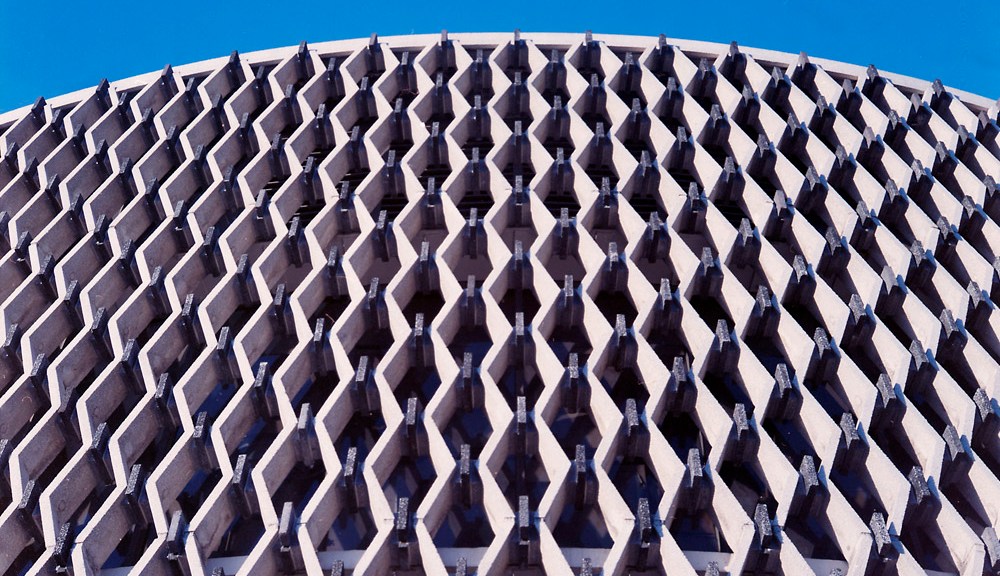
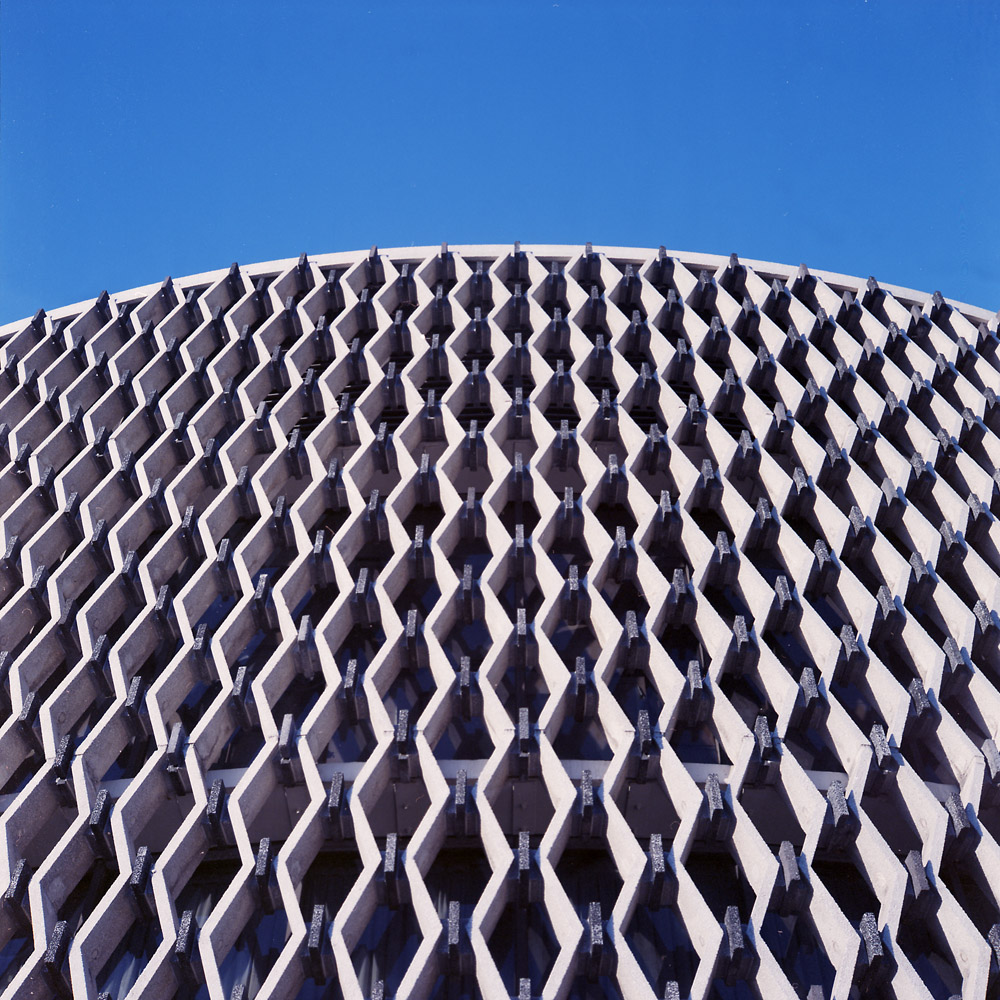
I previously posted some b/w abstracts of this building, taken on a cloudy, rainy day. Here it is on a glorious, cloudless sunny day. Yes, that actually is the color of the sky; no Photoshop trickery was used to create that.
PAHO/WHO Building
I love the dramatic contrast between the clear, textureless blue sky and the geometric dynamism of the brick latticework over the building facade.
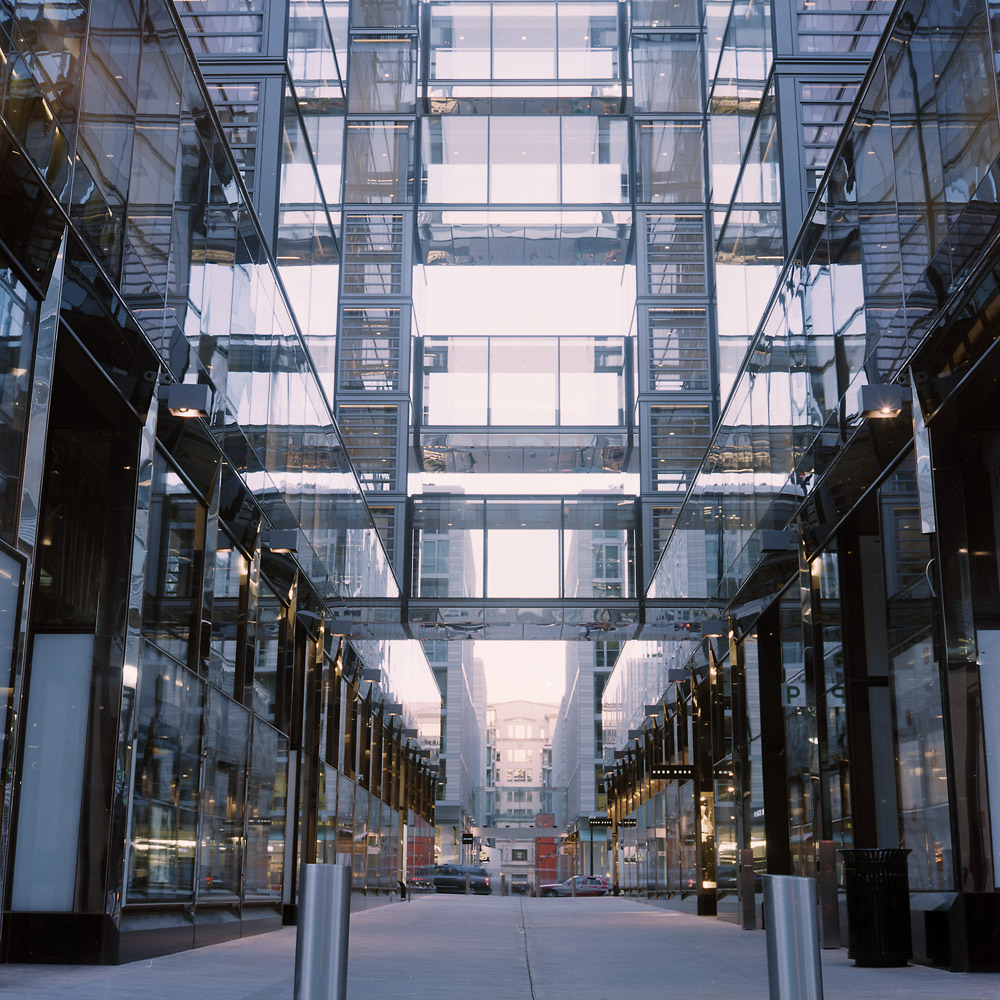
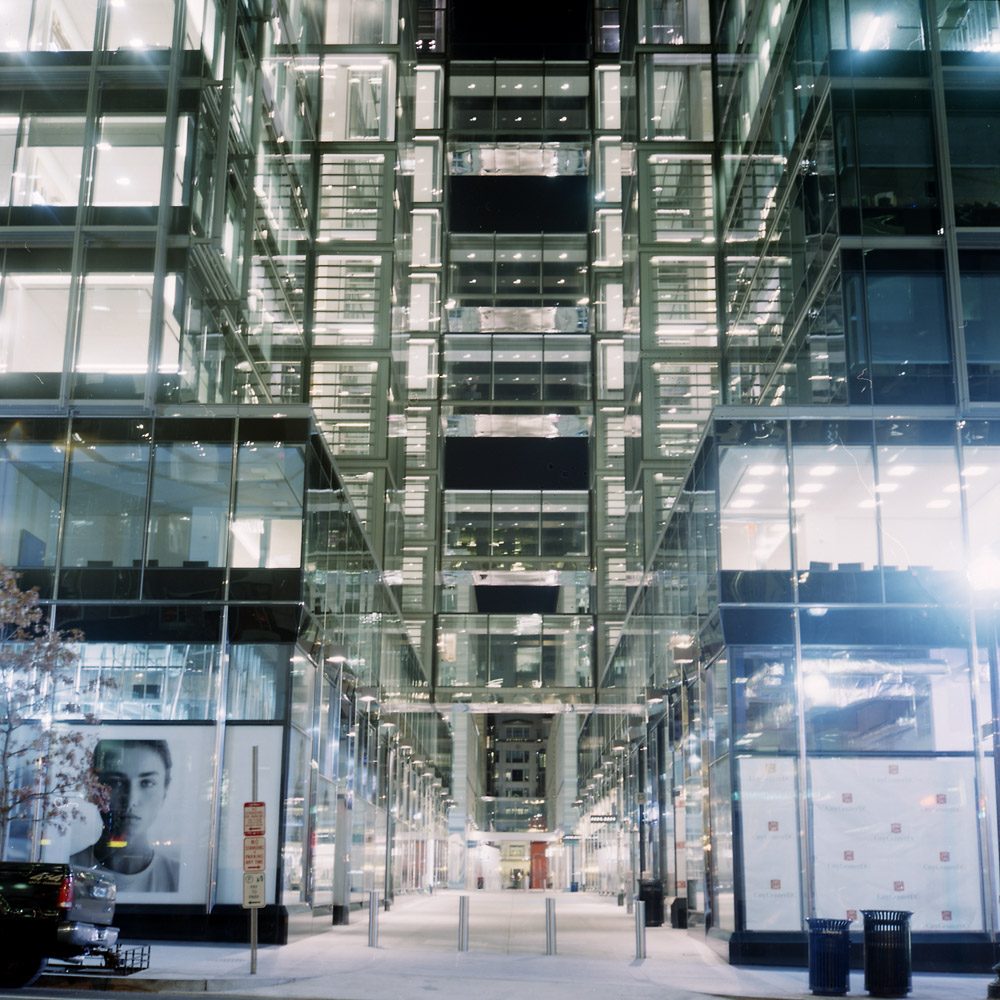
this is a brand new office/retail/residential complex here in DC. I pass it all the time on my way to and from work, social outings and various and sundry obligations. I’ve seen it in all kinds of light, at different times of day. I particularly like watching it come to life as the sun goes down.
Glass Cubes, Evening Light
The color changes as the sun goes down and the lights go on. At any time, the abstract geometry of the place makes it highly clinical, but the mood shifts. It actually looks more alive at night.
Glass Cubes, Night, Face
A different take on abstracting the geometry of the space. The glowing red exit sign adds a tiny touch of humanity in what could otherwise look like a set from Tron, the movie about a virtual world inside a computer. Glass Cubes, Exit Sign
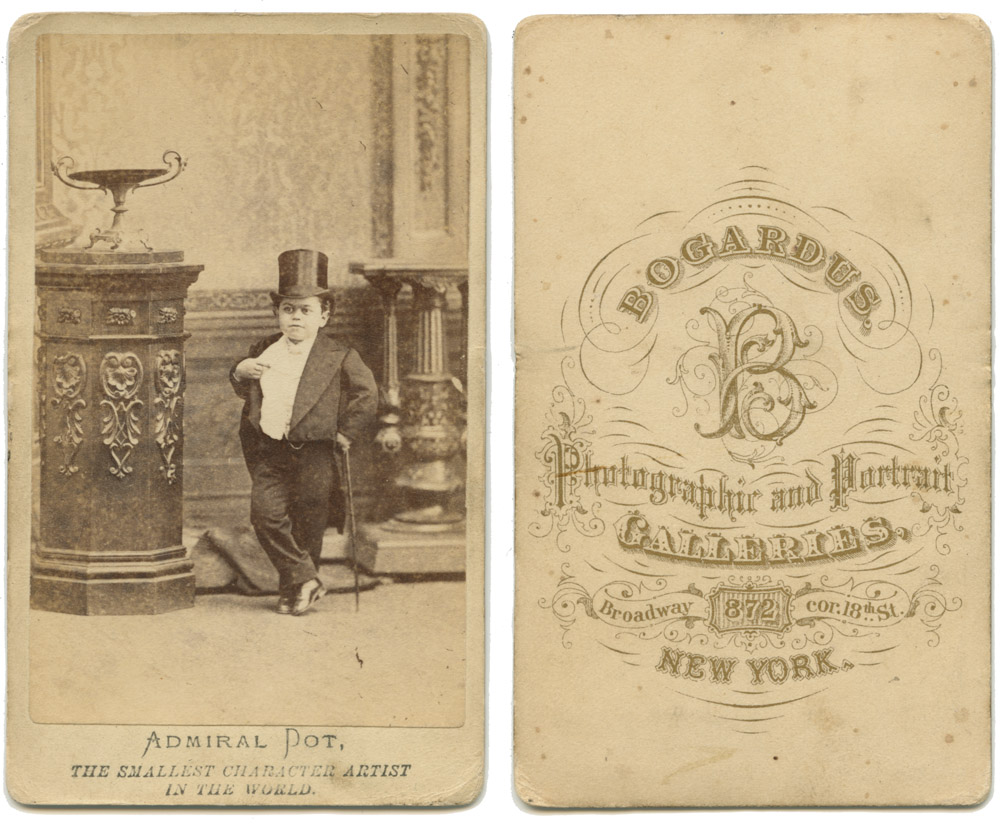
It’s been a very long time since I collected any additional CDVs. Perhaps a year or more. So I was overdue. Here is another one of my circus freaks (I’m using the period appropriate term for them, no disrespect meant to any little people who might find the term offensive): Admiral Dot, a contemporary and colleague of Tom Thumb. This is my third CDV of Admiral Dot, but the first one to have the photographer identified on the verso. The other two were from negatives sold to E & HT Anthony who then reproduced them with their own stamp, no other credit supplied.
Admiral Dot, by Bogardus
I’m really starting to think of these circus performer CDVs as a subspecies of occupational image – they’re showing the performers in their stage attire, doing what they do to get paid. It’s not exactly the same thing as a cobbler with a leather apron, some awls and a shoe, or a cooper with a hammer, metal hoops and barrel staves, but nonetheless, they are enacting for the camera that which they do professionally.
Sometimes, I do actually break out the 35mm and shoot. These were all taken at a local car show, playing around with my Contax RTS III and the 50mm f1.4 Planar lens. I think you really can tell a difference between shots taken with the RTS III and other 35mm cameras because of the vacuum film pressure plate – sucking the film perfectly flat at the time of exposure does lead to a sharper negative overall, or at least takes the film’s flexibility out of the equation and lets the lens shine through. These were taken with my favorite color negative film, Kodak Ektar 100.
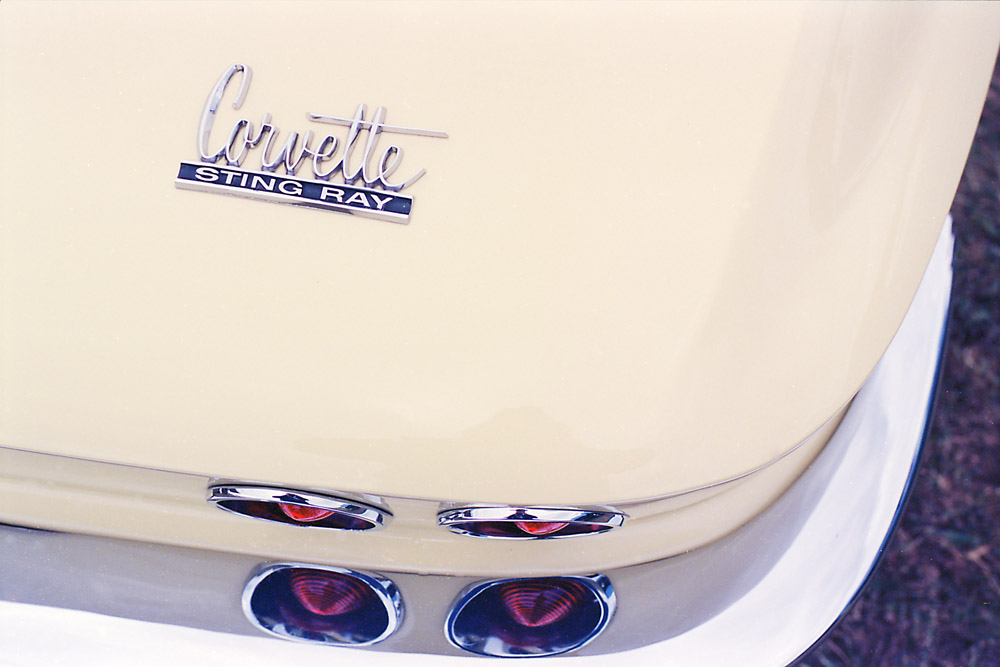
I just love the simplicity of the Corvette rear end design in this composition – the field of cream yellow, offset by the curve of chrome and the two red taillights reflected in the bumper. It doesn’t get much better than this.
Corvette Bumper
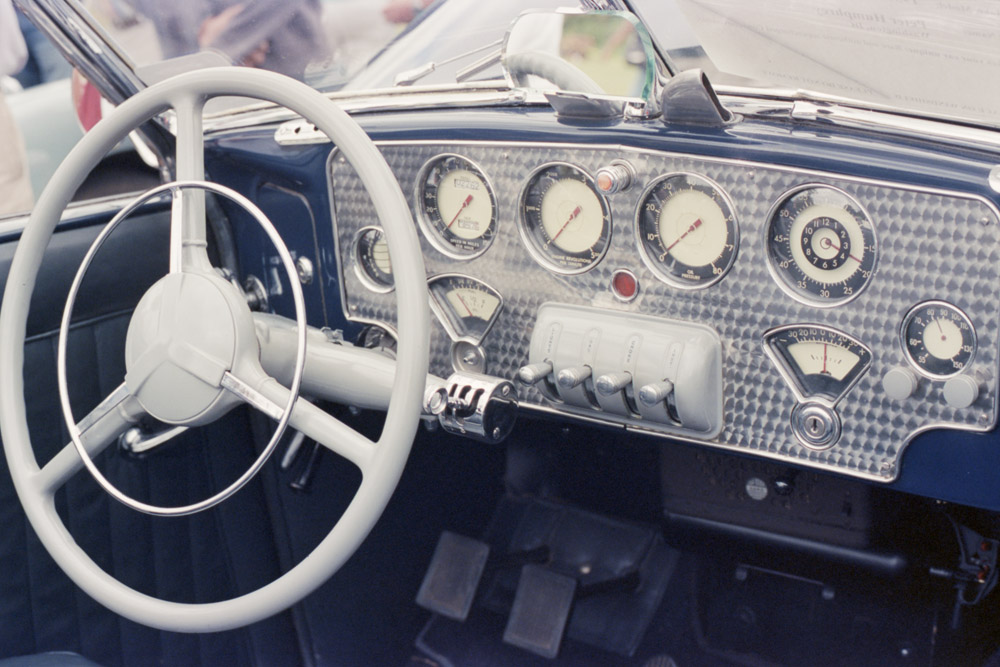
Aah, classic design. The Art Deco glory that is the Cord 810 convertible. Considering how rare and expensive these are, the owner/driver gets a lot of credit for driving it to and from the show. I saw him later that afternoon, pulled over with the hood up, so that dashed my fantasies of having one as a daily driver. But it’s still a glorious car to see on the road today.
Dashboard, Cord 810
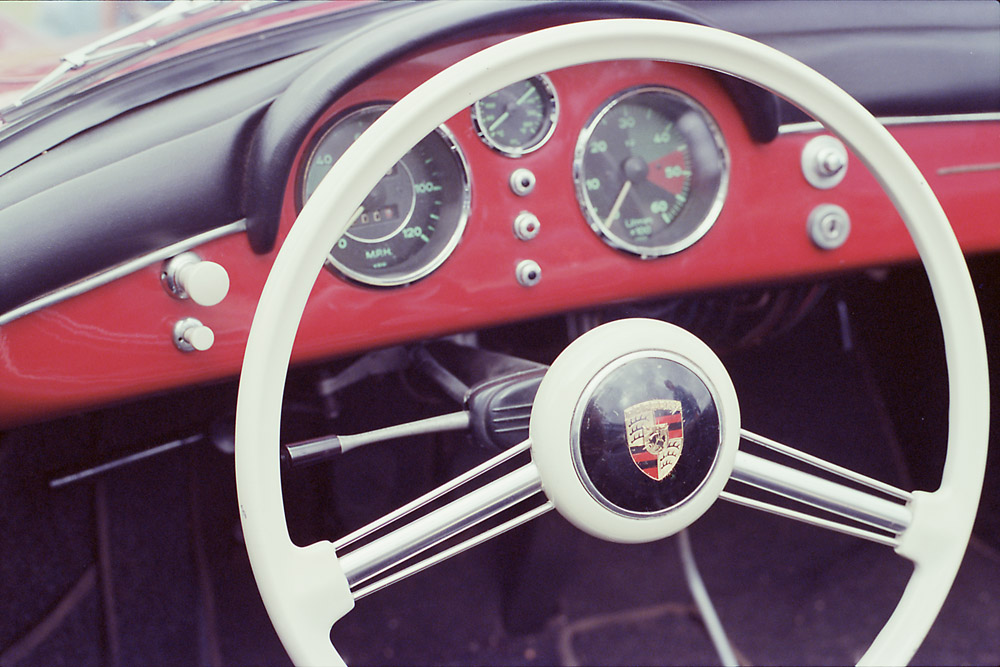
Another vintage dashboard, from a Porsche 356. Very clean, very simple, no clutter to distract from the driving experience.
Porsche Steering Wheel
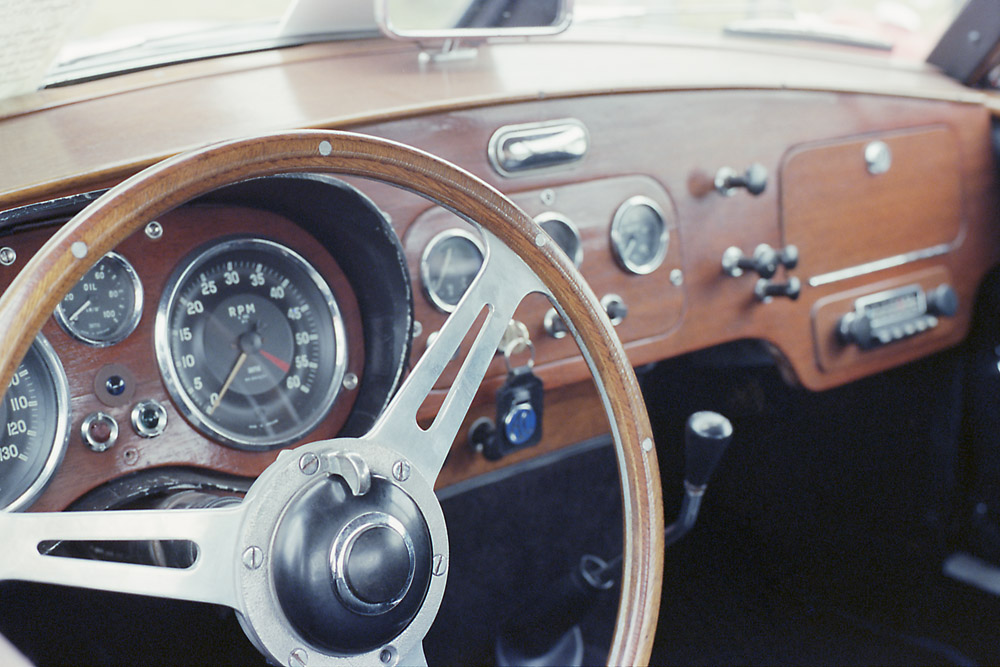
I was racking my brain to remember what car this was exactly. It’s British, 1950s, with a big (for the time and place) engine. I was thinking Jensen, or BRM, but I think Jensen was 60s and 70s, and BRM mostly did racing cars. Then it struck me – it’s a 1950s Bristol four-place coupe. They were fast, luxurious GTs in their day, and somewhat rare, especially on this side of the pond.
Bristol Dash
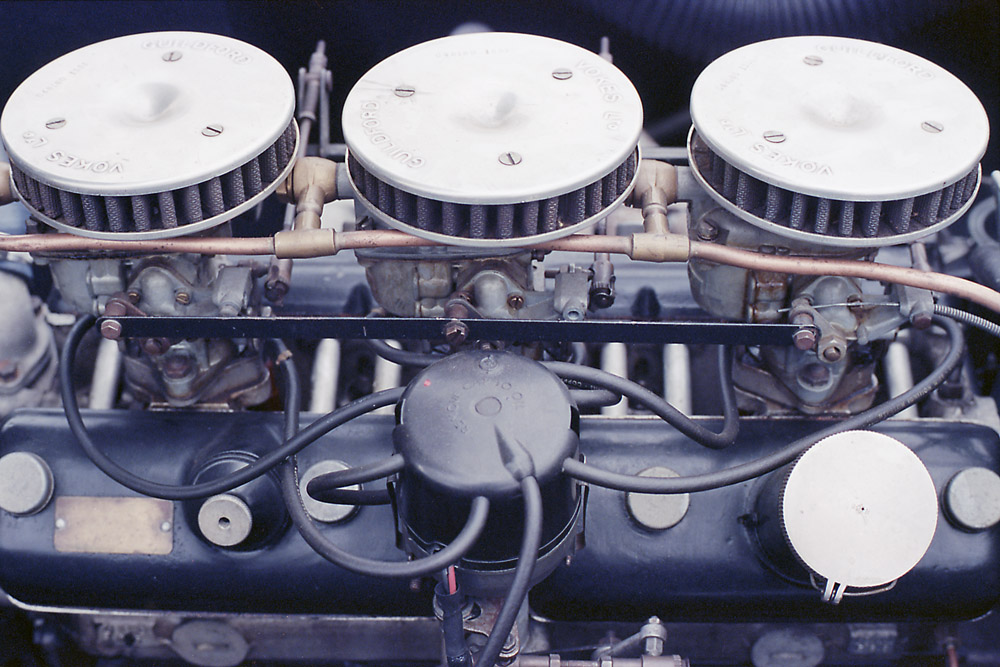
Here is the engine compartment of the Bristol. A big inline 6-cylinder topped by three magnificent carburetors. It’s almost sculptural.
Bristol Engine
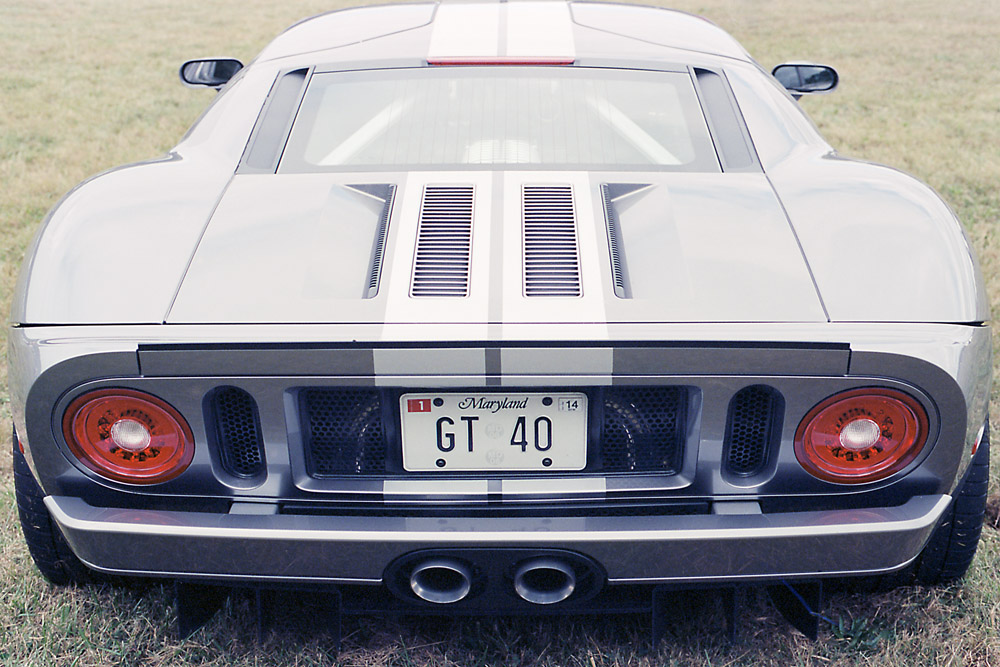
The modern contingent – a Ford GT, the modern recreation of the 1960s GT40 race car, but this one is street legal, and fully civilized on the inside with working A/C, radio, and leather seating.
Ford GT40
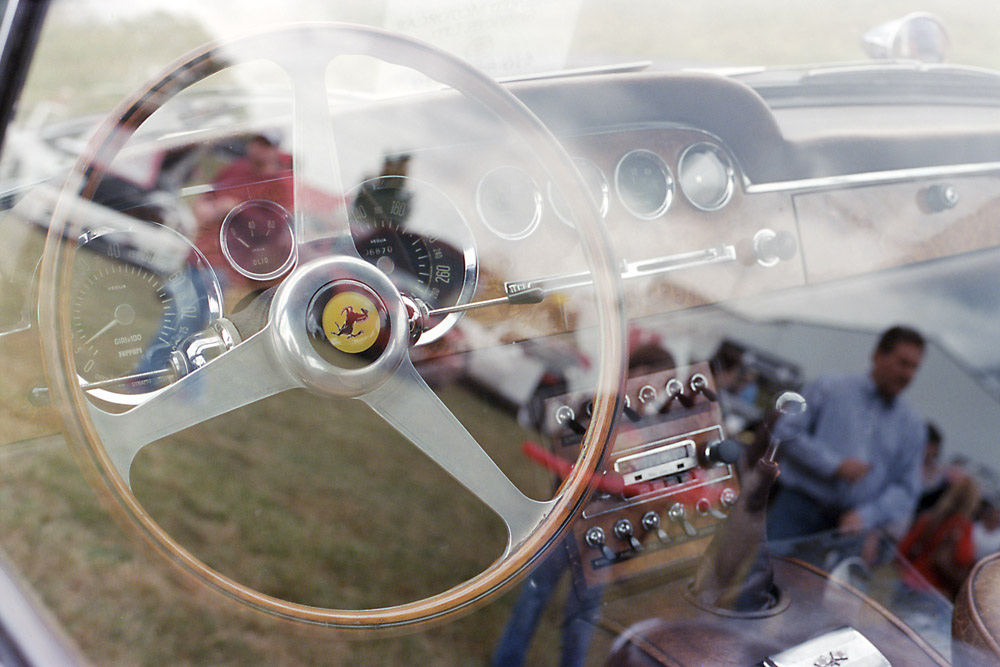
And last but not least, what car show would be complete without a Ferrari or two? This is the dashboard of a Ferrari 250 Berlinetta, as seen through the window glass.
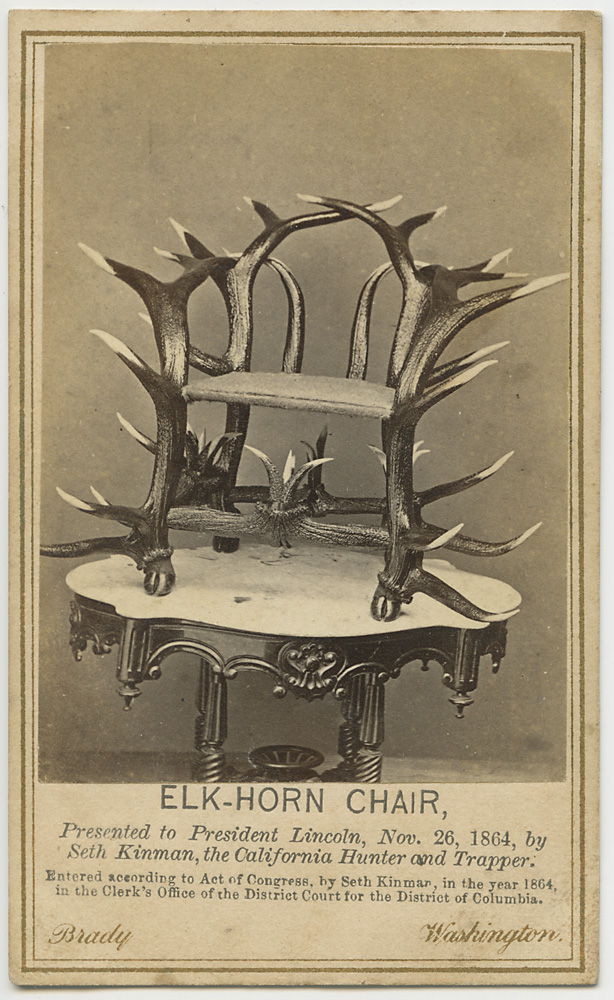
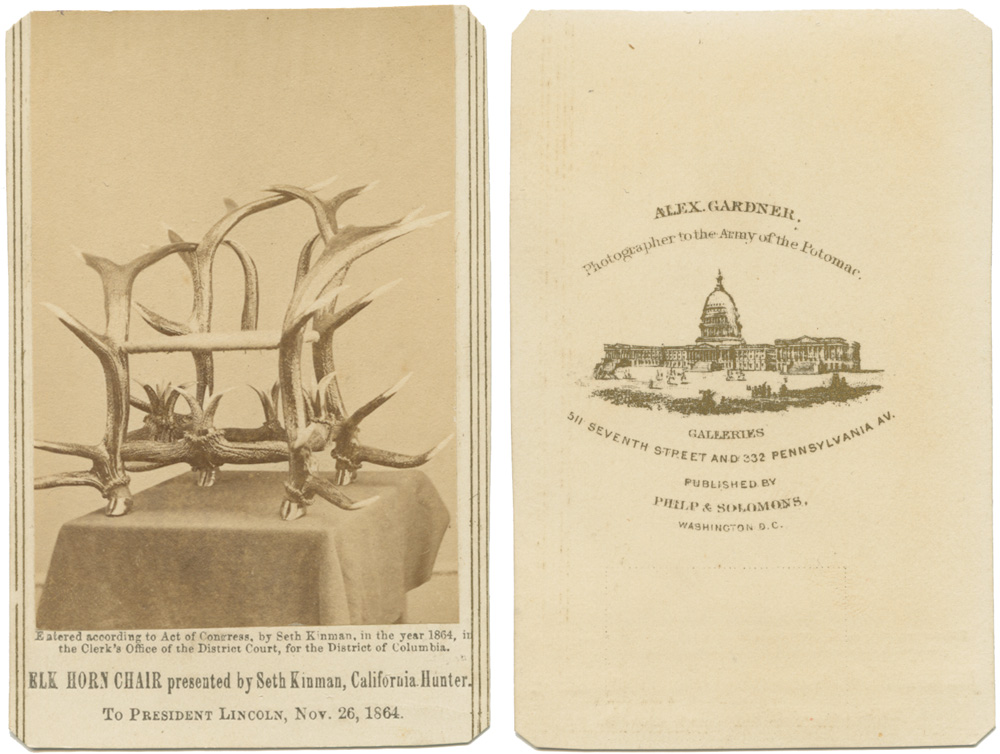
Ok- it looks like the elk horn chair Seth Kinman gave to President Lincoln made the photo studio rounds in 1864. I now have a copy of the Brady version of the chair’s portrait, along with the Alexander Gardner version. In perusing the Wikipedia article, there appears to be at least one other Brady version of the Kinman-Lincoln chair. I’m trying to find out the disposition of the chair today – it may be part of the White House collections, or it may belong to the Smithsonian. I’ll update when I find out.
According to Wikipedia, here is the story of this particular chair:
Kinman’s presentation of an elkhorn chair to President Abraham Lincoln at 10 a.m. on Saturday, November 26, 1864 was recorded by artist Alfred Waud, the only known picture of Lincoln accepting a gift. The drawing shows Lincoln examining Kinman’s rifle, which he called “Ol’ Cottonblossum.” Kinman also presented a fiddle made from the skull and a rib of his favorite mule and played the instrument.
Much to the amusement of Lincoln and other spectators, he played ‘Essence of Old Virginia’ and ‘John Brown’ on the bones of the mule. Lincoln said that if he could play the fiddle he would ask him for it, but since he could not, the fiddle would be better off in Mr. Kinman’s hands.
Within three weeks, Lincoln stated that he would prefer to eat Kinman’s chair, antlers and all, than to appoint a certain office-seeker.
The following April, Kinman marched in President Lincoln’s funeral cortege in Washington.
Elkhorn Chair given to A. Lincoln by Seth Kinman, 1864
Here is the Gardner CDV for comparison:
Seth Kinman’s Elkhorn Chair, Presented to A. Lincoln, November 26, 1864
To quote the Wikipedia page about Seth Kinman:
Seth Kinman (September 29, 1815 – February 24, 1888) was an early settler of Humboldt County, California, a hunter based in Fort Humboldt, a famous chair maker, and a nationally recognized entertainer. He stood over 6 ft (1.83 m) tall and was known for his hunting prowess and his brutality toward bears and Indians. Kinman claimed to have shot a total of over 800 grizzly bears, and, in a single month, over 50 elk. He was also a hotel keeper, barkeeper, and a musician who performed for President Lincoln on a fiddle made from the skull of a mule.
Known for his publicity seeking, Kinman appeared as a stereotypical mountain man dressed in buckskins on the U.S. east coast and selling cartes de visites of himself and his famous chairs. The chairs were made from elkhorns and grizzly bear skins and given to U.S. Presidents. Presidents so honored include James Buchanan, Abraham Lincoln, Andrew Johnson, and Rutherford Hayes. He may have had a special relationship with President Lincoln, appearing in at least two of Lincoln’s funeral corteges, and claiming to have witnessed Lincoln’s assassination.
His autobiography, dictated to a scribe in 1876, was first published in 2010 and is noted for putting “the entertainment value of a story ahead of the strict facts.” His descriptions of events change with his retelling of them. Contemporary journalists and modern writers were clearly aware of the stories contained in the autobiography, “but each chooses which version to accept.
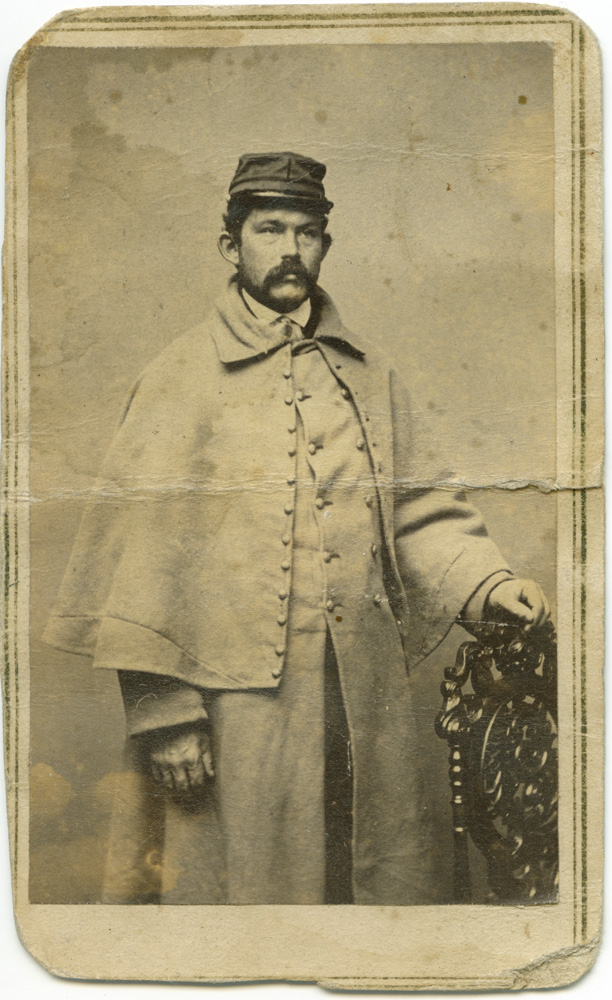
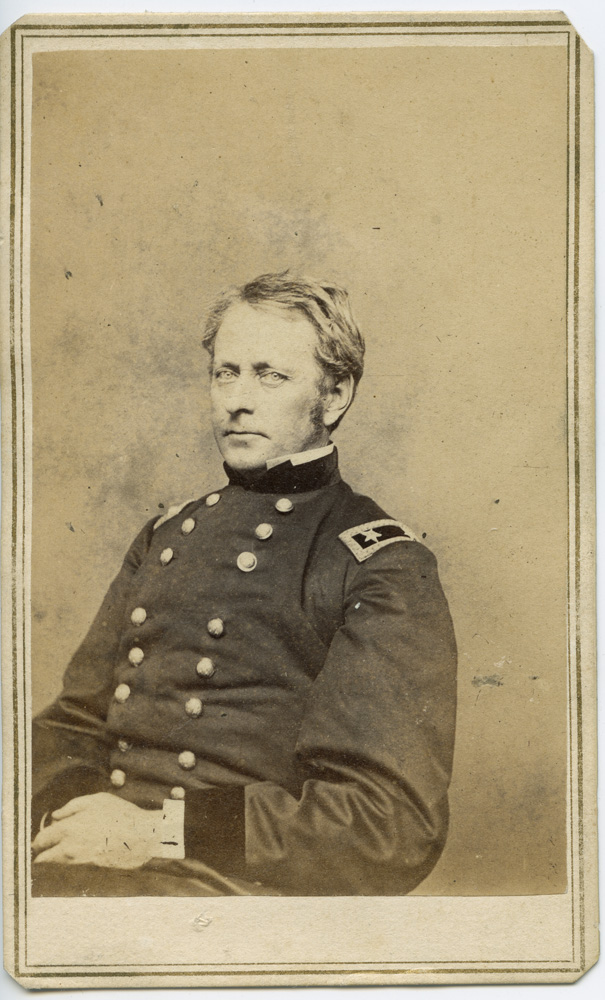
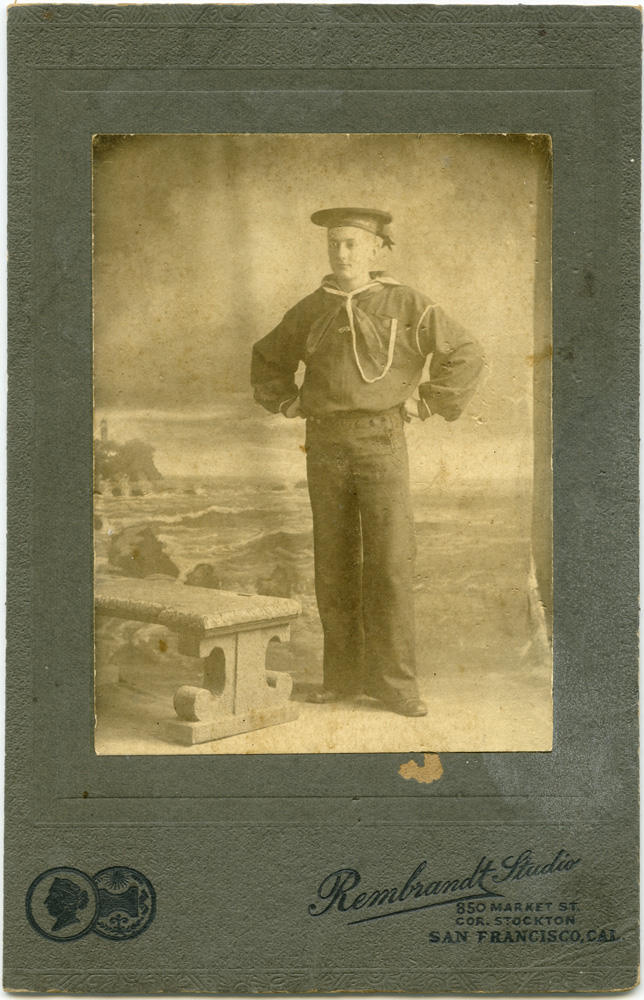
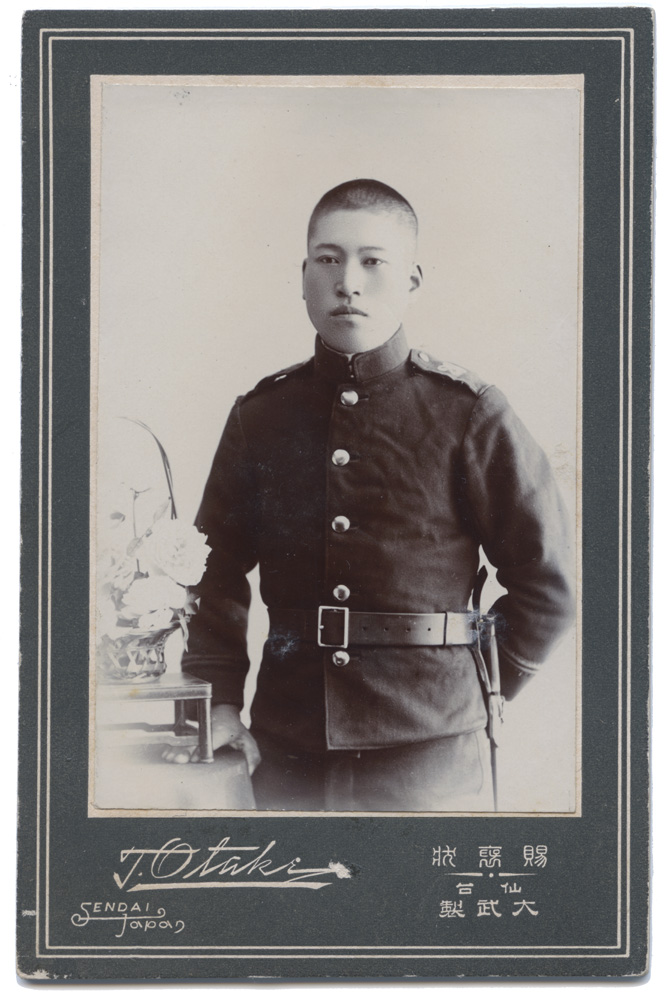
While I’m on the topic of military themed images, I thought I’d do a (for the most part) no-words review of the military images in my collection.
Affectionate Confederates – 1/6 plateSoldier in Pith Helmet Tintype, out of packet76th Pennsylvania Zouaves, ca. 1862, my ancestorUnknown Sergeant, Chambersburg, PA ca. 1861-62Union Soldier, Wm. J. Tait studio, NYCDV, General Joseph Hooker, by Mathew BradyHoratio B. Buck, MD – 1st Lt. 11th Volunteers.Miguel Criado by Maunoury of Lima, PeruTwo British Soldiers, Chunk RestoredSailor, 1890s, Rembrandt Studio, San FranciscoSailor, Hong Kong Cabinet CardSailor, Hong Kong cabinet cardSailors Trio, Hong KongJapanese Soldier, Sendai, J. Otaki Studio
My latest acquisition. This is probably in a three-way tie for the best piece (by my own accounting, not on a financial basis) in my cased images collection, and still in the top 5 if you include my CDVs. Quite the rarity, it depicts a pair of Confederate soldiers arm-in-arm, smoking cigars. The case is a sought-after Union case (the Union in Union Case has nothing to do with the Union vs. the Confederacy, but rather it was a term for the case style, coined in the mid-1850s) depicting crossed cannon. As the Civil War encroached, patriotic designs became increasingly popular, and I can see how and why a pair of Confederate soldiers would want such a case design for their image.
Crossed Cannon Thermoplastic Case
Here is the image in its brass mat –
Affectionate Confederates – Plate in brass mat
And a scan of the bare plate without the mat. I have done some dust removal for the purpose of clarifying the image, and applied a little unsharp mask to the image to bring out detail that would be softened in the scanning process, but otherwise this is an accurate representation of the plate and its condition. The image and the case have condition issues, but it’s an unique piece – where are you ever going to find another copy of this image? Despite the plate condition, you can clearly see the hand-coloring of the uniforms, the flesh-tones, and even the lit ends of the cigars have been tinted red!
The case as a whole is generally in good shape, but the lid is missing the velvet pad. This isn’t such a horrible problem, as the velvet pad can always be replaced, but it would have been terrific if it had remained, as the pad might well have had identifying information about the photographer and his location.
Affectionate Confederates – 1/6 plate
I know I’ve harped on the topic of Victorian-era images of affectionate men before, but I’ll do it again, especially since an image like this can be so fraught with meaning mis-applied by modern sensibilities.
Here we have a pair of Confederate soldiers. They are arm-in-arm, casually smoking cigars. I read the gesture as being purely affectionate, bonding between two soldiers who may be not only deep friends but it also reads to me as reassurance in the face of potential mortality. This one lacks any suggestion of sexuality, but I love the way it humanizes two soldiers that it would be easy for us 150 years after the fact to pigeonhole for their support of a cause we today condemn.
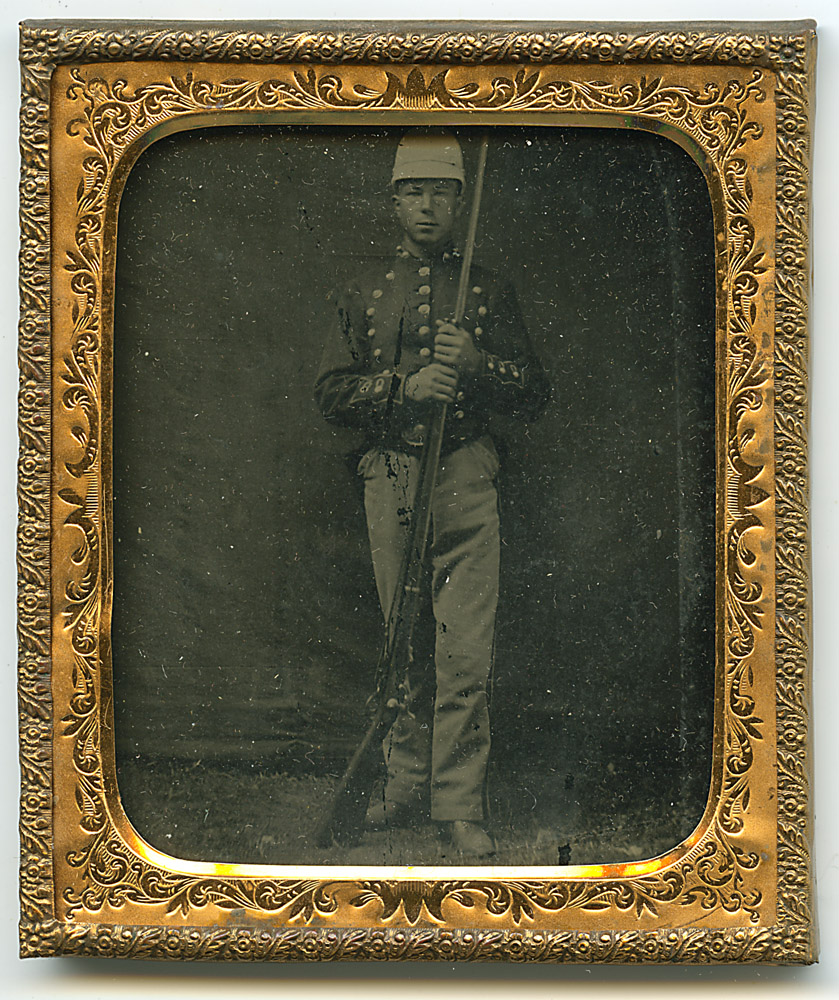
My latest cased image acquisition. In contrast to the daguerreotype pair I just purchased, this is a tintype in a brass mat and frame in a gutta-percha (thermoplastic) case.
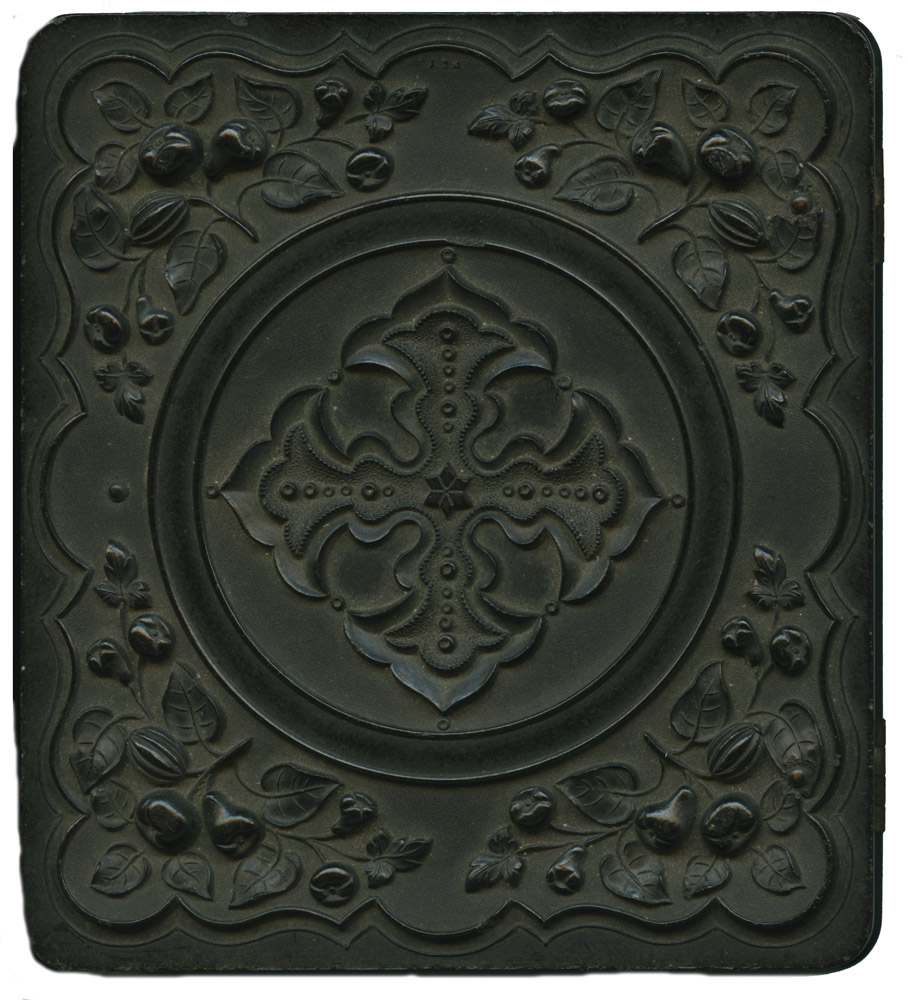
Case in Gutta-percha
The case on this was even lovelier than I expected – there are no major chips or cracks, and the lock is in good working order. Oftentimes the clasping mechanism has become bent over the last 150 years and either tries to form a hermetic seal or refuses to hold the two halves together at all.
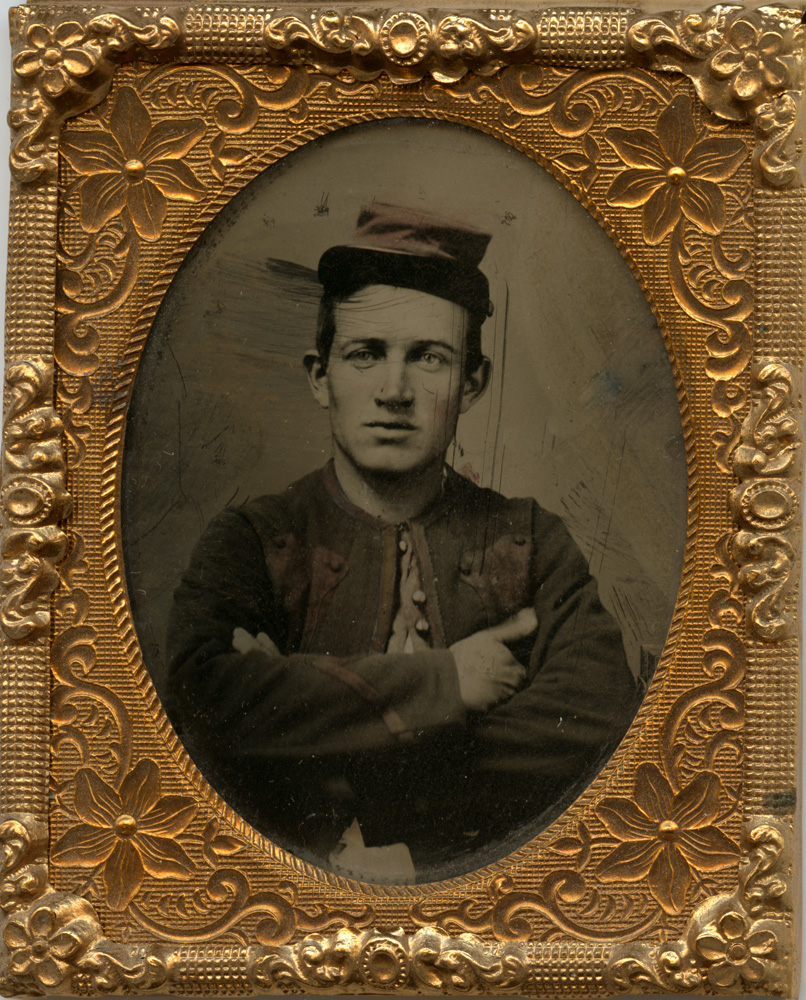
When you buy something like this, you never know entirely what you’re getting. Sellers don’t always describe everything with 100% accuracy, as much out of ignorance as anything else (rarely is it ill-will – lots of people just don’t know a lot about what they’re selling). This was described as of a post-Civil War US Army soldier. The fact that it is a tintype and not an ambrotype or a CDV would lend credence to that theory, as tintypes were immensely popular after the war, and although not exclusively an American phenomenon, their greatest popularity was in the United States. However, several things about the uniform suggest that A: it is not American, and B: it is potentially pre- or inter-war. In researching US Army uniforms, I found several uniform stylings from the 1840s-50s that bear a resemblance to the jacket he is wearing. But in my understanding of US Army uniforms (hardly encyclopedic) there was never a pith helmet issued. The rifle appears to be a percussion-cap rifle, which if American, could be an 1840s Harpers Ferry Arsenal product.
Another possibility is that this is a cadet at one of the private military academies. I can rule out The Citadel, VMI, and West Point as possibilities as their uniforms are sufficiently different, particularly in the cuffs of the sleeves.
Soldier Tintype, mat, frame and glass packet
This photo was taken out-of-doors as can be seen from the grass in the foreground stopping at the canvas backdrop.
You can also see on the scan of the tintype out of its packet that there are scuff marks from the mat. They appear to match the mat, but this is not definitive. The case just feels wrong for the image – it seems to be earlier than the image, and much fancier than you would associate with a tintype. My instinct tells me that sometime after the image was made, someone decided to do a case-ectomy and swap the original case, be it leather or a paper sleeve, for this one. The scratches to the emulsion also seem to suggest that this image was not in a case for its entire life.
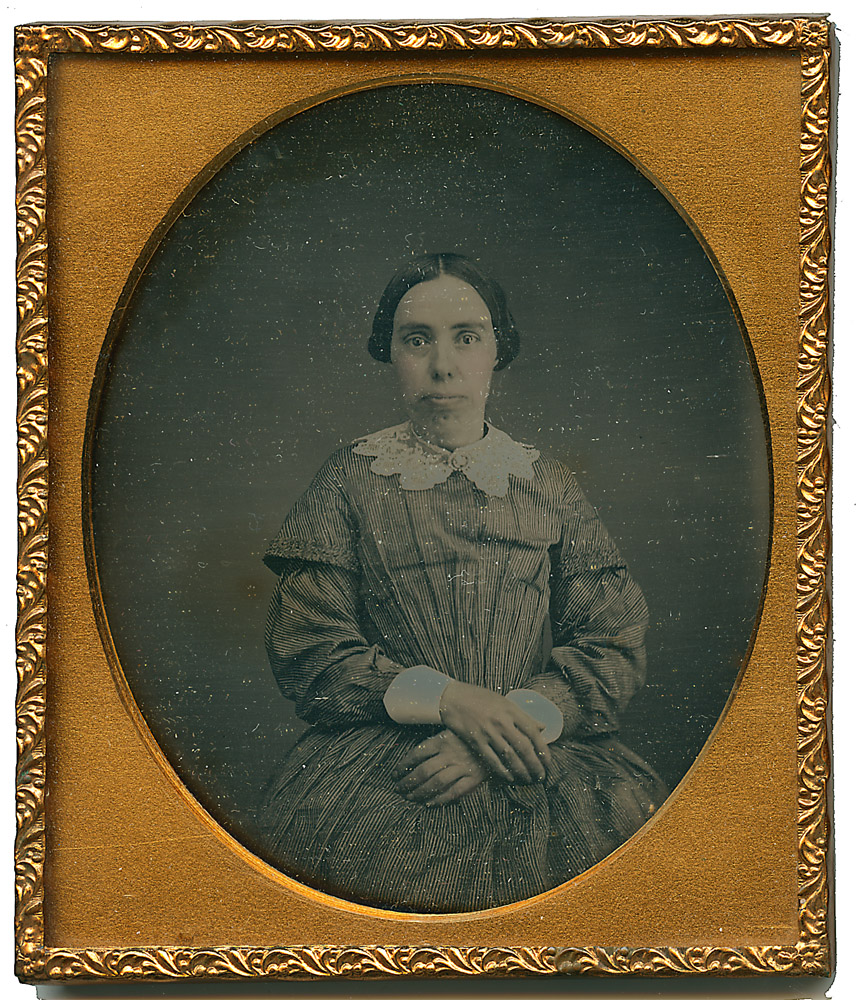
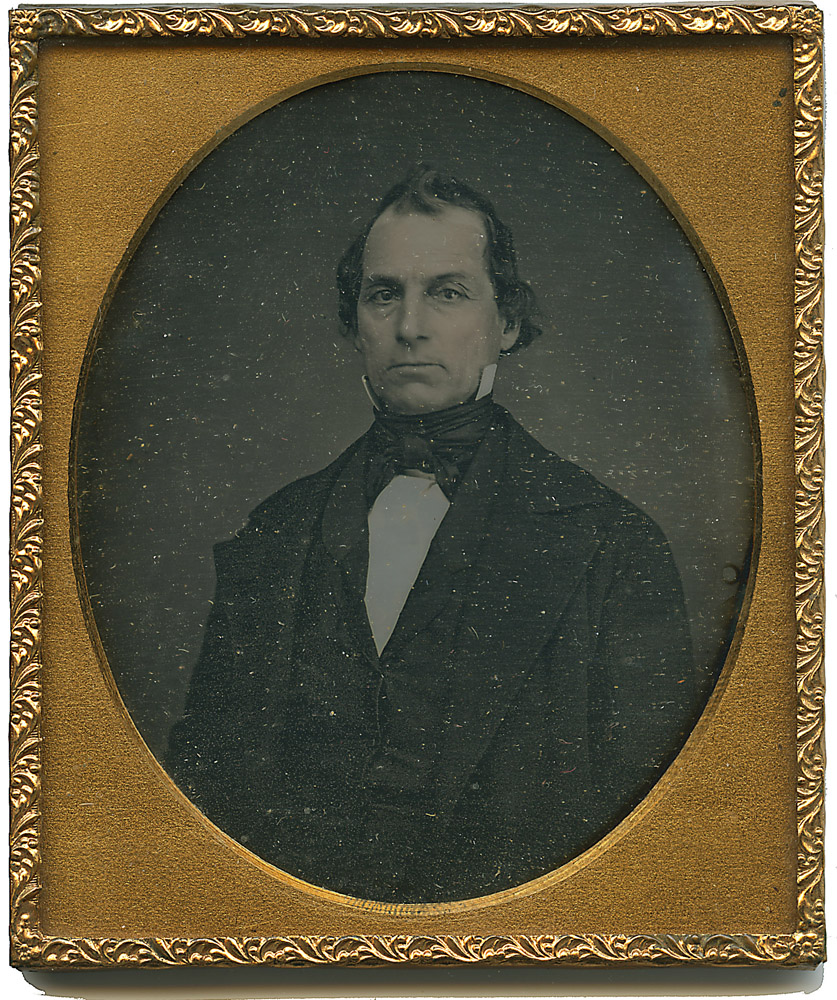
My latest acquisitions for the collection – a husband-and-wife pair in leather/pressed paper case. These are probably early-mid 1850s judging from the case and the mats. The brass frame for the package says later, but the simpler mats argue earlier. These were purchased at another online auction (not eBay) and found at an outstanding price in part because the seller did not know how to photograph daguerreotypes. I have not opened up the packets to get rid of the dust between the glass and the dag plate because the original seals are intact, at least on the wife’s photo.
The photographer is unknown, as are the subjects. Very subtle hand-coloring can be seen on the plates, most notably in the man’s face and the woman’s dress.












 dcphotoartist