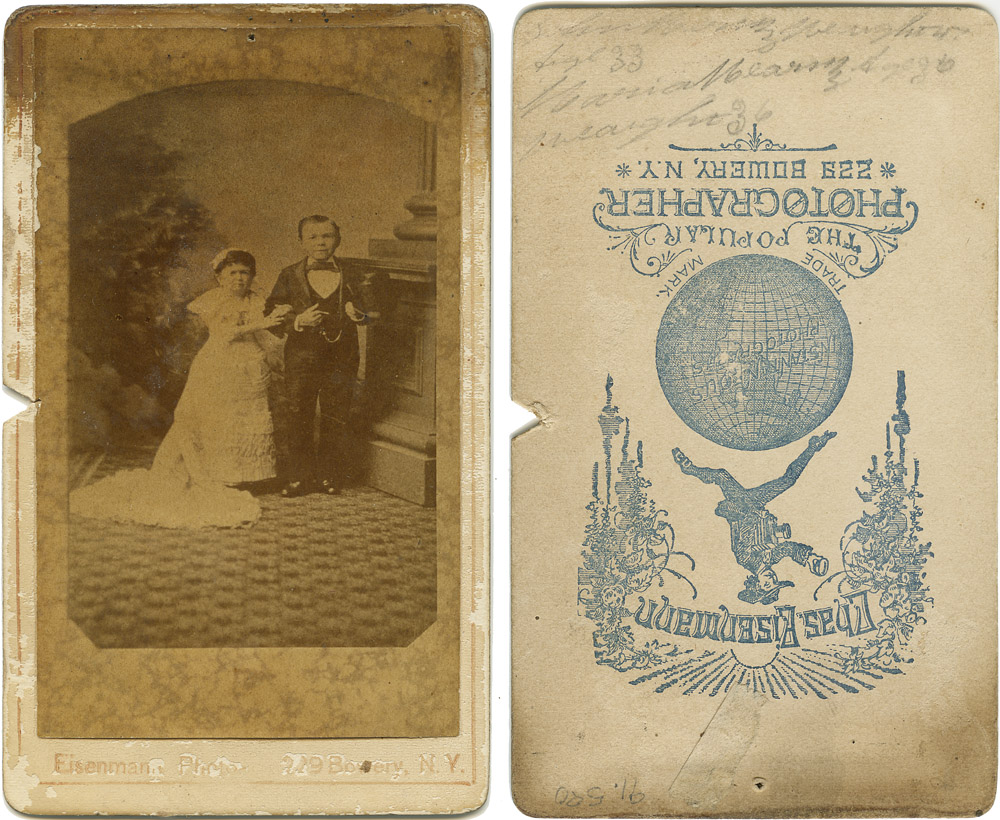
Here is another CDV for your consideration, in rather poorer condition than I normally like to buy, but I hadn’t seen this one before. This is Admiral Dot and his wife, Lottie Swartwood. I’ve inverted the image of the verso so you can at least try to make out the handwriting. From what I can read, it says, “…height 33… age 36…weight 36” (the ellipsis are where I can’t make out for sure what it says).
Admiral Dot & Lottie Swartwood By Chas Eisenmann
If you’ve been following my blog you know that Chas Eisenmann was quite the celebrity photographer specializing in people of the theater, which included the circus and vaudeville. I suppose photographing the Dots would have been a way to compete with Mathew Brady and the Anthonys, who had the Tom Thumb wedding photos in their portfolio.
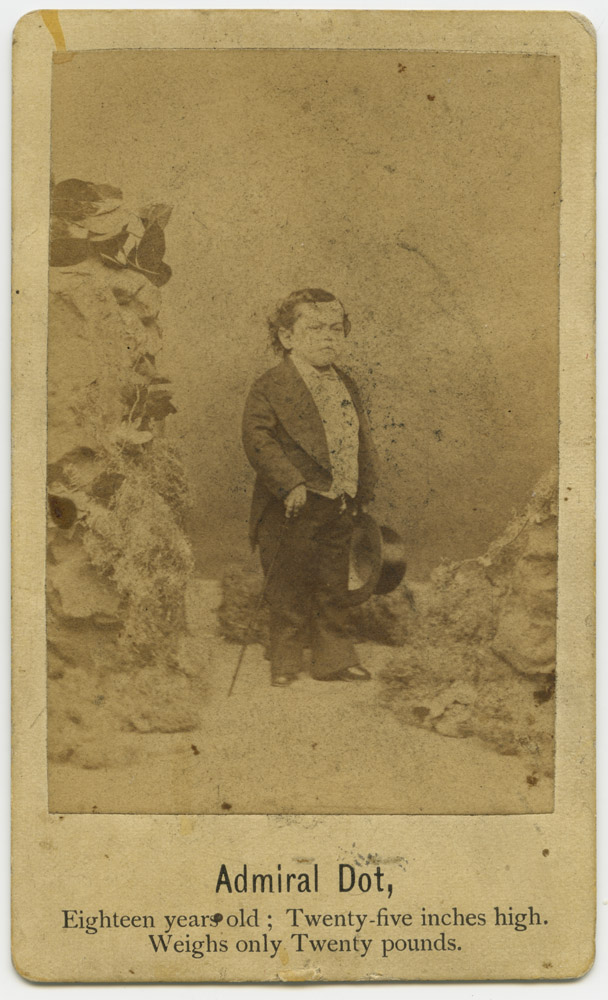
A newly arrived pair of circus midgets – Admiral Dot and General Cardenas. The Admiral Dot image is not in the best of condition, but it’s a different photo than the one I already have, and for some reason there are certain little people images that are much more expensive than others – Admiral Dot and Che Mah the Chinese Dwarf being two among them. I have yet to find a Che Mah in a condition I’d like to have it in for less than $150, and I’ve been outbid twice now on nice ones. Dudly Foster is another one that seems to command high prices for some reason.
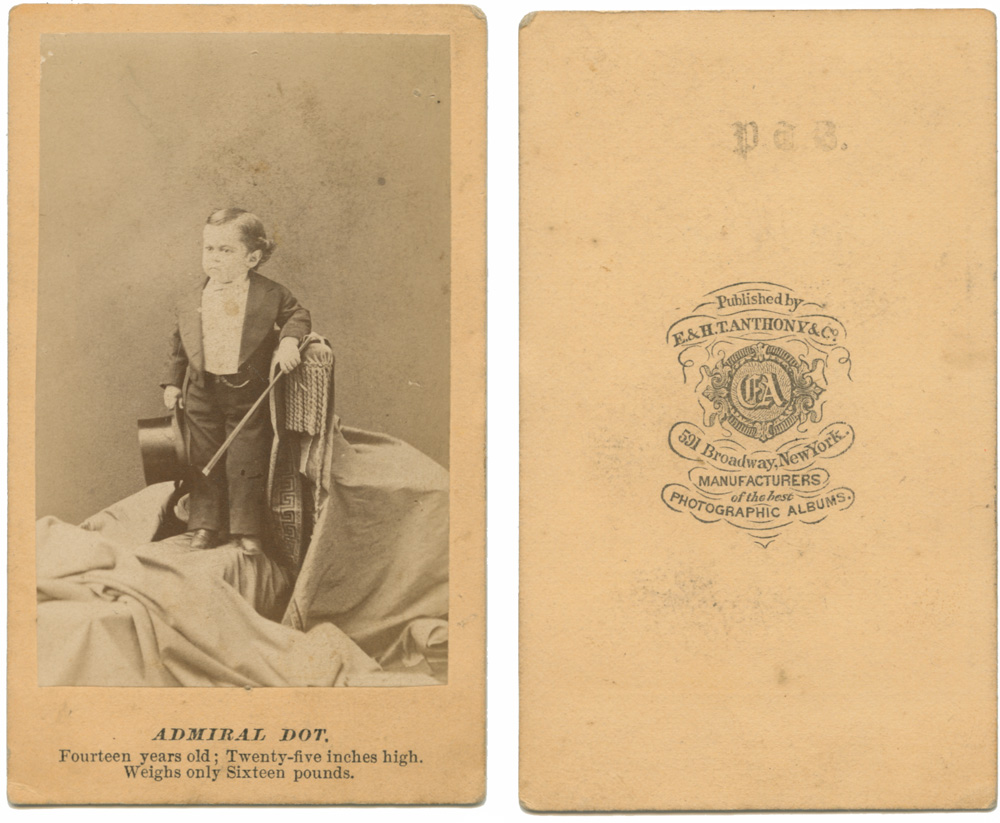
Admiral Dot, was born Leopold Kahn in 1857(?). He was uncle of Samuel Kahn, “Major Atom”. In 1870, Phineas Taylor Barnum traveled with friends by train across the western United States. In San Francisco, a German named Gabriel Kahn offered the showman his dwarf son, Leopold. Barnum was quite taken with the little fellow, whom he said was “a dwarf more diminutive in stature than General Tom Thumb was when I found him.” Barnum promptly signed up Leopold under the new name of Admiral Dot, otherwise known as the the El Dorado Elf because he was such “a valuable nugget”.
As early as 1872, Barnum had already coined the phrase “The Greatest Show on Earth”, and now referrred to his circus as “P. T. Barnum’s Great Traveling World’s Fair”. At the time, Admiral Dot was touted as being sixteen years old, twenty-five inches tall, and a mere nineteen pounds. At least initially, Dot appeared on stage with his mother.
Admiral Dot’s career lasted for approximately the next twenty years, despite the fact that as he aged and grew taller he was soon eclipsed in size by smaller performers such as Major Atom, with whom he occasionally performed. Not one to rest on his laurels, Dot developed a stage persona that at one time saw him billed as “The Smallest Character Actor in the World”. During the 1880’s, Dot traveled with the Locke & Davis Royal Lilliputian Opera Company, which was populated by other famous little people such as the Magri Brothers and and Colonel Speck.
By the turn of the century, Leopold Kahn had settled in White Plains, New York, with his twenty-six-inch-tall wife Lottie Swartwood (a fellow performer in the opera company) and their two normal-sized children. Seeking respectability, Dot joined the Elks, sang with the town choir, and opened the Admiral Dot Hotel. The citizens of White Plains named the admiral honorary chief of the fire department, but unkindly referred to his business establishment as the Hotel Pee Wee (which, ironically, burned to the ground in 1911). Admiral Dot died of influenza in his home in White Plains on 28 October 1918, aged 54 years.
Admiral Dot, published by Anthony, photographer unnamed
I couldn’t find any biographical references for General Cardenas – for all I know even the last name is fake and he was a Swede from Minneapolis and not hispanic at all. I’ll keep digging and see if I can find more about him. I did find a different photo of him on the Syracuse University online image library that looks like it was taken at the same time because his outfit is identical and the chair next to him appears the same, but its set in a faux-outdoors scene with a bunch of tufted grass around the chair.
General Cardenas, Anonymous Photographer
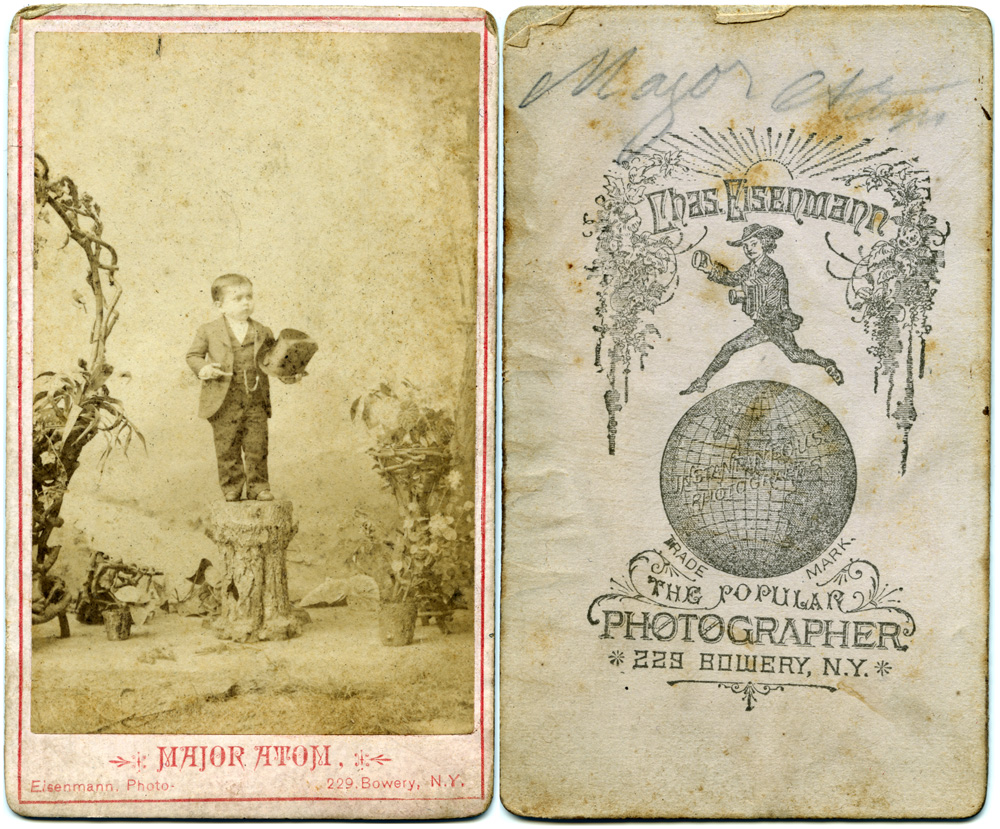
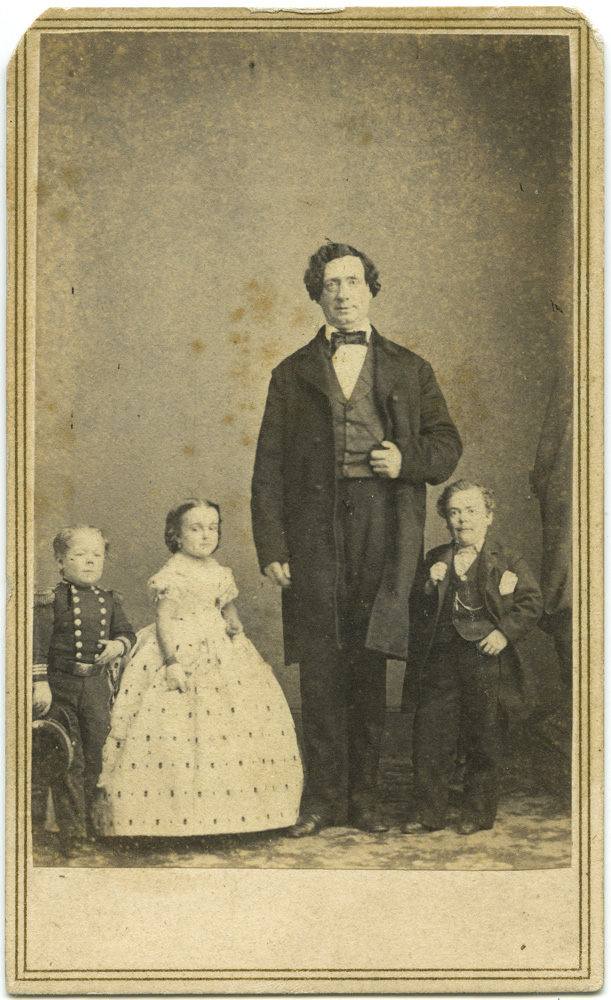
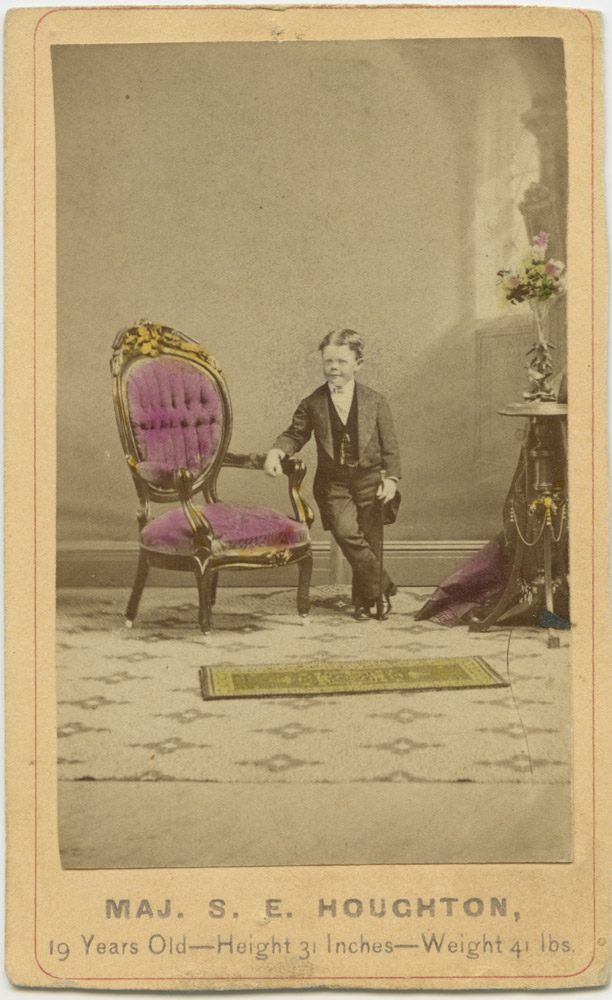
I’ll include some of my other little people with faux-military titles for reference, starting with Major Atom.
Admiral Dot, published by E&HT AnthonyMajor Atom, by Chas. EisenmannCommodore Nutt and unknown little woman, Anonymous CDV (probably Brady)Commodore Nutt, Mrs. and Mr. Tom ThumbMajor S.E. Houghton
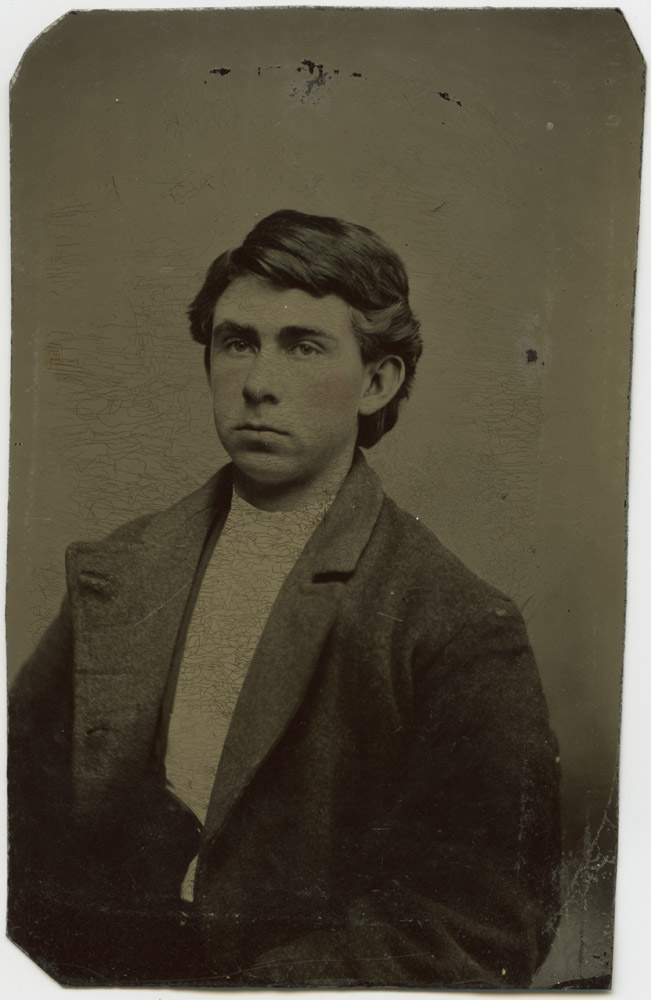
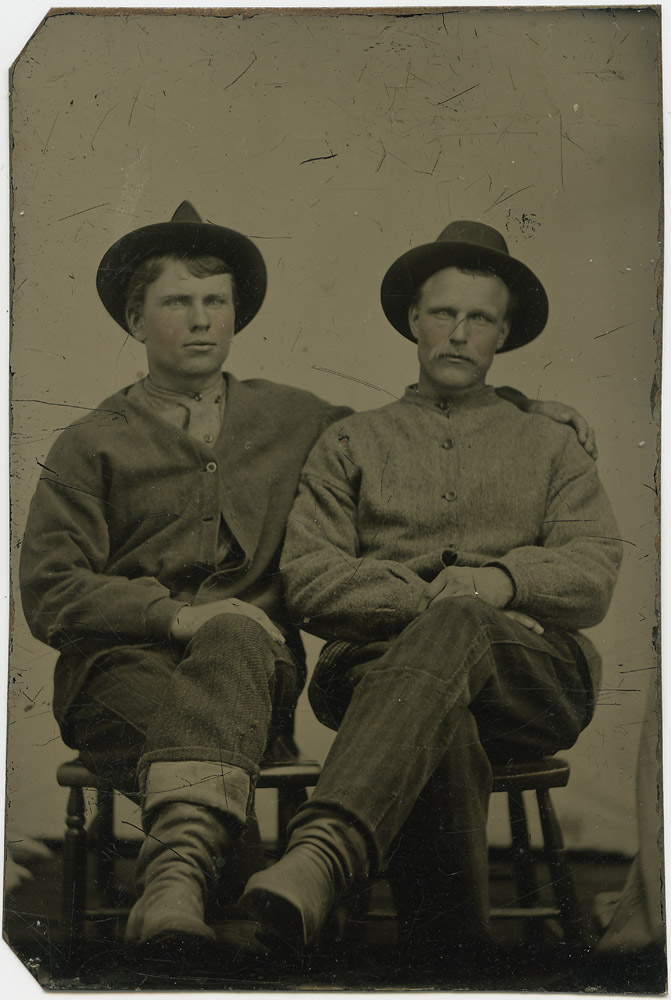
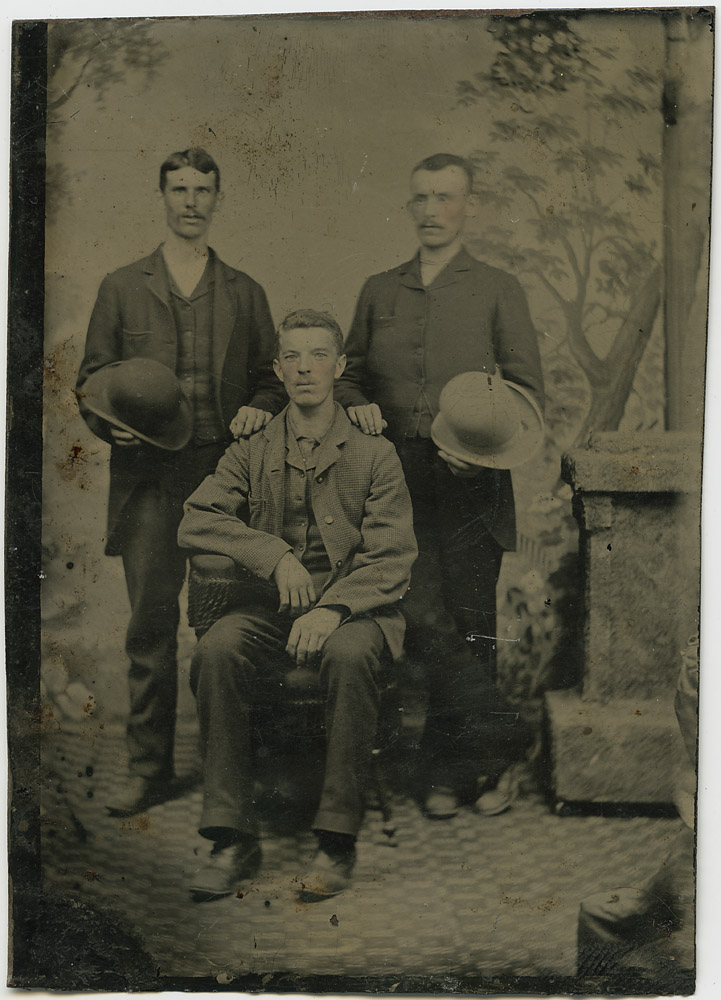
A trio of recent tintype acquisitions. I thought they made a nice set for display purposes, so I’ve grouped them together here although they have nothing in common beyond numerical progression.
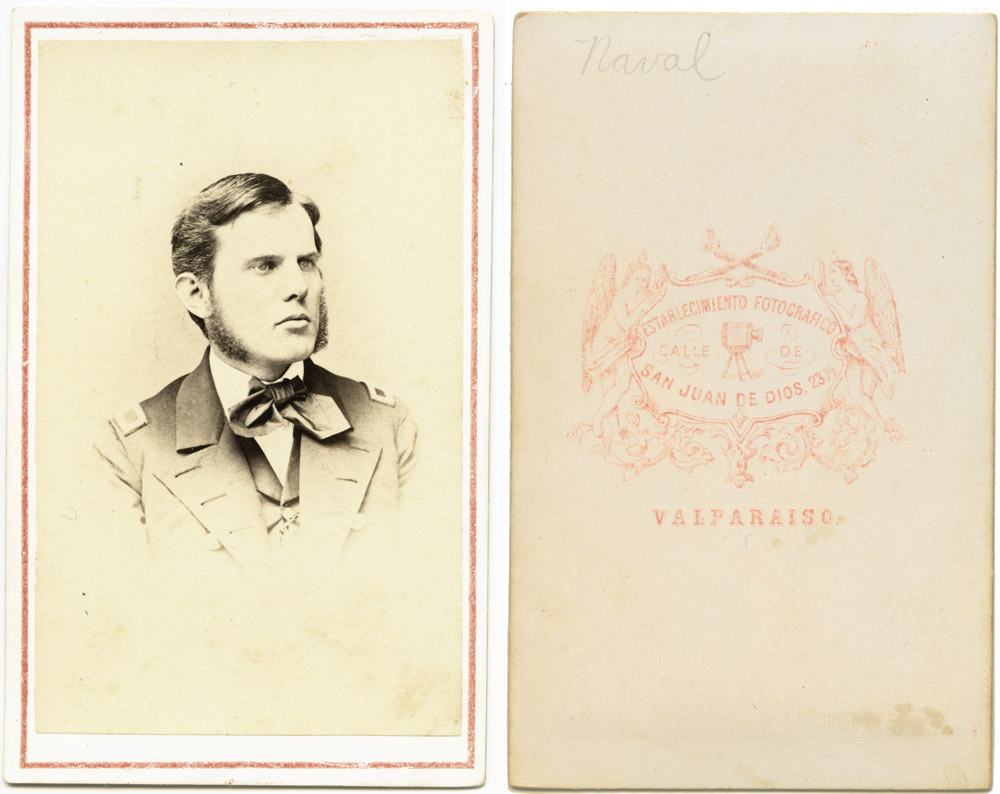
Another find from my Gettysburg excursion. He’s a US Navy Officer. I’m not sure of the dating – the jacket looks possibly post- Civil War, but the shoulder boards suggest he’s a Master (a rank no longer used, but the equivalent of a Lieutenant, Junior Grade today) circa 1861. They changed the Master’s insignia in 1862 from the blank bar to include a gold bar at each end and an anchor in the middle, and introduced the rank of Ensign to replace the previous rank of Passed Midshipman as the most junior commissioned officer rank. This is another records quest – I would suspect there were only one or two ships at most that would have docked in Valparaiso in 1861, and ship’s crews being significantly smaller in 1861 than they are now, there’s a good chance he was the only Master (or one of two) on the ship.
Here is a CDV of a Union solider from Chambersburg, Pennsylvania, my hometown. I found it on an excursion up to Gettysburg this weekend. Judging from his overall appearance of health and cleanliness, this was probably taken at the beginning of the war when he enlisted. When I saw the image in the display case, I felt a need to acquire it just because it was from Chambersburg. After doing a little collecting, I’m getting the impression that there was only one, or perhaps two photo studios in Chambersburg for most of the 19th century, as this H. Bishop seems to be the most frequent studio back mark by far. I’m starting a records search to try and identify the young man, as there weren’t THAT many sergeants in the units from the Chambersburg area. I’m thinking a trip to the Kittochtinny Historical Society offices is in order when the weather is warmer and they’re back to full hours (I think they close up for the most part in the wintertime as their archives are in the Old Jail and are not heated). The Old Jail, by the way, is well worth a visit if you’re ever passing through Chambersburg – the main part of the jail is a Georgian structure dating to at least 1818, and was in use as a prison at least into the 1960s, when one of my father’s partners in his medical practice would take calls to see patients being held there.
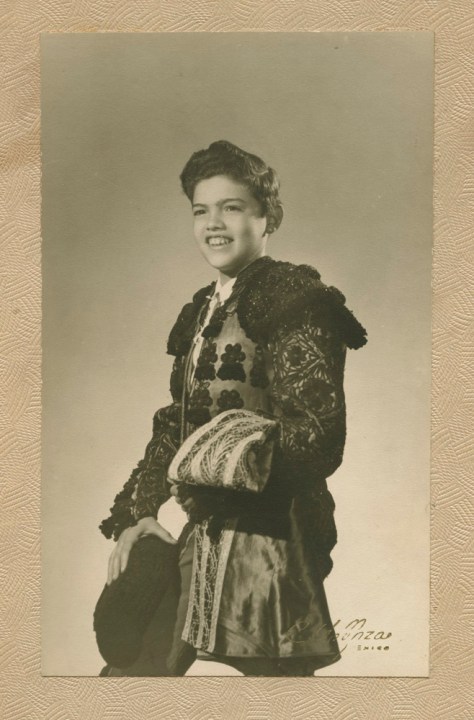
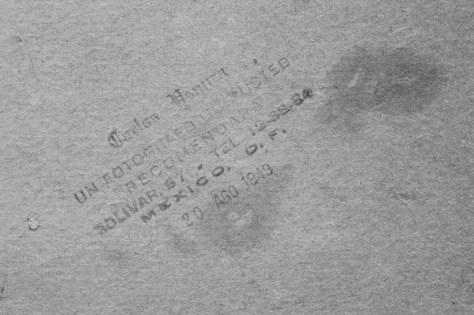
Boy in Toreador Suit, Mexico City, 1949Photographer’s imprint, verso, Boy in Toreador Suit
Here’s a cute photo of a teenage boy in a toreador suit, taken in Mexico City, August 20, 1949. The photographer’s stamp on the back of the print specifies the exact date, which is inordinately helpful. I just wish I could read his name, though – the script on the front AND the typeface used for his name on the back makes it impossible for me to decipher the exact spelling of his last name. Translation of the stamp:
Carlos **unza
A Photographer Whom You Can Recommend
Bolivar 57, Tel: 12.38.84
Mexico, D.F.
20 August 1949
I don’t know that this boy would actually have been a toreador – he could well have been playing dress-up for the camera. But I’ll give him the benefit of the doubt and say he’s legit. Google Mapping the studio address, in all likelihood this was a very posh studio in the center of Mexico City, not far from the historic district (I found THREE addresses with the same street number around the city, but the street views of the other two showed nothing that looked like commercial enterprise ever happening there). If anyone out there in cyberland knows who this photographer was, I’d greatly appreciate letting me know the exact spelling of his name and any biographical data about him. Ditto for the identity of the subject – if he was in fact a toreador, someone out there somewhere knows who he is.
I cropped out some of the card the image is mounted on because it would be wasting space on the screen to show nothing of value, and left enough to show the texture and pattern of the card decoration. It’s truly a vintage piece of the period. The stamp I converted to black and white so I could tweak the contrast in Photoshop and make it easier to read.
Footnote:
Aah- the wonders of google. I was trying to figure out the photographers name, and did some google searching, and came up with Carlos Ysunza as a name. Additionally, there is a currently practicing commercial photographer in Mexico City by that same name. I’ll email him and find out if he is the son of the Carlos who took this photo.
I was inspired to do a bit more digging into a photographer whose images I’ve shown here before, Kets Kemethy. He was a Hungarian photographer who settled in Washington DC and operated a studio here. The inspiration came from a book I bought myself for Christmas entitled “Envisioning Emancipation: Black Americans and the End of Slavery“. The book talks about African-Americans and their presence in photography from the antebellum period through to the 20th century. The book constructs a theory of race, social systems and politics to explain the narrative that frames and constructs the images in the book, but it does so in a reasoned, supportable manner that does not leave non-academic readers grasping for dictionaries and water-pitchers just to finish a page.
I have a Kets Kemethy photo of an African-American young man that I’d like to try and date more precisely, so I wanted to do some digging into the studio’s history and see if there was anything published about him. I have found another African-American subject by him, so I was wondering if his practice specifically catered to well-to-do African-Americans (although 2 for 2 is hardly a statistically meaningful or accurate sampling). I did find this article from the 1902 Washington Times: there was a bit of a scandal in the Kemethy studio where Mrs. Kemethy shot at either her husband and/or a female customer who may or may not have been his mistress. Washington Times, October 29, 1902
I also found a listing for his studio in Boyd’s Directory of Businesses from 1903, which is contemporaneous with the 1902 newspaper article, and an entry in the Photographic Times from 1890. Another image that shows up for Mr. Kemethy is in the Bibliotheque Nationale in Paris, of Henry Wood Elliot, sent to the Bibliotheque in 1884, according to the letter on Smithsonian letterhead. So this gives me some placement in time – Mr. Kemethy was working around the turn of the 20th century, so based on the size and style my image is probably from the 1890s. In all likelihood then the young man in my photo would have been born free, but it would also have been highly likely that his parents were born into slavery.
I was showing my latest daguerreotype to a friend the other day and she asked me how many do I have. I hadn’t really thought about it, so I sat down today and did an inventory. I came up with
Image Type
gemtype
1/9th plate
1/6th plate
1/4 plate
1/2 plate
Daguerreotype
1
1
20
6
0
Tintype
1
2
5
0
1
Ambrotype
0
2
7
2
1
Albumen
0
0
0
0
1
Total
2
5
32
8
3
for a grand total of 50 cased images.
I’ll recap as many of them as I have good scans for here. One of these days I’ll get around to re-scanning/photographing the others, which I originally posted to Facebook but not at a consistent file size.
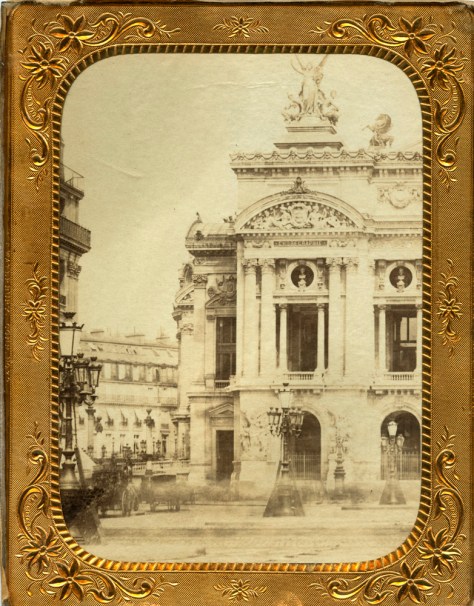
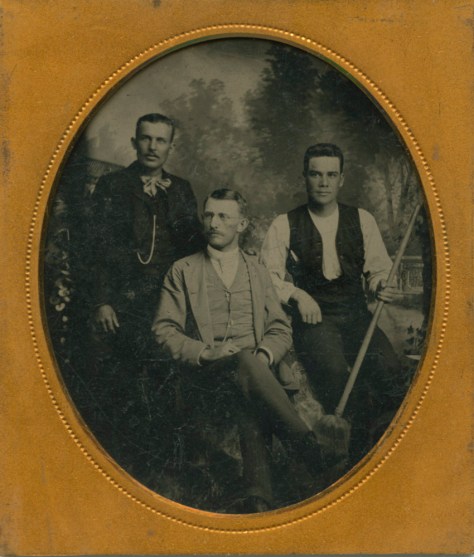
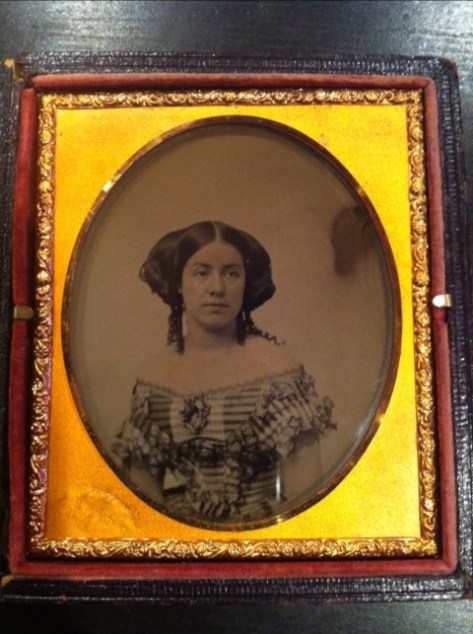
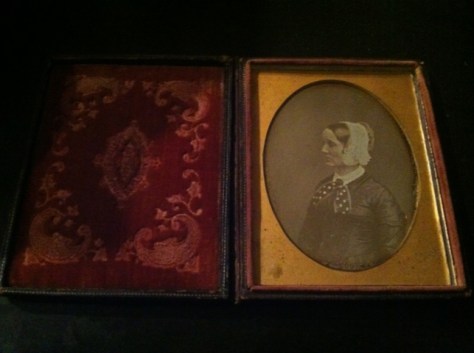
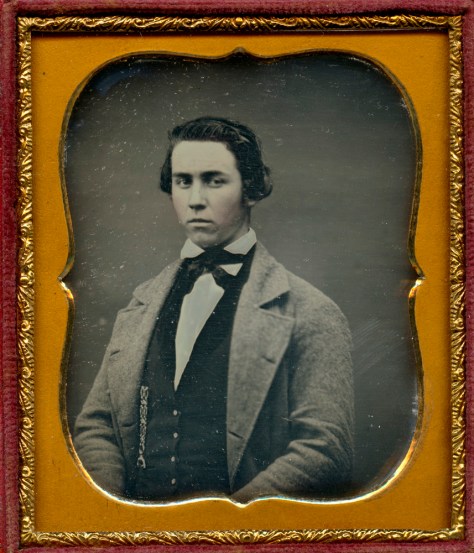
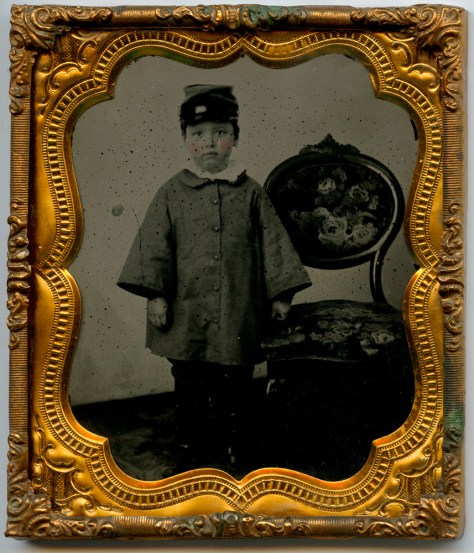
Paris Opera albumen printShopkeepersAnonymous Daguerreotype, ca. 1840-1845
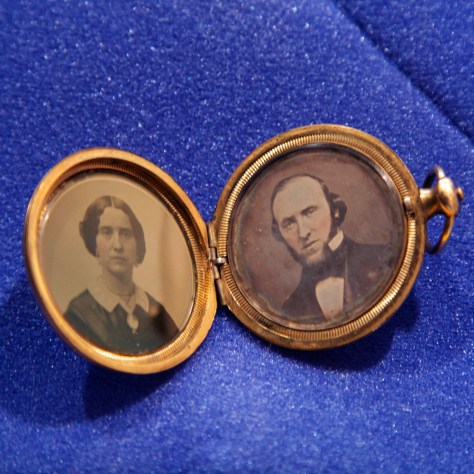
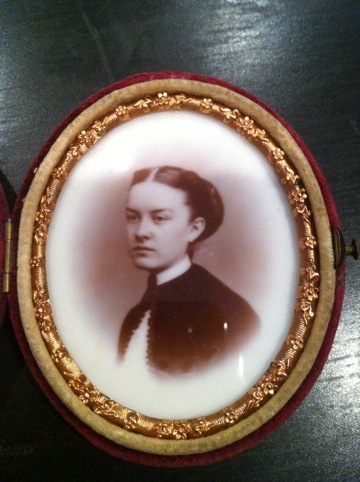
Daughter and Father, daguerrian locketAnonymous young gentleman with goateeLady with glasses, Daguerreotype, quarter plate, anonymous
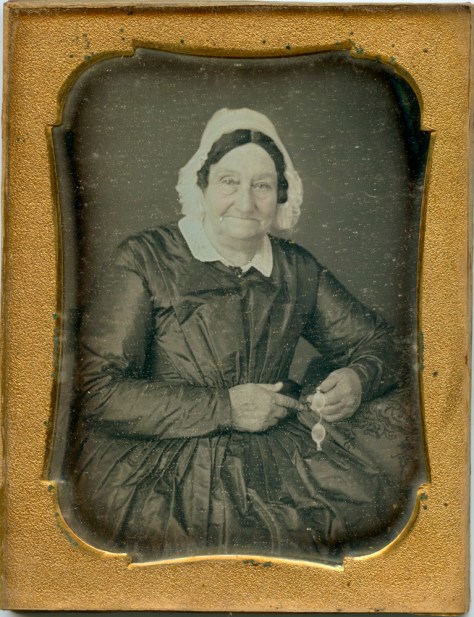
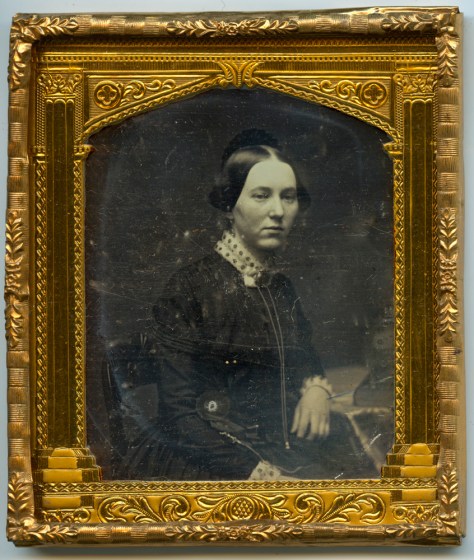
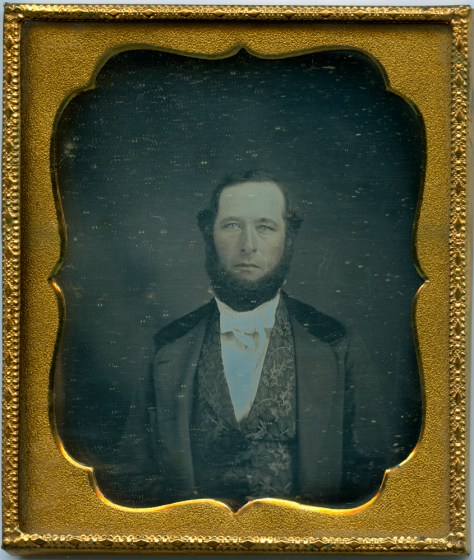
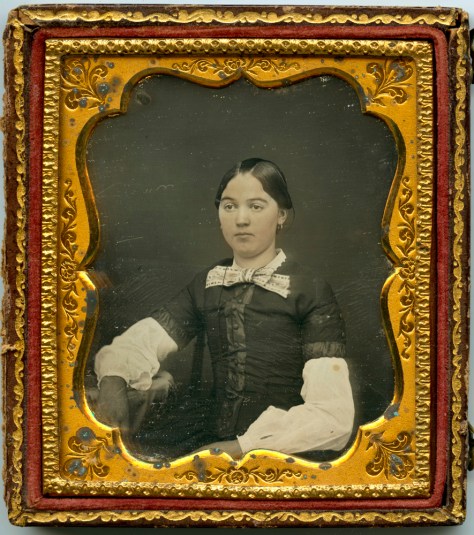
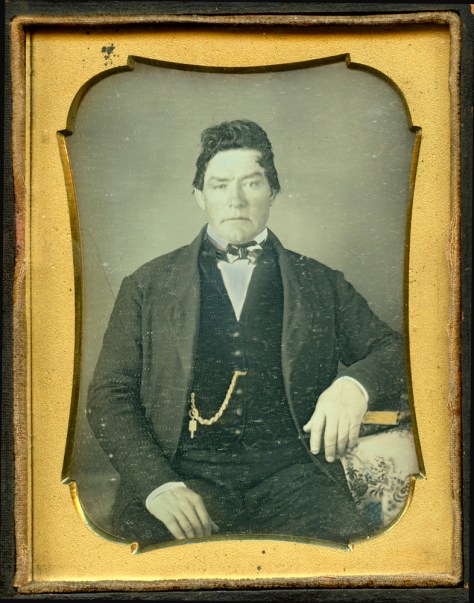
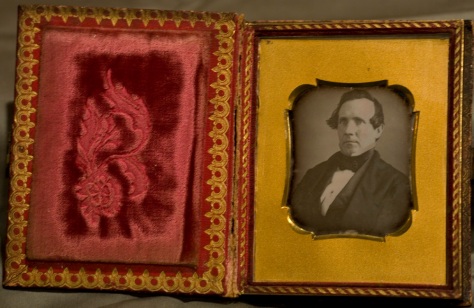
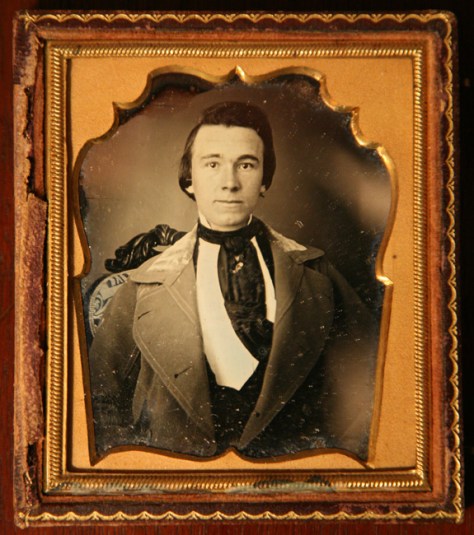
Mrs. A.A. Hill, DaguerreotypeAnonymous Gentleman in Fancy VestGentleman With Top Hat, dated October 15, 1849Anonymous Daguerreotype, Young Girl, Hand-colored, in Half Case
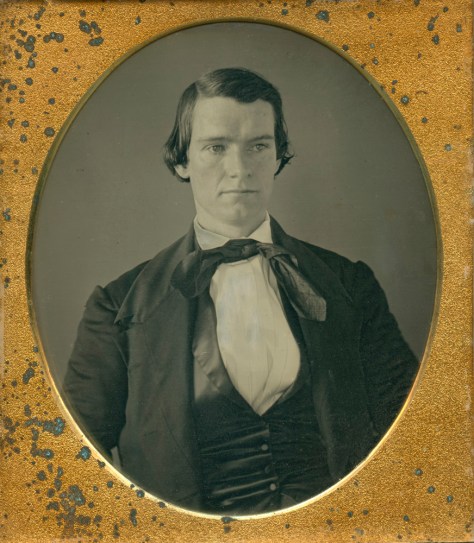
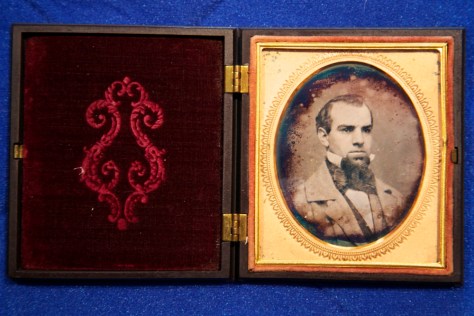
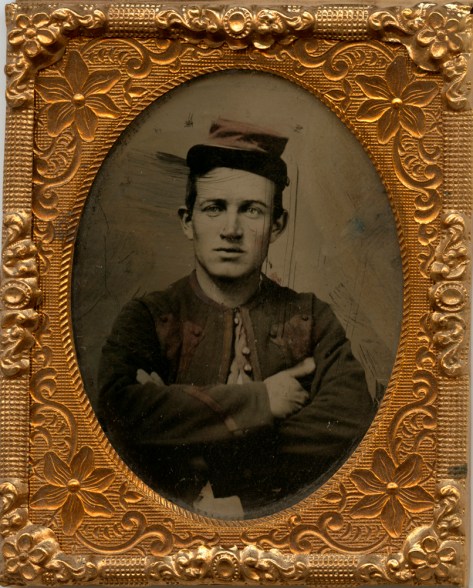
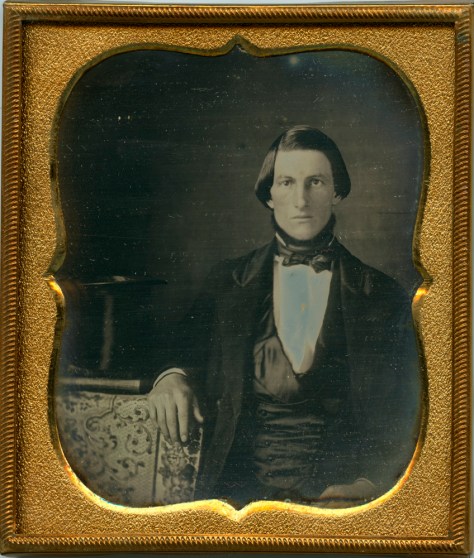
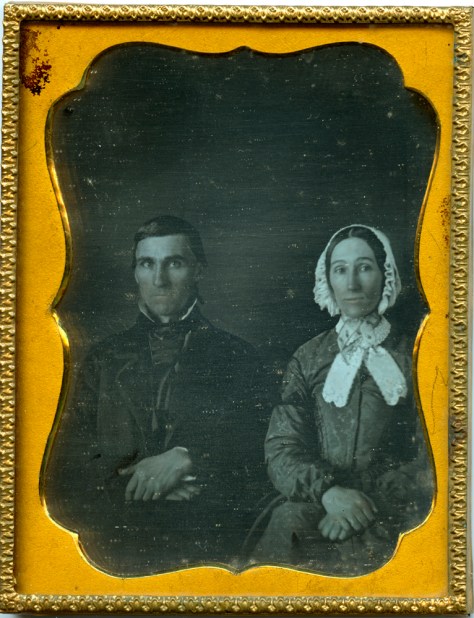
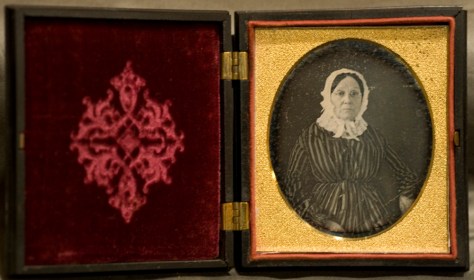
Daguerreotype, Anonymous Young Man, 1/6th PlateFred Jones, 1861, framed black glass AmbrotypeAnonymous Daguerreotype, Quarter-Plate, in half caseAnonymous, Daguerreotype, Couple, Charlottesville, VAAmbrotype, Penobscot Boy, 1857Sixth Plate Daguerreotype in Union case, anonymous lady in bonnet
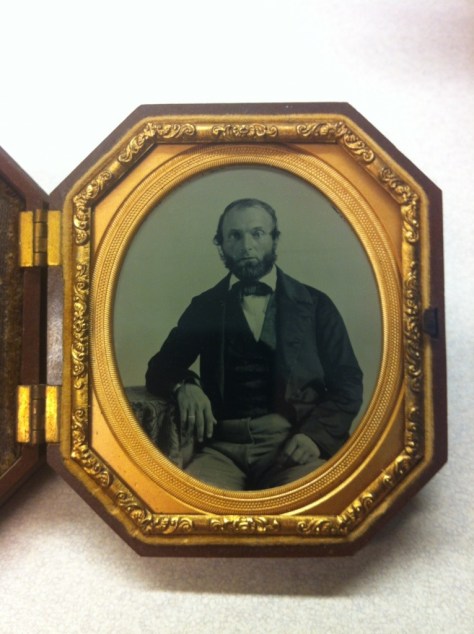
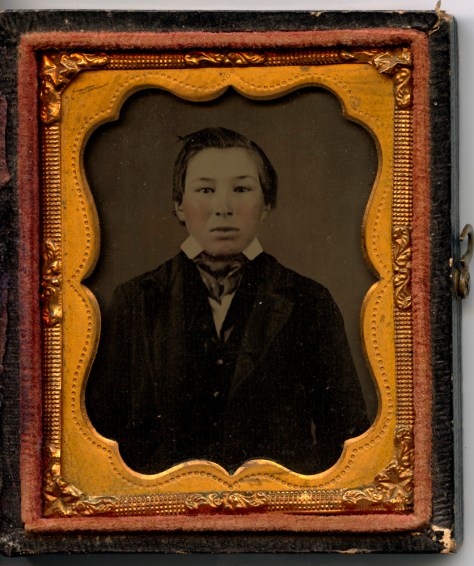
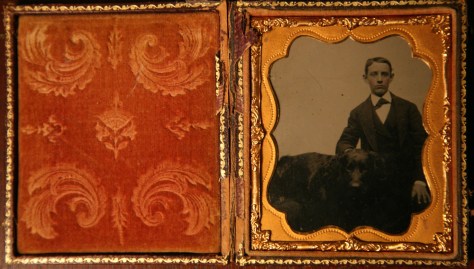
Quarter-plate Daguerreotype, Gentleman in book-form caseTintype, boy and his dog.Anonymous Gentleman. Daguerreotype, Half case.
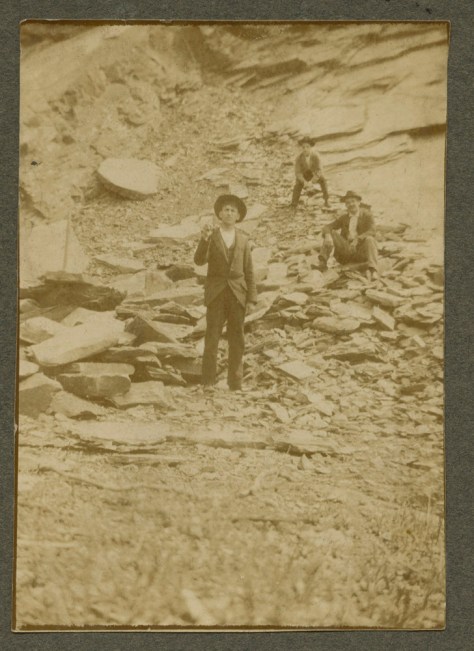
Albumen print, three men on a rockfall, mounted on brown card stock. This was another rescue from the $1 bin at a local antique store. I’m guessing it was taken somewhere around Washington DC as most of the photos in the dollar bin seemed to be local. Beyond that I have no idea where it was taken, when, or of who.
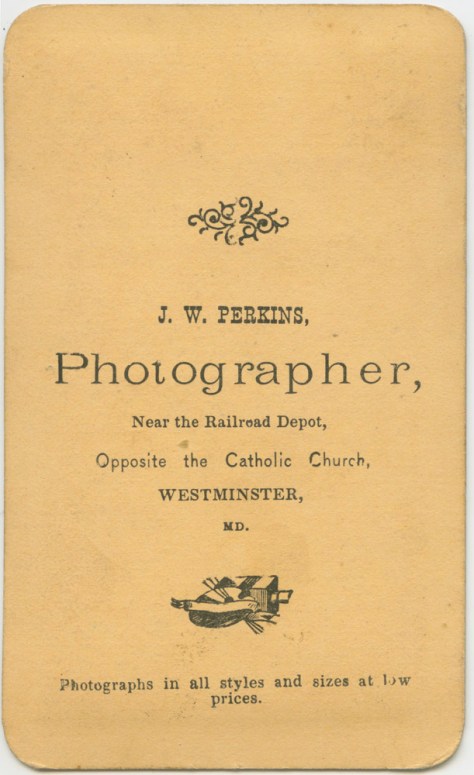
Gotta love the description of the location – “Near the Railroad Depot, Opposite the Catholic Church”. In a town as small as Westminster in the 1870s, that probably was a precise location. I bought this one for the back mark, not for the image (a somewhat faded baby). It was only $1, so I’m not going to complain much. I also like the combined palette and camera logo, implying artistry with a camera.



 dcphotoartist