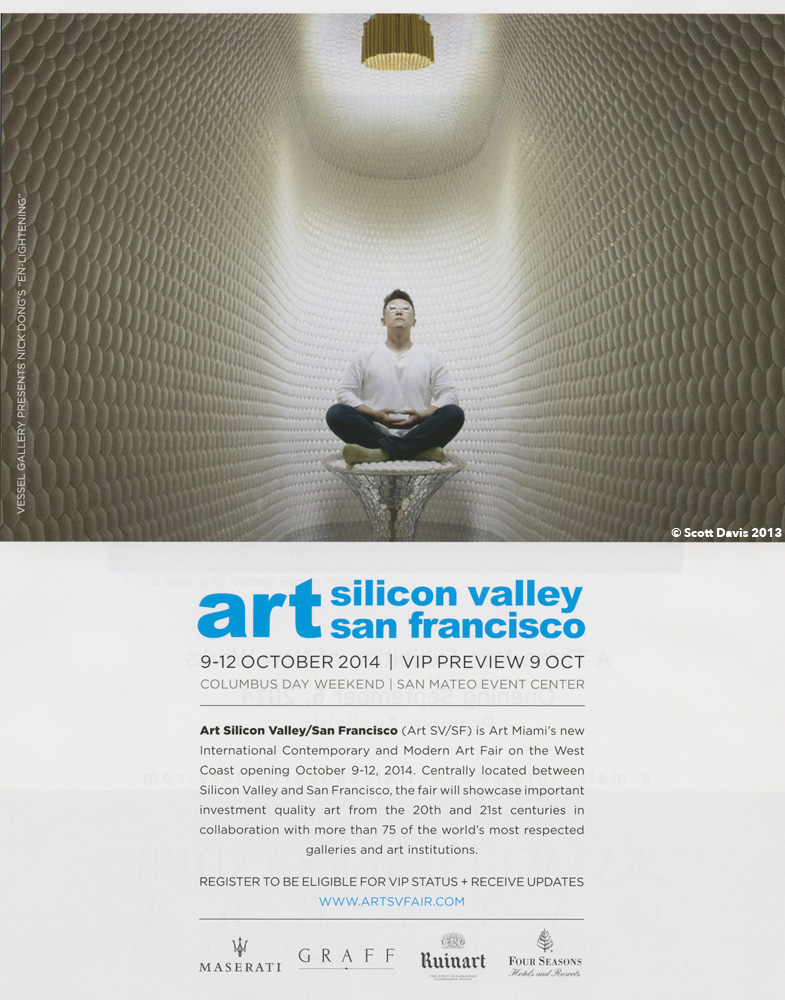
A photo of mine has been used in the current issue of Art In America (September, 2014) as the signature image for the Art Silicon Valley/San Francisco (Art SV/SF) art fair, happening Columbus Day weekend (October 9-12). The image is of my friend Nick Dong’s “Enlightenment Room” piece when it was installed here last year at the Renwick Gallery.
Art In America, September 2014 – Art SV/SF Art Fair Ad
I would complain that they didn’t give me proper credit for the image (The Copyright notice you see in this image was added by me for the purpose of posting this here), but they also screwed up the name of the piece in the ad caption, so I’m not the only one being dissed.
That said, it’s still VERY cool to have one of my images used in an advertisement in Art In America.
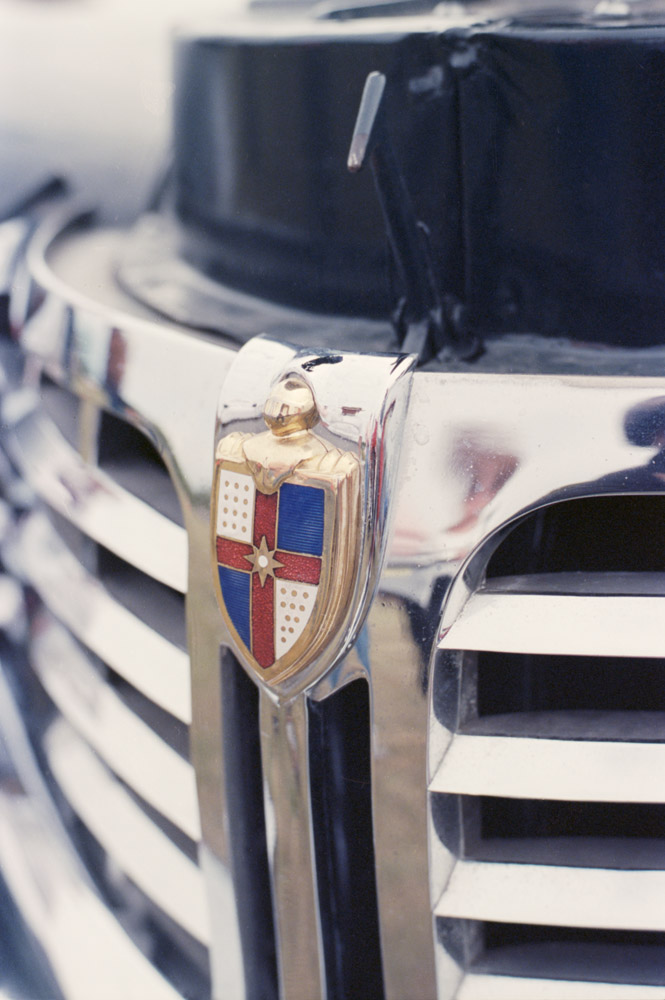
The grille of a 1947(I think – might have been a 46 or a 48) Lincoln Continental. The hood is raised in this shot to show off the engine.
Lincoln Continental Grille
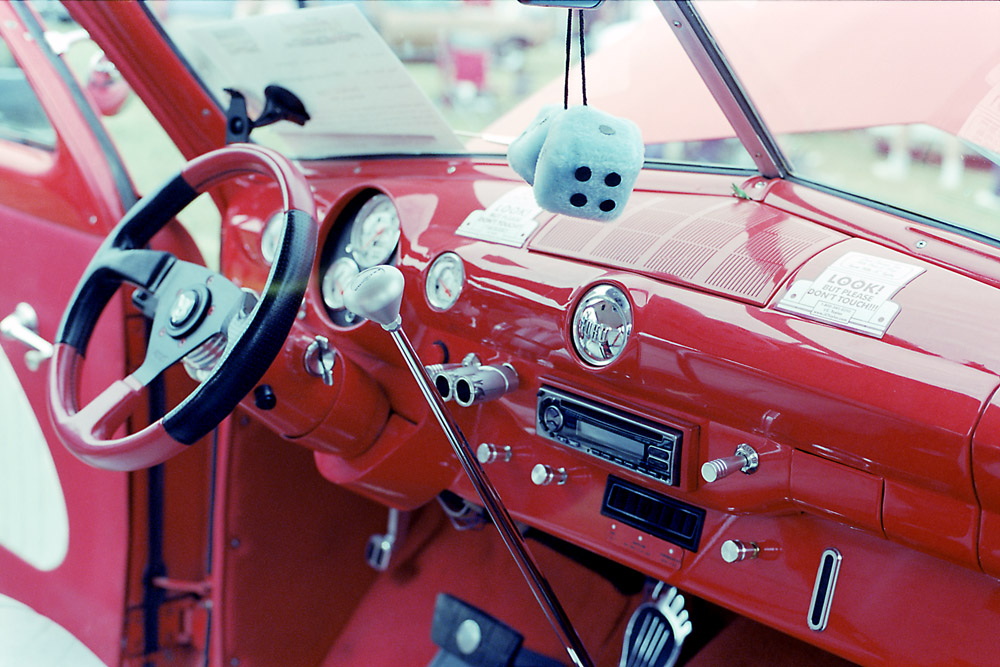
a 1950 Ford hotrod. Note the modern steering wheel and stereo alongside the otherwise traditional dashboard.
50 Ford Hotrod Dash
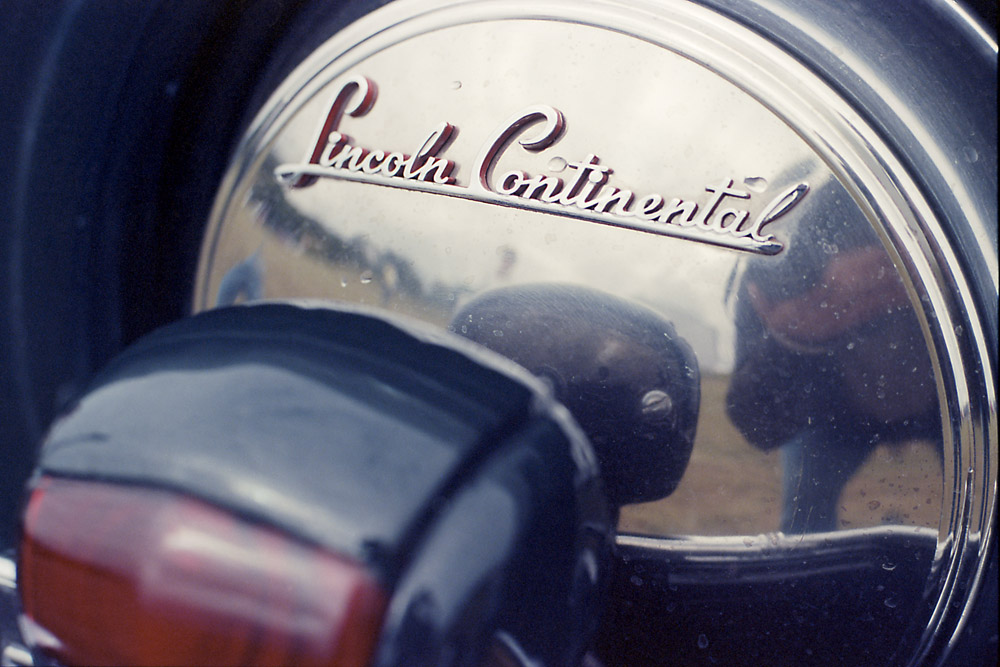
The Lincoln Continental had it’s spare tire mounted on the rear instead of in the fenders, the “continental” style. I’m not sure if the name had anything specific to do with the choice of how to mount the spare tire or if that was coincidence. The downside is that mounting the spare that way makes access to the otherwise commodious trunk rather difficult, as you have to lift your bags and parcels over the spare to access the top-loading trunk. I drove a 1962 Nash Metropolitan in high school that had a similar spare tire mount, the only thing keeping it from being a royal pain was the fact that the car and the tire were small enough that it was easy to clear the tire. For awkward cargo, the seat-back folded down to allow easier entry to the trunk.
Lincoln Continental Tire
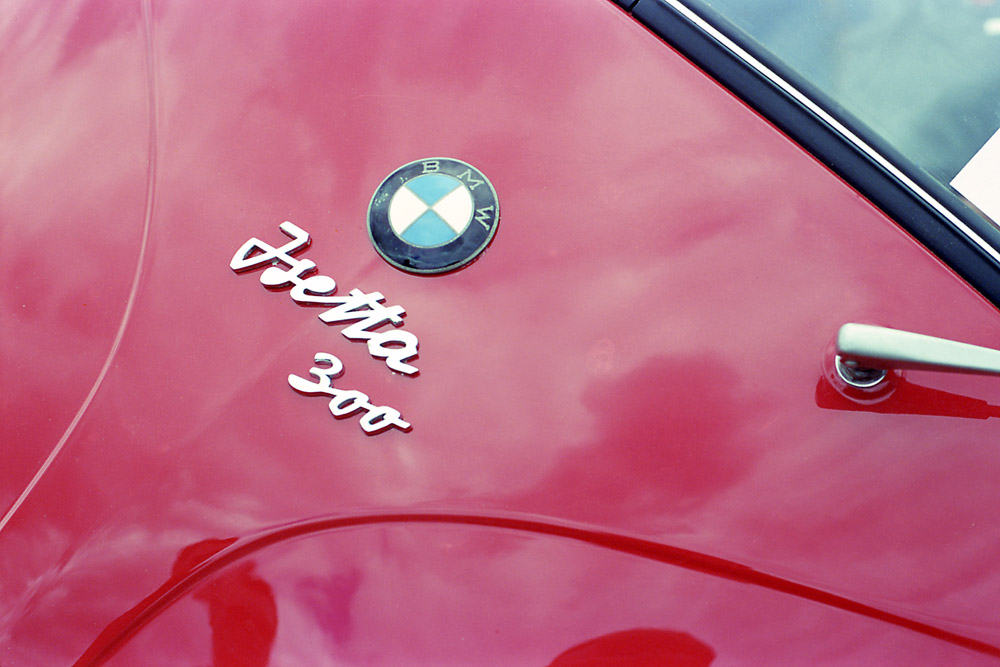
Not your neighbor’s BMW – this is the hood of an Isetta, a post-war compact BMW that is very much a spiritual ancestor to the Smart car, except it was made by BMW, and had a front-opening door to which the steering wheel and speedometer were attached and swung out of the way to grant access. Not exactly a 5-star crash safety rating. Isettas are climbing in value now, but I can remember when they were not much more expensive than my Met.
Isetta Hood
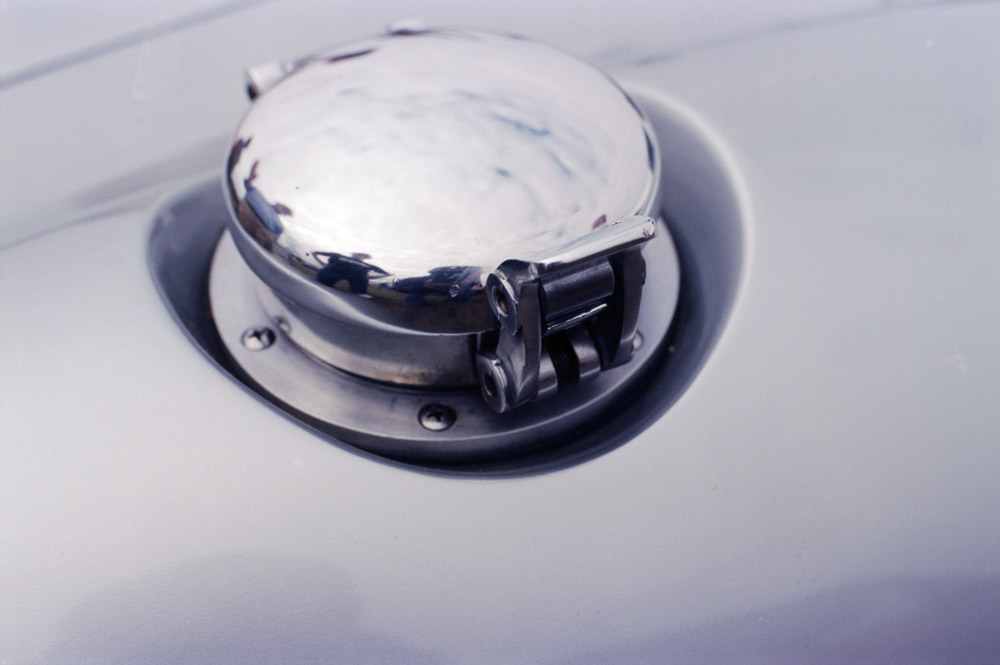
The fuel cap to a replica AC Cobra. The original AC Cobras are now so valuable (a vintage 427 Cobra is well north of $500K, and with racing history or other special qualifications, they sell for over $1M!) that probably 99% of the ones you will see on the road and 90% of the ones at car shows are replicas. This one happened to be an exceptionally well made replica with highly accurate details, like the fuel filler cap.
Every year at the end of June/beginning of July the Smithsonian Institute puts on the Folklife Festival down on the National Mall. They bring in craftspeople from various cultures around the globe to demonstrate ways of life in those cultures, from farming and fishing to music and dance. This year China and Kenya were the countries represented. I went down on the 4th of July this year to take a look and see what was on display.
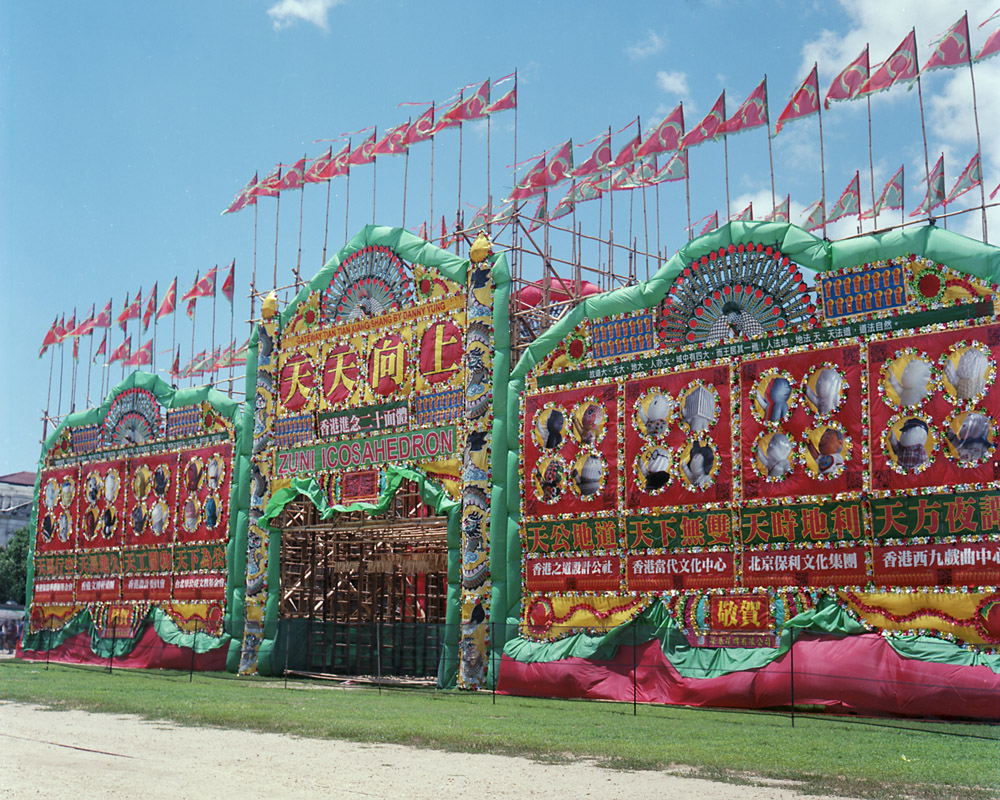
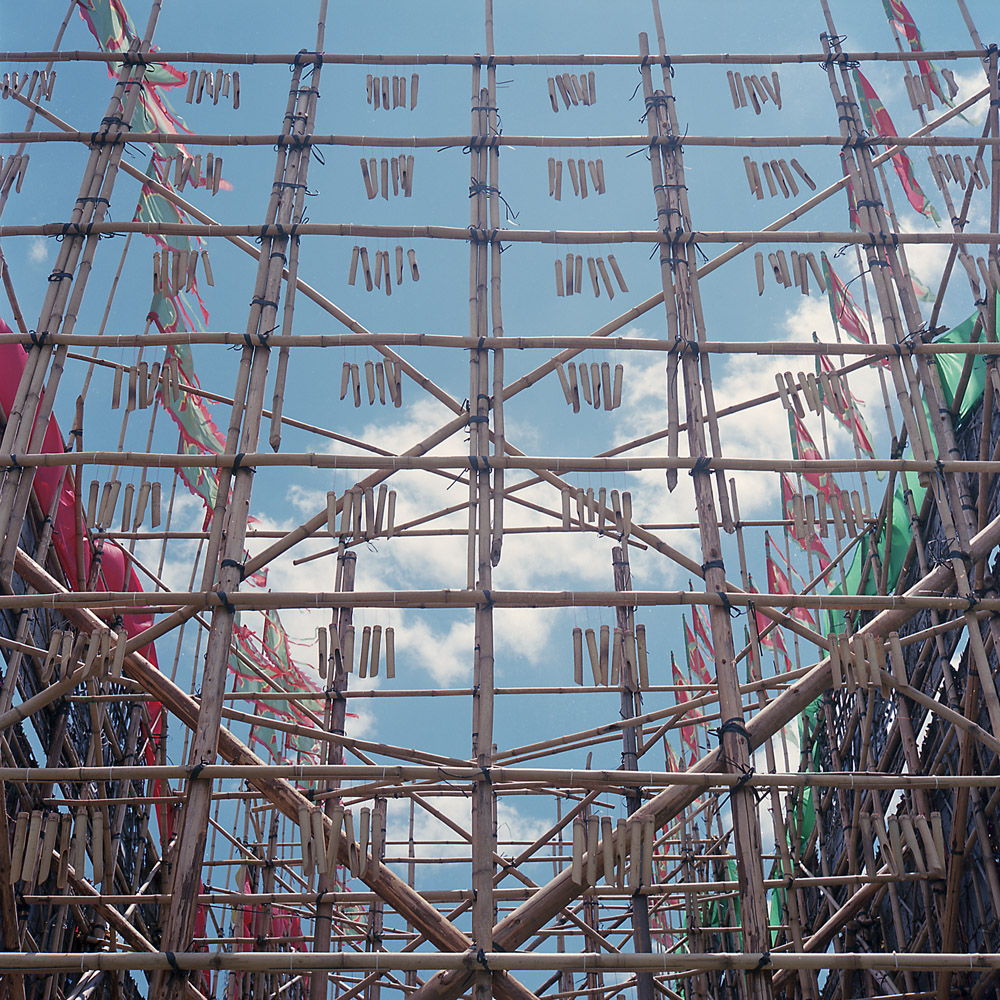
You could see this pavilion on the mall from 14th Street every day driving by. I wondered what it was all about and had to stop and see it close up. The building is built like a traditional Chinese city gate, but made of a bamboo frame and covered in paper. I never did see what the Zuni Icosahedron thing on the front of the gate meant.
Zuni Icosahedron Chinese Pavilion
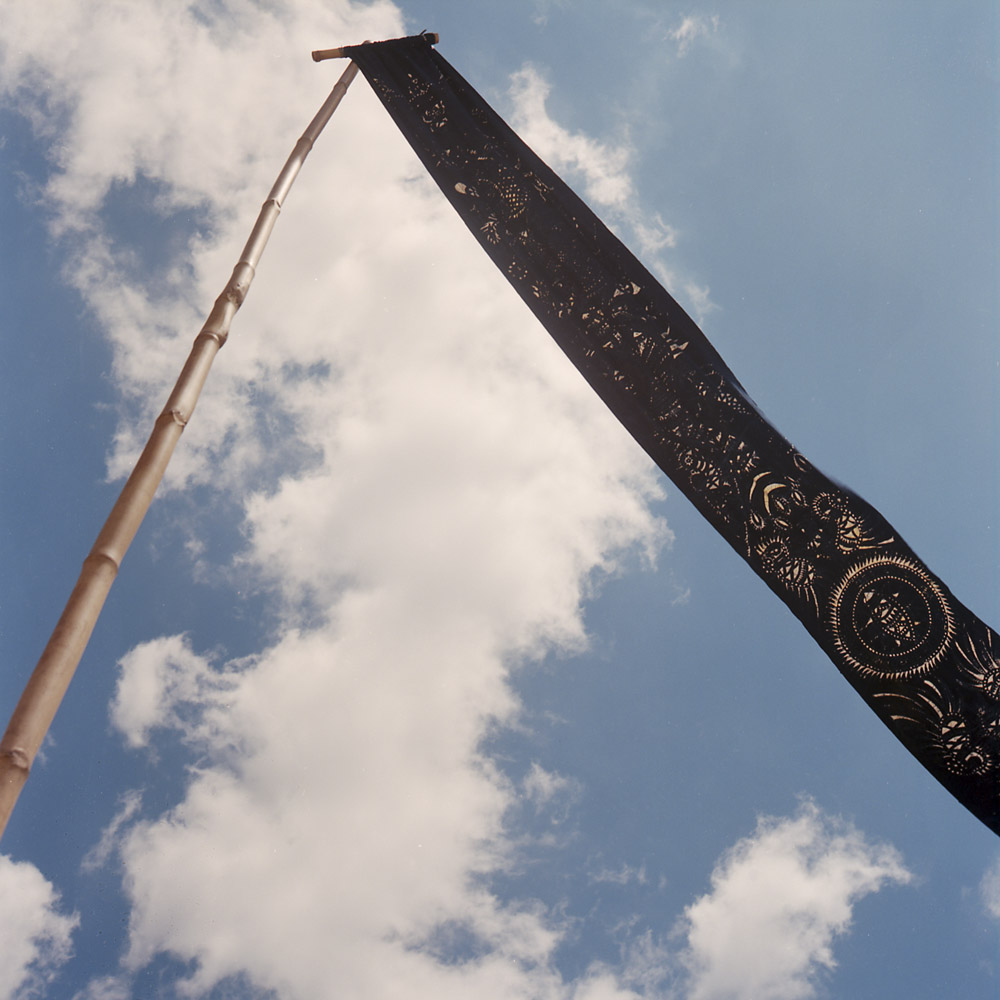
Sometimes it’s just the simple things that attract your attention. This banner flapping in the wind made such a bold graphic statement with its geometry contrasting with the organic cloud forms.
Chinese Banner, Folklife Festival
Here are the bamboo wind chimes that filled the structure of the paper gate. One thing that amazed me was how fast they were able to disassemble the gate structure – it was literally up one day, gone the next. You can take that as a commentary on the ephemeral nature of existence if you like.
Bamboo Wind Chimes, China Pavilion
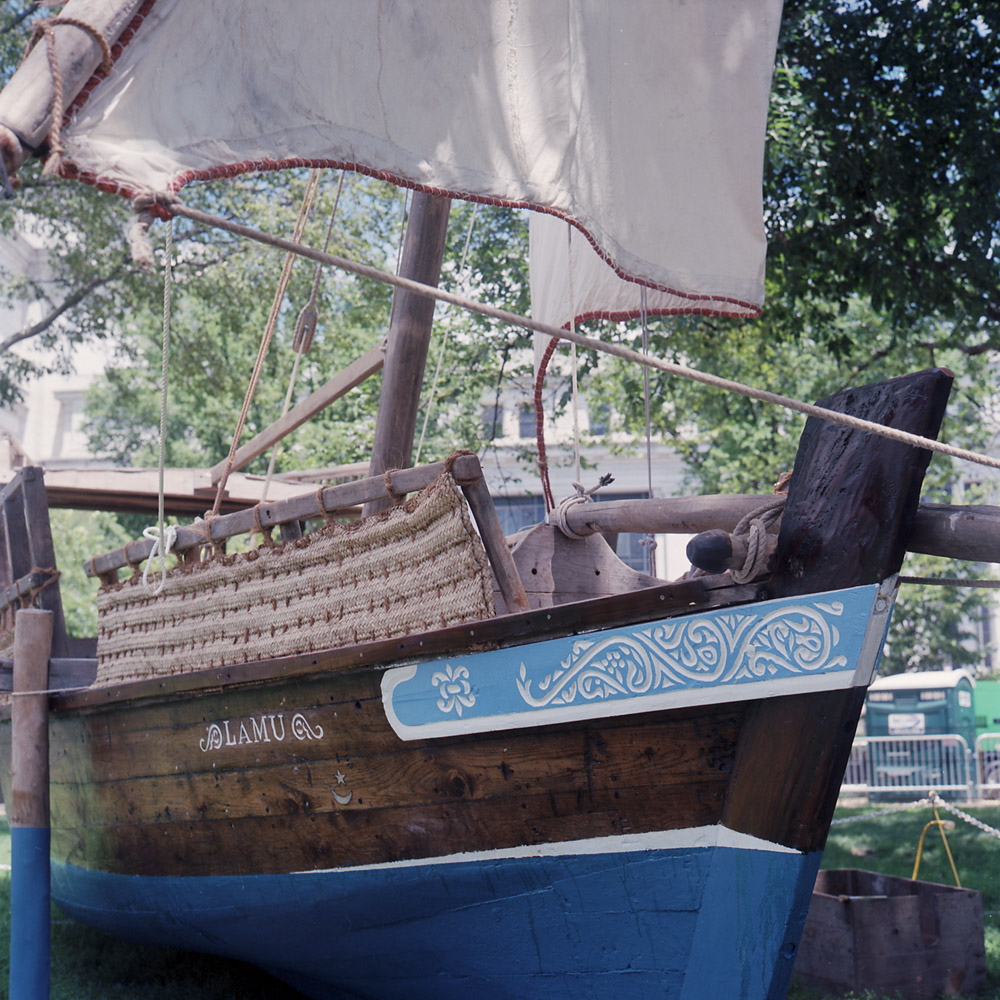
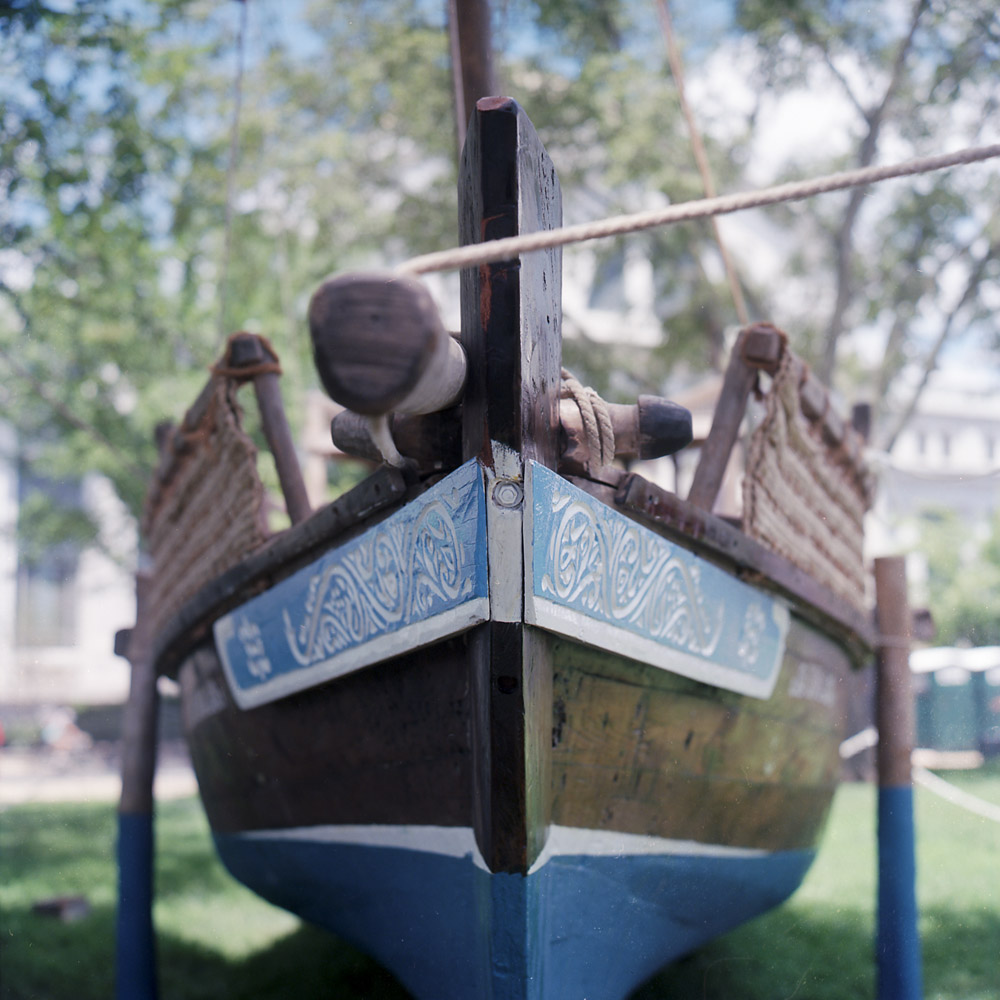
In the Kenyan area of the festival, they had this traditional fishing boat on display, and Kenyan craftsmen were working on rebuilding it. Not visible here but in the stern were areas that had obviously seen significant wear and tear.
Kenyan Boat, Folklife Festival, Side ViewKenyan Boat, Folklife Festival
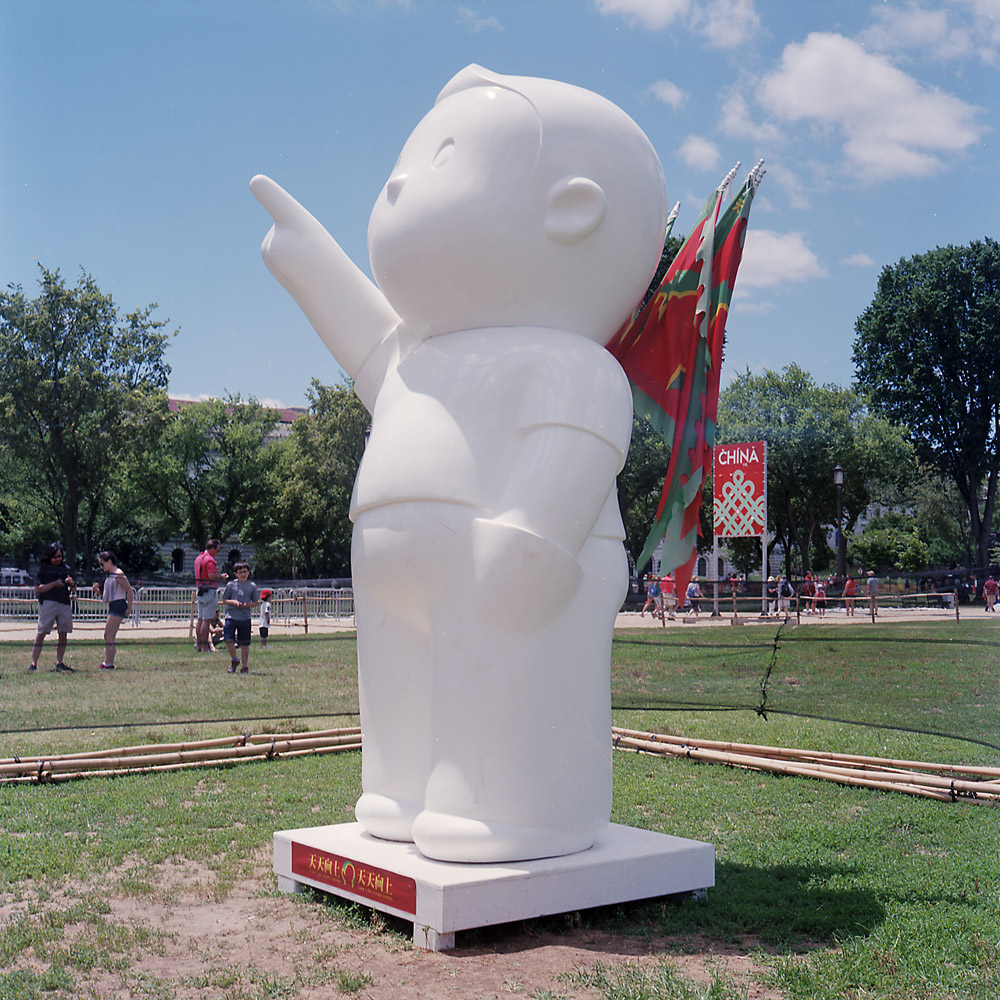
And finally, as part of the Chinese installation, was this figure. I’m calling him Bao’s Big Boy as he looks like a Chinese Bob’s, or perhaps the love child of Bob’s Big Boy and Astroboy if they were to have a relationship. Toss in a dose of Young Pioneer and you’ve nailed it.
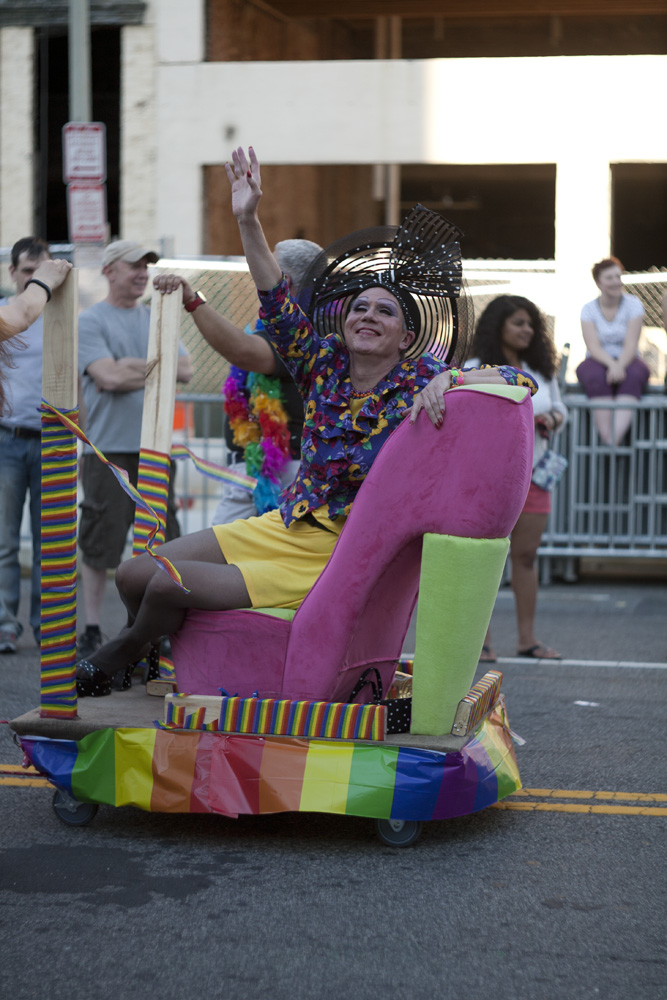
I completely forget what group this “float” was with. I’ll just call it “Riding in Style”. Who wouldn’t want a size 200 Jimmy Choo stiletto?
Riding in Style
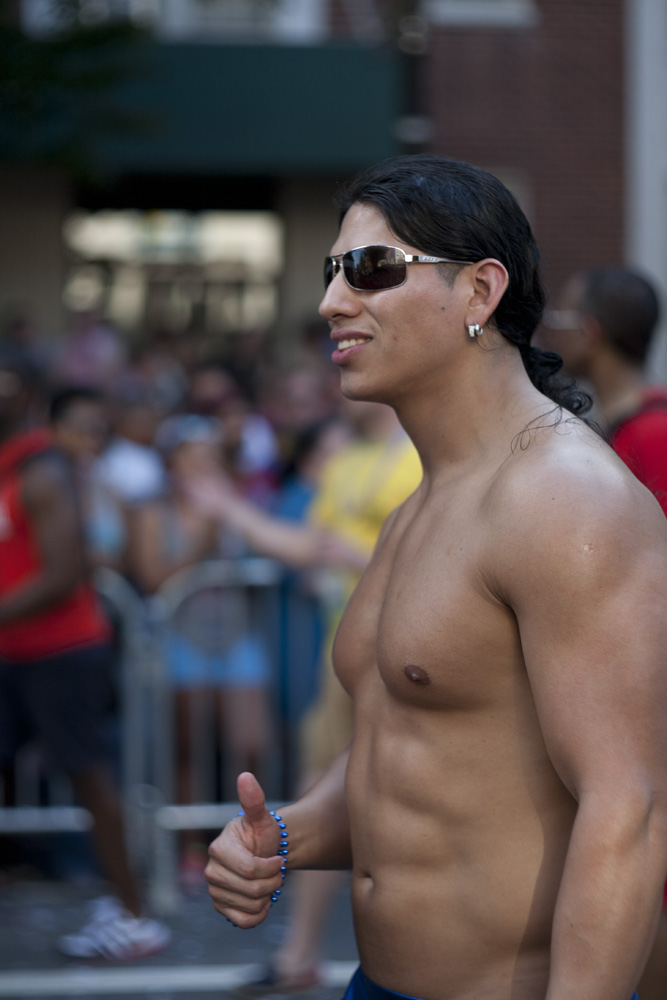
One of the go-go dancers from Secrets, the all-male strip bar.
Dancer, Secrets
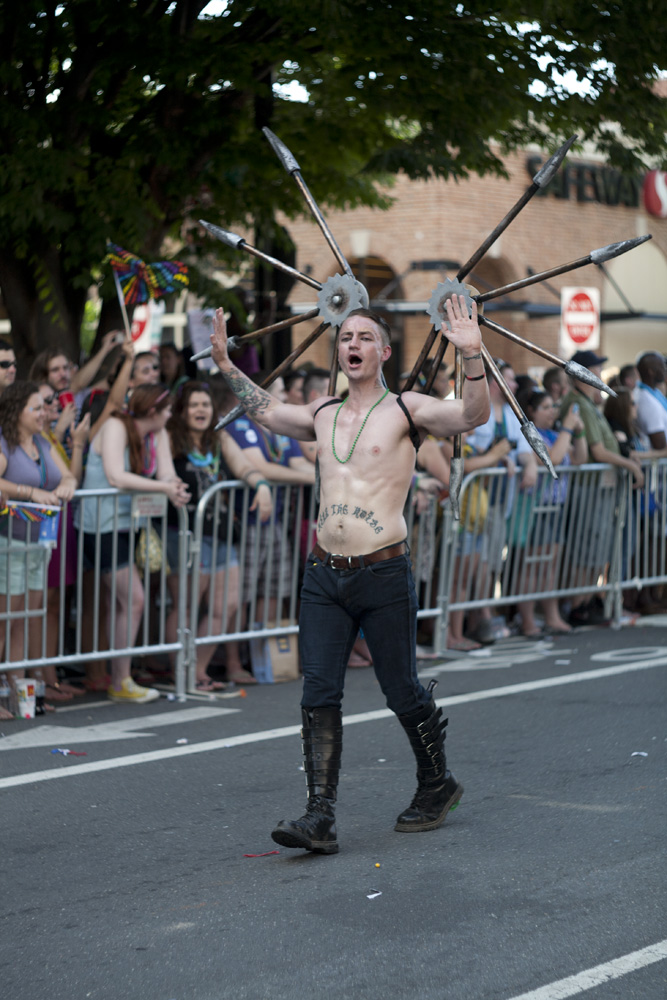
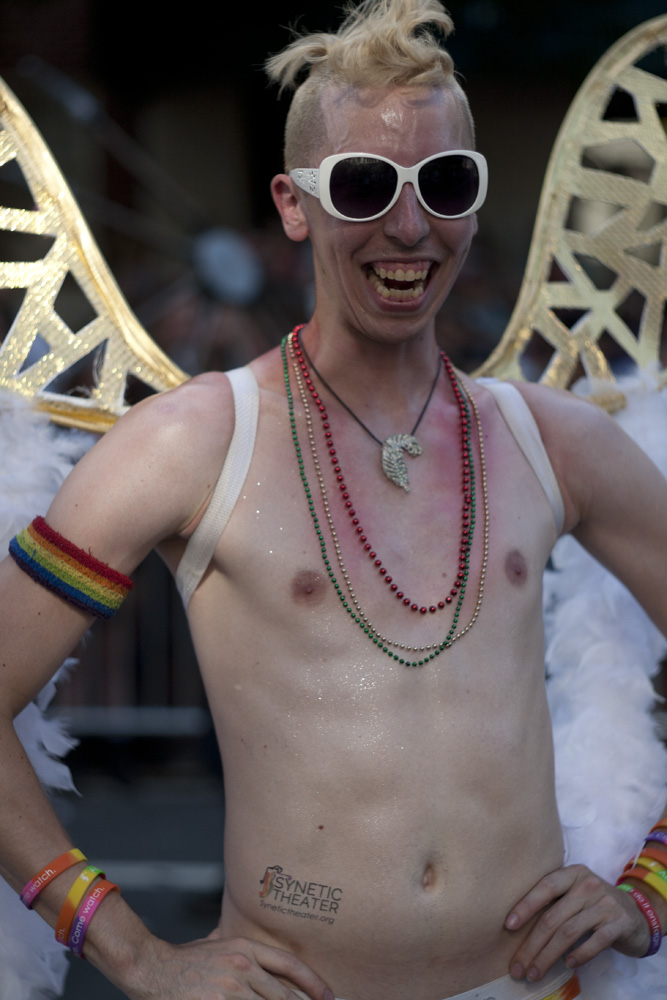
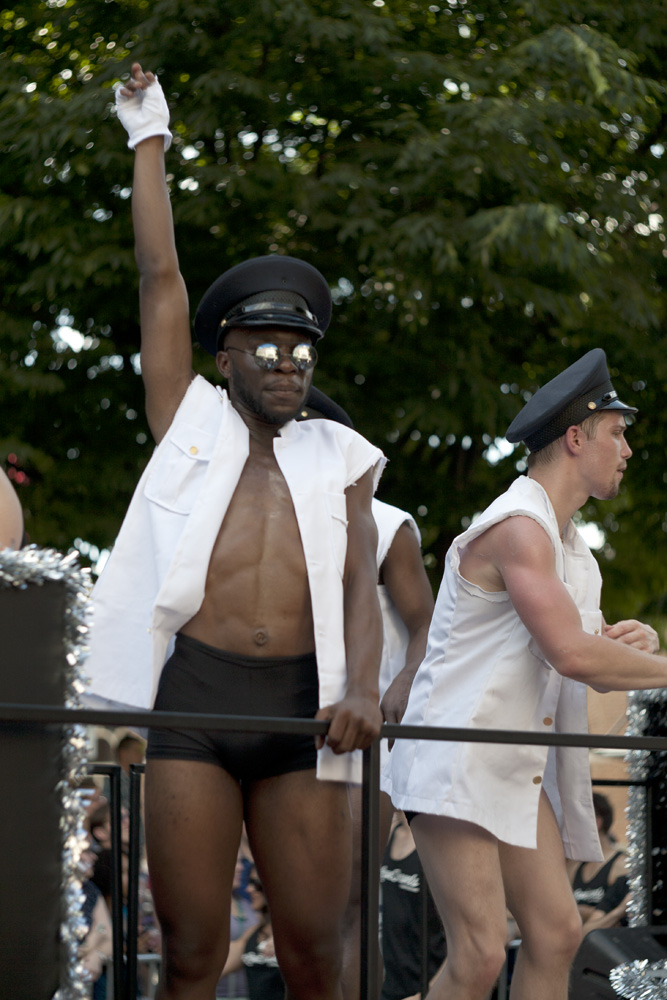
Synetic Theater company had a large contingent in the parade. I couldn’t tell if they were trying to show off their costume-making skills or if they were advertising a specific show. They were definitely showing off their bodies, though. Here are three for your consideration.
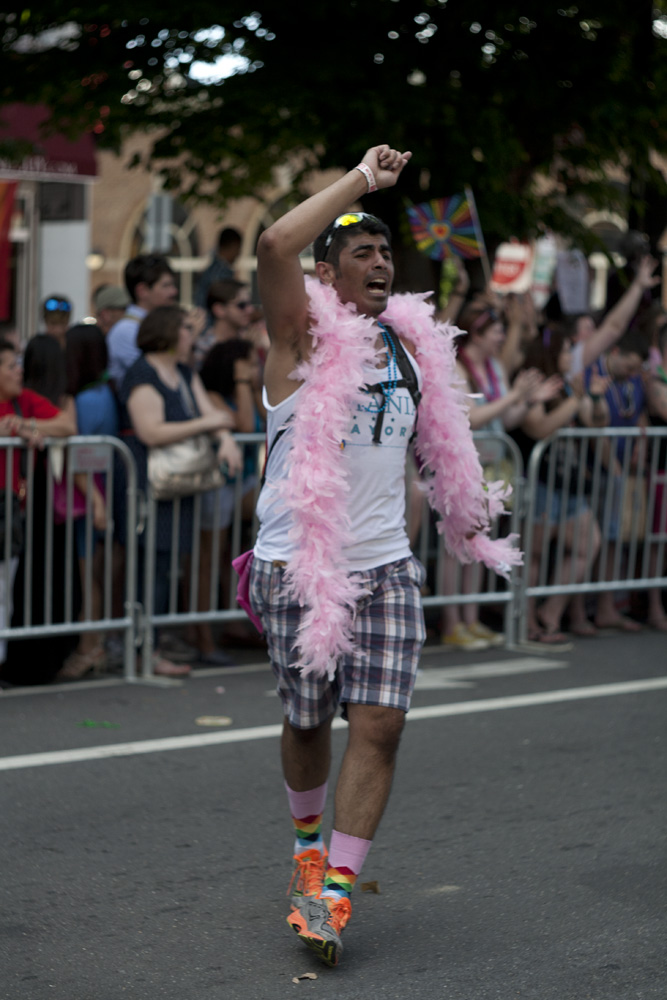
Another “I don’t know what contingent he is with” shot. But pink feather boas are a sure-fire attention getter.
Pink Feather Boa
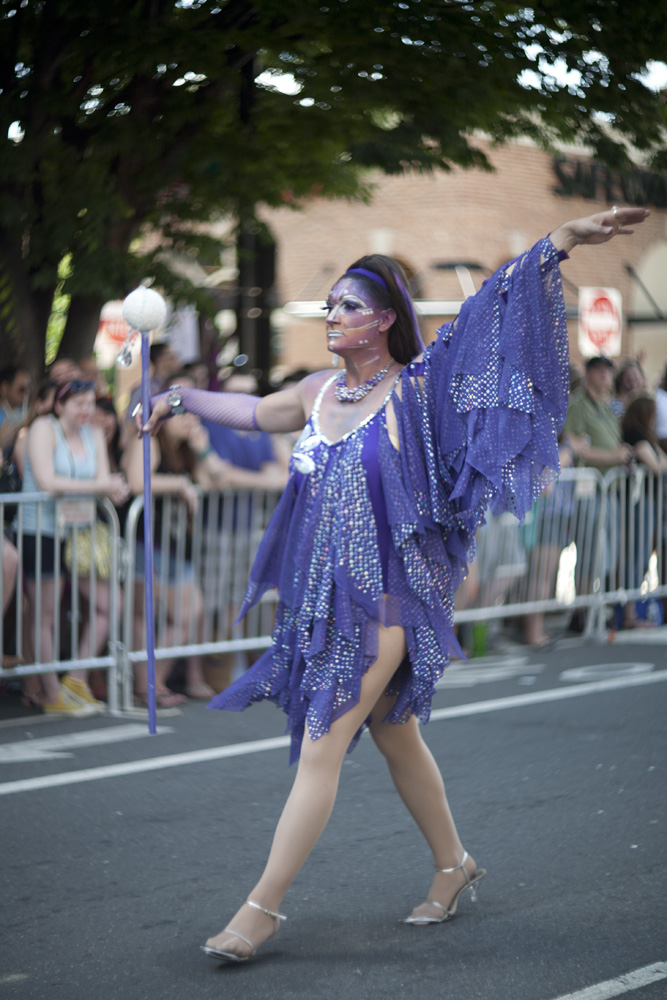
The majorette for DC Different Drummers, the gay marching band.
Majorette, Different Drummers
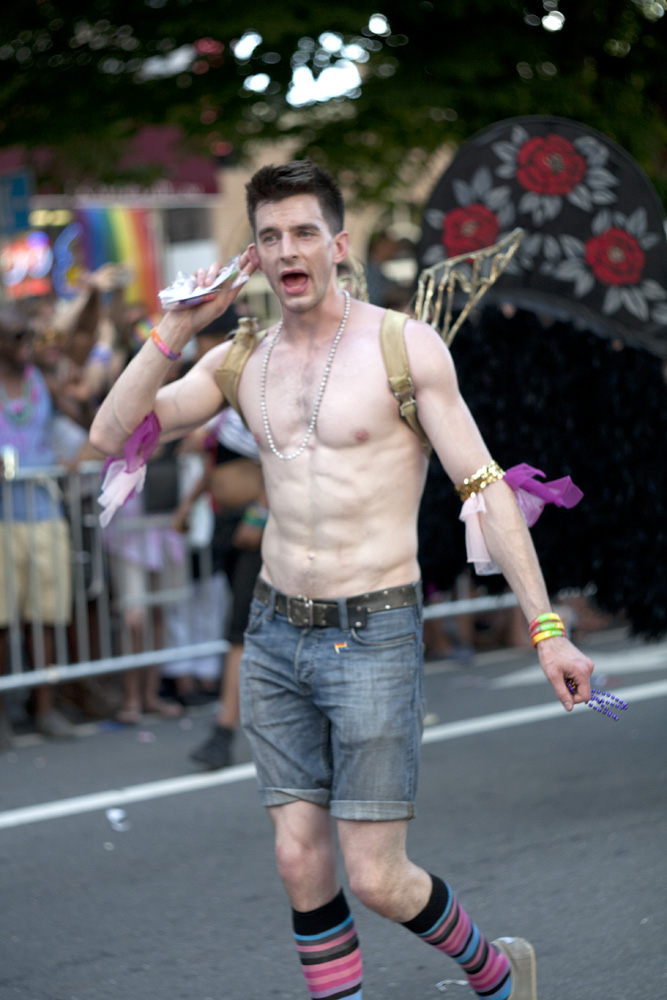
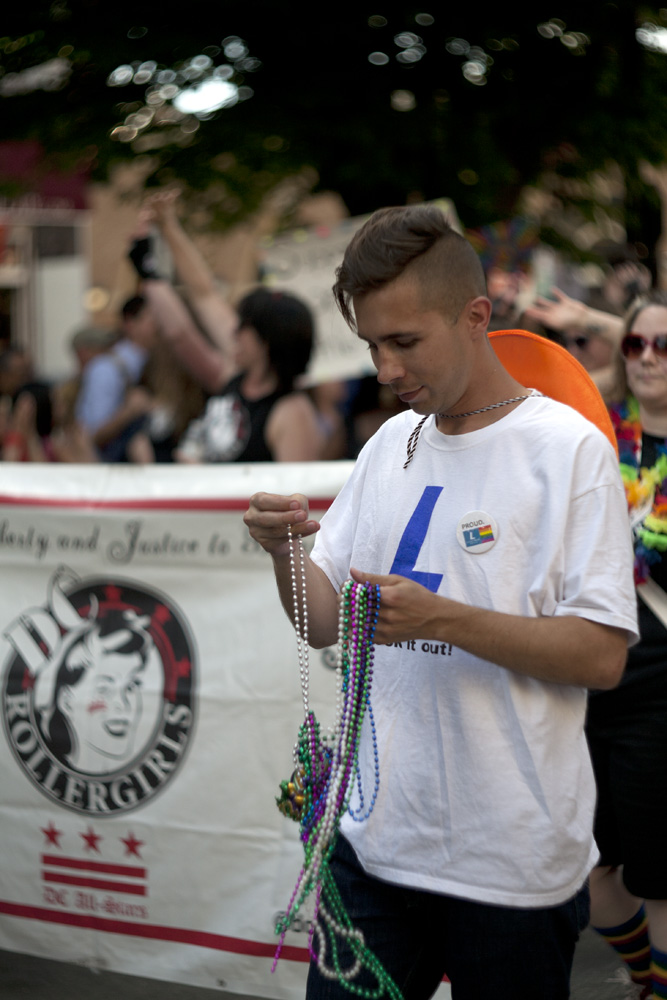
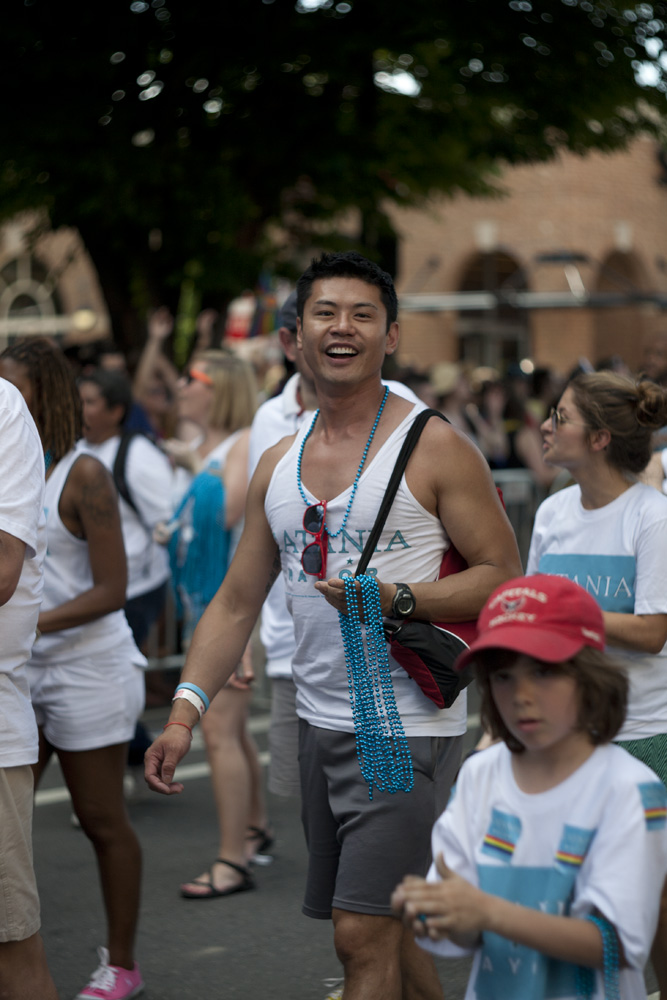
I think he was with the contingent in front of DC Rollergirls, the roller derby team, and not with them. Many of the political contingents were tossing out beads to the crowd, so he could have been with one of them. I thought he was cute, anyway.
Handing out Beads
I think this float was for an entertainment venue here in town. But it could have been part of the Whitman-Walker Clinic contingent. This confusion is understandable – fake cocktail glasses being carried on platters by guys in waiter-esque costumes doesn’t exactly scream “health screenings”.
Village People
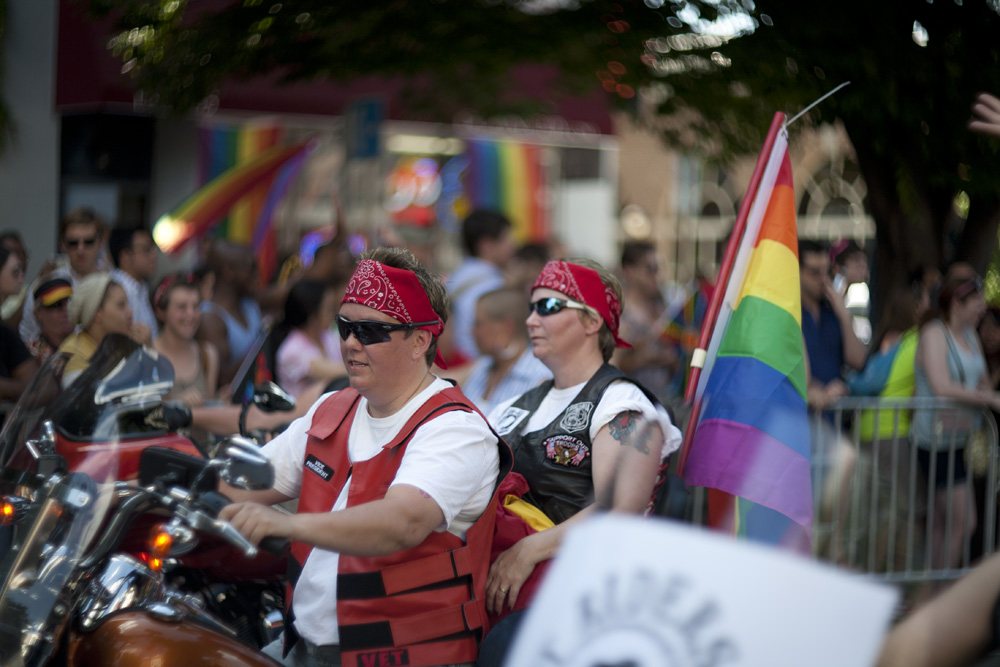
Aah, part of the perennial favorites at the parade, Dykes on Bikes. They’re always the lead-off contingent in the parade.
Dykes on Bikes
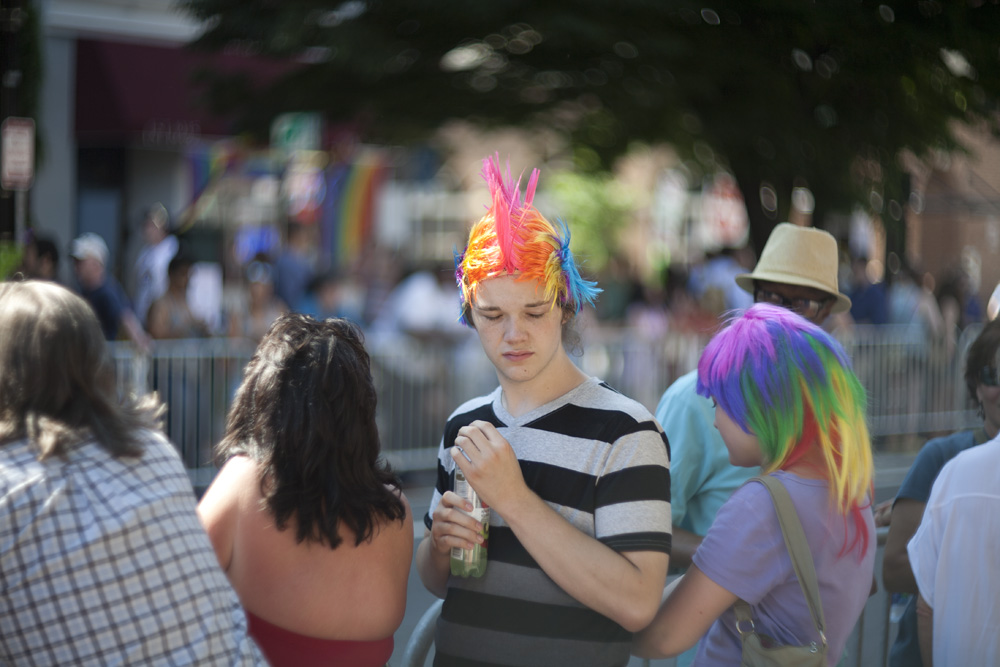
A young boy in a rainbow faux-hawk wig, watching the parade. Here is a shot that plays to the strength of that lens that I was talking about in the previous post. The background swirl really helps to concentrate focus on the boy’s face.
Youth Pride
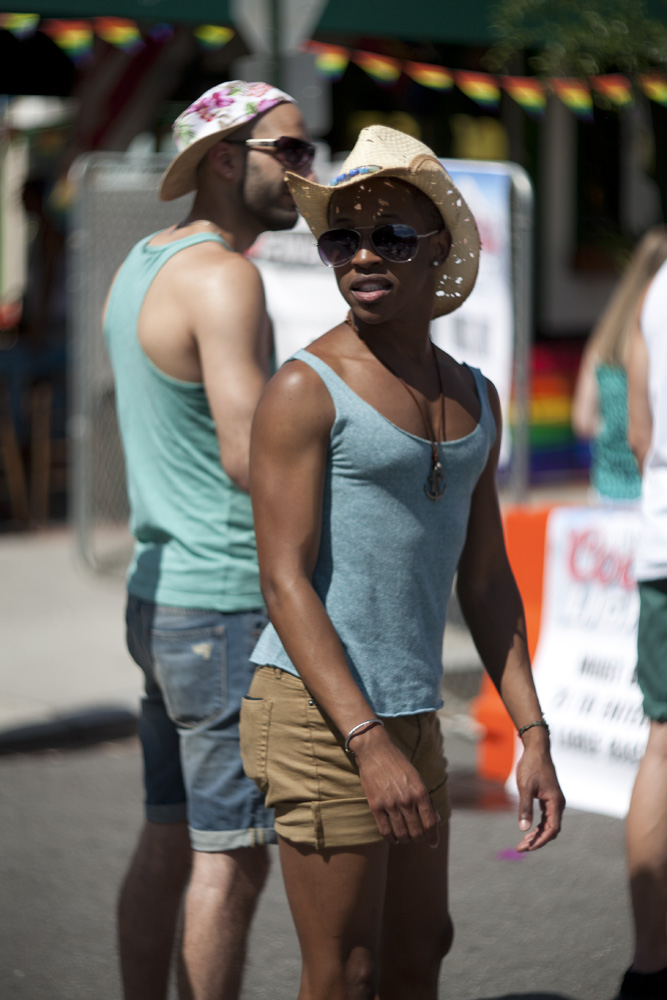
And finally, I close this one out with the cowboy (spiritual cowboy, anyway) in line for the JR’s bar outdoor beer garden.
Sorry for being a week late with posting these. Life gets in the way of blogging at times. If you remember the last time I photographed the parade, I gave myself a little project to shoot the whole thing with just one lens, the 135 f2 L lens for my Canon 5D. This year I did something similar, but with the 85mm Helios f1.5 Russian-made manual focus lens that I have for my Canon. The Helios has a rather unique character to its out-of-focus areas, which you’ll see quite clearly in these shots. The lens is an odd bird in today’s world in that it is a pre-set aperture lens. You focus wide-open, then turn a manual ring on the barrel to set the aperture to the one you have pre-selected before taking the picture. It’s a holdover from the days when lenses had no mechanical interaction with the camera beyond mounting to the body. The upside is that it makes it easy to adapt the lens to any camera. The downside is, you have to remember to re-set the aperture after focusing.
When the lens is properly focused, it gives a unique signature look – the subject is tack sharp, and really pops out from the background because the background has a “swirl” to it reminiscent of but not the same as you would get with a vintage Petzval-design lens. I chose this lens as my one-and-only for the day not only for the out-of-focus effect but also because it is a shorter lens, therefore a little more intimate than the 135. Take a look and let me know what you think.
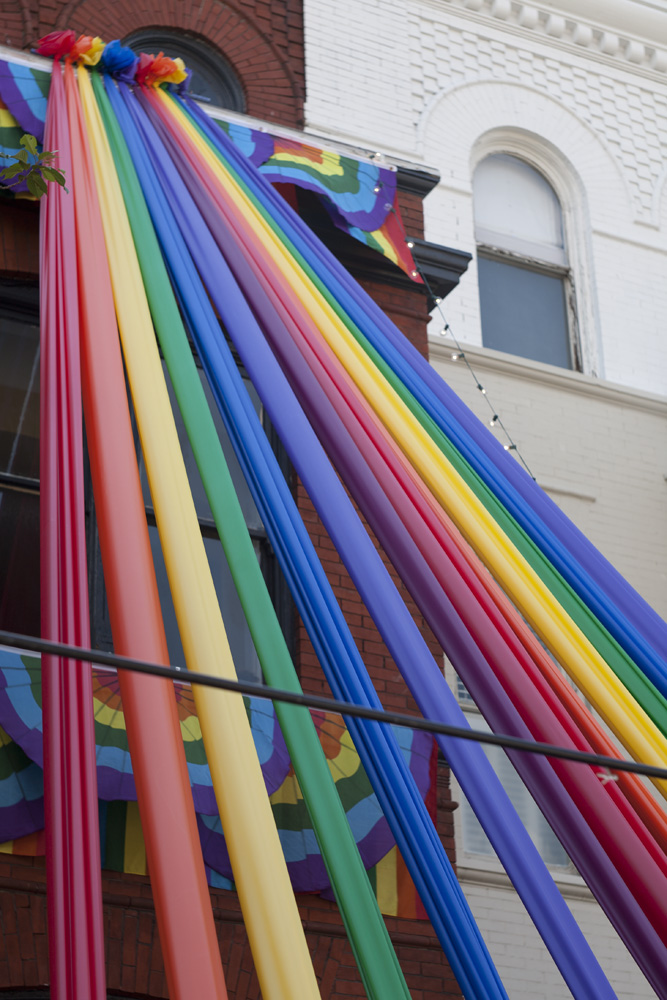
Rainbow Streamers, 17th Street
Politics:
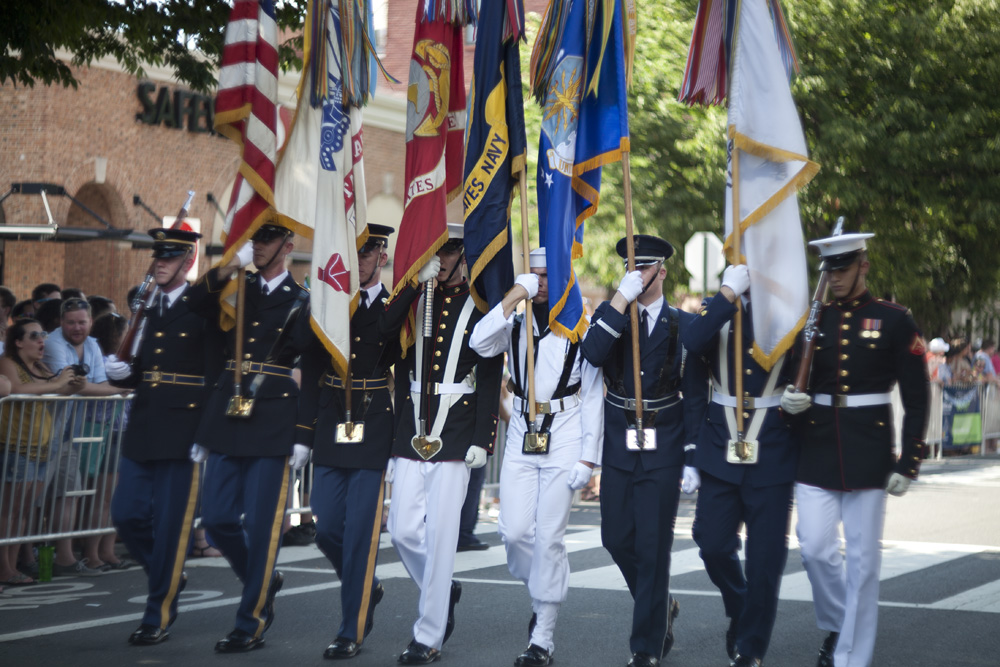
DC Pride would not be complete without a major political section. Actually, in some way, shape or form, most of the parade is political (especially if you include the religious groups that march under that heading). This year marks the first time an official US Military Color Guard contingent was able to march openly in the parade thanks to the end of Don’t Ask, Don’t Tell. Watching them march in the parade was a very emotional moment for many people.
US Military Color Guard
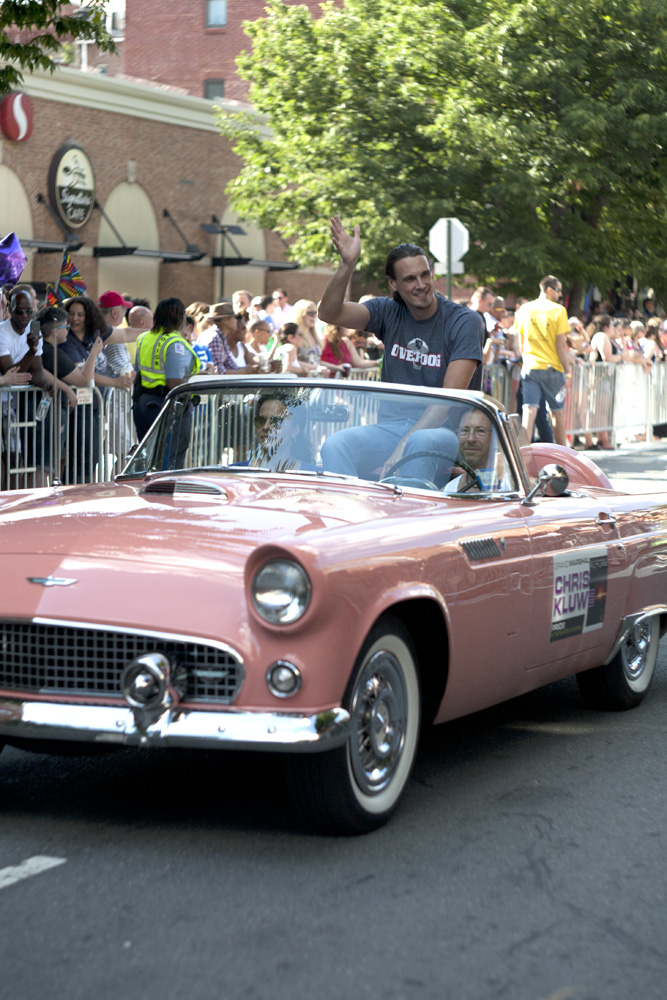
This year’s honorary grand marshall was Chris Kluwe, the straight former kicker for the Minnesota Vikings who took a very vocal pro-gay, pro- same-sex marriage stance, replete with some very memorable if not entirely polite turns of phrase. It was an extremely brave stance for him to take, and ultimately it cost him his job. He was honored for being a relentless ally.
Chris Kluwe, Grand Marshall
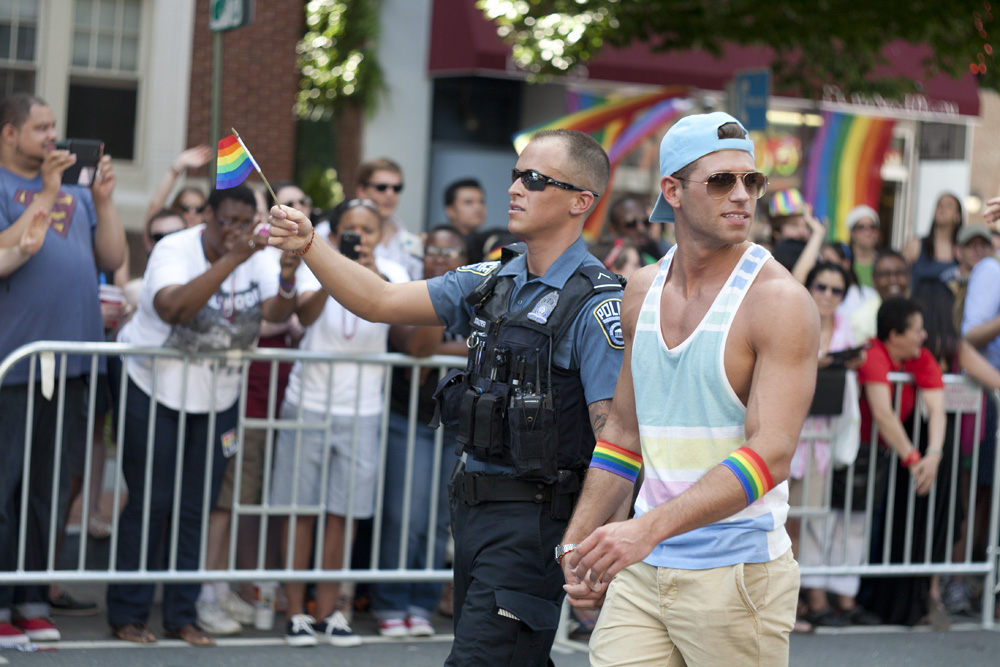
This couple marching in the parade with the police contingent showed up at the counter-protest to the Westboro Baptist Church looney-tunes protest of DC Pride, giving silent rebuke to the Westboro clan with a passionate kiss.
Police Officer Couple
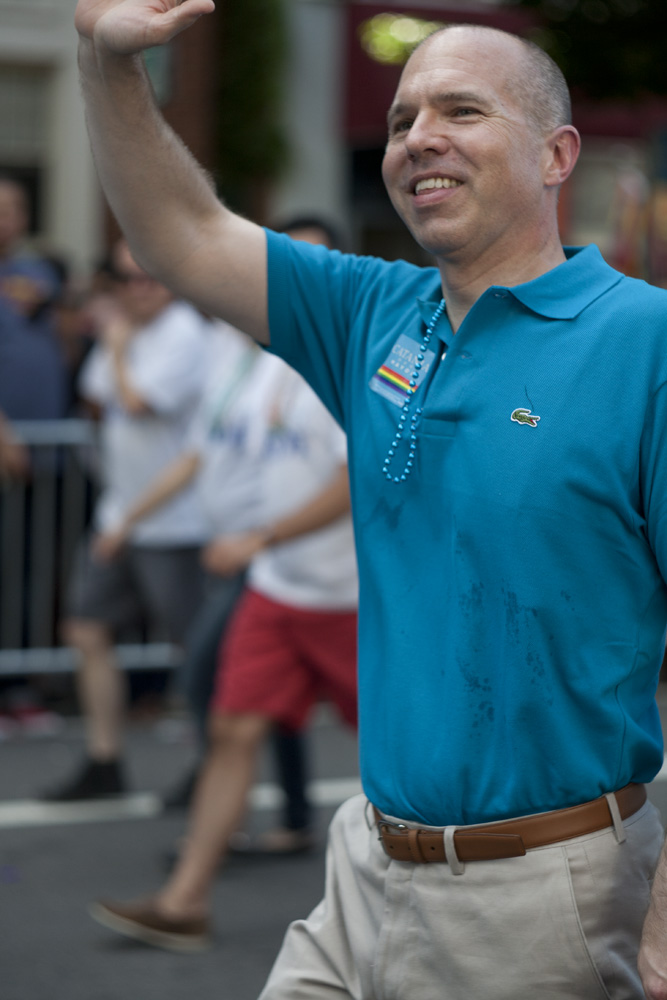
David Catania is running for DC Mayor as an independent. It is almost impossible to run for city-wide office anymore without participating in DC Pride – pretty much the entire city council was in the parade, and even several former-candidates who lost their primary elections had marching contingents.
David Catania Supporters
My apologies to David for this photo, but it’s not my fault that he’d been hit by a super-soaker prior to marching past where I was taking photos.
David Catania
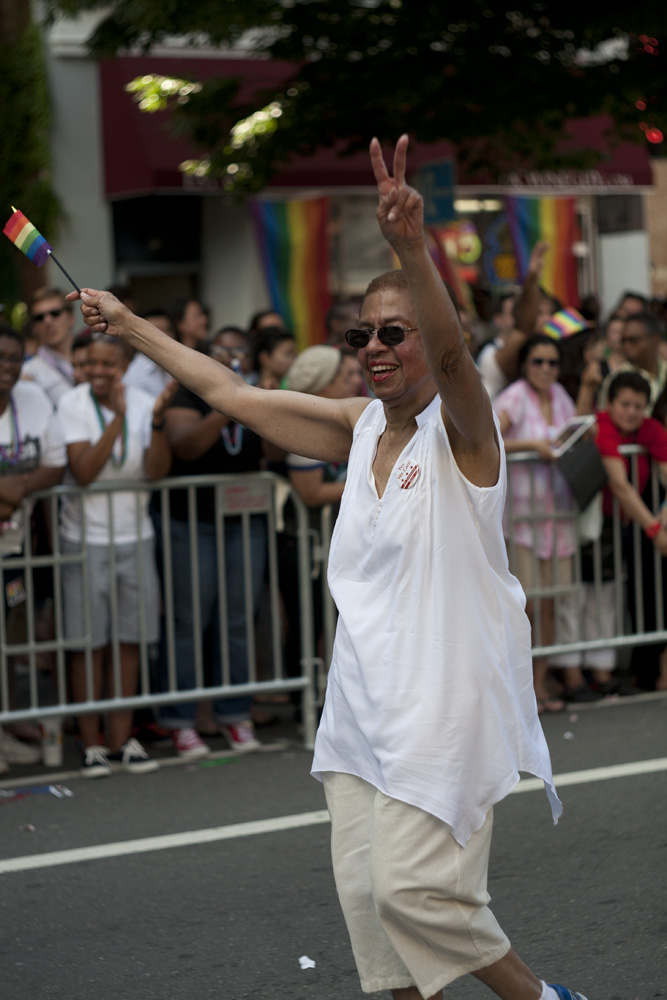
This is Eleanor Holmes Norton, DC’s Congressional Delegate. She sits in the US House of Representatives but does not have the same rights and authority that a full congressperson has because DC isn’t a state. She’s a regular at Pride, though – I don’t think I’ve been to a single Pride parade in the last 20 or so years that she hasn’t participated in.
Ok – it was overdue for a variety of reasons, so I went in last night and did a major edit of my personal website, the “static” online gallery I have at www.theflyingcamera.com. I trimmed the categories down, got rid of some images that were old/weak, and generally aimed to make the site look and feel more professional. I’m getting ready to launch my portrait business, and pending some research into good site hosting services that will let me customize my page, this will have to do as an online presence. I would love some feedback from my readership as to what you think of the overall look and feel, and the image flow and selection.
Part of what spurred the interest in this overhaul was attending a photography business marketing seminar taught by Vickie Lewis, a Washington DC based photographer who is a certified business coach in addition to being a past president of the regional chapter of the ASMP (American Society of Media Photographers), a Pulitzer Prize winner and currently represented by National Geographic. She teaches small group seminars on the business of photography – how to market yourself as a service, how to sell your artwork. She also teaches technique classes. Her website is: http://www.vickielewis.com if you’d like to read more about this terrific woman and her work. She gave me a lot of fantastic ideas on how to market myself and the work that I do.
As a result, I’ve overhauled my photographic mission statement and my elevator pitch:
The typical portrait photographer produces workmanlike images that function as documentation. My goal is to use my creativity and vision to produce images that go beyond to become iconic representations of your spirit and character. You do not have your portrait taken by me; rather you make your portrait with me. I use antique techniques and processes in a contemporary style to create not mere photographs but tangible art objects you will be proud to display in your home and pass on to future generations.
My new “About the Artist” blurb:
Scott Davis is a Resident Photographer at Washington School of Photography and an Instructor at Glen Echo Photoworks where he teaches antique and historic processes. When not teaching or shooting for private clients, he exhibits his personal projects around the Washington DC area. His publication credits include Metropolitan Home, Metalsmith, Creative Image Maker, Rice Paper and Rangefinder. He counts Stephen John Philips and John Dugdale as mentors and influences.
That sounds like a pretty good set of credentials, doesn’t it? And it has the added benefit of being accurate. It’s something that she told me about how to put these things together in a short bullet point concept. I knew all this stuff about me but I had never put it in a concise, condensed thought so I wasn’t able to articulate it.
And my inspirational quote – the reason I love photography and the reason you should want me as your photographer:
I fell in love with the magic of photography when I made my first darkroom print. My original goal was to just learn enough to use photographs as subject matter for painting and drawing. But when that first print emerged in the developer under the red glow of the safelight, I was hooked and I knew right then the camera would be my companion for the rest of my life.
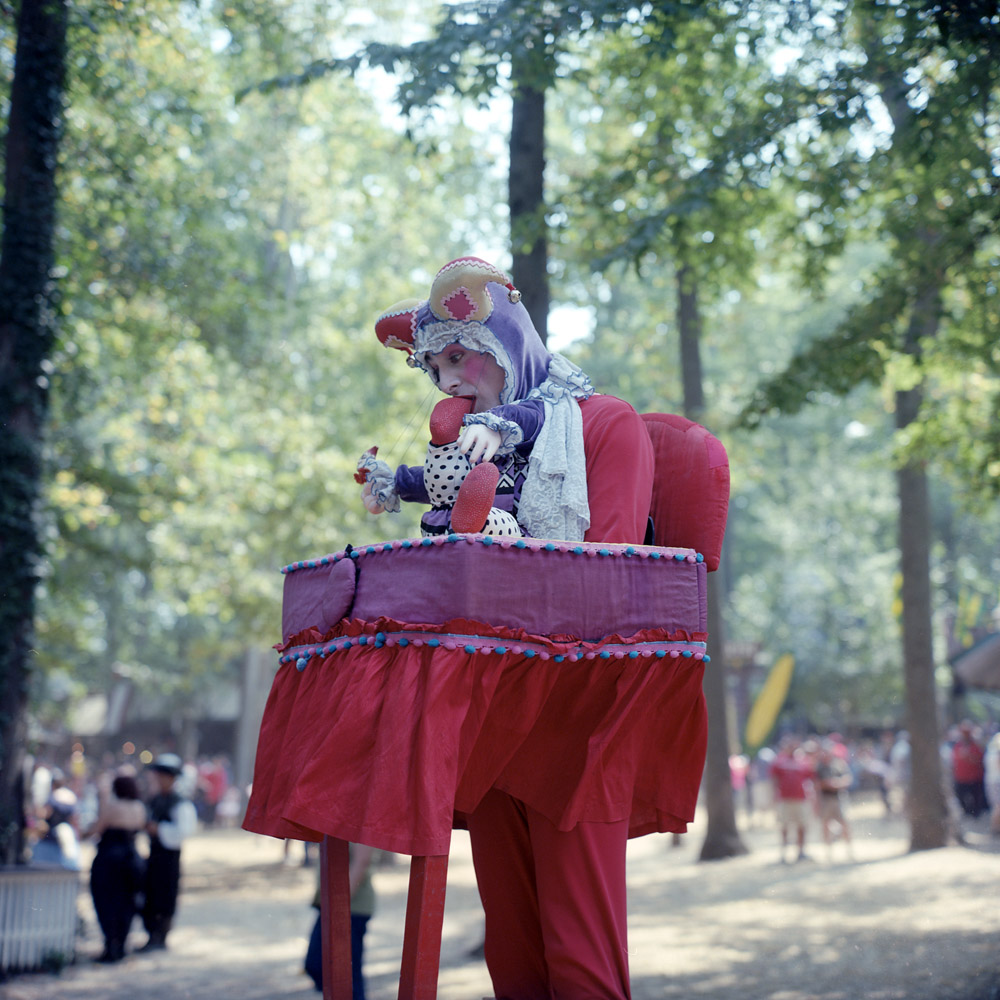
I’ve been a long-time fan of the Maryland Renaissance Festival, from back in the day when they held it in the woods near Merriweather Post Pavilion in Columbia, Maryland. I think the first time I went I was perhaps 10, and I tried to participate in the Human Chess game, but I wasn’t quite strong enough to hold the pole with my chess piece on top for too terribly long in the hot sun, and I almost conked someone on the head with it when I lost my grip and it started to fall over. I was quickly captured and removed from the board anyway, so it didn’t matter, but I was a very frustrated 10 year old.
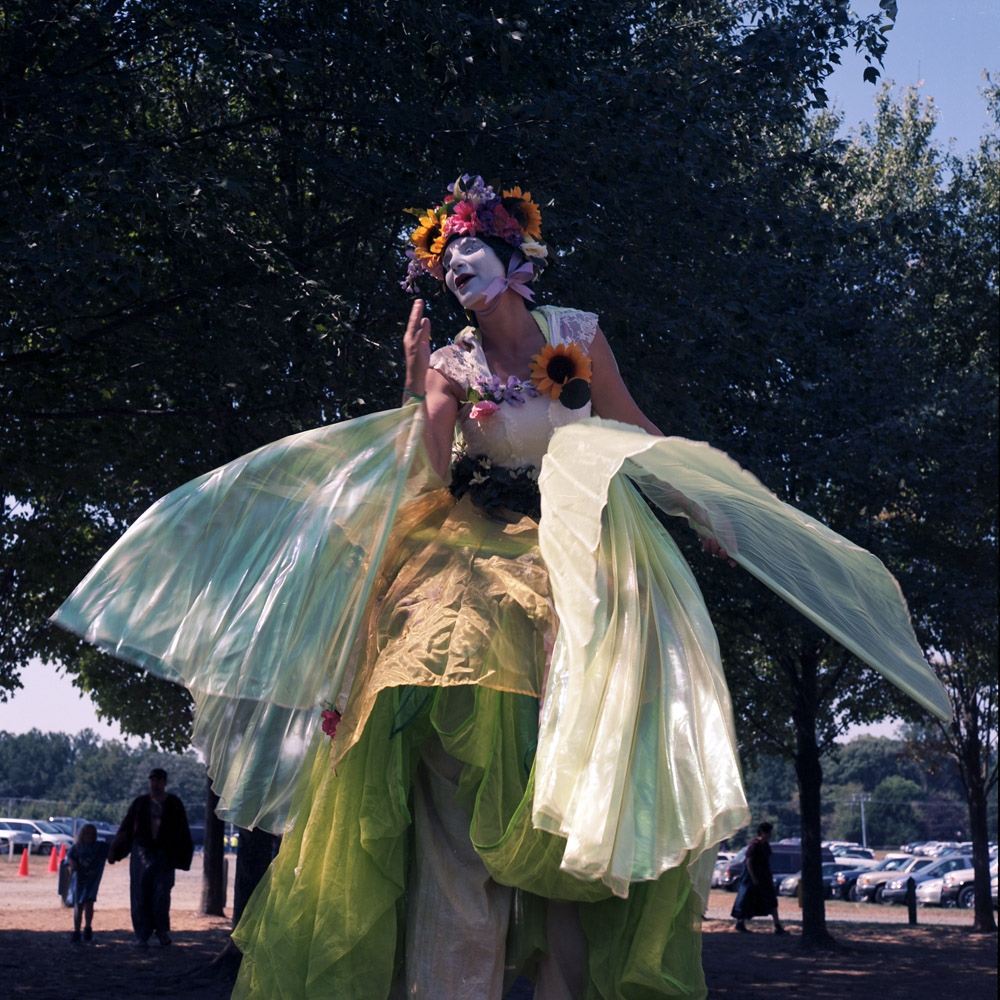
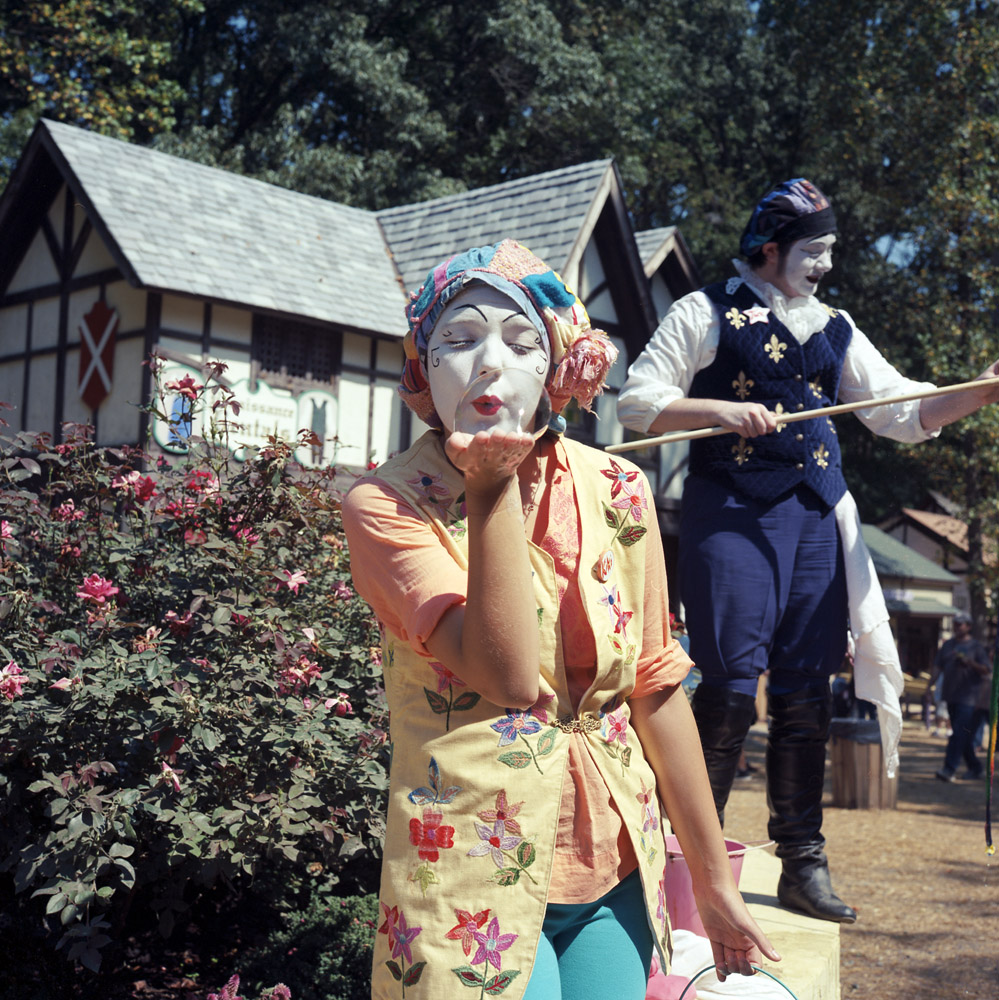
I try to make it at least once a year now, if not more. I get my Halloween outfits at the RenFest (new one debuting this fall, complete with red velvet tights with codpiece and a white shirt with puffy sleeves … I know, for some of you TMI). Anyway, the current RenFest is held near Annapolis in a permanent facility complete with jousting arena, multiple stages, and a series of shops and food vending stalls. It’s a great place to bring the kids for a day, and to indulge your inner childlike (and not-so-childlike) fantasies as an adult. Where else can you go and play dress-up as a naughty knight or bawdy tavern wench (as appropriate to your persuasions), talk like Shakespeare (or a pirate), and nobody will bat an eye at you (or maybe they’ll even compliment you for it!)? And you get to watch craftspeople do ironwork, leather, weaving and glass blowing. Here are a trio of folks plying their theatrical trade at the RenFest:
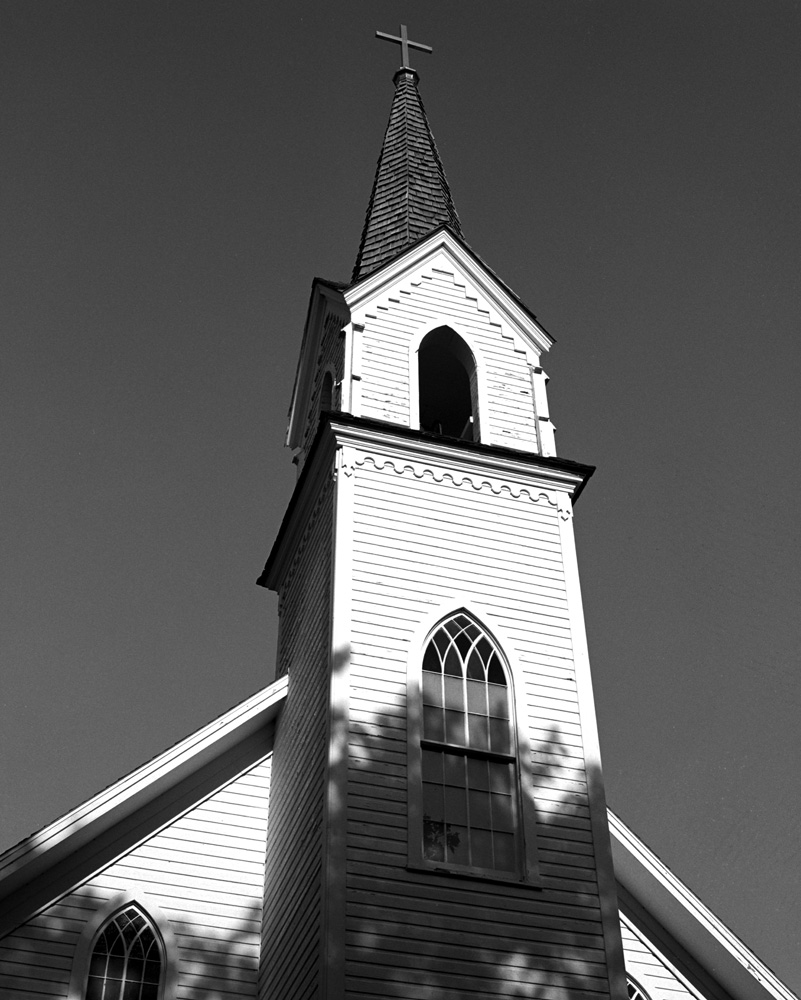
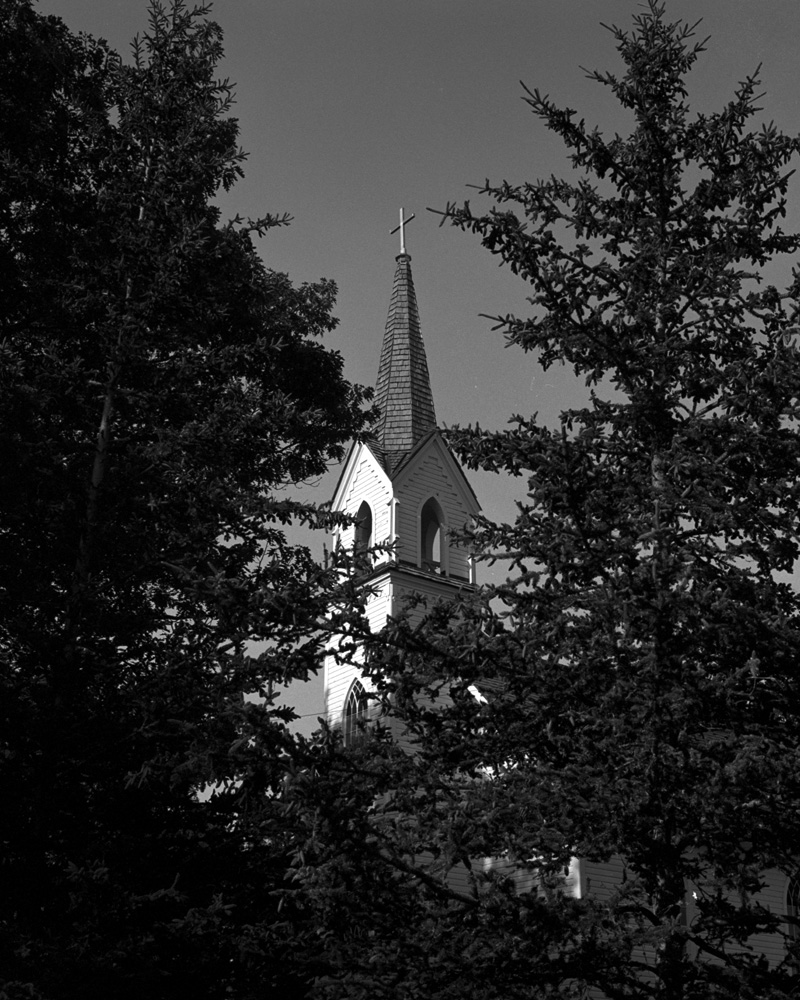
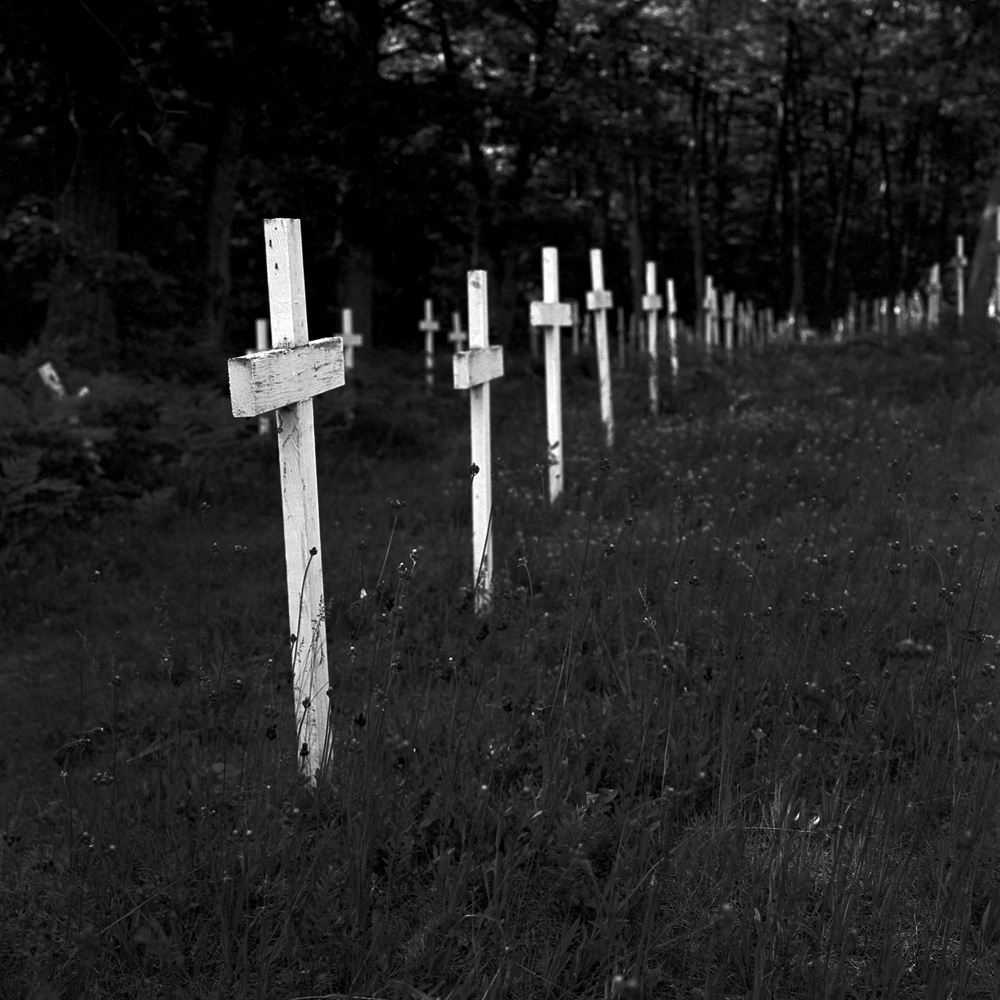
Here are the promised photos of St. Ignatius Church and the cemetery next door. St. Ignatius Church as it currently stands is the third structure to have been erected on the site, the oldest of which was the French Catholic mission to convert the natives in the 1700s.
St Ignatius SteepleSt Ignatius, Trees
Today, the churchyard contains mostly 19th and early 20th century burials of Polish and Scandinavian immigrants. The churchyard is famous for the white wooden crosses for grave markers.
Crosses, St. Ignatius Cemetery
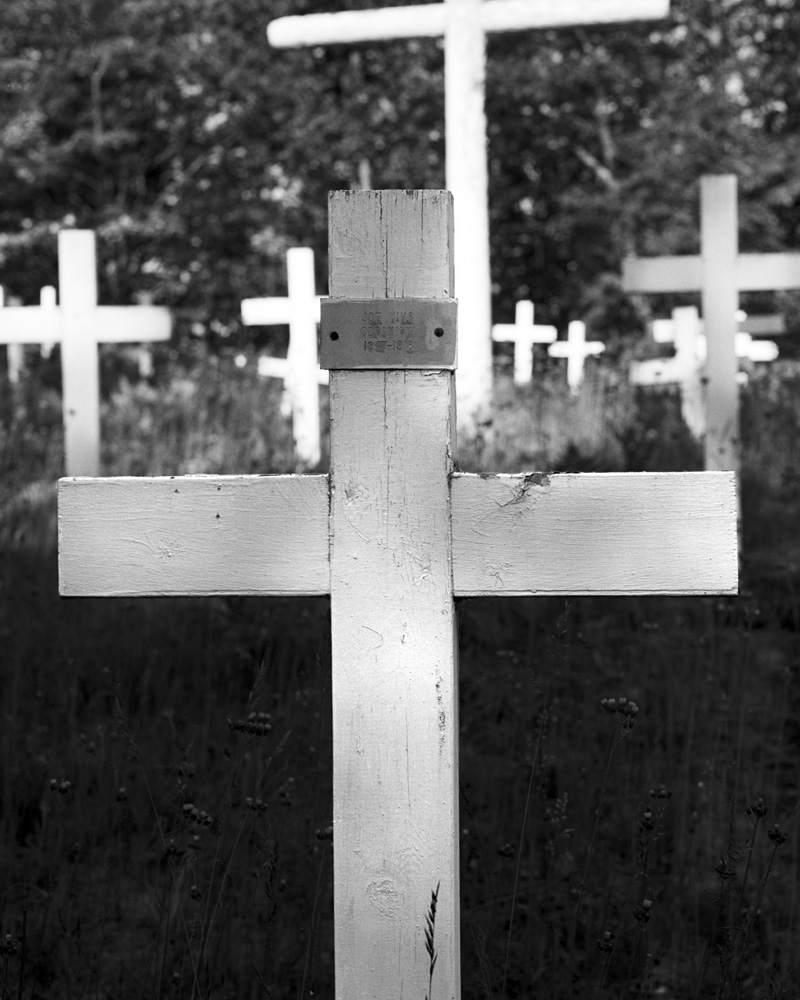
Here is a close up to show the tin markers with the names and biographical data on the crosses.
Joe King Odganicki
The church no longer has an active congregation, but is maintained by a local organization for its preservation.
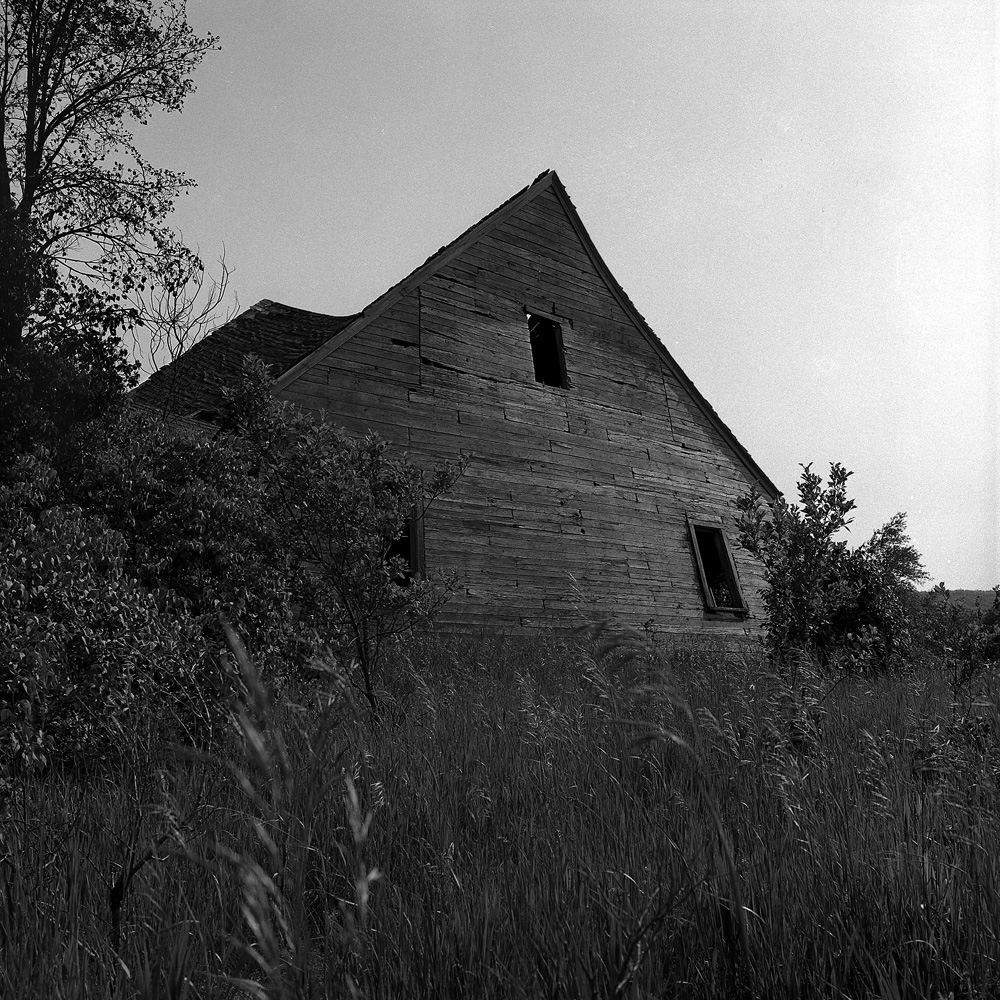
Although these houses are familiar to Photostock participants from years past, I figure most of my readers have never seen them. The first building is across the intersection from Moose Jaw Junction, a roadside restaurant and bar near Larks Lake. The property is for sale, should anyone want a total tear-down.
The Slumping House, End View, Moose Jaw Junction
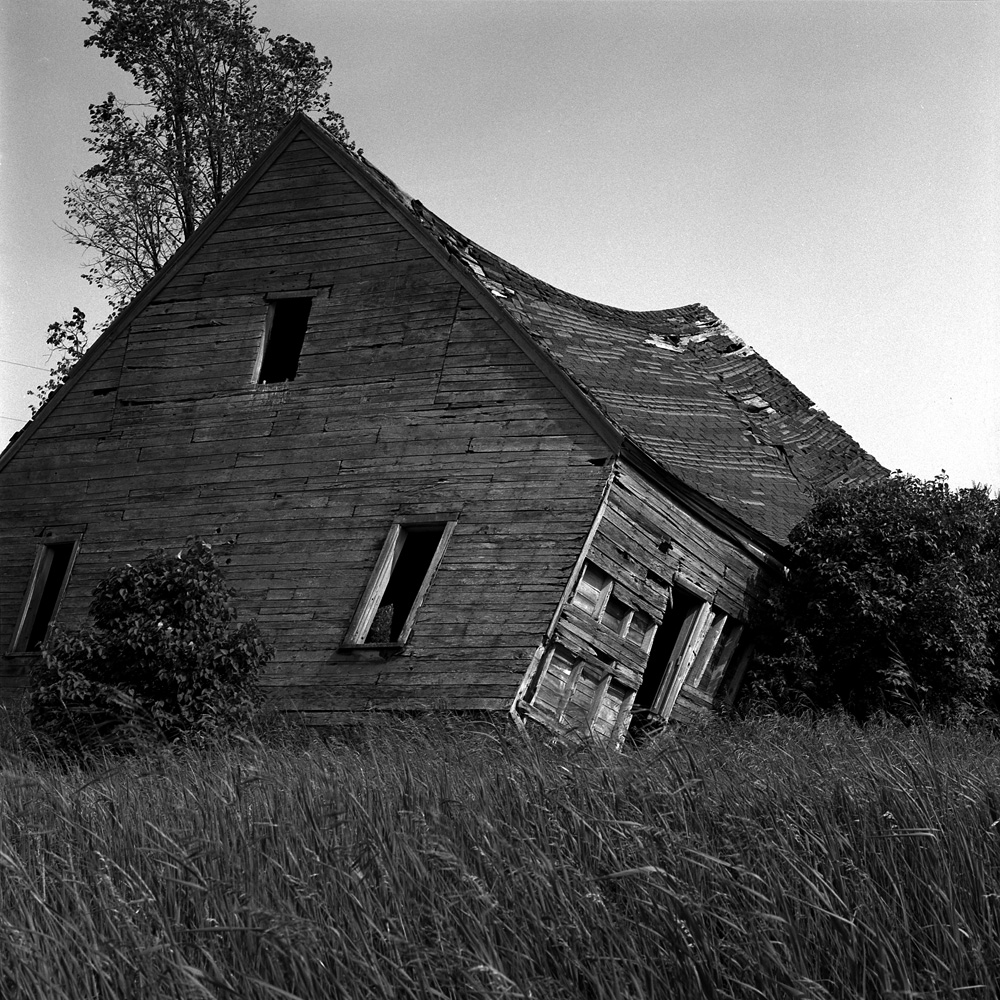
A different view of the building:
The Slumping House, Moose Jaw Junction
This house is/was a little cabin across the street from the St. Ignatius church in Good Hart, Michigan. Pictures of the church and its cemetery will be forthcoming in another post. From what I hear tell from past Photostockers, the cabin used to be far more intact than it is now and they have watched it deteriorate into this condition over the last half-dozen years.
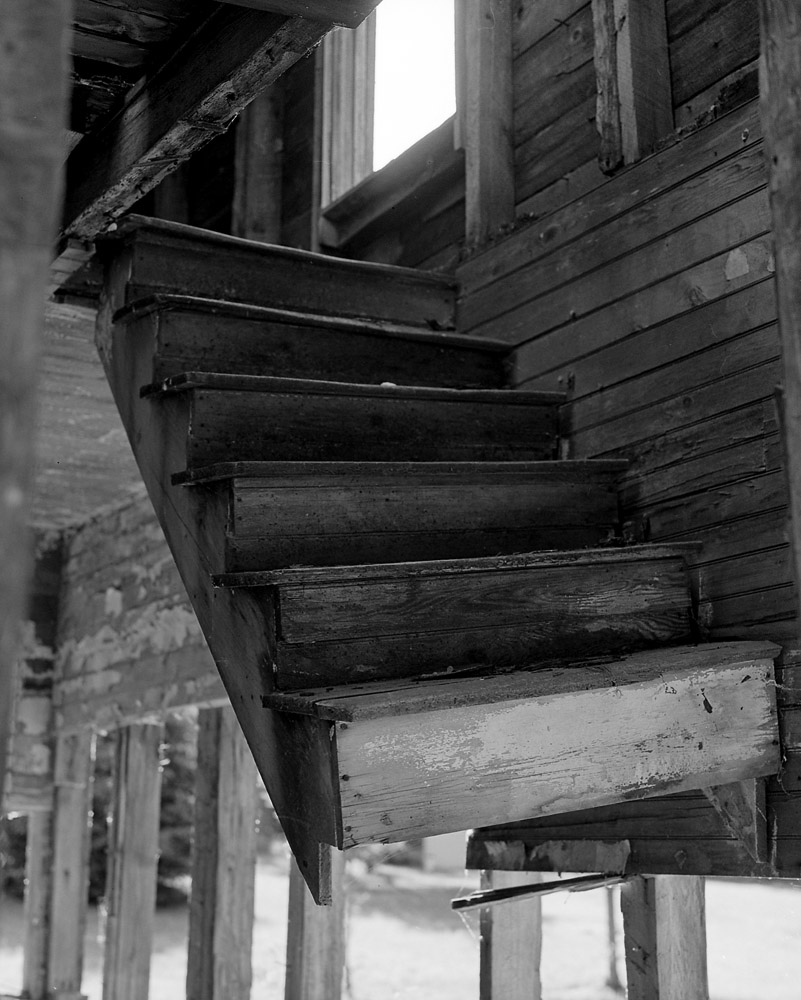
One wall of the house is essentially gone, and you can look inside the structure through it. I would NOT attempt to enter, as there is a considerable debris field on the floor of the lower level, making for a prime residential facility for wildlife of the four-legged and no-legged varieties. You can see the remnant of the staircase through the opening in the wall, though. The texture of the wood and the coloring of it reminded me a bit of Bodie, the California gold-mining ghost town in the Eastern Sierra.
Hanging Stairs, Good Hart
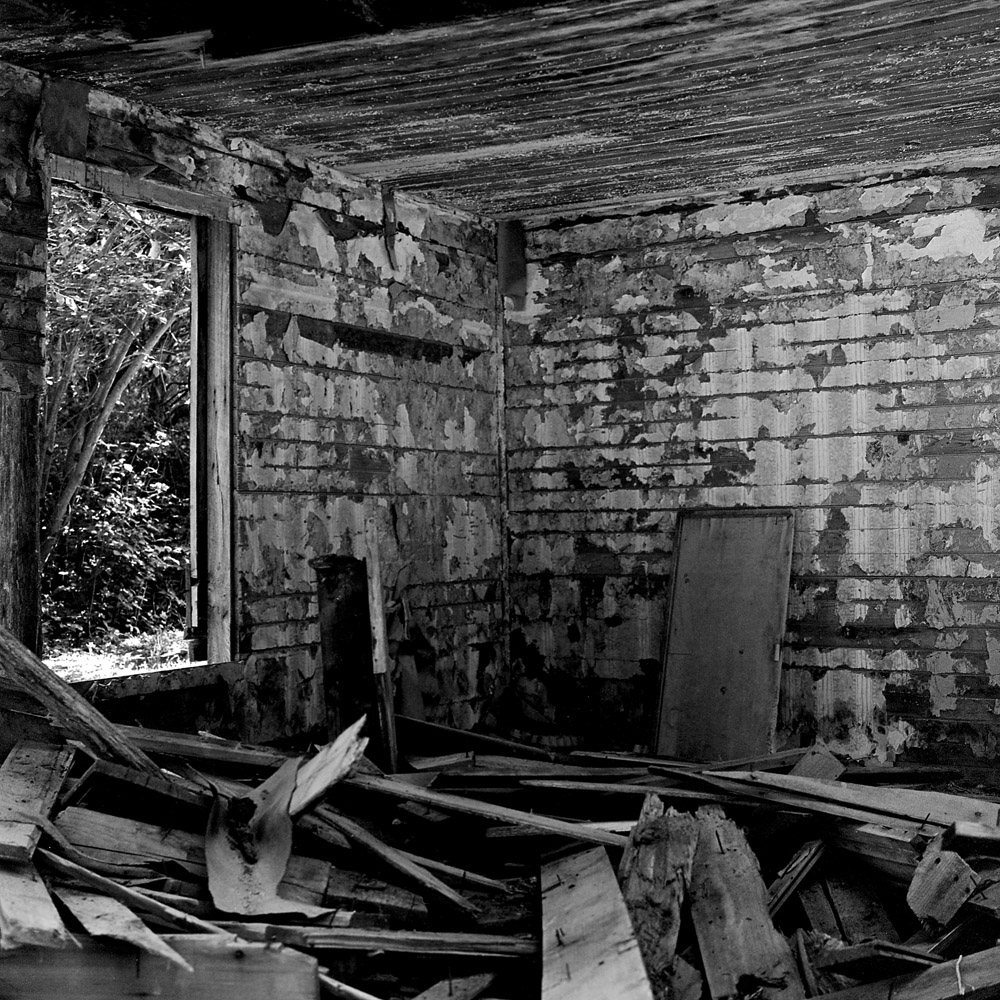
This is a view of the debris field and the remaining structural walls of the house. Amazing how the light level balanced between inside and outside- no HDR or even burning/dodging required to preserve interior and exterior detail alike through the window frame.
House Interior, Good Hart
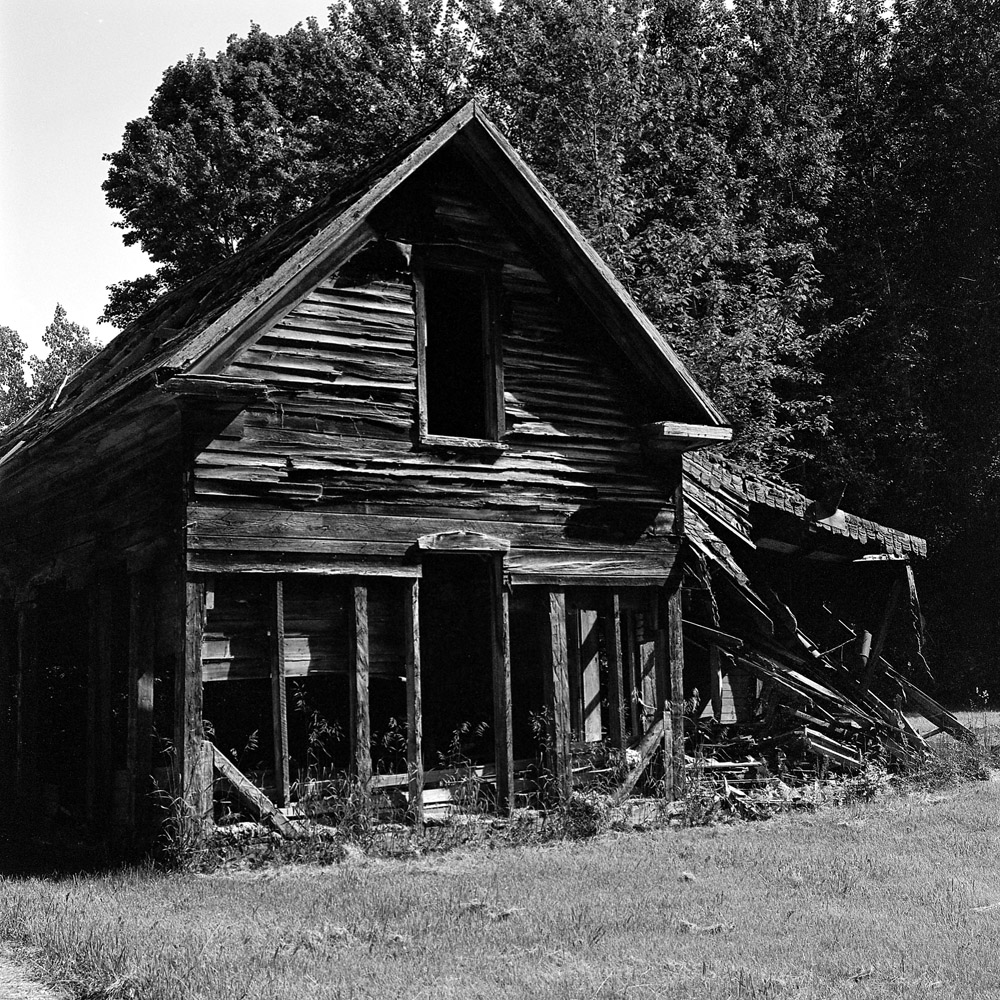
Here is a view of the end of the house, showing the whole of the structure.
Collapsing House, Good Hart
All shots taken with my Rolleiflex 2.8E on Ilford Delta 400, developed in Pyrocat HD developer at 1:1:100 dilution.
Here are a few shots from my visit to the 2013 Smithsonian Folklife Festival. The Folklife Festival is held every year on the National Mall, and it is a celebration of cultures and traditions from around the world. This year’s featured country is Hungary, and the overall theme is “One World, Many Voices”. There are representatives of many indigenous cultures around the world from Hawaiian Islanders to Penobscot Indians to Quechua speakers from Bolivia and Peru to Tuvan people from Siberia. The “many voices” part has to do with showcasing efforts to preserve vanishing languages and cultures. Go to the Smithsonian Folklife Festival Official Page to learn more about the events and programs for this year’s festival.
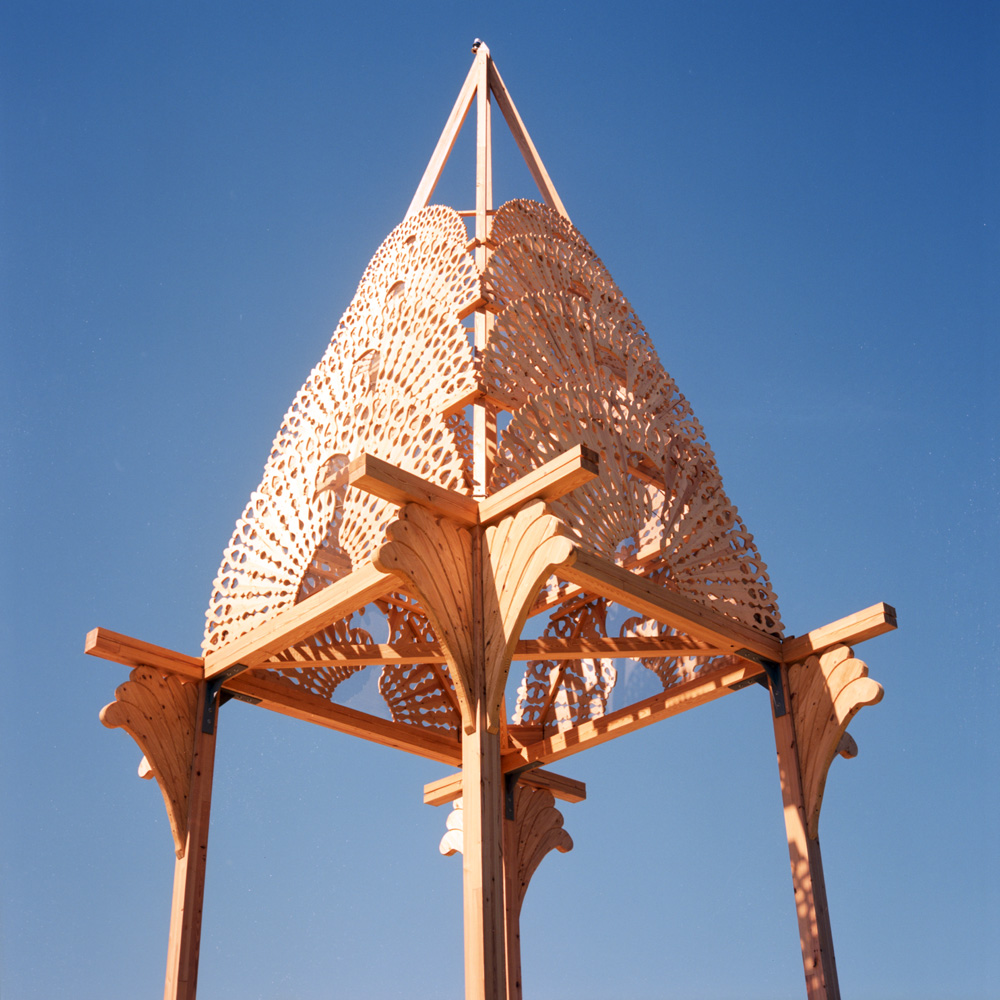
This pavilion is part of the Hungarian exhibit – playing on traditional Hungarian crafts like lace-making and using the forms and styles in a wooden structure.
Hungarian Pavilion
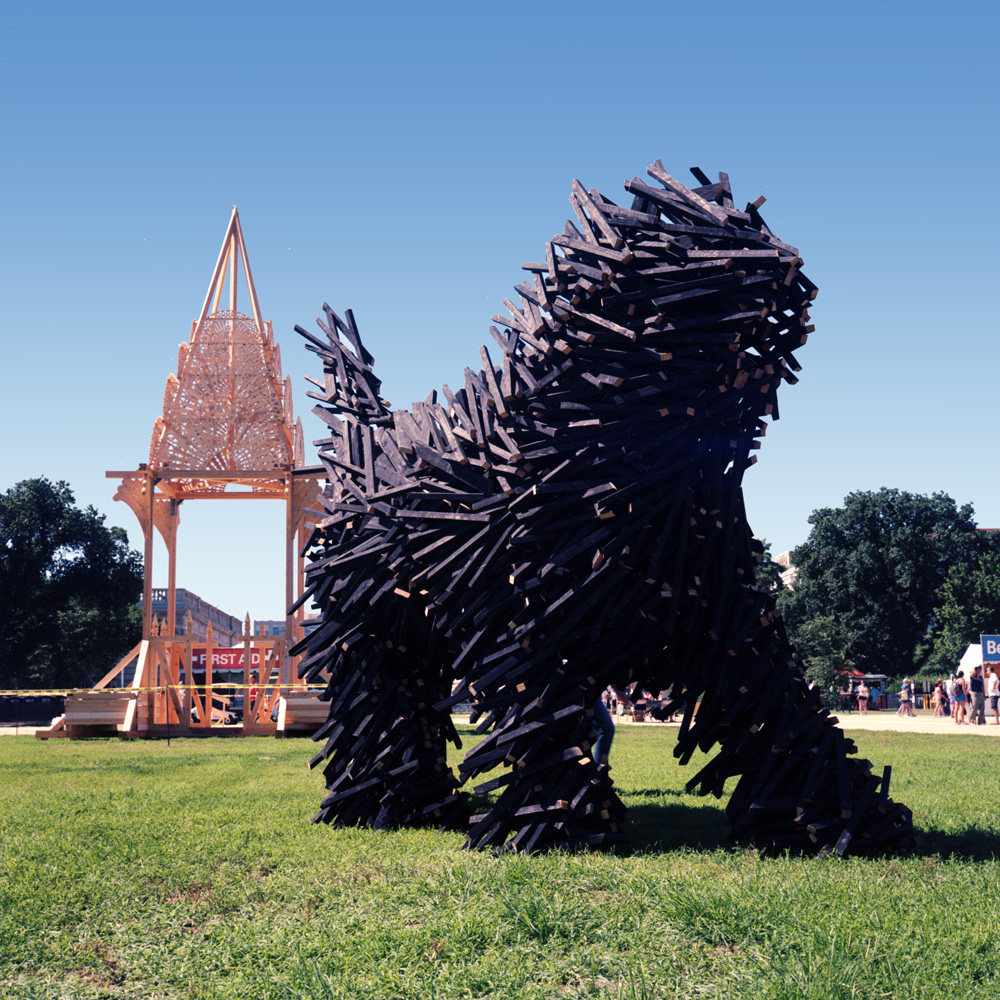
And here is a sculpture of a Puli shepherd dog, rendered in blackened wood. Pulis are similar to Komondor sheep herding dogs except they are black, not white. They used to get shorn along with the sheep they guarded, but now are left to grow their coats out as a fashion statement, to the impairment of the dog’s mobility.
Kuvacs Sculpture
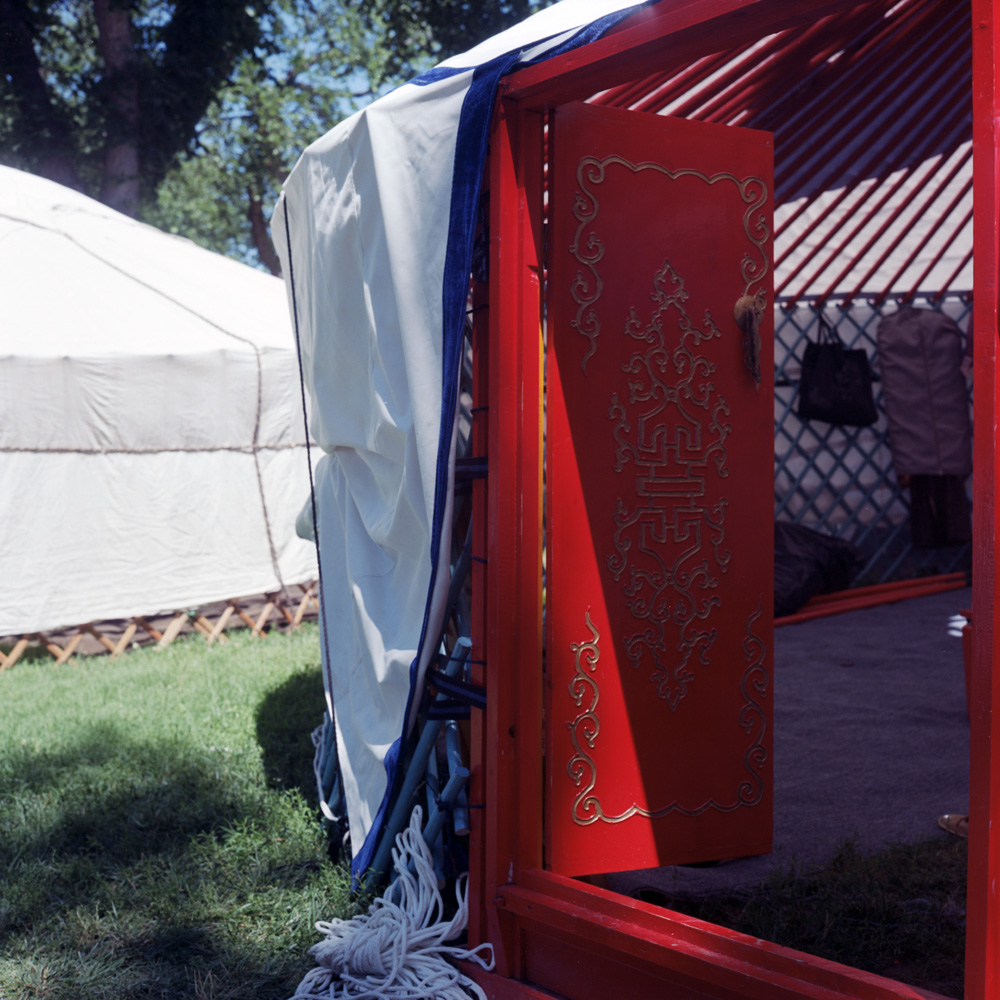
The door of a Yurt, representing the various nomadic peoples of Siberia who are sharing their culture this year at the Folklife Festival. Yurts are traditional nomadic home structures – they are portable like tents, with canvas or fabric tops and latticework side walls.
Yurt Door
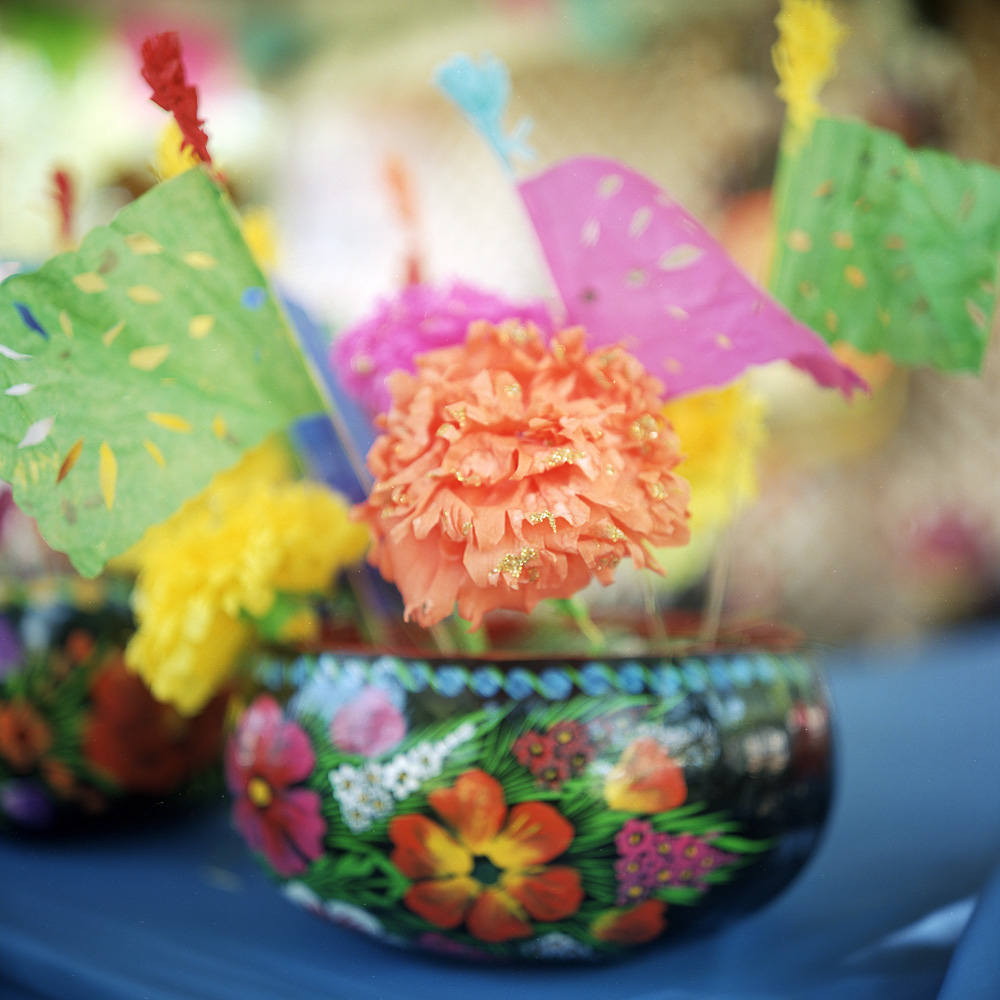
Paper flowers in the Mexican pavilion:
Paper Flowers, Mexican Pavilion
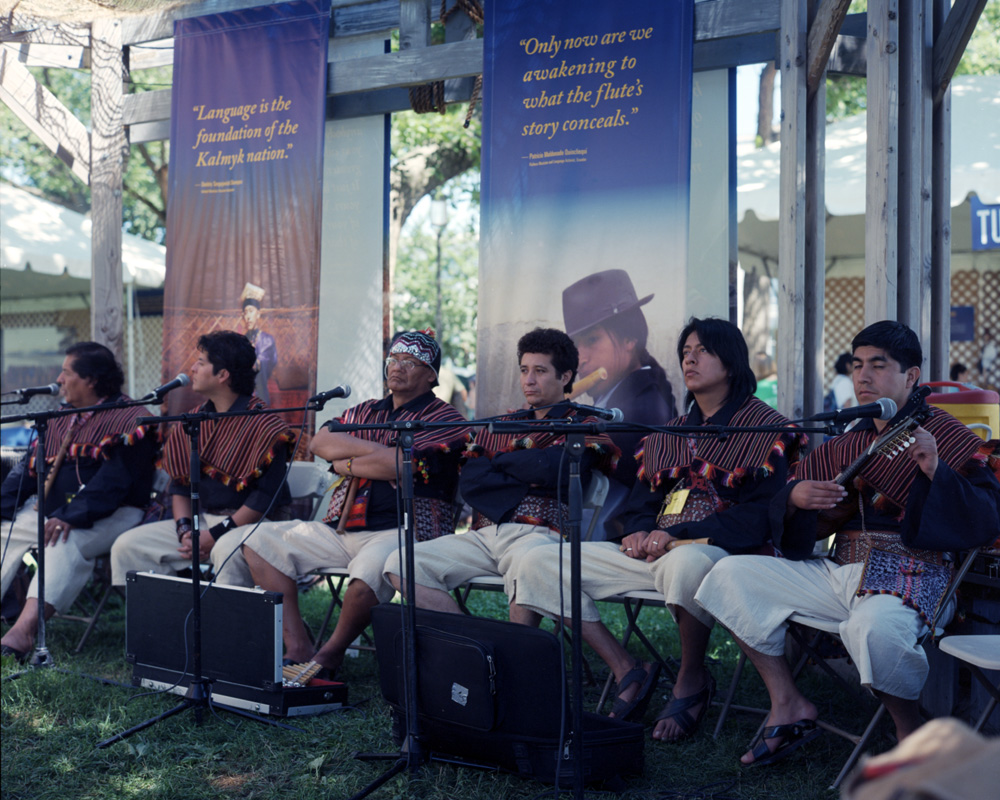
Quechua musicians, getting ready to perform a traditional Quechua song, talking about the meaning of their indigenous language and the importance of preserving the language, to pass on the connection to their cultural traditions of respect for the environment.
Qechua Musicians
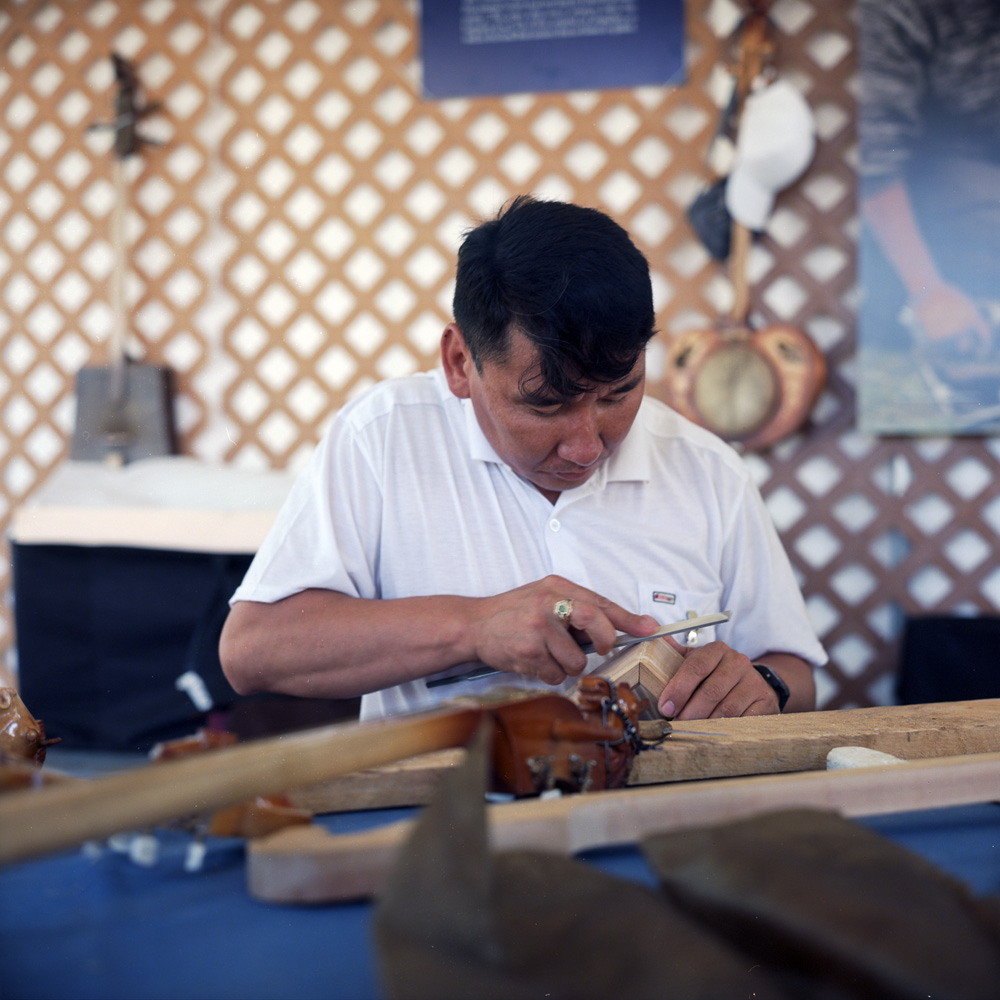
A Tuvan instrument maker, carving the body of a lute:
Tuvan Instrument Maker
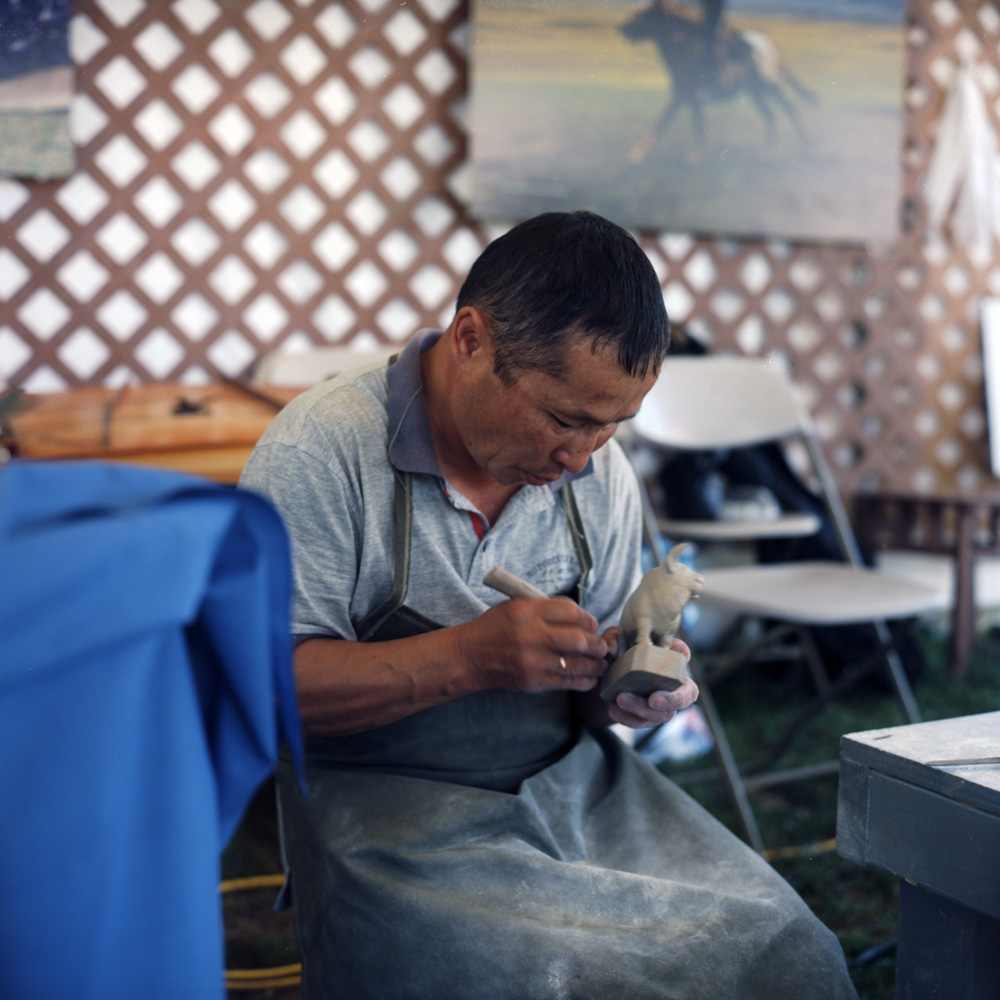
A Tuvan stone-carver, demonstrating hand-carving techniques, making a bull out of soapstone:
Tuvan Stone-carver
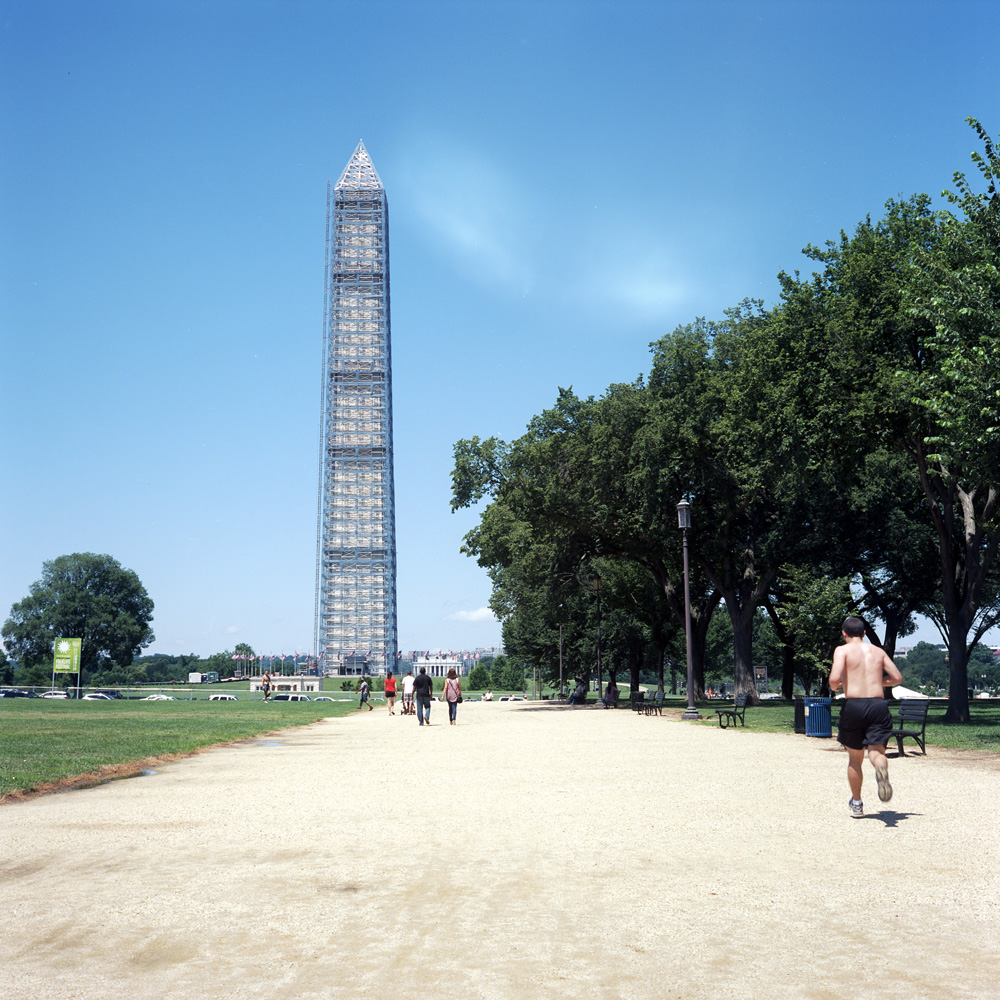
These last three shots are not specifically of the Folklife Festival, but are representative of the location and the spirit of the day. The weather was quite hot, but at least we had a relatively dry day with periodic breezes (Washington DC, particularly the area of the Mall, was built on a swamp, and big chunks of the Mall area, especially west from the Washington Monument, are actually landfill. Which is why the Washington Monument is sinking very slowly. So summertime in DC can be particularly miserable – almost New Orleans-esque in its heat and humidity).
Washington Monument
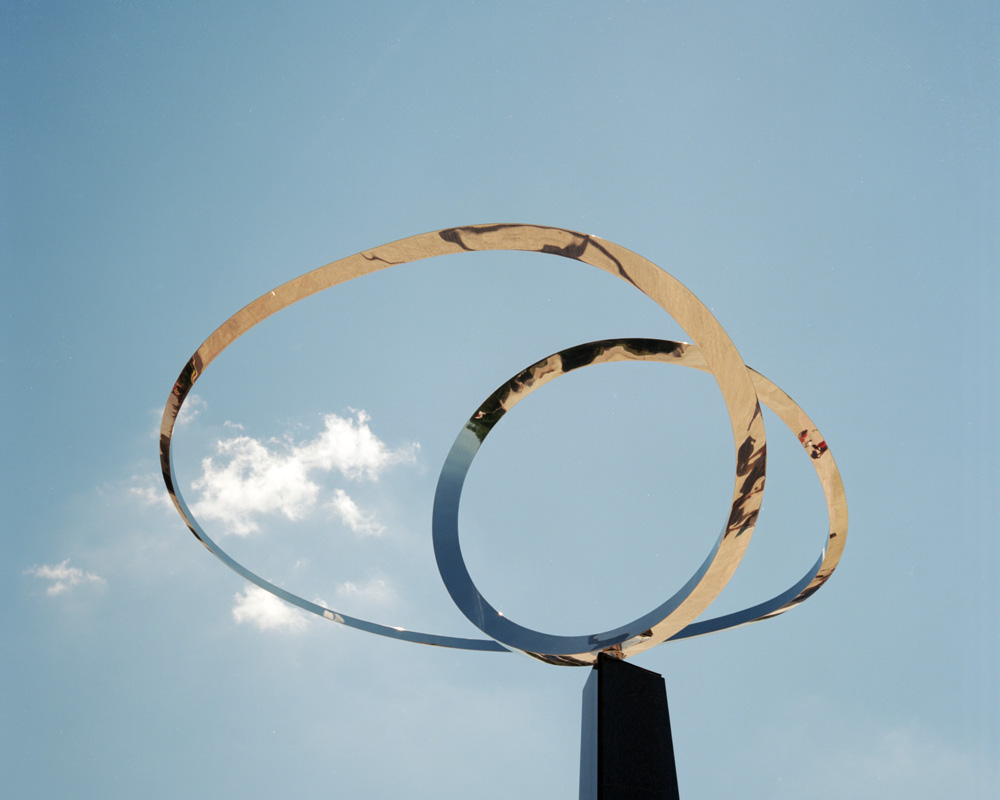
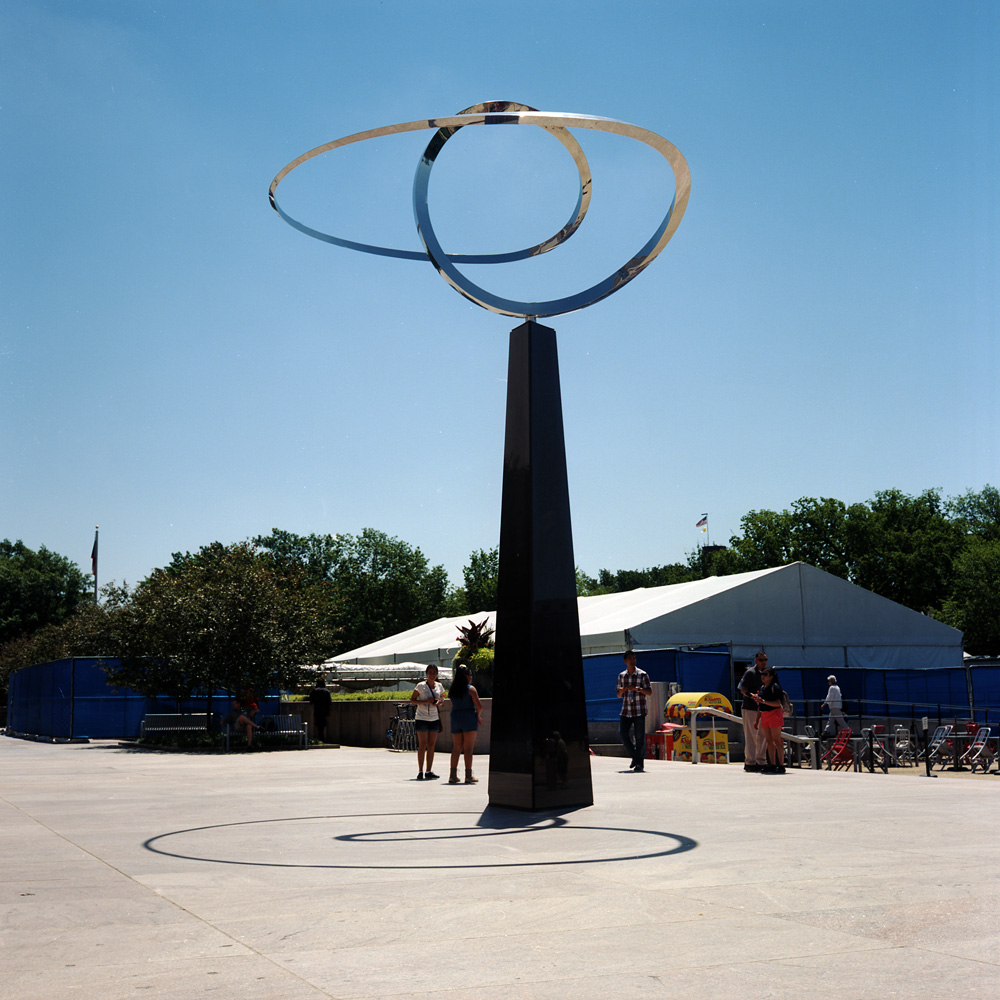
The sculpture is outside the American History Museum, which caps one end of the Folklife Festival and plays host to the temporary festival gift shop.
Sculpture, Cloud, American History Museum
It was tough waiting for people to NOT be walking through the shadow of the sculpture on the pavement. I’ll have to come back and shoot this again in the wintertime when it casts a longer shadow and there are fewer people out on the plaza so I can catch it as more of an abstract piece.
Sculpture, Shadow, American History Museum
All shots were taken with my Rolleiflex 2.8E, on Kodak Ektar 100 film.
 dcphotoartist