Danielle Ezzo makes beautiful salt prints. You should check out her work!
She has an upcoming show at Galerie Protege in New York, the opening is October 11.
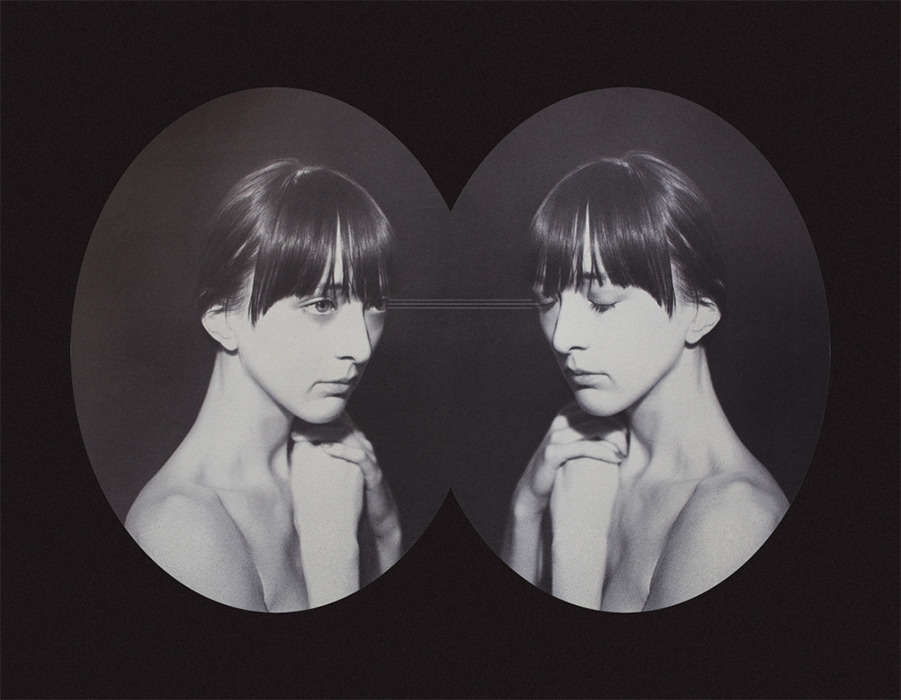
Danielle Ezzo makes beautiful salt prints. You should check out her work!
She has an upcoming show at Galerie Protege in New York, the opening is October 11.
 |
 |
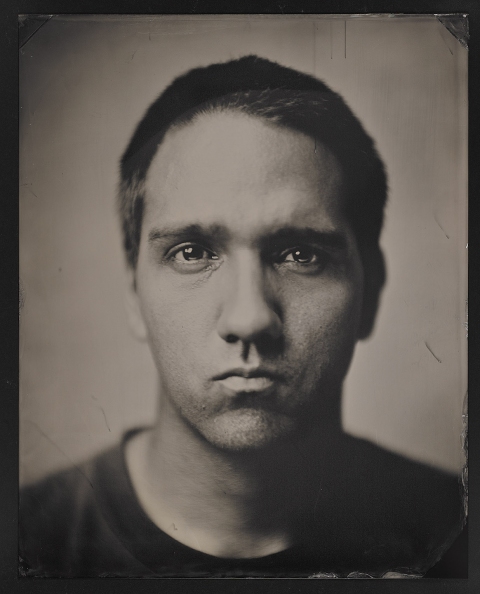 |
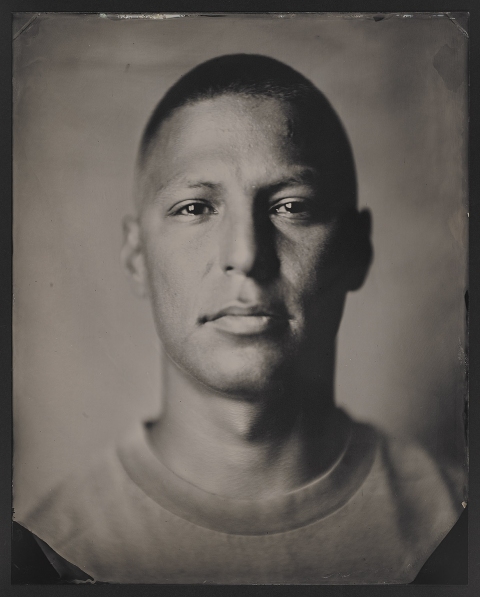
I discovered Melissa’s wet plate collodion work through a link someone posted on APUG, and I felt it was worth sharing. She has done a beautiful seet of wet plate portraits of the Mohawk Ironworkers who for the last century have been responsible for building the skyscrapers of New York City. The inspiration was the 9/11 10th anniversary last year, and the construction of Freedom Tower on the site of the old World Trade Center. I just felt her work was worth sharing. Please browse her website linked below to see more of her work and to find out more about her.
If you’ve been following my blog for a little while, you probably saw the post about my friend Nick Dong’s art installation at the Renwick Gallery (the Smithsonian Museum of American Arts and Crafts). At that shoot, Nick shot a quickie video of the piece using his point-n-shoot camera. The video quality was somewhat disappointing. He’ll be back in town tomorrow for the exhibit opening, and I’ll be going over to the gallery after hours to shoot video, which I hope to post here when I have it edited. Nick’s need for a video of the installation, plus several personal projects I have in mind (some instructional videos on platinum printing, a Kickstarter funding request, and some artist interviews at Glen Echo Photoworks).
I’m still learning my way around the camcorder – a Canon Vixia HF G10. The touch-screen controls are fairly intuitive, and they get easier the more you play with it and start learning the control layout, but certain things being buried in touch-screen menus is frustrating to someone coming from analog still photography where all the controls are exposed all the time as knobs, buttons or dials. At least this one does have a nice fat manual-focus control ring right around the lens, making it easy to pull focus, and the zoom speed is easy to manage as well. You can vary the zoom speed from almost-imperceptible to WHAM! in a fluid manner instead of having just two or three zoom speeds.
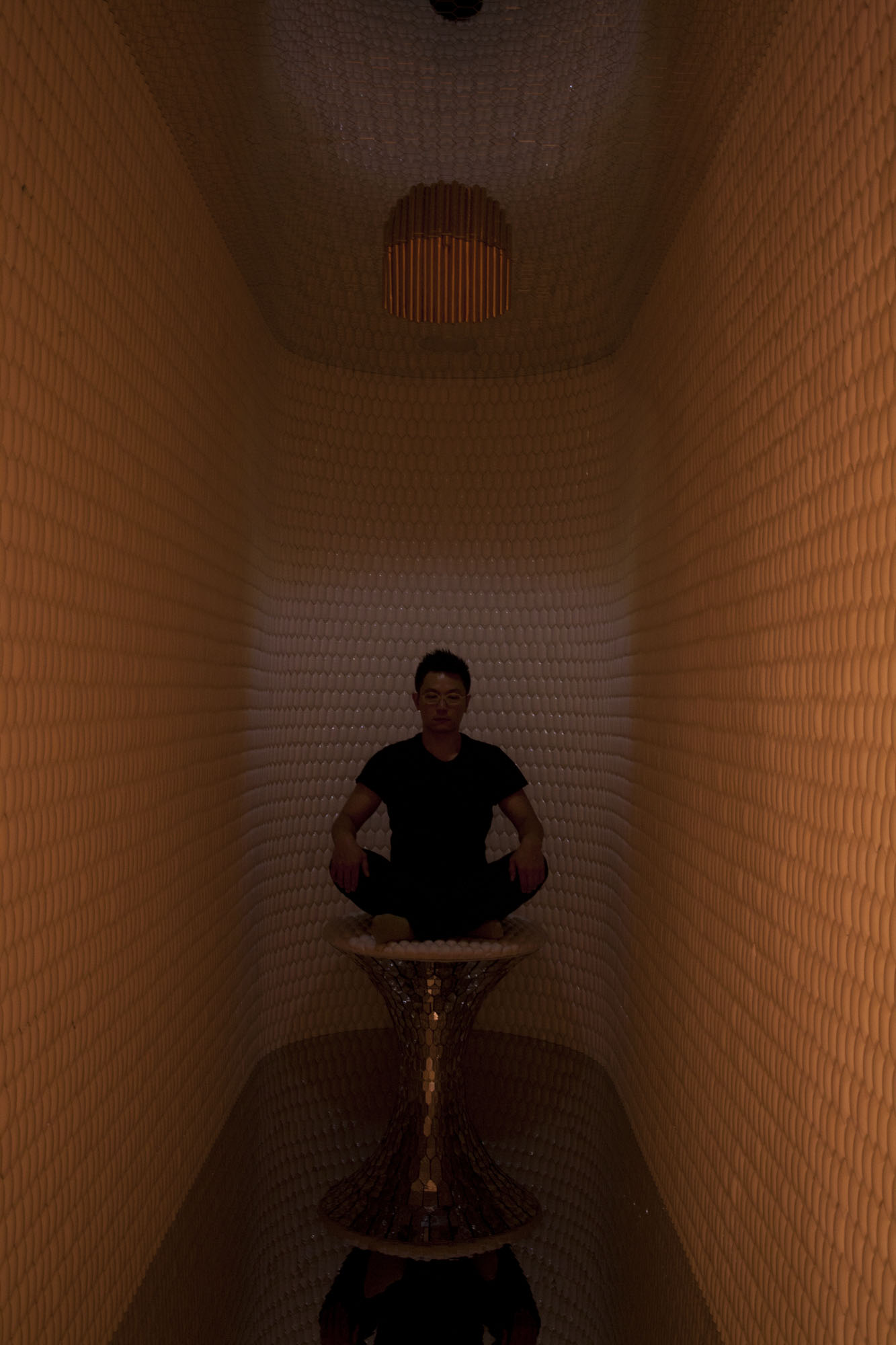
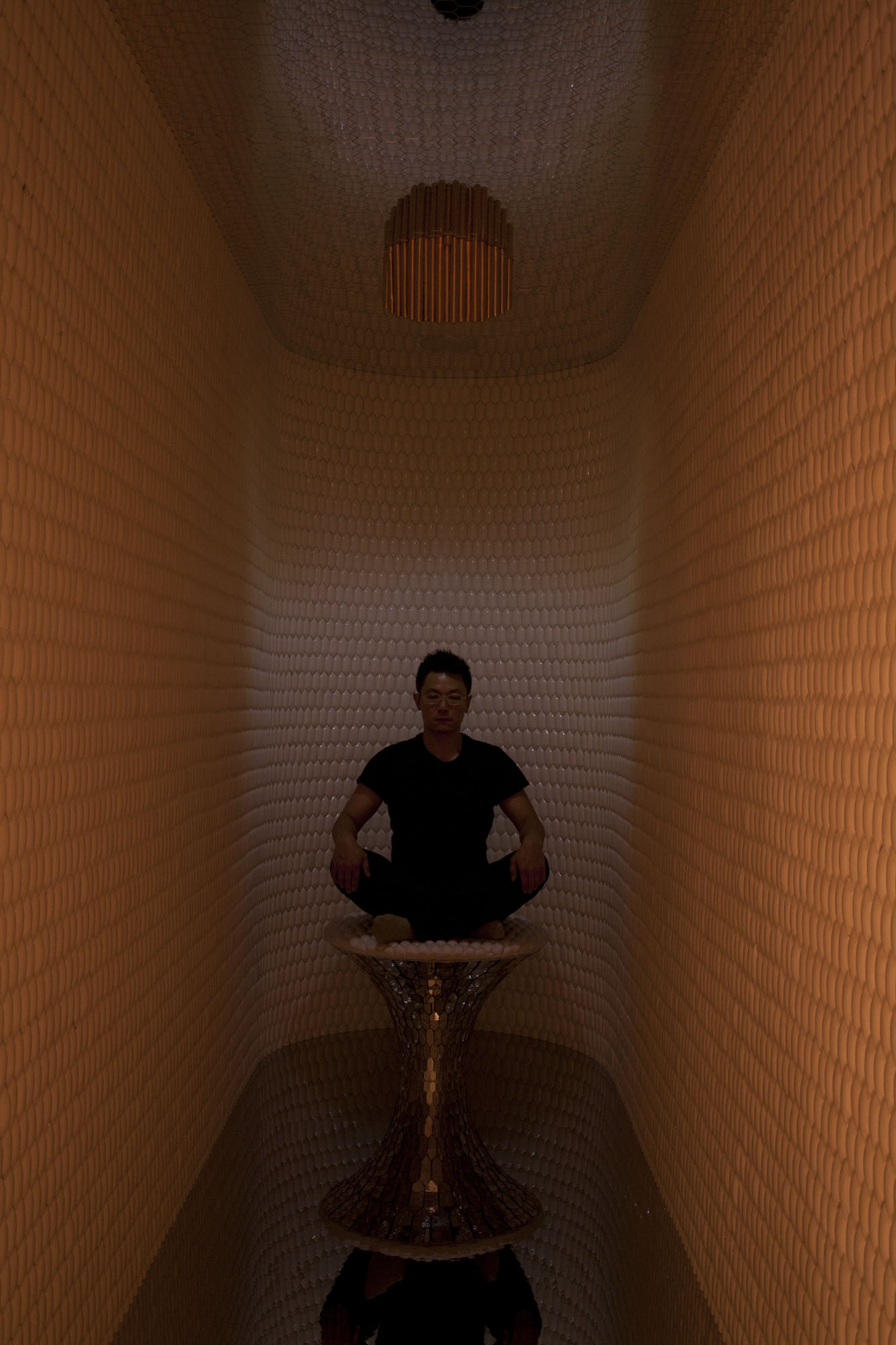
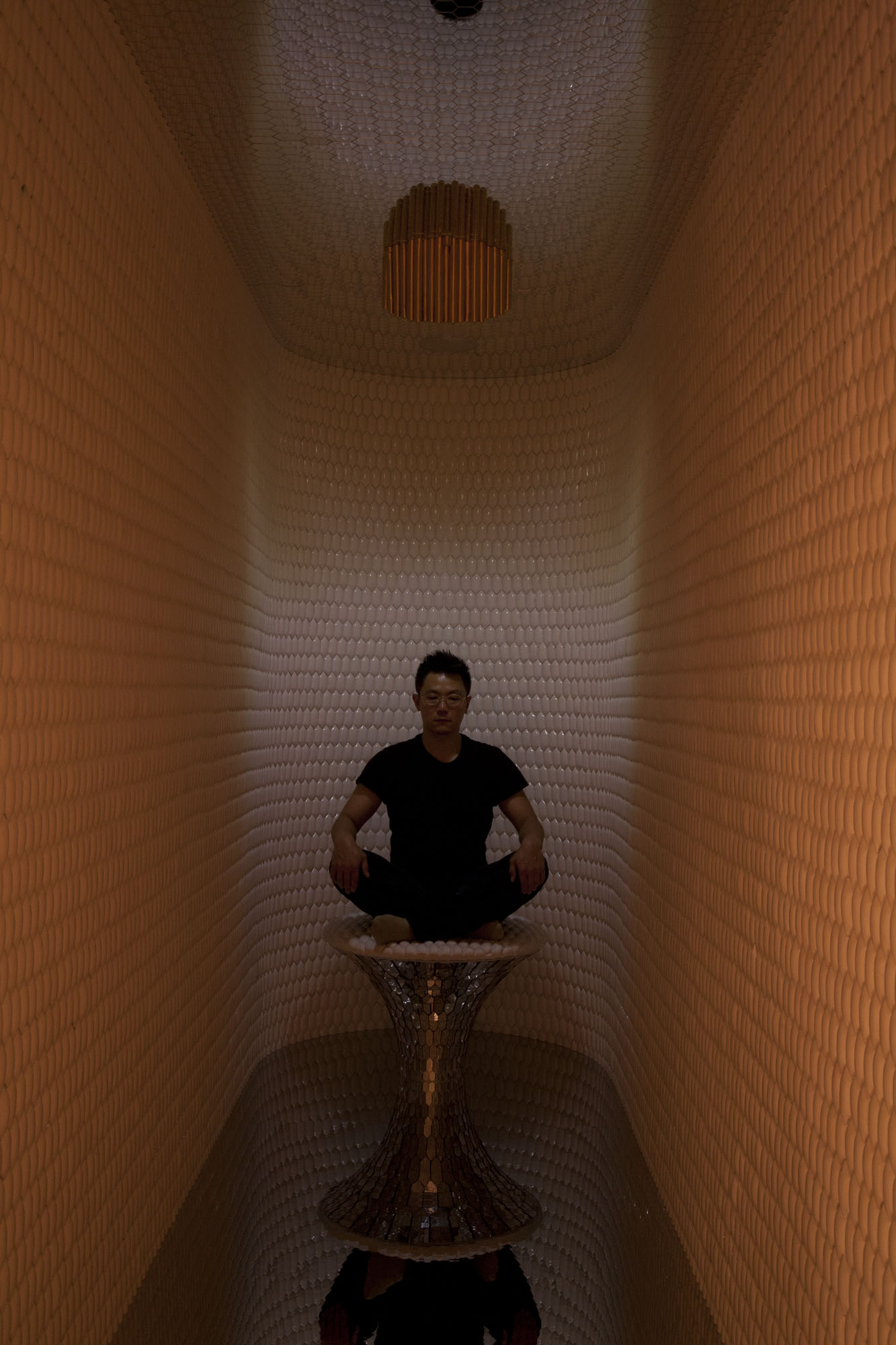
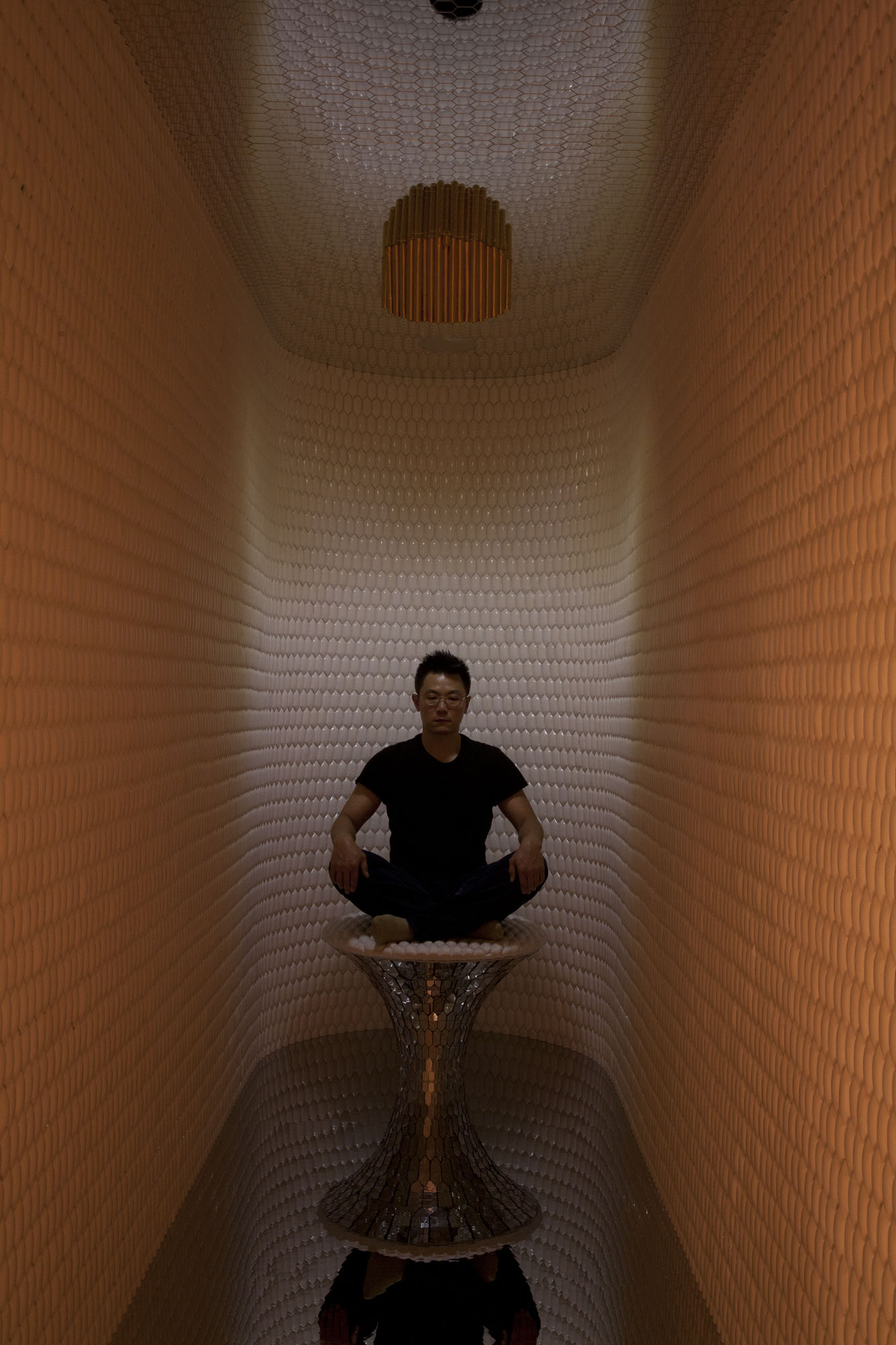
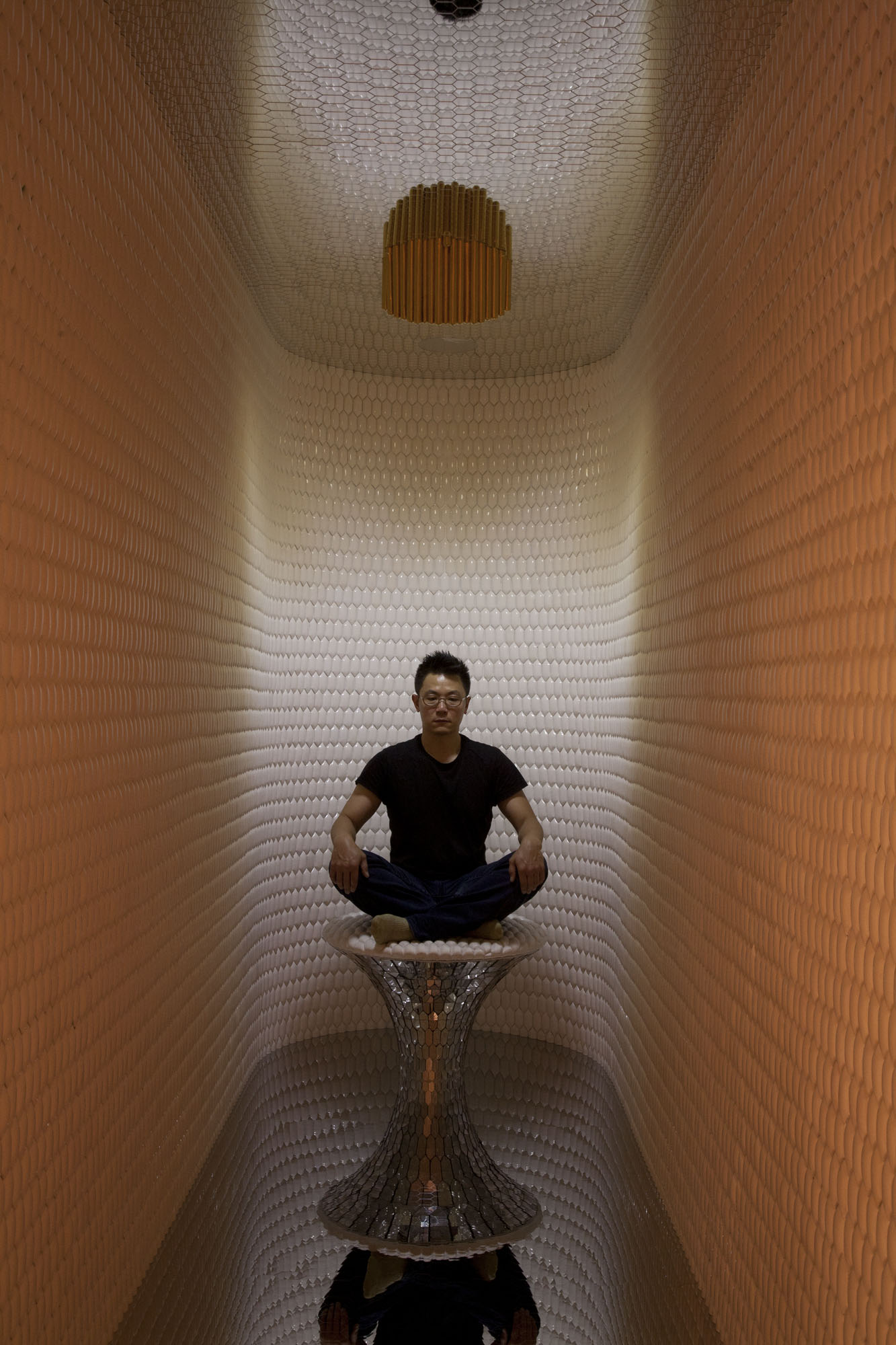
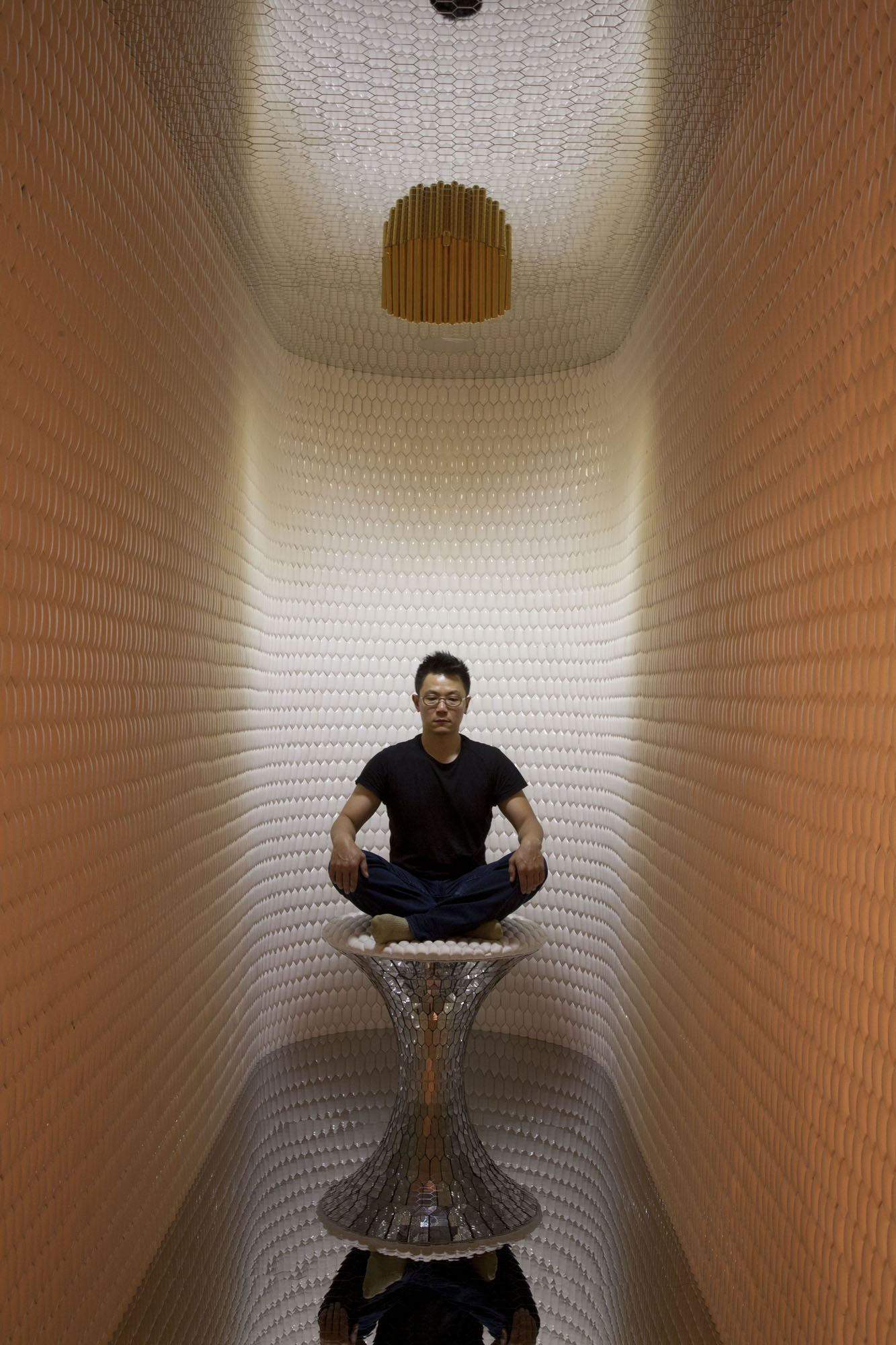
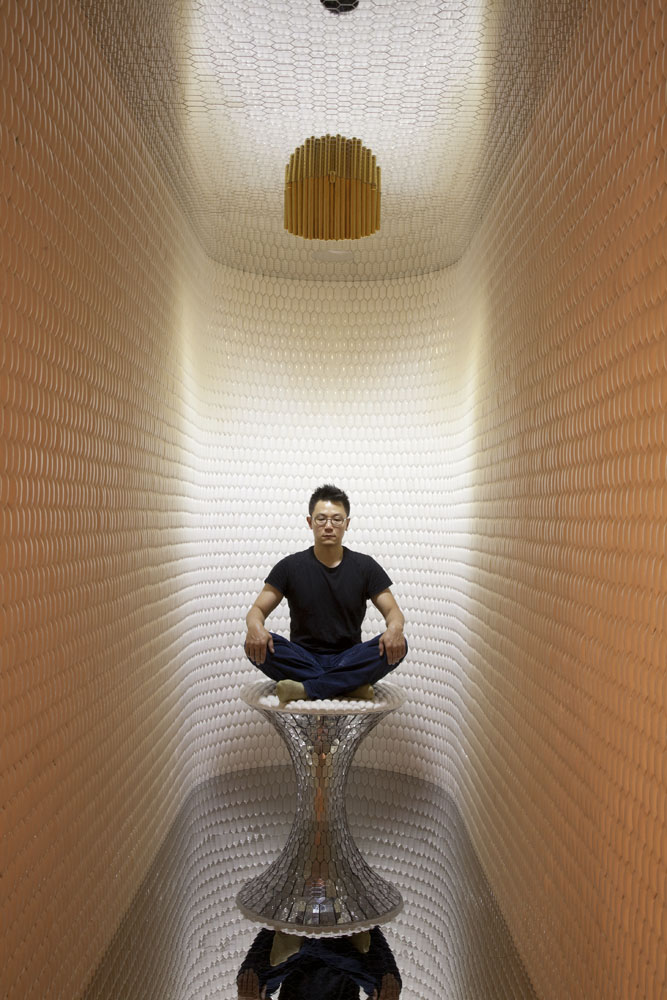
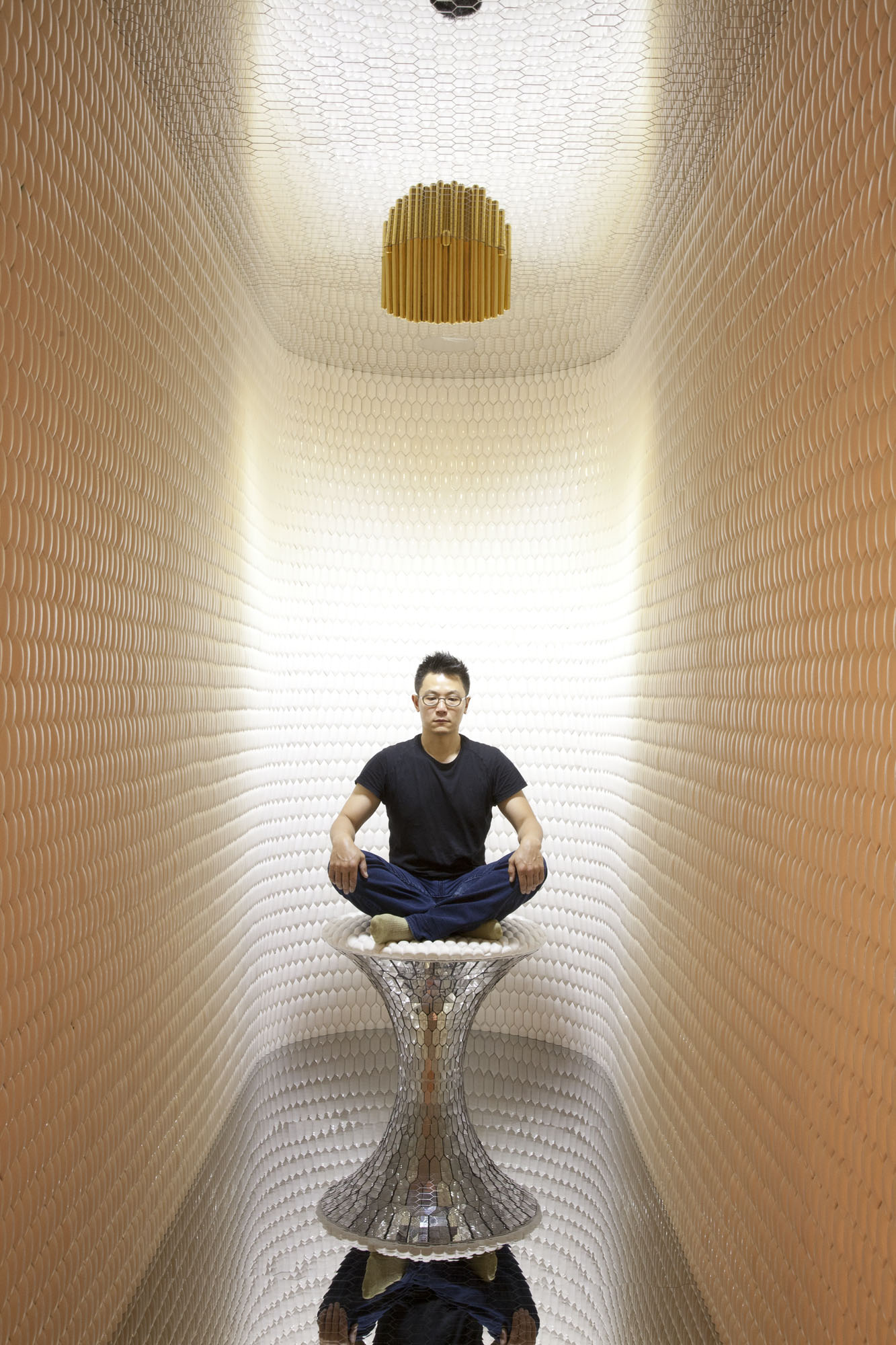
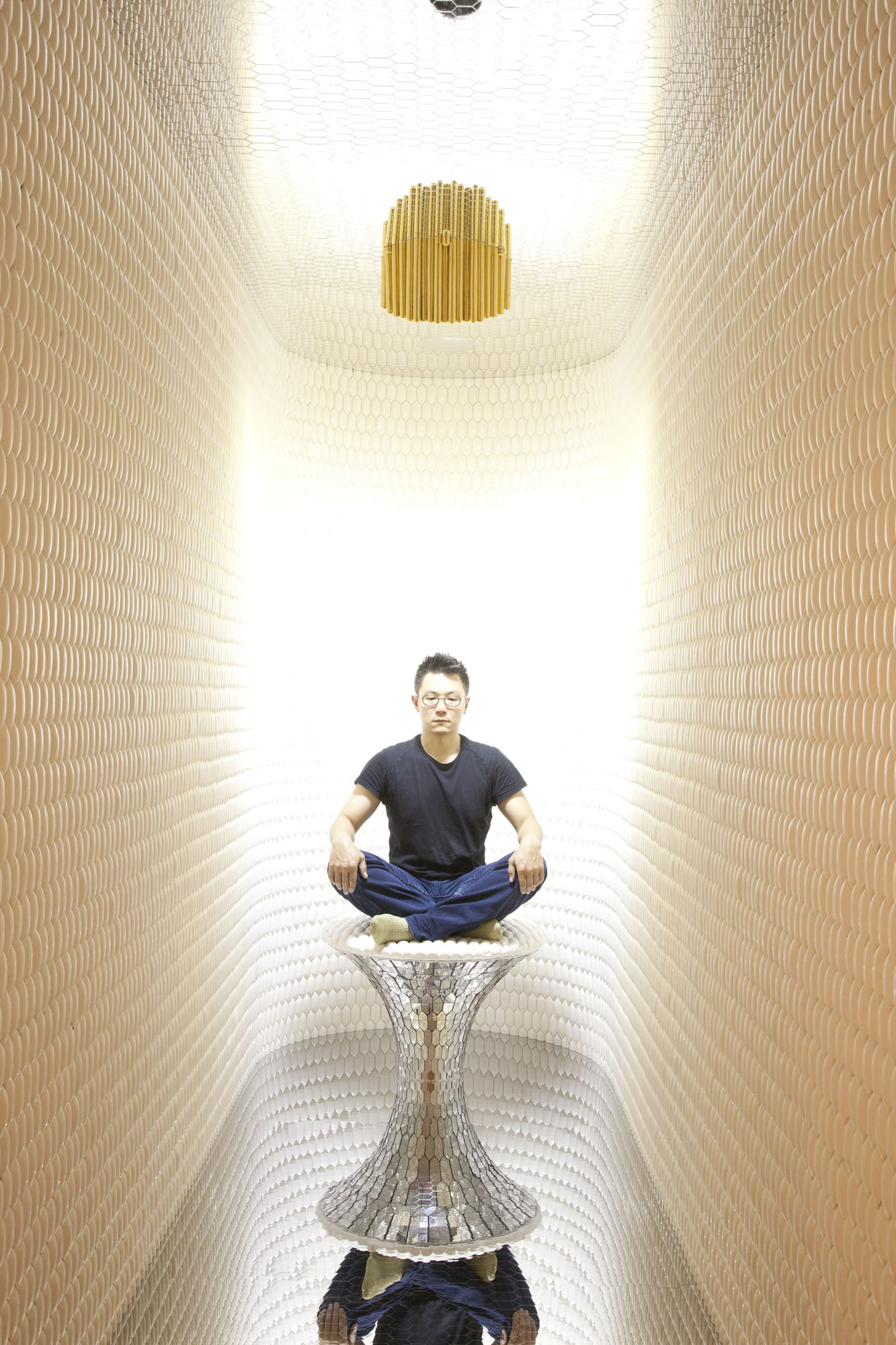
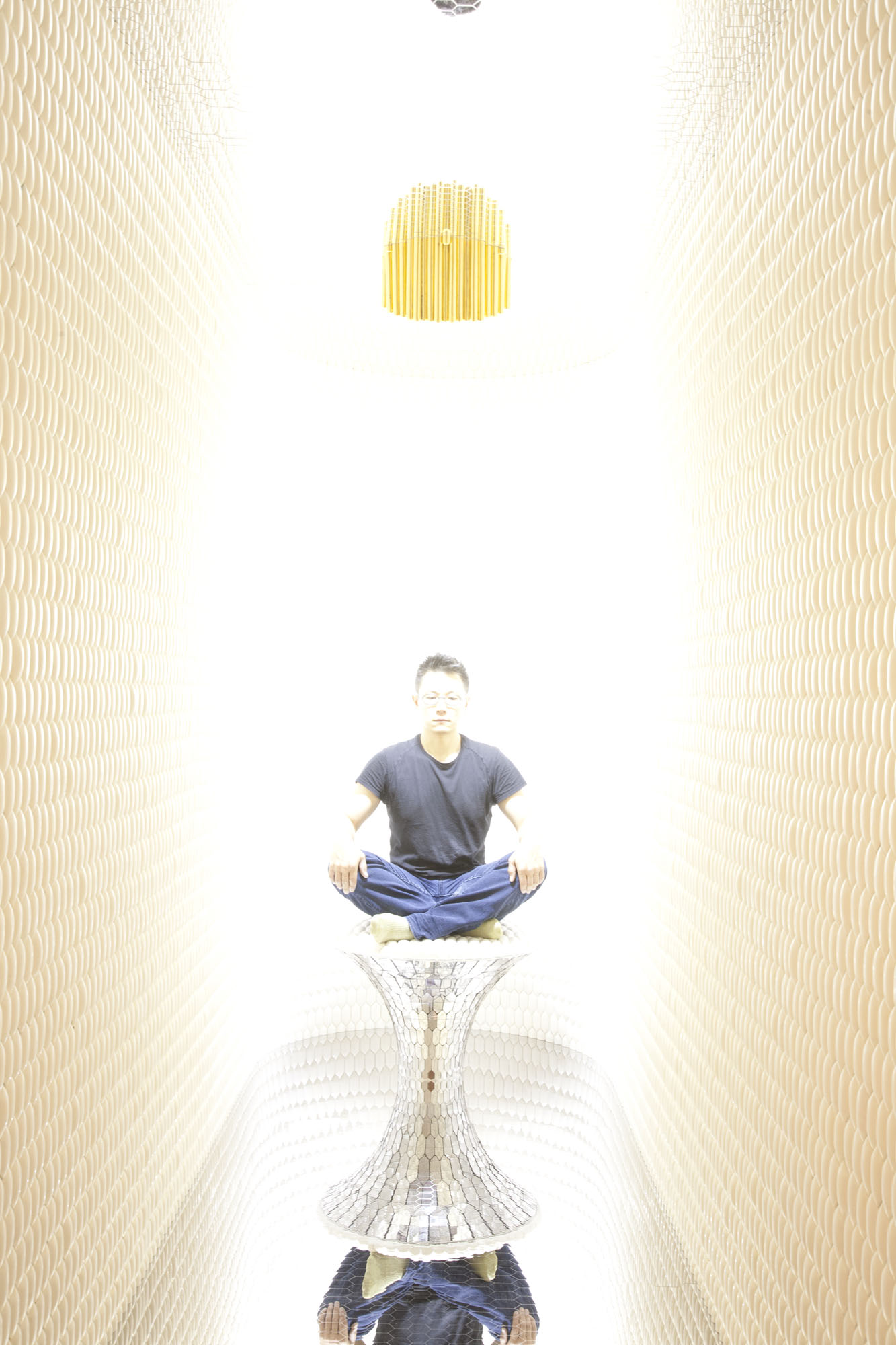
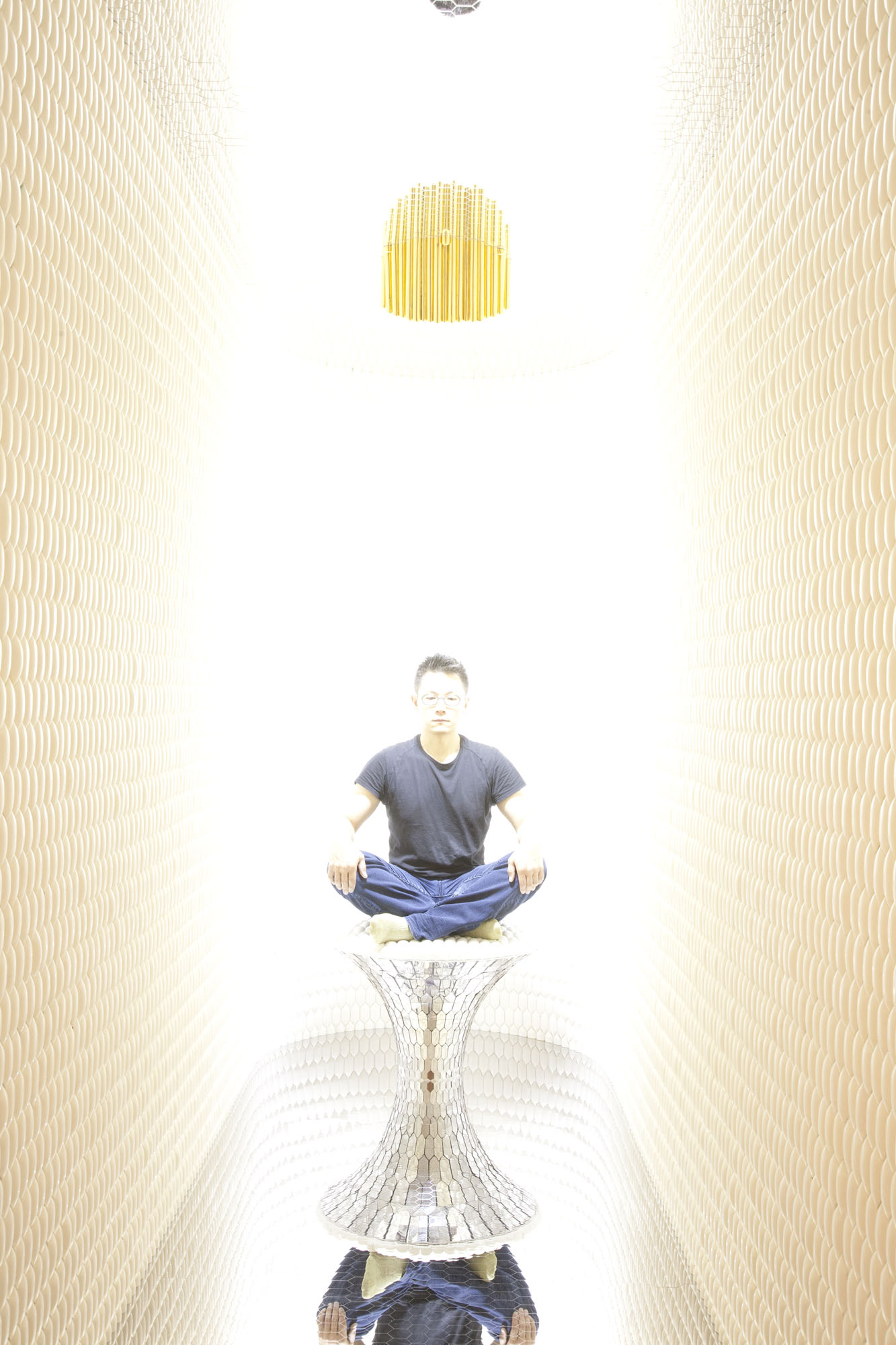
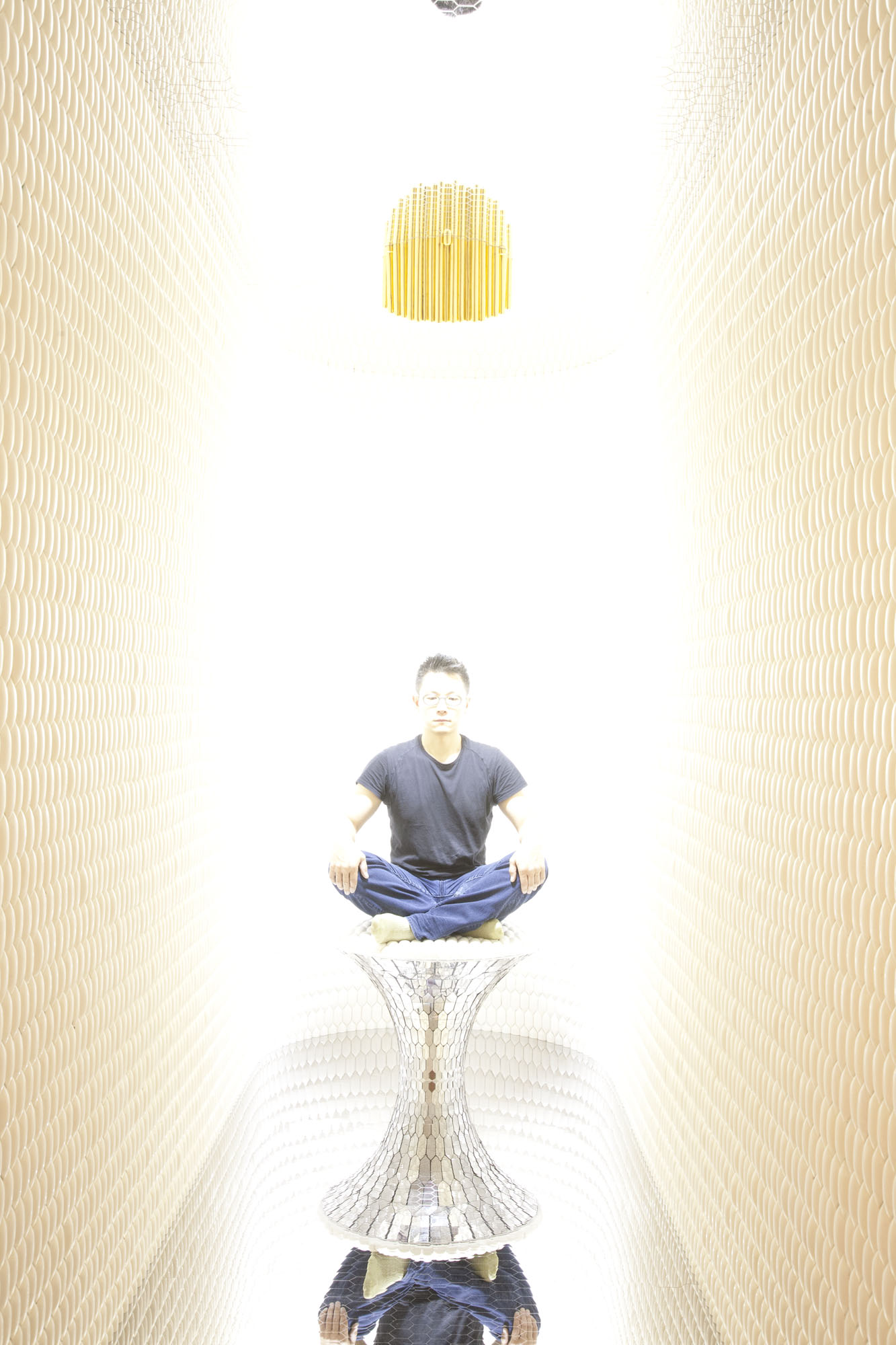
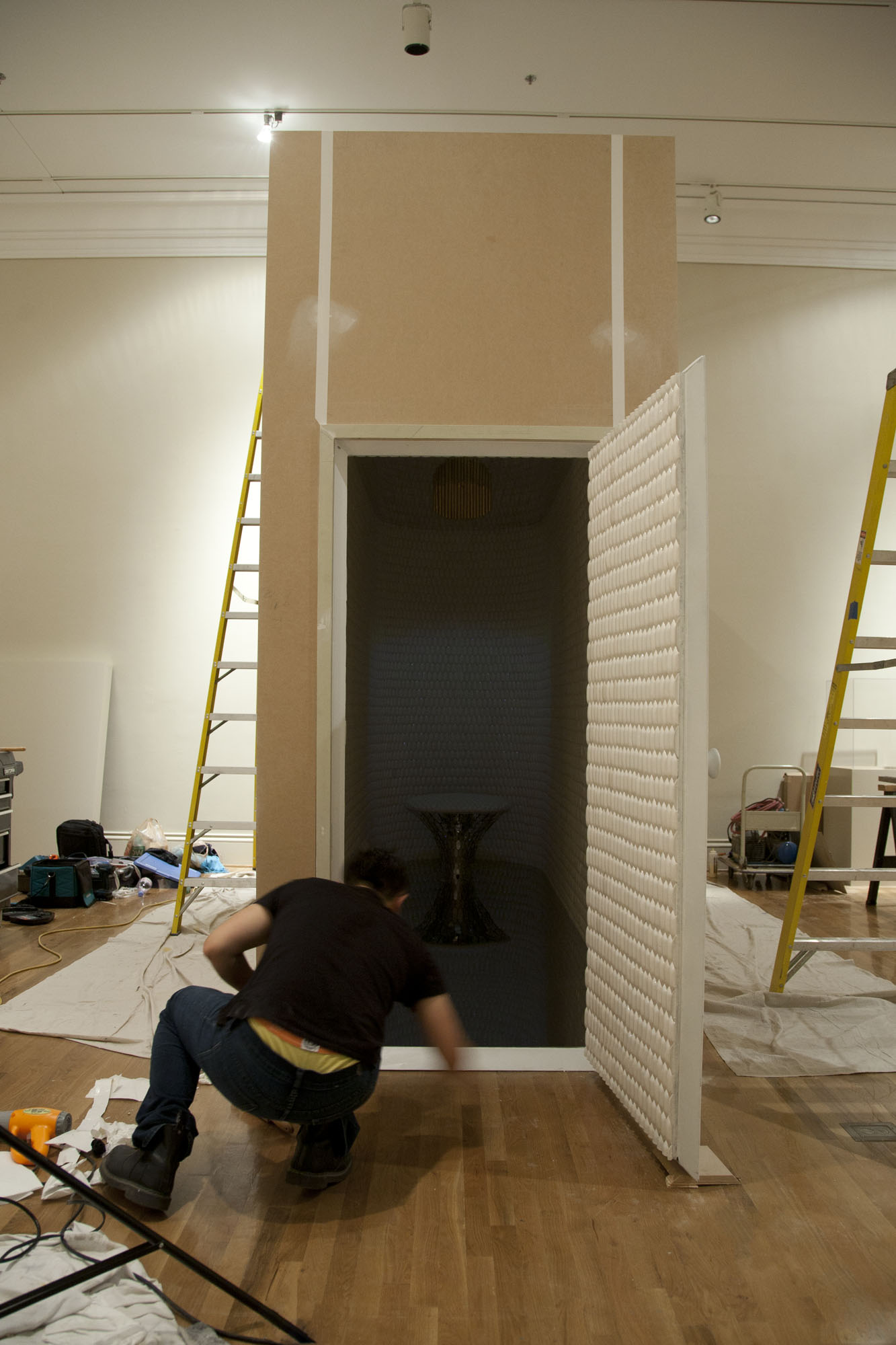
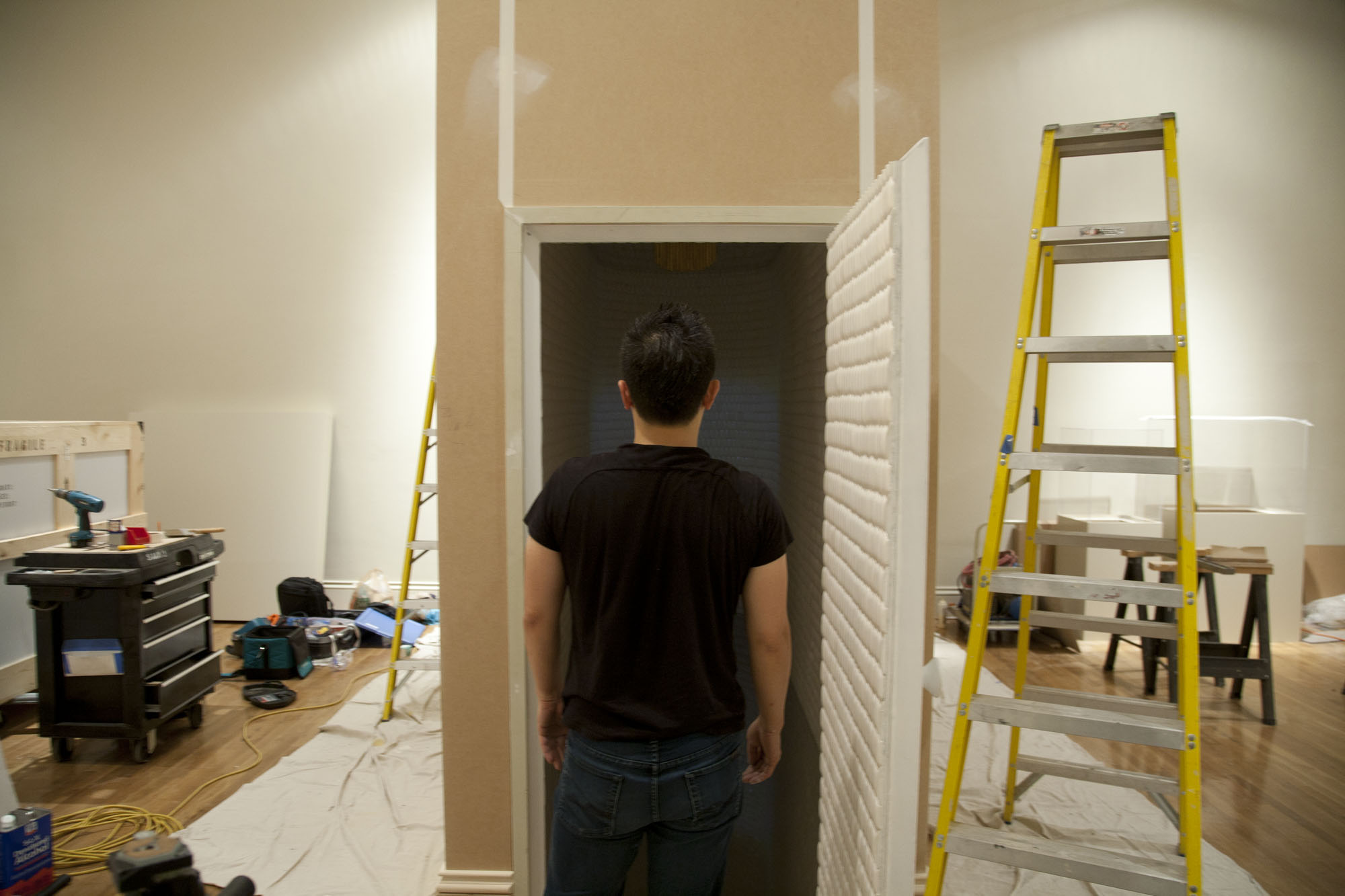
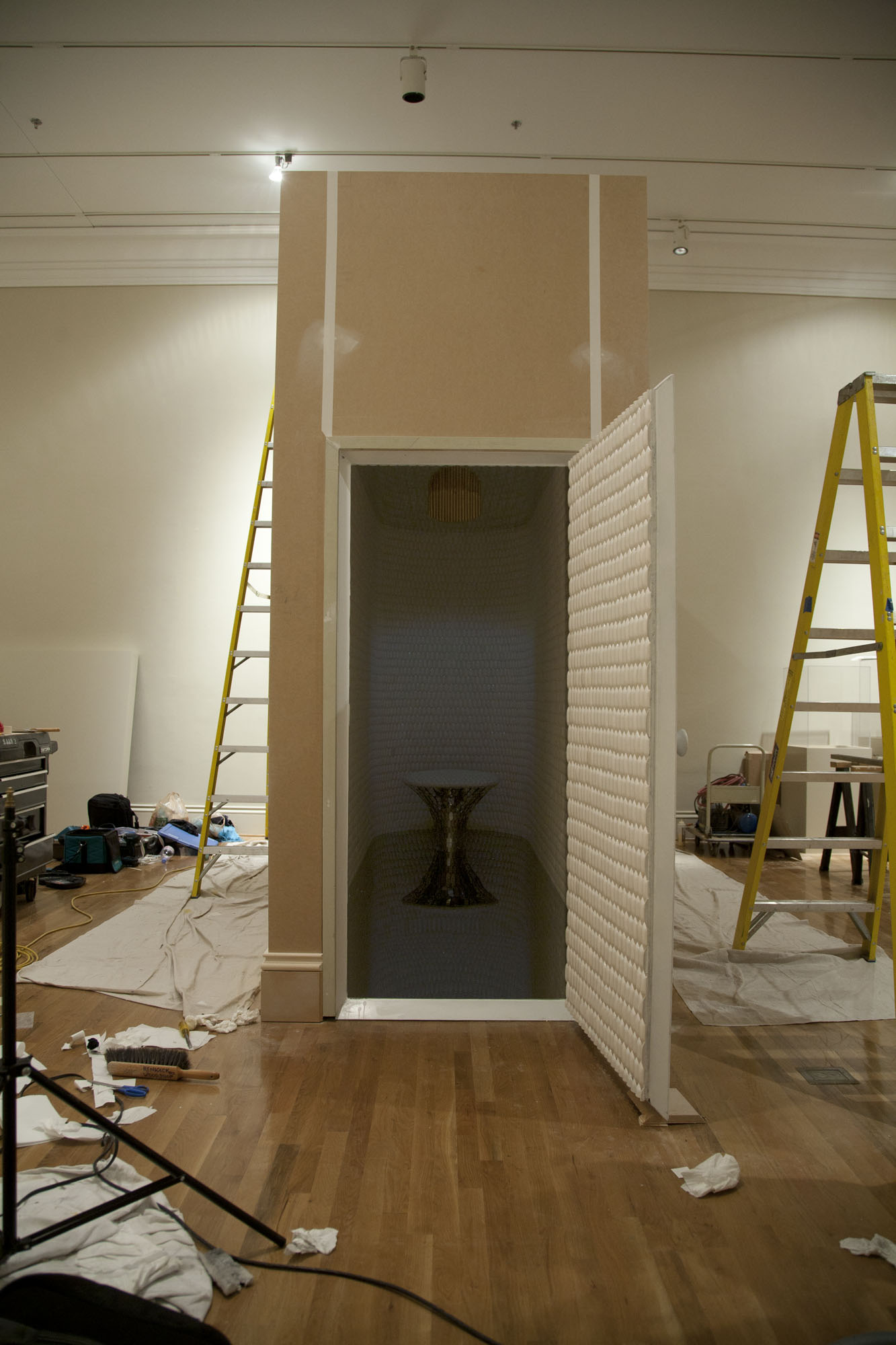
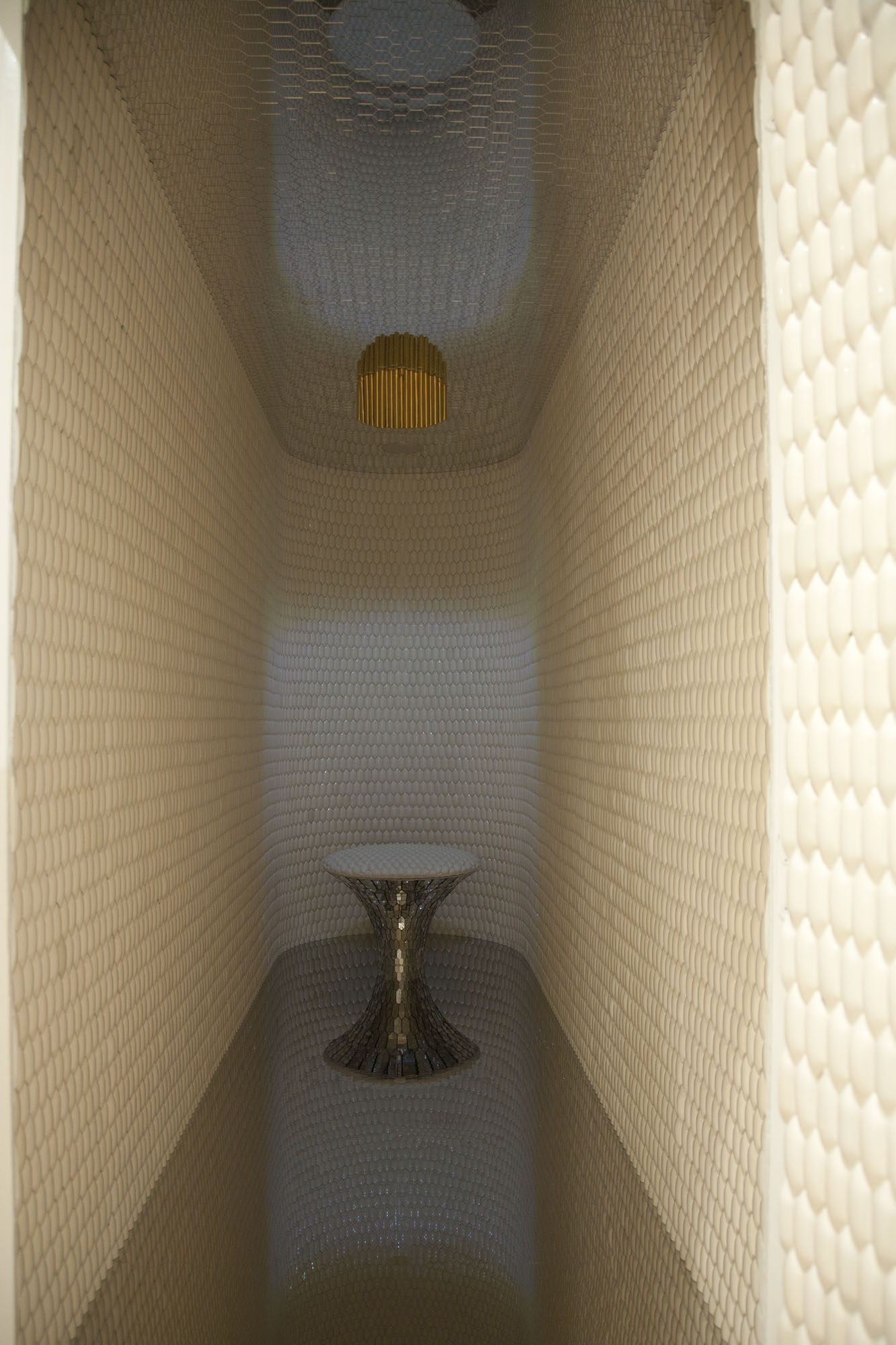
Here is a series of illustrations of the operation of the room. This shows the room getting brighter as Nick sits on the cushion (see, you do get to see his face after all!). Nick’s installation consists of a long, narrow room with the walls covered in elongated hexagonal tiles (each of which Nick made, and hand signed on the back!) . The floor and ceiling are covered in mirror tiles. The opposite end of the room from which you enter is rounded, and at the focus of the hemicircle, a mirror-based seat with a white cushion is located. In the ceiling is a series of LED lights. Sitting on the cushion triggers the lights and music, which build in intensity for approximately one minute before fading out.
Here is a link to the Renwick Gallery’s exhibit announcement:
and here is a link to Nick Dong’s website:
 |
 |
 |
 |
 |
 |
 |
 |
 |
 |
 |
 |
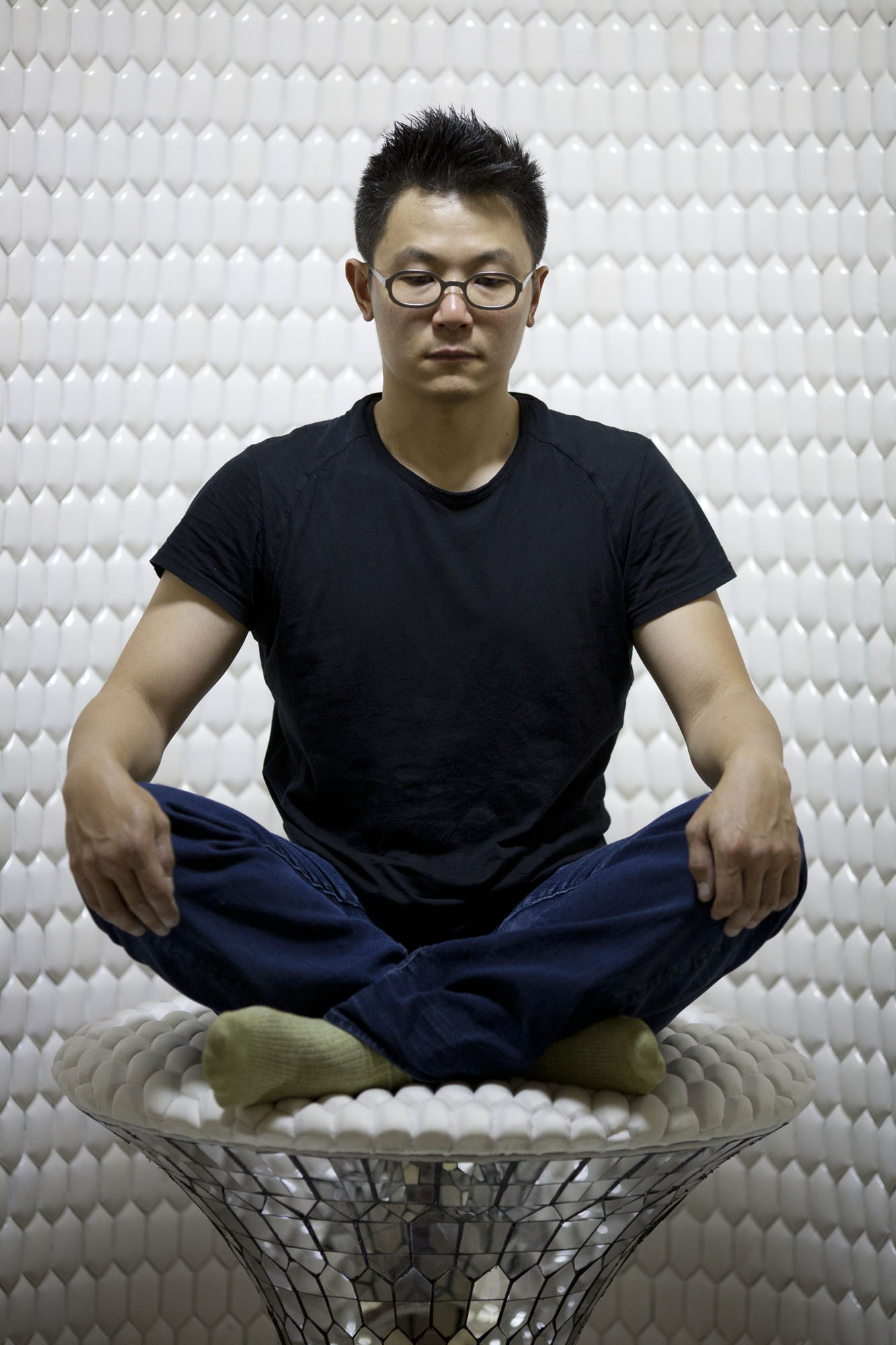
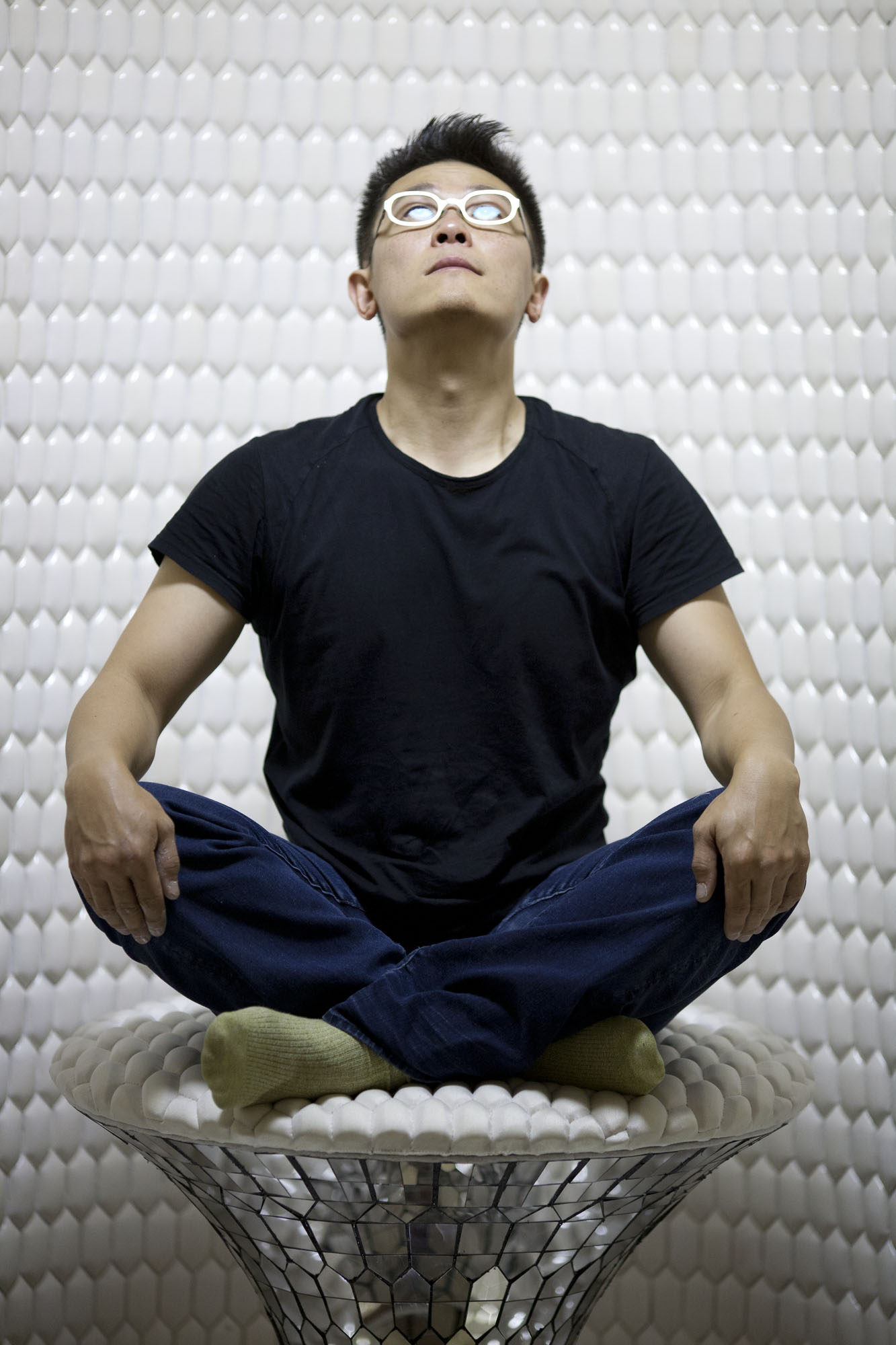
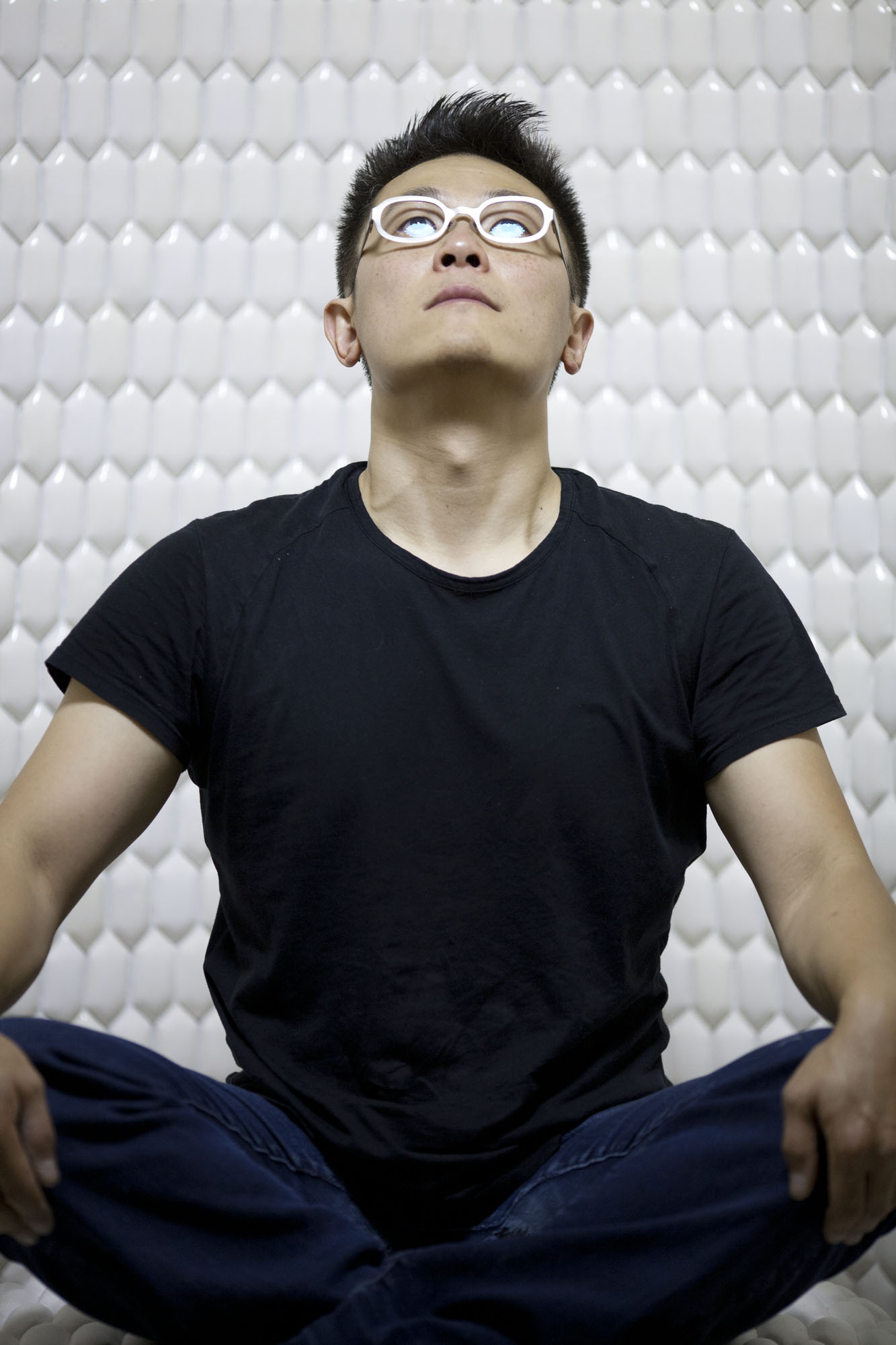
Here are three more images of Nick, up close.
 |
 |
 |
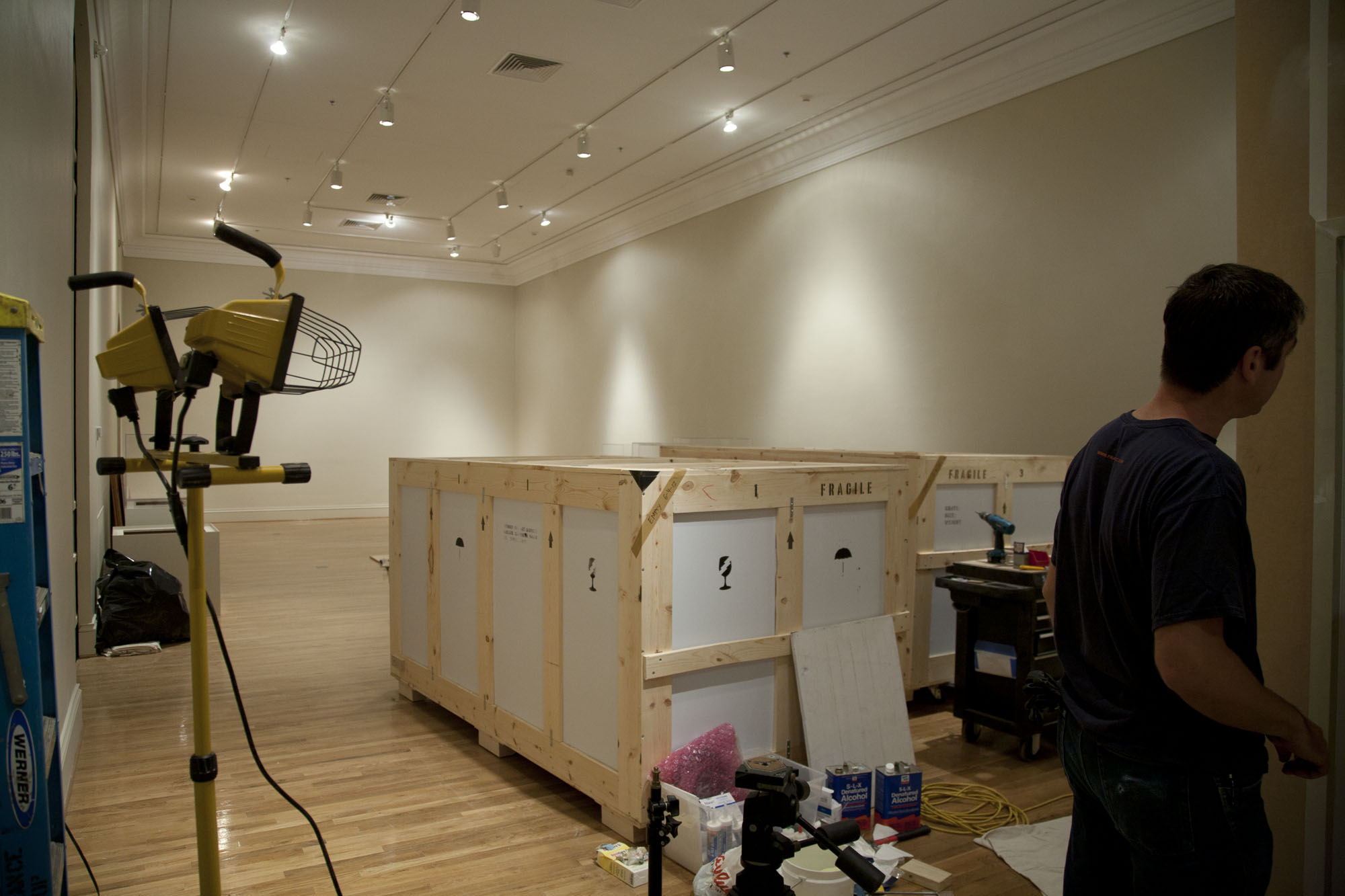
On Friday morning I had the great honor and opportunity to go to the Renwick Museum of American Crafts (part of the Smithsonian Institution) to photograph an installation piece by a friend of mine, Nick Dong, an Oakland, California based installation/mixed-media artist. His piece, “The Enlightenment Room” was chosen to be included in the Renwick’s “40 under 40” exhibit showcasing 40 hot and talented artists under the age of 40 working in “craft” media. Nick’s installation consists of a long, narrow room with the walls covered in elongated hexagonal tiles (each of which Nick made, and hand signed on the back!) . The floor and ceiling are covered in mirror tiles. The opposite end of the room from which you enter is rounded, and at the focus of the hemicircle, a mirror-based seat with a white cushion is located. In the ceiling is a series of LED lights. Sitting on the cushion triggers the lights and music, which build in intensity for approximately one minute before fading out.
 |
 |
 |
 |
Here is a link to the Renwick Gallery’s exhibit announcement:
and here is a link to Nick Dong’s website:
I tend to be a bit of a stick in the mud when it comes to my artistic tastes, but I was truly impressed by Nick’s installation piece. Every component was extremely well thought out and seamlessly integrated to produce a singular experience.
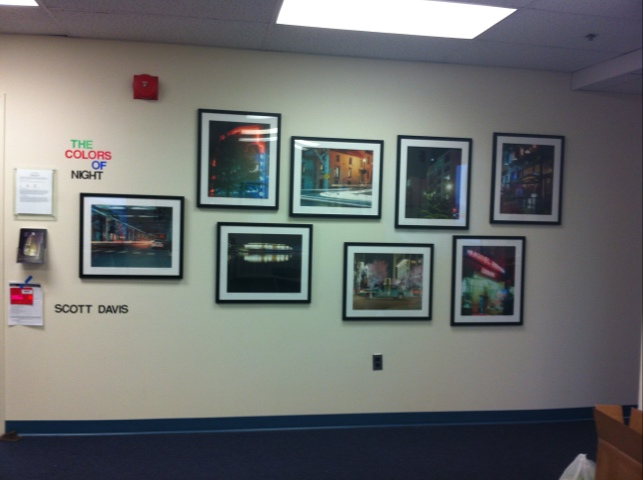
Ok- I’ve got my wall finished. And with hours to spare! Isn’t it purty?
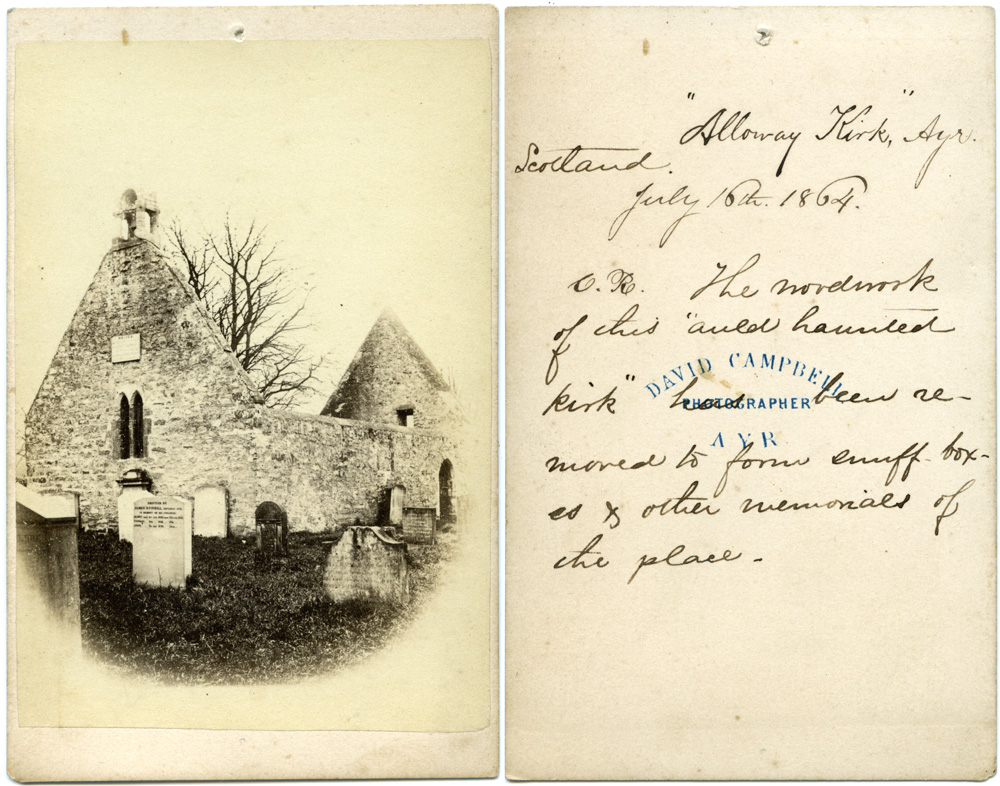
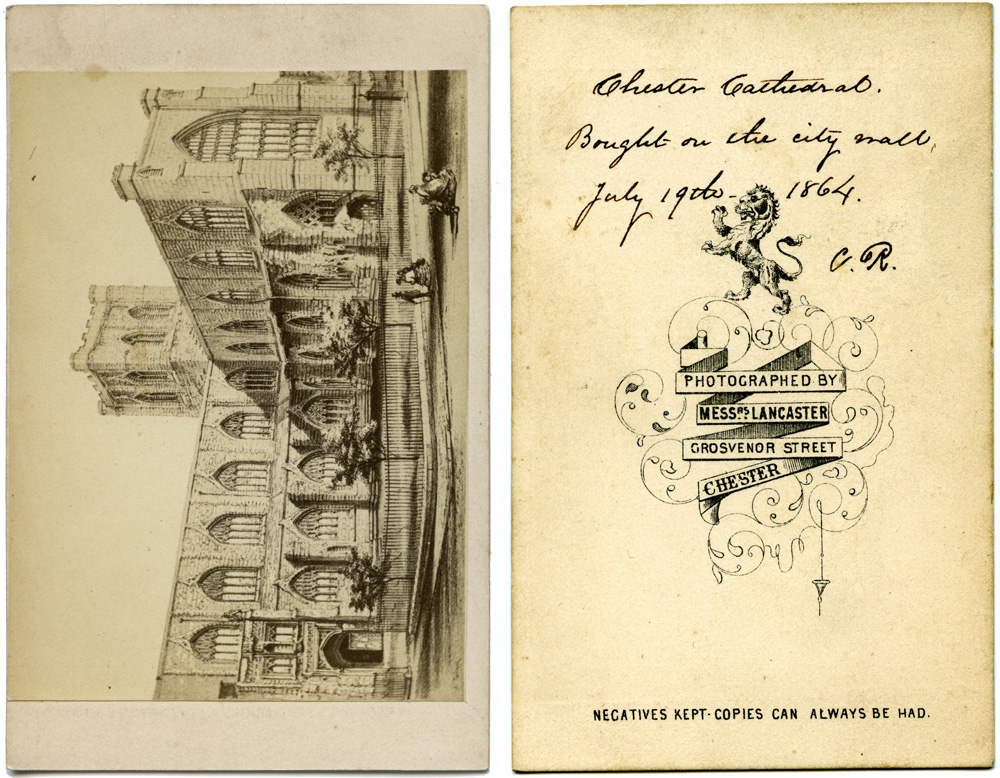
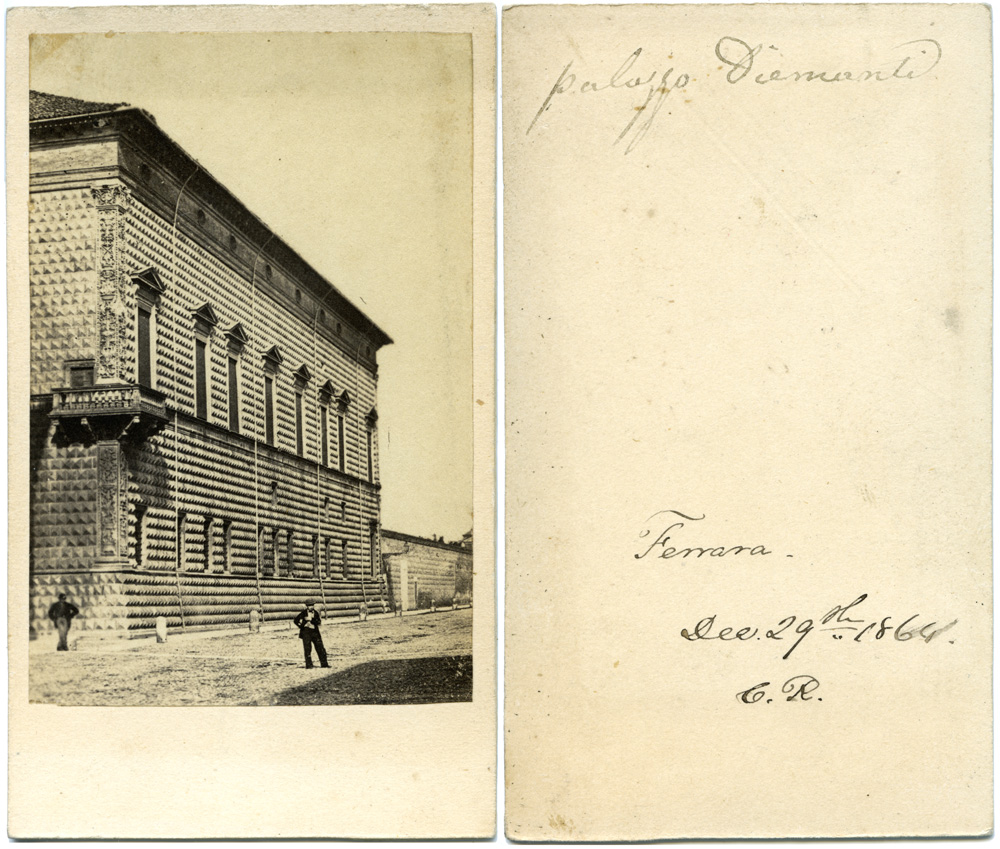
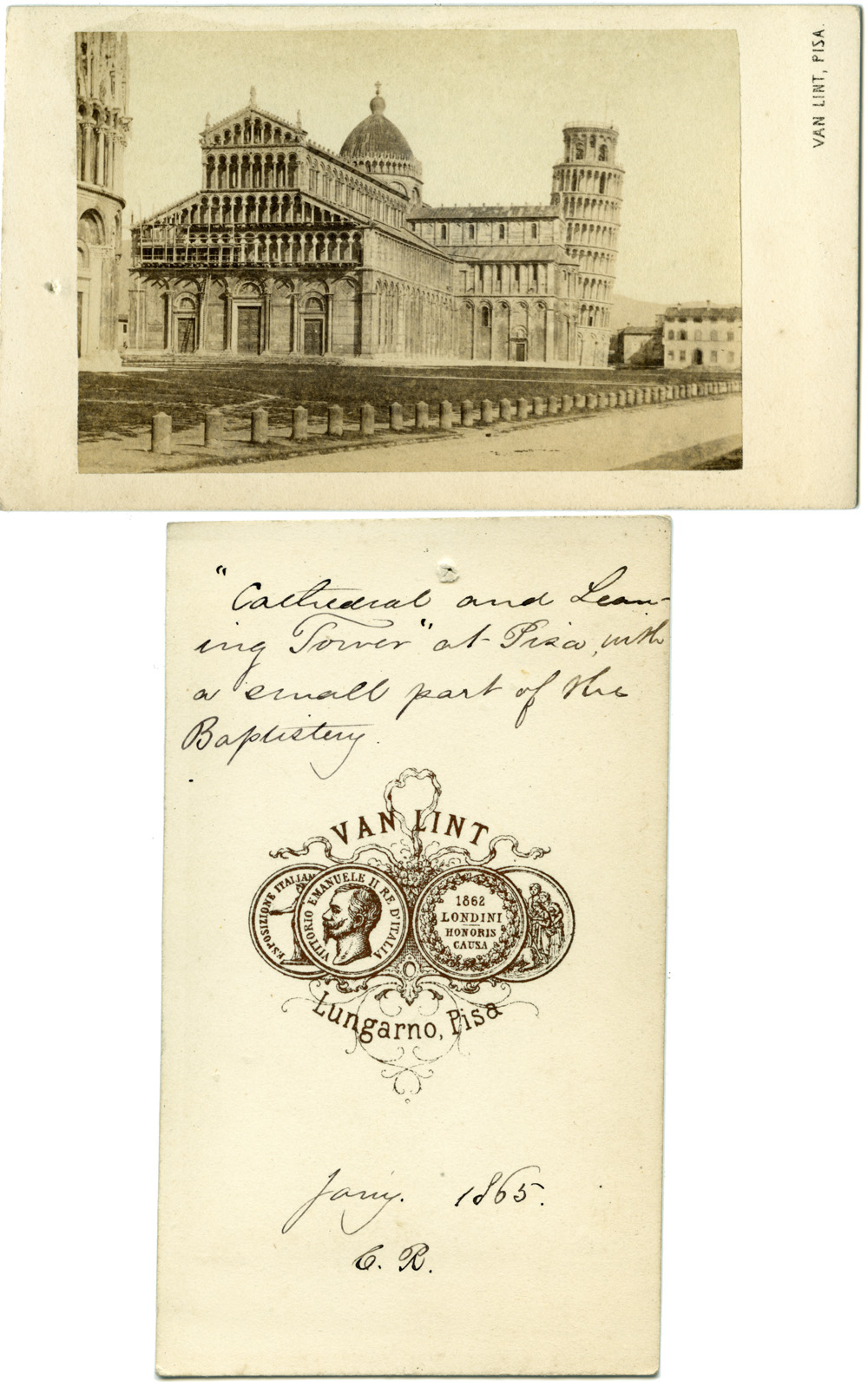
Ok- I managed to succumb to indiscretion and bought the rest of the “C.R.” cartes-de-visite. If you’re new to my blog, I posted earlier about this set of cartes-de-visite a “C.R.” purchased and collected during what I assume was his (not hers) journeys across Europe during and after the US Civil War. It’s a fascinating travelogue spanning three countries and twenty-one years. Two of the images in this second set are in fact photo reproductions of sketches. Given the dates and locations of the earliest ones in the set, one can’t help but wonder if “C.R.” was a Union or Confederate supporter, perhaps even a Confederate agent sent to the U.K. to try and purchase arms and ships for the Confederacy. Or was “C.R.” just a Northern businessperson whose work frequently took him to England, Scotland, France, Italy and Germany (there were one or two more in the set that I was unable to acquire that showed German churches) and had a soft spot for ecclesiastical architecture?
The oldest one in the complete set of nine CDVs dates from July 1864, and the last one is May 1885. Here’s the complete set, in chronological order.
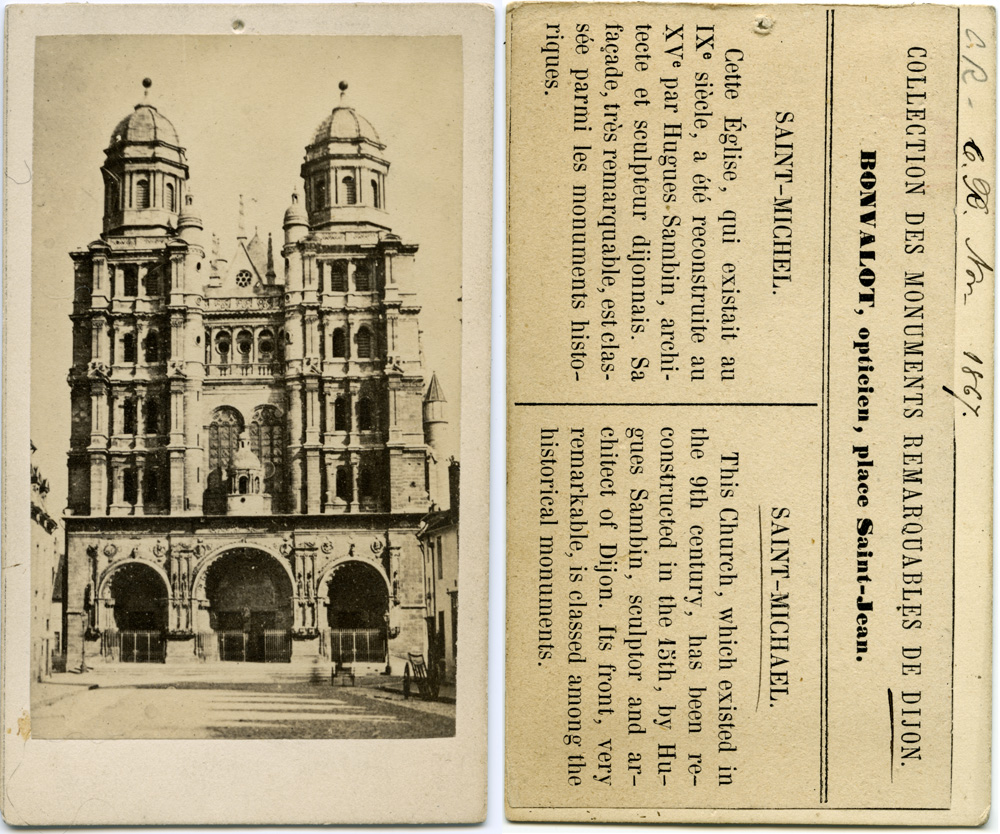
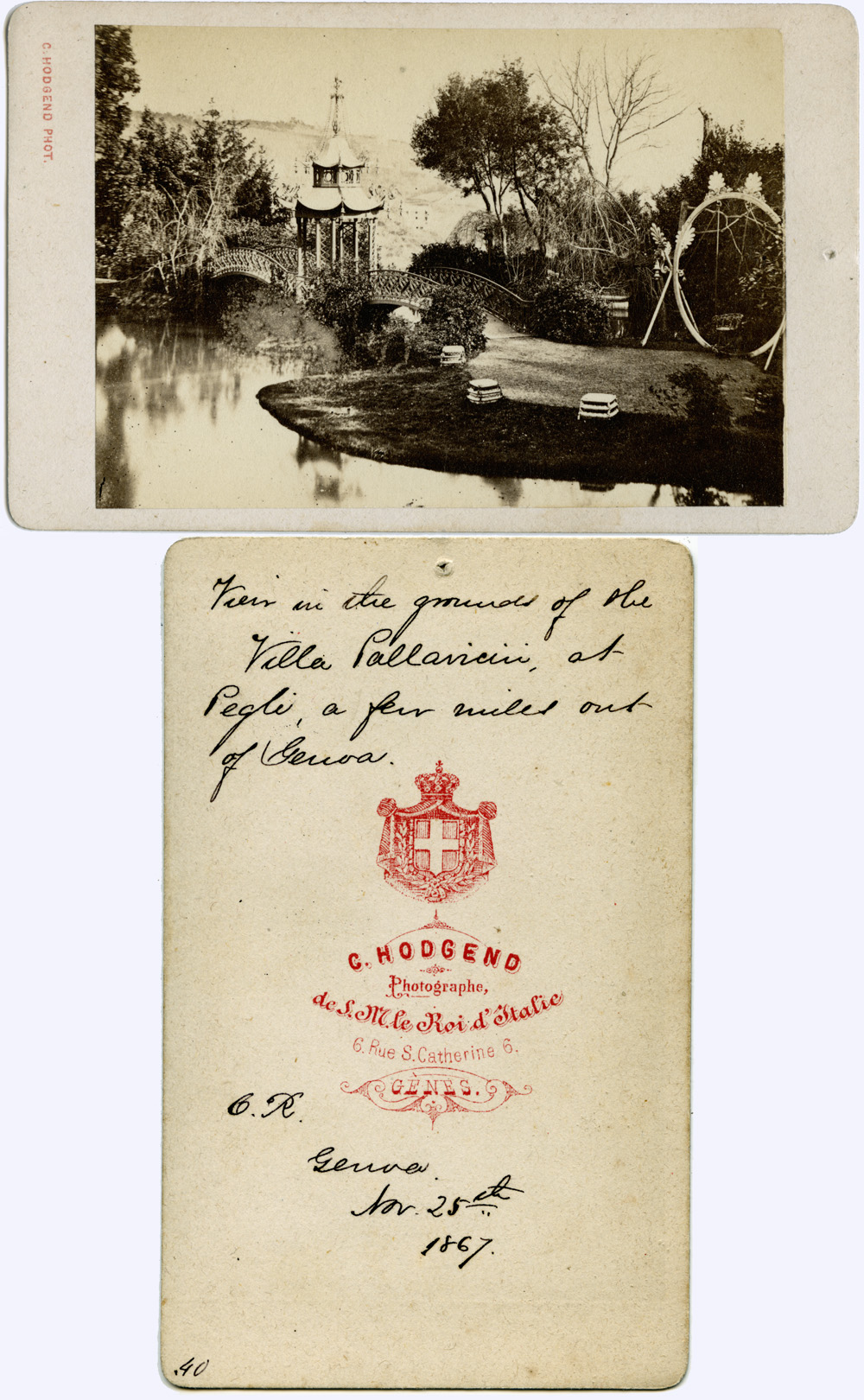
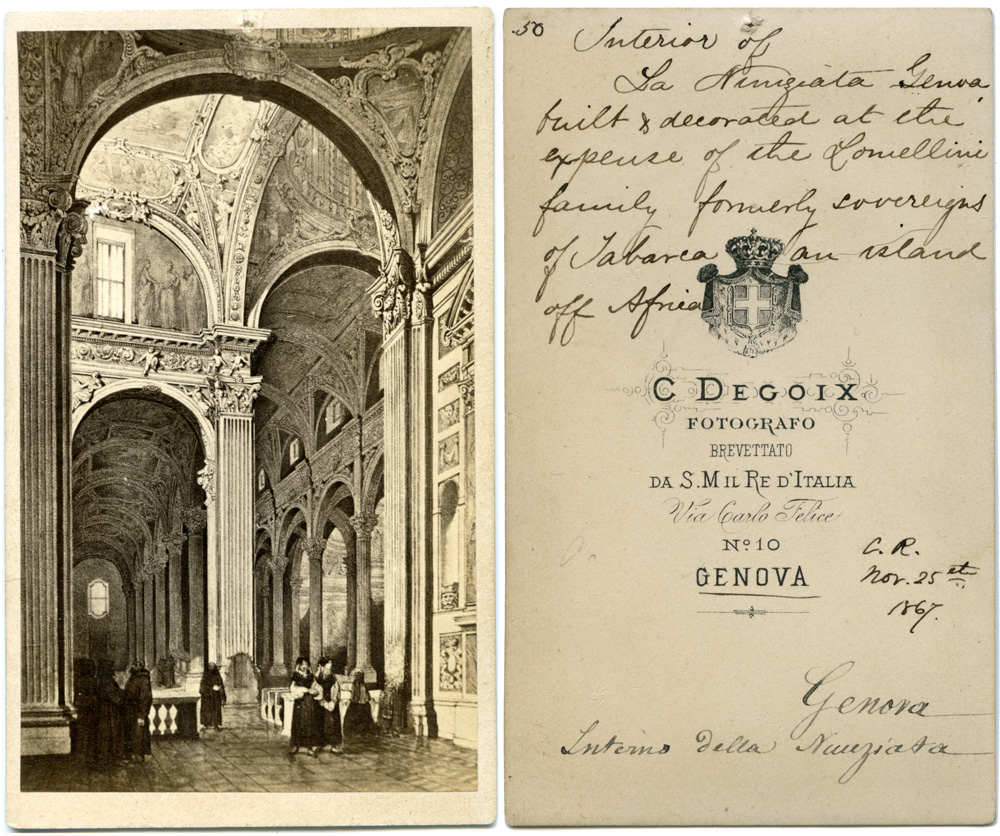
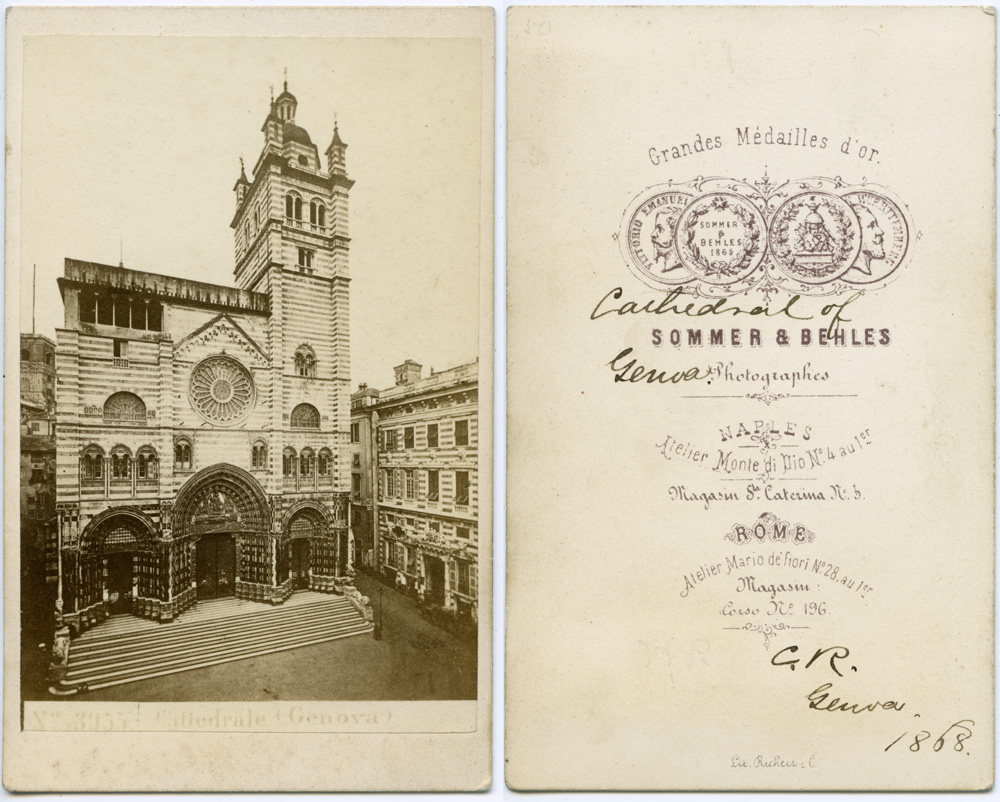
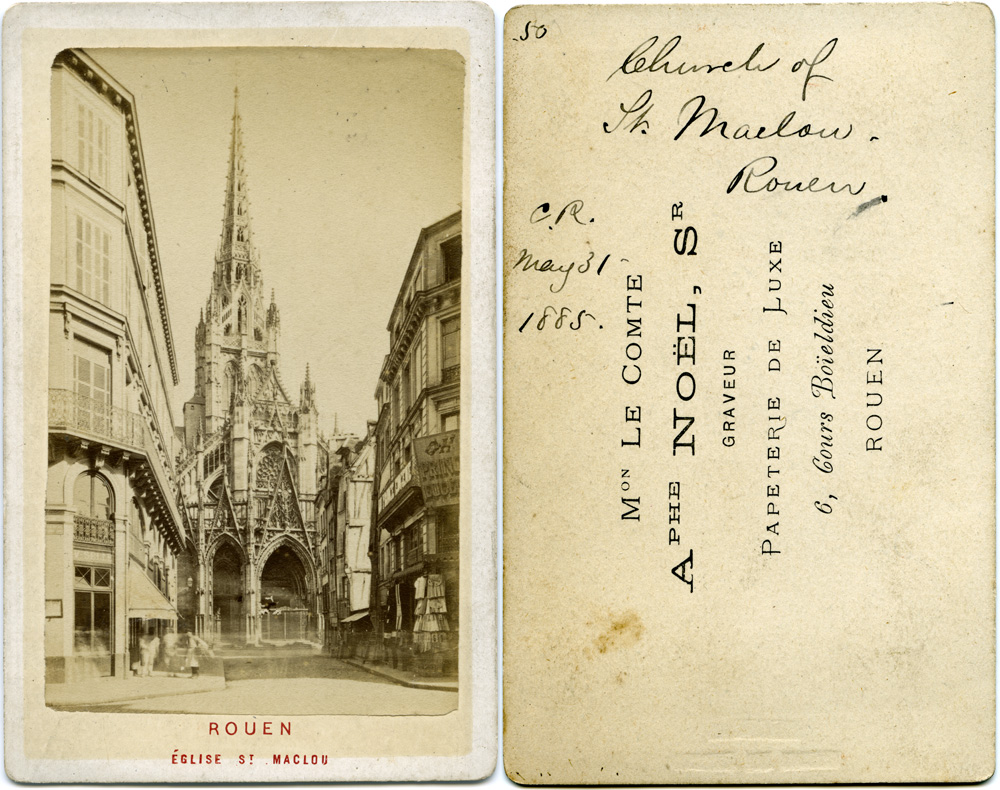
Yesterday I went to see an exhibit at the Arlington Artisphere of the photographic collection of Frida Kahlo, the famed Mexican painter, wife and lover of Diego Rivera. Frida Kahlo: Her Photos is open through March 25. This is the only stop in the United States for this show, so I wanted to make sure I got to see it before it leaves. One of the very interesting things about this exhibit is that Frida was working as a painter at the same time a major movement in photography was occurring, and the collection shows, albeit tangentially, the intersection of her life with Modernist photography. She grew up in an artistic household – her father was a photographer, and she painted him as such in a portrait. There is even a fine-art nude figure study her father took of himself in the exhibit. Most of the works on display are snapshots, showing the effects of an artistic life as captured by some of the great early and mid-century photographers: Edward Weston, Tina Modotti, Lola Alvarez Bravo, and Martin Munkacsi. These are almost all snapshots; in many cases, they are very small prints, and as such, Artisphere has arranged a system whereby visitors can borrow magnifying glasses to examine the photos up close. The downside to this is that the photos are often closely spaced on the wall due to their small size and the space limitations of the room, so sometimes it is hard to see other images because people are blocking them while examining another small image with the magnifying glass.
The entire exhibition is reproductions, not original images. The quality of the reproductions is in most cases first-rate; had I not read this in the introduction to the exhibit, with few exceptions I would not have known. This is a bit of a pet peeve of mine – I have seen several exhibits lately where substitutes for the original images were displayed. In this case there is a legitimate reason for the substitution – in Diego Rivera’s will, he specified that none of his or Frida’s photos were to leave Mexico. Without substitutes, this exhibit would not be possible. The only other legitimate reason I can see for using substitute images is in the case that the originals really are too fragile to display, or displaying them would mandate viewing conditions that would undermine the viewability of the rest of the exhibit. I like being able to see the frailties of objects, the fingerprints of age, time and care that have been deposited as signs of a rich and well-lived life. In this case, given that many of the original images were machine-printed snapshots made on dubious-quality paper, and some of the later color images were Polaroids, not known for their long-term color stability, setting the lighting at a safe level for the prints would indeed have compromised the exhibit.
As a general principle though, I would still argue against the propagation of substituting digital prints for original images; viewing a facsimile, even an extremely high quality facsimile, is really only one step removed from viewing the images online. This renders museums as physical entities obsolete. It also undermines the museum’s role and responsibility as a vehicle for education and connoisseurship, and preservation. Why worry about conserving art objects if we can just make simulacra and replace them time and time again as they wear out? Why worry about the authenticity of the object on display if the object itself is irrelevant, and the means to determine authenticity are lost because people can’t tell the difference between a silver-gelatin print, a platinum print and an inkjet? Lots of people can’t afford to own even a single example of the work of a named artist, let alone enough examples to derive a working knowledge of the artist’s methods and materials. Museums can, however, and by exhibiting the work, they can enable thousands to develop that critical eye.
On November 23, 2011, David Prifti, a brilliant wet-plate photographer living, working and teaching in the Boston area, passed away after an extended battle with cancer. I am deeply saddened that such a bright light and creative force for positivity has gone out. I knew his work from APUG, Large Format Info, and the Collodion Forum, but never had the chance to meet him in person. I have seen his plates live though, hanging on gallery walls, and no web reproduction can do them justice. You can see his work online at the three previously mentioned websites (all linked from here). His work was part of the Masterplaters show that just closed November 22 at the Community College of Baltimore County Catonsville campus. Plans are in the works to bring the exhibit to the Washington DC area in the not-too-distant future – keep an eye on this blog for future information. There will be a memorial service on November 30th 4pm at the First Parish Unitarian Church in Concord, MA.
Upate 11/29/2011: Here is a link to a short writeup on the Huffington Post about David:
David Prifti, 1961-2011
There will be a scholarship fund established and named after him at the school where he taught. Information on donations is available in the linked article above.
Over the weekend I went to see the Pier 24 exhibit space in San Francisco. It has only been open for a year or so (the current exhibit is their third ever, I believe). It represents a novel approach to the museum experience in general and photography exhibits in particular. The facility itself is located in one of the old waterfront warehouses along the Embarcadero (thus the name), directly beneath the Oakland Bay Bridge. The interior is divided up into roughly 20 rooms. Admission is FREE, but by appointment only. They allow twenty people at a time for a two hour block, so your distractions during your visit are minimized. Another way they minimize distractions is by having NO wall text – the floor plan flyer you get upon entering has the only labels for the exhibits, consisting of the photographers names who are hung in a given room. Absolutely maddening if you’re not familiar with everyone in a given room, but at the same time, quite liberating because it frees you from having to accept the curator’s “authoritative” context. The current exhibition, up through December 16, is entitled simply “HERE”. The theme is work that in some way connects to San Francisco – either taken in or near the Bay area or by photographers who called it home. Work exhibited spans the range from 19th century mammoth plate collodion images printed on albumen paper by Eadward Muybridge and Carleton Watkins to 20th century Modernist masters like Edward Weston and Ruth Bernhard to color mural prints by Richard Misrach and Larry Sultan, and even a five-minute video clip of the car chase scene in Bullitt with Steve McQueen.
Much of the work on display was not to my taste – I don’t like what has been derisively labeled “hedge fund wallpaper” by some New York gallerists referring to recent deadpan posed-snapshot color mural prints. However, there was enough early imagery to satisfy my inner antiquarian, and now that I’ve seen enough of that kind of work, I’m starting to appreciate it for what it is. I still wouldn’t accept money to hang in my house, but one example finally struck home as to what was going on in the photograph. There was a room with a series of VERY large color prints by Anthony Hernandez of vacant interiors. On the literal surface, they’re incredibly ugly, showing abandoned and/or ruined interior spaces with industrial carpets, missing drop ceilings, and junky furniture. One thing that did catch my eye though was the use of color itself. If you stepped back and looked through a defocused eye, the images became all about abstract color fields, geometric forms, and intersecting planes. The graphic abstract geometry creates a contrast with and tension against the literal detail of the photographic image, making your brain switch back and forth between the two characteristics of the image – the texture of the purple carpet, the gray popcorn ceiling and the white-washed faux-wood paneling in the hallway against the receding, intersecting planes of colors converging on a vanishing point in the far rear of the image. I think it’s this kind of tension in a photograph that has too often repelled me from post-modernist photography – it’s too easy to be fixated on and distracted by the details and not see the whole picture. I still don’t like the “posed deadpan snapshot”, whether it’s printed 4″x6″ or 40″ x 60″. But at least I can start to “get” another genre.
For more information about Pier 24, visit their website: http://www.pier24.org
 dcphotoartist