Category Archives: Photography

Mexico City – Around San Angel, In Color

SanAngelMudanzas
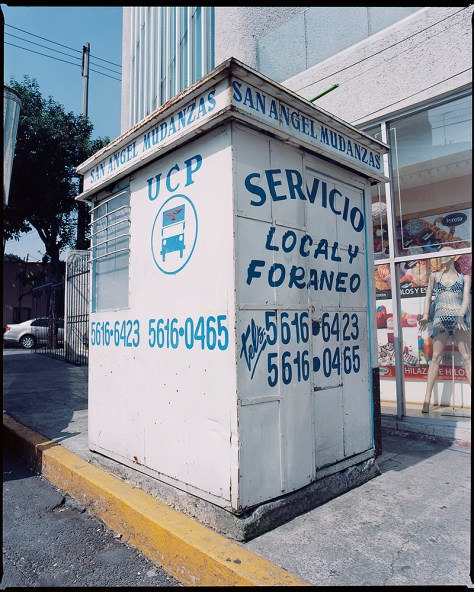
San Angel Moving, Local and Long-Distance

I think this was a newsstand kiosk, but it’s painted to advertise San Angel Moving, in a very old-school style. One of their trucks was parked right next to it.

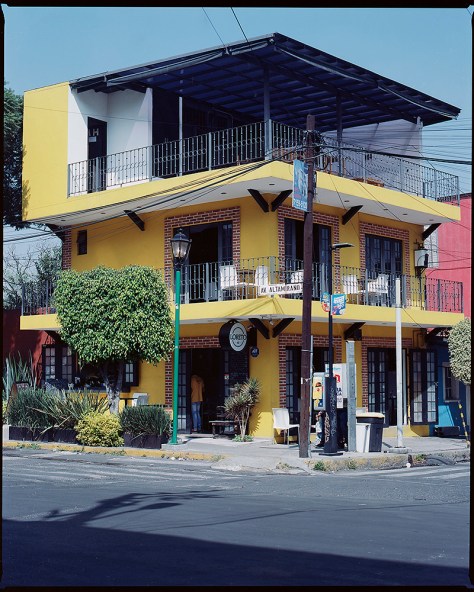
YellowHouse
Yellow Cafe, San Angel

I couldn’t help but photograph this bright yellow cafe/restaurant – what a cool building!

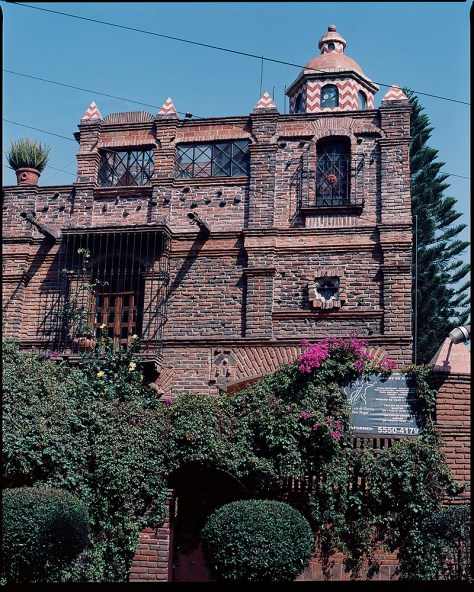
WildBrickHouse
Dance School, San Angel

Another building that cried out to be photographed – if it were stone and not brick, I would assume this was in Spain or Italy, not Mexico. It has a dance school inside, as well as a residence. Who knows how old it is?

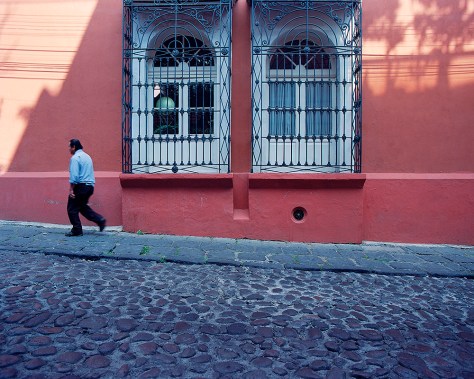
CalleSanAngelUphill
Walking uphill, San Angel

A typical street in San Angel – those cobblestones could go all the way back to the 17th century. The neighborhood, today, is one of the most upscale in Mexico City, with many of the Viceregal compounds and ex-convents/monasteries converted into extremely private residences de luxe.

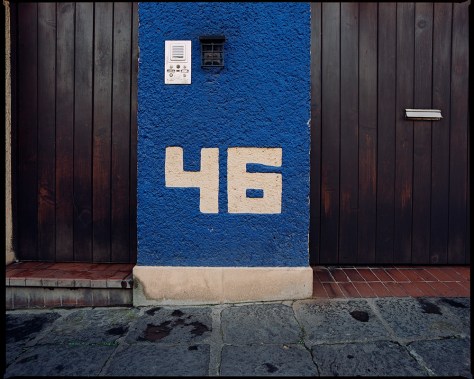
CuarentaYSeis
Number 46, Calle de la Amargura


BarbershopSanAngel
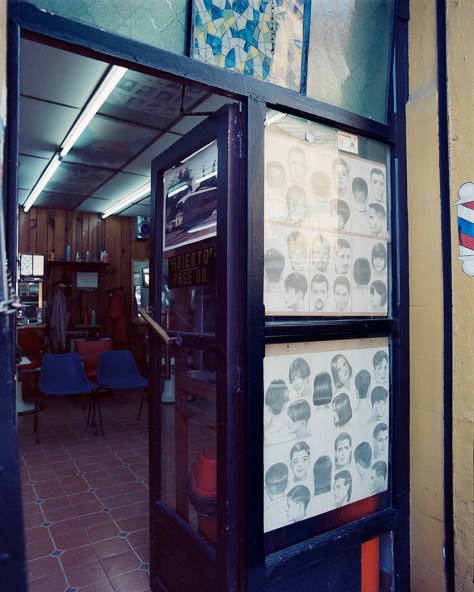
Barber Shop, San Angel

I just loved the old-school barbershop interior and the “Abierto, Pase Ud” (Open, Please Come In” sign on the door. It reminded me of the barbershops in the town I grew up in.

FountainSanAngelArtPark
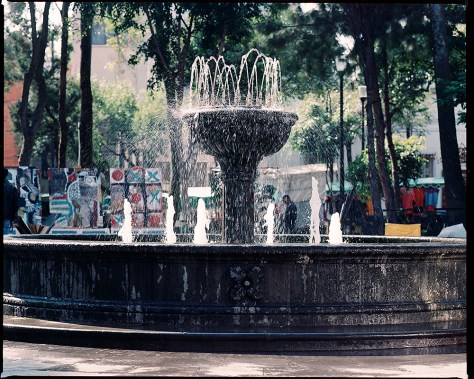
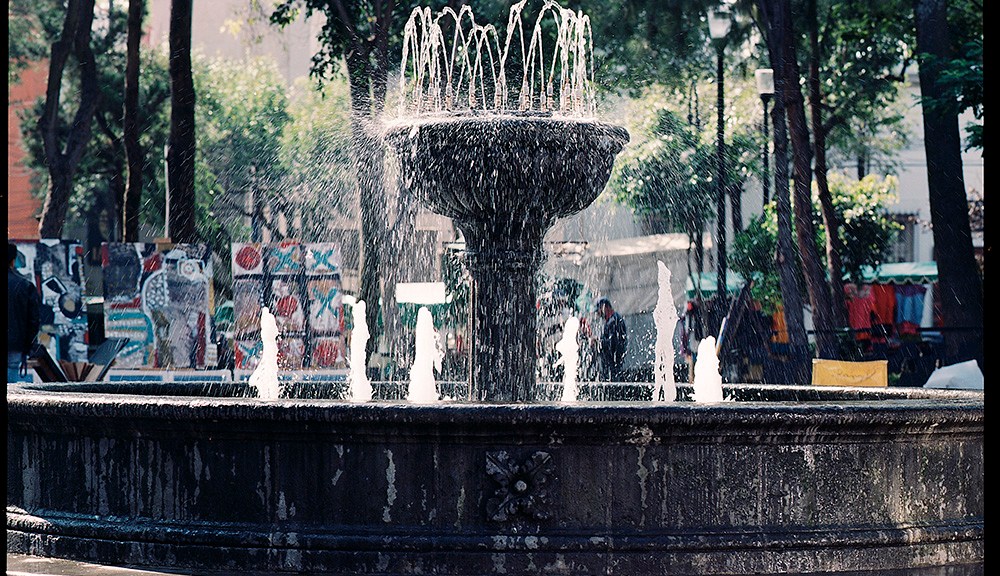
Fountain, Plaza San Jacinto

The last time I was in Mexico City, this fountain wasn’t running. So nice to see it operating – it really brings the plaza together and makes it feel more alive, even when the  Saturday artists’ market isn’t running.

Victor – Portraits

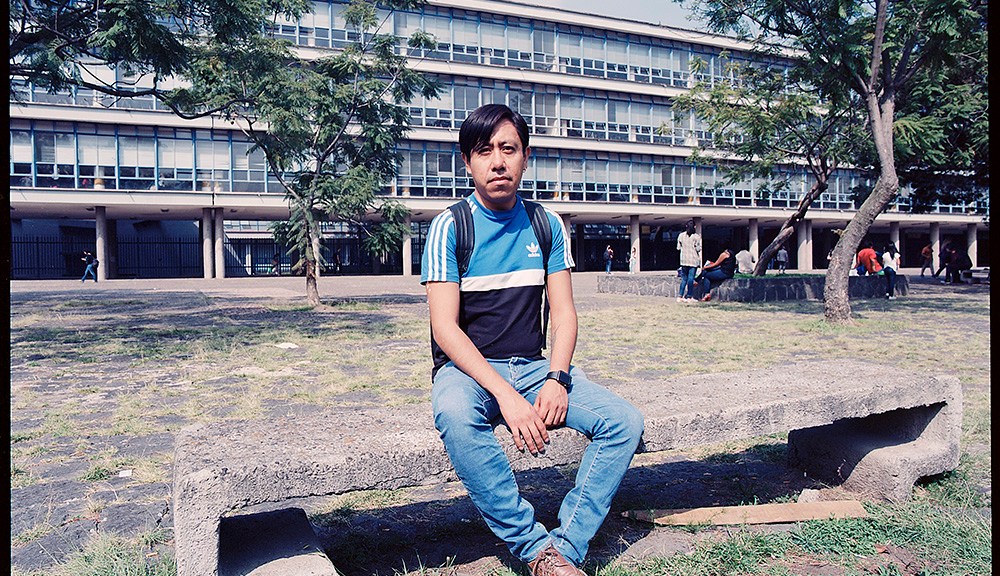
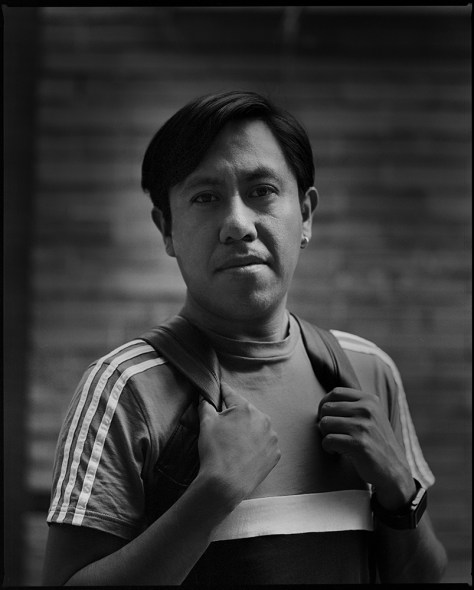
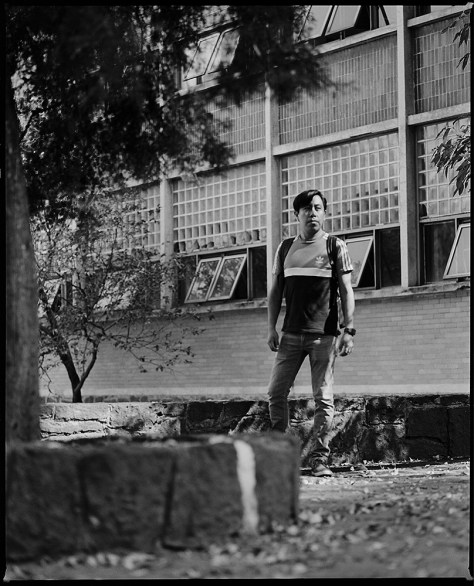
Part of the reason for my trip to Mexico City was to see Victor. It’s a developing thing – we haven’t placed a label on it but whatever it is, it’s good. And he’s a willing subject for the camera, which is a nice change of pace from my ex.

VictorAtUNAM1

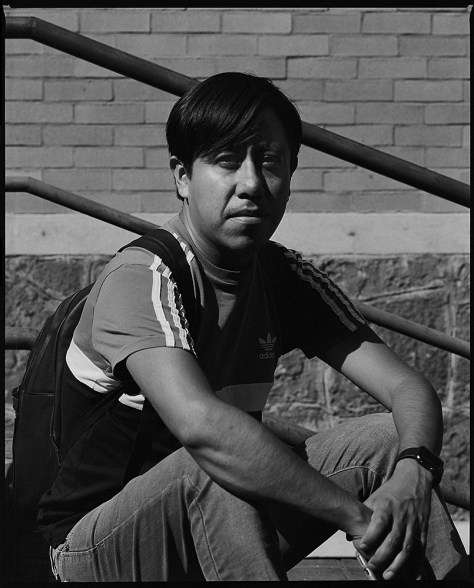
It was also an opportunity to test out the portrait lens on my Mamiya RZ67 (the camera is new to me, but the lens’ quality is known far and wide – I just needed to see for myself what it would do and if I liked it. I do).

We spent an afternoon wandering around the UNAM (National Autonomous University of Mexico) campus when I shot these.

VictorUNAM2

VictorUNAM3

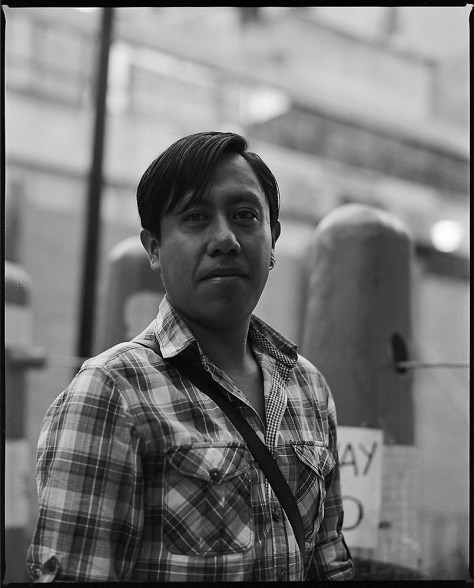
This last one was taken with the 110mm f2.8 lens. It’s an equally good lens for portraits when you need something that gives a bit more background and/or a closer working distance, like this shot.

VictorZonaRosa

All images made on Kodak Tri-X 400. I really like Tri-X for the tonality it has, and the just-a-little-bit of tooth.

VictorUNAMDerechos

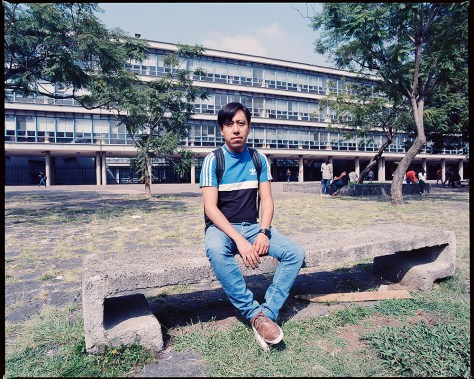
This very last image was made with the 50mm lens as an example of environmental portraiture. The film was Kodak Ektar 100, which I love for the color saturation and sharpness.

People On The Street, Mexico City

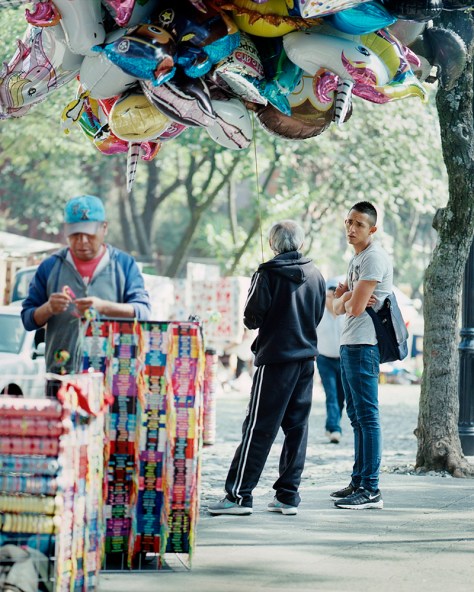
All of these were taken around the Plaza de San Jacinto Artist’s Market.

BalloonVendorSanAngel
Ballon Vendor
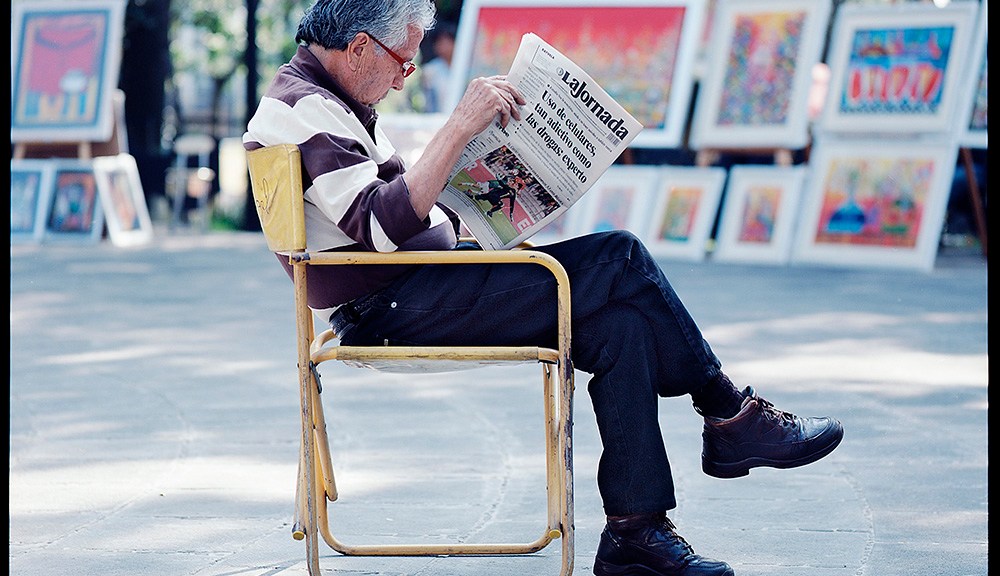
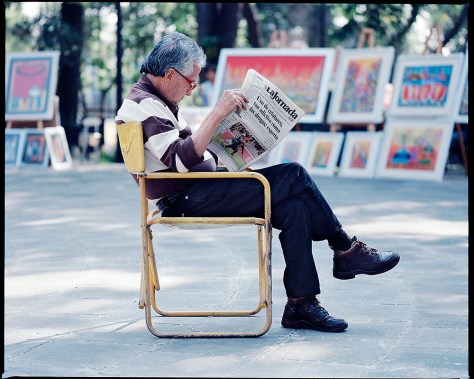
CelularesComoDrogas
“Cellphones are as addictive as drugs” – so says the headline
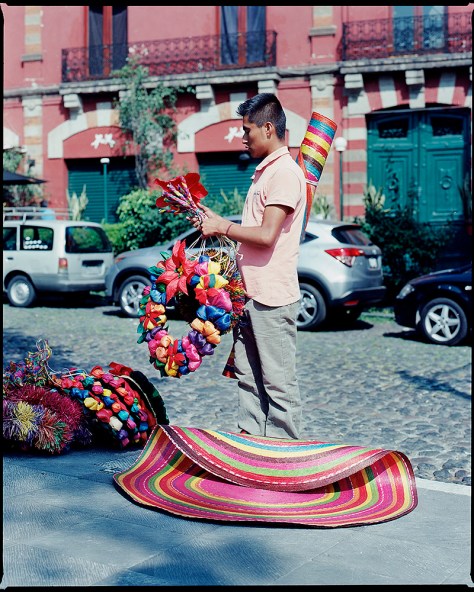
CraftVendorSanAngel
Organizing his wares

Mailboxes, and other Ordinary Objects Around the World

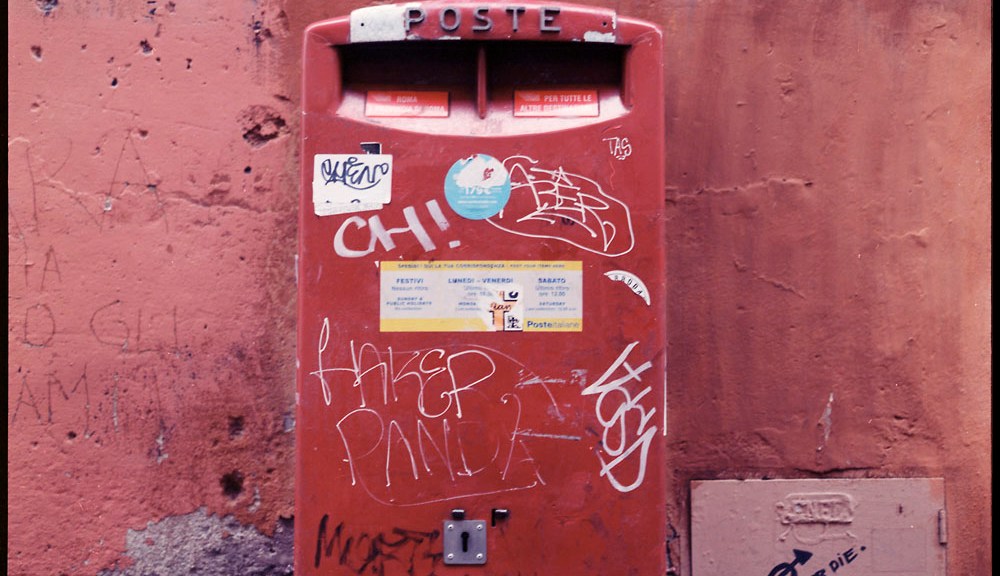
I’ve been photographing what I call “ordinary objects” for a couple years now, featuring things like mailboxes, payphones, water fountains, trash bins and the like. I just added a Mexican mailbox to my collection over the Veterans’ Day holiday. I have objects from France, Italy, Canada, the U.S. and Mexico now.

Mexico City, in Black and White

This was a return trip, just a quick three-day weekend over the Veterans’ Day holiday, so I only shot four rolls of black-and-white and six rolls of color (to be processed today). Here are some highlights.

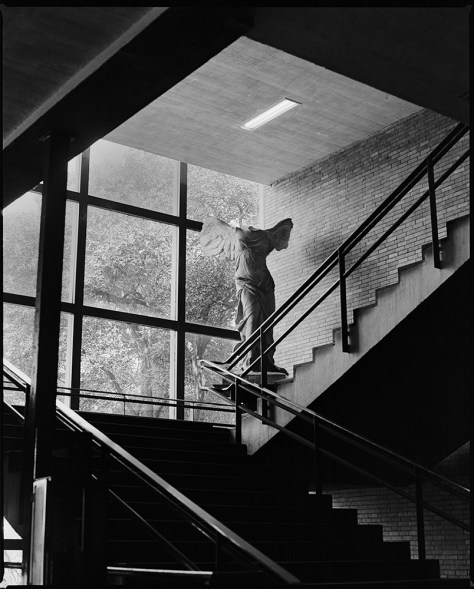
I took a trip to the UNAM (Autonomous National University of Mexico) campus, which is famous for its 1960s architecture (it’s the site of the 1968 Olympics, and the Olympic stadium which seats some 80,000 (if I recall correctly) is across Insurgentes Boulevard from the campus). My partner is in law school at UNAM, so we met up after class and wandered around a bit. These images are from the Architecture school buildings, another program that UNAM is famous for.
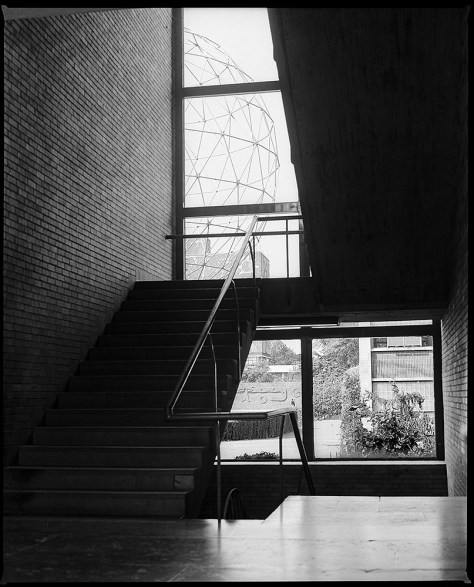
UNAMArchitectureStairs

AngelUNAMArchitecture

You may be wondering- what’s with the rectangular images? He almost always shows us square photos! Well, I traded in some gear I wasn’t using and got a Mamiya RZ67 and a trio of lenses for it. The RZ67 is effectively a Hasselblad on steroids – unlike my Rolleiflex, which is a TLR (Twin Lens Reflex), the RZ is an SLR (Single Lens Reflex). The advantage is that with an SLR, interchangeable lenses make a lot more sense, since you only have to have one of them per focal length. The RZ also shoots 6x7cm negatives on 120 film (NOT 120mm!!! Pet Peeve alert – 120 is the film size, not 120mm. 120 was a Kodak internal designation for the format that became universal, kind of like Kleenex). The RZ solves the problem of having to rotate the entire camera when switching from horizontal to vertical by instituting rotating backs. This of course makes the camera bigger and heavier. It’s an additional challenge when traveling, but I think the images speak for themselves.

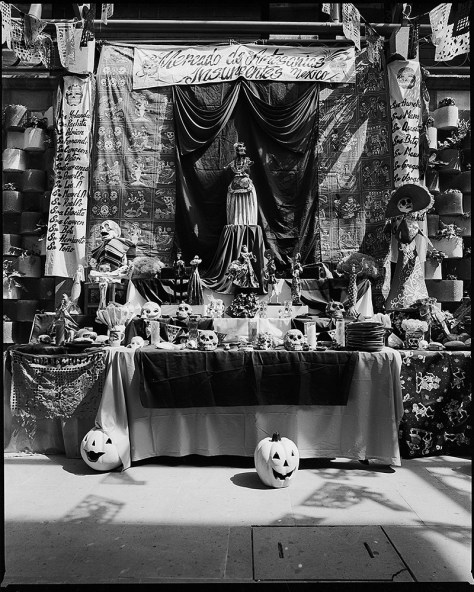
Back in the city center, I was wandering around on the street where my hotel is located, Calle Londres. Down the block are a pair of markets – the Mercado del Angel, which specializes in antiques, and the Mercado de Artesanias which specializes in modern handicrafts of all varieties from wood carvings to ceramics to sterling silver jewelry. The Mercado de Artesanias had a Day of the Dead altar still up in their entryway.
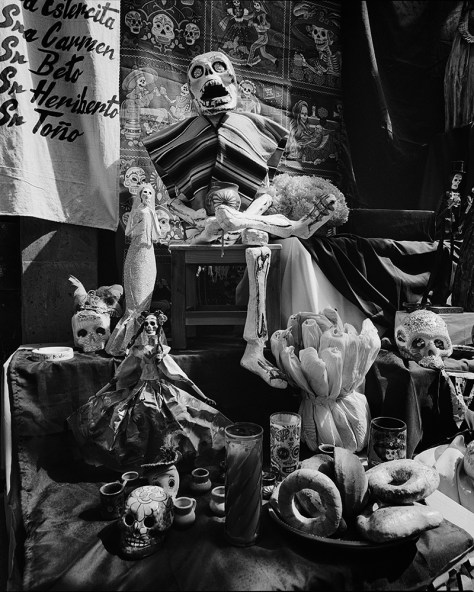
DiaDeLosMuertosAltar

DiaDeLosMuertosAltar2

You can’t tell it in black and white, but those pumpkins on the ground were fluorescent purple and pink. I like them better in b/w, don’t you?
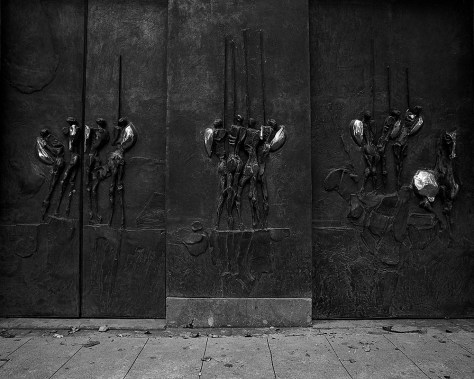
BronzeDoorsLondres

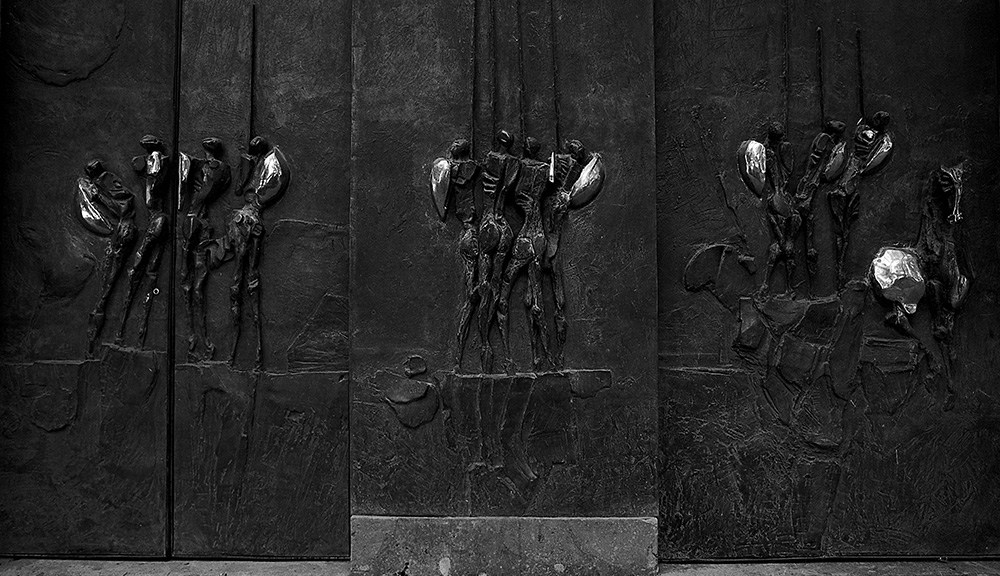
Also on Calle Londres, these bronze doors can be found. I’m still not sure what they belong to, but they’re quite impressive.
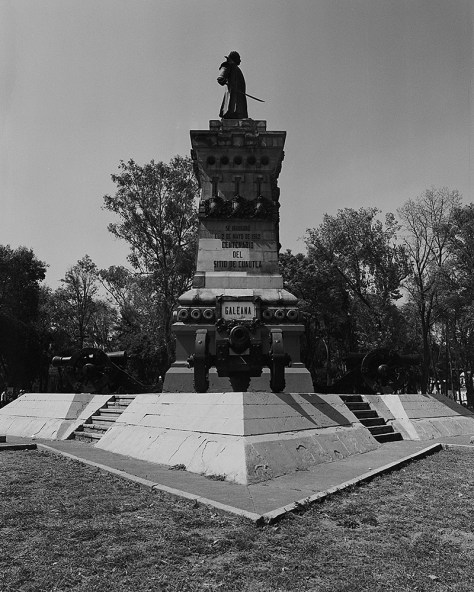
 

GaleanaMonument

Another aspect of the trip was to take in some of the exhibits of FotoMexico, a nation-wide, three month long photography festival that covers some 600 exhibits around the nation. The headquarters for the program is the Centro de la Imagén, located inside the Biblioteca México (I’ll have more to say about FotoMexico in another post). The Biblioteca México is located in an 18th century tobacco factory-cum-military facility that was used as a prison during the waning days of Spanish colonial rule. This monument is in the park in front of the Biblioteca, commemorating Jose Maria Morelos, a Mexican general who led a valiant 40 day resistance against colonial authorities at Cuautla, after which he was taken prisoner, held in the jail in the Ciutadela (now the Biblioteca) and then executed for treason.
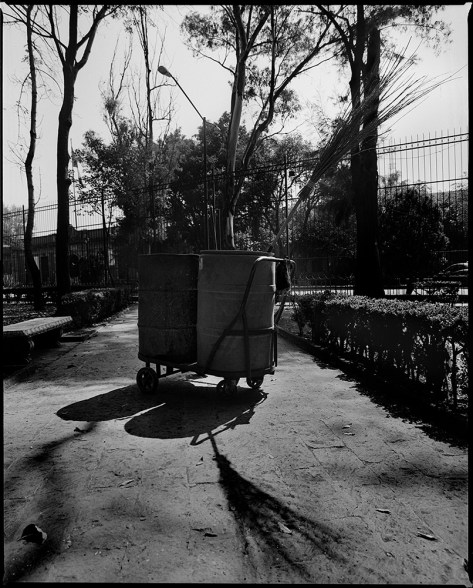
ParkSweepMexicoCity

The cart and broom of one of the caretakers of the park.
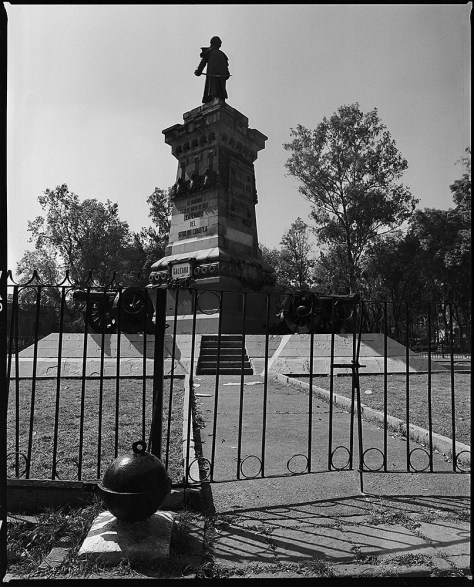
MorelosMonument2

Another view of the Morelos monument. It was erected in 1912, as part of the centenary commemorations of Mexican independence from Spain, and coincidentally the Mexican Revolution of 1911 which overthrew the dictatorship of Porfirio Diaz.
GlorietaInsurgentes

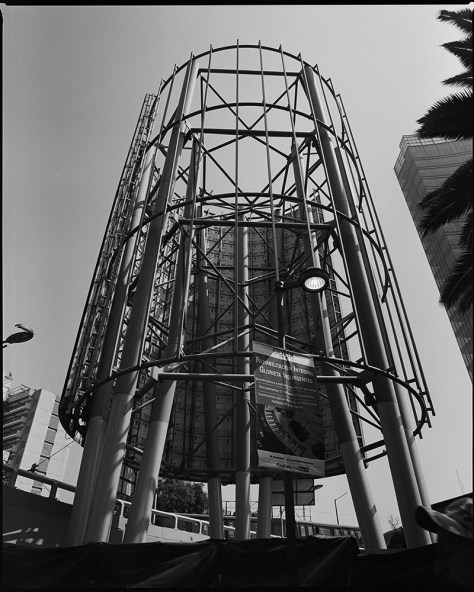
Last but not least, the advertising billboard structure in the Glorieta Insurgentes. The Glorieta is a major traffic circle on Avenida Insurgentes Norte, and is a transportation hub – the subway and express buses have stops in and around the Glorieta. I photographed the billboard structure because it has a look to it reminiscent of a Bernd and Hilla Becher photograph of industrial structures.
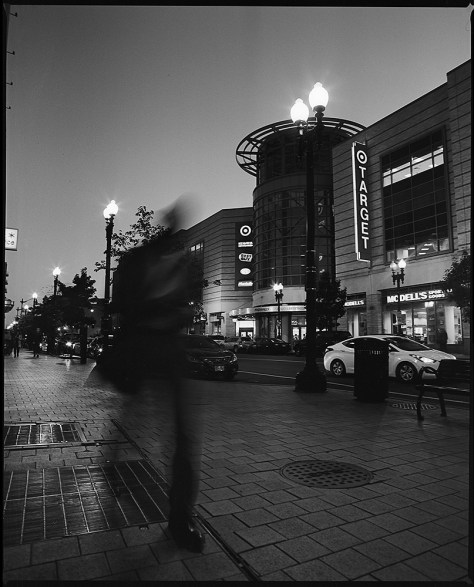
Ghost Man, Columbia Heights

GhostManCoHi

This is a case of where the mechanics of photographing lead to something emotionally resonant in a powerful way – the blurred moving man under other circumstances could be considered a flaw, but here becomes a metaphor.

C&O Canal Monument, Twilight, Georgetown

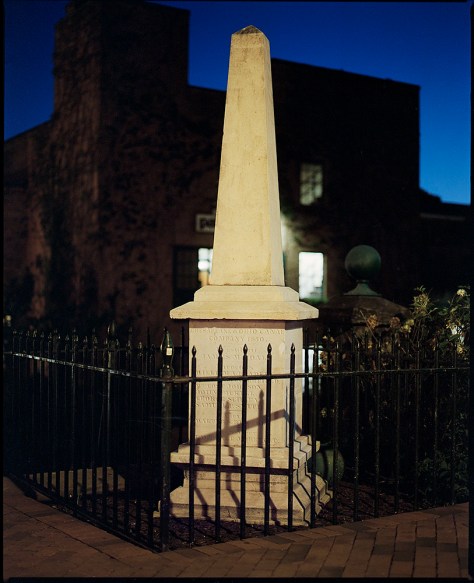
CanalMonumentNight

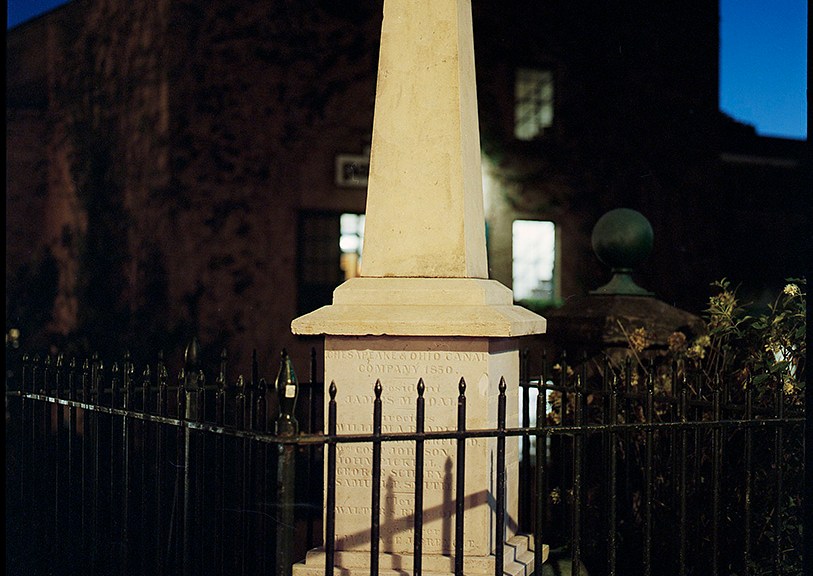
The monument is adjacent to where Wisconsin Avenue crosses over the C&O Canal in Georgetown. It is effectively a zero mile marker, although not precisely, as the canal continues a few hundred yards past the marker to empty into Rock Creek. It commemorates the construction of the canal. I caught it right at “magic hour” when the sky is just dark enough that it matches the ambient street light, but is not so dark as to lose all detail and color. Here it has a wonderful indigo glow. And no, no flash was used in the making of this shot- this was purely ambient light from the street lamps and the sky.

Washington DC at Twilight

More specifically, the Georgetown neighborhood. Georgetown may be many things (incredibly overpriced, a tourist trap, insanely busy and difficult to navigate because they refused the Metro when the system was being built) but it is very vibrant and there’s always something going on. It still retains much of the late 18th/early 19th century architecture from when Georgetown was actually a separate city from Washington DC, and has a very distinct feel. I like getting out and photographing there, especially at twilight into the sunset hour, because Georgetown’s position on the crest of a hill overlooking the Potomac really captures the light of that hour like no other part of the city.

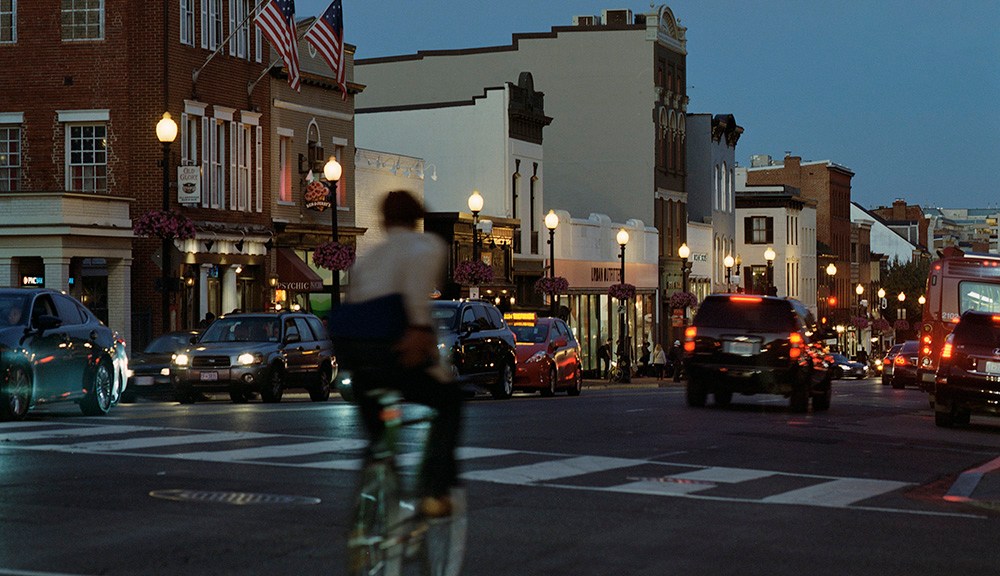
This is looking east along M Street, one of the main commercial corridors in Georgetown, from the corner of Wisconsin Avenue and M Street. The sun is setting, the light is fading, and the traffic and street lamps are glowing with the first hints of night lights.

EastOnMStreet

The cyclist is moving just fast enough to be blurred as he passes through the scene.

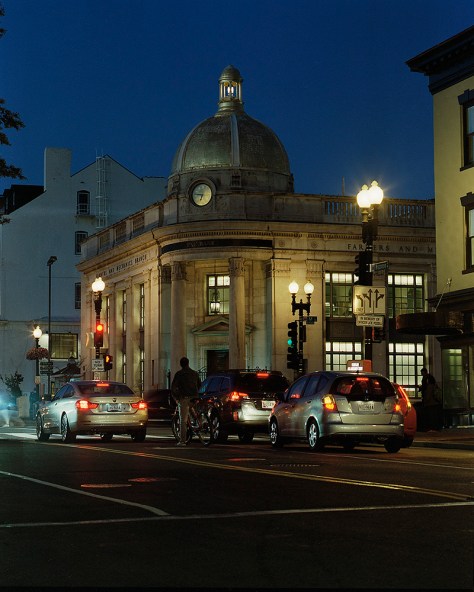
Here is the famous Farmers and Merchants Bank at the corner of Wisconsin and M Streets. This is an absolutely iconic structure in Georgetown, and is instantly recognizable around the world to people who have visited Washington DC.

GeorgetownBankNight3cars

I love the dull gleam of the gilded dome of the bank catching the last rays of the sun.

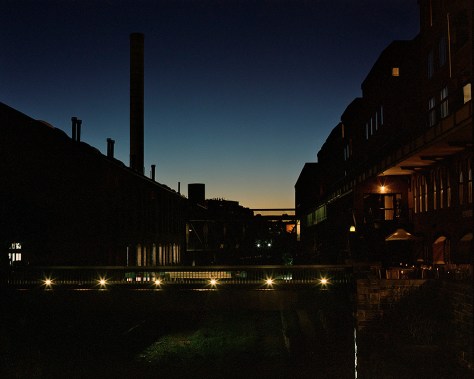
And here is a glimpse of Georgetown’s industrial waterfront past, where the C&O Canal carves its last yards of waterway through the city before meeting the Potomac River, and where the warehouses for tobacco, wheat, corn, cotton and local products were stored, bought, and sold at the last navigable port on the Potomac.

CanalSunsetGtown

Today, fancy boutiques and high-end condos line the canal, the smokestacks of power plants remaining as decorative follies to remind us of the town’s industrial past.

National Cathedral at Night

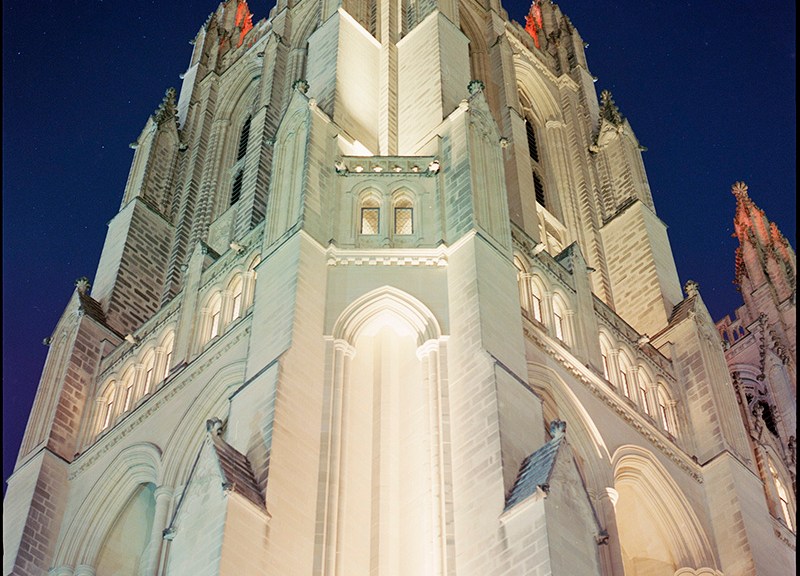
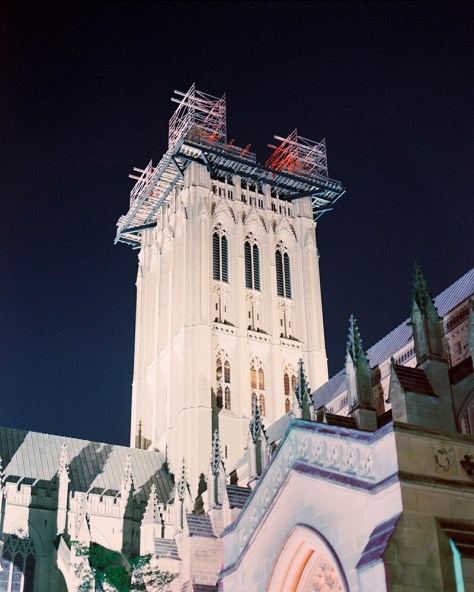
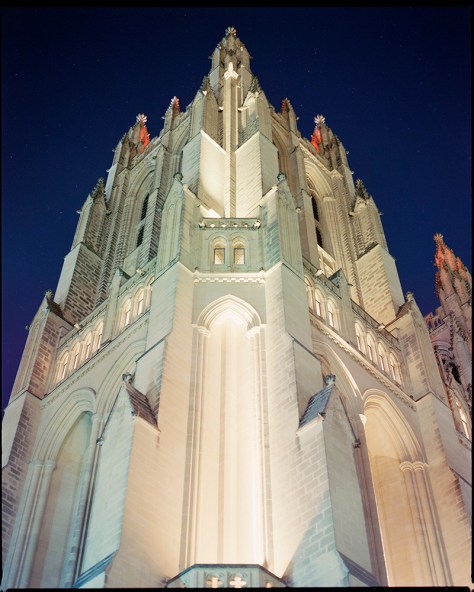
Two views of the National Cathedral at night. I took these the night I went to the Cathedral for a walking tour of the grounds. The first image shows the central tower, scaffolding in place, which is there to further the restoration of the earthquake damage from 2011. Yes, it’s been almost seven years since the earthquake and they’re still not done with the restoration. The reason the restoration is taking so long, budget issues aside, is that the cathedral was built with traditional techniques – there’s no structural steel inside. It’s all stone blocks tied together with iron bow-ties. It could have been a much bigger disaster and the entire tower could have collapsed, but the tonnage of the bronze bells acted as a counterweight and stabilized the structure.
NatCathedralTower

No, that’s not dust from the scan in the image – those are the beginnings of star trails from the two and a half minute exposure.

NatCathFrontTowerStars

I actually like the color balance being impure the way it is here – it adds to the drama of the scene. And since there’s mixed lighting sources (tungsten/incandescent, sodium-vapor, and possibly fluorescent) all in the same scene, it’s a huge credit to the Kodak Portra 400 that I was able to bring it in like this without major manipulation. For those who are wondering, these were shot with my Mama RZ67 and the 110mm f2.8 lens.