Category Archives: Photography

The Infamous Confederate Prison – Libby Prison, Richmond, VA

Here is a previously undocumented photograph of Libby Prison in Richmond, Virginia. The second-most infamous prisoner-of-war camp in the Confederacy (after Andersonville), it housed Union officers and had an appallingly high mortality rate. For more information on the prison and its history, check: Libby Prison.

This view is most probably post-war, as most of the photos of the building even in 1865 show the whitewash on the lower levels as intact, and the Libby Prison sign in place hanging over the downhill sidewalk from the upper street facade.
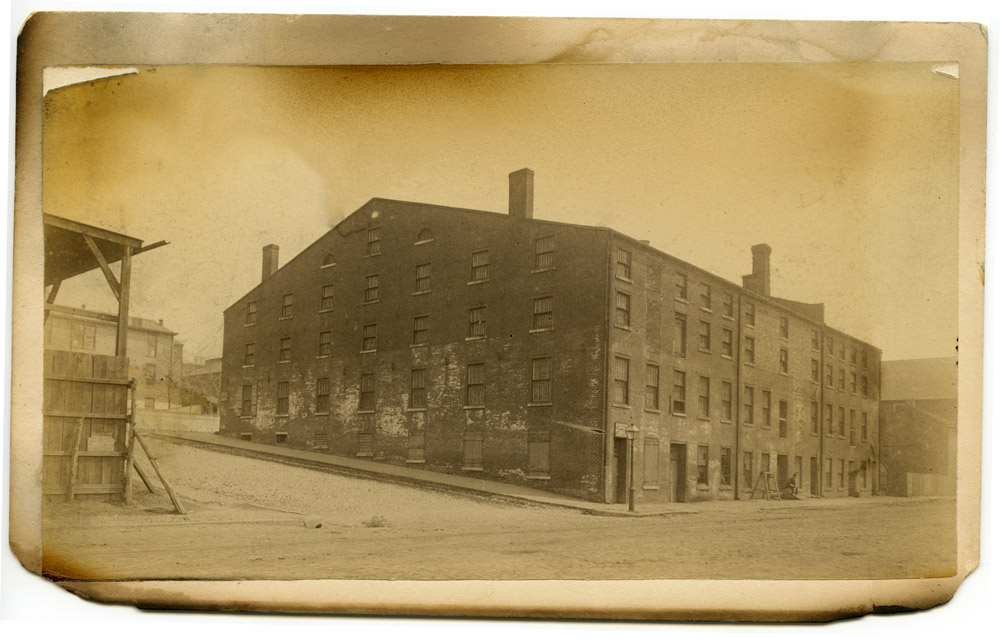
Libby Prison, Richmond, VA

After the fall of Richmond to Union forces, the prison was used to house Confederate officer prisoners of war, this time with greatly improved physical conditions to include windows with panes in them. Later, it became a museum, and was even dismantled and re-assembled in Chicago, but when it failed as a tourist attraction, the materials of the building were sold off as souvenirs.

As you can see the image was exposed to fire at some point, with scorching around the edges. I’m guessing the age to be between 1870-1880.

Here is a photo from the National Archives that shows the prison in 1865.
Libby Prison, NARA image, from Wikipedia

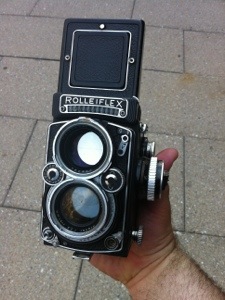
Rolleiflex back from repair!

20120822-120023.jpg

Here’s my Rollei – back from the shop. I had the shutter mechanism overhauled and the whole camera cleaned, lubed and adjusted. The front panel was aligned as well, so now it will focus accurately at close range and wide open. Can’t wait to shoot with it!

Last one for the evening – Un Dama de Havana, Cuba

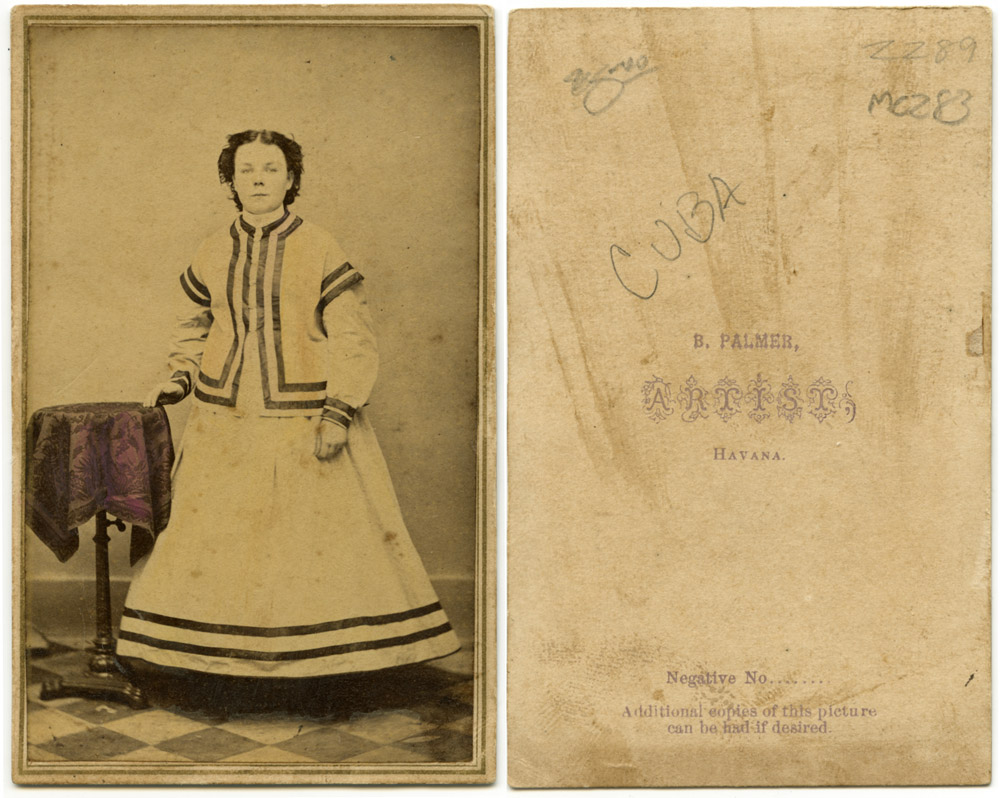
For your evening’s delectation, here is a nicely hand-colored CDV of an anonymous lady from Havana, Cuba. This is only the second CDV I have with an association with Cuba – I have a C.D. Fredericks that lists the Havana studio on the back mark, but is not necessarily taken there. In this case, Mr. B. Palmer, Artist, Havana is the only designation, so I must assume the photo was indeed taken in Havana. No street address is mentioned, which would be neat to have to be able to cross-check at some point in the future to see if his studio still stood. The entire backmark is in English, so I wonder if he catered to the tourist trade exclusively. The lady in the photo appears to be an adult, so I’ve called her Dama and not Señorita.

Dama De Havana, B. Palmer, Photographer

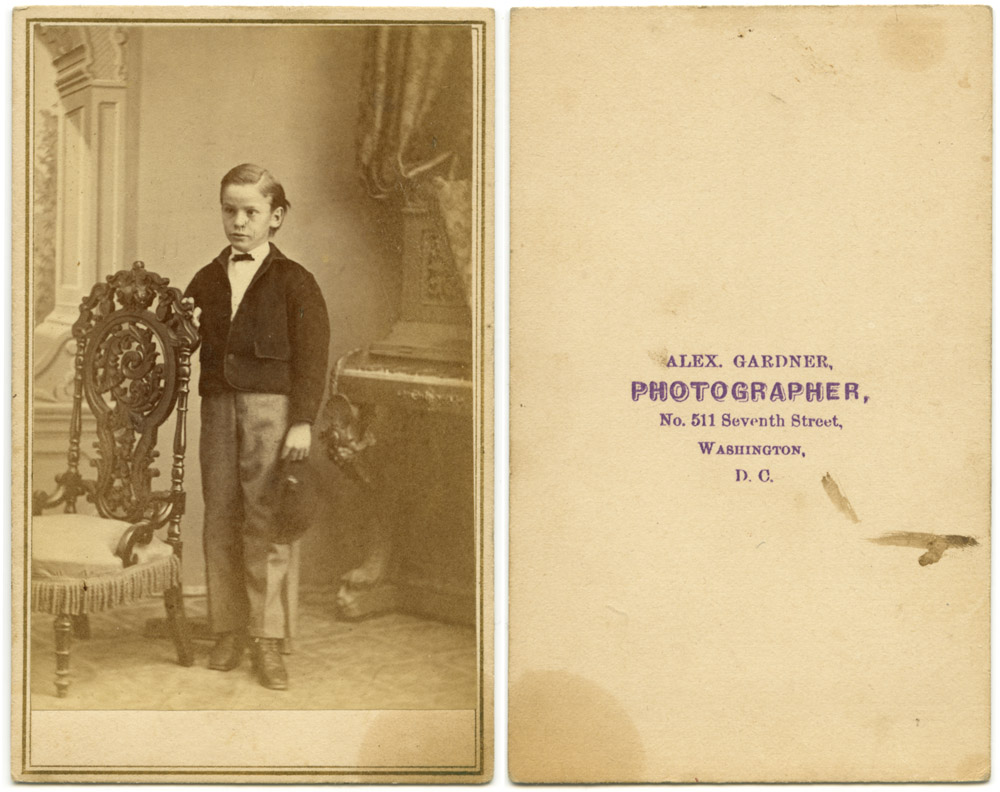
Anonymous Young Boy, by Alexander Gardner

Young Boy, by Alexander Gardner, Washington DC

Here’s another portrait by Gardner. Funny thing – Gardner was much more successful in business than Mathew Brady, yet Brady images are far more common than Gardner’s CDVs. I don’t know if it is that he did fewer (certainly seems so) or that his subjects’ heirs are largely holding on to them still. Given the disproportion between his images and Brady’s in the marketplace (not a statistically validated survey, but in my estimation, there’s a 10:1 ratio or more on the Brady:Gardner ratio), I’d say that he just didn’t make that many. This was obviously from his civilian commercial operation, and probably a few years after the Civil War as there is no mention on the back of being “Official Photographer to the Army of the Potomac”. The country as a whole grew war-weary in the aftermath of the war – all aspects of society were changing, and quite radically. Slavery had ended, the agrarian/industrial divide fell heavily in favor of industrialization. Women were a (temporary) presence in the workforce after the death of nearly 700,000 men of working age over four years of truly brutal combat.

With all this change and stress, it’s not a surprise that an association with the US Army that was trumpeted in 1864 would be quickly effaced from advertising copy.

Tom Thumb and Lavinia Warren hit the Baltimore scene

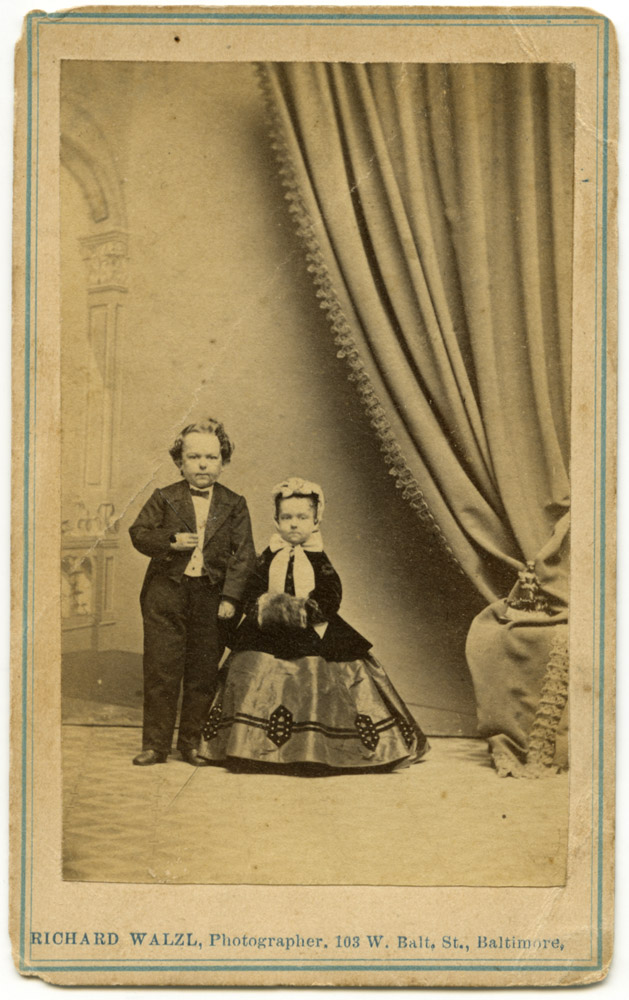
Tom Thumb & Lavinia Warren - Walzl, Photographer, Baltimore
Tom Thumb & Lavinia Warren – Walzl, Photographer, Baltimore

Here’s a photo of Tom Thumb and Lavinia Warren, NOT by Mathew Brady, Gurney & Sons, Eisenmann or C.D. Fredericks. I’ve seen a few by the other photographers, but the Brady ones are the most common. This is cool to me as it shows them being photographed in other cities as they toured – celebrity culture is not a new thing, but at least back in that day, technology largely excluded the possibility of ambush paparazzi.

Funny story about that though – back when the White House did not have a secure perimeter with heavily armed guards, one of Abraham Lincoln’s boys was out playing in the yard. An enterprising and rather self-assured photographer approached the boy and talked him in to sitting for some pictures, and then sent him inside to get his dad to pay. Needless to say, Mr. Lincoln was NOT happy about this, and came out to confront the photographer. The photographer consented to not charge Mr. Lincoln if he would sit for a few himself, which he grudgingly did. Try doing that to the first family today!

Confirmation – Brady’s Studio on Pennsylvania Avenue still stands!

I found while browsing CDVs on Ebay another Brady CDV with yet another studio address in Washington DC. It was the one I’d been looking for for ages. I had heard a rumor that the studio, which you can still see from the outside of the building, was Brady’s, and I’d heard it was Alexander Gardner’s. But now, I can definitively say you can still see Mathew Brady’s Washington DC studio that was located at 625 Pennsylvania Avenue, Northwest. Today the building is occupied by the National Council of Negro Women, but if you go around back into the alley, you can still see the north light slanted studio window on the top two floors of the building. From what I’ve been told, the room is now storage space for the association, and there’s not much to see. But it’s really cool that this piece of photographic history still exists, and aside from the paint color, you can get a feel for the streetscape in the day when it was a working studio.

Posing Stands – a recap

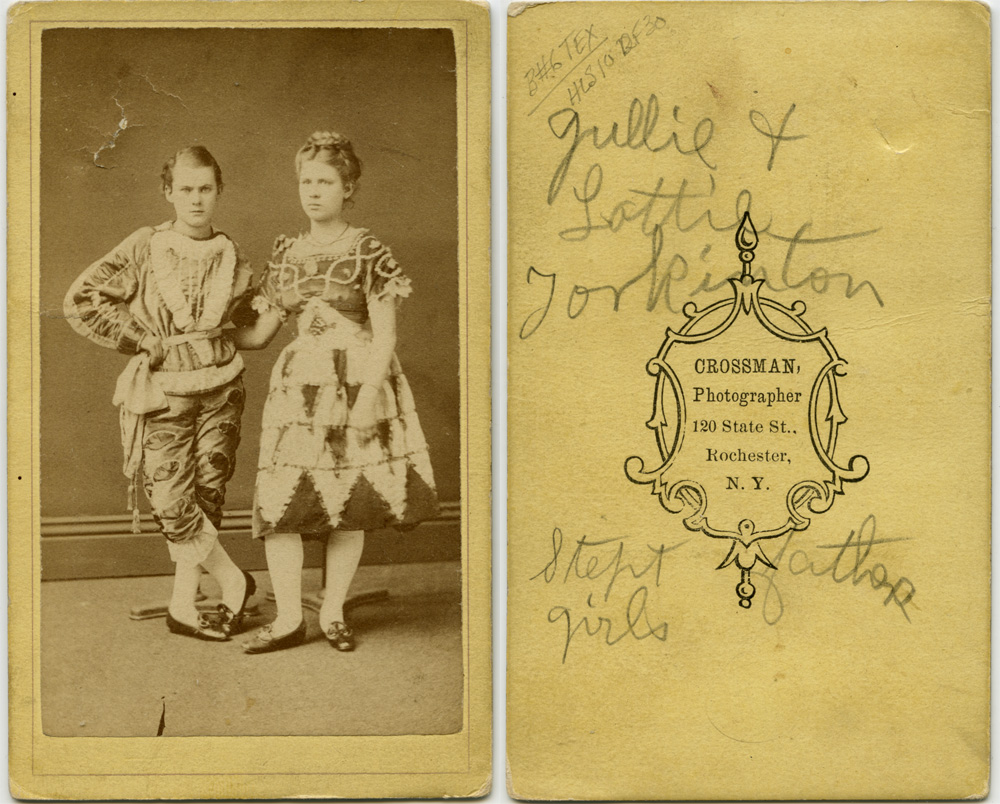
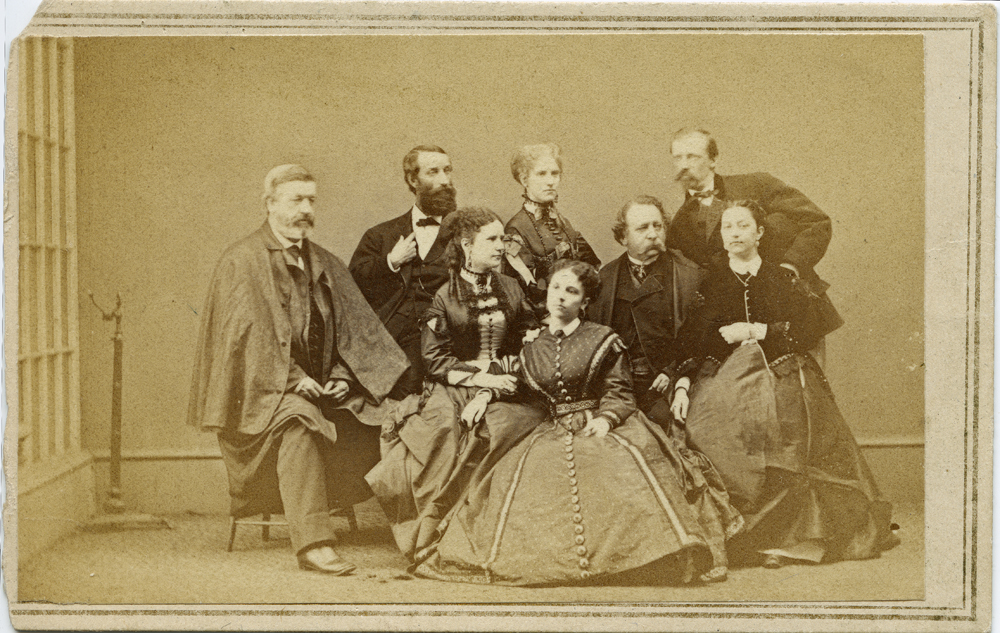
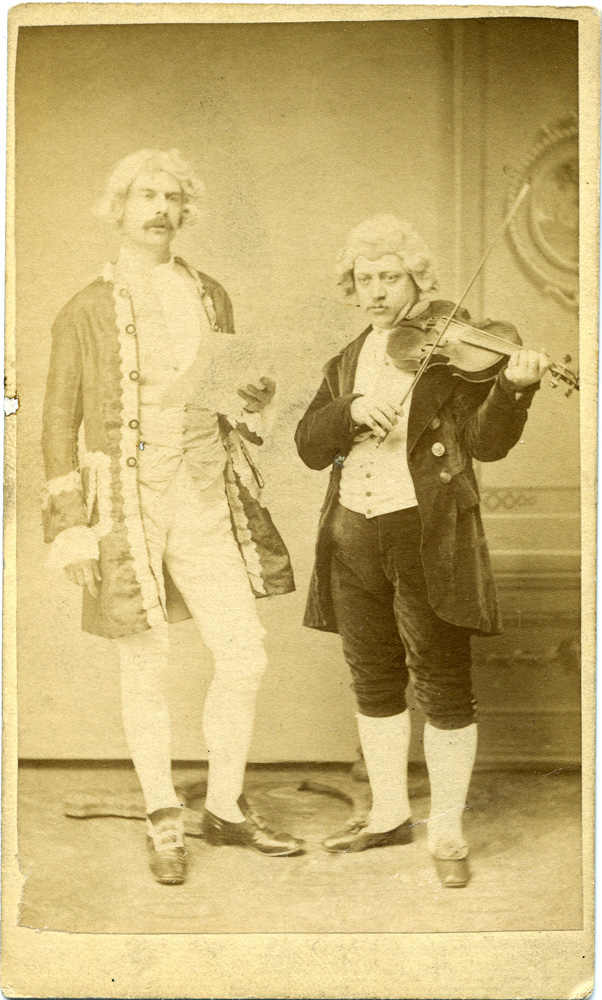
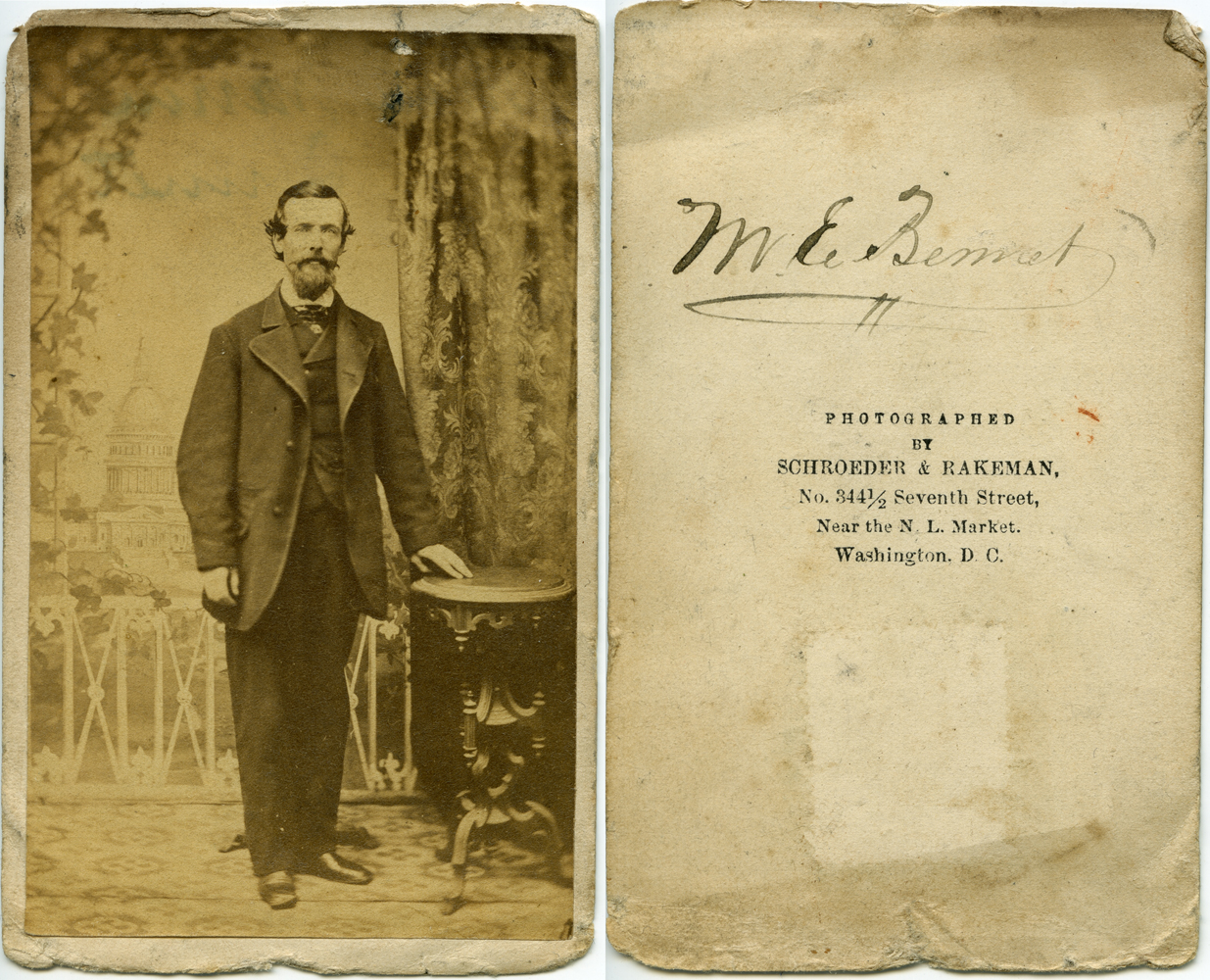
I thought I’d do a recap of the images in my collection that show the posing stand to some degree or other.

C.T. Parsloe, Jr, Actor- by Brady. "Important if true"
C.T. Parsloe, Jr, Actor- by Brady. “Important if true”
Gullie & Lottie Tarkinton Gullie & Lottie Tarkinton[/caption]
Tom Thumb and Minnie Warren, in their advancing years
Commodore Nutt and unknown little woman, Anonymous CDV (probably Brady)
Group, by Alexander Gardner
Two actors in costume by Chas. H. Spieler, Philadelphia
Horatio B. Buck, MD – 1st Lt. 11th Volunteers.
Tintype, Father & Son?
M.E. Bennet, by Schroeder & Rakeman, Washington DC

There’s more but I don’t have time to hunt through my media library to find them all.

The point of the exercise is to show examples where the head clamp stand is visible. It’s a highly distinctive mark of early period photography, from the Daguerrian era through the middle of the wet collodion era. I don’t know if it was just that photographers got better at hiding them, or if the emulsions got faster, but it seems like in the later days of collodion photography, you don’t see the head clamp stands. I don’t have a definitive date or date range for the end of the head clamp, but my guess would be by the 1880s. Wet collodion persisted into the 1920s as a medium, but by the 1880s you had the beginnings of silver gelatin dry plates that were at least as fast as wet plate, if not faster, so as dry plate takes over, naturally they would phase out.

C.T. Parsloe, comic actor, by Brady

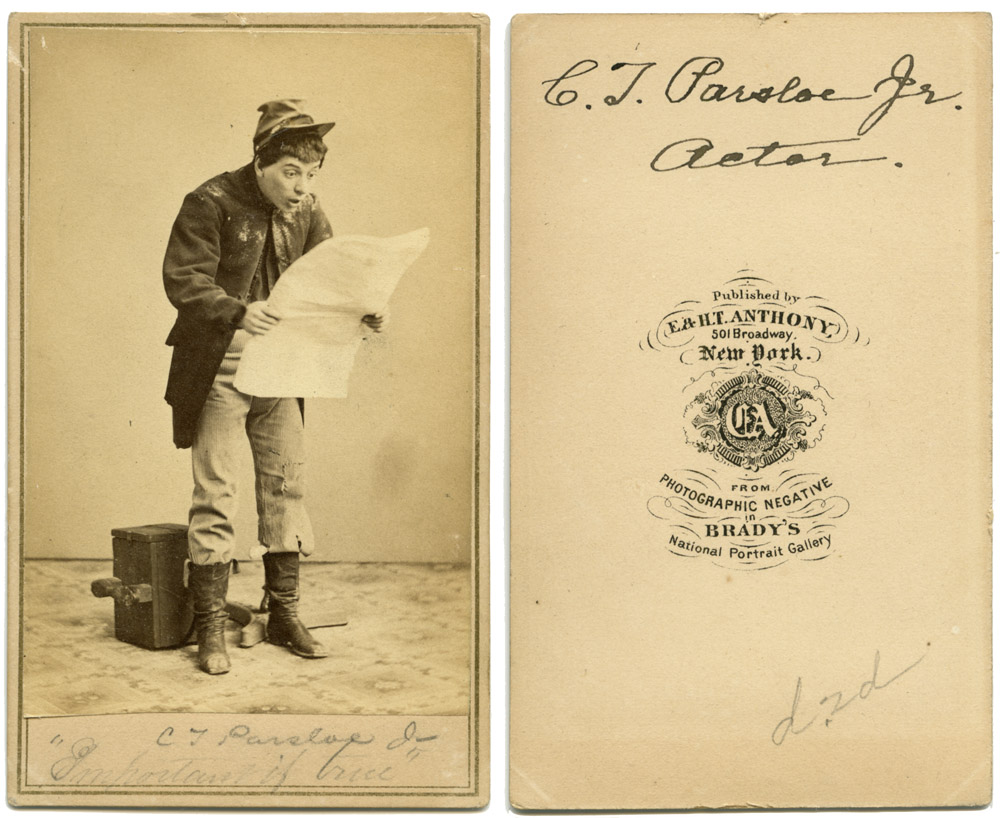
A CDV of C.T. Parsloe Jr., a 19th century American comic actor. The pencil script on the bottom says “Important if true”.

C.T. Parsloe, Jr, Actor- by Brady. "Important if true"
C.T. Parsloe, Jr, Actor- by Brady. “Important if true”

I love this image because it shows the power of photography to capture a fleeting moment of expression. This almost feels like it could be a still frame from a movie, unlike so much mid-19th century portrait photography where people are formally posed in elegant albeit highly conventional poses. It’s an image like this that shows Brady’s genius as a photographer – he was able, with 19th century wet-plate technology, to capture the essence of physical comedy. And you can still see the clamp stand behind Mr. Parsloe, which is a real testament to his power of posing, that he could do something so seemingly spontaneous while being physically restrained by the clamp!

I can’t find a lot of bio data on Mr. Parsloe, but he was born in 1836 in New York, and died in 1898, according to this page on the University of Washington’s digital collections archive – U.Wash. Digital Archive

I just discovered the University of Washington’s archive of photos of 19th century actors – it’s a resource I will be returning to to look up more CDV images as I keep collecting.

J. Gurney & Sons – Midget Actor

This is a cabinet card by J. Gurney & Sons of a midget actor in full theatrical costume. I wish I knew the identity of the actor. He must have been famous in the day, because he had Gurney photograph him. Going to Gurney would be somewhat akin to having Richard Avedon or Annie Liebowitz photograph you today. Well, maybe not Richard Avedon, as he’s dead now. But you get the idea.

Comic Actor by Gurney

At the Montgomery County Agricultural Fair

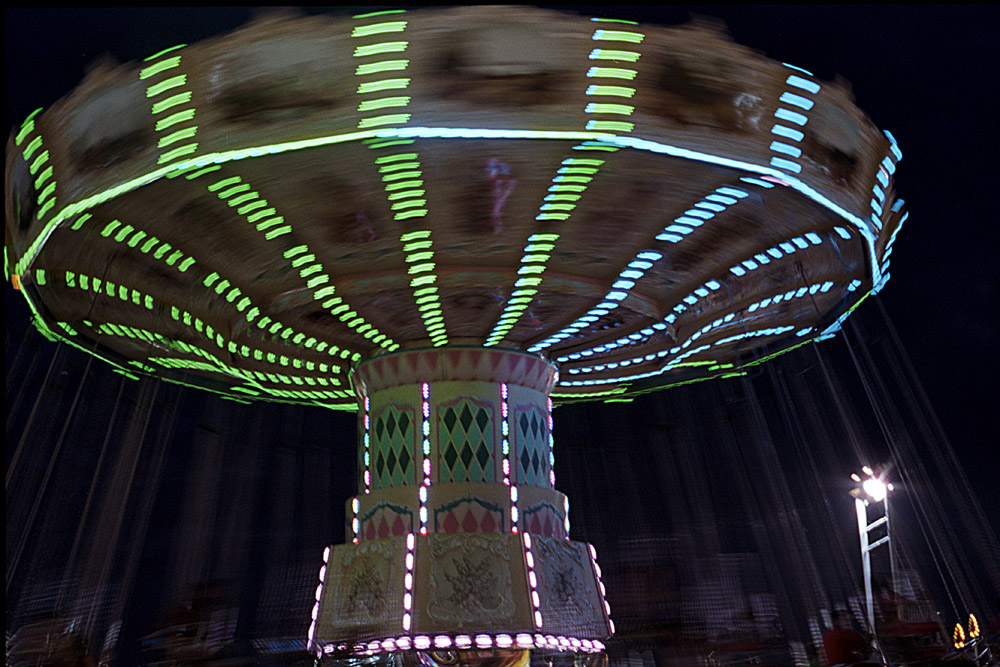
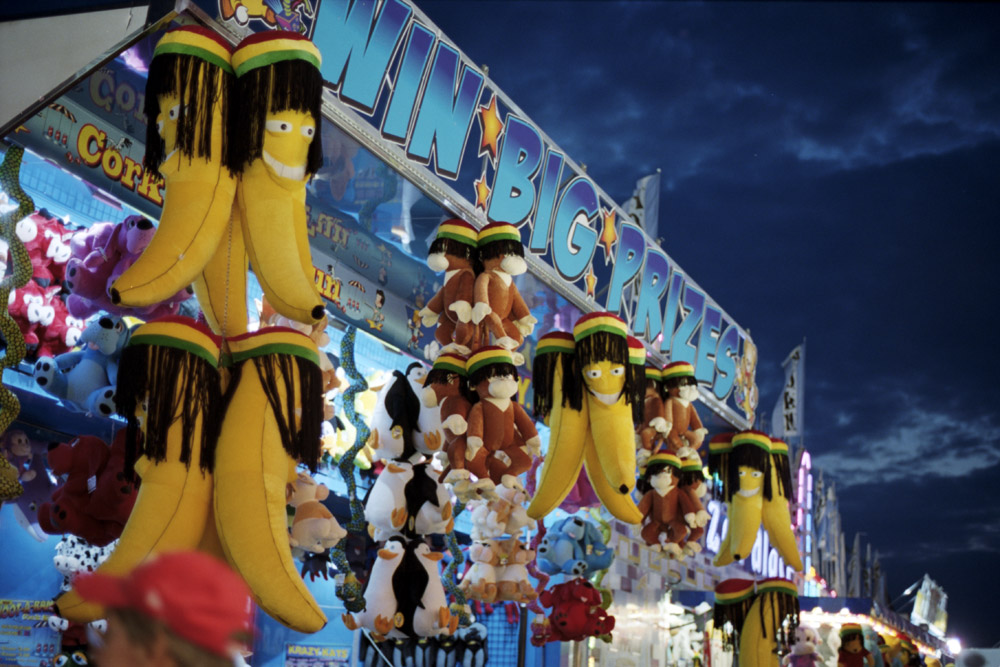
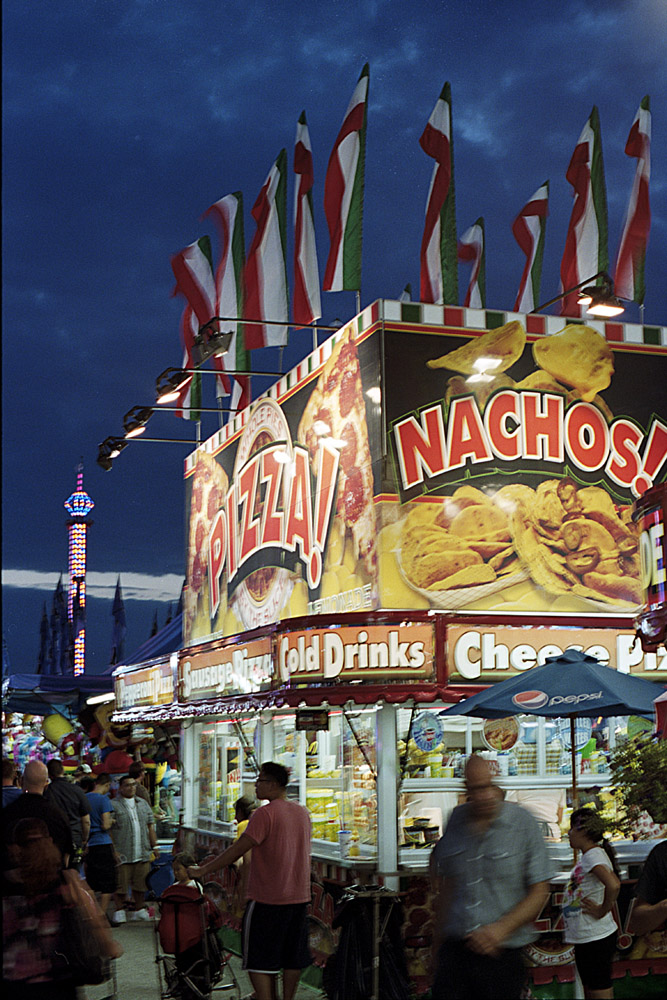
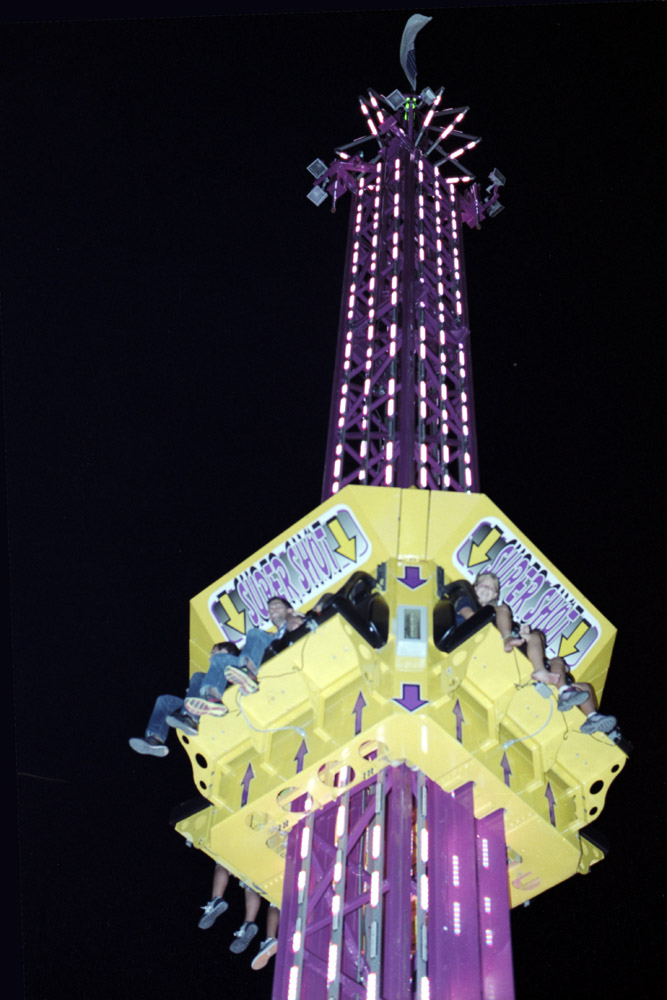
Ag fairs are a long-running tradition in the United States. They’re getting harder to find now, especially near urban areas on the coasts, as agricultural regions disappear. And really, there’s not that much agricultural to the Montgomery County Fair these days – it’s mostly just the midway with the rides and games and heart-stoppingly unhealthy food. It had been ages since I went to one, so it was a nice trip down nostalgia lane, and they make for a great opportunity to shoot wild colors at night. The Montgomery County Fair is held in Gaithersburg every summer, and while the area used to be semi-rural, it is now very much a part of the Washington DC megalopolis. It’s not an exurb or even an outer suburb anymore.

Merry Go Round
Merry Go Round
Win Big Prizes
Win Big Prizes
Pizza, Nachos
Pizza, Nachos
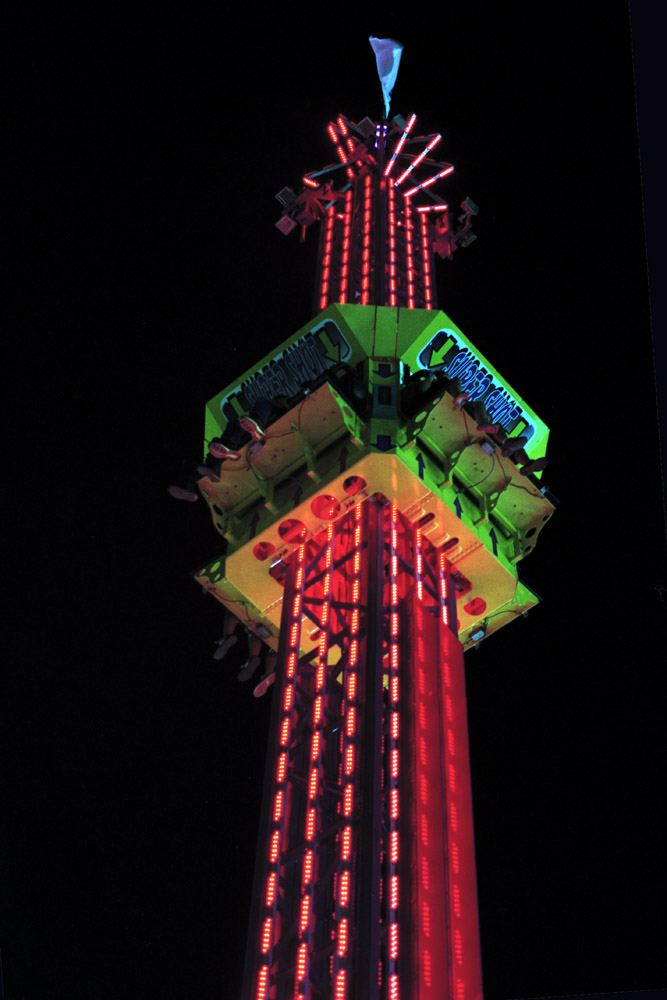
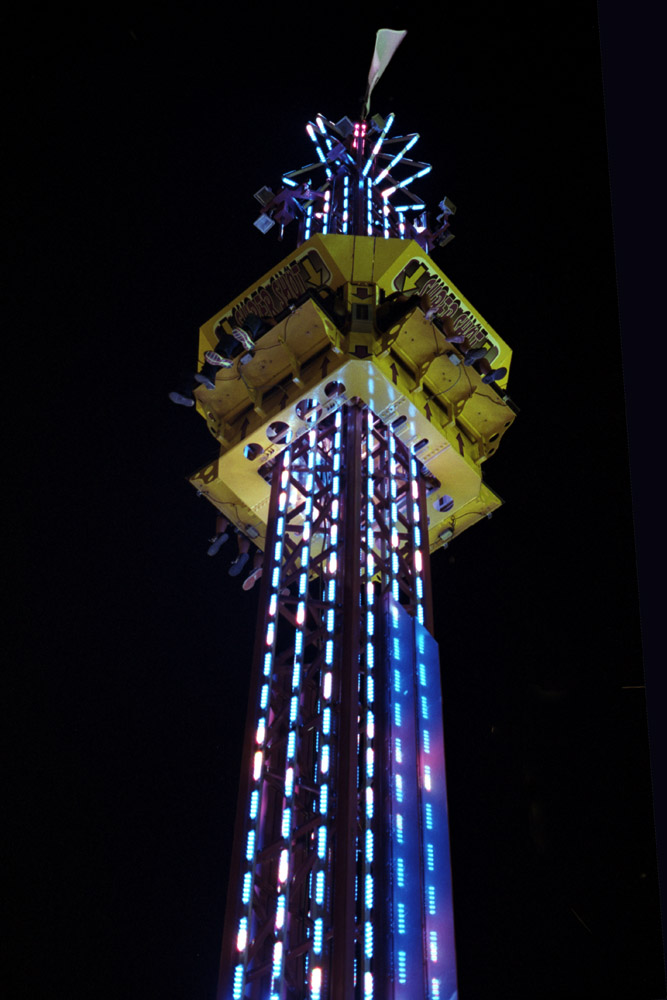
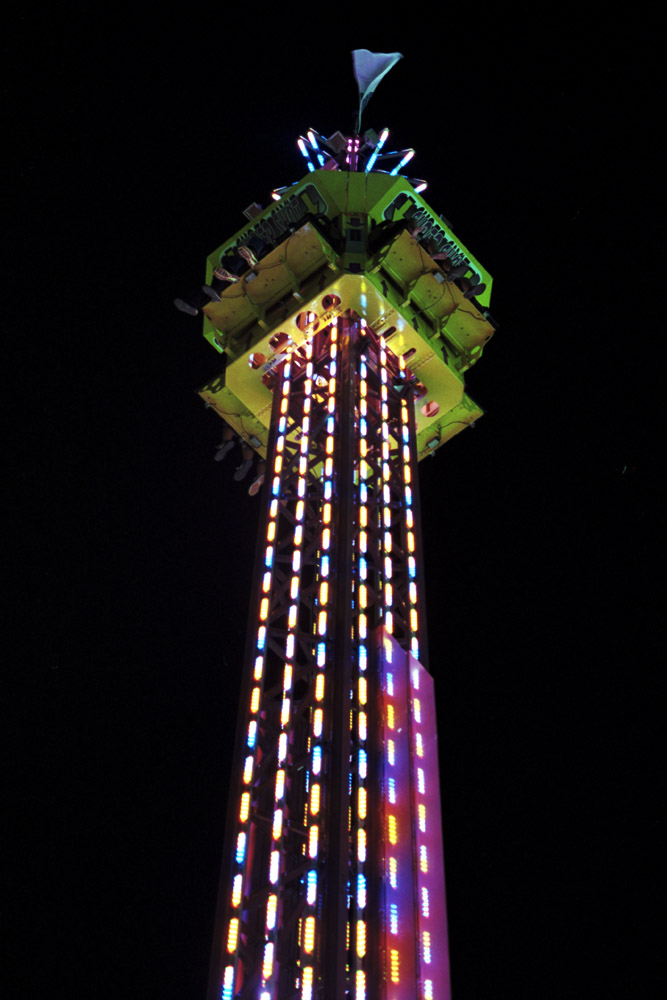
Super Shot - Starting Out
Super Shot – Starting Out
Super Shot - Halfway
Super Shot – Halfway
Super Shot - Almost There
Super Shot – Almost There
Super Shot - At The Top
Super Shot – At The Top

I’d have included the Super Shot dropping but it happens so fast it’s hard to time it and get a good picture with motion blur that makes sense – setting up a tripod in the middle of the midway to take that shot would probably get you ejected by security for obstructing traffic.

I shot all of these hand-held, with my Contax RTS III and 50mm f1.4 lens. most were shot at f1.4. My film of choice is Kodak Portra 160, not only because it’s very fine-grained but also because it has a remarkable talent for handling mixed lighting conditions.