For those who might be interested, here’s a link to The Photography Collectors’ Show in New York next Saturday, March 19. I’m toying with the idea of going up to see it.
Here is a list of dealers who will be in attendance:
Steve Yager
Adam Forgash
Casey A. Waters
Christopher Wahren
D. T. Pendleton
Dennis Waters
Erin Waters
Greg French
Henry Deeks
Maria DiElsi
Thomas Harris
Stacy Waldman
Arthur Dristiliaris
Brian Caplan
David Chow
Dr. Stanley Burns
Glenn Vogel
Jack Domeischel
Julian Wolff
Larry Berke
Lisa Taos
Richard Hart
Richard Silver
Stephen Perloff
Stuart Butterfield
Susan Davens
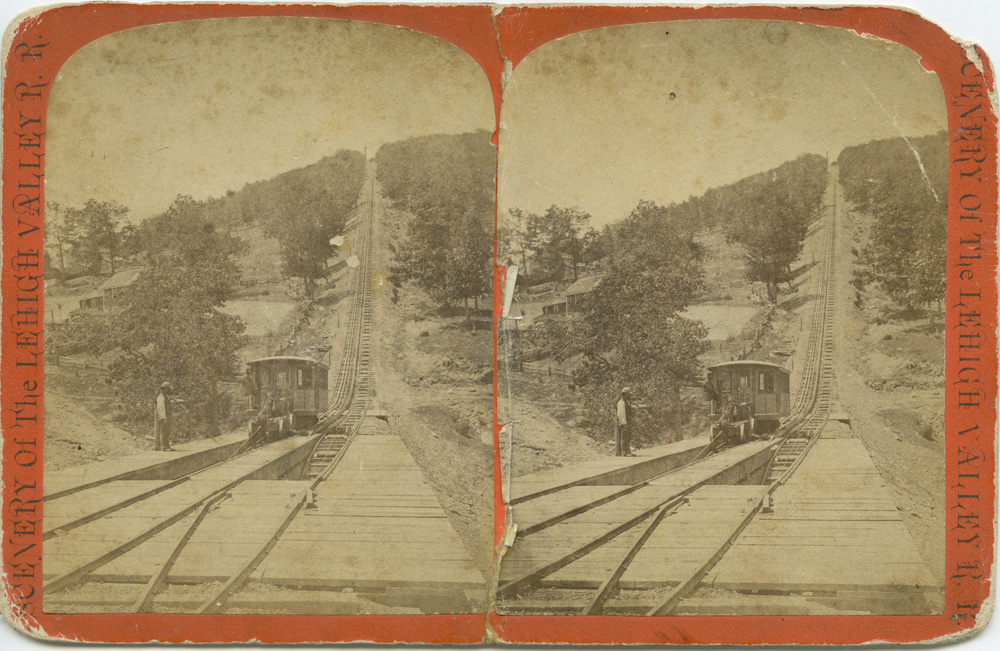
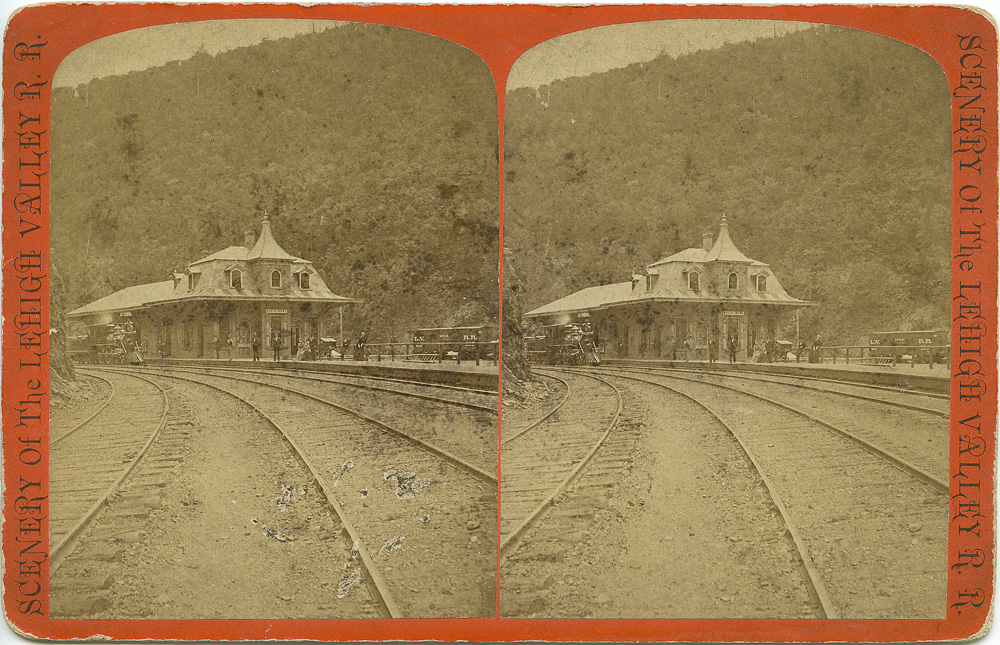
After digging up the stereoview of the Lehigh Valley Railroad station, I did a quick peek on Ebay to see if I could find any others. Whaddya know, my first search turns up another in the series. It’s in pretty rough condition, but I bought it anyway because it was going cheap. This is one case of a stereoview set that I’ll actually try to complete – there’s only 24 in the set. I have a casual interest in railroad memorabilia, as my grandfather was a conductor on the Pennsylvania Railroad’s Broadway Limited between Altoona an Chicago in the first half of the 20th century. I’m also a roller-coaster fan, so finding a photograph of the first roller-coaster is pretty cool (first roller-coaster you say? see the blurb below). Incline, Lehigh Valley Railroad
This is a picture of the switch-back gravity railroad, which was originally built to aid in bringing coal from the top of the mountain to the railroad. It quickly grew into a tourist attraction, and then became the first roller-coaster in the United States, when it became dedicated to passenger service. The car would be towed to the top of the mountain on one track, then switch and fall down the other track propelled by gravity alone. There was a driver/brakeman in the car to prevent it from flying off at the bottom out of control.
The town is Mauch Chunk, Pennsylvania, now known as Jim Thorpe, PA, named to honor the Native American athlete. Ironically enough, Jim Thorpe was from Oklahoma, and his sole connection to Mauch Chunk is that he attended the Carlisle Indian Industrial School in Carlisle, Pennsylvania, and that Mauch Chunk was a Native American name approximately meaning “Bear Mountain”, because the mountain in whose shadow the town was built looks like the back of a bear. After he died in 1953, his surviving wife sold his remains to the town, which hoped that his grave would be a tourist attraction.
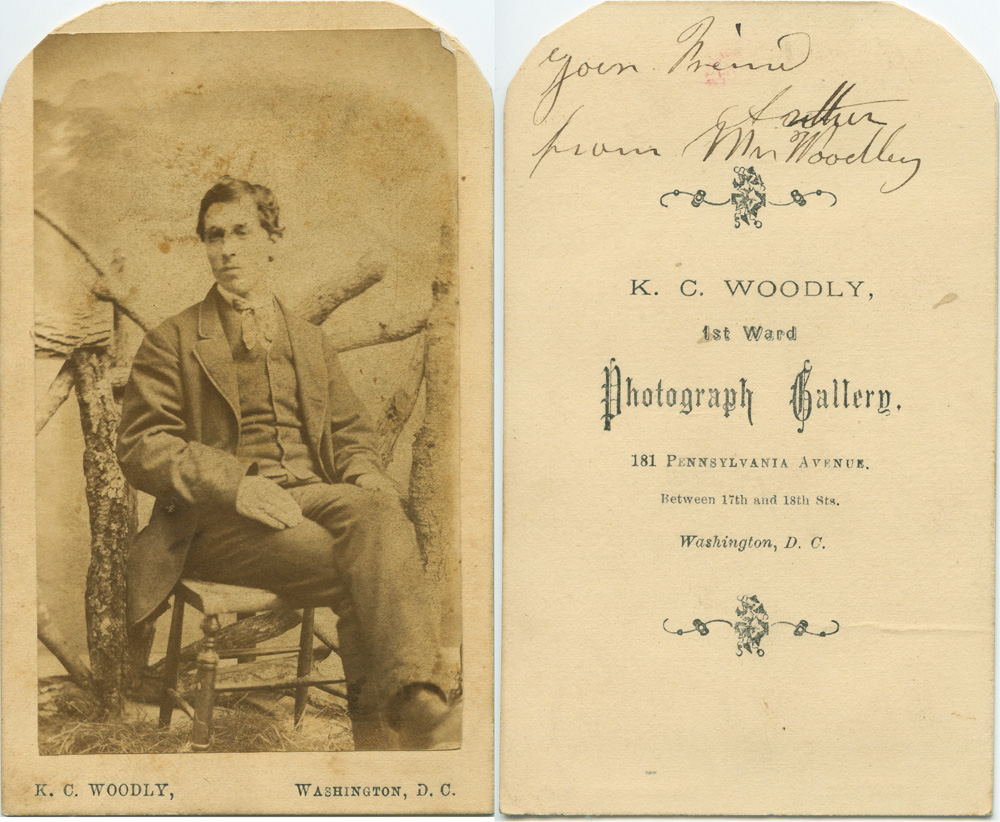
This next image is another recent acquisition – another Washington DC carte-de-visite. This one, if the inscription on the back is accurate, is a self-portrait by the photographer, or at least the inscription is by the photographer – “Your Friend – From Mr. Arthur(sp?) Woodley”. I’m curious if the Woodly on the card is a typographical mistake, as the signature really does look like it says “Woodley”. I’m also curious if the Woodley/Woodly is any relation to the Woodleys for whom Woodley Park was named. Given how small a town DC was in the 1860s, I’d say the odds are in favor.
K.C. Woodly CDV, Washington DC
The address on this one is a mystery – 181 Pennsylvania Avenue would put the studio on the Capitol lawn. Furthermore, he indicates that the studio is located between 17th and 18th Streets, which would make 1781 Pennsylvania Avenue a more likely actual address. I wonder if the printer was short on E’s and 7s when he ran these off.
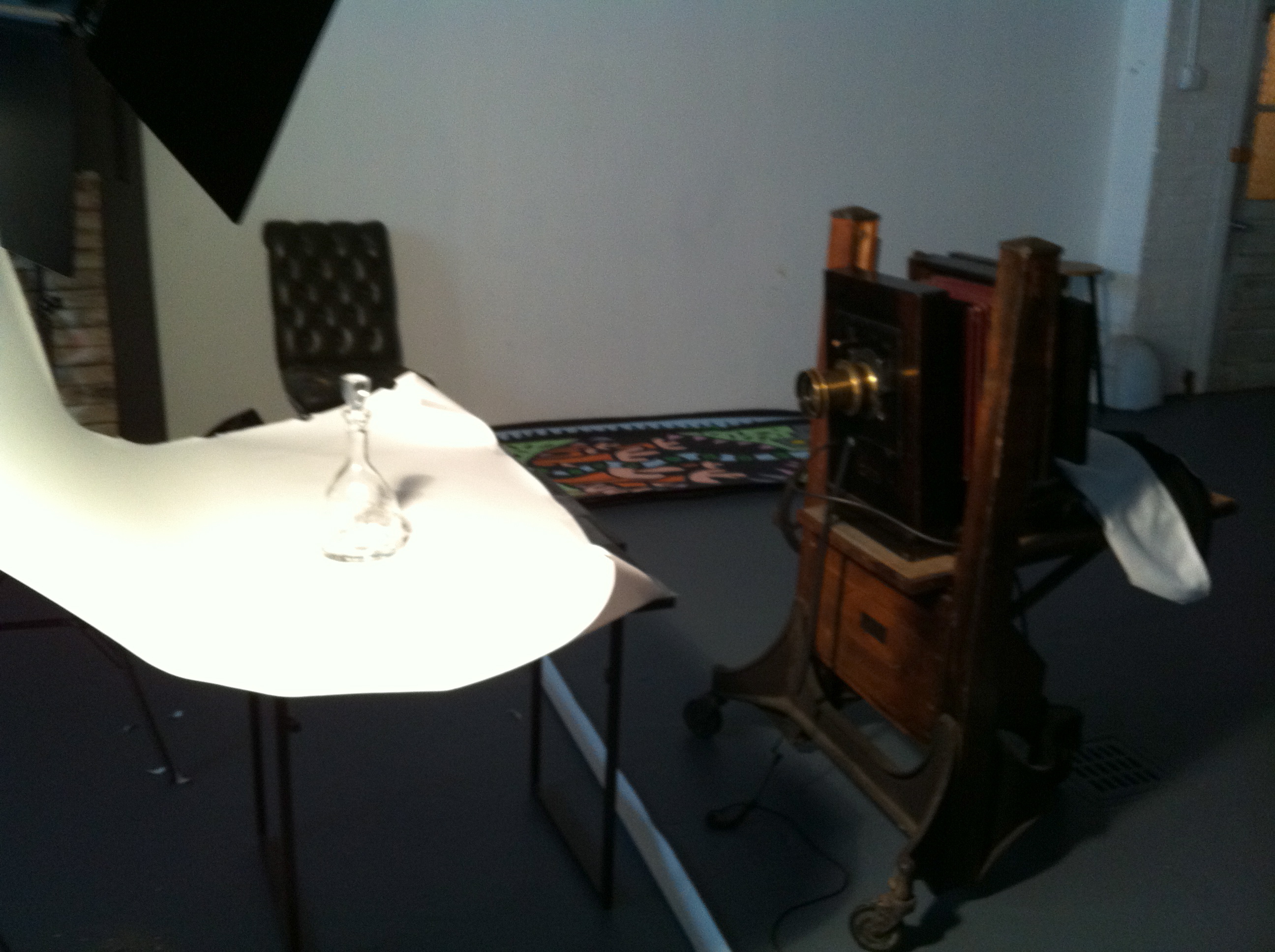
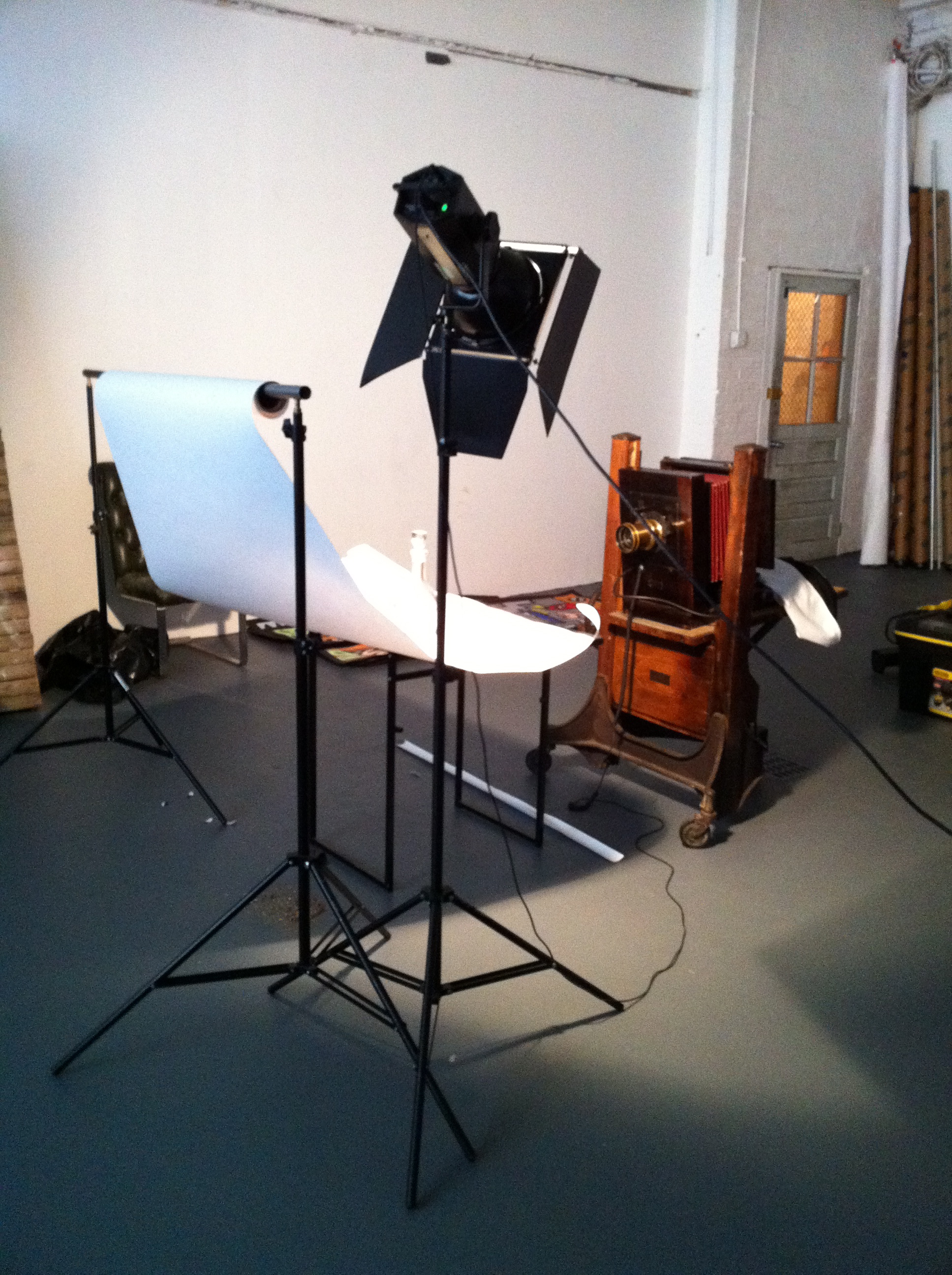
Yesterday, in a fit of activity, I got in to the studio and shot a few still-life photos. I’m participating in a print exchange through the Large Format Photography Forum (www.largeformatphotography.info/forum) and I needed to shoot some images for the exchange. The final images will be platinum prints. I decided to use a lead crystal cut glass decanter I have as a subject – I wanted something challenging to photograph and that would create some striking images. I got the inspiration seeing the decanter on my coffee table with the sunlight coming through it and casting a shadow. I brought it over to the studio and set it up on a sweep of white seamless paper, and lit it with just one light, as it would be in the real world (there is only one sun!). It casts a beautiful shadow on the seamless, especially the way the crystal is cut with these random little scallops out of the body. I used the Century Master portrait camera, which after having been hauled around a bunch is starting to get a bit loose. As always, the lens on it is my Seneca Portrait f5. I put the whole plate back on the camera for these shots, as it’s about my favorite format. I indulged in my film choice and used some of my remaining stock of Arista.EDU Ultra 200 (aka Fomapan 200). Arista.EDU Ultra is Freestyle Photo‘s house-label film, made for them by Foma in the Czech Republic. Foma discontinued the 200 a year or two ago when their source for one of the critical components dried up, and just started re-making it but only in roll film. It’s one of my all-time favorite films, not only because it was dirt cheap (1/3 the price of Ilford), but because it produced beautiful results – it has this old-time feel to the image quality from a reduced red sensitivity. Here’s a couple of shots of the setup (pardon the poor quality- they’re taken with my iPhone which is not the best in low light). I’ll post some scans later of the finished prints. Studio setup #1 Studio setup #2
Katherine Thayer passed away this week. She was a major figure in the alternative process photographic community, and a great source of wisdom and knowledge when it comes to gum bichromate printing. Her loss will be felt around the world. I never met the great lady myself, but we did have several exchanges online and via email about alternative process printing, and I know that I miss the opportunity to have met her. Fortunately, her website is still up, and so even though she is gone, her knowledge does not vanish with her. It can be found at http://pacifier.com/~kthayer/.
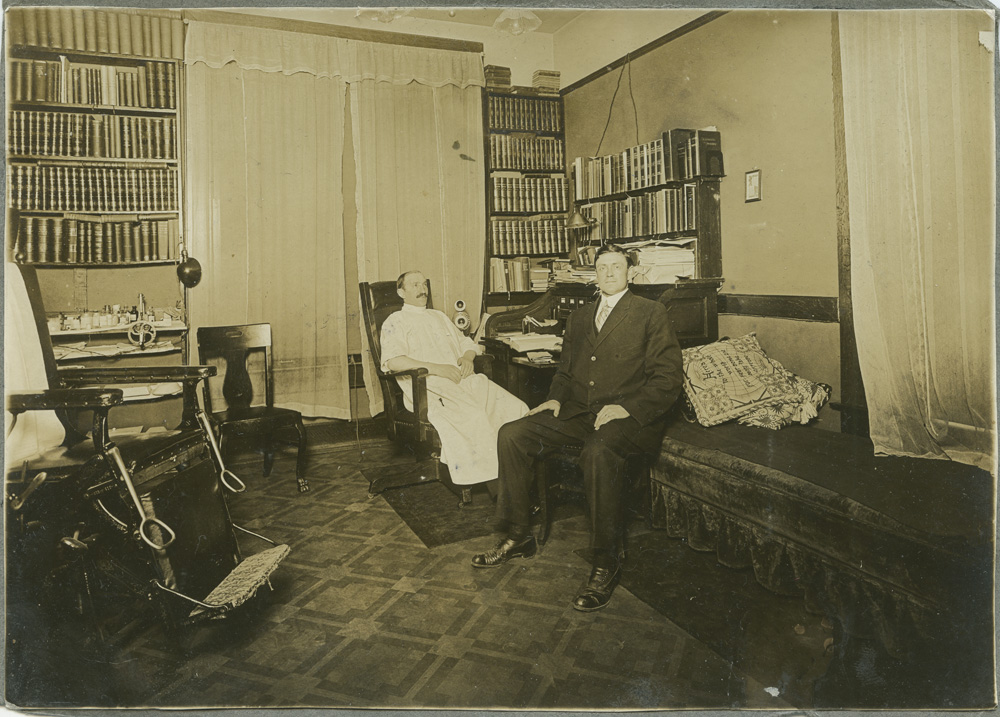
I was doing some clean-up in my office the other day and ran across these two images. Absolutely nothing to do with each other. I don’t remember where I found the doctor’s office photo, but I got the Lehigh Valley Railroad stereoview (I know, here I go again with the stereoviews I “don’t collect”) in Sacramento, California, and I suspect that’s a large part of the reason I got it – curiosity as to why something so regionally specific ended up on the opposite side of the country. The doctors’ office photo I bought because my father is a (now retired) physician, and it was interesting to see what a doctors’ office at the beginning of the 20th century looked like. I love the pillow on the sofa that says “Here’s to the world, for fear that someone may take offense” – proof that cheesy knicknacks are not a late 20th century phenomenon. The stirrups on the chair make me wonder if it is a gynecologist’s office, and the relationship of the subjects of the photo is odd – the doctor seemingly asleep in the chair, and the man in the suit facing the camera – is he a patient, a friend of the doctor, the photographer, or a combination of the above?
Lehigh Valley Railroad, Mauch Chunk station Doctor's Office, early 20th century
As I’ve been collecting images, and I do a fair bit of my looking on Ebay, I’ve noticed a couple of interesting albeit off-putting trends. I go back and forth between interest in tintypes, daguerreotypes, and CDVs, with the occasional odd foray into early 20th century images if they include things like cars. In looking for daguerreotype images, I’ve been seeing a lot of what are really very ordinary, common images (no identification of subject or photographer, 1/6 plate to 1/9th plate size, ordinary condition) being listed for astronomical prices ($650 for a 1/6 plate dag? Really?). It’s one of those things that gives you a false impression of the market – seeing all those listings at those stupid prices makes you think that A: your own collection is worth a lot more, and B: if people are listing them for that kind of money, they must be selling for that kind of money. This impression lingers unless you do a search on closed auctions, where you’ll see that most of the successful sales are still in the under $200 range, with the odd exception of some truly rare or exceptional images (1/2 plate, known subject, unusual subject, etc).
Another marketing trend I find a bit odd is the whole “gay interest” tag in the image description. On one level, I get it – the seller is trying to reach out to an under-appreciated market. On the other hand, I question if the people using that tag line understand the “gay interest” thing at all. Two men or two women posing together in the Victorian world did not make them a same-sex couple. They could be siblings, co-workers or just friends. 99% of the time we have zero context to go with any image to make an assessment of the relationships captured in the images. There was no public subculture in the 1850s or even in the 1880s that we would today recognize as analogous to the late 20th/early 21st century gay culture, and as such it would not have been recorded photographically. There is certainly an interest in finding proof of ancestry – “see, we DID exist in the 1850s”. Unfortunately, buying in to the “gay interest” marketing of these images is really just being taken for a ride through ignorance and vulnerability. Don’t get me wrong – it’s certainly fun to speculate what might have been going on behind the scenes of these pictures, and what the relationships of the sitters might be to one another. I have one image in my collection that in the right minds implies no end of off-camera highjinks. But it’s still pure speculation. If you see an image marked “gay interest”, buy it only because you actually like the image, not for any marketing baloney designed to separate more of your hard-earned money from you than is fair.
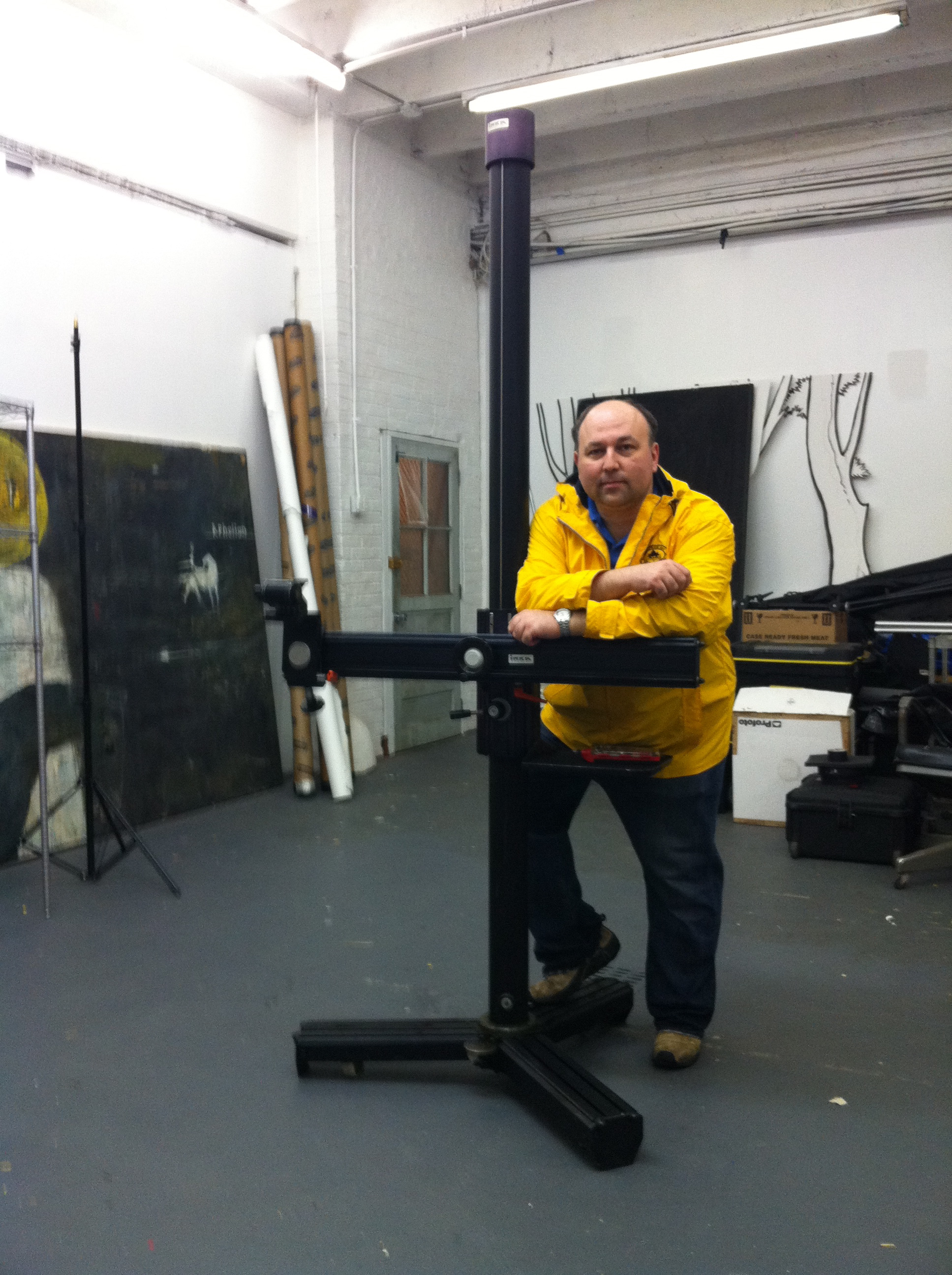
after trekking up to Philadelphia and back driving a big GMC Sierra pickup truck, the INKA studio stand is in its new home. We’re having a meeting with a contractor this week to discuss the storage lockers (they’ll be going up behind where I’m standing in this shot, to the right of the door). The INKA studio stand, and me, in the studio
I’ve been a little overzealous in my collecting lately, so it’s going to go on hiatus. Well, unless I come across some nice Washington DC based CDVs at bargain prices. See, collecting is an addiction. Fortunately, unless you get into the realm of hoarding, it’s one addiction that doesn’t require interventions or support groups.
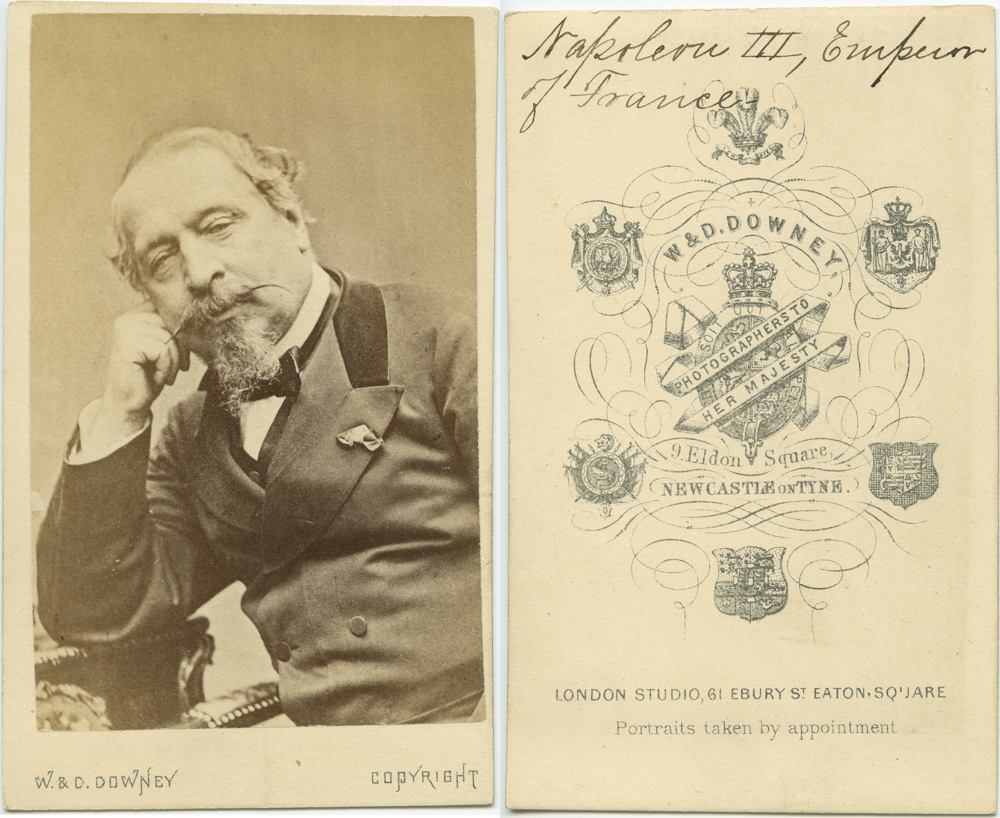
Anyway, back on topic, here’s a rather special CDV worthy of being the pausing point (the pause that refreshes?). Napoleon III, last Emperor of France. Taken in London at the studios of W. & D. Downey, photographers to Her Majesty. Napoleon III, Last Emperor of France
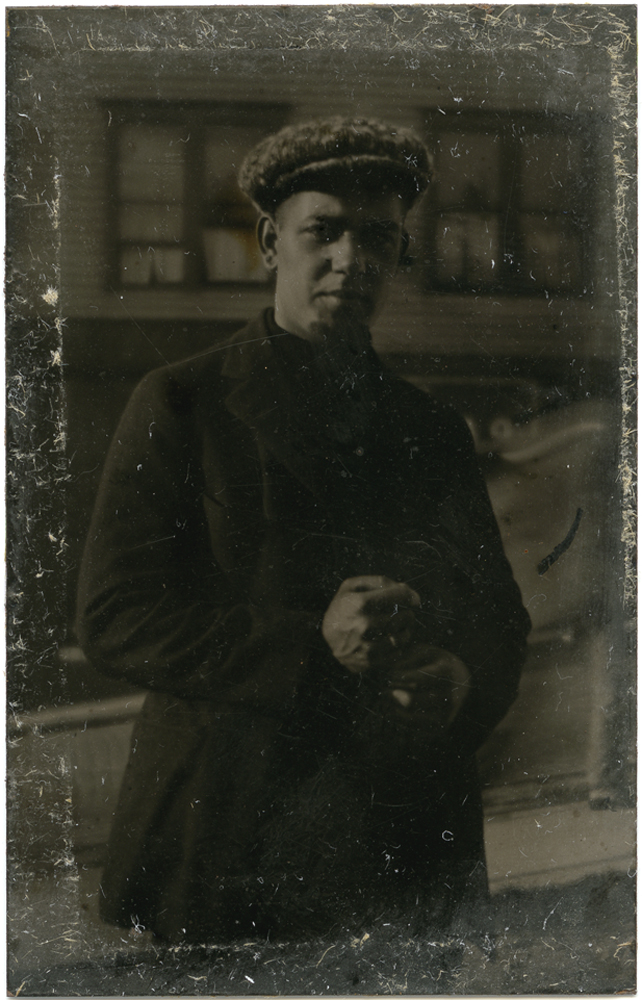
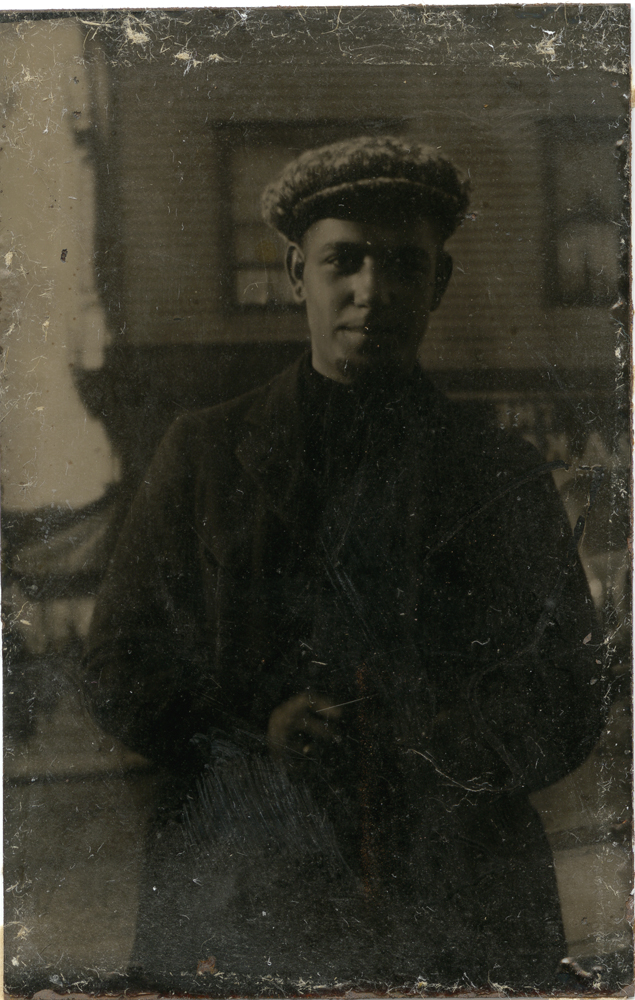
I got these two tintypes on an online auction (NOT ebay). They finally arrived today, but I had bought them so long ago I almost forgot I bought them. They still need a bit of cleaning up. From the clothes and what looks to be a car in the background of the one photo, they’re from the first decade of the 20th century, or maybe into the early part of the 1910s. The subject looks like he might be African-American. What’s interesting about these is they seem to be amateur snapshots, but they came matted, and at this point in time, amateur tintypes would have been relatively rare, because rollfilm already existed and cameras like the Kodak Brownie (as well as far more sophisticated roll-film cameras, not to mention dry plate cameras) were widespread. They came to me from Portland, Oregon, but who knows where they were taken. I’m planning on doing a bit of cleaning to remove the tape residue and dust, and I’ll re-scan and post them when they’re tidied up a bit.
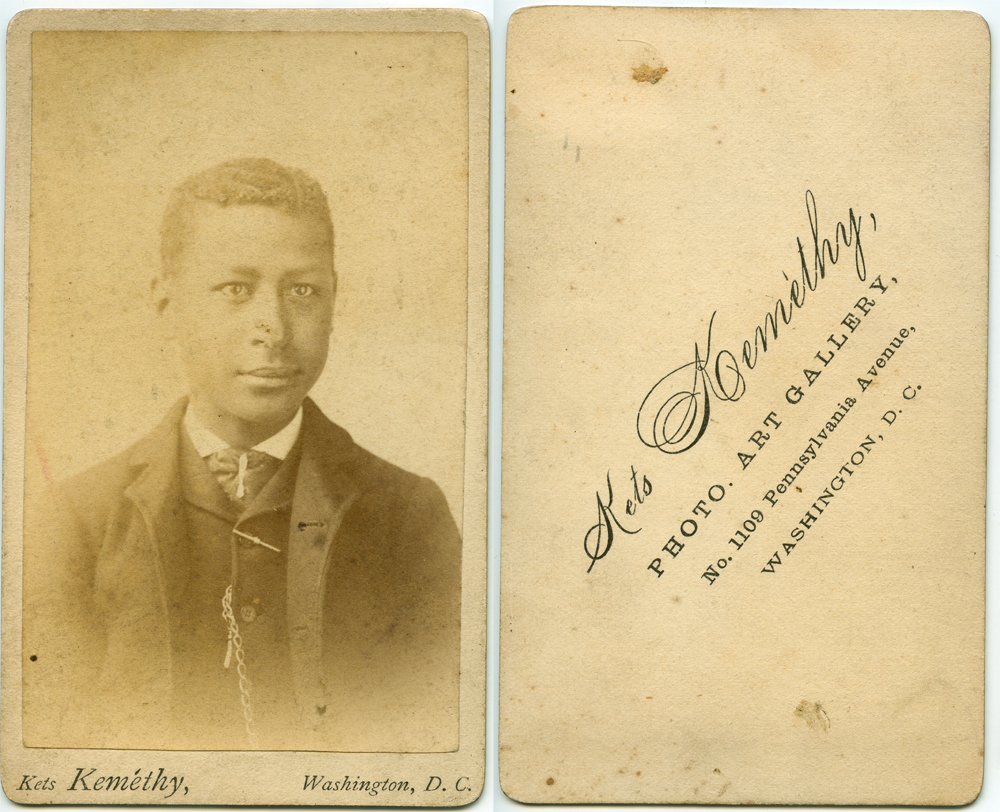
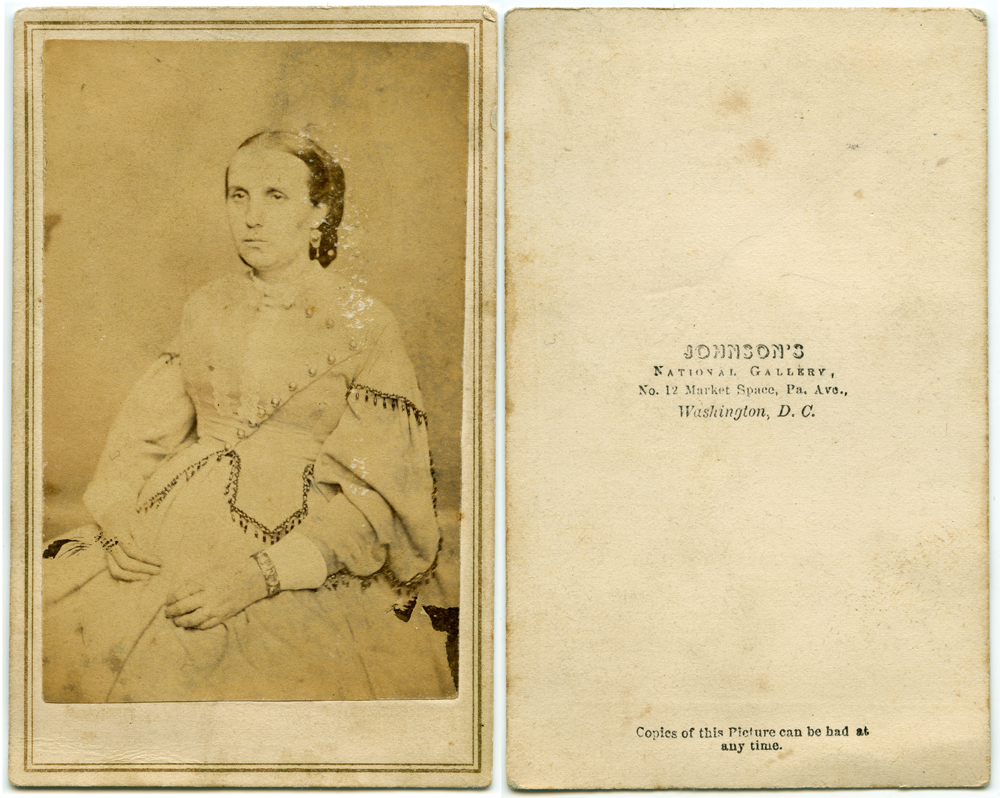
African-American Gentleman, Washington DCAnonymous Lady, Johnson's National Gallery
Two new DC portrait studio pictures from the 1860s-1870s. The African-American gentleman photo is quite interesting because it shows the relative prosperity that was possible so shortly after the Civil War for African-Americans in Washington DC. It is all the more remarkable because it exists in spite of segregation. It’s probably a window into the period of Reconstruction, before the southern states began instituting Jim Crow laws designed to economically suppress African Americans.
The woman is rather unremarkable, but the photographer’s back-stamp is what interests me – particularly the street address. When I first saw this, the address description helped clarify where another DC photo studio was located – The Schroeder & Rakeman studio. Of course the “Market” referred to no longer exists, but where it was is now a complex of buildings called “Market Square”, and is in immediate proximity to most of the other photo studios in Washington at that time.
 dcphotoartist